

Submitted:
21 September 2023
Posted:
21 September 2023
You are already at the latest version
Abstract
The purpose of this work was to investigate whether two-months supplementation with 100% sea buckthorn juice (SBJ) would modify blood lipids, LDL subfractions and other markers of cardiovascular risk in hypercholesterolemic women. A group of 28 hypercholesterolemic non-medicated adult women with a mean age of 50.58 ± 5.76 years consumed 50 mL of 100% SBJ daily for two-months. We observed a significant reduction of body weight (BW; p < 0.05), body mass index (BMI; p < 0.05), body fat mass (BFM; p < 0.001) and visceral fat area (VFA; p < 0.001), on the contrary, a significant increase of skeletal muscle mass (SMM; p < 0.05) and fat-free mass (FFM; p < 0.05). Supplementation with 100% SBJ significantly increased the level of high-density lipoprotein (HDL; p < 0.05), reduced the level of low-density lipoprotein (LDL; p < 0.05), atherogenic LDL subfractions (LDL3–7; p < 0.05) and improved LDL/HDL ratio (p < 0.001). After the SBJ consumption, significant reduction of C-reactive protein (CRP; p < 0.001), orosomucoid (ORM; p < 0.001) and interleukin 6 (IL-6; p < 0.05) were found. In conclusion, consumption of SBJ showed an indication of beneficial effects on cardiovascular risk factors in hypercholesterolemic women.
Keywords:
berries
; sea buckthorn juice
; lipid profile
; cholesterol
; inflammation markers
; intervention
; anthropometric characteristics.
1. Introduction
Cardiovascular diseases (CVD) associated with metabolic disorders, including obesity and diabetes, are the leading cause of death in Europe and worldwide [1,2,3,4]. Abnormal lipid profile, such as elevated low-density lipoprotein (LDL) and lower high-density lipoprotein (HDL), are the key indicators of cardiovascular risk [5,6]. Plasma lipoproteins are a heterogeneous population of particles varying in dimension and density and serve for better prognosis of CVD than conventional lipid profiles [7,8,9]. Low density lipoproteins are composed of large (LDL1), middle (LDL2), and small dense particles (sdLDL or LDL3–7) [10,11]. Recent studies suggest that a high density of LDL3–7 poses a greater risk for CVD [7,12] because of their greater predisposition to oxidation and higher affinity for the arterial wall than large-buoyant ones [13]. Monitoring and improvement of sdLDL levels could be beneficial for reducing CVD risk [7,14]. Lifestyle and dietary influence the risk of lipid and carbohydrate metabolism disease, changing glucose and cholesterol levels, blood pressure, and body composition [15,16,17,18]. Recently, the plant foods including the berries have gained growing interest due to presence of different kinds of nutrients and bioactive compounds with beneficial effects [19,20,21,22]. Sea buckthorn (SB) berries, an ancient plant, is a deciduous bush or tree - genus Hippophae, family Elaeagnaceae [23] with important ecological and economic value [24]. Around 150 species, subspecies, and varieties of sea buckthorn have been classified within Eurasia [25], among which Hippophaë rhamnoides is the most significant and widespread in Europe [26]. The petite, red and yellow berries from sea buckthorn are an abundant reservoir of many bioactive substances with medicinal and nutritional properties [26,27,28,29]. The most important compounds are phytosterols, ascorbic acid, carotenoids, tocopherols and phenolic compounds [30], vitamins, proteins, amino acids, minerals [31], alkaloids, chlorophyll derivatives, amines [32], organic acids [33] and fatty acids [33,34]. Among them, ascorbic acid, tocopherols, carotenoids flavonoids and proanthocyanidins exhibit antioxidant activity [24,27,35,36]. One of the highly regarded features of sea buckthorn is the high content of vitamin C, which is considerably greater than in other favourite fruits [37,38] and lycopene, most active among the carotenoids [39]. The compounds obtained from sea buckthorn possess various beneficial effects such as antioxidative [26], anti-inflammatory [40,41], cardioprotective [42,43] and anticarcinogenic properties [44]. These properties are linked to the weight management, enhancement of lipid and glucose levels, pancreatic revitalisation and lowering of blood pressure [45,46,47].
The most consumed part of sea buckthorn is the berries [48], from which juice and oil from seeds is most often obtained [25,49,50]. Sea buckthorn juice (SBJ) is a popular drink, rich in proteins, vitamins, organic acids [49,50], which can effectively promote fruit consumption [51,52,53] and is a serious chance for many to increase the intake of vitamins and other bioactive substances [37,54]. Several studies show that juice, as part of a rational diet, reduces the risk of numerous diseases, such as oncological, neurodegenerative and cardiovascular [52,53,55]. The consumption of SBJ has not yet been systematically investigated, most studies have looked at the effects of sea buckthorn oil or its extracts on the physiological determinants of cardiovascular risk. To date, there is also no study investigating the effect of sea buckthorn bioactive compounds on the distribution of LDL subfractions. Therefore, purpose of this work was to investigate whether two-months supplementation with 100% SBJ would modify blood lipids, LDL subfractions and other markers of cardiovascular risk in hypercholesterolemic women.
2. Materials and Methods
The study was performed at the Institute of Nutrition and Genomics, FAFR, SUA in Nitra from February 2022 until April 2022. The study was approved by the Ethics Committee at the Specialized Hospital St. Zoerardus Zobor, Nitra, Slovak Republic (protocol number 3/101921/2021).
2.1. Study Design
This study was a pre- and post-intervention study involving a total of 51 subjects recruited through health care centers and by advertisements who were screened for eligibility to participate in the study. Of the total registered volunteers, 23 individuals who did not meet the inclusion criteria were excluded (Figure 1).
Twenty-eight non-medicated hypercholesterolemic women with a mean age 50.58 ± 5.76 years were enrolled in the clinical study. Inclusion criteria of volunteers were: willingness to participate in 8-week interventional program, women an age 40–55 years, serum total cholesterol concentration ≥ 5.00 mmol/L; constant body weight (± 3 kg) over the past 3 months, and intake of alcohol ≤ 30 g/day, diet excluding other sources of antioxidants and supplements. Exclusion criteria for participants were: history of cardiovascular disease, use of lipid-regulating medications, liver, kidney and thyroid dysfunction, diabetes, cancer, allergy, regular smoking, alcohol abuse, chronic inflammatory disease, or participation in other intervention trial.
Participants received verbal and written information about the study, and were informed about all risks, benefits and possible discomforts. After providing informed written consent, volunteers underwent standard medical follow-up, including a questionnaire, blood pressure measurement, and standard clinical biochemical blood tests.
2.2. Dietary Intervention
Volunteers were instructed to consume 50 mL of 100% commercial SBJ according to the manufacturer's recommendations daily for 8-weeks period, as a part of their regular diet. The juice was donated by the company ZAMIO Ltd., Trhovište, Slovak Republic. Juice is made by cold pressing from the organic fruits of sea buckthorn (Hippophaë rhamnoides), without added sugar or other sweeteners, without dyes and aromas. The product is stabilized by pasteurization, it does not contain chemical preservatives. Study beverages were provided in 700 mL glass bottles and the total amount of juice was from the same batch. Participants were instructed to store bottles in the refrigerator after opening them.
The content of nutrients and some important bioactive substances, as well as the juice antioxidant activity were quantified. The total phenolic content (TPC) was determined according to the Folin-Ciocalteu method using spectropfotometer Shimadzu UV/VIS -1800 [56]. Phenolic compounds were determined by HPLC Agilent 1260 Infinity II (Agilent Technologies GmbH, Waldbronn, Germany) by slightly modified method according to Gabriele et al. [57]. The antioxidant activity of juice was determined using DPPH radical [58]. Vitamin C content was quantified by HPLC system Waters Separations Module 2695 with UV detector 2996. Determination of the content of total carotenoids was carried out using a modified methodology according to Hegedűsová et al. [59] on a JENWAY spectrophotometer (6405 UV/VIS, England). The content of fatty acids in fat (%) was determined using Agilent 6890 A GC (Agilent Technologies, Wilmington, DE, USA). Composition of sea buckthorn juice used in this experiment is presented in Table 1.
Participants were instructed to maintain their usual eating habits and lifestyle during the study, including physical activity, but to refrain from consuming dietary supplements (vitamins, minerals, antioxidants and flavonoids). Daily nutrient and energy intakes of the volunteers were calculated from 3-day food records using Mountberry nutritional and fitness software (Wellberry, Ltd., Nitra, Slovak Republic).
We monitored anthropometric characteristics – body weight (BW), waist circumference (WC), waist-hip ratio (WHR), body fat mass (BFM), visceral fat area (VFA), body mass index (BMI), skeletal muscle mass (SMM), fat-free mass (FFM); blood pressure; lipid profile – total cholesterol (TC), low-density lipoprotein (LDL), high-density lipoprotein (HDL), triglycerides (TG), lipoprotein subfractions – VLDL, IDL-A, IDL-B, IDL-C, LDL1, LDL2, LDL3–7; metabolic and renal markers – alanine aminotransferase (ALT), aspartate aminotransferase (AST), gamma glutamyl transferase (GGT), bilirubin, urea, creatinine, uric acid, albumin; inflammatory response markers such as C-reactive protein (CRP), interleukin-6 (IL-6), immunoglobulin A (IgA), immunoglobulin G (IgG), immunoglobulin M (IgM) and orosomucoid (ORM) before starting and after 8 weeks of SBJ consumption.
2.3. Anthropometric Data
Body height was measured using a Tanita WB-300 ambulatory electronic health scale in an upright position, without shoes. Body composition was determined by multi-frequency bioelectrical impedance analysis (MFBIA) - InBody 720 (Biospace Co. Ltd., Seoul, Korea) according to the manufacturer's instructions.
A digital upper arm electronic monitor (Omron M7 Intelli IT, HEM-7361T-EBK, Omron Healthcare, Tokyo, Japan) was used to measure systolic (SBP) and diastolic (DBP) blood pressure in seated subjects. Blood pressure was measured in three repetitions separated by a 2-minute break, and the average values of the three measurements were recorded. Between the intervals of measurements, the participants did not have any physical activity.
2.4. Blood Sample Collection and Biochemical Analysis
The blood samples for biochemical analysis were collected at two time points: at baseline and after two months of supplementation of SBJ. Venous blood from brachial vein was collected in the morning, between 7 a.m. and 9 a.m., after a 12-hour overnight fasting using EDTA-containing tubes and serum gel by a qualified person. After blood collection, components were separated using centrifuge Hettich® MIKRO 220/220R.
The routine biochemical parameters were measured on the day of sampling. Next serum or plasma were frozen at -80°C for further analyses. The hematological and routine analysis of blood was determined in a biochemical laboratory of Specialized Hospital in Nitra by analyzer BioMajesty JCA-BM6010/C (JEOL Ltd., Tokyo, Japan) using commercial kits DiaSys (Diagnostic Systems GmbH, Holzheim, Germany) according to the instructions of the manufacturer. The LDL level was calculated using the Friedewald equation [60] as TC – HDL – (TG/2.2) in mmol/L.
Blood samples were also used for analysis of LDL subfractions. The LDL subfractions were determined using the analyser Lipoprint® (Quantimetrix corp., Redondo Beach, CA, USA) according to the manufacturer’s instructions as previously described [61]. Subfractions LDL1 and LDL2 represent large LDL particles, subfractions LDL3–7 are small dense LDL. Other fractions are very low density lipoproteins (VLDL) as well as intermediate density lipoproteins (IDL) C, B and A.
2.5. Statistical Analysis
The normality of variables distribution was tested by the Shapiro–Wilk test. Anthropometric assessment and biochemical analysis results of subjects with normal distribution were compared by the paired t-test, and data are expressed as mean values ± standard deviation (SD). The nonparametric Wilcoxon test was used for not normally distributed variables, presented as median (upper-lower quartile). The statistical significance was established at p < 0.05. Statistical analysis was carried out using the Statistica Cz version 10 (TIBCO Software, Inc., Palo Alto, CA, USA) and MS Excel 2007 (Microsoft Corporation, Redmond, WA, USA).
3. Results
3.1. Characteristics of Clinical Trial Participants
A group of 28 hypercholesterolemic non-medicated adult women aged between 40 and 55 years with an average age of 50.58 ± 5.76 years participated in this clinical study (Table 2). Average value of total cholesterol was 6.31 ± 0.94 mmol/L. Up to 67.86% of participants had a borderline high (5.00-6.19 mmol/L) and 32.14% high level of total cholesterol (≥ 6.2 mmol/L). According to body mass index (BMI), the study population consisted of 9 participants (25.2%) with obesity (BMI ≥ 30 kg/m2), 7 overweight (25.0%) participants (BMI 25.0–29.9 kg/m2) and 12 participants (42.8%) with normal weight (BMI 18.5-24.9 kg/m2).
3.2. Effect of Sea Buckthorn Juice Consumption on Anthropometric Characteristics and Blood Pressure
Eight-week consumption of SBJ led to a significant decrease of BW, BMI (p < 0.05), BFM, VFA (p < 0.001), on the contrary, SMM and FFM were elevated (p < 0.05). Consumption of SBJ resulted in a statistically non-significant (p > 0.05) decrease of SBP and DBP (Table 3).
3.3. Effect of Sea Buckthorn Juice Consumption on Biochemical Characteristics
Sea buckthorn juice consumption was well tolerated by volunteers, with all measurements of metabolic and renal markers remaining within normal physiological ranges after 8 weeks of consumption. After the SBJ consumption, significant reduction of CRP, immunoglobulins (IgA, IgG, IgM), ORM (p < 0.001) and IL-6 (p < 0.05) were found. Blood serum levels of TC and TG non-significantly increased (p > 0.05) after 8 weeks of SBJ consumption. However, supplementation with 100% SBJ significantly increased the level of HDL (p < 0.01), decreased the level of LDL (p < 0.05) and improved LDL/HDL ratio (p < 0.001). The changes of biochemical characteristics of blood serum after 8 weeks of SBJ consumption are shown in Table 4.
3.4. Effect of Sea Buckthorn Juice Consumption on LDL Subfractions
Of all study participants, we detected atherogenic LDL3–7 subfractions at baseline in eight volunteers, after nutritional intervention in four of them. After 8 weeks of SBJ consumption, there were significant increase of IDL-A (p < 0.01), IDL-B (p < 0.05) and significant decrease of LDL3–7 (p < 0.05). Table 5 shows changes in lipoprotein subfractions after nutritional intervention in probands with the presence of atherogenic LDL subfractions (LDL3–7).
Atherogenic lipoprotein phenotype (pattern B), characterized by a marked dominance of LDL3–7 was determined in four volunteers at baseline. After the eight-week intervention, one woman improved and her lipoprotein profile was classified as non-atherogenic (pattern A). Figure 2 shows the typical lipoprotein profile of a woman with phenotype B and its improvement after consumption of SBJ.
4. Discussion
We monitored the effect of two- month supplementation with sea buckthorn juice on cardiovascular risk factors such as blood lipids, LDL subfractions, anthropometric characteristics and inflammatory markers in hypercholesterolemic women. We found a significant improvement in lipid profile which is also associated with decrease of atherogenic subfractions LDL3–7, low-density lipoprotein, selected inflammatory markers and an increase in high-density lipoprotein.
Study participants consumed daily 50 mL of 100% organic pasteurized SBJ without additives for 8 weeks as part of their normal diet. Despite the fact that SBJ is characterized by a bitter and sour taste, all study participants did not have a problem with its consumption.
The studies regarding the favorable effects of oil and juice from sea buckthorn in the prevention of cardiovascular diseases suggest antiatherogenic, hypocholesterolemic and antiaggregation effects [62,63,64] primarily due to high phenolic compound content acting in synergy with unsaturated fatty acid and vitamin C [26,65]. Vitamin C and lycopene are two important antioxidants found in high amounts in fruit [26]. Sea buckthorn is a unique vitamin C source, the lowest value in the literature is 80.58 mg vitamin C/100 g fresh fruit [38]. For example, Tiitinen et al. [66] reported 128-1300 mg/100 mL of SBJ, which is much higher value than in fruits naturally rich in vitamin C - lemons, oranges [27] or kiwifruit [67]. The main identified constituents of the consumed SBJ are vitamin C (385.41 mg/100g), carotenoids (64.79 mg/100g), benzoic acid (142.47 mg/L), ferulic acid (18.14 mg/L) and others. It is famous that cardiovascular diseases are very often linked to obesity [68], which can be influenced by the consumption of plant sources (fruits and vegetables) rich in antioxidant-active phytochemicals [69,70,71,72]. Some low-calorie juices have the potential to prevent metabolic diseases, which is also useful for healthy cardiovascular system. In an animal study, Wu et al. [73] observed that mulberry and blueberry juice reduced BW and TC in C57BL/6 mice with high fat diet. Ad libitum intake of plum and peach juice inhibited BW gain in obese Zucker and lean rats [74], and mice receiving green juice had considerably less weight gain than mice drinking water [75]. On the contrary, Dupak et al. [76] found that after 3 months of sea buckthorn supplementation, BW non-significantly change in Zucker diabetic fatty (ZDF) rats versus the control group. Analyzing the dynamic of body composition during the 8 weeks of supplementation with SBJ, we can observe a statistically significant decrease in BW, BMI ((p < 0.05) and VFA, BFM (p < 0.001). In the treatment of obesity, it is necessary to reduce weight. However, some treatment procedures may cause a decrease in muscle mass [77], in our study taking sea buckthorn juice for 8 weeks caused a significant increase of SMM and FFM (p < 0.05). Studies by Lehtonen et al. [78] and Larmo et al. [79] confirmed the positive effect of sea buckthorn on overweight and obesity in women. Several studies have investigated fruit and fruit juice consumption and their impact on blood pressure [80]. For example, Huang et al. [81] found a significant decrease in SBP after berry consumption, which may be as a result of bioactive compounds - polyphenols, vitamins, minerals intake [80]. In our study, consumption of sea buckthorn juice led to non-significant decrease of blood pressure (p > 0.05).
The effect of sea buckthorn juice consumption on determinants of cardiovascular health has not yet been extensively studied. The most studies looking at the effect of berries, oil or extracts [82,83,84]. In a study conducted by Sayegh et al. [83] consumption of sea buckthorn berries improved the serum lipid profile of individuals at higher cardiovascular risk. Similarly, Guo et al. [85] demonstrated that SBJ intake had a beneficial effect on clinically relevant blood lipids (TC and TG) in hypercholesterolemic subjects, particularly over a short period (< 2 months). However, other studies have not observed a positive effect of sea buckthorn consumption in persons at cardiovascular health [79,86]. HDL is known to be a predictor of cardiovascular risk [87], while LDL contributes to atheroma formation [88]. Studies have shown that intake of fruits, vegetables, legumes, fish, nuts, and olive oil could increase the level of HDL [89], which can remove cholesterol from cells and atheroma [88]. Our results showed that consumption of 50 mL SBJ significantly decreased LDL and increased HDL (p < 0.05) in subjects with hypercholesterolemia. A 20% increase of HDL without affecting LDL and TG levels as a result of SBJ consumption in healthy volunteers is also reported by Eccleston et al. [90]. Johansson et al. [91] did not observed changes in HDL after sea buckthorn oil intervention. Based on data from prospective studies, TG are a risk factor for cardiovascular diseases independent of HDL [92]. The present study also determined that SBJ consumption did not affect TC and TG levels (p > 0.05). The results of Yang [93] showed that 4-week treatment with dried Hippophaë emulsion reduced blood TC by 19.2%, arteriosclerosis index [(TC-HDL)/HDL] by 28.2% and increased HDL by 18.1%. LDL and HDL levels are routinely measured in clinical practice to screen individuals for CVD risk [94], however LDL/ HDL ratio is a better marker for CVD risk than individual indicators [95,96]. The SBJ intake improved the LDL/HDL ratio (p < 0.05). Also Habanova et al. [97] observed an improvement of the LDL/HDL ratio after intake of apple/berry juice.
Clinical results have shown that sdLDL can be better biomarker of cardiovascular risk than conventional lipid profile screening [7,98,99]. Several methods have been designed to identify and quantify LDL fractions [100]. In our study the Lipoprint LDL System was used to identify and quantify LDL subfractions and mean LDL particle size. Currently, there are few studies investigating the effect of bioactive natural substances of fruits on sdLDL levels. There is evidence that sdLDL levels were significantly decreased as a result of consumption of freeze-dried strawberry beverage [101], freeze-dried strawberries [102], berries/apple mixed juice [103], apple/berry juice [97]. In the study of Zunino et al. [104] strawberry powder significantly increased LDL particle size. In another study [105] consumption of freeze-dried grape powder did not change LDL particle size and level of sdLDL. Our work is the first study that investigates the effect of bioactive sea buckthorn compounds on the distribution of LDL subfractions. In this study, the presence of atherogenic LDL subfractions (LDL3–7) was quantified in eight women at baseline and only in four at the end of the trial. After 8 weeks of SBJ consumption, there were significant differences in the IDL-A (p < 0.01), IDL-B (p < 0.05) and LDL3–7 (p < 0.05). Small dense low-density lipoprotein has a greater atherogenic potential compare to other LDL subfractions [106,107,108]. Similarly, large VLDL particles are associated with an increased risk of atherosclerosis [109,110], their concentration was non-significantly reduced in our study. Zitnanova et al. [111] confirmed the protective function of IDL-A in the atherogenic process, in this study IDL-A significantly increased (p < 0.01). We also found a non-significant increase in the LDL1 subfraction (p > 0.05), whose atheroprotective role was confirmed by Zitnanova et al. [111] and Oravec et al. [112]. Lipoprint analysis showed that an atherogenic lipoprotein phenotype (pattern B) was determined in four women, and one woman changed to non-atherogenic lipoprotein profile (pattern A) after the juice consumption.
Increasing evidence shows that one of the major conditions associated with increased morbidity and mortality from cardiovascular disease is chronic inflammation [113,114]. Inflammation in the atherosclerotic process is mainly caused by excessive production of nuclear factor kappa B, C-reactive protein (CRP), interleukin-6 (IL-6), IL-18, tumor necrosis factor alpha (TNF-α), and other inflammatory markers [115,116]. Some diet with natural antioxidants could contribute to the suppression of chronic diseases associated with inflammation, oxidative stress, and development of atherosclerosis [117]. Reducing effects of berries on inflammatory indicators have been examined in clinical trials [54,78,97,118,119,120,121]. Li et al. [122] confirmed the anti-inflammatory effects of tomato juices containing lycopene in cardiovascular system. The results of other studies showed that CRP, TNF-α and IL-6 were significantly reduced after consumption of a new food product containing mandarin juice [123] and red orange juice in subjects at cardiovascular risk [124]. Our results show that SBJ consumption led to a significant decrease of inflammatory markers, especially CRP (p < 0.001) and IL-6 (p < 0.05). The anti-inflammatory effect of the fruit is probably due to the synergistic mechanisms of flavonoids and vitamin C [125,126,127,128].
A limitation of this study is the absence of a control group consuming a placebo. The production of placebo juice for the control group, which is very similar in color and taste to sea buckthorn juice, was very difficult. Considering this fact, we decided to conduct a study with an 8-week intervention period, without changing eating habits, in which the participants were their own controls and the changes in their parameters were evaluated. The relatively small number of volunteers and the short duration of our intervention study are also limitations of this study. Further larger studies with larger numbers of participants and longer intervention durations are needed to further investigate the extent to which sea buckthorn juice may affect lipid profiles, LDL subfractions, and other factors of cardiovascular health.
5. Conclusions
Recently, a number of clinical trials have demonstrated specific biological functions of phytonutrients from fruits that may have beneficial effects in the prevention and/or treatment of cardiovascular disease. The purpose of our trial was to investigate whether two-months supplementation with 100% sea buckthorn juice would modify blood lipids, LDL subfractions and other markers of cardiovascular risk in hypercholesterolemic women. The consumption of sea buckthorn juice with a high contents of bioactive substances such as phenolic compounds, vitamin C and carotenoids led to a positive modulation of the HDL, LDL, LDL subfractions and LDL/HDL ratio. Findings also indicate that the phytonutrients of sea buckthorn juice may modulate body composition and inflammatory markers. The results obtained in this study support the hypothesis that the daily SBJ consumption for a period of 8 weeks shows the possible prevention of cardiovascular disease risk factors in women with elevated total cholesterol in a non-pharmacological way.
Author Contributions
Conceptualization, J.K. and J.M.; methodology, J.K. and J.M.; software, M.B. and M.G.; validation, K.F. and M.G.; formal analysis, K.F. and P.L.; investigation, J.K. and J.M.; resources, M.B. and P.L.; data curation, A.N. and P.C.; writing-original draft preparation, J.K. and J.M.; writing-review and editing, J.K. and A.N.; visualization, K.F. and M.H.; supervision, J.K.; project administration, J.K. and J.M.; funding acquisition, J.K. and J.M. All authors have read and agreed to the published version of the manuscript.
Funding
This work was supported by the Ministry of Education, Science, Research and Sport of the Slovak Republic project VEGA 1/0159/21 Determination of effects of biologically active substances of small fruit on health of consumers.
Institutional Review Board Statement
This study approved by the Ethics Committee at the Specialized Hospital St. Zoerardus Zobor, Nitra, Slovak Republic (protocol number 3/101921/2021).
Informed Consent Statement
A written informed consent was obtained from all participants involved in the study.
Data Availability Statement
All data sets related to the results of this study are available from the primary author on request.
Acknowledgments
The authors would like to thank all participants who participated in this study.
Conflicts of Interest
The authors declare no conflict of interest.
References
- Soppert, J.; Lehrke, M.; Marx, N.; Jankowski, J.; Noels, H. Lipoproteins and lipids in cardiovascular disease: from mechanistic insights to therapeutic targeting. Adv. Drug. Deliv. Rev. 2020, 159, 4–33. [Google Scholar] [CrossRef] [PubMed]
- Brandhorst, S.; Longo, V.D. Dietary Restrictions and Nutrition in the Prevention and Treatment of Cardiovascular Disease. Circ Res. 2019, 124, 952–965. [Google Scholar] [CrossRef]
- Mahmoudi, M. The Pathogenesis of Atherosclerosis. Medicine. 2018, 46, 505–508. [Google Scholar] [CrossRef]
- Townsend, N.; Kazakiewicz, D.; Lucy Wright, F.; Timmis, A.; Huculeci, R.; Torbica, A.; Gale, C.P.; Achenbach, S.; Weidinger, F.; Vardas, P. Epidemiology of cardiovascular disease in Europe. Nat Rev Cardiol. 2022, 19, 133–143. [Google Scholar] [CrossRef] [PubMed]
- Acharjee, S.; Boden, W.E. , Hartigan, P.M.; Teo, K.K.; Maron, D.J.; Sedlis, S.P. Low levels of high-density lipoprotein cholesterol and increased risk of cardiovascular events in stable ischemic heart disease patients: A post- hoc analysis from the COURAGE Trial (Clinical Outcomes Utilizing Revascularization and Aggressive Drug Evaluation). Cardiol. 2013, 62, 1826–33. [Google Scholar]
- Lyons, J.G.; O'Dea, K.; Walker, K.Z. Evidence for low high-density lipoprotein cholesterol levels in Australian indigenous peoples: a systematic review. BMC Public Health. 2014, 2, 545. [Google Scholar] [CrossRef]
- Talebi, S.; Bagherniya, M.; Atkin, S.L.; Askari, G.; Orafai, H.M.; Sahebkar, A. The beneficial effects of nutraceuticals and natural products on small dense LDL levels, LDL particle number and LDL particle size: a clinical review. Lipids Health Dis. 2020, 11, 66. [Google Scholar] [CrossRef]
- Tian, Y.; Puganen, A.; Alakomi, H.L.; Uusitupa, A.; Saarela, M.; Yang, B. Antioxidative and antibacterial activities of aqueous ethanol extracts of berries, leaves, and branches of berry plants. Food Res. Int. 2018, 106, 291–303. [Google Scholar] [CrossRef]
- Pascot, A.; Lemieux, I.; Prud’homme, D.; Tremblay, A.; Nadeau, A.; Couillard, C.; Bergeron, J.; Lamarche, B.; Després, J. P. Reduced HDL Particle Size as an Additional Feature of the Atherogenic Dyslipidemia of Abdominal Obesity. J. Lipid Res. 2001, 42, 2007–2014. [Google Scholar] [CrossRef]
- Li, J.; Wu, R.; Qin, X.; Liu, D.; Lin, F.; Feng, Q. Isorhamnetin inhibits IL-1β-induced expression of inflammatory mediators in human chondrocytes. Mol Med Rep. 2017, 16, 4253–4258. [Google Scholar] [CrossRef]
- Hernáez, Á.; Soria-Florido, M.T.; Schröder, H.; Ros, E.; Pintó, X.; Estruch, R.; Salas-Salvadó, J.; Corella, D.; Arós, F.; Serra-Majem, L.; Martínez-González, M.Á.; Fiol, M.; Lapetra, J.; Elosua, R.; Lamuela-Raventós, R.M.; Fitó, M. Role of HDL Function and LDL Atherogenicity on Cardiovascular Risk: A Comprehensive Examination. PLoS ONE, 2019, 14, e0218533. [Google Scholar] [CrossRef]
- Klevjer, M.; Saether, J.C.; Vesterbekkmo, E.; Giskeoedegaard, G.; Bathen, T.; Gigante, B.; Gjaere, S.; Myhra, M.; Wiseth, R.; Madssen, E.; Bye, A. Lipoprotein subfraction LDL-5 and the presence of coronary atherosclerosis. European Heart Journal 2020, 41, ehaa946.1353. [Google Scholar] [CrossRef]
- Rizzo, M.; Berneis, K.; Corrado, E.; Novo, S. The significance of low-density lipoproteins size in vascular diseases. Int Angiol. 2006, 25, 4–9. [Google Scholar]
- Higashioka, M.; Sakata, S.; Honda, T.; Hata, J.; Yoshida, D.; Hirakawa, Y.; Shibata, M.; Goto, K.; Kitazono, T.; Osawa, H.; Ninomiya, T. Small Dense Low-Density Lipoprotein Cholesterol and the Risk of Coronary Heart Disease in a Japanese Community. J Atheroscler Thromb. 2020, 27, 669–682. [Google Scholar] [CrossRef] [PubMed]
- Ellsworth, D.; Costantino, N.; Blackburn, H.; Engler, R.; Kashani, M.; Vernalis, M. Lifestyle modification interventions differing in intensity and dietary stringency improve insulin resistance through changes in lipoprotein profiles. Obes Sci Pract. 2016, 2, 282–92. [Google Scholar] [CrossRef] [PubMed]
- Chiuve, S.E.; Cook, N.R.; Shay, C.M.; Rexrode, K.M.; Albert, C.M.; Manson, J.E.; Willett, W.C.; Rimm, E.B. Lifestyle-based prediction model for the prevention of CVD: the healthy heart score. J Am Heart Assoc. 2014, 3, e000954. [Google Scholar] [CrossRef]
- Baboota, R.K.; Bishnoi, M.; Ambalam, P.; Kondepudi, K.K.; Sarma, S.M.; Boparai, R.K.; Podili, K. Functional food ingredients for the management of obesity and associated co-morbidities—A review. J. Funct. Foods 2013, 5, 997–1012. [Google Scholar] [CrossRef]
- Bolori, P.; Setaysh, L.; Rasaei, N.; Jarrahi, F.; Yekaninejad, M.S.; Mirzaei, K. Adherence to a healthy plant diet may reduce inflammatory factors in obese and overweight women—A cross-sectional study. Diabetes Metab. Syndr. J. Clin. Res. Rev. 2019, 13, 2795–2802. [Google Scholar]
- Drozińska, E.; Kanclerz, A.; Kurek, M.A. Microencapsulation of sea buckthorn oil with _-glucan from barley as coating material. Int. J. Biol. Macromol. 2019, 131, 1014–1020. [Google Scholar] [CrossRef]
- Ma, X.; Laaksonen, O.; Heinonen, J.; Sainio, T.; Kallio, H.; Yang, B. Sensory profile of ethyl _-D-glucopyranoside and its contribution to quality of sea buckthorn (Hippophaë rhamnoides L.). Food Chem. 2017, 233, 263–272. [Google Scholar] [CrossRef]
- Nazir, F.; Salim, R.; Bashir, M. Chemical and antioxidant properties of of Sea buckthorn (Hippophae rhamnoides). Pharma Innov. 2017, 6, 173–176. [Google Scholar]
- Xiao, P.; Liu, S.; Kuang, Y.; Jiang, Z.; Lin, Y.; Xie, Z.; Liu, E.H. Network pharmacology analysis and experimental validation to explore the mechanism of sea buckthorn flavonoids on hyperlipidemia. J. Ethnopharmacol. 2021, 264, 113380. [Google Scholar] [CrossRef] [PubMed]
- Wang, Y.; Gallegos, J.L.; Haskell-Ramsay, C.; Lodge, J.K. Effects of Blueberry Consumption on Cardiovascular Health in Healthy Adults: A Cross-Over Randomised Controlled Trial. Nutrients. 2022, 14, 2562. [Google Scholar] [CrossRef] [PubMed]
- Sytařová, I.; Orsavová, J.; Snopek, L.; Mlˇcek, J.; Byczy´ nski, Ł.; Mišurcová, L. Impact of phenolic compounds and vitamins C and E on antioxidant activity of sea buckthorn (Hippophaë rhamnoides L.) berries and leaves of diverse ripening times. Food Chem. 2020, 310, 125784. [Google Scholar] [CrossRef]
- Ciesarová, Z.; Murkovic, M.; Cejpek, K.; Kreps, F.; Tobolková, B.; Koplík, R.; Belajová, E.; Kukurová, K.; Daško, Ľ.; Panovská, Z.; Revenco, D.; Burčová, Z. Why is sea buckthorn (Hippophae rhamnoides L.) so exceptional? A review. Food Res. Int. 2020, 133, 109170. [Google Scholar] [CrossRef]
- Ji, M.; Gong, X.; Li, X.; Wang, C.; Li, M. Advanced Research on the Antioxidant Activity and Mechanism of Polyphenols from Hippophae Species-A Review. Molecules. 2020, 25, 917. [Google Scholar] [CrossRef]
- Christaki, E. Hippophae rhamnoides L. (Sea Buckthorn): a potential source of nutraceuticals. Food Public Health 2012, 2, 69–72. [Google Scholar] [CrossRef]
- Pundir, S.; Garg, P.; Dviwedi, A.; Ali, A.; Kapoor, V.K.; Kapoor, D.; Kulshrestha, S.; Lal, U.R.; Negi, P. Ethnomedicinal uses, phytochemistry and dermatological effects of Hippophae rhamnoides L.: A review. J. Ethnopharmacol. 2021, 266, 113434. [Google Scholar] [CrossRef]
- Cho, C.H.; Jang, H.; Lee, M.; Kang, H.; Heo, H. J.; Kim, D.O. Sea buckthorn (Hippophae rhamnoides L.) leaf extracts protect neuronal PC-12 cells from oxidative stress. J. Microbiol. Biotechnol. 2017, 27, 1257–1265. [Google Scholar] [CrossRef]
- Jaśniewska, A.; Diowksz, A. Wide spectrum of active compounds in sea buckthorn (Hippophae rhamnoides) for disease prevention and food production. Antioxidants. 2021, 10, 1279. [Google Scholar] [CrossRef]
- Cheng, J.; Kondo, K.; Suzuki, Y.; Ikeda, Y.; Meng, X.; Umemura, K. Inhibitory effects of total flavones of Hippophae Rhamnoides L on thrombosis in mouse femoral artery and in vitro platelet aggregation. Life Sci. 2003, 72, 2263–2271. [Google Scholar] [CrossRef] [PubMed]
- Krejcarová, J.; Straková, E.; Suchý, P.; Herzig, I.; Karásková, K. Sea buckthorn (Hippophae rhamnoides L.) as a potential source of nutraceutics and its therapeutic possibilities - A review. Acta Veterinaria Brno. 2015, 84, 257–268. [Google Scholar] [CrossRef]
- Chong, M.F.F.; Macdonald, R.; Lovegrove, J.A. Fruit polyphenols and CDV risk: a review of human intervention studies. Br. J. Nutr. 2010, 104, S28–S39. [Google Scholar] [CrossRef] [PubMed]
- Patel, C.A.; Divakar, K.; Santani, D. , Solanki, H.K.; Thakkar, J.H. Remedial Prospective of Hippophae rhamnoides Linn. (Sea Buckthorn). ISRN Pharmacol. 2012, 2012, 436857. [Google Scholar] [CrossRef]
- Fan, J.; Liu, Y.; Yin, S.; Chen, N.; Bai, X.; Ke, Q.; Shen, J.; Xia, M. Small dense LDL cholesterol is associated with metabolic syndrome traits independently of obesity and inflammation. Nutr Metab (Lond). 2019, 16, 7. [Google Scholar] [CrossRef] [PubMed]
- Tian, Y.; Puganen, A.; Alakomi, H.L.; Uusitupa, A.; Saarela, M.; Yang, B. Antioxidative and antibacterial activities of aqueous ethanol extracts of berries, leaves, and branches of berry plants. Food Res. Int. 2018, 106, 291–303. [Google Scholar] [CrossRef]
- Vilas-Franquesa, A.; Saldo, J.; Juan, B. Potential of sea buckthorn-based ingredients for the food and feed industry – a review. Food Production, Processing and Nutrition 2020, 2, 2–17. [Google Scholar] [CrossRef]
- Teleszko, M.; Wojdyło, A.; Rudzińska, M.; Oszmiański, J.; Golis, T. Analysis of Lipophilic and Hydrophilic Bioactive Compounds Content in Sea Buckthorn (Hippophaë rhamnoides L.) Berries. J. Agric. Food Chem. 2015, 63, 4120–4129. [Google Scholar] [CrossRef]
- Yang, B.; Kallio, H. 2002. Supercritical Co-extracted sea buckthorn (Hippophaë rhamnoides) oils as new food ingredients for cardiovascular health. Proc. Health Ingred. 2002, 17, 7. [Google Scholar]
- Li, J. .; Wu, R..; Qin, X.; Liu, D.; Lin, F.; Feng, Q. Isorhamnetin inhibits IL-1β-induced expression of inflammatory mediators in human chondrocytes. Mol Med Rep. 2017, 16, 4253–4258. [Google Scholar] [CrossRef]
- Ren, Q.C.; Li, X.H.; Li, Q.Y.; Yang, H.L.; Wang, H.L.; Zhang, H.; Zhao, L.; Jiang-Yong, S.L.; Meng, X.L.; Zhang, Y.; Shen, X.F. Total flavonoids from sea buckthorn ameliorates lipopolysaccharide/cigarette smoke-induced airway inflammation. Phytother Res. 2019, 33, 2102–2117. [Google Scholar] [CrossRef]
- Larmo, P.S.; Yang, B.; Hurme, S.A.; Alin, J.A.; Kallio, H.P.; Salminen, E.K.; Tahvonen, R.L. Effect of a low dose of sea buckthorn berries on circulating concentrations of cholesterol, triacylglycerols, and flavonols in healthy adults. Eur. J. Nutr. 2009, 48, 277–82. [Google Scholar] [CrossRef]
- Olas, B.; Kontek, B.; Szczesna, M.; Grabarczyk, L.; Stochmal, A.; Zuchowski, J. Inhibition of blood platelet adhesion by phenolics' rich fraction of Hippophae rhamnoides L. fruits. J Physiol Pharmacol. 2017, 68, 223–229. [Google Scholar]
- Patil, S.; Chaudhary, A. Unexplored therapeutic treasure of Himalayan sea buckthorn berry: An opportunity for rejuvenation applications in Ayurveda. International Journal of Green Pharmacy. 2016, 4, S164. [Google Scholar]
- Mulati, A.; Ma, S.; Zhang, H.; Ren, B.; Zhao, B.; Wang, L.; Liu, X.; Zhao, T.; Kamanova, S.; Sair, A.T.; Liu, Z.; Liu, X. Sea-Buckthorn Flavonoids Alleviate High-Fat and High-Fructose Diet-Induced Cognitive Impairment by Inhibiting Insulin Resistance and Neuroinflammation. J Agric Food Chem. 2020, 68, 5835–5846. [Google Scholar] [CrossRef]
- Singh, I.P.; Ahmad, F.; Gore, D.D.; Tikoo, K.; Bansal, A.; Jachak, S.M.; Jena, G. Therapeutic potential of seabuckthorn: a patent review (2000-2018). Expert Opin Ther Pat. 2019, 29, 733–744. [Google Scholar] [CrossRef]
- Jia, Q.; Zhang, S.; Zhang, H.; Yang, X.; Cui, X.; Su, Z.; Hu, P. A Comparative Study on Polyphenolic Composition of Berries from the Tibetan Plateau by UPLC-Q-Orbitrap MS System. Chem Biodivers. 2020, 17, e2000033. [Google Scholar] [CrossRef] [PubMed]
- Cenkowski, S. , Yakimishen, R., Przybylski, R., & Muir, W. E. Quality of extracted SB seed and pulp oil. Canadian Biosystems Engineering. 2006, 48, 9–16. [Google Scholar]
- Khan, B.; Akhtar, N.; Mahmood, T. A Comprehensive Review of a Magic Plant, Hippophae rhamnoides. Pharmacognosy Journal. 2010, 16, 65–68. [Google Scholar] [CrossRef]
- Guo, X. , Yang B., Cai W., et al., Effect of sea buckthorn (Hippophae rhamnoides L.) on blood lipid profiles: a systematic review and meta-analysis from 11 independent randomized controlled trials. Trends in Food Science & Technology. 2016, 61, 1–10. [Google Scholar]
- Drossard, C.; Frohling, B.; Bolzenius, K.; Dietrich, H.; Kunz, C.; Kersting, M. Liking of anthocyanin-rich juices by children and adolescents. Appetite. 2012, 58, 623–628. [Google Scholar] [CrossRef]
- Bhardwaj, R.L.; Nandal, U.; Pal, A.; Jain, S. Bioactive compounds and medicinal properties of fruit juices. Fruits. 2014, 69, 391–412. [Google Scholar] [CrossRef]
- Singh, G.M.; Micha, R.; Khatibzadeh, S.; Shi, P.; Lim, S.; Andrews, K.G.; Engell, R.E.; Ezzati, M.; Mozaffarian, D. Global Burden of Diseases Nutrition and Chronic Diseases Expert Group (NutriCoDE). Global, Regional, and National Consumption of Sugar-Sweetened Beverages, Fruit Juices, and Milk: A Systematic Assessment of Beverage Intake in 187 Countries. PLoS One. 2015, 10, e0124845. [Google Scholar] [CrossRef]
- Chandra, S.; Zafar, R.; Pradeep Dwivedi, LP Shinde and Borkar Prita. Pharmacological and nutritional importance of sea buckthorn (Hippophae). The Pharma Innovation Journal. 2018, 7, 258–263. [Google Scholar]
- Rodriguez-Roque, M.J.; Rojas-Grau, M.A.; Elez-Martinez, P.; Martin-Belloso, O. In vitro bioaccessibility of health-related compounds as affected by the formulation of fruit juice- and milk-based beverages. Food Res. Int. 2014, 62, 771–778. [Google Scholar] [CrossRef]
- Lachman, J.; Hamouz, K.; Čepl, J.; Pivec, V.; Šulc, M.; Dvořák, P. The Effect of Selected Factors on Polyphenol Content and Antioxidant Activity in Potato Tubers. Chem. Listy. 2006, 100, 522–527. [Google Scholar]
- Gabriele, M.; Pucci, L.; Árvay, J.; Longo, V. Anti-inflammatory and antioxidant effect of fermented whole wheat on TNFα-stimulated HT-29 and NF-κB signaling pathway activation. Journal of Functional Foods. 2018, 45, 392–400. [Google Scholar] [CrossRef]
- Brand-Williams, W.; Cuvelier, M.E.; Berset, C. Use of a free radical method to evaluate antioxidant activity. LWT Food Sci. Technol. 1995, 28, 25–30. [Google Scholar] [CrossRef]
- Hegedüsova, A.; Mezeyová, I.; Andrejiová, A. Metódy stanovenia vybraných biologicky aktívnych látok, 1st ed.; Slovenská poľnohospodárska univerzita: Nitra, Slovak Republic, 2016. [Google Scholar]
- Friedewald,W. T.; Levy, R.I.; Fredrickson, D.S. Estimation of the Concentration of Low-Density Lipoprotein Cholesterol in Plasma, Without Use of the Preparative Ultracentrifuge. Clin. Chem. 1972, 18, 499–502. [Google Scholar] [CrossRef]
- Kopčeková, J.; Kolesárová, A.; Schwarzová, M.; Kováčik, A.; Mrázová, J.; Gažarová, M.; Lenártová, P.; Chlebo, P.; Kolesárová, A. Phytonutrients of Bitter Apricot Seeds Modulate Human Lipid Profile and LDL Subfractions in Adults with Elevated Cholesterol Levels. Int J Environ Res Public Health. 2022, 19, 857. [Google Scholar] [CrossRef]
- Basu, M.; Prasad, R.; Jayamurthy, P.; Pal, K.; Arumughan, C.; Sawhney, R.C. Antiatherogenic effects of seabuckthorn (Hippophaea rhamnoides) seed oil. Phytomedicine. 2007, 14, 770–777. [Google Scholar] [CrossRef]
- Cheng,T. Acute toxicity of flesh oil of Hippophae rhamnoides and its protection against experimental hepatic injury. J. Trad. Chin. Med. 1990, 15, 45–47. [Google Scholar]
- Eccleston, C.; Baoru, Y.; Tahvonen, R.; Kallio, H.; Rimbach, G.H.; Minihane, A.M. Effects of an antioxidant-rich juice (sea buckthorn) on risk factors for coronary heart disease in humans. J. Nutr. Bioch. 2002, 13, 346–354. [Google Scholar] [CrossRef]
- Sadowska-Krępa, E.; Kłapcińska, B.; Podgórski, T.; Szade, B.; Tyl, K.; Hadzik, A. Effects of supplementation with acai (Euterpe oleracea Mart.) berry-based juice blend on the blood antioxidant defence capacity and lipid profile in junior hurdlers. A pilot study. Biol. Sport. 2015, 32, 161–8. [Google Scholar] [CrossRef]
- Tiitinen, K.M.; Yang, B.; Haraldsson, G.G.; Jonsdottir, S.; Kallio, H.P. Fast analysis of sugars, fruit acids, and vitamin C in SB (Hippophae rhamnoides L.) varieties. Journal of Agricultural and Food Chemistry. 2006, 54, 2508–2513. [Google Scholar] [CrossRef]
- Dumbravă, D.G.; Moldovan, C.; Raba, D.N.; Popa, M.V.; Drugă, M. Evaluation of antioxidant activity, polyphenols and vitamin C content of some exotic fruits. Journal of Pharmacy and BioAllied Sciences. 2016, 22, 13–16. [Google Scholar]
- Park, K.W.; Lee, J.E.; Park, K.M. Diets containing Sophora japonica L. prevent weight gain in high-fat diet-induced obese mice. Nutr. Res. 2009, 29, 819–24. [Google Scholar] [CrossRef]
- Hasani-Ranjbar, S.; Jouyandeh, Z.; Abdollahi, M. A systematic review of anti-obesity medicinal plants - an update. J Diabetes Metab. Disord. 2013, 12, 28. [Google Scholar] [CrossRef]
- Turner-McGrievy, G.; Mandes, T.; Crimarco, A. A plant-based diet for overweight and obesity prevention and treatment. Journal of Geriatric Cardiology. 2017, 14, 369–374. [Google Scholar]
- Paraíso, A.F.; Sousa, J.N.; Andrade, J.M.O.; Mangabeira, E.S.; Lelis, D.F.; de Paula, A.M.B.; Martins, A.M.E.B.; Lima, W.J.N.; Guimarães, A.L.S.; Melo, G.A.; Schwarz, M.; Santos, S.H.S. Oral gallic acid improves metabolic profile by modulating SIRT1 expression in obese mice brown adipose tissue: A molecular and bioinformatic approach. Life Sci. 2019, 237, 116914. [Google Scholar] [CrossRef]
- Wang, L.; Wei, Y.; Ning, C.; Zhang, M.; Fan, P.; Lei, D.; Du, J.; Gale, M.; Ma, Y.; Yang, Y. Ellagic acid promotes browning of white adipose tissues in high-fat diet-induced obesity in rats through suppressing white adipocyte maintaining genes. Endocr. J. 2019, 66, 923–936. [Google Scholar] [CrossRef] [PubMed]
- Wu, T.; Tang, Q.; Gao, Z.C.; Yu, Z.P.; Song, H.Z.; Zheng, X.D.; Chen, W. Blueberry and mulberry juice prevent obesity development in C57BL/6 mice. PLoS ONE, 2013, 8, e77585. [Google Scholar] [CrossRef] [PubMed]
- Noratto, G.; Martino, H.; Simbo, S.; Byrne, D.; Mertens-Talcott, S.U. Consumption of polyphenol-rich peach and plum juice prevents risk factors for obesity-related metabolic disorders and cardiovascular disease in Zucker rats. J. Nutr. Biochem. 2015, 26, 633–641. [Google Scholar] [CrossRef]
- Oliveira, P.S.; Saccon, T.D.; da Silva, T.M.; Costa, M.Z.; Dutra, F.; de Vasconcelos, A.; Lencina, C.L.; Stefanello, F.M.; Barschak, A.G. Green juice as a protector against reactive species in rats. Nutr. Hosp. 2013, 28, 1407–1412. [Google Scholar]
- Dupak, R.; Hrnkova, J.; Simonova, N.; Kovac, J.; Ivanisova, E.; Kalafova, A.; Schneidgenova, M.; Prnova, M.S.; Brindza, J.; Tokarova, K.; Capcarova, M. The consumption of sea buckthorn (Hippophae rhamnoides L.) effectively alleviates type 2 diabetes symptoms in spontaneous diabetic rats. Res Vet Sci. 2022, 152, 261–269. [Google Scholar] [CrossRef]
- Nuttall, F.Q. Body Mass Index: Obesity, BMI, and Health: A Critical Review. Nutr Today. 2015, 50, 117–128. [Google Scholar] [CrossRef] [PubMed]
- Lehtonen, H.M.; Suomela, J.P.; Tahvonen, R.; Yang, B.; Venojärvi, M.; Viikari, J.; Kallio, H. Different berries and berry fractions have various but slightly positive effects on the associated variables of metabolic diseases on overweight and obese women. Eur J Clin Nutr. 2011, 65, 394–401. [Google Scholar] [CrossRef] [PubMed]
- Larmo, P.S.; Kangas, A.J.; Soininen, P.; Lehtonen, H.M.; Suomela, J.P.; Yang, B.; Viikari, J.; Ala-Korpela, M.; Kallio, H.P. Effects of sea buckthorn and bilberry on serum metabolites differ according to baseline metabolic profiles in overweight women: a randomized crossover trial. Am J Clin Nutr. 2013, 98, 941–51. [Google Scholar] [CrossRef]
- Zheng, J.; Zhou, Y.; Li, S.; Zhang, P.; Zhou, T.; Xu, D.P.; Li, H.B. Effects and Mechanisms of Fruit and Vegetable Juices on Cardiovascular Diseases. Int. J. Mol. Sci. 2017, 18, 555. [Google Scholar] [CrossRef]
- Huang, H.; Chen, G.; Liao, D.; Zhu, Y.; Xue, X. Effects of berries consumption on cardiovascular risk factors: A meta-analysis with trial sequential analysis of randomized controlled trials. Sci. Rep. 2016, 6, 23625. [Google Scholar] [CrossRef]
- Bal, L.M.; Meda, V.; Naik, S.; Satya, S. Sea buckthorn berries: A potential source of valuable nutrients for nutraceuticals and cosmoceuticals. Food Res. Int. 2011, 44, 1718–1727. [Google Scholar] [CrossRef]
- Sayegh, M.; Miglio, C.; Ray, S. Potential cardiovascular implications of Sea Buckthorn berry consumption in humans. Int. J. Food Sci. Nutr. 2014, 65, 521–528. [Google Scholar] [CrossRef] [PubMed]
- Xu, Y.J.; Kaur, M.; Dhillon, R.S.; Tappia, P.S.; Dhalla, N.S. Health benefits of sea buckthorn for the prevention of cardiovascular diseases. J. Funct. Foods. 2011, 3, 2–12. [Google Scholar] [CrossRef]
- Guo, X.; Yang, B.; Cai, W.; Li, D. Effect of sea buckthorn (Hippophae rhamnoides L.) on blood lipid profiles: A systematic review and meta-analysis from 11 independent randomized controlled trials. Trends Food Sci. Technol. 2017, 61, 1–10. [Google Scholar] [CrossRef]
- Suomela, J.P.; Ahotupa, M.; Yang, B.; Vasankari, T.; Kallio, H. Absorption of flavonols derived from sea buckthorn (Hippophaë rhamnoides L.) and their effect on emerging risk factors for cardiovascular disease in humans. J. Agric. Food. Chem. 2006, 54, 7364–7369. [Google Scholar] [CrossRef]
- Drexel, H.; Aczel, S.; Marte, T.; Benzer, W.; Langer, P.; Moll, W.; Saely, C.H. Is atherosclerosis in diabetes and impaired fasting glucose driven by elevated LDL cholesterol or by decreased HDL cholesterol? Diabetes Care. 2005, 28, 101–107. [Google Scholar] [CrossRef]
- Chapman, M.J. The potential role of HDL-and LDL-cholesterol modulation in atheromatous plaque development. Cur. Med. Res. Opin. 2005, 21, 17–22. [Google Scholar] [CrossRef] [PubMed]
- Luna-Castillo, K.P.; Lin, S.; Muñoz-Valle, J.F.; Vizmanos, B.; López-Quintero, A.; Márquez-Sandoval, F. Functional Food and Bioactive Compounds on the Modulation of the Functionality of HDL-C: A Narrative Review. Nutrients. 2021, 13, 1165. [Google Scholar] [CrossRef]
- Eccleston, C.; Baoru, Y.; Tahvonen, R.; Kallio, H.; Rimbach, G.H.; Minihane, A.M. Effects of an antioxidant-rich juice (sea buckthorn) on risk factors for coronary heart disease in humans. J. Nutr. Bioch. 2002, 13, 346–354. [Google Scholar] [CrossRef]
- Johansson, A.K.; Korte, H.; Yang, B.; Stanley, J.C.; Kallio, H.P. Sea buckthorn berry oil inhibits platelet aggregation. J. Nutr Biochem. 2000, 11, 491–5. [Google Scholar] [CrossRef]
- Hokanson, J.E.; Austin, M.A. Plasma triglyceride level is a risk factor for cardiovascular disease independent of high-density lipoprotein cholesterol level: a meta-analysis of population-based prospective studies. J. Cardiovasc. Risk. 1996, 3, 213–9. [Google Scholar] [CrossRef]
- Yang, C. , A clinical study of reducing fat and anti-oxidation of dried Hippoplae emulsion. Hippophae. 1995, 8, 33–5. [Google Scholar]
- Kunutsor SK, Zaccardi F, Karppi J, Kurl S, Laukkanen JA. Is High Serum LDL/HDL Cholesterol Ratio an Emerging Risk Factor for Sudden Cardiac Death? Findings from the KIHD Study. J. Atheroscler. Thromb. 2017, 24, 600–608. [Google Scholar] [CrossRef] [PubMed]
- Zou Y, Zhong L, Hu C, Zhong M, Peng N, Sheng G. LDL/HDL cholesterol ratio is associated with new-onset NAFLD in Chinese non-obese people with normal lipids: a 5-year longitudinal cohort study. Lipids Health Dis. 2021, 20, 28. [Google Scholar] [CrossRef] [PubMed]
- Kastelein, J.J.; van der Steeg, W.A.; Holme, I.; Gaffney, M.; Cater, N.B.; Barter, P.; Deedwania, P.; Olsson, A.G.; Boekholdt, S.M.; Demicco, D.A.; Szarek, M.; LaRosa, J.C.; Pedersen, T.R.; Grundy, S.M. Lipids, apolipoproteins, and their ratios in relation to cardiovascular events with statin treatment. Circulation 2008, 117, 3002–3002. [Google Scholar] [CrossRef]
- Habanova, M.; Holovicova, M.; Scepankova, H.; Lorkova, M.; Gazo, J.; Gazarova, M.; Pinto, C.A.; Saraiva, J.A.; Estevinho, L.M. Modulation of Lipid Profile and Lipoprotein Subfractions in Overweight/Obese Women at Risk of Cardiovascular Diseases through the Consumption of Apple/Berry Juice. Antioxidants, 2022, 11, 2239. [Google Scholar] [CrossRef]
- Santos, H.O.; Earnest, C.P.; Tinsley, G.M.; Izidoro, L.F.M.; Macedo, R.C.O. Small dense low-density lipoprotein-cholesterol (sdLDL-C): Analysis, effects on cardiovascular endpoints and dietary strategies. Prog Cardiovasc Dis. 2020, 63, 503–509. [Google Scholar] [CrossRef]
- Duran, E.K.; Aday, A.W.; Cook, N.R.; Buring, J.E.; Ridker, P.M.; Pradhan, A.D. Triglyceride-Rich Lipoprotein Cholesterol, Small Dense LDL Cholesterol, and Incident Cardiovascular Disease. J. Am. Coll. Cardiol. 2020, 75, 2122–2135. [Google Scholar] [CrossRef]
- Kanonidou, C. Small dense low-density lipoprotein: Analytical review. Clin. Chim. Acta. 2021, 520, 172–178. [Google Scholar] [CrossRef]
- Basu, A.; Fu, D.X.; Wilkinson, M.; Simmons, B.; Wu, M.; Betts, N.M.; Du, M.; Lyons, T.J. Strawberries decrease atherosclerotic markers in subjects with metabolic syndrome. Nutr Res. 2010, 30, 462–9. [Google Scholar] [CrossRef]
- Basu, A.; Betts, N.M.; Nguyen, A.; Newman, E.D.; Fu, D.; Lyons, T.J. Freeze-dried strawberries lower serum cholesterol and lipid peroxidation in adults with abdominal adiposity and elevated serum lipids. J Nutr. 2014, 144, 830–7. [Google Scholar] [CrossRef]
- Habanova, M.; Saraiva, J.A.; Holovicova, M.; Moreira, S.A.; Fidalgo, L.G.; Haban, M.; Gazo, J.; Schwarzova, M.; Chlebo, P.; Bronkowska, M. Effect of berries/apple mixed juice consumption on the positive modulation of human lipid profile. Journal of Functional Foods. 2019, 60, 103417. [Google Scholar] [CrossRef]
- Zunino, S.J.; Parelman, M.A.; Freytag, T.L.; Stephensen, C.B.; Kelley, D.S.; Mackey, B.E.; Woodhouse, L.R.; Bonnel, E.L. Effects of dietary strawberry powder on blood lipids and inflammatory markers in obese human subjects. Br J Nutr. 2012, 108, 900–9. [Google Scholar] [CrossRef] [PubMed]
- Zunino, S.J.; Peerson, J.M.; Freytag, T.L.; Breksa, A.P.; Bonnel, E.L.; Woodhouse, L.R.; Storms, D.H. Dietary grape powder increases IL-1beta and IL-6 production by lipopolysaccharide-activated monocytes and reduces plasma concentrations of large LDL and large LDL-cholesterol particles in obese humans. Br J Nutr. 2014, 112, 369–80. [Google Scholar] [CrossRef] [PubMed]
- Ivanova, E.A.; Myasoedova, V.A.; Melnichenko, A.A.; Grechko, A.V.; Orekhov, A.N. Small Dense Low-Density Lipoprotein as Biomarker for Atherosclerotic Diseases. Oxid Med Cell Longev. 2017, 1273042. [Google Scholar] [CrossRef] [PubMed]
- Berneis, K.K.; Krauss, R.M. Metabolic origins and clinical significance of LDL heterogeneity. J. Lipid Res. 2002, 43, 1363–1379. [Google Scholar] [CrossRef]
- Fan, J.; Ding, X.; Gu,W. Radical-scavenging proanthocyanidins from sea buckthorn seed. Food Chem. 2007, 102, 168–177. [Google Scholar] [CrossRef]
- Garvey, W.T.; Kwon, S.; Zheng, D. Effects of insulin resistance and type 2 diabetes on lipoprotein subclass particle size and concentration determined by nuclear magnetic resonance. Diabetes. 2003, 52, 453–462. [Google Scholar] [CrossRef]
- Arsenault, B.J.; Lemieux, I.; Després, J.P.; Gagnon, P.; Wareham, N.J.; Stroes, E.S.; Kastelein, J.J.; Khaw, K.T.; Boekholdt, S.M. HDL particle size and the risk of coronary heart disease in apparently healthy men and women: the EPIC-Norfolk prospective population study. Atherosclerosis. 2009, 206, 276–81. [Google Scholar] [CrossRef]
- Zitnanova, I.; Oravec, S.; Janubova, M.; Konarikova, K.; Dvorakova, M.; Laubertova, L.; Kralova, M.; Simko, M.; Muchova, J. Gender differences in LDL and HDL subfractions in atherogenic and nonatherogenic phenotypes. Clin. Biochem. 2020, 79, 9–13. [Google Scholar] [CrossRef]
- Oravec, S.; Dukat, A.; Gavornik, P.; Kucera, M.; Gruber, K.; Gaspar, L.; Rizzo, M.; Toth, P.P.; Mikhailidis, D.P.; Banach, M. Atherogenic versus non-atherogenic lipoprotein profiles in healthy individuals. Is there a need to change our approach to diagnosing dyslipidemia? Curr. Med. Chem. 2014, 21, 2892–2901. [Google Scholar] [CrossRef] [PubMed]
- Pihlstrøm, H.; Mjøen, G.; März, W. Neopterin is associated with cardiovascular events and all-cause mortality in renal transplant patients. Clin Tranplant. 2014, 28, 111–119. [Google Scholar] [CrossRef] [PubMed]
- Cancalon, P.F.; King, D. Health benefits of polyphenol-rich orange and grapefruit juices. XII Int. Citrus Congr. Int. Soc. Citric. 2015, 1065, 727–734. [Google Scholar]
- O'Morain, V.L.; Ramji, D.P. The Potential of Probiotics in the Prevention and Treatment of Atherosclerosis. Mol. Nutr. Food Res. 2020, 64, e1900797. [Google Scholar] [CrossRef]
- Casas, R.; Castro-Barquero, S.; Estruch, R.; Sacanella, E. Nutrition and Cardiovascular Health. J Mol Sci. 2018, 19, 3988. [Google Scholar] [CrossRef]
- Arulselvan, P.; Fard, M.T.; Tan, W.S. Role of Antioxidants and Natural Products in Inflammation. Oxid Med Cell Longev. 2016, 2016, 5276130. [Google Scholar] [CrossRef]
- Sikora, J.; Broncel, M.; Markowicz, M.; Chałubiński, M.; Wojdan, K.; Mikiciuk-Olasik, E. Short-term supplementation with Aronia melanocarpa extract improves platelet aggregation, clotting, and fibrinolysis in patients with metabolic syndrome. Eur. J. Nutr. 2012, 51, 549–556. [Google Scholar] [CrossRef]
- Lin, D.; Bridgeman, M.B.; Brunetti, L. Evaluation of alterations in serum immunoglobulin concentrations in components of metabolic syndrome, obesity, diabetes, and dyslipidemia. BMC Cardiovascular Disorders. 2019, 19, 319. [Google Scholar] [CrossRef]
- Loo, B.M.; Erlund, I.; Koli, R.; Puukka, P.; Hellström, J.; Wähälä, K.; Mattila, P.; Jula, A. Consumption of chokeberry (Aronia mitschurinii) products modestly lowered blood pressure and reduced low-grade inflammation in patients with mildly elevated blood pressure. Nutr Res. 2016, 36, 1222–1230. [Google Scholar] [CrossRef]
- Duffey, K.J.; Sutherland, L.A. Adult consumers of cranberry juice cocktail have lower C-reactive protein levels compared with nonconsumers. Nutr. Res. 2015, 35, 118–126. [Google Scholar] [CrossRef]
- Li, Y.F.; Chang, Y.Y.; Huang, H.C.; Wu, Y.C.; Yang, M.D.; Chao, P.M. Tomato juice supplementation in young women reduces inflammatory adipokine levels independently of body fat reduction. Nutrition. 2015, 31, 691–696. [Google Scholar] [CrossRef] [PubMed]
- Codoner-Franch, P.; Betoret, E.; Betoret, N.; Lopez-Jaen, A.B.; Valls-Belles, V.; Fito, P. Dried apples enriched with mandarin juice by vacuum impregnation improve antioxidant capacity and decrease inflammation in obese children. Nutr. Hosp. 2013, 28, 1177–1183. [Google Scholar] [PubMed]
- Buscemi, S.; Rosafio, G.; Arcoleo, G.; Mattina, A.; Canino, B.; Montana, M.; Verga, S.; Rini, G. Effects of red orange juice intake on endothelial function and inflammatory markers in adult subjects with increased cardiovascular risk. Am. J. Clin. Nutr. 2012, 95, 1089–1095. [Google Scholar] [CrossRef] [PubMed]
- Middleton, E.J.; Kandaswami, C.; Theoharides, T.C. The effects of plant flavonoids on mammalian cells: implications for inflammation, heart disease, and cancer. Pharmacol. Rev. 2000, 52, 673–751. [Google Scholar] [PubMed]
- Nijveldt, R.J.; van Nood, E.; van Hoorn, D.E.; Boelens, P.G.; van Norren, K.; van Leeuwen, P.A. Flavonoids: a review of probable mechanisms of action and potential applications. Am. J. Clin. Nutr. 2001, 74, 418–25. [Google Scholar] [CrossRef]
- Rein, D.; Schijlen, E.; Kooistra, T.; Herbers, K.; Verschuren, L.; Hall, R.; Sonnewald, U.; Bovy, A.; Kleemann, R. Transgenic flavonoid tomato intake reduces C-reactive protein in human C-reactive protein transgenic mice more than wild-type tomato. J. Nutr. 2006, 136, 2331–7. [Google Scholar] [CrossRef]
- Wannamethee, S.G.; Lowe, G.D.; Rumley, A.; Bruckdorfer, K.R.; Whincup, P.H. Associations of vitamin C status, fruit and vegetable intakes, and markers of inflammation and hemostasis. Am. J. Clin. Nutr. 2006, 83, 567–74. [Google Scholar] [CrossRef]
Figure 1.
Flow chart showing participants selection and their inclusion in the study.
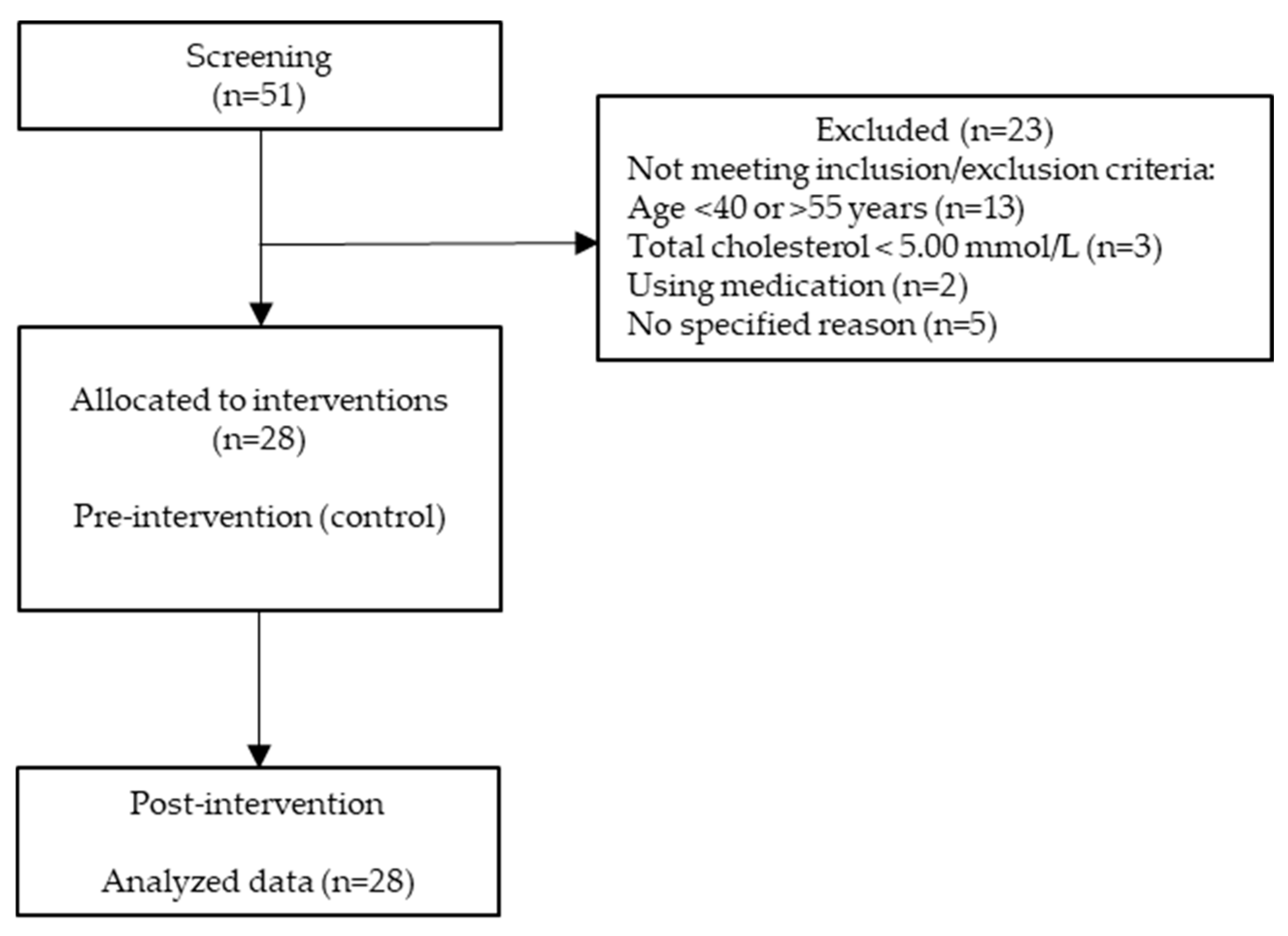
Figure 2.
Typical electrophoretograms of LDL subfractions at baseline (a) and after consumption (b) of SBJ analysed using the Lipoprint system. Atherogenic subfractions LDL3–7 are red; the large (less atherogenic subfractions) LDL1–2 are yellow.
Figure 2.
Typical electrophoretograms of LDL subfractions at baseline (a) and after consumption (b) of SBJ analysed using the Lipoprint system. Atherogenic subfractions LDL3–7 are red; the large (less atherogenic subfractions) LDL1–2 are yellow.
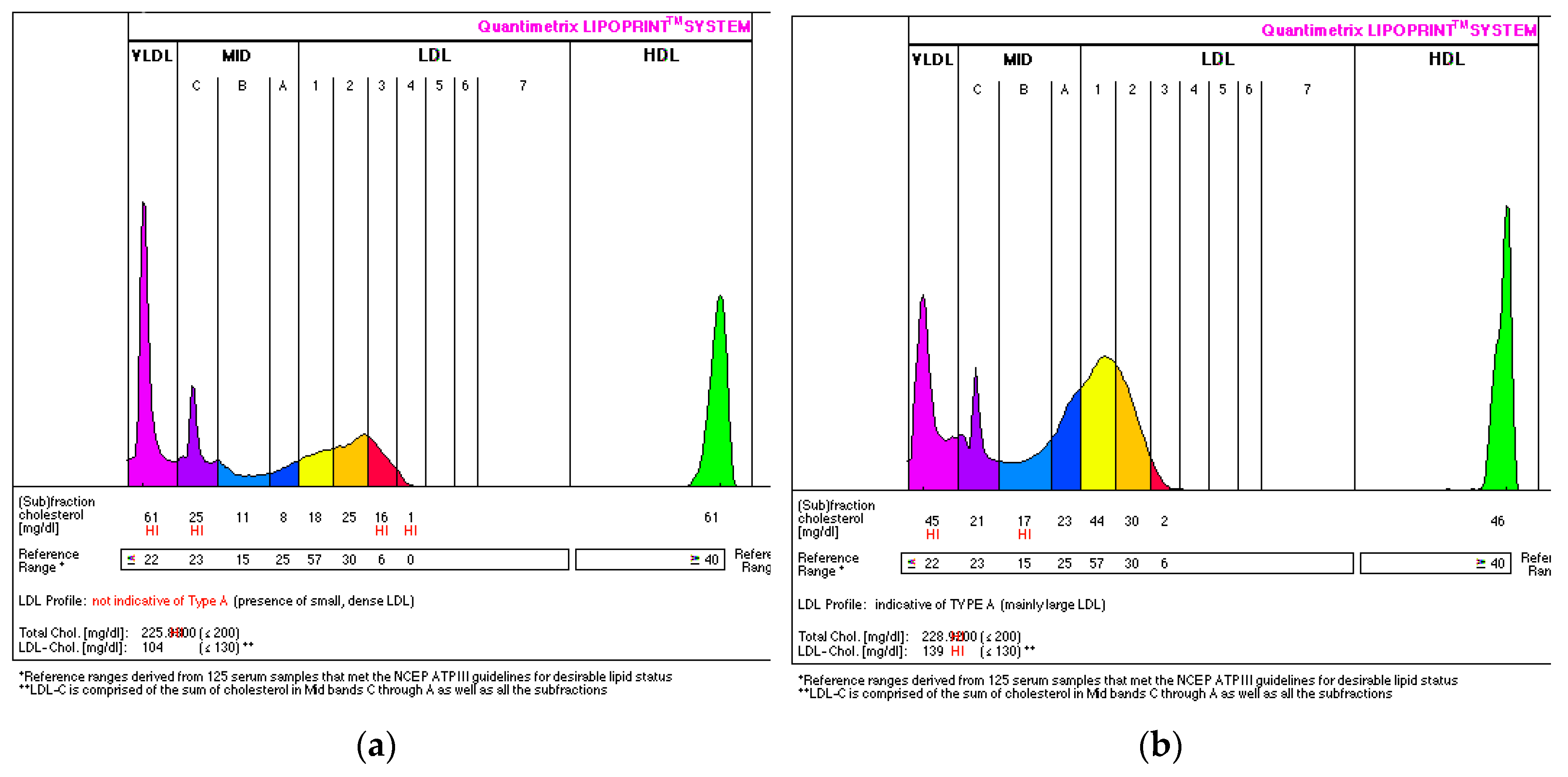

Table 1.
Composition of sea buckthorn juice.
| Parameter | Units | Quantity | Parameter | Units | Quantity |
|---|---|---|---|---|---|
| TPC | mg GAE/g | 1.56 ± 0.03 | Palmitic acid | (%) | 35.91 ± 0.62 |
| Rutin | mg/L | 18.26 ± 0.21 | Palmitoleic acid | (%) | 29.77 ± 0.65 |
| Benzoic acid | mg/L | 142.47 ± 1.12 | Stearic acid | (%) | 0.93 ± 0.08 |
| Caffeic acid | mg/L | 7.13 ± 0.34 | Oleic acid | (%) | 22.01 ± 1.35 |
| Coumaric acid | mg/L | 6.23 ± 0.03 | Linoleic acid | (%) | 2.87 ± 0.01 |
| Ferulic acid | mg/L | 18.14 ± 0.21 | α-linolenic acid | (%) | 0.82 ± 0.01 |
| Myricetin | mg/L | 12.28 ± 0.38 | Arachidic acid | (%) | 0.21 ± 0.01 |
| Resveratrol | mg/L | 2.48 ± 0.08 | SFA | (%) | 3.69 ± 0.01 |
| Neochlorogenic acid | mg/L | 1.03 ± 0.06 | MUFA | (%) | 51.91 ± 0.69 |
| Cryptochlorogenic acid | mg/L | 5.53 ± 0.15 | PUFA | (%) | 37.23 ± 0.54 |
| Vitamin C | mg/100g | 385.41 ± 0.38 | |||
| Total carotenoids | mg/100g | 64.79 ± 5.27 | |||
| AA (inhibition of DPPH) | % | 42.5 ± 0.43 |
Abbreviations: TPC: total phenolic content; GAE: gallic acid equivalents; AA: antioxidant activity; SFA: saturated fatty acids; MUFA: monounsaturated fatty acids; PUFA: polyunsaturated fatty acids.
Table 2.
Baseline parameters of clinical trial group.
| Parameter | Mean ± SD | Min. | Max. |
|---|---|---|---|
| Age (year) | 50.58 ± 5.76 | 40 | 55 |
| BW (kg) | 72.89 ± 13.95 | 49.20 | 100.80 |
| BMI (kg/m2) | 26.30 ± 5.01 | 19.56 | 38.41 |
| TC (mmol/L) | 6.02 (6.58-5.66) | 5.06 | 8.33 |
| HDL (mmol/L) | 1.70 ± 0.23 | 1.15 | 2.01 |
| LDL (mmol/L) | 3.86 (4.71-3.43) | 2.84 | 5.83 |
| TG (mmol/L) | 0.97 (1.12-0.85) | 0.53 | 3.15 |
| GLU (mmol/L) | 4.80 ± 0.35 | 4.20 | 5.40 |
| SBP (mm Hg) | 127.76 ± 17.40 | 85 | 159 |
| DBP (mm Hg) | 86.00 ± 10.43 | 73 | 110 |
Abbreviations: BW: body weight; BMI: body mass index; TC: total cholesterol; HDL: high-density lipoprotein; LDL: low-density lipoprotein; TG: triglycerides; GLU: glucose; SBP: systolic blood pressure; DBP: diastolic blood pressure.
Table 3.
Effect of 8 weeks SBJ consumption on anthropometric parameters and blood pressure.
| Parameter | Baseline | Week 8 | p-value |
|---|---|---|---|
| BW (kg) | 72.89 ± 13.95 | 72.49 ± 13.98 | 0.0221 |
| BFM (kg) | 25.16 ± 10.37 | 24.22 ± 10.40 | < 0.001 |
| BFM (%) | 33.21 ± 8.07 | 32.07 ± 8.37 | < 0.001 |
| BMI (kg/m2) | 26.30 ± 5.01 | 26.07 ± 4.93 | 0.0389 |
| VFA (cm2) | 102.31 ± 37.82 | 98.63 ± 38.55 | < 0.001 |
| SMM (kg) | 26.20 ± 2.89 | 26.54 ± 3.01 | 0.0183 |
| FFM (kg) | 47.73 ± 4.92 | 48.26 ± 5.09 | 0.0268 |
| SBP (mmHg) | 127.96 ± 13.87 | 127.27 ± 17.23 | > 0.05 |
| DBP (mmHg) | 85.77 ± 10.29 | 85.26 ± 8.31 | > 0.05 |
Abbreviations: SBJ: sea buckthorn juice; BW: body weight; BFM: body fat mass; BMI: body mass index; VFA: visceral fat area; SMM: skeletal muscle mass; FFM: fat-free mass. SBP: systolic blood pressure; DBP: diastolic blood pressure.
Table 4.
Effect of 8 weeks SBJ consumption on biochemical characteristics.
| Parameter | Baseline | Week 8 | p-value |
|---|---|---|---|
| ALT (µkat/L) | 0.24 (0.20-0.32) | 0.27 (0.22-0.36) | > 0.05 |
| AST (µkat/L) | 0.31 (0.27-0.36) | 0.32 (0.27-0.38) | > 0.05 |
| GGT (µkat/L) | 0.28 (0.24-0.34) | 0.28 (0.23-0.38) | > 0.05 |
| Bilirubin (µmol/L) | 8.60 (7.05-11.40) | 8.55 (6.55-10.72) | > 0.05 |
| Urea (mmol/L) | 4.68 ± 1.29 | 4.75 ± 1.22 | > 0.05 |
| Creatinine (µmol/L) | 65.90 ± 9.31 | 68.30 ± 8.70 | > 0.05 |
| Uric acid (µmol/L) | 275.29 ± 61.05 | 284.71± 67.07 | > 0.05 |
| Albumin (g/L) | 49.11 ± 2.62 | 48.65 ± 2.68 | > 0.05 |
| CRP (mg/L) | 4.40 (4.00-5.70) | 4.05 (3.50-5.05) | < 0.001 |
| IL-6 (ng/L) | 7.84 ± 0.95 | 7.36 ± 0.79 | 0.0387 |
| ORM (g/L) | 0.86 ± 0.21 | 0.55 ± 0.18 | < 0.001 |
| IgA (g/L) | 1.70 ± 0.62 | 1.55 ± 0.62 | < 0.001 |
| IgG (g/L) | 10.97 ± 2.78 | 10.43 ± 2.62 | < 0.001 |
| IgM (g/L) | 1.22 ± 0.54 | 1.12 ± 0.52 | < 0.001 |
| TC (mmol/L) | 6.02 (6.58-5.66) | 6.06 (6.85-5.23) | > 0.05 |
| HDL (mmol/L) | 1.70 ± 0.23 | 1.77 ± 0.28 | 0.0051 |
| LDL (mmol/L) | 3.86 (4.71-3.43) | 3.73 (4.60-3.31) | 0.0335 |
| TG (mmol/L) | 0.97 (1.12-0.85) | 1.07 (1.33-0.77) | > 0.05 |
| LDL/HDL ratio | 2.44 ± 0.57 | 2.31 ± 0.58 | 0.0070 |
Abbreviations: ALT: alanine aminotransferase; AST: aspartate aminotransferase; GGT: gamma glutamyl transferase; CRP: C-reactive protein; IL-6: interleukin 6; ORM: orosomucoid; IgA: immunoglobulin A; IgG: immunoglobulin G; IgM: immunoglobulin M; TC: total cholesterol; HDL: high-density lipoprotein; LDL: low-density lipoprotein; TG: triglycerides.
Table 5.
Effect of 8 weeks SBJ consumption on lipoprotein subfractions (mmol/L) and LDL particle size (nm) (n=8).
Table 5.
Effect of 8 weeks SBJ consumption on lipoprotein subfractions (mmol/L) and LDL particle size (nm) (n=8).
| Parameter | Baseline | Week 8 | p-value |
|---|---|---|---|
| TC | 5.98 (7.42-5.85) | 6.35 (7.14-5.96) | NS |
| LDL | 3.21 (4.64-3.18) | 3.93 (4.59-3.62) | NS |
| HDL | 1.62 ± 0.32 | 1.49 ± 0.33 | NS |
| TG | 1.49 (2.26-1.01) | 1.44 (1.86-1.14) | NS |
| VLDL | 1.14 ± 0.35 | 0.99 ± 0.21 | NS |
| IDL-A | 0.59 ± 0,25 | 0.87 ± 0.30 | 0.0058 |
| IDL-B | 0.36 (0.52-0.29) | 0.50 (0.68-0.42) | 0.0241 |
| IDL-C | 0.53 (0.64-0.33) | 0.66 (0.72-0.56) | NS |
| LDL1 | 1.21 ± 0.58 | 1.34 ± 0.39 | NS |
| LDL2 | 0.79 ± 0.26 | 0.52 ± 0.32 | NS |
| LDL3-7 | 0.13 (0.36-0.08) | 0 (0.04-0) | 0.0321 |
| Mean LDL particle size | 267.17 ± 5.27 | 271.67 ± 4.13 | 0.0053 |
Abbreviations: TC: total cholesterol; LDL: low-density lipoprotein; HDL: high- density lipoprotein; TG: triglycerides; VLDL: very low-density lipoprotein; IDL: intermediate density lipoprotein.
Disclaimer/Publisher’s Note: The statements, opinions and data contained in all publications are solely those of the individual author(s) and contributor(s) and not of MDPI and/or the editor(s). MDPI and/or the editor(s) disclaim responsibility for any injury to people or property resulting from any ideas, methods, instructions or products referred to in the content. |
© 2023 by the authors. Licensee MDPI, Basel, Switzerland. This article is an open access article distributed under the terms and conditions of the Creative Commons Attribution (CC BY) license (http://creativecommons.org/licenses/by/4.0/).
Copyright: This open access article is published under a Creative Commons CC BY 4.0 license, which permit the free download, distribution, and reuse, provided that the author and preprint are cited in any reuse.


