

Submitted:
12 September 2023
Posted:
14 September 2023
You are already at the latest version
Abstract
Climate changes challenges people’s life and sustainability. Environmental problems seem to derive from human behavior. Dentistry has a high environmental footprint that needs to be controlled worldwide. Thus, the change of behavior of dentists is a necessary condition to improve the environmental situation. In this study we use a system dynamics approach to analyze pro-environmental behavior in dentists. Systemic modelling in this case, allow us to make a clear prediction of how the population of non-eco dentists will change in the future if certain factors will be affected and how much time will be needed by the system of a group of dental professionals to become eco- dentists. The ECODENT model was designed with Vensim software. It was based on the influence of WOM (word of mouth) spread of information among colleagues and stakeholders (e.g. patients, auxiliary staff and community) and other factors such as dental income, state support, CaPex and OpEx, education hours, level of urbanization and time to react. By changing each one of them we can observe the changes in the groups of non-eco and eco dentists as well as the flow of the phenomenon. It is tested that by augmenting WOM parameter, state economic support or education hours, while diminishing CaPex and OpEx, changes in pro-environmental behaviors of dentist will be reported in a shorter time. The ECODENT model can be used to further study pro-environmentalism in different dental groups and associations and design relevant eco-friendly educational programs.
Keywords:
eco-friendly behavior
; sustainability
; systems dynamic
; systemic model
; dental environmentalism
; green dentistry
; sustainable dentistry
; holistic approach
; pro-environmental behavior
1. Introduction
Climate changes challenges people’s life and sustainability [1]. With the prominence of various intense environmental problems worldwide, ways to deal with these problems and improve anthropocentric and environmental sustainability has attracted recently ex-tensive attention [2,3]. Environmental problems seem to stem from human behavior or caused by it [4]. Thus, the change of behavior is a necessary condition to improve the environmental situation [5]. Scholars have conducted important work on the pro-environmental behavior of individuals, which include its conceptual connotation, formation mechanism, effect pathway, and educational needs for stakeholders [5,6]. Basically, there are reports on the influencing factors or results of pro-environmental behavior [3,7,8]. Further, the relationship between pro-environmental behavior and other research topics are discussed, such as subjective well-being [9] and social norms [10]. Finally, the theoretical model of pro-environmental behavior has been constructed, named as the conceptual model for voluntary pro-environmental behavior of employees [11].
Pro-environmental behavior, also known as green-, sustainable-, or environmentally friendly (eco-friendly) behavior, is defined as behaviors in which individuals take protective actions toward the environment [12]. In the field of dentistry there are reports on sustainable behavior that face the issue of reducing the carbon footprint [13]. According to the World Health Organization (WHO) [14], there is an ethical obligation to protect public health in every state by developing an environmentally conscious behavior [15]. In Europe, the European Green Deal is planning to transform the EU into a modern, re-source-efficient, and competitive economy, ensuring that there are no net emissions of greenhouse gases by 2050 [16]. The World Federation of Dentists (FDI) also stated that dentists should incorporate sustainable objectives into everyday clinical practice and support the transition to green economy [17]. By now, legislation all over the world makes it obvious that all oral health care providers have an ethical obligation to perform clinical activities in a sustainable manner [18] and cultivate pro-environmental behavior [6].
A dentist is said to have a pro-environmental behavior when he takes actions and in-itiatives to minimize the negative impact of his own behavior on the environment, reduce harm to the nature and the world [5,19] and even benefit it [20]. This can be done with ac-tions that diminish greenhouse gas emissions and the waste of natural resources, forward disposal of wastes according to legislation, apply the philosophy of 4Rs (Rethink, Reuse, Reduce and Recycle) in the dental office and home [6], volunteer in environmental social actions and improve overall environmental sustainability [21]. Positive public's attitudes towards sustainability in dentistry has also been reported as well as their willingness to make compromises to reduce the impact of their dental treatments on the environment [22]. On the other hand, dentists in different countries seem also to start being more sensitive on environmental issues and are somehow willing to incorporate green dentistry philosophy in their practices [13]. Elsewhere is mentioned a poor response of dentists to environmentally friendly actions in the dental practice, refusal to participate in eco-friendly initiatives in dentistry, lack of knowledge of legislation, reduced participation in environmental initiatives and reduced willingness to participate in relevant continuing education seminars [6].
So far studying the pro-environmental behavior of dentists is done by research studies based in the form of questionnaires selecting opinions and observing current attitudes. Although necessary, this approach does not further explain how certain factors affect pro-environmental behavior and how the phenomenon can be evolved in the future in different environments and settings.
System dynamics is then a research approach for supporting the study of a process or phenomenon with the use of clean questions and simulation procedures to better under-stand it and develop capability to use it in different environments and cases by designing study models [23]. Systemic modelling further allows us to make a clear prediction with-out relying on someone else’s opinion, but only on some ratings and factors we attribute to the case in question, to make a clear prediction. Systemic models then offer a prediction of what will happen with the issue in the future based on what is happening with it right now [24]. Addressing this challenge requires the use of proper methods. System dynamics provides us with a powerful toolset for a holistic approach to the theme in question revealing feedback loops, accumulation dynamics, system delays, and nonlinear effects. In addition, through group model-building techniques [25,26], systemic modelers can engage stakeholders in the modeling process, which is particularly effective in identifying key behaviors [27] and enhancing modeling quality and implementation [25,28,29,30,31].
With the knowledge of this prediction, stakeholders can design educational interventions and strategies for changing the status quo for serious issues such as the enhancement of pro-environmental behavior of dentists. So far, even though systemic instruments have had a strong impact on the management of public policy systems in fields such as health and innovation [24], pro-environmental behavior of healthcare workers and especially dentists have not been widely discussed by applying this type of instrument. Thus, the design of a systemic model that could effectively help our effort studying the eco response of dentists is highly needed for further evaluation.
This study makes three contributions to literature. First, it discusses factors influencing pro-environmental behavior. Second, we present a systemic evaluation framework, the ECODENT model for the study of dentists pro-environmental status quo. Third, we test the model in data receive from a sample of Greek dentists to assess opportunities and challenges associated to the implementation of such a systemic framework for policymaking in dentistry.
2. Materials and Methods
2.1. Background of the Study
The systemic model described here is called "ECODENT". It aims to model and then simulate how the green dental philosophy and practice can be spread within an active population of dentists. Our hypothesis is that dentists who will potentially apply the green philosophy in their entrepreneurship and clinical dental practice, are motivated by colleagues who are already convinced of its benefits and are considering implementing it or are already applying it in their dental practices (green dental practices). Some of the dentists will be informed about green dental practice but will do nothing else, others will use simple principles of green dentistry (recycling paper and plastic, proper disposal of infectious waste and mercury residues of dental amalgam, saving of energy resources). Others, however, may implement a full program of green entrepreneurship and reduction of the footprint of dental practice by making better time management in patient appointments, selecting, designing, and implementing green design in the building where the practice is located but also in the clinic itself and permanently changing the work structure to include ecological actions inside and outside the clinic (volunteering in environmental actions, get involved to local administration to enhance green strategies in the community etc.).
Conscious and experienced dentists in green dental practice will influence other colleagues in the industry according to the Socio-Ecological Model of Communication [32]. According to this model, designing and implementing effective communication programs for social and behavioral change (SBCC) requires a solid understanding of the complex system with which the target audience operates and the interactions between them [33,34,35,36]. The Socio-Ecological Communication Model for Social and Behavioral Change outlines a theoretical framework that can help dental leaders adopt a systemic approach to environmental problem analysis to design programs that enhance green dental practice based in different types of communication as seen in Figure 1.
The Socio-Ecological Model of Communication is based on the WOM (word of mouth) transfer of information [37], that we believe will affect the dynamics of the systemic model we will design.
WOM can be explained by the theory of cognitive dissonance according to which every person has specific cognitive elements, opinions, and past behavior that describe his psychological aspects and affects his choices [38]. When one cognitive element does not follow logically from another, they are dissonant to each other [38]. To reduce dissonance in pro-environmental behavior of dentists we need attitude change, selective exposure to the issue, and WOM [37]. Recommending such a behavior to people and gaining their support helps to convince actual dentists to follow too [40]. Referring to pro-environmental behavior, this means that if eco-friendly dentistry practices are ranked as the best alternative, dentists may incorporate them in their offices and services to reduce or avoid cognitive dissonances [41]. Another theory explaining the WOM’s influence on spreading green dental philosophy is the theory of the strength of weak ties in interpersonal networks [42]. Weak ties have a higher reach of information and recommendations, whereas strong ties have a lower reach but trust in information is higher [43]. Strong ties often exist between family members, close friends, or even good colleagues, while weak ties describe the relationship between acquaintances and dentists that are not friends [44]. Weak ties among dentists usually connect different clusters, enabling cross-group information exchange [42] but it is WOM spread by strong ties that is more likely to influence pro-environmental behavior [39,43]. Finally, there is the theory of perceived risk by Bauer [45] and Cox [46] that states that the degree of uncertainty plays a role in most purchases of services or goods. The perceived risk of an issue is a key aspect of individual’s behavior that strongly influences decision making [46,47]. When perceived risk exceeds the subjective tolerance level, an individual is motivated to develop a risk reduction strategy [45,46]. Such strategies in pro-environmental behavior of dentists may focus on making it obvious that their non-eco dentistry has certain potential negative consequences and discuss about the likelihood of such consequences. Strategies for reducing uncertainty include searching for, processing, storing, and sharing information [37]. Relevant information can be obtained, inter alia, through the advice of colleagues, mentors, dental associations. Therefore, WOM communication provides a common strategy for reducing perceived risk in dentists as in other clusters [37] and help them change behavior.
In our study we then tried to describe the complexity, interdependence, and totality of the components of this complex adaptive behavior system, and not just a specific component separately from the system in which it is built in. The two main features of the ecological model of communication that underlies our study are integration, a state in which one system is nested in a hierarchy of other systems at different levels of analysis, and emergence, in which the system at each level is "greater than the sum of its parts". Because the model itself is embedded in the physical environment and the infrastructure and communication process that affects it, it is also a general ecological model of behavior and social change that could be used for the study of other environmental behaviors too. In this sense, every dentist influences with his behavior the network in which he moves, works and lives as well as the different subgroups of the dental population by using each time different types of communication and attitudes.
2.1. Modelling
2.1.1. Setting the Variables of the Model
We assume that the philosophy of eco-friendly dental practice becomes available to the population of Greek dentists. The number of potential users of this philosophy is equal to the total number of Greek dentists. This number, according to data from the Hellenic Dental Association, is around 12.100 dentists [48]. Initially, we assume that all potential users of green dental practice belong to the category "Non-Eco Dentists" except for a very small portion of environmentally sensitive and activated in green dentistry dentists that we call "Eco-Dentists". We believe that Non-Eco Dentists do not apply any basic principle of green design of infrastructure, technology, and services. "Non eco Dentists" will be motivated to implement the green philosophy either voluntarily, or through appropriate training (continuing education seminars with credits awarded by scientific societies and dental associations), or influenced by WOM (other dentists, social opinion, and other factors.
We believe that all dentists involved in green dental practices will start using green dentistry’s basic principles. They are called "Beginners Eco” dentists (Beginners Eco). Some of them will proceed using advanced applications of this philosophy in their field, thus being characterized as "Advanced Eco" users (Advanced Eco). Some will take full advantage of the philosophy of green dentistry across the spectrum of its applications and will be characterized as "Expert Eco" dentists (Expert Eco). In this case, we should consider the following:
- The number of potential recipients of green dental practice (all dentists)
- The initial number of "Non-Eco Dentists".
- The initial number of "Eco Dentists".
- The percentage of users who go from "Beginner Eco" to "Advanced Eco".
- The percentage of users who go from "Advanced Eco" to "Expert Eco".
- The average time required for an "Eco Beginner" to become an "Advanced Eco".
- The average time required for an "Advanced Eco" to become an "Expert Eco".
- The factor of influence of an inexperienced dentist by an Eco dentist (of all subcategories) to convince him to follow the green dentistry philosophy.
We see in the case of Figure 2, that the causality diagram can be quite complex as there are different groups within the same population that can affect to varying degrees all other groups until the entire dental population becomes Expert Eco. In this diagram we assume that Non-Eco Dentists will be influenced by various factors until they proceed to adopt the Green Dental philosophy (Transformation) and then move to the stage of Beginners Eco, Advanced Eco, and Expert Eco to end up at the pool of all dentists being Eco Dentists. Of course, a dentist can avoid some stages and proceed directly to the stage of Expert Eco or even stay at the stage of Beginner Eco or Advanced Eco. The manner and dynamics of this interaction and mutual influence within Eco dental team members and between factors influencing the phenomenon, include dynamic evolution (e.g. we cannot fully know the social impact on the phenomenon or the response of patients to green dentistry that may influence dentists themselves to apply it). This complexity can lead to difficulty in finding the systemic dynamics of other factors in the system.
For this reason, we will proceed to a simpler form of this approach by examining factors reported to be important elsewhere [6]: a) the impact of initial or continuing education (Edu hours) on the creation of a population group of experienced dentists (Advanced Eco Dentists & Expert Eco Dentists) on the green philosophy (eco dentistry), b) state support (may include state financial support for the conversion of the existing dental practice to green, eco-dental clinic, tax exemptions or granting of emergency grants etc.) (c) dentists' income, (Dent Income) i.e. their ability to cope with the necessary changes at their own expense; (d) the level of urbanization, (Urbanization level) since more expensive dentistry may be practiced in urban centers, whereas there are other costs which do not exist in rural centers, e.g. staff and patient travel costs, etc.) and at the same time, urban dentists may be more exposed to social influence and therefore more sensitized) and e) the time of shift (Time to react) from one category to another, which can be dynamically different depending on how other factors influence.
Our model will be developed based on the following "dynamic hypothesis": The spread of green dentistry is influenced by WOM (word of mouth), meaning the social influence (including here the interaction between dentists, between dentists and patients, and the influence of other factors of social interaction e.g., effect of advertising or use of social media, etc.) mentioned before. In other words, we assume that Eco Dentists are the ones who will influence Non-Eco Dentists and motivate them to implement green dentistry. The degree of influence depends on the number of Eco Dentists (in relation to the total population of dentists) as well as on the degree of interaction (contact) with Non-Eco Dentists and other social groups that define the Interaction Factor.
Non-Eco Dentists and Eco Dentists teams will be the accumulation points in our model, while some other factors will be the parameters of the system ("constants") or, otherwise, will have a parameter role in the system that describes the phenomenon of dissemination of green dentistry. Such parameters are indicative to:
- The number of dentists – recipients of green dental philosophy
- The initial number of advanced or experienced dentists
- The expected escalation of dental maturation to successively higher levels of environmental knowledge and experience as a percentage of the number of potential recipients of green dental philosophy
- The average time required for a dental professional to mature to accept new green dental philosophy that may cost (have implementation costs)
- The influencing factor that connects an advanced or experienced dentist in green dentistry to an uninformed colleague to convince him to apply the eco dentistry philosophy in his practice.
The aim is to show the changes in the number of either population during the evolution of the phenomenon over time. In this way, dental groups and dental associations will gain knowledge on how to dynamically disseminate an eco-friendly philosophy. Ultimate benefits out of this procedure will be the following:
- Estimation of the time of full dissemination of green dentistry in Greek dental clinics (completion of the phenomenon).
- Estimation of the number of dentists for each subgroup of dentists to plan the educational support activities for each of them.
- Identification of weaknesses in disseminating knowledge about green dentistry.
- Identification and investigation of factors influencing the spread of green dentistry.
- Planning the completion of the development of the educational action for green dentistry, if some parts of it are done gradually and in parallel with its dissemination.
In our model, the rate of acceptance of green dentistry depends on factors reported in Table 1.
2.3. ECODENT Model Development
For designing the systemic model, we used a Vensim software. To simulate, Vensim requires the definition of some initial settings, seen in Table 2:
The above has the meaning that the time base of the simulation is the month, and the simulation starts at month 1 and ends at month 60 (i.e., it will last 5 years). The diagram of the simplified model is seen in Figure 3.
2.3.1. Quantitative Dependencies (Equations)
The model also includes the quantitative quantities that determine the correlations between its elements. They are not depicted in the figure (Figure 3) but have been inserted into Vensim and are:
Accumulation points (equations):
Non-Eco Dentists: = INTEG (Transformation)
Initial value: 15000
Eco Dentists= INTEG (Transformation)
Initial value: 200
Influence factor= ECO Dentists / (ECO Dentists + NON ECO Dentists) * Interaction Factor
Equations:
Transformation= (NON ECO Dentists * Social Influence / (Time To React) )
* (Dent Income / 2000)
* (1 + Educ Hours*0.1)
* (Urbanization level / 80)
/ (1 + (OPEX - State Support)/200 )
/ (CAPEX/5000)
2.3.2. Variables
For variables that are parameters, the values (Min, Max, Incr) are set, which respectively represent the smallest, the largest and the step increase of the value that this variable will take during the simulation. The value of a parameter is adjusted with a special control during the simulation. Thus, the notation (Min, Max, Incr) = (1,10, 2) means that the variable (parameter) will extend from 1 to 10 and vary with step 2. The rest of the variables have values as seen in Table 3.
The model at this stage fully describes our system and is now capable of simulation.
2.4. Simulation of the ECODENT Model
By performing the simulation function "Synthe Sim", Vensim instantly gives an indication of the temporal evolution of all accumulation points and all variables over the entire time range of the simulation. The overall picture of the simulation is illustrated in Figure 4.
Below we present two indicative virtual pages (views) of the model. In Figure 5a,b, we present the image of the model when the only factor that is active is Dent Income and the interaction factor changes. The diagram (Fig. 5b) shows the distribution of dentists in terms of their transition to the Eco Dentists group.
The data contained in the transformation variable in this position of the sliders (view 1) are the following (indicatively mentioned – some intermediate values have been removed for reasons of space economy):
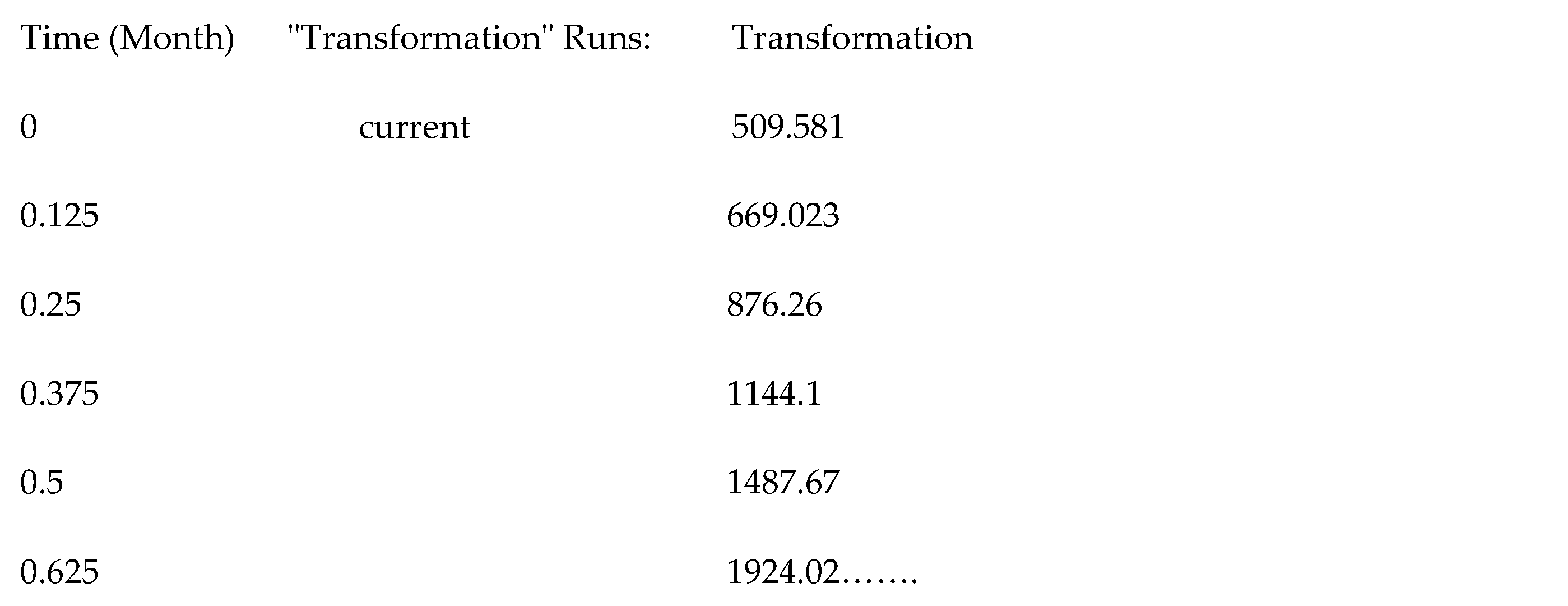
Then we present a second example of the ECO DENT model operation where we have moved various sliders (Figure 6a,b).
2.4.1. Checking the ECODENT Model
There is no historical data to test the model. The model is therefore "exploratory" and helps to investigate the phenomenon we are examining, which is the spread of green dental philosophy in Greece. The logic underlying ECODENT can be tested by setting some extreme values in the parameters of the model to fully understand the flow of the phenomenon. The logic of the model is summarized here: There is a population of dentists who are potential implementers of green dentistry. Initially, all dentists are "Non-Eco Dentists". With appropriate influence by "Eco Dentists" (WOM influence) they will fall within 5 years in the category of Eco Dentists. For the phenomenon to evolve more rapidly, the degree of urbanization, income, hours of education, state aid and the strengthening of the influence factor may have a positive effect, while the CAPEX and OPEX of this case may have a negative effect.
The operation test will be done with the following scenario 1, with median values for Greek dentists, presented in Table 4:
With these values, the number of "Non-Eco Dentists" will gradually decrease and in 18 months the phenomenon will have ended (Figure 7a,b).
4. Discussion
The systemic ECODENT model explains the evolution of the phenomenon of WOM spread of green dental pro-environmental behavior among Greek dentists. At this stage it has no historical data, so it cannot fully explain specific situations. However, by applying this model to a small sample of the Greek dental population, it is possible to create historical data. The model can then be used by dental associations as a predictive and strategic decision-making tool for the education and adoption of green dentistry from all Greek dental practices. The function of the model is a function of a series of parameters as described above. System Dynamics contributed to the modeling of the process of integrating principles of green dentistry into the population of Greek dentists. It showed the dynamics of the phenomenon of influencing dentists' behavior by their own population through WOM (e.g., colleagues or patients’ opinion and other social interactions) qualitatively and quantitatively. Specifically, the model developed can give a quantitative approximation of the number of dentists touched, each time one of the main or secondary variables of the model changes. If fed with appropriate quantitative data, it can be a predictive and decision-making tool for the dissemination and adoption of green dentistry by other dental groups worldwide, as is discussed with the use of other systemic tools in the analysis of certain phenomena in the business field [49].
Systemic approaches involve understanding the impact and potential of people (e.g., dentists) within a system and its implication on us as individuals [23]. This bigger (systemic) view can assist dental associations in embracing difference, managing from a higher-level understanding as well as everyday outcome perspective and spread information needed for behavior changes within the dental population as suggested elsewhere too [49,50]. It can further reduce personalized frustrations that we usually experience when we are asked to proceed to changes in our dental offices (especially if cost is involved) as we find ourselves interrupting behaviors from a personal/productivity perspective and not from an understanding perspective. When we equip ourselves with basic systemic oversight such as how does a non-eco behavior effect the “system” as well as how does the “system” affects the individual dentist, we can start to empower ourselves to see beyond the problem (low environmentalism in dentists) as reported elsewhere [6]. We can further see beyond a person’s behavior and low performance into what is enabling this behavior, what is the wider context and what can we harness from this experience to become better professionals [51].
In this model we incorporated certain factors considering basically the strong influence of WOM among professionals and among social relationships, the state economic support and the financial status of dental professionals and the degree of urbanization as already reported in other studies [6]. We focused on social ties, perceived risk about the environment and sharing of the information among dental professionals. This approach is more direct and does not cause overload of information or other obligatory thus stressing educational activities. From the United Nations’ attempt to capture the attention of professionals with an overload of information inputs and sheer volume of ideas on sustainable development issues under the single grand vision of education for a sustainable future, we have learned that such attempts will only end up in a mass mental blurriness on environmental literacy [52]. This action has impeded our ability to sustain concentration on serious environmental problems that touch the core of human existence and enhance our core mental skills to connect with the natural system and our place in it. Consequently, if dentists are forced to proceed to environmental changes in their practices with an overload of information, rules, and legislation, they may be forced to become unaware of what is really happening around them. The systemic ECODENT model though suggests minimum educational hours and more influence of all other parameters mentioned before, to interact with pressing environmental issues, confronting professionals of the field.
5. Conclusions
Systems Thinking can be applied to avert low environmentalism behaviors in dentists with the goal of communicating the new eco-friendly concept at the level of the practitioner. Systemic tools such as modelling can further help study pro-environmental changes in a dental population. Modelling can address possible ways that different factors may play a significant role in future changes in dentists’ behavior. The ECODENT model is such an example of a systemic model for a deeper and dynamic approach to dentists’ eco behaviors.
Funding
This research received no external funding.
Institutional Review Board Statement
Not applicable
Informed Consent Statement
Not applicable.
Acknowledgments
The author wishes to thank contributors of CSAP mastering Program, University of Piraeus, Greece, for checking the reliability of the ECODENT model presented in this study.
Conflicts of Interest
The author declares no conflict of interest.
References
- EPA. Environmental Protection Agency. Climate Impacts on Human Health. Available online: https://climatechange.chicago.gov/climate-impacts/climate-impacts-human-health#:~:text=The%20impacts%20of%20climate%20change,and%20the%20weather%20we%20experience (accessed on 20 August 2023).
- Do Paco, A.M.F.; Reis, R. Factors Affecting Skepticism toward Green Advertising. J. Advert. 2012, 41, 147–155. [Google Scholar] [CrossRef]
- Li, X.W.; Du, J.G.; Long, H.Y. Dynamic analysis of international green behavior from the perspective of the mapping knowledge domain. Environ. Sci. Pollut. Res. 2019, 26, 6087–6098. [Google Scholar] [CrossRef] [PubMed]
- Kaaronen, R.O. Affording Sustainability: Adopting a Theory of Affordances as a Guiding Heuristic for Environmental Policy. Front. Psychol. 2017, 8, 1974. [Google Scholar] [CrossRef] [PubMed]
- Tian, H.; Liu, X. Pro-Environmental Behavior Research: Theoretical Progress and Future Directions. Int J Environ Res Public Health. 2022, 31, 6721. [Google Scholar] [CrossRef] [PubMed]
- Antoniadou, M.; Chrysochoou, G.; Tzanetopoulos, R.; Riza, E. Green Dental Environmentalism among Students and Dentists in Greece. Sustainability 2023, 15, 9508. [Google Scholar] [CrossRef]
- Gifford & Nilson 2014.
- Nilson 2017.
- Zawadzki, S.J.; Steg, L.; Bouman, T. Meta-analytic evidence for a robust and positive association between individuals’ pro-environmental behaviors and their subjective wellbeing. Environ. Res. Lett. 2020, 15, 123007. [Google Scholar] [CrossRef]
- Farrow, K.; Grolleau, G.; Ibanez, L. Social Norms and Pro-environmental Behavior: A Review of the Evidence. Ecol. Econ. 2017, 140, 1–13. [Google Scholar] [CrossRef]
- Lulfs, R.; Hahn, R. Corporate Greening beyond Formal Programs, Initiatives, and Systems: A Conceptual Model for Voluntary Pro-environmental Behavior of Employees. Eur. Manag. Rev. 2013, 10, 83–98. [Google Scholar] [CrossRef]
- Krajhanzl, J. Environmental and pro-environmental behavior. Sch. Heal. Heal. Educ. Int. Exp. 2010, 21, 251–274. [Google Scholar]
- Veress, S.; Kerekes-Máthé, B.; Székely, M. Environmentally friendly behavior in dentistry. Med Pharm Rep. 2023, 96, 199–205. [Google Scholar] [CrossRef] [PubMed]
- WHO. Compendium of WHO and other UN guidance on health and environment. 3 September 2021. Available online: https://www.who.int/publications/i/item/WHO-HEP-ECH-EHD-21.02 (accessed on 23 August 2023).
- Toma, A.; Crişan, O. Research on developing environmental ethics in pharmacists’ activities. Environ Health. 2021, 20, 52. [Google Scholar] [CrossRef] [PubMed]
- EU. A European green deal. Applied 11 December 2019. Available online: https://commission.europa.eu/strategy-and-policy/priorities-2019-2024/european-green-deal_en (accessed on 20 August 2023).
- Harford, S.; Ramasubbu, D.; Duane, B. How-to Guide for dental practices sustainable dentistry centre for Sustainable Healthcare. Oxford: 2019.
- Martin, N.; Mulligan, S. Environmental Sustainability Through Good-Quality Oral Healthcare. Int Dent J. 2022, 72, 26–30. [Google Scholar] [CrossRef] [PubMed]
- Kollmuss, A.; Agyeman, J. Mind the Gap: Why do people act environmentally and what are the barriers to pro-environmental behavior? Environ. Educ. Res. 2002, 8, 239–260. [Google Scholar] [CrossRef]
- Steg, L.; Vlek, C. Encouraging pro-environmental behaviour: An integrative review and research agenda. J. Environ. Psychol. 2009, 29, 309–317. [Google Scholar] [CrossRef]
- Mesmer-Magnus, J., Viswesvaran, C., Wiernik, B.M. The Role of Commitment in Bridging the Gap between Organizational Sustainability and Environmental Sustainability. In: Jackson S.E., Ones D.S., Dilchert S., editors. Managing Human Resources for Environmental Sustainability. Jossey-Bass; San Francisco, CA, USA: 2012. pp. 245–283.
- Baird, H.; Mulligan, S.; Webb, T. Exploring attitudes towards more sustainable dentistry among adults living in the UK. Br Dent J 2022, 233, 333–342. [Google Scholar] [CrossRef] [PubMed]
- North, M.J.; Macal, C.M. Managing Business Complexity: Discovering Strategic Solutions with Agent-Based Modeling and Simulation; Oxford University Press: New York, NY, USA, 2007. [Google Scholar]
- Darabi, N.; Hosseinichimeh, N. System dynamics modeling in health and medicine: a systematic literature review. System Dynamics Review 2020. [Google Scholar] [CrossRef]
- Andersen, D.; Richardson, G. Scripts for group model building. System Dynamics Review 1997, 13, 107–129. [Google Scholar] [CrossRef]
- Andersen, D.; Vennix, J.; Richardson, G.; Rouwette, E.A.J.A. Group Model Building: Problem Structing, Policy Simulation and Decision Support. J Operation Res Society 2007, 58, 691–694. [Google Scholar]
- Hosseinichimeh, N.; Rahmandad, H.; Jalali, M.S.; Wittenborn, A.K. Estimating the parameters of system dynamics models using indirect inference. System Dynamics Rev 2016, 32, 156–180. [Google Scholar] [CrossRef]
- Ackermann, F.; Andersen, D.; Eden, C.; Richardson, G. Scripts Map: A tool for designing multi-method policy-making workshops. Omega 2011, 39, 427–434. [Google Scholar] [CrossRef]
- Hosseinichimeh, N.; MacDonald, R.; Hyder, A.; Ebrahimvandi, A.; Porter, L.; Reno, R. Group Model Building Techniques for Rapid Elicitation of Parameter Values, Effect Sizes, and Data Sources. System Dynamics Rev 2017, 33, 71–84. [Google Scholar] [CrossRef]
- Hovmand, P.S.; Andersen, D.F.; Rouwette, E.; Richardson, G.P.; Rux, K.; Calhoun, A. Group Model-Building ‘Scripts' as a Collaborative Planning Tool. Systems Res Behav Sci 2012, 29, 179–193. [Google Scholar] [CrossRef]
- Hovmand, P.S.; Gillespie, D.F. Implementation of Evidence-Based Practice and Organizational Performance. J Behav Health Serv Res 2010, 37, 79–94. [Google Scholar] [CrossRef] [PubMed]
- Kincaid, L.; Figueroa, M.E.; Storey, D.; Underwood, C. A Socio-Ecological Model of Communication for Social and Behavioral Change. Johns Hopkins Bloomberg School of Public Health. Available online: https://breakthroughactionandresearch.org/wp-content/uploads/2020/12/socio-ecological-model-of-communication-for-sbc.pdf (accessed on 20 August 2023).
- Figueroa, M.E.; Kincaid, D.L.; Rani, M.; Lewis, G. Communication for Social Change: An Integrated Model for Measuring the Process and Its Outcomes. New York: Rockefeller Foundation, 2002.
- Kincaid, D.L.; Figueroa, M.E.; Kincaid, D.L. A social ecology model of communication, behavior change, and behavior maintenance [working paper]. Baltimore, MD: Johns Hopkins Center for Communication Programs, Johns Hopkins University 2007.
- Kincaid, D.L.; Figueroa, M.E. Communication for participatory development: Dialogue, action, and change. In L.R. 2009. [Google Scholar]
- Frey, L.R.; Cissna, K.N. (Eds.) Routledge Handbook of Applied Communication Research. New York: Routledge 2007 (pp. 506–531). [CrossRef]
- Festinger, L.A. Theory of cognitive dissonance. Stanford University Press, 1957.
- Oshikawa, S. Can cognitive dissonance theory explain consumer behavior. J Marketing 1969, 33, 44–49. [Google Scholar] [CrossRef]
- Pauli, G.; Martin, S.; Greiling, D. The current state of research of word-of-mouth in the health care sector. Int Rev Public Nonprofit Mark 2023, 125–148. [Google Scholar] [CrossRef]
- Wangenheim, F.V. Posts witching negative word of mouth. J Service Res 2005, 8, 67–78. [Google Scholar] [CrossRef]
- De Matos, C.A.; Rossi, C.A. Word-of-mouth communications in marketing: A meta-analytic review of the antecedents and moderators. J Acad Mark Sci. 2008, 36, 578–596. [Google Scholar] [CrossRef]
- Granovetter, M. The strength of weak ties. Am J Soc. 1973, 78, 1360–1380. [Google Scholar] [CrossRef]
- Brown, J.J.; Reingen, P.H. Social ties and word-of-mouth referral behavior. J Cons Res 1987, 14, 350–362. [Google Scholar] [CrossRef]
- Buchanan, M. Nexus. Small worlds and the groundbreaking science of networks. W. W. Norton & Company, 2002.
- Bauer, R.A. Consumer behavior as risk taking. In D. F. Cox (Ed.), Risk taking and information handling in consumer behavior (pp. 23–33). Div. of Research, Graduate School of Business Admin., Harvard University, 1967.
- Cox, D.F. Risk handling in consumer behavior – an intensive study of two cases. In D. F. Cox (Ed.), Risk taking and information handling in consumer behavior (pp. 34–81). Div. of Research, Graduate School of Business Admin., Harvard University, 1967.
- Zhang, L.; Tan, W.; Xu, Y.; Tan, G. Dimensions of consumers’ perceived risk and their influences on online consumers’ purchasing behavior. Com Info Sci Manag Engineer 2012, 2, 8–14. [Google Scholar]
- FDI. Hellenic Dental association members. Available online: https://www.fdiworlddental.org/hellenic-dental-association (accessed on 23 August 2023).
- Monat, J.; Amissah, M.; Gannon, T. Practical Applications of Systems Thinking to Business. Systems 2020, 8, 14. [Google Scholar] [CrossRef]
- Stacey, R.D. Tools and Techniques of Leadership and Management: Meeting the Challenge of Complexity; Routledge: Aberdeen, UK, 2012. [Google Scholar]
- Chapman, A.; Using a systemic approach to management. 27 July 2018. Available online: https://www.businessballs.com/blog/using-a-systemic-approach-to-management/ (accessed on 20 August 2023).
- Keong, CY. Environmental education: Some remarks. In: The United Nations environmental education initiatives: The green education failure and the way forward. Global Environmental Sustainability 2021. Available online: https://www.sciencedirect.com/topics/earth-and-planetary-sciences/environmental-education (accessed on 20 August 2023).
Figure 1.
The Socio-Ecological Model of Communication for Social and Behavioral Change for studying pro-environmental behavior in dentists.
Figure 1.
The Socio-Ecological Model of Communication for Social and Behavioral Change for studying pro-environmental behavior in dentists.
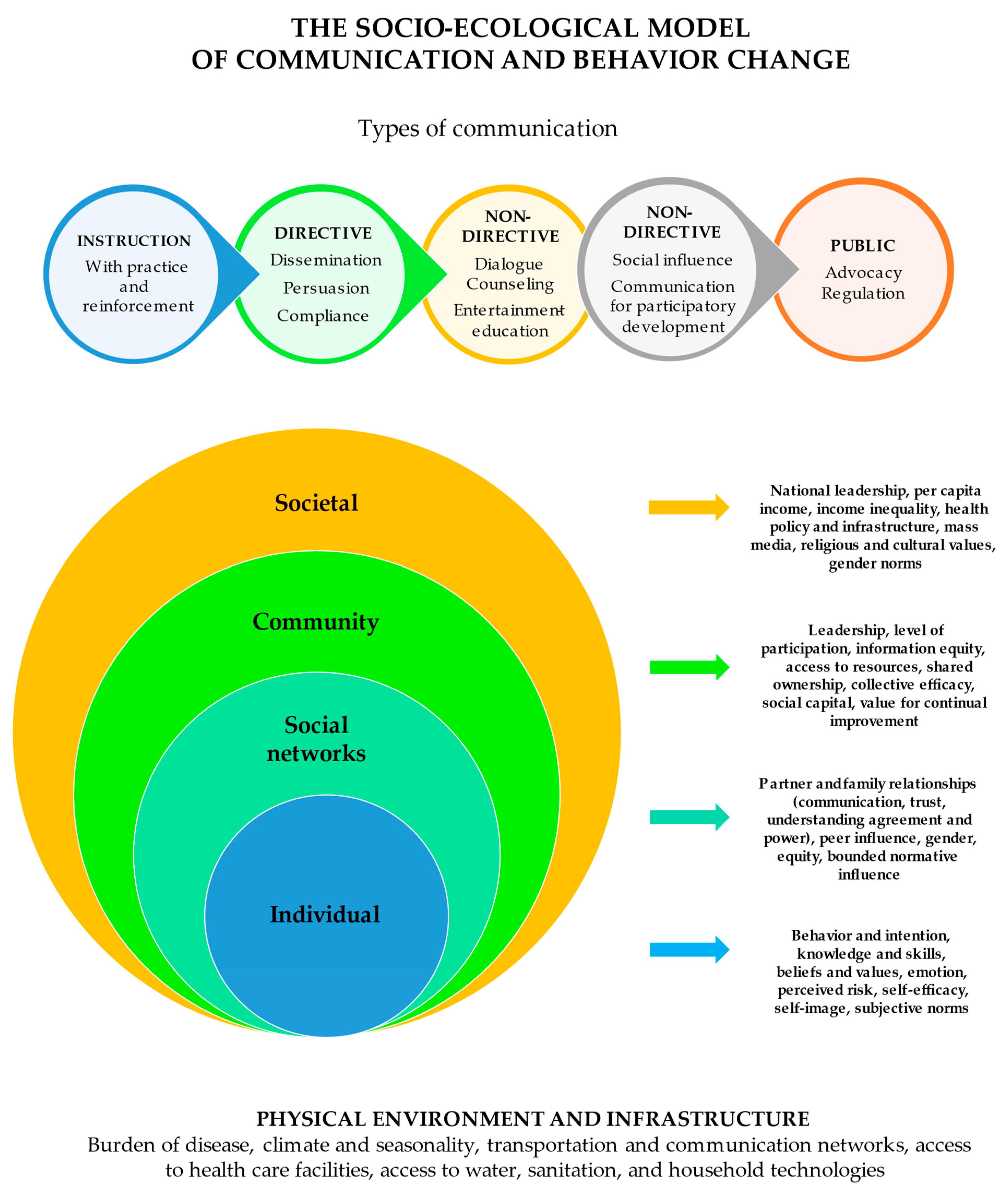
Figure 2.
Initial causality diagram for environmentally friendly dental practice in Greece.
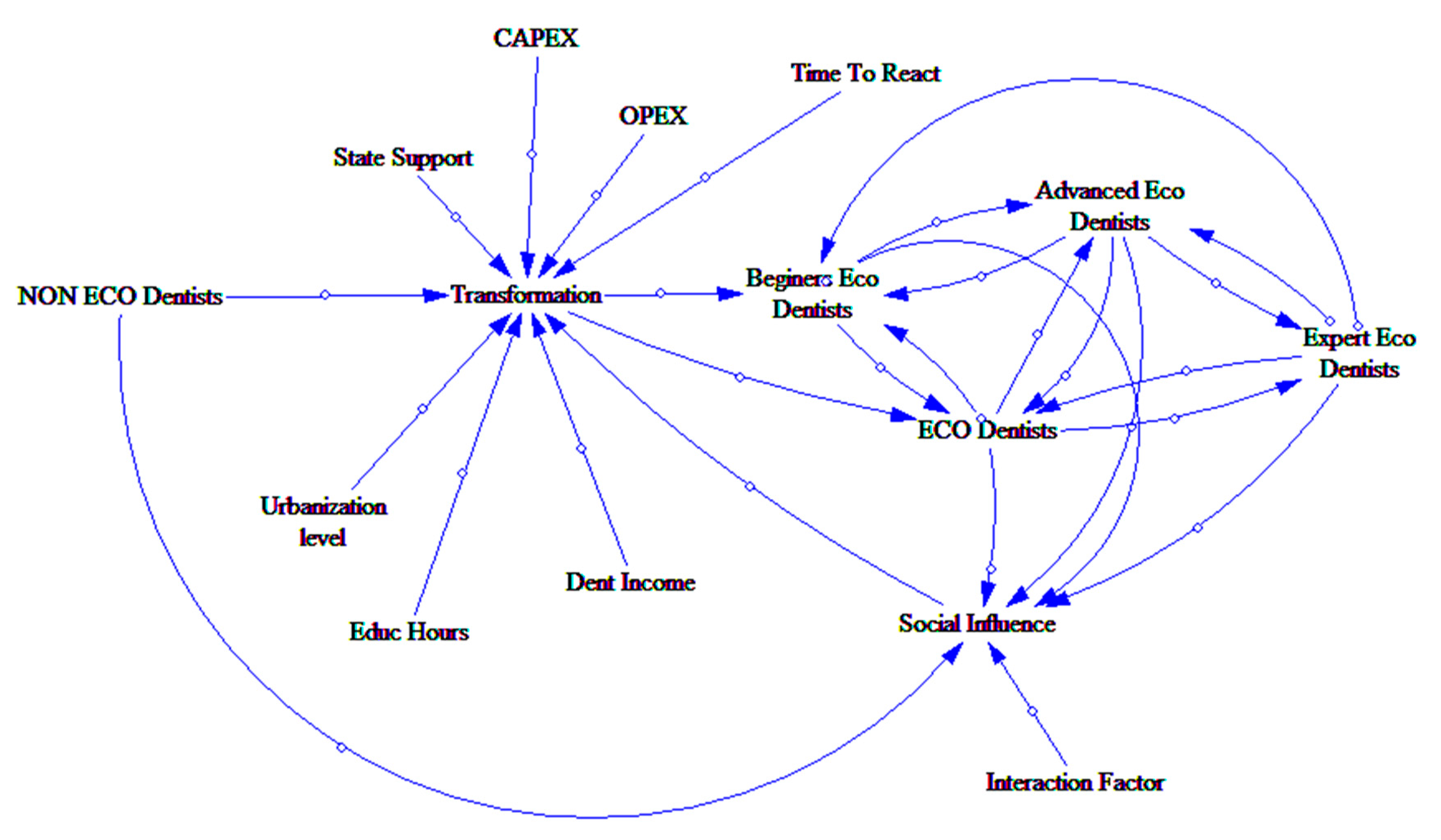
Figure 3.
The simplified version of the ECODENT model.
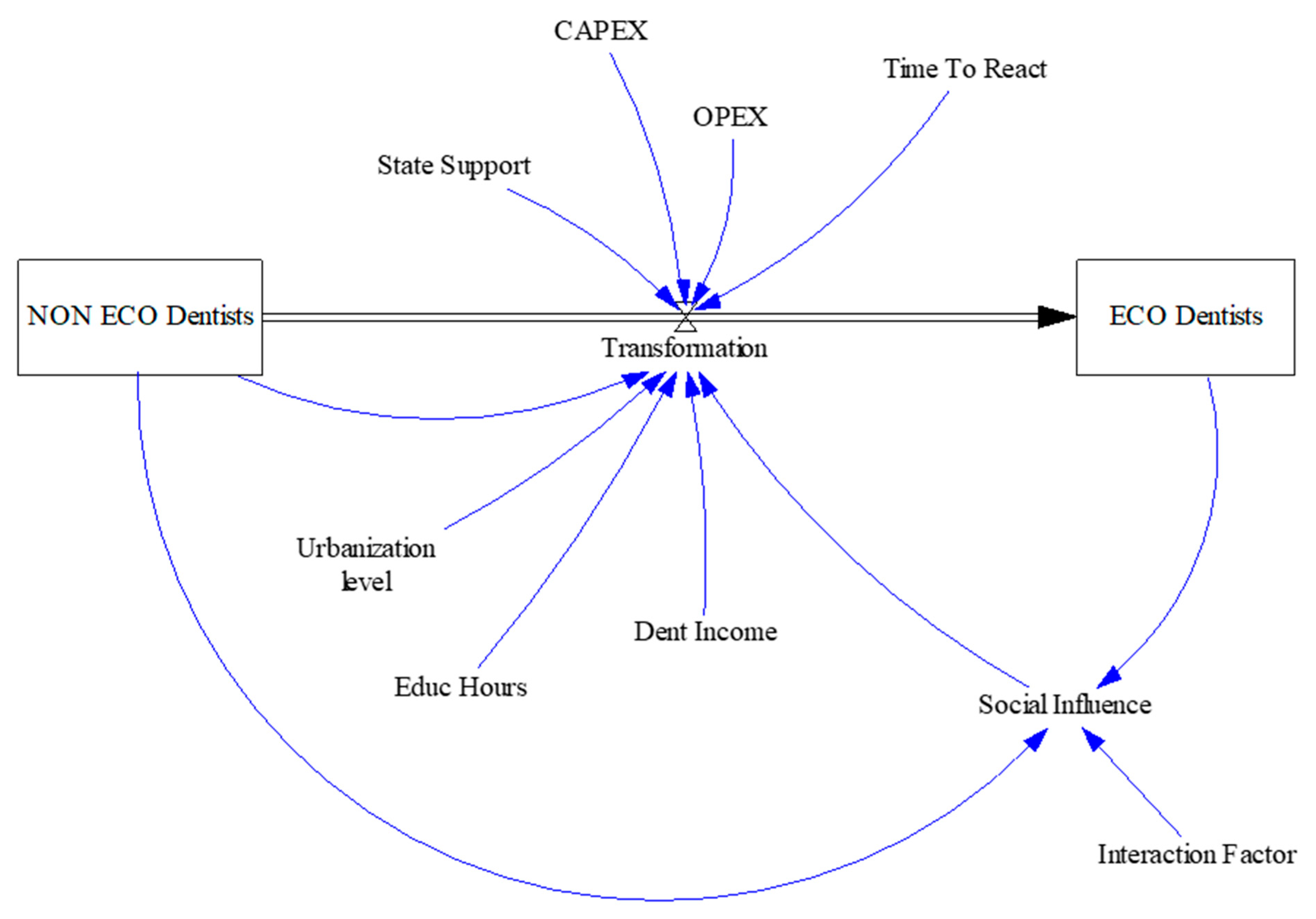
Figure 4.
Overview of the simulation of the model.
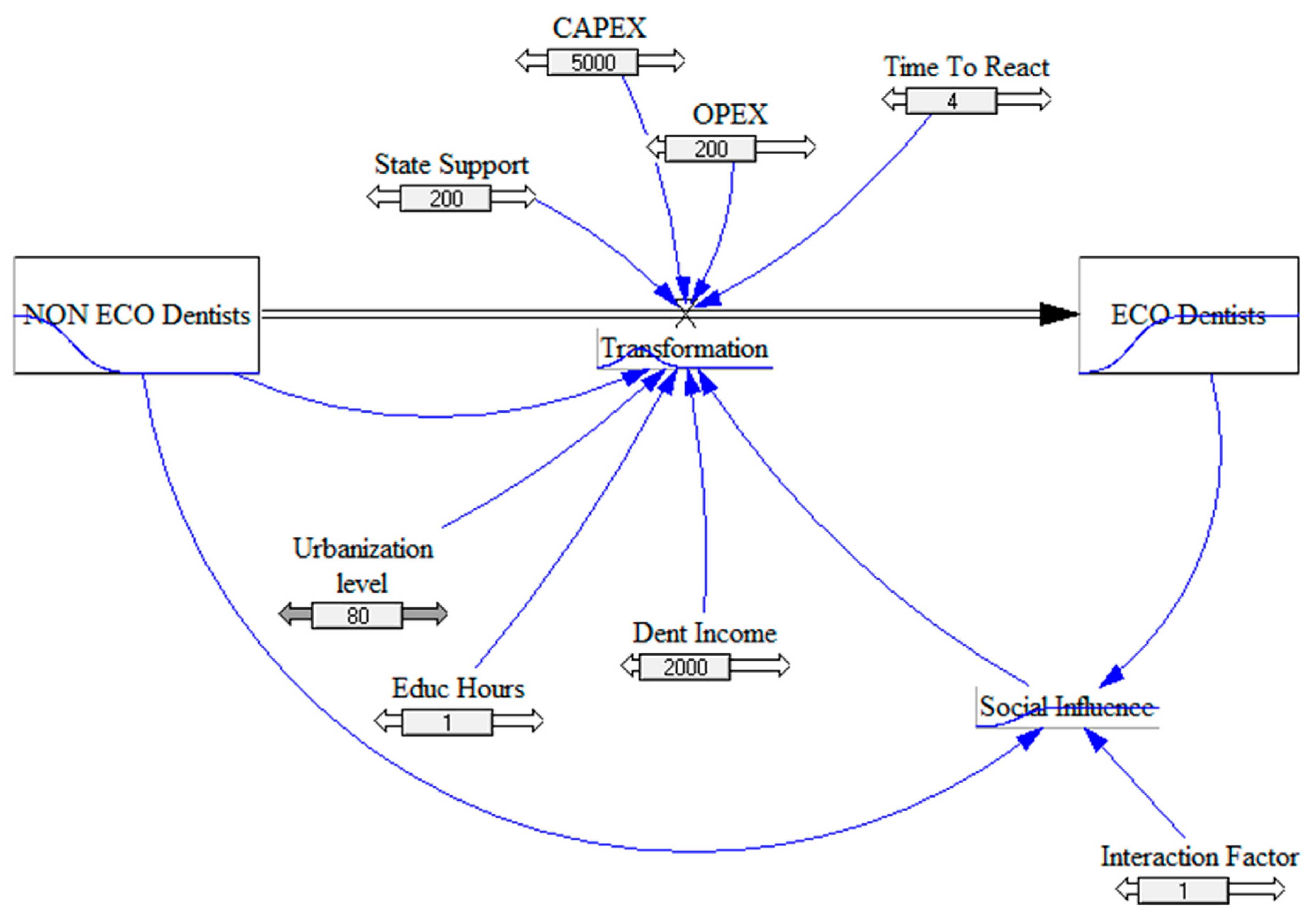
Figure 5.
Dissemination Model of Green Dental Practice – Simulation, view 1.
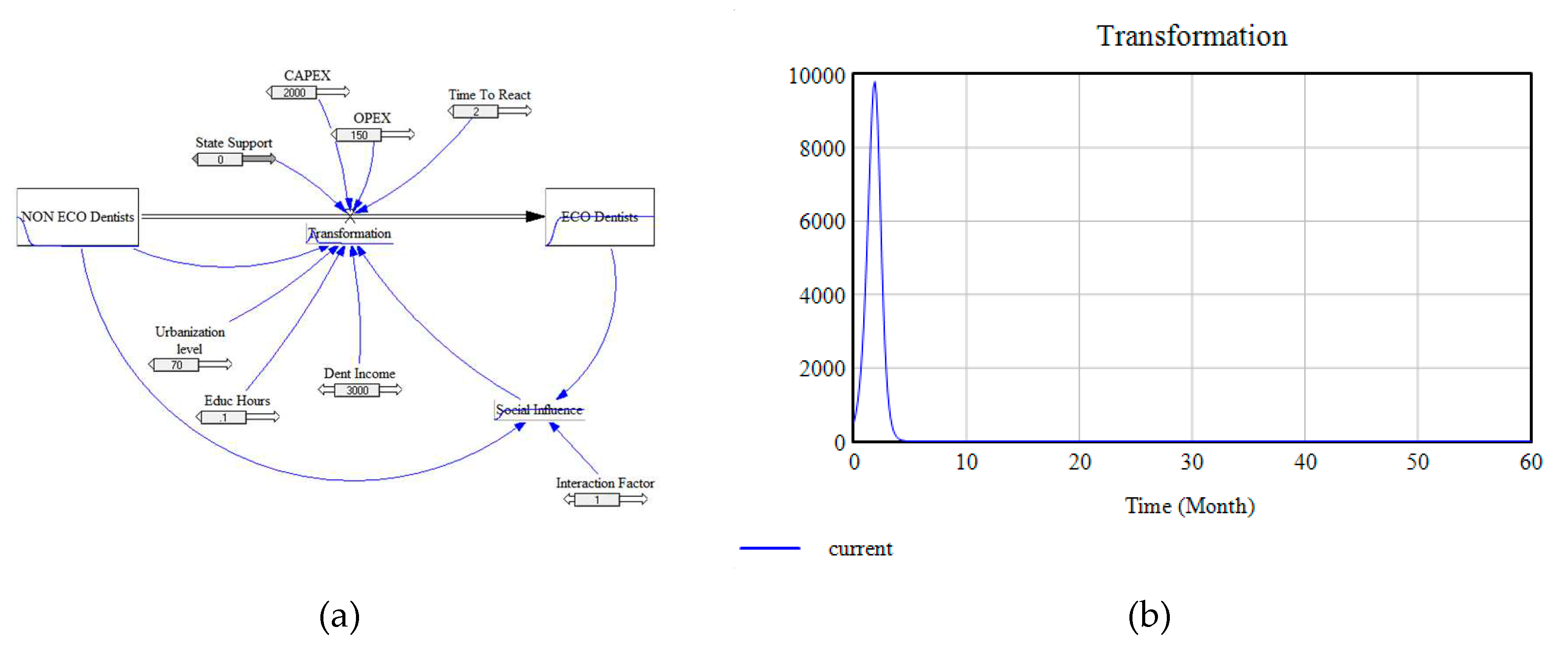
Figure 6.
ECODENT Simulation, view 2.
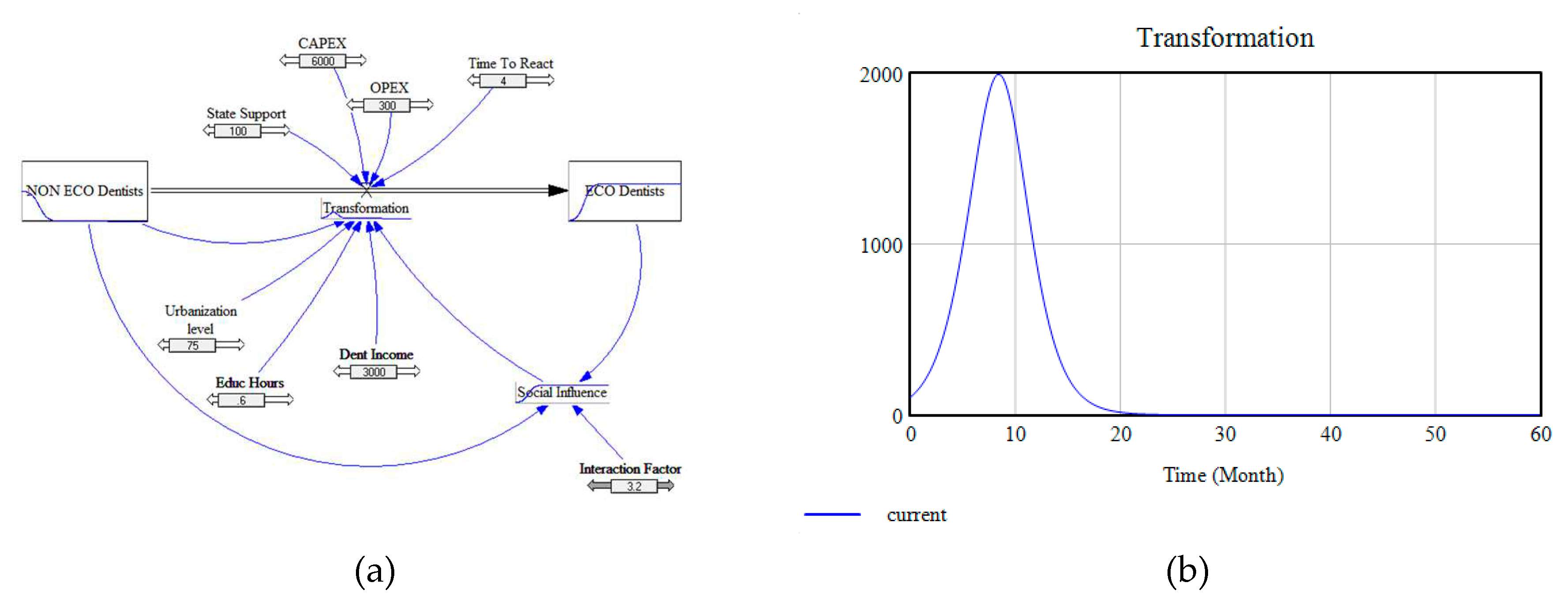
Figure 7.
a, b: Service Propagation Model – Simulation, Scenario 1.
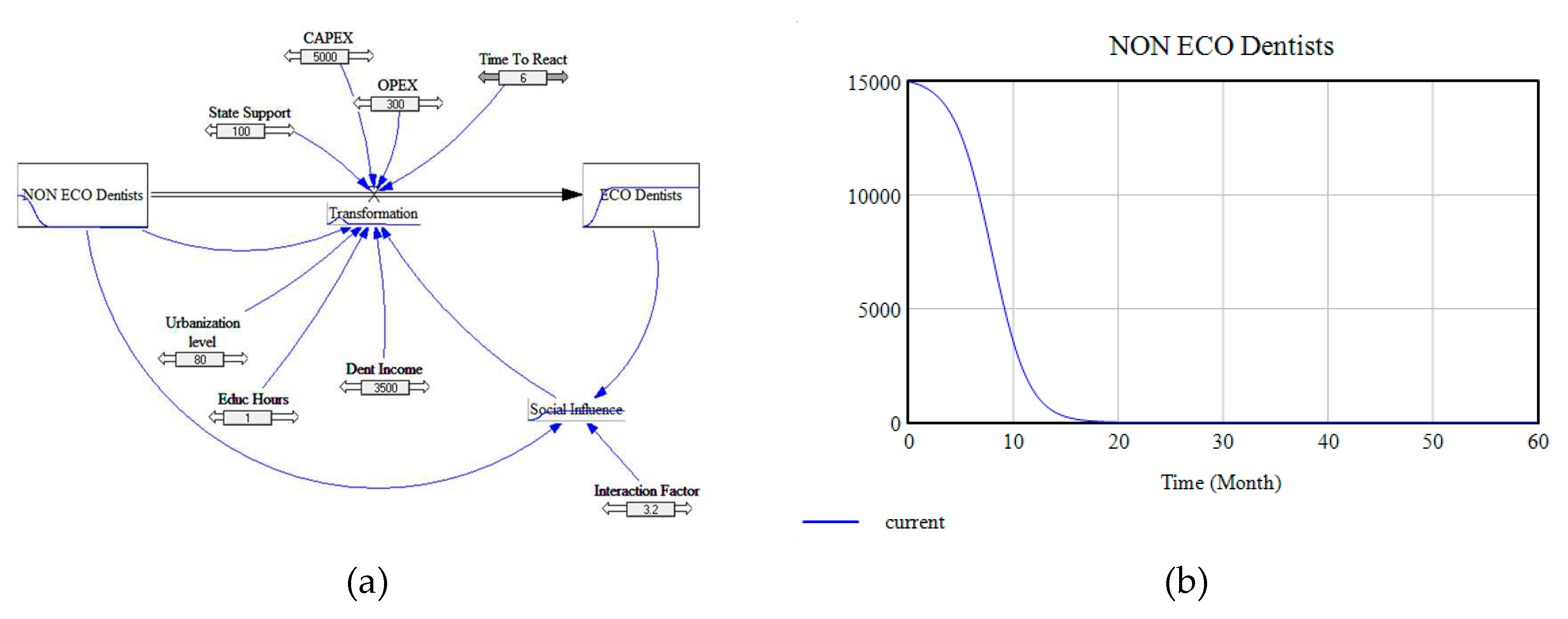

Table 1.
Accumulation points, parameters, and flows of the ECODENT systemic model.
| Name | Explanation | Description |
|---|---|---|
| Non-Eco dentists | Non eco dentists | Accumulation point |
| Urbanization factor | The urbanization factor | Parameter |
| Edu hours | Educational hours | Parameter |
| Dent Income | Dental income | Parameter |
| Social influence | Social influence factor | Parameter |
| Factor influencing Social Influence* | A factor influencing social influence during contact | Secondary parameter |
| State support | Government subsidy | Parameter |
| CAPEX | Capital expenditure | Parameter |
| OPEX | Operating costs | Flow |
| Time to react | Time to react | Parameter |
* Capital expenditures are a company's main, long-term expenses, while operating expenses are a company's day-to-day expenses. Examples of CapEx include physical assets such as buildings, equipment, machinery, and vehicles. Examples of operating expenses include employee salaries, rent, utilities, and property taxes. Items covered by OpEx often have a useful life of a year or less, while CapEx tends to pay for a benefit to the company for more than a year. Capital expenditure cannot be deducted from income for tax purposes, but operating expenses are eligible.
Table 2.
Initial settings of the ECODENT systemic model.
| Name | Set |
|---|---|
| INITIAL TIME | 1 |
| FINAL TIME | 60 |
| Units for time | Month |
Table 3.
Values of the variables of the ECODENT systemic model.
| Variables | Values |
|---|---|
| Urbanization level | (70, 95, 1) |
| Edu hours | (0, 3, 0.1) |
| Dent Income | (1500, 5000, 500) |
| State support | (0, 500, 50) |
| CAPEX | (2000, 10000, 1000) |
| OPEX | (150, 500, 50) |
| Time to react | (2, 10, 1) |
| Auxilliary variables | |
| Interaction factor | (0.1, 5, 0.1) |
Table 4.
Values of the variables in scenario 1 of the ECODENT systemic model.
| Variables | Values |
|---|---|
| Urbanization level | 80 |
| Edu hours | 1 (hour) |
| Dent Income | 3500 (euros) |
| State support | 100 (euros) |
| CAPEX | 5000 (euros) |
| OPEX | 300 (euros) |
| Time to react | 6 months |
| Auxiliary variables | |
| Interaction factor | 3.2 |
Disclaimer/Publisher’s Note: The statements, opinions and data contained in all publications are solely those of the individual author(s) and contributor(s) and not of MDPI and/or the editor(s). MDPI and/or the editor(s) disclaim responsibility for any injury to people or property resulting from any ideas, methods, instructions or products referred to in the content. |
© 2023 by the authors. Licensee MDPI, Basel, Switzerland. This article is an open access article distributed under the terms and conditions of the Creative Commons Attribution (CC BY) license (http://creativecommons.org/licenses/by/4.0/).
Copyright: This open access article is published under a Creative Commons CC BY 4.0 license, which permit the free download, distribution, and reuse, provided that the author and preprint are cited in any reuse.


