

Submitted:
02 August 2023
Posted:
07 August 2023
You are already at the latest version
Abstract
The increasing social pressure for decarbonization has placed businesses under considerable scrutiny to actively reduce carbon emissions. A critical step towards achieving this objective is to shift conventional production and consumption systems to more sustainable alternatives. Thus, there is the emergent need to understand the patterns and drivers of the transformative business models (BMs) that underpin that shift. This study adopts a mixed-methods approach that integrates different literature streams--including Sustainability Transitions Theory (STT), Strategic Niche Management (SNM), and the Business Models approach--and stakeholders’ interviews to investigate the key elements of business models that lead towards sustainable practices. This research examines the organizational arrangements of European start-ups operating between 2014 and 2020. The transformation towards decarbonized production and consumption is characterized by efficient combination of business strategies that incorporate advanced technologies (ATs), such as artificial intelligence (AI), machine learning (ML) and its algorithms, along with sustainable elements, resulting in transformative business models. By exploring the driving elements behind the transition to low-carbon approaches, this study fills a significant gap in the existing literature on business models. The findings from this research also hold relevance for policymakers to promote decarbonization.
Keywords:
decarbonization
; sustainable alternatives
; transformative business models (TBM)
; Sustainability Transitions Theory (STT)
; Strategic Niche Management (SNM)
; advanced technologies
; start-ups
; sustainable practices
; carbon emissions
; sustainable development goals (SDGs)
1. Introduction
The urgent need to decarbonize economic sectors to mitigate climate risks and achieve the goals outlined in the Paris Agreement is becoming increasingly apparent, as human activities continue to contribute to rising carbon emissions [1]. Within this context, the business sector plays a critical role in supporting the transition towards low-carbon production and consumption. The integration of advanced technologies (AT), sustainable mechanisms, and transformative business models (TBMs) has gained prominence on the global sustainable development agenda [2].
Efforts to harmonize environmental, economic, and social considerations in business pose complex challenges. In response, innovative organizations, including start-ups, are actively incorporating ATs, exploring new institutional arrangements, and fostering innovation to transform their BMs. These transformations aim to create, deliver, and capture sustainable value while simultaneously striking a balance that enables effective capitalization [3].
However, the existing literature on how organizations and their BMs can effectively ease the decarbonization of production and consumption remains incomplete and marked by controversies [4]. Ongoing debates revolve around the essential elements and avenues to be explored to establish new institutional arrangements that drive the transformative sustainable business models (TSBMs), ultimately accelerating the transition to a low-carbon economy.
To address these gaps and investigate the key elements of BMs in start-ups that drive changes in production and service delivery methods that are relevant for decarbonization, this study adopts different theoretical frameworks that integrates the Sustainability Transitions Theory (STT), Strategic Niche Management (SNM), and the BM approach, combined with stakeholder interviews to explore the elements of TSBMs in the context of start-ups. The research objective regarding the TSBMs in start-ups is twofold: 1) to identify prevailing BMs that are facilitating transformation to accelerate decarbonization, and 2) to determine the key elements that characterize and measure TBMs, supporting transitions towards sustainability.
This article is organized into five sections. The subsequent section offers a review of the relevant streams of the literature for the study of TBM, including STT, SNM, TBM, ATs such as Internet of Things (IoT). Artificial Intelligence (AI) and its algorithms, Machine Learning (ML), and sustainable elements within a novel institutional framework. The third section details the methodology employed in this study. The fourth section presents the results, while the fifth section offers the conclusions, including limitations and recommendations for future studies.
2. Conceptual Framework
The urgent need to address climate change and the risks associated with carbon emissions has placed significant pressure on businesses to actively contribute to global decarbonization efforts [2]. Achieving this objective requires a fundamental transformation in business models, moving away from conventional production and consumption systems to more sustainable alternatives. However, the existing literature lacks clarity and consensus on TBMs and their role in driving sustainability transitions [4,5]. This background sets the stage for the research by reviewing the relevant literature on STT [6], SNM [7], TBMs approach Kavadias and Loch [8], the role of ATs, and the sustainability elements in driving TSBM [9,10].
2.1. Sustainability Transitions Theory (STT) in the start-ups business context
The STT offers valuable support for transformative start-up BMs towards decarbonization. STT is a conceptual framework that aims to understand and ease the shift from unsustainable socio-technical systems to more sustainable alternatives [6]. By applying the STT framework to the context of BMs, researchers can analyze the complex interplay of factors and actors that drive changes in organizational strategies and practices regarding decarbonization.
Start-up BMs, as vehicles for innovation and experimentation, are well-positioned to embrace sustainability principles and contribute to decarbonization efforts. By incorporating the principles of STT, these BMs can be designed and executed with a focus on sustainable practices from the outset [11,12]. This allows them to align their operations and strategies with environmental goals, without being bound by legacy systems.
Through the lens of STT, the TBM in the perspective of sustainable transition becomes essential. Start-ups can adopt different types of BMs, such as business-to-business (B2B), business-to-consumer (B2C), direct-to-consumer (D2C), among others [13], that integrate sustainability into their core strategies. By incorporating technological improvements, start-ups can enhance their organizational development and effectiveness, facilitating the transformation towards more sustainable practices [2,14].
The advancement of TBM - understood as being capable of triggering significant changes in the creation and delivery of value, inducing substantial transformations in market dynamics and in the value capture process - in the context of sustainability contributes to mitigating environmental and social issues through several means, such as reducing carbon emissions, promoting energy efficiency, changing consumer behavior towards sustainable consumption, and fostering innovation [14,15]. By embracing sustainable practices and collaborating with several sectors, organizations such as start-ups can effectively contribute to decarbonization efforts and support the goals of sustainable development [1].
In this context, collaboration for sustainable practices enables the development of TBM to drive sustainable solutions and mitigate environmental and social problems [2]. By anchoring themselves in TSBM, organizations, including start-ups, can reduce their environmental footprint while enhancing their competitiveness through environmentally friendly practices [16]. Collaborations between sectors, enabled by advanced technology sources, can lead to emissions reduction, resource conservation, and the adoption of product-as-a-service and shared-use models [17,18].
Elements such as digital transformation (DT), sharing economy (SE), and circular economy (CE) and Sustainable Development Goals (SDGs) are also essential in sustainable transitions and business transformation [19,20]. These concepts offer innovative and efficient solutions to address economic, social, and environmental challenges [2]. By integrating these elements into their models, start-ups can contribute to a more sustainable and resilient economic development that tackles climate change, resource depletion, and social inequality.
So, by embracing the principles of the STT, start-up’s BMs can optimize organizational processes, improve resource efficiency, and accelerate the adoption of sustainable solutions. This transformation can reduce waste, integrate sustainability into core business operations, mitigate economic, social, and environmental impacts, and foster fair and sustainable economic development for all [3,14,21].
2.2. Strategic Niche Management (SNM) and the role of start-up business models in sustainable transitions
SNM theory deals with the emergence and diffusion of innovations within niches, which are protected spaces for experimentation and learning. Within the realm of BMs provides insights into how start-ups and innovative organizations can explore and develop sustainable BMs within their niches, paving the way for broader adoption and diffusion of these transformative models in the market to create protected spaces for experimentation and learning with ATs and practices that can potentially disrupt the dominant regime [7].
In the context of sustainable transitions, start-up´s BMs can play a crucial role in driving change. These models often focus on addressing environmental challenges and creating sustainable solutions. They have the advantage of being able to align their entire organizational structure and operations with sustainable principles from the outset, without being bound by existing infrastructure or legacy systems. Start-ups can embrace sustainable elements such as CE principles, resource efficiency, renewable energy, and other sustainability-oriented practices in their core business strategies [22,23].
Moreover, start-ups can act as agents of change by creating innovative products, services, or technologies that have the potential to disrupt traditional industries and transform them towards sustainability. They can introduce new ways of production, distribution, and consumption that are more environmentally friendly and socially responsible, e.g., Tesla, Envision Solar, Lime Micromobility etc. Through their entrepreneurial activities, start-ups can demonstrate the viability and scalability of sustainable business models (SBMs), attracting attention and inspiring larger organizations to adopt similar practices [24].
Furthermore, start-ups often rely on collaboration and partnerships with several stakeholders, such as research institutions, investors, and government agencies, to support their growth and impact. These collaborations can ease knowledge transfer, access to resources, and policy support, creating an enabling environment for sustainable transitions [25].
Therefore, start-ups possess the agility, innovation capacity, and disruptive potential to challenge existing practices and drive change towards sustainability. Their focus on sustainable principles, when interacting with a set of technological and sustainable elements, and new institutional arrangements, can promote the transformation and diffusion of SBMs in all sectors [22,24].
2.3. Transformative business model (TBM) for decarbonization
The field of TBM is still in its early stages of development. Research conducted on this topic indicates that as of January 30, 2023, a limited number of English articles have been published, with 54 articles identified from Web of Science (WoS) and 85 articles from Scopus.
In the existing body of literature, there remains a lack of clarity regarding the transformative nature of several BMs. The terms “Transformational Business Model” (TBM) and “Business Model Transformation” (BMT) are often used interchangeably. Both concepts have emerged from the original notion of a BM, which posits that a BM should enable organizations to create, deliver, and capture new value [23,26]. This leads to significant changes in market dynamics and benefits both the organization and the consumer [27]. The BMT literature primarily focuses on how organizations identify and exploit opportunities for transformative change while managing the associated risks and challenges of implementing changes in their management systems [27,28]. Therefore, BMT specifically pertains to organizations that already possess BMs and seek to explore innovation changes in their BMs.
For example, Geissdoerfer et al. [29] define BMT as “a combination of its value proposition, value creation and delivery, and value capture elements, as well as the interrelations between the elements and the value network.” According to their perspective, BMT refers to an innovation capable of transforming traditional business practices, leading to substantial changes in the way value is created, delivered, and captured in the market. Likewise, the BMT specifically refers to organizations that have BMs and seek to explore innovations that lead to transformative processes.
Consequently, it is imperative to delve into the existing literature concerning transformation approaches within the domain of corporate management. This exploration should encompass contemporary technologies, including AI-ML, digitization, and other relevant aspects (Table 1). Such an investigation aids in comprehending the dynamic nature of corporate management, uncovering insights into its most effective practices.
Furthermore, it enables an understanding of the challenges and opportunities that arise in the business environment due to technological changes. Therefore, this knowledge becomes a vital component for organizations to thrive amidst intense competition and the rapidly changing landscape of the business environment [30]. So, on the one hand, BMT refers to the process of making substantial changes to an existing BM. It engages modifying several elements of the BM, such as value proposition, value creation and delivery mechanisms, and value capture strategies. BMT is concerned with transforming and adapting an organization’s existing BM to meet new market demands, technological advancements, or environmental and social considerations. On the other hand, a TBM, as proposed by Kavadias and Loch [8], represents a specific type of BM that connects a novel technology to an emerging market need, leading to a radical transformation in organizational activities.
A TBM typically incorporates three or more of the subsequent features: 1) Personalization: Offering a more customized product or service that caters to individual and immediate customer requirements by employing technology at competitive prices. 2) Closed-loop process: Minimizing waste, energy consumption, and other costs by reutilizing resources or converting waste into valuable assets. 3) Asset sharing: Facilitating the sharing or rental of idle or underutilized assets, either directly or through a platform.
4) Usage-based pricing: Charging customers based on their usage quantity or nature, rather than utilizing a fixed fee structure. 5) Collaborative ecosystem: Creating value by engaging in collaborations with other companies, customers, or stakeholders, often through the utilization of a platform. 6) Agile and adaptive organization: Demonstrating the capability to swiftly respond to evolving customer needs, market conditions, or technological advancements through a process of experimentation, learning, and iteration [8].
TBM refers to innovative initiatives that transform existing BMs in the market into disruptive new models. Companies like Airbnb, Uber, Netflix, Spotify, and Zipcar serve as examples of TBM, as they have leveraged ATs to introduce novel value propositions and revenue streams that challenge the traditional economic models within their respective industries.
Briefly, TBM refers to radical changes in the way a business or organization works. It considers people, processes, and technology to make organizations more competitive. So, TBM are bold, strategic, and seismic changes that incipient organizations such as start-ups make to accelerate change and growth beyond the incremental advances typical of innovations.
2.4. Role of advanced technologies (ATs) for transformative start-ups business models
The incorporation of ATs, such as AI-ML, plays a crucial role in smooth the start-up´ TBMs towards decarbonization. These technologies offer several opportunities to optimize resource utilization, improve energy efficiency, and enable data-driven decision-making for sustainable practices. Understanding the impact of ATs on driving TBMs can provide helpful insights for achieving decarbonization objectives [34].
AI which refers to the use of algorithms and ML to automate and enhance decision-making processes, possesses significant potential to support organizations in their transition towards sustainability [2,41,42]. The integration of AI-ML, along with other elements, into the production process is fast-evolving. Recent data indicates that AI adoption is more common among innovative organizations aiming to create new products and services, reduce costs, and develop new business practices [2].
Several production sectors leverage AI for purposes such as quality control (identifying defects or deviations in production), predictive maintenance (proactively scheduling maintenance to reduce costs), automation (minimizing bottlenecks, waste, and improving efficiency), and manufacturing (enhancing the speed and effectiveness of the production system) [2]. Studies have confirmed the advantages of AI adoption, with research revealing that AI represented over 5% of earnings for companies that implemented it in 2019[2]. Furthermore, companies utilizing AI in their BMs experienced increasing revenue year after year. In 2022, 94% of business leaders regarded AI as critical to enterprise success, with 79% of respondents reporting the deployment of three or more AI types within their organizations in 2021, compared to 62% the previous year [43]
ATs, combined with sustainable elements, offer several benefits for the creation of SBMs. These benefits include cost reduction, production process optimization, increased productivity, enhanced market responsiveness, improved resource efficiency, accelerated management processes, and increased profitability [2]. For instance, the implementation of smart grid management in the energy industry enables the integration of renewable energy sources (RES), replacing fossil fuel consumption and enhancing energy efficiency [44].
AI-ML can empower start-ups by enabling dynamic processing and analysis of vast databases, utilizing ML techniques to extract valuable insights from extensive sets of information, and supporting strategic decision-making. Start-ups can also leverage AI-ML to streamline internal processes, personalize customer communication and experiences, and enhance operational efficiency. The utilization of AI-ML by start-ups can further ease attracting new investments and differentiating themselves in the market with transformative solutions.
2.5. The elements of sustainability that foster the development of sustainable businesses for start-ups
Sustainable elements, such as the sharing economy (SE), the circular economy (CE), and the Sustainable Development Goals (SDGs), play a crucial role in supporting start-ups to develop businesses aligned with sustainable transitions [19,20,22,24]. These elements offer innovative and effective approaches to address the economic, social, and environmental challenges of our time. By embracing these principles, start-ups can contribute to the achievement of sustainable development while creating, capturing, and delivering value for their organizations and society.
The SE is a concept that promotes the efficient use and sharing of resources, enabling individuals and businesses to access and utilize assets and services without the need for ownership. Start-ups can leverage the SE model to maximize resource utilization, reduce waste, and foster collaboration [24]. For example, platforms like Airbnb and Uber have revolutionized the accommodation and transportation sectors by facilitating the sharing of unused spaces and vehicles. By applying the principles of the SE, start-ups can reduce their environmental footprint and promote sustainable production and consumption patterns.
The CE focuses on designing out waste and pollution, keeping products and materials in use for as long as possible, and regenerating natural systems. Start-ups can adopt CE principles, such as reuse, recovery, recycling, and reduction, to transform their BMs and operations [45]. By embracing product-as-a-service models, start-ups can shift from selling products to providing access to product-as-a -service, promoting the reuse and longevity of products. Additionally, incorporating sustainable design and material choices can enable the recovery and recycling of materials at the end of a product’s life cycle. By embracing the CE, start-ups can reduce waste, conserve resources, and create innovative solutions that align with sustainability goals.
The SDGs, established by the United Nations, provide a comprehensive framework for addressing global challenges and promoting sustainable development. Start-ups can align their business strategies with the SDGs to contribute to the achievement of specific targets and indicators. For example, a start-up focused on RES can contribute to SDG 7 (Affordable and Clean Energy) by providing clean energy solutions. By integrating SDGs into their BMs, start-ups can demonstrate their commitment to social and environmental responsibility, attract ethical consumers, and access new markets [22].
By incorporating elements of the SE, the CE, and the SDGs into their operations, start-ups can develop businesses that are not only financially viable but also environmentally and socially responsible. These sustainable elements enable start-ups to optimize resource utilization, minimize waste, foster collaboration, and contribute to global sustainability efforts. Furthermore, by embracing these principles, start-ups can transform themselves in the market, attract investment, and build resilient and future-proof businesses. As sustainable development becomes increasingly important, start-ups that prioritize these elements will have a competitive advantage and play a vital role in driving sustainable transitions towards a more sustainable and inclusive future.
3. Methodology
To discern the factors that contribute to the TBMs towards sustainability, this study employs research method that integrates the collection and analysis of data with interviews conducted with knowledgeable professionals hailing from start-up ventures. By combining these approaches, a comprehensive understanding of the driving elements behind the sustainable transformation of BMs can be obtained.
3.1. Overview
To assess the essential elements within the BMs of start-ups that instigate changes in production and service delivery methods, thereby facilitating the transition towards sustainability, the methodological approach of this study was divided into three distinct parts (Figure 1).
Initially, we conducted a literature review on ATs, sustainable elements, and TBM in the context of start-ups using the Web of Science (WoS) and Scopus platforms. This review provided the grounds for our study. Subsequently, we employed the Methodological Analysis of Secondary Data (SDMA), drawing upon the elements identified in the literature review. SDMA is a crucial component for the development of the study [46].
Finally, we conducted a series of interviews with start-ups and stakeholders to evaluate the key factors identified during the data collection and analysis phase and get new insights. A qualitative research methodology was employed, utilizing semi-structured techniques in conjunction with the grounded theory analysis. To ensure the effectiveness of the interview process, a pilot study was conducted prior to the real interviews. From stakeholders and a pool of forty-four sustainable start-ups in Portugal, representing 100% of the selected sample of start-ups, comprising approximately 26%, were successfully interviewed. These approaches allowed a comprehensive examination of the factors influencing the transition of production and service delivery methods in start-ups towards sustainability.
3.2. Methodology of empirical analysis
To identify the essential components of start-up BMs, we conducted an analysis on a dataset consisting of 225 start-ups. We carefully applied exclusion criteria to remove any start-ups that were selected multiple times, resulting in a final selection of 197 start-ups. These start-ups were recognized either through data from the Web of Summit or through awards in Portugal and internationally, through internet research, covering the years 2014 to 2020.
The selection of start-ups, rather than companies in general, was deliberate due to their characteristic innovative proposals and frequent adoption of AT resources, incorporating new value propositions and transformative BMs. Blank & Dorf [47] emphasize the stark differences between companies and start-ups, stating that “a start-up is a temporary organization in search of a scalable BM,” while a company is “a permanent organization designed to execute a repeatable and scalable BM.” Therefore, once a start-up successfully identifies the BM that defines it, it ceases to be a start-up [48]. While start-ups strive for transformative and appealing BMs, companies possess well-defined BMs, with the challenge being their execution and improvement to achieve targeted success.
The Web Summit, considered one of the largest technology conferences in Europe, has received support from the Portuguese government for annual events up to 2028. Portugal was chosen as the focal point of this study due to its recognition of start-ups as potential catalysts for accelerating innovation, driving economic development, and transitioning to a low-carbon society. As of 2022, Portugal boasted 165 incubators and accelerators, 2,236 operational start-ups, and 59 active investment programs [49]. The chosen analysis period aligns with the Portuguese government’s policy of fostering start-ups, culminating in the decision to host the Web Summit in Lisbon starting in 2014.
Within this study, we explore a TBM as conceptualized by Kavadias & Loch [8], which possesses the ability to fundamentally reshape operational elements within businesses. This TBM triggers significant shifts in value creation and delivery, inducing substantial transformations in market dynamics and the process of value capture. Therefore, the TSBM must have the capacity to fundamentally alter existing BMs (Wagner & Svensson, 2014) toward decarbonization methods [50], foster sustainable consumption habits [51], mitigate anthropogenic emissions [52], and enable radical transformations in the production and consumption systems, e.g., Amazon, Google Ads, and Tesla Motors.
3.3. Characterization of empirical analysis
The characterization of the research aimed to understand the multiple dimensions of start-ups TBMs. For this purpose, sample characterization elements were carefully selected, which were stored in a database (Table 2), to allow the data to be analyzed from different perspectives.
The different types of organization classification adopted by this study are:
a) Start-up (ST) is considered as an organization or project undertaken to seek, develop and validate a scalable BM and whose organization or project is up to 3 years old and has less than 10 employees [53].
b) National company (NC) is considered a start-up with more than 3 years of life that has not advanced into a unicorn, but which continues to operate in the national market (NC).
c) Multinational company (MC) refers to a start-up with more than 3 years of existence that has not evolved into a unicorn, but which continues to operate in the market with a scope beyond the limits of Portugal (MC).
d) Unicorn business (UN) is considered a privately held start-up company valued at over $1 billion [54].
e) Spin off (SO) is considered a new organization that is formed by another organization [55].
The characterization of BMs [13] formed the backbone of the database, enabling a deeper understanding of the dynamics behind start-up BMs. This characterization assists in identifying trends and challenges specific to start-ups, guiding business decisions and adaptations to meet market demands.
The BMs were categorized into (Table 2): a) B2C, business-to-consumer (transaction between a company and the final consumer), b) B2B, business-to-business (business transaction between organizations), c) B2G, business-to-government or NGO (negotiations between companies, associations and governments), d) B2B2C, business-to-business-to-consumer (transactions between companies aimed at selling to the final customer), e) D2C, direct-to-consumer (marketing from the manufacturer to the final consumer),
f) B2R, business-to-research or R2B, research-to-business (research to generate business such as financed projects to find sustainable solutions) [13].
The choice of transport, building, and industry sectors, amidst others (Table 2) was important to identify AT, environmental influences, and business strategies. Together, the sectors selected to create the start-ups database represent around 75% of greenhouse gas (GHG) emissions [56].
Elements to indicate transitions to sustainability were classified into SE, CE, and SDGs. The choice of these three attributes was due to the importance they have for the transition to sustainability. They provide innovative and effective solutions to reduce waste, increase resource efficiency and deliver a more sustainable future [22,24,45].
ATs or techno elements such as AI-ML, and its algorithms, and IoT can help reduce resource consumption and waste in both production and consumption. AT can help increase the efficiency of resource use by enabling real-time collection, analysis, and decision-making, e.g., smart transportation systems can reduce traffic congestion, save fuel, and decrease air pollution [43].
SE promotes the sharing of resources, assets, and services, which can help reduce waste and overconsumption, e.g., vehicle sharing has the potential to reduce the number of vehicles on the road, increase asset utilization and reduce environmental impact [24]. CE is about minimizing waste and regenerating natural systems by keeping materials and products in use for as long as possible. By embracing CE principles, start-ups can reduce their environmental impact, improve their resource efficiency, and create new business opportunities [45]. SDGs are vital for the sustainability of start-ups. They provide a framework for addressing global challenges, offer opportunities for innovation and market growth, attract investment and partnerships, and enhance resilience in the face of uncertainty [22].
The categorization of sustainable transformation elements was based on the mechanisms of improving and shifting consumption and production and avoiding emission [1]. The categorization by this criterion allowed us to understand the type of mitigation proposed by the start-up.
3.4. Recruitment of interviews
The identification of start-ups and relevant stakeholders was carried out based on data collected during the empirical analysis phase, supplemented by extensive internet research. The interviews were conducted between the months of April and June 2023, with an average duration of approximately 50 minutes. The interviews were conducted virtually, covering the entire Portuguese territory.
Respondents were recruited through email and telephone. Each invited individual received a minimum of three communication attempts, including one to forward the invitation letter and at least two additional follow-up contacts. Participants who accepted the interview invitation received a minimum of three additional communications, comprising an email expressing appreciation for accepting the invitation and requesting information regarding interview preferences, another to confirm the interview appointment and provide the interview connection link, and finally, a reminder on the eve of the interview.
During the preparatory phase of the study, it was anticipated that the number of interviews would fall within the range of 15% to 35% of the total number of invitees. Consequently, the participation rate of 26% within the sample, given the busy nature of the professionals involved, proves to be highly representative and consistent with other qualitative studies [11,23,57,58,59].
3.5. Sample characterization of interviews
Around 26% of the attendees, predominantly start-ups (94% of the sample), were granted an interview. The majority of the interviewed (65%) were in the northern region of the country, while the central region accounted for the second-highest representation (30%). Roughly 60% of the start-ups were classified as small companies, employing up to 9 individuals (Appendix B).
Medium-sized companies, with workforces ranging from 10 to 49 employees, constituted approximately 30% of the sample, while large companies with 100 or more employees represented around 10%. The cities of Porto and Lisbon emerged as the favored locations for these start-ups. About 75% of the respondents were male, and more than 90% held the position of Chief Executive Officer (CEO). Among the CEOs, around 70% fell into the middle-aged category (31 to 50 years old), while approximately 15% were juniors (up to 30 years old) and another 15% were seniors (over 50 years old). In summary, the respondents can be characterized as middle-aged male CEOs of small start-ups located in the northern region of Portugal (Table 3).
3.6. Questionnaire of interviews
The themes and structure of the questionnaire for the interviews were derived from the key elements identified in the analysis of the start-up database collected during the empirical analysis phase. The questionnaire encompassed a combination of scaled and open-ended questions, and it was divided into three sections: (1) Sociodemographic Characteristics, which aimed to gather relevant data; (2) Examination of experience in digital technology transformation and BMs; and (3) Assessment of sustainable and unsustainable elements in the context of transformational production and consumption.
All sections were designed to corroborate the identified transformative elements of BMs from the empirical analysis phase, while also exploring novel insights regarding the potential of BMs to foster sustainability. To quantitatively assess each aspect, a Likert scale point system [60] was employed. Participants were instructed to rate the items on a scale of one to five, with one indicating a low level of challenge or importance, and five indicating a high level of challenge or importance, as perceived by the respondent.
3.7. Interview procedure
The interviews were conducted by a single interviewer to minimize the usual variability associated with multiple interviewers. Following an initial introduction to confirm the purpose of the interview and provide clarifications regarding its procedures and components, the researcher proceeded to gather personal information from the interviewees. This included their name, position, and age, as well as details pertaining to their organization, such as type, size, location, and sector of activity. These data were crucial for comprehending the sociodemographic characteristics of the interviewees.
Subsequently, the interviewees were presented with specific questions aimed at evaluating the elements that have the potential to bring about transformative changes in the production and consumption of goods and services, with a focus on promoting sustainability. Open-ended questions were included at the conclusion of each section to maintain consistency with the respective topic under examination.
3.8. Grounded theory analysis
Grounded Theory is a systematic and inductive method used in qualitative research to develop hypotheses and theories based on empirical evidence. It allows for a deeper understanding of phenomena by exploring social relationships and group behaviors, leading to new insights and the development of novel elements [61]. The approach offers benefits such as going beyond surface-level observations, allowing organic emergence of underlying questions, and providing flexibility to refine concepts and theories as new data emerges [62].
However, there are drawbacks to Grounded Theory. It requires a significant time investment for comprehensive data collection from multiple perspectives, which can be overwhelming for novice researchers. The method may generate large amounts of data, posing challenges in data management. Subjectivity and bias in data interpretation are potential limitations, as researchers’ preconceived notions may influence findings, requiring awareness and mitigation of biases [63]. Despite these limitations, Grounded Theory is widely used in several scientific fields, including business, due to its rigorous and systematic approach to data analysis, enabling a comprehensive understanding of complex phenomena [64].
The purpose of combining grounded theory analysis with the Likert scale was to provide validation or corroboration for the qualitative findings. During the qualitative analysis, specific themes or categories were identified for further exploration, and the Likert scale was utilized to examine the responses pertaining to these areas. By incorporating the Likert scale into grounded theory analysis, additional support was obtained to reinforce the qualitative findings.
4. Results
4.1. Secondary data analysis
The characterization of the empirical analysis reveals that around 15% of start-ups can be classified as sustainable. Among these sustainable start-ups, half (50%) are engaged in activities related to AT and incorporate sustainable elements.
Furthermore, over 60% of start-ups utilizing AI-ML technology follow the B2B2C model. Around 80% of sustainable start-ups adopt either the B2B or B2B2C models. Additionally, more than 80% of all start-ups are associated with the service sector. The majority, around 85%, of start-ups are registered as limited liability companies (LTD), half of them originate from the business environment, and 100% of them integrate one or more of the Sustainable Development Goals (SDGs) principles into their operations.
Start-ups are not only adopting AI-ML to enhance the development of products and services, as discussed in the literature on the benefits of digitalization in production and consumption (Sachs et al., 2019; Pratt, 2021). According to existing research, AI-ML solutions are primarily utilized by B2B and B2C models due to their cost-effectiveness and fast response time.
However, our analysis demonstrates that AI-ML are increasingly attracting attention (Figure 2) for transforming start-up BMs. This transformation goes beyond the boundaries of production and commercialization and extends to new arrangements involving controls and stakeholder relationships. Specifically, our findings highlight the growing interest in AI-ML within the B2B2C model, which combines elements from both B2B and B2C models, creating a more complex logic.
Hybrid models like B2B2C necessitate increased interaction, controls, quick decision-making, rapid responses, and cost reduction to minimize the lead time from production to consumption and ensure viability. Thus, AI-ML has become an indispensable tool for start-ups, particularly those adopting hybrid models. It empowers them to differentiate themselves and establish new arrangements, providing a significant long-term competitive advantage.
This trend can be attributed to the fact that over 50% of sustainable start-ups are associated with sectors such as AT, SE, and CE. Ultimately, by reengineering traditional BMs, start-ups can devise new, innovative, and sustainable approaches to meet customer needs, create value, and capture that value through revenue. This can pave the way for sustainable growth and success (more information on data analysis in the A/B appendix).
4.1.1. Prioritizing Production and Consumption in Sustainable Start-Ups: Trends and Challenges
Approximately, 60% of sustainable start-ups prioritize improving production and consumption, while around 30% focus on transforming their production and consumption methods. A smaller portion, about 10%, specifically concentrates on avoiding emissions (Figure 3a).
The higher inclination towards enhancing production and consumption can be attributed to its practicality and profitability. By improving efficiency, reducing waste, ensuring product quality, and meeting consumer demands, start-ups can achieve tangible benefits. This approach is often more accessible and yields positive results in terms of resource optimization and customer satisfaction.
Conversely, the lower preference for shifting the production and consumption system stems from the significant costs involved in such transformations. Overhauling assembly lines or changing production sites necessitates substantial investments in machinery, equipment, the development of new processes, and personnel training. These financial implications act as a deterrent for start-ups, leading to a relatively lower adoption rate of this approach.
Furthermore, the limited interest, accounting for approximately 10%, in emissions avoidance can be attributed to the high costs and limited development of equipment capable of effectively mitigating carbon emissions. Technologies such CCUS and CCS, which aim to prevent carbon emissions, are still in the incipient stages of development and often come with considerable financial burdens.
The analysis of start-ups based on their BM type (Figure 3b) reveals that the B2B model primarily focuses on enhancing production. The underlying notion is that if an industry offers a high-quality and cost-effective product, it will have a higher chance of success. Conversely, the B2B2C model is more inclined towards improving consumption, likely due to the prevalence of start-ups in the services sector. From an emissions’ perspective, the B2B and B2G models are the ones predominantly observed. Currently, AT such as carbon capture and use or storage (CCUS) and carbon capture and storage (CCS) is not accessible for the B2C or B2C2B models.
The cross-data analysis, to determine the type of BM by sector (Figure 3b) and maturity level of projects by the start-up phase, revealed a greater share in newly created projects covering the services and industrial sectors. B2B model, which constitutes approximately 50% of sustainable start-ups, was found to be more prevalent in the sustainable industry and service sectors. Conversely, the B2B2C model, which constitutes approximately 40%, was found to be more widespread among the other sectors. This may indicate a growing interest among start-ups in a TBM that enables sales to both companies and consumers.
Ultimately, the sector that a start-up focuses on will depend on several factors, including market opportunity, the founder’s expertise and experience, and the available resources and support. As widely known, the service sector is important for Portugal, so it seems natural for Portuguese start-up to opt for the provision of services. However, the start-ups moving towards a hybrid model may be linked to the success of several companies, including prominent chip manufacturers such as Intel, Snapdragon, and Qualcomm that adopted the B2B2C model. As well as other segments that have been showing success with the B2B2C model, such as Amazon, Alibaba, Shopify, App Store and Google Play. By reinventing traditional BMs, start-ups can find new and transformative ways to meet customer needs, generate value and capture revenue, leading to greater success and growth.
4.2. Interviews results
The results of the interviews highlight a clear connection between BMs and ATs when striving for sustainable value creation. This supports the conclusions drawn from the empirical analysis. Moreover, they highlight that the integration of technological resources is primarily driven by the desire to achieve environmental objectives, as these resources play a pivotal role in facilitating the transformation of BMs towards sustainability.
4.2.1. Advanced technological resources, transformation of business model and sustainability transitions
Figure 4a presents the results of the interviews. More than 60% of respondents reported utilizing AI, while approximately 20% stated that they are currently in the process of implementing AI-ML. Half of the participants acknowledged using AI-ML specifically for production purposes, while the other half employed it more broadly for tasks such as controls, customer interactions, supplier management, and more.
Less than 20% of start-ups indicated a lack of adoption of this technology. However, they also emphasize that technology alone is insufficient to drive TBM towards sustainability. Instead, a comprehensive approach is required, wherein ATs are coupled with a range of sustainable components, managed through novel institutional arrangements (Figure 4a).
Most respondents acknowledge that the implementation of AI-ML solutions necessitates specialized technical expertise. Consequently, there is a need to invest in the cultivation of relevant skills and talents to ensure the successful deployment of ATs. The management of technologies and other organizational resources, in conjunction with social concerns, significantly influences the outcomes of sustainability transitions.
The adoption of AT to diversify production and consumption and cater to consumer needs (Figure 4b) is widely regarded as a crucial pathway towards achieving more sustainable practices, rate the interviewees. By implementing effective institutional arrangements to manage AT and available resources, opportunities for innovation arise, leading to the introduction of novel product offerings and enabling quicker market entry with customized solutions (Figure 4c). However, transforming BMs towards decarbonization presents significant challenges. Addressing the shortage of skilled professionals proficient in ATs like AI-ML remains crucial, despite the advancement of remote work, which expands the recruitment possibilities for such professionals. Additionally, overcoming obstacles related to accessing large volumes of high-quality data (Figure 4d) and developing the capacity to effectively manage such data are vital for substantial progress in the transition towards more sustainable practices.
4.2.2. Sustainable elements in the transformation of production and consumption
In terms of transforming production and consumption towards more sustainable modes, respondents highlighted the significance of sustainable elements such as CE and SDGs, which were identified as crucial factors. The SE was identified as the third most important element (Figure 5a). AT was highlighted as interviewees recognized its potential to enhance the efficiency of production processes, leading to reduced energy and raw material consumption. When considering operational factors that optimize production and consumption practices, start-ups emphasized the importance of the pursuit of sustainability as a key driver for transformation. By minimizing waste, conserving resources, and adopting sustainable practices, start-ups can contribute to decarbonization and enhance their corporate reputation. Additionally, adaptability to market conditions and consumer needs emerged as the second most important aspect (Figure 5b). Respondents believed that by being agile and responsive to emerging trends and technologies, start-ups can proactively stay ahead of the curve in a rapidly evolving business landscape.
4.2.3. The influence of technology on business models and other insights
The interviews provide further evidence supporting the empirical analysis, confirming that the transformation BM towards sustainability is driven by key elements such as automation and algorithms. The incorporation of these elements, alongside one or more sustainable components, reveals a growing trend towards hybrid BMs.
The consumer-to-business (C2B) model emerges as particularly promising for decarbonization efforts. Under this approach, consumers are incentivized to return goods instead of discarding them and may even receive compensation. Many businesses with C2B principles are currently being developed. During one interview, a start-up was mentioned that collects electronic equipment and remunerates individuals who return used items. Thanks to AI-ML, this process can be scaled effectively.
There is a shift in the logic of BMs dominated by B2B and B2C, where consumers traditionally sought out suppliers (physically or virtually) for their purchases. With the AT such as AI-ML, a new logic is emerging where suppliers proactively find consumers. For instance, when a consumer searches for a laptop on a digital device (such as a smartphone, tablet, or computer), algorithms rapidly locate the consumer and enable suppliers to advertise laptops whenever the consumer is online. These algorithms can also provide guidance on how to dispose of the used equipment, generating income for all parties involved and relieving the consumer of the disposal task. This transformation brings multiple benefits to the economy, society, and the environment.
4.2.4. Start-ups and the new institutional arrangements
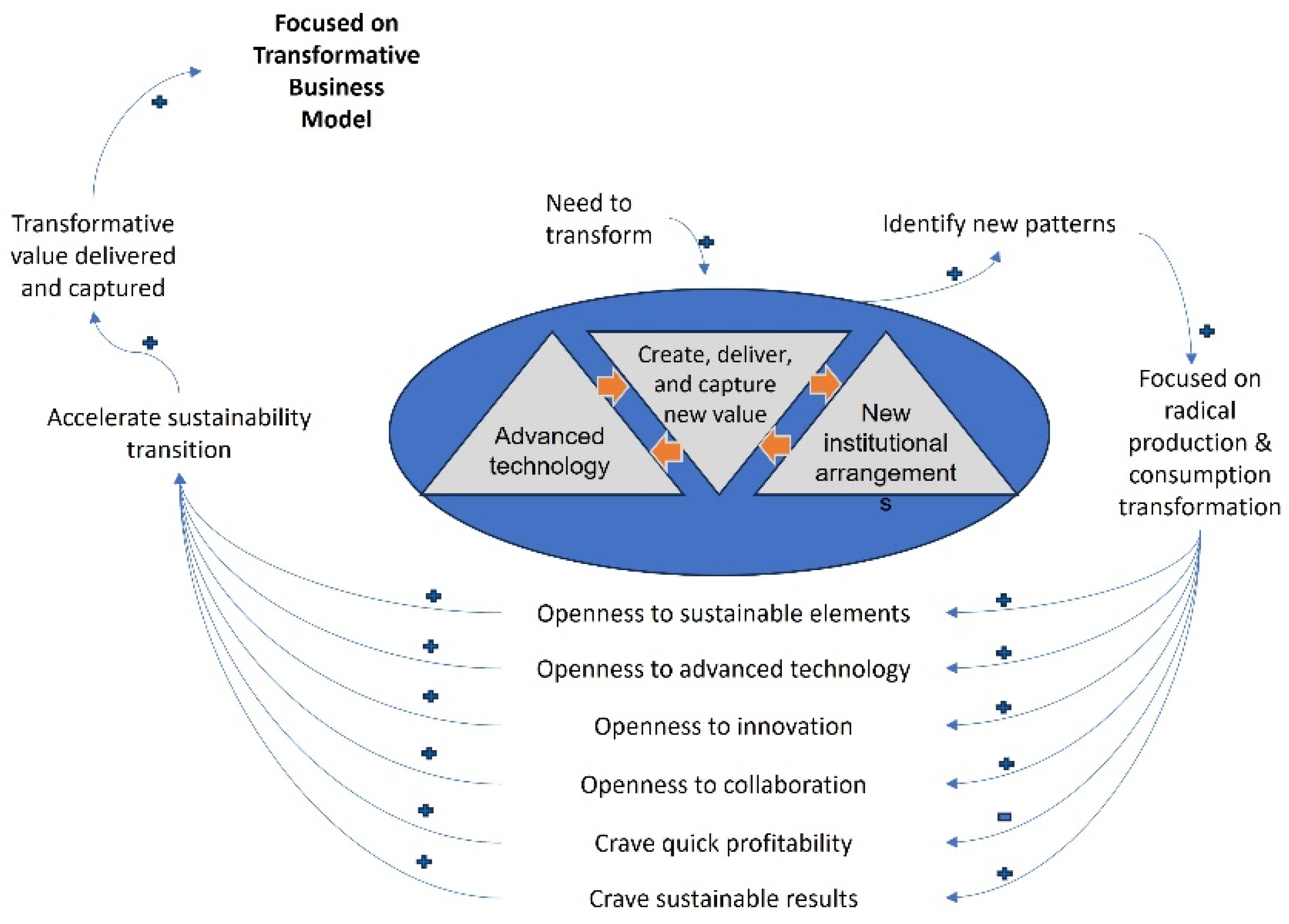
Start-ups are leveraging advanced technologies and sustainable elements to revolutionize their BMs, aiming to decarbonize products and services and expand into new markets, adapting to societal yearnings for low carbon development. As a result of these transformations in production and supply, the development of new institutional arrangements becomes essential to integrate transformation into the DNA of the business models. These institutional arrangements play a vital role in fostering collaboration, influencing regulations, setting industry standards, attracting investment, promoting knowledge sharing facilitating ecosystem collaborations, and providing a smarter use of available resources. By creating an enabling environment, these new institutional arrangements, acting in concert with TAs and sustainable elements, provide TBM and enable startups to make broader contributions to sustainable practices in the business landscape (Figure 6).
Figure 5.
The system dynamics behind the transformative business models towards sustainability.
5. Conclusions
To identify key components of start-up´s BMs that enable the shift to more sustainable production and delivery modes and contribute to the rapid decarbonization of several economy sectors, this study analyzed a dataset of start-up companies and conducted stakeholder interviews.
This study’s primary achievement was the identification of crucial elements that promote the transition to more sustainable modes. These elements encompass the integration of advanced technological systems with sustainable elements that interact harmoniously within new institutional frameworks enabling smarter management of available resources. Among these sustainable elements (e.g., reuse, recovery, recycling, and reduction) supplemented by sharing systems elements, SDGs hold significant transformative potential, particularly in the realm of environmental conservation. The cooperation of these elements with AI-ML algorithms expands the conditions for the transformation of BMs, further amplifies their impact within the context of the evolving circularities. Furthermore, the study highlighted the potential of C2B and B2B2C models in supporting sustainable transition pathways.
The results of this study also shed light on several relevant aspects of the transformation of BMs for sustainability in start-ups. The empirical base analysis revealed that sustainable start-ups prioritize the integration of advanced technological systems and sustainable elements in their BMs. Notably, over 60% of start-ups utilizing AT such as AI-ML follow the B2B2C model, indicating a shift towards more integrated BMs. Furthermore, more than 80% of all start-ups operate in the service sector. It is worth noting that all start-ups integrate one or more SDGs principles into their operations.
Interviews conducted with stakeholders further proven the importance of advanced technological resources in driving the BMs’ transformation towards sustainability. The adoption of AI-ML tools was recognized as crucial to increasing the efficiency of production processes and reducing energy and raw material consumption. However, it was highlighted that technology alone is insufficient and must be accompanied by sustainable elements and managed through new institutional arrangements capable of adapting their business strategy to a new socio-economic and eco-environment reality.
The study also stresses the emergence of the C2B model as a promising approach to decarbonization. This model encourages consumers to return merchandise rather than discard it, creating opportunities for companies to adopt circularity practices. In addition, the integration of AI-ML and its algorithms allows suppliers to proactively find consumers and offer personalized product recommendations, as well as the option of proper disposal of used items.
The findings emphasize the evolving landscape of BMs in start-ups, where the integration of AT, sustainable elements, and new institutional arrangements are key drivers of sustainable transitions. By reshaping traditional BMs and adopting transformative approaches, start-ups can contribute to decarbonization by creating, delivering, and capturing sustainable value in their BMs, while striking a balance that allows for effective capitalization, all in support of acceleration of sustainability transition pathways.
This study expands the literature on BMs by providing new information to support organizations such as start-ups in their efforts to decarbonize production and consumption systems. The research is also relevant for policymakers that seek to encourage the decarbonization of the economy sectors, by identifying the levers that can be used to drive the transformation of BMs towards sustainability. However, the study was limited due to the low detail on BMs by start-ups. Future research can consider a wider geographic and sectoral scope of start-ups to achieve a more representative sample, and even employ AI-ML tools to analyze a substantial sample. It is also valuable to conduct investigations to identify which other elements, in association with AI-ML, can guide the TBMs.
Acknowledgments
We are grateful for the support received from the Fundação para a Ciência e a Tecnologia (FCT) (project ref. PTDC/GES-AMB/0934/2020). There are no conflicts of interests to declare. We also thank our colleagues, especially Ana Patrícia Veloso, António Duarte, Joana Sousa, and Tiago Alves for their contributions. “The authors declare no conflict of interest.”
Appendix A

Table A1.
Interviews characterization.
| Organization | Type Organization | Organization size | Location | ||||||||
|---|---|---|---|---|---|---|---|---|---|---|---|
| Start-ups | Incub/Acc | Other | Up to 9 |
10 to 49 |
50 to 99 | North | South | Center | Açores | Madeira | |
| Start-ups#1 | x | x | x | ||||||||
| Start-ups#2 | x | x | x | ||||||||
| Start-ups#3 | x | x | x | ||||||||
| Start-ups#4 | x | x | x | ||||||||
| Start-ups#5 | x | x | x | ||||||||
| Start-ups#6 | x | x | x | ||||||||
| Start-ups#7 | x | x | x | ||||||||
| Start-ups#8 | x | x | x | ||||||||
| Start-ups#9 | x | x | x | ||||||||
| Start-ups#10 | x | x | x | ||||||||
| Incubators/Acc. | x | x | x | ||||||||
| Government body | x | x | x | ||||||||
| 10 | 1 | 1 | 7 | 4 | 1 | 8 | 0 | 4 | 0 | 0 | |
| 83.3% | 8.3% | 8.3% | 58.3% | 33.3% | 8.33% | 66.7% | 0.00% | 33.33% | 0.00% | 0.00% | |
Table A2.
Interviews characterization.
| Organization | Position | Age | Sexo | ||||||||
|---|---|---|---|---|---|---|---|---|---|---|---|
| CEO | Director | Leader | Other | Up to 20 | 21 to 30 | 31 to 40 | 41 to 50 | Over 50 | Masc. | Fem. | |
| Start-ups#1 | x | x | x | ||||||||
| Start-ups#2 | x | x | x | ||||||||
| Start-ups#3 | x | x | x | ||||||||
| Start-ups#4 | x | x | x | ||||||||
| Start-ups#5 | x | x | x | ||||||||
| Start-ups#6 | x | x | x | ||||||||
| Start-ups#7 | x | x | x | ||||||||
| Start-ups#8 | x | x | x | ||||||||
| Start-ups#9 | x | x | x | ||||||||
| Start-ups#10 | x | x | x | ||||||||
| Incubators/Acc. | x | x | x | ||||||||
| Government body | X | x | x | ||||||||
| 11 | 0 | 0 | 1 | 0 | 2 | 8 | 1 | 1 | 8 | 4 | |
| 91.7% | 0.00% | 0.00% | 8.3% | 0.00% | 16.7% | 66.7% | 8.3% | 8.3% | 66.7% | 33.3% | |
Appendix B
Table A3.
Characterization of the empirical analysis.
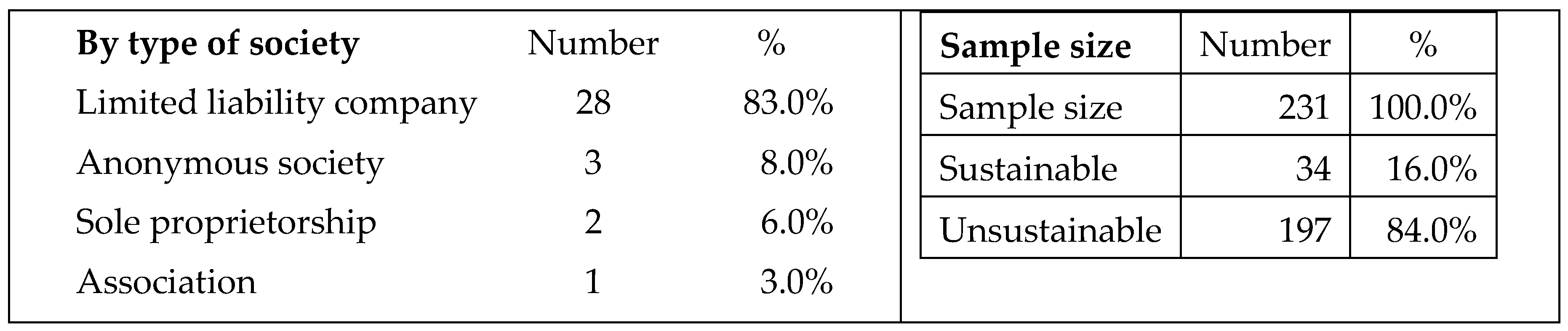 |
Table A4.
Characterization by type of business model and sectors.
| By type of Business and sector | |||||
| Sectors/Kind of business | B2B | B2C | B2B2C | Others | Total |
| Consumer goods (CG) | 0 | 0 | 0 | 0 | 0 |
| Transport (TP) | 1 | 1 | 1 | 0 | 3 |
| Industry (ID) | 4 | 0 | 4 | 0 | 8 |
| Service (SV) | 15 | 2 | 3 | 2 | 22 |
| Other (OT) | 0 | 0 | 1 | 0 | 1 |
Table A5.
Characterization of the empirical analysis.
| Kind of corporation | Number | % | By founding year | Number | % | |
| Multinational Corporation (MC) | 2 | 5.9% | Y2014 | 5 | 5.5% | |
| National Corporation (NC) | 1 | 2.9% | Y2015 | 4 | 8.3% | |
| Start-up (ST) | 18 | 52.9% | Y2016 | 2 | 11.2% | |
| Scale-up (SU) | 4 | 11.8% | Y2017 | 2 | 13.9% | |
| Unicorn (UN) | 1 | 2.9% | Y2018 | 8 | 16.7% | |
| Spin-off (SO) | 7 | 20.6% | Y2019 | 5 | 22.2% | |
| Other (OT) | 1 | 2.9% | Y2020 | 8 | 22.2% | |
| Working sector | Number | % | By conception | Number | % | |
| Transport (TP) | 3 | 8.8% | Scholar | 14 | 42.0% | |
| Thermal comfort (TC) | 0 | 0.0% | Executive Business | 3 | 8.0% | |
| Consumer goods (CG) | 1 | 2.9% | Entrepreneur/liberal professional/self employed | 17 | 50.0% | |
| Industry (ID) | 8 | 23.5% | Current stage | |||
| Service (SV) | 22 | 64.7% | Beginner | 25 | 72.0% | |
| Other (OT) | 0 | 0.0% | Experienced | 9 | 28.0% |
References
- Creutzig, F., J. Roy, P. Devine-Wright, J. Díaz-José, F.W. Geels, A. Grubler, N. Maïzi, E. Masanet, Y. Mulugetta, C.D. Onyige, P.E. Perkins, A. Sanches-Pereira, E.U. Weber, 2022: Demand, services and social aspects of mitigation Supplementary Material. In IPCC, 2022: Climate Change 2022: Mitigation of Climate Change. Contribution of Working Group III to the Sixth Assessment Report of the Intergovernmental Panel on Climate Change Change [P.R. Shukla, J. Skea, R. Slade, A. Al Khourdajie, R. van Diemen, D. McCollum, M. Pathak, S. Some, P. Vyas, R. Fradera, M. Belkacemi, A. Hasija, G. Lisboa, S. Luz, J. Malley, (eds.)]. Available online: https://www.ipcc.ch/report/ar6/wg3/.
- J. D. Sachs, G. Schmidt-Traub, M. Mazzucato, D. Messner, N. Nakicenovic, and J. Rockström, “Six transformations to achieve the sustainable development goals,” Nat Sustain, vol. 2, no. 9, pp. 805–814, 2019. [CrossRef]
- S. Evans et al., “Business model innovation for sustainability: Towards a unified perspective for creation of sustainable business models,” Bus Strategy Environ, vol. 26, no. 5, pp. 597–608, 2017. [CrossRef]
- F. Lüdeke-Freund, “Towards a conceptual framework of’business models for sustainability’,” Knowledge collaboration & learning for sustainable innovation, R. Wever, J. Quist, A. Tukker, J. Woudstra, F. Boons, N. Beute, eds., Delft, pp. 25–29, 2010.
- WEF, “SDG 07- Affordable And Clean Energy: These are the winners of the New Champions Awards 2021,” World Economic Forum, Jul. 21, 2021.
- J. Köhler et al., “An agenda for sustainability transitions research: State of the art and future directions,” Environ Innov Soc Transit, vol. 31, pp. 1–32, 2019. [CrossRef]
- J. Schot and F. W. Geels, “Strategic niche management and sustainable innovation journeys: theory, findings, research agenda, and policy,” Technol Anal Strateg Manag, vol. 20, no. 5, pp. 537–554, 2008. [CrossRef]
- S. Kavadias, K. Ladas, and C. Loch, “The transformative business model,” Harv Bus Rev, vol. 94, no. 10, pp. 91–98, 2016.
- B. Wagner and G. Svensson, “A framework to navigate sustainability in business networks: The transformative business sustainability (TBS) model,” European Business Review, vol. 26, no. 4, pp. 340–367, 2014. [CrossRef]
- B. Brenner, “Transformative sustainable business models in the light of the digital imperative—A global business economics perspective,” Sustainability, vol. 10, no. 12, p. 4428, 2018. [CrossRef]
- E. Costa, P. Wells, L. Wang, and G. Costa, “The electric vehicle and renewable energy: Changes in boundary conditions that enhance business model innovations,” J Clean Prod, vol. 333, p. 130034, 2022. [CrossRef]
- E. Costa, A. Horta, A. Correia, J. Seixas, G. Costa, and D. Sperling, “Diffusion of electric vehicles in Brazil from the stakeholders’ perspective,” Int J Sustain Transp, vol. 15, no. 11, pp. 865–878, 2021. [CrossRef]
- Cambridge, “Cambridge business English dictionary,”. https://dictionary.cambridge.org/, Jan. 27, 2023.
- C. Loebbecke and A. Picot, “Reflections on societal and business model transformation arising from digitization and big data analytics: A research agenda,” The Journal of Strategic Information Systems, vol. 24, no. 3, pp. 149–157, 2015. [CrossRef]
- J. Markard, R. Raven, and B. Truffer, “Sustainability transitions: An emerging field of research and its prospects,” Res Policy, vol. 41, no. 6, pp. 955–967, 2012. [CrossRef]
- P. Ghisellini, C. Cialani, and S. Ulgiati, “A review on circular economy: the expected transition to a balanced interplay of environmental and economic systems,” J Clean Prod, vol. 114, pp. 11–32, 2016. [CrossRef]
- M. J. Bitner, S. W. Brown, M. Goul, and S. Urban, “Services science journey: foundations, progress, and challenges,” Service science, management and engineering education for the 21st century, pp. 227–233, 2008. [CrossRef]
- J. Linåker, H. Munir, K. Wnuk, and C.-E. Mols, “Motivating the contributions: An open innovation perspective on what to share as open source software,” Journal of Systems and Software, vol. 135, pp. 17–36, 2018. [CrossRef]
- J. Grainger-Brown and S. Malekpour, “Implementing the sustainable development goals: A review of strategic tools and frameworks available to organisations,” Sustainability, vol. 11, no. 5, p. 1381, 2019. [CrossRef]
- R. Ziegler, C. Poirier, M. Lacasse, and E. Murray, “Circular Economy and Cooperatives—An Exploratory Survey,” Sustainability, vol. 15, no. 3, p. 2530, 2023. [CrossRef]
- A. Di Vaio, R. Palladino, R. Hassan, and O. Escobar, “Artificial intelligence and business models in the sustainable development goals perspective: A systematic literature review,” J Bus Res, vol. 121, pp. 283–314, 2020. [CrossRef]
- S. Tiba, F. J. van Rijnsoever, and M. P. Hekkert, “Sustainability startups and where to find them: Investigating the share of sustainability startups across entrepreneurial ecosystems and the causal drivers of differences,” J Clean Prod, vol. 306, p. 127054, 2021. [CrossRef]
- C. Sousa and E. Costa, “Types of Policies for the Joint Diffusion of Electric Vehicles with Renewable Energies and Their Use Worldwide,” Energies (Basel), vol. 15, no. 20, p. 7585, 2022. [CrossRef]
- H. Guyader and L. Piscicelli, “Business model diversification in the sharing economy: The case of GoMore,” J Clean Prod, vol. 215, pp. 1059–1069, 2019. [CrossRef]
- V. Corvello, A. Steiber, and S. Alänge, “Antecedents, processes and outcomes of collaboration between corporates and start-ups,” Review of Managerial Science, pp. 1–26, 2021. [CrossRef]
- P. Wells, “Business Model Innovation at the Interface Between Global Production Systems and Local Demand,” Contemporary Operations and Logistics: Achieving Excellence in Turbulent Times, pp. 45–60, 2019. [CrossRef]
- N. Roome and C. Louche, “Journeying toward business models for sustainability: A conceptual model found inside the black box of organisational transformation,” Organ Environ, vol. 29, no. 1, pp. 11–35, 2016. [CrossRef]
- N. M. P. Bocken, S. W. Short, P. Rana, and S. Evans, “A literature and practice review to develop sustainable business model archetypes,” J Clean Prod, vol. 65, pp. 42–56, 2014. [CrossRef]
- M. Geissdoerfer, D. Vladimirova, and S. Evans, “Sustainable business model innovation: A review,” J Clean Prod, vol. 198, pp. 401–416, 2018. [CrossRef]
- K. S. R. Warner and M. Wäger, “Building dynamic capabilities for digital transformation: An ongoing process of strategic renewal,” Long Range Plann, vol. 52, no. 3, pp. 326–349, 2019. [CrossRef]
- J. Zysman and A. Newman, How revolutionary was the digital revolution?: national responses, market transitions, and global technology. Stanford University Press, 2006. [CrossRef]
- V. Jafari-Sadeghi, A. Garcia-Perez, E. Candelo, and J. Couturier, “Exploring the impact of digital transformation on technology entrepreneurship and technological market expansion: The role of technology readiness, exploration and exploitation,” J Bus Res, vol. 124, pp. 100–111, 2021. [CrossRef]
- S. Nambisan, M. Wright, and M. Feldman, “The digital transformation of innovation and entrepreneurship: Progress, challenges and key themes,” Res Policy, vol. 48, no. 8, p. 103773, 2019. [CrossRef]
- S. Denicolai, A. Zucchella, and G. Magnani, “Internationalization, digitalization, and sustainability: Are SMEs ready? A survey on synergies and substituting effects among growth paths,” Technol Forecast Soc Change, vol. 166, p. 120650, 2021. [CrossRef]
- C. M. Christensen, The innovator’s dilemma: when new technologies cause great firms to fail. Harvard Business Review Press, 2013.
- P. C. Verhoef et al., “Digital transformation: A multidisciplinary reflection and research agenda,” J Bus Res, vol. 122, pp. 889–901, 2021. [CrossRef]
- J. Aspara, J.-A. Lamberg, A. Laukia, and H. Tikkanen, “Corporate business model transformation and inter-organizational cognition: The case of Nokia,” Long Range Plann, vol. 46, no. 6, pp. 459–474, 2013. [CrossRef]
- J. Aspara, J. Lamberg, A. Laukia, and H. Tikkanen, “Strategic management of business model transformation: lessons from Nokia,” Management Decision, vol. 49, no. 4, pp. 622–647, 2011. [CrossRef]
- R. Biloslavo, C. Bagnoli, M. Massaro, and A. Cosentino, “Business model transformation toward sustainability: the impact of legitimation,” Management Decision, vol. 58, no. 8, pp. 1643–1662, 2020. [CrossRef]
- P. Di Muro and J. R. Turner, “Entrepreneurial opportunity pursuit through business model transformation: a project perspective,” International Journal of Project Management, vol. 36, no. 7, pp. 968–979, 2018. [CrossRef]
- J. Frankenfield, “Artificial Intelligence: What It Is and How It Is Used,” Investopedia, Jul. 21, 2023.
- M. Fontes, N. Bento, and A. D. Andersen, “Unleashing the industrial transformative capacity of innovations,” Environ Innov Soc Transit, vol. 40, pp. 207–221, 2021. [CrossRef]
- N. et al. Mittal, “Fueling the AI transformation: Four key actions powering widespread value from AI, right now,” UK, Jul. 2023.
- N. Bento and M. Fontes, “Spatial diffusion and the formation of a technological innovation system in the receiving country: The case of wind energy in Portugal,” Environ Innov Soc Transit, vol. 15, pp. 158–179, 2015. [CrossRef]
- P. C. Reinecke, J. A. Küberling-Jost, T. Wrona, and A. K. Zapf, “Towards a dynamic value network perspective of sustainable business models: the example of RECUP,” Journal of Business Economics, pp. 1–31, 2023. [CrossRef]
- A. Dale, S. Arber, M. Procter, and L. Unwin Hyman, “DESK RESEARCH,” Market Research in Practice: A Guide to the Basics, vol. 12, no. 4, p. 223, 2004.
- S. Blank and B. Dorf, The startup owner’s manual: The step-by-step guide for building a great company. John Wiley & Sons, 2020.
- M. Lewrick and R. Raeside, “Transformation and change process in innovation models: start-up and mature companies,” International Journal of Business Innovation and Research, vol. 4, no. 6, pp. 515–534, 2010. [CrossRef]
- Startuphub, “Instrumentos para empreendedores, mapa de ecossistema, Start-up Portugal,” startuphub, Jan. 21, 2022.
- K. Hockerts and N. Weaver, “Towards a theory of sustainable product service systems—what are the dependent and independent variables of S-PSS,” in Proceedings of the INSEADCMER research workshop “Sustainable product service systems—key definitions and concepts, 2002.
- E. Calderon-Monge, I. Pastor-Sanz, and F. J. S. Garcia, “Analysis of sustainable consumer behavior as a business opportunity,” J Bus Res, vol. 120, pp. 74–81, 2020. [CrossRef]
- S. Cadez, A. Czerny, and P. Letmathe, “Stakeholder pressures and corporate climate change mitigation strategies,” Bus Strategy Environ, vol. 28, no. 1, pp. 1–14, 2019. [CrossRef]
- C. Criscuolo, P. N. Gal, and C. Menon, “Do micro start-ups fuel job creation? Cross-country evidence from the DynEmp Express database,” Small Business Economics, vol. 48, pp. 393–412, 2017. [CrossRef]
- S. Hirst and K. Kastiel, “Corporate governance by index exclusion,” BUL Rev., vol. 99, p. 1229, 2019.
- M. W. Wallin, “The bibliometric structure of spin-off literature,” Innovation, vol. 14, no. 2, pp. 162–177, 2012. [CrossRef]
- A. Rehman, H. Ma, M. Ahmad, C. Işık, and I. Ozturk, “Estimating interlinks of carbon emissions from transportation, industrialization, and solid/liquid fuels with economic progress: evidence from Pakistan,” International Journal of Environmental Science and Technology, vol. 20, no. 2, pp. 1981–1996, 2023. [CrossRef]
- N. Caperello, K. S. Kurani, and J. TyreeHageman, “Do You Mind if I Plug-in My Car? How etiquette shapes PEV drivers’ vehicle charging behavior,” Transp Res Part A Policy Pract, vol. 54, pp. 155–163, 2013. [CrossRef]
- M.. Hansen and B. Hauge, “Scripting, control, and privacy in domestic smart grid technologies: Insights from a Danish pilot study,” Energy Res Soc Sci, vol. 25, pp. 112–123, 2017. [CrossRef]
- E. Costa, A. Paiva, J. Seixas, G. Costa, P. Baptista, and B. Ó. Gallachóir, “Spatial planning of electric vehicle infrastructure for Belo Horizonte, Brazil,” J Adv Transp, vol. 2018, pp. 1–16, 2018. [CrossRef]
- J. Tijmstra, M. Bolsinova, and M. Jeon, “General mixture item response models with different item response structures: Exposition with an application to Likert scales,” Behav Res Methods, vol. 50, pp. 2325–2344, 2018. [CrossRef]
- B. Glaser and A. Strauss, Discovery of grounded theory: Strategies for qualitative research. Routledge, 2017. [CrossRef]
- J. M. Corbin and A. Strauss, “Grounded theory research: Procedures, canons, and evaluative criteria,” Qual Sociol, vol. 13, no. 1, pp. 3–21, 1990. [CrossRef]
- B. W. Lai et al., “Critical factors influencing the decision to enroll in a physical activity intervention among a predominant group of adults with spinal cord injury: a grounded theory study,” Spinal Cord, vol. 59, no. 1, pp. 17–25, 2021. [CrossRef]
- D. M. Gligor, C. L. Esmark, and I. Gölgeci, “Building international business theory: A grounded theory approach,” J Int Bus Stud, vol. 47, pp. 93–111, 2016. [CrossRef]
Figure 1.
Methodological scheme.
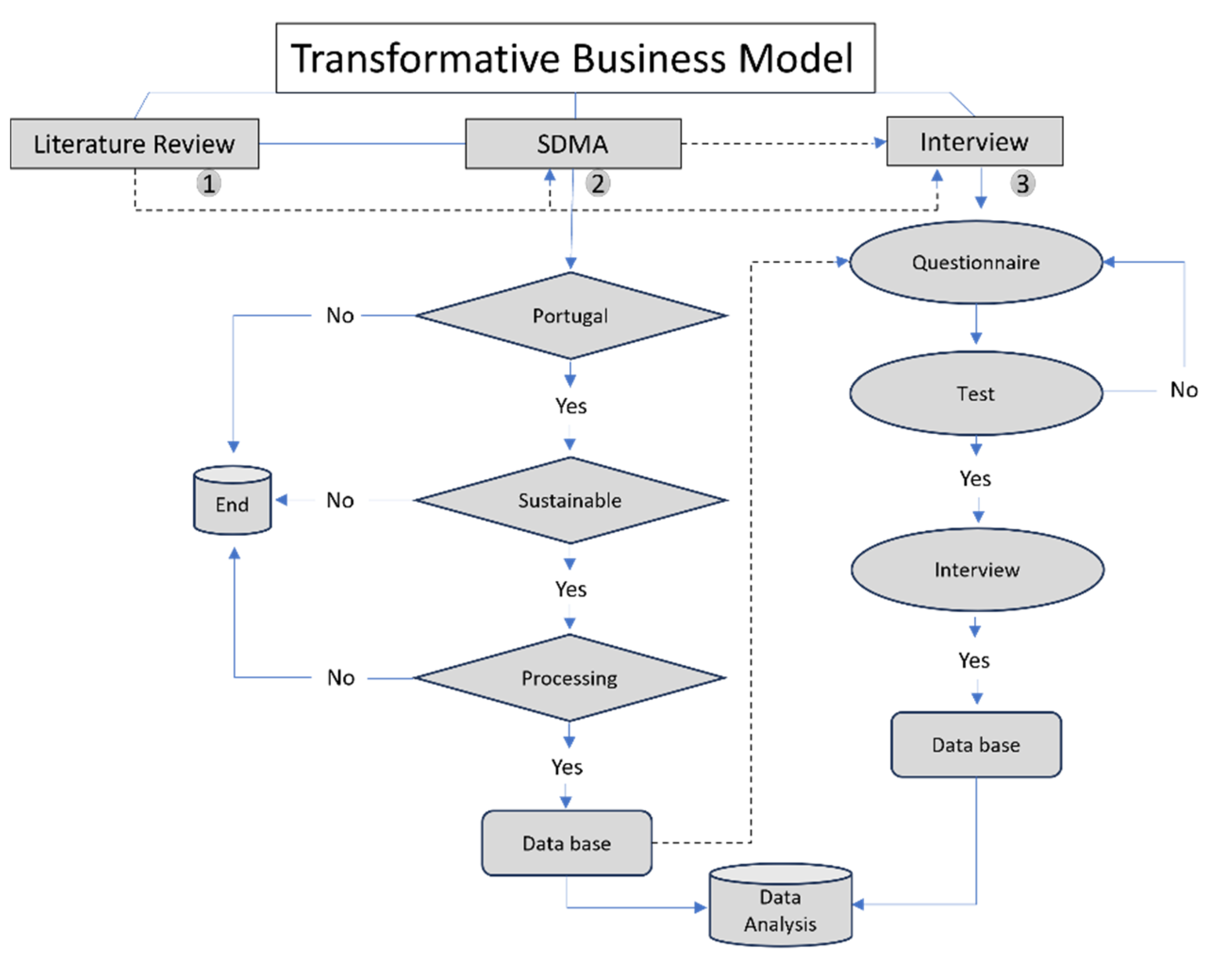
Figure 2.
Start-ups Business model characterization.
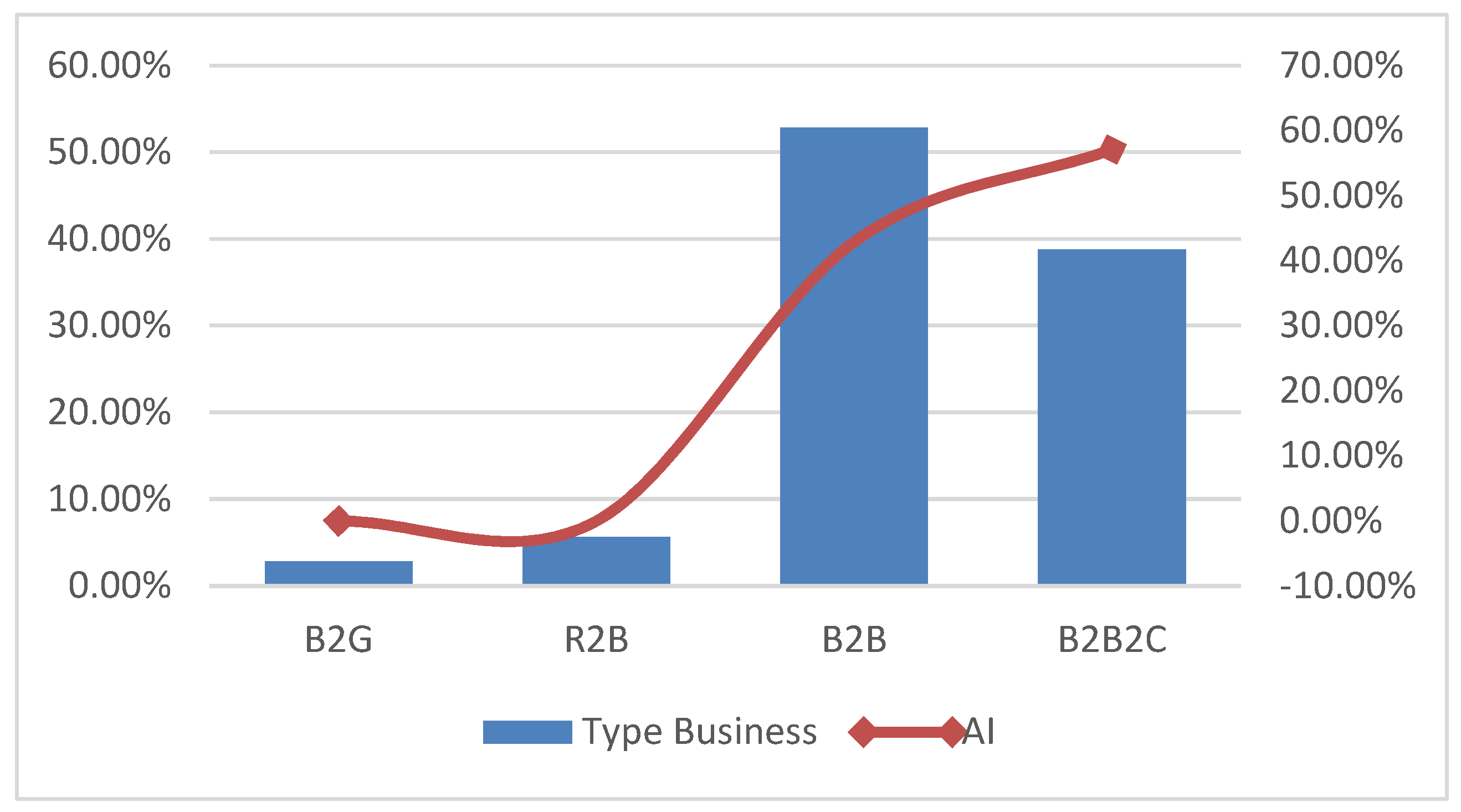
Figure 3.
Mechanisms for enhancing decarbonization and sustainability.
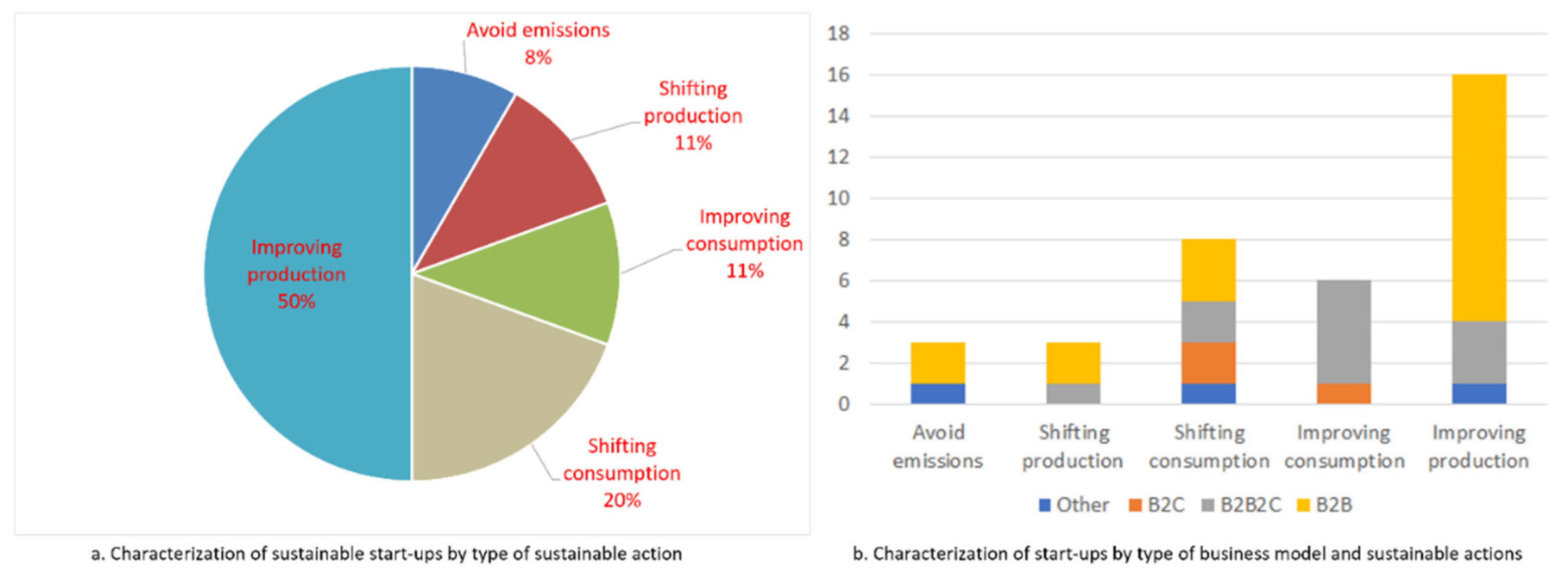
Figure 4.
Analysis of technological and sustainable elements in business models.
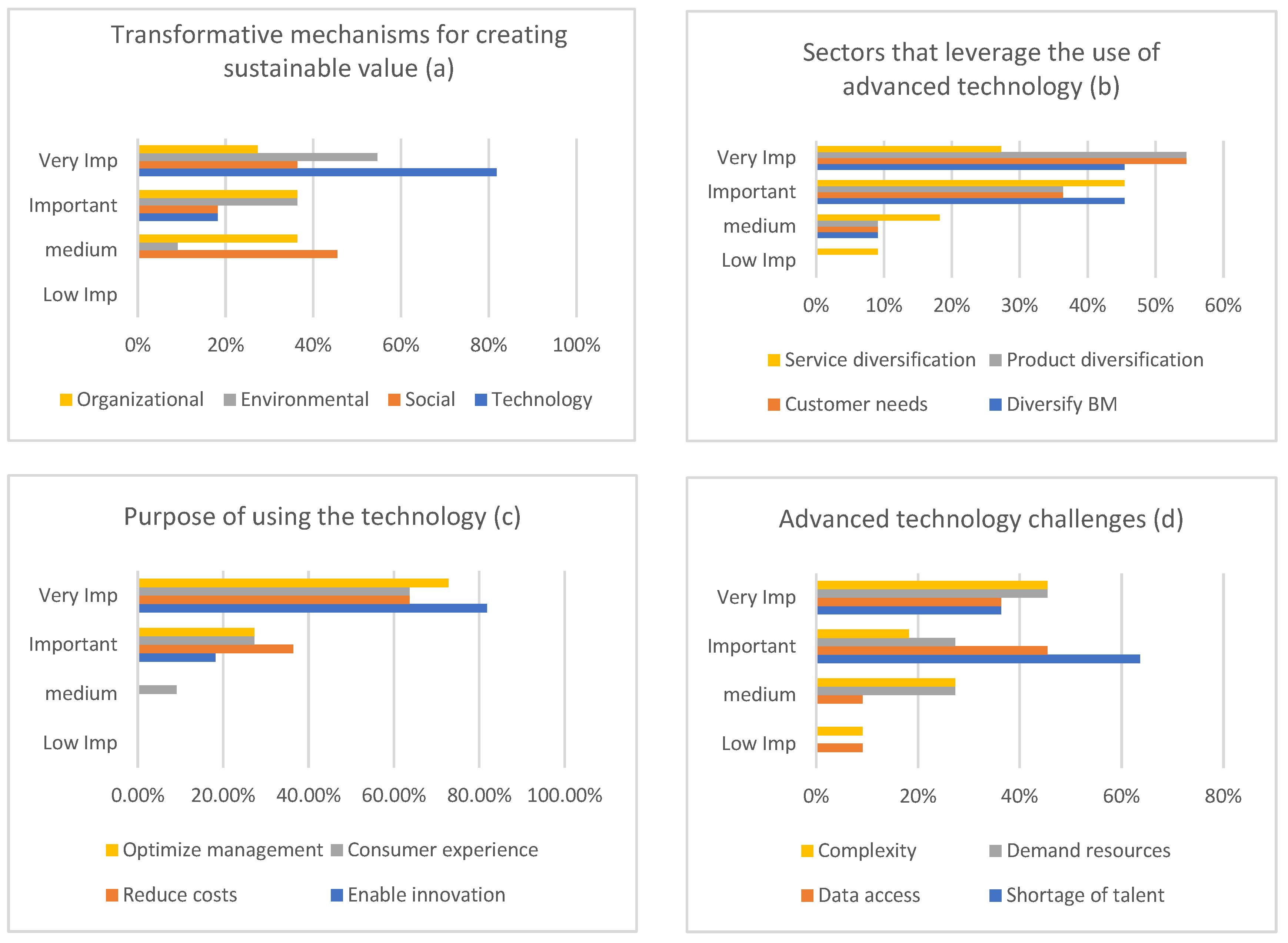
Figure 5.
Analysis of the transformation in production and consumption in business models.
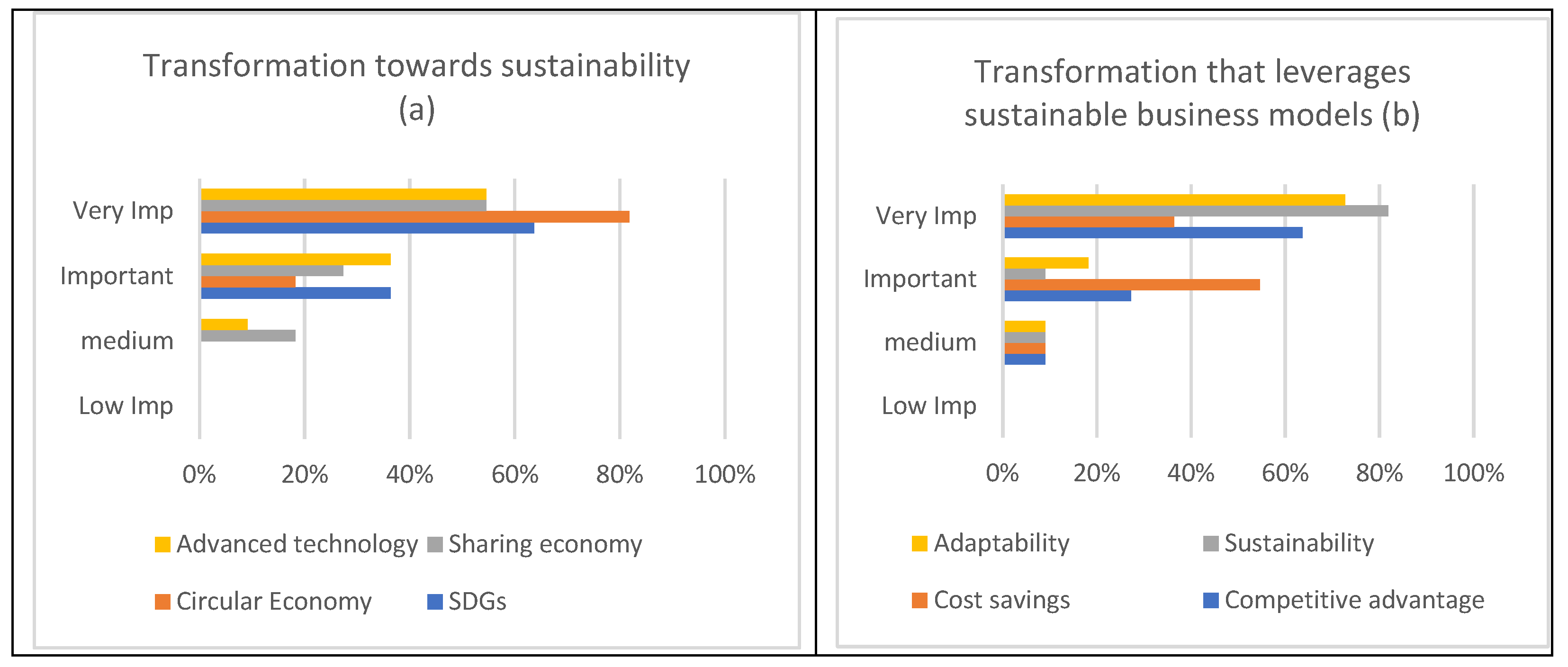
Table 1.
Transformation insight by different segments.
| Definition | Cor | Tec | Dig |
| “Digital transformation has been defined as the use of new digital technologies, such as mobile, artificial intelligence, cloud, blockchain, and the Internet of things (IoT) technologies, to enable major business improvements to augment customer experience, streamline operations, or create new business models.”[30] |
√ |
||
| “The technological revolution that includes digitization, artificial intelligence, big data, internet of things transforms and changes the character of products, processes, markets and competition across the economy”.[14,31] |
√ |
√ |
|
| “...Digital transformation signifies the transformational or disruptive implications of digital technologies for businesses and society. Digital transformation is a concept not limited to particularly innovative businesses, digital start-ups, or high-tech giants. It is a process that embraces companies of all sizes, operating in the most diverse industries, as well as their stakeholders.”[32,33] |
√ |
√ |
|
| “Artificial intelligence (AI) can replace humans and explain what is important to consider in making the transformation to the digital organization... the increased implementation of electronic services and automation coupled with the general transformation.”[33] |
√ |
||
| “Digital transformation is a central driver towards innovation and business renewal, especially for established small and medium sized enterprises (SMEs) in the contemporary economy.”[34] |
√ |
||
| “…a new technology or business model that disrupts existing markets and creates new ones”. Technology is enabling new business models in the education industry, and how these models are creating new opportunities for learning and growth.” [35] |
√ |
√ |
|
| “...a change in how a firm employs digital technologies, to develop a new digital business model that helps to create and appropriate more value for the firm.”[36] |
√ |
||
| “…business model transformation is straightforward: it is a change in the perceived logic of how value is created by the corporation, when it comes to the value-creating links among the corporation’s portfolio of businesses, from one point of time to another.”[37] |
√ |
||
| “A business model transformation is triggered by market process signals cognized as radical by both unit and corporate level managers.”[38] | √ | ||
| “BM transformation includes a complete rethinking of organization’s BM elements, resulting into a radically new value proposition.”[39] | √ | ||
| “...generating and transforming business models to pursue opportunities - that we have regarded as temporary, unique and driving beneficial change - through timely and uncertain business model transformations, where business model is described as a combination of Priorities and Capabilities.”[40] |
√ |
Cor- Corporation/ Management, Tec- Technology, Dig- Digitalization AI BIG data, IoT.
Table 2.
Attributes that characterize the database approach.
| Sustainable elements | Business | Sector | Profile | Root | Evolution |
Sustainable Transition |
Stage |
|---|---|---|---|---|---|---|---|
| SE CE SDGs |
B2C B2B B2G B2B2C D2C B2R |
Transport (TP) Building (BL) Consumer goods (CG) Industries (ID) Services (SV) Other (OT) |
Limited (LT) Corporation (A.S) Sole proprietorship (SP) |
Laboratories (LB) Company (OG) Self-employed (SE) |
Active (AC) Sold (SD) Closed (CL) |
Improving Shifting Avoiding |
Beginner (BG) Senior (SR) |
|
Techno elements |
|||||||
| AI ML IOT |
|||||||
Table 3.
Profile of respondents.
| Type of organization | Region | Org. size | Title | Gender | Age |
|---|---|---|---|---|---|
| Start-up | Center | Small | CEO | Male | Senior |
| Start-up | Center | Large | CEO | Male | Middle age |
| Start-up | North | Small | CEO | Female | Middle age |
| Start-up | North | Medium | CEO | Male | Middle age |
| Start-up | North | Small | CEO | Female | Middle age |
| Start-up | North | Small | CEO | Male | Junior |
| Start-up | North | Small | CEO | Male | Middle age |
| Start-up | North | Small | CEO | Male | Middle age |
| Start-up | Center | Small | CEO | Male | Junior |
| Start-up | North | Medium | CEO | Male | Middle age |
| Incubators/Accelerators | North | Medium | CEO | Female | Middle age |
| Other supporting entities | Center | Medium | Other | Female | Middle age |
Disclaimer/Publisher’s Note: The statements, opinions and data contained in all publications are solely those of the individual author(s) and contributor(s) and not of MDPI and/or the editor(s). MDPI and/or the editor(s) disclaim responsibility for any injury to people or property resulting from any ideas, methods, instructions or products referred to in the content. |
© 2023 by the authors. Licensee MDPI, Basel, Switzerland. This article is an open access article distributed under the terms and conditions of the Creative Commons Attribution (CC BY) license (http://creativecommons.org/licenses/by/4.0/).
Copyright: This open access article is published under a Creative Commons CC BY 4.0 license, which permit the free download, distribution, and reuse, provided that the author and preprint are cited in any reuse.