
Submitted:
25 July 2023
Posted:
26 July 2023
You are already at the latest version
Abstract
Energy keeps the global economy alive, whereas it is extensively exposed to various climate change impacts. In this context, severe business competition (e.g., the building sector) and the unwise use of natural resources and ecosystem services (e.g., fossil fuel energy sources) seem to sharpen the relevant effects of climate change. Indicatively, contemporary issues at the interface of building energy performance and environmental quality levels include consequences from global warming, increasing releases of carbon dioxide to peak electrical loads, power grid and building planning, and energy demand and supply issues. In light of such concerns, the present review paper attempts to disclose the multifaceted and multidisciplinary character of building energy use at the interface of the economy, the environment, and society against climate change. This review highlights energy efficiency concepts, production, distribution, consumption patterns, and relevant technological improvements. Interestingly, the reviewed contributions in relevant literature reveal the need and necessity to alter the energy mix used and relevant energy use issues. These include developments in climate-proof and effective systems regarding climate change impacts and shocks. Practical implications indicate that the sustainable development goals for clean energy and climate action should be followed if we wish to bring a sustainable future closer and faster to our reality.
Keywords:
climate change
; buildings
; energy efficiency
; energy use
; sustainability
1. Introduction
The unsustainable use of resources or, even worse, failing to allocate efficiently resources leads to low-performance rates of natural systems (e.g., overconsumption, overexploitation). These issues are widely correlated with unstructured, unplanned, and intense economic activities and human intervention (e.g., built environment, land coverage), resulting in sharpening already severe climate change conditions. In turn, this situation reflects the availability (e.g., supply and demand perspective), sustainability (e.g., fossil fuels or renewables), and quality status of the provided ecosystem services, for instance, provisioning services, such as energy. Conventional energy is derived from scarce resources, and governments should use it conservatively and efficiently (Menegaki & Tugcu, 2017). The targeted outcome supports the never-ending pursuit of optimizing resource exploitation within the limits set by natural dynamics and socio-economic forces. Supportively, Halkos & Paizanos (2016) claim that investigating the relationship between environmental indicators and macroeconomic variables is highly important to foster relevant policies like, for instance, fiscal policies on CO2 emissions.
Energy systems emphasize the concept of green buildings offering an engineering and science base (Hailu, 2021). Moreover, the interdependencies of energy systems and building constraints (e.g., engineering, planning, design, carbon footprints) are crucial to achieving carbon-neutral building energy systems throughout their lifecycle (Ropo et al., 2023). Buildings are considered the largest energy-saving space in the world, and they remain suitable fields to apply technologies for emission reduction (Li et al., 2023). The European Commission clearly notes that the building stock relies mostly on energy generated by fossil fuels for heating and cooling purposes.
From this perspective, seeing how climate change interrelates with building energy use and efficiency would be beneficial since both affect energy systems extensively, which in turn interrelate environmental quality. This is a great opportunity to review and understand how the concept of ‘buildings’ affects the transition toward sustainable development. The aim of the present study is to thoroughly review high-impact research efforts that discuss the impacts at the interface of climate change and building energy-related issues. We process an integrative review process to meet the purpose of this study. Whittemore & Knafl (2005) claim that integrative reviews interrelate to varied data sources, enhancing a holistic understanding of the topic in question and confronting the complexity inherent in scientific research.
Energy resource availability seems to be one of the most important research issues, especially with regard to building sectors’ concerns. Correspondingly, the challenge lies in recognizing high-leverage interventions, such as today’s decisions on future building energy trends, that will create fundamental changes for making energy system improvements. These major concerns stimulated our research to explore relevant literature and gather inputs and insights across science in light of a better future.: What are the effects of climate change on energy production, distribution, and consumption related to building end-use demand? What are the future prospects? How might these changes affect economic growth and welfare status? Are there any established linkages and causalities? These are challenging questions in academia and business, which pursue pathways to optimize resources and processes to ‘build’ sustainability within the economic system. For instance, this becomes evident in high-energy demand sectors (e.g., the building sector) and relevant consumption patterns (e.g., end-use needs).
However, these considerations do not seem to reproduce significant progress to achieve the desired balance between the socio-economic system and nature dynamics. This is despite the fact that relevant literature has stressed the significance of energy efficiency in high-leverage industries if effective plans are to be implemented. To the best of our knowledge, no integrative review has been processed about climate change impacts on building energy-related issues.
The structure of the paper is the following. The methodology section presents the theoretical background of the review process followed in this study. The following section includes the data extraction process. The next two sections concentrate on the building energy review process and the results of this study. The Recommendation section focuses on the gathered information, gaps, and future research perspectives. Finally, the last section concludes the results.
2. Methodology
By perceiving the challenge of exploiting natural resources in a sustainable manner, this study broadly reviews a series of selected published studies that discuss the climate change impacts on power and energy systems.
Whether systematic or integrative, literature reviews offer a way of summarizing individual research studies and other types of articles to integrate current knowledge of a topic (Oermann & Knafl, 2021). It should be mentioned that the main difference between the systematic and the integrative review process is that the former concerns experimental studies and not seldom only randomized controlled trials, whereas the latter considers both non-experimental and experimental studies.
The present study processes an integrative review to gather and summarize previous research efforts on power and energy systems. This process allows the researcher to understand the issues of interest more deeply and thoroughly. Supportively, the integrative review approach includes a wide range of methodologies, for instance, experimental and non-experimental research, theoretical or empirical, and qualitative or quantitative studies offering great applicability for multiple research fields. Interestingly, Toronto & Remington (2020) assert that such a process aims to define concepts, review theories and ‘gaps’, contribute to the literature, and analyze methodologies adopted to define research issues. In this framework, such an approach is suitable for a scope broadly related to a phenomenon or the research field of interest (Whittemore & Knafl, 2005). An integrative review process provides opportunities to incorporate findings and analysis of information into decision-making processes.
Notably, according to Lubbe et al. (2020) researchers adopt the integrative literature review since it exceeds the process of merely analyzing and synthesizing research findings or primary studies (Soares et al., 2014). They also argue that this process allows for integrating not only qualitative and quantitative data but also opinions and discussion papers, and policy documents, essentially additional sources of scientific information, creating a wider understanding of the specific phenomenon under research (de Souza et al., 2010; Grove et al., 2013; Torraco, 2016). The integrative review provides a unique opportunity and challenges to integrate existing knowledge from various communities of practice and recommend future initiatives for research (Cronin & George, 2023).
Furthermore, as Whittemore and Knafl (2005) report, little attention has been paid to efforts combining empirical and theoretical reports, an issue that an integrative review process considers widely. As a review method, it also increases its potential to turn primary research methods into a greater part of evidence-based practice initiatives, highlighting its broadest character and enhancing rigor. In this perspective, they indicate that an integrative review process comprises five steps: problem identification, literature search, data evaluation, data analysis, and presentation of findings. Such an approach facilitates a researcher's review effort to integrate concepts, theories, evidence, and methodologies for the topic in question (Broome, 1993).
Integrative literature reviews are suitable to address mature research fields and topics or new, developing, emerging topics in science. As a research topic matures and the interest in the literature increases, the relevant knowledge base is developing and growing accordingly for this particular topic (Torraco, 2005).
When processed in a detailed, well-organized, and thoughtful manner, the benefits derived from an integrative review process are strength evaluation of the reviewed studies' evidence, gap identification, research opportunities for further research efforts, integration (bridging) of relevant areas in a scientific domain, identification of core issues in science, generation of a research question, identification of conceptual and theoretical frameworks, and exploration of all successful methods used from researchers to reach results (Russell, 2005). Consequently, in practical terms, it is an inclusive way to summarize various types of evidence justified by many methodologies, whereas it delivers a wider scientific view of the topic (de Souza, 2010]).
Receiving background knowledge from a sizable body of reviewed studies can lead current research efforts to define the scope and extent of research on a topic (Bowden & Purper, 2022) using multiple types of data sources, permitting synthesis of the findings, identification of the main topic under review to develop a new understanding of this topic (Kutcher & Le Baron, 2022).
3. Data
The present review is led by the following research question: ‘What are the impacts of climate change on power and energy systems concerning existing research? This study’s integrative review process was structured based on reliable and accredited publications within the scientific community. Search terms included energy systems, energy consumption, energy production, energy distribution, energy efficiency, energy growth nexus, power systems, electrical power, climate change impacts, climate adaptation, climate mitigation, renewable energy, and energy mix. Interestingly, two of the most popular, acknowledged, and dependable databases were used to retrieve published studies relevant to the purpose of the present work: Scopus, Science Direct, and MDPI. The literature review was extended by searching the Google search engine and relevant Google Scholar data to find peer-reviewed articles published in journals indexed in the databases mentioned above. After receiving results, papers were screened for duplicates or slight relevance with the subject of interest. Essentially, publications were excluded if the study's main purpose was not aligned with the impacts of climate change on power and energy systems. Then studies were evaluated based on the Abstract and eligibility criteria. Two major criteria for keeping the studies for further review were the clear purpose of the study and specific theoretical and practical implications based on test results or contributions. An additional criterion was the novelty of methodologies used to support their scientific argument. Each study was thoroughly read and then listed based on the classification needs of this integrative review process. Particularly, the inclusion criteria for proceeding further with the review process were: a well-defined and visibly justified contribution to the relevant literature (e.g., research gap); the paper should have undertaken a blind peer-review process before getting published; the year of publication (e.g., studies published after the year 2000); robustness and reliability of methodology adopted; and language restrictions (e.g., written in the English language). Our data extraction purpose was to focus on and carefully analyze studies that have made acknowledged contributions to the relevant literature and have meticulously progressed relevant research efforts on the issues and challenges concerning climate change and its impacts on power and energy systems over the recent years.
The review process included a variety of methods, materials, and tools used in scientific approaches from different viewpoints, highlighting the multifaceted and interdisciplinary nature of the research subject. Diversity in methodology and variations in research results were identified during the process. A comprehensive analysis of the studies was made to classify points of relevance to the present effort, compare with similar papers on the same research field and define trends and tendencies in the literature. Then, the integration and summation of the significant findings related to the thematic field of the present review process was completed.
After completing the data tasks described above, we categorized the selected studies based on the scientific topic of interest, such as studies that discussed impacts on energy systems and research related to the energy growth nexus discussion.
This followed data extraction process of the present study remains very constructive in retrieving each study’s desired key points and research results. To increase the reliability of this work, the data extraction process was carefully made and double-checked by both authors to overcome mistakes due to data entry errors and potential misinterpretations of concepts and methodologies of reviewed published studies.
4. Buildings and Energy
There is a growing research interest in energy use and consumption and its environmental implications. This is mainly because of fossil fuels use, over time, rapidly and gradually, as the core energy source and the related greenhouse gas emissions (GHGs) and carbon dioxide (CO2) releases, resulting in raising the global temperature to a great extent. Buildings contribute largely to energy-related emissions (Li et al., 2012). Therefore, the role of buildings (e.g., residential, non-residential) and their lifespan in this process (e.g., energy demand, energy-related emissions, emissions footprint) is considered fundamental. Figueiredo et al. (2020) mention that the energy supply side should be able to cover future energy demands. In turn, energy demand varies based on various factors. As indicated in Guo et al. (2023), the key determinants behind the building energy service demand vary on different trends in the socio-economic system, technological factors, behavioral aspects, and climate issues (Harvey, 2014; Scott et al., 2015; Scott et al., 2014; Zhou et al., 2014) and numerous electrification pathways. One key issue for limiting energy consumption regarding demand reduction concerns improving building stocks (Clift, 2007). Buildings concretely represent the energy used in a wide range of processes (e.g., mining, processing, manufacturing, and transporting of the building materials) and the energy consumed in constructing and decommissioning the buildings (Li et al., 2012). Given the long lifetime of buildings which is estimated at 50 years, it is significant to review their response to climate change throughout the years and their future perspective related to energy consumption (e.g., heating and cooling). Not surprisingly, the issue of energy use in buildings can be incorporated into well-structured and organized mitigation and adaptation measures against climate change. Interestingly, this seems a high-impact issue since it relates to weather conditions, climate zones, and energy efficiency, which in turn integrates technological advancements and smart energy systems that use less energy to produce the same or better outcome and task. It was calculated that for the year 2002, buildings globally accounted for about 33% of the world’s GHGs (Levermore, 2008). More recent estimations indicate that buildings still cause 36% of the European Union’s energy-related GHGs (CAN, 2021). This issue in the building sector is currently at the top of the agenda signifying its importance in reaching the European Union’s energy and climate objectives for 2030 and 2050. Specifically, the European Council (2022) clearly states that from 2028 new buildings belonging to the public sector would be zero-emission buildings. Additionally, from 2030 all new buildings would be zero-emission buildings. The agreement launched a new energy category for buildings, “A0”, concerning energy performance certificates indicating zero-emission buildings. The final target is to activate renovations, move forward to a gradual phase-out of the worst-performing buildings, and improve deeply regarding the national building stock. This means that better and more energy-efficient buildings will result in a decarbonized building stock by 2050. Also, these targets are expressed thoroughly in the European Green Deal for improving the well-being of people and a net-zero age. Interestingly, Sesana & Salvalai (2018) conducted a work concerning the Building Renovation Passport (BRP) concept in terms of definitions and content (structure) to offer useful building-related documentation.
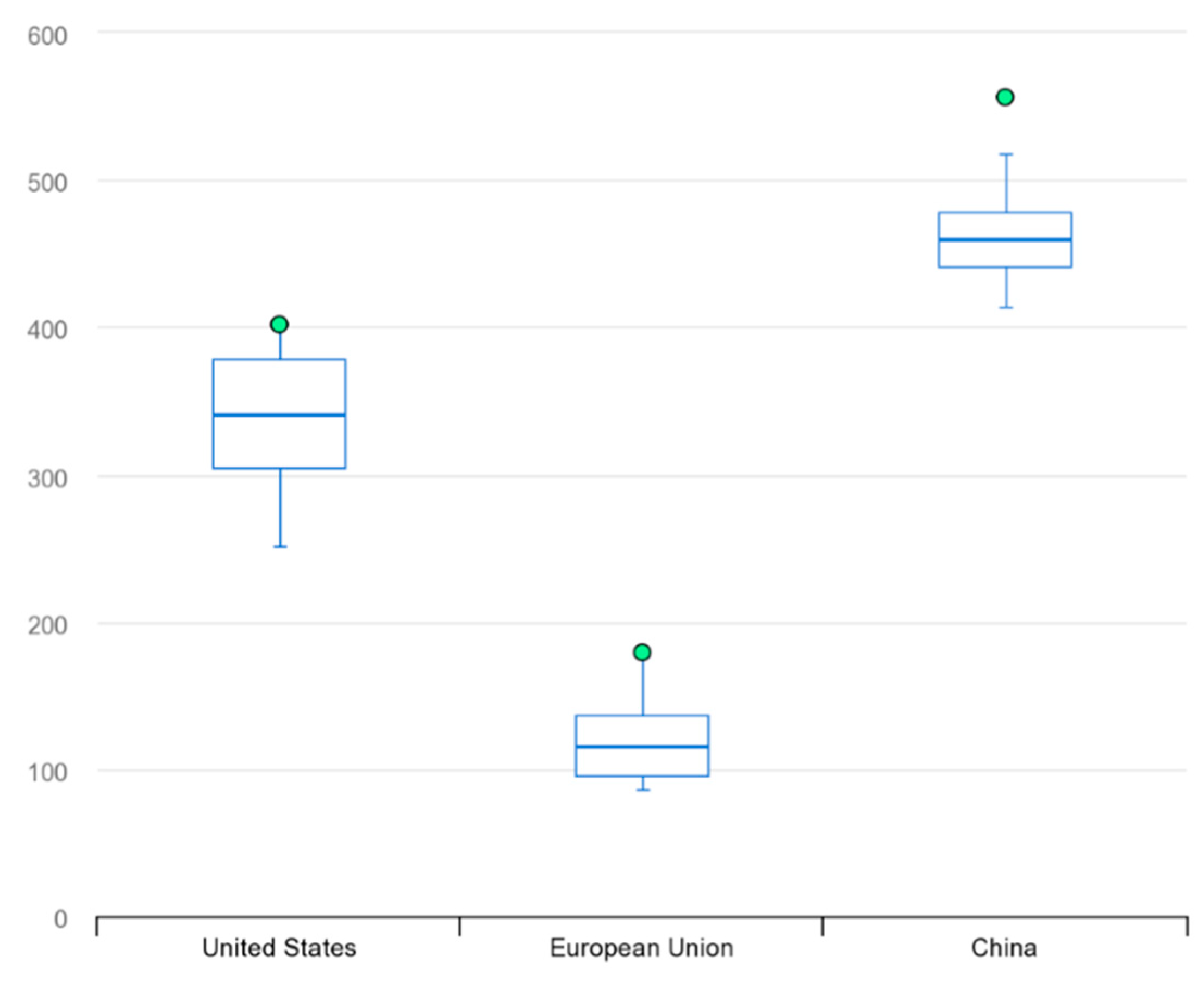
Given such worries, more sustainable investments will become a reality (e.g., buildings with eco-friendly materials and advanced energy systems), and people (entrepreneurs and individuals) will make more informed decisions regarding energy-saving and cost-saving options (e.g., heat, cool, run appliances and devices). According to the Global Status Report Buildings and Construction (Global ABC) 2017, it is imperative need to improve by 30% the energy intensity per square meter concerning the building sector by 2030 to stay consistent with the Paris Agreement climate goals. Judging from Figure 1, which demonstrates the annual CO2 emissions at a global level, we conclude that the building sector accounts for 27% of global CO2 emissions. Figure 2 presents the heating degree days (y-axis) for the United States, European Union, and China. Figure 3 illustrates the cooling degree days in summer (y-axis) for the United States, European Union, and China.
According to IEA (2022), emissions were increased due to fossil fuel power plants to cover consumption needs for excess cooling demand during extreme summer heat. Cooling degree days in 2022 exceed typical levels or even the maximum level seen for 2000-2021. Furthermore, for the year 2021, cooling and heating consumption needs from extreme weather increased global emissions by around 60 Mt CO2. Two-thirds of this are due to additional cooling needs. The remaining one-third came from heating needs. This accounted for almost one-fifth of the total worldwide rise in CO2 releases. Improving energy efficiency in buildings seems a promising way to reach, or at least greatly approach, the carbon neutrality target by 2050. From this perspective, Scott et al. (2014) assert that improvements in the building stock and advancements concerning commercial equipment and household appliances can positively impact energy use and building services, limiting CO2 emissions. Experts should specifically set minimum levels of energy performance requirements (standards), such as appliance and equipment standards or building energy codes (Scott et al., 2015). Furthermore, Mostafavi et al. (2021) argue that energy efficiency efforts should be categorized into the following sections: envelope design, form, orientation and height, ventilation, carbon emission, renewable energies, and occupant behavior. The review concerned 48 studies considering issues such as the energy and carbon performance of High-Rise Buildings (HRB) between 2005–2020. In the literature review by Hafez et a. (2023), 134 studies were systematically reviewed. The focus was on multiple topics for improving energy efficiency by limiting devastating impacts on the environment with socio-economic concerns. This research clearly interrelates Sustainability Development Goals, namely SDG11, which considers sustainability in cities and communities, and SDG13, which concerns climate action.
Literature on climate change impacts on building energy consumption is increasing, driven by the need to process adaptation measures since they can greatly safeguard the built environment's long-term integrity and effective operation (Stagrum et al., 2020). According to Nguyen et al. (2021), studies related to the impacts of climate change on buildings can be grouped into five categories based on the researchers' objectives: (i) estimation of impacts concerning energy consumption; (ii) adaptation and mitigation measures for buildings toward combating adverse effects of climate change; (iii) models for building retrofitting and renovation to handle the climate change; (iv) creation of new methods and tools for making projections for future conditions; (iv) handle and estimate uncertainty concerning climate projection models and relevant impacts on building simulation results. In their work, Guo et al. (2023) highlight the role of uncertainties when making projections and relevant estimations for energy consumption patterns and CO2 emissions in the case of buildings. Notably, Campagna et al. (2022) present three methodological phases to evaluate climate change impacts on buildings. The first phase includes the study context identification, which concerns the geographical context and the building typology. The second phase refers to future weather prediction. This phase considers the selection of emission scenarios, Global Circulation Models (GSMs), downscaling techniques, weather file types, and study periods. The third phase relates to energy consumption prediction. This phase concerns dynamical simulation models and regression models to compare future time slices with a reference period.
The energy transition concept is widely acknowledged in the literature as a shift in the so-called ‘energy paradigm’, namely replacing fossil fuels with renewable energy sources to decarbonize energy systems (Bompard et al. 2020). In this effort, authors stress the importance of the ‘energy triangle’ approach composed of three components: (i) generate electricity directly from renewables; (ii) use electricity as the core energy vector; and (iii) electrification of end-use. This ‘jump’ from fossil fuels to renewables constitutes an answer provider, a fundamental response against ‘quick fixes’ or ‘easy solutions’ that treat only symptoms of problems. Tackling effectively (e.g., building planning) and efficiently (e.g., using wisely resource materials) impacts because of climate change requires deep knowledge of the current situation, forecasts for future scenarios, and proactive rather than reactive behavior from all stakeholders in the energy system at the interface of integrated and holistic approaches. This series of events will provide spatial planners, policy and decision-makers, and officials an advantage to prevent worse situations. The role of buildings in this process is fundamental. In this regard, Gupta et al. (2023b) emphasize the energy efficiency benchmarking of buildings. It is an accurate technique to measure, track, and limit end-use energy usage of buildings by adopting comparative scenarios. This approach discloses opportunities to order energy-saving processes, such as modifications to end-use appliances or building operations. The proposed approach employs machine-learning techniques to maximize accuracy and precision compared to other benchmarking methods (Gupta et al. 2023a, Konhauser et al. 2022; Gupta et al. 2022). Data gathering and availability of relevant information to process simulation models and use tools and techniques to evaluate building performance is crucial. For instance, Li et al. (2023) assert that the precise provision of data (e.g., daily, monthly) concerning a Typical Meteorological Year (TMY) is a requirement and important task to evaluate building energy consumption, which in turn impacts the well use of outdoor data for building energy conservation. Consequently, in the absence of adequate data provision, the predictive power of models and the dependability of results are in question. To overcome these difficulties, Jung et al. (2023) propose a building information modeling (BIM) and building energy modeling (BEM) process grounded on a 3D laser scanning process. Geometric information on the existing building can be implemented in the case of inadequate information to run building energy models. Moreover, Zhou et al. (2023) developed a new approach that combines machine learning and a domain knowledge-based expert system to increase building energy flexibility supported by a rule-based expert system, and a decision tree model. Authors conceptualize energy flexibility as indicators related to cost and energy-saving margins (potential), load, and peak shaving efficiency.
Officials in the European Commission state that by 2030, GHG emissions of buildings within the European Union must be limited by 60%, final energy consumption by at least 14%, and energy consumption for heating and cooling purposes by 18%, compared to 2015 levels. Researchers recognized such a need constantly develop tools to evaluate energy efficiency and take corrective actions for embedding sustainability into the building sector. One of these works was completed by Heidenthaler et al. (2023). The authors highlight buildings' spatial and functional dimensions and incorporate them into Urban Building Energy Modeling (UBEM). They apply such an approach to forecasting hourly heat load profiles of residential buildings using detailed building simulation tools, which are important for high-resolution results concerning spatial and temporal dimensions. The literature stresses the importance of UBEM, especially in modeling large-scale buildings. For instance, Kamel (2023) systematically processed a literature review considering physics-based modeling techniques. The main purpose was to assess conservation energy-related measures.
Given the multiple outstanding studies concerning sufficiency, efficiency, and renewables for attaining goals for reducing GHGs and energy demand, Hu et al. (2023) identified a gap in achieving the Building Energy Sufficiency (BES) in the building operational phase, considering not only energy or emissions requirements but also addressing occupant demand as well. It would be useful to mention that the definition of BES varies in the relevant literature, while in the building sector, occupant demands are categorized into four categories: time and space, quality and quantity, control and adjustment, and flexibility, matching human well-being with building energy sufficiency. The term Energy Sufficiency is defined as “a state in which the population’s basic needs for energy services are met equitably and ecological limits are respected” (Darby &Fawcett 2018). An issue that is more than challenging, contemporary, and important to bring sustainability to our place. Hong et al. (2017) and Hu et al. (2020) mention that lifestyle and occupant behavior can be recognized as key determinants impacting buildings' final energy use.
Technological advancements and innovations in the construction and use of buildings are important for experiencing sustainability goals. However, technological solutions and innovations concerning materials used are insufficient since buildings comprise dynamic systems, and the occupants demonstrate different behaviors in a complex mode (Hong et al. 2017). Current and future researchers should motivate, inspire and guide further innovative achievements, models, and applications to maximize space for energy efficiency and drastically limit energy use in buildings. This a multidisciplinary task with many variables in the ‘equation’ of sustainable development (GHGs, CO2 emissions) and predictors of building energy consumption and efficiency given the conditions in socio-economic systems worldwide.
5. Results
The review process discloses the results of selected articles. This study aimed to release contemporary issues from reviewed articles concerning climate change impacts derived from building energy use and related GHGs and CO2 emissions. These results can be further reviewed for inclusion in decision-making processes, formulation of energy management schemes, and building planning for energy-efficient buildings. Mayer et al. (2023) conclude that using remotely sensed data when making predictions for energy efficiency levels of buildings brings opportunities for future work to integrate additional data sources compared to on-site, in-field visits of certified energy auditors, which might make the whole process slow, costly, and geographically incomplete. The research concerned data from 40,000 buildings in the United Kingdom. Accordingly, technology plays its own unique role in getting things done efficiently, accurately, and cost-effectively in a timely manner. For instance, using the Internet of Things smart ecosystems helps reach decisions that can benefit all involved stakeholders in the energy system (García-Monge et al., 2023).
Climate change mainly impacts building-energy demand by increasing or decreasing the demand needs for cooling and heating, whereas building technologies (e.g., building equipment and shell, renovations to the building stocks) contribute largely to achieving energy-efficient buildings (Scott et al., 2015). Supportively, Figueiredo et al. (2020) conclude that climate change affects residential demand due to average temperature rise, temperature, weather conditions, and space heating and cooling needs. Future energy and electricity consumption demand considerations are associated with numerous factors, such as environmental (e.g., energy mix and renewables inclusion) and socioeconomic factors (e.g., severe market competition and energy use, production lines, and innovations). The most acknowledged and tested methods adopted to estimate the future residential demand use parametric, energy balance, and degree-day models (Figueiredo et al., 2020), whereas the building energy simulation technique is an additional method (Li et al., 2012). Various energy simulation tools are processed to elaborate on energy and CO2 building performance and energy efficiency gains. All are targeted to enrich strategies and plans for decreasing the environmental impact of buildings due to climate change. Frayssinet et al. (2018) stated that no validated tool could precisely and explicitly simulate buildings' power demand, for instance, at the city level. Thus, space for further improvements and deployments of new models is present and comparable to existing ones.
Optimization methods and settings always play a significant role in processing scenarios, drawing safe conclusions about how buildings will behave, and evaluating their resilience and mitigation (Nguyen et al., 2021) and for energy efficiency issues (Xiao et al., 2023). Interestingly, machine learning and a domain knowledge-based expert system ease building demand-side management while they advance the building’s energy design and control systems for greater demand flexibility (Zhou et al., 2023). Review results show that energy flexibility is vital for keeping a power grid sustainable and resilient and a significant measure to decrease utility costs for building owners (Li & Hong, 2023). Moreover, we receive information for building characteristics (e.g., energy consumption) based on machine learning methods from various authors, such as Pham et al. (2020), Streltsov et al. (2020), and Rosenfelder et al. (2021), as well as for energy efficiency inputs based on deep learning-based multi-source data fusion frameworks (Sun et al. 2022).
The concept of energy sufficiency is highly important since it comprises one of the three energy sustainability strategies, following energy efficiency and renewables (Zell-Ziegler et al., 2021). The authors elaborated on 230 sufficiency-related policy measures from a systematic document analysis. They searched the European National Energy and Climate Plans (NECPs) and Long-Term Strategies (LTSs). They concluded that relevant regulatory frameworks comprise a valuable instrument to achieve great sufficiency rates concerning national energy management plans in European Union countries.
Mitigation and adaptation alternatives challenge the potential to handle changing conditions of climate. Mitigation measures can be applied to building envelopes and internal loads (Bojic et al. 2002; Lam et al. 2010). Dropping the lighting load density is a great energy-saving option, particularly applied in cooling-dominated buildings in warmer climates (Li et al., 2002; Han et al., 2010). Climate adaptation measures should be appropriately planned when designing buildings and at the operation stages to limit significantly negative impacts (Ren et al., 2011).
The foregoing results stemmed from the reviewed studies focused on minimizing the devastating impacts of buildings and energy needs in regard to climate change conditions. Consequently, links are present among energy demand, the building and construction industry, and climate change impacts which in turn interrelate to the questionable achievement of a nation’s goals toward a sustainable future. An issue that needs continuous efforts, multifaceted approaches, and cooperation and partnerships in academia and business environment, within countries, and across nations, always with a long-term perspective. A crucial issue for receiving benefits from all research efforts remains the proper and ethical circulation of gained knowledge among scientists. Review studies offer this opportunity in favor of advancing the flow of research results, conceptual frameworks, and any other scientific input.
6. Recommendations
This study’s review covered a wide range of issues and topics related to energy efficiency and the energy footprint of buildings as a function of climate change impacts. All researchers' efforts concentrate on technologies, regulatory frameworks, models, and instruments that help reduce C02 emissions and energy use of buildings. Many studies focus on energy savings and the energy performance of buildings in an effort to embed sustainability in the construction phase, operation, and lifecycle of buildings. Lopez et al. (2023) underlie the necessity for highly energy-efficient and decarbonized building stock toward a decrease by 19%, at least, by 2050. Supportively, it is central to advance the energy efficiency of buildings to reach the targets of a carbon emission peak by 2030 and carbon neutrality by 2060 (Huo et al., 2023; Goubran et al., 2023). Indicatively, in the case of the European Union, Energy Performance Certificates provide a pathway to determine the energy efficiency of buildings (Spudys et al., 2023). These figures are not simply numerical values or percentages. They mirror the current reality; they mark future objectives, and they call for immediate action to advance the built environment.
At a time of increasing interest in developing ‘green’ consumption patterns, the relationship between energy and high-leverage market sectors (e.g., the building sector) seems to be a motivating topic for research. All efforts should focus on managing natural and technical resources to meet all environmental, economic, and social needs (e.g., from construction to building operations and occupant behavior). Perceiving these responses' direction, magnitude, linkages, and causalities allow researchers to anticipate environmental changes better and adapt as necessary. Interestingly, switching focus from short-term management plans to long-term strategies based on comprehensive and sophisticated research efforts is a promising way to bring sustainability to the building sector.
Keeping the momentum active methodologies and econometric models (e.g., panel data or time series analysis) that investigate linkages, causalities, and long-term relationships between growth variables at a macro level and energy-related variables (e.g., building indicators that denote building performance, efficiency, sufficiency, flexibility, demand, end-use, resilience and request of energy grid operator) are scarce, untested or insufficiently mentioned.
For instance, a set of variables for further elaboration could be building energy consumption rates or British Thermal Units (BTUs) from cooling and heating devices (air-conditioning) in different climate zones and seasons could impact environmental degradation or growth rates in the context of Environmental Kuznets Curve and energy growth nexus discussion for a group of countries (e.g., eurozone member states, OECD countries, G7 countries, G20 countries, Asian countries USA states). Another interesting point would be the inclusion of high-leverage and profitable market sectors (e.g., the construction sector) under the same econometric modeling. In this approach, data received from various techniques mentioned in this study could widely benefit such an approach. This perspective might have been less visible and obvious to the broader community within natural and socioeconomic systems for energy-related issues.
Indicatively, Menegaki & Tugcu (2018) state that the energy-growth nexus concentrates on the contribution of energy as a factor of production in the economic sector. Consequently, this approach helps to reach results concerning the sensitivity of the growth process against energy conservation measures. In particular, concerns are visible regarding the optimum equilibrium between use—users and demand—growth (Ekonomou & Halkos, 2023). Hence, we obtain feedback for regulating energy consumption and limiting greenhouse emissions and fossil fuel resource depletion in the presence of climate change. This is an unexplored area in the case of buildings, and future opportunities for thorough research are present, particularly for highly energy-dependent economies.
Another interesting point is the EKC hypothesis test. Halkos (2003, 2013) explored the linkage between environmental quality and the economy in the EKC hypothesis context, determining a point after which the growth process does not impact environmental quality levels. In this strand of literature, variables that determine building energy-related variables are absent. For instance, CO2 emissions from buildings could enter the EKC equation for further research. Given the importance of the building sector in the economic system and environmental quality levels as described in the previous sections (e.g., climate change impacts), researchers should grasp the opportunity and open a new debate based on this approach.
Many researchers utilize building model simulations, use databases and establish scientific arguments based on forecasts and projections with environmental concerns. One additional research field that can be matched with these research findings would be their impacts on welfare status with reference to the Index of Sustainable Economic Welfare (ISEW) and relevant climate change impacts. Menegaki & Tugcu (2017) elaborate further on inputs and insights we gain when investigating the role of ISEW in the interaction of energy and economic growth.
Individual behavior regarding energy use and building appliances and devices is a crucial issue that deserves our scientific attention. This issue directly connects pro-environmental behavior, environmental awareness, and everyday life's eco-friendly attitude. Lifestyle trends and ways of thinking and acting (e.g., mindset, culture) affect building energy demand and use. In this perspective, one could process empirical research with a focus on willingness to pay for energy quality improvements (e.g., renewables, solar panels, photovoltaics, smart technologies) in buildings (e.g., residential and non-residential buildings), for instance, on a city scale, and willingness to accept living and acting in conventional, traditional buildings that impact environmental quality levels and enhance climate change impacts. These preference state methods can benefit climate change mitigation and adaptation plans. Furthermore, estimating the total economic value concerning the impacts of climate change in relation to building an environmental footprint is a valuable addition to scientific research. Consequently, they can guide the relevant absorption of economic resources and utilization of financial instruments. Indicatively, in the case of the European Union, an option could be the National Strategic Reference Framework (ESPA) in advancing building environmental performance and power and energy systems against climate change. These issues and topics remain less visible in the relevant literature.
Last but not least, it would be wise to mention that we need to act individually and collectively under interdisciplinary teams to reach tangible and measurable results, and yield prosperity in human life, in which a practical role is assigned to the built environment.
7. Conclusions
The present integrative review study concerns the climate change impacts in the presence of energy-related issues attributed to buildings. Buildings play a fundamental role in preserving air quality (e.g., C02 emissions), type of energy resource use (e.g., fossil fuels against renewables), and energy demand and end-use issues. Revied articles resulted from a comprehensive review process from well-acknowledged databases: SCOPUS, ScienceDirect, and MDPI. All reviewed articles contributed to relevant literature on a wide range of issues. Indicatively, studies presented in this work concern building simulation modeling, energy efficiency issues, technology and innovations, and energy sufficiency matters.
Results indicate that energy efficiency is an issue under continuous research and optimization methods to receive data and make projections and forecasts for future scenarios is a demanding and challenging issue. Sustainable energy use is not an issue of customization but an integrated concept that is profoundly related to energy efficiency. Gathered knowledge so far suggests that building stocks and materials must limit devastating environmental effects in light of climate change conditions. Mitigation and adaptation strategies call for the integration of ‘green’ patterns in the building sector and consider maximizing the percentage of renewables in the energy mix related to building consumption. Environmental benefits received from reducing energy consumption rely on improving machine learning and knowledge-based methods and techniques, which are constantly being improved by researchers offering new understandings of building environmental performance.
Future challenges call for demonstrating a proactive character, individually and collectively, if we wish to experience a better future in the built environment. New areas for further research arise. Empirical studies can be implemented to investigate linkages of building environmental indicators with economic growth rates and environmental degradation in regard to climate change impacts.
Considering all of the above, the role of buildings in preserving the natural and human environment is highly important. We anticipate that the present review study will benefit current and future research to move closer, safer, and faster to sustainable building environments and combat climate change drastically.
References
- Architecture 2030. The built environment. https://architecture2030.org/why-the-building-sector/. (accessed on 22 July 2023).
- Bojic, M.; Yik, F.; Leung, W. Thermal insulation of cooled spaces in high rise residential buildings in Hong Kong. Energy Convers Manage 2002, 43, 165–83. [Google Scholar] [CrossRef]
- Bompard, E.; Botterud, A.; Corgnati, S.; Huang, T.; Jafari, M.; Leone, P.; Mauro, S.; Montesano, G.; Papa, C.; Profumo, F. An electricity triangle for energy transition: Application to Italy. Applied Energy 2020, 277, 115525. [Google Scholar] [CrossRef]
- Bowden, V.R.; Purper, C. Types of Reviews -- Part 3: Literature Review, Integrative Review, Scoping Review. Pediatric Nursing 2022, 48, 97–100. [Google Scholar]
- Broome, M.E. Integrative literature reviews for the development of concepts. In Concept Development in Nursing, 2nd ed.; Rodgers, B.L., Knafl, K.A., Eds.; W.B. Saunders Co.: Philadelphia, PA, USA, 1993. [Google Scholar]
- Campagna, L.M.; Fiorito, F. On the Impact of Climate Change on Building Energy Consumptions: A Meta-Analysis. Energies 2022, 15, 354. [Google Scholar] [CrossRef]
- Clift, R. Climate change and energy policy: the importance of sustainability arguments. Energy 2007, 32, 262–8. [Google Scholar] [CrossRef]
- Climate Action Network (CAN). How to roll out the energy transition in buildings. 2021. Available online: https://caneurope.
- Cronin, M.A.; George, E. The Why and How of the Integrative Review. Organisational Research Methods 2023, 26, 168–192. [Google Scholar] [CrossRef]
- de Souza, M.T.; Silva, M.D.; Carvalho, R.d. Integrative review: what is it? How to do it? Einstein (Sao Paulo) 2005, 8, 102–6. [Google Scholar] [CrossRef]
- Ekonomou, G.; Halkos, G. Exploring the Impact of Economic Growth on the Environment: An Overview of Trends and Developments. Energies 2023, 16, 4497. [Google Scholar] [CrossRef]
- European Commission. Communication from the commission to the EUROPEAN parliament. In The EUROPEAN economic and social committee and the committee of the regions: a Renovation Wave for Europe - greening our buildings, creating jobs; THE COUNCIL: Brussels, 2020. [Google Scholar]
- European Commission. A Green Deal Industrial Plan for the Net-Zero Age. 2023. COM (2023) 62 final. Brussels.
- European Council. Fit for 55’: Council agrees on stricter rules for energy performance of buildings. 2022. https://www.consilium.europa. 2022.
- Darby, S.; Fawcett, T. Energy sufficiency: an introduction. 2018. [CrossRef]
- Fernandes, J.; Santos, M.C.; Castro, R. Introductory Review of Energy Efficiency in Buildings Retrofits. Energies 2021, 14, 8100. [Google Scholar] [CrossRef]
- Figueiredo, R.; Nunes, P.; Panoa, M.; Brito, M.C. Country residential building stock electricity demand in future climate - Portuguese case study. Energy and Buildings 2020, 209, 109694. [Google Scholar] [CrossRef]
- Frayssinet, L.; Merlier, L.; Kuznik, F.; Hubert, J.-L.; Milliez, M.; Roux, J.-J. Modeling the heating and cooling energy demand of urban buildings at city scale. Renew Sustain Energy Rev 2018, 81, 2318–27. [Google Scholar] [CrossRef]
- García-Monge, M.; Zalba, B.; Casas, S.; Cano, E.; Guillén-Lambea, S.; López-Mesa, B.; Martinez, I. Is IoT monitoring key to improve building energy efficiency? Case study of a smart campus in Spain. Energy & Buildings 2023, 285, 112882. [Google Scholar] [CrossRef]
- Goubran, S.; Walker, T.; Cucuzzella, C.; Schwartz, T. Green building standards and the united nations’ sustainable development goals. J Environ Manag 2023, 326, 116552. [Google Scholar] [CrossRef]
- Grove, S.K.; Burns, N.; Gray, J.R. The Practice of Nursing Research: Appraisal, Synthesis, and Generation of Evidence, 7th ed.; Elsevier Saunders: St Louis, MI, USA, 2013. [Google Scholar]
- Gou, Y.; Uhde, H.; Wen, W. Uncertainty of energy consumption and CO2 emissions in the building sector in China. Sustainable Cities and Society 2023, 97, 104728. [Google Scholar]
- Gupta, G.; Mathur, J.; Mathur, S. A new approach for benchmarking of residential buildings: A Case study of Jaipur city. In Proceedings of the BuildSys 2022-Proceedings of the 2022 9th ACM International Conference on Systems for Energy-Efficient Buildings, Cities, and Transportation; 2022; pp. 443–449. [Google Scholar] [CrossRef]
- Gupta, G.; Mathur, S.; Mathur, J.; Nayak, B.K. Comparison of energy-efficiency benchmarking methodologies for residential buildings. Energ. Build. 2023, 285, 112920. [Google Scholar] [CrossRef]
- Gupta, G.; Mathur, S.; Mathur, J.; Nayak, B.K. Blending of energy benchmarks models for residential buildings. Energy & Buildings 2023, 292, 113195. [Google Scholar] [CrossRef]
- Hafez, F.S.; Sa’di, B.; Safa-Gamal, M.; Taufiq-Yap, Y.H.; Alrifaey, M.; Seyedmahmoudian, M.; Stojcevski, A.; Horan, B.; Mekhilef, F. Energy Efficiency in Sustainable Buildings: A Systematic Review with Taxonomy, Challenges, Motivations, Methodological Aspects, Recommendations, and Pathways for Future Research. Energy Strategy Reviews 2023, 45, 101013. [Google Scholar] [CrossRef]
- Hailu, G. Energy systems in buildings. Energy Services and Management. Energy Services Fundamentals and Financing 2021, 8, 181–209. [Google Scholar] [CrossRef]
- Halkos, G.E. Environmental Kuznets Curve for sulfur: Evidence using GMM estimation and random coefficient panel data models. Environ. Dev. Econ. 2003, 8, 581–601. [Google Scholar] [CrossRef]
- Halkos, G. Exploring the economy–environment relationship in the case of sulphur emissions. J. Environ. Plan. Manag. 2013, 56, 159–177. [Google Scholar] [CrossRef]
- Halkos, G.E.; Paizanos, E.A. The effects of fiscal policy on CO2 emissions: Evidence from the USA. Energy Policy 2016, 88, 317–328. [Google Scholar] [CrossRef]
- Harvey, L.D.D. Global climate-oriented building energy use scenarios. Energy Policy 2014, 67, 473–487. [Google Scholar] [CrossRef]
- Heidenthaler, D.; Deng, Y.; Leeb, M.; Grobbauer, M.; Kranzl, L.; Seiwald, L.; Mascherbauer, P.; Reindl, P.; Bednar, T. Automated energy performance certificate based urban building energy modelling approach for predicting heat load profiles of districts. Energy 2023, 278, 128024. [Google Scholar] [CrossRef]
- Hong, T.; Yan, D.; D’Oca, S.; Chen, C. Ten questions concerning occupant behavior in buildings: the big picture. Build Environ 2017, 114, 518–30. [Google Scholar] [CrossRef]
- Hu, S.; Yan, D.; Azar, E.; Guo, F. A systematic review of occupant behavior in building energy policy. Build Environ 2020, 175, 106807. [Google Scholar] [CrossRef]
- Hu, S.; Zhou, X.; Yan, D.; Guo, F.; Hong, T.; Jiang, Y. A systematic review of building energy sufficiency towards energy and climate targets. Renewable and Sustainable Energy Reviews 2023, 181, 113316. [Google Scholar] [CrossRef]
- Huo, T.; Cao, R.; Xia, N.; Hu, X.; Cai, W.; Liu, B. Spatial correlation network structure of China’s building carbon emissions and its driving factors: a social network analysis method. J Environ Manag 2022, 320, 115808. [Google Scholar] [CrossRef]
- IEA; UNEP. 2019 Global Status Report for Buildings and Construction: Towards a Zero-Emissions, Efficient and Resilient Buildings and Constructi on Sector; UNEP: Nairobi, Kenya, 2019; Volume 224, ISBN 9789280737684. [Google Scholar]
- IEA. 2022. International Energy Agency. CO2 Emissions in 2022.
- Jung, D.E.; Kim, S.; Han, S.; Yoo, S.; Jeong, S.; Ho Lee, K.; Kim, J. Appropriate level of development of in-situ building information modeling for existing building energy modeling implementation. Journal of Building Engineering 2023, 69, 106233. [Google Scholar] [CrossRef]
- Kamel, E. A Systematic Literature Review of Physics-Based Urban Building Energy Modeling (UBEM) Tools, Data Sources, and Challenges for Energy Conservation. Energies 2022, 15, 8649. [Google Scholar] [CrossRef]
- Konhauser, K.; Wenninger, S.; Werner, T.; Wiethe, C. Leveraging advanced ensemble models to increase building energy performance prediction accuracy in the residential building sector. Energ. Build. 2022, 269, 112242. [Google Scholar] [CrossRef]
- Lam, J.C.; Wan, K.K.W.; Liu, D.; Tsang, C.L. Multiple regression models for energy use in air-conditioned office buildings in different climates. Energy Convers Manage 2010, 51, 2692–7. [Google Scholar] [CrossRef]
- Levermore, G.J. A review of the IPCC assessment report four, part 1: the IPCC process and greenhouse gas emission trends from buildings worldwide. Build Serv Eng Res Technol 2008, 29, 349–61. [Google Scholar] [CrossRef]
- Li, D.H.W.; Lam, J.C.; Wong, S.L. Daylighting and its implications to overall thermal transfer value determination. Energy 2002, 27, 991–1008. [Google Scholar] [CrossRef]
- Li, D.H.W.; Wang, L.; Lam, J.C. Impact of climate change on energy use in the built environment in different climate zones: A review. Energy 2012, 42, 103–112. [Google Scholar] [CrossRef]
- Li, H.; Hong, T. On data-driven energy flexibility quantification: A framework and case study. Energy & Buildings, 1338. [Google Scholar] [CrossRef]
- Li, H.; Huo, Y.; Fu, Y.; Yang, Y.; Yang, L. Improvement of methods of obtaining urban TMY and application for building energy consumption simulation. Energy & Buildings 2023, 295, 113300. [Google Scholar] [CrossRef]
- Lopez, L.M.; Las-Heras-Casas, J.; Gonzalez-Caballín, J.M.; Carpio, M. Towards nearly zero-energy residential buildings in Mediterranean countries: The implementation of the Energy Performance of Buildings Directive 2018 in Spain. Energy 2023, 276, 127539. [Google Scholar] [CrossRef]
- Lubbe, W.; Ham-Baloyib, E.; Smit, K. The integrative literature review as a research method: A demonstration review of research on neurodevelopmental supportive care in preterm infants. J. Neonatal Nurs 2020, 26, 308–315. [Google Scholar] [CrossRef]
- Mayer, K.; Haas, L.; Huang, T.; Bernabι-Moreno, J.; Rajagopal, R. Estimating building energy efficiency from street view imagery, aerial imagery, and land surface temperature data. Applied Energy 2023, 333, 120542. [Google Scholar] [CrossRef]
- Menegaki, A.N.; Tugcu, C.A. Energy consumption and Sustainable Economic Welfare in G7 countries; A comparison with the conventional nexus. Renew. Sustain. Energy Rev. 2017, 69, 892–901. [Google Scholar] [CrossRef]
- Menegaki, A.N.; Tugcu, C.A. Two versions of the Index of Sustainable Economic Welfare (ISEW) in the energy-growth nexus for selected Asian countries. Sustain. Prod. Consum. 2018, 14, 21–35. [Google Scholar] [CrossRef]
- Mostafavi, F.; Tahsildoost, M.; Zomorodian, Z.S. Energy efficiency and carbon emission in high-rise buildings: A review (2005–2020). Build. Environ. 2021, 206, 108329. [Google Scholar] [CrossRef]
- Nguyen, A.T.; Rockwood, D.; Doan, M.K.; Dung Le, T.K. Performance assessment of contemporary energy-optimized office buildings under the impact of climate change. J. Build. Eng. 2021, 35, 102089. [Google Scholar] [CrossRef]
- Oermann, M.H.; Knafl, K.A. Strategies for completing a successful integrative review. Nurse Author Ed. 2021, 31, 65–68. [Google Scholar] [CrossRef]
- Ropo, M.; Mustonen, H.; Knuutila, M.; Luoranen, M.; Kosonen, A. Considering embodied CO2 emissions and carbon compensation cost in life cycle cost optimization of carbon-neutral building energy systems. Environmental Impact Assessment Review 2023, 101, 107100. [Google Scholar] [CrossRef]
- Pham, AD.; Ngo, NT.; Truong, TTH. ; Huynh, N.; Truong, NS. Predicting energy consumption in multiple buildings using machine learning for improving energy efficiency and sustainability. J Clean Prod 2020, 260, 121082. [Google Scholar] [CrossRef]
- Ren, Z.; Chen, Z.; Wang, X. Climate change adaptation pathways for Australian residential buildings. Build. Environ. 2011, 46, 2398–2412. [Google Scholar] [CrossRef]
- Rosenfelder, M.; Wussow, M.; Gust, G.; Cremades, R.; Neumann, D. Predicting residential electricity consumption using aerial and street view images. Appl Energy 2021, 301, 117407. [Google Scholar] [CrossRef]
- Russell, C.L. An overview of the integrative research review. Prog. Transplant. 2005, 15, 8–13. [Google Scholar] [CrossRef]
- Sesana, M.M.; Salvalai, G. A review on Building Renovation Passport: Potentialities and barriers on current initiatives. Energy Build. 2018, 173, 195–205. [Google Scholar] [CrossRef]
- Scott, M.J.; Daly, D.S.; Zhou, Y.; Rice, J.S.; Patel, P.L.; McJeon, H.C.; Page Kyle, G.; Kim, S.H.; Eom, J.; Clarke, L.E. Evaluating sub-national building-energy efficiency policy options under uncertainty: Efficient sensitivity testing of alternative climate, technological, and socioeconomic futures in a regional integrated-assessment model. Energy Economics 2014, 43, 22–33. [Google Scholar] [CrossRef]
- Scott, M.J.; Daly, D.S.; Hathaway, J.E.; Lansing, C.S.; Liu, Y.; McJeon, H.C.; Moss, R.H.; Patel, P.L.; Peterson, M.J.; Rice, J.S.; et al. Calculating impacts of energy standards on energy demand in US buildings with uncertainty in an integrated assessment model. Energy 2015, 90, 1682–1694. [Google Scholar] [CrossRef]
- Spudys, P.; Afxentiou, N.; Georgali, P.-Z.; Klumbyte, E.; Jurelionis, A.; Fokaides, P. Classifying the operational energy performance of buildings with the use of digital twins. Energy & Buildings 2023, 290, 113106. [Google Scholar] [CrossRef]
- Stagrum, A.E.; Andenæs, E.; Kvande, T.; Lohne, J. Climate change adaptation measures for buildings—A scoping review. Sustainability 2020, 12, 1721. [Google Scholar] [CrossRef]
- Streltsov, A.; Malof, JM.; Huang, B.; Bradbury, K. Estimating residential building energy consumption using overhead imagery. Appl Energy 2020, 280. [Google Scholar] [CrossRef]
- Sun, M.; Han, C.; Nie, Q.; Xu, J.; Zhang, F.; Zhao, Q. Understanding building energy efficiency with administrative and emerging urban big data by deep learning in Glasgow. Energy & Buildings 2022, 273, 112331. [Google Scholar] [CrossRef]
- Torraco, R.J. Writing Integrative Literature Reviews: Guidelines and Examples. Hum. Resour. Dev. Rev. 2005, 4, 356–367. [Google Scholar] [CrossRef]
- Torraco, R.J. Writing integrative literature reviews: using the past and present to explore the future. Hum. Resour. Dev. Rev. 2016, 15, 404–428. [Google Scholar] [CrossRef]
- A Step-By-Step Guide to Conducting an Integrative Review; Toronto, C.E., Remington, R., Eds.; Springer International Publishing AG, 2020. [Google Scholar]
- United Nations. Environment Programme. Global status report buildings and construction (Global ABC). 2017.
- Whittemore, R.; Knafl, K. The integrative review: updated methodology. Journal of advanced nursing 2005, 52, 546–553. [Google Scholar] [CrossRef]
- Xiao, Y.; Zhang, T.; Liu, Z.; Fei, F.; Fukuda, H. Optimizing energy efficiency in HSCW buildings in China through temperature-controlled PCM Trombe wall system. Energy 2023, 278, 128015. [Google Scholar] [CrossRef]
- Zell-Ziegler, C.; Thema, J.; Best, B.; Wiese, F.; Lage, J.; Schmidt, A.; Toulouse, E. ; Stagl. S. Enough? The role of sufficiency in European energy and climate plans Energy Policy, 2021, 157, 112483. [Google Scholar] [CrossRef]
- Zhou, Y.; Clarke, L.; Eom, J.; Kyle, P.; Patel, P.; Kim, S.H. , Dirks, J.; Jensen, E.; Liu, Y.; Rice, J.; et al.; Seiple, T. Modeling the effect of climate change on U.S. state-level buildings energy demands in an integrated assessment framework. Applied Energy 2014, 113, 1077–1088. [Google Scholar] [CrossRef]
- Zhou, H.; Du, H.; Sun, Y.; Ren, H.; Cui, P.; Ma, Z. A new framework integrating reinforcement learning, a rule-based expert system, and decision tree analysis to improve building energy flexibility. Journal of Building Engineering 2023, 71, 106536. [Google Scholar] [CrossRef]
Figure 1.
Global CO2 emissions, annually - globally. (Source: International Energy Agency, 2022).
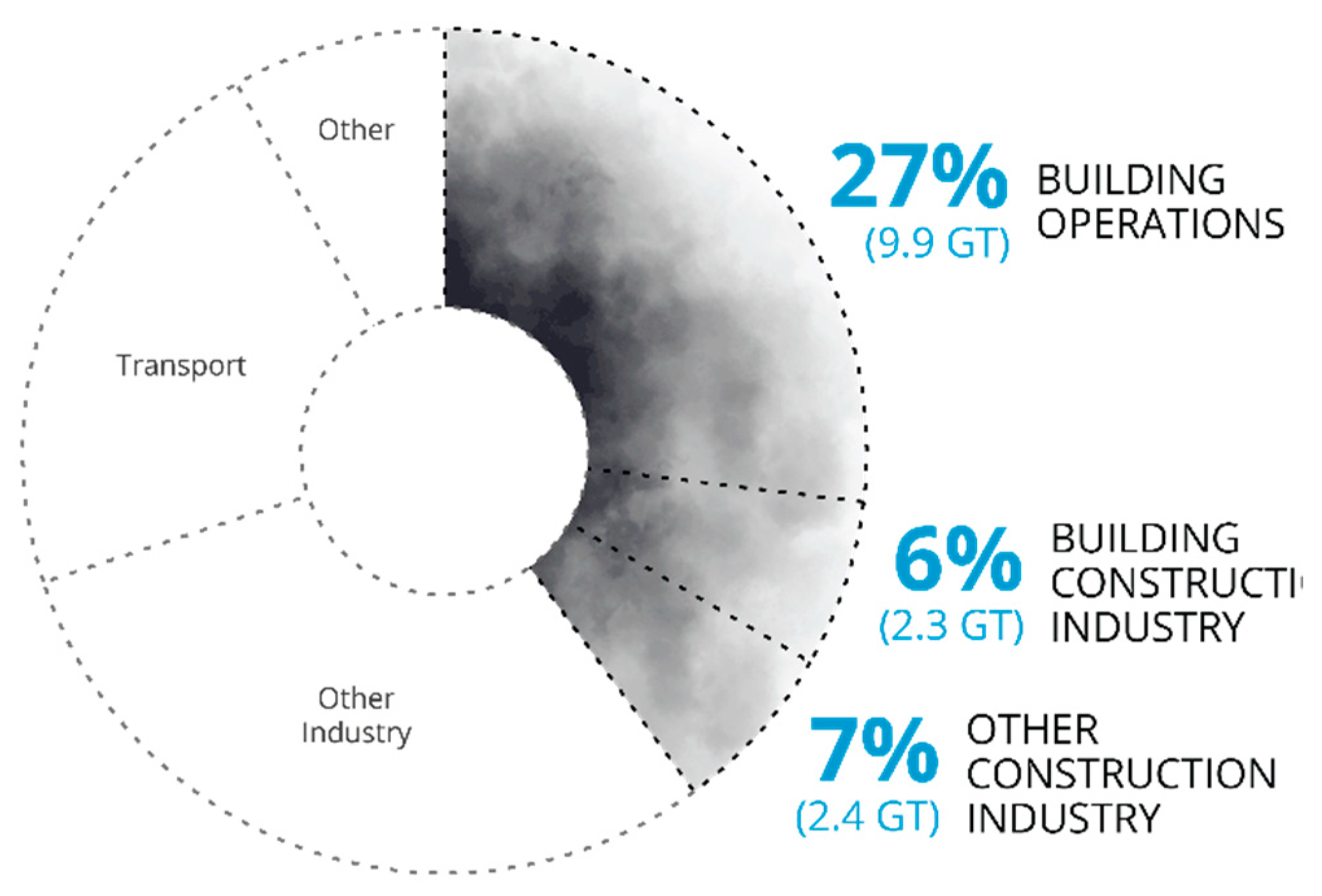
Figure 2.
Heating degree days in winter months. The blue box plot indicates the period 2000-2021 on average. The green bullet indicates the year 2022. (Source: International Energy Agency, 2022).
Figure 2.
Heating degree days in winter months. The blue box plot indicates the period 2000-2021 on average. The green bullet indicates the year 2022. (Source: International Energy Agency, 2022).
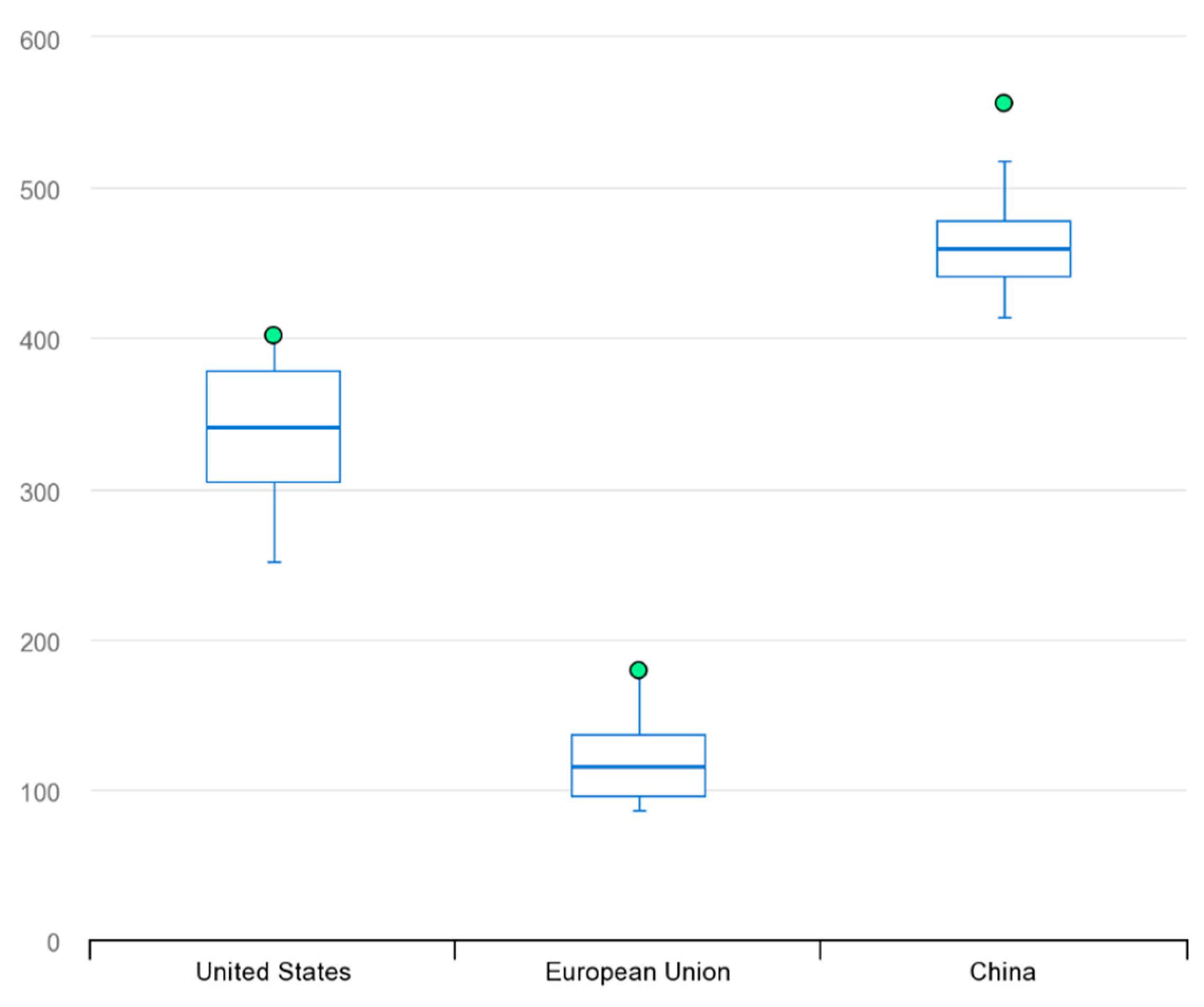
Figure 3.
Cooling degree days in summer months. The blue box plot indicates the period 2000-2021 on average. The green bullet indicates the year 2022. (Architecture 2030. Source: International Energy Agency, 2022).
Figure 3.
Cooling degree days in summer months. The blue box plot indicates the period 2000-2021 on average. The green bullet indicates the year 2022. (Architecture 2030. Source: International Energy Agency, 2022).
Disclaimer/Publisher’s Note: The statements, opinions and data contained in all publications are solely those of the individual author(s) and contributor(s) and not of MDPI and/or the editor(s). MDPI and/or the editor(s) disclaim responsibility for any injury to people or property resulting from any ideas, methods, instructions or products referred to in the content. |
© 2023 by the authors. Licensee MDPI, Basel, Switzerland. This article is an open access article distributed under the terms and conditions of the Creative Commons Attribution (CC BY) license (http://creativecommons.org/licenses/by/4.0/).
Copyright: This open access article is published under a Creative Commons CC BY 4.0 license, which permit the free download, distribution, and reuse, provided that the author and preprint are cited in any reuse.


