

Submitted:
22 July 2023
Posted:
25 July 2023
You are already at the latest version
Abstract
This study aims to determine the present and future scopes of the digital economy in Bangladesh to build a developed and prosperous country by 2041. Simultaneously, it analyses the components of the Digital Economy from numerous perspectives from contributing to Bangladeshi economy with an adaptation of the 4th Industrial Revolution and emerging technologies. In the methodology section, qualitative approach is conducted to determine the research objectives where secondary data is used. Around 100 papers are collected and 51 articles are used for conducting this study. The findings of the study are to present the current state of the digital economy which is developing trends that contribute to national GDP for the adaptation of the 4IR for the transformation of smart Bangladesh. From the conceptual implication, companies and individuals are aware of the digital economy, which would lessen digital divide and create a strong link between technology and the economy. Furthermore, establishing customer confidence and trust would be a big issue for Bangladesh's digital platform economy in the future days. From a practical standpoint, IT industries and commercial organizations would have to deal with emerging 4IR and its technologies. The job market would also be expanded in a variety of areas, which would ultimately benefit the national economy. According to the study's conclusions, the digital economy is predicted to expand its commercial and corporate opportunities. Future research might be extended based on qualitative approach towards a digital Bangladesh and create a better developing economy.
Keywords:
digital economy
; perspective area
; components
; fourth industrial revolution
; digital analytics architecture
; smart Bangladesh
1. Introduction
The billions of regular online links among organizations, devices, individuals, data as well as processes which involve with economic activities are known as the "digital economy". Hyper connectivity, or the increased interconnectivity of organizations, people, and machines by using the Internet, the Internet of Things (IoT), and mobile technologies, is the foundation of the digital economy (Nguyen, 2023). Researchers currently live in a generation where all that is required to sell a product is a smartphone, an Internet connection, and some basic smartphone expertise. It has been demonstrated in industrialized nations that the accessible information is to acquire, the simpler it is to increase productivity and guarantee efficiency (Guariso & Nyqvist, 2018).
Bangladesh has been experiencing a digital revolution alongside the rest of the world in recent years. The way people communicate, conduct business, and gather information are all being changed by the digital revolution (Gui & Gerosa, 2018). The impact of the digital revolution on our economic and social lives has likely surpassed that of all earlier revolutions. Researchers are currently living in the digital age. The Internet has developed into one of the most crucial components of corporate management from its initial state as a possible low-cost communication channel. The economy and people of any nations benefit greatly from technological advancement (Korotkevich, 2019).
A new technology's adaption may lead to a brief period of unemployment, but it also quickly generates new work prospects (Sellar, 2019). Given that technology is currently advancing at an exponential rate, any nation's economy can expand robustly with the correct adoption of practicable technologies. To discover a sustainable development strategy, for instance, wealthy nations are currently prioritizing technology like 3D printing or biofuel engineering (Shor et al., 2022). In close-by nations like India, technical advancements like the digitization of the bus and rail systems, online banking capabilities, Internet marketing services, e-learning initiatives, long distance contact center services, etc. have been successfully implemented (Kotevski & Milenkoski, 2018).
Some of these technologies are already used in Bangladesh, and others can be executed soon. Bangladesh confronts numerous obstacles to economic growth as a low-income developing nation. The inability to manage time constraints effectively and the slow rise of productivity are two major obstacles to economic expansion. Human being waste days of our life waiting in traffic for tasks that could be completed online in a matter of seconds (Yano, 2016). Because of this, the researcher investigates the potential for technological adoption in Bangladesh that could increase productivity, free up valuable time, and so support the expansion of the national economy (Kroemer & Burton, 2010).
Because of the high level of mobility, the employment rate in these sectors will increase significantly in comparison to industries like manufacturing or agriculture. The industry won't be restricted to a single city or nation; instead, it will be interconnected on a worldwide scale, allowing people to work for businesses that are situated anywhere in the world. People can now see the changes in a growing nation like Bangladesh, 20 years after initially predicted those terms. The previous ten years have seen significant growth in the information and communications sector, enabling the nation to contribute in the digital economy in Bangladesh. In reality, the policymakers and country's workforce are interested with the (ICT) industry (Clemons, 2007).
Technological revolution involves in 2nd industrial revolution in the 18th century in the United Kingdom. However, 3rd Industrial revolution also involves the use of the Internet, green energy, 3D printing, and other technologies, as well as a converted shift from capitalistic structure to mixed economy which is leading to a free market economy in Bangladesh. The physical, digital, autonomous transportation, materials science, energy-saving computing, organic bubbles, and cyber-virtual world technologies are all mixing with the 4IR (Kovalchuk, 2021). According to Glotko et al. (2020), the significance of a topic depends on the necessity to create theoretical concepts as well as practical implications for improving the government regulation process in specific background industry transition into the digital economy. This needs to be considered by policymakers. Therefore, it is essential to guarantee that the transition to a digital economy is carried out properly and efficiently, with advantages outweighing drawbacks, and that barriers must be limited so that new job opportunities would be increased and maintained sustainable growth (Chatani, 2012).
While digitization, particularly the digital payments and the electronic delivery of public services, has undoubtedly been a great equalizer across the board, there are some significant sections of the Bangladesh economy that remain underdeveloped and largely excluded. Digital economy that will drive Bangladesh towards achieving high-income status by 2041(Rizal & Pakkanna, 2023).
To put it specifically, the paper evaluates and discusses the digital economy in Bangladesh in terms of the following objectives:
- To determine the future areas of Digital Economy in Bangladesh.
- To determine the components of Digital Economy of Bangladesh from numerous perspectives which leads to contribute Bangladeshi economy.
- To assess the present status of digital economy in Bangladesh with the adaptation of 4th Industrial Revolution and its technologies.
2. Literature Review
The acceptance of ICT relevant to all business sectors to boost productivity is the foundation of the digital economy. Conventional wisdom on the formation of business, how consumers obtain products, services, and information, and how these new regulatory adjusted by the states problems are being challenged by the digital transformation of the economy. It describes an economy where economic activities leverage digital computing technologies. Digital networking and communication infrastructures offer a global platform for people and businesses to develop plans, engage, communicate, work together, and get information in this new economy (Alam et al., 2022). More recently, the study of zero marginal cost intangible items sold online has been referred to as the "digital economy” (Poutanen et al., 2019).
The likelihood of big data setup in Bangladesh is a challenging undertaking (Gupta, 2017). The finding and origin of an excursion is crucial for reducing troubleshooting time and increasing output. Therefore, it is crucial for all nations to comprehend the 4IR, its new technologies, and the challenges they pose. With the advent of robots came automation, global supply networks, and the effects of outsourcing on employment for everyone. According to Krichen et al. (2022) the digital revolution will continue to focus on rapidly technical advancements that allow for faster movement, and a deeper focus on a world powered by data, a world that employs artificial intelligence and goes through machine learning procedures. According to Naheem (2015), fund management in the banking industry needs to be totally digitalized in order to prevent Bangladesh's banking system from supporting the money laundering process and regular culture.
High technological industries is usage to connect with AI and big data in digitization which might revolutionize and transform the agricultural industry (Oguamanam, 2018). Through facilitating communication between objects and people, IoT has the ability to employ a new move into the Internet in a way that will make the world smarter and more capable. Since any alternative approach may result in the depreciation of human rights and society values, restriction to AI-based innovation, personal and societal well-being enhancement, and ethical regulation on AI usage is therefore a difficult but vital undertaking.
According to Joseph & Marrow (2017), it can be difficult to organize human resources and technological advancements in the digital economy and turn them into worthwhile endeavors that could advance social, equality, and fairness, objectives in developing nations like Bangladesh. According to Zhang et al. (2021), there are enormous opportunities for research into artificial intelligence technologies, the improvement of human abilities as well as the most recent organizational configurations that are connected to Bangladesh's digital economy.
Sahay et al. (2021) states that the entrance of fin-tech and big data into the payments industry might raise product assistances, decrease the cost of transactions, and encourage product assistance, decrease the cost of transactions, and encourage competitiveness. It can enhance financial inclusion by increasing the amount and variation of individuals and how they behave, increasing people's access to financial services, and producing more consumer-friendly assistance. Prior to the marketplace, one of the fourth industrial technology's applications, artificial intelligence (AI), might result in the market inflating the safe transactions through market movements based on blockchain technology could disrupt forces and opportunities at a high cost (Aoun et al., 2021). Williams (2021) implies that in order to contribute to the form, variety, and a superiority of ecological information as well as smartphone applications for tracking the environment, and factory pollution discharges, a large proportion of the population in China must be reached. The usage of big data in business has risen as a result of companies being compelled to use it to grow their current operations or fix their replicas (Limna et al., 2022).
The "Water-Diamond Paradox" is inappropriate to apply to the digital economy because the digital marginal utility is higher depending on who can benefit from it. However, regarding those who are left behind due to the digital divide, the marginal benefit they receive will be zero, and the entire utility from digitization will also be zero, which needs to be considered by policymakers (Ali, 2020). Therefore, it is crucial to ensure that the transition to a digital economy goes out effectively and efficiently, via benefits outweighing drawbacks, and that challenges to the creation of job opportunities are supplemented by growth in the economy and progress (Elsafty & Elzeftawy, 2022).
The Nation's Information and Communications Technology Policy (NIP) of Bangladesh is the main legal foundation for "Vision 2021" and "Digital Bangladesh" and is evaluated in this study for its influence and effectiveness. It addresses the concept of digital inclusion, which serves as the foundation for the present discussion on the digital divide and inclusion which are attained by the NIP policies (Khan, 2023). The study conducted a qualitative approach and uses policy analysis to examine the internal logic and rationality of the NIP based on the three main criteria of the analytical framework for digital inclusion: ICT access, skills and usage. The research contends that the policy is not clear and limited reference for digitization, which fails to completely solve the problems related to digital inclusion (Aziz, 2020).
The government of Bangladesh, such as many other developing nations, adopted numerous ICT strategies, laws, and policies to create a transparent, and responsible government for socio-economic development. But, Bangladesh has had both positive and negative experiences putting policy goals into practice in the past. The government has recently launched several initiatives (such as access to information [a2i]) and considering the advent of 5G technology and the 4IR for implementing ICT-driven activities, they expect to change their current policy (Aziz & Naima, 2021).
3. Conceptual Framework
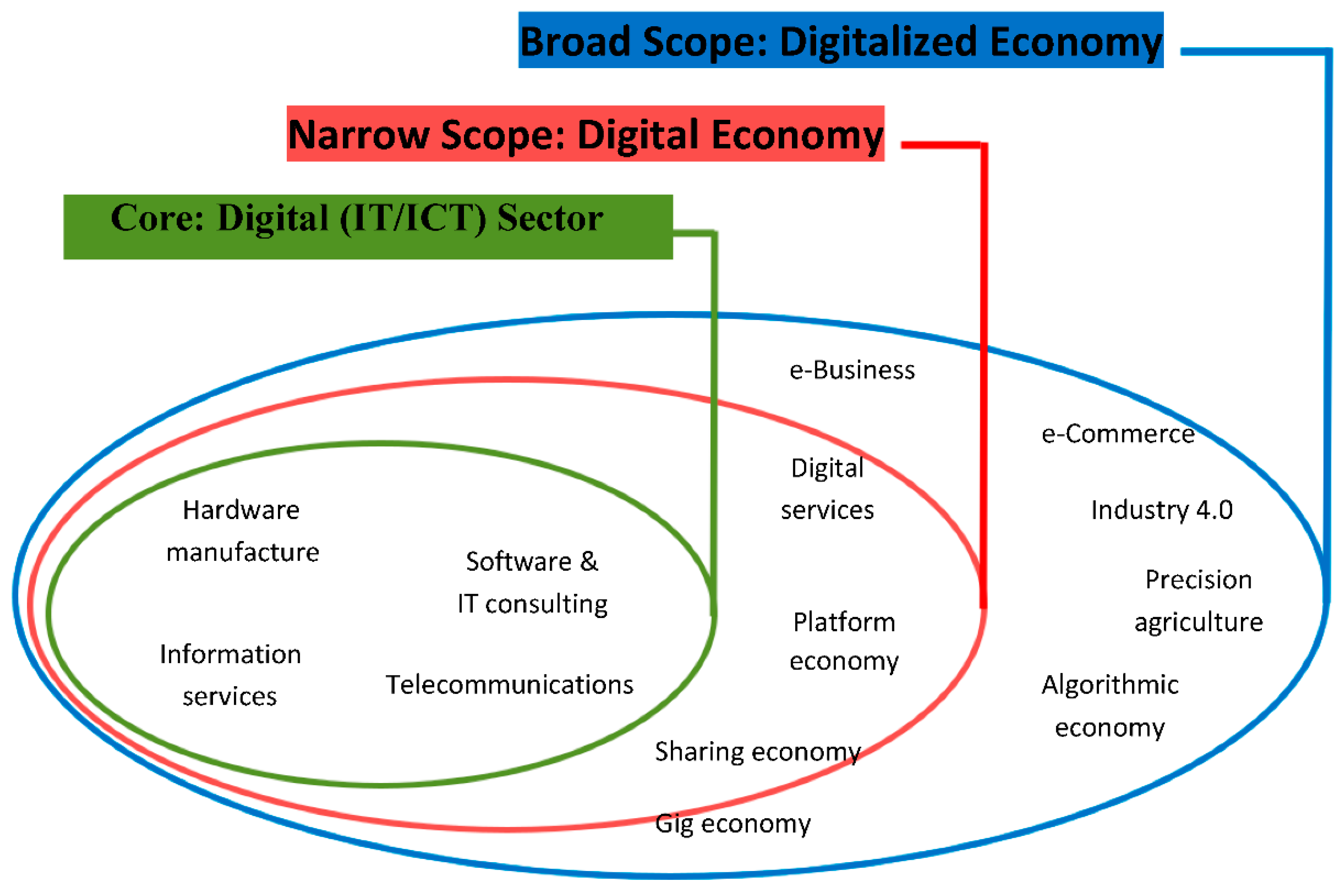
The creation of digital technologies as well as all significant applications of those technologies would be included in the digital economy. Additionally, it would include some aspects of emerging such as the sharing economy, gig economy, and platform economy, which could be regarded as new economic activity independent of digital technology (Fedosov et al., 2018). Platform-based businesses, for instance, would be included. With companies that just deal in digital products, like Facebook and Google, this is clear to notice; it is a little less obvious with platforms that deal in physical products, like Amazon, eBay, or Alibaba; and it becomes increasingly hazy with companies like Uber and Airbnb. However, the latter, would be categorized by researchers as belonging to our definition of the "digital economy" because they are digital platforms that were created using digital innovations and business models rather than being resort or taxi companies (Drydakis, 2022).
Scholars define the digital economy as "that portion of economic output obtained completely or mostly from digital technology with a business model based on digital goods or services" in light of this and the fundamental concept of extensibility. The concept has a hazy boundary, but it is also adaptable enough to take into account changes in digital technology and business models over time. It includes both the core digital sector and a wider spectrum of substantial digital activity, as summarized in Figure 1, without stating that every digitized activity is a component of the digital economy (Verwayen, 2010).
In order to improve the organization's ability to change its business processes, enterprise resource planning (ERP) systems must integrate useful functional and organizational information (Aisyah, 2012). To implement the digital economy, well-equipped talents and effective familiarities are needed. In order to advance the regular of any business advancement, managers might intend and monitor process arrangement with procedural drives (Johansson, 2018).
According to Chauhan et al. (2022), digitalization has become evident as a result of the need for digital technology to gain momentum and relevance in the traditional economic model. The emergence of free digital technologies would positively impact on production, sponsorship, and distribution, claim by Singh et al. (2022). As seen by the digitization of the electronic banking industry, the information environment is, in comparison to research, a stronger motivator for the development of AI applications. These seven core factors should be supported by validity and reliability in order to create a prosperous and digitally advanced nation.
However, limited number of research-based articles on digital economy were published in developed countries (Feng et al., 2022). But, few number articles and publications are existing on the present and future status of digital economy. Therefore, the research efforts to examine the current and upcoming areas of digital economy in Bangladesh with adaptation of 4th Industrial Revolution technologies which contribute to make fulfillment of Vision 2041 as a prosperous nation (Islam et al., 2023). This study will contribute to policymakers, academics as well as economists by presenting the current and future status of digital economy in Bangladesh which will be added value to both local and national economy of Bangladesh (Azizuddin et al., 2021).
4. Methodology
This research paper principally prepared on qualitative approaches. Methodological approach adopted to prepare the paper that is articulated on the prospective sectors of digital economy in Bangladesh. As the sectors of digital economy are emerging, primary data collection is not possible from Bangladesh perspective. Hence, secondary data is applied here to prepare report to represent the current status of digital economy of Bangladesh. Around 100 papers are collected for conducting this research where 51 articles are used to conduct this research as a reference. Moreover, the data has been collected from Newspapers, student papers, internet, company websites, government statistics, market research reports, published journals, and other online sources. Tables and graphs are retrieved from relevant websites about the digital economy of Bangladesh.
5. Discussion
If there is a reliable internet connection and an easy online payment system. Then, it is estimated that the e-commerce industry will reach $3 billion in 2023, according to a webinar held by the Dhaka Chamber of Commerce and Industry (DCCI) in Dhaka in 2020. Most of the goods and services are included in digital economy. The statement was made by Syed Almas Kabir during a program Bangladesh Association of Software and Information Services states in 2020, the e-commerce industry saw a significant increasing trend as customers moved their shopping online because of the global pandemic situation, which forced people to stay at home as much as possible.
There are 8.4 million Facebook users in the nation, out of the 36 million active social media users. According to him, the Facebook commerce (f-commerce) market is worth roughly Tk 312 crore. According to Ghulam Rahman, president of the Consumers Association of Bangladesh, "F-commerce is thriving in the nation" (CAB). According to DCCI President Shams Mahmud, the local e-commerce market is currently worth roughly $2 billion and is growing by 50% annually.
Figure 2.
Bangladesh Economy to be 24th Largest in 15 years; Source: World Economic League Table (2023).
Figure 2.
Bangladesh Economy to be 24th Largest in 15 years; Source: World Economic League Table (2023).
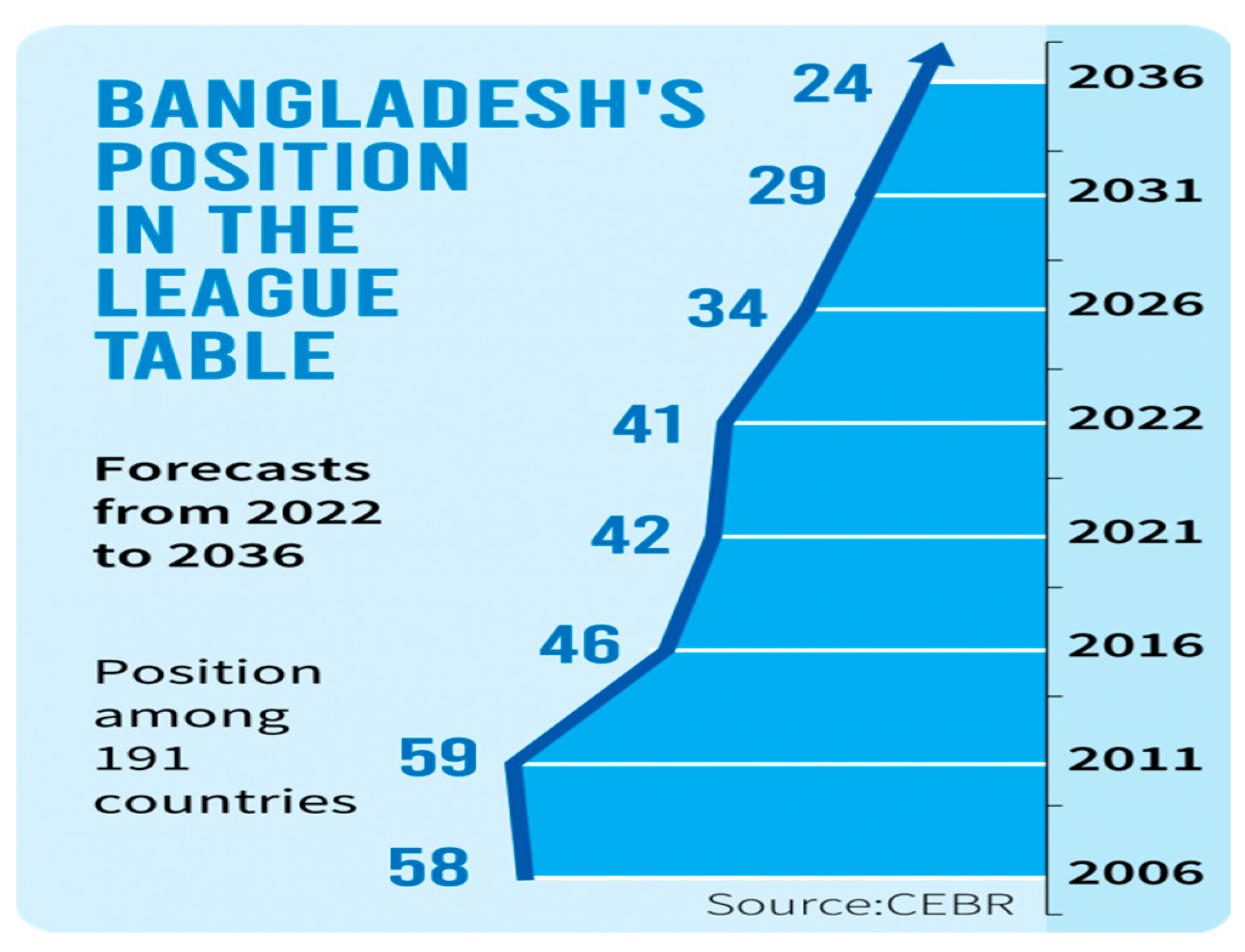
From its current rank of 42, the country is expected to move up to 41st in 2022, then move up to 34th in 2026, and finally to 24th in 2036. The current and next ten years will see an economic boom as the outcome. According to the World Economic League Table 2020, the demographic dividend and rising per capita income will lead Bangladeshi economy to rise at one of the rapid increasing rates from 2020 2034. The most recent WELT inquiry from the international economic forecaster states that, the London-based Centre for Economics and Business Research (CEBR), Bangladesh is currently ranked 40th out of 193 nations, but due to the advancement of the digital economy, it will move up to 24th place in 2034, replacing Belgium.
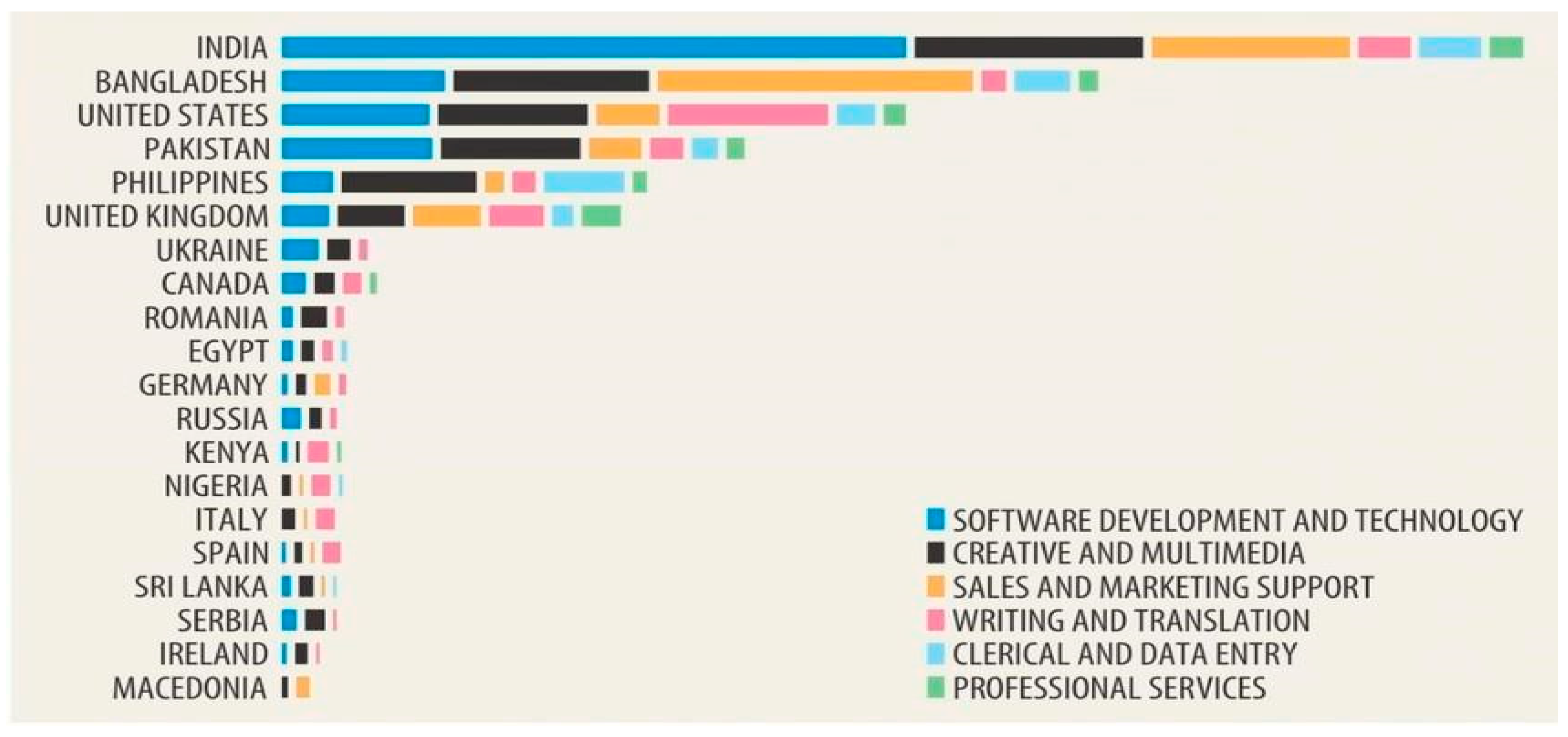
Figure 3.
Outsourcing World Rank; Source: The Online Labour Index, by Bangladesh (2022).
The ADB predicted that Bangladesh would increase its GDP by 7.5% in fiscal years 2022–23, ranking second among south-east Asian nations. In 2022, when the majority of industries, both big and small, were struggling to survive, the scenario for the ICT sector was very different. It has long been believed that the ICT sector has the power to upend and transform Bangladesh's economy.
Figure 4.
Share in Total ICT Sector in Bangladesh; Source: Bangladesh Bank (2022).
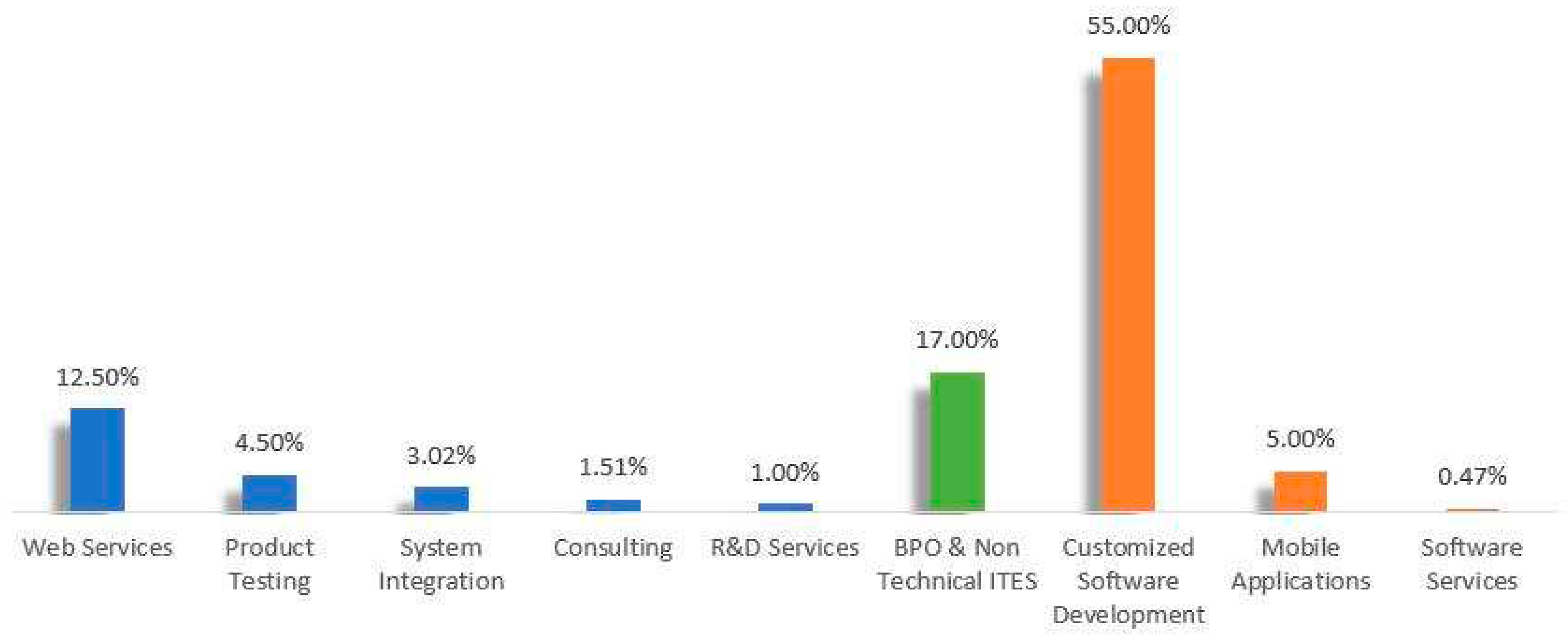
On the other hand, software development is included in the category of IT services. International businesses looking to outsource this part of their operations to another nation highly value it. It is classified in the IT services category's engineering services section. Platform and software development, testing, the development of specialized software, and other alternatives fall under this area. The global digital economy is being driven by this sector, hence experts in the field are always in demand. Freelancers from all over Bangladesh have recently joined Bangladeshi businesses that have long been exporting these services, finding employment independently through websites like Upwork and Freelancer. On the other hand, the linked and multifaceted nature of software development need the assistance of talented teams that are only available in organizations.
Figure 5.
Present and Future Areas of Digital Economy; Source: Authors' finding.
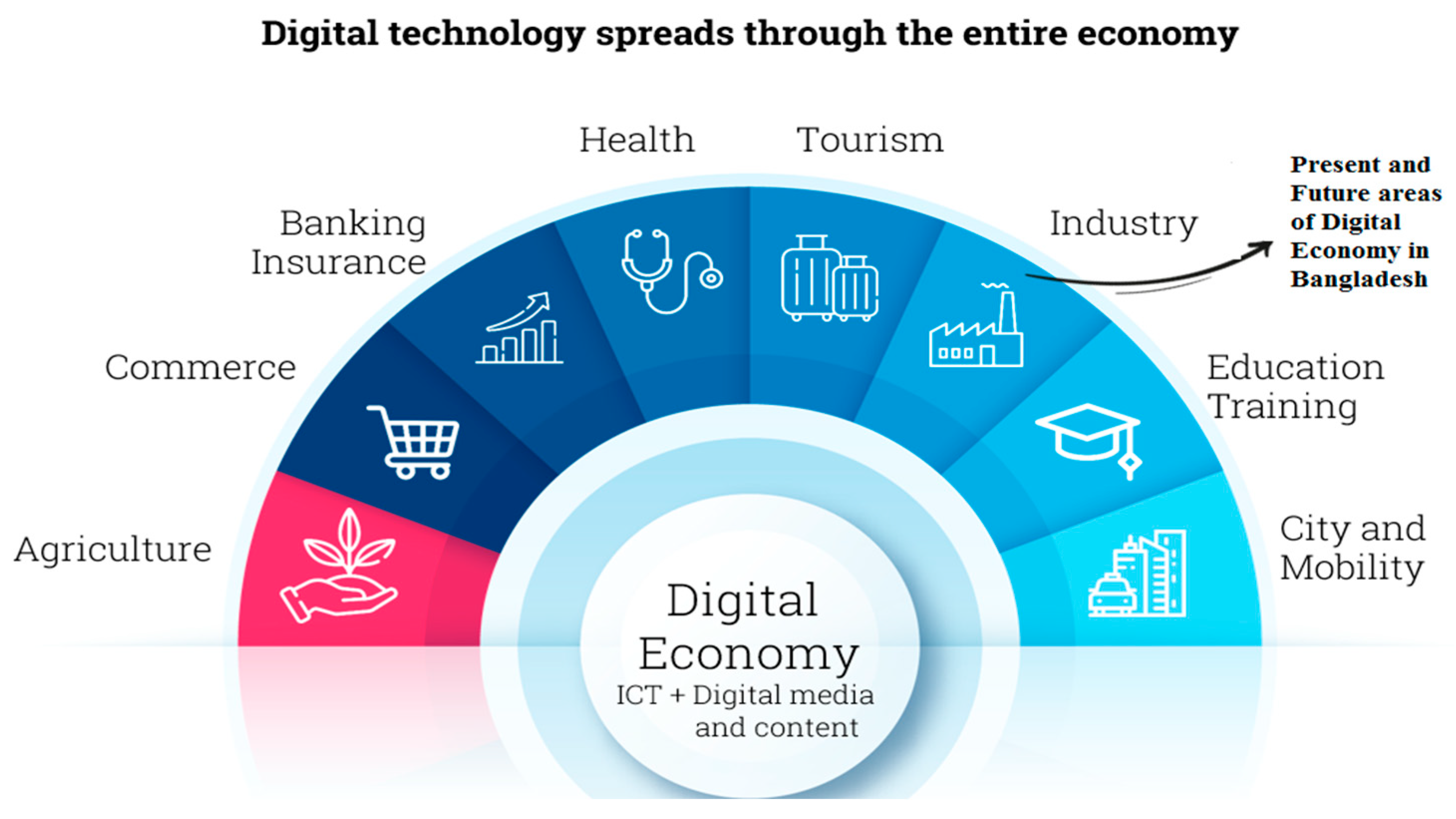
A digital economy is made up of each and every economy sectors that take use of advancements in digital technology and provide enterprises with countless options. In a digital economy, the use of digital technologies by firms, data, processes, and people facilitates economic activity (Aplin, 2017). ICT, digital media, and content are all part of the digital economy and produce enormous amounts of data. The digital economy is being impacted by the digital transformation taking place in a number of industries, including banking, insurance, commerce, agriculture, health, tourism, and education, among others. Due to the fact that these industries use digital technologies on a daily basis, each of them contributes significantly to the digital economy.
A large amount of data is produced as digital transformation and digitization take place throughout industries. The relationship between corporate value, data, and decision-making is the basis of digital economics. Without data insights, firms cannot expect to have a competitive advantage over rivals in this fast-processing world. Nowadays, a considerably larger proportion of individuals utilize cellphones than desktops or laptops. Mobile devices can now be used by people for a variety of functions. For instance, Google Colab allows programmers to work without a computer, only a smartphone, to complete their work. Digital technologies have become so ingrained in daily life that it is impossible to execute activities without them.
- Digital Universe
Figure 6.
Components of Digital Economy; Source: Authors' finding.
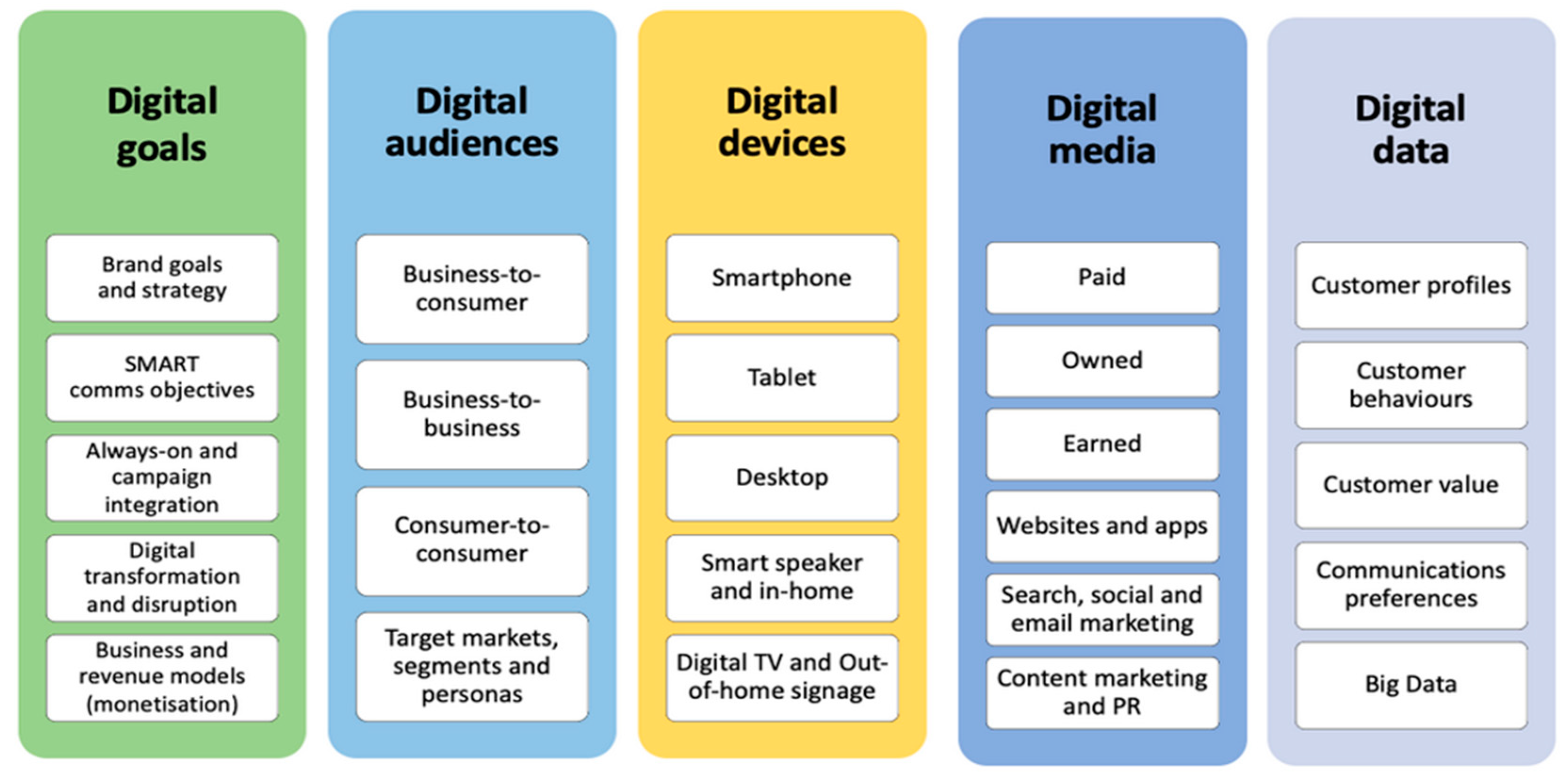
The objectives of the digital economy have not significantly altered the digital world. Digital devices, digital media, digital data, digital audiences, and digital ambitions make up the digital universe. Global brand visibility is achieved through the use of brand objectives and tactics. Because of the constrained commercial objectives prior to globalization, brands were not obsessed with having digital ambitions. Today, unlike in the past, branding is an essential component of many firms because strong brand positioning will increase revenue for the company. The goal of the company is essential to creating the brand in a digital economy.
The ideal customers for the brand are among the internet audience (Rahman et al., 2020). The target market, business-to-business, consumer-to-business, and consumer-to-consumer segments all make up the digital audience. Understanding a company's digital audience is crucial for developing a business plan. Digital devices that fall under the digital economy include smartphones, tablets, desktop computers, smart speakers, and digital televisions. Everything in a digital economy is based on digital data, which companies use to create their business models. However, there are both organized and unstructured data types in digital data. Businesses can use digital data to derive client profiles, habits, value, and communication preferences to provide customers personalized services.
Figure 7.
Volume of Different Modes of Digital Transactions in Bangladesh; Source: BTCL (2021).
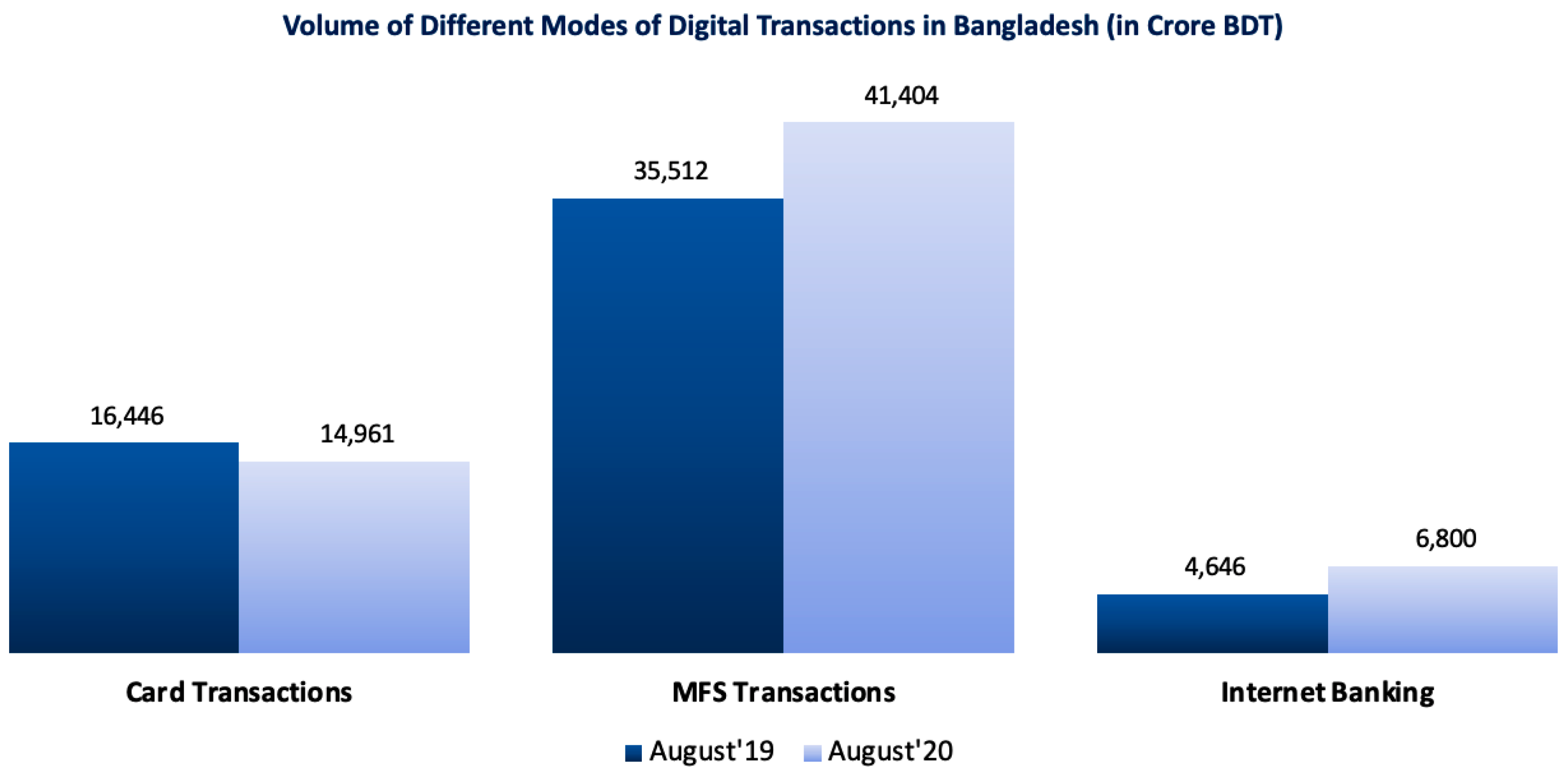
Due to a lack of readily available cash, many people are now transacting with checks or account transfers. Additionally, they have shifted to digital wallets like E-wallet, which enable money transfers over the internet. All of this could lead to a digital economy with more white money and transactions being recorded. The government's tax revenue could rise as a result. Moreover, the volume of diverse ways of digital transactions have been increasing in the recent times.
The digital economy transformation might be facilitated by entrepreneurship, innovation, and creativity. Electronic financial transfers and electronic data interchange complement one another. Innovation that is primarily driven by technology is superior for achieving livelihood. Competitive intelligence may therefore need to increase. Youth must be employed and resources must be provided to support the program while local economies are synchronized through digitization. Digital media must be used in Bangladesh for marketing strategies, the promotion of goods and services, the sharing of company plans, the management of customer relationships, the dissemination of news, events, advertisements, video conferencing, advertising as well as research.
To achieve a country's digital economy, a variety of economic-wide events are needed. To stress Support for the 4IR and AI applications in various manufacturing and service industries, establishing with the administration of education, tourism, and hospitality. Bangladesh might push for the regional organization "BIMSTEC" at the regional level (Zhu, 2011). To benefit BIMSTEC as a regional organization, the contentious issue of Rohingya should be resolved instead of sending them to Bangladesh, a nearby nation. With support from the government, more women have to more access in 4IR. Data-driven innovation must be utilized by the government.
Human resources that are morally upright and competent are needed for digital transactions. The personal and intellectual foundations of the effort for "international new ventures" and "international entrepreneurship" in Bangladesh with the assist of digitalization are needed for an amalgamation of entrepreneurship, international business, and beneficial administration. If investing is not paired with saving, all financial activities are ultimately pointless. Greediness is alarmingly on the rise among some members of society and needs to be stopped by ongoing behavioral adjustments. Entrepreneurs must be aware of the 4IR's full potential in order to enhance product quality and design. The big data infrastructure will be a beneficial force behind the evolution of the digital economy.
The digital economy of Bangladesh must be altered in order to accommodate the necessary change and usage in technological pattern. Artificial intelligence must be used to create a chain reaction between the producer, buyer, and supplier in order to increase the possibility of new employment opportunities. Robots can be utilized for domestic tasks, medical applications, home automation, and hotel management recognitions by artificial intelligence (AI). The use of AI across a wide range of sectors where entrepreneurship development is needed, starting with the agriculture-based sector. More access for women is required during the 4IR process (Mubarak, 2022). The country urgently needs household robots to assist, particularly middle-class families and persons with disabilities. As a result, digital connection and digital entrepreneurship ought to function in concert.
FinTech overcomes the gap of traditional financial methods and covers a broad range of businesses. It refers to the use of technological applications to perform tasks and processes where human input is minimized. It reduces operating costs, enhances productivity & efficiency, and achieves high levels of process reliability. Robotic process automation (RPA) and artificial intelligence (AI) have made innovative opportunities to automate human tasks. There is a positive impact of technology on good governance. It includes improving the reliability, accuracy, and transparency of information so that decision-makers can take decisions in an effective way. Government should monitor technological advancements because sometimes, they might have negative impacts such as data & privacy breaches, cybersecurity risks, fraudulent activity and so on. Ethics and governance are key considerations here and it also requires government rules and laws. Adequate safety measures will help to adopt emerging technologies successfully within society.
6. Conclusions and Recommendations
Bangladesh must prioritize skill development and update the elements of the Digital Economy to meet the challenges of the 4IR in Bangladesh in every sector. E-commerce, E-governance, E-banking, IT/ITES, Digital Payments, Sharing Economy, Telemedicine, Online Education, IT Outsourcing, Digital Media, Telecommunication, and Emerging (4IR) Technologies are the present and future categories of digital economy in Bangladesh. The present status of digital economy is emerging trends which contribute to national GDP for adjustment of 4th Industrial Revolution for transforming smart Bangladesh. From the findings of the study, digital economy is expected to extend its commercial and business opportunity. The study has some limitations that is concentered only secondary data basis. If the study conducts on primary data basis, it may affect the outcome and result of digital economy. Future researcher will be eliminated less significant areas of digital economy which leads to accurate information.
Every nation in the globe requires a comprehensive strategy to develop a cutting-edge, an inclusive approach that includes a platform shared by the government, payment service providers, mobile operators, NGOs, banks, and users will have shared economy platform to increase caution and reap the benefits of the 4IR. In order to carry out the policies of the Bangladeshi government, A2I may function honestly and ethically. The nation shouldn't rely solely on a small number of businesses that uphold moral standards. Instead of focusing on gaining advantages for their own organizations, BASIS should take a more proactive approach. ICT skill readiness is more realistically required for implementation. The digitization should not conflict with the demand for labor. The telecommunications industry should serve as a catalyst for meaningful digitalization transformation and closing of the digital divide. The Bangladesh Employment Policy-2022 aims to consider the digitization and the growing labor engagement capacity demand in the formal areas. The establishment of the digital economy required appropriate training in ICT related subjects. With Bangladesh's economy becoming more digital, moral governance and regulation should be acknowledged (Kautsarina et al., 2017).
If Bangladesh's sizable young population were to receive the kind of training and market-relevant skills they need, they may benefit enormously from the digital economy. The government must act fast and give the digital platform economy as a high priority on its policy agenda for avoiding delay in decision comparison with other countries in the 4IR age.
7. Implications
From the conceptual implication, businesses and people are aware of digital economy which would be reduced digital divide and make strong interconnection between technology and economy. Moreover, gaining consumer confidence and trust would be a major challenge for Bangladesh's digital platform economy in the coming days. From the point of practical implication, IT industries and business organizations would be cope with emerging 4IR and its technologies. Job market would be also increased and extended in diverse areas which are ultimately contribute to national economy.
Acknowledgements
Researchers are grateful to Md. Rakibul Hoque, PhD, Professor in Management Information Systems, University of Dhaka, Bangladesh, for giving proper guidelines in this research. All authors contribute to conduct this research equally. There is no funding for conducting this research.
Conflicts of Interest
Authors declared that they have no any conflict of interest.
References
- Aisyah, M.N. Using Enterprise resource planning (ERP) for enhancing business processes in small and medium enterprises (SMEs). Jurnal Pendidikan Akuntansi Indonesia 2012, 9. [Google Scholar] [CrossRef]
- Al Mubarak, M. (2022). Sustainably developing in a digital world: Harnessing artificial intelligence to meet the imperatives of work-based learning in industry 5.0. Development and Learning in Organizations: An International Journal. [CrossRef]
- Alam, S.A.; Bhuiyan, M.R.I.; Tabassum, S.; Islam, M.T. Factors Affecting Users' Intention to Use Social Networking Sites: A Mediating Role of Social Networking Satisfaction. Can. J. Bus. Inf. Stud. 4, 112–124. [CrossRef]
- Ali, D.M.M. Digitization of the emerging economy: An exploratory and explanatory case study. Journal of Governance and Regulation 2020, 9. [Google Scholar] [CrossRef]
- Aoun, A.; Ilinca, A.; Ghandour, M.; Ibrahim, H. A review of Industry 4. 0 characteristics and challenges, with potential improvements using blockchain technology. Computers & Industrial Engineering 2021, 162, 107746. [Google Scholar]
- Aplin, T. (2017). Trading data in the digital economy: Trade secrets perspective. Trading Data in the Digital Economy: Legal Concepts and Tools. [CrossRef]
- Aziz, A. Digital inclusion challenges in Bangladesh: The case of the National ICT Policy. Contemporary South Asia 2020, 28, 304–319. [Google Scholar] [CrossRef]
- Aziz, A.; Naima, U. Rethinking digital financial inclusion: Evidence from Bangladesh. Technology in Society 2021, 64, 101509. [Google Scholar] [CrossRef]
- Azizuddin, M.; Shamsuzzoha, A.; Piya, S. Influence of circular economy phenomenon to fulfil global sustainable development goal: perspective from Bangladesh. Sustainability 2021, 13, 11455. [Google Scholar] [CrossRef]
- Chatani, K. Economic growth, employment creation, and poverty alleviation. Diagnosing the Indonesian Economy 2012, 301–340. [Google Scholar] [CrossRef]
- Chauhan, C.; Parida, V.; Dhir, A. Linking circular economy and digitalisation technologies: A systematic literature review of past achievements and future promises. Technological Forecasting and Social Change 2022, 177, 121508. [Google Scholar] [CrossRef]
- Clemons, E. (2007). A retrospective on information, strategy, and economics: After 20 years at HICSS, what have we learned about IT and strategy? 2007 40th Annual Hawaii International Conference on System Sciences (HICSS'07). [CrossRef]
- Drydakis, N. (2022). Improving entrepreneurs' digital skills and firms' digital competencies through business apps training: A study of small firms. SSRN Electronic Journal. [CrossRef]
- Elsafty, A.; Elzeftawy, A. Towards Effective Mitigation of the Digital Transformation and COVID-19 Risk on the Unemployment in Mobile Operators in Egypt. International Journal of Business and Management 2022, 17, 123–144. [Google Scholar] [CrossRef]
- Fedosov, A.; Albano, J.; Langheinrich, M. (2018). Supporting the design of sharing economy services: learning from technology-mediated sharing practices of both digital and physical artifacts. In Proceedings of the 10th nordic conference on human-computer interaction (pp. 323-337).
- Feng, X.; Wang, X.; Su, Y. (2022). An analysis of the current status of metaverse research based on bibliometrics. Library Hi Tech.
- Guariso, A.; Björkman Nyqvist, M. (2018). Improving primary school learning trough teaching at the right level and community engagement: Evidence from Assam, India. AEA Randomized Controlled Trials. [CrossRef]
- Gui, M.; Gerosa, T. (2018). Digital well-being (Benessere Digitale). Testing an integrated training package aiming at improving digital competence in high schools. AEA Randomized Controlled Trials. [CrossRef]
- Gupta, M. (2017). Why being (Big) data-driven is difficult? SSRN Electronic Journal. [CrossRef]
- Gupta, P. (2017). Packaging design considerations for mobile and Internet of things (IOT). 2017 IEEE Electron Devices Technology and Manufacturing Conference (EDTM). [CrossRef]
- Hamann, T.K.; Güldenberg, S. New forms of creating value: Platform-enabled gig economy today and in 2030. Managing Work in the Digital Economy 2021, 81–89. [Google Scholar] [CrossRef]
- Islam, Q.T.; Zabir, F.; Asif Hossain, M.; Iqbal, R. (2023). Challenges of Adapting to the Fourth Industrial Revolution in Emerging Economies: A Bangladesh CASE. In Industry 4.0 and the Digital Transformation of International Business (pp. 21-32). Singapore: Springer Nature Singapore.
- Johansson, M.T.; Thollander, P. A review of barriers to and driving forces for improved energy efficiency in Swedish industry–Recommendations for successful in-house energy management. Renewable and Sustainable Energy Reviews 2018, 82, 618–628. [Google Scholar] [CrossRef]
- Joseph, T.D.; Marrow, H.B. Health care, immigrants, and minorities: lessons from the affordable care act in the US. Journal of Ethnic and Migration Studies 2017, 43, 1965–1984. [Google Scholar] [CrossRef]
- Kautsarina, K.; Rafizan, O.; Setiawan, A.B.; Sastrosubroto, A.S. Information and communication technology service industry development in Indonesia. Journal of Telecommunications and the Digital Economy 2017, 5, 50–82. [Google Scholar] [CrossRef]
- Khan, M.M. Opportunities and Challenges for Official Statistics in Digital Bangladesh. Journal of South Asian Studies 2023, 11. [Google Scholar] [CrossRef]
- Korotkevich, E. (2019). Problems of virtual identity in the digital age (social and philosophical analysis). Proceedings of the 1st International Scientific Conference "Modern Management Trends and the Digital Economy: from Regional Development to Global Economic Growth" (MTDE 2019). /. [CrossRef]
- Kotevski, Z.; Milenkoski, A. Are free internet technologies and services the future of synchronous distance learning? Turkish Online Journal of Distance Education 2018, 4–14. [Google Scholar] [CrossRef]
- Kovalchuk, J. Technologies of the fourth Industrial Revolution as a driver of advancing in digital operations management. Digital Strategies in a Global Market 2021, 99–115. [Google Scholar] [CrossRef]
- Krichen, M.; Ammi, M.; Mihoub, A.; Almutiq, M. Blockchain for modern applications: A survey. Sensors 2022, 22, 5274. [Google Scholar] [CrossRef] [PubMed]
- Kroemer, E.; Burton, S. Continuing education: Which programs work, which don’t, and what does the industry find valuable and useful? The Way Ahead 2010, 06, 8–10. [Google Scholar] [CrossRef]
- Limna, P.; Kraiwanit, T.; Siripipatthanakul, S. The growing trend of digital economy: A review article. International Journal of Computing Sciences Research 2022, 6, 1–11. [Google Scholar] [CrossRef]
- Mahboob Ali, M. Existing situation and prospects of green economy: Evidence from Bangladesh. Environmental Economics 2018, 9, 7–21. [Google Scholar] [CrossRef]
- Martin, L.; Hauret, L. Digitalization, Job Quality, and Subjective Well-being. Handbook of Labor, Human Resources and Population Economics 2022, 1-41. 2022, 1–4. [Google Scholar]
- Mithas, S.; Hofacker, C.F.; Bilgihan, A.; Dogru, T.; Bogicevic, V.; Sharma, A. Information technology and Baumol's cost disease in healthcare services: a research agenda. Journal of Service Management 2020, 31, 911–937. [Google Scholar] [CrossRef]
- Naheem, M.A. Trade based money laundering: Towards a working definition for the banking sector. Journal of Money Laundering Control 2015, 18, 513–524. [Google Scholar] [CrossRef]
- Nguyen, O. (2023). Digital Economy and Its Components: A Brief Overview and Recommendations.
- Oguamanam, C. (2018). ABS: Big data, data sovereignty and digitization: A new Indigenous research landscape. SSRN Electronic Journal. [CrossRef]
- Poutanen, S.; Kovalainen, A.; Rouvinen, P. Digital work in the platform economy. Digital Work and the Platform Economy 2013, 3–9. [Google Scholar] [CrossRef]
- Rahman, M.; Ismail, I.; Bahri, S. Analysing consumer adoption of cashless payment in Malaysia. Digital Business 2020, 1, 100004. [Google Scholar] [CrossRef]
- Rizal, S.; Pakkanna, M. Digitalization of Zakat in Stimulating Community Socio-Economic Development in the Middle of the Covid-19 Pandemic (Maqashid Syariah Perspective). European Journal of Humanities and Social Sciences 2023, 3, 23–33. [Google Scholar] [CrossRef]
- Sahay, M.R.; von Allmen, M.U. E.; Lahreche, M.A.; Khera, P.; Ogawa, M.S.; Bazarbash, M.; Beaton, M.K. (2020). The promise of fintech: Financial inclusion in the post COVID-19. IMF.
- Sellar, S. Acceleration, automation and pedagogy: How the prospect of technological unemployment creates new conditions for educational thought. Education and Technological Unemployment 2019, 131–144. [Google Scholar] [CrossRef]
- Shor, I.M.; Shelestova, D.A.; Galamyan, L.I. Investment technologies for ensuring the inclusive growth of the national economy. New Technology for Inclusive and Sustainable Growth 2022, 245–252. [Google Scholar] [CrossRef]
- Singh, R.; Bansal, R.; Singh, V.P. Industry 4.0: Driving the digital transformation in banking sector. Advances in Industry 4.0 2022, 51–64. [Google Scholar] [CrossRef]
- Verwayen, H. Business model innovation in digital libraries:. Business Planning for Digital Libraries 2010, 23–32. [Google Scholar] [CrossRef]
- Williams, L.D. Concepts of Digital Economy and Industry 4.0 in Intelligent and information systems. International Journal of Intelligent Networks 2021, 2, 122–129. [Google Scholar] [CrossRef]
- World economic league, The Centre for Economics and Business Research (CEBR). Available online: https://www.tbsnews.net/economy/bangladesh-24th-largest-economy-2036-cebr-349177 (accessed on 7 July 2023).
- Yano, K. Quest for equation of life: Scientific constraints on how we spend our time. Global Perspectives on Service Science: Japan 2016, 207–227. [Google Scholar] [CrossRef]
- Yuanxiu Zhu. (2011). Notice of retraction: Analysis on regional difference in tourism economy of Jiangsu province, China. 2011 2nd International Conference on Artificial Intelligence, Management Science and Electronic Commerce (AIMSEC). [CrossRef]
- Zhang, D.; Pee, L.G.; Cui, L. Artificial intelligence in E-commerce fulfillment: A case study of resource orchestration at Alibaba’s Smart Warehouse. International Journal of Information Management 2021, 57, 102304. [Google Scholar] [CrossRef]
Figure 1.
Scoping the Digital Economy; Source: Author’s Work.
Disclaimer/Publisher’s Note: The statements, opinions and data contained in all publications are solely those of the individual author(s) and contributor(s) and not of MDPI and/or the editor(s). MDPI and/or the editor(s) disclaim responsibility for any injury to people or property resulting from any ideas, methods, instructions or products referred to in the content. |
© 2023 by the authors. Licensee MDPI, Basel, Switzerland. This article is an open access article distributed under the terms and conditions of the Creative Commons Attribution (CC BY) license (https://creativecommons.org/licenses/by/4.0/).
Copyright: This open access article is published under a Creative Commons CC BY 4.0 license, which permit the free download, distribution, and reuse, provided that the author and preprint are cited in any reuse.