

Submitted:
12 July 2023
Posted:
13 July 2023
You are already at the latest version
Preprints on COVID-19 and SARS-CoV-2
Abstract
The use of food waste disposers in gastronomical facilities influence the municipal wastewater composition. Ground food waste poses problems in the operation of the sewerage network and generates high electric energy consumption in wastewater treatment plants (WWTP). The study aimed to determine, for five towns with a PE of 4,000 to 220,000, the volumes of catering waste discharged to the WWTPs. The towns differed in the number of inhabitants, beds in hotel and catering places. The calculations were made based on data received from the operators of WWTP. The pollutant concentrations in 2019, were compared with data from the "pandemic" year - 2020. The loads of catering waste entering the sewerage system in 2019 ranged from 32.7 to 1062 tons. In town with the largest tourist base, the BOD value in 2020 accounted for 62.3% of 2019 value. In the largest town, the annual energy consumption for food waste treatment could be up to 2,539,770 kWh. If the waste was fermented, it could be obtained up to 1,376,650 m3 of methane. There is a strong need for implementing a collection system for food waste from catering facilities and its fermentation to produce methane, which can be used for energy purposes.
Keywords:
food waste
; food waste disposers
; catering wastewater
; COVID-19 pandemic lockdowns
; pollution loads
; catering food waste energy potential
1. Introduction
The operators of wastewater treatment plants in Poland have been observing an increase in the concentration of raw sewage for several years, in particular considering organic substances [1]. This is because of water consumption reduction, restoration of the sewerage networks, growing wealth, and huge waste of food. The use of colloid mills in gastronomical facilities poses severe, adverse effects influencing the municipal wastewater composition, especially in tourist destinations. The change in lifestyle has resulted in the intensive development of gastronomic establishments, which in 2019 have been visited by 93% of the Poles, compared to only 33% recorded in 2014 [2]. But even more important has been the observed increase in the number of "served" meals.
The problem of food waste management remains unresolved across the world. This applies to waste from both the agri-food industry, gastronomy facilities, hospitals, and households. In addition, solutions currently deployed in this respect pose multiple environmental hazards and contribute to wasting the energy potential of this waste type. It should be borne in mind that the EU Directive on the landfill of waste enforces the reduction of the amount of waste discharged to landfills in order to reduce methane emissions into the atmosphere [3]. It is estimated that approximately 3.3 billion tons of CO2, which is the major greenhouse gas, are released into the atmosphere annually as a result of waste biodegradation [4].
From the logistical perspective, the most difficult type of waste to manage is that originating from households. It is usually dealt via three approaches. First of all, it ends up in mixed municipal waste and is deposited in landfills, contributing to environmental pollution with carbon dioxide. The Food and Agriculture Organization of the United Nations (FAO) reports that 1 billion 300 million tons of edible food are wasted in the world every year. In Poland, almost 5 million tons of food are wasted annually, more than half of which derives not from trade and gastronomy facilities, but from households. For example, approximately 6.7 million tons of food waste were produced by households in the UK in 2006 [3], whereas 39.7 million tons of food waste are landfilled annually in the US [5].
The second approach is related to the use of home composters but is primarily limited to single-family housing. Hence the scale of this solution is fairly limited. Its environmental benefits result from the possibility of reducing the use of artificial fertilizers containing organic compounds, nitrogen, phosphorus, etc. in home gardens and improving the quality of soil on which compost will be applied.
The third solution, practically absent in Poland, is based on the use of food waste disposers (FWD) in the kitchens of residential buildings. This is a controversial solution because it is associated with a large amount of highly concentrated wastewater, an increased amount of sludge generated in the wastewater treatment plants, increased wastewater treatment costs (energy consumption in particular), and an increase in water consumption in the households applying FWDs. Operators of wastewater treatment plants and sewage networks are aware of these risks; therefore, the use of FWDs in households is prohibited in many countries, such as Belgium, the Netherlands or Austria. In contrast, they are sold to households with or without restrictions in around 50 countries, including England, Ireland, Italy, Spain, Japan, Canada, Mexico, and Australia. In the USA, approximately 50% of households discharging sewage into the municipal sewerage system have an FWD installed [6].
On the other hand, there are arguments that the use of FWDs can be beneficial, because it reduces the amount of food waste generated by 42%, thereby reducing the costs of its disposal [7]. Ground food waste discharged with sewage to the municipal wastewater treatment plant increases the concentration of organic matter in the sludge, which increases biogas production [8]. Research by Thomas [3] showed that household food waste ground in FWD had COD values ranging from 10,600 to 28,600 mg/L (mean 18,500 mg/L, standard deviation 5,100 mg/L) and BOD values in the range from 4,760 to 13,700 mg/L (mean 8,370 mg/L, standard deviation 2,920 mg/L). The vast differences in the reported results are due to different types of food present in the tested samples. Another study showed that 40% of COD and 30% of nitrogen present in wastewater was in the soluble form [9].
It needs to be also emphasized that the use of FWD results in the generation of larger volumes of sludge and sewage, as well as higher energy consumption and a greater demand for water. The BOD load in influents entering the wastewater treatment plant may increase by 17-62%, and that of total suspended solids by 1.9-7.1%. Marashlian and El-Fadel [6] demonstrated that 11.7 liters of water were needed to prepare and drain 1 kg of food waste.
Research by Maalouf and El-Fadel [8] showed that the use of FWD in a developing economy characterized by a high share of food waste can be an alternative solution to reducing emissions in emissions trading. Experimental results demonstrated approximately 42% reduction in emissions with savings of up to 28%, taking into account environmental external factors, including sludge management. The increase in the ground food waste fraction contributes to the reduction of net emissions (as a result of the cessation of landfilling) depending on wastewater and sludge management processes, and the system remains economically attractive even despite increased costs of wastewater and sludge management.
In the case of waste generated in catering facilities, it is possible to develop and implement a system that will enable exploiting its energy potential and at the same time minimize problems and costs associated with the operation of the sewerage system and wastewater treatment plants. This should be the case because European regulations urge to pursue such solutions. As a result of implementing EU legislation, feeding livestock with food waste is strictly prohibited [10]. Food waste from restaurants must be stored in containers properly maintained and then forwarded to the entrepreneur acting on the basis of the Waste Act [11]. But such activities are labor-intensive. Despite the fact that it is prohibited in the EU (including Poland), s food waste from restaurants, bars, cafeterias and so on is commonly ground and discharged to the sewerage system. This is against provisions of the Act on collective water supply and collective sewage disposal [12]. Wastewater is generated in restaurants during such processes as cooking, washing and cleaning. It has a high concentration of total suspended solids, BOD, COD, and the contents of fat and oil, which can pose a serious threat to human health and the environment [13]. The volumes and composition of wastewater generated in restaurants depend on the restaurant type (i.e., Italian, Chinese, Indian, etc.), kitchen size, the time of served meals (breakfast, lunch, dinner), the category of meals and restaurant size (buffets, fast food, cafes, food trucks), and often differ even if discharged from the same restaurant. Qualitative studies of food waste generated in catering facilities conducted in Korea and the USA (Table 1) showed that the percentage share of organic substances in this type of waste was 95 and 85.3%, respectively.
Ground food waste poses problems in the operation of the sewerage network and wastewater treatment plants and generates substantial costs, especially due to high electric energy consumption [3,16]. The scale of the problem is evidenced by the results of research on waste from the academic canteen ground in mills and discharged into the sewerage system, whose COD ranged from 500,000 to 2,000, 000 g O2/m3 [17].
The severity of the problem is also indicated by the amounts of hardly biodegradable pollutants, such as fats and oils, present in large quantities in catering wastewater. Table 2 shows characteristics of wastewater supplied to devices used to emove fats and oils. Its concentration was even up to 6,500 mg/L. In turn, the discharge of non-pre-treated wastewater into the sewerage system can pose a huge operational problem both in respect of operation of the pipes and wastewater treatment plants. On the other hand, it proves the high energy potential of this wastewater [18].
It can be expected that food waste will significantly change the proportions of organic and biogenic compounds in wastewater inflowing to the treatment plant. These will be, however, temporary changes resulting from the working hours of catering facilities. Table 3 presents data on the ratio of organic compounds and nitrogen compounds (C/N) in the catering waste. This ratio exceeds the value of 14, which proves that the waste could serve a source of carbon in denitrification and dephosphatation processes.
According to literature data, to ensure complete denitrification of wastewater treated in biofilm reactors and activated sludge tanks, the C/N ratio should range from 1 to 5, depending on the type of carbon source. This means that the surplus of the organic substrate present in the waste - exceeding the needs of denitrifying bacteria, can be exploited in the dephosphatation process [25]. The introduction of catering wastewater into the sewerage system may prove a viable procedure in many facilities, which receive wastewater poor in organic compounds and face problems with the biological removal of nitrogen and phosphorus. A more advantageous solution, in every respect, would be to deliver the waste to the treatment plant, excluding the sewerage system. It is obvious that food waste from restaurants, bars, cafeterias and so on should be collected. It requires strict law enforcement and the construction of an effective system for its collection. Due to the content of organic substances, it can be used, after being fermented in VFA generators, for example in wastewater treatment plants (WWTPs) as an external carbon source in the processes of denitrification and dephosphatation. Next rational solution would be fermentation with sewage sludge, which will increase the amount of biogas and the revenues of WWTP [26]. Another solution could be the discharge of food waste to a biogas plant. The proposed methods of managing gastronomic waste are more viable than those implemented today, and also cheaper and safer for the environment.
The period of COVID-19 pandemic caused that restaurants, bars hotels and other gastronomic and accommodation businesses were closed many times in 2020 and 2021, limiting the production of meals and ground restaurant food waste. It affected the concentration of municipal wastewater. Studies on the quality of wastewater in the period before, during and after the pandemic allowed determining the scale of the impact of restaurant wastewater on the quality of urban wastewater, especially in tourist towns.
The aim of this study was to demonstrate the influence of pandemic lockdowns on wastewater quality, because of discharging less food waste into the sewage pipes, and determine the scale of the environmental problem of discharging food waste from restaurants to municipal sewerage systems.
The scope of the present study included determination of the load of catering waste discharged to the sewerage network and then to the wastewater treatment plant, determination of the increase in sewage concentration resulting from the discharge of fragmented food waste to the sewerage network, and determination of the scale of the increase in pollutant loads of organic compounds, suspended solids, and biogenes. In addition, the amount of methane that could be generated via anaerobic digestion from catering waste discharged to the sewerage system and the consumption of electricity in wastewater treatment plants for aerobic neutralization of organic compounds from food waste ground in FWD were estimated.
2. Materials and Methods
The study analyzed the results of investigations on wastewater concentration flowing into the wastewater treatment plants (WWTPs) in 5 towns (A, B, C, D, E), differing in size and tourist attractiveness. The towns are characterized by the number of inhabitants, hotel beds and food places (Table 4).
Among them, there are typical tourist towns (A, B, D) and towns with a tourist sector of various importance in the local economy. The results were compiled from whole year data provided by local municipal water and sewage companies. The scope of the research included determinations of the concentration of COD, BOD, suspended solids, nitrogen, and phosphorus in the years 2019 -2021.
In town E, despite the fact that it has a separate sewerage system, rainwater enters the network during heavy rainfall and spring thaws. At the same time, other towns are being connected to the network within the established agglomeration. These may be the reasons for the increased flows recorded in this town in 2020 and 2021 (Table 4). The period of the pandemic caused that hotels and gastronomic businesses were closed many times in 2020 and 2021, limiting the production of meals. In Poland, the lockdown schedule was as follows:
-
restaurants:
- −
- 13 March 2020 – 18 May 2020
- −
- 23 October 2020 – 03 May 2021
-
hotels:
- −
- 31 March 2020 – 04 May 2020
- −
- 07 October 2020 – 03 May 2021
Since the facilities were closed for more than 5 months, it may be speculated that the amounts of catering waste were higher than those presented in the publication. However, it should be remembered that the end of the lockdown does not mean the immediate opening of catering facilities and hotels. This takes time. Therefore, the mean values of pollutant concentrations were calculated on the basis of data from the whole year.
3. Results and Discussion
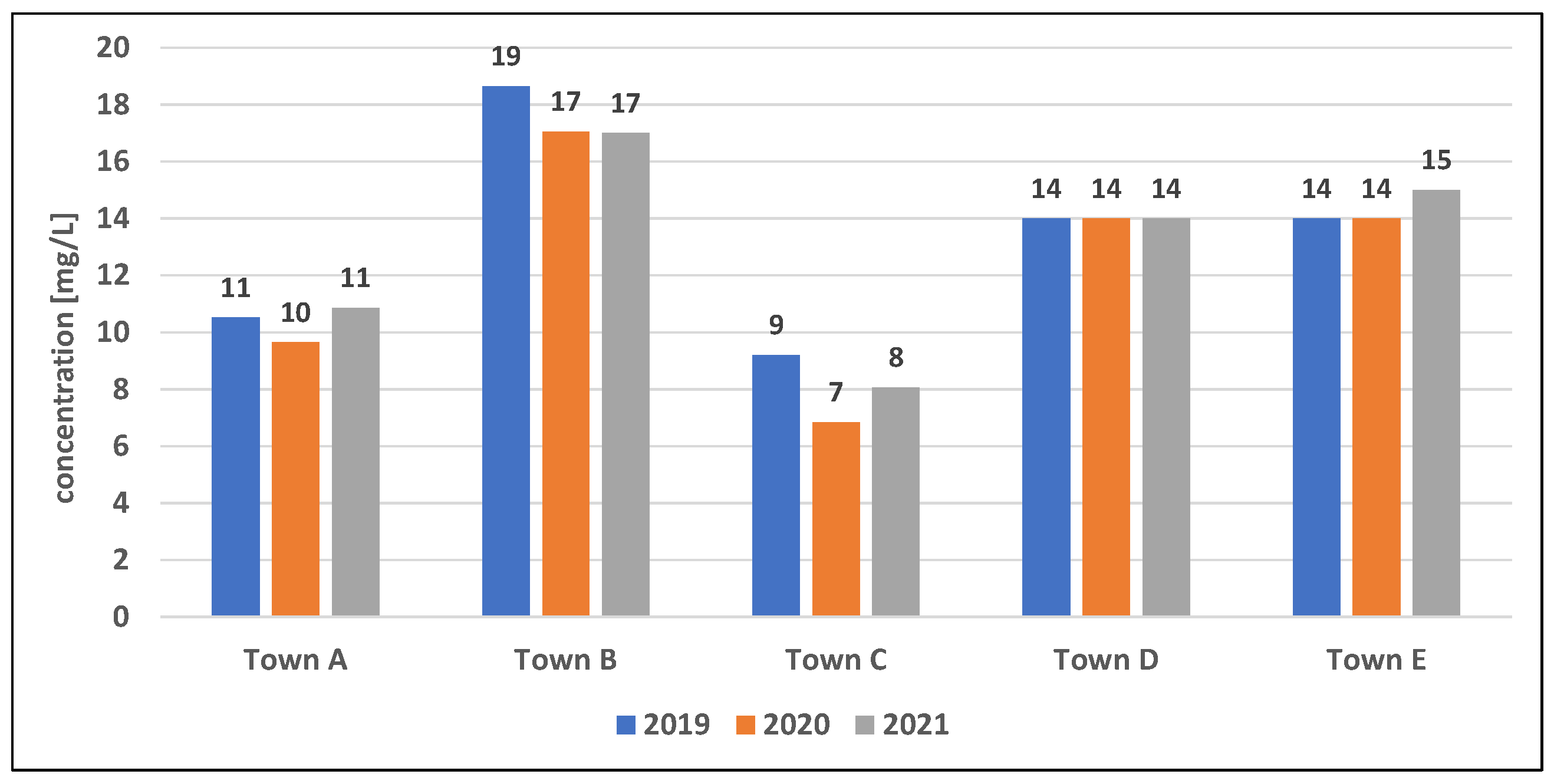
In all analyzed towns, similar trends were observed in respect of the BOD concentration of sewage inflowing into the treatment plant (Figure 1).
The highest values of this indicator were recorded in 2019, and the lowest ones in 2020, when catering and hotel facilities were closed many times. In the following 2021, the BOD concentrations of sewage from the largest towns studied (D and E) returned to the levels similar to those of 2019. On the other hand, in smaller towns (A, B, C) with greater importance of tourist facilities, BOD concentration recorded in 2021 was higher than in 2020 but lower than in 2019. This was due to the restrictions on the operation of catering and hotel facilities in the first four months of 2021 and the "slowdown in tourist traffic" observed around the world during the Covid pandemic [27].
The scale of the problem is most evident on the example of town A, which is an exclusively tourist destination (Table 4), as indicated by the number of beds in hotel facilities per 1,000 inhabitants (375) and the number of places where meals are served (13). Herein, the closing of tourist and catering facilities was observed to have a significant impact on the concentration of organic compounds in sewage discharged to the treatment plant. The BOD and COD values (Figure 2) in 2020 accounted for 62.3% and 66.4% of the values recorded in the year preceding the pandemic (2019), respectively.
The annual load of pollutants discharged to the treatment plant in 2020 (Table 5) amounted to 169,159 kg BOD/year and was lower by 131,702 kg BOD compared to 2019 (300,861 kg BOD/year).
Similarly large changes were recorded in town C, where BOD and COD concentrations recorded in 2020 accounted for 52.8% and 51.5% of the values recorded in the year preceding the pandemic (2019), respectively. Here, the annual load of pollutants entering the wastewater treatment plant in 2020 (Table 5) was 191,902 kg BOD/year, being lower by 217,595 kg BOD than in 2019 (409,498 kg BOD/year). This difference was due to the closure of the border crossing due to COVID-19 and the dramatic reduction in the number of people entering this city, which is the first border town.
Remarkably smaller differences between BOD and COD concentrations in 2019 and 2020 were observed in towns B, D and E. And so, in town B, the average BOD of sewage was lower in 2020 than the corresponding value recorded in 2019 by 42 g O2/m3, and that of COD by 117 g O2/m3.
In town D, the differences reached 52 and 78 g O2/m3, respectively. In the case of the largest town E, the differences in pollutant concentrations were 73 and 45 g O2/m3, respectively.
Despite the fact that the recorded differences between the pollutant concentrations in towns B,D,E were smaller than in towns A and C, when taking into account the annual loads of organic pollutants expressed by the BOD indicator in towns B,D, E, the differences between 2019 and 2020 were significant and amounted to 19,000 kg O2/year, 158,000 kg O2/year, and 616,000 kg O2/year, respectively. The COD values determined for towns B and D were 110,000 kg O2/year and 253,000 kg O2/year, respectively, whereas the load of COD pollutants received at the wastewater treatment plant in town E in 2020 was higher by 144,000 kg O2/year than in 2019, which was primarily due to the higher average daily flows of influents.
Similar trends were noted for total suspended solids (Figure 3). In towns A and C, their concentration determined in sewage in 2020 was about 45% of the values recorded in 2019. In towns D and E, these differences were minimal. In town B, the concentration of suspended solids accounted for 86% of the value recorded in 2019.
In towns A, B and C, the total nitrogen concentration determined in 2020 was from 81 to 86% of the 2019 value (Figure 4). In town D, it was similar, as it was higher by 1 g/m3 than in 2019 (92 and 93 g/m3, respectively), whereas in town E it accounted for 90% of the 2019 value.
The pandemic period and the resulting lockdowns of catering facilities had the least effect on phosphorus concentration in raw sewage (Figure 5). In towns D and E, its values were the same in both years. In town A, in 2020, the concentration of phosphorus was lower by 1 g/m3 than in 2019 (10 and 11 g/m3, respectively). In town B, its concentration recorded in 2020 accounted for 90%, whereas in town C for 78% of the 2019 value.
Based on literature data, it is possible to estimate the volume of food waste discharged to the sewerage system in 2019. In the first place, it was waste from catering facilities, because FWDs are practically not used in individual households in Poland. According to the literature, one gram of dry food waste generates 1.21 g of COD, 0.58 g of BOD, 0.36 g of total suspended solids, 0.025 g of total nitrogen, and 0.013 g of total phosphorus [9]. Calculations made based on the BOD values show that about 227,600 kg of dry matter of food waste was discharged into the sewerage system throughout the year in the smallest town (town A). In town C, it was as much as about 374,150 kg of food waste. In the largest town studied, the annual amount of food waste discharged into the sewerage system could exceed 1 million kg (Table 6).
If the analyzed town had a system for the collection of food waste from restaurants and other facilities for mass catering and their transfer to facilities for the anaerobic disposal of solid waste, it could be a viable means for the production of methane-rich biogas. According to Lelicińska-Serafin et al. [28], waste from Polish catering facilities contains on average 87.82 ± 4.05% VS. The values of the potential methane production parameter, which for catering food waste is 216-1476 L/kg VS [28], enable establishing the volume of methane that can be produced during this waste digestion.
For the potential methane production of 216 L/kg VS, these values are 43,170 m3/year; 70,970 m3/year; and 201,460 m3/year for towns A, C, and E, respectively. Considering the upper value of the parameter (1,476 L/kg VS), the respective values would be 295,000; 484,980; and 1,376,650 m3 methane/year (Table 6).
The discharge of wastewater from food service (catering) facilities to the sewerage system has certain consequences in terms of energy consumption. Organic pollutants contained in food waste must be neutralized in the process of aerobic biotreatment. The introduction of oxygen into the activated sludge chambers entails electricity consumption.
The amount of energy used to this end was determined based on the value of the indicator showing the amount of energy consumption (kWh) per 1 kg of the BOD load removed. According to literature data, the values of this indicator range from 0.533 to 4.34 kWh/kgBODrem. [29,30]. In order to calculate the volume of load removed, the efficiency of BOD removal was assumed to be 95%. The results of the calculations are presented in Table 6.
If the system for the collection of food waste from restaurants and other facilities for mass catering was in operation in town A, then the energy consumption recorded in its wastewater treatment plant in 2019 would be lower by 66,400 kWh (for a specific energy consumption of 0.533 kW/kg BOD rem.) or by 544,240 kWh (for a specific energy consumption of 4.34 kW/kg BOD rem.). In town C, these values would amount to 109,800 and 894,690 kWh/year, respectively. In turn, energy savings in town E would range from 311,700 to 2,539,770 kWh/year.
The values presented above indicate a very strong need to introduce a system for collecting food waste from catering facilities and delivering it to sludge facilities at the wastewater treatment plants. On the one hand, implementation of this solution is expected to ensure a significant reduction in electricity consumption for the aerobic treatment of wastewater in treatment plants, a probable improvement in the quality of treated wastewater, a reduction in the amount of sewage sludge generated, and a reduction in the cost of its treatment. In addition, more biogas will be produced in sludge and waste fermentation facilities. On the expenditure side, there will be costs of implementing and maintaining a food waste collection system and increased costs of its processing in closed digesters. Taking into account the results of the calculations, it can be envisaged that the revenues and savings resulting from the implementation of the system will significantly exceed the expected costs.
The implementation of a food waste collection system from catering facilities should underlay changes in the approach to food waste in entire towns. The next step should be to introduce a management system for this type of waste, including multi-family blocks of flats and single-family houses.
4. Conclusions
The problem of wasting the energy potential of food waste and generating unjustified costs of its disposal in wastewater treatment plants is a global issue. This applies to both household and catering facilities. In the latter, the main viable solution is the use of FWD, which is common in gastronomy facilities in Poland. On the other hand, FWDs are practically absent in private houses and flats.
The study aimed to determine, on the example of five towns with a PE of 4,000 to 220,000, the volumes of catering waste discharged to the sewerage system and then to the wastewater treatment plants. The towns differed not only in the number of inhabitants, but above all in the size of the hotel and catering base.
The extent of the increase in the concentration of wastewater resulting from the discharge of fragmented WF to the sewerage system as well as the scale of the increase in the load of pollutants of organic compounds, suspended solids and biogenes were also determined. In the analyzed towns, the loads of catering waste entering the sewerage system in 2019 ranged from 32.7 to 1062 tons. In addition, the amount of methane that could be generated during anaerobic digestion of catering waste and the increased consumption of electricity in wastewater treatment plants in facilities for aerobic neutralization of organic compounds from food waste ground in FWD were estimated.
The calculations were made based on data received from the operators of the treatment plants in 2019-2020. The pollutant concentrations in wastewater before the COVID-19 pandemic, i.e., in 2019, were compared with data from the "pandemic" year - 2020, when, as a result of lockdowns, most hotel and catering facilities in Poland were closed for many months. Since the facilities were closed for more than 5 months, it can be assumed that the amounts of catering waste were higher than those presented in the publication. However, it should be remembered that the end of the lockdown does not mean the immediate opening of catering facilities and hotels.
The research showed that in the towns more attractive from the tourist perspective, COVID-19 (A and C) contributed to a noticeable reduction in the concentration of sewage flowing into the treatment plants. In town A with the largest tourist base, the BOD and COD values in 2020 accounted for 62.3% and 66.4% of the values recorded in the year preceding the pandemic, respectively, while the annual load of pollutants flowing into the treatment plant in 2020 was lower by 131,702 kg BOD than the load in 2019. At the same time, in larger towns (D and E), due to much higher annual flows, the load of pollutants resulting from grinding food waste and discharging it to the sewerage system caused very high energy costs in wastewater treatment plants. In the case of the largest town studied (220,000 PE), the annual energy consumption for food waste treatment ranged from 311,700 to 2,539,770 kWh. If instead of being discharged to the sewerage system, the waste would be delivered to facilities intended for anaerobic solid waste fermentation, it would be possible to produce from 201,460 to 1,376,650 m3 of methane.
The study results indicate the viability of implementing a system for managing food waste from catering facilities in Poland. The basic and initial element of this system would be the collection of food waste from catering facilities and its processing in closed digesters on the premises of the treatment plant in order to produce methane, which can be used for heating and energy purposes. Another future-oriented action would be the introduction of a household food waste management system.
Author Contributions
Conceptualization, W.J.; methodology, J.R. and J.P; validation, W.J. and A.M.; formal analysis, W.J., J.R. and J.P.; investigation, J.R., W.J. and A.M.; resources, W.J. and J.R.; data curation, J.R.; writing—original draft preparation, J.R., W.J., J.P. and A.M.; writing—review and editing, A.M. and W.J.; visualization, J.R. and J.P.; supervision, W.J. and J.R.; project administration, J.R.; funding acquisition, J.R. and W.J. All authors have read and agreed to the published version of the manuscript.
Funding
The study was financially co-supported in the framework of a Project no. 29.610.023-300 of the University of Warmia and Mazury in Olsztyn, Poland.
Institutional Review Board Statement
Not applicable.
Informed Consent Statement
Not applicable.
Data Availability Statement
The data presented in this study are available on request from the corresponding author.
Acknowledgments
The article was created under Project no. POWR.03.05.00-00-Z310/17: "Development Program of the University of Warmia and Mazury in Olsztyn".
Conflicts of Interest
The authors declare no conflict of interest. The funders had no role in the design of the study; in the collection, analyses, or interpretation of data; in the writing of the manuscript, or in the decision to publish the results.
References
- Janczukowicz, W.; Rodziewicz, J.; Mielcarek, A.; Wolter, A. The impact of food waste discharge into the municipal sewerage on COD concentration in urban wastewater in Olsztyn. Ecol. Eng. 2016, 47, 68–73. (In Polish) [Google Scholar] [CrossRef]
- Poland on a plate 2019, MAKRO’s Report. Available online: https://mediamakro.pl/pr/460369/tradycyjna-polska-kuchnia-wciaz-kroluje-na-naszych-talerzach-najnowsze (accessed on 15 June 2023).
- Thomas, P. The effects of food waste disposers on the wastewater system: a practical study. Water Env. J 2011, 25, 250–256. [Google Scholar] [CrossRef]
- Melikoglu, M.; Lin, C.; Webb, C. Analysing global food waste problem: pinpointing the facts and estimating the energy content. Open Eng. 2013, 3, 157–164. [Google Scholar] [CrossRef]
- Becker Jr., A. M.; Yu, K.; Stadler, L.B.; Smith, A.L. Co-management of domestic wastewater and food waste: A life cycle comparison of alternative food waste diversion strategies. Bioresour Technol 2017, 223, 131–140. [Google Scholar] [CrossRef] [PubMed]
- Marashlian, N.; El-Fadel, M. The effect of food waste disposers on municipal waste and wastewater management. Waste Manag Res 2005, 23, 20–31. [Google Scholar] [CrossRef] [PubMed]
- Kim, D.; Phae, C. Analysis of the Effect of the Use of Food Waste Disposers on Wastewater Treatment Plant and Greenhouse Gas Emission Characteristics. Water 2023, 15, 940. [Google Scholar] [CrossRef]
- Maalouf, A.; El-Fadel, M. Effect of a food waste disposer policy on solid waste and wastewater management with economic implications of environmental externalities. Waste Manag 2017, 69, 455–462. [Google Scholar] [CrossRef]
- Kim, M.; Chowdhury, M.M.I.; Nakhla, G.; Keleman, M. Characterization of typical household food wastes from disposers: Fractionation of constituents and implications for resource recovery at wastewater treatment. Bioresour Technol 2015, 183, 61–69. [Google Scholar] [CrossRef]
- Regulation (EC) No 1069/2009 of the European Parliament and of the Council of 21 October 2009 laying down health rules as regards animal by-products and derived products not intended for human consumption and repealing Regulation (EC) No 1774/2002 (Animal by-products Regulation). 21 October.
- Regulation (EC) No 852/2004 of the European Parliament and of the Council of 29 April 2004 on the hygiene of foodstuffs. 29 April.
- Journal of Laws, 2006, 123/858 Act of June 7, 2001, on collective water supply and collective sewage disposal. 7 June.
- Singh, S.; Kaushik, V.; Soni, S.; Lamba, N. Waste management in restaurants: a review. Int J Eng Res Technol 2014, 2, 14–24. [Google Scholar]
- Han, S.K.; Shin, H.S. Biohydrogen production by anaerobic fermentation of food waste. Int J Hydrog Energy 2004, 29, 569–577. [Google Scholar] [CrossRef]
- Zhang, R.; El-Mashad, H.M.; Hartman, K.; Wang, F.; Liu, G.; Choate, C.; Gamble, P. Characterization of food waste as feedstock for anaerobic digestion. Bioresour Technol 2007, 98, 929–935. [Google Scholar] [CrossRef] [PubMed]
- Rodziewicz, J.; Janczukowicz, W.; Filipkowska, U. Catering waste - a growing problem in the operation of sewage systems and sewage treatment plants. Technologia wody 2014, 38, 98–103. (In Polish) [Google Scholar]
- Waldron A., Gibson S., Pohl L., Labas K. 2012. Anaerobic digestion of cafeteria waste reducing Clarkson’s environmental footprint. Project report. New York State Pollution Prevention Institute.
- Kima, M.; Nakhla, G.; Keleman, M. Modeling the impact of food wastes on wastewater treatment plants. J Environ Manage 2019, 237, 344–358. [Google Scholar] [CrossRef]
- Kwon, S.H.; Lee, D.H. Evaluation of Korean food waste composting with fed-batch operations I: using water extractable total organic carbon contents (TOCw). Process Biochem 2004, 39, 1183–1194. [Google Scholar] [CrossRef]
- Shin, H.S.; Youn, J.H.; Kim, S.H. Hydrogenproduction from food waste in anaerobic mesophilic and themophilic acidogenesis. In J Hydrogen Energy 2004, 29, 1355–1363. [Google Scholar] [CrossRef]
- Kim, H.J.; Kim, S.H.; Choi, Y.G.; Kim, G.D.; Chung, T.H. Effect of enzymatic pretreatment on acid fermentation of food waste. J Chem Technol Biotechnol 2006, 81, 974–980. [Google Scholar] [CrossRef]
- Nordberg, A.; Edstrom, M. Co-digestion of ley crop silage, source sorted municipal solid waste, and municipal sewage. 5th FAO/SREN entitled: “Anaerobic Conversion for Environmental Protection, Sanitation and Re-Use of Residuals”. 24-27, March, 1997, Gent, Niemcy.
- Steffen, R.; Szolar, O.; Braun, R. 1998, Feedstocks for Anaerobic Digestion. Institute of Agrobiotechnology Tulin, University of Agricultural Sciences, Vienna.
- Rao, M.S.; Singh, S.P. Bioenergy conversion studies of organic fraction of MSW: kinetic studies and gas yield-organic loading relationships for process optimization. Bioresour Technol 2004, 95(2), 173–185. [Google Scholar] [CrossRef]
- Janczukowicz, W.; Rodziewicz, J. Carbon sources in the processes of biological removal of nitrogen and phosphorus compounds. Monographs of the Environmental Engineering Committee PAN, 2013, 114, Lublin (In Polish). (In Polish) [Google Scholar]
- Saraiva, A.B.; Davidsson, Å.; Bissmont, M. Lifecycle assessment of a system for food waste disposers to tank – A full-scale system evaluation. Waste Management 2016, 54, 169–177. [Google Scholar] [CrossRef]
- In 2021, 54 percent more people came to Poland. fewer foreign tourists than in 2019. Available online: https://forsal.pl/lifestyle/turystyka/artykuly/8608080,2021-polska-przyjechalo-o-54-proc-mniej-turystow-z-zagranicy-niz-w-2019.html (accessed on 12 June 2023).
- Lelicińska-Serafin, K.; Manczarski, P.; Rolewicz-Kalińska, A. An Insight into Post-Consumer Food Waste Characteristics as the Key to an Organic Recycling Method Selection in a Circular Economy. Energies 2023, 16, 1735. [Google Scholar] [CrossRef]
- Svenskt Vattens – Swedish Water & Wastewater Association. Svenskt Vattens undersökning VASS reningsverk 2015 – nyckeltal från första året. Available online: https://www.svensktvatten.se/om-oss/in-english/ (accessed on 1 June 2023).
- Chiavola, A.; Romano, R.; Bongirolami, S.; Giulioli, S. Optimization of energy consumption in the biological reactor of a wastewater treatment plant by means of Oxy Fuzzy and ORP control. Wat Air and Soil Poll 2017, 228, 277. [Google Scholar] [CrossRef]
Figure 1.
Average BOD concentration of raw wastewater in 2019–2021.
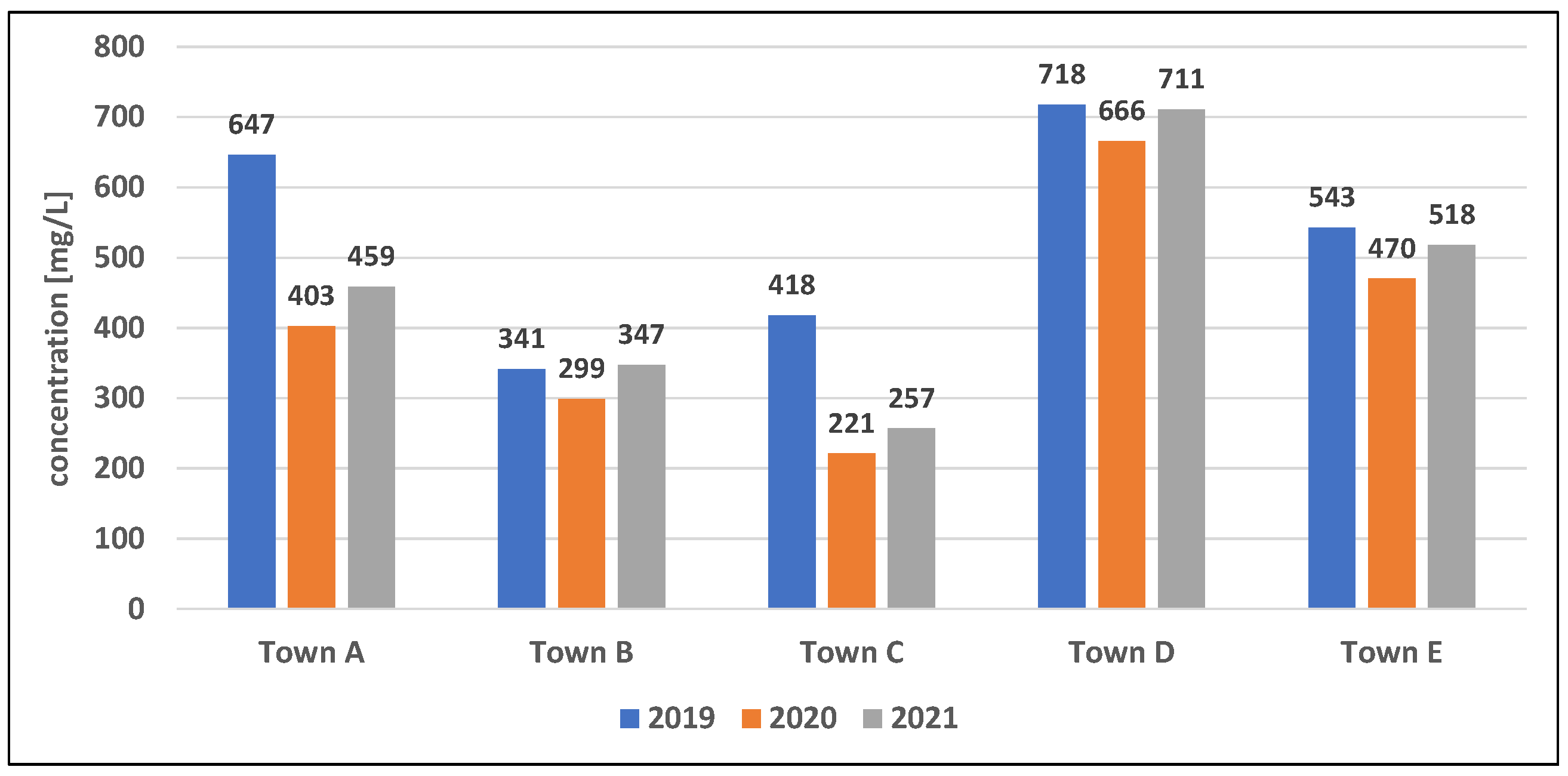
Figure 2.
Average COD concentration of raw wastewater in 2019–2021.
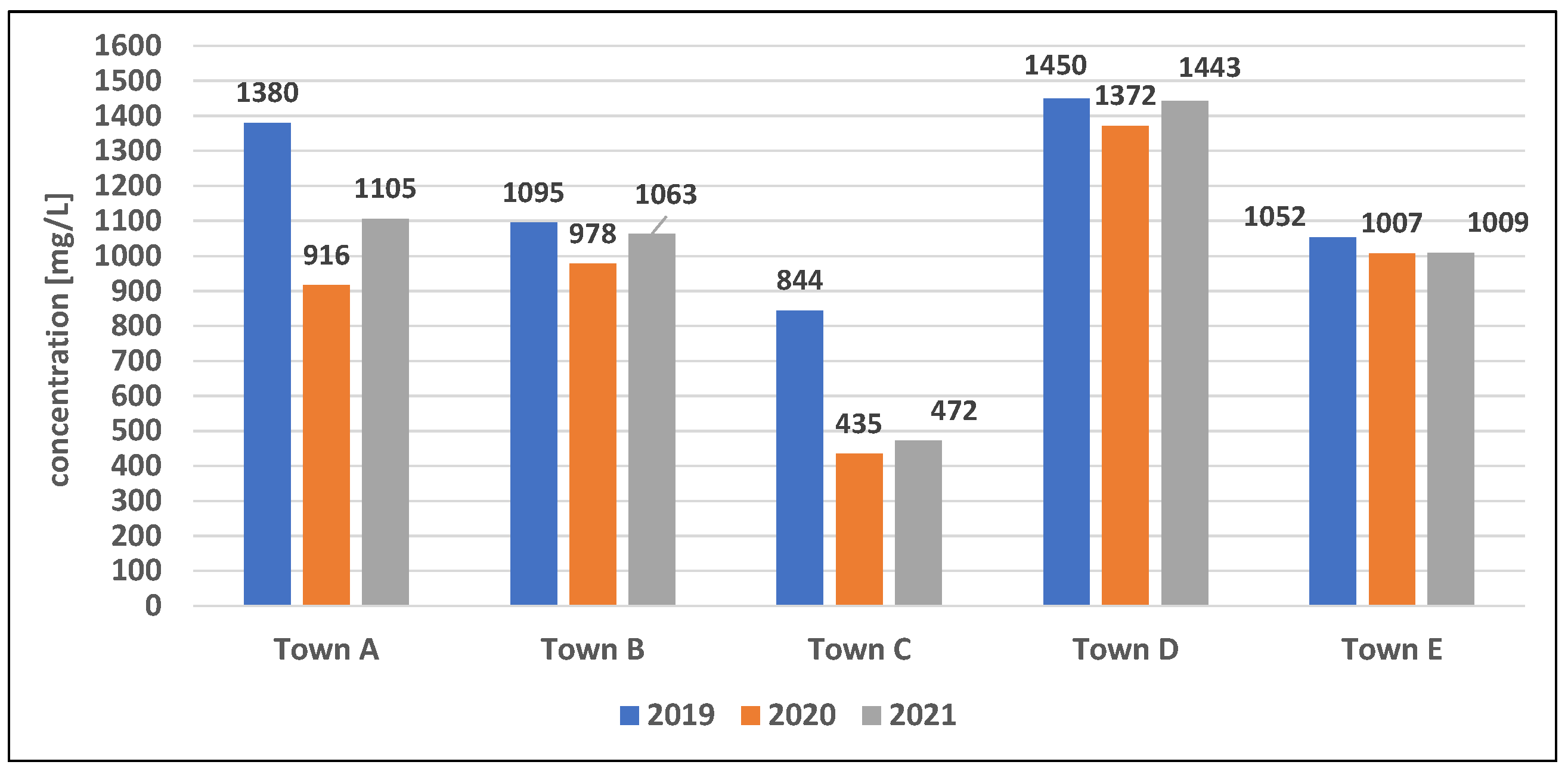
Figure 3.
Average suspended solids concentration of raw wastewater in 2019–2021.
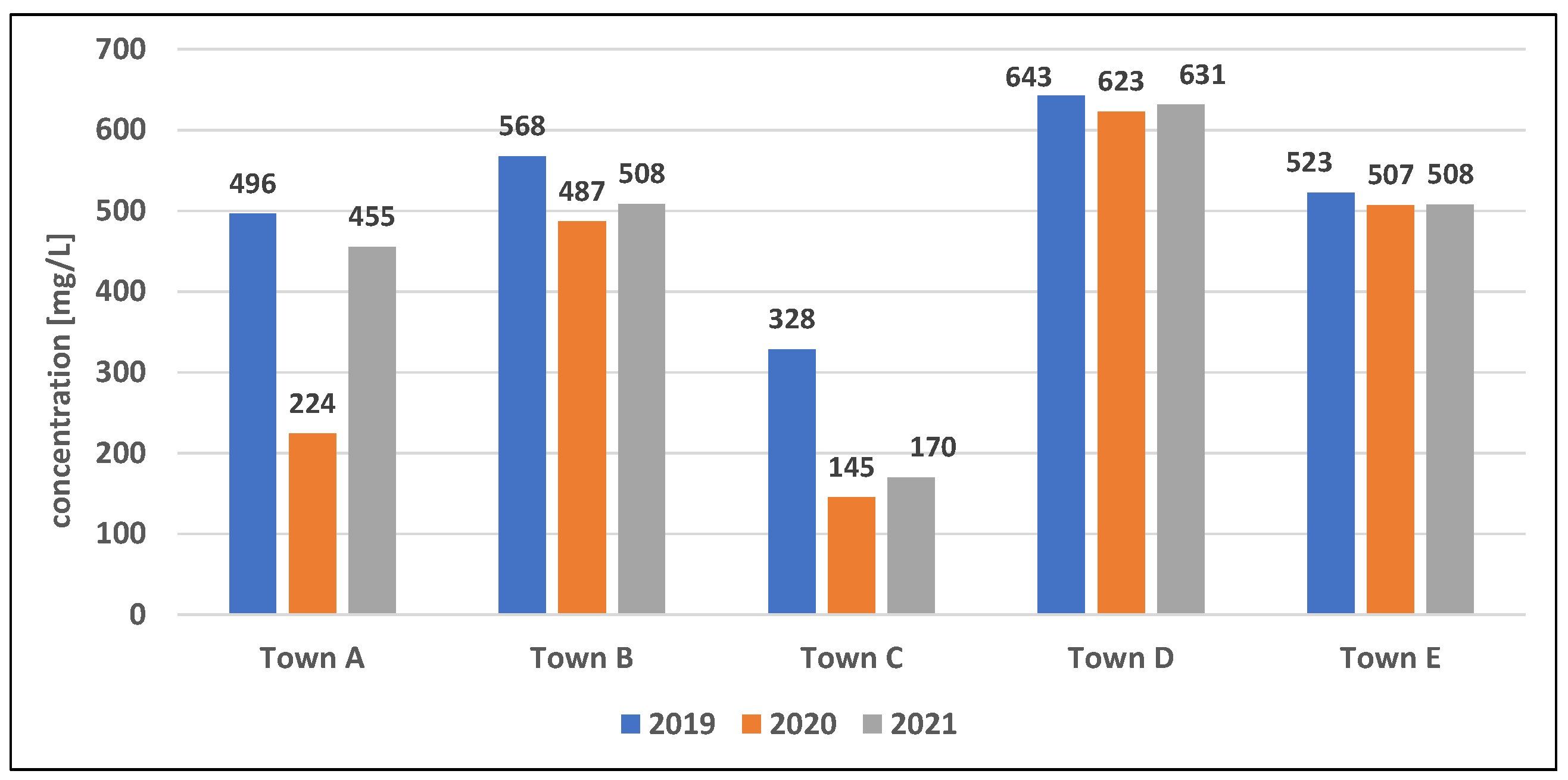
Figure 4.
Average nitrogen concentration of raw wastewater in 2019–2021.
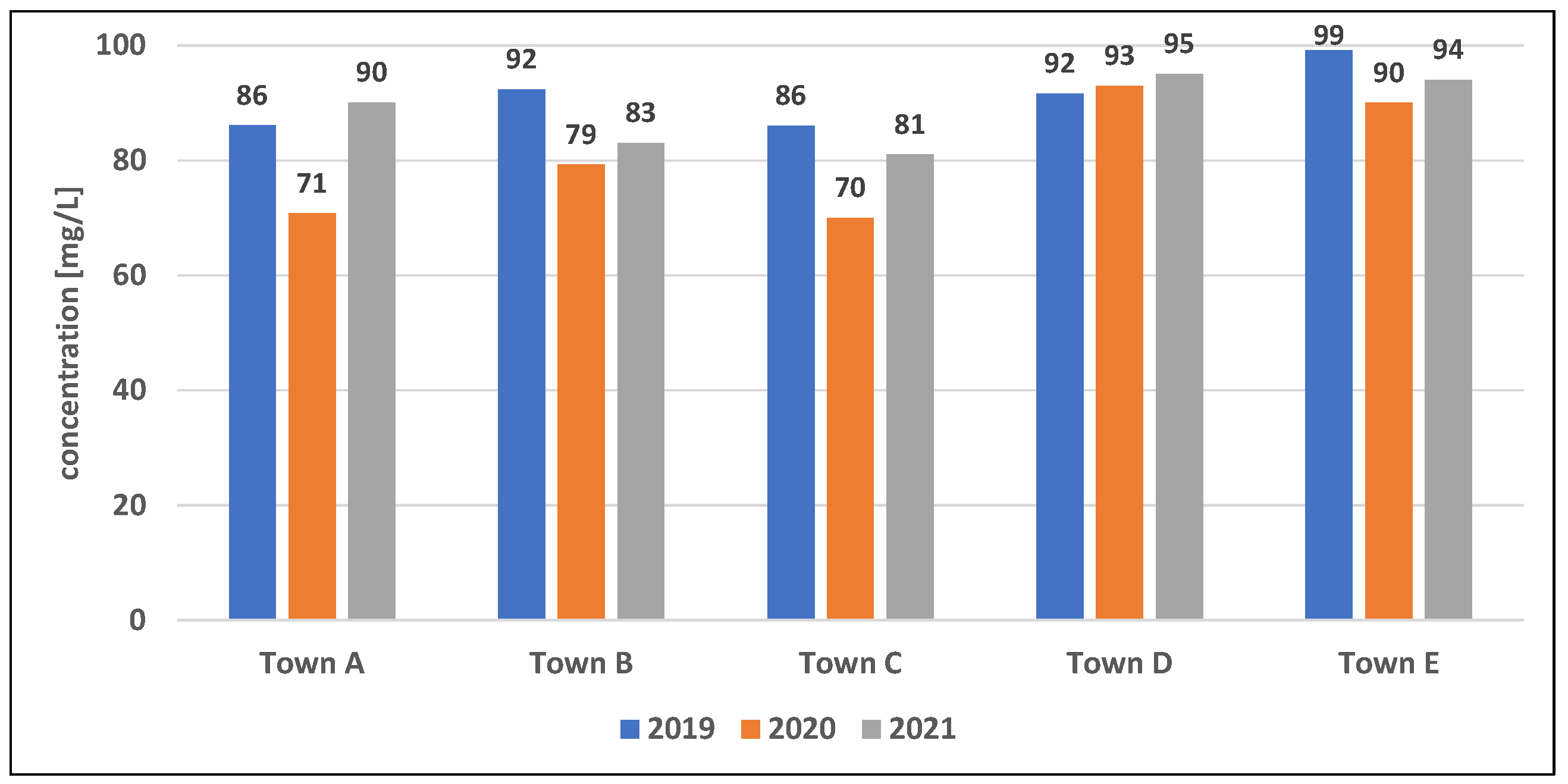
Figure 5.
Average phosphorus concentration of raw wastewater in 2019–2021.

| Parameter | Unit | Value |
|---|---|---|
Physical properties
|
g/l % g/l g/l - |
502.2 79.5 (69.1*) 391.3 371.7 0.95 (85.3*) |
Ingredients
|
% DM % DM % DM |
61.1 29.7 9.2 |
| elementary analysis carbon, C hydrogen, H oxygen, O nitrogen, N phosphorus, P sulfur, S C/N |
% DM % DM % DM % DM % DM % DM |
51.4 (46.78*) 6.1 38.9 3.5 (3.16*) 0.52* 0.1 14.7 |
| Restaurant type | Fat concentration (mg/L) |
|---|---|
| Chicken fryer | 120 – 6 500 |
| Chinese | 76 – 1 300 |
| Mexican | 96 – 1 040 |
| Pub | 130 – 706 |
Table 3.
Characteristics of catering and food waste depending on the place of origin.
| Source | Properties | country | literature item | ||
|---|---|---|---|---|---|
| humidity % | volatile substances/ dry matter, % |
C/N | |||
| Dining room | 80 | 95 | 14.7 | Korea | [14] |
| University canteen | 80 | 94 | - | Korea | [19] |
| Dining room | 93 | 94 | 18.3 | Korea | [20] |
| Dining room | 84 | 96 | - | Korea | [21] |
| Urban food waste | 90 | 80 | - | Germany | [22] |
| Urban food waste | 74 | 90 – 97 | 36.4 | Australia | [23] |
| Fruit and vegetable waste | 85 | 89 | - | India | [24] |
| Catering and food waste | 74 | 87 | 14.8 | USA | [15] |
Table 4.
Characteristics of the towns being the subject of the research.
| Town | Area | Population | Beds in hotels | Beds in hotels | Food places |
Average daily flow | ||
|---|---|---|---|---|---|---|---|---|
| 2019 | 2020 | 2021 | ||||||
| km2 | PE | number | number/ 1000 PE |
places/ 1000 PE |
m3/d | |||
| A | 8.85 | 4 000 | 1500 | 375 | 13.00 | 1 274 | 1 150 | 1 224 |
| B | 10.87 | 11 000 | 383 | 35 | 3.20 | 1 845 | 1 757 | 2 064 |
| C | 11.79 | 22 000 | 230 | 10 | 0.91 | 2 684 | 2 379 | 3 434 |
| D | 13.72 | 33 000 | 1160 | 35 | 1.30 | 6 931 | 6 819 | 7 167 |
| E | 88.33 | 220 000 | 5200 | 24 | 2.04 | 36 000 | 38 000 | 41 000 |
Table 5.
Pollution loads in 2019-2021.
| Parameter g/m3 |
Load, 103·kg/year | Load, 103·kg/year | Load, 103·kg/year | ||||||||||||
|---|---|---|---|---|---|---|---|---|---|---|---|---|---|---|---|
| 2019 | 2020 | 2021 | |||||||||||||
| A | B | C | D | E | A | B | C | D | E | A | B | C | D | E | |
| BOD | 301 | 211 | 409 | 1816 | 7135 | 169 | 192 | 192 | 1658 | 6519 | 205 | 261 | 322 | 1860 | 7752 |
| COD | 642 | 737 | 827 | 3668 | 13823 | 384 | 627 | 377 | 3415 | 13967 | 293 | 800 | 591 | 3775 | 15100 |
| SS | 231 | 382 | 321 | 1627 | 6872 | 97 | 312 | 126 | 1551 | 7032 | 203 | 382 | 213 | 1651 | 7602 |
| TN | 40 | 62 | 84 | 232 | 1301 | 30 | 51 | 48 | 231 | 1248 | 40 | 62 | 101 | 249 | 1406 |
| TP | 5 | 13 | 9 | 35 | 184 | 4 | 11 | 6 | 35 | 194 | 5 | 13 | 10 | 37 | 224 |
Table 6.
Potential energy benefits resulting from the introduction of a food waste collection system in towns A, B, C, D and E and its disposal in closed fermentation chambers.
Table 6.
Potential energy benefits resulting from the introduction of a food waste collection system in towns A, B, C, D and E and its disposal in closed fermentation chambers.
| Amount of food waste from gastronomy facilities, kg/year |
The amount of methane that can be generated from catering waste, m3 | Annual amount of energy used during the cleaning process, kWh/rok | |||
|---|---|---|---|---|---|
| 216 L/kg VS | 1476 L/kg VS | 0.533 kWh/kgBODrem |
4.34 kWh/kgBODrem. |
||
| A | 227 600 | 43 170 | 295 000 | 66 400 | 544 240 |
| B | 32 750 | 6 200 | 42 450 | 9 610 | 78 340 |
| C | 374 150 | 70 970 | 484 980 | 109 800 | 894 690 |
| D | 272 400 | 51 670 | 353 090 | 79 950 | 651 430 |
| E | 1 062 050 | 201 460 | 1 376 650 | 311 700 | 2 539 770 |
Disclaimer/Publisher’s Note: The statements, opinions and data contained in all publications are solely those of the individual author(s) and contributor(s) and not of MDPI and/or the editor(s). MDPI and/or the editor(s) disclaim responsibility for any injury to people or property resulting from any ideas, methods, instructions or products referred to in the content. |
© 2023 by the authors. Licensee MDPI, Basel, Switzerland. This article is an open access article distributed under the terms and conditions of the Creative Commons Attribution (CC BY) license (https://creativecommons.org/licenses/by/4.0/).
Copyright: This open access article is published under a Creative Commons CC BY 4.0 license, which permit the free download, distribution, and reuse, provided that the author and preprint are cited in any reuse.


