
Submitted:
28 June 2023
Posted:
29 June 2023
You are already at the latest version
Abstract
Epigenetic reprogramming represents a series of essential events during many cellular processes including oncogenesis. Genome of Kaposi’s sarcoma-associated herpesvirus (KSHV), an oncogenic herpesvirus is predetermined for a well-orchestrated epigenetic reprogramming once it enters into a host cell. The initial epigenetic reprogramming of KSHV genome allow restricted expression of encoded genes and helps to hide from host immune recognition. The infection with KSHV is associated with Kaposi's Sarcoma, Multicentric Castleman's disease, KSHV inflammatory cytokine syndrome and primary effusion lymphoma. The major epigenetic modifications associated with KSHV can be labelled under three broad categories: DNA methylation, modifications of Histone, and the role of noncoding RNAs. These epigenetic modifications significantly contribute towards the latent-lytic switch of the KSHV lifecycle. This review gives a brief account of the major epigenetic modifications affiliated with the KSHV genome in infected cells and their impact on pathogenesis.
Keywords:
Kaposi's Sarcoma Associated Herpes Virus
; Epigenetics
; DNA methylation
; Histone Modification
; Non-coding RNAs
; Oncogenesis
1. Introduction:
Kaposi’s sarcoma (KS), the most common neoplasm of HIV-infected people is caused by co-infection of Kaposi's Sarcoma Associated Herpes Virus (KSHV) [1]. KSHV or Human Herpes Virus 8 (HHV8) belongs to the γ-herpesvirus family and is one of seven known human oncogenic viruses [2]. In addition to Kaposi Sarcoma, KSHV infection is strongly associated with, Multicentric Castleman's Disease (MCD), Primary effusion lymphoma (PEL) and KSHV inflammatory cytokine syndrome (KICS) [3].
The genome of KSHV is consist of 165-170 kb linear dsDNA and has complex gene organization which includes overlapping genes and polycistronic mRNAs [4,5]. The central unique coding region of the KSHV genome is 137 kb which encloses KSHV-encoded ORFs and is flanked by 15 kb GC-rich terminal repeats (TR) on both ends[6,7]. The infection proceeds when the virus enters the host cell, and the linear viral DNA undergoes circularization by attaching GGC-rich TRs [8]. This is followed by the association of the viral genome with the host genome to form an extrachromosomal viral episome [8,9].
KSHV employs two distinct life cycle consisting of Latent and Lytic phases, and utilizes a common tactic to establish latency in the host cells [10,11]. Escape from host immune response-mediated elimination is the pre-requisite for the establishment of life-long persistent infection [12,13]. For this, KSHV has acquired various strategies to manipulate the epigenetic machinery of a host [14]. KSHV causes viral episome to form a heterochromatin structure that will cause restriction of viral gene expression of limited genes throughout the latency [15,16]. A complex switch maintains the balance between the two phases [11]. This switch can be turned on for lytic replication under hypoxia, oxidative stress, due to certain chemicals, on account of unbalanced inflammatory cytokines or immunosuppression, or as a result of viral co-infection [17,18]. The latent to lytic switch is crucial for viral propagation, its pathogenicity and maintaining the population of latently infected cells [19]. In the latently infected cells, only a couple of KSHV-encoded genes are expressed, and the product of these expressed genes are crucial to maintain the latency [20]. KSHV-encoded LANA is considered as the master regulator of latency with proven potential to promote oncogenesis by interfering with several cellular pathways [21]. LANA is required for the attachment of the viral genome with the host genome and inactivation of well-established tumor suppressor genes to promote tumorigenesis [21,22]. KSHV-encoded vCyclin and vFLIP are expressed from the same polycistronic operon and are involved in cell cycle regulation and inhibition of apoptosis, respectively [23,24]. vCyclin has been recently reported to mediate degradation of HIF1α through non-canonical lysosomal pathway. This activity of vCyclin has high importance during hypoxic reactivation of KSHV [25]. vFLIP is well known to activate NF-kB pathway inhibit apoptosis as well as promote reactivation [26]. Other major transcripts expressed in KSHV-positive cells includes vGPCR and KSHV-encoded microRNAs [27]. KSHV-encoded vGPCR is capable of mediating a wide range of signalling cascade through reactive oxygen species (ROS) signalling. It is important to note that vGPCR induced ROS is reported to modulate expression of well-known DNA methyl transferases [28]. Additionally, vGPCR acts directly on the MAPK kinase and p38 pathways to promote expression of VEGF by directly acting on HIF1α [29]. Nevertheless, the KSHV genome is known to encode at least 12 precursors of micro RNAs (miRNAs). Till now, 25 mature miRNAs have been reported to be processed from these 12 precursor miRNAs [30]. The validated targets of KSHV -encoded miRNAs includes both host and KSHV genome encoded transcripts. KSHV-encoded RTA represents a classical target for KSHV-encoded microRNAs miR-K12-7 and miR-K12-9. Targeting RTA by these microRNAs appears to be a natural mechanism for the maintenance of KSHV latency and inhibition of RTA mediated reactivation [31].
In addition to the DNA methylation, modifications of histone also plays determining role in the regulation of gene expression of KSHV encoded genes and considered as central event during chromatinization of KSHV genome during early stage of infection [32]. The most common histone modification of KSHV genome includes methylation and acetylation of H3 histone [33]. It is important to note that, a subsequential reversal event is pre-requisite for the reactivation of KSHV from the latently infected cells [34]. This is why, factors such as hypoxia, reactive oxygen, and ionizing radiation are among the known factors which can induce KSHV reactivation [35,36]. Additionally, chemical compounds such as 12-O-tetradecanoylphorbol-13-acetate (TPA) and butyric acid, which can mediate global epigenetic changes are used regularly for in-vitro reactivation of KSHV as well as other herpesviruses [37]. In this review, we have provided a detailed insight into the major epigenetic changes happening on the KSHV genome and their role on host epigenome.
2. The interplay between the genome and Epigenome in KSHV infections:
Cancer initiation and development have been largely linked with congenital or acquired aberrant alterations that occurs in the form of mutations, insertion, deletion and recombination in chromosome or copy number alterations leading to persistent changes in phenotype [38]. This represents the classical mechanism of diseases based on the principles of genetics. However, considering the low frequency of genetic events, it cannot be designated as the sole cause of malignant transformations. Epigenetic control has been proposed as the alternate strategy to explain the additional possible mechanisms. Epigenetic changes being dynamic and causing heritable modifications to the genome can lead to accumulation of stable oncogenic traits without causing alterations in DNA sequences, and thus contribute in sustaining cancer associated malignancies by exerting significant effect on cellular phenotype [39]. Epigenetic modifications during oncogenesis occurs mainly through DNA methylation, modifications of histones and non-coding RNAs [40]. Oncogenic viruses, represent a group of viruses capable of tumorigenic transformation of infected cells. These viruses range from few kilobase pairs in size such as human papillomavirus (HPV) to more than hundred kilobase pairs in length such as Kaposi’s sarcoma associated herpesvirus (KSHV) and Epstein Barr Virus (EBV) [41,42]. Both the genomic and epigenomic aspects of cancer initiation has been proven valid for viral infection-based oncogenesis [43]. The small viruses often found inserted within coding region of important tumor suppressor genes resulting in loss of functions [44]. The large oncogenic viruses, in general, encodes many proteins capable of inducing tumorigenesis [45]. These proteins have potential to activate/stabilize expression of gene(s) which can promote cell cycle progression and/or DNA replication or down-regulate/degrade tumor suppressors [45]. Homologs of host genes has also been reported in several viruses and their infection can represent an external factor mimicking gene duplication/multiplication [46]. The oncogenic viruses also encodes proteins which can mediate epigenetic changes through multiple mechanisms [47]. One of the such example in KSHV-encoded vGPCR, which is capable of large-scale epigenetic changes by reactive oxygen species dependent expression of DNA methyl transferases [48]. The unerring epigenetic status is requisite for maintaining and developing tissue-specific gene expression in mammals [49]. Upsetting epigenetic regulation can lead to aberrant gene expression and diseases like cancer. The disruption to epigenetic status occurs through multiple interconnected mechanisms like abnormal DNA methylation (e.g., faulty methylation of cytosine residues in CpG sequence motifs and nucleosome remodelling etc), disrupted pattern of histone post-translational modification and deregulation by noncoding RNAs (ncRNAs) [50,51]. These modifications result in neoplastic transformation and play a significant role in tumorigenesis. The major epigenetic modifications occurring on KSHV genome and their impact on KSHV biology are summarised below.
3. DNA Methylation:
CpG is refers for Cytosine-Guanine separated by one phosphate group. These islands are site in DNA sequences which are rich in CpG dinucleotides. CpG islands can be found in promoter and exonic regions in approximately 40% genes in mammals but other regions of mammalian genome carry very few CpG dinucleotides as these are highly methylated [52]. Human genome is known to possess 42% GC content and based on this a nucleotide pair having cytosine followed by guanosine could be expected to occur at 0.21 ×0.21 = 4.41% of time but the observed frequency of these CpG dinucleotides is less than one-fifth of frequency expected in normal conditions. The reason for this is attributed to CpG island being the genetic hotspot for mutations that leads to CpG depletion during the course of evolution [53].
The initial instance of methylation at CpG island in human tumor suppressor gene was recorded within retinoblastoma gene in 1989. Following this, in 1994, J G Herman et al. showed that hypermethylation of unmethylated CpG island in VHL gene at 5’ can lead to allelic loss and mutational inactivation of the gene in majority of spontaneous clear-cell renal carcinomas. Methylation of CpG islands in the promoter sequence of genes, particularly the tumor suppressor genes, homeobox genes and other sequences, results in its failure to transcribe the gene resulting in silencing of one or more concurrent genes and thus leading to cancer [54,55,56].
In a study conducted in 1983, Gama-Sosa et. Al., claimed that overall content of m5C in DNA from normal tissues varies considerably in manner specific to different tissue. Restriction endonuclease digests of DNA from human tumors (secondary malignant, primary malignant or benign) were taken, which on HPLC analysis showed that most of the metastatic neoplasm had significantly lower genomic m5C contents than that of benign or normal tissues [57]. In the same year, Feinberg and Vogelstein, observed significant hypomethylation among cancer cells compared with their normal counterparts withiin four of five patients [58]. The observation made was that specific genes in the genome of cancer cells are hypermethylated but still the cumulative mC5 content is often lowered as a result of cancer linked hypomethylation or satellite DNA hypomethylation [58]. The above studies curated a view that metastases were more susceptible and hence more subjected to cancer linked DNA hypomethylation and hence influence epigenetics [59]. Also, there exist tumor-type specificity in cancer-linked hypomethylation [60]. Because of this intricate relation between tumor progression, metastasis and DNA hypomethylation, DNA hypomethylation may represents to be promising to classify cancer and predict its clinical status (Figure 1) [61]. Several studies have been reported by now which clearly indicates that host cellular machinery induces epigenetic reprogramming of viral genome once they infect a host cell [62]. In this review, we focussed on the epigenetic reprogramming of Kaposi’s sarcoma associated herpesvirus (KSHV) genome and their role in tumorigenesis.
4. DNA Methylation in KSHV infection:
KSHV-infected cells exhibit a distinct cellular gene expression pattern [63] . The genome of KSHV is known to undergo epigenetic modification and chromatinization immediately after entering the host cell. Six DNA methyltransferases (DNMTs) have so far been identified and are responsible for catalysing DNA methylation: DNMT1, DNMT2, DNMT3, DNMT3A, DNMT3B, DNMT3C, and DNMT3L. However, only few of the DNMTs are known to modulate methylation of KSHV genome [64]. KSHV-encoded factors are also known for their ability to controls various aspects of DNA methylation [65]. The main DNA methyltransferase (DNMT3a), encoded by nuclear DNA is interacted with by the LANA (Latency-associated nuclear antigen or ORF73) encoded by KSHV DNA and recruited to specific cellular promoters that become methylated and repressed [66].
Ye et al. in 2010, demonstrated the role of DNA methylation in maintaining KSHV latency [67]. It was shown that 5-Azacytidine (5-AzaC) which is an inhibitor of DNA Methyltransferase is acting as a stimulator for KSHV lytic reactivation [14]. Another experiment conducted in 2010 by Gunther and Grundhoff in KSHV positive endothelial cells derived from tumor, showed spatial and temporal DNA methylation and histone modifications associated with KSHV genome [68]. They employed high resolution tilling microarrays with immunoprecipitated methylated DNA (MeDIP) and modified histones (ChIP) to work out distinct landscape of epigenetic modifications that results during KSHV associated latent infection [68]. They found extensive DNA methylation on KSHV latent genomes except on latency associated locus and it was found that global methylation of viral episome occurs comparatively at a slower rate than histone modification leading to a conclusion that DNA methylation acts as reinforcer of viral gene expression inhibition caused by repressive histone marks[68]. This was followed by a study conducted by Darst et. al., in 2013 where they employed MAPit (methylation accessibility probing for individual template) and single molecule foot printing to map endogenous methylation of CpG islands, accessibility at GC sites and associated chromatin structure at various loci in latent KSHV episome [69]. The conclusion drawn from this experiment was in close agreement with that of Gunther and Grundhoff as it said that DNA methylation can prevent viral reactivation on account of chromatin compaction [69]. Although, both Gunther and Grundhoff (2010) and Darst et al. (2013) seen that DNA methylation can significantly contribute in KSHV latency but also proposed that latency can be developed independently without DNA methylation at KSHV replication and transcription activator locus i.e., K-Rta, ORF50.
In a recent study by Journo et. al., (2021) , cellular CpG global methylation pattern was observed in KS infected biopsy samples [70]. Methylation EPIC BeadChip was performed for comparing global methylation pattern in normal skin cells and KS biopsy samples that led to the conclusion that there occur extensive global methylation alterations in KS. These alterations can be attributed to dramatic hypermethylation and hypomethylation of promoters and enhancers of genes that have role in regulation of abnormal skin morphology. An inference was made based on this that hypermethylation occurs early in KS which is followed by hypomethylation that occurs in later stage [70].
In many instances, it is reported that KSHV itself modulates cellular epigenome by utilising its latent as well as lytic proteins. One such example is KSHV-encoded vGPCR. KSHV-encoded vGPCR can be transactivated by hypoxia inducible factor 1 alpha (HIF1α). Under hypoxic conditions, stabilization of KSHV-encoded vGPCR induces production of reactive oxygen species, which in turns modulates expression of cellular encoded DNMTs. The differential expression of DNMTs in response to vGPCR mediated reactive oxygen species has been shown to modulate expression of host nuclear encoded genes [48].
5. Histone Modification
In cells, chromatin serves as a container for DNA. The fundamental component of chromatin is an assembly of histone octamers. The 145–147 base pair DNA fragment is wrapped around a 63 nm central solenoid. These nucleosomes are made up of two copies of each of the four core histone proteins H3, H4, H2A. H2B, and the linker histone protein H1/H5. The side chain of the big globular histone proteins is made up of basic lysine and arginine residues [71,72,73]. These go through a number of post-translational covalent changes. Some of these post translational modifications (PTMs) cause changes in the charge density between the DNA and histones, which affects how chromatin is formed and the transcription activities that are associated to it [74]. This can serve as recognition modules for binding of specific proteins that, when bound may signal chromatin alterations [75]. The modifications can also impact other DNA processes, like replication, repair, and recombination [76]. Hence, histone modifications pose key epigenetic regulators influencing chromatin structure and gene transcription, thus affecting cellular phenotypes [77].
One of the hallmarks of cancer progression is the post-translational modification of histones which can regulate expression and repression of associated genes [78]. The pioneering work of Vincent Allfrey in 1960 showed that histones are modified post-translationally [79]. The high-resolution X-ray crystal study of Luger et. al., (1997) of nucleosomes shed more light on the organization of same and how histone interactions might cause alterations in chromatin organization [80]. The interpretation was that highly basic histone amino N-terminal can protrude from their own nucleosome. They can interact with nearby nucleosomes, so any modification in these tails will result in aberrant inter-nucleosomal interactions, affecting the overall chromatin structure[80]. The modifications can also lead to employment of remodeling enzymes that can play a role in repositioning nucleosomes by utilizing energy from ATP hydrolysis [81].
Histone modifications can occur as part of histone, acetylation, phosphorylation, methylation, demethylation, ADP ribosylation, and Ubiquitination or Sumoylation [78]. In histone acetylation, there is involvement of histone acetyltransferases (HATs) and histone deacetylases (HDACs)[82]. Utilizing acetyl Co-A as a cofactor, HATs catalyse the transfer of an acetyl group to the ε-amino group of lysine side chains, neutralizing the positive charge on it and thus weakening the interaction between histones and DNA [82,83]. This weakening leads to chromatin unfolding and exposes charged DNA (negative) to DNA binding proteins. HDACs are responsible for reversing the action of HATs and restoring the positive charge on lysine, which results in the silencing of gene expression. Transcription dysregulation occurs because of an imbalance between acetylation and deacetylation [84]. Histone phosphorylation predominantly involves serine, threonine, and tyrosine in N-terminal of histone side chains and alters the charge on histone proteins [85]. Histone methylation involves methylation of side chains of lysine and arginine mediated by histone lysine and arginine methyl transferases, respectively [86]. Until 2002, methylation was considered a relatively stable and static modification. Afterwards, Bannister et al. suggested the existence of different potential pathways for demethylation, followed by discovery of two different classes of lysine demethylase in 2004 and 2006, respectively [75,87].
6. Histone Modification in KSHV infection:
RTA (Replication and Transcription Activator), encoded by ORF50, acts as Kaposi's sarcoma-associated herpes virus lytic switch protein [88]. ChIP-on-chip studies demonstrated multiple binding sites for RTA on KSHV genome in the infected cell line [89]. Two simultaneous but separate Chromatin Immunoprecipitation, ChIP on Chip, studies were conducted in 2010, one by Gunther and Grundhoff and the other by Toth et al., respectively [90,91]. Toth et al. conducted an extensive ChIP-on-chip analysis of chromatin of KSHV genome during latent and lytic phases. The study identified different combinations of activating (H3K4me3 and H3-ac) and repressive histone marks (H3K27me3 and H3K9me3) based on the gene expression class. Still, on different positions in KSHV genome, these activating and repressive marks show a mutually exclusive pattern on bulk of the latent KSHV genome. The co-localization of H3K9me3 with EZH2 histone-lysine N-methyltransferase is responsible for catalysing histone methylation and transcriptional repression. Role of Polycomb repressive complex 2 (PRC2) in bringing out the deposition of H3K27me3 on KSHV latent genome and thus contributing to KSHV latency was also reported. Viral DNA in latently infected cells has a chromatin structure comprising active and repressive histone marks, unlike KSHV genome which exists as a chromatin-free structure in virions. The chromatin structure of viral DNA is influenced by chromatin regulatory factors associated with KSHV genome during the pre-latency phase of KSHV infection. Toth et al. in 2013 used this observation to explain the biphasic change (biphasic chromatinization) from euchromatin to heterochromatin upon de-novo infection [33,92]. Initially, when the infection initiated (less than one day), euchromatin with elevated levels of active histone marks H3K4me3 and H3K27-AC deposited on a viral episome. It was followed by transient induction of a few lytic genes. Post-infection (between 24-48 hours), the level of these active marks declined on the KSHV genome, followed by a concomitant increase in the repressive H3K27me3 and H2AK119Ub histone marks resulting in dwindling lytic gene expression [33]. This transition was attributed to being dependent on Polycomb repressive Complex 1 and 2. The results depicted temporally-ordered biphasic euchromatin-to-heterochromatin transition in the case of endothelial cells resulting in latent infection (Figure 2) [33,92]. On the contrary, the KSHV genome undergoes transcription-active euchromatization in the case of oral epithelial cells leading to lytic gene expression. The study concluded that the KSHV genome undergoes differential epigenetic modification in distinct cell types that govern latent infection and lytic replication of KSHV.
The same was concluded based on an experiment in which LANA-knockout made KSHV incapable of recruiting PRCs to its viral genome [93]. The recruitment of the PRC complex to the viral genome was linked to the genome-wide suppression of lytic gene expression. What is limiting the expression of lytic genes during the first few hours of infection are an issue highlighted by the discovery of the transient expression of a few lytic genes during the early hours of infection [93]. The probable answer to this was given in 2017 by Toth et al. based on experiments showing CTCF and cohesin chromatin organizing factors are recruited before PRCs on viral genome. Still, the repression of lytic expression is only due to Cohesin, which was labeled as a significant contributor to persistent latent infection of KSHV in humans [94]. The repertoire of epigenetic factors crucial for establishing and maintaining KSHV latency is vast, and few have been deciphered. The role of host epigenetic factors in regulating the complex chromatin structure of KSHV and viral DNA must be decoded to understand viral latency in KSHV pathogenesis. Naik et. al., in 2020 carried out a si-RNA screen targeting 392 host epigenetic factors during primary infection to see which host epigenetic factors are causing suppression of lytic KSHV genes. Eventually depicting their role in establishing latency during primary viral infection [95]. The impact of 392 host epigenetic factors was screened towards primary viral genes responsible for lytic replication (RTA) and latency (LANA) [95]. The group identified Nucleosome Remodelling and Deacetylase (NuRD) complex, Tip60 and Tip60-associated co-repressors, and the histone demethylase KDM2B posing as inhibitors for KSHV lytic replication in the latently infected cell and also during primary KSHV infection. KDM2B rapidly binds with the viral DNA during the first hours of infection and prevents enrichment of active histone marks on RTA promoter leading to the downregulation of RTA expression [95]. This happens before PRCs are recruited on viral genome. Also, it was found that KDM2B can associate with viral genome during lytic infection of primary gingival epithelial cells and can suppress viral gene replication and expression. Thus making KDM2B a host restriction factor of a lytic cycle during both latent and lytic phases of KSHV infection [95].
7. Non-coding RNAs
Out of the eukaryotic genome, almost 80% have been transcribed, but only 2% (mRNA) is entitled with protein-coding function. The rest of the genome does not code for protein but is transcribed at different levels, and 98% of all transcriptional products were previously considered Junk DNA [96,97]. Later studies revealed that non-coding RNAs constitute more than 70% of the human genome [97]. Few of these non-coding RNAs have a putative role in regulating gene expression at transcriptional and post-transcriptional levels [98]. These non-coding RNAs have been segregated into two types based on their function: Housekeeping RNAs and Regulatory RNAs. The former type encompasses ribosomal RNA (rRNA), transfer RNA (tRNA), small nucleolar RNA (snoRNA) and small nuclear RNA (snRNA), which are expressed constitutively [99]. The latter type with regulatory function includes miRNA, siRNA, piRNA, and lncRNA [99,100]. The first non-coding RNA (miRNA) was described in Caenorhabditis elegans and was found to be linked with embryogenesis [101]. The relative abundance of non-protein-coding RNAs in eukaryotes is more than protein-coding RNAs [101,102]. Various types of non-coding RNAs involved in and influencing epigenetic regulation are (1) small ncRNAs with transcripts shorter than 200 nts: siRNA, piRNA, miRNA and (2) long non-coding RNAs with transcripts longer than 200 nucleotides: lncRNA [103].
The siRNA is born out of double-stranded RNA molecules, which can be divided into RNA fragments comprising 19-24 nucleotides using Dicer enzyme. The fragments exhibit functionality when loaded on Argonaute (AGO) proteins and involve transcriptional gene silencing [103]. Dicer and Argonaute form core components of eukaryote RNAi machinery [104]. The steps involved in this RNAi were interpreted based on the various in-vitro and in-vivo experiments conducted. It initiates when RNA nuclease binds to large double-stranded RNA causing its cleavage into 21-25 nucleotide RNA fragments labeled as siRNA. Further, these siRNAs associate with RNA-induced silencing complex (RISC), leading to homologous single-stranded mRNA degradation [104,105]. The piRNA are the most abundant and diverse ncRNAs, which are approximately 26-31 nucleotides in length. The nomenclature is based on the fact that these ncRNAs interact with Piwi proteins which are encoding regulatory proteins, giving rise to PiRNA induced silencing complex (PiRSC) that contributes to gene silencing and epigenetic reprogramming [106].
Micro RNA (miRNA) are single-stranded RNAs comprising 19-24 nucleotides, of which 50% are positioned in chromosomal regions susceptible to structural changes [107]. The mode of action of gene silencing by siRNA and miRNA is speculated to be quite similar due to the similar length of fragments of siRNA and miRNA. Although the two differ in the view that the former is exogenous, originating from a viral infection, the point of gene transfer, or the gene target, while the latter being endogenous, is the expression product of a biological gene. The other notable point of difference is that siRNA is produced from entirely complimentary double-stranded RNA. At the same time, the miRNA comprises incomplete hairpin-shaped double-stranded RNA, due to which Drosha and Dicer process the former, but the latter is processed by Dicer only [107,108]. The number of putative micro RNAs identified in human genome is increasing quickly due to the development of sophisticated sequencing techniques like Next Generation Sequencing (NGS). Thus, its role in regulating epigenetics is being surfaced continuously [109].
LncRNA lacks protein-coding function, comprises transcripts longer than 200 nucleotides, and shares certain standard features with mRNAs like 5'methylguanosine capping, polyadenylation, and splicing[110]. Structurally, lncRNA is found to be less conserved than mRNA [110]. Still, they exhibit complex secondary structures after interaction with DNA, RNA, and proteins to form a tertiary structure for executing their functional activities [110,111]. lncRNA is entitled to regulate diverse biological and cellular processes like transcriptional and post-transcriptional processing, chromatin remodeling, metabolism, development, differentiation soon [112]. Any mis-regulation gives rise to diseased conditions in humans, including Cancer. lncRNAs are known to influence various phenotypes of cancer cells, including proliferation, chemoresistance, and metastasis, and can pose as potential biomarkers for cancer diagnosis and as a target for treatment [112,113].
8. Role of Non-Coding RNAs in KSHV biology
The expression of an array of viral miRNAs was noted in latently infected cells of KSHV by Cai et al. in 2005 [114]. Grundhoff et al. 2006 employed computational and microarray-based approaches to identify novel miRNA encoded by KSHV. Apart from 10 known pre-miRNAs of KSHV, one more was added to the list after confirmation of the candidate miRNAs through Northern blot analysis [115]. Following this, Umbach et al. in 2010 provided insight into miRNA processing in mammalian cells, and the data indicated that the process is highly conserved during animal evolution [116]. During latent infection, KSHV expresses 12 pre-miRNA that can be processed to give 25 mature miRNAs [30,117]. Schifano et. al., in 2017, nicely penned 16 potential KSHV lncRNAs reported earlier using various experimental approaches [118]. The best-studied species among the known KSHV lncRNAs are polyadenylated nuclear RNA (PAN RNA), described in 1996 [119,120].
Cai et al. in 2004 suggested that during the initial phase, miRNAs are transcribed as a largely unstructured precursor [121]. This forms part of one arm of the stem loop, constituting part of long, capped polyadenylated RNA, and was called primary miRNA (pri-miRNA) [121,122]. These pri-miRNA undergoes nuclear processing by RNAase III enzyme Drosha and the RNA-binding cofactor DGCR8, which results in the cleavage of pri-miRNA into approximately 65 nt pre-miRNA hairpin intermediate [123,124]. Drosha executes a staggered cut characteristic of RNAase III endonuclease that results in 5′ phosphate and ∼2 nt 3′ overhang. The pre-miRNA is then transported from the nuclear compartment to cytoplasm by karyopherin family member Exportin 5 [125,126]. After being recognized by another RNAase III member, DICER, the pre-miRNA undergoes cleavage that removes the terminal loop and forms an intermediate miRNA duplex [127]. One strand of this miRNA duplex is selectively picked up by an RNA-induced silencing complex (RISC) and incorporated into it. This miRNA then guides RISC to complementary RNA sequences. If the miRNA-RISC complex locates a RNA sequence with high complementarity, it leads to cleavage of mRNA due to activation of RNAase. On the other hand, if the miRNA-RISC complex locates an RNA sequence with imperfect complementarity, it leads to translational repression (Figure 3) [128,129,130].
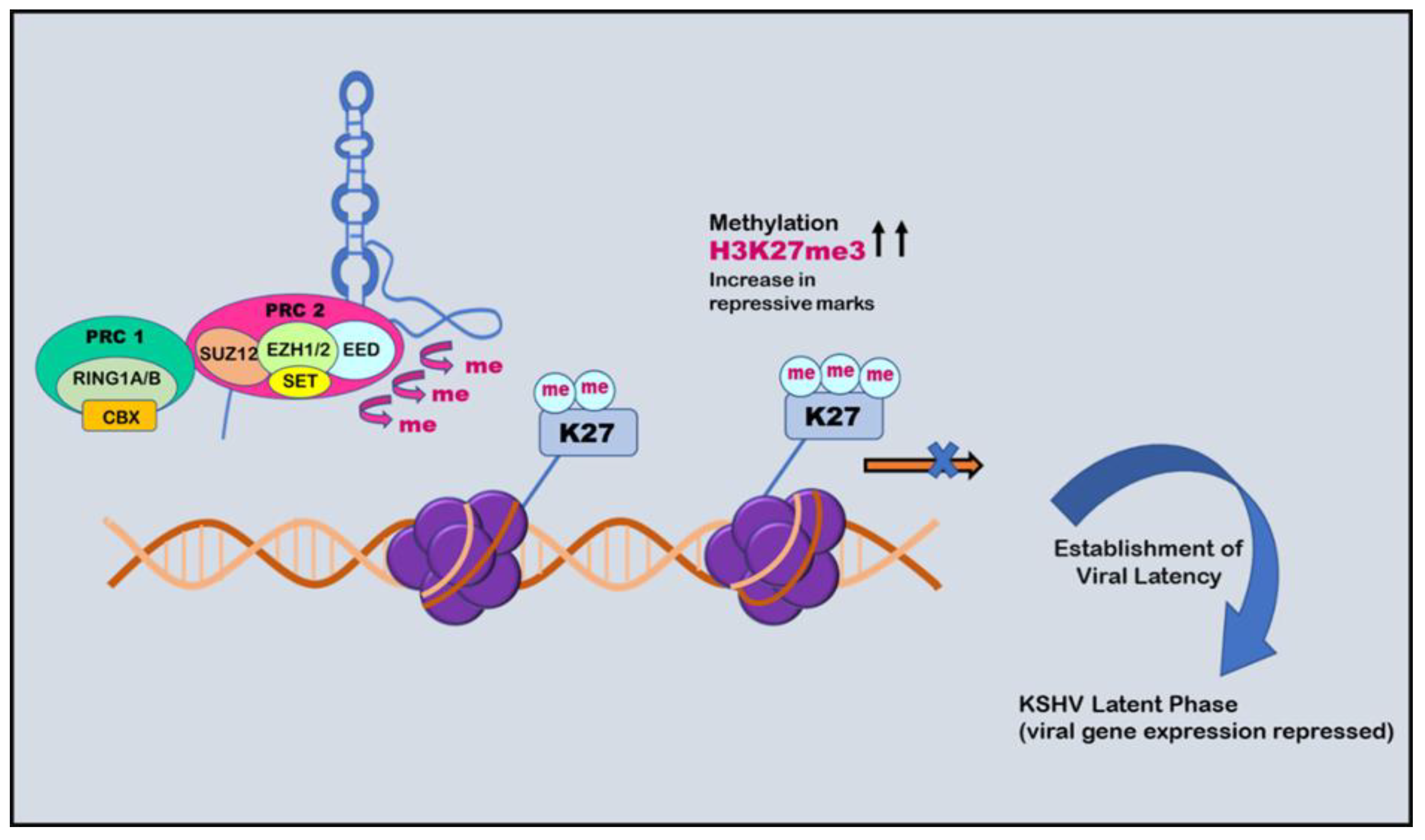
Chromatin isolation by RNA purification (ChiRP) assay to investigate the role of PAN RNA in regulating viral latency was employed by Rossetto et al . in 2013 and found PAN RNA was present at multiple sites on KSHV genome [131]. K-RTA promoter regions, where it binds and facilitates recruitment of cellular factors, including UTX and JMJD3, which are H3K27me3 demethylases along with H3K4me3 methyltransferase MLL2 [132]. This binding results in an increase in activation mark H3K4me3 on the K-RTA promoter region and a subsequent decrease in repressive mark H3K27me3 which leads to disruption of viral latency [132]. Association of PAN RNA with ORF59, the DNA polymerase processivity factor of KSHV, might also contribute to the functioning of PAN RNA in activation of gene expression during lytic cycle (Figure 4) [133]. However, contrary to this, Rossetto et al., by utilising ChiRP assays, reported PAN RNA's presence on KSHV genome and its association with PRC2 components SUZ12 and EZH2. This association resulted in an increase in repressive mark H3K27me3, leading to gene expression repression and latency establishment (Figure 5) [134]. Apart from this, additional viral factors that interact with PAN RNA were also examined and according to Campbell et al., one of them is LANA. PAN RNA dissociates LANA from viral genome and disrupts KSHV latency. Following this, Withers et al. in 2018 showed that KSHV PAN RNA, although nuclear, was not associated with chromatin. They utilized Capture Hybridisation analysis of RNA targets (CHART) and nuclear fractionation studies, and the results favored chromatin-independent PAN RNA activities. The contrasting features put up by the researchers suggest that PAN RNA's role is obscure in the viral life cycle [14,135].
Funding
This work was supported by the Department of Biotechnology, Govt. of India, under Ramalingaswami Fellowship program (to R.K.S.). The funders had no role in study design, data collection and analysis, decision to publish, or preparation of the manuscript.
Conflicts of Interest
We declare that no competing/conflict of interest exists.
References
- Cesarman, E.; Damania, B.; Krown, S.E.; Martin, J.; Bower, M.; Whitby, D. Kaposi sarcoma. Nat. Rev. Dis. Prim. 2019, 5, 1–21. [Google Scholar] [CrossRef] [PubMed]
- Mesri, E.A.; Cesarman, E.; Boshoff, C. Kaposi's sarcoma and its associated herpesvirus. Nat. Rev. Cancer 2010, 10, 707–719. [Google Scholar] [CrossRef]
- Polizzotto, M.N.; Uldrick, T.S.; Wyvill, K.M.; Aleman, K.; Marshall, V.; Wang, V.; Whitby, D.; Pittaluga, S.; Jaffe, E.S.; Millo, C.; et al. Clinical Features and Outcomes of Patients With Symptomatic Kaposi Sarcoma Herpesvirus (KSHV)-associated Inflammation: Prospective Characterization of KSHV Inflammatory Cytokine Syndrome (KICS). Clin. Infect. Dis. 2015, 62, 730–738. [Google Scholar] [CrossRef]
- Arias, C.; Weisburd, B.; Stern-Ginossar, N.; Mercier, A.; Madrid, A.S.; Bellare, P.; Holdorf, M.; Weissman, J.S.; Ganem, D. KSHV 2.0: A Comprehensive Annotation of the Kaposi's Sarcoma-Associated Herpesvirus Genome Using Next-Generation Sequencing Reveals Novel Genomic and Functional Features. PLOS Pathog. 2014, 10, e1003847. [Google Scholar] [CrossRef] [PubMed]
- Lopes, A.d.O.; Marinho, P.D.N.; Medeiros, L.D.d.S.; de Paula, V.S. Human Gammaherpesvirus 8 Oncogenes Associated with Kaposi’s Sarcoma. Int. J. Mol. Sci. 2022, 23, 7203. [Google Scholar] [CrossRef] [PubMed]
- Lagunoff, M.; Ganem, D. The Structure and Coding Organization of the Genomic Termini of Kaposi's Sarcoma-Associated Herpesvirus (Human Herpesvirus 8). Virology 1997, 236, 147–154. [Google Scholar] [CrossRef]
- Wen, K.W.; Damania, B. Kaposi sarcoma-associated herpesvirus (KSHV): Molecular biology and oncogenesis. Cancer Lett. 2010, 289, 140–150. [Google Scholar] [CrossRef]
- Juillard, F.; Tan, M.; Li, S.; Kaye, K.M. Kaposi’s Sarcoma Herpesvirus Genome Persistence. Front. Microbiol. 2016, 7, 1149. [Google Scholar] [CrossRef]
- Kumar, A.; Lyu, Y.; Yanagihashi, Y.; Chantarasrivong, C.; Majerciak, V.; Salemi, M.; Wang, K.-H.; Inagaki, T.; Chuang, F.; Davis, R.R.; et al. KSHV episome tethering sites on host chromosomes and regulation of latency-lytic switch by CHD4. Cell Rep. 2022, 39, 110788–110788. [Google Scholar] [CrossRef] [PubMed]
- Aneja, K.K.; Yuan, Y. Reactivation and Lytic Replication of Kaposi’s Sarcoma-Associated Herpesvirus: An Update. Front. Microbiol. 2017, 8, 613. [Google Scholar] [CrossRef]
- Broussard, G.; Damania, B. Regulation of KSHV Latency and Lytic Reactivation. Viruses 2020, 12, 1034. [Google Scholar] [CrossRef]
- Lucas, M.; Karrer, U.; Lucas, A.; Klenerman, P. Viral escape mechanisms - escapology taught by viruses. Int. J. Exp. Pathol. 2008, 82, 269–286. [Google Scholar] [CrossRef]
- Lee, H.-R.; Lee, S.; Chaudhary, P.M.; Gill, P.; Jung, J.U.; Hewitt, P.; Walijew, A.; Sakakibara, S.; Tosato, G.; E Ballestas, M.; et al. Immune evasion by Kaposi’s sarcoma-associated herpesvirus. Futur. Microbiol. 2010, 5, 1349–1365. [Google Scholar] [CrossRef]
- Campbell, M.; Yang, W.-S.; Yeh, W.W.; Kao, C.-H.; Chang, P.-C. Epigenetic Regulation of Kaposi’s Sarcoma-Associated Herpesvirus Latency. Front. Microbiol. 2020, 11, 850. [Google Scholar] [CrossRef]
- Sakakibara, S.; Ueda, K.; Nishimura, K.; Do, E.; Ohsaki, E.; Okuno, T.; Yamanishi, K. Accumulation of Heterochromatin Components on the Terminal Repeat Sequence of Kaposi's Sarcoma-Associated Herpesvirus Mediated by the Latency-Associated Nuclear Antigen. J. Virol. 2004, 78, 7299–7310. [Google Scholar] [CrossRef]
- Toth, Z.; Brulois, K.; Lee, H.-R.; Izumiya, Y.; Tepper, C.; Kung, H.-J.; Jung, J.U. Biphasic Euchromatin-to-Heterochromatin Transition on the KSHV Genome Following De Novo Infection. PLOS Pathog. 2013, 9, e1003813. [Google Scholar] [CrossRef] [PubMed]
- Purushothaman, P.; Uppal, T.; Verma, S.C. Molecular Biology of KSHV Lytic Reactivation. Viruses 2015, 7, 116–153. [Google Scholar] [CrossRef] [PubMed]
- Singh, R.K.; Bose, D.; Robertson, E.S. Epigenetic Reprogramming of Kaposi’s Sarcoma-Associated Herpesvirus during Hypoxic Reactivation. Cancers 2022, 14, 5396. [Google Scholar] [CrossRef]
- Traylen, C.M.; Patel, H.R.; Fondaw, W.; Mahatme, S.; Williams, J.F.; Walker, L.R.; Dyson, O.F.; Arce, S.; Akula, S.M. Virus reactivation: a panoramic view in human infections. Futur. Virol. 2011, 6, 451–463. [Google Scholar] [CrossRef]
- Watanabe, T.; Sugaya, M.; Atkins, A.M.; Aquilino, E.A.; Yang, A.; Borris, D.L.; Brady, J.; Blauvelt, A. Kaposi's Sarcoma-Associated Herpesvirus Latency-Associated Nuclear Antigen Prolongs the Life Span of Primary Human Umbilical Vein Endothelial Cells. J. Virol. 2003, 77, 6188–6196. [Google Scholar] [CrossRef] [PubMed]
- Uppal, T.; Banerjee, S.; Sun, Z.; Verma, S.C.; Robertson, E.S. KSHV LANA—The Master Regulator of KSHV Latency. Viruses 2014, 6, 4961–4998. [Google Scholar] [CrossRef] [PubMed]
- Verma, S.C.; Lan, K.; Robertson, E. Structure and Function of Latency-Associated Nuclear Antigen. Poxviruses 2007, 312, 101–136. [Google Scholar] [CrossRef]
- Jones, T.; da Silva, S.R.; Bedolla, R.; Ye, F.; Zhou, F.; Gao, S. Viral Cyclin promotes KSHV-induced cellular transformation and tumorigenesis by overriding contact inhibition. Cell Cycle 2014, 13, 845–858. [Google Scholar] [CrossRef]
- Ballon, G.; Chen, K.; Perez, R.; Tam, W.; Cesarman, E. Kaposi sarcoma herpesvirus (KSHV) vFLIP oncoprotein induces B cell transdifferentiation and tumorigenesis in mice. J. Clin. Investig. 2011, 121, 1141–1153. [Google Scholar] [CrossRef]
- Singh, R.K.; Pei, Y.; Bose, D.; Lamplugh, Z.L.; Sun, K.; Yuan, Y.; Lieberman, P.; You, J.; Robertson, E.S. KSHV-encoded vCyclin can modulate HIF1α levels to promote DNA replication in hypoxia. eLife 2021, 10. [Google Scholar] [CrossRef]
- Sun, S.C.; Cesarman, E. NF-kappaB as a target for oncogenic viruses. Curr Top Microbiol Immunol. 2011, 349, 197–244. [Google Scholar] [CrossRef]
- Ganem, D. KSHV and the pathogenesis of Kaposi sarcoma: listening to human biology and medicine. J. Clin. Investig. 2010, 120, 939–949. [Google Scholar] [CrossRef] [PubMed]
- Medina, M.V.; D´agostino, A.; Ma, Q.; Eroles, P.; Cavallin, L.; Chiozzini, C.; Sapochnik, D.; Cymeryng, C.; Hyjek, E.; Cesarman, E.; et al. KSHV G-protein coupled receptor vGPCR oncogenic signaling upregulation of Cyclooxygenase-2 expression mediates angiogenesis and tumorigenesis in Kaposi’s sarcoma. PLOS Pathog. 2020, 16, e1009006. [Google Scholar] [CrossRef] [PubMed]
- Sodhi A, Montaner S, Patel V, Zohar M, Bais C, Mesri EA, et al. The Kaposi's sarcoma-associated herpes virus G protein-coupled receptor up-regulates vascular endothelial growth factor expression and secretion through mitogen-activated protein kinase and p38 pathways acting on hypoxia-inducible factor 1alpha. Cancer Res. 2000;60(17):4873-80. [PubMed]
- Qin, J.; Li, W.; Gao, S.-J.; Lu, C. KSHV microRNAs: Tricks of the Devil. Trends Microbiol. 2017, 25, 648–661. [Google Scholar] [CrossRef] [PubMed]
- Grundhoff, A.; Sullivan, C.S. Virus-encoded microRNAs. Virology 2011, 411, 325–343. [Google Scholar] [CrossRef]
- Uppal, T.; Jha, H.C.; Verma, S.C.; Robertson, E.S. Chromatinization of the KSHV Genome During the KSHV Life Cycle. Cancers 2015, 7, 112–142. [Google Scholar] [CrossRef] [PubMed]
- Toth, Z.; Brulois, K.; Jung, J.U. The Chromatin Landscape of Kaposi’s Sarcoma-Associated Herpesvirus. Viruses 2013, 5, 1346–1373. [Google Scholar] [CrossRef] [PubMed]
- Guito, J.; Lukac, D.M. KSHV Reactivation and Novel Implications of Protein Isomerization on Lytic Switch Control. Viruses 2015, 7, 72–109. [Google Scholar] [CrossRef]
- Li, X.; Feng, J.; Sun, R. Oxidative Stress Induces Reactivation of Kaposi's Sarcoma-Associated Herpesvirus and Death of Primary Effusion Lymphoma Cells. J. Virol. 2011, 85, 715–724. [Google Scholar] [CrossRef]
- Davis, D.A.; Rinderknecht, A.S.; Zoeteweij, J.P.; Aoki, Y.; Read-Connole, E.L.; Tosato, G.; Blauvelt, A.; Yarchoan, R. Hypoxia induces lytic replication of Kaposi sarcoma–associated herpesvirus. Blood 2001, 97, 3244–3250. [Google Scholar] [CrossRef] [PubMed]
- Granato, M.; Montani, M.S.G.; Angiolillo, C.; D’orazi, G.; Faggioni, A.; Cirone, M. Cytotoxic Drugs Activate KSHV Lytic Cycle in Latently Infected PEL Cells by Inducing a Moderate ROS Increase Controlled by HSF1, NRF2 and p62/SQSTM1. Viruses 2018, 11, 8. [Google Scholar] [CrossRef]
- Diederichs, S.; Bartsch, L.; Berkmann, J.C.; Fröse, K.; Heitmann, J.; Hoppe, C.; Iggena, D.; Jazmati, D.; Karschnia, P.; Linsenmeier, M.; et al. The dark matter of the cancer genome: aberrations in regulatory elements, untranslated regions, splice sites, non-coding RNA and synonymous mutations. EMBO Mol. Med. 2016, 8, 442–457. [Google Scholar] [CrossRef] [PubMed]
- Baylin, S.B.; Jones, P.A. Epigenetic Determinants of Cancer. Cold Spring Harb. Perspect. Biol. 2016, 8, a019505. [Google Scholar] [CrossRef]
- Kanwal, R.; Gupta, S. Epigenetic modifications in cancer. Clin. Genet. 2011, 81, 303–311. [Google Scholar] [CrossRef]
- Chang, Y.; Moore, P.S.; Weiss, R.A.; Yuan, C.; S. , M.P.; A., W.R.; C, M.; S, A. Human oncogenic viruses: nature and discovery. Philos. Trans. R. Soc. B: Biol. Sci. 2017, 372, 20160264. [Google Scholar] [CrossRef] [PubMed]
- Mui, U.N.; Haley, C.T.; Tyring, S.K. Viral Oncology: Molecular Biology and Pathogenesis. J. Clin. Med. 2017, 6, 111. [Google Scholar] [CrossRef]
- Chakravarthi, B.V.S.K.; Nepal, S.; Varambally, S. Genomic and Epigenomic Alterations in Cancer. Am. J. Pathol. 2016, 186, 1724–1735. [Google Scholar] [CrossRef]
- McLaughlin-Drubin, M.E.; Munger, K. Viruses associated with human cancer. Biochim. et Biophys. Acta (BBA) - Mol. Basis Dis. 2008, 1782, 127–150. [Google Scholar] [CrossRef]
- Tempera, I.; Lieberman, P.M. Oncogenic Viruses as Entropic Drivers of Cancer Evolution. Front. A J. Women Stud. 2021, 1, 753366. [Google Scholar] [CrossRef] [PubMed]
- Barber, G.N. Host defense, viruses and apoptosis. Cell Death Differ. 2001, 8, 113–126. [Google Scholar] [CrossRef]
- Flanagan, J.M. Host epigenetic modifications by oncogenic viruses. Br. J. Cancer 2017, 96, 183–188. [Google Scholar] [CrossRef] [PubMed]
- Singh, R.K.; Lang, F.; Pei, Y.; Jha, H.C.; Robertson, E.S. Metabolic reprogramming of Kaposi’s sarcoma associated herpes virus infected B-cells in hypoxia. PLOS Pathog. 2018, 14, e1007062. [Google Scholar] [CrossRef]
- Kim, J.K.; Samaranayake, M.; Pradhan, S. Epigenetic mechanisms in mammals. Cell. Mol. Life Sci. 2008, 66, 596–612. [Google Scholar] [CrossRef]
- Handy, D.E.; Castro, R.; Loscalzo, J. Epigenetic modifications: Basic mechanisms and role in cardiovascular disease. Circulation 2011, 123, 2145–2156. [Google Scholar] [CrossRef]
- Bure, I.V.; Nemtsova, M.V.; Kuznetsova, E.B. Histone Modifications and Non-Coding RNAs: Mutual Epigenetic Regulation and Role in Pathogenesis. Int. J. Mol. Sci. 2022, 23, 5801. [Google Scholar] [CrossRef]
- Deaton, A.M.; Bird, A. CpG islands and the regulation of transcription. Genes Dev. 2011, 25, 1010–1022. [Google Scholar] [CrossRef] [PubMed]
- Mugal, C.F.; Arndt, P.F.; Holm, L.; Ellegren, H. Evolutionary Consequences of DNA Methylation on the GC Content in Vertebrate Genomes. G3 Genes|Genomes|Genetics 2015, 5, 441–447. [Google Scholar] [CrossRef] [PubMed]
- Gonzalez-Gomez, P.; Bello, M.J.; E Alonso, M.; Arjona, D.; Lomas, J.; de Campos, J.M.; Isla, A.; A Rey, J. CpG island methylation status and mutation analysis of the RB1 gene essential promoter region and protein-binding pocket domain in nervous system tumours. Br. J. Cancer 2003, 88, 109–114. [Google Scholar] [CrossRef]
- Herman, J.G.; Latif, F.; Weng, Y.; I Lerman, M.; Zbar, B.; Liu, S.; Samid, D.; Duan, D.S.; Gnarra, J.R.; Linehan, W.M. Silencing of the VHL tumor-suppressor gene by DNA methylation in renal carcinoma. Proc. Natl. Acad. Sci. 1994, 91, 9700–9704. [Google Scholar] [CrossRef] [PubMed]
- Esteller, M. CpG island hypermethylation and tumor suppressor genes: a booming present, a brighter future. Oncogene 2002, 21, 5427–5440. [Google Scholar] [CrossRef]
- Gama-Sosa, M.A.; Slagel, V.A.; Trewyn, R.W.; Oxenhandler, R.; Kuo, K.C.; Gehrke, C.W.; Ehrlich, M. The 5-methylcytosine content of DNA from human tumors. Nucleic Acids Res. 1983, 11, 6883–6894. [Google Scholar] [CrossRef]
- Feinberg, A.P.; Vogelstein, B. Hypomethylation distinguishes genes of some human cancers from their normal counterparts. Nature 1983, 301, 89–92. [Google Scholar] [CrossRef]
- Ehrlich, M.; Fang, C.; Zou, C.; Fu, Y.; Li, J.; Li, Y.; Ma, Y.; Zhao, S.; Li, C.; A Hore, T.; et al. DNA hypomethylation in cancer cells. Epigenomics 2009, 1, 239–259. [Google Scholar] [CrossRef]
- Hoffmann, M.J.; A Schulz, W. Causes and consequences of DNA hypomethylation in human cancer. Biochem. Cell Biol. 2005, 83, 296–321. [Google Scholar] [CrossRef]
- Kurkjian, C.; Kummar, S.; Murgo, A. DNA Methylation: Its Role in Cancer Development and Therapy. Curr. Probl. Cancer 2008, 32, 187–235. [Google Scholar] [CrossRef]
- Gómez-Díaz, E.; Jordà, M.; Peinado, M.A.; Rivero, A. Epigenetics of Host–Pathogen Interactions: The Road Ahead and the Road Behind. PLOS Pathog. 2012, 8, e1003007. [Google Scholar] [CrossRef]
- Ueda, K.; Ito, E.; Karayama, M.; Ohsaki, E.; Nakano, K.; Watanabe, S. KSHV-infected PEL cell lines exhibit a distinct gene expression profile. Biochem. Biophys. Res. Commun. 2010, 394, 482–487. [Google Scholar] [CrossRef] [PubMed]
- Journo, G.; Tushinsky, C.; Shterngas, A.; Avital, N.; Eran, Y.; Karpuj, M.V.; Frenkel-Morgenstern, M.; Shamay, M. Modulation of Cellular CpG DNA Methylation by Kaposi's Sarcoma-Associated Herpesvirus. J. Virol. 2018, 92. [Google Scholar] [CrossRef]
- Kuss-Duerkop, S.K.; Westrich, J.A.; Pyeon, D. DNA Tumor Virus Regulation of Host DNA Methylation and Its Implications for Immune Evasion and Oncogenesis. Viruses 2018, 10, 82. [Google Scholar] [CrossRef] [PubMed]
- E Ballestas, M.; Kaye, K.M.; Hewitt, P.; Walijew, A.; Sakakibara, S.; Tosato, G.; A Phillips, K.; Veenstra, D.; Van Bebber, S.; Sakowski, J.; et al. The latency-associated nuclear antigen, a multifunctional protein central to Kaposi’s sarcoma-associated herpesvirus latency. Futur. Microbiol. 2011, 6, 1399–1413. [Google Scholar] [CrossRef] [PubMed]
- Ye, F.; Lei, X.; Gao, S.-J. Mechanisms of Kaposi's Sarcoma-Associated Herpesvirus Latency and Reactivation. Adv. Virol. 2011, 2011, 193860. [Google Scholar] [CrossRef] [PubMed]
- Günther, T.; Grundhoff, A. The Epigenetic Landscape of Latent Kaposi Sarcoma-Associated Herpesvirus Genomes. PLOS Pathog. 2010, 6, e1000935. [Google Scholar] [CrossRef]
- Darst, R.P.; Haecker, I.; Pardo, C.E.; Renne, R.; Kladde, M.P. Epigenetic diversity of Kaposi’s sarcoma–associated herpesvirus. Nucleic Acids Res. 2013, 41, 2993–3009. [Google Scholar] [CrossRef] [PubMed]
- Journo, G.; Ahuja, A.; Dias-Polak, D.; Eran, Y.; Bergman, R.; Shamay, M. Global CpG DNA Methylation Footprint in Kaposi’s Sarcoma. Front. Cell. Infect. Microbiol. 2021, 11, 666143. [Google Scholar] [CrossRef]
- Luger, K.; Dechassa, M.L.; Tremethick, D.J. New insights into nucleosome and chromatin structure: an ordered state or a disordered affair? Nat. Rev. Mol. Cell Biol. 2012, 13, 436–447. [Google Scholar] [CrossRef]
- Mariño-Ramírez, L.; Kann, M.G.; A Shoemaker, B.; Landsman, D. Histone structure and nucleosome stability. Expert Rev. Proteom. 2005, 2, 719–729. [Google Scholar] [CrossRef] [PubMed]
- McGinty, R.K.; Tan, S. Nucleosome Structure and Function. Chem. Rev. 2014, 115, 2255–2273. [Google Scholar] [CrossRef] [PubMed]
- Ramazi, S.; Allahverdi, A.; Zahiri, J. Evaluation of post-translational modifications in histone proteins: A review on histone modification defects in developmental and neurological disorders. J. Biosci. 2020, 45, 1–29. [Google Scholar] [CrossRef]
- Bannister, A.J.; Kouzarides, T. Regulation of chromatin by histone modifications. Cell Res. 2011, 21, 381–395. [Google Scholar] [CrossRef]
- Zhu, Q.; Wani, A.A. Histone modifications: crucial elements for damage response and chromatin restoration. J. Cell. Physiol. 2010, 223, 283–288. [Google Scholar] [CrossRef]
- Kouzarides, T. Chromatin modifications and their function. Cell 2007, 128, 693–705. [Google Scholar] [CrossRef] [PubMed]
- Audia, J.E.; Campbell, R.M. Histone Modifications and Cancer. Cold Spring Harb. Perspect. Biol. 2016, 8, a019521. [Google Scholar] [CrossRef]
- Clayton, A.L.; Hazzalin, C.A.; Mahadevan, L.C. Enhanced Histone Acetylation and Transcription: A Dynamic Perspective. Mol. Cell 2006, 23, 289–296. [Google Scholar] [CrossRef]
- Luger, K.; Mäder, A.W.; Richmond, R.K.; Sargent, D.F.; Richmond, T.J. Crystal structure of the nucleosome core particle at 2.8 Å resolution. Nature 1997, 389, 251–260. [Google Scholar] [CrossRef]
- Petty, E.; Pillus, L. Balancing chromatin remodeling and histone modifications in transcription. Trends Genet. 2013, 29, 621–629. [Google Scholar] [CrossRef]
- Gujral, P.; Mahajan, V.; Lissaman, A.C.; Ponnampalam, A.P. Histone acetylation and the role of histone deacetylases in normal cyclic endometrium. Reprod. Biol. Endocrinol. 2020, 18, 1–11. [Google Scholar] [CrossRef] [PubMed]
- Sterner, D.E.; Berger, S.L. Acetylation of Histones and Transcription-Related Factors. Microbiol. Mol. Biol. Rev. 2000, 64, 435–459. [Google Scholar] [CrossRef]
- Xia, C.; Tao, Y.; Li, M.; Che, T.; Qu, J. Protein acetylation and deacetylation: An important regulatory modification in gene transcription (Review). Exp. Ther. Med. 2020, 20, 2923–2940. [Google Scholar] [CrossRef]
- Rossetto, D.; Avvakumov, N.; Côté, J. Histone phosphorylation: A chromatin modification involved in diverse nuclear events. Epigenetics 2012, 7, 1098–1108. [Google Scholar] [CrossRef] [PubMed]
- Smith, B.C.; Denu, J.M. Chemical mechanisms of histone lysine and arginine modifications. Biochim. et Biophys. Acta (BBA) - Gene Regul. Mech. 2009, 1789, 45–57. [Google Scholar] [CrossRef]
- Nottke, A.; ColaiácovoM. P.; Shi, Y. Developmental roles of the histone lysine demethylases. Development 2009, 136, 879–889. [Google Scholar] [CrossRef]
- Liang, Y.; Chang, J.; Lynch, S.J.; Lukac, D.M.; Ganem, D. The lytic switch protein of KSHV activates gene expression via functional interaction with RBP-Jκ (CSL), the target of the Notch signaling pathway. Genes Dev. 2002, 16, 1977–1989. [Google Scholar] [CrossRef] [PubMed]
- Papp, B.; Motlagh, N.; Smindak, R.J.; Jang, S.J.; Sharma, A.; Alonso, J.D.; Toth, Z. Genome-Wide Identification of Direct RTA Targets Reveals Key Host Factors for Kaposi’s Sarcoma-Associated Herpesvirus Lytic Reactivation. J. Virol. 2019, 93. [Google Scholar] [CrossRef] [PubMed]
- Günther, T.; Theiss, J.M.; Fischer, N.; Grundhoff, A. Investigation of Viral and Host Chromatin by ChIP-PCR or ChIP-Seq Analysis. Curr. Protoc. Microbiol. 2016, 40, 1E–10. [Google Scholar] [CrossRef]
- Toth, Z.; Maglinte, D.T.; Lee, S.H.; Lee, H.-R.; Wong, L.-Y.; Brulois, K.F.; Lee, S.; Buckley, J.D.; Laird, P.W.; Marquez, V.E.; et al. Epigenetic Analysis of KSHV Latent and Lytic Genomes. PLOS Pathog. 2010, 6, e1001013. [Google Scholar] [CrossRef]
- Dochnal, S.A.; Francois, A.K.; Cliffe, A.R. De Novo Polycomb Recruitment: Lessons from Latent Herpesviruses. Viruses 2021, 13, 1470. [Google Scholar] [CrossRef]
- Toth, Z.; Papp, B.; Brulois, K.; Choi, Y.J.; Gao, S.-J.; Jung, J.U. LANA-Mediated Recruitment of Host Polycomb Repressive Complexes onto the KSHV Genome during De Novo Infection. PLOS Pathog. 2016, 12, e1005878. [Google Scholar] [CrossRef]
- Toth, Z.; Smindak, R.J.; Papp, B. Inhibition of the lytic cycle of Kaposi's sarcoma-associated herpesvirus by cohesin factors following de novo infection. Virology 2017, 512, 25–33. [Google Scholar] [CrossRef]
- Naik, N.G.; Nguyen, T.H.; Roberts, L.; Fischer, L.T.; Glickman, K.; Golas, G.; Papp, B.; Toth, Z. Epigenetic factor siRNA screen during primary KSHV infection identifies novel host restriction factors for the lytic cycle of KSHV. PLOS Pathog. 2020, 16, e1008268. [Google Scholar] [CrossRef]
- Palazzo, A.F.; Gregory, T.R. The Case for Junk DNA. PLOS Genet. 2014, 10, e1004351. [Google Scholar] [CrossRef] [PubMed]
- Palazzo, A.F.; Lee, E.S. Non-coding RNA: what is functional and what is junk? Front. Genet. 2015, 6, 2. [Google Scholar] [CrossRef] [PubMed]
- Kaikkonen, M.U.; Lam, M.T.; Glass, C.K. Non-coding RNAs as regulators of gene expression and epigenetics. Cardiovasc. Res. 2011, 90, 430–440. [Google Scholar] [CrossRef] [PubMed]
- Zhang, P.; Wu, W.; Chen, Q.; Chen, M. Non-Coding RNAs and their Integrated Networks. J. Integr. Bioinform. 2019, 16. [Google Scholar] [CrossRef] [PubMed]
- Gomes, A.Q.; Nolasco, S.; Soares, H. Non-Coding RNAs: Multi-Tasking Molecules in the Cell. Int. J. Mol. Sci. 2013, 14, 16010–16039. [Google Scholar] [CrossRef] [PubMed]
- Bhaskaran, M.; Mohan, M. MicroRNAs. Veter- Pathol. 2013, 51, 759–774. [Google Scholar] [CrossRef]
- Ma, L.; Bajic, V.B.; Zhang, Z. On the classification of long non-coding RNAs. RNA Biol. 2013, 10, 924–933. [Google Scholar] [CrossRef]
- Peschansky, V.J.; Wahlestedt, C. Non-coding RNAs as direct and indirect modulators of epigenetic regulation. Epigenetics 2013, 9, 3–12. [Google Scholar] [CrossRef]
- Gaffar, F.Y.; Imani, J.; Karlovsky, P.; Koch, A.; Kogel, K.-H. Different Components of the RNA Interference Machinery Are Required for Conidiation, Ascosporogenesis, Virulence, Deoxynivalenol Production, and Fungal Inhibition by Exogenous Double-Stranded RNA in the Head Blight Pathogen Fusarium graminearum. Front. Microbiol. 2019, 10, 1662. [Google Scholar] [CrossRef]
- Agrawal, N.; Dasaradhi, P.V.N.; Mohmmed, A.; Malhotra, P.; Bhatnagar, R.K.; Mukherjee, S.K. RNA Interference: Biology, Mechanism, and Applications. Microbiol. Mol. Biol. Rev. 2003, 67, 657–685. [Google Scholar] [CrossRef] [PubMed]
- Ku, H.-Y.; Lin, H. PIWI proteins and their interactors in piRNA biogenesis, germline development and gene expression. Natl. Sci. Rev. 2014, 1, 205–218. [Google Scholar] [CrossRef] [PubMed]
- Ying, S.-Y.; Chang, D.C.; Lin, S.-L. The MicroRNA (miRNA): Overview of the RNA Genes that Modulate Gene Function. Mol. Biotechnol. 2007, 38, 257–268. [Google Scholar] [CrossRef]
- Ling, H.; Fabbri, M.; Calin, G.A. MicroRNAs and other non-coding RNAs as targets for anticancer drug development. Nat. Rev. Drug Discov. 2013, 12, 847–865. [Google Scholar] [CrossRef]
- Reuter, J.A.; Spacek, D.V.; Snyder, M.P. High-Throughput Sequencing Technologies. Mol. Cell 2015, 58, 586–597. [Google Scholar] [CrossRef]
- Mattick, J.S.; Amaral, P.P.; Carninci, P.; Carpenter, S.; Chang, H.Y.; Chen, L.-L.; Chen, R.; Dean, C.; Dinger, M.E.; Fitzgerald, K.A.; et al. Long non-coding RNAs: definitions, functions, challenges and recommendations. Nat. Rev. Mol. Cell Biol. 2023, 24, 430–447. [Google Scholar] [CrossRef] [PubMed]
- Kung, J.T.Y.; Colognori, D.; Lee, J.T. Long Noncoding RNAs: Past, Present, and Future. Genetics 2013, 193, 651–669. [Google Scholar] [CrossRef]
- Statello, L.; Guo, C.-J.; Chen, L.-L.; Huarte, M. Gene regulation by long non-coding RNAs and its biological functions. Nat. Rev. Mol. Cell Biol. 2021, 22, 96–118. [Google Scholar] [CrossRef] [PubMed]
- Zhang, X.; Wang, W.; Zhu, W.; Dong, J.; Cheng, Y.; Yin, Z.; Shen, F. Mechanisms and Functions of Long Non-Coding RNAs at Multiple Regulatory Levels. Int. J. Mol. Sci. 2019, 20, 5573. [Google Scholar] [CrossRef] [PubMed]
- Cai, X.; Lu, S.; Zhang, Z.; Gonzalez, C.M.; Damania, B.; Cullen, B.R. Kaposi's sarcoma-associated herpesvirus expresses an array of viral microRNAs in latently infected cells. Proc. Natl. Acad. Sci. 2005, 102, 5570–5575. [Google Scholar] [CrossRef] [PubMed]
- Grundhoff, A.; Sullivan, C.S.; Ganem, D. A combined computational and microarray-based approach identifies novel microRNAs encoded by human gamma-herpesviruses. RNA 2006, 12, 733–750. [Google Scholar] [CrossRef] [PubMed]
- Umbach, J.L.; Cullen, B.R. In-Depth Analysis of Kaposi's Sarcoma-Associated Herpesvirus MicroRNA Expression Provides Insights into the Mammalian MicroRNA-Processing Machinery. J. Virol. 2010, 84, 695–703. [Google Scholar] [CrossRef] [PubMed]
- Gottwein, E.; Corcoran, D.L.; Mukherjee, N.; Skalsky, R.L.; Hafner, M.; Nusbaum, J.D.; Shamulailatpam, P.; Love, C.L.; Dave, S.S.; Tuschl, T.; et al. Viral MicroRNA Targetome of KSHV-Infected Primary Effusion Lymphoma Cell Lines. Cell Host Microbe 2011, 10, 515–526. [Google Scholar] [CrossRef]
- Schifano, J.M.; Corcoran, K.; Kelkar, H.; Dittmer, D.P. Expression of the Antisense-to-Latency Transcript Long Noncoding RNA in Kaposi's Sarcoma-Associated Herpesvirus. J. Virol. 2017, 91. [Google Scholar] [CrossRef] [PubMed]
- Campbell, M.; Kung, H.-J.; Izumiya, Y. Long Non-Coding RNA and Epigenetic Gene Regulation of KSHV. Viruses 2014, 6, 4165–4177. [Google Scholar] [CrossRef]
- Campbell, M.; Izumiya, Y. PAN RNA: transcriptional exhaust from a viral engine. J. Biomed. Sci. 2020, 27, 1–10. [Google Scholar] [CrossRef]
- Cai, X.; Hagedorn, C.H.; Cullen, B.R. Human microRNAs are processed from capped, polyadenylated transcripts that can also function as mRNAs. RNA 2004, 10, 1957–1966. [Google Scholar] [CrossRef]
- MacFarlane, L.-A.; Murphy, P.R. MicroRNA: Biogenesis, Function and Role in Cancer. Curr. Genom. 2010, 11, 537–561. [Google Scholar] [CrossRef]
- Han, J.; Lee, Y.; Yeom, K.-H.; Kim, Y.-K.; Jin, H.; Kim, V.N. The Drosha-DGCR8 complex in primary microRNA processing. Genes Dev. 2004, 18, 3016–3027. [Google Scholar] [CrossRef] [PubMed]
- Creugny, A.; Fender, A.; Pfeffer, S. Regulation of primary microRNA processing. FEBS Lett. 2018, 592, 1980–1996. [Google Scholar] [CrossRef]
- Johanson, T.M.; Lew, A.M.; Chong, M.M.W. MicroRNA-independent roles of the RNase III enzymes Drosha and Dicer. Open Biol. 2013, 3, 130144. [Google Scholar] [CrossRef] [PubMed]
- Lee, D.; Shin, C. Emerging roles of DROSHA beyond primary microRNA processing. RNA Biol. 2017, 15, 186–193. [Google Scholar] [CrossRef] [PubMed]
- Park, J.-E.; Heo, I.; Tian, Y.; Simanshu, D.K.; Chang, H.; Jee, D.; Patel, D.J.; Kim, V.N. Dicer recognizes the 5′ end of RNA for efficient and accurate processing. Nature 2011, 475, 201–205. [Google Scholar] [CrossRef] [PubMed]
- Carthew, R.W.; Sontheimer, E.J. Origins and Mechanisms of miRNAs and siRNAs. Cell 2009, 136, 642–655. [Google Scholar] [CrossRef]
- O'Brien, J.; Hayder, H.; Zayed, Y.; Peng, C. Overview of MicroRNA Biogenesis, Mechanisms of Actions, and Circulation. Front. Endocrinol. 2018, 9, 402. [Google Scholar] [CrossRef]
- Iwakawa, H.-O.; Tomari, Y. Life of RISC: Formation, action, and degradation of RNA-induced silencing complex. Mol. Cell 2021, 82, 30–43. [Google Scholar] [CrossRef]
- Rossetto, C.C.; Pari, G.S. PAN’s Labyrinth: Molecular Biology of Kaposi’s Sarcoma-Associated Herpesvirus (KSHV) PAN RNA, a Multifunctional Long Noncoding RNA. Viruses 2014, 6, 4212–4226. [Google Scholar] [CrossRef]
- Rossetto, C.C.; Pari, G. KSHV PAN RNA Associates with Demethylases UTX and JMJD3 to Activate Lytic Replication through a Physical Interaction with the Virus Genome. PLOS Pathog. 2012, 8, e1002680. [Google Scholar] [CrossRef]
- Hiura, K.; Strahan, R.; Uppal, T.; Prince, B.; Rossetto, C.C.; Verma, S.C. KSHV ORF59 and PAN RNA Recruit Histone Demethylases to the Viral Chromatin during Lytic Reactivation. Viruses 2020, 12, 420. [Google Scholar] [CrossRef] [PubMed]
- Rossetto, C.C.; Tarrant-Elorza, M.; Verma, S.; Purushothaman, P.; Pari, G.S. Regulation of Viral and Cellular Gene Expression by Kaposi's Sarcoma-Associated Herpesvirus Polyadenylated Nuclear RNA. J. Virol. 2013, 87, 5540–5553. [Google Scholar] [CrossRef]
- Withers, J.B.; Li, E.S.; Vallery, T.K.; Yario, T.A.; Steitz, J.A. Two herpesviral noncoding PAN RNAs are functionally homologous but do not associate with common chromatin loci. PLOS Pathog. 2018, 14, e1007389. [Google Scholar] [CrossRef] [PubMed]
Figure 1.
DNA methylation is marked by Hypermethylation and Hypomethylation of CpG islands. Hypermethylation of promoters or enhancers leads to silencing of tumor suppressor gene whereas Hypomethylation leads to activation of proto-oncogenes.
Figure 1.
DNA methylation is marked by Hypermethylation and Hypomethylation of CpG islands. Hypermethylation of promoters or enhancers leads to silencing of tumor suppressor gene whereas Hypomethylation leads to activation of proto-oncogenes.
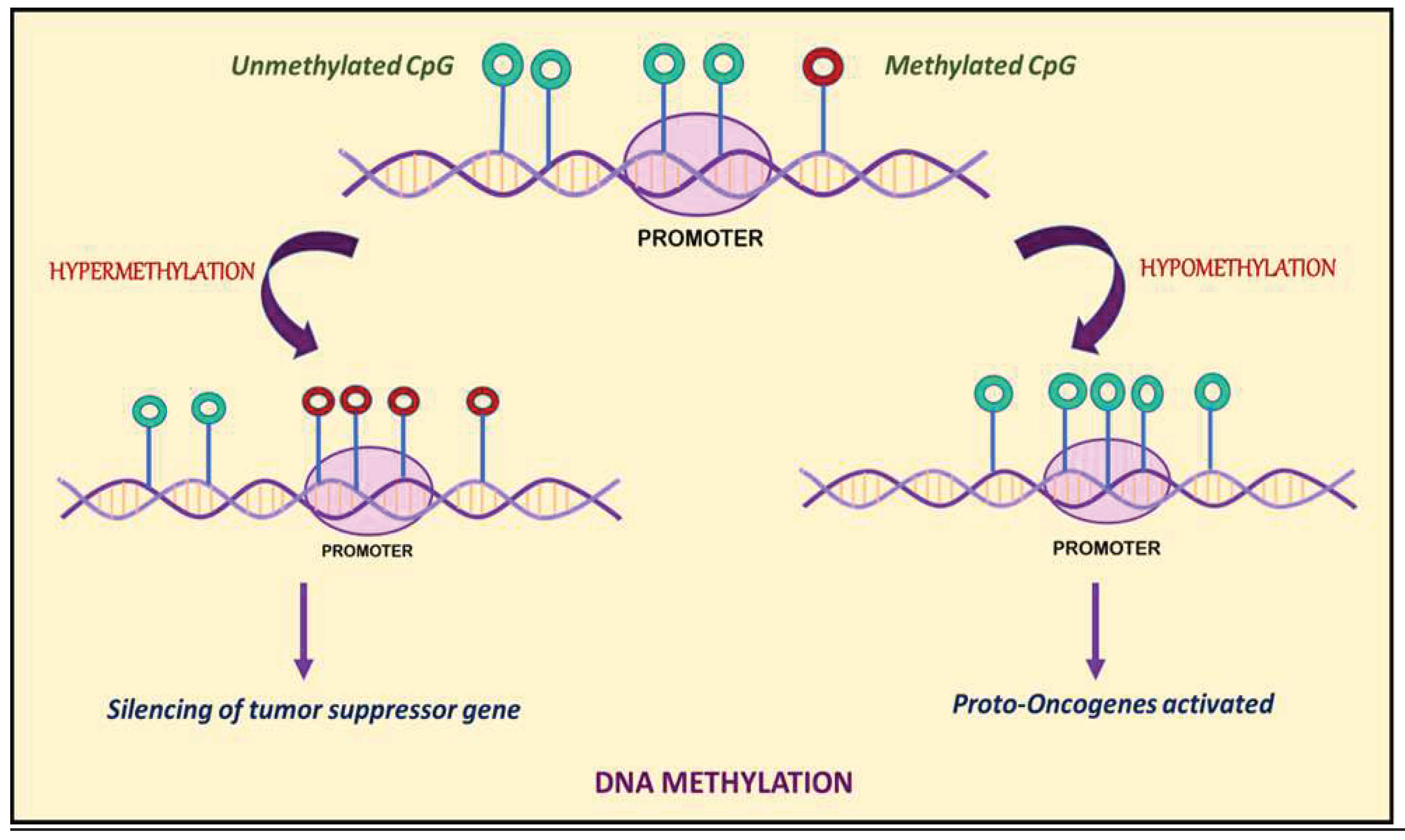
Figure 2.
Histone Modification in KSHV infection. On de novo infection initially, after 1dpi active marks deposited on viral episome. Post-infection (2-3 dpi), the number of active marks declined, followed by a subsequent increase in repressive marks through recruitment of Polycomb repressive complex 1 and 2.
Figure 2.
Histone Modification in KSHV infection. On de novo infection initially, after 1dpi active marks deposited on viral episome. Post-infection (2-3 dpi), the number of active marks declined, followed by a subsequent increase in repressive marks through recruitment of Polycomb repressive complex 1 and 2.
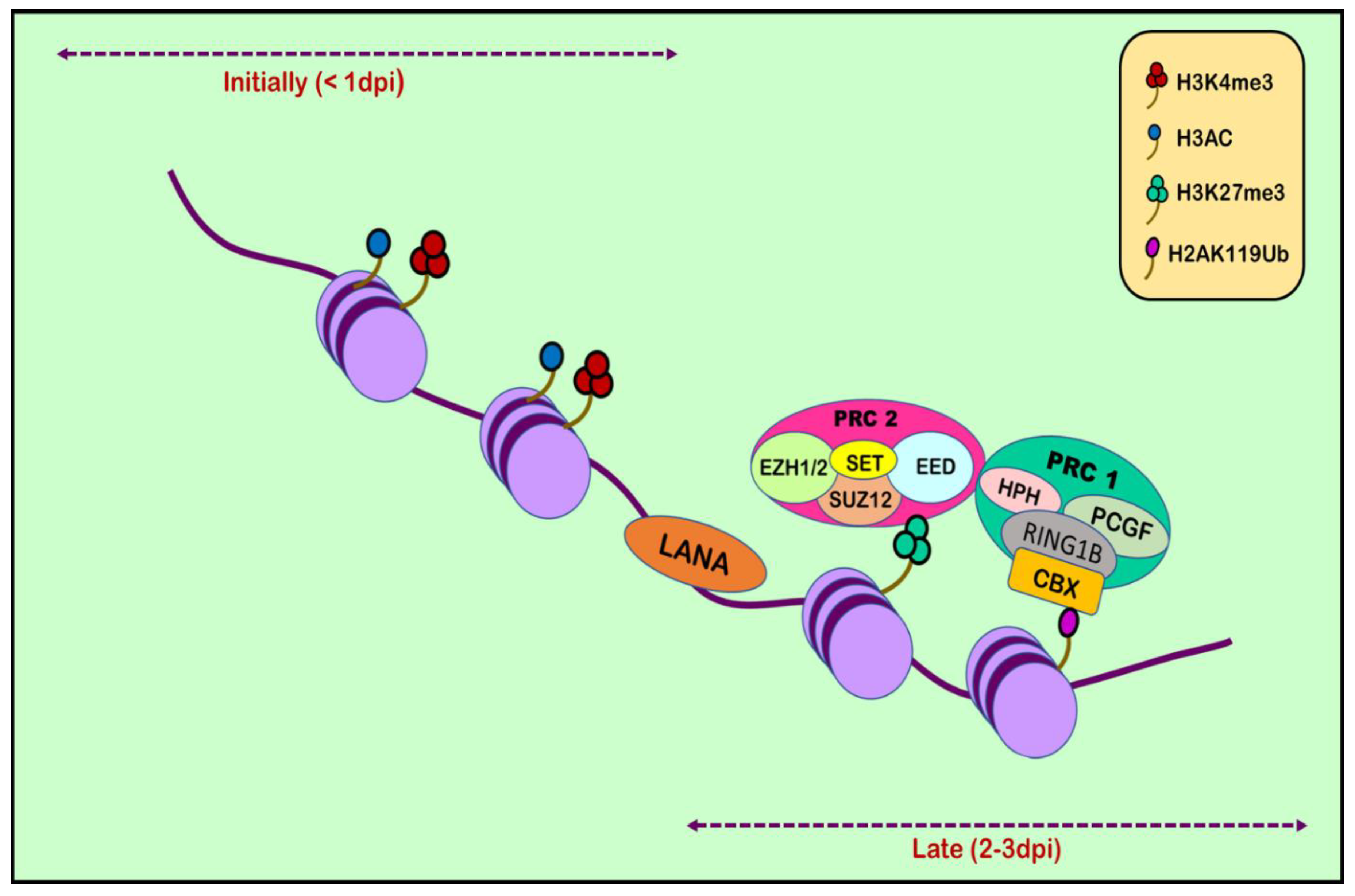
Figure 3.
Inhibition of gene expression by miRNA. miRNA undergoes transcription to form primary miRNA, spliced by DROSHA to form pre-miRNA, and exported from nucleus to cytoplasm by Exportin via nucleo-cytoplasmic transport. The pre-miRNA undergoes splicing by DICER in cytoplasm leading to formation of miRNA duplex followed by mature mi-RNA. This mature miRNA is incorporated by a multi-protein complex named RNA-induced silencing complex, which then acts as a template to interact with mRNA. This interaction can proceed in two ways: (a) translational repression occurs when miRNA-RISC interacts with mRNA of imperfect complementarity. (b) when miRNA-RISC finds a complementary mRNA, RNAse is activated, leading to mRNA degradation.
Figure 3.
Inhibition of gene expression by miRNA. miRNA undergoes transcription to form primary miRNA, spliced by DROSHA to form pre-miRNA, and exported from nucleus to cytoplasm by Exportin via nucleo-cytoplasmic transport. The pre-miRNA undergoes splicing by DICER in cytoplasm leading to formation of miRNA duplex followed by mature mi-RNA. This mature miRNA is incorporated by a multi-protein complex named RNA-induced silencing complex, which then acts as a template to interact with mRNA. This interaction can proceed in two ways: (a) translational repression occurs when miRNA-RISC interacts with mRNA of imperfect complementarity. (b) when miRNA-RISC finds a complementary mRNA, RNAse is activated, leading to mRNA degradation.
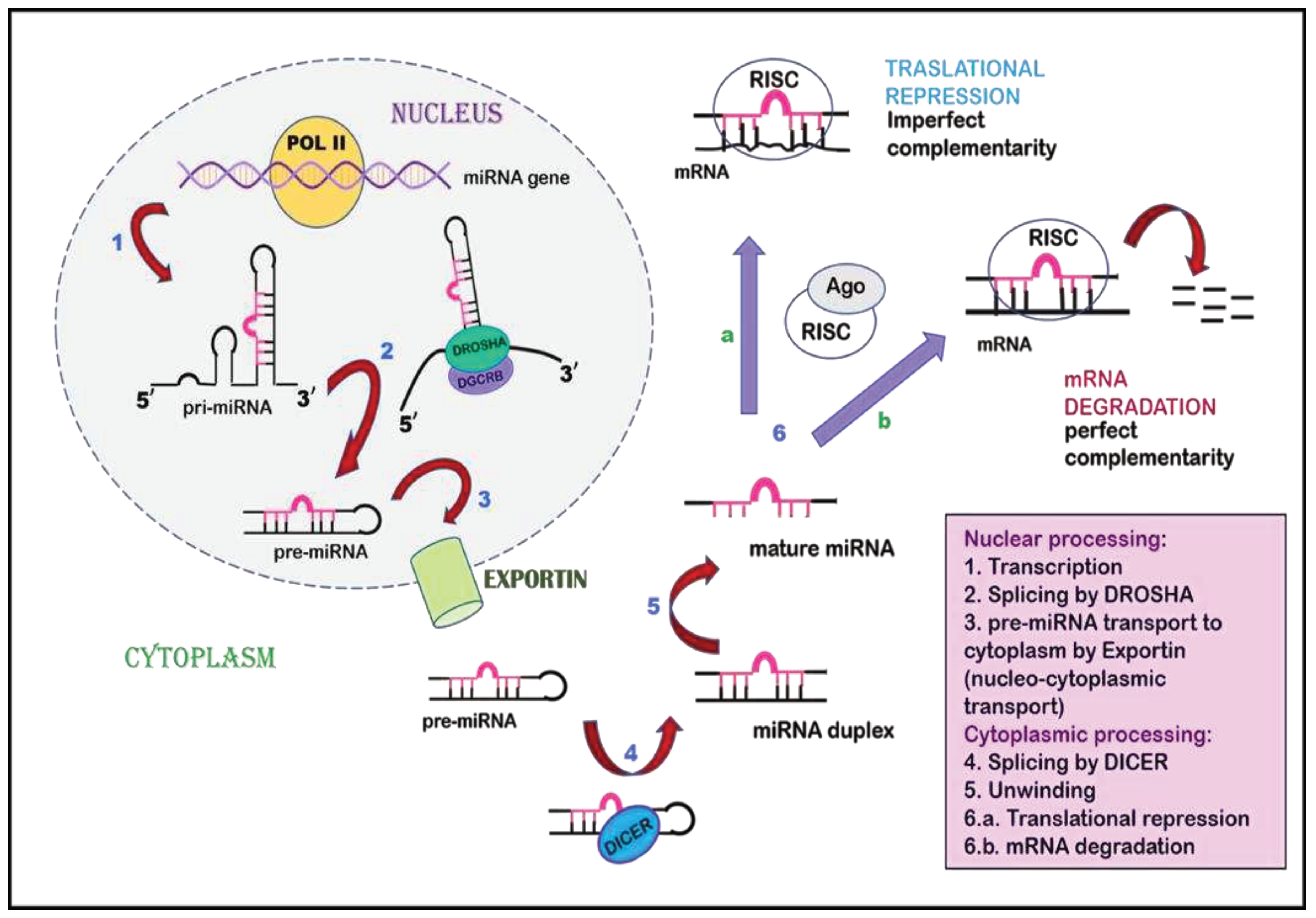
Figure 4.
Role of PAN RNA in regulating KSHV latency: Positive Epigenetic Regulation.PAN RNA is found at multiple sites on KSHV genome. It may bind and recruit cellular factors on regions like K-RTA promoter region and may also associate with ORF59. The cellular factors facilitate the decrease in H3K27me3 repressive marks and subsequent increase in H3K4me3 activation marks leading to disruption of Viral latency and initiation of KSHV lytic replication.
Figure 4.
Role of PAN RNA in regulating KSHV latency: Positive Epigenetic Regulation.PAN RNA is found at multiple sites on KSHV genome. It may bind and recruit cellular factors on regions like K-RTA promoter region and may also associate with ORF59. The cellular factors facilitate the decrease in H3K27me3 repressive marks and subsequent increase in H3K4me3 activation marks leading to disruption of Viral latency and initiation of KSHV lytic replication.
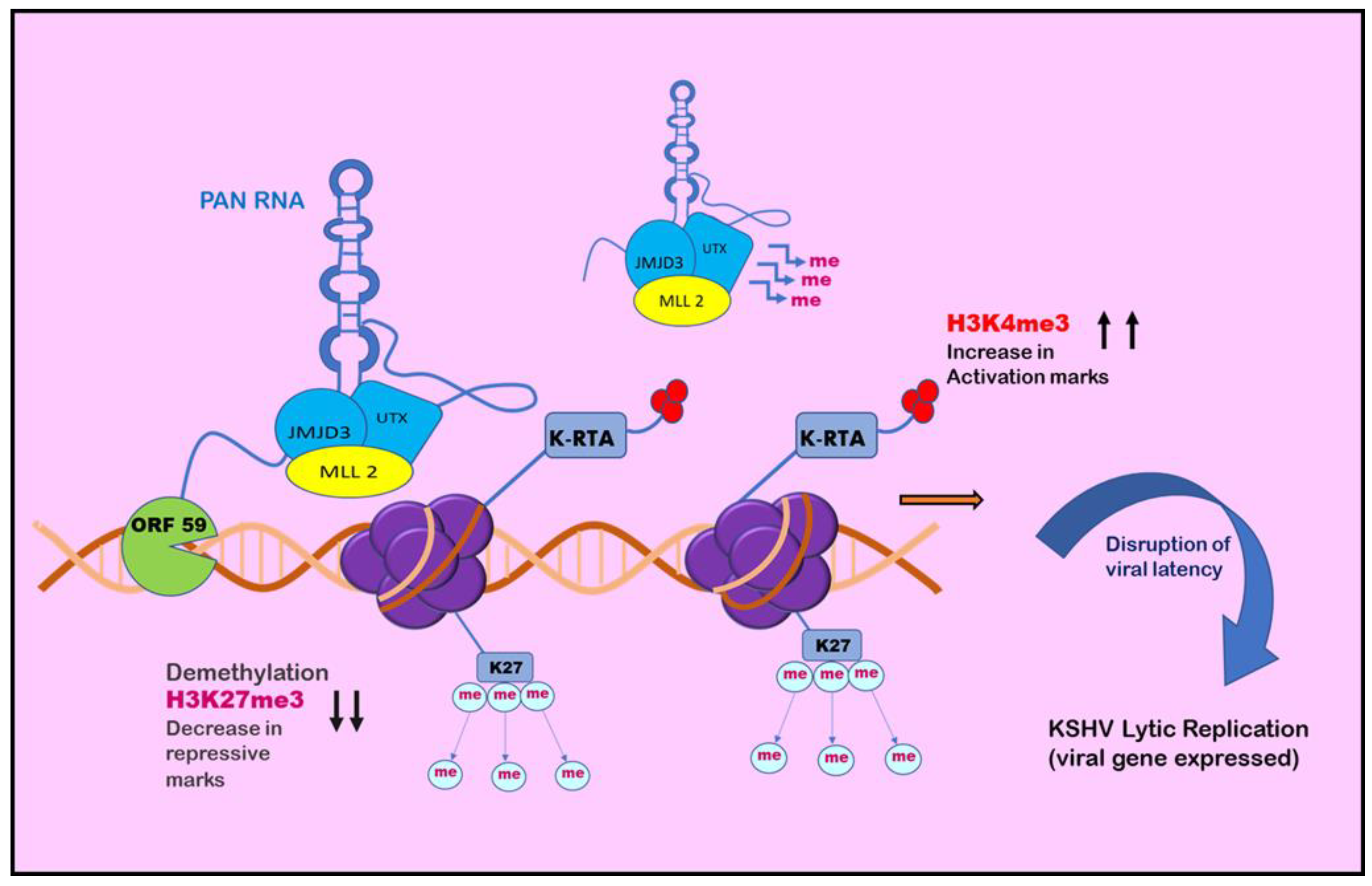
Figure 5.
Role of PAN RNA in regulating KSHV latency: Negative Epigenetic Regulation. PAN RNA can recruit Polycomb repressive complex 2 (PRC2) that increases H3K27me3 repressive marks and causes methylation. This phenomenon causes repression of expression of viral genes and establishment of viral latency.
Figure 5.
Role of PAN RNA in regulating KSHV latency: Negative Epigenetic Regulation. PAN RNA can recruit Polycomb repressive complex 2 (PRC2) that increases H3K27me3 repressive marks and causes methylation. This phenomenon causes repression of expression of viral genes and establishment of viral latency.
Disclaimer/Publisher’s Note: The statements, opinions and data contained in all publications are solely those of the individual author(s) and contributor(s) and not of MDPI and/or the editor(s). MDPI and/or the editor(s) disclaim responsibility for any injury to people or property resulting from any ideas, methods, instructions or products referred to in the content. |
© 2023 by the authors. Licensee MDPI, Basel, Switzerland. This article is an open access article distributed under the terms and conditions of the Creative Commons Attribution (CC BY) license (http://creativecommons.org/licenses/by/4.0/).
Copyright: This open access article is published under a Creative Commons CC BY 4.0 license, which permit the free download, distribution, and reuse, provided that the author and preprint are cited in any reuse.


