
Submitted:
16 June 2023
Posted:
16 June 2023
You are already at the latest version
Abstract
(1) Background: This article reviews the available scientific literature on drug-related problems and negative outcomes associated with medications identified by medication review with follow-up for end-stage renal disease and discussed with the physicians; (2) Methods: A systematic review was conducted of the scientific literature retrieved from the following databases: MEDLINE (via PubMed), Web of Science, SCOPUS, Cochrane Library: The Cochrane Central Register and Control Trials (CENTRAL) and Literatura Latinoamericana y del Caribe (LILACS), Medicina en Español (MEDES), and the SciELO bibliographic database (collection of scientific journals). The following terms were used as descriptors and searched in free text: "end-stage renal disease", "medication review", and "drug-related problems” and “negative outcomes associated with medication". The following limits were applied: "humans" and "adults (more than 18 years)”; (3) Results: A total of 59 references were recovered and after applying inclusion/exclusion criteria, 16 articles were selected. Of these selected articles, 15 provided information on drug-related problems and only 1 on negative outcomes associated with medications; (4) Conclusions: It can be concluded that drug-related problems and negative outcomes associated with medication affect patients with end-stage renal disease, mainly those receiving renal replacement therapy. More evidence is needed, especially on negative outcomes associated with medication.
Keywords:
End-stage renal disease
; medication review
; drug-related problems
; negative outcomes associated with medication.
1. Introduction
Chronic kidney disease (CKD) has been recognized as a worldwide public health problem [1,2,3] that requires early detection and treatment to delay progression. When the disease progresses to a stage where kidney failure occurs, patients require renal replacement therapies, either by dialysis or by transplantation [1,2,4,5,6].
Regional differences in the prevalence of CKD have been documented around the world [7]. The global estimated prevalence of CKD is 13.4% (11.7%–15.1%), and the number of patients with end-stage renal disease (ESRD) needing renal replacement therapy is estimated to be between 4.902 and 7.083 million [1].
Chronic kidney disease is defined as abnormalities of kidney structure or function, present for more than 3 months, with health implications. It has five stages according to the glomerular filtration rate (GFR). The end stage of chronic renal insufficiency is characterized by severe irreversible kidney damage (as measured by the level of proteinuria and the reduction of the GFR to less than 15 ml/min/1.73 m2). These patients generally require hemodialysis (HD), peritoneal dialysis (PD), or kidney transplantation (KT) [5].
Chronic kidney failure and ESRD are medically complex, require multiple medications to treat their various comorbidities [8], and generate high costs for the healthcare system. Patients with these conditions are at risk of drug-related problems [9,10,11,12,13,14,15,16,17,18,19,20,21,22,23,24,25,26,27,28,29,30,31] (DRPs) that may lead to increased morbidity, mortality, and costs [32].
A DRP is defined as an event or circumstance involving drug therapy that actually or potentially interferes with desired health outcomes [33,34].
A negative outcome associated with medication (NOM) is a result affecting the health of the patient that is or may be associated with the use of medications [34,35]. They can affect ESRD patients [36,37,38].
A medication review with follow-up (MRF) is a service in which the pharmacist evaluates the patient’s pharmacotherapy and intervenes in collaboration with the general practitioner and the patient themselves to ensure that the therapeutic goals are being achieved [39]. It is a structured evaluation of patient medications to optimize medication use and improve health outcomes, detect DRPs, and recommend interventions [40].
There are systematic reviews that focus on DRPs in stages 1–5 of CKD, but do not focus on ESRD and MRF [2,41,42]. There is a lack of studies on NOMs in ESRD identified by MRF [30,38].
For all the reasons mentioned above, it seems essential to carry out a review of DRPs and NOMs identified by MRF in patients with ESRD.
Therefore, the objective of this article was to identify, evaluate, and summarize the findings of all relevant individual studies on DRPs and NOMs identified by MRF for patients with ESRD, making the available evidence more accessible to decision-makers.
2. Materials and Methods
2.1. Design and Procedure
A cross-sectional descriptive study and critical analysis of systematically retrieved works.
By reviewing the scientific literature, a systematic critical analysis of the relevant articles and grey literature was performed.
2.2. Source of Data Collection
All data were obtained by direct online consultation of the scientific literature in the following databases: MEDLINE (via PubMed), Web of Science, SCOPUS, Cochrane Library: The Cochrane Central Register and Control Trials (CENTRAL) and Literatura Latinoamericana y del Caribe (LILACS), Medicina en Español (MEDES), and the SciELO bibliographic database (collection of scientific journals).
Journals, reference lists of the studies included, and previous scoping reviews related to DPRs and NOMs were searched to find additional studies. Other grey literature search engines, such as TESEO or DART for doctoral theses, were also used. The systematic review was supplemented by a comprehensive search of Internet resources to identify grey literature on the subject, including websites specific to the research area, such as the Spanish Society of Nephrology, the Spanish Society of Hospital Pharmacy, the Spanish Society of Clinical and Community Pharmacy, and the Pharmaceutical Care Foundation (Spain).
2.3. Information Search
The thesaurus developed by the U.S. National Library of Medicine was referred to for the recovery of articles. No subject qualifiers (subheadings) were used, nor were tag applications necessary.
The search strategy was planned around three domains:
- -
- Population: adults with ESRD aged 18 years or older.
- -
- Intervention: medication review.
- -
- Outcome: DRPs and NOMs.
For this, the search syntax was generated using the Boolean intersection of three equations: Equations (1)–(3).
Equation (1): “end-stage renal disease”
“kidney failure, chronic”[MeSH Terms] OR “kidney failure chronic”[Title/Abstract] OR “ESRD”[Title/Abstract] OR “end stage renal failure”[Title/Abstract] OR “end stage renal disease”[Title/Abstract] OR “chronic kidney failure”[Title/Abstract] OR “end-stage kidney disease”[Title/Abstract]
Equation (2): “medication review”
“medication review”[MeSH Terms] OR “medication review”[Title/Abstract] OR “medication reviews”[Title/Abstract] OR “review medication”[Title/Abstract] OR “reviews medication”[Title/Abstract]
Equation (3): “drug related problems and negative outcomes associated with medication”
“drug related problems”[Title/Abstract] OR “drug therapy problems”[Title/Abstract] OR “medicines related problems”[Title/Abstract] OR “medication therapy problems”[Title/Abstract] OR OR (“negative outcomes associated with medication”[Title/Abstract] OR “medication-related”[All Fields] AND “negative outcomes”[Title/Abstract]) OR “outcomes associated with medication”[Title/Abstract]
The following filters (limits) were used: “Humans”, “Adults (more than 18 years)”. These filters were subsequently adapted for the databases mentioned above.
The final search equation was developed to be used in the MEDLINE database, via PubMed. Subsequently, this strategy was adapted to the characteristics of each of the other databases consulted and was completed by examining the bibliographic references of the selected articles to reduce the number of articles unrecovered by the review.
The search was carried out from the first available database, according to the characteristics of each database, until 30 May 2023 (the time of the latest update).
Additionally, a search using a supplementary strategy was conducted to reduce the possibility of publication bias by searching the reference lists of relevant guidelines. Furthermore, experts in the domain were contacted by email to avoid missing relevant grey literature (materials and research produced by organizations outside the traditional commercial or academic publishing and distribution channels).
2.4. Study Selection
The final selection of papers was made according to the following inclusion criteria: observational studies, original articles published in peer-reviewed journals, and pertinent works with available complete text, which had to be written in English, Portuguese, or Spanish (Figure 1).
The following were the exclusion criteria:
- 1)
- Articles written in a language other than English, Portuguese, or Spanish.
- 2)
- Articles without an abstract.
- 3)
- Articles that do not mention any MRF in patients with ESRD.
- 4)
- Articles that do not mention DRPs or NOMs in patients with ESRD.
- 5)
- Articles mentioning patients under 18 years of age.
- 6)
- Articles without a methods section, review articles, or case reports.
A selection of references was performed first on the basis of title and abstract and then after full-text review. Articles were selected based on the availability of the complete text. Any articles that did not meet the inclusion criteria were excluded.
2.5. Data extraction
Two authors (A.P.C. and A.J.M.) assessed the suitability of the studies independently. For the selection process to be considered valid, it was established that the concordance between the two authors’ assessments (Kappa index) had to be higher than 0.60 (good or very good strength of concordance). Whenever this condition was met, any discrepancies were resolved by consulting the third author (M.A.C.H.), and subsequently by consensus among all the authors.
Double-entry tables were used to check the extracted data; this made it possible to detect errors and correct them by re-consulting the original documents.
2.6. Study Variables
Articles were collected according to study variables to systematize and facilitate comprehension of the results. The following data were considered:
- -
- Author, year and country: first author of the article selected, year of publication of the article, and location where the study took place.
- -
- Study design and duration: procedures, methods, and techniques through which the article was accepted for review. Duration of the study.
- -
- Population studied: adults with ESRD (age, ethnicity, sex).
- -
- Study aim: objective or aim of the study.
- -
- DRPs: Total, type, and frequency of DRPs.
- -
- NOMs: Total, type, and frequency of NOMs.
- -
- Pharmacist interventions: Total and relevant findings of pharmacist interventions related to DRPs and NOMs.
- -
- Types of medication most commonly associated with DRPs/NOMs.
2.7. Methodological Quality Assessment
The quality of the selected articles was assessed using the STROBE (Strengthening the Reporting of Observational Studies in Epidemiology) [45] checklist as a support. This contains 22 essential items that should be included in the reporting of observational studies.
A score of 1 or 0 was recorded for each item according to whether or not the article met that criterion. In the event that evaluation of a particular item was not necessary, no score was assigned for that item and it was recorded as not applicable (NA). When an item was composed of several points, these were evaluated independently, giving each the same weight, and the final result for that item was the average of these separate scores, so that in no case could the score exceed 1 point per item.
3. Results
With the search criteria described, 59 references were retrieved: 35 in the Web of Science (59.3%), 14 in Scopus (23.7%), and 10 in MEDLINE (19.9%). No references were retrieved from the Cochrane Library Literatura Latinoamericana y del Caribe (LILACS), Medicina en Español (MEDES), or the SciELO bibliographic database (collection of scientific journals).
Nine additional studies were identified from other sources (manual search and contribution by experts) [30,37,46,47,48,49,50,51,52].
After elimination of duplicates, application of the inclusion and exclusion criteria, consultation of the bibliographies of the selected articles, and consultation with experts (Figure 1), 16 documents with full text available were selected and retrieved [20,30,37,46,47,48,49,50,51,52,53,54,55,56,57,58]. One of them was a doctoral thesis [37] and was related to another selected study [30]. The characteristics of the studies are summarized in Table 1.
The concordance between the evaluators on the relevance of the articles was 100%.
3.1. Study Characteristics and Quality
The 16 studies identified were carried out in the U.S.A. (n = 6), Spain (n = 2), Singapore (n = 2), Indonesia (n = 2), and Saudi Arabia, Taiwan, New Zealand, and India, with 1 study each. Most of the articles reviewed were written in English, except 2 that were written in Spanish [30,37].
Of the papers reviewed, 12 were observational studies [46,47,48,49,50,51,52,53,55,56,57,58] (10 cross-sectional and 2 cohort [49,57]). In addition, 2 were clinical trials [20,54] (1 of which was controlled randomly selected [20]) and 2 had a quasi-experimental design [30,37]. The follow-up time ranged from 1 to 18 months.
The studies were carried out in various health care settings: hospitals [30,37,46,48,49,56], HD units [20,50,51,52,53,55,57,58] and KT units [47,54].
Articles included patients receiving kidney replacement therapy: from available data, 841 patients were treated with HD [20,30,37,46,48,49,50,51,52,53,55,56,57,58], 253 with KT [30,37,47,54] and 6 with PD [46].
The patients included in the studies were aged 49 to 66 years on average; 3 studies did not mention the age of the patients [47,48,50].
3.2. Medication Review with Follow-up Method
3.3. Drug-Related Problems
From the data available, a total of 10250 DRPs were identified and classified in 15 of the studies [20,30,46,47,48,49,50,51,52,53,54,55,56,57,58]. The DRPs were of the following kinds: wrongly administered drug [30,56], inappropriate dose (underdose or overdose), dosage schedule, and/or duration [20,46,47,48,49,50,51,52,54,55,56,57], duplication [30,46,51,56], non-adherence [30,55,56,58], drug interactions [30,46,48,51,53,56,58], ADRs [20,30,46,47,48,49,52,54,56,57,58], health problem not adequately treated [20,47,48,51,54,55,56,58], and others [46,47,48,49,50,51,52,54,56,58].
With regard to the DRP classification system, 7 studies [20,46,47,51,54,55,58] used Strand et al. [59], 1 study [57] used Medi-Span (Wolters Kluwer), 1 study [30] used the Granada Third Consensus [34], and 2 studies [49,52] used the Pharmaceutical Care Network Europe classification system [33]. However, 4 studies did not mention the DRP classification system used [48,50,53,56].
3.4. Negative Outcomes Associated with Medication
Only 1 study related to cinacalcet (mineral bone disease medication) identified 9 NOMs [37,38] in 34 ESRD patients, according to the Granada Third Consensus [34], as follows:
The patient suffers a health problem associated with a non-quantitative safety problem of the medication (n = 5), the patient suffers a health problem associated with quantitative ineffectiveness of the medication (n = 2), the patient suffers a health problem associated with a quantitative safety problem of the medication (n = 1), and the patient suffers a health problem as a consequence of not receiving the medicine that they need (n = 1) or an untreated health problem.
3.5. Pharmacist’s Interventions
3.6. Quality
The scores achieved in the quality assessment of the selected articles using the STROBE questionnaire ranged between 11 and 22 (Table 2).
Five of the journals involved, in which 8 of the articles reviewed were published [20,46,47,50,53,54,57,58], are listed in the Journal Citation Report (JCR). Three, containing 3 of the articles reviewed [30,49,51], are listed in the Emerging Source Citation Index (ESCI) of the JCR. However, four journals, containing 4 of the articles reviewed [48,52,55,56], are not listed in the JCR or the ESCI. One of the studies is a doctoral thesis [37].
4. Discussion
This systematic review provides relevant findings on DRPs and NOMs in ESRD. From the information analyzed, it can be seen that DRPs are a real health issue affecting people with CKD in its different stages, especially those undergoing renal replacement therapy, as their polymedication and multi-pathology characteristics [2,37,42] increase as CKD evolves, leading to NOMs (manifest or potential).
Although NOMs are important in clinical practice, few studies have been published [37], opening up a field of research in this area that can support clinical practice, including patient-centered models.
The main DRPs identified in ESRD were wrongly administered drugs [30,56], inappropriate dose (underdose or overdose), dosage schedule, and/or duration [20,46,47,48,49,50,51,52,54,55,56,57], duplication [30,46,51,56], nonadherence [30,55,56,58], drug-drug interactions [30,46,48,51,53,56,58], probably due to ADRs [20,30,46,47,48,49,52,54,56,57,58], health problems insufficiently treated [20,47,48,51,54,55,56,58], and others [46,47,48,49,50,51,52,54,56,58].
In terms of NOMs in ESRD [37,38], the following stand out: untreated health problems, quantitative and non-quantitative ineffectiveness, and quantitative and non-quantitative safety.
Immunosuppressants, medications for mineral bone disorder, and antianemic preparations are associated with DRPs. Pharmacists made interventions to resolve or prevent these.
This review has certain possible limitations. The design of the cross-sectional and cohort studies reviewed [49,57] provides an evidence level and a recommendation grade of IIb and III, according to the U.S. Agency for Health Research and Quality. However, the topic of study must be considered as DRPs and NOMs, and consequently it must be assumed that it is probably not possible to aspire to a high design and recommendation grade [8,42].
Although systematic reviews must be based on observational studies and designs that guarantee stronger scientific evidence, in this analysis all the studies that focused on the subject topic were included.
The real limitations of this review are those of each study: for example, the number of medications per patient, study duration, and acceptance rate for pharmacist interventions in Alshamrani et al. [51], and the small sample size and lack of control group in the case of Mirkov [55]. In addition, the retrospective analysis of observational data and descriptive statistics by Daifi et al [58]. potentially involves residual confounding bias, and Chen’s study [56] also has several limitations (a single-site study with a small sample size).
The methodological quality of the studies available in this systematic review and the heterogeneity of the studies evaluated limit the possibility of meta-analysis.
In addition to providing an opportunity to describe the NOMs and DRPs most frequently found in this population, this systematic review may raise awareness among healthcare professionals to help them identify such problems in clinical practice. Negative outcomes associated with medication, as well as their causes or DRPs, can be detected and resolved through physician-pharmacist collaboration, with the aid of MRF.
In addition, this review encourages further study of the clinical, human, and economic impact of NOMs on ESRD in clinical practice, the collaboration of nephrologists and pharmacists, and the methodological quality of research.
5. Conclusion
In conclusion, DRPs and NOMs affect ESRD patients, mainly those receiving renal replacement therapy. More evidence is needed, especially for NOMs.
Author Contributions
A.P.C., A.J.M., F.M.M., and M.Á.C.H.: conception or design, analysis and interpretation of data, drafting the article, final approval of the version to be published; M.P.B., F.M.M and M.Á.C.H.: revising the article, providing intellectual content of critical importance to the work described, final approval of the version to be published. All authors declare that they have no conflicts of interest.
Funding
Financial support received as a Doctoral Grant [reference number OAICE-143-2020] from the Office of International Affairs and External Cooperation, University of Costa Rica.
Institutional Review Board Statement
Not applicable.
Informed Consent Statement
Not applicable.
Acknowledgments
This publication is part of the doctoral thesis Seguimiento farmacoterapéutico de personas con enfermedad renal crónica estadio 5 en tratamiento renal sustitutivo: impacto clínico y humanístico [PhD in Pharmacy Program, University of Granada].
Conflicts of Interest
The authors declare no conflict of interest. The funders had no role in the design of the study; in the collection, analyses, or interpretation of data; in the writing of the manuscript; or in the decision to publish the results.
References
- Lv J, Zhang L. Prevalence and disease burden of chronic kidney disease. Adv Exp Med Biol. 2019;1165:3–15. [CrossRef]
- Salgado TM, Moles R, Benrimoj SI, Fernandez-Llimos F. Pharmacists’ interventions in the management of patients with chronic kidney disease: a systematic review. Nephrol Dial Transplant. 2012;27:276–92. [CrossRef]
- Levey AS, Atkins R, Coresh J et al. Chronic kidney disease as a global public health problem: approaches and initiatives – a position statement from Kidney Disease Improving Global Outcomes. Kidney Int. 2007;72:247–59. [CrossRef]
- de Boer IH, Caramori ML, Chan JCN et al. KDIGO 2020 clinical practice guideline for diabetes management in chronic kidney disease. Kidney Int. 2020;98:S1–S115. [CrossRef]
- International Society of Nephrology. KDIGO 2012 Clinical Practice Guideline for the Evaluation and Management of Chronic Kidney Disease. 2013.
- Levin A, Stevens PE, Bilous RW et al. Kidney disease: improving global outcomes (KDIGO) CKD work group. KDIGO 2012 clinical practice guideline for the evaluation and management of chronic kidney disease. Kidney Int Suppl. 2013;3:1–150.
- Brück K, Stel VS, Gambaro G et al. CKD prevalence varies across the European general population. J Am Soc Nephrol. 2016;27:2135–47. [CrossRef]
- Pai AB, Cardone KE, Manley HJ et al. Medication reconciliation and therapy management in dialysis-dependent patients: need for a systematic approach. Clin J Am Soc Nephrol. 2013;8:1988–99. [CrossRef]
- Manley HJ, Cannella CA, Bailie GR, St Peter WL. Medication-related problems in ambulatory hemodialysis patients: a pooled analysis. Am J Kidney Dis. 2005;46:669–80. [CrossRef]
- Alruqayb WS, Price MJ, Paudyal V, Cox AR. Drug-related problems in hospitalised patients with chronic kidney disease: a systematic review. Drug Saf. 2021;44:1041–58. [CrossRef]
- Adibe MO, Igboeli NU, Ukwe CV. Evaluation of drug therapy problems among renal patients receiving care in some tertiary hospitals in Nigeria. Trop J Pharm Res. 2017;16:697–704. [CrossRef]
- Arroyo Monterroza DA, Castro Bolivar JF. Seguimiento farmacoterapéutico en pacientes con insuficiencia renal crónica. Farm Hosp. 2017;41:137-49. [CrossRef]
- Ramadaniati HU, Anggriani Y, Wowor VM, Rianti A. Drug-related problems in chronic kidneys disease patients in an Indonesian hospital: do the problems really matter? Int J Pharm Pharm Sci. 2016;8:298–302. [CrossRef]
- Alkatheri A. Pharmacist effectiveness in reducing medication related problems in dialysis patients. Saudi Pharm J. 2004;12:54–59.
- Belaiche S, Romanet T, Bell R, Calop J, Allenet B, Zaoui P. Pharmaceutical care in chronic kidney disease: experience at Grenoble University Hospital from 2006 to 2010. J Nephrol. 2012;25:558–65. [CrossRef]
- Gheewala PA, Peterson GM, Curtain CM, Nishtala PS, Hannan PJ, Castelino RL. Impact of the pharmacist medication review services on drug-related problems and potentially inappropriate prescribing of renally cleared medications in residents of aged care facilities. Drugs Aging. 2014;31:825–35. [CrossRef]
- Manley HJ, Carroll CA. The clinical and economic impact of pharmaceutical care in end-stage renal disease patients. Semin Dial. 2002;15:45–49. [CrossRef]
- Via-Sosa MA, Lopes N, March M. Effectiveness of a drug dosing service provided by community pharmacists in polymedicated elderly patients with renal impairment—a comparative study. BMC Fam Pract. 2013;14:96. [CrossRef]
- Belaiche S, Romanet T, Allenet B, Calop J, Zaoui P. Identification of drug-related problems in ambulatory chronic kidney disease patients: a 6-month prospective study. J Nephrol. 2012;25:782–88. [CrossRef]
- Manley HJ, Drayer DK, Muther RS. Medication-related problem type and appearance rate in ambulatory hemodialysis patients. BMC Nephrol. 2003;4:10. [CrossRef]
- Manley HJ, McClaran ML, Overbay DK et al. Factors associated with medication-related problems in ambulatory hemodialysis patients. Am J Kidney Dis. 2003;41:386–93. [CrossRef]
- Njeri LW, Ogallo WO, Nyamu DG, Opanga SA, Birichi AR. Medication-related problems among adult chronic kidney disease patients in a sub-Saharan tertiary hospital. Int J Clin Pharm. 2018;40:1217–24. [CrossRef]
- Quintana-Bárcena P, Lord A, Lizotte A, Berbiche D, Lalonde L. Prevalence and management of drug-related problems in chronic kidney disease patients by severity level: a subanalysis of a cluster randomized controlled trial in community pharmacies. J Manag Care Spec Pharm. 2018;24:173–81. [CrossRef]
- Song Y, Jeong S, Han N et al. Effectiveness of clinical pharmacist service on drug-related problems and patient outcomes for hospitalized patients with chronic kidney disease: a randomized controlled trial. J Clin Med. 2021;10:1788. [CrossRef]
- Garedow AW, Mulisa Bobasa E, Desalegn Wolide A et al. Drug-related problems and associated factors among patients admitted with chronic kidney disease at Jimma University Medical Center, Jimma Zone, Jimma, Southwest Ethiopia: a hospital-based prospective observational study. Int J Nephrol. 2019;2019:1504371. [CrossRef]
- Arroyo Monterroza DA, Castro Bolivar JF. Pharmaceutical care practice in patients with chronic kidney disease. Farm Hosp. 2017;41:137–49. [CrossRef]
- Mason NA, Bakus JL. Strategies for reducing polypharmacy and other medication-related problems in chronic kidney disease. Semin Dial. 2010;23:55–61. [CrossRef]
- Kim AJ, Lee H, Shin E et al. Pharmacist-led collaborative medication management for the elderly with chronic kidney disease and polypharmacy. Int J Environ Res Public Health. 2021;18:4370. [CrossRef]
- Susilawati NM, Halimah E, Saidah S. Pharmacists’ strategies to detect, resolve, and prevent DRPs in CKD patients. Pharmacia. 2021;68:619–26. [CrossRef]
- Chemello C, Aguilera M, Calleja-Hernández MA, Faus MJ. Efecto del seguimiento farmacoterapéutico en pacientes con hiperparatiroidismo secundario tratados con cinacalcet. Farm Hosp. 2012;36:321–27. [CrossRef]
- Cardone KE, Parker WM. Medication management in dialysis: barriers and strategies. Semin Dial. 2020;33:449–56. [CrossRef]
- Manley HJ, Carroll CA. The clinical and economic impact of pharmaceutical care in end-stage renal disease patients. Semin Dial. 2002;15:45–49. [CrossRef]
- Pharmaceutical Care Network Europe (PCNE). The Definition of Drug-Related Problems. 2009.
- Faus-Dáder MJ, Amariles-Muñoz P, Martínez-Martínez F. Atención farmacéutica. Servicios farmacéuticos orientados al paciente. 2nd edn. Granada: Técnica Avicam, 2022.
- Varas-Doval R, Gastelurrutia MA, Benrimoj SI et al. Evaluating an implementation programme for medication review with follow-up in community pharmacy using a hybrid effectiveness study design: translating evidence into practice. BMJ Open. 2020;10:e036669. [CrossRef]
- Pai AB, Cardone KE, Manley HJ et al. Medication reconciliation and therapy management in dialysis-dependent patients: need for a systematic approach. Clin J Am Soc Nephrol. 2013;8:1988–99. [CrossRef]
- Chemello C. Atención farmacéutica al paciente con insuficiencia renal crónica: seguimiento farmacoterapéutico y farmacogenética. Granada: Universidad de Granada, 2011.
- Chemello C, Aguilera-Gómez M, Calleja-Hernández MA, Faus-Dader MJ. Implantación del método Dáder para el seguimiento farmacoterapéutico de pacientes tratados con cinecalcet. Ars Pharmaceutica Suppl.1. 2009;50:45–46.
- Varas-Doval R, Gastelurrutia MA, Benrimoj SI, García-Cárdenas V, Sáez-Benito L, Martinez-Martínez F. Clinical impact of a pharmacist-led medication review with follow up for aged polypharmacy patients: a cluster randomized controlled trial. Pharm Pract (Granada). 2020;18:2133. [CrossRef]
- Griese-Mammen N, Hersberger KE, Messerli M et al. PCNE definition of medication review: Reaching agreement. Int J Clin Pharm. 2018;40:1199–1208. [CrossRef]
- Alruqayb WS, Price MJ, Paudyal V, Cox AR. Drug-related problems in hospitalised patients with chronic kidney disease: a systematic review. Drug Saf. 2021;44:1041–58. [CrossRef]
- Cardone KE, Bacchus S, Assimon MM, Pai AB, Manley HJ. Medication-related problems in CKD. Adv Chronic Kidney Dis. 2010;17:404–12. [CrossRef]
- Page MJ, McKenzie JE, Bossuyt PM et al. The PRISMA 2020 statement: an updated guideline for reporting systematic reviews. BMJ. 2021;372:n71. [CrossRef]
- Pereira-Céspedes A, Jiménez-Morales A, Martínez-Martínez F, Calleja-Hernández MÁ. A systematic review of medication review with follow-up for end stage renal disease: drug related problems and negative outcomes associated with medication. PROSPERO 2022 CRD42022324729. 2022.
- Vandenbroucke JP, von Elm E, Altman DG et al. Strengthening the reporting of observational studies in epidemiology (STROBE): explanation and elaboration. Int J Surg. 2014;12:1500–24. [CrossRef]
- Possidente CJ, Bailie GR, Hood VL. Disruptions in drug therapy in long-term dialysis patients who require hospitalization. Am J Health Syst Pharm. 1999;56:1961–64. [CrossRef]
- Chisholm MA, Vollenweider LJ, Mulloy LL, Jagadeesan M, Wade WE, DiPiro JT. Direct patient care services provided by a pharmacist on a multidisciplinary renal transplant team. Am J Health Syst Pharm. 2000;57:1994–96. [CrossRef]
- George CR, Jacob D, Thomas P, Ravinandan AP, Srinivasan R, Thomas J. Study of drug related problems in ambulatory hemodialysis patients. IOSR J Pharm Biol Sci (IOSR-JPBS). 2017;12:32–36.
- Peri, Nasution A, Nasution AT. The role of pharmacists’ interventions in improving drug-related problems, blood pressure, and quality of life of patients with stage 5 chronic kidney disease. Pharmacia. 2022;69:175–80. [CrossRef]
- Chua PCP, Low CL, Lye WC. Drug-related problems in hemodialysis patients. Hemodial Int. 2003;7:73–104.
- Alshamrani M, Almalki A, Qureshi M, Yusuf O, Ismail S. Polypharmacy and medication-related problems in hemodialysis patients: a call for deprescribing. Pharmacy (Basel). 2018;6(3):76. [CrossRef]
- Lumbantobing R, Sauriasari R, Andrajati R. Role of pharmacists in reducing drug-related problems in hemodialysis outpatients. Asian J Pharm Clin Res. 2017;10:108-13. [CrossRef]
- Grabe DW, Low CL, Bailie GR, Eisele G. Evaluation of drug-related problems in an outpatient hemodialysis unit and the impact of a clinical pharmacist. Clin Nephrol. 1997;47:117–21.
- Wang HY, Chan ALF, Chen MT, Liao CH, Tian YF. Effects of pharmaceutical care intervention by clinical pharmacists in renal transplant clinics. Transplant Proc. 2008;40:2319–23. [CrossRef]
- Mirkov S. Implementation of a pharmacist medication review clinic for haemodialysis patients. N Z Med J. 2009;122:25–37.
- Chen LL. A preliminary review of the medication management service conducted by pharmacists in haemodialysis patients of Singapore General Hospital. Proc Singapore Healthcare. 2013;22:103–06.
- Manley HJ, Aweh G, Weiner DE et al. Multidisciplinary medication therapy management and hospital readmission in patients undergoing maintenance dialysis: a retrospective cohort study. Am J Kidney Dis. 2020;76:13–21. [CrossRef]
- Daifi C, Feldpausch B, Roa P-A, Yee J. Implementation of a clinical pharmacist in a hemodialysis facility: a quality improvement report. Kidney Med. 2021;3:241–47.e1. [CrossRef]
- Strand LM, Morley PC, Cipolle RJ, Ramsey R, Lamsam GD. Drug-related problems: their structure and function. DICP. 1990;24:1093–97. [CrossRef]
Figure 1.
Results of search strategy and identification of publications included in the review.
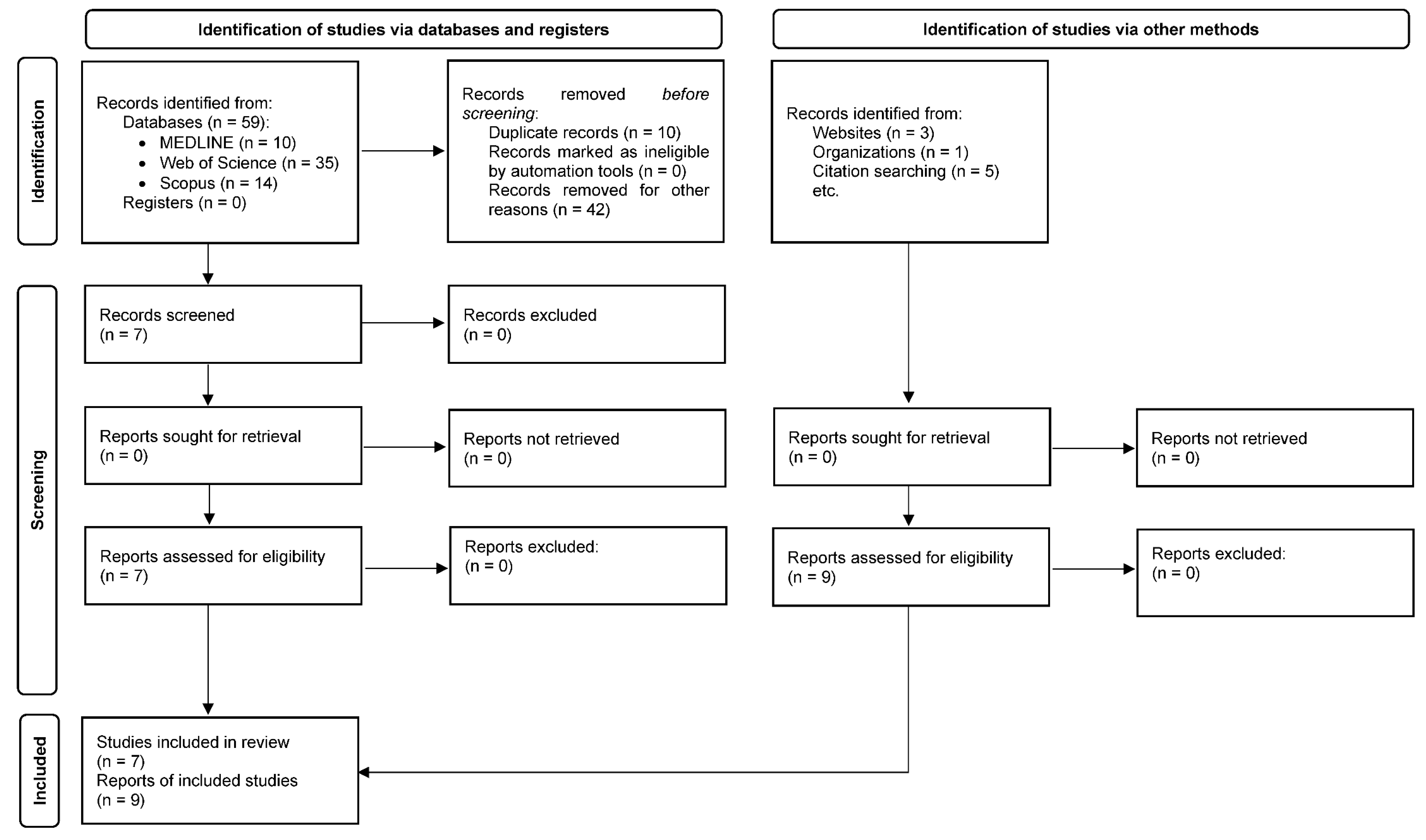

Table 1.
Characteristics of the studies included in the systematic review.
| Participants, demographics | DRPs | NOMs | Pharmacist interventions | |||||||||||
|---|---|---|---|---|---|---|---|---|---|---|---|---|---|---|
| First author, year, country, ref. no. | Study design (duration) | Study setting | N (at baseline) | Sex n (%) |
Age mean (SD) | Ethnicity (%) | Aim | Total (n) | Type and frequency (%) | Total (n) | Type and frequency. (%) | Total (n) | Relevant findings | Types of medication most commonly associated with DRPs/NOMs |
| Grabe 1997 U.S.A. [53] |
Observational retrospective (1 month) | Outpatient HD unit | 45 HD | 24 (53.3) male, 21 (46.7) female. | 52 (16) | Not reported | To identify DRPs in hemodialysis outpatients by performing medication reviews, make appropriate recommendations, determine the significance of any interventions, and estimate outcome in terms of any changes in number of medications/ patient or doses/day. | 126 | Drug interactions (27.5). | Not reported | Not reported | 102 | Most of the interventions were significant and possibly led to better therapeutic outcomes. | Not reported |
| Possidente 1999 U.S.A. [46] |
Observational prospective (1 month) | University teaching hospital | 37 (31 HD, 6 PD) | 19 (51.4)male, 18 (48.7) female | 65.9 (12.7) | Caucasian (97.3), Hispanic (2.7) | To evaluate the continuity of drug therapy and identify and resolve DRPs during the complete hospitalization process in patients receiving long-term dialysis. | 161 | Failure to receive a prescribed drug (41.0), problems related to drug dosage, either overdosage or underdosage (25.5), drug interactions (1.9), therapeutic duplication (2.5), and ADRs (1.2) | Not reported | Not reported | Not reported | Physicians agreed with 96% of the pharmacist recommendations, indicating strong support for pharmacist assistance in monitoring drug therapy. | Medications for mineral bone disorder, antianemic preparations, and anti-infectives |
| Chisholm 2000 U.S.A. [47] |
Observational prospective (18 months) | Ambulatory care RT | 201 KT | Not reported | Not reported | Not reported | To document the number and types of recommendations made by a pharmacist to the multidisciplinary renal transplant team, to determine the rate of acceptance of the recommendations, and to determine the potential impact of the recommendations on patient care. | 811 | Untreated indication (28.4), overdose (26.6), subtherapeutic dosage (18.1), medication use without an indication (10.1), ADRs (7.6), improper medication selection (7.0), failure to receive medication (2.1). | Not reported | Not reported | 844 | 96% (n = 811) were accepted. Nearly all (99%) of the accepted recommendations were judged to have a significant, very significant, or extremely significant potential impact on patient care | Immunosuppressants and cardiovascular medications |
| Manley 2003 U.S.A. [20] |
Clinical trial randomly selected controlled (10 months) | Non-profit outpatient dialysis unit | 133 HD (66 pharmaceutical care group; 79 usual care group). | 74 (55.6) male, 59 (44.4) female |
62.8 (15.0) | Black (78.2), Caucasian (17.3), other (4.5) | To determine the rate, number, type, severity, and appearance of DRPs, as identified through pharmaceutical care activities, in patients with ambulatory HD. | 354 | Medication dosing problems (33.5), ADRs (20.7), and an indication that was not currently being treated (13.5) | Not reported | Not reported | Not reported | Not reported | Cardiovascular medications (29.7%), endocrine medications (15.5%), and specific medications (medications for mineral bone disorder, antianemic preparations) (15%) |
| Chua 2003 Singapore [50] |
Observational prospective (3 months) | HD center | 31 HD | Not reported | Not reported | Not reported | To identify DRPs in HD patients, intervene, and resolve them. | 83 | Drug underdose (35) | Not reported | Not reported | 73 | 62% of the accepted recommendations were classified as significant | Not reported |
| Wang 2008 Taiwan [54] |
Clinical trial enrolled subjects uncontrolled (15 months) | RT clinics | 37 KT | 20 (54.1) female, 17 (45.9) male |
Not reported Age range 22-60 years | Not reported | To investigate the effects on treatment results of clinical pharmacists joining RT clinics to provide pharmaceutical care. | 55 | Medication selection (84.5), improper laboratory data (12.7), dosage adjustment (14.5), ADRs (10.9), untreated indications and medication use without an Indication (9.1), failure to receive medication (5.5), other (3.6) | Not reported | Not reported | 55 | 81.8% were classified as clinically significant. The mean acceptance rate of physicians for the types of recommendation was 96.0% | Cardiovascular medications (32.6%), immunosuppressants (23.9%), and antimetabolites (26.1%) |
| Mirkov 2009 New Zealand [55] |
Observational prospective (7 months) | HD units | 64 HD | 39 (60.9) female, 25 (39.1) male |
65 (Not reported) Age range 24–82 years |
Pacific People (46.9),New Zealand Maori (25),European (20.3),Other (7.8) | To implement the pharmacist medication review clinic and establish a sustainable clinical pharmacy service. | 278 | Non-adherence to medication regimen (33.0), medication requiring dose decrease (9.3), indication requiring new medication (8.6). | Not reported | Not reported | 493 | Not reported | Not reported |
| Chemello 2012 Spain [30,37] |
Quasi-experimental pre-post-intervention study (12 months) | Hospital | 34 (19 HD, 15 KT) | 17 (50.0) female, 17 (50.0) male |
51.5 (12.4) | Not reported | To assess the effect of pharmaceutical intervention on the identification of DRPs, improve desired clinical outcomes, and evaluate the effectiveness of cinacalcet in achieving clinical outcomes recommended by the Kidney Disease Outcomes Quality Initiative (KDOQI) Clinical Guidelines. | 29 | Non adherence (51.7), ADRs (13.8), Drug interaction (3.5), therapeutic duplication (3.5), wrong dosage administered (6.9) | 9 | Untreated health problem (11.1), quantitative ineffectiveness (22.2), non-quantitative safety problem (55.6), quantitative safety problem. (11.1) | 34 | After the intervention, 9 drug-related problems remained, which means that 68.9% of them were resolved (P < 0.001), reaching an adherence of 80%. Parathyroid hormone, calcium and calcium-phosphorus product serum levels decreased significantly after 3 months of treatment (P < 0.001, < 0.001 and 0.045 respectively), achieving the KDOQI Clinical Guideline recommendations. | Cinecalcet |
| Chen 2013 Singapore [56] |
Observational prospective (5 months) | General hospital | 30 HD | 15 (50.0) female, 15 (50.0) male |
62.3 (10.0) | Chinese (73.3) | To evaluate the prevalence of DRPs identified and the types of interventions made by pharmacists. | 94 | Drugs with no indication (2,1), therapeutic duplication (8.5), untreated indication (14.9), improper selection of drugs (5.3), overdose of drugs (9.6), underdose of drugs (1.1), drug-drug interactions (1.1), drug-food interactions (1.1), non-adherence (41.5), ADRs (11.7), administration issues (3.2). | Not reported | Not reported | 54 | Almost half involved suggestions to modify dosing regimens (51.9%), followed by suggestions to add new drugs (16.7%) and to increase the doses, discontinue drugs (13.0%). Total DRPs solved (%): 63 (67.0%) | Not reported |
| George 2017 India [48] |
Observational prospective (6 months) | Hospital | 79 HD | 56 (70.9) male, 23 (29.1) female |
Not reported | Not reported | To determine DRPs in HD patients. | 301 | Drug interactions (86.4), ADRs (5.0), indication without drug therapy (4.0), improper drug selection (1.3), overdose (3.0), failure to receive drug (0.3). | Not reported | Not reported | Not reported | Not reported | Not reported |
| Lumbantobing 2017 Indonesia [52] |
Observational prospective (5 months) | HD unit | 86 HD | 45 (52.3) male, 41 (47.6) female |
Not reported Age range 41-60 years |
Not reported | To identify DRPs and assess the effect of pharmacist intervention on the number and types of DRPs in HD outpatients | 337 | Failed therapy (18.7), suboptimal therapeutic effects (52.2), indications of non-administration of drugs (2.4), non-allergic adverse drug effects (26.7). | Not reported | Not reported | 277 | Not reported | Calcium carbonate, ferrous sulfate, erythropoiesis-stimulating agents, and omeprazole |
| Alshamrani 2018 Saudi Arabia [51] |
Observational prospective cross-sectional (2 months) |
Outpatient HD unit | 83 HD | 42 (51) males, 41 (49.4) female |
63 (not reported) | Not reported | To determine the prevalence of polypharmacy and DRPs in HD patients | 280 | Medication use without indication (36.0), subtherapeutic dosing (23.0), overdosing (15.0), deprescribing of medication (41.0), medication use without indication (89.0), duplicate therapy (11.0), drug interaction (n = 184) | Not reported | Not reported | 280 | Not reported | Medications for gastrointestinal or acid-related disorders, cardiovascular medications, and antidepressants |
| Manley 2020 U.S.A. [57] |
Retrospective cohort study (12 months) |
Dialysis clinics |
726 ESRDHD (89%) | 334 (46) female, 392 (54) male |
64 (15) | White (46), black (43), other (4), unknown (8) | Not reported | 5466 potential | Medication dosing issues (31.0), comprising “dose too high” (22.0) and “dose too low” (9.0), actual or potential ADRs (29.0), unnecessary drug therapy (17.0). | Not reported | Not reported | Not reported | Not reported | Cardiovascular medications, medications for gastrointestinal or acid-related disorders, analgesics and endocrine and metabolic medications. |
| Daifi 2021 U.S.A [58] |
Retrospective (14 months) | HD facilities | 157 HD | 81 (52) female, 76 (48) male |
63.0 (not reported)Age range: 26–92 years | African American (79), White (4), Hispanic (6), other (11) | To evaluate the impact of a clinical pharmacist in an HD facility by assessing the efficacy of medication reconciliation in HD patients and evaluating the potential impact on the health system through estimated cost avoidance. | 1407 | Non-adherence (31.0), ADRs (2.6), dose too high (4.6), dose too low (13.1), needs additional drug therapy (21.5), unnecessary drug therapy (8.8), wrong dose (4.5), additional/ other DRP (0.6), drug-drug interaction (1.1), cost, accessibility, refills (11.9). | Not reported | Not reported | 964 | Not reported | Antihypertensives, vitamin D analogues and calcimimetics. |
| Peri 2022 Indonesia [49] |
Analytical cohort study (6 months) | Hospital | 83 HD | 54 (65) male, 29 (35) female |
48.91 (not reported) Age range 11–61 years |
Not reported | To analyze the impacts of pharmacy interventions on DRPs, blood pressure, and quality of life in HD | 470 | Sub-optimal drug effects (50.85), untreated symptoms (22.1), no drug effect (8.9), ADRs (17.7) | Not reported | Not reported | 470 | Not reported | Not reported |
RT: replacement therapy, HD: hemodialysis, PD: peritoneal dialysis, KT: kidney transplantation, DRP: drug-related problem, NOM: negative outcome associated with medication, ADR: adverse drug reaction, n: number
Table 2.
Quality of the methodology of the studies according to the 22-point STROBE guide assessment.
Table 2.
Quality of the methodology of the studies according to the 22-point STROBE guide assessment.
| Questionnaire elements | |||||||||||||||||||||||||
|---|---|---|---|---|---|---|---|---|---|---|---|---|---|---|---|---|---|---|---|---|---|---|---|---|---|
| First author, year, country, ref. no. | 1 | 2 | 3 | 4 | 5 | 6 | 7 | 8 | 9 | 10 | 11 | 12 | 13 | 14 | 15 | 16 | 17 | 18 | 19 | 20 | 21 | 22 | Total | % | |
| Grabe 1997 U.S.A. [53] |
1 | 1 | 1 | 1 | 1 | 1 | 1 | 1 | 1 | 1 | 1 | 1 | 1 | 1 | 1 | 1 | 1 | 1 | 1 | 1 | 1 | 0 | 21 | 95.45 | |
| Possidente 1999 U.S.A. [46] |
1 | 1 | 1 | 1 | 1 | 1 | 1 | 1 | 1 | 1 | 1 | 1 | 1 | 1 | 1 | 1 | 1 | 1 | 0 | 1 | 0 | 0 | 19 | 83.36 | |
| Chisholm 2000 U.S.A. [47] |
1 | 1 | 1 | 1 | 1 | 1 | 1 | 1 | 0 | 1 | 1 | 0 | 1 | 0 | 1 | 1 | 1 | 1 | 0 | 1 | 0 | 0 | 16 | 72.73 | |
| Manley 2003 U.S.A. [20] |
NA | NA | NA | NA | NA | NA | NA | NA | NA | NA | NA | NA | NA | NA | NA | NA | NA | NA | NA | NA | NA | NA | NA | NA | |
| Chua 2003 Singapore [50] |
1 | 1 | 1 | 1 | 1 | 1 | 1 | 1 | 0 | 1 | 0 | 0 | 1 | 0 | 0 | 1 | 0 | 0 | 0 | 0 | 0 | 0 | 11 | 50 | |
| Wang 2008 Taiwan [54] |
NA | NA | NA | NA | NA | NA | NA | NA | NA | NA | NA | NA | NA | NA | NA | NA | NA | NA | NA | NA | NA | NA | NA | NA | |
| Mirkov 2009 New Zealand [55] |
1 | 1 | 1 | 1 | 1 | 1 | 1 | 1 | 0 | 1 | 1 | 1 | 1 | 1 | 1 | 1 | 1 | 1 | 1 | 1 | 1 | 0 | 20 | 90.91 | |
| Chemello 2012 Spain [30,37] |
1 | 1 | 1 | 1 | 1 | 1 | 1 | 1 | 1 | 1 | 1 | 1 | 1 | 1 | 1 | 1 | 1 | 1 | 1 | 1 | 1 | 1 | 22 | 100 | |
| Chen 2013 Singapore [56] |
1 | 1 | 1 | 1 | 1 | 1 | 1 | 1 | 0 | 1 | 1 | 0 | 1 | 1 | 1 | 1 | 1 | 1 | 1 | 1 | 0 | 0 | 18 | 81.82 | |
| George 2017 India [48] |
1 | 1 | 1 | 1 | 1 | 1 | 1 | 1 | 0 | 1 | 1 | 0 | 1 | 0 | 1 | 1 | 1 | 1 | 0 | 1 | 0 | 0 | 16 | 72.73 | |
| Lumbantobing 2017 Indonesia [52] |
1 | 1 | 1 | 1 | 1 | 1 | 1 | 1 | 0 | 1 | 1 | 0 | 1 | 1 | 1 | 1 | 1 | 1 | 0 | 1 | 0 | 0 | 17 | 77.27 | |
| Alshamrani 2018 Saudi Arabia [51] |
1 | 1 | 1 | 1 | 1 | 1 | 1 | 1 | 0 | 1 | 1 | 1 | 1 | 1 | 1 | 1 | 1 | 1 | 1 | 1 | 1 | 1 | 21 | 95.45 | |
| Manley 2020 U.S.A. [57] |
1 | 1 | 1 | 1 | 1 | 1 | 1 | 1 | 1 | 1 | 1 | 1 | 1 | 1 | 1 | 1 | 1 | 1 | 1 | 1 | 1 | 1 | 22 | 100 | |
| Daifi 2021 U.S.A [58] |
1 | 1 | 1 | 1 | 1 | 1 | 1 | 1 | 1 | 1 | 1 | 1 | 1 | 1 | 1 | 1 | 1 | 1 | 1 | 1 | 1 | 22 | 100 | ||
| Peri 2022 Indonesia [49] |
1 | 1 | 1 | 1 | 1 | 1 | 1 | 1 | 0 | 1 | 1 | 0 | 1 | 1 | 1 | 1 | 1 | 1 | 0 | 0 | 0 | 0 | 16 | 72.73 | |
Disclaimer/Publisher’s Note: The statements, opinions and data contained in all publications are solely those of the individual author(s) and contributor(s) and not of MDPI and/or the editor(s). MDPI and/or the editor(s) disclaim responsibility for any injury to people or property resulting from any ideas, methods, instructions or products referred to in the content. |
© 2024 by the authors. Licensee MDPI, Basel, Switzerland. This article is an open access article distributed under the terms and conditions of the Creative Commons Attribution (CC BY) license (https://creativecommons.org/licenses/by/4.0/).
Copyright: This open access article is published under a Creative Commons CC BY 4.0 license, which permit the free download, distribution, and reuse, provided that the author and preprint are cited in any reuse.


