

Submitted:
13 June 2023
Posted:
14 June 2023
You are already at the latest version
Abstract
Evidence-based data for endometriosis management are limited. Experiments are excluded without adequate animal models. Data are limited to symptomatic women and occasional observations. Hormonal medical therapy cannot be blinded if recognised by the patient. Randomised controlled trials are not realistic for surgery since a variable disease with low numbers. Each diagnosis and treatment is an experiment with an outcome and experience is Bayesian updating from the past. If the experience of many is similar, this has more value than an opinion. The combined experience of a group of endometriosis surgeons was used to discuss problems in the management of endometriosis. Considering endometriosis as several genetically/epigenetically different diseases is important for medical therapy. Imaging cannot exclude endometriosis and diagnostic accuracy is limited for superficial lesions, deep lesions, and cystic corpora lutea. Surgery should not be avoided for emotional reasons. Shifting infertility treatment to IVF without considering fertility surgery is questionable. The concept of complete excision should be reconsidered. Surgeons should introduce quality control and teaching should move to explain why it is done. The perception of information has a personal bias. These are the major problems in the management of endometriosis identified by the combined experience of endometriosis surgeons.
Keywords:
Endometriosis diagnosis
; endometriosis therapy
; endometriosis surgery
; Bayesian statistics
; evidence-based medicine
1. Introduction
Diagnosis and treatment of endometriosis have been discussed in many reviews [1,2,3,4,5] and guidelines [6,7,8] based on the interpretation of evidence in the literature, trials and clinical case series. Evidence-based medicine (EBM) emphasised the importance of avoiding allocation, patient or observer bias and (traditional) statistical validation. Unfortunately, EBM did not (yet) fully recognise the limitations of frequentist or traditional statistics [9], which can refute but not confirm a hypothesis. Using a significant result as an argument to confirm a hypothesis is a frequent mistake in medicine, known as the p-value fallacy [10]. Awareness of this problem is still limited despite the statement of the American statistical association [11] in 2016 and the indirect Bayesian conclusions that the majority of published data in medicine must be wrong [12,13]. To confirm a hypothesis, or to calculate the probability that a hypothesis is true, another type of statistical analysis [14], is needed. However, the use of Bayesian statistics is still limited in medicine and EBM guidelines.
Less recognised is that traditional statistical hypothesis testing runs on the assumption that the data come from a homogeneous population and that traditional statistics are poorly suited to detect smaller subgroups and to analyse rare events or multimorbidity unless datasets are sufficiently large to have substantial numbers of these rare cases. Therefore, conclusions of trials address only the largest group and not necessarily the entire population since ignoring rare events occurring less than 10 or 30 times. This can be problematic for the diagnosis and treatment of endometriosis. Since endometriosis is biochemically heterogeneous [15], it cannot be concluded that the results of medical therapy apply to all subgroups such as those with progesterone resistance. Also, the analysis of severe endometriosis surgery is difficult because of a high clinical and biochemical variability combined with a relatively small number of cases.
Clinical medicine diagnoses and treats all types of endometriosis in all women, of all ages including women with multimorbidity. This differs from randomised controlled trials (RCT) which limit variability by inclusion and exclusion criteria and thus have an extrapolation problem. Clinical medicine is generally multivariate and, as an example, clinicians decide to do surgery on cystic ovarian endometriosis by combining parameters such as the size of lesions, pain, the age of the woman, eventual infertility, the risk of cancer and the risk of missing other diagnoses. Each diagnosis and treatment can be considered an experiment with an outcome, which is used to improve the next diagnosis and treatment. This process is a personal clinical experience or a progressive Bayesian update from the past. Unfortunately, EBM considers this personal experience a “personal opinion” because of the many potential biases. Therefore, personal clinical experience has low value in the pyramid of evidence [16] of EBM and guidelines [17]. Only recently, we began to appreciate the value of the collective experience that combines the individual experiences of many clinicians [17]. In contrast with EBM, this collective experience also comprises our mistakes, pitfalls, observations and near misses, which constitute experience-based recommendations of what should not be done, or what should be avoided. These mistakes, near misses, errors and complications are rare events and cannot be evaluated in trials as such trials would be unethical. Recommendations based on these events are valuable experience-based collective wisdom. As a preparation for a formal investigation of the collective experience-based mistakes in the diagnosis and treatment of endometriosis, we decided to discuss and describe the most frequent mistakes and challenges, which cannot be investigated in trials. They could be called the “cardinal sins” in the diagnosis and treatment of endometriosis as perceived and agreed upon by the collective experience of a group of endometriosis surgeons.
2. Materials and Methods
The cumulative experience of over 50.000 treatments of women with endometriosis was estimated as the sum of the individual experience of the authors (PK >5000, AU 3000, SG >5000, JK >5000, MM>5000, AS>1000, SA>1000, LA >5000, AW >5000.) and those acknowledged (BA 500, PT 4000, HF 4000, WK >5000, PA>5000, GC >1000). The doctors included all serve as referral centres for women with endometriosis and also treat patients with previous surgical or medical treatments, allowing them to learn from both the past and current experiences of each patient. These data reflect the many discussions during events, meetings, and live surgeries between the authors. The text was also sent to a group of younger surgeons at Latifa Hospital and to the Winner's groups asking them to be listed in acknowledgements indicating their agreement or disagreement. The mistakes to avoid are limited to 10 in an attempt to cover the most important concepts. That all authors are surgery-oriented is not a bias, but a pre-requisite to reflect collective experience by surgery-oriented gynaecologists. However, these observations might be different from and should be complemented by clinicians with a different sub-speciality. The sequence of descriptions does not indicate importance. We reviewed Pubmed and could not find a single article describing what should not be done in the diagnosis and treatment of endometriosis.
3. Results: the 10 “cardinal sins”
3.1. To consider endometriosis as one homogeneous disease
Endometriosis can no longer be considered implanted endometrium outside the uterus [18] since the lesions are clonal and macroscopically and biochemically different e.g. with variable aromatase activity and progesterone resistance. This can be explained by the genetic-epigenetic theory [19] that postulates that endometriosis lesions begin their development only after a cumulative number of genetic or epigenetic incidents have exceeded a certain threshold, changing the endometrium cell into an endometriotic cell, as supported by the different lipid profile [20] and gene expression [21]. Predisposition and heredity of endometriosis thus reflect the risk of exceeding this threshold and the risk increases when the inherited or in utero imprinted incidents are already numerous or important. This predisposition is believed to be reflected clinically in infertility and changes in the junctional zone [22] and severe dysmenorrhoea from the first menstruation onwards [23], even before endometriosis lesions have formed. Another consequence of this predisposition is the high risk of initiating endometriosis lesions soon after puberty [24] when the oxidative stress of retrograde menstruation or infection or microbiome [25] increases the risk of additional incidents.
To consider endometriosis as the consequence of a series of genetic or epigenetic incidents changes the perspective of prevention. Daughters of women with endometriosis, especially when maternal endometriosis is severe, might deserve specific attention. Although unproven today, it seems logical and without risk, to recommend fruits and vegetables as anti-oxidants. Also, the vaginal microbiome deserves more attention, with strict therapy and follow-up of infections. Less retrograde menstruation will decrease peritoneal oxidative stress, but medical therapy to abolish menstruation seems too invasive to be recommended without trial evidence.
Recognising the biochemical heterogeneity of endometriosis lesions is important when treating endometriosis with medical therapy. This heterogeneity explains that medical therapy is highly effective in the treatment of pain in some 70% [26] of women, but has no and little effect in 10% and 20% respectively. It also explains the need for a strict follow-up, e.g. with imaging, during therapy since some lesions can continue their growth and new lesions may develop. For the same reason, a more invasive diagnosis by laparoscopy, preferably by expert endometriosis surgeons, seems logical in women with insufficient pain relief after 3 to 6 months. Heterogeneity also explains that some endometriosis lesions can grow despite low estrogen concentrations in plasma as demonstrated by severe deep endometriosis lesions [27] after menopause.
As clinicians, we, therefore, suggest considering the diagnosis of endometriosis and potentially preventive measures early in adolescent daughters of women with endometriosis, to reconsider medical treatment for endometriosis if the effectiveness on pain is limited, to monitor the growth of endometriosis lesions during medical therapy and to consider the presence of severe endometriosis and the rare primary peritoneal malignancy, also after menopause, if clinical symptoms are suggestive,
3.2. Inaccurate judgement of the diagnostic accuracy of imaging and clinical exam
The sensitivity and specificity of ultrasound and MRI imaging for the diagnosis of cystic ovarian and deep endometriosis are established test characteristics. However, clinicians need to know the probability that a positive test result indicates that a woman has endometriosis or the risk of missing the diagnosis when the test is negative. These are the positive and negative predictive values, and clinicians should be aware of the many pitfalls when translating sensitivity and specificity into predictive values.
First, a negative exam cannot rule out superficial or cystic or deep endometriosis since the lower detection limits have not yet been established [28]. Second, the accuracy of imaging is insufficient to distinguish reliably between a cystic ovarian endometriosis and a cystic corpus luteum. Therefore, surgery should be postponed when imaging and clinical signs such as an acute onset of pain or a mobile cystic ovary could suggest a cystic corpus luteum or other non-concerning cystic pathology. The duration of the persistence of a cystic corpus luteum or other non-concerning cystic pathologies during ovarian suppression is not known, but we have observed persistence for more than 6 months. Third, the predictive value of a test decreases sharply when the prevalence of a disease is below 10%. Therefore, the PPV of deep endometriosis with a prevalence of a few per cent risks to be hardly higher than 50% to 70% [28], unless performed in referral centres with prevalences above 10%. Fourth, in the absence of blinding the surgeon to the imaging results, there cannot be trial evidence that imaging can predict the type or extent of surgery that needs to be performed [9]. However, in endometriosis management, we find that imaging and a classification system such as #Enzian are important and useful for predicting surgical difficulty, counselling the patient and for guiding surgery [29,30]. We agree that a contrast enema demonstrating a sigmoid stenosis of more than 50% over more than 2 cm, is an indication of a sigmoidal resection anastomosis. Also, a deep endometriosis lesion of more than 3*3*3 cm or a lesion with a volume of more than 20 ml, will require a bowel resection or a debulking followed by a wedge resection with a circular stapler in the large majority of women. It is a combination of symptoms, history, examination, imaging, and laboratory data that will enhance the accuracy of diagnosis, suggest to do or to postpone an intervention, and estimate the extent of surgery.
3.3. Medical therapy to avoid surgery in scenarios requiring surgical intervention
In women with severe pain or insufficient pain relief or with endometriosis lesions that grow during medical treatment, surgery should be considered. However, surgeons need to be able to recognize the extent of the disease and estimate surgery based on clinical data, imaging, and the goals of the patients. Surgeons then need to decide whether they have the skills required to perform the surgery effectively and safely, and, if needed, to refer the patient or to obtain help to provide full surgical service to the patient. Surgery can be unexpectedly challenging, and experience is needed to recognise endometriosis, and to perform excision without complications. Without discussing the skills needed for each type of surgery, the non-expert surgeon faces the choice of referring the patient or risking being confronted with surgery too difficult for their skills.
When surgery is expected to be difficult and complication prone, a choice can be made to postpone surgery and continue medical treatment despite incomplete pain relief. The consequences are unnecessary suffering of the patient and the development of possibly larger and more severe endometriosis lesions. In our collective clinical experience, we observed rather frequently very severe and technically difficult deep endometriosis surgery in women having taken medical treatment for more than 5 or 10 years despite poor control of pain.
During adolescence, the concern of the clinician is that endometriosis might grow, even during medical therapy, and that more severe lesions might develop. The dilemma of surgeons in a non-severely symptomatic adolescent is allowing potential growth of the lesions despite medical therapy versus early excisional laparoscopy with the potential risk of recurrences needing repeat surgery with the risk of adhesion formation. Unfortunately, there are only anecdotal data to judge the efficacy of medical treatment in preventing growth in the individual woman or recurrence rates and the risks of repeat surgery. Today, clinical experience suggests avoiding or postponing surgery for cystic ovarian endometriosis of less than 3cm unless severe pain. More data are needed to judge the treatment by transvaginal hydro laparoscopy [31,32]. In women with severe pain and suspicion of deep endometriosis, a diagnostic laparoscopy and surgery should be done by a surgeon/group familiar with infertility and endometriosis surgery.
3.4. The quality of infertility surgery is decreasing
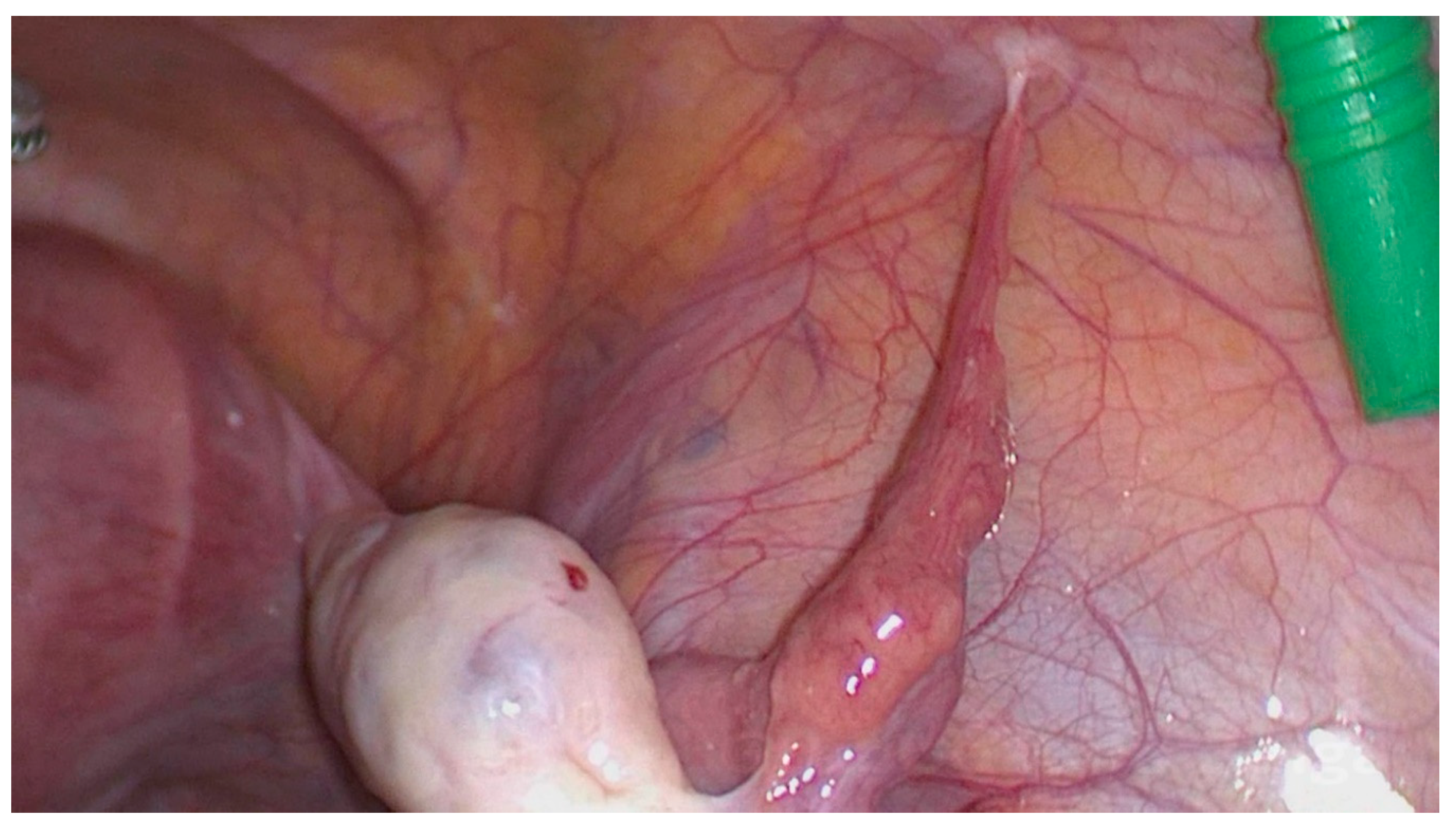
Balancing infertility surgery and IVF is difficult because of the many variables. The choice should consider results and risk of complications, the time to pregnancy, the age and antecedents of the woman and the ultimate cumulative pregnancy rates including eventual subsequent pregnancies. Comprehensive data that take all factors into account are not available since most factors are not well known and their values cannot be compared. Arguments in favour of IVF, before surgery, are the absence of the risk of surgery and the perception that the time to pregnancy is shorter. Arguments in favour of surgery are based on the clinically educated guess, that without a systematic diagnostic laparoscopy during the infertility workup, some pathologies will remain undiagnosed and thus untreated. An extreme but rare example is 2 small filmy adhesions between the ampulla and abdominal wall that takes 10 seconds to cut without risk (Figure 1). In the absence of control groups, the fertility-enhancing effects of surgery are poorly established for most interventions such as adhesiolysis and superficial or deep or cystic ovarian endometriosis. Even for cystic ovarian endometriosis, it is difficult to balance the cumulative pregnancy rates which are around 60% after surgery, [33] the ovarian damage and the postoperative adhesions with the observation that surgery often does not improve the results of IVF.
A major problem in this discussion is that the quality of and indications for fertility surgery are difficult to evaluate. Historically, fertility surgery stimulated the development of microsurgery and laparoscopic surgery. Today, however, the surgical expertise of most infertility centres has decreased and severe endometriosis surgery is increasingly performed by pelvic surgeons or in multidisciplinary teams with abdominal surgeons and urologists, which unfortunately are less experienced in fertility surgery. The clinical loss can be illustrated by thin-walled hydrosalpinges that can be treated with salpingostomy or salpingectomy and IVF. Salpingostomy has become performed less often since salpingostomy to judge the tubal mucosa seems largely forgotten and nice flowering of a salpingostomy requires either stitching as used to be done by microsurgery, or a CO2 laser which is rarely available today. Therefore, salpingectomies are increasingly performed since IVF results improve after salpingectomy although probably equally true following salpingostomy. Another example is the need for the preservation of ovarian tissue during surgery. Beyond the well-known decrease in follicular reserve after surgery [34], many of us have seen patients with significantly reduced ovarian volumes after surgery for rather small endometriomas.
This decrease in the expertise in fertility surgery, together with the increasing age of the patients, is often presented as an argument in favour of the ”IVF- first “ approach. Unfortunately, in the absence of data documenting fertility enhancement and the quality of fertility surgery, only clinical experience remains. In women requiring surgery for pain, adhesion prevention by microsurgical principles retains its full importance [35,36]. To date, there is no good evidence that proves that deep endometriosis surgery in an asymptomatic patient improves fertility. The same is true for intraoperatively found asymptomatic (small) nodules.
Experience also suggests avoiding repetitive IVF treatment in women with a rectovaginal deep endometriosis nodule, since repetitive oocyte pickup through a nodule seems to result frequently in very difficult surgery afterwards.
3.5. The dogma of the complete excision of endometriosis
Complete excision of endometriosis has been a dogma of endometriosis surgery. The large bowel resections and excisions with a safety margin, ‘to be complete’ were challenged by the non-progressive microscopical endometriosis nests in the bowel wall at a distance from a nodule, in lymph nodes and the peritoneum, explaining the similar recurrence rates after large bowel resections and conservative excisions, despite being probably microscopically incomplete. With the increased knowledge of the sympathetic nervous system, surgery became less complete if needed to avoid functional sequelae. Although fibrosis around endometriosis probably belongs to the body, resection of the fibrosis remains the overall attitude.
The clinical experience thus has resulted in more restraint when excising endometriosis with the short bowel resections or wedge resections with a circular stapler, replacing large bowel resections, as more recent developments. However, it remains a personal judgment based on experience and personal skills, not on data, to balance completeness of excision with functional sequelae and leaving some fibrosis. Similarly, It remains unclear whether the excision of large areas of the peritoneum, for superficial endometriosis is beneficial or should be abandoned.
3.6. The shoe shop syndrome
All shoe shops sell shoes but only the shoes from their shop. Endometriosis management requires expertise in pain, infertility, medical therapy and surgery. Unfortunately, these different aspects are organised in overlapping but different sub-specialities with specific meetings, societies and journals. The result is that the diagnosis and treatment of endometriosis can vary with the various disciplines. Especially for surgery, the exchange of knowledge is difficult since surgery does not fit in the evidence-based medicine logic with the RCT on top of the pyramid of evidence, and experience is considered a personal opinion of low value. Unfortunately, the variability of endometriosis and surgical skills together with a limited number of interventions do not fit with the requirements of an RCT [9].
Therefore, the collective experience of clinicians should be considered in experience-based management that integrates and complements evidence-based guidelines [17].
3.7. Emphasis on Evidence-based medicine without recognising experience
Diagnosis and treatment should be based on evidence. To avoid bias, evidence-based medicine emphasised the double-blind RCT and statistical significance. However, traditional statistics only calculate the probability that an observed effect, e.g. efficacy of a drug, can be explained by chance and can thus only refute but not confirm a hypothesis. Estimating the probability that a hypothesis is true requires a different type of statistical inference or Bayesian statistics [14]. The latter is more similar to medical thinking with the probability of all potential diagnoses and the risk of mistakes being refined progressively when more test results become available and with the experience in surgery when each diagnosis and therapy is considered an experiment with an outcome. The clinician will “update” progressively, analysing and accepting what went well and where there was a challenge in finding a better way of achieving the result. For clinicians, it is important to grasp the relationship between traditional and Bayesian statistics. A p-value of 0.05 indicates the 5% probability that the result can be explained by chance but is not an argument that the hypothesis is true. It, however, changes the probability that the hypothesis is correct from 50% to some 70% [37]. For the same reason, data that does meet statistical significance can be important as illustrated by p=0.05 and p=0.06 not being very different.
EBM data on endometriosis are limited because of the absence of a useful animal model permitting experimentation, and because of the biochemical, macroscopical and surgical variability of the endometriosis lesions. Most data on the efficacy of medical therapy can be questioned since blinding is not possible when the patients recognise the active therapy e.g. when affecting menstruation. Moreover, the biochemical variability of the lesions invalidates traditional statistical analysis since the essential assumption of a homogeneous population is not met. Continuing therapy despite incomplete pain relief comes close to the definition of madness as ‘repeating the same thing and expecting a different result”. Meaningful RCTs of deep endometriosis surgery are close to impossible since the number of surgeries is limited and the inherent variability of the disease would require large multivariate trials. Therefore, today, the clinical experience shared by many clinicians and sharpened by literature and congress discussions is the best we have. This, however, needs to be developed in a more formal way [17].
This is another argument to consider the collective experience of clinicians in the experience-based management of endometriosis [17].
3.8. The absence of quality control in surgery
Medication must prove efficacy and the absence of side effects to get a licence to market. This process is strictly organised in phase I, II and III trials and in post-marketing surveillance. The quality control of surgery is indirect and varies between countries. Some countries limit the number of gynaecologists that can do surgery (France, Germany); hospitals generally limit the number (Italy, UK) and the age of gynaecologists (e.g. Belgium) that can do surgery and limitations in privileges (USA) can limit the type of intervention that each individual can perform. Although complication rates are registered, these reflect ‘the good, the bad and the ugly’ with the quality control of the individual surgeon being limited to the poorly defined judgement of peers. Periodical physical checks, although the standard for many professions such as pilots, and periodical checks whether knowledge is up to date are not performed. This results in nearly unchecked freedom to use many different techniques, indications and personal preferences, with few rules to stop a surgeon from performing surgery once board certified. New techniques and materials are rarely properly evaluated before introduction, with laparoscopic surgery and the use of meshes as examples. The quality of surgery is not evaluated, since it is not clear which criteria should be used but also because of corporate opposition of the surgeons. A simple criterion as the excessive duration of surgery is rarely considered although it increases postoperative adhesions and the cost of surgery. Surgeons are opposed to, and governments do not implement mandatory video registration [38,39,40], which with minimal cost could permit monitoring the indications for surgery, individualise the billing e.g. of severe endometriosis, and differentiate between mistakes, errors of judgment and unavoidable complications. As an example, a ureter can be sectioned because of insufficient skills, by mistake or intentionally as part of the management of ureteral stenosis. In addition, mandatory video registration will improve quality by self-regulation by surgeons being more prudent to avoid showing mistakes or lack of expertise.
These considerations call for the introduction of minimal quality control of the indications and techniques of surgery. Video registration could be a first step in introducing the principle of debriefing, learning from mistakes and near misses without penalty but with peer-reviewed quality control.
3.9. Training and education in surgery should improve
Without quality control, it is not surprising that education and training in surgery are poorly defined. Today the emphasis is still on how to do and to learn from examples. Recalling live surgery over the last 30 years, it seems important that for each aspect of surgery, we change the tone from how to do it, to explaining why. This is a very important shift that signifies acceptance of surgical dissection, and nuances in tissue recognition and handling, bringing the focus to strategy and purpose. That this is ultimately similar to understanding quality, can be illustrated by examples.
It was a surprise that suturing and knot security being fundamental in surgery were poorly investigated until recently [41]. Postoperative adhesions cause pain, infertility and more difficult and complication-prone repeat surgery [35]. However, adhesion prevention does not get the attention it deserves. Most surgeons still use saline for irrigation, although known to be toxic for the peritoneum and to cause adhesions; although blood causes adhesions [42] and fibrin can be difficult to remove at the end of the surgery, irrigation is often avoided to facilitate dissection even in minor surgery; gauzes, banned by microsurgery, are being reintroduced in laparoscopic surgery.
This is another argument for quality control of the indications and techniques of surgery. Although machine learning and “safety” tools may help, intuition and experience need to be based on evidence, whether evidence-based or experience-based
3.10. An independent expert is a rare bird
When discussing the diagnosis and therapy of endometriosis we should realise that as humans, we live with the history of our past and with a potential bias of our judgment. It is rare to realise the difficulty and often blindness to cut the branch on which we are sitting. Most people involved in medical therapy of endometriosis have or had ties with pharmaceutical companies, albeit as advisors, for clinical trials or as sponsors for congresses. Surgeons invariably also promote their practices in publications and live surgery. This is not a criticism, but we should be aware of potential biases, although most of us are looking for ‘the truth’ to improve the care of our patients.
4. Discussion
Without being exhaustive, we described our perception as surgery-oriented clinicians of the 10 major problems in the diagnosis and treatment of endometriosis. This perception is based on the cumulative experience of the authors over more than 20 years in many different countries. These experience-based comments focused on problems, rare events and mistakes which would be unethical to investigate in a trial. Since people only recognise what they know, problems resulting from less expertise are not discussed. We also avoided discussing items such as the integration and extrapolation of trial-based recommendations and classification systems.
The major experience-based problems identified can be summarised as follows. Recognising the G-E and biochemical heterogeneity of endometriosis lesions is important to understand the variable response to medical therapy and the need for follow-up during therapy. The lower detection limit and the PPV of imaging outside referral centres should be recognised. However, most problems are the result of sub-specialisation, misunderstanding EBM and the absence of quality control in surgery. The common wisdom that “what we don’t know, we fear”, explains the different perceptions of many aspects such as complications of surgery. That frequentist or traditional statistics can only refute but not confirm a hypothesis, is a mistake often made in medicine. Poor knowledge of Bayesian statistics prevented experience from being considered as learning and updating from mistakes, especially in surgery. Surgeons themselves are also to be blamed for not organising quality control of surgery and of the results of surgery.
5. Conclusions
Discussing the 10 cardinal sins in surgery for endometriosis is an experience-based view to complement evidence-based medicine of endometriosis. As major aspects, we discussed understanding the pathophysiology of endometriosis, the interpretation of diagnostic tests, the limitations of EBM, the sub-disciplines, the importance of incorporating experience-based medicine and the need for quality control in surgery.
Author Contributions
The concept of collective-experience-based evidence was developed and surgical items that are difficult to evaluate in RCTs were discussed during the consensus meeting in Strasbourg in September 2022, resulting in a manuscript drafted by PK. All authors discussed and approved the text.
Funding
This research received no external funding
Institutional Review Board Statement
This study did not require ethical approval.
Informed Consent Statement
Not applicable.
Data Availability Statement
Before and after the meeting over 300 questions were rated on a 0 to 10 Visual Analogue Scale. Details of the answers are available by simple request to the corresponding author.
Acknowledgments
We thank for their critical comments and for endorsing this manuscript ME Ramirez, B. Amro from UAE, Pantelis Trompoukis, Greece, H. Ferreira, Portugal, Rodrigo Fernandez, William Kondo and Paulo Ayrosa, Brazil, Gabriele Centini, Italy.
Conflicts of Interest
The authors declare no conflict of interest.
References
- Kim, M.-R.; Chapron, C.; Römer, T.; Aguilar, A.; Chalermchockcharoenkit, A.; Chatterjee, S.; Dao, L.T.A.; Fong, Y.F.; Hendarto, H.; Hidayat, S.T.; et al. Clinical Diagnosis and Early Medical Management for Endometriosis: Consensus from Asian Expert Group. Healthcare 2022, 10, 2515. [Google Scholar] [CrossRef]
- Horne, A.W.; Missmer, S.A. Pathophysiology, diagnosis, and management of endometriosis. BMJ 2022, e070750. [Google Scholar] [CrossRef] [PubMed]
- Vercellini, P.; Sergenti, G.; Buggio, L.; Frattaruolo, M.P.; Dridi, D.; Berlanda, N. Advances in the medical management of bowel endometriosis. Best Practice & Research Clinical Obstetrics & Gynaecology 2021, 71, 78–99. [Google Scholar] [CrossRef]
- Donnez, O.; Donnez, J. Deep endometriosis: The place of laparoscopic shaving. Best Practice & Research Clinical Obstetrics & Gynaecology 2020. [Google Scholar] [CrossRef]
- Muzii, L.; Di Tucci, C.; Di Feliciantonio, M.; Galati, G.; Marchetti, C.; Perniola, G.; Pecorini, F.; Benedetti Panici, P. Management of endometriosis from diagnosis to treatment: roadmap for the future. Minerva Ginecol 2019, 71, 54–61. [Google Scholar] [CrossRef]
- Yu, E.H.; Joo, J.K. Commentary on the new 2022 European Society of Human Reproduction and Embryology (ESHRE) endometriosis guidelines. Clinical and Experimental Reproductive Medicine 2022, 49, 219–224. [Google Scholar] [CrossRef]
- Wojtaszewska, A.; Hirsch, M. Guidelines: is it time for a change? Bjog 2022, 129, 365. [Google Scholar] [CrossRef] [PubMed]
- Becker, C.M.; Bokor, A.; Heikinheimo, O.; Horne, A.; Jansen, F.; Kiesel, L.; King, K.; Kvaskoff, M.; Nap, A.; Petersen, K.; et al. ESHRE guideline: endometriosis. Hum Reprod Open 2022, 2022, hoac009. [Google Scholar] [CrossRef] [PubMed]
- Koninckx, P.R.; Ussia, A.; Alsuwaidi, S.; Amro, B.; Keckstein, J.; Adamyan, L.; Donnez, J.; Dan, M.C.; Wattiez, A. Reconsidering evidence-based management of endometriosis. Facts, Views and Vision in ObGyn 2022, 14, 225–233. [Google Scholar] [CrossRef]
- Goodman, S.N. Toward evidence-based medical statistics. 1: The P value fallacy. Ann Intern Med 1999, 130, 995–1004. [Google Scholar] [CrossRef]
- Wasserstein, R.L.; Lazar, N.A. The ASA Statement on p-Values: Context, Process, and Purpose. The American Statistician 2016, 70, 129–133. [Google Scholar] [CrossRef]
- Ioannidis, J.P. The Mass Production of Redundant, Misleading, and Conflicted Systematic Reviews and Meta-analyses. Milbank Q 2016, 94, 485–514. [Google Scholar] [CrossRef] [PubMed]
- Ioannidis, J.P. Why most published research findings are false. PLoS medicine 2005, 2, e124. [Google Scholar] [CrossRef] [PubMed]
- Lesaffre, E.; Lawson, A.B. Bayesian biostatistics; John Wiley & Sons, ltd.: United Kingdom, 2012. [Google Scholar]
- Bulun, S.E.; Yilmaz, B.D.; Sison, C.; Miyazaki, K.; Bernardi, L.; Liu, S.; Kohlmeier, A.; Yin, P.; Milad, M.; Wei, J. Endometriosis. Endocrine reviews 2019, 40, 1048–1079. [Google Scholar] [CrossRef] [PubMed]
- Djulbegovic, B.; Guyatt, G.H. Progress in evidence-based medicine: a quarter century on. Lancet 2017, 390, 415–423. [Google Scholar] [CrossRef]
- Wattiez, A.; Schindler, L.; Ussia, A.; Campo, R.; keckstein, J.; Grimbizis, G.; Exacoustos, C.; Kondo, W.; Nezhat, C.; Canis, M.; et al. A proof of concept that experience-based management of endometriosis complements evidence-based guidelines. FVVOG 2023. under review. [Google Scholar]
- Amro, B.; Ramirez Aristondo, M.E.; Alsuwaidi, S.; Almaamari, B.; Hakim, Z.; Tahlak, M.; Wattiez, A.; Koninckx, P.R. New Understanding of Diagnosis, Treatment and Prevention of Endometriosis. Int J Environ Res Public Health 2022, 19. [Google Scholar] [CrossRef]
- Koninckx, P.R.; Ussia, A.; Adamyan, L.; Wattiez, A.; Gomel, V.; Martin, D.C. Pathogenesis of endometriosis: the genetic/epigenetic theory. Fertil Steril 2019, 111, 327–339. [Google Scholar] [CrossRef]
- Adamyan, L.V.; Starodubtseva, N.; Borisova, A.; Stepanian, A.A.; Chagovets, V.; Salimova, D.; Wang, Z.; Kononikhin, A.; Popov, I.; Bugrova, A.; et al. Direct Mass Spectrometry Differentiation of Ectopic and Eutopic Endometrium in Patients with Endometriosis. J Minim Invasive Gynecol 2018, 25, 426–433. [Google Scholar] [CrossRef]
- Adamyan, L.; Aznaurova, Y.; Stepanian, A.; Nikitin, D.; Garazha, A.; Suntsova, M.; Sorokin, M.; Buzdin, A. Gene Expression Signature of Endometrial Samples from Women with and without Endometriosis. J Minim Invasive Gynecol 2021, 28, 1774–1785. [Google Scholar] [CrossRef] [PubMed]
- Gordts, S.; Koninckx, P.R.; Grimbizis, G.; Tanos, V.; Campo, R. Junctional zone: The endo-myometrial unit disorder. FVVOG 2023. submitted. [Google Scholar]
- Khashchenko, E.P.; Uvarova, E.V.; Fatkhudinov, T.K.; Chuprynin, V.D.; Asaturova, A.V.; Kulabukhova, E.A.; Vysokikh, M.Y.; Allakhverdieva, E.Z.; Alekseeva, M.N.; Adamyan, L.V.; et al. Endometriosis in Adolescents: Diagnostics, Clinical and Laparoscopic Features. Journal of Clinical Medicine 2023, 12, 1678. [Google Scholar] [CrossRef] [PubMed]
- Koninckx, P.R.; Ussia, A.; Wattiez, A.; Adamyan, L.; Martin, D.C.; Gordts, S. The severity and frequency distribution of endometriosis subtypes at different ages: a model to understand the natural history of endometriosis based on single centre/single surgeon data. Facts, Views and Vision in ObGyn 2021, 13, 211–221. [Google Scholar] [CrossRef]
- Uzuner, C.; Mak, J.; El-Assaad, F.; Condous, G. The bidirectional relationship between endometriosis and microbiome. Front Endocrinol (Lausanne) 2023, 14, 1110824. [Google Scholar] [CrossRef]
- Becker, C.M.; Gattrell, W.T.; Gude, K.; Singh, S.S. Reevaluating response and failure of medical treatment of endometriosis: a systematic review. Fertil Steril 2017, 108, 125–136. [Google Scholar] [CrossRef]
- de Almeida Asencio, F.; Ribeiro, H.A.; Ribeiro, P.A.; Malzoni, M.; Adamyan, L.; Ussia, A.; Gomel, V.; Martin, D.C.; Koninckx, P.R. Symptomatic endometriosis developing several years after menopause in the absence of increased circulating estrogen concentrations: a systematic review and seven case reports. Gynecological Surgery 2019, 16, 3. [Google Scholar] [CrossRef]
- Koninckx, P.R.; Di Giovanni, A.; Ussia, A.; Gharbi, H.; Al-Suwaidi, S.; Amro, B.; Keckstein, J.; Malzoni, M.; Adamyan, L.; Wattiez, A. Predictive value of ultrasound imaging for diagnosis and surgery of deep endometriosis: a systematic review. J Minim Invasive Gynecol 2023. [Google Scholar] [CrossRef]
- Keckstein, J.; Hoopmann, M.; Merz, E.; Grab, D.; Weichert, J.; Helmy-Bader, S.; Wölfler, M.; Bajka, M.; Mechsner, S.; Schäfer, S.; et al. Expert opinion on the use of transvaginal sonography for presurgical staging and classification of endometriosis. Archives of Gynecology and Obstetrics 2022, 307, 5–19. [Google Scholar] [CrossRef] [PubMed]
- Keckstein, J.; Saridogan, E.; Ulrich, U.A.; Sillem, M.; Oppelt, P.; Schweppe, K.W.; Krentel, H.; Janschek, E.; Exacoustos, C.; Malzoni, M.; et al. The #Enzian classification: A comprehensive non-invasive and surgical description system for endometriosis. Acta Obstetricia et Gynecologica Scandinavica 2021, 100, 1165–1175. [Google Scholar] [CrossRef] [PubMed]
- Gordts, S.; Gordts, S.; Puttemans, P.; Segaert, I.; Valkenburg, M.; Campo, R. Systematic use of transvaginal hydrolaparoscopy as a minimally invasive procedure in the exploration of the infertile patient: results and reflections. Facts Views Vis Obgyn 2021, 13, 131–140. [Google Scholar] [CrossRef] [PubMed]
- Gordts, S.; Campo, R. Modern approaches to surgical management of endometrioma. Best Pract Res Clin Obstet Gynaecol 2019, 59, 48–55. [Google Scholar] [CrossRef]
- Gordts, S.; Boeckx, W.; Brosens, I. Microsurgery of endometriosis in infertile patients. Fertil. Steril 1984, 42, 520–525. [Google Scholar] [CrossRef] [PubMed]
- Muzii, L.; Miller, C.E. The singer, not the song. J. Minim. Invasive. Gynecol 2011, 18, 666–667. [Google Scholar] [CrossRef] [PubMed]
- Koninckx, P.R.; Gomel, V.; Ussia, A.; Adamyan, L. Role of the peritoneal cavity in the prevention of postoperative adhesions, pain, and fatigue. Fertil Steril 2016, 106, 998–1010. [Google Scholar] [CrossRef] [PubMed]
- Gomel, V.; Koninckx, P.R. Microsurgical principles and postoperative adhesions: lessons from the past. Fertil Steril 2016, 106, 1025–1031. [Google Scholar] [CrossRef]
- Nuzzo, R. Statistical errors. Nature 2014, 506, 150. [Google Scholar] [CrossRef] [PubMed]
- Koninckx, P.R. Digital Operating Room with Video over IP. J Minim Invasive Gynecol 2013, 20, s106–s107. [Google Scholar] [CrossRef]
- Koninckx, P.R. Videoregistration of surgery should be used as a quality control. J Minim Invasive Gynecol 2008, 15, 248–253. [Google Scholar] [CrossRef]
- Koninckx, P.R. Nebula: A New Approach to Video Documentation in Endoscopic Surgery. J Minim Invasive Gynecol 2007, 6, s61–s64. [Google Scholar] [CrossRef]
- Romeo, A.; Fernandes, L.F.; Cervantes, G.V.; Botchorishvili, R.; Benedetto, C.; Adamyan, L.; Ussia, A.; Wattiez, A.; Kondo, W.; Koninckx, P.R. Which Knots Are Recommended in Laparoscopic Surgery and How to Avoid Insecure Knots. J Minim Invasive Gynecol 2020, 27, 1395–1404. [Google Scholar] [CrossRef]
- Corona, R.; Binda, M.M.; Mailova, K.; Verguts, J.; Koninckx, P.R. Addition of nitrous oxide to the carbon dioxide pneumoperitoneum strongly decreases adhesion formation and the dose-dependent adhesiogenic effect of blood in a laparoscopic mouse model. Fertil. Steril 2013, 100, 1777–1783. [Google Scholar] [CrossRef] [PubMed]
Figure 1.
Adhesion between the ampulla and abdominal wall causing infertility will be missed without a laparoscopy. Surgery is uneventful and restores fertility.
Figure 1.
Adhesion between the ampulla and abdominal wall causing infertility will be missed without a laparoscopy. Surgery is uneventful and restores fertility.
Disclaimer/Publisher’s Note: The statements, opinions and data contained in all publications are solely those of the individual author(s) and contributor(s) and not of MDPI and/or the editor(s). MDPI and/or the editor(s) disclaim responsibility for any injury to people or property resulting from any ideas, methods, instructions or products referred to in the content. |
© 2023 by the authors. Licensee MDPI, Basel, Switzerland. This article is an open access article distributed under the terms and conditions of the Creative Commons Attribution (CC BY) license (http://creativecommons.org/licenses/by/4.0/).
Copyright: This open access article is published under a Creative Commons CC BY 4.0 license, which permit the free download, distribution, and reuse, provided that the author and preprint are cited in any reuse.


