

Submitted:
06 June 2023
Posted:
07 June 2023
You are already at the latest version
Abstract
Atrial fibrillation (AF) is an increasingly recognized comorbidity in patients with cancer. Indeed, cancer patients have a significantly higher incidence of AF than that observed in the general population. A reciprocal relationship between these two diseases has been observed, as much as some assume AF as a marker for occult cancer screening, especially in older adults. The pathophysiological mechanisms are many and varied, including the underlying pro-inflammatory state, specific treatments (chemo and radiotherapy) and surgery. The therapeutic management of patients with cancer and AF involves the same rhythm and frequency control strategies as the general population; however, the numerous interactions with chemotherapeutics, which lead to a significant increase in side effects, as well as the extreme fragility of the patient should be considered. Anticoagulant therapy is also a complex challenge to address, as bleeding and stroke risk scores have not been fully assessed in this subpopulation. Furthermore, in large studies establishing the efficacy of direct oral anticoagulants (DOACs), cancer patients have been underrepresented. In this review, we elaborate on mechanisms linking AF to cancer patients with a particular focus on therapeutic challenges in this population.
Keywords:
atrial fibrillation
; cancer
; direct oral anticoagulants
1. Introduction and Epidemiology: Atrial Fibrillation in Cancer Patients
The improvement in cancer patients’ prognosis and therefore the aging of this population, as well as the introduction of targeted therapies, have exponentially increased the incidence of cardiac arrhythmias seen in oncology and hematology wards (1;2). In particular, AF, a leading cause of thrombotic morbidity and overall cardiovascular (CV) mortality, is the most common sustained arrhythmia in the general population and revealed to be more common in patients with malignancies (1-3), reaching an incidence of 30% in available studies (1-3).
In this setting, prevalence seems extremely variable in literature, depending on the age of population examined, pre-existing risk factors, type of primitive cancer, previous oncologic surgery and chemotherapy schemes instituted (4-7). Indeed, the risk of AF is higher in subjects older than 65 years with known CV disease (4-7), as well as in those patients affected by all hematologic malignancies, including lymphoma, leukemia and multiple myeloma rather than solid tumors (8). Moreover, higher cancer stages and grades at diagnosis raise the risk of AF, even suggesting a systemic effect of advanced cancer itself on the heart (7). Of importance, post-operative AF is the most frequent form of sustained arrhythmia in cancer patients. Its prevalence ranges from 16 to 46% for cardiothoracic surgery and 0.4–12% in non-cardiothoracic surgery, increasing post-operative mortality, hospitalization length and intensive care unit admissions (9;10).
AF may therefore represent an additional determinant of malignancies’ prognosis and a challenge for the therapeutic management of cancer patients (11;12). The aim of this review is hence to elucidate novel etiological aspects subtending AF occurrence in this population, to give advice on management aspects and shed light on future research scopes in this expanding field of cardio-oncology.
2. Risk Factors and Pathogenesis of Atrial Fibrillation in Cancer Patients
In addition to advanced age, other mechanisms have been suggest to explain the high correlation between cancer and AF (13). Cancer-induced inflammation and oxidative stress are thought to play important roles. C-reactive protein (CRP), interleukins (IL), particularly IL-2, IL-6, and IL-8, macrophage migration inhibitory factor (MIF), and tumor necrosis factor-alpha are all elevated in cancer patients with AF (14). Elevated inflammatory markers can lead to autonomic dysfunction, electrolyte imbalances, structural changes in the heart, and electrical remodeling. Changes in calcium hemostasis and connexins can result in a variety of atrial conduction abnormalities, including AF (13). To these mechanisms should be added those determined by cancer treatments. In fact tyrosine kinase inhibitors (TKI), immunomodulators like interleukin-2 (IL-2), antimetabolites like 5-fluorouracil and gemcitabine, HER-2/Neu receptor blockers, alkylating agents, anthracyclines and antimicrotubular agents have all been related to the development of new-onset AF. Chemotherapeutic agents can induce myocyte degeneration, mitochondrial damage, ion channel dysfunction, and atrial fibrosis, resulting in structural and electrical changes in the myocardium and an increased risk of AF (15,16). Cancer drug- induced AF may occur shortly after treatment (cisplatin or gemcitabine) or weeks or months after starting treatment, as in the case of ibrutinib (10). Surgical procedures such as lung resection or other extensive operations are also often followed by peri-operative AF. In a cohort of 13,906 patients undergoing lung resection for lung cancer, perioperative AF occurred in 12.6 % of patients (17). Perioperative AF appears to be more frequent in patients with advanced age and stage of cancer who have cardiovascular comorbidities and who undergo extensive resections (18). Furthermore, high adrenergic states following cancer surgery may induce or worsen AF (14). Infection, anaemia, hypoxia, pleurisy, pericarditis and cardiomyopathy are all potential complications of cancer and cancer treatment and all are potential triggers of AF (19). More rarely, AF may be triggered by metastatic involvement of the heart. (10). The most common neoplasms associated with cardiac metastases are lung cancer, lymphoma, breast cancer, leukaemia, stomach cancer and melanoma (20). Cardiac metastases mostly appear in elderly patients already with disseminated cancer disease. Tumours may reach the heart by lymphatic or intravenous route, or by direct extension, and the sites most affected are the pericardium or epicardium (21). (Figure 1)
3. Management of Atrial Fibrillation in the Setting of Cancer (Rate and Rhythm Control)
Although the management of AF in patients with cancer should follow the 2020 European Society of Cardiology (ESC) guidelines on AF and the ‘ABC pathway’ approach should be applied there are some exceptions where treatment modifications should be considered (22,23).
Among rate-control drugs, beta-blockers are preferred, especially if the cancer therapies have a potential cardiac dysfunction risk. Calcium channel blocker (diltiazem and verapamil) should be avoided if possible due to drug-drug interactions and negative inotropic effects. The same applies to digoxin, which is to be considered a second choice (11). The decision to convert AF to sinus rhythm (rhythm control) is made individually for each patient. For older adults, who are especially vulnerable to the side effects of antiarrhythmic medications, there is less emphasis on rhythm control. Rhythm control may be indicated in patients who are significantly symptomatic from AF or whose AF is difficult to rate control (24). To convert AF to sinus rhythm, both electrical and pharmacologic methods can be used. For unstable patients (altered mental status, hypotension, chest pain or hypoxia attributed to arrythmia), emergency electrical cardioversion is the first-line therapy. Flecainide and Propafenone are anti-arrhythmic medications that are frequently used for pharmacologic cardioversion. However, many older adults, including those with cancer, have underlying structural heart disease, which restricts the use of these therapies in this group due to its increased pro-arrhythmic effects (25).
Although amiodarone is effective in maintaining sinus rhythm, it has greater toxicities than other antiarrhythmics used in AF. There is a strong temporal relationship between therapy with taxanes, such as paclitaxel and docetaxel, used for the treatment of many cancers, such as breast and lung cancer, and the development of severe skin and mucosal toxicity due to reduced clearance of taxanes in patients taking amiodarone (26). Amiodarone has also been shown to increase the adverse effects of radiation on the skin and mucous membranes (27). In older adults with a normal QTc interval, sotalol, a class III antiarrhythmic agent, may be a good choice for maintaining sinus rhythm (22). However several anti-cancer treatments, may contribute to QTc prolongation, which can lead to life-threatening ventricular arrhythmias (28). Kinase inhibitors, such as dasatinib and ruxolitnib, used to treat chronic myeloid leukemia and myelofibrosis, may cause QTc interval prolongation. Arsenic trioxide, which is used to treat promyelocytic leukemia, may also cause QTc interval prolongation. Some anti-emetic drugs, such as ondansetron, which is commonly used in cancer patients to prevent and treat nausea, may also contribute to QTc prolongation (28). The possibility of ablation of atrial fibrillation should be discussed in selected patients with heart failure (HF) and uncontrolled symptoms, taking into account cancer status and prognosis (30). However, it has not been studied in cancer patients. Finally, if the above-mentioned strategies fail to control AF, AV node ablation with permanent pacing should be considered to alleviate symptoms and haemodynamic effects of refractory AF (31).
4. Anticoagulant Treatment: What to Do?
Risk Benefit Decision about Anticoagulation: Ischaemic and Bleeding Risck
Anticoagulant therapy is a complex challenge, as cancer patients present both a high thrombotic and haemorrhagic risk. According to the ESC guidelines, the therapeutic decision should be based on both the CHA 2 DS 2 -Vasc (Congestive heart failure, Hypertension, Age ≥ 75 years [2 points], Diabetes mellitus, Stroke [2 points]-Vascular disease, Age 65-74 years, Sex category [female]) score and on haemorrhagic risk scores such as HASBLED (Hypertension, Abnormal renal and liver function, Stroke, Bleeding Labile international normalized ratio, Elderly, Drugs or alcohol); although these have not been validated in cancer patients (22,23, 32). In a retrospective cohort study including 2,435,541 adults hospitalised with AF the predictive value of the CHA2DS2-VASc score was lower in patients with cancer than in those without. In addition, cancer is often associated with a propensity to thrombosis but it is not mentioned as a risk factor in the CHA2DS2-Vasc (33). Therefore, some patients with cancer and AF, such as those aged 65-75 years, who have no other risk factors, may not receive anticoagulant therapy despite being at high risk of embolic events (34). With regard to the assessment of bleeding risk, the HAS BLED was quite accurate (33) although the HEMORR2HAGES score also includes a history of malignancy and thrombocytopenia in the risk assessment (35). The latter is an important finding as it has been shown that platelets < 100,000 × 10 9/L increase the risk of bleeding for cancer patients taking anticoagulants and tumours together with cancer treatments may cause thrombocytopenia (36,18). Pastori et al. proposed an alternative approach for risk stratification including: The acronyms T (thrombotic risk), B (bleeding risk), I (drug interactions), and P (patient access and preferences) (33). This algorithm guides the clinician in adopting an appropriate therapy based on a comprehensive assessment of all aspects of the cancer patient.
5. Choice of Anticoagulant Therapy
Vitamin K antagonists (VKAs) are rarely used in cancer patients due to their drawbacks and drug interactions in this setting; low-molecular-weight heparins (LMWH) have not been proven to be effective in preventing stroke or systemic embolism in AF and cancer, and their use is only justified by their demonstrated efficacy and safety in venous thromboembolism (VTE). (37).
No specifically designed randomized controlled trial has looked at the use of non-vitamin K antagonist oral anticoagulants (NOACs) for AF in cancer patients. Large observational studies and post-hoc analyses of pivotal trials utilizing NOACs in AF patients indicate that NOACs are safe and at least as effective as VKAs in patients with AF and active cancer. A minority of patients with a history of cancer (640 out of 14264) have been enrolled in the ROCKET AF trial with the most common types of malignancies being prostate, colorectal, and breast cancer. There were not significant differences between rivaroxaban and warfarin in terms of relative efficacy and safety between patients with and without a history of cancer. The risk of ischemic events was not affected by a history of malignancy, although it did raise the risk of bleeding and non-cardiovascular death (38).
A history of cancer was present in 6.8% of participants only in the ARISTOTLE trial. A history of cancer was not substantially related with major bleeding, mortality, stroke, or systemic embolism. Apixaban was as effective as warfarin in preventing stroke and systemic embolism in patients with and without a history of cancer, and its safety profile was comparable to that of warfarin (39).
A minority (5.5%) of patients in the ENGAGE AF - TIMI 48 study had a new or recurrent cancer diagnosed, with the gastrointestinal tract, the prostate, and the lung being the most common sites. Malignancy per se was associated with a higher risk of overall mortality and severe bleeding, but not for stroke or systemic embolism. In AF patients who develop cancer, edoxaban maintains its efficacy and safety profile, making it a potentially more useful treatment choice (40).
NOACs showed a better safety profile than warfarin in patients with underlying malignancy and AF, according to a large retrospective American database investigation. Warfarin was associated with greater death rates in addition to a higher risk of hemorrhagic stroke (41).
To confirm the security and effectiveness of NOACs in patients with active malignancy and AF, an administrative dataset was examined. NOACs users had decreased or equivalent rates of bleeding, stroke, and incident VTE compared to warfarin users (42).
An additional study of 40,271 individuals with AF and cancer using retrospective data from Medicare and other commercial claims databases revealed that apixaban was associated with a lower risk of stroke/systemic embolism and significant bleeding compared to warfarin, although dabigatran and rivaroxaban exhibited equivalent hazards (43). According to a recent meta-analysis, NOACs were linked to a significantly lower rate of serious bleeding complications and thromboembolic events in patients with cancer and AF compared to VKA (44).
NOACs, with apixaban being the best of those examined, demonstrated a decreased incience of stroke/systemic embolism, VTE, all-cause death, and significant bleeding in AF patients with cancer than warfarin, according to network meta-analysis (45).
At the MD Anderson Cancer Center, 1133 patients with current malignancy and AF were included in a recent single institution retrospective analysis. The result in terms of cerebrovascular accident, gastrointestinal bleeding, and cerebral hemorrhage of NOAC versus VKA was compared using propensity score matching. The study revealed that patients with active malignancy had equivalent risks for cerebrovascular accident, gastrointestinal bleeding, and cerebral hemorrhage when given NOACs instead of warfarin for AF (46).
According to a Surveillance, Epidemiology, and End Results cancer registry database analysis, similar risks of stroke, systemic embolism, and severe bleeding have been observed in older persons with cancer and AF who were exposed to NOACs or to warfarin. In comparison to warfarin, NOACs use was linked to a decreased risk of death from all causes and a similar risk of cardiovascular death (47).
Although use of NOACs for AF in cancer patients grew from 2010 to 2016, there is still a significant percentage of patients with AF and cancer who are not taking anticoagulation (48).
According to recent ESC guidelines on cardio-oncology, the use of NOACs in cancer patients with AF is broadly accepted in light of previous findings even if a clear prospective evaluation is lacking. NOAC should be considered for stroke prevention instead of LMWH and VKA in patients without significant drug-drug interactions, mechanical heart valves, or moderate-to-severe mitral stenosis (37).
Similarly, The International Society on Thrombosis and Haemostasis already recommended that specific decisions for a patient with cancer and AF be made, taking into account the risk of bleeding and stroke. If there are no substantial interactions with oncological medications in patients who started anticoagulation prior to receiving anti-cancer treatment, therapy shouldn't be changed. If there are no substantial drug-drug interactions, NOACs should be chosen over VKAs or low-molecular-weight heparin in patients with newly diagnosed AF receiving chemotherapy. Patients with gastrointestinal neoplasms or other gastrointestinal tract conditions that increase bleeding risk are the exception (49).
The use of LMWH should be only considered in patients with active cancer and AF who are not suitable for NOAC (50). Although several early reports point to the efficacy and safety of NOACs in cancer patients with AF, but RCTs should confirm these results. (51)
However, individuals with active cancer constitute a challenging patient population that requires extra attention. Oral anticoagulant therapy in cancer patients may be hampered by other factors like drug-drug interactions, renal impairment, and thrombocytopenia (52). Drug interaction is not limited to anticancer agents but also supportive care drugs (i.e., antiemetics, opioids, etc) must be taken into consideration (53).
Active cancer patients are likely to benefit from a closer follow-up plan with regular re-evaluations given the rapidly changing clinical scenario. A multidisciplinary management that considers individual bleeding and thrombotic risks, drug-drug interactions, patient preferences, and routine clinical evaluation is necessary to identify the appropriate anticoagulation strategy for cancer patients (52).
In conclusion, the safety and efficacy of NOACs for stroke prevention in cancer patients with AF are being supported by accumulating research, making them a viable and patient-centered anticoagulation therapy (Table 1).
6. Conclusions
AF is a very common comorbidity in cancer patients as there are several mechanisms that can trigger it or make it worse.
Rate control is frequently preferred over rhythm control strategy in cancer patients due to the higher prevalence of side effects of anti-arrhythmic drugs and the numerous interactions with chemotherapy treatments. Anticoagulation risk-benefit ratio decisions and anticoagulant drug selection remain difficult challenges. This population is predisposed to thromboembolic and hemorrhagic complications. The current risk scores used in the general population have not been validated in this subgroup and do not always provide a true estimate of risk. Although there is substantial evidence in favour of DOACs, they are currently underutilized in favor of more widespread use of LMWH, which should be considered a second choice, and VKAs. Close follow-up remains a key issue, given the rapidly changing clinical scenario.
References
- Lyon, A.R.; Lyon, A.R.; López-Fernández, T.; López-Fernández, T.; Couch, L.S.; Couch, L.S.; Asteggiano, R.; Asteggiano, R.; Aznar, M.C.; Aznar, M.C.; et al. 2022 ESC Guidelines on cardio-oncology developed in collaboration with the European Hematology Association (EHA), the European Society for Therapeutic Radiology and Oncology (ESTRO) and the International Cardio-Oncology Society (IC-OS). Eur. Hear. J. 2022, 43, 4229–4361. [Google Scholar] [CrossRef] [PubMed]
- Madnick, D.L.; Fradley, M.G. Atrial Fibrillation and Cancer Patients: Mechanisms and Management. Curr. Cardiol. Rep. 2022, 24, 1517–1527. [Google Scholar] [CrossRef]
- Boriani, G.; Menna, P.; Morgagni, R.; Minotti, G.; Vitolo, M. Ibrutinib and Bruton’s Tyrosine Kinase Inhibitors in Chronic Lymphocytic Leukemia: Focus on Atrial Fibrillation and Ventricular Tachyarrhythmias/Sudden Cardiac Death. Chemotherapy 2022, 68, 61–72. [Google Scholar] [CrossRef] [PubMed]
- O'Neal, W.T.; Lakoski, S.G.; Qureshi, W.; Judd, S.E.; Howard, G.; Howard, V.J.; Cushman, M.; Soliman, E.Z. Relation Between Cancer and Atrial Fibrillation (from the REasons for Geographic And Racial Differences in Stroke Study). Am. J. Cardiol. 2015, 115, 1090–1094. [Google Scholar] [CrossRef]
- Ay, C.; Grilz, E.; Nopp, S.; Moik, F.; Königsbrügge, O.; Klimek, P.; Thurner, S.; Posch, F.; Pabinger, I. Atrial fibrillation and cancer: prevalence and relative risk from a nationwide study. Res. Pr. Thromb. Haemost. 2023, 7, 100026. [Google Scholar] [CrossRef] [PubMed]
- Han, H.; Chen, L.; Lin, Z.; Wei, X.; Guo, W.; Yu, Y.; Wu, C.; Cao, Y.; He, J. Prevalence, trends, and outcomes of atrial fibrillation in hospitalized patients with metastatic cancer: findings from a national sample. Cancer Med. 2021, 10, 5661–5670. [Google Scholar] [CrossRef] [PubMed]
- Guha, A.; Fradley, M.G.; Dent, S.F.; Weintraub, N.L.; Lustberg, M.B.; Alonso, A.; Addison, D. Incidence, risk factors, and mortality of atrial fibrillation in breast cancer: a SEER-Medicare analysis. Eur. Hear. J. 2021, 43, 300–312. [Google Scholar] [CrossRef]
- Yun, J.P.; Choi, E.-K.; Han, K.-D.; Jung, J.-H.; Park, S.H.; Ahn, H.-J.; Lim, J.-H.; Lee, S.-R.; Oh, S. Risk of Atrial Fibrillation According to Cancer Type. JACC: CardioOncology 2021, 3, 221–232. [Google Scholar] [CrossRef]
- Fabiani, I.; Colombo, A.; Bacchiani, G.; Cipolla, C.M.; Cardinale, D.M. Incidence, Management, Prevention and Outcome of Post-Operative Atrial Fibrillation in Thoracic Surgical Oncology. J. Clin. Med. 2019, 9, 37. [Google Scholar] [CrossRef]
- Farmakis, D.; Parissis, J.; Filippatos, G. Insights Into Onco-Cardiology. J. Am. Coll. Cardiol. 2014, 63, 945–953. [Google Scholar] [CrossRef] [PubMed]
- López-Fernández, T.; Martín-García, A.; Rabadán, I.R.; Mitroi, C.; Ramos, P.M.; Díez-Villanueva, P.; Cervantes, C.E.; Martín, C.A.; Salinas, G.L.A.; Arenas, M.; et al. Atrial Fibrillation in Active Cancer Patients: Expert Position Paper and Recommendations. 72. [CrossRef]
- Buza, V.; Rajagopalan, B.; Curtis, A.B. Cancer Treatment–Induced Arrhythmias. Circ. Arrhythmia Electrophysiol. 2017, 10. [Google Scholar] [CrossRef] [PubMed]
- Hu, Y.-F.; Chen, Y.-J.; Lin, Y.-J.; Chen, S.-A. Inflammation and the pathogenesis of atrial fibrillation. Nat. Rev. Cardiol. 2015, 12, 230–243. [Google Scholar] [CrossRef] [PubMed]
- Cheng, W.-L.; Kao, Y.-H.; Chen, S.-A.; Chen, Y.-J. Pathophysiology of cancer therapy-provoked atrial fibrillation. Int. J. Cardiol. 2016, 219, 186–194. [Google Scholar] [CrossRef] [PubMed]
- Yang X, Li X, Yuan M, et al. Anticancer therapy-induced atrial fibrillation: electrophysiology and related mechanisms. Front Pharmacol. 2018;9:1058.
- Alexandre, J. , Moslehi, J. J., Bersell, K. R., Funck-Brentano, C., Roden, D. M., & Salem, J. E. (2018). Anticancer drug-induced cardiac rhythm disorders: Current knowledge and basic underlying mechanisms. Pharmacol Ther, 189, 89–103.
- Onaitis, M.; D'Amico, T.; Zhao, Y.; O'Brien, S.; Harpole, D. Risk Factors for Atrial Fibrillation After Lung Cancer Surgery: Analysis of The Society of Thoracic Surgeons General Thoracic Surgery Database. Ann. Thorac. Surg. 2010, 90, 368–374. [Google Scholar] [CrossRef] [PubMed]
- Kumar, M.; Lopetegui-Lia, N.; Al Malouf, C.; Almnajam, M.; Coll, P.P.; Kim, A.S. Atrial fibrillation in older adults with cancer. 19, 8. [CrossRef]
- Suter, T.M.; Ewer, M.S.; Suter, T.M.; Ewer, M.S. Cancer drugs and the heart: importance and management. Eur. Hear. J. 2012, 34, 1102–1111. [Google Scholar] [CrossRef] [PubMed]
- Butany, J.; Leong, S.W.; Carmichael, K.; Komeda, M. A 30-year analysis of cardiac neoplasms at autopsy. Can. J. Cardiol. 2005, 21, 675–680. [Google Scholar] [PubMed]
- Bussani R, De-Giorgio F, Abbate A, Silvestri F. Cardiac metastases. J Clin Pathol. 2: 2007;60(1), 2007.
- Hindricks, G.; Potpara, T.; Dagres, N.; Arbelo, E.; Bax, J.J.; Blomström-Lundqvist, C.; Boriani, G.; Castella, M.; Dan, J.-A.; Dilaveris, P.E.; et al. The Task Force for the diagnosis and management of atrial fibrillation of the European Society of Cardiology (ESC) Developed with the special contribution of the European Heart Rhythm Association (EHRA) of the ESC. Eur. Heart J. 2020, 42, 373–498. [Google Scholar] [CrossRef]
- Lyon, A.R.; López-Fernández, T.; Couch, L.S.; Asteggiano, R.; Aznar, M.C.; Bergler-Klein, J.; Boriani, G.; Cardinale, D.; Cordoba, R.; Cosyns, B.; et al. 2022 ESC Guidelines on cardio-oncology developed in collaboration with the European Hematology Association (EHA), the European Society for Therapeutic Radiology and Oncology (ESTRO) and the International Cardio-Oncology Society (IC-OS). Eur. Hear. J. - Cardiovasc. Imaging 2022, 23, e333–e465. [Google Scholar] [CrossRef]
- Heist EK, Mansour M, Ruskin JN. Rate control in atrial fibrillation: targets, methods, resynchronization considerations. Circulation. 2011 Dec 13;124(24):2746-55.
- Echt, D.S.; Ruskin, J.N. Use of Flecainide for the Treatment of Atrial Fibrillation. Am. J. Cardiol. 2020, 125, 1123–1133. [Google Scholar] [CrossRef]
- Hammann, F.; Gotta, V.; Conen, K.; Medinger, M.; Cesana, P.; Rochlitz, C.; Taegtmeyer, A.B. Pharmacokinetic interaction between taxanes and amiodarone leading to severe toxicity. Br. J. Clin. Pharmacol. 2016, 83, 927–930. [Google Scholar] [CrossRef]
- Su VY, Hu YW, Chou KT, Ou SM, Lee YC, Lin EY, Chen TJ, Tzeng CH, Liu CJ. Amiodarone and the risk of cancer: a nationwide population-based study. Cancer. 2013 ;119(9):1699-705. 1 May.
- Tamargo, J.; Caballero, R.; Delpón, E. Cancer Chemotherapy and Cardiac Arrhythmias: A Review. Drug Saf. 2015, 38, 129–152. [Google Scholar] [CrossRef] [PubMed]
- Suter TM, Ewer MS. Cancer drugs and the heart: importance and management. Eur Heart J. 2013 Apr;34(15):1102-11.
- Kanmanthareddy A, Vallakati A, Reddy Yeruva M, Dixit S, DI Biase L, Mansour M, Boolani H, Gunda S, Bunch TJ, Day JD, Ruskin JN, Buddam A, Koripalli S, Bommana S, Natale A, Lakkireddy D. Pulmonary vein isolation for atrial fibrillation in the postpneumonectomy population: a feasibility, safety, and outcomes study. J Cardiovasc Electrophysiol. 2015 Apr;26(4):385-389.
- Chatterjee NA, Upadhyay GA, Ellenbogen KA, McAlister FA, Choudhry NK, Singh JP. Atrioventricular nodal ablation in atrial fibrillation: a meta-analysis and systematic review. Circ Arrhythm Electrophysiol. 2012 Feb;5(1):68-76.
- Patell, R.; Gutierrez, A.; Rybicki, L.; Khorana, A.A. Usefulness of CHADS2 and CHA2DS2-VASc Scores for Stroke Prediction in Patients With Cancer and Atrial Fibrillation. Am. J. Cardiol. 2017, 120, 2182–2186. [Google Scholar] [CrossRef] [PubMed]
- Pastori, D.; Marang, A.; Bisson, A.; Menichelli, D.; Herbert, J.; Lip, G.Y.H.; Fauchier, L. Thromboembolism, mortality, and bleeding in 2,435,541 atrial fibrillation patients with and without cancer: A nationwide cohort study. Cancer 2021, 127, 2122–2129. [Google Scholar] [CrossRef] [PubMed]
- O’neal, W.T.; Claxton, J.S.; Sandesara, P.B.; MacLehose, R.F.; Chen, L.Y.; Bengtson, L.G.; Chamberlain, A.M.; Norby, F.L.; Lutsey, P.L.; Alonso, A. Provider Specialty, Anticoagulation, and Stroke Risk in Patients With Atrial Fibrillation and Cancer. J. Am. Coll. Cardiol. 2018, 72, 1913–1922. [Google Scholar] [CrossRef] [PubMed]
- Apostolakis S, Lane DA, Guo Y, et al. Performance of the HEMORR 2 HAGES, ATRIA, and HAS-BLED bleeding risk-prediction scores in nonwarfarin anticoagulated atrial fibrillation patients. J Am Coll Cardiol 2013;61:386–7.
- Angelini, D.E.; Radivoyevitch, T.; McCrae, K.R.; Khorana, A.A. Bleeding incidence and risk factors among cancer patients treated with anticoagulation. Am. J. Hematol. 2019, 94, 780–785. [Google Scholar] [CrossRef]
- Lyon, A.R.; Lyon, A.R.; López-Fernández, T.; López-Fernández, T.; Couch, L.S.; Couch, L.S.; Asteggiano, R.; Asteggiano, R.; Aznar, M.C.; Aznar, M.C.; et al. 2022 ESC Guidelines on cardio-oncology developed in collaboration with the European Hematology Association (EHA), the European Society for Therapeutic Radiology and Oncology (ESTRO) and the International Cardio-Oncology Society (IC-OS). Eur. Hear. J. 2022, 43, 4229–4361. [Google Scholar] [CrossRef] [PubMed]
- Chen, S.T.; Hellkamp, A.S.; Becker, R.C.; Berkowitz, S.D.; Breithardt, G.; A A Fox, K.; Hacke, W.; Halperin, J.L.; Hankey, G.J.; Mahaffey, K.W.; et al. Efficacy and safety of rivaroxaban vs. warfarin in patients with non-valvular atrial fibrillation and a history of cancer: observations from ROCKET AF. Eur. Hear. J. - Qual. Care Clin. Outcomes 2018, 5, 145–152. [Google Scholar] [CrossRef]
- Melloni, C.; Dunning, A.; Granger, C.B.; Thomas, L.; Khouri, M.G.; Garcia, D.A.; Hylek, E.M.; Hanna, M.; Wallentin, L.; Gersh, B.J.; et al. Efficacy and Safety of Apixaban Versus Warfarin in Patients with Atrial Fibrillation and a History of Cancer: Insights from the ARISTOTLE Trial. Am. J. Med. 2017, 130, 1440–1448. [Google Scholar] [CrossRef]
- Fanola, C.L.; Ruff, C.T.; Murphy, S.A.; Jin, J.; Duggal, A.; Babilonia, N.A.; Sritara, P.; Mercuri, M.F.; Kamphuisen, P.W.; Antman, E.M.; et al. Efficacy and Safety of Edoxaban in Patients With Active Malignancy and Atrial Fibrillation: Analysis of the ENGAGE AF-TIMI 48 Trial. J. Am. Hear. Assoc. 2018, 7, e008987. [Google Scholar] [CrossRef]
- Sawant, A.C.; Kumar, A.; Mccray, W.; Tetewsky, S.; Parone, L.; Sridhara, S.; Prakash, M.P.H.; Tse, G.; Liu, T.; Kanwar, N.; et al. Superior safety of direct oral anticoagulants compared to Warfarin in patients with atrial fibrillation and underlying cancer: a national veterans affairs database study. J. Geriatr. Cardiol. 2019, 16, 706–709. [Google Scholar] [CrossRef]
- Shah, S.; Norby, F.L.; Datta, Y.H.; Lutsey, P.L.; MacLehose, R.F.; Chen, L.Y.; Alonso, A. Comparative effectiveness of direct oral anticoagulants and warfarin in patients with cancer and atrial fibrillation. Blood Adv. 2018, 2, 200–209. [Google Scholar] [CrossRef] [PubMed]
- Deitelzweig, S.; Keshishian, A.V.; Zhang, Y.; Kang, A.; Dhamane, A.D.; Luo, X.; Klem, C.; Ferri, M.; Jiang, J.; Yuce, H.; et al. Effectiveness and Safety of Oral Anticoagulants Among Nonvalvular Atrial Fibrillation Patients With Active Cancer. JACC: CardioOncology 2021, 3, 411–424. [Google Scholar] [CrossRef] [PubMed]
- Mariani, M.V.; Magnocavallo, M.; Straito, M.; Piro, A.; Severino, P.; Iannucci, G.; Chimenti, C.; Mancone, M.; Della Rocca, D.G.; Forleo, G.B.; et al. Direct oral anticoagulants versus vitamin K antagonists in patients with atrial fibrillation and cancer a meta-analysis. J. Thromb. Thrombolysis 2020, 51, 419–429. [Google Scholar] [CrossRef]
- Yang, P.; Zhu, D.; Xu, X.; Shen, W.; Wang, C.; Jiang, Y.; Xu, G.; Wu, Q. Efficacy and safety of oral anticoagulants in atrial fibrillation patients with cancer—a network meta-analysis. Hear. Fail. Rev. 2019, 25, 823–831. [Google Scholar] [CrossRef] [PubMed]
- Potter, A.S.; Patel, A.; Khawaja, M.; Chen, C.; Zheng, H.; Kaczmarek, J.; Gao, F.; Karimzad, K.; Song, J.; Koutroumpakis, E.; et al. Outcomes by Class of Anticoagulant Use for Nonvalvular Atrial Fibrillation in Patients With Active Cancer. JACC: CardioOncology 2022, 4, 341–350. [Google Scholar] [CrossRef]
- Mehta, H.B.; An, H.; Ardeshirrouhanifard, S.; Raji, M.A.; Alexander, G.C.; Segal, J.B. Comparative Effectiveness and Safety of Direct Oral Anticoagulants Versus Warfarin Among Adults With Cancer and Atrial Fibrillation. Circ. Cardiovasc. Qual. Outcomes 2022, 15. [Google Scholar] [CrossRef]
- Ardeshirrouhanifard, S.; An, H.; Goyal, R.K.; Raji, M.A.; Segal, J.B.; Alexander, G.C.; Mehta, H.B. Use of oral anticoagulants among individuals with cancer and atrial fibrillation in the United States, 2010–2016. Pharmacother. J. Hum. Pharmacol. Drug Ther. 2022, 42, 375–386. [Google Scholar] [CrossRef]
- Delluc, A.A.; Wang, T.; Yap, E.; Ay, C.; Schaefer, J.; Carrier, M.; Noble, S. Anticoagulation of cancer patients with non-valvular atrial fibrillation receiving chemotherapy: Guidance from the SSC of the ISTH. J. Thromb. Haemost. 2019, 17, 1247–1252. [Google Scholar] [CrossRef]
- Boriani, G.; Lee, G.; Parrini, I.; Lopez-Fernandez, T.; Lyon, A.R.; Suter, T.; Van der Meer, P.; Cardinale, D.; Lancellotti, P.; Zamorano, J.L.; et al. Anticoagulation in patients with atrial fibrillation and active cancer: an international survey on patient management. Eur. J. Prev. Cardiol. 2020, 28, 611–621. [Google Scholar] [CrossRef]
- Carbone, A.; Bottino, R.; D’andrea, A.; Russo, V. Direct Oral Anticoagulants for Stroke Prevention in Special Populations: Beyond the Clinical Trials. Biomedicines 2023, 11, 131. [Google Scholar] [CrossRef]
- Mosarla, R.C.; Vaduganathan, M.; Qamar, A.; Moslehi, J.; Piazza, G.; Giugliano, R.P. Anticoagulation Strategies in Patients With Cancer. J. Am. Coll. Cardiol. 2019, 73, 1336–1349. [Google Scholar] [CrossRef] [PubMed]
- de Miranda. J.F.P.; Takahashi, T.; Iwamoto, F.; Yamashiro, S.; Samano, E.; Macedo, A.V.S.; Ramacciotti, E. Drug–Drug Interactions of 257 Antineoplastic and Supportive Care Agents With 7 Anticoagulants: A Comprehensive Review of Interactions and Mechanisms. Clin. Appl. Thromb. 2020, 26. [Google Scholar] [CrossRef]
Figure 1.
Pathogenesis of atrial fibrillation associated with cancer. ANS, autonomic nervous system. CV, cardiovascular; * Obesity, hypertension, DM, CVDs (HF, VHD, IHD, cardiomyopathies, cardiac amyloidosis), thyroid diseases, obstructive sleep apnoea, chronic obstructive pulmonary disease, chronic kidney disease, autonomic dysfunction, alcohol consumption, genetic predisposition.
Figure 1.
Pathogenesis of atrial fibrillation associated with cancer. ANS, autonomic nervous system. CV, cardiovascular; * Obesity, hypertension, DM, CVDs (HF, VHD, IHD, cardiomyopathies, cardiac amyloidosis), thyroid diseases, obstructive sleep apnoea, chronic obstructive pulmonary disease, chronic kidney disease, autonomic dysfunction, alcohol consumption, genetic predisposition.
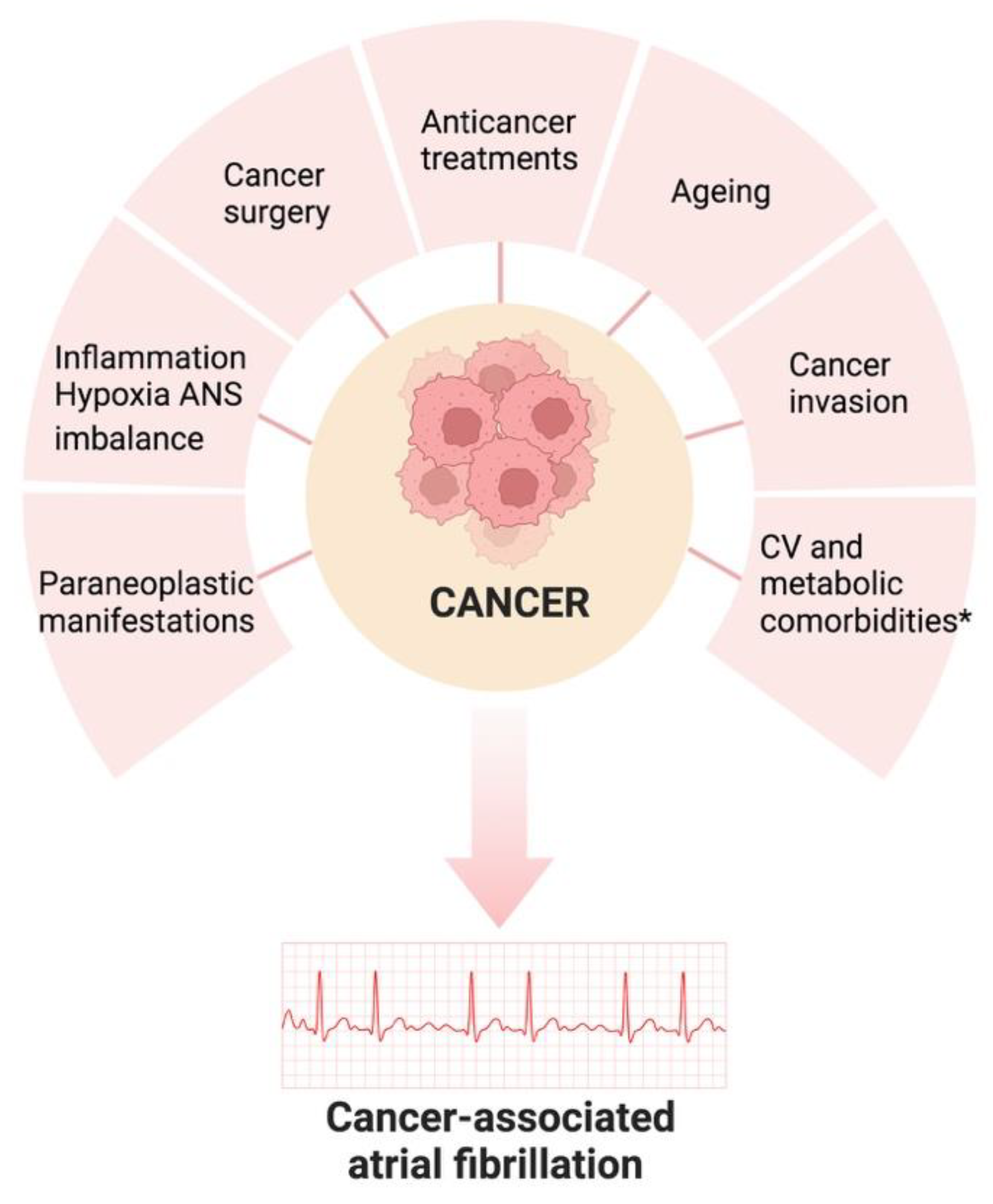
Figure 2.
Structured approach to anticoagulation for atrial fibrillation in patients with cancer. AF, atrial fibrillation; CHA2DS2-VASc, Congestive heart failure, Hypertension, Age ≥ 75 years (2 points), Diabetes mellitus, Stroke (2 points)—Vascular disease, Age 65–74 years, Sex category (female); eGFR, estimated glomerular filtration rate; GI, gastrointestinal; GU, genitourinary; HAS-BLED, Hypertension, Abnormal renal and liver function, Stroke, Bleeding Labile international normalized ratio, Elderly, Drugs or alcohol.
Figure 2.
Structured approach to anticoagulation for atrial fibrillation in patients with cancer. AF, atrial fibrillation; CHA2DS2-VASc, Congestive heart failure, Hypertension, Age ≥ 75 years (2 points), Diabetes mellitus, Stroke (2 points)—Vascular disease, Age 65–74 years, Sex category (female); eGFR, estimated glomerular filtration rate; GI, gastrointestinal; GU, genitourinary; HAS-BLED, Hypertension, Abnormal renal and liver function, Stroke, Bleeding Labile international normalized ratio, Elderly, Drugs or alcohol.
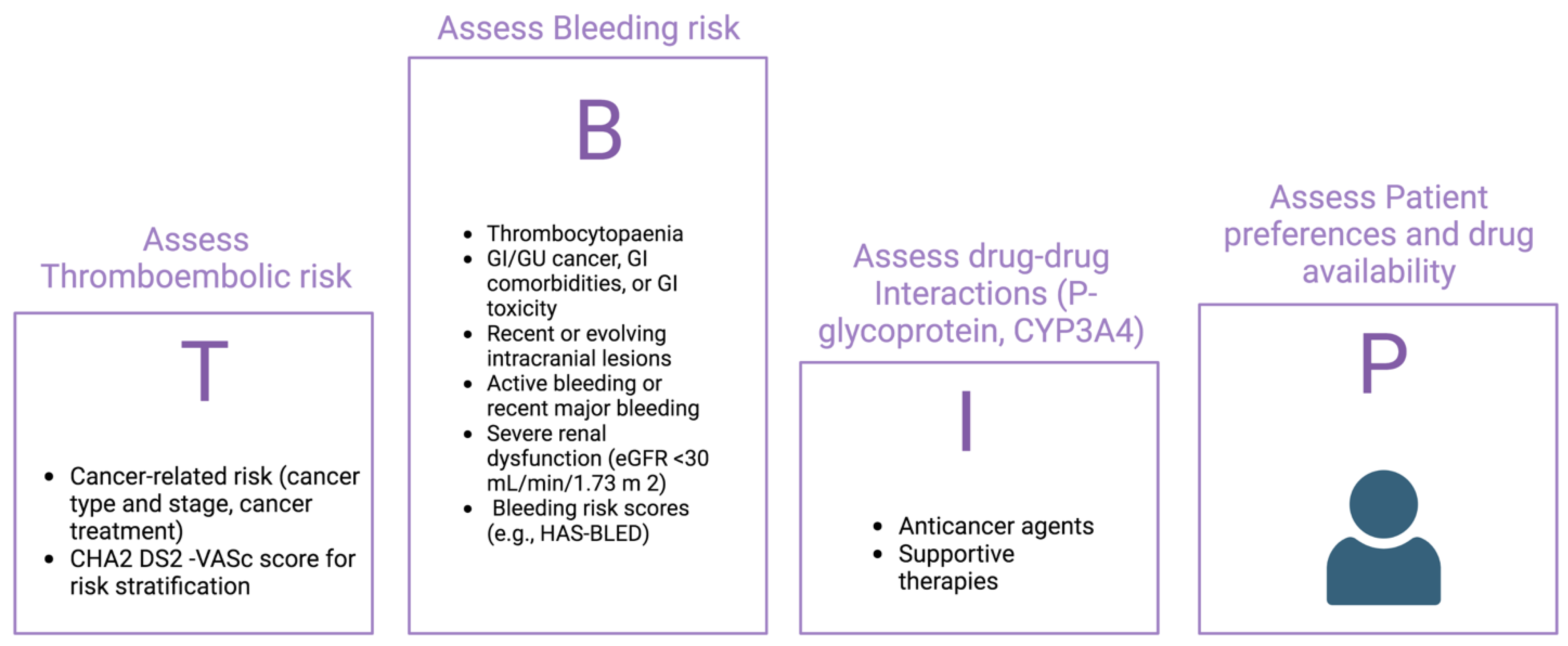

Table 1.
Large observational studies and post-hoc analyses of pivotal trials utilizing NOACs in AF patients.
Table 1.
Large observational studies and post-hoc analyses of pivotal trials utilizing NOACs in AF patients.
| Study design | Efficacy outcomes | Safety outcomes | Participants | AF patients with cancer on NOAC, n (%) | NOAC prescribed (n) | Type of cancer | Follow-up, y or m |
|---|---|---|---|---|---|---|---|
| Post hoc analysis from ARISTOTLE trial (39) | Stroke, systemic embolism. Secondary endpoints included myocardial infarction and death |
Major bleeding, (ISTH criteria) | 18,183 patients with AF, a total of 615 patients had a history of cancer at baseline | 615 (49.8) | Apixaban | Prostate (29) Breast (16) Colon (11) Bladder (7) Gastric (2) Lung (3) Melanoma (6) Others (26) |
1.8 |
| Post hoc analysis from ROCKET-AF trial (38) | Stroke, Systemic Embolism | Composite of major and NMCR bleeding events. | 14 264 patients with AF, a total of 640 patients (4.5%) had a history of cancer at baseline | 640 | Rivaroxaban | Prostate cancer (28.6) Colorectal cancer (16.1) Breast cancer (14.7) Genitourinary cancer (12.2) Others (34.4) |
1.9 |
| Post hoc analysis from ENGAGE- AF TIMI 48 (40) | composite of stroke (ischemic or hemorrhagic) or SEE | major bleeding, (ISTH criteria) | 21 105 patients with atrial fibrillation, of which 1153 patients (5.5%) had also cancer | 1153 (5.5) | Edoxaban | Gastrointestinal (20.6%), prostate (13.6%), lung (11.1%), bladder (7.7%), breast (6.7%) |
2.8 |
| Retrospective observational study performed utilizing the national VA* Healthcare data (41) | all-cause mortality, ischemic stroke | hemorrhagic stroke | 654,732 patients who received care at the VA from 2010 to 2015 and were diagnosed with active cancer and AF | 196,521 (30) | Not specified | Not specified | 1.0 |
| Retrospective analysis of a large health care claims database (42) | Not severe bleeding events, ischemic stroke, and VTE (secondary outcomes) | severe bleeding events (primary outcome) | 532 743 AF patients with cancer | 41 036 (7) | Rivaroxaban, Apixaban, Dabigatran | Genitourinary (29.7) Breast (20.9) Lung (11.1) Gastrointestinal (11.6) Gyneco-oncological (2.4) Hematological (9.4) Other (14.9) |
|
| retrospective cohort study (46) | Cerebrovascular accident | Gastrointestinal bleeding, intracranial hemorrhage | 1,133 patients with active cancer and NVAF |
842 (74.3%) | Apixaban, Rivaroxaban, Dabigatran, Edoxaban | Breast Genitourinary Gastrointestinal Hematologic Lung Skin |
4.4 |
| retrospective cohort study (47) | ischemic stroke or systemic embolism | major bleeding | 7675 patients with active cancer and NVAF |
4244 (55.3%) | Apixaban, Rivaroxaban, Dabigatran |
Prostate (22.2) Breast (19.6) Lung (19.3) Colorectal (14.5) |
7.7 (months) |
| A retrospective observational subgroup analysis of the ARISTOPHAS (43) | time to first stroke/SE | time to first major bleeding | 466,991 of which 9% (40271) had also active cancer | 24900 | Apixaban, Rivaroxaban, Dabigatran |
prostate (29%), female breast (17%), genitourinary (14%), lung (13%) |
6-8 months |
Disclaimer/Publisher’s Note: The statements, opinions and data contained in all publications are solely those of the individual author(s) and contributor(s) and not of MDPI and/or the editor(s). MDPI and/or the editor(s) disclaim responsibility for any injury to people or property resulting from any ideas, methods, instructions or products referred to in the content. |
© 2024 by the authors. Licensee MDPI, Basel, Switzerland. This article is an open access article distributed under the terms and conditions of the Creative Commons Attribution (CC BY) license (https://creativecommons.org/licenses/by/4.0/).
Copyright: This open access article is published under a Creative Commons CC BY 4.0 license, which permit the free download, distribution, and reuse, provided that the author and preprint are cited in any reuse.


