

Submitted:
22 May 2023
Posted:
23 May 2023
You are already at the latest version
Abstract
The environmental pollution by microplastics (MPs) has become a growing concern, and measures are being taken in many countries. Long-term and extensive MPs investigations involving not only professional researchers but also the citizenry are needed to understand the pollution situation and to confirm the decreasing trend of MPs pollution as a result of pollution control measures. In this study, the author evaluated the accuracy of a simple method of investigating MPs on sandy beaches that can be conducted even by high school students. In a land survey using such simple tools as a tape measure and cardboard, 70% of the deviations were within approximately 20 cm when multiple surveys of approximately 20 m distance were performed. Even without heavy liquid, 89% of MPs could be recovered using only seawater. An investigation of MPs content by sampling 0.5 cm of the surface layer of sand could explain more than half of the MPs content when the sand was sampled to a depth of approximately 50 cm below the surface layer. A method in which the recovered MPs are not visually sorted but floating matter after boiling is considered as MPs is acceptable. If there was no concern about pumice contamination, the overestimation was within approximately 1.5 times. Simple laboratory equipment such as buckets, sieves, seawater, hot plates, dryers, and electronic balances could achieve lower limits of quantification of MPs of 13 mg-MPs/m2-sand and 2 mg-MPs/kg-sand.
Keywords:
microplastics
; beach
; measurement
; simple method
; accuracy
1. Introduction
Plastics have become an indispensable material in people’s lives owing to their light weight and durability, and their continuous and massive production has led to the global pollution of the environment with plastic waste [1]. Between 4 and 12 million metric tons of land-based plastic waste is estimated to have entered the marine environment in 2010 alone [2], and the forecast is for a cumulative increase to 12 billion metric tons by the year 2050 [3]. Cole et al. (2011) have found that plastics make up a significant portion of the marine litter in the ocean [4]. Common plastics accumulate in landfills and the natural environment without decomposing because they are not biodegradable [5]. This is why the almost permanent pollution of the natural environment by plastic waste is becoming more and more of a problem. Meanwhile, plastic debris breaks down into small fragments called microplastics (MPs) under the UV rays of sunlight [6,7], and MPs have been found in major oceans and coastal areas [5].
MPs have the potential for accumulation of organic contaminants such as carcinogenic polychlorinated biphenyls (PCBs) [8,9,10]), polycyclic aromatic hydrocarbons (PAHs), and others [11,12], which eventually leads to organic pollutants entering the marine food web [13]. Plastics were detected in the gastrointestinal tracts of 36.5% of fish in the English Channel [14]. Plastic fragments found in the stomachs and abdominal fat of oceanic seabirds have been found to contain polybrominated diphenyl ethers [15].
In September 2015, the United Nations General Assembly adopted 17 Sustainable Development Goals (SDGs) to address the planet’s complex challenges. Sustainable Development Goal 14 (SDG 14) aims to “conserve and sustainably use the oceans, seas, and marine resources for sustainable development.” Goal 14.1 of SDG 14 aims to prevent and significantly reduce marine pollution of all kinds. One indicator of marine pollution is plastic debris density (14.1.1b). The publication of “A European Strategy for Plastics in a Circular Economy” in January 2018 by the European Union (EU) was followed by the setting of new recycling targets and the proposal of regulations for single-use plastics (DIRECTIVE OF THE EUROPEAN PARLIAMENT AND OF THE COUNCIL on the reduction of the impact of certain plastic products on the environment) in May 2018. This will help prevent marine pollution and reduce the use of plastics around the world. As these measures take effect, the amount of MPs in the environment will probably decrease in the long term, although there may be a need for collection of plastic waste which is present.
MPs have been extensively studied in marine sediments such as sand [9,16,17,18,19,20,21,22,23,24,25,26]. However, those studies use various approaches to identify, quantify, and report measured concentrations of MPs, making spatiotemporal comparisons difficult [27].
Attempts have been made to standardize the investigation method for beach litter. United Nations Environment Programme (UNEP) Guidelines [28], OSPAR [29], and NOAA [30] have introduced investigation methods for coastal marine litter. Although these methods target not MPs but mainly large marine litter, the methods for determining study sites and recording data can be used as a reference. The Marine Directors of the EU, acceding countries, candidate countries, and European Free Trade Association countries have jointly developed a common strategy for supporting the implementation of Directive 2008/56/EC, the “Marine Strategy Framework Directive” (MSFD). In order to achieve or maintain Good Environmental Status (GES) in European seas, the “Guidance on Monitoring of Marine Litter in European Seas” has been developed (JRC) [31]. The GESAMP Working Group (WG40) on “Sources, fate, and effects of plastics and microplastics in the marine environment”, co-led by the Intergovernmental Commission on Oceanography (IOC-UNESCO) and the UNEP, has issued a report “Guidelines for the Monitoring and Assessment of Plastic Litter in the Ocean” (GESAMP) [32]. The principal purpose of the report is to provide recommendations, advice, and practical guidance for establishing programs to monitor and assess the distribution and abundance of plastic litter in the ocean. The JRC and GESAMP protocols provide methods for investigating microplastics.
Suppose we are to test the hypothesis that MPs will decrease in the long term as plastic use is reduced. In that case, we need to develop a simple investigation method that can be conducted by the citizenry and can increase MPs data accumulation rate, rather than rely on costly investigation results from professional researchers. JRC (2013) states that investigation by volunteers including the citizenry lowers costs, serves as an early warning system, and generates more data series [31]. GESAMP (2019) states that citizen scientists represent a very important resource for gathering information on the environment [32].
The above guidelines have introduced an investigation method that can be conducted by the citizenry. The author is committed to the development of a simple method for investigating MPs on sandy beaches that can be performed by high school students. The Japanese Ministry of Education, Culture, Sports, Science and Technology (MEXT) has recommended that students, including high school students, engage in exploratory activities. In this regard, MPs research activities are a prime opportunity for students to engage in exploratory activities. Furthermore, high schools have simple laboratory equipment suitable for MPs research activities. Therefore, high school students are the main target of this study. The author aims to adopt simple methods for land survey, MPs sampling, MPs sorting, and MPs analysis using simple tools. The methods are not original, rather, they are existing and conceived by others. In addition, the author aims to determine how accurate these simple investigation methods are.
The questions to be answered in this study are as follows: Can land survey be done correctly with simple tools? Is flotation sorting with seawater or tap water sufficient? Is it acceptable to collect only surface sand? Can we use boiling instead of visual sorting? What is the lower limit of quantification of MPs for this method?
JRC (2013) recommends particle count as the standard unit of MPs [31]. When one MP particle is split in two, the number doubles whereas the weight is invariant. In order to report observed values that are less prone to fluctuation, the author reports the weight rather than the number of particles in this study. Note that the author also possesses data on the number of particles. Frias et al. (2018) recommend that MPs be reported by weight as well as by number [33].
2. Materials and Methods
In this section, the overall process of the MPs investigation method is disclosed. The accuracy of the simple land survey, sampling, and field and laboratory methods for sorting MPs, which comprise the overall process, is evaluated, and the lower limit of quantification is calculated.
2.1. Overall process
First, the names of the locations where the MPs investigation will be conducted are defined. A somewhat large area to be studied, such as a sandy beach, is called the “study site”. At the study site, one unit block where sand is sampled is called the “sampling square”, which corresponds to the quadrat in GESAMP (2019) [32], and a representative point to indicate its location (coordinates) is called the “sampling point” in this study. Figure 1 shows the relationship among the study site, the sampling point, and the sampling square.
Second, the study site is determined. Accessibility and safety are essential, whereas the availability of tap water for cleaning instruments is desirable. In this study, the investigation is conducted in Nagasaki Prefecture, located on Kyushu Island in western Japan. Sandy beaches A, B, C, and D in the prefecture are selected as the study sites. All experiments are conducted mainly at Beach A; depth profiling experiments (section 2.4) at Beaches C and D; and boiling experiments (section 2.5), at Beaches B, C, and D. As the purpose of this study is not to compare the abundance of MPs among the study sites, the locations are not described. The investigation period is from July 2021 to December 2022.
A flow chart of the investigation procedure is shown in Figure 2. First, the sampling square and the sampling point are determined. As described later, the sampling point is determined first in the case of fixed spot investigation, and the sampling square is determined first in the case of hot spot investigation. A land survey is required to identify or record the sampling point location (Figure 3a).
Because our goal is to determine the MPs content in sand, the sand itself is not needed. However, as there is no available means of recovering MPs alone, we first collect the surface sand. MPs are plastic fragments measuring 5 mm or less, so a sieve with a 5 mm aperture is used to remove large particles (Figure 3b). The MPs content per area is determined by measuring the area of the sampling square or by making a 1 m2 square in advance. If the weight of the collected sand is measured, the MPs content per sand weight can be reported if the MPs weight is negligible.
The time available to work in the field is limited. In addition, there may be difficulties owing to weight or conservation concerns in bringing sand back from the beach. Considering these factors, we try to extract MPs from sand quickly in the field. Therefore, in this study, we conduct sorting by flotation using seawater or tap water. For example, sand is placed in a bucket filled with seawater, and the sand and the seawater are stirred together a little at a time and allowed to stand for approximately 3 minutes. Floating matter (Figure 3c) is scooped out with a ladle along with seawater and brought back to the laboratory in a plastic bottle or plastic bag.
The floating matter brought back to the laboratory contains particles other than MPs. MPs are sorted from the floating matter using the method described in Section 2.5, washed with tap water, dried, and weighed (Figure 3d).
2.2. Land survey
2.2.1. Significance of and procedure for land survey
Once the location of the sampling square is known, it is possible to link the MPs content to the location information, thereby providing valuable MPs abundance data. A land survey is necessary to determine the location. In addition to the location of MPs, surveying is also necessary to record the location of the high tide line and the topography of the study site. In this study, a single point (sampling point) is recorded as a representative of the sampling square. For example, a 1 m2 sampling square is drawn with the sea in the background, and the sampling point is set at the far left (Figure 4a).
The purpose of surveying is twofold. First, for multiple periodic investigations, we survey and determine the sampling square at a fixed location (fixed spot). This will eliminate the concern of MPs fluctuation due to differences in location and make it easier to clarify seasonal variations and accumulation rates. Next, if the location of the sampling square changes depending on the investigation date, the location should be recorded. For example, we can visually determine the location where MPs are relatively abundant, such as on the high tide line or in a blowhole (hot spot), and record the location by surveying that sampling point. In other words, for a fixed spot investigation, we survey first and then drive in a stake (hereinafter referred to as “staking after survey”), and for a hot spot investigation, we survey after driving in a stake (hereinafter referred to as “survey after staking”).
Although it is possible to prepare a transit theodolite for surveying, it is expensive (approximately 300,000 yen) and requires specialized knowledge, which are not in line with the purpose of this study. In recent years, everyone may own a smartphone and the latitude and the longitude of the current location can be easily determined by the included GPS. This would be the easiest method because the survey can be completed by a single person.
NOAA has introduced a surveying method that uses GPS on smartphones, a tape measure, and measuring wheels [30]. As of 2023, the margin of error is a few meters [34], and GPS can be used only if this error can be tolerated in a MPs investigation. Advanced GPS equipment is expensive, so we do not deal with it in this study. Because this study targets high school students, inexpensive and easily available surveying instruments will be used.
If the latitude and the longitude are known by GPS, roads, beaches, high tide lines, and sampling squares can be drawn. On the other hand, when using a tape measure, it is necessary to take a more relative approach. It is useful to describe the sampling square and the high tide line on an aerial photograph such as Google Maps. The location of an object is determined using immovable natural or artificial materials visible on Google Maps as reference points. In Figure 5a, concrete expansion joints can be seen. From the reference point, draw an auxiliary line A in the direction visible on Google Maps, and then draw an auxiliary line B, a vertical line passing through the object. By measuring the lengths of these auxiliary lines, the object can be described on Google Maps at a reduced scale, and the positional relationship between objects can be determined.
In the author’s experience, objects located approximately 20 m away from the reference point are often surveyed. If the object is farther away than this, another reference point is selected to reduce the distance. A 50 m tape measure is used for auxiliary line A and a 10 m tape measure, for B, and cardboard is used to measure right angles. Three persons are needed for the survey, as follows. Person P1 imagines the auxiliary line and guides person P3 (Figure 3a). Person P2 holds the 0 m portion of the tape measure at the reference point. Person P3 stretches and pulls the tape measure and follows the guidance of P1. There are two ways in which P1 can imagine an auxiliary line. The first method is to bring the line of sight close to a straight line such as a concrete joint or a cardboard edge (Figure 3a). Next, if only the reference point can be determined and there is no straight line available, hold out a hand-held notebook or ruler in front of you and connect the reference point to a clear immovable point (a mountain or structure) in the distance (Figure 4b). After placing the 50 m tape measure on auxiliary line A (consider this as the y-axis direction), place the cardboard along the measure, imagine an extension line by bringing your eyes close to the edge that is perpendicular to the measure, and slide the cardboard so that it intersects the object (Figure 4c). Place the 10 m measure on the determined extension line (this is considered the x-axis direction). In the staking after survey, the stake is driven at the set x. In the survey after staking, the distances y and x to the stake are recorded. In any case, the position of the stake (xi, yi) with respect to the reference point, the origin (0, 0), is obtained (Figure 6a). Figure 5b shows an example of the vertical auxiliary line A, the green circle with length yi, the horizontal auxiliary line B, the orange circle with length xi, and the red square, which is the sampling square. The thick red line is the high tide line that is surveyed separately. To describe the target location on Google Maps, scale = distance on screen/actual distance, is needed. As an example, we measure the width of a building (Figure 5) in the field.
2.2.2. Errors in simple survey
Because a novice surveyor uses simple tools such as a tape measure and cardboard, and visually imagines the extension line, there will be errors in the location of the stakes (xi, yi) in both staking after survey and survey after staking. However, no matter how expensive the surveying instruments are, errors will still occur. The width of the building in Figure 5 is approximately 30 meters. Therefore, even if there is an error of approximately 30 cm in the description of the survey points on this map, that error is 1/100 of the width of the building and can be ignored. Thus, even if there is a slight error, there should be no problem if the data are used for the part that is not affected by the error.
In the staking after survey, the position of the driven stake will be off from the true position, and in the survey after staking, there will be errors in the data of the recorded stake positions (xi, yi). The purpose of the survey experiment is to evaluate these errors. Six sets of surveys are repeated twice with three persons rotating roles at Beach A. For staking after survey, six stakes are driven by surveying 20.00 m in the y-axis direction and 5.00 m in the x-axis direction (the smallest unit is 0.01 m). The six stakes are located in a small plot, and 30 cm rulers are placed at right angles around them. Photographs are taken from directly above, and the coordinates of the six stakes are recorded by considering the intersection of the rulers as a temporary origin (Figure 4d). For the survey after staking, a stake is driven approximately 20 m in the y-axis direction and 5 m in the x-axis direction, and six measurements are made (the smallest unit id 0.01 m). Figure 6b shows the six coordinates and the average coordinate. Staking after survey yields coordinates (xi, yi) (i = 1, 2, 3, 4, 5, 6) for the six stakes, and six points exist when we put dots in the xy coordinates. Survey after staking yields six coordinates (xi, yi). In this case, there is one stake and its position is fixed, but there are six surveyed coordinates. Therefore, if we enter the surveyed coordinates in the xy coordinates, there are six points as in the case of staking after survey. From these six coordinates, the average coordinate (xave, yave) is obtained.
(xave, yave) = 1/n Σ (xi, yi)
The distance ei, i.e., the deviation, from the average coordinate to each of the six coordinates is calculated from the Pythagorean theorem.
ei = {(xi – xave)2 + (yi – yave)2}0.5
If this distance is squared, the deviation is squared. These six ei2 are summed to obtain the sum of squares. Dividing this by the degrees of freedom (n = 6, n – 1 = 5) gives the unbiased variance s2.
s2 = 1/(n – 1) Σ ei2
Because the square root of the unbiased variance is not an estimator of the population standard deviation σ, σ is estimated by dividing s by the correction factor c4 (0.952 for n = 6) obtained from the gamma function.
σ = s / c4
Dividing the population standard deviation σ by the distance from the origin to the average coordinate lave gives the coefficient of variation CV.
CV = σ / lave
In the staking after survey, we assume a distance of 20.00 m in the y-axis direction and 5.00 m in the x-axis direction, i.e., (202 + 52)0.5 = 20.6 m, and in the survey after staking, the distance from the origin to the average coordinate is considered as lave. This coefficient of variation expresses the variability of the survey results. In the staking after survey, the measurement error by the 30 cm ruler is also introduced; however, it is ignored because it is much smaller than lave = 20.6 m.
2.3. Heavy liquid sorting
Because the density of polyethylene (PE) and polypropylene (PP), the 1st and 2nd most produced plastics, is less than 1 g/cm3, if sand containing them is added into tap water (density: approximately 1 g/cm3) or seawater (density: approximately 1.02 to 1.03 g/cm3) [32], sand (density: 2 g/cm3 or higher) will sink and PP and PE will float. Thus, PP and PE can be easily sorted from sand. However, polyvinyl chloride (PVC) and polyethylene terephthalate (PET) cannot be sorted from sand because their density exceeds 1 g/cm3 and thus they sink in tap water or seawater. In other words, the flotation sorting using tap water or seawater is not applicable to plastics with densities exceeding 1 g/cm3. Considering the phenomenon of plastics drifting across oceans, it is justifiable to target only plastics with a density of less than 1 g/cm3 for investigation. However, plastics that are hollow (e.g., recapped plastic bottles), composite materials (e.g., fishing nets with floats), and plastics originating from the landward side, all of which having densities exceeding 1 g/cm3, can also be present on beaches. If heavy liquids with densities exceeding 1 g/cm3 are used, PVC and PET will also float and thus can be sorted. However, it appears that most of the MPs in the sand can be collected by flotation sorting using tap water or seawater. As tap water and seawater are readily available on site and almost free of charge, we would like to complete the flotation sorting with these liquids. After flotation sorting of MPs in sand with tap water or seawater, is there any plastic with a density greater than 1 g/cm3 remaining in the sand? If the amount of MPs recovered by the heavy liquid is negligible compared with the amount of MPs recovered by the tap water or seawater, the flotation sorting method using only tap water or seawater is justified.
At Beach A, MPs in the sand surface layer (0.5 cm depth) are sorted with seawater, and then calcium chloride (TOKUYAMA, snow-melting agent) is added to the seawater containing sand until saturation (Figure 4e) to create a heavy liquid with a density of approximately 1.3 to 1.4 g/cm3, at which time the MPs that finally floated are collected. The density of the calcium chloride solution exceeds that of the sodium chloride solution (1.2 g/cm3) [27]. Twelve experiments are conducted at the sites. The density of the liquid is measured with a buoy (AS ONE, polycarbonate density meter).
2.4. Distribution in depth
When conducting field investigations on sandy beaches, MPs are noticeably found on the surface of sand. In this study, MPs are usually collected by sampling to a depth of approximately 0.5 cm from the surface layer of sand at a sampling square of 1 m2. This sand can fit into one 10 L bucket. In many cases, no MPs are found in the surface layer of the sand after sampling. If we assume that the original plastic of the MPs on the beach has drifted across the ocean, we can imagine how the plastic is carried by the waves and left on the sand at high tide. In other words, it is natural that plastics and MPs exist in abundance on the sand. When investigating the MPs content of sand, it is quite hard work to dig deep [32], so we want to collect only the surface layer of sand. This sampling method may also be justified by the fact that MPs are found mostly in the surface layer. Is it appropriate to collect only the surface layer of sand for the MPs study? In other words, when taking into consideration the MPs distribution of multiple layers in the depth direction, do the MPs in the surface layer account for most of the total MPs?
Multiple layers of sand are collected (at depths of 0–0.5 cm and 0.5–5 cm, and every 5 cm thereafter), and the MPs contained in the sand are measured. One side of the sampling square is 38 cm so that one 10-L bucket can hold 5-cm-thick sand. Experiments are conducted at three sites in Beach A. Strings are placed on the ground surface to mark the 0 cm depth. A shovel is used to dig out the sand around a square prism with 38 cm sides, and a plastic plate is used to cut out the prism (Figure 4f). A 5-cm-deep layer is scooped out with the same plastic plate. In addition, at Beaches C and D, MPs are measured by collecting approximately 0.5-cm-deep sand from the surface layer of the 1 m2 sampling square and then collecting approximately 0.5-cm-deep sand from the layer immediately below the surface layer.
2.5. Sedimentation of wood particles by boiling
Floating matter contains not only MPs but also plants, animals, and pumice (Figure 7). Wood particles are particularly abundant. Although MPs can be visually sorted out, the need for subjective judgment is a concern. Wood particles float on the seawater in the bucket, but not on the seawater at the study site. The true density of the wood is 1.40–1.47 g/cm3 [35]. The author has hypothesized that the wood floats owing to the low bulk density of the dry wood (0.22–0.81 g/cm3). If the wood is boiled to promote wetting, the wood will sink and only the MPs will float. The fact that the wood sinks by boiling is conceived from the author’s unsuccessful experiments on MPs. In this way, the MPs content is considered the amount of floating matter after boiling.
The floating matter is stored in plastic bottles or plastic bags and transported back to the laboratory. The floating matter is transferred to beaker A with the seawater (Figure 4g) and boiled on a hot plate at a set temperature of 140°C for 3 hours with a watch glass on top. After boiling, the (primary) floating matter is separated into secondary floating matter and sediment (Figure 4h). Prepare beaker B filled with tap water. Scoop out the floating matter in beaker A after boiling with a spoon and put it into beaker B. Stir and wash the floating matter. The liquid remaining in beaker A is decanted and discarded, and tap water is repeatedly added and stirred to wash the sediments. The washed floating matter and sediments are transferred to stainless steel trays and dried in a dryer at 80°C for at least one night. The weights of the dried matter are measured on an electronic balance. The MPs are visually removed and separated into floating MPs, other floating matter, sedimented MPs, and other sediment (Figure 7). The weight of each is measured on an electronic balance. This is done at Beaches A, B, C, and D.
2.6. Lower limit of quantification
GESAMP recommends that quality assurance of MPs analysis be performed by reporting the results of spiked recovery tests [32]. Dou et al. (2021) reported a recovery rate of more than 57% as a result of recovery tests of MPs in soil [36]. This would allow us to express the accuracy and precision of the measurement.
On the other hand, when the author repeated the measurement of MPs in sand, many results of 0 mg were obtained. In this study, MPs in sand are collected by flotation sorting, boiled and dried, visually sorted for MPs, and weighed on weighing paper. Even if MPs cannot be confirmed, the weighing is completed by the act of placing the non-existent MPs on the weighing paper. At this point, the weight of MPs is 0 mg. However, owing to the procedure for sample collection and measurement, there is a lower limit of quantification (LLOQ), and the LLOQ should be noted and reported instead of 0 mg as the measured value. A dummy value referring to the LLOQ should be used instead of 0 mg when taking the average of multiple measured values at low concentrations. Therefore, the LLOQ for the method used in this study, in which 1 m2 of sand is collected in a bucket and MPs are collected and measured by flotation sorting with seawater, is determined.
The method introduced by Mermet (2008) for determining the LLOQ on the basis of an evaluation of the repeatability of actual measurements [37] is used as a reference. Standard samples (MPs) of several set weights are prepared within the range including the estimated LLOQ. The standard samples are made from a PP beverage bottle cap (density 0.93 g/cm3) ground with a grinder to a powder of less than 1 mm. Six different standard samples of the same set weight (approximately 8, 15, 22, 30, 37, and 44 mg) are prepared, 3 each. A bucket of 1 m2 of clean (presumably very low MPs) sand (0.5 cm deep) from Beach A is collected and loaded with the standard samples. MPs are collected, boiled, and measured by flotation sorting with seawater.
Because there are three standard samples at the same set weight (added amount), three recoveries are obtained. We assume a model in which a smaller addition makes recovery and measurement more difficult and a larger addition makes it easier. Then, if the addition is small, the measured value (recovery) will vary greatly from the average value, and if the addition is large, the measured value will vary little from the average value. The average and the unbiased variance of these three recovery values are obtained, and the square root of the unbiased variance is divided by the average to obtain the coefficient of variation. In other words, if the added amount is small, the coefficient of variation is large, and if the added amount is large, the coefficient of variation is small. The relationship between the addition x and the coefficient of variation y is regressed by some mathematical formula. In this case, a power function (Equation (6)) is used.
y = ax–b
The actual added amount x and the coefficient of variation y are plotted on a scatter plot, the regression curve (Equation (6)) is fitted, and the coefficients a and b are obtained using Excel’s graphing function (least squares method). The equation is transformed to find the weight x (Equation (7)).
x = (y/a)(–1/b)
Set and substitute an acceptable coefficient of variation y, and also substitute coefficients a and b to obtain the weight of minimum MPs added x (LLOQ) that satisfies the required coefficient of variation.
3. Results
3.1. Errors in simple survey
An example of the results of staking after survey (first survey) is shown in Table 1. The coefficient of variation CV is 0.43% for the first survey and 0.60% for the second survey. The results of the survey after staking are 0.93% for the first survey and 0.90% for the second one. Using the maximum value of approximately 1%, this means that when driving a large number of stakes at a distance of approximately 20 m or surveying an existing stake a large number of times, assuming a normal distribution, 70% of the deviations are within approximately 20 cm (20 × 1/100 = 0.2 m).
3.2. Heavy liquid sorting
The results of heavy liquid sorting (n = 12) are shown in Figure 8. Floating MPs in seawater (light MPs) average 392 mg-MPs/m2-sand and those in heavy liquid (heavy MPs) average 48 mg-MPs/m2-sand. Both light and heavy MPs are recovered from sand collected from a single sampling square. Therefore, a paired t-test is performed, and light MPs are found to be significantly more common than heavy MPs (p < 0.05). On average, light MPs account for 89% and heavy MPs, for 11% of all MPs (light + heavy MPs).
3.3. Distribution in depth direction
The distribution of MPs in the depth direction is shown in Figure 9a. In the first investigation, sampling is performed to a depth of 40 cm, and in the second and third investigations, sampling to a depth of 50 cm is performed. In the first investigation, 99% of the total MPs are in the first layer (0 to 0.5 cm); and in the second and third investigations, 50% and 49% of the total MPs are in the first layer. The total amounts of MPs collected in the three investigations differ significantly. The total weights of MPs in the second and third investigations are 35% and 6% of that in the first investigation, respectively. If the overall weight of MPs is small, the presence of even a few MPs in deeper areas will reduce the percentage in the first layer. Therefore, by simply averaging the MPs content per layer of the three investigations, we find that the first layer contains 85% of the total MPs.
At Beaches C (n = 12) and D (n = 12), for MPs present to a depth of 1 cm, at least 70% are present in the surface layer down to 0.5 cm depth (Figure 9b). When the total MPs content for the 12 sites is calculated, more than 95% of the MPs are present in the surface layer down to 0.5 cm depth at both beaches.
3.4. Sedimentation of wood particles by boiling
For all samples (n = 189), floating matter, sedimented matter, and total matter after boiling weigh 647 g, 460 g, and 1107 g, respectively (Figure 10a). After visual sorting, floating MPs, other floating matter, sedimented MPs, other sediments, and total weigh 309, 312, 2, 455, and 1078 g, respectively. The total weights are almost equal. The MPs that sink after boiling account for 0.8% of the total MPs, which is a negligible amount. The amount of floating matter is 2.1 times that of the total MPs.
The relationship between total MPs and floating matter is shown in Figure 10b. The red line is the theoretical line showing MPs:floating = 1:1. Almost all points are above the theoretical line. The regression line for all samples is y = 1.88x + 0.33 (r2 = 0.67). Here, a submarine volcanic eruption on the Ogasawara Islands occurred in August 2021, and a large amount of pumice drifted into the area around Okinawa southwest of Kyushu in October. Subsequently, the pumice stone drift was observed at other sites as well. In this study, large quantities of pumice were found on Beach B in September 2022 and on Beach D in December 2022. The pumice did not settle at all by boiling. Samples containing this pumice (n = 65) are indicated by orange circles in the figure. It can be seen that it deviates significantly upward from the theoretical line.
For the sample without pumice (n = 124), floating matter, sedimented matter, and total matter after boiling weigh 184 g, 217 g, and 400 g, respectively. After visual sorting, the floating MPs, other floating matter, sedimented MPs, other sediments, and total weigh 125, 54, 1, 216, and 397 g, respectively. The total weights are almost equal. The MPs that sink after boiling account for 1.1% of the total MPs, which is negligible. The amount of floating matter is 1.5 times that of the total MPs. The regression line is y = 1.21x + 0.25 (r2 = 0.97).
3.5. Lower limit of quantification
The relationship between the amount of MPs added and the amount recovered is shown in Figure 11a. The diagonal line is the theoretical line indicating that the amount of MPs added is equal to the amount recovered (100% recovery). All the recoveries are below the theoretical line, indicating that the recovery is less than 100% (62% at 8 mg added, a minimum of 75% otherwise). The observed values on the scatter plot appear to be aligned in a straight line with a right ascension.
4. Discussion
4.1. Survey accuracy when using simple survey tools
When novice persons surveyed a distance of approximately 20 m several times using simple tools, such as a tape measure and cardboard, using immovable natural and artificial objects in the study site as landmarks, 70% of the deviations were within approximately 20 cm. The accuracy of the survey is sufficient to drive stakes at the same sampling points as the previous investigations and to mark the survey points on the map.
4.2. MPs that sink in seawater
Of the MPs contained in the sand, 11% could be recovered not with seawater (density 1.03 g/cm3) but only with heavy liquid (minimum density 1.33 g/cm3). In other words, 89% of MPs could be recovered using only seawater. Therefore, if workload reduction is desired, recovery of MPs by seawater only is acceptable.
PE, PP [38], PVC, polyurethane (PUR), polystyrene (PS), and PET are the six major types of plastic [39]. The major categories in global nonfiber plastic production are PE (36%), PP (21%), and PVC (12%), followed by PET, PUR, and PS (<10% each) [3]. These groups account for 92% of plastic production. Approximately 42% of nonfiber plastics are used for packaging, mainly PE, PP, and PET.
The densities of PP, PE, and PVC are 0.90–0.92, 0.91–0.95, and 1.16–1.30 g/cm3, respectively [32], so PP and PE float in seawater. Although there is no guarantee that the breakdown of plastics produced will match the breakdown of MPs on beaches, it is expected that PP and PE will account for the majority of MPs on beaches. Of the MPs found on beaches, PP and PE account for 89% [40], 87% [41], 77% [42], 74% (PS: 25%) [43], 59% (PS: 33%) [44], and 57% (PS: 38%) [45]. PS may be Styrofoam [44]. Styrofoam has a density of 0.02–0.64 g/cm3 [32] and thus floats in seawater. This means that the majority of MPs found on sandy beaches are floating in seawater.
4.3. MPs distribution in depth
On the basis of the results of the three investigations at Beach A, it became clear that an investigation of MPs content by sampling 0.5 cm of the surface layer of sand could explain more than half of the MPs content when the sand was sampled to a depth of approximately 50 cm below the surface layer. Therefore, if workload reduction is desired, sand sampling only in the surface layer is acceptable.
Duncan et al. (2018) studied the distribution of MPs in sand to a depth of 60 cm in Cyprus and found that 42% of all MPs were found in the surface layer [46]. Sewwandi et al. (2022) studied the distribution of MPs in sand at seven locations to a depth of 1 m in Sri Lanka and found MPs in the surface layer at five locations [40]. Nhon et al. (2022) studied the distribution of MPs in sand to a depth of 7 cm in Vietnam and found that 82% of all MPs were found in the surface layer (2 cm) [45]. This confirms that MPs in the surface layer account for the majority of the MPs.
On the other hand, there are reports that MPs were found at greater depths as well. Rather than being present in high concentrations at any depth, they are present in high concentrations at certain depths [40,47]. In this study, too, MPs were found in uniquely high concentrations at depths of 20 cm and 35 cm at No. 2 in Figure 9a. No. 2 is located high on the backshore, where runoff sand to the sea was returned and deposited by heavy equipment. Thus, the No. 2 surface layer was approximately 1 m higher at the time of investigation than before it. No. 1 and No. 3 are located on the foreshore. This phenomenon of high concentration of MPs may be due to some events, such as sand movement.
4.4. Error in considering floating matter as MPs after boiling
Unlike the visual sorting of MPs, the boiling process does not require experience and skill and is therefore easy to standardize. Therefore, the author would like to propose a method in which floating matter after boiling is considered as MPs. Because of the presence of wood particles and pumice that do not sink even after boiling, the boiling method estimates approximately twice the amount of MPs compared with the true amount of MPs. However, pumice stone drift is an isolated case. If there is no concern about pumice contamination, the overestimation is within approximately 1.5 times. Boiling takes 3 hours, but several samples can be processed simultaneously. If this error can be tolerated, the boiling method is a simple method for estimating MPs. The author originally assumed the presence of floating inorganic matter such as pumice, and planned to measure the loss on ignition of floating matter as the final method to determine the weight of MPs. However, because the author decided to keep the samples in consideration of the possibility of measuring the number of particles and determining their materials of origin, the author did not perform heat treatment.
4.5. Lower limit of quantification of MPs using the measurement method presented in this study
The coefficients of variation obtained from several recoveries for a given MP added are shown in Figure 11b. The coefficients in Equation (6) are a = 528.8 and b = 1.281. From Equation (7), if coefficients of variation y = 10% or 20% are allowed, the minimum MPs added x are 22 or 13 mg, respectively. In this experiment, MPs are added to and collected from the sand in the surface layer of 1 m2 of sandy beach, so 22 and 13 mg-MPs/m2-sand are the LLOQs per area as it is. In addition, the average dry weight of sand collected from 1 m2 in this experiment is 5.4 kg-sand/m2-sand, so dividing by this, 4 and 2 mg-MPs/kg-sand are the LLOQs per weight. In this study, as the development of the MPs investigation method is in its initial stage, a lenient standard (coefficient of variation of 20%) is adopted, and 13 mg-MPs/m2-sand and 2 mg-MPs/kg-sand are considered to be the LLOQs. In addition, measured values below the LLOQs are replaced with the LLOQs.
4.6. Problems of this study, future research
Land survey required a lot of labor and time. The author looks forward to the improved accuracy of smartphone GPS that will require only one person for land survey.
It is obvious that it is better to use heavy liquid rather than seawater to investigate all MPs. The author has not been able to measure heavy MPs with a density higher than that of the heavy liquid used in this study. At least the same volume of heavy liquid as sand is required, and the preparation of heavy liquid is costly. We would like to see the accumulation of data showing that the amount of heavy plastics requiring heavy liquid is negligible.
It is not guaranteed that MPs will not be present in deep areas. If possible, sand should be excavated to depths of 50 cm occasionally. Beach cleaning is often conducted at Beach A, and the runoff sand is returned with heavy equipment. It is ironic that beach management activities make MPs investigations difficult. The MPs should be collected before moving the sand to avoid burying the MPs. It is possible that there is heavy plastic that does not float in seawater at great depths, but this was not measured in this study. The heavy plastic should be measured.
MPs in the sample after boiling were visually sorted, but there was no guarantee that they were purely MPs. The author would like to acquire a list of items that can be easily misidentified as MPs.
The LLOQ test expresses a part of precision, but does not express accuracy. As shown in Figure 11a, the low recovery rate means that the accuracy is low. In the future, we should conduct addition-recovery tests over a wide range of MPs weights. In addition, the plastics used were selected from a single type of material and adjusted to a narrow particle size range of 1 mm or less. Data should be accumulated for other samples.
4.7. Significance of this study
The accuracy of simple MPs investigation method could be determined. If data on the amount of MPs in the environment could be accumulated by not only professional researchers but also high school students, it would be possible to clarify long-term trends in MPs degradation.
Another possible method is to remove sand with a sieve and measure MPs remaining on the sieve. However, the method used in this study has the advantage of not excluding small MPs. Calcium chloride is one of the major constituents of seawater, so there is little risk of environmental contamination during sorting operations on a beach. Calcium chloride for laboratory use is expensive (3000 yen per 0.5 kg, FUJIFILM Wako Chemicals), whereas calcium chloride for melting ice on roads is inexpensive (4000 yen per 25 kg). The cost of salt is 2500 yen per 25 kg. Although plastic instruments were used, no contamination was observed because there were no outliers in the experimental data for the LLOQ test. If the measurement is made near the LLOQ set in this study, there should be no concern about contamination. However, the author does not recommend the use of plastic products because of the possibility of large contamination.
5. Conclusions
The accuracy of the simple MPs investigation method can be explained as follows.
- (1)
- Sufficient accuracy is achieved by the land survey that uses a tape measure and a piece of cardboard as simple tools, and immovable natural and artificial objects in the study site as landmarks. When multiple surveys of approximately 20 m distance are performed, 70% of the deviations are within approximately 20 cm.
- (2)
- If workload reduction is desired, recovery of MPs by seawater only is acceptable. Eighty-nine percent of MPs can be recovered with seawater only.
- (3)
- If workload reduction is desired, sand sampling only in the surface layer is acceptable. An investigation of MPs content by sampling 0.5 cm of the surface layer of sand can explain more than half of the MPs content when the sand is sampled to a depth of approximately 50 cm below the surface layer.
- (4)
- If workload reduction is desired, a method in which the recovered MPs are not visually sorted, but the floating matter after boiling is considered as MPs is acceptable. If there is no concern about pumice contamination, the overestimation is within approximately 1.5 times.
- (5)
- Simple laboratory equipment such as buckets, sieves, seawater, hot plates, dryers, and electronic balances can achieve lower limits of quantification of MPs of 13 mg-MPs/m2-sand and 2 mg-MPs/kg-sand.
Funding
This research was supported by a Grant-in-Aid for Scientific Research C (20K12208) from the Japan Society for the Promotion of Science (JSPS). The APC was funded by the Institute of Integrated Sciences and Technology, Nagasaki University.
Data Availability Statement
Data are available upon reasonable request to the corresponding author.
Acknowledgments
The authors would like to thank Mr. Soichiro YAMAMOTO, Mr. Hayata GOTO, Mr. Toshiki SATO, Ms. Yui CHINJU, and Ms. Yukari TOKIYASU.
Conflicts of Interest
The author declares no conflict of interest. The funder had no role in the design of the study; the collection, analyses or interpretation of data; the writing of the manuscript or the decision to publish the results.
References
- Willis, K.A.; Eriksen, R.; Wilcox, C.; Hardesty, B.D. Microplastic Distribution at Different Sediment Depths in an Urban Estuary. Front. Mar. Sci. 2017, 4, 419. [CrossRef]
- Jambeck, J.R.; Geyer, R.; Wilcox, C.; Siegler, T.R.; Perryman, M.; Andrady, A.; Narayan, R.; Law, K.L. Plastic waste inputs from land into the ocean. Science 2015, 347, 768–771. [CrossRef]
- Geyer, R.; Jambeck, J.R.; Law, K.L. Production, use, and fate of all plastics ever made. Sci. Adv. 2017, 3, e1700782. [CrossRef]
- Cole, M.; Lindeque, P.; Halsband, C.; Galloway, T.S. Microplastics as contaminants in the marine environment: A review. Mar. Pollut. Bull. 2011, 62, 2588–2597, . [CrossRef]
- Barnes, D.K.A.; Galgani, F.; Thompson, R.C.; Barlaz, M. Accumulation and fragmentation of plastic debris in global environments. Philos. Trans. R. Soc. Lond. B Biol. Sci. 2009, 364, 1985–1998, doi:10.1098/rstb.2008.0205.
- Browne, M.A., Galloway, T., Thompson, R. Microplastic–an emerging contaminant of potential concern? Integrated Environmental Assessment and Management 2007, 3 (4), 559–561.
- Andrady, A.L., Microplastics in the marine environment. Mar. Pollut. Bull. 2011, 62, 1596–1605.
- Mato, Y.; Isobe, T.; Takada, H.; Kanehiro, H.; Ohtake, C.; Kaminuma, T. Plastic Resin Pellets as a Transport Medium for Toxic Chemicals in the Marine Environment. Environ. Sci. Technol. 2001, 35, 318–324, . [CrossRef]
- Frias, J.; Sobral, P.; Ferreira, A. Organic pollutants in microplastics from two beaches of the Portuguese coast. Mar. Pollut. Bull. 2010, 60, 1988–1992, . [CrossRef]
- Bellas, J.; Martínez-Armental, J.; Martínez-Cámara, A.; Besada, V.; Martínez-Gómez, C. Ingestion of microplastics by demersal fish from the Spanish Atlantic and Mediterranean coasts. Mar. Pollut. Bull. 2016, 109, 55–60, . [CrossRef]
- Rochman, C.M.; Hoh, E.; Hentschel, B.T.; Kaye, S. Long-Term Field Measurement of Sorption of Organic Contaminants to Five Types of Plastic Pellets: Implications for Plastic Marine Debris. Environ. Sci. Technol. 2012, 47, 1646–1654, . [CrossRef]
- Rochman, C.M.; Hoh, E.; Kurobe, T.; Teh, S.J. Ingested plastic transfers hazardous chemicals to fish and induces hepatic stress. Sci. Rep. 2013, 3, 3263, . [CrossRef]
- Vandermeersch, G.; Van Cauwenberghe, L.; Janssen, C.R.; Marques, A.; Granby, K.; Fait, G.; Kotterman, M.J.; Diogène, J.; Bekaert, K.; Robbens, J.; et al. A critical view on microplastic quantification in aquatic organisms. Environ. Res. 2015, 143, 46–55, . [CrossRef]
- Lusher, A.; McHugh, M.; Thompson, R. Occurrence of microplastics in the gastrointestinal tract of pelagic and demersal fish from the English Channel. Mar. Pollut. Bull. 2013, 67, 94–99, . [CrossRef]
- Tanaka, K.; Takada, H.; Yamashita, R.; Mizukawa, K.; Fukuwaka, M.-A.; Watanuki, Y. Accumulation of plastic-derived chemicals in tissues of seabirds ingesting marine plastics. Mar. Pollut. Bull. 2013, 69, 219–222, . [CrossRef]
- Ng, K.; Obbard, J. Prevalence of microplastics in Singapore’s coastal marine environment. Mar. Pollut. Bull. 2006, 52, 761–767, . [CrossRef]
- Corcoran, P.L.; Biesinger, M.C.; Grifi, M. Plastics and beaches: A degrading relationship. Mar. Pollut. Bull. 2009, 58, 80–84, . [CrossRef]
- Turner, A.; Holmes, L. Occurrence, distribution and characteristics of beached plastic production pellets on the island of Malta (central Mediterranean). Mar. Pollut. Bull. 2011, 62, 377–381, . [CrossRef]
- Martins, J., Sobral, P. Plastic marine debris on the Portuguese coastline: a matter of size? Mar. Pollut. Bull. 2011, 62, 2649–2653.
- Hidalgo-Ruz, V.; Thiel, M. Distribution and abundance of small plastic debris on beaches in the SE Pacific (Chile): A study supported by a citizen science project. Mar. Environ. Res. 2013, 87-88, 12–18, . [CrossRef]
- Mathalon, A.; Hill, P. Microplastic fibers in the intertidal ecosystem surrounding Halifax Harbor, Nova Scotia. Mar. Pollut. Bull. 2014, 81, 69–79, . [CrossRef]
- Masura, J., Baker, J., Foster, G., Arthur, C. Laboratory Methods for the Analysis of Microplastics in the Marine Environment: Recommendations for Quantifying the Synthetic Particles in Water and Sediments, NOAA Marine Debris Division: Silver Spring, USA, 2015.
- Wessel, C.C.; Lockridge, G.R.; Battiste, D.; Cebrian, J. Abundance and characteristics of microplastics in beach sediments: Insights into microplastic accumulation in northern Gulf of Mexico estuaries. Mar. Pollut. Bull. 2016, 109, 178–183, . [CrossRef]
- Crichton, E.M.; Noël, M.; Gies, E.A.; Ross, P.S. A novel, density-independent and FTIR-compatible approach for the rapid extraction of microplastics from aquatic sediments. Anal. Methods 2017, 9, 1419–1428, . [CrossRef]
- Maes, T.; Jessop, R.; Wellner, N.; Haupt, K.; Mayes, A.G. A rapid-screening approach to detect and quantify microplastics based on fluorescent tagging with Nile Red. Sci. Rep. 2017, 7, srep44501, . [CrossRef]
- Quinn, B.; Murphy, F.; Ewins, C. Validation of density separation for the rapid recovery of microplastics from sediment. Anal. Methods 2017, 9, 1491–1498, . [CrossRef]
- Hidalgo-Ruz, V.; Gutow, L.; Thompson, R.C.; Thiel, M. Microplastics in the Marine Environment: A Review of the Methods Used for Identification and Quantification. Environ. Sci. Technol. 2012, 46, 3060–3075, doi:10.1021/es2031505.
- Cheshire, A. C., Adler, E., Barbière, J., Cohen, Y., Evans, S., Jarayabhand, S., Jeftic, L., Jung, R.T., Kinsey, S., Kusui, E.T., Lavine, I., Manyara, P., Oosterbaan, L., Pereira, M.A., Sheavly, S., Tkalin, A., Varadarajan, S., Wenneker, B., Westphalen, G. UNEP/IOC Guidelines on Survey and Monitoring of Marine Litter. UNEP Regional Seas Reports and Studies. 186 (IOC Technical Series No. 83): 2009, 120.
- OSPAR. Guideline for monitoring marine litter on the beaches in the OS PAR maritime area. OSPAR Commission 2010, 84 pp.
- Burgess, H.K., Herring, C.E., Lippiatt, S., Lowe, S., Uhrin, A.V. NOAA Marine Debris Monitoring and Assessment Project Shoreline Survey Guide. NOAA Technical Memorandum NOSOR&R 56. 2021, 20 pp. DOI 10.25923/g720-2n18.
- JRC. Guidance on monitoring of marine litter in European Seas. MSFD GES Technical Subgroup on Marine Litter, Joint Research Centre Scientific and Policy Reports, European Commission 2013, 128 pp.
- GESAMP. Guidelines or the monitoring and assessment of plastic litter and microplastics in the ocean (Kershaw P.J., Turra A. and Galgani F. editors), (IMO/FAO/UNESCO-IOC/UNIDO/WMO/IAEA/UN/UNEP/UNDP/ISA Joint Group of Experts on the Scientific Aspects of Marine Environmental Protection). Rep. Stud. GESAMP 2019, No. 99, 130p.
- Frias et al. Standardised protocol for monitoring microplastics in sediments. JPI-Oceans BASEMAN 2018.
- GPS.GOV. https://www.gps.gov/systems/gps/modernization/sa/data/, 2000.
- Ferrero, F. Dye removal by low cost adsorbents: Hazelnut shells in comparison with wood sawdust. J. Hazard. Mater. 2007, 142, 144–152, . [CrossRef]
- Dou, P.-C.; Mai, L.; Bao, L.-J.; Zeng, E.Y. Microplastics on beaches and mangrove sediments along the coast of South China. Mar. Pollut. Bull. 2021, 172, 112806, . [CrossRef]
- Mermet, J.M. Spectrochim. Acta Part B 2008, 63, 166.
- Majewsky, M.; Bitter, H.; Eiche, E.; Horn, H. Determination of microplastic polyethylene (PE) and polypropylene (PP) in environmental samples using thermal analysis (TGA-DSC). Sci. Total. Environ. 2016, 568, 507–511, . [CrossRef]
- Wu, W.-M.; Yang, J.; Criddle, C.S. Microplastics pollution and reduction strategies. Front. Environ. Sci. Eng. 2016, 11, 6. [CrossRef]
- Sewwandi, M.; Amarathunga, A.; Wijesekara, H.; Mahatantila, K.; Vithanage, M. Contamination and distribution of buried microplastics in Sarakkuwa beach ensuing the MV X-Press Pearl maritime disaster in Sri Lankan sea. Mar. Pollut. Bull. 2022, 184, 114074, . [CrossRef]
- Prarat, P.; Hongsawat, P. Microplastic pollution in surface seawater and beach sand from the shore of Rayong province, Thailand: Distribution, characterization, and ecological risk assessment. Mar. Pollut. Bull. 2022, 174, 113200, . [CrossRef]
- Zahari, N.Z.; Tuah, P.M.; Junaidi, M.R.; Ali, S.A.M. Identification, Abundance, and Chemical Characterization of Macro-, Meso-, and Microplastics in the Intertidal Zone Sediments of Two Selected Beaches in Sabah, Malaysia. Water 2022, 14, 1600, . [CrossRef]
- Rabari, V., Patel, K., Patel, H., Trivedi, J. Quantitative assessment of microplastic in sandy beaches of Gujarat state, India. Mar. Pollut. Bull. 2022, 181, 113925.
- Al Nabhani, K.; Salzman, S.; Shimeta, J.; Dansie, A.; Allinson, G. A temporal assessment of microplastics distribution on the beaches of three remote islands of the Yasawa archipelago, Fiji. Mar. Pollut. Bull. 2022, 185, 114202, . [CrossRef]
- Nhon, N.T.T.; Nguyen, N.T.; Hai, H.T.N.; Hien, T.T. Distribution of Microplastics in Beach Sand on the Can Gio Coast, Ho Chi Minh City, Vietnam. Water 2022, 14, 2779, . [CrossRef]
- Duncan, E.M.; Arrowsmith, J.; Bain, C.; Broderick, A.C.; Lee, J.; Metcalfe, K.; Pikesley, S.K.; Snape, R.T.; van Sebille, E.; Godley, B.J. The true depth of the Mediterranean plastic problem: Extreme microplastic pollution on marine turtle nesting beaches in Cyprus. Mar. Pollut. Bull. 2018, 136, 334–340, . [CrossRef]
- Turra, A.; Manzano, A.B.; Dias, R.J.S.; Mahiques, M.M.; Barbosa, L.; Balthazar-Silva, D.; Moreira, F.T. Three-dimensional distribution of plastic pellets in sandy beaches: shifting paradigms. Sci. Rep. 2014, 4, 4435, . [CrossRef]
Figure 1.
Definition of terms related to the location of the investigated object.
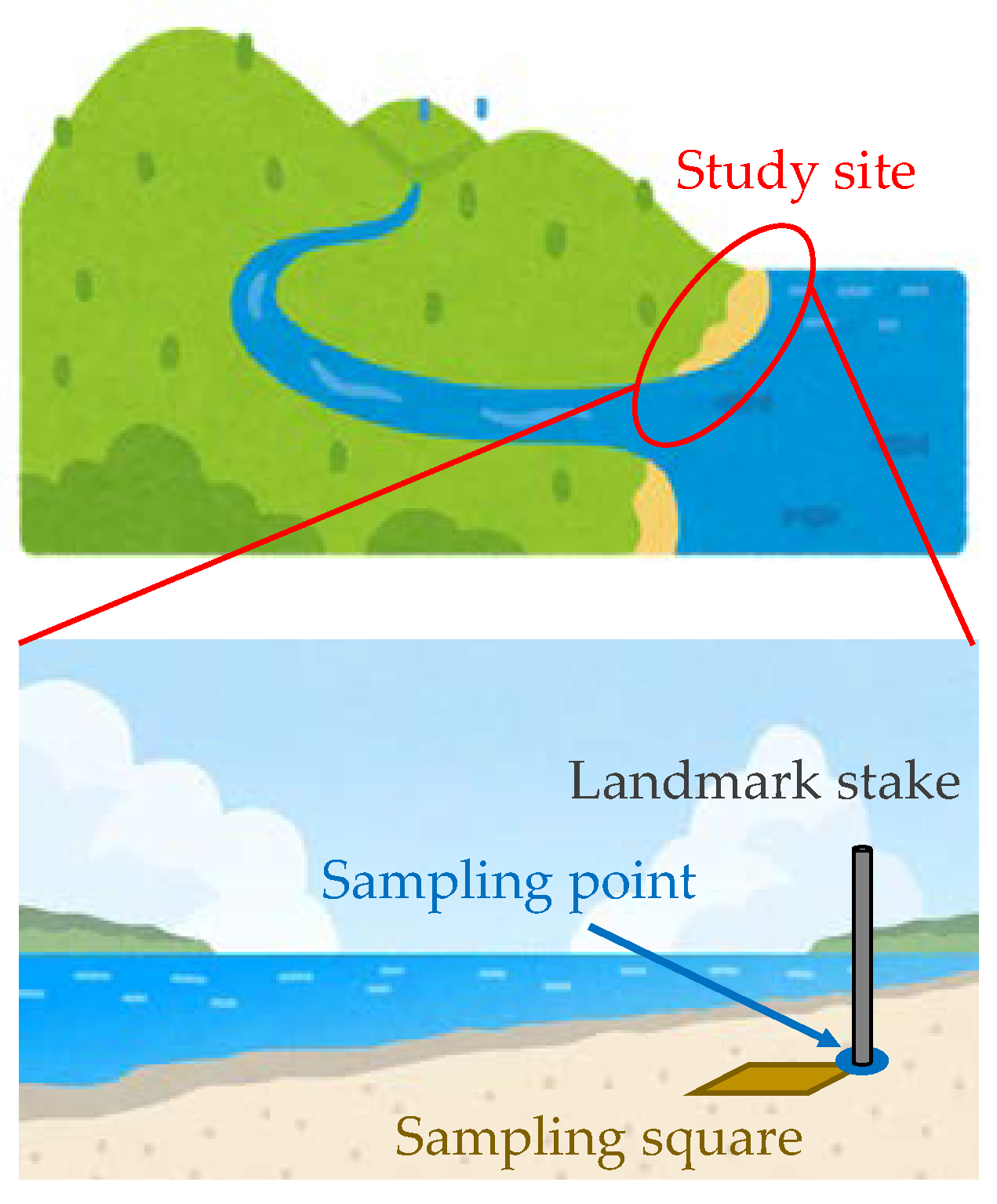
Figure 2.
Flow chart of procedure for investigating MPs.
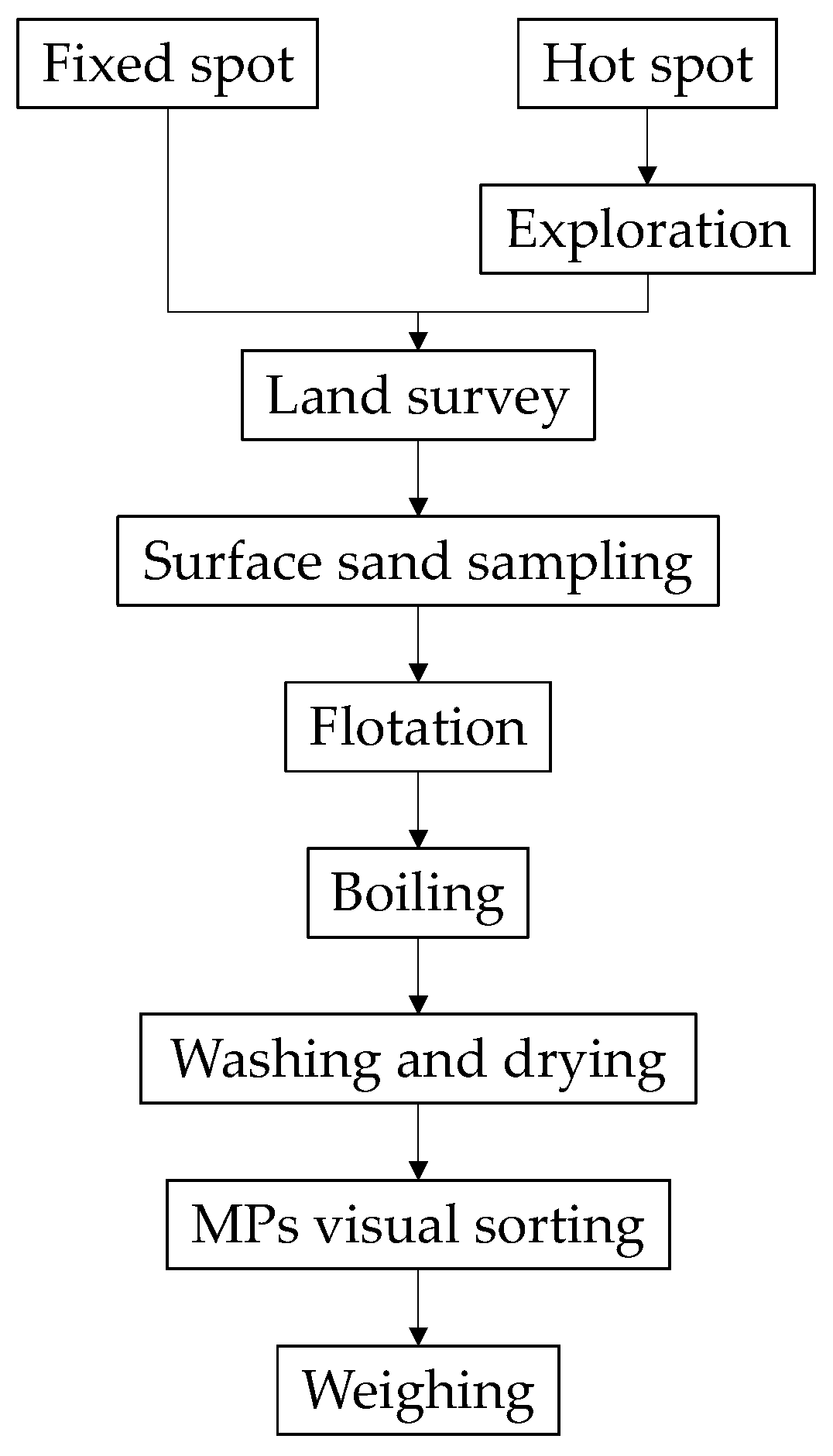
Figure 3.
Photographs of investigation procedure.
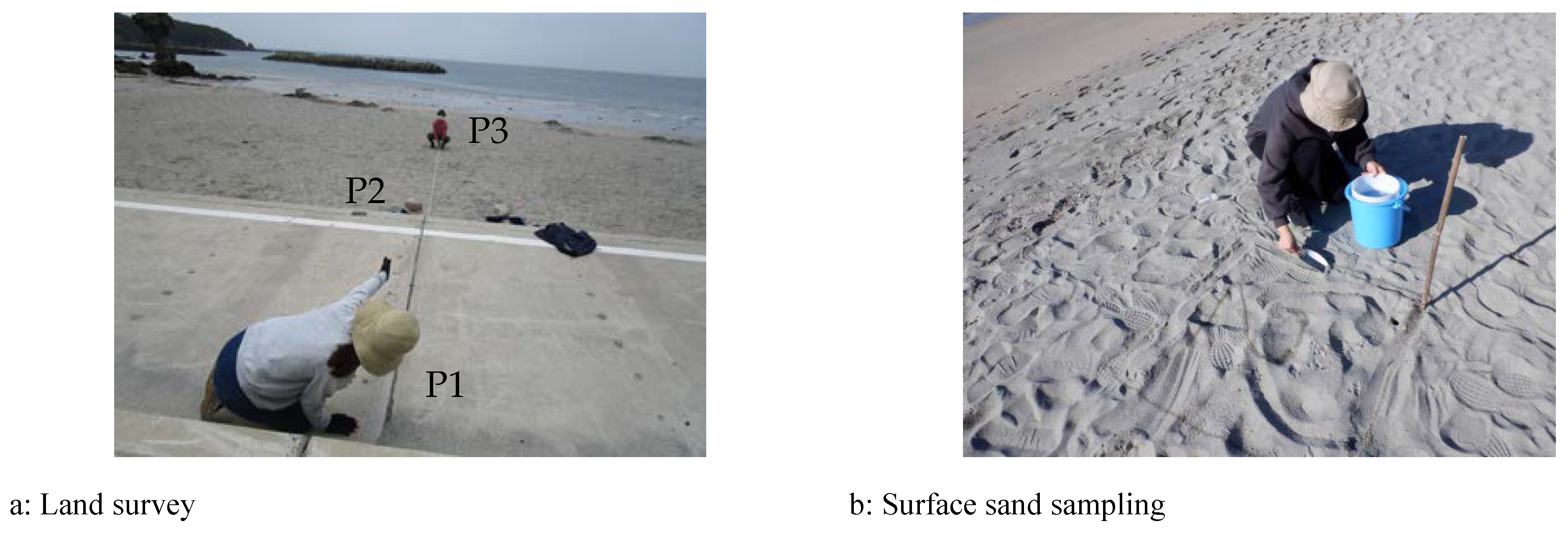
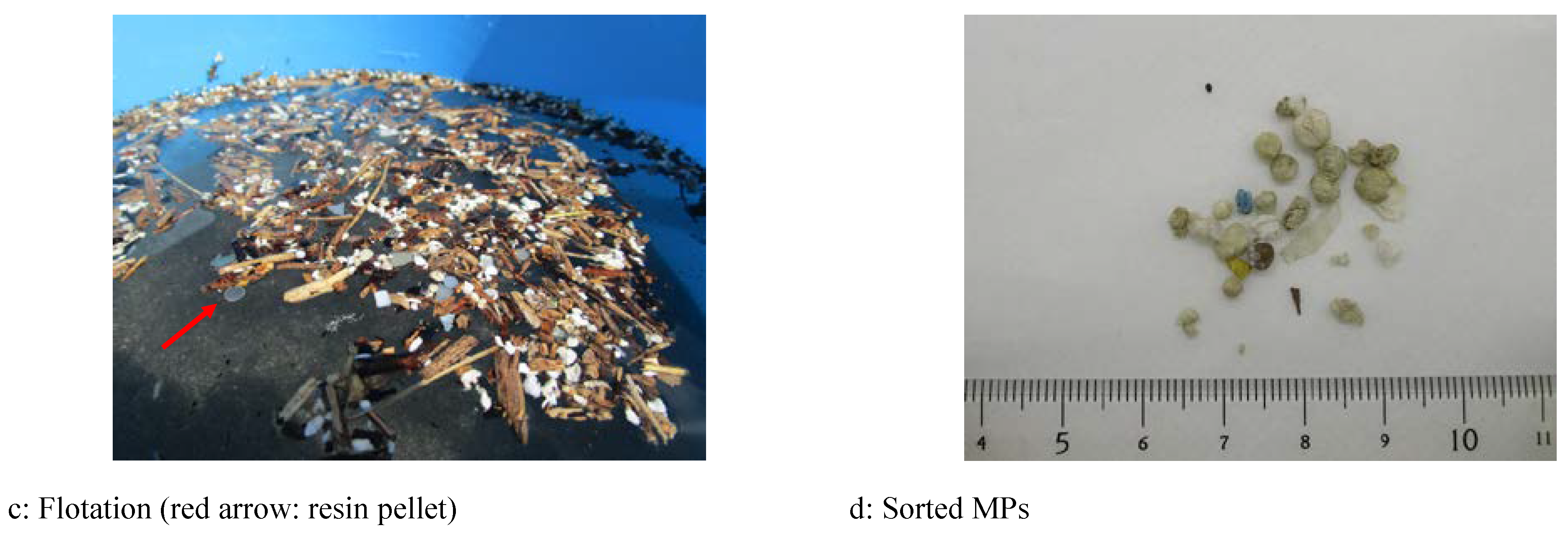
Figure 4.
Photographs of experiment.
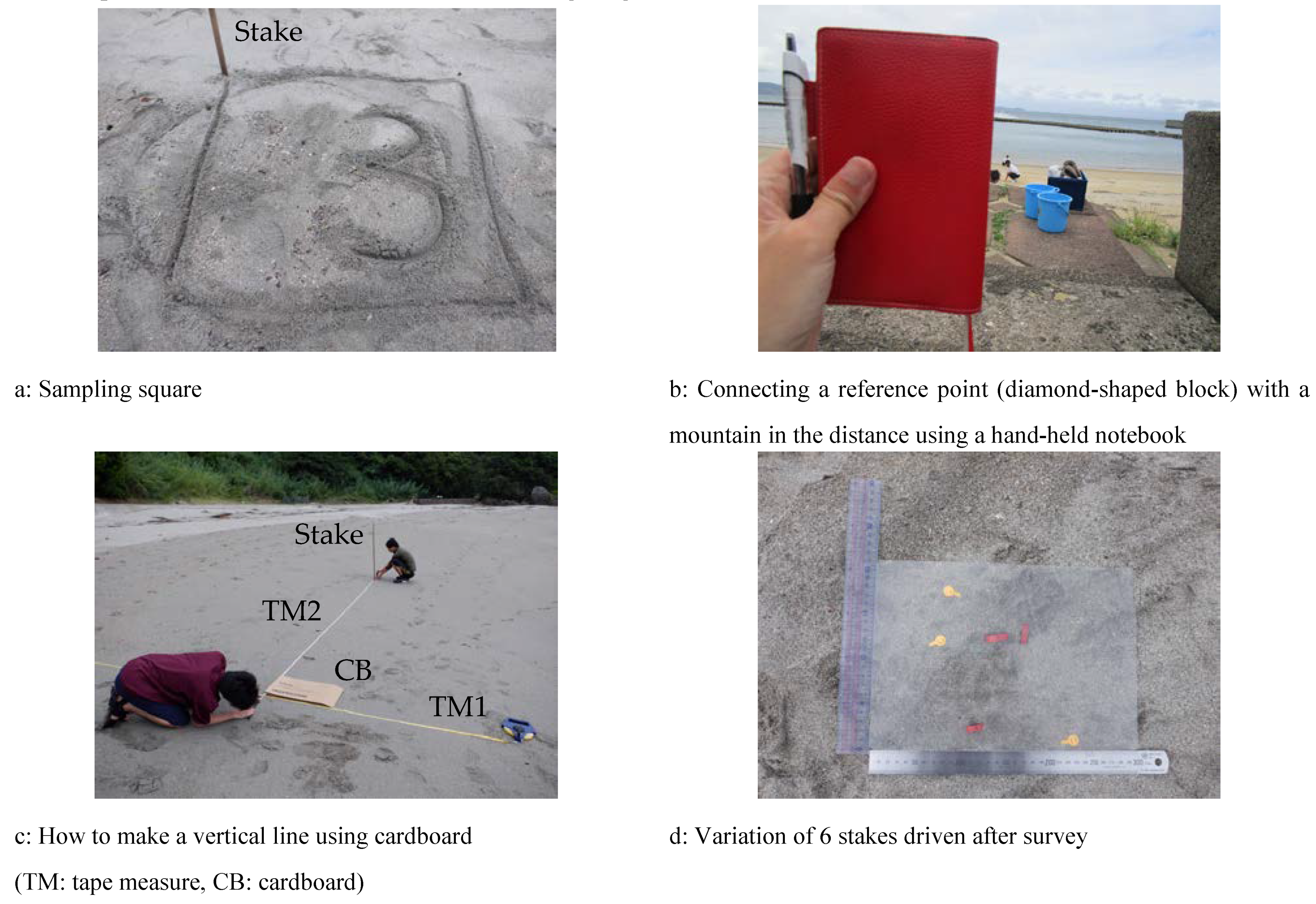
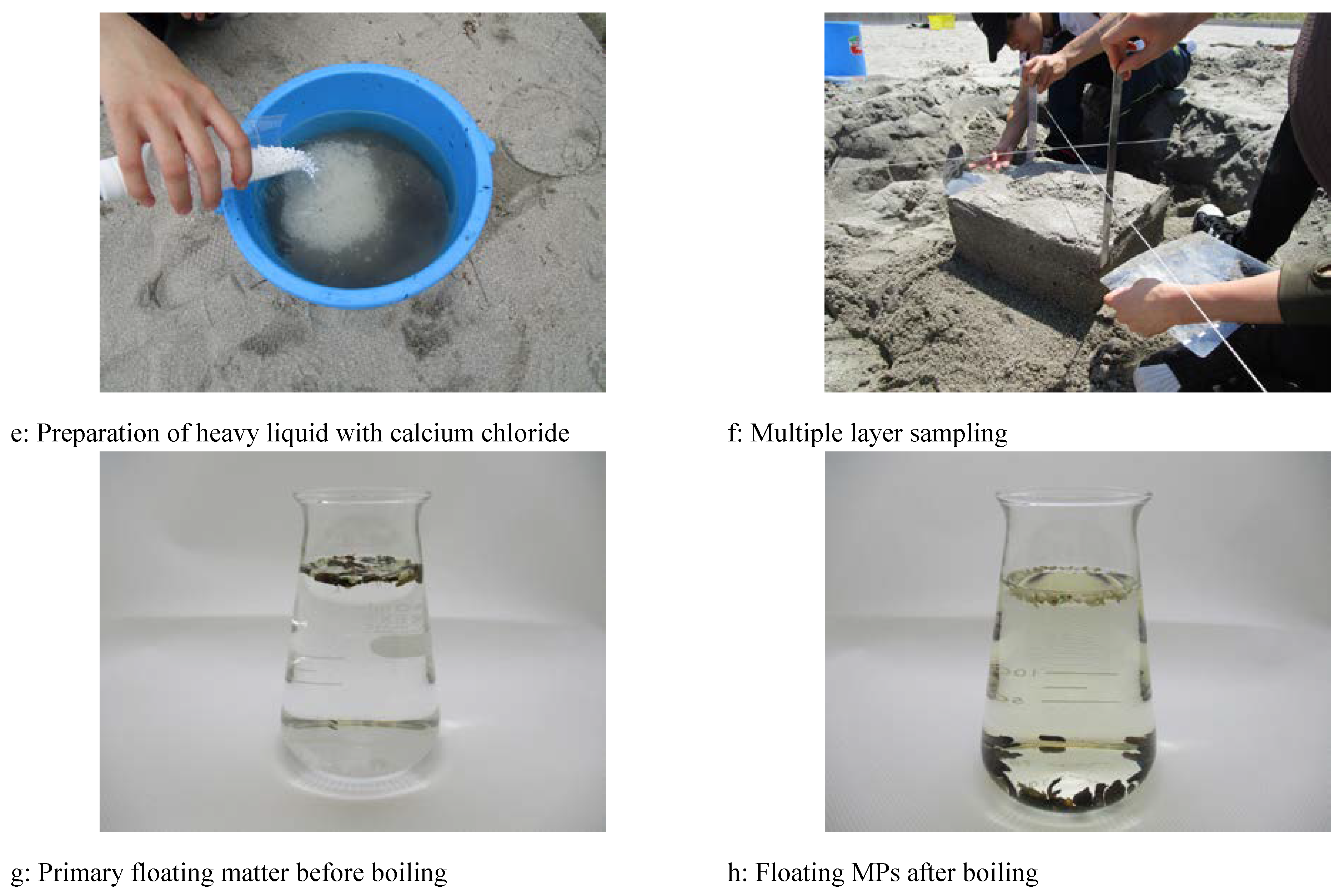
Figure 5.
Aerial photographs of the study site (Google Maps).
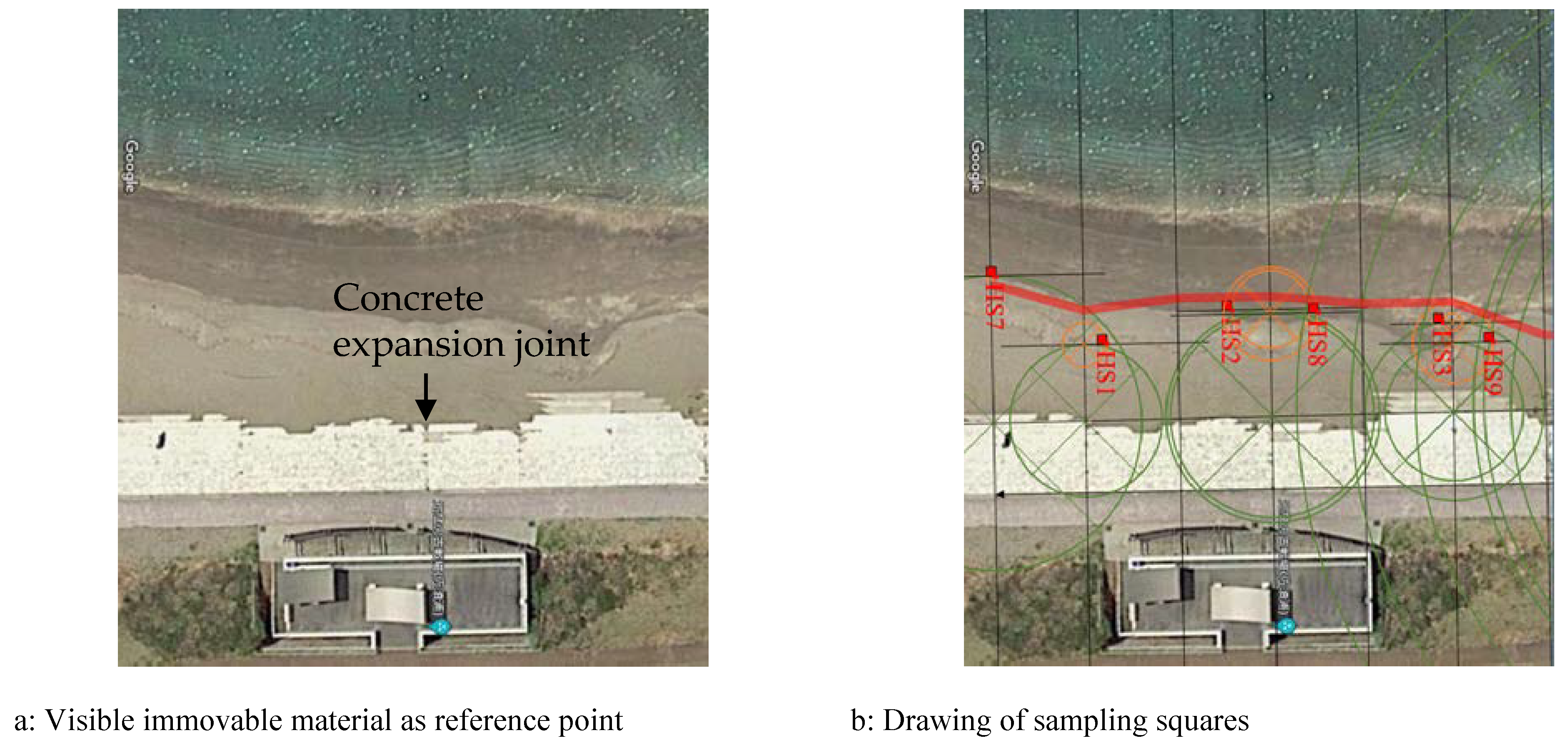
Figure 6.
Land survey experiment.
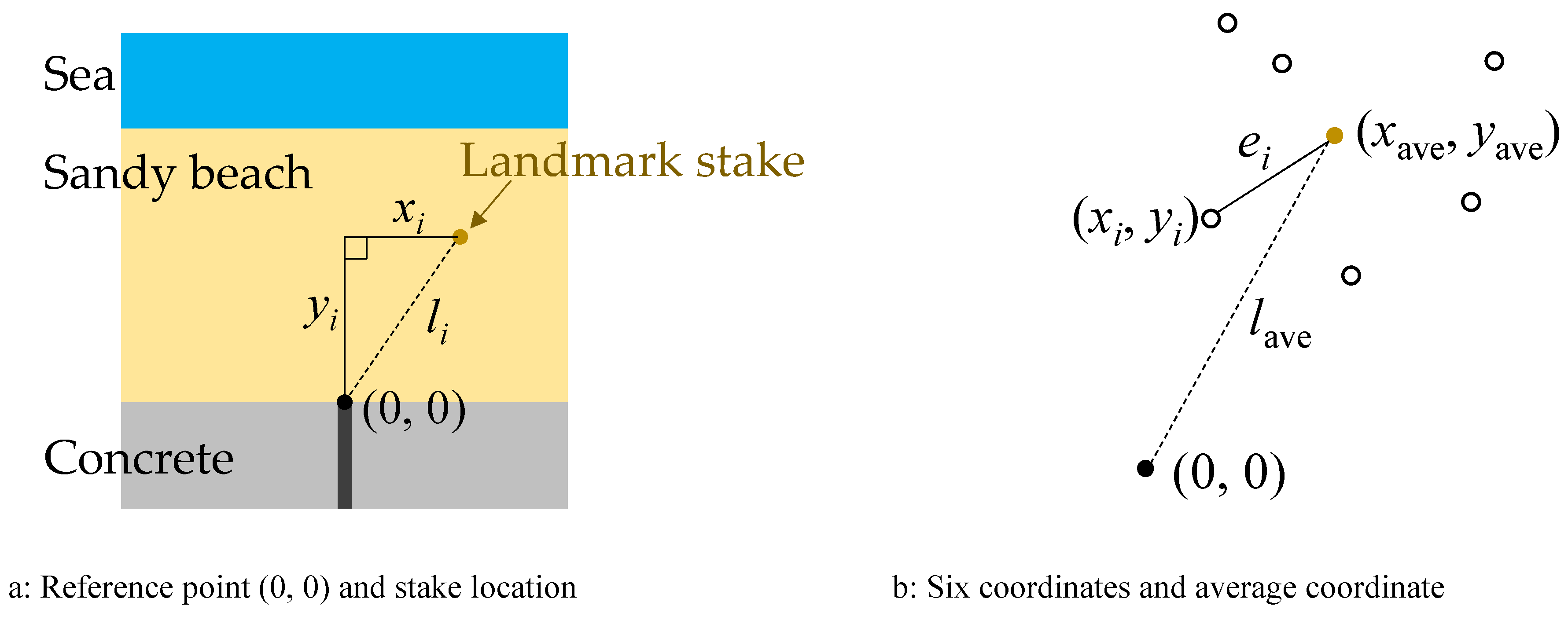
Figure 7.
Refining of floating MPs fractions by boiling.
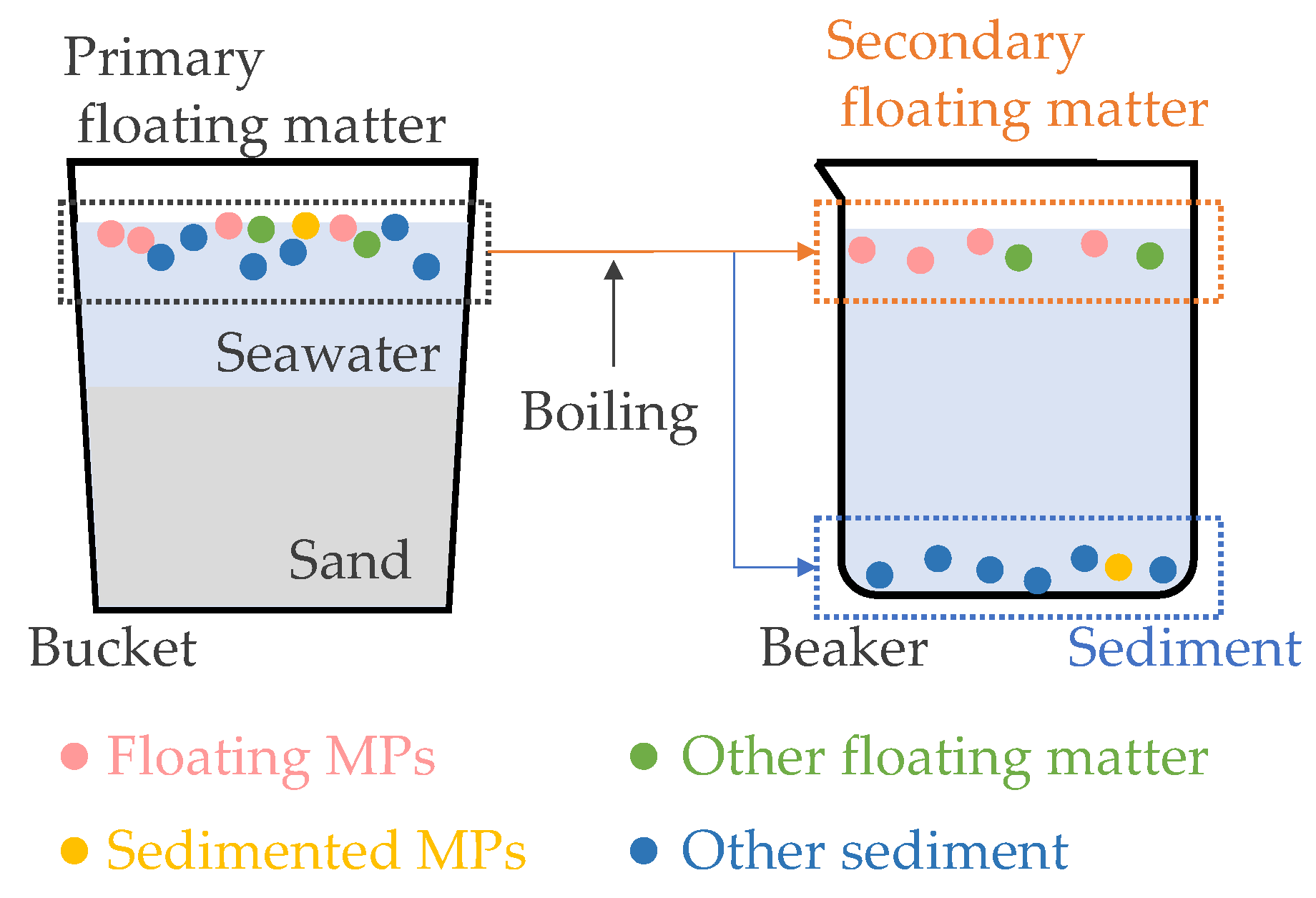
Figure 8.
Floating MPs in seawater (SW) and heavy liquid (HL).
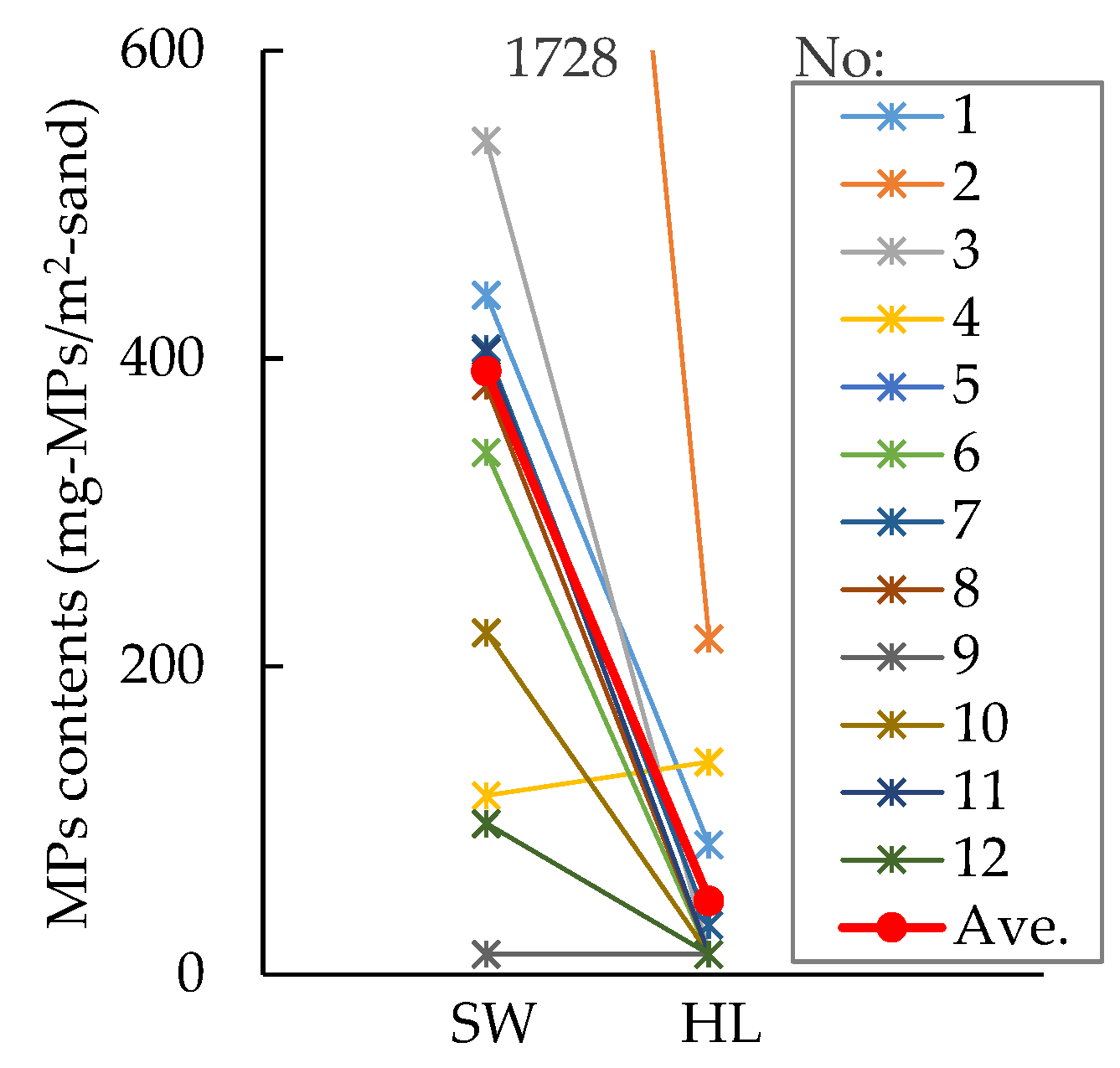
Figure 9.
Results of multiple layer sampling.
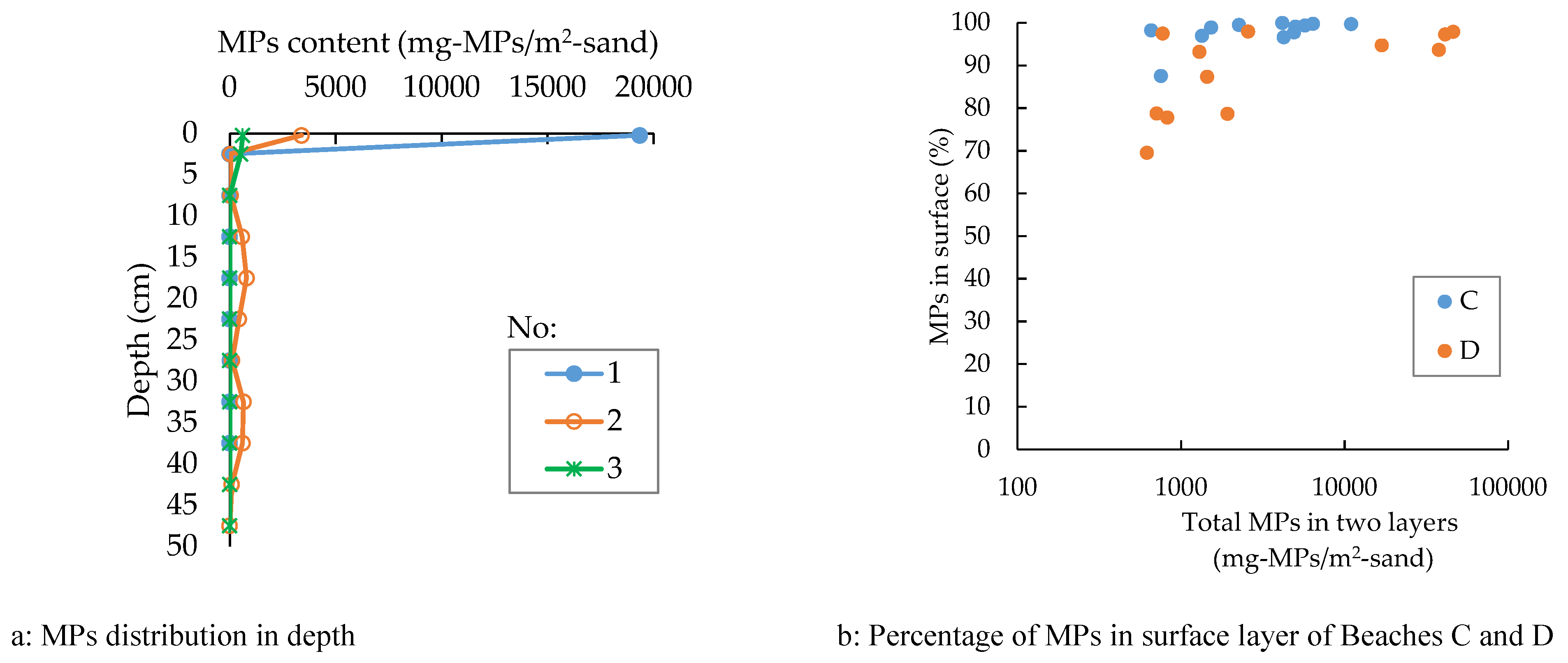
Figure 10.
Results of boiling experiment.
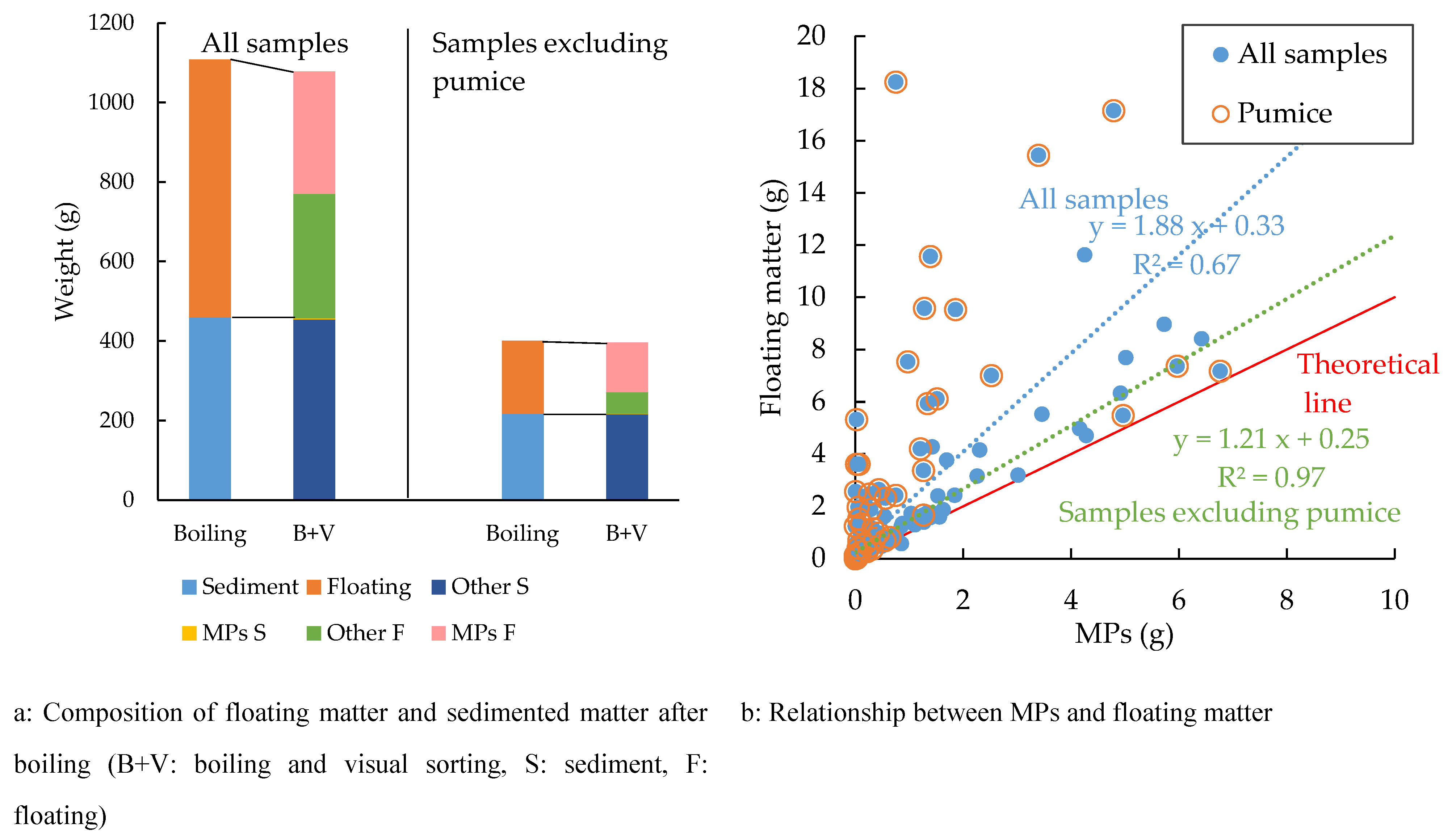
Figure 11.
Experimental results of the lower limit of quantification test.
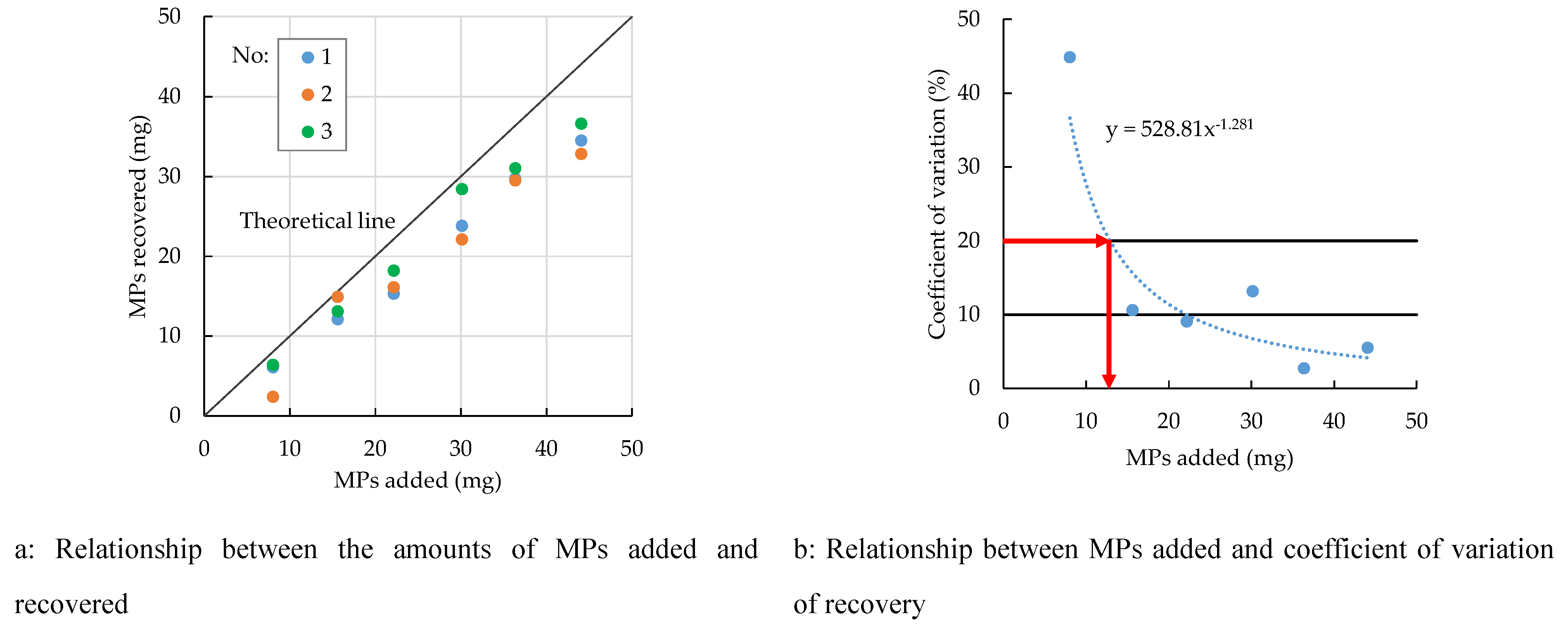

Table 1.
Results of staking after survey (First).
| i | P1 | P2 | P3 | yi | xi | (yi–yave)2 | (xi–xave)2 | ei | ei2 |
|---|---|---|---|---|---|---|---|---|---|
| m | m | m2 | m2 | m | m2 | ||||
| 1 | M1 | M2 | M3 | 0.03 | 0.17 | 0.0030 | 0.0006 | 0.0604 | 0.0037 |
| 2 | M3 | M1 | M2 | 0.02 | 0.14 | 0.0042 | 0.0000 | 0.0652 | 0.0043 |
| 3 | M2 | M3 | M1 | 0.08 | 0.19 | 0.0000 | 0.0020 | 0.0453 | 0.0021 |
| 4 | M1 | M3 | M2 | 0.12 | 0.09 | 0.0012 | 0.0030 | 0.0652 | 0.0043 |
| 5 | M2 | M1 | M3 | 0.15 | 0.24 | 0.0042 | 0.0090 | 0.1151 | 0.0133 |
| 6 | M3 | M2 | M1 | 0.11 | 0.04 | 0.0006 | 0.0110 | 0.1079 | 0.0117 |
| Average | 0.09 | 0.15 | s2 | m2 | 0.0078 | ||||
| σ | m | 0.0884 | |||||||
| CV | % | 0.4290 |
P: Person (see Figure 3a), M: Member.
Disclaimer/Publisher’s Note: The statements, opinions and data contained in all publications are solely those of the individual author(s) and contributor(s) and not of MDPI and/or the editor(s). MDPI and/or the editor(s) disclaim responsibility for any injury to people or property resulting from any ideas, methods, instructions or products referred to in the content. |
© 2023 by the authors. Licensee MDPI, Basel, Switzerland. This article is an open access article distributed under the terms and conditions of the Creative Commons Attribution (CC BY) license (http://creativecommons.org/licenses/by/4.0/).
Copyright: This open access article is published under a Creative Commons CC BY 4.0 license, which permit the free download, distribution, and reuse, provided that the author and preprint are cited in any reuse.


