

Submitted:
03 May 2023
Posted:
04 May 2023
You are already at the latest version
Preprints on COVID-19 and SARS-CoV-2
Abstract
Following the unprecedented and global health crisis of COVID-19, without a doubt, there has been a tremendous impact on international tourism for two reasons: the imposed travel restrictions discourage people from traveling, while travelers watch increased anxiety when responding to the new travel landscape. We address the problem of travelers’ changing travel risk perceptions in the COVID-19 pandemic aftermath. Our main goal is to identify and weigh critical emerging travel risks and create a risk evaluation index in which one can measure the destinations and strategic interventions’ performance for South African travelers. We found that tourist perceived risks are multidimensional, including categories like additional expenses, exchange rates, and refund-related factors. These three criteria are the most important to overall travel risk perception. We applied the developed risk evaluation index to five tourist destinations to evaluate their performance regarding the identified risks, being the UK the country with the best performance.
Keywords:
Traveling risks perception
; Covid-19
; Multicriteria Decision Analysis
; South Africa
1. Introduction
The tourism industry has faced various infectious diseases (e.g., swine flu, severe acute respiratory syndrome (SARS), avian flu, Ebola) whereby the adverse effects were isolated to specific countries or regions (Novelli et al., 2018). However, since the outbreak of the Covid-191 strain on the novel coronavirus in Wuhan, China, in early January 2020, the spread has reached all corners of the globe. The outbreak caused the World Health Organization (WHO) to declare it a pandemic on March 11, 2020 (WHO, 2021). This virus has devasting and possibly long-lasting effects on travel and tourism (Li et al., 2021). However, most relevant to this research paper is the effect of international, regional, and local travel restrictions, drastically affecting local and national economies, particularly how these effects impact tourism (Sigala, 2020). International air travel slowed down rapidly as many countries decided to impose travel bans, close their borders, and introduce quarantine periods causing international travel to decline at a phenomenal rate (Arndt et al., 2020). Essentially, all parts of the hospitality industry value chain were left at a stand-still with the canceling of events, the closure of accommodation, and the shutdown of many tourist attractions, which affected all other parts of the supply chain (Wen et al., 2020). The unprecedented outbreak of Covid-19 has been a painful reminder of how susceptible tourism is to various risks and threats (Gossling et al., 2020).
The United Nations World Tourism Organization (UNWTO, 2021) remarks that Covid-19 caused over a 70% decrease in tourist traffic in 2020 compared to the previous year. Furthermore, the World Travel and Tourism Council (WTTC) predicted that the pandemic would result in US$22billion worth of economic damage to the global tourism market (Bratic et al., 2021). The need for a rapid adjustment of the tourism industry, both structurally and functionally, becomes clear, as tourism providers will need to change their usual way of doing business and provide information to assist tourists in planning and taking trips in 2022 and the future. It is due to the uncertainty around the conditions the tourist will face at the destination and the possibility of negative consequences related to decisions taken (Yang et al., 2021). Even if the disease is contained, the perceptions of risk and lack of feeling safe may persist and deter people from traveling soon (Li & Ito, 2021).
Thus, some questions arise: What will the new trends look like when travel resumes? What new potential tourism behaviors, specifically tourist perceived risks, could emerge? As previously seen in other cases (Gossling et al., 2020; Novelli et al., 2018; Floyd et al., 2004), after a crisis occurs, new tourist concerns, apprehensions, and demands shape the tourism market. Of particular interest to tourism researchers in the current pandemic climate is the influence of the public health crisis of Covid-19 on the risk perceptions of travel customers and how these risk perceptions will potentially influence their post-crisis travel behavior. It is considered imperative to predict the trajectory of change in tourist behavior to help tourism managers ideally respond to the situation.
In travel and tourism literature, risk has often been examined using virtually the same classification system (Simposon & Siguaw, 2008). Typically, scholars have divided the types of perceived risks with buying general products or services as financial, physical, performance, social, psychological, and time/convenience (Conchar et al., 2004). This typology and classification in the tourism literature, based on risks in general and not necessarily relevant to travel, may be overly broad and prevent appropriate managerial responses. For example, assessing the case of 'psychological risk' from prior literature could range from 'a disappointing travel experience' (Sonmez & Graefe, 1998) to 'a vacation not reflecting the traveler’s personality or self-image' (Roehl & Fesenmaier, 1992). Both meanings could require separate tourism management responses. Therefore, it denotes a limitation to using risk categories borrowed from non-travel-related literature, commented on by Dolnicar (2005). The author suggested that using standard risk inventories might not be a good foundation for studies of perceived risk in the tourism context. More market-driven knowledge and insight are required into the nature of tourists' fears and the components therein. If not, there remains only a generic and broad typology of factors comprising each category of risks that may significantly affect travel intentions, making it difficult for travel managers to develop appropriate strategies to calm the concerns of prospective travelers (Dolnicar, 2005; Simpson & Sigauw, 2008). It is incredibly considerable since the outbreak of the Covid-19 pandemic as prior literature has suggested that health crises have significant impacts on the risk perceptions of tourists (Novelli et al., 2018), thereby identifying a literature gap in the tourism field.
Designing intelligent responses, protocols, and processes to decrease the adverse effects of COVID-19 on the tourism industry could start with determining where and why travel consumers may have feelings of uncertainty and risk when it comes to traveling. Being equipped with the results of a Multi-Criteria Decision Analysis (MCDA) and Delphi multi-methodology may be a step towards identifying which aspects of the travelers' sentiments need to be addressed and prioritized to get tourism up and running again. The model built should allow different destinations' and risk interventions' effectiveness and performance to be measured in terms of the perceived travel risks of a sample of South African travelers. In the same way, the model can be extended or adapted to our countries and their inhabitants, who likely have different risk perceptions than South African travelers. That is why such research may be helpful, relevant, and a virtuous contribution to the literature in the current pandemic climate.
This research aims primarily to provide a way of reflection by identifying and weighing risk factors in tourists' perception of risk when traveling internationally during a pandemic. We use South Africa as the case study. To the best of our knowledge, this work is unique and the first of its kind. To reach such a goal, we develop a weighted multicriteria risk evaluation model that includes different risk factors representing the perceived risks of South African travelers regarding international travel during the current pandemic climate. The objectives include 1) a contribution to a better understanding of the current risk perceptions held by travelers in the current pandemic situation using a Delphi survey; 2) developing a tool by which destinations and future interventions to address risk perceptions can be evaluated against, through the weighting of different risk criteria using MCDA; and 3) the application of a multi-methodology combining Delphi-based procedures and MCDA models (namely MACBETH), to the theme of perceived travel risk, innovatively contributing to the research field.
2. Literature Review
2.1. Perceived risk
Perceived risks play an important role in consumer behavior, generally (Bauer, 1960) and in the context of tourism (Moutinho, 2000). Bauer (1960) notes that consumer behavior involves risk in that the consumers' actions will produce outcomes that they cannot approximate with any certainty. Some of these may be unpleasant, thus, introducing the notion of perceived risk and uncertainty into the concept of buying behavior. Perceived risk is often defined as "the individual's perceptions of the uncertainty and negative consequences of buying a product (or service)" (Reisinger & Mavondo, 2005:212). As described in the tourism context, one can understand it as the tourists' perception of uncertainty and possible adverse consequences resulting from the consumption of tourism offerings. Risk perception is paramount in the tourism decision-making process (Sonmez & Graefe, 1998; Floyd et al., 2004). When travel customers decide, they will perceive the risks associated with purchasing the tourism product, as the perception of risk impacts consumer behavior which, in turn, influences purchase choice (Mountinho, 2000).
Even though there are different conceptualizations of perceived risks and their dimensions within the literature, they all build upon a considered probable loss resulting from choosing with uncertainty between tourism offerings (Cui et al., 2016; Hasan et al., 2017). Tsaur et al. (1997) defined tourist risk perception as the possibility of an adverse situation arising at the destination, while Sonmez & Graefe (1998) define tourist risk perception as the risk value perceived by a tourist in travel situations. Tourist risk perception is defined by Fuchs & Reichel (2006) as the potential danger that is associated with the trip and which may change decisions around travel if it exceeds an acceptable level for the specific individual. Maser & Weiermair (1998) define it as a function of uncertainty and its consequences, with some consequences being more pleasing to the tourist than others. Whether real or perceived, the presence of risks influences tourism travel plans and travel behavior (Roehl & Fesenmaier, 1992; Rittichainuwat & Chakraborty, 2009). This risk presence can be affected by the personal characteristics of the individual (Roehl & Fesenmair, 1992; Sonmez & Graefe, 1998), previous travel experience (Sonmez & Graefe, 1998; Lepp & Gibson, 2003), gender (Pizam et al., 2004), educational level (Sonmez & Graefe, 1998), nationality (Pizam et al., 2004), and cultural differences (Kozak et al., 2007). Having this in mind, tourism risk perception is generally understood as the subjective assessment of risks associated with traveling, but highly dependent on non-discretionary dimensions.
Tourists are sensitive to crises, and an increase in fear, tension, and confusion is expected. Tourist behavior can be understood as a combination of internal factors (like motivations, attitudes, and beliefs) and external factors (economic environment, socio-cultural environment, and security, to name a few), and results from processing stimuli evaluated according to internal characteristics and personal preferences and external variables that mediate perceptions and decisions (Chebli & Foued, 2020). The perceived risk may exacerbate anxiety and the tourist's negative evaluations of traveling, thus affecting their intentions to travel negatively (Reisinger & Mavondo, 2005). The avoidance of specific tourism products may be explained by Cognitive Dissonance (Cui et al., 2016). This dissonance arises from the tourists' attempts to negotiate between their intrinsic travel motives and their desire to mitigate the adverse effect of their consumptive behaviors, implementing risk reduction processes to place the risk factors within an acceptable threshold to alleviate the Cognitive Dissonance. It may potentially result in tourists postponing their travel plans, re-evaluating their destination choice, and attempting to find alternatives that lessen the perceived risk or cancel their trip altogether – thus, having a discernible impact on the choices made by tourists (Matiza, 2020).
Although initially introduced in consumer behavior theories, 'tourism risk perception' has received wide attention from researchers in the tourism field since the 1990s. Roehl & Fesenmaier (1992), pioneering such research, have argued that certain levels of risk are involved in travel processes, tourist destinations, and tourism activities. Ever since, many studies have emerged that use the risk perception concept to explain the naming of risk dimensions and their impact in various contexts of travel and tourism (Tsaur et al., 1997; Sonmez & Graefe, 1998; Lepp & Gibson, 2003; Boksberger et al., 2007; Dolnicar, 2005; An et al., 2010; Cetinsoz & Ege, 2013; Chew & Jahari, 2014; Casidy & Wymer, 2016; Cui et al., 2016).
Prior literature has focused on the relationship between tourist risk perception whilst traveling and the respective post-visit behavior intention regarding revisiting and recommending, as well as loyalty intentions (Cetinsoz & Ege, 2013; Quintal et al., 2010; An et al., 2010; Fuchs & Reichel, 2011). Furthermore, tourist risk perceptions' effects have also been studied on various themes, including destination image (Chew & Jahari, 2014), attitude, and satisfaction (An et al., 2010). The relationship between tourist risk perception and satisfaction has received considerable attention in consumer behavior studies. Results indicate that a high level of perceived risk decreases customer satisfaction and negatively influences customer repurchase intention (Li & Murphy, 2013; Jin et al., 2016). Therefore, researchers have identified four major risk factors relevant to tourism: 1) war and political instability, 2) health concerns, 3) crime, and 4) terrorism (Floyd et al., 2004). Risks linked to terrorism and political instability have influenced travel intentions amongst even experienced travelers (Floyd et al., 2004; Rittichainuwat & Chakraborty, 2009). Health concern risks have also received wide attention (Chien et al., 2017; Jonas et al., 2010; Novelli et al., 2018), and crime is also present in the literature (Shaw et al., 2012). These prior studies on travel risks are plentiful and usually follow different research streams. One such stream focuses on risk perceptions at specific travel destinations (Fuchs & Reichel, 2006); another on specific tourism events, such as the Olympic Games (Schroeder & Pennington-Gray, 2014); another after events violating personal security, such as terrorism (Floyd et al., 2004). A further research stream has approached the effects of perceived risk on travel, travel intention, and travel satisfaction (Roehl & Fesenmaier, 1992; Sonmez & Graefe, 1998; Reisinger & Mavondo, 2005; An et al., 2010; Cetinsoz & Ege, 2013).
Table 1 presents a summarization of previous research on tourist risk perceptions. It shows the article title to provide context and depicts the different risk factors found relevant in different studies and how they are grouped into categories and dimensions.
The literature presents varying conceptualizations and categories of the risk perception construct. Moutinho (1987, as cited in Hasan et al., 2017) found five factors associated with tourism risk perceptions. Roehl and Fesenmaier (1992) expanded these to include seven elements: financial, time, equipment, satisfaction, social, and psychological. Tsaur et al. (1997) divided risk factors into either physical risk (the possibility of an individual's health being in threat, injury, and sickness) or equipment risk (dangers associated with equipment malfunctions). Sonmez & Graefe (1998) identified risk factors that would likely result in destination avoidance, including health, political instability, and terrorism. Fuchs & Reichel (2011) define crime, terrorism, congestion, and political unrest as human-induced risks, whereas other researchers define them individually. Li et al. (2020) define personal and health risks separately, whereas Cetinsoz & Ege (2013) describe them together under 'physical risk.' Rittichainuwat & Chakraborty (2009) include other risk types such as lack of novelty, deterioration of attractions, and travel inconvenience, which are not common in other studies. These differences in the definitions and conceptualizations suggest that there is not a set of agreed-upon risk factors in the tourism industry but that they often converge and integrate to refer to similar things.
Furthermore, studies have also recently added safety for consideration, including social, natural, and human-induced environments and their associated risks and the security situations regarding food, transportation, housing, entertainment, and shopping at destinations (Cui et al., 2016; Fuchs & Reichel, 2011). The degree of intensity of the risks is dependent on the nature of tourism services and products under consumption and the travelers' characteristics – as some travelers are inclined to avoid risky situations while others are unaffected by them (Lepp & Gibson, 2003). Some tourists are novelty-seekers, meaning they enjoy visiting new places and having new experiences, even if they might be risky (Rittichainuwat & Chakraborty, 2009).
Most of these studies have identified and utilized risk typologies from other disciplines instead of identifying more appropriate travel-related and period-related risk categorizations. These researchers used prior research and logic to develop the risk categories before utilizing them to test their study objectives instead of developing empirically-based travel risk categories. This typology and classification in the tourism literature, based on risks in general and not risks relevant to traveling and the context in which the traveling occurs, may be overly broad and therefore prevents appropriate managerial responses. It is particularly relevant in a time following a global pandemic. The need for more market-driven understandings of the complex concept of travel risk perception can be precious to the tourism field, thus identifying the literature gap. It is necessary to develop a management-actionable travel risk typology retrieved directly from travelers, such as Simpson & Sigauw (2008), who conducted a study with over 2000 respondents about their perceived risks when traveling. They then developed a data-driven typology of ten risks specific to leisure travel from the traveler's perspective, comprising sub-categories of the six broad classifications of Conchar et al. (2004), allowing tourism administrators to identify opportunities for managerial response.
Furthermore, Dolnicar (2005) recognized the need for market-driven tourism perceived risk categories and typologies in the study by asking respondents what aspects of the decision process of planning their next holiday they perceive as risks and what their concerns are. The study highlighted the need for market-driven research to identify the specific travel-related risks that impact tourists' decision-making. The current paper also has its foundation in this regard as perceived risks particular to the traveler's perspective are studied. It ensures a more accurate typology gained from travelers' points of view instead of imposing prior general categories on their perceptions.
2.2. Health crises and perceived risk
Concerning the global tourism industry is the residual effects of the Covid-19 pandemic on travel and tourism in the form of perceived risks associated with traveling post-pandemic. Post-health crises and touristic behavior are relatively under-researched, according to Matiza (2020). There is a lack of empirical evidence that can model the behaviors of tourists after destructive events such as the Covid-19 pandemic. However, prior research has suggested that travelers' concerns about risks to their health or being infected by disease have influenced their behavior and choice of a tourist destination (Chinazzi et al., 2020; Lee et al., 2012). Therefore, Covid-19 is seen as a disruptive factor that impacts how travelers perceive the safety of tourism destinations. Recent studies have begun to look at perceived travel risks and their dimensions potentially relevant to the travel consumer following the pandemic. Table 2 presents a few of these studies and their categorizations of the perceived travel risks.
One of the most critical factors related to Covid-19 holiday planning and decision-making is the increased travel anxiety due to the pandemic risk. Travel anxiety increases when travel risks are present, and in high-risk situations, tourists tend to adjust their behaviors and vacation plans (Roehl & Fesenmaier, 1992). In the face of the perception of external danger, the traveler adopts new consumer practices. In particular, infectious diseases directly impact people's travel behaviors and decisions (Bratic et al., 2021). This aspect can be seen in previous cases of contagious diseases and their impact on tourism. In 2004, during the outbreak of the SARS virus, the fear of travel was evident as there was a sharp decline in tourist arrivals (by 65%) to South and South East Asia (Mao et al., 2010). The 2009 swine flu outbreak decreased hotel occupancy in Cancun and Mexico by up to 55% (Staff, 2009). Novelli et al. (2018) note how the Ebola outbreak in West Africa in 2014 had negative impacts on tourism in Africa in general – before the outbreak, Africa was experiencing average increases in tourist arrivals of 5% in 2012 and 2013. However, this number decreased by 2% in 2014 and a further 5% in 2015. The magnitude of the Covid-19 outbreak is sure to cause significant changes in tourist behavior shortly.
The scale of impact of the Covid-19 pandemic has yet to be fully experienced. However, in the meantime, it is essential to begin designing a practical recovery plan, which will need to involve mitigating the perceived risks and their influence on travel behavior. It involves a multi-faceted challenge in terms of both tourism demand (perceived risks) and supply (financial deficits, job losses, liquidation, and human capital depletion) (Matiza, 2020). Therefore, it will require multi-stakeholder concerted efforts to identify and manage objective and subjective perceived risk factors for tourism suppliers to actively assist the travel consumer by providing offerings that achieve a suitable threshold to alleviate cognitive dissonance.
It is appropriate to assume the existence of significant variations amongst the factors that define risk perception for different people. It is crucial to consider multiple risk dimensions involved in travel decision-making to characterize the risk perceptions of South African travelers, particularly in times of a pandemic where risk perceptions may be transforming the idea of tourist risk previously discovered in prior studies. This assessment can provide an evidence-based perspective on risk perceptions, potentially contributing to a better understanding of the changing tourism market. Therefore, efforts towards developing sound models that combine multiple determinants of travel risk perceptions, engaging numerous stakeholders – based on sound methods – to enhance the potential of monitoring risk perceptions and foreseeing the impact of these perceptions on the tourism industry are helpful. The need to develop a management-actionable travel risk typology from the traveler's standpoint is essential now more than ever. Therefore, this work contributes to the literature by developing a risk typology specific to international travel following the Covid-19 pandemic, derived directly from South African travelers.
3. Methodology
3.1. The Delphi technique and MCDA
The research goal requires a methodological approach that firstly collects and interprets information about risk indicators on the one hand and secondly ranks the indicators based on their relevance on the other hand. Therefore, this study adopts a Multi-criteria Decision Analysis (MCDA) methodology with a MACBETH approach, operationalized through a Delphi Technique survey, which is used to address the research question fully. Its objectives are to create a tool with the capacity to synthesize evidence that can later be used for policies and actions to address identified risk perceptions for tourists, particularly after the Covid-19 pandemic. A combination of these methods has previously been shown to solve research designs that involve decision-making under situations of high complexity and uncertainty (Vieira et al., 2020; El Gibari et al., 2019; Santana et al., 2020; Venhorst et al., 2014; Vidal et al., 2011; Von Schoubroeck et al., 2019).
Vieira et al. (2020) propose a new Collaborative Value Modelling framework in which there is a combination of Delphi and multicriteria decision conferencing to build widely informed evaluation models. They argue that in situations involving multiple stakeholders' perspectives, there is a need for an appropriate methodology that achieves two objectives. Firstly, the technical aim is to create a sound model of values that combines multiple perspectives about the problem and the social objective of making collective agreement around the model under construction. Therefore, an integrated socio-technical setting that enhances multicriteria decision analysis with a web-Delphi participatory process is appropriate and valuable. This framework will support the operation of the acquisition of judgmental knowledge within each of the multicriteria process stages, from identifying and weighting criteria to building functions. This paper uses this process described by Vieira et al. (2020) as it obtains perceived risk evaluation criteria from a sample of South African travelers through the participatory process of a web-Delphi. Although not in a decision conferencing procedure as Vieira et al. (2020) describe, we obtain weighting and value functions for the criteria from the panelists, once again, through the Delphi, then inputted into the M-MACBETH decision support system. It helps collect and integrate constructed shared judgmental knowledge in a context where travel risk perception comprises different elements and criteria, particularly when international travel changes due to the COVID-19 pandemic.
The Delphi technique is described by Hasson et al. (2000:1009-1010) as a "group facilitation technique that seeks to obtain consensus on the opinions of 'experts' through a series of structured questionnaires (commonly referred to as rounds)." The questionnaires are anonymously completed by the 'experts' (often referred to as the panelists, participants, or respondents). The responses from each questionnaire are fed back to the participants in summarized form as part of the process. It is a scientific method of organizing and managing group-structured communication processes, aiming to generate insights into current or future challenges, particularly in situations with limited availability of information (Rowe & Wright, 2011). Beiderbeck et al. (2021) note that the results obtained from Delphi surveys can act as the final ones, but they are becoming increasingly linked to mixed methodologies and aiding further research.
The Delphi technique has been previously used in the tourism literature. Cunliffe (2002) utilizes the Delphi technique to undertake long-term forecasts for the tourism industry regarding natural and human risks. Von Berger & Lohmann (2014) use the Delphi technique to identify the most prominent challenges to global tourism and understand their nature, drivers, and effects. Huang et al. (2011) apply that technique to explore the external environment forces of adopting a travel blog marketing channel from the perspective of travel agencies. Kaynak et al. (1994) employ the Delphi survey to predict future tourism potential. The Delphi technique is also well known for its application in the risk management field. For instance, the ECDPC (2015) notes that Delphi studies have been widely used to achieve consensus among experts and suggest that Delphi discussions are most effective at various risk-ranking processes.
In the tourism field, MCDA has been used to develop evaluation indexes for tourist destination competitiveness (Carayannis et al., 2018; Cracolici & Nijkamp, 2008; Botti & Peypoch, 2013). The objective of MCDA is the study of decision problems in which one must account for several points of view. When making a decision, one generally considers several more or less conflictive criteria. Conflicts may exist around several criteria, and the decision-maker has to consider the pros and cons of each one to reach the final optimal decision. This is the foundation of a multicriteria decision problem (Jardim et al., 2015). MCDA is a well-researched framework that can simultaneously assess multiple criteria to perform priority settings of different interventions or policies that address certain circumstances (Venhorst et al., 2014).
Bana e Costa et al. (2006) note that distinguishing between multicriteria methodologies and traditional assessment methodologies incorporates experts' subjective values into the assessment models. The model allows the researcher to simultaneously analyze variables of a different nature (qualitative and quantitative). This feature helps identify solutions that can support decision-makers in finding the best solutions to addressing the problems at hand. As such, this research paper combines the Delphi technique with the MACBETH approach to analyze and identify subjective travel risk perceptions and the elements therein to help find solutions that are more transparent and in line with reality. Figure 1 below illustrates the methodological procedures followed in this research paper.
3.2. The structuring phase: The Delphi technique
A four-round Delphi consultation was used to gather information about risk factors associated with international travel in the current pandemic context. This method was employed to understand the perceived risks held by a sample of South African travelers. First, risk factors in international travel were gathered via an extensive literature review to identify the first set of predefined risk categories. Different combinations of the terms' perceived risk', 'tourism risk', 'tourism safety', 'pandemics', and 'travel risk perception' were used in this query. The list of results was evaluated to avoid overlap in criteria. Following this was a preliminary process involving the use of Google Forms to gain an initial list of perceived travel risks. In this phase, 107 South Africans who had traveled internationally in the past ten years were asked to indicate which concerns are relevant to their perceptions of travel risk when traveling internationally in the current pandemic with the use of fixed-response alternative questions. Furthermore, they were encouraged to contribute any additional concerns that were not available as options. The objective of this initial survey was to narrow down the possible perceived risks, along with identifying original ones, into categories; and to gain preliminary insight into what the South African tourist's perceived risk typology might look like. The data collected in this phase was subjected to content analysis—these data informed the Delphi processes by providing risk dimensions and factors relevant to the South African traveler population.
Subsequently, the synthesized risk categories and themes within them were presented on a 5-point Likert scale to an "expert" panel in the first round of the Delphi survey. This expert panel included 32 participants from the preliminary process who provided their email addresses, expressing willingness to partake in the Delphi survey. Eligibility to participate in this process required participants to have traveled internationally within the previous five years (considering the pandemic and related travel restrictions have only recently calmed down after two years, this stipulation does not leave much time). This stipulation was put in place because participants had to have prior recent experience and knowledge regarding international travel to ensure that their risk perceptions were relevant in terms of the context of the study (the Covid-19 pandemic). Otherwise, panelists who have never experienced international travel or have experienced it a long time ago may be more so anxious-prone to international travel in general, regardless of the pandemic situation.
The panel members were asked to indicate, on a 5-point Likert-type scale, the expected probability that such a risk would be relevant to their overall risk evaluation from Very Unlikely (1) to Very Likely (5). Participants had the option to provide comments to justify their responses further. Furthermore, it was also decided that the Delphi survey would include a qualitative free-text box where participants would be encouraged to list any other risk factors they would be concerned with when evaluating international travel risks. The comments in these qualitative text boxes were reviewed and included in the second round.
The research team also agreed upon additional questions and based on what previous tourist risk research in prior studies found most influences risk perception. It was decided that the demographic variables to be included would be: gender, age, educational attainment, frequency of international travel, type of accommodation typically booked, the continent most often traveled to, and reason for the trip (business or leisure). Such information obliges us to learn more about the panelists' predispositions (Beiderbeck et al., 2021). It was decided that only one risk category per webpage would be used to avoid the necessity to scroll online, preventing panelists from overlooking free-text fields and allowing them to get used to a consistent format (Beiderbeck et al., 2021). The Delphi survey was then subjected to a pre-test to ensure clear comprehensibility and high reliability (Okoli & Pawlowski, 2004). Following this, some wording and layouts were adjusted, and the length of the survey was tested to avoid survey fatigue and elevated drop-out rates. The software used for this research was that of "Welphi", which can be found at https://www.welphi.com/en/Home.html. Welphi uses a web-based environment that allows geographically dispersed participants to engage in the Delphi process whenever suits them. Welphi automatically computes statistical data and panelist comments, making them available to process by the administrator and the participants. Invitation and reminder emails are available directly from the platform. The Welphi platform was used for a total of two months.
Hasson et al. (2000) note that the number of rounds is dependent on the time available, the nature of the Delphi, and consideration levels of sample fatigue. Recent evidence appears that either two or three rounds are preferred in Delphi studies. Furthermore, consideration must also be given to the level of consensus to be achieved. Boulkedid et al. (2011) note that there is no consensual definition of "consensus" within the Delphi literature and that this is one of the most sensitive methodological issues with the method. The investigator must decide how agreement among participants will be measured and what cut-off will be used to define a consensus. Freitas et al. (2018), in their study on the selection of public health indicators, implemented “group agreement rules,” which could be used to determine either for approval or rejection of a given set of public health indicators (in terms of their contribution to public health) by applying different rules for dealing with differences in opinion. With the use of established decision rules,2 Freitas et al. (2018) approved or rejected indicators for selection, thus obtaining a list of public health indicators that their panel of experts deemed essential for overall public health. On the other hand, Shi et al. (2020) conducted a study that utilized the Delphi Technique to carry out a risk assessment of residential aged care facilities in China. They aimed to identify the risk factors associated with adverse events in nursing homes. They achieved this by approaching residential senior care facilities managers and asking them to rate on a Likert scale how likely the identified risk factors were to cause adverse events. Shi et al. (2020) used the filter criteria set at a mean score of <4 or a coefficient of variation of >20%. It can therefore be seen that many differing consensus/agreement criteria and cut-offs exist in the literature.
In this research paper, agreement and termination were established with the following criteria: mean>4; while at the same time, in less than a third of Very Unlikely and Unlikely responses, the risk statement was accepted. Risk statement rejection occurred when more than half of Very Unlikely and Unlikely responses occurred. Since this research aims to develop a weighted typology of the perceived risks of international travel for South African travelers, which includes the most relevant and vital risk factors as defined by the panel, the combined methods used by Freitas et al. (2018) and Shi et al. (2020) seemed appropriate. This is because the respondents were required to state how likely the listed risk statements are to be a concern for them before deciding to travel internationally; therefore, attention to the opposite ends of the Likert-type scale may be appropriate. Where consensus is reached on "Somewhat likely," – these risk statements insinuate a certain extent of the concern. However, they are not included in the perceived risk typology since they do not hold group agreement/consensus as highly likely to be a concern.
The responses from the first round were collected and used to create the second round. Therefore, the second-round questionnaire includes the same statements (those that did not meet the criteria for acceptance or rejection), the individual's ratings and the percentage values of the responses from the rest of the panel, and any additional comments provided. In this way, the panelists can make decisions based on information provided by their peers. Figure 2 below is a screenshot of the Welphi platform and how the respondents received their second questionnaire.
Data analysis for the Delphi survey included statistical methods and content analysis. We used inferential and descriptive statistics to ascertain levels of collective opinion. Measures of central tendencies (means, medians, and mode) and levels of dispersion (standard deviation and interquartile ranges) are used to provide information regarding collective opinion, assess risk statements, and identify which met the criteria for approval or rejection. Beiderbeck et al. (2021) highly recommend content analysis when analyzing comments supplied by respondents, as insights from the participants' comments are valuable input for the analyses and discussion of research. Content analysis was used to establish an initial set of risk factors in the form of risk statements and ultimately transform the risk statements into a perceived risk typology representing the perceived risks of South African travelers. IBM SPSS Version 28 was used for all quantitative analyses. Descriptive statistics were used to describe each risk statement, including mean, median, mode, and standard deviation.
The third round involved evaluating all the information provided by panel members, previously revised in the second round. Panel members were asked to reassess each risk statement just as in previous rounds. However, they were also requested to rate the importance degree of each risk statement regarding their contribution to the overall perceived travel risk. The identified risk factors that constitute South Africa's overall perceived travel risks were converted into a value tree structure of criteria, using content analysis and completing a methodological step necessary for MCDA (Longaray et al., 2018). A few members of the Delphi panel were then asked to collaborate in the identification and construction of ordinal scales (descriptors) for each risk criterion (also known as a Fundamental Point of View (FPVs)). This procedure was necessary for determining the possible levels of impact of potential options on the criteria. In other words, this process operationalized the risk criteria and allowed them to be measurable.
3.3. The evaluation phase
The second stage – the evaluation stage – involves the construction of the multicriteria mathematical model through the adoption of the procedures involved in the MACBETH method (Bana e Costa et al., 2012). The MACBETH method aggregates performance values in the different risk criteria using an additive value function model (Longaray et al., 2018). It does so by converting ordinal scales into cardinal scales based on an absolute judgment about the difference in attractiveness between two alternative options. This second stage required the panelists to weigh the FPVs, using MACBETH (measuring attractiveness by a categorically based evaluation technique), which is "an interactive approach that uses semantic judgments about the differences in the attractiveness of several stimuli to help a decision-maker quantify the relative attractiveness of each" (Bana e Costa & Chagas, 2004: 324). It has been used increasingly in complex decision problems so that one needs to calculate the trade-offs (i.e., replacement weights) between evaluation criteria. Integrating the Delphi technique and the MACBETH MCDA technique allows combining qualitative and quantitative factors, thereby creating a more informed and grounded decision model.
In typical applications of MACBETH, judgment elicitation is done using the M-MACBETH DSS (decision support system). Each panelist was asked to give a qualitative judgment of the degree of importance of each risk criterion to their overall travel risk evaluation. Whenever the contribution of the risk criterion was not null, they were required to judge its strength of importance using one of the MACBETH qualitative categories ("very weak", "weak", "moderate", "strong", "very strong", or "extreme"). Such an indication corresponds to a judgment of the difference in attractiveness between the risk criteria and doing nothing to address their risk perceptions (i.e., comparison of attractiveness between the risk criteria and the status quo) (Bana e Costa et al., 2014). These responses were used to rank the criteria according to the order of importance of contributing to the overall perceived travel risk.
Once this process was completed, the set of all group judgments was inputted into M-MACBETH, which supports the application of the MACBETH approach. A score of 100 was assigned to those risk criteria impact levels that indicated a lower level of perceived risk. A score of 0 was given to those risk criteria impact levels that showed a high presence of perceived risk. M-MACBETH then generated quantitative value scores for the risk criteria that reconcile all judgments (through a linear programming model). The contribution of each risk criterion was then explored to evaluate their performance in terms of overall travel risk perception. However, after this process was completed, it resulted in a tie between two sets of risk criteria, thus resulting in the fourth round of Delphi to discover which were evaluated as a more meaningful contribution to overall perceived travel risk.
The next step of this multi methodology would be to construct the decision model. The nodes correspond with the risk criteria, and data must be obtained to fill each indicator's performance table. It indicates the beginning of the prioritization phase.
3.4. The prioritization phase
Once the risk evaluation model was built through the use of M-MACBETH DSS, it was able to be used to assess different destination performances in terms of perceived travel risks for this sample of South African travelers. The Delphi technique allowed for the comprehensive identification of risk criteria, while the MACBETH approach allowed weights to be attributed to these criteria easily and naturally (i.e., through semantic judgments).
To test the evaluation system created, it was necessary to obtain information on tourist destinations (i.e., Portugal, the USA, Germany, India, and the UK). We researched to determine the performance of each of these destinations on the criteria included in the model. The information was collected, and each destination was assigned an impact level according to its performance on each criterion.
4. Case Study
4.1. South Africa
South Africa is a third-world country located at the bottom of Africa, with a population of 59.31 million people. Being rather developed compared to its' African counterparts, it is also a country that receives a high number of international visitors and is known for its contribution to the global tourism market (Shaw et al., 2012). South Africa's currency is notoriously lower against most tourism hotspot currencies, for example, the South African rand to the Euro currently sits at ZAR16.73 to 1 Euro. As South Africa is situated so far South, international travel to tourism hotspots (i.e., to Europe, America, or Asia) involves substantial distances to be traveled and can be expensive. South Africa closed its' borders to international travel in response to the outbreak of Covid-19 on March 15, 2020, and the country has experienced five waves following the initial outbreak (until May 2022). Due to the country being undeveloped and having limited economic resources, the progression and impact of the pandemic have hit the country and its people particularly hard (Arndt et al., 2020). The spread of the virus was difficult to control, and cases soared while hospitals and healthcare workers struggled to keep up (Moonasar et al., 2021). When writing this paper, South Africa has experienced over 100,000 deaths, nearly four million infections, and over 35 million vaccines administered (Moonasar et al., 2021).
4.2. Participants' general characteristics
From the 32 experts selected for participation in this web-based Delphi survey, 20 questionnaires were collected after the first round. 70% of participants were female, 25% were male, and 5% stated "other" as their gender category. The youngest participant fell in the 18–24-year age bracket, and the oldest participants were above 60. Most of the participants (65%) had attained at least a Diploma/Bachelor's degree educationally.
Table 3 displays participants' general characteristics. 55% of participants stated that they usually traveled once every few years, 35% usually traveled once a year, and 10% traditionally traveled twice a year or more than twice a year (before the pandemic). The most common reason for travel amongst the participants was Leisure travel (85%), and the most-commonly stated continent typically traveled to was Europe (75%). AirBnBs, BnBs, and Rented apartments were the typical accommodation booked (35%), followed by hotels (25%), and staying with friends and family (25%).
4.3. Positive coefficients
The positive coefficient is an essential basis of expert consultation and suggests the enthusiasm and cooperation of panelists in the research (Shi et al., 2020). It refers to the recovery rate of the web-based questionnaire, which can be calculated as the ratio of experts participating in the survey to the total number of experts. A response rate of 70% or above indicates high positivity among experts (Fowler, 2013; as cited in Shi et al., 2020). The recovery rate for the four rounds can be found in Table 4. Although the first round did not attain a response rate of 70% or above, the subsequent response rates indicate improved positive coefficients, suggesting that some participants that initially expressed willingness to partake in the Delphi decided not to when the survey was eventually sent out. However, those who did respond in the first round were invested in completing the process.
4.4. Rounds
4.4.2. Round 2
The second round produced an improved response rate (85%). The second round contained those statements that did not reach agreement/consensus, along with the statements identified in the qualitative free-text boxes in round one. Table 6 represents the risk statements accepted in round 2.
The second round of the Delphi survey resulted in one more risk statement accepted as per the selection criteria. This was from the financial risk category and a comment gained through the qualitative free-text boxes from round one. The statement "There will be additional costs involved in meeting Covid-19 regulations (e.g., PCR tests)" had a mean of 4.24, suggesting that it was highly likely to be a concern for the sample of South African travelers before deciding to take an international trip in the current pandemic situation. Rebell (2021) notes that traveling post-pandemic involves more costs than pre-pandemic, such as multiple Covid-19 test costs, and suggests that tourists pay more attention to the hidden fees in international travel at this time.
4.4.3. Round 3
After the second round, once the risk statements rated by panelists as significant, per predefined criteria, were identified, content analysis was used to identify categories across the accepted risk statements and develop the typology. Many iterations occurred until a final category scheme was developed, which suited the data well and was inclusive and exclusive to all comments. The aim was not to force responses into the traditionally perceived risk frameworks but to revise categories and create the most suitable typology for the sample and data. Figure 3 depicts the perceived risk typology after content analysis of the accepted risk statements occurred.
Figure 3 represents the perceived travel risks pertinent to this sample of international travelers. The identified risks were divided into four different dimensions, some of which coincide with the findings in prior studies of travel risk perception (Roehl & Fesenmaier, 1992; Simpson & Sigauw, 2008; Reisinger & Mavondo, 2005; Fuchs & Reichel, 2011; Cetinsoz & Ege, 2013). Risk criteria were divided into these four dimensions by way of content analysis.
The "financial" risk dimension comprises risk criteria like additional expenses, exchange rates, and refunds. The content analysis discovered that this sample of South African travelers is particularly concerned about any financial repercussions in travel decisions due to the pandemic. "Additional expenses" refer to PCR testing, quarantine costs, and other elevated costs associated with traveling in the current times. Rittichainuwat & Chakraborty (2009) also recognize "additional expenses" as a risk factor; however, they refer to it as an "increase in travel cost" (p.415). Even though the South African Rand (currency) has never been favorable for most popular tourist destinations, "exchange rates" was another risk criterion included in the typology. Indeed, the South African economy is at an all-time low following the pandemic, resulting in exchange rates being even more unfavorable than before. Most participants noted this as a considerable risk to consider when planning international travel. Finally, the "refunds-related" risk criterion was also deemed a financial risk, representing the efforts involved in attempting to receive a refund should any cancellations occur due to the virus.
The "performance" risk dimension is a dimension recognized in many prior studies. In the current study, it included "destination" and "transportation" performance and references any limitation of activities as a result of the pandemic at the destination and the occurrence of flight cancellations due to the pandemic, respectively. Both were deemed criteria for inclusion in the final typology. Rittichainuwat & Chakraborty (2009) also recognize "deterioration of tourist attractions" as a travel risk, which coincides with the criterion "destination performance." Tsaur et al. (1997) also showed "transportation" as the dimension of risk pertinent to tourists' perceived risks. Both of which proved critical in this study too.
"Planning" risk refers to the risks involved before traveling and includes criteria of "researching-related" and "psychological." This risk dimension coincides with prior literature and is similar to previous findings in the "time" risk dimension (Boksberger et al., 2007). The Delphi survey discovered that many participants were concerned with how much research is required to travel in this time to ensure that all needed information about different regulations in different countries is covered. Furthermore, panelists expressed that planning international travel during this time is particularly stressful, which may deter their travel plans for when things have settled.
Finally, the "regulations" risk dimension refers to risks arising from new policies and regulations implemented due to the pandemic. These include restrictions like "lockdowns," in which there is always a risk of a lockdown occurring, leaving the traveler stranded. "Testing-related" refers to the need to provide a negative PCR test to travel internationally and whether these testing stations would be easily found at the destination to return home. "Comfort-related" criterion refers to the idea that traveling internationally with a mask on the entire time takes away from experience and deters this particular group of South African travelers from wanting to travel internationally.
This concludes one of the objectives of this study, as it presents tourism practitioners with a market-based representation of perceived risks in travel in the current pandemic times. It has several implications for the tourism field. First, this study resolves the concerns expressed by Simpson & Sigauw (2008) and Dolnicar (2005) by identifying the types of travel risks from a traveler's perspective instead of identifying the travel risks a priori to conducting research using other pieces of literature or disciplines' risk dimensions. Traditionally, the perceived risk categories include physical, performance, financial, psychological, and social risks. Although these were used as a framework for this study, what results are travel-specific types of perceived risks directly identified by the traveler. Therefore, this typology is more specific to travel and is vital for a greater understanding and appropriate managerial response to perceived travel risks. The traveler's perceived risk factors should be well defined so that tourism suppliers and marketers can assure potential tourists that their concerns are acknowledged, understood, and addressed through promotional campaigns. In doing so, risks related to barriers in international travel and tourism can be minimized by reducing the level of perceived risk factors (Reisinger & Mavondo, 2005). By identifying the types of risks prevalent, tourism officials may be better equipped to respond appropriately.
The panelists were then invited to a third round in which the different risk criteria were weighted. Panelists were asked to indicate, in their opinion, the degree of importance they placed on the various criteria, using the semantic judgment scale from MACBETH in terms of their contributions to their overall travel risk. Each MACBETH scale indicator was assigned a value (i.e., no=1; very weak=2; weak=3; moderate=4; strong=5; very strong=6 and extreme=7). Once the values were assigned based on judgments given by panelists, the values were summed – resulting in a relative ranking. Table 7 presents the criteria in order of importance regarding their contribution to international travel risk perceptions, as provided by panelists.
4.4.4. Round 4
As can be seen from the above values in Table 7, additional expenses and exchange rates obtained the same value in weighting, as did lockdowns and transportation performance. For this reason, we consulted the panelists once again for a fourth round. They were asked to indicate which they prioritized between the two in each case. This final Delphi round resulted in additional expenses being considered more important than exchange rates, and lockdowns were rated more important than transportation performance.
4.5. MACBETH
The next part of the evaluation stage of this research began by constructing a value tree on the M-MACBETH DSS. Figure 4 depicts this value tree, describing the multiple criteria involved in the perceived risks of international travel for the sample of South African travelers.
Impact levels were constructed to measure the performance of potential actions in the FPVs. The impact levels were obtained through an informal focus group session with five South African traveler panelists. Table 8 depicts the descriptors' example and indicates their impact levels for the risk criteria "Refunds-related." It is important to note that impact levels are ordered from least to most preferred option (i.e., the most preferred choice would be a situation with no levels of perceived risk) and were created concerning the operationalization of the criteria and the identified risk criteria.
Pairwise comparisons were conducted with the focus group to establish the scales of difference between each impact level in the M-MACBETH DSS. Figure 5 below shows an example of this in the DSS for the "refunds-related" criterion. As shown in Figure 5, the difference between different impact levels is assessed in terms of their difference in attractiveness for the South African travel consumer. The DSS converts these semantic judgments into numerical values, dividing the impact levels according to a mathematical model. MACBETH allows us to evaluate the options' (impact levels) relative attractiveness indirectly through a value function that converts any options performance on the criterion into a numerical score (Bana e Costa et al., 2013).
From the information gained in the relative ranking of the criteria, using the M-MACBETH DSS, a weights scale can be built from the weighting matrix of judgments. Figure 6 depicts the overall weighting matrix of judgments between all the criteria.
This then concluded the construction of the MACBETH multicriteria model. The results depict the relative contribution of each criterion toward overall travel risk perceptions when traveling internationally in a pandemic situation. This model can then be used to evaluate destination alternatives, comparing them according to their difference in attractiveness in multiple criteria. In the case of this research paper, that would entail reaching different destinations in terms of the level of perceived risk they contain according to specific criteria that panelists of a Delphi survey stipulated. The conversion of a destination's performance into a score will require that the destination's performance be entered into the model. The following section will test the model by evaluating five destinations: Portugal, the USA, Germany, India, and the United Kingdom.
4.6. Testing the model
The evaluation index developed was subjected to testing by the researcher, who based impact levels on her experience searching for information regarding the risk criteria in the model. Due to this being a hypothetical testing process, consistency and reliability may be affected as many criteria rely on subjective interpretations of the impact levels. All testing was done under the assumption that the traveler was unvaccinated.
The assigned impact levels of each destination were inputted into the M-MACBETH DSS under the multicriteria mathematical model constructed, as explained above. Figure 8 shows the performance matrix, including each destination's impact levels.
Following this information input, the M-MACBETH DSS converted these performances into value scores. Figure 9 depicts the overall value scores achieved by each destination, following the multicriteria mathematical model. The destination containing the least perceived risks for this sample and considered "safer" is the United Kingdom because it is the one reaching the highest overall score (71.82). Nonetheless, it falls short in exchange rate, refund-related, and lockdown perceived risks.
In this sense, analyzing the performance profiles of different destinations, for example, allows for the development of improvement actions, assisting tourism managers in understanding new alternatives and solutions that are relevantly focused on the right direction. Being equipped with such models allows for in-depth and mathematically sound perceived risk analysis with the power to create effective and efficient response strategies.
5. Discussion and concluding remarks
Many academic and literature studies in tourism are currently directed at the impacts of the pandemic on tourism and tourist behavior (Ren et al., 2022). Examples include the assessment of the role of tourist trust, travel constraints, and attitudinal factors on travel decisions (Shin et al., 2022) on traveler preferences for crowded versus non-crowded options (Park et al., 2021) as well as the development of a Pandemic Anxiety Travel Scale (PATS) (Zenker et al., 2021) to measure the impact of pandemics on tourists’ beliefs. Much like these prior studies, this study joins in acting as a contribution toward navigating the new tourism landscape following the pandemic. Understanding traveler risk perceptions is vital for marketing travel-related products (Roehl & Fesenmaier, 1992). The results of this study contribute to the accelerating of the tourism industry by minimizing tourists' uncertainty during their purchasing decisions and contributing to appropriate promotion policies addressing tourist concerns or the risks in international travel. To boost international travel following the pandemic, possible risk factors that could arise in international travel should be defined, thus allowing marketers and tourism suppliers to encourage tourists to travel by reducing the number of perceivable risk factors (Roehl & Fesenmaier, 1992).
This study represents a bottom-up hierarchal structure risk index and provides an evidence-based approach to analyzing risk perceptions of tourists within a chained sub-index structure. It is headed by risk dimensions – including Financial, Performance, Planning, and Regulations risks. Sub-indices include the risk criteria, which integrate a set of tourist risk perceptions which are individual evaluation axes for appraising tourist risk perceptions regarding travel decision-making and are made operational by one or more indicators. The risk criteria identified through this multimethodological research include additional expenses, exchange rates, refunds-related, destination performance, transportation performance, researching-related, psychological, lockdowns, testing-related, and comfort-related. The risk criteria are weighted by the importance of contribution to overall travel risk. Table 9 below depicts the risk index as informed by the research in this paper.
The set of risk criteria used in this evaluation model was informed via a participatory process (web-Delphi) and followed the methodologies of MCDA. In these processes, experts and stakeholders judged the relevance of the criteria identified, from the structuring of the risk evaluation index to the evaluating phases, which included the weighting of criteria and the establishment of value functions. The information generated through such a combination of methodologies allows for a deeper understanding of the risk factors influencing overall travel risk perception. However, it can also guide the evaluation and selection of policies and destinations with a tremendous potential to address these risks, which often hinder travel.
Web-Delphi was a successful format for interacting with a sample of South African travelers to collect their views and insights on two aspects. First, the relevant risk criteria to evaluate and monitor tourist risk perceptions in traveling internationally in a pandemic situation (web-Delphi for refining the selection of risk factors). Second, is the importance of particular risk criteria (web-Delphi for weights). It further added value to the tourism industry to improve performance based on the risk indicators (web-Delphi for value functions).
It can be seen from these findings that this sample of South African travelers evaluates additional expenses, exchange rates, and refund-related criteria as the most important when considering their overall travel risk perception. This is an exciting finding as all these criteria fall within the "financial" risk category, indicating that South Africans may be particularly concerned with the uncertainty involved in financially investing in travel during this time. According to Arndt et al. (2020), the impact of the pandemic is poor market performance, in which many of the world's financial markets are struggling, which may result in multi-year recessions. The fact that South Africa is currently experiencing an unprecedented economic crisis following the Covid-19 pandemic, where prices, in general, are on the rise, may make South Africans particularly weary of their financial situations. Rittichainuwat & Chakraborty (2009) produced similar results in that one of their included risk dimensions was an “increase in travel costs,” which represents a risk to tourists in Thailand in the context of disease and terrorism. Efforts should be allocated to addressing these perceived financial risks to encourage South African travelers to travel again, for example, by promoting cost-efficient travel options or being transparent about refund policies.
“Researching-related” risk factors were also considered a substantial risk for this travelers sample. Tourists are high-involvement customers and generally lack enough information to make rational decisions, resulting in the perception of various types of risks and consequently results in searching for information to minimize risk (Maser & Weiermair, 1998). The need to obtain adequate information before traveling in the pandemic context was rated as a vital risk dimension. Tourism organizations could address this risk through information handling and could even use this as a gap in the market to reignite the travel agency industry. Before the pandemic, the internet was slowly rendering travel agents irrelevant (Buhalis, 1998); however, the increased travel anxiety may be an opportunity for travel agents to provide travelers with a service that caters to researching-related risks.
The results of this study resolve the concerns expressed by some researchers (Dolnicar, 2005; Simpson & Sigauw, 2008) to identify problems and risks in international travel from the traveler's perspective. The involvement of different perspectives from stakeholders (South African travelers) in developing the risk index added diverse points of view that validated the holistic perspective of looking at tourist risk perception, particularly in times of a pandemic. It catalyzes an extended dialogue about which policies and procedures produce the highest benefit in addressing risk perceptions in travel decision-making. It also promotes the mitigation of the pandemic adverse effects, so far that it may have contributed to increased and new risk perceptions for the tourist, facilitating successful action. The information generated through such a study allows for a deeper understanding of the risk factors that influence overall tourist decision-making and guide the evaluation and selection of policies with the most significant potential to address these risks, which often act to hinder travel intention and tourism activity (Quintal et al., 2010).
Predominant risk managing strategies include: (a) accepting risk – the process of taking the risk, adopted when the potential for loss is minimal or if the probability of occurrence is low; (b) mitigating risk by reducing the likelihood that the risk will occur or by reducing the adverse impacts that the risk will have; (c) avoiding risk by changing plans to eliminate the situation creating potential risk; (d) transferring risk (conventional methods of insurance, or paying a third party to take the risk); and (e) sharing risk (portions of the risk are allocated to different parties, differing from risk transfer in that some risks are retained) (Gray & Larson, 2018). Qualitative risk analysis, such as in this paper, allows for identifying the main perceived risk areas, prioritizing these perceived risks, and improving the understanding of the present risks. Tourists and tourism are exposed to all kinds of risks, making it impractical to address them all, thereby making it helpful to have such knowledge of essential risk criteria – so that resources can be allocated appropriately. It can ensure that treatments and plans to address perceived risks are effective and pointed in the right direction (Gray & Larson, 2018; Burke, 2000).
This study also contributes to the limited knowledge on health and pandemic-related crises. Health-related crises could increase tourist risk perceptions, resulting in a decrease in tourism demand, thereby significantly affecting the socio-economic propensity of destinations that rely on tourism (Novelli et al., 2018). Not only does research such as this assist in response to the pandemic in the current time, but it also contributes to a body of knowledge that may be useful should similar situations occur in the future. This study supports the proposition that tourism destinations should be prepared – in which risk assessments are crucial (Ritchie, 2004). This study helps develop risk identification that assists in practical response in terms of risk management. Risk identification and disaster preparedness, parts of the disaster management process and crisis management, have a significant connection with sustainable tourism development (Ritchie, 2004). In tourism research, travel risk perception from the individual's perspective is a subjective assessment of the likelihood of negative consequences of an event or choice made during travel planning processes (Karl, 2018). The collective perception of the travel experience is affected by the presence of and changes in perceived tourist risk. So are the behavioral intentions related to tourists’ post-disaster travel decision-making (Williams & Balaz, 2013), making perceived travel risks crucial to understand.
Managing the negative impacts of crises and disasters can be achieved through crisis management (Ritchie, 2004). Santana (2004:308) defines crisis management as “an ongoing integrated and comprehensive effort that organizations effectively put into place in an attempt to first and foremost understand and prevent crisis, and to effectively manage those that occur, taking into account in every step of their planning and training activities, the interests of their stakeholders.” Ritchie (2004) notes that crisis management must address the immediate challenge by ensuring the safety and security of tourists and the local community and rebuilding the tourism sector. To do this, destinations need to engage in immediate and long-term planning, recognizing how tourists typically react to crises (Ritchie, 2004). Risk management also allows the opportunity to identify risks elsewhere that could be exploited to benefit the tourism industry (Ritchie, 2004). This information can then be used to decide on the strategy utilized to address the specific risk to either eliminate it or minimize its adverse effects (HM Treasury, 2004).
The findings like the ones presented in this paper contribute to crisis management and preparedness, as risk identification exists as a crucial step in most risk management models (Burke, 2000; Gray & Larson, 2018). Risk management models represent the processes that can be undertaken to manage risks. The scope of this study is in line with the first and second steps in the risk management model by Gray & Larson (2018). It suggests that to develop a typology of perceived risks that South African travelers have, the risks they perceive are identified (step one – risk identification) and then assessed (step two – risk assessment) with the use of the Delphi technique (qualitative risk analysis) and MCDA applications. Furthermore, destination recovery is highly dependent on the tourists’ risk perception, which is crucial to understanding the importance tourists place on their safety and security (Lepp & Gibson, 2003; Reisinger & Mavondo, 2009; Williams & Balaz, 2013). Empirical-based studies to identify and assess relevant information in uncertain environments to discover appropriate strategies are very reasonable in the subsequent pandemic – and this paper hopes to have contributed to this.
Although selecting and defining interventions and criteria for risk perception control is context-specific, this study and the rating tool aimed to develop can be a starting point for local tourism organizations as part of a broader, MCDA-based, priority-setting process, such as the tool presented by Venhorst et al. (2014) to assess breast cancer interventions. An essential step in the local use of the rating tool would be to investigate how tourists understand the tool and its components in their context. Users of the tool could, for example, select relevant stakeholders and establish a consultation panel. These stakeholders could then discuss the interventions, criteria, and scoring scales using democratic processes. After collecting the applicable (local) information, the tool could be used as an input for a performance matrix, followed by an interpretation and deliberation of the results of this matrix. The tool should be perceived as a simple and legitimate way to frame tourism policy discussions that are timelier and more balanced.
Due to this study being exploratory in nature, it provides initial insights and ideas. It could be considered the first step in operationalizing research questions qualitatively and quantitatively. The results of this study facilitate the identification of a structure that informs further investigation in a complex field. The results are intended as a tool for further elaboration and development both in terms of research and application. Future studies could conduct similar approaches using other multiple criteria techniques, such as Analytical Hierarchy Process (AHP) (for example, Tsaur et al., 1997), and carry out comparative analyses.
This study also proved that developing risk-rating techniques based on MCDA methods within risk assessment literature might be helpful. Developing tools informed by this methodology can assist decision-makers in identifying and evaluating the risk factors and redefining priorities for intervention (Bana e Costa et al., 2014). Due to the incorporation of diverse stakeholders within this risk analysis process, the results can prove to be more familiar, transparent, and inclusive.
Additionally, further research could focus on the managerial implications of the results. Any such efforts, such as this research carried out, can be seen as a step toward contributing to the assessment of tourist risk perception and risk analyses. This research approach allowed for the dealing of both the dynamic nature of risk perceptions and its uncertainties and with the qualitative and subjective aspects of travelers' value systems. The risk evaluation model built as a result of this study allows for the appraisal of destinations and strategies for interventions in terms of the degree to which objectives addressing tourist risk perceptions are achieved.
There are several limitations of this study. There may be limitations in terms of generalizing the results. These limitations may be observed concerning the sample size, the selection process, and the Delphi process. This case study singularity, in which it is hard to generalize from the research results to the broader, general population, is the main limitation of this research. From this perspective, future studies are recommended, including exploring and identifying other specific risk perceptions and applying the model to different contexts. In this way, it can be consolidated as a vital instrument for supporting managerial decision-making in tourism companies.
The focus on participants that have traveled internationally in the last five years may also have limited the risk information collected. It may be argued that selecting a broader representation of the tourism industry (by, for example, including tour guides, travel agents, tourism managers, and practitioners) would have improved results regarding the research question and the exploratory purpose of the study. Future studies could focus on pursuing a more diversified panel.
Another limitation in this research is the existence of potentially overlapping criteria, which could be explained by a lack of a broader theory on the associations between criteria. The wide variety and diversity of respondent comments and views highlighted the difficulty of developing a clear, consensus-based, and exclusive criteria list and scoring scales. Therefore, it cannot be guaranteed that the perceived risk typology is exhaustive and mutually independent, which presents an issue as this is one of the core assumptions in MCDA (Keeney et al., 2001). Criteria should be identified for independence, and definitions should include distinctions between overlapping criteria. Furthermore, there are many different methods of dividing scoring scales into different categories and different ways of operationalizing the risk criteria. Therefore, further research could focus on more informed and context-specific categories for scoring scales.
Finally, the Delphi results merely reflect and are limited to participants' perceptions when conducting the survey, thus emerging concerning the state of the Covid-19 pandemic, participants' personal experience, situational factors, and knowledge of the topic. The study began at a time when the Omicron variant in South Africa had just started and concluded when the situation had considerably cooled down. This may have resulted in risk perceptions becoming minimized through the progressive rounds and presents a picture of the risk perceptions of the travel consumers not at the peak of the pandemic but rather as the situation was becoming less severe.
Author Contributions
P.A. Plank: Conceptualization, Methodology, Formal analysis, Formal analysis, Investigation, Resources, Data curation, Writing – Original Draft, Visualization; L.F. Gomes: Conceptualization, Methodology, Software, Validation, Investigation, Visualization, Supervision, Project administration; P. Caldas: Conceptualization, Validation, Visualization, Supervision, Project administration, Funding acquisition; M. Varela: Conceptualization, Validation, Visualization, Supervision, Project administration, Funding acquisition; D.C. Ferreira: Conceptualization, Validation, Visualization, Supervision, Project administration, Funding acquisition
Acknowledgments
The fifth author is grateful for the Foundation for Science and Technology's support through funding UIDB/04625/2020 from the research unit CERIS. The usual disclaimer applies.
Conflicts of Interest
This statement is to certify that all authors have seen and approved the submitted manuscript. We warrant that the article is the authors' original work. We warrant that the article has not received prior publication and is not under consideration for publication elsewhere. The authors also declare that they have no conflict of interest.
References
- An, M. , Lee, C., & Noh, Y. (2010). Risk factors at the travel destination: Their impact on air travel satisfaction and repurchase intention. Service Business, 4(2), 155–166. [CrossRef]
- Arndt, C. , Gabriel, S., & Robinson, S. (2020). Assessing the toll of Covid-19 lockdown measures on the South African economy. [CrossRef]
- Bana e Costa, C. A., De Corte, J., & Vansnick, J. (2012). Macbeth. International Journal of Information Technology & Decision Making, 11(02), 359–387. [CrossRef]
- Bana e Costa, C. A., & Chagas, M. P. (2004). A career choice problem: An example of how to use Macbeth to build a quantitative value model based on qualitative value judgments. European Journal of Operational Research, 153(2), 323–331. [CrossRef]
- Bana e Costa, C. A., Fernandes, T. G., & Correia, P. V. (2006). Prioritisation of public investments in social infrastructures using multicriteria value analysis and decision conferencing: A case study. International Transactions in Operational Research, 13(4), 279–297. [CrossRef]
- Bana e Costa, C. A., Lopes, D. F., & Oliveira, M. D. (2014). Improving risk matrices using the Macbeth approach for multicriteria value measurement. Proceedings of Maintenance Performance Measurement and Management (MPMM) Conference 2014, 189–195. [CrossRef]
- Bana e Costa, C. A., Lourenço, J. C., Oliveira, M. D., & Bana e Costa, J. C. (2013). A socio-technical approach for Group Decision Support in Public Strategic Planning: The Pernambuco PPA case. Group Decision and Negotiation, 23(1), 5–29. [CrossRef]
- Bauer, R. Bauer, R. (1960). Consumer Behaviour as Risk-taking. In R. Hancock (Ed.), Dynamic Marketing for a Changing World (pp. 389–398). Chicago, Illinois; American Marketing Association.
- Beiderbeck, D. , Frevel, N., von der Gracht, H. A., Schmidt, S. L., & Schweitzer, V. M. (2021). Preparing, conducting, and analyzing Delphi Surveys: Cross-disciplinary practices, New Directions, and advancements. MethodsX, 8, 101401. [CrossRef]
- Boksberger, P. E., Bieger, T., & Laesser, C. (2007). Multidimensional analysis of perceived risk in commercial air travel. Journal of Air Transport Management, 13(2), 90–96. [CrossRef]
- Botti, L. , & Peypoch, N. (2013). Multicriteria electre method and destination competitiveness. Tourism Management Perspectives, 6, 108–113. [CrossRef]
- Boulkedid, R. , Abdoul, H., Loustau, M., Sibony, O., & Alberti, C. (2011). Using and reporting the Delphi Method for Selecting Healthcare Quality Indicators: A Systematic Review. PLoS ONE, 6(6). [CrossRef]
- Bratić, M. , Radivojević, A., Stojiljković, N., Simović, O., Juvan, E., Lesjak, M., & Podovšovnik, E. (2021). Should I stay or should I go? tourists' Covid-19 risk perception and vacation behavior shift. Sustainability, 13(6), 3573. [CrossRef]
- Buhalis, D. (1998). Strategic use of information technologies in the tourism industry. Tourism Management, 19(5), 409–421. [CrossRef]
- Burke, R; Planning and Control Techniques (3rd ed: (2000). Project Management.
- Bush, T; //pestleanalysis: (2020, November 10). Pest analysis of coronavirus: Pandemic's 9 impacts to world. PESTLE Analysis. Retrieved October 12, 2021, from https.
- Carayannis, E. G., Ferreira, F. A. F., Bento, P., Ferreira, J. J. M., Jalali, M. S., & Fernandes, B. M. Q. (2018). Developing a socio-technical evaluation index for Tourist Destination Competitiveness using cognitive mapping and MCDA. Technological Forecasting and Social Change, 131, 147–158. [CrossRef]
- Casidy, R. , & Wymer, W. (2016). A risk worth taking: Perceived risk as moderator of satisfaction, loyalty, and willingness-to-pay premium price. Journal of Retailing and Consumer Services, 32, 189–197. [CrossRef]
- Chebli, A. , & Foued, B. S. (2020). The impact of Covid-19 on tourist consumption behaviour : A perspective article. Journal of Tourism Management Research, 7(2), 196–207. [CrossRef]
- Chew, E. Y., & Jahari, S. A. (2014). Destination image as a mediator between perceived risks and revisit intention: A case of post-disaster Japan. Tourism Management, 40, 382–393. [CrossRef]
- Chien, P. M., Sharifpour, M., Ritchie, B. W., & Watson, B. (2017). Travelers' health risk perceptions and protective behavior: A psychological approach. Journal of Travel Research, 56(6), 744–759. [CrossRef]
- Chinazzi, M. , Davis, J. T., Ajelli, M., Gioannini, C., Litvinova, M., Merler, S., Pastore y Piontti, A., Mu, K., Rossi, L., Sun, K., Viboud, C., Xiong, X., Yu, H., Halloran, M. E., Longini, I. M., & Vespignani, A. (2020). The effect of travel restrictions on the spread of the 2019 novel coronavirus (Covid-19) outbreak. Science, 368(6489), 395–400. [CrossRef]
- Conchar, M. P. (2004). An integrated framework for the conceptualization of consumers' perceived-risk processing. Journal of the Academy of Marketing Science, 32(4), 418–436. [CrossRef]
- Cracolici, M. F., & Nijkamp, P. (2008). The attractiveness and competitiveness of tourist destinations: A Study of Southern Italian regions. Tourism Management, 30(3), 336–344. [CrossRef]
- Cui, F. , Liu, Y., Chang, Y., Duan, J., & Li, J. (2016). An overview of tourism risk perception. Natural Hazards, 82(1), 643–658. [CrossRef]
- Cunliffe, S. Cunliffe, S. (2002). Forecasting Risks in the Tourism Industry using the Delphi Technique (thesis).
- Dolnicar, S. (2005). Understanding barriers to leisure travel: Tourist fears as a marketing basis. Journal of Vacation Marketing, 11(3), 197–208. [CrossRef]
- El Gibari, S. , Gómez, T., & Ruiz, F. (2018). Building composite indicators using multicriteria methods: A Review. Journal of Business Economics, 89(1), 1–24. [CrossRef]
- European Centre for Disease Prevention and Control, (E; ECDC: C. D. P. C. (2015). (tech.). Best practices in ranking emerging infectious disease threats (pp. 1–38). Stockholm, Sweden.
- Floyd, M. F. Floyd, M. F., Gibson, H., Pennington-Gray, L., & Thapa, B. (2004). The effect of risk perceptions on intentions to travel in the aftermath of , 2001. Journal of Travel & Tourism Marketing, 15(2-3), 19–38. 11 September. [CrossRef]
- Freitas, Â. , Santana, P., Oliveira, M. D., Almendra, R., Bana e Costa, J. C., & Bana e Costa, C. A. (2018). Indicators for evaluating European Population Health: A Delphi selection process. BMC Public Health, 18(1). [CrossRef]
- Fuchs, G. , & Reichel, A. (2006). Tourist Destination Risk Perception: The Case of Israel. Journal of Hospitality & Leisure Marketing, 14(2), 83–108. [CrossRef]
- Fuchs, G. , & Reichel, A. (2011). An exploratory inquiry into destination risk perceptions and risk reduction strategies of first time vs. repeat visitors to a highly volatile destination. Tourism Management, 32(2), 266–276. [CrossRef]
- Gray, C; The managerial process (7th ed: , & Larson, E. (2018). Project Management.
- Gössling, S., Scott, D., & Hall, C. M. (2020). Pandemics, tourism and global change: A rapid assessment of covid-19. Journal of Sustainable Tourism, 29(1), 1–20. [CrossRef]
- Hasan, M. K., Ismail, A. R., & Islam, M. D. F. (2017). Tourist risk perceptions and revisit intention: A critical review of literature. Cogent Business & Management, 4(1), 1412874. [CrossRef]
- Hasson, F. , Keeney, S., & McKenna, H. (2000). Research guidelines for the Delphi Survey Technique. Journal of Advanced Nursing, 32(4), 1008–1015. [CrossRef]
- Huang, I. B., Keisler, J., & Linkov, I. (2011). Multi-criteria decision analysis in Environmental Sciences: Ten Years of applications and Trends. Science of The Total Environment, 409(19), 3578–3594. [CrossRef]
- Jardim, J. Jardim, J., Baltazar, M., Silva, J., & Vaz, M. (2015). Airports operational performance and efficiency evaluation based on multicriteria decision analysis (MCDA) and data envelopment analysis (DEA) Tools. Journal of Spatial and Organizational Performance, 3(4), 296–310.
- Jin, N. (P., Line, N. D., & Merkebu, J. (2015). The impact of Brand Prestige on trust, perceived risk, satisfaction, and loyalty in upscale restaurants. Journal of Hospitality Marketing & Management, 25(5), 523–546. [CrossRef]
- Jonas, A. , Mansfeld, Y., Paz, S., & Potasman, I. (2010). Determinants of health risk perception among low-risk-taking tourists traveling to developing countries. Journal of Travel Research, 50(1), 87–99. [CrossRef]
- Karl, M. (2018). Risk and uncertainty in travel decision-making: Tourist and Destination Perspective. Journal of Travel Research, 57(1), 129–146. [CrossRef]
- Kaynak, E. , Bloom, J., & Leibold, M. (1994). Using the Delphi technique to predict future tourism potential. Marketing Intelligence & Planning, 12(7), 18–29. [CrossRef]
- Keeney, S. , Hasson, F., & McKenna, H. P. (2001). A critical review of the Delphi technique as a research methodology for nursing. International Journal of Nursing Studies, 38(2), 195–200. [CrossRef]
- Kozak, M. , Crotts, J. C., & Law, R. (2007). The impact of the perception of risk on international travellers. International Journal of Tourism Research, 9(4), 233–242. [CrossRef]
- Lee, C. -K., Song, H.-J., Bendle, L. J., Kim, M.-J., & Han, H. (2012). The impact of non-pharmaceutical interventions for 2009 H1N1 influenza on travel intentions: A model of goal-directed behavior. Tourism Management, 33(1), 89–99. [CrossRef]
- Lepp, A. , & Gibson, H. (2003). Tourist roles, perceived risk and international tourism. Annals of Tourism Research, 30(3), 606–624. [CrossRef]
- Li, J. , Nguyen, T. H., & Coca-Stefaniak, J. A. (2021). Coronavirus impacts on post-pandemic planned travel behaviours. Annals of Tourism Research, 86, 102964. [CrossRef]
- Li, N. , & Murphy, W. H. (2013). Prior consumer satisfaction and alliance encounter satisfaction attributions. Journal of Consumer Marketing, 30(4), 371–381. [CrossRef]
- Li, S. R., & Ito, N. (2021). "Nothing can stop me!" perceived risk and travel intention amid the Covid-19 pandemic: A Comparative Study of Wuhan and Sapporo. Information and Communication Technologies in Tourism 2021, 490–503. [CrossRef]
- Longaray, A. , Ensslin, L., Ensslin, S., Alves, G., Dutra, A., & Munhoz, P. (2018). Using MCDA to evaluate the performance of the logistics process in public hospitals: The case of a Brazilian teaching hospital. International Transactions in Operational Research, 25(1), 133–156. [CrossRef]
- Mao, C. -K., Ding, C. G., & Lee, H.-Y. (2010). Post-SARS tourist arrival recovery patterns: An analysis based on a catastrophe theory. Tourism Management, 31(6), 855–861. [CrossRef]
- Maser, B. , & Weiermair, K. (1998). Travel decision-making: From the vantage point of perceived risk and information preferences. Journal of Travel & Tourism Marketing, 7(4), 107–121. [CrossRef]
- Matiza, T. (2020). Post-Covid-19 crisis travel behaviour: Towards mitigating the effects of perceived risk. Journal of Tourism Futures. [CrossRef]
- Moonasar, D., Pillay, A., Leonard, E., Naidoo, R., Mngemane, S., Ramkrishna, W., Jamaloodien, K., Lebese, L., Chetty, K., Bamford, L., Tanna, G., Ntuli, N., Mlisana, K., Madikizela, L., Modisenyane, M., Engelbrecht, C., Maja, P., Bongweni, F., Furumele, T., … Pillay, Y. (2021). Covid-19: Lessons and experiences from South Africa’s first surge. BMJ Global Health, 6(2). [CrossRef]
- Moutinho, L. Moutinho, L. (2000). Strategic management in Tourism. CABI Publishing.
- Novelli, M. , Gussing Burgess, L., Jones, A., & Ritchie, B. W. (2018). 'no ebola…still doomed' – the ebola-induced tourism crisis. Annals of Tourism Research, 70, 76–87. [CrossRef]
- Okoli, C. , & Pawlowski, S. D. (2004). The Delphi method as a research tool: An example, design considerations and applications. Information & Management, 42(1), 15–29. [CrossRef]
- Park, I.-J., Kim, J., Kim, S. (S., Lee, J. C., & Giroux, M. (2021). Impact of the COVID-19 pandemic on travelers’ preference for crowded versus non-crowded options. Tourism Management, 87, 104398. [CrossRef]
- Pizam, A. , Jeong, G.-H., Reichel, A., van Boemmel, H., Lusson, J. M., Steynberg, L., State-Costache, O., Volo, S., Kroesbacher, C., Kucerova, J., & Montmany, N. (2004). The relationship between risk-taking, sensation-seeking, and the tourist behavior of Young Adults: A cross-cultural study. Journal of Travel Research, 42(3), 251–260. [CrossRef]
- Quintal, V. A., Lee, J. A., & Soutar, G. N. (2010). Risk, uncertainty and the theory of planned behavior: A tourism example. Tourism Management, 31(6), 797–805. [CrossRef]
- Rebell, B; //www: (2021, February 23). How to manage the new financial risks of Vacation Travel. Tally. Retrieved December 30, 2021, from https.
- Reisinger, Y. , & Mavondo, F. (2005). Travel anxiety and intentions to travel internationally: Implications of Travel Risk Perception. Journal of Travel Research, 43(3), 212–225. [CrossRef]
- Ren, M., Park, S., Xu, Y., Huang, X., Zou, L., Wong, M. S., & Koh, S.-Y. (2022). Impact of the COVID-19 pandemic on travel behavior: A case study of domestic inbound travelers in Jeju, Korea. Tourism Management, 92, 104533. [CrossRef]
- Ritchie, B. W. (2004). Chaos, crises and disasters: A strategic approach to crisis management in the tourism industry. Tourism Management, 25(6), 669–683. [CrossRef]
- Rittichainuwat, B. N., & Chakraborty, G. (2009). Perceived travel risks regarding terrorism and disease: The case of Thailand. Tourism Management, 30(3), 410–418. [CrossRef]
- Roehl, W. S., & Fesenmaier, D. R. (1992). Risk perceptions and pleasure travel: An exploratory analysis. Journal of Travel Research, 30(4), 17–26. [CrossRef]
- Rowe, G. , & Wright, G. (2011). The Delphi technique: Past, present, and future prospects — introduction to the special issue. Technological Forecasting and Social Change, 78(9), 1487–1490. [CrossRef]
- Santana, G. (2004). Crisis Management and tourism. Journal of Travel & Tourism Marketing, 15(4), 299–321. [CrossRef]
- Santana, P. , Freitas, Â., Stefanik, I., Costa, C., Oliveira, M., Rodrigues, T. C., Vieira, A., Ferreira, P. L., Borrell, C., Dimitroulopoulou, S., Rican, S., Mitsakou, C., Marí-Dell'Olmo, M., Schweikart, J., Corman, D., & Bana e Costa, C. A. (2020). Advancing tools to promote health equity across European Union regions: The Euro-Healthy Project. Health Research Policy and Systems, 18(1). [CrossRef]
- Schroeder, A. , & Pennington-Gray, L. (2014). Perceptions of crime at the Olympic Games. Journal of Vacation Marketing, 20(3), 225–237. [CrossRef]
- Shaw, G. , Saayman, M., & Saayman, A. (2012). Identifying risks facing the South African tourism industry. South African Journal of Economic and Management Sciences, 15(2), 190–206. [CrossRef]
- Shi, C. , Zhang, Y., Li, C., Li, P., & Zhu, H. (2020). using the Delphi method to identify risk factors contributing to adverse events in residential aged care facilities. Risk Management and Healthcare Policy, Volume 13, 523–537. [CrossRef]
- Shin, H., Nicolau, J. L., Kang, J., Sharma, A., & Lee, H. (2022). Travel decision determinants during and after COVID-19: The role of Tourist Trust, travel constraints, and attitudinal factors. Tourism Management, 88, 104428. [CrossRef]
- Sigala, M. (2020). Tourism and COVID- 19.
- Simpson, P. M., & Siguaw, J. A. (2008). Perceived travel risks: The Traveller Perspective and manageability. International Journal of Tourism Research, 10(4), 315–327. [CrossRef]
- Staff, L; //digitalrepository: A. D. B. (2009). Negative impact on Mexican Tourism Continues from April Outbreak of Swine Flu. https://doi.org/https.
- Sönmez, S. F., & Graefe, A. R. (1998). Determining future travel behavior from past travel experience and perceptions of risk and safety. Journal of Travel Research, 37(2), 171–177. [CrossRef]
- Tsaur, S. -H., Tzeng, G.-H., & Wang, K.-C. (1997). Evaluating tourist risks from Fuzzy Perspectives. Annals of Tourism Research, 24(4), 796–812. [CrossRef]
- UNWTO; //www: (2021). World Tourism Organization. UNWTO. Retrieved October 30, 2021, from https.
- Van Schoubroeck, S. , Springael, J., Van Dael, M., Malina, R., & Van Passel, S. (2019). Sustainability Indicators for biobased chemicals: A Delphi study using multicriteria decision analysis. Resources, Conservation and Recycling, 144, 198–208. [CrossRef]
- Venhorst, K. , Zelle, S. G., Tromp, N., & Lauer, J. A. (2014). Multi-criteria decision analysis of breast cancer control in low- and middle- income countries: Development of a rating tool for policymakers. Cost-Effectiveness and Resource Allocation, 12(1), 13. [CrossRef]
- Vidal, L. -A., Marle, F., & Bocquet, J.-C. (2011). Using a Delphi process and the Analytic Hierarchy Process (AHP) to evaluate the complexity of projects. Expert Systems with Applications, 38(5), 5388–5405. [CrossRef]
- Vieira, A. C. L., Oliveira, M. D., & Bana e Costa, C. A. (2020). Enhancing knowledge construction processes within multicriteria decision analysis: The Collaborative Value Modelling Framework. Omega, 94, 102047. [CrossRef]
- von Bergner, N. M., & Lohmann, M. (2014). Future challenges for Global Tourism. Journal of Travel Research, 53(4), 420–432. [CrossRef]
- Wen, J. , Kozak, M., Yang, S., & Liu, F. (2020). Covid- 19. [CrossRef]
- WHO; //Covid19: (2021). Who coronavirus (Covid-19) dashboard. World Health Organization. Retrieved November 30, 2021, from https.
- Williams, A. M., & Baláž, V. (2013). Tourism, risk tolerance and competences: Travel Organization and tourism hazards. Tourism Management, 35, 209–221. [CrossRef]
- Yang, Y; Launching the Annals of Tourism Research's Curated Collection on coronavirus and tourism: , Zhang, & Rickly, J. (2021). A review of early COVID-19 research in tourism.
- Zenker, S., Braun, E., & Gyimóthy, S. (2021). Too afraid to travel? development of a pandemic (COVID-19) Anxiety Travel Scale (PATS). Tourism Management, 84, 104286. [CrossRef]
- Çetinsöz, B. C., & Ege, Z. (2013). Impacts of perceived risks on tourists' revisit intentions. Anatolia, 24(2), 173–187. [CrossRef]
| 1 | Covid-19 is a respiratory disease caused by a coronavirus (SARS-CoV-2), discovered in the late 2019 in China. |
| 2 | i.e., >50% “strongly agree” responses while at the same time <33.3% of “strongly disagree” and “disagree” being approved by the “absolute majority.” |
Figure 1.
The methodological process.
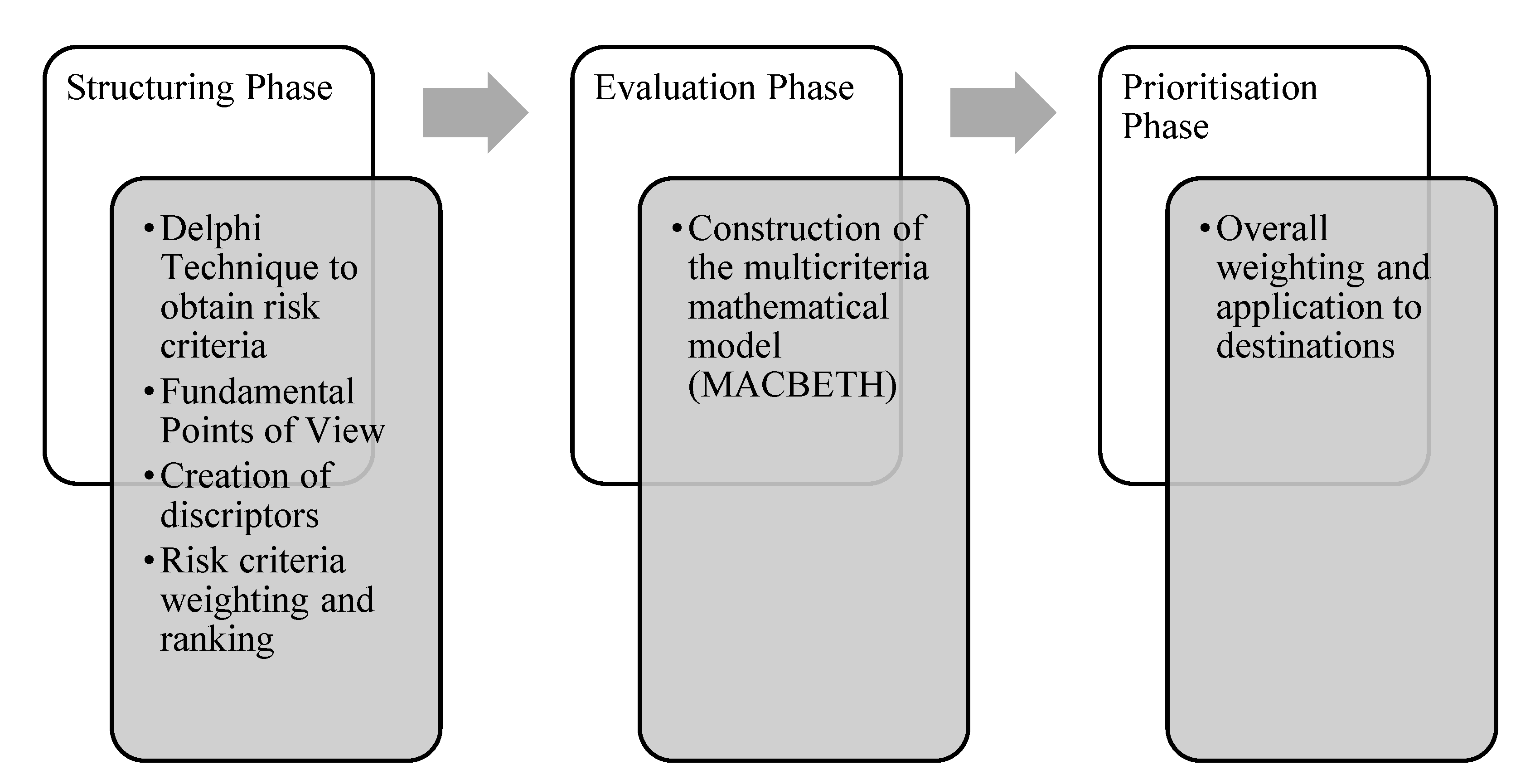
Figure 2.
Screenshot of the Welphi platform.

Figure 3.
Perceived travel risk typology of a sample of South African travelers in the current pandemic situation. Note: numbers (1-4) define the risk dimensions, and numbers (1.1-4.3) represent the evaluation criteria.
Figure 3.
Perceived travel risk typology of a sample of South African travelers in the current pandemic situation. Note: numbers (1-4) define the risk dimensions, and numbers (1.1-4.3) represent the evaluation criteria.
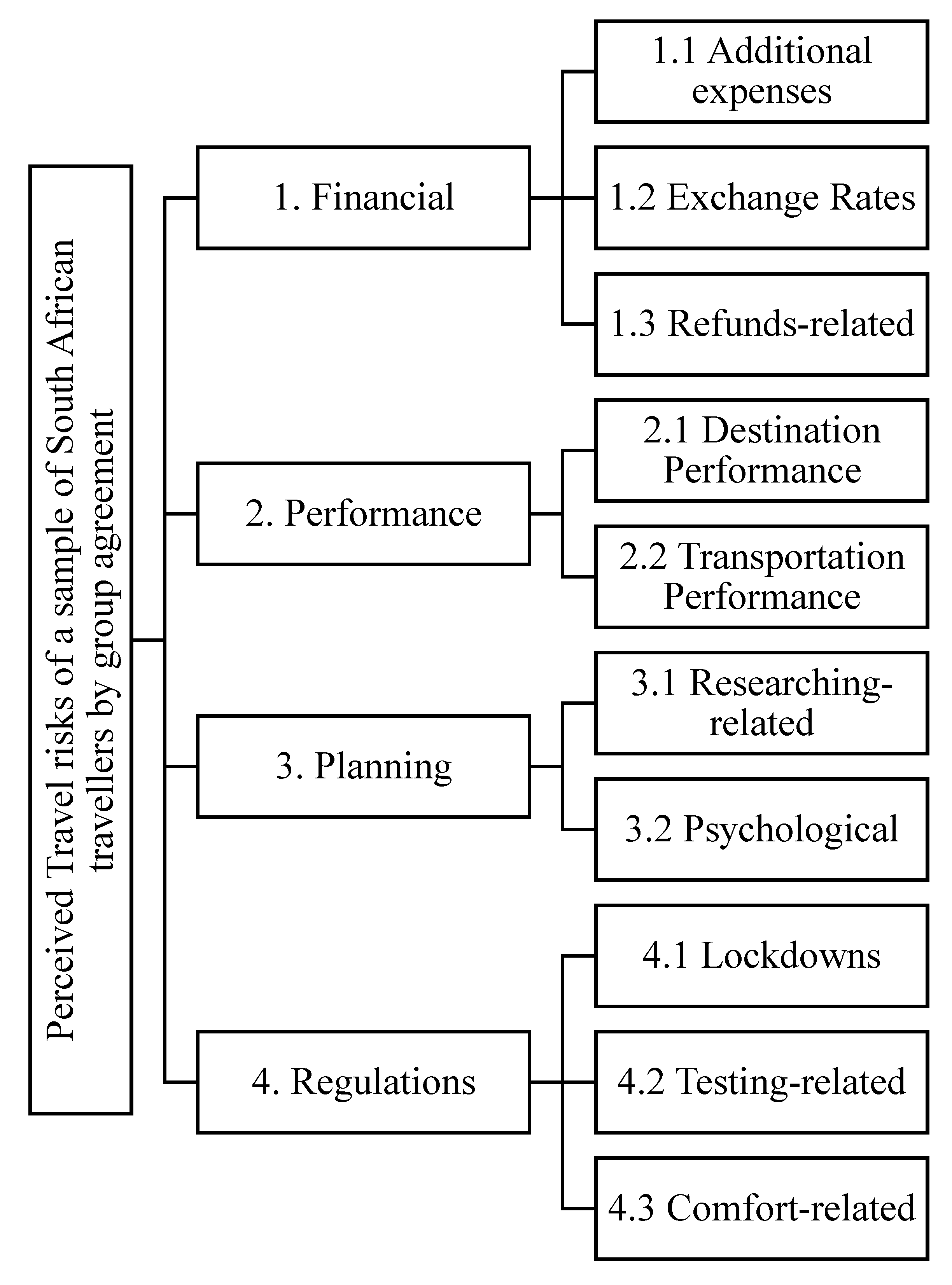
Figure 4.
Multicriteria value tree.
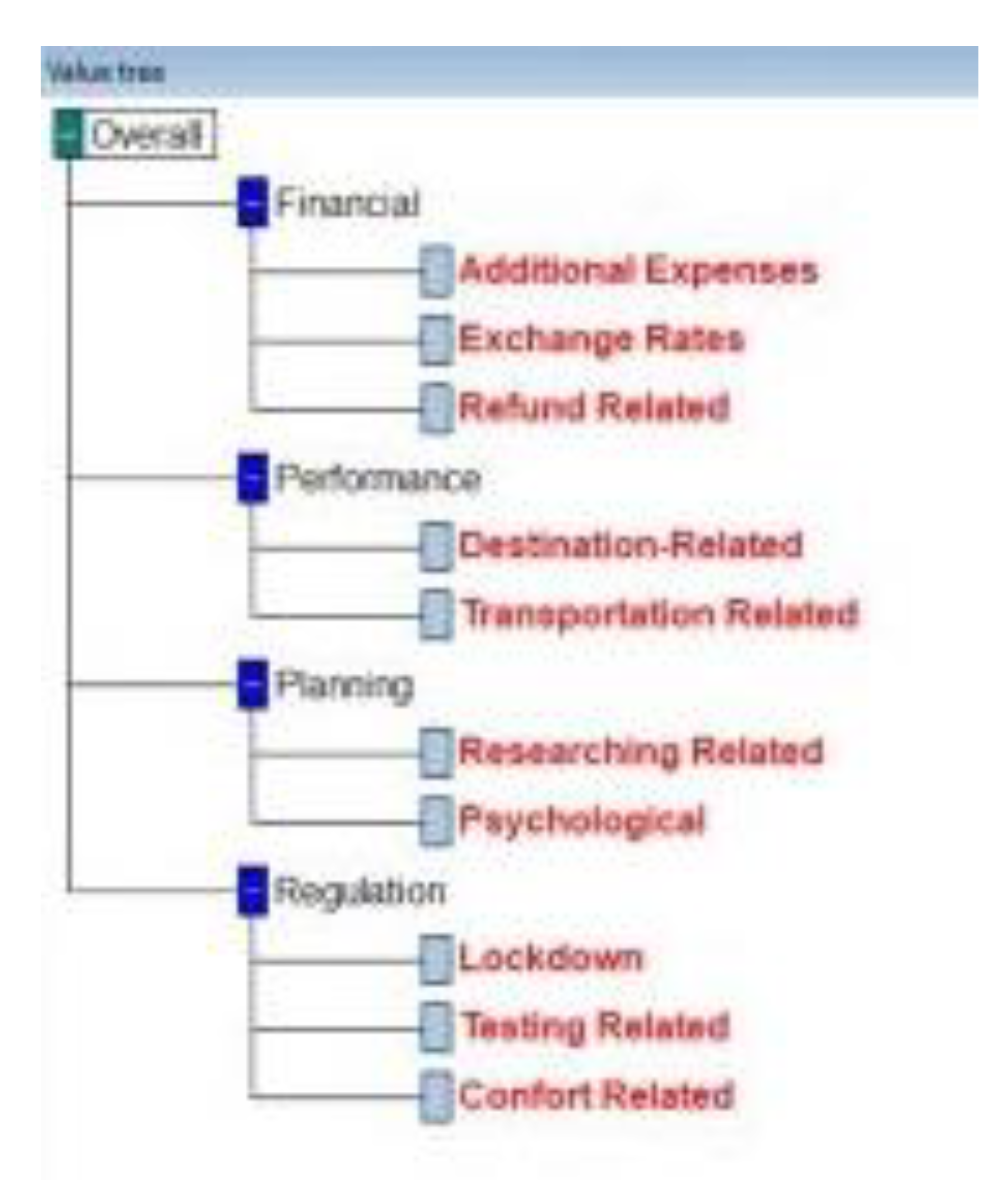
Figure 5.
Refund-related impact level scales.
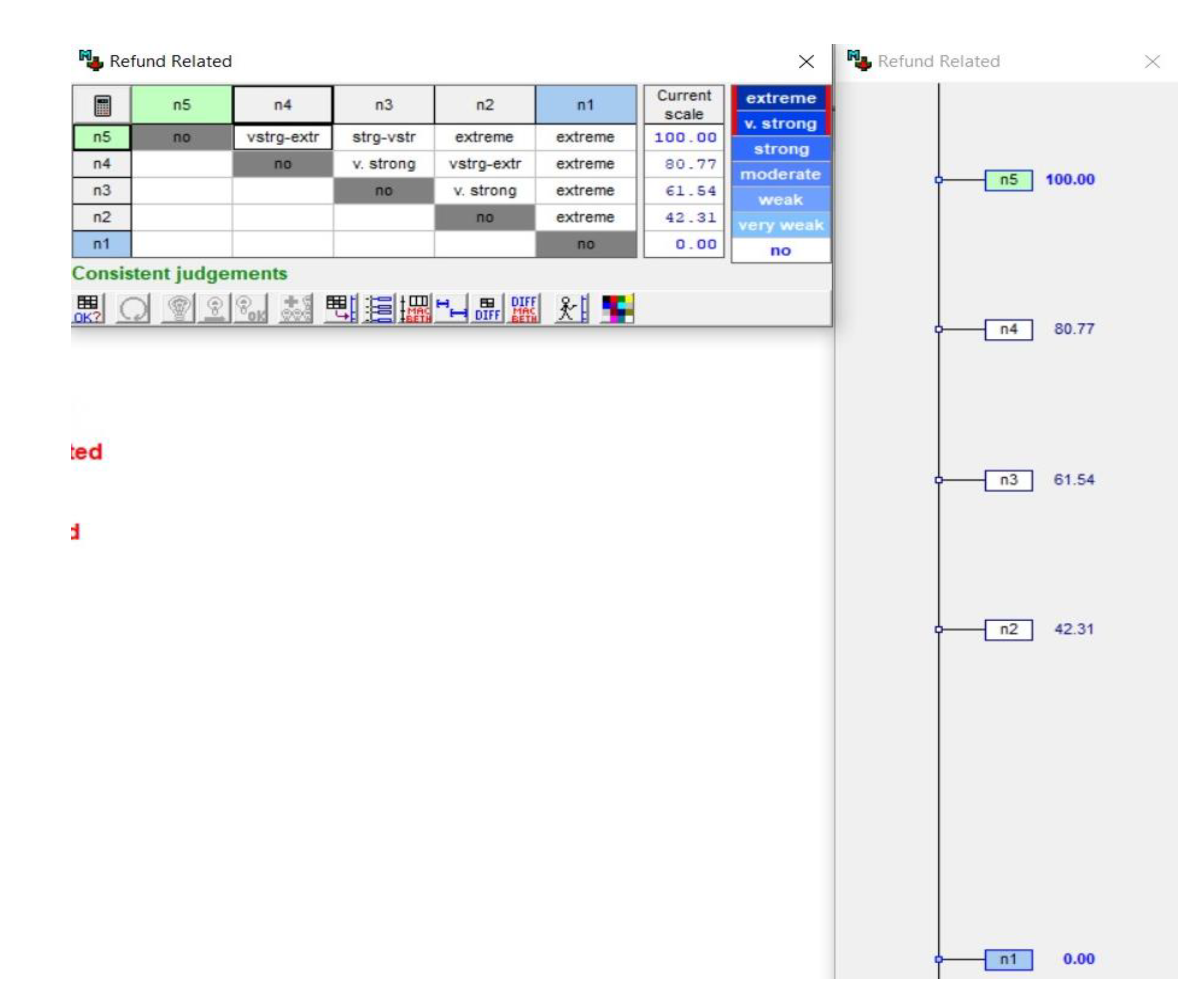
Figure 6.
Weighting matrix of judgments between criteria.
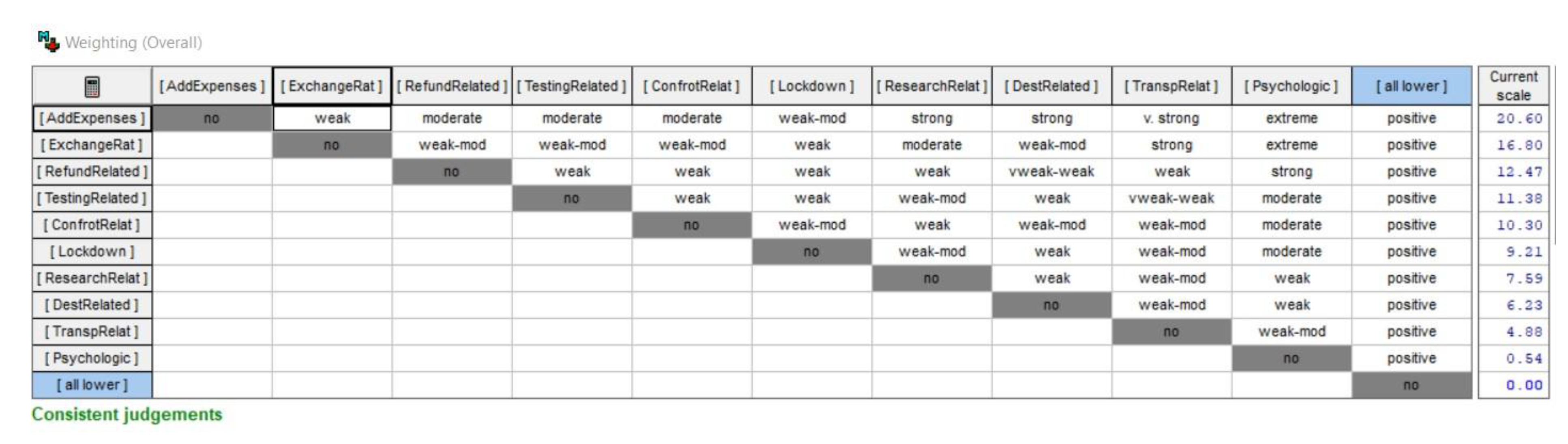
Figure 8.
Performance matrix of Portugal, the USA, Germany, India, and the UK on the multicriteria model. Note: N1-N4 represent the different impact levels (see Table 8).
Figure 8.
Performance matrix of Portugal, the USA, Germany, India, and the UK on the multicriteria model. Note: N1-N4 represent the different impact levels (see Table 8).

Figure 9.
Overall value scores of destinations Portugal, USA, Germany, India, and the UK.
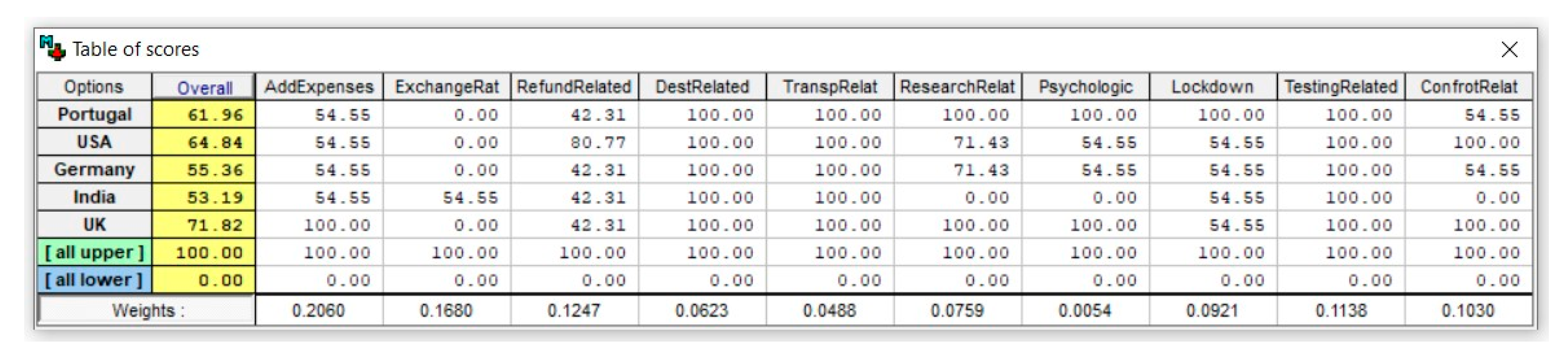

Table 1.
Previous literature on perceived travel risk.
| Authors | Article Title | Risk Categories | Risk dimensions |
|---|---|---|---|
| Roehl & Fesenmaier (1992) | Risk Perceptions and Pleasure Travel: An exploratory analysis | Physical-equipment risk Vacation risk Destination risk |
Destination-related Vacation-related Time risk; Satisfaction risk; Financial risk; Psychological risk |
| Tsaur et al. (1997) | Evaluating tourist risks from fuzzy perspectives | Transportation Law and order Hygiene Accommodation Weather Sightseeing spot Medical support |
Safety of transportation; convenience of telecommunication facilities; safety of driving Political instability; possibility of criminal attack; attitude of locals Infectious disease; hygiene of catering conditions Hotel fire control system; hotel security system Difference of weather change; possibility of natural disasters Safety of recreational facilities; quality of management staff Degree of assistance available in case of an accident; completeness of medical service system |
| Simpson & Sigauw (2008) | Perceived travel risks: The traveler perspective and manageability | Physical risk Performance risk Psychological risk Financial risk Social risk |
Health and well-being; Criminal harm Transportation performance; Travel service performance; Travel & destination environment Generalized fears Monetary concerns; Property crime Concern for others; Concern about others |
| Dolnicar (2005) | Understanding barriers to leisure travel: Tourist fears as a marketing basis | Political risk Health risk Environment risk Plan risk Property risk |
Terrorist attacks; Unstable political environment Healthcare access; Life-threatening diseases Natural disasters; Landslides Unreliable airlines; Inexperienced operations Theft; luggage loss |
| Jonas et al. (2010) | Determinants of health risk perception among low-risk-taking tourists traveling to developing countries | Environmentally-induced risk factors Semi-controlled risk factors Fully controlled risk factors |
Water quality, healthcare, food safety, disease, infection Physical injuries, safety, environmental-physical conditions Sexual and drug abuse health risks |
| Boksberger et al. (2007) | Multidimensional analysis of perceived risk in commercial air travel | Financial risk Functional risk Personal risk Social risk Time risk |
Services providing value-for-money Quality of service Hurt passenger in-flight Reputation damage Checking-in, schedule delays, wasting time |
| Fuchs & Reichel (2011) | An exploratory inquiry into destination risk perceptions and risk reduction strategies of first time vs. repeat visitors to a highly volatile destination | Artificial risk Financial risk Service Quality risk Psychosocial risk Natural disaster & Accident risk Food safety issues & Weather |
Crime; terrorist attacks; political unrest Personal economic consequences Strikes; unsatisfactory facilities; unfriendly shopkeepers Trip impact on self-image; impression of others Possibility of occurrence Food security; possibility of adverse weather |
| Cetinsoz & Ege (2013) | Impacts of perceived risks on tourists' revisit intentions | Physical risk Satisfaction risk Socio-psychological risk Time risk Performance risk |
Natural disaster; experience violent riots; traffic accidents; loss of baggage; robbery; infectious disease; unfavorable weather conditions; sexual harassment; cultural conflicts; negative attitudes of locals Urban pollution; unsafe nightlife; poor hygiene and environmental conditions; uncomforting food safety; overvalued currency; unexpected expenses Worrying about security during vacation; insufficient urban transportation; unfulfilled expectations Wasting vacation time; wasting time in general; feeling disappointed after vacation Language problems; experiencing faults in tour organization |
| Chew & Jahari (2014) | Destination image as a mediator between perceived risks and revisit intention: A case of post-disaster Japan | Financial risk Physical risk Socio-psychological risk |
Facilities will not be a good value for money; worry that the trip will be financially burdening Natural disasters; food safety Change impression from friends |
| Reisinger & Mavondo (2005) | Travel anxiety and intentions to travel internationally: Implications of Travel Risk Perception | Terrorism risk Health and Financial risk Socio-cultural risk |
Terrorist attacks Health; physical; financial; functional Time; satisfaction; psychological; social |
| An et al. (2010) | Risk factors at the travel destination: Their impact on air travel satisfaction and repurchase intention | Natural disaster risk Physical risk Political risk Performance risk |
Probability of occurring natural disasters Possibility of being physically harmed from disease, accident, terrorism, etc. Perceived degree of instability of the destination political environment Perceived degree of the difference between travel cost and value of opportunity cost |
| Rittichainuwat & Chakraborty (2009) | Perceived travel risks regarding terrorism and disease: The case of Thailand. | Terrorism Increase in travel cost Lack of novelty Disease Travel inconvenience Deterioration of tourist attractions |
Bali bomb; War in Iraq; Sept 11, 2001; Political turmoil in southern Thailand Increase of hotel room rate; increase of tour package; increase of air fare lack of: new travel experience; new attractions, and boredom of traveling to the same place SARS, Birdflu, Anthrax Polluted and crowded travel attractions; hostile locals; cheating when shopping; dissatisfaction with the previous trip Language barriers, long travel time, traffic jams |
| Sonmez & Graefe (1998) | Determining future travel behavior from past travel experience and perceptions of risk and safety | Equipment/functional risk Financial risk Health risk Physical risk Political instability risk Psychological risk Satisfaction risk Social risk Terrorism risk Time risk |
Possibility of mechanical, equipment, organizational problems occurring during travel or at the destination (transportation, accommodations, attractions) Not providing value for money spent Becoming sick while traveling or at the destination Physical danger or injury detrimental to health Becoming involved in the political turmoil of the country visited Disappointment with travel experience Dissatisfaction with travel experience Disapproval of vacation choices or activities by friends/family/associates Being involved in a terrorist attack Travel experience taking too much time or will waste time |
| Casidy & Wymer (2016) | A risk worth taking: Perceived risk as moderator of satisfaction, loyalty, and willingness-to-pay premium price | Financial risk Performance risk Social risk Psychological risk |
Lose money due to canceling trip; long-term costs; loss of convenience from wasting time booking and effort booking Hot hotel brands perform; chance of something being wrong with the service; not delivering as promised Friends not thinking well of the individual; causing one to look foolish by people whose opinions they value Tension, unwanted anxiety, worry |
Table 2.
Recent studies on tourist risk perception dimensions following the Covid-19 pandemic.
| Authors | Article title | Risk categories | Risk dimensions |
|---|---|---|---|
| Zhan et al. (2020) | A risk perception scale for travel to a crisis epicentre: Visiting Wuhan after covid-19. | Financial risk Health risk Social risk Psychological risk |
Afraid costs are higher than before; unexpected expenses; not getting good value for money Accommodation facilities not sanitary; diet unhealthy; worried about getting sick during travel; receiving timely treatment for illness or other physical harm People who care about me will be anxious; people who care about me think I'm irrational; afraid it will cause conflicts between couples/family members Tourist facilities will not be good enough; tourist service will not be good enough |
| Lee et al. (2021) | A study on tourists’ perceived risks from covid-19 using Q-methodology. | Worrying about health Worrying about potential problems Worrying about tourism itself Worrying about issues |
Own risk awareness of COVID-19 infection high Concerned about infection; discrimination at the destination; poor-quality medical systems Concerned by unexpected situations at tourism destinations and poor quality of tourism services More concerned about the situation in Korea than infection |
| Matiza (2020) | Post-covid-19 crisis travel behaviour: Towards mitigating the effects of perceived risk. | Health risk Social risk Psychological risk |
Potential hazards to the health and well-being of the tourist; perceived susceptibility and severity How the choice to undertake travel and tourism would affect the tourists’ social reference groups Possibility that travel and tourism experience will not reflect favorably on the tourist concerning the image of self and personality |
| Li et al. (2021) | Seeing the invisible hand: Underlying effects of covid-19 on tourists’ behavioural patterns | Performance risk Health risk Social risk Psychological risk Image risk Time risk |
Not receiving anticipated vacation-related benefits due to the touristic product or service not performing well People meeting strangers may perceive a higher possibility of COVID-19 infection; further destinations may also increase this perceived risk Possibility that one's friends/family express a negative attitude towards tourism activities during the pandemic; feeling alienated upon returning home Pandemic-related anxiety The media affecting risk perceptions by compromising the destination image and tourism market of certain regions Some services not available at the scheduled time due to travel policies during the pandemic; quarantine-related measures |
Table 3.
Participant-related characteristics (n=20).
| Variables | n | Percentage (%) |
|---|---|---|
|
Gender Female Male Other |
14 5 1 |
70 25 5 |
|
Age (years) 18-24 25-30 31-45 46-60 60+ |
1 5 3 9 2 |
5 25 15 45 10 |
|
Educational Attainment No school Matric Diploma/Bachelor’s Degree Post-graduate PhD |
0 3 13 4 0 |
0 15 65 20 0 |
|
Travel Frequency Once every few years Once a year Twice a year More than twice a year |
11 7 1 1 |
55 35 5 5 |
|
Typical Accommodation Hotel Backpackers/Hostel AirBnB, BnB, Rented Stay with friends/family |
5 3 7 5 |
25 15 35 25 |
|
Continent most travelled Africa Europe North America South America Asia Australia Antarctica |
4 15 0 0 1 0 0 |
20 75 0 0 5 0 0 |
|
Reasons for most travel Business Leisure |
3 17 |
15 85 |
Table 4.
Four rounds of panelists' positive coefficients.
| Round | Questionnaires issued | Questionnaires retrieved | Return Ratio (%) | Number of effective questionnaires | Effective return ratio (%) |
|---|---|---|---|---|---|
| First | 32 | 20 | 62.5 | 20 | 62.5 |
| Second | 20 | 17 | 85 | 17 | 85 |
| Third | 17 | 16 | 94.1 | 16 | 94.1 |
| Fourth | 16 | 14 | 87.5 | 14 | 87.5 |
Table 6.
Risk statements accepted by predefined criteria in round 2.
| Risk Statement | Mean | Standard Deviation | Very Unlikely (%) | Unlikely (%) |
|---|---|---|---|---|
| There will be additional costs involved in meeting Covid-19 regulations (e.g., PCR tests) (fin) | 4.24 | 0.970 | 0 | 0 |
Table 7.
Criteria ranked in terms of importance in contributing to overall travel risk perception.
| Criteria | Weighting | Normalized Weights |
|---|---|---|
| 1.1 Additional expenses | 83 | 20.60 |
| 1.2 Exchange rates | 83 | 16.80 |
| 1.3 Refunds-related | 80 | 12.47 |
| 4.2 Testing-related | 77 | 11.35 |
| 4.3 Comfort-related | 78 | 10.30 |
| 4.1 Lockdowns | 75 | 9.21 |
| 3.1 Researching-related | 71 | 7.59 |
| 2.1 Destination performance | 66 | 6.23 |
| 2.2 Transportation performance | 75 | 4.88 |
| 3.2 Psychological | 68 | 0.54 |
Table 8.
Descriptor “Refunds-related”.
| Impact Levels | Description |
|---|---|
| N5 | In the case of cancellation, full refund obtained with low input of effort to obtain the refund |
| N4 | In the case of cancellation, full refund obtained with high input of effort to obtain the refund |
| N3 | In the case of cancellation, partial refund obtained with low input of effort to obtain the refund |
| N2 | In the case of cancellation, partial refund obtained with high input of effort to obtain the refund |
| N1 | In the case of cancellation, no refund obtained with high input of effort to obtain the refund |
Table 9.
Perceived travel risk evaluation index.
| Risk Category | Risk Dimensions/Criteria | Normalized weights |
|---|---|---|
| Financial | 1.1 Additional expenses 1.2 Exchange rates 1.3 Refunds-related |
20.60 16.80 12.47 |
| Performance | 2.1 Destination 2.2 Transportation |
6.23 4.88 |
| Planning | 3.1 Researching-related 3.2 Psychological |
7.59 0.54 |
| Regulations | 4.1 Lockdowns 4.2 Testing-related 4.3 Comfort-related |
9.21 11.38 10.30 |
Disclaimer/Publisher’s Note: The statements, opinions and data contained in all publications are solely those of the individual author(s) and contributor(s) and not of MDPI and/or the editor(s). MDPI and/or the editor(s) disclaim responsibility for any injury to people or property resulting from any ideas, methods, instructions or products referred to in the content. |
© 2023 by the authors. Licensee MDPI, Basel, Switzerland. This article is an open access article distributed under the terms and conditions of the Creative Commons Attribution (CC BY) license (http://creativecommons.org/licenses/by/4.0/).
Copyright: This open access article is published under a Creative Commons CC BY 4.0 license, which permit the free download, distribution, and reuse, provided that the author and preprint are cited in any reuse.


