
Submitted:
14 March 2023
Posted:
15 March 2023
You are already at the latest version
Abstract
This article explores the results of a study on the improvement of the swiftlet house business with the goal of making appropriate legal measures for it. Area surveys, focus groups, and in-depth semi-structured interviews were among the data collection methods used. Swiftlet house entrepreneurs; central and local government officials; and citizens surrounding swiftlet houses significantly contributed to the research. Currently, the swiftlet house business is still illegal in Thailand because swiftlets are considered protected wildlife – protected by the Wildlife Preservation and Protection Act B. E. 2562 (2019). Additionally, it is not permitted to collect, damage, or occupy swiftlet nests without appropriate legal authority to do so. Moreover, there is still no legislation that specifically applies to the swiftlet house business. This study can guide the Thai Government and local governments to develop appropriate laws to govern the swiftlet house industry in Thailand.
Keywords:
law
; management
; swiftlet house business
INTRODUCTION
Swiftlets are birds in the four genera known as Aerodramus, Hydrochous, Schoutedenapus, and Collocalia. They are mostly confined to tropical and subtropical regions. The swiftlet nest is a dietary supplement derived from the salivary gland of the swiftlet, which is very popular and highly priced among Chinese consumers. The swiftlet nest is considered an analeptic and good for a person’s health. In the past, swiftlets only lived in natural caves on islands or seashores. To collect their nests, humans invaded the swiftlet’s natural habitat, climbed up a ladder, and used a long stick tied with a half-cup basket to gouge the nest out from the cave wall. Later, the natural environment changed, and swiftlets migrated to live in human-inhabited buildings. People have now learned that swiftlets can also live in an unnatural habitat if the habitat has a similar environment to their natural home. As swiftlets moved and lived in human habitats, humans started to collect their nests and sell them for profit. Since then, people have studied how swiftlets live and have modified their buildings to welcome these creatures. Now, selling swiftlet nests has become an industry.
China is the world's largest imported swiftlet nest market. The three biggest sellers of swiftlet nests are Indonesia, Malaysia, and Thailand. To export the nests into China, China requires bird nests that are imported into the country to undergo rigorous inspections. Swiftlet houses, cleaning sites, and production sites must all be registered and certified with the relevant authorities. In addition, swiftlet nest processing companies that export swiftlet nests to China must be registered by the Certificate and Accreditation Administration of the People's Republic of China (CNCA). The purpose of this requirement is to establish a traceable system that is capable of monitoring the source of the bird's nest that is being imported to China. If the product has any problems, it can be inspected and recalled immediately (Sukantapong, 2019).
For the current situation of the swiftlet house industry in Thailand, it is important to note the Wildlife Preservation and Protection Act B. E. 2562 (2019), a law whose purposes are the conservation and protection of wildlife, and swiftlets are considered protected wildlife under this law. Section 14 of this law prohibits collecting and possessing protected wildlife and their nests unless the person has received a valid licence from a government official. However, as of June 2022, no licences have been issued because the licensing rules have not been announced. One of the reasons why the rules have not been announced is that the swiftlet house industry involves numerous laws and affects the environment and many people. Therefore, the licensing law must be carefully considered. This makes swiftlet house businesses illegal in Thailand. This situation is different to that of competing countries like Indonesia and Malaysia, which have legal measures that systematise and support the industry. In these countries, the swiftlet house industry has a vast yearly projected income (Samakphong, 2020).
According to a 2019 survey, there were 17,720 swiftlet houses in 54 Thai provinces, mainly in the southern and the eastern regions because they are close to the sea. Even though swiftlet houses are primarily located in such areas, it has been reported that there is an increasing number of swiftlet houses in other offshore locations, such as in the northeast and northern parts of Thailand. It is estimated that the raw swallow nests that Thailand can produce amount to approximately 10,000 kg per month. With the average price of raw swiftlet nests at 20,000–30,000 baht per kg, the industry has a total value of 200–300 million baht per month and 2,400–3,600 million baht per year (Jandam, 2019). Since the swiftlet house industry is still illegal, entrepreneurs must export the birds’ nests by smuggling and must use an intermediary as an importer. This practice leads to price pressure problems and the exploitation of trade. In addition, the Thai economy has lost economic value and tax revenue due to the inability to control, monitor, and manage such business operations.
In addition to the problem of a lack of legal regulations to allow the collection and possession of swiftlet nests, this study considers that many swiftlet house operators have a problem with the surrounding communities – odours, noises, droplets, and other waste caused by swiftlets because there are no legal mechanisms or government agencies to manage the industry systematically. The neighbourhoods surrounding the swiftlet houses see that such business owners are only interested in personal benefits and lack social responsibility, negatively affecting the industry. If legal measures are established to support the swiftlet house industry, it will be able to create many jobs and generate income for the community and country.
Therefore, the Thai Government can legally generate massive income from enacting regulations to legally manage the swiftlet house industry. This research thus aims to propose guidelines for developing laws to properly control, manage, and promote the swiftlet house industry. The results of this study can be used as guidelines for legislators and policymakers in preparing laws on the swiftlet house industry and by those interested in the industry in Thailand.
PURPOSE OF THE STUDY
To propose appropriate laws to control, manage, and promote the swiftlet house industry.
LITERATURE REVIEW
1. The Swiftlet House Industry
Currently, there are approximately 8,700 species of birds in the world, of which 80 belong to the family of fast-flying swallows. Thailand has a total of 12 species of swallow birds. Among the number of tiny swallows, the most valuable bird’s nest is that of the swiftlet, which has been popular due to a general long-held belief that the nest, which is created from the swiftlet’s saliva, acts as an analeptic and treats diseases, especially diseases related to the respiratory system. Swiftlets are birds of the order Apodifomes, of the family Apodidae, of the genus Collocalia, of the species Collocalai fuciphaga (Yutthaphong, 2010). They can be found in Myanmar; Thailand; Malaysia; southern Vietnam; the Andaman and Nicobar Islands, Indonesia; the Sundas Islands, Indonesia; and Palawan Island, the Philippines. With their sedentary nest-building behaviour, swiftlets often nest on an island and sometimes in buildings. They prefer hot weather and high humidity. Therefore, the ecosystem in southern Thailand, located near the equator, is a favourable geographical feature and climate in which swiftlets are suited to live and lay eggs for propagation. Generally, swiftlets live about six to seven years, and three-year-old swiftlets are believed to lay the best-quality nests (Thai Bird's Nest Farm Promotion and Development Institute, 2019).
The first birdhouse in Thailand was in Pak Phanang District, Nakhon Si Thammarat. The flocks of swiftlets flew in, lived, nested, and lay eggs there. The house owner started to collect and sell their nests, generating a considerable income. People then learned that swiftlets could live and nest in an unnatural habitat if it has a similar environment to their natural habitat, which is warm, dark, humid, and close to their food and water sources.
Figure 1.
The first swiftlet house in Thailand was in Pak Phanang District, Nakhon Si Thammarat (Jandam, 2019).
Figure 1.
The first swiftlet house in Thailand was in Pak Phanang District, Nakhon Si Thammarat (Jandam, 2019).
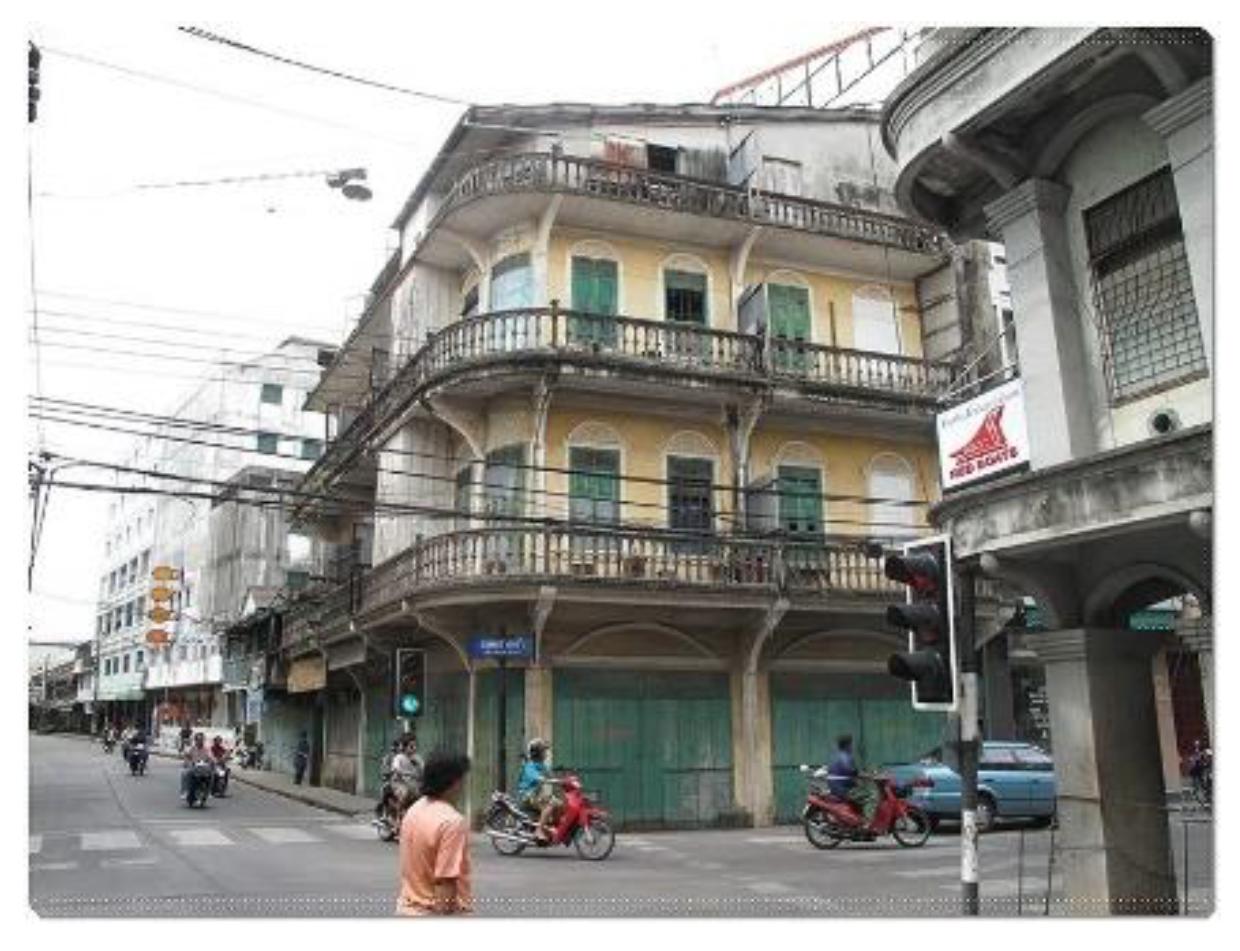
There is no fixed design or layout required to make a successful birdhouse. Investors usually imitate the design of successful birdhouses in their area. Therefore, the size and characteristics of swiftlet houses are diverse. The cost of building a birdhouse depends on the size of the house, the price of the land, the design cost, the construction permit fee, the type of materials, the labour costs, the utility costs, the equipment costs, and consulting costs. Even though the birdhouses are diverse in terms of design and price, the basic design is a building, with between one and four floors, with no windows, but with several tiny holes built into the walls for swiftlets to fly in and out. Inside, rows of wooden planks are attached to the ceilings, upon which the birds can nest.
A birdhouse business starts by the construction or modification of a building to transform it into a suitable environment for housing the swiftlets. Certain sounds are made to lure the birds into the house. After the swiftlet chooses its home, it will build its nest on the provided wooden plank and lay eggs, and after they leave the nest, the humans will go in to collect it by using a trowel to pluck the nest out of the wooden plank. The collected nests are raw birds’ nests that are still dirty, contaminated with feathers, dust, and bird waste. Therefore, they must undergo a cleaning process, which starts with brushing away large clumps of dirt from the nest. Then, the bird’s nest is soaked in water to soften and loosen the nest. As a result, dust, feathers, and small grains of dirt float out of the nests, and the rinsing process is repeated until the nests are thoroughly cleaned. When all the dirt is removed, the nests will be put in moulds and blown with warm air until they are dry. Finally, raw bird nests are ready to be packed and sold for further processing.
2. Legislation Related to the Swiftlet House Industry
The Wildlife Preservation and Protection Act B.E. 2562 (2019)
Wild animals are essential to both humans and the environment in many ways. Therefore, to protect wildlife, there is a treaty known as the Convention on International Trade in Endangered Species of Wild Fauna and Flora, known as CITES, which came into force on 1 July 1975. Its purpose is to conserve nature and natural resources. Thailand signed the CITES convention in 1975 and ratified it on 21 January 1983, making Thailand the 80th member of 181 states to sign the treaty.
Section 4 of the Wildlife Preservation and Protection Act B. E. 2562 (2019), Thailand's domestic law that has been ratified under the CITES convention, defines ‘protected wildlife’ as ‘wild animals that are important to the ecosystem, or wildlife species whose population is likely to decline, which may affect the ecosystem’. And under the Ministerial Regulation Designating Certain Wild Animals as Protected Wildlife B. E. 2546 (2003), which listed the swiftlet (Collocalia maximus or Aerodramus maximus) as a protected wildlife type number 872, any acts relating to swiftlets and their nests, such as collection and possession thereof, are governed by this law.
Section 14, paragraph 2 of the Wildlife Preservation and Protection Act B. E. 2562 (2019) states that ‘no person shall keep, endanger, or have in possession the nest of protected wildlife unless it is a nest of protected wildlife of the kind prescribed by the Minister and such person is a licensee’. Any person who violates this provision is liable to imprisonment for a term not exceeding one year or a fine not exceeding 100,000 baht – or both. Therefore, all the operations relating to swiftlet nests in the swiftlet house industry are considered illegal unless a swiftlet business operator has obtained a valid licence for their activities. However, there are no regulations concerning obtaining permits for collecting, harming, and possessing protected wildlife nests. Therefore, keeping, harming, and possessing swiftlet nests – running a swiftlet house business – is still illegal in Thailand.
The Town Planning Act B. E. 2562 (2019)
Town planning is one method of organising land use, ensuring land is orderly, beautiful, hygienic, safe, and environmentally friendly. ‘Land use’ refers to activities humans perform on the land, such as residential, commercial, industrial, governmental, healthcare-related, educational, transport-related, or other public uses. Urban land use differs from rural land use; that is, rural land use is directed toward agricultural production, such as cultivation and animal husbandry, whereas urban land use covers commercial or industrial purposes or land use for public places, such as educational institutions, government offices, and recreational land.
Section 4 of the Town Planning Act B. E. 2562 (2019) considers town planning to include planning, designing, and implementing town planning at various levels as a guiding framework for physical development at the national, regional, provincial, urban, and rural levels. According to this Act, the purposes of town planning are developing cities, rural areas, and other related areas with the goal of improving them in various ways; for example, sanitation, convenience, orderliness, beauty, transportation, public safety, and disaster prevention.
The law colour codes land according to its use; for example, a low-density residential area is yellow; a medium-density residential area is orange; a high-density residential area is red; a rural and agriculture area is green; and so on. The yellow, orange, and red areas are all residential areas. Therefore, any activities or any land use that will take place in these areas must be residential or conducive to residential land use. Any activities or land uses that hinder or obstruct such activities are prohibited. For example, animal husbandry is a source of odours, waste, and infectious diseases, so animal farms cannot be located in all residential areas. They must be located in agricultural areas instead, because it is a land use that hinders the safe living of human beings.
Considering the emergence of the first swiftlet house business in Thailand, the first birdhouse was located in a residential area. Unlike other types of animal husbandry, the first birdhouse was caused by a swiftlet flying into the building of its own accord. Therefore, under the abovementioned Act, government agencies cannot deal with these businesses because the building owners had no intention of breaking the law. Later, after the birdhouse business became popular, new entrepreneurs modified existing buildings, primarily located in residential areas, into birdhouses. The activities in swiftlet houses are similar to those of animal farms, since they are animals’ habitats. In addition, swiftlet houses are a source of waste, bird feathers, and infectious diseases. Therefore, all swiftlet houses located in residential areas violate this Act.
The Building Control Act B. E. 2522 (1979)
The Building Control Act B. E. 2522 (1979) is a law that ensures the safety of buildings. It controls the location, structure, layout, modification, materials, and facilities used in construction to guarantee that a building is solid and safe for the users of the building and the neighbourhood. To construct a building, the landowner must have obtained permission to do so from the local authority. The local authority will ask the petitioner to submit, among other documentation, the construction plan and layout. The plan and design must comply with the minimum requirements of the law relating to the building type. For example, a hotel building plan will have higher minimum requirements than a private house plan. A hotel must have a certain number of fire extinguishers, a certain type of power supply, and wider stairs than a private house.
In terms of how birdhouses are constructed, there are two types of swiftlet houses. The first is the newly made house, and the other is the modified old house. Regardless of the type of birdhouse, the construction and modification of the birdhouse building are governed by building control laws. Considering the characteristics of the Thai birdhouse buildings, most are old buildings that the owners later modified to render them similar to natural swiftlet caves.
Modifying a house to render it a birdhouse is usually done by removing the original window, closing the wall, and drilling many holes into the wall to let the birds fly in and out. Inside the birdhouse, there is often not enough ventilation for human habitation. Narrow and unstable stairs are usually installed. This study’s interviews with entrepreneurs exposed frequent birdhouse accidents caused by the construction of a birdhouse or stairs that are not strong or safe enough. There are no specific laws controlling birdhouse construction.
The Public Health Act B. E. 2535 (1992)
The purpose of the Public Health Act B. E. 2535 (1992) is to protect people in terms of hygiene, sanitation, and the local environment by means of decentralisation to local government organisations. Local government organisations can enact local regulations and apply them within their authority.
Agriculture and animal husbandry have a negative impact on the environment. For example, a swiftlet house is often a source of odours, noise, bird waste, and contagious diseases. In the droppings of swiftlets, there is a very high amount of nitrogen compared to other animal manure. If swiftlet droppings accumulate, nitrogen may be produced in various forms, which affects the building’s waste disposal system. To lure swiftlets into a birdhouse, some entrepreneurs use noise. The volume may be an annoyance to the neighbourhood and may be a cause of conflict between swiftlet house owners and the local community. Therefore, the law should control and manage such matters to prevent agriculture or animal husbandry from affecting the environment and public health.
Section 5 and Section 31 of the Public Health Act B. E. 2535 (1992) provide that the Minister of Public Health, with the support of the Public Health Commission, has the power to publicise (in the Government Gazette) any business that is harmful to public health. A business that is harmful is governed by a specific law depending on the type of the business. The Minister of Public Health publicised the ‘Notification of the Ministry of Public Health Re: Businesses Hazardous to Health B. E. 2558 (2015)’. It determines that any business relating to animal breeding, rearing, and nurturing is a business that is hazardous to public health.
In addition, Section 25 of the Public Health Act B. E. 2535 (1992) determines the features of a ‘nuisance’. The cause of a nuisance under this section may include: dirty places causing a foul smell; areas that are breeding grounds for disease or causing health hazards; animal rearing by means or in unreasonable amounts that are harmful to public health; human or animal habitats without enough ventilation, drainage, sewage disposal, or control of toxic or foul odours; and any acts that cause odours, light, noise, heat, dust, emissions, soot, and ash that cause harm to public health. A swiftlet house business, therefore, is governed by the Public Health Act B. E. 2535 (1992).
RESEARCH METHODOLOGY
This research aims to propose legal measures that are suitable for the swiftlet house industry by means of a qualitative research approach using semi-structured interviews as the research tool. The study has been conducted in Nakhon Sri Thammarat and Chanthaburi, where there are many swiftlet houses. The research focused on the problems caused by the existing law, the lack of appropriate laws, and the interests of all stakeholders.
Population and Sample
The study population consists of stakeholders in the swiftlet house industry, including those who possess swiftlet house businesses; those who want to invest in swiftlet house businesses; those who live near swiftlet houses; relevant local and central government officials; and those who are involved in research into the swiftlet house industry. The sample consists of 100 swiftlet house owners and those who want to invest in the industry, 50 government officials from relevant government organisations, and 100 people who live near swiftlet houses.
Research Instruments
In this study, the semi-structured interviews were designed by analysing the problems each stakeholder faces due to the current status of the law and how each stakeholder expects the law to solve their problems. The interviews were structured as follows:
Part 1: General Information of the Respondents – The questionnaire contained a five-item checklist to collect data on each respondent’s age, gender, educational status, employment position, and period of experience or involvement in the swiftlet house industry.
Part 2: The Problems Each Stakeholder Faces due to the Current Status of the Law – This section of the interview covered the relevant laws that relate to the swiftlet house industry.
Part 3: The Stakeholders’ Expectations of the Law – This interview section covered how the stakeholders would want the law to resolve the problems they encounter most appropriately.
Tool Construction
Development of the research instrument began with a study of relevant research and law in relation to the swiftlet house industry and the problems caused by the current status of the law. This was followed by an investigation of swiftlet house business laws in countries that also have strong swiftlet house industries – Malaysia and Indonesia. The tool was created to guide the creation of the semi-structured interviews. Then, the semi-structured interviews and the questionnaires were then prepared in accordance with the conceptual framework. These were later offered to experts to determine their suitability, the accuracy of the language used, and whether there was sufficient coverage for the research.
Data Collection
The data was collected in the form of semi-structured interviews and focus groups. The interviews were conducted with current swiftlet house business owners, potential investors in the industry, relevant government officials, and people who live near swiftlet houses. All interviewees were actively involved in the swiftlet house industry.
Data Analysis
The data (the interviews) was analysed by means of content analysis, focusing on assessing the most appropriate way of improving the laws that allocate relevant interests to all stakeholders.
RESULTS AND FINDINGS
Thai Law Does Not Allow Collecting and Possessing the Nests of Protected Wildlife
According to Section 14 of the Wildlife Preservation and Protection Act B. E. 2562 (2019), no person is permitted to collect, endanger, or possess a nest of protected wildlife without a licence from a competent official. As a result, swiftlet house operators cannot run their businesses. However, at the end of Section 14, a person can apply for permission to collect and possess the nests of protected wildlife.
Three years after this Act came into force, the licensing law is still subject to a process of hearing opinions from relevant agencies, so the swiftlet house industry is still illegal in Thailand. This situation is inconsistent with the increasing number of swiftlet houses, causing entrepreneurs to smuggle and trade the nests illegally, resulting in the state losing economic income and tax revenue. The swiftlet house owner is pressured and dumps the nest price because they claim that legalising their business is too costly. In order avoid price dumping, many swiftlet house entrepreneurs choose only to export the nests, but many have been arrested in Thailand and the importing countries on swiftlet nest smuggling charges.
However, some operators have not been subject to legal action because they are influential in the area. Moreover, the swiftlet house industry creates jobs and income for the surrounding communities. The operational element of running a swiftlet house requires daily cleaning of bird droppings and bird waste. Cleaning the nests is a delicate task that requires high precision, so entrepreneurs tend to employ several workers, especially female workers, to work in the business. As a result, the swiftlet house industry generates jobs and income for local people. Government officials, therefore, have overlooked it, even though it is illegal.
The Lack of Specific Laws Governing the Design of Birdhouses and Violations of the Town Planning Law
Swiftlet houses are often in the form of buildings that are more than one storey in height and usually located in areas where city planning and building control laws apply. The construction of, modification of, or addition to such buildings requires permission from or notification to competent officials who have the legal power and duty to supervise these activities.
The construction of a swiftlet house is different to the construction of a residential building. Birdhouses do not need wide windows and do not require as much light and ventilation as residential buildings. Therefore, building owners or occupants often construct or modify structures by closing the windows or removing them, then inserting a small hole for the birds to fly in and out. Inside, a ladder allows operators to collect the nests and clean the waste caused by the birds. The stairs are often built to be small and narrow, with no railings, and stairs with a height of more than 3 m usually do not have a landing, which may affect the operator’s safety.
In addition, many swiftlet houses may not have a wastewater treatment system, causing a nuisance to the surrounding communities, especially the neighbouring residents. Most of them do not have a fire protection system. Therefore, swiftlet houses are unique in their design and require certain specifications to make the safe and strong. If they are located in a community area, birdhouse buildings that are not correctly constructed in line with relevant building control standards may affect the surrounding communities.
Presently, Thailand does not have any laws on building control and town planning that specifically apply to the construction of swiftlet houses. As a result, the competent officials do not have clear guidelines on how to act and on whether to permit the construction of a swiftlet house or not. How can the construction, modification, or use of a swiftlet house be controlled to ensure the safety of the building’s occupants and local residents if construction or modification is permitted?
Concerns About Businesses That Are Harmful to Public Health and the Environment
A business that is harmful to public health is any business that has a production process, service, or activities that cause pollution or disease that will affect the health of the people who operate the business, employees, operators, customers, or service recipients, including people in the surrounding area (Ministry of Public Health, 2019).
The operation of a swiftlet house that is luring or calling swiftlets inside to live and nest is considered a business that is harmful to public health according to Article 1(1) and (2) of the Notification of the Ministry of Public Health Re: Activities That Are Harmful to Health B. E. 2558 (2015), which states that the breeding, rearing, and care of all kinds of animals, including animal husbandry or any other business of the same nature for the public to visit or for the benefit of that business, regardless of whether the viewing fee or service fee is charged directly indirectly or not, are activities that are harmful to public health. Luring swiftlets to live inside a building for nesting and collecting nests may cause noise, air and water pollution, solid waste, and infectious diseases. These activities can be classified as farming.
The place where the birds’ nests are kept or where birds’ nests have been cleaned is considered a business that is hazardous to public health as well, according to Article 3(4) of the abovementioned Notification – these activities are classified as food-related business as they involve producing, accumulating, or dividing food from plants or animals. The nest-cleaning process starts by receiving raw bird nests from the birdhouse; cleaning them by brushing off the dust or external impurities; and softening the nests by moistening them and using a pair of tongs to pick dirt, such as feathers or droppings, from the nests. These processes may cause water pollution and contagious diseases.
When a birdhouse business is considered a business that is harmful to public health, such business operations must be authorised by the relevant local government organisation. The applicant must comply with the conditions prescribed by the local government organisation for protecting hygiene; controlling and preventing pollution; and controlling and preventing infectious diseases in the workplace, community, and environment. However, the swiftlet house industry is still not legal because collection of, possession of, and harm to swiftlet nests are prohibited acts under Section 14 of the Wildlife Preservation and Protection Act B. E. 2562 (2019). Therefore, local government organisations may not allow operators to operate illegal businesses.
Moreover, when considering the criteria for applying for a licence to operate other businesses that are hazardous to public health, most have similar conditions; that is, businesses that are harmful to public health must be located far from hospitals, places of religious worship, schools, nursery, elderly care facilities, and any other areas requiring special public health protection. Such a business must comply with building control laws, laws on cleanliness, and laws on the control and treatment of wastewater, waste disposal, and disease control and prevention. Currently, no laws govern activities in swiftlet houses, rendering the securing of permission to operate a business that is harmful to public health impossible.
As a result, the communities surrounding a swiftlet house cannot know whether the activities occurring in the swiftlet house are sanitary, causing worries that business operations will affect public health and the environment. There may be conflicts that may lead to court action. The lack of transparent laws governing the swiftlet house industry has left the public unconvinced about whether such businesses are sources of pollution, noise, wastewater, or contagious diseases. If a problem arises, the general public does not have a tool for indicating that the swiftlet house operator has not complied with relevant laws.
Export Problems Arising from a Lack of Appropriate Policies
Even though the swiftlet house industry is illegal, due to the nests’ value and price, many people are willing to take the risk of breaking the law. When the nests cannot be exported legally, those people may choose to sell swiftlet nests on the black market, carrying the nests in their luggage and selling them directly to the buyers. Some choose to sell swiftlet nests to intermediaries who will mix illegal swiftlet nests with legal nests, which are collected from a state concession area.
Swiftlet nest smugglers sell the nests at a lower price than they should be. This is because buyers, who are often people who have been in the swiftlet nest business for a long time, are well aware that the nests collected from swiftlet houses in Thailand have been collected and dealt with illegally. Therefore, buyers tend to buy at a lower price than they should pay in order to continue making profits. As a result, swiftlet house operators in Thailand lose a lot of potential income, which is considered the Thai economy’s income because the state has not issued a law specifically for the management of the swiftlet house industry .
DISCUSSION
Guidelines for the Development of Legal Measures for Improving the Swiftlet House Industry
Therefore, the main current problem is the lack of legal measures specifying details or criteria for applying for permission to collect, endanger, or possess swiftlet nests. This situation encourages entrepreneurs to sell them in illegal places and by unlawful means. The operation of a swiftlet house business is different to other forms of animal husbandry because the swiftlets are not confined, or barred, as in other forms of animal husbandry. They are free to fly anywhere. The swiftlet house owner does not have to provide food for them. Therefore, it cannot be said that the swiftlet house is traditional animal husbandry.
Running a swiftlet house involves opening the building for swiftlets to use as a dwelling, by which humans benefit from collecting and selling their discarded nests. The entrepreneur’s objective is not to destroy or harm the protected wildlife – that would pose a risk of extinction to swiftlets. On the other hand, the business owners have to ensure that the swiftlets will choose their house and increase in population by providing a suitable environment for them to live in and by protecting them from natural predators.
To efficiently support the swiftlet house industry, systematic and precise legal measures are required to determine the criteria for obtaining a licence for collecting and possessing swiftlet nests.
After a swiftlet house business is allowed to keep and possess the swiftlet nests, there must be a specific law governing the permitted locations of the swiftlet house; that is, the swiftlet house should not be located in a residential area or within the locality of a hospital, government office, or another area that requires special public health protection. Therefore, swiftlet houses should be located in green spaces – for farming or raising animals. Concerning swiftlet houses located in prohibited areas before this law would come into force, competent officials must evaluate how risky the swiftlet house may be to the surrounding communities. If it is determined that the risk is low, the swiftlet house business may be allowed to continue. However, if a high risk is identified, the relevant officer should have the authority to order the closure of the business and to improve the building as appropriate.
There should be a law that defines the minimum standards required for swiftlet houses, considering the safety of the building occupants and the surrounding communities; for example, the facility must have a wastewater treatment system, ventilation system, adequate lighting, and fire protection equipment.
Moreover, a law should be implemented to control and prevent infectious diseases spreading from the swiftlet house. A safety standard system must be implemented in order to avoid the spread of potentially contagious diseases, such as the installation of hand-washing basins both outside and inside the building; a place for storing equipment that is regularly cleaned and organised; and an infection control system to ensure that the business has sufficient knowledge on disease control and prevention. To make this system efficient, the public health agency must inform and set it up in order to guarantee that entrepreneurs have adequate and accurate knowledge.
Regarding social and environmental responsibility, the relevant laws should focus on managing waste, wastewater, removal of bird droppings, and so on. Swiftlet house operators must have a separate waste management system that does not mix with community waste-disposal sites. Entrepreneurs must have sufficient knowledge and understanding of the correct use of chemicals.
There must also be a law that allows the relevant officer to supervise and monitor whether swiftlet house businesses are complying with the law. If it is found that a swiftlet house business does not comply with the law, the competent official should have the power to issue orders as appropriate.
CONCLUSION AND RECOMMENDATIONS
Today, the natural environment has been gradually destroyed, causing swiftlets to leave their cave dwellings and rely on human homes, which can be seen from the first swiftlet house in Nakhon Si Thammarat Province, where it was found that swiftlets can live in buildings in which humans reside. Swiftlet houses can now be found in many regions in Thailand. Such changes have resulted in the rise of the swiftlet house industry, which generates significant value for the country’s economy.
The swiftlet house industry creates jobs and has expanded to other kinds of business, such as swiftlet house consultants, nest cleaning plants, professional birdhouse builders, and food supplement products. This study found that there are still obstacles to running swiftlet house businesses in terms of wildlife conservation and protection laws that stipulate that the collection and possession of swiftlets’ nests are illegal, and there is a lack of relevant legal mechanisms in several aspects, specifically rules defining the standards for the construction of swiftlet houses and laws to control the swiftlet industry since such a business is considered harmful to public health.
As a result, the swiftlet house industry still cannot operate openly and legally. It is therefore necessary for swiftlet house entrepreneurs to trade only in small groups or smuggle nests out of the country illegally. This lack of clear legal regulations has resulted in different authorities using their discretion in different ways, a lack of clear discretion guidelines, and a lack of a control system to supervise such business and the discretion of the competent officials.
Recommendations for solving these problems include that the relevant government agencies should improve the legal measures by enacting laws to allow individuals to apply for licences to collect and possess swiftlet nests according to reasonable criteria. In addition, there must be a law specifying the appropriate location of swiftlet houses in accordance with town planning laws. There must be rules determining the minimum standards for the swiftlet house building itself. Most importantly, laws on the control and management of the swiftlet house industry would ensure that such businesses will not cause a public nuisance, waste, and the spread of infectious diseases.
References
- Boonyanusasn, S. (2006). Factors Affecting Migration and Settlement Formation of Edible-Nested Birds in Pak Phanang Watershed. Chulalongkorn University.
- Building Control Act B., E. 2562 (2019).
- Department of Public Works and Town & Country Planning. (2006). Criteria and Standards for Town Planning B. E. 2549.
- Jandam, K. (2007). Swiftlets: Nesting Sites, Southern Landscape Map Project: Economic Base and Cultural Capital. Research Fund Office.
- Leksuk, N. (2020). Thai Swiftlet Building Business. Bangkok: Office of the Science Promotion Commission Research and Innovation.
- Pongpattananurak, N. et al. (2018). Guidelines for the Implementation of Good Practice Standards for Swiftlet Houses. Bangkok: Faculty of Forestry, Kasetsart University.
- Public Health Act B., E. 2535 (1992).
- Sripiban, R. (1999). The Importance of Bird's Nest to the Economy in Southern Thailand. Thammasat University.
- Sukantapong, K. (2019). Thai Bird's Nest’ Opportunities in the Chinese Market: Know the Chinese Bird's Nest Market (Part 1) – Thailand Business Information Center in China. Retrieved from https://bit.ly/3aMjjLK.
- Samakphong, S. (2020). Request for the Swiftlet to be Economic Animals and Allow the Business Sector to Legally Sell the Nests for Export to Foreign Markets to Bring Income to the Country During the COVID-19 Outbreak, COVID-19. Bangkok: Secretariat of the Senate.
- Town Planning Act B., E. 2562 (2019).
- Wildlife Preservation and Protection Act B., E. 2562 (2019).
Disclaimer/Publisher’s Note: The statements, opinions and data contained in all publications are solely those of the individual author(s) and contributor(s) and not of MDPI and/or the editor(s). MDPI and/or the editor(s) disclaim responsibility for any injury to people or property resulting from any ideas, methods, instructions or products referred to in the content. |
© 2023 by the authors. Licensee MDPI, Basel, Switzerland. This article is an open access article distributed under the terms and conditions of the Creative Commons Attribution (CC BY) license (http://creativecommons.org/licenses/by/4.0/).
Copyright: This open access article is published under a Creative Commons CC BY 4.0 license, which permit the free download, distribution, and reuse, provided that the author and preprint are cited in any reuse.