

Submitted:
14 January 2023
Posted:
17 January 2023
You are already at the latest version
Abstract
In this research, new setting is introduced for assuming a SuperHyperGraph. Then a ``SuperHyperClique'' \(\mathcal{C}(NSHG)\) for a neutrosophic SuperHyperGraph $NSHG:(V,E)$ is the maximum cardinality of a SuperHyperSet \(S\) of SuperHyperVertices such that there's a SuperHyperVertex to have a SuperHyperEdge in common. Assume a SuperHyperGraph. Then an ``\(\delta-\)SuperHyperClique'' is a \underline{maximal} SuperHyperClique of SuperHyperVertices with \underline{maximum} cardinality such that either of the following expressions hold for the (neutrosophic) cardinalities of SuperHyperNeighbors of $s\in S:$ $~|S\cap N(s)| > |S\cap (V\setminus N(s))|+\delta,~|S\cap N(s)| < |S\cap (V\setminus N(s))|+\delta.$ The first Expression, holds if \(S\) is an ``\(\delta-\)SuperHyperOffensive''. And the second Expression, holds if \(S\) is an ``\(\delta-\)SuperHyperDefensive''; a``neutrosophic \(\delta-\)SuperHyperClique'' is a \underline{maximal} neutrosophic SuperHyperClique of SuperHyperVertices with \underline{maximum} neutrosophic cardinality such that either of the following expressions hold for the neutrosophic cardinalities of SuperHyperNeighbors of $s\in S:$ $~|S\cap N(s)|_{neutrosophic} > |S\cap (V\setminus N(s))|_{neutrosophic}+\delta,~ |S\cap N(s)|_{neutrosophic} < |S\cap (V\setminus N(s))|_{neutrosophic}+\delta.$ The first Expression, holds if \(S\) is a ``neutrosophic \(\delta-\)SuperHyperOffensive''. And the second Expression, holds if \(S\) is a ``neutrosophic \(\delta-\)SuperHyperDefensive''. A basic familiarity with Extreme SuperHyperClique theory, SuperHyperGraphs, and Neutrosophic SuperHyperGraphs theory are proposed.
Keywords:
(Neutrosophic) SuperHyperGraph
; Extreme SuperHyperClique
; Cancer's Extreme Recognition
MSC: 05C17; 05C22; 05E45
1. Background
Fuzzy set in Ref. [56] by Zadeh (1965), intuitionistic fuzzy sets in Ref. [43] by Atanassov (1986), a first step to a theory of the intuitionistic fuzzy graphs in Ref. [53] by Shannon and Atanassov (1994), a unifying field in logics neutrosophy: neutrosophic probability, set and logic, rehoboth in Ref. [54] by Smarandache (1998), single-valued neutrosophic sets in Ref. [55] by Wang et al. (2010), single-valued neutrosophic graphs in Ref. [47] by Broumi et al. (2016), operations on single-valued neutrosophic graphs in Ref. [39] by Akram and Shahzadi (2017), neutrosophic soft graphs in Ref. [52] by Shah and Hussain (2016), bounds on the average and minimum attendance in preference-based activity scheduling in Ref. [41] by Aronshtam and Ilani (2022), investigating the recoverable robust single machine scheduling problem under interval uncertainty in Ref. [46] by Bold and Goerigk (2022), polyhedra associated with locating-dominating, open locating-dominating and locating total-dominating sets in graphs in Ref. [40] by G. Argiroffo et al. (2022), a Vizing-type result for semi-total domination in Ref. [42] by J. Asplund et al. (2020), total domination cover rubbling in Ref. [44] by R.A. Beeler et al. (2020), on the global total k-domination number of graphs in Ref. [45] by S. Bermudo et al. (2019), maker–breaker total domination game in Ref. [48] by V. Gledel et al. (2020), a new upper bound on the total domination number in graphs with minimum degree six in Ref. [49] by M.A. Henning, and A. Yeo (2021), effect of predomination and vertex removal on the game total domination number of a graph in Ref. [50] by V. Irsic (2019), hardness results of global total k-domination problem in graphs in Ref. [51] by B.S. Panda, and P. Goyal (2021), are studied.
Look at [34,35,36,37,38] for further researches on this topic. See the seminal researches [1,2,3]. The formalization of the notions on the framework of Extreme Failed SuperHyperClique theory, Neutrosophic Failed SuperHyperClique theory, and (Neutrosophic) SuperHyperGraphs theory at [4,5,6,7,8,9,10,11,12,13,14,15,16,17,18,19,20,21,22,23,24,25,26,27,28,29,30,31]. Two popular research books in Scribd in the terms of high readers, 2638 and 3363 respectively, on neutrosophic science is on [32,33].
Definition 1 ((neutrosophic) SuperHyperClique ).
Assume a SuperHyperGraph. Then
- an extreme SuperHyperClique for an extreme SuperHyperGraph is an extreme type-SuperHyperSet of the extreme SuperHyperVertices with the maximum extreme cardinality of an extreme SuperHyperSet S of the extreme SuperHyperVertices such that there’s an amount of extreme SuperHyperEdges amid an amount of extreme SuperHyperVertices given by that extreme SuperHyperSet of the extreme SuperHyperVertices; it’s also called an extreme SuperHyperClique extreme SuperHyperClique for an extreme SuperHyperGraph if it’s an extreme type-SuperHyperSet of the extreme SuperHyperVertices with the maximum extreme cardinality of an extreme SuperHyperSet S of the extreme SuperHyperVertices such that there’s z extreme SuperHyperEdge amid an amount of extreme SuperHyperVertices given by that extreme SuperHyperSet of the extreme SuperHyperVertices; it’s also called an extreme SuperHyperClique extreme SuperHyperClique for an extreme SuperHyperGraph if it’s an extreme type-SuperHyperSet of the extreme SuperHyperVertices with the maximum extreme cardinality of an extreme SuperHyperSet S of the extreme SuperHyperVertices such that there’s an amount of extreme SuperHyperEdges amid x extreme SuperHyperVertices given by that extreme SuperHyperSet of the extreme SuperHyperVertices; it’s also called an extreme SuperHyperClique extreme SuperHyperClique for an extreme SuperHyperGraph if it’s an extreme type-SuperHyperSet of the extreme SuperHyperVertices with the maximum extreme cardinality of an extreme SuperHyperSet S of the extreme SuperHyperVertices such that there’s z extreme SuperHyperEdges amid x extreme SuperHyperVertices given by that extreme SuperHyperSet of the extreme SuperHyperVertices; it’s also the extreme extension of the extreme notion of the extreme clique in the extreme graphs to the extreme SuperHyperNotion of the extreme SuperHyperClique in the extreme SuperHyperGraphs where in the extreme setting of the graphs, there’s an extreme SuperHyperClique since an extreme graph is an extreme SuperHyperGraph;
- an neutrosophic SuperHyperClique for an neutrosophic SuperHyperGraph is an neutrosophic type-SuperHyperSet of the neutrosophic SuperHyperVertices with the maximum neutrosophic cardinality of an neutrosophic SuperHyperSet S of the neutrosophic SuperHyperVertices such that there’s an amount of neutrosophic SuperHyperEdges amid an amount of neutrosophic SuperHyperVertices given by that neutrosophic SuperHyperSet of the neutrosophic SuperHyperVertices; it’s also called an neutrosophic SuperHyperClique neutrosophic SuperHyperClique for an neutrosophic SuperHyperGraph if it’s an neutrosophic type-SuperHyperSet of the neutrosophic SuperHyperVertices with the maximum neutrosophic cardinality of an neutrosophic SuperHyperSet S of the neutrosophic SuperHyperVertices such that there’s z neutrosophic SuperHyperEdge amid an amount of neutrosophic SuperHyperVertices given by that neutrosophic SuperHyperSet of the neutrosophic SuperHyperVertices; it’s also called an neutrosophic SuperHyperClique neutrosophic SuperHyperClique for an neutrosophic SuperHyperGraph if it’s an neutrosophic type-SuperHyperSet of the neutrosophic SuperHyperVertices with the maximum neutrosophic cardinality of an neutrosophic SuperHyperSet S of the neutrosophic SuperHyperVertices such that there’s an amount of neutrosophic SuperHyperEdges amid x neutrosophic SuperHyperVertices given by that neutrosophic SuperHyperSet of the neutrosophic SuperHyperVertices; it’s also called an neutrosophic SuperHyperClique neutrosophic SuperHyperClique for an neutrosophic SuperHyperGraph if it’s an neutrosophic type-SuperHyperSet of the neutrosophic SuperHyperVertices with the maximum neutrosophic cardinality of an neutrosophic SuperHyperSet S of the neutrosophic SuperHyperVertices such that there’s z neutrosophic SuperHyperEdges amid x neutrosophic SuperHyperVertices given by that neutrosophic SuperHyperSet of the neutrosophic SuperHyperVertices; it’s also the neutrosophic extension of the neutrosophic notion of the neutrosophic clique in the neutrosophic graphs to the neutrosophic SuperHyperNotion of the neutrosophic SuperHyperClique in the neutrosophic SuperHyperGraphs where in the neutrosophic setting of the graphs, there’s an neutrosophic SuperHyperClique since an neutrosophic graph is an extreme SuperHyperGraph;
Proposition 1.
An extreme clique in an extreme graph is an extreme SuperHyperClique in that extreme SuperHyperGraph. And reverse of that statement doesn’t hold.
Proposition 2.
A neutrosophic clique in a neutrosophic graph is a neutrosophic SuperHyperClique in that neutrosophic SuperHyperGraph. And reverse of that statement doesn’t hold.
Proposition 3.
Assume an extreme SuperHyperClique in an extreme SuperHyperGraph. For all it’s an extreme SuperHyperClique in that extreme SuperHyperGraph.
Proposition 4.
Assume a neutrosophic SuperHyperClique in a neutrosophic SuperHyperGraph. For all it’s a neutrosophic SuperHyperClique in that neutrosophic SuperHyperGraph.
Definition 2.
((neutrosophic)SuperHyperClique).
Assume a SuperHyperGraph. Then
-
an SuperHyperClique is a maximal of SuperHyperVertices with a maximum cardinality such that either of the following expressions hold for the (neutrosophic) cardinalities of SuperHyperNeighbors ofThe Expression (1.1), holds if S is an SuperHyperOffensive. And the Expression (1.2), holds if S is an SuperHyperDefensive;
-
a neutrosophic SuperHyperClique is a maximal neutrosophic of SuperHyperVertices with maximum neutrosophic cardinality such that either of the following expressions hold for the neutrosophic cardinalities of SuperHyperNeighbors ofThe Expression (1.3), holds if S is a neutrosophic SuperHyperOffensive. And the Expression (1.4), holds if S is a neutrosophicSuperHyperDefensive .
2. Extreme SuperHyperClique
Example 5.
Assume the SuperHyperGraphs in the Figures (Figure 1), (Figure 2), (Figure 3), (Figure 4), (Figure 5), (Figure 6), (Figure 7), (Figure 8), (Figure 9), (Figure 10), (Figure 11), (Figure 12), (Figure 13), (Figure 14), (Figure 15), (Figure 16), (Figure 17), (Figure 18), (Figure 19), and (Figure 20).
- On the Figure (Figure 1), the extreme SuperHyperNotion, namely, extreme SuperHyperClique, is up. and are some empty extreme SuperHyperEdges but is a loop extreme SuperHyperEdge and is an extreme SuperHyperEdge. Thus in the terms of extreme SuperHyperNeighbor, there’s only one extreme SuperHyperEdge, namely, The extreme SuperHyperVertex, is extreme isolated means that there’s no extreme SuperHyperEdge has it as an extreme endpoint. Thus the extreme SuperHyperVertex, isn’t contained in every given extreme SuperHyperClique. The following extreme SuperHyperSet of extreme SuperHyperVertices is the simple extreme type-SuperHyperSet of the extreme SuperHyperClique. The extreme SuperHyperSet of extreme SuperHyperVertices, is the simple extreme type-SuperHyperSet of the extreme SuperHyperClique. The extreme SuperHyperSet of the extreme SuperHyperVertices, is an extreme 3-SuperHyperClique for a extreme SuperHyperGraph is an extreme type-SuperHyperSet with the maximum extreme cardinality of an extreme SuperHyperSet S of extreme SuperHyperVertices such that there’s an extreme SuperHyperEdge amid any 3 extreme SuperHyperVertices given by the extreme SuperHyperSet of the extreme SuperHyperVertices, There’re not only two extreme SuperHyperVertices inside the intended extreme SuperHyperSet. Thus the non-obvious extreme SuperHyperClique is up. The obvious simple extreme type-SuperHyperSet of the extreme SuperHyperClique is a extreme SuperHyperSet includes only two extreme SuperHyperVertices. But the extreme SuperHyperSet of extreme SuperHyperVertices, doesn’t have less than three SuperHyperVertices inside the intended extreme SuperHyperSet. Thus the non-obvious simple extreme type-SuperHyperSet of the extreme SuperHyperClique is up. To sum them up, the extreme SuperHyperSet of extreme SuperHyperVertices, is the non-obvious simple extreme type-SuperHyperSet of the extreme SuperHyperClique. Since the extreme SuperHyperSet of the extreme SuperHyperVertices, is a extreme SuperHyperClique for a extreme SuperHyperGraph is the extreme SuperHyperSet S of extreme SuperHyperVertices such that there’s an extreme SuperHyperEdge for any z SuperHyperVertices given by that extreme type-SuperHyperSet and it’s an extreme SuperHyperClique. Since it’sthe maximum extreme cardinality of a extreme SuperHyperSet S of extreme SuperHyperVertices such that there’s an extreme SuperHyperEdge for any two extreme SuperHyperVertices given by that extreme type-SuperHyperSet. There isn’t only less than three extreme SuperHyperVertices inside the intended extreme SuperHyperSet, Thus the non-obvious extreme SuperHyperClique, is up. The obvious simple extreme type-SuperHyperSet of the extreme SuperHyperClique, is the extreme SuperHyperSet, doesn’t include only less than three SuperHyperVertices in a connected extreme SuperHyperGraph It’s interesting to mention that the only obvious simple neutrosophic type-SuperHyperSet of the neutrosophic SuperHyperClique amid those obvious simple extreme type-SuperHyperSets of the extreme SuperHyperClique, is only
- On the Figure (Figure 2), the SuperHyperNotion, namely, SuperHyperClique, is up. and SuperHyperClique are some empty SuperHyperEdges but is a loop SuperHyperEdge and is a SuperHyperEdge. Thus in the terms of SuperHyperNeighbor, there’s only one SuperHyperEdge, namely, The SuperHyperVertex, is isolated means that there’s no SuperHyperEdge has it as an endpoint. Thus SuperHyperVertex, is contained in every given SuperHyperClique. The following extreme SuperHyperSet of extreme SuperHyperVertices is the simple extreme type-SuperHyperSet of the extreme SuperHyperClique. The extreme SuperHyperSet of extreme SuperHyperVertices, is the simple extreme type-SuperHyperSet of the extreme SuperHyperClique. The extreme SuperHyperSet of the extreme SuperHyperVertices, is an extreme 3-SuperHyperClique for a extreme SuperHyperGraph is an extreme type-SuperHyperSet with the maximum extreme cardinality of an extreme SuperHyperSet S of extreme SuperHyperVertices such that there’s an extreme SuperHyperEdge amid any 3 extreme SuperHyperVertices given by the extreme SuperHyperSet of the extreme SuperHyperVertices, There’re not only two extreme SuperHyperVertices inside the intended extreme SuperHyperSet. Thus the non-obvious extreme SuperHyperClique is up. The obvious simple extreme type-SuperHyperSet of the extreme SuperHyperClique is a extreme SuperHyperSet includes only two extreme SuperHyperVertices. But the extreme SuperHyperSet of extreme SuperHyperVertices, doesn’t have less than three SuperHyperVertices inside the intended extreme SuperHyperSet. Thus the non-obvious simple extreme type-SuperHyperSet of the extreme SuperHyperClique is up. To sum them up, the extreme SuperHyperSet of extreme SuperHyperVertices, is the non-obvious simple extreme type-SuperHyperSet of the extreme SuperHyperClique. Since the extreme SuperHyperSet of the extreme SuperHyperVertices, is a extreme SuperHyperClique for a extreme SuperHyperGraph is the extreme SuperHyperSet S of extreme SuperHyperVertices such that there’s an extreme SuperHyperEdge for any z SuperHyperVertices given by that extreme type-SuperHyperSet and it’s an extreme SuperHyperClique. Since it’sthe maximum extreme cardinality of a extreme SuperHyperSet S of extreme SuperHyperVertices such that there’s an extreme SuperHyperEdge for any two extreme SuperHyperVertices given by that extreme type-SuperHyperSet. There isn’t only less than three extreme SuperHyperVertices inside the intended extreme SuperHyperSet, Thus the non-obvious extreme SuperHyperClique, is up. The obvious simple extreme type-SuperHyperSet of the extreme SuperHyperClique, is the extreme SuperHyperSet, doesn’t include only less than three SuperHyperVertices in a connected extreme SuperHyperGraph It’s interesting to mention that the only obvious simple neutrosophic type-SuperHyperSet of the neutrosophic SuperHyperClique amid those obvious simple extreme type-SuperHyperSets of the extreme SuperHyperClique, is only
- On the Figure (Figure 3), the SuperHyperNotion, namely, SuperHyperClique, is up. and are some empty SuperHyperEdges but is a SuperHyperEdge. Thus in the terms of SuperHyperNeighbor, there’s only one SuperHyperEdge, namely, The following extreme SuperHyperSet of extreme SuperHyperVertices is the simple extreme type-SuperHyperSet of the extreme SuperHyperClique. The extreme SuperHyperSet of extreme SuperHyperVertices, is the simple extreme type-SuperHyperSet of the extreme SuperHyperClique. The extreme SuperHyperSet of the extreme SuperHyperVertices, is an extreme 3-SuperHyperClique for a extreme SuperHyperGraph is an extreme type-SuperHyperSet with the maximum extreme cardinality of an extreme SuperHyperSet S of extreme SuperHyperVertices such that there’s an extreme SuperHyperEdge amid any 3 extreme SuperHyperVertices given by the extreme SuperHyperSet of the extreme SuperHyperVertices, There’re not only two extreme SuperHyperVertices inside the intended extreme SuperHyperSet. Thus the non-obvious extreme SuperHyperClique is up. The obvious simple extreme type-SuperHyperSet of the extreme SuperHyperClique is a extreme SuperHyperSet includes only two extreme SuperHyperVertices. But the extreme SuperHyperSet of extreme SuperHyperVertices, doesn’t have less than three SuperHyperVertices inside the intended extreme SuperHyperSet. Thus the non-obvious simple extreme type-SuperHyperSet of the extreme SuperHyperClique is up. To sum them up, the extreme SuperHyperSet of extreme SuperHyperVertices, is the non-obvious simple extreme type-SuperHyperSet of the extreme SuperHyperClique. Since the extreme SuperHyperSet of the extreme SuperHyperVertices, is a extreme SuperHyperClique for a extreme SuperHyperGraph is the extreme SuperHyperSet S of extreme SuperHyperVertices such that there’s an extreme SuperHyperEdge for any z SuperHyperVertices given by that extreme type-SuperHyperSet and it’s an extreme SuperHyperClique. Since it’sthe maximum extreme cardinality of a extreme SuperHyperSet S of extreme SuperHyperVertices such that there’s an extreme SuperHyperEdge for any two extreme SuperHyperVertices given by that extreme type-SuperHyperSet. There isn’t only less than three extreme SuperHyperVertices inside the intended extreme SuperHyperSet, Thus the non-obvious extreme SuperHyperClique, is up. The obvious simple extreme type-SuperHyperSet of the extreme SuperHyperClique, is the extreme SuperHyperSet, doesn’t include only less than three SuperHyperVertices in a connected extreme SuperHyperGraph It’s interesting to mention that the only obvious simple neutrosophic type-SuperHyperSet of the neutrosophic SuperHyperClique amid those obvious simple extreme type-SuperHyperSets of the extreme SuperHyperClique, is only
- On the Figure (Figure 4), the SuperHyperNotion, namely, a SuperHyperClique, is up. There’s no empty SuperHyperEdge but are a loop SuperHyperEdge on and there are some SuperHyperEdges, namely, on alongside on and on The following extreme SuperHyperSet of extreme SuperHyperVertices is the simple extreme type-SuperHyperSet of the extreme SuperHyperClique. The extreme SuperHyperSet of extreme SuperHyperVertices, is the simple extreme type-SuperHyperSet of the extreme SuperHyperClique. The extreme SuperHyperSet of the extreme SuperHyperVertices, is an extreme 3-SuperHyperClique for a extreme SuperHyperGraph is an extreme type-SuperHyperSet with the maximum extreme cardinality of an extreme SuperHyperSet S of extreme SuperHyperVertices such that there’s an extreme SuperHyperEdge amid any 3 extreme SuperHyperVertices given by the extreme SuperHyperSet of the extreme SuperHyperVertices, There’re not only two extreme SuperHyperVertices inside the intended extreme SuperHyperSet. Thus the non-obvious extreme SuperHyperClique is up. The obvious simple extreme type-SuperHyperSet of the extreme SuperHyperClique is a extreme SuperHyperSet includes only two extreme SuperHyperVertices. But the extreme SuperHyperSet of extreme SuperHyperVertices, doesn’t have less than three SuperHyperVertices inside the intended extreme SuperHyperSet. Thus the non-obvious simple extreme type-SuperHyperSet of the extreme SuperHyperClique is up. To sum them up, the extreme SuperHyperSet of extreme SuperHyperVertices, is the non-obvious simple extreme type-SuperHyperSet of the extreme SuperHyperClique. Since the extreme SuperHyperSet of the extreme SuperHyperVertices, is a extreme SuperHyperClique for a extreme SuperHyperGraph is the extreme SuperHyperSet S of extreme SuperHyperVertices such that there’s an extreme SuperHyperEdge for any z SuperHyperVertices given by that extreme type-SuperHyperSet and it’s an extreme SuperHyperClique. Since it’sthe maximum extreme cardinality of a extreme SuperHyperSet S of extreme SuperHyperVertices such that there’s an extreme SuperHyperEdge for any two extreme SuperHyperVertices given by that extreme type-SuperHyperSet. There isn’t only less than three extreme SuperHyperVertices inside the intended extreme SuperHyperSet, Thus the non-obvious extreme SuperHyperClique, is up. The obvious simple extreme type-SuperHyperSet of the extreme SuperHyperClique, is the extreme SuperHyperSet, doesn’t include only less than three SuperHyperVertices in a connected extreme SuperHyperGraph is an extremeSuperHyperClique. is an extremeSuperHyperClique. is an extremeSuperHyperClique. As the maximum extreme cardinality of the extreme SuperHyperSet of the extreme SuperHyperVertices is the matter, is an extreme SuperHyperClique; since it has five extreme SuperHyperVertices with satisfying on the at least extreme conditions over both of the extremeSuperHyperVertices and the extreme SuperHyperEdges.
- On the Figure (Figure 5), the SuperHyperNotion, namely, SuperHyperClique, is up. There’s neither empty SuperHyperEdge nor loop SuperHyperEdge. The following extreme SuperHyperSet of extreme SuperHyperVertices is the simple extreme type-SuperHyperSet of the extreme SuperHyperClique. The extreme SuperHyperSet of extreme SuperHyperVertices, is the simple extreme type-SuperHyperSet of the extreme SuperHyperClique. The extreme SuperHyperSet of the extreme SuperHyperVertices, is an extreme 3-SuperHyperClique for a extreme SuperHyperGraph is an extreme type-SuperHyperSet with the maximum extreme cardinality of an extreme SuperHyperSet S of extreme SuperHyperVertices such that there’s an extreme SuperHyperEdge amid any 3 extreme SuperHyperVertices given by the extreme SuperHyperSet of the extreme SuperHyperVertices, There’re not only two extreme SuperHyperVertices inside the intended extreme SuperHyperSet. Thus the non-obvious extreme SuperHyperClique is up. The obvious simple extreme type-SuperHyperSet of the extreme SuperHyperClique is a extreme SuperHyperSet includes only two extreme SuperHyperVertices. But the extreme SuperHyperSet of extreme SuperHyperVertices, doesn’t have less than three SuperHyperVertices inside the intended extreme SuperHyperSet. Thus the non-obvious simple extreme type-SuperHyperSet of the extreme SuperHyperClique is up. To sum them up, the extreme SuperHyperSet of extreme SuperHyperVertices, is the non-obvious simple extreme type-SuperHyperSet of the extreme SuperHyperClique. Since the extreme SuperHyperSet of the extreme SuperHyperVertices, is a extreme SuperHyperClique for a extreme SuperHyperGraph is the extreme SuperHyperSet S of extreme SuperHyperVertices such that there’s an extreme SuperHyperEdge for any z SuperHyperVertices given by that extreme type-SuperHyperSet and it’s an extreme SuperHyperClique. Since it’s the maximum extreme cardinality of a extreme SuperHyperSet S of extreme SuperHyperVertices such that there’s an extreme SuperHyperEdge for any two extreme SuperHyperVertices given by that extreme type-SuperHyperSet. There isn’t only less than three extreme SuperHyperVertices inside the intended extreme SuperHyperSet, Thus the non-obvious extreme SuperHyperClique, is up. The obvious simple extreme type-SuperHyperSet of the extreme SuperHyperClique, is the extreme SuperHyperSet, doesn’t include only less than three SuperHyperVertices in a connected extreme SuperHyperGraph It’s interesting to mention that the only obvious simple neutrosophic type-SuperHyperSet of the neutrosophic SuperHyperClique amid those obvious simple extreme type-SuperHyperSets of the extreme SuperHyperClique, is only in a connected neutrosophic SuperHyperGraph is mentioned as the SuperHyperModel in the Figure (Figure 5).
- On the Figure (Figure 6), the SuperHyperNotion, namely, SuperHyperClique, is up. There’s neither empty SuperHyperEdge nor loop SuperHyperEdge. The following extreme SuperHyperSet of extreme SuperHyperVertices is the simple extreme type-SuperHyperSet of the extreme SuperHyperClique. The extreme SuperHyperSet of extreme SuperHyperVertices, is the simple extreme type-SuperHyperSet of the extreme SuperHyperClique. The extreme SuperHyperSet of the extreme SuperHyperVertices, is an extreme SuperHyperClique for a extreme SuperHyperGraph is an extreme type-SuperHyperSet with the maximum extreme cardinality of an extreme SuperHyperSet S of extreme SuperHyperVertices such that there’s an extreme SuperHyperEdge amid any 3 extreme SuperHyperVertices given by the extreme SuperHyperSet of the extreme SuperHyperVertices, There’re only two extreme SuperHyperVertices inside the intended extreme SuperHyperSet. Thus the non-obvious extreme SuperHyperClique isn’t up. The obvious simple extreme type-SuperHyperSet of the extreme SuperHyperClique is a extreme SuperHyperSet includes only two extreme SuperHyperVertices. But the extreme SuperHyperSet of extreme SuperHyperVertices, does has less than three SuperHyperVertices inside the intended extreme SuperHyperSet. Thus the non-obvious simple extreme type-SuperHyperSet of the extreme SuperHyperClique isn’t up. To sum them up, the extreme SuperHyperSet of extreme SuperHyperVertices, isn’t the non-obvious simple extreme type-SuperHyperSet of the extreme SuperHyperClique. But the extreme SuperHyperSet of the extreme SuperHyperVertices, is a extreme SuperHyperClique for a extreme SuperHyperGraph is the extreme SuperHyperSet S of extreme SuperHyperVertices such that there’s an extreme SuperHyperEdge for any z SuperHyperVertices given by that extreme type-SuperHyperSet and it’s an extreme SuperHyperClique. Since it’s the maximum extreme cardinality of a extreme SuperHyperSet S of extreme SuperHyperVertices such that there’s an extreme SuperHyperEdge for any two extreme SuperHyperVertices given by that extreme type-SuperHyperSet. There is only less than three extreme SuperHyperVertices inside the intended extreme SuperHyperSet, Thus the non-obvious extreme SuperHyperClique, isn’t up. The obvious simple extreme type-SuperHyperSet of the extreme SuperHyperClique, is the extreme SuperHyperSet, does includes only less than three SuperHyperVertices in a connected extreme SuperHyperGraph It’s interesting to mention that the only obvious simple neutrosophic type-SuperHyperSets of the neutrosophic SuperHyperClique amid those obvious simple extreme type-SuperHyperSets of the extreme SuperHyperClique, are only in a connected neutrosophic SuperHyperGraph with a illustrated SuperHyperModeling of the Figure (Figure 6). It’s also, an extreme free-triangle SuperHyperModel. But all only obvious simple extreme type-SuperHyperSets of the extreme SuperHyperClique amid those obvious simple extreme type-SuperHyperSets of the extreme SuperHyperClique, are
- On the Figure (Figure 7), the SuperHyperNotion, namely, extreme SuperHyperClique is up. There’s neither empty SuperHyperEdge nor loop SuperHyperEdge. The following extreme SuperHyperSet of extreme SuperHyperVertices is the simple extreme type-SuperHyperSet of the extreme SuperHyperClique. The extreme SuperHyperSet of extreme SuperHyperVertices, is the simple extreme type-SuperHyperSet of the extreme SuperHyperClique. The extreme SuperHyperSet of the extreme SuperHyperVertices, is an extreme 3-SuperHyperClique for a extreme SuperHyperGraph is an extreme type-SuperHyperSet with the maximum extreme cardinality of an extreme SuperHyperSet S of extreme SuperHyperVertices such that there’s an extreme SuperHyperEdge amid any 3 extreme SuperHyperVertices given by the extreme SuperHyperSet of the extreme SuperHyperVertices, There’re not only two extreme SuperHyperVertices inside the intended extreme SuperHyperSet. Thus the non-obvious extreme SuperHyperClique is up. The obvious simple extreme type-SuperHyperSet of the extreme SuperHyperClique is a extreme SuperHyperSet includes only two extreme SuperHyperVertices. But the extreme SuperHyperSet of extreme SuperHyperVertices, doesn’t have less than three SuperHyperVertices inside the intended extreme SuperHyperSet. Thus the non-obvious simple extreme type-SuperHyperSet of the extreme SuperHyperClique is up. To sum them up, the extreme SuperHyperSet of extreme SuperHyperVertices, is the non-obvious simple extreme type-SuperHyperSet of the extreme SuperHyperClique. Since the extreme SuperHyperSet of the extreme SuperHyperVertices, is a extreme SuperHyperClique for a extreme SuperHyperGraph is the extreme SuperHyperSet S of extreme SuperHyperVertices such that there’s an extreme SuperHyperEdge for any z SuperHyperVertices given by that extreme type-SuperHyperSet and it’s an extreme SuperHyperClique. Since it’sthe maximum extreme cardinality of a extreme SuperHyperSet S of extreme SuperHyperVertices such that there’s an extreme SuperHyperEdge for any two extreme SuperHyperVertices given by that extreme type-SuperHyperSet. There isn’t only less than three extreme SuperHyperVertices inside the intended extreme SuperHyperSet, Thus the non-obvious extreme SuperHyperClique, is up. The obvious simple extreme type-SuperHyperSet of the extreme SuperHyperClique, is the extreme SuperHyperSet, doesn’t include only less than three SuperHyperVertices in a connected extreme SuperHyperGraph It’s interesting to mention that the only obvious simple neutrosophic type-SuperHyperSet of the neutrosophic SuperHyperClique amid those obvious simple extreme type-SuperHyperSets of the extreme SuperHyperClique, is only in a connected neutrosophic SuperHyperGraph of depicted SuperHyperModel as the Figure (Figure 7). Butare the only obvious simple extreme type-SuperHyperSets of the extreme SuperHyperClique amid those obvious simple extreme type-SuperHyperSets of the extreme SuperHyperVertices.
- On the Figure (Figure 8), the SuperHyperNotion, namely, SuperHyperClique, is up. There’s neither empty SuperHyperEdge nor loop SuperHyperEdge. The following extreme SuperHyperSet of extreme SuperHyperVertices is the simple extreme type-SuperHyperSet of the extreme SuperHyperClique. The extreme SuperHyperSet of extreme SuperHyperVertices, is the simple extreme type-SuperHyperSet of the extreme SuperHyperClique. The extreme SuperHyperSet of the extreme SuperHyperVertices, is an extreme 3-SuperHyperClique for a extreme SuperHyperGraph is an extreme type-SuperHyperSet with the maximum extreme cardinality of an extreme SuperHyperSet S of extreme SuperHyperVertices such that there’s an extreme SuperHyperEdge amid any 3 extreme SuperHyperVertices given by the extreme SuperHyperSet of the extreme SuperHyperVertices, There’re not only two extreme SuperHyperVertices inside the intended extreme SuperHyperSet. Thus the non-obvious extreme SuperHyperClique is up. The obvious simple extreme type-SuperHyperSet of the extreme SuperHyperClique is a extreme SuperHyperSet includes only two extreme SuperHyperVertices. But the extreme SuperHyperSet of extreme SuperHyperVertices, doesn’t have less than three SuperHyperVertices inside the intended extreme SuperHyperSet. Thus the non-obvious simple extreme type-SuperHyperSet of the extreme SuperHyperClique is up. To sum them up, the extreme SuperHyperSet of extreme SuperHyperVertices, is the non-obvious simple extreme type-SuperHyperSet of the extreme SuperHyperClique. Since the extreme SuperHyperSet of the extreme SuperHyperVertices, is a extreme SuperHyperClique for a extreme SuperHyperGraph is the extreme SuperHyperSet S of extreme SuperHyperVertices such that there’s an extreme SuperHyperEdge for any z SuperHyperVertices given by that extreme type-SuperHyperSet and it’s an extreme SuperHyperClique. Since it’s the maximum extreme cardinality of a extreme SuperHyperSet S of extreme SuperHyperVertices such that there’s an extreme SuperHyperEdge for any two extreme SuperHyperVertices given by that extreme type-SuperHyperSet. There isn’t only less than three extreme SuperHyperVertices inside the intended extreme SuperHyperSet, Thus the non-obvious extreme SuperHyperClique, is up. The obvious simple extreme type-SuperHyperSet of the extreme SuperHyperClique, is the extreme SuperHyperSet, doesn’t include only less than three SuperHyperVertices in a connected extreme SuperHyperGraph It’s interesting to mention that the only obvious simple neutrosophic type-SuperHyperSet of the neutrosophic SuperHyperClique amid those obvious simple extreme type-SuperHyperSets of the extreme SuperHyperClique, is only in a connected neutrosophic SuperHyperGraph of depicted SuperHyperModel as the Figure (Figure 7). Butare the only obvious simple extreme type-SuperHyperSets of the extreme SuperHyperClique amid those obvious simple extreme type-SuperHyperSets of the extreme SuperHyperVertices in a connected neutrosophic SuperHyperGraph of dense SuperHyperModel as the Figure (Figure 8).
- On the Figure (Figure 9), the SuperHyperNotion, namely, SuperHyperClique, is up. There’s neither empty SuperHyperEdge nor loop SuperHyperEdge. The following extreme SuperHyperSet of extreme SuperHyperVertices is the simple extreme type-SuperHyperSet of the extreme SuperHyperClique. The extreme SuperHyperSet of extreme SuperHyperVertices, is the simple extreme type-SuperHyperSet of the extreme SuperHyperClique. The extreme SuperHyperSet of the extreme SuperHyperVertices, is an extreme SuperHyperClique for a extreme SuperHyperGraph is an extreme type-SuperHyperSet with the maximum extreme cardinality of an extreme SuperHyperSet S of extreme SuperHyperVertices such that there’s an extreme SuperHyperEdge amid any 3 extreme SuperHyperVertices given by the extreme SuperHyperSet of the extreme SuperHyperVertices, There’re only two extreme SuperHyperVertices inside the intended extreme SuperHyperSet. Thus the non-obvious extreme SuperHyperClique isn’t up. The obvious simple extreme type-SuperHyperSet of the extreme SuperHyperClique is a extreme SuperHyperSet includes only two extreme SuperHyperVertices. But the extreme SuperHyperSet of extreme SuperHyperVertices, does has less than three SuperHyperVertices inside the intended extreme SuperHyperSet. Thus the non-obvious simple extreme type-SuperHyperSet of the extreme SuperHyperClique isn’t up. To sum them up, the extreme SuperHyperSet of extreme SuperHyperVertices, isn’t the non-obvious simple extreme type-SuperHyperSet of the extreme SuperHyperClique. But the extreme SuperHyperSet of the extreme SuperHyperVertices, is a extreme SuperHyperClique for a extreme SuperHyperGraph is the extreme SuperHyperSet S of extreme SuperHyperVertices such that there’s an extreme SuperHyperEdge for any z SuperHyperVertices given by that extreme type-SuperHyperSet and it’s an extreme SuperHyperClique. Since it’s the maximum extreme cardinality of a extreme SuperHyperSet S of extreme SuperHyperVertices such that there’s an extreme SuperHyperEdge for any two extreme SuperHyperVertices given by that extreme type-SuperHyperSet. There is only less than three extreme SuperHyperVertices inside the intended extreme SuperHyperSet, Thus the non-obvious extreme SuperHyperClique, isn’t up. The obvious simple extreme type-SuperHyperSet of the extreme SuperHyperClique, is the extreme SuperHyperSet, does includes only less than three SuperHyperVertices in a connected extreme SuperHyperGraph It’s interesting to mention that the only obvious simple neutrosophic type-SuperHyperSets of the neutrosophic SuperHyperClique amid those obvious simple extreme type-SuperHyperSets of the extreme SuperHyperClique, are only in a connected neutrosophic SuperHyperGraph with a illustrated SuperHyperModeling of the Figure (Figure 6). It’s also, an extreme free-triangle SuperHyperModel. But all only obvious simple extreme type-SuperHyperSets of the extreme SuperHyperClique amid those obvious simple extreme type-SuperHyperSets of the extreme SuperHyperClique, arein a connected neutrosophic SuperHyperGraph with a messy SuperHyperModeling of the Figure (Figure 9).
- On the Figure (Figure 10), the SuperHyperNotion, namely, SuperHyperClique, is up. There’s neither empty SuperHyperEdge nor loop SuperHyperEdge. The following extreme SuperHyperSet of extreme SuperHyperVertices is the simple extreme type-SuperHyperSet of the extreme SuperHyperClique. The extreme SuperHyperSet of extreme SuperHyperVertices, is the simple extreme type-SuperHyperSet of the extreme SuperHyperClique. The extreme SuperHyperSet of the extreme SuperHyperVertices, is an extreme 3-SuperHyperClique for a extreme SuperHyperGraph is an extreme type-SuperHyperSet with the maximum extreme cardinality of an extreme SuperHyperSet S of extreme SuperHyperVertices such that there’s an extreme SuperHyperEdge amid any 3 extreme SuperHyperVertices given by the extreme SuperHyperSet of the extreme SuperHyperVertices, There’re not only two extreme SuperHyperVertices inside the intended extreme SuperHyperSet. Thus the non-obvious extreme SuperHyperClique is up. The obvious simple extreme type-SuperHyperSet of the extreme SuperHyperClique is a extreme SuperHyperSet includes only two extreme SuperHyperVertices. But the extreme SuperHyperSet of extreme SuperHyperVertices, doesn’t have less than three SuperHyperVertices inside the intended extreme SuperHyperSet. Thus the non-obvious simple extreme type-SuperHyperSet of the extreme SuperHyperClique is up. To sum them up, the extreme SuperHyperSet of extreme SuperHyperVertices, is the non-obvious simple extreme type-SuperHyperSet of the extreme SuperHyperClique. Since the extreme SuperHyperSet of the extreme SuperHyperVertices, is a extreme SuperHyperClique for a extreme SuperHyperGraph is the extreme SuperHyperSet S of extreme SuperHyperVertices such that there’s an extreme SuperHyperEdge for any z SuperHyperVertices given by that extreme type-SuperHyperSet and it’s an extreme SuperHyperClique. Since it’s the maximum extreme cardinality of a extreme SuperHyperSet S of extreme SuperHyperVertices such that there’s an extreme SuperHyperEdge for any two extreme SuperHyperVertices given by that extreme type-SuperHyperSet. There isn’t only less than three extreme SuperHyperVertices inside the intended extreme SuperHyperSet, Thus the non-obvious extreme SuperHyperClique, is up. The obvious simple extreme type-SuperHyperSet of the extreme SuperHyperClique, is the extreme SuperHyperSet, doesn’t include only less than three SuperHyperVertices in a connected extreme SuperHyperGraph It’s interesting to mention that the only obvious simple neutrosophic type-SuperHyperSet of the neutrosophic SuperHyperClique amid those obvious simple extreme type-SuperHyperSets of the extreme SuperHyperClique, is only in a connected neutrosophic SuperHyperGraph of depicted SuperHyperModel as the Figure (Figure 7). Butare the only obvious simple extreme type-SuperHyperSets of the extreme SuperHyperClique amid those obvious simple extreme type-SuperHyperSets of the extreme SuperHyperVertices in a connected neutrosophic SuperHyperGraph of highly-embedding-connected SuperHyperModel as the Figure (Figure 10).
- On the Figure (Figure 11), the SuperHyperNotion, namely, SuperHyperClique, is up. There’s neither empty SuperHyperEdge nor loop SuperHyperEdge. The following extreme SuperHyperSet of extreme SuperHyperVertices is the simple extreme type-SuperHyperSet of the extreme SuperHyperClique. The extreme SuperHyperSet of extreme SuperHyperVertices, is the simple extreme type-SuperHyperSet of the extreme SuperHyperClique. The extreme SuperHyperSet of the extreme SuperHyperVertices, is an extreme 3-SuperHyperClique for a extreme SuperHyperGraph is an extreme type-SuperHyperSet with the maximum extreme cardinality of an extreme SuperHyperSet S of extreme SuperHyperVertices such that there’s an extreme SuperHyperEdge amid any 3 extreme SuperHyperVertices given by the extreme SuperHyperSet of the extreme SuperHyperVertices, There’re not only two extreme SuperHyperVertices inside the intended extreme SuperHyperSet. Thus the non-obvious extreme SuperHyperClique is up. The obvious simple extreme type-SuperHyperSet of the extreme SuperHyperClique is a extreme SuperHyperSet includes only two extreme SuperHyperVertices. But the extreme SuperHyperSet of extreme SuperHyperVertices, doesn’t have less than three SuperHyperVertices inside the intended extreme SuperHyperSet. Thus the non-obvious simple extreme type-SuperHyperSet of the extreme SuperHyperClique is up. To sum them up, the extreme SuperHyperSet of extreme SuperHyperVertices, is the non-obvious simple extreme type-SuperHyperSet of the extreme SuperHyperClique. Since the extreme SuperHyperSet of the extreme SuperHyperVertices, is a extreme SuperHyperClique for a extreme SuperHyperGraph is the extreme SuperHyperSet S of extreme SuperHyperVertices such that there’s an extreme SuperHyperEdge for any z SuperHyperVertices given by that extreme type-SuperHyperSet and it’s an extreme SuperHyperClique. Since it’s the maximum extreme cardinality of a extreme SuperHyperSet S of extreme SuperHyperVertices such that there’s an extreme SuperHyperEdge for any two extreme SuperHyperVertices given by that extreme type-SuperHyperSet. There isn’t only less than three extreme SuperHyperVertices inside the intended extreme SuperHyperSet, Thus the non-obvious extreme SuperHyperClique, is up. The obvious simple extreme type-SuperHyperSet of the extreme SuperHyperClique, is the extreme SuperHyperSet, doesn’t include only less than three SuperHyperVertices in a connected extreme SuperHyperGraph It’s interesting to mention that the only obvious simple neutrosophic type-SuperHyperSet of the neutrosophic SuperHyperClique amid those obvious simple extreme type-SuperHyperSets of the extreme SuperHyperClique, are only and in a connected neutrosophic SuperHyperGraph But also, the only obvious simple extreme type-SuperHyperSet of the extreme SuperHyperClique amid those obvious simple extreme type-SuperHyperSets of the extreme SuperHyperClique, are only and in a connected extreme SuperHyperGraph
- On the Figure (Figure 12), the SuperHyperNotion, namely, SuperHyperClique, is up. There’s neither empty SuperHyperEdge nor loop SuperHyperEdge. The following extreme SuperHyperSet of extreme SuperHyperVertices is the simple extreme type-SuperHyperSet of the extreme SuperHyperClique. The extreme SuperHyperSet of extreme SuperHyperVertices, is the simple extreme type-SuperHyperSet of the extreme SuperHyperClique. The extreme SuperHyperSet of the extreme SuperHyperVertices, is an extreme 3-SuperHyperClique for a extreme SuperHyperGraph is an extreme type-SuperHyperSet with the maximum extreme cardinality of an extreme SuperHyperSet S of extreme SuperHyperVertices such that there’s an extreme SuperHyperEdge amid any 3 extreme SuperHyperVertices given by the extreme SuperHyperSet of the extreme SuperHyperVertices, There’re not only two extreme SuperHyperVertices inside the intended extreme SuperHyperSet. Thus the non-obvious extreme SuperHyperClique is up. The obvious simple extreme type-SuperHyperSet of the extreme SuperHyperClique is a extreme SuperHyperSet includes only two extreme SuperHyperVertices. But the extreme SuperHyperSet of extreme SuperHyperVertices, doesn’t have less than three SuperHyperVertices inside the intended extreme SuperHyperSet. Thus the non-obvious simple extreme type-SuperHyperSet of the extreme SuperHyperClique is up. To sum them up, the extreme SuperHyperSet of extreme SuperHyperVertices, is the non-obvious simple extreme type-SuperHyperSet of the extreme SuperHyperClique. Since the extreme SuperHyperSet of the extreme SuperHyperVertices, is a extreme SuperHyperClique for a extreme SuperHyperGraph is the extreme SuperHyperSet S of extreme SuperHyperVertices such that there’s an extreme SuperHyperEdge for any z SuperHyperVertices given by that extreme type-SuperHyperSet and it’s an extreme SuperHyperClique. Since it’s the maximum extreme cardinality of a extreme SuperHyperSet S of extreme SuperHyperVertices such that there’s an extreme SuperHyperEdge for any two extreme SuperHyperVertices given by that extreme type-SuperHyperSet. There isn’t only less than three extreme SuperHyperVertices inside the intended extreme SuperHyperSet, Thus the non-obvious extreme SuperHyperClique, is up. The obvious simple extreme type-SuperHyperSet of the extreme SuperHyperClique, is the extreme SuperHyperSet, doesn’t include only less than three SuperHyperVertices in a connected extreme SuperHyperGraph It’s interesting to mention that the only obvious simple neutrosophic type-SuperHyperSet of the neutrosophic SuperHyperClique amid those obvious simple extreme type-SuperHyperSets of the extreme SuperHyperClique, is only in a connected neutrosophic SuperHyperGraph in highly-multiple-connected-style SuperHyperModel On the Figure (Figure 12) and it’s also, the only obvious simple extreme type-SuperHyperSet of the extreme SuperHyperClique amid those obvious simple extreme type-SuperHyperSets of the extreme SuperHyperClique, is only in a connected extreme SuperHyperGraph
- On the Figure (Figure 13), the SuperHyperNotion, namely, SuperHyperClique, is up. There’s neither empty SuperHyperEdge nor loop SuperHyperEdge. The following extreme SuperHyperSet of extreme SuperHyperVertices is the simple extreme type-SuperHyperSet of the extreme SuperHyperClique. The extreme SuperHyperSet of extreme SuperHyperVertices, is the simple extreme type-SuperHyperSet of the extreme SuperHyperClique. The extreme SuperHyperSet of the extreme SuperHyperVertices, is an extreme 3-SuperHyperClique for a extreme SuperHyperGraph is an extreme type-SuperHyperSet with the maximum extreme cardinality of an extreme SuperHyperSet S of extreme SuperHyperVertices such that there’s an extreme SuperHyperEdge amid any 3 extreme SuperHyperVertices given by the extreme SuperHyperSet of the extreme SuperHyperVertices, There’re not only two extreme SuperHyperVertices inside the intended extreme SuperHyperSet. Thus the non-obvious extreme SuperHyperClique is up. The obvious simple extreme type-SuperHyperSet of the extreme SuperHyperClique is a extreme SuperHyperSet includes only two extreme SuperHyperVertices. But the extreme SuperHyperSet of extreme SuperHyperVertices, doesn’t have less than three SuperHyperVertices inside the intended extreme SuperHyperSet. Thus the non-obvious simple extreme type-SuperHyperSet of the extreme SuperHyperClique is up. To sum them up, the extreme SuperHyperSet of extreme SuperHyperVertices, is the non-obvious simple extreme type-SuperHyperSet of the extreme SuperHyperClique. Since the extreme SuperHyperSet of the extreme SuperHyperVertices, is a extreme SuperHyperClique for a extreme SuperHyperGraph is the extreme SuperHyperSet S of extreme SuperHyperVertices such that there’s an extreme SuperHyperEdge for any z SuperHyperVertices given by that extreme type-SuperHyperSet and it’s an extreme SuperHyperClique. Since it’s the maximum extreme cardinality of a extreme SuperHyperSet S of extreme SuperHyperVertices such that there’s an extreme SuperHyperEdge for any two extreme SuperHyperVertices given by that extreme type-SuperHyperSet. There isn’t only less than three extreme SuperHyperVertices inside the intended extreme SuperHyperSet, Thus the non-obvious extreme SuperHyperClique, is up. The obvious simple extreme type-SuperHyperSet of the extreme SuperHyperClique, is the extreme SuperHyperSet, doesn’t include only less than three SuperHyperVertices in a connected extreme SuperHyperGraph It’s interesting to mention that the only obvious simple neutrosophic type-SuperHyperSet of the neutrosophic SuperHyperClique amid those obvious simple extreme type-SuperHyperSets of the extreme SuperHyperClique, are only and in a connected neutrosophic SuperHyperGraph But also, the only obvious simple extreme type-SuperHyperSet of the extreme SuperHyperClique amid those obvious simple extreme type-SuperHyperSets of the extreme SuperHyperClique, are only and in a connected extreme SuperHyperGraph
- On the Figure (Figure 14), the SuperHyperNotion, namely, SuperHyperClique, is up. There’s neither empty SuperHyperEdge nor loop SuperHyperEdge. The following extreme SuperHyperSet of extreme SuperHyperVertices is the simple extreme type-SuperHyperSet of the extreme SuperHyperClique. The extreme SuperHyperSet of extreme SuperHyperVertices, is the simple extreme type-SuperHyperSet of the extreme SuperHyperClique. The extreme SuperHyperSet of the extreme SuperHyperVertices, is an extreme SuperHyperClique for a extreme SuperHyperGraph is an extreme type-SuperHyperSet with the maximum extreme cardinality of an extreme SuperHyperSet S of extreme SuperHyperVertices such that there’s an extreme SuperHyperEdge amid any 3 extreme SuperHyperVertices given by the extreme SuperHyperSet of the extreme SuperHyperVertices, There’re only two extreme SuperHyperVertices inside the intended extreme SuperHyperSet. Thus the non-obvious extreme SuperHyperClique is up. The obvious simple extreme type-SuperHyperSet of the extreme SuperHyperClique is a extreme SuperHyperSet includes only two extreme SuperHyperVertices. But the extreme SuperHyperSet of extreme SuperHyperVertices, does has less than three SuperHyperVertices inside the intended extreme SuperHyperSet. Thus the non-obvious simple extreme type-SuperHyperSet of the extreme SuperHyperClique isn’t up. To sum them up, the extreme SuperHyperSet of extreme SuperHyperVertices, isn’t the non-obvious simple extreme type-SuperHyperSet of the extreme SuperHyperClique. Since the extreme SuperHyperSet of the extreme SuperHyperVertices, is a extreme SuperHyperClique for a extreme SuperHyperGraph is the extreme SuperHyperSet S of extreme SuperHyperVertices such that there’s an extreme SuperHyperEdge for any z SuperHyperVertices given by that extreme type-SuperHyperSet and it’s an extreme SuperHyperClique. Since it’s the maximum extreme cardinality of a extreme SuperHyperSet S of extreme SuperHyperVertices such that there’s an extreme SuperHyperEdge for any two extreme SuperHyperVertices given by that extreme type-SuperHyperSet. There isn’t only less than three extreme SuperHyperVertices inside the intended extreme SuperHyperSet, Thus the non-obvious extreme SuperHyperClique, is up. The obvious simple extreme type-SuperHyperSet of the extreme SuperHyperClique, is the extreme SuperHyperSet, doesn’t include only less than three SuperHyperVertices in a connected extreme SuperHyperGraph It’s interesting to mention that the only obvious simple neutrosophic type-SuperHyperSet of the neutrosophic SuperHyperClique amid those obvious simple extreme type-SuperHyperSets of the extreme SuperHyperClique, are only and But the only obvious simple extreme type-SuperHyperSet of the extreme SuperHyperClique amid those obvious simple extreme type-SuperHyperSets of the extreme SuperHyperVertices, are only and It’s noted that this extreme SuperHyperGraph is a extreme graph thus the notions in both settings are coincided.
-
On the Figure (Figure 15), the SuperHyperNotion, namely, SuperHyperClique, is up. There’s neither empty SuperHyperEdge nor loop SuperHyperEdge. The following extreme SuperHyperSet of extreme SuperHyperVertices is the simple extreme type-SuperHyperSet of the extreme SuperHyperClique. The extreme SuperHyperSet of extreme SuperHyperVertices, is the simple extreme type-SuperHyperSet of the extreme SuperHyperClique. The extreme SuperHyperSet of the extreme SuperHyperVertices, is an extreme SuperHyperClique for a extreme SuperHyperGraph is an extreme type-SuperHyperSet with the maximum extreme cardinality of an extreme SuperHyperSet S of extreme SuperHyperVertices such that there’s an extreme SuperHyperEdge amid any 3 extreme SuperHyperVertices given by the extreme SuperHyperSet of the extreme SuperHyperVertices, There’re only two extreme SuperHyperVertices inside the intended extreme SuperHyperSet. Thus the non-obvious extreme SuperHyperClique is up. The obvious simple extreme type-SuperHyperSet of the extreme SuperHyperClique is a extreme SuperHyperSet includes only two extreme SuperHyperVertices. But the extreme SuperHyperSet of extreme SuperHyperVertices, does has less than three SuperHyperVertices inside the intended extreme SuperHyperSet. Thus the non-obvious simple extreme type-SuperHyperSet of the extreme SuperHyperClique isn’t up. To sum them up, the extreme SuperHyperSet of extreme SuperHyperVertices, isn’t the non-obvious simple extreme type-SuperHyperSet of the extreme SuperHyperClique. Since the extreme SuperHyperSet of the extreme SuperHyperVertices, is a extreme SuperHyperClique for a extreme SuperHyperGraph is the extreme SuperHyperSet S of extreme SuperHyperVertices such that there’s an extreme SuperHyperEdge for any z SuperHyperVertices given by that extreme type-SuperHyperSet and it’s an extreme SuperHyperClique. Since it’s the maximum extreme cardinality of a extreme SuperHyperSet S of extreme SuperHyperVertices such that there’s an extreme SuperHyperEdge for any two extreme SuperHyperVertices given by that extreme type-SuperHyperSet. There isn’t only less than three extreme SuperHyperVertices inside the intended extreme SuperHyperSet, Thus the non-obvious extreme SuperHyperClique, is up. The obvious simple extreme type-SuperHyperSet of the extreme SuperHyperClique, is the extreme SuperHyperSet, doesn’t include only less than three SuperHyperVertices in a connected extreme SuperHyperGraph It’s interesting to mention that the only obvious simple neutrosophic type-SuperHyperSet of the neutrosophic SuperHyperClique amid those obvious simple extreme type-SuperHyperSets of the extreme SuperHyperClique, is only But the only obvious simple extreme type-SuperHyperSet of the extreme SuperHyperClique amid those obvious simple extreme type-SuperHyperSets of the extreme SuperHyperVertices, are onlyIt’s noted that this extreme SuperHyperGraph is a extreme graph thus the notions in both settings are coincided. In a connected neutrosophic SuperHyperGraph as Linearly-Connected SuperHyperModel On the Figure (Figure 15).
- On the Figure (Figure 16), the SuperHyperNotion, namely, SuperHyperClique, is up. There’s neither empty SuperHyperEdge nor loop SuperHyperEdge. The following extreme SuperHyperSet of extreme SuperHyperVertices is the simple extreme type-SuperHyperSet of the extreme SuperHyperClique. corresponded to the SuperHyperEdge The extreme SuperHyperSet of extreme SuperHyperVertices, corresponded to the SuperHyperEdge is the simple extreme type-SuperHyperSet of the extreme SuperHyperClique. The extreme SuperHyperSet of the extreme SuperHyperVertices, corresponded to the SuperHyperEdge is an extreme 3-SuperHyperClique for a extreme SuperHyperGraph is an extreme type-SuperHyperSet with the maximum extreme cardinality of an extreme SuperHyperSet S of extreme SuperHyperVertices such that there’s an extreme SuperHyperEdge amid any 3 extreme SuperHyperVertices given by the extreme SuperHyperSet of the extreme SuperHyperVertices, corresponded to the SuperHyperEdge There’re not only two extreme SuperHyperVertices inside the intended extreme SuperHyperSet. Thus the non-obvious extreme SuperHyperClique is up. The obvious simple extreme type-SuperHyperSet of the extreme SuperHyperClique is a extreme SuperHyperSet includes only two extreme SuperHyperVertices. But the extreme SuperHyperSet of extreme SuperHyperVertices, corresponded to the SuperHyperEdge doesn’t have less than three SuperHyperVertices inside the intended extreme SuperHyperSet. Thus the non-obvious simple extreme type-SuperHyperSet of the extreme SuperHyperClique is up. To sum them up, the extreme SuperHyperSet of extreme SuperHyperVertices, corresponded to the SuperHyperEdge is the non-obvious simple extreme type-SuperHyperSet of the extreme SuperHyperClique. Since the extreme SuperHyperSet of the extreme SuperHyperVertices, corresponded to the SuperHyperEdge is a extreme SuperHyperClique for a extreme SuperHyperGraph is the extreme SuperHyperSet S of extreme SuperHyperVertices such that there’s an extreme SuperHyperEdge for any z SuperHyperVertices given by that extreme type-SuperHyperSet and it’s an extreme SuperHyperClique. Since it’s the maximum extreme cardinality of a extreme SuperHyperSet S of extreme SuperHyperVertices such that there’s an extreme SuperHyperEdge for any two extreme SuperHyperVertices given by that extreme type-SuperHyperSet. There isn’t only less than three extreme SuperHyperVertices inside the intended extreme SuperHyperSet, corresponded to the SuperHyperEdge Thus the non-obvious extreme SuperHyperClique, corresponded to the SuperHyperEdge is up. The obvious simple extreme type-SuperHyperSet of the extreme SuperHyperClique, corresponded to the SuperHyperEdge is the extreme SuperHyperSet, corresponded to the SuperHyperEdge doesn’t include only less than three SuperHyperVertices in a connected extreme SuperHyperGraph It’s interesting to mention that the only obvious simple neutrosophic type-SuperHyperSet of the neutrosophic SuperHyperClique amid those obvious simple extreme type-SuperHyperSets of the extreme SuperHyperClique, is only corresponded to the neutrosophic SuperHyperEdge in a connected neutrosophic SuperHyperGraph But the only obvious simple extreme type-SuperHyperSet of the neutrosophic SuperHyperClique amid those obvious simple extreme type-SuperHyperSets, is only corresponded to the extreme SuperHyperEdge in a connected extreme SuperHyperGraph
- On the Figure (Figure 17), the SuperHyperNotion, namely, SuperHyperClique, is up. There’s neither empty SuperHyperEdge nor loop SuperHyperEdge. The following extreme SuperHyperSet of extreme SuperHyperVertices is the simple extreme type-SuperHyperSet of the extreme SuperHyperClique. corresponded to the SuperHyperEdge The extreme SuperHyperSet of extreme SuperHyperVertices, corresponded to the SuperHyperEdge is the simple extreme type-SuperHyperSet of the extreme SuperHyperClique. The extreme SuperHyperSet of the extreme SuperHyperVertices, corresponded to the SuperHyperEdge is an extreme 3-SuperHyperClique for a extreme SuperHyperGraph is an extreme type-SuperHyperSet with the maximum extreme cardinality of an extreme SuperHyperSet S of extreme SuperHyperVertices such that there’s an extreme SuperHyperEdge amid any 3 extreme SuperHyperVertices given by the extreme SuperHyperSet of the extreme SuperHyperVertices, corresponded to the SuperHyperEdge There’re not only two extreme SuperHyperVertices inside the intended extreme SuperHyperSet. Thus the non-obvious extreme SuperHyperClique is up. The obvious simple extreme type-SuperHyperSet of the extreme SuperHyperClique is a extreme SuperHyperSet includes only two extreme SuperHyperVertices. But the extreme SuperHyperSet of extreme SuperHyperVertices, corresponded to the SuperHyperEdge doesn’t have less than three SuperHyperVertices inside the intended extreme SuperHyperSet. Thus the non-obvious simple extreme type-SuperHyperSet of the extreme SuperHyperClique is up. To sum them up, the extreme SuperHyperSet of extreme SuperHyperVertices, corresponded to the SuperHyperEdge is the non-obvious simple extreme type-SuperHyperSet of the extreme SuperHyperClique. Since the extreme SuperHyperSet of the extreme SuperHyperVertices, corresponded to the SuperHyperEdge is a extreme SuperHyperClique for a extreme SuperHyperGraph is the extreme SuperHyperSet S of extreme SuperHyperVertices such that there’s an extreme SuperHyperEdge for any z SuperHyperVertices given by that extreme type-SuperHyperSet and it’s an extreme SuperHyperClique. Since it’s the maximum extreme cardinality of a extreme SuperHyperSet S of extreme SuperHyperVertices such that there’s an extreme SuperHyperEdge for any two extreme SuperHyperVertices given by that extreme type-SuperHyperSet. There isn’t only less than three extreme SuperHyperVertices inside the intended extreme SuperHyperSet, corresponded to the SuperHyperEdge Thus the non-obvious extreme SuperHyperClique, corresponded to the SuperHyperEdge is up. The obvious simple extreme type-SuperHyperSet of the extreme SuperHyperClique, corresponded to the SuperHyperEdge is the extreme SuperHyperSet, corresponded to the SuperHyperEdge doesn’t include only less than three SuperHyperVertices in a connected extreme SuperHyperGraph It’s interesting to mention that the only obvious simple neutrosophic type-SuperHyperSet of the neutrosophic SuperHyperClique amid those obvious simple extreme type-SuperHyperSets of the extreme SuperHyperClique, is only corresponded to the neutrosophic SuperHyperEdge in a connected neutrosophic SuperHyperGraph But the only obvious simple extreme type-SuperHyperSet of the neutrosophic SuperHyperClique amid those obvious simple extreme type-SuperHyperSets, is only corresponded to the extreme SuperHyperEdge in a connected extreme SuperHyperGraph In a connected neutrosophic SuperHyperGraph as Linearly-over-packed SuperHyperModel is featured On the Figure (Figure 17).
- On the Figure (Figure 18), the SuperHyperNotion, namely, SuperHyperClique, is up. There’s neither empty SuperHyperEdge nor loop SuperHyperEdge. The following extreme SuperHyperSet of extreme SuperHyperVertices is the simple extreme type-SuperHyperSet of the extreme SuperHyperClique. corresponded to the SuperHyperEdge The extreme SuperHyperSet of extreme SuperHyperVertices, corresponded to the SuperHyperEdge is the simple extreme type-SuperHyperSet of the extreme SuperHyperClique. The extreme SuperHyperSet of the extreme SuperHyperVertices, corresponded to the SuperHyperEdge is an extreme 3-SuperHyperClique for a extreme SuperHyperGraph is an extreme type-SuperHyperSet with the maximum extreme cardinality of an extreme SuperHyperSet S of extreme SuperHyperVertices such that there’s an extreme SuperHyperEdge amid any 3 extreme SuperHyperVertices given by the extreme SuperHyperSet of the extreme SuperHyperVertices, corresponded to the SuperHyperEdge There’re not only two extreme SuperHyperVertices inside the intended extreme SuperHyperSet. Thus the non-obvious extreme SuperHyperClique is up. The obvious simple extreme type-SuperHyperSet of the extreme SuperHyperClique is a extreme SuperHyperSet includes only two extreme SuperHyperVertices. But the extreme SuperHyperSet of extreme SuperHyperVertices, corresponded to the SuperHyperEdge doesn’t have less than three SuperHyperVertices inside the intended extreme SuperHyperSet. Thus the non-obvious simple extreme type-SuperHyperSet of the extreme SuperHyperClique is up. To sum them up, the extreme SuperHyperSet of extreme SuperHyperVertices, corresponded to the SuperHyperEdge is the non-obvious simple extreme type-SuperHyperSet of the extreme SuperHyperClique. Since the extreme SuperHyperSet of the extreme SuperHyperVertices, corresponded to the SuperHyperEdge is a extreme SuperHyperClique for a extreme SuperHyperGraph is the extreme SuperHyperSet S of extreme SuperHyperVertices such that there’s an extreme SuperHyperEdge for any z SuperHyperVertices given by that extreme type-SuperHyperSet and it’s an extreme SuperHyperClique. Since it’s the maximum extreme cardinality of a extreme SuperHyperSet S of extreme SuperHyperVertices such that there’s an extreme SuperHyperEdge for any two extreme SuperHyperVertices given by that extreme type-SuperHyperSet. There isn’t only less than three extreme SuperHyperVertices inside the intended extreme SuperHyperSet, corresponded to the SuperHyperEdge Thus the non-obvious extreme SuperHyperClique, corresponded to the SuperHyperEdge is up. The obvious simple extreme type-SuperHyperSet of the extreme SuperHyperClique, corresponded to the SuperHyperEdge is the extreme SuperHyperSet, corresponded to the SuperHyperEdge doesn’t include only less than three SuperHyperVertices in a connected extreme SuperHyperGraph It’s interesting to mention that the only obvious simple neutrosophic type-SuperHyperSet of the neutrosophic SuperHyperClique amid those obvious simple extreme type-SuperHyperSets of the extreme SuperHyperClique, is only corresponded to the neutrosophic SuperHyperEdge in a connected neutrosophic SuperHyperGraph But the only obvious simple extreme type-SuperHyperSet of the neutrosophic SuperHyperClique amid those obvious simple extreme type-SuperHyperSets, is only corresponded to the extreme SuperHyperEdge in a connected extreme SuperHyperGraph In a connected neutrosophic SuperHyperGraph
- On the Figure (Figure 19), the SuperHyperNotion, namely, SuperHyperClique, is up. There’s neither empty SuperHyperEdge nor loop SuperHyperEdge. The following extreme SuperHyperSet of extreme SuperHyperVertices is the simple extreme type-SuperHyperSet of the extreme SuperHyperClique. corresponded to the SuperHyperEdge The extreme SuperHyperSet of extreme SuperHyperVertices, corresponded to the SuperHyperEdge is the simple extreme type-SuperHyperSet of the extreme SuperHyperClique. The extreme SuperHyperSet of the extreme SuperHyperVertices, corresponded to the SuperHyperEdge is an extreme 3-SuperHyperClique for a extreme SuperHyperGraph is an extreme type-SuperHyperSet with the maximum extreme cardinality of an extreme SuperHyperSet S of extreme SuperHyperVertices such that there’s an extreme SuperHyperEdge amid any 3 extreme SuperHyperVertices given by the extreme SuperHyperSet of the extreme SuperHyperVertices, corresponded to the SuperHyperEdge There’re not only two extreme SuperHyperVertices inside the intended extreme SuperHyperSet. Thus the non-obvious extreme SuperHyperClique is up. The obvious simple extreme type-SuperHyperSet of the extreme SuperHyperClique is a extreme SuperHyperSet includes only two extreme SuperHyperVertices. But the extreme SuperHyperSet of extreme SuperHyperVertices, corresponded to the SuperHyperEdge doesn’t have less than three SuperHyperVertices inside the intended extreme SuperHyperSet. Thus the non-obvious simple extreme type-SuperHyperSet of the extreme SuperHyperClique is up. To sum them up, the extreme SuperHyperSet of extreme SuperHyperVertices, corresponded to the SuperHyperEdge is the non-obvious simple extreme type-SuperHyperSet of the extreme SuperHyperClique. Since the extreme SuperHyperSet of the extreme SuperHyperVertices, corresponded to the SuperHyperEdge is a extreme SuperHyperClique for a extreme SuperHyperGraph is the extreme SuperHyperSet S of extreme SuperHyperVertices such that there’s an extreme SuperHyperEdge for any z SuperHyperVertices given by that extreme type-SuperHyperSet and it’s an extreme SuperHyperClique. Since it’s the maximum extreme cardinality of a extreme SuperHyperSet S of extreme SuperHyperVertices such that there’s an extreme SuperHyperEdge for any two extreme SuperHyperVertices given by that extreme type-SuperHyperSet. There isn’t only less than three extreme SuperHyperVertices inside the intended extreme SuperHyperSet, corresponded to the SuperHyperEdge Thus the non-obvious extreme SuperHyperClique, corresponded to the SuperHyperEdge is up. The obvious simple extreme type-SuperHyperSet of the extreme SuperHyperClique, corresponded to the SuperHyperEdge is the extreme SuperHyperSet, corresponded to the SuperHyperEdge doesn’t include only less than three SuperHyperVertices in a connected extreme SuperHyperGraph It’s interesting to mention that the only obvious simple neutrosophic type-SuperHyperSet of the neutrosophic SuperHyperClique amid those obvious simple extreme type-SuperHyperSets of the extreme SuperHyperClique, is only corresponded to the neutrosophic SuperHyperEdge in a connected neutrosophic SuperHyperGraph But the only obvious simple extreme type-SuperHyperSet of the neutrosophic SuperHyperClique amid those obvious simple extreme type-SuperHyperSets, is only corresponded to the extreme SuperHyperEdge in a connected extreme SuperHyperGraph
- On the Figure (Figure 20), the SuperHyperNotion, namely, SuperHyperClique, is up. There’s neither empty SuperHyperEdge nor loop SuperHyperEdge. The following extreme SuperHyperSet of extreme SuperHyperVertices is the simple extreme type-SuperHyperSet of the extreme SuperHyperClique. corresponded to the SuperHyperEdge The extreme SuperHyperSet of extreme SuperHyperVertices, corresponded to the SuperHyperEdge is the simple extreme type-SuperHyperSet of the extreme SuperHyperClique. The extreme SuperHyperSet of the extreme SuperHyperVertices, corresponded to the SuperHyperEdge is an extreme 3-SuperHyperClique for a extreme SuperHyperGraph is an extreme type-SuperHyperSet with the maximum extreme cardinality of an extreme SuperHyperSet S of extreme SuperHyperVertices such that there’s an extreme SuperHyperEdge amid any 3 extreme SuperHyperVertices given by the extreme SuperHyperSet of the extreme SuperHyperVertices, corresponded to the SuperHyperEdge There’re not only two extreme SuperHyperVertices inside the intended extreme SuperHyperSet. Thus the non-obvious extreme SuperHyperClique is up. The obvious simple extreme type-SuperHyperSet of the extreme SuperHyperClique is a extreme SuperHyperSet includes only two extreme SuperHyperVertices. But the extreme SuperHyperSet of extreme SuperHyperVertices, corresponded to the SuperHyperEdge doesn’t have less than three SuperHyperVertices inside the intended extreme SuperHyperSet. Thus the non-obvious simple extreme type-SuperHyperSet of the extreme SuperHyperClique is up. To sum them up, the extreme SuperHyperSet of extreme SuperHyperVertices, corresponded to the SuperHyperEdge is the non-obvious simple extreme type-SuperHyperSet of the extreme SuperHyperClique. Since the extreme SuperHyperSet of the extreme SuperHyperVertices, corresponded to the SuperHyperEdge is a extreme SuperHyperClique for a extreme SuperHyperGraph is the extreme SuperHyperSet S of extreme SuperHyperVertices such that there’s an extreme SuperHyperEdge for any z SuperHyperVertices given by that extreme type-SuperHyperSet and it’s an extreme SuperHyperClique. Since it’s the maximum extreme cardinality of a extreme SuperHyperSet S of extreme SuperHyperVertices such that there’s an extreme SuperHyperEdge for any two extreme SuperHyperVertices given by that extreme type-SuperHyperSet. There isn’t only less than three extreme SuperHyperVertices inside the intended extreme SuperHyperSet, corresponded to the SuperHyperEdge Thus the non-obvious extreme SuperHyperClique, corresponded to the SuperHyperEdge is up. The obvious simple extreme type-SuperHyperSet of the extreme SuperHyperClique, corresponded to the SuperHyperEdge is the extreme SuperHyperSet, corresponded to the SuperHyperEdge doesn’t include only less than three SuperHyperVertices in a connected extreme SuperHyperGraph It’s interesting to mention that the only obvious simple neutrosophic type-SuperHyperSet of the neutrosophic SuperHyperClique amid those obvious simple extreme type-SuperHyperSets of the extreme SuperHyperClique, is only corresponded to the neutrosophic SuperHyperEdge in a connected neutrosophic SuperHyperGraph But the only obvious simple extreme type-SuperHyperSet of the neutrosophic SuperHyperClique amid those obvious simple extreme type-SuperHyperSets, is only corresponded to the extreme SuperHyperEdge in a connected extreme SuperHyperGraph
Figure 1.
The SuperHyperGraphs Associated to the Notions of SuperHyperClique in the Example (5).
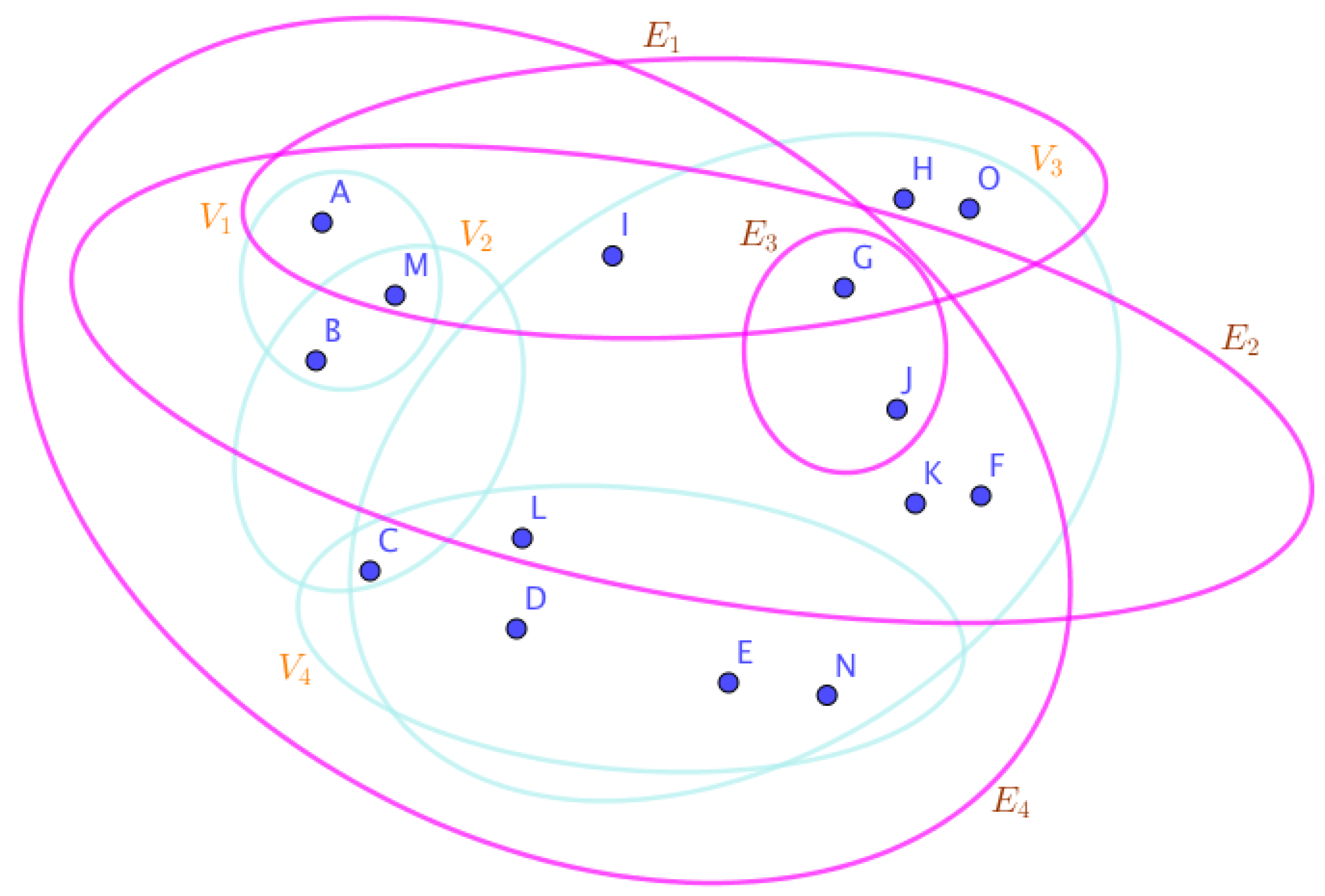
Figure 2.
The SuperHyperGraphs Associated to the Notions of SuperHyperClique in the Example (5).
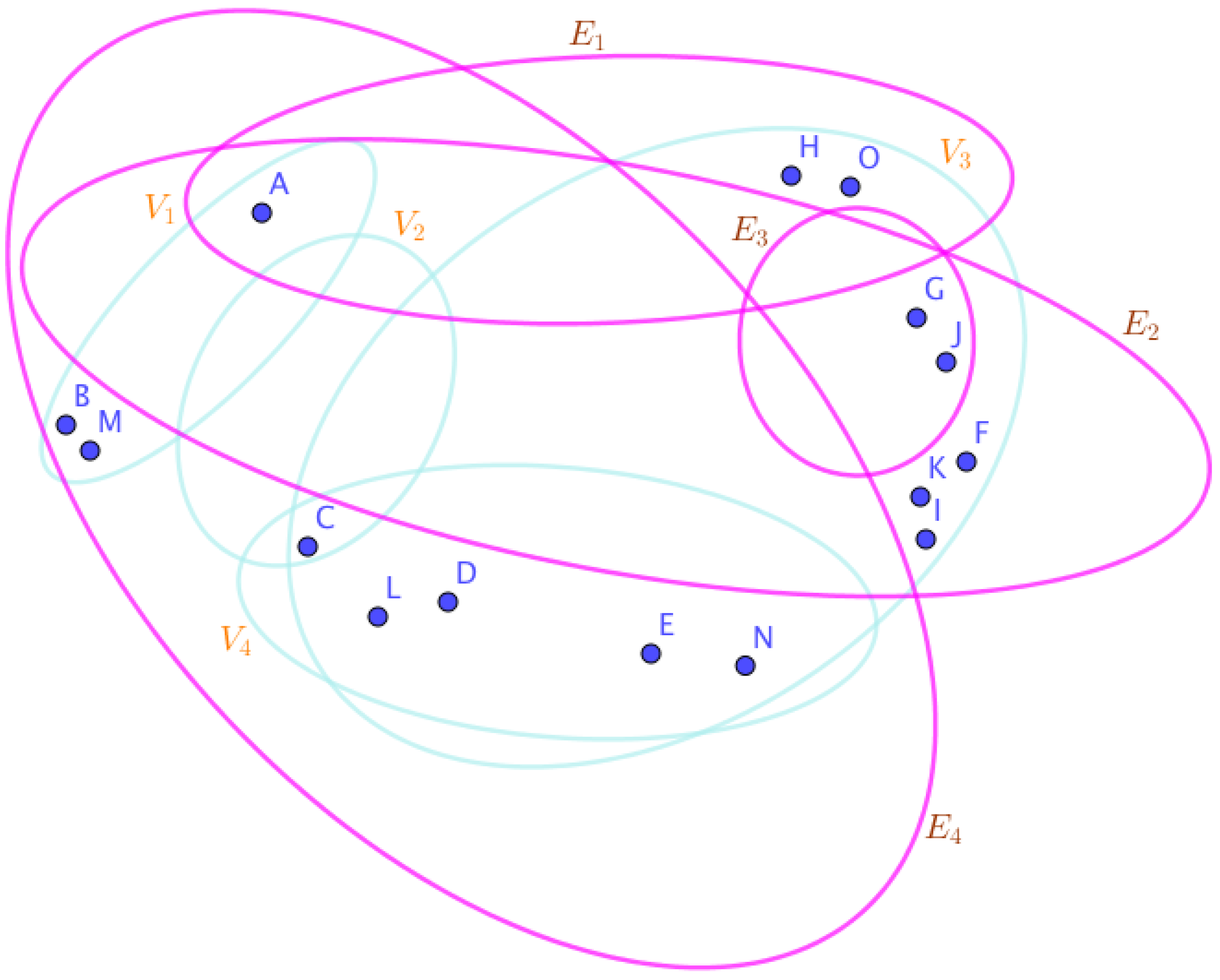
Figure 3.
The SuperHyperGraphs Associated to the Notions of SuperHyperClique in the Example (5).
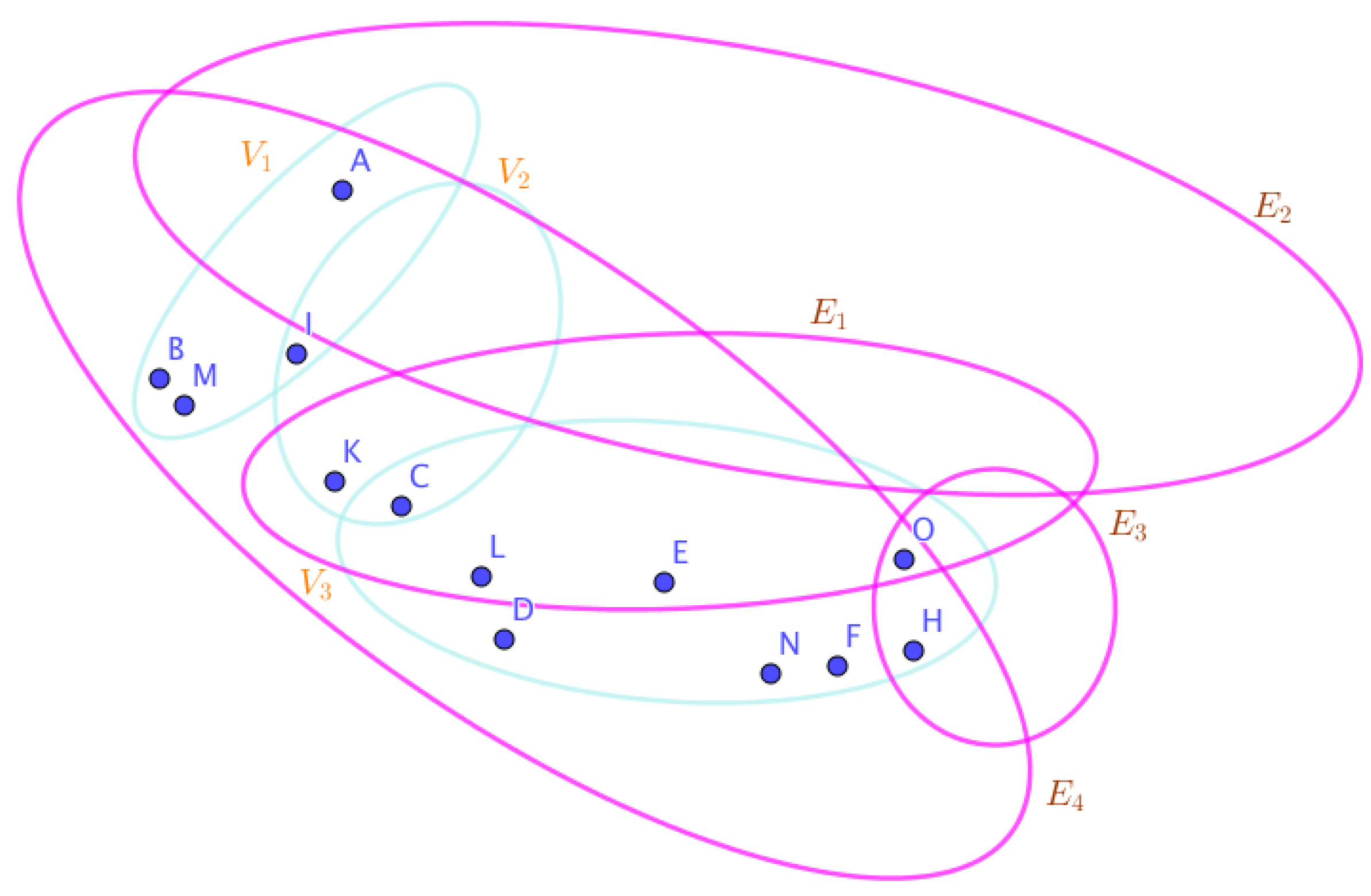
Figure 4.
The SuperHyperGraphs Associated to the Notions of SuperHyperClique in the Example (5).
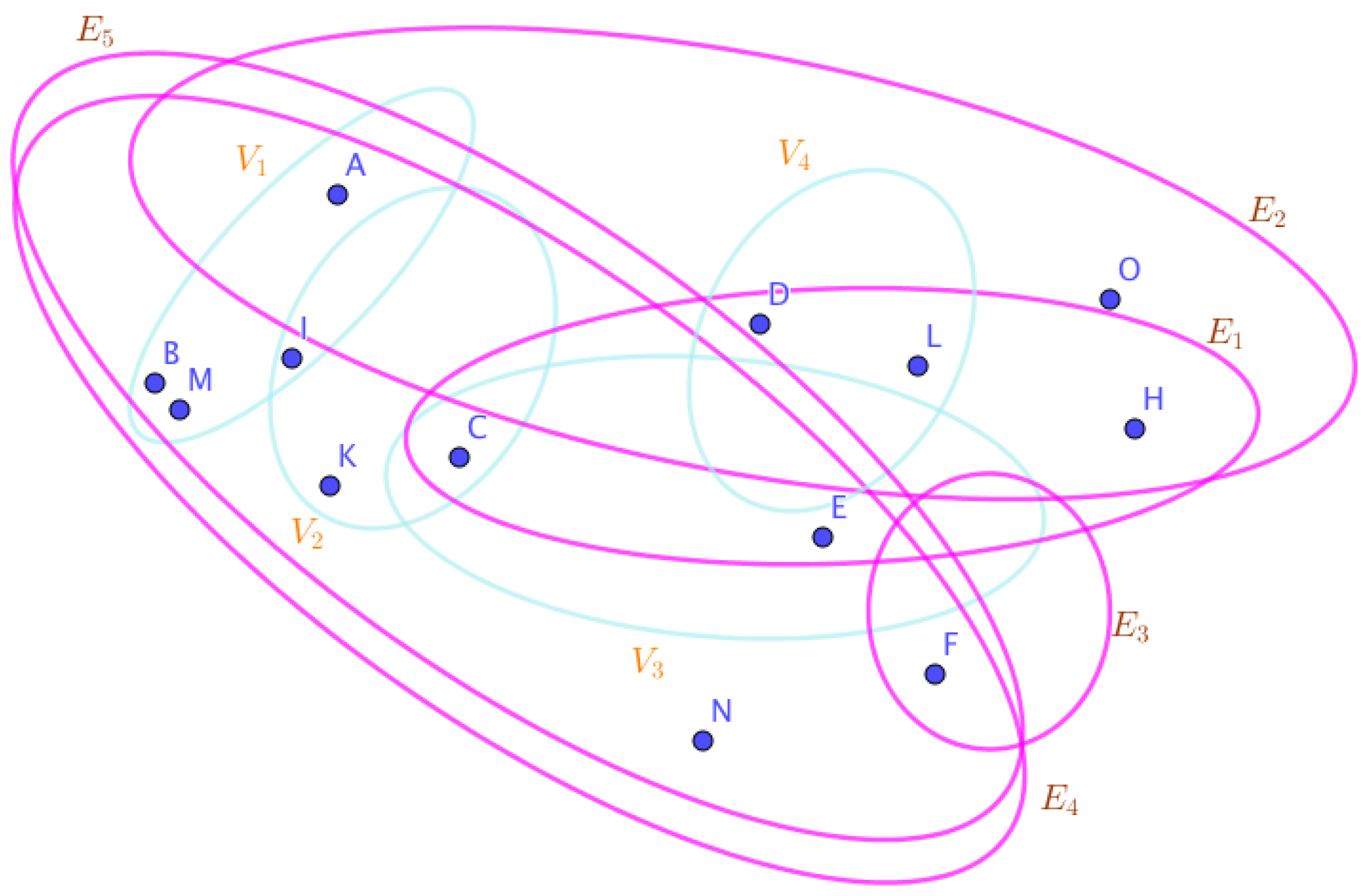
Figure 5.
The SuperHyperGraphs Associated to the Notions of SuperHyperClique in the Example (5).
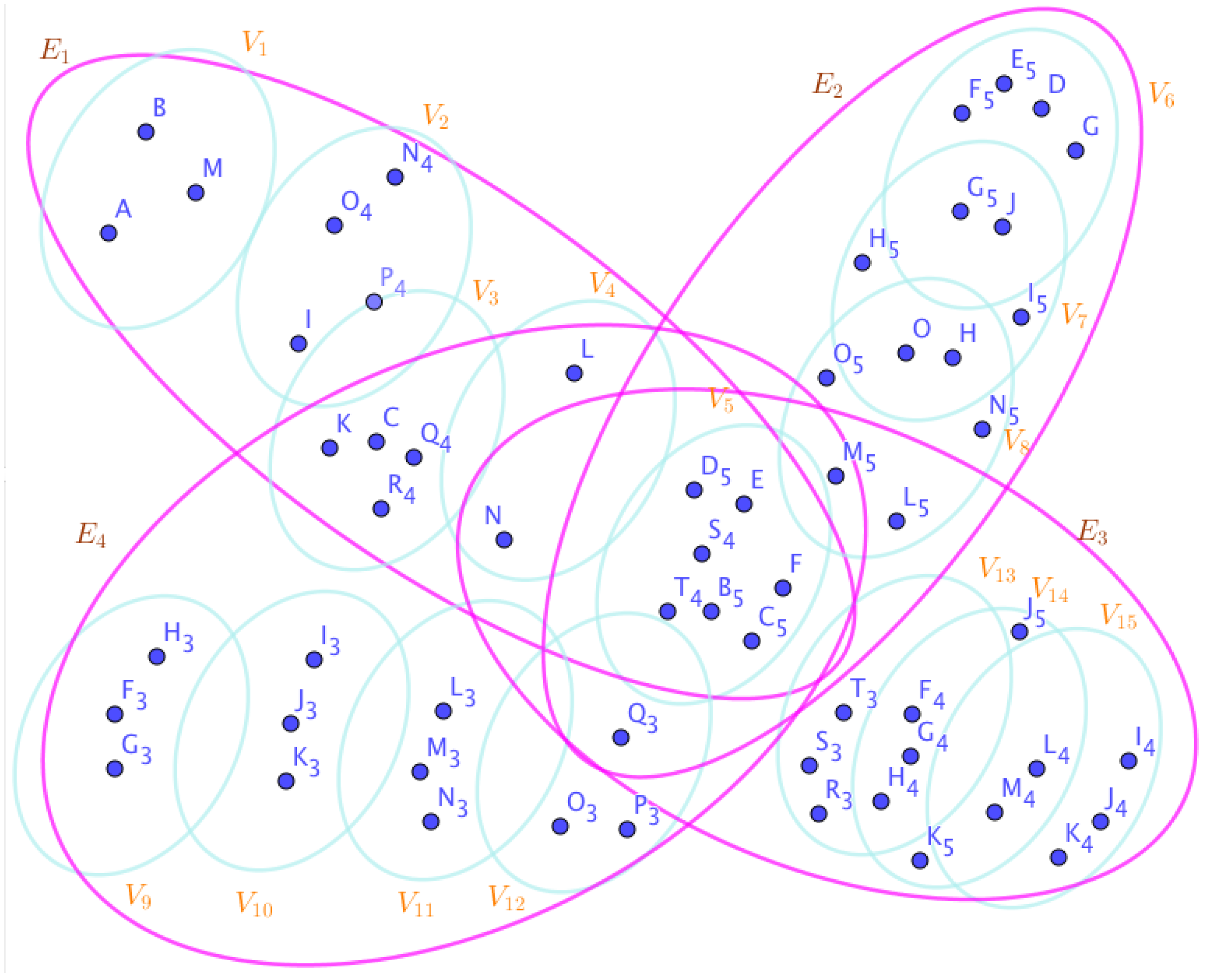
Figure 6.
The SuperHyperGraphs Associated to the Notions of SuperHyperClique in the Example (5).
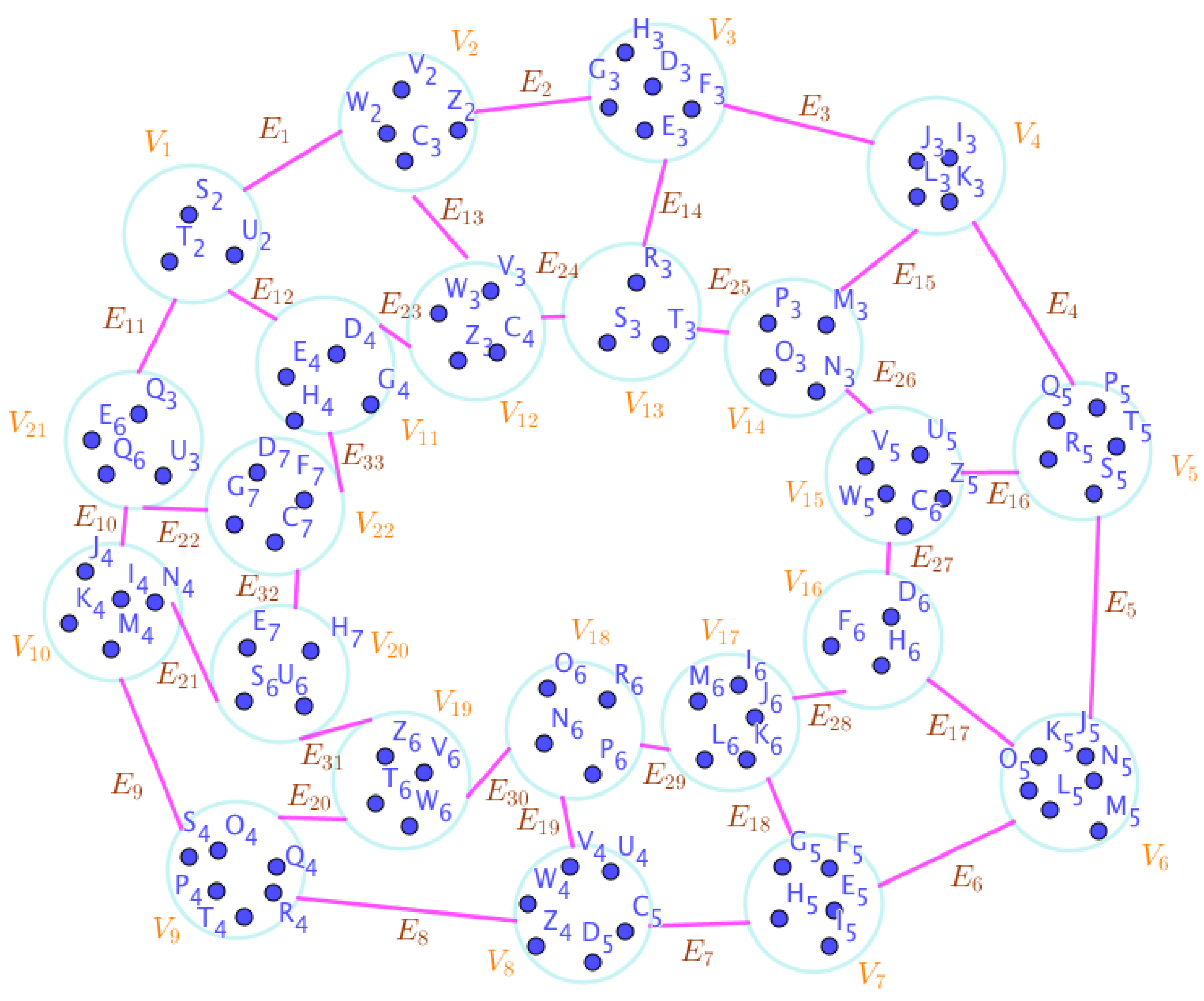
Figure 7.
The SuperHyperGraphs Associated to the Notions of SuperHyperClique in the Example (5).
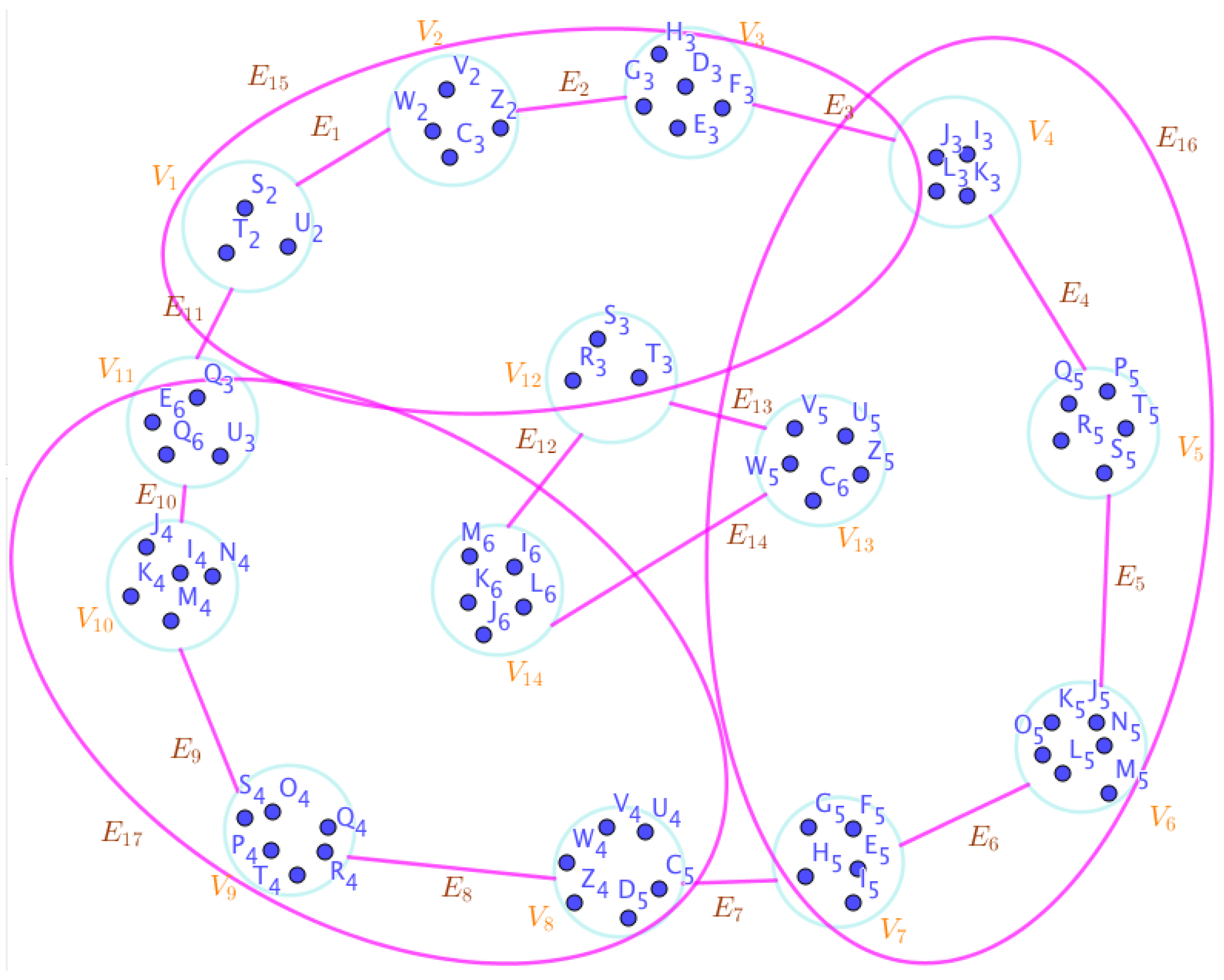
Figure 8.
The SuperHyperGraphs Associated to the Notions of SuperHyperClique in the Example (5).
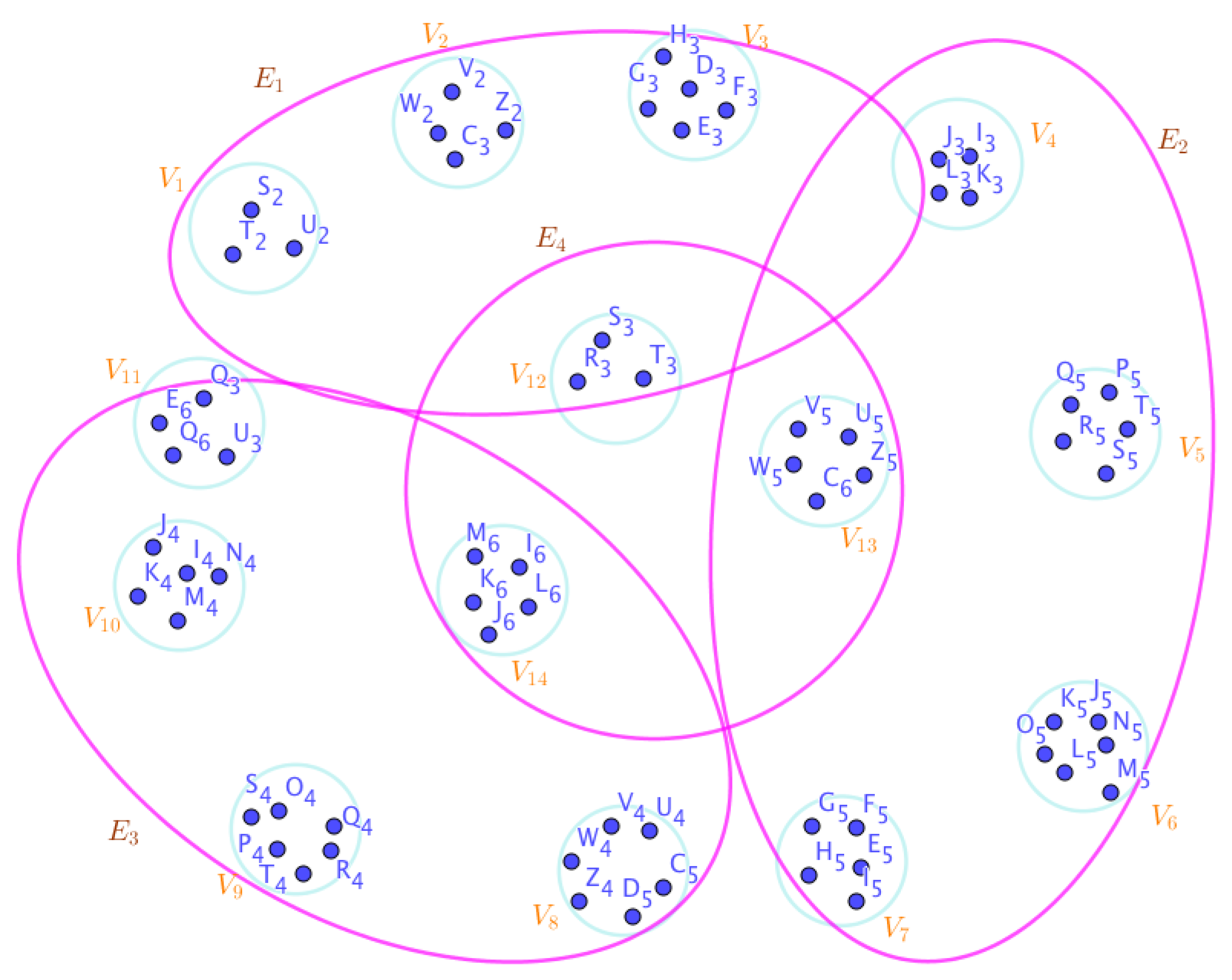
Figure 9.
The SuperHyperGraphs Associated to the Notions of SuperHyperClique in the Example (5).
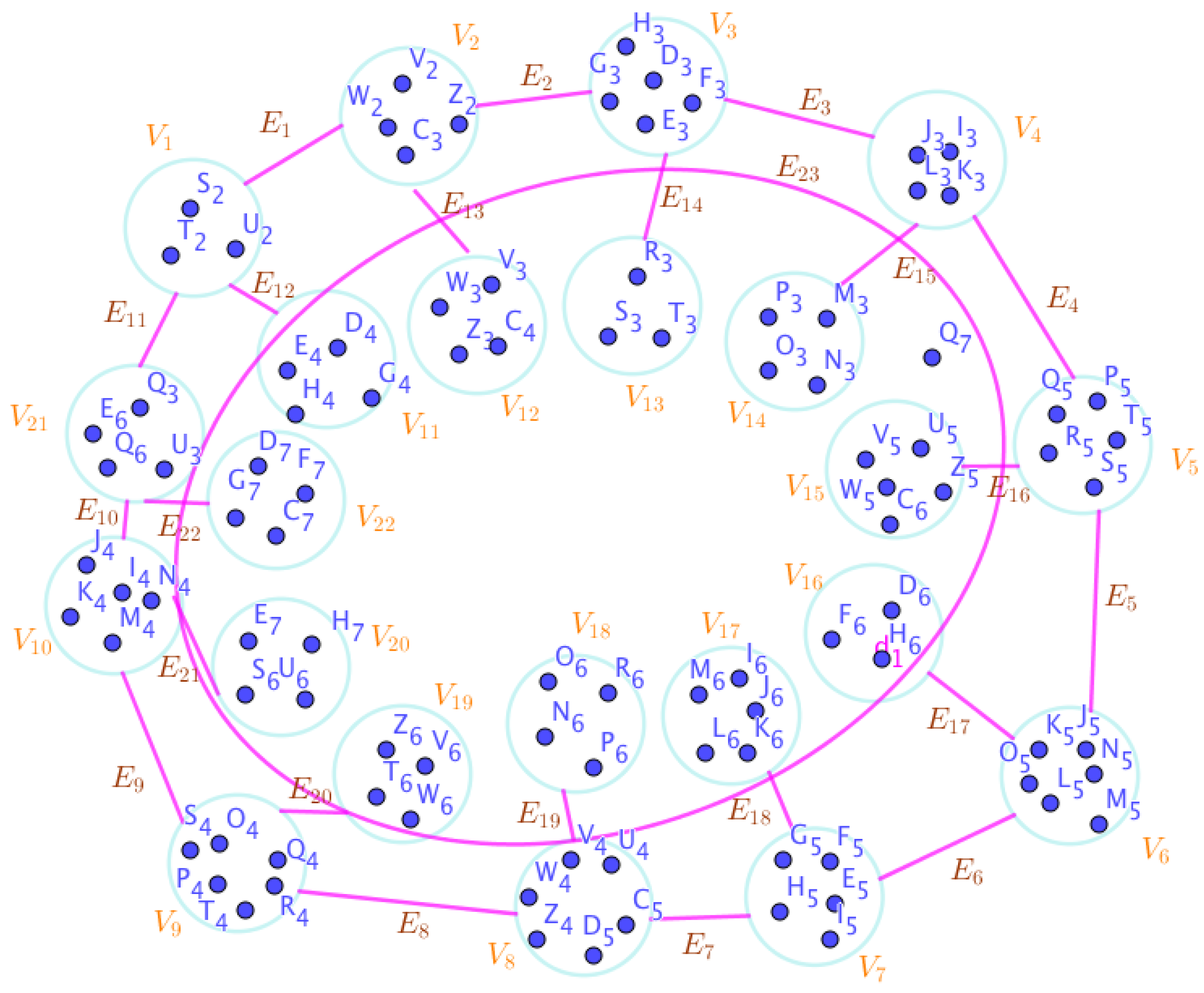
Figure 10.
The SuperHyperGraphs Associated to the Notions of SuperHyperClique in the Example (5).
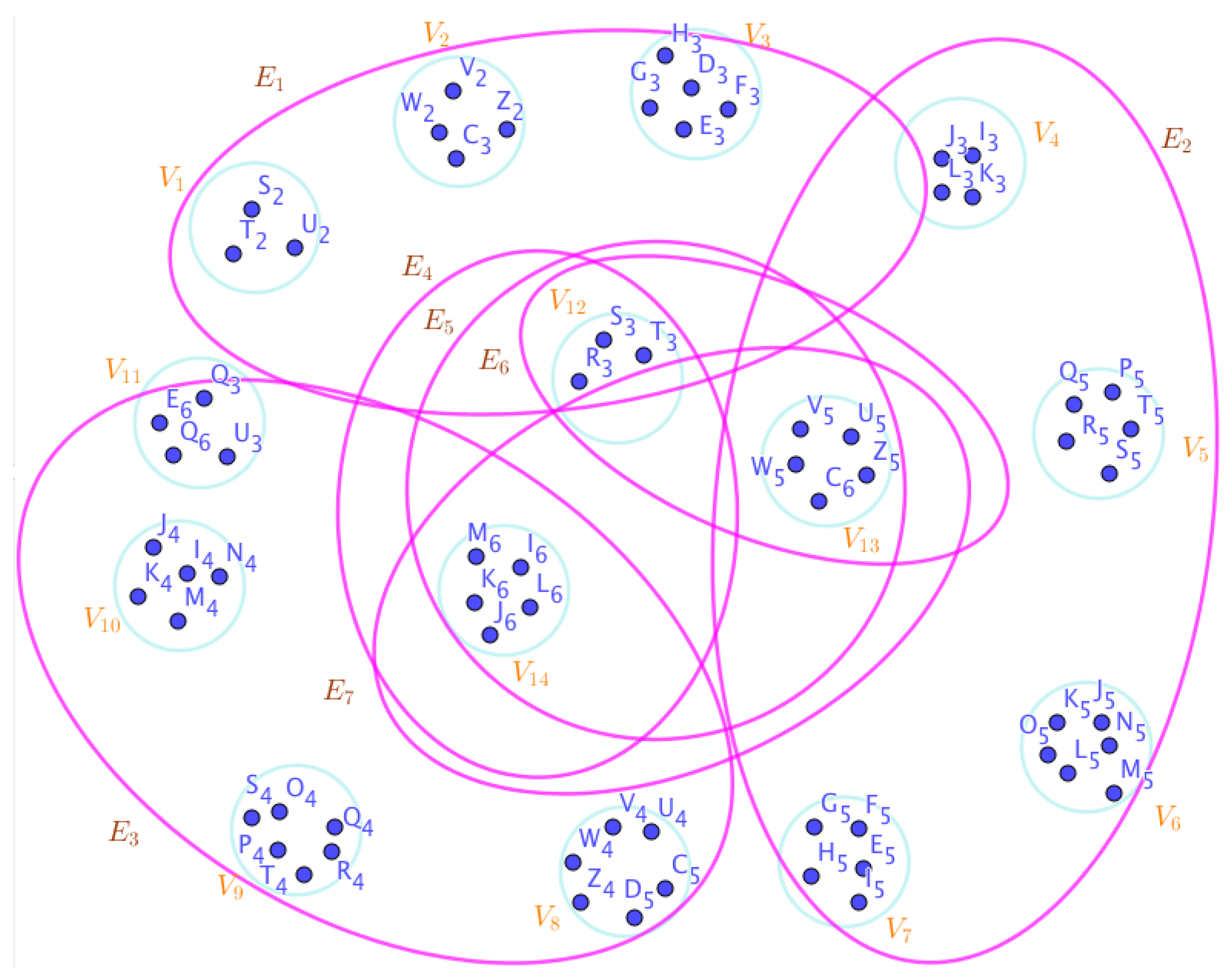
Figure 11.
The SuperHyperGraphs Associated to the Notions of SuperHyperClique in the Example (5).
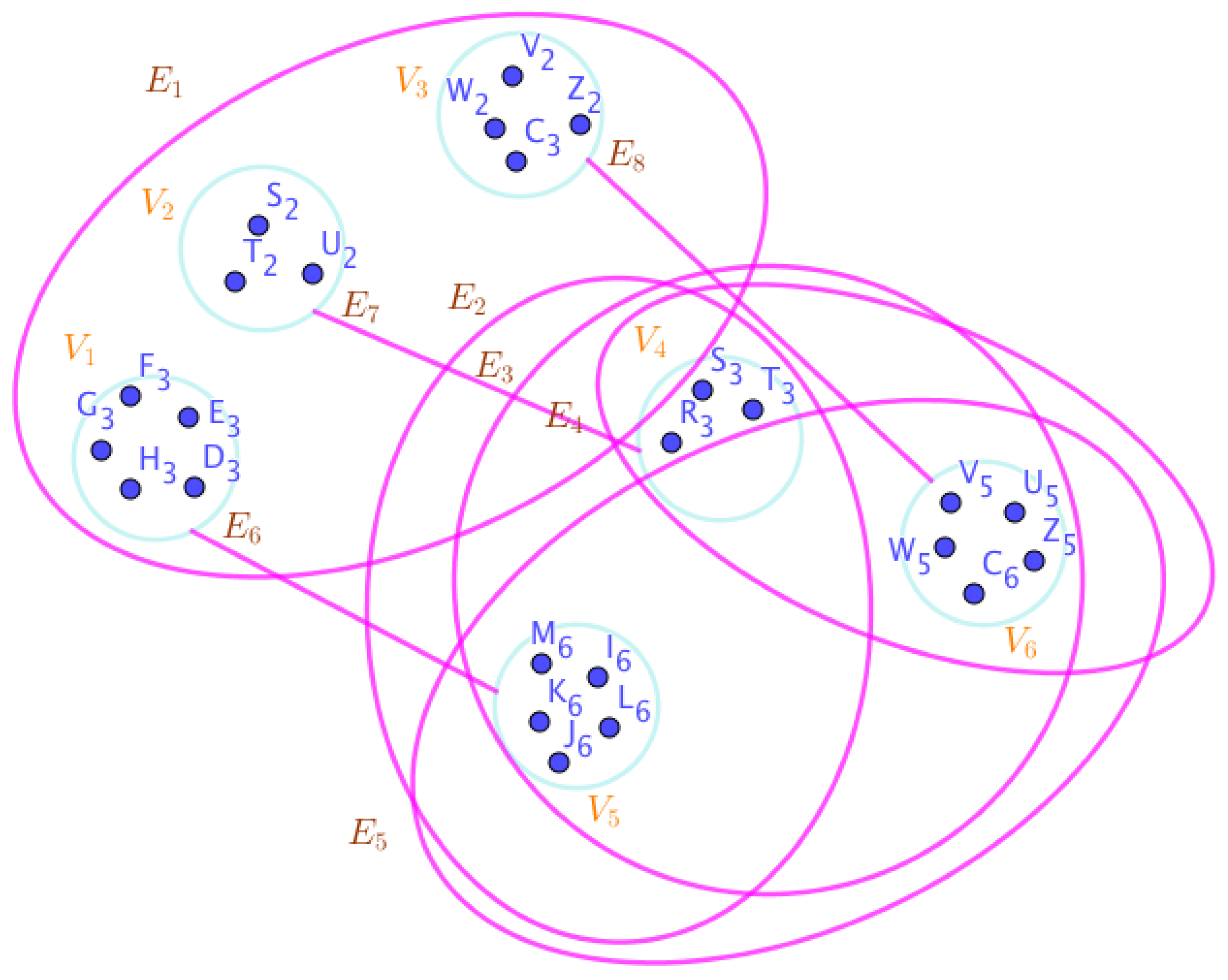
Figure 12.
The SuperHyperGraphs Associated to the Notions of SuperHyperClique in the Example (5).
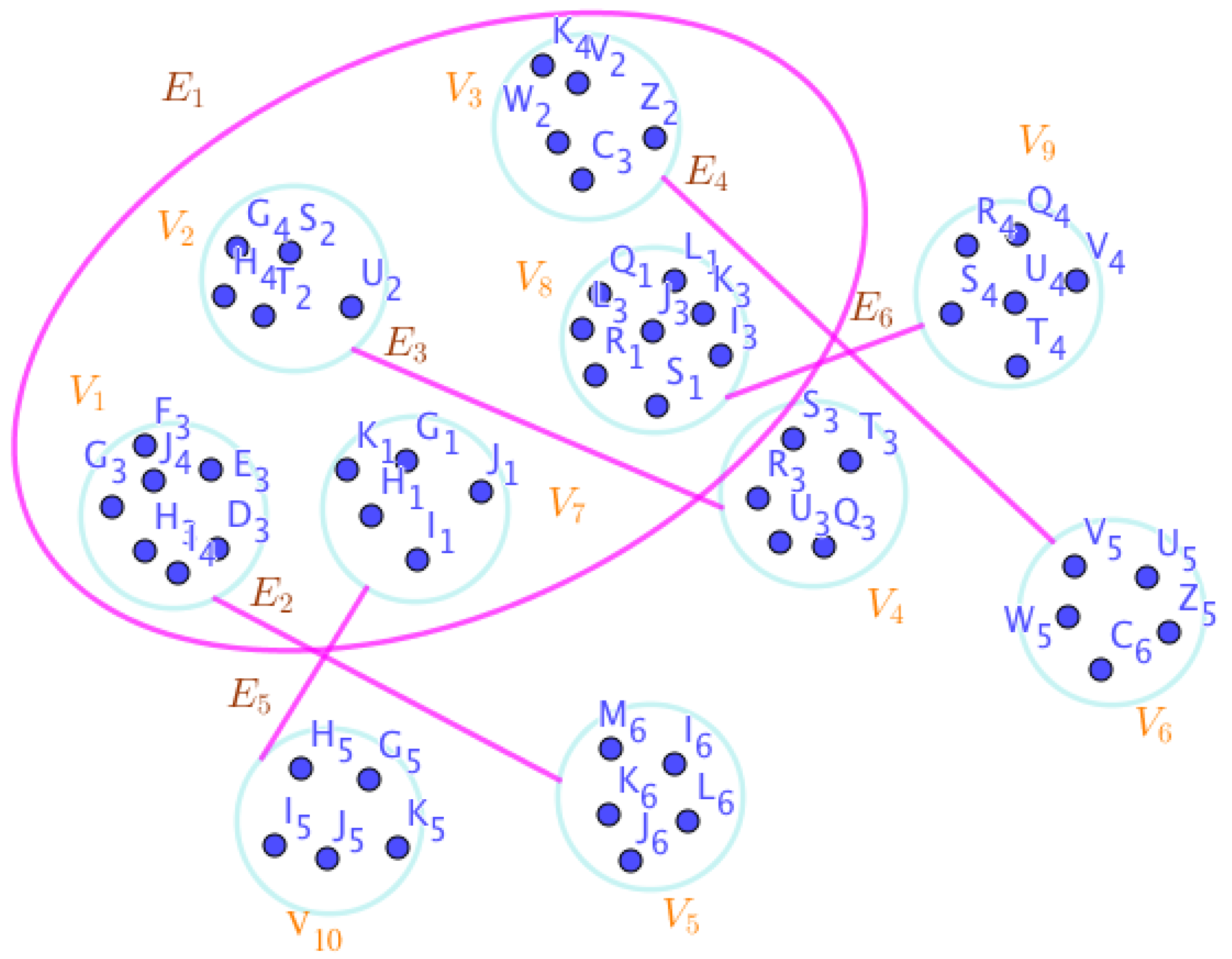
Figure 13.
The SuperHyperGraphs Associated to the Notions of SuperHyperClique in the Example (5).
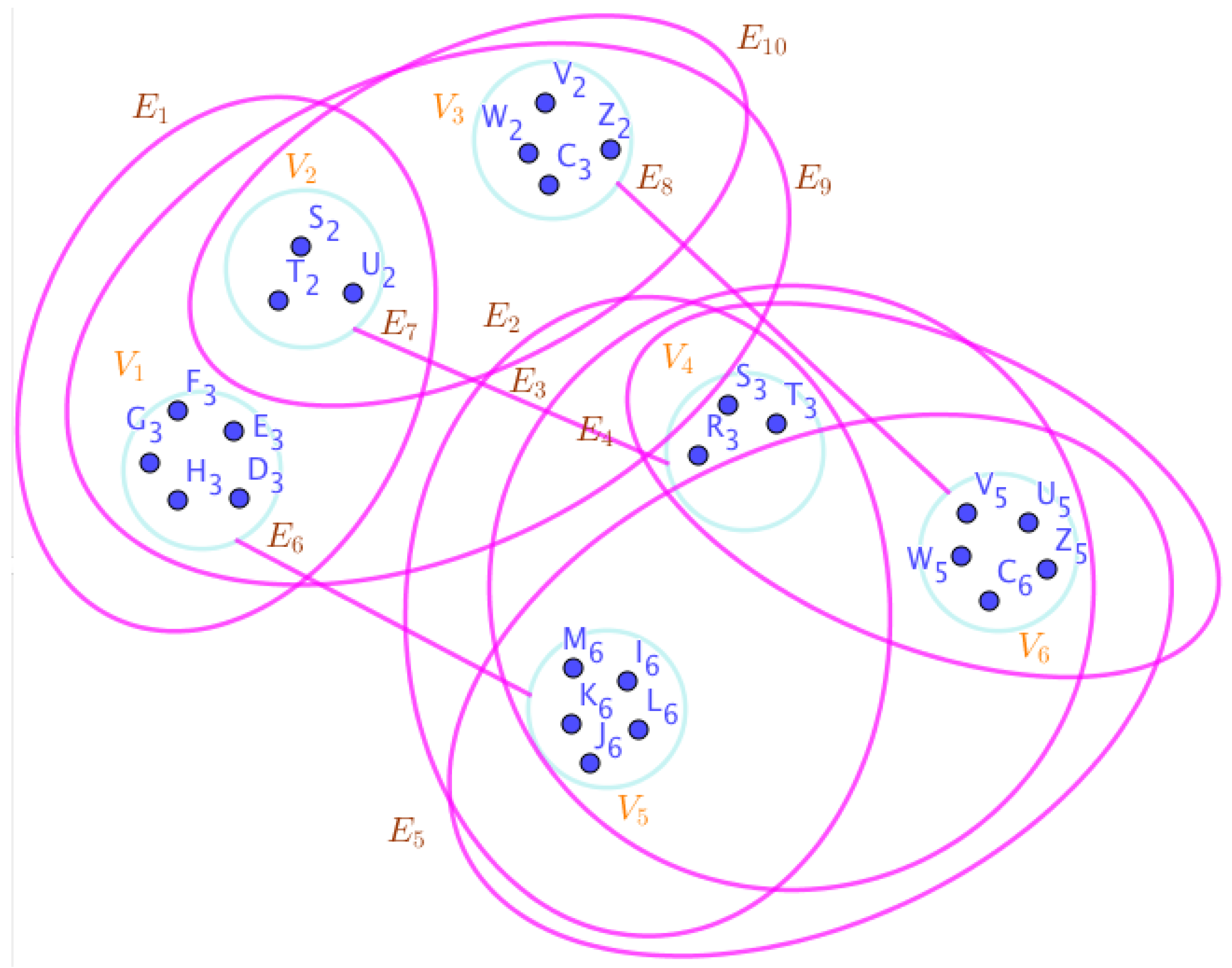
Figure 14.
The SuperHyperGraphs Associated to the Notions of SuperHyperClique in the Example (5).
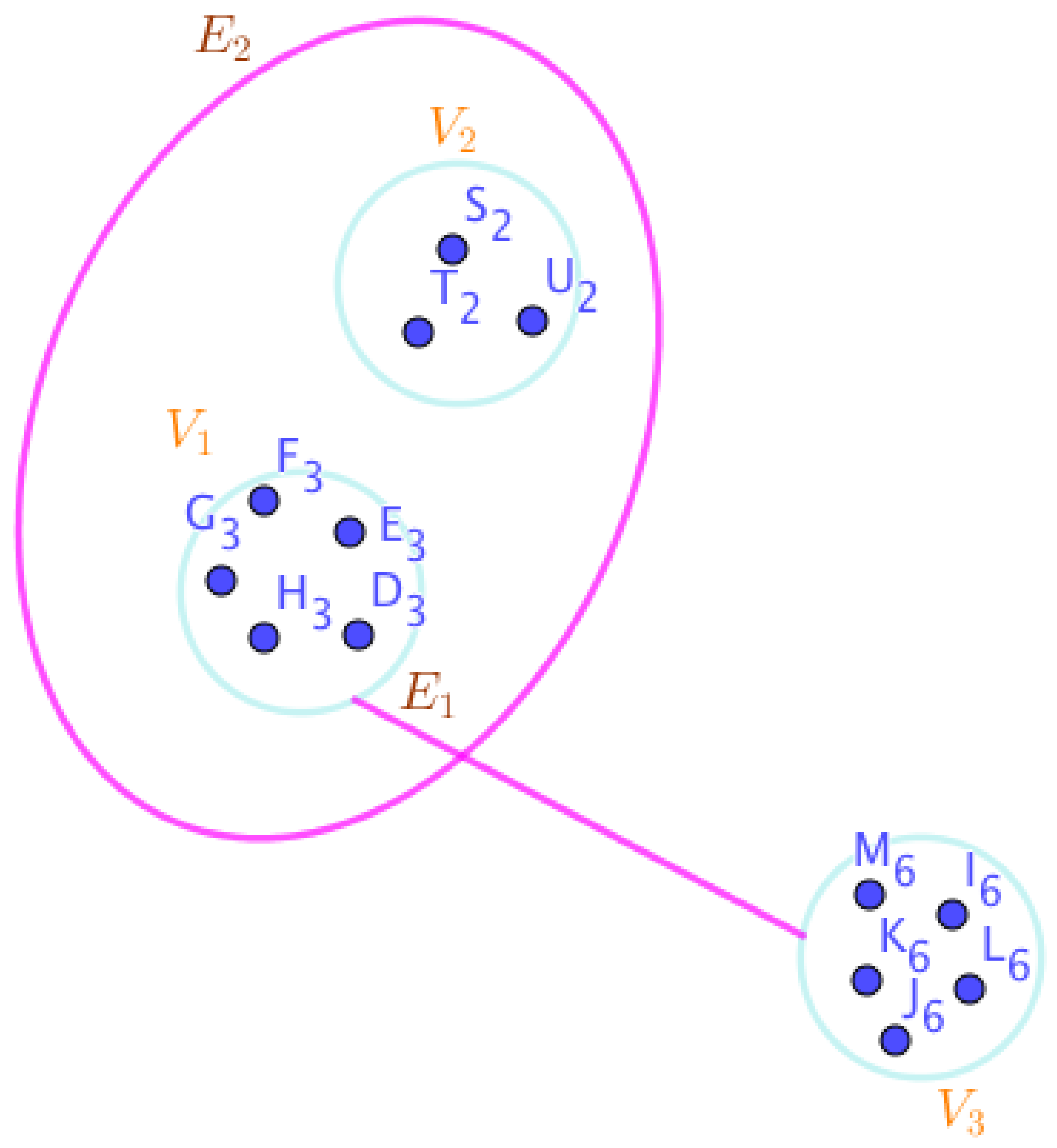
Figure 15.
The SuperHyperGraphs Associated to the Notions of SuperHyperClique in the Example (5).
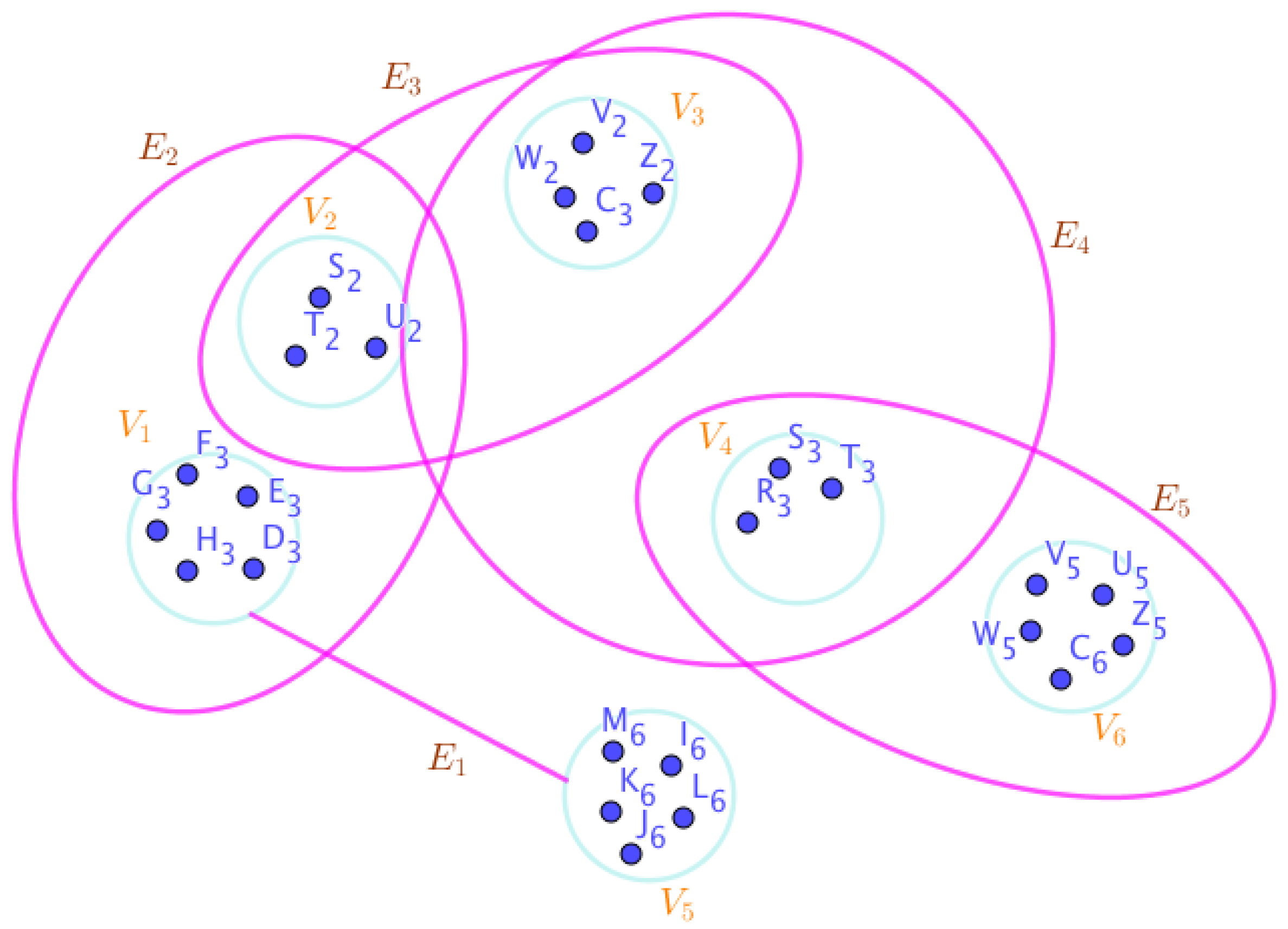
Figure 16.
The SuperHyperGraphs Associated to the Notions of SuperHyperClique in the Example (5).
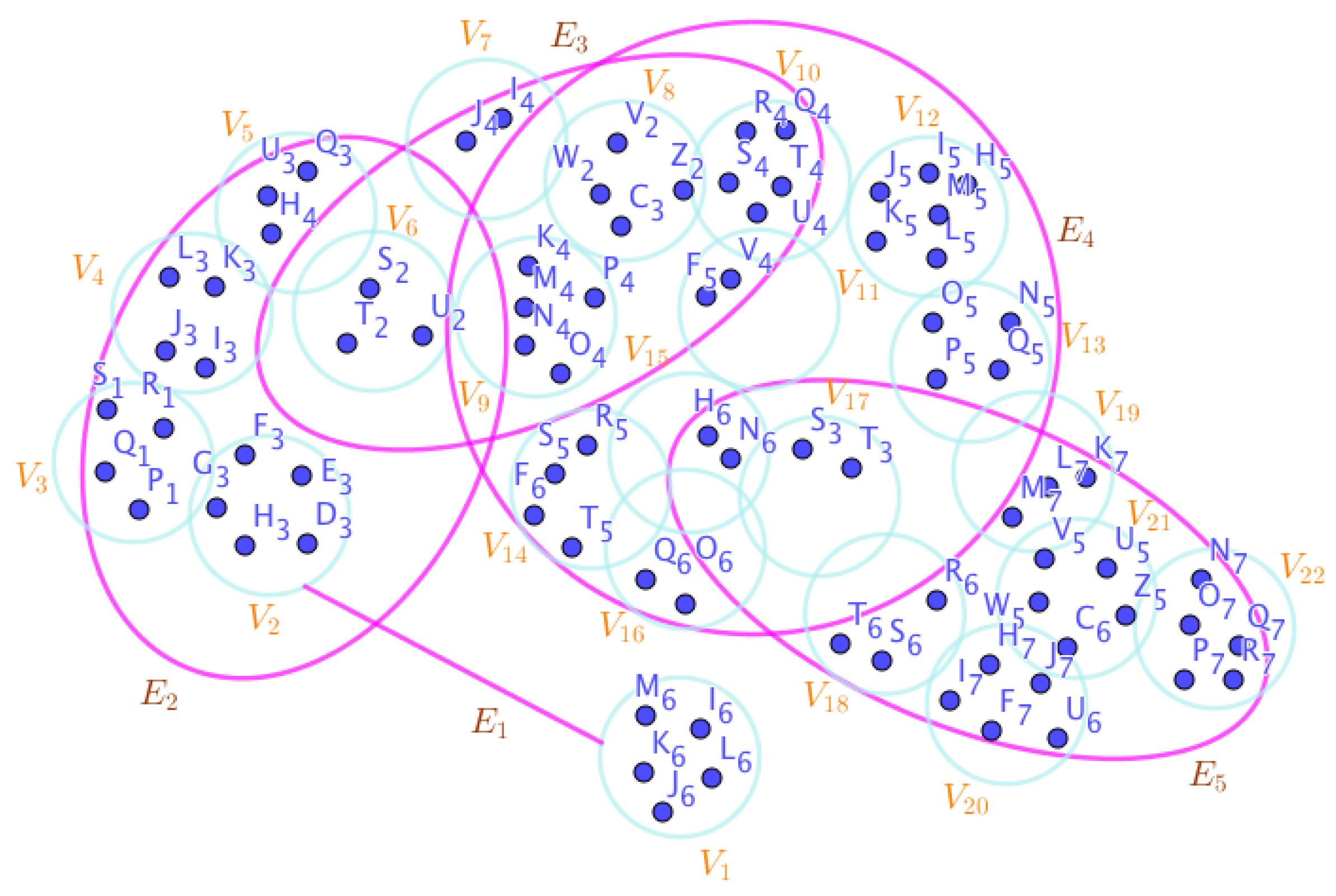
Figure 17.
The SuperHyperGraphs Associated to the Notions of SuperHyperClique in the Example (5).
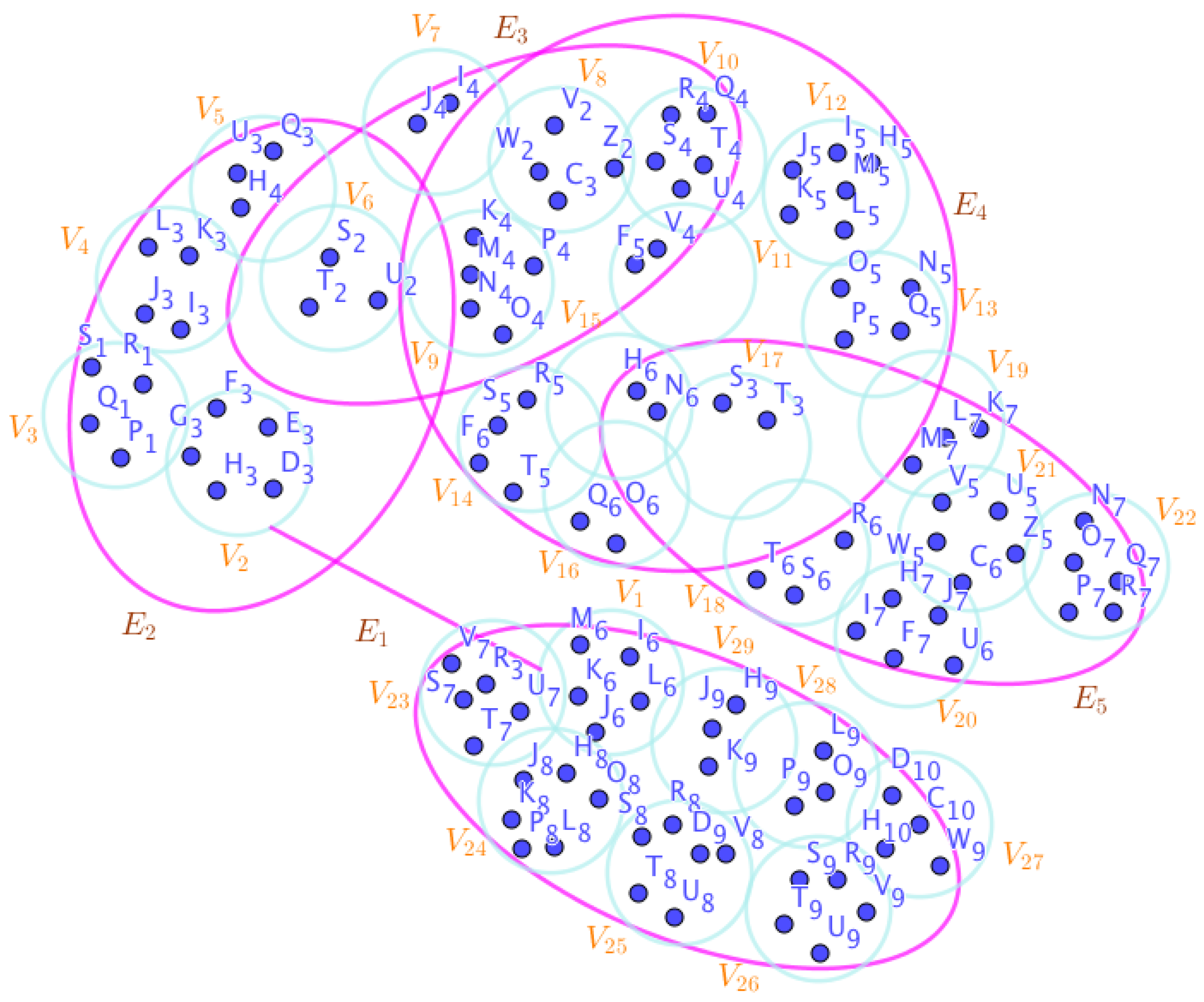
Figure 18.
The SuperHyperGraphs Associated to the Notions of SuperHyperClique in the Example (5).
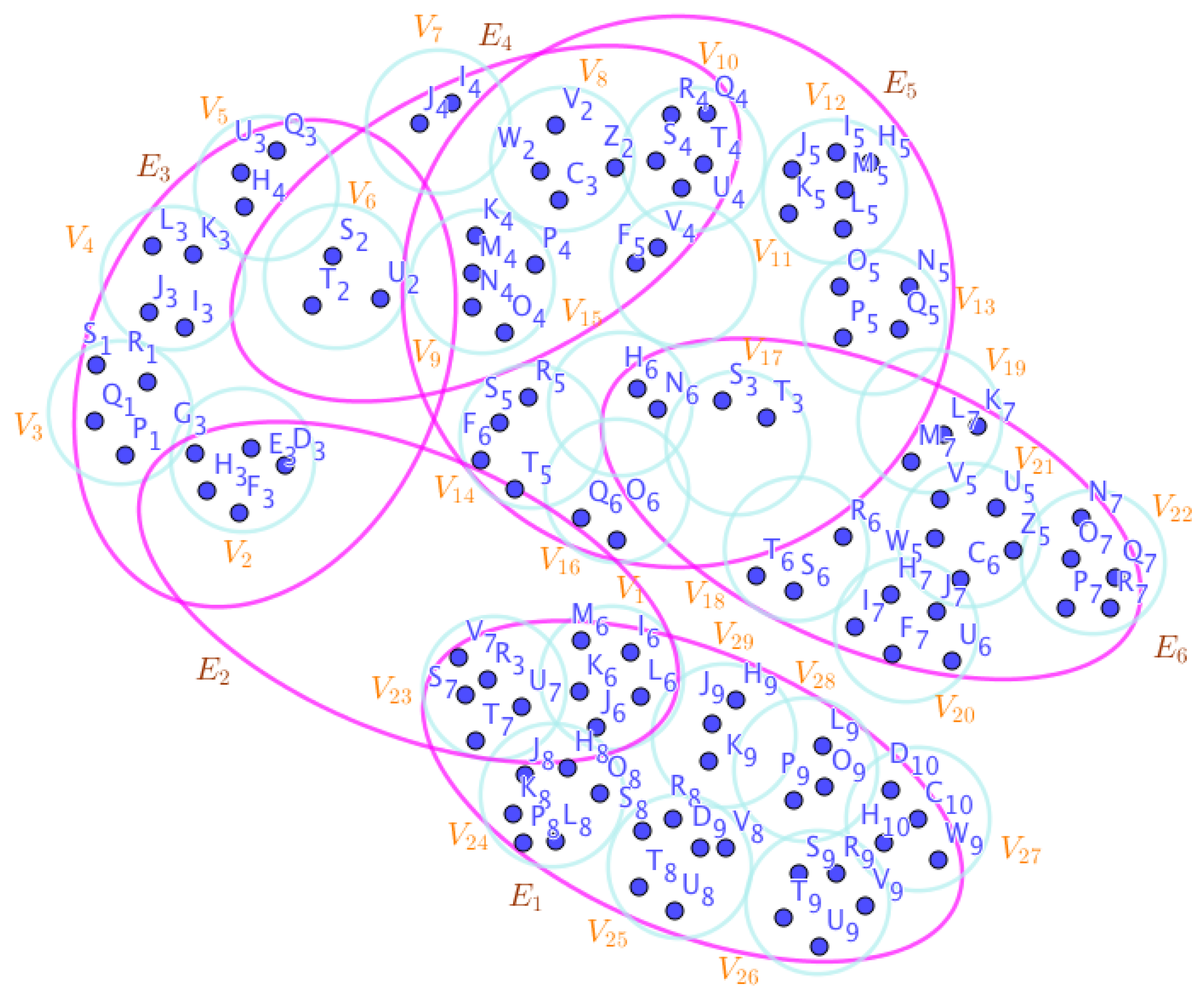
Figure 19.
The SuperHyperGraphs Associated to the Notions of SuperHyperClique in the Example (5).
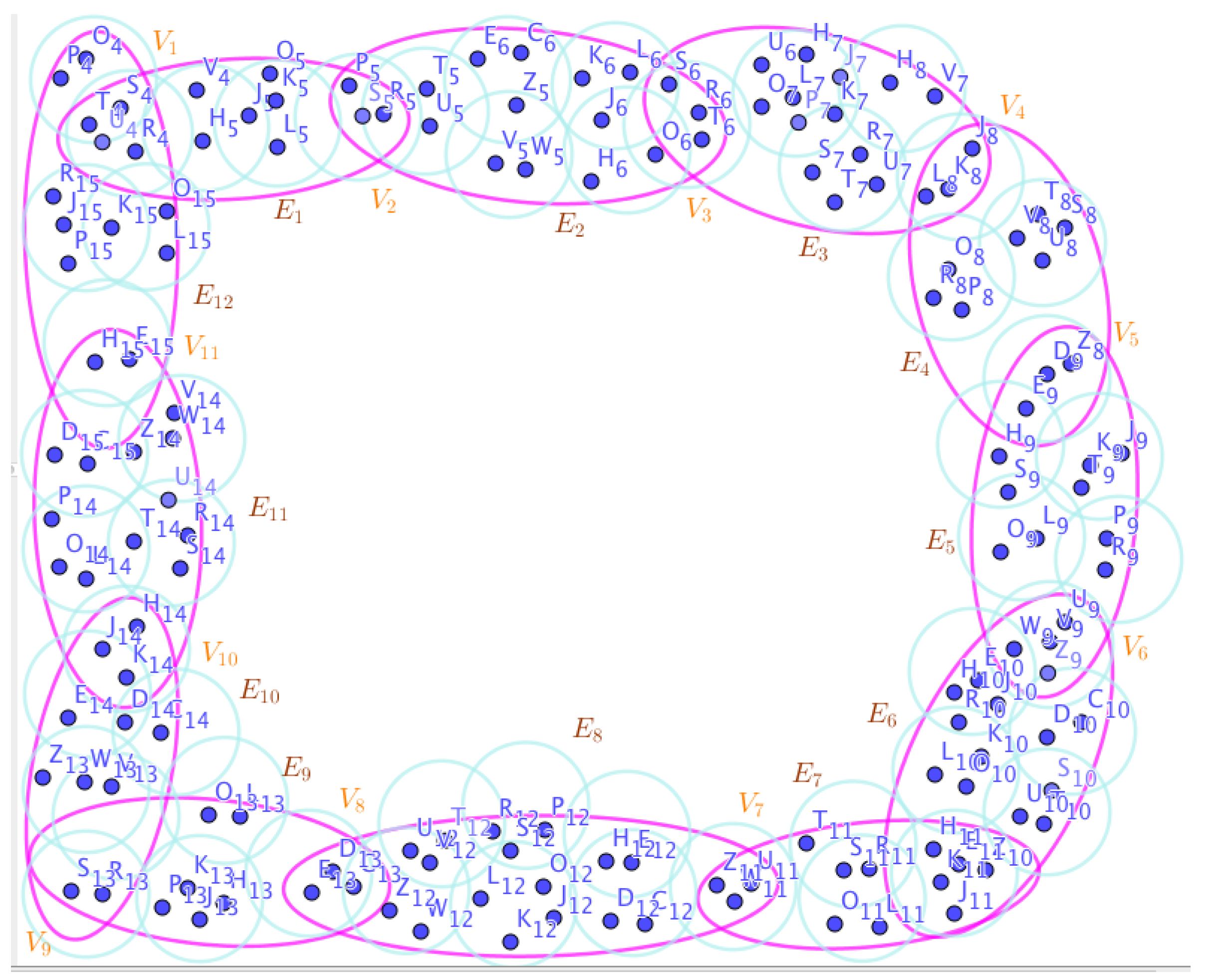
Figure 20.
The SuperHyperGraphs Associated to the Notions of SuperHyperClique in the Example (5).
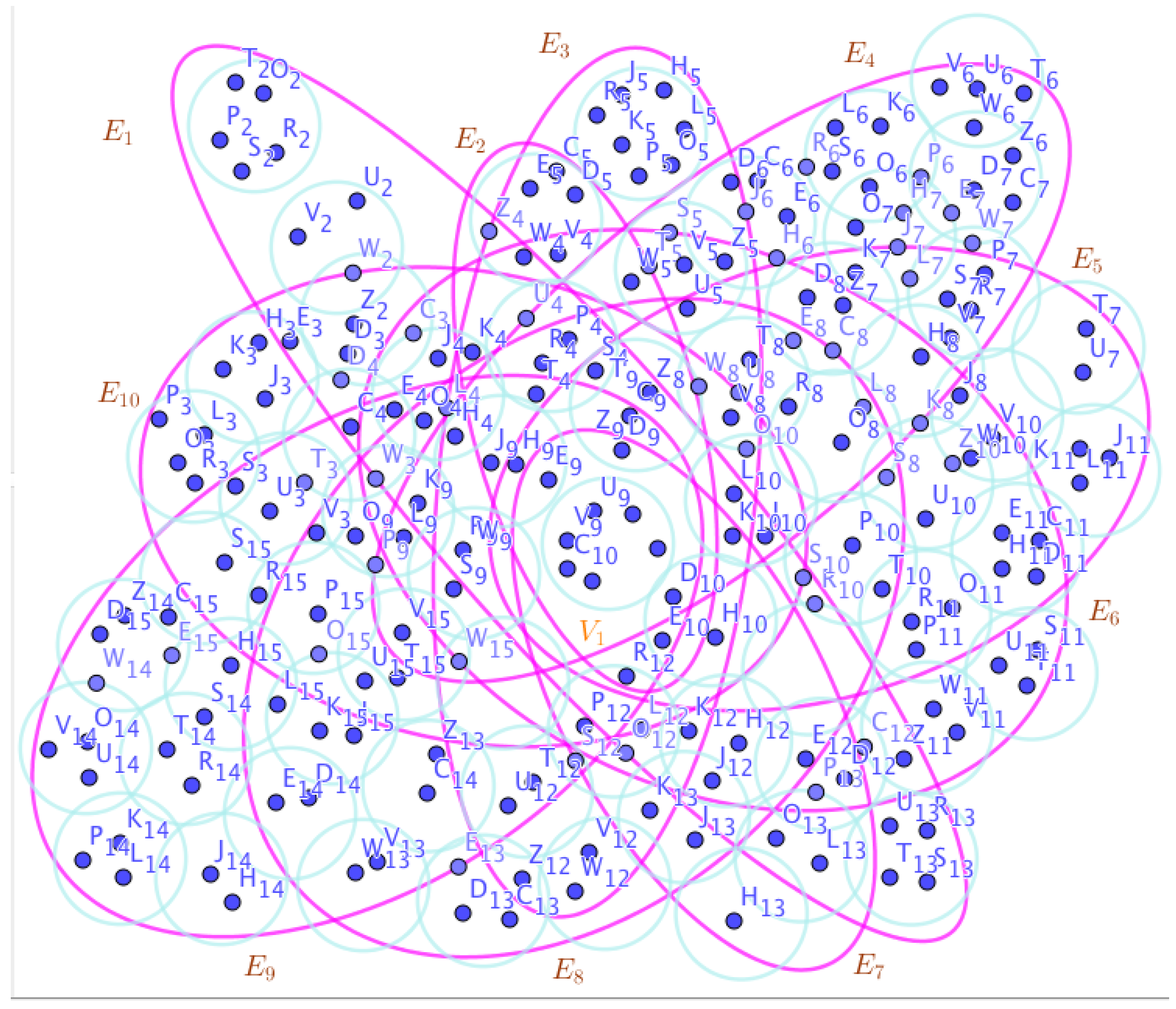
Proposition 6.
Assume a connected loopless neutrosophic SuperHyperGraph Then in the worst case, literally, is a SuperHyperClique. In other words, the least cardinality, the lower sharp bound for the cardinality, of a SuperHyperClique is the cardinality of
Proof.
Assume a connected loopless neutrosophic SuperHyperGraph The SuperHyperSet of the SuperHyperVertices isn’t a SuperHyperClique since neither amount of extreme SuperHyperEdges nor amount of SuperHyperVertices where amount refers to the extreme number of SuperHyperVertices(-/SuperHyperEdges) more than one. Let us consider the extreme SuperHyperSet This extreme SuperHyperSet of the extreme SuperHyperVertices has the eligibilities to propose some amount of extreme SuperHyperEdges for some amount of the extreme SuperHyperVertices taken from the mentioned extreme SuperHyperSet and it has the maximum extreme cardinality amid those extreme type-SuperHyperSets but the minimum case of the maximum extreme cardinality indicates that these extreme type-SuperHyperSets couldn’t give us the extreme lower bound in the term of extreme sharpness. In other words, the extreme SuperHyperSet of the extreme SuperHyperVertices implies at least on-triangle style is up but sometimes the extreme SuperHyperSet of the extreme SuperHyperVertices is free-triangle and it doesn’t make a contradiction to the supposition on the connected loopless neutrosophic SuperHyperGraph Thus the minimum case never happens in the generality of the connected loopless neutrosophic SuperHyperGraphs. Thus if we assume in the worst case, literally, is a SuperHyperClique. In other words, the least cardinality, the lower sharp bound for the cardinality, of a SuperHyperClique is the cardinality of Then we’ve lost some connected loopless neutrosophic SuperHyperClasses of the connected loopless neutrosophic SuperHyperGraphs titled free-triangle. It’s the contradiction to that fact on the generality. There are some counterexamples to deny this statement. One of them comes from the setting of the graph titled path and cycle are well-known classes in that setting and they could be considered as the examples for the tight bound of Let in mind. There’s no necessity on the SuperHyperEdge since we need at least two SuperHyperVertices to form a SuperHyperEdge. It doesn’t withdraw the principles of the main definition since there’s no condition to be satisfied but the condition is on the existence of the SuperHyperEdge instead of acting on the SuperHyperVertices. In other words, if there’s a SuperHyperEdge, then the extreme SuperHyperSet has the necessary condition for the intended definition to be applied. Thus the is withdrawn not by the conditions of the main definition but by the necessity of the pre-condition on the usage of the main definition. □
Proposition 7.
Assume a simple neutrosophic SuperHyperGraph Then the extreme number of SuperHyperClique has, the least cardinality, the lower sharp bound for cardinality, is the extreme cardinality of if there’s a SuperHyperClique with the least cardinality, the lower sharp bound for cardinality.
Proof.
The extreme structure of the extreme SuperHyperClique decorates the extreme SuperHyperVertices have received complete extreme connections so as this extreme style implies different versions of extreme SuperHyperEdges with the maximum extreme cardinality in the terms of extreme SuperHyperVertices are spotlight. The lower extreme bound is to have the minimum extreme groups of extreme SuperHyperVertices have perfect extreme connections inside and the outside of this extreme SuperHyperSet doesn’t matter but regarding the connectedness of the used extreme SuperHyperGraph arising from its extreme properties taken from the fact that it’s simple. If there’s no extreme SuperHyperVertex in the targeted extreme SuperHyperSet, then there’s no extreme connection. Furthermore, the extreme existence of one extreme SuperHyperVertex has no extreme effect to talk about the extreme SuperHyperClique. Since at least two extreme SuperHyperVertices involve to make a title in the extreme background of the extreme SuperHyperGraph. The extreme SuperHyperGraph is obvious if it has no extreme SuperHyperEdge but at least two extreme SuperHyperVertices make the extreme version of extreme SuperHyperEdge. Thus in the extreme setting of non-obvious extreme SuperHyperGraph, there are at least one extreme SuperHyperEdge. It’s necessary to mention that the word “Simple” is used as extreme adjective for the initial extreme SuperHyperGraph, induces there’s no extreme appearance of the loop extreme version of the extreme SuperHyperEdge and this extreme SuperHyperGraph is said to be loopless. The extreme adjective “loop” on the basic extreme framework engages one extreme SuperHyperVertex but it never happens in this extreme setting. With these extreme bases, on a extreme SuperHyperGraph, there’s at least one extreme SuperHyperEdge thus there’s at least a extreme SuperHyperClique has the extreme cardinality two. Thus, a extreme SuperHyperClique has the extreme cardinality at least two. Assume a extreme SuperHyperSet This extreme SuperHyperSet isn’t a extreme SuperHyperClique since either the extreme SuperHyperGraph is an obvious extreme SuperHyperModel thus it never happens since there’s no extreme usage of this extreme framework and even more there’s no extreme connection inside or the extreme SuperHyperGraph isn’t obvious and as its consequences, there’s an extreme contradiction with the term “extreme SuperHyperClique” since the maximum extreme cardinality never happens for this extreme style of the extreme SuperHyperSet and beyond that there’s no extreme connection inside as mentioned in first extreme case in the forms of drawback for this selected extreme SuperHyperSet. Let comes up. This extreme case implies having the extreme style of on-triangle extreme style on the every extreme elements of this extreme SuperHyperSet. Precisely, the extreme SuperHyperClique is the extreme SuperHyperSet of the extreme SuperHyperVertices such that any extreme amount of the extreme SuperHyperVertices are on-triangle extreme style. The extreme cardinality of the v SuperHypeSet is the maximum in comparison to the extreme SuperHyperSet but the lower extreme bound is up. Thus the minimum extreme cardinality of the maximum extreme cardinality ends up the extreme discussion. The first extreme term refers to the extreme setting of the extreme SuperHyperGraph but this key point is enough since there’s a extreme SuperHyperClass of a extreme SuperHyperGraph has no on-triangle extreme style amid any amount of its extreme SuperHyperVertices. This extreme setting of the extreme SuperHyperModel proposes an extreme SuperHyperSet has only two extreme SuperHyperVertices such that there’s extreme amount of extreme SuperHyperEdges involving these two extreme SuperHyperVertices. The extreme cardinality of this extreme SuperHyperSet is the maximum and the extreme case is occurred in the minimum extreme situation. To sum them up, the extreme SuperHyperSet has the maximum extreme cardinality such that contains some extreme SuperHyperVertices such that there’s amount extreme SuperHyperEdges for amount of extreme SuperHyperVertices taken from the extreme SuperHyperSet It means that the extreme SuperHyperSet of the extreme SuperHyperVertices is an extreme SuperHyperClique for the extreme SuperHyperGraph as used extreme background in the extreme terms of worst extreme case and the lower extreme bound occurred in the specific extreme SuperHyperClasses of the extreme SuperHyperGraphs which are extreme free-triangle. □
Proposition 8.
Assume a connected extreme SuperHyperGraph If an extreme SuperHyperEdge has z extreme SuperHyperVertices, then the extreme cardinality of the extreme SuperHyperClique is at least It’s straightforward that the extreme cardinality of the extreme SuperHyperClique is at least the maximum extreme number of extreme SuperHyperVertices of the extreme SuperHyperEdges. In other words, the extreme SuperHyperEdge with the maximum extreme number of extreme SuperHyperVertices are renamed to extreme SuperHyperClique in some cases but the extreme SuperHyperEdge with the maximum extreme number of extreme SuperHyperVertices, has the extreme SuperHyperVertices are contained in an extreme SuperHyperClique.
Proof.
Assume an extreme SuperHyperEdge has z extreme number of the extreme SuperHyperVertices. Then every extreme SuperHyperVertex has at least one extreme SuperHyperEdge with others in common. Thus those extreme SuperHyperVertices have the eligibles to be contained in an extreme SuperHyperClique. Those extreme SuperHyperVertices are potentially included in an extreme style-SuperHyperClique. Formally, consider
are the extreme SuperHyperVertices of an extreme SuperHyperEdge. Thus
where the ∼ isn’t an equivalence relation but only the symmetric relation on the extreme SuperHyperVertices of the extreme SuperHyperGraph. The formal definition is as follows.
if and only if and are the extreme SuperHyperVertices and there’s an extreme SuperHyperEdge between the extreme SuperHyperVertices and The other definition for the extreme SuperHyperEdge in the terms of extreme SuperHyperClique is
This definition coincides with the definition of the extreme SuperHyperClique but with slightly differences in the maximum extreme cardinality amid those extreme type-SuperHyperSets of the extreme SuperHyperVertices. Thus the extreme SuperHyperSet of the extreme SuperHyperVertices,
is formalized with mathematical literatures on the extreme SuperHyperClique. Let be defined as and are the extreme SuperHyperVertices belong to the extreme SuperHyperEdge Thus,
But with the slightly differences,
Thus E is an extreme quasi-SuperHyperClique where E is fixed that means for all extreme intended SuperHyperVertices but in an extreme SuperHyperClique, could be different and it’s not unique. To sum them up, in a connected extreme SuperHyperGraph If an extreme SuperHyperEdge has z extreme SuperHyperVertices, then the extreme cardinality of the extreme SuperHyperClique is at least It’s straightforward that the extreme cardinality of the extreme SuperHyperClique is at least the maximum extreme number of extreme SuperHyperVertices of the extreme SuperHyperEdges. In other words, the extreme SuperHyperEdge with the maximum extreme number of extreme SuperHyperVertices are renamed to extreme SuperHyperClique in some cases but the extreme SuperHyperEdge with the maximum extreme number of extreme SuperHyperVertices, has the extreme SuperHyperVertices are contained in an extreme SuperHyperClique. □
Proposition 9.
Assume a connected non-obvious extreme SuperHyperGraph There’s only one extreme SuperHyperEdge has only less than three distinct interior extreme SuperHyperVertices inside of any given extreme quasi-SuperHyperClique. In other words, there’s only an unique extreme SuperHyperEdge has only two distinct extreme SuperHyperVertices in an extreme quasi-SuperHyperClique.
Proof.
The obvious SuperHyperGraph has no SuperHyperEdges. But the non-obvious extreme SuperHyperModel is up. The quasi-SuperHyperModel addresses some issues about the extreme optimal SuperHyperObject. It specially delivers some remarks on the extreme SuperHyperSet of the extreme SuperHyperVertices such that there’s amount of extreme SuperHyperEdges for amount of extreme SuperHyperVertices taken from that extreme SuperHyperSet of the extreme SuperHyperVertices but this extreme SuperHyperSet of the extreme SuperHyperVertices is either has the maximum extreme SuperHyperCardinality or it doesn’t have maximum extreme SuperHyperCardinality. In a non-obvious SuperHyperModel, there’s at least one extreme SuperHyperEdge containing at least two extreme SuperHyperVertices. Thus it forms an extreme quasi-SuperHyperClique where the extreme completion of the extreme incidence is up in that. Thus it’s, literarily, an extreme embedded SuperHyperClique. The SuperHyperNotions of embedded SuperHyperSet and quasi-SuperHyperSet coincide. In the original setting, these types of SuperHyperSets only don’t satisfy on the maximum SuperHyperCardinality. Thus the embedded setting is elected such that those SuperHyperSets have the maximum extreme SuperHyperCardinality and they’re extreme SuperHyperOptimal. The less than three extreme SuperHyperVertices are included in the minimum extreme style of the embedded extreme SuperHyperClique. The interior types of the extreme SuperHyperVertices are deciders. Since the extreme number of SuperHyperNeighbors are only affected by the interior extreme SuperHyperVertices. The common connections, more precise and more formal, the perfect connections inside the extreme SuperHyperSet pose the extreme SuperHyperClique. Thus extreme exterior SuperHyperVertices could be used only in one extreme SuperHyperEdge and in extreme SuperHyperRelation with the interior extreme SuperHyperVertices in that extreme SuperHyperEdge. In the embedded extreme SuperHyperClique, there’s the usage of exterior extreme SuperHyperVertices since they’ve more connections inside more than outside. Thus the title “exterior” is more relevant than the title “interior”. One extreme SuperHyperVertex has no connection, inside. Thus, the extreme SuperHyperSet of the extreme SuperHyperVertices with one SuperHyperElement has been ignored in the exploring to lead on the optimal case implying the extreme SuperHyperClique. The extreme SuperHyperClique with the exclusion of the exclusion of two extreme SuperHyperVertices and with other terms, the extreme SuperHyperClique with the inclusion of two extreme SuperHyperVertices is a extreme quasi-SuperHyperClique. To sum them up, in a connected non-obvious extreme SuperHyperGraph there’s only one extreme SuperHyperEdge has only less than three distinct interior extreme SuperHyperVertices inside of any given extreme quasi-SuperHyperClique. In other words, there’s only an unique extreme SuperHyperEdge has only two distinct extreme SuperHyperVertices in an extreme quasi-SuperHyperClique. □
Proposition 10.
Assume a connected extreme SuperHyperGraph The all interior extreme SuperHyperVertices belong to any extreme quasi-SuperHyperClique if for any of them, and any of other corresponded extreme SuperHyperVertex, the two interior extreme SuperHyperVertices are mutually extreme SuperHyperNeighbors with no extreme exception at all.
Proof.
The main definition of the extreme SuperHyperClique has two titles. An extreme quasi-SuperHyperClique and its corresponded quasi-maximum extreme SuperHyperCardinality are two titles in the terms of quasi-styles. For any extreme number, there’s an extreme quasi-SuperHyperClique with that quasi-maximum extreme SuperHyperCardinality in the terms of the embedded extreme SuperHyperGraph. If there’s an embedded extreme SuperHyperGraph, then the extreme quasi-SuperHyperNotions lead us to take the collection of all the extreme quasi-SuperHyperCliques for all extreme numbers less than its extreme corresponded maximum number. The essence of the extreme SuperHyperClique ends up but this essence starts up in the terms of the extreme quasi-SuperHyperClique, again and more in the operations of collecting all the extreme quasi-SuperHyperCliques acted on the all possible used formations of the extreme SuperHyperGraph to achieve one extreme number. This extreme number is considered as the equivalence class for all corresponded quasi-SuperHyperCliques. Let and be an extreme number, an extreme SuperHyperSet and an extreme SuperHyperClique. Then
As its consequences, the formal definition of the extreme SuperHyperClique is re-formalized and redefined as follows.
To get more precise perceptions, the follow-up expressions propose another formal technical definition for the extreme SuperHyperClique.
In more concise and more convenient ways, the modified definition for the extreme SuperHyperClique poses the upcoming expressions.
To translate the statement to this mathematical literature, the formulae will be revised.
And then,
To get more visions in the closer look-up, there’s an overall overlook.
Now, the extension of these types of approaches is up. Since the new term, “extreme SuperHyperNeighborhood”, could be redefined as the collection of the extreme SuperHyperVertices such that any amount of its extreme SuperHyperVertices are incident to an extreme SuperHyperEdge. It’s, literarily, another name for “extreme Quasi-SuperHyperClique” but, precisely, it’s the generalization of “extreme Quasi-SuperHyperClique” since “extreme Quasi-SuperHyperClique” happens “extreme SuperHyperClique” in an extreme SuperHyperGraph as initial framework and background but “extreme SuperHyperNeighborhood” may not happens “extreme SuperHyperClique” in an extreme SuperHyperGraph as initial framework and preliminarily background since there are some ambiguities about the extreme SuperHyperCardinality arise from it. To get orderly keywords, the terms, “extreme SuperHyperNeighborhood”, “extreme Quasi-SuperHyperClique”, and “extreme SuperHyperClique” are up.
Thus, let and be an extreme number, an extreme SuperHyperNeighborhood and an extreme SuperHyperClique and the new terms are up.
And with go back to initial structure,
Thus, in a connected extreme SuperHyperGraph the all interior extreme SuperHyperVertices belong to any extreme quasi-SuperHyperClique if for any of them, and any of other corresponded extreme SuperHyperVertex, the two interior extreme SuperHyperVertices are mutually extreme SuperHyperNeighbors with no extreme exception at all. □
Proposition 11.
Assume a connected extreme SuperHyperGraph The any extreme SuperHyperClique only contains all interior extreme SuperHyperVertices and all exterior extreme SuperHyperVertices from the unique extreme SuperHyperEdge where there’s any of them has all possible extreme SuperHyperNeighbors in and there’s all extreme SuperHyperNeighborhoods in with no exception but everything is possible about extreme SuperHyperNeighborhoods and extreme SuperHyperNeighbors out.
Proof.
Assume a connected extreme SuperHyperGraph Let an extreme SuperHyperEdge has some extreme SuperHyperVertices Consider all extreme numbers of those extreme SuperHyperVertices from that extreme SuperHyperEdge excluding excluding more than r distinct extreme SuperHyperVertices, exclude to any given extreme SuperHyperSet of the extreme SuperHyperVertices. Consider there’s an extreme SuperHyperClique with the least cardinality, the lower sharp extreme bound for extreme cardinality. Assume a connected extreme SuperHyperGraph The extreme SuperHyperSet of the extreme SuperHyperVertices is an extreme SuperHyperSet S of the extreme SuperHyperVertices such that there’s an extreme SuperHyperEdge to have some extreme SuperHyperVertices in common but it isn’t an extreme SuperHyperClique. Since it doesn’t have the maximum extreme cardinality of an extreme SuperHyperSet S of extreme SuperHyperVertices such that there’s an extreme SuperHyperEdge to have a some SuperHyperVertices in common. The extreme SuperHyperSet of the extreme SuperHyperVertices is the maximum extreme cardinality of an extreme SuperHyperSet S of extreme SuperHyperVertices but it isn’t an extreme SuperHyperClique. Since it doesn’t do the extreme procedure such that such that there’s an extreme SuperHyperEdge to have some extreme SuperHyperVertices in common [there are at least one extreme SuperHyperVertex outside implying there’s, sometimes in the connected extreme SuperHyperGraph an extreme SuperHyperVertex, titled its extreme SuperHyperNeighbor, to that extreme SuperHyperVertex in the extreme SuperHyperSet S so as S doesn’t do “the extreme procedure”.]. There’s only one extreme SuperHyperVertex outside the intended extreme SuperHyperSet, in the terms of extreme SuperHyperNeighborhood. Thus the obvious extreme SuperHyperClique, is up. The obvious simple extreme type-SuperHyperSet of the extreme SuperHyperClique, is a extreme SuperHyperSet, includes only all extreme SuperHyperVertices does forms any kind of extreme pairs are titled extreme SuperHyperNeighbors in a connected extreme SuperHyperGraph Since the extreme SuperHyperSet of the extreme SuperHyperVertices is the maximum extreme SuperHyperCardinality of a extreme SuperHyperSet S of extreme SuperHyperVertices such that there’s an extreme SuperHyperEdge to have an extreme SuperHyperVertex in common. Thus, a connected extreme SuperHyperGraph The any extreme SuperHyperClique only contains all interior extreme SuperHyperVertices and all exterior extreme SuperHyperVertices from the unique extreme SuperHyperEdge where there’s any of them has all possible extreme SuperHyperNeighbors in and there’s all extreme SuperHyperNeighborhoods in with no exception but everything is possible about extreme SuperHyperNeighborhoods and extreme SuperHyperNeighbors out. □
Remark 1.
The words “ extreme SuperHyperClique” and “extreme SuperHyperDominating” both refer to the maximum extreme type-style. In other words, they either refer to the maximum extreme SuperHyperNumber or to the minimum extreme SuperHyperNumber and the extreme SuperHyperSet either with the maximum extreme SuperHyperCardinality or with the minimum extreme SuperHyperCardinality.
Proposition 12.
Assume a connected extreme SuperHyperGraph Consider an extreme SuperHyperDominating. Then an extreme SuperHyperClique has only one extreme representative in.
Proof.
Assume a connected extreme SuperHyperGraph Consider an extreme SuperHyperDominating. By applying the Proposition (11), the extreme results are up. Thus on a connected extreme SuperHyperGraph and in an extreme SuperHyperDominating, an extreme SuperHyperClique has only one extreme representative in. □
3. Results on Extreme SuperHyperClasses
The previous extreme approaches apply on the upcoming extreme results on extreme SuperHyperClasses.
Proposition 13.
Assume a connected extreme SuperHyperPath Then an extreme SuperHyperClique-style with the maximum extreme SuperHyperCardinality is an extreme SuperHyperSet of the interior extreme SuperHyperVertices.
Proposition 14.
Assume a connected extreme SuperHyperPath Then an extreme SuperHyperClique is an extreme SuperHyperSet of the interior extreme SuperHyperVertices with only no extreme exceptions in the form of interior extreme SuperHyperVertices from the unique extreme SuperHyperEdges not excluding only any interior extreme SuperHyperVertices from the extreme unique SuperHyperEdges. An extreme SuperHyperClique has the extreme number of all the interior extreme SuperHyperVertices without any minus on SuperHyperNeighborhoods.
Proof.
Assume a connected SuperHyperPath Assume an extreme SuperHyperEdge has z extreme number of the extreme SuperHyperVertices. Then every extreme SuperHyperVertex has at least one extreme SuperHyperEdge with others in common. Thus those extreme SuperHyperVertices have the eligibles to be contained in an extreme SuperHyperClique. Those extreme SuperHyperVertices are potentially included in an extreme style-SuperHyperClique. Formally, consider
are the extreme SuperHyperVertices of an extreme SuperHyperEdge. Thus
where the ∼ isn’t an equivalence relation but only the symmetric relation on the extreme SuperHyperVertices of the extreme SuperHyperGraph. The formal definition is as follows.
if and only if and are the extreme SuperHyperVertices and there’s an extreme SuperHyperEdge between the extreme SuperHyperVertices and The other definition for the extreme SuperHyperEdge in the terms of extreme SuperHyperClique is
This definition coincides with the definition of the extreme SuperHyperClique but with slightly differences in the maximum extreme cardinality amid those extreme type-SuperHyperSets of the extreme SuperHyperVertices. Thus the extreme SuperHyperSet of the extreme SuperHyperVertices,
is formalized with mathematical literatures on the extreme SuperHyperClique. Let be defined as and are the extreme SuperHyperVertices belong to the extreme SuperHyperEdge Thus,
But with the slightly differences,
Thus E is an extreme quasi-SuperHyperClique where E is fixed that means for all extreme intended SuperHyperVertices but in an extreme SuperHyperClique, could be different and it’s not unique. To sum them up, in a connected extreme SuperHyperGraph If an extreme SuperHyperEdge has z extreme SuperHyperVertices, then the extreme cardinality of the extreme SuperHyperClique is at least It’s straightforward that the extreme cardinality of the extreme SuperHyperClique is at least the maximum extreme number of extreme SuperHyperVertices of the extreme SuperHyperEdges. In other words, the extreme SuperHyperEdge with the maximum extreme number of extreme SuperHyperVertices are renamed to extreme SuperHyperClique in some cases but the extreme SuperHyperEdge with the maximum extreme number of extreme SuperHyperVertices, has the extreme SuperHyperVertices are contained in an extreme SuperHyperClique. The main definition of the extreme SuperHyperClique has two titles. An extreme quasi-SuperHyperClique and its corresponded quasi-maximum extreme SuperHyperCardinality are two titles in the terms of quasi-styles. For any extreme number, there’s an extreme quasi-SuperHyperClique with that quasi-maximum extreme SuperHyperCardinality in the terms of the embedded extreme SuperHyperGraph. If there’s an embedded extreme SuperHyperGraph, then the extreme quasi-SuperHyperNotions lead us to take the collection of all the extreme quasi-SuperHyperCliques for all extreme numbers less than its extreme corresponded maximum number. The essence of the extreme SuperHyperClique ends up but this essence starts up in the terms of the extreme quasi-SuperHyperClique, again and more in the operations of collecting all the extreme quasi-SuperHyperCliques acted on the all possible used formations of the extreme SuperHyperGraph to achieve one extreme number. This extreme number is considered as the equivalence class for all corresponded quasi-SuperHyperCliques. Let and be an extreme number, an extreme SuperHyperSet and an extreme SuperHyperClique. Then
As its consequences, the formal definition of the extreme SuperHyperClique is re-formalized and redefined as follows.
To get more precise perceptions, the follow-up expressions propose another formal technical definition for the extreme SuperHyperClique.
In more concise and more convenient ways, the modified definition for the extreme SuperHyperClique poses the upcoming expressions.
To translate the statement to this mathematical literature, the formulae will be revised.
And then,
To get more visions in the closer look-up, there’s an overall overlook.
Now, the extension of these types of approaches is up. Since the new term, “extreme SuperHyperNeighborhood”, could be redefined as the collection of the extreme SuperHyperVertices such that any amount of its extreme SuperHyperVertices are incident to an extreme SuperHyperEdge. It’s, literarily, another name for “extreme Quasi-SuperHyperClique” but, precisely, it’s the generalization of “extreme Quasi-SuperHyperClique” since “extreme Quasi-SuperHyperClique” happens “extreme SuperHyperClique” in an extreme SuperHyperGraph as initial framework and background but “extreme SuperHyperNeighborhood” may not happens “extreme SuperHyperClique” in an extreme SuperHyperGraph as initial framework and preliminarily background since there are some ambiguities about the extreme SuperHyperCardinality arise from it. To get orderly keywords, the terms, “extreme SuperHyperNeighborhood”, “extreme Quasi-SuperHyperClique”, and “extreme SuperHyperClique” are up.
Thus, let and be an extreme number, an extreme SuperHyperNeighborhood and an extreme SuperHyperClique and the new terms are up.
And with go back to initial structure,
Thus, in a connected extreme SuperHyperGraph the all interior extreme SuperHyperVertices belong to any extreme quasi-SuperHyperClique if for any of them, and any of other corresponded extreme SuperHyperVertex, the two interior extreme SuperHyperVertices are mutually extreme SuperHyperNeighbors with no extreme exception at all. Assume a connected extreme SuperHyperGraph Let an extreme SuperHyperEdge has some extreme SuperHyperVertices Consider all extreme numbers of those extreme SuperHyperVertices from that extreme SuperHyperEdge excluding excluding more than r distinct extreme SuperHyperVertices, exclude to any given extreme SuperHyperSet of the extreme SuperHyperVertices. Consider there’s an extreme SuperHyperClique with the least cardinality, the lower sharp extreme bound for extreme cardinality. Assume a connected extreme SuperHyperGraph The extreme SuperHyperSet of the extreme SuperHyperVertices is an extreme SuperHyperSet S of the extreme SuperHyperVertices such that there’s an extreme SuperHyperEdge to have some extreme SuperHyperVertices in common but it isn’t an extreme SuperHyperClique. Since it doesn’t have the maximum extreme cardinality of an extreme SuperHyperSet S of extreme SuperHyperVertices such that there’s an extreme SuperHyperEdge to have a some SuperHyperVertices in common. The extreme SuperHyperSet of the extreme SuperHyperVertices is the maximum extreme cardinality of an extreme SuperHyperSet S of extreme SuperHyperVertices but it isn’t an extreme SuperHyperClique. Since it doesn’t do the extreme procedure such that such that there’s an extreme SuperHyperEdge to have some extreme SuperHyperVertices in common [there are at least one extreme SuperHyperVertex outside implying there’s, sometimes in the connected extreme SuperHyperGraph an extreme SuperHyperVertex, titled its extreme SuperHyperNeighbor, to that extreme SuperHyperVertex in the extreme SuperHyperSet S so as S doesn’t do “the extreme procedure”.]. There’s only one extreme SuperHyperVertex outside the intended extreme SuperHyperSet, in the terms of extreme SuperHyperNeighborhood. Thus the obvious extreme SuperHyperClique, is up. The obvious simple extreme type-SuperHyperSet of the extreme SuperHyperClique, is a extreme SuperHyperSet, includes only all extreme SuperHyperVertices does forms any kind of extreme pairs are titled extreme SuperHyperNeighbors in a connected extreme SuperHyperGraph Since the extreme SuperHyperSet of the extreme SuperHyperVertices is the maximum extreme SuperHyperCardinality of a extreme SuperHyperSet S of extreme SuperHyperVertices such that there’s an extreme SuperHyperEdge to have an extreme SuperHyperVertex in common. Thus, a connected extreme SuperHyperGraph The any extreme SuperHyperClique only contains all interior extreme SuperHyperVertices and all exterior extreme SuperHyperVertices from the unique extreme SuperHyperEdge where there’s any of them has all possible extreme SuperHyperNeighbors in and there’s all extreme SuperHyperNeighborhoods in with no exception but everything is possible about extreme SuperHyperNeighborhoods and extreme SuperHyperNeighbors out. □
Example 15.
Proposition 16.
Assume a connected extreme SuperHyperCycle Then an extreme SuperHyperClique is a extreme SuperHyperSet of the interior extreme SuperHyperVertices with only no extreme exceptions on the form of interior extreme SuperHyperVertices from the same extreme SuperHyperNeighborhoods not excluding any extreme SuperHyperVertex. An extreme SuperHyperClique has the extreme number of all the extreme SuperHyperEdges in the terms of the maximum extreme cardinality.
Proof.
Assume a connected SuperHyperCycle Assume an extreme SuperHyperEdge has z extreme number of the extreme SuperHyperVertices. Then every extreme SuperHyperVertex has at least one extreme SuperHyperEdge with others in common. Thus those extreme SuperHyperVertices have the eligibles to be contained in an extreme SuperHyperClique. Those extreme SuperHyperVertices are potentially included in an extreme style-SuperHyperClique. Formally, consider
are the extreme SuperHyperVertices of an extreme SuperHyperEdge. Thus
where the ∼ isn’t an equivalence relation but only the symmetric relation on the extreme SuperHyperVertices of the extreme SuperHyperGraph. The formal definition is as follows.
if and only if and are the extreme SuperHyperVertices and there’s an extreme SuperHyperEdge between the extreme SuperHyperVertices and The other definition for the extreme SuperHyperEdge in the terms of extreme SuperHyperClique is
This definition coincides with the definition of the extreme SuperHyperClique but with slightly differences in the maximum extreme cardinality amid those extreme type-SuperHyperSets of the extreme SuperHyperVertices. Thus the extreme SuperHyperSet of the extreme SuperHyperVertices,
is formalized with mathematical literatures on the extreme SuperHyperClique. Let be defined as and are the extreme SuperHyperVertices belong to the extreme SuperHyperEdge Thus,
But with the slightly differences,
Thus E is an extreme quasi-SuperHyperClique where E is fixed that means for all extreme intended SuperHyperVertices but in an extreme SuperHyperClique, could be different and it’s not unique. To sum them up, in a connected extreme SuperHyperGraph If an extreme SuperHyperEdge has z extreme SuperHyperVertices, then the extreme cardinality of the extreme SuperHyperClique is at least It’s straightforward that the extreme cardinality of the extreme SuperHyperClique is at least the maximum extreme number of extreme SuperHyperVertices of the extreme SuperHyperEdges. In other words, the extreme SuperHyperEdge with the maximum extreme number of extreme SuperHyperVertices are renamed to extreme SuperHyperClique in some cases but the extreme SuperHyperEdge with the maximum extreme number of extreme SuperHyperVertices, has the extreme SuperHyperVertices are contained in an extreme SuperHyperClique. The main definition of the extreme SuperHyperClique has two titles. An extreme quasi-SuperHyperClique and its corresponded quasi-maximum extreme SuperHyperCardinality are two titles in the terms of quasi-styles. For any extreme number, there’s an extreme quasi-SuperHyperClique with that quasi-maximum extreme SuperHyperCardinality in the terms of the embedded extreme SuperHyperGraph. If there’s an embedded extreme SuperHyperGraph, then the extreme quasi-SuperHyperNotions lead us to take the collection of all the extreme quasi-SuperHyperCliques for all extreme numbers less than its extreme corresponded maximum number. The essence of the extreme SuperHyperClique ends up but this essence starts up in the terms of the extreme quasi-SuperHyperClique, again and more in the operations of collecting all the extreme quasi-SuperHyperCliques acted on the all possible used formations of the extreme SuperHyperGraph to achieve one extreme number. This extreme number is considered as the equivalence class for all corresponded quasi-SuperHyperCliques. Let and be an extreme number, an extreme SuperHyperSet and an extreme SuperHyperClique. Then
As its consequences, the formal definition of the extreme SuperHyperClique is re-formalized and redefined as follows.
To get more precise perceptions, the follow-up expressions propose another formal technical definition for the extreme SuperHyperClique.
In more concise and more convenient ways, the modified definition for the extreme SuperHyperClique poses the upcoming expressions.
To translate the statement to this mathematical literature, the formulae will be revised.
And then,
To get more visions in the closer look-up, there’s an overall overlook.
Now, the extension of these types of approaches is up. Since the new term, “extreme SuperHyperNeighborhood”, could be redefined as the collection of the extreme SuperHyperVertices such that any amount of its extreme SuperHyperVertices are incident to an extreme SuperHyperEdge. It’s, literarily, another name for “extreme Quasi-SuperHyperClique” but, precisely, it’s the generalization of “extreme Quasi-SuperHyperClique” since “extreme Quasi-SuperHyperClique” happens “extreme SuperHyperClique” in an extreme SuperHyperGraph as initial framework and background but “extreme SuperHyperNeighborhood” may not happens “extreme SuperHyperClique” in an extreme SuperHyperGraph as initial framework and preliminarily background since there are some ambiguities about the extreme SuperHyperCardinality arise from it. To get orderly keywords, the terms, “extreme SuperHyperNeighborhood”, “extreme Quasi-SuperHyperClique”, and “extreme SuperHyperClique” are up.
Thus, let and be an extreme number, an extreme SuperHyperNeighborhood and an extreme SuperHyperClique and the new terms are up.
And with go back to initial structure,
Thus, in a connected extreme SuperHyperGraph the all interior extreme SuperHyperVertices belong to any extreme quasi-SuperHyperClique if for any of them, and any of other corresponded extreme SuperHyperVertex, the two interior extreme SuperHyperVertices are mutually extreme SuperHyperNeighbors with no extreme exception at all. Assume a connected extreme SuperHyperGraph Let an extreme SuperHyperEdge has some extreme SuperHyperVertices Consider all extreme numbers of those extreme SuperHyperVertices from that extreme SuperHyperEdge excluding excluding more than r distinct extreme SuperHyperVertices, exclude to any given extreme SuperHyperSet of the extreme SuperHyperVertices. Consider there’s an extreme SuperHyperClique with the least cardinality, the lower sharp extreme bound for extreme cardinality. Assume a connected extreme SuperHyperGraph The extreme SuperHyperSet of the extreme SuperHyperVertices is an extreme SuperHyperSet S of the extreme SuperHyperVertices such that there’s an extreme SuperHyperEdge to have some extreme SuperHyperVertices in common but it isn’t an extreme SuperHyperClique. Since it doesn’t have the maximum extreme cardinality of an extreme SuperHyperSet S of extreme SuperHyperVertices such that there’s an extreme SuperHyperEdge to have a some SuperHyperVertices in common. The extreme SuperHyperSet of the extreme SuperHyperVertices is the maximum extreme cardinality of an extreme SuperHyperSet S of extreme SuperHyperVertices but it isn’t an extreme SuperHyperClique. Since it doesn’t do the extreme procedure such that such that there’s an extreme SuperHyperEdge to have some extreme SuperHyperVertices in common [there are at least one extreme SuperHyperVertex outside implying there’s, sometimes in the connected extreme SuperHyperGraph an extreme SuperHyperVertex, titled its extreme SuperHyperNeighbor, to that extreme SuperHyperVertex in the extreme SuperHyperSet S so as S doesn’t do “the extreme procedure”.]. There’s only one extreme SuperHyperVertex outside the intended extreme SuperHyperSet, in the terms of extreme SuperHyperNeighborhood. Thus the obvious extreme SuperHyperClique, is up. The obvious simple extreme type-SuperHyperSet of the extreme SuperHyperClique, is a extreme SuperHyperSet, includes only all extreme SuperHyperVertices does forms any kind of extreme pairs are titled extreme SuperHyperNeighbors in a connected extreme SuperHyperGraph Since the extreme SuperHyperSet of the extreme SuperHyperVertices is the maximum extreme SuperHyperCardinality of a extreme SuperHyperSet S of extreme SuperHyperVertices such that there’s an extreme SuperHyperEdge to have an extreme SuperHyperVertex in common. Thus, a connected extreme SuperHyperGraph The any extreme SuperHyperClique only contains all interior extreme SuperHyperVertices and all exterior extreme SuperHyperVertices from the unique extreme SuperHyperEdge where there’s any of them has all possible extreme SuperHyperNeighbors in and there’s all extreme SuperHyperNeighborhoods in with no exception but everything is possible about extreme SuperHyperNeighborhoods and extreme SuperHyperNeighbors out. □
Example 17.
In the Figure (Figure 22), the connected extreme SuperHyperCycle is highlighted and featured. The obtained extreme SuperHyperSet, , corresponded to , by the Algorithm in previous result, of the extreme SuperHyperVertices of the connected extreme SuperHyperCycle in the extreme SuperHyperModel (Figure 22), corresponded to , is the extreme SuperHyperClique.
Proposition 18.
Assume a connected extreme SuperHyperStar Then an extreme SuperHyperClique is an extreme SuperHyperSet of the interior extreme SuperHyperVertices, not extreme excluding the extreme SuperHyperCenter, with only all extreme exceptions in the extreme form of interior extreme SuperHyperVertices from common extreme SuperHyperEdge, extreme including only one extreme SuperHyperEdge. An extreme SuperHyperClique has the extreme number of the extreme cardinality of the one extreme SuperHyperEdge.
Proof.
Assume a connected SuperHyperStar Assume an extreme SuperHyperEdge has z extreme number of the extreme SuperHyperVertices. Then every extreme SuperHyperVertex has at least one extreme SuperHyperEdge with others in common. Thus those extreme SuperHyperVertices have the eligibles to be contained in an extreme SuperHyperClique. Those extreme SuperHyperVertices are potentially included in an extreme style-SuperHyperClique. Formally, consider
are the extreme SuperHyperVertices of an extreme SuperHyperEdge. Thus
where the ∼ isn’t an equivalence relation but only the symmetric relation on the extreme SuperHyperVertices of the extreme SuperHyperGraph. The formal definition is as follows.
if and only if and are the extreme SuperHyperVertices and there’s an extreme SuperHyperEdge between the extreme SuperHyperVertices and The other definition for the extreme SuperHyperEdge in the terms of extreme SuperHyperClique is
This definition coincides with the definition of the extreme SuperHyperClique but with slightly differences in the maximum extreme cardinality amid those extreme type-SuperHyperSets of the extreme SuperHyperVertices. Thus the extreme SuperHyperSet of the extreme SuperHyperVertices,
is formalized with mathematical literatures on the extreme SuperHyperClique. Let be defined as and are the extreme SuperHyperVertices belong to the extreme SuperHyperEdge Thus,
But with the slightly differences,
Thus E is an extreme quasi-SuperHyperClique where E is fixed that means for all extreme intended SuperHyperVertices but in an extreme SuperHyperClique, could be different and it’s not unique. To sum them up, in a connected extreme SuperHyperGraph If an extreme SuperHyperEdge has z extreme SuperHyperVertices, then the extreme cardinality of the extreme SuperHyperClique is at least It’s straightforward that the extreme cardinality of the extreme SuperHyperClique is at least the maximum extreme number of extreme SuperHyperVertices of the extreme SuperHyperEdges. In other words, the extreme SuperHyperEdge with the maximum extreme number of extreme SuperHyperVertices are renamed to extreme SuperHyperClique in some cases but the extreme SuperHyperEdge with the maximum extreme number of extreme SuperHyperVertices, has the extreme SuperHyperVertices are contained in an extreme SuperHyperClique. The main definition of the extreme SuperHyperClique has two titles. An extreme quasi-SuperHyperClique and its corresponded quasi-maximum extreme SuperHyperCardinality are two titles in the terms of quasi-styles. For any extreme number, there’s an extreme quasi-SuperHyperClique with that quasi-maximum extreme SuperHyperCardinality in the terms of the embedded extreme SuperHyperGraph. If there’s an embedded extreme SuperHyperGraph, then the extreme quasi-SuperHyperNotions lead us to take the collection of all the extreme quasi-SuperHyperCliques for all extreme numbers less than its extreme corresponded maximum number. The essence of the extreme SuperHyperClique ends up but this essence starts up in the terms of the extreme quasi-SuperHyperClique, again and more in the operations of collecting all the extreme quasi-SuperHyperCliques acted on the all possible used formations of the extreme SuperHyperGraph to achieve one extreme number. This extreme number is considered as the equivalence class for all corresponded quasi-SuperHyperCliques. Let and be an extreme number, an extreme SuperHyperSet and an extreme SuperHyperClique. Then
As its consequences, the formal definition of the extreme SuperHyperClique is re-formalized and redefined as follows.
To get more precise perceptions, the follow-up expressions propose another formal technical definition for the extreme SuperHyperClique.
In more concise and more convenient ways, the modified definition for the extreme SuperHyperClique poses the upcoming expressions.
To translate the statement to this mathematical literature, the formulae will be revised.
And then,
To get more visions in the closer look-up, there’s an overall overlook.
Now, the extension of these types of approaches is up. Since the new term, “extreme SuperHyperNeighborhood”, could be redefined as the collection of the extreme SuperHyperVertices such that any amount of its extreme SuperHyperVertices are incident to an extreme SuperHyperEdge. It’s, literarily, another name for “extreme Quasi-SuperHyperClique” but, precisely, it’s the generalization of “extreme Quasi-SuperHyperClique” since “extreme Quasi-SuperHyperClique” happens “extreme SuperHyperClique” in an extreme SuperHyperGraph as initial framework and background but “extreme SuperHyperNeighborhood” may not happens “extreme SuperHyperClique” in an extreme SuperHyperGraph as initial framework and preliminarily background since there are some ambiguities about the extreme SuperHyperCardinality arise from it. To get orderly keywords, the terms, “extreme SuperHyperNeighborhood”, “extreme Quasi-SuperHyperClique”, and “extreme SuperHyperClique” are up.
Thus, let and be an extreme number, an extreme SuperHyperNeighborhood and an extreme SuperHyperClique and the new terms are up.
And with go back to initial structure,
Thus, in a connected extreme SuperHyperGraph the all interior extreme SuperHyperVertices belong to any extreme quasi-SuperHyperClique if for any of them, and any of other corresponded extreme SuperHyperVertex, the two interior extreme SuperHyperVertices are mutually extreme SuperHyperNeighbors with no extreme exception at all. Assume a connected extreme SuperHyperGraph Let an extreme SuperHyperEdge has some extreme SuperHyperVertices Consider all extreme numbers of those extreme SuperHyperVertices from that extreme SuperHyperEdge excluding excluding more than r distinct extreme SuperHyperVertices, exclude to any given extreme SuperHyperSet of the extreme SuperHyperVertices. Consider there’s an extreme SuperHyperClique with the least cardinality, the lower sharp extreme bound for extreme cardinality. Assume a connected extreme SuperHyperGraph The extreme SuperHyperSet of the extreme SuperHyperVertices is an extreme SuperHyperSet S of the extreme SuperHyperVertices such that there’s an extreme SuperHyperEdge to have some extreme SuperHyperVertices in common but it isn’t an extreme SuperHyperClique. Since it doesn’t have the maximum extreme cardinality of an extreme SuperHyperSet S of extreme SuperHyperVertices such that there’s an extreme SuperHyperEdge to have a some SuperHyperVertices in common. The extreme SuperHyperSet of the extreme SuperHyperVertices is the maximum extreme cardinality of an extreme SuperHyperSet S of extreme SuperHyperVertices but it isn’t an extreme SuperHyperClique. Since it doesn’t do the extreme procedure such that such that there’s an extreme SuperHyperEdge to have some extreme SuperHyperVertices in common [there are at least one extreme SuperHyperVertex outside implying there’s, sometimes in the connected extreme SuperHyperGraph an extreme SuperHyperVertex, titled its extreme SuperHyperNeighbor, to that extreme SuperHyperVertex in the extreme SuperHyperSet S so as S doesn’t do “the extreme procedure”.]. There’s only one extreme SuperHyperVertex outside the intended extreme SuperHyperSet, in the terms of extreme SuperHyperNeighborhood. Thus the obvious extreme SuperHyperClique, is up. The obvious simple extreme type-SuperHyperSet of the extreme SuperHyperClique, is a extreme SuperHyperSet, includes only all extreme SuperHyperVertices does forms any kind of extreme pairs are titled extreme SuperHyperNeighbors in a connected extreme SuperHyperGraph Since the extreme SuperHyperSet of the extreme SuperHyperVertices is the maximum extreme SuperHyperCardinality of a extreme SuperHyperSet S of extreme SuperHyperVertices such that there’s an extreme SuperHyperEdge to have an extreme SuperHyperVertex in common. Thus, a connected extreme SuperHyperGraph The any extreme SuperHyperClique only contains all interior extreme SuperHyperVertices and all exterior extreme SuperHyperVertices from the unique extreme SuperHyperEdge where there’s any of them has all possible extreme SuperHyperNeighbors in and there’s all extreme SuperHyperNeighborhoods in with no exception but everything is possible about extreme SuperHyperNeighborhoods and extreme SuperHyperNeighbors out. □
Example 19.
In the Figure (Figure 23), the connected extreme SuperHyperStar is highlighted and featured. The obtained extreme SuperHyperSet, by the Algorithm in previous extreme result, of the extreme SuperHyperVertices of the connected extreme SuperHyperStar in the extreme SuperHyperModel (Figure 23), , corresponded to , is the extreme SuperHyperClique.
Proposition 20.
Assume a connected extreme SuperHyperBipartite Then an extreme SuperHyperClique is an extreme SuperHyperSet of the interior extreme SuperHyperVertices with no any extreme exceptions in the form of interior extreme SuperHyperVertices titled extreme SuperHyperNeighbors with only no exception. An extreme SuperHyperClique has the extreme maximum number of on extreme cardinality of the first SuperHyperPart plus extreme SuperHyperNeighbors.
Proof.
Assume a connected extreme SuperHyperBipartite Assume an extreme SuperHyperEdge has z extreme number of the extreme SuperHyperVertices. Then every extreme SuperHyperVertex has at least one extreme SuperHyperEdge with others in common. Thus those extreme SuperHyperVertices have the eligibles to be contained in an extreme SuperHyperClique. Those extreme SuperHyperVertices are potentially included in an extreme style-SuperHyperClique. Formally, consider
are the extreme SuperHyperVertices of an extreme SuperHyperEdge. Thus
where the ∼ isn’t an equivalence relation but only the symmetric relation on the extreme SuperHyperVertices of the extreme SuperHyperGraph. The formal definition is as follows.
if and only if and are the extreme SuperHyperVertices and there’s an extreme SuperHyperEdge between the extreme SuperHyperVertices and The other definition for the extreme SuperHyperEdge in the terms of extreme SuperHyperClique is
This definition coincides with the definition of the extreme SuperHyperClique but with slightly differences in the maximum extreme cardinality amid those extreme type-SuperHyperSets of the extreme SuperHyperVertices. Thus the extreme SuperHyperSet of the extreme SuperHyperVertices,
is formalized with mathematical literatures on the extreme SuperHyperClique. Let be defined as and are the extreme SuperHyperVertices belong to the extreme SuperHyperEdge Thus,
But with the slightly differences,
Thus E is an extreme quasi-SuperHyperClique where E is fixed that means for all extreme intended SuperHyperVertices but in an extreme SuperHyperClique, could be different and it’s not unique. To sum them up, in a connected extreme SuperHyperGraph If an extreme SuperHyperEdge has z extreme SuperHyperVertices, then the extreme cardinality of the extreme SuperHyperClique is at least It’s straightforward that the extreme cardinality of the extreme SuperHyperClique is at least the maximum extreme number of extreme SuperHyperVertices of the extreme SuperHyperEdges. In other words, the extreme SuperHyperEdge with the maximum extreme number of extreme SuperHyperVertices are renamed to extreme SuperHyperClique in some cases but the extreme SuperHyperEdge with the maximum extreme number of extreme SuperHyperVertices, has the extreme SuperHyperVertices are contained in an extreme SuperHyperClique. The main definition of the extreme SuperHyperClique has two titles. An extreme quasi-SuperHyperClique and its corresponded quasi-maximum extreme SuperHyperCardinality are two titles in the terms of quasi-styles. For any extreme number, there’s an extreme quasi-SuperHyperClique with that quasi-maximum extreme SuperHyperCardinality in the terms of the embedded extreme SuperHyperGraph. If there’s an embedded extreme SuperHyperGraph, then the extreme quasi-SuperHyperNotions lead us to take the collection of all the extreme quasi-SuperHyperCliques for all extreme numbers less than its extreme corresponded maximum number. The essence of the extreme SuperHyperClique ends up but this essence starts up in the terms of the extreme quasi-SuperHyperClique, again and more in the operations of collecting all the extreme quasi-SuperHyperCliques acted on the all possible used formations of the extreme SuperHyperGraph to achieve one extreme number. This extreme number is considered as the equivalence class for all corresponded quasi-SuperHyperCliques. Let and be an extreme number, an extreme SuperHyperSet and an extreme SuperHyperClique. Then
As its consequences, the formal definition of the extreme SuperHyperClique is re-formalized and redefined as follows.
To get more precise perceptions, the follow-up expressions propose another formal technical definition for the extreme SuperHyperClique.
In more concise and more convenient ways, the modified definition for the extreme SuperHyperClique poses the upcoming expressions.
To translate the statement to this mathematical literature, the formulae will be revised.
And then,
To get more visions in the closer look-up, there’s an overall overlook.
Now, the extension of these types of approaches is up. Since the new term, “extreme SuperHyperNeighborhood”, could be redefined as the collection of the extreme SuperHyperVertices such that any amount of its extreme SuperHyperVertices are incident to an extreme SuperHyperEdge. It’s, literarily, another name for “extreme Quasi-SuperHyperClique” but, precisely, it’s the generalization of “extreme Quasi-SuperHyperClique” since “extreme Quasi-SuperHyperClique” happens “extreme SuperHyperClique” in an extreme SuperHyperGraph as initial framework and background but “extreme SuperHyperNeighborhood” may not happens “extreme SuperHyperClique” in an extreme SuperHyperGraph as initial framework and preliminarily background since there are some ambiguities about the extreme SuperHyperCardinality arise from it. To get orderly keywords, the terms, “extreme SuperHyperNeighborhood”, “extreme Quasi-SuperHyperClique”, and “extreme SuperHyperClique” are up.
Thus, let and be an extreme number, an extreme SuperHyperNeighborhood and an extreme SuperHyperClique and the new terms are up.
And with go back to initial structure,
Thus, in a connected extreme SuperHyperGraph the all interior extreme SuperHyperVertices belong to any extreme quasi-SuperHyperClique if for any of them, and any of other corresponded extreme SuperHyperVertex, the two interior extreme SuperHyperVertices are mutually extreme SuperHyperNeighbors with no extreme exception at all. Assume a connected extreme SuperHyperGraph Let an extreme SuperHyperEdge has some extreme SuperHyperVertices Consider all extreme numbers of those extreme SuperHyperVertices from that extreme SuperHyperEdge excluding excluding more than r distinct extreme SuperHyperVertices, exclude to any given extreme SuperHyperSet of the extreme SuperHyperVertices. Consider there’s an extreme SuperHyperClique with the least cardinality, the lower sharp extreme bound for extreme cardinality. Assume a connected extreme SuperHyperGraph The extreme SuperHyperSet of the extreme SuperHyperVertices is an extreme SuperHyperSet S of the extreme SuperHyperVertices such that there’s an extreme SuperHyperEdge to have some extreme SuperHyperVertices in common but it isn’t an extreme SuperHyperClique. Since it doesn’t have the maximum extreme cardinality of an extreme SuperHyperSet S of extreme SuperHyperVertices such that there’s an extreme SuperHyperEdge to have a some SuperHyperVertices in common. The extreme SuperHyperSet of the extreme SuperHyperVertices is the maximum extreme cardinality of an extreme SuperHyperSet S of extreme SuperHyperVertices but it isn’t an extreme SuperHyperClique. Since it doesn’t do the extreme procedure such that such that there’s an extreme SuperHyperEdge to have some extreme SuperHyperVertices in common [there are at least one extreme SuperHyperVertex outside implying there’s, sometimes in the connected extreme SuperHyperGraph an extreme SuperHyperVertex, titled its extreme SuperHyperNeighbor, to that extreme SuperHyperVertex in the extreme SuperHyperSet S so as S doesn’t do “the extreme procedure”.]. There’s only one extreme SuperHyperVertex outside the intended extreme SuperHyperSet, in the terms of extreme SuperHyperNeighborhood. Thus the obvious extreme SuperHyperClique, is up. The obvious simple extreme type-SuperHyperSet of the extreme SuperHyperClique, is a extreme SuperHyperSet, includes only all extreme SuperHyperVertices does forms any kind of extreme pairs are titled extreme SuperHyperNeighbors in a connected extreme SuperHyperGraph Since the extreme SuperHyperSet of the extreme SuperHyperVertices is the maximum extreme SuperHyperCardinality of a extreme SuperHyperSet S of extreme SuperHyperVertices such that there’s an extreme SuperHyperEdge to have an extreme SuperHyperVertex in common. Thus, a connected extreme SuperHyperGraph The any extreme SuperHyperClique only contains all interior extreme SuperHyperVertices and all exterior extreme SuperHyperVertices from the unique extreme SuperHyperEdge where there’s any of them has all possible extreme SuperHyperNeighbors in and there’s all extreme SuperHyperNeighborhoods in with no exception but everything is possible about extreme SuperHyperNeighborhoods and extreme SuperHyperNeighbors out. □
Example 21.
In the extreme Figure (Figure 24), the connected extreme SuperHyperBipartite is extreme highlighted and extreme featured. The obtained extreme SuperHyperSet, by the extreme Algorithm in previous extreme result, of the extreme SuperHyperVertices of the connected extreme SuperHyperBipartite in the extreme SuperHyperModel (Figure 24), , corresponded to , is the extreme SuperHyperClique.
Proposition 22.
Assume a connected extreme SuperHyperMultipartite Then an extreme SuperHyperClique is an extreme SuperHyperSet of the interior extreme SuperHyperVertices with only no extreme exception in the extreme form of interior extreme SuperHyperVertices from an extreme SuperHyperPart and only no exception in the form of interior SuperHyperVertices from another SuperHyperPart titled “SuperHyperNeighbors” with neglecting and ignoring more than one of them. An extreme SuperHyperClique has the extreme maximum number on all the extreme summation on the extreme cardinality of the all extreme SuperHyperParts form one SuperHyperEdges not plus any.
Proof.
Assume a connected extreme SuperHyperMultipartite Assume an extreme SuperHyperEdge has z extreme number of the extreme SuperHyperVertices. Then every extreme SuperHyperVertex has at least one extreme SuperHyperEdge with others in common. Thus those extreme SuperHyperVertices have the eligibles to be contained in an extreme SuperHyperClique. Those extreme SuperHyperVertices are potentially included in an extreme style-SuperHyperClique. Formally, consider
are the extreme SuperHyperVertices of an extreme SuperHyperEdge. Thus
where the ∼ isn’t an equivalence relation but only the symmetric relation on the extreme SuperHyperVertices of the extreme SuperHyperGraph. The formal definition is as follows.
if and only if and are the extreme SuperHyperVertices and there’s an extreme SuperHyperEdge between the extreme SuperHyperVertices and The other definition for the extreme SuperHyperEdge in the terms of extreme SuperHyperClique is
This definition coincides with the definition of the extreme SuperHyperClique but with slightly differences in the maximum extreme cardinality amid those extreme type-SuperHyperSets of the extreme SuperHyperVertices. Thus the extreme SuperHyperSet of the extreme SuperHyperVertices,
is formalized with mathematical literatures on the extreme SuperHyperClique. Let be defined as and are the extreme SuperHyperVertices belong to the extreme SuperHyperEdge Thus,
But with the slightly differences,
Thus E is an extreme quasi-SuperHyperClique where E is fixed that means for all extreme intended SuperHyperVertices but in an extreme SuperHyperClique, could be different and it’s not unique. To sum them up, in a connected extreme SuperHyperGraph If an extreme SuperHyperEdge has z extreme SuperHyperVertices, then the extreme cardinality of the extreme SuperHyperClique is at least It’s straightforward that the extreme cardinality of the extreme SuperHyperClique is at least the maximum extreme number of extreme SuperHyperVertices of the extreme SuperHyperEdges. In other words, the extreme SuperHyperEdge with the maximum extreme number of extreme SuperHyperVertices are renamed to extreme SuperHyperClique in some cases but the extreme SuperHyperEdge with the maximum extreme number of extreme SuperHyperVertices, has the extreme SuperHyperVertices are contained in an extreme SuperHyperClique. The main definition of the extreme SuperHyperClique has two titles. An extreme quasi-SuperHyperClique and its corresponded quasi-maximum extreme SuperHyperCardinality are two titles in the terms of quasi-styles. For any extreme number, there’s an extreme quasi-SuperHyperClique with that quasi-maximum extreme SuperHyperCardinality in the terms of the embedded extreme SuperHyperGraph. If there’s an embedded extreme SuperHyperGraph, then the extreme quasi-SuperHyperNotions lead us to take the collection of all the extreme quasi-SuperHyperCliques for all extreme numbers less than its extreme corresponded maximum number. The essence of the extreme SuperHyperClique ends up but this essence starts up in the terms of the extreme quasi-SuperHyperClique, again and more in the operations of collecting all the extreme quasi-SuperHyperCliques acted on the all possible used formations of the extreme SuperHyperGraph to achieve one extreme number. This extreme number is considered as the equivalence class for all corresponded quasi-SuperHyperCliques. Let and be an extreme number, an extreme SuperHyperSet and an extreme SuperHyperClique. Then
As its consequences, the formal definition of the extreme SuperHyperClique is re-formalized and redefined as follows.
To get more precise perceptions, the follow-up expressions propose another formal technical definition for the extreme SuperHyperClique.
In more concise and more convenient ways, the modified definition for the extreme SuperHyperClique poses the upcoming expressions.
To translate the statement to this mathematical literature, the formulae will be revised.
And then,
To get more visions in the closer look-up, there’s an overall overlook.
Now, the extension of these types of approaches is up. Since the new term, “extreme SuperHyperNeighborhood”, could be redefined as the collection of the extreme SuperHyperVertices such that any amount of its extreme SuperHyperVertices are incident to an extreme SuperHyperEdge. It’s, literarily, another name for “extreme Quasi-SuperHyperClique” but, precisely, it’s the generalization of “extreme Quasi-SuperHyperClique” since “extreme Quasi-SuperHyperClique” happens “extreme SuperHyperClique” in an extreme SuperHyperGraph as initial framework and background but “extreme SuperHyperNeighborhood” may not happens “extreme SuperHyperClique” in an extreme SuperHyperGraph as initial framework and preliminarily background since there are some ambiguities about the extreme SuperHyperCardinality arise from it. To get orderly keywords, the terms, “extreme SuperHyperNeighborhood”, “extreme Quasi-SuperHyperClique”, and “extreme SuperHyperClique” are up.
Thus, let and be an extreme number, an extreme SuperHyperNeighborhood and an extreme SuperHyperClique and the new terms are up.
And with go back to initial structure,
Thus, in a connected extreme SuperHyperGraph the all interior extreme SuperHyperVertices belong to any extreme quasi-SuperHyperClique if for any of them, and any of other corresponded extreme SuperHyperVertex, the two interior extreme SuperHyperVertices are mutually extreme SuperHyperNeighbors with no extreme exception at all. Assume a connected extreme SuperHyperGraph Let an extreme SuperHyperEdge has some extreme SuperHyperVertices Consider all extreme numbers of those extreme SuperHyperVertices from that extreme SuperHyperEdge excluding excluding more than r distinct extreme SuperHyperVertices, exclude to any given extreme SuperHyperSet of the extreme SuperHyperVertices. Consider there’s an extreme SuperHyperClique with the least cardinality, the lower sharp extreme bound for extreme cardinality. Assume a connected extreme SuperHyperGraph The extreme SuperHyperSet of the extreme SuperHyperVertices is an extreme SuperHyperSet S of the extreme SuperHyperVertices such that there’s an extreme SuperHyperEdge to have some extreme SuperHyperVertices in common but it isn’t an extreme SuperHyperClique. Since it doesn’t have the maximum extreme cardinality of an extreme SuperHyperSet S of extreme SuperHyperVertices such that there’s an extreme SuperHyperEdge to have a some SuperHyperVertices in common. The extreme SuperHyperSet of the extreme SuperHyperVertices is the maximum extreme cardinality of an extreme SuperHyperSet S of extreme SuperHyperVertices but it isn’t an extreme SuperHyperClique. Since it doesn’t do the extreme procedure such that such that there’s an extreme SuperHyperEdge to have some extreme SuperHyperVertices in common [there are at least one extreme SuperHyperVertex outside implying there’s, sometimes in the connected extreme SuperHyperGraph an extreme SuperHyperVertex, titled its extreme SuperHyperNeighbor, to that extreme SuperHyperVertex in the extreme SuperHyperSet S so as S doesn’t do “the extreme procedure”.]. There’s only one extreme SuperHyperVertex outside the intended extreme SuperHyperSet, in the terms of extreme SuperHyperNeighborhood. Thus the obvious extreme SuperHyperClique, is up. The obvious simple extreme type-SuperHyperSet of the extreme SuperHyperClique, is a extreme SuperHyperSet, includes only all extreme SuperHyperVertices does forms any kind of extreme pairs are titled extreme SuperHyperNeighbors in a connected extreme SuperHyperGraph Since the extreme SuperHyperSet of the extreme SuperHyperVertices is the maximum extreme SuperHyperCardinality of a extreme SuperHyperSet S of extreme SuperHyperVertices such that there’s an extreme SuperHyperEdge to have an extreme SuperHyperVertex in common. Thus, a connected extreme SuperHyperGraph The any extreme SuperHyperClique only contains all interior extreme SuperHyperVertices and all exterior extreme SuperHyperVertices from the unique extreme SuperHyperEdge where there’s any of them has all possible extreme SuperHyperNeighbors in and there’s all extreme SuperHyperNeighborhoods in with no exception but everything is possible about extreme SuperHyperNeighborhoods and extreme SuperHyperNeighbors out. □
Example 23.
In the Figure (Figure 25), the connected extreme SuperHyperMultipartite is highlighted and extreme featured. The obtained extreme SuperHyperSet, by the Algorithm in previous extreme result, of the extreme SuperHyperVertices of the connected extreme SuperHyperMultipartite , corresponded to , in the extreme SuperHyperModel (Figure 25), is the extreme SuperHyperClique.
Proposition 24.
Assume a connected extreme SuperHyperWheel Then an extreme SuperHyperClique is an extreme SuperHyperSet of the interior extreme SuperHyperVertices, not excluding the extreme SuperHyperCenter, with only no exception in the form of interior extreme SuperHyperVertices from same extreme SuperHyperEdge with not the exclusion. An extreme SuperHyperClique has the extreme maximum number on all the extreme number of all the extreme SuperHyperEdges have common extreme SuperHyperNeighbors inside for an extreme SuperHyperVertex with the not exclusion.
Proof.
Assume a connected extreme SuperHyperWheel Assume an extreme SuperHyperEdge has z extreme number of the extreme SuperHyperVertices. Then every extreme SuperHyperVertex has at least one extreme SuperHyperEdge with others in common. Thus those extreme SuperHyperVertices have the eligibles to be contained in an extreme SuperHyperClique. Those extreme SuperHyperVertices are potentially included in an extreme style-SuperHyperClique. Formally, consider
are the extreme SuperHyperVertices of an extreme SuperHyperEdge. Thus
where the ∼ isn’t an equivalence relation but only the symmetric relation on the extreme SuperHyperVertices of the extreme SuperHyperGraph. The formal definition is as follows.
if and only if and are the extreme SuperHyperVertices and there’s an extreme SuperHyperEdge between the extreme SuperHyperVertices and The other definition for the extreme SuperHyperEdge in the terms of extreme SuperHyperClique is
This definition coincides with the definition of the extreme SuperHyperClique but with slightly differences in the maximum extreme cardinality amid those extreme type-SuperHyperSets of the extreme SuperHyperVertices. Thus the extreme SuperHyperSet of the extreme SuperHyperVertices,
is formalized with mathematical literatures on the extreme SuperHyperClique. Let be defined as and are the extreme SuperHyperVertices belong to the extreme SuperHyperEdge Thus,
But with the slightly differences,
Thus E is an extreme quasi-SuperHyperClique where E is fixed that means for all extreme intended SuperHyperVertices but in an extreme SuperHyperClique, could be different and it’s not unique. To sum them up, in a connected extreme SuperHyperGraph If an extreme SuperHyperEdge has z extreme SuperHyperVertices, then the extreme cardinality of the extreme SuperHyperClique is at least It’s straightforward that the extreme cardinality of the extreme SuperHyperClique is at least the maximum extreme number of extreme SuperHyperVertices of the extreme SuperHyperEdges. In other words, the extreme SuperHyperEdge with the maximum extreme number of extreme SuperHyperVertices are renamed to extreme SuperHyperClique in some cases but the extreme SuperHyperEdge with the maximum extreme number of extreme SuperHyperVertices, has the extreme SuperHyperVertices are contained in an extreme SuperHyperClique. The main definition of the extreme SuperHyperClique has two titles. An extreme quasi-SuperHyperClique and its corresponded quasi-maximum extreme SuperHyperCardinality are two titles in the terms of quasi-styles. For any extreme number, there’s an extreme quasi-SuperHyperClique with that quasi-maximum extreme SuperHyperCardinality in the terms of the embedded extreme SuperHyperGraph. If there’s an embedded extreme SuperHyperGraph, then the extreme quasi-SuperHyperNotions lead us to take the collection of all the extreme quasi-SuperHyperCliques for all extreme numbers less than its extreme corresponded maximum number. The essence of the extreme SuperHyperClique ends up but this essence starts up in the terms of the extreme quasi-SuperHyperClique, again and more in the operations of collecting all the extreme quasi-SuperHyperCliques acted on the all possible used formations of the extreme SuperHyperGraph to achieve one extreme number. This extreme number is considered as the equivalence class for all corresponded quasi-SuperHyperCliques. Let and be an extreme number, an extreme SuperHyperSet and an extreme SuperHyperClique. Then
As its consequences, the formal definition of the extreme SuperHyperClique is re-formalized and redefined as follows.
To get more precise perceptions, the follow-up expressions propose another formal technical definition for the extreme SuperHyperClique.
In more concise and more convenient ways, the modified definition for the extreme SuperHyperClique poses the upcoming expressions.
To translate the statement to this mathematical literature, the formulae will be revised.
And then,
To get more visions in the closer look-up, there’s an overall overlook.
Now, the extension of these types of approaches is up. Since the new term, “extreme SuperHyperNeighborhood”, could be redefined as the collection of the extreme SuperHyperVertices such that any amount of its extreme SuperHyperVertices are incident to an extreme SuperHyperEdge. It’s, literarily, another name for “extreme Quasi-SuperHyperClique” but, precisely, it’s the generalization of “extreme Quasi-SuperHyperClique” since “extreme Quasi-SuperHyperClique” happens “extreme SuperHyperClique” in an extreme SuperHyperGraph as initial framework and background but “extreme SuperHyperNeighborhood” may not happens “extreme SuperHyperClique” in an extreme SuperHyperGraph as initial framework and preliminarily background since there are some ambiguities about the extreme SuperHyperCardinality arise from it. To get orderly keywords, the terms, “extreme SuperHyperNeighborhood”, “extreme Quasi-SuperHyperClique”, and “extreme SuperHyperClique” are up.
Thus, let and be an extreme number, an extreme SuperHyperNeighborhood and an extreme SuperHyperClique and the new terms are up.
And with go back to initial structure,
Thus, in a connected extreme SuperHyperGraph the all interior extreme SuperHyperVertices belong to any extreme quasi-SuperHyperClique if for any of them, and any of other corresponded extreme SuperHyperVertex, the two interior extreme SuperHyperVertices are mutually extreme SuperHyperNeighbors with no extreme exception at all. Assume a connected extreme SuperHyperGraph Let an extreme SuperHyperEdge has some extreme SuperHyperVertices Consider all extreme numbers of those extreme SuperHyperVertices from that extreme SuperHyperEdge excluding excluding more than r distinct extreme SuperHyperVertices, exclude to any given extreme SuperHyperSet of the extreme SuperHyperVertices. Consider there’s an extreme SuperHyperClique with the least cardinality, the lower sharp extreme bound for extreme cardinality. Assume a connected extreme SuperHyperGraph The extreme SuperHyperSet of the extreme SuperHyperVertices is an extreme SuperHyperSet S of the extreme SuperHyperVertices such that there’s an extreme SuperHyperEdge to have some extreme SuperHyperVertices in common but it isn’t an extreme SuperHyperClique. Since it doesn’t have the maximum extreme cardinality of an extreme SuperHyperSet S of extreme SuperHyperVertices such that there’s an extreme SuperHyperEdge to have a some SuperHyperVertices in common. The extreme SuperHyperSet of the extreme SuperHyperVertices is the maximum extreme cardinality of an extreme SuperHyperSet S of extreme SuperHyperVertices but it isn’t an extreme SuperHyperClique. Since it doesn’t do the extreme procedure such that such that there’s an extreme SuperHyperEdge to have some extreme SuperHyperVertices in common [there are at least one extreme SuperHyperVertex outside implying there’s, sometimes in the connected extreme SuperHyperGraph an extreme SuperHyperVertex, titled its extreme SuperHyperNeighbor, to that extreme SuperHyperVertex in the extreme SuperHyperSet S so as S doesn’t do “the extreme procedure”.]. There’s only one extreme SuperHyperVertex outside the intended extreme SuperHyperSet, in the terms of extreme SuperHyperNeighborhood. Thus the obvious extreme SuperHyperClique, is up. The obvious simple extreme type-SuperHyperSet of the extreme SuperHyperClique, is a extreme SuperHyperSet, includes only all extreme SuperHyperVertices does forms any kind of extreme pairs are titled extreme SuperHyperNeighbors in a connected extreme SuperHyperGraph Since the extreme SuperHyperSet of the extreme SuperHyperVertices is the maximum extreme SuperHyperCardinality of a extreme SuperHyperSet S of extreme SuperHyperVertices such that there’s an extreme SuperHyperEdge to have an extreme SuperHyperVertex in common. Thus, a connected extreme SuperHyperGraph The any extreme SuperHyperClique only contains all interior extreme SuperHyperVertices and all exterior extreme SuperHyperVertices from the unique extreme SuperHyperEdge where there’s any of them has all possible extreme SuperHyperNeighbors in and there’s all extreme SuperHyperNeighborhoods in with no exception but everything is possible about extreme SuperHyperNeighborhoods and extreme SuperHyperNeighbors out. □
Example 25.
In the extreme Figure (26), the connected extreme SuperHyperWheel is extreme highlighted and featured. The obtained extreme SuperHyperSet, by the Algorithm in previous result, of the extreme SuperHyperVertices of the connected extreme SuperHyperWheel , corresponded to , in the extreme SuperHyperModel (26), is the extreme SuperHyperClique.
Figure 26.
An extreme SuperHyperWheel extreme Associated to the extreme Notions of extreme SuperHyperClique in the extreme Example (25).
Figure 26.
An extreme SuperHyperWheel extreme Associated to the extreme Notions of extreme SuperHyperClique in the extreme Example (25).
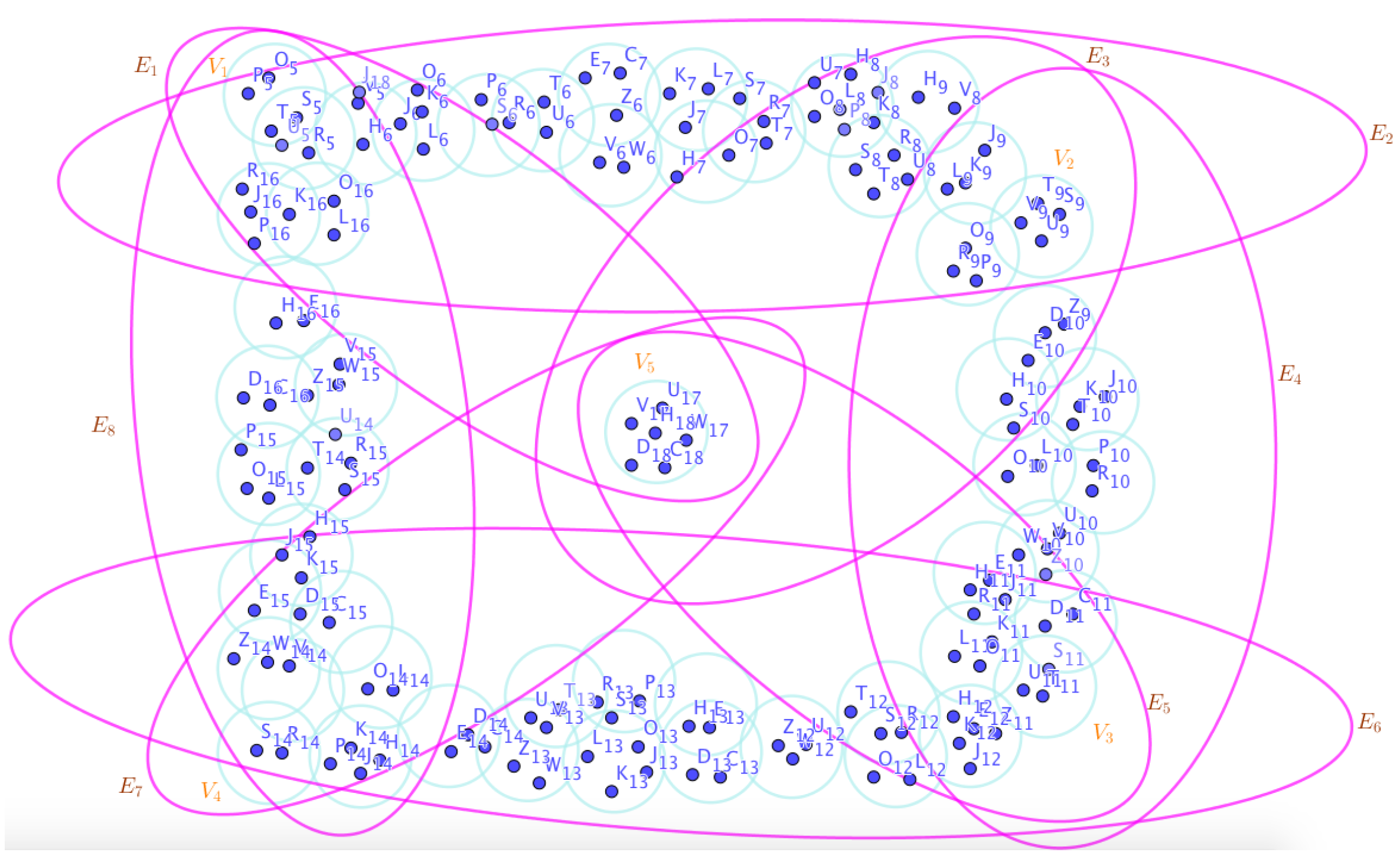
4. General Extreme Results
For the extreme SuperHyperClique, extreme SuperHyperClique, and the extreme SuperHyperClique, some general results are introduced.
Remark 2.
Let remind that the extreme SuperHyperClique is “redefined” on the positions of the alphabets.
Corollary 26.
Assume extreme SuperHyperClique. Then
plus one SuperHypeNeighbor to one. Where is the unary operation on the SuperHyperVertices of the SuperHyperGraph to assign the determinacy, the indeterminacy and the neutrality, for respectively.
Corollary 27.
Assume a extreme SuperHyperGraph on the same identical letter of the alphabet. Then the notion of extreme SuperHyperClique and extreme SuperHyperClique coincide.
Corollary 28.
Assume a extreme SuperHyperGraph on the same identical letter of the alphabet. Then a consecutive sequence of the SuperHyperVertices is a extreme SuperHyperClique if and only if it’s a extreme SuperHyperClique.
Corollary 29.
Assume a extreme SuperHyperGraph on the same identical letter of the alphabet. Then a consecutive sequence of the SuperHyperVertices is a strongest SuperHyperCycle if and only if it’s a longest SuperHyperCycle.
Corollary 30.
Assume SuperHyperClasses of a extreme SuperHyperGraph on the same identical letter of the alphabet. Then its extreme SuperHyperClique is its extreme SuperHyperClique and reversely.
Corollary 31.
Assume a extreme SuperHyperPath(-/SuperHyperCycle, SuperHyperStar, SuperHyperBipartite, SuperHyperMultipartite, SuperHyperWheel) on the same identical letter of the alphabet. Then its extreme SuperHyperClique is its extreme SuperHyperClique and reversely.
Corollary 32.
Assume a extreme SuperHyperGraph. Then its extreme SuperHyperClique isn’t well-defined if and only if its extreme SuperHyperClique isn’t well-defined.
Corollary 33.
Assume SuperHyperClasses of a extreme SuperHyperGraph. Then its extreme SuperHyperClique isn’t well-defined if and only if its extreme SuperHyperClique isn’t well-defined.
Corollary 34.
Assume a extreme SuperHyperPath(-/SuperHyperCycle, SuperHyperStar, SuperHyperBipartite, SuperHyperMultipartite, SuperHyperWheel). Then its extreme SuperHyperClique isn’t well-defined if and only if its extreme SuperHyperClique isn’t well-defined.
Corollary 35.
Assume a extreme SuperHyperGraph. Then its extreme SuperHyperClique is well-defined if and only if its extreme SuperHyperClique is well-defined.
Corollary 36.
Assume SuperHyperClasses of a extreme SuperHyperGraph. Then its extreme SuperHyperClique is well-defined if and only if its extreme SuperHyperClique is well-defined.
Corollary 37.
Assume a extreme SuperHyperPath(-/SuperHyperCycle, SuperHyperStar, SuperHyperBipartite, SuperHyperMultipartite, SuperHyperWheel). Then its extreme SuperHyperClique is well-defined if and only if its extreme SuperHyperClique is well-defined.
Proposition 38.
Let be a extreme SuperHyperGraph. Then V is
- the dual SuperHyperDefensive extreme SuperHyperClique;
- the strong dual SuperHyperDefensive extreme SuperHyperClique;
- the connected dual SuperHyperDefensive extreme SuperHyperClique;
- the δ-dual SuperHyperDefensive extreme SuperHyperClique;
- the strong δ-dual SuperHyperDefensive extreme SuperHyperClique;
- the connected δ-dual SuperHyperDefensive extreme SuperHyperClique.
Proposition 39.
Let be a extreme SuperHyperGraph. Then ∅ is
- the SuperHyperDefensive extreme SuperHyperClique;
- the strong SuperHyperDefensive extreme SuperHyperClique;
- the connected defensive SuperHyperDefensive extreme SuperHyperClique;
- the δ-SuperHyperDefensive extreme SuperHyperClique;
- the strong δ-SuperHyperDefensive extreme SuperHyperClique;
- the connected δ-SuperHyperDefensive extreme SuperHyperClique.
Proposition 40.
Let be a extreme SuperHyperGraph. Then an independent SuperHyperSet is
- the SuperHyperDefensive extreme SuperHyperClique;
- the strong SuperHyperDefensive extreme SuperHyperClique;
- the connected SuperHyperDefensive extreme SuperHyperClique;
- the δ-SuperHyperDefensive extreme SuperHyperClique;
- the strong δ-SuperHyperDefensive extreme SuperHyperClique;
- the connected δ-SuperHyperDefensive extreme SuperHyperClique.
Proposition 41.
Let be a extreme SuperHyperUniform SuperHyperGraph which is a SuperHyperCycle/SuperHyperPath. Then V is a maximal
- SuperHyperDefensive extreme SuperHyperClique;
- strong SuperHyperDefensive extreme SuperHyperClique;
- connected SuperHyperDefensive extreme SuperHyperClique;
- -SuperHyperDefensive extreme SuperHyperClique;
- strong -SuperHyperDefensive extreme SuperHyperClique;
- connected -SuperHyperDefensive extreme SuperHyperClique;
- Where the exterior SuperHyperVertices and the interior SuperHyperVertices coincide.
Proposition 42.
Let be a extreme SuperHyperGraph which is a SuperHyperUniform SuperHyperWheel. Then V is a maximal
- dual SuperHyperDefensive extreme SuperHyperClique;
- strong dual SuperHyperDefensive extreme SuperHyperClique;
- connected dual SuperHyperDefensive extreme SuperHyperClique;
- -dual SuperHyperDefensive extreme SuperHyperClique;
- strong -dual SuperHyperDefensive extreme SuperHyperClique;
- connected -dual SuperHyperDefensive extreme SuperHyperClique;
- Where the exterior SuperHyperVertices and the interior SuperHyperVertices coincide.
Proposition 43.
Let be a extreme SuperHyperUniform SuperHyperGraph which is a SuperHyperCycle/SuperHyperPath. Then the number of
- the extreme SuperHyperClique;
- the extreme SuperHyperClique;
- the connected extreme SuperHyperClique;
- the -extreme SuperHyperClique;
- the strong -extreme SuperHyperClique;
- the connected -extreme SuperHyperClique.
- is one and it’s only Where the exterior SuperHyperVertices and the interior SuperHyperVertices coincide.
Proposition 44.
Let be a extreme SuperHyperUniform SuperHyperGraph which is a SuperHyperWheel. Then the number of
- the dual extreme SuperHyperClique;
- the dual extreme SuperHyperClique;
- the dual connected extreme SuperHyperClique;
- the dual -extreme SuperHyperClique;
- the strong dual -extreme SuperHyperClique;
- the connected dual -extreme SuperHyperClique.
- is one and it’s only Where the exterior SuperHyperVertices and the interior SuperHyperVertices coincide.
Proposition 45.
Let be a extreme SuperHyperUniform SuperHyperGraph which is a SuperHyperStar/SuperHyperComplete SuperHyperBipartite/SuperHyperComplete SuperHyperMultipartite. Then a SuperHyperSet contains [the SuperHyperCenter and] the half of multiplying r with the number of all the SuperHyperEdges plus one of all the SuperHyperVertices is a
- dual SuperHyperDefensive extreme SuperHyperClique;
- strong dual SuperHyperDefensive extreme SuperHyperClique;
- connected dual SuperHyperDefensive extreme SuperHyperClique;
- -dual SuperHyperDefensive extreme SuperHyperClique;
- strong -dual SuperHyperDefensive extreme SuperHyperClique;
- connected -dual SuperHyperDefensive extreme SuperHyperClique.
Proposition 46.
Let be a extreme SuperHyperUniform SuperHyperGraph which is a SuperHyperStar/SuperHyperComplete SuperHyperBipartite/SuperHyperComplete SuperHyperMultipartite. Then a SuperHyperSet contains the half of multiplying r with the number of all the SuperHyperEdges plus one of all the SuperHyperVertices in the biggest SuperHyperPart is a
- SuperHyperDefensive extreme SuperHyperClique;
- strong SuperHyperDefensive extreme SuperHyperClique;
- connected SuperHyperDefensive extreme SuperHyperClique;
- δ-SuperHyperDefensive extreme SuperHyperClique;
- strong δ-SuperHyperDefensive extreme SuperHyperClique;
- connected δ-SuperHyperDefensive extreme SuperHyperClique.
Proposition 47.
Let be a extreme SuperHyperUniform SuperHyperGraph which is a SuperHyperStar/SuperHyperComplete SuperHyperBipartite/SuperHyperComplete SuperHyperMultipartite. Then Then the number of
- dual SuperHyperDefensive extreme SuperHyperClique;
- strong dual SuperHyperDefensive extreme SuperHyperClique;
- connected dual SuperHyperDefensive extreme SuperHyperClique;
- -dual SuperHyperDefensive extreme SuperHyperClique;
- strong -dual SuperHyperDefensive extreme SuperHyperClique;
- connected -dual SuperHyperDefensive extreme SuperHyperClique.
- is one and it’s only a SuperHyperSet contains [the SuperHyperCenter and] the half of multiplying r with the number of all the SuperHyperEdges plus one of all the SuperHyperVertices. Where the exterior SuperHyperVertices and the interior SuperHyperVertices coincide.
Proposition 48.
Let be a extreme SuperHyperGraph. The number of connected component is if there’s a SuperHyperSet which is a dual
- SuperHyperDefensive extreme SuperHyperClique;
- strong SuperHyperDefensive extreme SuperHyperClique;
- connected SuperHyperDefensive extreme SuperHyperClique;
- extreme SuperHyperClique;
- strong 1-SuperHyperDefensive extreme SuperHyperClique;
- connected 1-SuperHyperDefensive extreme SuperHyperClique.
Proposition 49.
Let be a extreme SuperHyperGraph. Then the number is at most and the extreme number is at most
Proposition 50.
Let be a extreme SuperHyperGraph which is SuperHyperComplete. The number is and the extreme number is in the setting of dual
- SuperHyperDefensive extreme SuperHyperClique;
- strong SuperHyperDefensive extreme SuperHyperClique;
- connected SuperHyperDefensive extreme SuperHyperClique;
- -SuperHyperDefensive extreme SuperHyperClique;
- strong -SuperHyperDefensive extreme SuperHyperClique;
- connected -SuperHyperDefensive extreme SuperHyperClique.
Proposition 51.
Let be a extreme SuperHyperGraph which is The number is 0 and the extreme number is for an independent SuperHyperSet in the setting of dual
- SuperHyperDefensive extreme SuperHyperClique;
- strong SuperHyperDefensive extreme SuperHyperClique;
- connected SuperHyperDefensive extreme SuperHyperClique;
- 0-SuperHyperDefensive extreme SuperHyperClique;
- strong 0-SuperHyperDefensive extreme SuperHyperClique;
- connected 0-SuperHyperDefensive extreme SuperHyperClique.
Proposition 52.
Let be a extreme SuperHyperGraph which is SuperHyperComplete. Then there’s no independent SuperHyperSet.
Proposition 53.
Let be a extreme SuperHyperGraph which is SuperHyperCycle/SuperHyperPath/SuperHyperWheel. The number is and the extreme number is in the setting of a dual
- SuperHyperDefensive extreme SuperHyperClique;
- strong SuperHyperDefensive extreme SuperHyperClique;
- connected SuperHyperDefensive extreme SuperHyperClique;
- -SuperHyperDefensive extreme SuperHyperClique;
- strong -SuperHyperDefensive extreme SuperHyperClique;
- connected -SuperHyperDefensive extreme SuperHyperClique.
Proposition 54.
Let be a extreme SuperHyperGraph which is SuperHyperStar/complete SuperHyperBipartite/complete SuperHyperMultiPartite. The number is and the extreme number is in the setting of a dual
- SuperHyperDefensive extreme SuperHyperClique;
- strong SuperHyperDefensive extreme SuperHyperClique;
- connected SuperHyperDefensive extreme SuperHyperClique;
- -SuperHyperDefensive extreme SuperHyperClique;
- strong -SuperHyperDefensive extreme SuperHyperClique;
- connected -SuperHyperDefensive extreme SuperHyperClique.
Proposition 55.
Let be a SuperHyperFamily of the extreme SuperHyperGraphs which are from one-type SuperHyperClass which the result is obtained for the individuals. Then the results also hold for the SuperHyperFamily of these specific SuperHyperClasses of the extreme SuperHyperGraphs.
Proposition 56.
Let be a strong extreme SuperHyperGraph. If S is a dual SuperHyperDefensive extreme SuperHyperClique, then such that
Proposition 57.
Let be a strong extreme SuperHyperGraph. If S is a dual SuperHyperDefensive extreme SuperHyperClique, then
- S is SuperHyperDominating set;
- there’s such that is SuperHyperChromatic number.
Proposition 58.
Let be a strong extreme SuperHyperGraph. Then
Proposition 59.
Let be a strong extreme SuperHyperGraph which is connected. Then
Proposition 60.
Let be an odd SuperHyperPath. Then
- the SuperHyperSet is a dual SuperHyperDefensive extreme SuperHyperClique;
- and corresponded SuperHyperSet is ;
- the SuperHyperSets and are only a dual extreme SuperHyperClique.
Proposition 61.
Let be an even SuperHyperPath. Then
- the set is a dual SuperHyperDefensive extreme SuperHyperClique;
- and corresponded SuperHyperSets are and
- the SuperHyperSets and are only dual extreme SuperHyperClique.
Proposition 62.
Let be an even SuperHyperCycle. Then
- the SuperHyperSet is a dual SuperHyperDefensive extreme SuperHyperClique;
- and corresponded SuperHyperSets are and
- the SuperHyperSets and are only dual extreme SuperHyperClique.
Proposition 63.
Let be an odd SuperHyperCycle. Then
- the SuperHyperSet is a dual SuperHyperDefensive extreme SuperHyperClique;
- and corresponded SuperHyperSet is ;
- the SuperHyperSets and are only dual extreme SuperHyperClique.
Proposition 64.
Let be SuperHyperStar. Then
- the SuperHyperSet is a dual maximal extreme SuperHyperClique;
- the SuperHyperSets and are only dual extreme SuperHyperClique.
Proposition 65.
Let be SuperHyperWheel. Then
- the SuperHyperSet is a dual maximal SuperHyperDefensive extreme SuperHyperClique;
- the SuperHyperSet is only a dual maximal SuperHyperDefensive extreme SuperHyperClique.
Proposition 66.
Let be an odd SuperHyperComplete. Then
- the SuperHyperSet is a dual SuperHyperDefensive extreme SuperHyperClique;
- the SuperHyperSet is only a dual SuperHyperDefensive extreme SuperHyperClique.
Proposition 67.
Let be an even SuperHyperComplete. Then
- the SuperHyperSet is a dual SuperHyperDefensive extreme SuperHyperClique;
- the SuperHyperSet is only a dual maximal SuperHyperDefensive extreme SuperHyperClique.
Proposition 68.
Let be a m-SuperHyperFamily of extreme SuperHyperStars with common extreme SuperHyperVertex SuperHyperSet. Then
- the SuperHyperSet is a dual SuperHyperDefensive extreme SuperHyperClique for
- for
- for
- the SuperHyperSets and are only dual extreme SuperHyperClique for
Proposition 69.
Let be an m-SuperHyperFamily of odd SuperHyperComplete SuperHyperGraphs with common extreme SuperHyperVertex SuperHyperSet. Then
- the SuperHyperSet is a dual maximal SuperHyperDefensive extreme SuperHyperClique for
- for
- for
- the SuperHyperSets are only a dual maximal extreme SuperHyperClique for
Proposition 70.
Let be a m-SuperHyperFamily of even SuperHyperComplete SuperHyperGraphs with common extreme SuperHyperVertex SuperHyperSet. Then
- the SuperHyperSet is a dual SuperHyperDefensive extreme SuperHyperClique for
- for
- for
- the SuperHyperSets are only dual maximal extreme SuperHyperClique for
Proposition 71.
Let be a strong extreme SuperHyperGraph. Then following statements hold;
- if and a SuperHyperSet S of SuperHyperVertices is an t-SuperHyperDefensive extreme SuperHyperClique, then S is an s-SuperHyperDefensive extreme SuperHyperClique;
- if and a SuperHyperSet S of SuperHyperVertices is a dual t-SuperHyperDefensive extreme SuperHyperClique, then S is a dual s-SuperHyperDefensive extreme SuperHyperClique.
Proposition 72.
Let be a strong extreme SuperHyperGraph. Then following statements hold;
- if and a SuperHyperSet S of SuperHyperVertices is an t-SuperHyperDefensive extreme SuperHyperClique, then S is an s-SuperHyperPowerful extreme SuperHyperClique;
- if and a SuperHyperSet S of SuperHyperVertices is a dual t-SuperHyperDefensive extreme SuperHyperClique, then S is a dual s-SuperHyperPowerful extreme SuperHyperClique.
Proposition 73.
Let be a[an] [r-]SuperHyperUniform-strong-extreme SuperHyperGraph. Then following statements hold;
- if then is an 2-SuperHyperDefensive extreme SuperHyperClique;
- if then is a dual 2-SuperHyperDefensive extreme SuperHyperClique;
- if then is an r-SuperHyperDefensive extreme SuperHyperClique;
- if then is a dual r-SuperHyperDefensive extreme SuperHyperClique.
Proposition 74.
Let is a[an] [r-]SuperHyperUniform-strong-extreme SuperHyperGraph. Then following statements hold;
- if is an 2-SuperHyperDefensive extreme SuperHyperClique;
- if is a dual 2-SuperHyperDefensive extreme SuperHyperClique;
- if is an r-SuperHyperDefensive extreme SuperHyperClique;
- if is a dual r-SuperHyperDefensive extreme SuperHyperClique.
Proposition 75.
Let is a[an] [r-]SuperHyperUniform-strong-extreme SuperHyperGraph which is a SuperHyperComplete. Then following statements hold;
- if is an 2-SuperHyperDefensive extreme SuperHyperClique;
- if is a dual 2-SuperHyperDefensive extreme SuperHyperClique;
- if is an -SuperHyperDefensive extreme SuperHyperClique;
- if is a dual -SuperHyperDefensive extreme SuperHyperClique.
Proposition 76.
Let is a[an] [r-]SuperHyperUniform-strong-extreme SuperHyperGraph which is a SuperHyperComplete. Then following statements hold;
- if then is an 2-SuperHyperDefensive extreme SuperHyperClique;
- if then is a dual 2-SuperHyperDefensive extreme SuperHyperClique;
- if then is -SuperHyperDefensive extreme SuperHyperClique;
- if then is a dual -SuperHyperDefensive extreme SuperHyperClique.
Proposition 77.
Let is a[an] [r-]SuperHyperUniform-strong-extreme SuperHyperGraph which is SuperHyperCycle. Then following statements hold;
- if is an 2-SuperHyperDefensive extreme SuperHyperClique;
- if is a dual 2-SuperHyperDefensive extreme SuperHyperClique;
- if is an 2-SuperHyperDefensive extreme SuperHyperClique;
- if is a dual 2-SuperHyperDefensive extreme SuperHyperClique.
Proposition 78.
Let is a[an] [r-]SuperHyperUniform-strong-extreme SuperHyperGraph which is SuperHyperCycle. Then following statements hold;
- if then is an 2-SuperHyperDefensive extreme SuperHyperClique;
- if then is a dual 2-SuperHyperDefensive extreme SuperHyperClique;
- if then is an 2-SuperHyperDefensive extreme SuperHyperClique;
- if then is a dual 2-SuperHyperDefensive extreme SuperHyperClique.
5. Extreme Problems and Extreme Questions
In what follows, some “Extreme problems” and some “Extreme questions” are Extremely proposed.
The SuperHyperClique and the Extreme SuperHyperClique are Extremely defined on a real-world Extreme application, titled “Cancer’s Extreme recognitions”.
Question 79.
Which the else Extreme SuperHyperModels could be defined based on Cancer’s Extreme recognitions?
Question 80.
Are there some Extreme SuperHyperNotions related to SuperHyperClique and the Extreme SuperHyperClique?
Question 81.
Are there some Extreme Algorithms to be defined on the Extreme SuperHyperModels to compute them Extremely?
Question 82.
Which the Extreme SuperHyperNotions are related to beyond the SuperHyperClique and the Extreme SuperHyperClique?
Problem 83.
The SuperHyperClique and the Extreme SuperHyperClique do Extremely a Extreme SuperHyperModel for the Cancer’s Extreme recognitions and they’re based Extremely on Extreme SuperHyperClique, are there else Extremely?
Problem 84.
Which the fundamental Extreme SuperHyperNumbers are related to these Extreme SuperHyperNumbers types-results?
Problem 85.
What’s the independent research based on Cancer’s Extreme recognitions concerning the multiple types of Extreme SuperHyperNotions?
References
- Henry Garrett, “Properties of SuperHyperGraph and Neutrosophic SuperHyperGraph”, Neutrosophic Sets and Systems 49 (2022) 531-561. (http://fs.unm.edu/NSS/NeutrosophicSuperHyperGraph34.pdf). (https://digitalrepository.unm.edu/nss_journal/vol49/iss1/34). [CrossRef]
- Henry Garrett, “Neutrosophic Co-degree and Neutrosophic Degree alongside Chromatic Numbers in the Setting of Some Classes Related to Neutrosophic Hypergraphs”, J Curr Trends Comp Sci Res 1(1) (2022) 06-14.
- Henry Garrett, “Super Hyper Dominating and Super Hyper Resolving on Neutrosophic Super Hyper Graphs and Their Directions in Game Theory and Neutrosophic Super Hyper Classes”, J Math Techniques Comput Math 1(3) (2022) 242-263.
- Garrett, Henry. “0039 | Closing Numbers and Super-Closing Numbers as (Dual)Resolving and (Dual)Coloring alongside (Dual)Dominating in (Neutrosophic)n-SuperHyperGraph.” CERN European Organization for Nuclear Research - Zenodo, Nov. 2022. CERN European Organization for Nuclear Research. https://oa.mg/work/10.5281/zenodo.6319942. [CrossRef]
- Garrett, Henry. “0049 | (Failed)1-Zero-Forcing Number in Neutrosophic Graphs.” CERN European Organization for Nuclear Research - Zenodo, Feb. 2022. CERN European Organization for Nuclear Research. https://oa.mg/work/10.13140/rg.2.2.35241.26724. [CrossRef]
- Henry Garrett, “Neutrosophic Failed SuperHyperStable as the Survivors on the Cancer’s Neutrosophic Recognition Based on Uncertainty to All Modes in Neutrosophic SuperHyperGraphs”, Preprints 2023, 2023010240. [CrossRef]
- Henry Garrett, “Extremism of the Attacked Body Under the Cancer’s Circumstances Where Cancer’s Recognition Titled (Neutrosophic) SuperHyperGraphs”, Preprints 2023, 2023010224. [CrossRef]
- Henry Garrett, “(Neutrosophic) 1-Failed SuperHyperForcing in Cancer’s Recognitions And (Neutrosophic) SuperHyperGraphs”, Preprints 2023, 2023010105. [CrossRef]
- Henry Garrett, “Neutrosophic Messy-Style SuperHyperGraphs To Form Neutrosophic SuperHyperStable To Act on Cancer’s Neutrosophic Recognitions In Special ViewPoints”, Preprints 2023, 2023010088. [CrossRef]
- Henry Garrett, “Neutrosophic 1-Failed SuperHyperForcing in the SuperHyperFunction To Use Neutrosophic SuperHyperGraphs on Cancer’s Neutrosophic Recognition And Beyond”, Preprints 2023, 2023010044.
- Henry Garrett, “(Neutrosophic) SuperHyperStable on Cancer’s Recognition by Well- SuperHyperModelled (Neutrosophic) SuperHyperGraphs”, Preprints 2023, 2023010043. [CrossRef]
- Henry Garrett, “Basic Notions on (Neutrosophic) SuperHyperForcing And (Neutrosophic) SuperHyperModeling in Cancer’s Recognitions And (Neutrosophic) SuperHyperGraphs”, Preprints 2023, 2023010105. [CrossRef]
- Henry Garrett, “Neutrosophic Messy-Style SuperHyperGraphs To Form Neutrosophic SuperHyperStable To Act on Cancer’s Neutrosophic Recognitions In Special ViewPoints”, Preprints 2023, 2023010088. [CrossRef]
- Henry Garrett, “(Neutrosophic) SuperHyperModeling of Cancer’s Recognitions Featuring (Neutrosophic) SuperHyperDefensive SuperHyperAlliances”, Preprints 2022, 2022120549. [CrossRef]
- Henry Garrett, “(Neutrosophic) SuperHyperAlliances With SuperHyperDefensive and SuperHyperOffensive Type-SuperHyperSet On (Neutrosophic) SuperHyperGraph With (Neutrosophic) SuperHyperModeling of Cancer’s Recognitions And Related (Neutrosophic) SuperHyperClasses”, Preprints 2022, 2022120540. [CrossRef]
- Henry Garrett, “SuperHyperGirth on SuperHyperGraph and Neutrosophic SuperHyperGraph With SuperHyperModeling of Cancer’s Recognitions”, Preprints 2022, 2022120500. [CrossRef]
- Henry Garrett, “Some SuperHyperDegrees and Co-SuperHyperDegrees on Neutrosophic SuperHyperGraphs and SuperHyperGraphs Alongside Applications in Cancer’s Treatments”, Preprints 2022, 2022120324. [CrossRef]
- Henry Garrett, “SuperHyperDominating and SuperHyperResolving on Neutrosophic SuperHyperGraphs And Their Directions in Game Theory and Neutrosophic SuperHyperClasses”, Preprints 2022, 2022110576. [CrossRef]
- Henry Garrett,“Extreme Failed SuperHyperClique Decides the Failures on the Cancer’s Recognition in the Perfect Connections of Cancer’s Attacks By SuperHyperModels Named (Neutrosophic) SuperHyperGraphs”, ResearchGate 2023. [CrossRef]
- Henry Garrett,“Indeterminacy On The All Possible Connections of Cells In Front of Cancer’s Attacks In The Terms of Neutrosophic Failed SuperHyperClique on Cancer’s Recognition called Neutrosophic SuperHyperGraphs”, ResearchGate 2023. [CrossRef]
- Henry Garrett,“Perfect Directions Toward Idealism in Cancer’s Neutrosophic Recognition Forwarding Neutrosophic SuperHyperClique on Neutrosophic SuperHyperGraphs”, ResearchGate 2023. [CrossRef]
- Henry Garrett,“Demonstrating Complete Connections in Every Embedded Regions and Sub-Regions in the Terms of Cancer’s Recognition and (Neutrosophic) SuperHyperGraphs With (Neutrosophic) SuperHyperClique”, ResearchGate 2023. [CrossRef]
- Henry Garrett,“Different Neutrosophic Types of Neutrosophic Regions titled neutrosophic Failed SuperHyperStable in Cancer’s Neutrosophic Recognition modeled in the Form of Neutrosophic SuperHyperGraphs”, ResearchGate 2023. [CrossRef]
- Henry Garrett, “Using the Tool As (Neutrosophic) Failed SuperHyperStable To SuperHyperModel Cancer’s Recognition Titled (Neutrosophic) SuperHyperGraphs”, ResearchGate 2023. [CrossRef]
- Henry Garrett, “Neutrosophic Messy-Style SuperHyperGraphs To Form Neutrosophic SuperHyperStable To Act on Cancer’s Neutrosophic Recognitions In Special ViewPoints”, ResearchGate 2023. [CrossRef]
- Henry Garrett, “(Neutrosophic) SuperHyperStable on Cancer’s Recognition by Well-SuperHyperModelled (Neutrosophic) SuperHyperGraphs”, ResearchGate 2023. [CrossRef]
- Henry Garrett, “Neutrosophic 1-Failed SuperHyperForcing in the SuperHyperFunction To Use Neutrosophic SuperHyperGraphs on Cancer’s Neutrosophic Recognition And Beyond”, ResearchGate 2022. [CrossRef]
- Henry Garrett, “(Neutrosophic) 1-Failed SuperHyperForcing in Cancer’s Recognitions And (Neutrosophic) SuperHyperGraphs”, ResearchGate 2022. [CrossRef]
- Henry Garrett, “Basic Notions on (Neutrosophic) SuperHyperForcing And (Neutrosophic) SuperHyperModeling in Cancer’s Recognitions And (Neutrosophic) SuperHyperGraphs”, ResearchGate 2022. [CrossRef]
- Henry Garrett, “Basic Neutrosophic Notions Concerning SuperHyperDominating and Neutrosophic SuperHyperResolving in SuperHyperGraph”, ResearchGate 2022. [CrossRef]
- Henry Garrett, “Initial Material of Neutrosophic Preliminaries to Study Some Neutrosophic Notions Based on Neutrosophic SuperHyperEdge (NSHE) in Neutrosophic SuperHyperGraph (NSHG)”, ResearchGate 2022. [CrossRef]
- Henry Garrett, (2022). “Beyond Neutrosophic Graphs”, Ohio: E-publishing: Educational Publisher 1091 West 1st Ave Grandview Heights, Ohio 43212 United States. ISBN: 979-1-59973-725-6 (http://fs.unm.edu/BeyondNeutrosophicGraphs.pdf).
- Henry Garrett, (2022). “Neutrosophic Duality”, Florida: GLOBAL KNOWLEDGE - Publishing House 848 Brickell Ave Ste 950 Miami, Florida 33131 United States. ISBN: 978-1-59973-743-0 (http://fs.unm.edu/NeutrosophicDuality.pdf).
- F. Smarandache, “Extension of HyperGraph to n-SuperHyperGraph and to Plithogenic n-SuperHyperGraph, and Extension of HyperAlgebra to n-ary (Classical-/Neutro-/Anti-) HyperAlgebra”, Neutrosophic Sets and Systems 33 (2020) 290-296. [CrossRef]
- M. Akram et al., “Single-valued neutrosophic Hypergraphs”, TWMS J. App. Eng. Math. 8 (1) (2018) 122-135.
- S. Broumi et al., “Single-valued neutrosophic graphs”, Journal of New Theory 10 (2016) 86-101.
- H. Wang et al., “Single-valued neutrosophic sets”, Multispace and Multistructure 4 (2010) 410-413.
- H.T. Nguyen and E.A. Walker, “A First course in fuzzy logic”, CRC Press, 2006.
- M. Akram, and G. Shahzadi, “Operations on Single-Valued Neutrosophic Graphs”, Journal of uncertain systems 11 (1) (2017) 1-26.
- G. Argiroffo et al., “Polyhedra associated with locating-dominating, open locating-dominating and locating total-dominating sets in graphs”, Discrete Applied Mathematics (2022). [CrossRef]
- L. Aronshtam, and H. Ilani, “Bounds on the average and minimum attendance in preference-based activity scheduling”, Discrete Applied Mathematics 306 (2022) 114-119. [CrossRef]
- J. Asplund et al., “A Vizing-type result for semi-total domination”, Discrete Applied Mathematics 258 (2019) 8-12. [CrossRef]
- K. Atanassov, “Intuitionistic fuzzy sets”, Fuzzy Sets Syst. 20 (1986) 87-96.
- R.A. Beeler et al., “Total domination cover rubbling”, Discrete Applied Mathematics 283 (2020) 133-141. [CrossRef]
- S. Bermudo et al., “On the global total k-domination number of graphs”, Discrete Applied Mathematics 263 (2019) 42-50. [CrossRef]
- M. Bold, and M. Goerigk, “Investigating the recoverable robust single machine scheduling problem under interval uncertainty”, Discrete Applied Mathematics 313 (2022) 99-114. [CrossRef]
- S. Broumi et al., “Single-valued neutrosophic graphs”, Journal of New Theory 10 (2016) 86-101.
- V. Gledel et al., “Maker–Breaker total domination game”, Discrete Applied Mathematics 282 (2020) 96-107. [CrossRef]
- M.A. Henning, and A. Yeo, “A new upper bound on the total domination number in graphs with minimum degree six”, Discrete Applied Mathematics 302 (2021) 1-7. [CrossRef]
- V. Irsic, “Effect of predomination and vertex removal on the game total domination number of a graph”, Discrete Applied Mathematics 257 (2019) 216-225. [CrossRef]
- B.S. Panda, and P. Goyal, “Hardness results of global total k-domination problem in graphs”, Discrete Applied Mathematics (2021). [CrossRef]
- N. Shah, and A. Hussain, “Neutrosophic soft graphs”, Neutrosophic Set and Systems 11 (2016) 31-44.
- Shannon and K.T. Atanassov, “A first step to a theory of the intuitionistic fuzzy graphs”, Proceeding of FUBEST (Lakov, D., Ed.) Sofia (1994) 59-61.
- Smarandache, “A Unifying field in logics neutrosophy: Neutrosophic probability, set and logic, Rehoboth:” American Research Press (1998).
- H. Wang et al., “Single-valued neutrosophic sets”, Multispace and Multistructure 4 (2010) 410-413.
- L. A. Zadeh, “Fuzzy sets”, Information and Control 8 (1965) 338-354.
Figure 21.
An extreme SuperHyperPath Associated to the Notions of extreme SuperHyperClique in the Example (15).
Figure 21.
An extreme SuperHyperPath Associated to the Notions of extreme SuperHyperClique in the Example (15).
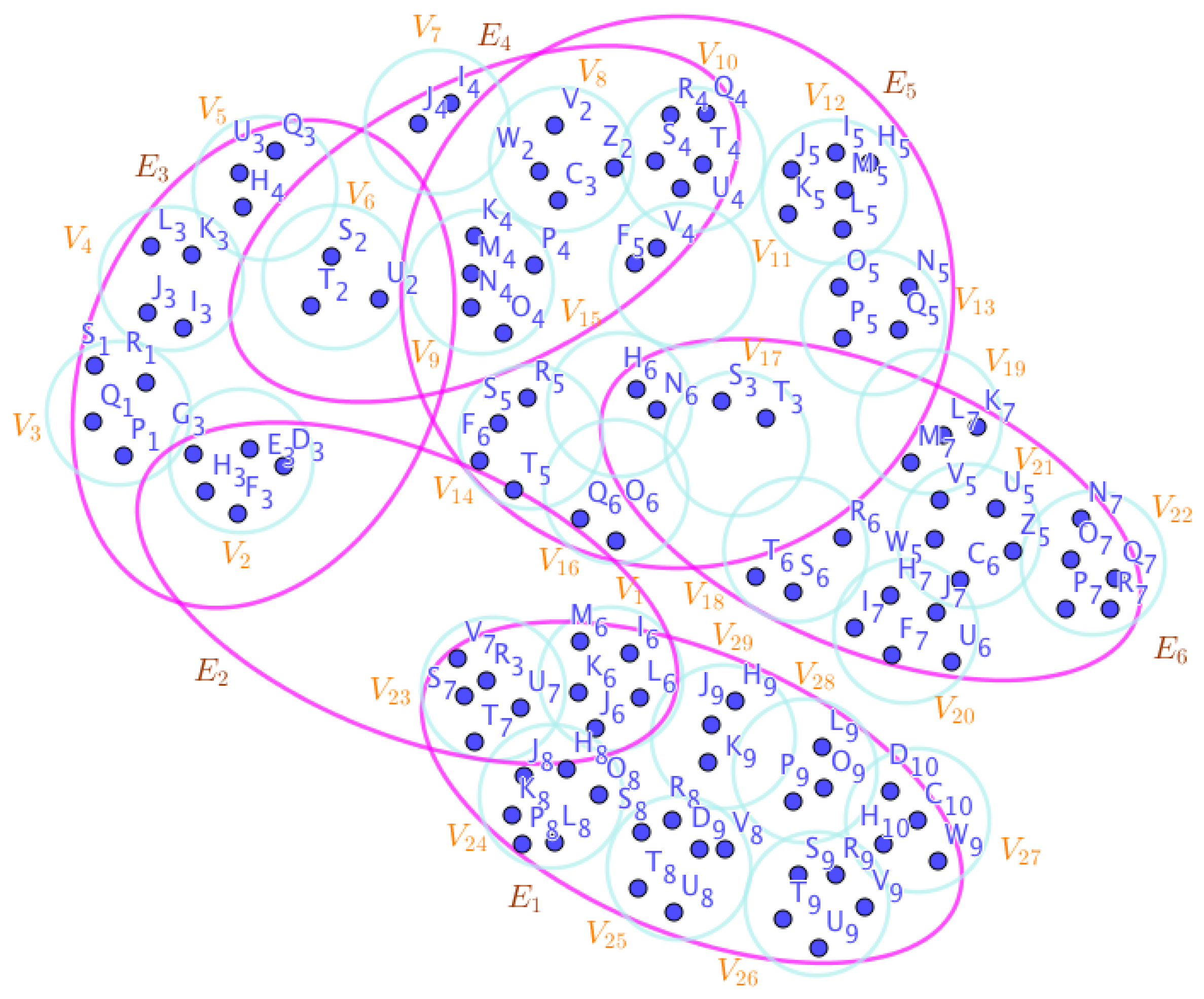
Figure 22.
An extreme SuperHyperCycle Associated to the extreme Notions of extreme SuperHyperClique in the extreme Example (17).
Figure 22.
An extreme SuperHyperCycle Associated to the extreme Notions of extreme SuperHyperClique in the extreme Example (17).
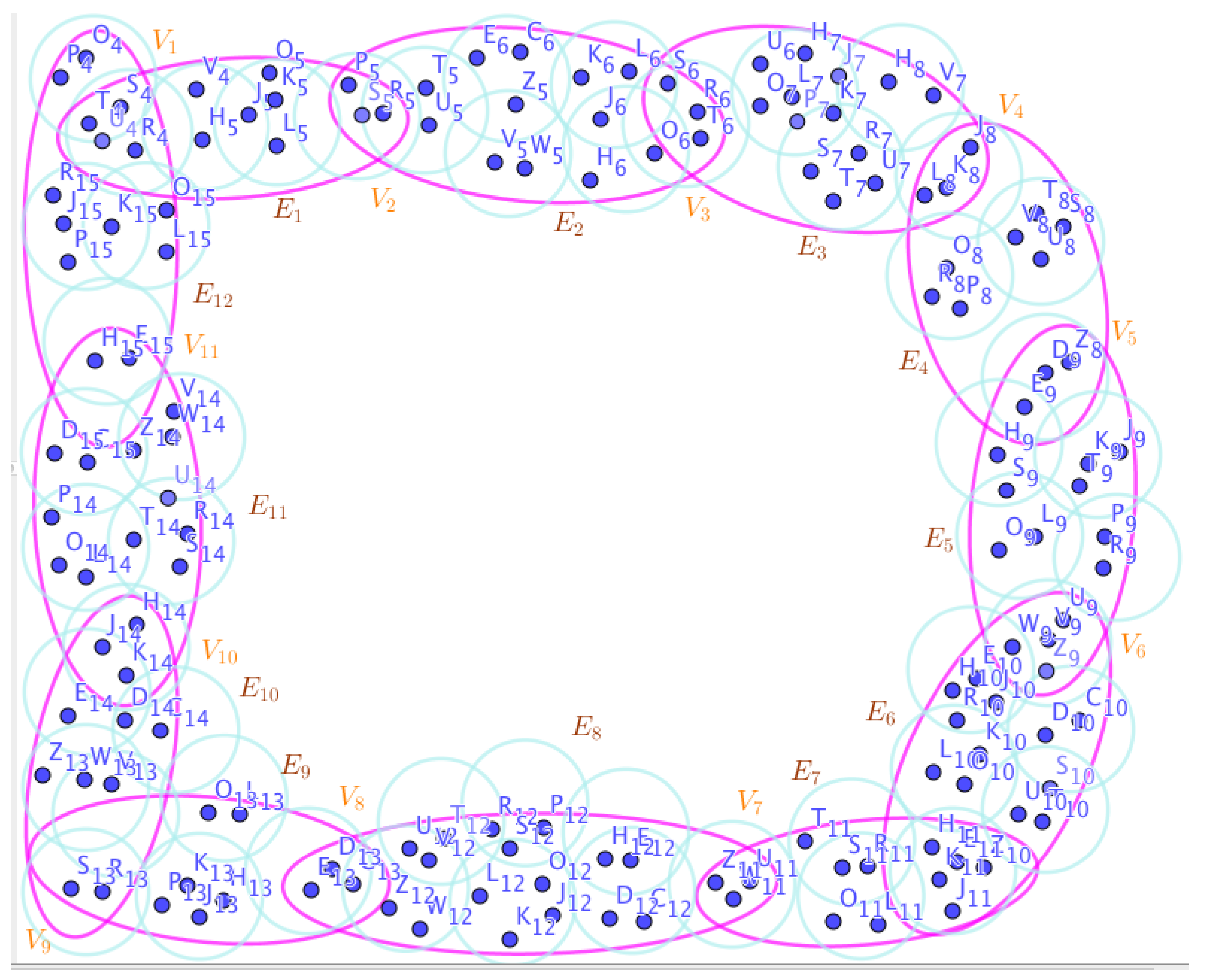
Figure 23.
An extreme SuperHyperStar Associated to the extreme Notions of extreme SuperHyperClique in the extreme Example (19).
Figure 23.
An extreme SuperHyperStar Associated to the extreme Notions of extreme SuperHyperClique in the extreme Example (19).
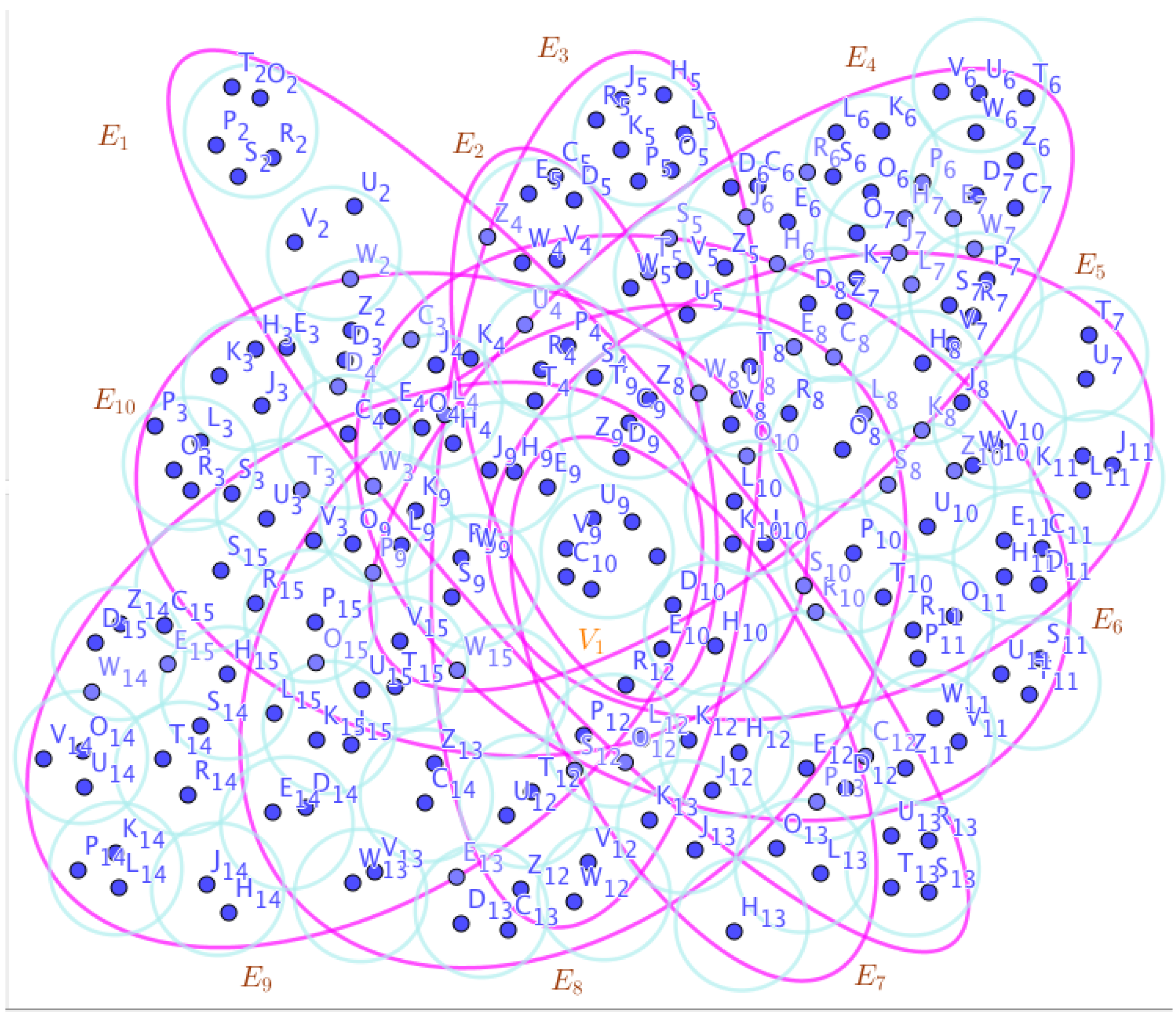
Figure 24.
An extreme SuperHyperBipartite extreme Associated to the extreme Notions of extreme SuperHyperClique in the Example (21).
Figure 24.
An extreme SuperHyperBipartite extreme Associated to the extreme Notions of extreme SuperHyperClique in the Example (21).
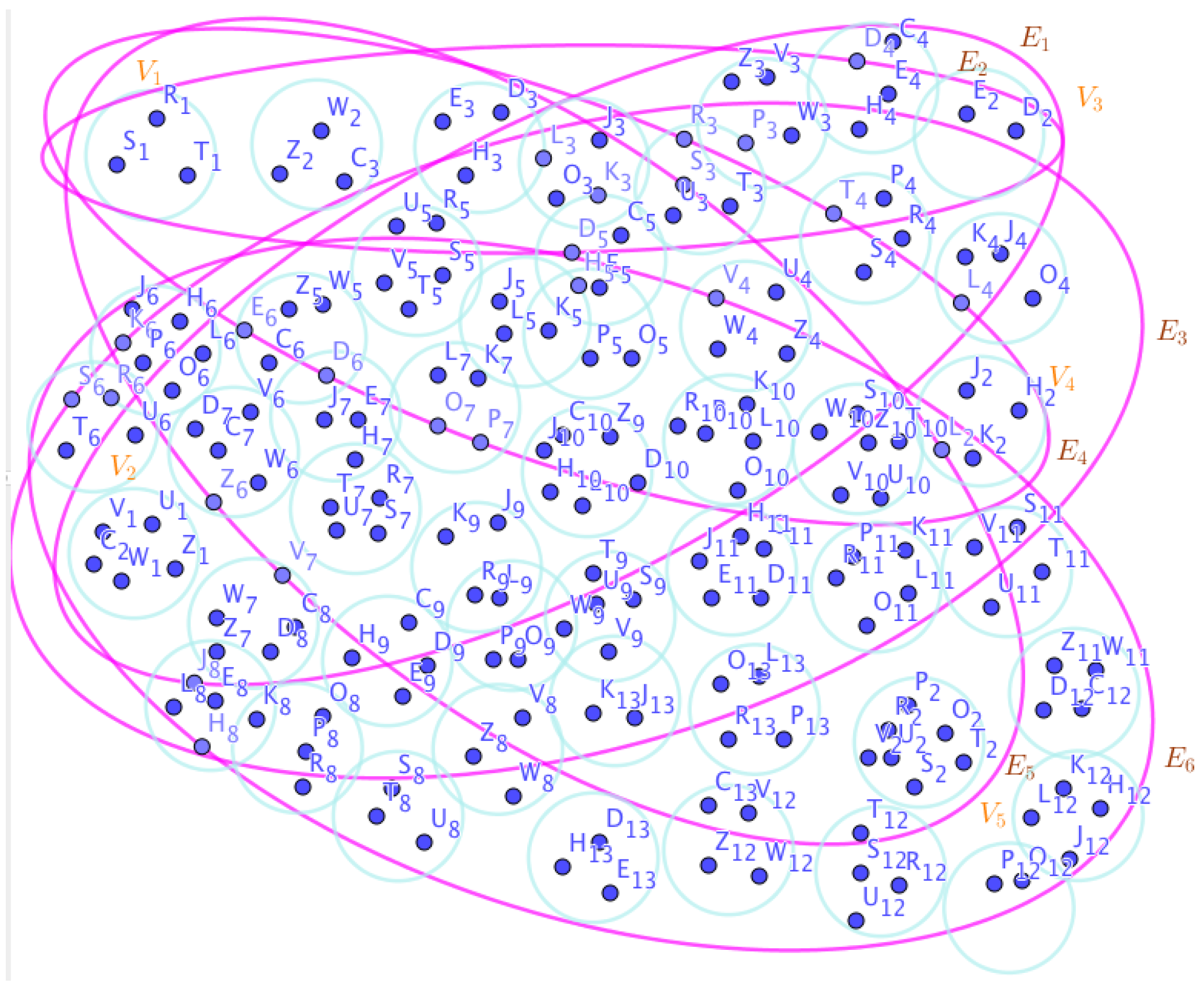
Figure 25.
An extreme SuperHyperMultipartite Associated to the Notions of extreme SuperHyperClique in the Example (23).
Figure 25.
An extreme SuperHyperMultipartite Associated to the Notions of extreme SuperHyperClique in the Example (23).
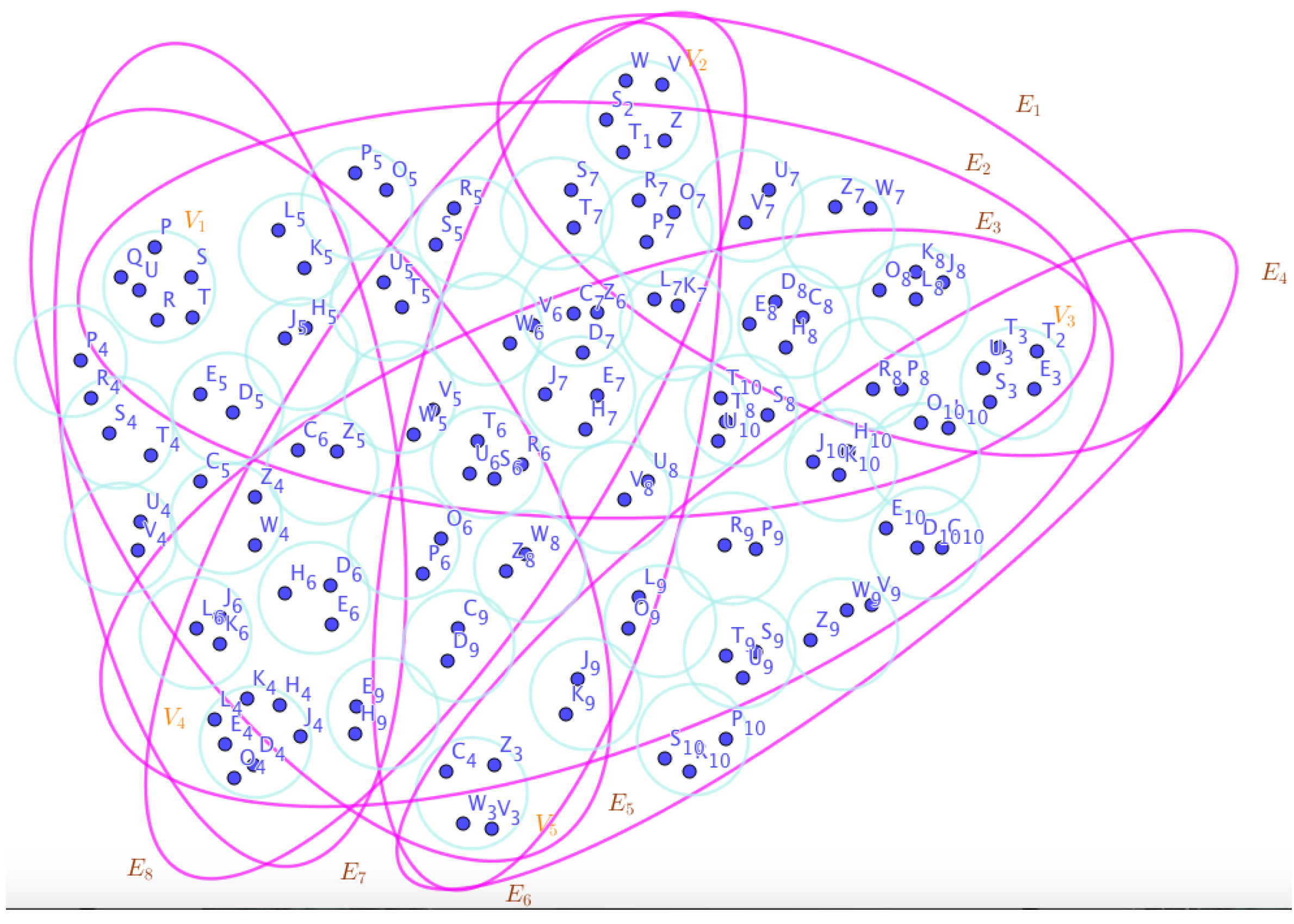
Disclaimer/Publisher’s Note: The statements, opinions and data contained in all publications are solely those of the individual author(s) and contributor(s) and not of MDPI and/or the editor(s). MDPI and/or the editor(s) disclaim responsibility for any injury to people or property resulting from any ideas, methods, instructions or products referred to in the content. |
© 2023 by the authors. Licensee MDPI, Basel, Switzerland. This article is an open access article distributed under the terms and conditions of the Creative Commons Attribution (CC BY) license (http://creativecommons.org/licenses/by/4.0/).
Copyright: This open access article is published under a Creative Commons CC BY 4.0 license, which permit the free download, distribution, and reuse, provided that the author and preprint are cited in any reuse.