
Submitted:
18 March 2023
Posted:
21 March 2023
You are already at the latest version
Abstract
After long years of development, the technology of analyzing the working condition of power units based on vibration signals has had relatively stable applications, but the accuracy and the degree of automation and intelligence for fault diagnosis are still inadequate due to the limitations of the current development of key technologies. With the development of big data and artificial intelligence technology, the involvement of new technologies will be an important boost to the development of this field. To support the subsequent research, bibliometrics is used as a tool to sort out the development of the technology in this field at the macro level; at the micro level, the classical and key literature is studied to grasp the development status at the technical level and prepare for the selection of entry points to continue in-depth innovation afterwards.
Keywords:
Vibration Detection
; Progress
; Engine
; Bibliometrics
1. Introduction
With the development of modern mass production and the continuous progress of science and technology, machinery and equipment are developing in the direction of large-scale, precision, continuous, heavy-duty, systematization and automation, which makes the scale of the whole system bigger and bigger [1]. Once a part of the system fails, it will cause a chain reaction, lead to the paralysis of the entire system, result in huge economic losses and even catastrophic consequences.
Power units, due to their working characteristics, produce vibration during operation, and different vibration styles correspond to different working conditions [2]. Most of the faults are closely related to mechanical movement or vibration, and vibration detection has the characteristics of direct, real-time and wide coverage of fault types, so vibration detection is at the core of various predictive maintenance technologies for power units. Through long-term practice, engineers and technicians have been able to basically achieve early warning and operational fault diagnosis by using vibration monitoring systems to analyze vibration signals, thus ensuring safe and smooth equipment and machinery [3]. This makes this type of technology a significant application in the study of the working condition of power units such as power generation equipment, marine power units, aviation engines, diesel engine sets, and power generation wind turbines [4].
In order to make the subsequent research more focused, it is necessary to grasp the development of this engineering field in general. The use of bibliometrics as a tool for macro analysis of technological developments in the field helps to grasp development trends as a whole and to obtain various types of high-value research reference information. Based on the understanding of the general development status and industry needs, we explore and discover the under-researched areas, predict the development direction of the field, and provide a guide for the further development of the research by combining the contents of specific literature. Through the analysis, it is possible to effectively grasp the outstanding teams and technological frontiers in this field, which will provide reference and guidance for subsequent innovation.
2. Materials and Methods
2.1. Materials
WEB OF SCIENCE is an internationally recognized database reflecting the standard of scientific research, among which SCIE, SSCI and other citation index databases, JCR journal citation reports and ESI basic scientific indicators are well-known in the global science and education community. More than 8,800 international, high-impact academic journals are included. It includes 176 natural science, engineering and biotechnology fields such as chemistry and chemical engineering, materials science, engineering, computer science, physics, environmental science and engineering, food science and technology, genetics and heredity, zoology, botany, and microbiology. The use of WEB OF SCIENCE database enables the investigation and analysis of literature data internationally.
China Knowledge Network Database is a widely used database in China, which can provide a variety of databases in foreign languages, industry, agriculture, medicine and health, economy and education. The comprehensive databases are the full-text database of Chinese journals, the full-text database of Chinese doctoral dissertations, the full-text database of Chinese excellent master’s dissertations, the full-text database of important Chinese newspapers and the full-text database of important Chinese conference papers. Each database provides three kinds of search functions: primary search, advanced search and specialized search. The database covers a wide range of topics, and by using this database, we are able to achieve a display of relevant research progress in China.
2.2. Methods
Bibliometrics is a discipline that takes the literature system and bibliometric features as its research objects, adopts mathematics, statistics and other measurement methods to study the distribution structure, quantitative relationships, change laws and quantitative management of literature and intelligence, and then explores certain structures, characteristics and laws of science and technology. Its methods can be divided into statistical analysis of literature, mathematical model analysis, citation analysis, computer-aided method, etc., according to its research methods.
Statistical analysis methods of literature. Through the collection of source data, such as multidimensional scale analysis, content analysis, cluster analysis, factor analysis, graph analysis, etc., are used to describe and reveal the quantitative characteristics and change patterns of literature, so as to achieve certain research purposes of an analytical research method. Through statistical analysis of the distribution of characteristic information of literature of certain institutions, disciplines and journals within a certain period of time, it is possible to see the growth and change, circulation status, distribution characteristics and utilization degree of literature, and reveal the law of quantitative change of literature information, so as to achieve the purpose of evaluation and development prediction of research objects. The statistical content includes the distribution of literature by authors, institutions, citations, subject-related distribution, literature content unit distribution, etc.
Mathematical model method. A research method that uses mathematical theories and methods to describe the quantitative relationships among various factors in the research object in the form of mathematical expressions and symbols, so as to reveal their laws. Mathematical modeling method is mainly used in bibliometric theoretical research, such as Bradford’s law journal rank model, Zipf’s law frequency model, Lotka’s law inverse square model, mathematical model of literature growth and aging, etc. Mathematical model method plays a huge role in the development of bibliometrics, which has led to fruitful results in bibliometrics.
Citation analysis method. An information measurement research method that uses mathematical and statistical methods of comparison, induction, abstraction, and generalization to analyze the phenomenon of citing and being cited in scientific journals, papers, authors, and other objects of analysis in order to reveal their quantitative characteristics and inner laws. This citation relationship between documents leaves traces of knowledge transfer between documents, which is the theoretical basis for the establishment of the citation analysis method. Citation analysis research methods generally consist of citation analysis tools, citation analysis processes, citation analysis indicators, etc. By applying citation analysis methods to analyze the age, type, number, language, and country of citations, we can discover the hot spots and frontiers of disciplines, predict the development trend of disciplines, select core journals, evaluate the academic status of research institutions or countries, and study the characteristics of users’ information needs.
Computer-assisted bibliometric analysis. This analysis method is for a specific discipline or topic, with the help of relevant computer systems to conduct information statistics, analysis, simulation, and inference, and give the corresponding statistical analysis results. Computer-aided bibliometric analysis generally goes through three basic steps, namely, data collection, data organization, and data analysis. The bibliometric analysis of a specific discipline or topic by computer is more comprehensive and accurate in the data collected, faster in the data collation, and more credible in the results of the analysis. In the bibliometric analysis of certain disciplines or topics, on the one hand, we apply statistical software such as SPSS, SAS, and EXCEL to calculate the collected data for multivariate correlation statistical analysis, fit the original data to the curve model, and cite coupling statistical analysis in citation analysis methods; on the other hand, with the help of Bibex-cel, CiteSpace, Ucinet, the datas are deeply mined by means of knowledge mapping such as class group relationship diagrams, strategic coordinate diagrams, and co-occurrence network diagrams to derive network structures such as citation networks, co-citation networks, and author cooperation networks in certain fields, so as to analyze research themes, hot issues and development trends in certain fields.
3. Results and Discussion
3.1. Technology Development History
In the sixties and seventies of the twentieth century, the development of digital circuits, computer-aided testing and digital signal analysis and processing technology has promoted the development of online detection and fault diagnosis of machinery and equipment [5].
The United States is the earliest country to carry out research on machinery condition monitoring and fault diagnosis technology. The United States began to implement the Apollo program in 1961 after a series of equipment failures, in 1967, under the initiative of the National Aeronautics and Space Administration (NASA), the U.S. Office of Naval Research (ONR) hosted the establishment of the U.S. Machinery Fault Prevention Group (MFPG), actively engaged in fault diagnosis technology Research and development. In the late 1960s and early 1970s, the British Mechanical Health Monitoring Center (MHMC) headed by Dr. R.A. Collacott started the research and development of diagnostic technology and has the leading edge in the monitoring and diagnosis of friction and wear, automobiles and internal combustion engines [6]. The book named “VIBRATION MONITORING AND DIAGXOSIS”, plays an important milestone role for the research of this field.
China started to study the engine testing technology from the early 1960s. In the 1970s, after the automobile non-disintegration testing technology was listed as the development and application project of the State Science and Technology Commission, the research of domestic researchers led to the development of the comprehensive testing table for automobile performance, the comprehensive engine testing instrument and other equipment, however, the equipment in that era was not perfect and the quantity was limited. From the 1990s onwards, the relevant research has the book “Vibration Monitoring and Fault Diagnosis of Rotating Machinery” by Zhang Zhengsong et al. which introduces the specific practice of this technology in a more comprehensive and basic way from a variety of application scenarios and has a high academic status [7]. With the continuous development of science and technology, China’s application needs in related fields have been increasing, especially in the field of military aero-engine technology and maintenance, the book “Aviation Engine Prediction and Health Management”, written by Xunkai Yu and others, explains the development of this field from the perspective of modern technology in a more comprehensive manner, and clearly puts forward the important significance of fault prediction research and effective technical methods. The advancement of related technologies has directly promoted its development in the civil field. The book “Vibration Monitoring and Fault Diagnosis Technology for Wind Turbines” by Wenyi Liu, introduces the more mature diagnostic analysis technologies in this field [8].
Before the fifties of the twentieth century, the main method used for the analysis of vibration signals was the analog analysis method. After the fifties, with the development of computer technology and digital signal processing, large general-purpose digital computers began to be applied to the analysis of vibration signals [9]. After the sixties, with the deepening of the field of human exploration, from aerospace, navigation, undersea exploration, military and other fields have put forward the signal analysis After the sixties, with the deepening of human exploration, aerospace, navigation, undersea exploration, military and other fields have raised requirements of higher resolution of the velocity meter. J.W. Cooley and J.W. Tukey of the United States in 1965 proposed a fast Fourier calculation method, which greatly saves the calculation [10]. With the development of digital signal processing technology, it has been very widely used.
It has been more than 30 years since vibration monitoring was proposed in China [11]. Due to the domestic economic and social construction needs, the total number of power unit assemblers is large and the application demand is great, thus the domestic researchers have unique insights in the research of vibration monitoring fault diagnosis methods and fault mechanisms [12]. Although the start is lagging behind, after more than 50 years of practice in field fault diagnosis, we have accumulated rich knowledge and experience in unit vibration fault characteristics, and have made long-term and in-depth research on the generation of these faults and the mechanism of generating vibration [13].
From Figure 1, we can see that the number of domestic scientific papers in this field has taken an absolute advantage in the results of scientific papers from 1950 to 2022 by using “Vibration Detection” as the search term and searching the data in the platform “WEB OF SCIENCE”. The number of domestic scientific papers in this field has taken the absolute quantitative advantage; using “cited” as the criterion for evaluating the quality and influence of papers, we analyzed 221 highly cited papers, and it can be seen from Figure 2 that the domestic scientific research results in this field occupy a larger weight in this discipline, so the quality is also worth affirming. Based on the above, the achievements of China in this field are highlighted in terms of quantity and quality, so can it be considered that China has the leading advantage in this field? The answer is not affirmative. From the classification of innovation, it is usually divided into three major categories, namely, basic innovation, applied innovation, and integrated innovation. Most of our scientific research achievements in this field are applied innovation and integrated innovation; basic innovation is rare, which is specifically shown by the emergence of various supporting assistive technologies were raised by China [14,15,16].
3.2. Analysis of the Current State of Research
3.2.1. Foreign Research Progress on this Technology
The interval of the research time was set from 1980 to 2022 and the data was extracted in June 2022.Using bibliometric techniques, the subject area of “engine vibration detection” is examined from a macroscopic perspective. From Figure 3, it can be seen that internationally, such as the following institutions and organizations “CENTRE NATIONAL DE LA RECHERCHE SCIENTIFIQUE CNRS”, “UDICE FRENCH RESEARCH UNIVERSITIES”, “UNIVERSITY OF CALIFORNIA SYSTEM”, “INDIAN INSTITUTE OF TECHNOLOGY SYSTEM IIT SYSTEM”, “UNITED STATES DEPARTMENT OF ENERGY DOE” have a strong presence in their field.
In foreign countries, a large number of scholars in the field of engineering and technology have conducted in-depth research on the use of vibration signal analysis for power unit diagnosis. For example, BOHME.JF has an active contribution in the field of signal analysis, and the “Application of cyclostationary and time-frequency signal analysis to car engine diagnosis” published in the ICASSP’94 conference, proposed an application based on the application of sensor information feedback for effective control of engine operating conditions. Tarassenko.L has contributed to the integration of artificial intelligence and signal analysis by presenting “Novelty detection in jet engines” in the 1999 IEE Symposium on Condition Monitoring of Machinery, External Structures and Health, proposing the application of neural network algorithms to vibration monitoring. After a long period of efforts, the teams and institutions of foreign researchers represented by the above-mentioned people have become more influential in this field [17].
From the technical aspect, the purpose of power unit vibration signal analysis is to extract the operation information of key rotating parts of machinery (e.g., gears, bearings, etc.), and effective signal processing and feature extraction are the keys to complete unit condition monitoring and fault diagnosis. Therefore, more accurate and comprehensive extraction of vibration signal features has been the pursuit of research workers in this field. The methods for vibration signal feature extraction mainly include fast Fourier transform, autoregressive sliding average model, Cohen-like distribution, short-time Fourier transform (STFT), wavelet transform and adaptive time-frequency analysis, etc. [18,19]. These methods provide fundamental guarantees for the development of mechanical fault diagnosis. According to the discipline system to which they belong, they can be broadly divided into three categories: control model-based fault diagnosis, pattern recognition-based fault diagnosis and artificial intelligence-based fault diagnosis.
In this field, newer international ideas and results are shown below. Dubravko Miljković’s paper “Cymatics for Visual Representation of Aircraft Engine Noise”, published in 2021, proposes the form of cymatic patterns as a form of signal representation. The paper “Two-level Signal Processing of Vibroacoustical Signals for Condition Monitoring of Complex Rotary System”, published by Olha Pazdrii in 2018, demonstrates the fractal dimensionality in this field of analysis The good applicability in this field. The paper “Wireless IoT Approach for Testing in situ Motor’s Axis Vibration Monitoring” published by Mohamed Hayouni in 2021 demonstrates the successful exploration of IoT technology for this field. The paper “Naturally-induced Early Aviation Bearing Fault Test and Early Bearing Fault Detection” published by Fan Feilong et al. in 2021 shows the use of this technology for fault prediction [20]. The article “Application of Deep Learning Algorithm in Generator Fault Prediction” by Xia Yun in 2020 shows the effective application of deep learning algorithms for signal studies. Demonstration of a Speckle Based Sensing with Pulse-Doppler Radar for Vibration Detection”, published by Nisan Ozana in 2018, successfully implements the study of vibration signals using pulse-Doppler radar [21].
From the perspective of solving practical problems, it is seen at the level of applied innovation. As can be seen from Figure 4, in the last 5 years (2017.06-2022.06), there are mostly scientific research results in this field because of the rapid development of related industries in China and the high business demand. Thus, the study of the relevant domestic situation is also for innovative practice will be very meaningful and important!
As can be seen from Figure 5, in this field, domestic universities such as University of Chinese Academy of Sciences, Xi’an Jiaotong University, Chongqing University and Northwestern Polytechnic University have obvious competitiveness in the international arena. And this series of institutions are the dominant institutions in areas such as gas turbine, aero-engine, automotive and ship power specialties. It is worth noting that among the top 10 institutions in this table, institutions belonging to France and India have also made significant achievements.
3.2.2. Research Progress of this Technology in China
Focusing on domestic research in this field, a bibliometric study was conducted using the China Knowledge Network database, with “engine vibration”, “engine vibration detection”, and “vibration analysis” as search terms. The interval of the research time was set from 1980 to 2022 and the data was extracted in June 2022. The study was carried out by using the search terms “engine vibration”, “engine vibration testing” and “vibration analysis”. At the macro level, the main subject areas of the “engine vibration analysis” search are shown in Figure 6. The main application of this technology is in the field of engine research. From Figure 7, we can see that there are many research results and strong demand for research in this field.
From the perspective of engine vibration detection, the main application area of this technology is engine fault diagnosis. With the search terms of “engine-vibration-detection”, the papers with significant academic influence that have been cited more than 20 times in this field are selected for investigation and research. According to the distribution of sources, Figure 8 shows that in China, Nanjing University of Aeronautics and Astronautics(NUAA), Zhejiang University(ZJU), Tianjin University(TJU), Harbin Institute of Technology(HIT) are rich in research results of the field. This also proves the influence of these universities.
It is examined from the perspective of literature cross-citation network analysis. As can be seen from Figure 9, among the literature that are cited with high frequency and are in the support of the discipline (large spheres in the figure) are: Jiang Deming, “Combustion and emission of internal combustion engine”,2001; “Review of academic research in Chinese automotive engineering”,2017; Wang Yaonan, “Research status and prospect of electronic control system of automotive gasoline engine”,2015; Chen Hong, “Research status and prospect of automotive control”,2013; “The empirical mode decomposition and the Hilbert spectrum for nonlinear and non-stationary time series analysis”,1998; Yang Fusheng “Engineering analysis and application of wavelet transform”,1999; Qu Liang-sheng “Mechanical Fault Diagnosis”,1986; He Zhengjia, “Fault Principles and Applications of Non-smooth Signals in Mechanical Equipment”, 2001; Tao Chunhu, “Failure and Prevention of Rotating Components of Aero Engines”,2000, etc. [22,23,24].
From the perspective of the relevance of researchers’ achievements, it can be seen from Figure 10 that although domestic research teams are engaged in the same topic, they cooperate less with each other and have a high dispersion of research resources in the same field. This results in a situation where the same subject is shown to be studied repeatedly or even over and over again, which directly leads to a waste of various resources. From the national level, this is a loss of assets. From the macroscopic point of view of disciplinary research, it is research resources not being effectively integrated and utilized; from the microscopic point of view, the various scattered research results are the soil for sprouting new research directions, which are conducive to the development of new knowledge and technology. The above inference has a dialectical meaning.
Combined with Figure 11, it can be seen that in this field, scholars such as Wen Bangchun from Northeastern University, Zeng Qingyuan from Central South University, and Lei Xiaoyan from East China Jiaotong University have strong disciplinary influence. As can be seen from this figure, the units of the top ten authors ranking research results in this field are: Northeastern University, Central South University, East China Jiaotong University, Sichuan Normal University, Southwest Jiaotong University, Zhaoqing University, Huazhong University of Science and Technology, Shanghai Jiaotong University, Beijing University of Technology, and Southeast University. The above institutions are mainly located in the economically relatively developed regions in the Middle East, which directly indicates that the economically developed regions have a higher research demand in this field and a broader application market. Therefore, the corresponding research institutions will receive sufficient funding to carry out research, and the research results will directly contribute to the economic and industrial development, which can form a virtuous cycle of research and transformation development.
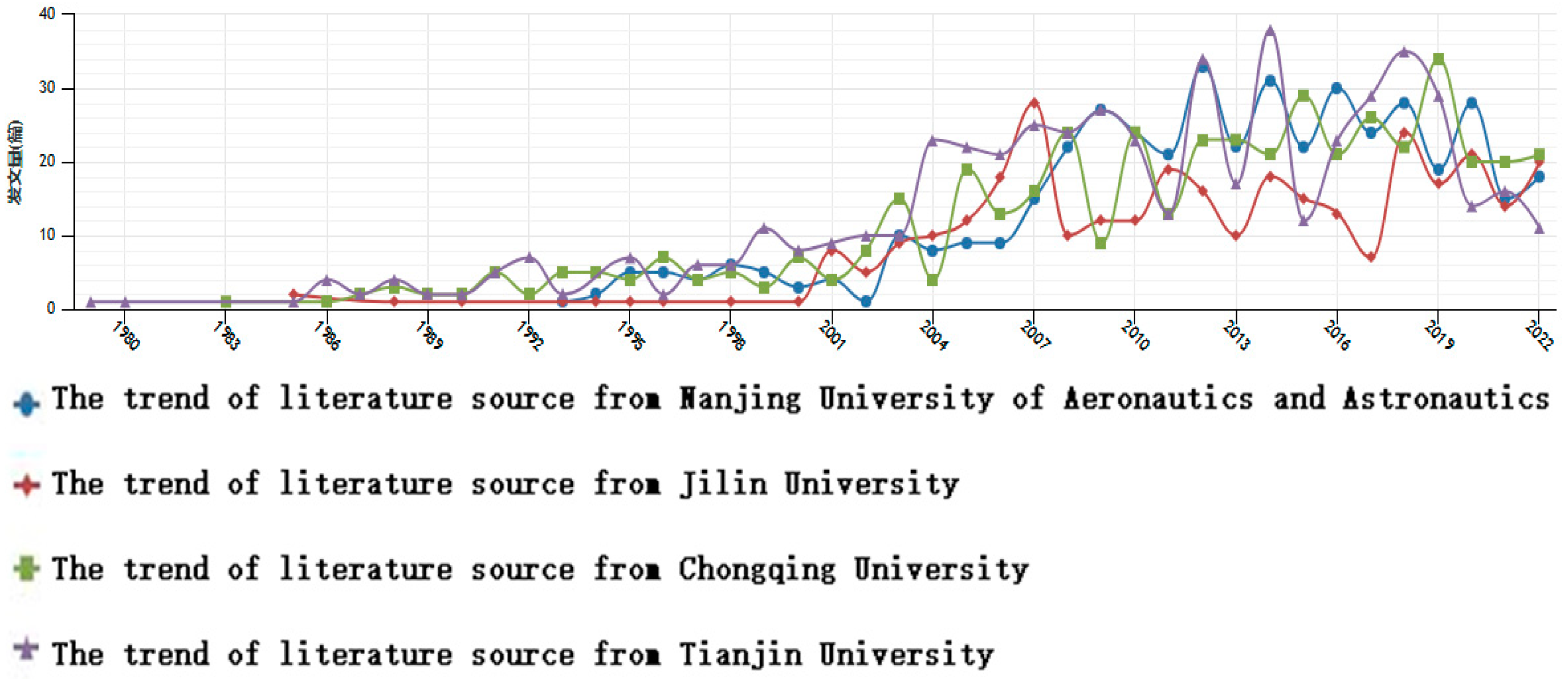
Through horizontal comparison, the research teams of Nanjing University of Aeronautics and Astronautics have maintained a strong development momentum in this field, as shown in Figure 12. At the same time, Jilin University, Chongqing University and Tianjin University, three universities have also achieved fruitful results in this field. By analysis, from the starting time, Jilin University, Chongqing University and Tianjin University, all three universities are located in the early days of China’s major heavy industrial bases, with the development of production technology, in the 1980s gave birth to the research in this field, which has nearly 50 years of development. The development of Nanjing University of Aeronautics and Astronautics in this field started in the 1990s, and with the development of China’s aviation industry, especially engine technology, the nondestructive analysis technology of engine based on vibration detection has been developed tremendously, which can be seen from the figure that the development of the university in this field has shown strong vitality and vigor.
From the cross-sectional comparison, it is clear that domestic research is good at technology application. In fault diagnosis, domestic research technicians have developed expert systems, signal processing techniques based on blind source separation, fuzzy diagnosis techniques, bio-intelligent diagnosis techniques, fractal and chaos techniques, in addition to carrying out applications of intelligent information processing methods such as fuzzy classification techniques, neural network techniques, expert systems and support vector machines commonly used abroad. All these techniques have produced good application benefits in concrete application practice.
From the book “Theoretical Techniques of Engine Structural Vibration and Fault Diagnosis” by Yuxiu Yang, it is known that the methods based on wavelet analysis, matching tracking method, integrated methods based on Marxian distance and BP neural network are more maturely applied for fault diagnosis of power units in China at present [25,26]. As the most deeply applied and actively researched aero-engine field in vibration analysis, the following types of methods are most representative: fault diagnosis methods based on artificial neural network; fault diagnosis methods based on support vector machine; fault diagnosis methods based on fuzzy set; new methods based on overlay machine learning; fault feature extraction methods based on genetic planning; fault diagnosis methods based on immune mechanism; methods based on rough set theory; methods based on multivariate unified analysis theory; nonlinear feature extraction methods based on kernel theory; combinatorial classification methods [27,28,29].
In terms of analysis tools, with the development of technology, the analysis tools are becoming more advanced and intelligent. From the complicated and functional single entity instruments to the virtual instruments developed with tools such as simulink, LABVIEW, MATLAB, etc., the functions are also more advanced [30,31,32].
3.3. Technology Development Trend Forecast
Although, the corresponding problems in this field can be largely solved by the various methods mentioned above [33,34]. However, from the results of the previous bibliometric analysis, the research in this field is still lacking in the following three aspects. They are, respectively, signal feature extraction, acquisition of fault samples, and acquisition of fault diagnosis knowledge. Specifically, there are few research results and no breakthrough progress, which directly restrict the further development of the research in this field and become a “roadblock”. The specific reasons and performance are described below.
Feature extraction. The power unit is a system, and the information collected by the deployed sensors may be cluttered or inconspicuous, and the feature signals obtained by the corresponding processing methods may be distorted, which may affect the real-time diagnosis of faults.
Fault sample acquisition. For power units, the data reflecting normal working condition are relatively easy to find, but the acquisition of fault data is relatively difficult. This makes it difficult to implement the fault diagnosis method that relies on a large number of sample data, which affects the development of fault diagnosis work. How to make full use of the engine positive working state data and combine with simulation technology to carry out research on abnormality detection and fault diagnosis is also an urgent problem to be solved.
Fault diagnosis knowledge acquisition. Knowledge acquisition is the bottleneck problem of building fault diagnosis expert system, especially the automatic acquisition of knowledge has been a difficult point in the research of expert system. Adopting machine self-learning is an effective way to realize the automation of knowledge acquisition machine learning is to make it possible to continuously summarize the lessons of success and failure in actual work, and automatically adjust and modify the knowledge in the knowledge base to enrich and improve the knowledge of the system. How to use machine learning method to better solve the bottleneck problem of knowledge acquisition of fault diagnosis expert system deserves further research.
Based on the effective analysis of bibliometrics, the three aspects mentioned above are exactly the directions that deserve to be deepened and broken in the subsequent research. This is of guidance for both the selection of research topics and the development of projects.
4. Conclusions
In general, the research of fault diagnosis based on vibration signal analysis has made certain achievements. The overall development of this technology is more stable and has a more mature application scheme. According to the function division, it mainly includes the following three aspects: detection of fault information, research on signal processing and fault feature extraction methods, state pattern identification and classification.
Fault information detection is the first step in the realization of fault diagnosis for power units and is a necessary prerequisite for fault diagnosis research. Fault information detection is the technology to detect and quantify the signals of various status information of the power unit itself, while the sensor is the device to obtain various information and convert them into electrical signals, which is the main means and key to obtain fault information. Since the types of sensors reflect the status of different components to different degrees, we should try to select the type of sensors that can reflect the status characteristics of mechanical equipment when testing. Detection and sensing technology for high reliability and long-term stability, fixed implantable and interventional detection and sensing technology, telemetry for fault information, fiber optic sensing technology for vibration measurement, and acoustic emission detection technology are the main elements to be studied for fault condition information detection technology. Sensor technology will remain an important research content for condition monitoring and fault diagnosis of power units.
The research of state feature extraction method is the key to the condition monitoring and fault diagnosis technology of mechanical equipment. A good signal processing method can extract the feature information that can fully express the state, which directly affects the calculation of the whole diagnostic process and the performance of the whole diagnostic system. The vibration signal of power unit reflects the operation condition of the equipment and can be used as a monitoring signal. However, since the directly detected vibration signal is usually a random non-smooth signal, which contains a large amount of information not related to the fault, it is not suitable to be directly used as the fault characteristic quantity. Instead, modern signal analysis and signal processing methods need to be used to convert the original detected signal into a feature quantity that can express the working state. The purpose of fault feature extraction research lies in using various signal processing methods as tools to find out the relationship between the working condition and the feature quantity, and to separate the feature information reflecting the fault from the feature information unrelated to the fault, so as to achieve an effective and reliable fault diagnosis. Signal analysis processing can be used to extract features from the state signal to determine the feature quantity that can characterize the operating state of mechanical equipment. Among them, the commonly used methods based on signal processing feature extraction are time-domain model analysis, time series analysis, inverse spectrum analysis, fast Fourier transform, short-time Fourier transform, time-frequency analysis, Winger distribution analysis, wavelet analysis, Hilbert-Huang transform analysis, higher-order spectral analysis, etc.
“Condition Pattern Recognition and Classification” is the core of condition monitoring technology, and the development of modern artificial intelligence technology has promoted the development of equipment condition recognition technology. Fuzzy classification technology, neural network technology, expert systems, support vector machines and other intelligent information processing methods have been successfully introduced into the fault identification of equipment status. The progress of signal processing technology is related to the development of condition monitoring and fault diagnosis technology, and researchers should keep up with the development of signal processing technology and introduce the advanced and effective signal processing methods into the condition monitoring and fault diagnosis of power units. For the problem of signal feature extraction, with the development of analysis technology, new algorithms and ideas are bound to appear, which will improve the accuracy of feature extraction to a great extent. And for the problem of sample fault acquisition and analysis knowledge accumulation, the function of industrial Internet of Things should be fully utilized and brought into play. An online library is established for uniform types of power units, and machine learning is injected at the stand-alone end on the basis of self-learning. The signals with labeled fault types are collected by manual, and later uploaded to the online master library and sorted into different categories to form a database of fault signals of specific types of machines for comparison. That is, a single machine in the field is responsible for acquisition and communication, while the backend is complicated with analysis functions such as solving, storing and comparing. As a further work of fault diagnosis, the research of fault prediction work should be continued to be strengthened to make the working status of the unit predictable with the addition of big data technology to effectively improve the reliability of work. The final realization of online fault diagnosis system is the centralized embodiment of equipment condition monitoring and fault diagnosis technology, and the development of practical online fault diagnosis system is an inevitable requirement for the application of equipment condition monitoring and fault diagnosis technology in production practice.
Author Contributions
Methodology, Mai Xin, Zhifeng Ye; software analysis, Xiong Pan, Xing Liu, Tong Zhang; validation, Xiong Pan, Xing Liu, Longlong Liu; formal analysis, Mai Xin, Hailang Ge; investigation, Xiong Pan, Xing Liu; data curation, Xiong Pan, Xing Liu; writing—original draft preparation, Mai Xin; writing—review and editing, Zhifeng Ye; supervision, Zhifeng Ye; project administration, Zhifeng Ye. All authors have read and agreed to the published version of the manuscript.
Funding
This research is supported by “Innovation Fund for Doctoral Students of Nanjing University of Aeronautics and Astronautics”.
Data Availability Statement
The original data has been stored in ”https://figshare.com/articles/figure/Data_Sources_zip/21275805”.
Acknowledgments
We would like to express my deep gratitude for the strong support provided by the School of Energy and Power, Nanjing University of Aeronautics and Astronautics!
Conflicts of Interest
The authors declare no conflict of interest.
References
- Chopra, P and Yadav, SK. “PCA and Feature Correlation for Fault Detection and Classification”. PROCEEDINGS OF THE 2015 IEEE RECENT ADVANCES IN INTELLIGENT COMPUTATIONAL SYSTEMS (RAICS) 2015, pp.195-200.
- R. Ahmed, M. El Sayed, S. A. Gadsden et al., “Automotive internal-combustion-engine fault detection and classification using artificial neural network techniques”, IEEE Trans. Veh. Technol. 2015, vol. 64, no. 1, pp. 21-33. [CrossRef]
- Lee, H.J.; Oh, H. A Study on the Deduction and Diffusion of Promising Artificial Intelligence Technology for Sustainable Industrial Development. Sustainability 2020, 12, 5609. [CrossRef]
- D. Miljković, “Cymatics for Visual Representation of Aircraft Engine Noise,” 2021 44th International Convention on Information, Communication and Electronic Technology (MIPRO) 2021, pp. 914-919.
- O. Pazdrii and N. Bouraou, “Two-level Signal Processing of Vibroacoustical Signals for Condition Monitoring of Complex Rotary System,” 2018 New Trends in Signal Processing (NTSP) 2018, pp.1-5.
- M. Hayouni, Z. Bousselmi, T. -H. Vuong et al., “Wireless IoT Approach for Testing in situ Motor's Axis Vibration Monitoring,” 2021 International Wireless Communications and Mobile Computing (IWCMC) 2021, pp. 92-97.
- Hohensinn Roland, Häberling Simon, Geiger Alain. “Dynamic Displacements from High-rate GNSS: Error Modeling and Vibration Detection”. Measurement,2020, pp.157. [CrossRef]
- Mohd Ismifaizul Mohd Ismail, Rudzidatul Akmam Dziyauddin, Noor Azurati Ahmad Salleh et al. “A Review of Vibration Detection Methods Using Accelerometer Sensors for Water Pipeline Leakage”. IEEE Access,2019, pp.7. [CrossRef]
- Ozana N, Bauer R, Ashkenazy K et al. “Demonstration of a Speckle Based Sensing with Pulse-Doppler Radar for Vibration Detection”. Sensors 2018. vol.18, no.5:1409. [CrossRef]
- S. Urbano, E. Chaumette, P. Goupil et al. “Aircraft Vibration Detection and Diagnosis for Predictive Maintenance using a GLR Test”. IFAC PapersOnLine 2018, vol.51, no.24. [CrossRef]
- Jakorinne P, Haanpää M, Arokoski J. “Reliability of pressure pain, vibration detection, and tactile detection threshold measurements in lower extremities in subjects with knee osteoarthritis and healthy controls”. Scandinavian journal of rheumatology 2018, vol.47, no.6. [CrossRef]
- Nisan Ozana, Reuven Bauer, Koby Ashkenazy et al. “Demonstration of a Speckle Based Sensing with Pulse-Doppler Radar for Vibration Detection”. Sensors 2018, vol.18, no.5. [CrossRef]
- Barnes Jack, Li Sijia, Goyal Apoorv et al. “Broadband Vibration Detection in Tissue Phantoms Using a Fiber Fabry-Perot Cavity”. IEEE transactions on bio-medical engineering 2018, vol.65, no.4. [CrossRef]
- Gigie A., Rani S., Sinharay A et al. “Novel approach for vibration detection using indented radar”. Progress In Electromagnetics Research C 2018, vol.87. [CrossRef]
- Moshourab Rabih, Frenzel Henning, Lechner Stefan et al. “Measurement of Vibration Detection Threshold and Tactile Spatial Acuity in Human Subjects”. Journal of visualized experiments: JoVE 2016, vol.115. [CrossRef]
- Yang Yuxiu. “Theoretical Techniques of Engine Structural Vibration and Fault Diagnosis”. Electronic Industry Press.2015.
- Mathias Neumann, Florian Dreier, Philipp Günther et al. “A laser-optical sensor system for blade vibration detection of high-speed compressors”. Mechanical Systems and Signal Processing 2015, pp.64-65. [CrossRef]
- Rzasa John R, Cho Kyuman, Davis Christopher C. “Long-range vibration detection system using heterodyne interferometry”. Applied optics 2015, vol.54, no.20. [CrossRef]
- Javahiraly Nicolas, Chakari Ayoub. “Fiber optic sensor for vibration detection”. Univ. of Strasbourg (France) 2014, pp.9202.
- Bianchi Silvio. “Vibration detection by observation of speckle patterns”. Applied optics 2014, vol.53, no.5. [CrossRef]
- Wetherington, J.M., Steer, M.B. “Sensitive Vibration Detection Using Ground-Penetrating Radar”. IEEE microwave and wireless components letters: A publication of the IEEE Microwave Theory and Techniques Society 2013, vol.23, no.12. [CrossRef]
- Zhang YF. “Aero-engine vibration monitoring in flight test”. Northwestern Polytechnic University, 2003.
- Xiao Na, Kong Xiangwei. “A kind of aero-engine vibration detection system design”. China Science and Technology Information, 2019, vol. 15:54-55.
- Zhao Fengshang. “Analysis and Simulation Optimization of Heavy Truck Drive Shaft Vibration”. Jilin University, 2021.
- Chen Jaguar. “Study of engine vibration noise under multiple operating conditions”. Machine Tools and Hydraulics, 2021, vol. 49, no.24.pp.83-87. [CrossRef]
- Liu Jiahang. “Research on Fault Diagnosis of Aero Engine Rotor System Based on Vibration Analysis”. Civil Aviation University of China, 2020.
- Shang W. “Research on aero-engine fault diagnosis and maintenance based on condition monitoring”. Equipment Management and Maintenance, 2021, vol. 23:125-127.
- Wang S, Wang RQ, Chen ZY et al. “A review of aero-engine health management”. Gas Turbine Testing and Research, 2009, vol. 01:51-58.
- Kil-Mok Shong, Sun-Bae Bang, Chong-Min Kim et al. “The vibration detection and analysis of 3-phase cast resin transformer in less than 50% load conditions“. The transactions of The Korean Institute of Electrical Engineers 2012, vol. 61 no.7. [CrossRef]
- Lopez Arteaga I, Mokhtari M, Moers E.T.M et al. “Vibration detection by means of NAH in the presence of reflective surfaces“. INTER - NOISE and NOISE - CON Congress and Conference Proceedings 2012, vol. 244, no.1.
- Filipinas Jae Lord Dexter C, Almoro Percival F. “Vibration detection using focus analysis of interferograms“. Applied optics 2012, vol.51, no.9.
- Liu Y.-Y., Chen H.-F., Geng Z. et al. “Liquid rocket engine vibration fault feature signal extraction method”. Rocket Propulsion, 2019, vol. 45, no.01:77-82.
- ZHAO Lu, LIAO Mingfu, HONG Liang et al. “Analysis of engine vibration response under sudden addition unbalance”. Journal of Aerodynamics,2022, vol. 37, no.02:251-262.
- FANG Jing, XU Jianwei, GUO Qiang et al. “Vibration fault analysis of a type of aero-engine”. Machinery Management Development, 2022, vol. 37, no.01: 317-318+323.
Figure 1.
Number of papers published on the WOS platform using the search term “Vibration detection” by country.
Figure 1.
Number of papers published on the WOS platform using the search term “Vibration detection” by country.
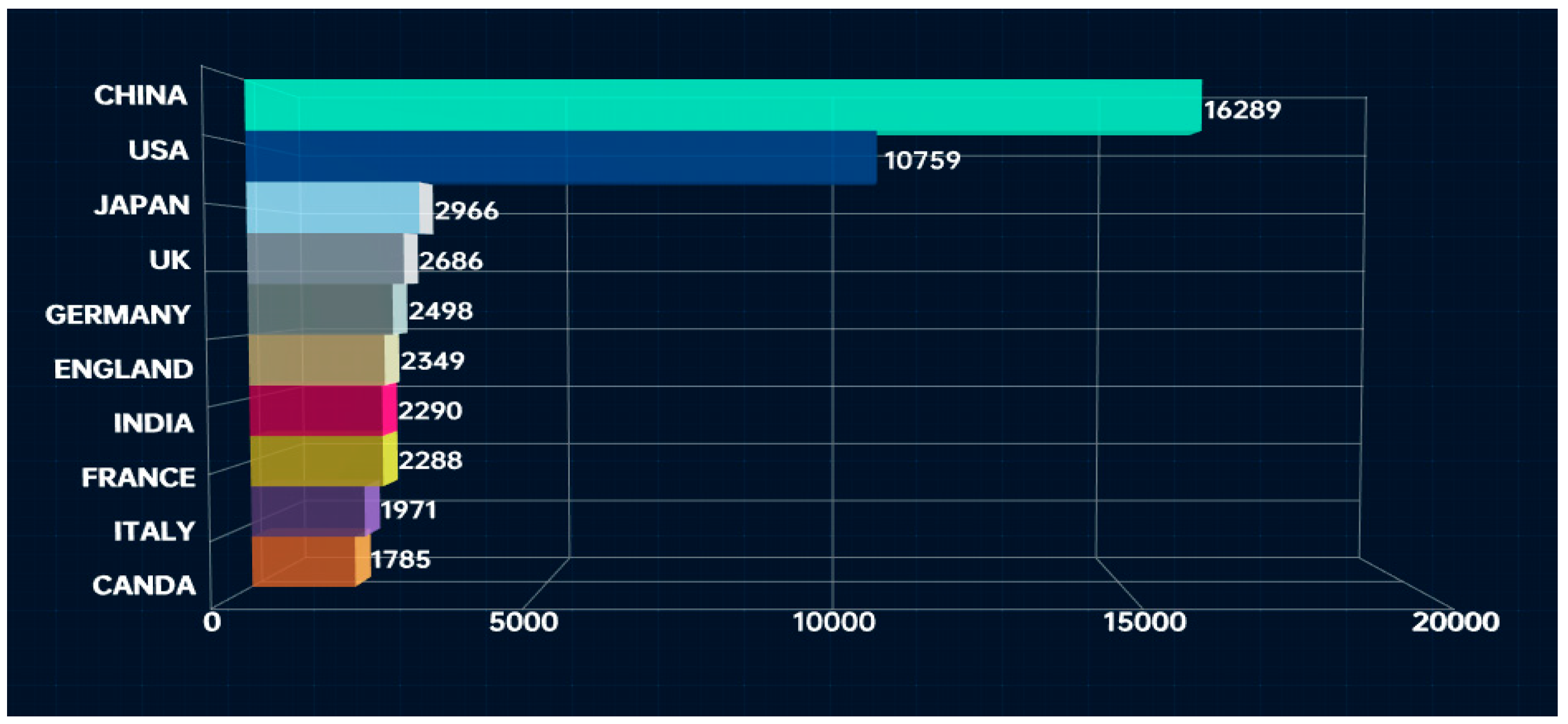
Figure 2.
The countries to which the high-impact papers belong.
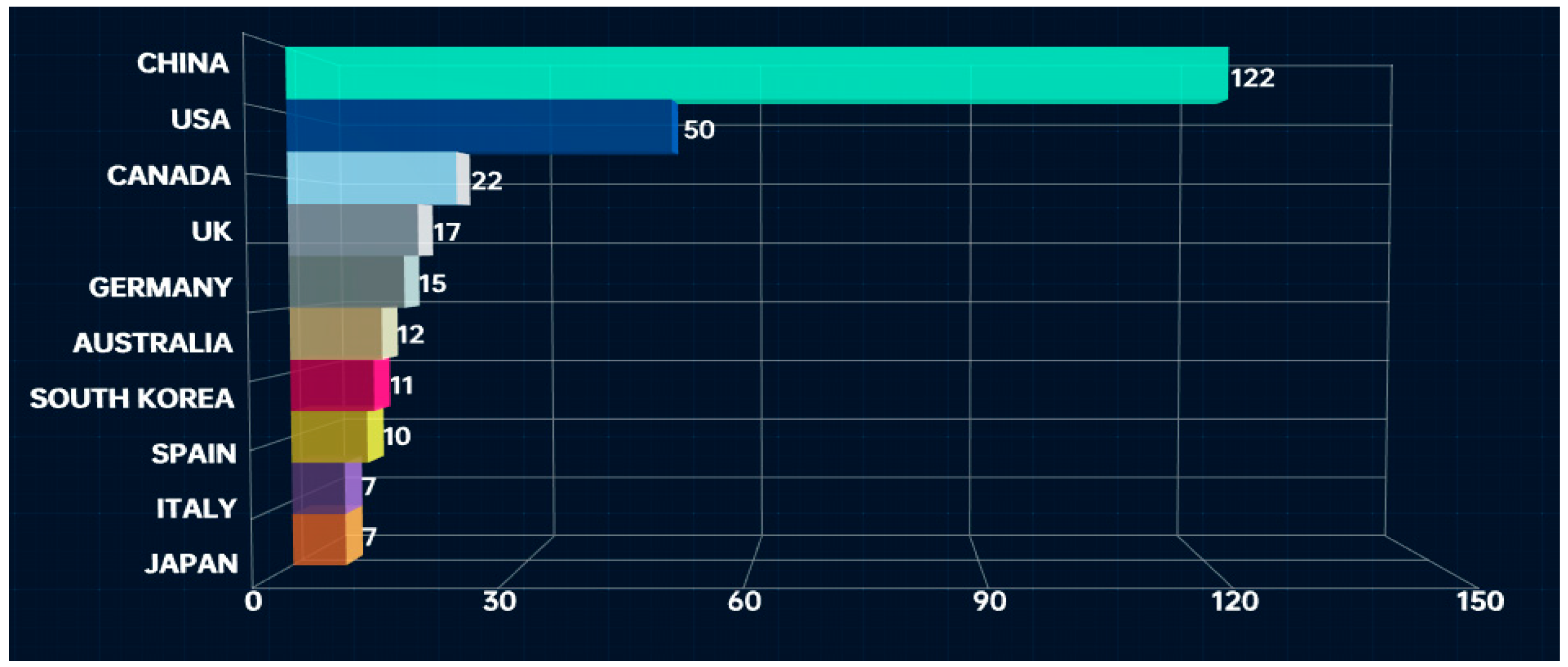
Figure 3.
Number of papers published in the field by institutions on the WOS platform.
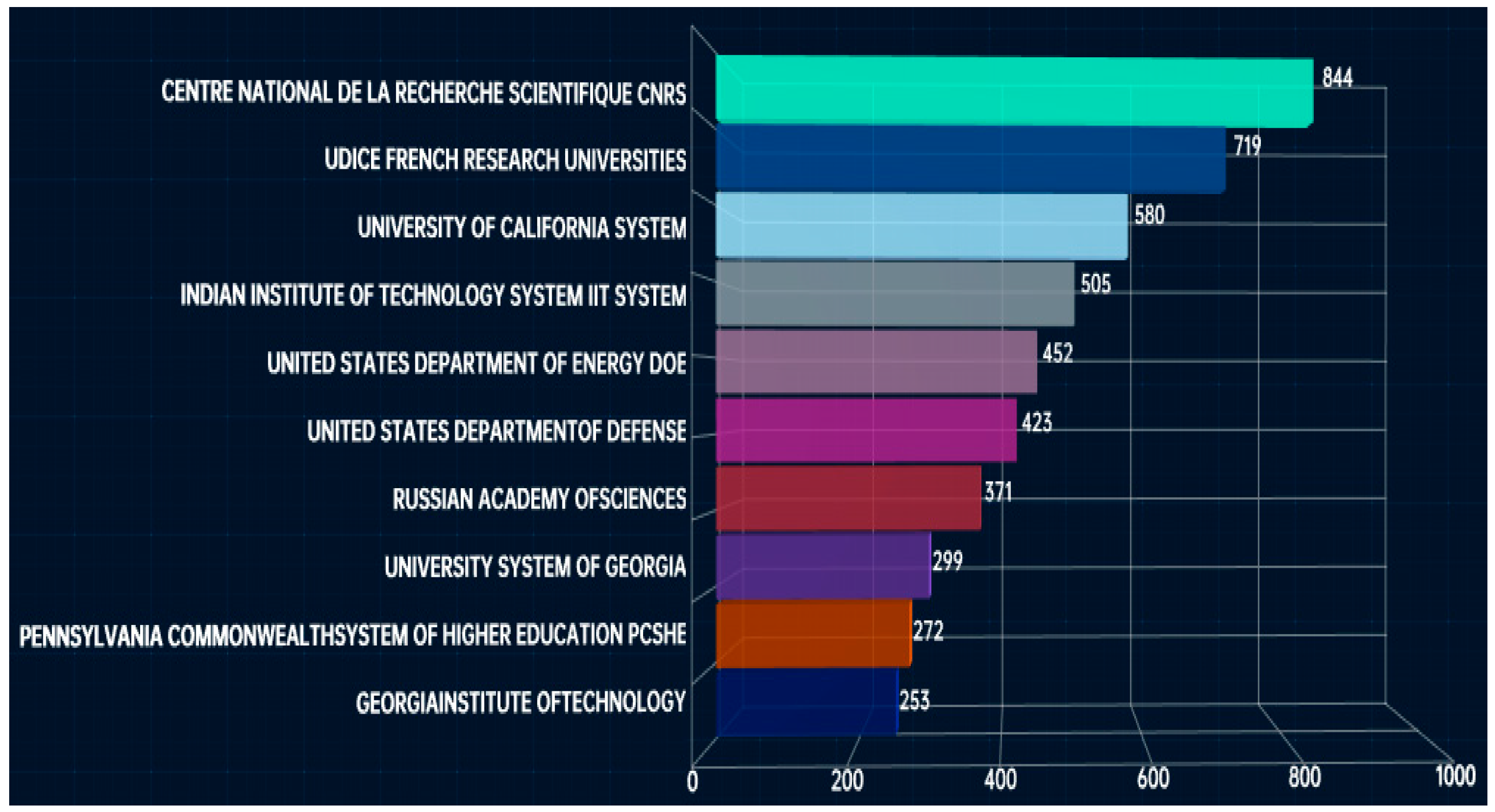
Figure 4.
Number of papers published in this field by country on the WOS platform in the last 5 years (2017.06-2022.06).
Figure 4.
Number of papers published in this field by country on the WOS platform in the last 5 years (2017.06-2022.06).
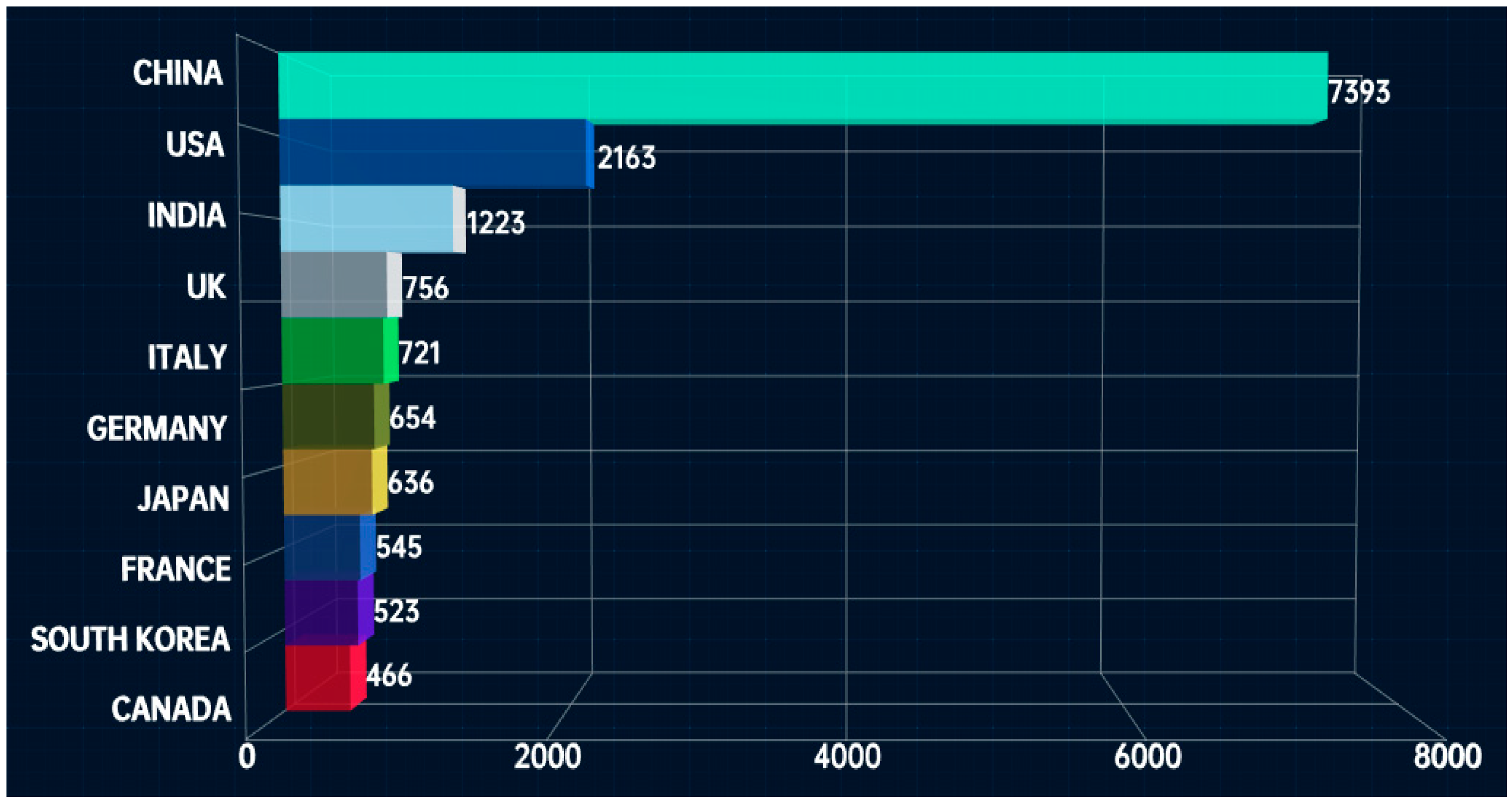
Figure 5.
Number of papers published in this field by institution on the WOS platform in the last 5 years (2017.06-2022.06).
Figure 5.
Number of papers published in this field by institution on the WOS platform in the last 5 years (2017.06-2022.06).
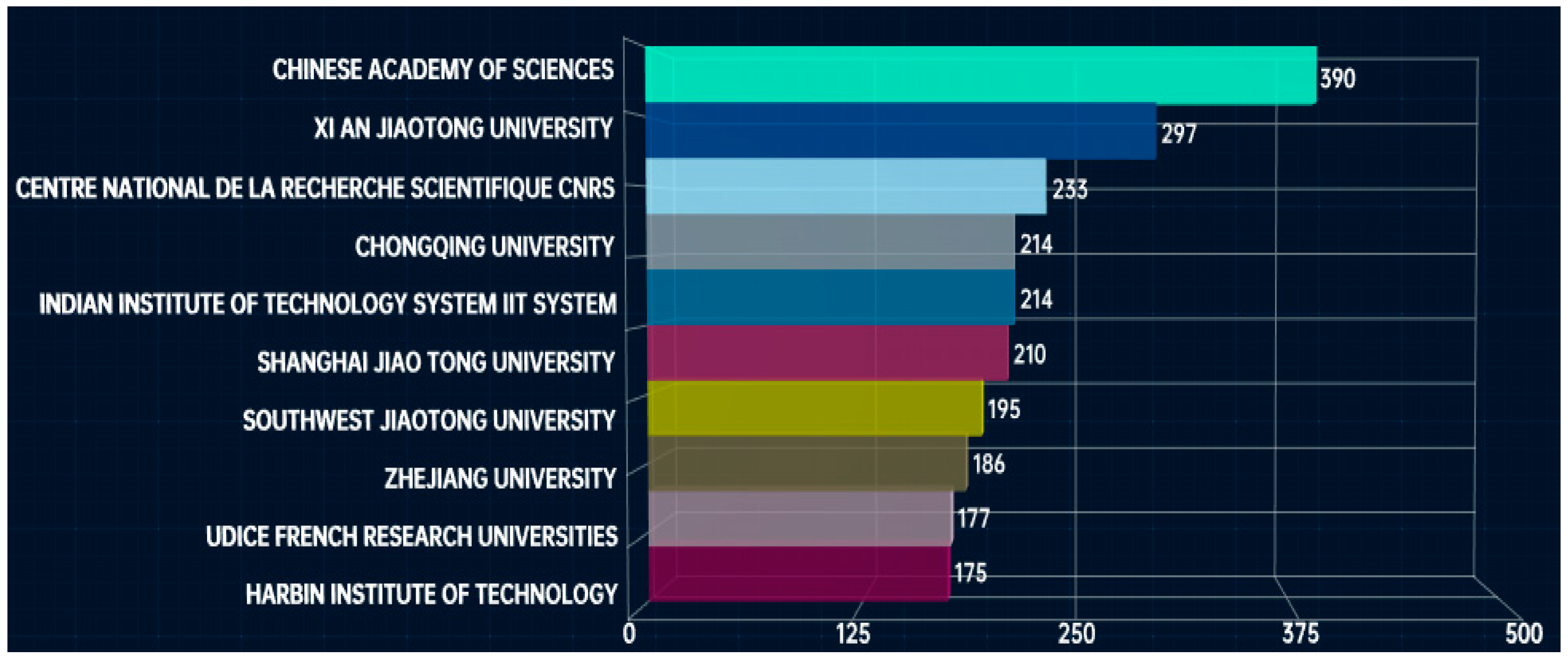
Figure 6.
Distribution of topics retrieved for “Engine vibration analysis”.
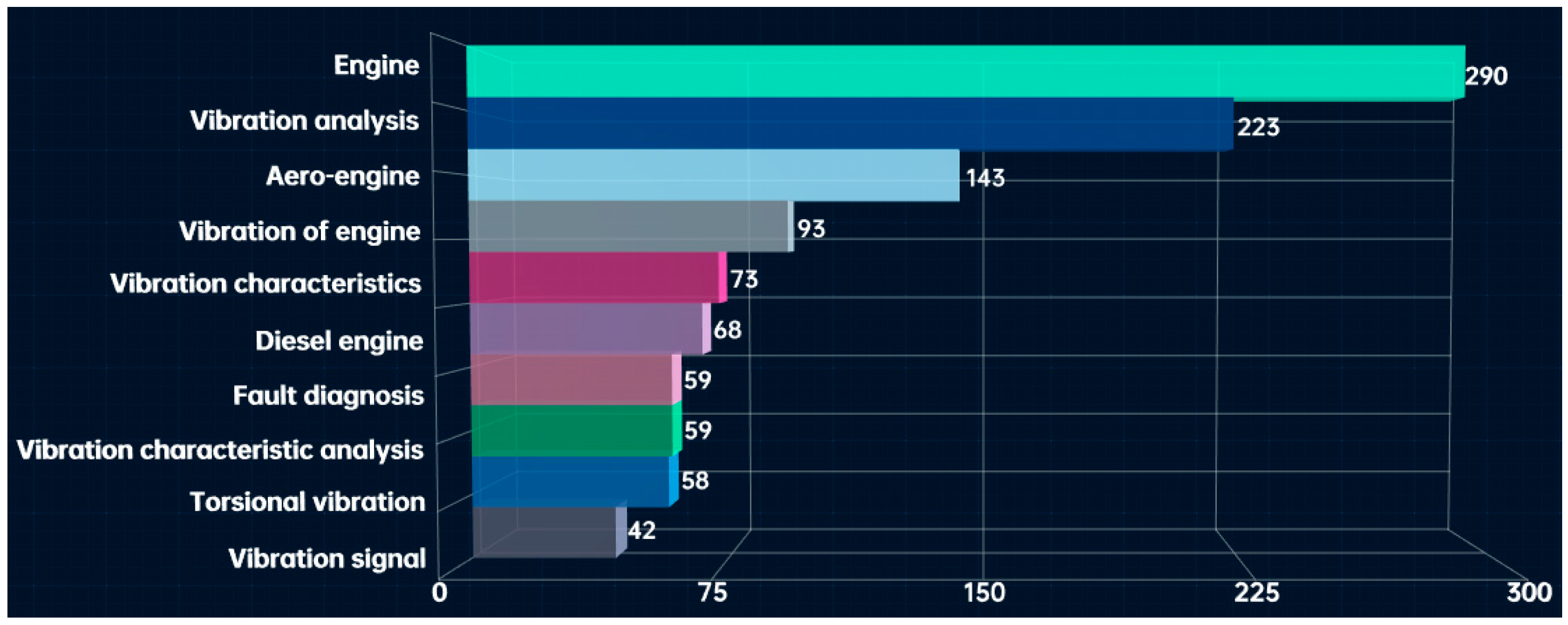
Figure 7.
Number of domestic articles on the topic of “vibration analysis” by year.
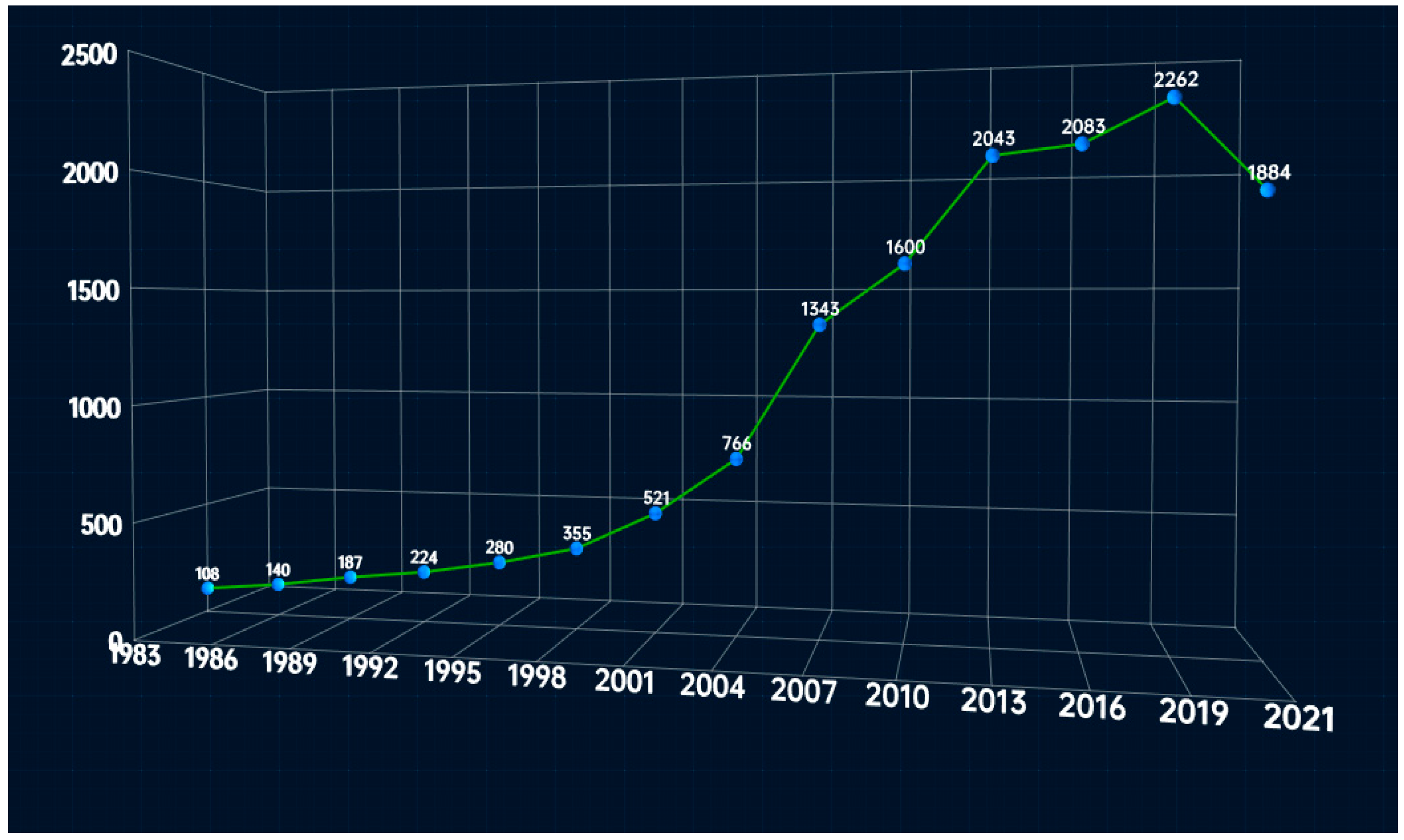
Figure 8.
Chart of the number of articles issued by domestic institutions.
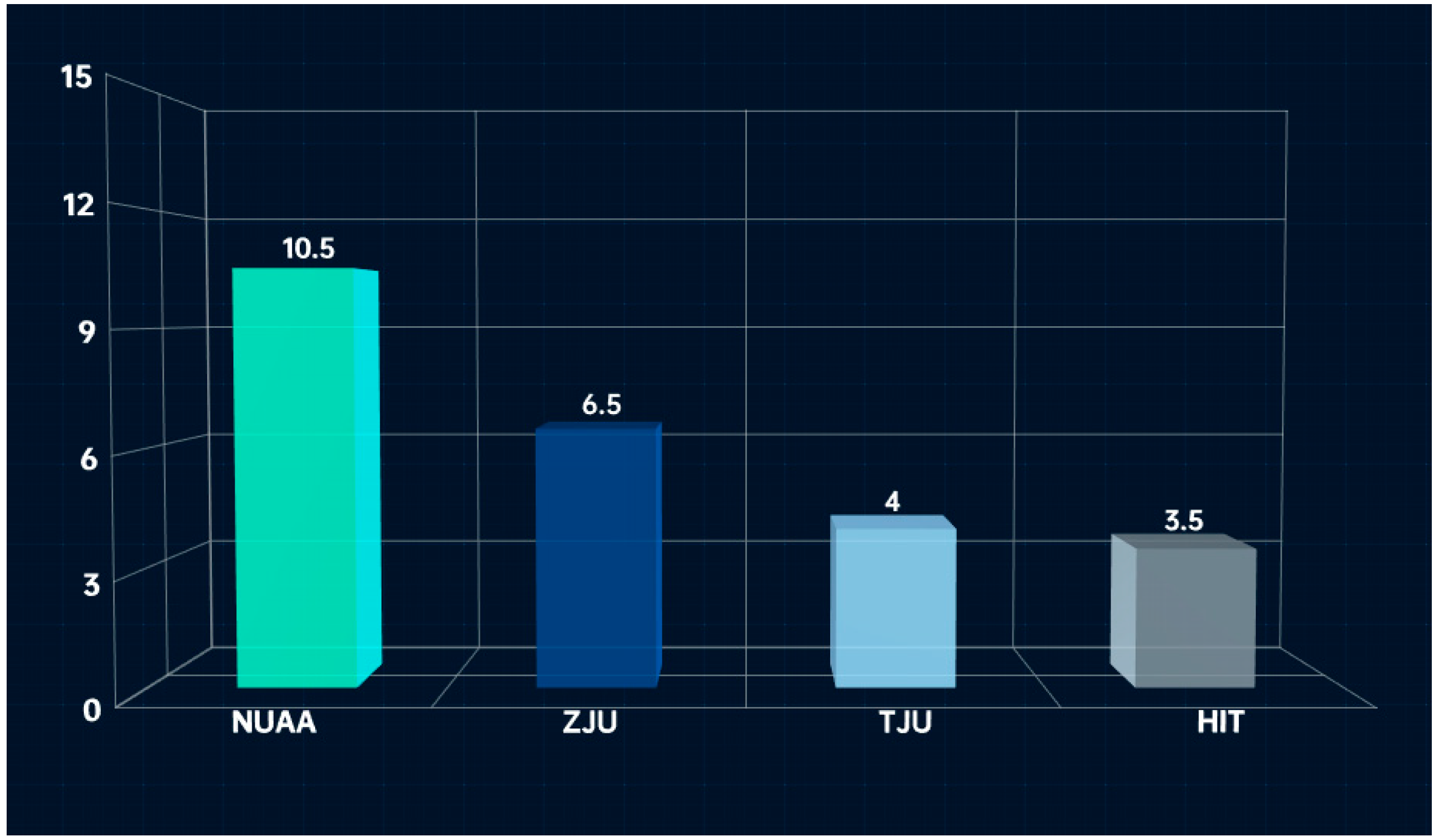
Figure 9.
Cross-citation network of related literature.
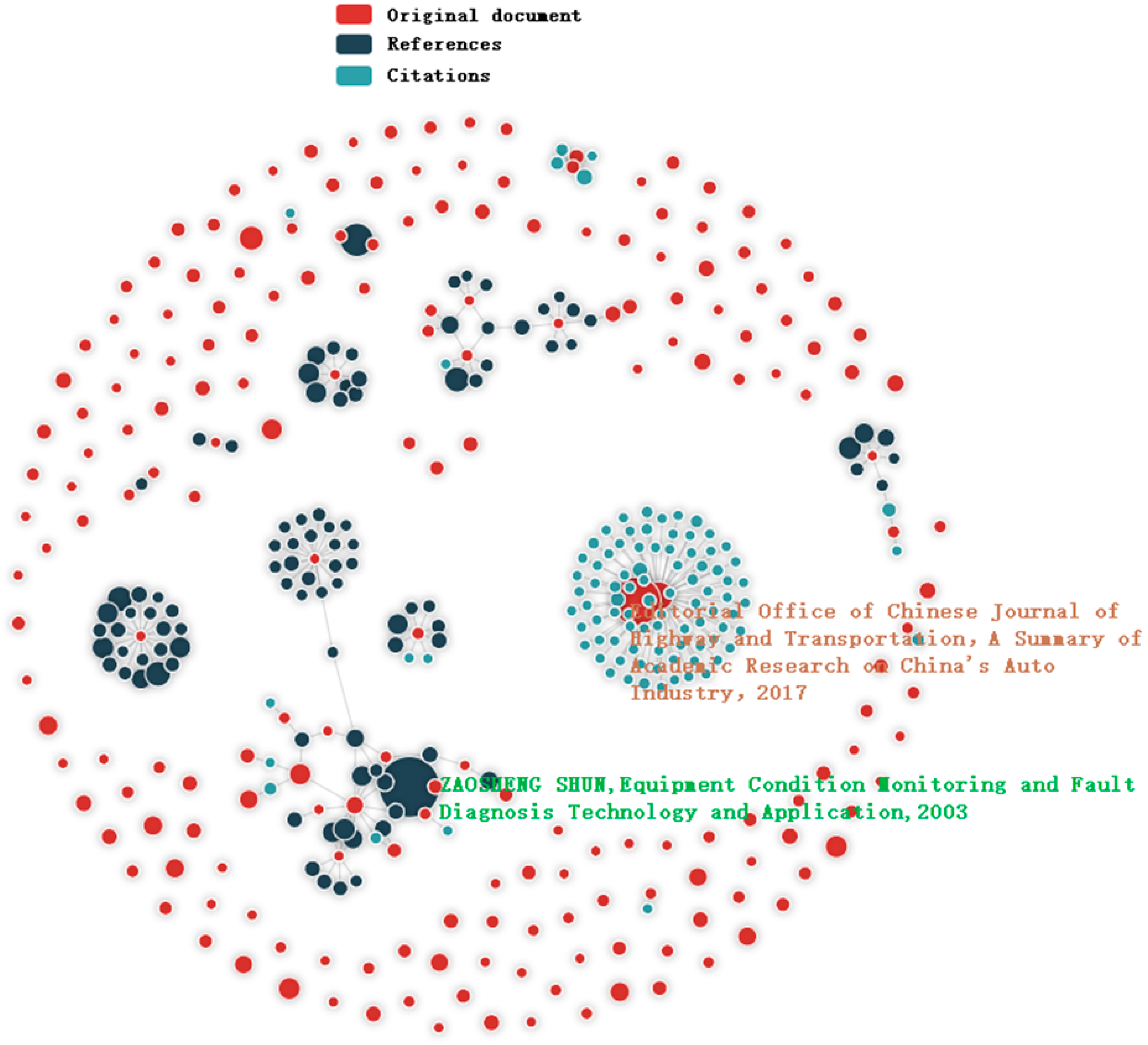
Figure 10.
Author Collaboration Distribution Network.
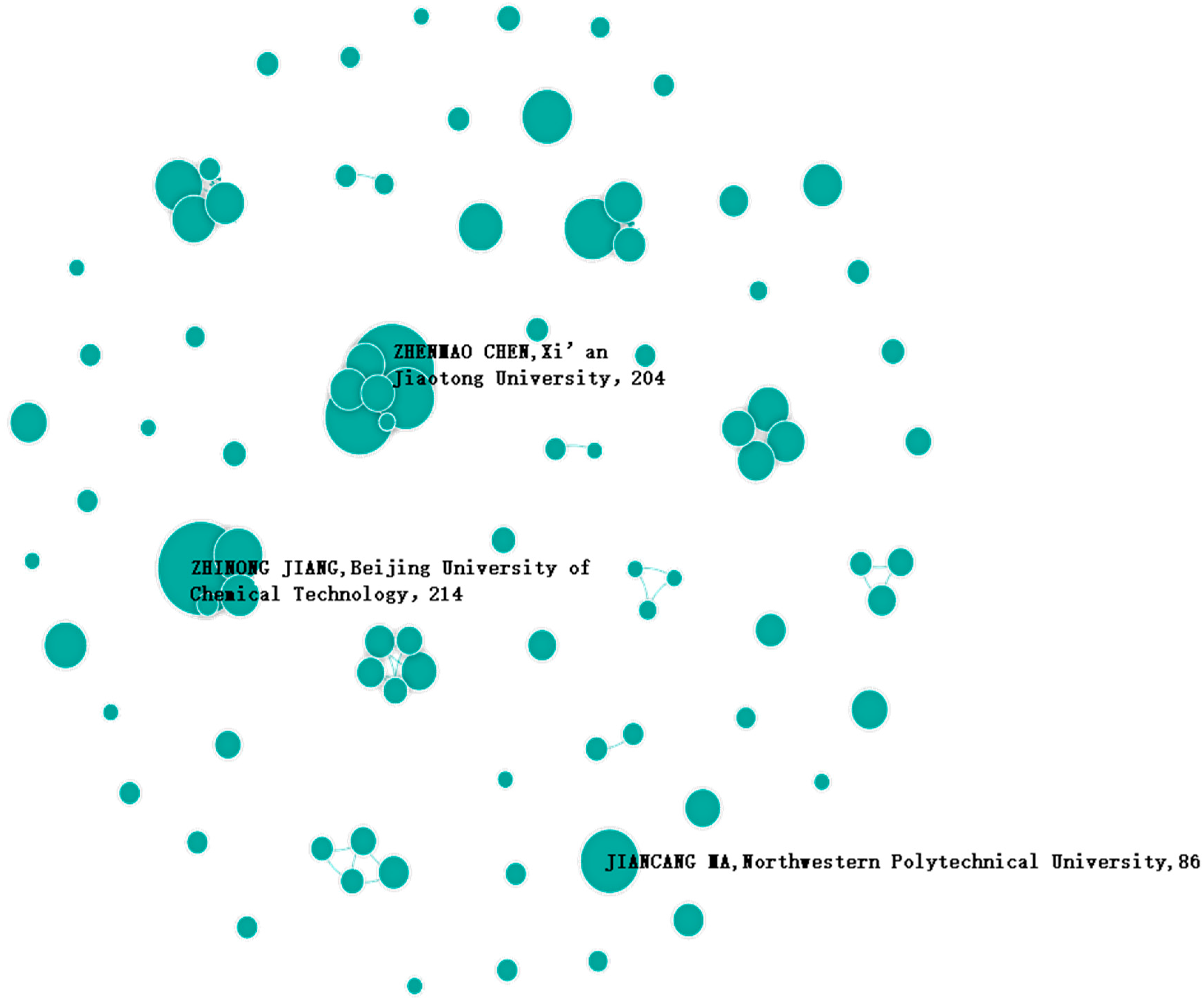
Figure 11.
Number of author posts.
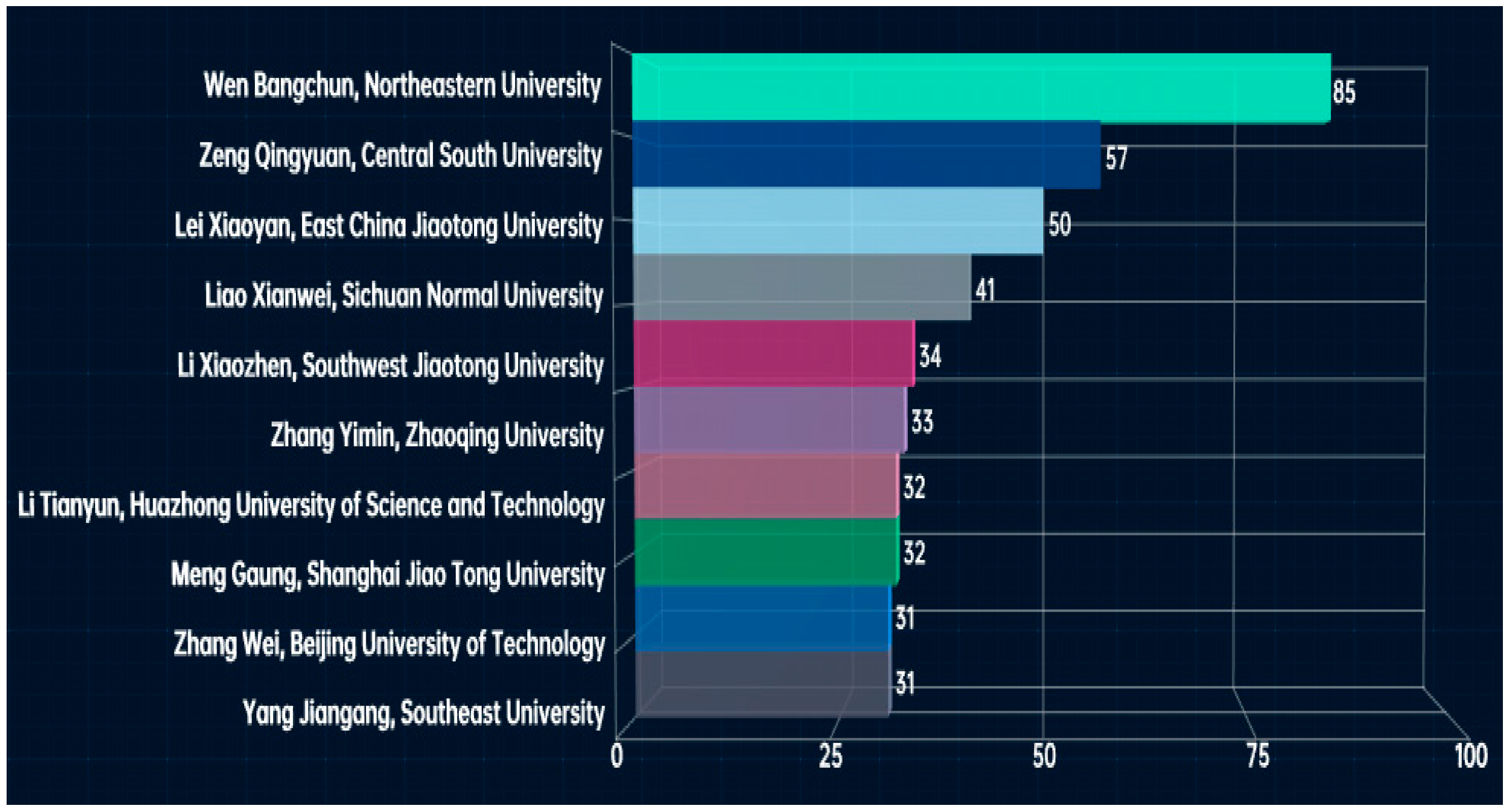
Figure 12.
Statistical Trend of Issuance by Institution.
Disclaimer/Publisher’s Note: The statements, opinions and data contained in all publications are solely those of the individual author(s) and contributor(s) and not of MDPI and/or the editor(s). MDPI and/or the editor(s) disclaim responsibility for any injury to people or property resulting from any ideas, methods, instructions or products referred to in the content. |
© 2023 by the authors. Licensee MDPI, Basel, Switzerland. This article is an open access article distributed under the terms and conditions of the Creative Commons Attribution (CC BY) license (http://creativecommons.org/licenses/by/4.0/).
Copyright: This open access article is published under a Creative Commons CC BY 4.0 license, which permit the free download, distribution, and reuse, provided that the author and preprint are cited in any reuse.


