

Submitted:
09 April 2020
Posted:
09 April 2020
You are already at the latest version
Preprints on COVID-19 and SARS-CoV-2
Abstract
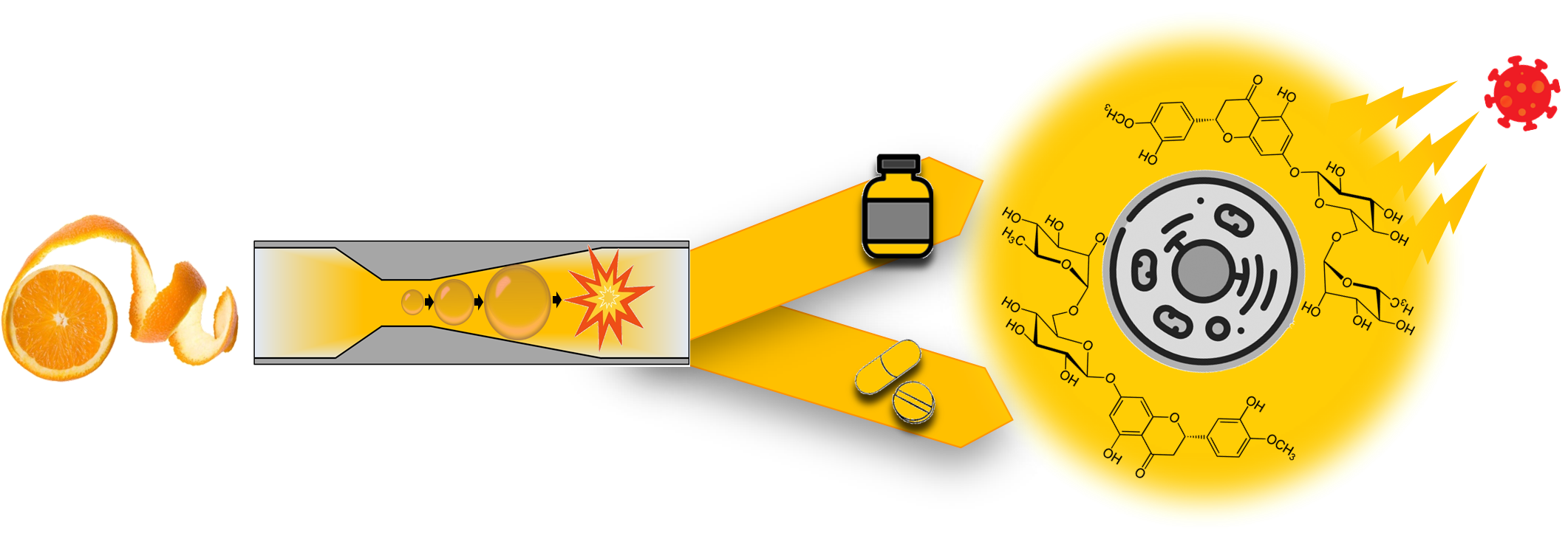
Based on recent computational and experimental studies, hesperidin, a bioactive flavonoid abundant in citrus peel, stands out for its high binding affinity to the main cellular receptors of SARS-CoV-2, outperforming drugs already recommended for clinical trials. Thus, it is very promising for prophylaxis and treatment of COVID-19, along with other coexistent flavonoids such as naringin, which could help restraining the pro-inflammatory overreaction of the immune system. Controlled hydrodynamic cavitation processes showed the highest speed, effectiveness and efficiency in the integral and green aqueous extraction of flavonoids, essential oils and pectin from citrus peel waste. After freeze-drying, the extracted pectin showed high quality and excellent antioxidant and antibacterial activities, attributed to flavonoids and essential oils adsorbed and concentrated on its surface. This study reviews the recent evidence about hesperidin as a promising molecule, and proposes a feasible and affordable process based on hydrodynamic cavitation for the integral aqueous extraction of citrus peel waste resulting in hesperidin-rich products, either aqueous extracts or pectin tablets. The uptake of this process on a relevant scale is urged, in order to achieve large-scale production and distribution of hesperidin-rich products. Meanwhile, experimental and clinical studies could determine the effective doses either for therapeutic and preventive purposes.
Keywords:
citrus fruits
; coronavirus
; COVID-19
; flavonoids
; hesperetin
; hesperidin
; hydrodynamic cavitation
; pectin
; SARS-CoV-2.
Copyright: This open access article is published under a Creative Commons CC BY 4.0 license, which permit the free download, distribution, and reuse, provided that the author and preprint are cited in any reuse.