
Submitted:
25 November 2026
Posted:
27 November 2026
You are already at the latest version
Abstract
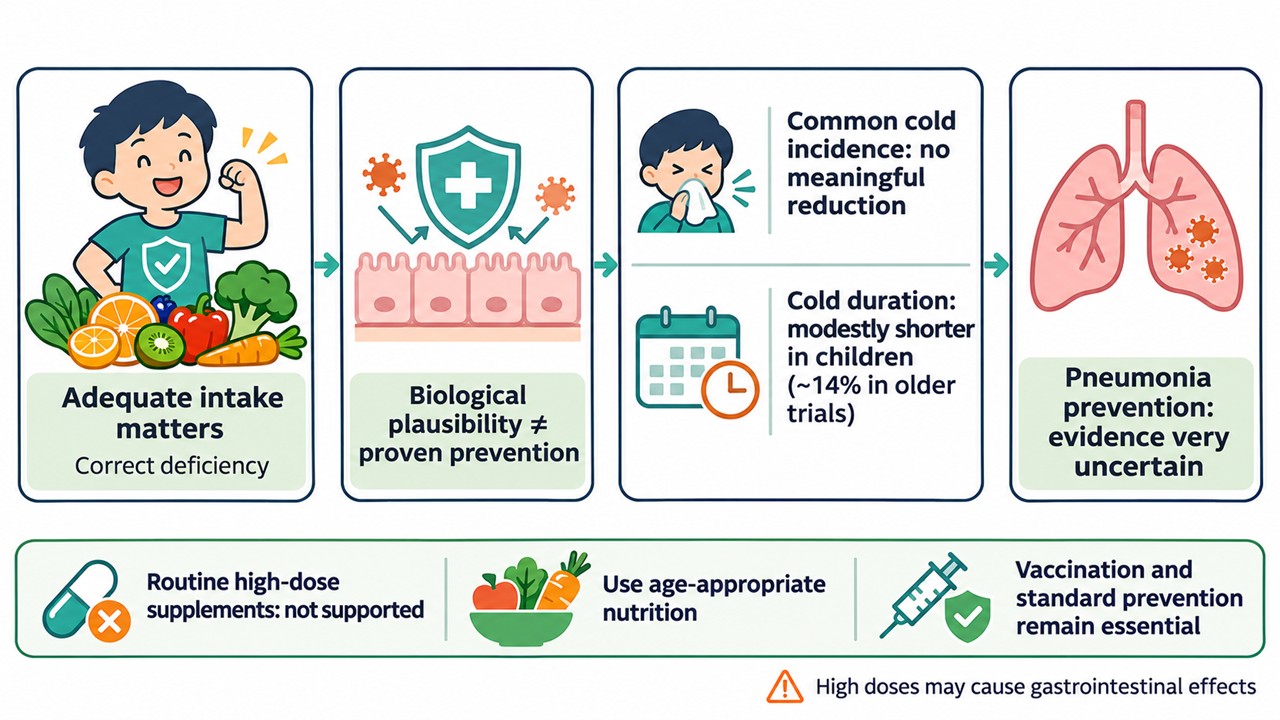
Vitamin C (ascorbic acid) is an essential nutrient with established roles in collagen synthesis, antioxidant defence, epithelial integrity, and leukocyte function. These functions make an influence on infection biologically plausible, but plausibility does not demonstrate that supplementation prevents infections in well-nourished children. This narrative review evaluates evidence relevant to children and adolescents, distinguishing prevention of infection from changes in duration or severity after infection occurs. The most robust clinical evidence concerns the common cold. A Cochrane synthesis of placebo-controlled trials found that regular vitamin C supplementation did not meaningfully reduce cold incidence in the general population, although a pediatric subgroup showed a modest reduction in cold duration (about 14%). Incidence reductions were concentrated in small, unusual cohorts exposed to extreme physical stress or cold. The historical trials varied substantially in age, dose, setting, outcome definition, and background diet, limiting application to contemporary children. Evidence for preventing pneumonia is very uncertain: a Cochrane review identified only two prevention trials, with important risks of bias and no reliable estimate of benefit. Observational associations between serum vitamin C and respiratory illness cannot establish causality, and trials of vitamin C combined with probiotics cannot isolate vitamin C's contribution. One frequently cited 2018 pediatric meta-analysis was retracted in 2021 and should not be used as evidence. Current evidence supports meeting age-appropriate nutritional requirements and identifying deficiency, but does not justify routine high-dose vitamin C supplements as infection prophylaxis for healthy children. Food-based adequacy, standard immunization, hand hygiene, smoke avoidance, and timely clinical assessment remain foundations of prevention. Better pediatric trials should recruit children with low baseline status or high infection burden, measure laboratory-confirmed infections and meaningful outcomes, and report dose, adherence, diet, and adverse events.
Keywords:
ascorbic acid
; child
; adolescent
; infection prevention
; common cold
; respiratory infection
; pneumonia
; micronutrients
Copyright: This open access article is published under a Creative Commons CC BY 4.0 license, which permit the free download, distribution, and reuse, provided that the author and preprint are cited in any reuse.