
Submitted:
25 November 2026
Posted:
27 November 2026
You are already at the latest version
Abstract
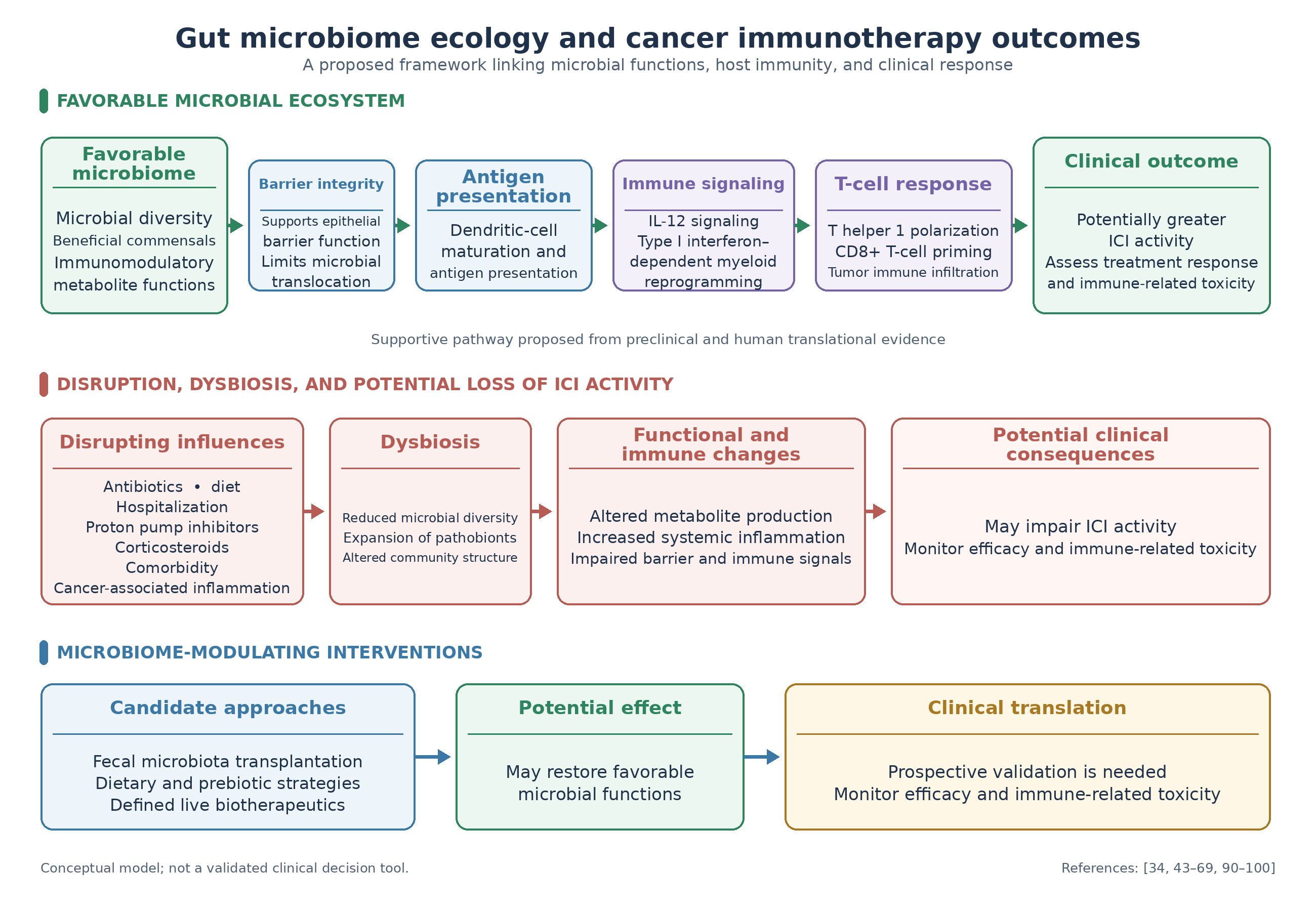
Cancer immunotherapy includes immune checkpoint inhibitors, adoptive cellular therapies, bispecific antibodies, therapeutic vaccines, oncolytic viruses, Bacillus Calmette–Guérin, cytokines, and immune-effector antibodies. This review examines the gut microbiome as a tumor-extrinsic determinant of efficacy and toxicity across these modalities. Preclinical and human translational studies indicate that commensal microbes can influence dendritic-cell maturation, interleukin-12 and type I interferon signaling, T-cell priming, epithelial barrier integrity, bile acid metabolism, and immunomodulatory metabolite production. The strongest clinical evidence concerns immune checkpoint inhibitors in melanoma, lung, renal, hepatocellular, colorectal, gastrointestinal, urothelial, and head-and-neck cancers, while emerging data support relevance in other solid and hematologic malignancies. Studies of chimeric antigen receptor (CAR) T-cell therapy additionally associate antibiotics, microbial diversity, selected taxa, and microbial metabolites with treatment response, survival, cytokine release syndrome, and neurotoxicity. Evidence for other immunotherapies remains limited and primarily hypothesis-generating. Fecal microbiota transplantation has demonstrated feasibility and preliminary activity in early-phase trials, whereas diet, prebiotics, live biotherapeutics, postbiotics, phages, and defined microbial consortia require prospective validation. Microbiome testing or manipulation should not guide replacement, delay, or exclusion of standard immunotherapy outside clinical trials. Future research should integrate microbial function, metabolomics, host immunity, treatment exposures, tumor biology, and standardized outcomes.
Keywords:
gut microbiome
; cancer immunotherapy
; immune checkpoint inhibitors
; CAR-T cells
; dysbiosis
; microbial metabolites
; fecal microbiota transplantation
; cytokine release syndrome
Copyright: This open access article is published under a Creative Commons CC BY 4.0 license, which permit the free download, distribution, and reuse, provided that the author and preprint are cited in any reuse.