

Submitted:
17 November 2026
Posted:
18 November 2026
You are already at the latest version
Abstract
Antenatal depression is a significant maternal mental health concern with potential adverse effects on mothers and their unborn children. Evidence from Ghana is largely concentrated in urban areas, leaving smaller districts underrepresented. This study assessed pregnant women’s knowledge, attitudes, and perceptions of depression during pregnancy in Atwima Nwabiagya North District, Ghana. A quantitative cross-sectional study was conducted among 332 pregnant women attending antenatal care at two health facilities selected from 15 facilities in the district. Participants were recruited systematically by selecting every other eligible attendee after the first participant each day. A structured questionnaire assessed sociodemographic characteristics, knowledge, attitudes, perceptions, therapy, and coping. The Patient Health Questionnaire-9 (PHQ-9) screened for depressive symptoms, with scores ≥10 indicating increased likelihood of depression. Data were analyzed descriptively using SPSS version 26 and Microsoft Excel 2016. Participants had a mean age of 26.87 years (SD = 5.31; range = 17–42), and 57.3% were in the third trimester. Sixty-nine women (20.8%) scored ≥10 on the PHQ-9. Only 104 (31.3%) reported knowledge of depression, mainly obtained from the internet (38.5%) and health professionals (30.8%). Among these 104 women, 60.6% considered antenatal depression a serious health concern, 98.1% were open to regular therapy, and 98.1% supported routine mental health screening during antenatal care. However, only 1.0% reported receiving professional support. Stigma (48.1%) and fear of judgment (26.0%) were major barriers to seeking help. Depressive symptoms were common, while knowledge of depression was limited. Despite positive attitudes towards therapy and screening, professional support utilization was low, with stigma remaining a significant barrier. Improved mental health education, accessible support services, and routine antenatal screening are recommended.
Keywords:
antenatal depression
; pregnancy
; PHQ-9
; mental health
; antenatal care
; Ghana
; Atwima Nwabiagya North
1. Introduction
Antenatal depression refers to depressive symptoms occurring during pregnancy. It is an important public health problem because of its frequency and its potential consequences for maternal and child health [1]. Substantial variation in prevalence across settings, with estimates ranging from 9.5% to 16.2% in South Asia [2] and from 7.7% to 37% in Europe [3], while approximately one in four pregnant women in Africa have been reported to experience depression [4]. In Ghanaian settings a prevalence of 26.9% among antenatal clinic attendees in Bekwai has been recorded [5].
Depression during pregnancy may be influenced by hormonal, biological and psychosocial factors [6]. Stressful life events, relationship difficulties and financial hardship are among the psychosocial factors also contribute to depressive symptoms during pregnancy. Antenatal depression has also been associated with poor maternal self-care and nutrition, postpartum depression, preterm delivery, low birth weight, developmental problems and difficulties in mother–child bonding [7]. Early recognition and treatment may therefore reduce adverse outcomes for both mother and child [8].
Knowledge and perceptions are important because pregnant women may fail to recognize depressive symptoms, may attribute them to ordinary pregnancy-related changes, or may not know where to obtain support [9,10]. Several factors including stigma, fear of judgment, limited awareness of available services and concerns about treatment as barriers to help-seeking contributes to the growing challenge of individuals ignoring help and treatment to depressive symptoms [11]. At the same time, educational interventions and improved access to mental health services may improve awareness and help-seeking.
The research gap addressed by this study was geographic and contextual. It was identified that relatively little antenatal depression research had been conducted in rural parts and smaller districts of Ghana, with much of the available work coming from larger cities and towns such as Kumasi and Bekwai. Consequently, evidence on antenatal depression, knowledge, attitudes and perceptions in Atwima Nwabiagya North District was limited.
The aim of this study was to assess the knowledge, attitudes and perceptions of pregnant women towards antenatal depression in Atwima Nwabiagya North District in the Ashanti Region of Ghana. Specifically, the study sought to estimate the proportion of depression among pregnant women attending antenatal care, assess their knowledge of depression, assess their perceptions concerning depression in pregnancy, and ascertain their attitudes towards regular therapy.
2. Materials and Methods
2.1. Study Design and Setting
This was a quantitative cross-sectional study conducted in Atwima Nwabiagya North District in the western part of the Ashanti Region of Ghana. The district has 15 health facilities comprising four private hospitals, two private maternity homes, five public health centers and four Community-based Health Planning and Services compounds. Data were collected from two health facilities: Asuofua Polyclinic and Barekese Health Center.
2.2. Study Population and Eligibility
The study population comprised pregnant women of childbearing age who were residents of Atwima Nwabiagya North District and attending antenatal care during the study period. Eligible women had to be willing and available to participate. Women who were unwilling to participate, were not physically or medically fit to be interviewed, were pregnant but not attending antenatal care, or did not provide consent were excluded.
2.3. Sample Size and Sampling
The sample size was calculated using Cochran’s formula, assuming an expected antenatal depression proportion of 26.9% based on a study from Bekwai, a 95% confidence level and 5% absolute precision. The calculated sample was 302.16; after allowing for a 15% non-response rate, the target was approximately 348. Two of the district’s 15 health facilities were selected based on location, relatively high attendance and accessibility. At antenatal clinics, questionnaires were administered to every other attendee. The first participant each day was selected as the first person in the front row of the waiting benches. Of the 332 participants, 217 were recruited from Asuofua Polyclinic and 115 from Barekese Health Center.
2.4. Data Collection Instrument
Data were collected with a structured questionnaire containing 24 questions. Section 1 assessed sociodemographic characteristics. Section 2A assessed knowledge of depression. Section 2B used the nine-item Patient Health Questionnaire (PHQ-9) to screen for depressive symptoms during the preceding two weeks. Each PHQ-9 item was scored from 0 to 3, giving a total score from 0 to 27. A specified a score of 10 or more as indicating an increased likelihood/presence of depression. The study analysis Section 3 then assessed attitudes and perceptions towards antenatal depression, and Section 4 assessed attitudes towards regular therapy, support and coping strategies [12,13,14].
2.5. Data Management and Analysis
Completed questionnaires were cross-checked, numbered and stored in envelopes. Data were examined and analyzed using SPSS version 26 and Microsoft Excel 2016. Results were summarized using descriptive statistics, including frequencies, percentages, means, tables and charts.
2.6. Ethical considerations
Permission to conduct the study was granted by the District Director of Health Services in Atwima Nwabiagya North District. Informed consent was obtained from each respondent before participation. Participants were assured of confidentiality, informed of their right to withdraw at any time, and participation was voluntary. The study was approved by the Committee on Human Research, Publication and Ethics, KNUST with reference, CHRPE/AP/1149/26.
3. Results
3.1. Socio-Demographic Characteristics
Of the target sample of 348 pregnant women, 332 participated, giving a participation rate of 95.4%; 16 women (4.6%) declined participation. The mean age was 26.87 years (SD 5.308; range 17–42 years). More than half were aged 26–34 years (52.1%), 31.9% were aged 17–25 years, and 15.9% were aged 35 years or older. Most participants were Christian (90.0%). More than half were in the third trimester (57.3%), while 26.0% and 16.8% were in the second and first trimesters, respectively. Informal employment was the most common occupational category (37.9%). Primary education was the most common educational level (42.8%), followed by secondary education (34.6%). (Table 1)
3.2. Knowledge on Depression
Only 104 of 332 participants (31.3%) reported knowing anything about depression, while 228 (68.7%) did not. Among the 104 participants with knowledge, 53.8% described depression as sadness and 22.1% as sickness. The most frequently reported information sources were the internet (38.5%) and health professionals (30.8%), followed by friends (11.5%), radio (7.7%), school (5.8%), newspaper (3.8%) and television (1.9%). Across the full sample, 68.7% did not know whether depression was common among pregnant women, and 72.0% did not know the potential effects of untreated depression on the mother and baby. (Table 2)
3.3. PHQ-9 Screening Classification
PHQ-9 screening showed that 69 participants (20.8%) scored 10 or more, while 263 (79.2%) scored below 10. The most frequently reported symptoms occurring on at least several days included tiredness or low energy, sleep disturbance, depressed mood or hopelessness, appetite disturbance and psychomotor change. Thoughts of being better off dead or self-harm were reported as occurring at least several days by 27 participants (8.1%), although the PHQ-9 responses in this study were used as screening data rather than a clinical diagnosis. (Figure 1)
3.4. Attitude and Perceptions
Only the 104 participants who reported knowledge of depression continued to the attitude and perception sections. (Figure 2)
Of these, 63 (60.6%) regarded depression during pregnancy as a serious health concern and 79 (76.0%) rejected the idea that it was merely a temporary condition that would naturally pass. Financial difficulties were the most frequently selected perceived cause of antenatal depression (34.6%), followed by relationship problems (19.2%) and high stress levels (16.3%). Nineteen participants (18.3%) regarded depression during pregnancy as a sign of personal failure. (Figure 3)
3.5. Causes of Depression During Pregnancy, Barriers and Attitudes towards Recovery to Treatment
Attitudes towards recovery and treatment were generally positive in this subgroup. Most participants believed that people with depression could fully recover and lead fulfilling lives (97.1%), recognized coping or self-help strategies (91.3%), and were open to regular therapy to manage or prevent depression during pregnancy (98.1%). However, only one participant (1.0%) reported currently receiving therapy or professional help, and only one (1.0%) reported awareness of support groups or resources for pregnant women experiencing depression. (Figure 4)
Stigma was the most commonly reported barrier to seeking help (48.1%), followed by fear of judgment (26.0%), lack of knowledge about depression and available resources (22.1%), and limited access to mental health services (2.9%). Most respondents in this subgroup (98.1%) supported integrating mental health screening into routine antenatal care. (Figure 5 & Figure 6)
4. Discussion
The study found that 20.8% of pregnant women attending antenatal care in Atwima Nwabiagya North District screened positive at the study’s PHQ-9 threshold. This represented approximately one in five participants. Acheampong and others in 2022 recorded 26.9% positive PHQ-9 threshold in Bekwai in the same region which is lower than the that recorded in the present study [5]. This can be attributed to socioeconomic differences in the two areas. This percentage is also lower than the estimated 25% by Dadi et al. in 2020 among women in Africa suffering from antenatal depression [4]. This reduction can be explained by how far information travels due to advancement in technology over the years. Compared to other studies in Ghana, it was lower than 34.4% among women in Kintampo [15]. This can also be attributed to the advancement in technology over the years together with increased attention given to mental health disorders recently. The study therefore adds district-level evidence from a relatively smaller Ghanaian setting that had been underrepresented in the existing literature.
Knowledge of depression was low: only 31.3% of participants reported any knowledge of the condition. Among those who did, descriptions were dominated by sadness and sickness, while most of the full sample did not know whether depression was common in pregnancy or what effects untreated depression could have on the mother and baby. However, this was higher than Abeokuta North Local Government, Nigeria estimation (Thompson and Ajayi, 2016) where 8% of the participants had some knowledge about depression [16]. This difference could be attributed to an increase in mental health awareness in our part of the world in recent years. This was however lower than that in Alberta, Canada where 70.5% of respondents had knowledge on depression in pregnancy [17]. These comparisons reinforce the central finding that awareness in the study setting was limited.
The internet and health professionals were the principal information sources among participants who knew about depression. This could be attributed to how easily and widely the internet currently is accessible. The current study agrees with Papen, 2013, a study of the information practices of pregnant women in United Kingdom where most women got their information online [18]. This suggests that both antenatal care encounters and digital channels are important avenues for mental health education in this population.
Perceptions were mixed. Although 60.6% of knowledgeable participants considered antenatal depression a serious health concern and 76.0% did not consider it a temporary condition that would simply pass, 39.4% did not regard it as a serious health concern and 18.3% viewed it as a sign of personal failure. This is more than 28% of women who also think that antenatal depression is not a relevant health condition according to Yonkers et al., in 2009 but still signifies a notable proportion of people holding similar views [19]. The differences in percentages can be attributed to socio cultural differences and differences in the demographics of the respondents. Financial difficulties were the most frequently perceived contributor to depression, followed by relationship problems and high stress levels.
A marked discrepancy was observed between willingness to use therapy and actual utilization. Although 98.1% of the subgroup were open to regular therapy, only 1.0% were currently receiving therapy or professional help. This percentage was higher than 92% observed by Goodman et al. in 2009 about openness to therapy in Northeastern USA and could be explained by time interval, change in societal attitudes and increased mental health awareness over the years [20]. Similarly, almost all participants were unaware of support groups or resources. Stigma was the leading reported barrier, followed by fear of judgment and lack of knowledge about depression and available resources and this was also observed in a study by Goodman et al in 2009 [20]. However, it was lower than the 65% of women in Goodman’s study who faced stigma. This gap between positive attitudes and very low service use suggests that willingness alone is insufficient when services, awareness and supportive pathways are limited [20]. Nearly all respondents in the attitude subgroup supported integration of mental health screening into routine antenatal care.
5. Conclusions
Antenatal depressive symptoms were common among pregnant women attending antenatal care in Atwima Nwabiagya North District, with 20.8% screening positive at the study’s PHQ-9 threshold. Knowledge of depression was limited, and most participants lacked awareness of its frequency and potential consequences in pregnancy. Among women who knew about depression, attitudes towards recovery, therapy and routine mental health screening were strongly positive; however, actual use of professional help was extremely low. Stigma, fear of judgment and lack of knowledge about available resources were important barriers. The findings support targeted mental health education, improved access to perinatal mental health services, strengthened referral and support systems, and integration of mental health screening into routine antenatal care.
6. Limitations and Recommendations
Within the context of the study findings, routine screening could provide an opportunity to identify women with depressive symptoms and connect them with appropriate support. We therefore recommend mental health education during routine antenatal care, improved capacity among healthcare providers, public awareness campaigns, support groups and better access to mental health services.
- The study was time-limited and depended on participants’ honesty in self-reporting. The attitude questionnaire was self-developed, which may affect reliability. Some otherwise eligible pregnant women declined participation. In addition, most interviews were conducted in Twi, creating the possibility of misinterpretation during translation. The findings are also specific to the Atwima Nwabiagya North District, and broader studies would be needed to characterize antenatal depression attitudes across Ghana.
Author Contributions
Conceptualization, E.K.A. and A.S.; methodology, E.K.A and A.S..; formal analysis, P.N.C.; data curation, E.K.A., P.N.C., J.A; writing—original draft preparation, E.K.A and J.A.; writing—review and editing, P.N.C. and A.S.; supervision, A.S.; All authors have read and agreed to the published version of the manuscript
Funding
This research received no external funding
Institutional Review Board Statement
The study was conducted in accordance with the Declaration of Helsinki, and approved by the Institutional Review Board (or Ethics Committee) of KNUST (CHRPE/AP/1149/26, 10th September 2026).
Informed Consent Statement
Informed consent was obtained from all subjects involved in the study.
Written informed consent has been obtained from the patient(s) to publish this paper.
Data Availability Statement
Data for this research is available on request from authors.
Acknowledgments
Special thanks to the District Director of Health Services in Atwima Nwabiagya North District for his role in the completion of this study.
Conflicts of Interest
The authors declare no conflict of interest
References
- Grote, N.K.; Bridge, J.A.; Gavin, A.R. A Meta-analysis of Depression During Pregnancy and the Risk of Preterm Birth, Low Birth Weight, and Intrauterine Growth Restriction. Archg Psychiatry 2010, 67(10), 1012–1024. [Google Scholar] [CrossRef]
- Mahendran, R.; Puthussery, S.; Amalan, M. Prevalence of antenatal depression in South Asia : a systematic review and meta-analysis. J. Epidermiology Community Heal 2019, 0, 1–10. [Google Scholar] [CrossRef]
- Val, A.; Carmen, M.M. Prevalence of Antenatal Anxiety in European Women : A Literature Review. Int. J. Environ. Public Heal Res. 2023, 20, 1098. [Google Scholar] [CrossRef]
- Dadi, A.F.; Wolde, H.F.; Baraki, A.G.; Akalu, T.Y. Epidemiology of antenatal depression in Africa : a systematic review and meta- analysis. BMC Pregnancy Childbirth 2020, 20(251), 1–13. [Google Scholar] [CrossRef]
- Acheampong, K.; Pan, X.; Kaminga, A.C.; Liu, A. Prevalence and risk factors of prenatal depression among pregnant women attending antenatal clinic at Adventist Hospital, Bekwai Municipality, Ghana. In Medicine (Baltimore); 2022; p. 10. [Google Scholar]
- Galea, L.A.M.; Frokjaer, V.G. NeuroView Perinatal Depression : Embracing Variability toward Better Treatment and Outcomes NeuroView. Neuron 2019, 102(1), 13–16. [Google Scholar] [CrossRef]
- Bodnar, L.M.; Wisner, K.L. Nutrition and Depression : Implications for Improving Mental Health Among Childbearing-Aged Women. Biol. Psychiatry 2005, 58, 679–685. [Google Scholar] [CrossRef]
- Ryan, D.; Misri, N. Depression during pregnancy. Can. Fam. Physician 2005, 51, 1087–1093. [Google Scholar]
- Mph, M.A.; Chow, C.M.; Raynes-, C. Perinatal depression in Pakistan : A systematic review and meta- analysis. Birth Issues Perinat. Care 2021, 48, 149–163. [Google Scholar] [CrossRef]
- Lodha, P.; Jahangir, T.; Karia, S.; Desousa, A.; Appasani, R. Perceptions of perinatal depression among low-income mothers and families in Mumbai, India. Asian J. Psychiatr. 2022, 71(January), 103048. [Google Scholar] [CrossRef]
- Insan, N.; Weke, A.; Rankin, J.; Forrest, S. Perceptions and attitudes around perinatal mental health in Bangladesh, India and Pakistan : a systematic review of qualitative data. BMC Pregnancy Childbirth Published online. 2022, 1–13. [Google Scholar] [CrossRef]
- Woldetensay, Y.K.; Belachew, T.; Tesfaye, M.; et al. Validation of the Patient Health Questionnaire (PHQ-9) as a screening tool for depression in pregnant women : Afaan Oromo version. PLoS ONE 2018, 88(Icc), 1–15. [Google Scholar]
- Nerys, W. PHQ-9. Occup. Med. (Chic Ill) 2014, 64, 139–140. [Google Scholar] [CrossRef]
- Thombs, B.D.; Benedetti, A.; Kloda, L.A.; Levis, B.; Nicolau, I.; Cuijpers, P. The diagnostic accuracy of the Patient Health Questionnaire-2 ( PHQ-2 ), Patient Health Questionnaire-8 ( PHQ-8 ), and Patient Health Questionnaire-9 ( PHQ-9 ) for detecting major depression : protocol for a systematic review and individual patient data m. Syst. Rev. 2014, 3(124), 1–16. [Google Scholar]
- Weobong, B.; Akpalu, B.; Doku, V.; et al. The comparative validity of screening scales for postnatal common mental disorder in Kintampo, Ghana. J. Affect Disord. 2009, 113(1-2), 109–117. [Google Scholar] [CrossRef]
- Thompson, O.; Ajayi, I. Prevalence of Antenatal Depression and Associated Risk Factors among Pregnant Women Attending Antenatal Clinics in Abeokuta North Local Government Area, Nigeria. Depress Res. Treat. 2016. [Google Scholar] [CrossRef]
- Kingston, D.; Tough, S. Prenatal and Postnatal Maternal Mental Health and School-Age Child Development : A Systematic Review. Matern Child Heal J. Published online. 2013. [CrossRef]
- Papen, U. Conceptualising information literacy as social practice : a study of pregnant women ’ s information practices. Inf. Res. 2013, 18(2), 1–20. [Google Scholar]
- Yonkers, K.A.; D, M.; Smith, M.V.; et al. Typical somatic symptoms of pregnancy and their impact on a diagnosis of. Gen. Hosp. Psychiatry 2009, 31(4), 327–333. [Google Scholar] [CrossRef]
- Goodman, J.H.; Guarino, A.; Chenausky, K.; et al. CALM Pregnancy : results of a pilot study of mindfulness-based cognitive therapy for perinatal anxiety. Arch. Womens Ment. Health 2014, 17, 373–387. [Google Scholar] [CrossRef]
Figure 1.
Distribution of participants by PHQ-9 screening threshold (N=332). A score ≥10 was used as the study threshold for increased likelihood of depression.
Figure 1.
Distribution of participants by PHQ-9 screening threshold (N=332). A score ≥10 was used as the study threshold for increased likelihood of depression.
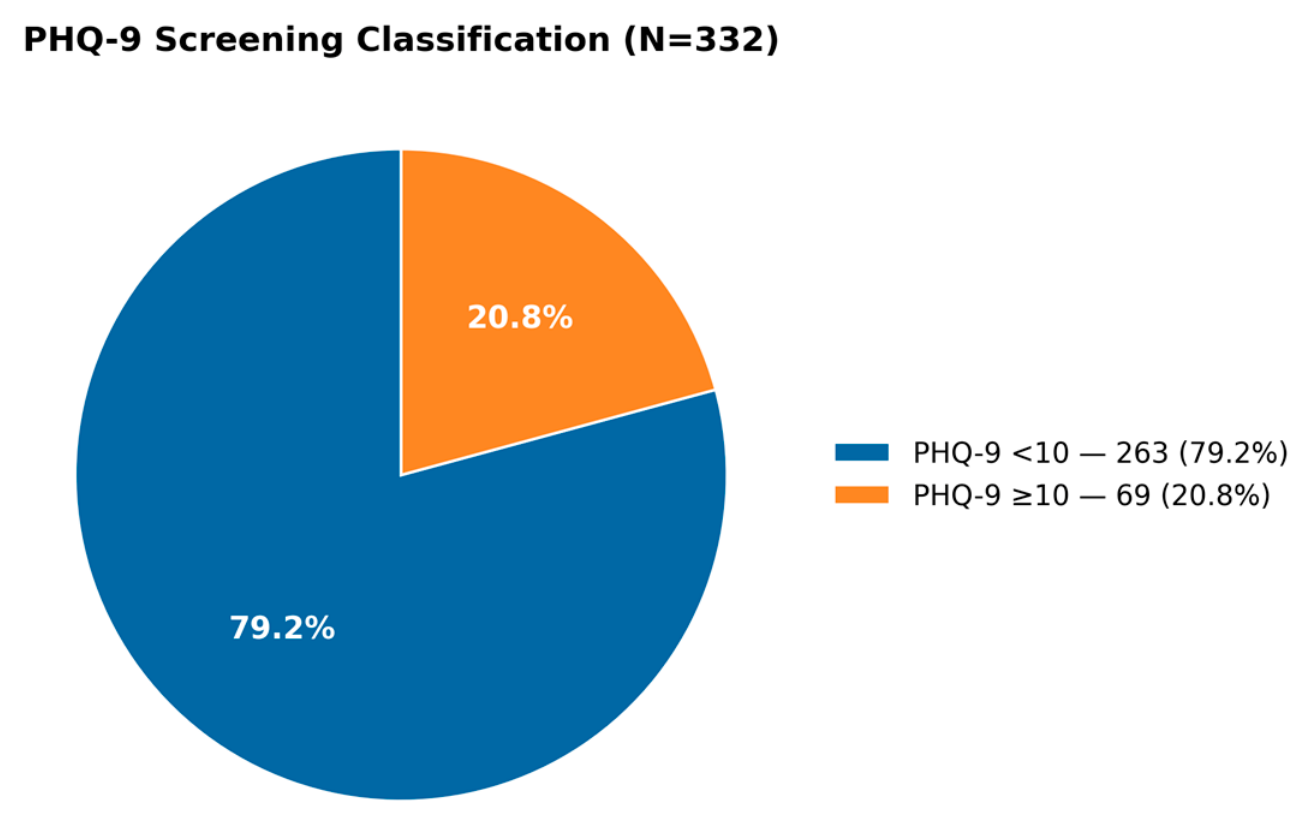
Figure 2.
Knowledge of depression among pregnant women (N=332).
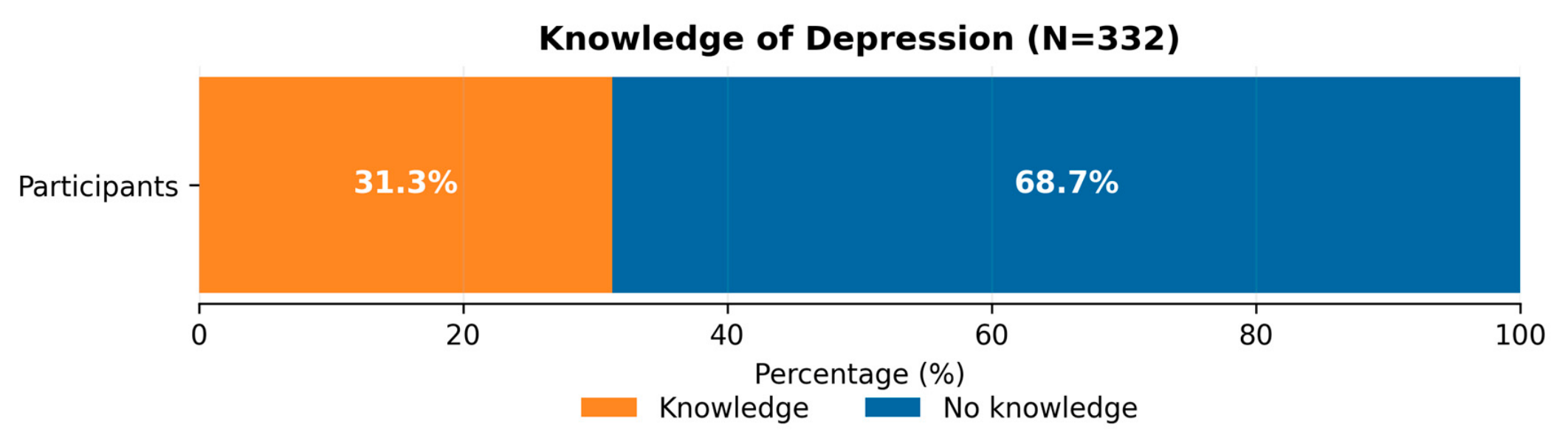
Figure 3.
Reported sources of information about depression among participants who reported knowledge of depression (n=104).
Figure 3.
Reported sources of information about depression among participants who reported knowledge of depression (n=104).
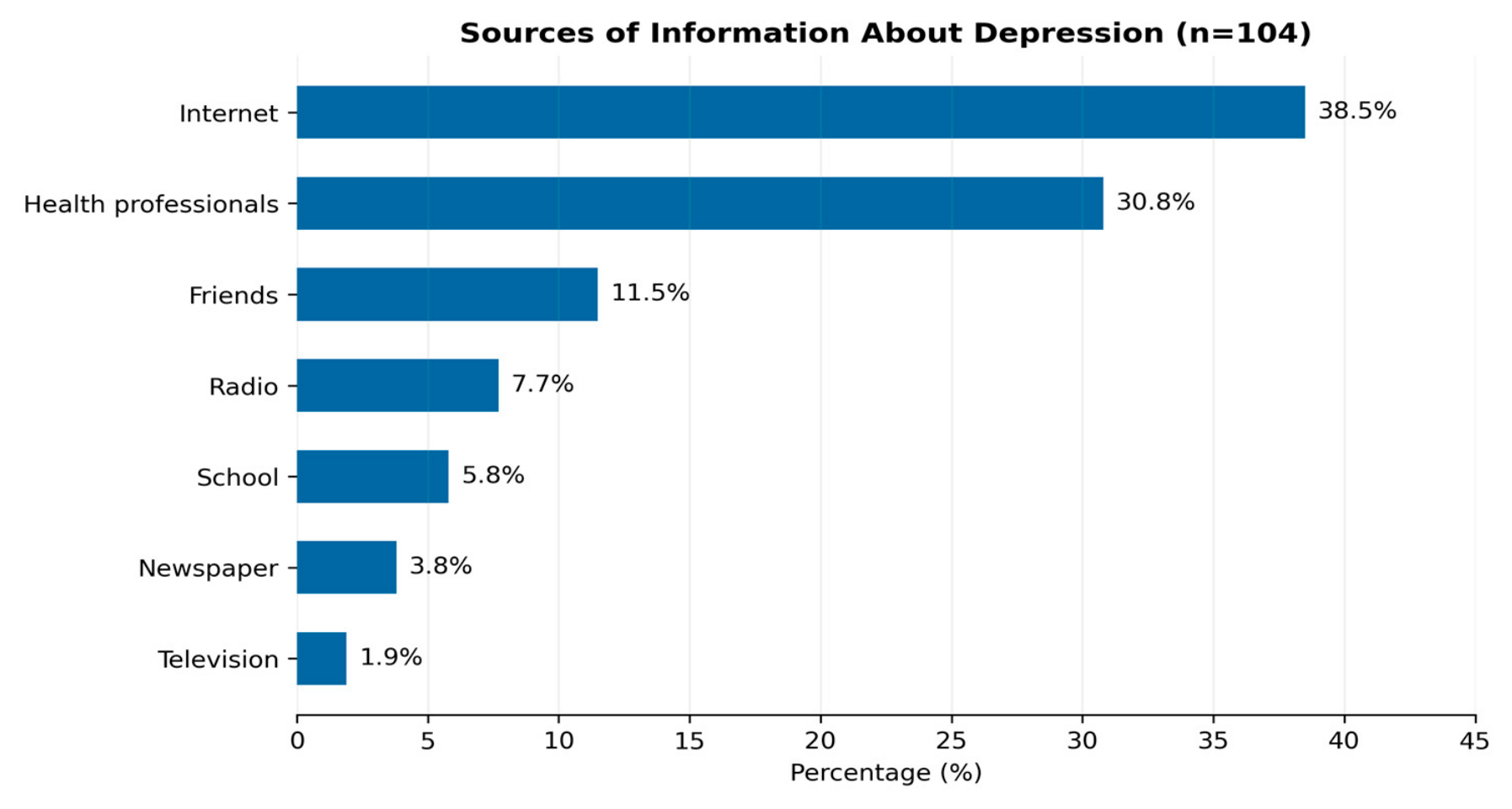
Figure 4.
Perceived causes of antenatal depression among participants who reported knowledge of depression (n=104).
Figure 4.
Perceived causes of antenatal depression among participants who reported knowledge of depression (n=104).
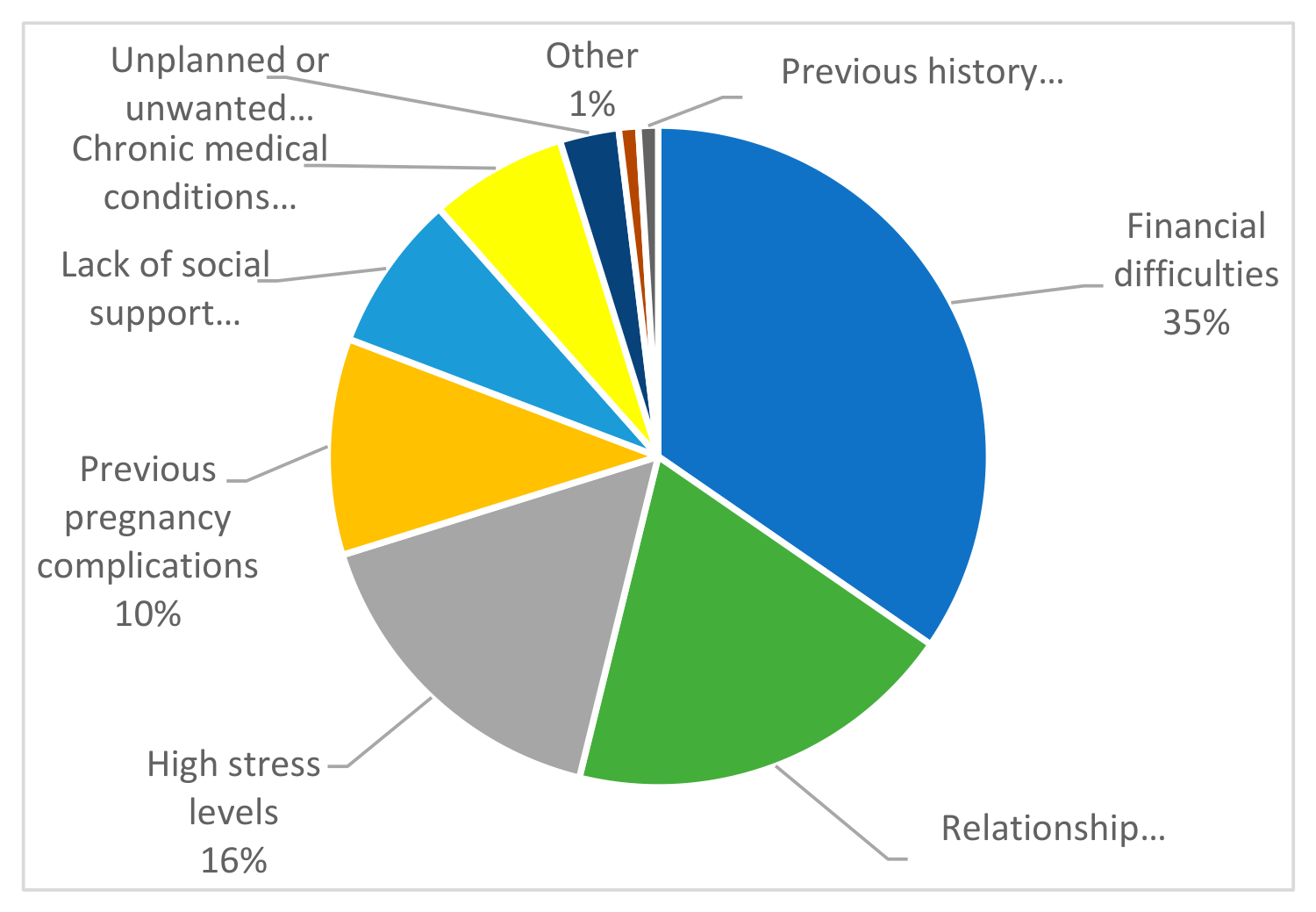
Figure 5.
Reported barriers to seeking help for antenatal depression among participants who reported knowledge of depression (n=104).
Figure 5.
Reported barriers to seeking help for antenatal depression among participants who reported knowledge of depression (n=104).
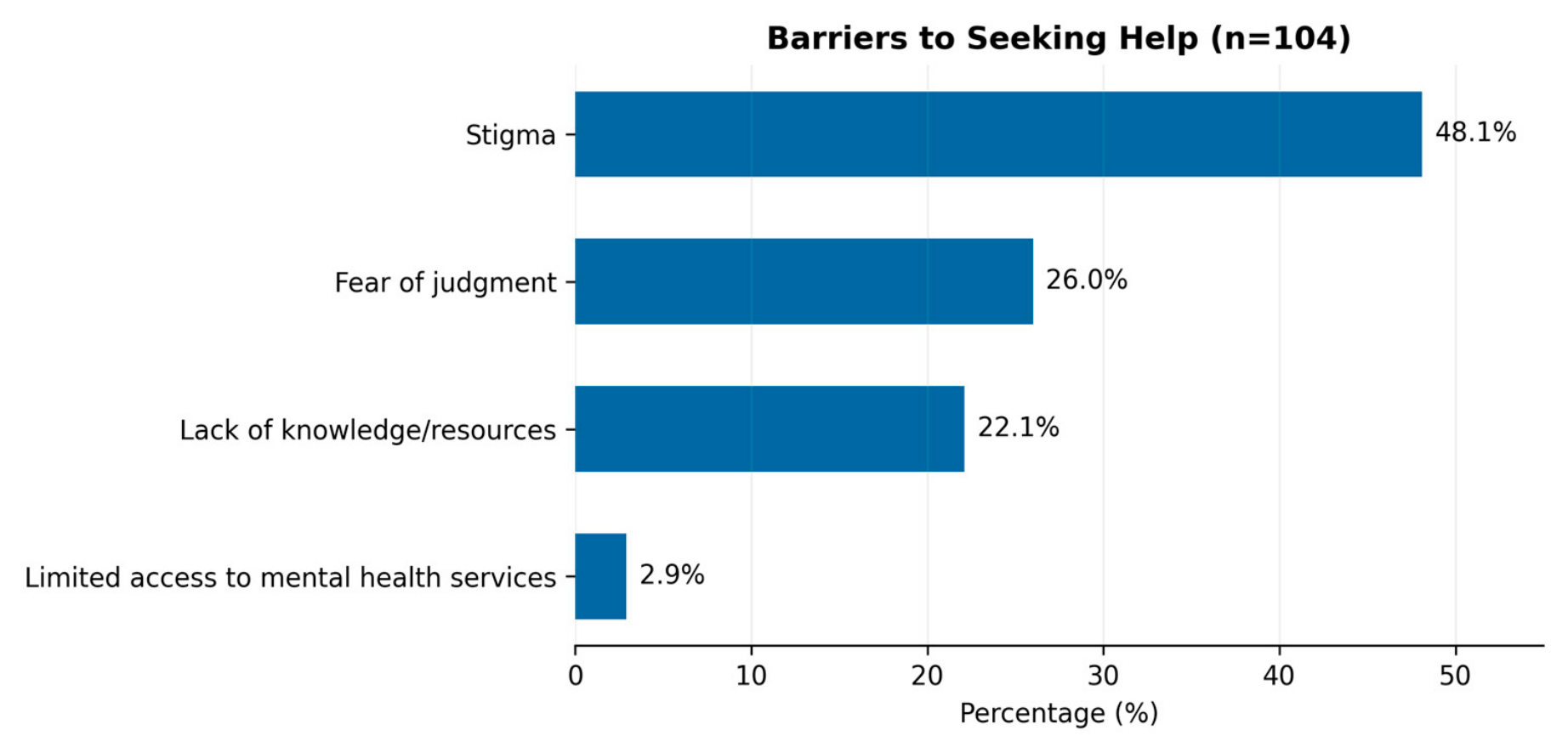
Figure 6.
Attitudes toward recovery, treatment, support and routine antenatal mental-health screening among participants who reported knowledge of depression (n=104).
Figure 6.
Attitudes toward recovery, treatment, support and routine antenatal mental-health screening among participants who reported knowledge of depression (n=104).
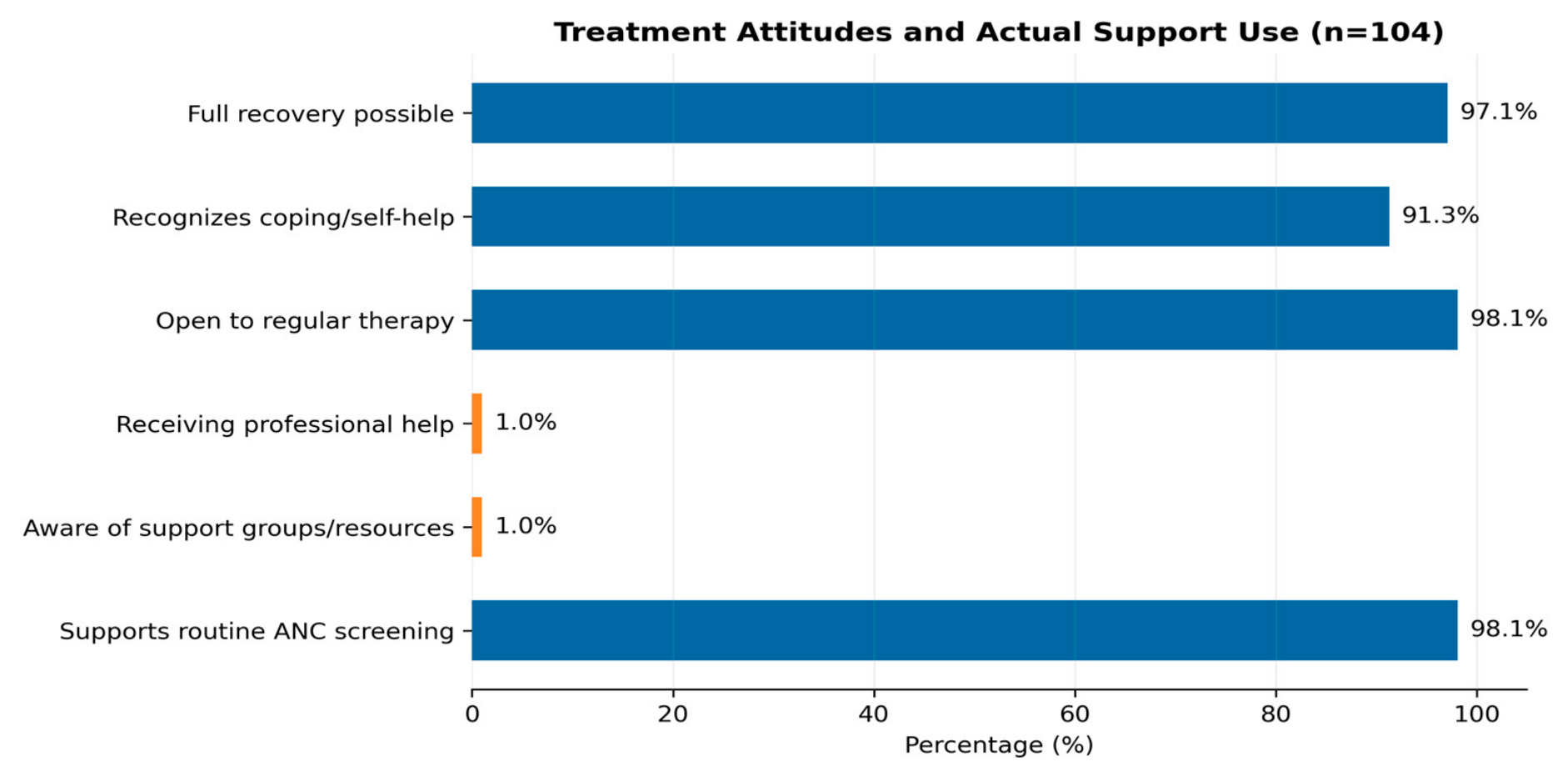

Table 1.
Demographics of Respondents.
| Demographic Categories | Frequency (%) n=332 | |
|---|---|---|
| Age | 17-25 | 106 (31.9) |
| 26-34 | 173 (52.1) | |
| 35 and above | 53 (15.9) | |
| Religion | Christianity | 299 (90) |
| Islam | 31 (9.3) | |
| African traditional religion | 1 (0.3) | |
| Other | 1 (0.3) | |
| Trimester | 1st | 56 (16.8) |
| 2nd | 86 (26) | |
| 3rd | 190 (57.3) | |
| Number of children | 0-1 | 113 (34) |
| 2-4 | 191 (57.5) | |
| 5+ | 28 (8.4) | |
| Occupation | Self employed | 45 (13.6) |
| Formal | 86 (25.9) | |
| Informal | 126 (37.9) | |
| Unemployed | 75 (22.6) | |
| Educational background | No formal education | 45 (13.6) |
| Primary school | 142 (42.8) | |
| Secondary | 115 (34.6) | |
| Tertiary | 30 (9) | |
Data are presented as frequencies (n) and percentages (%), based on a total sample of 332 respondents. Percentages may not sum to exactly 100% due to rounding.
Table 2.
Attitude and Perceptions by Patients with knowledge on Depression.
| Key finding | n/N | % |
| Knowledge of depression | 104/332 | 31.3 |
| PHQ-9 score ≥10 | 69/332 | 20.8 |
| Depression is a serious health concern | 63/104 | 60.6 |
| Open to regular therapy | 102/104 | 98.1 |
| Currently receiving therapy/professional help | 1/104 | 1.0 |
| Stigma reported as barrier | 50/104 | 48.1 |
| Supports mental health screening in routine ANC | 102/104 | 98.1 |
Attitude/perception questions were answered only by participants who reported knowledge of depression (n=104).
Disclaimer/Publisher’s Note: The statements, opinions and data contained in all publications are solely those of the individual author(s) and contributor(s) and not of MDPI and/or the editor(s). MDPI and/or the editor(s) disclaim responsibility for any injury to people or property resulting from any ideas, methods, instructions or products referred to in the content. |
© 2026 by the authors. Licensee MDPI, Basel, Switzerland. This article is an open access article distributed under the terms and conditions of the Creative Commons Attribution (CC BY) license (http://creativecommons.org/licenses/by/4.0/).
Copyright: This open access article is published under a Creative Commons CC BY 4.0 license, which permit the free download, distribution, and reuse, provided that the author and preprint are cited in any reuse.