

Submitted:
13 November 2026
Posted:
16 November 2026
You are already at the latest version
Abstract
Dynamic Capabilities Theory explains how organizations adapt to environmental change through sensing opportunities, seizing emerging possibilities, and reconfiguring organizational resources. While prior research has extensively examined the deployment and reconfiguration of existing capabilities, less attention has been given to how new capabilities emerge in response to environmental change, particularly in organizations operating under severe resource and institutional constraints. Addressing this gap, this study investigates whether climate change mitigation strategies stimulate capability development through technological innovation and whether these capabilities enhance sustainable organizational performance. Drawing on Dynamic Capabilities Theory, complemented by the Porter Hypothesis and the Resource-Based View, technological innovation is conceptualized as the mechanism through which environmental pressures are transformed into sustainability-related capabilities and performance outcomes. Using a cross-sectional survey of 350 employees from manufacturing, service, information technology, and energy organizations in Rwanda, the study examines employees' perceptions of organizational climate change mitigation strategies, technological innovation, and sustainable organizational performance. The findings show that technological innovation partially mediates the relationship between climate change mitigation strategies and sustainable organizational performance, suggesting that organizations generate value not only through environmental initiatives but also through the technological capabilities developed in response to these initiatives. By shifting attention from capability deployment to capability development, this study extends Dynamic Capabilities Theory by demonstrating how organizations can build new technological and organizational capabilities through responses to environmental pressures, even in resource-constrained institutional contexts.
Keywords:
climate change mitigation strategies
; technological innovation
; sustainable organizational performance
; dynamic capabilities theory
; Rwanda
Introduction
In recent times, organizations are being faced with an operating environment that is typified by environmental changes such as climate change, technology disruption, institutional uncertainty, and resource scarcity. It has become mandatory for organizations to continuously evolve their strategies, processes, and capabilities to sustain themselves and realize their sustainability goals under such circumstances. As a result of such circumstances, it has become imperative to understand how organizations adapt themselves in response to environmental change. One of the prominent theories of organizational adaptation is the Dynamic Capabilities Theory (DCT). DCT stresses organizations’ capabilities to sense the opportunities and threats in their environment, seize those opportunities through their strategic moves, and reconfigure their resources to compete in changing environments [1]. Furthermore, recent research studies have shown that dynamic capabilities help to improve the performance of organizations in terms of their sustainability [2].
Climate change is among the greatest strategic challenges facing organizations in the current scenario. To counteract climate change, firms are increasingly adopting Climate Change Mitigation Strategies (CCMS) not only for compliance purposes but also to innovate, become competitive, and sustain their operations [3,4]. Previous studies have shown that climate-related strategies can promote technological innovations, strengthen environmental performance, and improve organizational competitiveness. Green technological innovations have been found to be among the pathways through which companies convert environmental challenges into sustainability outcomes [4,5].
Despite growing interest in the relationship between environmental strategies, innovation, and organizational outcomes, an important theoretical gap remains unresolved [6,7,8,9]. Previous studies have largely focused on the outcomes of environmental strategies, including improved environmental performance, competitiveness, and sustainability, while providing limited explanation of the organizational processes through which new capabilities develop [10,11,12,13]. Although Dynamic Capabilities Theory explains how firms renew and reconfigure resources in response to changing environments, empirical research has primarily examined how organizations deploy existing capabilities rather than how new capabilities emerge [14,15,16]. As a result, limited knowledge exists regarding how organizations develop new capabilities through responses to environmental pressures, particularly when they operate under severe technological, financial, and institutional constraints [17].
This gap is especially relevant in developing economies, where organizations experience simultaneous environmental pressures and resource limitations. Many African firms operate in contexts characterized by weak innovation ecosystems, limited technological infrastructure, financial constraints, and institutional uncertainty while facing increasing climate-related risks, including droughts, floods, food insecurity, and infrastructure vulnerability [18,19,20]. These conditions raise an important theoretical question: how can organizations develop the capabilities required for adaptation when the resources necessary for transformation are limited? Addressing this question requires moving beyond examining whether firms possess adaptive capabilities toward understanding the processes through which new capabilities are developed.
Extreme contexts provide valuable opportunities for theory development because they make organizational processes more visible than in resource-rich environments [5]. Rwanda provides a particularly relevant context for examining capability development under constraint [21,22,23]. Through national sustainability initiatives, including Vision 2050, the Green Growth and Climate Resilience Strategy, Nationally Determined Contributions (NDCs), and investments through the Rwanda Green Fund (FONERWA), Rwanda has created strong incentives for organizations to pursue climate change mitigation activities [24,25,26]. At the same time, organizations continue to operate under technological, financial, and institutional limitations. Therefore, Rwanda represents not simply a geographical setting but a theoretically informative context for examining how organizations develop new capabilities when conventional resources for adaptation are constrained.
Mainly focusing on the theoretical framework of Dynamic Capabilities Theory, Climate Change Mitigation Strategies have been viewed as strategic stimuli triggering the process of capability development rather than simply environmental actions. In this study, the Porter Hypothesis and Resource-Based View have been incorporated, the former of which explains how environmental pressure can motivate organizations to come up with innovative ideas [27,28], and the latter of which illustrates how innovation-driven capabilities can serve as sources for competitive advantage [29,30,31]. Under this combined theoretical framework, technological innovation is treated as an observable organizational process by which organizations convert environmental pressure into innovation [32].
This study makes three theoretical contributions. First, it contributes to Dynamic Capabilities Theory by shifting attention from capability deployment toward capability development processes, explaining how new organizational capabilities may emerge through responses to environmental challenges. Second, it identifies technological innovation as a key mechanism through which climate change mitigation strategies facilitate capability development rather than treating innovation only as an outcome of environmental strategies. Third, by examining organizations in Rwanda’s resource-constrained context, this study expands understanding of organizational adaptation in emerging economies where firms must develop technological and organizational capabilities despite significant technological, financial, and institutional limitations.
Literature Review
The Dynamic Capabilities Theory (DCT) has become one of the most influential theoretical perspectives for explaining how organizations achieve and sustain competitive advantage in environments characterized by uncertainty, disruption, and rapid technological change [33,34]. Unlike traditional strategic management perspectives, which emphasize the possession and protection of valuable resources as the primary source of [9,29], DCT focuses on the organizational processes that enable firms to continuously adapt, renew, and transform their resources in response to changing external conditions [34]. According to [1], dynamic capabilities consist of three interconnected processes: sensing emerging opportunities and threats, seizing opportunities through strategic investments and actions, and transforming organizational resources and structures to maintain competitiveness.
Even though DCT has contributed much to organizational adaptation, existing empirical applications of the DCT have been mostly concerned with the way firms employ and reconfigure their capabilities rather than the way these capabilities are created [13]. Most studies assume that the firm already has enough technological, management, and organizational capabilities needed to respond adequately to a changing environment [35,36]. Yet, in some cases, when organizations encounter disruptive challenges without adequate capabilities for adaptation, such an assumption is not valid [37,38]. Then the key issue becomes not only about how the organization uses its capabilities but also about how these capabilities emerge [39].
The difference between capability deployment and creation becomes especially important in developing and resource-constrained economies [40]. Organizations operating under these conditions usually face growing environmental pressures such as climate change, regulation changes, and market uncertainty while at the same time experiencing scarcity of financial, technological, human, and institutional resources [41,42]. Under such conditions, organizational adaptation cannot be based on recombination of existing resources because these capabilities for transformation do not exist yet and need to be created first.
Although adaptive capability represents the theoretical outcome of the capability-development process, this study does not directly measure adaptive capability. Instead, it examines technological innovation as an observable mechanism through which capability development occurs. Thus, technological innovation is treated as an empirical indicator of the capability-building process rather than as a direct measurement of dynamic capabilities [4,36]. This study does not measure adaptive capability itself; rather, it explains and empirically examines the organizational process through which adaptive capabilities may emerge, using technological innovation as an observable manifestation of capability development. Accordingly, technological innovation is conceptualized as an empirical representation of learning, knowledge integration, experimentation, and resource transformation processes through which organizations develop new capabilities.
Recent research has increasingly highlighted the importance of understanding capability development processes rather than treating capabilities as pre-existing organizational assets [43,44,45,46]. Studies on emerging economies demonstrate that firms often develop innovative capabilities through experimentation, external collaboration, learning-by-doing, and responses to institutional pressures [47,48]. These findings suggest that environmental challenges may not only represent threats to organizational survival but can also function as triggers for capability formation. However, the mechanisms through which external pressures contribute to the emergence of adaptive capabilities remain insufficiently explored within the dynamic capabilities literature [44,45].
Climate change is one of the most pertinent contexts in which such a capability creation process needs to be studied [49]. Today, companies across the globe face growing pressure to decrease their emissions, increase the efficiency of resource management, use environmentally friendly technology, and adapt to changing environment. Climate Change Mitigation Strategies (CCMS) should, therefore, not be considered as mere compliance activities that need to fulfill regulatory requirements. In addition, these strategies are important from the point of view of their ability to spur learning, technological experimenting, and resources trans-formations. Recent empirical findings show that proactive cli-mate strategies have the potential to spur innovation, increase operational efficiency, and organizational resilience [50].
On the basis of this approach, the current study expands on the theoretical framework of DCT by suggesting that the emergence of adaptive capabilities is possible through organizational reactions to environmental pressures. Unlike traditional theory that sees the development of capabilities as a precondition of climate change strategy implementation, this research suggests that engagement with climate change mitigation can, itself, serve as a basis for capability creation through technological investments and organizational learning.
This argument is particularly relevant in developing countries, where firms often operate under severe resource constraints while facing significant climate vulnerabilities. Africa provides a unique context for examining this theoretical challenge. Although the continent contributes relatively little to global greenhouse gas emissions, it remains highly exposed to climate-related disruptions, including droughts, floods, agricultural instability, and infrastructure vulnerability [51,52]. At the organizational level, many African firms operate within environments characterized by limited technological capacity, restricted access to finance, and developing innovation ecosystems [53].
Rwanda represents an especially appropriate context for investigating capability creation under environmental pressure. Through national initiatives such as Vision 2050, the Green Growth and Climate Resilience Strategy, Nationally Determined Contributions, and investments supported by the Rwanda Green Fund (FONERWA), organizations in Rwanda face increasing expectations to engage in climate mitigation activities [26]. At the same time, many firms continue to operate under technological and financial limitations. Therefore, Rwanda provides an extreme context where the processes through which organizations develop adaptive capabilities can become more visible.
Based on this theoretical reasoning, this study positions Climate Change Mitigation Strategies as external strategic stimuli that initiate capability development processes. Technological innovation is proposed as the primary mechanism through which organizations transform environmental pressures into adaptive capabilities. By adopting cleaner technologies, improving production processes, and developing new knowledge, firms create the technological competencies required to enhance sustainable performance. Thus, this study contributes to Dynamic Capabilities Theory by shifting attention from capability utilization toward capability creation and by explaining how organizations can develop adaptive capabilities even when operating under severe resource constraints [45,52,54].
Climate Change Mitigation Strategies and Sustainable Organizational Performance
In recent years, the relationship between Climate Change Mitigation Strategies (CCMS) and organizational performance has received growing attention in the strategic management and sustainability literature. Historically, environmental policies were often viewed as costly compliance activities that reduced organizational competitiveness because they required substantial investments in cleaner technologies, increased compliance costs, and diverted managerial attention from core business activities [55]. Under such conditions, organizations with limited financial and technological resources tended to perceive climate-related initiatives as an additional burden rather than an opportunity for value creation. However, the alternative perspective is provided by the Porter Hypothesis, which argues that well-designed environmental regulations can stimulate innovation, improve operational efficiency, and ultimately enhance organizational competitiveness by encouraging firms to develop advanced technologies and more efficient production processes [28]. Rather than treating environmental regulation solely as a constraint, this perspective suggests that it encourages organizations to identify inefficiencies and create new sources of competitive advantage. Recent empirical evidence generally supports this view, indicating that proactive climate strategies and flexible environmental regulations contribute to higher levels of green innovation, improved environmental performance, greater productivity, and sustainable competitiveness, although the strength of these effects varies across industries and institutional contexts [56,57].
However, research literature still fails to offer clear reasons why certain firms succeed in translating pressures related to the environment into performance gains. The problem is that past research focuses on the relation between sustainability practices and organizational performance, without exploring the internal processes of transforming pressures of the environment into performance gains [56]. This point is crucial since mitigation measures against climate change do not always result in enhanced performance automatically. Their impact on organizational performance is conditional upon the ability of firms to learn and reshape their processes to respond to environmental pressures.
The dynamic capability theory offers a good framework to explain this point. According to DCT, environmental pressures create the conditions that stimulate firms to pursue sensing, seizing, and reconfiguration activities [34]. Climate change mitigation measures imply not only environmental management activities but also strategic challenges that require the search for new technologies, reconfiguration of processes, and development of new routines within an organization. Through this process, firms may increase their capacity to adapt and achieve sustainable performance.
The above-stated capability-oriented view of the organization is especially relevant to companies functioning in emerging economies. Firms in developing countries find themselves in an ambiguous situation characterized by rising climate risks despite limited technological, financial, and institutional resources. In this regard, firms cannot rely only on their current capabilities to reach sustainability goals. Instead, climate change mitigation activities may turn out to be ways through which firms build up capabilities needed for adaptation. Energy efficiency measures, renewable energy use, clean production systems, and sustainable supply chain practices are capable of yielding technological know-how and improvements in operations leading to high performance [56].
Recent research shows that the connection between environmental strategy and organizational performance is context-dependent and depends on such variables as firm size, technological capability, institutional quality, and resource availability [49,55]. These results show that climate change mitigation strategies do not suffice as explanations for performance differences among firms. Instead, the processes that happen during implementation of these strategies are what make these actions beneficial for companies.
Thus, this research paper suggests that Climate Change Mitigation Strategies help organizations achieve sustainable organizational performance through enabling the process of organizational adaptation. CCMS generate pressures and inducements for organizations to build their technological competencies and increase efficiency and resilience. By viewing CCMS as an instrument of capability building as opposed to being a compliance tool alone, this research advances previous studies on sustainability and offers a more complete understanding of how environmental problems can be turned into organizational opportunities. Based on this theoretical reasoning, the following hypothesis is proposed:
H1:
Climate change mitigation strategies have a significant positive relationship with sustainable organizational performance.
Climate Change Mitigation Strategies and Technological Innovation
The interaction of CCMS and technological innovations has been of particular interest to recent studies in sustainability and strategic management. The standard economic approach suggests that organizations incur additional expenses to comply with environmental requirements, which might result in their inability to innovate. Under this approach, organizations spend their scarce financial and managerial resources on regulatory activities but not on technological development. The idea of the Porter Hypothesis is to state that environmental pressures lead to innovation due to the fact that organizations strive to become more efficient, introduce better technologies, and innovate production processes [28,55].
A variety of empirical studies confirm that environmental strategies are positively associated with innovations. According to recent empirical findings, organizations that are actively engaged in responding to climate challenges are more likely to innovate in the fields of green technologies, energy-efficient production processes, digital technologies, and sustainable production processes [50]. It should be stated that these innovations make organizations more efficient, flexible, and competitive. In other words, climate change mitigation strategies are powerful drivers of technological innovation.
Previous studies have looked at technological innovation as an effect of environmental challenge but not as much on the role of innovation in the development of the abilities of an organization. This is because, unlike being just an end product or outcome measured, technological innovation involves a continuous process of an organization acquiring knowledge and experimenting and then using the results of learning and recombining resources to generate new technology-based competencies that will help in dealing with environmental challenges in the future [56].
This relationship is explained further through Dynamic Capabilities Theory as proposed by [1]. According to him, organizations adapt due to their ability to sense changes in the environment, grab emerging opportunities, and transform their resource base. This is what climate change mitigation strategies create as a result of putting them under the pressure of searching for alternative technologies, designing new operating systems, and gaining new expertise.
This approach is especially pertinent in resource-deprived settings. In developed nations, organizations may be able to leverage the available research and development infrastructure, sophisticated technology, and innovation framework in dealing with the climate-related challenges. However, organizations operating in developing nations do not have these tools at their disposal. They will have a problem accessing financial resources, poor technological infrastructure, and institutional support, at the same time having increased pressure from the environment. In such a situation, the need for technological innovation becomes not just a competitive advantage but a process that will allow organizations to build adaptive capability [11,33].
Research of emerging economies indicates that organizations will be able to create technological capabilities by means of innovations, partnerships, knowledge acquisition from outside, and addressing institutional pressure [58,59]. Climate change mitigation strategies will facilitate such processes by encouraging organizations to implement cleaner manufacturing procedures, improve energy efficiency, invest in renewable sources of energy, and develop knowledge.
In addition, it has been argued recently that the efficiency of the strategies that concern climate issues is related to the ability of organizations to translate environmental needs into innovations. The more capable the organization is in terms of learning, managerial commitment, and technology orientation, the more advantages it will have due to sustainability pressures, because such organizations can incorporate new knowledge and turn environmental problems into innovative solutions [60,61]. This means that climate change mitigation strategies and technological innovation are interrelated processes and cannot be considered independently.
From this point of view, this research defines CCMS as an external pressure that promotes technological capabilities. It is believed in this research that technological capabilities do not have to be developed prior to addressing climate change problems. On the contrary, climate mitigation activities can help to build technological capabilities. Therefore, the following hypothesis is proposed:
H2:
Climate change mitigation strategies have a significant positive relationship with technological innovation.
Mediating Role of Technological Innovation
While climate change mitigation strategies may help enhance organizational sustainability performance, the processes through which the aforementioned strategies lead to performance benefits have not yet been sufficiently addressed. Many scholars have studied the relationship between environmental strategy and organizational performance based on the premise that sustainability strategy automatically results in good performance. However, from a strategic management standpoint, the environmental strategy itself does not add value to an organization. In fact, its effectiveness depends on the organizational processes through which firms convert environmental pressure into organizational capabilities [62,63].
Dynamic Capabilities Theory helps understand such processes well. [1] argues that sustained organizational competitiveness is achieved not just because an organization possesses valuable resources but due to the continuous development, integration, and reconfiguration of capabilities in response to environmental changes. In this regard, climate change mitigation strategies can be viewed as environmental pressures that encourage organizations to learn, experiment, restructure resources, and innovate. Such processes allow firms to acquire new capabilities.
This paper argues that technological innovation serves as the primary means by which mitigation strategies for climate change are linked to sustainable organizational performance. Prior research has focused on technological innovation as an output from environmental regulation and sustainability efforts. Whereas such a perspective helps explain why environmental factors may prompt innovations, it offers limited insight into the role that innovations play in organizational adaptations. This paper furthers this perspective by viewing technological innovation as a capability-building process that involves the development of the knowledge, routines, and capabilities necessary for organizations to cope with environmental uncertainty [49,56].
Technological innovation is not viewed in this paper as an indicator of organizational adaptability. Instead, technological innovation is seen as a visible sign of the capability development process in which new technological knowledge is acquired, integrated, and utilized in response to environmental factors. Drawing on the principles of Dynamic Capabilities Theory, technological innovations are viewed as a process of organizational learning, resource transformation, and knowledge re-combination that enables organizations to build their adaptive capabilities. Technological innovation can be seen therefore as a mechanism linking climate change mitigation strategies and organizational adaptability [64,65,66].
Innovation of technology includes not only the use of new technologies but also includes organizational learning, integration of knowledge, experimenting, and the recombination of resources to innovate better products, services, and operating systems [34]. In the process of implementing mitigation measures for climate change, firms have to adjust the production system, introduce cleaner technologies, increase energy efficiency, redesign the supply chain, and even create new types of technological skills. Through all these actions, firms gain technological knowledge and adaptive capacities.
There are some recent studies that provide empirical evidence for the statement that technological innovation is crucial in making sustainability beneficial for organizations. Research shows that green innovation, digitalization, and cleaner production technologies can make operations more efficient and less harmful for the environment, as well as increase the competitiveness of firms [16,47]. Nevertheless, these studies do not explore the mechanism of innovation in creating adaptive capacity.
The mediating effect of technological innovation gains even more significance in developing countries where organizations operate under resource constraints and, hence, cannot always utilize their existing technological capabilities to resolve climate-induced problems. Rather, they need to develop these capabilities through adaptation and learning. The strategies for mitigating climate change motivate organizations to look for technological solutions, collaborate with external partners, enhance the knowledge management system within the organization, and create new routines. It is through these innovation processes that the pressure of the environment turns into organizational capabilities [37,44,45,67].
At the same time, this study also helps to fill one of the major gaps in the theory of Dynamic Capabilities. In most studies on DCT, it was assumed that organizations have capabilities that allow them to respond to the changes in the environment, which means that organizations can utilize these capabilities once environmental conditions have changed. However, in many cases, these capabilities need to be created first in a highly uncertain and resource-constrained environment.
Furthermore, in this study, technological innovation is conceptualized as an indicator of capability development rather than a direct measurement of adaptive capability. Consistent with Dynamic Capabilities Theory, technological innovation represents the organizational processes through which firms develop new knowledge, routines, technological competencies, and problem-solving capabilities in response to environmental pressures. Therefore, the study does not claim to directly measure dynamic capabilities; instead, it examines technological innovation as a mechanism through which capability development occurs. Based on this theoretical argument, the following hypothesis is proposed:
H3:
Technological innovation mediates the relationship between climate change mitigation strategies and sustainable organizational performance.
Technological Innovation and Sustainable Organizational Performance
Technological innovation has come to be known as one of the most important drivers of sustainable organizational performance. Both strategic management literature and sustainability literature have considered innovation as one of the crucial means through which organizations increase their operational efficiency, lessen their impact on the environment, increase productivity, and remain competitive in fast-moving environments. Organizations that engage in technological innovations have better capabilities for developing cleaner production methods, optimizing resource use, providing sustainable products and services, and coping with environmental challenges [36].
On the other hand, previous literature has often considered technological innovation as an organizational resource or as the ultimate result of research and development practices without considering its role in creating adaptation capacities in organizations. Such a view provides a partial understanding of the reasons for which organizations achieve sustained performance benefits through technological innovation, especially in resource-limited and uncertain environments. In terms of strategic management, the importance of innovation is not only derived from having advanced technology but also from the process through which organizations generate technological knowledge [53,67].
The theory of dynamic capabilities explains the relationship between technological innovations and sustainable performance of organizations better than any other theory. According to [1,34], companies get a competitive advantage when they manage to continually adapt to changing conditions in the environment using their resources and capabilities. Technological innovation is considered to be a form of adaptation because it reflects the learning ability of an organization to integrate and experiment with knowledge. The innovation process helps organizations develop capabilities which allow them to cope with uncertainty.
In this regard, technological innovation cannot be considered to be a static resource of an organization. Technological innovation becomes a process through which companies get the opportunity to update their knowledge base and invent new solutions to problems. For instance, investments in clean technologies, digitalization, automation, energy efficiency systems, and innovative ways of producing can help organizations gain new technical knowledge and routines which increase adaptability [35,36,59].
The Resource-Based View (RBV) further supports this argument as valuable, rare, difficult to imitate, and organizationally embedded resources could generate competitive advantages [30,31,68,69]. The technological capabilities generated through innovation processes may be regarded as such strategic resources since they could be derived from firm-specific knowledge and experience. But this paper extends the existing RBV framework and suggests that technological capabilities should not be treated as static resources available to organizations. On the contrary, they emerge as a result of the organization’s reaction to environmental stimuli.
The importance of this differentiation becomes evident when talking about developing countries. Firms working in developing economies face scarcity of financial and technological resources and institutional support. In this context, technological innovation stops being a source of competitive advantage and becomes a means of overcoming structural barriers. Through gradual accumulation of knowledge and experiments, organizations become able to develop their technological capabilities [35,70,71].
Recently published empirical studies confirm the positive impact of technological innovation on sustainable organizational performance. It was found that organizations that use innovative technologies, solutions, and processes improve their performance, effectiveness, and competitiveness. Nevertheless, the benefits of innovative technologies are based on the ability of an organization to incorporate innovation into a wide range of strategies and operations of an organization [36]. Thus, the process of innovation in itself is not enough to bring benefits to organizations since learning-related pressures make organizations search for new technological solutions, and the process of innovation helps organizations to transform these pressures into better capabilities and performance. As a result, organizations that are able to develop innovation capabilities are responsible for the results of innovation.
Speaking about the problems of climate change mitigation, it can be said that technological innovation is the tool that helps organizations overcome the environmental problem and develop. Climate-related pressures motivate organizations to search for new technological solutions, while innovation helps organizations to transform these pressures into better capabilities and performance. As a result, organizations that are able to develop technological innovation capabilities are expected to show better sustainable performance. Based on this theoretical reasoning, the following hypothesis is proposed:
H4:
Technological innovation has a significant positive relationship with sustainable organizational performance.
In line with the theory of Dynamic Capabilities, the paper suggests a sequential capability development model where the strategies for mitigation of climate change generate environmental pressures that lead to technological innovations, technological innovations aid in the formation of adaptive capabilities, and these capabilities improve sustainable performance of organizations. The Porter Hypothesis is used to explain how environmental pressures lead to innovation, while Resource-Based View is employed to show how innovations lead to competitive advantages. Figure 1 illustrates the conceptual framework used in this study.
Materials and Methods
Research Design
This study adopted a quantitative cross-sectional survey design to examine the relationships among climate change mitigation strategies, technological innovation, and sustainable organizational performance. The unit of analysis is the individual employee. Employees were considered appropriate respondents because they are directly involved in organizational activities and can provide informed perceptions regarding environmental strategies, technological innovation practices, and sustainability-related outcomes within their organizations.
The cross-sectional survey design was relevant for the purpose of collecting the data because data was collected from respondents at one point in time for some selected organizations in Rwanda. This allowed the researcher to collect up-to-date data in an efficient and cost-effective manner.
Moreover, the study incorporated the use of both descriptive and explanatory research methodologies. Descriptive research was utilized for summarizing the demographic profiles of respondents and organizations, and for exploring the organizational performance, whereas the explanatory research was employed to test the hypothesized relationships.
Target Population
The target population consisted of employees working in organizations operating in Rwanda, particularly within manufacturing, service, information technology, and energy sectors. Employees were selected because they participate in organizational processes and possess relevant knowledge regarding sustainability initiatives, innovation activities, and operational performance.
According to the National Institute of Statistics of Rwanda [72], there are about 261,549 enterprises in Rwanda employing about 927,739 people in various sectors of the economy. Such enterprises engage in the sectors like manufacturing, wholesale and retail trade, education, accommodation and food services, ICT, and others, which contribute significantly to the economic development of the country.
Moreover, according to the results of the Integrated Enterprise Survey provided by [73], the formal sector enterprises employed 216,524 people in 12,172 enterprises. Therefore, the diversity and growth of the organizational environment in Rwanda can be identified. Hence, employees and managers of organizations in the selected sectors represented the target population of the current research.
Sample Size Determination
The sample size for this study was determined using the sampling table developed by [74], which provides recommended sample sizes for large populations. In addition, [75] recommend sample sizes of approximately 200–400 for studies employing multiple regression and related multivariate analyses. Accordingly, a target sample of 400 respondents was established. Of the 400 questionnaires distributed, 350 were completed and deemed valid for analysis, yielding a response rate of 87.5%. The final sample of 350 respondents exceeded the recommended minimum requirements for multiple regression and mediation analysis and was therefore considered sufficient to provide adequate statistical power for testing the proposed hypotheses.
Sampling Technique
The method used for sampling was the stratified random sampling method. First, the population was divided into strata based on different sectors, which included manufacturing sector, service sector, IT sector, and energy sector.
Stratified sampling was the most appropriate method to use since it ensured that all the different sectors involved in the study were sufficiently represented. Within each sector stratum, respondents were selected using simple random sampling from accessible organizations and employees who met the study criteria.
Study Instruments
The primary data was gathered through a structured questionnaire. Questionnaire technique was chosen because it helps gather standardized data from a large number of respondents in a relatively short time frame. The questionnaire consisted of four sections. Section A collected demographic information, while Sections B, C, and D measured Climate Change Mitigation Strategies (CCMS), Technological Innovation (TI), and Sustainable Organizational Performance (SOP), respectively. The measurement model consisted of 15 items, with five items measuring each construct. All of the items were measured on a five-point Likert scale with values ranging from 1 = Strongly Disagree to 5 = Strongly Agree. The use of the five-point Likert scale helped the respondents give different levels of agreement on the research variables. Section A: Demographic Information, that comprised of Gender, Age, Educational Level, Experience and Industry Sector. Table 1 provides demographic information of the respondents. Section B. CCMS consists of 5 measurements designed by [76]. The CCMS measure attained a Cronbach’s Alpha reliability coefficient of 0.902, showing excellent internal consistency reliability. Section C. TI consists of 5 measurements designed by [77]. In this study, technological innovation is operationalized as an indicator of capability development rather than a direct measurement of adaptive capability. Therefore, the measurement of TI captures employees’ perceptions of technological innovation practices that reflect organizational learning, knowledge integration, and resource transformation processes associated with capability development. The construct captures the organization’s ability to adopt, develop, and implement technological improvements that reflect learning, knowledge integration, and resource transformation processes associated with capability development. The TI measure had a Cronbach’s Alpha reliability coefficient of 0.862, showing good internal consistency reliability. Section D. SOP consists of 5 measurements designed by [77]. The SOP measure attained a Cronbach’s Alpha reliability coefficient of 0.801. The total instrument reliability coefficient for 15 questions was 0.760, which surpassed the minimum threshold of 0.70.
Data Analysis Procedures
Following the data collection process, the collected data were analyzed using several statistical techniques. Missing data were either replaced with the mean or removed from the analysis, where appropriate. Descriptive analysis was conducted to summarize respondent characteristics and examine the distribution of responses. The statistical analyses were performed using SPSS version 25, AMOS version 24, and PROCESS Macro version 4.3. SPSS was used for descriptive statistics and preliminary correlation analysis, while AMOS was employed to conduct confirmatory factor analysis (CFA) and assess the measurement model. PROCESS Macro was used to examine the mediation effects based on the proposed research model. Before hypothesis testing, the measurement model was evaluated through CFA by assessing reliability, convergent validity, and discriminant validity using factor loadings, composite reliability (CR), and average variance extracted (AVE). The measurement model was assessed using CFA in AMOS, while hypothesis testing and mediation analysis were conducted using regression-based analysis through PROCESS Macro.
Results
Factor Analysis
Exploratory Factor Analysis (EFA) was conducted to identify the underlying relationships among the measured variables and to reduce data dimensionality [75]. Principal Component Analysis (PCA) was employed for factor extraction, and Promax rotation with Kaiser normalization was applied because the constructs were expected to be correlated [78]. In line with recommended guidelines, only items with factor loadings of at least 0.40 were retained for interpretation [79].
Before conducting factor analysis, the suitability of the data was assessed using the Kaiser-Meyer-Olkin (KMO) Measure of Sampling Adequacy and Bartlett’s Test of Sphericity. The KMO value was 0.787, which exceeds the recommended minimum threshold of 0.60, indicating sampling adequacy for factor analysis [80]. Bartlett’s Test of Sphericity was statistically significant (χ2 = 3511.783, df = 105, p < 0.001), confirming that correlations among variables were sufficient for factor analysis [81].
To assess common method bias, Harman’s single-factor test was conducted following the procedure recommended in prior literature [82]. The results showed that the first factor accounted for 28.376% of the total variance, which is below the 50% threshold, indicating that common method bias was not a serious concern.
The Exploratory Factor Analysis identified three distinct factors corresponding to Climate Change Mitigation Strategies (CCMS), Technological Innovation (TI), and Sustainable Organizational Performance (SOP). These factors together explained 65.223% of the total variance, which exceeds the recommended minimum of 50% [75]. Specifically, the first factor explained 28.376% of the variance, the second factor 21.543%, and the third factor 15.304%.
All items loaded strongly on their respective constructs, with factor loadings ranging from 0.591 to 0.947. No cross-loadings above the acceptable threshold were observed, indicating good construct validity. All items were therefore retained for further analysis. The results of the exploratory factor analysis are shown in Table 2.
Confirmatory Factor Analysis
A confirmatory factor analysis (CFA) was conducted using AMOS version 24 to evaluate the reliability, convergent validity, and construct validity of the measurement model. The measurement model consisted of three latent constructs: Climate Change Mitigation Strategies (CCMS), Technological Innovation (TI), and Sustainable Organizational Performance (SOP), with each construct measured using five observed indicators.
As presented in Table 3, all constructs demonstrated acceptable internal consistency reliability. Composite reliability (CR) values ranged from 0.859 to 0.888, exceeding the recommended threshold of 0.70 [75]. The average variance extracted (AVE) values ranged from 0.55 to 0.62, which were above the recommended minimum value of 0.50, indicating adequate convergent validity.
The standardized factor loadings were generally acceptable, with most items exceeding the recommended threshold of 0.50. Although some indicators showed relatively lower loadings (e.g., 0.548 for CCMS and 0.580 for SOP), they were retained because their constructs demonstrated satisfactory composite reliability and average variance extracted values.
The goodness-of-fit of the measurement model was assessed using several commonly accepted fit indices, including Chi-square (χ2), degrees of freedom (df), Chi-square/degrees of freedom ratio (CMIN/DF), Comparative Fit Index (CFI), Normed Fit Index (with the observed data. The χ2 value was 171.403 with 72 degrees of freedom, resulting in a CMIN/DF value of 2.381, which falls below the recommended threshold of 3. The incremental fit indices included the Comparative Fit Index (CFI), Normed Fit Index (NFI), and Incremental Fit Index (IFI), Root Mean Square Error of Approximation (RMSEA), and Standardized Root Mean Square Residual (SRMR).
The results indicate that the three-factor measurement model achieved an acceptable fit with the observed data. The χ2 value was 171.403 with 72 degrees of freedom, resulting in a CMIN/DF value of 2.381, which falls below the recommended threshold of 3. The incremental fit indices demonstrated strong model adequacy, with CFI = 0.971, NFI = 0.952, and IFI = 0.972, all exceeding the recommended value of 0.90. In addition, RMSEA = 0.053 indicates an acceptable approximation error, while SRMR = 0.072 remains within the acceptable range. Overall, these results confirm that the measurement model provides an adequate representation of the underlying constructs [83].

Table 4.
Fit indicators for the CFA model.
| Model | CMIN | DF | p | CMIN/DF | CFI | NFI | IFI | RMSEA | SRMR |
| 171.403 | 72 | 0.000 | 2.381 | 0.971 | 0.952 | 0.972 | 0.053 | 0.072 |
Discriminant Validity
Discriminant validity was assessed to confirm that the constructs used in this study are empirically distinct and capture different theoretical concepts. Two widely accepted approaches were employed: the Fornell–Larcker criterion and the Heterotrait–Monotrait ratio (HTMT) criterion (F other constructs. As presented in Table 5, the diagonal values represent the square roots of AVE, while the off-diagonal values indicate inter-construct correlations. The square root of AVE for each construct was higher than the correlations with other constructs [84,85].
The Fornell–Larcker criterion was examined by comparing the square root of the average variance extracted (AVE) for each construct with its correlations with other constructs. As presented in Table 5, the diagonal values represent the square roots of AVE, while the off-diagonal values indicate inter-construct correlations. The square root of AVE for each construct was higher than the corresponding correlations with other constructs, demonstrating that each construct shares greater variance with its own indicators than with other constructs. Therefore, the results confirm satisfactory discriminant validity according to the Fornell–Larcker criterion.
To provide a more rigorous assessment of discriminant validity, the Heterotrait–Monotrait ratio (HTMT) was examined by [85]. As presented in Table 6, all HTMT ratios were below the conservative threshold of 0.85 suggested by [85], confirming discriminant validity and that the constructs are empirically distinct from one another. These results, together with the Fornell–Larcker criterion, provide evidence that Climate Change Mitigation Strategies (CCMS), Technological Innovation (TI), and Sustainable Organizational Performance (SOP) demonstrate satisfactory discriminant validity.
Given that all study variables were collected using a self-reported questionnaire, common method bias was assessed using both procedural and statistical remedies. Procedural remedies were implemented during questionnaire design to minimize common method bias. Respondents were assured of anonymity and confidentiality to reduce evaluation apprehension. The questionnaire clearly stated that there were no right or wrong answers and that responses would be used solely for academic purposes. Established measurement scales adopted from prior studies were used to improve item clarity and construct validity. In addition, the questionnaire was pretested to ensure comprehensibility and reduce ambiguity. Statistically, Harman’s single-factor test revealed that the first factor accounted for 28.376% of the total variance, which is below the recommended threshold of 50%, indicating that common method bias was not a serious concern.
Furthermore, a full collinearity assessment was conducted following [86]. The results showed that the variance inflation factor (VIF) values were 1.180 for both predictor constructs, which is substantially below the recommended threshold of 3.3 [86]. These results suggest that common method bias and multicollinearity were unlikely to substantially influence the findings.
Hypothesis Testing
Table 7 presents the results of hypothesis testing examining the direct and indirect relationships among Climate Change Mitigation Strategies (CCMS), Technological Innovation (TI), and Sustainable Organizational Performance (SOP). The results demonstrate that CCMS has a significant positive effect on SOP (H1: R2 = 0.326, F = 168.139, p < 0.001, β = 0.571), indicating that organizations implementing climate change mitigation strategies tend to achieve higher levels of sustainable organizational performance. Furthermore, CCMS significantly influences Technological Innovation (H2: R2 = 0.153, F = 62.627, p < 0.001, β = 0.391). This finding suggests that climate-related strategic initiatives encourage organizations to develop and adopt technological innovations as part of their response to environmental pressures. The relationship between Technological Innovation and Sustainable Organizational Performance was also found to be positive and significant (H4: β = 0.559, p < 0.001), demonstrating that organizations with stronger technological innovation capabilities are more likely to achieve improved sustainability outcomes. The model including CCMS and TI explains 59.1% of the variance in SOP (R2 = 0.591). The mediation analysis further confirms that Technological Innovation partially mediates the relationship between CCMS and SOP (H3). The indirect effect of CCMS on SOP through TI was significant (indirect effect = 0.320, BootSE = 0.073, 95% BootLLCI = 0.200, BootULCI = 0.488). Since the bootstrap confidence interval does not include zero, the mediating effect is statistically significant. These findings indicate that climate change mitigation strategies contribute to sustainable organizational performance not only directly but also indirectly by stimulating technological innovation and the development of innovation-related organizational capabilities. Overall, all proposed hypotheses are supported, demonstrating that climate change mitigation strategies act as important drivers of technological innovation and sustainable organizational performance.
Discussion
This study looked at how organizations that do not have a lot of resources use Climate Change Mitigation Strategies or CCMS to improve their organizational performance by making new technological innovations. Using Dynamic Capabilities Theory the study said that CCMS should not be seen as a way to meet environmental rules but as a strategic move that can start processes that grow a firm’s capabilities. From this point of view the results show that CCMS are linked in a way to technological innovation and to sustainable organizational performance and that technological innovation partly explains how CCMS lead to better sustainable performance. The study therefore says that firms can build innovation skills and flexible ways of working by reacting to environmental pressures instead of only relying on old ways that they already had.
The first main finding refers to the nature of Climate Change Mitigation Strategies. The previous literature was generally oriented towards assessing such plans from the perspective of compliance with environmentally-oriented regulation or increased efficiency of operations. This research adds value to the existing knowledge base by arguing that CCMS could contribute to the creation of circumstances under which firms will be motivated to reconsider their operational processes, resource allocation practices, and organizational flexibility. This idea is consistent with the Dynamic Capabilities Theory that implies that the environmental pressure serves not only as a constraint but also as an incentive for change within the firm. Most importantly, according to the collected data, CCMS facilitate capability development through learning and resource rearrangement.
The second important finding concerns innovation as a distinct strategy through which organizations respond to environmental challenges. According to the Porter Hypothesis, it is clear how regulations can prompt an organization to innovate. However, little explanation is given regarding how innovation enables an organization to adapt. Technological innovation is identified as a strategy in which an organization develops skills and routines in response to climate-related issues. Organizations can improve the strength of their technology through investments made in tools that improve learning processes in an organization by facilitating the diffusion of knowledge.
Third, findings on the relationship between environmental strategies, technological innovation and sustainable performance are significant. First, since technological innovation mediates the connection, it implies that the effect of Climate Change Mitigation Strategies is direct and indirect by encouraging firms to develop innovations skills. This result contributes to Dynamic Capabilities Theory in the sense that the adaptation is not only based on existing competencies, but also the development of such through a certain process. In contrast to the past studies which paid attention to how companies use their existing capabilities, this study has focused on the creation of strengths by the pressure of the environment.
Findings from the paper have contributed to the literature review on the Porter Hypothesis. Although previous literature shows the connection between regulations and innovations, it does not specify why some firms manage to turn regulations into performance improvement. However, according to this research, environmental strategies do not provide advantages. The advantage is achieved only when firms learn to make innovations in technologies, invent something new and improve processes due to climatic challenges.
Finally Rwanda is not the backdrop of this research but a useful theoretical setting. Rwanda has goals for sustainability and also faces tight limits on resources. Extreme settings let us see how firms behave when they do not have lots of money or technology. In Rwanda companies must solve problems with tech, money and institutions while facing growing climate pressure. This shows how firms can grow capabilities through constant learning inventing and adjusting resources even when traditional tools, for adaptation are scarce.
Theoretical Implications
This study contributes to management theory in three important ways.
First it extends Dynamic Capabilities Theory by shifting attention from capability utilization toward capability emergence. Existing research has primarily examined how organizations use established capabilities to respond to environmental changes [1]. In contrast this study suggests that organizations do not necessarily need to possess developed adaptive capabilities before environmental pressures occur. Instead environmental challenges, such as climate change pressures can stimulate processes involving learning, experimentation, innovation and resource reconfiguration through which new capabilities may gradually emerge.
Second this research provides insight into the role of technological innovation within the dynamic capabilities literature. Previous studies have often conceptualized innovation as an outcome of organizational capabilities or as a consequence of environmental regulations. This study advances a perspective by positioning technological innovation as an observable process through which capability development occurs. Investments in technologies, digital transformation, process improvement and knowledge development enable organizations to generate new competencies and routines that support future adaptation.
Third this study advances understanding of environmental strategy research by integrating insights from the Porter Hypothesis and the Resource-Based View (RBV). While the Porter Hypothesis explains that environmental pressures may encourage innovation this study demonstrates that the performance benefits of strategies depend on organizations’ ability to transform these pressures into technological competencies. Additionally the findings contribute to RBV by suggesting that valuable technological resources are not always predetermined assets; they may also emerge through organizational responses, to changing environmental conditions.
Practical (Managerial) Implications
The results offer lessons for managers who want to make their companies more sustainable and more competitive over time. First CCMS should not be seen just as rules to follow but as important steps that can help create new ideas and make the company better. Putting goals about sustainability into the company’s plans can help build skills use resources better and make the company stronger, in the long run.
Second managers need to understand how important it is to spend money on technology using computers more eco-friendly tools, training workers and making the company better at learning. These kinds of investments are especially important when there is not money or resources. In these situations, being able to keep learning and changing is often what makes a company stand out from others.
Policy Implications
The results also have meanings for people who make rules and want to help economies grow in a way that lasts. Climate rules need to go just following the law and instead help businesses come up with new ideas and get better at what they do. Countries can help with this by using things like money for projects rewards for new research sharing new technology rules that support good investments and working together between companies, schools and government groups.
For countries that are still growing like Rwanda making the environment for ideas stronger is really important. Rules that make it easier to get tools, better internet, training and money for new ideas can help companies deal better with environmental problems. In a way the people who make rules should see that protecting the environment can do more, than just lower pollution. It can also help companies learn and get better at using technology.
Conclusion
This study looked at the connection between Climate Change Mitigation Strategies, innovation and sustainable performance in organizations in Rwanda. The results show that Climate Change Mitigation Strategies have an effect on sustainable performance through technological innovation. Technological innovation acts as a link between Climate Change Mitigation Strategies and sustainable performance. These results show that organizations can get value from strategies not just by improving sustainability but also by developing new technological skills because of environmental challenges.
This study adds something to theory by expanding Dynamic Capabilities Theory to places where resources are limited. Importantly this research does not directly look at capabilities. Instead it looks at the processes organizations use to develop abilities. It uses innovation as a sign of how these abilities grow. While earlier studies focused on how organizations use existing dynamic capabilities this study shows how these abilities can slowly grow through responses to environmental changes.
The results also suggest that organizations don’t need to have all their capabilities in place before they face changes. Instead they can develop skills by learning trying new things creating new ideas and adjusting resources when they face outside pressures. In this way efforts to reduce climate change can help organizations change and grow.
This research also improves the Porter Hypothesis by showing that environmental pressures can lead to performance when organizations turn those pressures into new technology and better ways of working. The findings also support the Resource-Based View by showing that valuable technology skills can come from how organizations interact with their changing environment.
Using Rwanda as an example makes the study stronger. Organizations in Rwanda have expectations for sustainability but also face limits in technology, money and rules. These conditions make it easier to see how organizations develop abilities and how they change when they don’t have normal resources.
From a managers point of view the results suggest that Climate Change Mitigation Strategies should be seen as investments. These strategies can help with innovation being strong in times and being better than others in the long run. Managers should bring together sustainability goals with technology, digital changes, worker growth and learning in the company. For those who make rules the results show how important it is to create environments that help with ideas. This includes giving rewards for innovation using money sharing technology and working together between governments, schools and businesses.
Overall this study shows that Climate Change Mitigation Strategies are more than, about managing the environment. They can act as ideas that help organizations build new abilities through technology and make their performance more sustainable. By focusing on how abilities created and not just how they are used this research gives new ideas about how organizations change and stay strong in places where there is not much to work with.
Limitations and Future Studies
This study has limitations that should be acknowledged. First the cross-sectional research design limits the ability to establish relationships between Climate Change Mitigation Strategies, technological innovation and sustainable organizational performance The results reveal connections between climate change mitigation strategies, technological innovation and sustainable organizational performance; however, a longitudinal design will help us understand better the development of capabilities and organizational responses through time. Secondly, I point out that the data for this study were self-reports in surveys; therefore, the problem with self-reports is that they may contain biases such as desirability bias and common method bias. The respondents may have provided a biased view about the way their organizations conduct themselves in terms of sustainability, technological innovation activities or performance outcomes. This problem can be solved in the future studies by utilizing various data sources like records, objective performance measures or views of other members of the organization.
Finally, this study focuses on some selected sectors in Rwanda such as manufacturing, service, information technology and energy. Although these sectors are relevant to this study due to the strong association between them and innovation and climate change mitigation, the sample is uneven with information technology and energy organizations. Firms in these sectors may face pressures and have more chances for technological innovation than firms in other industries. Therefore, future research should check whether the links among climate change mitigation strategies, innovation and sustainable organizational performance are the same in sectors and contexts. Fourth even though this study sees innovation as a way that climate change mitigation strategies affect organizational performance future research could look at other organizational processes that help build capability. Possible areas include learning inside the organization strengths support from institutions, leadership traits and knowledge-sharing practices. Future studies could tackle these limits by using mixed method designs. Longitudinal studies would give proof of how firms build innovation skills and adjust to pressures over time. Likewise qualitative methods such as interviews and case studies could give insight into the processes through which climate change mitigation strategies shape innovation and sustainability outcomes. Future research might also widen the scope by studying firms in other countries and in developing economies. Comparative studies across nations could show whether different institutional settings affect the link between climate change mitigation strategies, innovation and sustainable performance. Finally future work could examine kinds of innovation such, as digital transformation, artificial intelligence use, renewable technologies and green innovation practices so that we know more clearly how each type of technological innovation helps firms reach sustainable organizational outcomes.
Author Contributions
Conceptualization, C.M. and L.T.; methodology, C.M. and L.T.; validation, L.T.; formal analysis, C.M. and L.T.; writing—original draft preparation, C.M.; writing—review and editing, C.M. and L.T.; supervision, L.T. All authors have read and agreed to the published version of the manuscript.
Funding
This research received no external funding.
Institutional Review Board Statement
The study was conducted in accordance with the Declaration of Helsinki, and approved by the Scientific Research Ethics Committee of Near East University Institute of Graduate Studies NEU/SS/2025/2130 on 22nd October 2025.
Informed Consent Statement
Informed consent was obtained from all subjects involved in the study.
Data Availability Statement
The original contributions presented in the study are included in the article; further inquiries can be directed to the corresponding author.
Acknowledgments
This work is based on the first author’s doctoral dissertation, titled “The Impact of Climate Change Mitigation Strategies on Technological Innovation and Sustainable Organizational Performance: The Moderating Role of Leadership Commitment and Organizational Culture”. The planned submission date is June 2027. The dissertation supervisor is the second author of this work.
Conflicts of Interest
The authors declare no conflicts of interest.
References
- Teece, D.J. Explicating Dynamic Capabilities: The Nature and Microfoundations of (Sustainable) Enterprise Performance. Strateg. Manag. J. 2007, 28, 1319–1350. [Google Scholar] [CrossRef]
- Bhadra, K.V.; Kamalanabhan, T.J.; Singh, S.K. Evolution of Dynamic Capabilities for Business Sustainability Performance: Evidence from the Indian Manufacturing Sector. Bus. Strategy Environ. 2024, 33, 5583–5605. [Google Scholar] [CrossRef]
- Kabir, M.; Kabir, Z.; Sultana, N. Climate change, sustainability, and renewable energy in developing economies. In Renewable Energy and Sustainability; Elsevier: Amsterdam, The Netherlands, 2022; pp. 377–415. Available online: https://www.sciencedirect.com/science/article/pii/B9780323886680000012 (accessed on 28 July 2026).
- Opazo-Basáez, M.; Monroy-Osorio, J.C.; Marić, J. Evaluating the effect of green technological innovations on organizational and environmental performance: A treble innovation approach. Technovation 2024, 129, 102885. [Google Scholar] [CrossRef]
- Huang, S.; Tian, H.; Cheablam, O. Promoting sustainable development: Multiple mediation effects of green value co-creation and green dynamic capability between green market pressure and firm performance. Corp. Soc. Responsib. Env. 2024, 31, 1063–1078. [Google Scholar] [CrossRef]
- Danso, A.; Adomako, S.; Amankwah-Amoah, J.; Owusu-Agyei, S.; Konadu, R. Environmental sustainability orientation, competitive strategy and financial performance. Bus. Strat Env. 2019, 28, 885–895. [Google Scholar] [CrossRef]
- Ribeiro, G.; Cherobim, A.P.M.S. Environment and innovation: Discrepancy between theory and research practice. RAI Rev. Adm. Inovação 2017, 14, 30–40. [Google Scholar] [CrossRef]
- Tan, K.; Siddik, A.B.; Sobhani, F.A.; Hamayun, M.; Masukujjaman, M. Do environmental strategy and awareness improve firms’ environmental and financial performance? The role of competitive advantage. Sustainability 2022, 14, 10600. [Google Scholar] [CrossRef]
- Yadav, P.L.; Han, S.H.; Kim, H. Sustaining Competitive Advantage Through Corporate Environmental Performance. Bus. Strat Env. 2017, 26, 345–357. [Google Scholar] [CrossRef]
- Cavusgil, S.T.; Deligonul, S.Z. Dynamic capabilities framework and its transformative contributions. J. Int. Bus. Stud. 2025, 56, 33–42. [Google Scholar] [CrossRef]
- Cristofaro, M.; Helfat, C.E.; Teece, D.J. Adapting, Shaping, Evolving: Refocusing on the Dynamic Capabilities–Environment Nexus. Acad. Manag. Collect. 2025, 4, 20–46. [Google Scholar] [CrossRef]
- Joussen, T.P.; Kanbach, D.K.; Kraus, S. Enabling Strategic Change Toward Resilience: A Systematic Review From a Dynamic Capabilities Perspective. Strateg. Change 2025, 34, 373–405. [Google Scholar] [CrossRef]
- Salvato, C.; Vassolo, R. The sources of dynamism in dynamic capabilities. Strateg. Manag. J. 2018, 39, 1728–1752. [Google Scholar] [CrossRef]
- Muneeb, D.; Ahmad, S.Z.; Abu Bakar, A.R.; Tehseen, S. Empowering resources recombination through dynamic capabilities of an enterprise. J. Enterp. Inf. Manag. 2023, 36, 1–21. [Google Scholar] [CrossRef]
- Quansah, E.; Hartz, D.E.; Salipante, P. Adaptive practices in SMEs: Leveraging dynamic capabilities for strategic adaptation. J. Small Bus. Enterp. Dev. 2022, 29, 1130–1148. [Google Scholar] [CrossRef]
- Zhang, C.; Bang, H.-Y. How does dynamic capability adjust Chinese firms’ capabilities to adapt to environment changes? J. Int. Trade Commer. 2023, 19, 103–127. [Google Scholar] [CrossRef]
- Mele, G.; Capaldo, G.; Secundo, G.; Corvello, V. Revisiting the idea of knowledge-based dynamic capabilities for digital transformation. J. Knowl. Manag. 2024, 28, 532–563. [Google Scholar] [CrossRef]
- Huang, Y.-F.; Chen, A.P.-S.; Do, M.-H.; Chung, J.-C. Assessing the barriers of green innovation implementation: Evidence from the Vietnamese manufacturing sector. Sustainability 2022, 14, 4662. [Google Scholar] [CrossRef]
- Kania, D.; Bukhori, R.F. Green Innovation Management in Indonesian SMEs: Drivers, Barriers, and Performance Implications for Sustainable Business Development. In Proceedings of the International Conference on Sustainable Environment and Innovation (ICOSEI), Sumedang, Indonesia, 14 August 2025; Available online: https://journal2.unfari.ac.id/index.php/ICOSEI/article/view/1568 (accessed on 29 July 2026).
- Wang, D.; Li, J.; Liu, Y. Evaluating barriers and strategies to green energy innovations for sustainable development: Developing resilient energy systems. Front. Energy Res. 2023, 11, 1201692. [Google Scholar] [CrossRef]
- Niyonambaza, M.C.; Ntegamaherezo, E. Analysis of growth constraints for small and medium enterprises in Rwanda’s emerging economy: A case of Musanze District. Afr. J. Empir. Res. 2025, 6. Available online: https://www.ajol.info/index.php/ajempr/article/view/311987 (accessed on 2 August 2026).
- Yannick, N.; Eugene, R.; Bokka, R.R. Effects of organisational development practices on the organisational learning ability of local non-governmental organisations (NGOs) in Rwanda. Int. J. Organ. Anal. 2026, 1–19. [Google Scholar] [CrossRef]
- Yongabo, P.; Göransson, B. Constructing the national innovation system in Rwanda: Efforts and challenges. Innov. Dev. 2022, 12, 155–176. [Google Scholar] [CrossRef]
- Mohamud, M. Exploring the Adaptation of Rwanda’s Green Growth Climate Resilience Strategy (GGCRS) Model in East Africa. A Comparative Analysis of its Effectiveness and Best Practice to Learn for Northeastern Kenya. Master’s Thesis, Webster University, Webster Groves, MO, USA.
- Niyonsaba, M. Green growth strategies and sustainable development pathways in Rwanda. Int. J. Econ. Soc. 2025, 4. Available online: https://ijournales.org/index.php/ijes/article/view/49 (accessed on 2 August 2026).
- Perez-Guzman, K.; Imanirareba, D.; Jones, S.K.; Neubauer, R.; Niyitanga, F.; Naramabuye, F.X. Sustainability implications of Rwanda’s Vision 2050 long-term development strategy. Sustain Sci. 2023, 18, 485–499. [Google Scholar] [CrossRef]
- Doğan, M.; Arslan, A.; Akturan, A. Environmental Policy Stringency and the Development of Environmental Technologies: Revisiting Porter Hypothesis. Bus. Strat Env. 2026, bse.70666. [Google Scholar] [CrossRef]
- Porter, M.E.; van der Linde, C. Toward a New Conception of the Environment-Competitiveness Relationship. J. Econ. Perspect. 1995, 9, 97–118. [Google Scholar] [CrossRef]
- Barney, J. Firm Resources and Sustained Competitive Advantage. J. Manag. 1991, 17, 99–120. [Google Scholar] [CrossRef]
- Helfat, C.E.; Kaul, A.; Ketchen, D.J.; Barney, J.B.; Chatain, O.; Singh, H. Renewing the resource-based view: New contexts, new concepts, and new methods. Strateg. Manag. J. 2023, 44, 1357–1390. [Google Scholar] [CrossRef]
- Zahra, S.A. The Resource-Based View, Resourcefulness, and Resource Management in Startup Firms: A Proposed Research Agenda. J. Manag. 2021, 47, 1841–1860. [Google Scholar] [CrossRef]
- Sharma, G.D.; Kraus, S.; Chopra, R.; Dev, D.; Ferraris, A. Strategic Innovation for Sustainability: A Conceptual Model Linking Digitalization, Social Dynamics, and Climate Change Mitigation. Bus. Strat Env. 2026, 35, 6399–6420. [Google Scholar] [CrossRef]
- Hunt, S.D.; Madhavaram, S. Adaptive marketing capabilities, dynamic capabilities, and renewal competences: The ‘outside vs. inside’ and ‘static vs. dynamic’ controversies in strategy. Ind. Mark. Manag. 2020, 89, 129–139. [Google Scholar] [CrossRef]
- Teece, D.J. The evolution of the dynamic capabilities framework. Artif. Sustain. Entrep. 2023, 113, 978–983. [Google Scholar]
- Konlechner, S.; Müller, B.; Güttel, W.H. A dynamic capabilities perspective on managing technological change: A review, framework and research agenda. Int. J. Technol. Manag. 2018, 76, 188. [Google Scholar] [CrossRef]
- Zhang, Y.; Khan, U.; Lee, S.; Salik, M. The influence of management innovation and technological innovation on organization performance. A mediating role of sustainability. Sustainability 2019, 11, 495. [Google Scholar] [CrossRef]
- Duchek, S. Organizational resilience: A capability-based conceptualization. Bus. Res. 2020, 13, 215–246. [Google Scholar] [CrossRef]
- Etemad, H. Managing uncertain consequences of a global crisis: SMEs encountering adversities, losses, and new opportunities. J. Int. Entrep. 2020, 18, 125–144. [Google Scholar] [CrossRef]
- Widjaja, B.; Sumintapura, I.; Yani, A. Exploring the triangular relationship among information and communication technology, business innovation and organizational performance. Manag. Sci. Lett. 2020, 10, 163–174. [Google Scholar] [CrossRef]
- Anning-Dorson, T.; Baba, F.; Zulu, M.; Acheampong, G. Data-driven dynamic capabilities in emerging markets: A grounded theory approach to digital transformation in african retail banking. Int. J. Inf. Manag. 2025, 84, 102914. [Google Scholar] [CrossRef]
- Adegbile, A.S.; Liedong, T.A.; Wagner, H.-T. Linking resource mobilization approaches and venture performance in highly resource-constrained environments. Afr. J. Manag. 2024, 10, 282–315. [Google Scholar] [CrossRef]
- Sposato, M.; Dittmar, E.C. Beyond resource constraints: How Ibero-American SMEs leverage AI for competitive advantage through strategic capability development. J. Strategy Manag. 2026, 1–20. [Google Scholar] [CrossRef]
- Gupta, A.; Panagiotopoulos, P.; Bowen, F. Developing Capabilities in Smart City Ecosystems: A multi-level approach. Organ. Stud. 2023, 44, 1703–1724. [Google Scholar] [CrossRef]
- Schulze, A.; Brusoni, S. How dynamic capabilities change ordinary capabilities: Reconnecting attention control and problem-solving. Strateg. Manag. J. 2022, 43, 2447–2477. [Google Scholar] [CrossRef]
- Silveira, L.G.D.P.; De Paula, E.V. Dynamic capabilities erosion: A systematic review, integrative framework, and research agenda. Futur Bus. J. 2026, 12, 100. [Google Scholar] [CrossRef]
- Valtonen, I.; Rautio, S.; Salmi, M. Capability development in hybrid organizations: Enhancing military logistics with additive manufacturing. Prog. Addit. Manuf. 2022, 7, 1037–1052. [Google Scholar] [CrossRef]
- Fu, X.; Shi, L. Direction of Innovation in Developing Countries and Its Driving Forces. World Intellectual Property Organization (WIPO) Economic Research Working Paper Series. 2022. Available online: https://papers.ssrn.com/sol3/papers.cfm?abstract_id=4422271 (accessed on 2 August 2026).
- Yesuf, Y.M.; Fields, Z. SMEs, digital transformation and sustainable development: A systematic review of barriers, enablers and outcomes. Cogent Bus. Manag. 2026, 13, 2631198. [Google Scholar] [CrossRef]
- Ziervogel, G.; Enqvist, J.; Metelerkamp, L.; Van Breda, J. Supporting transformative climate adaptation: Community-level capacity building and knowledge co-creation in South Africa. Clim. Policy 2022, 22, 607–622. [Google Scholar] [CrossRef]
- Dechezleprêtre, A.; Nachtigall, D.; Venmans, F. The Joint Impact of the European Union Emissions Trading System on Carbon Emissions and Economic Performance. Environ. Resour. Econ. 2023, 84, 1–34. [Google Scholar]
- Akanwa, A.O.; Joe-Ikechebelu, N. The Developing World’s Contribution to Global Warming and the Resulting Consequences of. Global Warming and Climate Change. Volume 15. 2020. Available online: https://books.google.com/books?hl=en&lr=&id=WmH9DwAAQBAJ&oi=fnd&pg=PA15&dq=Although+the+continent+contributes+relatively+little+to+global+greenhouse+gas+emissions,+it+remains+highly+exposed+to+climate-related+disruptions,+including+droughts,+floods,+agricultural+instability,+and+infrastructure+vulnerability+&ots=z1qfdp39YT&sig=LaglJNJbOxNadTHh_R21nr3TkMI.
- Rawat, A.; Kumar, D.; Khati, B.S. A review on climate change impacts, models, and its consequences on different sectors: A systematic approach. J. Water Clim. Change 2024, 15, 104–126. [Google Scholar] [CrossRef]
- Teklie, B.; Yağmur, A. Institutional Constraints, Innovation Capability and Sustainability Practices in Emerging Economies. J. Innov. Entrep. 2024. [Google Scholar]
- Shepherd, P.M.; Dissart, J.-C. Reframing vulnerability and resilience to climate change through the lens of capability generation. Ecol. Econ. 2022, 201, 107556. [Google Scholar] [CrossRef]
- Zhang, W.; Zhu, B.; Li, Y. Revisiting the Porter Hypothesis: A Multi-Country Meta-analysis of the Relationship Between Environmental Regulation and Green Innovation. Humanit. Soc. Sci. Commun. 2024, 11. [Google Scholar] [CrossRef]
- Johnson, M.P.; Rötzel, P.G.; Frank, B. Beyond Conventional Corporate Responses to Climate Change Towards Deep Decarbonization: A Systematic Literature Review. Manag. Rev. Q. 2023, 73, 921–954. [Google Scholar] [CrossRef]
- Ohlan, R.; Ohlan, A. Mapping the Evolving Landscape of Porter Hypothesis: A Bibliometric and Content Analysis for Environmental Management. Bus. Strategy Environ. 2026. [Google Scholar] [CrossRef]
- Deogaonkar, A. Learning under pressure: Unpacking employee and organizational learning in SMEs amid disruption and volatility. Eur. J. Train. Dev. 2026, 1–19. [Google Scholar] [CrossRef]
- Figueiredo, P.N.; Piana, J. Technological learning strategies and technology upgrading intensity in the mining industry: Evidence from Brazil. J. Technol. Transf. 2021, 46, 629–659. [Google Scholar] [CrossRef]
- He, J.; et al. “Towards carbon neutrality: A study on China’s long-term low-carbon transition pathways and strategies”. Environ. Sci. Ecotechnology 2022, 9, 100134. [Google Scholar] [CrossRef] [PubMed]
- Omri, A.; Alghanem, A. Environmental Innovation for a Low-Carbon Economy: The Role of R&D and Financial Sector Development. Sustain. Dev. 2026, 34, 1199–1216. [Google Scholar] [CrossRef]
- Pérez Estébanez, R.; Sevillano Martín, F.J. Business sustainability and its effect on performance measures: A comprehensive analysis. Sustainability 2025, 17, 297. [Google Scholar] [CrossRef]
- Timmer, T.; Delmas, M.A.; Corbett, C.J.; Boiral, O.; Guillaumie, L. Building on Sand? Third-Party Sustainability Measures in the Business Literature. Organ. Environ. 2026, 10860266261443020. [Google Scholar] [CrossRef]
- Froehlich, C.; Reinhardt, L.B.; Schreiber, D.; Eberle, L. Dynamic capabilities for digital transformation in an enterprise business. Benchmarking An. Int. J. 2025, 32, 1541–1558. [Google Scholar] [CrossRef]
- Oliveira, I.D.D.; Nodari, C.H.; Nunes, M.P. The relation between dynamic capabilities and digital transformation in business models. Eur. Bus. Rev. 2026, 38, 659–684. [Google Scholar] [CrossRef]
- Wijayarathne, N.; Gunawan, I.; Schultmann, F. Dynamic Capabilities in Digital Transformation: A Systematic Review of Their Role in the Construction Industry. J. Constr. Eng. Manag. 2024, 150, 03124008. [Google Scholar] [CrossRef]
- Lopez-Vega, H.; Lakemond, N. Tapping into emerging markets: EMNEs ’ strategies for innovation capability building. Glob. Strategy J. 2022, 12, 394–417. [Google Scholar] [CrossRef]
- Ferreira, N.C.; Ferreira, J.J. The field of resource-based view research: Mapping past, present and future trends. Manag. Decis. 2025, 63, 1124–1153. [Google Scholar] [CrossRef]
- Lubis, N.W. Resource based view (RBV) in improving company strategic capacity. Res. Horiz. 2022, 2, 587–596. [Google Scholar] [CrossRef]
- Demirel, P.; Kesidou, E. Sustainability-oriented capabilities for eco-innovation: Meeting the regulatory, technology, and market demands. Bus. Strat Env. 2019, 28, 847–857. [Google Scholar] [CrossRef]
- Ullah, S.; Kukreti, M. Leveraging Technological Readiness and Green Dynamic Capability to Enhance Sustainability Performance in Manufacturing Firms. J. Manuf. Technol. Manag. 2025, 36, 714–730. [Google Scholar] [CrossRef]
- National Institute of Statistics of Rwanda. Rwanda Statistical Yearbook 2023; National Institute of Statistics of Rwanda: Kigali, Rwanda, 2023. Available online: https://statistics.gov.rw/sites/default/files/documents/2025-02/Rwanda%20Statistical%20YearBook%202023.pdf.
- National Institute of Statistics of Rwanda. Statistical Yearbook 2016; National Institute of Statistics of Rwanda: Kigali, Rwanda, 2016. Available online: https://statistics.gov.rw/statistical-publications/statistical-yearbook/rwanda-statistical-yearbook-2016.
- Krejcie, R.V.; Morgan, D.W. Determining Sample Size for Research Activities. Educ. Psychol. Meas. 1970, 30, 607–610. [Google Scholar] [CrossRef]
- Hair, J.F.; Black, W.C.; Babin, B.J.; Anderson, R.E. Multivariate Data Analysis, 8th ed.; Cengage Learning: Boston, MA, USA, 2019. [Google Scholar]
- Chen, Y.-S.; Lin, M.-J.J.; Chang, C.-H. The Positive Effects of Relationship Learning and Absorptive Capacity on Innovation Performance and Competitive Advantage in Industrial Markets. Ind. Mark. Manag. 2009, 38, 152–158. [Google Scholar] [CrossRef]
- Çalık, A.; Badurdeen, F. A Metrics-Based Framework for Establishing the Relationship Between Sustainable Manufacturing and Overall Performance. J. Manuf. Syst. 2016, 41, 293–302. [Google Scholar] [CrossRef]
- Field, A. Discovering Statistics Using IBM SPSS Statistics, 5th ed.; SAGE Publications: London, UK, 2018. [Google Scholar]
- Tabachnick, B.G.; Fidell, L.S. Using Multivariate Statistics, 7th ed.; Pearson: London, UK, 2019. [Google Scholar]
- Kaiser, H.F. An Index of Factorial Simplicity. Psychometrika 1974, 39, 31–36. [Google Scholar] [CrossRef]
- Bartlett, M.S. A Note on the Multiplying Factors for Various Chi Square Approximations. J. R. Stat. Soc. Ser. B 1954, 16, 296–298. [Google Scholar] [CrossRef]
- Podsakoff, P.M.; MacKenzie, S.B.; Lee, J.-Y.; Podsakoff, N.P. Common Method Biases in Behavioral Research: A Critical Review of the Literature and Recommended Remedies. J. Appl. Psychol. 2003, 88, 879–903. [Google Scholar] [CrossRef] [PubMed]
- Hu, L.; Bentler, P.M. Cutoff Criteria for Fit Indexes in Covariance Structure Analysis: Conventional Criteria versus New Alternatives. Struct. Equ. Model. A Multidiscip. J. 1999, 6, 1–55. [Google Scholar] [CrossRef]
- Fornell, C.; Larcker, D.F. Evaluating Structural Equation Models with Unobservable Variables and Measurement Error. J. Mark. Res. 1981, 18, 39–50. [Google Scholar] [CrossRef]
- Henseler, J.; Ringle, C.M.; Sarstedt, M. A New Criterion for Assessing Discriminant Validity in Variance-Based Structural Equation Modeling. J. Acad. Mark. Sci. 2015, 43, 115–135. [Google Scholar] [CrossRef]
- Kock, N. Common Method Bias in PLS-SEM: A Full Collinearity Assessment Approach. Int. J. e-Collab. 2015, 11, 1–10. [Google Scholar]
Figure 1.
Conceptual Framework.
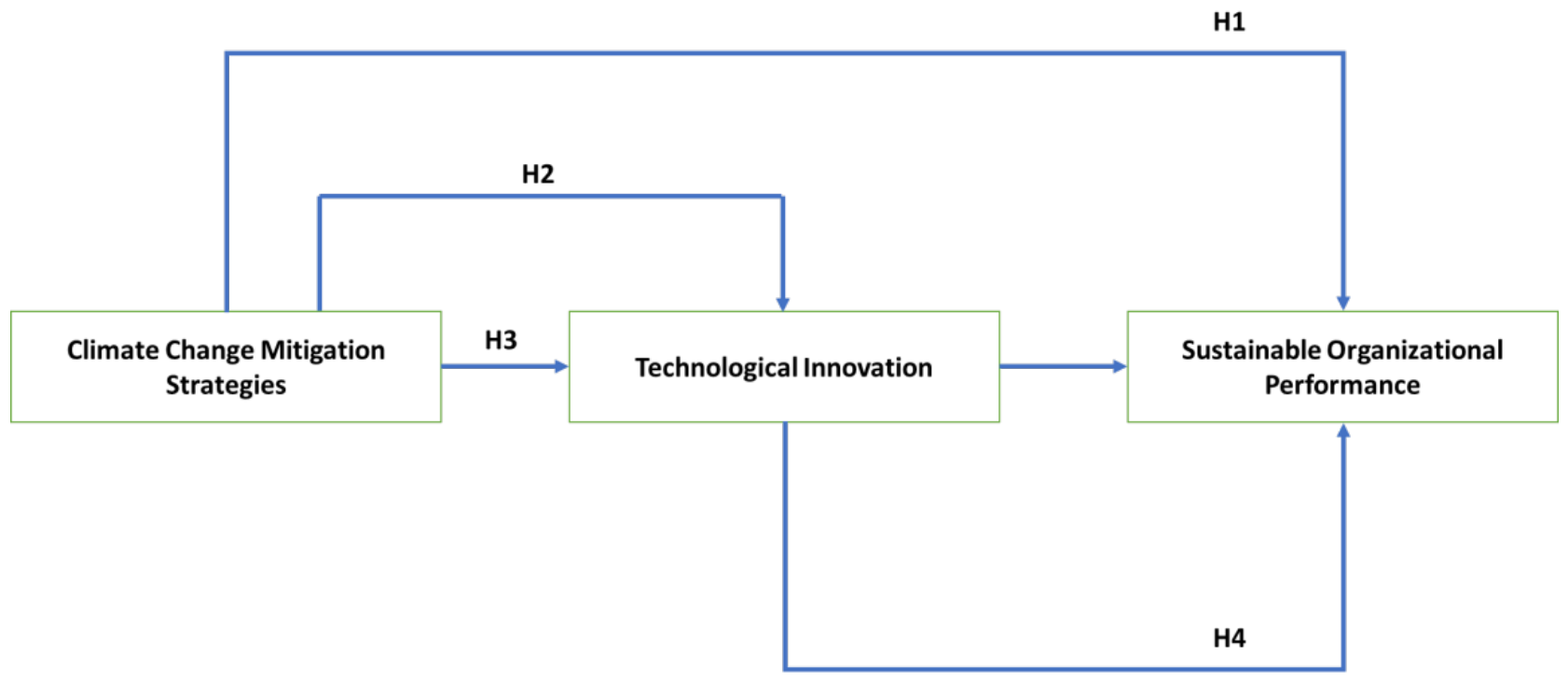
Table 1.
Demographic Characteristics of Respondents.
| Variable | Category | Frequency | Percentage (%) |
|---|---|---|---|
| Gender | Male | 247 | 70.6 |
| Female | 103 | 29.4 | |
| Total | 350 | 100.0 | |
| Age | 25–29 years | 43 | 12.3 |
| 30–34 years | 129 | 36.9 | |
| 35–39 years | 88 | 25.1 | |
| 40–44 years | 37 | 10.6 | |
| 45–49 years | 30 | 8.6 | |
| 50 years and above | 23 | 6.6 | |
| Total | 350 | 100.0 | |
| Educational Level | Undergraduate | 307 | 87.7 |
| Postgraduate and above | 43 | 12.3 | |
| Total | 350 | 100.0 | |
| Years of Experience | 1–4 years | 41 | 11.7 |
| 5–9 years | 136 | 38.9 | |
| 10–14 years | 95 | 27.1 | |
| 15–19 years | 40 | 11.4 | |
| 20–24 years | 6 | 1.7 | |
| 25 years and above | 32 | 9.1 | |
| Total | 350 | 100.0 | |
| Industry Sector | Manufacturing | 57 | 16.3 |
| Services | 48 | 13.7 | |
| IT | 149 | 42.6 | |
| Energy | 96 | 27.4 | |
| Total | 350 | 100.0 |
Table 2.
Exploratory Factor Analysis Results.
| Item | # of Items | Factor Loading | % of Variance Explained | Initial Eigenvalue | Cronbach’s Alpha |
|---|---|---|---|---|---|
| CCMS (Factor 1) | 5 | 0.729–0.947 | 28.376% | 4.256 | 0.902 |
| TI (Factor 2) | 5 | 0.755–0.842 | 21.543% | 3.231 | 0.862 |
| SOP (Factor 3) | 5 | 0.591–0.814 | 15.304% | 2.296 | 0.801 |
| 15 | 65.223% | 0.760 |
Note: CCMS = Climate Change Mitigation Strategies, TI = Technological Innovation, SOP = Sustainable Organizational Performance.
Table 3.
Confirmatory factor analysis results.
| Construct | Items | Factor Loading | CR | AVE |
|---|---|---|---|---|
| CCMS (Factor 1) | 5 | 0.548–0.982 | 0.870 | 0.59 |
| TI (Factor 2) | 5 | 0.680–0.792 | 0.859 | 0.55 |
| SOP (Factor 3) | 5 | 0.580–0.967 | 0.888 | 0.62 |
Note: CCMS = Climate Change Mitigation Strategies, TI = Technological Innovation, SOP = Sustainable Organizational Performance.
Table 5.
Discriminant validity results.
| CCMS | TI | SOP | |
|---|---|---|---|
| CCMS | 0.844 | 0.391 ** | 0.571 ** |
| TI | 0.391 ** | 0.804 | 0.697 ** |
| SOP | 0.571 ** | 0.697 ** | 0.745 |
Note: CCMS = Climate Change Mitigation Strategies, TI = Technological Innovation, SOP = Sustainable Organizational Performance.
Table 6.
Heterotrait–Monotrait Ratio (HTMT) results.
| Construct | CCMS | TI | SOP |
|---|---|---|---|
| CCMS | — | 0.421 | 0.612 |
| TI | 0.421 | — | 0.748 |
| SOP | 0.612 | 0.748 | — |
Note: CCMS = Climate Change Mitigation Strategies, TI = Technological Innovation, SOP = Sustainable Organizational Performance.
Table 7.
Results of hypothesis testing.
| Linkage | R2 | F Test | Standardized β | p-Value | Hypothesis Decision | |
|---|---|---|---|---|---|---|
| H1 | CCMS–SOP | 0.326 | 168.139 | 0.571 | <0.001 | Supported |
| H2 | CCMS–TI | 0.153 | 62.627 | 0.391 | <0.001 | Supported |
| H3 | CCMS–TI–SOP | 0.591 | 250.324 | Indirect effect = 0.320 | <0.001 | Supported |
| H4 | TI–SOP | 0.591 | 328.213 | 0.559 | <0.001 | Supported |
Note: CCMS = Climate Change Mitigation Strategies, TI = Technological Innovation, SOP = Sustainable Organizational Performance.
Disclaimer/Publisher’s Note: The statements, opinions and data contained in all publications are solely those of the individual author(s) and contributor(s) and not of MDPI and/or the editor(s). MDPI and/or the editor(s) disclaim responsibility for any injury to people or property resulting from any ideas, methods, instructions or products referred to in the content. |
© 2026 by the authors. Licensee MDPI, Basel, Switzerland. This article is an open access article distributed under the terms and conditions of the Creative Commons Attribution (CC BY) license (http://creativecommons.org/licenses/by/4.0/).
Copyright: This open access article is published under a Creative Commons CC BY 4.0 license, which permit the free download, distribution, and reuse, provided that the author and preprint are cited in any reuse.