

Submitted:
10 November 2026
Posted:
12 November 2026
You are already at the latest version
Abstract
Background: Artificial intelligence (AI) companions are increasingly used by post-secondary students for emotional support, stress management, and self-management, yet their potential implications for primary care in this population remain unclear. Students may engage with AI companions before encountering purpose-built therapeutic chatbots, which are more often accessed through intentional health-seeking or professional guidance. This distinction may position AI companions as an earlier influence on self-management and subsequent help-seeking. Objective: To examine how artificial intelligence (AI) companions may influence stress regulation, sleep quality, symptom interpretation, and healthcare-seeking behaviour among post-secondary students, and to identify the principal benefits, risks, and unresolved questions relevant to primary care. Methods: A conceptual narrative review was undertaken using literature identified through Harvard University’s Hollis Library and Google Scholar. Evidence related to AI companions, academic stress, sleep quality, emotional support, healthcare-seeking behaviour, primary care, and digital mental health was synthesized using Stress & Coping Theory and the stress-buffering hypothesis as theoretical foundations. Results: AI companions may support stress appraisal, cognitive reframing, emotional reflection, symptom articulation, and self-management before clinical encounters. However, they may also contribute to emotional overreliance, misinformation, reassurance seeking, sleep disruption, and altered help-seeking behaviour. This review proposes conceptual mechanisms linking AI companion engagement with stress regulation, sleep, and pathways into primary care while identifying relational intensity as a clinically meaningful dimension of engagement beyond frequency alone. Conclusion: AI companions should be understood as adjunctive rather than substitutive support. Their clinical relevance is based on how they can shape patients’ experiences before obtaining primary care. Longitudinal research is needed to determine how patterns of engagement influence stress, sleep, and healthcare utilization over time.
Keywords:
academic stress
; artificial intelligence
; AI companions
; conversational agents
; help-seeking behaviour
; primary care
; sleep quality
1. Introduction
Academic stress remains a pervasive feature of post-secondary education and is strongly associated with higher levels of anxiety and depression and diminished overall well-being [1]. Accompanying sleep disturbance is particularly prevalent among post-secondary students, with higher rates of insomnia, delayed sleep onset, fragmented sleep, and/or chronic sleep insufficiency reported [2,3]. As a result, academic stress and sleep quality share a bidirectional relationship, where heightened cognitive arousal and emotional distress contribute to sleep disruption, whereas poor sleep exacerbates emotional dysregulation and impaired functioning [4,5].
Although academic stress is primarily experienced and managed outside healthcare settings, its associated psychological and physical effects may become clinically relevant in primary care. Students frequently present with fatigue, headaches, gastrointestinal symptoms, impaired concentration, and sleep disturbances that reflect underlying psychological distress, rather than a related physical illness [6]. Because many students have limited mental health literacy and may not recognize these symptoms as psychologically mediated, help-seeking is often delayed [7]. Consequently, primary care physicians often serve as the first point of assessment, management, and referral for stress-related dysregulation and sleep disturbances in young adults. Therefore, understanding the relationship between physical symptoms within the broader psychosocial context is essential in caring for individuals who are experiencing psychological distress [7,8].
Persistent barriers to specialized mental healthcare further complicate this pathway. Stigma, normalization of distress, uncertainty about symptom severity, and limited service availability can delay help-seeking among students [8,9]. Some students experience substantial distress that impairs functioning without reaching a threshold that they perceive as warranting professional intervention. During this period between private distress and formal care, students may turn to accessible, low-barrier forms of emotional support and self-management, including AI companions [10,11].
Artificial intelligence (AI) companions are conversational AI agents used for relational or emotional engagement. This includes purpose-built companion platforms mimicking human relationships such as Charater.AI and Replika, as well as general-purpose conversational agents such as ChatGPT and Google Gemini, when used for companionship, emotional reflection, stress management, or other relational purposes [10,11]. Students may first encounter general-purpose conversational AI and/or AI companions throughout everyday usage, whereas purpose-built therapeutic chatbots are more likely to be encountered through intentional health-seeking or guidance from a healthcare provider. Foremost, AI companions should be distinguished from purpose-built therapeutic chatbots, which are specifically designed to provide mental health or health-related support through evidence-informed interventions, psychoeducation, symptom monitoring, or other therapeutic functions [12,13,14]. Although both categories may offer personalized and open-ended conversational interactions, they differ in their structure, intended purpose, evidence base, safeguards, and patterns of everyday use.
This distinction is relevant for understanding AI-mediated self-management among post-secondary students in primary care settings. Unlike engagement with technologies specifically designed for therapeutic purposes, AI companion use may arise spontaneously during everyday experiences of academic stress, loneliness, sleep difficulties, or uncertainty about whether professional support is warranted. Their conversational continuity, perceived emotional responsiveness, personalization, and relational engagement may facilitate emotional reflection, stress processing, and low-barrier disclosure [12,13,14]. However, these same characteristics may also contribute to reassurance seeking, emotional overreliance, delayed help-seeking, late-night cognitive arousal, or substitution for interpersonal and professional support. Therefore, they may function as adjunctive tools that support emotional reflection, stress processing, symptom articulation, and coping, while also reinforcing reassurance seeking, delaying help-seeking, contributing to late-night cognitive arousal, or altering expectations surrounding primary care physician-patient encounters.
Given the limited longitudinal evidence concerning these emerging patterns of use, this conceptual review examines how AI companion engagement may relate to stress regulation, sleep quality, symptom interpretation, and healthcare-seeking among post-secondary students. In summary, this review identifies potential benefits, risks, and unresolved questions relevant to primary care and proposes conceptual pathways for future empirical investigation.
2. Methods
A conceptual narrative review was conducted to examine the potential implications of AI companions for primary care among post-secondary students. This methodology was selected because research on AI companions remains an emerging field characterized by heterogeneous evidence, varied study designs, and limited longitudinal investigations. Instead of estimating intervention effectiveness, this review synthesizes existing evidence, identifies potential mechanisms and areas of uncertainty, and develops clinically relevant insights concerning stress regulation, sleep quality, self-management, and healthcare-seeking behaviours among post-secondary students.
Relevant studies were identified using Harvard University’s Hollis Library and Google Scholar. Searches were conducted between September 4, 2025, to August 18, 2026. Search terms combined concepts related to AI companions, conversational AI, academic stress, sleep quality, emotional support, healthcare-seeking behaviour, primary care, and digital mental health. The complete search process is provided in Figure 1. Conceptual Review Methodology. Studies focused exclusively on technical model development, unrelated educational technologies, or non-conversational AI applications without relevance to emotional support, self-management, or healthcare were excluded.
The literature was synthesized thematically using Stress & Coping Theory [15] and the stress-buffering hypothesis [16] as theoretical foundations. Findings were organized into three overarching categories: (1) potential benefits associated with AI companion engagement; (2) behavioural, psychological, and healthcare risks; and (3) unresolved questions requiring further empirical investigation. The synthesis was used to identify proposed conceptual pathways linking AI companion engagement with stress appraisal, sleep regulation, and healthcare-seeking rather than to establish causal relationships or intervention effectiveness.
3. Results
3.1. Potential Benefits
3.1.1. Stress Appraisal and Cognitive Rumination
Stress and Coping Theory [15] proposes that stress responses depend not only on objective circumstances, but also on how those circumstances are appraised. Through conversational reframing, normalization, reflection, and emotional prompting, AI companions may provide users with opportunities to externalize concerns [10]. For students facing examinations, deadlines, interpersonal strain, or uncertainty about the future, these interactions may create space to reflect on perceived stressors and available coping resources. We propose that this process could potentially interact with both primary appraisals, or how threatening a situation is perceived to be, and secondary appraisal, or how capable an individual feels of managing that stress.
Short-term reductions in depressive symptoms, anxiety, and emotional distress have been reported following dialogue-based interventions with AI therapeutic chatbots [10,17,18,19], while qualitative studies of relational systems describe emotional validation, reflection, and stress processing as common uses [20,21]. General-purpose large language models are also being used for coping and reflective dialogue among younger populations, although current evidence supports their use as complementary rather than replacements for human resources and supports such as therapy and counselling [22,23].
These processes may extend beyond the immediate emotional relief. For instance, Park et al. [24] found that college students used large language models not only to discuss academic stress, but also to organize emotions, reflect on challenging experiences, and obtain practical coping guidance. These findings provide preliminary support for the possibility that therapeutic AI chatbots may facilitate emotional externalization and cognitive reframing. In comparison, direct evidence that AI companion usage changes primary or secondary stress appraisal remains limited. Therefore, it is proposed that AI companion engagement could interact with stress appraisal, with potential downstream implications for rumination, emotional regulation, and help-seeking behaviour, when used for this intended purpose. Figure 2 illustrates this preliminary conceptual pathway, which remains hypothetical and requires empirical validation.
3.1.2. Simulated Emotional Support and Perceived Alliance
The stress-buffering theory proposes that emotional support can mitigate the psychological effects of stress [16]. Through empathic language, conversational continuity, and perceived responsiveness, AI companions foster validation and a sense of being understood [20,21,25,26]. For students experiencing academic stress or social isolation, these interactions may facilitate emotional processing, reduce perceived isolation, and improve emotional clarity [11]. Despite these findings, general purpose AI-mediated support produces stress-buffering effects comparable to human social support remains undetermined. However, the consensus is that AI companions cannot provide the reciprocity, accountability, or instrumental support inherent to human relationships [14]. In theory, perceived emotional support and alliance with AI companions may represent a potential mechanism through which engagement relates to stress regulation, rather than an established extension of the human stress-buffering effect.
3.1.3. Accessible Self-Management and Emotional Regulation
Because AI companions are immediately available, they may reduce practical and psychological barriers to support for students reluctant to pursue formal care [26]. This accessibility may be relevant during periods of acute academic pressure, when counselling services are limited, or when students perceive their medical concerns as insufficiently severe to warrant professional intervention. In these cases, it is proposed that AI companions may occupy an intermediary space for self-management between private distress and professional consultation, providing a low-barrier form of self-management before formal help-seeking occurs.
Likewise purpose-built therapeutic conversational agents are being studied for self-management across both chronic and non-chronic health conditions. In a systematic review of conversational agents for chronic pain, Peerbolte et al. [27] found that these technologies supported symptom monitoring, self-management, health information interpretation, and decision-making before engagement with healthcare professionals. Similarly, Choy et al. [28] reported that patients generally viewed digital health technologies positively for self-management, while continuing to prefer human-delivered healthcare.
More recently, purpose-built therapeutic conversational agents have incorporated generative AI while retaining evidence-based therapeutic approaches and clinical safeguards. For example, Slepian et al. [29] evaluated Solace, an expert-trained generative AI conversational agent designed to support chronic pain self-management using evidence-based pain psychology. Participants reported high usability, acceptability, and therapeutic alliance following a single interaction, although randomized trials are needed to establish efficacy. These studies suggest that AI-supported self-management may extend beyond disease management to support symptom interpretation, self-care decision-making, and engagement with primary care; however, they provide limited insight into the role of relational AI companions specifically.
3.1.4. Sleep Disruption and Nighttime Engagement
Sleep represents another domain in which AI companion engagement may have competing implications for self-management. Emotional offloading and reflective dialogue could reduce pre-sleep rumination, whereas prolonged nighttime engagement, emotionally activating conversations, or repeated reassurance seeking may sustain cognitive arousal and delay sleep onset [2,4]. These possibilities are consistent with cognitive models of insomnia, which identify persistent cognitive arousal, worry, and repetitive negative thinking as potential contributors to sleep disturbance [5].
Although Mansoor [30] highlighted the potential of large language models to support sleep wellness through behavioural guidance and coaching, comparatively little attention has been paid to relational AI companions and the mechanisms by which engagement itself may affect sleep. Within this preliminary conceptualization, the relationship between AI companion engagement and sleep may depend not only on frequency of use, but also on factors such as timing, duration, emotional intensity, and purpose of engagement. For example, brief emotional reflection followed by disengagement may differ meaningfully from prolonged or emotionally immersive conversations near bedtime.
These competing pathways form the basis of a preliminary Sleep Regulation Model developed separately [[31], preprint]. The model proposes that AI companion nighttime engagement could reduce one source of cognitive arousal through emotional offloading while potentially sustaining another through continued engagement; however, these pathways remain hypothetical and require empirical studies to prove its validity.
3.1.5. Symptom Articulation, Reflection, and Primary Care Preparedness
Through repeated engagement, AI companions may encourage users to externalize their concerns, recognize symptom patterns, and organize their experiences [14]. This process is better understood as pre-clinical reflection rather than clinical assessment and is consistent with the broader role of digital technologies in supporting self-management outside formal healthcare. Pre-consultation digital interventions have similarly demonstrated the value of reflection and organization before care, in which patients identify concerns and prepare questions for subsequent clinical encounters [32]. By helping post-secondary students determine whether persistent stress, sleep disturbance, or functional impairment warrant professional attention, AI companions may influence not only symptom interpretation but also preparedness for primary care delivered. However, these potential benefits in combination with professional services depend on AI companion complementing rather than substituting for professional assessment.
3.2. Risks and Implementation Concerns
3.2.1. Individual Risks: Emotional Over-Reliance and Relational Substitution
The same relational characteristics that may support emotional engagement also introduce the possibility of emotional overreliance and relational substitution. By simulating continuity, responsiveness, and perceived companionship, AI companions may become preferred sources of reassurance or emotional regulation over time [10,14]. Stress & Coping Theory [15], emphasizes the flexible use of multiple coping resources; therefore, reliance on AI companion-mediated support could become problematic, if it displaces interpersonal relationships, professional consultation with primary care physicians, or other adaptive coping mechanisms. These concerns correlate with relational substitution, whereby digital technologies simulate intimacy without the reciprocity, mutual accountability, or adaptive qualities of human relationships [33]. For primary care physicians, the primary concern is not AI use itself, but whether it alters coping behaviours and skills. Although these relationships require further empirical investigation, persistent reassurance seeking, reluctance to disclose concerns to others, or delayed help-seeking represent potential indicators of over-reliance.
3.2.2. Healthcare Risks: Misinformation, Over-Reassurance, and Clinical Ambiguity
Relational characteristics that foster trust may also amplify the potential consequences of inaccurate or erroneous information. AI companions lack the clinical judgment, contextual understanding, and professional accountability required for individualized medical assessment; yet, their responses may appear empathic, personalized, and authoritative, increasing the likelihood that conversational fluency is interpreted as clinically reliable [26]. In the same vein, the World Health Organization emphasized that generative AI requires human oversight because plausible responses may nevertheless be inaccurate, misleading, or inappropriate based on the context [34].
Information communicated by AI companions perceived as emotionally supportive or familiar may exert a greater influence on symptom interpretation than the information obtained from conventional sources. As Zhang et al. [35] documented, harmful human-AI relationships exists and can be developed overtime, including inappropriate reassurance, reinforcement of maladaptive or false beliefs, and inadequate responses to vulnerability. This concern is consequential in high-risk scenarios, such as active suicidal intent, where conversational agents and AI companions have demonstrated inconsistent and inadequate responses to escalating suicide risk [36].
Hence, inaccurate or context-insensitive responses can shape healthcare decisions by introducing severe risks of medical mismanagement or misdiagnosis. Over-reassurance may normalize persistent insomnia, emotional distress, or functional impairment and delay professional assessment, whereas overly alarming responses may heighten health anxiety or contribute to unnecessary healthcare utilization. Understanding whether AI companions influence a patient’s understanding or prior coping with symptoms will become an important component of psychosocial history-taking and shared decision-making in the future.
3.3. Unresolved Questions
3.3.1. Relational Intensity or Meaningful Exposure?
A key uncertainty concerns what constitutes meaningful AI companion exposure. Digital mental health studies commonly measure engagement through frequency, duration, or intervention completion; however, these measures may not capture the relational characteristics of AI companion usage. In particular, Liu et al. [37] found that usage frequency contributes to attachment, while attachment itself remains a distinct construct associated with well-being, loneliness, self-concept, and social engagement. For example, two students may use an AI companion for the same length of time, while engaging in fundamentally different ways, with one seeking brief planning assistance or occasional reflection and the other relying on prolonged-emotionally immersive conversations during stress or loneliness.
In the same manner, Chandra et al. [38] found that repeated engagement increased perceived attachment, empathy, and comfort when discussing personal concerns, in which the quality of interaction evolves beyond simple exposure. Therefore, relational intensity may represent a more clinically meaningful dimension of engagement than does frequency alone in primary care settings. Future research should therefore consider emotional investment, purpose of use, and potential displacement of interpersonal support alongside conventional exposure measures.
3.3.2. Primary Care Pathways and Healthcare Utilization
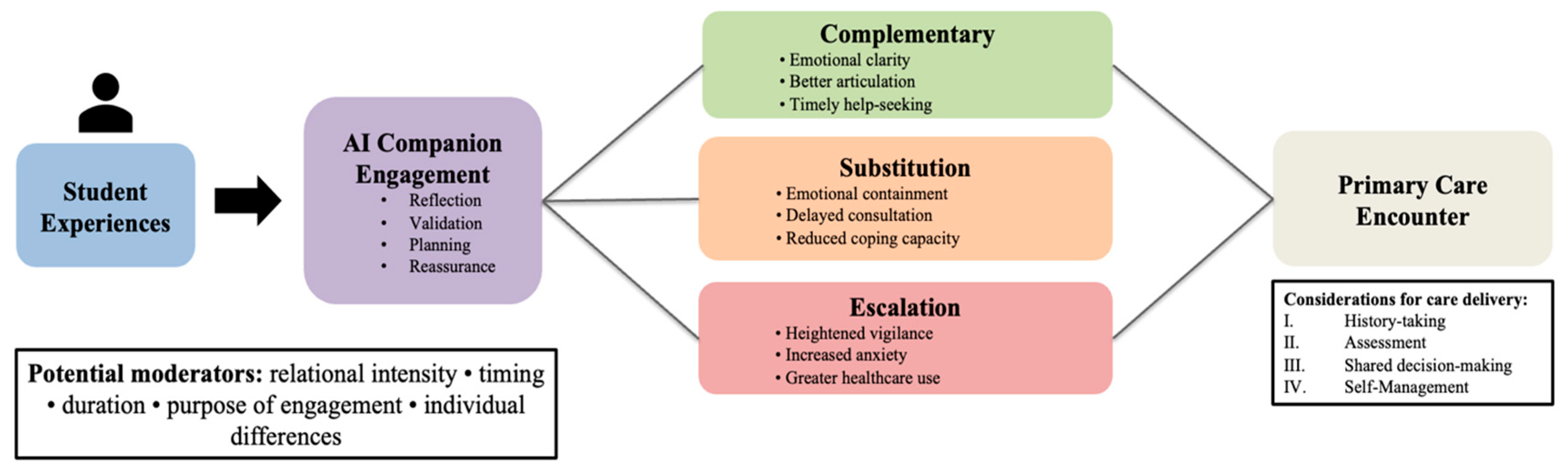
Help-seeking can be understood partly through the Health Belief Model, in which perceived severity, perceived benefits and barriers, and cues to action influence health-related behaviours [9]. Building on the preceding synthesis, this review proposes three conceptual pathways through which AI companions may influence healthcare-seeking behaviours:
- Complementary: AI companion-mediated reflection may support recognition of persistent concerns and encourage timely professional help-seeking.
- Substitution: While using AI companion, perceived emotional containment may reduce the perceived need for professional support, which potentially delays help-seeking.
- Escalation: AI companion-mediated interpretation may heighten symptom concern or vigilance, which potentially increases healthcare utilization or altering expectations during clinical encounters.
As illustrated in Figure 3, these help-seeking pathways in primary care represent hypothetical extensions of established help-seeking concepts rather than validated effects of AI companion usage. Determining which pathway occurs, for whom, and under what conditions remains an important priority for longitudinal research and of interest to primary care physicians.
3.4. Implications for Primary Care
3.5. Adjunctive Rather Than Substitutive Support
AI companions should not be considered replacements for professional assessment, evidence-based mental healthcare, or interpersonal support. This position is consistent with recommendations from Chustecki [39] and the World Health Organization [34], which emphasize human oversight and an adjunctive role for AI-supported care. Thus, AI companions may instead support emotional reflection, symptom organization, and self-management before, during or between clinical encounters, with their significance depending on the function they serve within an individual’s broader coping repertoire. Therefore, their potential benefits lie in complementing, rather than displacing, existing interpersonal and professional supports.
These unresolved questions also highlight the need to characterize AI companion engagement beyond frequency alone, accounting for when, how intensively, and under what emotional circumstances these systems are used. To capture these dimensions, this conceptual framework informed the development of the exploratory AI Companion Usage Index (AICU index) [40], which will be evaluated in an on-going longitudinal study examining AI companion engagement, academic stress, and sleep quality among post-secondary students.
4. Conclusion
It is proposed that AI companions may influence how post-secondary students manage stress, regulate emotions, interpret symptoms, and decide whether to seek professional support. Their influence cannot be understood as inherently beneficial or harmful. The same relational and conversational characteristics that may facilitate emotional reflection, perceived support, and self-management may also contribute to emotional over-reliance, misinformation, reassurance seeking, sleep disruption, or delayed help-seeking. Therefore, their clinical significance lies less in the technology itself than in how, when, and why individuals engage with it.
Within primary care, AI companions may influence patients before, during, and between clinical encounters and should be understood as adjunctive rather than substitutive supports. Primary Care Physicians may consider the function these technologies serve within a patient’s broader coping repertoire and help-seeking behaviours when their use is clinically relevant. Longitudinal research is needed to determine who may benefit or experience harm, how relational intensity and patterns of engagement shape outcomes, and whether AI companion usage influences pathways to primary care. Addressing these uncertainties is essential for developing evidence-based guidance that reflects the emerging role of AI companions in self-management and primary care.
Funding
None declared.
Data Availability Statement
No datasets were generated or analyzed during the current study.
Acknowledgments
The authors acknowledge that this work was derived from an ongoing Harvard University thesis by the lead author. We express our sincere gratitude to Dr. Edward Pace-Schott for his guidance and substantive review of this manuscript.
Conflicts of Interest
None declared.
Registration and Protocol
The preprint will be registered with PsyArxiv.
Disclosure Statement
Family Practice Paperpal and GPT-5.6 Sol (OpenAI) were used solely for spelling, grammar, and general language editing. No AI tools were used to generate the manuscript’s conceptual content, interpretations, references and conclusions.
References
- Pascoe, M. C., Hetrick, S. E., & Parker, A. G. (2020). The impact of stress on students in secondary school and higher education. International Journal of Adolescence and Youth, 25(1), 104–112. [CrossRef]
- Becker, S. P., Jarrett, M. A., Luebbe, A. M., Garner, A. A., Burns, G. L., & Kofler, M. J. (2018). Sleep in a large, multi-university sample of college students: Sleep problem prevalence, sex differences, and mental health correlates. Sleep Health, 4(2), 174–181. [CrossRef] [PubMed]
- Lund, H. G., Reider, B. D., Whiting, A. B., & Prichard, J. R. (2010). Sleep patterns and predictors of disturbed sleep in a large population of college students. Journal of Adolescent Health, 46(2), 124–132. [CrossRef] [PubMed]
- Alvaro, P. K., Roberts, R. M., & Harris, J. K. (2013). A systematic review assessing bidirectionality between sleep disturbances, anxiety, and depression. Sleep, 36(7), 1059–1068. [CrossRef] [PubMed]
- Baglioni, C., Battagliese, G., Feige, B., Spiegelhalder, K., Nissen, C., Voderholzer, U., Lombardo, C., & Riemann, D. (2011). Insomnia as a predictor of depression: A meta-analytic evaluation of longitudinal epidemiological studies. Journal of Affective Disorders, 135(1–3), 10–19. [CrossRef] [PubMed]
- Aktan, N. M., Nocella, J., Guzman, J., & Mahon, E. (2023). The relationship between somatic symptoms and mental health in primary care patients at a college health setting. The Journal for Nurse Practitioners, 19(9), 104738. [CrossRef]
- Gulliver, A., Griffiths, K. M., & Christensen, H. (2010). Perceived barriers and facilitators to mental health help-seeking in young people: A systematic review. BMC Psychiatry, 10, 113. [CrossRef] [PubMed]
- Hunt, J., & Eisenberg, D. (2010). Mental health problems and help-seeking behaviour among college students. Journal of Adolescent Health, 46(1), 3–10. [CrossRef] [PubMed]
- Rickwood, D., Deane, F. P., Wilson, C. J., & Ciarrochi, J. (2005). Young people’s help-seeking for mental health problems. Australian e-Journal for the Advancement of Mental Health, 4(3), 218–251. [CrossRef]
- Abbas, M., Jam, F.A. & Khan, T.I. Is it harmful or helpful? Examining the causes and consequences of generative AI usage among university students. Int J Educ Technol High Educ 21, 10 (2024). [CrossRef]
- Alsayed, S., Assayed, S. K., Alkhatib, M., & Shaalan, K. (2024). Impact of artificial intelligence chatbots on student well-being and mental health: A systematic review. People and Behaviour Analysis, 2(2), 1–13. [CrossRef]
- De Nieva, J. O., Joaquin, J. A., Tan, C. B., Te, R. K. M., & Ong, E. (2021). Investigating students’ use of a mental health chatbot to alleviate academic stress. In Proceedings of the 6th International ACM In-Cooperation HCI and UX Conference (CHIuXiD ‘20). Association for Computing Machinery. [CrossRef]
- Fitzpatrick, K. K., Darcy, A., & Vierhile, M. (2017). Delivering cognitive behavioural therapy to young adults with symptoms of depression and anxiety using a fully automated conversational agent (Woebot): A randomized controlled trial. JMIR Mental Health, 4(2), e19. [CrossRef] [PubMed]
- De Freitas, J., Oğuz-Uğuralp, Z., Uğuralp, A. K., & Puntoni, S. (2025). AI companions reduce loneliness. Journal of Consumer Research, 52(6), 1126–1148. [CrossRef]
- Lazarus, R. S., & Folkman, S. (1984). Stress, appraisal, and coping. Springer Publishing.
- Cohen, S., & Wills, T. A. (1985). Stress, social support, and the buffering hypothesis. Psychological Bulletin, 98(2), 310–357. [CrossRef]
- Sun, X., Wang, Y., & McDaniel, B. T. (2026). AI companions and adolescent social relationships: Benefits, risks, and bidirectional influences. Child Development Perspectives, 20(2), 91–98. [CrossRef] [PubMed]
- Fulmer, R., Joerin, A., Gentile, B., Lakerink, L., & Rauws, M. (2018). Using psychological artificial intelligence (Tess) to relieve symptoms of depression and anxiety: Randomized controlled trial. JMIR Mental Health, 5(4), e64. [CrossRef] [PubMed]
- Abd-Alrazaq, A. A., Alajlani, M., Alalwan, A. A., Bewick, B. M., Gardner, P., & Househ, M. (2020). An overview of the features of chatbots in mental health: A scoping review. International Journal of Medical Informatics, 132, 103978. [CrossRef] [PubMed]
- Ta, V., Griffith, C., Boatfield, C., Wang, X., Civitello, M., Bader, H., DeCero, E., & Loggarakis, A. (2020). User experiences of social support from companion chatbots in everyday contexts: Thematic analysis. Journal of Medical Internet Research, 22(3), e16235. [CrossRef] [PubMed]
- Skjuve, M., Følstad, A., Fostervold, K. I., & Brandtzæg, P. B. (2021). My chatbot companion – A study of human–chatbot relationships. International Journal of Human–Computer Studies, 149, 102601. [CrossRef]
- Phang, J., Lampe, M., Ahmad, L., Agarwal, S., Fang, C. M., Liu, A. R., Danry, V., Lee, E., Chan, S. W. T., Pataranutaporn, P., & Maes, P. (2025). Investigating affective use and emotional well-being on ChatGPT. arXiv. [CrossRef]
- Diaz, L., & Huguet, A. (2026). Spontaneous use of ChatGPT for mental health support: An exploratory study. Journal of Public Health. [CrossRef]
- Park, J., Brown, S. A., Chu, S. L., Zhou, A. Q., & Abreu, R. L. (2026). College students and large language models for mental health: A qualitative exploration of motivations and experiences. International Journal of Human–Computer Studies, 212, 103806. [CrossRef]
- Kim, Y., & Sundar, S. S. (2012). Anthropomorphism of computers: Is it mindful or mindless? Computers in Human Behaviour, 28(1), 241–250. [CrossRef]
- Torous, J., Bucci, S., Bell, I. H., Kessing, L. V., Faurholt-Jepsen, M., Whelan, P., Carvalho, A. F., Keshavan, M., Linardon, J., & Firth, J. (2021). The growing field of digital psychiatry: Current evidence and future directions. World Psychiatry, 20(3), 318–335. [CrossRef] [PubMed]
- Peerbolte, T. F., van Diggelen, R. J., van den Haak, P., Geurts, K., Evers, L. J., Bloem, B. R., de Vries, N. M., & van den Berg, S. W. (2025). Conversational agents supporting self-management in people with a chronic disease: Systematic review. Journal of Medical Internet Research, 27, e72309. [CrossRef] [PubMed]
- Choy, M. A., O’Brien, K., Barnes, K., Sturgiss, E. A., Rieger, E., & Douglas, K. (2024). Evaluating the digital health experience for patients in primary care: Mixed methods study. Journal of Medical Internet Research, 26, e50410. [CrossRef] [PubMed]
- Slepian, P. M., Buryk-Iggers, S., Lomanowska, A. M., Nguyen, B., Janmohamed, T., Clarke, H., Katz, J., & Niederstrasser, N. G. (2026). A Therapeutic Conversational Agent (SOLACE) for Management of Chronic Pain: Acceptability and Usability study. JMIR Rehabilitation and Assistive Technologies, 13, e87689. [CrossRef] [PubMed]
- Mansoor, H. (2025). A scoping review of large language models in personal sleep wellness. Mayo Clinic Proceedings: Digital Health, 3(4), 100301. [CrossRef] [PubMed]
- Matthews H. When the conversation doesn’t end: A preliminary sleep regulation model of nighttime AI engagement. Zenodo. August 2026. [CrossRef]
- Grant, R. W., Lyles, C., Uratsu, C. S., Vo, M. T., Bayliss, E. A., & Heisler, M. (2019). Visit planning using a waiting room health IT tool: the Aligning Patients and Providers randomized controlled trial. The Annals of Family Medicine, 17(2), 141–149. [CrossRef] [PubMed]
- Turkle, S. (2011). Alone together: Why we expect more from technology and less from each other. Basic Books.
- World Health Organization. (2025). Ethics and governance of artificial intelligence for health: Guidance on large multi-modal models. https://www.who.int/publications/i/item/9789240084759.
- Zhang, R., Li, H., Meng, H., Zhan, J., Gan, H., & Lee, Y. (2025). The dark side of AI companionship: A taxonomy of harmful algorithmic behaviours in human–AI relationships. In Proceedings of the 2025 CHI Conference on Human Factors in Computing Systems (Article 531, pp. 1–17). Association for Computing Machinery. [CrossRef]
- Pichowicz, W., Kotas, M., & Piotrowski, P. (2025). Performance of mental health chatbot agents in detecting and managing suicidal ideation. Scientific Reports, 15(1), 31652. [CrossRef] [PubMed]
- Liu, T., Lo, T., Wen, K., Sun, Y., & Wei, Z. (2026). Pathways of long-term AI virtual companion app use on users’ attachment emotions: A case study of Chinese users. Frontiers in Psychology, 16, 1687686. [CrossRef] [PubMed]
- Chandra, M., Hernandez, J., Ramos, G., Ershadi, M., Bhattacharjee, A., Amores, J., Okoli, E., Paradiso, A., Warreth, S., & Suh, J. (2025). Longitudinal study on social and emotional use of AI conversational agent. arXiv. [CrossRef]
- Chustecki, M. (2024). Benefits and risks of AI in health care: Narrative review. Interactive Journal of Medical Research, 13, e53616. [CrossRef] [PubMed]
- Matthews, H., Pace-Schott, E., Baker, C., Nguyen, B., & Janmohamed, T. (2026). Digital companions for academic stress and sleep quality: A conceptual review and developing study with primary care implications [Poster presentation]. Primary Care Research Day (PCRD) 2026. Dalhousie University, Halifax, Nova Scotia, Canada. PsyArXiv. [CrossRef]
Figure 1.
Conceptual Review Methodology.
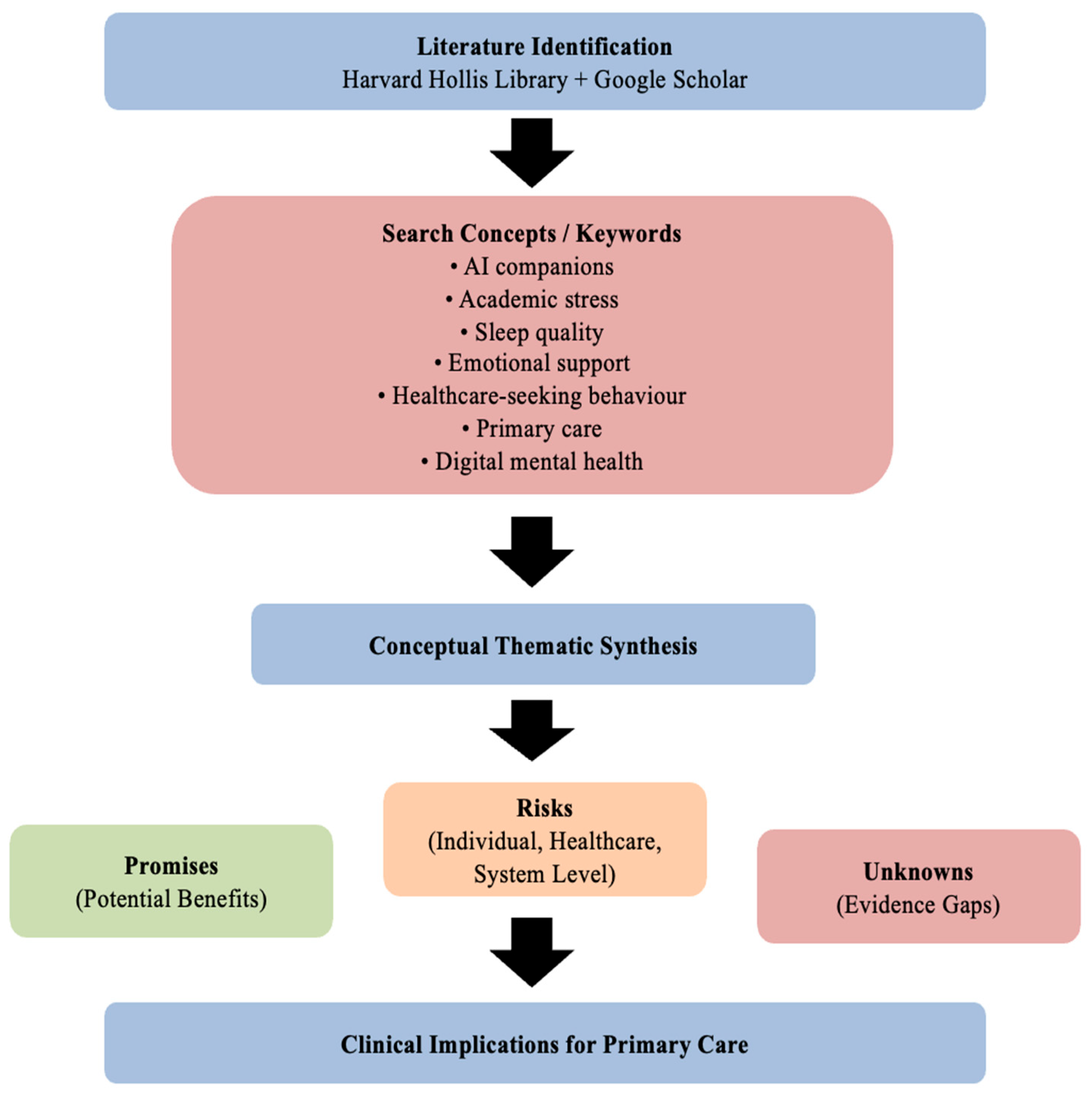
Figure 2.
Proposed Conceptual Model of Al Companion Engagement, Stress Appraisal and Potential Psychological & Behavioural Outcomes.
Figure 2.
Proposed Conceptual Model of Al Companion Engagement, Stress Appraisal and Potential Psychological & Behavioural Outcomes.
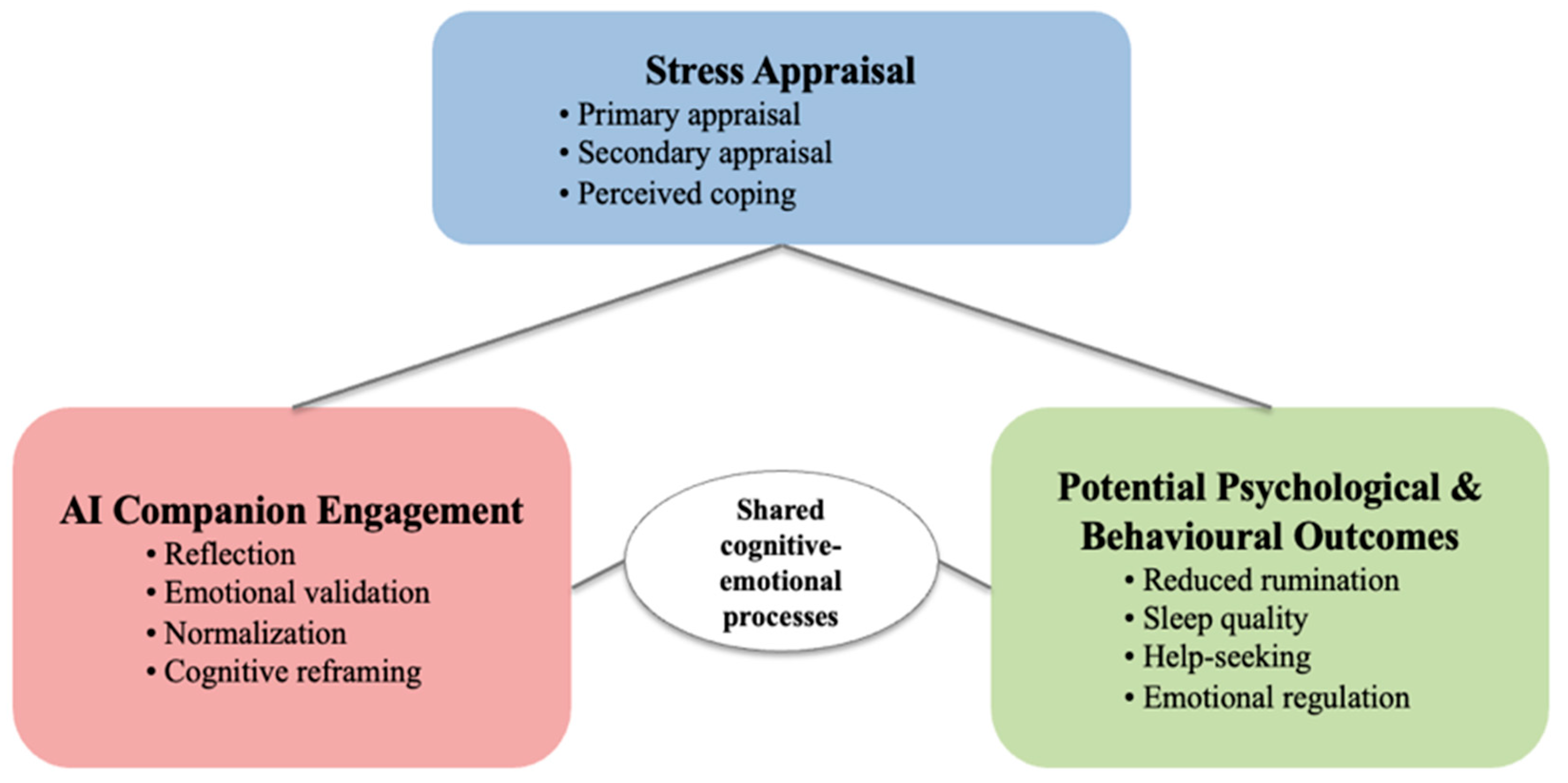
Figure 3.
Proposed Primary Care Help Seeking Pathways after Al Companion Engagement prior, during and after clinical encountere for Post-Secondary Studentet.
Figure 3.
Proposed Primary Care Help Seeking Pathways after Al Companion Engagement prior, during and after clinical encountere for Post-Secondary Studentet.
Disclaimer/Publisher’s Note: The statements, opinions and data contained in all publications are solely those of the individual author(s) and contributor(s) and not of MDPI and/or the editor(s). MDPI and/or the editor(s) disclaim responsibility for any injury to people or property resulting from any ideas, methods, instructions or products referred to in the content. |
© 2026 by the authors. Licensee MDPI, Basel, Switzerland. This article is an open access article distributed under the terms and conditions of the Creative Commons Attribution (CC BY) license (http://creativecommons.org/licenses/by/4.0/).
Copyright: This open access article is published under a Creative Commons CC BY 4.0 license, which permit the free download, distribution, and reuse, provided that the author and preprint are cited in any reuse.