

Submitted:
10 November 2026
Posted:
12 November 2026
You are already at the latest version
Abstract
A shift in cannabis legislation may influence adolescents' perceptions of cannabis-related risk, harm, and social acceptability. This study explored adolescents' perceptions of cannabis-related risk and harm, attitudes towards cannabis use, perceived social norms, and the perceived influence of cannabis decriminalisation among high school learners in Tshwane, South Africa. A descriptive cross-sectional survey was conducted among 412 learners in Grades 8–12 attending selected public high schools. Data were collected using a structured self-administered questionnaire and analysed using descriptive statistics, Pearson's chi-square tests, and multivariable logistic regression. Approximately one-third of learners reported current or previous cannabis use. Most learners reported that cannabis legalisation had no effect on their views or attitudes towards cannabis, while learners also reported cannabis use among close friends and family members. Perceptions of cannabis-related risk, harm, and social norms were significantly associated with selected demographic, behavioural, social, and legalisation-related factors in bivariate analyses; however, none remained independently associated following multivariable adjustment. The findings support adolescent-centred prevention and health promotion strategies that strengthen cannabis-related risk awareness and address social contexts associated with adolescents' attitudes and perceptions.
Keywords:
adolescents
; cannabis
; cannabis legalisation
; risk perception
; social norms
; attitudes
; South Africa
1. Introduction
Cannabis has historically been prohibited under international drug control conventions; however, the past decade has witnessed substantial shifts towards the decriminalisation and legalisation of cannabis use in several countries (Hall & Lynskey, 2020; Kitchen et al., 2022). These policy reforms have largely focused on adult use and possession of cannabis, often framed within public health, criminal justice, and human rights perspectives (Kitchen et al., 2022). Despite these intended benefits, concerns remain regarding the potential unintended consequences of cannabis policy reform on adolescents, a population for whom cannabis use remains prohibited in most jurisdictions and whose developmental vulnerabilities may increase their susceptibility to cannabis-related harms (Bantjes et al., 2022).
Adolescence is a critical developmental stage characterised by ongoing neurocognitive maturation, identity formation, and increasing influence of peers and social environments (Bloomfield et al., 2019; Harrison et al., 2024). During this period, perceptions of risk and harm, attitudes towards substance use, and perceived social norms play an important role in shaping behavioural intentions and decision-making (Leos-Toro et al., 2020; Martínez-Vispo & Dias, 2022). Research consistently demonstrates that adolescents who perceive cannabis use as less harmful or more socially acceptable are more likely to express intentions to use cannabis and engage in experimentation (Leos-Toro et al., 2020; Martínez-Vispo & Dias, 2022). Consequently, understanding how young people perceive cannabis within changing legal and social contexts has become an increasingly important public health priority (Harrison et al., 2024).
South Africa became one of the few African countries to decriminalise the private use and cultivation of cannabis by adults following the Constitutional Court ruling in 2018 (Parry et al., 2019).This ruling subsequently informed the Cannabis for Private Purposes Act of 2024, which recognises the right of adults to possess and use cannabis in private settings while explicitly prohibiting possession, use, and transactions involving cannabis by children. Although the legislation seeks to protect minors, concerns remain regarding adolescents’ exposure to cannabis-related information, changing societal attitudes towards cannabis, and increased visibility of cannabis within communities and social environments and perceived ease of access to cannabis following policy reform (Harpin et al., 2018; Bantjes et al., 2022; Howell et al., 2024).
The public health significance of cannabis policy reform extends beyond actual patterns of use. Legal and policy changes may influence how adolescents perceive cannabis-related risks, interpret social norms, and develop attitudes towards cannabis use. Furthermore, international evidence suggests that such policy reform can alter perceptions of harm and social acceptability, even in contexts where changes in adolescent use are not immediately observed (Bailey et al., 2023; Melchior et al., 2019).
Adolescents may interpret legal reforms as signals that cannabis is less harmful, more acceptable, or safer, or more readily available than previously believed, potentially influencing future behavioural intentions and perceptions of risk (Levy et al., 2021; Harrison et al., 2024). Perceptions of risk and harm are particularly important because they influence susceptibility to experimentation and future substance use behaviours (Leos-Toro et al., 2020; Harrison et al., 2024).
Similarly, social norms, including perceptions of peer and family cannabis use, can shape beliefs about the acceptability of cannabis use and contribute to normalisation of substance use behaviours (Kenyon et al., 2024; Torrejón-Guirado et al., 2023; Watts et al., 2023). According to the Theory of Planned Behaviour, perceived social approval and subjective norms are important determinants of behavioural intentions, making adolescents particularly responsive to peer and family influences regarding substance use (Ajzen, 1991). Understanding adolescents’ attitudes and social perceptions is therefore essential for informing health promotion interventions, school-based prevention strategies, and public health communication in contexts where cannabis legislation has changed.
In South Africa, available evidence has largely focused on the prevalence of cannabis use and treatment-related surveillance data, such as reports generated through the South African Community Epidemiology Network on Drug Use (SACENDU) (Ramlagan et al., 2021; South African Medical Research Council [SAMRC], n.d.). While these sources provide valuable information on patterns of substance use, they offer limited insight into how adolescents perceive cannabis-related risks and harms, how they interpret changing cannabis legislation, and how social norms shape their attitudes towards cannabis (Howell et al., 2024). Consequently, there remains limited empirical evidence regarding adolescents’ perceptions of cannabis in the post-reform context, particularly among school-going populations.
Understanding adolescents’ perceptions of cannabis-related risk and harm, attitudes towards cannabis use, perceived social norms, and views regarding cannabis decriminalisation is critical for informing evidence-based responses aimed at preventing unintended consequences among young people. Such information is necessary to support the development of targeted interventions that address misconceptions, strengthen risk awareness, and promote informed decision-making among adolescents (Harrison et al., 2024; Leos-Toro et al., 2020).
Therefore, this study aimed to explore adolescents’ perceptions of cannabis-related risk and harm, attitudes towards cannabis use, perceived social norms, and the perceived influence of cannabis policy reform among high school learners in Tshwane, South Africa.
2. Materials and Methods
2.1. Study Design
The broader study was a sequential explanatory mixed-methods design to examine adolescents’ perceptions of cannabis use following policy reform in South Africa. This paper reports findings from the quantitative phase, which utilised a descriptive cross-sectional survey to explore adolescents’ perceptions of cannabis-related risk and harm, attitudes towards cannabis use, perceived social norms, and the perceived influence of cannabis decriminalisation.
2.2. Study Setting
The study was conducted among high school learners in Grades 8 to 12 within public high schools located throughout the City of Tshwane Metropolitan Municipality, Gauteng Province, South Africa.
2.3. Population, Materials and Procedure
Population
The study population consisted of adolescents in Grades 8–12 attending public high schools within the Tshwane Metropolitan Municipality.
Recruitment
Participant recruitment commenced following approval from the Gauteng Department of Education and the relevant Tshwane District Office. These approval letters were subsequently used to negotiate access with the principals of the selected public high schools, securing administrative permission to conduct the study on site. Within the selected schools, learners were addressed as a group, informed about the study, and invited to participate. Interested learners received information packs containing parental informed consent forms and learner assent forms. Completed parental consent and learner assent forms were returned to the researchers prior to data collection to verify eligibility and ensure voluntary participation.
2.4. Sampling Procedure
A multistage sampling approach was employed, whereby four areas within the City of Tshwane were purposively selected, followed by the purposive selection of twelve public high schools. Adolescents enrolled in Grades 8–12 at these institutions were then recruited utilising convenience sampling based on their voluntary willingness to participate.
2.5. Sample Size Determination
Using the Raosoft sample size calculator, a minimum sample size of 385 was estimated at a 95% confidence level and a 5% margin of error, based on an estimated population of 877,179 learners enrolled in Grades 8–12 in the Gauteng Province (Gauteng Department of Education, 2025).
Data collection tools
Data were collected using a structured, self-administered questionnaire consisting of four sections: (i) socio-demographic characteristics; (ii) cannabis use experiences and behaviours; (iii) perceptions of cannabis-related risk and harm; and (iv) attitudes, perceived social norms, and the perceived influence of cannabis policy reform. The perception, attitude, and social-norm items were adapted from previously validated instruments which assessed adolescents’ cannabis use, perceptions of risk and harm, and perceived social norms (Harpin et al., 2018; Leos-Toro et al., 2020; Levy et al., 2021; Martínez-Vispo & Dias, 2022).
Data collection
Data collection was conducted over an eight-month period between February and September 2025. Data were collected by the researchers and a team of research assistants who were trained in research ethics and the specific data collection processes for this study.
On the scheduled data collection days, at times agreed upon by school management, learners whose parents had provided written informed consent were assembled in a designated venue, such as a classroom or library. The purpose of the study was re-explained, and participants were given an opportunity to ask questions or seek clarification. Following this, informed consent forms were administered to participants aged 18 and older, while assent forms were administered to those under the age of 18. The self-administered questionnaires were then distributed to all participants.
2.6. Data Analysis
Data were cleaned and analysed using STATA version 17. Descriptive statistics, including frequencies, percentages, means, and standard deviations, were used to summarise socio-demographic characteristics, cannabis use experiences, perceptions of cannabis-related risk and harm, attitudes towards cannabis use, perceived social norms, and the perceived influence of cannabis policy reform. Age was categorised into predefined age groups for descriptive and analytical purposes.
Perceptions of cannabis use were assessed using a 17-item instrument measured on a five-point Likert scale, capturing perceived risk, harm, and social norms. Individual item responses were grouped into positive, neutral, and negative perception categories. Specifically, responses of “strongly agree” and “agree” were classified as reflecting a negative perception of cannabis use (indicating higher perceived risk and harm), while “strongly disagree” and “disagree” indicated a positive perception (indicating lower perceived risk and harm). Neutral responses reflected uncertainty or the absence of a strong opinion. Overall perception scores were subsequently classified as positive, negative, or neutral based on composite scores.
Bivariate analyses using Pearson’s chi-square tests were conducted to examine associations between adolescents’ perceptions of cannabis-related risk and harm, perceived social norms, and selected demographic, cannabis-use, and decriminalisation-related variables. Statistical significance was set at p ≤ 0.05. Variables showing statistically significant associations with perceptions of cannabis-related risk, harm and perceived social norms at the bivariate level were then entered into a multivariable logistic regression model to identify factors independently associated with adolescents’ perceptions.
Ethical considerations
Ethical clearance was obtained from the Sefako Makgatho Health Sciences University Research Ethics Committee (SMUREC/H/298/2024:PG), and permission to conduct the study was granted by the relevant education authorities and participating schools. Written informed consent was obtained from the parents or guardians of participants younger than 18 years, along with learner assent, whereas participants aged 18 years and older provided independent informed consent. Participation was voluntary, and anonymity was maintained throughout the study.
3. Results
Sociodemographic Characteristics
Table 1 shows the sociodemographic characteristics of the 412 study participants.
Cannabis Use Experiences
Prevalence of past and current cannabis use
Figure 1. below shows that 35% are current or past users of cannabis.
Table 2 presents cannabis use experiences and patterns among participants and is included to provide contextual understanding of adolescents’ perceptions, attitudes and social norms regarding cannabis use.
Influence of Cannabis Legalization on Views and Attitudes
Table 3 presents learners’ perceptions of the influence of cannabis decriminalisation on their views and attitudes towards cannabis, perceived social norms, and exposure to cannabis-related information. While most learners indicated that decriminalisation had no effect on their views or attitudes towards cannabis, substantial proportions reported exposure to cannabis use among friends and family members. Learners also reported exposure to cannabis-related information through multiple sources, highlighting the broader social environment within which attitudes and perceptions towards cannabis are formed.
Factors Associated with Perceptions of Cannabis-Related Risk, Harm and Social Norms
Table 4 presents factors associated with adolescents’ perceptions of cannabis-related risk and harm, as well as perceived social norms. Significant associations were observed between perception categories and selected demographic, behavioural, social, and decriminalisation-related variables.
Adjusted Multivariable Logistic Regression Model of Factors Associated with Adolescents’ Perceptions, Attitudes and Social Norms Regarding Cannabis Use
Table 5 presents the adjusted multivariable logistic regression model for perceptions of cannabis-related risk, harm, and social norms. Variables that demonstrated significant associations in the bivariate analysis were included in the model. Following adjustment for potential confounding factors, no independent associations were observed between the variables examined and adolescents’ perceptions of cannabis-related risk, harm, and social norms.
4. Discussion
This study explored adolescents’ perceptions of cannabis-related risk and harm, attitudes towards cannabis use, perceived social norms, and the perceived influence of cannabis decriminalisation among high school learners in Tshwane, South Africa. The findings indicate that although many learners perceived cannabis use as potentially harmful, considerable uncertainty regarding cannabis-related risks and social acceptability remains. Significant associations were observed between perceptions and several demographic, behavioural, social, and decriminalisation-related variables at the bivariate level. However, none of these factors remained independently associated with perceptions following multivariable adjustment. This suggests that adolescents’ perceptions are likely shaped by multiple interacting social and environmental influences rather than any single determinant, a finding consistent with socio-ecological perspectives of adolescent substance use that recognise the combined influence of individual, interpersonal, and environmental factors in shaping health-related attitudes and behaviours (Kenyon et al., 2024; Watts et al., 2023).
Perceptions of Cannabis-Related Risk and Harm
A key finding of this study is the persistence of mixed perceptions regarding cannabis-related risk and harm among adolescents. Although negative perceptions towards cannabis outweighed positive perceptions, a substantial proportion of learners remained uncertain about the risks associated with cannabis use. This uncertainty is critical because perceived risk is one of the strongest predictors of substance use behaviour among adolescents. Previous studies have demonstrated that adolescents who perceive cannabis as less harmful or who are uncertain about its potential consequences are more likely to express intentions to use cannabis and engage in experimentation (Harrison et al., 2024; Leos-Toro et al., 2020; Martínez-Vispo & Dias, 2022).
The findings therefore suggest potential gaps in adolescents’ understanding of the mental health, cognitive, and developmental consequences associated with cannabis use, despite increasing public discourse surrounding cannabis following the legal reforms in South Africa. This uncertainty is critical because adolescents who are unclear about cannabis-related harms may be less likely to perceive cannabis use as risky and may consequently be more susceptible to experimentation and future use (Harrison et al., 2024; Leos-Toro et al., 2020). The persistence of uncertainty observed in this study may reflect inconsistent exposure to evidence-based information, competing messages from social networks and media sources, and difficulties distinguishing decriminalisation for adults from perceptions of safety for adolescents (Howell et al., 2024; Levy et al., 2021). Similar concerns have been reported in post-decriminalisation settings where changes in cannabis policy have been accompanied by reduced perceptions of harm and increased uncertainty regarding cannabis-related risks among young people (Levy et al., 2021; Melchior et al., 2019). In South Africa, these uncertainties may be compounded by the misconception that decriminalisation for private adult use implies endorsement of cannabis use generally, despite legislation continuing to prohibit cannabis use by children and adolescents (Howell et al., 2024; Parry et al., 2019).
Gender Differences in Perceptions
Gender was significantly associated with perceptions of cannabis-related risk and harm at the bivariate level, with female learners more likely to report negative perceptions towards cannabis than males. However, this association did not persist following multivariable adjustment. This finding is consistent with international evidence indicating that males generally report lower levels of perceived risk and greater acceptance of cannabis use compared to females (Harrison et al., 2024; Martínez-Vispo & Dias, 2022). Possible explanations reported in the literature include gender-related socialisation patterns, differences in attitudes towards risk-taking behaviour, and varying exposure to peer and substance use cultures during adolescence (English & Whitehill, 2023; Lee et al., 2021; Watts et al., 2023). These findings suggest that prevention and health promotion programmes may benefit from considering gender-specific drivers of cannabis perceptions and risk-taking behaviours when designing interventions for adolescents.
Social Norms, Peer Influence and Family Exposure
The bivariate findings indicated associations between adolescents’ perceptions of cannabis-related risk and harm and several aspects of their social environment, including cannabis-use experiences and exposure to cannabis use within family networks. Learners who reported previous cannabis use, exposure to cannabis use among close friends, and cannabis use within family networks were more likely to report favourable perceptions towards cannabis. However, these relationships did not remain independently significant following multivariable adjustment. These findings highlight the important role of social context in shaping adolescents’ attitudes, beliefs, and behavioural norms. Similar findings have been reported in several international studies, which show that peer and family influences contribute significantly to the normalisation of cannabis use and lower perceptions of risk among adolescents (English & Whitehill, 2023; Kenyon et al., 2024; Torrejón-Guirado et al., 2023; Watts et al., 2023).
The results also align with the Theory of Planned Behaviour, which proposes that subjective norms and perceived social approval play an important role in shaping behavioural intentions and subsequent conduct (Ajzen, 1991). Adolescents who perceive cannabis use as acceptable or common among peers and family members may therefore be more likely to develop favourable attitudes towards cannabis, irrespective of legal restrictions. Similar findings have been reported internationally, where perceptions of peer approval and peer cannabis use were associated with more permissive attitudes towards cannabis and a greater likelihood of experimentation and use among adolescents (Kenyon et al., 2024; Torrejón-Guirado et al., 2023; Watts et al., 2023). The high proportion of learners reporting cannabis use among close friends is particularly critical to note, as peer networks serve as essential sources of behavioural modelling, social reinforcement, and norm formation during adolescence (English & Whitehill, 2023; Lansford et al., 2021). Furthermore, adolescents may overestimate the prevalence and acceptability of substance use among their peers, thereby lowering their own threshold for experimentation and increasing the likelihood of cannabis use (Lansford et al., 2021; Lee et al., 2021). Consequently, prevention strategies that focus exclusively on increasing individual knowledge and awareness may be insufficient unless they simultaneously address broader social norms, peer influences, and family environments that contribute to the normalisation of cannabis use among young people.
Influence of Cannabis Legalization on Attitudes and Perceptions
An important finding of this study is that most participants reported that cannabis decriminalisation had no effect on their attitudes or views regarding cannabis use. This finding suggests that decriminalisation alone may not automatically change adolescents’ perceptions or behaviours. Similar findings have been reported internationally, where studies have shown limited evidence that decriminalisation results in immediate increases in adolescent cannabis use or substantial changes in adolescent attitudes towards cannabis (Bailey et al., 2023; Melchior et al., 2019).
However, the findings should be interpreted cautiously. Although decriminalisation may not directly alter attitudes, it may indirectly influence adolescents through increased visibility of cannabis in society, evolving public discourse, greater exposure to cannabis-related information and changing perceptions of social acceptability (Hall & Lynskey, 2020; Howell et al., 2024). The substantial exposure to cannabis use within peer and family networks observed in this study supports the possibility that decriminalisation influences adolescents through social and environmental pathways rather than through direct legal access. This interpretation is consistent with evidence suggesting that policy reform can alter perceptions of availability, normalisation and acceptability even when use patterns remain relatively stable (Levy et al., 2021; Melchior et al., 2019).
Cannabis Use Experiences as Contextual Findings
Cannabis-use experiences were examined descriptively to contextualise adolescents’ perceptions and attitudes. Approximately one-third of learners reported current or previous cannabis use. Although cannabis-use prevalence was not a primary outcome of this study, these descriptive findings provide context for interpreting differences in perceptions according to adolescents’ cannabis-use experience.
Implications for Policy and Practice
The findings have important implications for adolescent substance use prevention and health promotion in South Africa. The persistence of uncertainty regarding cannabis-related harms, along with substantial exposure to cannabis use among peers and family members, suggests a need for interventions that strengthen adolescents’ understanding of cannabis-related risks and address misconceptions surrounding cannabis use. Given that lower perceived risk and uncertainty regarding harm are associated with increased susceptibility to cannabis experimentation and use among adolescents, prevention efforts should prioritise elevating risk awareness and improving cannabis-related health literacy (Harrison et al., 2024; Leos-Toro et al., 2020; Martínez-Vispo & Dias, 2022). In addition, prevention initiatives should address the broader social environments within which adolescents form attitudes and beliefs regarding cannabis.
Evidence consistently demonstrates that peer influences, family environments, and perceived social norms play a critical role in shaping adolescent substance use behaviours (English & Whitehill, 2023; Kenyon et al., 2024; Torrejón-Guirado et al., 2023; Watts et al., 2023). School-based, peer-informed, family-centred, and community-based interventions are more effective when they address both knowledge and the social influences that contribute to substance use behaviours (Aneni et al., 2023; Liu et al., 2023; Moreland et al., 2020). Furthermore, interventions informed by behavioural theories such as the Theory of Planned Behaviour and the Health Belief Model may be particularly valuable, as they target perceived susceptibility, perceived harms, social norms, and behavioural intentions related to substance use (Ajzen, 1991; Alyafei & Easton-Carr, 2024; Rosenstock et al., 1988). Interventions that challenge misconceptions, strengthen risk awareness, and promote resistance to negative peer influences may therefore be particularly critical in the evolving post-decriminalisation context.
5. Conclusion
The study contributes to the limited body of evidence on adolescents’ perceptions of cannabis-related risk and harm, attitudes towards cannabis use, perceived social norms, and the perceived influence of cannabis decriminalisation in South Africa. While many learners perceived cannabis use as harmful, substantial uncertainty regarding cannabis-related risks and social acceptability remained. The findings further highlight the critical role of social contexts—particularly exposure to cannabis use among peers and family members—in shaping adolescents’ perceptions and attitudes towards cannabis. Although most learners reported that decriminalisation had not directly influenced their attitudes or views regarding cannabis, the findings suggest that policy reform may indirectly influence perceptions through increased social exposure, changing norms, and the broader visibility of cannabis within communities.
The study underscores the need for context-specific, adolescent-centred prevention and health promotion strategies that strengthen risk awareness, address misconceptions regarding cannabis use, and respond to the social environments within which adolescents form beliefs and attitudes about cannabis. Interventions should extend beyond information provision alone and incorporate approaches that address peer influences, family environments, and perceived social norms in order to support informed decision-making and reduce the normalisation of cannabis use among adolescents.
Strengths of the Study
A key strength of this study is its relatively large sample size and the inclusion of learners from multiple public high schools within the City of Tshwane, which broadened the range of adolescent perspectives represented in the research.
Limitations of the Study
A limitation of this study is the cross-sectional study design, as it limits the establishment of causal relationships between adolescents’ perceptions, attitudes, social norms and cannabis-related experiences. Furthermore, the reliance on convenience sampling and active parental consent may have introduced selection bias. Learners who chose to participate or returned consent forms might hold different cannabis attitudes or experience different levels of parental monitoring than those who did not, potentially limiting the generalisability of the findings. Furthermore, the study relied on self-reported information, which may have influenced social desirability bias, particularly given the sensitive nature of substance use among adolescents.
Author Contributions
Z.K.: Conceptualization, methodology, software, validation, formal analysis, investigation, resources, writing—original draft, writing—review and editing, project administration. K.E.M.: Supervision, conceptualization, methodology, validation, resources, writing—review and editing, funding acquisition. K.C.M.: Software, validation, formal analysis, data curation, writing—review and editing. All authors have read and agreed to the published version of the manuscript.
Funding
This research was funded by the National Research Foundation (NRF) (115449) through the Research Chair: Substance Abuse and Population Mental Health (grant 115449) Postgraduate scholarship grant (AHPMDS260806460257) for research work and to cover publication costs.
Institutional Review Board Statement
Ethical clearance to conduct the study was obtained from Sefako Makgatho Health Sciences University (SMU) Research Ethics Committee (SMUREC/H/298/2024: PG).
Informed Consent Statement
Written informed consent was obtained from the parents or guardians of participants under 18 years of age, alongside learner assent. Participants aged 18 years and older provided independent written informed consent prior to their inclusion in the study.
Data Availability Statement
The data presented in this study can be made available if required from the authors, following the data availability policies of Sefako Makgatho Health Sciences University .
Acknowledgments
All research assistance (Simphiwe Skasimbe, Keabetswe Monthsio, Boipelo Letageng) for their contribution on data collection and capturing, learners from grades 8-12 high school for participation in the study, the Gauteng Department of Basic Education at provincial and district level, the school management and governing body for granting me permission to conduct the study.
Conflicts of Interest
The authors declare no conflict of interest.
References
- Ajzen, I. The theory of planned behavior. Organ. Behav. Hum. Decis. Process. 1991, 50(2), 179–211. [Google Scholar] [CrossRef]
- Alyafei, A.; Easton-Carr, R. The health belief model of behavior change; StatPearls Publishing, 2024. [Google Scholar]
- Aneni, K.; Meyer, J.; Funaro, M. C.; Pegram, D.; Umutoni, F. A.; de la Vega, I. G.; Jiao, M. G.; Fernandes, C. S. F.; Onyeaka, H.; Baiden, P.; Camenga, D. R. A systematic review and meta-analysis evaluating the efficacy of stand-alone digital interventions to prevent substance use among adolescents. Curr. Addctn. Rep. 2023, 10, 378–395. [Google Scholar] [CrossRef] [PubMed]
- Bailey, J. A.; Tiberio, S. S.; Kerr, D. C. R.; Epstein, M.; Henry, K. L.; Capaldi, D. M. Effects of cannabis legalization on adolescent cannabis use across three studies. Am. J. Prev. Med. 2023, 64(3), 361–367. [Google Scholar] [CrossRef] [PubMed]
- Bantjes, J.; Myers, B.; Parry, C. D. H. Liberalising cannabis legislation in South Africa: Potential public health consequences for adolescents and pregnant women. South Afr. Med. J. 2022, 112(6), 393–394. [Google Scholar] [CrossRef]
- Bloomfield, M. A. P.; Hindocha, C.; Green, S. F.; Wall, M. B.; Lees, R.; Petrilli, K.; Freeman, T. P. The neuropsychopharmacology of cannabis: A review of human imaging studies. Pharmacol. Ther. 2019, 195, 132–161. [Google Scholar] [CrossRef] [PubMed]
- English, F.; Whitehill, J. M. Risk factors for adolescent cannabis use in a state with legal recreational cannabis: The role of parents, siblings, and friends. Clin. Ther. 2023, 45(6), 589–598. [Google Scholar] [CrossRef] [PubMed]
- Gauteng Department of Education. Ministerial briefing session on school infrastructure and equipment: Size and shape of the education sector in Gauteng [Presentation to the National Council of Provinces, Parliament of South Africa]; Gauteng Department of Education, 11 March 2025. [Google Scholar]
- Hall, W.; Lynskey, M. Assessing the public health impacts of legalizing recreational cannabis use: The US experience. World Psychiatry 2020, 19(2), 179–186. [Google Scholar] [CrossRef] [PubMed]
- Harpin, S. B.; Brooks-Russell, A.; Ma, M.; James, K. A.; Levinson, A. H. Adolescent marijuana use and perceived ease of access before and after recreational marijuana implementation in Colorado. Subst. Use Misuse 2018, 53(3), 451–456. [Google Scholar] [CrossRef] [PubMed]
- Harrison, M. E.; Kanbur, N.; Canton, K.; Lim-Reinders, S.; Groulx, C.; Norris, M. L. Adolescents’ cannabis knowledge and risk perception: A systematic review. J. Adolesc. Health 2024, 74(3), 402–440. [Google Scholar] [CrossRef] [PubMed]
- Howell, S.; Clarke, M.; Rusenga, C.; Klantschnig, G.; Carrier, N. South African cannabis policy: Policy reform must balance public health, economic interests, and social justice (Policy Bristol Briefing No. 152); University of Bristol, 2024. [Google Scholar]
- Kenyon, E. A.; Yang, M.; Chung, T.; Wilson, A. C.; Feldstein Ewing, S. W. Multilevel associations of peer cognitive factors and adolescent cannabis use in a legal recreational cannabis region. Front. Psychiatry 2024, 15, 1477000. [Google Scholar] [CrossRef] [PubMed]
- Kitchen, C.; Kabba, J. A.; Fang, Y. Status and impacts of recreational and medicinal cannabis policies in Africa: A systematic review and thematic analysis of published and grey literature. Cannabis Cannabinoid Res. 2022, 7(3), 239–261. [Google Scholar] [CrossRef]
- Lansford, J. E.; Goulter, N.; Godwin, J.; Crowley, M.; McMahon, R. J.; Bates, J. E.; Pettit, G. S.; Greenberg, M.; Lochman, J. E.; Dodge, K. A. Development of individuals’ own and perceptions of peers’ substance use from early adolescence to adulthood. Addctv. Behav. 2021, 120, 106958. [Google Scholar] [CrossRef] [PubMed]
- Lee, M. H.; Kim-Godwin, Y. S.; Hur, H. Race/ethnicity differences in risk and protective factors for marijuana use among U.S. adolescents. BMC Public Health 2021, 21(1), 1–10. [Google Scholar] [CrossRef] [PubMed]
- Leos-Toro, C.; Fong, G. T.; Meyer, S. B.; Hammond, D. Cannabis health knowledge and risk perceptions among Canadian youth and young adults. Harm Reduct. J. 2020, 17, 54. [Google Scholar] [CrossRef] [PubMed]
- Levy, N. S.; Mauro, P. M.; Mauro, C. M.; Segura, L. E.; Martins, S. S. Joint perceptions of the risk and availability of cannabis in the United States, 2002–2018. Drug Alcohol Depend. 2021, 226, 108873. [Google Scholar] [CrossRef] [PubMed]
- Liu, X.-Q.; Guo, Y.-X.; Wang, X. Delivering substance use prevention interventions for adolescents in educational settings: A scoping review. World J. Psychiatry 2023, 13(7), 409–422. [Google Scholar] [CrossRef] [PubMed]
- Martínez-Vispo, C.; Dias, P. C. Risk perceptions and cannabis use in a sample of Portuguese adolescents and young adults. Int. J. Ment. Health Addctn. 2022, 20(1), 595–606. [Google Scholar] [CrossRef]
- Melchior, M.; Nakamura, A.; Bolze, C.; Hausfater, F.; El Khoury, F.; Mary-Krause, M.; Azevedo Da Silva, M. Does liberalisation of cannabis policy influence levels of use in adolescents and young adults? A systematic review and meta-analysis. BMJ Open 2019, 9(7), e025880. [Google Scholar] [CrossRef] [PubMed]
- Moreland, A. D.; Lopez, C. M.; Gilmore, A. K.; Borkman, A. L.; McCauley, J. L.; Rheingold, A. A.; Danielson, C. K. Substance use prevention programming for adolescents and young adults: A mixed-method examination of substance use perceptions and use of prevention services. Subst. Use Misuse 2020, 55(14), 2341–2347. [Google Scholar] [CrossRef] [PubMed]
- Parry, C. D. H.; Myers, B.; Caulkins, J. P. Decriminalisation of recreational cannabis in South Africa. The Lancet 2019, 393(10183), 1804–1805. [Google Scholar] [CrossRef] [PubMed]
- Ramlagan, S.; Peltzer, K.; Pengpid, S. Prevalence and correlates of non-daily and daily cannabis use among persons aged 15 years and older in South Africa: Results of a national survey, 2017. Subst. Abus. Treat. Prev. Policy 2021, 16(21), 1–9. [Google Scholar]
- Rosenstock, I. M.; Strecher, V. J.; Becker, M. H. Social learning theory and the Health Belief Model. Health Educ. Q. 1988, 15(2), 175–183. [Google Scholar] [CrossRef] [PubMed]
- South African Medical Research Council. South African Community Epidemiology Network on Drug Use (SACENDU). n.d. Available online: https://www.samrc.ac.za/intramural-research-units/MASTRU-sacendu.
- Torrejón-Guirado, M.-C.; Baena-Jiménez, M. Á.; Lima-Serrano, M.; de Vries, H.; Mercken, L. The influence of peers’ social networks on adolescent cannabis use: A systematic review of longitudinal studies. Front. Psychiatry 2023, 14, 1306439. [Google Scholar] [CrossRef] [PubMed]
- Watts, L. L. F.; Abo Hamza, E.; Bedewy, D. A.; Moustafa, A. A. A meta-analysis on peer influence and adolescent substance use. Current Psychology 2023. [Google Scholar] [CrossRef]
Figure 1.
The Prevalence of Cannabis use in the sample.
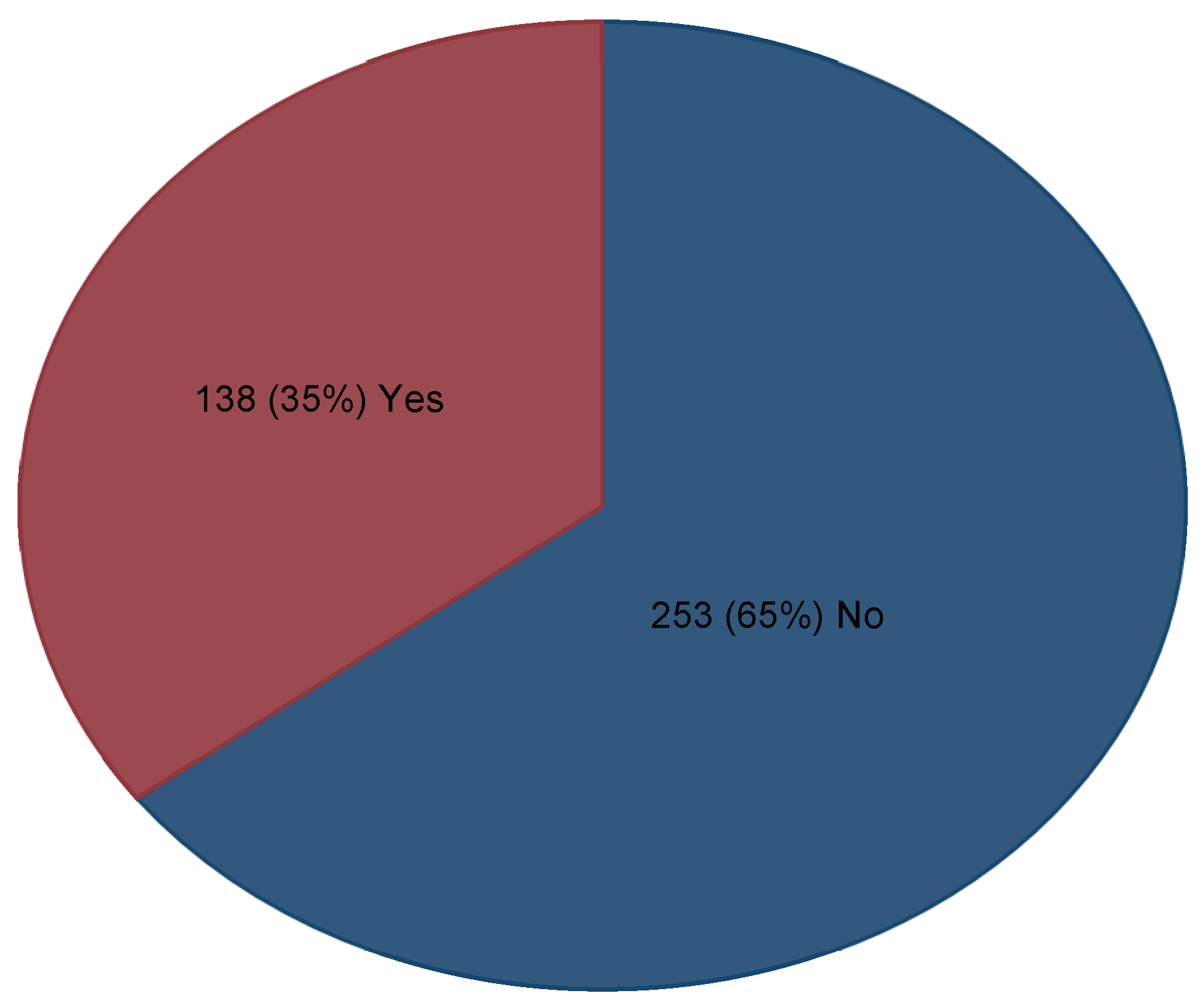

Table 1.
Socio-demographic characteristics.
| Variable | Frequency (n) | Percentage (%) |
|---|---|---|
| Grade (n = 410) | ||
| Grade 8 | 56 | 14 |
| Grade 9 | 38 | 9 |
| Grade 10 | 74 | 18 |
| Grade 11 | 104 | 25 |
| Grade 12 | 138 | 34 |
| Age (n = 412) | ||
| Under 15 years | 68 | 17 |
| 15-17 years | 92 | 22 |
| 18 years and above | 252 | 61 |
| Mean 16.89; SD 2.04; Min 12; Max 21 | ||
| Gender (n = 410) | ||
| Female | 240 | 59 |
| Male | 170 | 41 |
| Race (n=408) | ||
| African | 378 | 93 |
| Coloured | 26 | 6 |
| Indian | 1 | 0.3 |
| Other | 3 | 0.7 |
| Living arrangements (n=410) | ||
| Both parents | 174 | 42 |
| Father | 19 | 5 |
| Mother | 174 | 42 |
| Other | 43 | 11 |
Table 2.
Cannabis use experience among participants (Contextual findings).
| Variable | Frequency (n) | Percentage (%) | |
|---|---|---|---|
| Age at First Cannabis Use (n=412) | |||
| Under 15 years | 31 | 8 | |
| 15-17 years | 87 | 21 | |
| 18 years and above | 14 | 3 | |
| N/A | 280 | 68 | |
| Reason for cannabis use (n=130) | |||
| Mental Health | 39 | 30 | |
| Mental health/social | 35 | 27 | |
| Other | 5 | 4 | |
| Social | 34 | 26 | |
| Three or more | 17 | 13 | |
| Frequency of Cannabis Use among users (n = 122) | |||
| Everyday | 34 | 28 | |
| Monthly | 63 | 52 | |
| Weekly | 25 | 20 | |
| Cannabis Use Methods (n=127) | |||
| Edibles | 40 | 31 | |
| Smoking | 66 | 52 | |
| Smoking/edibles | 21 | 17 | |
| Potential for Future Cannabis Experimentation (n=338) | |||
| Definitely Not | 244 | 72 | |
| Definitely Yes | 34 | 10 | |
| Don’t know | 60 | 18 | |
Table 3.
perceived influence of Cannabis legalization on views, attitudes, social norms and exposure to Cannabis-related information.
Table 3.
perceived influence of Cannabis legalization on views, attitudes, social norms and exposure to Cannabis-related information.
| Variable | Frequency (n) | Percentage (%) |
|---|---|---|
| Decriminalisation Influence on Cannabis Views (n=352) | ||
| Less likely to use cannabis | 132 | 38 |
| More likely to use cannabis | 32 | 9 |
| No effect | 188 | 53 |
| Effect of Decriminalisation on Cannabis Attitudes (n=341) | ||
| No effect | 235 | 69 |
| Negative attitude | 65 | 19 |
| Positive attitude | 41 | 12 |
| Attitude of most people towards Cannabis (n=392) | ||
| Approve | 97 | 25 |
| Disapprove | 123 | 31 |
| Don’t know | 174 | 44 |
| Cannabis Use Among Close Friends (n=403) | ||
| Don’t know | 20 | 5 |
| None | 159 | 39 |
| One | 43 | 11 |
| Two or more | 181 | 45 |
| Reported Cannabis Use Within Family Circle (404) | ||
| Don’t know | 49 | 12 |
| No | 178 | 44 |
| Yes | 177 | 23 |
| Exposure to cannabis marketing, public education and health warnings (n=397) | ||
| Multiple | 205 | 52 |
| None | 69 | 17 |
| Others | 10 | 3 |
| Social media | 95 | 24 |
| Traditional media | 18 | 5 |
| Exposure to educational campaigns or public health messages (n=412) | ||
| Multiple | 174 | 42 |
| None | 131 | 32 |
| Other | 28 | 7 |
| Social media | 26 | 7 |
| Social setting | 19 | 5 |
| Traditional media | 24 | 8 |
Table 4.
Factors significantly associated with perceptions of risk or harm & social norms.
| Factor | Frequency | Negative | Neutral | Positive | Chi² | p-Value | |||
|---|---|---|---|---|---|---|---|---|---|
| Gender (n=410) | 10.6588 | 0.005 | |||||||
| Female | 240 (58.54) | 208 (62.09) | 11 (52.38) | 21 (38.89) | |||||
| Male | 170 (41.46) | 127 (37.91) | 10 (47.62) | 33 (61.11) | |||||
| Total | 410 (100) | 335 (100) | 21 (100) | 54 (100) | |||||
| Prevalence of cannabis use (n=409) | 12.5904 | 0.002 | |||||||
| No | 271 (66.26) | 231 (69.16) | 15 (75) | 25 (45.45) | |||||
| Yes | 138 (33.74) | 103 (30.84) | 5 (25) | 30 (54.55) | |||||
| Total | 409 (100) | 334 (100) | 20 (100) | 55 (100) | |||||
| Frequency of cannabis use among users (n=129) | 28.1736 | 0.000 | |||||||
| Everyday | 36 (27.91) | 19 (20.21) | 1 (25) | 16 (51.61) | |||||
| Monthly | 67 (51.94) | 61 (64.89) | 0 (0.00) | 6 (19.35) | |||||
| Weekly | 26 (20.16) | 14 (14.89) | 3 (75) | 9 (29.03) | |||||
| Total | 129 (100) | 94 (100) | 4 (100) | 31 (100) | |||||
| Potential for Future Cannabis Experimentation (n=361) | 19.7673 | 0.003 | |||||||
| Definitely no | 244 (67.59) | 217 (71.85) | 6 (50) | 21 (44.68) | |||||
| Definitely yes | 34 (9.42) | 22 (7.28) | 3 (25) | 9 (19.15) | |||||
| Don’t know | 60 (16.62) | 45 (14.90) | 3 (25) | 12 (25.53) | |||||
| N/A | 23 (6.37) | 18 (5.96) | 0 (0.00) | 5 (10.64) | |||||
| Total | 361 (100) | 302 (100) | 12 (100) | 47 (100) | |||||
| Cannabis legalization influence on attitudes (n=364) | 17.7769 | 0.001 | |||||||
| Attitude not affected | 250 (68.68) | 213 (70.07) | 6 (66.67) | 31 (60.78) | |||||
| Negative attitude | 68 (18.68) | 62 20.39) | 1 (11.11) | 5 (9.80) | |||||
| Positive attitude | 46 (12.64) | 29 (9.54) | 2 (22.22) | 15 (29.41) | |||||
| Total | 364 (100) | 304 (100) | 9 (100) | 51 (100) | |||||
| Reported Cannabis Use Within Family Circle (n=404) | 12.9083 | 0.012 | |||||||
| No | 178 (44.06) | 155 (46.13) | 7 (53.85) | 16 (29.09) | |||||
| Yes | 177 (43.81) | 147 (43.75) | 5 (38.46) | 25(45.45) | |||||
| Don’t know | 49 (12.13) | 34 (10.12) | 1 (7.69) | 14(25.45) | |||||
| Age | 16.5415 | 0.002 | |||||||
| Under 15 years | 68 (16.50) | 61 (18.15) | 2 (9.52) | 5 (9.09) | |||||
| 15-17 years | 92 (22.33) | 85 (25.30) | 2 (9.52) | 5 (9.09) | |||||
| 18 years and above | 252 (61.17) | 190 (56.55) | 17 (80.95) | 45 (81.82) | |||||
Table 5.
Adjusted multivariable logistic regression model of factors associated with perception of Cannabis-related risk, harm and social norms.
Table 5.
Adjusted multivariable logistic regression model of factors associated with perception of Cannabis-related risk, harm and social norms.
| Perceptions of risk or harm & social norms | Coef. | Std.Err | p-Value | [95% Conf. Interval] | |
|---|---|---|---|---|---|
| Age | –0.2332 | 0.7251 | 0.748 | –1.6544 | 1.188 |
| Reported Cannabis Use Within Family Circle | 0.7683 | 0.8071 | 0.341 | –0.8135 | 2.3501 |
| Gender | –0.3928 | 0.9966 | 0.693 | –2.3461 | 1.5605 |
| Potential for Future Cannabis Experimentation | –0.6590 | 0.5104 | 0.197 | –1.6593 | 0.3413 |
| Cannabis decriminalisation influence on attitudes | –0.1424 | 0.654 | 0.828 | –1.4242 | 1.1393 |
Disclaimer/Publisher’s Note: The statements, opinions and data contained in all publications are solely those of the individual author(s) and contributor(s) and not of MDPI and/or the editor(s). MDPI and/or the editor(s) disclaim responsibility for any injury to people or property resulting from any ideas, methods, instructions or products referred to in the content. |
© 2026 by the authors. Licensee MDPI, Basel, Switzerland. This article is an open access article distributed under the terms and conditions of the Creative Commons Attribution (CC BY) license.
Copyright: This open access article is published under a Creative Commons CC BY 4.0 license, which permit the free download, distribution, and reuse, provided that the author and preprint are cited in any reuse.