

Submitted:
08 November 2026
Posted:
10 November 2026
You are already at the latest version
Abstract
Background and Objectives: The optimal anesthetic technique for carotid endarterectomy (CEA) remains debated. We compared cervical plexus block (cervical plexus block) with general anesthesia (GA), focusing on new-onset atrial fibrillation (NOAF), and explored dexmedetomidine (DEX) sedation during cervical plexus block. Materials and Methods: In this single-center retrospective cohort, 133 CEA procedures (cervical plexus block, n = 83; GA, n = 50) were analyzed; 1:1 propensity score matching yielded 42 pairs. Outcomes included NOAF, 30-day major adverse cardiac and cerebrovascular events (MACCE), mortality, perioperative arterial pressure, vasoactive and analgesic requirements, intensive care unit (ICU) stay, and costs. Results: NOAF occurred in 4.8% of cervical plexus block and 24.0% of GA procedures (p < 0.001; propensity score–adjusted odds ratio 0.11, 95% CI 0.03–0.42) and in 0.0% vs. 23.8% of matched procedures (p = 0.002). In matched pairs, cervical plexus block was associated with a smaller rise in systolic pressure during clamping, less intraoperative dopamine use (9.5% vs. 54.8%), fewer postoperative analgesic requirements (28.6% vs. 73.8%), and a shorter ICU stay (median 12.0 vs. 24.0 h; all p < 0.01). Stroke, MACCE, mortality, and total costs did not differ. Within the cervical plexus block group, DEX was associated with less additional intraoperative analgesia (16.3% vs. 58.8%; p < 0.001) and less NOAF (0.0% vs. 11.8%; p = 0.025). Conclusions: cervical plexus block was associated with less NOAF, more stable intraoperative arterial pressure, lower vasoactive and analgesic requirements, and a shorter ICU stay than GA, without higher costs. The exploratory association of DEX with less NOAF warrants confirmation in prospective studies.
Keywords:
carotid endarterectomy
; cervical plexus block
; general anesthesia
; dexmedetomidine
; atrial fibrillation
; propensity score matching
1. Introduction
Carotid endarterectomy (CEA) is the established surgical treatment for preventing embolic stroke in symptomatic and selected asymptomatic patients with significant carotid artery stenosis [1]. Although CEA has traditionally been performed under general anesthesia (GA), many centers now prefer regional techniques such as cervical plexus block (cervical plexus block) [1,2]. The potential advantages of regional anesthesia include effective analgesia, direct neurological monitoring in the awake patient, and greater perioperative hemodynamic stability [2,3]. Regional anesthesia has also been associated with fewer postoperative complications, shorter hospital stays, and lower resource utilization, without compromising surgical success [2,4,5].
Because CEA under cervical plexus block depends on a cooperative patient, mild sedation is often added to relieve anxiety while preserving continuous neurological assessment. Dexmedetomidine (DEX), a selective alpha-2 adrenergic agonist, is well suited to this purpose: it provides light sedation and anxiolysis with minimal respiratory depression and favorable hemodynamic stability, and routine awake testing under cervical plexus block with DEX sedation has been shown to be feasible [6]. In a randomized, placebo-controlled study of awake CEA, DEX also reduced perioperative antihypertensive requirements [7].
Nevertheless, the choice of anesthetic technique for CEA remains debated. Registry analyses suggest fewer cardiac complications with regional anesthesia [5,8], although one National Surgical Quality Improvement Program (NSQIP) analysis found no significant adjusted difference in stroke or myocardial infarction [9], and the randomized General Anaesthesia versus Local Anaesthesia (GALA) trial found no difference in perioperative death, stroke, or myocardial infarction between techniques [1,10,11]. New-onset atrial fibrillation (NOAF) is a clinically relevant perioperative complication, because atrial fibrillation has been associated with worse outcomes after carotid revascularization [12,13]. Yet data on how the anesthetic technique and DEX influence NOAF after CEA are scarce.
We therefore retrospectively compared cervical plexus block with GA in patients undergoing CEA. The primary outcomes were NOAF, 30-day major adverse cardiac and cerebrovascular events (MACCE), and mortality. Secondary outcomes were perioperative arterial pressure, vasoactive drug and analgesic requirements, intensive care unit (ICU) stay, surgical complications, and costs. As an exploratory objective, we examined the association of DEX sedation with these outcomes in patients receiving cervical plexus block.
2. Materials and Methods
2.1. Study Design and Ethics
This was a single-center, retrospective, observational cohort study with propensity score matching. It was conducted in accordance with the Declaration of Helsinki and was approved by the Ethics Committee of İzmir Bakırçay University Çiğli Training and Research Hospital, İzmir, Türkiye (approval no. 686/666). The requirement for informed consent was waived because of the retrospective design. The study is reported in accordance with the Strengthening the Reporting of Observational Studies in Epidemiology (STROBE) guideline.
2.2. Study Population and Propensity Score Matching
We reviewed the institutional records of patients who underwent CEA between July 2016 and April 2021 and between March and November 2022. Procedures were allocated to two groups according to the anesthetic technique: cervical plexus block and GA. Exclusion criteria were local infection; hypersensitivity or allergy to anesthetic agents; previous surgery on the same side; age younger than 18 years; American Society of Anesthesiologists (ASA) physical status 5 or 6; pre-existing atrial fibrillation (AF); central nervous system tumor; liver failure; eversion endarterectomy; and conversion from cervical plexus block to GA during surgery. Of 139 procedure records, 6 were excluded because the anesthetic technique and most clinical data had not been recorded, leaving 133 procedures (cervical plexus block, n = 83; GA, n = 50) for analysis (Figure 1). Patients who underwent staged bilateral CEA contributed one record per operated side, and each procedure was analyzed as an independent observation.
Propensity scores were estimated with a multivariable logistic regression model in which the anesthetic technique was the dependent variable and age, sex, hypertension, hyperlipidemia, chronic obstructive pulmonary disease (COPD), diabetes mellitus, renal insufficiency, peripheral arterial disease, previous stroke, and CHA2DS2-VASc score were the independent variables. Procedures were matched 1:1 by greedy nearest-neighbor matching without replacement within a caliper of 0.2 standard deviations of the logit of the propensity score (0.175) [14]; procedures without a match within the caliper were not included in the matched analysis. Covariate balance before and after matching was assessed with standardized mean differences (SMDs), and an absolute SMD <0.10 was considered to indicate negligible imbalance [15]. The CHA2DS2-VASc score was calculated for all procedures from the recorded components.
2.3. Anesthetic Management
All patients were taken to the premedication room, where venous access was established in the contralateral hand. Standard monitoring was applied, and premedication was given with intravenous midazolam (0.02 mg/kg). Invasive arterial pressure was monitored through an arterial catheter. Central venous catheterization was not performed routinely. A baseline arterial blood gas sample was obtained before the procedure.
In the cervical plexus block group, patients received an ipsilateral, standardized, ultrasound-guided superficial and deep cervical plexus block [16]. Twenty minutes after the block, they were transferred to the operating room, and surgery was started. In the GA group, patients received intravenous midazolam (1–2 mg) and fentanyl (100 µg) on arrival in the operating room. Anesthesia was induced with propofol (1.5–2.5 mg/kg) and rocuronium (0.6 mg/kg), followed by endotracheal intubation, and was maintained with sevoflurane.
DEX sedation was given at the discretion of the anesthesia team and was used only in the cervical plexus block group (n = 49). The infusion was started before transfer to the operating room and stopped 2 h postoperatively in the ICU. The loading dose was 1 µg/kg over 10 min, followed by a maintenance dose of 0.2–0.7 µg/kg/h. The target sedation level was −2 on the Richmond Agitation–Sedation Scale (light sedation).
Systolic and diastolic arterial pressures were obtained from the anesthesia records as the mean of the invasive values recorded before carotid clamping (T1), during clamping (T2), and after declamping (T3).
2.4. Surgical Technique
All operations were performed by the same surgical and anesthesia team. The arteriotomy was closed with patch angioplasty or primary closure at the surgeon’s discretion; patch angioplasty became the routine technique during the later part of the study period. A shunt was used routinely in patients with significant bilateral carotid stenosis (≥50% by North American Symptomatic Carotid Endarterectomy Trial [NASCET] criteria [17]), contralateral carotid occlusion, or ipsilateral basilar artery insufficiency. In all other patients, the need for shunting was determined by an awake neurological test (speech, toe, and hand movements) performed immediately after internal carotid artery clamping and/or by near-infrared spectroscopy (NIRS) monitoring [18]. A Pruitt-Inahara carotid shunt with T-port (LeMaitre Vascular Inc., Burlington, MA, USA) was used when required.
2.5. Postoperative Care and Outcomes
All patients were transferred to the ICU after surgery, where they were monitored with continuous electrocardiography (ECG), invasive arterial pressure, arterial blood gas analysis, neurological assessment, and pain scoring on the Visual Analog Scale (VAS; 0 = no pain, 10 = worst pain imaginable) [19]. Intravenous tramadol (50 mg) was given for VAS scores >3. The time to the first analgesic request was recorded; patients who did not request analgesia were classified as having no analgesic request.
The primary outcomes were NOAF, 30-day MACCE (a composite of stroke, myocardial infarction [MI], or death), and all-cause mortality within 30 days. NOAF was defined as new ECG-documented AF in the operating room or the ICU and was ascertained by review of the patient records; other new arrhythmias were recorded separately. Stroke was defined as an embolic, thrombotic, or hemorrhagic cerebrovascular event causing motor, sensory, or cognitive dysfunction lasting more than 24 h. MI was diagnosed when any of the following was present: (1) ECG changes indicating MI (ST-segment elevation ≥1 mm in two or more contiguous leads, new left bundle branch block, or new Q waves in two or more contiguous leads); (2) troponin elevation more than three times the reference limit with suspected myocardial ischemia; or (3) a physician-documented diagnosis of MI (American College of Surgeons NSQIP definitions [5]).
Secondary outcomes were arterial pressure at T1–T3 and its changes between time points; intraoperative and postoperative (ICU) use of vasoactive drugs (epinephrine, dopamine, norepinephrine, dobutamine, glyceryl trinitrate, and esmolol); additional intraoperative analgesia; postoperative analgesic requirement; no analgesic request and the time to the first request; ICU stay; surgical complications (bleeding, surgical revision, redo surgery, percutaneous intervention, and wound infection); and costs. Operative, ICU, and ward costs were calculated from hospital billing records and converted to euros (€) at the fixed exchange rate used by the Social Security Institution of Türkiye for drug procurement, which is revised every 5 years; the three components were summed to obtain the total cost. Ward stay was not analyzed because it was incompletely recorded.
2.6. Statistical Analysis
Continuous variables are presented as mean ± standard deviation (SD) or as median (interquartile range [IQR]), and categorical variables as number (percentage). Normality was assessed with the Shapiro–Wilk test. In the full cohort, groups were compared with Student’s t test or the Mann–Whitney U test for continuous variables and with the chi-square test or Fisher’s exact test (when any expected cell count was <5) for categorical variables. In the matched cohort, paired analyses were used: the McNemar test (exact binomial) for binary variables and the paired t test or Wilcoxon signed-rank test for continuous variables. The time to the first analgesic request was analyzed only in patients who requested analgesia, with unpaired tests. For NOAF, risk differences with 95% confidence intervals (CIs) were calculated, and a logistic regression model including the anesthetic technique and the logit of the propensity score was fitted in the full cohort to estimate a propensity score–adjusted odds ratio (OR). Because GA procedures were concentrated in the earlier period, the NOAF comparison was repeated in the 2016–2021 procedures as a sensitivity analysis. Associations between NOAF and perioperative drug use were assessed with Spearman’s rank correlation. The association of DEX with outcomes was examined within the cervical plexus block group with the tests described above, and effect sizes were expressed as Hedges g or risk differences with 95% CIs. A two-sided p value <0.05 was considered statistically significant. The DEX analyses were exploratory, and no adjustment was made for multiple comparisons. Analyses were performed with Python 3.13 (SciPy 1.18, pandas 3.0).
3. Results
3.1. Study Population and Baseline Characteristics
A total of 133 procedures were analyzed (cervical plexus block, n = 83; GA, n = 50); propensity score matching yielded 42 pairs (n = 84) (Figure 1). The c statistic of the propensity score model was 0.72. Before matching, GA procedures more often involved patients with hypertension (90.0% vs. 75.9%, p = 0.044), hyperlipidemia (82.0% vs. 60.2%, p = 0.009), atherosclerotic heart disease (86.0% vs. 65.1%, p = 0.008), and hyperthyroidism (18.0% vs. 2.4%, p = 0.002) (Table 1). After matching, the absolute SMD was below 0.10 for all covariates in the propensity score model except diabetes mellitus (−0.29) and peripheral arterial disease (−0.17); residual imbalance (absolute SMD ≥0.20) also remained for several covariates not included in the model, most notably body mass index (−0.46) and hyperthyroidism (−0.33) (Table 1, Figure 2).
3.2. Operative Data and Hemodynamics
In the matched cohort, carotid clamping time was longer with cervical plexus block than with GA (20.1 ± 3.3 vs. 15.5 ± 3.5 min; p < 0.001), whereas total operative time did not differ (52.3 ± 6.3 vs. 52.7 ± 7.4 min; p = 0.750) (Table 2). Shunt use (40.5% vs. 31.0%; p = 0.523) and a NIRS decrease of ≥15% (21.4% vs. 11.9%; p = 0.344) were similar. Patch angioplasty was used far more often in cervical plexus block procedures (95.2% vs. 28.6%; p < 0.001), reflecting the change in surgical practice over time.
Before clamping, systolic pressure was higher with cervical plexus block than with GA (124.3 ± 13.5 vs. 107.0 ± 15.6 mmHg; p < 0.001), as was diastolic pressure (76.3 ± 9.3 vs. 61.8 ± 12.2 mmHg; p < 0.001). During clamping, systolic pressure rose by 2.7 ± 9.5 mmHg with cervical plexus block and by 10.8 ± 15.3 mmHg with GA (p = 0.003). After declamping, systolic pressure fell by 5.6 ± 8.5 mmHg with cervical plexus block and by 1.6 ± 9.5 mmHg with GA (p = 0.075), and systolic (p = 0.061) and diastolic pressures (p = 0.814) no longer differed significantly at T3 (Table 2, Figure 3). The same pattern was observed in the full cohort (change T1→T2, 3.3 ± 8.7 vs. 10.3 ± 14.6 mmHg; p = 0.021).
3.3. Vasoactive Drug and Analgesic Requirements
During surgery, matched cervical plexus block procedures required dopamine (9.5% vs. 54.8%; p < 0.001) and epinephrine (0.0% vs. 14.3%; p = 0.031) less often than GA procedures, whereas the differences in norepinephrine (2.4% vs. 11.9%; p = 0.219) and glyceryl trinitrate use (35.7% vs. 59.5%; p = 0.052) were not significant. In the ICU, cervical plexus block was associated with less dopamine (4.8% vs. 31.0%; p = 0.003) and glyceryl trinitrate use (21.4% vs. 57.1%; p < 0.001) and with a lower postoperative analgesic requirement (28.6% vs. 73.8%; p < 0.001) (Table 2, Figure 4). More cervical plexus block than GA patients did not request any analgesic (66.7% vs. 21.4%; p < 0.001), and among those who did, the first request came later after cervical plexus block (median 12.5 (9.2–15.0) vs. 2.0 (1.0–3.0) h; p < 0.001). In the full cohort, cervical plexus block was also associated with less intraoperative norepinephrine (p = 0.005) and glyceryl trinitrate use (p < 0.001) and with less additional intraoperative analgesia (33.7% vs. 52.0%; p = 0.038).
3.4. Postoperative Recovery and Costs
ICU stay was shorter after cervical plexus block in both the matched cohort (median 12.0 (4.0–24.0) vs. 24.0 (24.0–48.0) h; p < 0.001) and the full cohort (17.0 (4.0–24.0) vs. 24.0 (24.0–48.0) h; p < 0.001). In the GA group, the median extubation time was 8.0 (6.0–12.0) h. Operative costs were lower with cervical plexus block (p < 0.001), whereas ICU (p = 0.067) and ward costs (p = 0.193) did not differ significantly in the matched cohort; total costs were similar (median 1253.9 (1026.5–1577.1) vs. 1346.5 (1118.7–1947.5) €; p = 0.156) (Table 2).
3.5. New-Onset Atrial Fibrillation and Its Correlates
NOAF occurred in 4 of 83 cervical plexus block procedures (4.8%) and 12 of 50 GA procedures (24.0%; p < 0.001; risk difference −19.2 percentage points, 95% CI −31.9 to −6.5). The propensity score–adjusted OR for NOAF with cervical plexus block was 0.11 (95% CI 0.03–0.42; p = 0.001). In the matched cohort, NOAF occurred in 0 cervical plexus block and 10 GA procedures (0.0% vs. 23.8%; all 10 discordant pairs favored cervical plexus block; p = 0.002; risk difference −23.8 percentage points, 95% CI −36.7 to −10.9). Other new arrhythmias were infrequent (1.2% vs. 6.0%; p = 0.149). The lower NOAF rate with cervical plexus block was consistent across periods: 2.1% vs. 25.5% in the 2016–2021 procedures (p < 0.001), and 8.6% in the cervical plexus block procedures performed in 2022 (Figure 5A).
In the full cohort, NOAF correlated positively with intraoperative norepinephrine (ρ = 0.295; p < 0.001), dopamine (ρ = 0.269; p = 0.002), and epinephrine use (ρ = 0.223; p = 0.010) and with additional analgesia (ρ = 0.212; p = 0.014), but not with glyceryl trinitrate use. Within the cervical plexus block group, NOAF correlated negatively with DEX use (ρ = −0.270; p = 0.014) and was not significantly correlated with the other variables (Table 3, Figure 5B).
3.6. Clinical Events and Mortality
In the matched cohort, stroke (7.1% vs. 9.5%; p = 1.000), MACCE (11.9% vs. 11.9%; p = 1.000), and all-cause death (7.1% vs. 4.8%; p = 1.000) did not differ significantly, and no MI occurred. In the full cohort, the corresponding rates were 7.2% vs. 10.0% for stroke (p = 0.747), 9.6% vs. 12.0% for MACCE (p = 0.667), and 7.2% vs. 4.0% for death (p = 0.710). Bleeding, surgical revision, redo surgery, percutaneous intervention, and wound infection were infrequent and similar between groups (Table 2).
3.7. Subgroup Analysis: Dexmedetomidine in the cervical plexus block Group
Within the cervical plexus block group (DEX, n = 49; no DEX, n = 34), DEX was used at a similar frequency in 2016–2021 (58.3%) and 2022 (60.0%). DEX was associated with less additional intraoperative analgesia (16.3% vs. 58.8%; p < 0.001) and less NOAF (0.0% vs. 11.8%; p = 0.025); no NOAF occurred in procedures with DEX. The postoperative analgesic requirement recorded in the ICU tended to be lower with DEX (24.5% vs. 44.1%; p = 0.061), whereas the proportion of patients who did not request any analgesic was also lower (57.1% vs. 79.4%; p = 0.035); among patients who requested analgesia, the first request came later with DEX (median 11.0 (9.0–15.0) vs. 6.0 (3.5–7.0) h; p < 0.001). Changes in systolic pressure, ICU stay (p = 0.256), stroke, death, and total cost (p = 0.857) did not differ significantly (Table 4, Figure 6).
4. Discussion
In this retrospective cohort of 133 CEA procedures, cervical plexus block was associated with a markedly lower incidence of NOAF than GA, a finding that persisted after propensity score adjustment and matching and was consistent across study periods. cervical plexus block was also associated with more stable intraoperative arterial pressure, less vasoactive drug use, lower postoperative analgesic requirements, and a shorter ICU stay, without differences in stroke, MACCE, mortality, or total costs. Within the cervical plexus block group, DEX sedation was associated with less additional intraoperative analgesia and less NOAF.
4.1. Hemodynamic Management, Vasoactive Drugs, and NOAF
Under GA, arterial pressure was about 17 mmHg lower before clamping and rose more during clamping, and more than half of the matched GA procedures required intraoperative dopamine, compared with about one in ten cervical plexus block procedures. This pattern is consistent with anesthetic-induced hypotension requiring pharmacological correction under GA. Similar observations have been reported: in a Turkish cohort, intraoperative hypotension was more frequent under GA (31.6% vs. 13.3%) and hypertension more frequent under regional anesthesia (41.4% vs. 26.5%) [2]. In a randomized trial, systolic pressure before the start of surgery was higher with ultrasound-guided regional anesthesia than with GA (180 ± 26 vs. 109 ± 24 mmHg) [20]. In a large registry, hemodynamic instability (27.0% vs. 20.0%) and dysrhythmia (1.6% vs. 1.2%) were also more frequent after GA than after regional or local anesthesia [3].
Blood pressure control under cervical plexus block is unlikely to result from baroreflex blockade: in a prospective study, standard superficial cervical plexus block did not impair baroreceptor sensitivity, whereas direct infiltration of the carotid bulb attenuated it [21], as did periadventitial lignocaine injection in an earlier study [22].
NOAF occurred in about one in four GA procedures but in fewer than one in twenty cervical plexus block procedures. In the full cohort, NOAF correlated with intraoperative dopamine, norepinephrine, and epinephrine use, consistent with the idea that hemodynamic instability and catecholamine exposure contribute to perioperative arrhythmias. Vasoactive drugs may, however, act as a mediator, a marker of hemodynamic instability, or a confounder, and these correlations were absent within the cervical plexus block group, in which drug use was infrequent. Because almost all GA procedures were performed in the earlier period, period effects cannot be excluded completely; however, the lower NOAF rate with cervical plexus block was evident in the 2016–2021 procedures alone and remained low in the 2022 cervical plexus block procedures.
4.2. Neurological Monitoring and Shunt Use
Cervical plexus block permits real-time neurological assessment, allowing cerebral ischemia to be detected immediately after carotid clamping; in our series, the awake test and NIRS were used to decide on shunting. Clamping time was about 4.6 min longer under cervical plexus block, possibly because of this assessment, but this was not accompanied by a higher stroke rate, and shunt use was similar in both groups. Stroke and MI rates did not differ significantly, which agrees with the randomized GALA trial [10,11] and with the evidence summarized in the European Society for Vascular Surgery guideline [1]. By contrast, several registry analyses reported more MI after GA [3,5,8]; such observational findings may reflect selection bias, and our study was not powered to detect rare events.
4.3. Postoperative Recovery and Costs
Patients operated on under cervical plexus block spent less time in the ICU, requested analgesics less often, and, when they did, requested them later, consistent with earlier reports of longer analgesia-free intervals, less analgesic use, and shorter hospital stays with regional anesthesia [2] and of lower resource utilization [4]. Operative costs were lower with cervical plexus block, but total costs did not differ. In our institution, ICU and ward charges are not calculated from the number of hours used; a full 24-h fee is charged even when a patient leaves the ICU or ward within a few hours. Consequently, the shorter ICU stay after cervical plexus block did not translate into lower ICU costs, which probably explains the absence of a difference in total costs.
4.4. Role of Dexmedetomidine
In the cervical plexus block group, DEX was associated with less additional intraoperative analgesia, in line with its sedative and analgesic properties [6,7]. Analgesic needs under cervical plexus block also depend on the block technique: a combined deep and superficial block reduced supplemental analgesic use compared with an intermediate block [16], and adding a mandibular block improved intraoperative pain control [23]. NOAF did not occur in any cervical plexus block procedure with DEX. After cardiac surgery, DEX was associated with less postoperative AF in a meta-analysis of randomized trials [24], whereas the large randomized DECADE trial found no significant reduction [25]. The postoperative analgesic findings were not fully concordant: the analgesic requirement recorded in the ICU tended to be lower with DEX, whereas fewer DEX patients went without any analgesic request. Because DEX was not allocated randomly, the subgroups were small, and NOAF events were few, these results should be considered hypothesis-generating.
4.5. Limitations
This study has several limitations. First, its retrospective design carries a risk of selection bias and unmeasured confounding despite propensity score matching, and residual imbalance remained for some covariates, particularly body mass index and hyperthyroidism. Second, the procedures came from two periods (2016–2021 and 2022), most GA procedures were performed in the earlier period, and surgical practice changed over time; period effects therefore cannot be separated completely from the effect of the anesthetic technique. Third, matching retained 42 pairs, so the study was underpowered for rare events such as stroke and death. Fourth, it is a single-center study, which limits generalizability. Fifth, NOAF was identified from routine ECG monitoring and record review, which may have missed short or asymptomatic episodes, and staged bilateral procedures were analyzed as independent observations. Sixth, arterial pressure was available only as mean values for each phase of surgery, ward stay was incompletely recorded, and costs reflect institutional billing at a fixed exchange rate. Finally, DEX was used only in the cervical plexus block group and was not allocated randomly, and no correction for multiple testing was applied.
5. Conclusions
In this retrospective cohort, cervical plexus block for CEA was associated with less NOAF, more stable intraoperative arterial pressure, lower vasoactive and analgesic requirements, and a shorter ICU stay than GA, without a significant difference in stroke, MACCE, mortality, or total costs. DEX sedation during cervical plexus block was associated with less additional analgesia and less NOAF. Prospective, adequately powered studies are needed to confirm whether the anesthetic technique and DEX reduce NOAF after CEA.
Supplementary Materials
The following supporting information can be downloaded at the website of this paper posted on Preprints.org.
Author Contributions
Conceptualization, D.B.; methodology, D.B. and A.K.; formal analysis, D.B.; writing—original draft preparation, D.B.; writing—review and editing, A.C. and K.U.; supervision. All authors have read and agreed to the published version of the manuscript.
Funding
This research received no external funding.
Institutional Review Board Statement
The study was conducted in accordance with the Declaration of Helsinki and approved by the Ethics Committee of İzmir Bakırçay University Çiğli Training and Research Hospital (protocol code 686/666).
Informed Consent Statement
Patient consent was waived because of the retrospective design of the study.
Data Availability Statement
The data presented in this study are available on request from the corresponding author.
Conflicts of Interest
The authors declare no conflicts of interest.
Abbreviations
AF, atrial fibrillation; ASA, American Society of Anesthesiologists; CEA, carotid endarterectomy; CI, confidence interval; COPD, chronic obstructive pulmonary disease; cervical plexus block, cervical plexus block; DBP, diastolic blood pressure; DEX, dexmedetomidine; ECG, electrocardiography; GA, general anesthesia; GALA, General Anaesthesia versus Local Anaesthesia trial; ICU, intensive care unit; IQR, interquartile range; MACCE, major adverse cardiac and cerebrovascular events; MI, myocardial infarction; NASCET, North American Symptomatic Carotid Endarterectomy Trial; NIRS, near-infrared spectroscopy; NOAF, new-onset atrial fibrillation; NSQIP, National Surgical Quality Improvement Program; OR, odds ratio; SBP, systolic blood pressure; SD, standard deviation; SMD, standardized mean difference; STROBE, Strengthening the Reporting of Observational Studies in Epidemiology; VAS, Visual Analog Scale.
References
- Naylor, A.R.; Rantner, B.; Ancetti, S.; de Borst, G.J.; De Carlo, M.; Halliday, A.; Kakkos, S.K.; Markus, H.S.; McCabe, D.J.H.; Sillesen, H.; et al. European Society for Vascular Surgery (ESVS) 2023 Clinical Practice Guidelines on the Management of Atherosclerotic Carotid and Vertebral Artery Disease. Eur. J. Vasc. Endovasc. Surg. 2023, 65, 7–111. [Google Scholar] [CrossRef]
- Hasde, A.İ.; Baran, Ç.; Özçınar, E.; Karakaya, H.Ç.; Bermede, A.O.; Durdu, M.S.; Yazıcıoğlu, L.; Kaya, B. The Effect of Anesthesia Technique in Carotid Endarterectomy: Regional versus General Anesthesia. Turk. J. Vasc. Surg. 2021, 30, 42–48. [Google Scholar] [CrossRef]
- Dakour Aridi, H.; Paracha, N.; Nejim, B.; Locham, S.; Malas, M.B. Anesthetic Type and Hospital Outcomes after Carotid Endarterectomy from the Vascular Quality Initiative Database. J. Vasc. Surg. 2018, 67, 1419–1428. [Google Scholar] [CrossRef]
- Hussain, A.S.; Mullard, A.; Oppat, W.F.; Nolan, K.D. Increased Resource Utilization and Overall Morbidity Are Associated with General versus Regional Anesthesia for Carotid Endarterectomy in Data Collected by the Michigan Surgical Quality Collaborative. J. Vasc. Surg. 2017, 66, 802–809. [Google Scholar] [CrossRef]
- Leichtle, S.W.; Mouawad, N.J.; Welch, K.; Lampman, R.; Whitehouse, W.M., Jr.; Heidenreich, M. Outcomes of Carotid Endarterectomy under General and Regional Anesthesia from the American College of Surgeons’ National Surgical Quality Improvement Program. J. Vasc. Surg. 2012, 56, 81–88.e3. [Google Scholar] [CrossRef]
- Lee, J.; Huh, U.; Song, S.; Chung, S.W.; Sung, S.M.; Cho, H.J. Regional Anesthesia with Dexmedetomidine Infusion: A Feasible Method for the Awake Test during Carotid Endarterectomy. Ann. Vasc. Dis. 2016, 9, 295–299. [Google Scholar] [CrossRef]
- Bekker, A.Y.; Basile, J.; Gold, M.; Riles, T.; Adelman, M.; Cuff, G.; et al. Dexmedetomidine for Awake Carotid Endarterectomy: Efficacy, Hemodynamic Profile, and Side Effects. J. Neurosurg. Anesthesiol. 2004, 16, 126–135. [Google Scholar] [CrossRef]
- Kfoury, E.; Dort, J.; Trickey, A.; Crosby, M.; Donovan, J.; Hashemi, H.; et al. Carotid Endarterectomy under Local and/or Regional Anesthesia Has Less Risk of Myocardial Infarction Compared to General Anesthesia: An Analysis of National Surgical Quality Improvement Program Database. Vascular 2015, 23, 113–119. [Google Scholar] [CrossRef]
- Chou, E.L.; Sgroi, M.D.; Kabutey, N.-K.; Kuo, I.J.; Fujitani, R.M. Does Gender or Use of Regional Anesthesia Have Influence on Carotid Endarterectomy Outcomes? (Abstract). J. Vasc. Surg. 2015, 62, 533. [Google Scholar] [CrossRef]
- GALA Trial Collaborative Group. General Anaesthesia versus Local Anaesthesia for Carotid Surgery (GALA): A Multicentre, Randomised Controlled Trial. Lancet 2008, 372, 2132–2142. [Google Scholar] [CrossRef]
- Gough, M.J. The GALA Trial—A Summary of the Findings. Eur. J. Vasc. Endovasc. Surg. 2008, 36, 505–506. [Google Scholar] [CrossRef]
- Watanabe, M.; Chaudhry, S.A.; Adil, M.M.; Alqadri, S.L.; Majidi, S.; Semaan, E.; et al. The Effect of Atrial Fibrillation on Outcomes in Patients Undergoing Carotid Endarterectomy or Stent Placement in General Practice. J. Vasc. Surg. 2015, 61, 927–932. [Google Scholar] [CrossRef]
- Nejim, B.; Mathlouthi, A.; Weaver, L.; Faateh, M.; Arhuidese, I.; Malas, M.B. Safety of Carotid Artery Revascularization Procedures in Patients with Atrial Fibrillation. J. Vasc. Surg. 2020, 72, 2069–2078.e4. [Google Scholar] [CrossRef]
- Austin, P.C. Optimal Caliper Widths for Propensity-Score Matching When Estimating Differences in Means and Differences in Proportions in Observational Studies. Pharm. Stat. 2011, 10, 150–161. [Google Scholar] [CrossRef]
- Austin, P.C. Balance Diagnostics for Comparing the Distribution of Baseline Covariates between Treatment Groups in Propensity-Score Matched Samples. Stat. Med. 2009, 28, 3083–3107. [Google Scholar] [CrossRef]
- Kavaklı, A.S.; Kavrut Öztürk, N.; Ayoğlu, R.U.; Sağdıç, K.; Çakmak, G.; İnanoğlu, K.; et al. Comparison of Combined (Deep and Superficial) and Intermediate cervical plexus block by Use of Ultrasound Guidance for Carotid Endarterectomy. J. Cardiothorac. Vasc. Anesth. 2016, 30, 317–322. [Google Scholar] [CrossRef]
- North American Symptomatic Carotid Endarterectomy Trial (NASCET) Investigators. Clinical Alert: Benefit of Carotid Endarterectomy for Patients with High-Grade Stenosis of the Internal Carotid Artery. Stroke 1991, 22, 816–817. [CrossRef]
- Jonsson, M.; Lindström, D.; Wanhainen, A.; Djavani Gidlund, K.; Gillgren, P. Near Infrared Spectroscopy as a Predictor for Shunt Requirement during Carotid Endarterectomy. Eur. J. Vasc. Endovasc. Surg. 2017, 53, 783–791. [Google Scholar] [CrossRef]
- Myles, P.S.; Myles, D.B.; Galagher, W.; Boyd, D.; Chew, C.; MacDonald, N.; et al. Measuring Acute Postoperative Pain Using the Visual Analog Scale: The Minimal Clinically Important Difference and Patient Acceptable Symptom State. Br. J. Anaesth. 2017, 118, 424–429. [Google Scholar] [CrossRef]
- Hoefer, J.; Pierer, E.; Rantner, B.; Stadlbauer, K.-H.; Fraedrich, G.; Fritz, J.; et al. Ultrasound-Guided Regional Anesthesia for Carotid Endarterectomy Induces Early Hemodynamic and Stress Hormone Changes. J. Vasc. Surg. 2015, 62, 57–67. [Google Scholar] [CrossRef]
- Demirel, S.; Celi de la Torre, J.A.; Bruijnen, H.; Martin, E.; Popp, E.; Böckler, D.; et al. Effect of Superficial cervical plexus block on Baroreceptor Sensitivity in Patients Undergoing Carotid Endarterectomy. J. Cardiothorac. Vasc. Anesth. 2016, 30, 309–316. [Google Scholar] [CrossRef]
- Al-Rawi, P.G.; Sigaudo-Roussel, D.; Gaunt, M.E. Effect of Lignocaine Injection in Carotid Sinus on Baroreceptor Sensitivity during Carotid Endarterectomy. J. Vasc. Surg. 2004, 39, 1288–1294. [Google Scholar] [CrossRef]
- Kavrut Ozturk, N.; Kavakli, A.S.; Sagdic, K.; Inanoglu, K.; Umot Ayoglu, R. A Randomized Controlled Trial Examining the Effect of the Addition of the Mandibular Block to cervical plexus block for Carotid Endarterectomy. J. Cardiothorac. Vasc. Anesth. 2018, 32, 877–882. [Google Scholar] [CrossRef]
- Peng, S.; Wang, J.; Yu, H.; Cao, G.; Liu, P. Influence of Dexmedetomidine on Post-operative Atrial Fibrillation After Cardiac Surgery: A Meta-Analysis of Randomized Controlled Trials. Front. Cardiovasc. Med. 2021, 8, 721264. [Google Scholar] [CrossRef]
- Turan, A.; Duncan, A.; Leung, S.; Karimi, N.; Fang, J.; Mao, G.; Hargrave, J.; Gillinov, M.; Trombetta, C.; Ayad, S.; et al. Dexmedetomidine for Reduction of Atrial Fibrillation and Delirium after Cardiac Surgery (DECADE): A Randomised Placebo-Controlled Trial. Lancet 2020, 396, 177–185. [Google Scholar] [CrossRef]
Figure 1.
Flow diagram of procedure selection and propensity score matching. GA, general anesthesia; SD, standard deviation.
Figure 1.
Flow diagram of procedure selection and propensity score matching. GA, general anesthesia; SD, standard deviation.
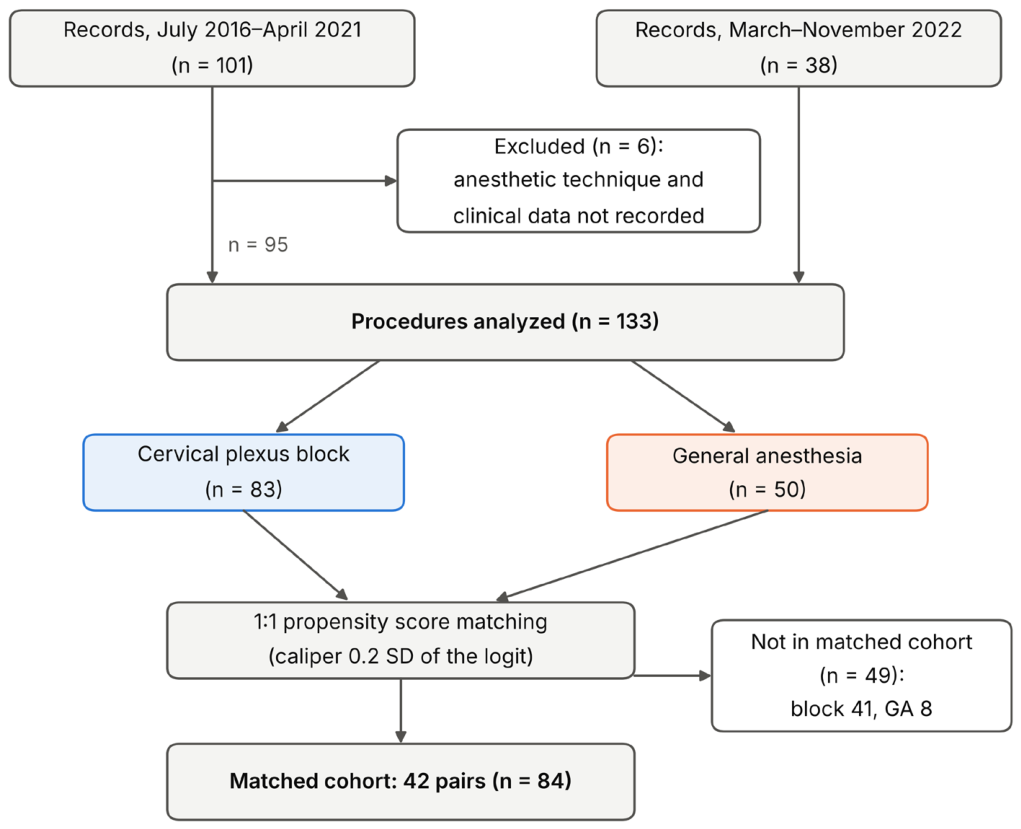
Figure 2.
Covariate balance before and after propensity score matching (Love plot). Standardized mean differences (SMDs) are shown for the full cohort (open circles) and the matched cohort (filled circles). The shaded area indicates an absolute SMD <0.10, and the dashed lines indicate ±0.20. † Covariate included in the propensity score model. COPD, chronic obstructive pulmonary disease.
Figure 2.
Covariate balance before and after propensity score matching (Love plot). Standardized mean differences (SMDs) are shown for the full cohort (open circles) and the matched cohort (filled circles). The shaded area indicates an absolute SMD <0.10, and the dashed lines indicate ±0.20. † Covariate included in the propensity score model. COPD, chronic obstructive pulmonary disease.
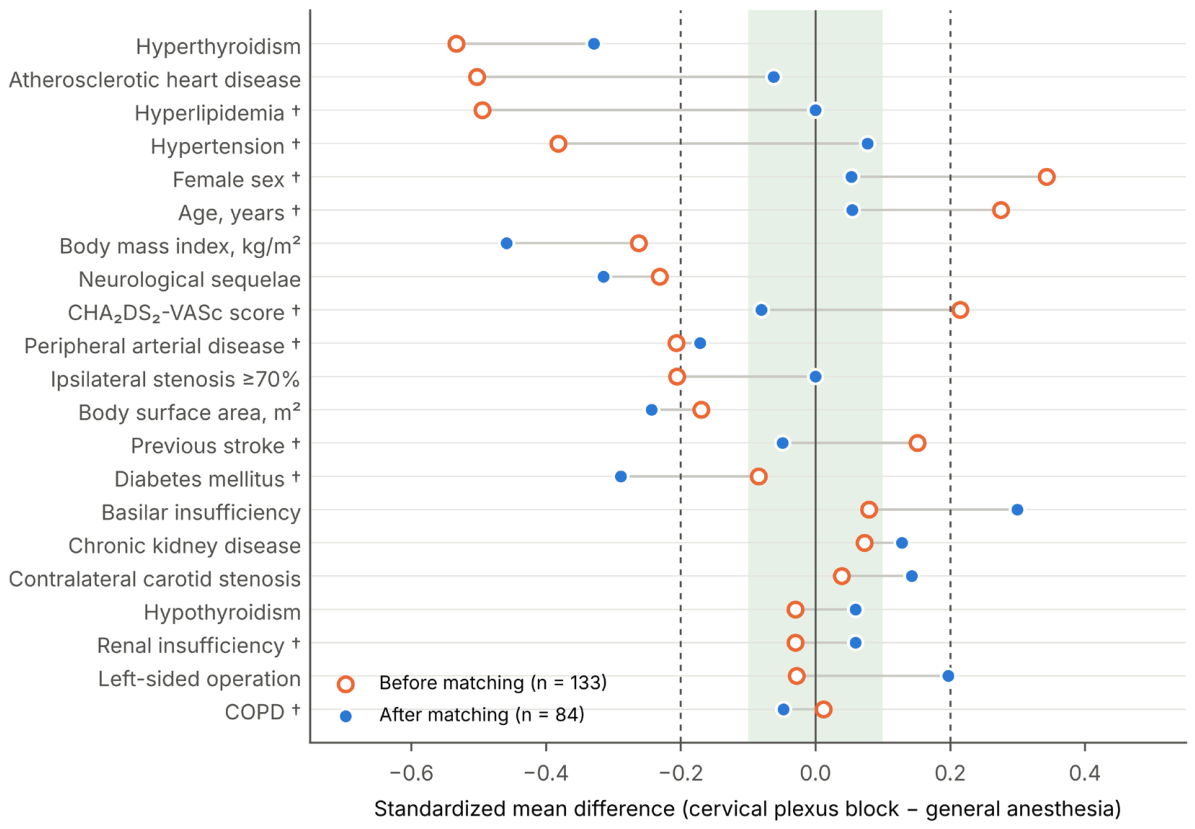
Figure 3.
Arterial pressure in the matched cohort. (A) Mean ± SD systolic (solid lines) and diastolic (dashed lines) pressure before clamping (T1), during clamping (T2), and after declamping (T3). (B) Change in systolic pressure between time points; p values refer to paired comparisons.
Figure 3.
Arterial pressure in the matched cohort. (A) Mean ± SD systolic (solid lines) and diastolic (dashed lines) pressure before clamping (T1), during clamping (T2), and after declamping (T3). (B) Change in systolic pressure between time points; p values refer to paired comparisons.
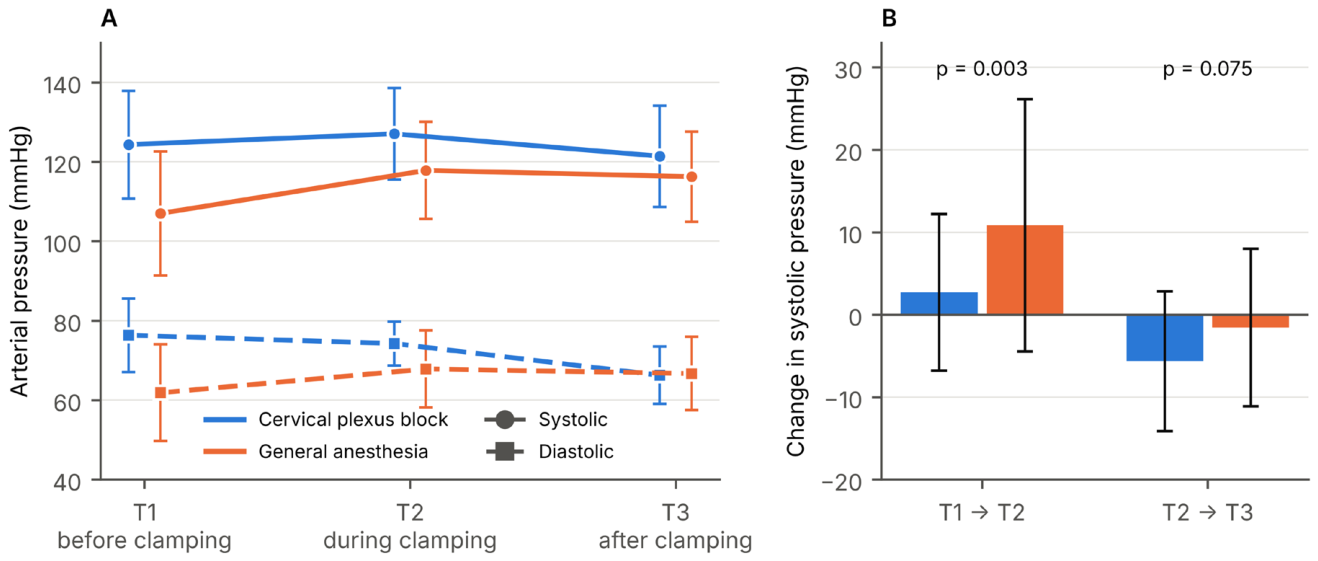
Figure 4.
Use of vasoactive drugs and analgesics (A) during surgery and (B) postoperatively in the intensive care unit in the matched cohort. Values are percentages of procedures (Table 2). Significance refers to paired (McNemar) comparisons: * p < 0.05, ** p < 0.01, *** p < 0.001; ns, not significant.
Figure 4.
Use of vasoactive drugs and analgesics (A) during surgery and (B) postoperatively in the intensive care unit in the matched cohort. Values are percentages of procedures (Table 2). Significance refers to paired (McNemar) comparisons: * p < 0.05, ** p < 0.01, *** p < 0.001; ns, not significant.
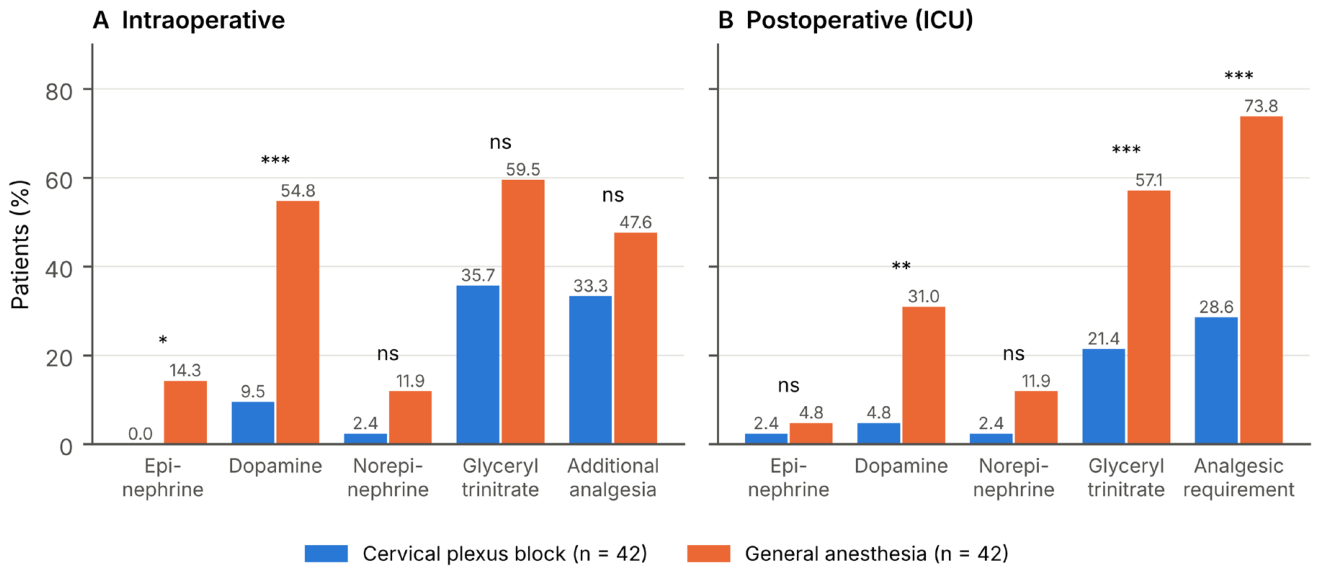
Figure 5.
(A) Incidence of new-onset atrial fibrillation (AF) in the full cohort, the matched cohort, and the 2016–2021 procedures. (B) Spearman correlation coefficients between new-onset AF and intraoperative variables (Table 3); * p < 0.05, ** p < 0.01, *** p < 0.001.
Figure 5.
(A) Incidence of new-onset atrial fibrillation (AF) in the full cohort, the matched cohort, and the 2016–2021 procedures. (B) Spearman correlation coefficients between new-onset AF and intraoperative variables (Table 3); * p < 0.05, ** p < 0.01, *** p < 0.001.
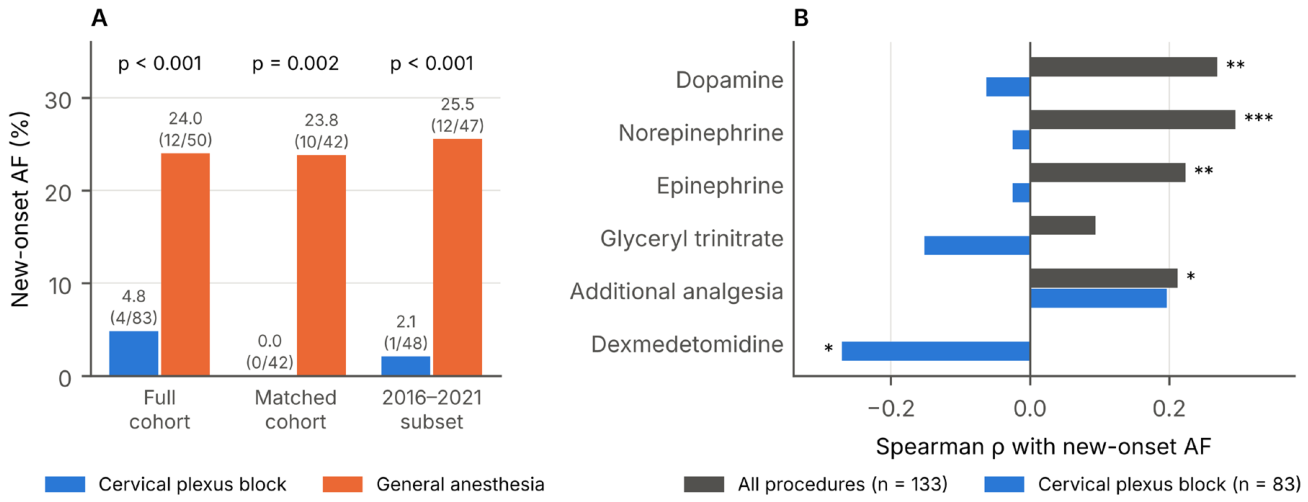
Figure 6.
Association of dexmedetomidine (DEX) with outcomes in the cervical plexus block group. (A) Continuous outcomes expressed as Hedges g with 95% confidence intervals. (B) Binary outcomes expressed as risk differences with 95% confidence intervals. p values are those reported in Table 4. SBP, systolic blood pressure.
Figure 6.
Association of dexmedetomidine (DEX) with outcomes in the cervical plexus block group. (A) Continuous outcomes expressed as Hedges g with 95% confidence intervals. (B) Binary outcomes expressed as risk differences with 95% confidence intervals. p values are those reported in Table 4. SBP, systolic blood pressure.
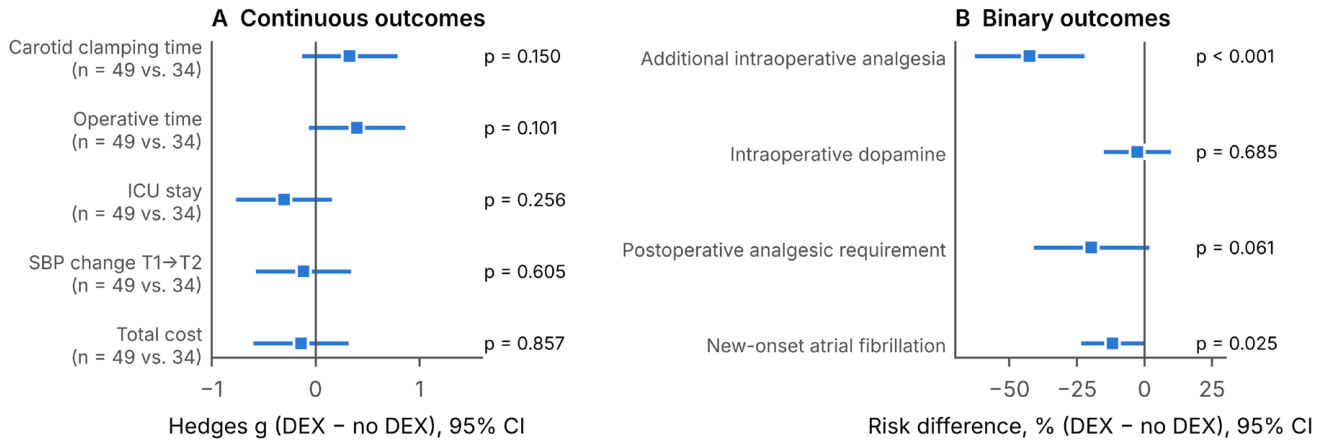

Table 1.
Baseline characteristics of the full and propensity score–matched cohorts.
| Full cohort | Matched cohort | ||||||
|---|---|---|---|---|---|---|---|
| Variable | cervical plexus block (n = 83) | GA (n = 50) | p | SMD | cervical plexus block (n = 42) | GA (n = 42) | SMD |
| Age, years | 68.6 ± 7.7 | 66.2 ± 9.6 | 0.116 | +0.28 | 67.5 ± 8.1 | 67.0 ± 10.1 | +0.05 |
| Female sex | 33 (39.8) | 12 (24.0) | 0.063 | +0.34 | 12 (28.6) | 11 (26.2) | +0.05 |
| Body mass index, kg/m² | 26.0 ± 2.9 | 26.9 ± 3.9 | 0.451 | −0.26 | 25.6 ± 2.5 | 27.1 ± 4.0 | −0.46 |
| Body surface area, m² | 1.8 ± 0.1 | 1.8 ± 0.2 | 0.836 | −0.17 | 1.8 ± 0.1 | 1.8 ± 0.2 | −0.24 |
| Hypertension | 63 (75.9) | 45 (90.0) | 0.044 | −0.38 | 38 (90.5) | 37 (88.1) | +0.08 |
| Hyperlipidemia | 50 (60.2) | 41 (82.0) | 0.009 | −0.49 | 33 (78.6) | 33 (78.6) | +0.00 |
| COPD | 42 (50.6) | 25 (50.0) | 0.946 | +0.01 | 21 (50.0) | 22 (52.4) | −0.05 |
| Diabetes mellitus | 43 (51.8) | 28 (56.0) | 0.639 | −0.08 | 19 (45.2) | 25 (59.5) | −0.29 |
| Renal insufficiency | 14 (16.9) | 9 (18.0) | 0.867 | −0.03 | 9 (21.4) | 8 (19.0) | +0.06 |
| Chronic kidney disease | 12 (14.5) | 6 (12.0) | 0.688 | +0.07 | 8 (19.0) | 6 (14.3) | +0.13 |
| Peripheral arterial disease | 16 (19.3) | 14 (28.0) | 0.244 | −0.21 | 8 (19.0) | 11 (26.2) | −0.17 |
| Atherosclerotic heart disease | 54 (65.1) | 43 (86.0) | 0.008 | −0.50 | 34 (81.0) | 35 (83.3) | −0.06 |
| Previous stroke | 36 (43.4) | 18 (36.0) | 0.402 | +0.15 | 16 (38.1) | 17 (40.5) | −0.05 |
| Neurological sequelae | 11 (13.3) | 11 (22.0) | 0.188 | −0.23 | 5 (11.9) | 10 (23.8) | −0.31 |
| Hyperthyroidism | 2 (2.4) | 9 (18.0) | 0.002 | −0.53 | 2 (4.8) | 6 (14.3) | −0.33 |
| Hypothyroidism | 14 (16.9) | 9 (18.0) | 0.867 | −0.03 | 9 (21.4) | 8 (19.0) | +0.06 |
| CHA₂DS₂-VASc score | 3.8 ± 1.7 | 3.5 ± 1.6 | 0.280 | +0.21 | 3.5 ± 1.5 | 3.7 ± 1.5 | −0.08 |
| Ipsilateral stenosis ≥70% | 71 (85.5) | 46 (92.0) | 0.267 | −0.21 | 38 (90.5) | 38 (90.5) | +0.00 |
| Contralateral carotid stenosis | 40 (51.9) | 25 (50.0) | 0.830 | +0.04 | 22 (59.5) | 22 (52.4) | +0.14 |
| Basilar insufficiency | 14 (16.9) | 7 (14.0) | 0.660 | +0.08 | 11 (26.2) | 6 (14.3) | +0.30 |
| Left-sided operation | 47 (56.6) | 29 (58.0) | 0.877 | −0.03 | 28 (66.7) | 24 (57.1) | +0.20 |
Values are mean ± SD or n (%). SMD, standardized mean difference (cervical plexus block—GA); cervical plexus block, cervical plexus block; GA, general anesthesia; COPD, chronic obstructive pulmonary disease. Body mass index and body surface area were calculated from recorded height and weight; the CHA2DS2-VASc score was calculated from its recorded components.
Table 2.
Operative and postoperative outcomes in the full and propensity score–matched cohorts.
| Full cohort | Matched cohort | |||||
|---|---|---|---|---|---|---|
| Variable | cervical plexus block (n = 83) | GA (n = 50) | p | cervical plexus block (n = 42) | GA (n = 42) | p † |
| Operative data | ||||||
| Carotid clamping time, min | 19.8 ± 3.1 | 15.6 ± 3.4 | <0.001 | 20.1 ± 3.3 | 15.5 ± 3.5 | <0.001 |
| Operative time, min | 51.6 ± 5.8 | 52.8 ± 7.1 | 0.602 | 52.3 ± 6.3 | 52.7 ± 7.4 | 0.750 |
| Shunt use | 32 (38.6) | 19 (38.0) | 0.949 | 17 (40.5) | 13 (31.0) | 0.523 |
| Patch angioplasty | 79 (95.2) | 14 (28.0) | <0.001 | 40 (95.2) | 12 (28.6) | <0.001 |
| NIRS decrease ≥15% | 16 (19.3) | 5 (10.0) | 0.155 | 9 (21.4) | 5 (11.9) | 0.344 |
| Hemodynamics, mmHg | ||||||
| SBP before clamping (T1) | 124.7 ± 11.8 | 107.2 ± 14.7 | <0.001 | 124.3 ± 13.5 | 107.0 ± 15.6 | <0.001 |
| SBP during clamping (T2) | 128.0 ± 11.7 | 117.5 ± 11.8 | <0.001 | 127.0 ± 11.5 | 117.8 ± 12.2 | <0.001 |
| SBP after clamping (T3) | 122.8 ± 11.3 | 115.5 ± 11.3 | <0.001 | 121.4 ± 12.7 | 116.3 ± 11.3 | 0.061 |
| DBP before clamping (T1) | 76.8 ± 8.8 | 61.9 ± 12.0 | <0.001 | 76.3 ± 9.3 | 61.8 ± 12.2 | <0.001 |
| DBP during clamping (T2) | 74.4 ± 6.0 | 67.8 ± 9.2 | <0.001 | 74.2 ± 5.5 | 67.8 ± 9.7 | <0.001 |
| DBP after clamping (T3) | 67.1 ± 6.6 | 66.0 ± 9.0 | 0.841 | 66.2 ± 7.2 | 66.7 ± 9.2 | 0.814 |
| SBP change T1→T2 | 3.3 ± 8.7 | 10.3 ± 14.6 | 0.021 | 2.7 ± 9.5 | 10.8 ± 15.3 | 0.003 |
| SBP change T2→T3 | -5.2 ± 9.4 | -2.0 ± 9.3 | 0.149 | -5.6 ± 8.5 | -1.6 ± 9.5 | 0.075 |
| Intraoperative drugs | ||||||
| Epinephrine | 1 (1.2) | 6 (12.0) | 0.011 | 0 (0.0) | 6 (14.3) | 0.031 |
| Dopamine | 6 (7.2) | 27 (54.0) | <0.001 | 4 (9.5) | 23 (54.8) | <0.001 |
| Norepinephrine | 1 (1.2) | 7 (14.0) | 0.005 | 1 (2.4) | 5 (11.9) | 0.219 |
| Dobutamine | 0 (0.0) | 1 (2.0) | 0.376 | 0 (0.0) | 0 (0.0) | 1.000 |
| Glyceryl trinitrate | 26 (31.3) | 32 (64.0) | <0.001 | 15 (35.7) | 25 (59.5) | 0.052 |
| Esmolol | 1 (1.2) | 1 (2.0) | 1.000 | 1 (2.4) | 1 (2.4) | 1.000 |
| Additional analgesia | 28 (33.7) | 26 (52.0) | 0.038 | 14 (33.3) | 20 (47.6) | 0.238 |
| Postoperative data (ICU) | ||||||
| ICU stay, h | 17.0 (4.0–24.0) | 24.0 (24.0–48.0) | <0.001 | 12.0 (4.0–24.0) | 24.0 (24.0–48.0) | <0.001 |
| Extubation time, h (GA only) | — | 8.0 (6.0–12.0) | — | 8.0 (7.0–11.2) | ||
| Epinephrine | 1 (1.2) | 2 (4.0) | 0.556 | 1 (2.4) | 2 (4.8) | 1.000 |
| Dopamine | 4 (4.8) | 18 (36.0) | <0.001 | 2 (4.8) | 13 (31.0) | 0.003 |
| Norepinephrine | 1 (1.2) | 8 (16.0) | 0.002 | 1 (2.4) | 5 (11.9) | 0.219 |
| Dobutamine | 0 (0.0) | 3 (6.0) | 0.051 | 0 (0.0) | 1 (2.4) | 1.000 |
| Glyceryl trinitrate | 17 (20.5) | 32 (64.0) | <0.001 | 9 (21.4) | 24 (57.1) | <0.001 |
| Esmolol | 0 (0.0) | 2 (4.0) | 0.140 | 0 (0.0) | 2 (4.8) | 0.500 |
| Analgesic requirement | 27 (32.5) | 39 (78.0) | <0.001 | 12 (28.6) | 31 (73.8) | <0.001 |
| No analgesic request | 55 (66.3) | 9 (18.0) | <0.001 | 28 (66.7) | 9 (21.4) | <0.001 |
| Time to first analgesic request, h ‡ | 10.0 (7.0–14.0) | 2.0 (1.0–3.0) | <0.001 | 12.5 (9.2–15.0) | 2.0 (1.0–3.0) | <0.001 |
| Clinical events (30 days) | ||||||
| New-onset atrial fibrillation | 4 (4.8) | 12 (24.0) | <0.001 | 0 (0.0) | 10 (23.8) | 0.002 |
| Other new arrhythmia | 1 (1.2) | 3 (6.0) | 0.149 | 0 (0.0) | 3 (7.1) | 0.250 |
| Stroke | 6 (7.2) | 5 (10.0) | 0.747 | 3 (7.1) | 4 (9.5) | 1.000 |
| Transient ischemic attack | 1 (1.2) | 1 (2.0) | 1.000 | 1 (2.4) | 0 (0.0) | 1.000 |
| Myocardial infarction | 0 (0.0) | 0 (0.0) | 1.000 | 0 (0.0) | 0 (0.0) | 1.000 |
| MACCE | 8 (9.6) | 6 (12.0) | 0.667 | 5 (11.9) | 5 (11.9) | 1.000 |
| Bleeding | 6 (7.2) | 2 (4.0) | 0.710 | 5 (11.9) | 1 (2.4) | 0.219 |
| Surgical revision | 6 (7.2) | 2 (4.0) | 0.710 | 5 (11.9) | 1 (2.4) | 0.219 |
| Redo surgery | 2 (2.4) | 1 (2.0) | 1.000 | 1 (2.4) | 1 (2.4) | 1.000 |
| Percutaneous intervention | 3 (3.6) | 2 (4.0) | 1.000 | 2 (4.8) | 2 (4.8) | 1.000 |
| Wound infection | 3 (3.6) | 1 (2.0) | 1.000 | 1 (2.4) | 1 (2.4) | 1.000 |
| Death, all-cause | 6 (7.2) | 2 (4.0) | 0.710 | 3 (7.1) | 2 (4.8) | 1.000 |
| Costs, € § | ||||||
| Operative cost | 295.7 (295.7–295.7) | 340.3 (340.3–340.3) | <0.001 | 295.7 (295.7–295.7) | 340.3 (340.3–737.2) | <0.001 |
| ICU cost | 363.8 (295.3–621.0) | 401.3 (281.7–521.6) | 0.907 | 352.6 (272.1–515.2) | 413.6 (341.6–577.1) | 0.067 |
| Ward cost | 423.4 (336.5–697.1) | 513.8 (400.5–1164.9) | 0.013 | 531.6 (363.0–651.6) | 503.1 (400.5–1100.2) | 0.193 |
| Total cost | 1254.2 (1046.2–1876.2) | 1311.0 (1118.7–1933.0) | 0.370 | 1253.9 (1026.5–1577.1) | 1346.5 (1118.7–1947.5) | 0.156 |
Values are mean ± SD, median (IQR), or n (%). † Paired tests (McNemar, paired t, or Wilcoxon signed-rank). ‡ Patients who requested analgesia only: 28 cervical plexus block and 41 GA procedures in the full cohort (14 and 33 in the matched cohort); compared with unpaired tests. § Converted to euros at the fixed exchange rate of the Social Security Institution of Türkiye. SBP, systolic blood pressure; DBP, diastolic blood pressure; MACCE, major adverse cardiac and cerebrovascular events (stroke, myocardial infarction, or death within 30 days); NIRS, near-infrared spectroscopy; ICU, intensive care unit; cervical plexus block, cervical plexus block; GA, general anesthesia.
Table 3.
Spearman correlations between new-onset atrial fibrillation and intraoperative variables.
| All procedures (n = 133) | cervical plexus block group (n = 83) | |||
|---|---|---|---|---|
| Variable | ρ | p | ρ | p |
| Dopamine | 0.269 | 0.002 | −0.063 | 0.573 |
| Norepinephrine | 0.295 | <0.001 | −0.025 | 0.824 |
| Epinephrine | 0.223 | 0.010 | −0.025 | 0.824 |
| Glyceryl trinitrate | 0.094 | 0.280 | −0.152 | 0.170 |
| Additional analgesia | 0.212 | 0.014 | 0.196 | 0.075 |
| Dexmedetomidine | — | — | −0.270 | 0.014 |
ρ, Spearman’s rank correlation coefficient. DEX was used only in the cervical plexus block group, so its correlation is shown for that group only. cervical plexus block, cervical plexus block; DEX, dexmedetomidine.
Table 4.
Association of dexmedetomidine sedation with outcomes in the cervical plexus block group.
| Variable | DEX (n = 49) | No DEX (n = 34) | p |
|---|---|---|---|
| Carotid clamping time, min | 20.2 ± 3.2 | 19.2 ± 2.9 | 0.150 |
| Operative time, min | 52.6 ± 5.9 | 50.2 ± 5.6 | 0.101 |
| Shunt use | 17 (34.7) | 15 (44.1) | 0.386 |
| Intraoperative dopamine | 3 (6.1) | 3 (8.8) | 0.685 |
| Intraoperative norepinephrine | 1 (2.0) | 0 (0.0) | 1.000 |
| Intraoperative glyceryl trinitrate | 15 (30.6) | 11 (32.4) | 0.866 |
| Additional intraoperative analgesia | 8 (16.3) | 20 (58.8) | <0.001 |
| ICU stay, h | 16.0 (4.0–24.0) | 20.5 (5.0–24.0) | 0.256 |
| Postoperative analgesic requirement | 12 (24.5) | 15 (44.1) | 0.061 |
| No analgesic request | 28 (57.1) | 27 (79.4) | 0.035 |
| Time to first analgesic request, h ‡ | 11.0 (9.0–15.0) | 6.0 (3.5–7.0) | <0.001 |
| SBP change T1→T2, mmHg | 2.8 ± 8.4 | 3.9 ± 9.3 | 0.605 |
| SBP change T2→T3, mmHg | -4.0 ± 9.0 | -6.9 ± 9.9 | 0.193 |
| New-onset atrial fibrillation | 0 (0.0) | 4 (11.8) | 0.025 |
| Other new arrhythmia | 0 (0.0) | 1 (2.9) | 0.410 |
| Stroke | 4 (8.2) | 2 (5.9) | 1.000 |
| Death, all-cause | 3 (6.1) | 3 (8.8) | 0.685 |
| Total cost, € | 1254.2 (1076.8–1861.3) | 1251.5 (1011.6–1867.3) | 0.857 |
Values are mean ± SD, median (IQR), or n (%). ‡ Patients who requested analgesia only (21 DEX and 7 no-DEX procedures). SBP, systolic blood pressure; DEX, dexmedetomidine; ICU, intensive care unit.
Disclaimer/Publisher’s Note: The statements, opinions and data contained in all publications are solely those of the individual author(s) and contributor(s) and not of MDPI and/or the editor(s). MDPI and/or the editor(s) disclaim responsibility for any injury to people or property resulting from any ideas, methods, instructions or products referred to in the content. |
© 2026 by the authors. Licensee MDPI, Basel, Switzerland. This article is an open access article distributed under the terms and conditions of the Creative Commons Attribution (CC BY) license.
Copyright: This open access article is published under a Creative Commons CC BY 4.0 license, which permit the free download, distribution, and reuse, provided that the author and preprint are cited in any reuse.