

Submitted:
31 October 2026
Posted:
04 November 2026
You are already at the latest version
Abstract
Background: Intermittent fasting, ketogenic diets, and carbohydrate restriction can alter body weight and body composition, but loss of adipose and lean tissue must be distinguished. Objective: To summarize the reported effects of dietary interventions on body weight or body mass index (BMI), total fat mass, visceral or central adiposity, and lean or muscle mass among adults with overweight or obesity. Methods: Controlled dietary intervention studies were described in the source systematic review following PRISMA guidance. Outcome estimates and heterogeneity were transcribed from its study-specific supplementary forest plots. Results: The supplementary syntheses reported 21 estimates for weight/BMI (SMD -0.97, 95% CI -1.07 to -0.86; I² 79.66%), nine for total fat mass (-0.94, -1.06 to -0.81; I² 27.86%), eight for visceral or central adiposity (-0.80, -0.98 to -0.63; I² 74.16%), and eleven for lean/muscle mass (-0.08, -0.48 to 0.31; I² 96.48%). The original manuscript and descriptive tables give inconsistent total participant counts. Conclusions: The available summary effects favor lower weight and fat-related indicators, whereas pooled lean-mass effects are inconclusive. Clinical interpretation is constrained by intervention diversity, different body-composition measurements, extensive lean-mass heterogeneity, and original uncertainty in the computation of some study-level standard errors.
Keywords:
intermittent fasting
; ketogenic diet
; low-carbohydrate diet
; body composition
; obesity
; meta-analysis
1. Introduction
Obesity is one of the most serious contemporary public health problems, with global prevalence having more than tripled over the past five decades. According to the World Health Organization, more than 1.9 billion adults have overweight, of whom approximately 650 million have obesity. This condition is directly associated with a spectrum of metabolic and cardiovascular comorbidities, including type 2 diabetes (T2D), hypertension, metabolic syndrome, nonalcoholic fatty liver disease (NAFLD), and dyslipidemia, which together substantially increase the risk of premature morbidity and mortality. Beyond its impact on individual health, obesity imposes substantial costs on healthcare systems because of the treatment of chronic complications and reduced work productivity. In this context, identifying effective, safe, and sustainable strategies for managing excess body weight is essential. Such strategies should not only promote weight loss but also improve body composition, primarily by reducing adiposity, particularly visceral adiposity, while preserving lean mass, which is fundamental to metabolic and functional health (Al-Omar et al., 2023; Bueno et al., 2017; Chong et al., 2025).
Conventional nutritional approaches to weight loss have traditionally been based on standard hypocaloric, fat-restricted diets that produce an energy deficit of approximately 500-750 kcal/day. Although effective in the short term, these interventions have important limitations, including poor long-term adherence, rebound weight regain in most patients within two years, and concomitant loss of muscle mass, which reduces basal energy expenditure and predisposes to sarcopenia. In response to these limitations, alternative dietary strategies have emerged as promising options for the management of excess body weight. These include intermittent fasting, with different time-restriction protocols; the ketogenic diet, which induces ketosis through severe carbohydrate restriction; and the low-carbohydrate diet, which uses moderate carbohydrate restriction without necessarily inducing ketosis. These interventions have become increasingly popular among patients and healthcare professionals, creating a need for a rigorous synthesis of the scientific evidence regarding their efficacy, particularly their effects on body composition, including fat mass, visceral fat, and muscle mass, rather than weight loss alone (Becker et al., 2021; Martínez-Montoro et al., 2025; Napoleão et al., 2021; Surugiu et al., 2024).
Intermittent fasting is characterized by alternating cycles of eating and prolonged fasting without necessarily restricting specific foods or reducing total caloric intake. The main protocols include 16:8 (16 hours of fasting with an 8-hour eating window), 18:6, 5:2 (severe caloric restriction on two nonconsecutive days per week), and alternate-day fasting (ADF). Proposed mechanisms include temporal restriction of caloric intake, activation of the AMP-activated protein kinase (AMPK) pathway, induction of autophagy, and improved insulin sensitivity. Previous evidence suggests that intermittent fasting produces weight loss comparable to continuous caloric restriction, with a potential additional benefit in reducing visceral fat. However, gaps remain regarding its specific effects on fat mass in different compartments and on muscle mass, particularly with more restrictive protocols, as well as regarding the long-term sustainability of the results (Liu et al., 2017; Ma et al., 2023; Malhab et al., 2025).
The ketogenic diet is characterized by severe carbohydrate restriction, typically <50 g/day or <10% of total energy intake, inducing metabolic ketosis and the production of ketone bodies as an alternative energy source. By contrast, a low-carbohydrate diet involves moderate carbohydrate restriction, usually 50-130 g/day, without necessarily achieving sustained ketosis. Both strategies act through mechanisms that include reduced insulinemia, increased lipolysis and lipid oxidation, and greater satiety mediated by ketone bodies and higher protein intake. Previous evidence indicates that these diets may produce greater short-term weight loss than low-fat diets, with improvements in metabolic parameters such as glycemia, triglycerides, and HDL cholesterol. However, uncertainties remain regarding differential effects on body composition, particularly lean mass versus fat mass, and on visceral fat, with conflicting results in the literature. In addition, long-term safety and sustainability remain uncertain (Rosa et al., 2022; Gomez-Arbelaez et al., 2017; Vidić et al., 2021).
Despite the growing number of studies on intermittent fasting, ketogenic diets, and low-carbohydrate diets, substantial heterogeneity persists in the effects of these interventions on muscle mass and visceral fat. In addition, an integrative synthesis simultaneously comparing four body-composition outcomes—body weight/body mass index (BMI), fat mass, visceral fat, and muscle mass—within the same analysis is lacking. Standardized estimates such as the SMD are therefore needed to enable direct comparisons across studies and interventions and to provide evidence relevant to clinical practice.
The primary objective of this review was to synthesize the available evidence on the effects of intermittent fasting, ketogenic diets, and low-carbohydrate diets on body weight/BMI, fat mass, visceral fat, and muscle mass in adults with obesity or overweight. Secondary objectives were to estimate pooled effect sizes for each outcome using meta-analysis, assess between-study heterogeneity, and identify potential sources of variability, thereby providing evidence for clinical practice and future research.
2. Methods
2.1. Study Design and Registration
This systematic review and meta-analysis was conducted in accordance with PRISMA 2020 guidance. The protocol was registered in the Open Science Framework (OSF). The search, study selection, data extraction, and statistical analyses were conducted according to the prespecified eligibility criteria described below.
2.2. Search Strategy
Searches were conducted in PubMed, ScienceDirect, and Google Scholar from January to February 2026 and covered publications from 2016 through 2026. Search terms included combinations of “intermittent fasting,” “ketogenic diet,” “low-carb diet,” “obesity,” “overweight,” “body fat,” “visceral fat,” “lean mass,” “muscle mass,” and “clinical trial.” Inclusion criteria were clinical trials (randomized or nonrandomized); adult populations (>18 years) with obesity or overweight (BMI ≥25 kg/m²); interventions based on intermittent fasting, a ketogenic diet, a low-carbohydrate diet, or caloric restriction; and body-composition outcomes (weight/BMI, fat mass, visceral fat, or muscle/lean mass).
2.3. Eligibility Criteria
Observational studies, reviews, animal studies, articles without sufficient numerical data to calculate effect sizes, and publications in languages other than English, Portuguese, or Spanish were excluded.
2.4. Data Extraction
Data were extracted independently by two reviewers, with discrepancies resolved by consensus or adjudication by a third reviewer. For each included study, the following information was extracted: author and year of publication; total and group-specific sample size, when applicable; population characteristics, including age, sex, baseline BMI, and associated health conditions (T2D, metabolic syndrome, NAFLD, polycystic ovary syndrome [PCOS], and prediabetes); type of dietary intervention, categorized as intermittent fasting (with specification of the protocol: 16:8, 18:6, 5:2, ADF, or time-restricted feeding [TRF]), ketogenic diet (including variants such as very-low-calorie ketogenic diet [VLCKD] and hypocaloric ketogenic diet [HKD]), low-carbohydrate diet, or isolated caloric restriction; intervention duration in weeks; evaluated outcomes, including body weight, BMI, fat mass, visceral fat (or proxies such as waist circumference [WC], visceral fat area [VFA], and waist-to-hip ratio [WHR]), and muscle/lean mass; measurement methods (bioelectrical impedance analysis [BIA], dual-energy X-ray absorptiometry [DXA], anthropometry, and computed tomography); and numerical values required to calculate effect sizes, including pre- and post-intervention means, standard deviations, between-group differences, confidence intervals, and p values. When data were not directly available in the article text, they were requested from the authors or estimated from reported information using standardized methods described in the literature.
2.5. Risk of Bias Assessment
The methodological plan described RoB 2 for randomized trials and ROBINS-I for nonrandomized interventions, considering allocation, deviations, missing data, outcome measurement and selective reporting. However, neither study-level domain judgments nor sensitivity analyses based on risk of bias were supplied with the manuscript and appended figures. Consequently, no overall risk-of-bias classification or sensitivity result can be substantiated from these documents.
2.6. Statistical Analysis
For quantitative synthesis, the standardized mean difference (SMD; Cohen’s d) was selected as the effect-size measure because of methodological heterogeneity across the included studies, which used different measurement scales for the same outcomes (e.g., weight in kilograms, BMI in kg/m², waist circumference in centimeters, and fat mass measured by BIA or DXA in different units), as well as variability in baseline population characteristics. The SMD standardizes observed differences and therefore permits comparison and pooling of results.
The source manuscript describes deriving standardized contrasts from group means or from pre-post changes, with additional conversions for incompletely reported measures. Because study-level inputs and an analytic file were not available, the particular contrast, standardization and variance conversion could not be independently checked. In particular, a uniform imputed standard deviation based on 10% of a baseline measure would not provide a general statistically valid estimate of the variability of each outcome.
The magnitude of the SMD was classified according to Cohen’s convention as small (0.2), moderate (0.5), and large (≥0.8). Studies that did not provide sufficient numerical data for any estimation method were excluded from quantitative analyses for the specific outcome and were described qualitatively only.
The original manuscript described approximating standard errors using SE = SMD / √n. This is not a general valid sampling-variance formula for a standardized mean difference; a defensible analysis requires the relevant arm sizes, sample variances, effect metric and any within-person correlation. When studies reported 95% confidence intervals for the SMD or between-group differences, the SE was derived directly using SE = (upper limit - lower limit) / (2 × 1.96). For studies with incomplete data, the following assumptions were adopted: normal distribution of the data, based on the centrality of the means and the nature of anthropometric and body-composition outcomes, and homogeneity of variances between groups before and after the intervention. For multi-arm studies (e.g., different fasting protocols or different intensities of caloric restriction), the arm most relevant to the research question was selected—prioritizing intermittent fasting over caloric restriction alone and ketogenic diets over low-carbohydrate diets—or arms were combined when clinically similar using standardized formulas for pooling means and standard deviations.
All statistical analyses were conducted in JASP (version 0.96) using the meta-analysis modules for continuous outcomes. The choice of effect model was based on the heterogeneity expected for each outcome; a random-effects model using restricted maximum likelihood was adopted for all outcomes because of its statistical power.
Heterogeneity was assessed using Cochran’s Q statistic with its corresponding p value and the I² statistic, which quantifies the proportion of total variance attributable to between-study heterogeneity rather than chance. The adopted classification was low heterogeneity (I² <25%), moderate heterogeneity (25%-75%), and high heterogeneity (>75%).
For each outcome, the pooled effect (combined SMD) was calculated with its corresponding 95% confidence interval and p value, derived from the t test for random effects or the z test for fixed effects. Separate forest plots were generated for each outcome to display individual and pooled effect sizes, including the relative weight of each study in the model. Pooled effects were considered statistically significant at p <0.05.
3. Results
3.1. Study Selection and Characteristics
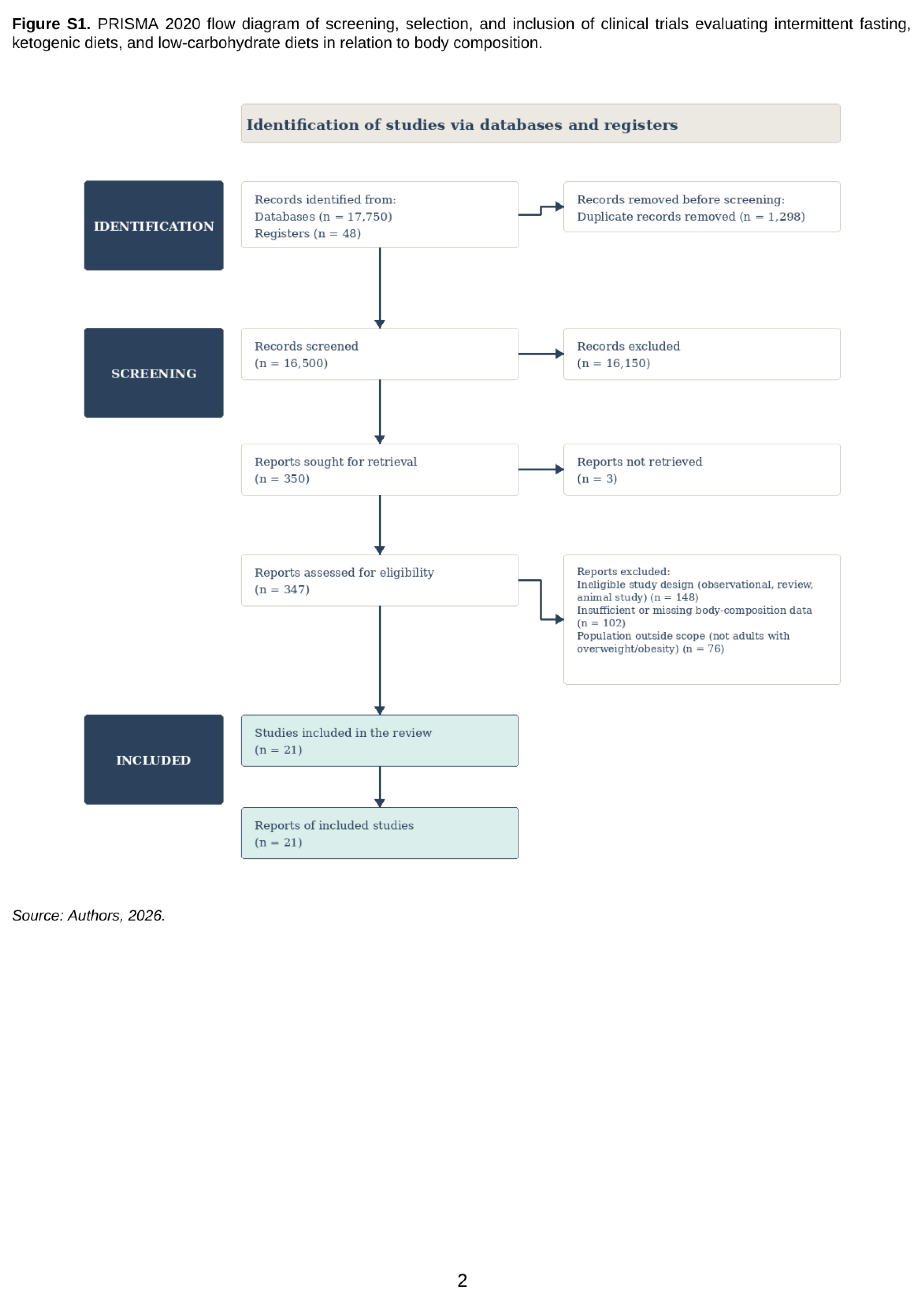
The study-selection process is detailed in Figure S1 in the Appendix A. The initial search identified 17,798 records. After removal of duplicates (n = 1,298), title and abstract screening (16,150 excluded), and full-text eligibility assessment of 347 reports, 326 articles were excluded because of an ineligible design, insufficient data, or a population outside the scope, resulting in 21 studies included in this meta-analysis. All included studies were randomized clinical trials or nonrandomized interventional studies. Study populations included adults with obesity or overweight, frequently with conditions such as T2D, NAFLD, PCOS, metabolic syndrome, and prediabetes. Sample sizes ranged from 15 to 485 participants, but a verified aggregate participant total could not be reconciled between the descriptive tables and the manuscript summary. Interventions comprised different dietary strategies: intermittent fasting (16:8, 18:6, 5:2, ADF, and TRF protocols), ketogenic diets (including very-low-carbohydrate and hypocaloric versions), low-carbohydrate diets, and caloric restriction alone. Intervention duration ranged from 4 weeks to 12 months. Outcomes included weight/BMI, fat mass, visceral fat, and muscle/lean mass, measured using BIA, DXA, anthropometry, and computed tomography.
3.2. Body Weight and BMI
A total of 21 studies reported data on reductions in body weight and/or BMI, representing all studies included in this review. Most plotted study estimates favored lower weight/BMI during dietary intervention, indicating consistency in the direction of effect.
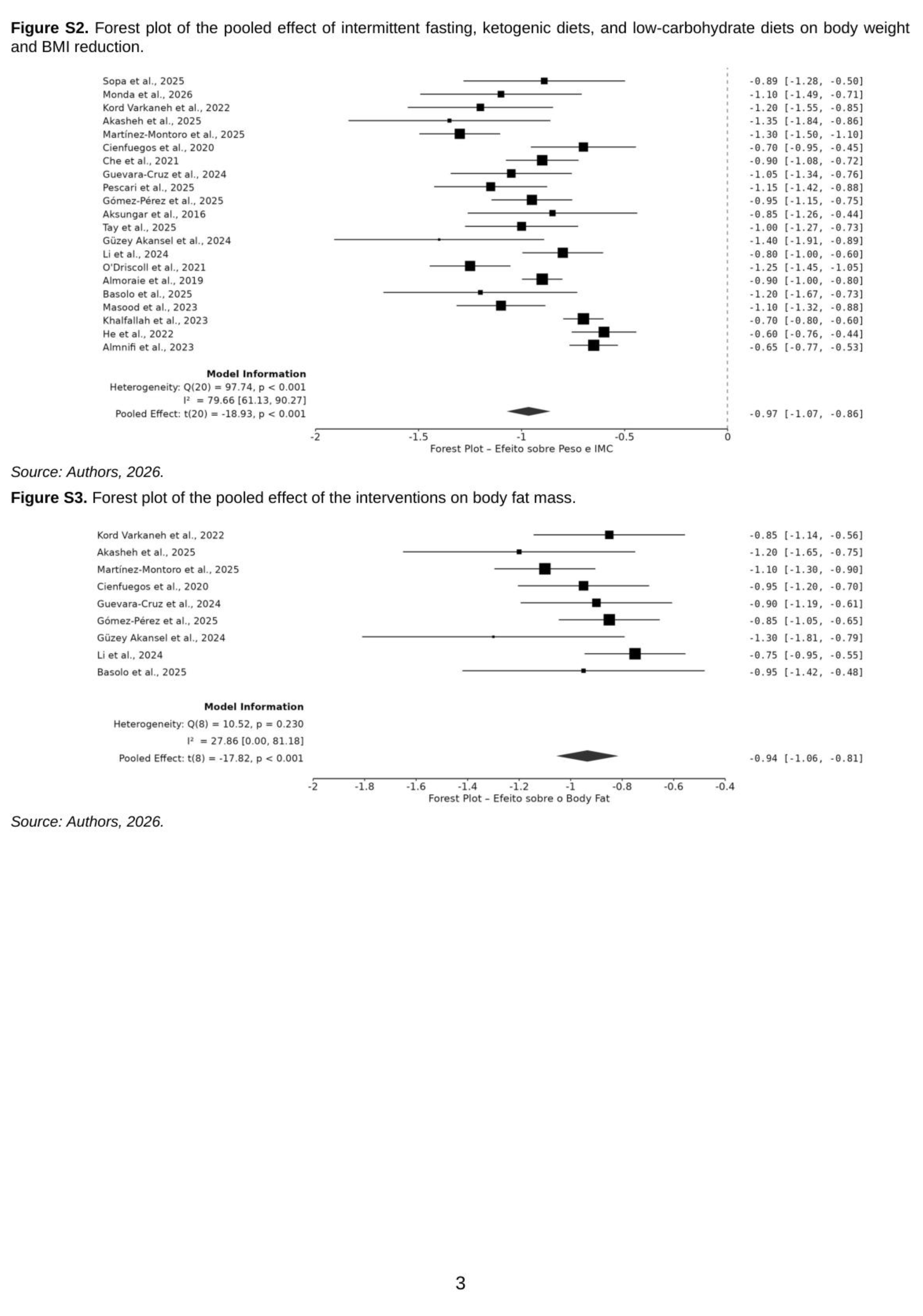
Individual effect sizes, expressed as SMDs (Cohen’s d), ranged from -0.60 (95% CI, -0.76 to -0.44; He et al., 2022) to -1.40 (95% CI, -1.91 to -0.89; Güzey Akansel et al., 2024) (Figure S2). The largest effects were observed in studies combining intermittent fasting with very-low-calorie or restrictive ketogenic diets, whereas smaller effects were observed with lower-intensity caloric interventions or wider eating windows.
Heterogeneity analysis showed high variability across studies, with Q(20) = 97.74, p < 0.001, and I² = 79.66% (supplementary forest plot), indicating that more than 80% of the observed variance was attributable to true between-study differences rather than chance. The corresponding supplementary pooled effect was -0.97 (95% CI, -1.07 to -0.86; p < 0.001), confirming a favorable, large-magnitude effect of the dietary interventions on reductions in weight and BMI.
The findings were highly consistent in direction—most plotted comparisons favored lower weight-related outcomes—although effect magnitude varied substantially. Several sources of heterogeneity may explain this variation. First, intervention type appeared to be an important determinant: more restrictive intermittent fasting protocols, such as alternate-day fasting or 4-hour eating windows, and very-low-calorie ketogenic diets (<800 kcal/day) produced the largest effects, whereas caloric restriction alone or fasting with wider eating windows (10 hours) produced more modest effects. Second, intervention duration ranged from 4 weeks to 12 months, and although longer studies tended to show attenuated effects in association with more variable adherence, no consistent linear relationship was observed. Third, population characteristics influenced outcomes: participants with T2D or metabolic syndrome showed more heterogeneous responses, possibly related to medication use and baseline metabolic resistance. Finally, methodological differences in measurement methods and data handling (intention-to-treat versus per-protocol analyses) may also have contributed to the observed variability.
3.3. Fat Mass
Nine estimates were presented in the supplementary forest plot for body fat mass, measured predominantly by BIA or DXA. The plotted estimates mostly favored lower fat mass following dietary intervention, confirming a favorable direction of effect for this outcome.
Individual SMDs ranged from -0.60 (95% CI, -0.80 to -0.40; Khalfallah et al., 2023) to -1.30 (95% CI, -1.81 to -0.79; Güzey Akansel et al., 2024) (Figure S3). The largest reductions were observed in studies using highly restrictive ketogenic diets (Güzey Akansel et al., 2024; Akasheh et al., 2025) and intermittent fasting protocols combined with intensive caloric restriction, suggesting that combining strategies may enhance adipose tissue loss. Smaller effects were observed with caloric restriction alone or in populations with more complex comorbidities.
Heterogeneity analysis showed low variability across studies, with the forest plot reported I² = 27.86%, indicating that less than 30% of the observed variance was attributable to true between-study differences and that most variance was attributable to sampling error. This degree of observed heterogeneity does not by itself establish the validity of the study-level effects.
The supplementary pooled effect was -0.94 (95% CI, -1.06 to -0.81; p < 0.001), confirming a favorable effect of moderate-to-large magnitude on fat-mass reduction. The reduction in fat mass was proportional to total weight loss but relatively greater than the loss of lean mass discussed below, suggesting that the evaluated dietary interventions promoted weight loss with relative preservation of lean mass. This pattern is clinically relevant because selective reduction of adipose tissue, particularly when accompanied by maintenance of muscle mass, is associated with better metabolic outcomes and a lower risk of sarcopenia in populations with obesity. The consistency of these findings, together with the low heterogeneity, reinforces the evidence that interventions based on intermittent fasting and ketogenic or low-carbohydrate diets are effective for reducing fat mass in adults with excess body weight.
3.4. Visceral Fat
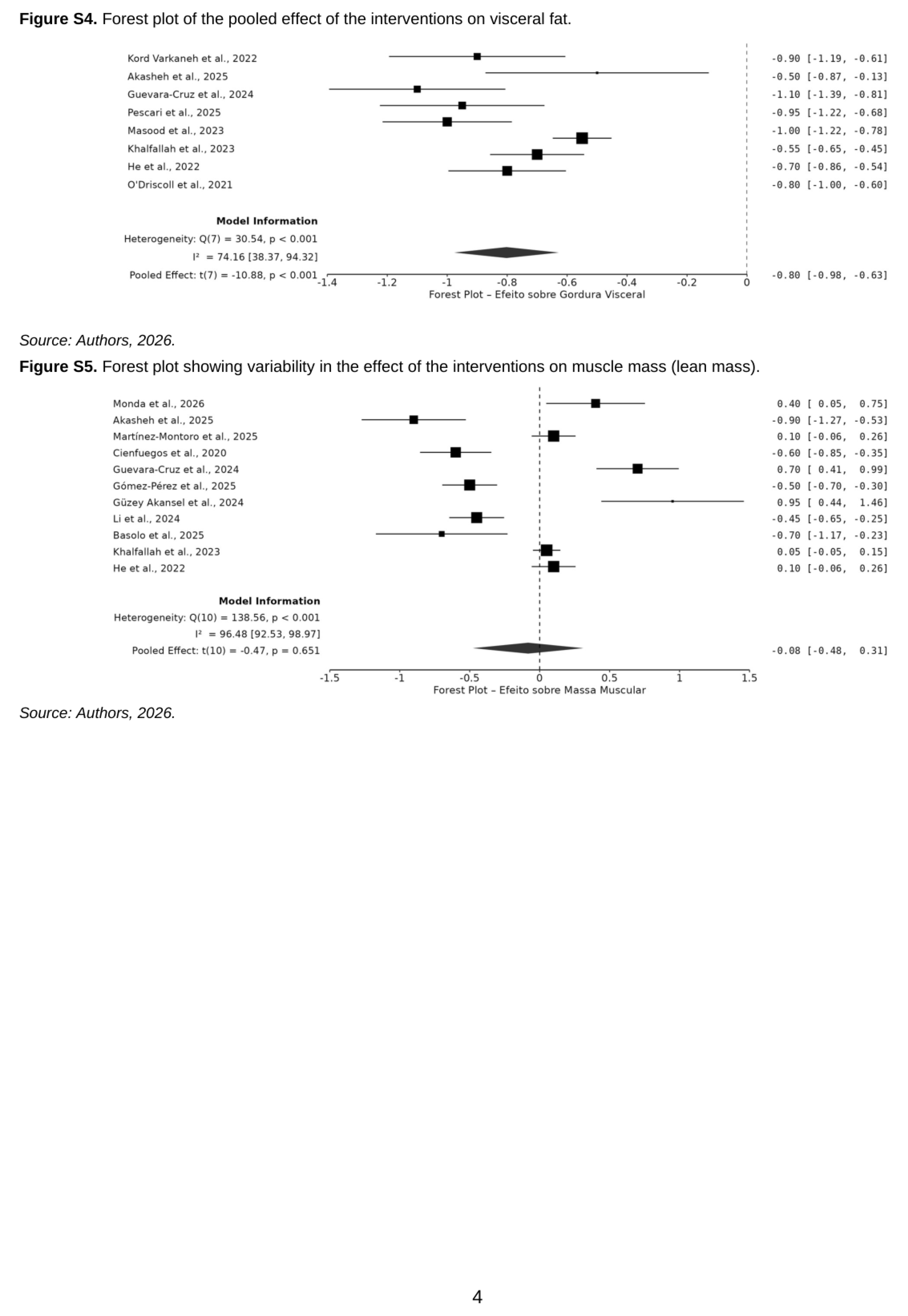
Eight studies reported data on visceral fat using different metrics: waist circumference (WC) as an indirect proxy, visceral fat area (VFA) measured by computed tomography or bioimpedance, and waist-to-hip ratio (WHR). The source reported reductions in central adiposity indicators across multiple studies, indicating consistency in the direction of effect.
Individual SMDs ranged from -0.50 (95% CI, -0.87 to -0.13; Akasheh et al., 2025) to -1.10 (95% CI, -1.39 to -0.81; Guevara-Cruz et al., 2024) (Figure S4). The largest reductions were observed in studies combining substantial caloric restriction with intermittent fasting strategies or structured ketogenic diets, whereas the smallest effect was observed with an alternate-day fasting protocol and little additional caloric restriction (Akasheh et al., 2025).
Heterogeneity analysis showed high variability across studies, with Q(7) = 30.54, p <0.001, and I² = 74.2% (95% CI, 38.4%-94.3%), indicating that approximately three quarters of the observed variance was attributable to true between-study differences rather than sampling error. This high heterogeneity limits direct interpretation of the pooled effect.
The pooled effect was -0.80 (95% CI, -0.98 to -0.63), with t(7) = -10.88, p <0.001, confirming a favorable effect of moderate-to-large magnitude despite substantial between-study variability.
The variability in results may be explained by several factors. First, measurement methods differed substantially: studies using waist circumference as a proxy tended to show attenuated effects compared with those using direct imaging-based measurements of VFA. Second, baseline participant characteristics influenced the results, with populations showing greater initial visceral adiposity experiencing larger reductions. Third, intervention type and intensity were important determinants: protocols combining intermittent fasting with intensive caloric restriction or sustained ketosis produced the largest effects, whereas interventions with lower caloric intensity resulted in more modest reductions. Finally, follow-up duration ranged from 4 to 24 weeks, and longer studies may have captured metabolic adaptations that attenuated or enhanced the observed effects.
3.5. Muscle and Lean Mass
Eleven studies reported data on muscle mass or lean mass, assessed predominantly by BIA or DXA. Unlike the other outcomes, results for this parameter were mixed, with variable directions of effect across studies.
Individual effect sizes varied (Figure S5) from significant reductions, as in Akasheh et al. (2025; SMD = -0.90; 95% CI, -1.27 to -0.53) and Basolo et al. (2025; SMD = -0.70; 95% CI, -1.17 to -0.23), to significant increases, as in Güzey Akansel et al. (2024; SMD = +0.95; 95% CI, 0.44-1.46) and Guevara-Cruz et al. (2024; SMD = +0.70; 95% CI, 0.41-0.99). Some studies showed effects close to the null, including Martínez-Montoro et al. (2025; SMD = +0.10; 95% CI, -0.06 to 0.26) and Khalfallah et al. (2023; SMD = +0.05; 95% CI, -0.05 to 0.15), indicating preservation of lean mass without a significant increase.
The observed variability may be explained by several factors. First, diet type influenced outcomes: ketogenic diets with adequate protein intake and moderate caloric restriction (Guevara-Cruz et al., 2024; Güzey Akansel et al., 2024) were associated with muscle gain or preservation, whereas severe caloric restriction (<800 kcal/day) resulted in significant loss (Basolo et al., 2025; Akasheh et al., 2025). Second, physical exercise—which was not controlled in most studies—may have acted as a confounder, because protocols that included guidance on physical activity tended to preserve lean mass. Third, assessment methods varied between DXA, which is more accurate, and BIA, which is more susceptible to fluid and electrolyte variation, potentially affecting estimates. Finally, baseline body composition and intervention duration also contributed to heterogeneity.
Preservation of lean mass during weight-loss interventions is clinically relevant because substantial muscle loss may compromise basal metabolism, increase the risk of sarcopenia, and contribute to rebound weight gain after the intervention ends. In this context, the findings suggest that diets with adequate protein intake and moderate caloric restriction are preferable strategies for optimizing body composition during weight loss.
3.6. Overall Findings
The results show strong consistency regarding the effectiveness of dietary interventions based on intermittent fasting, ketogenic diets, and low-carbohydrate diets for reducing weight, BMI, fat mass, and visceral fat in adults with obesity and associated conditions. All studies indicated a favorable direction for these outcomes, with moderate-to-large effect sizes. By contrast, the effect on muscle mass was heterogeneous, ranging from gain to stability or loss depending on the intensity of caloric restriction, protein intake, and the presence of physical exercise.
For clinical practice, the findings support the use of these dietary strategies as effective tools for reducing adiposity, particularly when accompanied by moderate caloric restriction and adequate protein intake to minimize muscle loss. Important evidence gaps include the need for longer-duration studies, standardized body-composition assessment methods, and control of concomitant physical exercise.
Original descriptive study table (reproduced from the source manuscript)
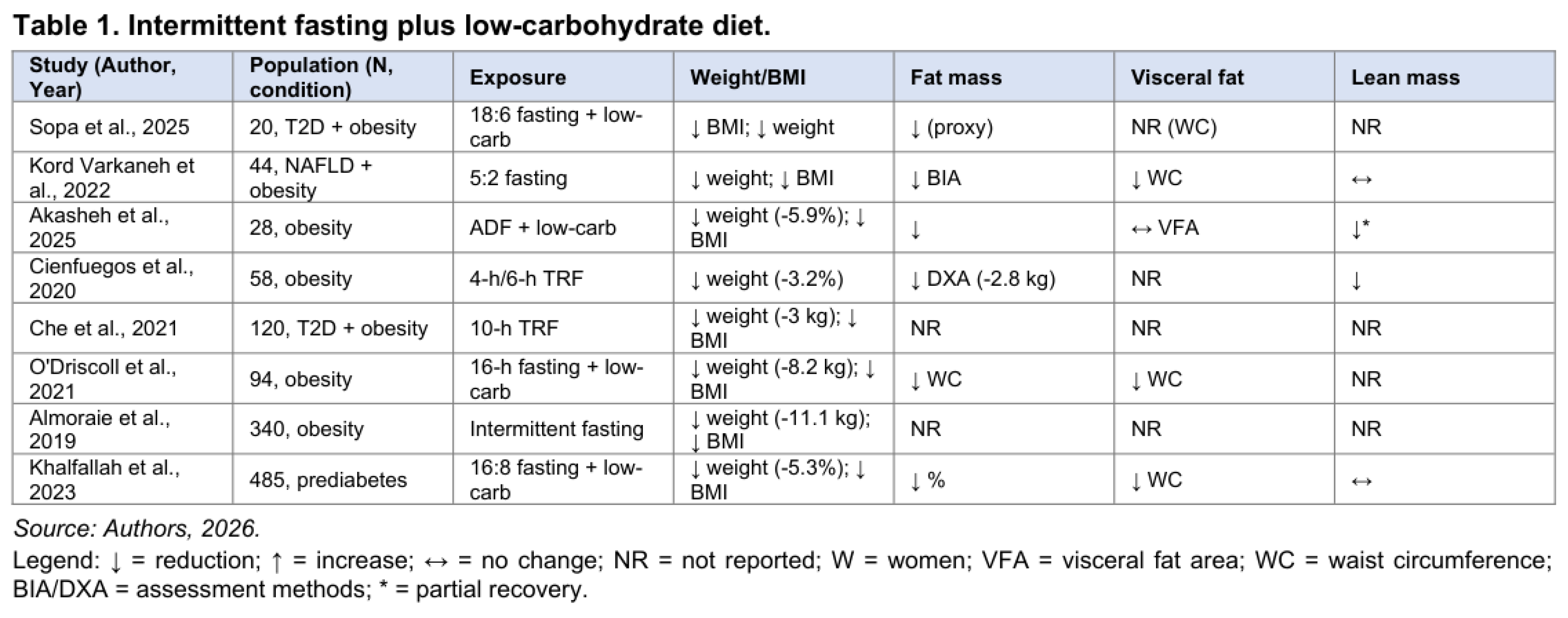
Study descriptions and original sample-size fields are reproduced for traceability; any conflicting totals are addressed in the main text.
Original descriptive study table (reproduced from the source manuscript)
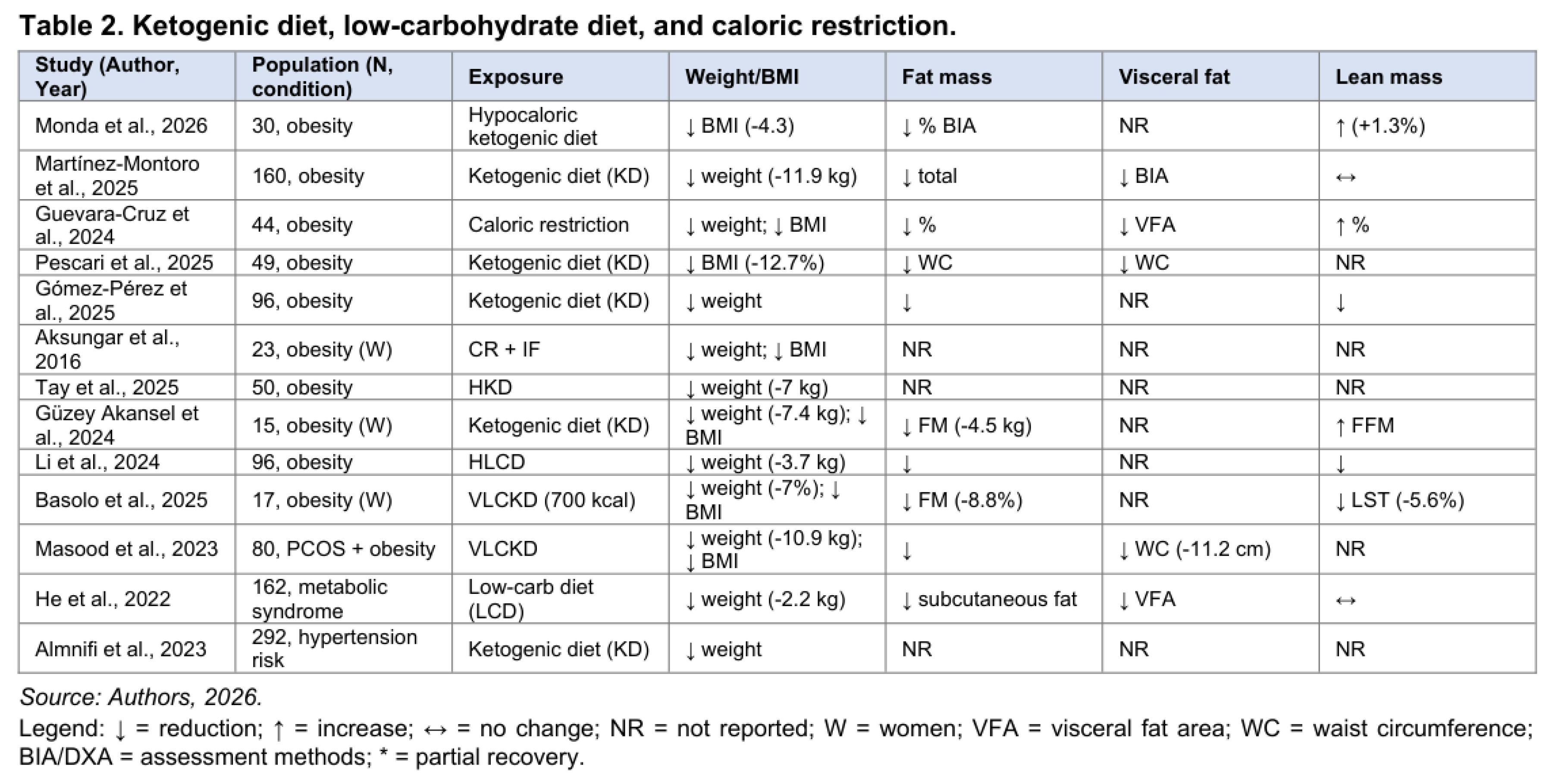
Study descriptions and original sample-size fields are reproduced for traceability; any conflicting totals are addressed in the main text.
4. Discussion
4.1. Principal Findings
This review synthesized findings from 21 tabulated study entries involving adults with obesity, overweight, and associated conditions such as T2D, metabolic syndrome, and NAFLD. The evaluated dietary interventions— intermittent fasting, ketogenic diets, and low-carbohydrate diets—showed consistent effectiveness in reducing weight and BMI, with a large pooled effect (SMD = -0.97; 95% CI, -1.07 to -0.86), although between-study heterogeneity was high. For fat mass, the pooled effect was similarly robust (SMD = -0.94; 95% CI, -1.06 to -0.81), with low heterogeneity, indicating substantial adipose tissue loss. Visceral fat also decreased significantly (SMD = -0.80; 95% CI, -0.98 to -0.63), although methodological and clinical variability was high. By contrast, the effect on muscle mass was heterogeneous, with studies reporting outcomes ranging from significant gains to marked losses depending on the intensity of caloric restriction, protein intake, and the presence of physical exercise. Overall, the results support the effectiveness of these dietary strategies for reducing adiposity while emphasizing the need to preserve lean mass during weight loss.
4.2. Comparison with Previous Evidence
The findings are broadly consistent with the current scientific literature supporting intermittent fasting, ketogenic diets, and low-carbohydrate diets as effective strategies for weight reduction and improvement in body composition among populations with overweight and obesity. Previous systematic reviews with meta-analyses, such as the study by Patikorn et al. (2021), which included more than 1,500 participants, showed that intermittent fasting produces significant weight reduction compared with continuous hypocaloric diets, with an effect magnitude similar to that observed in the present study (pooled SMD for weight, -0.97). Likewise, meta-analyses of ketogenic diets, such as that conducted by Bueno et al. (2013), reported greater weight loss than low-fat diets, corroborating the significant reductions in fat mass and visceral fat observed in the present study (Bueno et al., 2013; Enríquez Guerrero et al., 2021; Khalafi et al., 2025; Leung, Tam, and Ho, 2025; Patikorn et al., 2021).
For fat mass, the low heterogeneity (I² = 27.9%) and robust pooled effect (SMD = -0.94) are consistent with previous evidence indicating that carbohydrate-restricted diets and intermittent fasting are particularly effective for selective reduction of adipose tissue, potentially mediated by hormonal mechanisms such as reduced insulinemia and activation of lipolysis. The reduction in visceral fat, although accompanied by high heterogeneity, also reflects findings from recent meta-analyses indicating benefits of these interventions on markers of central adiposity, such as waist circumference (Cho et al., 2019; Khalafi et al., 2025; Lee and Lee, 2021; Yuan et al., 2022).
An important divergence between the present findings and part of the literature concerns muscle mass. Although some meta-analyses suggest that ketogenic diets and intermittent fasting may preserve lean mass better than continuous caloric restriction, this review identified mixed results, with studies reporting both significant gains and significant losses. This variability may reflect differences in the intensity of caloric restriction, protein intake, and uncontrolled physical exercise (Cuevas-Cervera et al., 2022; Manninen, 2006; Merra et al., 2016).
Compared with conventional nutritional interventions based on a standard hypocaloric, low-fat diet, the evaluated strategies showed at least equivalent effects on weight loss, with a potential advantage for reducing visceral fat and for short-term adherence, although their effects on muscle mass require greater clinical attention.
4.3. Biological Mechanisms
The beneficial effects observed with the evaluated dietary interventions may be explained by distinct but complementary biological mechanisms involved in the regulation of energy balance, lipid metabolism, and hormonal sensitivity.
Intermittent fasting acts primarily through temporal restriction of the eating window, promoting depletion of hepatic glycogen stores and a transition toward lipid oxidation as the preferred energy source. During prolonged periods without caloric intake, the AMPK (AMP-activated protein kinase) pathway is activated. AMPK is a cellular energy sensor that inhibits lipogenesis and stimulates autophagy, a cellular recycling process associated with metabolic benefits and potential preservation of lean tissue. In addition, intermittent fasting improves insulin sensitivity and reduces basal and postprandial insulin levels, thereby favoring mobilization of free fatty acids from adipose tissue (Antunes et al., 2018; Ma et al., 2023; Vergara Nieto et al., 2025).
The ketogenic diet is characterized by severe carbohydrate restriction (<50 g/day), which induces physiological ketosis and hepatic production of ketone bodies (beta-hydroxybutyrate and acetoacetate). Ketosis produces a substantial reduction in insulinemia, removing hormonal inhibition of lipolysis and increasing lipid oxidation. Ketone bodies also act as signaling molecules and suppress appetite through central and peripheral mechanisms, contributing to spontaneous reductions in caloric intake. Adaptive thermogenesis, with an increase in resting energy expenditure, has also been documented in individuals undergoing prolonged ketosis (Martins et al., 2020; Sumithran et al., 2013).
Although less restrictive than the ketogenic diet, the low-carbohydrate diet shares mechanisms related to reductions in postprandial glycemia and glycemic variability, with consequent favorable hormonal modulation, particularly reduced secretion of insulin and insulin-like growth factor 1 (IGF-1). This hormonal environment increases the availability of fatty acids for oxidation and reduces excessive anabolic stimulation of adipose tissue (Goss et al., 2020; Papakonstantinou et al., 2022).
When combined, intermittent fasting and carbohydrate restriction may exert synergistic effects on visceral-fat reduction by acting simultaneously through complementary pathways of lipid mobilization and insulin sensitization. When muscle-mass preservation was observed, it appeared to be associated with adequate protein intake and activation of autophagic pathways that spare lean tissue during caloric restriction. This synergy may partly explain the weight loss with favorable body composition observed in subgroups that maintained adequate protein intake.
4.4. Heterogeneity and Potential Effect Modifiers
Statistical analysis revealed distinct heterogeneity patterns across the evaluated outcomes. For weight and BMI, heterogeneity was high (I² = 82.4%), indicating that more than 80% of the observed variance across studies was attributable to true differences in interventions or populations rather than sampling error. Visceral fat similarly showed high heterogeneity (I² = 74.2%), reflecting the diversity of measurement methods and clinical responses. In contrast, fat mass showed low heterogeneity (I² = 27.9%), providing greater robustness to the pooled estimates for this outcome.
Several factors contributed to the observed variability. First, intervention type and intensity were important determinants: more restrictive fasting protocols, such as alternate-day fasting or 4-hour eating windows, and ketogenic diets with severe caloric restriction (<800 kcal/day) produced larger effects, whereas more moderate interventions, such as 10-hour eating windows or low-carbohydrate diets without intensive caloric restriction, produced attenuated effects.
Second, follow-up duration varied substantially across studies, from 4 weeks to 12 months. Short-term studies tended to show larger effects, possibly related to greater initial adherence and early water losses, whereas longer studies captured the sustainability of effects and potential metabolic adaptations.
Population characteristics also influenced the results. Populations with comorbidities such as T2D or metabolic syndrome showed more heterogeneous responses, possibly because of medication use, baseline insulin resistance, and differences in adherence to the interventions. Age, sex, and the degree of baseline adiposity also modulated effect magnitude.
Measurement methods contributed to variability, particularly for body-composition outcomes. Studies using DXA, considered a reference-standard method, tended to provide greater precision, whereas those based on BIA or anthropometric measurements showed greater variability. Finally, differences in adherence and loss to follow-up may also have affected effect estimates, with dropout rates ranging from 5% to 30% across the included studies.
Lean-mass preservation and body composition The variability observed in the effects on muscle mass is one of the most relevant and clinically significant findings of this review. Although some studies reported significant gains in lean mass (Guevara-Cruz et al., 2024; Güzey Akansel et al., 2024), others demonstrated substantial losses (Akasheh et al., 2025; Basolo et al., 2025), showing that the muscle response is not homogeneous and depends critically on intervention design.
Loss of lean mass is a potential adverse effect of severe caloric-restriction strategies, particularly when accompanied by low protein intake and the absence of mechanical loading of muscle tissue. Such loss is clinically undesirable because it reduces resting energy expenditure, impairs strength and function, and is associated with a greater risk of long-term weight regain. In populations with obesity, muscle loss occurring concurrently with weight loss may obscure the true reduction in adiposity and lead to an unfavorable body composition (Demling and DeSanti, 2000; McCarthy and Berg, 2021; Sardeli et al., 2018).
The findings suggest several strategies for preserving muscle during weight-loss interventions. First, adequate protein intake (≥1.2 g/kg of ideal body weight) emerged as a protective factor in studies that maintained or increased lean mass. Second, moderate caloric restriction (a deficit of 500-750 kcal/day) was superior to extreme restriction (<800 kcal/day) for preserving lean tissue. Finally, the addition of resistance exercise, although not controlled in most studies, is recognized in the literature as a fundamental strategy for maintaining muscle mass during weight loss.
Assessment of body composition as a clinically relevant outcome beyond weight loss alone is essential. Two individuals with the same amount of weight loss may have completely different body-composition profiles, with divergent metabolic and functional implications. Regular measurement of muscle mass and fat mass should therefore be incorporated into routine clinical monitoring of patients undergoing weight-loss interventions.
Particular attention should be given to vulnerable populations, including older adults and individuals with sarcopenic obesity, in whom muscle loss may worsen frailty and increase the risk of falls, hospitalization, and mortality. In these groups, strategies that prioritize muscle preservation through moderate caloric restriction, optimized protein intake, and resistance exercise are particularly recommended.
4.5. Clinical Implications
The findings of this review provide evidence relevant to practical recommendations for prescribing dietary interventions based on intermittent fasting, ketogenic diets, and low-carbohydrate diets for the management of obesity and associated conditions.
First, strategy selection should be individualized according to the patient’s profile. For individuals who adhere well to structured schedules and have no contraindications, intermittent fasting protocols such as 16:8 or 5:2 appear effective and easy to implement. For patients with substantial insulin resistance, T2D, or hepatic steatosis, a ketogenic or more restrictive low-carbohydrate diet may provide additional benefits for reducing visceral fat and improving metabolic parameters. Food preferences, daily routine, and psychosocial conditions should guide the choice.
Monitoring body composition in addition to body weight is essential. Body weight alone does not distinguish fat loss from muscle loss. Bioimpedance or, when available, DXA every 3-6 months is recommended to assess fat mass and lean mass and to adjust the intervention as needed to prevent substantial muscle loss.
Multidisciplinary follow-up involving a dietitian or nutritionist, physician, and exercise professional is essential to ensure safety, adherence, and optimization of outcomes. The nutrition professional adjusts protein and energy intake; the physician monitors metabolic parameters and medications; and the exercise professional prescribes resistance exercise to preserve muscle mass.
Regarding safety and contraindications, intermittent fasting and restrictive diets are not recommended for pregnant or breastfeeding individuals, people with eating disorders, uncontrolled type 1 diabetes, advanced renal or hepatic failure, or frail older adults at risk of sarcopenia. Medications such as insulin and sulfonylureas require careful adjustment to prevent hypoglycemia.
4.6. Strengths and Limitations
This review has limitations that should be considered when interpreting the findings. First, the design of the included studies showed considerable methodological heterogeneity, with variation in intervention protocols, eligibility criteria, and primary outcomes, limiting standardization of pooled analyses.
Second, the small sample size of a substantial proportion of the included studies (seven studies with n <50) reduced the precision of effect estimates and increased the risk of sampling bias. Smaller studies tend to overestimate effect magnitudes, which may have influenced the observed pooled effect.
The absence of standardized control for physical exercise represents an important limitation. Concomitant physical activity, particularly resistance training, is a recognized modifier of body composition, and its lack of standardization across studies may have confounded estimates of the effect on muscle mass.
The limited duration of many studies, most of which had follow-up of ≤12 weeks, prevents robust conclusions about the long-term sustainability of effects, as well as safety and adherence beyond the initial intervention period.
Publication bias is also possible because studies with negative or null results tend to be published less frequently, potentially leading to overestimation of favorable intervention effects.
Finally, the lack of data on adherence and long-term sustainability limits the clinical applicability of the findings because the success of dietary interventions depends critically on the patient’s ability to maintain behavioral changes over time.
5. Conclusions
Overall, this review showed that dietary interventions based on intermittent fasting, ketogenic diets, and low-carbohydrate diets may be effective for reducing weight, BMI, fat mass, and visceral fat in adults with obesity and overweight, including populations with associated comorbidities such as T2D, metabolic syndrome, and NAFLD.
At the same time, the findings reinforce the need for particular attention to preservation of muscle mass during weight loss. The variability in this outcome, with studies reporting both significant gains and significant losses, indicates that the effect on lean tissue is not automatic but depends critically on intervention design. Severe caloric restriction, low protein intake, and the absence of resistance exercise were associated with undesirable muscle loss, whereas strategies using a moderate caloric deficit, adequate protein intake, and mechanical loading were able to preserve or even increase lean mass.
The overall message is that intermittent fasting, ketogenic diets, and low-carbohydrate diets represent valid and effective tools for obesity management, particularly when prescribed on an individualized basis and implemented within a multidisciplinary care setting. However, clinical success should not be evaluated solely by weight loss, but rather by improvement in body composition, with emphasis on reducing adiposity while maintaining muscle tissue.
Supplementary Materials
The following supporting information can be downloaded at the website of this paper posted on Preprints.org.
Author Contributions
Thiago de Sousa Siqueira: Conceptualization, Methodology, Supervision, Writing – Original Draft, Project Administration. Hércules Kanaan Pereira Sousa: Formal Analysis, Investigation, Software, Visualization. Ricardo Rezende de Queiroz: Resources, Funding Acquisition, Writing – Review & Editing.
Data Availability Statement
The manuscript and Appendix A provide descriptive information and forest plots. A complete extraction file and executable analysis dataset were not available in the supplied archive.
Acknowledgments
Language editing and manuscript formatting were supported with generative AI tools; study-level findings and original numerical inputs were not generated for this editorial edition. The authors remain responsible for scientific verification and final approval.
Conflicts of Interest
The authors declare that they have no financial or personal conflicts of interest that could have inappropriately influenced the work reported in this manuscript.
Appendix A. Original Supplementary Material
The figures below reproduce the originally supplied Supplementary Material. The manuscript follows the supplementary pooled values for weight/BMI and total fat mass. The original source methods gave an approximate error formula that requires statistical reanalysis before inferential claims can be considered independently verified.
Appendix A.1. Source Supplementary Page 2
Appendix A.2. Source Supplementary Page 3
Appendix A.3. Source Supplementary Page 4
References
- AL-OMAR, H. A.; et al. The impact of obesity in Saudi Arabia: healthcare resource use and costs associated with obesity-related complications. Adv. Ther. 2023, 40(4), 1430–1443. [Google Scholar] [CrossRef] [PubMed]
- BECKER, A.; et al. Novel nutritional and dietary approaches to weight loss for the prevention of cardiovascular disease: ketogenic diet, intermittent fasting, and bariatric surgery. Curr. Cardiol. Rep. 2021, 23(7), 85. [Google Scholar] [CrossRef] [PubMed]
- BUENO, D. R.; et al. Abdominal obesity and healthcare costs related to hypertension and diabetes in older adults. Rev. De Nutr. 2017, 30(02), 209–218. [Google Scholar] [CrossRef]
- BUENO, N. B.; et al. Very-low-carbohydrate ketogenic diet v. low-fat diet for long-term weight loss: a meta-analysis of randomised controlled trials. Br. J. Nutr. 2013, 110(7), 1178–1187. [Google Scholar] [CrossRef] [PubMed]
- CHO, Y.; et al. The effectiveness of intermittent fasting to reduce body mass index and glucose metabolism: a systematic review and meta-analysis. J. Clin. Med. 2019, 8(10), 1645. [Google Scholar] [CrossRef] [PubMed]
- CHONG, K. S.; et al. Obesity/overweight prevalence and economic burdens by bariatric surgery, metabolic syndrome, and related comorbidity in 2013-2019: a nationwide descriptive analysis. Surg. Obes. Relat. Dis. 2025, 21(7), 719–730. [Google Scholar] [CrossRef] [PubMed]
- CUEVAS-CERVERA, M.; et al. The effectiveness of intermittent fasting, time restricted feeding, caloric restriction, a ketogenic diet and the mediterranean diet as part of the treatment plan to improve health and chronic musculoskeletal pain: a systematic review. Int. J. Environ. Res. Public Health 2022, 19(11), 6698. [Google Scholar] [CrossRef] [PubMed]
- DEMLING, R. H.; DESANTI, L. Effect of a hypocaloric diet, increased protein intake and resistance training on lean mass gains and fat mass loss in overweight police officers. Ann. Nutr. Metab. 2000, 44(1), 21–29. [Google Scholar] [CrossRef] [PubMed]
- GOMEZ-ARBELAEZ, D.; et al. Body composition changes after very-low-calorie ketogenic diet in obesity evaluated by 3 standardized methods. J. Clin. Endocrinol. Metab. 2017, 102(2), 488–498. [Google Scholar] [CrossRef] [PubMed]
- GOSS, A. M.; et al. Effects of weight loss during a very low carbohydrate diet on specific adipose tissue depots and insulin sensitivity in older adults with obesity: a randomized clinical trial. Nutr. Metab. 2020, 17(1), 64. [Google Scholar] [CrossRef] [PubMed]
- GUERRERO, A. E.; et al. Effectiveness of an intermittent fasting diet versus continuous energy restriction on anthropometric measurements, body composition and lipid profile in overweight and obese adults: a meta-analysis. Eur. J. Clin. Nutr. 2021, 75(7), 1024–1039. [Google Scholar] [CrossRef] [PubMed]
- HENRY, C. O.; et al. Associations between maternal fish intake and polyunsaturated fatty acid status with childhood asthma in a high fish eating population. Pediatr. Allergy Immunol. 2025, 36(1), e70019. [Google Scholar] [CrossRef] [PubMed]
- KHALAFI, M.; et al. Longer-term effects of intermittent fasting on body composition and cardiometabolic health in adults with overweight and obesity: a systematic review and meta-analysis. Obes. Rev. 2025, 26(2), e13855. [Google Scholar] [CrossRef] [PubMed]
- LEE, H. S.; LEE, J. Effects of combined exercise and low carbohydrate ketogenic diet interventions on waist circumference and triglycerides in overweight and obese individuals: a systematic review and meta-analysis. Int. J. Environ. Res. Public Health 2021, 18(2), 828. [Google Scholar] [CrossRef] [PubMed]
- LEUNG, L. Y.-L.; TAM, H.-L.; HO, J. K.-M. Effects of ketogenic and low-carbohydrate diets on the body composition of adults with overweight or obesity: A systematic review and meta-analysis of randomised controlled trials. Clin. Nutr. 2025, 46, 10–18. [Google Scholar] [CrossRef] [PubMed]
- LIU, H.; et al. Intermittent fasting preserves beta-cell mass in obesity-induced diabetes via the autophagy-lysosome pathway. Autophagy 2017, 13(11), 1952–1968. [Google Scholar] [CrossRef] [PubMed]
- MA, Y.-N.; et al. Influence of intermittent fasting on autophagy in the liver. Biosci. Trends 2023, 17(5), 335–355. [Google Scholar] [CrossRef] [PubMed]
- MALHAB, L. J. B.; et al. Dawn-to-dusk intermittent fasting is associated with overexpression of autophagy genes: a prospective study on overweight and obese cohort. Clin. Nutr. ESPEN 2025, 65, 209–217. [Google Scholar] [CrossRef] [PubMed]
- MANNINEN, A. H. Very-low-carbohydrate diets and preservation of muscle mass. Nutr. Metab. 2006, 3(1), 9. [Google Scholar] [CrossRef] [PubMed]
- MARTÍNEZ-MONTORO, J. I.; et al. Effect of a ketogenic diet, time-restricted eating, or alternate-day fasting on weight loss in adults with obesity: a randomized clinical trial. BMC Med. 2025, 23(1), 368. [Google Scholar] [CrossRef] [PubMed]
- MARTINS, C.; et al. Association between ketosis and changes in appetite markers with weight loss following a very low-energy diet. Obesity 2020, 28(12), 2331–2338. [Google Scholar] [CrossRef] [PubMed]
- MCCARTHY, D.; BERG, A. Weight loss strategies and the risk of skeletal muscle mass loss. Nutrients 2021, 13(7), 2473. [Google Scholar] [CrossRef] [PubMed]
- MERRA, G.; et al. Very-low-calorie ketogenic diet with aminoacid supplement versus very low restricted-calorie diet for preserving muscle mass during weight loss: a pilot double-blind study. Eur. Rev. Med. Pharmacol. Sci. 2016, 20(12). [Google Scholar] [PubMed]
- NAPOLEÃO, A.; et al. Effects of calorie restriction on health span and insulin resistance: classic calorie restriction diet vs. ketosis-inducing diet. Nutrients 2021, 13(4), 1302. [Google Scholar] [CrossRef] [PubMed]
- PAPAKONSTANTINOU, E.; et al. Effects of diet, lifestyle, chrononutrition and alternative dietary interventions on postprandial glycemia and insulin resistance. Nutrients 2022, 14(4), 823. [Google Scholar] [CrossRef] [PubMed]
- PATIKORN, C.; et al. Intermittent Fasting and Obesity-Related Health Outcomes: An Umbrella Review of Meta-analyses of Randomized Clinical Trials. JAMA Netw. Open 2021, 4(12), e2139558. [Google Scholar] [PubMed]
- ROSA, C.; et al. Mediterranean diet versus very low-calorie ketogenic diet: Effects of reaching 5% body weight loss on body composition in subjects with overweight and with obesity—A cohort study. Int. J. Environ. Res. Public Health 2022, 19(20), 13040. [Google Scholar] [CrossRef] [PubMed]
- SARDELI, A. V.; et al. Resistance training prevents muscle loss induced by caloric restriction in obese elderly individuals: a systematic review and meta-analysis. Nutrients 2018, 10(4), 423. [Google Scholar] [CrossRef] [PubMed]
- SUMITHRAN, P.; et al. Ketosis and appetite-mediating nutrients and hormones after weight loss. Eur. J. Clin. Nutr. 2013, 67(7), 759–764. [Google Scholar] [CrossRef] [PubMed]
- SURUGIU, R.; et al. Molecular mechanisms of healthy aging: the role of caloric restriction, intermittent fasting, Mediterranean diet, and ketogenic diet—a scoping review. Nutrients 2024, 16(17), 2878. [Google Scholar] [CrossRef] [PubMed]
- TOBIAS, T. A. M.; WOOD, L. G.; RASTOGI, D. Carotenoids, fatty acids and disease burden in obese minority adolescents with asthma. Clin. Exp. Allergy 2019, 49(6), 838–846. [Google Scholar] [CrossRef] [PubMed]
- VIDIĆ, V.; et al. Effects of calorie restricted low carbohydrate high fat ketogenic vs. non-ketogenic diet on strength, body-composition, hormonal and lipid profile in trained middle-aged men. Clin. Nutr. 2021, 40(4), 1495–1502. [Google Scholar] [CrossRef] [PubMed]
- YUAN, X.; et al. Effect of intermittent fasting diet on glucose and lipid metabolism and insulin resistance in patients with impaired glucose and lipid metabolism: a systematic review and meta-analysis. Int. J. Endocrinol. 2022, 2022(1), 6999907. [Google Scholar] [CrossRef] [PubMed]
Disclaimer/Publisher’s Note: The statements, opinions and data contained in all publications are solely those of the individual author(s) and contributor(s) and not of MDPI and/or the editor(s). MDPI and/or the editor(s) disclaim responsibility for any injury to people or property resulting from any ideas, methods, instructions or products referred to in the content. |
© 2026 by the authors. Licensee MDPI, Basel, Switzerland. This article is an open access article distributed under the terms and conditions of the Creative Commons Attribution (CC BY) license.
Copyright: This open access article is published under a Creative Commons CC BY 4.0 license, which permit the free download, distribution, and reuse, provided that the author and preprint are cited in any reuse.