

Submitted:
01 November 2026
Posted:
04 November 2026
You are already at the latest version
Preprints on COVID-19 and SARS-CoV-2
Abstract
Introduction: Healthcare workers (HCWs), especially cancer care teams, are at an increased risk of SARS-CoV-2 infection, which may be amplified in rural areas. Therefore, we aimed to determine SARS-CoV-2 seroprevalence among HCWs in our rural cancer care network. Methods: We conducted a multisite, longitudinal, three-part SARS-CoV-2 seroprevalence study within the MaineHealth Cancer Care Network between November 2020 and April 2023, spanning metropolitan (one site), micropolitan (four), and rural (six) practices in south-central Maine and eastern New Hampshire. Follow-up was completed in January 2024. We followed 435 HCWs who provided cancer care during the pandemic. Participants reported their own medical history and that of household members and job duties, completed Occupational Risk and End-of-Study surveys, and underwent serial SARS-CoV-2 antibody testing. Results: In Part 1, the primary outcome SARS-CoV-2 period seroprevalence rate was 1.6% (3/192; 95% CI 0.5–4.5%). Nearly 8% of participants and 10% of their household members reported immunocompromising conditions. We observed persistence of spike protein antibody response >2,500 U/mL over the course of the study. Survey response rates were high and remarkably consistent, given the diversity of participants. Outside the workplace, our care team members practiced a high level of personal safety measures during the pandemic. Conclusion: Our findings showed a low SARS-CoV-2 seroprevalence, consistent with the national and international data reported early in the pandemic. We also observed higher-than-expected immunocompromising conditions in rural HCWs and their households. These results underscore the importance of longitudinal sero-surveillance, particularly for high-risk rural healthcare networks.
Keywords:
COVID-19
; cancer healthcare workers
; rural health
; SARS-CoV-2 antibodies
; seroprevalence
Introduction
Since its emergence in late 2019, the COVID-19 pandemic has exposed critical vulnerabilities within healthcare systems, with particularly pronounced effects on cancer care delivery.1-6 Despite the emergence of multiple variants, including the dominant Omicron lineage, certain risk factors for severe SARS-CoV-2 infection have remained constant,7-9 including advanced age, immunocompromised status, and multiple co-morbidities.
Rural and less densely populated regions have received less epidemiological attention during the pandemic than their urban counterparts, despite comprising a substantial portion of the healthcare landscape. Between March and October 2020, 13.8% of approximately 8.1 million confirmed COVID-19 cases and 10.7% of 217,510 deaths occurred in nonmetropolitan counties.10 From early August 2020, the nonmetropolitan incidence and mortality rates steadily increased and surpassed those in metropolitan areas.10 Furthermore, 50% of rural residents were classified as high risk for hospitalization and serious illness following SARS-CoV-2 infection,11 compared with 46.9% in micropolitan (population range: 10,000‒50,000) and 40% in metropolitan (population >50,000) areas.11 Maine was among 12 states where >50% of rural populations were at high risk. Consequently, rural residents are estimated to generate 10% more per capita COVID-19 hospitalization rates than urban residents under equal infection rates.
Maine is the oldest (median age 44.9 years, 6.7 years older than the median) and most rural state in the nation, with 61.4% of the population residing in rural areas according to HRSA criteria.12-14 The MaineHealth Cancer Care Network (MHCCN) provides care to over 7,500 newly diagnosed cancer cases annually.15 This patient volume, representing nearly 75% of the state’s cancer burden, is comparable to that of any major metropolitan cancer center and constitutes a significant at-risk patient population during the pandemic. MHCCN comprises 11 practice locations throughout south-central Maine, including Portland (the only metropolitan city in Maine) and Carroll County in eastern New Hampshire. Four micropolitan cancer practices are based in Augusta, Brunswick, Lewiston, and Sanford. Six rural cancer practices, including five critical access hospitals, are located in Belfast, Damariscotta, Farmington, North Conway (NH), Norway, and Rockport.
Beyond patient care risks, healthcare workers (HCWs) may be exposed to or transmit COVID-19 infection to household members, further compounding the individual burden on rural HCWs, particularly in settings involving patients and family members at higher risk. Despite widespread use of personal protective equipment (PPE) and evolving infection control practices, seroprevalence data indicate that a significant portion of HCWs may have had asymptomatic or unrecognized infection.16,17 Approximately 35-40% of COVID-19 cases are estimated to be asymptomatic.18 A Centers for Disease Control and Prevention (CDC)-reported study using spike protein-targeted anti-pan immunoglobulin (Ig) antibodies found a 6% seroprevalence among HCWs during the spring and summer of 2020.19 Of the 194 participants, one-third reported no symptoms within the preceding months, and nearly half did not believe they had been previously infected. Conversely, self-reported belief of prior SARS-CoV-2 infection was strongly associated with seropositivity.20
The dual vulnerability of occupational exposure in cancer-care settings combined with frequent close contact with immunocompromised patients places a premium on protecting both care teams and patients. This intersection of occupational exposure, rural healthcare disparities, and immunosuppressed patient populations underscores the need to define the seroepidemiological landscape of HCWs in rural oncology settings. This study, conducted within the MHCCN through the height of the initial outbreak and subsequent surges, aimed to quantify SARS-CoV-2 seroprevalence, exposure dynamics, antibody persistence, and risk perceptions in an underrepresented rural cancer care workforce. These data will inform occupational health strategies for future pandemic responses, particularly within healthcare systems serving high-risk rural populations.
Participants and Methods
Design and Setting
This study was conducted in three parts (Figure 1) across the MHCCN: Part 1 comprised a SARS-CoV-2 period seroprevalence study between 17 November 2020 and 8 March 2021. Participants with positive or indeterminate results underwent repeat testing at 3-month intervals, and those with initial negative results were excluded. Study enrollment was suspended between March 8 and June 1, 2021, to allow onboarding of a new antibody (spike protein) test at our central laboratory. Part 2 involved continued participant follow-up at 3-month intervals over 6 months to monitor antibody responses to the spike protein. Part 3 was initiated in response to participants’ requests for extended antibody surveillance. Commencing on September 28, 2022, participants were offered to join an “extension study” through April 30, 2023. These participants were followed for over a year at 3-month intervals with the last follow-up completed on 30 January 2024; the database was locked one month later. This study enrolled HCWs providing direct or indirect cancer care during the COVID-19 pandemic, including physicians, advanced practice providers, nurses, pharmacists, radiation therapists, social workers, clinical trial staff, clerical personnel, and environmental services staff. The study was approved by the MaineHealth (MH) Institutional Review Board (IRB). All participants provided written informed consent prior to enrollment before each study phase, which was obtained either remotely or in person by a member of the study team. The use of remote consent procedures was approved by the IRB during the COVID-19 pandemic. A copy of the signed consent document was provided to each participant.
Eligible Study Population and Recruitment
Participants were aged ≥18 years, employed in a clinical or non-clinical patient-facing capacity, and able to provide informed consent. At enrollment, HCWs were required not to have had signs or symptoms suggestive of COVID-19 within the previous 14 days. HCWs working entirely remotely or furloughed throughout the study period were excluded. Recruitment occurred across all 11 MHCCN sites, and most participants enrolled through an IRB-approved remote consent process using DocuSign® (San Francisco, CA). Because the study was designed as an observational sero-surveillance study of an existing rural oncology workforce, enrollment was determined by the eligible population rather than by formal power calculations for hypothesis testing.
Data Collection
Participants completed three surveys at enrollment and one survey at study completion. Survey 1 (Medical History): participants reported demographic characteristics, medications, prior COVID-19 illness, COVID-19 risk co-morbidities, and immunocompromising conditions [self or household member(s)]. Survey 2 (Occupational Survey) assessed job role, practice location, patient-facing contact, and exposure risk. Survey 3 (Occupational Risk Survey) assessed beliefs regarding the accuracy of SARS-CoV-2 antibody testing, level of concern about SARS-CoV-2 infection, and behaviors outside the workplace to prevent viral transmission. At study completion, participants completed an End-of-Study Survey capturing their experiences and thoughts regarding SARS-CoV-2 antibody testing. Up to three reminders were sent to encourage survey completion. Enrollment data and survey responses were entered into the institutionally licensed Research Electronic Data Capture Database (Vanderbilt University, Nashville, TN, USA).
Serologic Testing
NorDx (Scarborough), the MH central clinical laboratory, led COVID-19 surveillance reporting for Maine and New Hampshire during the peak of the pandemic and rapidly implemented SARS-CoV-2 antibody testing used in this study.21,22 At study initiation, the screening antibody (Ab) test used was the Elecsys Anti-SARS-CoV-2 cobas® (Roche Diagnostics, Mannheim, Germany), a high-throughput (qualitative) enzyme-linked immunoassay detecting pan-immunoglobulin (Ig) to the nucleocapsid antigen (aka N-antigen) [Sensitivity (PPA) 100%, and 95% CI: 88.3%, 100%; Specificity (NPA) 99.8; CI: 99.7, 99.9].23 Screen-positive samples underwent confirmatory testing with the Architect SARS-CoV-2 IgG (Abbott Laboratories, Abbott Park, IL), a qualitative IgG assay also targeting the N-antigen [Sensitivity 100; CI: 95.8, 100; Specificity 99.6, CI: 99, 99.9].24 Participants were classified as seropositive if both assays were positive; a negative test is Roche Ab(─) or Roche Ab(+) and Abbott Ab(─). This sequential antibody testing, although not truly orthogonal because the antibody targets were similar, was deemed appropriate in settings with low community COVID-19 incidence. In June 2021, NorDx implemented the Elecsys Anti-SARS-CoV-2 S cobas® (Roche Diagnostics, Mannheim, Germany) serology assay, a high-throughput semi-quantitative electrochemiluminescence pan IgG antibody assay targeting the spike protein with thresholds of <0.8 or >0.8 U/mL [Sensitivity 96.6%; CI: 93.4, 98.3); Specificity 100, CI: 99.9, 100)].25 Antibody titers were reported in U/mL, with spike protein levels >2,500 U/mL flagged for longitudinal analysis. This orthogonal (tandem N-antigen-spike protein) testing strategy enabled differentiation between natural infection and vaccine-induced antibody responses, whereas N-antigen antibody detection is indicative of infection only.26
Statistical Analyses
The primary outcome was determination of the SARS-CoV-2 period seroprevalence in our cancer workforce in Part 1. Given the inherent limitations of self-reported data collected over a protracted longitudinal period, a conservative statistical approach was adopted. Data were analyzed using R version 4.2.1. (R Foundation for Statistical Computing, Vienna, Austria). Antibody tests were performed monthly, with dates reflecting the time of test administration. Antibody tests from Part 1 with incomplete or missing confirmatory Abbott results were excluded from analyses. In addition, follow-up antibody tests from Part 1 were excluded, as follow-up testing was limited to participants with an initial positive result, to minimize selection bias.
Results
Participant Characteristics
A total of 454 participants provided consent (Figure 1). Of these, 19 were excluded (11 in Part 1 and 8 in Part 2) from the study (censored) for either withdrawing consent or failing to undergo an initial antibody test. The remaining 435 participants (Table 1) comprised 380 women (88%). The top recruited roles were 200 nurses and nursing assistants (46%); 41 unit clerks, clinic receptionists, and schedulers (9.4%); and 37 physicians, including residents (8.6%). The racial (≥95% White) and ethnic (≥95% not Hispanic or Latino) composition of participants reflected the demographic profile of Maine. The number of participants in each part of the study were comprised as follows: Part 1 – 192; Part 2 – 243 including 22 from Part 1; and Part 3 – 103 including 13 from Part 1 and 90 from Part 2 and representing 23.7% of all participants enrolled in the study. Of the 435 HCWs, 347 (79.8%) primarily provided outpatient care, 27 (6.2%) provided inpatient care, 48 (11%) had combined inpatient and outpatient responsibilities, and 13 (3%) had unreported care settings.
Participant and Household COVID-19 Co-Morbidities and Immunocompromising Conditions
COVID-19 co-morbidity risk factors were more prevalent in HCWs than in household members (15.6% versus 1.6%). Immunocompromising conditions were reported in 7.8% of HCWs and 9.9% of household members. Recording of concomitant medications corroborated immunocompromised status in eight HCWs (Table 2).
Baseline Seroprevalence and Exposure Risk (Part 1)
The background SARS-CoV-2 antibody seroprevalence rate in the absence of known infection was 1.6% (3 of 192 participants; 95% CI: 0.5–4.5%, Wilson score method) in Part 1 of the study. Four participants who self-reported a COVID-19 illness had initial negative tests [Roche Ab(─) or Roche Ab(+) Abbott Ab(─) per study definition described above]. Each of these participants’ results (at their request) were reviewed by the study team and confirmed laboratory (RT-PCR+ test) diagnosis of infection (Table 3). This prompted sensitivity analysis with laboratory confirmation of infection in these 4 individuals yielding a 3.6% seropositive sensitivity estimate (7 of 192 participants; 95% CI: 1.8–7.3%, Wilson score method).
Spike Protein Antibody Dynamics (Parts 2 & 3)
Spike protein antibody results were available from June 2021. A total of 828 spike protein antibody tests were performed (Figure 2A). Semi-quantitative results were as follows: five tests (0.6%) were negative, 297 (35.9%) were positive with values >0.8 to ≤2,500 U/mL, and 526 (63.5%) exceeded 2,500 U/mL (Figure 2B). Persistent high-level spike protein antibody responses (>2,500 U/mL) were observed over the study period (Figure 2C).
Survey Findings
The Occupational Risk Survey comprised three parts (Table 4), with mean response rates ranging from 85% to 93.2%. Regarding antibody test accuracy, 18% of participants acknowledged the possibility of false-positive results, and 28% for false-negative results. Further, 90% believed that a positive result was highly indicative of coronavirus infection. At enrollment, nearly 80% of participants reported no concern about current infection, and <10% reported being extremely concerned about future infection. The top three reported risk-mitigation behaviors outside the workplace included hand hygiene practices (93%), mask use covering the mouth and nose (86%), and avoidance of convalescent care facilities (83%). The End-of-Study survey mean response rate was 97.4% (Table 3). Participants were “very” to “extremely reassured” by the test results (58.9%), confident in test accuracy (70.2%), satisfied with the antibody testing process (84.9%), and valued having access to antibody testing (63.4%).
Discussion
Locoregional SARS-CoV-2 transmission dynamics in Maine during this 2.5-year study is important. Maine CDC reported the first confirmed COVID-19 case on March 12, 2020. Local MH system and State simulations/models predicted a surge in mid-April 2020, which never occurred, and was modest compared with other regions, even for a rural state. Our study launched in November 2020, shortly before COVID-19 vaccines [BNT162b2 mRNA (Pfizer) and mRNA-1273 (Moderna)] became available. By mid-December, vaccination was mandated for all MH employees,28-30 prioritizing heightened occupational risk, particularly for inpatient, intensive care, and COVID-19 care units. Figure 3 depicts the census of COVID-19 cases and Patients Under Investigation at our flagship academic medical center in Portland, highlighting the Omicron peak that arrived a year later in November 2021. The sustained Omicron peak was highly disruptive to MH hospital operations, inpatient and outpatient care, and critical workforce shortages. In April 2023, Maine CDC reported the lowest infection rates of the pandemic. Regardless, the aforementioned challenges persisted in our rural health system well into the first half of 2024, despite post-COVID recovery efforts that had begun in many locations (especially larger metropolitan health systems) nationwide.
Given this background, our study made four important observations: In the first part of the study, we observed an initial seroprevalence of 1.6% (3.6%, sensitivity analysis). At the outset of the pandemic, Maine had the 40th highest incidence of COVID-19 cases (16.1 cases/100,000).31 This seroprevalence also aligns with an early report indicating wide variability (ranging 1–30%) in SARS-CoV-2 seroprevalence among HCWs.19 A global meta-analysis of 49 studies estimated a pooled seroprevalence of 8.7%, with North American studies reporting higher rates up to 12.7%.20 Two studies from the United Kingdom reported point and period seroprevalence rates of 2.4% and 9.4%, respectively, which coincided with the reporting period in our study.32,33
For further context chronological sampling of HCW studies of SARS-CoV-2 antibody seroprevalence and humoral persistence in predominantly rural and select urban settings in the U.S. and internationally is summarized in Table 5.34-47 These studies commonly employed convenience sampling strategies, enrolled a preponderance of female participants, relied on self-reported data, incurred vaccination roll-out during seroprevalence studies of nascent infection, and in several instances used the identical N-antigen antibody (Part 1) platforms akin to our study.35,41,47 Anti-nucleocapsid IgG response wanes more rapidly than pan IgG antibody, and accordingly is less reliable detecting infection. This is substantiated by one study based in Connecticut that reported 39.5% sero-reversion among HCWs by a median of 5.5 months.35 Another study based in Japan, detected 76.3% of PCR-confirmed cases with the anti-N IgG assay versus 97.3% with the pan IgG anti-N assay, with the IgG signal declining significantly after four months.47 These observations substantiate the Part 1 seroprevalence sensitivity estimate in the 4 cases that tested positive with anti-N pan IgG test and subsequent negative companion negative anti-N IgG test despite known confirmed RT-PCR+ infection (Table 3). Per our conservative study definition in communities with low prevalence – it was deemed appropriate for both N-antigen antibody tests to be positive. Presenting 3.6% seroprevalence as a sensitivity analysis transparently bounds the degree to which the primary 1.6% estimate may understate true prior exposure, without asserting it as the period seroprevalence. Another study in Iowa using the identical anti-N pan IgG assay observed humoral persistence and sero-conversion rate of 7% over 18 months of their study.41 Two studies in Italy and Japan reported a slightly more protracted diminution in anti-spike antibody response of 6 months.42,45 Additionally, two other studies also showed that prior infection augments the post-vaccination spike response (hybrid immunity), as context for interpreting heterogeneity in spike-antibody magnitude.37,42 We note that genuinely rural HCW cohorts with longitudinal antibody-persistence data remain scarce, which underscores the contribution of our multi-year rural oncology study. Differences across studies likely reflect heterogeneity in local outbreak dynamics, PPE use, testing protocols, symptom recognition, and asymptomatic carriage.48
The proportion of participants with negative spike test results was low throughout the study period. Between June 2021 and January 2024, five spike antibody tests yielded negative results. All other spike antibody test results were positive, indicating an antibody response to either the vaccine or to COVID-19. Although the HCWs in this study (>80% of the participants were in outpatient settings) almost unanimously had positive spike antibody test results, the individuals varied in their levels of spike antibodies.
Second, our study population had higher rates of self-reported immunocompromising conditions, nearly 8% among HCWs and 10% of household members, which was unexpected. In 2013, the prevalence of immunosuppression (including health conditions and medication use) among U.S. adults was estimated at 3%.49A more recent communication using data from the 2021 National Health Interview Survey (NHIS) reported 6.6% of 29,164 adults had immunosuppression based on health conditions, prescriptions, and medical treatments.50 The observed prevalence of immunocompromising conditions in our HCWs and household members exceeded these rates and is concerning in a rural cancer care workforce. This observation emphasizes the dual burden faced by HCWs: the risk of occupational exposure and potential transmission to vulnerable cohabitants and vice versa. Previous studies have shown that household exposure is a strong predictor of seropositivity among HCWs, with odds ratios as high as 3.15 in some analyses.51This pattern has been corroborated in two studies in HCW cohorts assessed with the same nucleocapsid antigen assay used in our study reporting that household contact with a COVID-19–positive individual was associated with HCW seropositivity.34,39 Household exposure, rather than direct patient contact was found to be a stronger predictor.34 The implications for HCWs, especially the rural workforce, living with immunosuppressed individuals, or working closely with immunocompromised cancer patients, reinforce the need for tailored protective strategies in these settings.
Third, we observed a spike antibody response of >2,500 U/mL that persisted over the study period (18+ months). Presence of spike antibody is suggestive of humoral response to COVID-19 infection and/or vaccination. In our study, <20% of the HCWs reported having COVID-19 infection, which is likely under-reported and were vaccinated as part of a workforce requirement commencing in mid-December 2020. Two studies observed spike antibody diminution by 6 months.42,45 Another study reported a sharp decline in vaccine-induced immunity vs. Omicron over time.52 Similarly, neutralizing antibodies have also been shown to decline over time, within a few weeks, and boost with repeated vaccination.53.54 Although the presence of anti-spike protein antibodies indicates prior infection and/or vaccination, higher peak Ig levels may provide greater protection against future infections.54In our study, we plotted spike protein levels >2,500 U/mL to depict the range of antibody responses in participants over time. In the absence of the ability to confirm laboratory diagnoses of SARS-CoV-2 infection, we were unable to correlate spike protein antibody response with self-reported COVID-19 illness. However, it has been established that the presence and level of neutralizing antibodies is sine qua non evidence of protection against SARS-CoV-2 infection, although no absolute threshold eliminates risk.55-58 Neutralizing antibody testing in vitro using patient serum is expensive and impractical for routine monitoring.59 Given this, the absence of neutralizing-antibody titers and verified infection/vaccination histories in our study, antibody positivity and magnitude cannot be equated with protection against infection.
The use of orthogonal testing targeting both N-antigen and spike protein allowed for more robust serologic profiling, given the initial four negative tests that were akin to false-negative tests in those with a reported prior (and confirmed) COVID-19 infection observed at the outset in our study. We found that anti-spike antibodies were more reliable indicators of prior exposure and/or vaccination status than nucleocapsid antibodies, particularly as the pandemic progressed and vaccine coverage increased. Taken together, these observations are especially relevant in oncology care settings, where HCWs caring for patients are more susceptible to infection and are unable to mount robust immune responses to vaccination. The importance of a standardized assay methodology and interpretation cannot be overstated, especially in studies that aim to inform policies and practices in vulnerable populations.
Finally, there were notable observations from occupational risk and end-of-study surveys. Overall, response rates across both surveys ranged between 85% and 93%, which was impressive given the stress of patient care during the pandemic. There were appropriate reservations regarding false-positives (18%) and slightly higher false-negative results (28%). Less than 10% of the respondents were either very or extremely concerned about coronavirus infection, even though, at the outset of the pandemic, the provision of PPE in our system was stressful, which is likely reflective of most participants providing care in outpatient settings and being removed from frontline exposure in acute care settings. Finally, it is encouraging that care team members prioritize hand hygiene, masking, and avoiding convalescent centers outside of work. On balance, given the diversity of care team members, including entry-level staff and professional providers, there was consistency in responses across all domains, a suitable knowledge base for coronavirus serology testing, and safety measures. This trend is remarkable given the often-contentious national dialogue regarding COVID-19 and personal safety measures.
Study Limitations
First, our organizational IRB regards HCWs and employees as high-risk research subjects and must be given special consideration. However, not all IRBs share this perspective. The IRB allowed remote informed consent during the pandemic, which facilitated participant enrollment. Regardless, the IRB did not permit the study team to verify the medical history or COVID-19 diagnostic evaluation(s) in the electronic medical records (EMR). Given this and the unexpected availability of COVID-19 vaccinations one month after the study launch, our assessment of occupational exposure risk(s) was limited to Part 1 of the study. Participants could reach out to the study team for any concerns and help reconcile their test results and instances of either known or suspected COVID-19 infection. On rare occasions, the study physician(s) reviewed the EMR with the participant’s consent. The study team was also asked to be respectful of the participants’ time and limit interactions and reminders (up to three), given their clinical and work duties. Nonetheless, the overall response rate was high. Thus, all self-reported data captured herein inherently have limitations of recall bias and misclassification, among others. Documenting medications at the time of enrollment served as a helpful surrogate for the history of immunocompromising conditions. Enrollment in the extension phase was not as brisk as anticipated, which was attributable to critical staffing shortages and workforce stress across the MH during this time.
We were surprised by the marked sex imbalance of the participants though this was universal in other studies we reviewed (Table 5). Although nearly half of the HCWs were nurses, 88% of participants were women, suggesting that the volunteers for our study may have been at a lower risk of acquiring SARS-CoV-2 infection. Alternatively, participants could have chosen to participate in the study because of their perception of higher risks. In short, the study recruitment reflects convenience sampling, which has inherent shortcomings but was nearly universal in these studies as well. This includes rural and community cohorts (Kingman, AZ; Minnesota; St. Louis; and Iowa) most comparable to our study.36,38,39,41 Additionally, participants may not have mounted an antibody response in the window of infection or rapidly declined following infection, which could also underestimate sero-prevalence.60 Finally, generalizability may be limited to rural cancer care settings with similar demographic and healthcare infrastructure characteristics. It is also important to acknowledge that the 435 participating care team members represented a small fraction of the entire cancer workforce across all 11 practices, spanning inpatient and outpatient settings reflective of convenience sampling strategy.
Conclusions
This study presented longitudinal serological data from a large cohort of rural HCWs with cancer during the early and evolving phases of the COVID-19 pandemic. Our results demonstrated a seroprevalence rate at baseline that was consistent with earlier reports in other healthcare populations, affirming the low but detectable rate of SARS-CoV-2 exposure among HCWs in less densely populated regions during the first wave of the pandemic. Our study also underscores the elevated vulnerability of the rural cancer workforce, particularly due to the high proportion of individuals reporting personal or household members with immunocompromising conditions. This observation was not anticipated. We observed the persistence of the spike antibody response over the study period, which is relevant to care team members. In the absence of neutralizing antibody testing, which is impractical, serological responses alone cannot reliably assess protection against infection. In future pandemics, the use of different antibody targets will be helpful in discriminating serological responses to infection and/or vaccination, especially in rapidly changing antigen environments.
Participants were receptive to contributing personal thoughts on various aspects of COVID-19 serology testing, the risk of infection, and personal safety. Collectively, these observations highlight the importance of ongoing serological surveillance in healthcare settings. It is especially important to acknowledge that the transmission dynamics vary from region to region. These results may inform occupational health policies, particularly in regions with limited access to testing, high-risk patient populations, and rural healthcare delivery models. Further research is needed to define immune correlates of protection, gain insights into HCWs suffering from long COVID, and guide adaptive strategies for workforce and patient protection.61-63 Lastly, in HCWs exploring occupational exposure and risk of infection with highly transmissible agents explicit medical record-linked sero-surveillance must be a priority for future work.
Supplementary Materials
The following supporting information can be downloaded at the website of this paper posted on Preprints.org.
Funding Information
This work was supported in part by NIH grant nos. 1UG1 CA239771, supplemental award 3UG1 CA239771-02S1, and U54 GM115516.
Data Availability Statement
Data cannot be shared publicly because the dataset includes dates and other elements that constitute protected health information for a small, potentially re-identifiable rural employee cohort. De-identified data may be requested from organizational representatives, and access will be granted in accordance with MaineHealth IRB approval. Institutional Official(s) and contact information is: Jessica H. Chertow, PhD, MBA, MaineHealth IRB at: hrppIRB@mainehealth.org; and/or Crystal Nayock, Interim Director, MH Research Compliance Office at: crystal.nayock@mainehealth.org.
Acknowledgments
We extend our appreciation to the frontline MHCCN providers and care team members who participated in this study despite considerable staffing shortages and challenging times. We are especially grateful to Dr. Paul Han, former Faculty Scientist at the Maine Health Institute for Research and current Senior Scientist, Behavioral Research Program, Division of Cancer Control and Population Sciences, National Cancer Institute (NCI), Bethesda, MD, for designing the surveys incorporated in our study. We appreciate the support of our NCI Community Oncology Program Research (NCORP) Project Scientists, Jennifer Pak, MS, RN, and Beverly Lee, MS, who provided guidance for this study and reviewed the manuscript. Additionally, we value the support of Dr. Worta McCaskill-Stevens, former chief of NCI’s Community Oncology and Prevention Trials Research Group and former director of the NCI Community Oncology Research Program, who advocated for this rural cancer practice seroprevalence study during the pandemic.
Author(s) Disclosure Statement
The authors have no conflicts of interest to declare.
References
- Zhu N, Zhang D, Wang W, et al. for the China Novel Coronavirus Investigating and Research Team. A novel coronavirus from patients with pneumonia in China, 2019. N Engl J Med 2020; 382:727-33.
- Arons MM, Hatfield KM, Reddy SC, et al. for the Public Health–Seattle and King County and CDC COVID-19 Investigation Team. Presymptomatic SARS-CoV-2 infections and transmission in a skilled nursing facility. N Engl J Med 2020; 382:2081-90. [CrossRef]
- Ueda M, Martins R, Hendrie PC, et al. Managing cancer care during the COVID-19 pandemic: agility and collaboration toward a common goal. J Natl Compr Canc Netw 2020;18(4):366-9. [CrossRef]
- Raghavan D, Kim ES, Chai SJ, et al. Levine Cancer Institute approach to pandemic care of patients with cancer. JCO Oncol Pract 2020; 16(6):299-304. [CrossRef]
- American Society of Clinical Oncology Special Report. A Guide to Cancer Care Delivery During the COVID-19 Pandemic. Alexandria, VA (19 May 2020).
- Reidy-Lagunes D, Saltz L, Postow M, et al. Recommendations for testing and treating outpatient cancer patients in the era of COVID-19. J Natl Cancer Inst 2021; 113(7): 820-2. [CrossRef]
- Gregory TR, Bar-Yam Y, Elling U, et al. “Common Names” for Notable SARS-CoV-2 Variants: Proposal for a Transparent and Consistent Nicknaming Process to Aid Communication. World Health Network. [Available at: https://whn.global/common-names-for-variants.].
- Jacobs JL, Haidar G, Mellors JM. COVID-19: challenges of viral variants. Annu Rev Med 2023; 74:31–53. [CrossRef]
- Gupta P, Gupta V, Singh C, et al. Emergence of COVID-19 variants: an update. Cureus 2023 (Jul 3); 15(7):e41295. [CrossRef]
- Matthews KA, Ullrich F, Gaglioti AH, et al. Nonmetropolitan COVID-19 incidence and mortality rates surpassed metropolitan rates within the first 24 weeks of the pandemic declaration: United States, March 1–October 18, 2020. J Rural Health 2021; 37(2):272-7. [CrossRef]
- Kaufman BG, Whitaker R, Pink G, et al. Half of rural residents at high risk of serious illness due to COVID-19, creating stress on rural hospitals. J Rural Health 2020; 36(4):584-90. [CrossRef]
- Infoplease. Oldest States. [Available at: https://www.infoplease.com/us/states/oldest-states.].
- Health Resources and Services Administration. [Available at: https://www.hrsa.gov/rural-health/about-us/what-is-rural.].
- Maine Center for Disease Control & Prevention (Augusta, ME). Rural Health and Primary Care. [Availble at: https://gov/dhhs/mecdc/ public-health-systems/rhpc/rural-health.shtml.].
- Maine Medical Center and MaineHealth Cancer Care Network (MHCCN) Cancer Registry Annual Report 2023. MaineHealth Network Tumor Registry, Scarborough, ME.
- Ng K, Poon BH, Puar THK, et al. COVID-19 and the risk to health care workers: a case report. Ann Intern Med 2020; 172(11):766-7. (Letter.). [CrossRef]
- Bartoszko JJ, Farooqi MAM, Alhazzani W, et al. Medical masks vs N95 respirators for preventing COVID-19 in healthcare workers: a systematic review and meta-analysis of randomized trials. Influenza Other Respi Viruses 2020; 14:365-73. [CrossRef]
- Ma Q, Liu J, Liu Q, et al. Global percentage of asymptomatic SARS-CoV-2 infections among the tested population and individuals with confirmed COVID-19 diagnosis. A systematic review and meta-analysis. JAMA Netw Open 2021; 4(12):e2137257. [CrossRef]
- Self WH, Tenforde MW, Stubblefield WB, et al. CDC COVID-19 Response Team, IVY Network. Seroprevalence of SARS-CoV-2 among frontline health care personnel in a multistate hospital network — 13 academic medical centers, April–June 2020. MMWR 2020 (Aug 31); 69:1-7.
- Galanis P, Vraka I, Fragkou D, et al. Seroprevalence of SARS-CoV-2 antibodies and associated factors in healthcare workers: a systematic review and meta-analysis J Hosp Infect 2021; 108:120-34.
- Petherick A. Developing antibody tests for SARS-CoV-2. Lancet 2020; 395:1101-2. (World Report.). [CrossRef]
- Drain PK. Rapid diagnostic testing for SARS-CoV-2. N Engl J Med 2022; 386:264-72.
- U.S. Food and Drug Administration. EUA Authorized Serology Test Performance. Elecsys Anti-SARS-CoV-2 cobas®. Instructions for use. Roche Diagnostics GmbH (Mannheim, Germany). [Available at: https://www.fda.gov/medical-devices/emergency-situations-medical-devices/eua-authorized-serology-test-performance.].
- U.S. Food and Drug Administration. EUA Authorized Serology Test Performance. Abbott Architect SARS-CoV-2 IgG. Abbott Laboratories (Abbott Park, IL). [Available at: https://www.fda.gov/ medical-devices/emergency-situations-medical-devices/eua-authorized-serology-test-performance.].
- U.S. Food and Drug Administration. EUA Authorized Serology Test Performance. Elecsys Anti-SARS-CoV2 S cobas®. Instructions for use. Roche Diagnostics GmbH (Mannheim, Germany). [Available at: https://www.fda.gov/medical-devices/emergency-situations-medical-devices/eua-authorized-serology-test-performance.].
- Sethuraman N, Jeremiah SS, Ryo A. Interpreting diagnostic tests for SARS-CoV-2. JAMA 2020; 323:2249-51.
- Lynch JB, Davitkov P, Anderson DJ, et al. Infectious Diseases Society of America guidelines on infection prevention for healthcare personnel caring for patients with suspected or known COVID-19 (November 2021). CID 2024; 78(7):e230–e249. [CrossRef]
- Polack FP, Thomas SJ, Kitchin N, et al. for the C4591001 Clinical Trial Group. Safety and efficacy of the BNT162b2 mRNA COVID-19 vaccine. N Engl J Med 2020; 383:2603-15. [CrossRef]
- Baden LR, El Sahly HM, Essink B, et al. for the COVE Study Group. Efficacy and safety of the mRNA-1273 SARS-CoV-2 vaccine. N Engl J Med 2021; 384:403-16.
- Castells MC, Phillips EJ. Maintaining safety with SARS-CoV-2 vaccines. N Engl J Med 2021; 384:643-9.
- CDC COVID-19 Response Team. Geographic differences in COVID-19 cases, deaths, and incidence –– United States, February 12–April 7, 2020. MMWR 2020 (Apr 10); 69:465-71. [CrossRef]
- Shields A, Faustini SE, Perez-Toledo M, et al. SARS-CoV-2 seroprevalence and asymptomatic viral carriage in healthcare workers: a cross-sectional study. Thorax 2020; 75:1089-94. [CrossRef]
- Lumley SF, O’Donnell D, Stoesser NE, et al. for the Oxford University Hospitals Staff Testing Group. Antibody status and incidence of SARS-CoV-2 infection in health care workers. N Engl J Med 2021; 384:533-40. [CrossRef]
- Brunner WM, Hirabayashi L, Krupa NL, et al. Severe acute respiratory coronavirus virus 2 (SARS-CoV-2) IgG results among healthcare workers in a rural upstate New York hospital system. Infect Control Hosp Epidemiol 2021; 42:1397-1400. [CrossRef]
- Papasavas P, Olugbile S, Wu U, et al. Seroprevalence of SARS-CoV-2 antibodies, associated epidemiological factors and antibody kinetics among healthcare workers in Connecticut. J Hosp Infec 2021; 114:117-25. [CrossRef]
- Santarelli A, Lalitsasivimol D, Bartholomew N, et al. The seroprevalence of SARS-CoV-2 in a rural southwest community. J Osteopath Med 2021; 121: 199–210. [CrossRef]
- Zhong D, Xiao S, Debes AK, et al. Durability of antibody levels after vaccination with mRNA SARS-CoV-2 vaccine in individuals with or without prior infection. JAMA 2021; 326:2524-6. (Research Letter.). [CrossRef]
- Wiggen TD, Bohn B, Ulrich AK, et al. SARS-CoV-2 seroprevalence among healthcare workers. PLoS ONE 2022; 17(4): e0266410.
- Bosserman RE, Farnsworth CW, O’Neil CA, et al. Seroprevalence of severe acute respiratory coronavirus virus 2 (SARS-CoV-2) antibodies among healthcare personnel in the Midwestern United States, September 2020–April 2021. Antimicrob Steward Healthc Epidemiol 2023; 3:e133, 1–8. [CrossRef]
- Neises J. Seroprevalence of SARS-CoV-2 Antibodies Among Rural Healthcare Workers. (2023). South Dakota State University Electronic Theses and Dissertations. 588. (Available at: https://openprairie.sdstate.edu/etd2/588.).
- Wright B, Kang D, Schuette A, et al. SARS-CoV-2 seropositivity among healthcare professionals in a rural state. Antimicrob Steward Healthc Epidemiol 2024; 4(1):e190. [CrossRef]
- Campo F, Venuti A, Pimpinelli F, et al. Antibody persistence 6 months post-vaccination with BNT162b2 among health care workers. Vaccines 2021; 9:1125. [CrossRef]
- Hoffmann S, Schiebel J, Hufert F, et al. COVID-19 among healthcare workers: a prospective serological-epidemiological cohort study in a standard care hospital in rural Germany. Int J Environ. Res Public Health 2021; 18:10999. [CrossRef]
- Levi R, Azzolini E, Pozzi C, et al. One dose of SARS-CoV-2 vaccine exponentially increases antibodies in individuals who have recovered from symptomatic COVID-19. J Clin Invest 2021; 131(12):e149154. [CrossRef]
- Lorent D, Nowak R, Luwanski D, et al. The longitudinal analysis on the anti-SARS-CoV-2 antibodies among healthcare workers in Poland—before and after BNT126b2 mRNA COVID-19 vaccination. Vaccines 2022; 10:1576. [CrossRef]
- Etyang AO, Lucinde R, Karanja H, et al. Seroprevalence of antibodies to severe acute respiratory syndrome coronavirus 2 among healthcare workers in Kenya. CID 2022; 74:288–93. [CrossRef]
- Yan Y, Saito K, Naito T, et al. Seroprevalence of SARS-CoV-2antibodies among Japanese healthcare workers from 2020 to 2022 as assayed by two commercial kits. Sci Rep 2024; 14:3102. [CrossRef]
- Gandhi M, Yokoe DS, Havlir DV. Asymptomatic transmission, the Achilles’ heel of current strategies to control COVID-19. N Engl J Med 2020; 382:2158-60. (Editorial.).
- Harpaz R, Dahl RM, Dooling KL. Prevalence of immunosuppression among US adults, 2013. JAMA 2016; 316:2547-8. (Research Letter.). [CrossRef]
- Martinson ML, Lapham J. Prevalence of immunosuppression among US adults. JAMA 2024; 331:880-2. (Research Letter.). [CrossRef]
- Steensels D, Oris E, Coninx, L, et al. Hospital-wide SARS-CoV-2 antibody screening in 3056 staff in a tertiary center in Belgium. JAMA 2020; 324:195-7. [CrossRef]
- Menegale F, Manica M, Zardini A, et al. Evaluation of waning of SARS-CoV-2 vaccine–induced immunity: a systematic review and meta-analysis. JAMA Netw Open 2023; 6(5):e2310650.
- Lassaunière R, Polacek C, Frische A, et al. Neutralizing antibodies against the SARS-CoV-2 Omicron variant (BA.1) 1 to 18 weeks after the second and third doses of the BNT162b2 mRNA vaccine. JAMA Netw Open 2022; 5(5):e2212073. [CrossRef]
- Gilboa M, Regev-Yochay G, Mandelboim M, et al. Durability of immune response after COVID-19 booster vaccination and association with COVID-19 Omicron infection. JAMA Netw Open 2022; 5(9):e2231778. (. [CrossRef]
- Khoury DS, Cromer D, Reynaldi A, et al. Neutralizing antibody levels are highly predictive of immune protection from symptomatic SARS-CoV-2 infection. Nat Med 2021; 27:1205-11. [CrossRef]
- Gilbert PB, Montefiori DC, McDermott AB, et al; Immune Assays Team; Moderna, Inc. Team; Coronavirus Vaccine Prevention Network (CoVPN)/Coronavirus Efficacy (COVE) Team; United States Government (USG)/CoVPN Biostatistics Team. Immune correlates analysis of the mRNA-1273 COVID-19 vaccine efficacy clinical trial. Science 2022; 375(6576):43-50.
- Bergwerk M, Gonen T, Lustig Y, et al. COVID-19 breakthrough infections in vaccinated health care workers. N Engl J Med 2021; 385:1474-84. [CrossRef]
- Gilboa M, Gonen T, Barda N, et al. Factors associated with protection from SARS-CoV-2 Omicron variant infection and disease among vaccinated health care workers in Israel. JAMA Netw Open 2023; 6(5):e2314757. [CrossRef]
- Riepler L, Rössler A, Falch A, et al. Comparison of four SARS-CoV-2 neutralization assays. Vaccines (Basel) 2021; 9(1), 13. doi.10.3390/vaccines9010013. [CrossRef]
- Long Q-X, Tang X-J, Shi Q-L, et al. Clinical and immunological assessment of asymptomatic SARS-CoV-2 infections. Nat Med 2020; 26:1290-4. [CrossRef]
- Marmor M, DiMaggio C, Friedman-Jimenez F, et al. Quality improvement tool for rapid identification of risk factors for SARS-CoV-2 infection among healthcare workers. J Hosp Infect 2020; 105:710-6. [CrossRef]
- Rosen CJ. Viral variants, vaccinations, and long Covid –– new insights. N Engl J Med 2024; 391:561-2. [CrossRef]
- Emery I, Rosen C. Adult long coronavirus disease 2019: definition, prevalence pathophysiology, and clinical manifestations. Infect Dis Clin North Am 2025; 39(2):345-60.
Figure 1.
Schema depicting the study conduct and enrollment over the three parts of the study.
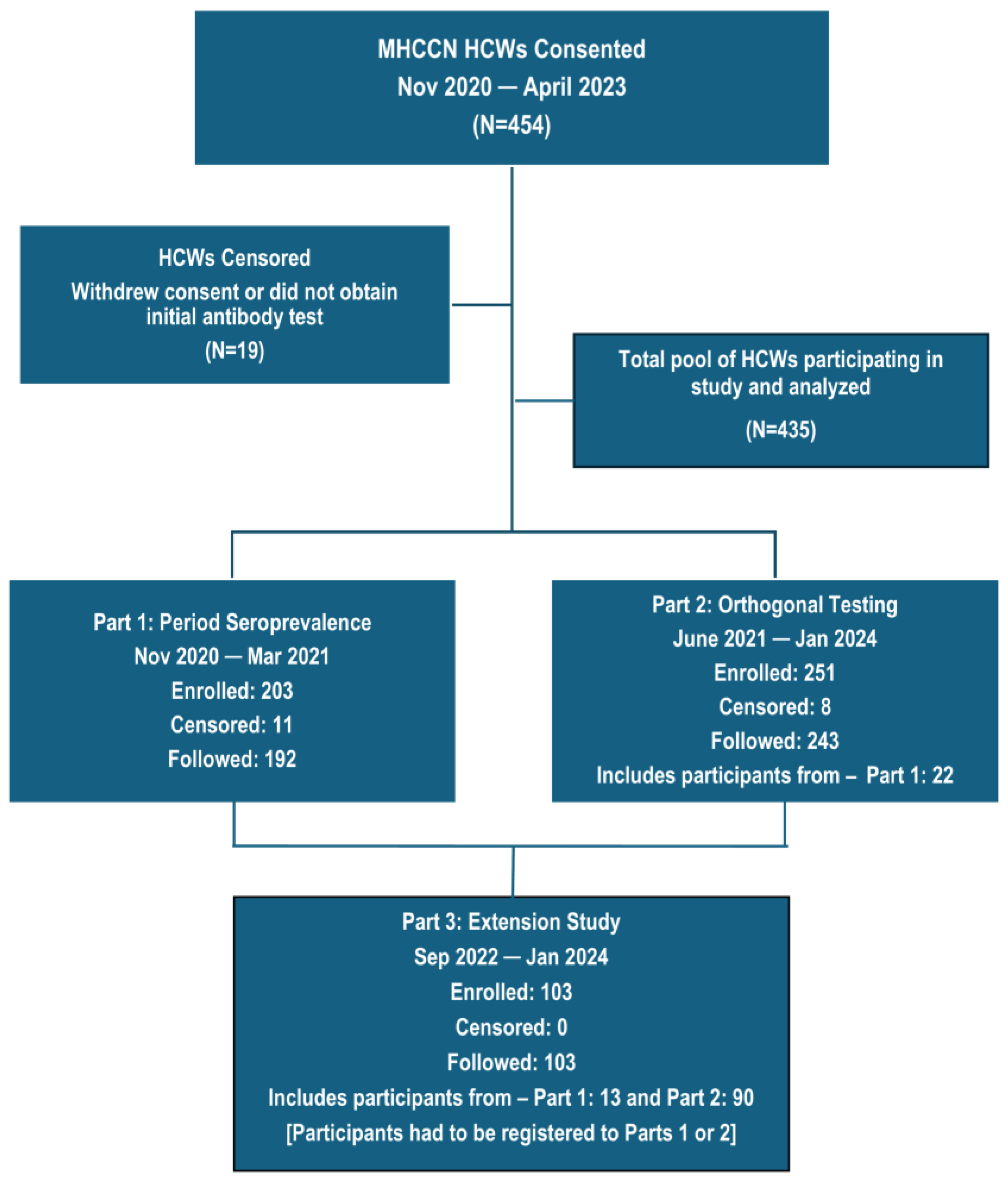
Figure 2.
A) Spike protein antibody test results using Elecsys Anti-SARS-CoV-2 S cobas® (Roche assay25) over the course of the study (Parts 2 & 3) in the backdrop of SARS-CoV-2 dominant variants.7-9 B) A total of 828 antibody tests were administered over the course of the study; all antibody results were reported as U/mL. C) Persistence of spike protein antibody (n=526 samples) level >2,500 U/mL per month over the study period. (Note: in November 2023, no tests were performed.
Figure 2.
A) Spike protein antibody test results using Elecsys Anti-SARS-CoV-2 S cobas® (Roche assay25) over the course of the study (Parts 2 & 3) in the backdrop of SARS-CoV-2 dominant variants.7-9 B) A total of 828 antibody tests were administered over the course of the study; all antibody results were reported as U/mL. C) Persistence of spike protein antibody (n=526 samples) level >2,500 U/mL per month over the study period. (Note: in November 2023, no tests were performed.
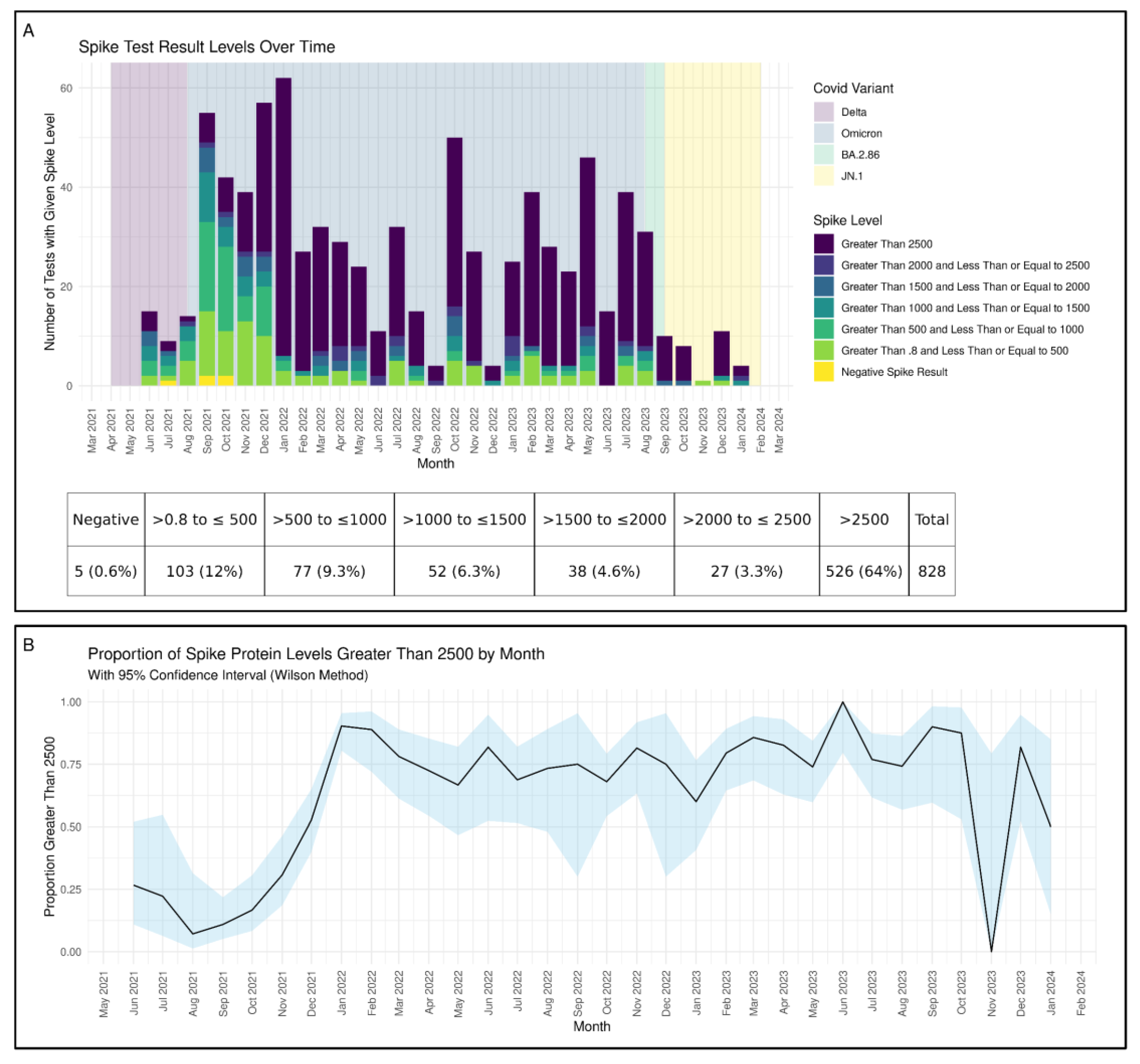
Figure 3.
MHMMC COVID-19 census since the inception of the pandemic to 1/1/23. MHMMC was licensed for 637 beds during this time. (MHMCC, MaineHealth Maine Medical Center; PUI, Patient Under Investigation. (Figure and data provided by Chris Coon, Vice President of Finance, MHMMC.)
Figure 3.
MHMMC COVID-19 census since the inception of the pandemic to 1/1/23. MHMMC was licensed for 637 beds during this time. (MHMCC, MaineHealth Maine Medical Center; PUI, Patient Under Investigation. (Figure and data provided by Chris Coon, Vice President of Finance, MHMMC.)
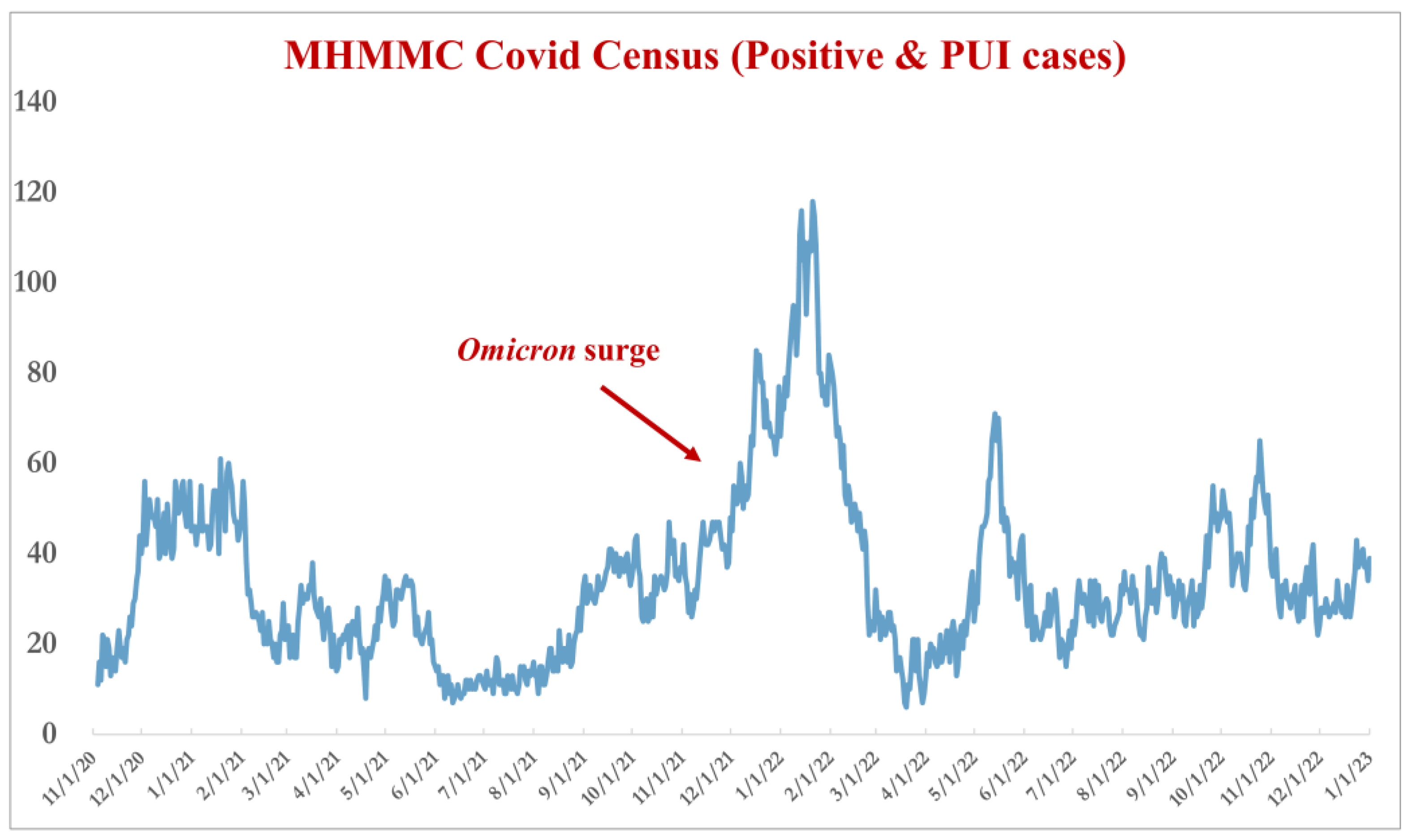

Table 1.
Participant characteristics of the MHCCN healthcare workers (HCW, n=435) followed in the study. [MaineHealth employs 23,000 care team members and 2,000 providers. The MHCCN has ~350 physicians devoted to cancer care, not all of whom would be eligible to participate (e.g., pathologists, radiologists). The crude physician participation rate was 10%.].
Table 1.
Participant characteristics of the MHCCN healthcare workers (HCW, n=435) followed in the study. [MaineHealth employs 23,000 care team members and 2,000 providers. The MHCCN has ~350 physicians devoted to cancer care, not all of whom would be eligible to participate (e.g., pathologists, radiologists). The crude physician participation rate was 10%.].
| Sex | ||||
| Female | 380 (88%) | |||
| Male | 54 (12%) | |||
| Not reported | 1 | |||
| Age(years) | ||||
| Median (Range) | 44 (22-70) | |||
| Not reported | 22 (5.1%) | |||
| Race | ||||
| White | 413 (95%) | |||
| Black or African American | 1 (0.2%) | |||
| Asian | 8 (1.8%) | |||
| More than one | 6 (1.4%) | |||
| Not reported | 7 (1.6%) | |||
| Ethnicity | ||||
| Hispanic or Latino | 3 (0.7%) | |||
| Not Hispanic or Latino | 410 (94.3%) | |||
| Not reported | 22 (5.1%) | |||
| Job Role(and/or equivalent role) | ||||
| Registered Nurse (171) / Nursing Assistant (29) | 200 (46%) | Social Worker | 9 (2.1%) | |
| Unit Clerk / Clinic Receptionist / Scheduler | 41 (9.4%) | Respiratory Therapist | 5 (1.1%) | |
| Physician (including 3 house staff) | 37 (8.6%) | Clinical Trials Office Personnel | 3 (0.7%) | |
| Radiology (24) / Medical (4) Technician(s) | 28 (6.4%) | Other: Practice Administration (3); Navigator (2), Nutritionist (2), Physicist (2), Patient Services Rep. (1); and Environmental Services (1) | 11 (2.5%) | |
| Practice Associate Professional (formerly APP) | 26 (6%) | |||
| Pharmacist / Pharmacy Technician | 18 (4.1%) | |||
| Lab Technician (7) / Phlebotomist (5) | 12 (2.8%) | |||
| Manager / Supervisor / Director | 11 (2.5%) | No response | 34 (7.8%) | |
| Number of Self-Reported COVID-19 Infections Over the Course of Study | ||||
| 0 | 354 (81.4%) | |||
| 1 | 63 (14.5%) | |||
| 2 | 17 (3.9%) | |||
| 3 | 1 (0.2%) | |||
| MaineHealth Cancer Care Network Practice Location | Total Enrollment | Extension Phase Enrollment | ||
| Metropolitan area | ||||
| MH Maine Medical Center (Portland) | 169 (38.9%) | 45 (43.7%) | ||
| Micropolitan areas | ||||
| Maine General-Harold Alfond Center for Cancer Care (Augusta) | 118 (27.1%) | 5 (4.9%) | ||
| MH Mid Coast Hospital (Brunswick) | 14 (3.2%) | 1 (<1%) | ||
| St. Mary’s Hospital (Lewiston) | 17 (3.9%) | 10 (9.7%) | ||
| MH Maine Medical Center (Biddeford-Sanford) | 14 (3.2%) | 1 (<1%) | ||
| Rural areas(*Critical Access Hospital) | ||||
| MH Franklin Hospital (Farmington)* | 13 (3%) | 0 | ||
| MH Lincoln Hospital (Damariscotta)* | 2 (0.5%) | 0 | ||
| MH Memorial Hospital (North Conway, NH)* | 5 (1.1%) | 0 | ||
| MH Pen Bay Hospital (Rockport) | 48 (11%) | 27 (26.2%) | ||
| MH Stephens Hospital (Norway)* | 10 (2.3%) | 1 (<1%) | ||
| MH Waldo Hospital (Belfast)* | 25 (5.8%) | 13 (12.6%) | ||
| Total | 435 (100%) | 103 (100%) | ||
Table 2.
HCW participant (n=435) and household member(s) COVID-19 co-morbidities and/or immunocompromising conditions.
Table 2.
HCW participant (n=435) and household member(s) COVID-19 co-morbidities and/or immunocompromising conditions.
| Health Status | HCW (Participant) | Household Member(s) |
| COVID-19 co-morbidity risk factor* | 68 (15.6%) | 7 (1.6%) |
| Immunocompromising condition / diagnosis+ | 34 (7.8%) | 43 (9.9%) |
| Both COVID-19 co-morbidity risk factor and immunocompromising condition | 13 (3%) | 4 (.9%) |
| *Hypertension, cardiac disease, diabetes, chronic obstructive pulmonary disease, and renal disease. +Autoimmune disease, cancer, infectious disease (e.g., HIV infection), and/or organ transplant recipient. | ||
Table 3.
Occupational setting for Part 1 portion of study (n=192) with primary outcome – period seroprevalence (3 participants) and seroprevalence sensitivity analysis (4 participants) with negative serology despite documented infection with RT-PCR+ test.
Table 3.
Occupational setting for Part 1 portion of study (n=192) with primary outcome – period seroprevalence (3 participants) and seroprevalence sensitivity analysis (4 participants) with negative serology despite documented infection with RT-PCR+ test.
| Part 1 – Period Seroprevalence (Primary Outcome) | Part 1 – Seroprevalence Sensitivity Estimate | ||||||
|
Positive SARS-CoV-2 Antibody Test [Roche Ab (+) and Abbott Ab (+)] |
Negative SARS-CoV-2 Antibody Test and Self-Reported COVID-19 Infection (All confirmed RT-PCR+) [Roche Ab (─) / Abbott test not done or Roche Ab (+) and Abbott Ab (─)] |
||||||
| Job Role | MHCCN Site | Setting and Health History1 | Exposure Risk3 | Job Role | MHCCN Site | Setting and Health History2 | Exposure Risk3 |
| RN | MG–HACCC | Clinical – Outpatient | Low | RN | MHWH* | Clinical – Outpatient | Low |
| RN | MHMMC | Clinical – Outpatient | High | RN | MHWH* | Clinical – Outpatient | Low |
| Nurs. Asst. | MG–HACCC | Clinical – Outpatient | Low | RN | MG-HACCC | Clinical – Inpatient | Moderate |
| Clin. Admin. | MHMH* | Outpatient | Low | ||||
|
Notes: Abbreviations used: HCW, healthcare worker; Ab, antibody; Nurs. Asst., Nursing Assistant; and Clin. Admin., Clinic Administration. MHCCN Sites: MG-HACCC, Maine General–Harold Alfond Center Cancer Care (Augusta); MHMMC, MaineHealth Maine Medical Center (Portland); MHWH, MaineHealth Waldo Hospital (Belfast); and MHMH, MaineHealth Memorial Hospital (North Conway, NH). *Denotes Critical Access Hospital. 1. Additional health medical history for these 3 HCW participants (reported in aggregate): i) COVID-19 co-morbidities – 0 of 3; and immunocompromising condition – 1 of 3; and ii) Household members – none had any COVID-19 co-morbidities or immunocompromising conditions. 2. Additional health medical history for these 4 HCW participants (reported in aggregate): i) COVID-19 co-morbidities – 0 of 4; and immunocompromising condition – 2 of 4; and ii) Household members – none had any COVID-19 co-morbidities or immunocompromising conditions. 3. Exposure risk was defined by level of personal protective equipment (PPE) precautions as follows: low risk – standard precautions; moderate risk – droplet precautions; and high-risk – airborne precautions. This was based on MHMMC Guidance for PPE use in clinical settings and when screening/interacting with confirmed/suspected Patients Under Investigation (PUI) and/or COVID-19 patients (posted 30 March 2020). These precautions are consistent with national guidance.27 | |||||||
Table 4.
Participant (n=435) responses to Occupational Risk Survey and End-of-Study Surveys.
| Occupational Risk Survey – 3 parts | ||||||||||||||
| a) What are your beliefs about the accuracy of SARS-CoV-2 antibody testing based on what you have heard or read: | ||||||||||||||
| Question | Average Percentage | Total Responses | Mean Response Rate % | |||||||||||
| What percentage of the time does coronavirus antibody testing lead to false-alarms – that is, where the test says, incorrectly, that a person has been infected with the virus in the past, when the person really has not been infected? Please choose a number from 0% to 100%, where 0% means ‘never’ and 100% means ‘always’: (i.e., False positive test result) | 18% | 402 | 92.3% (Range: 400‒403) |
|||||||||||
| What percentage of the time does coronavirus antibody testing lead to falsely normal results – where the test says, incorrectly, that a person has not been infected with the virus in the past, when the person really has been infected? Please choose a number from 0% to 100%, where 0% means ‘never’ and 100% means ‘always’: (i.e., False negative test result) | 28% | 402 | ||||||||||||
| For persons who have a positive (abnormal) coronavirus antibody test result, what is the chance, or probability, that the person really had a coronavirus infection in the past? Please choose a number from 0% to 100%, where 0% means there is no chance the person had a coronavirus infection in the past, and 100% means the person had the infection: | 90% | 400 | ||||||||||||
| For persons who have a negative (normal) coronavirus antibody test result, what is the chance, or probability, that the person really did not have a coronavirus infection in the past? Please choose a number from 0% to 100%, where 0% means there is no chance the person had a coronavirus infection, and 100% means the person had the infection: | 48% | 400 | ||||||||||||
| What is the chance, or probability, that you were infected with the coronavirus in the past? Please choose a number from 0% to 100%, where 0% means there is no chance you were infected in the past, and 100% means you were definitely infected: | 32% | 403 | ||||||||||||
| What is the chance, or probability, that you are infected with the coronavirus right now? Please choose a number from 0% to 100%, where 0% means there is no chance that you are infected right now, and 100% means you are definitely infected: | 9% | 403 | ||||||||||||
| What is the chance, or probability, that you will become infected with the coronavirus in the future? Please choose a number from 0% to 100%, where 0% means there is no chance you will become infected, and 100% means you will definitely become infected: | 40% | 401 | ||||||||||||
| b) What is your level of concern about SARS-CoV-2 coronavirus infection: | ||||||||||||||
| Question | Not at all worried | Somewhat worried | Fairly worried | Very worried | Extremely worried | Total Responses | Mean Response Rate % | |||||||
| How worried are you that you are infected with the coronavirus right now? | 323 (79.6%) | 65 (16%) | 15 (3.7%) | 1 (0.2%) | 2 (0.5%) | 406 (100%) | 93.2% (Range: 405‒406) |
|||||||
| How worried are you that you will become infected with the coronavirus in the future? | 99 (24.4%) | 198 (48.9%) | 73 (18%) | 27 (6.7%) | 8 (2%) | 405 (100%) | ||||||||
| c) What actions are you taking outside of the workplace to avoid or prevent the spread of coronavirus: | ||||||||||||||
| Estimate of how often (i.e., percentage of time) you are doing the following: | Average Percentage | Total Responses | Mean Response Rate % | |||||||||||
| Avoiding gatherings of 10 or more people | 75% | 378 | 85% (Range: 352‒394) |
|||||||||||
| Avoiding travel | 73% | 374 | ||||||||||||
| Avoiding shopping at stores | 40% | 339 | ||||||||||||
| Avoiding social visits | 58% | 352 | ||||||||||||
| Avoiding eating or drinking in restaurants, bars, and food courts | 62% | 360 | ||||||||||||
| Avoiding visiting nursing homes, retirement, or long-term care facilities | 83% | 382 | ||||||||||||
| Practicing good hygiene, including handwashing and avoiding touching your face | 93% | 394 | ||||||||||||
| Keeping a safe distance of at least 6 feet from other people | 76% | 375 | ||||||||||||
| Wearing a mask covering your nose and mouth | 86% | 375 | ||||||||||||
| End-of-Study Survey | ||||||||||||||
| How reassured do you feel by your SARS-CoV-2 antibody test results? | Not at all reassured | Somewhat reassured | Fairly reassured | Very reassured | Extremely reassured | Total responses | Mean Response Rate % | |||||||
| 23 (5.4%) | 70 (16.6%) | 81 (19.1%) | 169 (40%) | 80 (18.9%) | 423 (100%) | 97.4% (Range: 423‒424) |
||||||||
| How confident are you that your SARS-CoV-2 antibody test results are accurate? | Not at all confident | Somewhat confident | Fairly confident | Very confident | Extremely confident | 424 (100%) | ||||||||
| 8 (1.9%) | 52 (12.3%) | 66 (15.6%) | 191 (45%) | 107 (25.2%) | ||||||||||
| How satisfied are you with the SARS-CoV-2 antibody testing process? | Not at all satisfied | Somewhat satisfied | Fairly satisfied | Very satisfied | Extremely satisfied | 424 (100%) | ||||||||
| 3 (0.7%) | 20 (4.7%) | 41 (9.7%) | 205 (48.3%) | 155 (36.6%) | ||||||||||
| How valuable was it to have SARS-CoV-2 antibody testing? | Not at all valuable | Somewhat valuable | Fairly valuable | Very valuable | Extremely valuable | 423 (100%) | ||||||||
| 7 (1.7%) | 56 (13.2%) | 92 (21.7%) | 161 (38.1%) | 107 (25.3%) | ||||||||||
Table 5.
Selected healthcare worker (HCW) studies of SARS-CoV-2 antibody seroprevalence and humoral persistence in U.S. and international, predominantly rural and select urban settings. [Note: All studies used voluntary convenience sampling and relied substantially on self-reported infection/exposure data unless otherwise noted.].
Table 5.
Selected healthcare worker (HCW) studies of SARS-CoV-2 antibody seroprevalence and humoral persistence in U.S. and international, predominantly rural and select urban settings. [Note: All studies used voluntary convenience sampling and relied substantially on self-reported infection/exposure data unless otherwise noted.].
| Author (Ref.) / Year | Setting & Population (Dates of Study) | Sample Size (N; % female; locale) | Antibody Test | Key Findings | Relevance to Present Study |
| U.S. Studies of SARS-CoV-2 Seroprevalence and Antibody Persistence in HCWs | |||||
| Brunner et al. (34) 2021 |
High-risk hospital areas plus 21.7% random sample of other HCWs at a rural regional medical center. (May 2020) | 764 (601 completed surveys) 83% female Cooperstown, NY (rural) |
Qual. Ab vs N-antigen | Seroprevalence 2% (full cohort and survey subset); 3.1% in random sample. Sero-status unrelated to direct patient contact; household COVID-19 contact predicted seropositivity. | Same N-antigen (Part 1) assay; low rural HCW seroprevalence parallels ours, and household (not occupational) contact predicted seropositivity, reinforcing our household-exposure concern for an immunocompromised rural workforce. |
| Papasavas et al. (35) 2021 |
Largest Connecticut health system (7 acute-care hospitals plus ambulatory, skilled-nursing, home health); baseline plus 2 follow-ups. (May-Nov 2020) |
6,863 tested (~30,000 solicited) 79% female Hartford, CT (urban/suburban) |
Qual. Ab vs N-antigen | Baseline seroprevalence 6.3%; highest in patient-care support (16.7%), medical assistants (9.1%), nurses (8.2%); 24% of seropositives asymptomatic by self-report. Sero-reversion 39.5% by median 5.5 months. | Same N-antigen assay; 39.5% sero-reversion by ~5.5 months documents the anti-N IgG waning underlying our Roche(+)/Abbott(−) sensitivity cases (see Yan et al. below). |
| Santarelli et al. (36) 2021 |
Community members and HCWs over 2 weeks after a 1-month campaign at a rural regional medical center. (Sep-Oct 2020) |
566 (303 HCWs, 54%) 67% female Kingman, AZ (rural) |
Qual. Ab vs S-antigen | HCW seroprevalence 9.9% vs 8.0% overall (no HCW-community difference). | Closest demographic comparator (rural, convenience-sampled, 67% female); absence of an HCW-community difference supports representativeness of HCW seroprevalence in low-incidence rural settings. |
| Zhong et al. (37) 2021 |
Johns Hopkins HCWs after 2nd mRNA dose, with/without prior PCR+ infection; 15-month follow-up. (Jun 2020-Sep 2021) | 3,500 80% female Baltimore, MD (urban) |
Semi-Quant. Ab vs S-antigen | Prior infection plus vaccination yielded greater spike response than vaccination alone; longer infection-vaccination interval increased response. | Supports hybrid immunity (prior infection + vaccination > vaccination alone), context for the heterogeneity in our persistent >2,500 U/mL spike responses. |
| Wiggen et al. (38) 2022 |
Metro-area HCWs across settings/roles, two testing rounds. (Nov 2020-Feb 2021) |
459 85% female Minneapolis-St. Paul, MN (urban) |
Qual. Ab vs S-antigens (S1/S2) | Seroprevalence 9.47% then 17.7% (54% vaccinated by round 2; 13% in unvaccinated). Workplace setting associated with seropositivity (ICU > ambulatory). | Before/after-vaccination seroprevalence with an ICU > ambulatory gradient; our predominantly outpatient cohort is consistent with lower-exposure settings. |
| Bosserman et al. (39) 2023 |
Washington University hospital HCWs without prior COVID-19. (Apr 2020-Sep 2021) |
400 64% female St. Louis, MO (urban) |
Qual. Ab vs N-antigen | Seroprevalence of 4.5% at enrollment, +11% over follow-up. Household COVID-19 contact predicted seropositivity. | Same N-antigen assay with ~160-day persistence; household COVID-19 contact predicted seropositivity, paralleling our immunocompromised-workforce concern. |
| Neises (40) 2023 |
HCWs from 3 hospitals and 2 clinics across 3 rural counties; 3 phases over 8 months. (May-Dec 2020) |
336 87% female South Dakota and Minnesota (rural) |
Quant. IgG, IgA, and IgM Ab vs N-antigen | Seroprevalence rose 0.3% → 1.9% → 14.9% across phases; 22.8% of seropositives were not diagnosed with COVID-19 infection; >90% of seropositives had neutralizing antibodies when comparing two serum virus neutralization assays. | Rural HCW longitudinal cohort (non-peer-reviewed Masters thesis); rising seroprevalence and high female predominance (87%) mirror field-wide patterns we observed. |
| Wright et al. (41) 2024 |
University of Iowa Hospitals & Clinics; survey-defined cohort, 4 timepoints over 18 months. (Oct 2020-May 2022) |
302 (68% direct care) 70% female Iowa City, IA (rural) |
Qual. Ab vs N- and S-antigens (S1/S2) | Seroprevalence 28.4% at enrollment; 7% seroconversion over 18 months. Nursing role and out-of-work proximity raised odds; vaccination and masking protective. | Same N-antigen pan-IgG assay; one of few rural-setting studies reporting both seroprevalence and longitudinal persistence (7% seroconversion/18 months) – similar duration of follow-up to our study. |
| International Studies of SARS-CoV-2 Seroprevalence and Antibody Persistence in HCWs | |||||
| Campo et al. (42) 2021 |
Italian HCWs after 2 BNT162b2 doses; 6-month persistence follow-up. (Jan-Jul 2021) |
274 64% female Rome (urban) |
Quant. Ab vs S-antigens (S1/S2) | 5.4% self-reported prior PCR+ infection; spike-antibody persistence declined sharply after 6 months of follow-up. | Observed spike-antibody decline by 6 months, in contrast to the sustained signal we observed over 18 months of study period. |
| Hoffmann et al. (43) 2021 |
Eastern German HCWs across 4 occupational risk groups (ICU to administration); monthly testing over 6 months. (Jul-Dec 2020) |
166 85% female Brandenburg (rural) |
Qual. Ab vs N-antigen | Seroprevalence 13.4% overall, rising to 30.3% in high-exposure (ICU) settings. Vaccination began after study end. | Rural international cohort, same N-antigen assay; risk rose sharply with exposure (13.4%→30.3%); frames occupational-risk interpretation. |
| Levi et al. (44) 2021 |
Italian HCWs with/without symptoms; 5-week follow-up after 1-2 BNT162b2 doses. (Jan-Feb 2021) | 124 57% female Milan (rural) |
Quant. Ab vs S-antigens (S1/S2) | Response increased with prior symptomatic infection and correlated with pre-vaccine IgG and exposure. | Prior symptomatic infection augments post-vaccination response, supporting our infection-vs-vaccination distinction. |
| Lorent et al. (45) 2022 |
Polish HCWs in 2 hospitals; 1-year follow-up. (Sep 2020-Sep 2021) |
90 83% female Września (rural) Poznań (urban) |
Semi-quant. Ab vs N and S antigens | Seroprevalence 0% → 37.8% (Dec 2020) → 100% after BNT162b2 (Pfizer-BioNTech); spike antibody declined 90-95% by 6 mo. | Post-vaccination seroprevalence 0→100% with 90-95% spike Ab decline by 6 months bounds durability expectations. |
| Etyang et al. (46) 2024 |
Kenyan HCWs across 2 rural counties and urban Nairobi; 5-month period study. (Jul-Dec 2020) | 684 53% female Kilifi & Busia (501; rural) Nairobi (183; urban) |
Qual. Ab vs S-antigen | Overall seroprevalence 20.8%; rural counties 11.5% and 12.6% vs urban Nairobi 43.8%. Persistence not assessed. | Reinforces that rural HCW seroprevalence tracks below urban settings. |
| Yan et al. (47) 2024 |
Japanese HCWs at health physicals; 24-month follow-up. (Jul 2020– Jun 2022) |
2,538 (219 PCR+) 64% female Tokyo (urban) |
Qual. Ab vs N-antigen | In 219 PCR+ cases, 97.3% seropositive by pan-IgG vs 76.3% by IgG; IgG signal declined significantly after 4 mo. | Same paired Roche/Abbott N-antigen assays; 97.3% (pan-IgG) vs 76.3% (IgG) detection in PCR+ cases is the mechanistic basis for our 4 Roche(+)/Abbott(−) sensitivity cases. |
| Abbreviations used: HCWs – healthcare workers; Qual./Quant./Semi-quant – qualitative/quantitative/semi-quantitative antibody (Ab) test; N-antigen – nucleocapsid antigen; S-antigen – spike protein(s) S1 and/or S2; IgA/IgG/IgM – immunoglobulin A/G/M; PCR+ – RT-PCR–confirmed SARS-CoV-2 infection; ICU – intensive care unit. | |||||
Disclaimer/Publisher’s Note: The statements, opinions and data contained in all publications are solely those of the individual author(s) and contributor(s) and not of MDPI and/or the editor(s). MDPI and/or the editor(s) disclaim responsibility for any injury to people or property resulting from any ideas, methods, instructions or products referred to in the content. |
© 2026 by the authors. Licensee MDPI, Basel, Switzerland. This article is an open access article distributed under the terms and conditions of the Creative Commons Attribution (CC BY) license (http://creativecommons.org/licenses/by/4.0/).
Copyright: This open access article is published under a Creative Commons CC BY 4.0 license, which permit the free download, distribution, and reuse, provided that the author and preprint are cited in any reuse.