

Submitted:
20 October 2026
Posted:
22 October 2026
You are already at the latest version
Abstract
Diabetic neuropathy is one of the most common diabetes-related complications but also one of the most complex in terms of diagnosis and management. This complication refers to a heterogeneous group of peripheral nerve disorders resulting from a combination of metabolic, vascular, and neurodegenerative factors, typically triggered by chronic hyperglycemia, which has a significant impact on quality of life. Despite its clinical relevance, the diagnosis of diabetic neuropathy remains challenging due to its diverse clinical manifestations and the lack of a single diagnostic approach capable of identifying all diabetic neuropathy types. Available diagnostic approaches range from clinical assessment and symptom-based scales to neurophysiological and small-fiber-specific techniques, each with distinct diagnostic performance and methodological requirements. Consequently, reported prevalence estimates may vary considerably among populations and studies. In Mexico, this variability is particularly relevant, as the prevalence of diabetic neuropathy has been reported across a wide range, making it difficult to establish a reliable national estimate. Differences in study populations, diagnostic criteria, and assessment methods may substantially contribute to this heterogeneity.
Keywords:
diabetic neuropathy
; type 2 diabetes
; peripheral neuropathy
; diabetic polyneuropathy
1. Introduction
Diabetes mellitus (DM) encompasses a heterogeneous group of metabolic disorders with distinct etiologies and clinical courses. [1] Type 2 Diabetes (T2D) occurs as a result of the combination of 2 main factors, which are dysfunction in insulin secretion by pancreatic β-cells and insulin resistance (IR). [2] The etiology of T2D is multifactorial and involves genetic and environmental factors, leading to dysfunction of pancreatic β-cells and, as a consequence, defects in insulin production and IR. [3]
It currently represents the 8th leading cause of the global burden of disease and is anticipated to become the 2nd leading cause by 2050. [4]
According to the International Diabetes Federation, 589 million adults aged 20 to 79 live with diabetes, and this number is expected to rise to 853 million by 2050. [4] Specifically for North America and the Caribbean, the number of people living with diabetes is projected to increase by 21%, rising from 56.2 million to 68.1 million, representing an exponential increase. [4]
Diabetes is characterized by a state of chronic hyperglycemia, which triggers a series of cellular and molecular changes leading to an increased risk of developing macrovascular and microvascular complications. [5] The first group includes cardiovascular and cerebrovascular diseases, while the second group refers to microvascular damage affecting the kidneys, eyes, and nervous system, specifically, diabetic neuropathy (DN). [5]
As DM prevalence increases, so will the prevalence of macro- and microvascular complications. Diabetic peripheral neuropathy (DPN) is a common diabetes-related condition that may result in foot ulcers and amputations with a significant impact on quality of life. [6] DPN develops due to several factors, including chronic hyperglycemia, mitochondrial dysfunction, oxidative stress, inflammation, and microvascular injury. [6,7]
It’s been reported that up to 50% of DPN cases may be asymptomatic; thus, the risk of not recognizing DPN at early stages may increase the possibility of having diabetic foot ulcers, injuries, and amputations. [8] The American Diabetes Association recommends assessing for DPN at T2D diagnosis and at least annually thereafter using medical history and clinical tests. [8] However, in routine clinical practice, DPN often remains undetected for several reasons, including a lack of systematic, standardized screening. This not only limits its timely identification and management but also contributes to uncertainty regarding its true national burden.
The lack of reliable epidemiological data makes it harder to define the problem's magnitude and may hinder the allocation of healthcare resources and the implementation of strategies for detection and management.
It is known that obtaining accurate data on the prevalence of DN in Mexico and worldwide is complex because, while organizations exist to collect data on the global prevalence of diabetes mellitus, none systematically monitors the prevalence of DPN. [9]
This review aims to provide a comprehensive overview of diabetic neuropathy, review current diagnostic approaches, and explore factors contributing to uncertainty about its reported prevalence in Mexico.
2. Diabetic Neuropathy
Diabetic neuropathy represents a heterogeneous group of disorders affecting various components of the peripheral nervous system in people living with diabetes, with clinical manifestations encompassing both peripheral and autonomic neuropathy. [10]
Diabetic peripheral neuropathy can be classified into distal symmetric peripheral neuropathy and focal/multifocal asymmetric neuropathy, both resulting from the progressive loss of nerve fibers and the consequent instability. [11] Symptoms of DPN may include numbness, tingling, allodynia, hyperalgesia, paresthesia, and pain,[12] as well as symmetric sensory loss, specifically a "glove-and-stocking" pattern affecting the feet (extending above the ankles) and the hands. [11,13] Its development involves not only functional alterations but also structural changes in peripheral nerves, along with Schwann cell damage. [7,14] Altered Schwann cell metabolism leads to the accumulation of neurotoxic intermediates, thereby exposing axons and blood vessels to injury. [14]
On the other hand, diabetic autonomic neuropathy (DAN) refers to damage to the nerves controlling internal organs, leading to disturbances in various systems such as the cardiovascular, gastrointestinal, and urogenital/sexual systems. [15] Cardiac autonomic neuropathy is an important risk factor for all-cause mortality in T1D and an independent risk factor for mortality in patients living with T2D. [16] Gastrointestinal autonomic neuropathy represents the impairment of the sympathetic and parasympathetic nervous system innervating the digestive tract, with the predominant loss of inhibitory neurons and the imbalance between neuropeptides, leading to enteropathy, colonic hypomotility and gastroparesis. [12,17] The latter one, can lead to variation in glycemic management and may be a cause of glycemic variability due to alterations in food and drugs absorption. [12]
2.1. Risk Factors
Like T2D, the development of DN is complex. Non-modifiable factors like genetic predisposition, age and female sex increase the risk for DN [18]. Chronic hyperglycemia plays a central role in this complication, as it is linked to the activation of the polyol and hexosamine pathways, the activation of protein kinase C (PKC), and the formation of advanced glycation end-products (AGEs), as will be discussed later. [19,20] However, other factors, such as central obesity, dyslipidemia, arterial hypertension, history of DM lasting more than 5 years, the presence of additional diabetes-related complications – such as diabetic retinopathy – and smoking, have also been associated with DN and may affect the peripheral nervous system. [6,21,22]
In Mexico, according to national data, 37.4% of adults older than 20 years are overweight, and 37.1% have obesity [23], 29.1% of adults have hypertension [24] and 17% live with T2D [25]. This highlights the importance of accurately determining the prevalence of one of the most common complications of diabetes, particularly in Mexico, a country characterized by chronic low-grade inflammation and oxidative stress.
2.2. Pathophysiology
DN results from a combination of metabolic, vascular, and neurodegenerative factors, typically triggered by a state of chronically uncontrolled blood glucose levels. [18] Hyperglycemia can induce oxidative stress by causing the accumulation of glucose and glycolysis intermediates, thus altering the electron transport chain, reducing water and adenosine triphosphate (ATP) production, and increasing superoxide (O2-) production. [13] Additionally, hyperglycemia can stimulate macrophages to secrete proinflammatory cytokines such as tumor necrosis factor-alpha (TNFα) and interleukin-6 (IL-6). [26] At the same time, the inflammatory process leads to vascular changes, immune cell infiltration and altered neuroimmune signaling reinforcing neural injury. [7]
Chronic hyperglycemia also disrupts oxidative phosphorylation, shifting energetic metabolic pathway to an anaerobic metabolism and compromising the high metabolic demands of peripheral neurons, particularly those with long axons. [7]
Hyperglycemia activates the use of collateral glucose metabolism pathways, such as the polyol, hexosamine, and PKC pathways, leading to increased reactive oxygen species (ROS) levels and inflammation, and consequently, mitochondrial damage and nervous system dysfunction. [13,27]
2.2.1. Advanced Glycation end-Products Formation
Excess glucose causes the glycation of structural and functional proteins, producing AGEs. These interact with specific receptors to modify gene expression and intracellular signaling pathways that promote the transcription of nuclear factor-κB (NF-κB) and, consequently, the release of proinflammatory cytokines such as TNF-α, IL-1β, and IL-6. [19,28] Specifically, the glycation of myelin makes it more vulnerable to phagocytosis and induces the release of proteases by macrophages, thereby contributing to demyelination. [29] AGEs also modify axonal cytoskeletal proteins, impairing axonal transport within neurons and leading to their degeneration. [29] Furthermore, they bind to their receptor (RAGE—receptor for advanced glycation end-products) and, upon activation, promote ROS production through glutathione depletion. [28,30]
2.2.2. Hexosamine Pathway
When excess glucose cannot be metabolized via glycolysis, it can enter the hexosamine pathway. Fructose-6-phosphate, derived from glycolysis, is used as a substrate to make glucosamine-6-phosphate, which leads to production of uridine-50-di-phospho- N-acetylglucosamine (UDP-GlcNAc). [13,31] UDP-GlcNAc leads to altered gene expression and protein function, associated with vascular dysfunction, inflammation and oxidative stress, which are factors that contribute to DN. [18,32]
2.2.3. Polyol Pathway
Regarding the polyol pathway, hyperactivity within this pathway enhances the reduction of glucose to sorbitol through the activation of the aldose reductase enzyme system. Subsequently, sorbitol is oxidized to fructose by the enzyme sorbitol dehydrogenase, which utilizes NAD+ as a cofactor. These reactions alter the NADPH/NADP+ and NADH/NAD+ ratios, replacing NADPH with NADH, thereby increasing ROS production in the electron transport chain and affecting the balance of reduced and oxidized glutathione, ultimately causing oxidative stress. [20,27,33] Sorbitol accumulation leads to intracellular hyperosmolarity and causes osmotic and oxidative stress. [18,21] As a consequence, there is a reduction in the axon capacity to propagate the membrane action potential and diminished capacity of nerve regeneration. [34]
Besides, fructose excess can lead to different cardiometabolic consequences [20], and, as previously mentioned, hypertension, central obesity and dyslipidemia are risk factors for DN development.
2.2.4. PKC Pathway
Excess intracellular glucose increases the availability of glycolytic intermediates, which promotes the de novo synthesis of diacylglycerol, an endogenous activator of PKC. [30] Protein kinase C activation triggers intracellular signaling cascades that result in the expression of NF-κB, proinflammatory cytokines, blood clotting inhibitors and extracellular matrix protein. It also contributes to the overproduction of ROS and AGEs, thereby exacerbating oxidative stress. [30]
2.3. Diabetic Peripheral Neuropathy Diagnosis
Before a diagnosis of DN can be made, other causes, such as toxic or drug-induced neuropathy, alcoholic neuropathy, HIV-associated neuropathy, hypothyroidism, and vitamin B12 deficiency neuropathy, must be ruled out. Individuals treated with metformin for T2D are at particularly high risk of developing vitamin B12 deficiency, as the drug reduces the vitamin's absorption in the terminal ileum and is associated with alterations in intrinsic factor levels. [35,36]
The American Diabetes Association recommends conducting clinical tests to assess small and large fiber function and the protective sensation. [8] These tests include pinprick and temperature sensation for small fibers, and lower-extremity reflexes, vibration perception, proprioception, and monofilament for large fiber function. The latter is also recommended for evaluating protective sensation. [8]
To date, the gold standard for the diagnosis of neuropathy affecting small fibers is measurement of intraepidermal nerve fiber density taken by skin biopsy, but this is an invasive approach that is not usually used in clinical practice. [19] For large-fiber impairment, nerve conduction studies have been considered the gold standard; however, they cannot always be performed in every clinical setting, as they require a trained neurophysiologist and are not easily applicable as a screening tool since they are time-consuming and may be uncomfortable for patients. [37] Consequently, the use of methods including symptoms and tests to identify signs of DN such as monofilament, vibration, and pinprick tests may be more useful for detecting neuropathy. [7]
There are different clinical scales and questionnaires for DPN diagnosis, including the Michigan Neuropathy Screening Instrument (MNSI), Michigan Diabetic Neuropathy Score (MDNS), Toronto Clinical Neuropathy Score (TCNS), the modified Toronto Clinical Neuropathy Score, Neuropathic Impairment Score (NIS), the Neuropathy Disability Score (NDS), the Utah Early Neuropathy Scale (UENS), Diabetic Neuropathy Examination Score (DNE), Total Neuropathy Score (TNS) and the Neuropathy Symptom Score. [32,38] While for detecting neuropathic pain, Douler Neuropathique en 4 Questions (DN4), Neuropathy Total Symptom Score-6, PainDETECT, Leeds Assessment of Neuropathic Symptoms and Signs Pain Scale (LANSS) and the Neuropathic Pain Symptom Inventory, are used. [32,38]
In general, these scales and questionnaires have some similarities, such as physical examination (incorporating testing of vibration sense, pinprick discrimination, light touch with 10-g monofilament, and reflexes) and the search for symptoms focusing on numbness, paresthesia, and burning pain. [7,19]
Although no single scale or questionnaire is best for assessing DPN, the MNSI is the most widely used in cohort studies and is a validated, useful tool in clinical and research settings. [12,19,39] The American Diabetes Association also recommends the modified Toronto Clinical Neuropathy Scale (mTCNS), the UENS, and the NDS. [12]
The mTCNS is derived from the TCSN and evaluates symptoms, ankle and knee reflexes, and sensory function, allowing determination of DPN severity [40]. The original TCNS version has a maximum score of 19 points, with the cut-off point being 6-8 for mild DPN, 9 to 11 points for moderate DPN, and 12 to 19 points for severe DPN. [41] The modified version eliminates reflex testing, which is subject to inter-rater variability. [42] A cut-off score of 3 has demonstrated 98% sensitivity and 97% specificity. But, different from the original version, the mTCNS modifies its scoring, establishing the range between 0 and 33 points, and a significant difference is that it does not establish degrees of severity; instead, a higher score indicates a greater degree of impairment. [42]
The following tools are the most frequently used in the studies listed in Table 1 regarding the prevalence of DPN in Mexico.
The MNSI is a validated tool for assessing the presence of DPN. This instrument can be administered quickly and includes a symptom history and physical examination to detect foot abnormalities, as well as changes in vibration perception, the Achilles reflex, and monofilament testing. A cutoff point of> 2 has been proposed for diagnosing DPN. [43,44] One study found the MNSI to be a useful tool, particularly in patients with neuropathic symptoms. Although the questionnaire and physical examination were found to predict clinical neuropathy equally well when used separately, the fact that an average of 50% of individuals with DN are asymptomatic suggests the use of more than one tool. [44]
Another tool designed to identify neuropathic pain is the DN4. This questionnaire consists of 10 items: 7 questions addressed to the patient and 3 physical examination items. The questions ask whether pain is present and feels like burning or electric shocks, and whether the patient has other symptoms in the same area, such as tingling, numbness, itching, or pins and needles, while the physical examination assesses whether the patient has tactile hypoesthesia or pain on brushing. A cutoff score of ≥ 4 was established to differentiate neuropathic pain from pain unrelated to neuropathy. [45,46]

Table 1.
Studies reporting the prevalence of DN in Mexico.
| Authors | Sample | Glycemic Control | Prevalence | Diagnosis Criteria | Exclusions |
|---|---|---|---|---|---|
| Ramírez-López P, et al. 2017 [47] | 97 subjects with T2D -Mexico City -Age: 60.9 ±9.6 years -64.9% female -Diabetes duration: 2.4±1.4 years |
HbA1c: 6.7±1.1% | 19.5% using both analysis 22.7% using DN-4 questionnaire 30.9% using physical examination tests |
Physical examination tests and monofilament + DN-4 questionnaire |
-Less than 1 year since diagnosis |
| Sánchez-Pozos K, et al. 2021 [48] | 509 adults >18 years with T2D -Mexico City -54.8% female -Diabetes duration: 18.5 years |
Fasting glucose: 178 mg/dL HbA1c: 8.6% |
28.3% | DN-4 question naire (score ≥4 identifies neuropathic pain) |
-Severe somatic diseases -Pregnancy -Patients receiving corticosteroids -With terminal illnesses -Anemia (hemoglobin <13 g/dL in men and <12 g/dL in women) -T1D -Renal failure -Recent infection history -Autoimmune dis eases -Non-diabetic causes of neuropathy |
| Arévalo-Ramírez JR, et al. 2026 [49] | 365 subjects with T2D -Mexico City -Age: 60.71 ±10 years |
Fasting glucose: 130 mg/dL | MNSIQ: 35.6% MNSIEF: 99.2% |
Michigan Neuropathy Screening Instrument -MNSIQ (questionnaire: ≥7 points) -MNSIEF (physical examination: ≥2 points) |
-Recent diagnosis (<3 months) -Neuromuscular disorders (Guillain-Barré syndrome, sequelae of poliomyelitis) -Advanced complications (Charcot foot, diabetic foot under treatment, amputations) -Venous insufficiency (CEAP grade 4–6) -Joint deformities due to rheumatoid arthritis |
| Méndez-Vega M, Calderón-Juárez AL. 2025 [50] | 233 subjects with T2D and without diagnosis of DPN -Puebla, Mexico -62.2% female |
Not reported | 42.5% |
Michigan Neuropathy Screening Instrument |
Not mentioned |
| Camacho-López J. 2011 [51] | 207 subjects with T2D -Sinaloa, Mexico -Age: 59±12 years -59% female -Diabetes duration: 8.04±8.07 years |
Fasting glucose: 183±72.4 mg/dL HbA1c: 8.6±2.1% |
54.5% 24.1% mild 12.2% moderate 18.8% severe |
Neuropathy Symptoms Score + Sensory testing: -Achilles tendon reflex -Tactile sensitivity (monofilament) -Vibration sensation -Thermal sensitivity Based on the cumulative score, DPN was classified: 0 to 2: no DN 3 to 5: mild DN 6 to 8: moderate DN 8 or more: severe DN |
Not mentioned |
| Ibarra CT, et al. 2012 [52] | 348 subjects with T2D with diagnosis for more than 5 years. -Guanajuato, Mexico -Age: 58 years -60% female -Diabetes duration: 9 years |
Not reported | 69% |
Michigan Neuropathy Screening Instrument (Positive result >2 points on the physical assessment). |
-Peripheral vascular disease of the lower limbs -Chronic alcoholism -Renal insufficiency -Lower-limb amputation |
| González-Milán C, et al. 2017 [53] | 48 subjects with T1D -Mexico City -Age: 31±10 years -73% female -Diabetes duration: 14.9±7.9 years |
Fasting glucose: 161 mg/dL HbA1c: 8.8% |
73% | Sensibility was evaluated: -Monofilament -Vibration perception -Achilles reflex and ankle strength. Final score: 0: no- neuropathy 1 to 10 points: mild neuropathy 11 to 40 points: moderate neuropathy >41 points: severe Neuropathy |
-Patients previously diagnosed with any type of neuropathy not associated with T1D |
| Borbón-Reyna MF, López-Rivera FA. 2024 [54] | 300 medical records of subjects with DM undergoing electromyography -Coahuila, Mexico -42% female |
Not reported | 76% | Electromyography | Not mentioned |
| Flores-Cuevas IJ, et al. 2018 [55] | 37 subjects older than 60 years old, with T2D -Colima, Mexico -Age: 68 years -68% female -Diabetes duration: 11.03 years |
Not reported | 78% | Neuropathy Symptom Score 0 to 2: No DN 3 to 5: Mild neuropathy 6 to 8: Moderate neuropathy ≥8: Severe neuropathy |
-Neuropathies due to other causes (alcohol, hypothyroidism, HIV) |
| Aliss-Samur JA, et al. 2006 [56] | 100 subjects: 51 with T1D 49 with T2D -Mexico City -Age: *T1D: 25.49±6.96 years *T2D: 52.31±11.89 years -Diabetes duration: *T1D: 11.73±8.11 years *T2D: 12.02±7.62 |
HbA1c: *T1D: 9.19±2.45% *T2D: 9.52±1.8% |
81% 95% in T2D 69% in T1D |
Four areas evaluated: Muscle strength, ankle reflexes, microfilament pinprick sensation, and vibration sensitivity. Patient scores could range from 0 to 60. 0: No DN 1 to 10: Mild neuropathy 11 to 40: Moderate neuropathy >41: Severe neuropathy |
Not mentioned |
| Arellano-Longinos SA, et al. 2018 [57] | 106 subjects with T2D -State of Mexico, Mexico -Age: 59±9.7 years |
Not reported | 81.1% |
Michigan Neuropathy Screening Instrument (Positive result >2 points on the physical assessment). |
-Duration of disease <5 years -Arterial hypertension -Peripheral venous insufficiency -Chronic kidney disease -Vascular complications in the lower extremities -Diabetic foot -History of amputation |
| Millán-Guerrero RO, et al. 2012 [58] | 150 subjects with T2D -Colima, Mexico -67.9% female -Diabetes duration: 8.2±5.8 years |
Fasting glucose: 255.3±107.5 mg/dL | 87.3% | Michigan Neuropathy Screening Instrument | -T1D -Alcoholism -Severe renal complications -Pacemaker -Carpal tunnel syndrome -Nerve-root compression -Focal mononeuropathy -Pure motor or motor-predominant neuropathy -Cognitive deterioration preventing an accurate understanding of test procedures -Patients with associated central nervous system abnormalities |
HbA1c: Glycated Hemoglobin; T1D: Type 1 Diabetes; T2D: Type 2 Diabetes.
3. Diabetic Neuropathy Prevalence in Mexico
Type 2 diabetes is a public health problem worldwide. [4] In Mexico, the 2021–2024 Continuous National Health and Nutrition Survey (ENSANUT) reported a 17% prevalence of T2D among adults aged 20 and older. [25] Of these 17%, 5.4% were unaware of their diagnosis. [25] Various factors influence estimates of DPN prevalence in Mexico, including methodology, diagnostic criteria, and the characteristics of the population living with T2D. After reviewing the available literature on the prevalence of DPN in Mexico, 12 articles were found, and the results are shown in Table 1.
The studies in Table 1 show a DPN prevalence ranging from 19.5% to 87.3%. [47,58] In fact, one study reported that when the MNSI physical examination was used as the diagnostic method, 99.2% of subjects had DPN. [49]
Among the results presented, some studies do not report statistics on glycemic control (fasting glucose, HbA1c) or diabetes duration, factors associated with the risk of developing DPN. Similarly, of the 12 studies mentioned, only 3 report the most frequently experienced symptoms, including electric shock-like pain, burning sensations, painful cold perception, paresthesias (tingling, pins-and-needles), numbness, and hypoesthesia. [47,48,55] This variability in reported information and study methodologies makes it difficult to obtain accurate national data.
The published studies are in journals with varying scope and international visibility, with a predominance of publications in Spanish and considerable diversity regarding clinical contexts and diagnostic instruments. Some articles can be found in reference databases such as PubMed and Scopus, but the majority are located in SciELO, Medigraphic, IMBIOMED and university portals. Although this does not mean their results are less significant, they do not have the same level of national or international visibility.
As shown in Table 1, there are several differences among the identified references that go beyond the variation in results. Currently, no single diagnostic tool is used for DPN, instead, tools are typically selected based on their suitability for the specific clinic, hospital, or practice, taking into account available resources, time constraints, and patient volume.
It is also worth noting that none of the studies were multicenter, national, or institutional, rather, they were conducted at single centers. Of these studies, 41.6% did not report exclusion criteria, and although the focus is presumably DN, the neuropathic abnormality might not be attributable solely to that cause. Furthermore, these were cross-sectional studies, which, by their nature, do not involve follow-up of the subjects, leaving it unknown whether the results changed over time or as a result of any intervention.
4. Discussion
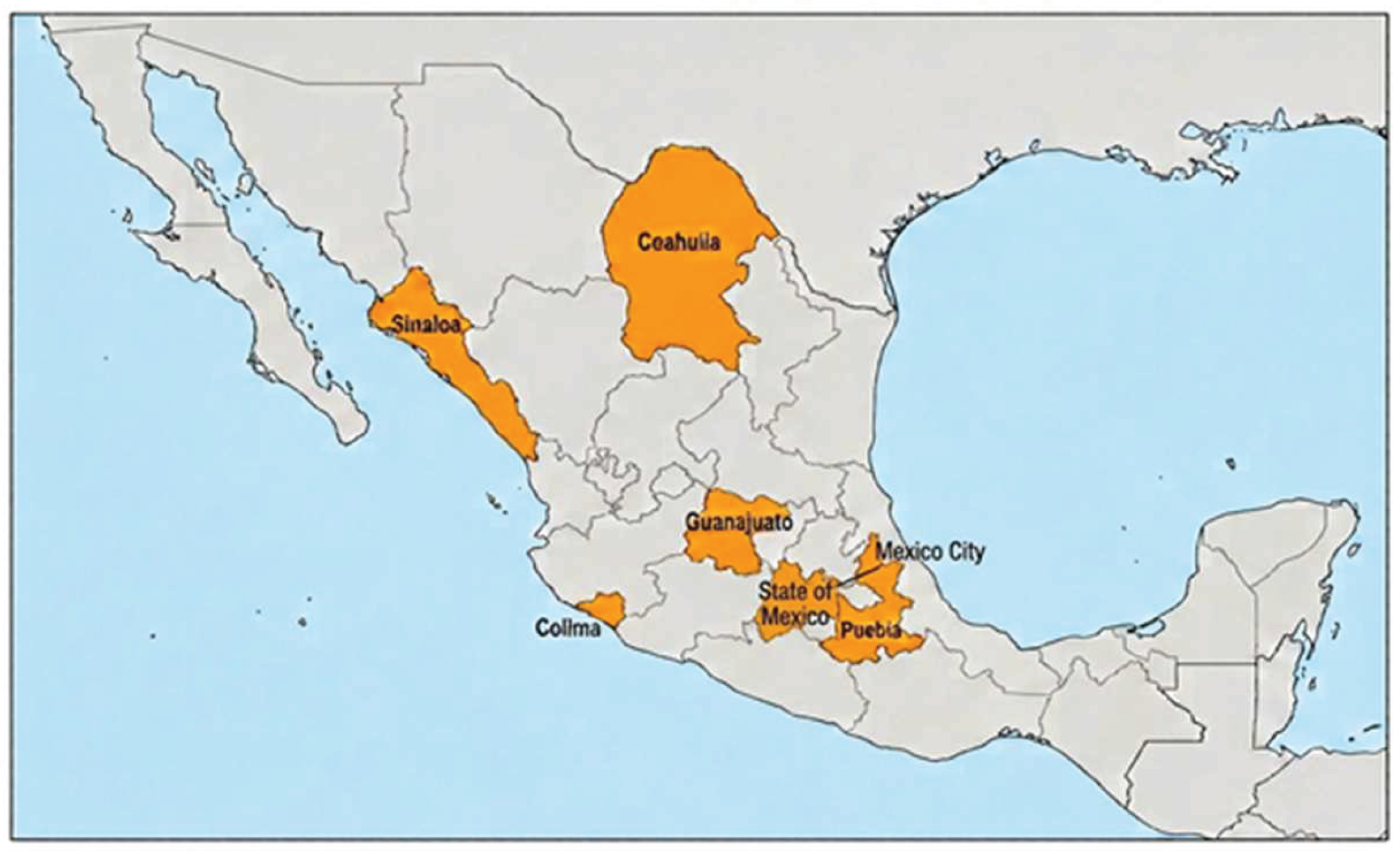
Mexico currently conducts a nationwide survey (ENSANUT) that includes screening for chronic diseases, such as T2D. [25] Incorporating a standardized assessment of DPN symptoms or a physical examination could provide a more accurate way to detect this diabetes-related complication across regions. Of the 12 studies mentioned, 5 were carried out in Mexico City, [47,48,49,53,56] 2 in Colima, [55,58] and the remaining five in various other states, [50,51,52,54,57] covering only 7 of Mexico's 32 federal entities. Figure 1 shows the location of the states where the studies were conducted, highlighted in yellow, while also indicating extensive areas for which no published data is available.
Eight of the studies presented report a higher prevalence of DPN in women, with an average age of over 52 years, data that indicate where we should focus greater attention, in terms of both prevention and education, to enable early symptom identification. Similarly, these results demonstrate the need to conduct studies based on gender, age groups, duration of the condition, comorbidities, socioeconomic and educational levels, in order to comprehensively understand the scope of this problem and the factors contributing to it.
With an understanding of the national scenery, strategies could be implemented to monitor these cases and open the door to research in this area. Furthermore, given that DPN management focuses on symptom control rather than a cure, it is crucial to adopt preventive strategies for early detection. Equally important is an educational approach involving the training of all healthcare personnel, including physicians, nutritionists, and physiotherapists, in the use of assessment scales, testing, detection skills, and symptom management, ultimately improving the quality of life for those affected.
This review has certain limitations. It is not a systematic review, the number of studies included is small, and there is high heterogeneity regarding study methodologies. Furthermore, the studies are concentrated in very specific areas of the country, making it difficult to conduct a more in-depth national analysis.
5. Conclusions
Diabetic peripheral neuropathy is one of the most common complications of type 2 diabetes, yet it remains one of the most difficult to diagnose and manage. Several studies have reported prevalence rates in Mexico; however, the heterogeneity among them, ranging from methodology to diagnostic criteria, makes it difficult to establish a precise national figure. This underscores the importance of conducting standardized and representative epidemiological studies that can provide a reliable estimate of national prevalence and ensure the condition is managed with the true significance it deserves.
Author Contributions
Conceptualization, RKA. and CA.; investigation, RKA.; data curation, RKA.; writing (original draft preparation), RKA; writing (review and editing), CA.; visualization, RKA.; supervision, CA.; project administration, CA. All authors have read and agreed to the published version of the manuscript.
Funding
The APC was funded by Universidad Anáhuac México.
Institutional Review Board Statement
Not applicable.
Informed Consent Statement
Not applicable.
Data Availability Statement
No new data were created or analyzed in this study. Data sharing is not applicable to this article.
Conflicts of Interest
The authors declare no conflicts of interest.
Abbreviations
The following abbreviations are used in this manuscript:
| AGEs | Advanced glycation end-products |
| ATP | Adenosine triphosphate |
| DAN | Diabetic Autonomic Neuropathy |
| DN | Diabetic Neuropathy |
| DN4 | Douleur Neuropathique en 4 Questions |
| DPN | Diabetic peripheral neuropathy |
| ENSANUT | Encuesta Nacional de Salud y Nutrición - National Health and Nutrition Survey |
| IL | Interleukin |
| IR | Insulin Resistance |
| MNSI | Michigan Neuropathy Screening Instrument |
| NF-κB | Nuclear factor-κB |
| O2- | Superoxide |
| PKC | Protein kinase C |
| T1D | Type 1 Diabetes |
| T2D | Type 2 Diabetes |
| TNFα | Tumoral Necrosis Factor Alpha |
| UDP-GlcNAc | Uridine-50-di-phospho- N-acetylglucosamine |
| RAGE | Receptor for advanced glycation end-products |
| ROS | Reactive Oxygen Species |
References
- Bae, J.H.; Choe, H.J.; Yang, Y.S.; Seo, M.H.; Choi, J.H.; Kim, G.; Lyu, Y.S.; Han, J.H.; Kang, S.; Kim, W.J.; et al. Defining Severe Diabetes Mellitus: A Consensus Framework for Grading and Staging Diabetes Based on Pathophysiology and Complications. Diabetes Metab. J. 2025, 49, 1141–1154. [Google Scholar] [CrossRef] [PubMed]
- Galicia-Garcia, U.; Benito-Vicente, A.; Jebari, S.; Larrea-Sebal, A.; Siddiqi, H.; Uribe, K.B.; Ostolaza, H.; Martín, C. Pathophysiology of Type 2 Diabetes Mellitus. Int. J. Mol. Sci. 2020, 21, 1–34. [Google Scholar] [CrossRef] [PubMed]
- Młynarska, E.; Czarnik, W.; Dzieża, N.; Jędraszak, W.; Majchrowicz, G.; Prusinowski, F.; Stabrawa, M.; Rysz, J.; Franczyk, B. Type 2 Diabetes Mellitus: New Pathogenetic Mechanisms, Treatment and the Most Important Complications. Int. J. Mol. Sci. 2025, 26, 1094. [Google Scholar] [CrossRef] [PubMed]
- International Diabetes Federation IDF Diabetes Atlas. International Diabetes Federation; Brussels, Belgium, 2025. [Google Scholar]
- Lima, J.E.; Moreira, N.C.; Sakamoto-Hojo, E.T. Mechanisms Underlying the Pathophysiology of Type 2 Diabetes: From Risk Factors to Oxidative Stress, Metabolic Dysfunction, and Hyperglycemia. Mutat. Res. Genet Toxicol. Environ. Mutagen 2022, 874–875, 503437. [Google Scholar] [CrossRef] [PubMed]
- Dubský, M.; Sojáková, D.; Fejfarová, V.; Jude, E.B. Diabetic Peripheral Neuropathy: New Diagnostics and Treatment Perspectives. Drugs Aging 2026, 43, 29–48. [Google Scholar] [CrossRef] [PubMed]
- Kurz, F.T.; Jende, J.M.; Salomir, R.; Lövblad, K.O.; Lascano, A.; Gariani, K. Diabetic Peripheral Neuropathy: Current Epidemiology, Diagnostic Advances, Biomarkers, and Management Strategies. J. Diabetes Res. 2026, 2026, e9080699. [Google Scholar] [CrossRef] [PubMed]
- American Diabetes Association Professional Practice Committee for Diabetes 12. Retinopathy, Neuropathy, and Foot Care: Standards of Care in Diabetes—2026. Diabetes Care 2026, 49, S261–S276. [Google Scholar] [CrossRef] [PubMed]
- Savelieff, M.G.; Elafros, M.A.; Viswanathan, V.; Jensen, T.S.; Bennett, D.L.; Feldman, E.L. The Global and Regional Burden of Diabetic Peripheral Neuropathy. Nat. Rev. Neurol. 2025, 21, 17–31. [Google Scholar] [CrossRef] [PubMed]
- Dillon, B.R.; Ang, L.; Pop-Busui, R. Spectrum of Diabetic Neuropathy: New Insights in Diagnosis and Treatment. Ann. Rev. Med. 2024, 75, 293–306. [Google Scholar]
- Won, J.C.; Park, T.S. Recent Advances in Diagnostic Strategies for Diabetic Peripheral Neuropathy. Endocrinol. Metab. 2016, 31, 230–238. [Google Scholar] [CrossRef] [PubMed]
- Pop-Busui, R.; Boulton, A.M.; Feldman, E.L.; Bril, V.; Freeman, R.; Malik, R.A.; Sosenko, J.M.; Ziegler, D. Diabetic Neuropathy: A Position Statement by the American Diabetes Association. Diabetes Care 2017, 40, 136–154. [Google Scholar] [CrossRef] [PubMed]
- Pang, L.; Lian, X.; Liu, H.; Zhang, Y.; Li, Q.; Cai, Y.; Ma, H.; Yu, X. Understanding Diabetic Neuropathy: Focus on Oxidative Stress. Oxid. Med. Cell Longev. 2020, 2020, 9524635. [Google Scholar] [CrossRef] [PubMed]
- Gonçalves, N.P.; Vægter, C.B.; Andersen, H.; Østergaard, L.; Calcutt, N.A.; Jensen, T.S. Schwann Cell Interactions with Axons and Microvessels in Diabetic Neuropathy. Nat. Rev. Neurol. 2017, 13, 135–147. [Google Scholar] [CrossRef] [PubMed]
- Azmi, S.; Petropoulos, I.N.; Ferdousi, M.; Ponirakis, G.; Alam, U.; Malik, R.A. An Update on the Diagnosis and Treatment of Diabetic Somatic and Autonomic Neuropathy. F1000Res 2019, 8, 186. [Google Scholar] [CrossRef] [PubMed]
- Azmi, S.; Ferdousi, M.; Kalteniece, A.; Al-Muhannadi, H.; Al-Mohamedi, A.; Hadid, N.H.; Mahmoud, S.; Bhat, H.A.; Gad, H.Y.A.; Khan, A.; et al. Diagnosing and Managing Diabetic Somatic and Autonomic Neuropathy. Ther. Adv. Endocrinol. Metab. 2019, 10. [Google Scholar] [CrossRef] [PubMed]
- Bondar, A.; Popa, A.; Papanas, N.; Popoviciu, M.; Vesa, C.; Sabau, M.; Daina, C.; Stoica, R.; Katsiki, N.; Stoian, A. Diabetic Neuropathy: A Narrative Review of Risk Factors, Classification, Screening and Current Pathogenic Treatment Options (Review). Exp. Ther. Med. 2021, 22. [Google Scholar] [CrossRef] [PubMed]
- Yang, Y.; Zhao, B.; Wang, Y.; Lan, H.; Liu, X.; Hu, Y.; Cao, P. Diabetic Neuropathy: Cutting-Edge Research and Future Directions. Signal Transduct. Target Ther. 2025, 10, 132. [Google Scholar] [CrossRef] [PubMed]
- Feldman, E.L.; Callaghan, B.C.; Pop-Busui, R.; Zochodne, D.W.; Wright, D.E.; Bennett, D.L.; Bril, V.; Russell, J.W.; Viswanathan, V. Diabetic Neuropathy. Nat. Rev. Dis. Primers 2019, 5, 41. [Google Scholar] [CrossRef] [PubMed]
- González, P.; Lozano, P.; Ros, G.; Solano, F. Hyperglycemia and Oxidative Stress: An Integral, Updated and Critical Overview of Their Metabolic Interconnections. Int. J. Mol. Sci. 2023, 24, 9352. [Google Scholar] [CrossRef] [PubMed]
- Eid, S.A.; Rumora, A.E.; Beirowski, B.; Bennett, D.L.; Hur, J.; Savelieff, M.G.; Feldman, E.L. New Perspectives in Diabetic Neuropathy. Neuron 2023, 111, 2623–2641. [Google Scholar] [CrossRef] [PubMed]
- Mauermann, M.L.; Staff, N.P. Peripheral Neuropathy: A Review. JAMA 2026, 335, 255–266. [Google Scholar] [CrossRef] [PubMed]
- Barquera, S.; Hernández-Barrera, L.; Oviedo-Solís, C.; Rodríguez-Ramírez, S.; Monterrubio-Flores, E.; Trejo-Valdivia, B.; Martínez-Tapia, B.; Aguilar-Salinas, C.; Galván-Valencia, O.; Chávez-Manzanera, E.; et al. Obesity in Adults. Salud Publica Mex. 2024, 66, 414–424. [Google Scholar] [CrossRef] [PubMed]
- Campos-Nonato, I.; Monterrubio-Flores, E.; Ramírez-Villalobos, D.; Arias-Mendoza, M.A.; Gómez-Álvarez, E.; Alcocer-Díaz-Barreiro, L.; Basto-Abreu, A.; Reyes-García, A.; Medina-García, C.; Hernández-Barrera, L.; et al. Hipertensión Arterial En Adultos y Brechas de Atención a Nivel Nacional y Estatal, Ensanut 2021-2024. Salud Publica Mex. 2025, 67, 633–643. [Google Scholar] [CrossRef] [PubMed]
- Reyes-García, A.; Basto-Abreu, A.; Reyes-Sánchez, F.; Stern, D.; Romero-Martínez, M.; Campos-Nonato, I.; Rojas-Martínez, R.; Aguilar-Salinas, C.A.; Barrientos-Gutiérrez, T. Prevalence of Diabetes and Glycemic Control in Mexico, Ensanut 2021-2024. Salud Publica Mex. 2025, 67, 622–632. [Google Scholar] [CrossRef] [PubMed]
- Ristikj-Stomnaroska, D.; Risteska-Nejashmikj, V.; Papazova, M. Role of Inflammation in the Pathogenesis of Diabetic Peripheral Neuropathy. Open Access Maced. J. Med. Sci. 2019, 7, 2267–2270. [Google Scholar] [CrossRef] [PubMed]
- Sifuentes-Franco, S.; Pacheco-Moisés, F.P.; Rodríguez-Carrizalez, A.D.; Miranda-Díaz, A.G. The Role of Oxidative Stress, Mitochondrial Function, and Autophagy in Diabetic Polyneuropathy. J. Diabetes Res. 2017, 2017, 1673081. [Google Scholar] [CrossRef] [PubMed]
- Okdahl, T.; Brock, C. Molecular Aspects in the Potential of Vitamins and Supplements for Treating Diabetic Neuropathy. Curr. Diab Rep. 2021, 21, 31. [Google Scholar]
- Mengstie, M.A.; Chekol Abebe, E.; Behaile Teklemariam, A.; Tilahun Mulu, A.; Agidew, M.M.; Teshome Azezew, M.; Zewde, E.A.; Agegnehu Teshome, A. Endogenous Advanced Glycation End Products in the Pathogenesis of Chronic Diabetic Complications. Front Mol. Biosci. 2022, 9, 1002710. [Google Scholar] [CrossRef] [PubMed]
- Oyenihi, A.B.; Ayeleso, A.O.; Mukwevho, E.; Masola, B. Antioxidant Strategies in the Management of Diabetic Neuropathy. BioMed Res. Int. 2015, 2015, 515042. [Google Scholar] [CrossRef] [PubMed]
- Paneque, A.; Fortus, H.; Zheng, J.; Werlen, G.; Jacinto, E. The Hexosamine Biosynthesis Pathway: Regulation and Function. Genes 2023, 14, 933. [Google Scholar] [CrossRef] [PubMed]
- Sloan, G.; Selvarajah, D.; Tesfaye, S. Pathogenesis, Diagnosis and Clinical Management of Diabetic Sensorimotor Peripheral Neuropathy. Nat. Rev. Endocrinol. 2021, 17, 400–420. [Google Scholar] [CrossRef] [PubMed]
- Cantú Brito, C.; Baizábal Carvallo, F.; Aldrete Velasco, J.; Chávez Guitron, E. Aplicaciones Clínicas Del Ácido Tióctico (Ácido α-Lipoico) En Pacientes Con Neuropatía. Med. Int. Mex. 2007, 23, 151–158. [Google Scholar]
- Román-Pintos, L.M.; Villegas-Rivera, G.; Rodríguez-Carrizalez, A.D.; Miranda-Díaz, A.G.; Cardona-Muñoz, E.G. Diabetic Polyneuropathy in Type 2 Diabetes Mellitus: Inflammation, Oxidative Stress, and Mitochondrial Function. J. Diabetes Res. 2016, 2016, 3425617. [Google Scholar] [CrossRef] [PubMed]
- Botas Velasco, M.; Cervell Rodríguez, D.; Rodríguez Montalbán, A.; Vicente Jiménez, S.; Fernández de Valderrama Martínez, I. Actualización En El Diagnóstico, Tratamiento y Prevención de La Neuropatía Diabética Periférica. Angiologia 2017, 69, 174–181. [Google Scholar] [CrossRef]
- Wakeman, M.; Archer, D.T. Metformin and Micronutrient Status in Type 2 Diabetes: Does Polypharmacy Involving Acid-Suppressing Medications Affect Vitamin B12 Levels? Diabetes Metab. Syndr. Obes. 2020, 13, 2093–2108. [Google Scholar] [CrossRef] [PubMed]
- Carmichael, J.; Fadavi, H.; Ishibashi, F.; Shore, A.C.; Tavakoli, M. Advances in Screening, Early Diagnosis and Accurate Staging of Diabetic Neuropathy. Front Endocrinol. 2021, 12, 671257. [Google Scholar] [CrossRef] [PubMed]
- Elafros, M.A.; Andersen, H.; Bennett, D.L.; Savelieff, M.G.; Viswanathan, V.; Callaghan, B.C.; Feldman, E.L. Towards Prevention of Diabetic Peripheral Neuropathy: Clinical Presentation, Pathogenesis, and New Treatments. Lancet Neurol. 2022, 21, 922–936. [Google Scholar] [CrossRef] [PubMed]
- Chang, K.C.; Pai, Y.W.; Lin, C.H.; Lee, I. Te; Chang, M.H. Glycemic Variability’s Impact on Painful Diabetic Peripheral Neuropathy in Type 2 Diabetes Patients. Sci. Rep. 2024, 14, 22276. [Google Scholar] [CrossRef] [PubMed]
- Bril, V.; Perkins, B.A. Validation of the Toronto Clinical Scoring System for Diabetic Polyneuropathy. Diabetes Care 2002, 25, 2048–2052. [Google Scholar] [CrossRef] [PubMed]
- Atre, J.; Ganvir, S. Screening Instrument for Clinical Diagnosis of Peripheral Neuropathy in Diabetes-A Review. Indian J. Physiother. Occup. Ther. 2019, 13, 46. [Google Scholar] [CrossRef]
- Idiaquez, J.F.; Alcantara, M.; Bril, V. Optimal Cut-off Value of the Modified Toronto Clinical Neuropathy Score in the Diagnosis of Polyneuropathy. Eur. J. Neurol. 2023, 30, 2481–2487. [Google Scholar] [CrossRef] [PubMed]
- Moghtaderi, A.; Bakhshipour, A.; Rashidi, H. Validation of Michigan Neuropathy Screening Instrument for Diabetic Peripheral Neuropathy. Clin. Neurol. Neurosurg. 2006, 108, 477–481. [Google Scholar] [CrossRef] [PubMed]
- Park, J.H.; Kim, D.S. The Necessity of the Simple Tests for Diabetic Peripheral Neuropathy in Type 2 Diabetes Mellitus Patients without Neuropathic Symptoms in Clinical Practice. Diabetes Metab. J. 2018, 42, 442–446. [Google Scholar] [CrossRef] [PubMed]
- Truini, A.; Aleksovska, K.; Anderson, C.C.; Attal, N.; Baron, R.; Bennett, D.L.; Bouhassira, D.; Cruccu, G.; Eisenberg, E.; Enax-Krumova, E.; et al. Joint European Academy of Neurology–European Pain Federation–Neuropathic Pain Special Interest Group of the International Association for the Study of Pain Guidelines on Neuropathic Pain Assessment. Eur. J. Neurol. 2023, 30, 2177–2196. [Google Scholar] [CrossRef] [PubMed]
- Bouhassira, D.; Attal, N.; Alchaar, H.; Boureau, F.; Brochet, B.; Bruxelle, J.; Cunin, G.; Fermanian, J.; Ginies, P.; Grun-Overdyking, A.; et al. Comparison of Pain Syndromes Associated with Nervous or Somatic Lesions and Development of a New Neuropathic Pain Diagnostic Questionnaire (DN4). Pain 2005, 114, 29–36. [Google Scholar] [CrossRef] [PubMed]
- Ramírez-López, P.; Acevedo Giles, O.; González Pedraza Avilés, A. Neuropatía diabética: frecuencia, factores de riesgo y calidad de vida en pacientes de una clínica de primer nivel de atención. Arch. Med. Fam. 2017, 9, 105–111. [Google Scholar]
- Sánchez-Pozos, K.; Monroy-Escutia, J.; Jaimes-Santoyo, J.; Granados-Silvestre, M.D.L.Á.; Menjivar, M.; Ortiz-López, M.G. Risk Factors Associated with Diabetic Neuropathy in Mexican Patients. Cir. Cir. 2021, 89, 189–199. [Google Scholar] [CrossRef] [PubMed]
- Arévalo Ramírez, J.R.; Castañón Sánchez, D.L.; Vargas Ordoñez, O.I.; Camarena Velázquez, H.S.; Aguirre García, M. del C.; Osorio Granjeno, M.C. Diabetic Neuropathy and Its Relationship with Quality of Life in Patients with Type 2 Diabetes. Aten. Primaria 2026, 58, 103454. [Google Scholar] [CrossRef] [PubMed]
- Méndez Vega, M.; Calderón Juárez, A.L. Asociación de Neuropatía Periférica En Pies y Calidad de Vida En Pacientes Con Diabetes Tipo 2. Cienc. Lat. 2025, 9, 7467–7490. [Google Scholar] [CrossRef]
- Camacho López, J. Prevalencia de Neuropatía Periférica En Pacientes Con Diabetes Mellitus Tipo 2, Atendidos En La Clínica Hospital Del ISSSTE En Mazatlán, Sinaloa. Rev. Esp. Med.-Quir. 2011, 16, 71–74. [Google Scholar]
- Ibarra R, C.T.; Rocha L, J. de J.; Hernández O, R.; Nieves R, R.E.; Leyva J, R. Prevalencia de Neuropatía Periférica Diabéticos Tipo 2 En El Primer de Atención. Rev. Med. Chile 2012, 140, 1126–1131. [Google Scholar] [CrossRef] [PubMed]
- González-Milán, C.; Ramírez-Rentería, C.; Molina-Ayala, M.; Ferreira-Hermosillo, A. Clinical Evaluation of Diabetic Neuropathy in Adult Patients with Type 1 Diabetes and Its Possible Association with Insulin Resistance. Rev. Med. Inst. Mex. Seguro Soc. 2017, 55, S389–95. [Google Scholar] [PubMed]
- Borbón Reyna, M.F.; López Rivera, F.A. Prevalencia de Neuropatía En Pacientes Diabéticos Que Acuden a Electromiografía En Un Hospital Privado de Torreón, Coahuila. Rev. Científica Y Académica 2024, 4, 60–72. [Google Scholar] [CrossRef]
- Flores-Cuevas, I.J.; Cuevas-Núñez, Z.A.; López-Ascencio, R.; Vásquez, C. Detección de Neuropatía Diabética Periférica En Adultos Mayores de 60 Años En El Centro de Salud “México BID” de Colima, México. Arch. De Med. 2018, 14, 1–6. [Google Scholar] [PubMed]
- Aliss Samur, J.A.; Cervantes Rodríguez, M.Z.; Ibarra Olmos, A.; González Bárcena, D. Prevalencia de Neuropatía Periférica En Diabetes Mellitus. Acta Médica Grupo Ángeles 2006, 4, 13–17. [Google Scholar]
- Arellano-Longinos, S.A.; Godínez-Tamay, E.D.; Hernández-Miranda, M.B. Prevalencia de Neuropatía Diabética En Pacientes Con Diabetes Mellitus Tipo 2 En Una Clínica Regional Del Estado de México. Aten. Fam. 2018, 25, 7–11. [Google Scholar] [CrossRef]
- Millán-Guerrero, R.; Trujillo-Hernández, B.; Isais-Millán, S.; Prieto-Díaz-Chávez, E.; Vásquez, C.; Caballero-Hoyos, J.; García-Magaña, J. H-Reflex and Clinical Examination in the Diagnosis of Diabetic Polyneuropathy. J. Int. Med. Res. 2012, 40, 694–700. [Google Scholar] [CrossRef] [PubMed]
Figure 1.
Location of Mexico’ federal states with reported DPN prevalence.
Disclaimer/Publisher’s Note: The statements, opinions and data contained in all publications are solely those of the individual author(s) and contributor(s) and not of MDPI and/or the editor(s). MDPI and/or the editor(s) disclaim responsibility for any injury to people or property resulting from any ideas, methods, instructions or products referred to in the content. |
© 2026 by the authors. Licensee MDPI, Basel, Switzerland. This article is an open access article distributed under the terms and conditions of the Creative Commons Attribution (CC BY) license (http://creativecommons.org/licenses/by/4.0/).
Copyright: This open access article is published under a Creative Commons CC BY 4.0 license, which permit the free download, distribution, and reuse, provided that the author and preprint are cited in any reuse.