

Submitted:
18 October 2026
Posted:
20 October 2026
You are already at the latest version
Abstract
Cardiovascular diseases (CVDs) are a leading cause of mortality worldwide, with more than 80% of deaths occurring in low- and middle-income countries. In Mozambique, non-communicable diseases account for approximately 28% of deaths, with CVDs contributing substantially to this burden. Despite the country’s hierarchical health system and the World Health Organization target of 80% availability of essential medicines, access to cardiovascular medicines remains poorly documented. This scoping review mapped the availability, prices, affordability, physical access, and health-system barriers affecting access to essential cardiovascular medicines in Mozambique. The review followed the PRISMA-ScR guidelines and the Arksey and O’Malley framework. PubMed, Scopus, and Web of Science were systematically searched without publication-year restrictions. Eligible studies assessed the availability, stock-outs, prices, affordability, or health-system barriers related to cardiovascular medicines and diagnostics in Mozambique. Study selection and data extraction were independently performed by multiple reviewers. Consistent with the scoping review design, formal risk-of-bias assessment was not undertaken. Fifteen studies met the inclusion criteria. Essential cardiovascular medicines showed persistently low availability, with mean availability of approximately 21% across public hospital pharmacies, private retail outlets, and private hospitals, substantially below the WHO 80% target. Public facilities consistently provided only a limited range of older first-line medicines, while second- and third-line medicines, statins, digoxin, direct oral anticoagulants, and diagnostic reagents were frequently unavailable. When public stocks were depleted, patients relied on private-sector purchases, where generic medicines cost an average of 4.51 times international reference prices. Long-term secondary prevention could require 14.0–17.8 days of wages per month for low-income workers. These barriers were associated with low hypertension awareness, treatment, and control, substantial target-organ damage, high stroke case-fatality, and poor anticoagulation control. Access to cardiovascular medicines in Mozambique is severely constrained by low availability, frequent stock-outs, and unaffordable private-sector prices. Strengthening medicine selection, supply-chain management, financial protection, and decentralized protocol-based care is essential to improve equitable access to cardiovascular treatment.
Keywords:
cardiovascular diseases
; essential medicines
; medicine availability
; affordability
; mozambique
Introduction
Cardiovascular diseases (CVDs) represent one of the leading causes of mortality worldwide, classified among non-communicable chronic diseases (NCDs), being responsible for approximately 17.6 million deaths (31% of all deaths annually) [1]. Low- and middle-income countries are equally affected, accounting for over 80% of deaths globally [1]. It is predicted that CVDs will account for more than half of all deaths by 2030 in sub-Saharan Africa. Ischemic heart disease (IHD), stroke, and hypertensive heart disease are the three most common causes of death in sub-Saharan Africa [2,3]. This increased risk results, on one hand, from the growth of lifestyle-related risk factors and, on the other, from limitations in health systems to guarantee prevention, early diagnosis, and proper treatment of CVDs [4,5,6].
Mozambique is a low-income country with 33 million inhabitants [4], facing high mortality from NCDs, which account for 28% of deaths, of which 12% are due to cardiovascular diseases [1,7,8].
The National Health System (SNS) has a supply structure organized into five hierarchical levels, from the central level to community agents, ensuring the supply of inputs necessary for healthcare throughout the country, including rural areas [9].
The United Nations (UN) Member States committed in 2012 to reduce chronic non-communicable diseases by one third by 2030[10], supported by agendas from the World Health Organization (WHO), the World Heart Federation (WHF), and Sustainable Development Goals. The WHO strategic plan 2008–2013 set targets of 80% availability of essential medicines in health units and ensuring that patients do not pay more than four times the international reference price, considering that extra costs influence prices in the private sector [5,11].
However, despite this structural organization, Mozambique shows a high external dependency for implementing health services and research [8]. Most patients depend on the public sector, where medicines cost about 5 Meticais (0.08 USD) per prescription. However, the overload of public health units, resource scarcity, and supply failures force many patients to resort to the private sector, bearing the costs directly [9]. Although NCDs are included in national policies such as the 2015-2019 Five-Year Plan, there is still a significant lack of data on access to essential medicines and diagnostics for the treatment of cardiovascular diseases This situation reflects in many low- and middle-income countries, where studies conducted between 2008 and 2015 indicated that only a small portion of the medicines evaluated reached the WHO recommended 80% availability target [1,12].
To address the growing burden of cardiovascular diseases (CVDs) in sub-Saharan Africa and support national non-communicable disease (NCD) control targets, this scoping review aims to systematically map the breadth and characteristics of peer-reviewed evidence regarding the availability and accessibility of essential cardiovascular medicines across public, private, and community healthcare settings in Mozambique. Specifically, this review evaluates: (1) the availability and stock-out frequency of essential cardiovascular pharmacological agents and diagnostic tools; (2) the pricing structures and affordability burdens placed on patients and health systems; (3) the primary financial, geographical, and health-system barriers hindering equitable access to CVD therapies; and (4) existing geographical and methodological gaps in local cardiovascular health research.
Methods
This scoping review was conducted in accordance with the Preferred Reporting Items for Systematic Reviews and Meta-Analyses extension for Scoping Reviews (PRISMA-ScR) guideline [13,14]. The completed PRISMA-ScR checklist is provided as Supplementary Material 1. The methodological approach was informed by the framework proposed by Arksey and O’Malley [15] and further refined by Levac et al. [16]. The review process comprised the following stages: (1) identifying the research questions; (2) identifying relevant studies through a comprehensive search of multiple electronic databases; (3) selecting studies according to predefined eligibility criteria; (4) charting the data using a structured data-extraction form; and (5) collating, summarizing, and reporting the results through descriptive and narrative synthesis.
The research questions were developed to map the available evidence on the availability and access to cardiovascular medicines in Mozambique, including the types of cardiovascular medicines investigated, healthcare settings and populations studied, reported levels of medicine availability and access, measures used to assess access, and barriers and health-system factors affecting access.
A scoping review approach was selected because it is appropriate for systematically mapping the breadth and characteristics of evidence on a broad and heterogeneous topic. In the context of cardiovascular medicines in Mozambique, this approach allows the identification and characterization of evidence concerning medicine availability, affordability, physical accessibility, stock-outs, supply continuity, medicine prices, and related health-system factors. It also facilitates the identification of geographical, methodological, and evidence gaps that may inform future research, health-system interventions, and policies aimed at improving access to essential cardiovascular medicines in Mozambique.
The review focused on peer-reviewed evidence concerning the availability and/or access to cardiovascular medicines in Mozambique. Studies were considered across different healthcare settings and population groups, without restrictions on publication year. The search strategy, eligibility criteria, data-charting process, and synthesis methods were established a priori to promote transparency and reproducibility.
Research Question
This scoping review addressed the following research questions: (i) What evidence is available on the availability of cardiovascular medicines in Mozambique? (ii) Which cardiovascular medicines and healthcare settings have been assessed in studies of medicine availability and access? (iii) What levels of availability, affordability, physical accessibility, and continuity of supply have been reported? (iv) What factors and health-system barriers influence access to cardiovascular medicines in Mozambique? (v) What methodological and evidence gaps exist regarding the availability and access to cardiovascular medicines in Mozambique.
Eligibility Criteria
Studies were eligible for inclusion if they investigated the availability and/or access to cardiovascular medicines in Mozambique. Studies involving populations of any age and conducted in any healthcare setting, including public and private health facilities, hospitals, primary healthcare facilities, pharmacies, and community-based settings, were considered eligible.
The review included studies that assessed one or more dimensions of access to cardiovascular medicines, including medicine availability, stock-outs or shortages, affordability, medicine prices, physical accessibility, geographic access, supply continuity, and related health-system factors. Studies examining cardiovascular medicines used for the prevention or treatment of cardiovascular diseases, including antihypertensive, lipid-lowering, antiplatelet, anticoagulant, and other relevant cardiovascular medicines, were eligible.
Both quantitative and mixed-methods studies were considered. Studies were eligible regardless of publication year, if they reported primary or relevant empirical data concerning the availability or access to cardiovascular medicines in Mozambique.
Only peer-reviewed articles published in English or Portuguese were included. Due to feasibility constraints, studies published in other languages were excluded.
Grey literature, conference abstracts, editorials, commentaries, opinion pieces, letters, protocols, reviews, and other non-peer-reviewed publications were excluded. Studies conducted exclusively outside Mozambique or those that did not provide information specifically relevant to the availability or access to cardiovascular medicines in Mozambique were also excluded.
Information Sources and Search Strategy
The literature search was conducted across three major electronic databases: PubMed, Scopus, and Web of Science. The initial search was completed on August, 2026, to identify studies published or indexed since the initial search.
A comprehensive literature search was conducted in PubMed, Scopus, and Web of Science Core Collection. The search strategy was developed around three main concepts: (1) cardiovascular medicines; (2) medicine availability and access, including stock-outs, shortages, affordability, prices, and costs; and (3) Mozambique. Controlled vocabulary and free-text terms were combined in PubMed, whereas database-specific field operators were used in Scopus and Web of Science. Boolean operators (AND/OR) and truncation were applied as appropriate to each database. The search strategy was adapted to the syntax and indexing structure of each database while maintaining conceptual equivalence across databases. No publication-year restriction was applied. The complete search strategies for all databases are provided in Supplementary Table 1
Study Selection Process
The screening process was carried out in three sequential stages: initial screening of titles, followed by abstracts, and subsequently full-text articles. Two reviewers independently assessed the eligibility of studies at each stage. Any discrepancies were resolved through consultation with a third reviewer to reach consensus. The screening and selection process was facilitated using Rayyan, a web-based tool designed to streamline systematic and scoping review workflows.
Data Extraction
Data extraction was performed independently by two reviewers (MM and US) using a structured data-charting form developed specifically for this review. The extraction form was piloted to assess its clarity, completeness, and consistency before full data extraction. Any discrepancies between the reviewers were resolved through discussion and consensus.
The following information was extracted from the included studies: article title, authorship, year of publication, study location and province, study design, healthcare setting, study population, sample size, and relevant demographic characteristics. Information on cardiovascular diseases and cardiovascular medicines investigated was also recorded, including the therapeutic class and specific medicines assessed.
Data related to medicine availability and access were extracted, including reported availability levels, stock-outs or shortages, frequency and duration of stock-outs when reported, medicine prices, affordability, physical and geographic accessibility, continuity of medicine supply, procurement and distribution-related factors, and other relevant indicators of access.
Information on the methods used to assess medicine availability and access was also extracted, including data sources, assessment instruments or indicators, facility surveys, medicine inventories, patient or household surveys, pharmacy or dispensing records, and other measurement approaches. Where reported, information on the availability of medicines on the day of assessment, reference periods, and thresholds or criteria used to define availability, affordability, or access was recorded.
Data Analysis and Synthesis
The findings were synthesised descriptively and organised into tables to facilitate interpretation and comparison. Given the scope of the review, no subgroup analyses or thematic categorisations were planned or conducted.
Quality Assessment
Consistent with PRISMA-ScR recommendations and the exploratory nature of scoping reviews, formal methodological quality appraisal or risk of bias assessment was not conducted. In fact, the objective of this study was to map evidence rather than determine intervention effectiveness.
Ethics Considerations
This review did not involve the collection of primary data or engagement with human participants and therefore did not require ethical approval.
Patient and Public Involvement
None. Patients and the public were not involved in the design, conduct, reporting, or dissemination plans of this scoping review.
Results
The literature search identified 37 records across the three electronic databases: PubMed (n=9), Web of Science (n=20), and Scopus (n=8). After removal of 9 duplicate records, 28 records remained for title and abstract screening. Of these, 8 records were excluded because they did not address the availability or access to cardiovascular medicines. A total of 20 full-text reports were assessed for eligibility. Five reports were subsequently excluded because full-text articles were unavailable (n=2), the studies were not related to the availability or access to medicines in Mozambique (n=1), or they were not related to cardiovascular disease (n=2). Ultimately, 15 studies were included in the scoping review (Figure 1).
Population demographics
Demographically, the average population size across the studies was approximately 1.621 participants, exhibiting substantial variation (minimum of 81 and maximum of 8.276). The average percentage of female participants was 53.1%. The average age of participants was approximately 45.3 years, with a range of 0–79 years.
Geographical distribution
Geographically, the included studies covered several regions of Mozambique, although the evidence was concentrated in the southern part of the country. Studies were conducted at national level [5,9,20,21,23,24] as well as in Maputo City [1,2,10,11,18,21,22,23,24,25] and Maputo Province, Gaza Province, and other selected provinces Sofala [11] and Zambezia [11]. Maputo [17,19] was the most frequently represented geographical setting, particularly for studies assessing the availability, affordability, and access to cardiovascular medicines. Gaza Province was also represented through studies conducted in districts including Chibuto [19], Bilene [19], and Xai-Xai [19]. Nationally representative studies provided broader evidence on hypertension prevalence, awareness, treatment, and control across Mozambique. Overall, the geographical distribution indicates a predominance of evidence from southern Mozambique, with comparatively limited representation of other regions of the country (Table 2)..
Disease conditions
Regarding disease conditions, hypertension [2,9,10,11,17,19,26] was the predominant cardiovascular condition investigated across the included studies [1,5], particularly in relation to prevalence, awareness, pharmacological treatment, blood pressure control [11,18], and access to antihypertensive medicines. Other cardiovascular conditions included stroke, rheumatic heart disease [21], congenital heart disease [22], venous thromboembolism, atrial fibrillation or flutter, and prosthetic heart valves [24,25]. Some studies also addressed hypertensive disorders of pregnancy [19], including pre-eclampsia and eclampsia [19]. Overall, the evidence predominantly focused on hypertension [5,9,11,18,20,23], while fewer studies addressed other cardiovascular diseases and conditions requiring long-term cardiovascular pharmacotherapy.
Cardiovascular medicines
The cardiovascular medicines reported across the included studies are presented in Table 2. The medicines investigated covered several therapeutic classes, predominantly antihypertensive agents. These included calcium channel blockers, such as amlodipine and nifedipine; angiotensin-converting enzyme inhibitors, including enalapril and lisinopril; angiotensin II receptor blockers, such as losartan and irbesartan; beta-blockers, including atenolol and bisoprolol; and diuretics, particularly hydrochlorothiazide, amiloride, furosemide, and spironolactone. Other medicines included methyldopa, reserpine, nitrates, acetylsalicylic acid, clopidogrel, statins, digoxin, and anticoagulants such as warfarin, acenocoumarol, and phenprocoumon. Benzathine penicillin and other penicillin formulations were also reported for the secondary prevention of rheumatic heart disease. Overall, indicates that the studies primarily assessed medicines used for hypertension, while fewer studies addressed medicines for other cardiovascular conditions, including heart failure, thromboembolic disease, atrial fibrillation, and rheumatic heart disease. The availability of individual medicines varied substantially across settings. In the study assessing medicine availability in Maputo, only nifedipine 30 mg, furosemide 40 mg, and soluble insulin met or exceeded the 80% availability target in public facilities, whereas several medicines, including digoxin, losartan, verapamil, nitrates, and amlodipine 5 mg, had 0% availability.
Availability of cardiovascular medicines
The availability of cardiovascular medicines varied substantially across health-care settings and was consistently below the 80% target recommended by the World Health Organization (WHO). In public hospital pharmacies, the mean availability of essential cardiovascular medicines was 20.7%, compared with 21.5% in private retail pharmacies and 22.2% in private hospital pharmacies. In private retail pharmacies, 50% of the evaluated cardiovascular medicines were not available in any of the pharmacies assessed.
Among the medicines assessed in public facilities, only nifedipine 30 mg, furosemide 40 mg, and soluble insulin met or exceeded the 80% availability target. In emergency department settings, nifedipine 30 mg showed 145% availability relative to the WHO target. Conversely, 14 of the 41 formulations assessed in the primary survey had 0% availability in public hospitals. These included digoxin, losartan, verapamil, nitrates, and amlodipine 5 mg.
Availability also varied considerably among medicines used in emergency care. Furosemide 40 mg had an availability of 70%, followed by enalapril 20 mg at 60% and methyldopa 250 mg at 51%, whereas spironolactone 25 mg had only 6% availability. The overall mean availability of essential antihypertensive medicines in emergency settings was 28%.
The studies further showed that the public health system was primarily supplied with first-line regimens, particularly hydrochlorothiazide plus amiloride, methyldopa, and nifedipine. In contrast, several other cardiovascular medicines, including ACE inhibitors, angiotensin II receptor blockers, statins, digoxin, and novel/direct oral anticoagulants, showed limited availability or persistent stock-outs. For anticoagulation therapy, warfarin was the most consistently available anticoagulant, with 99.3% availability in the reported registry data, whereas NOACs/DOACs had very limited availability.
Price and affordability of cardiovascular medicines
The studies included in Table 2 showed substantial variation in the prices and affordability of cardiovascular medicines across the public and private sectors. In the public health sector, medicines and consultations were provided at a subsidized flat fee of 5 MZN (approximately US$0.08) per prescription or consultation. Public hospital admission fees were also waived for low-resource individuals, while post-stroke physical rehabilitation services in public hospitals were reported to be provided free of charge. However, patients were still responsible for non-medical expenses, including transportation costs.
In the private retail sector, cardiovascular medicines were considerably more expensive. The median price ratio (MPR) for the lowest-priced generic cardiovascular medicines was 4.51 times the International Reference Price (IRP). When medicines were unavailable in public facilities because of stock-outs, purchasing a single cardiovascular medicine from a private pharmacy represented between 0.5% and 11.2% of the minimum monthly wage, corresponding to approximately 0.2 to 3.4 working days.
The findings also indicated that affordability varied according to the type of treatment and the source of medicines. While some first-line treatments available through the public health system were relatively inexpensive, medicines that were unavailable in public facilities required patients to seek treatment in the private sector and incur additional out-of-pocket expenditure. For secondary cardiovascular prevention, the studies reported that treatment in the private sector could require approximately 14.0 to 17.8 days of wages per month for the lowest-paid workers.
Access barriers
Due to frequent stock-outs in public facilities, patients are forced to purchase medications in private retail pharmacies, where median prices are 4.51 times higher than International Reference Prices. Buying a single drug in the private sector can consume 0.5% to 11.2% of a low-income worker’s monthly wage (0.2 to 3.4 workdays). Secondary prevention regimens purchased in private pharmacies cost between 14.0 and 17.8 days’ wages per month for the lowest-paid worker, making long-term pharmacological prevention financially catastrophic and unaffordable. High drug costs and erratic family incomes force low-income patients to miss doses, discontinue treatment, or rely on traditional medicine. Over half of patients on anticoagulants (52.4%) must pay OOP for routine laboratory monitoring (INR tests). Specialized procedures (e.g., cardiac surgery, prosthetic valve replacement, and advanced diagnostic imaging) are financially inaccessible for impoverished families. Pharmacological treatment to full second- and third-line therapies nationally would cost an estimated $11 million USD annually, exceeding one-third of the allocated national budget.
The sanitary network in rural areas remains under-resourced and dispersed, leading to low physical accessibility for primary cardiovascular care. Patients face long travel distances and high transportation expenses to reach centralized clinics or referral hospitals for routine follow-ups, diagnostic monitoring, or specialized surgical care. Populations experience severe lack of access to routine blood pressure screening (e.g., 81.8% of rural men had never had their blood pressure measured).
Frequent stock ruptures occur in public health facilities. Essential drugs like Amlodipine, Losartan, Verapamil, and Digoxin face complete stock-outs (0% availability) in public hospital pharmacies. Public hospital laboratories face persistent shortages of critical reagents, leading to 0% availability for essential diagnostic tests such as lipid profiles (LDL-cholesterol), glycated hemoglobin (HbA1c), and troponin tests. Health facilities suffer from a severe scarcity of specialized medical personnel (e.g., cardiologists, trained CHWs). Emergency departments and primary healthcare centers lack standardized patient flow management, risk-stratification protocols, and clinical management algorithms for acute hypertension and cardiovascular emergencies
Main Findings
The reviewed evidence indicates substantial gaps in access to cardiovascular medicines, diagnostic services, and cardiovascular care in Mozambique. In Maputo, access to cardiovascular medicines and diagnostic services was reported to be severely limited in both public and private sectors, falling below the World Health Organization (WHO) target of 80%. Public hospitals experienced shortages of essential cardiovascular diagnostic tests, including troponin, lipid profiles, HbA1c and electrocardiography, mainly because of the unavailability of reagents. In the private sector, high prices of medicines and diagnostic services represented an important barrier to long-term primary and secondary cardiovascular disease prevention, particularly among low-income workers. Similar financial barriers were reported in emergency care, where shortages of essential medicines forced patients and families to purchase treatments from private pharmacies, placing a considerable financial burden on poor households.
Hypertension emerged as one of the most prominent cardiovascular health problems. Among 8,276 adults screened, 30.0% (2,486) had hypertension. However, only 45.1% were aware of their condition, 29.6% were receiving antihypertensive medication, and only 11.5% had controlled blood pressure, corresponding to 38.8% among those receiving treatment. Women had significantly higher levels of hypertension awareness, treatment and control than men, while 26.6% of all screened participants had untreated or inadequately treated hypertension. In another population of 4,454 screened individuals, 31.1% (1,371) were hypertensive, and 26.6% of participants who were not taking medication had untreated hypertension. Among those receiving antihypertensive medication, representing 6.1% of the total sample, 61.6% had uncontrolled blood pressure. Higher blood pressure levels were observed among individuals with diabetes or a previous history of stroke or myocardial infarction.
At the national level, the weighted prevalence of hypertension was 33.1%, but awareness remained very low at 15.1%. Most hypertensive participants (92.3%) and almost half of those who were aware of their condition (49.1%) were not receiving pharmacological treatment. Untreated hypertension among those aware of their condition was significantly more common among men (PR=1.61), and the lack of pharmacological treatment could not be explained by the use of herbal or traditional medicine or by non-pharmacological management. Another national assessment reported a hypertension prevalence of 33.1%, with prevalence of 31.2% among women and 35.7% among men. Awareness was only 14.8%, being higher among women (18.4%) than men (10.6%). Among those aware of their condition, 51.9% were receiving pharmacological treatment, although treatment was more common among women than men (61.1% versus 33.3%). Overall, only 7.7% of hypertensive individuals were receiving pharmacological treatment, and blood pressure control was achieved in only 39.9% of treated patients, corresponding to 3.1% of all hypertensive individuals. Urban women had significantly higher hypertension and awareness rates (OR=2.0 and OR=4.3, respectively), whereas rural men had particularly low blood pressure control rates of only 7.7%.
The burden of hypertension also increased over time. National hypertension prevalence increased significantly from 33.1% to 38.9% (P=0.048), accompanied by an increase in mean diastolic blood pressure from 78.2 to 82.5 mmHg (P<0.001). In contrast, awareness remained virtually unchanged (14.8% versus 14.5%), as did treatment among those aware of their condition (51.9% versus 50.1%). Although blood pressure control among treated individuals increased from 39.9% to 44.5%, this change was not statistically significant. Hypertension was also already prevalent among adolescents and young adults aged 15–24 years, affecting 13.1% of this age group.
Traditional medicine was used by approximately 14% of the population. Users were more likely to be male, live in rural areas, have poorer adherence to conventional treatment, and report missing conventional treatment because of financial constraints. Traditional medicine use was independently associated with higher systolic and diastolic blood pressure, with increases of 3.87 mmHg and 1.75 mmHg, respectively. It was also associated with increased odds of severe hypertension (OR=1.34) and hypertension-related complications (OR=1.27), particularly renal complications (OR=1.57).
The evidence further demonstrated a substantial burden of hypertension-related target-organ damage and multimorbidity. Among 116 hypertensive patients with a mean age of 57.5 years, 70% of whom were women, 95.7% had evidence of target-organ damage at baseline. The most frequent manifestations were left atrial enlargement (84.5%), left ventricular hypertrophy (50.4%), hypertensive retinopathy (26.3%) and chronic kidney disease (23.3%). Hypertension frequently occurred alongside other chronic conditions, including dyslipidaemia (54.1%), obesity (42.5%), anaemia (26.7%), HIV infection (19.0%) and diabetes (19.8%). At six months, only 25.3% of patients achieved blood pressure control, while 10.3% were hospitalized and 8.6% died.
Evidence on cardiovascular risk assessment suggested that treatment strategies based on total cardiovascular risk could improve the efficiency of resource allocation. Among untreated adults aged 40–64 years, almost 40% had blood pressure ≥140/90 mmHg, whereas fewer than 4% had a 10-year total cardiovascular risk ≥20%. According to WHO total cardiovascular risk guidelines, only 19.8% of individuals in this age group were eligible for pharmacological treatment, all of whom had blood pressure ≥160/100 mmHg. The total cardiovascular risk approach therefore reduced the number of individuals eligible for pharmacological treatment by approximately half compared with treating all individuals with blood pressure ≥140/90 mmHg.
Important gaps were also identified in emergency cardiovascular care. Health facilities demonstrated non-standardized care pathways, limited risk-stratification procedures and severe stock-outs of essential medicines. A high proportion of patients with severe hypertension presented directly to emergency departments, while the unavailability of essential medicines increased reliance on private pharmacies and out-of-pocket expenditure. These findings indicate important weaknesses in health-system readiness for the management of acute cardiovascular conditions.
Other cardiovascular conditions also contributed substantially to the disease burden. Among 2,170 schoolchildren aged 6–17 years screened for rheumatic heart disease, 15 definite cases were confirmed by reference echocardiographic criteria, corresponding to a prevalence of 6.9 per 1,000. Clinical auscultation detected only five cases (2.3 per 1,000). A simplified criterion based on a mitral regurgitation jet length ≥2 cm identified 11 confirmed cases, corresponding to a prevalence of 5.1 per 1,000, with 73% sensitivity, 92% positive predictive value and 94.4% inter-observer reproducibility. Among 534 patients with congenital heart disease, only 52.8% were diagnosed before two years of age, while 29.0% presented with severe complications, including polycythaemia, heart failure and fixed pulmonary hypertension/Eisenmenger syndrome. Left-to-right shunts accounted for 66.3% of defects, mainly ventricular septal defects, followed by Tetralogy of Fallot (15.9%). Of 196 patients who underwent surgery, 94.4% received corrective procedures and 5.6% palliative procedures, with a 30-day postoperative mortality of 4.0%. Surgery was contraindicated in 95 patients, mainly because of fixed pulmonary hypertension/Eisenmenger syndrome or severe malnutrition, and 10% were lost to follow-up before surgery.
Anticoagulation management was also suboptimal. Nearly half of INR measurements (48.5%) were below the therapeutic range, while 34.1% were therapeutic and 17.4% were above the therapeutic range. The median time in therapeutic range was only 35.8%, and just 19.2% of patients achieved optimal anticoagulation control (TTR ≥65%). Universal health coverage was significantly associated with improved anticoagulation control compared with out-of-pocket payment (aOR=1.79).
Stroke represented a major cause of cardiovascular morbidity and mortality. Among incident stroke cases, 81.6% were first-ever events, with 42.0% being ischaemic and 36.1% intracerebral haemorrhagic strokes. The age-adjusted annual incidence was 260.1 per 100,000 adults aged ≥25 years. Pre-existing hypertension was present in 86.2% of stroke patients and was particularly common among those with haemorrhagic stroke. In-hospital mortality was 33.3%, while 28-day case fatality reached 49.6% and increased to 72.3% among patients with haemorrhagic stroke. Among survivors at 28 days, 64.4% experienced moderate-to-severe disability. Overall, the evidence demonstrates a substantial and persistent cardiovascular disease burden in Mozambique, characterized by high hypertension prevalence, very low awareness and treatment rates, poor control of cardiovascular risk factors, delayed diagnosis, limited access to essential medicines and diagnostics, high out-of-pocket expenditure, inadequate emergency preparedness, and considerable cardiovascular mortality and disability.
Discussion
This scoping review mapped 15 studies on the availability of and access to cardiovascular medicines in Mozambique. The main findings emerged, first essential cardiovascular medicines were persistently unavailable in both the public and private sectors, with mean availability of approximately one in five medicines in public hospital pharmacies (20.7%), private retail pharmacies (21.5%) and private hospital pharmacies (22.2%) in Maputo, far below the WHO target of 80% [1]. Second, the public system reliably supplies only a narrow core of older first-line agents (hydrochlorothiazide–amiloride, methyldopa, nifedipine and furosemide), whereas second- and third-line antihypertensives, statins, digoxin, direct oral anticoagulants and basic laboratory diagnostics are scarce or absent [1,2,20,23] . The third, when the public sector fails, the cost is transferred to households: private-sector prices were 4.51 times the international reference price, and secondary prevention in the private sector required 14.0 to 17.8 days’ wages per month for the lowest-paid worker [1]. These access gaps coexist with low awareness, treatment and control of hypertension and with a high burden of target-organ damage, stroke and poorly controlled anticoagulation [9,11,24,25]. Taken together, the evidence indicates that the problem in Mozambique is not only the growing burden of cardiovascular disease, but a health system that cannot consistently deliver the medicines required to treat it.
The availability observed in Maputo is among the lowest reported in the region. A 2024 survey using the WHO/Health Action International (HAI) methodology in Addis Ababa, Ethiopia, found an overall availability of 34.5% for cardiovascular medicines (33.7% in the public sector and 40.6% in the private sector) [27], and a 2025 meta-analysis of Ethiopian health facilities estimated pooled availability of essential medicines in general at 64% in public and 54% in private facilities [28]. Although medicine baskets and methods differ across studies, Mozambique performs consistently worse. This pattern is in line with the WHO Global report on hypertension 2025, which reported that only 7 of 25 low-income countries (28%) have general availability of all WHO-recommended antihypertensive medicines, compared with 93% of high-income countries [1,29]. Statins illustrate the problem most clearly: across low- and middle-income countries, median public-sector availability of generic statins was 5.4%, with no availability in public facilities in the African region [30], and only 18 of 47 sub-Saharan African countries reported general public-sector availability of statins in 2023[31] . The absence of statins, LDL-cholesterol and HbA1c testing in public hospitals in Maputo [1] therefore reflects a regional pattern, but it also means that the total cardiovascular risk approach proposed for Mozambique [5] cannot currently be implemented in routine practice.
A second concern is the mismatch between the medicines that are available and those recommended by current guidelines. The 2026 International Society of Hypertension guidelines for Africa prioritise long-acting dihydropyridine calcium channel blockers and the early use of single-pill combinations, ideally a calcium channel blocker with an ACE inhibitor or angiotensin receptor blocker, with or without a thiazide diuretic [6]. In Mozambique, however, amlodipine 5 mg and losartan were completely unavailable in public hospital pharmacies [1], and amlodipine was virtually absent in the emergency department of an urban hospital [2]. Methyldopa and reserpine, which remain part of the basic public supply, are associated with adverse effects that discourage adherence [20]. Single-pill combinations are rarely included in national essential medicines lists in the Southern African Development Community; in 2022, only Botswana and Lesotho listed one [32]. Without reliable access to long-acting first-line agents and single-pill combinations, Mozambique cannot adopt the simplified, protocol-based treatment strategies recommended by WHO and the ISH [33].
The included studies consistently attributed low availability to recurrent stock-outs in public facilities [2,23]. Earlier work in Sofala Province showed that most facility-level stock-outs of essential health products occurred while stock was available at the district warehouse, and that each 10-km increase in distance from the warehouse was associated with a 31% increase in drug stock-out rates [34,35,36]. This suggests that the problem lies not only in procurement volumes, but also in ordering, forecasting and last-mile distribution. Cardiovascular medicines, which are generally not covered by vertical donor-funded programmes, are likely to be particularly affected. Recent evidence from integrated HIV–hypertension care projects in six African countries supports this concern: in the Mozambican project, stock-outs of antihypertensive medicines remained frequent even after integration, while they declined in most other settings, and patients who could afford to do so purchased medicines in private pharmacies [37]. Mozambican managers and health providers also report that training remains oriented towards infectious diseases, that diagnostic equipment and medicines for NCDs are poorly available, and that NCD financing is insufficient, reflecting the low priority given to these conditions [7,9,25].
These structural weaknesses are now exposed to an additional external shock. The abrupt reduction of United States foreign aid in 2025 has been projected to cause more than 14 million additional deaths by 2030, mainly in low- and middle-income countries in Africa [38]. Although this funding was not directed at cardiovascular medicines, it supported supply-chain, information-system and human-resource capacity that is shared with NCD care. Further pressure on these systems is likely to worsen access to cardiovascular medicines, which already depend on limited domestic financing.
The nominal public-sector fee of 5 MZN (approximately US$0.08) per prescription offers strong financial protection in principle, but only when the medicine is in stock. When it is not, patients face private-sector prices 4.51 times the international reference price and may need up to 3.4 days’ wages to buy a single antihypertensive [1,2]. Evidence from the region illustrates the likely consequences: in the Greater Accra Region of Ghana, between 58% and 68% of households of patients with hypertension experienced catastrophic health expenditure, despite the existence of national health insurance [39,40,41,42]. In Mozambique, this risk is compounded by low and irregular incomes—64.7% of hypertensive patients in one Maputo cohort had no fixed income [10]and by indirect costs such as transport to centralised clinics [24,43,44]. High costs also push patients towards traditional medicine, which is independently associated with poorer blood pressure control [17].
The access gaps mapped in this review are plausibly linked to the poor outcomes reported by the included studies. The 2024 survey found that 53.5% of adults had never had their blood pressure measured, that only 20.7% of people previously diagnosed with hypertension were taking prescribed antihypertensive medicines, and that only 4.6% had controlled hypertension [45]. These informations suggest little progress since the national surveys of 2005 and 2014–2015[7]. In hospital settings, 95.7% of hypertensive patients presented with target-organ damage at baseline [10], and the 28-day case fatality of stroke reached 49.6% [25]. In anticoagulation care, the median time in therapeutic range of 35.8% observed in a multinational cohort that included Maputo [24] is consistent with a 2025 meta-analysis showing that only 17% of patients on warfarin in sub-Saharan Africa achieve good-quality anticoagulation [46]. The near-exclusive reliance on warfarin, combined with out-of-pocket payment for INR monitoring [24], makes adequate anticoagulation difficult to achieve. For rheumatic heart disease, secondary prophylaxis depends on benzathine penicillin G, an inexpensive medicine whose global supply depends on very few manufacturers and is affected by recurrent shortages [47]. Notably, none of the included studies measured the availability of benzathine penicillin G in Mozambique, despite an echocardiographic prevalence of rheumatic heart disease of 6.9 per 1,000 schoolchildren in Maputo [21].
Several priorities follow from these findings. First, the national essential medicines list and primary health care kits should be aligned with current guidelines, including long-acting calcium channel blockers, ACE inhibitors or angiotensin receptor blockers, generic statins and at least one single-pill combination [6,32]. Second, cardiovascular medicines should be included in routine stock monitoring and last-mile distribution systems, with facility-level availability targets that are regularly reported [35,36]. Third, strategies to improve pricing, procurement and supply-chain management, as recommended by WHO, are needed to reduce dependence on the private sector [35]. Fourth, task sharing with nurses, supported by clinical protocols, supervision and a reliable medicine supply, has improved blood pressure control and adherence in rural sub-Saharan Africa [48] and could extend care beyond the few specialist centres concentrated in Maputo. Integration of hypertension care into existing HIV platforms is an additional opportunity, but only if the supply of antihypertensive medicines is secured [37]. Finally, the WHO total cardiovascular risk approach can help to prioritise limited resources for individuals at highest risk [5], but its implementation requires basic diagnostic tests that are currently unavailable in public facilities [1].
To our knowledge, this is the first scoping review to map the evidence on availability of and access to cardiovascular medicines in Mozambique. It followed the PRISMA-ScR guideline and the Arksey and O’Malley framework, searched three major databases, and used independent dual screening and data extraction. However, several limitations should be considered. This study has some limitations, although a systematic search strategy was conducted across various databases for this scoping review, it is possible that some relevant studies were not identified, the studies published in English and portuguese were included, potentially excluding relevant evidence published in other languages. As recommended for scoping reviews, no formal methodological quality appraisal or risk- of- bias assessment was conducted. The heterogeneity among the studies in terms of clinical conditions and populations assessed, application contexts and languages used may limit comparisons between scales and the generalisation of results to different African settings. The geographical distribution of studies was uneven, with a strong concentration in Maputo city , Gaza, Sofala and Zambezia and limited evidence from several provinces, which may affect the generalisability of findings across the Country. In addition, although major international databases such as PubMed were included, some studies indexed exclusively in African Journals Online (AJOL) may not have been captured.
Conclusions
The available evidence on access to cardiovascular medicines in Mozambique is limited, concentrated in Maputo City and dominated by studies on hypertension, but it consistently points to a serious and persistent access gap. The availability of essential cardiovascular medicines in both the public and private sectors is only around 21%, roughly one quarter of the WHO 80% target; second- and third-line antihypertensives, statins, anticoagulants other than warfarin and basic cardiovascular diagnostics are largely absent from public facilities; and frequent stock-outs push patients towards a private sector where medicines are expensive and long-term treatment is unaffordable for low-income households. These gaps are reflected in very low rates of hypertension awareness, treatment and control, and in high rates of target-organ damage, stroke mortality and poor anticoagulation control.
This gap will require updating the national essential medicines list and primary care kits in line with current guidelines, including single-pill combinations and generic statins; strengthening forecasting, distribution and stock monitoring for cardiovascular medicines; protecting patients from out-of-pocket costs; and expanding protocol-based, nurse-led care beyond specialised urban centres. At the same time, nationally representative and methodologically standardised studies, particularly in central and northern Mozambique and in rural primary health care, are needed to monitor progress and inform policy.
Author Contribuitions
Conceptualization: Izaidino Muchanga, Mariza Manguele, Edna Manjate,Tuahara Andarusse, Ursula Sitoe, Emidio Dique and Maudy Muchanga. Data curation: Mariza Manguele, Ursula Sitoe, Maudy Muchanga, Emidio Dique, Agrácio Cumbe, Soares Michal, Edna Manjate, Abenício Ngovene, Domingas Monjane, Gerson Cuinica , Gerruida Cumbe, Tuahara Andarusse and Izaidino Muchanga. Formal analysis: Mariza Manguele, Ursula Sitoe and Izaidino Muchanga. Investigation: Mariza Manguele, Ursula Sitoe, Maudy Muchanga, Emidio Dique, Agrácio Cumbe, Soares Michal, Edna Manjate, Abenício Ngovene , Tuahara Andarusse, Domingas Monjane, Gerson Cuinica , Gerruida Cumbe and Izaidino Muchanga. Methodology: Izaidino Muchanga, Edna Manjate, Tuahara Andarusse, Mariza Manguele, Ursula Sitoe and Maudy Muchanga. Project administration: Izaidino Muchanga and Mariza Manguele. Supervision: Izaidino Muchanga. Validation: Izaidino Muchanga, Mariza Manguele, Ursula Sitoe, Tuahara Andarusse, Maudy Muchanga and Edna Manjate. Writing – original draft: Abenício Ngovene , Domingas Monjane, Gerson Cuinica , Gerruida Cumbe ,Mariza Manguele, Edna Manjate, Tuahara Andarusse, Ursula Sitoe, Maudy Muchanga and Izaidino Muchanga. Writing – review & editing: Mariza Manguele, Ursula Sitoe, Maudy Muchanga, Emidio Dique, Agrácio Cumbe, Soares Michal, Abenício Ngovene , Domingas Monjane, Gerson Cuinica , Gerruida Cumbe, Edna Manjate, Tuahara Andarusse and Izaidino Muchanga.
References
- Jessen, N.; Sharma, A.; Jones, J.; Auala, T.; Boladuadua, S.; Jingi, A.; et al. Access to Essential Medicines and Diagnostic Tests for Cardiovascular Diseases in Maputo City, Mozambique. Glob. Heart 2023, 18(1), 8. [Google Scholar] [CrossRef] [PubMed]
- Bay, N.; Juga, E.; Macuacua, C.; Joao, J.; Costa, M.; Stewart, S.; et al. Assessment of care provision for hypertension at the emergency Department of an Urban Hospital in Mozambique. BMC Health Serv. Res. 2019, 19(1), 975. [Google Scholar] [CrossRef] [PubMed]
- Yuyun, M.F.; Sliwa, K.; Kengne, A.P.; Mocumbi, A.O.; Bukhman, G. Cardiovascular Diseases in Sub-Saharan Africa Compared to High-Income Countries: An Epidemiological Perspective. Glob. Heart 2020, 15(1), 15. [Google Scholar] [CrossRef] [PubMed]
- Benz, A.P.; Healey, J.S.; Chin, A.; Commerford, P.; Marsden, T.; Karthikeyan, G.; et al. Stroke risk prediction in patients with atrial fibrillation with and without rheumatic heart disease. Cardiovasc Res. 2022, 118(1), 295–304. [Google Scholar] [CrossRef] [PubMed]
- Damasceno, A.; Padrao, P.; Silva-Matos, C.; Prista, A.; Azevedo, A.; Lunet, N. Cardiovascular risk in Mozambique: who should be treated for hypertension? J. Hypertens. 2013, 31(12), 2348–55. [Google Scholar] [PubMed]
- Doku, A.; Kruger, R.; Asamoah, K.T.; Akumiah, F.K.; Auala, T.; Beheiry, H.; et al. 2026 ISH guidelines for the management of hypertension in Africa: the International Society of Hypertension (ISH) African Regional Advisory Group and the Pan African Society of Cardiology (PASCAR). J. Hypertens. 2026. [Google Scholar] [CrossRef] [PubMed]
- Madede, T.; Mavume Mangunyane, E.; Munguambe, K.; Govo, V.; Beran, D.; Levitt, N.; et al. Human resources challenges in the management of diabetes and hypertension in Mozambique. PLoS ONE 2024, 19(3), e0297676. [Google Scholar] [CrossRef] [PubMed]
- Somerville, C.; Munguambe, K. The rise of non-communicable disease (NCDs) in Mozambique: decolonising gender and global health. Gend. Dev. 2021, 29(1), 189–206. [Google Scholar] [CrossRef]
- Jessen, N.; Damasceno, A.; Silva-Matos, C.; Tuzine, E.; Madede, T.; Mahoque, R.; et al. Hypertension in Mozambique: trends between 2005 and 2015. J. Hypertens. 2018, 36(4), 779–84. [Google Scholar] [PubMed]
- Manafe, N.; Matimbe, R.N.; Daniel, J.; Lecour, S.; Sliwa, K.; Mocumbi, A.O. Hypertension in a resource-limited setting: Poor Outcomes on Short-term Follow-up in an Urban Hospital in Maputo, Mozambique. J. Clin. Hypertens. (Greenwich) 2019, 21(12), 1831–40. [Google Scholar] [CrossRef] [PubMed]
- Jessen, N.; Govo, V.; Amarcy, S.; Novela, C.; Antunes, A.; Nhantumbo, A.; et al. May Measurement Month 2022: an analysis of blood pressure screening results from Mozambique. Eur. Heart J. Suppl. 2025, 27 (Suppl 7), vii57–vii60. [Google Scholar] [CrossRef] [PubMed]
- Bowry, A.D.; Lewey, J.; Dugani, S.B.; Choudhry, N.K. The Burden of Cardiovascular Disease in Low- and Middle-Income Countries: Epidemiology and Management. Can. J. Cardiol. 2015, 31(9), 1151–9. [Google Scholar] [CrossRef] [PubMed]
- Page, M.J.; McKenzie, J.E.; Bossuyt, P.M.; Boutron, I.; Hoffmann, T.C.; Mulrow, C.D.; et al. The PRISMA 2020 statement: an updated guideline for reporting systematic reviews. BMJ 2021, 372, n71. [Google Scholar] [CrossRef] [PubMed]
- Page, M.J.; McKenzie, J.E.; Bossuyt, P.M.; Boutron, I.; Hoffmann, T.C.; Mulrow, C.D.; et al. The PRISMA 2020 statement: an updated guideline for reporting systematic reviewsDeclaracion PRISMA 2020: una guia actualizada para la publicacion de revisiones sistematicas. Rev. Panam. Salud Publica 2022, 46, e112. [Google Scholar] [PubMed]
- Arksey, H.; O’Malley, L. Scoping studies: towards a methodological framework. Int. J. Soc. Res. Methodol. 2005, 8(1), 19–32. [Google Scholar] [CrossRef]
- Levac, D.; Colquhoun, H.; O’Brien, K.K. Scoping studies: advancing the methodology. Implement Sci. 2010, 5, 69. [Google Scholar] [CrossRef] [PubMed]
- Lassale, C.; Gaye, B.; Diop, I.B.; Mipinda, J.B.; Kramoh, K.E.; Kouam Kouam, C.; et al. Use of traditional medicine and control of hypertension in 12 African countries. BMJ Glob. Health 2022, 7(6). [Google Scholar] [CrossRef] [PubMed]
- Jessen, N.; Govo, V.; Calua, E.; Machava, M.; Fabula, A.; Novela, C.; et al. Blood pressure screening in Mozambique: the May Measurement Month 2017 project-Sub-Saharan Africa. Eur. Heart J. Suppl. 2019, 21 (Suppl D), D80–D2. [Google Scholar] [CrossRef] [PubMed]
- Boene, H.; Vidler, M.; Augusto, O.; Sidat, M.; Macete, E.; Menendez, C.; et al. Community health worker knowledge and management of pre-eclampsia in southern Mozambique. Reprod. Health 2016, 13 (Suppl 2), 105. [Google Scholar] [CrossRef] [PubMed]
- Gama, H.; Damasceno, A.; Silva-Matos, C.; Diogo, D.; Azevedo, A.; Lunet, N. Low prevalence of hypertension with pharmacological treatments and associated factors. Rev. Saude Publica 2013, 47(2), 301–8. [Google Scholar] [CrossRef] [PubMed]
- Mirabel, M.; Celermajer, D.S.; Ferreira, B.; Tafflet, M.; Perier, M.C.; Karam, N.; et al. Screening for rheumatic heart disease: evaluation of a simplified echocardiography-based approach. Eur. Heart J. Cardiovasc Imaging 2012, 13(12), 1024–9. [Google Scholar] [CrossRef] [PubMed]
- Mocumbi, A.O.; Lameira, E.; Yaksh, A.; Paul, L.; Ferreira, M.B.; Sidi, D. Challenges on the management of congenital heart disease in developing countries. Int. J. Cardiol. 2011, 148(3), 285–8. [Google Scholar] [CrossRef] [PubMed]
- Damasceno, A.; Azevedo, A.; Silva-Matos, C.; Prista, A.; Diogo, D.; Lunet, N. Hypertension prevalence, awareness, treatment, and control in mozambique: urban/rural gap during epidemiological transition. Hypertension 2009, 54(1), 77–83. [Google Scholar] [PubMed]
- Mwita, J.C.; Francis, J.M.; Pillay, C.; Ogah, O.S.; Goshu, D.Y.; Agyekum, F.; et al. Anticoagulation control among patients on vitamin K antagonists in nine countries in Sub-Saharan Africa. J. Thromb. Thrombolysis 2024, 57(4), 613–21. [Google Scholar] [CrossRef] [PubMed]
- Damasceno, A.; Gomes, J.; Azevedo, A.; Carrilho, C.; Lobo, V.; Lopes, H.; et al. An epidemiological study of stroke hospitalizations in Maputo, Mozambique: a high burden of disease in a resource-poor country. Stroke 2010, 41(11), 2463–9. [Google Scholar] [PubMed]
- A, A.M.; Saeed, A.A.; Elnour, A.A.; Nasreldin, E.M.O.; Menon, V.; Abdi Beshir, S.; et al. A cross-sectional study on the assessment of adherence to cardiovascular medications in Sudan heart center. PLoS ONE 2025, 20(1), e0315672. [Google Scholar] [CrossRef] [PubMed]
- Masresha, R.; Habte, F.; Senbeta, M.F.; Baye, A.M.; Kassaw, C.; Beyene, M.G. Availability, price and affordability of essential medicines for managing cardiovascular disease in Addis Ababa, Ethiopia. Sci. Rep. 2024, 14(1), 31357. [Google Scholar] [CrossRef] [PubMed]
- Melaku, T.; Dessalegn, D.; Getachew, M. The triple burden: A systematic review and meta-analysis of essential medicine availability, price, and affordability across Ethiopian health facilities. Explor Res. Clin. Soc. Pharm. 2025, 20, 100674. [Google Scholar] [CrossRef] [PubMed]
- Amon, S.; Aikins, M.; Haghparast-Bidgoli, H.; Kretchy, I.A.; Arhinful, D.K.; Baatiema, L.; et al. Household economic burden of type-2 diabetes and hypertension comorbidity care in urban-poor Ghana: a mixed methods study. BMC Health Serv. Res. 2024, 24(1), 1028. [Google Scholar] [CrossRef] [PubMed]
- Li, C.; Spencer, G.; Husain, M.J.; Nugent, R.; Auzenne, D.; Kostova, D.; et al. Barriers to accessibility of medicines for hyperlipidemia in low- and middle-income countries. PLoS Glob. Public Health 2024, 4(2), e0002905. [Google Scholar] [CrossRef] [PubMed]
- Khurana, M.P.; Bundgaard, J.S.; Jeremiah, K.; Cichowitz, C.; Kisigo, G.; Ruselu, G.; et al. Ischemic heart disease burden and healthcare system readiness across sub-Saharan Africa. Nat. Cardiovasc Res. 2026, 5(5), 394–403. [Google Scholar] [CrossRef] [PubMed]
- Naicker, I.; Suleman, F.; Perumal-Pillay, V.A. A quantitative comparison of essential cardiovascular medicines from countries in the Southern African Development Community to the WHO model essential medicines list. J. Pharm. Policy Pract. 2022, 15(1), 97. [Google Scholar] [CrossRef] [PubMed]
- Mthembu, M.H.; Sibiya, S.; Moodley, J.; Mkhwanazi, N.P.; Naicker, T. An appraisal of the role of asymmetric dimethylarginine on endothelial impairment in preeclampsia comorbid with HIV infection. Front Med. 2026, 13, 1711306. [Google Scholar] [CrossRef] [PubMed]
- Matsuzaki, M.; Sherr, K.; Augusto, O.; Kawakatsu, Y.; Asbjornsdottir, K.; Chale, F.; et al. The prevalence of hypertension and its distribution by sociodemographic factors in Central Mozambique: a cross sectional study. BMC Public Health 2020, 20(1), 1843. [Google Scholar] [CrossRef] [PubMed]
- Wagenaar, B.H.; Gimbel, S.; Hoek, R.; Pfeiffer, J.; Michel, C.; Cuembelo, F.; et al. Wait and consult times for primary healthcare services in central Mozambique: a time-motion study. Glob. Health Action 2016, 9, 31980. [Google Scholar] [CrossRef] [PubMed]
- Wagenaar, B.H.; Gimbel, S.; Hoek, R.; Pfeiffer, J.; Michel, C.; Manuel, J.L.; et al. Stock-outs of essential health products in Mozambique - longitudinal analyses from 2011 to 2013. Trop. Med. Int. Health 2014, 19(7), 791–801. [Google Scholar] [CrossRef] [PubMed]
- Gala, P.; Mugala, A.; Hickey, M.D.; Ordonez, C.E.; Gimbel, S.; Galaviz, K.I.; et al. Models for Integrated HIV-Hypertension Care: Comparative Analysis of Six Integration Approaches from Implementation Research Projects Across Africa. Res. Sq. 2026. [Google Scholar] [CrossRef] [PubMed]
- Cavalcanti, D.M.; de Oliveira Ferreira de Sales, L.; da Silva, A.F.; Basterra, E.L.; Pena, D.; Monti, C.; et al. Evaluating the impact of two decades of USAID interventions and projecting the effects of defunding on mortality up to 2030: a retrospective impact evaluation and forecasting analysis. Lancet 2025, 406(10500), 283–94. [Google Scholar] [CrossRef] [PubMed]
- Adeloye, D.; Basquill, C. Estimating the prevalence and awareness rates of hypertension in Africa: a systematic analysis. PLoS ONE 2014, 9(8), e104300. [Google Scholar] [CrossRef] [PubMed]
- Adeosun, A.; Khan, H.T.A.; Lawal, M. Self-Care Practice in the Management of Hypertension Among Adults in Africa: Findings From a Scoping Review. Health Sci. Rep. 2026, 9, e72457. [Google Scholar] [CrossRef] [PubMed]
- Adisa, R.; Ilesanmi, O.A.; Fakeye, T.O. Treatment adherence and blood pressure outcome among hypertensive out-patients in two tertiary hospitals in Sokoto, Northwestern Nigeria. BMC Cardiovasc Disord. 2018, 18(1), 194. [Google Scholar] [CrossRef] [PubMed]
- altındağ, b. Evaluation of Medication Adherence Levels of Hypertension Patients in an Educational Family Health Center. Anatol. J. Fam. Med. 2022. [Google Scholar] [CrossRef]
- Duong, M.; Islam, S.; Joseph, P.; Leong, D.; Grinvalds, A.; McCready, T.; et al. FEV1 is a major prognostic factor in diverse heart failure populations: findings from the Global Heart Failure registry. ESC Heart Fail. 2026, 13(3). [Google Scholar] [CrossRef] [PubMed]
- Joseph, P.; Roy, A.; Lonn, E.; Störk, S.; Floras, J.; Mielniczuk, L.; et al. Global Variations in Heart Failure Etiology, Management, and Outcomes. Jama 2023, 329(19), 1650–61. [Google Scholar] [CrossRef] [PubMed]
- Mbanze, I.; Spracklen, T.F.; Jessen, N.; Damasceno, A.; Sliwa, K. Heart failure in low-income and middle-income countries. Heart 2025, 111(8), 341–51. [Google Scholar] [CrossRef] [PubMed]
- Demsie, D.G.; Addisu, Z.D.; Tafere, C.; Feyisa, K.; Bahiru, B.; Yismaw, M.B.; et al. Anticoagulation quality through time in therapeutic range in Sub-Saharan Africa: a systematic review and meta-analysis. Front Med. 2025, 12, 1517162. [Google Scholar] [CrossRef] [PubMed]
- Da Silva Ferreira, H.; Morais, H. The Persistent Burden of Rheumatic Heart Disease in Africa. JACC Asia 2025, 5(9), 1221–2. [Google Scholar] [CrossRef] [PubMed]
- Mugisha, A.I.; Uwishema, O.; Bisetegn, L.D.; Uwisanze, H.; Fatokun, B.S.; Roy, S. Task-Shifting to Nurses for Hypertension Control in Rural Sub-Saharan Africa: A Narrative Review of Effectiveness and Implementation Challenges. Trop. Med. Int. Health 2026, 31(8), 953–65. [Google Scholar] [CrossRef] [PubMed]
Figure 1.
PRISMA flow chart diagram for scoping review on Availability and Access to Cardiovascular Medicines in Mozambique.
Figure 1.
PRISMA flow chart diagram for scoping review on Availability and Access to Cardiovascular Medicines in Mozambique.
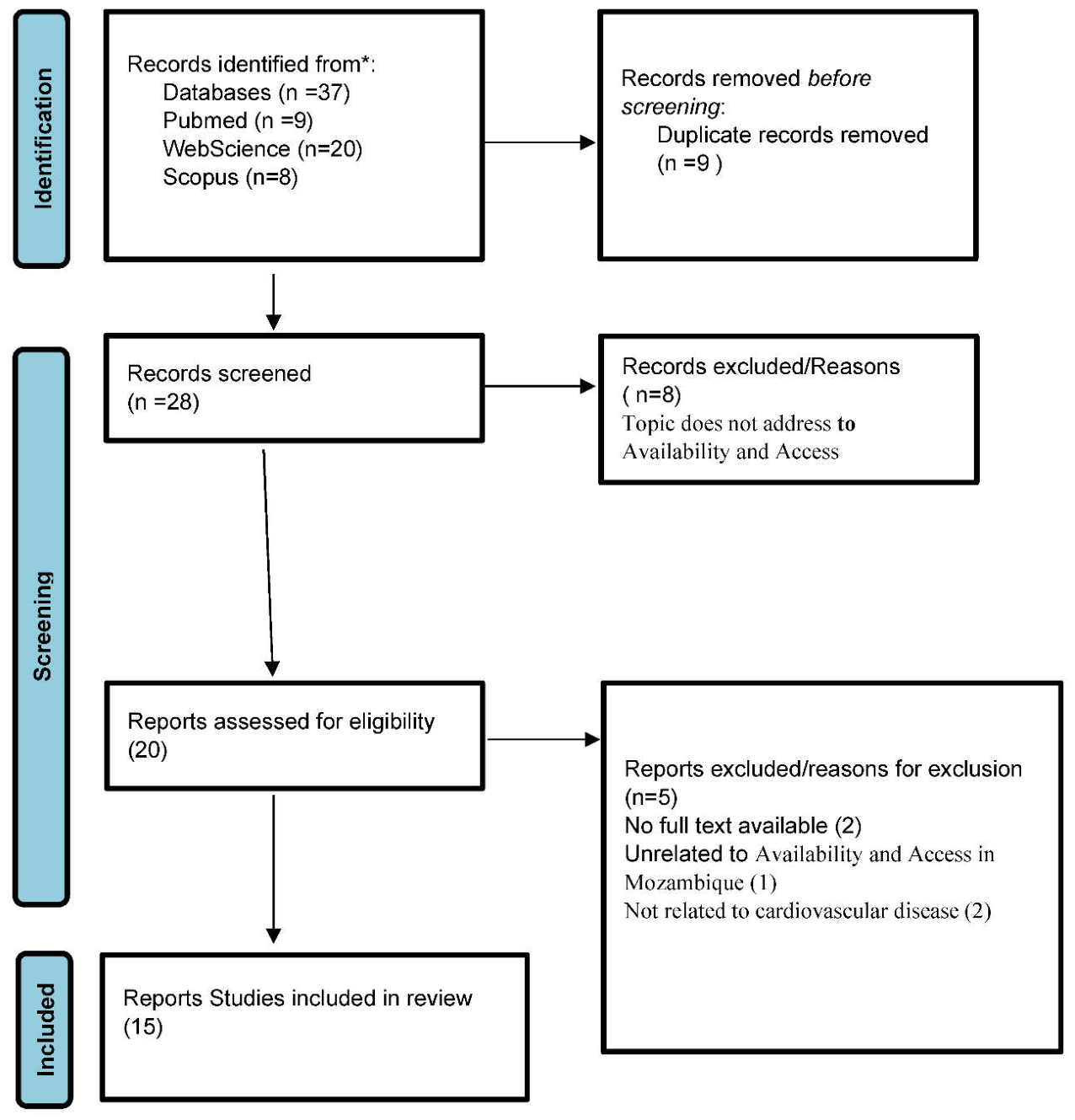

Table 1.
Research strategies.
| Data base | Research strategies |
|---|---|
| Pubmed | (“Cardiovascular Agents”[Mesh] OR “Cardiovascular Diseases/drug therapy”[Mesh] OR cardiovascular medicine[tiab] OR cardiovascular medicines[tiab] OR cardiovascular medication[tiab] OR cardiovascular medications[tiab] OR cardiovascular drug[tiab] OR cardiovascular drugs[tiab] OR cardiovascular therapy[tiab] OR cardiovascular therapies[tiab] OR cardiac medicine[tiab] OR cardiac medicines[tiab] OR cardiac medication[tiab] OR cardiac medications[tiab] OR cardiac drug[tiab] OR cardiac drugs[tiab] OR antihypertensive*[tiab] OR blood pressure lowering[tiab] OR statin*[tiab] OR lipid lowering[tiab] OR antiplatelet*[tiab] OR anticoagulant*[tiab]) AND (“Health Services Accessibility”[Mesh] OR availability[tiab] OR available[tiab] OR medicine availability[tiab] OR medication availability[tiab] OR drug availability[tiab] OR stockout*[tiab] OR stock out[tiab] OR stock outs[tiab] OR shortage*[tiab] OR medicine shortage[tiab] OR medicine shortages[tiab] OR drug shortage[tiab] OR drug shortages[tiab] OR access[tiab] OR accessibility[tiab] OR access to medicine[tiab] OR access to medicines[tiab] OR access to medication[tiab] OR access to medications[tiab] OR affordability[tiab] OR affordable[tiab] OR medicine affordability[tiab] OR drug affordability[tiab] OR medicine price[tiab] OR medicine prices[tiab] OR drug price[tiab] OR drug prices[tiab] OR medicine cost[tiab] OR medicine costs[tiab] OR drug cost[tiab] OR drug costs[tiab] OR out-of-pocket[tiab]) AND(“Mozambique”[Mesh] OR Mozambique[tiab] OR Mozambican*[tiab]) |
| Scopus | TITLE-ABS-KEY( “cardiovascular agent*” OR “cardiovascular medicine*” OR “cardiovascular medication*” OR “cardiovascular drug*” OR “cardiovascular therap*” OR “cardiac medicine*” OR “cardiac medication*” OR “cardiac drug*” OR “antihypertensive*” OR “blood pressure lowering” OR statin* OR “lipid lowering” OR antiplatelet* OR anticoagulant*) AND TITLE-ABS-KEY(availability OR available OR “medicine availability” OR “medication availability” OR “drug availability” OR stockout* OR “stock out” OR “stock outs” OR shortage* OR “medicine shortage*” OR “drug shortage*” OR access OR accessibility OR “access to medicine*” OR “access to medication*” OR affordability OR affordable OR “medicine affordability” OR “drug affordability” OR “medicine price*” OR “drug price*” OR “medicine cost*” OR “drug cost*” OR “out-of-pocket”)AND TITLE-ABS-KEY(Mozambique OR Mozambican*) |
| Webscience | TS=( “cardiovascular agent*” OR “cardiovascular medicine*” OR “cardiovascular medication*” OR “cardiovascular drug*” OR “cardiovascular therap*” OR “cardiac medicine*” OR “cardiac medication*” OR “cardiac drug*” OR antihypertensive* OR “blood pressure lowering” OR statin* OR “lipid lowering” OR antiplatelet* OR anticoagulant*)AND TS=( availability OR available OR “medicine availability” OR “medication availability” OR”drug availability” OR stockout* OR “stock out” OR “stock outs” OR shortage* OR “medicine shortage*” OR “drug shortage*” OR access OR accessibility OR “access to medicine*” OR “access to medication*” OR affordability OR affordable OR “medicine affordability” OR “drug affordability” OR “medicine price*” OR “drug price*” OR “medicine cost*” OR “drug cost*” OR “out-of-pocket”)AND TS=(Mozambique OR Mozambican*) |
Table 2.
Characteristics and key findings of studies assessing the availability and access to cardiovascular medicines in Mozambique.
Table 2.
Characteristics and key findings of studies assessing the availability and access to cardiovascular medicines in Mozambique.
| Title of study | Author & Year | Location | Disease | Setting/Sector | Study design | Cardiovascular medicines | Availability | Price/Affordability | Access barriers | Main findings |
|---|---|---|---|---|---|---|---|---|---|---|
| Access to Essential Medicines and Diagnostic Tests for Cardiovascular Diseases in Maputo City, Mozambique [1] | Neusa et al., 2023 | Maputo City | Cardiovascular Diseases, Hypertension,Rheumatic Heart Disease | Hospitals and Retail pharmacies | Cross-sectional | Amlodipine, Enalapril, Furosemide, Atenolol, Bisoprolol, Losartan, Spironolactone, Digoxin, Nitrates, ASA, Clopidogrel, Statins, Penicillins, Insulins) | EMs mean availability 20.7% vs 52.6% . |
In public sector:5 MZN ($0.08 USD) In Private sector median Price Ratio for CV lowest-priced generic (LPG) was 4.51 times the International Reference Price (IRP). Affordability:private sector costs 14.0 to 17.8 days’ wages per month |
Supply chain deficiencies, and absence of diagnostic reagents in public laboratories | Access to cardiovascular medicines and diagnostics in Maputo is severely limited, failing to reach the WHO 80% target in both public and private sectors. Public hospitals lack essential CV diagnostic tests (like troponin, lipid profiles, HbA1c, ECG) due to missing reagents. High private sector prices make long-term primary and secondary CVD prevention catastrophic/unaffordable for low-income workers. |
| May Measurement Month 2022: an analysis of blood pressure screening results from Mozambique [11] | Jessen et al., 2022 | Zambézia ( Quelimane) Sofala ( Beira), and Maputo city | Hypertension | Community screening | Cross-sectional | Antihypertensive medications | Not reported | Not reported | Low awareness, limited access to care/medications, lack of routine follow-up, and absence of prior blood pressure measurements | Out of 8,276 adults screened, 30.0% (2,486) had hypertension. Among hypertensives, 45.1% were aware, 29.6% were on antihypertensive medication, and only 11.5% had controlled BP overall (38.8% control among those on medication). Women had significantly higher awareness, treatment, and control rates than men. 26.6% of all screened participants had untreated or inadequately treated hypertension. |
| Use of traditional medicine and control of hypertension in 12 African countries [17] | Lassale et al.,2022 | Maputo | Hypertension | Hospital | Cross-sectional | Calcium Channel Blockers, Diuretics, ACE Inhibitors, Beta-blockers, ARBs, Central Antihypertensives, Vasodilators | Not reported | High cost of conventional medications | Financial barriers (inability to afford conventional drugs), poor treatment adherence, and cultural reliance on traditional healers | Overall traditional medicine (TM) use was Mozambique was ~14%. TM users were more likely to be male, live in rural areas, have poor treatment adherence, and miss conventional treatment due to financial cost. TM use was independently associated with significantly higher SBP (+3.87 mmHg) and DBP (+1.75 mmHg), greater odds of severe hypertension (OR = 1.34), and higher odds of hypertension complications (OR = 1.27), particularly renal complications (OR = 1.57) |
| Hypertension in a resource-limited setting: Poor Outcomes on Short-term Follow-up in an Urban Hospital in Maputo, Mozambique [10] | Naisa Manafe et al.,2019 | Maputo City | Arterial Hypertension, Hypertensive Target Organ Damage | Hospital | Prospective descriptive | Thiazide diuretics (Hydrochlorothiazide with Amiloride), Calcium Channel Blockers (Nifedipine, Amlodipine), ACE Inhibitors (Enalapril), Beta-blockers | Not reported | Low insurance coverage and erratic family income lead to financial | Low socio-economic profile, high adult illiteracy, lack of fixed income/unemployment, low health insurance coverage, and under-resourced health services |
Among 116 hypertensive patients (mean age 57.5 years; 70% female), 95.7% (111) had target organ damage (TOD) at baseline. Most common TOD: Left atrial enlargement (84.5%), left ventricular hypertrophy (50.4%), hypertensive retinopathy (26.3%), and chronic kidney disease (23.3%). High prevalence of multimorbidity: dyslipidemia (54.1%), obesity (42.5%), anemia (26.7%), HIV infection (19.0%), and diabetes (19.8%). At 6-month follow-up, blood pressure control was achieved in only 25.3% of patients; hospitalization occurred in 10.3% and death in 8.6%. . |
| Assessment of care provision for hypertension at the emergency Department of an Urban Hospital in Mozambique [2] | Neusa et al., 2019 | Maputo City | Arterial Hypertension | Hospital | Pragmatic and Prospective | Nifedipine, Enalapril, Methyldopa, Furosemide, Spironolactone, Amlodipine, Bisoprolol, Atenolol, Irbesartan, Lisinopril, Hydrochlorothiazide + Amiloride | 28% | Hospital care/prescription fee is $0.08 USD. If bought at private pharmacies due to stock-outs, buying a single drug costs 0.5% to 11.2% of the minimum monthly wage (0.2 to 3.4 workdays). Nifedipine was the least affordable (11.2% minimum wage / 3.4 workdays) |
Stock-outs of essential drugs and rapid lab tests, absence of clinical management protocols/algorithms, non-standardized patient flow, and financial barriers for out-of-pocket drug purchases. | Uncovered major gaps in emergency facility readiness, including non-standardized care flow, lack of risk stratification protocols, and severe stock-outs of essential medicines. High proportion of severe hypertension cases presenting directly to the ED. High financial burden placed on poor families when essential medications must be purchased out-of-pocket in private pharmacies |
| Blood pressure screening in Mozambique: the May Measurement Month 2017 project—Sub-Saharan Africa [18] | Jessen Neusa et al., 2017 | Maputo City | Hypertension | Community screening | Cross-sectional | Antihypertensive medications | Not reported | Not reported | High proportion of undiagnosed cases, low community awareness, limited availability of antihypertensive drugs in public health facilities, and lack of routine population screening programs | Out of 4,454 individuals screened (mean age 39.0 years), 31.1% (1,371) were hypertensive. 26.6% (1,099) of participants not taking medication had untreated hypertension. Among those taking antihypertensive medication (6.1% of the total sample), 61.6% (166) had uncontrolled blood pressure. Significantly higher blood pressure readings were observed in individuals with diabetes, a previous history of stroke, or myocardial infarction |
| Community health worker knowledge and management of pre-eclampsia in southern Mozambique [19] | Boene et al., 2016 | Gaza (Chibuto, Bilene, Xai-Xai) Maputo(Magude, Manhiça) |
Pre-eclampsia, eclampsia, and hypertensive disorders | Community level | Not reported | Oral antihypertensives such as Methyldopa and Anticonvulsants Injectables such as Magnesium Sulphate |
Not reported | Not reported | Long distances lack of transportation Severe shortage of doctors lack of screening tools Knowledge/Training Reliance on traditional methods and herbal treatment |
93% of CHWs were aware of pregnancy complications in general, but only 41% could describe signs and symptoms of hypertension. |
| Cardiovascular risk in Mozambique: who should be treated for hypertension?[5] | Damasceno et al.,2013 | Nationwide (11 strata/provinces of Mozambique) | Cardiovascular Disease, Hypertension | Community level | Cross-sectional | Hydrochlorothiazide + Amiloride; Amlodipine and Atenolol |
Not reported | Therapies brings the national budget requirement to ~$11 million USD, making full pharmacological coverage | High drug costs relative to national health budgets, lack of public awareness, and urban/rural economic disparities | SBP/DBP ≥140/90 mmHg was present in nearly 40% of untreated adults aged 40–64, but less than 4% had a 10-year total cardiovascular risk ≥20%. Under WHO total cardiovascular risk guidelines, only 19.8% of the population aged 40–64 were eligible for pharmacological treatment (all had BP ≥ 160/100 mmHg). Using a total cardiovascular risk approach reduces the number of eligible patients by half compared to treating all BP ≥ 140/90 mmHg, enabling more efficient use of limited health resources |
| Low prevalence of hypertension with pharmacological treatments and associated factors [20] | Gama et al.,2013 | Nationwide (Mozambique) | Arterial Hypertension | Population level | Cross-sectional | Methyldopa, Reserpine, Diuretics, Beta-blockers, ACE inhibitors | Not reported | unaffordable ACE inhibitors | Lack of diagnosis, side effects of available drugs, lack of financial resources, and poor supply of essential medicines in primary healthcare units | Weighted prevalence of hypertension was 33.1%, but only 15.1% of hypertensives were aware of their condition. Most hypertensive subjects (92.3%) and nearly half (49.1%) of those aware were not receiving pharmacological treatment. Untreated hypertension among the aware was significantly higher in men (PR = 1.61). The lack of pharmacological treatment could not be explained using alternative treatments (herbal/traditional medicine) or non-pharmacological management. |
| Screening for rheumatic heart disease: evaluation of a simplified echocardiography-based approach [21] | Mariana Mirabel et al., 2012 | Maputo City and suburban area | Rheumatic Heart Disease | Schools and Hospital | Cross-sectional | Penicillin | Not reported | Not reported | Scarcity of specialist expertise/qualified personnel in remote locations and high cost/unaffordability of invasive treatments such as cardiac surgery | Among 2,170 screened school children (aged 6–17 years), reference criteria confirmed 15 definite RHD cases, yielding an echocardiographic prevalence of 6.9 per 1,000. Clinical auscultation detected only 5 cases (2.3 per 1,000). A simplified single criterion (mitral regurgitation jet length ≥2 cm) detected 11 confirmed cases (prevalence of 5.1 per 1,000). Compared to complex reference criteria, the simplified single-measurement approach demonstrated 73% sensitivity, 92% positive predictive value, and high inter-observer reproducibility (94.4%). |
| Challenges on the management of congenital heart disease in developing countries [22] | Mocumbi et al.,2011 | Maputo City | Congenital Heart Disease | Hospital | Retrospective | Medical therapy for pre-operative management | Not reported | Not reported | Delayed referral, lack of diagnostic tools/personnel in maternity/pediatric wards, poverty, lack of parental health education, distance/travel burdens, and lack of prosthetic materials. | Out of 534 CHD patients (median age at diagnosis: 4 years), only 52.8% were diagnosed before age 2, and 29.0% presented with severe complications (polycythemia, heart failure, fixed pulmonary hypertension/Eisenmenger syndrome). Most common defects: Left-to-right shunts (66.3%, mainly VSD) and Tetralogy of Fallot (15.9%). 196 patients underwent surgery (mean age 8 ± 10 years; 94.4% corrective, 5.6% palliative); 30-day post-operative mortality was 4.0%. Surgery was contraindicated in 95 patients (mainly due to fixed pulmonary hypertension [Eisenmenger] or severe malnutrition), and 10% were lost to follow-up prior to surgery. |
| Hypertension Prevalence, Awareness, Treatment, and Control in Mozambique: Urban/Rural Gap During Epidemiological Transition [23] | Damasceno et al., 2009 | Nationwide (Mozambique, urban vs rural areas) | Hypertension | Community level |
Cross-sectional | Hydrochlorothiazide and Methyldopa; Beta-blockers and ACEIs | Not reported | Not reported | Deficient sanitary network coverage, scarce human resources, high proportion of people who never measured BP , and limited drug options/stock-outs in rural primary care. | National hypertension prevalence was 33.1% (women: 31.2%, men: 35.7%). Awareness was extremely low at 14.8% (women: 18.4%, men: 10.6%). Pharmacological treatment among aware was 51.9% (women: 61.1%, men: 33.3%), corresponding to 7.7% of all hypertensives. BP control among treated was 39.9% (3.1% of all hypertensives). Hypertension and awareness were significantly higher in urban areas among women (OR = 2.0 and 4.3, respectively), whereas rural men had very low control rates (7.7%). |
| Anticoagulation control among patients on vitamin K antagonists in nine countries in Sub-Saharan Africa [24] | Mwita et al., 2024 | Mozambique (Maputo) | Venous Thromboembolism, Prosthetic Heart Valves, Atrial Fibrillation/Flutter | Hospital | Retrospective | Vitamin K Antagonists: Warfarin, Acenocoumarol, Phenprocoumon | Not reported | VKAs were required for 52.4% | Out-of-pocket costs for INR tests and drugs, long travel distances to centralized clinics, low frequency of INR monitoring, and lack of dedicated anticoagulation clinics | 48.5% of INR test results were sub-therapeutic, 34.1% therapeutic, and 17.4% supra-therapeutic. Median Time in Therapeutic Range (TTR) was very low at 35.8%. Only 19.2% of patients achieved optimal anticoagulation control (TTR ≥ 65%). Universal health coverage significantly increased the odds of achieving optimal anticoagulation control (aOR = 1.79) compared to out-of-pocket payments. |
| Hypertension in Mozambique: trends between 2005 and 2015[9] | Neusa Jessen et al.2018 | Nationwide (Mozambique) | Arterial Hypertension | Population level | Cross-sectional | Antihypertensive medications | Not reported | Not reported | Poor public health facility network coverage, scarcity of health professionals, frequent drug stock ruptures, and lack of access to essential medicines | Hypertension prevalence increased significantly from 33.1% to 38.9% (P = 0.048). Mean Diastolic BP increased significantly from 78.2 mmHg to 82.5 mmHg (P < 0.001). Awareness (14.8% vs 14.5%) and treatment among aware (51.9% vs 50.1%) remained unchanged and critically low over the decade. Control among treated showed a non-significant increase (39.9% to 44.5%). In adolescents and young adults (aged 15–24 years), hypertension prevalence was already high at 13.1% |
| An Epidemiological Study of Stroke Hospitalizations in Maputo, Mozambique: A High Burden of Disease in a Resource-Poor Country [25] | Albertino Damasceno et al.2010 | Maputo City | Cerebrovascular Disease / Acute Stroke | Hospital | Prospective | Antihypertensive therapies | Not reported | Not reported | Problematic patient transportation, lack of dedicated stroke units, delay in hospital presentation, reliance on traditional healers initially, and lack of long-term care or palliative institutions. |
Incident stroke events were captured (81.6% first-ever; 42.0% ischemic, 36.1% intracerebral hemorrhage). Age-adjusted annual incidence rate was 260.1 per 100,000 aged ≥25 years. Pre-existing hypertension was present in 86.2% of patients overall and in almost all hemorrhagic stroke cases. In-hospital mortality was 33.3%, and 28-day case-fatality reached 49.6% (72.3% for hemorrhagic stroke). At 28 days follow-up, 64.4% of surviving patients suffered from moderate-to-severe disability. |
Disclaimer/Publisher’s Note: The statements, opinions and data contained in all publications are solely those of the individual author(s) and contributor(s) and not of MDPI and/or the editor(s). MDPI and/or the editor(s) disclaim responsibility for any injury to people or property resulting from any ideas, methods, instructions or products referred to in the content. |
© 2026 by the authors. Licensee MDPI, Basel, Switzerland. This article is an open access article distributed under the terms and conditions of the Creative Commons Attribution (CC BY) license (http://creativecommons.org/licenses/by/4.0/).
Copyright: This open access article is published under a Creative Commons CC BY 4.0 license, which permit the free download, distribution, and reuse, provided that the author and preprint are cited in any reuse.