
Submitted:
19 October 2026
Posted:
20 October 2026
You are already at the latest version
Abstract
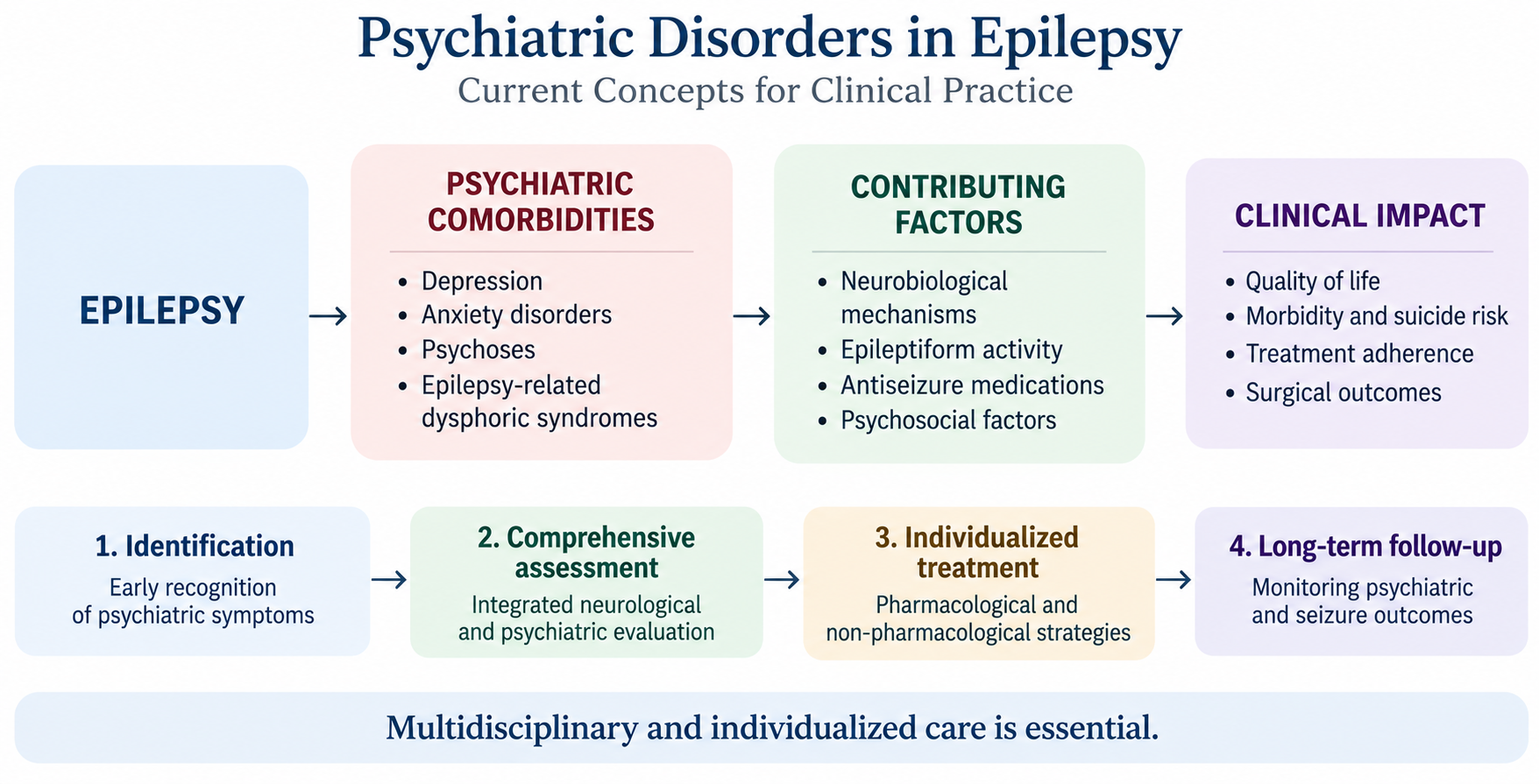
Psychiatric disorders are prevalent in epilepsy, adversely affecting quality of life and clinical outcomes through complex, potentially bidirectional mechanisms. To review the clinical manifestations, pathophysiology, diagnostic challenges, and therapeutic implications of psychiatric comorbidities in epilepsy. This narrative review synthesizes foundational and contemporary literature addressing mood and anxiety disorders, psychoses, dysphoric syndromes, antiseizure medications, biomarkers, and epilepsy surgery. Depression and anxiety are major comorbidities, with evidence supporting bidirectional relationships between depression and epilepsy. Ictal, postictal, and interictal psychiatric manifestations require differentiation from primary psychiatric disorders. Forced normalization and interictal dysphoric disorder remain clinically relevant but incompletely understood. Antiseizure medications may produce beneficial or adverse psychiatric effects. Emerging biomarkers suggest shared neurobiological mechanisms but lack sufficient clinical validation. Psychiatric comorbidities may influence surgical outcomes, while postoperative psychiatric symptoms can occur despite seizure control. Psychiatric assessment should be integrated throughout epilepsy care, including medication selection, presurgical evaluation, and postoperative follow-up. Individualized, multidisciplinary management is essential to improve psychiatric outcomes and quality of life.
Keywords:
epilepsy
; psychiatric comorbidity
; depression
Copyright: This open access article is published under a Creative Commons CC BY 4.0 license, which permit the free download, distribution, and reuse, provided that the author and preprint are cited in any reuse.