

Submitted:
17 October 2026
Posted:
20 October 2026
You are already at the latest version
Abstract
Bruxism is a repetitive masticatory muscle activity occurring during sleep or wakefulness, yet evidence specific to older adults remains dispersed across disciplines. This scoping review mapped the evidence on bruxism in adults aged ≥60 years regarding conceptualisation, assessment, epidemiology, associated factors, and management. Following PRISMA-ScR guidance, PubMed, CINAHL, the Cochrane Library, and Web of Science were searched for primary studies involving adults aged ≥60 years or reporting separable data for this age group. Two reviewers screened records independently. Of 1227 records identified, 1045 were screened, 80 full texts were assessed, and 34 studies were included. Most were observational studies (64.7%) or case-based reports (32.4%), and most used an unspecified bruxism construct (64.7%). Assessment was predominantly non-instrumental; only six studies used polysomnography or electromyography. Reported associated factors included temporomandibular disorders, orofacial pain, sleep disorders, neurodegenerative disease, stroke, medication exposure, tooth wear, and prosthetic complications. Management evidence was scarce and largely case-based. Evidence on bruxism in later life is fragmented and methodologically heterogeneous. Future studies should report older-adult data separately, distinguish sleep from awake bruxism, and apply standardised assessment frameworks.
Keywords:
bruxism
; sleep bruxism
; awake bruxism
; older adults
; aged
; orofacial myology
; temporomandibular disorders
; sleep disorders
; prosthodontics
; scoping review
1. Introduction
Bruxism is currently understood as a repetitive masticatory muscle activity characterized by clenching or grinding of the teeth and/or by bracing or thrusting of the mandible (Lobbezoo et al., 2018). Contemporary consensus statements emphasize that bruxism should be specified according to its circadian manifestation, most commonly as sleep bruxism or awake bruxism, and should not automatically be framed as a disorder. Rather, it may represent a behavior that can be harmless in some individuals, a risk factor for certain clinical consequences, or, in specific contexts, a potentially protective phenomenon (Lobbezoo et al., 2018; Manfredini, Ahlberg, & Lobbezoo, 2022). This conceptual shift has important implications for research and clinical practice, particularly because bruxism may be identified through different levels of assessment certainty, ranging from self-report and clinical examination to instrumental approaches such as electromyography and polysomnography (Lobbezoo et al., 2018).
The assessment of bruxism remains challenging because no single method captures all relevant dimensions of the condition. Self-report and clinical signs are widely used because they are accessible and feasible in large samples, but they may be affected by recall bias, limited awareness of sleep behaviors, and the difficulty of distinguishing active bruxism from historical dental wear (Lobbezoo et al., 2018; Manfredini et al., 2024). Instrumental methods, particularly electromyography and polysomnography, provide more objective information but are less accessible, more costly, and often restricted to smaller or highly selected samples. The Standardised Tool for the Assessment of Bruxism was developed to support a multidimensional evaluation of bruxism status, comorbid conditions, etiology, and consequences, reflecting the need to move beyond isolated diagnostic indicators (Manfredini et al., 2024).
Bruxism is clinically relevant because it intersects with several domains that are central to orofacial myology and myofunctional therapy, including oral motor behavior, dental and prosthodontic outcomes, temporomandibular disorders, orofacial pain, sleep-related breathing disorders, airway function, neurological disease, medication exposure, and behavioral or psychosocial factors. Recent literature has increasingly approached sleep bruxism as part of a broader sleep medicine and dental sleep medicine context, particularly in relation to obstructive sleep apnea and gastroesophageal reflux disease (Kuang et al., 2022; Zamzam et al., 2026). However, the relationship between sleep bruxism and obstructive sleep apnea remains debated, with evidence varying according to population, assessment method, and the way sleep bruxism and respiratory events are measured (Kuang et al., 2022; Zamzam et al., 2026).
This interdisciplinary perspective is relevant to orofacial myology and myofunctional therapy because bruxism involves masticatory muscle activity and may coexist with altered orofacial function, pain, oral habits, airway-related complaints, and sleep-related conditions. Recent IJOM publications addressing orofacial myofunctional therapy in obstructive sleep apnea illustrate the journal’s broader interest in the interface between orofacial function, sleep, behaviour, and multidisciplinary care (Hansen et al., 2025; Hrubos-Strøm et al., 2025).
The epidemiology of bruxism in adults is highly variable. Previous reviews have reported wide prevalence estimates, partly because of differences in populations, assessment methods, terminology, and whether sleep bruxism, awake bruxism, or unspecified bruxism was assessed (Manfredini et al., 2013). More recent studies continue to show substantial heterogeneity across adult populations, with prevalence varying according to age group, geographical region, and assessment method (Zamzam et al., 2026). This variability complicates interpretation and makes it difficult to determine how bruxism behaves across the life course.
Older adults represent a particularly important but under-mapped population. Aging is accompanied by changes in dentition, oral rehabilitation needs, prosthetic and implant-related risks, muscle function, sleep architecture, neurological health, medication exposure, pain profiles, and multimorbidity. In this population, bruxism may be associated not only with tooth wear or temporomandibular symptoms, but also with prosthodontic complications, implant outcomes, neurodegenerative disorders, stroke, dyskinesia, dysphagia, sleep disorders, gastroesophageal reflux, and adverse drug reactions. Recent mixed-age or older-leaning studies have examined bruxism in relation to marginal bone loss around implants, trabecular bone density changes around implant-supported complete dentures, prosthetic complications in implant fixed complete dental prostheses, and adverse-event signals related to pharmacological exposure including selective serotonin reuptake inhibitors (Abdul Rahim et al., 2023; Ayele et al., 2023; Chochlidakis et al., 2020; Gerhardt et al., 2019; Shu et al., 2025).
Despite this clinical relevance, evidence on bruxism in older adults is often difficult to interpret. Many studies include broad adult age ranges but do not report data separately for adults aged 60 years and over. Others use mean age as an indicator of an older sample while still including younger participants, making age-specific extraction uncertain. In addition, some studies evaluate tooth wear, attrition, clenching, oral parafunction, or masticatory muscle activity without explicitly conceptualizing these findings as bruxism. These inconsistencies limit the ability to synthesize evidence and may obscure the specific characteristics, consequences, and management needs of older adults.
There is also a need to distinguish between different clinical contexts in which bruxism is identified in later life. In community or epidemiological samples, bruxism may be assessed as a prevalent oral behavior or sleep-related condition. In dental and prosthodontic settings, it may be considered in relation to wear, restorations, prostheses, implants, and complications. In neurological and geriatric contexts, it may appear as secondary bruxism associated with Parkinson’s disease, dementia, stroke, dystonia, dyskinesia, or medication exposure. A recent systematic review focusing on neurodegenerative disorders in older adults supports the growing interest in this area, but the broader evidence landscape across assessment, epidemiology, associated factors, manifestations, and management remains fragmented (Ashwin et al., 2025).
A scoping review is therefore appropriate because the available evidence is heterogeneous in design, terminology, populations, and clinical focus. Rather than estimating a single pooled prevalence or intervention effect, this approach allows the mapping of how bruxism has been conceptualized, assessed, reported, and managed in adults aged 60 years and over. It also enables identification of knowledge gaps, methodological limitations, and opportunities for interdisciplinary research and practice across dentistry, speech-language pathology, orofacial myology, sleep medicine, neurology, geriatrics, rehabilitation, and prosthodontics.
Accordingly, this scoping review aims to map the extent, nature, and characteristics of the available evidence on bruxism in adults aged ≥60 years, with emphasis on conceptualisation, assessment approaches, epidemiological patterns, associated factors, clinical consequences, and management approaches. By organizing the evidence in this way, the review seeks to clarify what is currently known, where evidence remains uncertain, and how future studies can better address bruxism in older adults using age-specific, standardized, and interdisciplinary approaches.
2. Materials and Methods
2.1. Study Design
This scoping review was conducted to map the extent, nature, and characteristics of the available evidence on bruxism in adults aged 60 years and over. The review was designed and reported in accordance with the Preferred Reporting Items for Systematic Reviews and Meta-Analyses extension for Scoping Reviews (PRISMA-ScR) (Tricco et al., 2018). The methodological approach was based on the Population-Concept-Context framework.
The review focused on five evidence domains: conceptualisation and definitions of bruxism; assessment approaches; epidemiological patterns; associated factors and co-occurring conditions; and management approaches and clinical implications.
2.2. Protocol and Registration
The screening procedure (independent dual screening with senior adjudication of conflicts) was agreed among the review team before screening began (July 2026). The review protocol, including the eligibility criteria and the Rayyan screening manual, was registered retrospectively on the Open Science Framework (OSF) after completion of data charting. The operational procedures for screening, eligibility assessment, conflict resolution, and classification of evidence were documented in a Rayyan screening manual developed for this review. This manual defined the project title, PCC framework, inclusion and exclusion criteria, reviewer roles, decision rules, standardised exclusion reasons, and recommended Rayyan labels.
The protocol is available at: https://doi.org/10.17605/OSF.IO/HDY3K.
2.3. Eligibility Criteria
Eligibility criteria were defined according to the Population–Concept–Context framework.
2.3.1. Population
Eligible studies included adults aged 60 years or older. Studies with mixed-age adult samples were eligible only when data for participants aged 60 years or over were separately reported or could be unambiguously extracted.
2.3.2. Concept
The concept of interest was bruxism, including sleep bruxism, awake bruxism, unspecified or combined bruxism, and manifestations such as tooth grinding, tooth clenching, jaw clenching, or rhythmic masticatory muscle activity when these were explicitly conceptualised by the authors as bruxism. Studies were excluded when they assessed tooth wear, attrition, oral parafunction, jaw movement, or masticatory muscle activity without explicitly relating these measures to bruxism.
2.3.3. Context
Studies were eligible regardless of country, healthcare system, or setting. Community, dental, prosthodontic, oral medicine, sleep medicine, neurological, geriatric, institutional, hospital, rehabilitation, and case-based clinical contexts were considered eligible.
2.3.4. Types of Sources
Primary empirical studies were eligible, including cross-sectional, cohort, case-control, longitudinal, assessment-focused studies, randomised or non-randomised intervention studies, qualitative and mixed-methods studies, case series, and relevant case reports. Reviews, editorials, commentaries, expert opinions, position papers, protocols without results, letters without original data, duplicate records, and secondary reports without unique eligible data were excluded. No restrictions were applied regarding publication date, country, or language at the search stage.
2.4. Information Sources
Electronic searches were conducted in four databases: PubMed, CINAHL via EBSCOhost, the Cochrane Library, and Web of Science Core Collection. The search strategy combined controlled vocabulary and free-text terms related to bruxism and older adults. The database-specific yields were: PubMed, 902 records; CINAHL via EBSCOhost, 164 records; Cochrane Library, 7 records; and Web of Science Core Collection, 154 records. The final searches were performed on 5 July 2026.
2.5. Search Strategy
Search strategies were adapted to the syntax and indexing structure of each database. The search combined terms for bruxism with terms for older adults. The PubMed search strategy was as follows:
("Bruxism"[Mesh] OR "Sleep Bruxism"[Mesh] OR bruxism[tiab] OR bruxist*[tiab] OR "sleep bruxism"[tiab] OR "awake bruxism"[tiab] OR "nocturnal bruxism"[tiab] OR "daytime bruxism"[tiab] OR "sleep-related bruxism"[tiab] OR "teeth grinding"[tiab] OR "tooth grinding"[tiab] OR "teeth clenching"[tiab] OR "tooth clenching"[tiab] OR "jaw clenching"[tiab] OR "rhythmic masticatory muscle activity"[tiab] OR RMMA[tiab])AND("Aged"[Mesh] OR "Aged, 80 and over"[Mesh] OR "Frail Elderly"[Mesh] OR aged[tiab] OR elderly[tiab] OR elder*[tiab] OR "older adult"[tiab] OR "older adults"[tiab] OR "older person"[tiab] OR "older persons"[tiab] OR "older people"[tiab] OR "older individual"[tiab] OR "older individuals"[tiab] OR "older patient"[tiab] OR "older patients"[tiab] OR "older population"[tiab] OR "older populations"[tiab] OR geriatric*[tiab] OR gerontol*[tiab] OR senior*[tiab] OR aging[tiab] OR ageing[tiab] OR "old age"[tiab] OR "later life"[tiab] OR octogenarian*[tiab] OR nonagenarian*[tiab])
The full search strategies for all databases are provided in Supplementary File S1.
2.6. Selection of Sources of Evidence
All retrieved records were imported into Rayyan for screening. Duplicates were identified using automated duplicate detection and manual verification. One complete bibliographic record was retained for each unique report.
Title and abstract screening were conducted independently by two reviewers. At this stage, records were classified as include, exclude, or maybe. The default rule was to retain records whenever eligibility remained uncertain. Records were excluded at title and abstract stage only when they clearly failed the eligibility criteria.
Disagreements, conflicts, and unresolved decisions were reviewed through consensus procedures. When necessary, senior adjudication was performed by Daniela Oliveira Vieira and Cláudia Barbosa. A reviewer agreement analysis was calculated before consensus resolution.
Full texts were retrieved for records considered potentially eligible. Full-text eligibility was assessed according to the predefined PCC criteria. Each excluded full-text report received one primary exclusion reason. The standardized exclusion reasons were wrong population, mixed-age data not separable, insufficient age information, wrong concept, incidental bruxism mention, proxy only/no explicit bruxism construct, wrong publication type/no primary data, duplicate/no unique data, and full text unavailable or insufficient.
After consensus resolution, records provisionally retained for full-text retrieval were rechecked against the predefined PCC criteria, particularly the requirement for adults aged ≥60 years and an explicit bruxism construct. This step was used to ensure consistency before full-text retrieval and did not involve exclusion based on study findings or direction of results.
2.7. Data Charting Process
A structured data charting form was developed to extract relevant information from the included sources of evidence. The form was designed according to the review objectives and the five predefined evidence domains.
Data charting was performed using a calibrated extraction table. The extraction form was tested and refined during the initial data charting process to ensure that it captured the heterogeneity of study designs, populations, bruxism definitions, assessment methods, and clinical contexts.
Extracted data were reviewed for consistency. Unclear or ambiguous data items were discussed by the review team. When necessary, decisions were documented to ensure consistency across sources.
2.8. Data Items
The following data items were charted from each included source:
- bibliographic information: author, year, title, journal, and country;
- study design, setting, and clinical context;
- sample size and participant characteristics, including age and sex;
- eligibility of the ≥60-year population;
- type of bruxism: sleep bruxism, awake bruxism, unspecified/combined bruxism, or secondary bruxism;
- bruxism definition or conceptualisation used by the authors;
- assessment method, including whether assessment was self-reported, clinical, instrumental, or multimethod;
- prevalence or frequency data, when available;
- associated factors and co-occurring conditions;
- clinical manifestations and consequences;
- management or intervention approaches;
- key findings relevant to the review question;
- evidence domain or domains addressed by the study;
- methodological limitations noted by study authors or identified during charting.
2.9. Critical Appraisal of Individual Sources of Evidence
Critical appraisal of individual sources of evidence was not conducted. This decision was consistent with the purpose of a scoping review, which was to map the available evidence rather than to assess intervention effectiveness or produce pooled estimates based on risk of bias. The PRISMA-ScR checklist allows this item to be reported as not applicable when critical appraisal was not performed.
2.10. Synthesis of Results
A descriptive and narrative synthesis was conducted. The included studies were summarised according to study characteristics, population, type of bruxism, assessment approach, and evidence domain. Descriptive frequencies were used to summarise study designs, settings, bruxism types, and assessment methods where appropriate. Narrative synthesis was used to map the nature of the evidence, identify recurring themes, and highlight methodological gaps. No meta-analysis was planned or conducted.
3. Results
3.1. Study Selection
A total of 1227 records were identified through database searching: 902 from PubMed, 164 from CINAHL via EBSCOhost, 7 from the Cochrane Library, and 154 from Web of Science Core Collection. After removal of 123 duplicate records and 59 incomplete bibliographic records removed during pre-screening data cleaning, 1045 records were screened by title and abstract. Following independent title/abstract screening and consensus resolution, records provisionally retained for full-text assessment were rechecked against the predefined age and bruxism-concept criteria. This refinement step was performed before full-text retrieval to exclude records that clearly failed the PCC criteria. After this process, 962 records were excluded and 83 reports were sought for retrieval.
Of these, three reports could not be retrieved, and 80 reports were assessed for eligibility in full text. Forty-six reports were excluded after full-text assessment, mainly because they included mixed-age adult samples without separately extractable data for adults aged 60 years or over. Overall, 34 unique studies were included in the scoping review.
Before consensus, inter-reviewer agreement was calculated for 1008 records that had paired independent reviewer decisions. Agreement was observed in 823 records, corresponding to 81.65% agreement and a Cohen’s kappa of 0.62. Records without paired independent decisions, such as administratively removed or non-eligible records identified during project cleaning, were not included in the agreement calculation. Disagreements were resolved through discussion and, when necessary, by senior adjudication.
The study selection process is summarised in Figure 1.
3.2. Full-Text Exclusions
The reasons for exclusion after full-text assessment are presented in Table 1.
3.3. Characteristics of Included Sources of Evidence
The 34 included studies were heterogeneous in design, setting, bruxism construct, and assessment method. Most included sources were non-case observational studies, including cross-sectional, population-based, comparative, pilot, or preliminary studies (22/34; 64.7%). The remaining evidence was largely case-based, comprising case reports or case-based clinical/practice reports (11/34; 32.4%) and one observational case series (1/34; 2.9%).
The most frequent context was general population, community, dental epidemiology, or older-adult oral health research (12/34; 35.3%), followed by prosthodontic, implant dentistry, restorative dentistry, or oral rehabilitation contexts (8/34; 23.5%). Seven studies (20.6%) were conducted in neurological, neurodegenerative, neuropsychiatric, or pharmacological contexts, and five (14.7%) in sleep medicine or sleep laboratory settings. One study was primarily conducted in a TMD/orofacial pain clinical context, and one in a hospital/geriatric disability context.
Regarding the bruxism construct, most studies used an unspecified or broad concept of bruxism, parafunction, clenching/grinding, or bruxism awareness (22/34; 64.7%). Six studies (17.6%) focused specifically on sleep or nocturnal bruxism, four (11.8%) on awake or daytime bruxism, and two (5.9%) assessed both wakefulness and sleep-related manifestations.
Assessment methods were predominantly non-instrumental. Fourteen studies (41.2%) relied primarily on clinical records, clinical examination, prosthodontic follow-up, or case-based clinical assessment, and ten (29.4%) combined self-report or questionnaire data with clinical or oral assessment. Six studies (17.6%) used instrumental assessment methods, including polysomnography, electromyography, surface electromyography, or video-polysomnography, while four studies (11.8%) relied primarily on self-report, questionnaire, survey, or interview data only.
Across evidence domains, 22 studies contributed to associated factors, comorbidities, or clinical consequences; 14 to epidemiological, frequency, prevalence, or age-related patterns; 12 to management or clinical implications; and six to assessment approaches. No included study focused primarily on conceptualisation or definitions of bruxism in older adults, although substantial conceptual heterogeneity was observed across the evidence base.
Table 2 summarises the characteristics of each included source of evidence.

Table 3.
Quantitative summary of included studies.
| Category | Subcategory | n | % |
| Primary context/setting | General population, community, dental epidemiology, or older-adult oral health | 12 | 35.3 |
| Prosthodontics, implant dentistry, restorative dentistry, or oral rehabilitation | 8 | 23.5 | |
| Neurological, neurodegenerative, neuropsychiatric, or pharmacological context | 7 | 20.6 | |
| Sleep medicine or sleep laboratory context | 5 | 14.7 | |
| TMD/orofacial pain clinical context | 1 | 2.9 | |
| Hospital/geriatric disability context | 1 | 2.9 | |
| Bruxism type/concept | Sleep/nocturnal bruxism only | 6 | 17.6 |
| Awake/daytime bruxism only | 4 | 11.8 | |
| Both sleep and awake/diurnal and nocturnal bruxism | 2 | 5.9 | |
| Unspecified/general bruxism, parafunction, clenching/grinding, or bruxism awareness | 22 | 64.7 | |
| Main assessment/data source | Clinical records, clinical examination, prosthodontic follow-up, or case-based clinical assessment | 14 | 41.2 |
| Self-report/questionnaire plus clinical or oral assessment | 10 | 29.4 | |
| Instrumental assessment (PSG, EMG, surface EMG, or video-polysomnography) | 6 | 17.6 | |
| Self-report, questionnaire, survey, or interview only | 4 | 11.8 | |
| Study design | Non-case observational studies, including cross-sectional, population-based, comparative, pilot, or preliminary studies | 22 | 64.7 |
| Case reports or case-based clinical/practice reports | 11 | 32.4 | |
| Observational case series | 1 | 2.9 |
Note. Categories for primary context, bruxism type, assessment method, and study design are mutually exclusive within each block.
Overall, the evidence base was dominated by non-case observational designs and case-based clinical evidence. Non-instrumental assessment approaches predominated, whereas instrumental methods were used in only six studies and mainly in sleep-related or physiological assessment contexts. Management-related evidence was particularly limited and was largely derived from case reports, case-based clinical reports, and prosthodontic or oral rehabilitation studies.
3.4. Conceptualisation and Definitions of Bruxism
The included studies reflected substantial variation in how bruxism was conceptualised. Studies in sleep medicine and physiological assessment contexts more often referred specifically to sleep or nocturnal bruxism (Okeson et al., 1990; Abe et al., 2013; Kato et al., 2012; Khoury et al., 2016; Azario de Holanda et al., 2020; Maluly et al., 2020), whereas epidemiological and dental studies frequently used broader constructs such as bruxism awareness, tooth grinding, clenching, parafunctional habits, or mandibular dysfunction (Rieder et al., 1983; Agerberg & Bergenholtz, 1989; Nekora-Azak et al., 2010; Unell et al., 2012; Carlsson et al., 2014; Prakash et al., 2022).
In several epidemiological and dental studies, bruxism was assessed as a self-reported oral behaviour or parafunctional habit (Nekora-Azak et al., 2010; Unell et al., 2012; Morita et al., 2020; Prakash et al., 2022). In prosthodontic and oral rehabilitation contexts, bruxism was often framed as a risk factor for tooth wear, prosthetic complications, restoration fracture, implant-supported rehabilitation, or treatment planning complexity (Matusow, 1988; Freitas Júnior et al., 2012; Kumagai et al., 2016; Levartovsky et al., 2019; Kitagawa et al., 2022; Kutkut et al., 2023; Tokumoto et al., 2024; Tomova et al., 2024). In neurological and medication-related reports, bruxism was conceptualised as a secondary motor phenomenon associated with stroke, neurodegenerative disease, dyskinesia, or pharmacological exposure (Tan et al., 2004; Lai, 2013; Shiwach & Woods, 1998; Verhoeff et al., 2018; Mathew et al., 2020; Kimura et al., 2024; Scorza et al., 2024).
This conceptual heterogeneity limited direct comparison between studies and reinforced the need to classify evidence according to bruxism type, assessment method, and clinical context.
3.5. Assessment Approaches
Assessment approaches varied considerably across the included sources. Self-report, interview, questionnaires, and clinical examination were commonly used in population-based, epidemiological, oral health, and TMD-related studies (Rieder et al., 1983; Agerberg & Bergenholtz, 1989; Nekora-Azak et al., 2010; Unell et al., 2012; Carlsson et al., 2014; Morita et al., 2020; Prakash et al., 2022).
Several studies used questions about awareness of tooth grinding or clenching during sleep or wakefulness, whereas others relied on clinical signs such as tooth wear, prosthetic wear, oral mucosal signs, muscle pain, temporomandibular symptoms, or signs of parafunctional activity (Avcu et al., 2005; Jiang et al., 2011; Yoshinaka et al., 2010; Kumagai et al., 2016; Kitagawa et al., 2022; Yadav et al., 2020).
Instrumental assessment was less frequent and appeared mainly in sleep-related or physiological studies, including polysomnography, electromyography, surface electromyography, or video-polysomnography (Okeson et al., 1990; Abe et al., 2013; Khoury et al., 2016; Azario de Holanda et al., 2020; Maluly et al., 2020; Kitagawa et al., 2022).
Across studies, assessment methods were not standardised, and many sources did not clearly state whether bruxism was classified as possible, probable, or definite. This limited the comparability of prevalence estimates and associated clinical findings.
3.6. Epidemiological Patterns
The epidemiological evidence was dispersed across different study designs and populations. Frequency or prevalence data on bruxism, bruxism awareness, tooth grinding, clenching, or parafunctional habits were reported in population-based, community-based, dental, and age-stratified samples (Rieder et al., 1983; Agerberg & Bergenholtz, 1989; Österberg & Carlsson, 2007; Nekora-Azak et al., 2010; Anastassaki Köhler et al., 2012; Kato et al., 2012; Unell et al., 2012; Carlsson et al., 2014; Khoury et al., 2016; Morita et al., 2020; Prakash et al., 2022).
Population-based and community studies suggested that bruxism-related behaviours may persist into later life, but estimates varied according to the definition used, the age group considered, and whether sleep bruxism, awake bruxism, or unspecified bruxism was assessed (Nekora-Azak et al., 2010; Kato et al., 2012; Unell et al., 2012; Carlsson et al., 2014; Khoury et al., 2016; Maluly et al., 2020).
The heterogeneity of measures, age categories, and reporting formats prevented direct pooling of prevalence estimates. Several potentially relevant studies were excluded because they included broad adult age ranges but did not provide separately extractable data for participants aged 60 years or over.
3.7. Associated Factors, Comorbidities, and Clinical Consequences
The included evidence mapped a broad range of factors associated with bruxism in older adults. These included oral health factors, temporomandibular disorders, orofacial pain, prosthodontic complications, dental wear, mucosal pain, sleep-related conditions, neurological disorders, neurodegenerative disease, stroke, medication exposure, and psychosocial factors. In population-based Swedish cohorts, reported bruxism was examined together with temporomandibular symptoms, dental status, general health, and psychosomatic factors (Österberg & Carlsson, 2007; Anastassaki Köhler et al., 2012), and in a hospital setting bruxism was recorded among the oral findings of older adults with physical disabilities (Avcu et al., 2005).
In dental and prosthodontic contexts, bruxism was reported in relation to tooth wear, restoration complexity, prosthetic complications, removable or fixed prosthetic rehabilitation, implant-supported treatment planning, and oral rehabilitation outcomes (Matusow, 1988; Freitas Júnior et al., 2012; Kumagai et al., 2016; Levartovsky et al., 2019; Kitagawa et al., 2022; Kutkut et al., 2023; Tokumoto et al., 2024; Tomova et al., 2024).
In neurological, neurodegenerative, and geriatric contexts, bruxism was reported in association with Parkinson’s disease, Alzheimer’s disease or dementia, stroke-related basal ganglia lesions, dyskinesia, and medication-related adverse effects (Shiwach & Woods, 1998; Tan et al., 2004; Lai, 2013; Verhoeff et al., 2018; Mathew et al., 2020; Kimura et al., 2024; Scorza et al., 2024).
Sleep-related studies addressed sleep bruxism in relation to nocturnal bruxing events, rapid eye movement sleep behaviour disorder, insomnia, obstructive sleep apnea, restless sleep, respiratory allergy, and other sleep-related conditions (Okeson et al., 1990; Abe et al., 2013; Kato et al., 2012; Khoury et al., 2016; Azario de Holanda et al., 2020; Maluly et al., 2020). However, these associations were difficult to compare because of differences in assessment methods and populations.
3.8. Management Approaches and Clinical Implications
The evidence suggested that bruxism in older adults may influence clinical decision-making in prosthodontics, implant dentistry, and oral rehabilitation, particularly in relation to tooth wear, prosthetic complications, restoration fracture, implant-supported rehabilitation, and treatment planning (Matusow, 1988; Freitas Júnior et al., 2012; Kumagai et al., 2016; Levartovsky et al., 2019; Kitagawa et al., 2022; Kutkut et al., 2023; Tokumoto et al., 2024; Tomova et al., 2024). Sleep-related studies also indicate that bruxism may be relevant to clinical reasoning in sleep medicine, although the evidence remains heterogeneous and difficult to compare (Okeson et al., 1990; Abe et al., 2013; Kato et al., 2012; Khoury et al., 2016; Azario de Holanda et al., 2020; Maluly et al., 2020). In neurological and geriatric contexts, bruxism was mainly described through case reports or small clinical studies involving dementia, Parkinson’s disease, stroke-related lesions, dyskinesia, or medication-related adverse effects (Shiwach & Woods, 1998; Tan et al., 2004; Lai, 2013; Verhoeff et al., 2018; Mathew et al., 2020; Kimura et al., 2024; Scorza et al., 2024). However, few studies provided structured management protocols specifically designed for older adults, and interdisciplinary care pathways were rarely described in detail.
3.9. Evidence Map Across Review Domains
Overall, the included studies contributed evidence to five main domains, as summarised in Table 4.
Taken together, the included studies show a heterogeneous and predominantly non-instrumental evidence base, with limited age-specific management evidence and substantial variability in how bruxism was defined, assessed, and interpreted in older adults.
4. Discussion
4.1. Main Findings
This scoping review identified four main patterns. First, evidence specifically designed for adults aged ≥60 years remains scarce, as many potentially relevant studies included older participants within broad adult samples without reporting age-specific data, a problem also reflected by the large number of full-text exclusions due to non-extractable older-adult data. Second, most included studies did not use instrumental assessment or contemporary standardised bruxism assessment frameworks; instead, evidence frequently relied on self-report, clinical examination, clinical records, or case-based assessment (Rieder et al., 1983; Agerberg & Bergenholtz, 1989; Nekora-Azak et al., 2010; Unell et al., 2012; Morita et al., 2020; Prakash et al., 2022). Third, prevalence and frequency estimates were not robustly comparable because studies differed in terminology, age categories, and assessment methods (Kato et al., 2012; Unell et al., 2012; Carlsson et al., 2014; Khoury et al., 2016; Maluly et al., 2020). Fourth, management-related evidence was particularly limited and was largely derived from case reports, case-based clinical evidence, or prosthodontic and oral rehabilitation contexts (Matusow, 1988; Freitas Júnior et al., 2012; Lai, 2013; Levartovsky et al., 2019; Mathew et al., 2020; Kimura et al., 2024; Scorza et al., 2024; Tokumoto et al., 2024; Tomova et al., 2024).
These patterns indicate that bruxism in older adults is clinically visible across several fields, including dentistry, prosthodontics, sleep medicine, neurology, geriatrics, and orofacial care, but remains methodologically underdeveloped as an age-specific research topic. The most important contribution of this review is therefore not a pooled estimate or treatment recommendation, but a structured map of where evidence exists, where it is weak, and where older adults remain insufficiently represented.
4.2. Conceptualisation of Bruxism in Older Adults
The review shows that conceptual inconsistency is a central limitation of the field. Contemporary definitions distinguish sleep bruxism from awake bruxism and frame bruxism as a behaviour that may have neutral, harmful, or potentially protective implications depending on context (Lobbezoo et al., 2018; Manfredini, Ahlberg, & Lobbezoo, 2022). However, many included studies used broader or older constructs such as tooth grinding, clenching, bruxism awareness, parafunction, or mandibular dysfunction (Rieder et al., 1983; Agerberg & Bergenholtz, 1989; Nekora-Azak et al., 2010; Unell et al., 2012; Carlsson et al., 2014; Prakash et al., 2022). This limits comparability across studies and is especially problematic in older adults, where tooth wear, prosthetic wear, and oral rehabilitation needs may reflect cumulative lifetime exposure rather than current bruxism activity (Freitas Júnior et al., 2012; Levartovsky et al., 2019; Kitagawa et al., 2022).
4.3. Assessment Heterogeneity
Assessment heterogeneity was another key finding. Most included studies relied on self-report, questionnaires, clinical examination, dental signs, clinical records, or case-based clinical assessment (Rieder et al., 1983; Agerberg & Bergenholtz, 1989; Nekora-Azak et al., 2010; Unell et al., 2012; Morita et al., 2020; Prakash et al., 2022), while instrumental assessment was used in only a minority of studies and mainly in sleep-related or physiological contexts (Okeson et al., 1990; Abe et al., 2013; Khoury et al., 2016; Azario de Holanda et al., 2020; Maluly et al., 2020; Kitagawa et al., 2022). This pattern is consistent with broader challenges in bruxism assessment, where self-report and clinical examination are feasible but limited by recall bias, lack of awareness of sleep behaviours, and difficulty distinguishing active bruxism from historical tooth wear (Lobbezoo et al., 2018; Manfredini et al., 2024). The Standardised Tool for the Assessment of Bruxism may offer a useful framework for future studies in older adults because it encourages multidimensional assessment rather than reliance on isolated diagnostic indicators (Manfredini et al., 2024).
4.4. Epidemiological Evidence and Age-Specific Reporting
The evidence does not support a robust pooled estimate of bruxism prevalence in older adults. The main reason is not simply statistical heterogeneity, but conceptual and methodological heterogeneity: studies differed in whether they assessed sleep bruxism, awake bruxism, unspecified bruxism, parafunctional habits, or bruxism awareness (Nekora-Azak et al., 2010; Kato et al., 2012; Unell et al., 2012; Carlsson et al., 2014; Khoury et al., 2016; Maluly et al., 2020). They also differed in whether older adults were studied as a target population or merely appeared within wider adult samples. Future epidemiological research should therefore report age-specific data, distinguish sleep and awake bruxism where possible, and avoid using tooth wear alone as a proxy for current bruxism activity (Lobbezoo et al., 2018; Manfredini et al., 2024).
4.5. Associated Factors, Comorbidities, and Clinical Consequences
The associated factors identified in this review should be interpreted as a map of reported clinical intersections rather than evidence of causal relationships. Bruxism in older adults was reported across dental and prosthodontic contexts (Matusow, 1988; Freitas Júnior et al., 2012; Kumagai et al., 2016; Levartovsky et al., 2019; Kitagawa et al., 2022; Kutkut et al., 2023; Tokumoto et al., 2024; Tomova et al., 2024), neurological, neurodegenerative, and pharmacological contexts (Shiwach & Woods, 1998; Tan et al., 2004; Lai, 2013; Verhoeff et al., 2018; Mathew et al., 2020; Kimura et al., 2024; Scorza et al., 2024), and sleep-related contexts (Okeson et al., 1990; Abe et al., 2013; Kato et al., 2012; Khoury et al., 2016; Azario de Holanda et al., 2020; Maluly et al., 2020). This suggests that bruxism in later life may be clinically relevant beyond tooth grinding alone, but the available studies do not allow firm conclusions about risk pathways, directionality, or mechanisms. Future studies should examine these associations using age-specific designs and standardised assessment methods.
4.6. Management and Clinical Implications
Management evidence was the most limited domain. The review did not identify a strong body of intervention studies or structured management protocols specifically designed for older adults with bruxism. Instead, management-related information was mainly derived from case reports, case-based clinical reports, and prosthodontic or oral rehabilitation contexts (Matusow, 1988; Freitas Júnior et al., 2012; Lai, 2013; Levartovsky et al., 2019; Mathew et al., 2020; Kimura et al., 2024; Scorza et al., 2024; Tokumoto et al., 2024; Tomova et al., 2024). Therefore, the findings should not be interpreted as evidence supporting a specific treatment pathway. They indicate instead that treatment decisions in older adults are likely to require individualised assessment, particularly when bruxism coexists with neurological disease, medication exposure, cognitive impairment, oral rehabilitation needs, or sleep-related complaints (Lai, 2013; Verhoeff et al., 2018; Mathew et al., 2020; Kimura et al., 2024; Scorza et al., 2024; Tokumoto et al., 2024).
4.7. Implications for Orofacial Myology and Interdisciplinary Care
The findings have implications for orofacial myology and interdisciplinary care, but these implications should be interpreted cautiously. None of the included studies demonstrated the effectiveness of orofacial myofunctional therapy for bruxism in older adults. Nevertheless, from a hypothesis-generating perspective, orofacial myology may be relevant to broader interdisciplinary assessment when bruxism coexists with altered orofacial function, pain, oral habits, airway-related complaints, sleep-related symptoms, dysphagia, dysarthria, or neurological disease (Hansen et al., 2025; Hrubos-Strøm et al., 2025; Lobbezoo et al., 2018; Manfredini et al., 2024). Future research is needed to determine whether orofacial function, mandibular posture, breathing patterns, oral habits, or adherence-related factors influence bruxism-related outcomes in older adults.
4.8. Research Gaps and Future Directions
Several research gaps were identified. First, there is a need for studies specifically designed for older adults, rather than studies that merely include older participants within broad adult samples without reporting separately extractable age-specific data. Second, future research should apply contemporary definitions of sleep and awake bruxism and report assessment methods clearly (Lobbezoo et al., 2018; Manfredini, Ahlberg, & Lobbezoo, 2022). Third, studies should distinguish current bruxism activity from cumulative oral consequences such as tooth wear or prosthetic damage, particularly in older adults with complex dental histories or oral rehabilitation needs (Freitas Júnior et al., 2012; Levartovsky et al., 2019; Kitagawa et al., 2022; Manfredini et al., 2024).
Fourth, there is a need for interdisciplinary research examining bruxism in relation to sleep disorders, neurological disease, medication exposure, oral rehabilitation, pain, and functional outcomes (Abe et al., 2013; Verhoeff et al., 2018; Maluly et al., 2020; Kimura et al., 2024; Scorza et al., 2024). Fifth, management studies should consider older-adult-specific factors, such as cognition, medication exposure, prosthetic status, adherence, safety, and caregiver involvement, particularly because current management-related evidence remains largely case-based or embedded in prosthodontic and neurological contexts (Lai, 2013; Mathew et al., 2020; Kimura et al., 2024; Tokumoto et al., 2024). Future evidence syntheses may become possible if studies adopt more consistent definitions, age stratification, and assessment standards (Lobbezoo et al., 2018; Manfredini et al., 2024).
4.9. Strengths and Limitations
This review has several strengths. It used a broad and systematic search strategy across multiple databases, applied predefined PCC-based eligibility criteria, and followed PRISMA-ScR guidance (Tricco et al., 2018). Screening was conducted using Rayyan, with independent reviewer decisions, consensus procedures, and senior adjudication when needed. The review also mapped evidence across multiple clinically relevant domains rather than restricting the synthesis to prevalence or intervention outcomes.
However, some limitations should be acknowledged. First, the heterogeneity of included studies limited direct comparison across populations and settings. Second, many studies used non-standardised or poorly specified bruxism assessment methods. Third, the exclusion of mixed-age studies without separable data may have excluded potentially relevant information about older adults, although this decision was necessary to preserve age-specific validity. Fourth, critical appraisal of individual sources was not conducted, which is consistent with the aims of a scoping review but limits conclusions about methodological quality. Fifth, despite efforts to retrieve full texts, three reports could not be assessed. Sixth, the review protocol was registered retrospectively; although the screening procedure was agreed before screening began, the absence of a prospectively registered protocol limits external verification that the methods were not modified during the review.
Because critical appraisal was not conducted, the review maps the extent and nature of the evidence but does not determine the methodological quality, certainty, or clinical effectiveness of the included evidence. Conclusions regarding management should therefore be interpreted as evidence gaps and clinical considerations rather than practice recommendations.
5. Conclusions
This scoping review found that evidence on bruxism in adults aged 60 years and over is fragmented, heterogeneous, and methodologically limited. Four findings were particularly consistent: age-specific evidence is scarce; most studies relied on non-instrumental or non-standardised assessment methods; prevalence and frequency estimates were not directly comparable; and management-related evidence was limited, often case-based, and frequently embedded in prosthodontic, neurological, or oral rehabilitation contexts.
These findings support the need for future studies that report older-adult data separately, distinguish sleep bruxism from awake bruxism, use contemporary and standardised assessment frameworks, and examine management approaches with attention to the specific clinical complexity of later life. Until such evidence is available, bruxism in older adults should be interpreted as a multidimensional clinical phenomenon rather than as a condition with a clearly established age-specific prevalence or treatment pathway.
Supplementary Materials
The following supporting information can be downloaded at the website of this paper posted on Preprints.org. Supplementary File S1: Full search strategies for all databases. The completed PRISMA-ScR checklist is provided as non-published material for peer review.
Author Contributions
Conceptualization, A.R.S.C. and D.O.V.; methodology, A.R.S.C., D.O.V. and C.M.R.B.; validation, A.R.S.C., D.O.V., M.P. and C.M.R.B.; investigation, A.R.S.C. and M.P.; screening and eligibility assessment, A.R.S.C. and M.P.; adjudication of screening conflicts, D.O.V. and C.M.R.B.; data charting, A.R.S.C. and D.O.V.; formal analysis, D.O.V. and C.M.R.B.; synthesis and interpretation of results, A.R.S.C., D.O.V. and C.M.R.B.; writing—original draft preparation, A.R.S.C. and D.O.V.; writing—review and editing, A.R.S.C., D.O.V., M.P. and C.M.R.B.; supervision, D.O.V. and C.M.R.B.; project administration, A.R.S.C. and D.O.V. All authors have read and agreed to the published version of the manuscript.
Funding
This research received no external funding.
Institutional Review Board Statement
Not applicable.
Informed Consent Statement
Not applicable.
Data Availability Statement
The review protocol, full search strategies, screening materials, and data charting form are openly available in the Open Science Framework at https://doi.org/10.17605/OSF.IO/HDY3K.
Acknowledgments
Not applicable.
Conflicts of Interest
The authors declare no conflict of interest.
References
- Abdul Rahim, M.; Khan, K.; Chrcanovic, B.R. Influence of crown-implant ratio and implant inclination on marginal bone loss around dental implants supporting single crowns in the posterior region: A retrospective clinical study. J. Clin. Med. 2023, 12, 3219. [Google Scholar] [CrossRef]
- Abe, S.; Gagnon, J.-F.; Montplaisir, J.Y.; Postuma, R.B.; Rompré, P.H.; Huynh, N.T.; Kato, T.; Kawano, F.; Lavigne, G.J. Sleep bruxism and oromandibular myoclonus in rapid eye movement sleep behavior disorder: A preliminary report. Sleep Med. 2013, 14, 1024–1030. [Google Scholar] [CrossRef]
- Agerberg, G.; Bergenholtz, A. Craniomandibular disorders in adult populations of West Bothnia, Sweden. Acta Odontol. Scand. 1989, 47, 129–140. [Google Scholar] [CrossRef]
- Anastassaki Köhler, A.; Hugoson, A.; Magnusson, T. Prevalence of symptoms indicative of temporomandibular disorders in adults: Cross-sectional epidemiological investigations covering two decades. Acta Odontol. Scand. 2012, 70, 213–223. [Google Scholar] [CrossRef]
- Avcu, N.; Ozbek, M.; Kurtoglu, D.; Kurtoglu, E.; Kansu, O.; Kansu, H. Oral findings and health status among hospitalized patients with physical disabilities, aged 60 or above. Arch. Gerontol. Geriatr. 2005, 41, 69–79. [Google Scholar] [CrossRef]
- Ayele, S.; Sharo, N.; Chrcanovic, B.R. Marginal bone loss around dental implants: Comparison between diabetic and non-diabetic patients—A retrospective clinical study. Clin. Oral Investig. 2023, 27, 2833–2841. [Google Scholar] [CrossRef]
- Azario de Holanda, T.; Castagno, C.D.; Barbon, F.J.; Freitas, M.P.M.; Goettems, M.L.; Boscato, N. Influence of respiratory allergy and restless sleep on definite sleep bruxism: A cross-sectional clinical study. Sleep Med. 2020, 70, 43–49. [Google Scholar] [CrossRef]
- Carlsson, G.E.; Ekbäck, G.; Johansson, A.; Ordell, S.; Unell, L. Is there a trend of decreasing prevalence of TMD-related symptoms with ageing among the elderly? Acta Odontol. Scand. 2014, 72, 714–720. [Google Scholar] [CrossRef]
- Chochlidakis, K.; Einarsdottir, E.; Tsigarida, A.; Papaspyridakos, P.; Romeo, D.; Barmak, A.B.; Ercoli, C. Survival rates and prosthetic complications of implant fixed complete dental prostheses: An up to 5-year retrospective study. J. Prosthet. Dent. 2020, 124, 539–546. [Google Scholar] [CrossRef]
- Freitas Júnior, A.C.; Silva, A.M.; Lima Verde, M.A.R.; Jorge de Aguiar, J.R.P. Oral rehabilitation of severely worn dentition using an overlay for immediate re-establishment of occlusal vertical dimension. Gerodontology 2012, 29, 75–80. [Google Scholar] [CrossRef]
- Gerhardt, M.N.; Villarinho, E.A.; Rockenbach, M.I.B.; Vigo, Á.; dos Reis, R.C.P.; Shinkai, R.S.A. Radiographic changes of trabecular bone density after loading of implant-supported complete dentures: A 3-year prospective study. Clin. Implant Dent. Relat. Res. 2019, 21, 897–906. [Google Scholar] [CrossRef]
- Hansen, D.D.; Tinbod, U.; Feng, X.; Dammen, T.; Hrubos-Strøm, H.; Skirbekk, H. Orofacial myofunctional therapy for patients with obstructive sleep apnea—A mixed methods study of facilitators and barriers to treatment adherence. Int. J. Orofac. Myol. Myofunctional Ther. 2025, 51, 6. [Google Scholar] [CrossRef]
- Hrubos-Strøm, H.; Hansen, D.D.; Feng, X.; Mäkinen, H.; Tinbod, U.; Köster, A.; Vaher, H.; Klungsøyr, O.; et al. Effect of orofacial myofunctional therapy with auto-monitoring on the apnea–hypopnea index and secondary outcomes in treatment-naïve patients with mild to moderate obstructive sleep apnea (OMTaOSA): A multicenter randomized controlled trial protocol. Int. J. Orofac. Myol. Myofunctional Ther. 2025, 51, 8. [Google Scholar] [CrossRef]
- Jiang, H.; Du, M.Q.; Huang, W.; Peng, B.; Bian, Z.; Tai, B.J. The prevalence of and risk factors for non-carious cervical lesions in adults in Hubei Province, China. Community Dent. Health 2011, 28, 22–28. [Google Scholar] [CrossRef]
- Kato, T.; Velly, A.M.; Nakane, T.; Masuda, Y.; Maki, S. Age is associated with self-reported sleep bruxism, independently of tooth loss. Sleep Breath 2012, 16, 1159–1165. [Google Scholar] [CrossRef]
- Khoury, S.; Carra, M.C.; Huynh, N.; Montplaisir, J.; Lavigne, G.J. Sleep bruxism-tooth grinding prevalence, characteristics and familial aggregation: A large cross-sectional survey and polysomnographic validation. Sleep 2016, 39, 2049–2056. [Google Scholar] [CrossRef]
- Kimura, R.C.; Brauner, D.J.; DeJong, J.L.; Lee, J.H. Fatal complication of mouthguard used to treat awake bruxism in patient with frontotemporal dementia. J. Am. Med. Dir. Assoc. 2024, 25, 24–26. [Google Scholar] [CrossRef]
- Kitagawa, K.; Kodama, N.; Manda, Y.; Mori, K.; Furutera, H.; Minagi, S. Effect of masseter muscle activity during wakefulness and sleep on tooth wear. J. Prosthodont. Res. 2022, 66, 551–556. [Google Scholar] [CrossRef]
- Kuang, B.; Li, D.; Lobbezoo, F.; de Vries, R.; Hilgevoord, A.; de Vries, N.; Huynh, N.; Lavigne, G.; Aarab, G. Associations between sleep bruxism and other sleep-related disorders in adults: A systematic review. Sleep Med. 2022, 89, 31–47. [Google Scholar] [CrossRef]
- Kumagai, H.; Fueki, K.; Yoshida-Kohno, E.; Wakabayashi, N. Factors associated with mucosal pain in patients with partial removable dental prostheses. J. Oral Rehabil. 2016, 43, 683–691. [Google Scholar] [CrossRef]
- Kutkut, A.; Almehmadi, N.; Mattos, M.; Sharab, L.; Al-Sabbagh, M. Dental implant treatment in bruxers: A case report and literature review. J. Oral Implantol. 2023, 49, 485–494. [Google Scholar] [CrossRef]
- Lai, M.M.Y. Awake bruxism in a patient with Alzheimer’s dementia. Geriatr. Gerontol. Int. 2013, 13, 1076–1077. [Google Scholar] [CrossRef]
- Levartovsky, S.; Pilo, R.; Shadur, A.; Matalon, S.; Winocur, E. Complete rehabilitation of patients with bruxism by veneered and non-veneered zirconia restorations with an increased vertical dimension of occlusion: An observational case-series study. J. Prosthodont. Res. 2019, 63, 440–446. [Google Scholar] [CrossRef]
- Lobbezoo, F.; Ahlberg, J.; Raphael, K.G.; Wetselaar, P.; Glaros, A.G.; Kato, T.; Santiago, V.; Winocur, E.; De Laat, A.; De Leeuw, R.; et al. International consensus on the assessment of bruxism: Report of a work in progress. J. Oral Rehabil. 2018, 45, 837–844. [Google Scholar] [CrossRef]
- Maluly, M.; Dal Fabbro, C.; Andersen, M.L.; Herrero Babiloni, A.; Lavigne, G.J.; Tufik, S. Sleep bruxism and its associations with insomnia and OSA in the general population of São Paulo. Sleep Med. 2020, 75, 141–148. [Google Scholar] [CrossRef]
- Manfredini, D.; Ahlberg, J.; Lobbezoo, F. Bruxism definition: Past, present, and future—What should a prosthodontist know? J. Prosthet. Dent. 2022, 128, 905–912. [Google Scholar] [CrossRef]
- Manfredini, D.; Ahlberg, J.; Aarab, G.; Bender, S.; Bracci, A.; Cistulli, P.A.; Conti, P.C.; De Leeuw, R.; Durham, J.; Emodi-Perlman, A.; et al. Standardised Tool for the Assessment of Bruxism. J. Oral Rehabil. 2024, 51, 29–58. [Google Scholar] [CrossRef]
- Manfredini, D.; Winocur, E.; Guarda-Nardini, L.; Paesani, D.; Lobbezoo, F. Epidemiology of bruxism in adults: A systematic review of the literature. J. Orofac. Pain 2013, 27, 99–110. [Google Scholar] [CrossRef]
- Mathew, T.; Venkatesh, S.; Srinivas, M. The approach and management of bruxism in Alzheimer’s disease: An under-recognized habit that concerns caregivers (innovative practice). Dementia 2020, 19, 541–543. [Google Scholar] [CrossRef]
- Matusow, R.J. Resolution of fused vertical molar root bridge abutment fracture: Report of case. J. Am. Dent. Assoc. 1988, 116, 658–660. [Google Scholar] [CrossRef]
- Morita, K.; Kimura, H.; Tsuka, H.; Nishio, F.; Yoshida, M.; Tsuga, K. Association between salivary alpha-amylase and subjective and objective oral parafunctions in community-dwelling elderly individuals. J. Dent. Sci. 2020, 15, 310–314. [Google Scholar] [CrossRef]
- Nekora-Azak, A.; Yengin, E.; Evlioglu, G.; Ceyhan, A.; Ocak, O.; Issever, H. Prevalence of bruxism awareness in Istanbul, Turkey. CRANIO J. Craniomandib. Pract. 2010, 28, 122–127. [Google Scholar] [CrossRef]
- Okeson, J.P.; Phillips, B.A.; Berry, D.T.R.; Cook, Y.; Paesani, D.; Galante, J. Nocturnal bruxing events in healthy geriatric subjects. J. Oral Rehabil. 1990, 17, 411–418. [Google Scholar] [CrossRef]
- Österberg, T.; Carlsson, G.E. Relationship between symptoms of temporomandibular disorders and dental status, general health and psychosomatic factors in two cohorts of 70-year-old subjects. Gerodontology 2007, 24, 129–135. [Google Scholar] [CrossRef]
- Prakash, J.; Ranvijay, K.; Devi, L.S.; Shenoy, M.; Abdul, N.S.; Shivakumar, G.C.; Gupta, P. Assessment of symptoms associated with temporomandibular dysfunction and bruxism among elderly population: An epidemiological survey. J. Contemp. Dent. Pract. 2022, 23, 393–398. [Google Scholar] [CrossRef]
- Rieder, C.E.; Martinoff, J.T.; Wilcox, S.A. The prevalence of mandibular dysfunction. Part I: Sex and age distribution of related signs and symptoms. J. Prosthet. Dent. 1983, 50, 81–88. [Google Scholar] [CrossRef]
- Scorza, C.A.; Scorza, F.A.; Finsterer, J. Daytime bruxism, tardive orofacial dyskinesia, and dysphagia as side effects to duloxetine use over nine years in an octogenarian. Clinics 2024, 79, 100438. [Google Scholar] [CrossRef]
- Shahi, M.K.; et al. Prevalence of bruxism in neurodegenerative disorders in the elderly: A systematic review and meta-analysis. Ind. Psychiatry J. 2025, 34, 4–10. [Google Scholar] [CrossRef]
- Shiwach, R. S.; Woods, S. Risperidol and withdrawal bruxism in Lewy body dementia. Int. J. Geriatr. Psychiatry 1998, 13(1), 65–66. [Google Scholar] [CrossRef]
- Shu, Y.; Wu, Y.; Guo, J.; Cheng, F.; Zhang, J.; Zhu, X. The real-world safety profile of sertraline: Pharmacovigilance analysis of the FAERS database. J. Affect. Disord. 2025, 379, 362–369. [Google Scholar] [CrossRef]
- Tan, E.-K.; Chan, L.-L.; Chang, H.-M. Severe bruxism following basal ganglia infarcts: Insights into pathophysiology. J. Neurol. Sci. 2004, 217, 229–232. [Google Scholar] [CrossRef]
- Tokumoto, K.; Mino, T.; Tosa, I.; Omori, K.; Yamamoto, M.; Takaoka, K.; Maekawa, K.; Kuboki, T.; Kishimoto, H. Long-term follow-up of a patient with Parkinson’s disease under nursing care after replacement of fixed implant-supported prostheses with an implant overdenture: A case report. Int. J. Implant Dent. 2024, 10, 37. [Google Scholar] [CrossRef]
- Tomova, Z.; Zhekov, Y.; Vlahova, A. Repair of fractured metal-ceramic restoration using CAD/CAM technologies: Case report. Folia Medica 2024, 66, 431–435. [Google Scholar] [CrossRef]
- Tricco, A.C.; Lillie, E.; Zarin, W.; O’Brien, K.K.; Colquhoun, H.; Levac, D.; Moher, D.; Peters, M.D.J.; Horsley, T.; Weeks, L.; et al. PRISMA Extension for Scoping Reviews (PRISMA-ScR): Checklist and explanation. Ann. Intern. Med. 2018, 169, 467–473. [Google Scholar] [CrossRef]
- Unell, L.; Johansson, A.; Ekbäck, G.; Ordell, S.; Carlsson, G.E. Prevalence of troublesome symptoms related to temporomandibular disorders and awareness of bruxism in 65- and 75-year-old subjects. Gerodontology 2012, 29, e772–e779. [Google Scholar] [CrossRef]
- Verhoeff, M.C.; Lobbezoo, F.; Wetselaar, P.; Aarab, G.; Koutris, M. Parkinson’s disease, temporomandibular disorders and bruxism: A pilot study. J. Oral Rehabil. 2018, 45, 854–863. [Google Scholar] [CrossRef]
- Yadav, U.; Ahmed, J.; Ongole, R.; Shenoy, N.; Sujir, N.; Natarajan, S. Influence of psychosocial factors and parafunctional habits in temporomandibular disorders: A cross-sectional study. Perm. J. 2020, 24, 19.144. [Google Scholar] [CrossRef]
- Yoshinaka, M.; Ikebe, K.; Furuya-Yoshinaka, M.; Hazeyama, T.; Maeda, Y. Prevalence of torus palatinus among a group of Japanese elderly. J. Oral Rehabil. 2010, 37, 848–853. [Google Scholar] [CrossRef]
- Zamzam, H.; Ibreheem, E.M.; Elboraey, A.N.; Elhoteiby, M.M.; Gharib, A.; Sabry, E.; Adel, N.; Yasser, A.; Ramzy, M.I.; Moussa, A.R. Association of sleep bruxism with obstructive sleep apnea and gastroesophageal reflux disease: A cross-sectional study in Egyptian governmental dental clinics. BMC Oral Health 2026, 26, 546. [Google Scholar] [CrossRef]
Figure 1.
PRISMA flow diagram of the identification, screening, and inclusion of sources of evidence (adapted for scoping reviews following PRISMA-ScR).
Figure 1.
PRISMA flow diagram of the identification, screening, and inclusion of sources of evidence (adapted for scoping reviews following PRISMA-ScR).
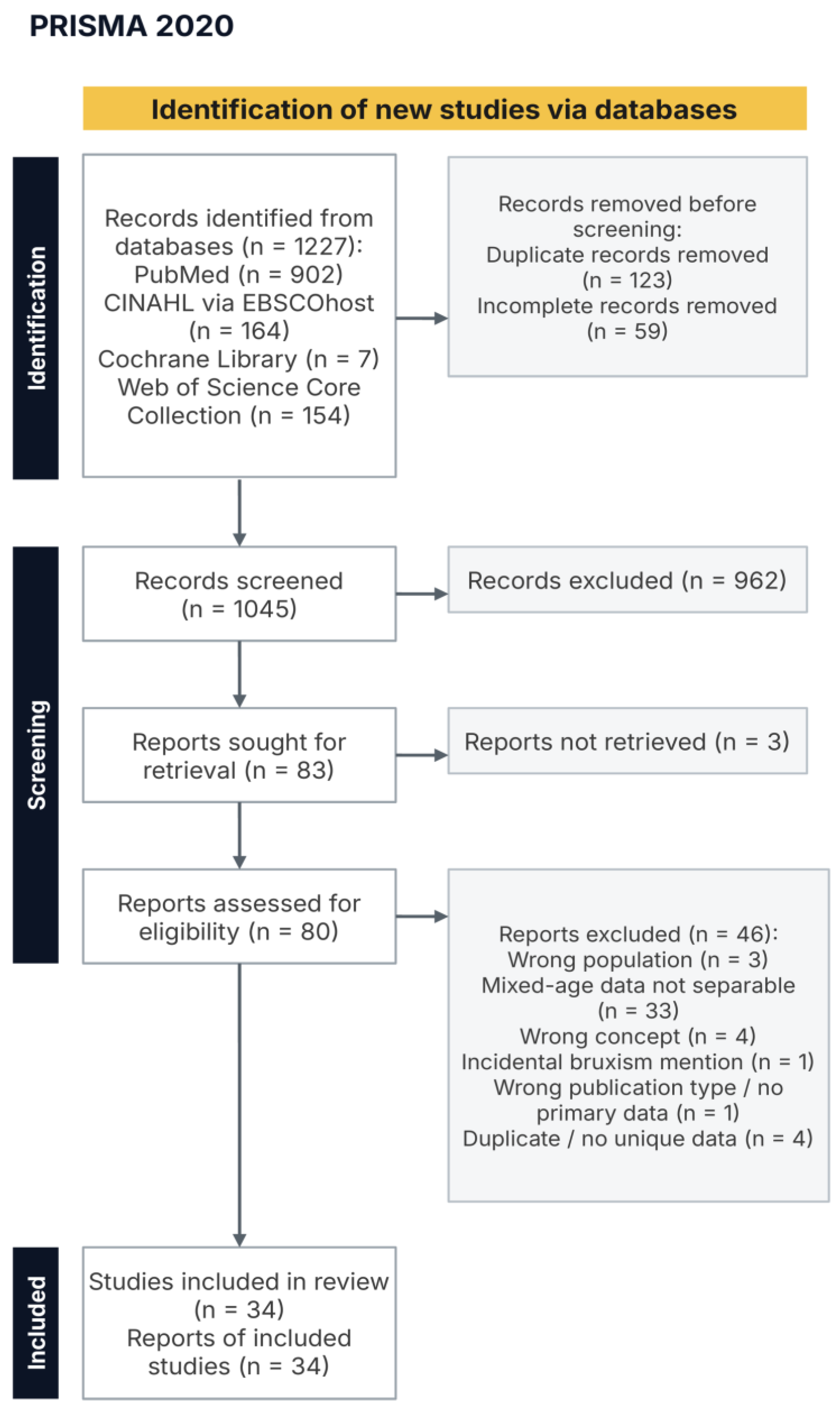
Table 1.
Reasons for exclusion after full-text assessment.
| Reason for exclusion | n |
| Wrong population | 3 |
| Mixed-age data not separable | 33 |
| Wrong concept | 4 |
| Incidental bruxism mention | 1 |
| Wrong publication type / no primary data | 1 |
| Duplicate / no unique data | 4 |
| Total | 46 |
Table 2.
Characteristics of included sources of evidence (n = 34).
| Reference | Study title | Context/setting | Design | Population/age | Bruxism concept | Assessment/data source | Main contribution/domain(s) |
| Abe et al. (2013) | Sleep bruxism and oromandibular myoclonus in rapid eye movement sleep behavior disorder: a preliminary report | Neurological sleep medicine context: RBD/iRBD/PD-RBD | Preliminary observational report | Patients with RBD-related conditions; mean ages approximately 65–67 years | Sleep bruxism/RMMA and oromandibular myoclonus | Video-polysomnography/electromyography | Assessment; associated neurological/sleep comorbidities |
| Agerberg and Bergenholtz (1989) | Craniomandibular disorders in adult populations of West Bothnia, Sweden | West Bothnia, Sweden; adult population sample | Population-based cross-sectional study | Random sample of adults aged 25, 35, 50 and 65 years; data for 65-year group | Tooth-clenching/oral parafunction within craniomandibular disorders | Questionnaire and clinical examination | Epidemiology; associated factors; age-related symptoms/signs |
| Anastassaki Köhler et al. (2012) | Prevalence of symptoms indicative of temporomandibular disorders in adults: cross-sectional epidemiological investigations covering two decades | Jönköping, Sweden; repeated adult population samples | Repeated cross-sectional epidemiological investigations | 1704 adults in age groups 20, 30, 40, 50, 60 and 70 years | Reported bruxism as TMD-related variable | Questionnaire across repeated population samples | Epidemiology; time trends; associated factors |
| Avcu et al. (2005) | Oral findings and health status among hospitalized patients with physical disabilities, aged 60 or above | Hospital setting; patients with physical disabilities | Cross-sectional clinical study | 111 hospitalized patients aged ≥60 years with physical disabilities | Bruxism among oral findings/variables | Oral clinical examination and health-status variables | Associated factors/comorbidities; clinical manifestations |
| Azario de Holanda et al. (2020) | Influence of respiratory allergy and restless sleep on definite sleep bruxism: a cross-sectional clinical study | Sleep medicine/private outpatient polysomnography setting | Cross-sectional clinical study | Adults 20–60 years and elderly participants >60 years | Definite sleep bruxism | Polysomnography and clinical/sleep variables | Assessment; epidemiology/associated factors (respiratory allergy and restless sleep) |
| Carlsson et al. (2014) | Is there a trend of decreasing prevalence of TMD-related symptoms with ageing among the elderly? | Sweden; population-based elderly cohorts | Population-based cross-sectional study | 70- and 80-year-old subjects | Awareness of bruxism and TMD-related symptoms | Questionnaire | Epidemiology; associated factors/comorbidities; ageing pattern |
| Freitas Júnior et al. (2012) | Oral rehabilitation of severely worn dentition using an overlay for immediate re-establishment of occlusal vertical dimension | Oral rehabilitation case-based setting | Case report | 61-year-old male | Severe bruxism associated with severe tooth wear/erosion | Clinical examination and overlay-based rehabilitation planning | Clinical consequences; management/rehabilitation |
| Jiang et al. (2011) | The prevalence of and risk factors for non-carious cervical lesions in adults in Hubei Province, China | Hubei Province, China; adult dental epidemiological context | Cross-sectional study | Adults with age group 65–74 years | Bruxism as risk factor for non-carious cervical lesions | Clinical dental examination and risk-factor questionnaire | Clinical consequences; associated factors |
| Kato et al. (2012) | Age is associated with self-reported sleep bruxism, independently of tooth loss | Population/dental epidemiological context | Cross-sectional observational study | Adults aged 18–89 years with explicit age analysis including older groups | Self-reported sleep bruxism | Self-report and dental/tooth loss variables | Epidemiology; associated factors; age/tooth loss relationship |
| Khoury et al. (2016) | Sleep Bruxism-Tooth Grinding Prevalence, Characteristics and Familial Aggregation: A Large Cross-Sectional Survey and Polysomnographic Validation | General population; large survey with polysomnographic validation | Cross-sectional survey with PSG validation component | Large adult sample with age category ≥65 years | Sleep bruxism/tooth grinding | Self-report survey and polysomnographic validation | Epidemiology; assessment; familial aggregation/characteristics |
| Kimura et al. (2024) | Fatal Complication of Mouthguard Used to Treat Awake Bruxism in Patient with Frontotemporal Dementia | Neurological/dementia case-based context | Case report | 64-year-old patient with frontotemporal dementia | Awake bruxism managed with mouthguard | Clinical case report | Management/clinical implications; safety/adverse event related to mouthguard use |
| Kitagawa et al. (2022) | Effect of masseter muscle activity during wakefulness and sleep on tooth wear | Japan; older adults with different tooth-wear severity | Comparative observational study | 32 participants; mean age approximately 71.7 years | Masseter muscle activity during wakefulness and sleep; bruxism episodes | Surface electromyography during wakefulness and sleep; tooth wear indices | Assessment; clinical consequences (tooth wear) |
| Kumagai et al. (2016) | Factors associated with mucosal pain in patients with partial removable dental prostheses | Removable prosthodontics setting | Observational clinical study | Partial removable dental prosthesis wearers; mean age approximately 71.4 years | Awake bruxism as factor associated with mucosal pain | Clinical/prosthodontic assessment and patient-reported factors | Associated factors; clinical consequences in prosthesis users |
| Kutkut et al. (2023) | Dental Implant Treatment in Bruxers: A Case Report and Literature Review | Implant dentistry/oral rehabilitation setting | Case report with literature review | 65-year-old woman with history of bruxism | Bruxism in dental implant treatment planning | Clinical implant rehabilitation assessment and follow-up | Management/clinical implications; implant rehabilitation |
| Lai (2013) | Awake bruxism in a patient with Alzheimer's dementia | Neurological/Alzheimer’s disease case-based context | Case report | 79-year-old man with Alzheimer’s dementia | Awake bruxism | Clinical case report | Associated factors/comorbidities; management implications |
| Levartovsky et al. (2019) | Complete rehabilitation of patients with bruxism by veneered and non-veneered zirconia restorations with an increased vertical dimension of occlusion: an observational case-series study | Prosthodontic/oral rehabilitation setting | Observational case-series study | 10 patients with bruxism, aged 62–70 years | Bruxism in patients receiving full-mouth rehabilitation | Clinical records and recall evaluation of zirconia restorations; CDA criteria | Management/clinical implications; prosthodontic outcomes |
| Maluly et al. (2020) | Sleep bruxism and its associations with insomnia and OSA in the general population of Sao Paulo | São Paulo, Brazil; general population sleep study | Population-based cross-sectional study | Adults aged 20–80 years; includes 60–80 years group | Sleep bruxism | Sleep assessment/polysomnography and insomnia/OSA variables | Epidemiology; associated sleep disorders |
| Mathew et al. (2020) | The approach and management of bruxism in Alzheimer's disease: An under-recognized habit that concerns caregivers (innovative practice) | Alzheimer’s disease/caregiver clinical context | Case-based innovative practice report | Two Alzheimer’s disease cases aged 62 and 69 years | Bruxism in Alzheimer’s disease | Clinical/caregiver-oriented management report | Management; caregiver burden; interdisciplinary implications |
| Matusow (1988) | Resolution of fused vertical molar root bridge abutment fracture: report of case | Restorative/prosthodontic case-based context | Case report | 70-year-old patient | Bruxism/occlusal trauma as factor in vertical root fracture | Clinical dental case report | Clinical consequences; management implications |
| Morita et al. (2020) | Association between salivary alpha-amylase and subjective and objective oral parafunctions in community-dwelling elderly individuals | Japan; community-dwelling elderly individuals | Cross-sectional observational study | Community-dwelling participants aged >65 years | Subjective and objective oral parafunctions, including bruxism and attrition | Self-reported parafunction/clinical oral findings and salivary alpha-amylase | Assessment; associated factors (stress biomarker/oral parafunctions) |
| Nekora-Azak et al. (2010) | Prevalence of bruxism awareness in Istanbul, Turkey | Istanbul, Turkey; population/dental epidemiological context | Cross-sectional prevalence study | 795 adults; age category 60–69 years available | Bruxism awareness: clenching and grinding | Self-reported questionnaire/survey | Epidemiology; associated factors |
| Okeson et al. (1990) | Nocturnal bruxing events in healthy geriatric subjects | Healthy geriatric sleep laboratory context | Observational polysomnographic study | 30 healthy subjects aged ≥60 years | Nocturnal bruxing events | Polysomnography and masseter electromyography | Assessment/diagnostic approaches; epidemiological pattern of nocturnal events |
| Österberg and Carlsson (2007) | Relationship between symptoms of temporomandibular disorders and dental status, general health and psychosomatic factors in two cohorts of 70-year-old subjects | Sweden; two cohorts of older adults | Cross-sectional cohort comparison | Two cohorts of 70-year-old subjects | Bruxism in relation to TMD symptoms and general/psychosomatic factors | Odontological interview/questionnaire and dental/general health variables | Epidemiology; associated factors/comorbidities |
| Prakash et al. (2022) | Assessment of Symptoms Associated with Temporomandibular Dysfunction and Bruxism among Elderly Population: An Epidemiological Survey | Ranchi, India; elderly community/dental epidemiological context | Cross-sectional epidemiological survey | 600 elderly subjects; age groups included 60–70 and 70–80 years | Bruxism with TMD-related symptoms | Structured questionnaire and clinical examination | Epidemiology; associated factors/comorbidities (TMD symptoms and bruxism prevalence/association) |
| Rieder et al. (1983) | The prevalence of mandibular dysfunction. Part I: Sex and age distribution of related signs and symptoms | Clinical epidemiological context | Cross-sectional prevalence study | 1040 patients aged 13–86 years; age groups 60–69, 70–79 and 80–86 years | Bruxism/clenching among mandibular dysfunction signs/symptoms | Clinical examination and symptom recording | Epidemiology; associated factors/comorbidities |
| Scorza et al. (2024) | Daytime bruxism, tardive orofacial dyskinesia, and dysphagia as side effects to duloxetine use over nine years in an octogenarian | Case-based neurological/pharmacological context | Case report | 83-year-old woman | Daytime/awake bruxism with tardive orofacial dyskinesia and dysphagia | Clinical case description related to long-term duloxetine exposure | Associated factors/comorbidities; clinical consequences; medication-related management implications |
| Shiwach and Woods (1998) | Risperidol and withdrawal bruxism in Lewy body dementia | Neuropsychiatric/pharmacological case-based context | Case report | 68-year-old man with Lewy body dementia | Bruxism associated with risperidone/withdrawal context | Clinical case report | Medication-related associated factors; management implications |
| Tan et al. (2004) | Severe bruxism following basal ganglia infarcts: insights into pathophysiology | Neurological post-stroke case-based context | Case report | 64-year-old man after basal ganglia/thalamic infarcts | Severe secondary bruxism | Clinical neurological case report with imaging/management description | Associated neurological factors; clinical consequences; management |
| Tokumoto et al. (2024) | Long-term follow-up of a patient with Parkinson's disease under nursing care after replacement of fixed implant-supported prostheses with an implant overdenture: a case report | Parkinson’s disease/nursing-care prosthodontic context | Case report with long-term follow-up | 81-year-old man with Parkinson’s disease | Bruxism in the context of implant prostheses and nursing care | Clinical follow-up and prosthodontic management | Management/clinical implications; neurodegenerative context |
| Tomova et al. (2024) | Repair of fractured metal-ceramic restoration using CAD/CAM technologies. Case report | Restorative dentistry/CAD-CAM repair context | Case report | 68-year-old patient | Bruxism episodes associated with metal-ceramic restoration fracture | Clinical restorative assessment and CAD/CAM repair | Clinical consequences; management/repair strategy |
| Unell et al. (2012) | Prevalence of troublesome symptoms related to temporomandibular disorders and awareness of bruxism in 65- and 75-year-old subjects | Sweden; population-based older cohorts | Population-based cross-sectional study | 65- and 75-year-old subjects | Awareness of bruxism and TMD-related symptoms | Questionnaire | Epidemiology; associated factors/comorbidities |
| Verhoeff et al. (2018) | Parkinson's disease, temporomandibular disorders and bruxism: A pilot study | Parkinson’s disease/parkinsonism clinical context | Pilot case-control study | Patients with Parkinson’s disease/parkinsonism and controls; mean ages approximately 65–67 years | Bruxism and temporomandibular disorders | Questionnaires/clinical TMD-related assessment | Associated factors/comorbidities; neurological context |
| Yadav et al. (2020) | Influence of Psychosocial Factors and Parafunctional Habits in Temporomandibular Disorders: A Cross-Sectional Study | TMD clinical setting | Cross-sectional study | Adults with TMD; includes group aged >60 years | Parafunctional habits/bruxism associated with TMD | Clinical assessment and psychosocial/parafunctional evaluation | Associated factors/comorbidities; TMD severity and bruxism |
| Yoshinaka et al. (2010) | Prevalence of torus palatinus among a group of Japanese elderly | Japan; elderly oral health/oromaxillofacial context | Cross-sectional study | Participants aged >60 years | Diurnal and nocturnal bruxism among factors related to torus palatinus | Oral examination and questionnaire/interview variables | Associated oral factors; epidemiology |
Studies are listed alphabetically. PSG, polysomnography; EMG, electromyography; TMD, temporomandibular disorders; RBD, rapid eye movement sleep behaviour disorder; iRBD, idiopathic RBD; PD, Parkinson’s disease; RMMA, rhythmic masticatory muscle activity; OSA, obstructive sleep apnea; CDA, California Dental Association; CAD/CAM, computer-aided design/computer-aided manufacturing.
Table 4.
Evidence map across review domains.
| Domain | Main contribution of included studies |
| Conceptualisation and definitions | Variation in terminology, distinction or lack of distinction between sleep and awake bruxism, and older definitions based on awareness, clenching, grinding, or parafunction. |
| Assessment approaches | Predominance of self-report and clinical examination; limited use of instrumental methods such as EMG or polysomnography. |
| Epidemiological patterns | Prevalence/frequency data available but highly heterogeneous and not suitable for pooling. |
| Associated factors and comorbidities | Associations with TMD, pain, sleep disorders, neurological disease, oral health factors, medication exposure, and prosthodontic outcomes. |
| Management and clinical implications | Limited evidence; mainly case-based and prosthodontic reports describing oral appliances, oral rehabilitation, prosthodontic reconstruction, pharmacological adjustment, and individualised care. |
Disclaimer/Publisher’s Note: The statements, opinions and data contained in all publications are solely those of the individual author(s) and contributor(s) and not of MDPI and/or the editor(s). MDPI and/or the editor(s) disclaim responsibility for any injury to people or property resulting from any ideas, methods, instructions or products referred to in the content. |
© 2026 by the authors. Licensee MDPI, Basel, Switzerland. This article is an open access article distributed under the terms and conditions of the Creative Commons Attribution (CC BY) license (http://creativecommons.org/licenses/by/4.0/).
Copyright: This open access article is published under a Creative Commons CC BY 4.0 license, which permit the free download, distribution, and reuse, provided that the author and preprint are cited in any reuse.