

Submitted:
01 October 2026
Posted:
04 October 2026
You are already at the latest version
Abstract
Kidney diseases, including acute kidney injury and chronic kidney disease, represent a growing global health burden associated with nephrotoxic drugs, environmental toxins, metabolic disorders, and aging. Nephrotoxicity arises through complex and interconnected mechanisms, including oxidative stress, inflammation, mitochondrial dysfunction, apoptosis, tubular epithelial cell injury, fibrosis, and altered glomerular hemodynamics, ultimately leading to progressive renal dysfunction. The limited sensitivity of conventional biomarkers for early diagnosis and the lack of effective targeted therapies highlights the need for novel preventive and therapeutic strategies. In recent years, phytomedicines have attracted considerable attention owing to their multitargeted pharmacological actions and favorable safety profiles. This comprehensive review summarizes the molecular mechanisms underlying nephrotoxicity, major nephrotoxic agents, and recent advances in nephroprotective medicinal plants, herbal formulations, and phytocompounds. Bioactive constituents, including flavonoids, polyphenols, alkaloids, terpenoids, saponins, and phenolic acids, exert renoprotective effects by attenuating oxidative stress, suppressing inflammatory signaling pathways such as NF-κB, regulating apoptosis and autophagy, preserving mitochondrial function, and activating cytoprotective pathways, particularly Nrf2/HO-1. Experimental studies consistently demonstrate that phytocompounds such as curcumin, dioscin, ferulic acid, thymoquinone, quercetin, and resveratrol improve renal biochemical, molecular, and histopathological outcomes across diverse models of nephrotoxicity. The review also critically discusses available clinical evidence, pharmacokinetic limitations, issues of standardization and quality control, safety considerations, and emerging strategies to enhance clinical translation. Collectively, evidences highlight phytomedicines as promising candidates for preventing and managing nephrotoxicity and kidney diseases while providing a scientific framework for future mechanistic studies, biomarker-guided investigations, and well-designed clinical trials to facilitate the development of effective renoprotective therapeutics.
Keywords:
nephrotoxicity
; medicinal plants
; phytocompounds
; traditional medicine
; herbal medicine
; kidney disease
1. Introduction
The kidneys are vital organs that perform numerous physiological functions essential for maintaining normal body homeostasis. Their major roles include filtration and elimination of nitrogenous and other metabolic waste products, maintenance of fluid and electrolyte balance, regulation of blood pressure, stimulation of erythrocyte production, preservation of bone health, and regulation of hormonal and fluid homeostasis (Sujana et al., 2021). Structurally and functionally, each kidney consists of a large number of nephrons, which act collectively to carry out renal filtration and other essential functions (Figure 1) (Negi and Mirza, 2020). Consequently, impairment of normal kidney function can disrupt multiple regulatory and homeostatic processes throughout the body and, when severe or untreated, may result in life-threatening complications (Sujana et al., 2021).
Renal impairment is broadly classified into acute and chronic kidney disease, both of which can progress to severe stages if not appropriately treated. Humans are routinely exposed to various environmental hazards and chemical agents that may initiate or accelerate renal injury (Negi and Mirza, 2020). Several potent therapeutic agents, including aminoglycoside antibiotics, non-steroidal anti-inflammatory drugs (NSAIDs), and chemotherapeutic drugs, as well as toxic chemicals such as ethylene glycol, carbon tetrachloride, and sodium oxalate and heavy metals including lead, mercury, cadmium, and arsenic, can exert detrimental effects on the kidneys. Such exposures may contribute to acute renal failure, chronic interstitial nephritis, and other renal complications (Sundararajan et al., 2014; Gaikwad et al., 2012). Nephrotoxin-mediated renal injury involves multiple mechanisms, including oxidative stress (OS), proximal tubular necrosis, disruption of brush-border membrane integrity and cellular polarity, and reductions in glomerular filtration rate (GFR) and renal blood flow (Negi and Mirza, 2020). Traditionally, medicinal plants and their preparations are used for the treatment of different diseases including diabetes, kidney diseases, analgesic, anti-inflammatory, CNS stimulatory, antimicrobial, antihypertensive and antidiarrheal activities (Faruquee et al, 2026; Raju et al, 2026). The presence of bioactive phytocompounds (mainly secondary metabolites) in the medicinal plants exhibits different pharmacological and therapeutic properties including nephroprotective, hepatoprotective, antioxidant, anticancer and antimicrobial properties (Isah, 2019, Das et al, 2019). In modern society, the frequent use of medicinal plants, which act as a significant component of complementary and alternative medicine, is gaining popularity due to their better safety profile than that of the synthetic modern medicines (Tienda-Vázquez et al, 2022). This review presents external stimuli such as chemicals, drugs, and other agents for the impairment of kidneys, and emphasizes the scientific studies for the protection of renal impairment by medicinal plants, phytocompounds, and herbal medicines. Together, this article presents the importance and prospects of phytomedicines or herbal medicines or phytocompounds for the protection of chronic kidney diseases.
1.1. Renal Impairment Associated Factors
Renal injury can result from exposure to various chemical substances, therapeutic drugs, and diagnostic agents collectively referred to as nephrotoxic agents (Naveen et al., 2022). Nephrotoxicity may develop through several underlying mechanisms, including alterations in glomerular hemodynamics, direct tubular cell toxicity, inflammatory responses, crystal-induced nephropathy, rhabdomyolysis, and thrombotic microangiopathy (Kim and Moon, 2012). Nephrotoxicity can be caused by herbs, such as star fruit's high oxalate content, Triperygium wilfordii Hook's triptolide, cranberry juice, guaifenesin, aristolochic acid nephropathy, carcinogenesis, impila carboxyatractyloside, and Peruvian Cat's claw, which stimulate apoptosis, cause kidney stones, and prevent mitochondrial ATP production (Allard et al, 2013).
Changes in glomerular hemodynamics
Certain medications can induce nephrotoxicity by altering glomerular hemodynamics. These include nonsteroidal anti-inflammatory drugs (NSAIDs), which inhibit prostaglandin synthesis, as well as agents that interfere with the renin–angiotensin system, such as angiotensin-converting enzyme (ACE) inhibitors and angiotensin receptor blockers (ARBs), which are commonly used in the management of hypertension (Kim and Moon, 2012).
Tubular cell toxicity
Renal tubules, particularly proximal tubular epithelial cells, are highly susceptible to drug-induced injury because they are exposed to elevated concentrations of drugs and metabolites during glomerular filtration and tubular reabsorption. Several therapeutic agents, including aminoglycosides, amphotericin B, adefovir, cisplatin, and foscarnet, are well-recognized causes of tubular toxicity (Kim, and Moon, 2012). Clinical manifestations range from mild transport defects, such as renal tubular acidosis and Fanconi syndrome, to acute or chronic kidney failure. Histopathological features may include crystal deposition, acute tubular injury, interstitial inflammation, fibrosis, and tubular atrophy (Sirac et al, 2021).
Inflammation
Drug-induced renal inflammation can affect the glomeruli, tubules, and interstitium, leading to fibrosis, scarring, and progressive loss of renal function (Naughton, 2008). Common manifestations include glomerulonephritis and acute or chronic interstitial nephritis. Nonsteroidal anti-inflammatory drugs (NSAIDs), rifampicin, proton pump inhibitors, 5-aminosalicylates, diuretics, allopurinol, antiepileptic agents, and H2-receptor antagonists are among the most frequently implicated drugs (Kim, and Moon, 2012). Chronic exposure to calcineurin inhibitors, lithium, analgesics, and certain anticancer agents may result in chronic interstitial nephritis. Persistent inflammation promotes nephron loss, maladaptive repair, and progressive chronic kidney disease through sustained cellular injury and fibrosis (Schnaper, 2014).
Crystal nephropathy
Kidney injury caused by crystal deposition in the renal parenchyma is known as crystalline nephropathy. Nephrocalcinosis and oxalate nephropathy are the two types of crystalline nephropathy that are most frequently seen in renal pathology. Less common forms of crystalline nephropathy include urate nephropathy, cystinosis, dihydroxyadeninuria, and drug-induced crystalline nephropathy associated with medications such as indinavir and triamterene. Additionally, crystallised monoclonal proteins can form in the kidney and harm surrounding tissue (Gupta et al, 2015). Medications that precipitate as poorly soluble crystals in the urine can impair renal function. Crystal formation is influenced primarily by urinary pH and the intratubular concentration of the drug. Several medications have been associated with crystal-induced nephropathy, including antibiotics such as ampicillin and antiviral agents such as acyclovir. (Kim, and Moon, 2012).
Rhabdomyolysis
The well-known clinical condition of muscle damage known as rhabdomyolysis frequently includes acute kidney injury (AKI), myoglobinuria, and abnormal electrolytes. The main component of muscles in rhabdomyolysis that damages the kidneys is known to be myoglobin (Zimmerman and Shen, 2013). Rhabdomyolysis occurs following extensive skeletal muscle injury, resulting in the breakdown of muscle fibers and the release of intracellular components into the circulation. This process is characterized by elevated levels of myoglobin and creatine kinase in the blood. Excessive circulating myoglobin can accumulate in the renal tubules and impair renal function, potentially leading to acute tubular necrosis and acute kidney injury. Rhabdomyolysis may be associated with the use or abuse of substances such as heroin, methadone, methamphetamine, and alcohol, as well as certain medications, particularly statins (Kim, and Moon, 2012).
Thrombotic microangiopathy
Thrombotic microangiopathy is characterised by thrombocytopenia, microangiopathic hemolytic anaemia, and organ damage, including AKI. Drug-induced thrombotic microangiopathy (TMA) can result from direct or indirect drug-mediated endothelial injury, leading to microvascular thrombosis and subsequent organ damage, particularly in the kidneys. Several therapeutic agents, including cyclosporine, mitomycin C, and quinine, have been associated with the development of TMA (Brocklebank et al, 2018, Kim, and Moon, 2012).
1.2. Drugs, Chemicals and Other Agents Responsible for Renal Impairment
Drug- and chemical-induced nephrotoxicity represents one of the most common causes of AKI in clinical settings. The kidneys are particularly vulnerable to toxic insults because of their high blood flow, active transport systems, and the concentration of drugs in renal tubular cells during filtration and excretion (Perazella, 2018). A wide range of pharmacological agents, environmental chemicals, and natural toxins can impair renal function through mechanisms such as oxidative stress, mitochondrial dysfunction, inflammatory responses, and direct tubular cell injury (Figure 2).
a) Nephrotoxic Drugs
NSAIDs exert their pharmacological effects by inhibiting cyclooxygenase (COX) enzymes, thereby suppressing the production of prostaglandins. Renal prostaglandins contribute substantially to the preservation of renal perfusion, particularly when renal blood flow is compromised. Consequently, NSAID-mediated inhibition of prostaglandin synthesis can reduce renal perfusion and increase the risk of renal ischemia and acute kidney injury (Whelton, 1999).
Acetaminophen-induced nephrotoxicity
Acetaminophen, a widely used analgesic and antipyretic, can cause renal injury following excessive exposure, as demonstrated in both experimental animals and humans. Its nephrotoxic effects are closely associated with its metabolic activation. Under normal conditions, most acetaminophen undergoes glucuronidation and sulfation, generating water-soluble metabolites that are readily eliminated. A smaller proportion is metabolized by cytochrome P450 enzymes to form the highly reactive metabolite N-acetyl-p-benzoquinone imine (NAPQI). NAPQI is normally detoxified through conjugation with intracellular glutathione (GSH), ultimately forming metabolites, including mercapturic acid derivatives, that are excreted in the urine. Following acetaminophen overdose, however, excessive NAPQI formation can overwhelm and deplete available GSH stores, resulting in the accumulation of the reactive metabolite. Unneutralized NAPQI subsequently binds covalently to cellular macromolecules, promoting cellular and tissue injury. In the kidney, acetaminophen-induced toxicity predominantly affects proximal tubular cells (Reshi et al, 2020).
Cisplatin-induced nephrotoxicity
Cisplatin, a widely used anticancer drug, is associated with significant nephrotoxicity. Cisplatin accumulates in renal tubular epithelial cells through organic cation transporters, leading to mitochondrial damage, oxidative stress, inflammation, and apoptotic cell death (Pabla and Dong, 2008). Cisplatin-induced renal injury involves the activation of multiple molecular pathways associated with tubular cell damage and death, including oxidative stress, reactive oxygen species (ROS) generation, mitogen-activated protein kinase (MAPK) signaling, and activation of p53 and p21. Cisplatin also promotes the production of tumor necrosis factor-α (TNF-α) in renal tubular cells, thereby initiating and amplifying inflammatory responses that contribute to cellular injury and death. In addition to its direct tubular toxicity, cisplatin can impair the renal vasculature, resulting in reduced renal perfusion, tubular ischemia, and a decline in glomerular filtration rate (GFR). The combined effects of tubular toxicity, inflammation, oxidative stress, and vascular dysfunction contribute to the development of acute renal failure following cisplatin exposure (Pabla and Dong, 2008). Approximately 20–30% of patients receiving cisplatin therapy develop some degree of renal impairment, which limits its clinical use.
ACE inhibitors-induced nephrotoxicity
ACE inhibitors, such as enalapril and ramipril, are widely used cardiovascular drugs but may reduce GFR under certain conditions (Muneer and Nair, 2017). By inhibiting angiotensin II-mediated efferent arteriolar constriction, these agents decrease intraglomerular pressure, potentially impairing renal filtration, particularly when renal perfusion is compromised (Rolland et al., 2021).
Aminoglycoside antibiotics-induced nephrotoxicity
Aminoglycoside antibiotics, such as gentamicin and amikacin, cause nephrotoxicity at the side of renal proximal tubule cells. These drugs accumulate within lysosomes of renal tubular epithelial cells, leading to oxidative stress, phospholipidosis, and cellular apoptosis (Lopez-Novoa et al., 2011). Gentamicin-induced nephrotoxicity is associated with excessive production of reactive oxygen and nitrogen species, including hydroxyl radicals and superoxide anions, along with inhibition of Na⁺/K⁺-ATPase activity and mitochondrial oxidative phosphorylation. These alterations promote oxidative stress and renal cellular injury, ultimately leading to apoptosis and necrosis following gentamicin accumulation in renal tissue (Adil et al, 2016).
Amphotericin B-induced nephrotoxicity
Amphotericin B, an antifungal agent, causes nephrotoxicity by increasing membrane permeability in renal tubular cells and inducing vasoconstriction of the afferent arterioles, ultimately resulting in decreased glomerular filtration rate and tubular injury (Laniado-Laborín and Cabrales-Vargas, 2009).
Antineoplastic Agents-Induced Nephrotoxicity
Antineoplastic agents can cause various forms of renal injury and electrolyte disturbances. Because many anticancer drugs and their metabolites undergo renal elimination through glomerular filtration and/or tubular secretion, the kidneys are particularly susceptible to their toxic effects. Small, unbound molecules are readily filtered at the glomerulus, whereas protein-bound compounds have limited glomerular filtration and may undergo tubular secretion. Consequently, renal exposure to these agents can damage glomerular and tubular structures, potentially resulting in glomerulopathies, tubulointerstitial injury, and impaired renal function (Li et al, 2019).
b) Environmental and Chemical Nephrotoxins
In addition to therapeutic drugs, several environmental chemicals can induce nephrotoxicity. Heavy metals, such as cadmium, lead, and mercury, are among the most prominent nephrotoxic agents.
Cadmium-Induced Nephrotoxicity
Cadmium exposure results in accumulation in the renal cortex and causes proximal tubular dysfunction through ROS oxidative stress, disruption of mitochondrial function, and renal tissue death (Järup and Åkesson, 2009).
Lead-Induced Nephrotoxicity
Lead preferentially accumulates in proximal renal tubular cells, contributing to nephrotoxicity. Acute lead exposure primarily causes proximal tubular dysfunction, which may be reversible with appropriate chelation therapy. In contrast, chronic exposure can lead to progressive tubulointerstitial fibrosis, nephron loss, and eventual renal insufficiency. Lead-associated nephropathy may also be accompanied by hyperuricemia and gout, as well as hypertension (Panel, 2009).
Mercury-Induced Nephrotoxicity
Mercury, in both elemental and organic forms, exerts toxic effects on multiple organs, particularly the central nervous system, liver, and kidneys (Goyer, 1989). Mercury-induced nephrotoxicity has been associated with suppression of the Sirt1/PGC-1 signaling pathway. In addition, mercury-mediated mitochondrial dysfunction promotes apoptosis of renal cells, thereby contributing to progressive kidney injury (Bernhoft, 2012).
Organic solventsand industrial chemicals-inducednephrotoxicity
Exposure to compounds such as ethylene glycol, carbon tetrachloride, and certain pesticides has been linked to renal tubular damage and impaired renal function. Ethylene glycol poisoning, in particular, leads to the formation of oxalate crystals, which deposit in renal tubules and cause obstruction and acute renal failure (Porter and Bennett, 2014).
c) Natural Toxins and Other Agents Responsible for Nephrotoxicity
Certain natural toxins and herbal compounds may also contribute to nephrotoxicity. For example, aristolochic acid, found in some traditional herbal remedies, has been associated with aristolochic acid nephropathy, a progressive form of kidney disease characterized by interstitial fibrosis and tubular atrophy (Debelle et al., 2008). Additionally, toxins produced by animals, such as snake venoms, can cause acute kidney injury through mechanisms involving hemolysis, rhabdomyolysis, and direct nephrotoxic effects. Other agents, including radiographic contrast media, are recognized causes of contrast-induced nephropathy. These agents may impair renal function by inducing renal vasoconstriction, oxidative stress, and direct tubular epithelial cell toxicity (Persson et al., 2005).
1.3. Mechanisms of Nephrotoxicity
There are several common pathogenic mechanisms of nephrotoxicity which include the generation of ROS, mitochondrial dysfunction, inflammatory cytokine release, apoptosis, and necrosis of renal tubular epithelial cells (Perazella, 2018).
Understanding these mechanisms is essential for developing protective strategies and identifying potential therapeutic targets to mitigate renal injury. Overall, nephrotoxic drugs, environmental chemicals, and natural toxins remain significant contributors to kidney injury worldwide. Continued research into their mechanisms of action and preventive interventions is crucial for reducing the burden of drug- and toxin-induced renal diseases.
Role of oxidative stress and inflammation in kidney diseases:
Oxidative Stress in Kidney Disease
Oxidative stress is a fundamental mechanism involved in the initiation and progression of kidney diseases. It occurs when the production of reactive oxygen species (ROS) exceeds the capacity of endogenous antioxidant defense systems, resulting in cellular and molecular damage (Ling and Kuo, 2018). The kidney is particularly vulnerable to oxidative injury because of its high metabolic activity, abundant mitochondrial content, and substantial oxygen consumption, especially within proximal tubular cells (Gyurászová et al., 2020). In chronic kidney disease (CKD), multiple factors contribute to excessive ROS generation, including mitochondrial dysfunction, activation of nicotinamide adenine dinucleotide phosphate (NADPH) oxidases, renin–angiotensin–aldosterone system (RAAS) activation, advanced glycation end products (AGEs), and accumulation of uremic toxins (Duni et al., 2019, Ravarotto et al., 2021). Excessive ROS production damages lipids, proteins, and nucleic acids, leading to podocyte injury, tubular epithelial cell dysfunction, endothelial damage, and progressive nephron loss. Oxidative stress also activates several profibrotic signaling pathways, including transforming growth factor-β (TGF-β), nuclear factor-kappa B (NF-κB), and NADPH oxidase 4 (NOX4), thereby promoting extracellular matrix accumulation, glomerulosclerosis, and tubulointerstitial fibrosis (Duni et al., 2019, Liu et al., 2025). In diabetic nephropathy, hyperglycemia-induced oxidative stress further accelerates renal injury through mitochondrial dysfunction and AGE-mediated cellular damage, contributing to progressive decline in renal function (Hou et al., 2025). Consequently, oxidative stress is now recognized as a key driver of CKD progression and a potential therapeutic target for preventing renal fibrosis and end-stage kidney disease.
Inflammation in Kidney Disease
Persistent inflammation is another hallmark of kidney disease and plays a central role in both the development and progression of CKD. Renal injury triggers activation of innate and adaptive immune responses, resulting in the recruitment of macrophages, neutrophils, T cells, and other inflammatory cells into renal tissues (Kadatane et al., 2023). These activated immune cells release pro-inflammatory mediators, including tumor necrosis factor-alpha (TNF-α), interleukin (IL)-1β, IL-6, monocyte chemoattractant protein-1 (MCP-1), and TGF-β, which perpetuate tissue injury and promote fibrogenesis (Kadatane et al., 2023, Hou et al., 2025).
Chronic low-grade inflammation contributes to glomerular and tubular injury, endothelial dysfunction, and progressive deterioration of renal function. Importantly, inflammation and oxidative stress are closely interconnected. ROS activate redox-sensitive transcription factors such as NF-κB, leading to increased production of inflammatory cytokines, while inflammatory cells generate additional ROS that further amplify oxidative damage (Duni et al., 2019). This self-sustaining cycle accelerates renal fibrosis and CKD progression. Emerging evidence also indicates that factors such as uremic toxin accumulation, metabolic disturbances, and intestinal dysbiosis contribute to the persistent inflammatory state observed in CKD patients (Kadatane et al., 2023). As kidney function declines, unresolved inflammation promotes excessive extracellular matrix deposition and tissue remodeling, ultimately leading to irreversible fibrosis and end-stage kidney disease. Therefore, modulation of inflammatory pathways represents an important therapeutic strategy for slowing CKD progression and improving long-term renal outcomes.
1.4. Importance of Traditional Medicine for the Treatment of Renal Impairment
Ethnopharmacological researchers conducts investigate on various traditional medicines to explore the scientifically valid therapeutic benefits and to avoid toxicity of medicinal plant-based preparations. For example, an ethnomedical survey was conducted to gather knowledge on therapeutic herbs to treat nephrotoxicity/kidney issues from traditional healers in the Khandesh region of India. The survey found that the medicinal plants from roughly 61 plant families have ethnopharmacological uses to treat renal disorders by the traditional healers. This comprises 78 species in the Khandesh region and 143 species of nephroprotective plants that are significant for ethnomedicine in Maharashtra (Talele et al, 2012). Herbal medicine is among the most commonly used forms of complementary and alternative medicine (CAM) in patients with chronic kidney disease (CKD). Medicinal plants have traditionally been used to support renal health and manage CKD-related complications. Some herbal interventions have been reported to alleviate symptoms associated with CKD, including pruritus, fatigue, depressive symptoms, muscle cramps, and uremic manifestations. Furthermore, certain herbal therapies may help preserve renal function and potentially delay disease progression and the need for dialysis; however, their clinical efficacy and safety require further rigorous evaluation (Borkar et al., 2022b). Over the past decade, hemodialysis patients have been increasingly using medicinal plant-derived herbal remedies due to their diuretic properties, which can help improve kidney function and postpone dialysis. Medicinal plants represent an important source of novel therapeutic compounds, contributing substantially to modern drug development. Accordingly, the WHO has recognized the potential role of herbal medicines in addressing unmet healthcare needs (Amarasiri et al., 2020). Natural products contain nephroprotective activities and show nephropreotection by several mechanism as shown in the Figure 3.
2. Article Search Strategy
For the purpose of this review to collect the reported scientific information on medicinal plants, phytocompounds and herbal preparations, we extensively searched full articles published in between 01 January 2000 to 18 June 2026 in English language during April to July 2026 from the following databases: PubMed, Web of Science, Scopus, Wiley Online Library, ScienceDirect, Research Gate, Google Scholar, and Google were considered to include in this review. The search of articles was focused on in-vivo animal studies although any kind of articles containing scientific reports of nephroprotective activity of natural products, herbal medicine and nutraceuticals were considered. The keywords used for searching the articles in the search bar include – “Plant extract”, “Herbal formulation”, “Ethanol extract”, “Aqueous extract”, “Hydroalcoholic extract”, “Medicinal plants”, “In-vivo”, “In-vitro”, “Animal model”, “In -vivo study”, “Clinical trials”, “Clinical study”, combined with “Nephroprotective activity’’. The article which did not clearly reported either animal studies or clinical studies on the plant extracts/herbal preparations/phytocompound(s) with its clear outcomes were excluded in the screening of the article.
3. Preclinical Study Reports of Medicinal Plants, Herbal Preparations and Phytocompounds for Nephroprotective Activities
A substantial body of preclinical evidence supports the nephroprotective potential of medicinal plants, herbal extracts, and phytochemicals against diverse forms of experimentally induced renal injury. Animal models employing gentamicin, cisplatin, carbon tetrachloride, acetaminophen, streptozotocin, ethylene glycol, heavy metals, and ischemia–reperfusion injury have consistently demonstrated that phytomedicines improve renal function, attenuate oxidative stress, suppress inflammation, and preserve renal histoarchitecture. These protective effects are generally associated with reductions in serum creatinine, blood urea nitrogen (BUN), urea, uric acid, malondialdehyde (MDA), and inflammatory biomarkers, together with restoration of endogenous antioxidant defenses such as superoxide dismutase (SOD), catalase (CAT), glutathione (GSH), and glutathione peroxidase (GPx) (Hussain et al., 2012; Mazani et al., 2018; Wu et al., 2012; Chandavarkar et al., 2017). Several medicinal plants demonstrated particularly robust nephroprotective activities. Solanum xanthocarpum fruit extract significantly reduced plasma and urinary urea, creatinine, and renal lipid peroxidation while restoring antioxidant enzyme activities in gentamicin-induced nephrotoxicity, suggesting a prominent role of antioxidant-mediated renal protection (Hussain et al., 2012). Likewise, Tanacetum parthenium methanolic extract attenuated carbon tetrachloride-induced renal injury by reducing serum creatinine, urea, and oxidative stress while enhancing antioxidant enzyme activities, possibly through inhibition of NF-κB-mediated inflammatory pathways (Mazani et al., 2018).
Flavonoid-rich medicinal plants such as Macrothelypteris oligophlebia, Biophytum sensitivum, Trema guineensis, and Bauhinia variegata showed remarkable efficacy in nephrotoxicity models. Administration of these extracts significantly lowered serum creatinine, BUN, MDA, and nitric oxide levels while increasing SOD, CAT, and GSH activities and improving renal histopathological changes (Wu et al., 2012; Chandavarkar et al., 2017; Cyril et al., 2016; Pani et al., 2011).
Among the numerous candidates investigated, Astragalus membranaceus, Cordyceps sinensis, Curcuma longa, Salvia miltiorrhiza, Orthosiphon stamineus, Biophytum sensitivum, Bauhinia variegata, and Trema guineensis appear particularly promising because of their consistent efficacy across multiple nephrotoxicity models and their ability to modulate key pathogenic pathways involved in acute kidney injury (AKI) and chronic kidney disease (CKD). Likewise, phytochemicals such as curcumin, dioscin, ferulic acid, thymoquinone, and stevioside represent attractive lead compounds for future nephroprotective drug discovery owing to their multitarget mechanisms and favorable pharmacological profiles (Yang et al., 2019; El-Ashmawy et al., 2018; Potočnjak et al., 2017). Other medicinal plants, including Jatropha curcas, Thaumatococcus danielli, Orthosiphon stamineus, Pedalium murex, Barleria longiflora, Leea asiatica, Pimpinella anisum, Sonchus oleraceus, Hybanthus enneaspermus, Indigofera tinctoria, and Lens culinaris, also exhibited significant renoprotective effects. Their mechanisms largely involved suppression of oxidative stress, inhibition of inflammatory cytokines, attenuation of lipid peroxidation, preservation of mitochondrial function, and maintenance of renal cellular integrity (Komail and Narendra, 2017); Olorunnisola et al., 2017; Ramesh et al., 2014; Shelke et al., 2009; Manjula and Ganthi, 2018; Sen et al., 2013).
In addition to plant extracts, several isolated phytochemicals have emerged as promising nephroprotective agents. Plant-derived compounds such as curcumin have demonstrated potential nephroprotective effects in clinical studies (Ma et al, 2019). Plant polyphenols, particularly those from green tea, exhibit strong antioxidant activity that contributes to renal protection (Ben Saad et al, 2019). Several natural compounds have shown nephroprotective potential in experimental studies. Dioscin, a natural steroidal saponin, has demonstrated renoprotective effects in multiple in vivo animal models (Yang et al, 2019). Ferulic acid, a plant-derived phenylpropanoid, provided nephroprotection in a gentamicin-induced rat model when combined with omega-3-rich fish oil (El-Ashmawy et al, 2018). Flavonoids such as naringin and silymarin reduced methotrexate-induced nephrotoxicity in rats (Kandemir et al, 2017). Stevioside from Stevia rebaudiana protected mice against cisplatin-induced kidney damage (Potočnjak et al, 2017), while thymoquinone from Nigella sativa reduced lipid peroxidation and enhanced renal antioxidant enzymes in chemotherapy-induced nephrotoxicity (Cascella et al, 2017). Additionally, microbial metabolites such as tacrolimus (FK506) from Streptomyces tsukubaensis and rapamycin from Streptomyces hygroscopicus exhibit protective effects mainly through anti-inflammatory mechanisms (Pham et al, 2019). Curcumin, dioscin, ferulic acid, naringin, silymarin, stevioside, and thymoquinone have demonstrated substantial efficacy in experimental nephrotoxicity models. These compounds exert renoprotective effects through activation of antioxidant pathways such as Nrf2/HO-1, suppression of NF-κB-mediated inflammation, inhibition of apoptosis, and attenuation of renal fibrosis (El-Ashmawy et al., 2018; Potočnjak et al., 2017).
Preclinical nephroprotective effects of few important plants are discussed below and a number of medicinal plants, phytocompounds and herbal preparations are listed and presented in supplementary Table S1, Table S2, and Table S3, respectively.
Solanum xanthocarpum Schrad. & Wendl
Solanum xanthocarpum Schrad. & Wendl. (Family: Solanaceae) contains several bioactive compounds, including steroidal alkaloids, coumarins, steroids, and triterpenes. The plant exhibits notable nephroprotective activity. In experimental animals, gentamicin administration significantly increased (P<0.001) plasma and urine urea, creatinine, kidney weight, blood urea nitrogen, and renal lipid peroxidation, while significantly decreasing urine output and renal enzymatic and non-enzymatic antioxidants. Treatment with S. xanthocarpum fruit extract (200 and 400 mg/kg) significantly reduced elevated plasma and urine urea, creatinine, kidney weight, blood urea nitrogen, and renal lipid peroxidation, and increased renal antioxidant levels in gentamicin-treated rats (Hussain et al, 2012).
Tanacetum partheniumL.
Tanacetum parthenium belongs to the family Asteraceae. Although the phytochemistry of T. parthenium has not been extensively investigated, the plant is known to contain several active compounds, including sesquiterpene lactones such as parthenolide, 3β-hydroxy parthenolide, canin, and artecanin, all characterized by an α-methylene-butyrolactone moiety. This plant has demonstrated potential nephroprotective activity. In experimental animals, carbon tetrachloride (CCl₄) administration increased serum levels of urea, creatinine, uric acid, and the albumin (C/A) ratio, while reducing antioxidant enzymes such as superoxide dismutase (SOD) and glutathione peroxidase (GPx). Treatment with the methanolic extract of T. parthenium (120 mg/kg) significantly reduced serum urea, creatinine, uric acid, and the C/A ratio, and increased antioxidant enzyme levels, indicating protective effects against CCl₄-induced nephrotoxicity (Mazani et al, 2018).
Macrothelypteris oligophlebia (Bak.)
Macrothelypteris oligophlebia Ching is a plant of the family Thelypteridaceae. Numerous flavonoids, including kaempferol, rutin, and kaempferol-3-O-β-rutinoside, were identified from a prior study of the chemical contents of this species. This plant produced significant nephroprotective activity in experimental animals. In the administration of gentamicin in experimental animals, the BUN, Cr, MDA, NO levels were increased and the SOD and CAT concentrations were decreased. However, the ethanolic extract of this plant significantly reduced the BUN, Cr, MDA, NO levels and increased the SOD and CAT levels (Wu et al, 2012).
Abelmoschus esculentus L.
Abelmoschus esculentus (okra pods), a vegetable crop belonging to the family Malvaceae, has demonstrated notable nephroprotective activity. In experimental models, sodium nitrate toxicity increased blood urea nitrogen (BUN) and creatinine levels and reduced the antioxidant enzymes superoxide dismutase (SOD) and catalase (CAT), along with causing renal tubular necrosis. Treatment with A. esculentus preparation significantly lowered BUN and creatinine levels, increased SOD and CAT activities, and reduced kidney tubular necrosis, indicating protective effects against nephrotoxicity (Naveen et al, 2022). Additionally, the protective effect of A. esculentus against lead acetate–induced kidney damage in mice has been reported. Antioxidant activity of the extract was evaluated using DPPH and FRAP assays, while methanolic extract (50–400 mg/kg BW for 28 days) was administered to BALB/c mice. The extract exhibited strong antioxidant activity (FRAP: 57.58 M Fe²⁺/g; IC₅₀: 35.21 μg/mL). Treatment significantly increased CAT and SOD activities and decreased levels of malondialdehyde (MDA), nitric oxide (NO), BUN, and creatinine, suggesting that A. esculentus mitigates lead acetate–induced renal damage through antioxidant mechanisms (Wahyuningsih et al, 2020; Wahyuningsih et al, 2021).
Descurania sophia
Descurainia sophia, a dicot perennial weed of the family Brassicaceae, commonly known as “flixweed” or “Khak-e-sheer,” contains at least 26 physiologically active compounds. The plant has shown significant nephroprotective activity. Gentamicin administration increased BUN, creatinine, urinary Na⁺, fractional excretion of sodium (FeNa⁺), cholesterol, and triglyceride levels, whereas methanolic extract of D. sophia (1600 and 2400 mg/kg) significantly reduced these parameters (Askari et al, 2021). In Wistar rats, D. sophia also decreased serum creatinine and BUN, along with reductions in urinary Na⁺ and FeNa⁺, inflammatory cell infiltration, and renal tissue apoptosis. The extract demonstrated dose-dependent protective effects, suggesting potential use as a preventive agent against gentamicin-induced nephrotoxicity (Askari et al, 2021).
Biophytum sensitivum Linn
Biophytum sensitivum L., a perennial herb of the family Oxalidaceae, is traditionally used for treating diabetes and as a tonic, stimulant, and remedy for stomachache, asthma, and cramps (Manisha and Kumar, 2018). The plant has demonstrated nephroprotective activity in experimental models. In Wistar albino rats, cisplatin administration increased urine volume, total protein, and levels of sodium, potassium, calcium, and magnesium. Treatment with ethanol extract of B. sensitivum attenuated these changes and reduced BUN and creatinine levels, while significantly improving body weight, urine pH, and serum protein, calcium, and sodium levels (Abhirama et al, 2017). In another study, rats treated with gentamicin (40 mg/kg i.p. for 7 days) showed elevated serum urea and creatinine. Oral administration of B. sensitivum extracts (200 mg/kg) in methanol and water significantly reduced these markers and improved kidney histopathology, confirming its nephroprotective potential (Chandavarkar et al, 2017).
Bauhinia variegata (Linn.)
The nephroprotective effect of Bauhinia variegata (BV) ethanolic extract was evaluated in albino male rats. The extract significantly reduced serum creatinine, urea, and urine creatinine levels, while increasing urine output and body weight compared with the toxic group (Pani et al, 2011). In cisplatin-induced nephropathy, BV stem ethanol extract (400 mg/kg b.w. for 14 days) markedly decreased serum urea, creatinine, urine creatinine, and albumin, and improved urine output and weight gain. Its protective effect was statistically comparable (P<0.001) to the standard drug cystone (Pani et al, 2011).
Indigofera tinctoriaLinn
Indigofera tinctoria (family Fabaceae) is widely used in Siddha medicine for its antioxidant, diuretic, anthelmintic, and antiperiodic properties. Nephroprotective effects of preparations from indigo leaves (AKL) and Avuri kudineer from root and leaves (AKRL) were studied in cisplatin-induced renal injury in rats. Cisplatin treatment increased blood urea and creatinine and reduced urine output and body weight, along with histological kidney damage (Priyadarsini et al, 2012).
Eurycoma longifolia
Eurycoma longifolia (EL) Jack, known as “Tongkat Ali,” is a Southeast Asian medicinal plant rich in alkaloids and quassinoids such as eurycomanone, eurycomaoside, eurycolactone, eurycomalactone, and pasakbumin-B. Traditionally it is used for fever, dysentery, malaria, ulcers, cancer, and erectile dysfunction. Although safety studies exist, further evidence is needed for its commercial use (Bhat and Karim, 2010). Nephroprotective activity was evaluated in a paracetamol (PCM)-induced nephrotoxicity rat model using creatinine clearance and histological kidney analysis (Chinnappan et al, 2019).
Clitoria ternateaLinn
Clitoria ternatea (CT), a medicinal herb of the Papilionaceae family commonly known as “butterfly pea,” is traditionally used as an astringent, diuretic, and laxative. Ethanolic extract of CT showed nephroprotective and antioxidant effects against acetaminophen-induced toxicity in rats. Treatment improved renal antioxidant enzymes (SOD, CAT, GSH, GPx), reduced MDA levels, and protected renal tissue from necrosis (Sarumathy et al, 2011). In another model, methanolic extract of CT (500 and 1000 mg/kg) showed nephroprotective effects, with the 1000 mg/kg dose significantly improving biochemical parameters compared with cystone-induced nephrotoxicity in rats (Chandra et al, 2019).
The nephroprotective activities of few representative medical plants and phytocompounds with
the respective mechanisms of action are presented in Figure 4. However, the comprehensive
study reports of plant extracts, herbal preparations, phytochemicals having potential
nephrooprotective effects in both in vivo and in vitro models are presented in the supplementary
Table S1 and Table S2, and S3.

Table S1.
Preclinical animal studies of plant extracts for nephroprotective activities.
| Sl. No |
Name of Plant(s) Family and plant part(s) used |
Type of Extract(s) | Possible bioactive compound(s) | Study animal(s) | Nephrotoxicity Inducer | Results | Probable Mechanism for Nephroprotection | References | |||
| 01 |
Solanum xanthocarpum Schrad. & Wendl (f. Solanaceae) fruits |
Ethanol extract (50%) | Solasodine, Solasonine, Solamargine, Chlorogenic acid | Wister rats (wt. 150-170 g) (6 rats/group) |
Gentamicin induced renal impairment | Significantly reduced (P<0.001) the amount of urea, creatinine, lipid peroxidation in urine and BUN in plasma, and increased renal antioxidants SOD, CAT, GSH and AA at doses of 200 mg/kg and 400 mg/kg. |
Antioxidant activity, inhibition of lipid peroxidation, restoration of SOD, CAT and GSH levels | (Hussain et al., 2012) | |||
| 02 |
Annona reticulate (f. Annonaceae) aerial parts |
Ethanolic extract | Acetogenins, Quercetin, Kaempferol | Wistar rats (Male, 150-200 g) (6 rats/group) |
Gentamicin and Cisplatin induced nephrotoxicity | The extract at doses 250 and 500 mg/kg significantly reduced (P<0.001) urea, uric acid, creatinine and total protein both in serum and urine, and SGPT, SGOT in serum. The same doses significantly prevented decreasing the levels of SOD, GPx due to renal impairment. | ROS scavenging, anti-inflammatory effects, attenuation of cisplatin-induced oxidative damage | (Devi et al., 2016) | |||
| 03 |
Combretum micranthum G. Don (f. Combretaceae) leaves |
Hydroalcoholic extract | Catechin, Epicatechin, Rutin, Gallic acid | Male Albino Wistar rats (6-8 weeks, wt. 200-250 g) (8 rats/ group) |
Cisplatin induced renal damage | Pretreatment with extract (200 and 400 mg/kg) significantly reduced (P<0.001) serum creatinine, urea, uric acid, and tissue MDA, and NO compared to cisplatin induced group. |
Reduction of oxidative stress, preservation of GSH, inhibition of lipid peroxidation | (Kpemissi et al., 2019) | |||
| 04 |
Tanacetum parthenium L. (f. Asteraceae) aerial parts |
Methanolic extract | Parthenolide, Santamarine, Apigenin | Wistar rats (male, wt. 180±20 g) | Carbon tetrachloride induced renal impairment (14 days) | Extract (80 and 120 mg/kg) significantly reduced (P<0.001) serum creatinine, urea, uric acid, and also decreased lipid peroxidation (MDA levels) in kidney tissues compared to CCl4 treated group. On the contrary, the extract prevented the reduction of antioxidant enzymes (SOD and GPx) levels by CCl4. |
NF-κB inhibition, anti-inflammatory and antioxidant effects | (Mazani et al., 2018) | |||
| 05 |
Macrothelypteris Oligophlebia (Bak.) (f. Thelypteridaceae) rhizomes |
75% Ethanol extract | Quercetin glycosides, Kaempferol derivatives | Male Wister rats (Wt. 200 ±20 g) (n=8) | Gentamycin |
Pretreatment of rats with extract (250 and 500 mg/kg) significantly reduced (P<0.01) serum creatinine, BUN, lipid peroxidation (MDA) and NO. However, it increases the levels of antioxidant enzymes in kidney tissues- SOD, CAT, GSH-Px compared to gentamycin treated group. | Antioxidant activity, enhancement of endogenous defense enzymes | (Wu et al., 2012) | |||
| 06 |
Crataeva nurvula Buch Hum (f. Capparaceae) stem barks |
Ethanolic extract | Lupeol, Betulinic acid, Catechin | Male Wistar rats (age: 13-18 W, wt. 180-200 g) (n=6) | Cisplatin-induced nephrotoxicity | Extract at different doses (200, 300 and 600 mg/kg) significantly reduced (P<0.5, P<0.01,) serum urea, uric acid, and creatinine levels compared to cisplatin-induced nephrotoxic group. | Anti-inflammatory activity, inhibition of oxidative stress, renal tissue protection | (Shelkea et al, 2011) (Choucry et al., 2018) |
|||
| 07 |
Ficus Hispida (f. Moraceae) fruits |
Methanolic extract | Lupeol acetate, β-Sitosterol, Phenolic compounds | Wister albino rats |
Cisplatin induced renal impairment | Significantly reduced (P<0.001) in serum creatinine, urine creatinine, blood urea nitrogen, urinary total protein, and MDA levels at the dose of 500 mg/kg. | Antioxidant activity, reduction of apoptosis and membrane damage | (Swathi et al, 2011) | |||
| 08 |
Carica papaya Linn. (f. Caricaceae) Leaves and seed |
Aqueous seed extract (doses: 100-400 mg/kg) |
Benzyl isothiocyanate, Lycopene, Quercetin | Male Wistar rats (wt. 150-180 g) | Carbon tetrachloride induced renal impairment | Pre-treatment of extract significantly (p<0.05, p<0.01 and p<0.001) attenuated serum levels of uric acid, urea and creatinine, and increased the enzymatic and non-enzymatic antioxidants at in a dose dependent manner which were degraded by CCl4 treatment. |
Free radical scavenging, restoration of antioxidant enzymes, protection against tubular injury | (Olagunju et al, 2009) (Gheith and El-Mahmoudy, 2018) |
|||
| 09 |
Biophytum sensitivum (Linn.) (f. Oxalidaceae) whole plant |
Methanol, chloroform and aqueous extracts | Amentoflavone, cupressuflavone, luteolin, orientin, isoorientin, quercetin derivatives | Male Wistar albino rats (wt. 150-200 g) (n=6) | Gentamicin-induced nephrotoxicity | Methanol extract (200 mg/kg) significantly reduced (P<0.05, P<0.001) serum creatinine, urea, uric acid and BUN levels; increased renal SOD and GSH enzymes compared to gentamicin treated group. | Potent antioxidant activity; scavenging ROS; inhibition of lipid peroxidation; attenuation of tubular oxidative injury | (Chandavarkar et al, 2017) |
|||
| 10 |
Trema guineensis (f. Ulmaceae) leaves |
Aqueous and hydroethanolic extract | Catechins, quercetin, rutin, tannins, triterpenes | Wistar albino rats (150-200 g) (n=6) | Gentamicin induced nephrotoxicity (7 days treatment) |
Hydroethanol extract (100 and 200 mg/lg) significantly reduced serum urea concentration (P<0.001) and prevented the reduction of total protein concentration (P<0.001) compared to the gentamicin treated group. | Antioxidant and anti-inflammatory effects; prevention of glomerular and tubular injury through suppression of ROS-mediated cellular damage | (Cyril et al, 2016) | |||
| 11 |
Orthosiphon Stamineus (f. Lamiaceae) leaves |
Ethanolic extract | Rosmarinic acid, sinensetin, eupatorin, orthosiphols, caffeic acid derivatives | Wister Albino male rats (Wt. 160 g) | Ethylene glycol induced nephrotoxicity | Reduced serum creatinine, urea, uric acid, ALP, SGPT, and SGOT levels. | Antioxidant, anti-inflammatory and diuretic effects; inhibition of NF-κB signaling; reduction of renal fibrosis and oxidative stress; improvement of renal function | (Ramesh et al, 2014) (Natarajan et al., 2025) |
|||
| 12 |
Pedalium Murex Linn. (f. Pedaliaceae) dried fruits |
Ethanolic extract | Pedalitin, diosmetin, flavonoids, alkaloids, phenolics | Wister rats (Wt. 200-250 g) (n=6) | Cisplatin (5 mg/kg) induced nephrotoxicity | Significantly reduced (P<0.05) serum creatinine and blood urea levels | Reduction of oxidative stress; enhancement of antioxidant defense; anti-inflammatory effects; protection against nephrotoxin-induced tubular injury | (Shelke et al, 2009) (Chaudhary and Kaushik, 2017) |
|||
| 13 |
Barleria longiflora L. (f. Acanthaceae) leaves |
80% Ethanol extract |
Iridoid glycosides, flavonoids, phenylethanoid glycosides | Male Wistar Albino rats (150-200 g) | Gentamicin-induced nephrotoxicity | Ethanol extract at dose 400 mg/kg significantly reduced serum urea, uric acid, and creatinine levels. | Antioxidant activity; suppression of inflammatory mediators; preservation of renal cellular integrity and prevention of oxidative renal damage. | (Manjula and Ganthi, 2018) (Amarasiri et al., 2023) |
|||
| 14 |
Leea asiatica (L.) (f. Leeaceae) leaves |
Methanol, ethyl acetate and petroleum ether extracts | Gallic acid, quercetin, kaempferol, catechins, tannins | Albino mice (20-30 g) (n=6) | Cisplatin-induced nephrotoxicity (20 mg/kg, i.p) | Methanol extract (150 mg and 300 mg) significantly (p<0.01, P<0.001) serum creatinine, BUN, uric acid, and MDA levels. Increased in total serum proteins and albumin levels.. | ROS scavenging; inhibition of inflammatory pathways; prevention of renal lipid peroxidation and cellular apoptosis | (Sen et al, 2013)(Kil et al., 2019) | |||
| 15 |
Momordica tuberosa Cogn. (f. Cucurbitaceae) tuber |
Hydroalcoholic extract (70% ethanol extract) | Cucurbitacins, momordicosides, flavonoids, triterpenoids | Albino rats (150-200 g) | Cisplatin (6 mg/kg, i.v.), gentamicin (80 mg/kg, i.v. for 8 days), and paracetamol (2g/kg for 7 days) - induced nephrotoxicity | The extract (20 mg/kg and 40 mg/kg) significantly reduced (P<0.05, P<0001) serum creatinine and blood urea and tissue GSH levels in all the cases of nephrotoxicity. | Antioxidant and antihyperglycemic effects; reduction of diabetic nephropathy-associated oxidative stress and inflammation | (Pramod et al, 2011) (Kumar, 2011) |
|||
| 16 |
Caesalpinia bonduc and Momordica dioica (f. Fabaceae and Cucurbitaceae) rhizomes |
Hexane, ethyl acetate and methanol extract | Bonducellin, cassane diterpenes, flavonoids, β-sitosterol | Wister rats (wt. 190-220 g) | Cisplatin | Extracts significantly (P<0.05) reduced serum creatinine, urea, uric acid, BUN, SGPT levels at the dose of 100mg/kg and 200mg/kg compared to cisplatin induced nephrotoxic group. | Antioxidant and anti-inflammatory activities; protection against nephrotoxicity through reduction of oxidative stress and restoration of antioxidant enzymes | (Talukdar et al, 2018) | |||
| 17 |
Pimpinella anisum L. (f. Apiaceae) seeds |
Aqueous extract | trans-Anethole, estragole, anisaldehyde, flavonoids, coumarins | Wistar Albino rats (150-200 g) | Gentamicin (80 mg/kg for 8 days) -induced nephrotoxicity | Extract (1 and 2 g/kg) significantly (P<0.01) reduced serum creatinine, , serum urea, uric acid and BUN levels compared to gentamicin-induced nephrotoxic group. | Antioxidant and anti-inflammatory actions; reduction of nephrotoxic oxidative damage; preservation of renal antioxidant status | (Aiswarya et al, 2018; Nair et al., 2018) | |||
| 18 |
Sonchus oleraceus (f. Asteraceae) aerial parts |
Ethanol extract (dose: 300 mg/kg) 7 days treatment |
Luteolin, apigenin, chlorogenic acid, caffeic acid, quercetin | Wistar rats (wt. 200-300 g) | Ischemia (45 min) + Reperfusion (15 h)/IR induced acute kidney injury | The extract significantly reduced serum creatinine (p<0.001), BUN (p<0.05), MDA (p<0.001), and increased SOD (p<0.05) levels compared to kidney injured group. | Strong antioxidant and anti-inflammatory effects; inhibition of ROS-mediated renal injury; protection against tubular degeneration | (Torres-González et al, 2018) (Elhady et al., 2022) |
|||
| 19 |
Bauhinia variegate (Linn.) (f. Fabaceae) whole stem |
Ethanolic extract (dose: 200 and 400 mg/kg) (14 days treatment) |
Kaempferol, quercetin, rutin, lupeol, β-sitosterol | Wister Albino male rats (n=6) | Cisplatin induced nephrotoxicity (single dose, 7 mg/ Kg, i.p.) |
Extract (400 mg/kg) significantly reduced serum creatinine (P<0.01, P<0.001), urine creatinine (P<0.01) serum urea (P<0.001), and increase of urine albumin (P<0.01) and total protein (P<0.01) compared to the toxic control group. | Antioxidant, anti-inflammatory and antihyperglycemic activities; reduction of renal oxidative stress and preservation of renal architecture |
(Pani et al, 2011) (Sharma et al., 2011) |
|||
| 20 |
Lens culinaris (f. Fabaceae) seeds |
Hydroalcoholic extract (200 and 400 mg/kg) | Proanthocyanidins, catechins, flavonoids, phenolic acids, tannins | Wistar albino rats (wt. 150-200 g, age: 8-12 weeks) | Cisplatin-induced nephrotoxicity | Significant reduction of BUN, serum creatinine, urinary total protein, urinary creatinine (P<0.05) and increased the antioxidant enzymes SOD, CAT and GSH for the prevention of renal damage (P<0.05, P<0.01, P<0.001). | Reduction of oxidative stress; inhibition of lipid peroxidation; anti-inflammatory activity and protection against renal dysfunction | (Sreedevi, 2018) (Adikay, 2016) |
|||
| 21 |
Lantana camara L. and Cucurbita pepo (Squash) (f. Verbenaceae) leaves |
Flowers, leaves, stems. Defatted methanolic extracts (85% MeOH). Essential oils via hydro-distillation. | Lantadene A, Lantadene B, Ursolic acid, Oleanolic acid, Flavonoids | Rat, Wistar albino, Male | Cisplatin-induced nephrotoxicity | Significantly reduced creatinine, urea, and MDA levels, while increasing SOD, GPx, and CAT activities at 400 mg/kg (P < 0.05). 10 mg/kg, i.p., single dose on day 10 (15-day total study). Comparator: Normal saline; Ascorbic acid (200 mg/kg) | Antioxidant activity, inhibition of lipid peroxidation, anti-inflammatory effects, preservation of renal antioxidant enzymes. Renal End Point: Total phenolic/flavonoid content; DPPH, ABTS, TAC assays and Serum urea, creatinine, Mg, K, Na; relative kidney weight; MDA, SOD, CAT, GPx; Histopathology. | (Abdel-Hady et al, 2018) (El-Sayed et al., 2017) |
|||
| 22 |
Aegle Marmelos (f. Rutaceae) leaves |
Leaves. Petroleum ether (PEEAM), chloroform (CEAM), ethyl acetate (EAEAM), and Leaves. 70% ethanol (HAEAM) and aqueous extract (leaf powder mixed with double-distilled water) | Marmelosin, Aegeline, Skimmianine, Umbelliferone | Wister Albino rats, either sex | Cisplatin-induced nephrotoxicity and Gentamicin-induced nephrotoxicity |
Significantly reduced (P<0.001) in creatinine, blood urea nitrogen levels and increased in SOD, GSH, CAT at the dose of 400mg/kg. Ethyl acetate extract is more effective than hydro-alcoholic extract. 5–6 mg/kg, i.p., single dose (5-day study). Comparator: 0.1% CMC vehicle; CP control and 40 mg/kg, i.p., daily for 5 days (10, 20, or 30-day studies). Comparator: Normal saline; Gentamicin (GT) alone |
Antioxidant, anti-inflammatory, anti-apoptotic activities; restoration of SOD, CAT and GSH. Renal End Point: BUN, serum creatinine; SOD, GSH, CAT, LPO; Histopathology. And BUN, serum creatinine; Histopathology. | (Dwivedi et al, 2017) (Kalita et al., 2017) |
|||
| 23 |
Eclipta prostrata (L.) (f. Asteraceae) leaves |
Leaves, Seeds (DC), Leaves (EP). Hydroalcoholic extract (water and ethanol in a 1:3 ratio), Methanolic leaf extract (sample to solvent ratio 1:5 w/v) and Hydroalcoholic extracts (70:30 v/v hydroalcoholic solvent) | Wedelolactone, Demethylwedelolactone, Luteolin, Apigenin | Wistar rats both sexes, SD female rats | Gentamicin-induced nephrotoxicity and Cisplatin-induced nephrotoxicity | Significantly reduced serum creatinine, urea, uric acid, and blood urea nitrogen (BUN) levels (P < 0.01) at 500 mg/kg; 100 mg/kg, i.p., administered daily for 8 days. Saline vehicle; Polyherbal Cystone (5 ml/kg), 80 mg/kg, s.c., daily for 7 days, Normal saline; Quercetin (50 mg/kg) and 5 mg/kg, i.p., single bolus (21-day study), Normal saline; Cisplatin alone |
NF-κB inhibition, antioxidant activity, suppression of inflammatory cytokines, protection of renal tubular cells. Renal End Point: Serum creatinine, uric acid, urea, BUN; kidney weight; Histopathology. And Body/kidney weight; urine flow/output; plasma/urine Na, K, and creatinine; Histopathology. And Serum creatinine, BUN, urinary microprotein; Catalase, MDA; Histopathology. | (Ahmad et al, 2018, Dungca, 2016) | |||
| 24 |
Eurycoma longifolia (f. Simaroubaceae) roots |
Roots. Standardized water extract. Multiple extracts including ethanol, methanol, ethyl acetate, and water for various species | Eurycomanone, Eurycomalactone, Quassinoids | Wistar male rats | Paracetamol (PCM)-induced nephrotoxicity | Significantly reduced (P<0.05) in serum creatinine and blood urea levels at the dose of 400mg/kg. 200 mg/kg, i.p., daily for 14 days. Vehicle (10 ml/kg); PCM alone. | Antioxidant and cytoprotective effects; reduction of drug-induced oxidative stress. Renal End Point: Serum total protein, albumin, urea, creatinine, creatinine clearance, BUN/Cr ratio; Histopathology. | (Chinnappan et al, 2019) (Sujana et al., 2021) |
|||
| 25 |
CostusAfer Ker gawl (f. Costaceae) leaves |
Leaves. Aqueous leaf extract (macerated in distilled water for 24 h). Ethanolic leaf extract (80% ethanol) |
Diosgenin, Steroidal saponins, Flavonoids, Alkaloids | Wistar albino male rats | Cyclosporine-A (CsA)-induced nephrotoxicity | Significantly reduced (P<0.05) in plasma creatinine, blood urea nitrogen, MDA levels and increased in GSH, SOD, CAT, GST, GPA levels at the dose of 1125 mg/kg. 50 mg/kg, p.o., daily for 5 days (10-day study). Water (normal); CsA alone (toxic); Silymarin (100 mg/kg) and 25 mg/kg, i.p., daily for 21 days. Olive oil vehicle; CsA alone | Enhancement of endogenous antioxidant defenses, reduction of lipid peroxidation and inflammation. Renal End Point: Plasma creatinine, BUN, electrolytes (Na, K, HCO3); renal MDA, GSH, SOD, CAT, GST; weights; Histopathology. And Renal MDA, CAT; serum TNF-α, IL-1β, creatinine, uric acid, urea, Na+, K+; Histopathology. | (Ezejiofor et al, 2017) (Althaiban, 2019) |
|||
| 26 |
Ipomoea staphylina (f. Convolvulaceae) leaves |
Leaves and Bark. Hydroalcoholic extract (ethyl alcohol and distilled water in a 7:3 ratio) and Hydroalcoholic extract (ethyl alcohol and distilled water in an 8:2 v/v ratio) | Flavonoids, Alkaloids, Triterpenoids, Phenolic acids | Wistar rats either sex | Gentamicin-induced nephrotoxicity and Potassium Dichromate (K2Cr2O7)-induced nephrotoxicity | Significantly reduced (P<0.001) in serum creatinine, blood urea, blood urea nitrogen, AST, ALP levels at the dose of 200mg/kg. 100 mg/kg, i.p., daily for 7 days. Normal saline; Gentamicin alone and 15 mg/kg, s.c., single dose (1-week study), 0.3% CMC vehicle; K2Cr2O7 alone. | Antioxidant activity, membrane stabilization, attenuation of gentamicin-induced nephrotoxicity. Renal End Point: Blood urea, BUN, serum creatinine, total protein; Histopathology. And Serum creatinine, urea, BUN, total protein; GPx, CAT, SOD, LPO; TNF-α, IL-1β, caspase-3, HO-1; Histopathology. |
(Bag and Mumtaz, 2013) (Feng et al., 2021) |
|||
| 27 |
Clitoria ternatea Linn. (f. Papilionaceae) aerial parts |
Aerial parts and Flowers. Ethanolic extract (90% v/v ethanol) and Aqueous flower extract (aquadest) prepared via ultrasonic extraction | Ternatins, Quercetin, Kaempferol, Delphinidin glycosides | Wistar albino male rats | Acetaminophen (APAP)-induced nephrotoxicity and Ibuprofen-induced kidney injury | Significantly reduced uric acid and MDA levels while increasing SOD, CAT, GSH, and GPx levels at 500 mg/kg (P < 0.01 or P < 0.05). 750 mg/kg, p.o., daily for 14 days, Distilled water (Normal); APAP alone (Toxin control) and 44 mg/kg, p.o., daily for 21 days, Distilled water (CTRL); Ibuprofen (IBU) alone. | Antioxidant, anti-inflammatory and anti-apoptotic effects; restoration of GSH and antioxidant enzymes. Renal End Point: Serum urea, creatinine, uric acid; SOD, CAT, GSH, GPx, MDA; hematology; Histopathology. And Renal histopathology; TNF-α expression (IHC). | (Sarumathy et al, 2011) (Aji et al., 2026) |
|||
| 28 |
Juglans mollis (f. Juglandaceae) bark |
Bark. Methanolic extract (bark macerated with methanol) | Juglone, Ellagic acid, Gallic acid, Flavonoids | Wister male rats | Renal ischemia–reperfusion (I/R) injury | Significantly reduced (P<0.05) in blood urea nitrogen, creatinine, ALT, MDA and increased in SOD levels at the dose of 300mg/kg. 45 min bilateral hilum clamp (Surgery); 15 h reperfusion. Sham control; I/R group alone and 100 mg/kg, i.p., daily for 8 days. Normal control; Gentamicin alone. | Protection against ischemia-reperfusion injury through antioxidant and anti-inflammatory mechanisms. Renal End Point: ALT, BUN, creatinine; SOD, MDA; IL-1β, IL-6, TNF-α; Histopathology. | (Perez-Meseguer et al, 2019) | |||
| 29 |
Kalanchoe Pinnata (Lam.) Pers. (f. Crassulaceae) leaves |
Leaves and various part. Aqueous extract (cold maceration process) and Aqueous, methanolic, and ethanolic extracts used in cited literature | Quercetin, Kaempferol, Bufadienolides, Quercitrin | Wistar albino male rats | Gentamicin-induced nephrotoxicity | Significantly reduced (P<0.05) in plasma creatinine, blood urea nitrogen levels. 100 mg/kg, i.p., daily for 8 days. Normal control; Gentamicin alone. | Antioxidant activity, suppression of inflammation and apoptosis, stabilization of renal cell membranes. Renal End Point: Serum/urine creatinine, urea, BUN; kidney weight; urine volume; Histopathology. | (Harlalka et al, 2007) (Rahman et al., 2019) |
|||
| 30 |
Ginkgo biloba L. (f. Ginkgoaceae) leaves |
Leaves. Ethanolic extract (continuous extraction using Soxhlet apparatus for 48 h). and Standardized Ginkgo biloba leaves extract (EGb761); prepared as a 4% suspension in 1% CMC. |
Ginkgolides A–C, Bilobalide, Quercetin, Kaempferol, Isorhamnetin | Wistar albino rats of both sexes | Gentamicin-induced nephrotoxicity and Contrast-induced AKI (CI-AKI) | Significantly reduced (P<0.01) in blood urea nitrogen, serum creatinine, serum uric acid, serum urea levels. 100 mg/kg, i.p., daily for 8 days. Vehicle control; Cystone (standard); Gentamicin alone and 12.5 mL/kg, i.p., single dose (Urografin 76%). Vehicle control; Contrast medium (CM) alone. | Nrf2/HO-1 activation, antioxidant, anti-apoptotic and anti-inflammatory effects. Renal End Point: Serum creatinine, urea, uric acid, BUN; kidney weight; Histopathology. And Serum urea, Cr, NGAL; tissue MDA, GSH, SOD; TNF-α, IL-1β, IL-6; caspase-3; mtDNA copy number; Histopathology. | (Mansoor et al, 2015) (Farag et al., 2025) |
|||
| 31 |
Trianthema Portulacastrum Linn. (f. Aizoaceae) whole plant |
Whole plant. Crude powder (shade-dried and powdered) and Hydroethanolic extract. | Ecdysterone, β-Sitosterol, Quercetin, Rutin | Albino male rat, Sprague Dawley rat | Gentamicin-induced renal damage and Cyclophosphamide-induced nephrotoxicity | Significantly reduced in creatinine, urea, uric acid, AST, ALT levels and increased in LPO, SOD, GPX levels at the dose of 100mg/kg. 40 mg/100g (~400 mg/kg), duration 30 days. Normal (Feed/Water) and 100 mg/kg, p.o., on days 9 and 16. Normal Control. | Reduction of oxidative stress, restoration of antioxidant enzymes, protection of renal tissues. Main Renal Endpoint: Serum urea, creatinine clearance, urea secretion, necrosis, AST, ALT, Phosphatases and Total protein, albumin, globulin, BUN, Creatinine, ALT, ALP | (Vallabi and Elango, 2015) (Aswathy et al., 2023) |
|||
| 32 |
Cynodon dactylon (f. Poaceae) whole plant |
Whole plant and Leaf, fruit, shoot, whole plant. Aqueous extract (distilled water in a soxhlet extractor) and Ethyl acetate fraction enriched from a hydro-methanolic extract. | Apigenin, Luteolin, Orientin, Vitexin | Wistar Albino male rats | STZ-induced diabetic nephropathy and EG/AC-induced nephrolithiasis | Significantly reduced (P<0.001) in serum total protein, serum creatinine, blood urea levels and increased in LPO levels. Streptozotocin (Dose/Route not in excerpt), 45 days, Control: Glibenclamide (5 mg/kg). 0.75% EG + 2% AC in drinking water, 10 days, Control: Cystone (750 mg/kg) | Antioxidant and anti-inflammatory activities; reduction of diabetic renal injury. Renal End Point: Total protein, blood urea, serum creatinine, renal architecture (histology) and Urine volume/pH, urine electrolytes, BUN, creatinine, uric acid, MDA, SOD, GSH, SGOT, SGPT | (Madhan Kumar et al, 2016) | |||
| 33 |
Bauhinia purpurea (f. Fabaceae) unripe pods and bark |
Unripe pods and bark and Leaves and unripe pods. Ethanolic extract (95% ethanol via Soxhlet extraction) and Ethanol extract (Soxhlet extraction at 60°C). |
Kaempferol, Quercetin, Lupeol, Flavonoids | Wistar Albino rats either sex | Cisplatin-induced nephrotoxicity and Gentamicin-induced nephrotoxicity | Significantly reduced (P<0.01) in serum creatinine, blood urea, creatinine clearance, MDA levels, and increased in GSH, CAT levels at the dose of 400mg/kg. 6 mg/kg, i.p., single dose on 4th day (9-day study), Vehicle Control (0.5% CMC) and 100 mg/kg/day, i.p., 8 days, Sterile saline. | Antioxidant activity, inhibition of lipid peroxidation and preservation of renal function. Renal End Point: Blood urea, creatinine, urine glucose, creatinine clearance, MDA, Catalase, GSH, histology and Serum creatinine, uric acid, BUN, urea, kidney weight, histology |
(Rana et al, 2016) (Lakshmi et al., 2009) |
|||
| 34 |
Morus Alba Linn. (f. Moraceae) leaves |
Leaves and Fruit. Hydro-alcoholic extract (water and ethanol in a 70:30 ratio) and Ethanol extract (extraction for 20 days with stirring) |
Morin, Rutin, Oxyresveratrol, Chlorogenic acid | Male rabbit | Isoniazid (INH)-induced toxicity and Gentamicin-induced nephrotoxicity | Significantly reduced (P<0.05) in serum creatinine, blood urea nitrogen levels at the dose of 800mg/kg. 100 mg/kg/day, orally, 28 days, Silymarin (100 mg/kg) and 80 mg/kg/day, duration 3 weeks (21 days), 0.9% Normosaline. | Antioxidant, anti-inflammatory and antifibrotic effects; attenuation of oxidative renal injury. Renal End Point: BUN, serum creatinine, histopathology, serum INH levels (HPLC) and Serum BUN, creatinine, uric acid, creatinine clearance, urinary protein, ALP, LDH, histology. |
(Muhammad et al, 2014) (Ullah et al., 2016) |
|||
| 35 |
Pterocarpus marsupium Roxb. (f. Fabaceae) heart wood |
Heartwood and Bark. Alcoholic extract (absolute ethanol in a Soxhlet apparatus) and Aqueous, Methanol, and Ethanol extracts (Soxhlet extraction). | Pterostilbene, Epicatechin, Marsupsin, Pterosupin | Sprague Dawley male rat | STZ-induced diabetic nephropathy | Significantly reduced (P<0.05) in creatinine, blood urea nitrogen, uric acid, albumin levels and increased in LPO, CAT, GSH levels at the dose of 400mg/kg. 55 mg/kg STZ, i.p., 60 days, Glimepiride (10 mg/kg). | Nrf2 activation, antioxidant activity, amelioration of diabetic nephropathy and oxidative stress. Renal End Point: BUN, creatinine, urea, uric acid, GFR, urine protein/albumin, MDA, SOD, GSH, CAT, histology. | (Gupta et al, 2016) (Sharma et al.) | |||
| 36 |
Ficus religiosa Linn. (f. Moraceae) stem bark |
Stem bark, Latex and Roots, Fruits, Flowers, Stem. Ethanolic (Soxhlet) and Water (maceration in distilled water) extracts. Methanol extract (maceration in methyl alcohol after defatting with petroleum ether) and Ethanolic (60% Alcohol ) and Hydro-alcoholic (40:60 ratio), Maceration process of cold extraction |
β-Sitosterol, Lupeol, Bergapten, Furanocoumarins | Wistar male rats and Sprague Dawley rats female rats, 9-12 weeks old, Wt: 150-200 g. | INH and Rifampicin (RIF) induced nephrotoxicity, Cisplatin-induced acute renal failure and Acetaminophen-induced hepato- and nephrotoxicity. | Significantly reduced (P<0.05) in creatinine, blood urea nitrogen levels. Ethanolic extract is more effective than hydroalcoholic extract. INH (50 mg/kg) + RIF (250 mg/kg), P.O., 28 days. Silymarin (2.5 mg/kg). 5 mg/kg, i.p., single dose (16-day study). Acacia (2% w/v) and Acetaminophen (PCM); 750 mg/kg/day, Oral route (p.o.); administered daily for 7 days. Control group receiving normal saline (p.o.) daily for 7 days. | Antioxidant activity, membrane stabilization and protection against nephrotoxic agents. Renal end point: BUN, serum creatinine, histology, plasma drug concentration and Serum urea, creatinine, urine volume, body weight, oxidative markers, ATPases, histology and Kidney weight, serum urea (SU), serum creatinine (SC), blood urea nitrogen (BUN), and histopathological evaluation (necrosis, fatty infiltration, fibrosis, etc.) | (Hashmi et al, 2013) (Yadav and Srivastava, 2013) |
|||
| 37 |
Feijoa sellowiana (f. Myrtaceae) leaves |
Leaves. Aqueous or Methanol extract (percolation) |
Catechin, Quercetin, Ellagic acid, Gallic acid | Albino male mice | Ecstasy (MDMA) induced renal injury | Significantly reduced (P<0.001, P>0.05) in serum creatinine, serum urea levels at the dose of 40mg/kg. Aqueous extract is more effective than methanol extract. 20 mg/kg, i.p., acute (single dose), MDMA-only group | Free radical scavenging, anti-inflammatory activity and protection against oxidative stress. Renal end point: Serum creatinine, serum urea, kidney glutathione, histology | (Karami et al, 2014) | |||
| 38 | Croton zambesicus Muell Arg. (f. Euphorbiaceae) root | Roots and Leaves. Ethanolic extract (maceration in 97% ethanol) and Aqueous leaf extract (distilled water) and n-Butanol fraction |
Crotozambefurans, Diterpenoids, Flavonoids | Male and female Wistar rats | Gentamicin-induced kidney injury and Carbon tetrachloride (CCl4)-induced toxicity | Significantly reduced (P<0.01) in serum creatinine, urea at the dose of 54mg/kg. 100 mg/kg/day, 8 days, Paracalcitriol (100 mg/kg) and 2 ml/kg CCl4 (4:6 in olive oil), s.c., 3 days, Normal Saline. | Antioxidant and anti-inflammatory effects; reduction of renal oxidative damage. Renal End Point: Serum creatinine, urea, uric acid, electrolytes (Na, K, Cl), histology and Serum electrolytes (Na, Cl), urea, creatinine, SOD, CAT, GSH, GPx, MDA | (Okokon et al, 2011)(Ayanniyi et al., 2019) | |||
| 39 | Ceratonia siliqua L. (f. Fabaceae) pods and leaves | Pods and leaves. Ethanol (70%) and Aqueous and n-Butanol | Gallic acid, Catechin, Quercetin, Tannins | Albino male mice and rats | Cisplatin-induced oxidative renal damage and Carbon tetrachloride (CCl4)-induced toxicity | Significantly reduced (P<0.05) in creatinine, urea, MDA levels and increased in SOD, CAT, GPX, GSH, GST levels at the dose of 200 mg/kg. 10 mg/kg, i.p., acute (single dose), Cisplatin-only group and 2 ml/kg CCl4 (4:6 in olive oil), s.c., 3 days, Normal Saline. | Antioxidant, anti-apoptotic and anti-inflammatory activities; restoration of antioxidant status. Renal End Point: Serum urea, creatinine, SOD, CAT, GPx, GSH, TBARS, GST, lysosomal enzymes and Serum electrolytes (Na, Cl), urea, creatinine, SOD, CAT, GSH, GPx, MDA |
(Ahmed, 2010) | |||
| 40 |
Dioscorea alata and Moringa oleifera (f. Dioscoreaceae and Moringaceae) tuber and seeds |
Tuber and pods and leaves. Methanolic, Aqueous and n-Butanol | Dioscin, Diosgenin, Anthocyanins, Phenolic acids | Swiss Albino rat | Cisplatin-induced nephrotoxicity and Carbon tetrachloride (CCl4)-induced toxicity | Restored renal antioxidant defense system. Cisplatin (Dose/Route not in excerpt), 2012–2014 study, Placebo Control and 2 ml/kg CCl4 (4:6 in olive oil), s.c., 3 days, Normal Saline. | Antioxidant, anti-apoptotic and anti-inflammatory activities; restoration of antioxidant status. Renal End Point: Liver and kidney histopathology (proximal tubular necrosis) and Serum urea, creatinine, SOD, CAT, GPx, GSH, TBARS, GST, lysosomal enzymes and Serum electrolytes (Na, Cl), urea, creatinine, SOD, CAT, GSH, GPx, MDA |
(Rahman et al, 2018; Wang et al, 2024) | |||
| 41 |
Amomum subulatum (f. Zingiberaceae) seeds |
Seeds. Aqueous extract | 1,8-Cineole, Terpineol, Limonene, Flavonoids | Albino rat | Cypermethrin-induced nephrotoxicity | Significantly reduced (P<0.01, P<0.05) in creatinine, serum urea, LPOMDA, CAT, GPX levels at the dose of 400mg/kg. 25 mg/kg (assumed from context), oral, 28 days. | Antioxidant activity, suppression of oxidative stress and inflammation. Renal End Point: Serum creatinine, urea, cystatin-C, uric acid, lipid peroxidation, histology. | (Puttanna et al, 2016) | |||
| 42. |
Abelmoschus esculentus L. (f. Malvaceae) pods |
Pods. Methanol and Ethanol extract | Quercetin, Isoquercitrin, Rutin, Catechin | Swiss albino mice | Lead acetate-induced toxicity and Sodium nitrite-induced toxicity | Significant reduction in kidney necrosis, level of BUN, creatinine and increase activity of SOD, CAT levels. Lead acetate (Dose not in excerpt), duration not in excerpt and 50 mg/kg BW sodium nitrite, route/duration not in excerpt |
Enhancement of antioxidant enzymes, reduction of lipid peroxidation and renal necrosis. Renal End Point: BUN, creatinine, histology (PCT diameter/necrosis), oxidative stress markers and BUN, creatinine, MDA, SOD, PCT histology (necrotic cells) | (Wahyuningsih et al, 2020; Wahyuningsih et al, 2021) | |||
| 43. |
Corallocarpus Epigaea (f. Cucurbitacae) rhizomes |
Root/rhizome. Hydroalcoholic extract | Cucurbitacins, Corallocarpin, Triterpenoids | Wistar male rats | Cisplatin -induced nephrotoxicity | Increased in SOD, decrease in malondialdehyde level. 6 mg/kg CP, i.p., 15-day study, Vitamin E (100 mg/kg). |
Antioxidant and anti-inflammatory effects; attenuation of cisplatin-induced oxidative injury. Renal End Point: Serum uric acid, creatinine, albumin, BUN, SOD, MDA, histology | (Yadav et al, 2020) | |||
| 44. |
Biophytum sensitivum Linn. (f. Oxalidaceae) leaves |
Whole plant and Ethanol and Aqueous, Methanol, and Chloroform extracts |
Amentoflavone, Cupressuflavone, Luteolin | Wistar Albino male rat | Cisplatin induced-nephrotoxicity and Gentamicin-induced nephrotoxicity | Reduced in urine excretion of total protein, calcium, low level of serum BUN. 8 mg/kg/day, i.p., single dose on day 5 (9-day study), Quercetin (50 mg/kg) and Gentamicin injection (80 mg/2 ml) administered I.P. Gentamicin-induced group. |
Antioxidant, anti-inflammatory and cytoprotective effects; reduction of renal oxidative stress. Renal End Point: BUN, uric acid, creatinine, serum/urine electrolytes, SOD, CAT, GPx, GSH, MDA, histology. And Histopathological examination (prevention of renal atrophy) | (Abhirama et al, 2017) (Chandavarkar et al., 2017) | |||
| 45. |
Descurainia sophia (L.) (f. Cruciferae) seeds |
Seeds. Hydroalcoholic extract; prepared by macerating powdered seeds in 96% ethanol (1:1 ratio) for 24 hours and Aqueous | Glucosinolates, Quercetin, Kaempferol, Isorhamnetin | Wistar male rat | Gentamicin-induced nephrotoxicity and EG/AC-induced kidney stones | Reduced in serum level of BUN, creatinine, cholesterol, triglycerides, Na excretion and cell death rate. 80 mg/kg Gentamicin, route/duration not in excerpt and 1% EG + 0.25% AC in drinking water, 28 days |
Antioxidant, anti-apoptotic and anti-inflammatory activities; reduction of renal cell death. Renal End Point: Serum triglycerides, apoptosis (TUNEL), histology and CaOx crystals, nephron diameter, tubular necrosis, interstitial inflammation | (Askari et al, 2021)(Saremi et al., 2018) | |||
| 46. |
Sphaeranthus amaranthoides burm (f. Asteraceae) whole plant |
Whole plant. Aqueous extract | Sesquiterpene lactones, Flavonoids, Eudesmanolides | Wistar Albino rats of either sex | Gentamicin-induced AKI | Normal level of LDH, GGT, creatinine, BUN and electrolyte in both serum and urine. 100 mg/kg/day Gm, i.v., 8 days, Cystone (5 ml/kg) |
Free radical scavenging, membrane stabilization and renal cytoprotection. Renal End Point: KIM1, LDH, GGT, creatinine, BUN, electrolytes, Cystatin C, TNFα, IL6, NFκB, histology | (Rethinam et al, 2021) | |||
| 47. |
Morinda pubescens J.E. Sm (f. Rubiaceae) bark |
Bark. Aqueous extract and Ethyl acetate | Damnacanthal, Morindone, Anthraquinones, Flavonoids | Wistar ale rats | Gentamicin-induced acute renal failure | Significantly increased serum urea, uric acid, and BUN levels while reducing albumin and total protein levels at 200 mg/kg, p.o. (P < 0.05). 100 mg/kg, i.p., 10 days, Silymarin (50 mg/kg) |
Antioxidant and anti-inflammatory effects; preservation of renal architecture. Renal End Point: Creatinine, urea, uric acid, BUN, albumin, protein, kidney weight, urine volume, histology | (Jedage and Manjunath, 2016) | |||
| 48. | Plectranthus amboinicus Benth (f. Lamiaceae) leaves and stem |
Leaves. Ethanol extract | Carvacrol, Thymol, Rosmarinic acid, Caffeic acid | Wistar rats | Alloxan-induced diabetes model and Acetaminophen (APAP)-induced toxicity | Significantly reduced in the serum creatinine level. 200 and 400 mg/kg, Oral, 15 days, Glibenclamide (600 μg/kg) and 750 mg/kg APAP, oral, single dose, Furosemide (4 mg/kg) |
Antioxidant, anti-inflammatory and anti-fibrotic activities. Renal End Point: Total proteins, calcium, blood glucose, cholesterol, triglycerides, pancreatic architecture and Serum urea, creatinine, uric acid, hematology, Na/K, MDA, GSH, SOD, CAT, GPx, histology | (Punet Kumar and Kumar, 2020) (Palani et al., 2010) |
|||
| 49. | Withania somnifera (f. Solanaceae) root | Root and Leaves. Ethanol and Aqueous extract | Withaferin A, Withanolide A, Withanosides | Wistar Albino male rats | Gentamicin -induced nephrotoxicityand Acetaminophen (APAP)-induced toxicity | Significantly increased (P<0.05) in urea, creatinine, urinary protein levels at the dose of 500mg/kg. 100 mg/kg, 8 days and 750 mg/kg APAP, oral, single dose, Furosemide (4 mg/kg) |
NF-κB inhibition, antioxidant, anti-inflammatory, anti-apoptotic and antifibrotic activities. Renal End Point: Kidney weight, urea, creatinine, sodium, potassium, urinary protein, glucose, histology and Serum urea, creatinine, uric acid, hematology, Na/K, MDA, GSH, SOD, CAT, GPx, histology |
(Jeyanthi and Subramanian, 2009)(Palani et al., 2010) | |||
| 50. |
Cassia auriculata Linn. (f. Caesalpiniaceae) root |
Roots. Ethanol extract (95%) and Methanol | Kaempferol, Quercetin, Catechin, Proanthocyanidins | Albino male rat, Wistar male rats | Cisplatin and gentamicin models and Ethanol & Antitubercular-induced toxicity | Reduced in blood urea and serum creatinine levels. Gentamicin 80 mg/kg s.c. (prev)/100 mg/kg (cur); Cisplatin 5 mg/kg i.p. Vehicle Control and Ethanol (4g/kg, p.o.) or INH/RIF/PZA combo, 30 days and Silymarin (100 mg/kg) | Antioxidant and anti-inflammatory effects; restoration of renal biomarkers and protection against nephrotoxic injury. Renal End Point: Blood urea, serum creatinine, histology, nitric oxide scavenging and Liver markers mainly (AST, ALT, ALP, Bilirubin, Protein, Albumin, MDA, Antioxidants), histology | (Annie et al, 2005) (Jaydeokar et al., 2014) |
|||
Table S2.
Preclinical studies of phytocompounds for nephroprotective activities.
| Sl No. | Class of compounds/Specific compound | Source |
Study Design |
Experimental outcomes |
Possible Mechanism of Nephroprotection | References |
| 1 | Azadirachtin, nimbolide |
Azadirachta indica A. Juss. |
Rats, Methanolic leaves extract of Azadirachta indica (MLEN), Cisplatin-induced nephrotoxicity | Effectively rescued the kidney from cisplatin-mediated oxidative damage. Downregulated caspase-3, caspase-9, and Bax genes, indicating an anti-apoptotic effect | Reduction of Oxidative damage | (Alzohairy, 2016) |
| 2 | Quercetin, Kaempferol, Rutin, Gallic acid |
Cassia auriculata L. |
Adult male albino Wistar rats (100-150g each, aged 60-90 days) (n=8 per group, Total 7 groups), Models for Cisplatin (single 5 mg/kg i.p.) and Gentamicin (40 mg/kg s.c. for 8d). Treatment with root extract of Cassia auriculata (300/600 mg/kg), Period: Up to 16 days (Cisplatin) or 24 days (Gentamicin) | Root extract significantly normalized elevated blood urea and serum creatinine levels and protected against acute tubular necrosis and glomerular congestion in both the cisplatin and gentamicin models | Antioxidant and free-radical-scavenging property | (Annie et al, 2005) |
| 3 | Flavonoids: Quercetin, Rutin, Kaempferol Phenolics: Rosmarinic acid, Chlorogenic acid, Steroidal alkaloids: Solanine, Solasonine, Solamargine |
Foeniculum vulgare Mill, Solanum Nigrum Linn. | 54 adult male albino rabbits (n=6 per group). Models using Gentamicin (GM, 80 mg/kg i.p.) with aqueous extracts of F. vulgare, S. nigrum, or their mixture (250/500 mg/kg oral). Period: 21 days. | Gentamicin significantly increased serum urea and creatinine and decreased albumin . The mixture of both plants at 500 mg/kg exhibited the most potent nephroprotective activity, significantly normalizing these markers and improving antioxidant status |
Free radical scavenging and antioxidant activity | (Shaheen et al, 2014) |
| 4 | C-glycosyl flavones, proanthocynidin |
Biophytum sensitivum (Linn.) DC |
Male Wistar albino rats (n=6 per group). Normal, Gentamicin (GM, 40 mg/kg twice daily i.p.), and GM + Biophytum sensitivum extracts (chloroform, methanol, aqueous at 200 mg/kg). Period: 7 days. | Gentamicin significantly elevated serum urea, creatinine, BUN, and uric acid and increased renal lipid peroxidation (LPO) . Methanol and aqueous extracts significantly reduced these biomarkers and restored renal SOD, CAT, and GSH levels |
Antioxidant activity | (Chandavarkar et al, 2017) |
| 5 | Emodin, monomethyl, ether, tannin, aloe emodinrhein |
Rheum emodi Wall.ex Meiss | Alloxan-induced diabetic rats, Oral administration of a 75% ethanolic extract at 250 mg/kg . Period: 30 days | The water-soluble fraction showed significant nephroprotective effects against cadmium chloride-, mercuric chloride-, potassium dichromate-, and gentamicin-induced renal injury by restoring kidney biochemical markers (LDH and alkaline phosphatase) and reducing gluconeogenic enzyme activities (glucose-6-phosphatase and fructose-1,6-diphosphatase). | This protection is attributed to the antioxidant action of the tannins present in the water-soluble fraction | (Malik et al, 2016) |
| 6 | Phenolic compounds: Curculigoside A, Curculigoside B, Orcinol glucoside Steroidal constituents: Curculigosaponins, β-Sitosterol, Stigmasterol, triterpenoids |
Curculigo orchioides Gaertn | Male Swiss albino mice (n=24 per group). Normal, Cyclophosphamide (CPA, single 1.5 mmol/kg i.p.), CPA + Curculigo orchioides extract (20 mg/kg oral for 5d prior), and CPA + Mesna. 5-day prophylactic period | CPA caused severe bladder inflammation (hemorrhage) and increased serum creatinine and BUN . C. orchioides significantly attenuated these toxicities, restored bladder and kidney GSH and antioxidants, and regulated pro-inflammatory cytokines like TNF-α |
Antioxidant activity | (Murali and Kuttan, 2015) |
| 7 | Aloin | Aloe barbadensis Burm.f | 36 adult albino rabbits (n=6 per group). Normal control, Diclofenac sodium (50 mg/kg for 15d), Silymarin (150 mg/kg), and Aloe barbadensis (Aloe vera) at 200/400/600 mg/kg oral daily. Period: 15 days. | Diclofenac sodium significantly increased BUN and creatinine and induced oxidative stress (elevated TOS and MDA). Aloe vera treatment significantly and dose-dependently decreased these biomarkers and improved total antioxidant capacity (TAS) and catalase activity | Normalized OS | (Iftikhar et al, 2015) |
| 8 | Pentosan, vitamin A, vitamin C, phytosterols |
Dolichos biflorus sensu auct non L. | Adult female Wistar rats (n=5 per group). Control, Ethylene glycol (EG, 0.75% for 28d), EG + Cystone (150/300 mg/kg), and EG + Dolichos biflorus extract (DBE, 150/300 mg/kg oral daily). Period: 28 days. | Ethylene glycol significantly increased urinary calcium, oxalate, and phosphate excretion and depleted renal GSH and antioxidant enzymes . DBE significantly and dose-dependently reduced urinary crystal output, improved body weight, and restored renal antioxidant status |
Antioxidant activity | (Saha and Verma, 2014) |
| 9 | Crocin | Crocus sativus L. | Male Wistar rats (n=6 per group). Saline control, Cisplatin (single 5 mg/kg i.p.), and Cisplatin + Crocin (100/200/400 mg/kg oral for 4 days). Period: 5 days total | Cisplatin significantly increased blood urea and creatinine and urinary protein and glucose levels . Crocin produced a significant and dose-dependent reduction in these markers and significantly restored kidney glutathione peroxidase (GPx) activity and mRNA expression |
Reduction of OS | (Naghizadeh et al, 2010) |
| 10 | Curcumin | Curcuma longa | Rats (n=6 per group). Saline control, Curcumin control, Adriamycin (ADR), and ADR + Curcumin. Period: 30 days total; Curcumin treatment started 7 days prior to ADR injection. | Curcumin significantly prevented ADR-induced proteinuria and albuminuria and restored the glomerular filtration rate (GFR). It inhibited markers of renal injury (NAG, fibronectin, and GAG) and restored GSH and GPx levels while abolishing lipid peroxidation in kidney microsomes and mitochondria. | Suppression of OS | (Venkatesan et al, 2000) |
| 11 | Quercetin | Phoenix dactylifera L. | 40 adult female Wistar albino rats (150–200 g), divided into 4 groups of 10. (1) Control; (2) Quercetin (50 mg/kg/d oral); (3) Gentamicin (80 mg/kg/d i.p.); (4) Simultaneous Quercetin + Gentamicin. <br> Period: 7 days. | Gentamicin (GM) significantly elevated urinary protein, BUN, and serum creatinine levels and caused glomerular atrophy and tubular necrosis . Quercetin co-treatment significantly reduced these elevations and improved renal histopathology |
Antioxidant and free radicals scavenging activity | (Abdel-Raheem et al, 2009) |
| 12 | Solasodine |
Solanum xanthocarpum Schrad. & Wendl. |
Adult albino Wistar rats (n=6 per group). <br> Control; (II) Ethylene glycol (EG) 0.75% v/v (urolithiasis model); (III) Cystone (750 mg/kg); (IV-V) Saponin rich fraction of Solanum xanthocarpum (SXS) at 20 or 40 mg/kg. Period: 28 days | Ethylene glycol caused polyuria, renal dysfunction, and oxidative stress (increased MDA, depleted GSH) . SXS treatment significantly reduced serum BUN, creatinine, and uric acid, inhibited crystal nucleation and aggregation, and restored antioxidant status |
Inhibition of CaOx crystal formation | (Patel et al, 2012) |
| 13 | Gingerols | Zingiber officinale Roscoe | Female Sprague-Dawley rats (n=6 per group). (I) Normal; (II) Doxorubicin (DXN) 15 mg/kg body wt. i.p.; (III-IV) ZO (Z. officinale) 200/400 mg/kg + DXN; (V) Vitamin E 200 mg/kg + DXN. Period: ZO/Vit E given 1h before DXN; sacrificed after 72h. | Doxorubicin significantly elevated serum urea and creatinine and reduced renal GSH, SOD, CAT, GPx, and GST activities . ZO (400 mg/kg) restored these parameters to normal levels, comparable to the effect of Vitamin E |
Prevent the decline of Antioxidant activity | (Ajith et al, 2008) |
| 14 | Rutin | Buckwheat, Sophora japonica | Male adult Wister albino rats (n=6 per group) (1) Control; (2) Rutin (200 mg/kg/d, 10d); (3) LDR (0.5 Gy radiation); (4) Cisplatin (7.5 mg/kg); (5) Rutin + Cis; (6) LDR + Cis; (7) Rutin + LDR + Cis. Period: Rutin for 10 consecutive days; sacrifice 3 days after Cis injection | Cisplatin caused acute renal failure (elevated creatinine and urea) . Rutin and LDR (independently and combined) markedly enhanced kidney functions, reduced MDA, and suppressed inflammatory/apoptotic markers including TNF-α, NF-κB, IL-1β, and caspase-3. |
Modulation of oxidative stress | (Radwan and Fattah, 2017) |
| 15 | Apigenin and myricetin | Tea, berries, fruits and vegetables | Adult female Wistar Albino mice (n=6–8 per group). Control, Apigenin (3 mg/kg), Myricetin (3 mg/kg), their combination, Cisplatin (7.5 mg/kg last 3 days), and pretreatment combinations. Period: 7 days | Cisplatin significantly increased BUN, creatinine, MDA, TNF-α, IL-6, COX-II, and caspase-3. Pretreatment with Apigenin and/or Myricetin alleviated these changes, restored GSH and catalase activity, and reduced histopathological renal changes. | Antioxidant and anti-inflammatory effects | (Hassan et al, 2017) |
| 16 | Luteolin flavonoid | Reseda luteola plant | Male BALB/cN mice (n=5 per group). Control, Luteolin (10 mg/kg), Cisplatin (CP) 10 or 20 mg/kg, and CP + Luteolin 10 mg/kg (given post-CP for 3 days). Period: Sacrificed 4 days after CP injection. | Cisplatin increased BUN, creatinine, and platinum accumulation while inducing tubular necrosis . Luteolin significantly normalized kidney injury markers, reduced 4-HNE, and inhibited the TNF-α/COX-2/NF-κB inflammatory pathway and p53/caspase-3-mediated apoptosis. |
Normalizing oxidative/nitrosative stress | (Domitrović et al, 2013) |
| 17 | Kaempferol | Kale, spinach, broccoli | Male Wistar albino rats (n=6 per group). (I) Control; (II) HgCl2 (1 mg/kg bw i.p. 3x/week for 1 mo); (III) HgCl2 + Kaempferol (100 mg/kg bw p.o. for 28d starting after 45d); (IV) Kaempferol alone. Period: Toxicity for 1 month; treatment for 28 days. | Mercuric chloride elevated serum urea, creatinine, and uric acid, increased lipid peroxidation, and decreased antioxidants (SOD, CAT, GSH) and nucleic acids . Kaempferol reverted these constituents to near normal levels and restored renal architecture. |
Free radical scavenger, antioxidant property | (Vijayaprakash et al, 2013) |
| 18 | Catechin | Camellia sinensis leaves | Wistar albino rats (n=6 per group). (1) Normal control; (2) Gentamicin (100 mg/kg/d i.p.); (3) Catechin hydrate (50 mg/kg/d oral); (4) Gentamicin + Catechin hydrate. Period: 14 days of gentamicin; Catechin started 3d before and continued for 2 weeks | Gentamicin markedly increased serum creatinine and BUN and depleted renal GSH. Catechin hydrate significantly reduced these markers, restored GSH, and protected against tubular pathological changes like mononuclear infiltration and atrophy. | Antioxidant activity | (Sardana et al, 2015) |
| 19 | Ferulic acid, Z-ligustilide and E-ligustilide | Angelica sinensis (Oliv.) | In vitro HK-2 human renal proximal tubular epithelial cells. Treated with Cisplatin (CisPt, 10 μM) and/or active compounds: Ferulic acid (FA), Z-ligustilide, or E-ligustilide at 1, 10, 50 μM. Period: 24, 48, or 72 hours | Cisplatin reduced cell viability and increased apoptosis. Ferulic acid (FA) was the most effective in alleviating mortality, reducing apoptosis, and enhancing cell proliferation (Ki-67) and migration, indicating regenerative potential. | Enhancing cell regeneration capacities, limiting the OS. | (Bunel et al, 2015) |
| 20 | Vanillic acid |
Angelica sinensis root |
Male Wistar rats (n=6 per group). (I) Control; (II) Cisplatin (7 mg/kg i.p. on days 19-21); (III-IV) Vanillic acid (VA, 50/100 mg/kg oral) + Cis; (V) VA alone. Period: 21 days. | Cisplatin elevated serum creatinine, urea, and uric acid and increased lipid peroxidation (TBARS). Vanillic acid dose-dependently reduced these markers, restored antioxidant activities (SOD, CAT, GPx), and inhibited inflammatory gene expression (TNF-α, NF-κB, IL-2) | Antioxidant activity | (Sindhu et al, 2015) |
| 21 | Gallic acid, catechin and caffeic acid | Sida cordata | Male Sprague-Dawley rats (n=6 per group). CCl4 model (30% i.p. for 60d). Treated with SCEE (S. cordata extract) at 150/300 mg/kg oral on alternate days. Period: 60 days | CCl4 induced nephrotoxicity (elevated BUN, creatinine, nitrite) and increased kidney weight. SCEE treatment dose-dependently reversed these markers, restored antioxidant enzymes (CAT, SOD, GPx), and protected against DNA damage and lipid peroxidation. | Antioxidant activity | (Shah et al, 2017) |
| 22 | Flavonoids: Quercetin, Kaempferol, Rutin, Luteolin Tannins: Gallic acid, Ellagic acid, Gallotannins, Ellagitannins Phenolics: Catechol, Caffeic acid, Ferulic acid |
Morinda pubescens J.E.Sm. | Wistar rats (n=6 per group). (I) Normal; (II) Gentamicin (100 mg/kg i.p.); (III) Gentamicin + Silymarin; (IV-V) Gentamicin + M. pubescens extracts (100/200 mg/kg). Period: 10 days. | Gentamicin elevated creatinine, urea, and BUN and reduced body weight. Morinda pubescens extracts significantly decreased these biochemical markers and improved renal histopathology, comparable to the standard drug silymarin. | Antioxidant activity | (Jedage and Manjunath, 2016) |
| 23 | 2,3,5,4′-Tetrahydroxystilbene-2-O-β-d-glucoside | Polygonum multiflorum Thunb. | Female Balb/c mice (n=6–8 per group). Control, Adriamycin (AD, 10 mg/kg i.v.), and AD + THSG (2.5 or 10 mg/kg daily oral). Period: Started 3 days before AD until the end. | Adriamycin induced focal segmental glomerulosclerosis (FSGS) characterized by albuminuria and hypercholesterolemia. THSG treatment significantly suppressed these clinical parameters and improved kidney morphological changes. | Antioxidant activity | (Lin et al, 2017) |
| 24 | Thymoquinone | Nigella sativa oil | Male Sprague–Dawley rats (n=12 per group). Control, Doxorubicin (DOX, 3.5 mg/kg twice weekly), and DOX + Thymoquinone (TQ, 50 mg/kg/day oral). Period: 3 weeks. | Doxorubicin elevated BUN, creatinine, and urinary albumin and reduced renal SOD and GST. TQ restored these markers to normal levels, significantly reduced MDA, and attenuated renal TNF-α, IL-6, and NOX-4 while upregulating Nrf2. | Attenuate the OS, ameliorating inflammatory tissue damage. | (Elsherbiny and El-Sherbiny, 2014; Rashid S, 2025) |
| 25 | Embelin | Embelica ribes | Male Sprague–Dawley rats (n=8 per group). (I) Saline; (II) Cisplatin (5 mg/kg i.p. on Day 7); (III-IV) Embelin (25/50 mg/kg/d) + Cisplatin. Period: 14 days. | Cisplatin significantly increased BUN and serum creatinine and induced oxidative stress and inflammation (elevated NF-κB, TNF-α, IL-1β). Embelin dose-dependently prevented these renal dysfunctions and attenuated lipid peroxidation while upregulating Nrf2/HO-1. | Reduce OS and inflammation | (Qin et al, 2019) |
| 26 | Farrerol | Rhododendron dauricum Linn. | Male C57BL/6 mice (n=10 per group). Control, Farrerol (20 mg/kg), Cisplatin (20 mg/kg i.p.), and Cisplatin + Farrerol. Period: Farrerol given 1h before Cis and at 24h, 48h post-Cis. | Cisplatin caused acute kidney injury (AKI) with elevated BUN/SCr and renal edema. Farrerol significantly improved survival, reduced lipid peroxidation (MDA) and neutrophil accumulation (MPO), and inhibited renal apoptosis and inflammation. | Normalize OS and inflammation | (Ma et al, 2019) |
| 27 | 6-hydroxy-1-methylindole-3-acetonitrile | Brassica rapa | Male Sprague–Dawley rats (n=10 per group). Control, Cisplatin (CP, 7 mg/kg i.p.), CP + 6-HMA (5/10 mg/kg p.o.), CP + Sodium thiosulfate (200 mg/kg). Period: 14 days of daily treatment. | Cisplatin significantly elevated serum creatinine, BUN, and urine LDH. 6-HMA significantly reduced these markers, restored antioxidant enzymes (SOD, CAT, GR), diminished renal MDA, and inhibited Nrf2-mediated oxidative stress responses. | Reducing OS | (Moon et al, 2013) |
| 28 | Isoorientin | Phyllostachys pubescens | Mice. Control, Isoliquiritigenin (Iso, 50 mg/kg), CDDP (Cisplatin, 20 mg/kg), and CDDP + Iso. Period: Iso for 3 consecutive days; CDDP given 1h after 1st Iso dose. | Cisplatin increased BUN and serum creatinine and caused significant renal edema and pathological tubular injury. Isoliquiritigenin significantly attenuated these functional and structural injuries and improved antioxidant levels. | Decrease OS inflammation and apoptosis | (Fan et al, 2020) |
| 29 | Kaempferol | Male Sprague-Dawley rats (n=8 per group). UUO model (Unilateral ureteral obstruction). Treated with Kaempferol (30/60/90 mg/kg/d oral) or Pirfenidone. Period: 14 days. | UUO rats exhibited increased BUN, creatinine, and renal fibrosis. Kaempferol dose-dependently decreased these biomarkers and inhibited renal fibrosis by suppressing collagen (I/III) and α-SMA expression while upregulating BMP-7. | Activating the BMP-7- Smad1/5 Signaling Pathway | (Ji et al., 2020) | |
| 30 | Mangiferin | Mango tree | Male swiss albino mice (n=6 per group). Control, Mangiferin (20 mg/kg alt days), Cisplatin (10 mg/kg weekly), and Cisplatin + Mangiferin. Period: 21 days. | Cisplatin significantly elevated BUN and creatinine, decreased body weight, and induced tubular atrophy and necrosis. Mangiferin significantly ameliorated these levels, improved the kidney index, and inhibited renal apoptosis. | Antioxidant and anti-inflammatory properties | (Sadhukhan et al, 2018) |
| 31 | Piceatannol |
Aiphanes horrida seed |
In vitro high glucose (HG)-induced injury in HK-2 human renal tubular epithelial cells. Establishment of an HG cell injury model; treatment with Piceatannol (PIC) at high and low concentrations and/or acetazolamide (ACZ, a CA2 inhibitor). Assessment: Cell viability, apoptosis, oxidative stress markers (LDH, MDA, ROS), antioxidant ratio (GSH/GSSG), and CA2/AKT signaling pathways. | Piceatannol (PIC) at a high concentration significantly reversed the deleterious effects of high glucose, restoring cell viability, the GSH/GSSG ratio, and Bcl-2 expression. It effectively inhibited HG-induced apoptosis and oxidative stress (reducing LDH, MDA, and ROS levels) while downregulating cleaved caspase-3. The study identified that PIC provides this protection by regulating Carbonic Anhydrase 2 (CA2) and the AKT pathway. | Protects against High Glucose-Induced Injury of Renal Tubular Epithelial Cells via Regulating Carbonic Anhydrase 2 | (Zhang et al, 2023) |
| 32 | S-allylcysteine | garlic | Male adult Wistar rats (n=6–12 per group). Control, Cisplatin (CP, 7.5 mg/kg i.p.), and CP + S-allylcysteine (SAC) at doses up to 200 mg/kg. Period: 5 days. | Cisplatin increased plasma creatinine and BUN, decreased creatinine clearance, and induced proteinuria and oxidative stress. SAC (especially at 25 mg/kg) significantly prevented these changes and attenuated lipid peroxidation and protein carbonylation. | Reduce OS | (Gómez-Sierra et al, 2014) |
| 33 | Sinapic acid | Brassica plant | Male Wistar rats (n=5 per group). Control, Cisplatin (7 mg/kg i.p.), and Sinapic acid (SA, 10/20 mg/kg oral daily) + Cisplatin. Period: 14 days. | Cisplatin significantly elevated serum creatinine, urea, uric acid, and LDH while reducing total protein. Sinapic acid significantly and dose-dependently prevented these elevations and restored renal antioxidant activities (SOD, CAT, GSH) and kidney structure. | Reduces OS, inflammation, and apoptosis | (Ansari, 2017) |
| 34 | Lycopene | Blakeslea trispora | Female Kunming mice (n=10 per group). Control, Lycopene (20 mg/kg), Colistin (15 mg/kg/d i.v.), and Colistin + Lycopene (5/20 mg/kg/d oral). Period: 7 days. | Colistin significantly increased BUN and serum creatinine and induced renal oxidative stress. Lycopene co-administration significantly improved kidney function markers and attenuated histological damage caused by colistin toxicity. | Antioxidant activity | (Dai et al, 2014) |
| 35 | Pinocembrin | honeybee propolis, Boesenbergia pandurata |
Male Sprague-Dawley rats (n=6 per group). Control, Gentamicin (100 mg/kg/d i.p.), and Gentamicin + Pinocembrin (50/75 mg/kg oral daily). Period: 10 days. | Gentamicin decreased body weight and increased kidney weight, BUN, and serum creatinine. Pinocembrin significantly attenuated these functional markers, improved renal Oat3 function and expression, and reduced renal MDA while restoring SOD activity. | Antioxidant and anti-apoptotic effects | (Promsan et al, 2016) |
| 36 | Berberine | Coptis sp, Berberis sp | Adult male albino rats (n=8 per group). Control, Berberine (BBR, 50 mg/kg), Methotrexate (MTX, 20 mg/kg i.p.), and MTX + BBR. Period: 10 days of BBR treatment. | MTX significantly elevated serum creatinine, urea, and uric acid and induced vacuolation and hemorrhage in the kidney. Berberine significantly attenuated these functional impairments, improved total body weight, and modulated Nrf2/Keap1 and inflammatory gene expression (NF-κB, P38MAPK). | Antioxidant and anti-inflammatory activity. |
(Hassanein et al, 2019) |
| 37 | Chicoric acid | Echinaceae purpurea | Adult male Wistar rats (n=6 per group). Control, MTX (20 mg/kg i.p. single dose), and MTX + chicoric acid (CA, 25/50 mg/kg oral daily). Period: 10 days total. | MTX significantly increased serum creatinine, urea, and Kim-1 and elevated TNF-α and ROS. Chicoric acid significantly prevented these functional marker elevations, reduced LPO, and up-regulated the Nrf2/HO-1 signaling pathway, protecting against apoptosis. | Activation of Nrf2/ARE/HO-1 signaling pathway | (Abd El-Twab et al, 2019) |
| 38 | 18b-glycyrrhetinic acid | Glycyrrhiza glabra L. | Adult male Wistar rats (n=6 per group). Control, MTX (20 mg/kg i.p.), and MTX + 18β-glycyrrhetinic acid (18β-GA, 50/100 mg/kg) in pre- and post-treatment regimens. Period: 7 days. | MTX significantly increased serum creatinine, urea, and uric acid and renal MDA. 18β-GA, in both pre- and post-treatment regimens, significantly improved these markers and restored renal antioxidant activities (SOD, GPx, G-S-T) by up-regulating Nrf2/HO-1. | Attenuating OS and inflammation | (Abd El-Twab et al, 2016) |
| 39 | Formononetin |
Trifolium pretense, Astragalus membranaceus |
Male Wistar rats (n=6 per group). Control, Formononetin (FN, 40 mg/kg), MTX (20 mg/kg i.p.), and MTX + FN (10/20/40 mg/kg). Period: 10 days. | MTX increased serum creatinine, urea, and Kim-1 and reduced renal ATP. Formononetin significantly and dose-dependently attenuated these biomarkers, improved renal histology (reducing vacuolation and hemorrhage), and suppressed oxidative stress and pro-inflammatory cytokines. | Attenuate oxidative damage and inflammation. | (Aladaileh et al, 2019) |
| 40 | Vincamine | Lesser periwinkle | Male rats (n=6 per group for main study). Control, Vincamine (40 mg/kg oral), MTX (20 mg/kg i.p.), and MTX + Vincamine. Period: 10 days. | MTX significantly increased relative kidney weight, serum creatinine, and BUN and reduced locomotor activity. Vincamine significantly attenuated MTX-induced renal injury markers and improved neurobehavioral outcomes while restoring renal ATP and Nrf2 expression. | Suppressing OS | (Shalaby et al, 2019) |
| 41 | Sulforaphane | Broccoli, Brussels sprouts, cabbage | Systematic review and meta-analysis of 25 animal studies. Included diabetic nephropathy, AKI (cisplatin, gentamicin), kidney transplant, and others. Treatment: Sulforaphane (SFN) used as monotherapy. | Sulforaphane administration was associated with a significant increase in creatinine clearance and significant decreases in plasma creatinine and urea levels and 24-h urinary protein excretion across various experimental kidney disease models. | Activates Nrf2 antioxidant pathway; reduces oxidative stress and inflammation | (Monteiro et al., 2023) |
| 42 | Tannic acid | Redwood tree (Sequoia sempervirens) | 40 male adult rats (n=10 per group). Control, Arsenic trioxide (ATO, 5 mg/kg i.p.), and ATO + Tannic Acid (TA, 20/40 mg/kg oral daily). Period: 10 days. | ATO significantly increased serum BUN and creatinine and kidney arsenic concentration. Tannic acid dose-dependently reduced these markers, restored renal antioxidants (GSH, CAT, SOD), and inhibited NF-κB while upregulating Nrf2/HO-1. | Inhibition of OS | (Jin et al, 2020) |
| 43 | Carnosic Acid |
Rosmarinus officinalis L., Salvia officinalis L. |
Male swiss albino mice (n=6 per group). Control, chicoric acid (CA, 10 mg/kg), Cadmium chloride (CdCl2, 4 mg/kg), and CdCl2 + CA. Period: 2 weeks. | CdCl2 caused renal damage (increased urea and creatinine), oxidative stress, and significantly widened capsular space. Chicoric acid significantly protected against Cd-induced pathophysiology by restoring antioxidant enzymes and inhibiting the NF-κB and TGF-β1/Smad3 inflammatory pathways and apoptosis. | Attenuating renal OS, inhibiting ROS |
(Das et al, 2019) |
| 44 | Proanthocyanidins (catechin, epicatechin, procyanidin B1, and procyanidin) | Grapes | Summary of bioactive compounds in metabolic diseases. CC (Catechin) was noted to alleviate oxidative stress-induced renal failure in rats. Clinical Subjects: CKD patients (stages 2–4) and patients on hemodialysis. | Bioactive compounds like CC and ECC regulated glucose homeostasis and reduced indicators of kidney failure such as MDA and asymmetric dimethylarginine (ADMA) while increasing NO2/NO3 levels. | Reduce oxidative stress (ROS), enhance endogenous antioxidant enzymes (SOD, CAT, GPx), and decrease lipid peroxidation (MDA) | (Zhu and Du, 2020) |
| 45 | Tangeretin | Citrus reticulata | Virgin female Wistar rats (n=6 per group). Control, Tangeretin (50 mg/kg oral), DMBA breast cancer model, and DMBA + Tangeretin. Period: 4 weeks. | DMBA induction was associated with secondary renal damage (increased BUN and activities of pathophysiological enzymes AST, ALT, ALP) and oxidative stress. Tangeretin significantly improved renal functional markers and antioxidant status while reducing DNA damage and apoptosis. | Reduce OS | (Lakshmi and Subramanian, 2014) |
| 46 | Luteolin | Raseda luteola | Male Wistar albino rats (n=7 per group). Control, Luteolin (LUT, 50 mg/kg oral), Lead acetate (PbAc, 20 mg/kg i.p.), and LUT + PbAc. Period: 7 days. | PbAc significantly elevated serum urea and creatinine and lead concentration in renal tissue. Luteolin pretreatment significantly reduced these markers, improved antioxidant status (SOD, CAT, GPx), and inhibited NF-κB-mediated inflammatory responses and caspase-3-mediated apoptosis. | Antioxidant activity | (Albarakati et al, 2020) |
Table S3.
Preclinical studies of herbal formulations for nephroprotective activities.
| No. | Name of the Formulation | Component of the Formulation | Renal disease model | Study design: how many groups, how many rats per group, treatment period, doses used, induction doses, etc. | Observation/Result | Limitations of the study (if any) | Reference |
| 1. | Chinese Herbal Formulation (VI-28) | Radix ginseng, Cornu cervi, Cordyceps, Radix salviae, Semen allii, Fructus cnidii, Fructus evodiae,and Rhizoma kaempferiae | Gentamicin-induced nephrotoxicity | Adult male Sprague-Dawley rats; 5-6/group; 12 days. VI-28: 80 or 240 mg/kg (p.o.); Gentamicin: 100 mg/kg (i.p.) on days 3–10 | Enhanced renal mitochondrial antioxidant system (increased GSH, Mn-SOD, Se-GPX, and GST). Suppressed gentamicin-induced serum creatinine and BUN increases (80–96% inhibition) | Study primarily focused on mitochondrial parameters as a "Short Communication" | (Poon et al, 2008) |
| 2. | PAE (polyherbal alcoholic extract) | Withania somnifera(root), Aegle marmelos (leaves), Tribulus terrestris (fruit) (1:1:1) | Gentamicin-induced nephrotoxicity | Wistar rats; 5 groups; 6/group; 21 days. Prophylactic: PAE 500 mg/kg (21d) + Gentamicin 80 mg/kg (days 14–21); Curative: Gentamicin (8d) + PAE (days 9–21). | Significant recovery in BUN, creatinine, AST, ALT, ALP, total protein, and albumin. Minimal histopathological alterations (necrosis/hyaline casts) in PAE-treated groups | Curative group showed only "moderate" potential compared to prophylactic treatment | (Aswar et al, 2022) |
| 3. | Neeri (NS-RF) | Bergenia ligulata, Vernonia cinerea, Boerhaavia diffusa, Crataeva nurvala, Rheum emodi, Tribulus terrestris, etc. | Lead acetate-induced nephrotoxicity | Wistar albino rats; 5 groups; 5/group; 6 weeks. Lead acetate: 8 mg/kg (i.p.); NS-RF: 1640 or 3280 mg/kg (p.o.). | Prevented elevation of serum creatinine, urea, urinary protein, and glucose. Maintained albumin and total proteins via free radical scavenging (reduced TBARS) | 6-week duration found insufficient for full restoration; 3 months recommended for future studies | (Barwal et al, 2015) |
| 4. | HAF (Hydroalcoholic polyherbal formulation) | Bergenia ciliata, Pedalium murex, Tribulus terrestris, Tinospora cordifolia, Sphaeranthus indicus,and Piper longum | Acetaminophen (PCM)-induced hepato-nephrotoxicity | Wistar albino rats; 4 groups; 5-6/group; 7 days. PCM: 750 mg/kg (p.o.); HAF: 200 or 400 mg/kg (p.o.) | Significant reduction in creatinine, SU, BUN, ALT, and AST. Histology confirmed protection of Bowman's space and reduction of tubular degenerative changes | Study lacks detailed exploration of the specific roles of all six plant components. | (Srivastava, 2019) |
| 5. | Triphala | Terminalia bellerica, Terminalia chebula,and Emblica officinalis | Bromobenzene (BB)-induced nephrotoxicity | Female Wistar albino rats; 6 groups; 6/group; 8 days. BB: 10 mmol/kg (single dose, day 1); Triphala: 250 or 500 mg/kg (p.o., daily) | Normalized lipid peroxidation and antioxidant enzymes (CAT, SOD, GST, GPx). Restored normal glomerular architecture and reduced tubular necrosis | Bromobenzene is a specific industrial xenobiotic, which may differ from common drug-induced models | (Baskaran et al, 2015) |
| 6. | Neeri-KFT | Boerhaavia diffusa, Tinospora cordifolia, Nelumbo nucifera, Butea monosperma, Tribulus terrestris, Moringa oleifera, etc | Gentamicin-induced nephrotoxicity | Wistar rats; 7 groups; 5/group; 28 days. Gentamicin: 80 mg/kg (i.p., initial 8d); NR-KFT: 667.50 or 1112.50 mg/kg (p.o.). | Significantly decreased serum creatinine and urea by increasing clearance. Prevented proteinuria and restored water intake/urine output levels. | Comparison primarily limited to one antioxidant (Vit E) and one component (B. diffusa). | (Tiwari et al, 2016) |
| 7. | MEWS (Methanol Extract Withania somnifera) | Bark of Withania somnifera (Ashwagandha) | Dehydration-induced uremia | Male Wistar rats; 8-9 groups; 6/group; 45 days (30d dehydration). MEWS: 400 mg/kg (p.o.). | Corrected blood nitrogenous end products (urea, creatinine). Increased SOD/CAT activities and significantly decreased MDA/CD free radical markers. | Specific active ingredients in the bark not fully isolated or characterized in this study. | (Das et al, 2009). |
| 8. | Novel polyherbal formulation | Boerrhavia diffusa, Tribulus terrestris, Aerva lanata, Zingiber officinale, and Cuminum cyminum | Chronic Kidney Disease (CKD) | Female Wistar albino rats; Acute toxicity study; 6 rats; Single oral dose: 2000 mg/kg. Observations for 15 days. | Formulation declared safe with no visibility of behavioral changes or mortality. No toxic effects on liver or renal functional markers. | Study presented only acute toxicity; long-term clinical efficacy data were not part of this report. | (Kamaraj and Ramakrishnan, 2022) |
| 9. | Ariṣṭa (DB-07) | 21 herbs including Emblica officinalis, Trigonella foenum-graecum, Withania somnifera, Curcuma longa, etc. | STZ-induced diabetic nephropathy | Male Wistar rats; 6 groups; 6/group; 28 days. STZ: 45 mg/kg (i.p.); DB-07: 2.5, 3, or 3.5 ml/kg (p.o.). | Significant dose-dependent lowering of fasting blood glucose. Reduced BUN, uric acid, and creatinine; ameliorated glomerular distension and loss of cellularity. | Molecular mechanisms of specific insulin-sensitizing metabolites require deeper investigation. | (Dey et al, 2018) |
| 10. | Novel formulation | Fresh unfermented sap powder from unopened coconut inflorescence (Cocos nucifera) | Gentamicin-induced renal damage | Adult male Wistar rats; 3 groups; 8/group; 16 days. Gentamicin: 80 mg/kg (i.p.); CSP: 20 mg/kg (p.o.). | Supplementation reversed reduction of SOD, CAT, GPx, and GSH. Significantly downregulated pro-inflammatory cytokines (IL-6, TNF-α) and iNOS. | Focused only on acute gentamicin-induced damage rather than chronic models. | (Jose et al, 2017) |
| 11. | Bi-Herbal Formulation | Aqueous leaf extracts of Ocimum gratissimum and Gongronema latifolium | Acetaminophen-induced toxicity | Albino rats; 8 groups; 5/group; 10 days. Pretreatment: 200, 300, or 500 mg/kg (p.o.); PCM: 750 mg/kg every 72h. | Dose-dependent reversal of elevated creatinine and urea. Formulation showed synergistic activity, outperforming individual mono-extracts. | The exact metabolic pathway for the synergistic protection remains unexplored. | (Ezeonwu et al, 2013) |
| 12. | DHC-1 | Extracts of Bacopa monnieri, Emblica officinalis, Glycyrrhiza glabra, Mangifera indica, and Syzygium aromaticum | Cisplatin-induced nephrotoxicity | Wistar albino rats; 6 groups; 6/group; 28 days. Cisplatin: 3 mg/kg (i.p.) weekly; DHC-1: up to 1000 mg/kg (p.o.) weekly. | Significant reduction in serum markers (creatinine, urea, BUN). Increased enzymatic (SOD, CAT) and non-enzymatic (GSH) antioxidants. | Comparison with a standard reference drug (like Silymarin) was not included. | (Bafna and Balaraman, 2005) |
| 13. | Jawarish Zarooni Sada (JZS) | 15 ingredients (e.g., Cucumis melo, Apium graveolens, Daucus carota, Syzygium aromaticum, Piper nigrum) | Gentamicin-induced nephrotoxicity | Wistar rats; 4 groups; 6/group; 7 days. JZS: 300 mg/kg (p.o.); GM: 40 mg/kg (i.m.) twice daily. | Significant nephroprotective and striking diuretic/natriuretic effects. JZS protected the kidney from high-dose GM toxicity (urea/creatinine kept within normal limits). | Study did not evaluate the individual pharmacological contribution of each of its 15 ingredients. | (Afzal et al, 2004) |
4. Clinical Study Reports on the Nephroprotective Activities of Medicinal Plants and Herbal Preparations
Although clinical evidence remains less extensive than preclinical research, available studies indicate that several medicinal plants and herbal formulations can improve renal function, reduce proteinuria, alleviate CKD-associated symptoms, and delay disease progression. These benefits appear to be mediated through antioxidant, anti-inflammatory, immunomodulatory, antifibrotic, and hemodynamic mechanisms. The summarized clinical study reports of medicinal plants, extracts, its different preparations and isolated bioactive compounds are presented in supplementary Table S4.
Among the clinically evaluated herbal formulations, AJMAL06, a polyherbal Unani preparation, demonstrated beneficial effects in patients with chronic renal failure. Treatment for three months resulted in improvements in serum creatinine, blood urea nitrogen, edema, fatigue, and other clinical manifestations, with approximately 70% of patients responding favorably (Siddiqui et al., 2016). Similarly, a Herbal Unani Formulation (HUF) administered to a patient with nephrotic syndrome and focal segmental glomerulosclerosis significantly reduced serum creatinine, blood urea, uric acid, and proteinuria, while improving edema and blood pressure control (Azhar, 2018).
Another noteworthy herbal preparation is Eefooton, a formulation containing Astragalus membranaceus, Codonopsis pilosula, Ligustrum lucidum, Panax quinquefolius, and Rhodiola sacra. In a patient with stage 5 CKD, six months of treatment improved renal function parameters, decreased serum creatinine and BUN concentrations, slowed disease progression, and was associated with an increase in kidney size, suggesting potential nephrorestorative and regenerative properties (Yao and Lin, 2019).
Among individual medicinal plants, Astragalus membranaceus (Astragali radix) currently possesses some of the strongest clinical evidence for CKD management. In a prospective study involving patients with stage G3b–G4 CKD, long-term administration of Astragali radix significantly improved estimated glomerular filtration rate (eGFR), with improvements maintained for up to five years. Furthermore, proteinuria remained stable in most patients, indicating preservation of renal function and delayed disease progression (Usuki et al., 2025). The renoprotective effects of Astragalus are attributed to its antioxidant, anti-inflammatory, immunomodulatory, podocyte-protective, and antifibrotic activities.
Additional clinical investigations have reported favorable outcomes for several phytomedicines. Cordyceps sinensis improved creatinine clearance, reduced serum creatinine, and decreased proteinuria in CKD patients (Zhang et al., 2014). Curcuma longa significantly reduced inflammatory markers, improved antioxidant status, and alleviated uremic pruritus in end-stage renal disease patients (Pakfetrat et al., 2014; Jiménez-Osorio et al., 2016). Panax ginseng improved renal function while reducing inflammatory cytokines such as TNF-α and IL-6 and markers of oxidative stress (Xu et al., 2017). Similarly, Salvia miltiorrhiza, Propolis, Stevia rebaudiana, Rhubarb extracts, Ligustrazine, Perilla frutescens, and Tripterygium wilfordii demonstrated varying degrees of efficacy in improving renal function, reducing proteinuria, attenuating renal fibrosis, and modulating inflammatory pathways in patients with CKD, nephrotic syndrome, and glomerular diseases (Tang, 2025; Silveira et al., 2019).
Among currently available phytomedicines, Astragalus membranaceus, Cordyceps sinensis, Curcuma longa, Panax ginseng, Salvia miltiorrhiza, Propolis, Stevia rebaudiana, and Rhubarb extracts appear to be the most promising candidates for clinical translation. These medicinal plants not only exhibit favorable safety profiles but also target multiple pathways implicated in CKD progression, including oxidative stress, inflammation, endothelial dysfunction, immune dysregulation, and renal fibrosis. In particular, Astragalus, Cordyceps, Curcuma, Salvia, and Panax ginseng have demonstrated both substantial preclinical efficacy and encouraging clinical outcomes, making them strong candidates for future drug development programs and integrative therapeutic strategies for kidney diseases.
Table S4.
Clinical study reports of plant extracts/phytocompounds/herbal formulations on kidney diseases.
Table S4.
Clinical study reports of plant extracts/phytocompounds/herbal formulations on kidney diseases.
| Herbal medicine / Phytomedicine | Active constituent(s) / Preparation | Clinical condition | Study design / Population | Major clinical outcomes | Proposed mechanism(s) | Reference |
| Abelmoschus manihot (Huangkui capsule) | Total flavones (hyperoside, isoquercitrin, quercetin derivatives) | DKD, IgA nephropathy, CKD stages 1–2 | Meta-analysis of 72 clinical studies (n = 5,895); multicenter RCT (n = 417) | Reduced proteinuria, urinary albumin excretion, serum creatinine; improved renal function without increased adverse events | Anti-inflammatory, antioxidant, inhibition of NLRP3 inflammasome, AMPK/Sirt1 activation, podocyte protection | (Shi et al., 2019; Zhang et al., 2014b; Shao et al., 2021) |
|
Astragalus membranaceus |
Astragalosides, polysaccharides | CKD, diabetic nephropathy | Multiple clinical studies and RCTs reviewed | Reduction in proteinuria and slower CKD progression; improvement in renal function markers | Anti-inflammatory, anti-fibrotic, inhibition of TGF-β signaling, antioxidant activity | (Peng et al., 2005; Zhong et al., 2013) |
| Astragalosides I–VII, flavonoids, polysaccharides, saponins; Astragalus injection/extract | Chronic glomerulonephritis (IgAN, FSGS, MN) | Open clinical study; n=30 patients with chronic glomerulonephritis | Proteinuria reduced from 2328 ± 3157 to 1017 ± 765 mg/day after 3 weeks | Immunomodulation; inhibition of inflammatory cytokines; anti-fibrotic effects via TGF-β suppression | (Shi et al., 2002) | |
| Astragalus injection (32 g/day IV) | Chronic renal failure | Randomized controlled study; n=68 | Serum creatinine decreased (244 ± 51 to 162 ± 63 μmol/L); creatinine clearance improved (37.8 ± 6.2 to 53.4 ± 5.3 mL/min) | Renoprotection, anti-fibrotic activity, improved renal hemodynamics | (Zhao et al., 2000) | |
| Astragalus injection (40 g/day IV) | Chronic renal failure | Comparative study versus captopril | Similar efficacy to captopril in improving renal function | Anti-fibrotic and renoprotective effects | (Yang et al., 1997) | |
| Astragalus extract (15 g/day) | Membranous nephropathy with nephrotic syndrome | Case report; 77-year-old female | Complete remission of nephrotic syndrome; relapse after withdrawal and remission upon reintroduction | Immunomodulatory and anti-proteinuric effects | (Ahmed et al., 2007) | |
| Astragalus and angelica combination |
Chronic glomerulonephritis/nephrotic syndrome | Large clinical studies (>100 patients) | Reduced proteinuria and improved dyslipidemia | Anti-fibrotic effects, TGF-β inhibition, extracellular matrix suppression | (Xue et al., 2002; Wang et al., 2002) | |
| Saponins, polysaccharides (astragalosides, mongholicoside, cyclocanthoside, calycosin); root extract | Chronic kidney disease | Clinical study; 35 CKD patients receiving 2.5 g twice daily for >3 months | Improved renal function and disease progression biomarkers | Reduction of NF-κB activation; antiviral and immunomodulatory activities | (Borkar et al., 2022a; Okuda et al., 2012) | |
| Tripterygium wilfordii Hook F. (Thunder God Vine) | Triptolide, diterpene triepoxides | Glomerulonephritis, CKD | Clinical use reported; several Chinese clinical studies reviewed | Antiproteinuric effects and improvement of renal function; evidence remains limited by lack of high-quality international RCTs | Immunosuppressive, anti-inflammatory, inhibition of cytokine production | (Zhong et al., 2013; Zhou et al., 2012) |
| Salacia chinensis | Salacinol, mangiferin, kotalanol, betulin-3-caffeate | Diabetic CKD | Pilot clinical study | Stabilization of renal function and endothelial dysfunction biomarkers in diabetic CKD patients | Antidiabetic, antioxidant and endothelial protective actions | (Singh et al., 2010) |
| Stevia (Stevia rebaudiana) |
Stevioside | Diabetic nephropathy/CKD | Clinical study | Significant improvement in serum creatinine, uric acid, fasting and postprandial glucose, and microalbuminuria | Antidiabetic, antihypertensive and antioxidant effects | (Rizwan et al., 2018) |
| Stevioside; capsule preparation | Chronic kidney disease with diabetes and hypertension | Interventional placebo-controlled trial; 97 participants | Significant improvement in serum creatinine, serum uric acid, fasting and postprandial glucose, and microalbuminuria | Antidiabetic and antihypertensive activities; renoprotective effects | (Borkar et al., 2022a) | |
| Nigella sativa | Thymoquinone-rich seed oil | CKD stage 3–4 due to diabetic nephropathy | Prospective randomized clinical trial | Reduced serum creatinine, blood urea, urinary protein; increased GFR and urinary volume; improved glycemic control | Antioxidant, anti-inflammatory, antihyperglycemic and nephroprotective effects | (Ansari et al., 2017) |
| Rhubarb (Rheum palmatum) | Rhein, emodin, aloe-emodin | CKD and ESRD | Several clinical studies and RCTs reviewed | Improvement in uremic symptoms and renal function indices; delayed CKD progression | Reduction of uremic toxins, anti-inflammatory and anti-fibrotic effects | (Zhong et al., 2013; Josa et al., 2024) |
| Qi Gui Yi Shen Decoction (QGYS) | Multi-herb traditional Chinese medicine formulation containing: Radix Astragali (30 g), Radix Angelicae Sinensis (15 g), Radix Achyranthis Bidentatae (15 g), Rhizoma Chuanxiong (15 g), Radix Pseudostellariae (15 g), Rhizoma Atractylodis Macrocephalae (15 g), Semen Euryales (30 g), Fructus Rosae Laevigatae (30 g), Hedyotis diffusa (30 g), Periostracum Cicadae (12 g), and Radix Glycyrrhizae (6 g). Herbs boiled in 600–700 mL water and concentrated to 300 mL decoction; administered 150 mL three times daily. | Chronic Kidney Disease (CKD) stage II–III with Traditional Chinese Medicine diagnosis of spleen and kidney deficiency syndrome. | Randomized, parallel, placebo-controlled clinical trial; 100 CKD patients randomized 1:1 to QGYS plus standard therapy (n=50) or placebo plus standard therapy (n=50). Treatment duration: 6 months (3 cycles of 2 months each). | Results not available at publication (study protocol). Planned primary endpoints: eGFR, serum creatinine (Scr), blood urea nitrogen (BUN), urinary protein/creatinine ratio. Secondary endpoints: TCM symptom score, lipid profile, inflammatory markers (TNF-α, IL-1β, IL-8, MCP-1), cardiovascular function, and safety parameters. | Proposed renoprotective mechanisms include reinforcing spleen and kidney function, promoting blood circulation, attenuating renal fibrosis, improving renal function, and modulating inflammatory and fibrotic pathways, particularly TGF-β1 and plasminogen activator inhibitor-1 (PAI-1). Prior experimental studies demonstrated antifibrotic and podocyte-protective effects. | (Xi et al., 2020). |
| Green tea (Camellia sinensis) | Catechins (EGCG) | CKD and dialysis patients | Randomized clinical trials | Improved oxidative stress and inflammatory biomarkers; potential cardiovascular benefit | Antioxidant, anti-inflammatory and endothelial protective effects | (Josa et al., 2024) |
| Curcumin (Curcuma longa) | Curcuminoids | CKD stage 3–4 and dialysis patients | Eight randomized clinical trials | Reduced inflammatory markers, oxidative stress, and modulation of gut microbiota | NF-κB inhibition, antioxidant activity, microbiome modulation | (Josa et al., 2024) |
| Curcumin; rhizome preparation | ESRD; diabetic proteinuric CKD | Randomized double-blind placebo-controlled clinical trial | Reduced high-sensitivity C-reactive protein and uremic pruritus; enhanced antioxidant status | Antioxidant activity; Nrf2 activation; anti-inflammatory effects via COX-2, STAT3, NF-κB pathways | (Borkar et al., 2022a; Pakfetrat et al., 2014; Jiménez-Osorio et al., 2016) | |
| Propolis | Flavonoids, phenolic acids | CKD stage 2–4 and dialysis patients | Three randomized clinical trials | Reduced proteinuria; improved oxidative stress and inflammatory biomarkers | Antioxidant, anti-inflammatory and renoprotective effects | (Josa et al., 2024) |
| Natural bee resin rich in flavonoids, phenolic acids and esters | Diabetic and non-diabetic CKD | Randomized double-blind placebo-controlled study | Reduced proteinuria; treatment was safe and well tolerated | Anti-inflammatory, immunomodulatory, antioxidant and antiproteinuric activities | (Borkar et al., 2022a; Silveira et al., 2019) | |
| Panax ginseng | Ginsenosides, triterpene saponins, polysaccharides, peptidoglycans; rhizome extract | Chronic kidney disease | Clinical study; ginsenoside 500 mg/day orally for 6 months | Improved serum creatinine and urea clearance; reduced TNF-α, IL-6, glutathione peroxidase and 8-hydroxy-2′-deoxyguanosine | Antioxidant and anti-inflammatory activities; reduction of oxidative stress | (Borkar et al., 2022a; Xu et al., 2017) |
| Achillea millefolium | α- and β-pinene, sabinene, p-cymene, artemisia ketone, linalool; chlorogenic acid, rutin, luteolin, apigenin; herbal extract/oil | CKD-associated uremic bleeding | Randomized controlled trial in CKD patients | Reduced uremic bleeding; decreased plasma nitrite and nitrate concentrations | Antioxidant and anti-inflammatory activity; nitric oxide scavenging | (Borkar et al., 2022a; Vahid et al., 2012) |
| Acacia gum (Gum Arabic) | D-galactose, L-arabinose, L-rhamnose, D-glucuronic acid, arabinogalactan; gum preparation | CKD and hemodialysis patients | Clinical studies including ESRD patient management and Phase II trial in hemodialysis patients | Increased fecal nitrogen excretion; improved patient well-being; reduced oxidative stress and inflammatory markers | Antioxidant and anti-inflammatory effects; enhanced nitrogen excretion | (Borkar et al., 2022a; Al Mosawi, 2007’ Ali et al., 2020) |
| Avena sativa L. (Oat) | Avenanthramides, β-glucans; oat seed | CKD and kidney failure | Clinical study; 52 CKD patients consuming 50 g/day oats for 8 weeks | Improved serum albumin and serum potassium; restoration of skin pH in kidney failure patients | Antioxidant and anti-inflammatory activities; beneficial effects on renal function | (Borkar et al., 2022a; Rouhani et al., 2018) |
| Cannabis indica / Cannabis sativa | Tetrahydrocannabinol (THC), cannabidiol (CBD), other cannabinoids; non-synthetic cannabinoids | Advanced CKD symptom management | Clinical evaluation/review of CKD symptom control | Relief of common CKD symptoms, especially pain; evidence supports cautious use | Analgesic effects via cannabinoid receptor modulation | (Borkar et al., 2022a; Davison and Davison, 2011) |
| Cordyceps sinensis | Polysaccharides, nucleosides, sterols, proteins; crude extract/fermented mycelium | Chronic kidney disease | Clinical studies in CKD patients receiving conventional therapy plus Cordyceps | Reduced serum creatinine, increased creatinine clearance, reduced proteinuria | Adaptogenic effect; suppression of TGF-β1 pathway; renoprotective polysaccharides | (Borkar et al., 2022a, Zhang et al., 2014a) |
| Cynara scolymus (Artichoke) | Hydroxycinnamic acids (chlorogenic acid, caffeic acid), flavonoids, cynarin; leaf extract | Chronic kidney disease | Double-blind randomized clinical trial; 38 CKD patients | Improved lipid profile; reduced cholesterol and LDL; improved appetite | Anti-obesity, antioxidant and lipid-lowering activities | (Gatmiri et al., 2019) |
| Salacia chinensis (Salacia spp.) | Salacinol, mangiferin, kotalanol, betulin-3-caffeate, morolic acid, oleanolic acid; extract | Diabetic CKD | Pilot placebo-controlled study; 30 diabetic CKD patients | Stabilization of renal function and endothelial dysfunction markers | Antidiabetic, anti-obesity and endothelial protective effects | (Singh et al., 2010; Borkar et al., 2022a) |
| Sulforaphane | Isothiocyanate from cruciferous vegetables | CKD patients | Randomized clinical trials | Improved antioxidant status and cardiovascular parameters in some studies | Nrf2 activation and antioxidant defense enhancement | (Josa et al., 2024) |
| Topical Chinese herbal formulations (paste, bath, fumigation) | Multi-herb formulations | CKD patients | Systematic review of 23 RCTs (n = 1,057) | Improved kidney function indices and CKD-related complications; evidence quality low to moderate | Improved circulation, anti-inflammatory effects and toxin elimination | (Zhang et al., 2012) |
| Xiaozhen Formula (Traditional Chinese Herbal Medicine) including stage-specific formulations (Tourexiaozhen, Huoxuexiaozhen, and Xiezhuoxiaozhen formulas) | Multi-herbal Traditional Chinese Medicine (TCM) formulation adjusted according to DKD stage | Diabetic kidney disease (DKD) | Multicenter, prospective, assessor- and analyst-blinded randomized controlled trial protocol; 266 patients with early-, middle-, and advanced-stage DKD; 24-week intervention | Primary outcomes planned: reduction in urinary microalbumin excretion rate (early DKD), reduction in 24-h urinary protein (middle-stage DKD), and improvement/stabilization of eGFR (advanced DKD). Safety and adverse events to be evaluated. Clinical efficacy results not yet reported because this publication describes the study protocol. | Previous experimental studies suggested suppression of inflammatory responses and extracellular matrix accumulation through inhibition of the TNF-α/NF-κB signaling pathway, resulting in reduced albuminuria, serum creatinine, glomerulosclerosis, and interstitial fibrosis. | (Wang et al., 2018) |
| Garlic (Allium sativum) | Garlic preparations used as medicinal herb | End-stage renal disease (ESRD) patients undergoing hemodialysis | Cross-sectional descriptive survey; 101 ESRD patients on hemodialysis in Trinidad | Garlic was among the most commonly used herbal therapies (73.7% of CAM users). No clinical efficacy outcomes on renal function were evaluated. | Traditionally attributed antioxidant, anti-inflammatory, cardioprotective and antihypertensive effects; mechanism not evaluated in this study. | (Bahall, 2017) |
| Ginger (Zingiber officinale Roscoe) | Ginger herbal preparation | ESRD patients on hemodialysis | Cross-sectional descriptive survey; 101 ESRD patients | Used by 68.4% of CAM users. No renal efficacy outcomes reported. | Traditionally associated with antioxidant and anti-inflammatory effects; mechanism not evaluated in study. | (Bahall, 2017) |
| Chinese Herbal Medicines (unspecified formulations) | Various Chinese herbal preparations | ESRD patients on hemodialysis | Cross-sectional descriptive survey; 101 ESRD patients | Used by 36.8% of CAM users. Study assessed prevalence of use only; no renal outcomes reported. | Not evaluated. | (Bahall, 2017) |
| Herbal Unani Formulation (HUF) | Polyherbal formulation containing Rheum emodi (Revand Chini), Tribulus terrestris (Khar-e-Khasak-Khurd), Piper nigrum (Filfil Siyah), and Zingiber officinale (Zanjabeel) | Nephrotic syndrome / focal segmental glomerulosclerosis (FSGS) in a 57-year-old female. | Single-patient case study; treatment duration 4 months. | Swelling and edema resolved; serum urea decreased from 84 to 48 mg/dL, creatinine from 2.46 to 1.35 mg/dL, uric acid from 12.4 to 3.3 mg/dL; reduction in proteinuria and improved blood pressure. | Nephroprotective, diuretic, anti-inflammatory, antioxidant, lithotriptic, kidney tonic, and blood-purifying activities; phytoconstituents previously demonstrated nephroprotection in experimental models. | (Azhar, 2018) |
| AJMAL06 (Polyherbal Unani Formulation) | Combination of: Vitex negundo and Piper nigrum decoction: (Terminalia chebula, Coriandrum sativum, Piper longum, Piper nigrum, Plumbago zeylanica, Terminalia belerica, Zingiber officinale, Cyperus rotundus, Emblica officinalis, Allium ascalonium, Peucedanum graveolens). |
Chronic renal failure (CRF). | Randomized clinical trial involving 35 CRF patients aged 20–70 years treated for 3 months. | Effective in approximately 70% of patients; reduced serum creatinine; improvement in BUN (75%), fatigue (70%), edema (90%), and leg pain (76%) with significant improvement. | Multifactorial nephroprotection involving anti-inflammatory, antioxidant, diuretic, metabolic, and renal-supportive effects of constituent herbs | (Siddiqui et al., 2016) |
| Eefooton | Liquid herbal extract containing Astragalus membranaceus, Codonopsis pilosula , Ligustrum lucidum, Panax quinquefolius, Rhodiola sacra in 20 mL | Chronic kidney disease stage 5 (CKD5) with gout, hypertension, hypoglycemia, and heart disease | Single-patient case report; 79-year-old female receiving Eefooton as adjunctive therapy for 6 months plus 3-month follow-up. | Renal function improved; CKD progression slowed; kidney size increased by approximately 8%; serum creatinine and BUN decreased; further reduction in BUN observed after treatment completion. | Antioxidant, immunomodulatory, anti-inflammatory, cytoprotective, and tissue-regenerative actions | (Yao and Lin, 2019) |
| Astragali Radix Extract (Astragalus membranaceus root) | Oral decoction prepared from approximately 10 g/day Astragali Radix, boiled in water and reduced to 100 mL/day; administered alongside standard CKD medications. | Chronic kidney disease (CKD stage G3b–G4), mainly associated with diabetes and hypertension. | Prospective observational clinical study; 16 patients with eGFR <45 mL/min/1.73 m² followed for up to 5 years. | Mean eGFR increased significantly from 34.3 ± 5.3 to 45.5 ± 10.7 mL/min/1.73 m² at 1 year, remained improved at 2, 3, and 5 years; proteinuria remained stable in most patients. | Immunomodulatory and anti-inflammatory actions; inhibition of inflammatory pathways and preservation of renal function; potential suppression of chronic renal inflammation and fibrosis. | (Usuki et al., 2025) |
| Aloe vera | Aloe vera preparations | ESRD patients on hemodialysis | Cross-sectional descriptive survey; 101 ESRD patients | Used by 15.8% of CAM users. No clinical nephroprotective outcomes assessed. | Traditionally associated with antioxidant and anti-inflammatory activities; mechanism not evaluated in study. | (Bahall, 2017) |
| Ligusticum wallichii / Sodium ferulate | Sodium ferulate | Chronic renal failure | Clinical trial; n=82 | Improved clinical condition; reduced serum creatinine and blood urea nitrogen | Endothelial protection; anti-fibrotic effects via TGF-β suppression | (Ren et al., 2001) |
| Sodium ferulate + ACE inhibitor | Chronic renal failure | Controlled clinical study; n=67 | Significant reductions in creatinine and BUN compared with ACE inhibitor alone | Renoprotection through endothelial and anti-fibrotic mechanisms | (Zhou and Yuan, 2003) | |
| Sodium ferulate + prednisone | Childhood nephrotic syndrome | Clinical study; n=120 | Lower 24-hour urinary protein excretion than prednisone alone | Anti-inflammatory and endothelial protective effects | (Liu et al., 2001) |
Overall, the accumulated clinical evidence suggests that phytomedicines may serve as valuable adjunctive or complementary therapies for kidney diseases. However, most available studies remain limited by relatively small sample sizes, short treatment durations, heterogeneous herbal preparations, and insufficient mechanistic evaluations. Therefore, future research should prioritize standardized herbal formulations, pharmacokinetic and pharmacodynamic investigations, biomarker-guided efficacy assessments, and large multicenter randomized controlled trials to facilitate translation of these promising phytomedicines into evidence-based nephroprotective therapeutics (Borkar et al., 2022; Amarasiri et al., 2020).
5. Discussion
Kidney diseases, including AKI and CKD, continue to impose a substantial global healthcare burden and are associated with increased morbidity, mortality, and healthcare costs (Jager et al., 2019; Tienda-Vázquez et al., 2022). The growing prevalence of diabetes mellitus, hypertension, obesity, aging, environmental toxin exposure, and nephrotoxic medications has contributed significantly to the rising incidence of renal dysfunction worldwide (Negi and Mirza, 2020; Perazella, 2018). Despite advances in renal replacement therapies and pharmacological interventions, currently available treatments are often unable to fully prevent disease progression or reverse established kidney injury. Consequently, there is increasing interest in medicinal plants, phytochemicals, and herbal formulations as potential nephroprotective agents because of their multitarget pharmacological properties and long history of traditional use (Amarasiri et al., 2020; Borkar et al., 2022).
The present review demonstrates that a large number of medicinal plants possess significant nephroprotective activity in experimental models of drug-, chemical-, and toxin-induced renal injury. Most studies reported improvements in renal function markers, including serum creatinine, blood urea nitrogen (BUN), urea, uric acid, urinary protein excretion, and histopathological alterations, following treatment with medicinal plant extracts or phytocompounds (Hussain et al., 2012; Mazani et al., 2018; Wu et al., 2012; Chandavarkar et al., 2017).
Oxidative stress is a key contributor to the development and progression of CKD, especially diabetic kidney disease (DKD). Persistent hyperglycemia (glucotoxicity) increases the production of reactive oxygen species (ROS), primarily through mitochondrial dysfunction, leading to oxidative damage of lipids, proteins, and DNA (Mitra et al., 2025, Cecchini et al., 2026). Excessive ROS generation overwhelms endogenous antioxidant defenses, including superoxide dismutase, catalase, and glutathione systems, resulting in cellular injury and loss of renal function (Mitra et al., 2025). Mitochondrial dysfunction plays a central role in diabetic renal injury by promoting ROS production, reducing ATP synthesis, and activating apoptotic and inflammatory pathways (Cecchini et al., 2026, Khedr et al., 2026). Hyperglycemia-induced oxidative stress further activates redox-sensitive signaling pathways such as NF-κB and TGF-β, which enhance inflammation, extracellular matrix accumulation, and renal fibrosis, ultimately contributing to CKD progression (Chen et al., 2026, Xu et al., 2022). Emerging evidence suggests that restoration of mitochondrial function and activation of protective pathways such as Nrf2 and PINK1/Parkin-mediated mitophagy can mitigate oxidative damage and slow renal disease progression (Xu et al., 2022, Khedr et al., 2026). Therefore, targeting oxidative stress and mitochondrial dysfunction represents a promising therapeutic strategy for preventing and managing diabetic kidney disease.
Therefore, oxidative stress appears to be the principal pathogenic mechanisms targeted by most nephroprotective phytomedicines. Excessive generation of reactive oxygen species (ROS), mitochondrial dysfunction, activation of nuclear factor-kappa B (NF-κB), and release of pro-inflammatory cytokines such as TNF-α, IL-1β, and IL-6 play central roles in the initiation and progression of both AKI and CKD (Perazella, 2018; Lobene et al., 2025). Accordingly, many phytochemicals exert nephroprotective effects through activation of the Nrf2/HO-1 antioxidant signaling pathway and suppression of NF-κB-mediated inflammatory responses. These mechanisms have been reported for curcumin, dioscin, ferulic acid, stevioside, naringin, and thymoquinone, all of which significantly attenuated renal oxidative stress, apoptosis, and fibrosis in experimental models (El-Ashmawy et al., 2018; Kandemir et al., 2017; Potočnjak et al., 2017; Cascella et al., 2017; Yang et al., 2019). Furthermore, many plant-derived preparations restored endogenous antioxidant defense systems by increasing superoxide dismutase (SOD), catalase (CAT), glutathione (GSH), and glutathione peroxidase (GPx) activities while reducing malondialdehyde (MDA), nitric oxide (NO), and inflammatory cytokines (Wu et al., 2012; Chandavarkar et al., 2017; Pani et al., 2011).
Natural products, including medicinal plant extracts, phytochemicals, and bioactive dietary compounds, have emerged as promising therapeutic agents for the prevention and management of kidney diseases. Their renoprotective effects are largely attributed to their ability to target multiple pathogenic mechanisms involved in CKD, including oxidative stress, inflammation, mitochondrial dysfunction, apoptosis, and renal fibrosis (Cecchini et al., 2026; Mitra et al., 2025). Polyphenols, flavonoids, vitamins, and other plant-derived antioxidants reduce excessive reactive oxygen species (ROS) production, enhance endogenous antioxidant defenses, and protect renal cells from oxidative injury (Cecchini et al., 2026; Mitra et al., 2025). Flavonoids such as diosmetin, fisetin, isorhamnetin, naringenin, taxifolin, and vitexin have demonstrated significant renoprotective effects by suppressing ROS-dependent NF-κB signaling, thereby reducing inflammation, cellular injury, and fibrosis (Mitra et al., 2025).
Natural compounds also preserve mitochondrial integrity and function, which are critical for maintaining renal homeostasis. Bioactive phytochemicals can stimulate mitochondrial biogenesis, improve energy metabolism, and promote PINK1/Parkin-mediated mitophagy, facilitating the removal of damaged mitochondria and limiting ROS accumulation (Cecchini et al., 2026; Khedr et al., 2026). Restoration of mitochondrial quality control has been associated with reduced apoptosis, inflammation, and progression of kidney injury.
In addition to antioxidant effects, many medicinal plants exert potent anti-inflammatory and anti-fibrotic activities. Rhubarb-derived compounds, including rhein, emodin, chrysophanol, and aloe-emodin, have shown efficacy in attenuating renal fibrosis by inhibiting inflammatory responses, suppressing epithelial-to-mesenchymal transition (EMT), reducing extracellular matrix deposition, and modulating profibrotic pathways such as TGF-β/Smad signaling (Chen et al., 2026). Similarly, astragalus polysaccharides, quercetin, pectolinarigenin, proanthocyanidins, and farrerol have demonstrated renoprotective effects through inhibition of TGF-β/SMAD, JAK2/STAT3, EGFR, and PI3K/Akt pathways while enhancing antioxidant signaling through Nrf2 activation (Xu et al., 2022).
Furthermore, natural products frequently exhibit multitarget therapeutic actions. Beyond reducing oxidative stress and inflammation, they modulate autophagy, improve lipid metabolism, suppress apoptosis, maintain mitochondrial dynamics, and regulate gut–kidney interactions, collectively slowing CKD progression and preserving renal function (Xu et al., 2022; Khedr et al., 2026). The broad pharmacological activities and favorable safety profiles of these compounds make them attractive candidates as adjunctive or complementary therapies for CKD and diabetic kidney disease.
Overall, accumulating evidence indicates that medicinal plants and their bioactive constituents can prevent, slow, and potentially reverse renal injury by simultaneously targeting oxidative stress, mitochondrial dysfunction, inflammation, and fibrosis. Such multi-target mechanisms provide a strong rationale for the continued development of phytomedicines as novel renoprotective therapies (Cecchini et al., 2026; Chen et al., 2026; Mitra et al., 2025).
Among the medicinal plants reviewed, several species appear particularly promising because of their reproducible efficacy across multiple nephrotoxicity models and their mechanistic relevance to renal disease pathogenesis. For example, Solanum xanthocarpum significantly attenuated gentamicin-induced nephrotoxicity by reducing serum creatinine, urea, and renal lipid peroxidation while restoring antioxidant defenses (Hussain et al., 2012). Tanacetum parthenium protected against carbon tetrachloride-induced nephrotoxicity through enhancement of antioxidant enzyme activities and suppression of oxidative stress (Mazani et al., 2018). Similarly, Macrothelypteris oligophlebia, Biophytum sensitivum, and Bauhinia variegata significantly reduced renal injury biomarkers and improved renal histopathology in gentamicin- and cisplatin-induced nephrotoxicity models (Wu et al., 2012; Chandavarkar et al., 2017; Pani et al., 2011). These findings suggest that flavonoid-rich medicinal plants may represent valuable sources of novel nephroprotective compounds.
Particularly noteworthy are Astragalus membranaceus, Cordyceps sinensis, Curcuma longa, Salvia miltiorrhiza, and Panax ginseng, which have demonstrated efficacy in both experimental and clinical settings. Astragalus membranaceus has emerged as one of the most promising phytomedicines for CKD management due to its antioxidant, anti-inflammatory, immunomodulatory, and antifibrotic properties. Long-term administration of Astragali radix significantly improved estimated glomerular filtration rate (eGFR) and stabilized proteinuria in patients with CKD stages G3b–G4 (Usuki et al., 2025). Similarly, Cordyceps sinensis has been reported to improve renal function and reduce proteinuria in CKD patients, whereas Salvia miltiorrhiza and Panax ginseng exert beneficial effects through improvement of renal microcirculation, suppression of oxidative stress, and inhibition of inflammatory signaling pathways (Zhang et al., 2014).
The current review also highlights several phytochemicals as attractive candidates for nephroprotective drug development. Curcumin, the principal polyphenol of Curcuma longa, has been extensively investigated in experimental models of diabetic nephropathy, cisplatin nephrotoxicity, and ischemia-reperfusion injury. Curcumin reduces oxidative stress, inflammation, and fibrosis through modulation of EGFR/ERK, PI3K/Akt/mTOR, JNK, and p38 MAPK signaling pathways (Ma et al., 2019b; Ofori-Attah et al., 2025). Dioscin has shown potent nephroprotective effects against cisplatin-induced AKI through activation of Nrf2/HO-1 signaling and suppression of RIP1/RIP3-mediated necroptosis (Yang et al., 2019). Likewise, ferulic acid significantly improved renal antioxidant status and reduced inflammatory responses in gentamicin-induced nephrotoxicity (El-Ashmawy et al., 2018), while stevioside and thymoquinone attenuated cisplatin- and chemotherapy-induced renal injury through inhibition of NF-κB, MAPK, STAT3, and oxidative stress pathways (Potočnjak et al., 2017; Cascella et al., 2017).
An important observation from this review is that many nephroprotective medicinal plants exhibit multitarget pharmacological actions. Unlike conventional therapies that frequently focus on a single molecular target, phytomedicines often modulate multiple interconnected pathways involved in oxidative stress, inflammation, apoptosis, mitochondrial dysfunction, fibrosis, and endothelial injury. Such pleiotropic effects may be particularly advantageous in multifactorial diseases such as diabetic nephropathy, CKD, and drug-induced nephrotoxicity. Moreover, polyherbal formulations such as AJMAL06, HUF, Eefooton, and Qi Gui Yi Shen Decoction may offer synergistic therapeutic effects through the combined actions of multiple bioactive constituents (Azhar, 2018; Siddiqui et al., 2016; Yao and Lin, 2019; Xi et al., 2020).
Despite encouraging preclinical findings, several challenges continue to hinder the clinical translation of phytomedicines. First, many studies have utilized prophylactic treatment protocols in animal models, where plant extracts are administered before induction of nephrotoxicity. Such designs may not accurately mimic clinical situations in which kidney injury is already established at the time of treatment initiation. Second, numerous phytochemicals exhibit poor oral bioavailability, limited tissue distribution, and extensive first-pass metabolism, which may reduce their therapeutic efficacy in humans (Alsawaf et al., 2022). Curcumin, for example, demonstrates potent biological activity in vitro but exhibits relatively poor systemic bioavailability, necessitating the development of improved delivery systems such as nanoparticles, liposomes, and phospholipid complexes (Ma et al., 2019).
Another major limitation is the relatively limited number of well-designed clinical trials. Although Astragalus membranaceus, Cordyceps sinensis, Curcuma longa, Salvia miltiorrhiza, Panax ginseng, Propolis, Stevia rebaudiana, and several polyherbal formulations have demonstrated beneficial effects in human studies, most available clinical investigations are limited by small sample sizes, short treatment durations, lack of standardization, and variability in study design (Usuki et al., 2025; Yao and Lin, 2019). Furthermore, variations in plant species, cultivation conditions, harvesting methods, extraction procedures, and phytochemical composition can significantly affect therapeutic outcomes and complicate reproducibility.
Safety considerations also warrant careful attention. Although medicinal plants are generally perceived as safe, certain herbal products may cause nephrotoxicity or interact adversely with conventional medications. Aristolochic acid nephropathy remains one of the most well-recognized examples of herb-induced kidney injury, underscoring the importance of rigorous toxicological evaluations and quality-control measures (Debelle et al., 2008). Comprehensive investigations of herb–drug interactions, long-term toxicity, pharmacokinetics, and pharmacodynamics are therefore essential before widespread clinical application can be recommended.
Overall, the evidence reviewed herein strongly supports medicinal plants and phytocomounds as valuable sources of future nephroprotective therapeutics. Based on the available preclinical and clinical evidence, Astragalus membranaceus, Cordyceps sinensis, Curcuma longa, Salvia miltiorrhiza, Panax ginseng, Orthosiphon stamineus, Biophytum sensitivum, Bauhinia variegata, and phytocompounds such as curcumin, dioscin, ferulic acid, naringin, stevioside, EGCG, silymarin, and thymoquinone emerge as particularly promising candidates for future translational research and drug discovery. Future studies should focus on bioactivity-guided isolation of active constituents, elucidation of molecular targets, pharmacokinetic optimization, standardized herbal formulations, and large multicenter randomized controlled trials to facilitate the development of evidence-based phytotherapeutics for the prevention and treatment of kidney diseases.
6. Conclusion and Future Direction
Accumulating preclinical and clinical evidence indicates that medicinal plants, herbal formulations, and phytocompounds have considerable potential as nephroprotective agents. Their beneficial effects are primarily associated with attenuation of oxidative stress, inflammation, mitochondrial dysfunction, apoptosis, and fibrosis, together with preservation of renal structure and function (Amarasiri et al., 2020; Borkar et al., 2022; Ofori-Attah et al., 2025). Several medicinal plants, including Astragalus membranaceus, Cordyceps sinensis, Curcuma longa, Salvia miltiorrhiza, Bauhinia variegata, and Panax ginseng (Hussain et al., 2012; Mazani et al., 2018; Chandavarkar et al., 2017; Wu et al., 2012), as well as phytocompounds such as curcumin, dioscin, ferulic acid, naringin, stevioside, EGCG, silymarin, and thymoquinone, have demonstrated notable nephroprotective activities making them attractive lead compounds for future nephroprotective drug development El-Ashmawy et al., 2018; Kandemir et al., 2017; Potočnjak et al., 2017; Cascella et al., 2017; Yang et al., 2019). Importantly, some herbal preparations have progressed beyond preclinical evaluation and demonstrated encouraging clinical outcomes. Herbal preparations such as Astragali radix, Cordyceps sinensis, AJMAL06, Herbal Unani Formulation (HUF), Eefooton, and Qi Gui Yi Shen decoction have shown beneficial effects on renal function, proteinuria, and CKD-associated symptoms (Siddiqui et al., 2016; Azhar, 2018; Yao and Lin, 2019; Xi et al., 2020; Usuki et al., 2025). Among these, Astragalus membranaceus appears particularly promising because of its demonstrated ability to improve estimated glomerular filtration rate (eGFR), stabilize proteinuria, and exert anti-inflammatory and antifibrotic effects in CKD patients (Usuki et al., 2025). Other herbal preparations warrant further investigation owing to their favorable clinical and mechanistic profiles. Despite these encouraging findings, clinical translation remains limited by the predominance of preclinical studies, heterogeneity in plant sources and extraction methods, inconsistent phytochemical composition and dosing, and generally small and short-duration clinical trials. Moreover, the bioavailability, pharmacokinetics, long-term safety, and potential herb–drug interactions of many phytomedicines remain insufficiently characterized (Debelle et al., 2008; Alsawaf et al., 2022). Future research should therefore prioritize standardized and chemically characterized preparations, bioactivity-guided identification of active constituents, rigorous pharmacokinetic and safety assessment, and adequately powered multicenter clinical trials. Advanced delivery systems, including nanoparticles, phytosomes, and liposomes, may improve the bioavailability and therapeutic efficacy of poorly absorbed phytocompounds. Investigation of emerging mechanisms, particularly modulation of the gut–kidney axis and microbiota-derived metabolites, may further reveal novel therapeutic targets (Lobene et al., 2025). Overall, integration of phytochemistry, pharmacology, toxicology, formulation science, and clinical research will be essential to translate nephroprotective phytomedicines into safe, standardized, and evidence-based therapeutic strategies for kidney diseases.
Authors Contribution: MS: Conceptualization, Methodology, Data collection, Validation, Writing – original draft, Writing – review and editing, Funding acquisition. BS: Methodology, Data curation, Writing – original draft. HA: Methodology, Data curation, Writing – original draft. MR: Methodology, Data curation, Writing – review and editing. UA: Methodology, Data curation, Writing – review and editing. MM: Methodology, Visualization, Writing – review and editing. AS: Methodology, Validation, Writing – original draft. MI: Validation, Writing – review and editing. FA: Validation, Data curation, Writing – review and editing. YW: Validation, Writing – review and editing. MK: Methodology, Validation, Writing – review and editing, Funding acquisition. IM: Conceptualization, Funding acquisition, Project administration, Supervision, Writing – review and editing. All the authors checked the manuscript and consented to publish it.
Institutional Review Board Statement
This statement is not applicable as no original human or animal studies were conducted by the authors and that the review is based exclusively on previously published data.
Data Availability Statement
As the article is a review article, all data discussed in the review were obtained from published sources cited in the article, and that no new experimental datasets were generated.
Acknowledgments
The authors acknowledge the support from the Faculty of Medicine, Universiti Kebangsaan Malaysia Research and Publication Grant. The authors would like to extend their sincere appreciation to the Ongoing Research Funding program (ORF-2026-301), King Saud University, Riyadh, Saudi Arabia.
Conflicts of Interest
The authors declare no conflicts of interest. The study was conducted in the absence of any commercial or financial relationships that could be construed as a potential conflict of interest.
References
- Abd El-Twab, S.M.; et al. 18 β-Glycyrrhetinic acid protects against methotrexate-induced kidney injury by up-regulating the Nrf2/ARE/HO-1 pathway and endogenous antioxidants. Ren. Fail. 2016, 38(9), 1516–1527. [Google Scholar] [CrossRef]
- Abd El-Twab, S.M.; et al. Chicoric acid prevents methotrexate-induced kidney injury by suppressing NF-κB/NLRP3 inflammasome activation and up-regulating Nrf2/ARE/HO-1 signaling. Inflamm. Res. 2019, 68, 511–523. [Google Scholar] [CrossRef]
- Abdel-Hady, H.; et al. Nephroprotective Activity of methanolic extract of Lantana camara and squash (Cucurbita pepo) on cisplatin-induced nephrotoxicity in rats and identification of certain chemical constituents of Lantana camara by HPLC-ESI-MS. Pharmacogn. J. 2018, 10(1). [Google Scholar] [CrossRef]
- Abdel-Raheem, I.T.; Abdel-Ghany, A.A.; Mohamed, G.A. Protective effect of quercetin against gentamicin-induced nephrotoxicity in rats. Biol. Pharm. Bull. 2009, 32(1), 61–67. [Google Scholar] [CrossRef]
- Abhirama, B.; Rajagopal, S.S.; Nanjan, M. Nephroprotective effect of ethanol extract of Biophytum sensitivum (Linn.) DC in cisplatin-induced experimental renal damage in rats. Res. J. Pharm. Technol. 2017, 10(6), 1772–1779. [Google Scholar] [CrossRef]
- ADIKAY, S. Phytoremedial effect of Lens culinaris against doxorubicin-induced nephrotoxicity in male Wistar rats. Int. J. Green Pharm. (IJGP) 2016, 10. [Google Scholar]
- Adil, M.; et al. Ameliorative effect of berberine against gentamicin-induced nephrotoxicity in rats via attenuation of oxidative stress, inflammation, apoptosis and mitochondrial dysfunction. Ren. Fail. 2016, 38(6), 996–1006. [Google Scholar] [CrossRef]
- Afzal, M.; et al. Diuretic and nephroprotective effect of Jawarish Zarooni Sada—a polyherbal unani formulation. J. Ethnopharmacol. 2004, 91(2-3), 219–223. [Google Scholar] [CrossRef]
- Ahmad, F.; et al. Phytochemical and nephroprotective activity of Eclipta prostrata against gentamicin induced nephrotoxicity in Wistar rats. Int. J. Pharma Res. Health Sci. 2018, 6(2), 2559–64. [Google Scholar]
- AHMED, M. S.; HOU, S. H.; BATTAGLIA, M. C.; PICKEN, M. M.; LEEHEY, D. J. Treatment of idiopathic membranous nephropathy with the herb Astragalus membranaceus. Am. J. Kidney Dis. 2007, 50, 1028–1032. [Google Scholar] [CrossRef]
- Ahmed, M.M. Biochemical studies on nephroprotective effect of carob (Ceratonia siliqua L.) growing in Egypt. Nat. Sci. 2010, 8(3), 41–47. [Google Scholar]
- Aiswarya, N.; et al. Nephroprotective effect of aqueous extract of Pimpinella anisum in gentamicin induced nephrotoxicity in wistar rats. Pharmacogn. J. 2018, 10(3). [Google Scholar] [CrossRef]
- AJI, I. A. K.; KARLOWEE, V.; NINDITA, Y.; MAHARANI, N.; SUSILANINGSIH, N. Clitoria ternatea Flower Extract Attenuates Kidney Injury in Wistar Rats Exposed to Ibuprofen by Suppressing TNF-α Expression. Trop. J. Nat. Product. Res. 2026, 10, 7074. [Google Scholar] [CrossRef]
- Ajith, T.; Aswathy, M.; Hema, U. Protective effect of Zingiber officinale roscoe against anticancer drug doxorubicin-induced acute nephrotoxicity. Food Chem. Toxicol. 2008, 46(9), 3178–3181. [Google Scholar] [CrossRef]
- AL MOSAWI, A. J. The use of acacia gum in end stage renal failure. J. Trop. Pediatr. 2007, 53, 362–365. [Google Scholar] [CrossRef]
- Aladaileh, S.H.; et al. Formononetin upregulates Nrf2/HO-1 signaling and prevents oxidative stress, inflammation, and kidney injury in methotrexate-induced rats. Antioxidants 2019, 8(10), 430. [Google Scholar] [CrossRef]
- Albarakati, A.J.A.; et al. Luteolin protects against lead acetate-induced nephrotoxicity through antioxidant, anti-inflammatory, anti-apoptotic, and Nrf2/HO-1 signaling pathways. Mol. Biol. Rep. 2020, 47(4), 2591–2603. [Google Scholar] [CrossRef]
- ALI, N. E.; KADDAM, L. A.; ALKARIB, S. Y.; KABALLO, B. G.; KHALID, S. A.; HIGAWEE, A.; ABDELHABIB, A.; ALAAALDEEN, A.; PHILLIPS, A. O.; SAEED, A. M. Gum Arabic (Acacia senegal) augmented total antioxidant capacity and reduced C-reactive protein among haemodialysis patients in phase II trial. Int. J. Nephrol. 2020, 7214673. [Google Scholar] [CrossRef]
- Allard, T.; et al. Mechanisms of herb-induced nephrotoxicity. Curr. Med. Chem. 2013, 20(22), 2812–2819. [Google Scholar] [CrossRef]
- Alsawaf, S.; Alnuaimi, F.; Afzal, S.; Thomas, R.M.; Chelakkot, A.L.; Ramadan, W.S.; Hodeify, R.; Matar, R.; Merheb, M.; Siddiqui, S.S.; Vazhappilly, C.G. Plant Flavonoids on Oxidative Stress-Mediated Kidney Inflammation. Biology 2022, 11(12), 1717. [Google Scholar] [CrossRef]
- ALTHAIBAN, M. A. Evaluation of Renaoprotective Effect of Costus Afer Leaf Extract on Rats exposed to Cyclosporine: Antioxidant and Anti-inflammatory Pathways. J. Biochem. Technol. 2019, 10, 1–7. [Google Scholar] [CrossRef]
- Alzohairy, M.A. Therapeutics role of Azadirachta indica (Neem) and their active constituents in diseases prevention and treatment. In Evidence-Based Complementary and Alternative Medicine; 2016. [Google Scholar]
- AMARASIRI, S. S.; ATTANAYAKE, A. P.; ARAWWAWALA, L. D.; MUDDUWA, L. K.; JAYATILAKA, K. A. Barleria prionitis L. extracts ameliorate doxorubicin-induced acute kidney injury via modulation of oxidative stress, inflammation, and apoptosis. J. Tradit. Complement. Med. 2023, 13, 500–510. [Google Scholar] [CrossRef]
- Amarasiri, S.S.; et al. South Asian medicinal plants and chronic kidney disease. Tradit. Med. Res. 2020, 5(5), 389. [Google Scholar] [CrossRef]
- Annie, S.; Rajagopal, P.; Malini, S. Effect of Cassia auriculata Linn. root extract on cisplatin and gentamicin-induced renal injury. Phytomedicine 2005, 12(8), 555–560. [Google Scholar] [CrossRef]
- Ansari, M.A. Sinapic acid modulates Nrf2/HO-1 signaling pathway in cisplatin-induced nephrotoxicity in rats. Biomed. Pharmacother. 2017, 93, 646–653. [Google Scholar] [CrossRef]
- ANSARI, Z. M.; NASIRUDDIN, M.; KHAN, R. A.; HAQUE, S. F. Protective role ofnigella sativain diabetic nephropathy: a randomized clinical trial. Saudi J. Kidney Dis. Transplant. 2017, 28, 9–14. [Google Scholar] [CrossRef]
- Askari, H.; et al. Protective effects of Descurainia sophia against gentamicin induced nephrotoxicity in rats. Iran. J. Pharm. Res. IJPR 2021, 20(1), 40. [Google Scholar] [CrossRef]
- Aswar, A.P.; et al. Nephroprotective Effects of Polyherbal Formulation on Gentamicin-induced Toxicity in Wistar Rats. Indian J. Vet. Sci. Biotechnol. 2022, 18(4), 10–14. [Google Scholar] [CrossRef]
- ASWATHY, P.; AHMAD, A.; PANT, D.; PATWAL, P.; VERMA, M.; MALETHA, D. Ameliorative potential of Trianthema portulacastrum L. in cyclophosphamide induced hepatotoxicity and nephrotoxicity in rats. J. Vet. Pharmacol. 2023, 22, 45–8. [Google Scholar]
- AYANNIYI, R. O.; OLUMOH, A. H. A.; OJUADE, F. I.; ABDULLAHI, R.; ANAFI, S. B. The Protective Effect of Croton zambesicus against Carbon Tetrachlorideinduced Renal Toxicity in Rats. 2019. [Google Scholar] [CrossRef]
- AZHAR, M. Effect of herbal unani formulation on nephrotic syndrome: a case study. Indian J. Tradit. Knowl. 2018, 17, 807–810. [Google Scholar]
- Bafna, P.; Balaraman, R. Antioxidant activity of DHC-1, an herbal formulation, in experimentally-induced cardiac and renal damage. Phytotherapy Research: An International Journal Devoted to Pharmacological and Toxicological Evaluation of Natural Product Derivatives 2005, 19(3), 216–221. [Google Scholar] [CrossRef]
- Bag, A.K.; Mumtaz, S.F. Hepatoprotective and nephroprotective activity of hydroalcoholic extract of Ipomoea staphylina leaves. Bangladesh J. Pharmacol. 2013, 8(3), 263–268. [Google Scholar] [CrossRef]
- BAHALL, M. Use of complementary and alternative medicine by patients with end-stage renal disease on haemodialysis in Trinidad: A descriptive study. BMC Complement. Altern. Med. 2017, 17, 250. [Google Scholar] [CrossRef]
- Barwal, A.; et al. Evaluation of herbal formulation Neeri (NS-RF) for protective effect against heavy metal induced nephrotoxicity in rats. Indo Am. J. Pharm. Res. 2015, 5, 2790–8. [Google Scholar]
- Baskaran, U.L.; et al. Protective role of Triphala, an Indian traditional herbal formulation, against the nephrotoxic effects of bromobenzene in Wistar albino rats. J. Integr. Med. 2015, 13(2), 115–121. [Google Scholar] [CrossRef]
- Ben Saad, A.; et al. Nephroprotective and antioxidant effect of green tea (Camellia sinensis) against nicotine-induced nephrotoxicity in rats and characterization of its bioactive compounds by HPLC–DAD. Appl. Physiol. Nutr. Metab. 2019, 44(11), 1134–1140. [Google Scholar] [CrossRef]
- Bernhoft, R.A. Mercury toxicity and treatment: a review of the literature. J. Environ. Public Health 2012. [Google Scholar] [CrossRef]
- BORKAR, P.; YADAV, V.; TIWARI, R.; SAMARTH, R. A systematic review of potential candidates of herbal medicine in treatment of chronic kidney disease. Phytomed. Plus 2022, 2, 100361. [Google Scholar] [CrossRef]
- Brocklebank, V.; Wood, K.M.; Kavanagh, D. Thrombotic microangiopathy and the kidney. Clin. J. Am. Soc. Nephrol. CJASN 2018, 13(2), 300. [Google Scholar] [CrossRef]
- Bunel, V.; et al. Nephroprotective effects of ferulic acid, Z-ligustilide and E-ligustilide isolated from Angelica sinensis against cisplatin toxicity in vitro. Toxicol. Vitr. 2015, 29(3), 458–467. [Google Scholar] [CrossRef]
- Cascella, M.; et al. Role of Nigella sativa and its constituent thymoquinone on chemotherapy-induced nephrotoxicity: evidences from experimental animal studies. Nutrients 2017, 9(6), 625. [Google Scholar] [CrossRef]
- CECCHINI, V.; TROISE, D.; SABATINO, A.; CICIRELLI, A.; HALLERGÅRD, G.; AVESANI, C. M.; STENVINKEL, P. Optimizing Mitochondrial Targeting With Bioactive Compounds: Dietary Pattern Considerations for Patients With Chronic Kidney Disease. J. Ren. Nutr. 2026, 36, 172–186. [Google Scholar] [CrossRef]
- CHANDAVARKAR, S.; DESAI, M.; GAUTAM, G. Nephroprotective activity of different extracts of Biophytum sensitivum (Linn.) DC. Int. J. Herb. Med. 2017, 5, 31–34. [Google Scholar]
- Chandra, S. Evaluation of Methanolic Extract of Clitoria ternatea Hepatoprotective & Nephroprotective Activity in Rats. J. Drug Deliv. Ther. 2019, 9(4-A), 313–319. [Google Scholar] [CrossRef]
- CHAUDHARY, G.; KAUSHIK, N. Phytochemical and pharmacological studies in Pedalium murex L. Phytochem. Rev. 2017, 16, 921–934. [Google Scholar] [CrossRef]
- CHEN, M.; YAO, J.; LIU, Z. Research on rhubarb's natural components and their potential for treating chronic kidney disease. Tissue Cell 2026, 99, 103321. [Google Scholar] [CrossRef]
- Chinnappan, S.M.; et al. Nephroprotective effect of herbal extract Eurycoma longifolia on paracetamol-induced nephrotoxicity in rats. In Evidence-Based Complementary and Alternative Medicine; 2019. [Google Scholar]
- CHOUCRY, M. A.; KHALIL, M. N.; EL AWDAN, S. A. Protective action of Crateva nurvala Buch. Ham extracts against renal ischaemia reperfusion injury in rats via antioxidant and anti-inflammatory activities. J. Ethnopharmacol. 2018, 214, 47–57. [Google Scholar] [CrossRef]
- Cyril, D.; et al. Evaluation of nephroprotective activity of aqueous and hydroethanolic extracts of Trema guineensis leaves (Ulmaceae) against gentamicin-induced nephrotoxicity in rats. Int. J. Biochem. Res. Rev. 2016, 15(2), 1–10. [Google Scholar] [CrossRef]
- Dai, C.; et al. Lycopene attenuates colistin-induced nephrotoxicity in mice via activation of the Nrf2/HO-1 pathway. Antimicrob. Agents Chemother. 2015, 59(1), 579–585. [Google Scholar] [CrossRef]
- Das, S.; et al. Carnosic acid attenuates cadmium induced nephrotoxicity by inhibiting oxidative stress, promoting Nrf2/HO-1 signalling and impairing TGF-β1/Smad/collagen IV signalling. Molecules 2019, 24(22), 4176. [Google Scholar] [CrossRef]
- Dasa, K.; Ghosh, D.; Nandia, D.K. Nephroprotective effect of MEWS, a formulated herbal drug, in dehydration induced uremic rats. PISMTBS 2009, 24, 41–48. [Google Scholar]
- DAVISON, S. N.; DAVISON, J. S. Is there a legitimate role for the therapeutic use of cannabinoids for symptom management in chronic kidney disease? J. Pain Symptom Manag. 2011, 41, 768–778. [Google Scholar] [CrossRef]
- Debelle, F. D.; Vanherweghem, J. L.; Nortier, J. L. Aristolochic acid nephropathy: a worldwide problem. Kidney Int. 2008, 74, 158–169. [Google Scholar] [CrossRef]
- DEVI, M. A. R. L.; DEEPIKA, M. Y.; NAGARAJU, B.; PRASAD, K. Evaluation of nephroprotective activity of ethanolic extract of Annona reticulata in gentamicin and cisplatin induced nephrotoxicity in rats. J. Pharm. Sci. Res. 2016, 8, 995. [Google Scholar]
- Dey, A.; et al. Antidiabetic and nephroprotective potential of polyherbal self-fermented Ariṣṭa formulation: Evidence-based research. Anc. Sci. Life 2018, 37(4), 188–199. [Google Scholar] [CrossRef]
- Domitrović, R.; et al. Luteolin ameliorates cisplatin-induced nephrotoxicity in mice through inhibition of platinum accumulation, inflammation and apoptosis in the kidney. Toxicology 2013, 310, 115–123. [Google Scholar] [CrossRef]
- DUNGCA, N. T. P. Protective effect of the methanolic leaf extract of Eclipta alba (L.) Hassk. (Asteraceae) against gentamicin-induced nephrotoxicity in Sprague Dawley rats. J. Ethnopharmacol. 2016, 184, 18–21. [Google Scholar] [CrossRef]
- DUNI, A.; LIAKOPOULOS, V.; ROUMELIOTIS, S.; PESCHOS, D.; DOUNOUSI, E. Oxidative Stress in the Pathogenesis and Evolution of Chronic Kidney Disease: Untangling Ariadne's Thread. Int. J. Mol. Sci. 2019, 20. [Google Scholar] [CrossRef]
- Dwivedi, J.; et al. Antioxidant and nephroprotective potential of Aegle marmelos leaves extract. J. Herbs Spices Med. Plants 2017, 23(4), 363–377. [Google Scholar] [CrossRef]
- El-Ashmawy, N.E.; Khedr, N.F.; El-Bahrawy, H.A.; Helal, S.A. Upregulation of PPAR-γ mediates the renoprotective effect of omega-3 PUFA and ferulic acid in gentamicin-intoxicated rats. BioMed Pharmacother. 2018, 99, 504–510. [Google Scholar] [CrossRef]
- ELHADY, S. S.; ABDELHAMEED, R. F.; MEHANNA, E. T.; WAHBA, A. S.; ELFAKY, M. A.; KOSHAK, A. E.; NOOR, A. O.; BOGARI, H. A.; MALATANI, R. T.; GODA, M. S. Metabolic profiling, chemical composition, antioxidant capacity, and in vivo hepato-and nephroprotective effects of Sonchus cornutus in mice exposed to cisplatin. Antioxidants 2022, 11, 819. [Google Scholar] [CrossRef]
- EL-SAYED, M. M.; HASHASH, M. M.; ABDEL-HADY, A. A.; ABDEL-HADY, H.; ABDEL-LATEEF, E. E.; MORSI, E. A. Total phenolic and flavonoid contents and antioxidant activity of Lantana camara and Cucurbita pepo (Squash) extracts as well as GC-MS analysis of Lantana camara essential oils. World J. Pharm. Res. 2017, 6, 137–153. [Google Scholar]
- Elsherbiny, N.M.; El-Sherbiny, M. Thymoquinone attenuates Doxorubicin-induced nephrotoxicity in rats: Role of Nrf2 and NOX4. Chem.-Biol. Interact. 2014, 223, 102–108. [Google Scholar] [CrossRef]
- Ezejiofor, A.N.; Udowelle, N.A.; Orisakwe, O.E. Nephroprotective and antioxidant effect of aqueous leaf extract of Costus Afer Ker gawl on cyclosporin-a (Csa) induced nephrotoxicity. Clin. Phytoscience 2017, 2(1), 1–7. [Google Scholar] [CrossRef]
- Ezeonwu, V.; Dahiru, D. Protective effect of bi-herbal formulation of Ocimum gratissimum and Gongronema latifolium aqueous leaf extracts on acetaminophen-induced hepato-nephrotoxicity in rats. Am. J. Biochem. 2013, 3(1), 18–23. [Google Scholar]
- Fan, X.; et al. Isoorientin attenuates cisplatin-induced nephrotoxicity through the inhibition of oxidative stress and apoptosis via activating the SIRT1/SIRT6/Nrf-2 pathway. Front. Pharmacol. 2020, 11, 264. [Google Scholar] [CrossRef]
- FARAG, M. M.; WAGDY, M. A.; AHMED, H. E.; KAZEM, A. H. The Potential Protective Effect of the Standardized Ginkgo biloba Leaves Extract EGb761 against Contrast-Induced Acute Kidney Toxicity in Rats via Mitigating Renal Tissue Redox Imbalance, Inflammation, Cell Apoptosis and Mitochondrial Damage. J. Med. Nat. Prod. 2025, 2, 100010. [Google Scholar] [CrossRef]
- Faruquee, F.A.; Ahmed, T.; Shahjalal, B.M.; Acharya, U.; Rai, M.; Miah, M.K.; Rashid, M.A.; Alam, S.
- Hasan, Y.S.; Sarker, R.; Nur Azlina, M.M.R.; Kazi, M.F.; M. Exploring the therapeutic potential of Tetrastigma bracteolatum (Wall.) Planch. methanol extract and its different fractions: in vitro, in vivo, and in silico approaches. Front. Pharmacol. 2026, 17, 1745518. [Google Scholar] [CrossRef]
- FENG, H.; FENG, Q.; XIAO, T.; LIU, T.; GUAN, B.; FIRDOUS, S. M.; HUANG, J. Ipomoea staphylina attenuates potassium Dichromate-Induced nephrotoxicity in Wistar rats via antioxidant and antiapoptotic effects. In Doklady Biochemistry and Biophysics; Springer, 2021; pp. 289–295. [Google Scholar]
- Gaikwad, K.; et al. A review on some nephroprotective medicinal plants. Int. J. Pharm. Sci. Res. 2012, 3(8), 2451. [Google Scholar]
- GATMIRI, S. M.; KHADEM, E.; FAKHRIAN, T.; KAMALINEJAD, M.; HOSSEINI, H.; GHORAT, F.; ALAMDARI, A.; NADERI, N. The effect of artichoke leaf extract supplementation on lipid profile of chronic kidney disease patients; a double-blind, randomized clinical trial. 2019. [Google Scholar] [CrossRef]
- GHEITH, I.; EL-MAHMOUDY, A. Novel and classical renal biomarkers as evidence for the nephroprotective effect of Carica papaya leaf extract. Biosci. Rep. 2018, 38, BSR20181187. [Google Scholar] [CrossRef]
- Gómez-Sierra, T.; et al. S-allylcysteine prevents cisplatin-induced nephrotoxicity and oxidative stress. J. Pharm. Pharmacol. 2014, 66(9), 1271–1281. [Google Scholar] [CrossRef]
- Goyer, R. Mechanisms of lead and cadmium nephrotoxicity. Toxicol. Lett. 1989, 46(1-3), 153–162. [Google Scholar] [CrossRef]
- Gupta, P.; et al. Nephroprotective role of alcoholic extract of Pterocarpus marsupium heartwood against experimentally induced diabetic nephropathy. J. Pharm. Pharmacogn. Res. 2016, 4(5), 174–186. [Google Scholar] [CrossRef]
- Gupta, V.; et al. Crystalglobulin-induced nephropathy. J. Am. Soc. Nephrol. JASN 2015, 26(3), 525. [Google Scholar] [CrossRef]
- GYURÁSZOVÁ, M.; GURECKÁ, R.; BÁBÍČKOVÁ, J.; TÓTHOVÁ, Ľ. Oxidative Stress in the Pathophysiology of Kidney Disease: Implications for Noninvasive Monitoring and Identification of Biomarkers. Oxid. Med. Cell Longev. 2020, 2020, 5478708. [Google Scholar] [CrossRef]
- Harlalka, G.V.; Patil, C.R.; Patil, M.R. Protective effect of Kalanchoe pinnata pers. (Crassulaceae) on gentamicin-induced nephrotoxicity in rats. Indian J. Pharmacol. 2007, 39(4), 201. [Google Scholar] [CrossRef]
- Hashmi, N.; et al. Nephroprotective effects of Ficus religiosa linn (peepal plant) stem bark against isoniazid and rifampicin induced nephrotoxicity in albino rabbits. Pak. Vet. J. 2013, 33(3), 330–334. [Google Scholar]
- Hassan, S.M.; et al. Protective effects of apigenin and myricetin against cisplatin-induced nephrotoxicity in mice. Pharm. Biol. 2017, 55(1), 766–774. [Google Scholar] [CrossRef]
- Hassanein, E.H.; et al. The impact of Keap1/Nrf2, P38MAPK/NF-κB and Bax/Bcl2/caspase-3 signaling pathways in the protective effects of berberine against methotrexate-induced nephrotoxicity. Biomed. Pharmacother. 2019, 109, 47–56. [Google Scholar] [CrossRef]
- HOU, G.; DONG, Y.; JIANG, Y.; ZHAO, W.; ZHOU, L.; CAO, S.; LI, W. Immune inflammation and metabolic interactions in the pathogenesis of diabetic nephropathy. Front Endocrinol. 2025, 16, 1602594. [Google Scholar] [CrossRef]
- HUSSAIN, T.; GUPTA, R. K.; SWEETY, K.; ESWARAN, B.; VIJAYAKUMAR, M.; RAO, C. V. Nephroprotective activity of Solanum xanthocarpum fruit extract against gentamicin–induced nephrotoxicity and renal dysfunction in experimental rodents. Asian Pac. J. Trop. Med. 2012, 5, 686–691. [Google Scholar] [CrossRef]
- Iftikhar, A.; et al. Nephroprotective effect of the leaves of Aloe barbadensis (Aloe Vera) against toxicity induced by diclofenac sodium in albino rabbits. West Indian Med. J. 2015, 64(5), 462. [Google Scholar] [CrossRef]
- Isah, T. Stress and defense responses in plant secondary metabolites production. Biol. Res. 2019, 52. [Google Scholar] [CrossRef]
- Jager, K.J.; et al. A single number for advocacy and communication—worldwide more than 850 million individuals have kidney diseases; Oxford University Press, 2019; pp. 1803–1805. [Google Scholar]
- Järup, L.; Åkesson, A. Current status of cadmium as an environmental health problem. Toxicol. Appl. Pharmacol. 2009, 238(3), 201–208. [Google Scholar] [CrossRef]
- JAYDEOKAR, A. V.; BANDAWANE, D. D.; BIBAVE, K. H.; PATIL, T. V. Hepatoprotective potential of Cassia auriculata roots on ethanol and antitubercular drug-induced hepatotoxicity in experimental models. Pharm. Biol. 2014, 52, 344–355. [Google Scholar] [CrossRef]
- Jedage, H.; Manjunath, K. Phytochemical, pharmacological evaluation of Morinda pubescens JE Sm. bark extract for nephroprotective activity. Ayu 2016, 37(3-4), 244. [Google Scholar] [CrossRef]
- Jeyanthi, T.; Subramanian, P. Nephroprotective effect of Withania somnifera: a dose-dependent study. Ren. Fail. 2009, 31(9), 814–821. [Google Scholar] [CrossRef]
- JI, X.; CAO, J.; ZHANG, L.; ZHANG, Z.; SHUAI, W.; YIN, W. Kaempferol protects renal fibrosis through activating the BMP-7-Smad1/5 signaling pathway. Biol. Pharm. Bull. 2020, 43, 533–539. [Google Scholar] [CrossRef]
- JIMÉNEZ-OSORIO, A. S.; GARCÍA-NIÑO, W. R.; GONZÁLEZ-REYES, S.; ÁLVAREZ-MEJÍA, A. E.; GUERRA-LEÓN, S.; SALAZAR-SEGOVIA, J.; FALCÓN, I.; DE OCA-SOLANO, H. M.; MADERO, M.; PEDRAZA-CHAVERRI, J. The effect of dietary supplementation with curcumin on redox status and Nrf2 activation in patients with nondiabetic or diabetic proteinuric chronic kidney disease: a pilot study. J. Ren. Nutr. 2016, 26, 237–244. [Google Scholar] [CrossRef]
- Jin, W.; et al. Tannic acid ameliorates arsenic trioxide-induced nephrotoxicity, contribution of NF-κB and Nrf2 pathways. Biomed. Pharmacother. 2020, 126, 110047. [Google Scholar] [CrossRef]
- Jivishov, E.; Nahar, L.; Sarker, S.D. Nephroprotective natural products, in Annual Reports in Medicinal Chemistry; Elsevier, 2020; pp. 251–271. [Google Scholar]
- JOSA, E.; BARRIL, G.; RUPERTO, M. Potential effects of bioactive compounds of plant-based foods and medicinal plants in chronic kidney disease and dialysis: a systematic review. Nutrients 2024, 16, 4321. [Google Scholar] [CrossRef]
- Jose, S.P.; et al. Nephro-protective effect of a novel formulation of unopened coconut inflorescence sap powder on gentamicin induced renal damage by modulating oxidative stress and inflammatory markers. Biomed. Pharmacother. 2017, 85, 128–135. [Google Scholar] [CrossRef]
- KADATANE, S. P.; SATARIANO, M.; MASSEY, M.; MONGAN, K.; RAINA, R. The Role of Inflammation in CKD. Cells 2023, 12. [Google Scholar] [CrossRef]
- KALITA, B.; SHARMA, M.; VISHWAKARMA, P.; BHATT, S.; SAINI, M.; SAXENA, K. K. Evaluation of nephroprotective and nephrocurative activity of Aegle marmelos on albino rats using experimental model. Int. J. Basic Clin. Pharmacol. 2017, 6, 1104. [Google Scholar] [CrossRef]
- Kamaraj, M.; Ramakrishnan, A. Preliminary Phytochemical screening, In vitro antioxidant activity and acute oral toxicity study of polyherbal formulation for chronic kidney disease. J. Drug Deliv. Ther. 2022, 12(3), 43–48. [Google Scholar] [CrossRef]
- Kandemir, F.M.; et al. Therapeutic effects of silymarin and naringin on methotrexate-induced nephrotoxicity in rats: Biochemical evaluation of anti-inflammatory, antiapoptotic, and antiautophagic properties. J. Food Biochem. 2017, 41(5), e12398. [Google Scholar] [CrossRef]
- Karami, M.; et al. Nephroprotective effects of Feijoa sellowiana leaves extract on renal injury induced by acute dose of ecstasy (MDMA) in mice. Iran. J. Basic Med. Sci. 2014, 17(1), 69. [Google Scholar]
- KHEDR, N. F.; SELIM, H. M.; ABOURAYYA, G. A. Therapeutic potential of natural compounds in the management of chronic diseases: Targeting PINK1–Parkin pathway. Pathol.-Res. Pract. 2026, 277, 156284. [Google Scholar] [CrossRef]
- KIL, H. W.; RHO, T.; YOON, K. D. Phytochemical study of aerial parts of Leea asiatica. Molecules 2019, 24, 1733. [Google Scholar] [CrossRef]
- Kim, S.Y.; Moon, A. Drug-induced nephrotoxicity and its biomarkers. Biomol. Ther. 2012, 20(3), 268. [Google Scholar] [CrossRef]
- KOMAIL, M.; NARENDRA, B. Nephroprotective effect of Jatropha curcas fruit extracts against carbon tetrachloride induced nephrotoxicity in rats. Int. J. Pharmacog. Phytochem. Res. 2017, 9, 943–946. [Google Scholar] [CrossRef]
- KPEMISSI, M.; EKLU-GADEGBEKU, K.; VEERAPUR, V. P.; NEGRU, M.; TAULESCU, M.; CHANDRAMOHAN, V.; HIRIYAN, J.; BANAKAR, S. M.; NV, T.; SUHAS, D. S. Nephroprotective activity of Combretum micranthum G. Don in cisplatin induced nephrotoxicity in rats: In-vitro, in-vivo and in-silico experiments. Biomed. Pharmacother. 2019, 116, 108961. [Google Scholar] [CrossRef]
- Kpemissi, M.; et al. Nephroprotective activity of Combretum micranthum G. Don in cisplatin induced nephrotoxicity in rats: In-vitro, in-vivo and in-silico experiments. Biomed. Pharmacother. 2019, 116, 108961. [Google Scholar] [CrossRef]
- KUMAR, P. Nephroprotective and Nitric oxide Scavenging Activity of Tubers of Momordica tuberosa in Rats. Avicenna J. Med. Biotechnol. 2011, 3, 87. [Google Scholar]
- Lakshmi, A.; Subramanian, S.P. Tangeretin ameliorates oxidative stress in the renal tissues of rats with experimental breast cancer induced by 7, 12-dimethylbenz [a] anthracene. Toxicol. Lett. 2014, 229(2), 333–348. [Google Scholar] [CrossRef]
- LAKSHMI, B.; NEELIMA, N.; KASTHURI, N.; UMARANI, V.; SUDHAKAR, M. Protective effect of Bauhinia purpurea on gentamicin-induced nephrotoxicity in rats. Indian J. Pharm. Sci. 2009, 71, 551. [Google Scholar]
- Laniado-Laborín, R.; Cabrales-Vargas, M. N. Amphotericin B: side effects and toxicity. Rev. Iberoam. De Micol. 2009, 26, 223–227. [Google Scholar] [CrossRef]
- Li, S.; et al. Exploring the kidney hazard of exposure to mercuric chloride in mice: Disorder of mitochondrial dynamics induces oxidative stress and results in apoptosis. Chemosphere 2019, 234, 822–829. [Google Scholar] [CrossRef]
- Lin, E.Y.; et al. The natural compound 2, 3, 5, 4′-tetrahydroxystilbene-2-O-β-d glucoside protects against adriamycin-induced nephropathy through activating the Nrf2-Keap1 antioxidant pathway. Environ. Toxicol. 2018, 33(1), 72–82. [Google Scholar]
- LING, X. C.; KUO, K.-L. Oxidative stress in chronic kidney disease. Ren. Replace. Ther. 2018, 4, 53. [Google Scholar] [CrossRef]
- LIU, H.; XIANG, X.; SHI, C.; GUO, J.; RAN, T.; LIN, J.; DONG, F.; YANG, J.; MIAO, H. Oxidative stress and inflammation in renal fibrosis: Novel molecular mechanisms and therapeutic targets. Chem. Biol. Interact. 2025, 421, 111784. [Google Scholar] [CrossRef]
- LIU, S.; YANG, F.; ZHENG, S. Therapeutic efficacy of sodium ferulate in treating 60 patients with primary nephrotic syndrome. J. Appl. Clin. Pediar 2001, 16, 326–7. [Google Scholar]
- Lobene, A.J.; Biruete, A.; Mirmohammadali, S.N.; Ellis, L.M.; Cladis, D.P. Dietary (Poly)phenols in the Management of Chronic Kidney Disease: A Narrative Review. Dietetics 2025, 4(4), 51. [Google Scholar] [CrossRef]
- Lopez-Novoa, J. M.; Quiros, Y.; Vicente, L.; Morales, A. I.; Lopez-Hernandez, F. J. New insights into the mechanism of aminoglycoside nephrotoxicity: an integrative point of view. Kidney Int. 2011, 79, 33–45. [Google Scholar] [CrossRef]
- Ma, N.; et al. Farrerol attenuates cisplatin-induced nephrotoxicity by inhibiting the reactive oxygen species-mediated oxidation, inflammation, and apoptotic signaling pathways. Front. Physiol. 2019, 10, 1419. [Google Scholar] [CrossRef]
- Ma, Z.; et al. Pharmaceutical strategies of improving oral systemic bioavailability of curcumin for clinical application. J. Control. Release 2019b, 316, 359–380. [Google Scholar] [CrossRef]
- Madhan Kumar, S.; Malarvani, T.; Sathiyanarayamurthy, S. Nephroprotective effects of Cynodon dactylon aqueous extract in STZ induced diabetic male rats–histological study. Int. J. Pharmacogn. Phytochem. Res. 2016, 8, 1812–1817. [Google Scholar]
- Malik, M.A.; et al. Rheum emodi as valuable medicinal plant. Int. J. Gen. Med. Pharm. 2016, 5(4), 35–44. [Google Scholar]
- Manisha; Kumar, S. Biophytum sensitivum dc.: a review. Int. J. Pharm. Sci. Res. 2018, 9(1), 27–36. [Google Scholar]
- Manjula, M.; Ganthi, A.S. Nephroprotective activity of Barleria longiflora L. (Acanthaceae) against gentamicin induced nephrotoxicity in male albino Wistar rats. J. Pharmacogn. Phytochem. 2018, 7(2), 2835–2837. [Google Scholar]
- Mansoor, M.; Brahmini, C.S.; Rao, S. Phytochemical and nephroprotective activity of Ginkgo biloba against gentamicin-induced nephrotoxicity in rats. Int. J. Adv. Pharm. Med. Bioallied Sci. 2015, 3(2), 98–101. [Google Scholar]
- MAZANI, M.; MAHMOODZADEH, Y.; ASL, M. M. C.; BANAEI, S.; REZAGHOLIZADEH, L.; MOHAMMADNIA, A. Renoprotective effects of the methanolic extract of Tanacetum parthenium against carbon tetrachloride-induced renal injury in rats. Avicenna J. Phytomed. 2018, 8, 370. [Google Scholar]
- MITRA, P.; JANA, S.; KANDAR, K.; TRIPATHY, A.; ROY, S. Exploring the therapeutic effect of flavonoids on kidney health. Curr. Pharm. Anal. 2025, 21, 323–336. [Google Scholar] [CrossRef]
- MONTEIRO, E. B.; AJACKSON, M.; STOCKLER-PINTO, M. B.; GUEBRE-EGZIABHER, F.; DALEPRANE, J. B.; SOULAGE, C. O. Sulforaphane exhibits potent renoprotective effects in preclinical models of kidney diseases: A systematic review and meta-analysis. Life Sci. 2023, 322, 121664. [Google Scholar] [CrossRef]
- Moon, J.H.; et al. Protective effects of 6-hydroxy-1-methylindole-3-acetonitrile on cisplatin-induced oxidative nephrotoxicity via Nrf2 inactivation. Food Chem. Toxicol. 2013, 62, 159–166. [Google Scholar] [CrossRef]
- Muhammad, F.; et al. Nephroprotective Effects of Morus Alba Linn against Isoniazid-Induced Toxicity in Albino Rabbits. Pak. Vet. J. 2014, 34(4). [Google Scholar]
- Muneer, K.; Nair, A. Angiotensin-converting enzyme inhibitors and receptor blockers in heart failure and chronic kidney disease–Demystifying controversies. Indian Heart J. 2017, 69(3), 371–374. [Google Scholar] [CrossRef]
- Murali, V.P.; Kuttan, G. Curculigo orchioides gaertn effectively ameliorates the uro-and nephrotoxicities induced by cyclophosphamide administration in experimental animals. Integr. Cancer Ther. 2016, 15(2), 205–215. [Google Scholar] [CrossRef]
- Naghizadeh, B.; Mansouri, S.M.T.; Mashhadian, N.V. Crocin attenuates cisplatin-induced renal oxidative stress in rats. Food Chem. Toxicol. 2010, 48(10), 2650–2655. [Google Scholar] [CrossRef]
- NAIR, A.; RAO, R. R.; SHENOY, P. J.; CHANDRAN, V.; TEERTHANATH, S.; PAI, S. B.; RAKESH, K. Nephroprotective Effect of Aqueous Extract of Pimpinella anisum in Gentamicin Induced Nephrotoxicity in Wistar Rats. Pharmacogn. J. 2018, 10. [Google Scholar] [CrossRef]
- NATARAJAN, V.; DEVARASU, P.; VELMURUGAN, A.; KANNAN, T. S. Isolation and characterization of renal protective compounds from orthosiphon stamineus leaves: A traditional medicinal plant. J. Young Pharm. 2025, 17, 123. [Google Scholar] [CrossRef]
- Naughton, C.A. Drug-induced nephrotoxicity. Am. Fam. Physician 2008, 78(6), 743–750. [Google Scholar]
- Naveen, K.; et al. Nephroprotective Prop. Nat. Herbs A Syst. Rev. 2022. [CrossRef]
- Negi, K.; Mirza, A. Nephroprotective and therapeutic potential of traditional medicinal plants in renal diseases. J. Drug Res. Ayurvedic Sci. 2020, 5(3), 177–185. [Google Scholar] [CrossRef]
- Ofori-Attah, E.; Aning, A.; Simón, L. Curcumin in the Treatment of Kidney Disease: A Systematic Review with a Focus on Drug Interactions. Antioxidants 2025, 14(11), 1369. [Google Scholar] [CrossRef]
- Okokon, J.E.; Nwafor, P.A.; Noah, K. Nephroprotective effect of Croton zambesicus root extract against gentimicin-induced kidney injury. Asian Pac. J. Trop. Med. 2011, 4(12), 969–972. [Google Scholar] [CrossRef]
- OKUDA, M.; HORIKOSHI, S.; MATSUMOTO, M.; TANIMOTO, M.; YASUI, H.; TOMINO, Y. Beneficial effect of Astragalus membranaceus on estimated glomerular filtration rate in patients with progressive chronic kidney disease. Hong. Kong J. Nephrol. 2012, 14, 17–23. [Google Scholar] [CrossRef]
- Olagunju, J.; et al. Nephroprotective activities of the aqueous seed extract of Carica papaya Linn. in carbon tetrachloride induced renal injured Wistar rats: a dose-and time-dependent study. Biol. Med. 2009, 1(1), 11–9. [Google Scholar]
- Olorunnisola, O.S.; et al. Nephroprotective effect of ethanolic leaf extract of Thaumatococcus danielli (benth.) in streptozotocin induced diabetic Rats. Funct. Foods Health Dis. 2017, 7(12), 923–935. [Google Scholar] [CrossRef]
- 148; Pabla, N.; Dong, Z. Cisplatin nephrotoxicity: mechanisms and renoprotective strategies. Kidney Int. 2008, 73, 994–1007. [Google Scholar] [CrossRef]
- PAKFETRAT, M.; BASIRI, F.; MALEKMAKAN, L.; ROOZBEH, J. Effects of turmeric on uremic pruritus in end stage renal disease patients: a double-blind randomized clinical trial. J. Nephrol. 2014, 27, 203–207. [Google Scholar] [CrossRef]
- PALANI, S.; RAJA, S.; NARESH, R.; SENTHIL KUMAR, B. Evaluation of nephroprotective, diuretic, and antioxidant activities of plectranthus amboinicus on acetaminophen-induced nephrotoxic rats. Toxicol. Mech. Methods 2010, 20, 213–221. [Google Scholar] [CrossRef]
- Panel, E.C. Scientific Opinion of the Panel on Contaminants in the Food Chain on a request from the European Commission on cadmium in food. EFSA Journal. 2009, 7(980), 1–139. [Google Scholar]
- Pani, S.R.; et al. Nephroprotective effect of Bauhinia variegata (Linn.) whole stem extract against cisplatin-induced nephropathy in rats. Indian J. Pharmacol. 2011, 43(2), 200. [Google Scholar] [CrossRef]
- Patel, P.K.; et al. Antiurolithiatic activity of saponin rich fraction from the fruits of Solanum xanthocarpum Schrad. & Wendl. (Solanaceae) against ethylene glycol induced urolithiasis in rats. J. Ethnopharmacol. 2012, 144(1), 160–170. [Google Scholar] [CrossRef]
- Peng, A.; Gu, Y.; Lin, S. Herbal treatment for renal diseases. Ann. Acad. Med. Singap. 2005, 34(1), 44–51. [Google Scholar] [CrossRef]
- Perazella, M. A. Drug-induced acute kidney injury: diverse mechanisms of tubular injury. Nat. Rev. Nephrol. 2018, 14, 567–581. [Google Scholar] [CrossRef]
- Perez-Meseguer, J.; et al. Anti-inflammatory and nephroprotective activity of Juglans mollis against renal ischemia–reperfusion damage in a Wistar rat model. BMC Complement. Altern. Med. 2019, 19, 1–9. [Google Scholar] [CrossRef]
- Persson, P. B.; Hansell, P.; Liss, P. Pathophysiology of contrast medium–induced nephropathy. Kidney Int. 2005, 68, 14–22. [Google Scholar] [CrossRef]
- Pham, J.V.; et al. A review of the microbial production of bioactive natural products and biologics. Front. Microbiol. 2019, 10, 1404. [Google Scholar] [CrossRef]
- Poon, M.K.; et al. A ‘Yang-Invigorating’Chinese herbal formula protects against gentamicin-induced nephrotoxicity in rats. Phytotherapy Research: An International Journal Devoted to Pharmacological and Toxicological Evaluation of Natural Product Derivatives 2008, 22(1), 131–133. [Google Scholar] [CrossRef]
- Porter, W. H.; Bennett, W. M. Ethylene glycol poisoning: diagnosis and management. Clin. Toxicol. 2014, 52, 293–298. [Google Scholar] [CrossRef]
- Potočnjak, I.; Broznić, D.; Kindl, M.; Kropek, M.; Vladimir-Knežević, S.; Domitrović, R. Stevia and stevioside protect against cisplatin nephrotoxicity through inhibition of ERK1/2, STAT3, and NF-κB activation. Food Chem. Toxicol. 2017, 107 Pt A, 215–225. [Google Scholar] [CrossRef]
- Pramod, K.; Devala, R.G.; Ramachandra, S.S. Nephroprotective and nitric oxide scavenging activity of tubers of Momordica tuberosa in rats. Avicenna J. Med. Biotechnol. 2011, 3(2), 87. [Google Scholar]
- Priyadarsini, G.; et al. Nephroprotective activity of decoction of Indigofera tinctoria (Avuri kudineer) against cisplatin-induced nephropathy in rats. Int. J. Life Sci. Pharma Res. 2012, 2(4). [Google Scholar]
- Promsan, S.; et al. Pinocembrin attenuates gentamicin-induced nephrotoxicity in rats. Can. J. Physiol. Pharmacol. 2016, 94(08), 808–818. [Google Scholar] [CrossRef]
- Punet Kumar, S.; Kumar, N. Plectranthus amboinicus: A review on its pharmacological and pharmacognostical studies. Am. J. Physiol. 2020, 10(2), 55–62. [Google Scholar] [CrossRef]
- Puttanna, G.S.; et al. Nephroprotective acitvity of Amomum subulatum seeds against cypermethrin induced nephrotoxicity in rats. J. Phytopharm. 2016, 5, 145–149. [Google Scholar] [CrossRef]
- Qin, X.; et al. Embelin attenuates cisplatin-induced nephrotoxicity: Involving inhibition of oxidative stress and inflammation in addition with activation of Nrf-2/Ho-1 pathway. Biofactors 2019, 45(3), 471–478. [Google Scholar] [CrossRef]
- Radwan, R.R.; Fattah, S.M.A. Mechanisms involved in the possible nephroprotective effect of rutin and low dose γ irradiation against cisplatin-induced nephropathy in rats. J. Photochem. Photobiol. B Biol. 2017, 169, 56–62. [Google Scholar] [CrossRef]
- Rahman, A.S.; et al. Nephroprotective Effects of Dioscorea alata and Moriengaolifera on Cisplatin Induced Nephrotoxicity in Rats. TAJ J. Teach. Assoc. 2018, 31(1), 46–51. [Google Scholar] [CrossRef]
- RAHMAN, R.; AL-SABAHI, J. N.; GHAFFAR, A.; NADEEM, F.; UMAR, A. Phytochemical, morphological, botanical, and pharmacological aspects of a medicinal plant: Kalanchoe pinnata–A review article. Int. J. Chem. Biochem. Sci. 2019, 16, 5–10. [Google Scholar]
- Raju, A.A.; Shahjalal, B.M.; Laskar, A.K.M.N.; Hossain, S.M.T.; Akash, A.A. Asparagus racemosus (Shatavari): From Traditional Medicine to Modern Therapeutics. Heal. J. Pharm. Sci. 2026, 4(1), 1–17. [Google Scholar] [CrossRef]
- Ramesh, K.; Manohar, S.; Rajeshkumar, S. Nephroprotective activity of ethanolic extract of Orthosiphon stamineus leaves on ethylene glycol induced urolithiasis in albino rats. J. Pharm. Tech Res. 2014, 6, 403–08. [Google Scholar]
- Rana, M.A.; et al. Amelioration of Cisplatin-Induced Nephrotoxicity by Ethanolic Extract of Bauhinia purpurea: An: in vivo: Study in Rats. Saudi J. Kidney Dis. Transplant. 2016, 27(1), 41–48. [Google Scholar] [CrossRef]
- Rashid, S. Impact of thymoquinone on the Nrf2/HO-1 and MAPK/NF-κB axis in mitigating 5-fluorouracil-induced acute kidney injury in vivo. Front Oncol. 2025, 15, 1572095. [Google Scholar] [CrossRef]
- RAVAROTTO, V.; BERTOLDI, G.; INNICO, G.; GOBBI, L.; CALÒ, L. A. The Pivotal Role of Oxidative Stress in the Pathophysiology of Cardiovascular-Renal Remodeling in Kidney Disease. Antioxidants 2021, 10. [Google Scholar] [CrossRef]
- REN, D.; TAO, Y.; FENG, W. Effect of Ligusticum on blood endothelial level and renal function in renal failure patients. Zhongguo Zhong Xi Yi Jie He Shen Bing Za Zhi 2001, 2, 234–5. [Google Scholar]
- Reshi, M.S.; et al. Acetaminophen-induced renal toxicity: preventive effect of silver nanoparticles. Toxicol. Res. 2020, 9(4), 406–412. [Google Scholar] [CrossRef]
- Rethinam, G.; et al. Nephroprotective effect of Sphaeranthus amaranthoides Burm f.: Sivakaranthai (a Siddha Kayakalpa drug) against gentamicin induced nephrotoxicity. Adv. Tradit. Med. 2021, 1–10. [Google Scholar]
- RIZWAN, F.; RASHID, H. U.; YESMINE, S.; MONJUR, F.; CHATTERJEE, T. K. Preliminary analysis of the effect of Stevia (Stevia rebaudiana) in patients with chronic kidney disease (stage I to stage III). Contemp. Clin. Trials Commun. 2018, 12, 17–25. [Google Scholar] [CrossRef]
- Rolland, A.-L.; et al. Drug-induced acute kidney injury: a study from the French medical administrative and the French national pharmacovigilance databases using capture-recapture method. J. Clin. Med. 2021, 10(2), 168. [Google Scholar] [CrossRef]
- ROUHANI, M. H.; NAJAFABADI, M. M.; SURKAN, P. J.; ESMAILLZADEH, A.; FEIZI, A.; AZADBAKHT, L. The impact of oat (Avena sativa) consumption on biomarkers of renal function in patients with chronic kidney disease: A parallel randomized clinical trial. Clin. Nutr. 2018, 37, 78–84. [Google Scholar] [CrossRef]
- Sadhukhan, P.; et al. Mangiferin ameliorates cisplatin induced acute kidney injury by upregulating Nrf-2 via the activation of PI3K and exhibits synergistic anticancer activity with cisplatin. Front. Pharmacol. 2018, 9, 638. [Google Scholar] [CrossRef]
- Saha, S.; Verma, R.J. Antinephrolithiatic and antioxidative efficacy of Dolichos biflorus seeds in a lithiasic rat model. Pharm. Biol. 2015, 53(1), 16–30. [Google Scholar] [CrossRef]
- Sardana, A.; et al. Nephroprotective effect of catechin on gentamicin-induced experimental nephrotoxicity. Clin. Exp. Nephrol. 2015, 19, 178–184. [Google Scholar] [CrossRef]
- SAREMI, J.; HASHEMINASAB, M.; SADEGHI, N.; JAHROMI, H. K. Preventive and curative effects of aqueous extracts of Descurainia sophia L on nephrolithiasis induced in rats. Asian J. Pharm. 2018, 228–233. [Google Scholar]
- Sarumathy, K.; et al. Evaluation of phytoconstituents, nephro-protective and antioxidant activities of Clitoria ternatea. J. Appl. Pharm. Sci. 2011, 164–172. [Google Scholar]
- Schnaper, H.W. Remnant nephron physiology and the progression of chronic kidney disease. Pediatr. Nephrol. 2014, 29, 193–202. [Google Scholar] [CrossRef]
- Sen, S.; et al. Cisplatin-induced nephrotoxicity in mice: protective role of Leea asiatica leaves. Ren. Fail. 2013, 35(10), 1412–1417. [Google Scholar] [CrossRef]
- Shah, N.A.; Khan, M.R.; Nigussie, D. Phytochemical investigation and nephroprotective potential of Sida cordata in rat. BMC Complement. Altern. Med. 2017, 17, 1–10. [Google Scholar] [CrossRef]
- Shaheen, U.; et al. Evaluation of nephroprotective effects of Foeniculum vulgare Mill, Solanum nigrum Linn. and their mixture against gentamicin-induced nephrotoxicity in albino rats. Int. J. Pharm. Sci. Rev. Res. 2014, 25(1), 1–9. [Google Scholar]
- Shalaby, Y.M.; et al. Involvement of Nrf2/HO-1 antioxidant signaling and NF-κB inflammatory response in the potential protective effects of vincamine against methotrexate-induced nephrotoxicity in rats: cross talk between nephrotoxicity and neurotoxicity. Arch. Toxicol. 2019, 93, 1417–1431. [Google Scholar] [CrossRef]
- SHAO, M.; YE, C.; BAYLISS, G.; ZHUANG, S. New insights into the effects of individual Chinese herbal medicines on chronic kidney disease. Front. Pharmacol. 2021, 12, 774414. [Google Scholar] [CrossRef]
- SHARMA, B. P.; GUPTA, A.; LYNGDOH, A.; RANI, J. J.; METY, S. S.; SINGH, G.; DAS, K. Phytochemical analysis of bark of Pterocarpus marsupium Roxb. (Fabaceae). [CrossRef]
- SHARMA, R. K.; RAJANI, G.; SHARMA, V.; KOMALA, N. Effect of ethanolic and aqueous extracts of Bauhinia variegata Linn. on gentamicin-induced nephrotoxicity in rats. Ind. J. Pharm. Edu Res. 2011, 45, 192–198. [Google Scholar]
- Shelke, T.; et al. Nephroprotective activity of ethanolic extract of dried fruits of Pedalium murex Linn. J. Cell Tissue Res. 2009, 9(1), 1687. [Google Scholar]
- Shelkea, T.; et al. Nephroprotective activity of ethanolic extract of stem barks of Crataeva nurvala Buch Ham. Int. J. Pharm. Sci. Res. 2011, 2(10), 2712–7. [Google Scholar]
- SHI, J.; ZHU, H.; ZHANG, C. Therapeutic Efficacy of Astragalus in Patients with Chronic Glomerulonephritis. Acta Univ. Med. Second. Shanghai 2002, 22, 245–247. [Google Scholar]
- SHI, L.; FENG, L.; ZHANG, M.; LI, X.; YANG, Y.; ZHANG, Y.; NI, Q. Abelmoschus manihot for diabetic nephropathy: A systematic review and meta-analysis. Evid.-Based Complement. Altern. Med. 2019, 9679234. [Google Scholar]
- SIDDIQUI, M. S. A.; SAEED, A.; NAWAZ, A.; NAVEED, S.; USMANGHANI, K. The effects of new polyherbal Unani formulation AJMAL06 on serum creatinine level in chronic renal failure. Pak. J. Pharm. Sci. 2016, 29, 657–661. [Google Scholar] [CrossRef]
- SILVEIRA, M. A. D.; TELES, F.; BERRETTA, A. A.; SANCHES, T. R.; RODRIGUES, C. E.; SEGURO, A. C.; ANDRADE, L. Effects of Brazilian green propolis on proteinuria and renal function in patients with chronic kidney disease: a randomized, double-blind, placebo-controlled trial. BMC Nephrol. 2019, 20, 140. [Google Scholar] [CrossRef]
- Sindhu, G.; Nishanthi, E.; Sharmila, R. Nephroprotective effect of vanillic acid against cisplatin induced nephrotoxicity in wistar rats: a biochemical and molecular study. Environ. Toxicol. Pharmacol. 2015, 39(1), 392–404. [Google Scholar] [CrossRef]
- SINGH, R.; RATHORE, S.; KUMAR, R.; AGARWAL, A.; DUBEY, G. Nephroprotective role of Salacia chinensis in diabetic CKD patients: A pilot study. Indian J. Med. Sci. 2010, 64, 378. [Google Scholar] [CrossRef]
- Sirac, C.; Batuman, V.; Sanders, P.W. The proximal tubule toxicity of immunoglobulin light chains. Kidney Int. Rep. 2021, 6(5), 1225–1231. [Google Scholar] [CrossRef]
- Sreedevi, A. Nephroprotective potential of Lens culinaris against cisplatin-induced nephrotoxicity. Indian J. Physiol. Pharmacol. 2018, 62(1), 139–148. [Google Scholar]
- Srivastava, A.K. Acetaminophen-induced hepato-and nephrotoxicity and amelioration by hydroalcoholic polyherbal formulation in experimental rodents. Int. J. Green Pharm. (IJGP) 2018, 12(04). [Google Scholar] [CrossRef]
- SUJANA, D.; SAPTARINI, N. M.; SUMIWI, S. A.; LEVITA, J. Nephroprotective activity of medicinal plants: A review on in silico-, in vitro-, and in vivo-based studies. J. Appl. Pharm. Sci. 2021, 11, 113–127. [Google Scholar] [CrossRef]
- Sundararajan, R.; Bharampuram, A.; Koduru, R. A review on phytoconstituents for nephroprotective activity. Pharmacophore 2014, 5(1), 160–182. [Google Scholar] [CrossRef]
- Swathi, N.; Sreedevi, A.; Bharathi, K. Evaluation of nephroprotective activity of fruits of Ficus hispida on cisplatin-induced nephrotoxicity. Pharmacogn. J. 2011, 3(22), 62–68. [Google Scholar] [CrossRef]
- Talele, B.D.; et al. Nephroprotective plants: a review. Int. J. Pharm. Pharm. Sci. 2012, 4(1), 8–16. [Google Scholar]
- Talukdar, A.; et al. Nephroprotective activity of the ethnomedicinal plants Caesalpinia bonduc and Momordica dioica from ne India against cisplatin induced chemotherapeutic toxicity. Int. J. Pharm. Pharm. Sci. 2018, 10(6), 96–103. [Google Scholar] [CrossRef]
- Tang, X.; Guo, J.; Hu, W.; Liu, Y.; Shi, Y. Effect of EGCG Intake on Kidney Function Chronic Kidney Disease: A Nonlinear Dose-Response Relationship and Health Impact Evidence From US Adults. Food Sci. Nutr. 2025, 13(11), e70997. [Google Scholar] [CrossRef]
- Tienda-Vázquez, M.A.; et al. Nephroprotective plants: a review on the use in pre-renal and post-renal diseases. Plants 2022, 11(6), 818. [Google Scholar] [CrossRef]
- Tiwari, M.K.; Sharma, S.; Sharma, I.; Goyal, P.K.; Verma, S.K.; Barwal, A.; Sharma, A.K. Nephroprotective role of NEERI-KFT (a polyherbal formulation) against gentamicin induced nephrotoxicity in experimental rat model: a pre-clinical study. Eur. J. Pharm. Med. Res. 2016, 3(8), 410–417. [Google Scholar]
- Torres-González, L.; et al. Nephroprotective effect of Sonchus oleraceus extract against kidney injury induced by ischemia-reperfusion in wistar rats. In Oxidative medicine and cellular longevity; 2018. [Google Scholar]
- ULLAH, N.; KHAN, M. A.; KHAN, S.; AHMAD, H.; ASIF, A. H.; KHAN, T. Nephro-protective potential of Morus alba, a prospective experimental study on animal models. Pharm. Biol. 2016, 54, 530–535. [Google Scholar] [CrossRef]
- USUKI, S.; OKADA, N.; TAKAO, Y.; FUKUNAGA, T.; IWATA, K.; NISHIMOTO, T.; NISHI, S. Clinical effects of the oral administration of Astragali Radix extract in patients with chronic kidney disease. Ren. Replace. Ther. 2025, 11, 56. [Google Scholar] [CrossRef]
- VAHID, S.; DASHTI-KHAVIDAKI, S.; AHMADI, F.; AMINI, M.; SALEHI SURMAGHI, M. Effect of herbal medicine achillea millefolium on plasma nitrite and nitrate levels in patients with chronic kidney disease. Iran. J. Kidney Dis. 2012, 5, 350–4. [Google Scholar]
- Vallabi, D.; Elango, E. Nephroprotective and cardioprotective effect of Trianthema portulacastrum linn in drug induced experimental animals. Int. J. Eng. Res. Gen. Sci. 2015, 3, 683–690. [Google Scholar]
- Venkatesan, N.; Punithavathi, D.; Arumugam, V. Curcumin prevents adriamycin nephrotoxicity in rats. Br. J. Pharmacol. 2000, 129(2), 231–234. [Google Scholar] [CrossRef]
- Vijayaprakash, S.; et al. Nephro-protective significance of kaempferol on mercuric chloride induced toxicity in Wistar albino rats. Biomed. Aging Pathol. 2013, 3(3), 119–124. [Google Scholar] [CrossRef]
- WAHYUNINGSIH, S. P. A.; FACHRISA, A.; NISAÂ, N.; KUSUMA, B. W. A.; SHOUKAT, N.; AHMAR, R. F.; ALIFIYAH, N. I. I. Potential of Red Okra Extract (Abelmoschus esculentus L. Moench) to Restore Kidney Damage due to Sodium Nitrite. Biosaintifika J. Biol. Biol. Educ. 2021, 13, 84–91. [Google Scholar] [CrossRef]
- Wahyuningsih, S.P.A.; et al. Antioxidant and nephroprotective effects of okra pods extract (Abelmoschus esculentus L.) against lead acetate-induced toxicity in mice. Scientifica 2020. [Google Scholar] [CrossRef]
- Wang, S.; Lei, Z.; Chen, S.; Xiang, A.; Zou, Y.; Liu, Y. Dioscin exerts nephroprotective effects by attenuating oxidative stress and necroptosis-induced inflammation. Int. Immunopharmacol. 2024, 140, 112885. [Google Scholar] [CrossRef]
- WANG, H.; LI, J.; PAN, J.; ZOU, W.; LI, X.; ZHANG, Y.; ZHU, S.; HUANG, H.; WANG, S. The effect of Astragali and Angelica on nephrotic syndrome and its mechanisms of action. J. Beijing Med. Univ. 2002, 34, 542–552. [Google Scholar]
- WANG, M.; WANG, Z.; ZHOU, J.; SUN, W.; WANG, Y.; HAN, M.; YANG, H.; LIU, W. J.; WANG, Y. Effects of traditional Chinese herbal medicine in patients with diabetic kidney disease: study protocol for a randomized controlled trial. Trials 2018, 19, 389. [Google Scholar] [CrossRef]
- Whelton, A. Nephrotoxicity of nonsteroidal anti-inflammatory drugs: physiologic foundations and clinical implications. Am. J. Med. 1999, 106, 13S–24S. [Google Scholar] [CrossRef]
- WU, G.; CAI, Y.; WEI, H.; WEI, A.; XIONG, C.; FU, W.; RUAN, J. Nephroprotective activity of Macrothelypteris oligophlebia rhizomes ethanol extract. Pharm. Biol. 2012, 50, 773–777. [Google Scholar] [CrossRef]
- XI, Y.; LU, X.; ZHU, L.; SUN, X.; JIANG, Y.; HE, W.; WEI, M. Clinical trial for conventional medicine integrated with traditional Chinese medicine (TCM) in the treatment of patients with chronic kidney disease. Medicine 2020, 99, e20234. [Google Scholar] [CrossRef]
- XU, X.; LU, Q.; WU, J.; LI, Y.; SUN, J. Impact of extended ginsenoside Rb1 on early chronic kidney disease: a randomized, placebo-controlled study. Inflammopharmacology 2017, 25, 33–40. [Google Scholar] [CrossRef]
- XU, Y.; CHEN, D.; GUO, Z. Editorial: New Insights Into Renal Fibrosis and Therapeutic Effects of Natural Products. In Frontiers in Pharmacology; 2022; pp. 13–2022. [Google Scholar]
- XUE, J.; GUO, Q.; SONG, J.; LI, Y. Clinical analysis on treating primary nephrotic syndrome with Astragali and Ligustrazine. J. Inn. Mong. Univ. Natl. 2002, 17, 151–2. [Google Scholar]
- Yadav, A.V.; Momin, M.B.; Panjwani, A. Renoprotective effect of Corallocarpus epigaea in Nephropathy in Wistar Rats. Res. J. Pharm. Technol. 2020, 13(7), 3163–3168. [Google Scholar] [CrossRef]
- YADAV, Y. C.; SRIVASTAVA, D. Nephroprotective and curative effects of Ficus religiosa latex extract against cisplatin-induced acute renal failure. Pharm. Biol. 2013, 51, 1480–1485. [Google Scholar] [CrossRef]
- YANG, H.; MA, J.; WANG, X.; LIU, X.; ZHAO, Z. The effect of Astragalus on immunity in patients with chronic renal failure. Zhong Xi Yi Jie He Shi Yong Lin Chuang Ji Jiu 1997, 4, 404–405. [Google Scholar]
- Yang, L.; et al. Recent advances in the pharmacological activities of dioscin; BioMed Research International, 2019. [Google Scholar]
- YAO, C.-A.; LIN, C.-H. Treatment with the herbal formulation Eefooton slows the progression of chronic kidney disease: A case report. Medicine 2019, 98, e17573. [Google Scholar] [CrossRef]
- Zhang, X.; Wang, Q.; Li, F.; Li, S.; Lin, H.; Huo, Y. Piceatannol Protects against High Glucose-Induced Injury of Renal Tubular Epithelial Cells via Regulating Carbonic Anhydrase 2. Nephron 2023, 147(8), 496–509. [Google Scholar] [CrossRef]
- ZHANG, H. W.; LIN, Z. X.; TUNG, Y. S.; KWAN, T. H.; MOK, C. K.; LEUNG, C.; CHAN, L. S. Cordyceps sinensis (a traditional Chinese medicine) for treating chronic kidney disease. In Cochrane Database of Systematic Reviews; 2014a. [Google Scholar]
- ZHANG, H.; HO, Y. F.; CHE, C. T.; LIN, Z. X.; LEUNG, C.; CHAN, L. S. Topical herbal application as an adjuvant treatment for chronic kidney disease–a systematic review of randomized controlled clinical trials. J. Adv. Nurs. 2012, 68, 1679–1691. [Google Scholar] [CrossRef]
- ZHANG, L.; LI, P.; XING, C.-Y.; ZHAO, J.-Y.; HE, Y.-N.; WANG, J.-Q.; WU, X.-F.; LIU, Z.-S.; ZHANG, A.-P.; LIN, H.-L. Efficacy and safety of Abelmoschus manihot for primary glomerular disease: a prospective, multicenter randomized controlled clinical trial. Am. J. Kidney Dis. 2014b, 64, 57–65. [Google Scholar] [CrossRef]
- ZHAO, Y.; LI, G.; GUO, C.; LIAN, X. Evaluation the effect of TNF-alpha, RBC immunologic function and improvement renal function by Astragalus root in patients with Chronic renal failure. J. Mudanjiang Med. Coll. 2000, 21, 5–6. [Google Scholar]
- ZHONG, Y.; DENG, Y.; CHEN, Y.; CHUANG, P. Y.; HE, J. C. Therapeutic use of traditional Chinese herbal medications for chronic kidney diseases. Kidney Int. 2013, 84, 1108–1118. [Google Scholar] [CrossRef]
- ZHOU, X.; YUAN, H. Effects of sodium ferulate on levels of plasma endothelin and D-dimer in patients with chronic renal failure. Zhongguo Zhong Xi Yi Jie He Shen Bing Za Zhi 2003, 4, 221–2. [Google Scholar]
- ZHOU, Z.-L.; YANG, Y.-X.; DING, J.; LI, Y.-C.; MIAO, Z.-H. Triptolide: structural modifications, structure–activity relationships, bioactivities, clinical development and mechanisms. Nat. Product. Rep. 2012, 29, 457–475. [Google Scholar] [CrossRef]
- ZHU, J.; DU, C. Could grape-based food supplements prevent the development of chronic kidney disease? Crit. Rev. Food Sci. Nutr. 2020, 60, 3054–3062. [Google Scholar] [CrossRef]
- Zimmerman, J.L.; Shen, M.C. Rhabdomyolysis. Chest 2013, 144(3), 1058–1065. [Google Scholar] [CrossRef]
Figure 1.
The anatomy, function and nephrotoxicity of kidneys. The figure illustrates the anatomical structure of the nephron and the major cellular events underlying nephrotoxicity. Nephrotoxic insults primarily target proximal tubular epithelial cells, inducing oxidative stress, DNA damage, mitochondrial dysfunction, autophagy dysregulation, inflammation, and apoptosis, which ultimately contribute to acute kidney injury (AKI).
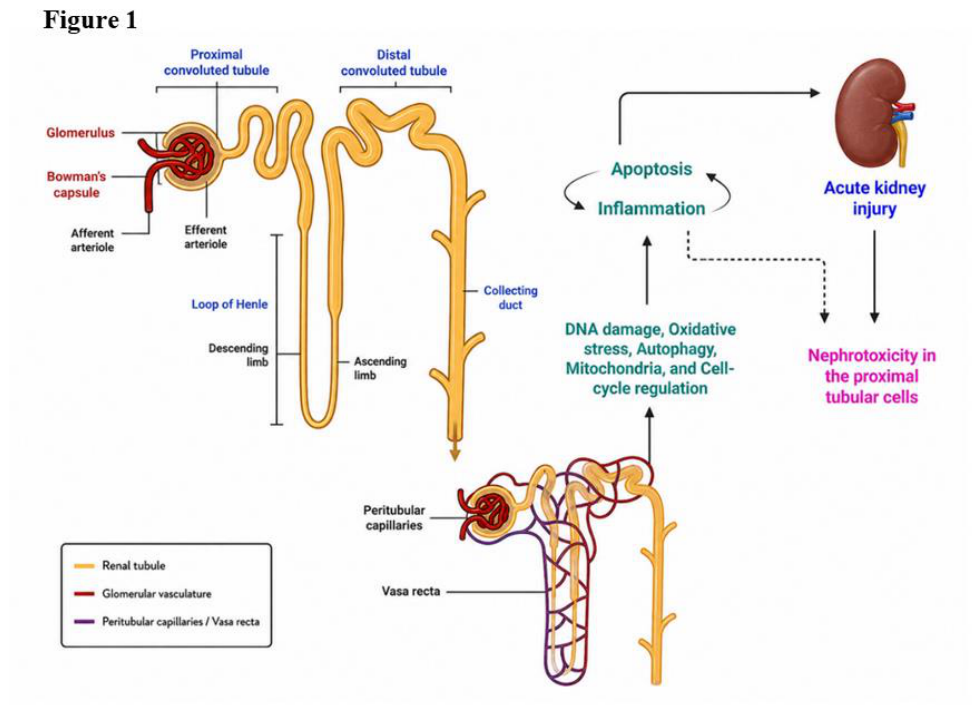
Figure 2.
Mechanisms of drug- and chemical-induced nephrotoxicity. Representative nephrotoxic agents and their principal mechanisms of renal injury are illustrated in this figure. Cisplatin induces TNF-α-mediated inflammation, acetaminophen causes NAPQI-dependent oxidative stress, ACE inhibitors reduce glomerular filtration through renin–angiotensin system inhibition, heavy metals (cadmium, lead, and mercury) produce direct renal toxicity, and gentamicin disrupts protein synthesis in renal tubular cells. These pathways ultimately promote tubular injury, inflammation, oxidative stress, and loss of renal function.
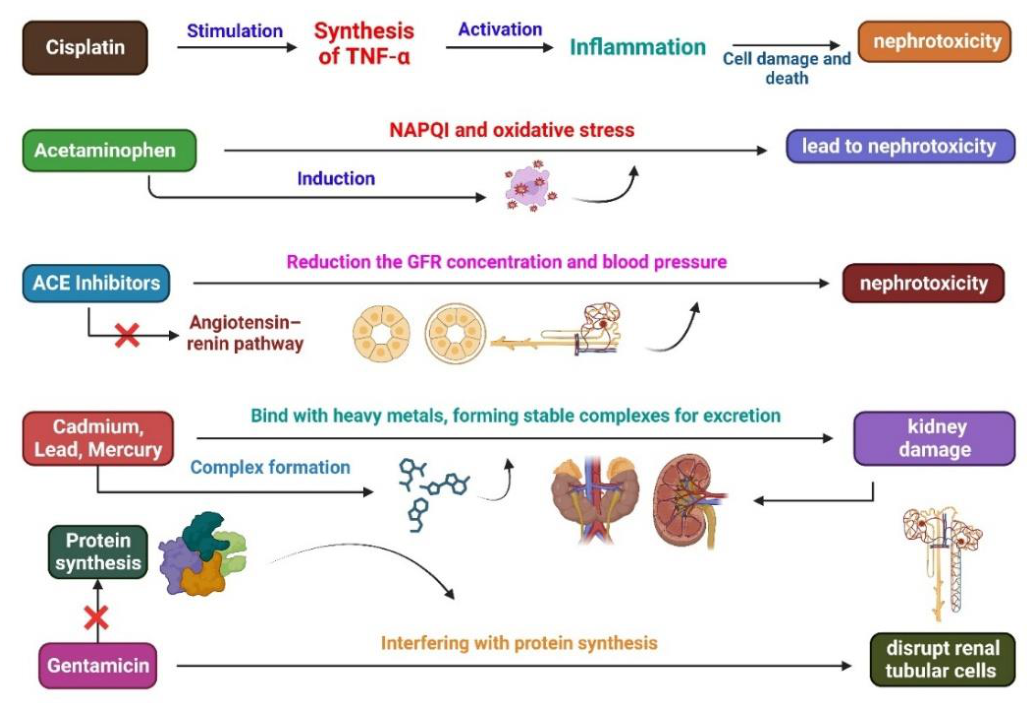
Figure 3.
Nephroprotective mechanisms of phytocompounds and antioxidant therapy. Phytocompounds and antioxidant therapy mitigate toxin-induced kidney injury by enhancing antioxidant defenses and suppressing oxidative stress, inflammation, apoptosis, and cell death.
Figure 3.
Nephroprotective mechanisms of phytocompounds and antioxidant therapy. Phytocompounds and antioxidant therapy mitigate toxin-induced kidney injury by enhancing antioxidant defenses and suppressing oxidative stress, inflammation, apoptosis, and cell death.
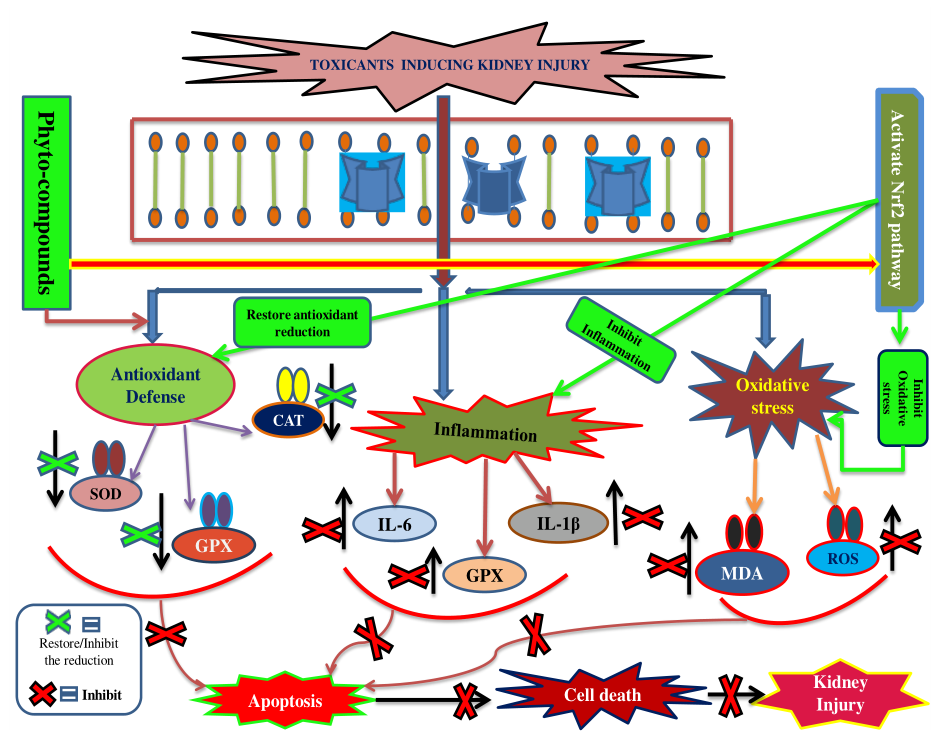
Figure 4.
Representative medicinal plants and phytocompounds with nephroprotective activity. The figure summarizes selected medicinal plants and phytocompounds reported to exert nephroprotective effects through multiple complementary mechanisms. Representative agents, including Punica granatum, Phyllanthus niruri, Hibiscus sabdariffa, Salvia miltiorrhiza, Astragalus membranaceus, curcumin, quercetin, silymarin, epigallocatechin gallate (EGCG), and N-acetylcysteine (NAC), protect against renal injury by reducing oxidative stress and inflammation, preventing nephrotoxicity and kidney stone formation, preserving renal structure and function, and delaying the progression of kidney diseases.
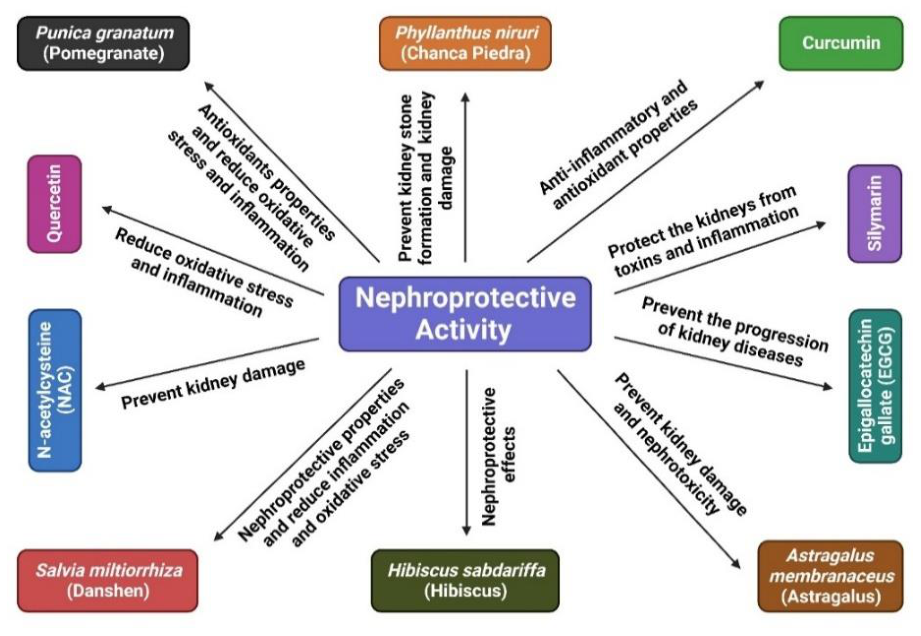
Disclaimer/Publisher’s Note: The statements, opinions and data contained in all publications are solely those of the individual author(s) and contributor(s) and not of MDPI and/or the editor(s). MDPI and/or the editor(s) disclaim responsibility for any injury to people or property resulting from any ideas, methods, instructions or products referred to in the content. |
© 2026 by the author. Licensee MDPI, Basel, Switzerland. This article is an open access article distributed under the terms and conditions of the Creative Commons Attribution (CC BY) license.
Copyright: This open access article is published under a Creative Commons CC BY 4.0 license, which permit the free download, distribution, and reuse, provided that the author and preprint are cited in any reuse.