

Submitted:
27 September 2026
Posted:
29 September 2026
You are already at the latest version
Abstract
Madhya Pradesh bears the highest burden of sickle cell disease (SCD) in India, with four tribal districts—Alirajpur, Anuppur, Chhindwara, and Dindori—accounting for approximately 75% of the existing cases [1]. Sickle cell disease is a genetic blood disease that affects the whole life of an affected patient. Since there is no cure for sickle cell disease, prevention, and holistic care are the mainstay of the sickle cell disease elimination mission. PRERNA - Promoting Resilience in tribal communities by Education and Raising Awareness among New Mothers and Adolescents for Sickle Cell Disease campaign is all about strengthening tribal communities to improve their health and their children’s health through health promotion- education and raising awareness for increasing early detection, genetic counselling, removing stigma, and rapid preventive intervention for management of sickle cell anemia in new mothers, infants, and adolescents. The PRERNA campaign is integrated into the four strategic pillars of “Engage – Educate – Prevent – Build” (EEPB) through systematic dissemination of Social and Behavioural Change Communication (SBCC) strategies to reach the target population. The campaign involves Information, Education, Communication (IEC) and Behaviour Change Communication (BCC) tools, local influencers like tribal heads, teachers, sarpanch and traditional healers, etc., and art and folk forms like Drama, Nukkad Natak, Puppet shows, storytelling for communication dissemination at grass-root level. Social media is another area where we will execute our mass awareness campaign with relative cost-effectiveness. The strategies aim to increase community adaptation by promoting awareness and education of genetics and inheritance for early screening, genetic counseling and management of disease, and spreading the key message that SCD is preventable. The mission of eliminating Sickle Cell Disease can become a reality only when there is public participation, Jan Bhagidari! It is expected that once education and awareness for prevention and management of the disease are translated into practice, this will improve the quality of life, reduce complications, and increase the life expectancy of patients with Sickle Cell Disease. It will also prevent further prevalence of the disease.
Keywords:
sickle cell disease (SCD)
; Behavioural Change Communication (SBCC)
; information
; education
; communication (IEC)
; PRERNA
- Introduction
Sickle Cell Disease (SCD) is the most prevalent hemoglobinopathy, impacting approximately 5% of the world’s population [2]. With over 20 million sickle cell disease patients, India has the highest prevalence of SCD in South Asia [3]. According to the Ministry of Tribal Affairs, SCD trait prevalence is about 10%, and disease prevalence is about 1% in the tribal population of India. Tribes or Scheduled Tribes constitute about 8.6% of India’s population which is about 104 million. A high prevalence of the sickle gene has been demonstrated in various tribal communities of Madhya Pradesh including Patel, Panika, Baiga, Gond, Panihar, Nagarachi, and Kol etc [4]. Tribal Health reports highlighted sickle cell disease as one of the 10 special problems related to tribal health. Data reveals that one in every 86 births in Scheduled Tribes (ST) has Sickle cell disease [5].
Sickle cell disease (SCD) is one of the monogenic disorders of hemoglobin, resulting from a point mutation (Glu > Val) at the 6th position of the β-globin gene on chromosome 11. Patients with the sickle hemoglobin gene exhibit sickle or crescent-shaped erythrocytes, which tend to clump together, leading to vaso-occlusive events, chronic hemolysis, and progressive organ damage [6]. These complications often lead to long-term morbidity and premature mortality.
A large population in tribal communities is unaware of the cause and management of Sickle cell disease [6]. Lack of disease-specific knowledge, low literacy rate, myths, stigma, and associated discrimination with patients of SCD are the key gaps in sickle cell disease screening and management. Sickle cell disease exerts a notable economic and societal burden on individuals and their families, extending beyond its implications for public health. SCD needs lifelong care which can disrupt various facets of patients’ lives, including education, occupational opportunities, mental and social well-being, and personal growth [7].
The highest risk of sickle cell disease complications is present in infants, adolescents, and new mothers. India has the second-highest number of sickle cell disease births in the world, affecting nearly 15% of newborns worldwide [8]. In tribal communities in India, 30% of children with sickle cell disease die before reaching adulthood [8]. The highest rates of SCD-related mortality occur in the first five years of life and even if they survive, lifetime risk of disease remains the same. In addition, Pregnant women with SCD experience severe medical complications, which create additional risks for both women and their fetus. This alarming situation necessitates the implementation of awareness programs targeting infants, adolescents, and mothers within tribal regions for increased early detection and effective treatment of SCD in tribal populations [8].
- Literature Review
A questionnaire-based study was done on “Awareness of Sickle Cell Disease (SCD) And Prevention of Sickle Cell Crisis in Patients with Sickle Cell Disease” shows that in creating awareness among the patients through surveys and educating them about their disease, steps such as family screening, premarital screening and counselling and certain lifestyle modifications have been adapted by the patient [9].
A quasi-experimental study on “The efficacy of maternal health education and maternal screening on knowledge and the uptake of infant screening for sickle cell disease in Dar-Es-Salaam, Tanzania; a quasi-experimental study” emphasizes that maternal health education and maternal screening for SCD are feasible efficacious interventions in raising knowledge and improving the uptake of infant diagnosis for SCD [10].
A questionnaire-based study on “Community Awareness on Sickle Cell Anemia in Tribal Area: An Initiative” revealed the importance of door-to-door awareness and leaflets distribution among tribal communities regarding sickle cell anemia (SCD) treatment and management and aids offered by the government will encourage sustained behaviour change [11].
A cross-sectional descriptive study on "Effect of health education on knowledge and awareness of sickle cell disease among adolescents" demonstrated that health education interventions can significantly improve adolescents’ understanding of SCA, including the risks of having children with the disease in carrier couples. Incorporating health education on SCA into the secondary school curriculum can empower adolescents with the knowledge and awareness to make informed decisions about marriage and childbirth, potentially reducing the prevalence of SCA [12].
A questionnaire-based study on “Demography as a Determinant of Awareness, Knowledge and Attitude of Asaba Youth to Media Advocacy Campaign on Sickle Cell Disorder” demonstrates that teachers and counselors could be a more effective channel of waging the awareness and education campaign on sickle cell [13].
A Quasi-experiment study on “Impact of Educational Programs for Adolescents and Young Adults with Sickle Cell diseases on their Knowledge, Perception, and Self-Care” urges to implementation of educational programs for Self-Management to improve self-care activities in adolescent and early adulthood individuals suffering from SCD [14].
- Research Methodology
The campaign methodology is inspired by the ICMR study “Improving the Capacity of Health System and Community for Sickle Cell Disease Screening and Management Among Tribal Population in India: Protocol of an Intervention Study” [8]. The PRERNA campaign proposes detailed communication strategies that can be implemented in the study. The campaign will leverage Social and Behavioural Change Communication (SBCC) strategies with the help of IEC tools and BCC activities to improve the community’s awareness and community mobilization.
Study Design: Interventional study
Study Population: The study comprises the most vulnerable and easily accessible population groups: new mothers, infants, and school-going children and adolescents of tribal communities in the Anuppur district of MP.
Study Area: The Campaign will be implemented in Tribal schools initiated by MoTA, Anganwadi, and Primary Healthcare Centres of districts that are endemic for SCD.
- Research and Gap Analysis
The assessment of recent scientific literature on SCD in tribal communities and government health data identifies the key communication barriers, gaps, and obstacles that hinder the dissemination of information about SCD among the target audience and provides key recommendations to bridge these gaps.
- Key barriers and gaps
- Remote Location: Remote areas are deprived of basic infrastructures, including health care, therefore health status and health-seeking behaviour of tribals are poor.
- Low literacy rates and own languages: Low literacy rates and own languages often become barriers to understanding the importance of early detection, genetic counselling, and management of SCD, which hinders the further dissemination of knowledge to the community.
- Fear of discrimination and Stigma associated with SCD: The presence of stigma, discrimination, fear of being segregated from society, and rejection in marriage in tribal communities discourage people from revealing SCD status, and participating in screening camps and genetic counselling.
- Pain Crisis and Mental breakdown: Chronic pain, frequent hospitalizations, and the unpredictability of SCD crises contribute to emotional distress, anxiety, and depression.
- Marriage Pattern: The custom of endogamy with a belief of consanguinity results in a huge burden of SCD in the tribal community.
- Scarcity of culturally sensitive health communication materials: The insufficient presence of culturally tailored communication materials creates a void in effective communication, leading to misinformation and reduced engagement in healthcare practices.
- Poor Sustainability of Impact: Poor socioeconomic conditions, different priorities, and waning interest over time hinder sustained engagement of communities beyond the initial campaign period, ultimately impeding long-term impact.
- Recommendations and Implementation:
- Organising SCD Awareness Camps: An essential part of the campaign is to promote early screening and genetic counseling about the hereditary nature of SCD to reduce the risk of passing on the condition to future generations.
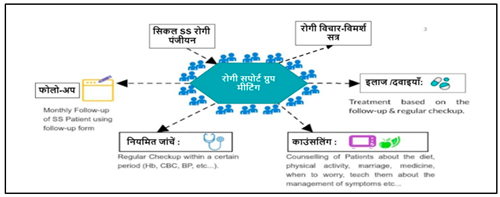
- Counselling Sessions: Counselling sessions are a valuable tool for bridging the emotional connection with SCD patients to increase treatment adherence, overcome mental breakdowns, and promote preventive measures.
- Providing Culturally Tailored IEC Content: The culturally sensitive IEC and BCC materials are required to ensure effective communication, bridge the cultural gap, and retention of information.
- Engaging Community Influencers: Community influencers play a pivotal role in sharing information and mobilizing community support.
- Leveraging Media Tools: Print Media (posters, billboards, booklet or information leaflets), Mass Media (Newspaper, TV/radio jingle) at all health facilities and identified communities for reaching a wider audience.
- Promoting Government aid: It is necessary to inform communities about government schemes for socio-economic support to encourage sustained behaviour change.
Based on the research and gap analysis, The “Engage – Educate – Prevent – Build” (EEPB) strategic pillars would be implemented in two phases;
- First Phase
Engage and Educate: In Phase, I, Various BCC activities and IEC tools will be planned and utilized to increase engagement in sickle cell health promotion programs- “education and sensitization about the cause and complications of Sickle Cell Disease” in Tribal schools, Anganwadi, and Primary Healthcare Centres for effective communication and retention of information to increase sickle cell screening in new mothers, infants, and Adolescents.
- Second Phase
Prevent and Build: In Phase II, Sickle cell Screening will be done, and SCD carriers and patients will be targeted through Household Visits to provide counselling and encourage sickle cell Kundali Milan through Sickle Cell card before marriage to prevent marriage between Sickle cell disease persons to reduce the risk of passing on the SCD in future generations. During Health camps, household visits, and Counselling sessions ASHA and Anganwadi will provide information about SCD disability certification, Sickle cell card generation, and PMJAY package for free screening and SCD medication with nutritional support availability and benefits of other relevant socio-economic schemes for persons affected by sickle cell disease to develop resilience in tribal communities.
- Strategy Goals
The PRERNA campaign aims to ensure effective communication and retention of information for the creation of an informed society, willing to participate voluntarily in screening programs and take steps to prevent births of children affected with the disease and access care if affected by the disease. Resilience can only develop by achieving “Engage – Educate – Prevent – Build” goals.
Engage
| Barrier and Gaps | Goal |
|
|
Educate
| Barrier and Gaps | Goal |
|
|
Prevent
| Barrier and Gaps | Goal |
|
|
Build
| Barrier and Gaps | Goal |
|
|
- Target Audiences
The campaign divides the entire tribal population into different target groups, having a different approach to communication for every group. The success of the PRERNA campaign depends on the active participation and support of both primary and Secondary target groups.
- Primary Target Audience:
Primary audiences include mainly the most vulnerable section and are readily accessible for awareness campaigns due to their regular engagement with primary healthcare centres, Anganwadi centres, and Schools.
- Children and Adolescents: Children and adolescents screening is crucial for early initiation of preventive measures and treatment strategies. Adolescent screening and counselling can prevent marriages between Sickle cell carriers or patients’ and the spread of disease in the next generation.
- Pregnant (antenatal) Women: Pregnant women with SCD are at high risk of death and other pregnancy-related complications. This target group will be useful in reducing the birth of children with Sickle Cell Disease hence reducing the burden of disease.
- Newborn Mother: Newborn Mothers and infants screening for Sickle Cell Disease is vital for early initiation of intervention and counselling services to reduce morbidity and mortality.
- Identified SCD patients: Identified sickle cell disease (SCD) patients are a crucial target audience due to their direct experience with the disease and their ability to influence others.
- Secondary Target Audience:
Secondary audiences include those who directly and indirectly influence the primary audience’s knowledge, attitudes, and behaviours that influence their access and demand for services.
- ASHAs, Anganwadi, and traditional healers: ASHAs, Anganwadi, and traditional healers all have direct reach in tribal communities and more understanding of tribal culture, and their behaviour towards SCD.
- Community Leaders and School Teachers: School teachers and community leaders are the key influencers whose presence and support are vital for effective sickle cell disease (SCD) awareness and intervention programs.
- Parents and Families of SCD patients: Families are pivotal in providing support to individuals with sickle cell disease (SCD).
- Messaging Framework
| Target Audience | Communication Objective | Key Messages |
|
|
|
|
|
|
|
|
|
|
|
आप समझे और सबको भी समझाए;
|
- Communications Channels
A diverse range of communication channels for IEC and BCC strategies dissemination are identified to reach and engage the target audience for promoting Sickle Cell Disease screening, genetic counselling, treatment, and government initiatives.
| Target Audience | Communication Channel |
|
Children and Adolescence Education Programme
|
|
Mamta session in Anganwadi and PHCs:
|
|
हर घर दस्तक तभी होगा सिकल नतमस्तक प्रोग्राम;
|
|
जागो और जगाओ:जागरूकता अभियान
|
|
आप समझे और सबको भी समझाए Workshops / Training:
|
| S.no. | Target group | Channel | Collaterals |
| 1. | School Children and Adolescents |
|
|
| 2. | New Mothers |
|
|
| 3. | SCD Patients |
|
|
| 4. | ASHA, Anganwadi, School Teachers, Traditional Healers and Leaders |
|
|
- Communications Collaterals
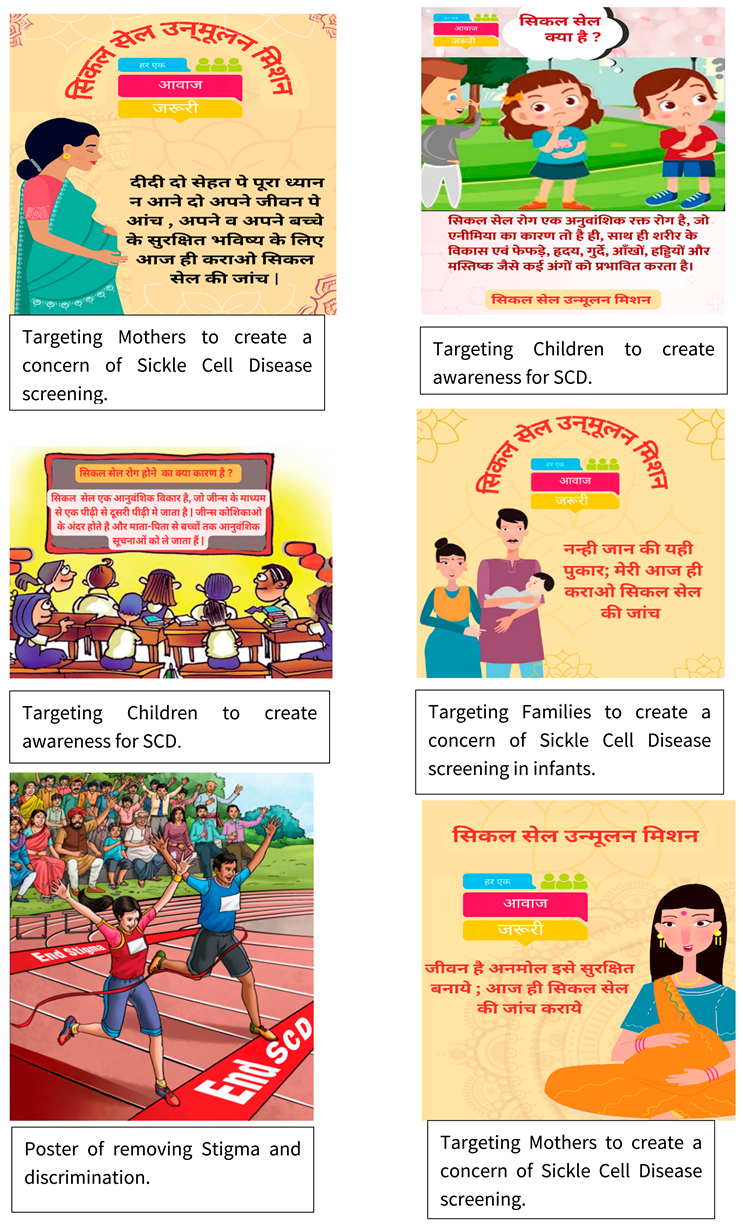
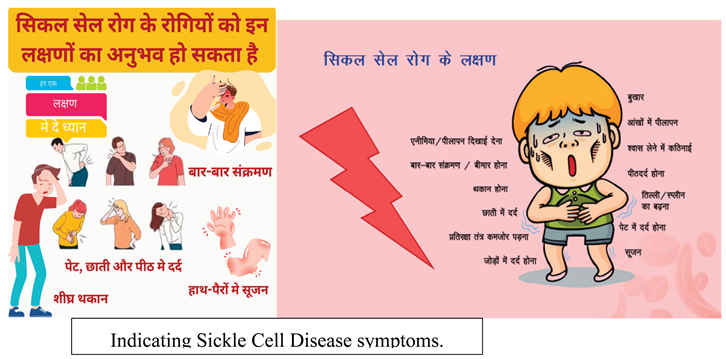
- Google Drive Links
-
Myth Busting Video: Video focuses on breaking myths about SCD.
-
SCD Information Video: Video Provide all information for SCD.
- SCD Information Module: Module explains SCD in Animation. https://drive.google.com/file/d/1-BWMfQmB2hfy-kb-jwVCNoTiCCD_csZk/view?usp=drive_link
- SCD Interview in ICMR-NIRTH: This interview explains SCD and its complications in an easy way. The video also asks for the active participation of each stack holder from tribal communities. https://drive.google.com/file/d/106tYBYJihzF90RhBd2eErcjj-L7ILeEf/view?usp=sharing
- Link of survey forms: https://drive.google.com/file/d/106tl9FD9i6Dve3JJkaCiv0TTefeOCJ0T/view?usp=drive_link
- Champion Engagement
Sickle Cell Warriors:
Sickle Cell Warriors are the local SCD-positive patients who are fighting against sickle cell anemia. Their presence during the campaign is necessary for bridging the emotional gaps. Sickle cell patients not only suffer from physical pain, they also suffer from anxiety, depression, and societal fear. They will share their experience with sickle cell disease in Health Meals, Workshops, and in Mamta sessions to encourage more and more screening and the acceptance of SCD patients in society.
The Traditional healers and the Traditional leaders:
The traditional healers and the traditional leaders can play a crucial role in promoting the PRERNA campaign to generate awareness, felt needs, and acceptance of the services. The traditional leaders are accessible to many people, and hence they have credibility in the community. The traditional healer’s role is situated in the interstices of religion, magic, and the social system of the tribal population and gains its power from this position. Thus, the traditional healers’ role is crucial in influencing people to accept the screening and treatment-seeking.
Before initiating the campaign in villages, a complete plan of action will be discussed with the traditional healers and the traditional leaders and permission will be taken. Health Mela will be organized in PHCs, Gram Bhavan and Anganwadi with the help of leaders. The traditional healers and the traditional leaders will address Jan Sabha to encourage new mothers, children, and other participants to sickle cell screening, and remove stigma and discrimination.
Eminent Scientist/ Doctor working in tribal areas for SCD: Scientists and Doctors are the noblest professions in India. They are the inspiration for every student. The campaign will invite eminent scientists and doctors for SCD-related talk sessions and motivational lectures in schools. They will explain the concept of genetic inheritance and the importance of Sickle cell card matching before marriage to prevent the disease in future generations. The presence of scientists and doctors during the campaign will increase the participation of students and teachers in sickle cell campaigns.
- Monitoring and Evaluation
| Activity | Communication Goals | Success Indicator(s) | Definition of Success Indicator(s) |
| Distributing Sickle Cell Disease IEC materials and organising BCC activity during awareness camps | Creating Awareness about SCD and removing stigma and discrimination. | 50% of participants got a 5/10 score in various activities viz. quizzes, survey forms, etc. conducted during programs, and 25% of new participants engaged in awareness camps. | Awareness survey results and attendance data are indicators of engagement and behaviour change. |
| Organising Health mela, workshops, and awareness camps in schools, Anganwadi, and PHCs. | Increasing participation in Sickle cell Screening | Increased no. of Sickle cell registry and Sickle Cell Card owners in target place. | ABHA ID-based centralized e-registry through the Sickle Cell App and Sickle Cell Card are the best measures to check the prevalence of the disease. |
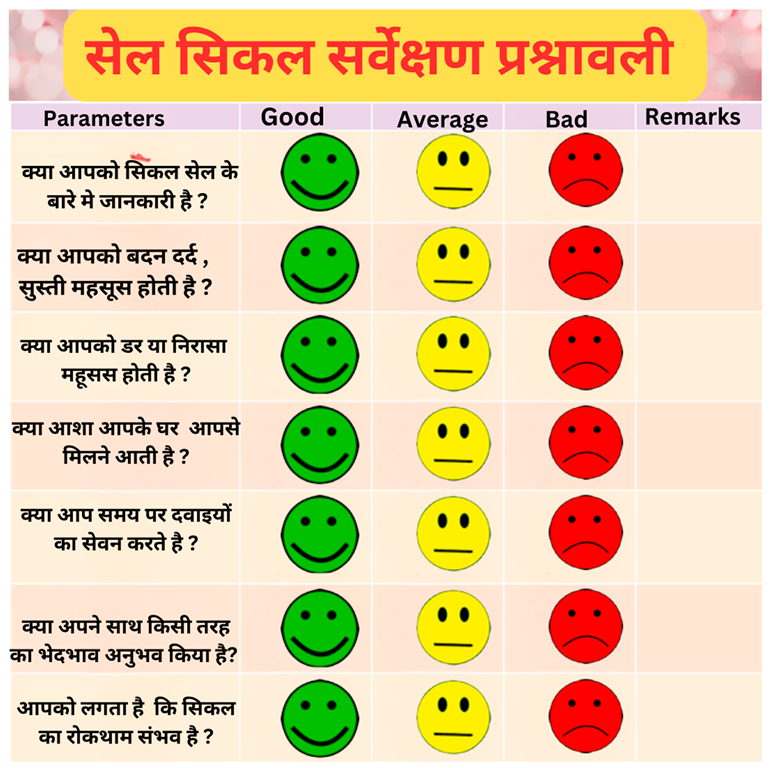
| One-to-one counselling for treatment adherence and Pain management. | Decreased pain crisis in patients |
Patients filling 0 - 2: Mild Pain in Wong-Baker scale. |
Wong-Baker Faces Pain Rating Scale is a method to assess the severity of pain experienced. |
- Discussion: Campaign Strategy
Despite its high prevalence, SCD has been ignored for many decades in India. In 2023 the central government launched the “National Sickle Cell Anaemia Elimination Mission (NSCEM)” that aims to eliminate sickle cell anemia in India by 2047. The mission’s prime focus is to increase screening for Sickle Cell and improve the management of the disease for better quality of life. However, this mission does not give much emphasis on behavioural change interventions, which are essential for effectively controlling and managing SCD.
PRERNA campaign is proposed to bridge the communication gap between current sickle cell-based government initiatives and the tribal population. This campaign can create a “spark of concern: Prerna” for SCD-related health issues among tribes. The campaign targets the most vulnerable section viz. infants, new mothers, and school-going children. These target groups will be our weapon to change the traditional mindsets of tribal communities in the war against sickle cell disease.
In the first phase campaign, we will cover all tribal schools, specifically schools run by MoTA and MP state government. Similarly, we will cover Primary healthcare centres and Anganwadi to target new mothers and their infants. In schools, Anganwadi, and PHCs accessibility to the target audience is quite easy due to their high engagement. This engagement will further increase especially in the case of new mothers through organizing various cultural-specific women-centric programs in PHCs and Anganwadi. IEC and BCC activities will be promoted through organizing talk sessions, workshops, and other activities with the help of sickle cell warriors, tribal leaders, and leaders in PHCs and Anganwadi.
The second Phase of the campaign targets Sickle cell Carriers and positive patients, and their family members. ASHA, Anganwadi along with traditional healers will provide counselling to the patients either by home visits or in schools and PHCs. Health workers will help them get an SCD card, SCD disability certificate, and PMJAY card to avail of government aid for free treatment and scholarships or pensions. During follow-up counselling sessions patients will be guided to avoid marriage with other SCD patients, for free SCD antenatal screening in pregnant mothers, and promote lifestyle changes, nutritional supplements, and adherence to treatment for better quality of life. PRERNA campaign will also leverage health camps, tribal melas various media tools, mobile vans, posters, wall paintings folk arts, etc focusing on stopping stigma, discrimination with sickle carriers, and positives.
In conclusion, the PRERNA initiative stands as a pivotal step in addressing the multifaceted challenges of sickle cell disease within India’s tribal communities. By bridging the gap between government initiatives and the tribal population through targeted, culturally sensitive interventions, it aims to bring about a positive shift in attitudes and behaviours, ultimately contributing to building resilience in tribal communities.
Acknowledgments
I would like to express my heartfelt gratitude to Dr. Nishant Saxena and Dr. Anil Kumar Verma for their invaluable expertise and guidance in shaping this campaign proposal. Their profound expertise and suggestions were invaluable, and I am truly grateful for their support. Their insights and recommendations have been critical in refining the ideas and strategies, ultimately proposing a stronger and more compelling document. I am truly grateful for the time, effort, and wisdom they have generously shared with me throughout the development of this campaign proposal. I am also thankful to Dr. Bontha V. Babu, Dr. Deepa Bhat, and Dr. F.J. Narsingani for providing me with the research articles that I needed for my capstone. I am deeply grateful for their support.
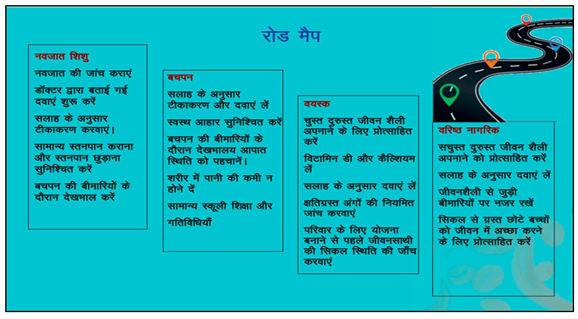
Plan of Action
Step-1
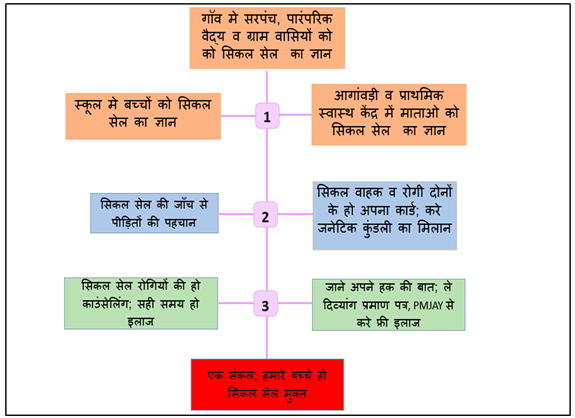
Step-2
Step-3
References
- Kumar S, Bijlwan A. Madhya Pradesh sickle cell mission: An initiative for screening, counseling, and treatment of sickle cell disorders among tribal communities. Journal of Family Medicine and Primary Care [Internet]. 2022 Jan 1;11(7):4101. [CrossRef]
- Bhat D, Babu BV, Surti SB, Ranjit M, Sarmah J, Sridevi P, et al. Stigma of sickle cell disease among Indian tribal population: A multi-centric qualitative study. Journal of the National Medical Association [Internet]. 2023 Oct 1. [CrossRef]
- Babu BV, Sridevi P, Surti SB, Ranjit M, Bhat D, Sarmah J, et al. Inadequate community knowledge about sickle cell disease among the Indian tribal population: a formative assessment in a multicentric intervention study. Transactions of the Royal Society of Tropical Medicine and Hygiene [Internet]. 2021 May 26;115(12):1434–44. [CrossRef]
- Dawar A. ‘STUDY TO- HOW SICKLE CELL ANEMIA AFFECTS, TRIBAL AREA OF CENTRAL INDIA POPULATION’’. Journal of Population Therapeutics and Clinical Pharmacology [Internet]. 2023 Aug 16. [CrossRef]
- Samvaad D. Ministry of Tribal Affairs, Government of India [Internet]. Available from: https://tribal.nic.in/sickle-cell-disease-piramal-swasthya.aspx.
- Kumar D, Singh T, Vaiyam P, Banjara P, Saini S. Identifying potential community barriers for accessing health care services context to health for all in rural-tribal geographical setting in India: A systematic review. Journal of Community Health Management [Internet]. 2022 Dec 15;9(4):169–77. [CrossRef]
- Das A, Dixit S, Barik M, Ghosal J, Babu BV, Bal M, et al. Knowledge and perception related to sickle cell disease among tribal community, India: A mixed-method study. Journal of the National Medical Association [Internet]. 2023 Aug 1;115(4):441–53. [CrossRef]
- Babu BV, Sridevi P, Surti SB, Ranjit M, Bhat D, Sarmah J, et al. Improving the capacity of health system and community for sickle cell disease screening and management among tribal population in India: Protocol of an Intervention Study. PubMed [Internet]. 2020 Dec 12;46(3):270–9. Available from: https://pubmed.ncbi.nlm.nih.gov/33304628. [CrossRef]
- Rautray K, Acharya S, Shukla S, Acharya N. Awareness On Sickle Cell Disease (SCD) And Prevention Of Sickle Cell Crisis In Patients Of Sickle Cell Anemia. A Questionnaire Based Study. International Journal of Medical Science and Clinical Invention [Internet]. 2016 Feb 3. [CrossRef]
- Tutuba H, Jonathan A, Lloyd WE, Masamu U, Marco E, Makani J, et al. The efficacy of maternal health education and maternal screening on knowledge and the uptake of infant screening for sickle cell disease in Dar-Es-Salaam, Tanzania; a quasi-experimental study. BMC Public Health [Internet]. 2023 Jan 10;23(1). [CrossRef]
- Desai C, Desai A, Bhandari K, Shah B. Community awareness on sickle cell anemia in Trible area: An initiative. J PharmSci Bioscientific Res. 2014;4(6):362-264.
- Ezenwosu OU, Chukwu B, Ndu IK, Uwaezuoke NA, Ezenwosu IL, Udorah IM, et al. Effect of health education on knowledge and awareness of sickle cell disease among adolescents. Sahel Medical Journal [Internet]. 2021 Jan 1;24(1):43–7. Available online: https://doaj.org/article/87fdaa8142dc49e794d84e98cc44f089. [CrossRef]
- Ajilore K, Onyenankeya K, Morka E, Akoja M, Akintayo B, Ojomo O. Demography as a determinant of awareness, knowledge, and attitude of ASABA Youth to media advocacy campaign on sickle cell Disorder. Global Journal of Health Science [Internet]. 2018 Oct 13;10(11):19. [CrossRef]
- Hassan K, AhmedQalawa SA. Impact of Educational Program for Adolescents and Young Adults with Sickle Cell diseases on their Knowledge, Perception, and Self-Care. Indian Journal of Public Health Research and Development [Internet]. 2021 Jan 23. [CrossRef]
- Babu BV, Srid P, Surti SB, Bhat D, Sarmah J, Gódi S, et al. Sickle cell disease-related knowledge and perceptions of traditional healers in tribal communities in India: implications on sickle cell disease program. Research Square (Research Square) [Internet]. 2022 Jul 6. [CrossRef]
- Pandey A, Borah S, Chaudhary B, Rana S, Singh H, Nadkarni A, et al. NBSP: an online centralized database management system for a newborn sickle cell program in India. Frontiers in Digital Health [Internet]. 2023 Sep 13;5. [CrossRef]
- Babu BV, Sharma Y, Sridevi P, Surti SB, Ranjit M, Bhat D, et al. Feasibility of population-based screening of sickle cell disease through the primary health care system in tribal areas of India. Journal of Medical Screening [Internet]. 2022 Aug 28;30(1):28–35. [CrossRef]
- Babu BV, Sridevi P, Surti SB, Ranjit M, Bhat D, Sarmah J, et al. Peripheral health workers’ knowledge and experience related to sickle cell disease: an in-depth interview study in six tribal-dominated districts of India. Journal of Community Genetics [Internet]. 2022 Feb 1;13(3):329–38. [CrossRef]
- Aggarwal P, Bhat D. Genetic counselling in sickle cell disease: Insights from the Indian tribal population. Journal of Community Genetics [Internet]. 2023 Aug 4;14(4):345–53. [CrossRef]
- Bediako SM, Lanzkron S, Diener-West M, Onojobi G, Beach MC, Haywood C. The Measure of Sickle Cell Stigma: Initial findings from the Improving Patient Outcomes through Respect and Trust study. Journal of Health Psychology [Internet]. 2014 Jul 4;21(5):808–20. [CrossRef]
- Google Drive link for collaterals: https://drive.google.com/drive/folders/1HkMeZt2kFSsQ2cBdVfM7uoNw7Tz9wwR0?usp=drive_link.
Disclaimer/Publisher’s Note: The statements, opinions and data contained in all publications are solely those of the individual author(s) and contributor(s) and not of MDPI and/or the editor(s). MDPI and/or the editor(s) disclaim responsibility for any injury to people or property resulting from any ideas, methods, instructions or products referred to in the content. |
© 2026 by the author. Licensee MDPI, Basel, Switzerland. This article is an open access article distributed under the terms and conditions of the Creative Commons Attribution (CC BY) license.
Copyright: This open access article is published under a Creative Commons CC BY 4.0 license, which permit the free download, distribution, and reuse, provided that the author and preprint are cited in any reuse.