

Submitted:
24 September 2026
Posted:
25 September 2026
You are already at the latest version
Abstract
This study investigates the taphonomic history, site formation processes, and paleontological and archaeofaunal record of Casa de Piedra 1 (CP1) in the Argentine Dry Pampas. The assemblage forms a long-time palimpsest that integrates materials spanning different temporal scales, including reworked Late Cretaceous–Paleocene marine animals and Holocene continental zooarchaeological fauna. The record reflects the combined effects of long-term fluvial reworking, surface exposure, vegetation development, pedogenesis, carbonate precipitation, and anthropogenic activities. These processes degraded skeletal preservation and obscured bone surface modifications, yielding a moderate- to low-resolution palimpsest and indicating that observed alteration frequencies represent minimum estimates. The assemblage preserves recurrent evidence of faunal resource exploitation—primarily Rhea sp. eggshells and large vertebrates—aligning with regional archaeozoological patterns and indicating continuity in hunter-gatherer subsistence during the Holocene. Furthermore, CP1 suggests the long-term persistence of arid, open xerophytic habitats throughout the Holocene within a broader framework of regional paleoenvironmental variability. Overall, CP1 illustrates how complex interactions between recurrent human occupations and multi-scale sedimentary and diagenetic processes shape the archaeological record.
Keywords:
faunal record
; taphonomy
; site formation processes
; Late Cretaceous - Paleocene
; Holocene
1. Introduction
In paleontological and archaeological research, understanding the formation processes of site assemblages is critical to reconstructing paleodietary, paleoecological, and paleoenvironmental contexts [1,2]. A recurring challenge in stratified contexts is the formation of palimpsests, where materials from different chronological periods or paleoecological contexts become spatially superimposed due to post-depositional processes [2,3,4,5]. When archaeological records overlap with pre-existing paleontological strata, natural processes such as sediment reworking, bioturbation (e.g., burrowing fauna), and fluvial transport can intimately mix these distinct assemblages, collapsing thousands or millions of years of separate events into a single, deceptive stratigraphic layer [1,3,4].
Isolating these mixed accumulations is essential for accurate chronological and behavioral modeling. Failure to differentiate between anthropic (human-induced) and natural deposits can lead to erroneous interpretations regarding human prey selection, predator, paleodiets, and fossil reworking. Furthermore, ongoing post-depositional processes—such as subaerial weathering, root etching, and diagenetic mineral alteration—can severely mask or obliterate the original bone surface modifications (such as butchery cut marks or carnivore gnawing), further complicating the binary separation of cultural and natural inputs [1,2,3,4,5]. Therefore, integrating multi-proxy approaches—specifically taphonomic, taxonomic, and geological analyses—is fundamental to evaluating the temporal resolution and integrity of these complex records. By systematically disentangling these palimpsests, researchers can transform what are traditionally viewed as analytical obstacles into rich highly informative sources of site-formation data [6].
Located in the Dry Pampa of Central Argentina, Casa de Piedra 1 (CP1 hereafter) preserves an exceptional palimpsest merging Late Cretaceous–Paleocene and Quaternary fossils with Holocene zooarchaeological remains. The site holds paleontological significance due to surrounding outcrops of the marine sedimentary rocks of the Jagüel and Roca Formations, rich in invertebrate and vertebrate fossils [7]. Archaeologically, CP1 records the earliest human presence in the region, featuring Early Holocene human, faunal, and lithic assemblages [8].
To address the complexities of this mixed record, this study presents a comprehensive taxonomic, taphonomic, and paleoenvironmental analysis of these co-occurring faunal assemblages. The primary objectives are to evaluate site formation processes—specifically the generation of archaeological-paleontological palimpsests at CP1—and to contribute new data regarding human paleodiet during the Holocene. To achieve this, the identified taxa were categorized according to their chronological and taxonomic origin: 1) Late Cretaceous/Paleocene; 2) Holocene (archaeological).
1.1. Study Area
CP1 is specifically situated in the middle course of the Colorado River (38°11′ S, 67°11′ W; 245 m a.s.l.; Figure 1A-B), in the Puelén Department, La Pampa Province [8]. The site is now submerged beneath the Casa de Piedra reservoir (Figure 1B). Prior to reservoir inundation, the Colorado River nearest CP1 was approximately 41 m wide and confined within a narrow rocky channel. Although the river displayed morphologically senile features, including nearly anastomosed meanders west of the site, its relatively rapid flow reduced the accumulation of suspended sediments [8].
The Pampean region, broadly defined, encompasses the central plains of Argentina and is climatically divided into two subregions: Humid Pampa to the east (covering most of Buenos Aires Province) and Dry Pampa to the west (primarily La Pampa Province and the western fringe of Buenos Aires Province) [9]. The latter is of relevance to the present study. The climate in the Dry Pampa is characterized by cold winters and hot summers, with temperatures ranging between 42 °C and −11 °C and a mean annual temperature of 14–16 °C [10]. Relative humidity averages 53%, while annual precipitation is low, not exceeding 200 mm, with prolonged drought periods occurring between rainfall events. The area is surrounded by stepped plateaus and sedimentary escarpments, associated with the Jagüel and Roca Formations from the Late Cretaceous–Paleocene [7]. The landscape is characterized by a gently undulating mesorelief shaped by aeolian processes, with Quaternary dunes and deflation areas forming an arid plateau environment. In addition, CP1 is located within the Monte Phytogeographic Province, in a low-cover zygophyllaceous steppe (Larrea spp. and Parkinsonia aculeata) environment corresponding to the Southern or Typical Monte [11] (Figure 1A-B).
1.2. Casa de Piedra Site
Archaeological fieldwork at CP1 was conducted between 1977 and 1985 by an interdisciplinary team led by Carlos Gradín as part of a salvage program prior to the construction of the Casa de Piedra reservoir [8]. Located on a low alluvial terrace on the northern bank of the Colorado River (~1000 m from the current dam-bridge structure), the site was partially degraded by earth-moving activities and traffic associated with dam built before archeological excavation, though the main site area was protected [8]. Flooding events, notably in 1914, more than 5 m rise in water level and the width of the river increased from 40 to 800 m in the west of Casa de Piedra [12], may have also impacted the site surface. Reservoir filling submerged CP1 in 1989. Following a test excavation in 1978, extensive excavations from 1979 to 1983 opened a trench (~10 × 2 m) covering 26.5 m² (excluding profiles), excavated in 5–10 cm artificial levels [8].
Based on the spatial distribution of archaeological materials, stratigraphic depth, and radiocarbon chronology, Gradín [8] proposed three occupational periods (Figure 1D): Period I (PI; 8620 ± 190 BP, 9197–10176 cal BP; charcoal sample; 180–245 cm below surface), Period II (PII; 6080 ± 120 BP, 6629–7173 cal BP; charcoal sample; 80–180 cm below surface), and Period III (PIII; surface to 80 cm below surface).
PI is characterized by light grayish-brown sandy to silty sediments, whereas PII is composed mainly of fine-grained grayish-brown sandy sediments. In contrast, PIII consists of silty sediments containing small pebbles and marl fragments [8]. Excavations also documented several natural pebble concentrations interpreted as the result of water flows active during different stages of sediment accumulation. These deposits allowed the recognition of at least three major sedimentary phases between the present surface and the consolidated calcareous bedrock. Toward the base of the succession, calcium carbonate and larger pebbles increase, while ancient hearth features—evidenced by charcoal concentrations and thermally altered sediments associated with human-transported rocks—are concentrated in the middle and lower strata [8]. Identified tool types included projectile points, projectile point preforms, regularly shaped bifacially flaked pieces, scrapers, side scrapers, and knives. Choppers, chopping tools, incomplete bifaces, hammerstones, handstones and grinding stones, spheroids, burned stones, and transported pebbles were also recorded [8]. During the 1980 excavation campaign, human skeletal remains were recovered from a primary burial (grid E1 at a depth of 128 cm) in a very poor state of preservation [8]. The remains were associated with a small funerary assemblage in which the body appears to have been interred with artifacts constituting the individual’s personal belongings, denoting his unquestionable condition as a hunter [8]. The recovered bones exhibited a very poor state of preservation and were therefore impregnated with lacquer dissolved in alcohol while still in situ to harden and preserve them. An adult individual of medium stature and male sex was identified [8].
The preliminary analysis of the CP1 archaeofaunal assemblage suggests that the recovered remains were scarce and included specimens of mammals, birds and scarce fragments of pearly freshwater mussels [8], as well as highly reworked Late Cretaceous-Paleocene fossil remains. The site is surrounding by well-exposed outcrops of marine sedimentary rocks assigned to the Jagüel and Roca Formations. Both lithostratigraphic units constitute the record of the first marine incursion from the Atlantic Ocean in Neuquén Basin, northern Patagonia, and are characterized by preserving abundant macroinvertebrates, including bivalves, gastropods, bryozoans, echinoderms, crustaceans, and brachiopods [13,14,15]. Micropaleontological content is likewise very abundant, represented by ostracods, foraminifera, and calcareous nannoplankton [16,17], alongside a notable vertebrate record comprising primarily marine reptiles and fishes [18,19].
2. Materials and Methods
The archaeological materials are housed in the collections of the Archivo Histórico Provincial “Prof. Fernando E. Aráoz” (Santa Rosa, La Pampa) and the Paleontological Collection of the Facultad de Ciencias Exactas y Naturales, Universidad Nacional de La Pampa (Santa Rosa, La Pampa). The specimens were analyzed macroscopically and with 20x hand lens. Anatomical and taxonomic identification and quantification were conducted using comparative osteological collections from the Grupo de Estudios en Arqueometría (GEArq, Facultad de Ingeniería, Universidad de Buenos Aires), the Museo Argentino de Ciencias Naturales Bernardino Rivadavia (MACN), and osteological atlases [20,21]. Mammals were grouped into body-size categories according to body mass: small (<1 kg), small-medium (1–15 kg), medium-large (15–50 kg), and large (>50 kg), and recovered remains were classified according to these groups. Taxonomic and anatomical abundance was quantified using Number of Identified Specimens (NISP), Minimum Number of Individuals (MNI), Minimum Number of Elements (MNE). The Number of Specimens (NSP), which includes all remains within an archaeofaunal assemblage, was also used [22]. Indeterminate specimens were grouped under the category non-identifiable (NID). Eggshell fragments were quantified separately.
To evaluate the natural or anthropogenic incorporation of faunal remains from a taphonomic perspective, the effects of several natural processes were recorded, including burning [23], weathering [24], root etching [25,26], trampling, abrasion, sedimentary corrosion, carbonate encrustations, and manganese oxide staining [27] and references cited therein. Carbonate encrustations were quantitatively assessed according to the percentage of cortical surface coverage using a five-stage scale ranging from 0 (0%) to 4 (75–100%) [28]. A qualitative assessment was also conducted based on the morphology and distribution of carbonate deposits and the degree of visibility of the bone surface. Taphonomic attributes were quantified as percentages of the total NISP (NISP%). Since a single specimen may display multiple taphonomic modifications, the recorded attributes are not mutually exclusive. Therefore, the NISP% values reported for each variable overlap and do not sum to 100%.
The mollusc specimens recovered from each sample were separated for observation of their paleontological and taphonomic features (disarticulation, fragmentation, corrasion, encrustation and bioerosion). To estimate the degree of fragmentation two categories were established: (1) whole shells, when the specimens showed little or no fragmentation; and (2) shell fragments. Corrasion (sensu [29]) was assessed based on the overall degree of degradation on the external surface of the shells due to the combined effect of dissolution and physical abrasion, considering: (1) low or null, when the specimens retained well-preserved sculpture; (2) moderate, when the sculpture was worn; and (3) high, when the sculpture was lost. The presence of encrustation and bioerosion was also described.
Anthropogenic modifications included the identification of impact notches [27,30] and bone fractures [31]. Thermal alteration was evaluated through color, texture, and surface distribution patterns to distinguish intentional burning from natural fire exposure [32,33].
Micromammal remains (<1 kg) were taxonomically and anatomically analyzed. Digestive corrosion on teeth and postcranial elements (proximal femora and distal humeri) was evaluated [34].
Diagenetic processes, including mineral deposits and impregnations, were analyzed using a FESEM microscope (ZEISS GeminiSEM 360) at the Microscopy Laboratory of the Instituto de Ciencias de la Tierra y Ambientales de La Pampa (INCITAP, CONICET–UNLPam). The statistical analyses Non-Metric Multidimensional Scaling (NMDS) were performed using PAleontological STatistics software, version 5.2.1. [35].
3. Results
A total NSP of 4,234 specimens was calculated for CP1 (Table 1 and Table 2). Likewise, a total NISP of 482 was recorded, whereas unidentified specimens (NID) accounted for 395 in PI, 941 in PII, and 284 in PIII. The total MNE was 85 (PI = 14; PII = 56; PIII = 15), and the total MNI was 49 (PI = 8; PII = 28; PIII = 13). In addition, 2,132 eggshell fragments not included in the NISP were identified (PI = 244; PII = 1,699; PIII = 623).
3.1. Palaeontological Record
3.1.1. Taxonomic Structure
A total NISP of 70 was recorded to palaentological record (PI = 17; PII = 39; PIII = 14) (Table 1). The sample includes 69 invertebrate specimens and one tooth of a fossil modern shark, (Odontaspis sp., Elasmobranchii) (Figure 2A) (Table 1). Although the majority of the recovered remains are fragments, the taxa identified in the palaeontological record of CP1 indicates that them are specimens found in the Jagüel and Roca Formations, which date from the Late Cretaceous (Maastrichtian) to the Paleocene (~70-60 Ma).
3.1.2. Taphonomic Analysis
Most of the recovery remains are fragments (82.6%). Only ten almost complete oyster valves and two fragmented specimens of turritelline gastropods were recorded. Across the entire mollusk assemblage, evidence of corrasion was highly prevalent, affecting 91.3% of the specimens, while 8.7% exhibited moderate corrasion (Table 2). Bioerosion traces were also recorded, including polychaete borings assigned to Maeandropolydora and Caulostrepsis (7.2%), as well as only one valve with a drilling predatory trace by gastropods assigned to Oichnus.
Sediment encrustation was recorded on 40.6% of the specimens, whereas encrusting bryozoans were identified on 2.9% and iron or manganese oxide staining on 4.3% of the remains (Table 2).
3.2. Archaeological Record
3.2.1. Taxonomic Structure
The archaeofaunal assemblage analyzed in this study is temporally assigned to the Holocene. A total NISP of 412 (PI = 81; PII = 234; PIII = 97) and MNI of 85 (PI = 10; PII = 37; PIII = 10) were taxonomically identified in the archaeological assemblage, the majority of which correspond to mammals (Table 3). The most frequent taxon was the cavine rodent Microcavia australis (PI NISP%= 13.58; PII NISP%= 16.24; PIII NISP%= 11.34). Other taxa—including mammals (Conepatus chinga, Chaetophractus sp., Dolichotis patagonum, Ctenomys sp., Galea leucoblephara, and Tympanoctomys barrerae), paleognathous birds (Rhea sp.), and bivalve molluscs (Diplodon sp.)—were represented at frequencies lower than 5% (Table 3). Broader taxonomic categories were also identified, including small indeterminate birds, large indeterminate mammals, medium-large indeterminate mammals, medium-small indeterminate mammals, indeterminate Artiodactyla, Camelidae, Canidae, indeterminate Rodentia and Caviidae (Table 3).
3.2.2. Biostratinomy
A low proportion of archaeological specimens exhibited pre-depositional natural bone modifications. Among these, evidence of weathering (NISP%= 9.22), trampling (NISP%= 0.24) and digestive corrosion (NISP% = 0.72) was identified (Table 4). In the case of unidentified remains, a moderate to high proportion also displayed evidence of weathering (NID%= 28.33).
Evidence of weathering was identified in low proportions across all periods at CP1 (PI NISP%= 8.64; PII NISP%= 11.96; PIII NISP%= 3.09) (Figure 3A), including stage 1, and 3. In the case of unidentified specimens, a predominance of stage 1 weathering was recorded (PI NID%= 37.72; PII NID%= 26.03; PIII NID%= 1.40), followed by stage 2 (PI NID%= 4.05; PII NID%= 4.35) and stage 3 (PII NID%= 0.42). Trampling marks were identified exclusively on a single indeterminate bird specimen corresponding to PI (Table 4). Regarding the action of raptors, digestive corrosion was observed on proximal femur remains of indeterminate Rodentia, including both light (PII) and moderate (PI) degrees of digestion. In addition, heavy digestive corrosion was identified on a mandible with teeth of Microcavia australis (PI) (Figure 3D) (Table 4).
3.2.3. Fossildiagenesis
Post-depositional natural bone modifications were identified in a moderate proportion of the archaeological specimens, including root marks (NISP% = 13.34), carbonate encrustation (NISP% = 54.85), manganese oxide staining (NISP% = 1.45), and sedimentary corrosion (NISP% = 38.83) (Tabla 4). In the case of unidentified remains, a moderate to high proportion also displayed carbonate encrustation (NID% = 37.28) and root marks (NID% = 2.71).
Root action marks affected a low proportion of specimens (Figure 3B and C) (PI NISP%= 14.81; PII NISP%= 17.52; PIII NISP%= 2.06) (Table 4). Remains with carbonate encrustation (see below) were recorded in all periods (Figure 3E) (PI NISP%= 21.22; PII NISP%= 63.24; PIII NISP%= 61.85), reaching moderate levels in PII and PIII. Similar results were observed for unidentified specimens (PI NID%= 3.54; PII NID%= 48.14; PIII NID%= 46.83). In addition, different stages of carbonate encrustation were identified for the NISP, with stages 3 (75%) and 4 (100%) being the most frequent in PII and PIII. In the case of unidentified specimens, approximately half exhibited 100% carbonate coverage (stage 4) in PII and PIII, whereas in PI only a few specimens showed stage 2, 3, and 4 coverage. Most of the assemblages displayed a thin powdery film, while thick coatings and concretions were recorded in a few cases. Likewise, in most specimens exhibiting carbonate encrustation, the visibility of the bone surface was poor.
FESEM-EDS analyses of the bone encrustation across three representative areas (Figure 4A) revealed elemental compositions consistently dominated by oxygen, calcium, and carbon, alongside moderate concentrations of phosphorus and silicon, and minor others (aluminum, iron, potassium, magnesium, sodium, sulphur, chlorine). Spectrum 1 (Figure 4B) was characterized by high values of oxygen, carbon, and calcium, with moderate phosphorus and silicon. Spectrum 2 (Figure 4C) exhibited similar oxygen and calcium contents but lower carbon and higher silicium, aluminum and iron. In contrast, Spectrum 3 (Figure 4D) displayed the highest proportions of oxygen, carbon, calcium, phosphorus, with the lowest concentrations of silicium, aluminum and iron. Overall, this elemental profile points to a calcium carbonate phase, likely calcite, as the primary component of the encrustation. The ubiquitous phosphorus content reflects the influence of the underlying bone bioapatite, whereas the trace fluorine in Spectrum 3 suggests localized diagenetic alteration of the bone mineral.
Corrosion selectively affected Rhea sp. eggshell specimens across all three occupational periods at low frequencies (Figure 3F). FESEM-EDS analyses (Figure 5A–B) demonstrated a distinct compositional gradient from the unaltered surface to the corroded core, recording progressive diagenetic alteration. The original, intact eggshell surface (Spectrum 1, Figure 5C) was dominated by calcium and oxygen, corresponding to the original biogenic carbonate matrix (calcite), with minor iron and silicon tracing incipient sediment contact. The transition zone (Spectrum 2, Figure 5D) showed elevated iron and silicium levels, signaling the advancement of the diagenetic alteration front into the superficial microstructures through initial sediment incorporation. This alteration peaked in the corroded center (Spectrum 3, Figure 5E), which exhibited strong calcium depletion coupled with marked enrichment in silicon, aluminum, potassium, and iron. This elemental association is consistent with an aluminosilicate-rich matrix, most likely composed of detrital clay minerals—indicated by the co-occurrence of silicon, aluminium, and potassium—derived from the surrounding sediment during burial. Additionally, iron enrichment suggests the precipitation of iron oxides and/or hydroxides that acted as cementing agents, mechanically binding these fine-grained sedimentary particles to the eggshell surface.
To evaluate the action of natural taphonomic agents according to the stratigraphic levels of CP1, a Non-Metric Multidimensional Scaling (NMDS) analysis was performed based on the number of specimens (NSP) exhibiting evidence of natural modifications (Figure 6). Depth appeared to increase toward the upper right quadrant, suggesting that assemblage composition changes gradually with depth. Although a partial structuring of the natural variables according to depth was observed, as evidenced by the positive orientation of the environmental variable “depth,” the arrangement of the levels does not follow a strictly sequential pattern, suggesting non-linear compositional variations throughout the stratigraphic profile.
The adjusted residuals indicate that values higher or lower than 1.96 are concentrated in the stratigraphic levels below 60 cm depth (Table S1). In the case of weathering, this variable changes across different levels, with low values observed near the surface. This indicates that the frequencies are ordered according to depth. In other words, it can be suggested that the frequency of the taphonomic variables varies, at least in part, in association with depth.
3.2.4. Anthropic Bone Modifications
A low proportion of bone remains exhibiting anthropogenic modifications was identified (Table 5). Fresh fractures (NISP% = 4.12), impact notches (NISP% = 0.72), and thermal alteration (NISP% = 17.47) were recorded. Additionally, 3.89% of the eggshell fragments displayed evidence of thermal alteration (Table 5).
Fresh fractures were identified on long bone remains of indeterminate Mammalia G, Artiodactyla, and Camelidae (PI NISP% = 1.23; PII NISP% = 5.55; PIII NISP% = 3.09). Impact notches were recorded exclusively in PIII on a small number of postcranial specimens assigned to Rhea sp., indeterminate Mammalia G (Figure 3G), and Camelidae (PIII NISP% = 1.28). It was determined that 23.07% of the fresh fractures observed in PIII were associated with impact notches (Table 5).
Regarding thermal alteration, very few specimens of indeterminate Mammalia G (Figure 3G), Artiodactyla, Zaedyus pichiy, and indeterminate Rodentia exhibited advanced burning. In the case of Z. pichiy, the thermally altered remains correspond to osteoderms partially burned on both surfaces. Among the unidentified remains, a low proportion of specimens displayed thermal alteration throughout all periods (PI NID% = 5.06; PII NID% = 2.97; PIII NID% = 7.08). Across the three periods, unidentified remains exhibiting advanced burning were the most frequent (PI NID% = 3.29; PII NID% = 1.16; PIII NID% = 3.87), whereas carbonized (PI NID% = 1.26; PII NID% = 1.06; PIII NID% = 2.11) and calcined remains (PI NID% = 0.25; PII NID% = 0.31; PIII NID% = 0.35) were less common.
It should be noted that the shell fragments assigned to Diplodon sp. exhibited no evidence of anthropogenic modification. Consequently, their attribution to the archaeological context remains interpretive, resting on broader spatial and contextual considerations of the site’s overall record (see section 6.1).
3.2.5. Anatomical Representation
Only scarce fragments were anatomically identified. Regarding skeletal part representation, Rhea sp. was represented exclusively by long bone elements during Periods I and II (Figure 7). Chaetophractus sp. was represented by ribs (Period II), scapula (Period II), radii (Period I), ulna (Period III), femora (Period III), and metapodials (Periods I and II). Ctenomys sp. (Period II), Microcavia australis (Periods I, II, and III), and Galea leucoblephara (Period II) were represented by maxillary, mandibular and postcranial elements throughout the occupational sequence. Finally, a single mandible of Tympanoctomys barrerae was identified in Period II.
4. Discussion
4.1. Deep-Time Palimpsests and Paleoenvironments
The CP1 assemblage represents a complex, multi-temporal palimpsest resulting from the cumulative interaction of fluvial dynamics and sedimentary reworking, surface exposure, burial processes, and subsequent diagenetic alterations. Rather than reflecting a single depositional event, the archaeological layer incorporates materials of contrasting origins, ages, and taphonomic trajectories.
The invertebrate record clearly illustrates this multi-temporal mixing. Complete and fragmented fossil mollusks display severe physical modifications, including high disarticulation, fragmentation, and corrasion. These features, combined with pervasive calcite specimens preservation, point to prolonged transport and physical reworking. The occurrence of Late Cretaceous–Paleocene marine molluscs throughout the sampled levels is best explained by fluvial erosion of the local bedrock and subsequent redeposition during river-level fluctuations. This process would account for the incorporation of allochthonous materials of different ages into the archaeological deposit.
The vertebrate assemblage similarly records distinct histories of exposure and burial. Low frequencies of weathering on large mammal remains (indeterminate Mammalia, Artiodactyla, and Camelidae) indicate brief surface exposure prior to burial. However, because large mammal bones resist subaerial weathering better than those of smaller vertebrates [36,37], more fragile taxa, particularly birds, were likely destroyed, leading to their underrepresentation. Conversely, micromammal remains display minimal weathering and overall excellent preservation, reflecting rapid burial along distinct taphonomic pathways. It should be considered that several of the micromammal taxa (Caviidae and Octodontidae) whose remains have been preserved without surface modifications have fossorial habits [38,39] this characteristic could also explain their good preservation. Prior to burial, some rodent remains were affected by predation—likely by diurnal raptors, as suggested by minor bone surface corrosion patterns [40]—though low frequencies preclude assigning these modifications to a specific predator [41].
Following burial, biological and diagenetic processes further modified the assemblage. Root traces, predominantly Corrosichnia and rare Sphenoichnia, indicate the development of an herbaceous vegetation cover during early post-burial stages [26]. Localized cortical dissolution from root growth confirms that remains rested beneath a stable, vegetated soil horizon [25].
Diagenesis under carbonate-rich sedimentary conditions extensively altered bone and eggshell surfaces. Carbonate encrustation on archaeological bone represents a recurrent diagenetic process in the Pampean region and has been documented in lagoon environments [42], as well as in other archaeological/palaeontological contexts characterized by carbonate-rich sediments where pedogenic processes and groundwater circulation strongly influence bone preservation [28,43]. The development of carbonate crusts is primarily controlled by the physicochemical properties of the burial environment, including carbonate availability, sediment alkalinity, groundwater movement, and water-table fluctuations, all of which regulate calcium carbonate dissolution, migration, and reprecipitation within the sedimentary matrix. These processes likely explain the extensive carbonate encrustation observed in the CP1 assemblage, particularly in specimens from PII and PIII. FESEM-EDS analyses confirm that these coatings are exogenous secondary crusts rather than original biogenic structures. Crucially, these diagenetic crusts partially masked bone surfaces, meaning that observed frequencies of cut marks, carnivore damage, weathering, and root etching represent conservative minimum estimates [28]. Other mechanisms affected eggshell surfaces, where the circulation of sediment-derived pore fluids promoted mineral impregnation and iron-rich cementation. Geochemically, this alteration differs markedly from original biogenic calcite, displaying significant enrichment in iron, silicium, and aluminum alongside a relative depletion of calcium. Driven by specific pH and redox (Eh) conditions within the matrix, dissolved iron precipitated as oxides/hydroxides, cementing clay minerals onto the eggshell surfaces. Consequently, the corrosion identified via FESEM-EDS reflects an exogenous diagenetic process involving surface alteration and cementation, rather than an intrinsic mineralogical transformation of the original eggshell calcite.
Disentangling the multi-temporal nature of the CP1 assemblage is crucial for accurate paleoenvironmental reconstruction, as it prevents the misinterpretation of taphonomically reworked materials as contemporaneous ecological signals. In this context, the presence of Late Cretaceous–Paleocene marine fauna—derived from the surrounding Jagüel and Roca Formations provide direct evidence of local regional geology and past transgressive marine episodes. These fossil assemblages, dominated by shallow-marine invertebrates (e.g., bivalves, gastropods) and vertebrates (reptiles and fishes), document the warm, epicontinental Atlantic transgressions that submerged the eastern edge of the Neuquén Basin during the Maastrichtian–Danian transition [7]. Their subsequent fluvial erosion and redeposition into the CP1 archaeological matrix highlight the geomorphological dynamics of the river system, which continuously reworked local Cretaceous–Paleogene bedrock.
Once allochthonous elements are isolated, the autochthonous archaeological fauna provides a coherent record of Holocene continental environments at CP1. The co-occurrence of caviomorph rodents (Galea leucoblephara, Microcavia australis, and Tympanoctomys barrerae) and armadillos (Chaetophractus sp. and Zaedyus pichiy) indicates persistent arid conditions consistent with the Monte Desert shrubland throughout the Holocene. The fact that all these taxa still inhabit the CP1 area [44], their long-term presence demonstrates remarkable ecological stability, continuous suitable habitat availability, low precipitation regimes, and open xerophytic vegetation cover since the Early Holocene. This local ecological continuity is also reflected in the sedimentary record, which is dominated by silty-clay deposits accumulated along the natural slope toward the Colorado River [8]. In addition, the prevalence of Corrosichnia root etching supports the persistence of herbaceous vegetation and active root systems during burial phases. These observations, however, should be considered within a broader regional context characterized by temporal and spatial paleoenvironmental variability throughout the Holocene. Eolian and fluvio-eolian deposits from the Transversal Valleys of southeastern La Pampa indicate predominantly arid conditions since the Late Pleistocene (~28 ka BP) [45]. Nevertheless, an improvement in temperature and moisture conditions has been proposed for the Early Holocene [46], including increased water availability in the western sector of the Lihué Calel ranges and near the confluence of the present-day Chadileuvú–Curacó and Colorado rivers [47]. At a broader regional scale, the Holocene Climatic Optimum was characterized by warmer conditions than those prevailing today [48], whereas by ca. 4–3 ka BP climatic conditions had stabilized and acquired semidesert characteristics broadly comparable to those of the present [48]. Subsequently, the drying of the former Colorado River channel, together with the formation of young dunes and renewed sand reworking, indicates an increase in aridity during the Late Holocene [47,49]. Finally, the Quehué paleontological site, located in the Transversal Valleys and dating to approximately 1.6 ka BP, provides further evidence of this spatial variability. Its mammalian record—where the Patagonian marsupial Lestodelphys halli co-occurs with Monte Desert rodents (Akodon dolores, Graomys griseoflavus, Galea leucoblephara and Microcavia australis) and marsupials (Thylamys pallidior)—records a brief interval of slightly wetter conditions than at present [50]. Thus, rather than indicating regional climatic constancy, the persistence of xerophytic taxa and sedimentary characteristics at CP1 may reflect the long-term continuity of locally suitable arid habitats within a broader Holocene landscape shaped by spatial and temporal fluctuations.
4.2. Subsistence Practices
The low frequency of anthropogenic modifications recorded at CP1 (NISP% = 5.27) indicates that human activities contributed to the formation of the archaeofaunal assemblage, although their expression is limited compared with other taphonomic agents. The identified modifications include fresh fractures, impact notches, and thermal alterations (Figure 3), suggesting that bone processing, marrow extraction, and exposure to fire were part of the occupational activities represented at the site [51]. However, the low proportion of modified remains and the scarcity of diagnostic butchery marks suggest that the archaeological assemblage preserves only a partial signal of human exploitation, likely influenced by fragmentation, preservation conditions, and subsequent diagenetic processes.
Fresh fractures represent the primary anthropogenic modification at CP1, occurring across all occupational periods (PI–PIII) with a peak in PII, likely related to marrow extraction [51]. Although extensive impact damage is lacking, the association between fresh fractures and impact notches supports intentional bone breakage [22,30]. Identified exclusively in PIII on Rhea sp., indeterminate Mammalia, and Camelidae, impact notches are scarce yet provide direct evidence of human processing [51]. Specifically, 15.38% of fresh fractures in PIII were linked to impact notches, confirming that part of the assemblage's fragmentation stems from deliberate human action rather than purely post-depositional processes. However, the small sample size warrants caution when comparing processing intensity across periods.
Thermal alteration could represent another indicator of human activity at CP1, affecting both vertebrate remains and Rhea sp. eggshell fragments. The low frequency of burned bones and the predominance of specimens showing advanced burning rather than carbonization or calcination suggest that exposure to fire was generally moderate and did not involve prolonged combustion at high temperatures [33]. This pattern may reflect incidental contact with hearths, discard of burned refuse, or the use of bones and eggshells in domestic activities. Experimental and archaeological studies have shown that thermal alteration patterns depend on several variables, including temperature, duration of exposure, fuel conditions, and the position of remains within the combustion structure [32]. Therefore, the predominance of partially burned and non-calcined specimens suggests that most thermally altered remains were not intentionally subjected to intense burning. The occurrence of burned Zaedyus pichiy osteoderms with thermal alteration likely reflect human cooking practices for armadillos [52]. However, given the absence of additional butchery evidence, it remains uncertain whether this burning was related to cooking practices, disposal of remains into fires, or secondary exposure.
The occurrence of Rhea sp. eggshell fragments at CP1 suggests, at minimum, that the site was occupied during the spring–summer season, consistent with the breeding and egg-laying period of rheas [53]. Approximately 3.89% of the eggshell fragments exhibit evidence of thermal alteration, providing additional insight into the use of avian resources by the site's occupants. The localization of burning on the external surface of some eggshell fragments suggests that eggs may have been cooked either adjacent to hearths or directly on embers, a practice documented in historical accounts from Patagonia [54]. Together with the occurrence of Rhea sp. long bones during PI and PII, these findings indicate that rheas formed part of the human subsistence system at CP1. Nevertheless, the absence of cut marks and the limited anatomical representation preclude determining whether rheas were exploited primarily for their meat, eggs, raw materials, or a combination of these resources.
Regarding shell fragments of the edible freshwater mussel Diplodon sp. analyzed in this study—which display no taphonomic evidence of human modification—the extraction of soft tissue from the valves can be accomplished without sharp tools that would otherwise leave diagnostic cut marks, either manually or through low-temperature thermal processing [55,56]. In the publication by Gradín ([8]), malacological analyses of another, smaller sample (NISP=5) from CP1 associated three Diplodon valve fragments from PII with human activities. On the one hand, Quintana studied the overall sample—classifying it as D. chilensis patagonicus ([8], fig. 30)—and linked two of the fragments to human activity based on their recovery from a mortuary context. On the other hand, Aguerre analyzed the third fragment, designating it as Diplodon sp. ([8], photo 60) and providing evidence of its manufacture and use as a polished and perforated bead (Supplementary Figure 1). In this regard, Diplodon valve assemblages recovered from Holocene archaeological sites along the primary rivers of Northern Patagonia (excluding redeposited paleontological material) demonstrate that only a small subset of these remains was burned by cooking or selected for mortuary offerings, portable art or personal ornamentation ([55,56] and references cited therein).
Overall, the anthropogenic modifications recorded at CP1 suggest a low intensity but persistent human contribution to the accumulation and modification of the faunal assemblage. The evidence supports activities involving carcass processing, marrow extraction, and occasional use of fire, whereas the scarcity of diagnostic butchery marks indicates that much of the archaeological signal has likely been obscured by fragmentation and subsequent diagenetic alteration. The association of modified large mammal remains with thermally altered Rhea sp. eggshell fragments further suggest a broad-spectrum subsistence strategy in which different animal resources were incorporated into human activities. Likewise, a bird bone (PII) with anthropogenic incisions, studied by Gradín ([8] fig. 60), is also documented but was not included in the present study. This interpretation is consistent with previous archaeozoological studies from the surrounding region, which indicate that throughout the Middle and Late Holocene, Lama guanicoe represented the principal prey taxon exploited by hunter-gatherer groups [57,58,59,60,61]. As the largest terrestrial herbivore available in southern South America during the Holocene, L. guanicoe provided not only meat but also bones that were used as raw material for the manufacturing tools [60]. Regional faunal assemblages also document the recurrent exploitation of other taxa, although with temporal and spatial variability, including Rhea sp., Ozotoceros bezoarticus, neognath birds, and mammals of different body sizes [60]. The faunal composition and anthropogenic modifications documented at CP1 fit well within this broader regional pattern, reinforcing the interpretation that L. guanicoe constituted the primary subsistence resource, complemented by the opportunistic exploitation of birds and other vertebrates according to local environmental availability.
5. Final Remarks
This section is not mandatory but can be added to the manuscript if the discussion is unusually long or complex.
Taken together, the evidence indicates that the faunal assemblage from CP1 was shaped by the interaction of multiple naturals and anthropogenic processes operating at different temporal scales. The deposit integrates evidence spanning a broad chronological range, from reworked Late Cretaceous–Paleocene fossil mollusks to archaeological occupations dating to the Early, Middle, and Late Holocene. Long-term fluvial reworking incorporated fossil materials of different ages into the archaeological sequence, while subsequent surface exposure, vegetation development, pedogenic activity, and carbonate precipitation further modified the assemblage after burial. Collectively, these processes reduced both the integrity and temporal resolution of the archaeofaunal assemblage, resulting in a moderate-low resolution palimpsest in which materials of different ages and taphonomic histories became intermixed. In addition, they influenced skeletal preservation and obscured a substantial proportion of bone surface modifications, implying that the observed frequencies of both anthropogenic and natural alterations likely represent minimum estimates. Despite these taphonomic constraints, the assemblage preserves consistent evidence of human activities throughout the occupational sequence, including carcass processing, marrow extraction, the use of fire, and the exploitation of avian resources, particularly Rhea sp. eggshells and large vertebrates. This pattern closely matches broader regional archaeozoological evidence for the Middle and Late Holocene, suggesting continuity in hunter-gatherer economic strategies across the central Pampas. Consequently, CP1 should be interpreted as a complex deep-time palimpsest, in which molluscan fossils from a much older paleontological record are superimposed by successive Holocene occupations, reflecting the interaction between recurrent human activities and long-term sedimentary and diagenetic processes. Recognizing this interplay between cultural and natural processes is essential for reconstructing site formation and human subsistence strategies in the central Pampas during the Holocene. From a paleoenvironmental perspective, the CP1 record indicates the long-term persistence of arid, open xerophytic habitats throughout the Holocene, reflecting local ecological stability within a broader regional context characterized by temporal and spatial paleoenvironmental variability.
Supplementary Materials
The following supporting information can be downloaded at the website of this paper posted on Preprints.org.
Author Contributions
Ailín A. Guillermo: Conceptualization, Data curation, Formal analysis, Investigation, Methodology, Visualization, Writing – original draft. Claudia I. Montalvo: Data curation, Formal analysis, Investigation, Visualization, Supervision, Writing – original draft. Ana M. Parras: Data curation, Formal analysis, Methodology, Visualization, Writing – original draft. Mabel Fernández and Alicia Tapia: Funding acquisition, Visualization. Fernando J. Fernández: Conceptualization, Formal analysis, Investigation, Funding acquisition, Visualization, Supervision, Writing – original draft.
Funding
This is a contribution included in the research line of TAPHIOS (TAPHonomic Investigations On Skeletons) group. This work was made possible through the Research Projects CDFCH: 143/2025 (Universidad Nacional de La Pampa) and DISPCD-CS: 635/2025 (Universidad Nacional de Luján).
Acknowledgments
We thank Dra. Ana Margarita Aguerre for facilitating access to the site collections. To E. Justo for providing the data and donating materials to the paleontological collection of the Facultad de Ciencias Exactas y Naturales (UNLPam). We also thank L. Pera and C. Salomón Tarquini (Archivo Histórico Provincial “Prof. Fernando E. Aráoz” (Santa Rosa, La Pampa) for allowing us to examine the material under their care. P. Tejerina for facilitating photographs of material from CP1 at the Museo Provincial de Historia Natural, Santa Rosa, La Pampa. To R. Comas from INCITAP-CONICET to help us with SEM-EDS data.
Conflicts of Interest
The authors declare that they have no known competing financial interests or personal relationships that could have appeared to influence the work reported in this paper.
References
- Lyman, R.L. Vertebrate Taphonomy; Cambridge University Press: Cambridge, UK, 1994. [Google Scholar]
- Fernández, F.J.; del Papa, L.M.; Miotti, L.L. Tafonomía de vertebrados. In Zooarqueología de Vertebrados en América. Un Enfoque Teórico, Metodológico y Práctico; Miotti, L.L., Fernández, F.J., Eds.; EDULP: La Plata, Argentina, 2025; pp. 135–214. [Google Scholar]
- Bailey, G. Concepts, timescales and explanations in economic prehistory. In Economic Archaeology; British Archaeological Reports International Series 9; Sheridan, A., Bailey, G., Eds.; BAR Publishing: Oxford, UK, 1981; pp. 97–117. [Google Scholar]
- Bailey, G. Time perspectives, palimpsests and the archaeology of time. J. Anthropol. Archaeol. 2007, 26, 198–223. [Google Scholar] [CrossRef]
- Malinsky-Buller, A.; Hovers, E.; Marder, O. Making time: ‘living floors’, ‘palimpsests’ and site formation processes—a perspective from the open-air Lower Paleolithic site of Revadim Quarry, Israel. J. Anthropol. Archaeol. 2011, 30, 89–101. [Google Scholar] [CrossRef]
- Guillermo, A.; Montalvo, C.I.; Fernández, F.J. Palimpsest of micromammal deposits in an archaeological rockshelter (Álvarez 4) from Northwestern Patagonia, Argentina. Archaeol. Anthropol. Sci. 2021, 13, 178. [Google Scholar] [CrossRef]
- Rodríguez, M.F.; Leanza, H.A.; Salvarredy Aranguren, M. Hoja Geológica 3969-II, Neuquén, Provincias del Neuquén, Río Negro y La Pampa; Instituto de Geología y Recursos Minerales, Servicio Geológico Minero Argentino, Boletín 370: Buenos Aires, Argentina, 2007; 165p. [Google Scholar]
- Gradín, C. Investigaciones Arqueológicas en Casa de Piedra; Dirección General de Cultura, Provincia de La Pampa; Ente Ejecutivo Presa Embalse Casa de Piedra: Santa Rosa, Argentina, 1984. [Google Scholar]
- Zárate, M.; Tripaldi, A. The aeolian system of central Argentine. Aeolian Res. 2012, 3, 401–417. [Google Scholar] [CrossRef]
- Dauss, F. Morfología general de las llanuras argentinas. In Geografía de la República Argentina, Vol. III; GAEA, Sociedad Argentina de Estudios Geográficos: Buenos Aires, Argentina, 1946; pp. 115–196. [Google Scholar]
- Oyarzabal, M.; Clavijo, J.; Oakley, L.; Biganzoli, F.; Tognetti, P.; Barberis, I.; Maturo, H.; Aragón, R.; Campanello, P.; Prado, D.; et al. Unidades de vegetación de la Argentina. Ecol. Austral 2018, 28, 40–63. [Google Scholar] [CrossRef]
- Ramos, V. El aluvión del río Colorado de 1914: primera contribución geológica de Groeber desde su llegada a la Argentina. Rev. Asoc. Geol. Argent. 2017, 74, 9–18. [Google Scholar]
- Feldmann, R.M.; Casadío, S.; Chirino-Galvez, L.; Aguirre-Urreta, M. Fossil decapod crustaceans from the Jagüel and Roca Formations (Maastrichtian–Danian) of the Neuquén Basin, Argentina. Paleontol. Soc. Mem. 1995, 43, 1–22. [Google Scholar] [CrossRef]
- Casadío, S. Las ostras del límite Cretácico-Paleógeno de la Cuenca Neuquina (Argentina). Su importancia bioestratigráfica y paleobiogeográfica. Ameghiniana 1998, 35, 449–471. [Google Scholar]
- Parma, S.G.; Casadío, S. Upper Cretaceous-Paleocene echinoids from northern Patagonia, Argentina. J. Paleontol. 2005, 79, 1072–1087. [Google Scholar] [CrossRef]
- Bertels, A. Los foraminíferos planctónicos de la cuenca cretácico-terciaria en Patagonia septentrional (Argentina), con consideraciones sobre la estratigrafía de Fortín General Roca (Prov. de Río Negro). Ameghiniana 1970, 7, 1–56. [Google Scholar]
- Náñez, C.; Concheyro, G.A. Límite Cretácico-Paleógeno. In Geología y Recursos Minerales del Departamento Añelo, Provincia del Neuquén, República Argentina; Ardolino, A., Franchi, M., Eds.; Dirección Nacional del Servicio Geológico, Dirección General de Minería de la Provincia del Neuquén, Anales 25: Buenos Aires, Argentina, 1996; pp. 129–149. [Google Scholar]
- de la Fuente, M.; Casadío, S. Un nuevo osteopigino (Chelonii: Cryptodira) de la Formación Roca (Paleoceno inferior) de Cerros Bayos, provincia de La Pampa, Argentina. Ameghiniana 2000, 37, 235–246. [Google Scholar]
- Gasparini, Z.; Casadío, S.; Fernández, M.; Salgado, L. Marine reptiles from the Late Cretaceous of northern Patagonia. J. South Am. Earth Sci. 2001, 14, 51–60. [Google Scholar] [CrossRef]
- Pearson, O.P. Annotated keys for identifying small mammals living in or near Nahuel Huapi National Park or Lanin National Park, southern Argentina. Mastozool. Neotrop. 1995, 2, 99–148. [Google Scholar]
- Sierpe, V. Atlas Osteológico del Guanaco (Lama guanicoe); Universidad de Magallanes: Punta Arenas, Chile, 2015. [Google Scholar]
- Lyman, R.L. Quantitative Paleozoology; Cambridge University Press: Cambridge, UK, 2008. [Google Scholar]
- Marin-Monfort, M.D.; Shaw, C.L.; Natalio, F.; Grossman, L.; Andrews, P.; Campos, J.; et al. New evidence for Early Pleistocene use of fire at Wonderwerk Cave (South Africa). PLoS ONE 2026, 21, e0347480. [Google Scholar] [CrossRef] [PubMed]
- Behrensmeyer, A.K. Taphonomic and ecologic information from bone weathering. Paleobiology 1978, 4, 150–162. [Google Scholar] [CrossRef]
- Macho-Callejo, A.; Marin-Monfort, D.; Gutiérrez, A.; García-Morato, S.; Fernández-Jalvo, Y. First steps towards distinguishing Mediterranean vegetation root marks on bones: An experimental approach. PLoS ONE 2026, 21, e0351568. [Google Scholar] [CrossRef] [PubMed]
- Montalvo, C.I. Root traces in fossil bones from the Huayquerian (Late Miocene) faunal assemblage of Telén, La Pampa, Argentina. Acta Geol. Hisp. 2002, 37, 37–42. [Google Scholar]
- Fernández-Jalvo, Y.; Andrews, P. Atlas of Taphonomic Identifications; Springer: New York, NY, USA; London, UK, 2016. [Google Scholar]
- Gutiérrez, M.A. Análisis Tafonómicos en el Área Interserrana (Provincia de Buenos Aires). Ph.D. Thesis, Facultad de Ciencias Naturales y Museo, Universidad Nacional de La Plata, La Plata, Argentina, 2004. [Google Scholar]
- Brett, C.E.; Baird, G.C. Comparative taphonomy: A key to paleoenvironmental interpretation based on fossil preservation. PALAIOS 1986, 1, 207–227. [Google Scholar] [CrossRef]
- Binford, L. Bones: Ancient Men and Modern Myths; Academic Press: New York, NY, USA, 1981. [Google Scholar]
- Shipman, P.; Rose, J. Early hominid hunting, butchering and carcass-processing behaviors: Approaches to the fossil record. J. Anthropol. Archaeol. 1983, 2, 57–98. [Google Scholar] [CrossRef]
- Shipman, P.; Foster, G.; Schoeninger, M. Burnt bones and teeth: An experimental study of color, morphology, crystal structure and shrinkage. J. Archaeol. Sci. 1984, 11, 307–325. [Google Scholar] [CrossRef]
- De Nigris, M. El Consumo en Grupos Cazadores Recolectores: Un Ejemplo Zooarqueológico de Patagonia Meridional; Sociedad Argentina de Antropología: Buenos Aires, Argentina, 2004. [Google Scholar]
- Andrews, P. Owls, Caves and Fossils; University of Chicago Press: Chicago, IL, USA, 1990. [Google Scholar]
- Hammer, Ø.; Harper, D.A.T.; Ryan, P.D. PAST: Paleontological Statistics software package for education and data analysis. Palaeontol. Electron. 2001, 4, 4. [Google Scholar]
- Cruz, I.; Muñoz, A.S. Tafonomía comparativa: seguimiento de carcasas de mamíferos en Punta Entrada (Santa Cruz, Argentina). In Zooarqueología a Principios del Siglo XXI: Aportes Teóricos, Metodológicos y Casos de Estudio; Gutiérrez, M., De Nigris, M., Fernández, P., Giardina, M., Gil, A., Izeta, A., Neme, G., Yacobaccio, H., Eds.; Ediciones del Espinillo: Buenos Aires, Argentina, 2010; pp. 387–396. [Google Scholar]
- Cruz, I. Estudios sobre meteorización de huesos en Patagonia. Rev. Chil. Antropol. 2014, 29, 89–94. [Google Scholar]
- Cardonatto, M.C.; Melchor, R.N. Recognition of fossil Nebkha deposits: Clues from neoichnology and sedimentology. PALAIOS 2020, 35, 277–291. [Google Scholar] [CrossRef]
- Cardonatto, M.C.; Melchor, R.N. Environmental influence on burrow system features of a colonial and fossorial rodent. Implications for interpreting fossil tetrapod burrows. PALAIOS 2021, 36, 225–245. [Google Scholar]
- Fernández, F.; Montalvo, C.; Fernández-Jalvo, Y.; Andrews, P.; López, J.M. A re-evaluation of the taphonomic methodology for the study of small mammal fossil assemblages of South America. Quat. Sci. Rev. 2017, 155, 37–49. [Google Scholar] [CrossRef]
- Montalvo, C.I.; Fernández, F.J. Review of the actualistic taphonomy of small mammals ingested by South American predators. Its importance in the interpretation of the fossil record. Publicación Electrón. Asoc. Paleontol. Argent. 2019, 19, 18–46. [Google Scholar] [CrossRef]
- Cornaglia Fernández, J. El carbonato de calcio y sus implicancias en el análisis de conjuntos arqueofaunísticos: El caso Laguna El Doce (departamento General López, provincia de Santa Fe). Rev. Mus. Antropol. 2012, 5, 185–194. [Google Scholar] [CrossRef]
- Montalvo, C.I.; Melchor, R.N.; Visconti, G.; Cerdeño, E. Vertebrate taphonomy in loess-palaeosol deposits: A case study from the Late Miocene of central Argentina. Geobios 2008, 41, 133–143. [Google Scholar] [CrossRef]
- Siegenthaler, G.B.; Tiranti, S.I.; Fiorucci, E.A. Relevamiento de los Vertebrados de la Provincia de La Pampa; 2004; Available online: https://recursosnaturales.lapampa.edu.ar/rel_fr.html (accessed on 7 September 2026).
- Mehl, A.; Tripaldi, A.; Zárate, M. Late Quaternary aeolian and fluvial-aeolian deposits from southwestern Pampas of Argentina, southern South America. Palaeogeogr. Palaeoclimatol. Palaeoecol. 2018, 511, 280–297. [Google Scholar] [CrossRef]
- Iriondo, M. Paleoclimas del hemisferio sur: Primeros resultados. Cuaternario Geomorfol. 1998, 12, 95–104. [Google Scholar]
- Melo, W.; Schillizzi, R.; Perillo, G.M.E.; Piccolo, M.C. Influencia del área continental pampeana en la evolución morfológica del estuario de Bahía Blanca. Lat. Am. J. Sedimentol. Basin Anal. 2003, 10, 39–52. [Google Scholar]
- Markgraf, V. Climatic history of Central and South America since 18,000 yr BP: Comparison of pollen records and model simulations. In Global Climates since the Last Glacial Maximum; Wright, H.E., Jr., Kutzbach, J.E., Webb, T., III, Ruddiman, W.F., Street-Perrott, F.A., Bartlein, P.J., Eds.; University of Minnesota Press: Minneapolis, MN, USA, 1993; pp. 357–385. [Google Scholar]
- Schäbitz, F. Estudios polínicos del Cuaternario en las regiones áridas del sur de Argentina. Rev. Mus. Argent. Cienc. Nat. Nueva Ser. 2003, 5, 291–299. [Google Scholar]
- Montalvo, C.I.; Fernández, F.J.; Bargo, M.S.; Tomassini, R.L.; Mehl, A. First record of a Late Holocene fauna associated with an ephemeral fluvial sequence in La Pampa Province, Argentina: Taphonomy and paleoenvironment. J. South Am. Earth Sci. 2017, 76, 225–237. [Google Scholar] [CrossRef]
- Mengoni Goñalons, G. Cazadores de Guanacos de la Estepa Patagónica; Sociedad Argentina de Antropología: Buenos Aires, Argentina, 1999. [Google Scholar]
- Frontini, R.; Vecchi, R. Thermal alteration of small mammal from El Guanaco 2 site (Argentina): An experimental approach on armadillos bone remains (Cingulata, Dasypodidae). J. Archaeol. Sci. 2014, 44, 22–29. [Google Scholar] [CrossRef]
- Martella, M.B.; Navarro, J.R. Proyecto ñandú. Manejo de Rhea americana y R. pennata en Argentina. In Manejo de Fauna Silvestre en Argentina, Programas de Uso Sustentable; Bolkovic, M.L., Ramadori, D., Eds.; Dirección Nacional de Fauna Silvestre: Buenos Aires, Argentina, 2006; pp. 39–50. [Google Scholar]
- Musters, G. Vida entre los Patagones; [originally published 1871]; Solar/Hachette: Buenos Aires, Argentina, 1964. [Google Scholar]
- Prates, L.; Marsans, N. El uso de moluscos de agua dulce (Diplodon chilensis patagonicus) en el sitio Angostura 1 (departamento de General Conesa, Río Negro). Intersecc. Antropol. 2007, 8, 355–359. [Google Scholar]
- Guillermo, A. Zooarqueología de la Cuenca Superior y Media del Río Limay durante el Holoceno Tardío. Ph.D. Thesis, Facultad de Filosofía y Letras, Universidad de Buenos Aires, Buenos Aires, Argentina, 2024. [Google Scholar]
- Salemme, M.; Berón, M. Análisis intrasitio del componente faunístico del sitio 1 de la localidad Tapera Moreira. Diferencias y tendencias. In Actas del XIII Congreso Nacional de Arqueología Argentina; Córdoba, Argentina, 2004; Vol. III, pp. 325–345. [Google Scholar]
- Bastourre, M.; Salazar Siciliano, G. Análisis arqueofaunístico del sitio 5 de la localidad Tapera Moreira (departamento de Lihué Calel, provincia de La Pampa). Intersecc. Antropol. 2012, 13, 269–280. [Google Scholar]
- Berón, M.; Carrera Aizpitarte, M.; Páez, F. Arqueología en el área de valles transversales (provincia de La Pampa, Argentina). Caracterización y tendencias de los conjuntos arqueológicos. Implicancias sociales en la construcción del paisaje. Relaciones 2015, 40, 549–587. [Google Scholar]
- Berón, M.; Carrera Aizpitarte, M.; Páez, F.; Lucero, E.; Bedrán, S. 20 years is nothing. Revisiting Tapera Moreira archaeological locality, province of La Pampa, Argentina. In Current Research on Archaeology of South American Pampas; Bonnat, F., Álvarez, M., Mazzanti, D., Barros, P., Bonomo, M., Eds.; Springer: Cham, Switzerland, 2024; pp. 97–128. [Google Scholar]
- Guillermo, A.; Fernández, M.; Tapia, A. Nuevos datos sobre el aprovechamiento de recursos faunísticos en la laguna Chadilauquen, noreste de La Pampa. In Actas del XXI Congreso Nacional de Arqueología Argentina; Universidad Nacional del Nordeste: Corrientes, Argentina, 2023. [Google Scholar]
Figure 1.
A) Location of the Pampean region with its Dry Pampa and Humid Pampa subregions; B) Location of the Casa de Piedra 1 archaeological site within the Dry Pampa; C) Photograph of the surrounding landscape prior to the reservoir inundation (modified from Gradin, 1984: fig. 12); D) Schematic stratigraphic profile (modified from Gradin, 1984: fig. 11).
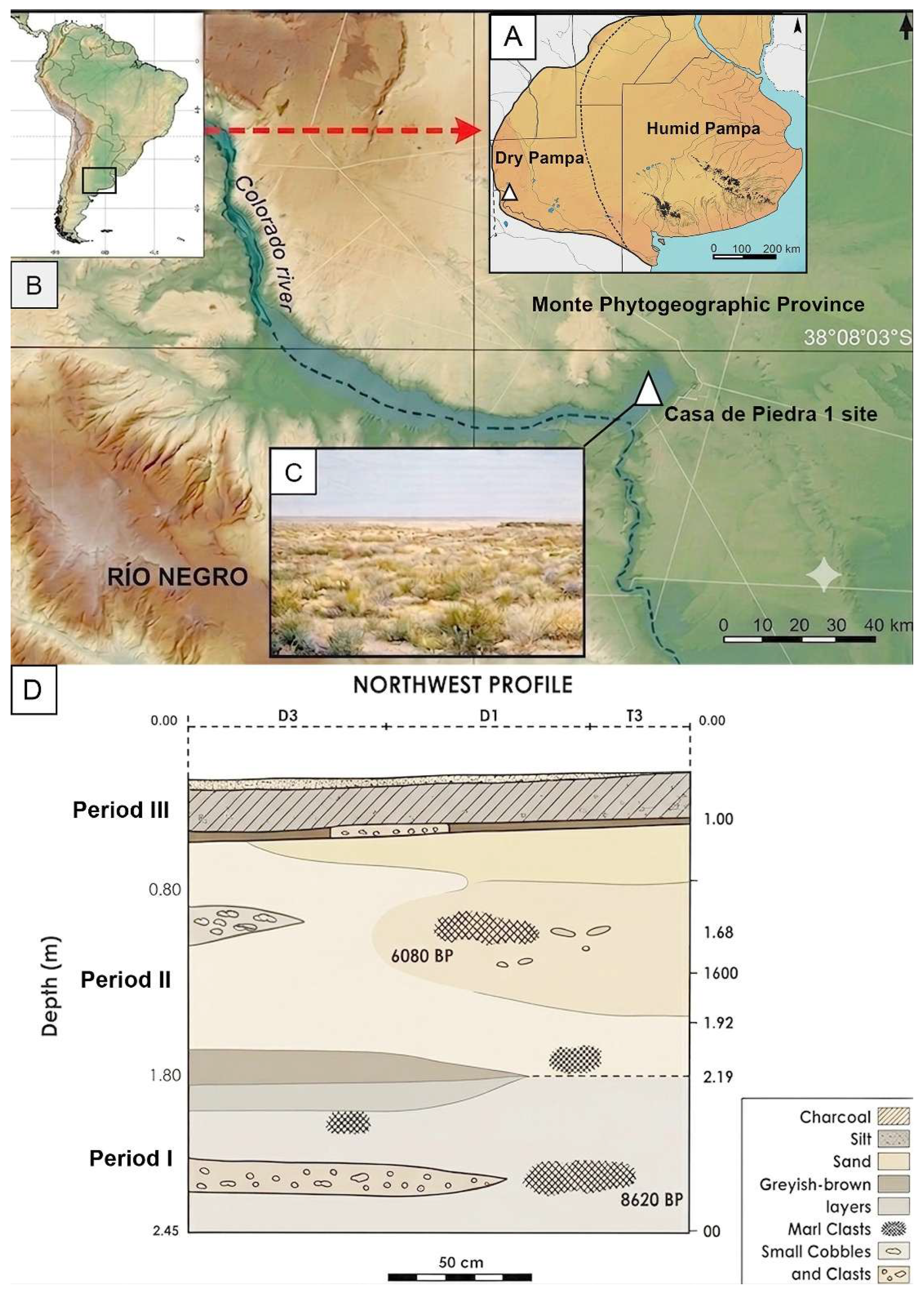
Figure 2.
Paleontological record. A) dorsal and ventral view of isolated teeth of Odontaspis sp. (Elasmobranchii) (PIII); B) external and internal view of Ostreoidea indet. (right valve) (PII); C) external and internal view of Cubitostrea ameghinoi (left valve) (PII); D) external and internal view of Gryphaeostrea callophyla (right valve) (PI); E) external and internal view of Pycnodonte sp. (PII); F) Turritella sp. (PII). Scales = 1 cm.
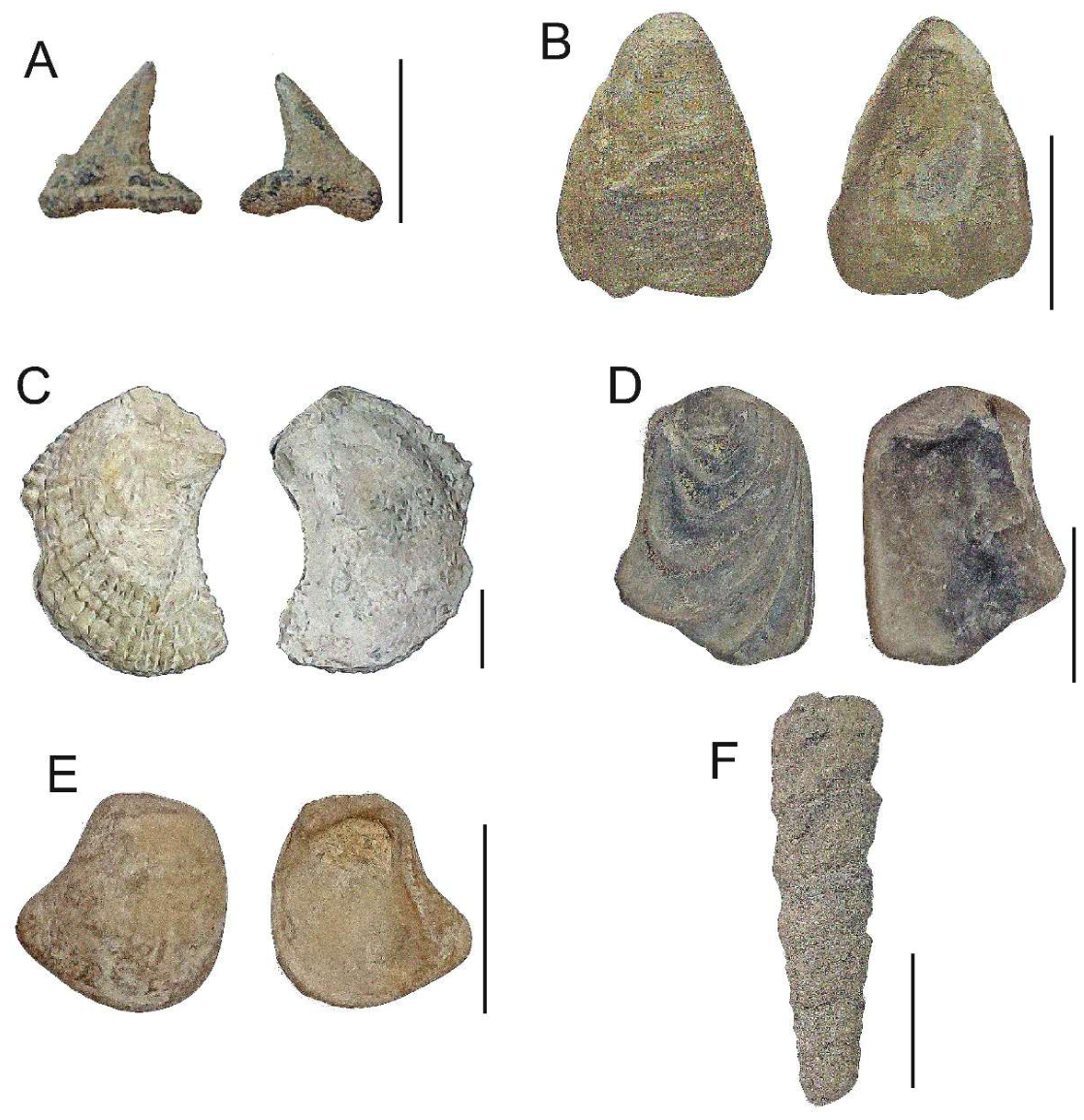
Figure 3.
Taphonomic examples observed in the Casa de Piedra archaeological record, in dorsal and ventral views: A) dorsal and ventral views of an osteoderm of Chaetophractus sp. exhibiting evidence of weathering; B) dorsal and ventral views of a long bone of Rhea sp. with root marks; C) dorsal and ventral views of a femur of Chaetophractus sp. with root marks; D) mandible of Microcavia australis with heavy digestive corrosion; E) dorsal and ventral views of a long bone of indeterminate Mammalia G with calcium carbonate deposition and root marks; F) Rhea sp. eggshell fragments exhibiting sedimentary corrosion; G) dorsal and ventral views of a shaft fragment of indeterminate Mammalia G with an impact notch; H) external and internal views of a Rhea sp. eggshell fragment exhibiting thermal alteration; I) fragments of Diplodon sp. (PII). Scales = 1 cm.
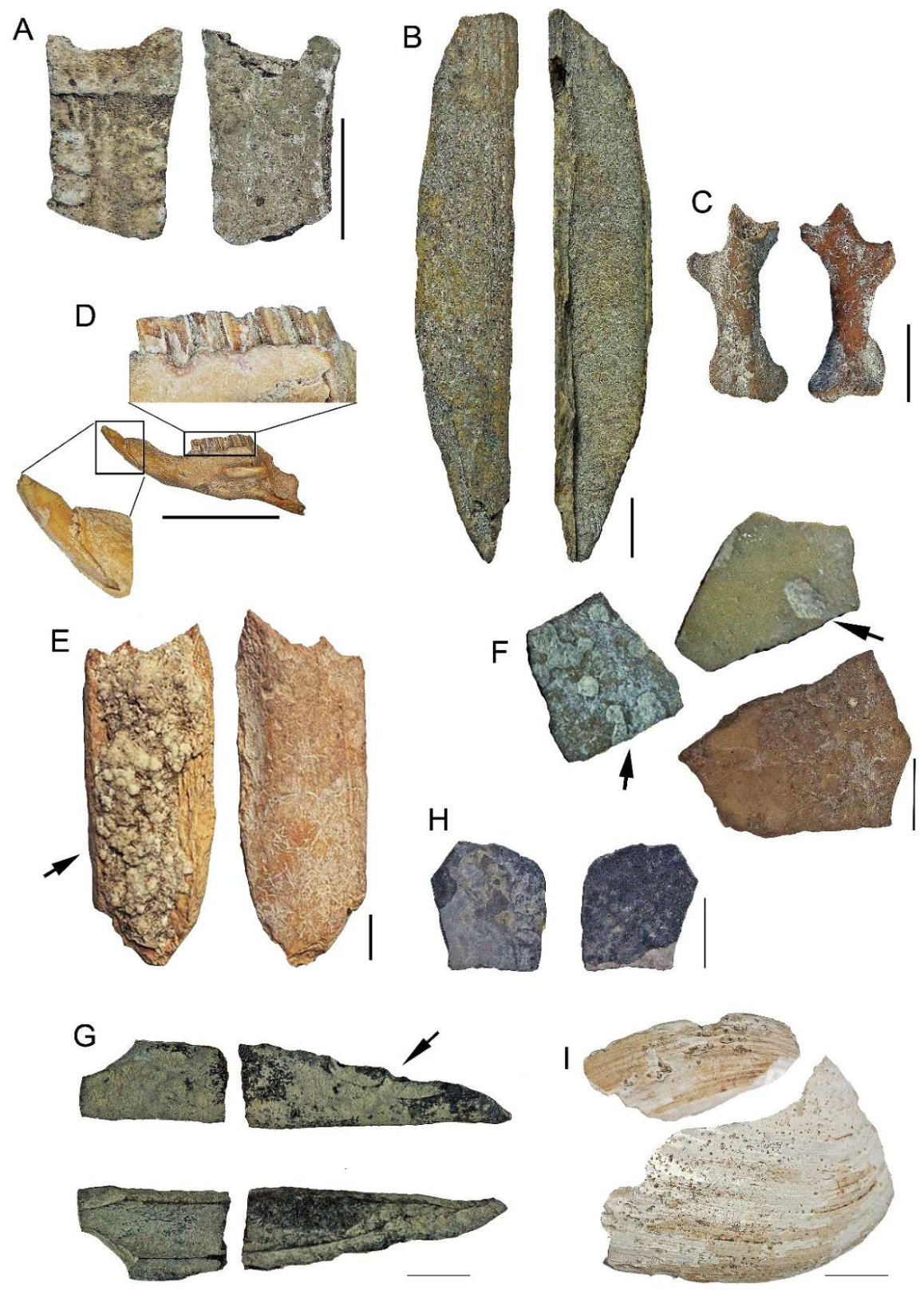
Figure 4.
FESEM micrographs and EDS analyses of bone specimens showing carbonate encrustation. A) High-magnification FESEM image showing the encrustations surface and the locations of the EDS analyses; B) EDS spectrum 1; C) EDS spectrum 2; D) EDS spectrum 3.
Figure 4.
FESEM micrographs and EDS analyses of bone specimens showing carbonate encrustation. A) High-magnification FESEM image showing the encrustations surface and the locations of the EDS analyses; B) EDS spectrum 1; C) EDS spectrum 2; D) EDS spectrum 3.
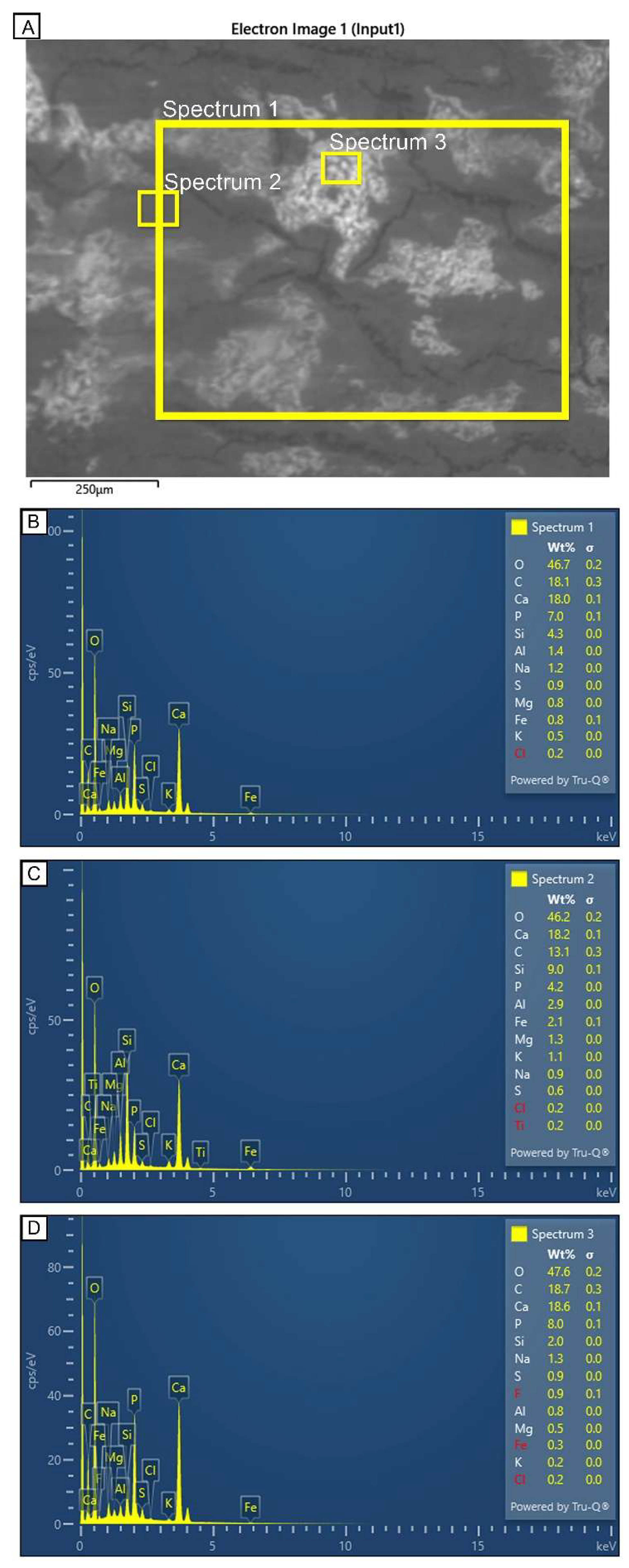
Figure 5.
FESEM micrographs and EDS analyses of a Rhea sp. eggshell specimen showing sediment corrosion. A) General view of the eggshell surface illustrating the distribution of the altered area; B) High-magnification FESEM image showing the corroded surface and the locations of the EDS analyses. C) EDS spectrum 1; D) EDS spectrum 2; E) EDS spectrum 3.
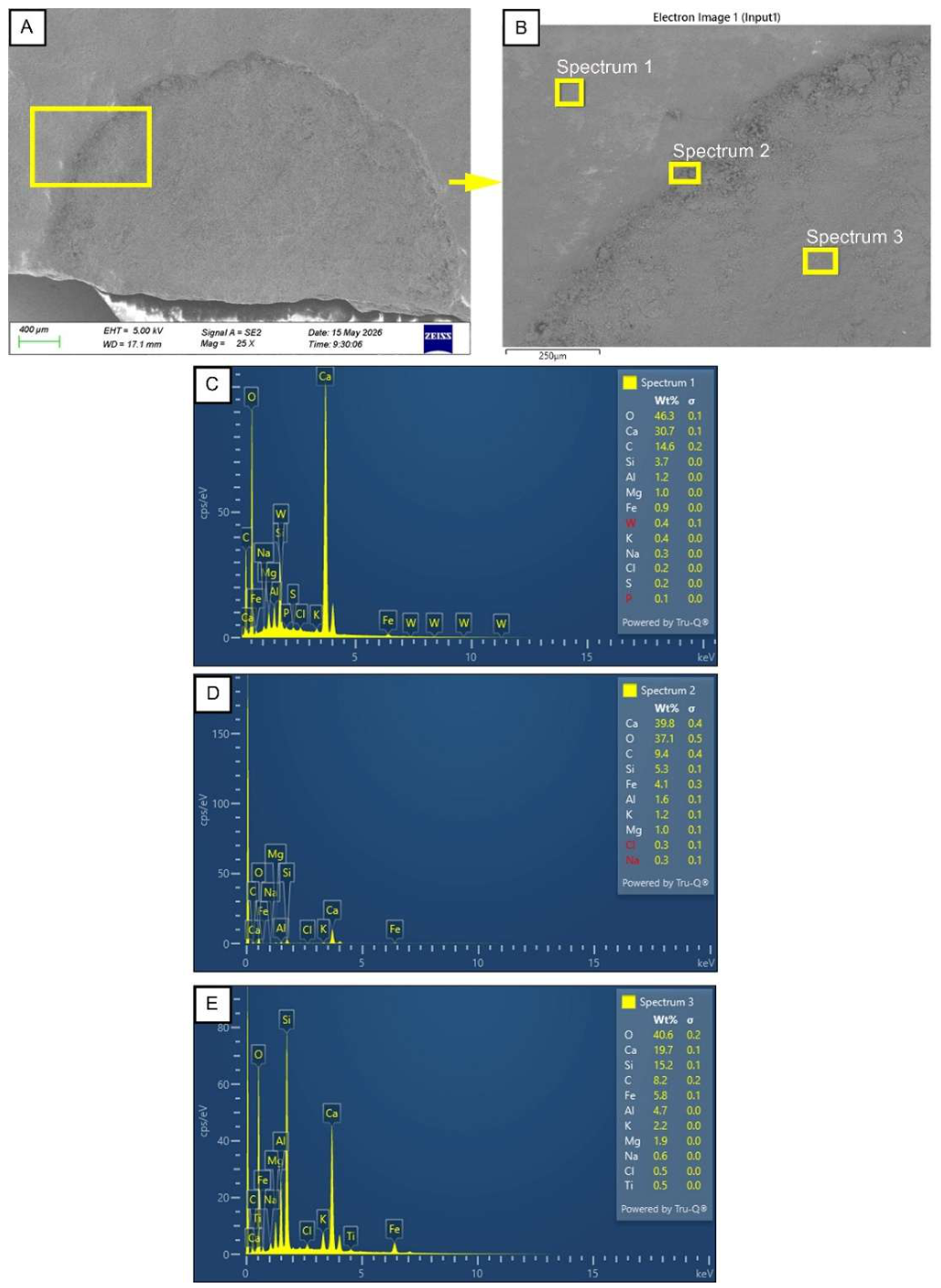
Figure 6.
Non-metric Multidimensional Scaling (NMDS) analysis based on the number of specimens (NSP) showing evidence of natural taphonomic agent activity according to the stratigraphic levels of Casa de Piedra 1. Depth represents the environmental variable.
Figure 6.
Non-metric Multidimensional Scaling (NMDS) analysis based on the number of specimens (NSP) showing evidence of natural taphonomic agent activity according to the stratigraphic levels of Casa de Piedra 1. Depth represents the environmental variable.
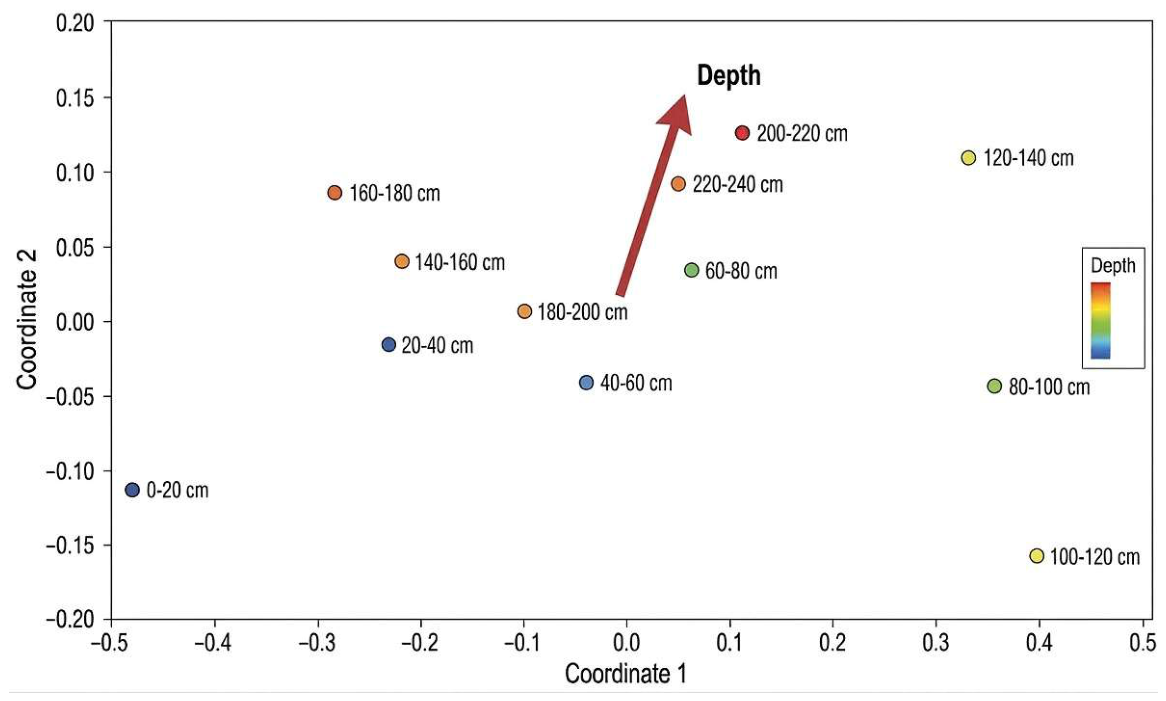
Figure 7.
Relative abundance (MNE) of skeletal elements from Periods I (PI), II (PII) and III (PIII).
Figure 7.
Relative abundance (MNE) of skeletal elements from Periods I (PI), II (PII) and III (PIII).
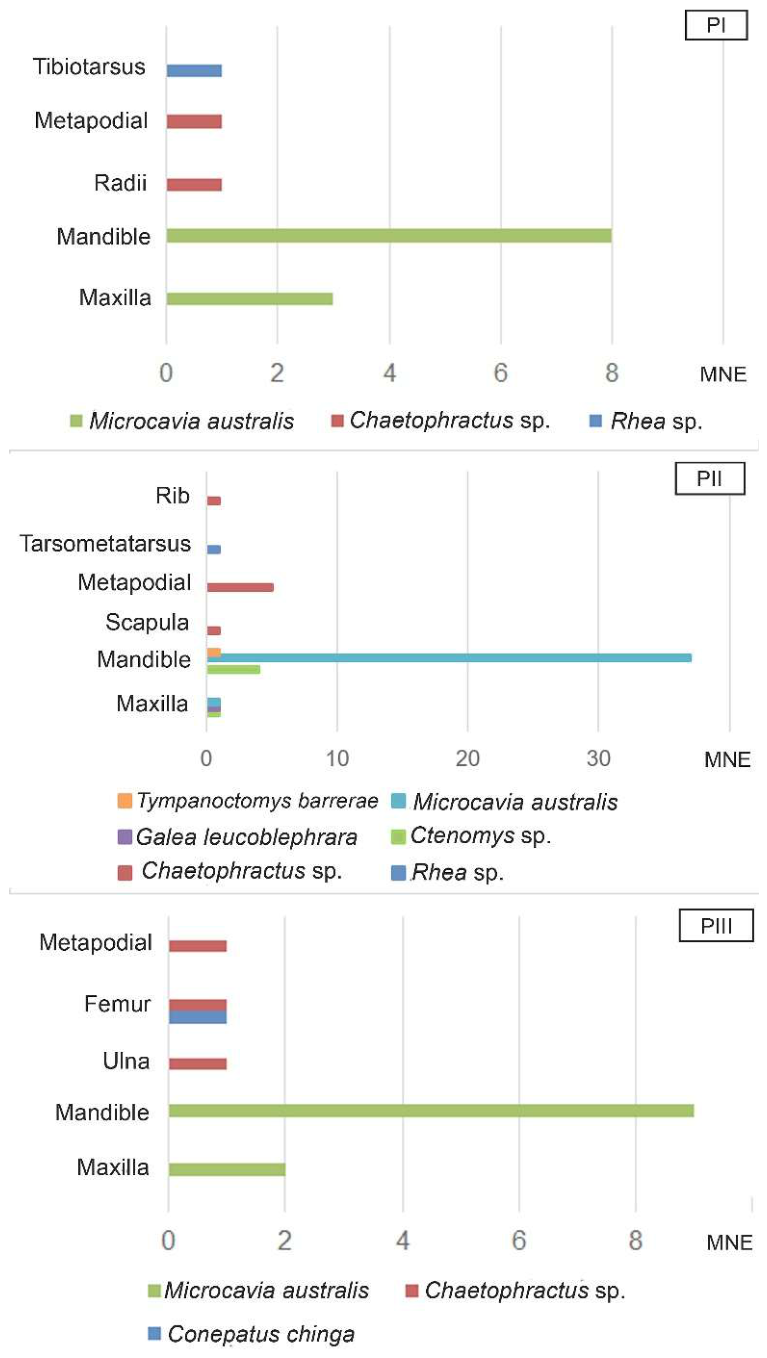

Table 1.
NISP values for the taxa identified as palaeontological record at Casa de Piedra 1 site.
| Period I | Period II | Period III | Provenance | ||||
|---|---|---|---|---|---|---|---|
| NISP | % | NISP | % | NISP | % | ||
| Mollusca | |||||||
| Mollusca indet. | 1 | 2.6 | Indet. | ||||
| Bivalvia | |||||||
| Bivalvia indet. | 12 | 70.6 | 16 | 41 | 8 | 57.1 | |
| Ostreoidea | Jagüel and Roca Formations | ||||||
| Cubitostrea ameghinoi | 1 | 2.6 | |||||
| Gryphaeostrea callophyla | 1 | 5.9 | |||||
| ?Pycnodonte sp. | 2 | 5.1 | |||||
| Ostreoidea indet. | 4 | 23.5 | 17 | 43.6 | 5 | 35.7 | |
| Gastropoda | |||||||
| Turritellidae | |||||||
| Turritella sp. | 2 | 5.1 | |||||
| Chondrichthyes | |||||||
| Odontaspis sp. | 1 | 7.2 | |||||
| Total | 17 | 100 | 39 | 100 | 14 | 100 | |
Table 2.
NISP values for the taphonomic variables identified in the mollusk subsample from the palaeontological record of CP1. The table includes specimens assigned to the Late Cretaceous–Paleocene. References: L= low; M: moderate; H= high; OxMn= manganese oxide.
Table 2.
NISP values for the taphonomic variables identified in the mollusk subsample from the palaeontological record of CP1. The table includes specimens assigned to the Late Cretaceous–Paleocene. References: L= low; M: moderate; H= high; OxMn= manganese oxide.
| Fragmentation | Corrasion | Encrustation | Bioerosion | ||||||
|---|---|---|---|---|---|---|---|---|---|
| W | F | L | M | H | Sediment | Bryozoans | Polychaetes | Gastropods | |
| Period I | 2 | 15 | 0 | 2 | 15 | 5 | 0 | 3 | 0 |
| Period II | 9 | 30 | 0 | 4 | 35 | 16 | 2 | 2 | 0 |
| Period III | 1 | 12 | 0 | 0 | 13 | 7 | 0 | 0 | 1 |
| Total | 12 | 57 | 0 | 6 | 63 | 28 | 2 | 5 | 1 |
Table 3.
NISP, MNE, and MNI values for the taxa identified as archaeological remains at Casa de Piedra 1. Osteoderms were identified as Chaetophractus sp. (PI = 4; PII = 15; PIII = 8) and Zaedyus pichiy (PI = 5; PII = 41; PIII = 17). *Rhea sp. eggshell fragments were not included in the total NISP. Abbreviation: indet. = indeterminate.
| Period I 8.620±190 AP |
Period II 6080±120 AP |
Period III | ||||||||||
|---|---|---|---|---|---|---|---|---|---|---|---|---|
| NISP | NISP% | MNE | MNI | NISP | NISP% | MNE | MNI | NISP | NISP% | MNE | MNI | |
| Mollusca | ||||||||||||
| Bivalvia | ||||||||||||
| Diplodon sp. | 1 | 1.23 | 1 | 8 | 3.42 | 8 | 1 | 1.03 | 1 | |||
| Aves | ||||||||||||
| Ave indet. P | 5 | 6.17 | 16 | 6.84 | 1 | 1.03 | ||||||
| Rhea sp. | 2 | 2.47 | 1 | 1 | 2 | 0.85 | 1 | 1 | ||||
| Rhea sp. eggshell* | 244 | 1699 | 623 | |||||||||
| Mammalia indet. L | 10 | 12.35 | 24 | 10.26 | 12 | 12.37 | ||||||
| Mammalia indet. M-L | 2 | 2.47 | 7 | 2.99 | ||||||||
| Mammalia indet. M-S | 6 | 2.56 | 3 | 3.09 | ||||||||
| Artiodactyla indet. | 4 | 4.94 | 21 | 8.97 | 7 | 7.22 | ||||||
| Camelidae indet. | 4 | 4.94 | 15 | 6.41 | 3 | 3.09 | ||||||
| Canidae indet. | 1 | 0.43 | ||||||||||
| Mephitidae | ||||||||||||
| Conepatus chinga | 1 | 1.03 | 1 | 1 | ||||||||
| Cingulata | ||||||||||||
| Dasypodidae | ||||||||||||
| Chaetophractus sp. | 6 | 7.41 | 2 | 1 | 22 | 9.40 | 7 | 1 | 11 | 11.34 | 3 | 1 |
| Zaedyus pichiy | 5 | 6.17 | 1 | 41 | 17.52 | 1 | 17 | 17.53 | 1 | |||
| Rodentia indet. | 25 | 30.86 | 27 | 27.84 | ||||||||
| Chinchillidae | ||||||||||||
| Dolichotis patagonum | 1 | 0.43 | 1 | 1 | ||||||||
| Ctenomyidae | ||||||||||||
| Ctenomys sp. | 7 | 2.99 | 7 | 3 | ||||||||
| Caviidae | 6 | 7.41 | 23 | 9.83 | 3 | 3.09 | ||||||
| Galea leucoblephara | 1 | 0.43 | 1 | 1 | ||||||||
| Microcavia australis | 11 | 13.58 | 11 | 6 | 38 | 16.24 | 38 | 20 | 11 | 11.34 | 11 | 6 |
| Octodontidae | ||||||||||||
| Tympanoctomys barrerae | 1 | 0.43 | 1 | 1 | ||||||||
| Total | 81 | 100 | 14 | 10 | 234 | 100 | 56 | 37 | 97 | 100 | 15 | 10 |
Table 4.
NISP values of natural modifications at archaeological record for each taxon identified at Casa de Piedra 1. Abbreviations: W= weathering; R= root marks; T= trampling; DC= digestive corrosion; SC= corrosion; CE= carbonate encrustation; MnOx= manganese oxide staining.
Table 4.
NISP values of natural modifications at archaeological record for each taxon identified at Casa de Piedra 1. Abbreviations: W= weathering; R= root marks; T= trampling; DC= digestive corrosion; SC= corrosion; CE= carbonate encrustation; MnOx= manganese oxide staining.
| Period I | Period II | Period III | |||||||||||||||
|---|---|---|---|---|---|---|---|---|---|---|---|---|---|---|---|---|---|
| Taxa | W | R | T | DC | SC | CE | W | R | DC | SC | CE | MnOx | W | R | SC | CE | MnOx |
| Aves indet. P | 1 | 4 | 1 | 7 | 1 | ||||||||||||
| Rhea sp. | 1 | 1 | |||||||||||||||
| Rhea sp. eggshells | 17 | 3 | 117 | 24 | 4 | 2 | |||||||||||
| Mammalia indet. G | 2 | 4 | 1 | 4 | 5 | 2 | 6 | 8 | 1 | ||||||||
| Mammalia indet. G-M | 1 | 2 | 1 | 1 | |||||||||||||
| Mammalia indet. M-P | 1 | 1 | 1 | ||||||||||||||
| Artiodactyla indet. | 1 | 1 | 1 | 3 | 7 | 3 | 3 | 5 | |||||||||
| Camelidae indet. | 1 | 2 | 1 | 5 | 5 | 5 | 2 | ||||||||||
| Carnivora | |||||||||||||||||
| Canidae indet. | 1 | ||||||||||||||||
| Dasypodidae | |||||||||||||||||
| Chaetophractus sp. | 1 | 2 | 2 | 6 | 3 | 43 | 8 | ||||||||||
| Zaedyus pichiy | 1 | 1 | 2 | 1 | 12 | 12 | 1 | ||||||||||
| Rodentia indet. | 2 | 1 | 4 | 13 | 2 | 41 | 2 | 11 | |||||||||
| Ctenomyidae | |||||||||||||||||
| Ctenomys sp. | 4 | ||||||||||||||||
| Caviidae | 2 | 2 | 5 | 3 | |||||||||||||
| Galea leucoblephara | 1 | 6 | 4 | ||||||||||||||
| Microcavia australis | 16 | 4 | |||||||||||||||
| Octodontinae | |||||||||||||||||
| Tympanoctomys barrerae | 1 | ||||||||||||||||
| Total | 7 | 12 | 1 | 1 | 17 | 18 | 28 | 41 | 2 | 119 | 148 | 2 | 3 | 2 | 24 | 60 | 4 |
Table 5.
Anthropic bone modifications identified at Casa de Piedra 1. References: FF = fresh fractures; NI =impact notches; T = termoalteration.
Table 5.
Anthropic bone modifications identified at Casa de Piedra 1. References: FF = fresh fractures; NI =impact notches; T = termoalteration.
| Period I | Period II | Period III | |||||
|---|---|---|---|---|---|---|---|
| Taxa | FF | T | FF | NI | T | FF | T |
| Rhea sp. | 1 | ||||||
| Rhea sp. eggshell | 16 | 197 | 47 | ||||
| Mammalia indet. G | 1 | 8 | 1 | 1 | 3 | ||
| Artiodactyla indet. | 1 | 2 | 1 | ||||
| Camelidae indet. | 3 | 1 | |||||
| Zaedyus pichiy | 3 | ||||||
| Rodentia indet. | 2 | 1 | 1 | ||||
| Total | 1 | 19 | 13 | 3 | 202 | 3 | 49 |
Disclaimer/Publisher’s Note: The statements, opinions and data contained in all publications are solely those of the individual author(s) and contributor(s) and not of MDPI and/or the editor(s). MDPI and/or the editor(s) disclaim responsibility for any injury to people or property resulting from any ideas, methods, instructions or products referred to in the content. |
© 2026 by the authors. Licensee MDPI, Basel, Switzerland. This article is an open access article distributed under the terms and conditions of the Creative Commons Attribution (CC BY) license (http://creativecommons.org/licenses/by/4.0/).
Copyright: This open access article is published under a Creative Commons CC BY 4.0 license, which permit the free download, distribution, and reuse, provided that the author and preprint are cited in any reuse.