

Submitted:
21 September 2026
Posted:
22 September 2026
You are already at the latest version
Abstract
Background. Allergic airway diseases cause a great burden worldwide. There are a lot of factors which may be important for the risk of development of these diseases. One of them is nasal Staphylococcus aureus carriage which may modulate immune response. The aim of this study was to investigate influence of nasal Staphylococcus aureus carriage on immune response in chronic respiratory allergies related to house dust mite (HDM). Methods. Patients with allergic airway diseases and clinically significant hypersensitivity to HDM and healthy individuals were involved into the study. TNSS, RQLQ, ACT and AQLQ were assessed. A microbiological swab sample was taken from both nostrils for confirmation of Staphylococcus aureus carriage. Nasal smears were obtained for evaluation of eosinophil count. Measurements of IL-10, IL-13, IL-17, IL-22, IL-33 and IFN-γ in serum and nasal lavage fluid were performed by ELISA using commercial kits. Selected patients with allergic airway diseases underwent nasal challenge with Dermatophagoideus pteronyssinus. Results. A tendency that nasal Staphylococcus aureus carriage was more frequent in patients with allergic airway diseases than in healthy individuals was observed. Levels of IL-13, IL-17, IL-33, and IFN-γ in nasal lavage fluid were higher in patients with allergic airway diseases with Staphylococcus aureus carriage than in patients without Staphylococcus aureus carriage. Nasal IL-13 level was independently associated with Staphylococcus aureus carriage (OR 3.18; 95% CI 1.12–8.99; p=0.03) in patients with allergic airway diseases. No significant differences in TNSS, ACT, RQLQ or AQLQ scores were observed between Staphylococcus aureus carriers and non-carriers. Nasal IL-13, IL-17 and IL-33 levels significantly decreased after nasal challenge in Staphylococcus aureus carriers’ group only. Conclusion. Staphylococcus aureus carriage in patients with allergic airway diseases was associated with a distinct local (especially, IL-13) but not systemic cytokine profile and had limited impact on symptoms severity and disease-related quality of life.
Keywords:
allergic
; airway diseases
; rhinitis
; asthma
; Staphylococcus aureus
; nasal carriage
; cytokines
; local
; systemic
1. Introduction
Allergic airway diseases cause a great burden worldwide [1,2,3]. Allergic rhinitis (AR) and allergic asthma (AA) are highly associated with poorer quality of life, disturbed social life, daily activity and increased leave day at school or work [4]. There are a lot of factors which are suspected to be important for the risk of development and severity of allergic diseases such as genetic predisposition, allergen exposure, dietary changes, air pollution, etc. [5]. One of the factors could be nasal Staphylococcus aureus carriage, which is associated with impaired airway microbiota and may modulate immune response during allergic airway diseases.
It is known that Staphylococcus aureus is a gram-positive opportunistic pathogen that can frequently be found at various human’s body locations, such as the upper respiratory tract and nostrils and colonizes approximately 20% – 40% of the general population [6,7]. Permanent carriage is observed for more than 20% of the general population. Based on some studies nasal Staphylococcus aureus carriage is more frequent in patients with persistent AR caused by house dust mite (HDM) allergens than in healthy individuals and is associated with higher nasal total immunoglobulin (Ig) E level and interleukin (IL) 13/ interferon (IFN) γ ratio [8]. Moreover, according to the results of systematic review and meta-analysis, modest significant relationship between nasal Staphylococcus aureus colonization and asthma was also demonstrated [9].
Some experimental studies showed that Staphylococcus aureus carriage was related with more severe AR and AA [10,11]. It is thought that Staphylococcus aureus-derived serine protease-like protein D and other proteases secreted by this pathogen may induce AA. Experimental study with mice showed that repeated intratracheal exposure to serine protease-like protein D led to IL-33 and eotaxin production, eosinophilia, bronchial hyperreactivity, and goblet cell hyperplasia in the airways [11]. However, another experimental study presented controversial hypothesis and revealed that nasal commensal Staphylococcus aureus from subjects with AR mediated anti-allergic effects by modulating IL-33-dependent T helper cells (Th) 2 inflammation [12]. The importance and mechanisms of Staphylococcus aureus nasal carriage in allergic airway diseases is still not fully understood, especially in real-life clinical practice.
The aim of this study was to investigate influence of nasal Staphylococcus aureus carriage on immune response in chronic respiratory allergies related to HDM.
2. Material and Methods
2.1. Study Population
Study was performed in the Department of Immunology and Allergology of Hospital of Lithuanian University of Health Sciences. The study was approved by the Kaunas Regional Biomedical Research Ethics Committee (No. BE-2-28). Subjects gave their written informed consent.
Inclusion criteria:
-
patients with allergic airway diseases and clinically significant hypersensitivity to HDM diagnosed by skin prick test and/ or allergen specific IgE test:
- Healthy individuals without AR and AA or other diseases that can negatively impact the results.
Exclusion criteria:
- relevant hypersensitivity to other inhaled aeroallergens,
- malignant diseases and systemic autoimmune diseases,
- use of local or systemic glucocorticoids or other immunosuppressant drugs for at least 1 month before the study,
- use of antihistamines for 1 week before the study and
- respiratory infection for at least 1 month before the study.
- treatment with allergen immunotherapy during the last 10 years and
- pregnancy.
Patients were divided into two groups: Staphylococcus aureus carriage and Staphylococcus aureus non-carriage. Additionally, sub analysis was performed between phenotypes of allergic airway diseases and control group.
2.2. Questionnaires
All patients were asked to complete Total nasal symptom score (TNSS) [15]. Patients with AR completed Rhinoconjunctivitis Quality of Life Questionnaire (RQLQ) [16]. Patients with AA additionally were asked to complete Asthma control test (ACT) [17] and Asthma Quality of Life Questionnaire (AQLQ) [18].
2.3. Procedures and Laboratory Analysis
Peripheral vein puncture was performed for all subjects. Blood samples were drawn into KEDTA tubes for investigation for complete blood count. Blood samples were also drawn into serum tubes. Serum tubes were stored at room temperature for 30–60 min. and centrifuged at 3500 rpm for 10 minutes, and serum was separated and frozen at -80°C for further analysis.
Allergic sensitization was determined by skin prick test or allergen specific IgE test. Skin prick test was performed according to the standard protocol with standard inhalant allergens (Diater, Spain) on the inner forearm. Drop of different allergen solution was placed at 3 cm distant from each other. Histamine solution 10 mg/ml was used as a positive control and diluent was used as a negative control. The skin was pricked through the drop using the tip of a lancet (separate lancet was used for all allergen drops). Skin reaction was assessed after 15 minutes. Wheal was measured using ruler. The test was assumed as a ‘positive’ if diameter of the wheal was at least 3 mm. Measurement of allergen specific IgE was performed using standard immunoblot analysis according to the manufacturer's instructions (Euroimmun, Germany). Total IgE in serum was measured using enzyme immunoassays (AIA-FAC IgEII Tosoh Bioscience, Japan).
Nasal smears of patients were obtained by gently swabbing the nasal inferior turbinate with a cotton-tipped swab. The sample was then placed on a surface of glass microscope slide and stained with Giemsa stain for eosinophil detection. Eosinophil inflammation was diagnosed when eosinophil count was ≥10% [19].
A microbiological swab sample was taken from both nostrils for confirmation of Staphylococcus aureus carriage.
Nasal lavage fluid was collected for all subjects using 5 ml isotone saline per nostril with reclined neck (about 30oC from the horizontal) and closed soft palate. After 30 seconds the subject flexed the neck draining lavage fluid into a sterile vessel. Nasal lavage fluid was frozen at -80oC for further analysis.
To investigate cytokine profile before and after sensitization with Dermatophagoideus pteronyssinus, patients with mild to moderate AR (without exacerbation) with or without well controlled asthma and healthy individuals underwent nasal challenge with Dermatophagoideus pteronyssinus procedure. Subjects for this procedure were collected randomly. Nasal challenge was performed according to EAACI recommendations [20]. Dermatophagoideus pteronyssinus allergen (Inmunotek, S.L., Spain) for provocation was prepared according to manufacturer’s recommendations. During allergen application, the patient had to hold his breath to avoid inhaling the allergen into the lower airways. The applicator of the delivery device was inserted into the nasal vestibule and pointed upward and laterally toward the medial canthus of the eye to deposit allergen on the inferior and the middle turbinate mucosa when spraying the solution into the nose. After 2 and 22 hours after nasal challenge peripheral blood and nasal lavage fluid were collected for evaluation of cytokines level.
Measurements of IL-10, IL-13, IL-17, IL-22, IL-33 and IFN-γ in serum and nasal lavage fluid were performed by ELISA using commercial kits (Elabscience Biotechnology Inc., USA) with Euroimmun Analyzer I (Germany).
2.4. Statistical Analysis
Statistical analysis was performed using statistical program SPSS 29. Distribution normality was assessed using the Shapiro–Wilk test. Non-normally distributed data are presented as median (interquartile range) and normally distributed data are presented as mean (SEM). Parametric statistical methods were applied for normally distributed data: one-way ANOVA was used for comparison of variables between studied groups. Non-parametric statistical methods were applied for non-normally distributed data analysis: Mann–Whitney U and Kruskal–Wallis H tests were used for comparison of variables between patients with allergic airway diseases and healthy individuals and between positive Staphylococcus aureus in nasal swab and negative Staphylococcus aureus in nasal swab and between patients with AR only, patients with AR and AA and healthy individuals.
Related-samples Friedman’s two ways analysis was used to estimate the changes of cytokines before and after nasal challenge. When a significant overall difference was detected, pairwise comparisons with baseline were performed using the Wilcoxon signed-rank test. Significance values have been adjusted by the Bonferroni correction for multiple tests.
Binary logistic regression analysis was performed to evaluate associations between nasal cytokine levels and Staphylococcus aureus carriage. Odds ratios (OR) with 95% confidence intervals (CI) were calculated. Receiver operating characteristic (ROC) curve analysis was performed to assess the discriminative ability of nasal IL-13 levels for identifying Staphylococcus aureus carriage.
Method of correlation (Spearman’s coefficient) was used to find associations between cytokines and TNSS, ACT, AQLQ and RQLQ. Linear regression analysis was performed to assess the association between Staphylococcus aureus carriage and TNSS, ACT, AQLQ and RQLQ.
A P value of <0.05 was considered statistically significant.
3. Results
Study subjects’ with allergic airway diseases characteristics according to Staphylococcus aureus carriage are presented in Table 1. Subjects’ distribution according to the age did not differ between the groups, but there were more women in Staphylococcus aureus carriage group. According to anamnesis, asthma symptoms lasted significantly longer having Staphylococcus aureus carriage in comparison with those without carriage (Table 1). No differences were found in peripheral blood cells, serum total IgE and eosinophils in nasal smear between studied group. However, blood eosinophil count was lower in patients with AR and AA having Staphylococcus aureus carriage in comparison with those without carriage (median 2.45 (IR 3.57) % vs. median 4.75 (IR 4.95) %, p<0.05).
Additionally, demographic data of subjects’ groups which were used for sub-analysis according to phenotypes of allergic airway diseases and control group as described previously are presented in Table 2. Subjects’ distribution according to the age and sex did not differ between these groups. Eosinophils count in nasal smear was significantly higher in all patients with allergic airway diseases and in AR only patients than in healthy individuals and a tendency was observed that eosinophil count in nasal smear was higher in patients with AR and AA than in healthy individuals. Eosinophil count in peripheral blood and serum IgE levels was significantly higher in patients with allergic airway diseases in comparison with healthy individuals (Table 2).
A tendency that nasal Staphylococcus aureus carriage was more frequent in patients with allergic airway diseases than in healthy individuals was observed (Figure 1). However, binary logistic regression analysis showed no statistically significant association between allergic airway disease and nasal Staphylococcus aureus carriage (OR 1.78; 95% CI 0.45–6.96; p=0.41). Nasal Staphylococcus aureus carriage also did not differ between patients with AR and control group (OR 1.21; 95% CI 0.28–5.22; p=0.80). Interestingly, patients with AR and AA showed a non-significant trend toward approximately three times higher nasal Staphylococcus aureus carriage compared to controls (OR 3.33; 95% CI 0.72–15.37; p=0.123).
Levels of IL-13, IL-17, IL-33, and IFN-γ in nasal lavage fluid were higher in patients with allergic airway diseases with Staphylococcus aureus carriage than in patients without Staphylococcus aureus carriage (Table 3).
Initial multivariate logistic regression analysis showed that increased nasal IL-13 level was independently associated with Staphylococcus aureus carriage (OR 3.18; 95% CI 1.12–8.99; p=0.03) in patients with allergic airway diseases, whereas IL-17 and IL-33 showed borderline associations. Disease group was not an independent predictor. In a reduced model including only IL-13 and disease group, IL-13 remained a significant independent predictor of Staphylococcus aureus carriage (OR 1.90; 95% CI 1.04–3.47; p=0.037), whereas disease group was not significant. This means that each 1 pg/mL increase in nasal IL-13 level was associated with 1.9-fold higher odds of Staphylococcus aureus carriage. Nasal IL-13 levels demonstrated moderate discriminative ability for identifying Staphylococcus aureus carriage, with an area under the ROC curve (AUC) of 0.70 (Figure 2).
Correlations between the same local and systemic cytokines were weak and inconsistent in both groups with allergic airway diseases according to Staphylococcus aureus carriage.
When comparing respiratory symptoms and quality of life between patients with allergic airway disease with and without Staphylococcus aureus carriage, no significant differences in TNSS, ACT, RQLQ or AQLQ scores were observed. In linear regression analysis, Staphylococcus aureus carriage was not associated with TNSS, ACT, RQLQ and AQLQ scores, whereas the presence of allergic airway disease was strongly associated with higher symptom burden (p<0.001).
There was no relation between severity of rhinitis and asthma symptoms, RQLQ and nasal cytokines level. However, AQLQ score had strong positive correlation with nasal IL-17 (rs=0.9, p<0.05) and IL-33 (rs=0.9, p<0.05) level in patients with AR and AA.
Selected patients with allergic airway diseases underwent nasal challenge with Dermatophagoideus pteronyssinus. Nasal IL-22 significantly increased at 2 h after nasal challenge in Staphylococcus aureus carriers and non-carriers (Table 4). Moreover, increase of nasal IL-22 persisted at 22 h after nasal challenge in patients without Staphylococcus aureus carriage. Nasal IL-13, IL-17 and IL-33 levels significantly decreased after nasal challenge in Staphylococcus aureus carriers’ group only (Table 4). Changes in some serum cytokines levels were observed only in patients without Staphylococcus aureus carriage (Table 4). TNSS significantly increased at 22 h after nasal challenge in Staphylococcus aureus carriers only.
4. Discussion
Our study investigated the influence of nasal Staphylococcus aureus carriage on immune response in chronic respiratory allergies related to HDM. We have analysed local and systemic cytokine profile which presents Th1, Th2 and Th17 pathways and the balance between proinflammatory and anti-inflammatory cytokines. Additionally, quality of life and respiratory symptoms scores and their relationship with cytokine profile were assessed.
Our results showed a trend toward more frequent nasal Staphylococcus aureus carriage in patients with allergic airway diseases, particularly in those with both AR and AA. Other studies also showed that allergic diseases, especially AR and asthma with sensitisation to perennial allergens, were associated with more frequent Staphylococcus aureus carriage [21,22,23,24,25,26].
Patients with Staphylococcus aureus carriage had higher levels of IL-13, IL-17, IL-33, and IFN-γ in nasal lavage fluid. We did not observe significant differences in serum cytokine levels between Staphylococcus aureus carriers and non-carriers suggesting that this microorganism modulated only local inflammatory response.
Although several local cytokines were elevated in Staphylococcus aureus carriers on univariate comparison, only IL-13 remained independently associated with carriage in patients with allergic airway diseases in regression analysis. Study performed by Du et al. revealed that Staphylococcus aureus lysate enhanced IL-5, and IL-13 expression together with IgE production [27]. It is known that Staphylococcus aureus releases various toxins and proteases which interact with human’s innate and adaptive immune system. There is evidence that Staphylococcus aureus is associated with Th2 inflammation in allergic airway diseases [28,29]. However, our study revealed that nasal IL-13 level decreased at 22 h after nasal challenge with Dermatophagoideus pteronyssinus. Campion et al. published data about nasal cytokines changes after nasal challenge with birch pollen extract and showed that only 8 of 20 provoked participants displayed high IL-13 levels 2 to 8 hours after allergen provocation which was related with significant changes in clinical parameters [30]. We investigated nasal IL-13 level at 2 hours after nasal challenge and no increase was observed suggesting that in our cohort Staphylococcus aureus carriage was not associated with an enhanced local Th2 inflammation. Similarly, Linton et al. found that ragweed-allergic participants with nasal Staphylococcus aureus carriage after nasal challenge with ragweed allergen showed significantly lower reduction in Peak Nasal Inspiratory Flow and reported lower rhinitis symptom scores than non-carriers [31]. Experimental study showed that enterotoxin B administered prior to the allergic sensitization at the lower dose significantly boosted the specific IgE response while administration of the higher dose led to a significantly reduced recruitment of immune cells, including eosinophils, to the respiratory tract and to a significantly dampened Th2 cytokine response [32].
Nasal IL-33 level was higher in patients with Staphylococcus aureus carriage, but after nasal challenge with Dermatophagoideus pteronyssinus the level of this cytokine decreased in nasal lavage fluid. It is known that alarmin IL-33 also is involved in Th2 inflammation. Staphylococcus aureus–derived serine protease–like protein (Spl) D leads to IL-33 and eotaxin production, eosinophilia, bronchial hyperreactivity, and goblet cell hyperplasia in the airways [11,12]. On the contrary, experimental study showed that Staphylococcus aureus mediated anti-allergic effects in AR by modulating IL-33-dependent Th2 inflammation [12]. Significant decrease in IL-33 after nasal challenge with Dermatophagoideus pteronyssinus in our study may be compatible with a less pronounced local type 2 inflammatory response, although this interpretation should be made cautiously.
Our study showed that nasal IFN- γ was higher in Staphylococcus aureus carriers than non-carriers. The literature review revealed that patients with both AR and AA and AR alone showed serological evidence of IgE formation to superantigens produced by Staphylococcus aureus [33]. Chronic inflammatory responses caused by superantigens in the nose and sinuses involve T cells secreting IFN-γ [33]. We did not measure level of this cytokine after nasal challenge. Campion et al. did not observe changes in IFN-γ after nasal challenge with birch pollen extract [30]. There are limited data about IFN-γ in patients with allergic airway diseases and Staphylococcus aureus carriage. Thus, the role of IFN-γ in allergic airway diseases with nasal Staphylococcus aureus carriage remains uncertain.
IL-17 and IL-22 are relatively recently characterized cytokines. Their role in allergic airway diseases is still not fully investigated. There is evidence that these cytokines are increased in patients with allergic rhinitis [34]. IL-17 and IL-22 are less extensively studied in the context of nasal Staphylococcus aureus carriage in allergic airway diseases. Our study showed higher level of IL-17 in nasal lavage fluid from Staphylococcus aureus carriers than from non-carriers, but no difference in nasal IL-22 level was observed. However, level of IL-22 increased whereas level of IL-17 decreased after nasal challenge with Dermatophagoideus pteronyssinus in Staphylococcus aureus carries. Nasal IL-22 also increased in patients without Staphylococcus aureus carriage. Campion et al. did not observe changes in IL-17 and IL-22 after nasal challenge with birch pollen extract, however IL-22 level was higher in patients with higher IL-13 level [30]. These findings suggest different regulation of IL-17 and IL-22 after allergen challenge and indicate that Staphylococcus aureus carriage may be associated with altered local IL-17 responses.
In our study no significant differences were found in symptom scores or disease-related quality of life in patients with allergic airway diseases and Staphylococcus aureus carriage. Only at 22 h after nasal challenge TNSS score significantly increased in this patient group. There is evidence that the presence of Staphylococcus aureus within the nasal cavity may exacerbate perennial AR [33]. On the other hand, study performed in Thailand showed no significant associations between Staphylococcus aureus carriage and AR severity [35]. Another study performed by Linton et al. presented results that Staphylococcus aureus carriers reported significantly lower TNSS and Total Rhinoconjunctivitis Symptom Scores at 48 h after nasal allergen challenge with ragweed allergen suggesting that Staphylococcus aureus carriage may be associated with more rapid symptom resolution [31].
Taken together, Staphylococcus aureus carriage is common in allergic airway diseases, especially associated with HDM hypersensitivity. The role of nasal Staphylococcus aureus carriage in the pathogenesis of allergic rhinitis and asthma remains incompletely understood, but there are more data about local anti-allergic effect of Staphylococcus aureus by downregulating Th2 inflammation. Further studies in larger and well-characterized real-life cohorts are needed to clarify these associations. This is important for personalized treatment development in the future.
5. Conclusions
Staphylococcus aureus carriage in patients with allergic airway diseases was associated with a distinct local (especially, IL-13) but not systemic cytokine profile and had limited impact on symptoms severity and disease-related quality of life. Furthermore, it may lead to development of new personalized diagnostic and treatment approaches.
Author Contributions
L.T. performed research and statistical analysis and wrote the manuscript. B.G. generated ideas, coordinated research and reviewed the manuscript.
Funding
Research was partly funded by Research Foundation of Lithuanian University of Health Sciences (ELISA reagents for detection of interleukins in serum and nasal lavage fluid were purchased).
Acknowledgments
During the preparation of this work the author Laura Tamasauskiene used ChatGPT (OpenAI) in order to improve the clarity, grammar, and readability of the English text. After using this tool/service, the author reviewed and edited the content as needed and take(s) full responsibility for the content of the publication.
Conflicts of Interest
Authors declare no conflict of interest.
Impact Statement
Staphylococcus aureus carriage in patients with allergic airway diseases may be associated with a distinct local cytokine profile, and have limited impact on symptoms severity and disease-related quality of life.
List of Any Abbreviations
| AR | allergic rhinitis |
| AA | allergic asthma |
| HDM | house dust mite |
| Ig | immunoglobulin |
| IL | interleukin |
| IFN | interferon |
| ARIA | Allergic Rhinitis and its Impact on Asthma |
| GINA | Global Initiative for Asthma |
| TNSS | Total nasal symptom score |
| RQLQ | Rhinoconjunctivitis Quality of Life Questionnaire |
| ACT | Asthma control test |
| AQLQ | Asthma Quality of Life Questionnaire |
References
- Blaiss, M.S.; Hammerby, E.; Robinson, S.; Kennedy-Martin, T.; Buchs, S. The burden of allergic rhinitis and allergic rhinoconjunctivitis on adolescents: A literature review. Ann. Allergy Asthma Immunol. 2018, 121(1), 43–52.e3. [Google Scholar] [CrossRef] [PubMed]
- Global Initiative for Asthma. Global Strategy for Asthma Management and Prevention. 2025. Available online: www.ginasthma.org.
- Lee, L.K.; Obi, E.; Paknis, B.; Kavati, A.; Chipps, B. Asthma control and disease burden in patients with asthma and allergic comorbidities. J. Asthma 2018, 55(2), 208–219. [Google Scholar] [CrossRef] [PubMed]
- Valls-Mateus, M.; Marino-Sanchez, F.; Ruiz-Echevarría, K.; Cardenas-Escalante, P.; Jiménez-Feijoo, R.; Blasco-Lozano, J.; et al. Nasal obstructive disorders impair health-related quality of life in adolescents with persistent allergic rhinitis: A real-life study. Pediatr. Allergy Immunol.;PubMed 2017, 28(5), 438–445. [Google Scholar] [CrossRef] [PubMed]
- Murrison, L.B.; Brandt, E.B.; Myers, J.B.; Hershey, G.K.K. Environmental exposures and mechanisms in allergy and asthma development. J. Clin. Invest. 2019, 129(4), 1504–1515. [Google Scholar] [CrossRef] [PubMed]
- Mehraj, J.; Witte, W.; Akmatov, M.K.; Layer, F.; Werner, G.; Krause, G. Epidemiology of Staphylococcus aureus Nasal Carriage Patterns in the Community. Curr. Top. Microbiol. Immunol. 2016, 398, 55–87. [Google Scholar] [CrossRef] [PubMed]
- Congdon, S.T.; Guaglione, J.A.; Ricketts, O.M.A.; Murphy, K.V.; Anderson, M.G.; Trowbridge, D.A.; et al. Prevalence and antibiotic resistance of Staphylococcus aureus associated with a college-aged cohort: life-style factors that contribute to nasal carriage. Front Cell Infect. Microbiol.;PubMed 2023, 13, 1195758. [Google Scholar] [CrossRef] [PubMed]
- Riechelmann, H.; Essig, A.; Deutschle, T.; Rau, A.; Rothermel, B.; Weschta, M. Nasal carriage of Staphylococcus aureus in house dust mite allergic patients and healthy controls. Allergy;PubMed 2005, 60(11), 1418–23. [Google Scholar] [CrossRef] [PubMed]
- Kim, Y.C.; Won, H.K.; Lee, J.W.; Sohn, K.H.; Kim, M.H.; Kim, T.B.; et al. Staphylococcus aureus Nasal Colonization and Asthma in Adults: Systematic Review and Meta-Analysis. J. Allergy Clin. Immunol. Pract.;PubMed 2019, 7(2), 606–615.e9. [Google Scholar] [CrossRef] [PubMed]
- Hohchi, N.; Hashida, K.; Ohkubo, J.; Wakasugi, T.; Mori, T.; Nguyen, K.H.; et al. Synergism of Staphylococcus aureus colonization and allergic reaction in the nasal cavity in mice. Int. Arch. Allergy Immunol.;PubMed 2012, 159(1), 33–40. [Google Scholar] [CrossRef] [PubMed]
- Teufelberger, A.R.; Nordengrün, M.; Braun, H.; Maes, T.; De Grove, K.; Holtappels, G.; et al. The IL-33/ST2 axis is crucial in type 2 airway responses induced by Staphylococcus aureus-derived serine protease-like protein D. J. Allergy Clin. Immunol. 2018, 141(2), 549–559.e7. [Google Scholar] [CrossRef] [PubMed]
- Jeon, Y.J.; Gil, C.H.; Won, J.; Jo, A.; Kim, H.J. Symbiotic microbiome Staphylococcus aureus from human nasal mucus modulates IL-33-mediated type 2 immune responses in allergic nasal mucosa. BMC Microbiol.;PubMed 2020, 20(1), 301. [Google Scholar] [CrossRef] [PubMed]
- Brozek, J.L.; Bousquet, J.; Baena-Cagnani, C.E.; Bonini, S.; Canonica, G.W.; Casale, T.B. Global Allergy and Asthma European Network; Grading of Recommendations Assessment, Development and Evaluation Working Group. Allergic Rhinitis and its Impact on Asthma (ARIA) guidelines: 2010 revision. J. Allergy Clin. Immunol.;PubMed 2010, 126(3), 466–76. [Google Scholar] [CrossRef] [PubMed]
- Global Initiative for Asthma. Global Strategy for Asthma Management and Prevention. 2020. Available online: www.ginasthma.org.
- Tamasauskiene, L.; Gasiuniene, E.; Sitkauskiene, B. Translation, adaption and validation of the total nasal symptom score (TNSS) for Lithuanian population. Health Qual. Life Outcomes;PubMed 2021, 19(1), 54. [Google Scholar] [CrossRef] [PubMed]
- Juniper, E.F.; Thompson, A.K.; Ferrie, P.J.; Roberts, J.N.; Validation of the standardized version of the Rhinoconjunctivitis Quality of Life Questionnaire; Nathan, R.A.; et al. Development of the asthma control test: a survey for assessing asthma control. J. Allergy Clin. Immunol.;J. Allergy Clin. Immunol.;PubMed 1999, 104 2 Pt 1) 113(1, 364-9. 17 59–65. [Google Scholar] [CrossRef] [PubMed]
- Nathan, R.A.; Sorkness, C.A.; Kosinski, M.; Schatz, M.; Li, J.T.; Marcus, P.; et al. Development of the asthma control test: a survey for assessing asthma control. J. Allergy Clin. Immunol. 2004, 113(1), 59–65. [Google Scholar] [CrossRef] [PubMed]
- Juniper, E.F.; Norman, G.R.; Cox, F.M.; Roberts, J.N. Comparison of the standard gamble, rating scale, AQLQ and SF-36 for measuring quality of life in asthma. Eur. Respir. J. 2001, 18(1), 38–44. [Google Scholar] [CrossRef] [PubMed]
- Berkiten, G.; Aydoğdu, I.; Kumral, T.L.; Saltürk, Z.; Uyar, Y.; Arslanoğlu, A.; et al. Nasal eosinophilia in nasal smears of patients with persistent and intermittent allergic rhinitis. J. Laryngol. Otol. 2018, 132(11), 1018–1021. [Google Scholar] [CrossRef] [PubMed]
- Augé, J.; Vent, J.; Agache, I.; Airaksinen, L.; Campo Mozo, P.; Chaker, A.; et al. EAACI Position paper on the standardization of nasal allergen challenges. Allergy 2018, 73(8), 1597–1608. [Google Scholar] [CrossRef] [PubMed]
- Sørensen, M.; Wickman, M.; Sollid, J.U.; Furberg, A.S.; Klingenberg, C. Allergic disease and Staphylococcus aureus carriage in adolescents in the Arctic region of Norway. Pediatr. Allergy Immunol.;PubMed 2016, 27(7), 728–735. [Google Scholar] [CrossRef] [PubMed]
- Flora, M.; Perrotta, F.; Nicolai, A.; Maffucci, R.; Pratillo, A.; Mollica, M.; et al. Staphylococcus Aureus in chronic airway diseases: An overview. Respir. Med.;PubMed 2019, 155, 66–71. [Google Scholar] [CrossRef] [PubMed]
- Teufelberger, A.R.; Bröker, B.M.; Krysko, D.V.; Bachert, C.; Krysko, O. Staphylococcus aureus Orchestrates Type 2 Airway Diseases. Trends Mol. Med.;PubMed 2019, 25(8), 696–707. [Google Scholar] [CrossRef] [PubMed]
- Che, Y.L.; Xu, Z.N.; Wang, N.; Ma, Q.Z.; Zheng, Z.Y.; Sun, Y.N.; et al. Analysis of nasal microbial characteristics in patients with allergic rhinitis and non-allergic rhinitis. Zhonghua Er Bi Yan Hou Tou Jing Wai Ke Za Zhi 2023, 58(9), 885–891. [Google Scholar] [CrossRef] [PubMed]
- Janeczek, K.; Emeryk, A.; Zimmer, Ł.; Poleszak, E.; Ordak, M. Nasal carriage of Staphylococcus aureus in children with grass pollen-induced allergic rhinitis and the effect of polyvalent mechanical bacterial lysate immunostimulation on carriage status: A randomized controlled trial. Immun. Inflamm. Dis. 2022, 10(3), e584. [Google Scholar] [CrossRef] [PubMed]
- Kim, H.J.; Kim, J.H.; Han, S.A.; Kim, W. Compositional Alterations of the Nasal Microbiome and Staphylococcus aureus-Characterized Dysbiosis in the Nasal Mucosa of Patients With Allergic Rhinitis. Clin. Exp. Otorhinolaryngol. 2022, 15(4), 335–345. [Google Scholar] [CrossRef] [PubMed]
- Du, K.; Zhao, Y.; Zhang, X.; Li, C.; Hao, Y.; Du, X.; et al. Staphylococcus aureus lysate induces an IgE response via memory B cells in nasal polyps. J. Allergy Clin. Immunol. 2024, 153(3), 718–731.e11. [Google Scholar] [CrossRef] [PubMed]
- Derycke, L.; Pérez-Novo, C.; Van Crombruggen, K.; Corriveau, M.N.; Bachert, C. Staphylococcus aureus and Chronic Airway Disease. World Allergy Organ J. 2010, 3(8), 223–8. [Google Scholar] [CrossRef] [PubMed]
- Bachert, C.; Humbert, M.; Hanania, N.A.; Zhang, N.; Holgate, S.; Buhl, R.; et al. Staphylococcus aureus and its IgE-inducing enterotoxins in asthma: current knowledge. Eur. Respir. J. 2020, 55(4), 1901592. [Google Scholar] [CrossRef] [PubMed]
- Campion, N.J.; Villazala-Merino, S.; Thwaites, R.S.; Stanek, V.; Killick, H.; Pertsinidou, E.; et al. Nasal IL-13 production identifies patients with late-phase allergic responses. J. Allergy Clin. Immunol.;PubMed 2023, 152(5), 1167–1178.e12. [Google Scholar] [CrossRef] [PubMed]
- Linton, S.; Hossenbaccus, L.; Davis, A.; Thiele, J.; Garvey, S.; Botting, H.; et al. Staphylococcus aureus nasal carriage is associated with faster symptom resolution following nasal allergen challenge in ragweed-allergic participants: a subset of the Allergic Rhinitis Microbiome Study. Allergy Asthma Clin. Immunol. 2025, 21(1), 48. [Google Scholar] [CrossRef] [PubMed]
- Jorde, I.; Hildebrand, C.B.; Kershaw, O.; Lücke, E.; Stegemann-Koniszewski, S.; Schreiber, J. Modulation of Allergic Sensitization and Allergic Inflammation by Staphylococcus aureus Enterotoxin B in an Ovalbumin Mouse Model. Front Immunol.;PubMed 2020, 11, 592186. [Google Scholar] [CrossRef] [PubMed]
- Muluk, N.B.; Altın, F.; Cingi, C. Role of Superantigens in Allergic Inflammation: Their Relationship to Allergic Rhinitis, Chronic Rhinosinusitis, Asthma, and Atopic Dermatitis. Am. J. Rhinol. Allergy;PubMed 2018, 32(6), 502–517. [Google Scholar] [CrossRef] [PubMed]
- Shahsavan, S.; Pirayesh, A.; Samani, O.Z.; Shirzad, H.; Zamani, M.A.; Amani, S.; et al. The relationship between IL-17A and IL-22 expression and clinical severity in patients with moderate/severe persistent allergic rhinitis. Am. J. Otolaryngol. 2019, 40(2), 173–178. [Google Scholar] [CrossRef] [PubMed]
- Suvarnsit, K.; Kiratisin, P.; Bunnag, C.; Tantilipikorn, P. Prevalence of nasal carriage of Staphylococcus aureus in allergic rhinitis patients and healthy controls in Thailand. Asian Pac. J. Allergy Immunol. 2021, 39(3), 163–167. [Google Scholar] [CrossRef] [PubMed]
Figure 1.
Prevalence of Staphylococcus aureus carriage.
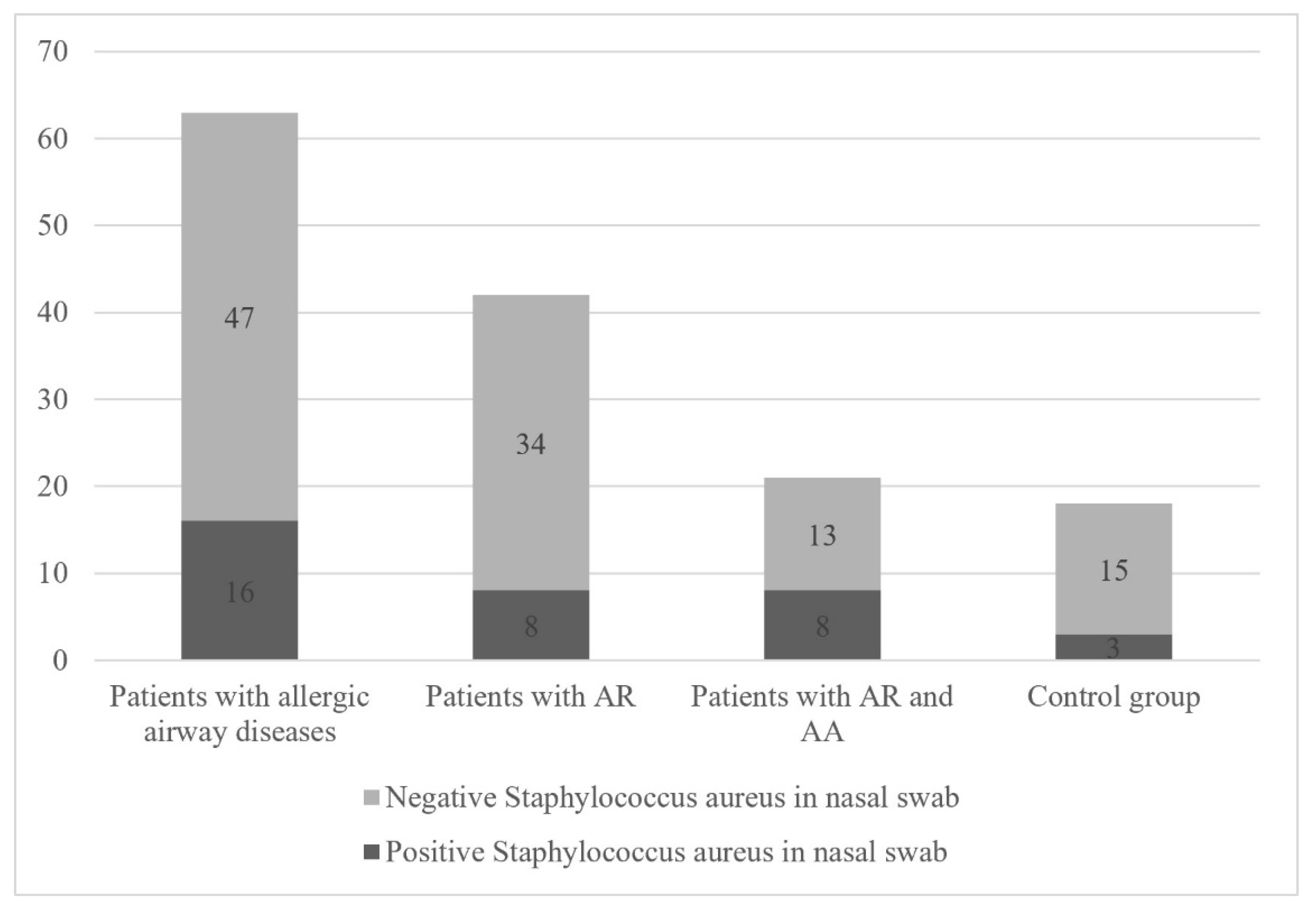
Figure 2.
Discriminative ability of nasal IL-13 to identify Staphylococcus aureus carriage.
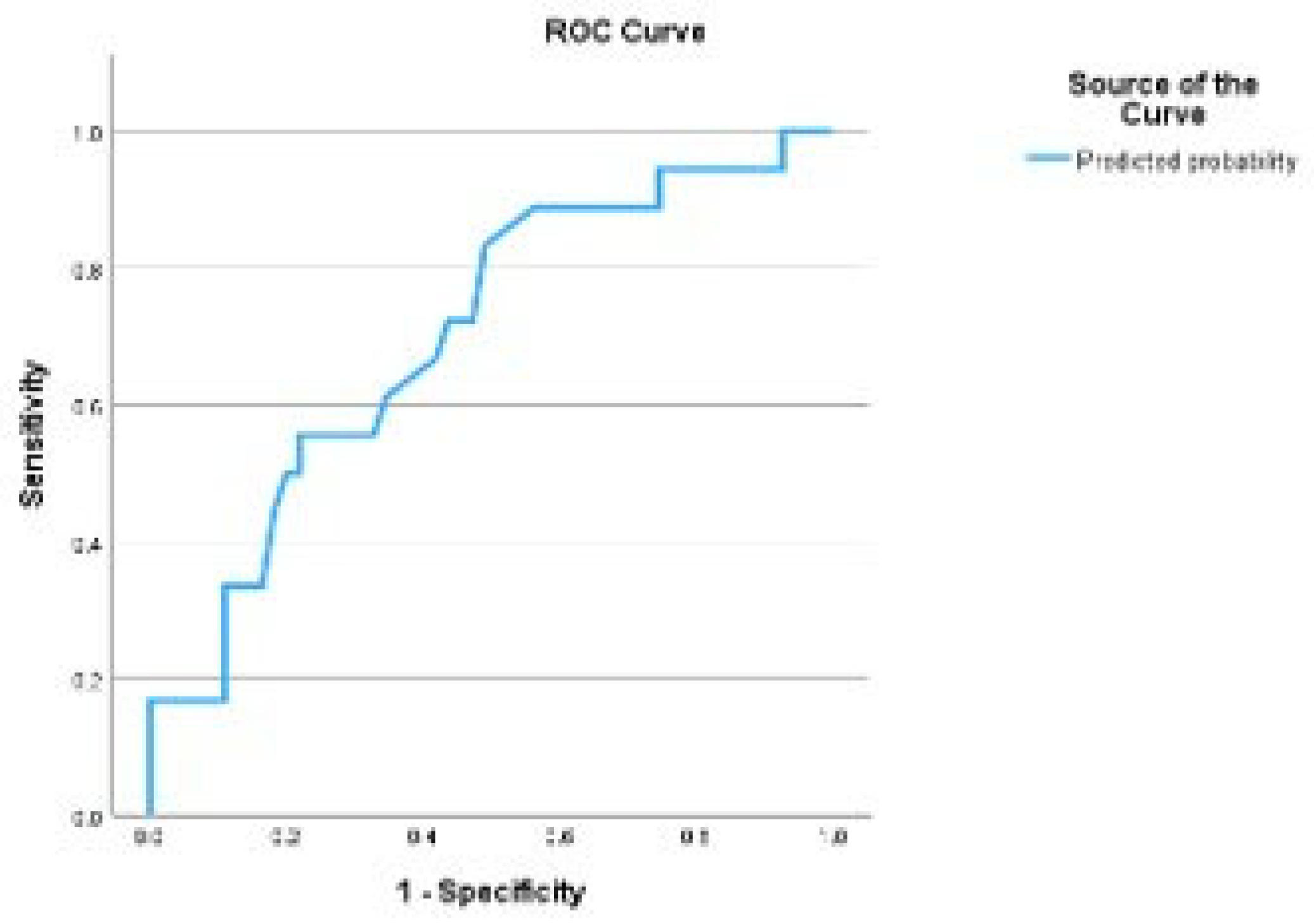

Table 1.
Demographic data, peripheral blood cells, serum total IgE level and eosinophil count in nasal smear in patients with allergic airway diseases1
Table 1.
Demographic data, peripheral blood cells, serum total IgE level and eosinophil count in nasal smear in patients with allergic airway diseases1
| Positive Staphylococcus aureus in nasal swab (N=16) | Negative Staphylococcus aureus in nasal swab (N=47) | |
|---|---|---|
| Men/women, no. | 10/6 | 15/32* |
| Age, yrs. | 31.80±4.80 | 35.14±3.32 |
| Duration of rhinitis symptoms, yrs. | 14.60±3.80 | 10.86±3.62 |
| Duration of asthma symptoms, yrs. | 13.60±3.14* | 6.57±4.12 |
| Blood: | ||
| Eosinophils, x10/9/l | 0.25±0.07 | 0.40±0.10 |
| Eosinophils, % | 3.19±1.25 | 6.37±1.31 |
| Neutrophils, x10/9/l | 4.00±0.11 | 3.44±0.30 |
| Neutrophils, % | 58.32±1.54 | 54.93±2.24 |
| Lymphocytes, x10/9/l | 2.00±0.18 | 1.89±0.10 |
| Lymphocytes, % | 29.00±1.61 | 31.00±3.10 |
| Serum total IgE, kU/l | 523.28±161.54 | 238.50±93.00 |
| Eosinophils in nasal smear, % | 11.20±7.74 | 21.43±10.80 |
1Data are presented as mean±SEM; *p<0.05
Table 2.
Demographic data, peripheral blood cells, serum total IgE level and eosinophil count in nasal smear in patients with allergic airway diseases and healthy individuals according to sub analysis groups1.
Table 2.
Demographic data, peripheral blood cells, serum total IgE level and eosinophil count in nasal smear in patients with allergic airway diseases and healthy individuals according to sub analysis groups1.
| Patients with Allergic Airway Diseases (N=63) | Patients with AR (N=42) | Patients with AR and AA (N=21) | Control group (n=18) | |
|---|---|---|---|---|
| Men/women, no. | 25/38 | 17/25 | 8/13 | 3/15 |
| Age, yrs. | 31.22±1.22 | 30.12±1.50 | 33.43±2.10 | 34.06±2.85 |
| Duration of rhinitis symptoms, yrs. | 11.96±1.30 | 10.71±1.60 | 14.46±2.27 | N/A |
| Duration of asthma symptoms, yrs. | 9.13±2.48 | N/A | 11.33±2.80 | N/A |
| Eosinophils, x10/9/l | 0.25±0.02** | 0.22±0.02* | 0.31±0.05** | 0.13±0.03 |
| Eosinophils, % | 3.98±0.34** | 3.77±0.38** | 4.40±0.70** | 2.13±0.42 |
| Neutrophils, x10/9/l | 3.45±0.15 | 3.31±0.18 | 3.72±0.26 | 3.88±0.24 |
| Neutrophils, % | 55.65±0.93* | 55.43±1.29* | 56.11±1.10* | 60.74±1.81 |
| Lymphocytes, x10/9/l | 1.88±0.07 | 1.84±0.09 | 1.97±0.10 | 1.80±0.12 |
| Lymphocytes, % | 31.42±0.90 | 31.70±1.14 | 30.87±1.49 | 28.57±1.29 |
| Serum Total IgE, kU/l | 307.03±47.18** | 313.34±64.48** | 294.40±60.32** | 40.47±11.91 |
| Eosinophils in nasal smear, % | 12.57±2.89* | 11.43±3.21* | 14.79±5.90 | 3.94±1.83 |
1Data are presented as mean±SEM; *p<0.05 compared with control group; **p<0.01 compared with control group
Table 3.
Cytokine levels in patients with allergic airway diseases according to presence of Staphylococcus aureus in nasal swab1.
Table 3.
Cytokine levels in patients with allergic airway diseases according to presence of Staphylococcus aureus in nasal swab1.
| Positive Staphylococcus aureus in nasal swab (N=16) | Negative Staphylococcus aureus in nasal swab (N=47) | |
|---|---|---|
| Serum IL-10, pg/ml | 3.03 (2.96) | 2.56 (1.45) |
| IL-10 in nasal lavage, pg/ml | 1.22 (5.22) | 1.07 (1.39) |
| Serum IL-13, pg/ml | 4.20 (0.98) | 4.40 (0.87) |
| IL-13 in nasal lavage, pg/ml | 3.84 (1.47)* | 3.46 (0.87) |
| Serum IL-17, pg/ml | 8.75 (4.76) | 8.38 (5.22) |
| IL-17 in nasal lavage, pg/ml | 12.77 (13.11)** | 6.88 (5.82) |
| Serum IL-22, pg/ml | 2.92 (12.03) | 3.82 (6.81) |
| IL-22 in nasal lavage, pg/ml | 1.80 (1.98) | 1.73 (2.07) |
| Serum IL-33, pg/ml, | 1.70 (2.55) | 2.07 (1.88) |
| IL-33 in nasal lavage, pg/ml | 6.80 (8.51)* | 4.17 (3.01) |
| Serum IFN-γ, pg/ml | 2.24 (3.29) | 1.69 (1.06) |
| IFN-γ in nasal lavage, pg/ml | 7.62 (4.57)** | 5.39 (1.94) |
1Data are presented as median (interquartile range); *p<0.05 ; **p<0.01
Table 4.
Cytokine profile and TNSS before and after nasal challenge with Dermatophagoideus pteronyssinus in patients with allergic airway diseases according to Staphylococcus aureus carriage status.
Table 4.
Cytokine profile and TNSS before and after nasal challenge with Dermatophagoideus pteronyssinus in patients with allergic airway diseases according to Staphylococcus aureus carriage status.
| Positive Staphylococcus aureus in nasal swab (N=8) | Negative Staphylococcus aureus in nasal swab (N=7) | |||||
|---|---|---|---|---|---|---|
| Baseline | After challenge 2 hours | After challenge 22 hours | Baseline | After challenge 2 hours | After challenge 22 hours | |
| Nasal IL-22, pg/ml | 1.28 (2.04) | 5.28 (3.41)* | 5.06 (3.19) | 1.50 (1.67) | 4.84 (1.76)* | 5.72 (5.28)** |
| Nasal IL-13, pg/ml | 4.05 (4.44) | 2.84 (1.67) | 2.61 (0.94)** | 3.67 (0.74) | 2.53 (1.07) | 2.38 (1.19) |
| Nasal IL-17, pg/ml | 16.17 (14.56) | 5.90 (0.62)* | 5.50 (0.74)** | 6.32 (7.70) | 5.84 (1.13) | 5.73 (1.50) |
| Nasal IL-33, pg/ml | 8.70 (13.61) | 3.42 (0.58)* | 3.42 (0.46)** | 4.07 (5.83) | 3.60 (0.90) | 3.21 (1.38) |
| Serum IL-22, pg/ml | 8.71 (13.56) | 4.84 (35.65) | 6.16 (34.33) | 5.17 (4.34) | 8.80 (9.69)* | 8.80 (7.92) |
| Serum IL-13, pg/ml | 4.20 (1.06) | 2.68 (33.61) | 3.01 (34.07) | 3.98 (1.33) | 5.62 (5.70) | 4.16 (5.20) |
| Serum IL-17, pg/ml | 8.75 (6.89) | 6.76 (0.24) | 7.00 (2.52) | 10.33 (20.37) | 6.07 (4.02)** | 6.30 (1.29)* |
| Serum IL-33, pg/ml | 1.49 (2.59) | 3.99 (0.55) | 3.99 (1.21) | 2.33 (2.07) | 3.51 (1.84) | 3.93 (0.43) |
| TNSS | 1.00 (2.00) | 2.00 (0.00) | 1.50 (1.00)* | 1.00 (1.00) | 2.00 (1.75) | 1.00 (1.75) |
1Data are presented as median (interquartile range); *p<0.05 compared with baseline results; **p<0.01 compared with baseline results
Disclaimer/Publisher’s Note: The statements, opinions and data contained in all publications are solely those of the individual author(s) and contributor(s) and not of MDPI and/or the editor(s). MDPI and/or the editor(s) disclaim responsibility for any injury to people or property resulting from any ideas, methods, instructions or products referred to in the content. |
© 2026 by the authors. Licensee MDPI, Basel, Switzerland. This article is an open access article distributed under the terms and conditions of the Creative Commons Attribution (CC BY) license (http://creativecommons.org/licenses/by/4.0/).
Copyright: This open access article is published under a Creative Commons CC BY 4.0 license, which permit the free download, distribution, and reuse, provided that the author and preprint are cited in any reuse.