

Submitted:
21 August 2026
Posted:
18 September 2026
You are already at the latest version
Abstract
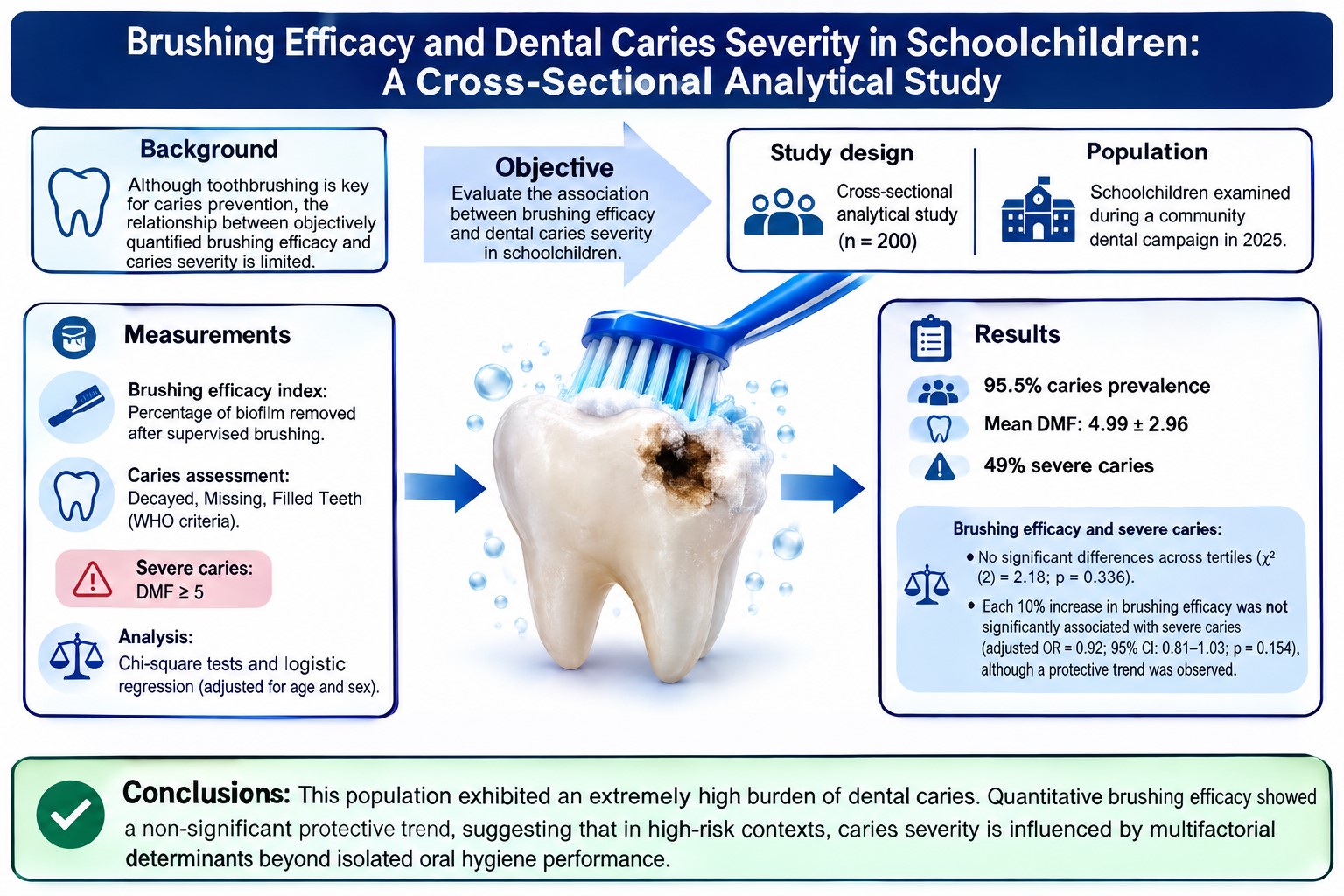
Background: Although toothbrushing is widely recognized as a cornerstone of caries prevention, oral hygiene has traditionally been assessed using self-reported frequency or categorical plaque indices. Evidence regarding the relationship between objectively quantified brushing efficacy and cumulative caries severity remains limited. This study evaluated the association between a quantitative brushing efficacy index and dental caries severity among schoolchildren. Methods: A cross-sectional analytical study was conducted among 200 schoolchildren examined during a community dental campaign in 2025. Caries was assessed using Decayed, Missing, Filled Teeth indices following Word Health Organization criteria. Severe caries was defined as Decayed, Missing, Filled Teeth ≥5. Oral hygiene was measured using a brushing efficacy index, expressed as the percentage of biofilm removed after supervised brushing. Associations were evaluated using chi-square tests and logistic regression models adjusted for age and sex. Results: Caries prevalence was 95.5%, with a mean Decayed, Missing, Filled Teeth of 4.99 ± 2.96. Severe caries was observed in 49% of participants. No statistically significant differences were found across tertiles of brushing efficacy (χ² (2) =2.18; p=0.336). In regression analysis, each 10% increase in brushing efficacy was not significantly associated with severe caries (adjusted OR=0.92; 95% CI: 0.81–1.03; p=0.154), although a protective trend was observed. Conclusions: This population exhibited an extremely high burden of dental caries. Quantitative brushing efficacy showed a non-significant protective trend, suggesting that in high-risk contexts, caries severity is influenced by multifactorial determinants beyond isolated oral hygiene performance.
Keywords:
dental caries
; schoolchildren
; oral hygiene
; Decayed
; Missing
; Filled Teeth index
; cross-sectional study
1. Background
Dental caries remains one of the most prevalent chronic diseases affecting children worldwide and continues to represent a major public health challenge despite being largely preventable [1]. Untreated caries may result in pain, infection, impaired mastication, reduced quality of life, school absenteeism, and increased healthcare costs. The burden of the disease is disproportionately concentrated in socially vulnerable populations, where limited access to preventive services, oral health education, and fluoride exposure contribute to persistently high prevalence rates [2]. Consequently, reducing the burden of childhood dental caries remains a global public health priority.
Dental caries is a multifactorial disease resulting from the interaction of microbial biofilm, fermentable carbohydrates, host susceptibility, saliva, fluoride exposure, and behavioral and socioeconomic determinants [3]. Among preventive behaviors, regular toothbrushing with fluoridated toothpaste is universally recommended because it promotes mechanical disruption of dental biofilm and enhances topical fluoride delivery. Numerous epidemiological studies have demonstrated that inadequate oral hygiene is associated with an increased risk of dental caries [4]. However, the magnitude of this association varies substantially across populations owing to differences in dietary habits, fluoride exposure, socioeconomic conditions, and access to preventive dental care [5].
Although toothbrushing is recognized as an essential preventive measure, its assessment in epidemiological research has traditionally relied on indirect indicators such as self-reported brushing frequency, caregiver questionnaires, or categorical plaque indices [6]. These approaches are susceptible to recall bias, reporting bias, and inter-examiner variability, potentially limiting their ability to accurately characterize oral hygiene performance. More recently, quantitative methods based on the percentage of dental biofilm removed after supervised toothbrushing have been proposed as more objective measures of brushing efficacy [7]. Such methods may provide a more precise estimate of an individual's ability to remove dental plaque and therefore represent a promising alternative for evaluating oral hygiene performance in both clinical and epidemiological settings [8].
Despite these methodological advances, evidence regarding the relationship between objectively quantified brushing efficacy and cumulative dental caries experience remains limited. This is particularly relevant because dental caries is a cumulative disease reflecting long-term exposure to biological, behavioral, and environmental risk factors, whereas brushing efficacy represents a point-in-time assessment of oral hygiene performance [9]. Consequently, the extent to which an objectively measured brushing efficacy index predicts caries severity remains uncertain, especially in populations experiencing a high burden of disease [10].
Clarifying this relationship has important clinical and public health implications. If quantitative brushing efficacy is strongly associated with caries severity, it could serve as a practical and objective indicator for identifying children at increased risk and evaluating preventive interventions [11]. Conversely, the absence of a significant association would reinforce the concept that effective caries prevention requires comprehensive strategies addressing multiple determinants beyond oral hygiene alone, including dietary practices, fluoride exposure, socioeconomic conditions, and access to preventive care [12].
Therefore, the aim of this study was to determine the prevalence and severity of dental caries among schoolchildren and to evaluate the association between an objectively measured quantitative brushing efficacy index and severe dental caries in a population with a high burden of disease.
2. Materials and Methods
2.1. Study Design and Participants
A cross-sectional analytical study was conducted among 200 schoolchildren who participated in a community oral health campaign in Quito, Pichincha, Ecuador. Data collection was carried out over an 18-month period between September 2024 and December 2025. The campaign was organized to provide preventive and diagnostic dental services to school-aged children.
Participants were consecutively recruited throughout the campaign to minimize selection bias. Children were eligible if they presented mixed or permanent dentition and had complete clinical examination records. Children with incomplete clinical data, systemic diseases affecting oral health assessment, or conditions preventing adequate oral examination were excluded.
2.2. Ethical Considerations
The study was conducted in accordance with the ethical principles of the Declaration of Helsinki and was approved by the Ethics Committee of Universidad de Las Américas (approval code: 170520250813). Written informed consent was obtained from parents or legal guardians, and written assent was obtained from all participating children before the clinical examination. Participant confidentiality and anonymity were maintained throughout the study.
2.3. Clinical Examination
All clinical examinations were performed under natural light using sterile mouth mirrors and WHO periodontal probes. Before data collection, the examiner completed theoretical and clinical calibration sessions to ensure consistency in the diagnosis of dental caries. Intra-examiner agreement was evaluated using Cohen's Kappa coefficient, demonstrating excellent reproducibility (κ = 0.90).
Dental caries was assessed according to the World Health Organization (WHO) diagnostic criteria using the DMFT index for permanent dentition and the dmft index for primary dentition. For the present analysis, severe dental caries was defined as a combined DMFT/dmft score of ≥5, consistent with previously reported epidemiological criteria.
2.4. Quantitative Assessment of Brushing Efficacy
Oral hygiene performance was objectively assessed using a quantitative brushing efficacy index based on the percentage of dental biofilm removed after supervised toothbrushing.
At baseline, dental plaque was disclosed using a plaque-disclosing solution (Ditonos®, Eufar, Colombia, 10 mL). Participants were subsequently instructed to brush their teeth for 2 minutes under direct professional supervision using a standardized soft-bristle pediatric toothbrush (Colgate®) and a fluoridated toothpaste containing 1450 ppm fluoride (1450 μg/g fluoride). Standardized toothbrushing instructions were provided to all participants before brushing to minimize variability in brushing technique. Following toothbrushing, plaque disclosure was repeated and the percentage of biofilm removed was calculated using the predefined brushing efficacy index. Higher percentages indicated greater brushing effectiveness. The brushing efficacy index was calculated as the percentage reduction in disclosed dental biofilm after supervised toothbrushing using the following formula:
Brushing efficacy (%) = [(Baseline plaque score − Post-brushing plaque score) / Baseline plaque score] × 100
This quantitative approach provided an objective measure of oral hygiene performance, reducing the limitations associated with self-reported toothbrushing frequency or categorical plaque indices.
2.5. Statistical Analysis
Statistical analyses were performed using IBM SPSS Statistics for Windows, Version 29.0 (IBM Corp., Armonk, NY, USA). Continuous variables were summarized using means and standard deviations, whereas categorical variables were expressed as frequencies and percentages. Brushing efficacy was analyzed both as a continuous variable and after categorization into tertiles for descriptive comparisons. Differences in the prevalence of severe dental caries across brushing efficacy tertiles were evaluated using Pearson's chi-square test. To investigate the independent association between brushing efficacy and severe dental caries, multivariable logistic regression models were constructed. Severe dental caries (DMFT/dmft ≥5) was entered as the dependent variable, while brushing efficacy was modeled as a continuous predictor expressed per 10% increase in biofilm removal. A threshold of DMFT/dmft ≥5 was selected to identify children with a high cumulative burden of dental caries, consistent with previous epidemiological investigations evaluating severe caries experience. Age and sex were included in the multivariable model as potential confounding variables based on their established association with dental caries reported in previous epidemiological studies. Adjusted odds ratios (ORs) with 95% confidence intervals (95% CIs) were calculated, and statistical significance was established at p < 0.05.
3. Results
The sample included 200 schoolchildren (mean age: 9.12 ± 0.76 years; 53.5% female).
3.1. Caries Prevalence and Severity
Caries prevalence was 95.5%. The mean DMFT/dmft index was 4.99 ± 2.96 (Table 1), with a higher contribution from primary dentition. Severe caries (≥5) was observed in 49% of participants. The distribution of caries severity is presented in Table 2 and illustrated in Figure 1.
Brushing Efficacy and Association with Caries
No significant differences were found in severe caries across tertiles of brushing efficacy (p=0.336). In logistic regression analysis, brushing efficacy was not significantly associated with severe caries (adjusted OR = 0.92; 95% CI: 0.81–1.03; p = 0.154) (Table 3). This lack of association is further illustrated in Figure 2.
4. Discussion
This study investigated the association between an objectively measured quantitative brushing efficacy index and dental caries severity among schoolchildren living in a population with an exceptionally high burden of disease [13]. Although brushing efficacy demonstrated a consistent protective trend, no statistically significant independent association with severe dental caries was observed after adjustment for age and sex. Furthermore, the study confirmed an alarmingly high prevalence of dental caries (95.5%) and that nearly half of the participants presented severe caries experience. These findings emphasize that, in high-risk populations, cumulative caries experience is likely determined by multiple interacting biological, behavioral, and environmental factors rather than by oral hygiene performance alone [14]. The prevalence of dental caries observed in the present study is considerably higher than estimates reported in many recent epidemiological investigations involving schoolchildren from different geographic regions [15]. Previous studies conducted in Africa, Asia, and Latin America have consistently reported substantial disease burdens, although prevalence varies according to socioeconomic conditions, fluoride exposure, dietary patterns, and access to preventive dental services. Our findings therefore reinforce existing evidence indicating that dental caries continues to represent a major public health challenge in socially vulnerable populations despite advances in preventive dentistry [16]. The absence of a statistically significant association between brushing efficacy and severe caries should not be interpreted as evidence that toothbrushing lacks preventive value. Rather, these findings should be interpreted within the biological characteristics of dental caries [17]. Caries is a cumulative disease that reflects years of exposure to cariogenic biofilm, dietary sugars, fluoride availability, host susceptibility, and socioeconomic determinants. In contrast, brushing efficacy was measured at a single point in time and therefore represents current oral hygiene performance rather than long-term oral hygiene behavior [18]. This temporal mismatch may explain why objectively measured brushing efficacy was unable to independently predict cumulative caries experience in the present population. These observations are consistent with the ecological concept of dental caries proposed by Takahashi and Nyvad, who emphasized that disease progression depends on dynamic ecological shifts within the dental biofilm rather than on bacterial accumulation alone [19]. Likewise, contemporary concepts of plaque control suggest that mechanical biofilm removal constitutes only one component of comprehensive caries prevention and should be integrated with fluoride exposure, dietary modification, and behavioral interventions. Therefore, although effective toothbrushing remains an essential preventive measure, its isolated effect may become less evident in populations exposed to multiple concurrent risk factors. An important strength of the present study is the use of an objective quantitative brushing efficacy index based on the percentage of dental biofilm removed following supervised toothbrushing. [20] Most epidemiological investigations evaluate oral hygiene through self-reported brushing frequency or categorical plaque indices, both of which are susceptible to recall bias, reporting bias, and examiner variability. By objectively quantifying biofilm removal, the present study provides a more direct assessment of oral hygiene performance and contributes methodological evidence supporting the use of quantitative indicators in oral health research [21]. Despite this methodological advantage, the findings suggest that objective measurements of brushing efficacy alone may not adequately identify children at increased risk of severe dental caries in populations with an already elevated disease burden. Instead, quantitative brushing assessment should be considered one component of a broader caries risk assessment strategy incorporating dietary habits, fluoride exposure, socioeconomic conditions, previous caries experience, and access to preventive dental care [22]. Such an approach is consistent with current concepts of minimally invasive and risk-based caries management. From a public health perspective, the results highlight the need for comprehensive preventive strategies rather than interventions focused exclusively on toothbrushing technique [23]. School-based oral health programs should continue promoting effective toothbrushing with fluoridated toothpaste while simultaneously strengthening nutritional education, reducing sugar consumption, improving access to topical fluoride, and expanding preventive dental services [24]. Multifactorial interventions are more likely to reduce disease burden than isolated improvements in brushing performance [25]. This study has several strengths. First, brushing efficacy was objectively quantified using a standardized biofilm removal index rather than subjective self-reported measures. Second, examiner calibration demonstrated excellent reproducibility (κ = 0.90), enhancing the reliability of the clinical assessments. Third, multivariable logistic regression was used to adjust for important demographic variables, thereby reducing potential confounding [26]. Several limitations should also be acknowledged [27]. The cross-sectional design precludes causal inference and prevents establishing temporal relationships between brushing efficacy and caries development [28,29,30]. Brushing efficacy was assessed only once and therefore may not accurately represent habitual oral hygiene practices over time. In addition, important determinants of dental caries, including dietary sugar intake, socioeconomic status, fluoride exposure, parental education, and previous preventive care, were not evaluated and may have influenced the observed associations [31,32,33]. Finally, participants were recruited during a community oral health campaign, which may limit the generalizability of the findings to other populations. Overall, the present findings support the concept that severe dental caries in high-risk populations cannot be explained solely by current oral hygiene performance [33,34]. Although quantitative brushing efficacy demonstrated a favorable protective trend, comprehensive preventive strategies addressing the multiple determinants of dental caries remain essential for reducing disease burden in schoolchildren.
5. Limitations
The cross-sectional design limits causal inference. Brushing efficacy was measured at a single time point, and key confounders such as diet and socioeconomic status were not included.
6. Conclusions
This study demonstrated an exceptionally high burden of dental caries among schoolchildren and found that objectively measured brushing efficacy was not independently associated with severe dental caries after adjustment for age and sex. These findings suggest that, in high-risk populations, current oral hygiene performance alone does not adequately explain cumulative caries experience. Comprehensive preventive strategies integrating effective toothbrushing with fluoride exposure, dietary counseling, and broader social and behavioral interventions remain essential for reducing childhood dental caries. Future longitudinal studies should further investigate the role of quantitative brushing efficacy within multifactorial caries risk assessment models.
Author Contributions
Conceptualization: B.V.R., A.A.M. Methodology: B.V.R., A.C.H., D.Q.F. Investigation: A.C.H., A.A.M., D.Y.Z., M.R.T. Formal analysis: D.Q.F., B.V.R. Writing—original draft: B.V.R., A.A.M. Writing—review and editing: All authors. Supervision: B.V.R. All authors have read and agreed to the published version of the manuscript.
Funding
This research received no external funding.
Informed Consent
The legal representatives accepted and signed the informed consent.
Data Availability
Available in Zenodo: DOI 10.5281/zenodo.19964792.
Acknowledgments
The authors would like to thank Universidad de Las Américas for supporting the publication process.
Competing Interests
The authors declare no competing interests.
Ethics Approval
The study was conducted in accordance with the ethical principles of the Declaration of Helsinki and was approved by the Ethics Committee of Universidad de Las Américas (approval code: 170520250813).
Abbreviations
| DMFT | Decayed, Missing, Filled Teeth definitive dentition |
| dmft | Decayed, Missing, Filled Teeth primary dentition |
| OR | Odds Ratio |
| WHO | World Health Organization |
References
- Songa, M.; Saliba, N.; Saliba, T.; Chiba, F.; Moimaz, S. Analysis of the Dental Caries Epidemiological Profile in Children of Benguela city, Angola. Oral Health Prev. Dent. 2022, 20, 141–148. [Google Scholar] [CrossRef]
- Gomersall, J.; Slack-Smith, L.; Kilpatrick, N.; Muthu, M.; Riggs, E. Interventions with pregnant women, new mothers and other primary caregivers for preventing early childhood caries. Cochrane Database Syst. Rev. 2024, 5(5), CD012155. [Google Scholar] [CrossRef] [PubMed]
- Maklennan, A.; Borg-Bartolo, R.; Wierichs, R.; Esteves-Oliveira, M.; Campus, G. A systematic review and meta-analysis on early-childhood-caries global data. BMC Oral Health 2024, 24(1), 835. [Google Scholar] [CrossRef]
- Bhadauria, U.; Gupta, V.; Arora, H. Interventions in improving the oral hygiene of visually impaired individuals: A systematic review. Health Soc. Care Community 2022, 30(4), e1092–e1100. [Google Scholar] [CrossRef] [PubMed]
- Songa, M.; Saliba, T.; Saliba, N.; Chiba, F.; Moimaz, S. Prevalence of Dental Caries and Periodontal Disease, Access to Dental Services and Perception of Oral Health in Adolescents and Adults from a Rural Community in Angola. Oral Health Prev. Dent. 2024, 22, 665–670. [Google Scholar] [CrossRef]
- Gizaw, Z.; Demissie, N.; Gebrehiwot, M.; Bitew, B.; Nigusie, A. Oral hygiene practices and associated factors among rural communities in northwest Ethiopia. BMC Oral Health 2024, 24(1), 315. [Google Scholar] [CrossRef]
- Marsh, P. Contemporary perspective on plaque control. Br. Dent. J. 2012, 212(12), 601–606. [Google Scholar] [CrossRef]
- Takahashi, N.; Nyvad, B. The role of bacteria in the caries process: ecological perspectives. J. Dent. Res. 2011, 90(3), 294–303. [Google Scholar] [CrossRef] [PubMed]
- Pitts, N.B.; Zero, D.; Marsh, P.; Ekstrand, K.; Weintraub, J.; Ramos-Gomez, F. Dental caries. Nat. Rev. Dis. Primers 2017, 3, 17030. [Google Scholar] [CrossRef] [PubMed]
- Marinho, V.; Worthington, H.; Walsh, T.; Clarkson, J. Fluoride toothpastes for preventing dental caries in children and adolescents. Cochrane Database Syst. Rev. 2013, (7), CD002278. [Google Scholar] [CrossRef]
- Kimmie-Dhansay, F.; Nkambule, N.; Schoonraad, N.; Albougy, H.; Bhayat, A. Prevalence of Early Childhood Caries in Africa: A Systematic Review. Int. J. Paediatr. Dent. 2026, 36(1), 157–186. [Google Scholar] [CrossRef] [PubMed]
- Akbeyaz Şivet, E.; Sezer, B.; Atmaca, N.; Hüseynova, N.; Kargül, B. Evaluation of the effect of dental caries, oral hygiene, and treatment need on oral health-related quality of life among Turkish orphan children and adolescents. BMC Oral Health 2025, 25(1), 134. [Google Scholar] [CrossRef] [PubMed]
- Salim, N.; Alamoush, R.; Al-Abdallah, M.; Al-Asmar, A.; Satterthwaite, J. Relationship between dental caries, oral hygiene and malocclusion among Syrian refugee children and adolescents: a cross-sectional study. BMC Oral Health 2021, 21(1), 629. [Google Scholar] [CrossRef] [PubMed]
- Bai, X.; Cui, C.; Yin, J.; Li, H.; Gong, Q.; Wei, B.; Lu, Y. The association between oral hygiene and head and neck cancer: a meta-analysis. Acta Odontol. Scand. 2023, 81(5), 374–395. [Google Scholar] [CrossRef] [PubMed]
- Aggarwal, S.; Atri, M.; Kharbanda, J.; Chadha, M.; Singh, A.; Mittal, M.; Sarkar, C. Correlation Between Oral Health Status and Oral Health Impact Profile in Children With Special Needs: A Cross-Sectional Study. Cureus 2025, 17(9), e93278. [Google Scholar] [CrossRef] [PubMed]
- Onyejaka, N.; Onyia, E.; Nwamba, N.; Aronu, A.; Ojinnaka, N. Oral findings in children with chronic neurological disorders attending Paediatric Neurology Clinic, University of Nigeria Teaching Hospital (UNTH), Enugu, Nigeria. BMC Oral Health 2025, 25(1), 1385. [Google Scholar] [CrossRef] [PubMed]
- Zotti, F.; Rosolin, L.; Simoncelli, F.; Pappalardo, D.; Cominziolli, A.; Zerman, N. Telediagnosis of dental caries: Possible or impossible? A pilot cross-sectional study. Clin Exp Dent Res. 2022, 8(6), 1614–1622. [Google Scholar] [CrossRef] [PubMed]
- Mohan, D.; Bhuvaneshwar, Y.; Jeyaram, R.; Saravanan, S.; Amutha, A. Research Team. Dental caries and their relation to hba1c in adults with type 2 diabetes mellitus. Indian J. Public Health 2022, 66(2), 206–209. [Google Scholar] [CrossRef] [PubMed]
- Xu, N.; Chen, Z.; Wang, B.; Qiu, Y.; Alifu, X.; Zhou, H.; Cheng, H.; Huang, Y.; Zhang, L.; Liu, H.; Yu, L.; Chen, D.; Yu, Y. Vitamin D Levels During Pregnancy and Dental Caries in Offspring. JAMA Netw. Open 2025, 8(12), e2546166. [Google Scholar] [CrossRef] [PubMed]
- Ju, X.; Mittinty, M.; Smithers, L.; Jamieson, L. Early Childhood Caries Intervention in Aboriginal Australian Children: A Randomized Trial. JDR Clin. Trans. Res. 2024, 9(3), 239–247. [Google Scholar] [CrossRef] [PubMed]
- Shi, R.; Lin, C.; Li, S.; Deng, L.; Lin, Z.; Xiu, L. Obesity is negatively associated with dental caries among children and adolescents in Huizhou: a cross-sectional study. BMC Oral Health 2022, 22(1), 76. [Google Scholar] [CrossRef] [PubMed]
- Bhadauria, U.; Purohit, B.; Agarwal, D.; Priya, H.; Upadhyay, A. Oral hygiene status in individuals with hearing difficulties: A systematic review and meta-analysis. Spec. Care Dent. 2024, 44(1), 75–88. [Google Scholar] [CrossRef] [PubMed]
- Abuduxukuer, K.; Wang, H.; Wang, C.; Luo, X.; Zeng, X.; Da, D.; Yu, J.; Lu, W.; Zhang, J.; Zhang, Y.; Luo, J.; Zhang, H. Shanghai Birth Cohort Study. Prenatal exposure to per-and polyfluoroalkyl substances and its association with Developmental Defects of Enamel (DDE) and dental caries in 4 years old children: Findings from Shanghai birth cohort. Environ. Int. 2025, 198, 109411. [Google Scholar] [CrossRef] [PubMed]
- Jamieson, L.; Smithers, L.; Hedges, J.; Mills, H.; Kapellas, K.; Ha, D.; Do, L.; Ju, X. Follow-up of Intervention to Prevent Dental Caries Among Indigenous Children in Australia: A Secondary Analysis of a Randomized Clinical Trial. JAMA Netw. Open 2019, 2(11), e1915611. [Google Scholar] [CrossRef] [PubMed]
- Yohana, S.; Indriyanti, R.; Suryanti, N.; Rahayuwati, L.; Juniarti, N.; Setiawan, A. Caries Experience among Children with History of Neonatal Stunting. Eur. J. Dent. 2023, 17(3), 687–692. [Google Scholar] [CrossRef] [PubMed]
- Gallione, C.; Bassi, E.; Cattaneo, A.; Busca, E.; Basso, I.; Dal Molin, A. Oral Health Care: A Systematic Review of Clinical Practice Guidelines. Nurs. Health Sci. 2025, 27(1), e70027. [Google Scholar] [CrossRef] [PubMed]
- Rai, A.; Sundas, S.; Dhakal, N.; Khapung, A. Assessment of dental caries based on ICDAS and WHO criteria: A comparative study. Int. J. Paediatr. Dent. 2024, 34(1), 77–84. [Google Scholar] [CrossRef] [PubMed]
- Zhou, N.; Ding, H.; Liu, J.; Chen, J.; Zhang, S.; Chu, C. Dental Caries Status among Yi Preschool Children in Yunnan Province, China: A Cross-Sectional Study. Int. J. Environ. Res. Public Health 2021, 18(16), 8393. [Google Scholar] [CrossRef] [PubMed]
- Bhat, P.; Shekar, M.; Jayachandra, M. Relationship between dental anxiety and dental caries and periodontal disease among army recruits in Bangalore city - A cross sectional study. J. Oral Maxillofac. Pathol. 2022, 26(1), 126. [Google Scholar] [CrossRef] [PubMed]
- Vahabzadeh, Z.; Hashemi, Z.; Nour, B.; Zamani, F.; Shafiee, F. Salivary enzymatic antioxidant activity and dental caries: A cross-sectional study. Dent. Med. Probl. 2020, 57(4), 385–391. [Google Scholar] [CrossRef]
- Hashim, N.; Lee, C.; Yazid, F. Integrated Health Solutions: Addressing the Co-occurrence of Otitis Media With Effusion and Early Childhood Caries in Preschool Children. Cureus 2024, 16(8), e68006. [Google Scholar] [CrossRef] [PubMed]
- Deng, H.; Zhao, C.; Yang, Q.; Huang, X. Impact of Mouth Breathing on Dental Caries in Children and Its High Medical Costs. Ear Nose Throat J. 2025, 1455613251370571. [Google Scholar] [CrossRef] [PubMed]
- Cao, Z.; Yu, R.; Ma, J.; Zhang, Y.; Dong, X.; Fan, L. Association between early childhood caries and anthropometric growth and nutritional status in preschool children: a cross-sectional study. Front Pediatr. 2025, 13, 1623666. [Google Scholar] [CrossRef] [PubMed]
- Guo, P.; Zou, C.; An, N.; Huang, J.; Yang, J.; Lu, Q. Emotional symptoms, dietary patterns and dental caries: A cross-sectional study in adolescents. Oral Dis. 2024, 30(4), 2653–2662. [Google Scholar] [CrossRef] [PubMed]
Figure 1.
Distribution of caries severity according to DMFT/dmft categories (n=200).
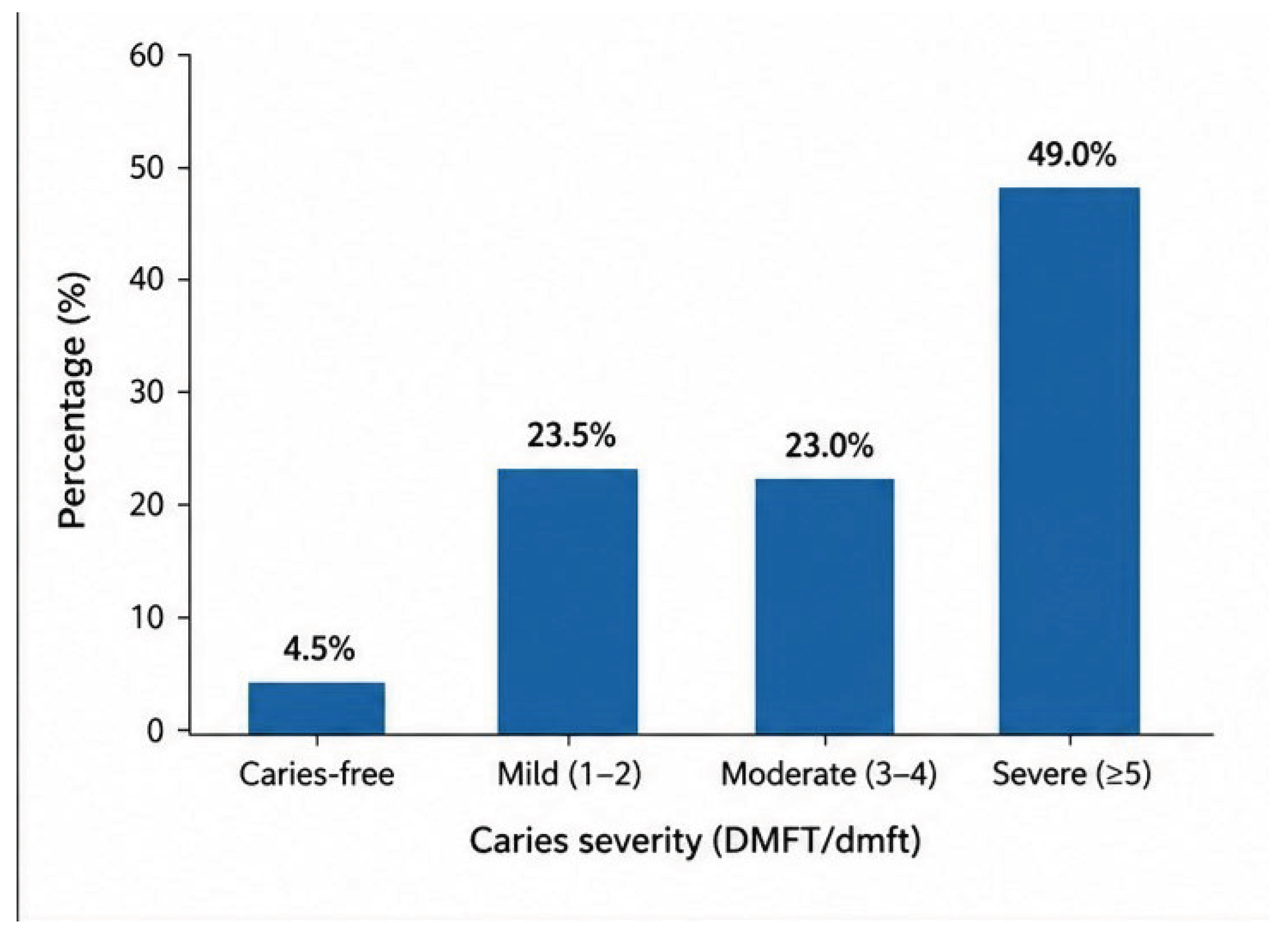
Figure 2.
Total DMFT/dmft index across tertiles of brushing efficacy (n=200).
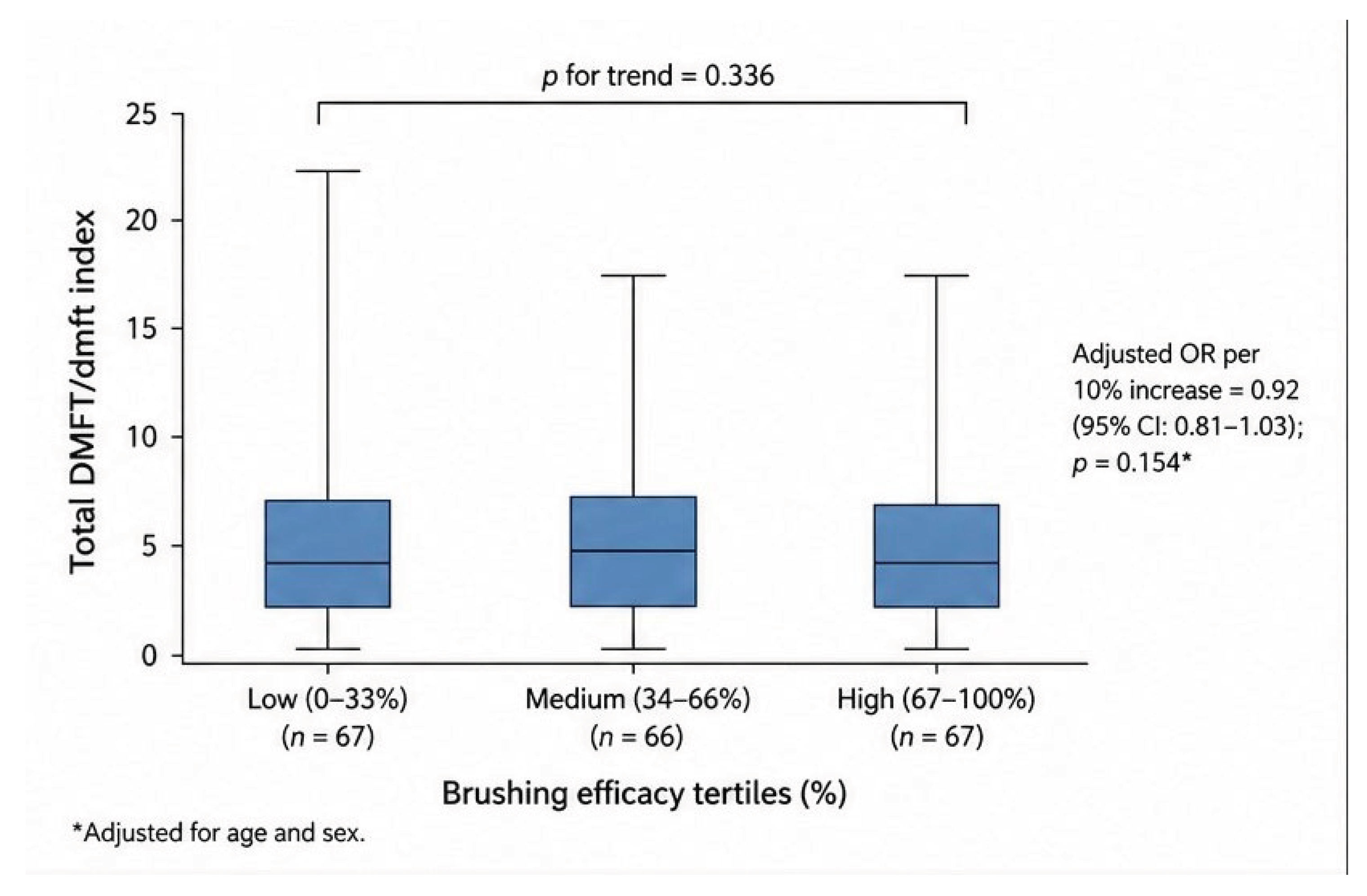

Table 1.
DMFT /dmft index n=200).
| Index | Mean | ± SD |
|---|---|---|
| DMFT | 2.12 | 1.94 |
| dmft | 2.88 | 2.21 |
| Total DMFT/dmft | 4.99 | 2.96 |
DMFT: Decayed, Missing, Filled Teeth definitive dentition; dmft: Decayed, Missing, Filled Teeth primary dentition.
Table 2.
Severity of dental caries according. To DMFT/dmft index n=(200).
| Severity | n | % |
|---|---|---|
| Caries-free | 9 | 4.5 |
| Mild (1–2) | 47 | 23.5 |
| Moderate (3–4) | 46 | 23.0 |
| Severe (≥5) | 98 | 49.0 |
Table 3.
Logistic Regression Analysis severe caries DMFT/dmft according to brushing efficacy.
| OR(per 10% increase) | 95% CI | p-value | |
|---|---|---|---|
| Crude model | 0.92 | 0.82–1.04 | 0.183 |
| Adjusted model* | 0.92 | 0.81–1.03 | 0.154 |
*OR: Odds Ratio; CI: Confidence Intervals; Adjusted for age and sex.
Disclaimer/Publisher’s Note: The statements, opinions and data contained in all publications are solely those of the individual author(s) and contributor(s) and not of MDPI and/or the editor(s). MDPI and/or the editor(s) disclaim responsibility for any injury to people or property resulting from any ideas, methods, instructions or products referred to in the content. |
© 2026 by the authors. Licensee MDPI, Basel, Switzerland. This article is an open access article distributed under the terms and conditions of the Creative Commons Attribution (CC BY) license (http://creativecommons.org/licenses/by/4.0/).
Copyright: This open access article is published under a Creative Commons CC BY 4.0 license, which permit the free download, distribution, and reuse, provided that the author and preprint are cited in any reuse.