

Submitted:
14 September 2026
Posted:
15 September 2026
You are already at the latest version
Abstract
Sexual minorities (e.g., lesbian, gay, and bisexual individuals) experience significant health inequalities and report negative identity-related experiences within UK health and social care services. Despite staff training being recommended to improve care for this population, training provision remains inconsistent. This systematic review synthesised UK-focussed guidance documents, training materials, and training evaluations aimed at improving health and social care staff’s work with sexual minority people. We systematically searched nine databases (MEDLINE®, EMBASE, PsycINFO, Social Policy and Practice, CINAHL Plus, ERIC, Applied Social Sciences Index & Abstracts, International Bibliography of the Social Sciences, and Web of Science) and searched supplementary grey literature. Studies of any design, training materials, and guidance documents, published from 2010 onwards were eligible. Screening, data extraction, and quality assessment were conducted independently by two researchers. A narrative synthesis, and content analysis of the guidance documents, was conducted. Study quality was assessed using the QualSyst tool, and guidance documents were appraised using the AGREE II. Thirty-one guidance documents, six training evaluations, and one set of training materials were included. Guidance targeted health and social care staff, services, and commissioners. Consistent recommendations included using neutral language, avoiding assumptions about sexual orientation, recognising the diversity of sexual minority identities, explicitly including sexual minorities in policies, addressing prejudice and discrimination, providing staff training, having visible signs of inclusivity, and routinely collecting and monitoring sexual orientation data. Training evaluations suggested that training can improve staff competence in working with sexual minorities. This review provides the most comprehensive synthesis to date of UK guidance and training relating to health and social care provision for sexual minority service users. It identifies a consistent set of practical, largely low-cost actions that organisations and staff can prioritise to create safe and inclusive services.
Keywords:
sexual minorities
; LGBQ+
; health and social care
; guidelines
; health equity
; health inequalities
; inequalities
; training
; service improvement
; equitable services
; service development
1. Introduction
People from sexual minorities (i.e., including, but not limited to, anyone who self-identifies as lesbian, gay, bisexual, queer [LGBQ+]) in the UK (and beyond) are consistently shown to experience wide-ranging disparities relative to heterosexuals. These inequalities span both established risk factors for adverse health outcomes and both physical and mental health outcomes. This is despite improving legal protections over recent decades (e.g., The Equality Act, 2010), and improving societal attitudes (National Centre for Social Research, 2023).
Evidence from UK population cohorts suggests that these disparities emerge early in the life course and persist into adulthood (Amos et al., 2020; Booth & Fitzsimons, 2025; Corcoran et al., 2024; Irish et al., 2019; Khanolkar et al., 2023; King et al., 2008). Relative to heterosexual adults, sexual minority adults experience around two times the odds of common mental disorders, are more likely to report lifetime non-suicidal self-harm, and self-report poorer mental health (Booker et al., 2017; Kidd et al., 2024; Pitman et al., 2022; Semlyen et al., 2016).
Sexual minority adults are also more likely to engage in alcohol and illicit drug use, to have ever smoked, and are at elevated risk of experiencing asthma, lung conditions, and neurological conditions, and to report poorer physical health and the presence of multimorbidity (i.e., 2 or more health conditions; Booker et al., 2017; Khanolkar & Mazhari, 2024; Pitman et al., 2022; Saunders et al., 2021; Tabor et al., 2025). The dominant framework for understanding the significant burden of poor health experienced by sexual minorities is the minority stress theory.
Minority stress theory hypothesises that health disparities emerge for sexual minorities due to excess exposure to social stressors as a result of their stigmatized social status (Brooks, 1981; Frost & Meyer, 2023; Meyer, 2003a). This minority stress is distinct from general stress as its origin lies in prejudice and stigma. Meyer (2003) describes distal and proximal stress processes. Distal processes are those that originate from other people or institutions that impact sexual minorities (e.g., experiences of homophobia, discriminatory laws), whilst proximal stressors arise due to the internalisation of social stigma, and include internalised homo/bi-phobia, the expectation of rejection, and identity concealment. It is exposure to these unique stressors, in addition to, and in combination with, the general stress experienced by all people, that is believed to contribute to the health inequalities experienced by people from sexual minorities. Whilst the model has been widely used to understand mental health disparities, further research is needed to confirm whether it is applicable to physical health inequalities (Frost & Meyer, 2023).
In addition to this increased burden of physical and mental health morbidity, there is evidence that sexual minorities have negative experiences of, and report poorer satisfaction with, health and social care services, including primary care (Elliott et al., 2015; Hudson-Sharp & Metcalf, 2016). In the context of mental health services, sexual minorities report anticipatory anxiety about experiencing discrimination within services, experiences of heteronormative assumptions, and the pathologisation of their sexual identities by practitioners (Mackay et al., 2025). Similar concerns are evident in social care. Older adults who identify as lesbian, gay, or bisexual (LGB) have been reported to anticipate discrimination in relation to moving to residential and nursing care, including fears of being separated from same-sex partners, and having to conceal their sexual minority identity (Willis et al., 2016). In a study with sexual and gender minority (i.e., anyone whose gender identity does not match their sex assigned at birth; LGBTQ+) young people in residential social care in England, the young people described widespread discrimination, heteronormativity, and the pathologisation of their identities (Schaub et al., 2024).
In response to these inequalities, training for staff to ensure competence and confidence in working with sexual minorities is recommended, including by sexual minority service users (e.g., Foy et al., 2019; Morris et al., 2022). Although sexual orientation training standards have existed for the UK’s National Health Service (NHS) since 2006 (Cree & O’Corra, 2006), it is unclear to what extent these have been implemented.
Pilot sites involved in developing the NHS Confederation’s LGBTQ+ Inclusion Framework reported that standard equality, diversity, and inclusion (EDI) training does not adequately address the specific needs of LGBTQ+ service users, highlighting the need for tailored training (Truscott, 2022). Among Talking Therapies practitioners, 30% of 83 respondents in one study reported receiving no teaching on working with people from sexual minorities during their training, and those who had received training reported substantial variation in its content (Ho et al., 2023). Consistent with this, some healthcare professionals avoid discussing sexual orientation due to a perceived lack of knowledge and skills (Pearce & di Lorito, 2023). A Stonewall survey found that 57% of health and social care staff with direct responsibilities for patient care did not view sexual orientation as relevant to health needs, 25% had never received any EDI training, and 72% had not received any LGBTQ+ specific training (Somerville, 2015). This reflects a persistent problem identified in earlier national reviews in which a lack of training to meet the needs of sexual minorities exists across all levels of health and social care workers (Hudson-Sharp & Metcalf, 2016; Mitchell et al., 2008).
To understand the guidance and training that is available to health and social care staff in the UK about providing appropriate services to LGBTQ+ people, Hunt et al., (2019) conducted a systematic review to explore what training and educational materials (including guidance documents), as well as training evaluations, exist. The review found three action-research projects in cancer services and residential care, and sixteen sets of educational/guidance materials (Hunt et al., 2019). However, a self-identified limitation was that the thematic analysis was of a basic descriptive nature. Whilst the review captured the key content of different materials, the frequency that each area of content (e.g., use of language) appeared across materials was unclear. Additionally, the authors did not conduct quality assessments of the included materials meaning it is unclear which of the materials may be reliable sources of information for health and social care staff.
The present review aims to address these limitations as follows. We used a content analysis as a narrative synthesis tool to identify the most common content/recommendations across the included guidance documents. We also conducted a quality assessment of the included materials. As the previous review is over five years old, we wished to capture any training and guidance published since the previous review. In addition, we broadened our inclusion criteria beyond training materials and evaluations to include all guidelines and guidance documents as these also aim to influence health and social care professionals’ practice.
There is also a noteworthy difference in the scope of our review and that of Hunt et al., (2019). This review focuses on sexual minorities rather than LGBTQ+ people more broadly for the following reasons. Firstly, the review is part of a larger project that is aiming to develop a short training resource for mental health professionals about working with people from sexual minorities. Secondly, the specific needs of, and recommendations relating to, gender minorities can be overlooked when conflating sexual and gender minorities (Ellis et al., 2015). This approach is not intended to minimise the substantial health inequalities experienced by trans and non-binary people but rather recognises that separate, equally detailed work is needed to inform gender minority specific guidance and training.
The research questions for our review were:
1. What guidelines and training materials for use with UK-based health and social care staff about providing appropriate services for LGB+ people have been published since 2010?
2. What evaluations of the delivery of training to UK-based health and social care staff about providing appropriate services for LGB+ people have been published since 2010?
2. Methods
We registered this review prospectively on PROSPERO (CRD42024495202) and report it in line with the Preferred Reporting Items for Systematic Reviews and Meta-Analyses (PRISMA) checklist (Page et al., 2021).
2.1. Study Selection and Eligibility Criteria
We included all guidelines, guidance documents, and training materials about providing appropriate services to sexual minorities aimed at health and social care staff in the UK. We took a broad approach to how we defined these materials, and included any guidelines, guidance, guides, frameworks, and training materials (e.g., PowerPoint slides) that had been developed for UK-based health and social care staff to educate or equip them with the skills and/or knowledge to provide appropriate services to LGBQ+ people. We excluded guidelines and training materials that were not freely available or that were not in written format (e.g., Videos).
We also included any publications reporting on studies that evaluated the delivery of training about providing appropriate services to sexual minorities to UK-based health and social care staff. We included publications describing and reporting on studies of any design, including feasibility and pilot studies, surveys and ‘before and after’ studies. We excluded systematic reviews, position statements, commentaries, conference abstracts, and opinion pieces.
We included publications that defined their population of interest’s sexual minority status as a specific identity (i.e., Lesbian, Gay, Bisexual, Queer, or any other non-heterosexual identity), or by behaviour (e.g., women who have sex with women). We included guidelines and training that focussed on sexual and gender minorities as a group (i.e., LGBTQ+) but excluded those that focused exclusively on gender minorities.
Similarly, the guidelines and training materials identified could be aimed at health and social care staff in any role within the UK. We also included materials aimed at the service level (e.g., mental health services) in addition to those targeting health and social care commissioners and service planners. Guidelines and training materials could also take a range of approaches to providing ‘appropriate services’ such as education about the LGBQ+ legal landscape, LGBQ+ health inequalities, tips on using neutral language, raising awareness of heteronormative assumptions, or a combination of these and other strategies.
2.2. Search Strategy
The search terms and strategy were devised by the primary author (LM) in collaboration with the co-authors and in consultation with a subject specialist librarian. For the systematic search, LM conducted an initial search of the following bibliographic databases on 26th February 2024: MEDLINE® (Ovid), EMBASE (Ovid), PsycINFO (Ovid), Social Policy and Practice (Ovid), CINAHL Plus (EBSCO Host), and ERIC (EBSCO Host). The following databases were searched on 27th February 2024: Applied Social Sciences Index & Abstracts (ProQuest), International Bibliography of the Social Sciences (ProQuest), and Web of Science (Core Collection). All database searches were rerun on 12th December 2025 to capture any new publications (see Supplementary Files 1 – 9).
No language restrictions were imposed; however, we set a date restriction of 2010 onwards in line with the introduction of The Equality Act (2010), in order that the content and any recommendations in included papers would align with this, still current, legislation.
Search terms were developed around three concepts:
Concept 1: Lesbian, Gay, Bisexual, Queer, and other sexual minority related terms
Concept 2: Guidelines/training
Concept 3: Health and social care staff
Although this review focuses on sexual minorities, terms relating to gender minorities were included as these populations are often grouped together in research and policy (e.g., LGBTQ+). A combination of key words (see Figure 1) and MeSH terms/Subject Headings were used.
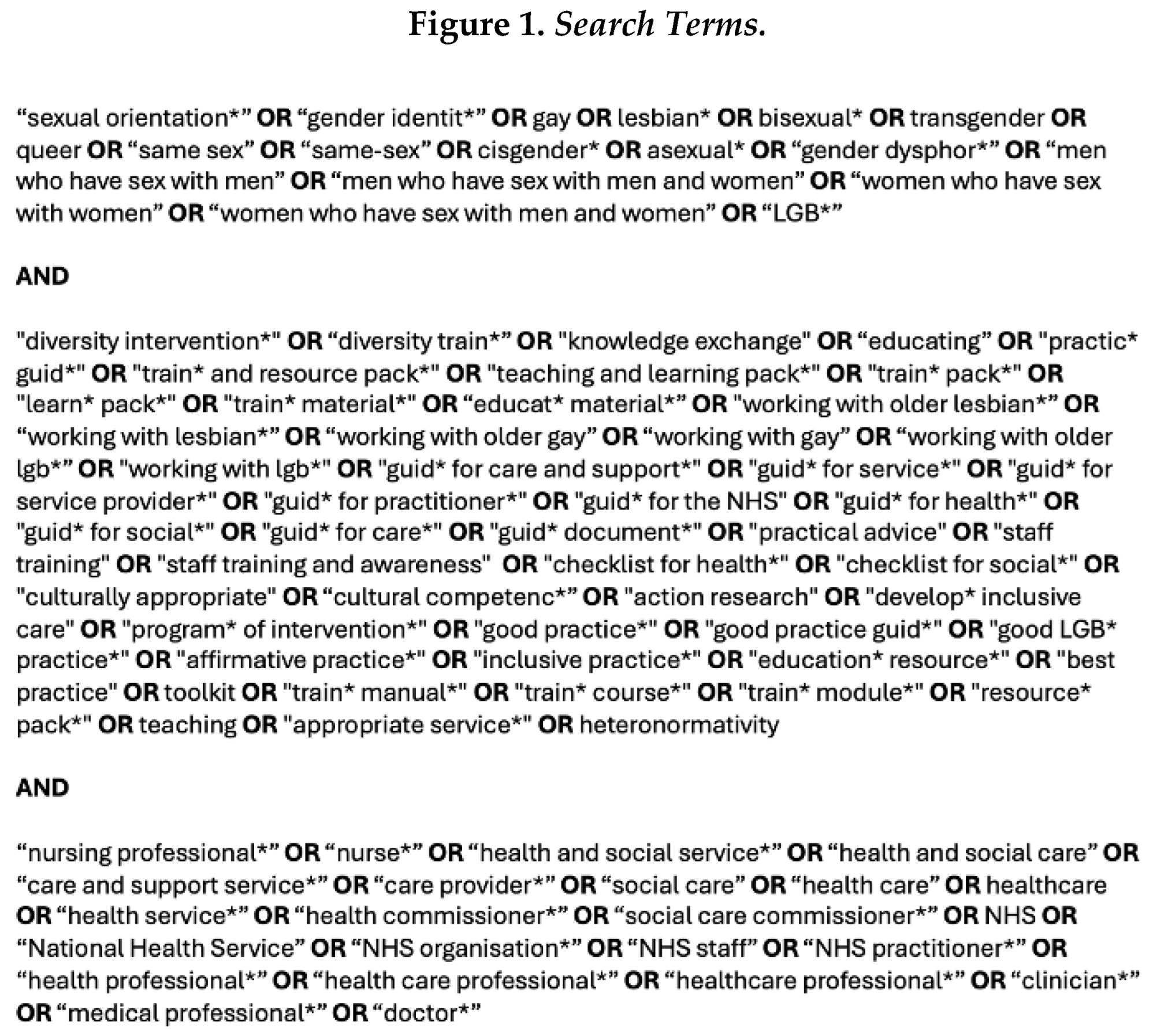
The results of the database search were exported to the reference manager Zotero and then to the automated tool, Systematic Review Accelerator, for deduplication using the relaxed filter which is recommended for reviews with over 2000 results (Clark et al., 2020). LM verified the deduplicated results which were then exported to the systematic review management software, Covidence.
As part of the supplementary search, LM conducted grey literature searches on Google, Google Scholar, and DuckDuckGo, using combinations of search terms around our three concepts (supplementary search reported in Supplementary File 10). The first 100 results were screened for each search for potential inclusion.
The websites of the following charities and organisations were searched for any materials relevant to our review: Stonewall, LGBT Consortium, LGBT Foundation, Birmingham LGBT, LGBT Health and Wellbeing, MindOut, and London Friend. To ensure that we captured all relevant publications, forward and backwards citation searching was carried out by reviewing the reference lists of included materials, and by searching for any included studies on Web of Science (Core Collection) to find any relevant papers that had cited the included study.
In instances where publications could not be retrieved, the primary author contacted the corresponding author to request access.
After conducting the systematic and supplementary searches, and deduplication, LM exported the deduplicated results to Covidence. Title and abstract screening were conducted independently by a second reviewer (CL) and the primary author. We resolved conflicts through discussion, and in situations where we could not reach a consensus, we discussed these with the wider research team (MS, HK, and DO) to agree a final decision. We then retrieved all papers at full text, and CL and the primary author independently screened all papers at this stage for eligibility. Conflicts were resolved in the same manner.
2.3. Data Extraction
The primary author drafted a data extraction template. LM and MS independently piloted this template using five of the included guidelines, compared data extractions and made further amendments to the template as needed to ensure consistency of the extracted data. Data extraction was then completed independently by LM and CL. Data extractions were compared, and discrepancies resolved through discussion between CL and LM.
For guidelines, we extracted data on the lead author and/or organisation, the document title, the type of document (e.g., guide, guidance), the aim(s) of the document, the staff target population (e.g., psychological wellbeing practitioners), the patient population (e.g., LGBQ+ older adults), a summary of the content of the document (for documents aimed at sexual and gender minorities, we only extracted data relevant to sexual minorities), and the document length. For empirical studies, extracted data included the lead author, year of publication, the aim(s) of the study, study design, sample size, the staff target population, the patient population, a brief summary of the training (including modality and content), outcomes measured, and a summary of the results.
The main outcome of interest for guidelines and training materials was the focus of their content and recommendations (e.g., LGBQ+ health inequalities, reducing heteronormative assumptions). For empirical studies, in addition to the content of training, the main outcome(s) of interest were related to assessments of the impact of the training on the cultural competency of health and social care staff (the integration of knowledge, skills, attitudes, and behaviours of staff towards LGBQ+ patients).
2.4. Quality Assessment
Quality assessment of included guidelines (including guides, guidance documents, etc) was conducted independently by LM and CL using the Appraisal of Guidelines for Research & Evaluation II (AGREE II). Although the tool is designed specifically for guidelines, we used this tool as a standardised way of assessing quality across the different types of documents, in the absence of another suitable tool. The AGREE II assesses guidelines across six domains: (1) their scope and the purpose; (2) the extent of stakeholder involvement in their development; (3) the level of rigour of their development; (4) the clarity of their presentation; (5) their applicability; (6) and their editorial independence. Items are scored using a 7-point scale (with higher scores indicating higher quality), and a total score is calculated for each domain. These overall scores are then used to make two final ratings: the overall quality of the guidelines (answered using the 7-point scale); (2) whether the rater would recommend this guideline for use (answered yes, yes with modifications, or no).
We removed questions 11 (“the health benefits, side effects, and risks, have been considered in formulation the recommendations”) and 16 (“the different options for management of the condition or health issue are clearly presented”) from our quality assessments as these were not relevant to the types of guidance documents that we included (i.e., about working with people from sexual minorities).
The QualSyst tool (Kmet et al., 2004) was used to assess the quality of empirical studies. The tool consists of two checklists, one for qualitative and one for quantitative studies, and each checklist has items that ask various questions about study objectives and design. Each item is rated ‘yes’, ‘partial’, or ‘no’, and an overall percentage score is calculated.
2.5. Data Synthesis
The results were summarised using narrative synthesis, following guidance from Popay et al., (2006). A preliminary synthesis was conducted by tabulating the findings from included guidance documents and empirical studies, and describing findings across included documents and studies. As part of the preliminary synthesis, we also conducted a content analysis of the included guidance documents, using the approach described by Elo & Kyngäs (2008).
We used inductive content analysis in which the categories were derived from the data and not based on any pre-existing knowledge and/or theories, moving from specific reoccurring content and combining these into larger more general categories. The unit of analysis was each recommendation within the included guidance documents.
The first step of the content analysis involved LM immersing themselves in the data, by reading through the extracted data several times. They then organised the data using open coding. This involved writing notes and headings in the text whilst reading the data. This was an iterative process with LM re-reading the text several times, writing down as many headings as necessary to describe all of the content. Headings were then used to generate initial categories which were grouped into conceptually similar categories. Finally, each category was named using content-characteristic terms, and subcategories with grouped under overarching main categories.
These categories and subcategories were reviewed by CL. LM and CL then independently examined each included guidance document and recorded the presence or absence of each category in a tick box table. Discrepancies in CL’s and LM’s tables were resolved through discussion. Each stage of the preliminary synthesis (tabulation of findings and content analysis) was reviewed by CL for clarity and amendments and additions were made through consensus discussion.
For the included empirical studies, similarities and differences in the results were first identified (i.e., was the training intervention associated with improvements in the different domains of cultural competence?). We then considered whether results differed according to different study designs, contexts, and/or populations. As a research team, we critically reflected on the method of synthesis used and its limitations, the quality and validity of the empirical research included, and any discrepancies or uncertainties identified.
Finally, throughout the results and discussion, the term LGBQ+ is used. However, references to LGBTQ+ staff networks and organisations are retained where appropriate, as these groups comprise both sexual and gender minorities.
3. Results
Figure 2 shows the PRISMA flow diagram for this review. A total of 11, 218 documents were found in the systematic search, of which 4,451 were duplicates. After screening 6,767 title and abstracts, 266 full texts were screened, of which 24 were included into the review. An additional 14 were included following the supplementary search, bringing the total number of included documents to 38. Of the included documents, 31 were guidance documents, five were evaluations of training, one comprised training materials (PowerPoint slides), and one was a good practice paper. Table 1 shows the characteristics of the included guidance documents and the good practice paper.
The guidance documents included guides (n = 12), guidelines (n = 4), frameworks (n = 3), good practice guides (n = 2), a checklist (n = 1), a toolkit (n = 1), a practitioners guide (n = 1), a good practice briefing (n = 1), a best practice document (n = 1), a resource pack (n = 1), a narrative account (n = 1), a positive practice guide (n = 1), a guidance document (n = 1) and an online resource (n = 1). These were aimed at health and social care commissioners, organisations, providers, and staff. The target population that the guidance documents and the good practice paper described were LGBTQ+ people (i.e., sexual and gender minorities; n = 15), lesbian, gay, and bisexual people (n = 3), older LGBTQ+ adults/carers (n = 3), older lesbian, gay, and bisexual adults (n = 1) young LGBTQ+ people (n = 2), young people who are lesbian, gay, or bisexual (n = 1), lesbian, bisexual, and Trans women (n = 1), lesbian, bisexual, and other women who have sex with women (n = 1), LGBTQ+ people with dementia (n = 2), and LGBTQ+ care home residents/LGBTQ+ individuals who receive domiciliary care at home (n = 2). The sources of the guidance documents included charities (n = 17), the NHS (n = 2), professional bodies (e.g., the British Psychological Society, the Royal College of Nursing; n = 3), universities (n = 2), university societies (n = 1), and collaborations between universities, professional bodies, charities, the NHS, and government agencies (n = 6). Whilst the majority were about working generally with LGBQ+ people within the context of different health and social care services, some guidance documents related to specific diagnoses (e.g., dementia).
Table 2 shows the characteristics of the included training evaluations and the training materials. Of the five included training evaluations, one assessed training delivered to palliative care interdisciplinary teams, one comprised a pilot study evaluating training delivered to healthcare professionals in lesbian, gay, bisexual, transgender, and intersex (LGBTI) cultural competency (and included several European member states, one of which was the UK), one evaluated an E-learning training module for social workers supporting LGBTQ+ young people, and two were evaluations of LGBTQ+ training delivered to undergraduate students, one of which was aimed at medical, dentistry, and nursing students and the other targeted medical students only. Four of the training evaluations utilised pre- post- designs, and one was a pragmatic randomised controlled trial (RCT).
3.1. Quality Assessment
The full quality assessments are reported in Table S1 for guidance documents and Table S2 for the training evaluations, with the summaries of these assessments reported in Table 1 for included guidance documents, and Table 2 for included studies of training evaluations.
Twenty-one guidance documents (67.7%) scored four or higher (out of seven) in the quality assessment with two of these scoring six, seven scoring five, and twelve scoring four. Ten guidance documents (32.3%) were assessed as being of lower quality, with nine scoring three, and one receiving a score of two.
One of the predominant areas where guidance documents received low scores was in the domain for ‘rigour of development’. Documents received low scores when they: failed to report systematic methods by which they searched for evidence; did not clearly explain the criteria for selecting evidence; failed to consider the strengths and limitations of the body of evidence; did not explicitly link the recommendations to evidence; and did not provide any information about updating the guidance. Many guidance documents scored 1 for questions in this domain. Guidance documents scored slightly better when some steps were taken to search for the evidence (e.g., conducting a literature review), or when there was an attempt to explain how the recommendations were formulated (e.g., by conducting focus groups).
Many guidance documents also received low scores for the ‘stakeholder involvement’ domain for not clearly reporting whether the views and preferences of the target population were sought or whether those involved in the development of the documents included individuals from all relevant professional groups. They also generally scored low for the ‘applicability’ domain due to not considering barriers and facilitators to the application of the guidance document, not considering potential resource implications, and not providing monitoring and/or auditing criteria.
The included guidance documents scored higher for the ‘clarity of presentation’ domain, with recommendations often being specific and unambiguous and because key recommendations were easily identifiable.
The included training evaluations were also of variable quality, with scores ranging from 35% to 90%. Three of these received low scores because the analysis plan was either inappropriate or insufficiently described, the outcome measure was either not clearly defined or not clearly robust to measurement (including the use of unvalidated measures), because the method of participant recruitment was not clearly described or could have led to bias (i.e., self-selection bias), and because participant characteristics were not clearly described (Chidiac et al., 2021; Salkind et al., 2019; Taylor et al., 2018).
3.2. Narrative Synthesis
Table 3 shows the findings from the content analysis of the included guidance documents, showing each category and subcategory identified in the analysis, and demonstrating which content is included in each document. Table S3 includes examples of recommendations which represent each subcategory.
Table S4 reports the preliminary synthesis of the included guidance document, and Table S5 the included training evaluations, conducted by tabulating findings from the included documents, materials, and studies (Popay et al., 2006). We first report the results of the content analysis of the included guidance documents.
Inclusive communication
Avoid assumptions about sexual orientation and LGBQ+ experiences
Twenty-nine guidance documents recommended that health and social care providers and practitioners should avoid making assumptions about service users’ sexuality, and about LGBQ+ experiences. Recommendations included avoiding heteronormative assumptions (i.e., assuming that people are heterosexual), and not assuming that someone’s identity will align with their behaviour (e.g., heterosexual men who have sex with men).
Use neutral, appropriate, and inclusive language
A total of 28 of the guidance documents highlighted the importance of using neutral, appropriate, and inclusive language. This included using neutral language, particularly when talking about (current and previous) relationships (e.g., using the word partner rather than husband or wife), and using inclusive language, particularly when naming LGBQ+ identities. For example, some documents recommended being aware that some terms which are accepted by some clients, such as those that have been historically pejorative (e.g., Queer), will not be acceptable to others (e.g., British Psychological Society, 2024).
Communicate non-judgmentally and openly
A total of 24 guidance documents recommended that health and social care providers communicate in an open and non-judgmental manner. This included asking open questions (e.g., who are the important people in your life), avoiding leading questions, and communicating with self-awareness, empathy, and non-judgment.
Ask about and use own pronouns
A total of 16 guidance documents recommended that health and social care practitioners ask service users about their preferred pronouns and use their own pronouns, including in email signatures.
Ask about sexual orientation respectfully and explain its relevance
Clearly explaining to service user’s why they are being asked about their sexual orientation (e.g., to lead to service improvements) and allowing them choice and time to answer questions about sexual orientation was recommended in 16 guidance documents.
Echo the language used by service users
Echoing the language used by service users was suggested by 13 guidance documents. This included using the terminology that individuals use and not using the term LGBTQ+ unless this had used by the individual.
Avoid inappropriate questions or unnecessary focus on sexual orientation
Eleven guidance documents recommended that practitioners do not focus on sexual identity when this is not relevant to care, and that they avoid asking inappropriate questions about sexual identities and relationships if these questions would not be posed to someone who was heterosexual.
Apologise, correct, and move on when a mistake is made
Four guidance documents recommended that when a mistake is made regarding someone’s identity and/or relationships, health and social care professionals should apologise, correct themselves, and move on. This approach was recommended to balance the importance of apologising with the need to continue supporting service users with what they are seeking support with (rather than lingering on the mistake for too long).
Be aware of own non-verbal communication
Having an awareness of one’s own non-verbal communication, including facial expressions, positioning, posture, eye contact, tone, volume, and speed, was highlighted as being important by three guidance documents. Recommendations included having a neutral expression when discussing identity and having an open posture to demonstrate that discussions around identity are welcome (Braybrook et al., 2022).
Recognising diversity and intersectionality
Recognise the diversity of LGBQ+ identities, relationships, and experiences
Twenty-three guidance documents considered it important that health and social care providers recognise that people will use different terms to describe themselves, that the LGBQ+ community is heterogeneous, and that they adopt a nuanced approach to understanding the different histories and backgrounds of individuals and communities under the LGBQ+ umbrella.
Consider Intersectionality
The importance of considering the additional barriers and increased risk of stigmatisation potentially experienced by those with intersecting minority identities (e.g., sexual minority individuals who are also disabled) was mentioned by 22 guidance documents. Further, the possibility of those with intersecting identities being isolated within and outside of the LGBQ+ community was highlighted.
Significant others and relationships
Clarify who significant others are, and respect and value them (including family of choice)
Seventeen guidance documents suggested that the term ‘next of kin’ should be avoided, but that providers should regularly enquire who significant others are. Health and social care providers should recognise the family of choice of some LGBQ+ people (i.e., chosen family rather than biological family) and acknowledge that blood kinship may not always be in the service user’s best interest.
Involve significant others in care, when appropriate and when in line with service user’s wishes
Fourteen guidance documents recommended that providers show a willingness to involve partners in decision-making and involve significant others in care when this is the wishes of the service user.
Organisational inclusion
Address and challenge prejudice and discrimination
A total of 23 guidance documents highlighted the importance of challenging and addressing prejudice and discrimination. Recommendations included services developing systems and processes that enable discriminatory incidents to be reported and monitored and encouraging the reporting of discrimination by staff and service users. They also suggested that health and social care providers know how to report and challenge discrimination they witness from both colleagues and service users.
Explicitly include people who are LGBQ+ in relevant policies
Explicitly including people who are LGBQ+ in relevant policies was highlighted by 17 guidance documents. They recommended that safeguarding policies mention LGBQ+ harassment and homo/bi-phobia, that equality policies cover all protected characteristics, that LGBQ+ people are mentioned in confidentiality policies, that visitor policies include same-sex couples, that organisational policies outline how the organisation plans to promote LGBQ+ equality, and that there are clear policies around how discrimination will be dealt with.
Have inclusive service documentation (e.g., intake forms, staff forms)
Sixteen guidance documents recommended inclusive service documentation encompassing the inclusion of questions about sexual orientation in intake forms, providing appropriate response options (e.g., civil partner), and including free text options in forms for people to self-identify in case they don’t identify with any predefined categories.
Make policies clear to service users and staff
Fourteen guidance documents recommended that health and social care staff are trained on policies relevant to LGBQ+ people, and that these policies are clearly displayed in health and social care settings for staff and service users to see.
Create an environment that facilitates space for learning and discussion about LGBQ+ themes
Eleven of the included guidance documents recommended that health and social care services create a space where staff can learn and ask questions about LGBQ+ topics, including providing learning opportunities for staff about equality and diversity, that includes LGBQ+ topics. A space should also be created for health and social care providers to discuss any challenges that they are facing when working with individuals who are LGBQ+, such as through supervision. Supervision was recommended as being particularly important when practitioners own personal opinion is in conflict with the evidence base and best practice.
Have an LGBTQ+ staff network and/or LGBTQ+ champions
Ten guidance documents suggested establishing LGBTQ+ staff networks in order to create an LGBTQ+ friendly workplace, and/or appointing staff champions who act as specialists in specific areas (e.g., LGBTQ+ champion).
Leadership buy-in, including being LGBQ+ allies and promoting EDI
Nine guidance documents recognised the importance of top-down influence to ensure positive cultural change within health and social care organisations. Recommendations included that managers give staff consistent messages about expectations on equality, that health and social care services have a robust leadership team who actively promote LGBQ+ equality, that LGBQ+ leaders are visible (e.g., through blogs), and that non-LGBQ+ leaders act as allies.
Recruit LGBTQ+ staff/volunteers
Recruiting LGBTQ+ staff and volunteers was considered to be important by eight guidance documents.
Publicise LGBQ+ work or learning being done by services
Seven guidance documents recommended that health and social care services should publicise any work they have been doing to improve the experiences of sexual minorities on their own website and in the media, including LGBTQ+ specific media.
Assess cultural awareness and commitment to EDI during staff recruitment
Four guidance documents suggested that cultural awareness and/or commitment to EDI is assessed during staff recruitment.
Involvement of LGBQ+ people
Involve LGBQ+ people in the commission, design, development, delivery, and evaluation of health and social care services
Thirteen guidance documents recommended that LGBQ+ staff, volunteers, and service users are involved in every stage of service design, delivery, and the evaluation of services. Suggestions included having LGBTQ+ staff networks connected to decision making and informing service delivery and training. Further, having an advisory group that can review polices and ensure that sexual minority staff are supported, ensuring sexual minority voices are central to staff training, and including sexual minority individuals in patient participation groups were recommended.
Partnerships, outreach, and signposting
Signpost to relevant resources and services when appropriate
Twenty-one guidance documents recommended that health and social care providers are aware of relevant LGBTQ+ led or inclusive community resources and specific services which might better meet their specific needs, and signpost to these when appropriate.
Reach out to the LGBQ+ community and form partnerships with LGBTQ+ organisations
Reaching out to the LGBQ+ community, and LGBTQ+ organisations, was considered to be important by 18 of the included guidance documents. These documents suggested that health and social care service should draw upon the knowledge of voluntary service providers and organisations and form meaningful partnerships and establish referral pathways with them when appropriate.
Learning, development, and reflection
Provide training on LGBQ+ inclusion and awareness
Overall, 24 guidance documents recommended that health and social care organisations provide LGBQ+ training. Topics recommended include training on LGBQ+ identities and terminology, the health inequalities experienced by LGBQ+ people, inclusive practice for working with LGBQ+ people, intersectionality, LGBQ+ data collection and monitoring, and avoiding assumptions.
Engage in learning, development, and reflection
Eleven guidance documents recommended that health and social care staff engage in learning and development in relation to LGBQ+ identities and experiences, and that they reflect on their own assumptions and biases (e.g., using supervision).
LGBQ+ inclusive service commissioning and delivery
Meet and address the specific needs of people who are LGBQ+ in the commissioning and delivery of services
Twenty-four guidance documents recommended that health and social care organisations and providers meet and address the specific needs of LGBQ+ people in the commissioning and delivery of services. Recommendations included: using formulations and subsequent psychoeducation that incorporates a model that accounts for social and minority stressors unique to the LGBQ+ population (e.g., Minority Stress Model, Meyer, 2003); exploring historical experiences of isolation and distress which could have a lasting impact on the way that a client expresses themselves; being aware that some individuals who are LGBQ+ may internalise negative attitudes held by society, resulting in loathing and shame about their identity or practices; and providing specialist services and/or interventions to LGBQ+ people.
LGBQ+ visibility
Reflect people who are LGBQ+ in services
A total of 26 guidance documents recommended that people who are LGBQ+ are reflected in services, including on service websites, in promotional materials, and in any literature. Recommendations included: using diverse images in any literature and promotional materials (e.g., pictures of same-sex couples), referring to LGBQ+ people in literature when appropriate, and having LGBQ+ books and magazines in health and social care settings.
Have visible indicators of LGBQ+ inclusiveness
Showing visible indicators of LGBQ+ inclusiveness, such as pride flags or rainbow lanyards, was highlighted as being important by 18 guidance documents to demonstrate that services are safe spaces for LGBQ+ people, and that practitioners will be supportive of LGBQ+ service users.
Confidentiality
Act in a confidential manner
Twenty-two guidance documents recommended that health and social care providers act in a confidential manner at all times, including considering the environment that sexual orientation is discussed, asking for permission to record sexual orientation data, and asking service users (when on their own) who they would be comfortable for information to be shared with, and who they would like it to be withheld from.
Sexual orientation data collection and monitoring
Collect and monitor sexual orientation data
Nineteen of the included guidance documents recommended that health and social care services and providers proactively seek sexual orientation data from service users and staff, and that services and organisations monitor this data to understand whether they are meeting the needs of LGBQ+ individuals, and to evaluate whether there are any discrepancies in outcomes between LGBQ+ and heterosexual service users.
Use data to inform service improvements
Using LGBQ+ data to inform service improvements was recommended by 14 guidance documents.
The Law
Be aware of, and act in line with, laws relevant to people who are LGBQ+
Whilst many guidance documents mentioned relevant laws in their background sections (e.g., The Equality Act (2010)), 19 documents recommended that health and social care staff should be made aware of laws that are relevant to LGBQ+ individuals, and act in line with them.
Training evaluations
A number of consistent topics were covered in the five publications reporting on training evaluations and the one set of training materials that were included in the review (Chidiac et al., 2021; Donisi et al., 2020; Keeble, n.d.; Salkind et al., 2019; Schaub et al., 2023; Taylor et al., 2018). Five included training on LGBQ+ identities and terminology (Chidiac et al., 2021; Donisi et al., 2020; Keeble, n.d.; Salkind et al., 2019; Schaub et al., 2023), four included teaching on LGBQ+ health inequalities (Donisi et al., 2020; Keeble, n.d.; Salkind et al., 2019; Taylor et al., 2018), four included training on relevant legislation (Keeble, n.d.; Salkind et al., 2019; Schaub et al., 2023; Taylor et al., 2018), and four included training on inclusive language and communication (Donisi et al., 2020; Keeble, n.d.; Schaub et al., 2023; Taylor et al., 2018).
Other content included training on strategies to prevent homo/bi-phobic bullying and language (Schaub et al., 2023), on experiences of accessing healthcare (Keeble, n.d.), and on creating LGBTQ+ inclusive health services (Keeble, n.d.; Salkind et al., 2019). Training content was also adapted for the setting in which it was delivered. For example, training to palliative care interdisciplinary teams included teaching on LGBTQ+ issues and needs relevant to palliative and end-of-life care (Chidiac et al., 2021), and training for social workers supporting LGBTQ+ young people included teaching on practice obligations in relation to LGBTQ+ young people (Schaub et al., 2023).
In relation to the length of the training delivered in the training evaluation studies, one was 1.5 hours (Chidiac et al., 2021), one was 2.5 hours (Taylor et al., 2018), one was 3 hours (Salkind et al., 2019) one was delivered in a full day (or two shorter parts; Donisi et al., 2020). The average time to complete e-learning training was 3 hours and 25 minutes (Schaub et al., 2023). The format of the training also varied across studies.
One used a presentation followed by an interactive discussion (Chidiac et al., 2021), one used a mix of theoretical sessions, small group activities, large group discussions, role plays, case studies, videos, questions, and reflective practice (Donisi et al., 2020), one used a pre-existing, self-guided e-module by Stonewall (Schaub et al., 2023), one used a mix of a lecture, a visit by a patient who identified as LGBTQ+, and a seminar (Salkind et al., 2019), and one used a lecture and a workshop (Taylor et al., 2018).
Across all five studies of training evaluations, there were significant improvements in various domains following the training. Three studies observed that the training increased participants’ self-perceived LGBTQ+ knowledge (Chidiac et al., 2021; Donisi et al., 2020; Schaub et al., 2023).
Improvements in attitudes were also observed in two studies that measured this, including healthcare professionals being more likely to acknowledge that LGBTQ+ people don’t have the same access to healthcare as everyone (Donisi et al., 2020), and having fewer heteronormative assumptions and beliefs following the training (Schaub et al., 2023). Four studies found that training resulted in higher self-perceived confidence and competency when working with LGBQ+ people, including increased confidence in providing palliative and end-of-life care to LGBQ+ individuals, increased competencies and skills to provide services to LGBQ+ people, and improved confidence in using appropriate language and terminology to describe sexual orientation and to provide clinical assessments to LGBQ+ patients (Chidiac et al., 2021; Donisi et al., 2020; Salkind et al., 2019; Taylor et al., 2018).
It is noteworthy that although significant improvements were observed across these domains, there was evidence in one study that significant improvements did not occur across all questions in the knowledge domain. One of these questions related to whether participants understood the terms ‘sexual orientation’, ‘gender identity’, and ‘sex characteristics’, and the second question related to whether healthcare professionals believed they should be aware of medical terms and terms preferred by the LGBTQ+ community (Donisi et al., 2020). In this same study, despite heterosexuals showing significantly improved attitudes following the training, they continued to have significantly lower willingness scores (i.e., willingness to provide inclusive practice) relative to sexual minority participants.
Participants provided positive feedback on the training in four of the studies where this feedback was sought (Chidiac et al., 2021; Salkind et al., 2019; Schaub et al., 2023; Taylor et al., 2018), with participants in two of these reporting that the training was useful for their own practice (Chidiac et al., 2021; Schaub et al., 2023). In a process evaluation conducted as part of a pragmatic RCT of an e-learning course, only 5.84% of participants reported receiving substantial LGBTQ+ diversity training before the study. The vast majority (95.7%) found it easy or very easy to enrol in the course, and no participants reported unintended or negative consequences of completing the training (Schaub et al., 2023).
4. Discussion
This review synthesised the content of available guidance documents, training materials and training evaluations aimed at health and social care staff in the UK about working with people from sexual minorities since the introduction of The Equality Act (2010). We identified 31 guidance documents that met our inclusion criteria, five training evaluations, one set of training materials (PowerPoint slides), and one good practice paper.
Following guidance by Popay et al. (2006), we discuss the commonalities and differences across the included guidance documents and training evaluations. The content analysis of the included guidance documents allowed us to synthesise common recommendations/content across the various guidance documents.
Across the nine highest-quality guidance documents (i.e., those scoring 5 and above), there was a strong emphasis placed on inclusive communication. Key recommendations included using neutral, appropriate, and inclusive language; communicating openly and without judgment; avoiding assumptions about sexual orientation and LGBQ+ experiences; and asking about and using one’s own pronouns. Considerable attention was also given to recognising the diversity of LGBQ+ identities, relationships, and experiences; adopting an intersectional perspective; and identifying, respecting, and valuing significant others.
These higher-quality documents also recommended that organisations form partnerships with LGBTQ+ organisations and actively engage with LGBQ+ communities. They also highlighted the importance of providing staff training on LGBQ+ inclusion and awareness; ensuring that LGBQ+ people are reflected within services (e.g., in posters); displaying clear indicators of LGBQ+ inclusivity (e.g., pride flags); and ensuring that services and practitioners act in a confidential manner (e.g., discussing sexuality in a private and appropriate setting).
There was less consistency across these documents regarding recommendations aimed at the organisation level. However, it is noteworthy that only three of these higher-quality documents were explicitly aimed at leaders, managers, and commissioners, which may explain the relatively limited focus on organisation-level recommendations (Hafford-Letchfield & Roberts, 2023; Queer Futures 2, 2022; Truscott, 2022). Despite this variability, there was convergence around several key recommendations, including the importance of leaders and managers driving positive change; creating environments in which staff feel able to ask questions and engage in discussion around LGBQ+ themes (e.g., through supervision); explicitly including people who are LGBQ+ in relevant policies and making these policies clear to both service users and staff; ensuring that service documentation is inclusive (e.g., by providing inclusive response options); and addressing and challenging prejudice and discrimination.
Finally, there was consistent recognition that commissioners, services, and staff need to explicitly meet and address the specific needs of LGBQ+ people. Examples included adapting existing therapeutic modalities to be explicitly affirming of LGBQ+ identities and that consider minority stress (e.g., LGBTQ+-affirmative Cognitive Behavioural Therapy; e.g., Pachankis et al., 2015) or providing services specifically for LGBQ+ people (e.g., Hambrook et al., 2022).
The consistency of recommendations across these higher-quality documents suggests that these may represent priority areas for health and social care commissioners, services, and practitioners to improve health and social care services for people from sexual minority groups. Importantly, these areas were also emphasised within lower-quality guidance documents, as demonstrated by the frequency in which they were recommended across all of the included guidance documents. This convergence across documents of varying quality may indicate a degree of consensus regarding the key components of inclusive services and practice. Additionally, these categories largely align with the findings of Hunt et al. (2019) who identified the following content across the education and training materials included in their review: use of language; visual communication (e.g., using images of same sex couples); legal and policy position; and intersectionality.
The breadth of target providers covered by the included documents (e.g., health and social care organisations, commissioners of services, staff) means that the recommendations spanned from being directed at a more structural level (e.g., organisation and service level recommendations) down to the level of individual staff members and suggest that change is needed at all levels of health and social care organisations for services to be truly inclusive.
Guidance documents also highlighted the importance of ensuring that health and social care organisations are a safe and welcoming place for sexual minority staff. This could include having an LGBTQ+ staff network and champions to ensure that workplace environments are inclusive for staff, and that these networks and champions are embedded into decision making, and the evaluation of services. The need to consider the experiences of staff was exemplified by results of the NHS staff survey which showed that sexual (and gender) minority staff report disproportionately poorer experiences of working in the NHS, relative to heterosexual staff, and are more likely to report experiences of bullying, violence, and discrimination (McCay, 2024).
One recommendation relevant across the organisation, service, and staff levels was that sexual orientation data are routinely collected and monitored, and that this is used to inform service improvements. A sexual orientation monitoring standard that provides health and social care providers in England with a single and consistent way to record sexual orientation for all service users aged 16+ has existed since 2017 (NHS England, 2017). However, there is evidence that there continue to be barriers to the collection of sexual orientation data (and data relating to health inequalities more widely) within services (Moorthie et al., 2024; Truscott, 2022). These include logistical (e.g., workforce time), data usage (e.g., information governance structures), and practitioner (e.g., lack of knowledge) related barriers.
The consistent collection and monitoring of sexual orientation data is essential for identifying if and where inequalities exist for sexual minorities within health and social care services. This is elucidated by studies using routine data from NHS Talking Therapies for Anxiety and Depression services in England. Talking Therapies services routinely collect sexual orientation data, and there is evidence that bisexuals and lesbian women have poorer treatment outcomes relative to heterosexuals (Rimes et al., 2019). However, this finding was not replicated in a more recent study using a larger sexual minority sample, but that examined a smaller geographical area (i.e., North and Central East London; Kent et al., 2025). Thus, further research is needed to confirm whether inequalities exist in treatment outcomes, and whether there is any geographical variation in any potential inequalities. This can only be achieved through the routine collection of sexual orientation data, which is currently not consistently happening across health and social care services. One mechanism for improving the consistent collection of high quality data is through staff training, by clearly explaining the purpose of collecting such data and how the data will be used to make positive change (Moorthie et al., 2024).
Over half of the included documents recommended that staff receive relevant training. Whilst some of these recommendations related to improving sexual orientation data collection and monitoring, many documents recommended that staff receive specific LGBQ+ teaching. Topics recommended included training on avoiding assumptions, appropriate terminology, the inequalities experienced by LGBQ+ people, and intersectionality. Similar content was covered in the included training evaluations and training materials aimed at health and social care professionals and students.
In these, content included teaching on LGBQ+ identities and terminology, LGBQ+ health inequalities, and inclusive language and communication (Chidiac et al., 2021; Donisi et al., 2020; Keeble, n.d.; Salkind et al., 2019; Schaub et al., 2023; Taylor et al., 2018). The emphasis on this content in these training evaluations and materials, and the guidance documents, suggest that these are important areas of knowledge that health and social care professionals should be equipped with. However, the available evidence suggests that this is not the current reality.
Within mental health services, LGBQ+ service users report that some practitioners make heteronormative assumptions and demonstrate limited understanding of sexual minorities’ lived experiences, including exposure to prejudice, growing up with a sexual minority identity, and the mental health inequalities faced by sexual minorities (Mackay et al., 2025). From the perspective of healthcare professionals more broadly, some professionals report avoiding sexual orientation discussions due to perceived lack of knowledge and skills, perpetuating the negative experiences of sexual minorities who report that conservations around sexual orientation are neglected, even when they feel relevant to care (Mackay et al., 2025; Pearce & di Lorito, 2023). Despite a lack of knowledge and skills in some healthcare professionals, and the negative experiences reported by people from sexual minorities, there continues to be a lack of training on meeting the needs of this group across all levels of health and social care (Ho et al., 2023; Hudson-Sharp & Metcalf, 2016; Mitchell et al., 2008; Somerville, 2015). However, it is essential that any training that is implemented is carefully evaluated for effectiveness.
Across the included training evaluations for health and social care staff and students, improvements in self-perceived attitudes and knowledge were observed following training, in addition to increased confidence in working with people from sexual minorities, including using appropriate language and terminology (Chidiac et al., 2021; Donisi et al., 2020; Salkind et al., 2019; Schaub et al., 2023; Taylor et al., 2018). Participants also provided positive feedback on the training, and indicated that it was useful for their own practice (Chidiac et al., 2021; Schaub et al., 2023). The results of these studies suggest that LGBQ+ training might be a useful tool both for health and social care students and staff. These positive findings also echo those of systematic reviews of training for health professionals which found that they have the potential to improve healthcare professionals knowledge, skills, and attitudes, as well as behaviours towards sexual minorities (Damery et al., 2025; Sekoni et al., 2017; Yu et al., 2023). Findings from two of the higher-quality studies are particularly reliable sources of evidence for supporting the role of training in improving the cultural competency of health and social care professionals in working with sexual minority groups (Donisi et al., 2020; Schaub et al., 2023).
These studies highlight that there may be some flexibility in the way that training can be delivered (e.g., live training versus a self-directed e-module) with both formats demonstrating improvements in the knowledge, attitudes, and skills of staff. The process evaluation conducted as part of the RCT with social workers showed that delivering training as a self-directed e-module may be a highly acceptable delivery mode and may make it more feasible for health and social care services to implement. However, a limitation of both of these studies was the absence of long term follow up meaning it is unclear whether any immediate perceived gains were associated with longer term changes to practice. Additionally, improvements in self-perceived attitudes, knowledge and skills may not result in actual change in practice and may not be associated with improved service user experiences. These are areas that future evaluations of training should address.
Finally, there were relatively few areas were recommendations diverged. One notable exception concerned the routine collection and monitoring of sexual orientation data: whilst most guidance documents supported this practice, Adfam – an English charity that supports people affected by someone else’s substance use – advised caution, describing sexual orientation monitoring as a “sensitive issue” that “some people are strongly opposed to” (Adfam, 2010). Notably, this guidance document was published in the same year as the Equality Act (2010). It is likely that attitudes towards sexual orientation data collection and monitoring have changed in the time since the publication of this document as collecting this data is one mechanism for organisations to meet their duties under the Act (e.g., to understand how policies impact those with particular protected characteristics).
A further point of contrast emerged within the training evaluation studies. Donisi et al. (2020) found that heterosexual participants experienced greater knowledge gains relative to those who identified as LGBTQ+ (who had significantly higher knowledge scores relative to heterosexual patients before the training). In contrast, Schaub et al., (2023) reported no significant differences between those with or without a connection to the LGBTQ+ community in relation to knowledge scores (or heteronormative attitudes and beliefs). It is noteworthy that the training by Donisi et al., (2020) included general information regarding health inequalities experienced by LGBTQ+ people and steps to inclusive practice, content which may already be familiar to LGBTQ+ individuals and hence might reflect why heterosexuals experienced greater knowledge gains in this study. In contrast, whilst the training in Schaub et al., (2023) included general information (e.g., terminology), it was also specifically about working with children and young people and included specific information about the law and practice obligations. Further research is needed to understand whether there is a differential impact of training according to sexual orientation and should also compare the efficacy of more specific versus general training.
5. Implications and Future Directions
The findings of this review have several implications for practice, policy, and future research. The guidance documents collectively highlight that improving the experiences of sexual minority service users, and creating genuinely safe and inclusive services, requires actions across multiple levels of health and social care. The recommendations span individual clinical practice, organisational inclusion, and system-wide structures, suggesting that any progress should not rely on the efforts of individual practitioners alone, but that they should be implemented by most, if not all, levels of health and social care.
Many of the recommendations are low-cost and feasible to implement for practitioners, services, and organisations, within existing resources – for example, using inclusive language, avoiding assumptions, ensuring confidentiality, clarifying who significant others are, and having visible indicators of LGBQ+ inclusiveness. However, other recommendations require proactive leadership and resourcing, such as the development of clear monitoring processes, training provision, and adapting policies and promotional materials to explicitly include sexual minorities. For these relatively more resource intensive recommendations, it is essential that there is buy-in at the leadership and commissioner levels.
Nevertheless, the implementation of certain standalone recommendations is unlikely, on its own, to result in a meaningful change in the experiences of sexual minorities, as considered by some of the included guidance documents (e.g., Hafford-Letchfield & Wilkinson, 2023). For example, whilst increasing the visibility of sexual minorities within services (e.g., displaying pride flags) may contribute to a more welcoming environment, visibility alone is unlikely to be sufficient and risks being perceived as tokenistic as it will not compensate for poor communication, discriminatory interactions, or a lack of knowledge. If inequalities are to be addressed and experiences of services are to be improved for sexual minorities, cultural change needs to happen at all levels of health and social care, with equity embedded as part of long-term decision making and system wide change. This needs to be supported beyond health and social care services, and by public health bodies, commissioners, and government (Ford et al., 2021).
Furthermore, our quality assessments of the included guidance documents and training highlight the need for these to be rigorously developed and linked to the current best available evidence, to ensure that the recommendations result in improved experiences for sexual minorities. One possible improvement is to have a clearer theoretical unpinning in guidance documents. Although few guidance documents explicitly framed recommendations using the Minority Stress model (Meyer, 2003a), many align with its processes. For example, visibly welcoming environments may alleviate proximal stressors such as identity concealment, whilst inclusive policies and the avoidance of assumptions may address distal stressors. Explicit theoretical framing could also clarify mechanisms and support the evaluation of guidance and training implementation.
Finally, as highlighted by the quality assessments of the included training evaluations, more robust evidence is needed to determine the effectiveness of training, particularly whether the immediate gains in knowledge, attitudes, and confidence observed in the included training evaluations translates into sustained behavioural change, improved attitudes, and improved service user and staff experiences. All but one of the five included training evaluations relied on uncontrolled pre-post designs, meaning that evidence of the effectiveness of these trainings is limited. The single pragmatic RCT showed modest improvements in heteronormative attitudes, suggesting that scalable digital interventions may offer promise, but further replication and long-term evaluation, in addition to the inclusion of LGBQ+ service user outcomes, are required.
6. Strengths and Limitations
We first consider the robustness of the synthesis by reflecting on the method of synthesis used and its limitations, the quality of included guidance and materials, and any discrepancies or uncertainties identified (Popay et al., 2006). Following guidance by Popay et al. (2006), we conducted our preliminary synthesis by tabulating the recommendations/content of the included guidance documents and the findings of the included evaluations, and by conducting a content analysis of the included guidance documents, allowing us to identify commonalities across the various guidance documents and training evaluations.
The included guidance documents and evaluations of training were of variable quality, meaning that the results of this review should be interpreted in light of this. In regard to the guidance documents, the majority failed to report rigorous methods by which the recommendations were arrived at. However, despite this, the preliminary tabulation and the content analysis demonstrated that there were consistent recommendations across documents, suggesting that the categories of recommendations identified by the content analysis are currently viewed as being the most important areas for health and social care to address for working with people from sexual minorities. In relation to the included training evaluations, despite an over reliance on uncontrolled pre- and post- designs, the consistent findings across studies in regard to immediate gains in knowledge, skills and confidence, suggest that training could be a promising avenue for improving LGBQ+ inclusive practice, particularly as these finding were supported by the included pragmatic RCT.
In considering the tools used for the narrative synthesis, there are some notable limitations of content analysis. Whilst this approach allowed us to clearly identify the most common recommendations, by its nature it requires reducing a large volume of content to a smaller number of broader categories. The result is that some of the nuances of the included recommendations might have been lost (although we attempted to address this by tabulating the recommendations of the included documents). This means that whilst the recommendations identified in our content analysis will be useful for health and social care organisations and staff to improve their practice when working with people from sexual minorities, specific types of services (e.g., dementia services) and staff working in such services should still consult the included guidance documents aimed at those settings for this more specialist knowledge.
In relation to the conduct of this review, we consulted with a subject specialist librarian at our institution to ensure that we developed a robust search strategy and search terms. This gave us the best chance of capturing all eligible material. We also followed best practice for screening, data extraction, and quality assessments, by having two independent reviewers at each of these stages.
The tools used to synthesise the data, particularly the use of content analysis, allowed us to synthesise the content of the included guidance documents and training evaluations in a way that might be useful for health and social care by providing a clear picture of the focus of current recommendations.
There are also some important limitations to acknowledge. The tool applied to assess the quality of the included guidance documents, the AGREE II, is specifically for clinical guidelines, meaning that it is outside of the scope of many of the included guidance documents. However, it is notable that some of the included documents interchangeably referred to themselves as guides and guidelines (e.g., the ABC of LGBT+ Inclusive Communication). As the AGREE II has not been specifically designed to assess the quality of guidance documents, our scoring might not be a true reflection of the quality of these documents, as some questions may be less relevant for guidance documents (e.g., the editorial domain questions in which the vast majority of included documents received 0%).
Additionally, some of the questions in the AGREE II related to the specific health concerns addressed by different guidance documents. The majority of the included documents were about generally working with people from sexual minorities (i.e., not about a specific health concern) meaning that the scores are positively biased towards those documents that were about working with people from sexual minorities in the context of a particular health concern.
Nevertheless, guidance documents should not be subject to less scrutiny than clinical guidelines, and should demonstrate rigour in their development, given that they aim to change practice and have an effect on service user’s experiences. The use of a standardised quality assessment tool also ensured a consistent approach was taken across all included documents that allows their quality to be compared and considered.
Finally, we only explored the experiences of people from sexual minorities, precluding any conclusions relating to gender minorities (or those with other minority identities). The majority of the included guidance documents were about sexual and gender minorities suggesting that including both groups in the review may have been more appropriate. In light of this, the majority of the recommendations included in this review may be equally applicable to gender minorities. However, we made this decision to focus on sexual minorities in line with the aims of the larger project that it is part of, and in the knowledge that it is not uncommon for training to focus on a specific group (e.g., training on transgender care; Damery et al., 2025), and that conflating sexual orientation and gender identity can risk the unique needs of both groups being overlooked (Elliott et al., 2015).
7. Conclusion
This systematic review provides the most comprehensive synthesis to date of UK-based guidance documents and training evaluations relating to health and social care provision for sexual minority service users, identifying 31 guidance documents, five training evaluations, one set of training materials, and one good practice paper. Although the quality of the included documents and studies were variable, there was strong consistency in recommendations and content emphasising inclusive communication, confidentiality, challenging discrimination, inclusive policies, staff training, and routine collection of sexual orientation data. Training evaluations showed immediate improvements in staff and students’ knowledge, attitudes, and confidence in working with sexual minorities, although further evidence is needed. Overall, these findings highlight a clear set of practical, largely low-cost actions that organisations and staff can prioritise to create safe, equitable, and affirming services.
8. Supplementary Materials
File S1 – Medline® search
File S2 – PsycINFO search
File S3 – Applied Social Sciences Index & Abstracts search
File S4 – EMBASE search
File S5 – ERIC search
File S6 – CINAHL Plus search
File S7 – IBSS search
File S8 – Social Policy and Practice search
File S9 – Web of Science search
File S10 – Supplementary searches
Table S1 – Quality assessment scores for the included guidance documents
Table S2 – Quality assessment scores for the included training evaluations
Table S3 – Example recommendations for each category from the included guidance documents
Table S4 - Summary of recommendations from the included guidance documents
Table S5 – Summary of findings from the included training evaluations
Author Contributions
Conceptualisation, LM, HK and DO; Methodology, LM, HK and DO; Validation, LM, CL, MS, DO and HK; Formal Analysis, LM and CL; Investigation, LM and CL; Writing – Original Draft Preparation, LM; Writing – Review & Editing, CL, MS, DO and HK; Supervision, DO and HK; Project Administration, LM; Funding Acquisition, LM.
Funding
This research was conducted as part of a PhD that is being funded by the Michael King Prize Studentship. This was awarded to LM by the Division of Psychiatry, University College London.
Institutional Review Board Statement
Not applicable.
Data Availability Statement
No new data were created or analysed in this study. Data sharing is not applicable to this article.
Acknowledgments
The authors would like to give their heartfelt thanks to Dr Debora Marletta, subject specialist librarian at University College London, for her expertise and kindness in the development of the search strategy for this review.
Conflicts of Interest
The authors declare no conflict of interest. The sponsors had no role in the design, execution, interpretation, or writing of the study.
References
- Adfam. Including Diverse Families: Good practice guidelines; Adfam, 2010; Available online: https://www.drugsandalcohol.ie/18385/1/Adfam_including_diverse_families.pdf.
- Age, U.K. Safe to be Me: Meeting the Needs of Older Lesbian, Gay, Bisexual and Transgender People using Health and Social Care Services. 2017. Available online: https://www.ageuk.org.uk/siteassets/documents/booklets/safe_to_be_me.pdf.
- Amos, R.; Manalastas, E. J.; White, R.; Bos, H.; Patalay, P. Mental health, social adversity, and health-related outcomes in sexual minority adolescents: A contemporary national cohort study. Lancet Child Adolesc. Health 2020, 4(1), 36–45. [Google Scholar] [CrossRef] [PubMed]
- Beattie, S.; Laville, A. NHS Talking Therapies for Anxiety and Depression: LGBTQ+ Positive Practice Guide (2024). 2024. Available online: https://lgbt.foundation/wp-content/uploads/2024/07/LGBTQ-Positive-Practice-Guide-20248_DIGITAL_FINAL.pdf.
- Booker, C. L.; Rieger, G.; Unger, J. B. Sexual orientation health inequality: Evidence from Understanding Society, the UK Longitudinal Household Study. Prev. Med. 2017, 101, 126–132. [Google Scholar] [CrossRef] [PubMed]
- Booth, C.; Fitzsimons, E. The onset of mental health disparities in sexual minority and majority youth: Evidence from the UK Millennium Cohort Study. Dev. Psychopathol. 2025, 37(1), 504–514. [Google Scholar] [CrossRef] [PubMed]
- Braybrook, D.; Bristowe, K.; Timmins, L.; Roach, A.; Day, E.; Clift, P.; Rose, R.; Marshall, S.; Johnson, K.; Sleeman, K.; Harding, R. ABC of LGBT+ Inclusive Communication; King’s College London, 2022; Available online: https://www.kcl.ac.uk/nmpc/assets/research/projects/abc-lgbt-inclusive-communication.pdf.
- British Psychological Society. Guidelines for Psychologists Working with Gender, Sexuality and Relationship Diversity; 2024. [Google Scholar] [CrossRef]
- Brooks, V. R. Minority Stress and Lesbian Women; Lexington Books, 1981. [Google Scholar]
- Camden Age, U.K.; Opening Doors, L. Supporting older Lesbian, Gay, Bisexual & Transgender People: A checklist for Social Care providers; n.d. [Google Scholar]
- Carers, U.K. Supporting LGBTQ+ Carers: A good practice briefing. 2023. Available online: https://www.carersuk.org/media/3tppsbjc/carers-uk-lgbtq-briefing-2023-web.pdf.
- Chidiac, C.; Grayson, K.; Almack, K. Development and evaluation of an LGBT+ education programme for palliative care interdisciplinary teams. Palliat. Care Soc. Pract. 2021, 15, 26323524211051388. [Google Scholar] [CrossRef] [PubMed]
- Clark, J.; Glasziou, P.; Del Mar, C.; Bannach-Brown, A.; Stehlik, P.; Scott, A. M. A full systematic review was completed in 2 weeks using automation tools: A case study. J. Clin. Epidemiol. 2020, 121, 81–90. [Google Scholar] [CrossRef] [PubMed]
- Corcoran, E.; Althobaiti, A.; Lewis, G.; Solmi, F.; McCloud, T.; Lewis, G. The association between sexual orientation and psychotic like experiences during adolescence: A prospective cohort study. Soc. Psychiatry Psychiatr. Epidemiol. 2024, 59, 2351–2360. [Google Scholar] [CrossRef] [PubMed]
- Cree, W.; O’Corra. CORE TRAINING STANDARDS FOR SEXUAL ORIENTATION. June 2006. Available online: https://www.bipsolutions.com/docstore/pdf/14438.pdf.
- Damery, S.; Sekoni, A. O.; Retzer, A.; Okafor, I.; Manga-Atangana, B.; Posaner, R.; Gale, N. K.; Jolly, K. Impact of education and training on LGBT-specific health issues for healthcare students and professionals: A systematic review of comparative studies 2025. [CrossRef] [PubMed]
- Donisi, V.; Amaddeo, F.; Zakrzewska, K.; Farinella, F.; Davis, R.; Gios, L.; Sherriff, N.; Zeeman, L.; Mcglynn, N.; Browne, K.; Pawlega, M.; Rodzinka, M.; Pinto, N.; Hugendubel, K.; Russell, C.; Costongs, C.; Sanchez-Lambert, J.; Mirandola, M.; Rosinska, M. Training healthcare professionals in LGBTI cultural competencies: Exploratory findings from the Health4LGBTI pilot project. Patient Educ. Couns. 2020, 103(5), 978–987. [Google Scholar] [CrossRef] [PubMed]
- Elliott, M. N.; Kanouse, D. E.; Burkhart, Q.; Abel, G. A.; Lyratzopoulos, G.; Beckett, M. K.; Schuster, M. A.; Roland, M. Sexual Minorities in England Have Poorer Health and Worse Health Care Experiences: A National Survey. J. General. Intern. Med. 2015, 30(1), 9–16. [Google Scholar] [CrossRef] [PubMed]
- Ellis, S. J.; Bailey, L.; McNeil, J. Trans People’s Experiences of Mental Health and Gender Identity Services: A UK Study. J. Gay Lesbian Ment. Health 2015, 19(1), 4–20. [Google Scholar] [CrossRef]
- Elo, S.; Kyngäs, H. The qualitative content analysis process. J. Adv. Nurs. 2008, 62(1), 107–115. [Google Scholar] [CrossRef] [PubMed]
- Ford, J.; Sowden, S.; Olivera, J.; Bambra, C.; Gimson, A.; Aldridge, R.; Brayne, C. Transforming health systems to reduce health inequalities. Future Healthc. J. 2021, 8(2), e204–e209. [Google Scholar] [CrossRef] [PubMed]
- Foy, A. A. J.; Morris, D.; Fernandes, V.; Rimes, K. A. LGBQ+ adults’ experiences of Improving Access to Psychological Therapies and primary care counselling services: Informing clinical practice and service delivery. Cogn. Behav. Ther. 2019, 12, e42. [Google Scholar] [CrossRef]
- Frost, D. M.; Meyer, I. H. Minority stress theory: Application, critique, and continued relevance. Curr. Opin. Psychol. 2023, 51, 101579. [Google Scholar] [CrossRef] [PubMed]
- Hafford-Letchfield, T.; Roberts, L. (LGBTQ+) Care in Later Life; Skills for Care, 2023; Available online: https://www.skillsforcare.org.uk/resources/documents/Support-for-leaders-and-managers/Supporting-a-diverse-workforce/LGBTQ-framework/LGBTQ-learning-framework.pdf.
- Hafford-Letchfield, T.; Wilkinson, M. L. (LGBTQ+) Care in Later Life: A learning framework for knowledge, skills,values for working affirmatively with LGBTQ+ people in later life. 2023. Available online: https://www.skillsforcare.org.uk/resources/documents/Support-for-leaders-and-managers/Supporting-a-diverse-workforce/LGBTQ-framework/LGBTQ-learning-framework.pdf.
- Hambrook, D. G.; Aries, D.; Benjamin, L.; Rimes, K. A. Group intervention for sexual minority adults with common mental health problems: Preliminary evaluation. Behav. Cogn. Psychother. 2022, 50(6), 575–589. [Google Scholar] [CrossRef] [PubMed]
- Ho, J. K. Y.; O’Rouke, C.; Laville, A.; Chellingsworth, M.; Callaghan, P. Clinician experiences on training and awareness of sexual orientation in NHS Talking Therapies Services for Anxiety and Depression. Cogn. Behav. Ther. 2023, 16, e24. [Google Scholar] [CrossRef]
- HSC Public Health Agency. See Me, Hear Me, Know Me: Guidelines to Support the Needs of Lesbian, Gay, Bisexual and Transgender People in Nursing, Residential, and Day Care Settings and Those who Lived at Home and Receive Domicilliary Care. 2014. Available online: https://www.publichealth.hscni.net/sites/default/files/Guidelines%20V3_0.pdf.
- Hudson-Sharp, N.; Metcalf, H. Inequality among lesbian, gay bisexual and transgender groups in the UK: a review of evidence; National Institue of Economic and Social Research, 2016; Available online: https://assets.publishing.service.gov.uk/media/5a8094c0e5274a2e87dbaa09/160719_REPORT_LGBT_evidence_review_NIESR_FINALPDF.pdf.
- Hunt, R.; Bates, C.; Walker, S.; Grierson, J.; Redsell, S.; Meads, C. A Systematic Review of UK Educational and Training Materials Aimed at Health and Social Care Staff about Providing Appropriate Services for LGBT+ People. Int. J. Environ. Res. Public Health 2019, 16(24), 4976. [Google Scholar] [CrossRef] [PubMed]
- Irish, M.; Solmi, F.; Mars, B.; King, M.; Lewis, G.; Pearson, R. M.; Pitman, A.; Rowe, S.; Srinivasan, R.; Lewis, G. Depression and self-harm from adolescence to young adulthood in sexual minorities compared with heterosexuals in the UK: A population-based cohort study. Lancet. Child Adolesc. Health 2019, 3(2), 91–98. [Google Scholar] [CrossRef] [PubMed]
- Keeble, S. LGBTQ+ Awareness Training. n.d. Available online: https://www.bsmhft.nhs.uk/wp-content/uploads/2024/01/FOI-0100-LGBTQ-Mental-Health-Awareness-Training-2022.pdf.
- Keemink, J.; Hammond, J.; Collins, G.; Almack, K.; King, A.; Sharp, R.; Margetson, M.; Thomas, B.; Clayton, D.; Richardson, L. Creating Inclusive Residential Care for LGBTQ+ Elders: A Hnady Guide. 2024. Available online: https://research.kent.ac.uk/chss/research-projects/creating-inclusive-residential-care-for-lgbtq-elders-circle/.
- Kent, T.; Suh, J. W.; Lewis, G.; Saunders, R.; Davies, N. M.; Lewis, G.; Dolby, L.; Buckman, J. E. J. Psychological therapy outcomes by sexual orientation and gender: A retrospective cohort study. Psychol. Med. 2025, 55, e212. [Google Scholar] [CrossRef] [PubMed]
- Khanolkar, A. R.; Frost, D. M.; Tabor, E.; Redclift, V.; Amos, R.; Patalay, P. Ethnic and Sexual Identity-Related Inequalities in Adolescent Health and Well-Being in a National Population-Based Study. LGBT Health 2023, 10(1), 26–40. [Google Scholar] [CrossRef] [PubMed]
- Khanolkar, A. R.; Mazhari, T. Ethnic and sexual orientation inequalities in mental health-obesity comorbidity, self-harm, and attempted suicide among British adolescents. Soc. Psychiatry Psychiatr. Epidemiol. 2024, 59(9), 1471–1482. [Google Scholar] [CrossRef] [PubMed]
- Kidd, G.; Marston, L.; Nazareth, I.; Osborn, D.; Pitman, A. Suicidal thoughts, suicide attempt and non-suicidal self-harm amongst lesbian, gay and bisexual adults compared with heterosexual adults: Analysis of data from two nationally representative English household surveys. Soc. Psychiatry Psychiatr. Epidemiol. 2024, 59(2), 273–283. [Google Scholar] [CrossRef] [PubMed]
- King, M.; Semlyen, J.; Tai, S. S.; Killaspy, H.; Osborn, D.; Popelyuk, D.; Nazareth, I. A systematic review of mental disorder, suicide, and deliberate self harm in lesbian, gay and bisexual people. BMC Psychiatry 2008, 8(1), 70. [Google Scholar] [CrossRef] [PubMed]
- LGBT Foundation. Pride in Pharmacy: Developing LGBTQ+ Inclusion within Community Pharmacies. 2022. Available online: https://lgbt.foundation/wp-content/uploads/2024/01/Pride-in-Pharmacy.pdf.
- LGBT Health and Wellbeing. Ten Top Tips for Becoming More Inclusive of Older LGBT People; Ten top tips for becoming more inclusive of lesbian, gay, bisexual, and transgender people: a guide for services and organisations working with older people, 2014. [Google Scholar]
- LGBT Health and Wellbeing. Proud to Care: LGBT and Dementia (a Healthcare Guide). 2020. Available online: https://lgbthealth.org.uk/resource/lgbt-dementia-toolkit/.
- Mackay, L.; Lin, C.; Schlief, M.; Osborn, D.; Killaspy, H. The Experiences of Sexual Minority Service Users and Staff in Statutory Mental Health Services in the United Kingdom: A Systematic Review and Narrative Synthesis (p. 2025.09.05.25335187). medRxiv 2025. [Google Scholar] [CrossRef]
- Manor Community. A Guide for Social Care Providers Supporting Working-Age Adults for Better LGBT+ Inclusivity Regarding Staff and People Receiving Services. n.d. Available online: https://irp-cdn.multiscreensite.com/155dda39/files/uploaded/2.%20A%20Guide%20for%20Provider%20LGBT%2B%20Inclusivity.pdf.
- McCay, L. The LGBTQ+ staff experience gap. NHS Employers. 2024. Available online: https://www.nhsemployers.org/articles/lgbtq-staff-experience-gap.
- Medsoc LGBTQ. Stuff You Should Know About LGBTQ Healthcare: A Guide to Being a Good Doctor for LGBTQ Patients. 2018. Available online: https://www.birmingham.ac.uk/Documents/college-mds/medical-school/LGBTQ-Healthcare-booklet.pdf.
- Mental Welfare Commission For Scotland. LGBT Inclusive Mental Health Services. 2022. Available online: https://www.mwcscot.org.uk/sites/default/files/2022-08/LGBT-InclusiveServices-GoodPractice_2022.pdf.
- Meyer, I. H. Prejudice, Social Stress, and Mental Health in Lesbian, Gay, and Bisexual Populations: Conceptual Issues and Research Evidence. Psychol. Bull. 2003a, 129(5), 674–697. [Google Scholar] [CrossRef] [PubMed]
- Meyer, I. H. Prejudice, Social Stress, and Mental Health in Lesbian, Gay, and Bisexual Populations: Conceptual Issues and Research Evidence. Psychol. Bull. 2003b, 129(5), 674–697. [Google Scholar] [CrossRef] [PubMed]
- Mind. Lesbian, Gay, Bisexual, Trans and Queer Good Practice Guide: Guidance for Service Providers on How to Develop LGBTQ+ Affirmative Practice. n.d. Available online: https://mindout.org.uk/wp-content/uploads/2016/11/Mind-LGBTQguide-2016-webres.pdf.
- Mitchell, M.; Howarth, C.; Kotecha, M.; Creegan, C. Sexual orientation research review 2008; Equality and Human Rights Commission, 2008. [Google Scholar]
- Moorthie, S.; Oguzman, E.; Evans, S.; Brayne, C.; LaFortune, L. Qualitative study of UK health and care professionals to determine resources and processes that can support actions to improve quality of data used to address and monitor health inequalities. BMJ Open 2024, 14(9), e084352. [Google Scholar] [CrossRef] [PubMed]
- Morris, D. D. A.; Fernandes, V.; Rimes, K. A. Sexual minority service user perspectives on mental health treatment barriers to care and service improvements. Int. Rev. Psychiatry 2022, 34(3–4), 230–239. [Google Scholar] [CrossRef] [PubMed]
- National Centre for Social Research. BSA 40: A liberalisation in attitudes? National Centre for Social Research, 21 September 2023; Available online: https://natcen.ac.uk/publications/bsa-40-liberalisation-attitudes.
- NHS England. Sexual Orientation Monitoring: Full Specification; NHS England, 2017; Available online: https://www.england.nhs.uk/wp-content/uploads/2017/10/sexual-orientation-monitoring-full-specification.pdf.
- NHS National End of Life Care Programme. The Route to Success in End of Care Life—Achieving Quality for Lesbian, Gay, Bisexual and Transgender People. 2012. Available online: https://www.england.nhs.uk/improvement-hub/wp-content/uploads/sites/44/2017/10/End-of-Life-Care-Route-to-Success-Achieving-Quality.pdf.
- NHS Nottingham and Nottinghamshire. In the Pink A Practical Guide for GP’s and Healthcare Proessionals: Delivering Quality Care and Promoting Equality for LGBTQIA+ People. 2024. Available online: https://www.nottstraininghub.nhs.uk/_webedit/uploaded-files/All%20Files/EDI/In%20the%20Pink%20-%202024%20final.pdf.
- Pachankis, J. E.; Hatzenbuehler, M. L.; Rendina, H. J.; Safren, S. A.; Parsons, J. T. LGB-affirmative cognitive-behavioral therapy for young adult gay and bisexual men: A randomized controlled trial of a transdiagnostic minority stress approach. J. Consult. Clin. Psychol. 2015, 83(5), 875–889. [Google Scholar] [CrossRef] [PubMed]
- Page, M. J.; McKenzie, J. E.; Bossuyt, P. M.; Boutron, I.; Hoffmann, T. C.; Mulrow, C. D.; Shamseer, L.; Tetzlaff, J. M.; Akl, E. A.; Brennan, S. E.; Chou, R.; Glanville, J.; Grimshaw, J. M.; Hróbjartsson, A.; Lalu, M. M.; Li, T.; Loder, E. W.; Mayo-Wilson, E.; McDonald, S.; …; Moher, D. The PRISMA 2020 statement: An updated guideline for reporting systematic reviews. BMJ 2021, 372, n71. [Google Scholar] [CrossRef] [PubMed]
- Pearce, C.; di Lorito, C. Exploring health care professionals’ experiences of supporting LGBTQ+ patients: A qualitative study 2023. [CrossRef] [PubMed]
- Pitman, A.; Marston, L.; Lewis, G.; Semlyen, J.; McManus, S.; King, M. The mental health of lesbian, gay, and bisexual adults compared with heterosexual adults: Results of two nationally representative English household probability samples. Psychol. Med. 2022, 52(15), 3402–3411. [Google Scholar] [CrossRef] [PubMed]
- Popay, J.; Roberts, H.; Sowden, A.; Petticrew, M.; Arai, L.; Rodgers, M.; Britten, N.; Roen, K.; Duffy, S. Guidance on the conduct of narrative synthesis in systematic reviews: A product from the ESRC Methods Programme 2006. [CrossRef]
- Queer Futures 2. What Works in Early Intervention Mental Health Support for LGBTQ+ Young People? Guidance for NHS Commissioners. 2022. Available online: https://queerfutures2.co.uk/content/uploads/2024/12/Queer-Futures-2-What-Works-NHS-Commissioning-Guidance.pdf.
- Rimes, K. A.; Ion, D.; Wingrove, J.; Carter, B. Sexual orientation differences in psychological treatment outcomes for depression and anxiety: National cohort study. J. Consult. Clin. Psychol. 2019, 87(7), 577–589. [Google Scholar] [CrossRef] [PubMed]
- Royal College of General Practitioners. Guidelines for the Care of Lesbian, Gay, and Bisexual Patients in Primary Care. 2015. Available online: https://www.rcgp.org.uk/getmedia/e9aabd5d-bbaa-4ca2-a11d-ffb725f47c78/RCGPNI-Guidelines-for-the-care-of-LGB-patients-in-primary-care-2015-web.pdf.
- Royal College of Nursing. Caring for Lesbian, Gay, Bisexual or Trans Clients or Patients: Guide for Nurses and Health Care Support Workers on Next of Kin Issues. 2016. Available online: https://www.rcn.org.uk/Professional-Development/publications/pub-005592.
- Royal College of Nursing; Public Health England. Preventing suicide among lesbian, gay and bisexual young people: A toolkit for nurses. 2015. Available online: https://assets.publishing.service.gov.uk/media/5a803a82e5274a2e8ab4eeec/LGB_Suicide_Prevention_Toolkit_FINAL.pdf.
- Salkind, J.; Gishen, F.; Drage, G.; Kavanagh, J.; Potts, H. W. W. LGBT+ Health Teaching within the Undergraduate Medical Curriculum. Int. J. Environ. Res. Public Health 2019, 16(13), 2305. [Google Scholar] [CrossRef] [PubMed]
- Saunders, C. L.; MacCarthy, S.; Meads, C.; Massou, E.; Mant, J.; Saunders, A. M.; Elliott, M. N. Long-term conditions among sexual minority adults in England: Evidence from a cross-sectional analysis of responses to the English GP Patient Survey. BJGP Open 2021, 5(5). [Google Scholar] [CrossRef] [PubMed]
- Schaub, J.; Keemink, J.; Stander, W.; Montgommery, P. Evaluation of E-learning Training Module for Social Workers Supporting LGBTQ+ Young People in England. 2023. Available online: https://foundations.org.uk/wp-content/uploads/2023/07/LYPSA_Report_2_July_2023-V2-March-2024-2.pdf.
- Schaub, J.; Stander, W. J.; Montgomery, P. Residential Social Care Experiences of LGBTQ+ Young People in England: A Qualitative Interview Study. Br. J. Soc. Work 2024, 54(4), 1420–1440. [Google Scholar] [CrossRef]
- Sekoni, A. O.; Gale, N. K.; Manga-Atangana, B.; Bhadhuri, A.; Jolly, K. The effects of educational curricula and training on LGBT-specific health issues for healthcare students and professionals: A mixed-method systematic review. J. Int. AIDS Soc. 2017, 20(1), 21624. [Google Scholar] [CrossRef] [PubMed]
- Semlyen, J.; King, M.; Varney, J.; Hagger-Johnson, G. Sexual orientation and symptoms of common mental disorder or low wellbeing: Combined meta-analysis of 12 UK population health surveys. BMC Psychiatry 2016, 16(1), 67. [Google Scholar] [CrossRef] [PubMed]
- Somerville, C. Unhealthy Attitudes; Stonewall, 2015; Available online: https://www.caremanagementmatters.co.uk/wp-content/uploads/2019/06/Unhealthy-Attitudes.pdf.
- Stonewall. Working with Older Lesbian Gay and Bisexual People: A Guide for Care and Support Services. 2012. Available online: https://www.dorsetcouncil.gov.uk/documents/35024/284549/Working+with+older+LGB+people.pdf/89267190-c177-8336-0afc-3db08add6aa7.
- Stonewall. Sexual Orientation A Guide for the NHS. n.d. Available online: https://psycle-wordpress.s3.eu-west-2.amazonaws.com/sand/production/2020/12/stonewall_guide_for_the_nhs_web.pdf.
- Tabor, E.; Kneale, D.; Patalay, P. Sexuality and respiratory outcomes in the UK: Disparities, development and mediators in multiple longitudinal studies. Public Health 2025, 247, 105886. [Google Scholar] [CrossRef] [PubMed]
- Taylor, A. K.; Condry, H.; Cahill, D. Implementation of teaching on LGBT health care. Clin. Teach. 2018, 15(2), 141–144. [Google Scholar] [CrossRef] [PubMed]
- The College of Radiographers; Queen Margaret University Edinburgh. Supporting Lesbian, Gay, and Bisexual People in Healthcare: A Practitioner Guide. 2022. Available online: https://www.sor.org/getmedia/5f40cd58-4237-41cd-935b-8c49211a314e/Supporting-Lesbian,-Gay-and-Bisexual-people-in-Healthcare-Final-with-Logos.
- The National Care Forum; Voluntary Organisations Disability Group. Dementia Care and LGBT Communities: A Good Practice Paper. 2016. Available online: https://www.nationalcareforum.org.uk/wp-content/uploads/2019/10/Dementia-care-and-LGBT-communities.pdf.
- The National LGBT Partnership. The Adult Social Care Outcomes Framework: Lesbian, Gay, Bisexual and Trans Companion Document. 2013. Available online: https://psycle-wordpress.s3.eu-west-2.amazonaws.com/sand/production/2020/12/fent__1429791376_11154_ascof_companion_document.pdf.
- The National LGBT Partnership. Out Loud LGBT Voices in Health & Social Care: A Narrative Account of LGBT Needs. 2016. Available online: https://psycle-wordpress.s3.eu-west-2.amazonaws.com/sand/production/2020/12/out-loud-final.pdf.
- The National LGBT Partnership. Let’s Break the Silence: A Guide to Lesbian, Bisexual, and Trans Women’s Health. 2021. Available online: https://www.consortium.lgbt/wp-content/uploads/2019/07/A-Guide-to-Lesbian-Bisexual-and-Trans-Womens-Health.pdf.
- The National LGBT Partnership. Best Practice in Providing Healthcare to Lesbian, Bisexual, and Other Women Who have Sex with Women. n.d. Available online: https://www.consortium.lgbt/wp-content/uploads/2021/01/LBWSW-Report-Final.pdf.
- Truscott. Health and Care LGBTQ+ Inclusion Framework | NHS Confederation. 2022. Available online: https://www.nhsconfed.org/publications/health-and-care-lgbtq-inclusion-framework.
- Willis, P.; Maegusuku-Hewett, T.; Raithby, M.; Miles, P. Swimming upstream: The provision of inclusive care to older lesbian, gay and bisexual (LGB) adults in residential and nursing environments in Wales. Ageing Soc. 2016, 36(2), 282–306. [Google Scholar] [CrossRef]
- Yu, H.; Flores, D. D.; Bonett, S.; Bauermeister, J. A. LGBTQ + cultural competency training for health professionals: A systematic review. BMC Med. Educ. 2023, 23(1), 558. [Google Scholar] [CrossRef] [PubMed]
Figure 2.
PRISMA Flow Diagram.
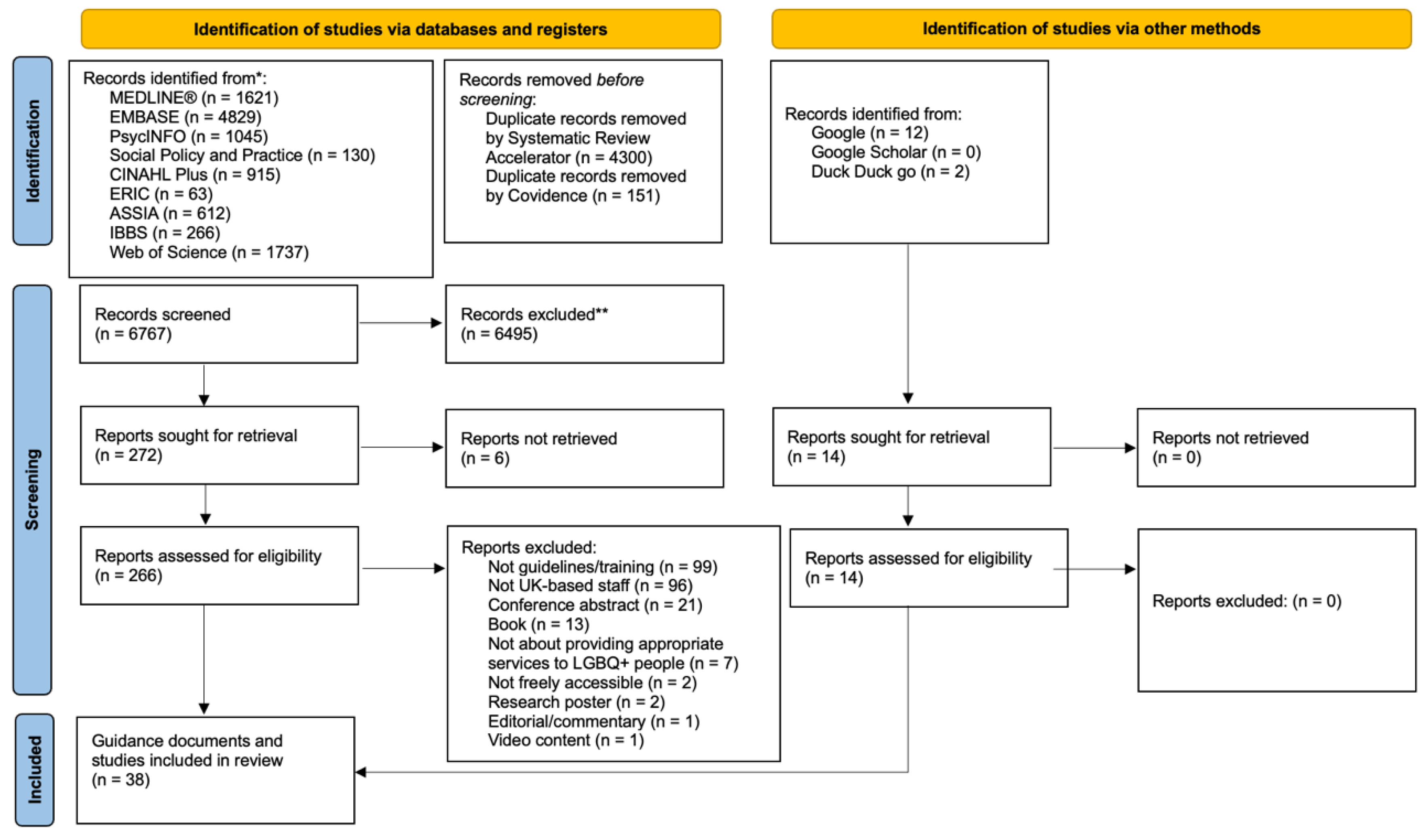

Table 1.
Characteristics of Guidance Documents.
| First author/organisation, publication year | Title | Type of document (as self-described) | Aim(s) of document | Guidance development | Target provider | Target population (as self-described) | Document length | Overall quality assessment (scored 1 – 7, with higher scores representing higher quality; Recommend for use? Yes, Yes with modifications, No) |
|---|---|---|---|---|---|---|---|---|
| Braybrook et al., 2022 | ABC of LGBT+ Inclusive Communication | Guide | To guide health and social care professionals in being more inclusive in their communication with patients about sexual orientation, significant others, gender identity, and gender history. |
Developed and tested through research that explored sexual and gender minorities experiences of and preferences for communication in the context of serious illness. The research that LGBT+ people living with serious illness, their significant others, and health and social care professionals |
Health and social care staff |
LGBT+ people |
16 pages | 6 Recommend for use? Yes |
| Mental Welfare Commission For Scotland, 2022 | LGBT Inclusive Mental Health Services | Good practice guide | To promote equitable experiences for LGBT people accessing mental health services, health and social care services, and community services. | Not reported | Staff working in mental health, community, and primary care settings | LGBT people | 18 pages | 4 Recommend for use? Yes, with modifications |
| Camden Age UK & Opening Doors, n.d. | Supporting Older Lesbian, Gay, Bisexual, & Transgender People | Checklist | A checklist to help social care organisations become more LGBT friendly and meet their obligations under the Equality Act so that the older person feels more comfortable to "come out" to the organisation and to be themselves | Not reported | Social care organisations | LGBT people | 10 pages | 3 Recommend for use? No |
| Royal College of Nursing & Public Health England, 2015 | Preventing suicide among lesbian, gay, and bisexual young people | Toolkit | To help nurses develop their skills and knowledge around suicide prevention strategies with LGB young people. | Collaboration between Royal College of Nursing and Public Health England | Nurses who work with children and young people | Lesbian, Gay, and Bisexual (LGB) Young People | 32 pages | 3 Recommend for use? No |
| Truscott, 2022 | Health and Care LGBTQ+ Inclusion Framework | Practical framework | To give health and care leaders the tools to create inclusive environments for LGBTQ+ service users and staff through six ’core pillars of action’ along with practical recommendations of how to achieve each pillar | A round table with six healthcare leaders with interest and expertise in LGBTQ+ inclusion was held to explore the ways in which health and care organisations could consider making their services and working environments more inclusive for LGBTQ+ staff and service users. This resulted in recommendations that were then tested and refined by members of the guiding group of the Health and Care LGBTQ+ Leaders Network, and the wider membership of the Leaders Network. This then resulted in the development of six pillars, which were disseminated across the health and care system in 2021, for health and care organisations to build to support LGBTQ+ staff, service users, and local populations, Following feedback from health and care leaders who sought clarity on how best to achieve the pillars, a pilot was ran in which thirteen volunteer health and care organisations (including independent sector organisations) attempted to implement the six key pillars over nine months. Interviews were then conducted with representatives from the pilot sites, and these findings informed the practical implementation framework. |
Health and care leaders | LGBTQ+ staff, service users, and local populations | 44 pages |
5 Recommend for use? Yes, with modifications |
| Adfam, 2010 | Including Diverse Families | Good Practice Guidelines | To offer practical tips and suggestions to service providers (managers and practitioners) who work with families affected by someone else’s drug use to help them develop inclusive and sensitive practices | The guidelines draw upon the ’Including Diverse Families’ project conducted by Adfam which involved working with family support services in the substance misuse field in order to identify good practice when working with under-represented groups (e.g., LGBT, people living in rural communities). Recommendations also drew upon a literature review, interviews with professionals, and direct consultation | Service providers (managers and practitioners) who work with families affected by someone else’s drug and alcohol use | LGBT people (and minoritised ethnic groups, people living in rural communities, and men) | 39 pages | 3 Recommend for use? No |
| Carers UK, 2023 | Supporting LGBTQ+ Carers | Good Practice Briefing | To highlight good practice across the UK in supporting LGBTQ+ unpaid carers, and to provide practical recommendations to support organisations working with LGBTQ+ carers | Unclear | Organisations working with LGBTQ+ carers | LGBTQ+ unpaid carers | 23 pages | 3 Recommend for use? No |
| The College of Radiographers & Queen Margaret University Edinburgh, 2022 | Supporting Lesbian, Gay, and Bisexual People in Healthcare | A Practitioner Guide | To provide (radiographer) healthcare practitioners with recommendations that they can consider in their practice to ensure that they are delivering inclusive healthcare | Draws upon research which explored LGB individuals’ experiences of cancer treatment in Scotland. The findings were used to co-develop this national practitioner guide with participants and key stakeholders. Feedback was sought from the research participants and key stakeholders across several relevant organisations | (Radiographer) Healthcare Practitioners | Lesbian, Gay, and Bisexual (LGB) individuals | 11 pages | 4 Recommend for use? Yes, with modifications |
| Age UK, 2017 | Safe to be me - Meeting the needs of older lesbian, gay, bisexual, and transgender people using health and social care services | A Resource Pack | To highlight why being LGBT is important to care, and offer a checklist of good practice principles to help organisations implement positive intentions into achievable actions | Unclear | People working or volunteering in health, social care, or the voluntary sector, and for training providers to ensure courses contain discussions and scenarios relation to the needs of LGBT people | Older people who are LGBT | 40 pages | 4 Recommend for use? Yes, with modifications |
| The National LGBT Partnership, 2013 | The Adult Social Care Outcomes Framework: Lesbian, Gay, Bisexual, and Transgender Companion Document | Outcomes Framework Companion Document | A companion document to the adult social care outcomes framework that council use to measure how well they are providing support to those who need it. The companion document aims to guide commissioners in meeting their duty under the Social Care Act 2012 for NHS England and Clinical Commissioning Groups to reduce health inequalities for marginalized communities | Developed from existing evidence on the care and support needs of LGBT people | Strategic commissioners, care and support service providers, and local authority providers | LGBT carers and service users | 30 pages | 4 Recommend for use? Yes, with modifications |
| The National LGBT Partnership, 2016 | Out Loud: LGBT Voices in Health and Social Care | A narrative account of LGBT needs | To guide the design and provision of care and support that meets the needs of LGBT people, and is inclusive of their sexual and gender identities, with a focus on outcomes that matter most to LGBT service users | Key themes from a literature review, a survey of LGBT people, and twitter conversations were used to generate ’I statements’ that reflected what LGBT want from care and support services. The statements were reviewed by people representing different LGBT service provision organisations | Health and social care service providers and commissioners | LGBT people | 24 pages | 4 Recommend for use? Yes, with modifications |
| NHS National End of Life Care Programme, 2012 | The route to success in end-of-life care - achieving quality for lesbian, gay, bisexual, and transgender people | Guide | To provide a practical guide to address the end-of-life care needs for LGBT people in order to improve quality of care | Following discussion groups around the country and consultation with stakeholders | For those providing end of life care to LGBT people (including commissioners and service providers), and LGBT people themselves receiving end of life care | LGBT people | 36 pages | 4 Recommend for use? Yes, with modifications |
| Royal College of Nursing, 2016 | Caring for lesbian, gay, bisexual, or transgender clients or patients: Guide for nurses and health care support workers on next of kin issues | Guide | (1) (For nurses) to develop skills and knowledge, and be aware of the wider context of mental health in relation to LGBT sexual orientation and identity (2) To provide a general outline for health professionals who want to increase their knowledge and skills about suicide prevention strategies with LGBT young people |
/ | Nurses who work with children and young people, whether in the community or hospital settings | LGBT young people | 12 pages | 3 Recommend for use? No |
| Stonewall, 2012 | Working with older lesbian, gay, and bisexual people: a guide for care and support services | Guide | To offer practical advice to care and support organisations about meeting the needs of LGBT people | Not reported | Care and support services | Older Lesbian, Gay, and Bisexual people | 24 pages | 3 Recommend for use? No |
| The National LGBT Partnership, 2021 | Let’s Break the Silence: A Guide to Lesbian, Bisexual, and Trans Women’s Health | Guide | To provide facts and statistics about the needs of Lesbian, Bisexual, and Transgender women, and how best to address them | Not reported | All health and social care providers in all sectors | Lesbian, Bisexual, and Trans women | 32 | 4 Recommend for use? Yes, with modifications |
| Mind, n.d. | Lesbian, Gay, Bisexual, Trans, and Queer Good Practice Guide | Good practice guide | To support local Minds and other mental health providers in ensuring that their services are genuinely inclusive, and that they cater for the needs of people who are LGBTQ+ | Developed following pilot work with service providers | Mental health service providers (including providers working in local Mind services) | Lesbian, Gay, Bisexual, Trans. Non-Binary, and Queer people | 23 pages |
4 Recommend for use? Yes, with modifications |
| Royal College of General Practitioners, 2015 | Guidelines for the Care of Lesbian Gay and Bisexual Patients in Primary Care | Guidelines | To assist general practitioners and other healthcare professionals in providing the best care possible to the LGBT community | Developed by the Royal College of General Practitioners in Northern Ireland Lesbian, Gay, Bisexual &/ Trans* (LGB &/T) working group, with support from the Public Health Agency Northern Ireland and the Irish College of General Practitioners | General Practitioners and other Healthcare Professionals | Lesbian, Gay, and Bisexual patients | 22 | 5 Recommend for use? Yes, with modifications |
| British Psychological Society, 2024 | Guidelines for Psychologists working with Gender, Sexuality, and Relationship Diversity | Guidelines | To provide guidance and expectations for psychologists in their everyday work | Based upon the literature and the best practice agreement of experts | Aimed at applied psychologists, but hold relevance for those in associated psychological fields, as well as those in counselling, psychotherapy, psychiatry, medicine, and social work | Individuals who do not identify as heterosexual or cisgender, including LGBT people, intersex people, asexual people, those who engage in a diverse range of sexual practices, those who are agender (i.e., have no gender), have a non-binary gender (i.e., have a gender other than male or female), or are pansexual (have attractions irrespective of gender). Aged 18+. | 19 | 5 Recommend for use? Yes, with modifications |
| LGBT Health and Wellbeing, 2020 | Proud to Care: LGBT and Dementia. A Guide for Health and Social Care Providers | Guide/Toolkit | To support health and social care staff to reflect on and develop their practice in working with LGBT people with dementia, and to support staff in opening up conversations about minority sexual and gender identities to help make people’s experiences of services the best it can be | Through research looking at national and international research, and stakeholder consultation with people with LGBT people with dementia, and health and social care staff | Everyone working in dementia care | LGBT people with dementia | 40 |
5 Recommend for use? Yes, with modifications |
| Stonewall, n.d. | Sexual Orientation. A Guide for the NHS | Guide | To provide practical advice about meeting the needs of lesbian, gay, and bisexual patients and staff in the NHS | Unclear | NHS Organisations | Lesbian, Gay, and Bisexual patients and staff | 44 |
3 Recommend for use? No |
| Beattie & Laville, 2024 | NHS Talking Therapies for Anxiety and Depression: LGBTQ+ Positive Practice Guide | Positive Practice Guide | To provide evidence-based recommendations to help therapists reduce barriers, ensure inclusive practices, and improve outcomes for LGBTQ+ clients | The guide is based on a nationwide survey, and focus groups with practitioners and LGBTQ+ individuals who have used Talking Therapies | Therapists and counsellors, service managers and coordinators, healthcare professionals, educators and trainers, and policy makers | LGBTQ+ adults (aged 16+) | 69 pages | 6 Recommend for use? Yes, with modifications |
| Hafford-Letchfield & Roberts, 2023 | (LGBTQ+) Care in Later Life | Learning Framework | To provide a base for identifying the insights, knowledge, understanding, and skills that the social care workforce need to help them work affirmatively, inclusively, and effectively with individuals from gender-and/or-sexually-diverse communities. | Framework was developed in four phases, guided by an advisory group with key stakeholders. Phase 1: Literature review on the experiences of LGBTQ+ people in later life, and a scoping exercise to identify resources on LGBTQ+ ageing. A key list of subjects was developed. Phase 2: Three in-depth workshops with older LGBTQ+ people with lived experience Phase 3: Framework content and structure redrafted to reflect workshop discussions. The proposed framework was shared with the advisory group. Phase 4: Advisory group feedback was captured in writing and there was an opportunity for discussion. The framework was revised and finalised. |
Social work employers Social care employers Trainers and educators Service commissioners Regulators of social care People who draw on care and support and carers Voluntary, private, and independent care providers sector Policy makers working in governmental, private, and voluntary sector provision LGBTQ+ communities Independent advocates including Independent Mental Capacity Advocates Higher Education sector in developing and benchmarking curriculum and assessment in the pre-qualifying professional education of those planning to enter the social care workforce General public |
LGBTQ+ people in later life | 90 pages | 5 Recommend for use? Yes, with modifications |
| Queer Futures 2, 2022 | What works in early intervention mental health support for LGBTQ+ young people? Guidance for NHS commissioners |
Guidance document | To provide commissioners with up-to-date evidence on mental health support for LGBTQ+ young people; To showcase exemplary existing services and service models; To highlight gaps in current service provision; To provide clear guidance and implementation strategies for the commissioning of new services; To provide clear guidance and implementation strategies for improving existing services, or adding an LGBTQ+ strand to an existing service | Based on research with 12 UK early intervention mental health services for LGBTQ+ young people | Any commissioner who wants to gain a better understanding of how to provide effective early intervention mental health support for LGBTQ+ young people; Early intervention mental health support providers across all settings, including the NHS, Local Authorities, schools and colleges, and the voluntary and community sectors; Integrated Care Boards (ICBs), NHS Boards, Health Boards, and Local Commissioning Groups (LCGs) with responsibility for commissioning early intervention mental health support for LGBTQ+ young people across England, Scotland, Wales and Northern Ireland; The Office for Health Improvement and Disparities (OHID), Public Health Scotland, Northern Ireland’s Public Health Agency (PHA), and Public Health Wales as a resource of direct relevance to the reduction of health inequalities for LGBTQ+ young people. |
LGBTQ+ young people | 49 pages | 5 Recommend for use? Yes, with modifications |
| Manor Community, n.d. | A Guide for Social Care Providers Supporting Working-Age Adults for better LGBT+ Inclusivity Regarding Staff and People Receiving Services |
Guide | A learning package to help providers supporting people of working age to improve LGBT+ inclusivity for staff members and people receiving their support | Co-designed by surveying people’s experiences and preferences in care, and by involving care professionals | Social care providers | LGBT+ people of working age | 13 pages | 2 Recommend for use? No |
| Keemink et al., 2024 | Creating Inclusive Residential Care for LGBTQ+ Elders (CIRCLE): A handy guide | Guide (capable of being put in staffs’ lanyards, or in staff induction packs etc) | To offer practical tips to people working in care homes on how to make different aspects of their care more inclusive for LGBTQ+ residents. | Co-designed using co-design meeting and using the Experienced-Based Co-Design method. | People working in care homes | LGBTQ+ care home residents | 2 pages | 5 Recommend for use? Yes, with modifications |
| HSC Public Health Agency, 2014 | See me, hear me, know me: Guidelines to support the needs of Older Lesbian, Gay, Bisexual, and Transgender people in nursing, residential, and day care settings and those who live at home and receive domiciliary care | Guidelines | To ensure that services provided to the LGBT population are welcoming, safe, and inclusive. | Informed by in-depth interviews with 8 care home managers, and a survey of LGBT people aged forty years plus. A working group was formed with representatives from the Public Health Agency, Age Northern Ireland, The Rainbow Project, Here Northern Ireland, UNISON, the Regulation and Quality Improvement Authority, and the Independent Health and Care Providers. | Those providing care to Older Lesbian, Gay, Bisexual, and Transgender people in nursing, residential, and day care settings and those who live at home and receive domiciliary care | Older Lesbian, Gay, Bisexual, and Transgender people in nursing, residential, and day care settings and those who live at home and receive domiciliary care | 15 pages | 4 Yes, with modifications |
| Medsoc LGBTQ, 2018 | Stuff you should know about LGBTQ+ healthcare: a guide to being a good doctor for LGBTQ+ patients | Guide | To provide advice and guidance on how to make medical practice more inclusive to LGBTQ+ patients | Not reported | Medical Doctors | LGBTQ+ patients | 14 pages | 3 No |
| LGBT Foundation, 2022 | Pride in Pharmacy: Developing LGBTQ+ Inclusion within Community Pharmacies | Online resource | To provide information, activities, and resources to help pharmacists and pharmacies support LGBTQ+ communities and put responsibilities outlined by the Equality Act (2010) into meaningful practice. Includes a part 1 for all pharmacy staff who have contact with customers and a part 2 for pharmacists (but that can also be completed by other pharmacy staff). | Not reported | Pharmacy staff | LGBTQ+ communities | 54 pages | 4 Yes, with modifications |
| LGBT Health and Wellbeing, 2014 | Ten top tips for becoming more inclusive of lesbian, gay, bisexual, and transgender people: a guide for services and organisations working with older people | Guide | To give practical strategies for becoming more inclusive and explaining the reasoning behind them, going beyond tolerance to the promotion of acceptance and active inclusion in order to provide the best care and support to older LGBT people. | Developed in consultation with older LGBT people. | Services and organisations working with older people | Older LGBT people | 23 pages | 4 Yes, with modifications |
| The National LGBT Partnership, n.d. | Best practice in providing healthcare to lesbian, gay, bisexual and other women who have sex with women | Best practice document | To assist in the design and provision of care and support that is successful in meeting the needs of lesbian, bisexual, and other women who have sex with women’s needs in a way that is inclusive of their sexual orientation, and that achieves better outcomes for patients and communities. | Report based on the findings of a survey and focus groups with lesbian, bisexual, and other women who have sex with women. | Those who provide and commission healthcare services | Lesbian, bisexual, and other women who have sex with women | 22 pages | 3 No |
| NHS Nottingham and Nottinghamshire, 2024 | In the Pink. A Practical Guide for GP’s and Healthcare Professionals: Delivering Quality Care and Promoting Equality for LGBTQIA+ People | Guide | To offer straightforward advice to GP’s and healthcare professionals so they can enhance their work with LGBTQIA+ individuals, along with providing resources to guide and improve practice. | First edition of the guide was started up under the Department of Health’s Pacesetters Project and Stonewall Health Lives Project, which aimed to reduce health inequalities for minority groups and the LGBTQIA+ community respectively. This version of the guide involved the collaboration of various NHS and Voluntary, Community, and Social Enterprise organisations. |
GP’s and healthcare professionals | LGBTQIA+ people | 22 pages | 4 Yes, with modifications |
| The National Care Forum & Voluntary Organisations Disability Group, 2016 | Dementia Care and LGBT Communities: a Good Practice Paper | Good practice paper | To offer a glimpse into the possibilities of good practice, and go a small way to achieving the aim of doing something about the environment and the experiences that people with dementia have | Developed in response to concerns raised at a roundtable event that more awareness is needed about good practice in supporting an under-served group of people. | Aimed at care and support professionals | LGBT communities with dementia | 15 pages | N/A |
Table 2.
Characteristics of Included Training Evaluations and Materials.
| First author & year | Aim(s) of study | Study design | Study methods | Sample | Age of participants | Setting | Training content | Quality assessment |
|---|---|---|---|---|---|---|---|---|
| Chidiac et al., 2021 | To develop and evaluate an education programme for health and social care professionals providing palliative and end-of-life care for LGBT+ people | Quasi-experimental non-equivalent groups pre– post-test design |
The project was developed using the eight steps of Kotter’s change model (create an urgency, form a powerful coalition, create a vision for change, communicate the vision, remove obstacles, create short-term wins, build on and anchor the change) Questionnaire administered pre- and post- intervention, measuring self-reported knowledge of general LGBT+ issues, knowledge of LGBT+ issues and needs specific to palliative and end-of-life care, confidence in providing palliative and end-of-life care for LGBT+ people, and comfort with using terminology related to sexual (and gender identities Descriptive statistics, chi-square, and Wilcoxon Signed Rank Tests were used |
n = 145 9 Male (6.2%) 136 Female (93.8%) 2 Chaplains (1.4%) 1 Complementary therapist (0.7%) 23 Counsellors (15.9%) 10 Doctors (6.9%) 21 Healthcare assistants (14.5%) 57 Nurses (39.3%) 4 Occupational therapists (2.8%) 15 ’Others’ (10.3%) 5 Physiotherapists (3.5%) 2 Psychologists (1.4%) 5 Social Workers (3.5%) 2 Lesbian (1.4%) 1 Bisexual (0.7%) 141 Heterosexual (97.2%) 1 Pansexual (0.7%) |
8 aged 18 - 19 (5.5%) 15 aged 30 - 39 (10.3%) 45 aged 40 - 49 (31.0%) 64 aged 50 - 59 (44.1%) 13 aged 60+ (9.0%) |
Four hospices across London and Essex | 1.5 hour workshop consisting of an informative presentation and interactive discussion Terminology and definitions relating to sexual (and gender) identities General LGBT+ issues and needs LGBT+ issues and needs relevant to palliative and end-of-life care Approaches to providing LGBT+ affirmative care at individual and organisational levels Gen Silent documentary (a video following the lives of older LGBT people in the Boston area) Training delivered by one trainer and one facilitator |
63.6% |
| Donisi et al., 2020 | To present the Health4LGBTI training course and the results of piloting the course in six European member states (including the UK) | Pre- post- design | The project was funded by the European parliament. A training course was developed by a Consortium of European partners (representing Belgium, Italy, Poland, the UK). The course aims to increase healthcare professionals’ knowledge of LGBTI health needs, and healthcare inequalities, as well as at improving their attitudes and skills to provide inclusive healthcare for LGBTI patients. The course is not for any specific health profession group, and is also intended to benefit support staff working in healthcare settings (e.g., front-line staff who are in contact with patients) The training was piloted in Belgium, Bulgaria, Italy, Lithuania, Poland, and the UK. A member of the Consortium in each country was responsible for recruitment. Convenience and purposeful sampling were used. Participant could participate if they were a healthcare professional or support staff in a healthcare service. Group sizes were chosen to balance optimizing resources with ensuring that group interaction was possible. The training was evaluated using a pre- post- design using a purposively designed questionnaire that was completed by participants immediately before and after the training. The questionnaire included 9 knowledge items and 11 attitude items that included questions about behavioural intentions, and self-perceived competencies. |
n = 102 included in the analyses (with 110 attending the training, but with 8 excluded due to only completing either pre- or post- questionnaires) 31 Psychologists (30.4%) 23 Nurses (22.5%) 21 Physicians (20.6%)27 Other (26.5%) 45.5% identified as LGB: 3 Asexual (3.0%) 20 Bisexual (19.8%) 26 Homosexual (25.7%) 3 Other (3.0%) 49 Heterosexual (48.5%) Age of participant: 39 age 18 – 30 (38.6%) 43 age 31 – 50 (42.6%) 19 age 51 – 64 (18.8%) |
38.6% aged 30 years or less | Healthcare settings in Belgium, Bulgaria, Italy, Lithuania, Poland, and the UK. | The training integrated practical and theoretical sessions, including small group activities, large group discussions, role playing, case studies, videos, questions, and reflective practice. The training included four modules. Module 1 Awareness raising, LGBTI main concepts and terms Aim: to raise the relevance of cultural competencies training in the LGBTI field for healthcare workers Module 2 Health inequalities Aim: to address the main health needs of LGBTI people leading to a reflection on the root causes of LGBTI health inequalities, including a discussion of the role of attitudes, internalised stigma, and minority stress Module 3 Inclusive communication and promising practice Aim: to focus on practical activities to improve healthcare worker-patient relationships and to reflect on possible practical changes in the trainees health contexts Module 4 Trans and intersex health needs Aim: to address some core contents which are useful in taking care of these patients Training was delivered by two trainers: a healthcare professional with knowledge and expertise in the area of health inequalities, and a LGBTI NGO/community member with experience in training delivery Training was delivered either in one full day, or split into two shorter parts |
90.9% |
| Schaub et al., 2023 | To evaluate the impact of an e-learning module on social workers’ LGBTQ+ related knowledge and heteronormative attitudes and beliefs | Pragmatic Randomised Control Trial | Participants were randomised (at the individual level) to either complete a pre-existing e-learning module from Stonewall, or to undergo business as usual (including receiving standard EDI training provided by their employer/local authority). Participants and researchers were not blinded to which condition participants were allocated to. Randomisation was done using web-based allocations. Participants were recruited using existing connections, a social media campaign, by approaching people based on their specific position and knowledge, and using chain sampling (i.e., asking participants to forward the recruitment call to other potential participants) Measures included: the Heteronormative attitudes and beliefs scale (a measure of heteronormative attitudes and beliefs), and a perceived knowledge scale (adapted from a cultural competency test aimed at people engaging with LGBTQ+ young people) Two approaches were taken to missing data: Intention to Treat using mean imputation and Intention to Treat using the Last Observation Carried Forward approach (LOCF; i.e., baseline scores as the study used pre- and post- measures only). Results were also reported as per the protocol in which only participants with complete outcome measures were included A process and implementation evaluation was conducted using a survey with fixed choice and open response questions for those in the intervention arm |
n = 614 completed the pre- test and were randomised (314 intervention arm, 310 control group), with 486 completing post-tests and being included in the analyses (188 intervention, 278 control group) Intervention group 85.9% Women 12.5% Men 1.0% Non-binary/genderqueer/agender 0.6% Prefer not to say 10.3% Bisexual 4.8% Gay 4.2% Lesbian 75.9% Straight 1.9% Queer 2.6% Prefer not to say 0.3% Other Control group 86.3% Women 12.5% Men 0.6% Non-binary/genderqueer/agender 0.6% Other 6.4% Bisexual 4.8% Gay 4.8% Lesbian 76.7% Straight 3.2% Queer 3.2% Prefer not to say 1.0% Other |
Intervention group M = 41.2 (range 22 - 69) Control group M = 39.3 (range 22 - 66) |
Children’s social care services in England | A pre-existing, self-guided e-module by Stonewall: Supporting LGBTQ+ Children and Young People The training aims to improve the knowledge, skills and confidence of professionals that work with children and young people, and takes 2 - 4 hours to complete (which can be done either in one sitting, or over several logins) The module offers includes essential information, practical advice, and interactive activities related to the needs and experiences of LGBTQ+ children and young people Unit 1 LGBTQ+ terminology, experiences, and intersecting identities Unit 2 Law and practice obligations in relation to LGBTQ+ young people Unit 3 Strategies to prevent homo/bi/transphobic bullying and language Unit 4 Signposting resources |
80.8% |
| Keeble, (n.d.) | Not reported | PowerPoint slides | / | / | / | Slides are hosted on Birmingham and Solihull NHS Mental Health Trust website. Unclear who the slides are aimed at specifically. |
The process of discrimination: Stereotypes, discrimination/institutional discrimination, homophobia/biphobia/transphobia, heterosexism The Equality Act 2010: Outlines protected characteristics The impact of discrimination: internalised homophobia/biphobia/transphobia. Minority stress theory: Outlines the Minority Stress Model (Meyer, 2003), and emphasises the impact of institutional discrimination and growing up in a heteronormative society, and their impact on LGBT people LGBT mental health and healthcare inequalities: Outlines results from a Stonewall report that highlighted the mental health inequalities experienced by LGBT people, that LGBT people report experiences of unequal treatment by healthcare staff because they are LGBT, that some LGBT people have witnessed discriminatory or negative remarks against LGBT people by healthcare staff, that some LGBT people report being pressured into accessing services to question and change their sexual orientation when accessing healthcare services, and that many LGBT people are not out to their healthcare professional when seeking general medical care. Also highlights inequalities in the local context. Heteronormative conformity: includes a 'Questionnaire for Heterosexuals’ (e.g., What do you think caused your heterosexuality?) Defining terms: Invites people to answer what each letter of LGBTQIA stands for and provides the answers. Pronouns/inclusive language: Defines pronouns. Encourages asking what someone’s pronouns are when unsure and never assuming someone’s gender. Recommends using gender neutral language until a service user’s gender is known. Non-binary pronouns: Highlights that it is common for non-binary people to use the pronouns they/them, and the title Mx. Creating an LGBTQ affirmative organisation: Exercise in which groups are formed to have a discussion around ways their organisation can be more LGBTQ+ inclusive, and for each member to identify one SMART action they can take away following the presentation. |
N/A |
| Salkind et al., 2019 | To evaluate a half-day LGBT+ Health Teaching programme for fifth year medical students at a London-based medical school | Pre- post- design | Teaching materials were developed by a junior doctor through an iterative process in which there was input from self-identifying LGBT+ people. The slides have been updated each year in response to student and teacher feedback. In response to many other teaching programmes having a strong focus on sexual orientation, this teaching was developed with input from transgender and non-binary people. The training was facilitated by self-identifying LGBT+ doctors. The majority of these were cisgender (and identified as lesbian, gay, or bisexual), and they received extra training on transgender/non-binary as issues as these may have been outside of their personal experience. Participants were fifth year medical students at a London-based medical school who completed the LGBT+ Teaching as part of a summative teaching week which brought together key themes from the year’s teaching. From 2016 -2019, students completed anonymous paper-based questionnaires before and immediately after the training which assessed self-perceived assessment in the clinical assessment of LGBT+ patients. The questionnaire used a series of statements with a five-point Likert scale from "strongly disagree" to "strongly agree". The questionnaire assessed students views on the importance of the teaching, their confidence in using appropriate language in relation to sexual orientation and gender identity, and their confidence in taking a history and examining a lesbian, gay, or bisexual patient, and a transgender patient. The post-training questionnaire also asked whether the session was useful, and whether the visitor (a transgender patient) had enhanced students’ understanding, with a free-text option for further comments. Fisher exact tests were used to compare the proportion responding ’agree’ or ’strongly agree’ before and after the session. |
n = 433 pre-session questionnaire respondents n = 541 post-session questionnaire respondents No other data collected. |
/ | London-based medical school | (1) 45 minute lecture incorporating key background knowledge, terminology, LGBT+ inequality, legal protection for LGBT+ people and professional guidance (2) 45 minutes session with a patient visitor who identifies as transgender, with the opportunity for students to ask questions about the visitors experiences with healthcare services as well as more general questions (3) 1.5 hour seminar to work through four clinical scenarios and generate best practice advice for making services LGBT+ inclusive |
68.2% |
| Taylor et al., 2018 | To evaluate the effects of a half-day teaching session focussed on LGBT healthcare, delivered to year 2 medicine, density, and nursing students | Pre- post- design | The training was developed in response to informal discussions with year 2 and year 3 students who suggested that they were aware of sexual health inequalities but were aware of few other physical or mental health inequalities. They had also not considered issues around identity, such as heteronormative language and gender dysphoria. The training was developed by people with experience of being part of a minority group. The training was facilitated by peer facilitators who had undertaken a 2-hour training session to ensure that they understood and were comfortable with the material. Some of the facilitators identified themselves as LGBT, but they were not expected to talk about their own experiences during the training, unless they felt comfortable doing so. The training was delivered to year 2 medical students, as part of a unit in disability, disadvantage, and diversity. From 2012 to 2015, students completed a questionnaire before and after the half day teaching on LGBT health care. The questionnaire asked how competent they felt to consult with LGBT patients, and to identify any particular parts of the session that they found useful. For the competency question, students answered on a scale of 1 to 4, with a higher score indicating higher levels of self-perceive competency. The proportion of students who moved from the lower half of the competency scale (i.e., scoring 1 or 2) to the higher half (i.e., scoring 3 or 4) are reported. Free-text responses were analyses using a technique from Framework Analysis. |
n = 350 students returned feedback forms (approximately a 38% response rate) No other data collected |
/ | University of Bristol | The training was divided into a lecture and a workshop: Lecture - Hour-long lecture introducing issues around legislation, health inequalities, the link between discrimination and health, and the health of the transgender community, Workshop - 90-minute workshop with groups of 15-20 students. Focussed on consultation skills. considerations of what constitutes homophobia or heterosexist language, and awareness of inequalities and stigma. The workshop began with a role-play in which a peer-facilitator acted as a patient with gender dysphoria attending a GP, and a student volunteering to conduct a consultation relating to the patient’s desire to undergo gender reassignment surgery, addressing current psychological issues such as low mood. Following this, students were divided into smaller groups to discuss internalised homophobia and transphobia, heterosexism and marginalisation, and disclosure of gender and sexual identity. Finally, students considered different ways that they could improve their own consultation skills to be as inclusive as possible, and to empower their patients to be more open. |
35.0% |
Table 3.
Content Analysis of Included Guidance Documents.
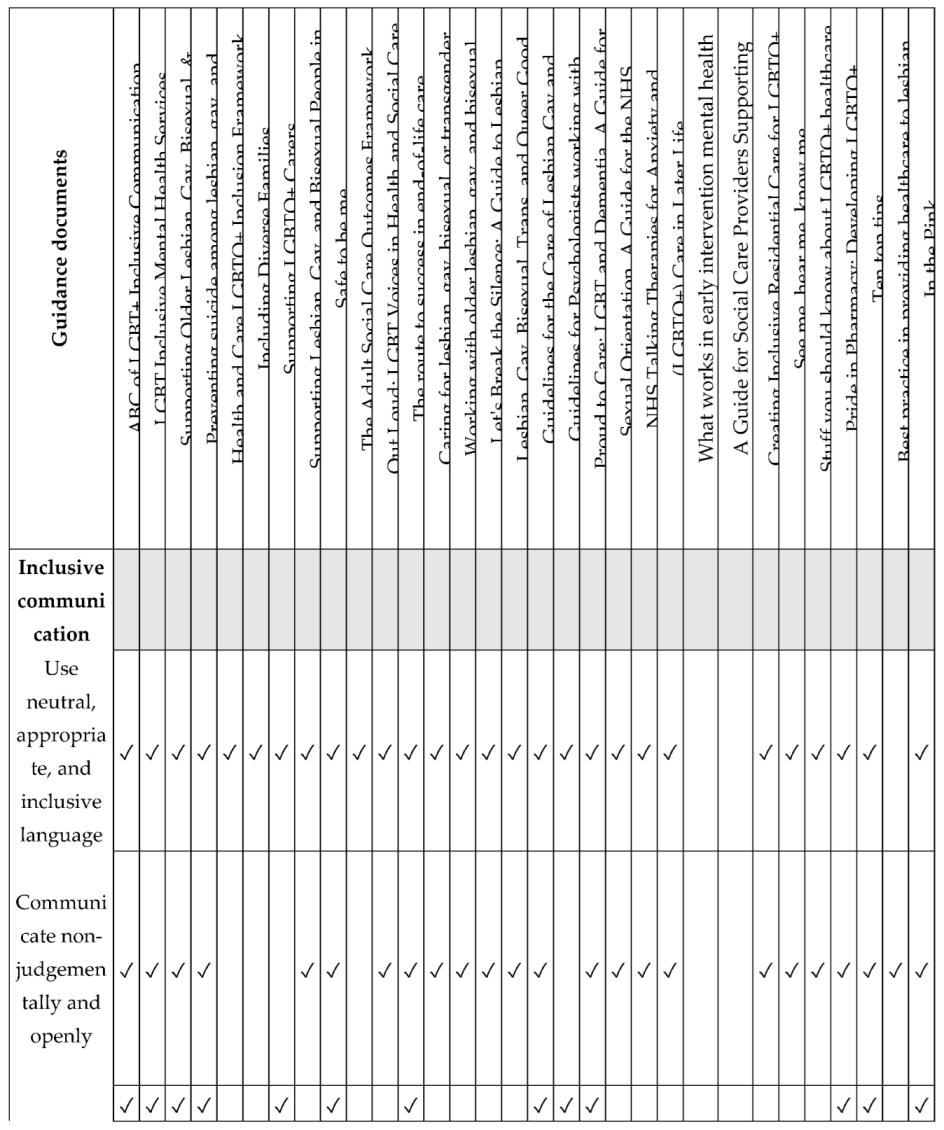 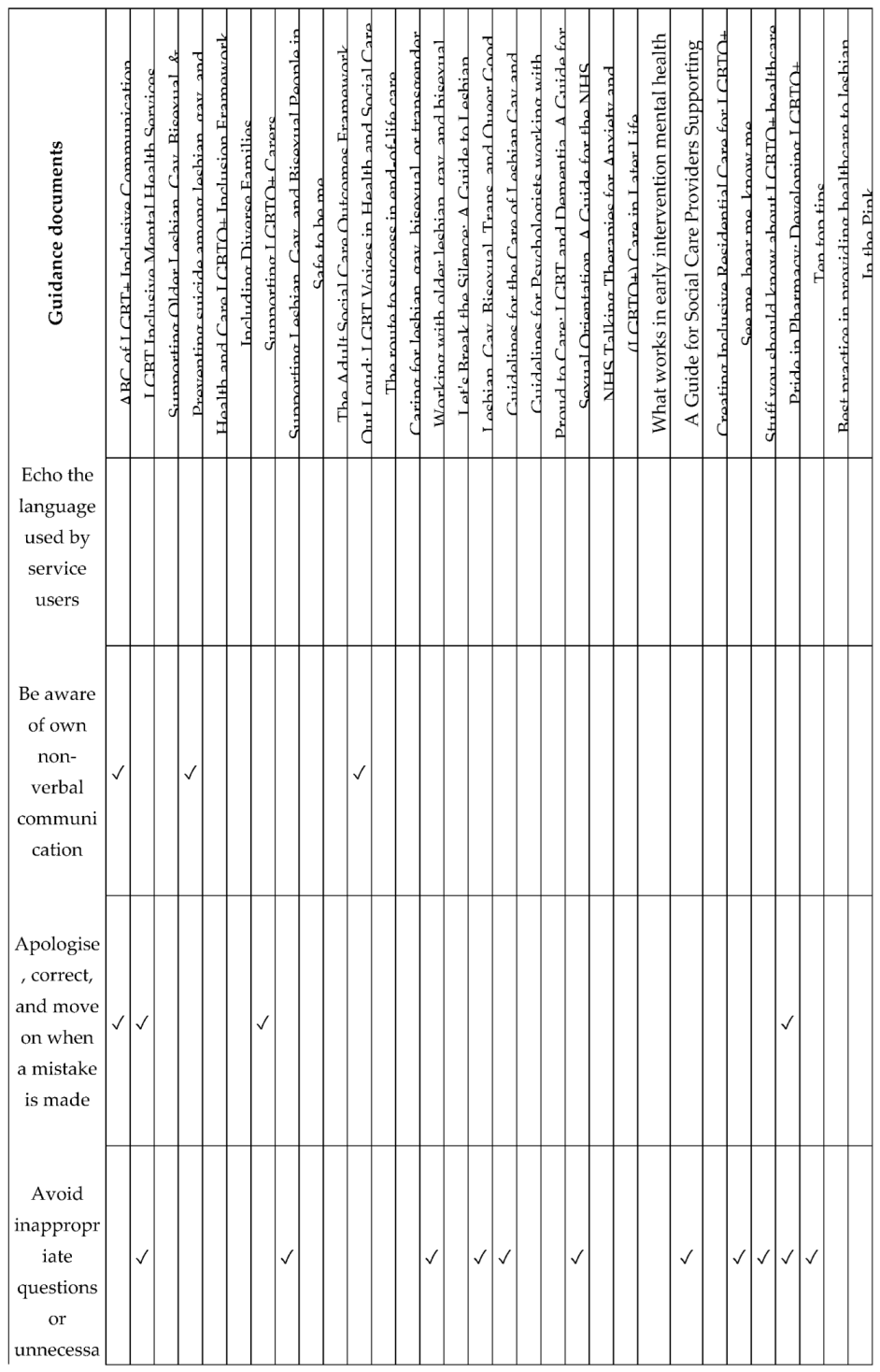 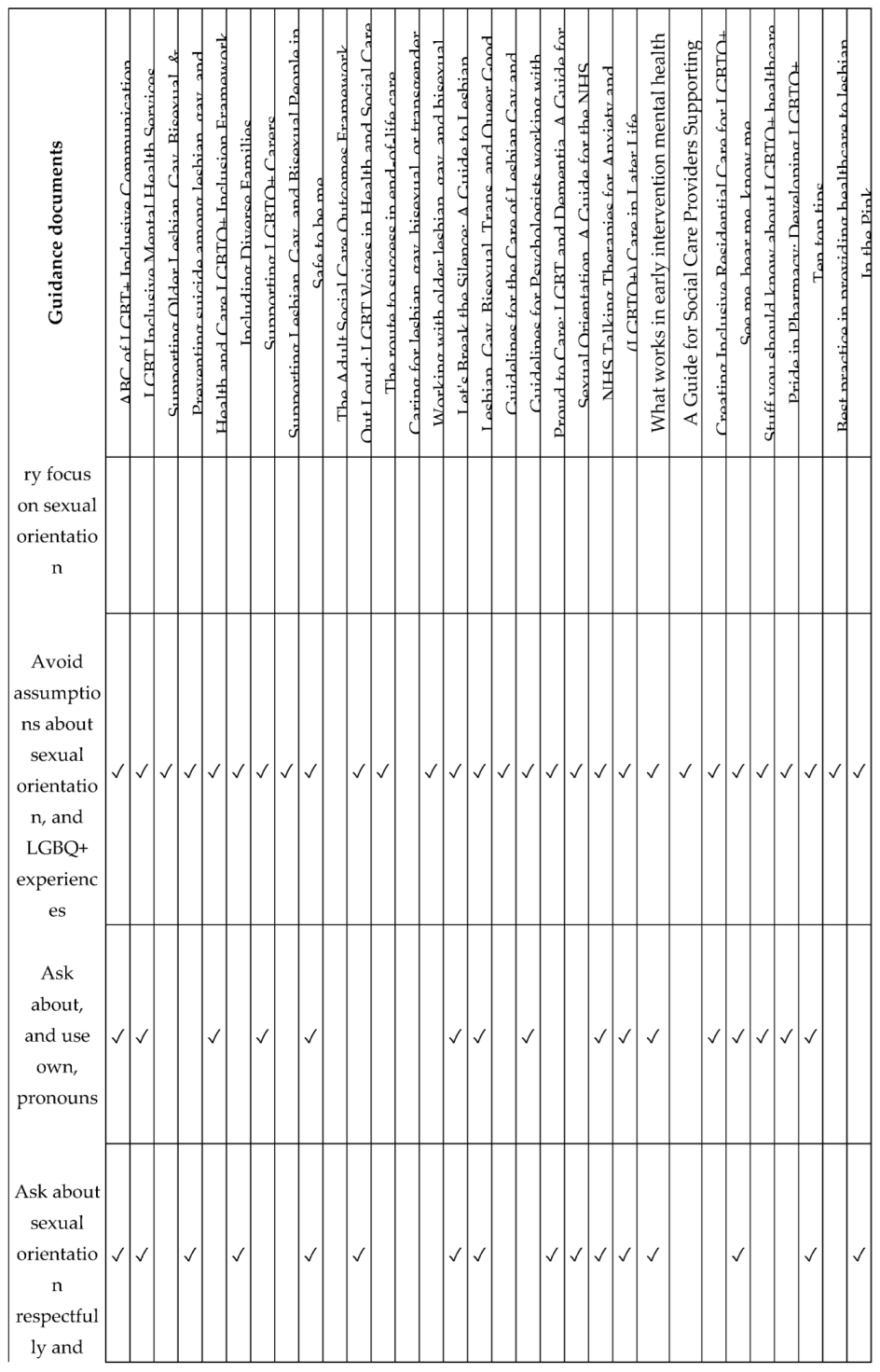 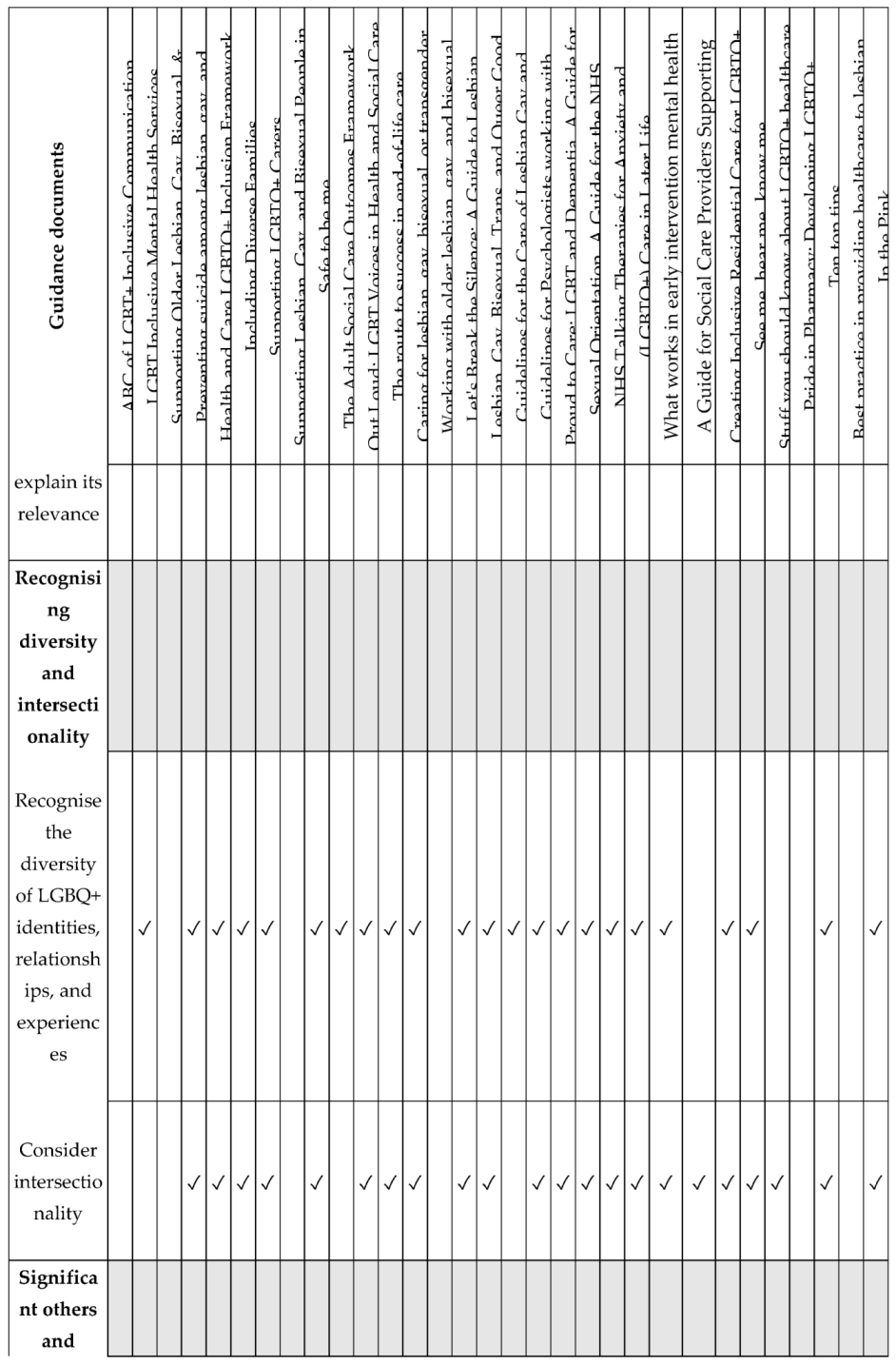 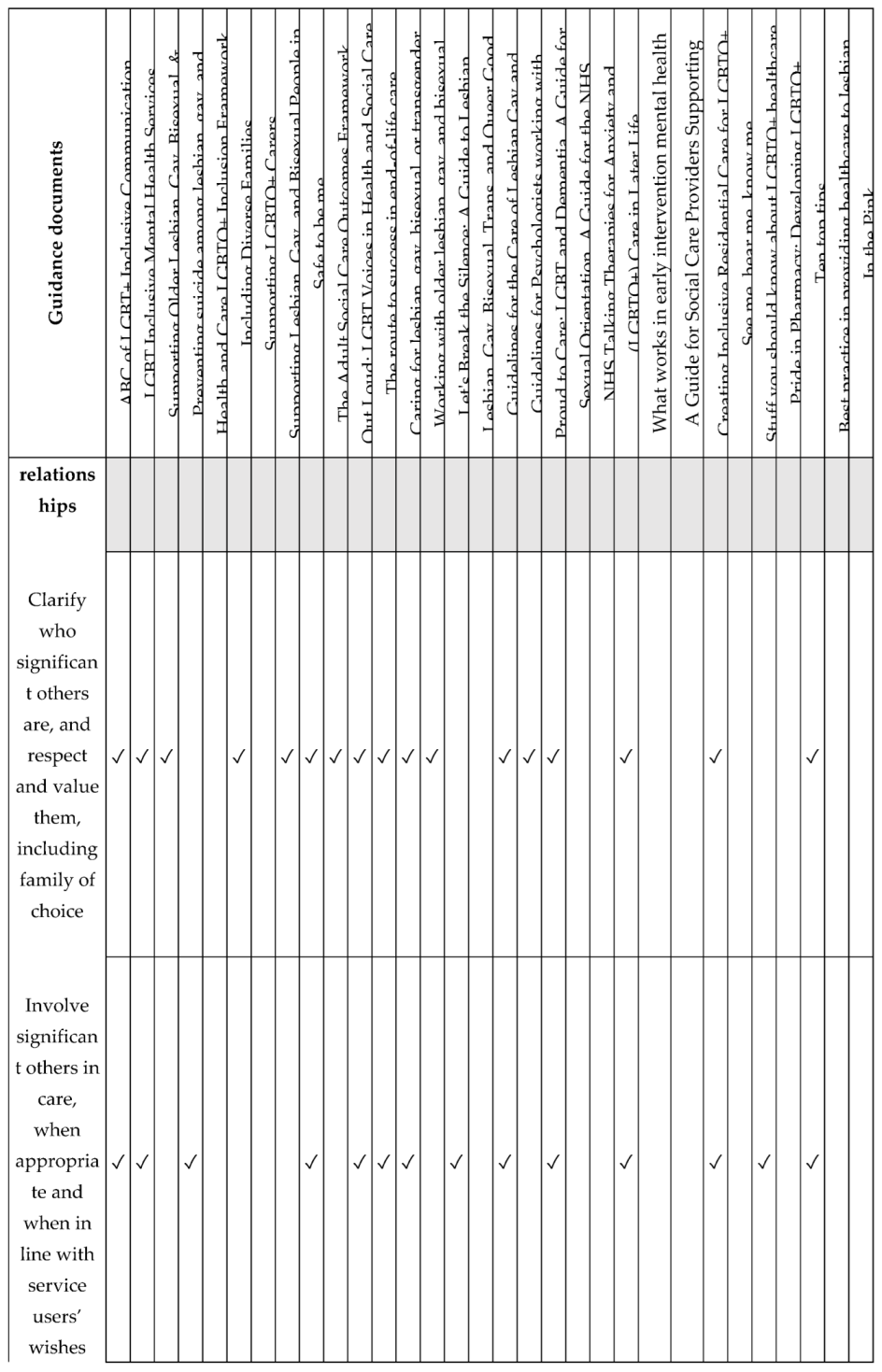 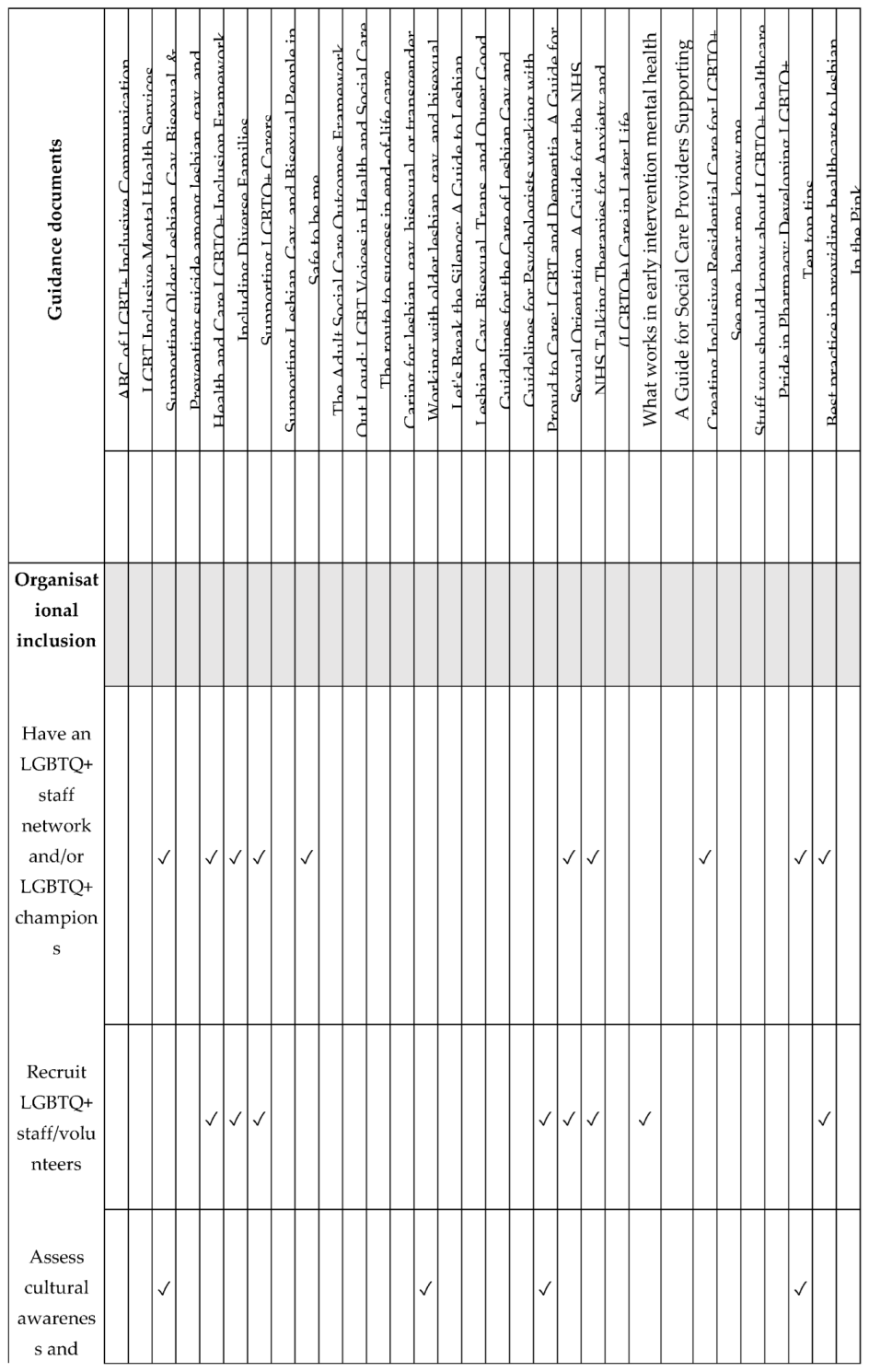 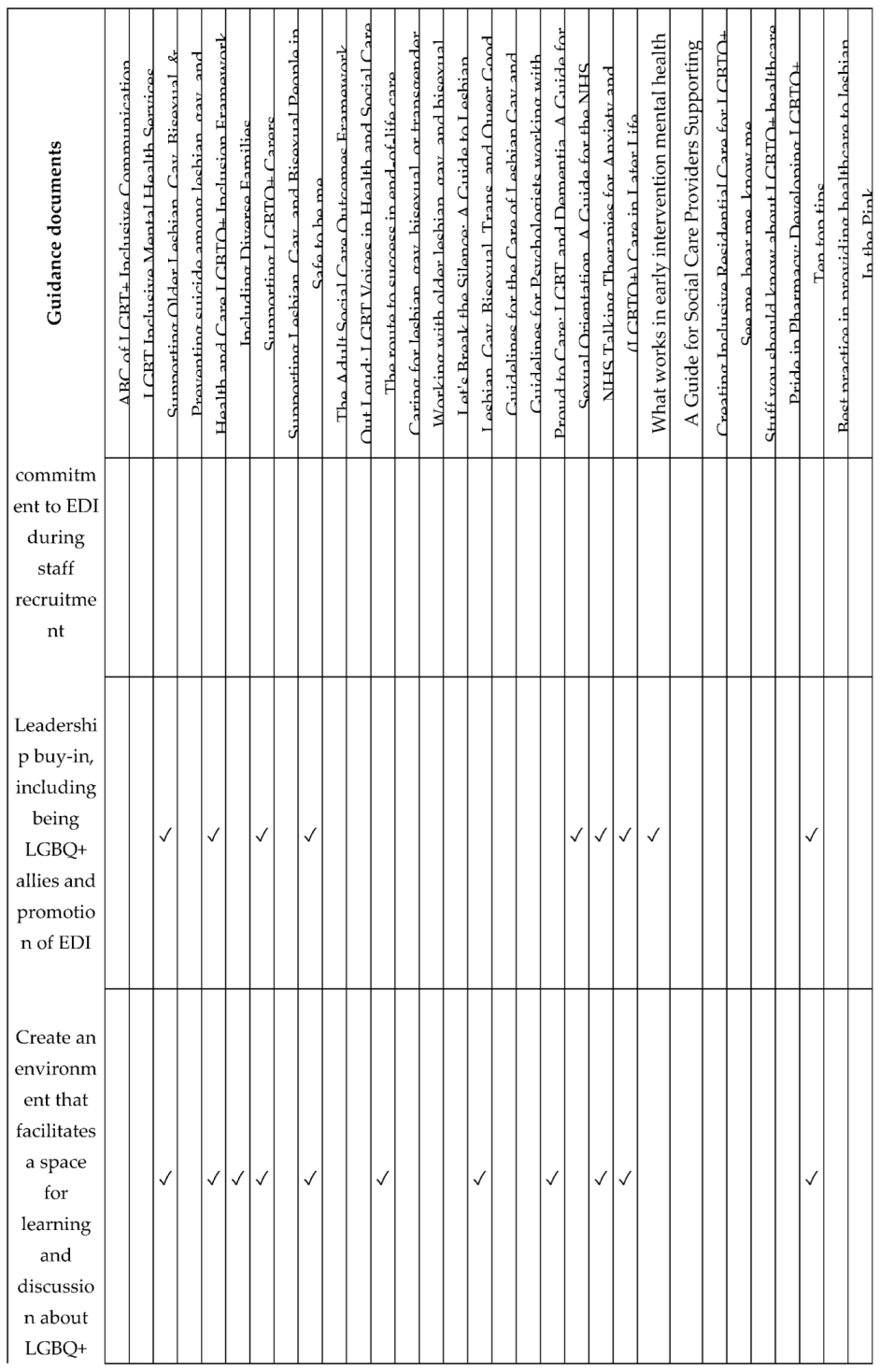 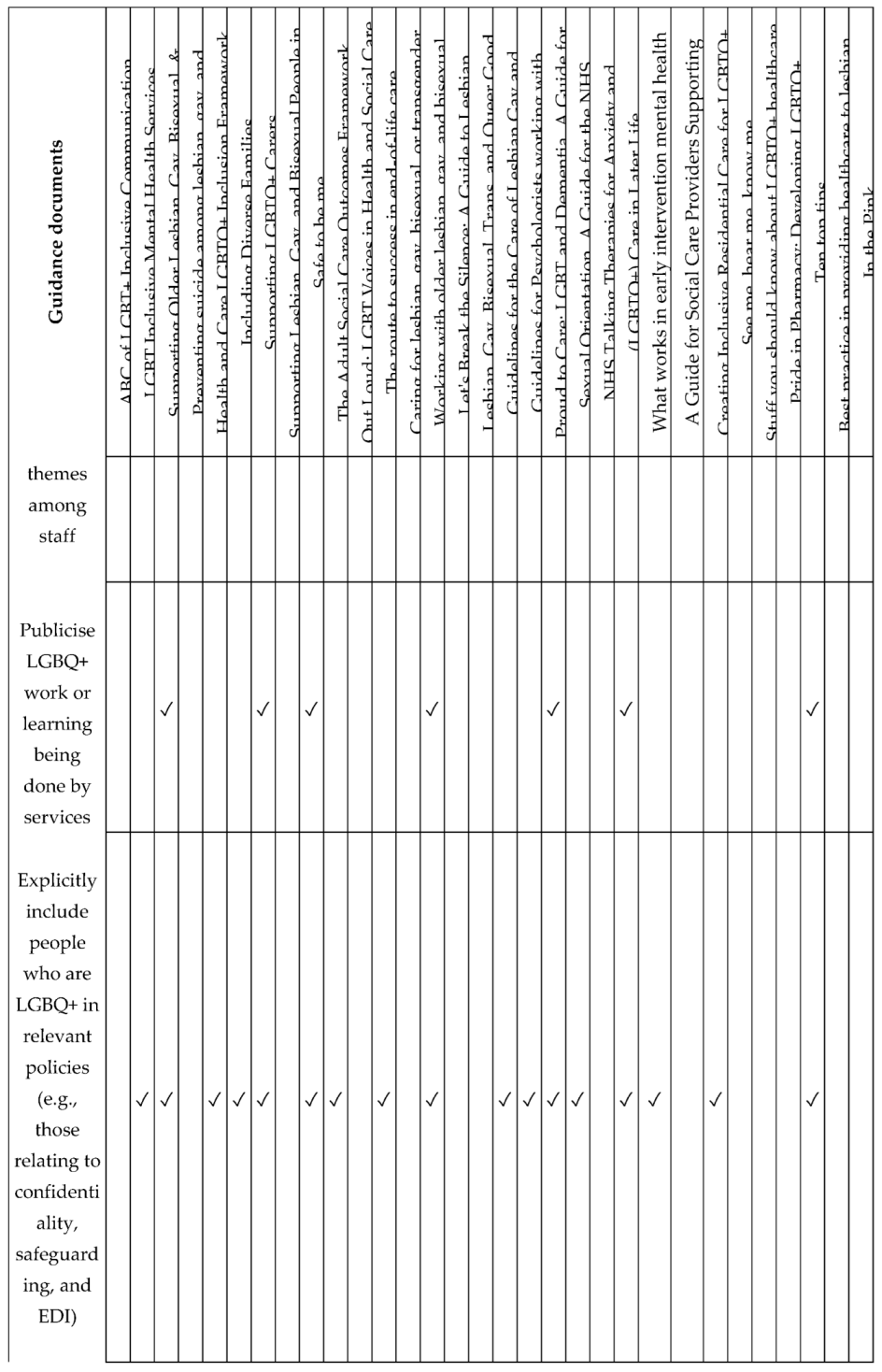 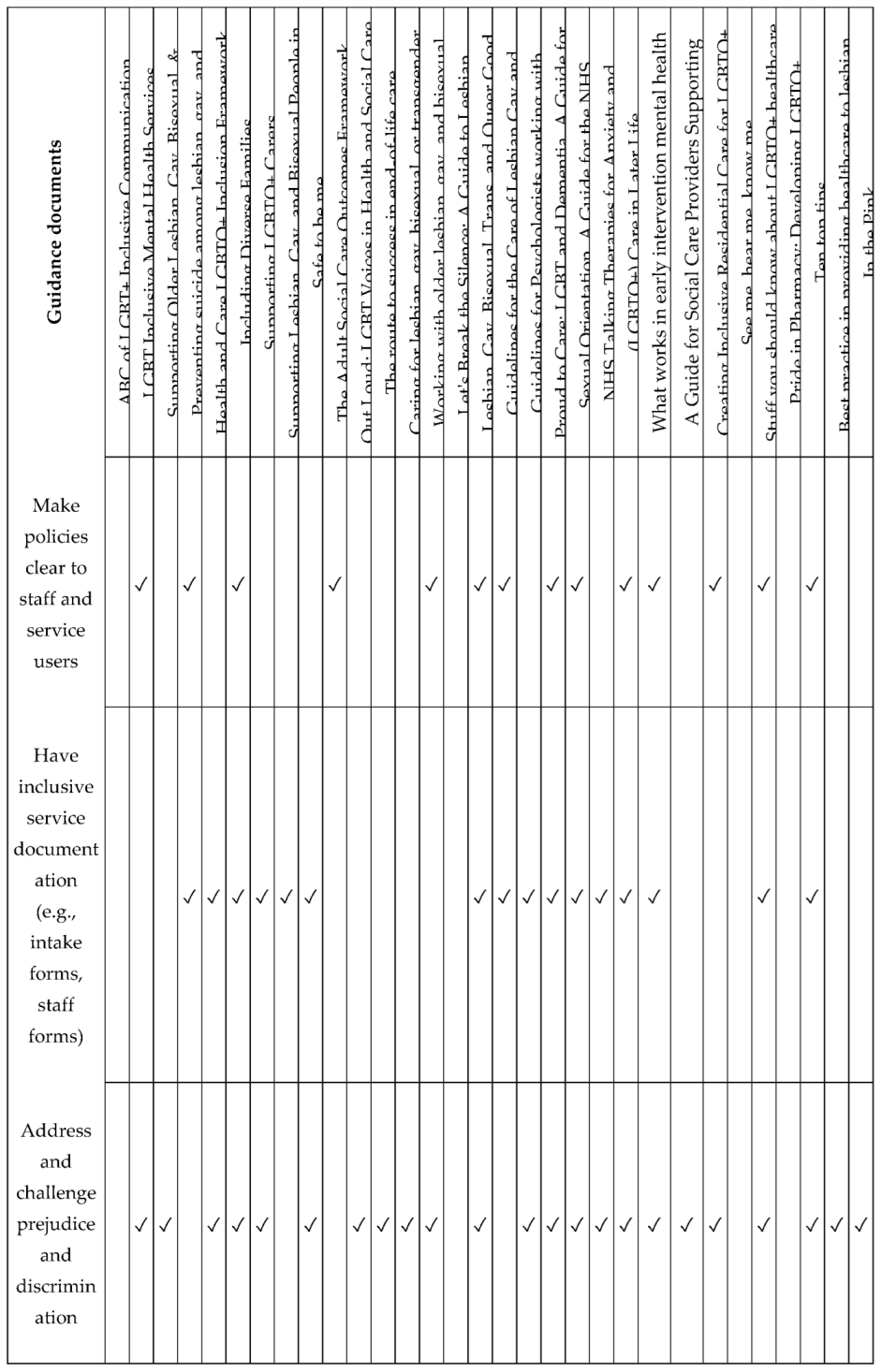 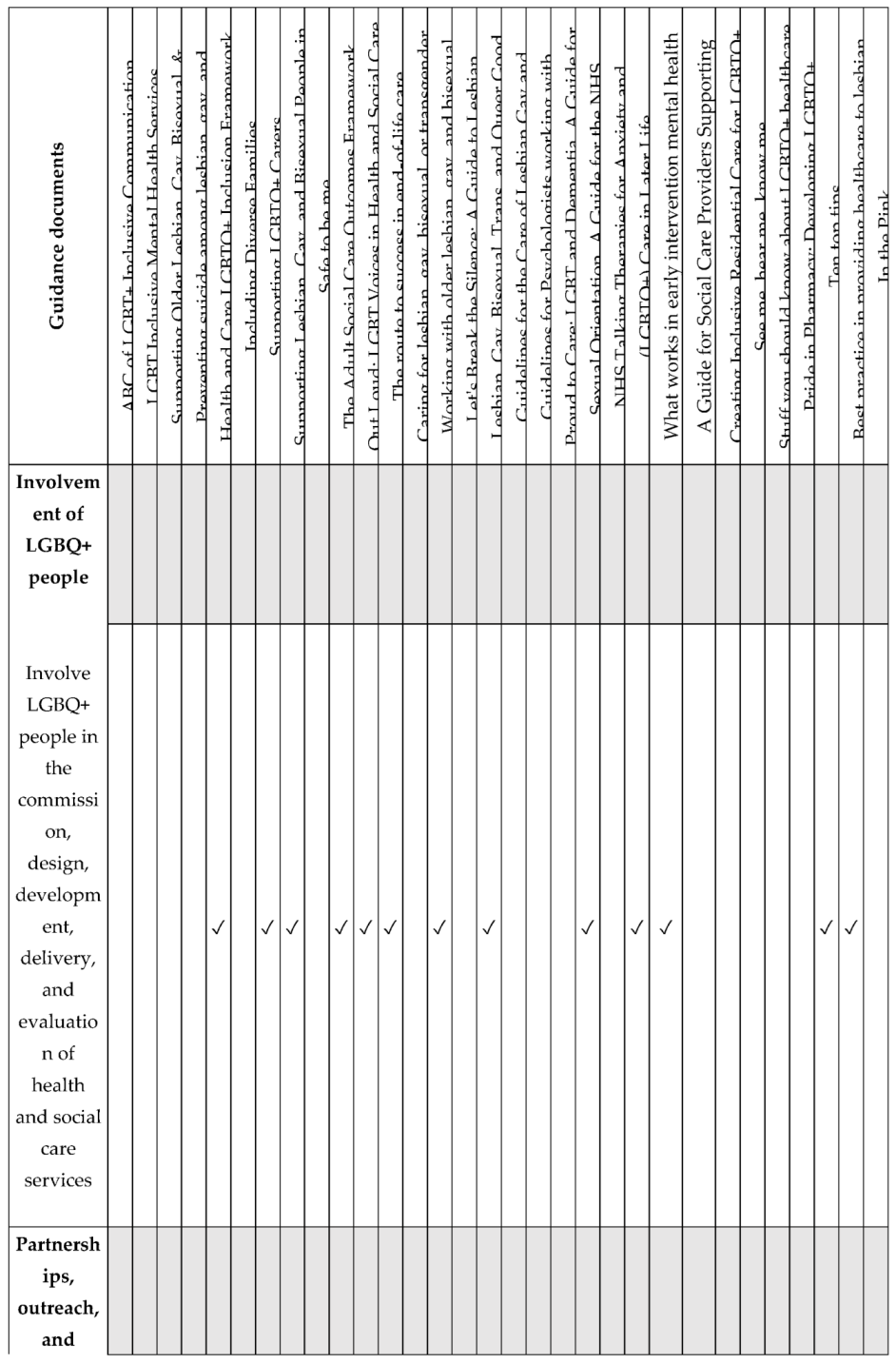 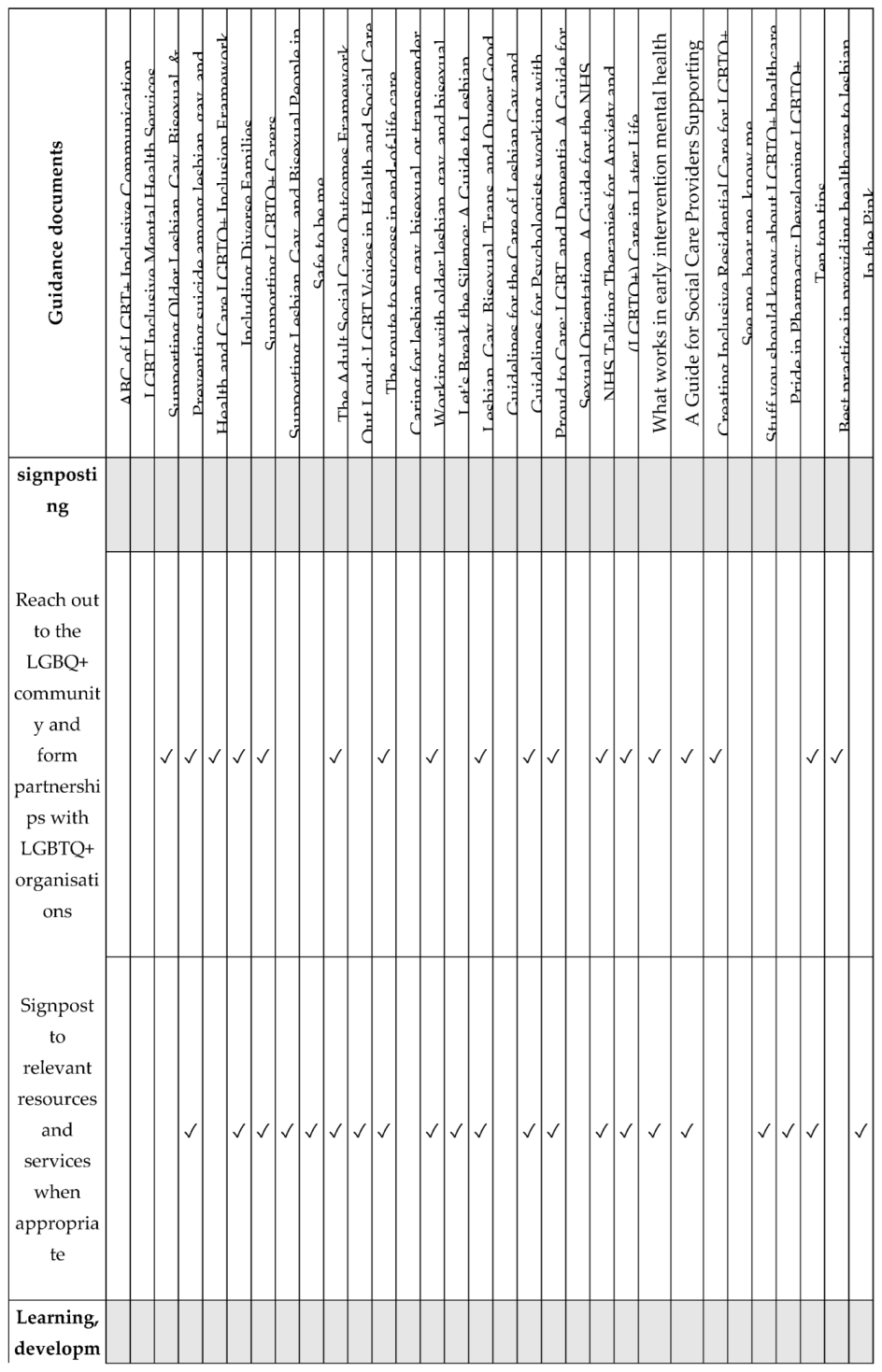 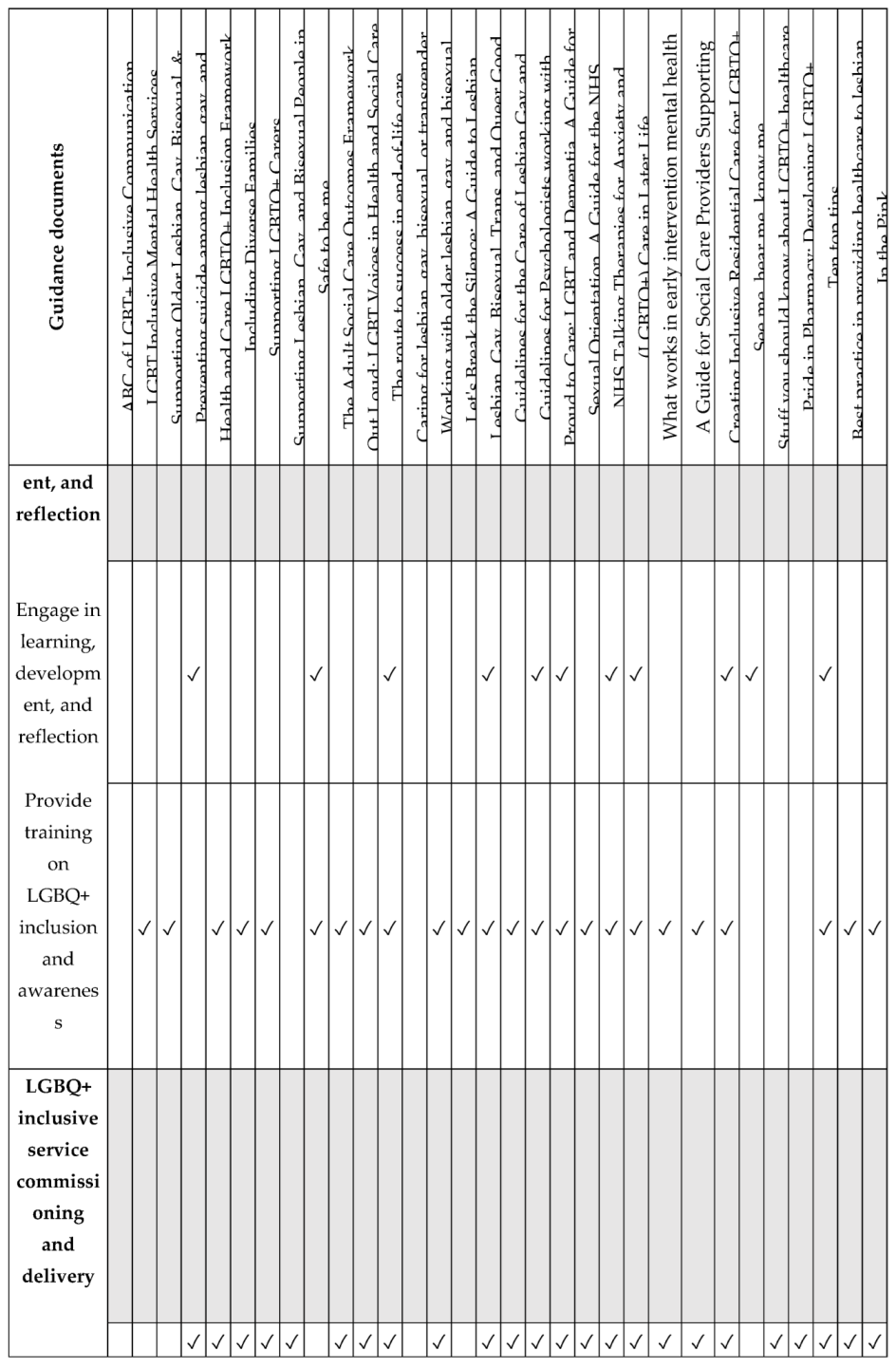 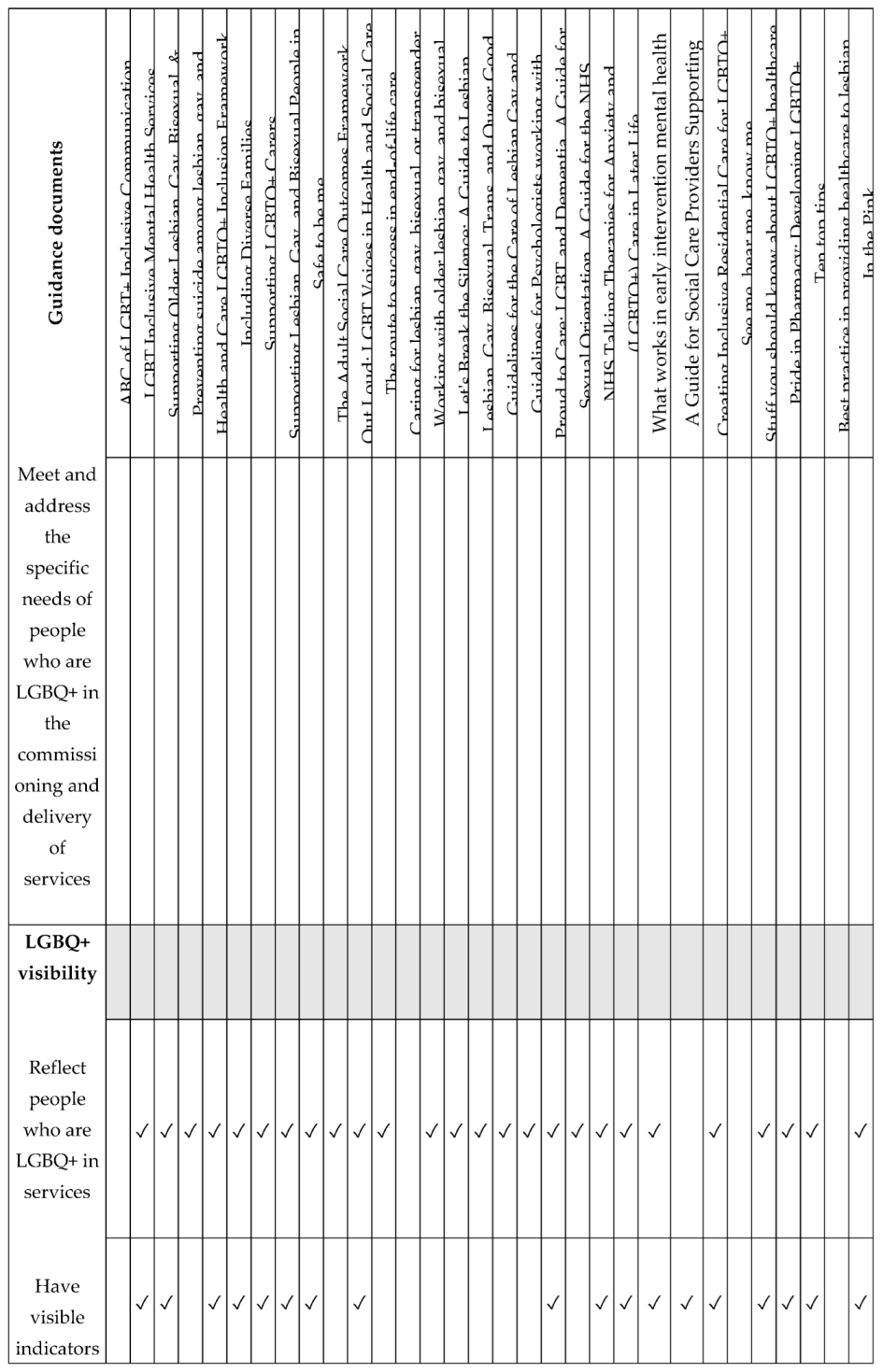 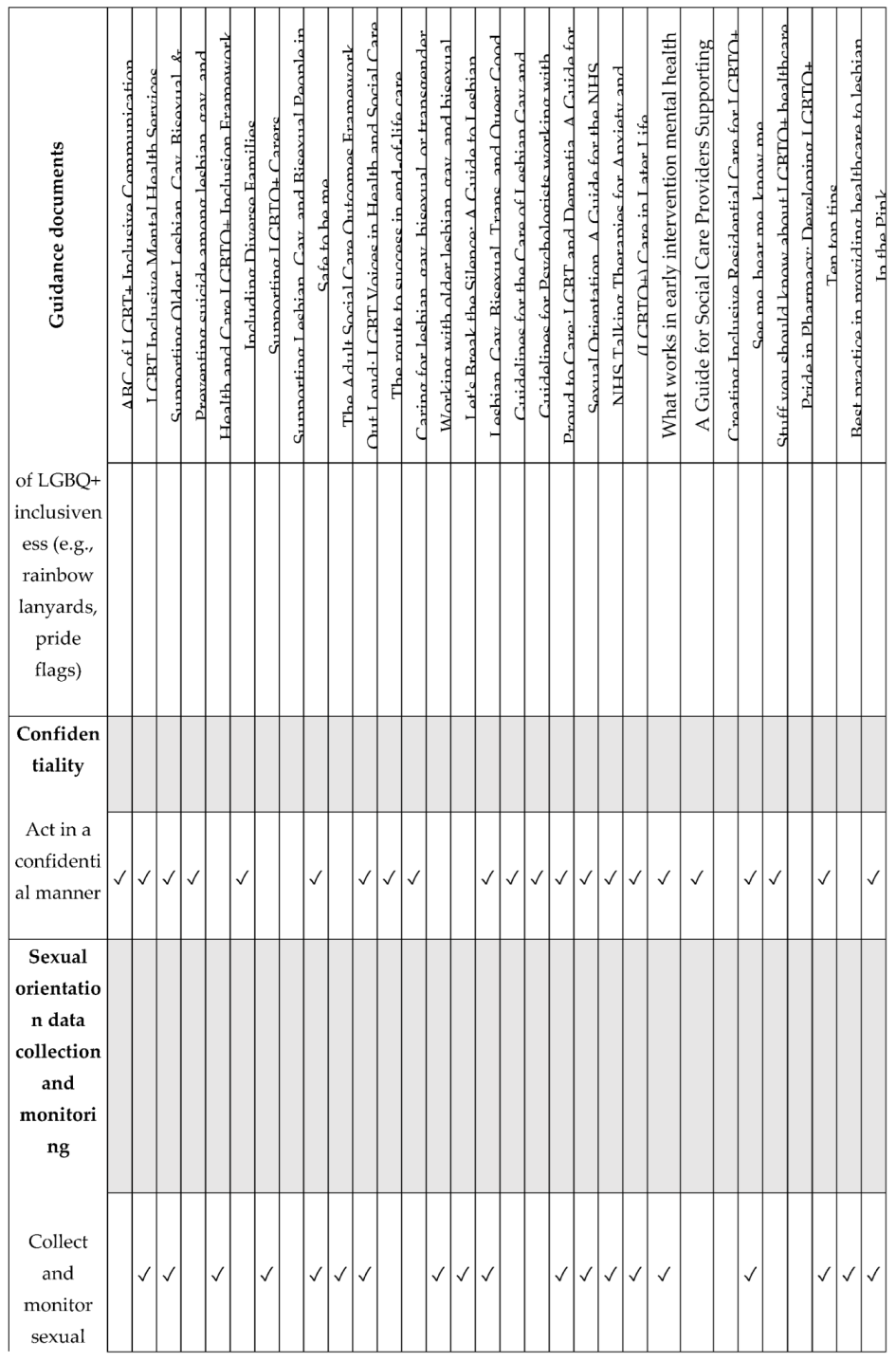 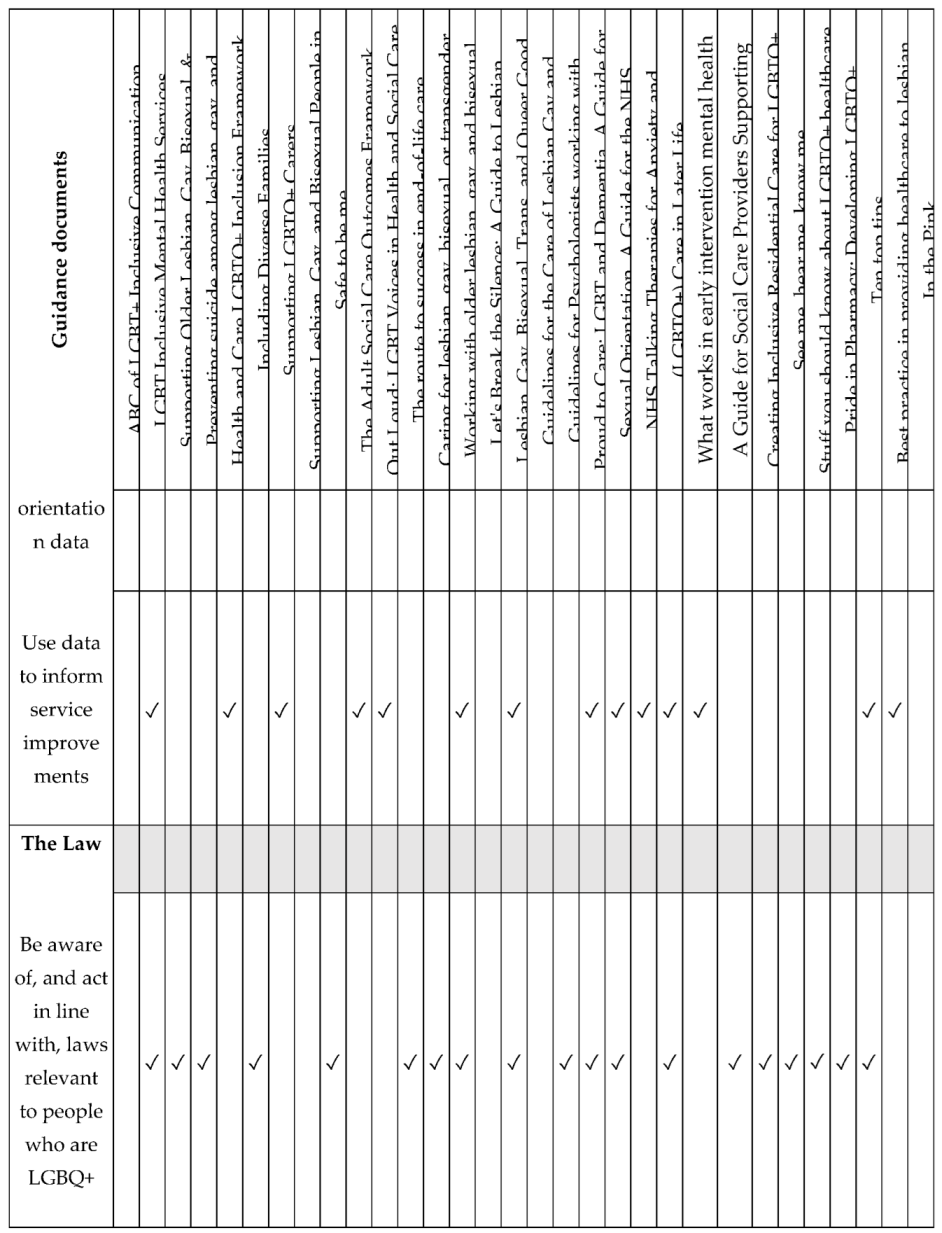
|
Disclaimer/Publisher’s Note: The statements, opinions and data contained in all publications are solely those of the individual author(s) and contributor(s) and not of MDPI and/or the editor(s). MDPI and/or the editor(s) disclaim responsibility for any injury to people or property resulting from any ideas, methods, instructions or products referred to in the content. |
© 2026 by the authors. Licensee MDPI, Basel, Switzerland. This article is an open access article distributed under the terms and conditions of the Creative Commons Attribution (CC BY) license (http://creativecommons.org/licenses/by/4.0/).
Copyright: This open access article is published under a Creative Commons CC BY 4.0 license, which permit the free download, distribution, and reuse, provided that the author and preprint are cited in any reuse.