

Submitted:
02 September 2026
Posted:
09 September 2026
You are already at the latest version
Abstract
Epitalon is a synthetic tetrapeptide (Ala-Glu-Asp-Gly) developed from the amino-acid composition of epithalamin, a pineal-derived polypeptide preparation. Although historically related, the two preparations are chemically distinct and their evidence should not be considered interchangeable. This narrative review examines the mechanistic, preclinical, and human evidence for epitalon, with epithalamin studies considered separately as historical context. The strongest mechanistic evidence for epitalon involves telomerase activation and telomere elongation in human cell lines. These findings were independently replicated in 2025, with telomere extension occurring through hTERT/telomerase upregulation in normal cells and alternative lengthening of telomeres in cancer cell lines.[1] Preclinical studies have also reported age-dependent neuroendocrine effects, antioxidant-associated activity, and tissue-protective effects. In female mice, epitalon did not increase mean lifespan but increased maximum lifespan by 12.3%.[2] Human epitalon evidence remains limited to small physiological or biomarker studies and an older report in retinitis pigmentosa; no adequately powered randomized trial has established therapeutic efficacy.[1,3,4] Historical epithalamin studies have reported neuroendocrine, antioxidant, cardiovascular, and longevity-associated outcomes, but these findings cannot be directly extrapolated to epitalon. Human pharmacokinetic, dose-ranging, and dedicated prospective safety studies remain unavailable, while telomere-maintenance effects raise theoretical but unresolved questions regarding long-term oncologic safety. FDA reviewed epitalon free base and acetate through the 2026 PCAC compounding process, which does not constitute therapeutic approval. [5] Overall, epitalon demonstrates biologically relevant activity but remains clinically unproven. Independent replication, pharmaceutical characterization, pharmacokinetic and safety studies, disease-specific preclinical models, and appropriately designed human trials are needed before its role in regenerative or longevity medicine can be established.
Keywords:
epitalon
; epithalamin
; regenerative medicine
; telomerase
; melatonin
; aging
1. Introduction
Aging is one of the strongest risk factors for degenerative musculoskeletal disease. Common age-related pathologies include osteoarthritis, intervertebral disc degeneration, osteoporosis, sarcopenia, and tendinopathy. These conditions share underlying mechanisms involving apoptosis, cellular senescence, chronic inflammation, oxidative stress, and an impaired regenerative capacity.[6,7] Current management is largely symptomatic, aimed at improving pain and function rather than reversing the underlying degenerative process. There are currently no FDA-approved disease-modifying therapies for osteoarthritis or disc degeneration. Several regenerative medicine therapies have gained attention, including platelet-rich plasma (PRP), bone marrow aspirate concentrate (BMAC), and peptide-based biologics.[8,9,10,11]
As interest in peptide-based therapies increases within the field of regenerative medicine, several compounds have received considerable attention. Body Protection Compound-157 (BPC-157) is one of them as it has reported tissue-repair effects, although it remains unapproved by the FDA and is subject to regulatory restrictions.[12,13] Epitalon represents a distinct class of peptide whose proposed mechanisms primarily involve pathways associated with biological aging rather than direct tissue repair. The epitalon literature remains limited and is concentrated within a small number of research groups.
Epitalon is a synthetic tetrapeptide (Ala-Glu-Asp-Gly) based on the amino acid composition of epithalamin, a polypeptide extract from the bovine pineal gland.[14] Although epitalon was developed from the amino-acid composition of epithalamin, the two preparations are chemically distinct and their experimental and clinical evidence should not be considered interchangeable. Epitalon was first investigated in the 1990s by Khavinson and colleagues at the St. Petersburg Institute of Bioregulation and Gerontology. Direct studies of epitalon have reported effects involving telomerase activity and neuroendocrine regulation, whereas much of the earlier antioxidant and human longevity literature was generated using epithalamin and is considered separately in this review.
Telomerase is primarily responsible for maintaining the protective caps of human chromosomes. This protection is important in preserving correct DNA replication and preventing genetic mutations.[15] While BPC-157 has been found to directly act on wound-healing pathways, epitalon studies focus on upstream aging mechanisms. These mechanisms are independently associated with musculoskeletal degeneration and impaired tissue repair.[1,15,16] The epitalon literature remains comparatively limited, with much of the existing research originating from a small number of research groups. Independent replication has been limited, although a 2025 study confirmed dose-dependent telomerase activation and telomere extension in human cell lines, providing the first independent confirmation of the telomerase-related mechanism.[1] In July 2026, the FDA Pharmacy Compounding Advisory Committee (PCAC) reviewed epitalon in the context of compounding eligibility and voted in favor of recommending its inclusion; however, this advisory recommendation does not constitute FDA approval or establish clinical efficacy or safety. The committee vote was favorable, but final FDA action is a separate regulatory step.
As the gray-market availability of these peptides continues to grow, future independent investigation and evidence-based reviews will be needed to advance this field of medicine. The purpose of this review is to evaluate epitalon from the perspective of regenerative and longevity medicine. We summarize the available mechanistic, preclinical, and human evidence, distinguish synthetic epitalon from historical epithalamin data, identify major limitations in the current literature, and outline priorities for future translational research.
2. Literature Search and Review Approach
A structured literature search was conducted using PubMed/MEDLINE and Google Scholar, supplemented by citation tracking of relevant review articles, reference lists, regulatory documents, and institutional library resources. Search terms included “epitalon,” “Epithalon,” “AEDG,” “Ala-Glu-Asp-Gly,” and “epithalamin,” alone and in combination with terms related to aging, telomeres, telomerase, melatonin, circadian rhythms, oxidative stress, cancer, safety, tissue repair, and regenerative medicine. Searches were updated through August 26, 2026.
Primary experimental and clinical studies were prioritized when available. Studies directly evaluating epitalon/AEDG were distinguished from those evaluating epithalamin, a separate pineal-derived polypeptide preparation. Epithalamin findings were considered historical or mechanistic context rather than direct evidence of epitalon efficacy or safety. Evidence was qualitatively assessed according to study type, design, sample size, intervention characteristics, comparator groups, outcomes, safety reporting, and independent replication when available. Given the limited and heterogeneous evidence base, no formal meta-analysis or quantitative risk-of-bias assessment was performed.
3. Preparation and Pharmacology
Epitalon has a molecular weight of approximately 390.35 Da.[14] It was developed as a synthetic tetrapeptide based on the amino-acid composition of epithalamin, but it is not chemically identical to the parent preparation, nor is it a direct clinical substitute for it. Epithalamin is a heterogeneous pineal-derived polypeptide preparation, whereas epitalon consists of the defined tetrapeptide Ala-Glu-Asp-Gly (AEDG).[14] Consequently, findings obtained with epithalamin are treated in this review as historical or mechanistic context unless directly reproduced with synthetic epitalon. FDA likewise distinguishes the two substances rather than treating the names as interchangeable.
Given its short amino acid sequence, epitalon can be produced via standard solid-phase peptide synthesis (SPPS), like other short peptides.[14] Although gray-market peptide products may have inconsistent preparation standards and quality control, the short sequence of epitalon is amenable to standardized chemical synthesis under appropriate manufacturing conditions.[12] Epitalon has been administered by several routes in preclinical studies, including subcutaneous, intramuscular, and intranasal delivery.[2,17,18] In the lifespan study in mice, epitalon was administered subcutaneously at a dose of 1.0 µg per mouse, approximately 30–40 µg/kg, for 5 consecutive days each month. Treatment began when the mice were 3 months old and continued until their natural death.[2] Intranasal administration was also studied, with findings suggesting it can modulate pineal secretory activity under stress conditions.[18]
A notable gap in the epitalon literature is the absence of formal pharmacokinetic studies in any species. By comparison, BPC-157 has preliminary pharmacokinetic characterization in rats and dogs assessing intravenous safety and plasma clearance.[19] For epitalon, the absence of pharmacokinetic data represents a significant barrier to dose selection and clinical translation. Future studies should therefore prioritize formal pharmacokinetic characterization before broader clinical investigation.
4. Mechanisms of Action in Tissue Protection and Repair
4.1. Telomerase Activation and Telomere Biology
One of the most extensively studied proposed mechanisms of epitalon is the activation of telomerase, a ribonucleoprotein enzyme responsible for maintaining telomere length at the ends of chromosomes.[20,21] Telomeres generally shorten with successive divisions in somatic cells, contributing to replicative aging. Once telomeres reach a critically short length, cells may enter replicative senescence, a state in which cells permanently stop dividing and begin releasing inflammatory signals that can contribute to tissue degeneration.[22,23]
Khavinson et al. first demonstrated that epitalon induced telomerase activity and telomere elongation in human fetal fibroblast cell cultures.[24] The original study reported induction of expression of the telomerase catalytic subunit, enzymatic telomerase activity, and telomere elongation following Epithalon exposure. In a subsequent study, epitalon treatment of aging human fibroblasts was associated with telomere elongation and continued proliferative capacity beyond the division limit observed in untreated control cells.[25]
A 2025 independent study was able to replicate Khavinson’s findings, including dose-dependent hTERT mRNA upregulation and telomere extension in normal human epithelial and fibroblast cell lines.[1] In cancer cell lines, telomere extension occurred through an alternative lengthening of telomeres (ALT) mechanism rather than telomerase upregulation. Only minor ALT activity was observed in non-cancerous normal cells.[1] This independent replication strengthens the mechanistic evidence that epitalon can modulate telomere-maintenance pathways in normal human cell lines.
However, these findings remain cellular and mechanistic and should not be interpreted as evidence that epitalon-mediated telomere elongation improves clinical outcomes or extends human lifespan. In addition, the potential oncological implications of telomerase activation and ALT require separate consideration, as discussed below in the safety and translational sections. The proposed mechanisms of epitalon are summarized in Figure 1, while the supporting evidence and its principal limitations are outlined in Table 1.
Telomere biology and its relationship with musculoskeletal degeneration have been studied in recent literature. A meta-analysis of six case-control studies found that patients with osteoarthritis had significantly shorter leukocyte telomere length compared to healthy controls.[15] Data from the Osteoarthritis Initiative cohort demonstrated that accelerated telomere loss is an independent risk factor for knee osteoarthritis (p = 0.041).[16] A 2024 study also stated that severe and moderate pain in OA patients was inversely associated with leukocyte telomere length.[26] This finding aligns with growing evidence that telomere shortening contributes to cellular senescence, which may promote joint breakdown via pro-inflammatory factors known as the senescence-associated secretory phenotype (SASP).[7]
While these associations are compelling, no study has directly tested epitalon in a musculoskeletal model. Although epitalon-associated telomerase activation has been demonstrated in cellular models, it remains unknown whether this mechanism yields therapeutic effects in degenerative joint disease. Direct testing in musculoskeletal models should therefore be prioritized in future research.
4.2. Melatonin Restoration and Circadian Regulation
Epitalon has also been reported to restore evening melatonin synthesis and normalize circadian cortisol rhythms in senescent rhesus monkeys.[17] A study in 2005 also found that administration of epitalon to aged primates increased basal nighttime melatonin levels, decreased fasting glucose and insulin, and improved glucose tolerance.[27] These effects were not observed in younger animals, suggesting that the response may be age-dependent and more pronounced in animals with baseline neuroendocrine dysfunction.[27]
Not all experimental findings, however, demonstrate direct stimulation of melatonin secretion. Djeridane et al. evaluated Ala-Glu-Asp-Gly in perifused pineal glands from young and old Wistar rats and found no significant effect on either basal or isoproterenol-stimulated melatonin secretion at the concentrations studied.[28] These findings suggest that epitalon’s reported neuroendocrine effects may depend on experimental context and cannot be attributed simply to direct stimulation of pineal melatonin release.
The potential relevance of these neuroendocrine effects to regenerative medicine is supported indirectly by the broader literature on melatonin and musculoskeletal health. Melatonin has been implicated in bone homeostasis through enhancement of osteoblast activity and suppression of osteoclastogenesis via OPG/RANKL signaling.[29,30] It has also been reported to protect cartilage by reducing matrix metalloproteinase expression (MMPs) and decreasing oxidative stress mediated by reactive oxygen species (ROS).[31] A 2026 meta-analysis of 23 randomized controlled trials (2028 participants) pooled nine trials of chronic musculoskeletal pain and found that melatonin was superior to active controls when evaluating improvements in chronic musculoskeletal pain as well as quality of sleep.[32] However, it was not superior to placebo in the primary analysis, and the authors concluded melatonin may serve as a modest adjunct rather than a primary analgesic.[32] In an observational cohort study, OA patients initiating melatonin had roughly half the risk of subsequent joint replacements compared with those starting benzodiazepines.[31]
Whether epitalon offers an advantage over exogenous melatonin remains unknown. The main difference is that exogenous melatonin generally produces a single pharmacokinetic peak, in contrast to the pulsatile nature of endogenous pineal melatonin secretion.[17,27] A proposed distinction is that epitalon may have a role in endogenous pineal function and circadian melatonin secretion rather than producing a single exogenous exposure. Epitalon also normalized cortisol rhythms in aged primates, suggesting potentially broader neuroendocrine effects than those expected from melatonin alone. [17,27] However, no head-to-head comparisons have been conducted, and this hypothesis requires future direct testing.
Importantly, evidence that melatonin itself influences bone, cartilage, sleep, or pain should not be interpreted as evidence that epitalon produces the same clinical effects. These data establish a mechanistic rationale for investigation rather than therapeutic efficacy of epitalon in musculoskeletal disease.
4.3. Antioxidant Defense
Oxidative stress has been implicated in cellular aging and tissue degeneration, and both epithalamin and synthetic epitalon have been investigated for potential antioxidant effects. However, the evidence for the two preparations should be considered separately. Earlier studies of epithalamin reported reductions in lipid peroxidation and increases in endogenous antioxidant activity, including superoxide dismutase (SOD), catalase, and ceruloplasmin. These findings provide historical evidence regarding pineal-derived peptide preparations but cannot be directly attributed to synthetic epitalon.[33] Direct evidence for antioxidant effects of epitalon is more limited. A 2007 study of geroprotective pineal peptides reported antioxidant activity with both epithalamin and epitalon, although much of the broader quantitative antioxidant-enzyme literature derives from epithalamin experiments.[34]
More recently, Gatta et al. evaluated synthetic epitalon directly in a high-glucose–injured human retinal pigment epithelial cell model. High-glucose exposure increased intracellular reactive oxygen species and disrupted antioxidant-associated pathways, whereas epitalon reduced ROS generation and modulated antioxidant-associated gene expression. Epitalon also restored impaired in vitro wound healing and attenuated hyperglycemia-associated epithelial–mesenchymal transition and fibrotic signaling.[35] These findings support antioxidant-associated activity of synthetic epitalon in a human-derived cellular model, although they do not establish antioxidant efficacy in vivo or in humans.
Oxidative stress is implicated in cartilage degradation, disc degeneration, and impaired wound healing.[7] Accordingly, the direct cellular antioxidant findings with epitalon provide a mechanistic rationale for further investigation in regenerative models; however, no study has established that epitalon-mediated antioxidant effects improve musculoskeletal disease or tissue repair in vivo.
4.4. Mitochondrial and Ribosomal Effects in Cellular Aging
Additional in vitro evidence suggests that AEDG may influence cellular features associated with aging. Ivko et al. evaluated AEDG in aging cultures of human pineal-gland cells and reported a 1.5-fold increase in the area of MitoTracker Red mitochondrial staining together with a 22% reduction in expression of ribosomal protein L7A.[36] The authors proposed that these changes may reflect modulation of mitochondrial and ribosomal function during cellular aging; however, the study was limited to an in vitro model and has not been independently replicated. These observations broaden the range of cellular processes potentially influenced by epitalon beyond telomere and circadian pathways, but remain exploratory and should not be interpreted as evidence of systemic mitochondrial or regenerative benefit.
5. Preclinical Models
5.1. Lifespan and Aging Biomarkers
A 2003 study provided one of the most detailed long-term preclinical evaluations of epitalon using female Swiss-derived SHR mice.[2] Monthly epitalon subcutaneous injections of 1.0 µg per mouse were administered for 5 consecutive days per month, with treatment beginning at 3 months of age and continued until natural death. Epitalon did not significantly affect mean lifespan, body weight, or food consumption; however, it increased maximum lifespan by 12.3% and extended lifespan among the longest-lived 10% of survivors by 13.3%. The study also found that epitalon slowed age-related loss of estrous function and reduced chromosomal abnormalities in bone marrow cells by 17.1%.[2] The primary study included 54 animals per group and confirmed that mean lifespan itself was not significantly increased. These findings suggest effects on selected aging-associated outcomes rather than a generalized extension of lifespan. In particular, the absence of a significant change in mean lifespan should be distinguished from the reported increases in maximum and late-survivor lifespan. Selected preclinical studies of epitalon are summarized in Table 2.
5.2. Wound Healing and Retinal Models
A 2025 independent in vitro study evaluated the effects of epitalon on wound healing in high glucose-exposed human retinal pigment epithelial cells. Epitalon restored impaired wound healing by inhibiting hyperglycemia-induced epithelial-mesenchymal transition (EMT) and fibrosis, while also reducing intracellular ROS.[35] Additional preclinical retinal evidence has been reported in an animal model of hereditary retinal degeneration. In Campbell rats with hereditary pigmentary dystrophy, parabulbar epitalon administration was associated with prolonged retinal electrical activity and preservation of retinal morphology compared with saline-treated controls.[37] Although these findings support further investigation of epitalon in retinal and tissue-repair models, the cellular wound-healing and retinal-dystrophy studies address highly specific experimental systems and should not be extrapolated to musculoskeletal regeneration. No direct musculoskeletal wound-healing study of epitalon has been identified.
5.3. Neuroendocrine and Stress Protection
In rats exposed to experimental stress, intranasal epitalon increased markers of cellular activity within pineal tissue and reduced stress-related vascular changes within the gland.[18] The original report found that epitalon modulated pineal activity under stress conditions but not under normal conditions, suggesting a context-dependent effect rather than generalized stimulation of pineal secretion. Epitalon was also reported to influence immune function by increasing the proliferative activity of thymus-derived immune cells under both immune-stimulating and immune-suppressing conditions.[38] The primary report describes increased thymocyte proliferative activity under experimentally altered stress conditions. Together, these studies suggest that some reported epitalon effects may be most apparent under conditions of physiological stress or age-related dysfunction. However, these findings originate from small experimental models and have not been independently replicated.
5.4. Experimental Carcinogenesis
Epitalon has also been evaluated in several animal carcinogenesis models. In female HER-2/neu transgenic mice, epitalon treatment was associated with reductions in cumulative mammary tumor number, maximum tumor size, and HER-2/neu mRNA expression.[39] In rats exposed to 1,2-dimethylhydrazine, epitalon reduced colon-tumor multiplicity in selected treatment groups and reduced mean tumor size when administered throughout the experimental period.[40] A subsequent study in the same carcinogenesis model examined effects on tumor-cell proliferation and apoptosis.[41] Importantly, these studies evaluated tumor development and biology rather than carcinogenic safety. These antitumor findings are notable but should not be interpreted as evidence that epitalon is noncarcinogenic or that long-term telomerase modulation is oncologically safe. The distinction between antitumor activity in selected animal models and formal carcinogenicity assessment is addressed further in the Safety section.
5.5. Preclinical Safety
No overt adverse effects were reported in the cited mouse studies using repeated epitalon administration.[2,39,40] In the lifespan study, body weight, food consumption, and general health parameters were not significantly affected.[2] These observations, however, are insufficient to establish a favorable safety profile. The available studies were designed primarily to evaluate aging, tumor, or physiological outcomes rather than formal toxicology. Dedicated dose-ranging toxicology, organ toxicity, genotoxicity, reproductive toxicity, immunogenicity, and long-term carcinogenicity studies remain insufficiently characterized. Accordingly, the preclinical literature provides limited tolerability observations but does not establish comprehensive safety.
6. Human Evidence
6.1. Epithalamin Human Studies
Human studies of epithalamin provide historical context for the development of epitalon but should be interpreted separately because epithalamin is a heterogeneous pineal-derived polypeptide preparation rather than the defined synthetic tetrapeptide AEDG. Accordingly, findings obtained with epithalamin are not considered direct evidence of epitalon efficacy or safety. FDA likewise explicitly distinguishes the two substances. Khavinson and Morozov reported a clinical assessment of 266 older adults followed for 6-8 years, in whom Thymalin, epithalamin, or both were administered during the first 2-3 years of observation.[42] In the epithalamin-treated group, mortality was reported to be 1.6-1.8-fold lower than in controls, with additional reported reductions in age-associated disease manifestations. Importantly, the interventions included epithalamin and Thymalin, not synthetic epitalon.
A separate 12-year study evaluated epithalamin in 70 elderly patients with coronary disease and accelerated cardiovascular aging. Thirty-six patients received epithalamin and 34 received saline control treatment; the study was described by the authors as randomized. Treatment consisted of five 10-mg intramuscular injections at 3-day intervals every 6 months for 3 years.[43] At 12 years, the investigators reported 28% fewer deaths in the epithalamin group than in controls, approximately two-fold lower cardiovascular mortality, and lower rates of cardiovascular failure and respiratory disease. These findings are notable but derive from a small study conducted within the same broader research network that generated much of the pineal-peptide literature.
The 2001 Anisimov et al. report also described antioxidant effects associated with epithalamin in humans and animals.[33] However, this publication is a synthesis of the authors’ prior experimental data rather than a conventional prospective clinical efficacy trial. Its findings therefore provide supportive biological context but should not be interpreted as evidence for synthetic epitalon. Overall, the epithalamin literature suggests possible long-term physiological and mortality associations in elderly populations, but the evidence is methodologically limited and cannot be extrapolated directly to epitalon. The principal human studies of epithalamin are summarized in Table 3.
6.2. Synthetic Epitalon in Humans.
Currently, published human exposure to synthetic epitalon remains limited. The available literature includes small studies evaluating circadian or physiological biomarkers and one older clinical report in retinitis pigmentosa; none evaluates musculoskeletal or pain outcomes. Randomized human exposure studies have been reported, but no adequately powered randomized trial has established therapeutic efficacy. The available human studies of synthetic epitalon are summarized in Table 4.
6.3. Circadian and Melatonin Studies
Korkushko et al. evaluated epitalon and epithalamin separately in elderly individuals with altered pineal melatonin production.[3] In the human component, elderly participants were assigned to epithalamin, epitalon, or placebo groups. Epitalon was administered intramuscularly at 0.01 mg daily for 10 days, whereas epithalamin was administered using a substantially different regimen. The authors reported that epitalon increased nighttime melatonin concentrations primarily in participants with reduced baseline pineal function and contributed to normalization of the circadian melatonin rhythm.[3] These findings should be interpreted as physiological biomarker effects rather than evidence of clinical efficacy. The study did not establish improvement in a disease-specific clinical outcome, and the epitalon and epithalamin treatment groups should not be pooled or discussed interchangeably.
Ivko et al. subsequently evaluated AEDG in middle-aged female night-shift workers.[4] Seventy-five participants aged 40–50 years were initially evaluated; 35 with age-appropriate urinary 6-sulfatoxymelatonin values served as a reference group, whereas 40 with reduced melatonin production were randomly divided into placebo and AEDG groups. AEDG was administered sublingually for 20 days at approximately 0.5 mg/day. AEDG treatment was associated with an approximately 1.7-fold increase in urinary 6-sulfatoxymelatonin and changes in Clock, Cry2, and Csnk1e expression toward values observed in the reference group.[4] However, the study did not evaluate validated sleep outcomes or another disease-specific therapeutic endpoint, blinding was not specified, and safety data were not systematically reported. Therefore, the study supports biological activity at the level of circadian biomarkers but does not establish clinical benefit. The FDA’s review similarly noted the small study size, absence of sleep outcomes, and lack of reported safety data.[5]
A related 2021 publication by Khavinson, Linkova, and Ivko examined Clock, Cry2, and Csnk1e expression in a highly similar population of 75 middle-aged female night-shift workers aged 40-59 years, including 40 participants with reduced melatonin-forming function who were randomly divided between placebo and sublingual AEDG groups.[44] Because the population, intervention, and reported outcomes closely overlap with the Ivko report, these publications should not be assumed to represent independent clinical cohorts.[4] Although FDA described the two publications separately in its review, their closely overlapping populations, interventions, and outcomes suggest that they may represent related analyses rather than independent replication. Of note, FDA identified these two sublingual night-shift-worker publications and the retinal report as the direct human epitalon literature in its review.[5]
6.4. Retinitis Pigmentosa
A clinical study evaluated epitalon in 162 patients (324 eyes) aged 18–72 years with congenital retinitis pigmentosa.[45] Epitalon was administered by parabulbar injection at 5.0 µg per eye once daily for 10 days, for a total course dose of 100 µg. The control group included 46 patients (92 eyes) who received conventional therapy.[45] Treatment was associated with improvements in retinal electrophysiological measures, visual acuity, and visual fields, with a “positive clinical effect” reported in more than 90% of treated cases.[45] No worsening of the clinical condition was reported during treatment, and no treatment-related complications or adverse effects were described.[45] However, randomization and blinding were not clearly described, and the control group received conventional therapy rather than a matched placebo. These findings therefore provide limited clinical evidence for epitalon but are not sufficient to establish therapeutic efficacy.
6.5. Overall Interpretation of Human Epitalon Evidence
Human epitalon evidence consists primarily of small physiological or biomarker studies, as well as one controlled retinal study with important methodological limitations. Randomized placebo-controlled exposure has been reported, but no adequately powered randomized trial has demonstrated clinical efficacy for aging, longevity, sleep disorders, musculoskeletal disease, pain, or another regenerative indication. Human pharmacokinetics, dose-ranging studies, and dedicated prospective safety trials also remain unavailable. The distinction between biomarker modulation and therapeutic benefit is particularly important: increases in urinary melatonin metabolites or normalization of circadian-gene expression establish biological activity but do not by themselves demonstrate improvement in clinically meaningful outcomes.
7. Safety, Regulatory, and Ethical Considerations
7.1. Safety Evidence and Current Limitations
The safety of epitalon remains insufficiently characterized. Although overt adverse effects were not reported in several published animal studies, these experiments were primarily designed to evaluate lifespan, physiological, or tumor-related outcomes rather than formal toxicology.[2,39,40] The absence of reported toxicity in these studies therefore cannot establish a favorable safety profile.
Human safety data are particularly limited. Published human epitalon studies have involved small numbers of participants and were not designed as dedicated safety trials. In the sublingual AEDG study of night-shift workers, adverse-event data were not reported systematically.[4] The 2007 study of elderly individuals reported no apparent adverse effects with epitalon or epithalamin, but detailed methods for adverse-event ascertainment were limited.[3] No dedicated human dose-escalation, pharmacokinetic, pharmacodynamic, or long-term safety studies have been identified.
FDA’s 2026 evaluation similarly found that the available data were insufficient to establish the safety of epitalon-related bulk drug substances in humans, particularly when administered subcutaneously.[5] FDA specifically stated that it had not identified clinical safety data sufficient to determine whether epitalon free base or epitalon acetate would cause harm in humans. Important unresolved areas include dose-dependent toxicity, organ toxicity, immunogenicity, genotoxicity, reproductive and developmental toxicity, and long-term carcinogenicity. Accordingly, the lack of reported adverse events should not be interpreted as evidence of safety in the absence of adequate safety characterization.
7.2. Telomerase Activation and Oncologic Considerations
Telomerase activation represents both one of epitalon’s principal proposed mechanisms and an important unresolved safety consideration. Telomerase promotes maintenance of telomere length and may delay replicative senescence; however, telomere-maintenance pathways also play a central role in cellular immortalization and cancer biology. The 2025 independent cellular study demonstrated dose-dependent telomere elongation and hTERT/telomerase upregulation in normal fibroblast and epithelial cells.[1] In breast cancer cell lines, epitalon exposure was also associated with significant telomere elongation, although this appeared to occur predominantly through activation of the alternative lengthening of telomeres (ALT) pathway rather than hTERT upregulation.[1] These findings do not demonstrate that epitalon causes cancer, but they reveal that epitalon can influence telomere-maintenance pathways in malignant as well as nonmalignant cells. The long-term biological consequences of these effects remain unknown.
Animal studies have reported antitumor activity in HER-2/neu transgenic mice and chemically induced colon carcinogenesis models.[39,40,41] However, these findings should not be interpreted as demonstrating carcinogenic safety. An intervention may reduce tumor growth in selected experimental models while still having unresolved effects on tumor initiation, dormant malignant cells, or long-term telomere-dependent oncogenic processes. Formal carcinogenicity studies designed specifically to address these questions have not been reported.
FDA’s 2026 scientific review similarly identified telomerase activation and telomere elongation as a potential mechanistic carcinogenic concern and concluded that available nonclinical studies were too limited in scope and duration to characterize this risk adequately.[5] Thus, the existing evidence neither demonstrates that epitalon is carcinogenic nor establishes long-term oncological safety. This uncertainty warrants dedicated genotoxicity, carcinogenicity, and long-duration studies before chronic human exposure can be adequately evaluated.
7.3. Immunogenicity, Aggregation, and Product Quality
Peptide-specific safety considerations extend beyond the pharmacological activity of epitalon itself. Peptides may form aggregates or contain synthesis-related impurities, both of which can increase immunogenic potential. These issues are particularly relevant to injectable preparations, where product purity, sterility, endotoxin control, and peptide characterization are critical. The FDA identified insufficient information regarding peptide-related impurities, aggregation, microbiological quality, residual solvents, and other critical quality attributes for epitalon free base and epitalon acetate.[5] FDA specifically noted that injectable routes may pose additional immunogenicity concerns and that the stability, pharmacological activity, and immunogenic characteristics of peptide preparations are highly dependent on manufacturing and product-quality conditions.
FDA’s current compounding-risk webpage likewise states that compounded epitalon may pose immunogenicity risks because of aggregation and peptide-related impurities and that the agency lacks sufficient safety information to determine whether epitalon would cause harm in humans.[5]
These concerns are particularly relevant to products obtained outside regulated pharmaceutical manufacturing pathways. The chemical identity of AEDG does not by itself guarantee equivalent purity, sterility, concentration, or stability among commercially available preparations. Therefore, adverse-event experience with one formulation cannot be generalized to other compounded or gray-market products.
7.4. Regulatory Status
Epitalon is not an FDA-approved drug in the United States. In July 2026, the FDA Pharmacy Compounding Advisory Committee (PCAC) considered epitalon free base and epitalon acetate for potential inclusion on the Section 503A Bulk Drug Substances List for the nominated use of insomnia. FDA’s official meeting materials confirm that epitalon was evaluated specifically for insomnia and that the committee voted on whether the free-base and acetate forms should be included on the 503A Bulks List.
The committee subsequently recommended epitalon for inclusion by a narrow favorable vote. However, the recommendation is advisory and does not constitute FDA approval, establish safety or efficacy, or automatically authorize routine clinical use. Reuters and other post-meeting reporting confirmed that epitalon was among the peptides recommended for inclusion, while the FDA emphasizes that advisory-committee recommendations are nonbinding. At the time of writing, the FDA has not established epitalon as an approved treatment for insomnia, longevity, musculoskeletal disease, pain, or any other indication. Inclusion on a compounding bulk-substance pathway, if finalized, would remain legally and scientifically distinct from approval of a drug through the conventional FDA new-drug process.
7.5. Ethical and Clinical Considerations
Public interest in peptide-based therapies has increased substantially, while the regulatory landscape surrounding their use remains unsettled. A 2026 JAMA article noted substantial regulatory uncertainty surrounding unapproved peptide products.[12] This environment creates challenges for clinicians because public interest and commercial availability may substantially outpace the quality of clinical evidence. In discussions with patients, epitalon should therefore be described as an unapproved peptide with mechanistic and preclinical evidence, but with insufficient clinical evidence to support routine therapeutic use.
Clinicians should distinguish clearly among three separate concepts: biological activity, clinical efficacy, and regulatory availability. Evidence that epitalon alters telomerase activity or circadian biomarkers does not establish clinical benefit, and potential compounding eligibility does not constitute FDA approval. Given that much of the epitalon literature originates from a limited number of investigators, independent replication, standardized product characterization, formal toxicology, pharmacokinetic studies, and prospective human safety trials remain necessary before clinical translation can be supported.
8. Translational Considerations and Future Research
The current epitalon literature demonstrates biological activity across several experimental systems but does not yet provide a sufficient foundation for efficacy-focused trials in regenerative or pain medicine. Existing evidence includes cellular telomerase studies, animal neuroendocrine and longevity models, limited human physiological or biomarker studies, and small historical clinical reports, but no adequately powered randomized trial has established therapeutic efficacy in regenerative or musculoskeletal disease.[1,2,3,4,17] The current evidence landscape for synthetic epitalon, including the distinction between mechanistic, preclinical, and human evidence, is summarized in Figure 2.
Future development should therefore follow a staged translational pathway addressing compound characterization, pharmacology, safety, and indication-specific efficacy before broader clinical investigation. First, pharmaceutical-grade epitalon formulations should undergo standardized characterization of purity, stability, aggregation potential, and peptide-related impurities. These considerations are particularly important because FDA’s 2026 PCAC briefing evaluation identified unresolved concerns related to peptide aggregation, impurities, and product characterization.[5] FDA also notes that compounded epitalon may present immunogenicity risks related to aggregation and peptide-related impurities and that sufficient safety information remains unavailable. Formal pharmacokinetic and pharmacodynamic studies are also needed to characterize absorption, distribution, metabolism, elimination, biologically active exposure, and relationships between dose and relevant biomarkers. The absence of formal pharmacokinetic data currently represents a major barrier to rational dose selection and clinical translation.
Second, dedicated nonclinical safety assessment should include appropriately designed dose-ranging and repeated-dose toxicity studies, immunogenicity assessment, and evaluation of genotoxic and carcinogenic risk. Because epitalon consists entirely of naturally occurring amino acids, the need and design of conventional genotoxicity testing should be scientifically justified, with particular attention to synthesis-related impurities and product quality. Carcinogenicity risk should also be considered early, with definitive studies performed when warranted by the emerging pharmacologic, toxicologic, and clinical profile.
This consideration is important given epitalon’s reported effects on telomerase and telomere-maintenance pathways.[1] Existing antitumor findings in selected animal models cannot substitute for formal assessment of long-term oncologic risk.[39,40,41] In its 2026 PCAC briefing evaluation, FDA concluded that the available epitalon studies did not adequately characterize genotoxic or carcinogenic potential because of limitations including fixed dosing, female-only animal cohorts, and relatively short cumulative exposure.[5] FDA also reported that no 2-year epitalon carcinogenicity studies were identified.
Third, direct testing in disease-relevant preclinical models is needed before proposing regenerative clinical indications. For musculoskeletal applications, this could include models of osteoarthritis, intervertebral disc degeneration, tendon injury, or other degenerative conditions in which tissue structure, inflammatory signaling, mechanical or functional outcomes, and relevant mechanistic biomarkers can be evaluated concurrently. Associations between telomere shortening, oxidative stress, melatonin biology, and musculoskeletal disease do not establish that epitalon itself produces therapeutic effects in these conditions.[7,15,16,29,30,31,32] Such studies should determine whether these reported cellular effects translate into meaningful improvements in tissue repair or disease-related outcomes.[1,35]
If an acceptable initial nonclinical safety margin and pharmacologic profile are established, early-phase human studies should focus primarily on safety, tolerability, pharmacokinetics, pharmacodynamics, and dose selection rather than therapeutic efficacy. Current human epitalon studies demonstrate biological activity through melatonin and circadian biomarkers, but these findings do not establish clinical benefit.[3,4] Only after these foundational data are available should adequately powered, indication-specific randomized trials evaluate clinically meaningful outcomes such as pain, physical function, structural disease progression, or other validated disease-specific endpoints.
Independent replication should remain a central priority throughout this process. Much of the historical epitalon literature originates from a limited number of collaborating investigators, while independent confirmation remains sparse. The independent 2025 replication of telomerase-associated findings represents an important development, but broader replication across mechanisms, experimental models, and human studies remains necessary.[1]
9. Conclusions
Epitalon is a synthetic tetrapeptide that has been investigated for effects on several biological processes associated with aging, including telomerase activity, circadian regulation, and oxidative stress. The strongest direct mechanistic evidence involves telomerase activation and telomere elongation in human cell lines, including one independent replication.[1] Preclinical studies have also reported neuroendocrine effects in aged primates, selected aging-related outcomes in mice, and antioxidant-associated and tissue-protective effects in cellular models.[2,17,35] However, these findings remain predominantly mechanistic and preclinical and should not be interpreted as evidence of established regenerative or longevity benefits in humans.
Human evidence for synthetic epitalon remains limited. Small studies have demonstrated changes in melatonin-related and circadian biomarkers, while an older controlled study reported a potential clinical signal in retinitis pigmentosa, although randomization and blinding were not clearly described.[3,4,45] No adequately powered randomized trial has established therapeutic efficacy. Importantly, historical findings obtained with epithalamin should not be extrapolated directly to epitalon because the two preparations are chemically distinct. Human pharmacokinetic, dose-ranging, and dedicated prospective safety studies also remain unavailable.
The safety profile of epitalon therefore remains insufficiently characterized. Its effects on telomerase and telomere-maintenance pathways warrant particular attention because the long-term oncologic consequences of these mechanisms remain unknown.[1] Although selected animal studies reported reductions in tumor burden or specific tumor-related endpoints, these findings do not establish long-term carcinogenic safety.[39,40,41] In its 2026 PCAC briefing evaluation, FDA determined that the available animal studies did not adequately characterize the genotoxic or carcinogenic potential of epitalon and identified additional uncertainties involving human safety, immunogenicity, aggregation, and peptide-related impurities.[5]
For regenerative and pain medicine, epitalon currently represents a biologically plausible but clinically unproven and unapproved peptide. Direct testing in disease-relevant musculoskeletal models, independent replication, pharmaceutical characterization, pharmacokinetic studies, and appropriate nonclinical safety assessment should precede efficacy-focused clinical investigation. If these foundational studies demonstrate reproducible biological activity and an acceptable safety profile, appropriately designed human trials could then determine whether epitalon has meaningful therapeutic value.
Author Contributions
AJ and CLR devised and wrote the paper. DMG, MAI, TRD, RJY, SD, WL, DS, and KA assisted in writing, revisions, and editing. CLR supervised the project.
Funding
This research received no external funding.
Data Availability Statement
No new data are presented or generated inthis review article.
Acknowledgments
Not applicable.
Conflicts of Interest
The authors declare no conflicts of interest related to epitalon or epithalamin.
Abbreviations
| ALT | alternative lengthening of telomeres |
| BMAC | bone marrow aspirate concentrate |
| BPC-157 | Body Protection Compound-157 |
| EMT | epithelial–mesenchymal transition |
| FDA | U.S. Food and Drug Administration |
| hTERT | human telomerase reverse transcriptase |
| IND | Investigational New Drug |
| MMP | matrix metalloproteinase |
| OA | osteoarthritis |
| PCAC | Pharmacy Compounding Advisory Committee |
| PK | pharmacokinetic |
| PRP | platelet-rich plasma |
| RCT | randomized controlled trial |
| ROS | reactive oxygen species |
| RPE | retinal pigment epithelium |
| SASP | senescence-associated secretory phenotype |
| SOD | superoxide dismutase |
| SPPS | solid-phase peptide synthesis |
References
- Al-dulaimi, S.; Thomas, R.; Matta, S.; Roberts, T. Epitalon Increases Telomere Length in Human Cell Lines through Telomerase Upregulation or ALT Activity. Biogerontology 2025, 26. [Google Scholar] [CrossRef]
- Anisimov, V.N.; Khavinson, V.K.; Popovich, I.G.; Zabezhinski, M.A.; Alimova, I.N.; Rosenfeld, S. V.; Zavarzina, N.Y.; Semenchenko, A. V.; Yashin, A.I. Effect of Epitalon on Biomarkers of Aging, Life Span and Spontaneous Tumor Incidence in Female Swiss-Derived SHR Mice. Biogerontology 2003, 4, 193–202. [Google Scholar] [CrossRef]
- Korkushko, O. V.; Lapin, B.A.; Goncharova, N.D.; Khavinson, V.K.; Shatilo, V.B.; Vengerin, A.A.; Antoniuk-Shcheglova, I.A.; Magdich, L. V. Normalizing Effect of the Pineal Gland Peptides on the Daily Melatonin Rhythm in Old Monkeys and Elderly People. Adv. Gerontol. 2007, 20, 74–85. [Google Scholar]
- Ivko, O.M.; Linkova, N.S.; Ilina, A.R.; Sharova, A.A.; Ryzhak, G.A. AEDG Peptide Regulates Human Circadian Rhythms Genes Expression during Pineal Gland Accelerated Aging. Adv. Gerontol. 2020, 33, 429–435. [Google Scholar] [CrossRef]
- U.S. Food and Drug Administration. FDA Briefing Document for Epitalon-Related Bulk Drug Substances (Epitalon (Free Base) and Epitalon Acetate). 2026. [Google Scholar]
- Rubin, R. Under FDA, Unapproved Peptides Likely to Become More Widely Available. JAMA 2026, 335, 1920–1921. [Google Scholar] [CrossRef]
- Diekman, B.O.; Loeser, R.F. Aging and the Emerging Role of Cellular Senescence in Osteoarthritis. Osteoarthr. Cartil. 2024, 32, 365–371. [Google Scholar] [CrossRef]
- Yuan, C.; Ang, S.P.; Hasoon, J.J.; Tolba, R.; Ruan, Q.Z.; Lam, C.M.; Lo Bianco, G.; Christo, P.J.; Robinson, C.L. Dual-Action Regenerative Therapies: Regeneration and Antimicrobial Effects of Platelet- and Marrow-Derived Biologics. Biomedicines 2025, 13. [Google Scholar] [CrossRef]
- Gu, X.; Carroll Turpin, M.A.; Romero-Ortega, M.I. Biomaterials and Regenerative Medicine in Pain Management. Curr. Pain Headache Rep. 2022, 26, 533–541. [Google Scholar] [CrossRef]
- Lee, W.; Ruan, Q.Z.; Hasoon, J.J.; Kulich, R.J.; Deer, T.R.; Sayed, D.; Liongson, F.A.Z.; Hatfield, E.; Guirguis, M.; Kaye, A.D.; et al. Current State of Orthobiologics in Treatment of Knee Osteoarthritis-Future Directions. Int. J. Mol. Sci. 2026, 27. [Google Scholar] [CrossRef]
- Yuan, C.; Goyle, A.K.; Guirguis, M.; Kaye, A.D.; Grami, V.; Dave, K.; Kulich, R.J.; Deer, T.; Rosenblum, D.; Orhurhu, V.; et al. Micro-Fragmented Adipose Tissue (MFAT) in Orthopedic Regenerative Medicine: A Narrative Review of the Biological Basis and Clinical Evidence. Int. J. Mol. Sci. 2026, Vol. 27 27, 6185. [Google Scholar] [CrossRef]
- Piatkowski, T.; Ganson, K.T.; Nagata, J.M. Illicit Injectable Peptides and Regulatory Gaps. JAMA 2026. [Google Scholar] [CrossRef]
- Yuan, C.; Demers, A.; Silva-Ortiz, V.; Hasoon, J.J.; Lee, W.; Dave, K.; Amirdelfan, K.; Burke, H.W.; Christo, P.J.; Robinson, C.L. From Regeneration to Analgesia: The Role of BPC-157 in Tissue Repair and Pain Management. Int. J. Mol. Sci. 2026, 27. [Google Scholar] [CrossRef]
- Khavinson, V.K. Peptides and Ageing - PubMed. Available online: https://pubmed.ncbi.nlm.nih.gov/12374906/ (accessed on 20 July 2026).
- Xie, H.; Ma, Y.; Shao, M.; Kong, J.; Zhou, T.; Wang, F.; Cai, G.; Xu, S.; Pan, F. Telomere Length in Patients with Osteoarthritis: A Systematic Review and Meta-Analysis. Aging Clin. Exp. Res. 2022, 34, 495–503. [Google Scholar] [CrossRef]
- Guillén, R.; Otero, F.; Mosquera, A.; Vázquez-Mosquera, M.; Rego-Pérez, I.; Blanco, F.J.; Fernández, J.L. Association of Accelerated Dynamics of Telomere Sequence Loss in Peripheral Blood Leukocytes with Incident Knee Osteoarthritis in Osteoarthritis Initiative Cohort. Sci. Rep. 2021 11:1 2021, 11, 15914. [Google Scholar] [CrossRef]
- Khavinson, V.K. Synthetic Tetrapeptide Epitalon Restores Disturbed Neuroendocrine Regulation in Senescent Monkeys - PubMed. Available online: https://pubmed.ncbi.nlm.nih.gov/11524632/ (accessed on 20 July 2026).
- Sibarov, D.A.; Kovalenko, R.I.; Malinin, V. V.; Khavinson, V.K. Epitalon Influences Pineal Secretion in Stress-Exposed Rats in the Daytime. Neuro Endocrinol. Lett. 2002, 23, 452–454. [Google Scholar]
- He, L.; Feng, D.; Guo, H.; Zhou, Y.; Li, Z.; Zhang, K.; Zhang, W.; Wang, S.; Wang, Z.; Hao, Q.; et al. Pharmacokinetics, Distribution, Metabolism, and Excretion of Body-Protective Compound 157, a Potential Drug for Treating Various Wounds, in Rats and Dogs. Front. Pharmacol. 2022, 13. [Google Scholar] [CrossRef]
- LIU, J. Studies of the Molecular Mechanisms in the Regulation of Telomerase Activity. FASEB J. 1999, 13, 2091–2104. [Google Scholar] [CrossRef]
- Zvereva, M.I.; Shcherbakova, D.M.; Dontsova, O.A. Telomerase: Structure, Functions, and Activity Regulation. Biochemistry (Mosc) 2010, 75, 1563–1583. [Google Scholar] [CrossRef]
- Fossel, M. Telomerase and the Aging Cell: Implications for Human Health. JAMA 1998, 279, 1732–1735. [Google Scholar] [CrossRef]
- Boccardi, V.; Paolisso, G. Telomerase Activation: A Potential Key Modulator for Human Healthspan and Longevity. Ageing Res. Rev. 2014, 15, 1–5. [Google Scholar] [CrossRef]
- Khavinson, V.K.; Bondarev, I.E.; Butyugov, A.A. Epithalon Peptide Induces Telomerase Activity and Telomere Elongation in Human Somatic Cells. Bull. Exp. Biol. Med. 2003, 135, 590–592. [Google Scholar] [CrossRef]
- Khavinson, V.K.; Bondarev, I.E.; Butyugov, A.A.; Smirnova, T.D. Peptide Promotes Overcoming of the Division Limit in Human Somatic Cell. Bull. Exp. Biol. Med. 2004, 137, 503–506. [Google Scholar] [CrossRef]
- Kuszel, L.; Trzeciak, T.; Begier-Krasinska, B.; Richter, M.; Li, J.; Czarny-Ratajczak, M. Sex-Specific Differences in Telomere Length of Patients with Primary Knee Osteoarthritis. J. Cell. Mol. Med. 2024, 28. [Google Scholar] [CrossRef]
- Goncharova, N.D.; Vengerin, A.A.; Khavinson, V.K.; Lapin, B.A. Pineal Peptides Restore the Age-Related Disturbances in Hormonal Functions of the Pineal Gland and the Pancreas. Exp. Gerontol. 2005, 40, 51–57. [Google Scholar] [CrossRef]
- Djeridane, Y.; Khavinson, V.K.; Anisimov, V.N.; Touitou, Y. Effect of a Synthetic Pineal Tetrapeptide (Ala-Glu-Asp-GLy) on Melatonin Secretion by the Pineal Gland of Young and Old Rats. J. Endocrinol. Invest. 2003, 26, 211–215. [Google Scholar] [CrossRef]
- Zhao, Y.; Shao, G.; Liu, X.; Li, Z. Assessment of the Therapeutic Potential of Melatonin for the Treatment of Osteoporosis Through a Narrative Review of Its Signaling and Preclinical and Clinical Studies. Front. Pharmacol. 2022, 13, 866625. [Google Scholar] [CrossRef]
- Munmun, F.; Witt-Enderby, P.A. Melatonin Effects on Bone: Implications for Use as a Therapy for Managing Bone Loss. J. Pineal Res. 2021, 71. [Google Scholar] [CrossRef]
- Li, H.; Zhou, B.; Wu, J.; Zhang, Y.; Zhang, W.; Doherty, M.; Deng, X.; Wang, N.; Xie, D.; Wang, Y.; et al. Melatonin Is a Potential Novel Analgesic Agent for Osteoarthritis: Evidence from Cohort Studies in Humans and Preclinical Research in Rats. J. Pineal Res. 2024, 76. [Google Scholar] [CrossRef]
- Wu, K.; Him Ho, T.; Beckenkamp, P.R.; Hall, M.; Zhang, H.; Puterflam, J.; Due Bruun, K.; Lin, J.; Gordon, C.; Grunstein, R.; et al. Systematic Review and Meta-Analysis Efficacy and Effectiveness of Melatonin for the Management of Musculoskeletal Pain: A Systematic Review and Meta-Analysis of Placebo and Active Controlled Trials. 2026. [Google Scholar] [CrossRef]
- Anisimov, V.N.; Arutjunyan, A. V.; Khavinson, V.K. Effects of Pineal Peptide Preparation Epithalamin on Free-Radical Processes in Humans and Animals. Neuro Endocrinol. Lett. 2001, 22, 9–18. [Google Scholar]
- Kozina, L.S.; Arutjunyan, A. V.; Khavinson, V.K. Antioxidant Properties of Geroprotective Peptides of the Pineal Gland. Arch. Gerontol. Geriatr. 2007, 44 Suppl 1, 213–216. [Google Scholar] [CrossRef]
- Gatta, M.; Dovizio, M.; Milillo, C.; Ruggieri, A.G.; Sallese, M.; Antonucci, I.; Trofimov, A.; Khavinson, V.; Trofimova, S.; Bruno, A.; et al. The Antioxidant Tetrapeptide Epitalon Enhances Delayed Wound Healing in an in Vitro Model of Diabetic Retinopathy. Stem Cell Rev. Rep. 2025, 21, 1822–1834. [Google Scholar] [CrossRef]
- Ivko, O.M.; Drobintseva, A.O.; Leont’eva, D.O.; Kvetnoy, I.M.; Polyakova, V.O.; Linkova, N.S. The Influence of AEDG and KE Peptides on Mitochondries Stain and L7A Ribosomes Protein Expression during Human Pineal Gland and Thymus Cell Senescence in Vitro. Adv. Gerontol. 2020, 33, 741–747. [Google Scholar] [CrossRef]
- Khavinson, V.K.; Razumovskii, M.I.; Trofimova, S. V.; Grigor’yan, R.A.; Chaban, T. V.; Oleinik, T.L.; Razumovskaya, A.M. Effect of Epithalon on Age-Specific Changes in the Retina in Rats with Hereditary Pigmentary Dystrophy. Bull. Exp. Biol. Med. 2002, 133, 87–89. [Google Scholar] [CrossRef]
- Khavinson, V.K.; Korneva, E.A.; Malinin, V. V.; Rybakina, E.G.; Pivanovich, I.Y.; Shanin, S.N. Effect of Epitalon on Interleukin-1beta Signal Transduction and the Reaction of Thymocyte Blast Transformation under Stress. Neuro Endocrinol. Lett. 2002, 23, 411–416. [Google Scholar]
- Anisimov, V.N.; Khavinson, V.K.H.; Provinciali, M.; Alimova, I.N.; Baturin, D.A.; Popovich, I.G.; Zabezhinski, M.A.; Imyanitov, E.N.; Mancini, R.; Franceschi, C. Inhibitory Effect of the Peptide Epitalon on the Development of Spontaneous Mammary Tumors in HER-2/Neu Transgenic Mice. Int. J. Cancer 2002, 101, 7–10. [Google Scholar] [CrossRef]
- Anisimov, V.N.; Khavinson, V.K.; Popovich, I.G.; Zabezhinski, M.A. Inhibitory Effect of Peptide Epitalon on Colon Carcinogenesis Induced by 1,2-Dimethylhydrazine in Rats. Cancer Lett. 2002, 183, 1–8. [Google Scholar] [CrossRef]
- Kossoy, G.; Zandbank, J.; Tendler, E.; Anisimov, V.; Khavinson, V.; Popovich, I.; Zabezhinski, M.; Zusman, I.; Ben-Hur, H. Epitalon and Colon Carcinogenesis in Rats: Proliferative Activity and Apoptosis in Colon Tumors and Mucosa. Int. J. Mol. Med. 2003, 12, 473–477. [Google Scholar]
- Khavinson, V.K.; Morozov, V.G. Peptides of Pineal Gland and Thymus Prolong Human Life. Neuro Endocrinol. Lett. 2003, 24, 233–240. [Google Scholar]
- Korkushko, O. V.; Khavinson, V.K.; Shatilo, V.B.; Antonyuk-Shcheglova, I.A. Geroprotective Effect of Epithalamine (Pineal Gland Peptide Preparation) in Elderly Subjects with Accelerated Aging. Bull. Exp. Biol. Med. 2006, 142, 356–359. [Google Scholar] [CrossRef]
- Khavinson, V.; Linkova, N.; Ivko, O. AEDG Peptide Regulates the Expression of Circadian Genes Clock, Cry2, Csnk1e in Human Immune Cells. World Heart J. 2021, 13, 189–191. [Google Scholar]
- Khavinson, V.; Razumovsky, M.; Trofimova, S.; Grigorian, R.; Razumovskaya, A. Pineal-Regulating Tetrapeptide Epitalon Improves Eye Retina Condition in Retinitis Pigmentosa. Neuro Endocrinol. Lett. 2002, 23, 365–368. [Google Scholar]
Figure 1.
Proposed mechanisms of synthetic epitalon (AEDG). Reported effects include modulation of telomerase/telomere biology, neuroendocrine and circadian pathways, oxidative stress, and mitochondrial/ribosomal markers. These mechanisms remain predominantly cellular or preclinical and should not be interpreted as evidence of established clinical efficacy.
Figure 1.
Proposed mechanisms of synthetic epitalon (AEDG). Reported effects include modulation of telomerase/telomere biology, neuroendocrine and circadian pathways, oxidative stress, and mitochondrial/ribosomal markers. These mechanisms remain predominantly cellular or preclinical and should not be interpreted as evidence of established clinical efficacy.
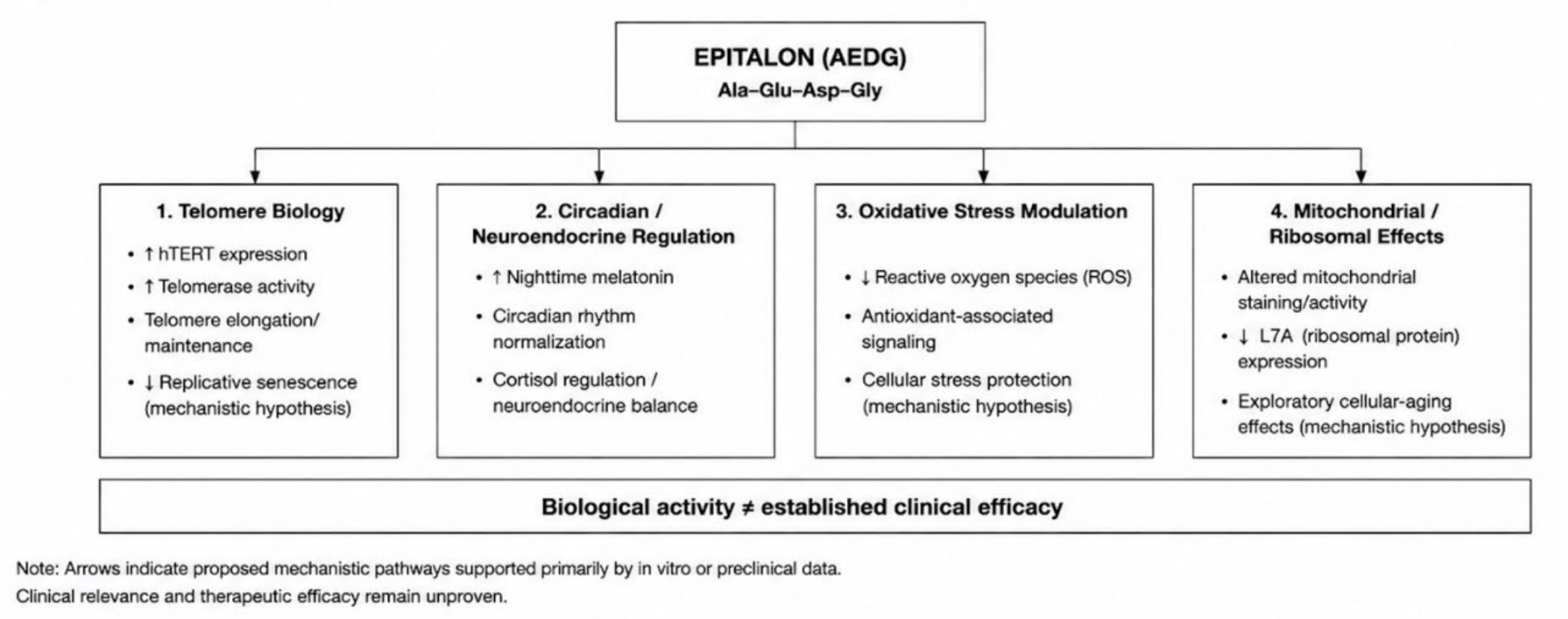
Figure 2.
Current evidence for synthetic epitalon. Mechanistic and preclinical evidence is more developed than human therapeutic evidence. Human studies predominantly evaluate physiological or biomarker outcomes, and no adequately powered randomized trial has established efficacy for regenerative, musculoskeletal, pain, or longevity indications. Historical epithalamin evidence is presented as supportive context only and should not be considered directly interchangeable with evidence for synthetic epitalon.
Figure 2.
Current evidence for synthetic epitalon. Mechanistic and preclinical evidence is more developed than human therapeutic evidence. Human studies predominantly evaluate physiological or biomarker outcomes, and no adequately powered randomized trial has established efficacy for regenerative, musculoskeletal, pain, or longevity indications. Historical epithalamin evidence is presented as supportive context only and should not be considered directly interchangeable with evidence for synthetic epitalon.
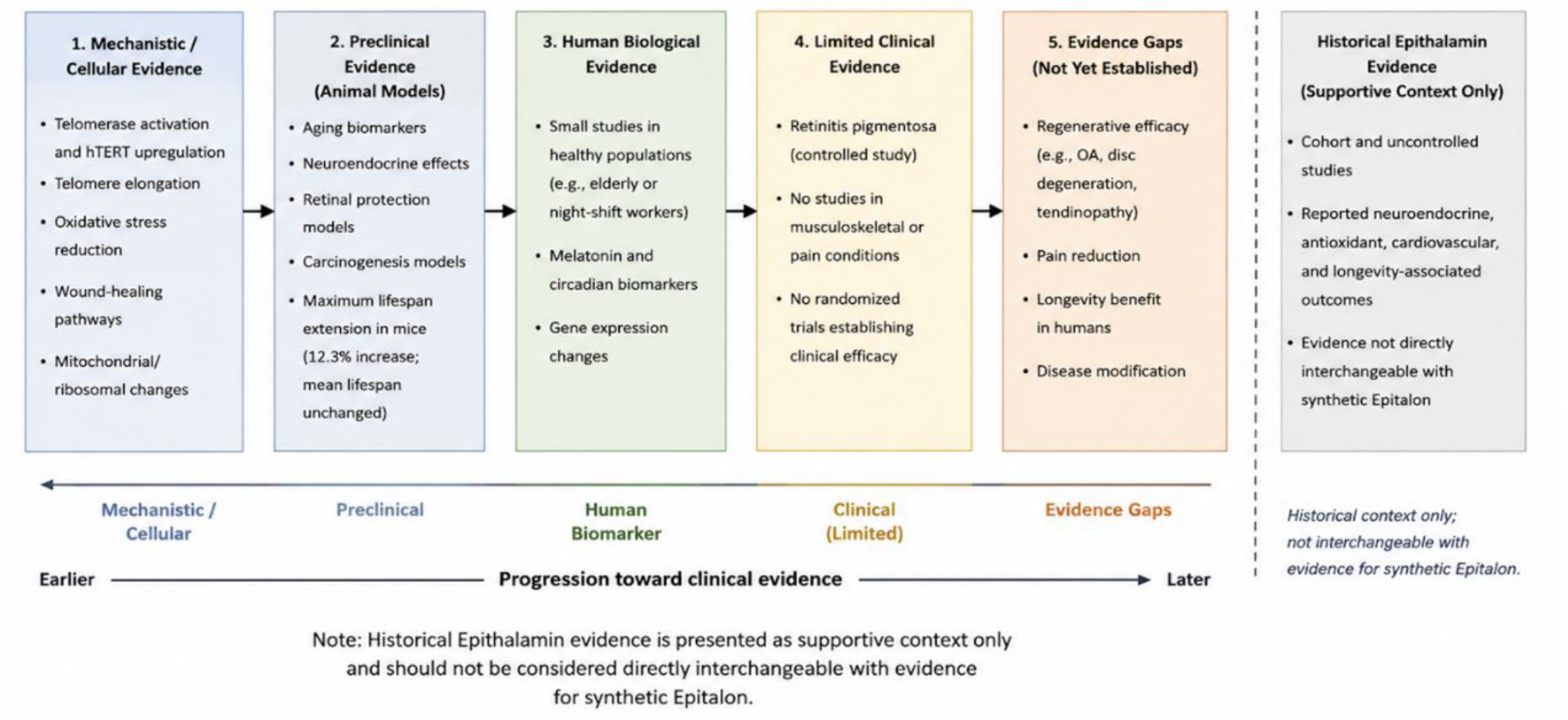

Table 1.
Proposed mechanisms of epitalon relevant to tissue protection and repair.
| Proposed Mechanism | Key Evidence | Evidence Base / Limitation(s) |
|---|---|---|
| Telomerase activation/telomere maintenance | Telomerase activation and telomere elongation in human fibroblasts; continued proliferative capacity in aging fibroblasts; independent 2025 replication with dose-dependent hTERT upregulation and telomere extension.[1,24,25] | Human cellular evidence with one independent replication. Clinical benefit remains unproven, and telomere-maintenance effects in malignant cells require further safety evaluation.[1] |
| Melatonin restoration/circadian regulation | Restored evening melatonin and cortisol rhythms in senescent primates and increased nighttime melatonin in aged primates.[17,27] No direct stimulation of melatonin secretion was observed in perifused rat pineal glands.[28] | Primarily animal evidence; effects appear age- and context-dependent. No demonstrated regenerative or clinical efficacy. |
| Antioxidant/cellular stress response | Synthetic epitalon demonstrated antioxidant activity and reduced ROS, restored impaired wound healing, and attenuated EMT and fibrotic signaling in high-glucose-exposed human retinal cells.[34,35] | Predominantly in vitro evidence. Quantitative antioxidant-enzyme findings from epithalamin should not be attributed directly to epitalon.[33,34] |
| Mitochondrial/ribosomal regulation | AEDG increased mitochondrial staining and reduced ribosomal protein L7A expression in aging human pineal-gland cell cultures.[36] | Single in vitro study without independent replication; systemic relevance remains unknown. |
Abbreviations: AEDG, Ala-Glu-Asp-Gly; EMT, epithelial–mesenchymal transition; hTERT, human telomerase reverse transcriptase; ROS, reactive oxygen species.
Table 2.
Selected preclinical studies of epitalon.
| Study | Model/Intervention | Main Findings | Key Limitation(s) |
|---|---|---|---|
| Anisimov et al. (2003) [2] | Female Swiss-derived SHR mice; SC epitalon, 1.0 µg/mouse, 5 days/month from age 3 months until natural death | No significant change in mean lifespan; maximum lifespan increased 12.3%; chromosomal aberrations reduced 17.1% | Single research group; aging study rather than formal toxicology |
| Khavinson et al. (2001) [17] | Senescent rhesus monkeys; IM epitalon | Restored evening melatonin and normalized cortisol rhythms | Small primate study; no independent replication |
| Goncharova et al. (2005) [27] | Aged rhesus monkeys; IM epitalon | Increased nighttime melatonin; decreased fasting glucose and insulin; improved glucose tolerance | Small primate study; no independent replication |
| Gatta et al. (2025) [35] | Human ARPE-19 cells; high-glucose injury; synthetic epitalon | Reduced ROS; restored wound healing; attenuated EMT and fibrotic signaling | In vitro retinal model; regenerative relevance remains indirect |
| Khavinson et al. (2002) [37] | Campbell rats with hereditary retinal degeneration; parabulbar epitalon | Preserved retinal morphology and electrical activity | Disease-specific model; no independent replication |
| Sibarov et al. (2002) [18] | Stress-exposed rats; intranasal epitalon | Modulated pineal activity under stress and reduced stress-related vascular changes | Small experimental model; context-dependent effect |
| Anisimov et al. (2002) [39] | HER-2/neu transgenic mice; SC epitalon | Reduced mammary tumor burden and HER-2/neu expression | Tumor model; does not establish carcinogenic safety |
| Anisimov et al. (2002) [40] | DMH-induced colon carcinogenesis in rats; SC epitalon | Reduced tumor multiplicity and size in selected treatment groups | Experimental carcinogenesis model; not a formal carcinogenicity study |
Abbreviations: ARPE-19, adult retinal pigment epithelial-19; DMH, 1,2-dimethylhydrazine; EMT, epithelial-mesenchymal transition; HER-2/neu, human epidermal growth factor receptor 2/neu; IM, intramuscular; ROS, reactive oxygen species; SC, subcutaneous; SHR, spontaneously hypertensive rat.
Table 3.
Historical human studies of epithalamin.
| Study | Population/Intervention | Main Findings | Key Limitation(s) |
|---|---|---|---|
| Khavinson & Morozov (2003) [42] | 266 older adults (>60 years); epithalamin, Thymalin, or both during the first 2-3 years; 6-8-year follow-up | Lower reported mortality and age-associated disease manifestations | Heterogeneous treatment groups; limited methodological detail |
| Korkushko et al. (2006) [43] | 70 elderly patients with coronary disease; repeated IM epithalamin vs saline control | Lower total and cardiovascular mortality at 12 years | Small study; single research network |
| Anisimov et al. (2001) [33] | Human and animal observations of epithalamin-associated antioxidant effects | Improved prooxidant/antioxidant balance | Synthesis of prior data rather than a prospective efficacy trial |
Abbreviation:
Table 4.
Human studies of synthetic epitalon.
| Study | Population/Intervention | Main Findings | Key Limitation(s) |
|---|---|---|---|
| Korkushko et al. (2007) [3] | Elderly individuals with altered pineal function; IM epitalon 0.01 mg/day for 10 days | Increased nighttime melatonin and normalization of circadian melatonin rhythm | Physiological biomarker outcome; no disease-specific efficacy endpoint |
| Ivko et al. (2020) [4] | 75 female night-shift workers; 40 with reduced melatonin production randomized to sublingual AEDG 0.5 mg/day or placebo for 20 days | Approximately 1.7-fold increase in urinary 6-sulfatoxymelatonin; Clock, Cry2, and Csnk1e changes | Small biomarker study; blinding unclear; safety not systematically reported |
| Khavinson et al. (2021) [44] | 75 female night-shift workers; 40 with reduced melatonin-forming function randomized to sublingual AEDG or placebo | Changes in Clock, Cry2, and Csnk1e expression | Likely overlapping cohort with [4]; not independent replication |
| Khavinson et al. (2002) [45] | 162 patients (324 eyes) with retinitis pigmentosa; parabulbar epitalon 5 µg/eye/day for 10 days; conventional-therapy control | Improved electrophysiological measures, visual acuity, and visual fields; >90% positive clinical effect reported | Randomization and blinding unclear; active comparator |
Abbreviations: AEDG, Ala-Glu-Asp-Gly; IM, intramuscular.
Disclaimer/Publisher’s Note: The statements, opinions and data contained in all publications are solely those of the individual author(s) and contributor(s) and not of MDPI and/or the editor(s). MDPI and/or the editor(s) disclaim responsibility for any injury to people or property resulting from any ideas, methods, instructions or products referred to in the content. |
© 2026 by the authors. Licensee MDPI, Basel, Switzerland. This article is an open access article distributed under the terms and conditions of the Creative Commons Attribution (CC BY) license (http://creativecommons.org/licenses/by/4.0/).
Copyright: This open access article is published under a Creative Commons CC BY 4.0 license, which permit the free download, distribution, and reuse, provided that the author and preprint are cited in any reuse.