

Submitted:
04 September 2026
Posted:
08 September 2026
You are already at the latest version
Abstract
This scoping review synthesized current evidence on the epidemiology of highly pathogenic avian influenza (HPAI) A(H5N1) clade 2.3.4.4b in U.S. dairy cattle and occupationally exposed workers, and identified potential mitigation strategies. Literature searches were conducted in PubMed, Web of Science, CAB Abstracts, FSTA, and AGRICOLA across three search periods (spanning January 1, 2024–September 30, 2025), supplemented with gray literature. A total of n = 53 peer-reviewed articles and n = 8 gray literature sources met the inclusion criteria. Current evidence suggests that the outbreak likely resulted from a single spillover from wild birds followed by sustained cattle-to-cattle transmission, with the mammary gland serving as a major site of viral replication. Human infections occurred primarily among occupationally exposed workers through direct contact with infected cattle or contaminated milk, with conjunctivitis being the predominant clinical presentation. Consistently recommended mitigation strategies included enhanced surveillance, biosecurity, improved milking hygiene, pre-movement testing of cattle, use of personal protective equipment, and worker education within a One Health framework. However, important knowledge gaps remain regarding the primary route of viral entry into cattle, the relative contribution of respiratory and fomite transmission, viral dissemination beyond the mammary gland, infection risk in beef cattle, and the effectiveness of current mitigation strategies under field conditions. Limited evidence is also available for protecting occupational groups other than dairy farmworkers. Overall, this review highlights the need for coordinated One Health approaches and further research to strengthen evidence-based prevention strategies for both animal and worker health.
Keywords:
highly pathogenic avian influenza
; H5N1 virus
; dairy farm
; occupational safety
; zoonotic infections
1. Introduction
Highly pathogenic avian influenza (HPAI) H5N1 was first identified in Guangdong Province, China, in 1996 as A/goose/Guangdong/1/96 (H5N1), and has since spread across continents, causing outbreaks in poultry, wild birds, and various mammalian species worldwide [1,2]. In 1997, this strain was linked to 18 human infections and six deaths in Hong Kong, wherein all reported cases were associated with contact with infected animals [3]. This strain is the ancestral lineage of the currently circulating HPAI H5N1 clade 2.3.4.4b, which has been circulating in North America since late 2021 and has affected wild birds, poultry, and a variety of mammalian species [3,4]. On March 25, 2024, HPAI H5N1 clade 2.3.4.4b was identified in a Texas dairy herd during an investigation of milk production losses across multiple states [5]. Infected dairy cattle commonly presented with decreased feed intake, reduced rumination, altered fecal consistency, respiratory signs, decreased milk production, and thickened milk with a colostrum-like appearance [6]. Since March 2024, HPAI H5N1 has affected more than 1,000 dairy herds across 18 states and continues to spread to new herds, causing substantial economic losses for dairy farms, primarily due to decreased milk production, mortality, and early cattle removal for their herd [7,8]. Nonetheless, critical gaps remain in understanding the initial route of viral entry into dairy cattle, the mechanisms driving subsequent herd-to-herd transmission, and effective strategies for protecting cattle from infection. These gaps are particularly significant given that this outbreak represents the first documented spillover of H5N1 into dairy cattle globally.
HPAI H5N1 infections in humans primarily occur among individuals with occupational exposure to infected animals, including poultry and dairy cattle [9]. The first human case in a dairy worker in the United States was detected on April 1, 2024, shortly after detection in dairy cattle [10]. Between 1997 and 2026, more than 1,000 laboratory-confirmed human HPAI A(H5N1) infections were reported in 25 countries, including the United States, with approximately 48% of cases resulting in death [11]. As of June 20, 2026, a total of 71 human cases of HPAI A(H5N1) have been detected in the United States, of which 41 reported exposure to infected dairy cattle [12]. Among the total infected individuals, two people died, one from Louisiana and one from Washington, both of whom contracted the virus after exposure to backyard flocks [12,13,14]. Most of the infected individuals who were exposed to sick cows developed mild illness, most commonly conjunctivitis (41 out of 41 individuals) [9]. Other less common symptoms included fever, respiratory distress, myalgias, headache, nausea, and vomiting [9]. One serological study revealed that 7% of farmworkers with a history of working with milking cows or cleaning milking parlors had positive antibodies against H5N1, suggesting recent infection [15]. Another serosurvey indicates that not only dairy workers but also bovine veterinary practitioners are being infected with HPAI A(H5) virus through occupational exposure to infected animals [16]. It is still unclear how these occupationally exposed groups became infected, including the route of viral entry and the epidemiology of H5N1 among individuals exposed to dairy cattle, as well as how these groups can be effectively protected.
Scoping reviews are a valuable approach for synthesizing existing evidence on a topic, helping to clarify the current state of knowledge in the literature, organize key findings, and identify knowledge gaps [17]. Given the urgency of HPAI H5N1 spillover in dairy cattle and the need to better understand and assess available information, a scoping review was considered an appropriate approach. The goal was to synthesize existing evidence on this rapidly evolving topic, identify research gaps related to this novel spillover event, and propose recommendations for future research on H5N1 at the dairy cattle–human interface. Therefore, the objectives of this scoping review study were to (i) synthesize the current body of knowledge on the epidemiology of influenza A(H5N1) clade 2.3.4.4b in dairy cattle and farm workers, and (ii) identify actionable or potential strategies to mitigate the outbreak.
2. Methods
We followed the PRISMA extension for scoping reviews (PRISMA-ScR) checklist for our scoping review [18].
2.1. Search Strategy
We searched PubMed, Web of Science, CAB Abstracts, FSTA, and AGRICOLA using a strategy developed after consultation with a librarian, applied consistently across three predefined time periods (Timelines T1, T2 and T3) to capture the rapidly evolving H5N1 literature following the spillover event; the full strategy is provided in the Supplementary file S1 and timelines are shown in Table 1. T1 and T3 covered the same time period, but T3 was rerun on a later date to capture articles newly indexed for that period that were not identified in T1. The methodology used to identify and retrieve T3 articles after removing duplicates from T1 is described in the Supplementary file S2.
2.2. Inclusion and Exclusion Criteria
Inclusion criteria comprised original research articles, case reports, case series, government or technical reports, and gray literature published after January 1, 2024, given that the first reported case was diagnosed in late March of 2024. Articles were eligible if they focused on dairy cattle or workers at risk of zoonotic H5N1 workplace infection in the United States, including farmworkers, veterinarians, and veterinary technicians, following this outbreak. Eligible studies were required to address the epidemiology of transmission and/or describe actionable or potential mitigation strategies for H5N1. Articles published in English and French were considered for inclusion.
Exclusion criteria included review articles, editorials, commentaries, and preprints, as well as studies without direct relevance to the populations of interest. The description of the inclusion and exclusion criteria are provided in the Supplementary file S2.
2.3. Inclusion of Additional Gray Literature
Additional gray literature was included because it can enhance the comprehensiveness of systematic and other evidence syntheses and reduce publication bias by providing valuable information not always available in commercially published sources [19]. We identified and synthesized mitigation strategies from gray literature published between January 1, 2024, to September 30, 2025, including academic and government sources found via targeted Google searches and relevant websites.
2.4. Screening and Data Extraction
For all mentioned timelines, title and abstract screening was conducted independently by two reviewers (MI and BY) in Covidence and all conflicts were resolved by a separate arbitrator (RI). Full text screening in all three timelines was also conducted independently by two reviewers (MI and KK) in Covidence and all conflicts were resolved by the same arbitrator (RI). Data were extracted by the first author (MI) for all three timelines. Extracted data was collated in an Excel file and presented in Supplementary file S3. Key data items extracted from each included study included bibliographic information (title, DOI, authors, publication date, journal, and publication status), study characteristics (study design, setting, population, sample size, and funding source), H5N1 virological characteristics (diagnostic methods, pathogenicity, viral evolution, susceptibility, infectious period, H5N1 strain, and case definition), and study findings. Particular emphasis was placed on data describing transmission dynamics in experimental studies, dairy cattle, and humans, as well as mitigation strategies for dairy cattle and humans. Primary outcomes, key findings, study limitations, and other relevant notes were also extracted.
2.5. Data Analysis
Descriptive statistics were used to summarize study characteristics, and bar charts were created to illustrate publication trends and study characteristics. A narrative synthesis was conducted to summarize HPAI A(H5N1) transmission dynamics in experimental studies, dairy cattle, and humans, as well as mitigation strategies for dairy cattle and humans. To interpret identified control strategies, we categorized them based on the hierarchy of controls developed by the Occupational Safety and Health Administration (OSHA) [20]. This hierarchy classifies interventions into five levels: elimination (removing the hazard), substitution (replacing the hazard with a safer alternative), engineering controls (isolating people from the hazard), administrative controls (policies, training, and work practices to reduce exposure), and personal protective equipment (PPE) (protective equipment worn by workers). Because administrative controls encompassed a wide range of interventions, these were further grouped into subcategories (for cattle: Surveillance and early detection, Biosecurity and farm management, Movement control, and Coordination and communication; for humans: Surveillance and early detection, Biosecurity and safe work practices, Education, coordination and communication, and Medical countermeasures and worker health policies) to facilitate data synthesis and presentation.
3. Results
3.1. Search Results
The search yielded a total of 3,195 articles across the three timelines (2,647, 322 and 226 across T1, T2, and T3, respectively), among which a total of 53 articles (43, 9, and 1 in T1, T2, and T3, respectively) were relevant (Figure 1).
3.2. Characteristics of Included Articles from Database Search
3.2.1. Publications by Month and Year
The highest number of publications within the study timeframe occurred in July 2025 (n = 9), followed by March 2025 (n = 8) (Figure 2).
3.2.2. Publications by Journal
Highest number of publications were published in Nature (n = 7), followed by CDC-produced Morbidity and Mortality Weekly Report (MMWR; n = 6) (Figure 3), highlighting their major contribution to advancing the understanding of the epidemiology of the emerging H5N1 threats and associated mitigation strategies.
3.2.3. Study Type
Among the 53 studies identified through the database search, 21 were observational studies, 30 were experimental studies, and 2 were both (Table 4).
3.3. Underlying Epidemiology of This Outbreak
A. Who/when/where of the spillover: Based on genomic epidemiology analysis of 1,487 whole genomes, including 237 newly sequenced samples from March to April 2024 and 1,250 publicly available genomes from April to October 2024, evidence indicates that HPAI H5N1 clade 2.3.4.4b likely spilled over from wild birds into dairy cattle in Texas in late 2023, although the precise timing of the initial spillover remains uncertain [29]. However, the first reported case in dairy cattle was identified on March 25, 2024, after cattle on a Texas dairy farm developed decreased milk production and thick, colostrum-like milk, prompting confirmatory testing at the National Veterinary Services Laboratories [29]. Following the initial spillover from wild birds to dairy cattle, the virus spread between herds through cattle movement and shared equipment, while also infecting farmworkers and emerging as a significant health threat to both animals and humans [29]. On April 1, 2024, a dairy farmworker on a separate farm in Texas developed unusual eye symptoms after exposure to sick cows with suspected H5N1 infection and later tested positive through conjunctival and nasopharyngeal RT-PCR testing [30].
B. Infection in host species
I)Cows
Following the spillover of HPAI A(H5N1) from wild birds to dairy cattle in late 2023, interstate spread among dairy herds was largely driven by the movement of subclinically infected cattle, contaminated fomites (e.g., milking equipment and vehicles), and personnel movement [6,31]. Subsequent cattle-to-cattle transmission occurred and was not limited to cattle; the virus further spread to poultry, peridomestic animals (including raccoons, cats, common grackles, blackbirds, and pigeons), and dairy farmworkers, as supported by genomic epidemiologic data [29]. The exact pathway of the virus transmission from wild birds to dairy cattle and its initial entry site remain uncertain. However, due to the higher concentration of HPAI receptors (α2,3 avian-like and α2,6 human-like) in the mammary gland compared to the nasal mucosa, the mammary gland is considered a probable entry point [6]. The virus may also enter through respiratory or oral routes, replicating at low levels in the upper respiratory tract (such as the nasal turbinates, trachea, or pharynx) before potentially spreading to other organs via a brief, low-level viraemia [6]. Once a herd is infected, transmission among cattle may occur when cows lie on surfaces contaminated with H5N1 or through shared milking equipment contaminated with the virus [6].
Experimental studies in dairy cattle showed that a Texas dairy cow–derived H5N1 virus replicated more efficiently in bovine mammary gland and teat tissues than other H5N1 isolates, supporting intramammary transmission through the teat canal during milking for this clade [32]. Experimental studies in cattle support infection via both mammary and respiratory routes, with respiratory inoculation causing mild symptoms, whereas intramammary infection leads to severe necrotizing mastitis, extremely high viral titers in milk, and significant milk production loss without productive systemic spread [5,33]. Such differences may be explained by variations in avian-type receptor distribution across tissues, as the mammary gland appears to have a higher receptor density than the upper respiratory tract, where receptor expression is comparatively lower [34]. HPAI H5N1 has a strong affinity for sialic acid (SA) linked to galactose in α2-3 linkages, which are highly expressed in cattle teat tissue [34].
These findings suggest that HPAI infection in cattle can occur through multiple routes, with important route-specific differences in viral replication, shedding, and disease severity. Although experimental exposures in cattle were non-lethal, studies involving mice and ferrets demonstrated that intranasal or oral inoculation with H5N1 resulted in moderate to severe clinical symptoms, with some cases being lethal [33,35,36,37,38,39].
High intramammary replication in dairy cattle was further supported by studies in animal model such as mice [36]; however, findings regarding transmission from infected dams to their pups were inconsistent, with one study reporting no transmission while another demonstrated successful transmission [36,40]. Studies in ferrets have shown a high efficiency of direct transmission with limited but demonstrable droplet transmission [35,38,41,42]. These differences may be explained by the use of different H5N1 strains across experiments, potentially reflecting variation in virulence and transmission characteristics.
II)Humans
The first human case of HPAI H5N1 in a dairy farm worker was identified on April 1, 2024, shortly after the virus was detected in dairy cattle on March 25, 2024. The individual experienced eye redness and discomfort, which led to medical evaluation and diagnosis of H5N1, marking the first documented case of infection transmitted from dairy cattle confirmed by complete genome sequencing [30]. Case reports and case series of dairy workers suggest that workers had histories of direct and close exposure to sick cows especially when delivering fluids via ororuminal intubation, while oral fluid administration, milking, and administering medications to sick cows [9,15,30,43,44,45].
The exact mechanism of transmission and route of entry is unknown. Some workers reported milk splashing into their eyes during milking, followed by ocular discomfort that prompted medical evaluation [43,44,45]. Subsequent ocular and nasopharyngeal swabs tested RT-PCR positive for HPAI H5N1 clade 2.3.4.4b, highlighting the ocular route as a potential pathway of infection. This is supported by experimental infection in a ferret model, in which HPAI H5N1 caused systemic infection and, in some cases, fatal disease following experimental ocular inoculation; importantly, such severe systemic disease following ocular exposure has not been observed in humans to date [46]. Although this experimental study in an animal model supports efficient transmission via direct contact with infected ferrets following ocular inoculation, no human-to-human transmission has been recorded to date by any route. Aside from milk splashing into eyes, other infected workers reported close contact with sick dairy cattle while caring for them, milking, or cleaning milking parlors, where exposure to infectious respiratory droplets may have occurred, although this route has not been definitively established [15,30,43,45,47,48].
Most dairy farmworkers developed conjunctivitis and mild respiratory symptoms and recovered quickly after starting oral antiviral therapy with oseltamivir [9,45]. Additionally, bovine veterinary practitioners are also at risk of HPAI infection because of their close contact with dairy cattle. One cross-sectional study found that 3 of 150 bovine veterinarians had positive neutralizing antibody titers suggesting recent H5N1 infection; notably, two had no known exposure to infected animals, and one practiced in a state without reported dairy cattle infections [16]. These findings highlight the possibility of subclinical infections, challenges in estimating the true extent of underreporting, and potential zoonotic risk among other occupational groups working with dairy cattle beyond farmworkers alone.
3.4. Control Strategies
I) Control for Dairy cattle
Several control strategies are highlighted in the included articles, but the most and least effective ones remain unclear; therefore, we categorized them based on the hierarchy of controls developed by the Occupational Safety and Health Administration (OSHA) [20,49].
Most of the recommended control measures in dairy cattle (
Table 5
) are administrative controls, including surveillance and monitoring of dairy cattle through serum and milk testing, implementation of biosecurity protocols, pre-movement testing of cattle, and adherence to proper milking procedures. Engineering controls encompass milk pasteurization and acidification, environmental decontamination, and thorough cleaning and disinfection of equipment and vehicles on the farm. The only elimination strategy identified was rodent control.
II) Control for occupationally exposed workers
While multiple occupational groups may be at risk of HPAI A(H5N1) exposure during dairy cattle outbreaks, including veterinarians, veterinary technicians, animal health inspectors, and dairy farmworkers, the available literature only reported mitigation strategies targeting dairy farmworkers. No specific control measures were identified for other occupationally exposed groups. Therefore, the control strategies presented in this review are limited to dairy farmworkers and are organized according to the Hierarchy of Controls framework (
Table 6
).
Commonly recommended measures for dairy farmworkers (Table 6) include the use of PPE and providing training and education to workers on PPE use and H5N1. Key administrative controls involve early initiation of antiviral treatment upon symptom onset, enhanced surveillance of H5N1 among workers and animals near farm areas, avoidance of contact with sick or dead animals, and monitoring genetic changes of H5N1 in other species. No elimination, substitution or engineering controls were identified.
III) Vaccination as a potential mitigation strategy for both dairy cattle and occupationally exposed workers
While HPAI A(H5N1) vaccines are available for use in poultry in some countries, there are currently no licensed vaccines for the prevention of HPAI A(H5N1) infection in dairy cattle or humans [21,64]. Abousenna et al. found in their experimental study that calves vaccinated with increasing doses of an inactivated H5 avian influenza vaccine developed dose-dependent antibody responses, with higher doses inducing stronger and more sustained immunity [65]. Studies in mouse models showed that several vaccines, including H5 candidate vaccines, elicited robust antibody responses and conferred complete protection against lethal challenge, highlighting their potential for pandemic preparedness [62,66,67,68]. Additionally, evidence from a ferret study and analyses of human plasma suggests that preexisting immunity to seasonal influenza may provide partial cross-protection against H5N1 infection, acting as a barrier to viral infection and reducing disease severity [61,62].
Several studies demonstrated that serum from individuals immunized with H5 vaccines exhibited cross-neutralizing activity against the emerging clade 2.3.4.4b strain, suggesting that stockpiled candidate virus vaccines may confer partial protection against cattle-associated H5N1 viruses [42,69,70]. Beyond vaccination, monoclonal antibodies may also play a role in mitigating the risk posed by circulating H5N1 viruses. Beukenhorst et al. demonstrated that intranasal administration of CR9114, a broadly neutralizing anti-influenza monoclonal antibody, effectively neutralized diverse H5 viruses at low doses and provided complete protection against lethal H5N1 challenge in a mouse model [63].
4. Discussion
This scoping review study synthesized the current body of knowledge on the epidemiology of influenza A(H5N1) clade 2.3.4.4b in dairy cattle and farmworkers and strategies to mitigate the outbreak. The review approach incorporated multiple time-based search updates to capture relevant literature as new evidence emerged over time. This iterative, multi-timeline strategy enabled the inclusion of newly published studies in a rapidly evolving field. In addition to database searches, multiple gray literature sources were incorporated to ensure comprehensive coverage and strengthen the evidence base for addressing the research question. We observed that the highest number of publications occurred in July 2025, more than one year after the outbreak onset, indicating a substantial lag in the generation and dissemination of new evidence in this field. We also observed that the highest number of articles were published in Nature (n = 7), followed by the CDC's MMWR (n =6), highlighting the important role of these journals in the rapid dissemination of scientific findings during the HPAI A(H5N1) dairy cattle outbreak. In the following paragraphs the implications of identified studies and remaining knowledge gaps are discussed with respect to the epidemiology and control of the infection in dairy cattle and occupationally exposed dairy workers.
4.1. HPAI A(H5N1) Transmission Dynamics in Dairy Cattle
Our review found that HPAI A(H5N1) in U.S. dairy cattle likely resulted from a single spillover event from wild birds, followed by sustained cattle-to-cattle transmission. This conclusion is consistently supported by epidemiologic investigations and genomic analyses [6,29]. High viral loads in milk indicate that the mammary gland is a major site of HPAI A(H5N1) replication, a finding further supported by experimental studies demonstrating extensive viral replication following intramammary inoculation [5,32,34,56]. However, the initial route of infection remains uncertain, with both respiratory and intramammary pathways proposed. Although experimental studies suggest that transmission via direct contact, fomites, and respiratory route are all possible, their relative importance under commercial farm conditions remains unclear [5,33,35,38,41]. Previous experimental study on dairy cattle has proposed mouth-to-teat transmission as a potential route of HPAI A(H5N1) infection in dairy cattle [71]. In that study, it was demonstrated that bovine oral tissues can support H5N1 virus binding and replication and that viral replication in the oral cavity of suckling calves may result in transmission to the mammary gland during nursing [71]. However, whether this transmission pathway occurs under commercial dairy farm conditions remains unclear, as experimental settings may not fully reflect on-farm management practices and exposure dynamics. Further field-based epidemiologic studies are needed to determine the relevance of this proposed transmission route in real-world dairy production systems.
Within- and between-farm transmission appears to be associated with milking practices, cattle movement, and shared equipment [6,31]. Our findings are consistent with previous review articles, which have suggested that within-herd transmission is primarily facilitated by shared milking equipment and personnel movement, whereas between-farm spread is largely driven by the interstate movement of infected cattle in the absence of adequate pre-movement testing [72,73,74]. However, a recently published experimental study challenges the current hypothesis regarding HPAI A(H5N1) transmission, suggesting that contaminated milking equipment and close contact with infected animals may play a less important role than previously proposed [75]. The discrepancy between these findings may reflect differences between controlled laboratory conditions and commercial dairy farm environments. While outbreak investigations consistently support contaminated milking equipment as an important route of within-herd transmission, the experimental study did not observe transmission through contaminated equipment or close contact with infected animals. Further field-based studies are needed to clarify these conflicting findings.
Experimental animal studies have also reported inconsistent disease severity, with some demonstrating high lethality and others reporting only mild clinical signs following inoculation of H5N1. These differences may be attributable to the use of different viral strains, route of exposure, and species of model animal used. For example, the A/bovine/Ohio.B24OSU-439/2024 strain was associated with less severe disease, whereas the A/Texas/37/2024 strain caused more severe illness [36,41,46,76]. Further research is needed to determine whether strain-specific differences influence disease severity, transmissibility, and viral shedding in dairy cattle.
Important knowledge gaps remain regarding viral dissemination beyond the mammary gland and the potential involvement of edible tissues. One USDA study detected HPAI A(H5N1) viral RNA in tissues such as the diaphragm and kidney of a culled dairy cow; however, whether infectious virus was present in these tissues remains uncertain [77]. Although the affected carcass was identified during routine inspection and did not enter the food supply, these findings indicate that viral RNA may be detectable in tissues beyond the mammary gland following infection. Another study detected viral RNA in urine samples from naturally infected dairy cows, suggesting systemic dissemination of the virus and raising questions about the potential role of urinary shedding following spread beyond the primary site of infection [78]. Consequently, further research is needed to determine the persistence and infectivity of H5N1 virus in edible tissues under natural infection conditions. In addition, because viral RNA was detected in the diaphragm of an infected dairy cow, the susceptibility of beef cattle and the potential implications for meat safety warrant further investigation.
4.2. Potential Mitigation Strategies for Dairy Cattle
Our review identified a range of mitigation strategies for HPAI A(H5N1) in dairy cattle, with surveillance, biosecurity, milking hygiene, cleaning and disinfection of equipment and vehicles, animal separation, and pre-movement testing emerging as the most consistently recommended interventions. These findings are consistently supported by other review articles for mitigation strategies to protect dairy cattle from H5N1 [72,73,79,80]. Most identified interventions were classified as administrative controls within the Hierarchy of Controls framework, whereas relatively few interventions represented higher-level controls, such as elimination, substitution, or engineering controls. However, the available evidence is derived primarily from outbreak investigations, observational studies, and expert guidance rather than intervention studies. Consequently, the effectiveness and cost-effectiveness of individual mitigation strategies under field conditions remain uncertain. Future research should prioritize evaluating the effectiveness of specific interventions and developing standardized surveillance, testing, and cattle movement protocols to strengthen outbreak prevention and control.
4.3. Epidemiology of HPAI A(H5N1) Among Occupationally Exposed Dairy Workers
Occupationally acquired HPAI A(H5N1) infections among dairy workers have been primarily linked to direct exposure to infected cattle and contaminated raw milk, with conjunctivitis identified as the most frequently reported clinical manifestation. Studies and surveillance reports have documented that most confirmed human cases occurred among workers involved in milking, animal care, or handling of infected cattle. Among these cases, some workers reported ocular exposure to milk splashes during milking, followed by the development of conjunctivitis and detection of viral RNA in conjunctival swabs, suggesting that ocular exposure may represent a potential route of H5N1 virus entry [15,30,43,44,45,47]. Although one ferret study showed that ocular inoculation with HPAI A(H5N1) caused systemic and sometimes fatal disease with viral dissemination to respiratory and extrapulmonary tissues, human corneal tissue studies do not support enhanced ocular tropism, as clade 2.3.4.4b A(H5N1) isolates replicated similarly to other influenza A viruses in human nasal and corneal tissue constructs [46]. These findings highlight the occupational risks associated with close contact with infected animals and contaminated materials in dairy production settings. However, the available evidence remains limited by the small number of confirmed human cases, reliance on passive surveillance, and predominantly descriptive study designs, which restrict the ability to estimate infection risk or establish causal relationships between specific exposure activities and infection transmission.
Although direct animal contact appears to be the dominant exposure pathway, the contribution of alternative routes, including respiratory droplets, contaminated surfaces (fomites), and other non-ocular exposures, remains poorly understood [43,44,45,47,58]. Reports of infection among veterinarians and other animal health professionals, including individuals working in states without confirmed infected dairy herds, suggest that additional exposure pathways or unrecognized transmission events may exist [16]. Current knowledge gaps include the relative importance of different exposure routes, the dose and duration of exposure required for infection, and the effectiveness of specific occupational protection measures. Further epidemiologic and environmental studies integrating exposure assessment, viral detection, and genomic analysis are needed to better characterize transmission to dairy workers and inform targeted prevention strategies.
4.4. Potential Mitigation Strategies for Occupationally Exposed Dairy Workers
We identified multiple mitigation strategies for dairy farmworkers, including PPE use, worker education, enhanced biosecurity, surveillance, avoidance of contact with symptomatic animals and their secretions, and coordination between public health and agricultural agencies, which are essential for reducing occupational exposure to HPAI A(H5N1); however, mitigation strategies for other occupationally exposed groups, such as veterinarians and veterinary technicians, were not identified. Additionally, most recommendations, particularly PPE use, biosecurity measures, and worker education and training, were consistent with those previously recommended for occupationally exposed groups involved in wild and domestic bird exposures [81]. However, evidence evaluating the effectiveness, feasibility, and compliance of these measures in dairy production settings remains limited. Most available recommendations are based on outbreak response experiences, expert guidance, or observational evidence rather than systematic evaluations. Further research is needed to assess the real-world effectiveness of existing interventions and to address implementation challenges among vulnerable worker populations, including migrant, undocumented, and non-English-speaking dairy workers.
Multiple studies have consistently identified the mammary gland as the primary site of HPAI A(H5N1) replication in dairy cattle and documented that infected milk can contain high viral titers [6,10,32,54]. Therefore, avoiding the consumption of raw (unpasteurized) milk remains a key public health recommendation to reduce the risk of foodborne transmission. In contrast, pasteurization has been shown to effectively inactivate H5N1 virus and remains a critical strategy for ensuring the safety of the milk supply [82,83]. Dairy workers should avoid consuming unpasteurized milk and should not feed it to cats, as multiple reports have documented fatal HPAI A(H5N1) infections in barn cats following consumption of contaminated raw milk [54]. These findings highlight the importance of restricting exposure to raw milk for both humans and susceptible animals on dairy farms.
Current mitigation efforts primarily focus on dairy farmworkers; however, other occupational groups involved in animal care and outbreak response, including veterinarians, veterinary technicians, animal health inspectors, and milk transport workers, may also experience substantial exposure risks. Limited evidence exists regarding occupation-specific prevention strategies for these groups, despite their frequent contact with infected animals and potentially contaminated materials. In addition, assessment of identified mitigation strategies using the Hierarchy of Controls framework demonstrated that most interventions fall within the category of administrative controls, such as training, policies, and work practice modifications. Because administrative controls are generally less effective than higher-level controls, including elimination, substitution, and engineering controls, this finding highlights a critical gap in current HPAI A(H5N1) prevention approaches. Future research should prioritize the development and evaluation of more effective control measures, including engineering solutions and exposure-reduction technologies, to strengthen protection for workers across the dairy production system.
Vaccination remains a promising mitigation strategy for HPAI A(H5N1), although important evidence gaps remain. Experimental studies have demonstrated that several H5 vaccine candidates can induce robust neutralizing antibody responses and provide protection against H5N1 challenge in animal models, while serum from individuals vaccinated with H5 candidate vaccines have shown cross-neutralizing activity against the emerging clade 2.3.4.4b viruses [62,65,66,67,68]. These findings suggest that existing stockpiled candidate vaccine viruses (CVVs) may provide at least partial protection against currently circulating dairy cattle-associated H5N1 strains. However, no vaccines are currently licensed in the United States for routine use in dairy cattle or the general public to protect against H5N1. Although some experimental studies have suggested that immunity induced by seasonal influenza vaccination may provide limited cross-protection against H5N1 infection in humans, current CDC guidance indicates that seasonal influenza vaccines do not protect against H5N1 [21,61,62]. Nevertheless, maintaining seasonal influenza vaccination among dairy workers remains important to reduce seasonal influenza infections and the potential for influenza virus co-infection and reassortment. Given the continued evolution of H5N1 viruses, stockpiled CVVs should be continuously evaluated against newly emerging clades and genotypes to ensure adequate antigenic matching and pandemic preparedness. Further studies are needed to evaluate vaccine effectiveness, durability of protection, and optimal vaccination strategies in occupationally exposed populations and other high-risk groups.
4.5. One Health Implications and Future Preparedness
A One Health approach is essential for addressing the ongoing challenges posed by HPAI A(H5N1) at the human–animal–environment interface. The emergence and continued spread of H5N1 in dairy cattle demonstrates the interconnectedness of animal health, occupational health, and environmental systems, requiring coordinated efforts among public health agencies, veterinary authorities, agricultural sectors, and environmental organizations. Strengthening collaboration, data sharing, and integrated surveillance across sectors will be critical for improving outbreak response and reducing future spillover risk. Continued genomic and epidemiologic surveillance is critical to monitor viral evolution and assess the potential for increased human transmissibility. Although sustained human-to-human transmission of HPAI A(H5N1) has not been documented and the current risk to the general population remains low, several studies have suggested that relatively few genetic changes could enhance viral adaptation to mammals, underscoring the importance of early detection, surveillance, and preparedness [84,85]. In addition, surveillance for antiviral susceptibility remains essential, as the emergence of resistance could compromise available treatment and prophylaxis strategies, including the use of oseltamivir.
Although most human HPAI A(H5N1) infections in the United States have been associated with occupational exposure to infected animals, a small number of cases have been reported without any known exposure to dairy cattle, poultry, swine, or wild birds [12]. Similarly, a severe human case was reported in a Canadian adolescent with no identified animal exposure [86]. These unexplained infections highlight the need for continued surveillance to identify potential alternative sources of exposure and to improve understanding of transmission pathways.
Notably, the two reported H5N1-associated deaths in the United States occurred in individuals exposed to backyard poultry and were infected with genotype D1.1, whereas most infections among dairy workers have been associated with genotype B3.13 [9,12,13,14]. The severe illness reported in the Canadian adolescent was also linked to genotype D1.1, raising questions about potential differences in virulence among circulating genotypes [86]. Although current evidence is insufficient to conclude that D1.1 is inherently more virulent than B3.13, the recent detection of D1.1 in dairy cattle underscores the importance of continued genomic surveillance in both animal and human populations [87]. Monitoring the emergence and spread of different H5N1 genotypes will be critical for early detection of viral adaptations associated with increased pathogenicity, altered host range, or antiviral resistance and for strengthening preparedness for future outbreaks.
4.6. Limitations
The limitations of this study must be discussed. First, the HPAI A(H5N1) outbreak in dairy cattle is a rapidly evolving situation, and new evidence continues to emerge. Consequently, studies published after the final search date (in October 2025) were not systematically captured and may contain important findings that could further inform the epidemiology and mitigation of H5N1 in dairy cattle and occupationally exposed populations. Second, data extraction was conducted by a single reviewer (MI), which may have increased the risk of errors or omission of relevant findings despite the use of a standardized extraction process. Third, the available evidence was primarily derived from descriptive studies, outbreak investigations, and surveillance reports, limiting the ability to establish causal relationships, quantify transmission risks, or evaluate the effectiveness of specific mitigation strategies. Fourth, substantial heterogeneity existed among included studies regarding study designs, populations, exposure definitions, diagnostic methods, and reported outcomes, which limited direct comparisons and prevented quantitative synthesis. Finally, this review was limited to articles published in English and French and may have excluded relevant evidence from other languages.
5. Conclusions
HPAI A(H5N1) remains a significant One Health concern due to its ongoing impact on dairy cattle and occupationally exposed populations. Evidence indicates that the 2024 U.S. dairy cattle outbreak likely resulted from a single wild bird spillover event followed by sustained cattle-to-cattle transmission, with the mammary gland serving as a primary site of viral replication and milk as a major source of viral shedding. Although respiratory transmission has been demonstrated experimentally, its role in cattle-to-cattle spread remains unclear, and human infections have primarily been associated with occupational exposure, particularly through ocular contact with contaminated materials. Continued genomic surveillance is essential to monitor viral evolution, mammalian adaptation, and changes in zoonotic potential. Current mitigation efforts have emphasized biosecurity, surveillance, worker training, and personal protective equipment; however, evidence remains limited regarding intervention effectiveness, and most measures rely on lower-level controls within the Hierarchy of Controls. Future research should evaluate the effectiveness and feasibility of existing interventions while developing higher-level engineering and preventive strategies. A coordinated One Health approach integrating animal, human, and environmental health sectors is critical to strengthen surveillance, improve outbreak preparedness, protect exposed workers, and reduce the risk of future H5N1 transmission and zoonotic emergence.
Funding
Research reported in this publication was supported by a grant to RI from the National Institute of Food and Agriculture, USDA, Hatch under Accession Number 7010559. Additionally, this research was supported by the Office of the Director, National Institutes of Health (NIH) under Award Number T32ODO011000 to KK. The content is solely the responsibility of the authors and does not necessarily represent the official views of the USDA, National Center for Research Resources or the NIH.
Supplementary
The following supporting information can be downloaded at the website of this paper posted on Preprints.org Detailed supplementary files are provided to support the methodology and data extraction process. Supplementary File S1 includes the complete electronic search strategy. Supplementary File S2 provides the detailed inclusion and exclusion criteria along with description of the methodology used to differentiate articles classified as T1 and T3, and Supplementary File S3 is the Excel spreadsheet containing the extracted data.
Disclosure statement
No potential conflict of interest was reported by the author(s).
Acknowledgments
The authors gratefully acknowledge Cornell University librarian Matthew R. Kibbee for his guidance and consultation throughout the development of the search strategies.
References
- Mena, A.; von Fricken, M.E.; Anderson, B.D. The Impact of Highly Pathogenic Avian Influenza H5N1 in the United States: A Scoping Review of Past Detections and Present Outbreaks. Viruses 2025, 17(3), 307. [Google Scholar] [CrossRef] [PubMed]
- Martin, V.; Pfeiffer, D.U.; Zhou, X.; et al. Spatial Distribution and Risk Factors of Highly Pathogenic Avian Influenza (HPAI) H5N1 in China. PLoS Pathog. 2011, 7(3), e1001308. [Google Scholar] [CrossRef] [PubMed]
- Galli, M.; Giacomelli, A.; Lai, A.; Zehender, G. H5N1 influenza A virus: lessons from past outbreaks and emerging threats. Infez. Med. 33(1), 76–89. [CrossRef] [PubMed]
- Kandeil, A.; Patton, C.; Jones, J.C.; et al. Rapid evolution of A(H5N1) influenza viruses after intercontinental spread to North America. Nat. Commun. 2023, 14(1), 3082. [Google Scholar] [CrossRef] [PubMed]
- Baker, A.L.; Arruda, B.; Palmer, M.V.; et al. Dairy cows inoculated with highly pathogenic avian influenza virus H5N1. Nature 2025, 637(8047), 913–920. [Google Scholar] [CrossRef] [PubMed]
- Caserta, L.C.; Frye, E.A.; Butt, S.L.; et al. Spillover of highly pathogenic avian influenza H5N1 virus to dairy cattle. Nature 2024, 634(8034), 669–676. [Google Scholar] [CrossRef] [PubMed]
- Peña-Mosca, F.; Frye, E.A.; MacLachlan, M.J.; et al. The impact of highly pathogenic avian influenza H5N1 virus infection on dairy cows. Nat. Commun. 2025, 16(1), 6520. [Google Scholar] [CrossRef] [PubMed]
- BEACON. HPAI (H5N1) outbreak detected in a Nebraska dairy herd, and update on commercial and backyard flocks across the USA. 17 Sep 2025. Available online: https://beaconbio.org/en/report/?reportid=1d447488-2c9a-4e90-ac0e-05fce1bb627f&eventid=d15483cd-c27d-4487-b949-a122d9660860.
- Rolfes, M.A.; Kniss, K.; Kirby, M.K.; et al. Human infections with highly pathogenic avian influenza A(H5N1) viruses in the United States from March 2024 to May 2025. Nat. Med. 2025, 31(11), 3889–3898. [Google Scholar] [CrossRef] [PubMed]
- Garg, S. Outbreak of Highly Pathogenic Avian Influenza A(H5N1) Viruses in U.S. Dairy Cattle and Detection of Two Human Cases — United States, 2024. MMWR Morb. Mortal. Wkly. Rep. 2024, 73. [Google Scholar] [CrossRef] [PubMed]
- CDC. Global Human Cases with Avian Influenza A(H5N1). Avian Influenza (Bird Flu). 13 July 2026. Available online: https://www.cdc.gov/bird-flu/php/surveillance/chart-epi-curve-ah5n1.html (accessed on 29 July 2026).
- CDC. A(H5) Bird Flu: Current Situation. Avian Influenza (Bird Flu). 6 March 2026. Available online: https://www.cdc.gov/bird-flu/situation-summary/index.html (accessed on 29 July 2026).
- Lynae Kibiger, M.P.H.; Hanna N. Oltean, P.; Leitz, L.; et al. Fatal Human Case of Highly Pathogenic Avian Influenza A(H5N5) in a Backyard Flock Owner — Washington, November 2025. MMWR Morb. Mortal. Wkly. Rep. 2026, 75. [Google Scholar] [CrossRef] [PubMed]
- American Hospital Association. Louisiana reports first H5N1 bird flu death in U.S. 7 Jan 2025. Available online: https://www.aha.org/news/headline/2025-01-07-louisiana-reports-first-h5n1-bird-flu-death-us.
- Mellis, A.M. Serologic Evidence of Recent Infection with Highly Pathogenic Avian Influenza A(H5) Virus Among Dairy Workers — Michigan and Colorado, June–August 2024. MMWR Morb. Mortal. Wkly. Rep. 2024, 73. [Google Scholar] [CrossRef] [PubMed]
- Leonard, J.; Harker, E.J.; Szablewski, C.M.; et al. Notes from the Field: Seroprevalence of Highly Pathogenic Avian Influenza A(H5) Virus Infections Among Bovine Veterinary Practitioners — United States, September 2024. MMWR Morb. Mortal. Wkly. Rep. 2025, 74. [Google Scholar] [CrossRef] [PubMed]
- Munn, Z.; Peters, M.D.J.; Stern, C.; Tufanaru, C.; McArthur, A.; Aromataris, E. Systematic review or scoping review? Guidance for authors when choosing between a systematic or scoping review approach. BMC Med. Res. Methodol. 2018, 18(1), 143. [Google Scholar] [CrossRef] [PubMed]
- Prisma. PRISMA-Scoping Reviews. Available online: https://www.prisma-statement.org/scoping (accessed on 29 July 2026).
- Paez, A. Gray literature: An important resource in systematic reviews. J. Evid.-Based Med. 2017, 10(3), 233–240. [Google Scholar] [CrossRef] [PubMed]
- Team SI. The 5 Levels of the Hierarchy of Controls Explained; Safety International, LLC, 5 September 2022; Available online: https://www.safety-international.com/posts/hierarchy-of-controls/ (accessed on 29 July 2026).
- CDC. Information for Workers Exposed to H5N1 Bird Flu. Avian Influenza (Bird Flu). 24 June 2025. Available online: https://www.cdc.gov/bird-flu/worker-safety/farm-workers.html (accessed on 29 July 2026).
- CDC. Highly Pathogenic Avian Influenza A(H5N1) Virus: Interim Recommendations for Prevention, Monitoring, and Public Health Investigations. Avian Influenza (Bird Flu). 22 May 2026. Available online: https://www.cdc.gov/bird-flu/prevention/hpai-interim-recommendations.html (accessed on 29 July 2026).
- USDA Animal and Plant Health Inspection Service. 2024 Highly Pathogenic Avian Influenza (H5N1) - Michigan Dairy Herd and Poultry Flock Summary. 9 Jun 2024. Available online: https://www-aphis-usda-gov.proxy.library.cornell.edu/sites/default/files/hpai-h5n1-dairy-cattle-mi-epi-invest.pdf.
- USDA Animal and Plant Health Inspection Service. Dairy Farm Biosecurity: Preventing the Spread of H5N1. Dec 2024. Available online: https://www-aphis-usda-gov.proxy.library.cornell.edu/sites/default/files/dairy-cattle-biosecurity-measures.pdf.
- Government of Ontario. Highly pathogenic avian influenza: Recommendations for personal protective equipment for workers and employers | ontario.ca. 15 July 2024. Available online: http://www.ontario.ca/page/highly-pathogenic-avian-influenza-recommendations-personal-protective-equipment-workers-and (accessed on 29 July 2026).
- University of California; Merced Community and Labor Center. Producing Risks: Dairy Workers’ Experiences and the Need for Worker-Centered Bird Flu Mitigation. Feb 2025. Available online: https://clc.ucmerced.edu/sites/g/files/ufvvjh626/f/page/documents/dairy_worker_brief_final_5.pdf.
- National Milk Producers Federation. H5N1 in Dairy Cattle. Available online: https://www.nmpf.org/resources/hpai/ (accessed on 2026 Jul 29).
- California Department of Food and Agriculture; Animal Health Branch. H5N1 Bird Flu Virus in Livestock. 2025. Available online: https://www.cdfa.ca.gov/AHFSS/Animal_Health/HPAI.html (accessed on 2026 Jul 29).
- Nguyen, T.Q.; Hutter, C.R.; Markin, A.; et al. Emergence and interstate spread of highly pathogenic avian influenza A(H5N1) in dairy cattle in the United States. Science 2025, 388(6745), eadq0900. [Google Scholar] [CrossRef] [PubMed]
- Uyeki, T.M.; Milton, S.; Abdul Hamid, C.; Reinoso Webb, C.; Presley, S.M.; Shetty, V.; et al. Highly Pathogenic Avian Influenza A(H5N1) Virus Infection in a Dairy Farm Worker. N Engl. J. Med. 2024, 390(21), 2028–2029. [Google Scholar] [CrossRef] [PubMed]
- Rawson, T.; Morgenstern, C.; Knock, E.S.; et al. A mathematical model of H5N1 influenza transmission in US dairy cattle. Nat. Commun. 2025, 16(1), 4308. [Google Scholar] [CrossRef] [PubMed]
- Imai, M.; Ueki, H.; Ito, M.; et al. Highly pathogenic avian H5N1 influenza A virus replication in ex vivo cultures of bovine mammary gland and teat tissues. Emerg. Microbes Infect. 2025, 14(1), 2450029. [Google Scholar] [CrossRef] [PubMed]
- Halwe, N.J.; Cool, K.; Breithaupt, A.; et al. H5N1 clade 2.3.4.4b dynamics in experimentally infected calves and cows. Nature 2025, 637(8047), 903–912. [Google Scholar] [CrossRef] [PubMed]
- Ríos Carrasco, M.; Gröne, A.; van den Brand, J.M.A.; de Vries, R.P. The mammary glands of cows abundantly display receptors for circulating avian H5 viruses. J. Virol. 2024, 98(11), e01052-24. [Google Scholar] [CrossRef] [PubMed]
- Brock, N.; Pulit-Penaloza, J.A.; Belser, J.A.; et al. Avian Influenza A(H5N1) Isolated from Dairy Farm Worker, Michigan, USA -. In Number 6—June 2025; Emerging Infectious Diseases journal - CDC; Volume 31. [CrossRef] [PubMed]
- Kirkpatrick Roubidoux, E.; Meliopoulos, V.; Livingston, B.; Brigleb, P.H.; Schultz-Cherry, S. Intraductal infection with H5N1 clade 2.3.4.4b influenza virus. J. Virol. 2025, 99(3), e01927-24. [Google Scholar] [CrossRef] [PubMed]
- Sage, V.L.; Werner, B.D.; Merrbach, G.A.; et al. Influenza A(H5N1) immune response among ferrets with influenza A(H1N1)pdm09 immunity. Emerg. Infect. Dis. 2025, 31(3). [Google Scholar] [CrossRef] [PubMed]
- Gu, C.; Maemura, T.; Guan, L.; et al. A human isolate of bovine H5N1 is transmissible and lethal in animal models. Nature 2024, 636(8043), 711–718. [Google Scholar] [CrossRef] [PubMed]
- Octaviani, C.P.; Huang, P.; Bi-Hung, P.; Gray, G.C.; Tseng, C.T.K. Superior replication, pathogenicity, and immune evasion of a Texas dairy cattle H5N1 virus compared to a historical avian isolate. Sci. Rep. 2025, 15(1), 8797. [Google Scholar] [CrossRef] [PubMed]
- Eisfeld, A.J.; Biswas, A.; Guan, L.; et al. Pathogenicity and transmissibility of bovine H5N1 influenza virus. Nature 2024, 633(8029), 426–432. [Google Scholar] [CrossRef] [PubMed]
- Pulit-Penaloza, J.A.; Belser, J.A.; Brock, N.; et al. Transmission of a human isolate of clade 2.3.4.4b A(H5N1) virus in ferrets. Nature 2024, 636(8043), 705–710. [Google Scholar] [CrossRef] [PubMed]
- Fabrizio, T.P.; Kandeil, A.; Harrington, W.N.; et al. Genotype B3.13 influenza A(H5N1) viruses isolated from dairy cattle demonstrate high virulence in laboratory models, but retain avian virus-like properties. Nat. Commun. 2025, 16(1), 6771. [Google Scholar] [CrossRef] [PubMed]
- Coyle, J.; Bagdasarian, N.; Eckel, S.; Kuo, J.; et al. Notes from the Field: Health Monitoring, Testing, and Case Identification Among Persons Exposed to Influenza A(H5N1) — Michigan, 2024. MMWR Morb. Mortal. Wkly. Rep. 2024, 73. [Google Scholar] [CrossRef] [PubMed]
- Levine, M.Z.; Liu, F.; Bagdasarian, N.; et al. Neutralizing antibody response to influenza A(H5N1) virus in dairy farm workers, Michigan, USA. Emerg. Infect. Dis. 2025, 31(4). [Google Scholar] [CrossRef] [PubMed]
- Morse, J.; Coyle, J.; Mikesell, L.; et al. Influenza A(H5N1) Virus Infection in Two Dairy Farm Workers in Michigan. N Engl. J. Med. 2024, 391(10), 963–964. [Google Scholar] [CrossRef] [PubMed]
- Belser, J.A.; Pulit-Penaloza, J.A.; Brock, N.; et al. Ocular infectivity and replication of a clade 2.3.4.4b A(H5N1) influenza virus associated with human conjunctivitis in a dairy farm worker in the USA: an in-vitro and ferret study. Lancet Microbe 2025, 6(7). [Google Scholar] [CrossRef] [PubMed]
- Zhu, S.; Harriman, K.; Liu, C.; et al. Human cases of highly pathogenic avian influenza A(H5N1) — California, September–December 2024. MMWR Morb. Mortal. Wkly. Rep. 2025, 74(8), 127–133. [Google Scholar] [CrossRef] [PubMed]
- Garg, S.; Reinhart, K.; Couture, A.; et al. Highly pathogenic avian influenza A(H5N1) virus infections in humans. N Engl. J. Med. 2025, 392(9), 843–854. [Google Scholar] [CrossRef] [PubMed]
- National Institute for Occupational Safety and Health. Hierarchy of controls. Centers for Disease Control and Prevention. Reviewed April 28, 2022. Available online: https://www.cdc.gov/niosh/learning/safetyculturehc/module-3/2.html (accessed on 7 August 2026).
- Biswas, A.; Eisfeld, A.J.; Guan, L.; et al. Susceptibility and shedding in Mx1+ and Mx1− female mice experimentally infected with dairy cattle A(H5N1) influenza viruses. eBioMedicine 2025, 118. [Google Scholar] [CrossRef] [PubMed]
- Crossley, B.M.; Miramontes, C.C.; Rejmanek, D.; Gallardo, R.; Pereira, R. In-laboratory inactivation of H5N1 in raw whole milk through milk acidification: Results from a pilot study. J. Dairy Sci. 2025, 108(3), 2264–2275. [Google Scholar] [CrossRef] [PubMed]
- Giménez-Lirola, L.G.; Cauwels, B.; Mora-Díaz, J.C.; et al. Detection and Monitoring of Highly Pathogenic Influenza A Virus 2.3.4.4b Outbreak in Dairy Cattle in the United States. Viruses 2024, 16(9), 1376. [Google Scholar] [CrossRef] [PubMed]
- Goyal, S.M.; Reed, C.; Davis, C.T.; et al. One Health investigation into H5N1 avian influenza virus epizootics on two dairy farms. Clin. Infect. Dis. 2025, 80(2), 331–338. [Google Scholar] [CrossRef] [PubMed]
- Burrough, E.R.; Magstadt, D.R.; Petersen, B.; et al. Highly pathogenic avian influenza A(H5N1) clade 2.3.4.4b virus infection in domestic dairy cattle and cats, United States, 2024. Emerg. Infect. Dis. 2024, 30(7). [Google Scholar] [CrossRef] [PubMed]
- Cordero-Ortiz, M.; Magtoto, R.; Cauwels, B.; et al. Fluorescent Microsphere Immunoassay for Isotype-Specific H5N1 Antibody Detection in Serum and Milk Samples From Dairy Cattle: A Tool for Epidemiological Surveillance. J. Med. Virol. 2025, 97(4), e70321. [Google Scholar] [CrossRef] [PubMed]
- Facciuolo, A.; Aubrey, L.; Barron-Castillo, U.; et al. Dairy cows develop protective immunity against reinfection with bovine H5N1 influenza virus. Nat. Microbiol. 2025, 10(6), 1366–1377. [Google Scholar] [CrossRef] [PubMed]
- Bassit, L.; Damhorst, G.L.; Bowers, H.B.; et al. Toward diagnostic preparedness: detection of highly pathogenic avian influenza A(H5N1) in contrived nasal swab specimens using rapid antigen and point-of-care molecular tests. J. Clin. Microbiol. 2025, 63(9), e00548-25. [Google Scholar] [CrossRef] [PubMed]
- Zhang, G.; Shi, Y.; Ge, H.; et al. Genomic signatures and host adaptation of H5N1 clade 2.3.4.4b: A call for global surveillance and multi-target antiviral strategies. Curr. Res. Microb. Sci. 2025, 8, 100377. [Google Scholar] [CrossRef] [PubMed]
- Singh, G.; Trujillo, J.D.; McDowell, C.D.; et al. Detection and characterization of H5N1 HPAIV in environmental samples from a dairy farm. Virus Genes. 2024, 60(5), 517–527. [Google Scholar] [CrossRef] [PubMed]
- Marshall, K.E. Personal Protective Equipment Use by Dairy Farmworkers Exposed to Cows Infected with Highly Pathogenic Avian Influenza A(H5N1) Viruses — Colorado, 2024. MMWR Morb. Mortal. Wkly. Rep. 2024, 73. [Google Scholar] [CrossRef] [PubMed]
- Restori, K.H.; Weaver, V.; Patel, D.R.; et al. Preexisting immunity to the 2009 pandemic H1N1 virus reduces susceptibility to H5N1 infection and disease in ferrets. Sci. Transl. Med. 2025, 17(808), eadw4856. [Google Scholar] [CrossRef] [PubMed]
- Full article: Neutralizing activity against bovine H5N1 HPAIV (clade 2.3.4.4b) in human plasma after seasonal influenza vaccination. Available online: https://www-tandfonline-com.proxy.library.cornell.edu/doi/full/10.1080/22221751.2025.2528539 (accessed on 29 July 2026).
- Beukenhorst, A.L.; Frallicciardi, J.; Rice, K.L.; et al. A pan-influenza monoclonal antibody neutralizes H5 strains and prophylactically protects through intranasal administration. Sci. Rep. 2024, 14(1), 3818. [Google Scholar] [CrossRef] [PubMed]
- Flagg, M.; Williamson, B.N.; Ortiz-Morales, J.A.; Lutterman, T.R.; de Wit, E. Comparison of contemporary and historic highly pathogenic avian influenza A(H5N1) virus replication in human lung organoids. Emerg. Infect. Dis. 2025, 31(2). [Google Scholar] [CrossRef] [PubMed]
- Abousenna, M.S.; Shafik, N.G.; Abotaleb, M.M. Evaluation of humoral immune response and milk antibody transfer in calves and lactating cows vaccinated with inactivated H5 avian influenza vaccine. Sci. Rep. 2025, 15(1), 4637. [Google Scholar] [CrossRef] [PubMed]
- Kim, C.U.; Choi, W.S.; Lee, P.; et al. A consensus HA DNA vaccine targeting clade 2.3.4.4 H5Nx influenza viruses provides broad cross-clade protection in mice and ferrets. BioMed Pharmacother. 2025, 191, 118485. [Google Scholar] [CrossRef] [PubMed]
- Leonard, R.A.; Spurrier, M.A.; Skavicus, S.; et al. Development of DNA and mRNA-LNP vaccines against an H5N1 clade 2.3.4.4b influenza virus. J. Virol. 2025, 99(8), e00795-25. [Google Scholar] [CrossRef] [PubMed]
- Mostafa, A.; Ye, C.; Barre, R.S.; et al. A live attenuated NS1-deficient vaccine candidate for cattle-origin influenza A (H5N1) clade 2.3.4.4.b viruses. npj Vaccines 2025, 10(1), 151. [Google Scholar] [CrossRef] [PubMed]
- Khurana, S.; King, L.R.; Manischewitz, J.; et al. Licensed H5N1 vaccines generate cross-neutralizing antibodies against highly pathogenic H5N1 clade 2.3.4.4b influenza virus. Nat. Med. 2024, 30(10), 2771–2776. [Google Scholar] [CrossRef] [PubMed]
- Garretson, T.A.; Liu, J.; Li, S.H.; et al. Immune history shapes human antibody responses to H5N1 influenza viruses. Nat. Med. 2025, 31(5), 1454–1458. [Google Scholar] [CrossRef] [PubMed]
- Shi, J.; Kong, H.; Cui, P.; et al. H5N1 virus invades the mammary glands of dairy cattle through ‘mouth-to-teat’ transmission. Natl. Sci. Rev. 2025, 12(9), nwaf262. [Google Scholar] [CrossRef] [PubMed]
- Owusu, H.; Sanad, Y.M. Comprehensive Insights into Highly Pathogenic Avian Influenza H5N1 in Dairy Cattle: Transmission Dynamics, Milk-Borne Risks, Public Health Implications, Biosecurity Recommendations, and One Health Strategies for Outbreak Control. Pathogens 2025, 14(3), 278. [Google Scholar] [CrossRef] [PubMed]
- Mostafa, A.; Nogales, A.; Martinez-Sobrido, L. Highly pathogenic avian influenza H5N1 in the United States: recent incursions and spillover to cattle. npj Viruses 2025, 3(1), 54. [Google Scholar] [CrossRef] [PubMed]
- Kamel, M.; Aleya, S.; Almagharbeh, W.T.; Aleya, L.; Abdel-Daim, M.M. The emergence of highly pathogenic avian influenza H5N1 in dairy cattle: implications for public health, animal health, and pandemic preparedness. Eur. J. Clin. Microbiol. Infect. Dis. 2025, 44(8), 1817–1833. [Google Scholar] [CrossRef] [PubMed]
- Lee, C.; Tarbuck, N.N.; Cochran, H.J.; et al. Dairy cows infected with influenza A(H5N1) reveals low infectious dose and transmission barriers. Nat. Commun. 2026, 17(1), 6773. [Google Scholar] [CrossRef] [PubMed]
- Pulit-Penaloza, J.A.; Belser, J.A.; Brock, N.; et al. Transmission of a human isolate of clade 2.3.4.4b A(H5N1) virus in ferrets. Nature 2024, 636(8043), 705–710. [Google Scholar] [CrossRef] [PubMed]
- Animal and Plant Health Inspection Service. H5N1 and safety of U.S. meat supply. U.S. Department of Agriculture. Available online: https://www.aphis.usda.gov/livestock-poultry-disease/avian/avian-influenza/hpai-detections/livestock/testing-and-science/meat-safety (accessed on 7 August 2026).
- Lombard, J.; Stenkamp-Strahm, C.; McCluskey, B.; Melody, B. Evidence of Viremia in Dairy Cows Naturally Infected with Influenza A Virus, California, USA. Emerg. Infect. Dis. 2025, 31(7), 1425–1427. [Google Scholar] [CrossRef] [PubMed]
- Bartlett, M.L.; Palese, P.; Davis, M.F.; et al. Enhancing the response to avian influenza in the US and globally. Lancet Reg. Health-Am. 2025, 46, 101100. [Google Scholar] [CrossRef] [PubMed]
- Ding, K.; Ding, Y. H5N1 avian influenza in dairy cattle: Molecular adaptation, transmission mechanisms, and control strategies. Virology 2026, 621, 110927. [Google Scholar] [CrossRef] [PubMed]
- Catalan Saenz, H.S.; Cruz-Ausejo, L. Preventive, safety and control measures against Avian Influenza A(H5N1) in occupationally exposed groups: A scoping review. One Health 2024, 19, 100766. [Google Scholar] [CrossRef] [PubMed]
- Schafers, J.; Warren, C.J.; Yang, J.; et al. Pasteurisation temperatures effectively inactivate influenza A viruses in milk. Nat. Commun. 2025, 16(1), 1173. [Google Scholar] [CrossRef] [PubMed]
- Koebel, K.J.; Bulut, E.; Alcaine, S.D.; et al. Quantitative Microbial Risk Assessment of Human H5N1 Infection From Consumption of Fluid Cow’s Milk. Risk Anal. 2026, 46(7), e70264. [Google Scholar] [CrossRef] [PubMed]
- Santos, J.J.S.; Wang, S.; McBride, R.; Zhao, Y.; Paulson, J.C.; Hensley, S.E. Bovine H5N1 influenza virus binds poorly to human-type sialic acid receptors. bioRxiv Published online. 2024:2024, 08.01.606177. [CrossRef] [PubMed]
- Lin, T.H.; Zhu, X.; Wang, S.; et al. A single mutation in bovine influenza H5N1 hemagglutinin switches specificity to human receptors. Science 2024, 386(6726), 1128–1134. [Google Scholar] [CrossRef] [PubMed]
- Jassem, A.N.; Roberts, A.; Tyson, J.; et al. Critical Illness in an Adolescent with Influenza A(H5N1) Virus Infection. N Engl. J. Med. 2025, 392(9), 927–929. [Google Scholar] [CrossRef] [PubMed]
- Animal and Plant Health Inspection Service. APHIS confirms D1.1 genotype in dairy cattle in Nevada. U.S. Department of Agriculture, 2025. Available online: https://www.aphis.usda.gov/news/program-update/aphis-confirms-d11-genotype-dairy-cattle-nevada-0 (accessed on 7 August 2026).
Figure 1.
PRISMA flow diagram outlining the study selection process for each of the three Timelines. Panel A represents Timeline 1 (T1), Panel B represents Timeline 2 (T2), and Panel C represents Timeline 3 (T3).
Figure 1.
PRISMA flow diagram outlining the study selection process for each of the three Timelines. Panel A represents Timeline 1 (T1), Panel B represents Timeline 2 (T2), and Panel C represents Timeline 3 (T3).
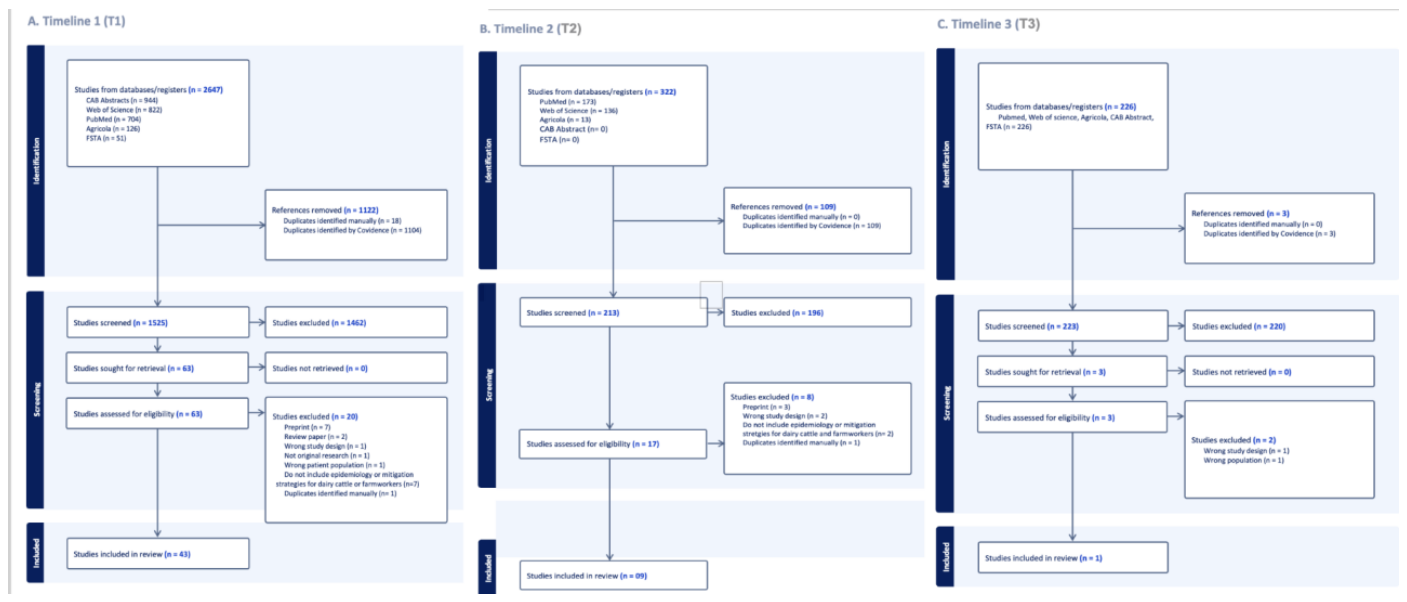
Figure 2.
Articles published by month and year during the study period.
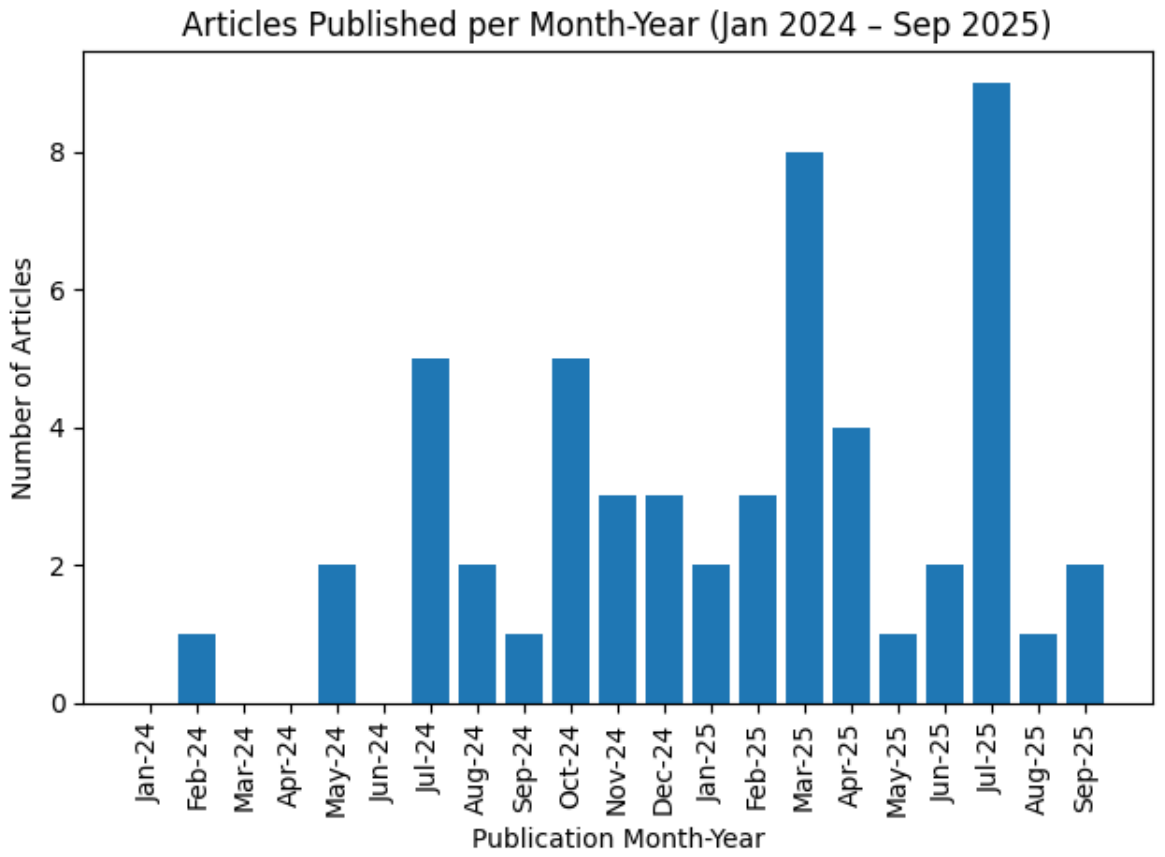
Figure 3.
Number of publications by journal during the study period.
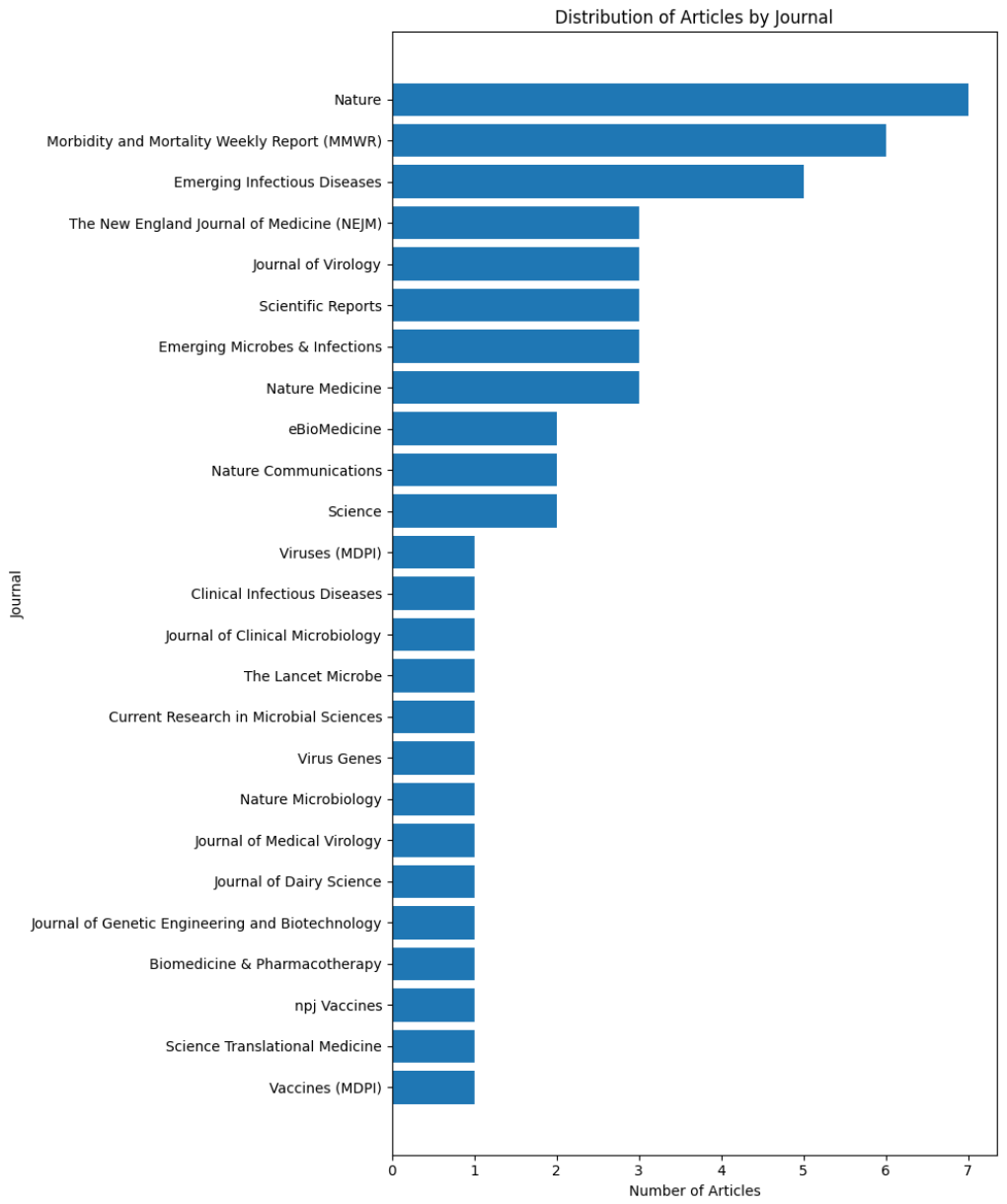

Table 1.
Search timelines, corresponding time periods, and dates of literature searches.
| Timeline (T) | Time period | Search conducted on |
| T1 | January 1, 2024, to June 22, 2025 | June 23, 2025 |
| T2 | June 23, 2025, to September 30, 2025 | Oct 3, 2025 |
| T3 | January 1, 2024, to June 22, 2025 | Oct 23, 2025 |
Table 2.
Gray literature sources included in the review.
| Sources of gray literature | Mitigation strategies for dairy worker or dairy cattle | Number of articles |
| Centers for Disease Control and Prevention (CDC) [21,22] | Dairy worker | 2 |
| The United States Department of Agriculture (USDA) [23,24] | Dairy cattle | 2 |
| Government of Ontario [25] | Dairy worker | 1 |
| Academic institute (UC Merced) [26] | Dairy worker | 1 |
| National Milk Production Federation [27] | Dairy cattle | 1 |
| California Department of Food and Agriculture [28] | Dairy cattle | 1 |
| Total | 8 | |
Table 3.
Sources and types of articles included from database searches and additional gray literature sources.
Table 3.
Sources and types of articles included from database searches and additional gray literature sources.
| Sources | Type of articles | Number of Articles |
| Database search | Peer-reviewed | 47 |
| Gray literature (CDC published) | 6 | |
| Additional sources | Additional gray literature identified (Table 2) | 8 |
| Total | 61 |
Table 4.
Distribution of included studies by study design and study type.
| Study design | Study type | Number of articles |
| Observational | Cross sectional | 8 |
| Case series | 6 | |
| Computational modeling studies | 2 | |
| Surveillance reports | 2 | |
| Case report | 1 | |
| Phylogenetic analyses | 1 | |
| Molecular epidemiological investigations | 1 | |
| Experimental | Ex vivo (H5N1 studied in removed tissues outside the body) | 2 |
| In vivo | 13 | |
| In vitro (H5N1 studied in cells in the laboratory) | 5 | |
| Both in vivo and in vitro | 10 | |
| Mixed (Observational and experimental) | 2 |
Table 5.
Control strategies for H5N1 virus mitigation in dairy cattle categorized according to the hierarchy of controls.
Table 5.
Control strategies for H5N1 virus mitigation in dairy cattle categorized according to the hierarchy of controls.
| Stage of the pyramid | Action |
| Elimination | Rodent control [50] |
| Substitution | - |
| Engineering control | Pasteurization and acidification of milk [51], Environmental decontamination [50], Clean and disinfect equipment and vehicle [24,27], Implementing a line of separation [24] |
| Administrative control |
Surveillance and early detection - Surveillance and monitoring of infection in cattle through serum and milk testing [6,29,31,33,52,53,54,55], Early mastitis identification [33], Vigilant observation for clinical signs [23] Biosecurity and safe farm practices - Biosecurity measures [6,29,31,50], Strict hygiene of milking equipment [33], Proper milking procedures [32,56], Delay or stop non-essential visitors [27], Prevent wildlife contact with livestock, feed, and equipment [24], Avoid feeding raw milk to calves and other farm animals [27] Movement control – Cattle movement restrictions [27,29], Testing before interstate movement [29,31] Coordination and communication - Improved coordination between animal and public health agencies [29], One Health coordination [50] |
| Personal protective equipment (PPE) | Use of PPE and/or changing/cleaning footwear [23] |
Table 6.
Control strategies for H5N1 virus mitigation in dairy farmworkers categorized according to the hierarchy of controls.
Table 6.
Control strategies for H5N1 virus mitigation in dairy farmworkers categorized according to the hierarchy of controls.
| Stage of the pyramid | Action | |
| Elimination | - | |
| Substitution | - | |
| Engineering control | - | |
| Administrative control |
Surveillance and early detection - Increased surveillance [15], Surveillance and monitoring of workers [10,53], Monitoring of workers [15], Early detection in human [57], Enhanced surveillance in wild birds, livestock (cattle, poultry, swine), companion animals (cats), and humans [16,42,58,59], Routine surveillance using environmental sampling (swabs, milk, wastewater) [59], Monitoring for genetic changes of the virus in wild birds, domestic animals, and humans [42,47,58], Expanded access to bird flu testing for workers, families, hospitals, and clinics [27] |
|
|
Biosecurity and safe work practices - Biosecurity [48], Limiting contact with sick dairy cattle and their secretions [21,60], Avoidance of sick or dead animals [9,21], Avoid direct or close physical contact with internal organs or udders of lactating cows [21], Avoid consuming raw or undercooked meat, unpasteurized milk, or raw milk products [25], Increased enforcement of workplace health and safety standards [27] |
||
| Coordination and communication - Worker education [15,36,60], PPE guidance, training, and distribution [16,47], Training on safe work practices for animal handling, disposal, cleaning, and disinfection [25], Public awareness [54], Collaboration between public health agencies and agricultural organizations [36,60], Coordinated One Health approach [47] | ||
| Medical countermeasures and worker health policies - Early antiviral treatment [9,10,47], Seasonal influenza vaccination and immune priming [37,61,62], Pre-pandemic vaccination preparedness (stockpiled adjuvanted H5N1 vaccine deployment) [16], Intranasal monoclonal antibody sprays used as short-term prophylaxis [63], PPE distribution to farms [60] | ||
| PPE | Eye protection while milking activities [60], Wearing PPE [9,10,15,21,22,25,60], N95 mask [21] |
Disclaimer/Publisher’s Note: The statements, opinions and data contained in all publications are solely those of the individual author(s) and contributor(s) and not of MDPI and/or the editor(s). MDPI and/or the editor(s) disclaim responsibility for any injury to people or property resulting from any ideas, methods, instructions or products referred to in the content. |
© 2026 by the authors. Licensee MDPI, Basel, Switzerland. This article is an open access article distributed under the terms and conditions of the Creative Commons Attribution (CC BY) license (http://creativecommons.org/licenses/by/4.0/).
Copyright: This open access article is published under a Creative Commons CC BY 4.0 license, which permit the free download, distribution, and reuse, provided that the author and preprint are cited in any reuse.