
Submitted:
02 September 2026
Posted:
08 September 2026
You are already at the latest version
Abstract
Molecular hydrogen (Н2) belongs to a group of compounds capable of inhibiting free-radical processes at the cellular level, increasing antioxidant activity, enhancing metabolism, and restoring the structure of cell membranes. This study investigated the effect of molecular hydrogen on oxygen-dependent processes in the blood: blood oxygen transport, prooxidant-antioxidant balance, and the gasotransmitter system in vitro. The experiment was performed on male Wistar rats (n = 20). A gas mixture consisting of 98% air and 2% hydrogen was used for blood saturation. The blood was saturated for 5 minutes, then blood parameters were analyzed immediately after saturation, 30 minutes later, and 60 minutes later. Blood oxygen-transport parameters, gasotransmitter levels, lipid peroxidation products, and antioxidant system activity were determined in plasma and red blood cells. Results showed that incubating blood with hydrogen increases oxygen tension, blood oxygen saturation, and decreases hemoglobin's affinity for oxygen. The effect of H2 on blood is accompanied by an increase in the concentration of gasotransmitters such as nitrogen monoxide and hydrogen sulfide and a decrease in the level of diene conjugates and malondialdehyde in plasma and red blood cells. This is due to stimulation of the antioxidant system, resulting in increased catalase activity and reduced glutathione levels.
Keywords:
molecular hydrogen
; blood
; hemoglobin
; oxidative stress
; gasotransmitter
; antioxidant system
1. Introduction
Molecular hydrogen (H2) is a selective antioxidant with no dosage restrictions and no toxic effects [1]. It belongs to a group of compounds capable of inhibiting free-radical processes at the cellular level, enhancing the antioxidant system, increasing metabolism, and restoring the structure of cell membranes [2]. The antioxidant properties of molecular hydrogen are also manifested through increased expression of endogenous proteins, leading to a reduction in oxidative stress markers [3].
Hydrogen can affect blood, particularly its rheological properties, including reducing viscosity and improving fluidity, which promotes blood flow and reduces the risk of thrombosis. Inhalation of 2% H2 improves red blood cell metabolism, which has a positive effect on microcirculation [2].
Gasotransmitters are physiologically active compounds that perform signaling functions in cells and participate in communication both between and within cells. Nitric oxide (NO), in turn, promotes the body's adaptation to hypoxia by altering various mechanisms that influence the functional status of red blood cells. Another gasotransmitter, hydrogen sulfide (H2S), influences numerous physiological and pathological processes, including inflammation, oxidative stress, and cellular apoptosis, which play a crucial role in vascular function [4]. Our studies have demonstrated the influence of these gasotransmitters on the hemoglobin's affinity for oxygen in various models [5].
The aim of the study is to investigate the influence of molecular hydrogen on oxygen-dependent processes in the blood: the oxygen transport function of the blood (OTFB), the prooxidant-antioxidant state and the gasotransmitter system in experiments in vitro.
2. Results
Table 1 presents data on the nature of changes in OTFB during blood saturation with a saturated gas mixture containing 2% hydrogen for 5 minutes. Incubation of blood saturated with hydrogen for 30 and 60 minutes causes a change in its OTFB, manifested in an increase of such parameters as oxygen tension (pO2) - by 11.3% (p≤0.05) at 30 minutes and by 15.2% (p≤0.05) at 60 minutes; the degree of blood oxygen saturation (SO2) - by 9.5% (p≤0.05) at 30 minutes and by 10.8% (p≤0.05) at 60 minutes compared to the control.
The hemoglobin oxygen affinity parameter (p50act) increases by 7.5% (p≤0.05) after 30 minutes and by 8.9% (p≤0.05) after 60 minutes of blood incubation with hydrogen, indicating a rightward shift in the oxyhemoglobin dissociation curve (ODC) (Figure 1). A similar dynamics of change was also observed for the p50st parameter. No changes in the blood acid-base balance were detected in the experimental groups.
The nitrate/nitrite (NO3-/NO2-) content during blood saturation with a gas mixture increases after exposure for 30 and 60 minutes by 13.0% (p≤0.05) and 19.9% (p≤0.05), respectively, compared to the control. An increase in H2S content was also noted relative to the control by 20.8% (p≤0.05) at 30 minutes and by 27.6% (p≤0.05) at 60 minutes (Figure 2).
Upon saturation of blood with a gas mixture containing 2% hydrogen, a decrease in the concentration of diene conjugates (DC) in blood plasma was observed. After 30 and 60 minutes of exposure, the parameters decreased by 21.7% and 32.8% (p≤0.05), respectively, relative to the control. In the erythrocyte mass, a reliable decrease in the DC content by 11.2% (p≤0,05) was observed only after 60 minutes of exposure. A decrease in the malondialdehyde (MDA) content in plasma was observed immediately after saturation, as well as after 30 and 60 minutes – by 25.7% and 51.7% (p≤0.05), respectively. In the erythrocyte mass, the MDA level after 30 and 60 minutes of exposure decreased by 18.6% and 26.9% (p≤0.05), respectively (Figure 3 and Figure 4).
The effect of hydrogen on the levels of parameters characterizing the body's antioxidant defense system is presented in Table 2. No statistically significant differences were observed after 30 minutes of exposure, unlike after 60 minutes of exposure, where catalase activity increased by 41.3% (p≤0.05) compared to the control group. After 5 minutes of saturation with the gas mixture and exposures of 30 and 60 minutes, glutathione (GSH) content increased by 33.3% (p≤0.05) and 44.1% (p≤0.05), respectively, compared to the control.
3. Discussion
The use of H2 promotes an increase in the concentration of adenosine triphosphate (ATP) in erythrocytes [6]. According to the literature, ATP plays a role in the deformation of the erythrocyte membrane, mediating this process through the phosphorylation of spectrin, ankyrin, and band 4.1 proteins, which leads to a weakening of protein-protein interactions [7]. By stimulating the metabolic activity of erythrocytes, molecular hydrogen induces a coupled increase in the intracellular concentration of adenosine triphosphate and 2,3-diphosphoglycerate. An increase in the level of these organophosphorus compounds reduces the affinity of hemoglobin for oxygen (HOA) and can lead to hydrogen mass transfer into tissues, which contributes to the improvement of the oxygen transport function of cells, blood rheology, and microcirculation [8].
Along with nitrogen monoxide, carbon monoxide, and hydrogen sulfide, H2 is now considered as an independent gaseous signaling molecule [9,10]. Based on our results, it can be assumed that hydrogen acts on the gasotransmitter system. The observed increase in nitrogen monoxide and hydrogen sulfide contributes to changes in the oxygen-transport function of the blood [11]. The gasotransmitter NO, being an allosteric effector for the hemoglobin’s affinity for oxygen, when interacting with hemoproteins, promotes the formation of methemoglobin and nitrosohemoglobin, which increases the hemoglobin’s affinity for oxygen. However, the formation of nitrosylhemoglobin, on the contrary, decreases the HOA. As a result, the position of the oxyhemoglobin dissociation curve is determined by the ratio of these forms of hemoglobin. The participation of gas transmitters in the regulation of the oxygen transport function of the blood is carried out through the formation of various hemoglobin derivatives (for example, sulfhemoglobin), modulation of intraerythrocyte systems that form the functional properties of hemoglobin [12].
It is known that the intensity of lipid peroxidation normally meets the requirements of cellular metabolism, ensuring cell viability and normal functioning. Excessive activation of lipid peroxidation processes leads to damage of cell membranes, which is characteristic of many pathological conditions [13].
Dihydrogen is a unique redox signaler and a potent antioxidant that acts through the direct reduction of highly reactive and cytotoxic molecules such as the hydroxyl radical (•OH) and peroxynitrite (ONOO–) [14]. The lipophilicity of H2 allows it to accumulate in unsaturated lipid sites of membranes, which are the primary target for lipid peroxidation chain reactions, thereby inhibiting the formation of lipid peroxides [15,16]. An important aspect of H2 action is its selectivity: it neutralizes hydroxyl radicals, whereas less reactive oxygen species, which function as signaling molecules and are essential for normal metabolism are not affected [17,18].
In addition, H2 reduces the level of nitrotyrosine, which is formed as a result of modification of tyrosine residues of proteins by ONOO– [14,15]. Studies in rat ischemia-reperfusion models confirmed that dihydrogen reduces nitrotyrosine concentrations regardless of the route of administration, suggesting that a significant part of the therapeutic effect of H2 may be associated with the suppression of protein nitrosylation. Many protein factors that regulate transcription can be modified with nitrosyl groups. Suppression of such modifications, therefore, may have a pleiotropic effect on gene expression and cellular functions [2,14,15].
Hydrogen has an idirect effect on the manifestation of oxidative stress by activating the growth of antioxidant enzymes [19]. Reduced glutathione and catalase, as antioxidants, control the content of reactive oxygen species, free radicals, and molecular products of lipid peroxidation in the body. Catalase is necessary for the breakdown of H2O2 into H2O and O2, preventing its accumulation. An increase in the activity of catalase and reduced glutathione indicates an increase in metabolic activity. Furthermore, the anti-inflammatory and cardioprotective effects of hydrogen further assist catalase in the fight against oxidative damage. Dihydrogen activates the p45-related nuclear factor 2 (Nrf2), which leads to increased antioxidant protection [2,15]. Indirectly, changes in the prooxidant-antioxidant balance affect the oxygen transport function of the blood.
4. Materials and Methods
The study involved blood from male Wistar rats weighing 250–300 g (n=20), maintained under standard vivarium conditions. Under adequate anesthesia induced by intraperitoneal administration of sodium thiopental (50 mg/kg), 8 ml of mixed venous blood was collected from the right atrium using a pre-heparinized syringe (at a rate of 50 U of heparin per 1 ml of blood). A gas mixture consisting of 98% air and 2% hydrogen was used for blood saturation. The blood was saturated for 5 minutes, and blood parameters were then analyzed immediately after saturation, 30 minutes later, and 60 minutes later.
The Stat Profile pHOx plus L gas analyzer was used to determine the parameters of blood's oxygen-transport function, such as pO2 and SO2. The affinity of hemoglobin for oxygen was estimated using the p50 parameter (blood pO2 at 50% oxygen saturation), determined spectrophotometrically at real values of pH, pCO2, and temperature (p50act). Then, p50 was calculated at a temperature of 37 °C, pH = 7.4, and pCO2 = 40 mmHg (p50st) [20]. The position of ODC was calculated using the obtained p50 values, using the Hill equation.
To measure NO production, NO3-/NO2- levels in blood plasma were determined using the Griess reagent on a Solar PV1251C spectrophotometer at a wavelength of 540 nm [21]. Endogenous H2S content in blood plasma was measured spectrophotometrically. This method is based on the reaction between sulfidanion and a solution of N,N-dimethyl-paraphenylenediamine hydrochloride in the presence of ferric chloride at a wavelength of 670 nm [22].
Free-radical activity was assessed based on the content of primary products (DC) and intermediate products (MDA) of lipid peroxidation. The level of DC in the erythrocyte mass was determined based on the absorption intensity of a monochromatic light flux in the 232-234 nm spectral range by the lipid extract, characteristic of conjugated diene structures of lipid hydroperoxides. Optical density was measured using an SM 2203 spectrofluorimeter (Closed Joint-Stock Company “SOLAR”, Belarus) at a wavelength of 233 nm relative to the control. MDA content was assessed by interaction with 2-thiobarbituric acid, which, at high temperatures in an acidic medium, leads to the formation of a pink trimethine complex. The color intensity was measured spectrophotometrically using a PV1251C spectrophotometer (“SOLAR” CJSC, Belarus) at a wavelength of 540 nm in relation to the control [23].
To determine the activity of catalase in hemolysates, the colorimetric method of M.A. Korolyuk [24] was used, based on recording the amount of colored reaction product during the interaction of hydrogen peroxide with ammonium molybdate salts, which have a maximum light absorption at a wavelength of 410 nm. The content of GSH in erythrocyte hemolysates was determined by the formation of a complex of reduced glutathione with Ellman's reagent [25], recorded at a wavelength of 412 nm on a PV1251C spectrophotometer (“SOLAR” CJSC, Belarus).
All parameters were tested for normal distribution using the Shapiro-Wilk test. Statistical processing of the results was performed using Statistica 10.0. Comparisons of three or more independent groups were performed using the Kruskal-Wallis analysis of variance (ANOVA) by ranks. The reliability of the obtained data was assessed using the Mann-Whitney U test. Results are presented as median (Me), 25th, and 75th percentiles. The p value was calculated taking into account the Bonferroni correction for multiple comparisons. The critical significance level was set at p ≤ 0.05.
5. Conclusions
1. Our research findings indicate that incubating blood with hydrogen alters the blood's oxygen-transport function, resulting in increased oxygen tension, increased blood oxygen saturation, and a decreased hemoglobin affinity for oxygen. The observed rightward shift of the oxyhemoglobin dissociation curve demonstrates increased oxygen delivery from the blood to tissues.
2. The effect of molecular hydrogen on blood is accompanied by an increase in the concentration of gasotransmitters such as nitric oxide and hydrogen sulfide, which can affect the oxygen-binding properties of blood through intraerythrocyte regulatory mechanisms. The greatest increase in the levels of these gasotransmitters is observed after 60 minutes of incubation, which is important for modifying the oxygen-binding properties of blood.
3. Blood saturation with a gas mixture containing 2% molecular hydrogen leads to a decrease in the levels of diene conjugates and malondialdehyde in plasma and red blood cells. The greatest reduction in lipid peroxidation products is observed in 60 minutes after saturation, due to stimulation of the antioxidant system, resulting in increased catalase activity and reduced glutathione levels.
Author Contributions
Conceptualization, V.Z.; methodology, I.G., E.R.; validation, V.Z., E.R.; formal analysis, E.R.; investigation, V.Z., E.R.; resources, V.Z.; data processing, V.Z., E.R.; writing — original draft, E.R.; writing — review and editing, V.Z.; visualization, E.R.; scientific supervision, V.Z. All authors have read and agreed to the published version of the manuscript.
Funding
The work was carried out as part of a research program planned at the Grodno State Medical University.
Institutional Review Board Statement
All applicable international, national, and institutional guidelines for the care and use of animals were followed. All procedures performed in animal studies complied with ethical standards, the principles of the Basel Declaration, and the recommendations of the Bioethics Committee of Grodno State Medical University (Protocol No. 1 dated January 31, 2023).
Informed Consent Statement
Informed consent was obtained from all subjects involved in the study.
Data Availability Statement
The data presented in this study are available on request from the corresponding author (V.Z.).
Conflicts of Interest
The authors declare no conflicts of interest.
Abbreviations
The following abbreviations are used in this manuscript:
| H2 | Molecular hydrogen |
| NO | Nitric oxide |
| H2S | Hydrogen sulfide |
| OTFB | Oxygen transport function of blood |
| NO3-/NO2- | Nitrate/nitrite |
| DC | Diene conjugates |
| MDA | Malondialdehyde |
| ATP | Adenosine triphosphate |
| HOA | Affinity of hemoglobin for oxygen |
| •HO | Hydroxyl radical |
| ONOO– | Peroxynitrite |
| H2O2 | Hydrogen peroxide |
| O2 | Oxygen |
| Nrf2 | Nuclear factor erythroid 2-related factor 2 |
| pO2 | Oxygen tension |
| SO2 | Oxygen saturation |
| pCO2 | Partial pressure of carbon dioxide |
| ODC | Oxyhemoglobin dissociation curve |
| HCO3- | Bicarbonate ion |
| TCO2 | Total carbon dioxide |
| AVE | Actual Base Excess |
| SBE | Standard Base Excess |
| SBC | Standard Bicarbonate Concentration |
| p50(act) | p50 actual |
| p50(st) | p50 standard |
| GSH | Reduced glutathione |
| Me | Median |
References
- Kuropatkina, T.A.; Gufranov, K.F.; Sychev, F.Yu.; Artemieva, M.M.; Bondarenko, G.N.; Esaulenko, D.I.; Samoylenko, T.V.; Shyshkina, V.V.; Medvedeva, N.A.; Medvedev, O.S. Effect of hydrogen inhalation on cardiovascular and interstitial components of pulmonary hypertension in rats. PULMONOLOGIYA 2024, 34, 19–30. [CrossRef]
- Deryugina, A.V.; Danilova, D.A.; Brichkin, Y.D.; Taranov, E.V.; Nazarov, E.I.; Pichugin, V.V.; Medvedev, A.P.; Riazanov, M.V.; Fedorov, S.A.; Smorkalov, A.Y.; et al. Molecular hydrogen exposure improves functional state of red blood cells in the early postoperative period: a randomized clinical study. Med. Gas Res. 2023, 13, 59–66. [CrossRef]
- Medvedev, O.S. Modern concepts of the functional role of hydrogen and its kinetics in the human body. PULMONOLOGIYA 2024, 34, 7–18. [CrossRef]
- Zhang, M.; Qiao, R.; Hu, J. Engineering Metal-Organic Frameworks (MOFs) for Controlled Delivery of Physiological Gaseous Transmitters. Nanomaterials 2020, 10, 1134. [CrossRef]
- Zinchuk, V.V.; Biletskaya, E.S. Effect of Ozone on Oxygen Transport and Pro-Oxidant-Antioxidant Balance of Red Blood Cell Suspension. Acta Chim. Slov. 2023, 70, 226–230. [CrossRef]
- Deryugina, A.V.; Danilova, D.A.; Skokova, A.A.; Brichkin, Y.D.; Pichugin, V.V.; Taranov, E.V. Influence of molecular hydrogen on the functional parameters of erythrocytes and lipoperoxidation processes in the modeling of chronic heart failure. Kardiologicheskii Vestn. 2022, 17, 20. [CrossRef]
- Matteucci, E.; Cocci, F.; Pellegrini, L.; Gregory, G.; Navalesi, R.; Giampietro, O. Erythrocyte ATPase enzymes family in normal people. Eur. J. Clin. Invest. 1992, 22, 11–18.
- Deryugina, A.V. Possibilities of correction of oxygen transport function of erythrocytes in cardiac surgery patients during operations with cardiopulmonary bypass. Bioradikaly i Antioksidanty 2020, 7, 142–149.
- Nakao, A.; Sugimoto, R.; Billiard, T.R.; McCurry, K.R. Therapeutic antioxidant medical gas. J. Clin. Biochem. Nutr. 2009, 44, 1–13. [CrossRef]
- Liu, S.; Sun, X.; Tao, H. Hydrogen: From a biologically inert gas to a unique antioxidant. In Oxidative Stress - Molecular Mechanisms and Biological Effects; Lushchak, V., Semchyshyn, H.M., Eds.; IntechOpen: Rijeka, Croatia, 2012; pp. 135–146.
- Zinchuk, V.V.; Biletskaya, E.S. Effect of ozone on the oxygen transport function of blood under various exposure conditions in vitro. Biophysics 2020, 65, 915–919. [CrossRef]
- Zinchuk, V.V.; Biletskaya, E.S.; Gulyai, I.E. Effect of ozone on the oxygen transport function and prooxidant-antioxidant balance of blood under conditions of action on the NO-generating system in in vitro experiments. Russ. J. Physiol. 2021, 107, 16–27. [CrossRef]
- Boyarinov, G.A.; Boyarinova, L.V.; Deryugina, A.V.; Solovieva, O.D.; Zaitsev, R.R.; Voennov, O.V.; Moshnina, E.V.; Shumilova, A.V. Role of secondary brain damage factors in the activation of vascular-thrombocytic hemostasis in traumatic brain injury. Gen. Gen. Reanimatol. 2016, 12, 42–51. [CrossRef]
- Ge, L.; Yang, M.; Yang, N.N.; Yin, xx; Song, W.G. Molecular hydrogen: A preventive and therapeutic medical gas for various diseases. Oncotarget 2017, 8, 102653–102673. [CrossRef]
- Ohta, S. Molecular hydrogen as a preventive and therapeutic medical gas: Initiation, development and potential of hydrogen medicine. Pharmacol. Ther. 2014, 144, 1–11. [CrossRef]
- Boyarinov, G.A.; Simutis, I.S.; Nikolsky, V.O.; Deryugina, A.V.; Boyarinova, L.V.; Gordetsov, A.S.; Kuznetsov, A.B. Role of transfusion of ozonized red blood cell mass in restoration of morphological changes in myocardium during blood loss. Gen. Reanimatol. 2018, 14, 27–35. [CrossRef]
- Ohsawa, I.; Ishikawa, M.; Takahashi, K.; Watanabe, M.; Nishimaki, K.; Yamagata, K.; Katsura, K.; Katayama, Y.; Asoh, S.; Ohta, S. Hydrogen acts as a therapeutic antioxidant by selectively reducing cytotoxic oxygen radicals. Nat. Med. 2007, 13, 688–694. [CrossRef]
- Chepur, S.V.; Pluzhnikov, N.N.; Khurtsilava, O.G.; Maevsky, E.I.; Gogolevsky, A.S.; Tyunin, M.A.; Bakulina, L.S.; Lobeeva, A.S. Biological effects of molecular hydrogen and possibilities of its application in clinical practice. Usp. Sovrem. Biol. 2017, 137, 311–318.
- Li, H.M.; Shen, L.; Ge, J. W.; Zhang, R. F. The transfer of hydrogen from inert gas to therapeutic gas. Med. Gas Res. 2017, 7, 265–272. [CrossRef]
- Burtis, C.A.; Ashwood, E. R. Tietz Textbook of Clinical Chemistry. W.B. Saunders 1999, 37, 1136.
- Kagota, S.; Yamaguchi, Y.; Nakamura, K.; Shinozuka, K.; Kunitomo, M. Chronic nitric oxide exposure alters the balance between endothelium-derived relaxing factors released from rat renal arteries: prevention by treatment with NOX-100, a NO scavenger. Life Sci. 2004, 74, 2757–2767. [CrossRef]
- Norris, E.J.; Culberson, C.R.; Narasimhan, S.; Clemens, M.G. The liver as central regulator of hydrogen sulfide. Shock 2011, 36, 242–250. [CrossRef]
- Kamyshnikov, V.S. Handbook of Clinical and Biochemical Laboratory Diagnostics; Belarus: Minsk, Belarus, 2002; p. 465.
- Korolyuk, M.A.; Ivanova, L.I.; Mayorova, I.G.; Tokarev, V.E. Method for determination of catalase activity. Lab. Delo 1988, 1, 16–19.
- Sedlak, J.; Lindsay, R.H. Estimation of total, protein-bound, and nonprotein sulfhydryl groups in tissue with Ellman's reagent. Anal. Biochem. 1968, 25, 192–205. [CrossRef]
Figure 1.
The effect of molecular hydrogen on the position of the oxyhemoglobin dissociation curve during 5 minutes of saturation at real pH and pCO2 values. Designations: □ – control; ♦ – 60 minutes incubation.
Figure 1.
The effect of molecular hydrogen on the position of the oxyhemoglobin dissociation curve during 5 minutes of saturation at real pH and pCO2 values. Designations: □ – control; ♦ – 60 minutes incubation.
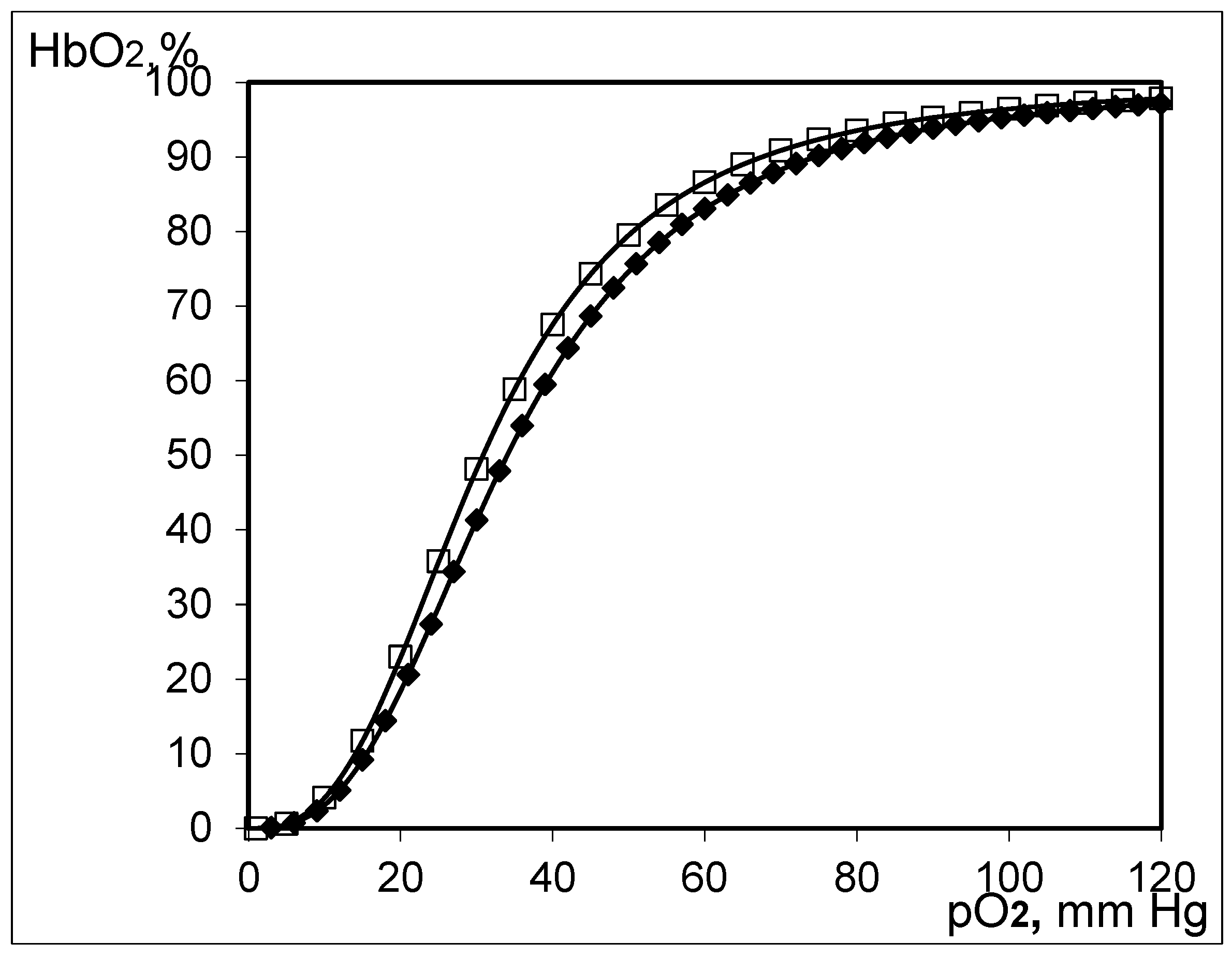
Figure 2.
Effect of molecular hydrogen on nitrate/nitrite and hydrogen sulfide content during saturating with a mixture containing 2% H2 for 5 minutes: 1 – control, 2 – after 0 minutes, 3 – after 30 minutes, 4 – after 60 minutes. Note: Data are presented as Me (25, 75); * – significant changes compared to the control; # – with incubation with hydrogen after 0 min.
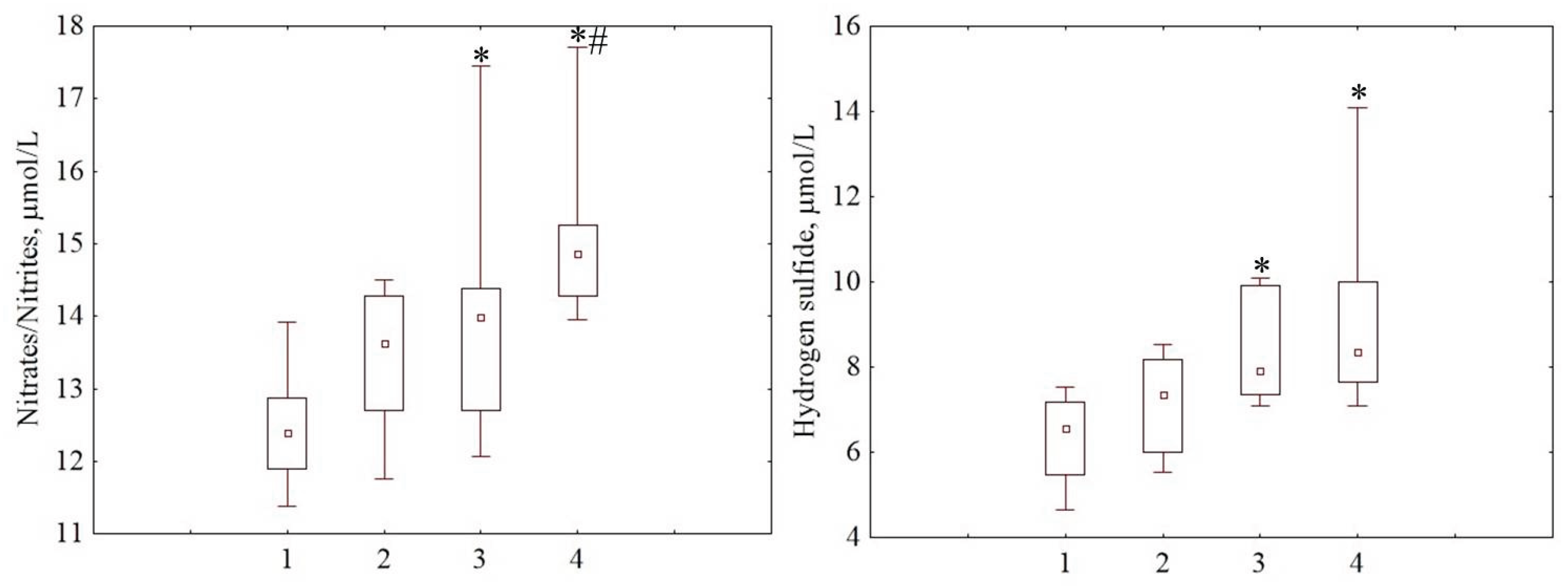
Figure 3.
The effect of molecular hydrogen on the content of diene conjugates and malondialdehyde in plasma upon saturating with a mixture containing 2% H2 for 5 minutes: 1 – control, 2 – after 0 minutes, 3 – after 30 minutes, 4 – after 60 minutes. Note: Data are presented as Me (25, 75); * – significant changes compared to the control; # – with incubation with hydrogen after 0 min.
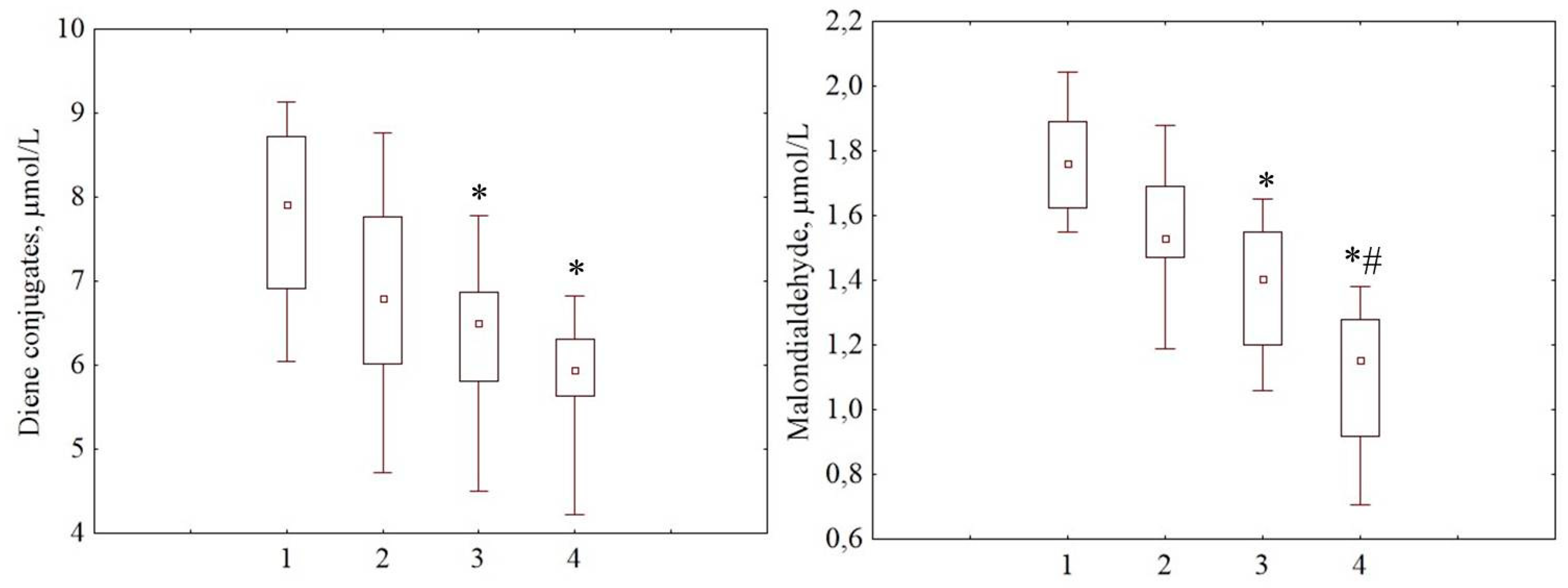
Figure 4.
The effect of molecular hydrogen on the content of diene conjugates and malondialdehyde in erythrocyte mass during saturating with a mixture containing 2% H2 for 5 minutes: 1 – control, 2 – after 0 minutes, 3 – after 30 minutes, 4 – after 60 minutes. Note: Data are presented as Me (25, 75); * – significant changes compared to the control; # – with incubation with hydrogen after 0 min.
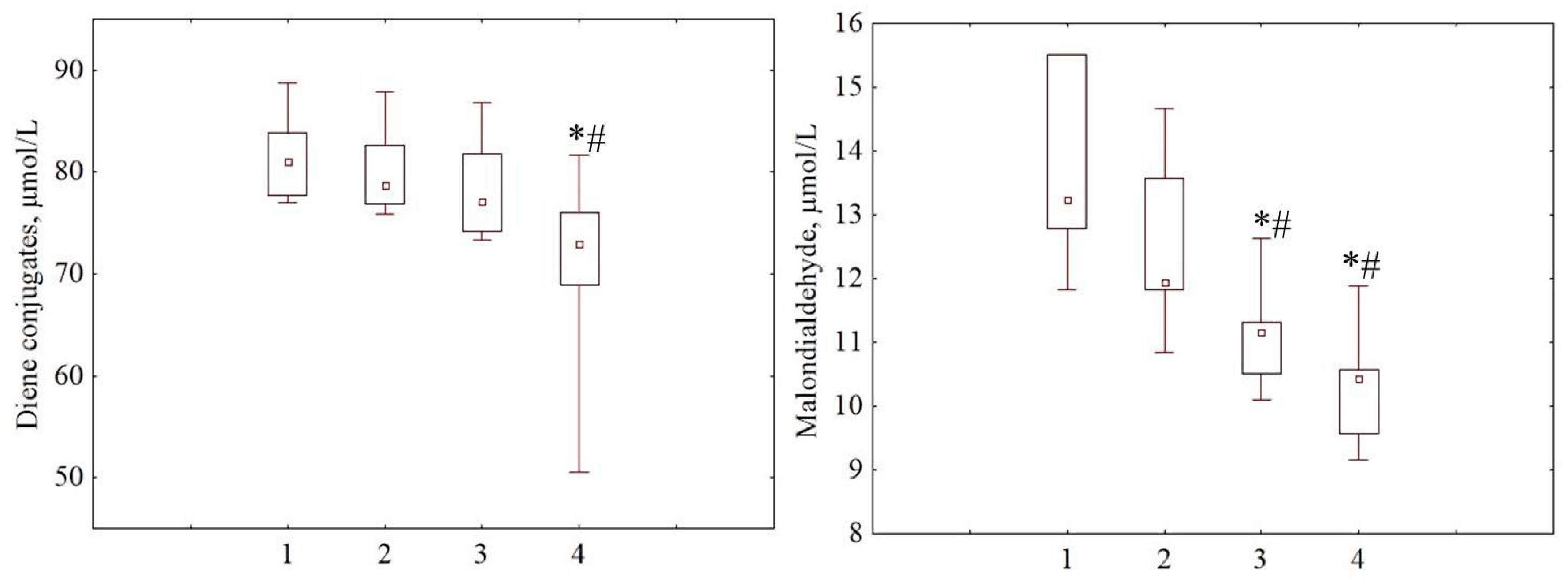

Table 1.
The effect of molecular hydrogen on the oxygen transport function of blood during saturation with a mixture of 2% H2 for 5 minutes.
Table 1.
The effect of molecular hydrogen on the oxygen transport function of blood during saturation with a mixture of 2% H2 for 5 minutes.
| Parameters | Control | 2% H2 | ||
| 0 min | 30 min | 60 min | ||
| n | 10 | 10 | 10 | 10 |
| p50act, mmHg | 30.5 [29.9; 31.1] |
30.7 [29.6; 31.7] |
32.8 [31.6; 33.8]*# |
33.2 [31.5; 34.2]*# |
| p50st, mmHg Art. | 31.7 [31.4; 32.5] |
33.2 [32.3; 33.6] |
34.7 [33.5; 35.5]* |
35.0 [33.6; 35.5]* |
| pO2, mmHg | 25.7 [24.9; 26.0] |
27.2 [26.8; 27.6]* |
28.6 [27.9; 30.4]*# |
29.6 [27.2; 30.8]* |
| SO2, % | 37.9 [37.3; 40.1] |
41.1 [40.3; 41.9]* |
41.5 [40.9; 42.4]* |
42.0 [41.0; 43.4]* |
| pH, units | 7,449 [7,440; 7,469] |
7,486 [7,456; 7,503] |
7,464 [7,449; 7,488] |
7,460 [7,435; 7,479] |
| pCO2, mmHg | 46.8 [44.1; 48.9] |
42.5 [39.5; 45.4] |
41.4 [40.5; 44.9]* |
41.1 [38.5; 45.3]* |
| HCO3-, mmol/L | 33.7 [31.3; 34.6] |
31.1 [30.6; 33.3] |
31.4 [29.7; 32.6] |
31.6 [30.9; 33.0] |
| TCO2, mmol/L | 35.2 [32.6; 36.0] |
32.5 [31.8; 34.6] |
32.6 [30.9; 34.0] |
33.0 [32.1; 34.4] |
| AVE, mmol/L | 9.2 [7.5; 10.9] |
7.3 [6.5; 9.7] |
7.7 [6.1; 8.7] |
7.8 [7.0; 9.1] |
| SBE, mmol/L | 8.7 [7.5; 10.5] |
7.6 [6.8; 9.6] |
7.8 [6.6; 8.8] |
7.6 [6.9; 8.8] |
| SBC, mmol/L | 31.1 [30.0; 33.0] |
30.2 [29.4; 32.3] |
30.3 [29.2; 31.4] |
30.1 [29.4; 31.3] |
Note: Data are presented as Me (25, 75); * – significant changes compared to control; # – with incubation with hydrogen after 0 min.
Table 2.
The effect of molecular hydrogen on the antioxidant system when saturated with a mixture of 2% H2 for 5 min.
Table 2.
The effect of molecular hydrogen on the antioxidant system when saturated with a mixture of 2% H2 for 5 min.
| Parameters | Control | 2% H2 | ||
| 0 min | 30 min | 60 min | ||
| n | 10 | 10 | 10 | 10 |
| GSH, μmol/gHv | 44.32 [42.78; 53.19] |
51.36 [45.90; 60.11] |
59.08 [51.16; 62.45]* |
63.87 [53.98; 65.97]* |
| Catalase, mmol H2O2/min/g H2O | 10.86 [8.78; 11.65] |
11.42 [10.04; 13.50] |
11.42 [10.40; 16.10] |
15.35 [11.96; 17.47]* |
Note: Data are presented as Me (25, 75); * – significant changes compared to control; # – with incubation with hydrogen after 0 min.
Disclaimer/Publisher’s Note: The statements, opinions and data contained in all publications are solely those of the individual author(s) and contributor(s) and not of MDPI and/or the editor(s). MDPI and/or the editor(s) disclaim responsibility for any injury to people or property resulting from any ideas, methods, instructions or products referred to in the content. |
© 2026 by the authors. Licensee MDPI, Basel, Switzerland. This article is an open access article distributed under the terms and conditions of the Creative Commons Attribution (CC BY) license.
Copyright: This open access article is published under a Creative Commons CC BY 4.0 license, which permit the free download, distribution, and reuse, provided that the author and preprint are cited in any reuse.