

Submitted:
05 September 2026
Posted:
08 September 2026
You are already at the latest version
Abstract
Childhood overweight and obesity are escalating global health challenges with conse-quences that extend across the life course. This narrative review examines the epide-miology, clinical complications, socioeconomic burden, and management of excess weight in children and adolescents across diverse socioeconomic settings. Evidence was identified through searches of MEDLINE (via PubMed), Scopus, Web of Science, Embase, and the Cochrane Library, supplemented by manual screening of reference lists. The literature indicates that excess adiposity, particularly visceral fat, promotes insulin resistance, hypertension, dyslipidemia, hepatic steatosis, and other early mani-festations of cardiometabolic disease, while also contributing to respiratory, orthope-dic, and psychosocial complications. These risks frequently persist into adulthood, in-creasing premature morbidity, mortality, healthcare utilization, and direct and indi-rect societal costs. The burden is unevenly distributed: poverty, stigma, discrimination, food and built environments, and limited access to preventive and clinical services shape both obesity risk and outcomes, with particularly severe consequences in re-source-constrained settings. Early identification of excess weight and associated risk factors, systematic screening for comorbidities, and timely, family-centered multidis-ciplinary care are therefore essential. Effective prevention and treatment must also address the broader social and commercial determinants of health through coordinat-ed action across healthcare, education, food systems, and public policy.
Keywords:
obesity
; overweight
; childhood
; adolescence
; socio-economic burden
; non-communicable diseases
1. Introduction
Overweight and obesity are among the most widespread chronic conditions in childhood. According to the American Academy of Pediatrics (AAP) guidelines, obesity is recognized as a complex chronic disease, characterized by an excess of adiposity resulting from the interaction of genetic, physiological, behavioral, and environmental factors within an increasingly obesogenic environment [1]. The clinical definition is based on the Body Mass Index (BMI), with overweight identified by a BMI between the 85th and 95th percentile and obesity defined as a BMI above the 95th percentile for age and sex. In preschool-aged children and infants, weight–length z-scores are used, whereas additional tools such as the waist-to-height ratio help assess central adiposity, a marker strongly linked to cardiometabolic risk [2]. Pediatric obesity is the leading risk factor for several non-communicable diseases (NCDs). Excess adiposity, particularly visceral fat, is associated with early development of insulin resistance, hypertension, dyslipidemia, and hepatic steatosis, all of which contribute to metabolic syndrome and, over time, to cardiovascular diseases and type 2 diabetes. Evidence from the Italian Society for Pediatric Endocrinology and Diabetology shows that early-onset obesity —especially before the age of 5 — prolongs exposure to cardiometabolic risk factors, promoting adiposity tracking and early subclinical cardiovascular damage [3]. Weight excess is classified as an independent cardiometabolic risk factors and subjects who are overweight or obese should be considered at increased cardiovascular risk [4,5]. Longitudinal studies have demonstrated that children in the highest BMI quartile have more than double the risk of premature death, including cardiovascular mortality, compared with their normal-weight peers. The impact of obesity extends beyond metabolic risks. Recently, the global rise in childhood obesity has been closely linked to increases in hypertension, type 2 diabetes, non-alcoholic fatty liver disease (NAFLD), respiratory diseases, and psychological disorders, which now constitute a significant burden of non-communicable diseases among children and adolescents [6]. Moreover, notable geographical and socioeconomic disparities emerge: middle-and low-income countries show higher prevalences of hypertension, metabolic syndrome, and NAFLD among children with obesity; boys are generally more affected than girls; and the highest rates are often reported in Asian populations. These disparities reflect the influence of social determinants of health—such as poverty, limited access to care, stigma, and discrimination—which contribute both to the development of obesity and to the complexity of its clinical course, as also emphasized by the AAP guidelines [7]. Overall, overweight and obesity in childhood represent conditions with substantial biological, clinical, and social impact, with consequences that extend from childhood into adulthood. In this context, with the publication of Law No. 149 of October 3, 2025: Disposizioni per la prevenzione e la cura dell'obesità'(25G00158) (GU Serie Generale n.235 del 09-10-2025), Italy becomes the first country in Europe to recognize obesity as a chronic, progressive, and relapsing disease with significant social and health impacts, and establishes integrated interventions for prevention, diagnosis, and treatment to improve patients' quality of life. Early identification of excess weight and related risk factors, together with systematic screening for comorbidities, is essential to prevent non-communicable diseases and safeguard long-term health in children and adolescents. Our narrative reviews aims at providing a comprehensive overview of weight excess implications and consequences in children and adolescents in different socio-economic settings.
2. Material and Methods
A literature search was conducted in MEDLINE (via PubMed), Scopus, Web of Science, Embase, and the Cochrane Library to identify relevant publications issued between 2005 and 2026. The search strategy combined terms related to excess weight and developmental age (“obesity” OR “overweight”) AND (“childhood” OR “adolescence” OR “developmental age”)—with terms describing health and socioeconomic outcomes, including “non-communicable diseases,” “health consequences,” “dietary patterns,” “health outcomes,” “outcome measures,” “socioeconomic status,” “socioeconomic burden,” and “global burden.” The search was designed to identify randomized controlled trials, peer-reviewed observational studies, systematic reviews, meta-analyses, umbrella reviews, and comprehensive narrative reviews relevant to the scope of this article.
No database-level filters were applied during the initial search. Publications were eligible if they were available in full text, written in English, published between 2005 and 2026, and examined the prevalence, determinants, health consequences, management, or socioeconomic burden of overweight and obesity in children or adolescents across different social and geographic contexts. Studies published before 2005, articles not available in English, and publications outside the predefined population, topic, or study categories were excluded.
Two reviewers independently screened the titles and abstracts of the retrieved records and subsequently assessed the full texts of potentially relevant publications. Any disagreement regarding eligibility was resolved through discussion and, when necessary, consultation with a third reviewer. To identify additional pertinent studies, the reference lists of the selected articles were also examined manually.
As this was a selective narrative review, study selection prioritized large and methodologically robust randomized controlled trials, peer-reviewed observational studies, systematic reviews, meta-analyses, umbrella reviews, and authoritative narrative reviews. No formal systematic-review protocol, quantitative evidence synthesis, or standardized risk-of-bias assessment was undertaken.
3. Weight Excess and Obesity in Childhood and Adolescence
3.1. Weight Excess and Obesity Prevalence
The Global Burden of Disease (GBD) 2021 project examines trends over more than three decades, from 1990 to 2021, and offers forecasts through 2050. The central aim of the analysis is to clarify how the prevalence of excess weight is evolving globally and what future burden we can expect if current trajectories continue [8].
A major finding of the study is the dramatic rise in overweight and obesity among individuals aged 5–24 years. Between 1990 and 2021, the combined prevalence of overweight and obesity approximately doubled across this age group, while obesity alone tripled. These changes reflect both the broad expansion of obesogenic environments and insufficient global policy action. By 2021, an estimated 493 million young people worldwide were affected by overweight or obesity. Among them, 174 million were living with obesity, split relatively evenly between children and young adolescents (5–14 years) and older adolescents and young adults (15–24 years). These numbers represent not only a widespread public-health issue, but also a failure to protect a generation now exposed to elevated risks of lifelong metabolic disease. The highest levels of obesity in 2021 were found in North Africa and the Middle East, where many countries showed obesity rates in youths exceeding those of nearly all other global regions. Particularly striking was the high prevalence among adolescent girls, which the authors associate with rapid nutritional transitions, urbanization, reduced physical activity opportunities, and cultural norms around gender. Other regions with very high current prevalence include Australasia and high-income North America, where several countries have already reached an “obesity-predominant” stage meaning that obesity has surpassed overweight as the main contributor to excess body weight. At the same time, the fastest growth in obesity prevalence over the past three decades occurred in regions traditionally considered low-risk: Southeast Asia, East Asia, and Oceania. For example, some East Asian countries experienced a more than 600% increase in obesity among children and adolescents from 1990 to 2021. These findings underscore that the obesity epidemic is no longer confined to high-income nations, but instead, it has become a global phenomenon affecting countries at all income levels. A key concept emphasized by the authors is the global transition from overweight to obesity dominance. Historically, overweight was more common than obesity in youth populations. However, trends now show that in several world regions, including parts of Latin America, the Middle East, Oceania, and high-income countries, obesity has become the primary excess-weight category. This indicates that not only are more young people becoming heavier, but the degree of excess weight is intensifying. Such a shift signals more severe long-term health consequences, given the strong associations between childhood obesity and early onset of metabolic and cardiovascular disease [8,9,10,11]
Using advanced ensemble modeling, the study [8] estimates how young-people obesity will evolve by 2050 if no substantial interventions take place. The projections are sobering, in fact obesity prevalence is expected to increase in every region of the world by 2050; by mid-century, an estimated 361 million young people aged 5–24 years will be living with obesity; among boys aged 5–14 years, obesity is projected to overtake overweight globally. Moreover the most substantial future increases are expected in: Southeast Asia, East Asia, Oceania and South Asia
Conversely, overweight alone is projected to decline in some regions or remain relatively stable, not because the problem is resolving, but because more individuals will move from overweight into obesity. This reflects worsening severity rather than improvement.
These findings can be considered as evidence of a persistent and escalating global health crisis. Despite decades of recommendations and targeted interventions, no region is on track to reduce childhood or adolescent obesity by 2030, and many will face accelerating increases.
They attribute these trends to multiple factors, including:
- Rapid urbanization and proliferation of ultraprocessed foods
- Increased sedentary behavior and reduced opportunities for physical activity
- Socioeconomic inequalities that limit access to healthy foods and safe environments
- Insufficient political will and fragmented global public-health strategies
The consequences are profound: rising rates of type 2 diabetes, hypertension, non-alcoholic fatty liver disease, and early cardiovascular complications in young people. Unless decisive, multisectoral actions are taken such as spanning food systems, urban planning, education, and healthcare, countries will face a substantial and potentially irreversible burden of chronic disease in future adult populations.
Recent data from the national Italian surveillance system OKkio alla Salute (Italian National Institute of Health) indicate that, in 2023, 19% of children aged 8–9 years were overweight and 9.8% were obese, including 2.6% with severe obesity [12]
Since the first national survey in 2008–2009, a modest decline has been observed—overweight decreased from approximately 23% to 19% and obesity from ~12% to 9.8%—although a plateau has emerged in recent years [13].
Despite these improvements, Italy remains among the European countries with the highest prevalence of excess body weight in childhood, underlining the need for robust preventive and therapeutic strategies.
3.2. Clinical Risks and Early Consequences
Childhood overweight and obesity are not benign or transient conditions. Excess adiposity in early life is associated with a broad spectrum of metabolic, cardiovascular, hepatic, orthopedic, respiratory, psychological, and social complications [14,15].
Common comorbidities include insulin resistance, dysglycemia, dyslipidemia, hypertension, and NAFLD. Children with obesity also face an elevated likelihood of developing type 2 diabetes and metabolic syndrome during adolescence or early adulthood and they are considered at increased cardiovascular risk [16].
3.3. Long-Term Outcomes and Socioeconomic Burden
A large body of evidence indicates that pediatric overweight and obesity significantly increase the risk of premature mortality and cardiometabolic morbidity in adulthood. A major systematic review reported that childhood or adolescent obesity was associated with increased early mortality in four of five cohort studies, and with higher cardiometabolic disease incidence across all included analyses, with hazard ratios ranging from 1.1 to 5.1.[19].
However, the relationship is modulated by BMI tracking from childhood to adulthood. Individuals who attain a normal weight by adulthood may experience a markedly attenuated long-term risk, suggesting that the adverse consequences of childhood obesity are not irreversible and can be mitigated through timely intervention [20].
Recent European cohort data also demonstrate that adolescent obesity is associated with higher healthcare utilization in early adulthood, reflecting the substantial clinical and economic burden of early-onset obesity [21].
From a public health perspective, overweight and obesity account for significant direct healthcare costs, increased hospitalizations, long-term management of metabolic disease, and expanded use of medical resources. Indirect costs—including productivity losses, absenteeism, and reduced workforce participation—further contribute to the economic impact. Analyses from international and Italian contexts consistently show that pediatric obesity represents a major challenge for health-system sustainability [22].
3.4. Early Diagnosis and Management
There is wide consensus on the importance of early identification of at-risk children is a critical component of pediatric practice. The use of BMI and weight-for-length percentiles provides:
- Objective detection of overweight, obesity, and risk conditions, even in asymptomatic children.
- Longitudinal monitoring, enabling early recognition of deviations from optimal growth trajectories.
- Timely implementation of interventions, including lifestyle modifications, nutritional counseling, structured physical activity, and family-focused strategies.
- Prevention of persistence of obesity into adulthood, thereby reducing the long-term burden of chronic disease.
- A multidisciplinary framework, reflecting the multifactorial determinants of obesity (genetic, behavioral, environmental, and socioeconomic) and involving families, schools, communities, and healthcare systems.
Within this framework, pediatric obesity must be regarded as a clinical condition with immediate and long-term health implications, requiring proactive and coordinated intervention [1,23,24,25,26,27,28].
Table 1 summarizes the principal strategies for the early assessment and management of pediatric obesity, highlighting their clinical objectives and relevance across different socioeconomic contexts.
4. Complications of Obesity in Childhood
4.1. Cardiovascular
Childhood obesity initiates and accelerates a constellation of cardiometabolic derangements that increase lifetime cardiovascular disease (CVD) risk. Excess adiposity in children is associated with early development of hypertension, dyslipidemia (elevated triglycerides, low HDL), insulin resistance, and subclinical atherosclerosis (increased carotid intima-media thickness, endothelial dysfunction), all of which aggregate to increase lifetime CVD burden [1,5,23,32,33]. Mechanistically, adipose tissue dysfunction in obesity promotes a chronic, low-grade inflammatory milieu (elevated CRP, proinflammatory cytokines), dysregulated adipokine signalling (leptin resistance, relative adiponectin deficiency), and ectopic fat deposition (pericardial and visceral) that impair vascular homeostasis and myocardial metabolism. These perturbations map onto the recently articulated cardiovascular–kidney–metabolic (CKM) syndrome, which conceptualizes the shared pathophysiology and bidirectional risk amplification among CVD, chronic kidney disease, and metabolic disorders; childhood obesity therefore contributes to the early life course of CKM risk [34].
Clinical consequence and progression: obese children display higher rates of prehypertension/hypertension and early lipid abnormalities compared with normal-weight peers; without intervention, these factors persist into adolescence and adulthood and predict accelerated atherosclerotic disease and heart failure risk. Early identification of adverse cardiovascular phenotypes (e.g., metabolically unhealthy obesity, high visceral adiposity) refines risk stratification beyond BMI alone [34,35,36].
4.2. Metabolic
Obesity in childhood is the principal risk factor for the development of insulin resistance and type 2 diabetes mellitus (T2DM) in youth. Adipose-driven insulin resistance arises from ectopic lipid accumulation in liver and muscle, inflammatory cytokine signalling, and mitochondrial dysfunction, leading to compensatory hyperinsulinemia and progressive β-cell stress. Different obesity phenotypes (metabolically healthy vs. unhealthy obesity; visceral vs. peripheral adiposity) convey markedly different trajectories: children with metabolically unhealthy obesity have substantially elevated risk of early dysglycaemia and progression to T2DM. The interplay between obesity phenotype and diabetes also amplifies cardiovascular risk through shared mechanisms (atherogenic dyslipidemia, hypertension, prothrombotic state) [37,38].
Clinical implications: early screening for impaired fasting glucose, abnormal oral glucose tolerance, and HbA1c in obese youth — particularly those with additional metabolic syndrome features — is critical because glycaemic dysregulation in childhood predicts persistent metabolic disease and vascular complications in adulthood. Lifestyle interventions that reduce visceral adiposity and improve insulin sensitivity in pediatric populations demonstrably lower short-term metabolic risk and may alter long-term trajectory [38].
4.3. Neurological
Although neuropathy is classically associated with long-standing diabetes in adults, mounting evidence links components of the metabolic syndrome, including obesity, dyslipidemia, and prediabetes, to peripheral nerve injury. Studies indicate that metabolic syndrome (MetS) increases the risk of small-fiber and large-fiber peripheral neuropathy independently of frank diabetes; proposed mechanisms include lipid-mediated neuronal injury, microvascular dysfunction in the vasa nervorum, chronic systemic inflammation, and mitochondrial stress within peripheral neurons. In the pediatric setting, prolonged exposure to obesity and metabolic dysfunction during critical developmental windows may predispose to earlier onset of neuropathic changes, and autonomic dysfunction (orthostatic intolerance, impaired heart-rate variability) has been reported in obese adolescents. Exercise-based lifestyle interventions and targeted metabolic risk reduction show promise in halting or reversing early neuropathic changes associated with MetS [39].
Clinical note: screening for symptoms (paresthesia, numbness), objective sensory testing (monofilament, vibration), and autonomic function where indicated can detect early neuropathic involvement in at-risk obese youth; lipid control and weight reduction are plausible disease-modifying strategies [40].
4.4. Dermatological
Obesity in children is associated with an increased prevalence and greater severity of several dermatological conditions, notably psoriasis. The co-occurrence of psoriasis with obesity likely reflects shared inflammatory pathways (Th17/IL-23 axis, systemic cytokines) and cardiometabolic comorbidity clustering. Obese pediatric patients with psoriasis tend to exhibit more severe disease and higher prevalence of psoriatic arthritis and cardiometabolic comorbidities than non-obese peers. The epidemiologic links are bidirectional: psoriasis is associated with higher odds of obesity and metabolic syndrome, and adiposity exacerbates cutaneous inflammation. Therefore, management of pediatric psoriasis should integrate metabolic screening and lifestyle interventions as part of a comprehensive approach [41,42,43,44].
Practical implication: dermatologic assessment in obese children should include evaluation for signs of systemic inflammation and referral pathways for cardiometabolic risk assessment; weight reduction has been associated with improvements in psoriasis severity in adult studies and is a rational adjunctive strategy in pediatric care [43,44].
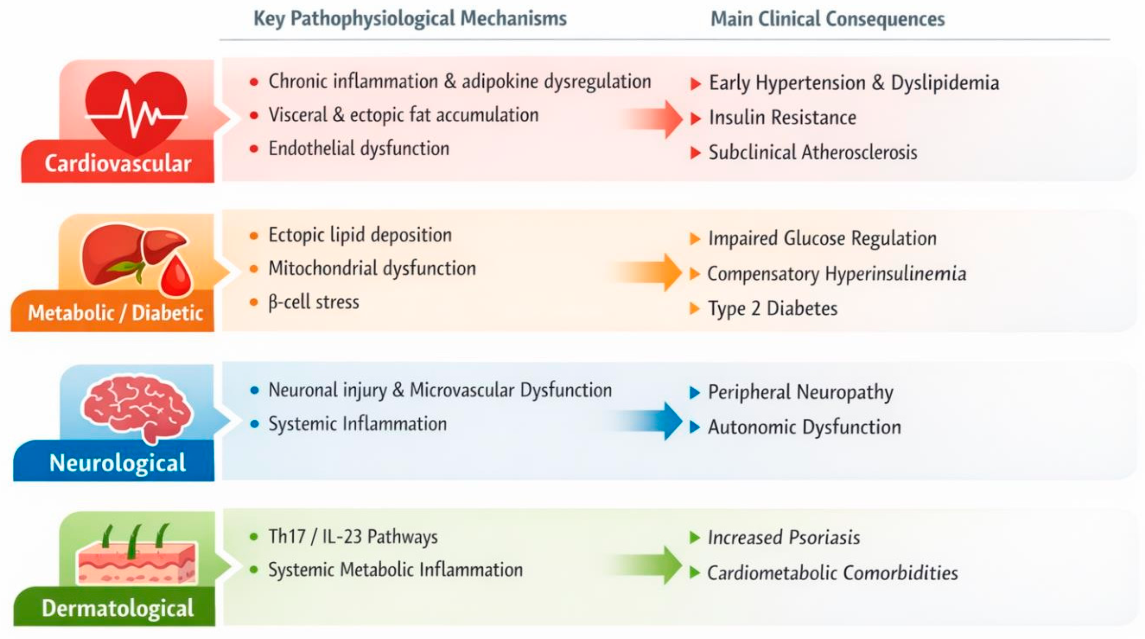
Figure 1 provides an integrated overview of the principal pathophysiological mechanisms linking childhood obesity to its cardiovascular, metabolic, neurological, and dermatological complications.
4.5. Integrative Considerations and Recommendations
- Phenotype-guided risk stratification: BMI alone inadequately captures risk: assessment of metabolic health (lipids, blood pressure, glyc
aemia), fat distribution (when available), and inflammatory markers better identifies children at highest risk for cardiometabolic, neurological, and dermatologic complications [38]. - Early, multi-domain screening: obese children should undergo periodic screening for blood pressure abnormalities, dyslipidemia, glycemic impairment, and targeted neurological/dermatological evaluation when symptoms or risk features are present
- Mechanism-based interventions: interventions that reduce visceral adiposity, improve insulin sensitivity, and attenuate systemic inflammation (dietary modification, physical [50].
5. Socioeconomic Status and Childhood Obesity in low- and Middle-Income Countries
Childhood and adolescent obesity have increased rapidly worldwide, including in low- and middle-income countries (LMICs). The socioeconomic gradient of pediatric obesity is context-dependent and evolving: in the poorest settings obesity commonly concentrates among higher socioeconomic status (SES) children, whereas with economic development the burden often spreads across and ultimately shifts toward lower-SES groups. This review summarizes contemporary evidence on SES–pediatric obesity relationships in LMICs, highlights regional and gender differences, and outlines implications for research and policy.
Rising prevalence of overweight and obesity among children and adolescents poses major future burdens of cardiometabolic disease. Understanding how obesity distributes across socioeconomic strata in LMICs is essential for equitable prevention strategies. Pediatric patterns frequently differ from adult patterns because of distinct determinants (early life nutrition, parental SES, school food environments, marketing to children), and because childhood is a critical window for life-course risk [38,51].
5.1. Global Trends in Childhood Obesity
Large pooled analyses and global reports document a marked increase in childhood obesity since 1990. Recent NCD-Risk Factor Collaboration estimates indicate substantial rises in obesity prevalence among children and adolescents between 1990 and 2022, with pronounced increases in many LMIC regions. UNICEF and allied analyses now report that, for the first time, more children are obese than underweight at a global level — a sign of the rapid nutrition transition affecting many developing countries.
Systematic reviews focused on children find a complex, context-sensitive relationship between SES and childhood overweight/obesity:
- Low-income settings: In many of the poorest LMIC contexts, studies consistently report a positive association between family wealth/parental education and childhood obesity — i.e., children from wealthier households or with more educated parents are more likely to be overweight or obese. This pattern is frequently attributed to greater access to calorie-dense foods, greater ownership of motorised transport (reduced physical activity), and urban residence. [52,53,54,55]
- Middle-income settings: As countries undergo economic development and the food environment changes (greater availability and lower price of ultra-processed foods), the SES gradient becomes heterogeneous. Some middle-income countries display a weakening or reversal of the SES gradient, particularly for adolescent girls, such that lower-SES children begin to exhibit equal or higher prevalence of obesity. This transition often occurs earlier and more strongly among females [56].
- Regional variation: Systematic evidence from sub-Saharan Africa indicates that the positive SES–obesity link remains common in many low-income countries in the region, whereas lower-middle-income countries show mixed associations. Latin America and parts of Asia have documented rapid shifts with growing burdens among lower-SES children in urban settings [54].
5.2. Mechanisms and Mediators Specific to Children
Several pathways explain the SES–obesity nexus in children: parental resources influence diet quality (both direction and caloric density), early growth patterns (including stunting followed by rapid weight gain), exposure to marketing of unhealthy foods, school food environments, and opportunities for physical activity. Household food security and food affordability interact with cultural norms: in some settings higher weight is perceived as desirable or a marker of prosperity, which can influence parental feeding practices [58,59].
5.3. Public Health and Policy Implications
- Contextualised interventions: Policies must be tailored to the stage of the nutrition transition. In low-income settings, interventions that promote healthy child feeding practices among wealthier urban families (and prevent early-life overnutrition) remain important. In middle-income countries, policies must also target poor and middle-class communities that are increasingly exposed to obesogenic environments [60,61].
- Protecting children from unhealthy food environments: Regulatory actions that limit marketing of ultra-processed foods to children, improve school food standards, and implement fiscal measures (taxes on sugar-sweetened beverages) can protect children across SES groups. These measures are particularly important in LMICs where aggressive marketing and rapid retail penetration have widened exposure to unhealthy products [60,61].
- Life-course and equity lens: Early-life interventions (maternal nutrition, breastfeeding support, prevention of rapid weight gain after stunting) can reduce lifelong obesity risk. Because the burden increasingly affects disadvantaged groups in many LMICs, equity-oriented monitoring and targeting are essential to avoid widening health disparities [58,61].
- Strengthen surveillance and disaggregated data: National surveillance systems should report childhood obesity by SES indicators (household wealth quintile, parental education, urban/rural), sex and age bands. This disaggregation is critical to detect emerging shifts and to evaluate the equity impact of interventions [62,63].
Pediatric obesity in LMICs is increasing rapidly and the socioeconomic patterning is dynamic: while wealthier families in low-income contexts still often show higher childhood obesity, economic development and pervasive changes in food systems are shifting the burden toward lower-SES children in many middle-income countries. Policies must be anticipatory, equity-focused, and tailored to local stages of the nutrition transition to protect children and prevent widening health inequalities.
6. Dietary Patterns
6.1. Epidemiological and Nutrition Transition
The phenomenon currently observed in many low, and middle-income countries (LMICs) is rooted in profound shifts in dietary patterns. A transition has occurred from traditional diets, typically rich in cereals, fiber, vegetables, and minimally processed foods, to a “Western-style” dietary model characterized by high energy density and substantial intakes of ultra-processed products, sugars, and fats, particularly saturated fats derived from animal sources [64,65].
These emerging dietary patterns reflect a restructuring of habitual food consumption toward regimes dominated by pre-packaged snacks, ready-to-eat meals, and inexpensive yet calorie-dense products, often referred to as “cheap calories.” Such foods are increasingly accessible, both logistically and economically, and convenient for consumption outside the home, requiring minimal preparation [65,66].
In many settings, this shift has resulted in diets that are poor or entirely lacking in legumes, whole grains, vegetables, dietary fiber, and micronutrients, while being disproportionately high in fats, refined carbohydrates, and sodium. Regions historically burdened by chronic undernutrition and insufficient caloric intake have experienced rises in per-capita energy availability; however, this increase has not translated into improvements in diet quality.
The nutrition transition occurs in parallel with demographic and economic transformations, rapid urbanization, and lifestyle changes. These dynamics have contributed to the emergence of the so-called double burden of malnutrition, in which undernutrition and overnutrition coexist within the same population, and in some cases within the same households [65,66,67,68].
This epidemiological shift mirrors patterns documented in previous periods of accelerated development. While the burden of infectious diseases remains substantial, NCDs are rising sharply in LMICs. This trend is largely attributable to modifiable risk factors, including unhealthy diets, reduced physical activity, alcohol consumption, and tobacco use, closely linked to cardiometabolic disorders such as cardiovascular disease and type 2 diabetes.
A growing body of evidence documents increasing rates of overweight and obesity among children and adolescents in low- and middle-income regions. In several Latin American and Asian countries, the prevalence of pediatric overweight has reached alarming levels. Systematic reviews focusing on developing Asian countries highlight dietary profiles characterized by frequent fast-food consumption, sugar-sweetened beverages, and commercially packaged snacks, combined with low fiber intake and high meat consumption, patterns consistently associated with overweight and obesity.
This evolving dietary model is further reinforced by demographic ageing, declining levels of physical activity, increasingly sedentary occupations, and the widespread shift toward urban living. Collectively, these factors contribute to rising rates of NCDs, including T2DM, hypertension, dyslipidemia, and cardiovascular disease, affecting age groups previously considered at low risk [69,70,71,72,73].
Metabolic exposures during gestation and early childhood appear to play a critical role in shaping long-term susceptibility to insulin resistance, obesity, and other NCDs among children growing up in developing societies [74]. The therapeutic and secondary prevention strategies required to address these conditions and their associated disabilities impose a substantial economic burden on health systems that are often fragile and insufficiently resourced. This underscores the urgent need for comprehensive public health policies and population-level awareness initiatives aimed at mitigating the long-term consequences of the nutrition transition [75,76,77].
Table 3 summarizes the principal public health and policy actions required to prevent childhood obesity, emphasizing context-specific interventions, healthier food environments, life-course prevention, and equity-focused surveillance.
7. Conclusions
Childhood obesity is a major and growing global health challenge shaped by the complex interaction of biological, behavioral, environmental, social, and economic factors. Excess adiposity, particularly visceral fat, is associated with the early development of insulin resistance, hypertension, dyslipidemia, hepatic steatosis, and other cardiometabolic abnormalities that increase the long-term risk of metabolic syndrome, type 2 diabetes, and cardiovascular disease.
The burden of childhood obesity and its complications is not distributed equally. Socioeconomic and geographic inequalities influence exposure, access to prevention and treatment, and clinical outcomes. Poverty, stigma, discrimination, limited access to healthcare, unhealthy food environments, and restricted opportunities for physical activity may increase obesity risk and exacerbate its consequences. Parental resources, household food security, food affordability, cultural perceptions of body weight, early growth patterns, school environments, and exposure to the marketing of unhealthy foods further shape dietary behaviors and weight trajectories. These determinants are particularly relevant in low- and middle-income countries undergoing rapid nutritional and socioeconomic transitions.
Effective management therefore requires more than individual lifestyle modification. Early identification of excess weight, systematic screening for comorbidities, and timely, family-centered multidisciplinary care should be integrated with broader interventions addressing food systems, education, healthcare access, and the social and commercial determinants of health. Greater attention to the socioeconomic burden of pediatric obesity is essential for developing equitable, context-specific prevention and treatment strategies. Further research should clarify how socioeconomic conditions influence obesity trajectories, complications, and responses to intervention, thereby supporting more personalized clinical care and better-targeted public health policies.
Author Contributions
M.E.C. wrote the first draft of the manuscript; L.D., G.S. and A.M.C. performed the literature review; S.E. revised the first draft of the manuscript and made a substantial scientific contribution; G.B. supervised the project, revised the manuscript, and made a substantial scientific contribution. All authors have read and agreed to the published version of the manuscript.
Funding
This research received no external funding.
Institutional Review Board Statement
Not applicable.
Informed Consent Statement
Not applicable.
Conflicts of Interest
The authors declare no conflicts of interest.
Abbreviations
The following abbreviations are used in this manuscript:
| AAP | American Academy of Pediatrics |
| BMI | Body Mass Index |
| CKD | Chronic Kidney Disease |
| CVD | CardioVascular Disease |
| GBD | Global Burden of Disease |
| LMICS | low- and middle-income countries |
| NAFLD | Non Alcoholic Fatty Liver Disease |
| NCDs | Non Communicable Diseases |
| SES | socioeconomic status |
| T2DM | Type 2 Diabetes Mellitus |
References
- Hampl, S.E.; Hassink, S.G.; Skinner, A.C.; Armstrong, S.C.; Barlow, S.E.; Bolling, C.F.; Avila Edwards, K.C.; Eneli, I.; Hamre, R.; Joseph, M.M.; Lunsford, D.; Mendonca, E.; Michalsky, M.P.; Mirza, N.; Ochoa, E.R.; Sharifi, M.; Staiano, A.E.; Weedn, A.E.; Flinn, S.K.; Lindros, J.; Okechukwu, K. Clinical Practice Guideline for the Evaluation and Treatment of Children and Adolescents With Obesity. Pediatrics Erratum in: Pediatrics. 2024 Jan 1;153(1):e2023064612. 2023, 151(2), e2022060640. [Google Scholar] [CrossRef]
- Valerio, G.; Di Bonito, P.; Calcaterra, V.; Cherubini, V.; Corica, D.; De Sanctis, L.; Di Sessa, A.; Faienza, M.F.; Fornari, E.; Iughetti, L.; Licenziati, M.R.; Manco, M.; Del Giudice, E.M.; Morandi, A.; Salerno, M.; Street, M.E.; Umano, G.R.; Wasniewska, M.; Maffeis, C. Cardiometabolic risk in children and adolescents with obesity: a position paper of the Italian Society for Pediatric Endocrinology and Diabetology. Ital. J. Pediatr. 2024, 50(1), 205. [Google Scholar] [CrossRef] [PubMed] [PubMed Central]
- Valerio, G.; Balsamo, A.; Baroni, M.G.; Brufani, C.; Forziato, C.; Grugni, G.; Licenziati, M.R.; Maffeis, C.; Miraglia Del Giudice, E.; Morandi, A.; Pacifico, L.; Sartorio, A.; Manco, M.; on the behalf of the Childhood Obesity Group of the Italian Society of Pediatric Endocrinology and Diabetology. Childhood obesity classification systems and cardiometabolic risk factors: a comparison of the Italian, World Health Organization and International Obesity Task Force references. Ital. J. Pediatr. 2017, 43(1), 19. [Google Scholar] [CrossRef] [PubMed] [PubMed Central]
- Expert Panel on Integrated Guidelines for Cardiovascular Health and Risk Reduction in Children and Adolescents; National Heart, Lung, and Blood Institute. Expert panel on integrated guidelines for cardiovascular health and risk reduction in children and adolescents: summary report. Pediatrics 2011, 128, S213–56. [CrossRef] [PubMed] [PubMed Central]
- Elshorbagy, A.; Vallejo-Vaz, A.J.; Barkas, F.; Lyons, A.R.M.; Stevens, C.A.T.; Dharmayat, K.I.; Catapano, A.L.; Freiberger, T.; Hovingh, G.K.; Mata, P.; Raal, F.J.; Santos, R.D.; Soran, H.; Watts, G.F.; Abifadel, M.; Aguilar-Salinas, C.A.; Alhabib, K.F.; Alkhnifsawi, M.; Almahmeed, W.; Alnouri, F.; Alonso, R.; Al-Rasadi, K.; Al-Sarraf, A.; Arca, M.; Ashavaid, T.F.; Averna, M.; Banach, M.; Becker, M.; Binder, C.J.; Bourbon, M.; Brunham, L.R.; Chlebus, K.; Corral, P.; Cruz, D.; Davletov, K.; Descamps, O.S.; Dwiputra, B.; Ezhov, M.; Groselj, U.; Harada-Shiba, M.; Holven, K.B.; Humphries, S.E.; Kayikcioglu, M.; Khovidhunkit, W.; Lalic, K.; Latkovskis, G.; Laufs, U.; Liberopoulos, E.; Lima-Martinez, M.M.; Maher, V.; Marais, A.D.; März, W.; Mirrakhimov, E.; Miserez, A.R.; Mitchenko, O.; Nawawi, H.; Nordestgaard, B.G.; Panayiotou, A.G.; Paragh, G.; Petrulioniene, Z.; Pojskic, B.; Postadzhiyan, A.; Reda, A.; Reiner, Ž.; Reyes, X.; Sadiq, F.; Sadoh, W.E.; Schunkert, H.; Shek, A.B.; Stroes, E.; Su, T.C.; Subramaniam, T.; Susekov, A.V.; Tilney, M.; Tomlinson, B.; Truong, T.H.; Tselepis, A.D.; Tybjærg-Hansen, A.; Vázquez-Cárdenas, A.; Viigimaa, M.; Vohnout, B.; Yamashita, S.; Ray, K.K. Overweight, obesity, and cardiovascular disease in heterozygous familial hypercholesterolaemia: the EAS FH Studies Collaboration registry. Eur. Heart J. 2025, 46(12), 1127–1140. [Google Scholar] [CrossRef] [PubMed] [PubMed Central]
- Obita, George; Alkhatib, Ahmad. ‘Disparities in the Prevalence of Childhood Obesity-Related Comorbidities: A Systematic Review’. Front. Public Health 2022, 10, 923744. [Google Scholar] [CrossRef]
- Hampl, S.E.; Hassink, S.G.; Skinner, A.C.; Armstrong, S.C.; Barlow, S.E.; Bolling, C.F.; Avila Edwards, K.C.; Eneli, I.; Hamre, R.; Joseph, M.M.; Lunsford, D.; Mendonca, E.; Michalsky, M.P.; Mirza, N.; Ochoa, E.R.; Sharifi, M.; Staiano, A.E.; Weedn, A.E.; Flinn, S.K.; Lindros, J.; Okechukwu, K. Clinical Practice Guideline for the Evaluation and Treatment of Children and Adolescents With Obesity. Pediatrics Erratum in: Pediatrics. 2024 Jan 1;153(1):e2023064612. 2023, 151(2), e2022060640. [Google Scholar] [CrossRef]
- GBD 2021 Adolescent BMI Collaborators, ‘Global, Regional, and National Prevalence of Child and Adolescent Overweight and Obesity, 1990-2021, with Forecasts to 2050: A Forecasting Study for the Global Burden of Disease Study 2021’. Lancet 2025, 405, 785–812. [CrossRef]
- GBD 2015 Obesity Collaborators Health effects of overweight and obesity in 195 countries over 25 years. N Engl. J. Med. 2017, 377, 13–27. [CrossRef]
- Okunogbe, A.; Nugent, R.; Spencer, G.; Powis, J.; Ralston, J.; Wilding, J. Economic impacts of overweight and obesity: current and future estimates for 161 countries. BMJ Glob. Health 2022, 7. [Google Scholar] [CrossRef]
- Juonala, M.; Magnussen, C.G.; Berenson, G.S.; et al. Childhood adiposity, adult adiposity, and cardiovascular risk factors. N Engl. J. Med. 2011, 365, 1876–1885. [Google Scholar] [CrossRef]
- Available online: https://www.epicentro.iss.it/okkioallasalute/2025 (accessed on 3 August 2026).
- Reilly, J. J.; Kelly, J. ‘Long-Term Impact of Overweight and Obesity in Childhood and Adolescence on Morbidity and Premature Mortality in Adulthood: Systematic Review’. Int. J. Obes. (2005) 2011, 35, 891–98. [Google Scholar] [CrossRef]
- Hanssen, Henner. ‘Lifestyle Interventions to Change Trajectories of Obesity-Related Cardiovascular Risk from Childhood Onset to Manifestation in Adulthood: A Joint Scientific Statement of the Task Force for Childhood Health of the European Association of Preventive Cardiology and the European Childhood Obesity Group’. Eur. J. Prev. Cardiol. 2023, 30, 1462–72. [Google Scholar] [CrossRef]
- Hagman, Emilia. ‘Association between Adolescent Obesity and Early Adulthood Healthcare Utilization—a Two-Cohort Prospective Study’. BMC Med. 2025, 23, 33. [Google Scholar] [CrossRef]
- Capra, M.E.; Pederiva, C.; Viggiano, C.; De Santis, R.; Banderali, G.; Biasucci, G. Nutritional Approach to Prevention and Treatment of Cardiovascular Disease in Childhood. Nutrients 2021, 13(7), 2359. [Google Scholar] [CrossRef] [PubMed] [PubMed Central]
- Rankin, J.; Matthews, L.; Cobley, S.; Han, A.; Sanders, R.; Wiltshire, H.D.; Baker, J.S. Psychological consequences of childhood obesity: psychiatric comorbidity and prevention. Adolesc. Health Med. Ther. 2016, 7, 125–146. [Google Scholar] [CrossRef] [PubMed] [PubMed Central]
- Available online: https://www.salute.gov.it/new/it/tema/stili-di-vita-guadagnare-salute/obesita/ (accessed on 3 August 2026).
- Reilly, J.J.; Kelly, J. Long-term impact of overweight and obesity in childhood and adolescence on morbidity and premature mortality in adulthood: systematic review. Int. J. Obes. (Lond) 2011, 35(7), 891–8. [Google Scholar] [CrossRef] [PubMed]
- McMullen, Sarah. ‘Childhood Obesity: The Impact on Long-Term Risk of Metabolic and CVD Is Not Necessarily Inevitable’. Proc. Nutr. Soc. 2014, 73, 389–96. [Google Scholar] [CrossRef]
- Emilia Hagman and others. ‘Association between Adolescent Obesity and Early Adulthood Healthcare Utilization—a Two-Cohort Prospective Study’. BMC Med. 2025, 23, 33. [Google Scholar] [CrossRef]
- OECD. ‘The Heavy Burden of Obesity: The Economics of Prevention’. OECD Health Policy Studies, 10 October 2019.
- Maffeis, C.; Olivieri, F.; Valerio, G.; Verduci, E.; Licenziati, M.R.; Calcaterra, V.; Pelizzo, G.; Salerno, M.; Staiano, A.; Bernasconi, S.; Buganza, R.; Crinò, A.; Corciulo, N.; Corica, D.; Destro, F.; Di Bonito, P.; Di Pietro, M.; Di Sessa, A.; deSanctis, L.; Faienza, M.F.; Filannino, G.; Fintini, D.; Fornari, E.; Franceschi, R.; Franco, F.; Franzese, A.; Giusti, L.F.; Grugni, G.; Iafusco, D.; Iughetti, L.; Lera, R.; Limauro, R.; Maguolo, A.; Mancioppi, V.; Manco, M.; Del Giudice, E.M.; Morandi, A.; Moro, B.; Mozzillo, E.; Rabbone, I.; Peverelli, P.; Predieri, B.; Purromuto, S.; Stagi, S.; Street, M.E.; Tanas, R.; Tornese, G.; Umano, G.R.; Wasniewska, M. The treatment of obesity in children and adolescents: consensus position statement of the Italian society of pediatric endocrinology and diabetology, Italian Society of Pediatrics and Italian Society of Pediatric Surgery. Ital. J. Pediatr. 2023, 49(1), 69. [Google Scholar] [CrossRef] [PubMed] [PubMed Central]
- Kelly, A.S.; Barlow, S.E.; Rao, G.; Inge, T.H.; Hayman, L.L.; Steinberger, J.; Urbina, E.M.; Ewing, L.J.; Daniels, S.R. Severe obesity in children and adolescents: Identification, associated health risks, and treatment approaches: a scientific statement from the American Heart Association. Circulation 2013, 128(15), 1689–1712. [Google Scholar] [CrossRef]
- Koskinas, K.C.; Van Craenenbroeck, E.M.; Antoniades, C.; Blüher, M.; Gorter, T.M.; Hanssen, H.; Marx, N.; McDonagh, T.A.; Mingrone, G.; Rosengren, A.; Prescott, E.B.; ESC Scientific Document Group. Obesity and cardiovascular disease: an ESC clinical consensus statement. Eur. Heart J. Erratum in: Eur Heart J. 2025 Mar 3;46(9):876. 2024, 45(38), 4063–4098. [Google Scholar] [CrossRef]
- Koskinas, K.C.; Van Craenenbroeck, E.M.; Antoniades, C.; Blüher, M.; Gorter, T.M.; Hanssen, H.; Marx, N.; McDonagh, T.A.; Mingrone, G.; Rosengren, A.; Prescott, E.B. Obesity and cardiovascular disease: an ESC clinical consensus statement. Eur. J. Prev. Cardiol. Erratum in: Eur J Prev Cardiol. 2025 Apr 22;32(6):511. 2025, 32(3), 184–220. [Google Scholar] [CrossRef]
- Tham, K.W.; Abdul Ghani, R.; Cua, S.C.; Deerochanawong, C.; Fojas, M.; Hocking, S.; Lee, J.; Nam, T.Q.; Pathan, F.; Saboo, B.; Soegondo, S.; Somasundaram, N.; Yong, A.M.L.; Ashkenas, J.; Webster, N.; Oldfield, B. Obesity in South and Southeast Asia-A new consensus on care and management. Obes. Rev. 2023, 24(2), e13520. [Google Scholar] [CrossRef] [PubMed] [PubMed Central]
- Verduci, E.; Bronsky, J.; Embleton, N.; Gerasimidis, K.; Indrio, F.; Köglmeier, J.; de Koning, B.; Lapillonne, A.; Moltu, S.J.; Norsa, L.; Domellöf, M.; ESPGHAN Committee on Nutrition. Role of Dietary Factors, Food Habits, and Lifestyle in Childhood Obesity Development: A Position Paper From the European Society for Paediatric Gastroenterology, Hepatology and Nutrition Committee on Nutrition. J. Pediatr. Gastroenterol. Nutr. 2021, 72(5), 769–783. [Google Scholar] [CrossRef] [PubMed] [PubMed Central]
- Styne, Dennis M. ‘Pediatric Obesity-Assessment, Treatment, and Prevention: An Endocrine Society Clinical Practice Guideline’. J. Clin. Endocrinol. Metab. 2017, 102, 709–57. [Google Scholar] [CrossRef]
- NCD Risk Factor Collaboration (NCD-RisC), ‘Worldwide Trends in Underweight and Obesity from 1990 to 2022: A Pooled Analysis of 3663 Population-Representative Studies with 222 Million Children, Adolescents, and Adults’. Lancet 2024, 403, 1027–50.
- Miranda, J. J. ‘Non-Communicable Diseases in Low- and Middle-Income Countries: Context, Determinants and Health Policy’. Trop. Med. Int. Health TM IH 2008, 13, 1225–34. [Google Scholar] [CrossRef]
- Capra, M.E.; Biasucci, G.; Banderali, G.; Pederiva, C. Nutritional Treatment of Hypertriglyceridemia in Childhood: From Healthy-Heart Counselling to Life-Saving Diet. Nutrients 2023, 15(5), 1088. [Google Scholar] [CrossRef] [PubMed] [PubMed Central]
- Capra, M.E.; Monopoli, D.; Decarolis, N.M.; Giudice, A.; Stanyevic, B.; Esposito, S.; Biasucci, G. Dietary Models and Cardiovascular Risk Prevention in Pediatric Patients. Nutrients 2023, 15(16), 3664. [Google Scholar] [CrossRef] [PubMed] [PubMed Central]
- Ndumele, Chiadi E. others, ‘A Synopsis of the Evidence for the Science and Clinical Management of Cardiovascular-Kidney-Metabolic (CKM) Syndrome: A Scientific Statement From the American Heart Association’. Circulation 2023, 148, 1636–64. [Google Scholar] [CrossRef]
- Ndumele, C.E.; Rangaswami, J.; Chow, S.L.; Neeland, I.J.; Tuttle, K.R.; Khan, S.S.; Coresh, J.; Mathew, R.O.; Baker-Smith, C.M.; Carnethon, M.R.; Despres, J.P.; Ho, J.E.; Joseph, J.J.; Kernan, W.N.; Khera, A.; Kosiborod, M.N.; Lekavich, C.L.; Lewis, E.F.; Lo, K.B.; Ozkan, B.; Palaniappan, L.P.; Patel, S.S.; Pencina, M.J.; Powell-Wiley, T.M.; Sperling, L.S.; Virani, S.S.; Wright, J.T.; Rajgopal Singh, R.; Elkind, M.S.V.; American Heart Association. Cardiovascular-Kidney-Metabolic Health: A Presidential Advisory From the American Heart Association. Circulation Erratum in: Circulation. 2024 Mar 26;149(13):e1023. 2023, 148(20), 1606–1635. [Google Scholar] [CrossRef]
- Mutruc, V.; Bologa, C.; Șorodoc, V.; Ceasovschih, A.; Morărașu, B.C.; Șorodoc, L.; Catar, O.E.; Lionte, C. Cardiovascular-Kidney-Metabolic Syndrome: A New Paradigm in Clinical Medicine or Going Back to Basics? J. Clin. Med. 2025, 14(8), 2833. [Google Scholar] [CrossRef] [PubMed] [PubMed Central]
- Piché, Marie-Eve; Tchernof, André; Després, Jean-Pierre. ‘Obesity Phenotypes, Diabetes, and Cardiovascular Diseases’. Circ. Res. 2020, 126, 1477–500. [Google Scholar] [CrossRef]
- Piché, M.E.; Tchernof, A.; Després, J.P. Obesity Phenotypes, Diabetes, and Cardiovascular Diseases. Circ. Res. Erratum in: Circ Res. 2020 Jul 17;127(3):e107. 2020, 126(11), 1477–1500. [Google Scholar] [CrossRef]
- Kazamel, Mohamed; Stino, Amro Maher; Smith, Albert Gordon. ‘Metabolic Syndrome and Peripheral Neuropathy’. Muscle Nerve 2021, 63, 285–93. [Google Scholar] [CrossRef]
- Kazamel; Stino; Smith. ‘Metabolic Syndrome and Peripheral Neuropathy’. [CrossRef]
- Takeshita, Junko. ‘Psoriasis and Comorbid Diseases: Epidemiology’. J. Am. Acad. Dermatol. 2017, 76, 377–90. [Google Scholar] [CrossRef]
- Takeshita, J.; Grewal, S.; Langan, S.M.; Mehta, N.N.; Ogdie, A.; Van Voorhees, A.S.; Gelfand, J.M. Psoriasis and comorbid diseases: Epidemiology. J. Am. Acad. Dermatol. 2017, 76(3), 377–390. [Google Scholar] [CrossRef] [PubMed] [PubMed Central]
- Takeshita, J.; Grewal, S.; Langan, S.M.; Mehta, N.N.; Ogdie, A.; Van Voorhees, A.S.; Gelfand, J.M. Psoriasis and comorbid diseases: Implications for management. J. Am. Acad. Dermatol. 2017, 76(3), 393–403. [Google Scholar] [CrossRef] [PubMed] [PubMed Central]
- Elmets, C.A.; Leonardi, C.L.; Davis, D.M.R.; Gelfand, J.M.; Lichten, J.; Mehta, N.N.; Armstrong, A.W.; Connor, C.; Cordoro, K.M.; Elewski, B.E.; Gordon, K.B.; Gottlieb, A.B.; Kaplan, D.H.; Kavanaugh, A.; Kivelevitch, D.; Kiselica, M.; Korman, N.J.; Kroshinsky, D.; Lebwohl, M.; Lim, H.W.; Paller, A.S.; Parra, S.L.; Pathy, A.L.; Prater, E.F.; Rupani, R.; Siegel, M.; Stoff, B.; Strober, B.E.; Wong, E.B.; Wu, J.J.; Hariharan, V.; Menter, A. Joint AAD-NPF guidelines of care for the management and treatment of psoriasis with awareness and attention to comorbidities. J. Am. Acad. Dermatol. 2019, 80(4), 1073–1113. [Google Scholar] [CrossRef] [PubMed]
- Shulman, Gerald I. ‘Ectopic Fat in Insulin Resistance, Dyslipidemia, and Cardiometabolic Disease’. N. Engl. J. Med. 2014, 371, 2237–38. [Google Scholar]
- Zhu, Jinxi. ‘Diabetic Peripheral Neuropathy: Pathogenetic Mechanisms and Treatment’. Front. Endocrinol. 2023, 14, 1265372. [Google Scholar] [CrossRef]
- Defronzo, Ralph A. ‘Banting Lecture. From the Triumvirate to the Ominous Octet: A New Paradigm for the Treatment of Type 2 Diabetes Mellitus’. Diabetes 2009, 58, 773–95. [Google Scholar] [CrossRef]
- Schön, Michael P.; Zollner, Thomas M.; Boehncke, W. Henning. The Molecular Basis of Lymphocyte. [CrossRef]
- Recruitment to the Skin: Clues for Pathogenesis and Selective Therapies of Inflammatory Disorders’. J. Investig. Dermatol. 2003, 121, 951–62. [CrossRef]
- Ndumele, C.E.; Neeland, I.J.; Tuttle, K.R.; Chow, S.L.; Mathew, R.O.; Khan, S.S.; Coresh, J.; Baker-Smith, C.M.; Carnethon, M.R.; Després, J.P.; Ho, J.E.; Joseph, J.J.; Kernan, W.N.; Khera, A.; Kosiborod, M.N.; Lekavich, C.L.; Lewis, E.F.; Lo, K.B.; Ozkan, B.; Palaniappan, L.P.; Patel, S.S.; Pencina, M.J.; Powell-Wiley, T.M.; Sperling, L.S.; Virani, S.S.; Wright, J.T.; Rajgopal Singh, R.; Elkind, M.S.V.; Rangaswami, J.; American Heart Association. A Synopsis of the Evidence for the Science and Clinical Management of Cardiovascular-Kidney-Metabolic (CKM) Syndrome: A Scientific Statement From the American Heart Association. Circulation 2023, 148(20), 1636–1664. [Google Scholar] [CrossRef] [PubMed]
- Piché, M.E.; Poirier, P.; Lemieux, I.; Després, J.P. Overview of Epidemiology and Contribution of Obesity and Body Fat Distribution to Cardiovascular Disease: An Update. Prog. Cardiovasc Dis. 2018, 61(2), 103–113. [Google Scholar] [CrossRef] [PubMed]
- NCD Risk Factor Collaboration (NCD-RisC). Worldwide trends in underweight and obesity from 1990 to 2022: a pooled analysis of 3663 population-representative studies with 222 million children, adolescents, and adults. Lancet 2024, 403(10431), 1027–1050. [Google Scholar] [CrossRef] [PubMed] [PubMed Central]
- NCD Risk Factor Collaboration (NCD-RisC). Trends in adult body-mass index in 200 countries from 1975 to 2014: a pooled analysis of 1698 population-based measurement studies with 19·2 million participants. Lancet Erratum in: Lancet. 2016 May 14;387(10032):1998. 2016, 387(10026), 1377–1396. [Google Scholar] [CrossRef]
- Fruhstorfer, B.H.; Mousoulis, C.; Uthman, O.A.; Robertson, W. Socio-economic status and overweight or obesity among school-age children in sub-Saharan Africa - a systematic review. Clin. Obes. 2016, 6(1), 19–32. [Google Scholar] [CrossRef] [PubMed]
- Wojcicki, J.M. The double burden household in sub-Saharan Africa: maternal overweight and obesity and childhood undernutrition from the year 2000: results from World Health Organization Data (WHO) and Demographic Health Surveys (DHS). BMC Public Health 2014, 14, 1124. [Google Scholar] [CrossRef] [PubMed] [PubMed Central]
- Vazquez, Christian E.; Cubbin, Catherine. ‘Socioeconomic Status and Childhood Obesity: A Review of Literature from the Past Decade to Inform Intervention Research’. Curr. Obes. Rep. 2020, 9, 562–70. [Google Scholar] [CrossRef]
- GBD 2021 Adolescent BMI Collaborators, ‘Global, Regional, and National Prevalence of Child and Adolescent Overweight and Obesity, 1990-2021, with Forecasts to 2050’.
- Vazquez, C.E.; Cubbin, C. Socioeconomic Status and Childhood Obesity: a Review of Literature from the Past Decade to Inform Intervention Research. Curr. Obes. Rep. 2020, 9(4), 562–570. [Google Scholar] [CrossRef] [PubMed]
- Sares-Jäske, L.; Grönqvist, A.; Mäki, P.; Tolonen, H.; Laatikainen, T. Family socioeconomic status and childhood adiposity in Europe - A scoping review. Prev. Med. 2022, 160, 107095. [Google Scholar] [CrossRef] [PubMed]
- Dinsa, G.D. ‘Obesity and Socioeconomic Status in Developing Countries: A Systematic Review’. Obes. Rev. 2012, 13, 1067–79. [Google Scholar] [CrossRef]
- Kinge, J.M.; Strand, B.H.; Vollset, S.E.; Skirbekk, V. Educational inequalities in obesity and gross domestic product: evidence from 70 countries. J. Epidemiol. Community Health 2015, 69(12), 1141–6. [Google Scholar] [CrossRef] [PubMed]
- NCD Risk Factor Collaboration (NCD-RisC). Worldwide trends in underweight and obesity from 1990 to 2022: a pooled analysis of 3663 population-representative studies with 222 million children, adolescents, and adults. Lancet 2024, 403(10431), 1027–1050. [Google Scholar] [CrossRef] [PubMed] [PubMed Central]
- Lazzeri, G.; Rossi, S.; Pammolli, A.; Pilato, V.; Pozzi, T.; Giacchi, M.V. Underweight and overweight among children and adolescents in Tuscany (Italy). Prevalence and short-term trends. J. Prev. Med. Hyg. 2008, 49(1), 13–21. [Google Scholar] [PubMed]
- Nugent, R. Chronic diseases in developing countries: health and economic burdens. Ann. N Y Acad. Sci. 2008, 1136, 70–9. [Google Scholar] [CrossRef] [PubMed]
- Boutayeb, A. The double burden of communicable and non-communicable diseases in developing countries. Trans. R Soc. Trop. Med. Hyg. 2006, 100(3), 191–9. [Google Scholar] [CrossRef] [PubMed]
- Amuna, P.; Zotor, F.B. Epidemiological and nutrition transition in developing countries: impact on human health and development. Proc. Nutr. Soc. 2008, 67(1), 82–90. [Google Scholar] [CrossRef] [PubMed]
- Popkin, B.M. Nutrition Transition and the Global Diabetes Epidemic. Curr. Diab Rep. 2015, 15(9), 64. [Google Scholar] [CrossRef] [PubMed] [PubMed Central]
- Capra, M.E.; Aliverti, V.; Bellani, A.M.; Berzieri, M.; Montani, A.G.; Pisseri, G.; Sguerso, T.; Esposito, S.; Biasucci, G. Breastfeeding and Non-Communicable Diseases: A Narrative Review. Nutrients 2025, 17(3), 511. [Google Scholar] [CrossRef] [PubMed] [PubMed Central]
- Popkin, B.M.; Ng, S.W. The nutrition transition to a stage of high obesity and noncommunicable disease prevalence dominated by ultra-processed foods is not inevitable. Obes. Rev. 2022, 23(1), e13366. [Google Scholar] [CrossRef] [PubMed] [PubMed Central]
- Batal, M.; Steinhouse, L.; Delisle, H. The nutrition transition and the double burden of malnutrition. Med. Sante Trop.;English 2018, 28(4), 345–350. [Google Scholar] [CrossRef] [PubMed]
- Capra, M.E.; Donini, V.; Muzi, M.; Bruni, S.; Esposito, S.; Biasucci, G. Ultra-processed food consumption across early life: implications for pediatric health and disease risk. Front Nutr. 2026, 13, 1806903. [Google Scholar] [CrossRef] [PubMed] [PubMed Central]
- Moodie, R.; Stuckler, D.; Monteiro, C.; Sheron, N.; Neal, B.; Thamarangsi, T.; Lincoln, P.; Casswell, S.; Lancet NCD Action Group. Profits and pandemics: prevention of harmful effects of tobacco, alcohol, and ultra-processed food and drink industries. Lancet 2013, 381(9867), 670–9. [Google Scholar] [CrossRef] [PubMed]
- Buse, K.; Tanaka, S.; Hawkes, S. Healthy people and healthy profits? Elaborating a conceptual framework for governing the commercial determinants of non-communicable diseases and identifying options for reducing risk exposure. Glob. Health 2017, 13(1), 34. [Google Scholar] [CrossRef] [PubMed] [PubMed Central]
- Umano, G.R.; Bellone, S.; Buganza, R.; Calcaterra, V.; Corica, D.; De Sanctis, L.; Di Sessa, A.; Faienza, M.F.; Improda, N.; Licenziati, M.R.; Manco, M.; Ungaro, C.; Urbano, F.; Valerio, G.; Wasniewska, M.; Street, M.E. Early Roots of Childhood Obesity: Risk Factors, Mechanisms, and Prevention Strategies. Int. J. Mol. Sci. 2025, 26(15), 7388. [Google Scholar] [CrossRef] [PubMed] [PubMed Central]
- Lobstein, T.; Jackson-Leach, R.; Moodie, M.L.; Hall, K.D.; Gortmaker, S.L.; Swinburn, B.A.; James, W.P.; Wang, Y.; McPherson, K. Child and adolescent obesity: part of a bigger picture. Lancet 2015, 385(9986), 2510–20. [Google Scholar] [CrossRef] [PubMed] [PubMed Central]
- Maire, B.; Lioret, S.; Gartner, A.; Delpeuch, F. Transition nutrionnelle et maladies chronique non transmissibles liées à l'alimentation dans les pays en développement [Nutritional transition and non-communicable diet-related chronic diseases in developing countries]. In Sante; French, Jan 2002; Volume 12, 1, pp. 45–55. [Google Scholar] [PubMed]
- Esdaile, E.; Thow, A.M.; Gill, T.; Sacks, G.; Golley, R.; Love, P.; Wen, L.M.; Rissel, C. National policies to prevent obesity in early childhood: Using policy mapping to compare policy lessons for Australia with six developed countries. Obes. Rev. 2019, 20(11), 1542–1556. [Google Scholar] [CrossRef] [PubMed]
- Dietz, W.H.; Pryor, S. How Can We Act to Mitigate the Global Syndemic of Obesity, Undernutrition, and Climate Change? Curr. Obes. Rep. 2022, 11(3), 61–69. [Google Scholar] [CrossRef] [PubMed] [PubMed Central]
- Hawkes, C.; Smith, T.G.; Jewell, J.; Wardle, J.; Hammond, R.A.; Friel, S.; Thow, A.M.; Kain, J. Smart food policies for obesity prevention. Lancet 2015, 385(9985), 2410–21. [Google Scholar] [CrossRef] [PubMed]
- Fallah, R.; Naserzadeh, N.; Ferdosian, F.; Binesh, F. Comparison of effect of kangaroo mother care, breastfeeding and swaddling on Bacillus Calmette-Guerin vaccination pain score in healthy term neonates by a clinical trial. J. Matern Fetal Neonatal Med. 2017, 30(10), 1147–1150. [Google Scholar] [CrossRef] [PubMed]
- Roberto, C.A.; Swinburn, B.; Hawkes, C.; Huang, T.T.; Costa, S.A.; Ashe, M.; Zwicker, L.; Cawley, J.H.; Brownell, K.D. Patchy progress on obesity prevention: emerging examples, entrenched barriers, and new thinking. Lancet 2015, 385(9985), 2400–9. [Google Scholar] [CrossRef] [PubMed]
- Swinburn, B.; Kraak, V.; Rutter, H.; Vandevijvere, S.; Lobstein, T.; Sacks, G.; Gomes, F.; Marsh, T.; Magnusson, R. Strengthening of accountability systems to create healthy food environments and reduce global obesity. Lancet 2015, 385(9986), 2534–45. [Google Scholar] [CrossRef] [PubMed]
- Swinburn, B.; Vandevijvere, S.; Kraak, V.; Sacks, G.; Snowdon, W.; Hawkes, C.; Barquera, S.; Friel, S.; Kelly, B.; Kumanyika, S.; L'Abbé, M.; Lee, A.; Lobstein, T.; Ma, J.; Macmullan, J.; Mohan, S.; Monteiro, C.; Neal, B.; Rayner, M.; Sanders, D.; Walker, C.; INFORMAS. Monitoring and benchmarking government policies and actions to improve the healthiness of food environments: a proposed Government Healthy Food Environment Policy Index. Obes. Rev. 2013, 14, 24–37. [Google Scholar] [CrossRef] [PubMed]
Figure 1.
Key Pathophysiological Mechanisms and Main Clinical Consequences (adapted from [45,46,47,48].

| Strategy | Description | Objective |
| Phenotype-based risk stratification | Assessment beyond BMI, including metabolic profile, blood pressure, and fat distribution | Identification of children at highest cardiometabolic risk |
| Early multidimensional screening | Periodic evaluation of blood pressure, lipid profile, and glycemic markers, with targeted neurological or dermatological assessment | Early detection of obesity-related complications |
|
Mechanism-based interventions |
Lifestyle modification (diet and physical activity), behavioral strategies, and evidence-based pharmacotherapy when indicated | Reduction of visceral adiposity, improved insulin sensitivity, and decreased systemic inflammation |
| Economic Context | SES–Obesity Pattern | Key Determinants |
| Low-income countries | Higher prevalence among children from higher socioeconomic households | Greater access to calorie-dense foods, urbanization, reduced physical activity |
| Middle-income countries | Heterogeneous or reversing gradient, with increasing prevalence among lower-SES groups | Expansion and affordability of ultra-processed foods, obesogenic food environments |
|
Regional variation |
Positive SES gradient persists in several sub-Saharan African settings, whereas Latin America and parts of Asia show increasing obesity in lower-SES urban populations |
Rapid nutrition transition and socioeconomic development |
Table 2.
The socioeconomic gradient of obesity varies across levels of economic development, reflecting the nutrition transition, urbanization, and changing food environments [53,57,58].
| Economic Context | SES–Obesity Pattern | Key Determinants |
|---|---|---|
| Low-income countries | Higher prevalence among children from higher socioeconomic households | Greater access to calorie-dense foods, urbanization, reduced physical activity |
| Middle-income countries | Heterogeneous or reversing gradient, with increasing prevalence among lower-SES groups | Expansion and affordability of ultra-processed foods, obesogenic food environments |
|
Regional variation |
Positive SES gradient persists in several sub-Saharan African settings, whereas Latin America and parts of Asia show increasing obesity in lower-SES urban populations |
Rapid nutrition transition and socioeconomic development |
| Policy Area | Key Actions |
| Context-specific prevention strategies | Tailor interventions according to the stage of the nutrition transition within each country |
| Regulation of food environments | Restrict marketing of unhealthy foods to children, improve school food standards, and implement fiscal measures such as taxes on sugar-sweetened beverages |
| Life-course prevention | Promote maternal nutrition, breastfeeding, and prevention of rapid weight gain following early growth restriction |
| Equity-focused surveillance | Monitor childhood obesity by SES indicators, sex, age group, and geographic context to guide targeted interventions |
Disclaimer/Publisher’s Note: The statements, opinions and data contained in all publications are solely those of the individual author(s) and contributor(s) and not of MDPI and/or the editor(s). MDPI and/or the editor(s) disclaim responsibility for any injury to people or property resulting from any ideas, methods, instructions or products referred to in the content. |
© 2026 by the authors. Licensee MDPI, Basel, Switzerland. This article is an open access article distributed under the terms and conditions of the Creative Commons Attribution (CC BY) license (http://creativecommons.org/licenses/by/4.0/).
Copyright: This open access article is published under a Creative Commons CC BY 4.0 license, which permit the free download, distribution, and reuse, provided that the author and preprint are cited in any reuse.