

Submitted:
05 September 2026
Posted:
07 September 2026
You are already at the latest version
Abstract
Neglected Tropical Diseases (NTDs) contribute to health and socioeconomic burdens on vulnerable populations. Since health technology assessment (HTA) optimizes resource allocation in resource-constrained systems, this scoping review characterizes the global landscape of economic evaluations for NTDs, highlighting geographic distribution, technological nature, and critical methodological challenges. We conducted a systematic scoping review of economic evaluations of NTDs. Relevant studies were identified across MEDLINE, Embase and BVS databases up to February 2026. The study report followed the PRISMA-ScR guideline. A total of 260 economic evaluations across 95 countries were included. Evaluations published have grown in the last decade. Geographically, Africa concentrated the highest number of countries represented, followed by Asia, the Americas and Oceania. However, a critical disparity was observed regarding World Bank income levels with evaluations heavily concentrated in Upper-Middle and Lower-Middle Income countries. Parasitic NTDs dominated the literature, followed by viral and bacterial etiologies. Prevention was the primary focus of the interventions. Methodologically, the review highlights a critical lack of sensitivity analysis, alongside a widespread failure to adopt rigorous reporting guidelines or transparently disclose funding and conflicts of interest. Despite the growth in economic evaluations of NTDs, geographic and macroeconomic imbalances persist, leaving low-income settings underrepresented.
Keywords:
neglected tropical diseases
; economic evaluations
; scoping review
1. Introduction
Neglected Tropical Diseases (NTDs) disproportionately affect vulnerable populations in low- and middle-income countries, compounding a substantial health and socioeconomic burden. Although 63 countries had eliminated at least one of the neglected tropical diseases by May 2026 (1), these conditions continue to entail profound social and economic consequences for many populations.
The World Health Organization (WHO) positions NTD programmes as central to achieving universal health coverage and the 2030 Sustainable Development Goals, particularly SDG 3 (health). This stance underscores a commitment to health equity and to reaching populations irrespective of geography, socioeconomic status, or other structural determinants (2).
Notwithstanding governance advances, the NTD burden remains unevenly distributed across and within countries. This inequity is mirrored in research and development for new medicines, diagnostics, and technologies: neglected diseases receive comparatively limited private-sector investment relative to conditions with larger or more profitable markets (3).
Economic evaluations may be linked to supporting investment decisions for global efforts to control, eliminate, and eradicate neglected tropical diseases. According to the WHO, global efforts to control, eliminate, and eradicate neglected tropical diseases rest on five strategic pillars: preventive chemotherapy (mass drug administration, MDA), which has treated more than one billion people annually for five priority NTDs—lymphatic filariasis, onchocerciasis, schistosomiasis, soil-transmitted helminthiases, and trachoma; enhanced case detection and decentralized clinical management for complex bacterial and protozoan NTDs, including visceral leishmaniasis, leprosy, human African trypanosomiasis, and Chagas disease; integrated vector and reservoir control to interrupt transmission; recognition of zoonotic transmission and adoption of a One Health approach linking human, animal, and environmental health; and improved water, sanitation, and hygiene (WASH) to reduce exposure and transmission (1,4).
While health economic evaluations are essential to guide resource allocation and support public policies for NTD control and elimination, the current evidence base remains fragmented and heterogeneous. This scoping review addresses that gap by systematically mapping economic evaluations of NTD interventions, characterizing their methodological approaches, geographical distribution, and the clinical purpose or functional intent of the technologies, such as primary prevention, screening, diagnostics, rehabilitation, or palliative care.
2. Materials and Methods
This study is a scoping review, a knowledge synthesis method designed to systematically map available evidence on a topic, identifying key concepts, literature characteristics, and knowledge gaps. The review was conducted in accordance with Joanna Briggs Institute recommendations (5), using the PCC (Population, Concept, and Context) framework to formulate the research question. The study report followed the Preferred Reporting Items for Systematic Reviews and Meta-Analyses extension for Scoping Reviews (PRISMA-ScR) guideline (6).
The protocol for this scoping review was registered on the Open Science Framework (OSF) (7).
2.1. Research Question and PCC
What is the evidence from economic evaluations regarding interventions for the prevention, control, or treatment of neglected tropical diseases?
For this research question, the PCC (Population, Concept, Context) framework was structured as follows:
P (Population): People, populations, or communities affected by neglected tropical diseases.
C (Concept): Evidence from economic evaluations of interventions (cost-effectiveness, cost-utility, cost-benefit, cost-minimization, cost of illness) aimed at the prevention, control, or treatment of neglected tropical diseases.
C (Context): Interventions implemented in any healthcare or public health setting, at any level of care or geographic location, aimed at the prevention, control, or treatment of neglected tropical diseases.
2.2. Search Strategy
The searches were conducted in The Cochrane Library, MEDLINE (via PubMed) and Embase (Elsevier) and Biblioteca Virtual de Salud (BVS) databases up to February 2026. The terms used combined controlled descriptors and free-text keywords related to the three axes of the PCC strategy for each database and are available in Supplementary material (Appendix 1). No language restriction or time limits were used, and the search was restricted to humans.
2.3. Eligibility Criteria
2.3.1. Inclusion Criteria
Economic evaluation studies (full or partial) involving individuals or populations affected by—or at risk of—neglected tropical diseases (NTDs), concerning interventions for the prevention, diagnosis, or treatment of these diseases included in the current WHO list (8) (Buruli ulcer; Chagas disease; dengue and chikungunya; dracunculiasis; echinococcosis; foodborne trematodiases [clonorchiasis, opisthorchiasis, fascioliasis, and paragonimiasis]; human African trypanosomiasis; leishmaniasis; leprosy; lymphatic filariasis; mycetoma, chromoblastomycosis, and other deep mycoses; noma; onchocerciasis; rabies; scabies and other ectoparasitoses; schistosomiasis; soil-transmitted helminthiases [Ascariasis (Ascaris lumbricoides), Trichuriasis (Trichuris trichiura), Hookworm infection (Necator americanus and Ancylostoma duodenale), Strongyloidiasis (Strongyloides stercoralis)]; snakebite envenoming; taeniasis/cysticercosis; trachoma; and yaws) in the general population, without restrictions regarding age, sex, or geographic location. Studies published in any language presenting results in terms of cost, effectiveness, and/or incremental cost-effectiveness ratio (ICER).
2.3.2. Exclusion Criteria
Other study designs, such as technology implementation or validation, or program evaluation. Studies on other neglected diseases are not included in the current WHO list. Populations with other underlying morbidities (oncological), comorbidities (chronic diseases), or other conditions (e.g., transplant patients) complicated by NTDs. Publication types such as editorials, letters, commentaries, or conference abstracts.
2.4. Study Selection
Study selection was conducted by two reviewers, and the consultation with a third party, in case of no consensus. Titles and abstracts were analyzed using EndNote and Rayyan software. Potentially eligible studies were then preselected for full-text reading. Studies that did not fit the components of the PCC question were considered ineligible and composed a list of excluded studies with the motives, available in Supplementary material (Appendix 2).
2.5. Data Extraction and Synthesis
Due to the nature of the review evaluating multiple technologies for different types of interventions and diseases; a narrative synthesis was conducted. Two independent reviewers extracted data from the eligible studies, with any discrepancies resolved by a third reviewer to reach a consensus. Data extraction was performed using a standardized form that captured study identification, epidemiological context, intervention characteristics, economic evaluation methodology, results, methodological robustness, transparency variables, and quality reporting. An AI-structured prompt was developed to support the extraction (Supplementary material – Appendix 3), and all data were validated by two researchers.
Narrative and graphic presentation of results were organized by economic analysis characteristics; cost and effectiveness parameters; mathematical models characteristics and quality and transparency indicators.
Descriptive statistics were used to summarize the characteristics of the included economic evaluations. Categorical variables—including publication period, geographic region, World Bank income classification, disease etiology, technology type, and funding sources—were expressed as absolute frequencies (n) and percentages (%). World Bank income level versus publication period, and disease etiology versus type of intervention, bivariate analyses were performed under a frequentist approach. Proportions were compared using the Pearson’s Chi-square (\chi^2) test or Fisher’s exact test, as appropriate, based on cell count assumptions. Statistical significance was established a priori at p < 0.05. All statistical analyses were performed using R software (version 4.3.1).
3. Results
3.1. Study Selection
The structured search and selection process resulted in the inclusion of 260 economic evaluation studies focused on Neglected Tropical Diseases (NTDs), see Supplementary material (Appendix 4). The PRISMA flow diagram summarizes the selection process (Figure 1).
3.2. Characteristics of Included Studies
The general characteristics of the included publications are summarized in Table 1. It was observed that most of the evidence in the literature (84%, n=218) consists of full economic evaluations, while only 16% (n=42) involved partial analyses.
The economic analysis comprised NTDs of viral, parasitic, bacterial, and other etiologies; notably, no economic evaluation addressed fungal diseases. As detailed in Table 2, dengue and rabies exhibited the highest frequencies, followed subsequently by schistosomiasis, leishmaniasis, Chagas disease, helminthiases, lymphatic filariasis, human African trypanosomiasis, echinococcosis, and leprosy.
Table 3 presents the main methodological characteristics of the 260 economic evaluations included in this review.
Cost-utility analyses (CUA; n=90) and cost-effectiveness analyses (CEA; n=89) were the most frequent study designs, followed by cost-of-illness studies (COI; n=28) and the combinations of these types of economic evaluations (n=29), with minor expressions of cost-benefit or cost-minimization analysis. Regarding the analytical perspective, the healthcare system perspective predominated (n=58), followed by the societal perspective (n=32), although a considerable number of studies did not report this information (n=89).

Table 3.
- Methodological characteristics of economic analysis of NTDs.
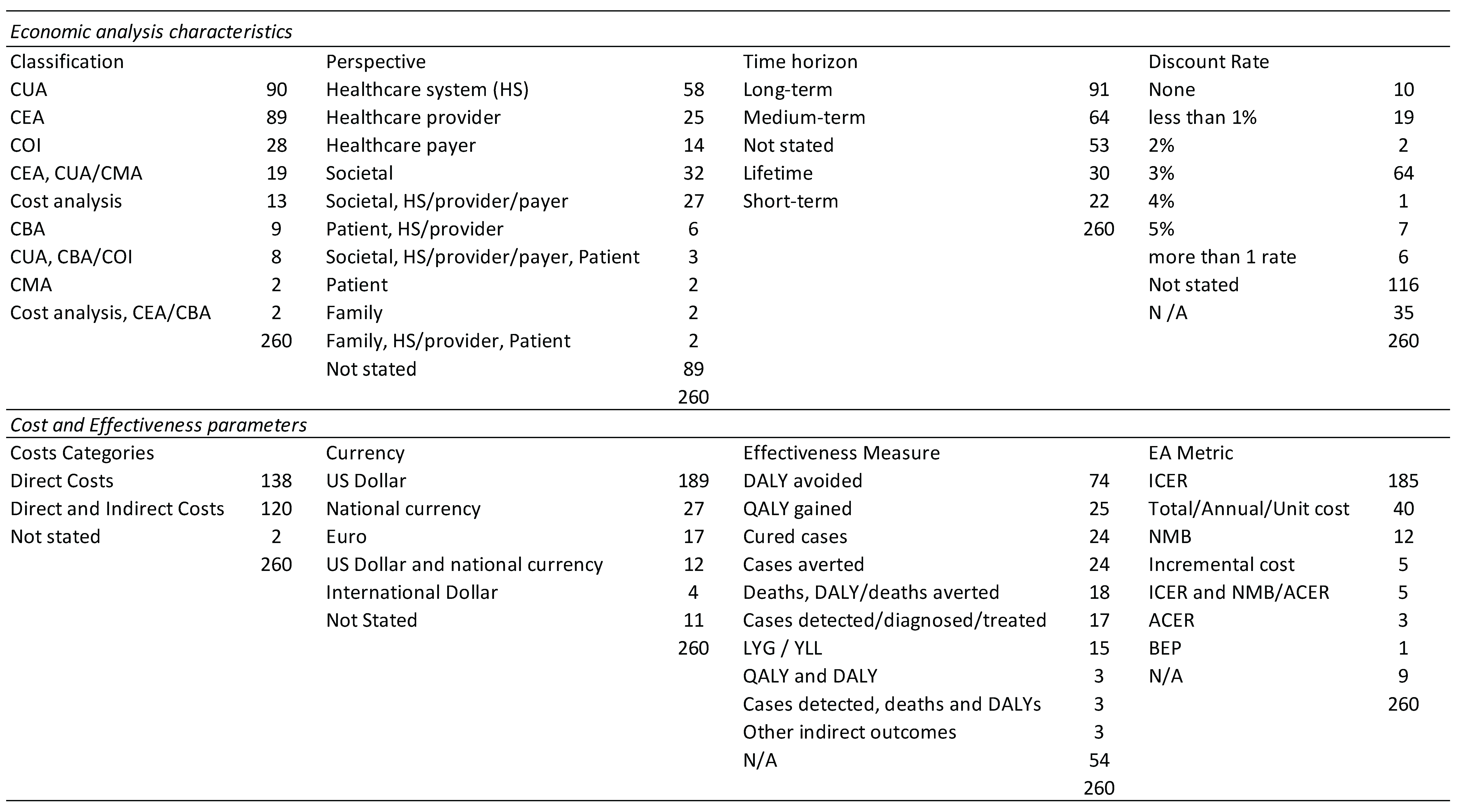 |
CUA:Cost-Utility Analysis; CEA:Cost-Effectiveness Analysis; COI:Cost-of-Illness; CMA:Cost-Minimization Analysis; CBA:Cost-Benefit Analysis. DALY:Disability-Adjusted Life Year; QALY:Quality-Adjusted Life Year; LYG:Life Year Gained; YLL:Years of Life Lost. ICER:Incremental Cost-Effectiveness Ratio; ACER:Average Cost-Effectiveness Ratio; NMB:Net Monetary Benefit.
Table 3.
- Methodological characteristics of economic analysis of NTDs (continue…).
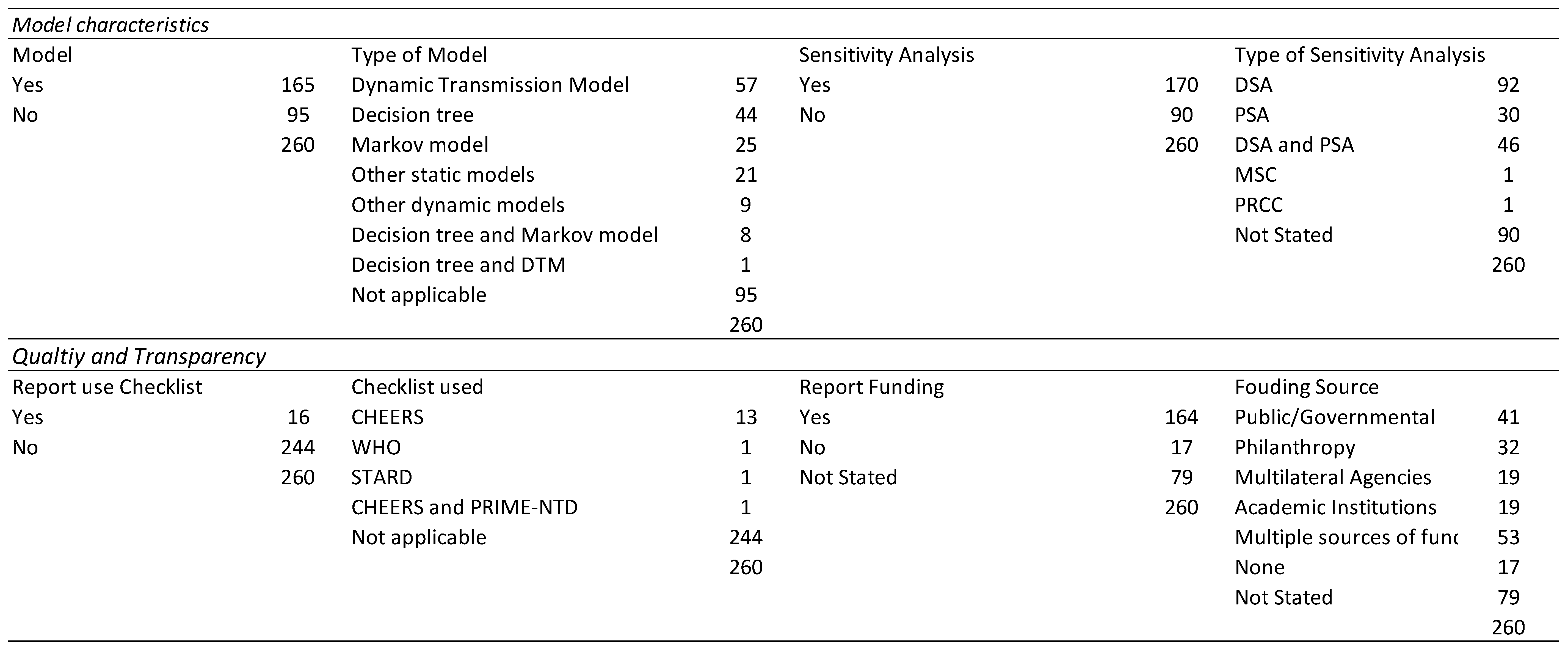 |
DSA:Deterministic Sensitivity Analysis; PSA:Probabilistic Sensitivity Analysis; CHEERS:Consolidated Health Economic Evaluation Reporting Standards; WHO:World Health Organization; STARD:Standards for Reporting Diagnostic Accuracy Studies.
Regarding the time horizon, most evaluations adopted a long-term horizon (n=91), followed by a medium-term horizon (n=64), while 53 studies did not specify this information. The most frequently used discount rate was 3% (n=64), in line with international recommendations for economic evaluations, although 116 studies did not report the rate employed.
Direct costs were considered in 138 studies, while 120 included both direct and indirect costs. The US dollar was the most frequently used currency (n=189), reflecting the predominance of studies published in international journals. As measures of effectiveness, disability-adjusted life years (DALYs averted) were the most frequent outcomes (n=74), followed by quality-adjusted life years (QALYs gained; n=25), cured cases (n=24), and averted cases (n=24). The Incremental Cost-Effectiveness Ratio (ICER) was the primary economic evaluation metric (n=185), highlighting its widespread use to support healthcare decision-making. Regarding model characteristics, 165 studies employed an analytical model; dynamic transmission models (n=57) and decision trees (n=44) were the most frequently used, followed by Markov models (n=25).
Sensitivity analysis was performed in 170 studies, with a predominance of deterministic sensitivity analysis (DSA; n=92), followed by a combination of deterministic and probabilistic analyses (n = 46). However, 90 studies did not report the type of sensitivity analysis used.
Regarding reporting quality and methodological transparency, only 16 studies stated that they used a checklist for development or reporting, with CHEERS being the most common (n=13). Most studies reported receiving funding (n=164), primarily from multiple sources (n=53), government institutions (n=41), and philanthropic organizations (n=32). However, 79 studies did not report on the funding source.
Overall, the results show a predominance of cost-utility and cost-effectiveness evaluations, with frequent use of ICER and DALYs as decision metrics. On the other hand, heterogeneity was observed in the reporting of fundamental methodological aspects—such as analytical perspective, time horizon, discount rate, and sensitivity analysis—indicating opportunities to improve transparency and standardization in economic evaluation studies concerning neglected tropical diseases.
3.3. Main Findings
When analyzing the temporal evolution of publications (Figure 3), it is observed that a significant increase in interest and funding for health economics has been applied to NTDs over the years. Most of the evidence (60%, n=157) was published in the last decade (2016–2026), contrasting sharply with the scarcity of studies in earlier periods, such as the decades of 1986–1995 (3%, n=8) and 1975–1985 (2%, n=4). However, we identified a growing trend over time.
From a geographical perspective (Figure 4), the studies reflect interventions implemented in 95 different countries. The African continent accounts for the largest geographical representation, hosting 35% of the evaluated countries (n=33), with a strong predominance of the West African sub-region (42%). Asia represents 23% of the global distribution of countries (n=22), followed by the Americas with 17% (n=16) and Oceania with 16% (n=15).
We also found that Brazil is the country with the highest number of economic evaluation studies (8%, n=27), followed by India (6%, n=21) and China (4%, n=13). Colombia, Mexico, and Tanzania follow, with an equal number of studies (3%, n=12).
The distribution of studies according to World Bank income classification illustrates disparities in the development of this research (Figure 5). Economic evaluations are primarily concentrated on upper-middle-income (28%, n=73) and lower-middle-income (27%, n=70) countries.
Bivariate analyses under the frequentist approach revealed no statistically significant association between the World Bank country income level and the historical publication periods ((\chi^2 = 5.011), df = 9, p = 0.833), suggesting that the low representation of low-income countries in NTD health economics research has remained stagnant over time.
Contrary to expectations, low-income countries—which often bear the heaviest burden of morbidity from NTDs—were the exclusive focus of only 10% (n=25) of the studies. Cross-referencing the publication period with income level (Figure 6) details how this research dynamic has historically evolved across different macroeconomic settings. Although, the graphic excluded studies with more than one country, countries are not classified by World Bank and not applicable (n=58). It also illustrates the sharp recent increase in publications (60% of the studies published in the 2016–2026 period).
Regarding clinical scope, NTDs of parasitic etiology dominate the analyzed literature, accounting for more than half of the studies (53%, n=139). Viral infections represent 34% (n=89) of publications, followed by a significantly smaller share of bacterial diseases (6%, n=16). The intersection between these etiological categories and the income classification of the nations where the studies were conducted can be observed in Figure 7.
Notably, disease etiology was strongly associated with both the type of health technology evaluated ((\chi^2 = 87.169), df = 18, p < 0.001) and the World Bank income classification ((\chi^2 = 39.089), df = 9, p < 0.001). Bivariate cross-tabulation indicated that parasitic disease evaluations dominate low-income settings, whereas viral disease studies are concentrated in middle-income countries with a predominant focus on preventive technologies.
From another perspective, when evaluating the nature of health technology investigated, prevention-oriented strategies were the primary focus of 50% of the analyses (n=131). Treatment alone was the subject of 25% (n=64) of publications, while diagnostic-only technologies accounted for 11% (n=28). Evaluations involving combinations of interventions (such as diagnosis combined with treatment) made up the remainder of the sample. Figure 8 cross-references the type of economic intervention with disease etiology, illustrating the patterns of technological response for each NTD category evaluated in the review.
Regarding the funding sources for the included economic evaluations, the analysis reveals a predominance of resources from government agencies and private philanthropic foundations. Most studies reported receiving funding (n=164), primarily from multiple sources (29%, n=53), This characterization of funding distribution is illustrated in Figure 9.
4. Discussion
This scoping review of economic evaluations for technologies addressing neglected tropical diseases reveals a scarcity of studies, geographic clustering, and a high prevalence of methodological flaws. These issues include short- to medium-term time horizons, reliance on surrogate outcomes, omitted sensitivity analyses, and poor adherence to reporting guidelines.
To our knowledge this is the first scoping review that included economic evaluations for all neglected tropical diseases, as classified by the World Health Organization. A previously published overview searched two databases - MEDLINE and Scientific Electronic Library Online (SciELO), using a strategy that selected six NTDs of interest: cutaneous leishmaniasis, Chagas disease, cysticercosis, filariasis, schistosomiasis and visceral leishmaniasis and found a scarcity of new technologies being economically assessed in few countries (10). Unfortunately, the present study, which considered a higher number of searched databases and all NTDs showed that this situation persists. Our findings highlight the challenges that must be addressed to prevent the systemic "neglect" of these diseases from extending to health technology assessments. Ultimately, the absence of high-quality economic evaluations could restrict access to new technologies, even if the barriers to their development are successfully overcome.
A key strength of our study is its inclusion of the full diversity of NTDs without filtering out specific disease subgroups. This approach allowed us to map the frequency of economic evaluations across individual diseases and generate the hypothesis that a 'gradient of neglect' exists in technological assessment. NTDs as a group are highly heterogeneous; notably, the five most frequently evaluated diseases in our included studies, dengue, rabies, schistosomiasis, leishmaniasis, and Chagas disease, are all viral or parasitic aetiology. This ranking may reflect pre-existing investments in technological development for diseases that pose significant public health concerns in specific settings. This is because economic evaluations typically represent a later phase of translational medicine, following initial research and development. Our results showed a tendency of growth in the number of economic evaluations on NTDs, especially in the last decade, but these studies remain insufficient and concentrated in certain diseases or geographic clusters. Low-income countries were underrepresented, which raises significant concerns.
Notably, in our results public and governmental funding, followed by philanthropic and third-sector sources, were the primary funding mechanisms, although mixed funding models were also frequently reported. A high frequency of studies reported funding (63%, n=164) even though considerable frequency 31% (n=79) did not specify their funding sources. A comprehensive review concluded that NTDs disproportionately affect individuals of low socio-economic status, creating a high disease burden that impacts the workforce and limits national economic growth (11). Therefore, increased funding for the economic evaluations of diagnostic and therapeutic technologies for NTDs is justified by its potential to enhance national development and economic activity.
Regarding the transparency and quality of methodological reporting, explicit statements of funding have shown a favourable trend over time, with the disclosure rate rising from 78% (2000–2009) to 86% (2010–2015) (12). However, specific analyses focused on low- and middle-income countries—such as the landscape of NTD research in Brazil—indicate that transparency in the detailed reporting of funding sources and conflicts of interest remains a key area requiring greater rigor and methodological improvement on the part of authors (10).
The ISPOR Task Force report establishes rigorous guidelines to enhance the robustness of cost-effectiveness studies based on clinical trials and decision modeling. ISPOR emphasizes that, since cost and effect estimates are derived from population samples, reporting sampling uncertainty is an essential methodological requirement (13). This should be done using confidence intervals for incremental cost-effectiveness ratios (ICERs), cost-effectiveness acceptability curves (CEACs), or intervals for net monetary benefit (NMB). However, the reporting of uncertainty remains neglected in our review, most studies lack robust probabilistic sensitivity analyses and rarely present acceptability curves. Similar gap was registered in the study of visceral leishmaniasis (14).
Assessments of NTDs predominantly used the DALY as outcome metrics in our review. However, the literature indicates that the DALY systematically underestimates the impact of chronic, non-fatal conditions (15). It fails to capture long-term daily pain, subtle impairments (such as chronic anemia and cognitive delay), or the synergistic effects of polyparasitism. ISPOR supports the harmonization of guidelines, and studies suggest shifting toward determining outcomes based on patient-reported quality of life (QALYs) obtained locally, thereby preventing health priorities for vulnerable populations living in extreme poverty from being undervalued in HTA.
Most evaluations of NTDs focus on the payer perspective (the healthcare system), ignoring the societal perspective. By excluding catastrophic direct non-medical costs (such as transportation, accommodation, and food) and indirect costs (loss of productivity for both patient and caregiver), these studies mask the true economic severity of NTDs, which often push poor families into the "medical poverty trap" (16).
Methodologically, most studies evaluate isolated, vertical interventions. However, recent literature—such as the successful integration of NTD case management in Liberia—demonstrates that fragmentation is inefficient (17). Integrating services into primary care reduces diagnostic costs by up to fivefold and treatment costs by up to tenfold compared to fragmented programs, generating economies of scope and scale that are highly recommended for optimizing scarce budgets. In our review, the quantitative assessment of integrated strategies for the management of certain NTDs appears only modestly, starting in the last two decades.
Our systematic review of 260 health economic evaluations in NTDs reveals a predominant reliance on static decision-analytical frameworks. Static models, such as standard decision trees and cohort Markov models, operate under the simplifying assumption of a constant force of infection, meaning they fail to capture the non-linear dynamics of transmission, host-vector-parasite ecology, and the continuous risk of reinfection in endemic environments (15). In the context of vector-borne infections like visceral leishmaniasis, this methodological choice represents an excessive simplification of the disease’s natural history, neglecting crucial biological feedbacks such as vector-host interactions and the development of drug resistance. By contrast, dynamic transmission models are essential to capture the indirect and non-linear effects of public health interventions. In environmentally transmitted NTDs like schistosomiasis, dynamic optimal control simulations demonstrate that combining mass drug administration (MDA) with environmental interventions (e.g., snail control) significantly reduces long-term dependency on MDA, showing that integrated strategies are highly cost-effective when adopting a long-term planning horizon—an epidemiological synergy that static models are mathematically blind to (18).
Furthermore, when evaluating transition policies from disease control to the elimination of transmission (EOT), as targeted for gambiense human African trypanosomiasis (gHAT) by 2030, dynamic frameworks are vital (19). Dynamic modeling under extended net-benefit frameworks allows policymakers to explicitly quantify the "elimination premium" and navigate end-game uncertainties, where per-case costs rapidly escalate as the disease reservoir shrinks. Therefore, to avoid misleading resource allocation, future economic evaluations in LMICs must transition from static linear assumptions toward dynamic transmission frameworks that fully reflect the ecological and socioeconomic realities of NTD transmission (18).
Among the positive aspects of the studies analyzed, it is worth noting that the majority consist of full economic evaluations (84%, n=218), whereas only 16% (n=42) are partial analyses. Regarding the clinical focus, diseases of parasitic etiology account for 53% (n=139) of the literature. As for the technological focus of the interventions, prevention strategies make up half (50%, n=131) of the publications, while treatment and diagnostics alone represents only 25% and 11%, respectively.
The economic evaluations included in this scoping review indicate that studies on Chagas disease remain a priority in the Americas. In contrast, African trypanosomiasis and onchocerciasis have been the focus of studies in Africa, while research on dengue exhibits a global pattern spanning all regions.
The need for a One Health approach linking human, animal, and environmental health is not a new approach (20), but the shift lies in a multisectoral effort targeting twenty neglected tropical diseases (NTDs) prioritized for eradication and elimination as a public health problem, as defined by the WHO roadmap for 2021–2030 (21). Successful integration requires three critical elements: good governance, adequate financing, and total community engagement (22).
However, even with governance-related approaches, the disease burden is observed to affect populations in developed and developing countries unequally. Research and development regarding new medicines, diagnostic tests, and technologies reflect this same disparity. Neglected diseases do not receive the same level of investment from the pharmaceutical industry, compared to the prospects for products targeting diseases with a global reach (3). Despite affecting over 1.7 billion people globally, NTDs receive less than 2% of pharmaceutical research and development investment (23). The lack of commercial market is the primary factor limiting the development of new drugs against neglected diseases. The innovation gap reflects national-level factors, such as health priorities, public procurement, research capacity, local innovation, and local production (24).
Gaps in public health are also observed in this same context. These gaps encompass access to supplies, medicines, and diagnostic tests; insufficient and inadequate services; limited coverage; and poor healthcare infrastructure. Regarding prevention, deficiencies are observed in surveillance, case detection, and integrated disease control programs, thereby perpetuating cycles of disease transmission and health inequity (25).
Market failures, insufficient innovation in the development of new medicines and diagnostics and weakened public health implementation systems represent the challenges facing the ecosystem for controlling and reducing the burden of neglected tropical diseases (NTDs). Adequate funding must address the three gaps to ensure the performance of strategies for neglected tropical diseases (NTDs).
5. Limitations
An intrinsic limitation of this scoping review stems from the extreme clinical, etiological, and technological heterogeneity characterizing the Neglected Tropical Diseases (NTDs) evaluated. Grouping conditions with such distinct natural histories—encompassing acute, lethal infections (such as rabies), seasonal viral diseases (such as dengue), and chronic, debilitating parasitic morbidities (such as Chagas disease and leishmaniasis)—under a single protocol poses substantial interpretive challenges. This epidemiological diversity translates into intervention technologies of vastly different natures, ranging from mass drug administration campaigns (chemoprevention) to rapid diagnostic tests and highly individualized clinical treatment regimens. Furthermore, the coexistence of various forms of economic evaluation (cost-effectiveness, cost-utility, cost-benefit, and cost-minimization analyses)—which measure outcomes in disparate units (such as cured cases, averted deaths, QALYs, or DALYs)—precludes any attempt at quantitative data consolidation or meta-analysis.
From a macroeconomic perspective, health economic evaluations are, by definition, strictly context-dependent. The studies included in this review reflect the epidemiological and financial realities of 95 different countries, characterized by deeply heterogeneous health systems, relative input prices, local currencies, and medical practice patterns (26). As widely documented in ISPOR guidelines on the transferability of economic data, crucial analytical parameters—such as delivery costs, local professional wages, and distribution logistics in remote areas—are not interchangeable across jurisdictions, even when they share the same World Bank income classification (13). Similarly, local biological determinants—including the baseline prevalence of each infection, the intensity of vector-borne transmission, and community-level polyparasitism—directly modulate actual clinical efficacy and final cost-effectiveness estimates. Attempting to establish a single cost-effectiveness outcome or a global "average" threshold for NTDs would introduce an overgeneralization bias, leading to flawed public health decisions that are misaligned with local contexts (26).
Consequently, this multidimensional heterogeneity precludes the establishment of direct causal statistical associations between extracted variables (such as disease etiology, a country's income level, and study design) and estimated economic efficiency. The incremental cost-effectiveness ratio (ICER) is not an intrinsic physical property of medical technology; rather, it represents a dynamic, non-linear relationship among the technology being evaluated, the local epidemiological transmission ecosystem, and the macroeconomic organization of the recipient health system. Acknowledging that the generalization and transferability of economic evidence are constrained by these contextual factors is both an imperative for scientific transparency and a fundamental premise for guiding decision-making in Health Technology Assessment (HTA) (13).
6. Conclusions
In summary, this scoping review reveals that despite a growth in the volume of economic evaluations for Neglected Tropical Diseases (NTDs) over the last decade, literature remains scarce, fragmented, and geographically concentrated. A clear macroeconomic imbalance persists, wherein low-income countries, which bear the highest epidemiological and social burden of these conditions, remain severely underrepresented in health economic research. This landscape perpetuates chronic market and innovation failures, reflected in the fact that NTDs receive less than 2% of global pharmaceutical research and development investment. Therefore, directing public and philanthropic funding toward local economic evaluations in extremely impoverished settings is essential to foster national development, enhance economic activity, and ensure equitable access to new health technologies.
From a methodological perspective, the review exposes a lack of sensitivity analyses. This absence undermines the reliability of the studies' results by failing to explore uncertainties in the model results. Furthermore, applying rigorous reporting guidelines—such as the ISPOR Task Force report and the CHEERS statement—alongside the transparent disclosure of funding and conflicts of interest, will be decisive in advancing future HTA research and translating robust economic evidence into sustainable, equitable public policies across low- and middle-income countries.
By mapping the global landscape and identifying key methodological and geographical gaps, this review provides valuable insights for health economists, policymakers, and researchers striving to optimize health technology assessments and funding strategies for NTD elimination.
Supplementary Materials
The following supporting information can be downloaded at the website of this paper posted on Preprints.org.
Author Contributions
CPRC, RCRA and RC conceived and designed the study protocol; RCRA, MPSR and CPRC contributed to data collection, data analysis and interpretation; CPRC, RC and FTSE drafted the manuscript; MPSR, RC and FTSE contributed to critical revision of the manuscript. All authors approved the final version of the manuscript.
Funding
This review did not receive funding.
Institutional Review Board Statement
Not applicable.
Informed Consent Statement
Not applicable.
Data Availability Statement
Not applicable.
Acknowledgments
Cooperation Project for training in Health Technology Assessment (Gereb 010/Fio24). Fiocruz Brasília and the Ministry of Health.
Conflicts of Interest
There is no conflict of interest to declare.
Artificial Intelligence Statement: Gemini AI (version 5.0) was used in May 2026, employing structured prompts (see supplementary material) to extract data for specific variables. The tool does not replace human critical judgment; AI served solely as a technical assistant. To mitigate bias and hallucinations, the information generated was cross-checked by researchers against the original articles to prevent the inclusion of falsified data or fabricated references, and to avoid overlooking algorithmic biases.
References
- World Health Organization. The Global Health Observatory. Neglected tropical diseases [Internet]. [citado 26 de agosto de 2026]. 2026. Available online: https://www.who.int/data/gho/data/themes/neglected-tropical-diseases.
- Bangert, M.; Molyneux, D.H.; Lindsay, S.W.; Fitzpatrick, C.; Engels, D. The cross-cutting contribution of the end of neglected tropical diseases to the sustainable development goals. Infect Dis Poverty. dezembro de 2017;6(1):73. [CrossRef] [PubMed]
- Porto, C.F.; Médicis, M.C.; Mônica, D. Health Universal Access and Innovation: the Triple Helix Approach in Action. Procedia-Soc. Behav. Sci. 2012, 52, 236–45. [Google Scholar] [CrossRef]
- The Lancet Global Health. Taking the neglected out of neglected tropical diseases. Lancet Glob. Health fevereiro de 2020, 8(2), e152. [Google Scholar] [CrossRef] [PubMed]
- Peters, M.D.J.; Marnie, C.; Tricco, A.C.; Pollock, D.; Munn, Z.; Alexander, L.; et al. Updated methodological guidance for the conduct of scoping reviews. JBI Evid. Synth. outubro de 2020, 18(10), 2119–26. [Google Scholar] [CrossRef] [PubMed]
- Tricco, A.C.; Lillie, E.; Zarin, W.; O’Brien, K.K.; Colquhoun, H.; Levac, D.; et al. PRISMA Extension for Scoping Reviews (PRISMA-ScR): Checklist and Explanation. Ann. Intern Med. 2 de outubro de 2018, 169(7), 467–73. [Google Scholar] [CrossRef] [PubMed]
- de Cássia Ribeiro de Albuquerque, R.; da Silva Rodrigues, M.P.; Elias, F.T.S.; Castro, R.; Casas, C.N.P.R. Economic evaluations of interventions for the prevention, diagnosis, and treatment of neglected tropical diseases. [Internet]; 2026. [Google Scholar] [CrossRef]
- World Health Organization. Global report on neglected tropical diseases 2025: Stronger together, towards 2030. [Internet]. 2025. Available online: https://www.who.int/teams/control-of-neglected-tropical-diseases/global-report-on-neglected-tropical-diseases-2025.
- Page, M.J.; McKenzie, J.E.; Bossuyt, P.M.; Boutron, I.; Hoffmann, T.C.; Mulrow, C.D.; et al. The PRISMA 2020 statement: an updated guideline for reporting systematic reviews. BMJ. 29 de março de 2021, n71. [Google Scholar] [CrossRef] [PubMed]
- Assis, T.M.D.; Rabello, A.; Cota, G. Economic evaluations addressing diagnosis and treatment strategies for neglected tropical diseases: an overview. Rev. Inst. Med. Trop. São Paulo 2021, 63, e41. [Google Scholar] [CrossRef] [PubMed]
- Ca, J.; Kumar, P. V.B.; Kandi, V.; N, G.; K, S.; Dharshini, D.; et al. Neglected Tropical Diseases: A Comprehensive Review. Cureus 9 de fevereiro de 2024. [Google Scholar] [CrossRef] [PubMed]
- Neumann, P.J.; Thorat, T.; Zhong, Y.; Anderson, J.; Farquhar, M.; Salem, M.; et al. A Systematic Review of Cost- Effectiveness Studies Reporting Cost-per-DALY Averted. PLoS One. 2016;11(12):e0168512–e0168512. Located at: rayyan-485003976. [CrossRef] [PubMed]
- McGhan, W.F.; Al, M.; Doshi, J.A.; Kamae, I.; Marx, S.E.; Rindress, D. The ISPOR Good Practices for Quality Improvement of Cost-Effectiveness Research Task Force Report. Value Health novembro de 2009, 12(8), 1086–99. [Google Scholar] [CrossRef] [PubMed]
- Marinho, D.S.; Casas, C.N.P.R.; Pereira, C.C.D.A.; Leite, I.C. Health Economic Evaluations of Visceral Leishmaniasis Treatments: A Systematic Review. PLoS Negl. Trop. Dis. 27 de fevereiro de 2015, 9(2), e0003527. [Google Scholar] [CrossRef] [PubMed]
- King, C.H.; Bertino, A.M. Asymmetries of Poverty: Why Global Burden of Disease Valuations Underestimate the Burden of Neglected Tropical Diseases. PLoS Negl. Trop. Dis. 26 de março de 2008, 2(3), e209. [Google Scholar] [CrossRef] [PubMed]
- Conteh, L.; Engels, T.; Molyneux, D.H. Socioeconomic aspects of neglected tropical diseases. The Lancet janeiro de 2010, 375(9710), 239–47. [Google Scholar] [CrossRef] [PubMed]
- Godwin-Akpan, T.G.; Diaconu, K.; Edmiston, M.; Smith, J.S.; Sosu, F.; Weiland, S.; et al. Assessing the costeffectiveness of integrated case management of Neglected Tropical Diseases in Liberia. BMC Health Serv Res. 2023;23(1):705–705. Located at: rayyan-485003656. [CrossRef] [PubMed]
- Castonguay, F.M.; Sokolow, S.H.; De Leo, G.A.; Sanchirico, J.N. Cost-effectiveness of combining drug and environmental treatments for environmentally transmitted diseases. Proc. R Soc. B Biol. Sci. 26 de agosto de 2020, 287(1933), 20200966. [Google Scholar] [CrossRef] [PubMed]
- Antillon, M.; Huang, C.I.; Rock, K.S.; Tediosi, F. Economic evaluation of disease elimination: An extension to the net-benefit framework and application to human African trypanosomiasis. Proc. Natl. Acad. Sci. 14 de dezembro de 2021, 118(50), e2026797118. [Google Scholar] [CrossRef] [PubMed]
- Díaz, A.V.; Walker, M.; Webster, J.P. Reaching the World Health Organization elimination targets for schistosomiasis: the importance of a One Health perspective. Philos. Trans. R Soc. B 9 de outubro de 2023, 378(1887), 20220274. [Google Scholar] [CrossRef] [PubMed]
- Casulli, A. New global targets for NTDs in the WHO roadmap 2021–2030. PLoS Negl. Trop. Dis. 13 de maio de 2021, 15(5), e0009373. [Google Scholar] [CrossRef] [PubMed]
- Banda, G.T.; Deribe, K.; Davey, G. How can we better integrate the prevention, treatment, control and elimination of neglected tropical diseases with other health interventions? A systematic review. BMJ Glob. Health outubro de 2021, 6(10), e006968. [Google Scholar] [CrossRef] [PubMed]
- Sanchez, J.D. The pharmaceutical industry’s multifaceted role in neglected tropical disease control: from market failure to global health innovation. Trop. Med. Health 24 de abril de 2026, 54(1), 84. [Google Scholar] [CrossRef] [PubMed]
- Chamas, C.; Malheiros Barbeitas, M.; Correa, M.; Kameda, K.; Dias De Oliveira, A.C.; Villarinho, L. Innovation in diagnostics: addressing gaps in low- and middle-income countries. Bull. World Health Organ 1o de agosto de 2022, 100(8), 467–467A. [Google Scholar] [CrossRef] [PubMed]
- Donadeu, M.; Gyorkos, T.W.; Horstick, O.; Lammie, P.; Mwingira, U.J.; Omondi, W.P.; et al. Tracking progress along the WHO Neglected Tropical Diseases Road Map to 2030: A guide to the Gap Assessment Tool (GAT) and results from the 2023–2024 assessment. Mugisha L, organizador. PLoS Negl Trop Dis. 1o de julho de 2025;19(7):e0013194. [CrossRef] [PubMed]
- Do, L.A.; Synnott, P.G.; Ma, S.; Ollendorf, D.A. Bridging the gap: aligning economic research with disease burden. BMJ Glob. Health junho de 2021, 6(6), e005673. [Google Scholar] [CrossRef] [PubMed]
Figure 1.
The selection process following PRISMA diagram (9).
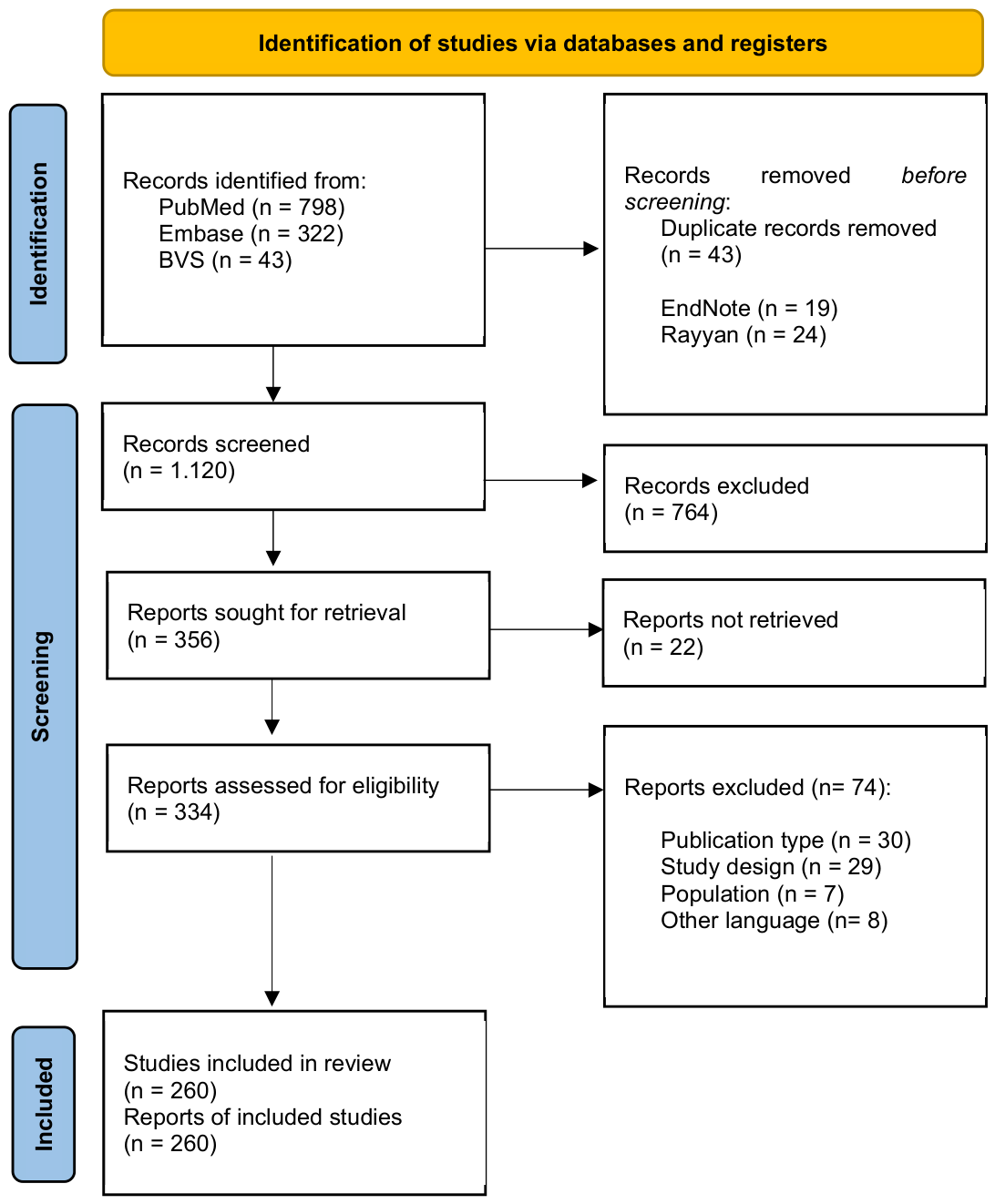
Figure 2.
- Key methodological aspects of Economic Analysis published on NTDs.
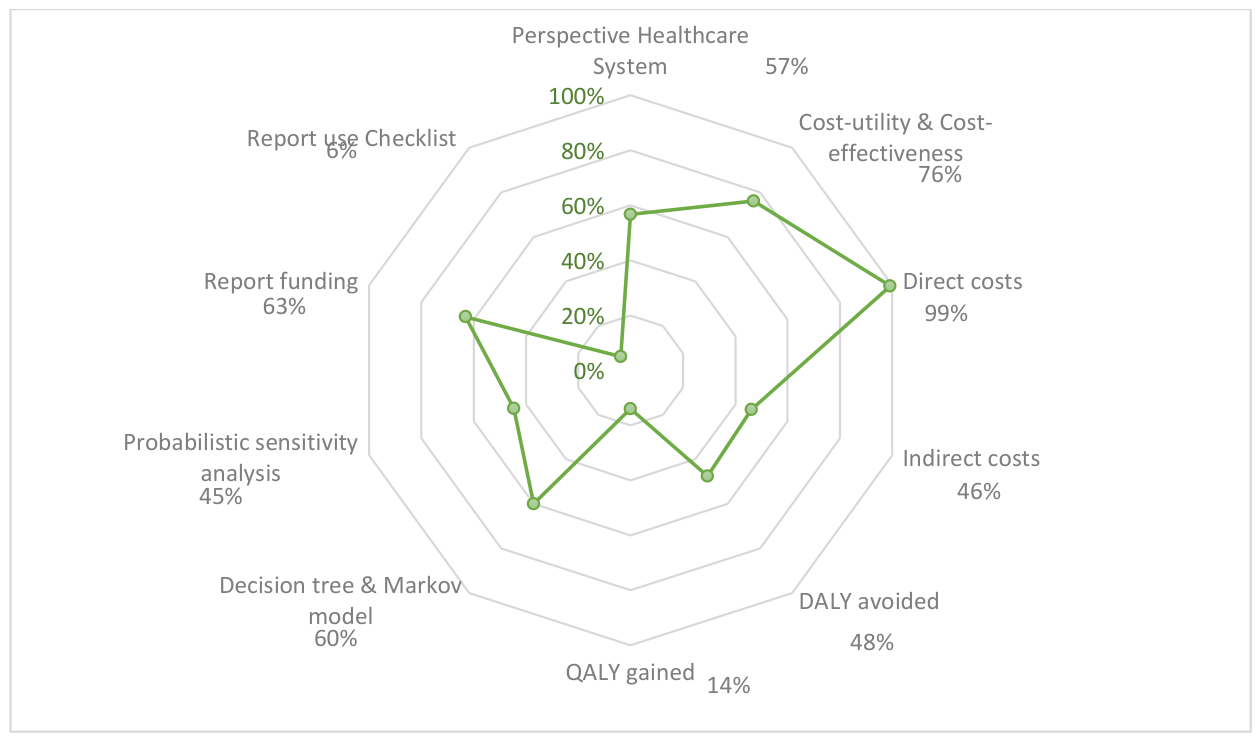
Figure 3.
– Number of Economic Analysis published on NTDs across years.
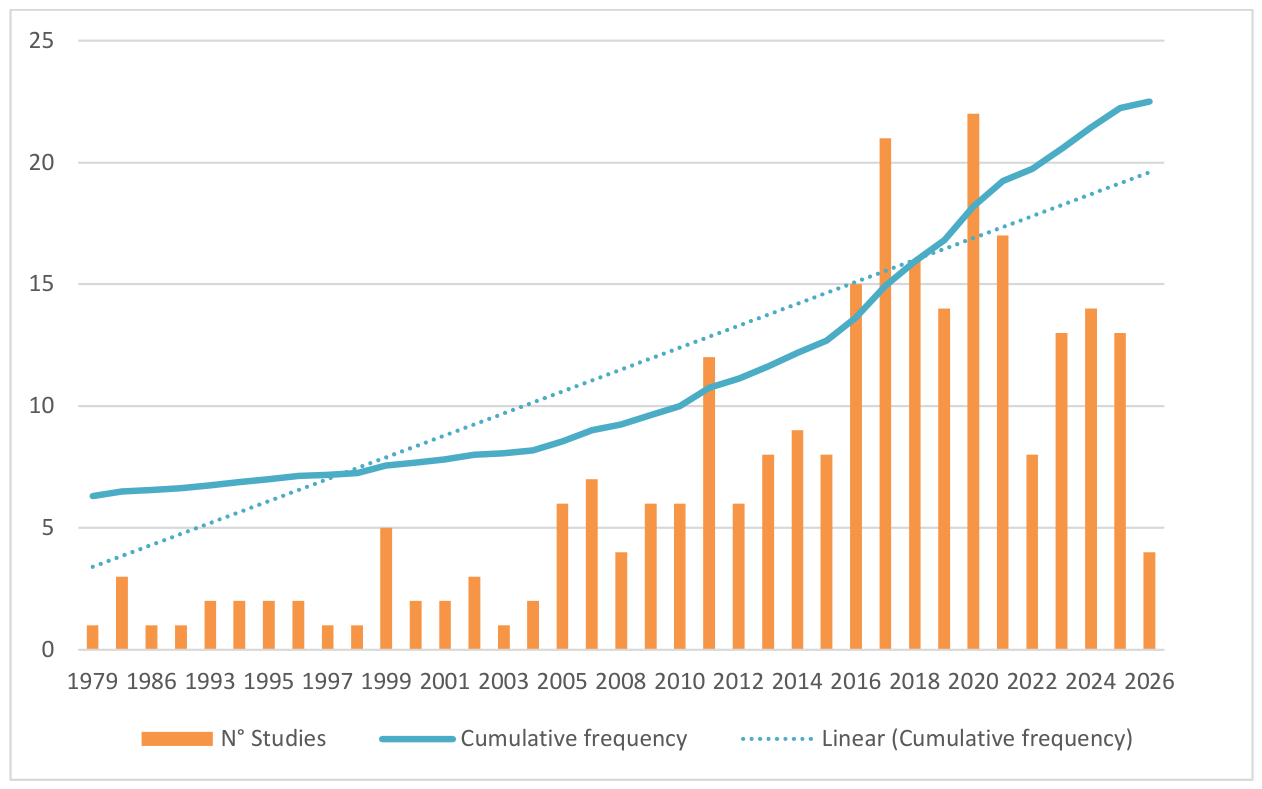
Figure 4.
– Geographic distribution of Economic Analysis on NTDs.
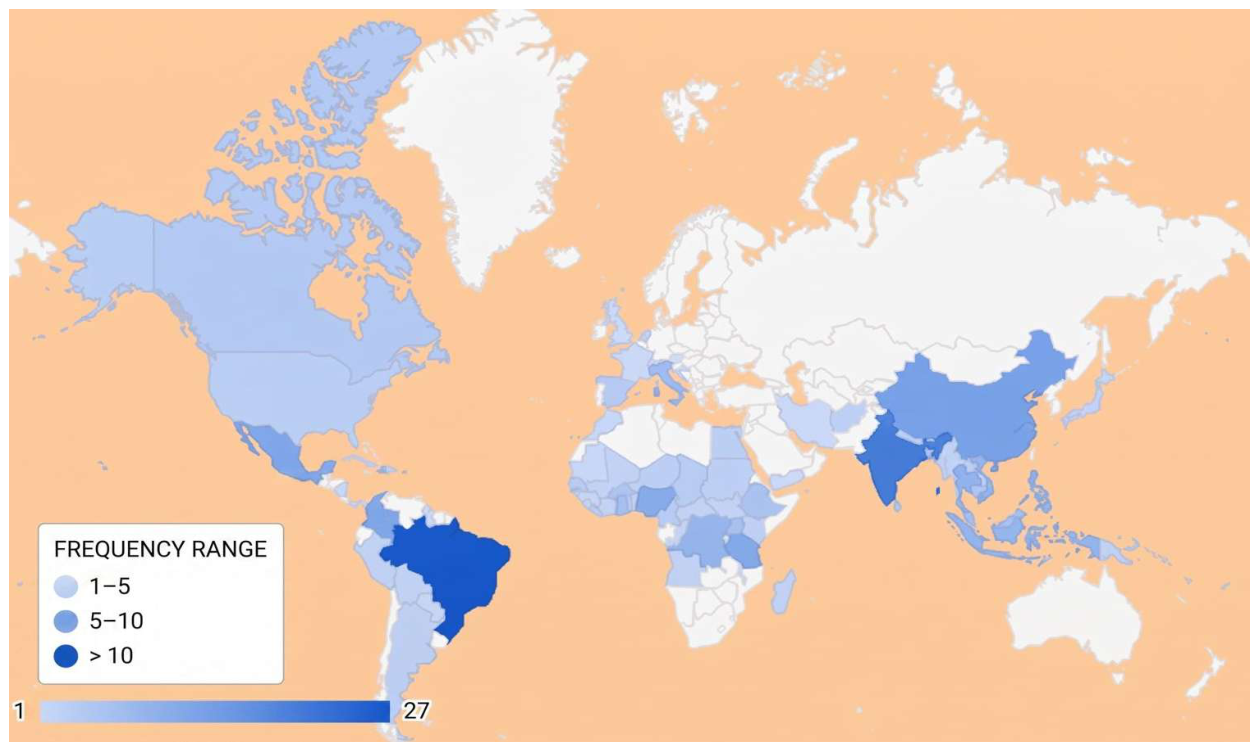
Figure 5.
– Number of Countries with Economic Analysis on NTDs by country income level.
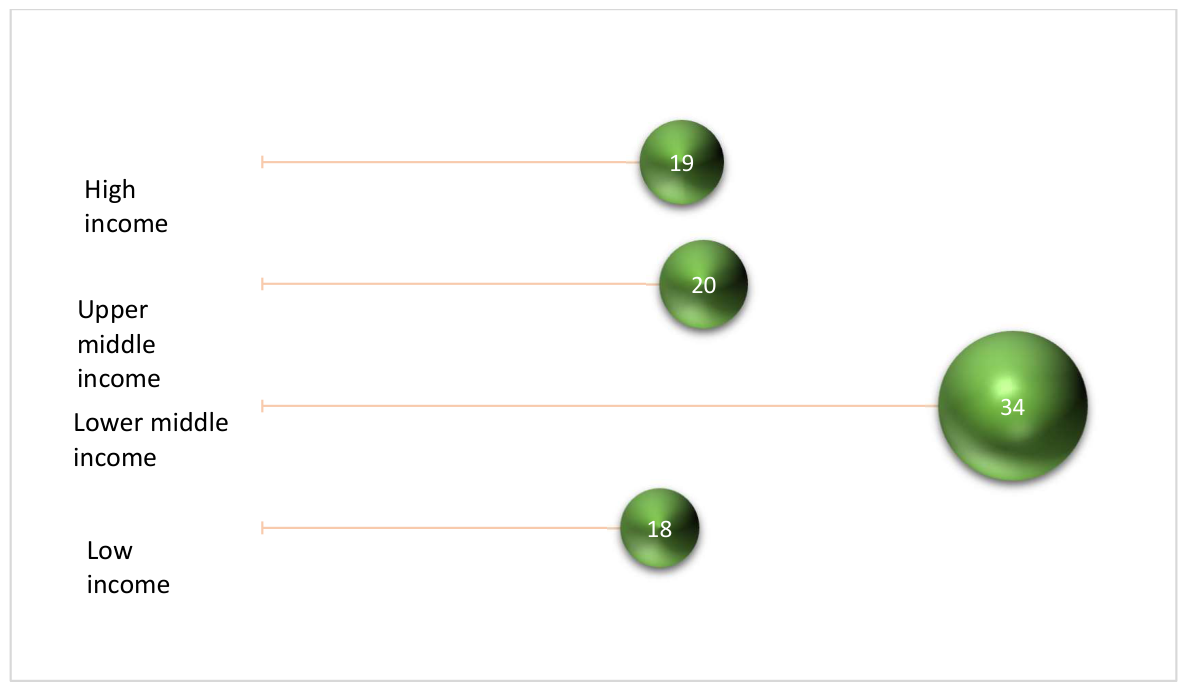
Figure 6.
- Economic Analysis of NTDs by period and country income level. *Until March 2026.
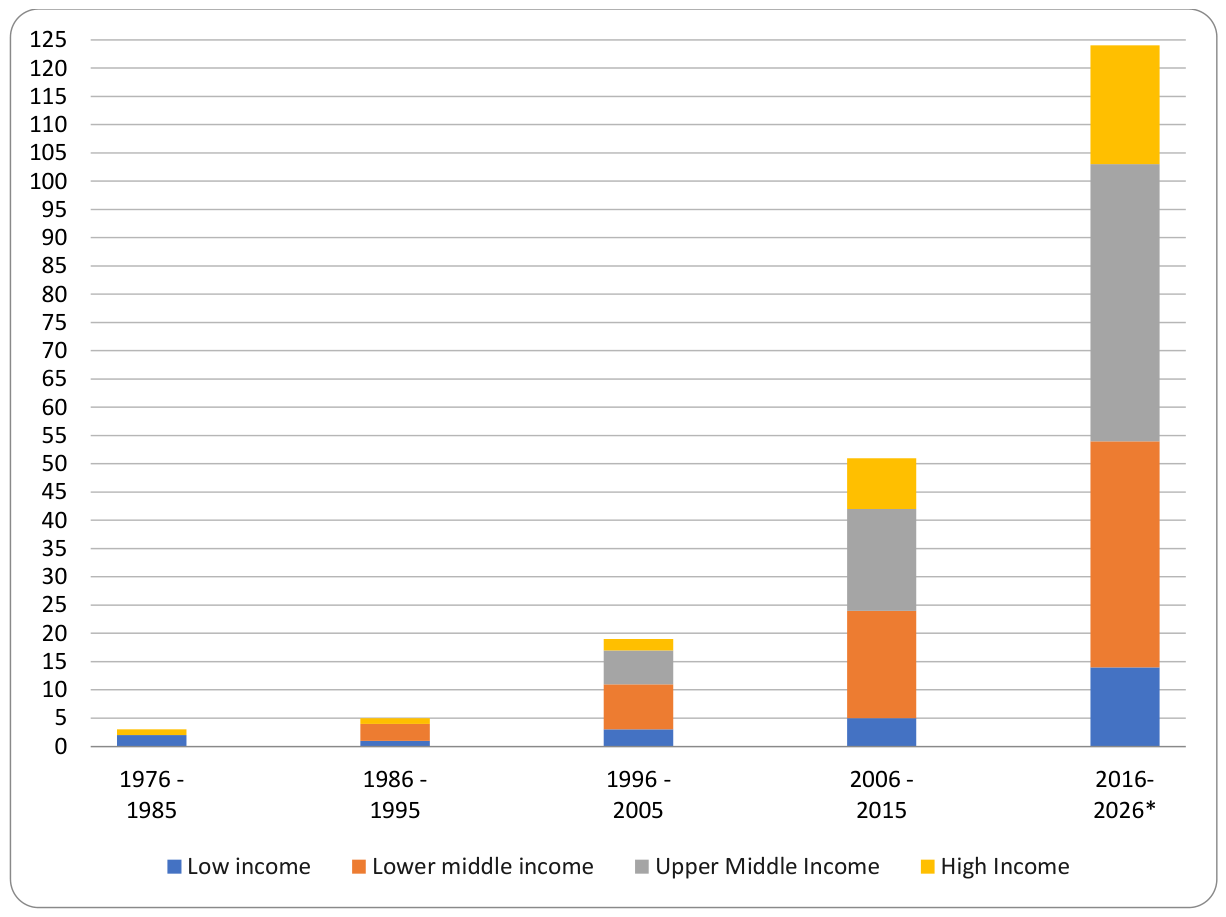
Figure 7.
- Economic Analysis of NTDs by disease etiology and country income level.
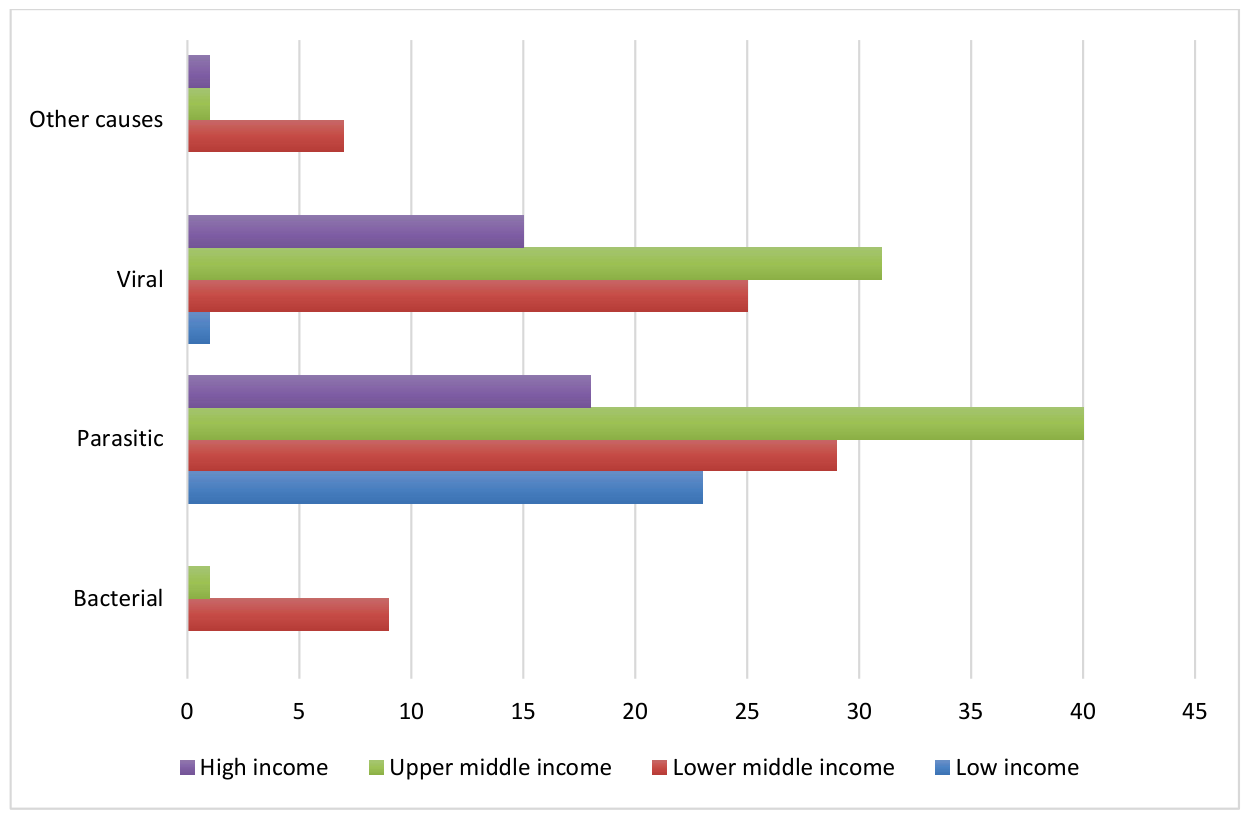
Figure 8.
- Economic Analysis of NTDs by disease etiology and intervention type.
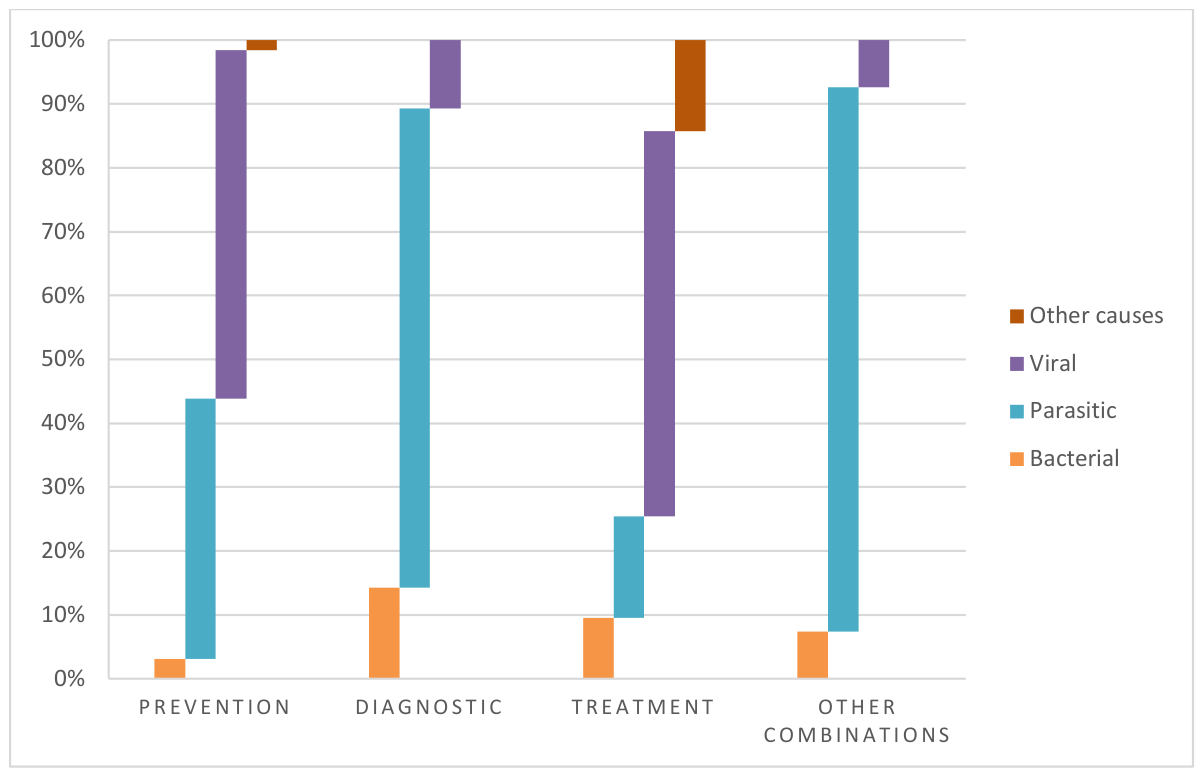
Figure 9.
- Economic Analysis of NTDs by source of funding.
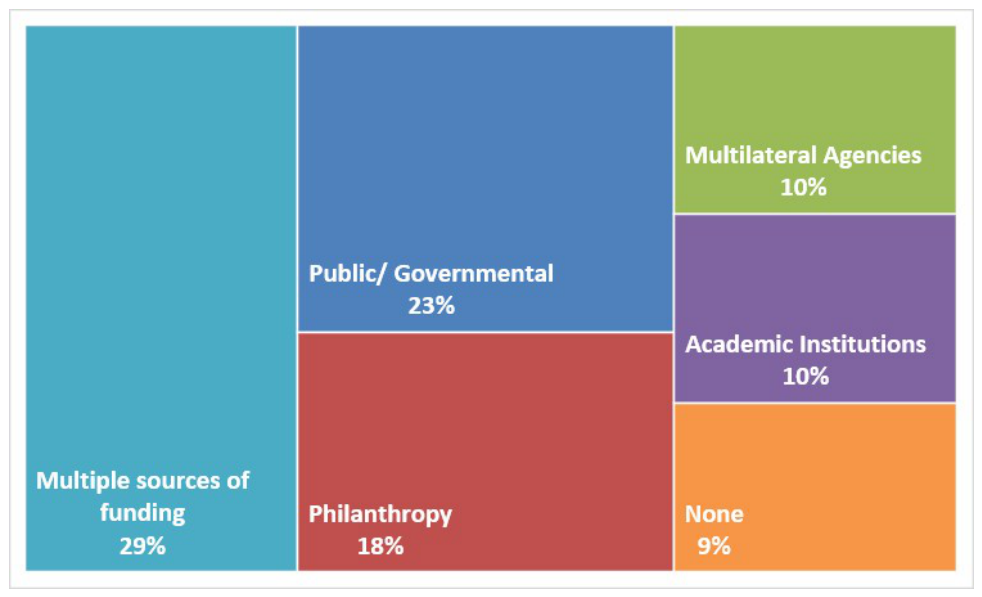
Table 1.
- Characteristics of economic analyses of NTDs.
| Characteristics | n | % |
|---|---|---|
| Countries (Region/Sub Region)* | ||
| Africa | 33 | 34,74% |
| North | 3 | 9,09% |
| East | 9 | 27,27% |
| West | 14 | 42,42% |
| Central | 7 | 21,21% |
| Asia | 22 | 23,16% |
| South | 8 | 36,36% |
| East | 2 | 9,09% |
| Southeast | 11 | 50,00% |
| West/Middle East | 1 | 4,55% |
| Americas | 16 | 16,84% |
| South America | 7 | 43,75% |
| Central America | 3 | 18,75% |
| North America | 2 | 12,50% |
| Caribbean | 4 | 25,00% |
| Oceania | 15 | 15,79% |
| Melanesia | 4 | 26,67% |
| Micronesia | 3 | 20,00% |
| Polynesia | 8 | 53,33% |
| Europe | 9 | 9,47% |
| North | 2 | 22,22% |
| West | 4 | 44,44% |
| South | 3 | 33,33% |
| Year | ||
| 2016-2026** | 157 | 60,38% |
| 2006-2016 | 66 | 25,38% |
| 1996-2005 | 25 | 9,62% |
| 1986-1995 | 8 | 3,08% |
| 1975-1985 | 4 | 1,54% |
| World Bank Income Level | ||
| Upper Middle Income | 73 | 28,08% |
| Lower middle income | 70 | 26,92% |
| High Income | 34 | 13,08% |
| Not applicable | 28 | 10,77% |
| Low income | 25 | 9,62% |
| more than one | 26 | 10,00% |
| Not classified | 4 | 1,54% |
| Disease catergory | ||
| Parasitic | 139 | 53,46% |
| Viral | 89 | 34,23% |
| Bacterial | 16 | 6,15% |
| Other causes | 12 | 4,62% |
| Fungal | 0 | 0,00% |
| more than one type | 4 | 1,54% |
| Intervention type | ||
| Prevention | 131 | 50,38% |
| Treatment | 64 | 24,62% |
| Diagnostic | 28 | 10,77% |
| Treatment and diagnostic | 12 | 4,62% |
| Treatment and prevention | 11 | 4,23% |
| Diagnostic and prevention | 3 | 1,15% |
| Treatment, prevention and diagnostic | 3 | 1,15% |
| Not applicable | 8 | 3,08% |
| Type Economic Evaluation | ||
| Complete | 218 | 83,85% |
| Partial | 42 | 16,15% |
| (*) Number of countries: 95 | ||
| (**) Until march 2026 |
Table 2.
- Neglected Tropical Diseases included in economic analyses.
| WHO NTD | n | Etiology |
|---|---|---|
| Dengue | 51 | Viral |
| Rabies | 36 | Viral |
| Schistosomiasis | 30 | Parasitic |
| Leishmaniasis | 25 | Parasitic |
| Chagas disease | 18 | Parasitic |
| Helminthiasis | 17 | Parasitic |
| Lymphatic filariasis | 17 | Parasitic |
| African Trypanosomiasis | 13 | Parasitic |
| Echinococcosis | 12 | Parasitic |
| Leprosy | 11 | Bacterial |
| Onchocerciasis | 9 | Parasitic |
| Snakebite | 9 | Other causes |
| Chikungunya | 6 | Viral |
| Trachoma | 6 | Bacterial |
| Taeniasis | 5 | Parasitic |
| Scabies | 3 | Other causes |
| Yaws | 3 | Bacterial |
| Buruli ulcer | 2 | Bacterial |
| Hookworm (Ancylostoma) | 2 | Parasitic |
| Trematodíase (clonorquíase) | 2 | Parasitic |
| Dracunculiasis | 1 | Parasitic |
| Foodborne trematodiases | 1 | Parasitic |
| Podoconiosis | 1 | Other causes |
| Strongyloidiasis | 1 | Parasitic |
Disclaimer/Publisher’s Note: The statements, opinions and data contained in all publications are solely those of the individual author(s) and contributor(s) and not of MDPI and/or the editor(s). MDPI and/or the editor(s) disclaim responsibility for any injury to people or property resulting from any ideas, methods, instructions or products referred to in the content. |
© 2026 by the authors. Licensee MDPI, Basel, Switzerland. This article is an open access article distributed under the terms and conditions of the Creative Commons Attribution (CC BY) license.
Copyright: This open access article is published under a Creative Commons CC BY 4.0 license, which permit the free download, distribution, and reuse, provided that the author and preprint are cited in any reuse.