

Submitted:
04 September 2026
Posted:
07 September 2026
You are already at the latest version
Preprints on COVID-19 and SARS-CoV-2
Abstract
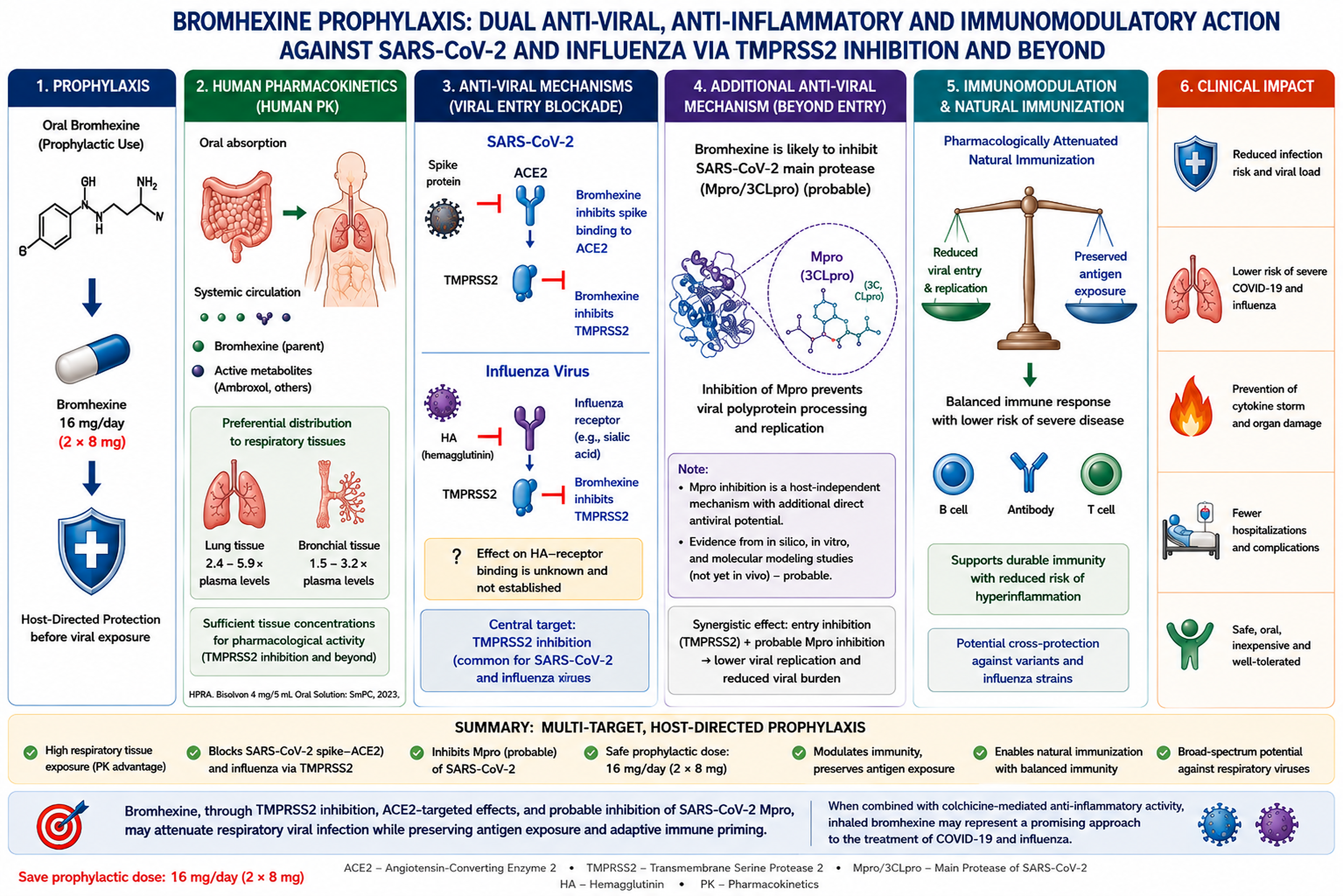
Background: Bromhexine hydrochloride (BRH) has been proposed to functionally inhibit the host serine protease TMPRSS2, a key mediator of viral entry for SARS-CoV-2, influenza A and B viruses, and other respiratory viruses that depend on TMPRSS2-mediated proteolytic activation. Emerging evidence suggests that the antiviral activity of BRH against SARS-CoV-2 may extend beyond TMPRSS2 inhibition. BRH may interfere with spike–ACE2 interaction through ACE2-targeted mechanisms, while preliminary molecular and computational evidence suggests probable inhibition of the SARS-CoV-2 main protease (Mpro/3CLpro), potentially affecting viral polyprotein processing and replication. Thus, BRH may exert a three-pronged antiviral effect against SARS-CoV-2—interference with spike–ACE2 binding, inhibition of TMPRSS2-dependent viral entry, and probable inhibition of Mpro/3CLpro-dependent viral replication. Rather than completely preventing infection, such multimodal pharmacological attenuation may reduce viral entry and amplification while preserving sufficient antigen exposure for adaptive immune priming. This strategy may be particularly relevant to personalized prevention according to individual susceptibility, comorbidities, exposure risk, and vulnerability to severe respiratory infection. Methods and Clinical Observations: We describe a 72-year-old man who had received no SARS-CoV-2 vaccination 2021 and had been taking BRH prophylactically (8 mg twice daily) for approximately two weeks before an incidentally diagnosed SARS-CoV-2 infection. The infection remained clinically inapparent apart from mild throat irritation. Despite the absence of clinically significant disease, he developed a robust humoral immune response, with an anti-spike antibody concentration of 2,080 BAU/mL three months after infection and persistent anti-spike IgG reactivity nine months later (Vircell anti-S IgG ratio 22.209). A parallel household observation involved his 71-year-old wife, who had multiple established risk factors for severe COVID-19, including chronic obstructive pulmonary disease, previous pancreaticoduodenectomy for pancreatic cancer, severe underweight, and a long history of heavy smoking. Despite continuous BRH prophylaxis and presumed household exposure, she remained clinically asymptomatic while demonstrating measurable anti-spike immune reactivity. Additional real-world observations from individuals receiving prolonged BRH prophylaxis—including elderly patients with multiple comorbidities, heavy smokers, and a child receiving seasonal prophylaxis—were characterized by favorable tolerability and absent or markedly attenuated clinically apparent COVID-19 and influenza. Hypothesis and Conclusions: These observations support the hypothesis of Pharmacologically Attenuated Natural Immunization (PANI), whereby pharmacological attenuation of infection reduces viral entry and subsequent amplification sufficiently to limit tissue injury and clinically significant disease without necessarily producing sterilizing protection, thereby preserving antigen presentation and adaptive immune priming. In SARS-CoV-2 infection, the proposed three-pronged activity of BRH—targeting spike–ACE2 interaction, TMPRSS2-dependent entry, and potentially Mpro/3CLpro-dependent replication—provides a mechanistic framework for such controlled attenuation. For influenza, the principal proposed mechanism remains inhibition of TMPRSS2-dependent hemagglutinin activation. Within a personalized medicine framework, this concept raises the possibility of tailoring host-directed prophylaxis according to individual risk profiles. The observations presented here are hypothesis-generating and do not establish causality. Prospective controlled studies incorporating documented viral exposure, serial quantitative virological assessment, neutralizing antibody measurements, cellular immune profiling, and predefined risk stratification are required to determine whether BRH can reproducibly achieve infection sufficient for immune priming but pharmacologically constrained below the threshold for clinically significant disease.
Keywords:
Bromhexine
; TMPRSS2
; ACE2
; Mpro/3CLpro
; SARS-CoV-2
; influenza
; pharmacologically attenuated natural immunization
; host-directed antiviral therapy
; personalized prevention
; immune priming
; respiratory viruses
1. Introduction
Recent comprehensive reviews identify transmembrane serine protease 2 (TMPRSS2) as a major host dependency factor exploited by SARS-CoV-2 and influenza viruses and highlight its potential as a broad-spectrum host-directed antiviral target. Importantly, inhibition of TMPRSS2 does not necessarily abolish viral entry, because alternative protease-dependent entry pathways remain available. This provides a mechanistic rationale for strategies aimed at attenuating, rather than completely preventing, viral infection [1,2,3].
Bromhexine hydrochloride (BRH) has traditionally been considered a functional inhibitor of the host serine protease TMPRSS2, which facilitates viral entry into respiratory epithelial cells and is involved in the activation of both SARS-CoV-2 spike protein and influenza virus hemagglutinin [4,5,6]. However, emerging evidence suggests that the antiviral activity of BRH may extend beyond TMPRSS2 inhibition. Recent experimental and computational studies indicate that BRH may interfere with the interaction between the SARS-CoV-2 spike protein and its ACE2 receptor through ACE2-targeted mechanisms [7,8,9]. In addition, preliminary molecular and computational evidence suggests that BRH may inhibit the SARS-CoV-2 main protease (Mpro/3CLpro), potentially affecting viral polyprotein processing and replication [10,11,12,13]. Thus, BRH may exert a three-pronged antiviral effect, acting at complementary stages of the SARS-CoV-2 life cycle: (i) interference with spike–ACE2 binding, (ii) inhibition of TMPRSS2-dependent viral entry, and (iii) probable inhibition of Mpro/3CLpro-dependent viral replication [Figure 1].
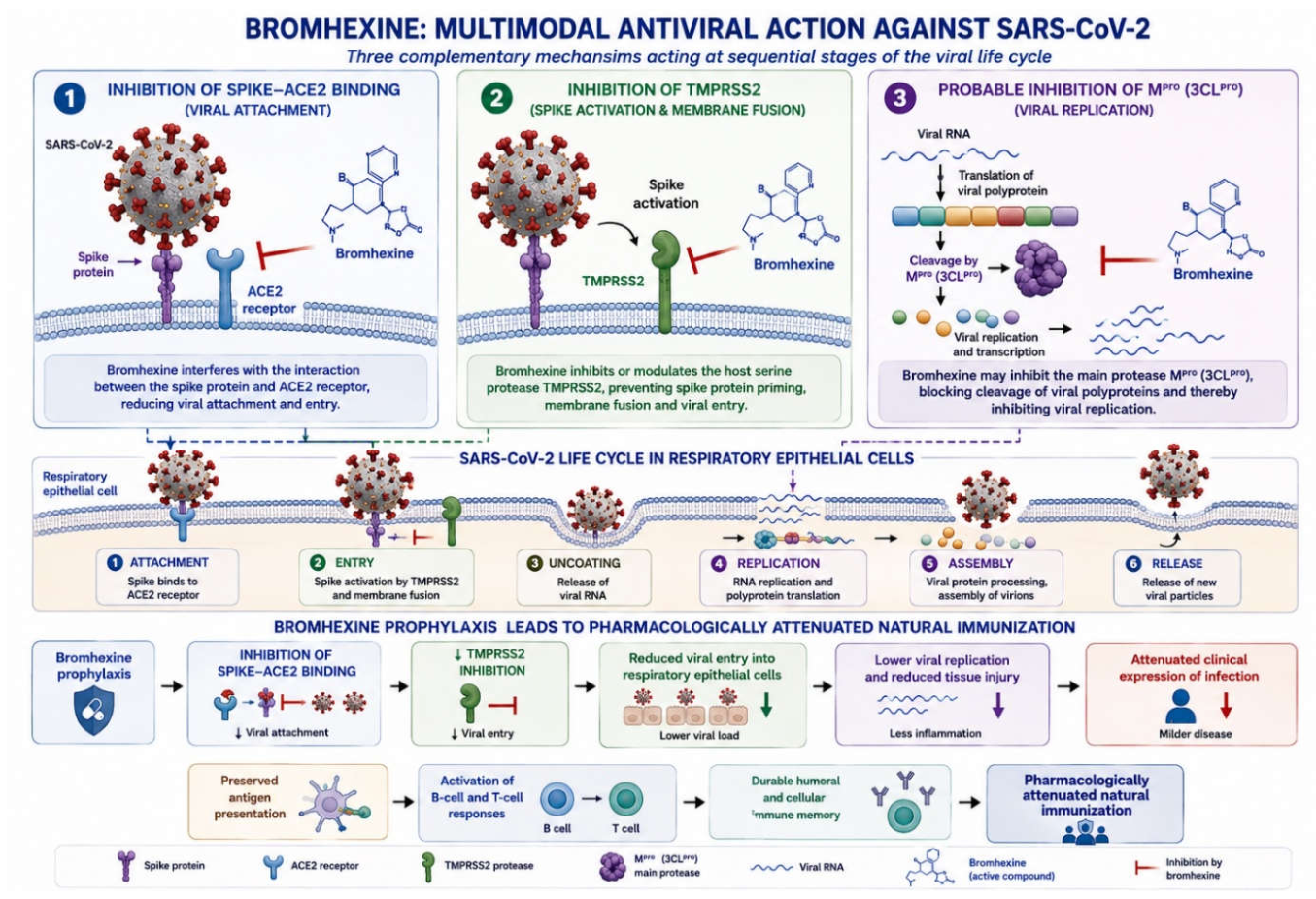
This multimodal mechanism may be particularly relevant to the prophylactic use of BRH. The first two mechanisms act at the level of viral attachment and entry, whereas the putative Mpro/3CLpro inhibitory effect could provide an additional barrier after viral entry has occurred. Rather than producing complete sterilizing antiviral activity, the combined effect may therefore reduce the efficiency of infection and subsequent viral amplification. Such partial pharmacological attenuation could limit tissue injury and clinical disease while preserving sufficient viral antigen exposure to induce adaptive immune responses.
Although BRH has shown promise in the prevention and treatment of COVID-19, clinical outcomes have been inconsistent, and clinical evidence for influenza remains limited [1,14,15]. We propose that these apparently conflicting findings can largely be explained by two critical determinants: the timing of administration and the route of drug delivery [1,14,15]. They may also reflect the fact that BRH should not be viewed exclusively as a TMPRSS2 inhibitor, because its overall antiviral activity may result from the combined contribution of several complementary mechanisms.
Because inhibition of spike–ACE2 interaction and TMPRSS2-dependent proteolytic activation affects the earliest stages of SARS-CoV-2 infection, BRH would be expected to provide maximal benefit when present in respiratory tissues before or immediately following viral exposure. Accordingly, BRH may be particularly suitable for continuous prophylaxis during periods of increased viral circulation or for early post-exposure prophylaxis. Once infection is established and active viral replication is underway, the relative contribution of entry inhibition would be expected to decline. Nevertheless, inhaled BRH may still reduce local viral spread by achieving high concentrations within the respiratory epithelium and inhibiting the infection of additional cells, while its potential direct antiviral activity, including probable Mpro/3CLpro inhibition, could theoretically remain relevant after viral entry [13,14,15,16].
This concept is further supported by the pharmacokinetic properties of BRH. Following oral administration, bromhexine accumulates in pulmonary tissues, achieving concentrations approximately 2.4- to 5.9-fold higher than those in plasma, with bronchial tissue concentrations ranging from 1.5- to 3.2-fold above plasma levels. These findings provide a pharmacological basis for locally relevant antiviral activity within the respiratory tract, particularly for mechanisms acting at the level of viral entry [17].
Consistent with this hypothesis, we recently analyzed the outcomes of 125 individuals who received prophylactic BRH during the COVID-19 pandemic [15]. Continuous prophylactic administration throughout periods of high viral transmission was associated with a marked reduction in the incidence of COVID-19, while breakthrough infections were generally mild. In addition, we reported a retrospective study evaluating BRH prophylaxis during the 2024/2025 influenza epidemic in Bulgaria, in which the incidence of influenza was reduced by approximately 3.5-fold [14]. Population-based modeling further suggested that widespread prophylactic use of BRH could provide substantial healthcare and economic benefits [18].
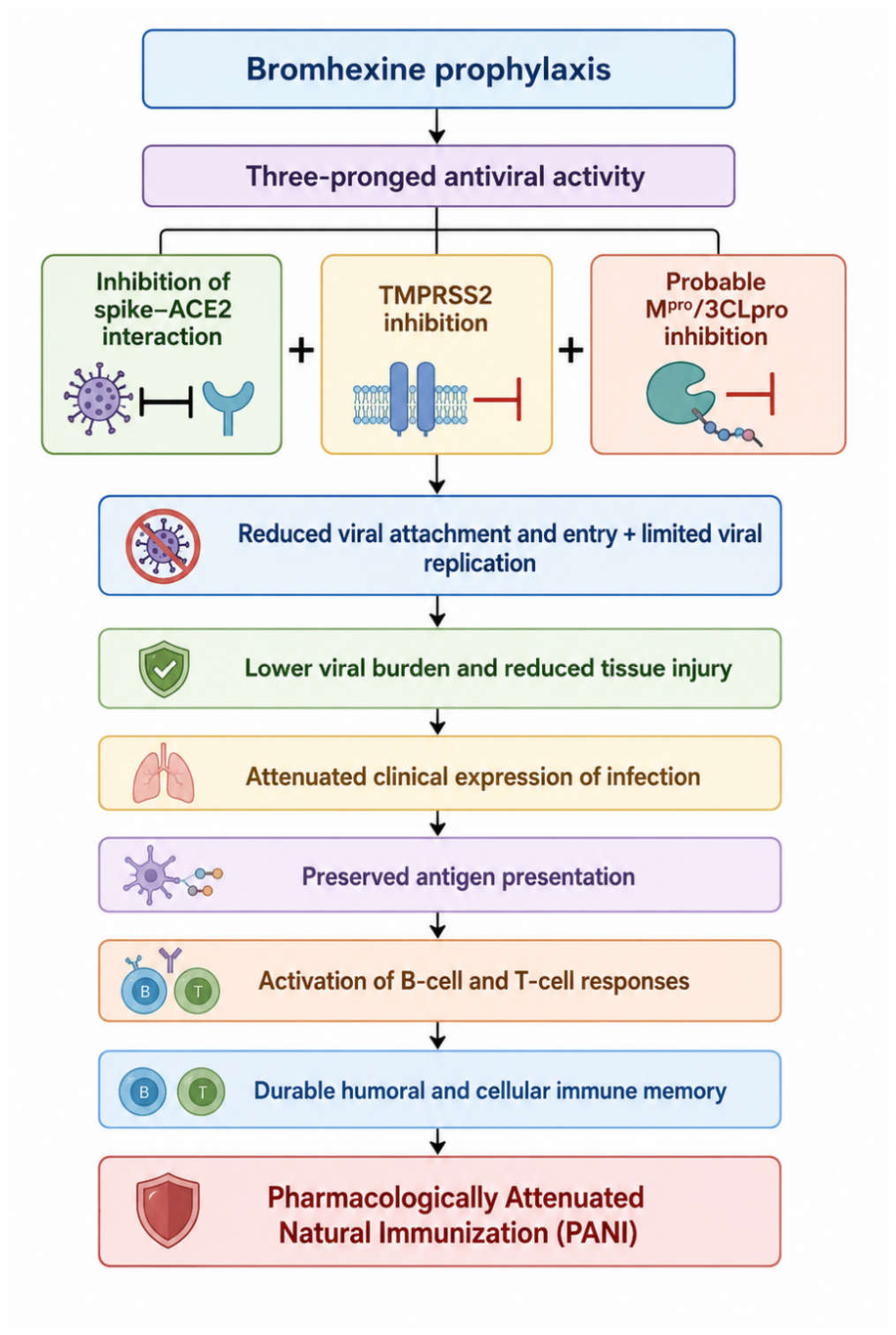
These observations suggest a broader interpretation of BRH prophylaxis. Rather than completely preventing infection, the combined effects of BRH on viral attachment, TMPRSS2-dependent entry, and potentially intracellular viral replication may pharmacologically attenuate the infectious process. Reduced viral entry and replication may lower viral burden and tissue injury sufficiently to prevent or substantially diminish clinical disease, while residual viral antigen exposure may remain sufficient for antigen presentation and activation of B- and T-cell responses.
This mechanistic balance forms the basis of our proposed concept of Pharmacologically Attenuated Natural Immunization (PANI). Under this hypothesis, BRH prophylaxis does not necessarily produce sterilizing immunity; instead, its three-pronged antiviral activity may shift the host–virus interaction toward a state characterized by reduced viral entry, limited viral amplification, attenuated clinical expression of infection, and preserved development of adaptive immune memory. In the present report, we describe several illustrative clinical cases supporting this concept and discuss its potential implications for the prevention of COVID-19, influenza, and other respiratory viral infections susceptible to one or more of these pharmacological mechanisms.
2. Index Case: SARS-CoV-2 Infection with Minimal Clinical Expression and Durable Humoral Immunity Following Bromhexine Prophylaxis
The absence of any SARS-CoV-2 vaccination after 2021 makes the observed serological profile particularly noteworthy, as the measured anti-spike (S) IgG response cannot be attributed to a recent vaccine-induced booster effect. Instead, the antibody profile is most consistent with natural SARS-CoV-2 infection acquired in October 2025.
At the time of SARS-CoV-2 exposure, the 72-year-old male individual (BMI, 35.3 kg/m2) had been receiving bromhexine hydrochloride prophylactically (8 mg twice daily) for approximately two weeks. Bromhexine has been proposed to inhibit the host serine protease TMPRSS2, a key enzyme mediating the entry of both SARS-CoV-2 and influenza viruses into respiratory epithelial cells through proteolytic activation of their fusion proteins [1]. Although TMPRSS2 inhibition may effectively block the TMPRSS2-dependent entry pathway, it is unlikely to completely prevent infection because alternative entry mechanisms remain available. Consequently, BRH is expected to reduce the efficiency of viral entry and early viral replication rather than abolish infection altogether.
Consistent with this mechanism, the patient remained essentially asymptomatic, reporting only mild throat irritation, as previously described [16]. SARS-CoV-2 infection was detected incidentally by a rapid antigen test rather than because of clinically apparent COVID-19. This clinical course is compatible with the hypothesis that BRH prophylaxis markedly reduced the initial viral burden while permitting limited viral replication through alternative entry pathways. Such low-level antigen exposure may nevertheless have been sufficient to induce a robust adaptive immune response.
The subsequent humoral immune response was remarkable. Approximately three months after infection (January 2026), the quantitative anti-spike antibody concentration reached 2,080 BAU/mL, indicating a strong humoral response. Approximately nine months after infection (July 2026), anti-spike IgG remained strongly positive, with a Vircell anti-S IgG ratio of 22.209. Although WHO-standardized quantitative antibody concentrations (BAU/mL) cannot be directly compared with assay-specific semi-quantitative indices such as the Vircell IgG ratio, both measurements consistently indicate a vigorous and sustained anti-spike immune response.
Following natural SARS-CoV-2 infection, antibody responses typically exhibit biphasic kinetics, with a relatively rapid decline during the first 3–6 months followed by a slower decay phase maintained by long-lived plasma cells and memory B cells [19]. Within this context, the persistence of strong anti-spike IgG reactivity nine months after infection suggests well-preserved humoral immune memory. This finding is particularly noteworthy given the patient’s age (72 years), as immunosenescence is generally associated with diminished antibody responses and more rapid waning of humoral immunity following infection.
The present observation should be interpreted in the context of our previous studies investigating BRH prophylaxis [13,14,15,16]. Collectively, these studies suggest that pharmacological inhibition of TMPRSS2 may attenuate viral entry sufficiently to reduce clinical disease while preserving adequate antigen exposure for adaptive immune priming.
Taken together, these findings support the concept that pharmacological attenuation of viral entry, rather than complete prevention of infection, may preserve the benefits of natural immune priming while substantially reducing disease severity. We propose the concept of Pharmacologically Attenuated Natural Immunization (PANI), whereby transient pharmacological attenuation of viral entry permits controlled natural antigen exposure sufficient to elicit durable adaptive immunity while minimizing clinical disease. Although this concept is currently supported primarily by observational evidence and biological plausibility, it provides a mechanistically grounded and clinically testable framework for future prospective studies evaluating host-directed prophylactic strategies against TMPRSS2-dependent respiratory viral infections, including SARS-CoV-2 and influenza viruses.
3. Paired Household Observation: High-Risk Individual with Absent Clinical Disease and Persistent Anti-Spike Immune Response
An additional observation from the same household provides further context for this hypothesis. The patient considered the possibility that he had transmitted SARS-CoV-2 infection to his wife, although she did not develop any clinical symptoms suggestive of COVID-19.
His wife was 71 years old, weighed 30 kg, and was 159 cm tall (body mass index [BMI], 11.9 kg/m2). She represented a high-risk host profile, with chronic obstructive pulmonary disease (COPD), severe underweight, previous pancreatic cancer treated with pancreaticoduodenectomy (Whipple procedure) three years earlier, and a long-standing history of heavy cigarette smoking (approximately 30 cigarettes per day).
Because of her chronic respiratory disease and increased vulnerability to respiratory viral infections, she had been taking BRH continuously as prophylaxis (8 mg twice daily) against COVID-19 and influenza. Approximately three months after the presumed household exposure, serological testing demonstrated an anti-SARS-CoV-2 spike antibody concentration of 1,040 BAU/mL. At approximately nine months after exposure, repeat testing showed persistent anti-spike IgG reactivity, with a Vircell anti-S IgG ratio of 3.43.
Interpretation of these findings requires consideration of her previous SARS-CoV-2 vaccination in early 2021. Therefore, the detected anti-spike antibodies cannot be attributed exclusively to natural infection, as residual vaccine-induced immune memory may have contributed to the observed response. However, the prolonged interval since vaccination, the close household exposure, the absence of clinical disease, and the persistence of measurable anti-spike antibodies are compatible with either a clinically silent SARS-CoV-2 infection, an anamnestic immune response triggered by natural antigen exposure, or a combination of both mechanisms.
Together, these paired household observations are of particular interest. The husband, without SARS-CoV-2 vaccination after 2021, experienced an incidentally detected infection with minimal symptoms and subsequently developed a strong and durable anti-spike antibody response. His wife, despite multiple risk factors for severe COVID-19—including advanced age, COPD, severe underweight, previous pancreatic malignancy, major abdominal surgery, and heavy smoking history—remained clinically asymptomatic following presumed exposure while maintaining measurable anti-spike immune reactivity.
4. Additional Observations Supporting the Hypothesis
Beyond the paired household observation described above, additional real-world observations from individuals receiving long-term BRH prophylaxis provide further context for the proposed concept of pharmacologically attenuated natural immunization and the potential role of host-directed modulation of respiratory viral infections.
Previously, we described a 77-year-old vaccinated woman with multiple significant comorbidities, including breast malignancy, chronic kidney disease, pulmonary hypertension, rheumatoid arthritis, Hashimoto’s thyroiditis, Sjögren syndrome, and other chronic conditions. She received BRH prophylaxis (3 × 1 tablets daily) for six months. In March 2022, she developed SARS-CoV-2 infection; however, the clinical course was remarkably mild, consisting only of slight throat and nasal irritation. Without specific antiviral treatment, her rapid antigen test became negative after one week. In contrast, her daughter and son-in-law, both vaccinated but not receiving BRH prophylaxis, developed COVID-19 during the same period and experienced severe disease [16].
Importantly, this patient continued seasonal BRH prophylaxis thereafter, taking bromhexine for at least six months annually. During subsequent follow-up, she has not experienced clinically apparent COVID-19 or influenza despite her advanced age and substantial comorbidity burden.
A second previously described observation involved an 88-year-old unvaccinated woman with hypertension and type II diabetes mellitus. She received BRH prophylaxis (3 × 1 tablets daily) for approximately four months annually and remained free of clinically diagnosed COVID-19 despite direct household exposure to infected family members. At the age of 92 years, she continues seasonal BRH prophylaxis and has not developed clinically apparent COVID-19 or influenza [16].
A further observation was obtained during the 2025/2026 influenza season. An 8-year-old child with a history of frequent respiratory infections received BRH prophylaxis for approximately five months. During a period of increased influenza circulation, the child remained free of influenza, in contrast to many classmates who developed symptomatic infection.
Although these observations do not establish prophylactic efficacy in the absence of controlled studies, they are notable because they involve individuals from markedly different age groups and clinical backgrounds, including very elderly patients with multiple comorbidities and a child at increased risk of respiratory infections. The consistent absence or marked attenuation of clinically apparent respiratory viral disease during periods of potential exposure provides additional hypothesis-generating support for the possibility that BRH may influence the clinical expression of respiratory viral infections through host-directed mechanisms.
5. Long-Term Prophylaxis Observations: Tolerability and Absence of Clinically Apparent Respiratory Viral Infections
Additional real-world observations provide further context regarding both the long-term tolerability of BRH prophylaxis and its potential protective effects against respiratory viral infections.
Two heavy smokers who received prolonged BRH prophylaxis represent particularly relevant observations. One individual had been taking BRH continuously for approximately five years, whereas the second individual had used bromhexine prophylactically for approximately eight months annually over several consecutive years. Both individuals tolerated long-term BRH administration without reported adverse effects and, importantly, neither developed clinically apparent COVID-19 nor influenza during the observation period.
These observations are of interest because chronic smoking is associated with impaired respiratory epithelial function, increased susceptibility to respiratory infections, and a higher risk of severe outcomes following viral infections. Nevertheless, despite this increased vulnerability, both individuals remained free of clinically diagnosed COVID-19 and influenza while receiving prolonged BRH prophylaxis.
Although these cases cannot establish preventive efficacy in the absence of controlled comparison groups and systematic virological surveillance, they provide supportive real-world observations suggesting a favorable long-term tolerability profile and raising the possibility that sustained BRH prophylaxis may contribute to reduced clinical expression of respiratory viral infections.
Together with the other observations presented in this study, these findings support further prospective evaluation of BRH as a potential host-directed prophylactic strategy against respiratory viruses.
6. Pharmacokinetic Rationale for SARS-CoV-2-ACE2 Biding by Pulmonary and Inhaled Bromhexine
The in vivo relevance of the ACE2-targeted antiviral mechanism described by Zúñiga et al. requires consideration of BRH pharmacokinetics at the respiratory target site [9]. Following an oral 8-mg dose, the reported plasma Cmax of BRH is approximately 24.6 ng/mL, corresponding to approximately 0.065 μM. Importantly, BRH preferentially distributes into respiratory tissues: concentrations measured two hours after oral administration were approximately 1.5- to 3.2-fold higher in bronchiolo-bronchial tissue and 2.4- to 5.9-fold higher in pulmonary parenchyma than in plasma [17]. Thus, after an 8-mg oral dose, estimated pulmonary concentrations would be approximately 0.16–0.39 μM. Even assuming approximately dose-proportional exposure, a hypothetical 64-mg systemic dose would yield an estimated upper pulmonary concentration of approximately 3.1 μM, remaining below the 17.3 ± 0.9 μM IC50 reported for inhibition of Omicron pseudovirus infection.
These calculations suggest that conventional oral administration alone is unlikely to reproduce throughout pulmonary tissue the BRH concentrations required for 50% inhibition in the in vitro pseudovirus model. However, this comparison may substantially underestimate drug exposure at the relevant epithelial interface. BRH undergoes extensive first-pass metabolism (approximately 75–80%) after oral administration, resulting in an absolute bioavailability of approximately 22–27% [17].
This consideration may be particularly important for the ACE2-targeted mechanism. Because ACE2 is located on the extracellular surface of respiratory epithelial cells and SARS-CoV-2 attachment is initiated at the apical epithelial membrane, inhaled BRH could potentially generate substantially higher local concentrations at the precise anatomical site of spike–ACE2 interaction than would be predicted from plasma pharmacokinetics. Therefore, epithelial lining fluid and membrane-associated drug concentrations, rather than plasma Cmax, may represent the more relevant pharmacokinetic parameters for evaluating this mechanism.
At present, direct human pharmacokinetic measurements of BRH concentrations in epithelial lining fluid following inhaled administration are lacking, and it therefore cannot be concluded that inhalation achieves the 17.3 μM concentration associated with 50% pseudovirus inhibition [9]. Nevertheless, the combination of low oral bioavailability, preferential pulmonary distribution, direct access of inhaled drug to the apical respiratory epithelium, and an extracellular ACE2 target provides a strong pharmacological rationale for investigating inhaled bromhexine as a means of increasing local antiviral exposure.
Furthermore, the in vitro IC50 should not be interpreted as an absolute threshold for antiviral activity. Sub-IC50 concentrations may still produce partial inhibition of spike–ACE2 interaction, which could potentially act additively with other proposed BRH-mediated effects on host-dependent viral entry, including TMPRSS2 modulation. This raises the possibility that combined systemic and inhaled administration could provide complementary pharmacokinetic advantages, although this hypothesis requires direct pharmacokinetic and virological validation.
7. Pharmacokinetic Rationale for TMPRSS2 Inhibition by Pulmonary and Inhaled Bromhexine
The pharmacokinetic plausibility of BRH-mediated TMPRSS2 inhibition differs substantially from that of the recently described ACE2-targeted mechanism. In the original biochemical screening study by Lucas et al., BRH selectively inhibited TMPRSS2 protease activity with an IC50 of approximately 0.75 μM [20]. This concentration is more than an order of magnitude lower than the 17.3 ± 0.9 μM IC50 recently reported by Zúñiga et al. for inhibition of SARS-CoV-2 Omicron pseudovirus infection through an ACE2-targeted mechanism [9].
Using the same pharmacokinetic framework applied above, an oral 8-mg dose of BRH, producing an approximate plasma Cmax of 0.065 μM, would be expected to generate estimated pulmonary concentrations of approximately 0.16–0.39 μM when the reported 2.4- to 5.9-fold pulmonary tissue enrichment is taken into account. At a 16-mg exposure, the estimated upper pulmonary concentration approaches approximately 0.77 μM, which is close to the originally reported TMPRSS2 IC50. With increasing systemic exposure, estimated pulmonary concentrations could theoretically exceed this value; for example, approximately 0.63–1.54 μM at 32 mg and 1.26–3.09 μM at a hypothetical 64-mg exposure. These higher-dose estimates should, however, be interpreted cautiously because they represent dose-proportional extrapolations rather than direct measurements of pulmonary BRH concentrations at these doses.
These estimates suggest that, unlike the ACE2-targeted mechanism, pharmacologically relevant concentrations for TMPRSS2 modulation may potentially be achievable in respiratory tissue after conventional or moderately increased oral BRH exposure, particularly when preferential pulmonary accumulation is considered. Importantly, an IC50 represents the concentration associated with 50% inhibition under a specific experimental system rather than an absolute threshold for biological activity. Consequently, concentrations below 0.75 μM could theoretically produce partial TMPRSS2 inhibition.
The anatomical localization of TMPRSS2 further strengthens the pharmacological rationale for inhaled BRH. TMPRSS2 is a type II transmembrane serine protease whose catalytic protease domain is extracellular and is expressed at the apical surface of airway epithelial cells, including microvilli, where SARS-CoV-2 spike priming and plasma-membrane fusion can occur. Direct delivery of BRH to the airway lumen could therefore expose the extracellular catalytic domain of TMPRSS2 to local drug concentrations substantially higher than those predicted from systemic plasma pharmacokinetics. In this setting, epithelial lining fluid and apical membrane-associated drug concentrations may be more pharmacologically relevant than plasma Cmax.
This consideration raises the possibility that inhaled BRH could produce more rapid and potentially more extensive local TMPRSS2 modulation than oral administration alone, while reducing the need for high systemic exposure. Such a mechanism could be particularly relevant during the earliest stages of respiratory viral infection, when viral entry and replication are concentrated in the respiratory epithelium. A combined oral and inhaled strategy could therefore theoretically provide complementary systemic/tissue and airway-surface exposure.
However, the evidence supporting direct TMPRSS2 inhibition by BRH remains experimentally inconsistent. Lucas et al. reported selective inhibition of recombinant TMPRSS2 with an IC50 of approximately 0.75 μM [20], whereas Shrimp et al. subsequently failed to detect TMPRSS2 inhibition by bromhexine [21]. Importantly, the two studies employed different recombinant TMPRSS2 constructs: Lucas et al. used an extracellular construct lacking the LDLRA domain (aa 148–492), whereas Shrimp et al. used the complete extracellular domain (aa 106–492). Both Shrimp et al. and subsequent reviews have highlighted this methodological difference, although whether it accounts for the discrepant inhibitory results remains unresolved [5]. Moreover, the complex membrane-dependent activation and conformational regulation of TMPRSS2 may limit the extent to which assays employing soluble recombinant constructs reproduce the behavior of full-length membrane-embedded TMPRSS2.
Supporting the existence of a direct molecular interaction despite this experimental discrepancy, Sgrignani and Cavalli subsequently demonstrated BRH binding to TMPRSS2 by microscale thermophoresis (Kd = 24 ± 13 μM). Their computational analysis identified a putative allosteric binding pocket and suggested that BRH may modulate TMPRSS2 through an allosteric mechanism rather than exclusively through direct occupation of the catalytic site [22]. This possibility provides an additional mechanistic framework for interpreting apparently discordant results obtained using different recombinant enzyme constructs and assay conditions, although the functional relevance of this putative allosteric interaction remains to be established in physiological cellular systems.
Accordingly, the relationship between clinically achievable BRH exposure and the originally reported TMPRSS2 IC50 is pharmacokinetically more favorable than that observed for the ACE2-targeted mechanism after conventional oral administration. Inhaled administration may further increase the plausibility of TMPRSS2 modulation by delivering BRH directly to the apical respiratory epithelial surface. Nevertheless, the currently available evidence does not establish that BRH inhibits full-length membrane-associated TMPRSS2 in vivo. Direct measurement of BRH concentrations in epithelial lining fluid, together with functional assessment of full-length membrane-associated TMPRSS2 activity in human respiratory epithelial cells, will be required to determine whether systemic, inhaled, or combined BRH administration produces pharmacologically meaningful TMPRSS2 inhibition in vivo.
9. Conceptual Synthesis: Pharmacologically Attenuated Natural Immunization
Taken together, the observations described above support a unifying hypothesis regarding the potential role of BRH in modifying the host–virus interaction. Rather than acting solely as a conventional antiviral agent or exclusively as a TMPRSS2 inhibitor, BRH may exert a multimodal antiviral effect involving complementary mechanisms operating at different stages of SARS-CoV-2 infection.
Current evidence suggests a potential three-pronged antiviral effect of BRH: (i) interference with the interaction between the SARS-CoV-2 spike protein and ACE2, thereby reducing viral attachment; (ii) inhibition of TMPRSS2-dependent spike activation and viral entry; and (iii) probable inhibition of the viral main protease Mpro/3CLpro, potentially limiting viral polyprotein processing and subsequent replication. The first two mechanisms target sequential steps preceding or accompanying cellular entry, whereas the third, if confirmed experimentally at pharmacologically achievable concentrations, could extend the antiviral effect to the intracellular phase of the viral life cycle.
We propose that the combined effect of these mechanisms may create a state of pharmacologically attenuated infection, in which viral entry and subsequent amplification are reduced but not necessarily abolished. This provides an expanded mechanistic basis for the concept of Pharmacologically Attenuated Natural Immunization (PANI).
Under this model, the objective of BRH prophylaxis is not necessarily to achieve sterilizing protection or complete prevention of infection. Instead, partial suppression of viral attachment, entry, and potentially replication may reduce viral burden below the threshold required for extensive tissue injury and clinically significant disease, while preserving sufficient viral antigen exposure for antigen presentation and activation of adaptive immune responses.
This balance may be particularly important because complete prevention of viral exposure and controlled attenuation of infection represent biologically distinct outcomes. In the proposed PANI model, limited viral replication provides sufficient antigenic stimulation for B-cell and T-cell activation while pharmacological attenuation restricts the magnitude of infection. The resulting immune priming could potentially generate durable humoral and cellular immune memory with minimal or absent clinical disease.
For SARS-CoV-2, the proposed mechanism can therefore be summarized as shown in Figure 2:
An important distinction should be made between SARS-CoV-2 and influenza viruses. The complete three-pronged mechanism described above is currently proposed specifically for SARS-CoV-2. In influenza, the principal mechanistic basis for BRH prophylaxis remains inhibition of TMPRSS2-dependent hemagglutinin activation, which may similarly reduce viral entry and propagation without necessarily preventing infection completely. Thus, although the molecular targets differ between viruses, the broader principle of pharmacological attenuation of infection with preservation of antigen-driven adaptive immunity may potentially extend to influenza and other TMPRSS2-dependent respiratory viruses.
The PANI hypothesis therefore differs fundamentally from conventional antiviral prophylaxis aimed primarily at complete suppression of viral replication or prevention of infection. It proposes that an intermediate biological state—infection sufficient for immune priming but pharmacologically constrained below the threshold for clinically significant disease—may itself represent a potentially useful prophylactic outcome.
If validated in prospective clinical and immunological studies, PANI could represent a distinct prophylactic paradigm in which pharmacological modulation of early viral infection is deliberately balanced against preservation of natural antigen exposure. BRH, through its combined effects on viral attachment, host-dependent entry, and potentially viral replication, provides a pharmacological model through which this hypothesis can be investigated.
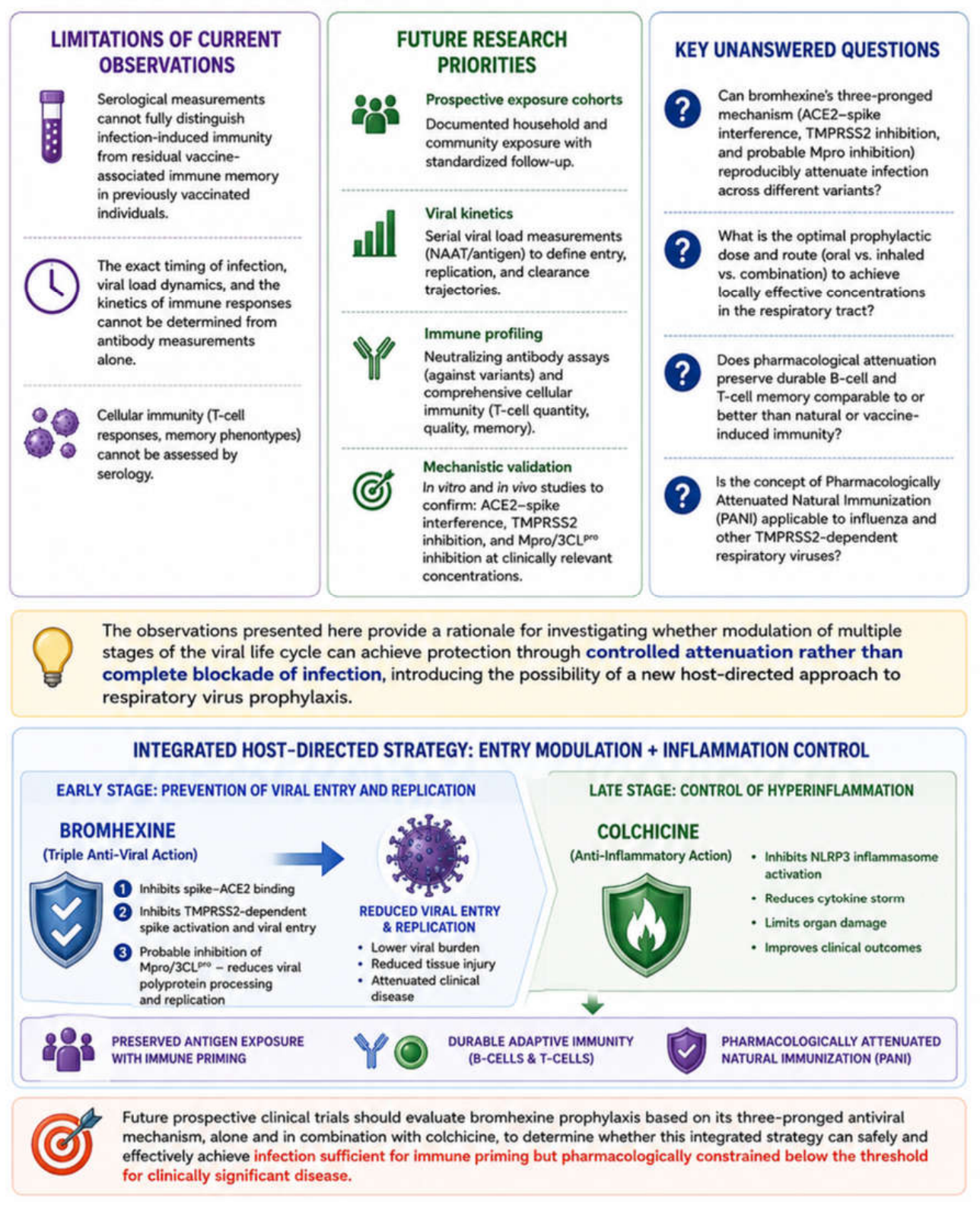
Although this review focuses on BRH as a TMPRSS2 inhibitor for prophylaxis, it also fits within a broader host-directed therapeutic strategy. Prevention of viral entry by BRH could be complemented by subsequent modulation of the excessive inflammatory response with colchicine through inhibition of the NLRP3 inflammasome. Together, these interventions target two distinct stages of disease pathogenesis—viral entry and hyperinflammation—and may represent a complementary approach for both COVID-19 and influenza [23,24,25]. Future studies should evaluate this integrated strategy in prospective clinical trials.
10. Limitations and Future Perspectives
A causal relationship between bromhexine prophylaxis, attenuation of viral infection (through its three-prolonged mechanisms). And preservation of long-term adaptive immunity cannot be established from observational cases alone ( Figure 3).
Funding
This work was funded by the Council of Medical Science at the Medical University Sofia, project number 5327/02.07.2025, contract number D-345/4.12.2025.
Institutional Review Board Statement
.
Informed Consent Statement
.
Data Availability Statement
.
Conflicts of Interest
.
References
- Mitev, V. Prevention and Treatment of COVID-19 and Influenza with Bromhexine and High Doses of Colchicine. Trends Immunother. 2025. [Google Scholar] [CrossRef]
- Barros de Lima, G.; Nencioni, E.; Thimoteo, F.; Perea, C.; Pinto, R.F.A.; Sasaki, S.D. TMPRSS2 as a Key Player in Viral Pathogenesis: Influenza and Coronaviruses. Biomolecules 2025, 15, 75. [Google Scholar] [CrossRef] [PubMed]
- Zhang, L.; Hoffmann, M.; Pöhlmann, S. Lock Out: Targeting TMPRSS2 to Block Influenza and Coronaviruses. J. Virol. 2026, 100, e00807-25. [Google Scholar] [CrossRef] [PubMed]
- Limburg, H.; Harbig, A.; Bestle, D.; et al. TMPRSS2 Is the Major Activating Protease of Influenza A Virus in Primary Human Airway Cells and Influenza B Virus in Human Type II Pneumocytes. J. Virol. 2019, 93, e01238-19. [Google Scholar] [CrossRef] [PubMed]
- Hoffmann, M.; Kleine-Weber, H.; Pöhlmann, S. The Transmembrane Protease TMPRSS2 as a Therapeutic Target for COVID-19 Treatment. Int. J. Mol. Sci. 2022, 23, 1351. [Google Scholar] [CrossRef] [PubMed]
- Schwerdtner, M.; Schmacke, L.C.; Nave, J.; et al. Unveiling the Role of TMPRSS2 in the Proteolytic Activation of Pandemic and Zoonotic Influenza Viruses and Coronaviruses in Human Airway Cells. Viruses 2024, 16, 1798. [Google Scholar] [CrossRef] [PubMed]
- Olaleye, O.A.; Kaur, M.; Onyenaka, C.C. Ambroxol Hydrochloride Inhibits the Interaction between Severe Acute Respiratory Syndrome Coronavirus 2 Spike Protein’s Receptor Binding Domain and Recombinant Human ACE2. bioRxiv 2020, 2020.09.13, 295691. [Google Scholar] [CrossRef] [PubMed]
- Kehinde, I.A.; Egbejimi, A.; Kaur, M.; Onyenaka, C.; Adebusuyi, T.; Olaleye, O.A. Inhibitory Mechanism of Ambroxol and Bromhexine Hydrochlorides as Potent Blockers of Molecular Interaction between SARS-CoV-2 Spike Protein and Human Angiotensin-Converting Enzyme-2. J. Mol. Graph. Model. 2022, 114, 108201. [Google Scholar] [CrossRef] [PubMed]
- Zúñiga, R.; Venturini, W.; González, N.; Valenzuela-Hormazábal, P.; Sánchez-Aros, L.; Ramírez, D.; Cayo, A.; Vilos, C.; Zúñiga, L. Bromhexine Inhibits SARS-CoV-2 Omicron and Variant Pseudovirus Infection via ACE2-Targeted Mechanisms. Front. Pharmacol. 2026, 16, 1745277. [Google Scholar] [CrossRef] [PubMed]
- Huynh, T.; Wang, H.; Luan, B. In Silico Exploration of Molecular Mechanism of Clinically Oriented Drugs for Possibly Inhibiting SARS-CoV-2’s Main Protease. J. Phys. Chem. Lett. 2020, 11, 4413–4420. [Google Scholar] [CrossRef] [PubMed]
- Maggio, R.; Corsini, G.U. Potential New Treatment Strategies for COVID-19: Is There a Role for Bromhexine as Add-On Therapy? Intern. Emerg. Med. 2020, 15, 801–812. [Google Scholar] [CrossRef] [PubMed]
- Bahadoram, M.; et al. Bromhexine Is a Potential Drug for COVID-19: From Hypothesis to Clinical Trials. Probl. Virol. 2022, 67. [Google Scholar] [CrossRef] [PubMed]
- Mitev, V. Comparison of Treatment of COVID-19 with Inhaled Bromhexine, Higher Doses of Colchicine and Hymecromone with WHO-Recommended Paxlovid, Molnupiravir, Remdesivir, Anti-IL-6 Receptor Antibodies and Baricitinib. Pharmacia 2023, 70, 1177–1193. [Google Scholar] [CrossRef]
- Mitev, V.; Dimitrova, V.S.; Miteva, I.; Tiholov, R.; Marinov, K.; Miteva, A.; Lilov, A.; Bilyukov, R.; Mihaylova, Z.; Ishkitiev, N.; Tachkov, K.; Mondeshki, T. Pilot Survey among Patients Taking Bromhexine Prophylactically against Influenza. J. Fam. Med. Prim. Care 2026, 15, 2296–2303. [Google Scholar] [CrossRef] [PubMed]
- Mitev, V.; Mondeshki, T.; Miteva, A.; Tachkov, K.; Dimitrova, V. COVID-19 Prophylactic Effect of Bromhexine Hydrochloride. Immun. Inflamm. Dis. 2026, 14, e70438. [Google Scholar] [CrossRef] [PubMed]
- Marinov, K.; Mondeshki, T.; Georgiev, H.; Dimitrova, V.S.; Mitev, V. Effects of Long-Term Prophylaxis with Bromhexine Hydrochloride and Treatment with High Colchicine Doses of COVID-19. Pharmacia 2025, 72, 1–10. [Google Scholar] [CrossRef]
- Health Products Regulatory Authority (HPRA). Bisolvon 4 mg/5 mL Oral Solution: Summary of Product Characteristics (SmPC); HPRA: Dublin, Ireland, 2023. [Google Scholar]
- Petrova, G.; Mitev, V. Pharmacoeconomic Analysis of Bromhexine for Prophylaxis of Influenza A and B. Pharmacia 2026, 73, 1–11. [Google Scholar] [CrossRef]
- Sette, A.; Crotty, S. Immunological Memory to SARS-CoV-2 Infection and COVID-19 Vaccines. Immunity 2021, 54, 1063–1075. [Google Scholar] [CrossRef] [PubMed]
- Lucas, J.M.; Heinlein, C.; Kim, T.; Hernandez, S.A.; Malik, M.S.; True, L.D.; Morrissey, C.; Corey, E.; Montgomery, B.; Mostaghel, E.; Clegg, N.; Coleman, I.; Brown, C.M.; Schneider, E.L.; Craik, C.; Simon, J.A.; Bedalov, A.; Nelson, P.S. The Androgen-Regulated Protease TMPRSS2 Activates a Proteolytic Cascade Involving Components of the Tumor Microenvironment and Promotes Prostate Cancer Metastasis. Cancer Discov. 2014, 4, 1310–1325. [Google Scholar] [CrossRef] [PubMed]
- Shrimp, J.H.; Kales, S.C.; Sanderson, P.E.; Simeonov, A.; Shen, M.; Hall, M.D. An Enzymatic TMPRSS2 Assay for Assessment of Clinical Candidates and Discovery of Inhibitors as Potential Treatment of COVID-19. ACS Pharmacol. Transl. Sci. 2020, 3, 997–1007. [Google Scholar] [CrossRef] [PubMed]
- Sgrignani, J.; Cavalli, A. Computational Identification of a Putative Allosteric Binding Pocket in TMPRSS2. Front. Mol. Biosci. 2021, 8, 666626. [Google Scholar] [CrossRef] [PubMed]
- Mitev, V. Colchicine—The Divine Medicine against COVID-19. J. Pers. Med. 2024, 14, 756. [Google Scholar] [CrossRef] [PubMed]
- Mitev, V.; Momekov, G. Colchicine Only Inhibits in Higher Doses Hyperactivated NLRP3 Inflammasome—The Main Respondent for Complications in COVID-19 and Influenza. Front. Biosci. (Landmark Ed.) 2025, 30, 44744. [Google Scholar] [CrossRef] [PubMed]
- Mitev, V. Targeting the NLRP3 Inflammasome with Colchicine in COVID-19: Therapeutic Evidence and Future Implications for Influenza. Int. J. Mol. Sci. 2026, 27, 6827. [Google Scholar] [CrossRef] [PubMed]
Disclaimer/Publisher’s Note: The statements, opinions and data contained in all publications are solely those of the individual author(s) and contributor(s) and not of MDPI and/or the editor(s). MDPI and/or the editor(s) disclaim responsibility for any injury to people or property resulting from any ideas, methods, instructions or products referred to in the content. |
© 2026 by the author. Licensee MDPI, Basel, Switzerland. This article is an open access article distributed under the terms and conditions of the Creative Commons Attribution (CC BY) license.
Copyright: This open access article is published under a Creative Commons CC BY 4.0 license, which permit the free download, distribution, and reuse, provided that the author and preprint are cited in any reuse.