
Submitted:
03 September 2026
Posted:
03 September 2026
You are already at the latest version
Abstract
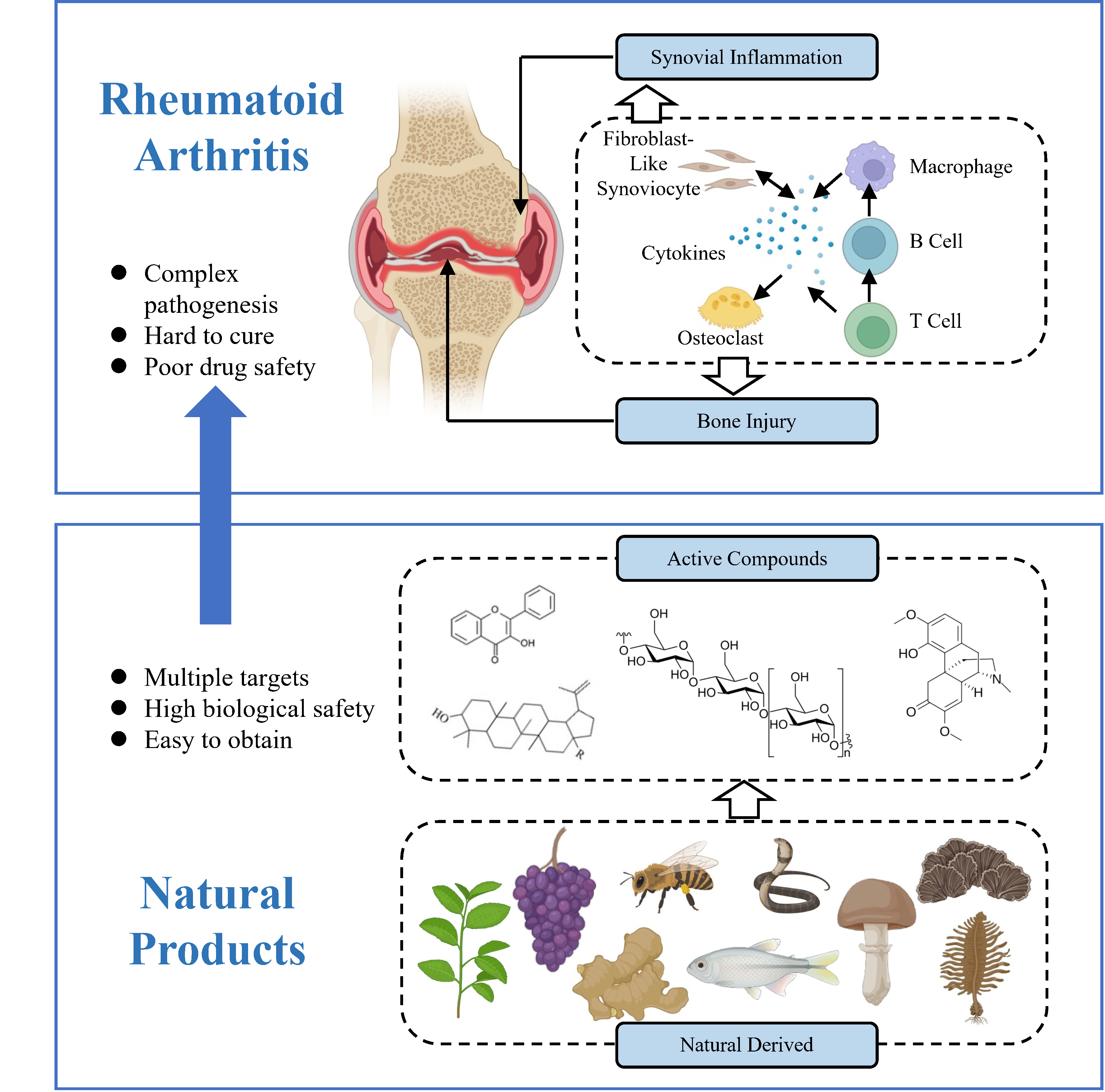
Rheumatoid arthritis (RA) is a chronic autoimmune disease characterized by persistent synovial inflammation, progressive joint destruction, and substantial systemic complications. Although current pharmacological therapies have improved disease control, important unmet needs for RA remission remain owing to the incomplete response, loss of efficacy, long-term safety concerns, limited capacity for tissue repair, and barriers related to the accessibility and adherence. Against this background, natural products have emerged as an important area of interest in RA therapy research because many of them can modulate multiple components of the pathogenic network, including immune dysregulation, synovial inflammation, oxidative stress, and structural damage. Therefore, this review provides an updated overview of natural products for RA treatment, with emphasis on their therapeutic effects, mechanistic basis, and translational potential as well as key challenges. In particular, we would discuss the natural-product research in RA therapy along an evolving continuum, from traditionally used complex natural products, such as herbal medicines and venom-based preparations, to structurally defined bioactive compounds, including flavonoids, alkaloids, terpenoids, and polysaccharides. The review further summarizes the principal pharmacological actions of these agents, their advantages and limitations in anti-RA intervention, and current strategies to enhance their development, including formulation optimization, delivery systems, and mechanism-guided translational approaches.
Keywords:
rheumatoid arthritis
; natural products
; extraction techniques
; isolation and purification
; biological origin
; anti-inflammatory mechanisms
; immune modulation
; drug delivery systems
Copyright: This open access article is published under a Creative Commons CC BY 4.0 license, which permit the free download, distribution, and reuse, provided that the author and preprint are cited in any reuse.