

Submitted:
01 September 2026
Posted:
03 September 2026
You are already at the latest version
Abstract
The paper examines the history of the forest owned by the Dukes of Sermoneta, the Caetani family, situated in the Pontine Marshes region south of Rome. Chronologically, the study covers the period from the early decades of the nineteenth century—when the Dukes of Sermoneta began intensive exploitation of the woodland to meet the growing demand for coal and firewood—to the early 1920s, when the descendants of Duke Onorato Caetani VII decided to sell off the land still covered by woodland in order to focus on agricultural development. Through our case study, we outline a long historical period characterised by a variety of economic and commercial activities, which can be reconstructed thanks to the existence of a wealth of first-hand archival material. The main consequence of the decisions taken by the Caetani family—a prime example of a large noble estate—was the reduction in the area of lowland woodland, thereby initiating the first phase of the reclamation of the Pontine Marshes. The Caetani family implemented an entrepreneurial strategy that marked a significant shift in the region’s environmental balance.
Keywords:
Italy
; Pontine Marshes
; Caetani family
; reclamation
; forest
; landscape
; ecosystem
1. Introduction
Since ancient times, the people of Italy have had to contend with the waters of rivers flowing down from the mountains; with no easy outlet to the sea, these rivers ended up flooding vast areas, creating very adverse conditions for life and the economy.1 Therefore, river control and land reclamation has been one of the great political-environmental issues in Italian history (Bevilacqua and Rossi-Doria 1984), especially since the Italian Renaissance states began to draw up intervention plans in the modern age (Irace and Vaquero Piñeiro 2023) up to the contemporary age when the unitary state carried out the essential works to contain the damage caused by uncontrolled waters (Novello 2003, 2009).
At the end of the 19th century, over a million hectares of land in Italy were permanently covered by marshes. Woodlands and stagnant water formed an inseparable pair until the land reclamation projects of the 20th century ultimately led to the disappearance of both natural elements—the trees and the water (Cazzola 1996). For centuries, fishing, hunting, timber harvesting, charcoal production, the manufacture of reed objects, transhumant sheep-farming and other activities had allowed landowners and farmers to utilise the environmental resources of an ecosystem characterised by forests, ponds and lakes. By the end of the 19th century, however, the existing marshlands were considered a danger to people’s health and a factor in economic backwardness. Due to this approach, the marshy plains became marginal areas, to be suppressed in the name of progress and civilisation. In the new economic vision that prevailed after the birth of the Kingdom of Italy (1861), marshlands had to be recovered in order to put them at the service of the economic modernisation and demographic growth of the country.2 Therefore, solving the problems, including health problems, arising from the existence of vast areas at risk of swamping became one of the main objectives of national policy (Novello and C. McCann 2017). The marsh takes on a distinctly negative connotation. Specifically, at the end of the 19th century, the territory south of Rome appeared covered by ponds, dense forests and uncultivated areas. Between the capital of the Kingdom of Italy and the southern regions stretched an area of over 70,000 hectares that was practically uninhabited and characterised by poor agriculture. These were the Pontine Marshes (Ponzi 1865). Already in ancient times, the environmental conditions of the region forced the Latin peoples to undertake major canalisation works. The effort to modify a difficult ecosystem continued with the Romans, as shown by the construction of the Via Appia (the Regina Viarum) that connected the Urbe with the southern cities. However, after the end of the Roman Empire in the 5th century, water from the mountains regained dominance over the plains. Despite the attempts made by the Renaissance popes (Nicola, 1800). The appalling environmental conditions of the Pontine Marshes gave rise to a natural environment that was inhospitable and primitive (Masetti 2011). As a rule, people working in this hostile environment returned to the mountain villages when summer temperatures rose and they risked contracting the deadly malaria (Caprotti 2006; Sallares 2022; Snowden 2006).
The history of the Pontine Marshes changed radically with the integral reclamation promoted by Fascism after 1928. For Benito Mussolini, it was a matter of demonstrating that Fascist Italy was capable of dominating nature, to make an area that had been conditioned by wilderness for centuries livable and fertile (Armiero, Biasillo and Craf von Hardenberg 2022). A subject of study in terms of Mussolini’s language and propaganda (Stewart-Steinberg, 2016; Gruppuso 2021; Clough, Moodie and Moodie 1968), programmes to change the environmental situation of the Pontine Marshes actually began in the last decades of the 19th century. The first laws in Italy on land reclamation date back to the 1880s and the legislative effort continued into the first decades of the 20th century (Barone, Gambi and Rossi-Doria 1985). Therefore, the reclamations of Fascism are in perfect continuity with a previous tradition of initiatives to combat the dangers of the marshes. Certainly fascism introduced novelties, starting with a decisive political and financial intervention by the state capable of breaking down local resistance (Gentilcore 1970; Vaquero Piñeiro 2024, pp. 107-113). However, the aim of this study is not to investigate all aspects relating to land reclamation, from when the first projects were launched right through to the comprehensive reclamation carried out by the Fascist regime in the 1930s. Our focus is on the area of the Pontine Marshes, subsequently known as the Agro Pontino, examining it through the lens of the forest management practised by the region’s largest landowner, the noble Caetani family of Sermoneta.
In order to gain insight into the first phase of a radical environmental transformation, this paper examines the evolution of the forest owned by the Caetani family between the early decades of the 19th century and the early 1920s.3 The Caetani are one of Rome’s oldest noble families. The Caetani are one of Rome’s oldest noble families. They are descended from Pope Boniface VIII (1230-1303) who, in the early 14th century, granted the Caetani the fiefdom of Sermoneta. The Caetani preserved their immense estate of 20,000–30,000 almost intact until the 20th century. During their long history as owners of a patrimony of some 20,000-30,000 hectares, the Caetani family had accumulated great experience in the management of land covered by water and forest (Bevilacqua 2017). From its inception, the Caetani fief appears to have been conditioned by environmental problems caused by an ecosystem that required considerable administrative effort. The Caetani territory was conditioned by rivers, lakes, ponds, forests, and coastal beaches that imposed control that often involved long and complex legal cases with the central authorities and other noble families, cities, peasants, and agrarian universities all involved in the hoarding of precious natural resources (Petrucci 1989; Biasillo 2018 and 2023).
For the Caetani family, the main priority was to derive maximum profit from felling trees to produce charcoal, firewood and timber. Our case study provides a clear example of a landed aristocracy (Malatesta 1999; Thompson 1985) which, in the transition from the 19th to the 20th century, adopted a genuinely entrepreneurial approach. Alongside organising extensive deforestation, the Caetani family also implemented measures to defend and protect the woodland. It was therefore not simply a matter of exploiting the land, but of transforming the woodland into a secure environmental resource to be preserved, making it compatible, as far as possible, with the increasing demand.
Our study is set chronologically in the early decades of the 19th century, when the dukes of Sermoneta began an intensive exploitation of their forests, attracted by the benefits that could be obtained from the increased demand for forest products (coal, wood), and the early 1920s, when after the death of duke Onorato Caetani VII in 1917 the family estate passed to his sons, who also for personal reasons decided to sell the forests and lakes to devote themselves to the development of agriculture. In practice, the investigation is set in the phase in which the Pontine Marshes underwent a profound eco-environmental transformation as a result of the reclamation laws and the economic choices of the largest landowners. In line with a renewed historiographical interest in the reclamation of Pontine lands, the forests of the Pontine Marshes in the last decades of the 19th century became the scene of tensions and disputes fuelled also by national laws that aimed to reduce collective rights over the forest (Bonan and Lorenzini 2021; Corona 2011). In the general context of a strong privatisation of forest lands, all this favoured the arrival of merchants, speculators and capital companies attracted by the possibility of making large profits by selling tall trees.4
In our case study, we examine the choices made by the Caetani dukes when, from the 19th century onwards, when the ‘hunger for timber’ in countries such as Italy—which lacked energy sources—led to the exploitation of forests, this encouraged the adoption of a business strategy.5 Due to the increase in demand for wood material from the national and international market, the Caetani’s choices had the direct consequence of reducing the area occupied by the forest and starting an initial but still little-studied chapter in the reclamation of the Pontine Marshes. Italy was a country with few coal reserves (Bardini, 1998). Consequently, in order to support industrial development, the exploitation of its forests for charcoal and timber was a necessary choice
In fact, as this paper demonstrates, the intensive exploitation of the woodland constituted the first stage in the process of reclaiming the Pontine Plain, which reached its peak in the 1930s during the Fascist era. However, the main aim of this study is not to investigate the comprehensive land reclamation programme envisaged by Mussolini, which, it must be said, achieved its objectives in a relatively short space of time because the woodland had already been virtually wiped out in the preceding years. In other words, without the deforestation carried out prior to the 1930s, the comprehensive land reclamation programme would have been slower and more costly.
In this way the Caetani family from the 1870s implemented an environmental policy that marked a significant retreat of the lowland forest frontier offering the possibility to capitalist agriculture to enlarge its borders (Cox 2010). It is evident that our research, from an interpretative point of view, attests to the difficulty of establishing a clear division between the commercial management of the forest by a large owner-entrepreneur and the practice of management aimed at the simple speculative exploitation of the forest mass (Vecchio, Piussi and Armiero 2002). However, the history of the Caetani forest before its demise shows a prevailing orientation towards qualitative silviculture from the moment when the noble family, together with the search for the maximum benefit from the timber trade, implemented a scrupulous administration of repopulation and regulation of plant growth in order to preserve the environmental balance. Therefore, it is not only a question of analysing the factors that caused the end of a forest ecosystem that had arrived practically intact on the threshold of the 20th century, but also of getting to know the mechanisms and actors that participated in the emergence of new agronomic spaces (Melchiorre, 2020). Obviously, the situation changed from the 1920s onwards when the Caetani family decided to alienate their forest heritage, a choice that led to the arrival of other subjects much less inclined to the survival of the balances that guaranteed the continuity of the forest cover.
In the course of the years which make up the chronological limits of this work, we identify a historical phase characterised by the implementation of a ramified economic reality for the exploitation of the forest, an activity which we can reconstruct thanks to the existence of a wealth of first-hand archive material. Due to the abundance and variety of documentation used, our study confirms the value of the historical approach for ‘understanding the practice and proper management of forest ecosystems’ (Melchiorre 2020) especially in the case of private forests, many of which have disappeared over time. From the documentation consulted, several research paths emerge that confirm the interdisciplinary character that forest studies must have (McLaughlin, 2023). In short, the study of the Caetani family forest, as sustained by Oliver Rackham and Charles Watkins, provides a varied range of information on exploitation criteria, plants, reforestation techniques, the transformation of forest ecosystems, the obtaining of products and, last but not least, its irretrievable disappearance (Watkins 2014).
The Forest in Italy Between the 19th and 20th Centuries
In Italy once political unification was achieved in 1861 the first national forest law was number 3917 of 20 April 1877 (de Bérenger 1859-1863; Del Giudice 2025). This law, besides favouring private property, established a division of the forest into two broad categories: those of the mountains and those of the plains. Sanctioning the separation between these two ecological realities was the chestnut tree line, which in Italy lay between 900 and 1,000 metres above sea level. Above this limit, which changes according to region, the forests remain subject to “vincolo forestale” (ban forest), while below the chestnut line the hill and lowland forests remain excluded from protection. Even in 1914, the director of the State Forestry Administration denied the possibility of extending the protection provided by the Forestry Law to the woods on the sea shore (Giovannini 1996).
Thus, in this way, the lowland forests became a source of intense exploitation by owners and timber merchants, who were also encouraged by the improved conditions for felling and transport.6 The available data confirm the impact of the law. If in the decade 1867-1877, 160 thousand hectares of forest land were eliminated, instead in the following twenty years, from 1877 to 1897, the government authorized the deforestation of 2,154,630 hectares of unconstrained forest (Branzoli-Zappi 1903).7 As a consequence of this massive elimination of the national forest heritage, overall in Italy between 1870 and 1912 the surface area occupied by forests was reduced from a minimum of 15% to a maximum of 30%, a trend that did not change until the 1920s when the legislation of the fascist government helped to slow the impoverishment of forests in the country (Agnoletti 2018, p. 211; Vecchio, Piussi and Armiero 2002, 177-181).
It should be said immediately that in reality the law of 1877 provided for the reconstruction of the deforested surface but in reality the results achieved were very poor. In order to counteract the depletion of the forest wealth that occurred in Italy in the last decades of the 19th century, in 1910 the Luzzatti law was approved which, in addition to reorganizing the Royal Forestry Corps, encouraged the purchase of forests and land for the establishment of the state forestry property.8 Especially in the most sensitive sectors, in the early years of the 20th century in Italy forestry sensitivity increased. Magazines such as that of the Touring Club were responsible for carrying out an important dissemination operation on the advantages of forests and publishing houses began to publish manuals dedicated to the problems of forestry in order to promote the diffusion of technical-scientific knowledge (Boschi 1992).
It was not only a question of recovering a certain ecological balance, but also of avoiding the loss of a resource of strategic importance for a country like Italy, poor in fuels and raw materials.9 For obvious reasons, this first phase of ecological awareness regarding forests ended when Italy’s entry into the war in 1915 imposed other priorities on the country, including that of the intensive exploitation of forests for military purposes. After the war, the issue of reforestation became one of the main objectives of the law on forests approved by fascism in 1923, a legislative intervention aimed at entrusting the State with the task of financing, implementing and supervising the effective repopulation of forests in mountain areas.
However, neither the Forestry Law of 1877 nor that of 1923 contributed to clarifying the legal concept of forest. In the absence of a legal framework of reference valid for the whole country, at a political level the principle prevailed of leaving it to the local forestry authorities to identify, case by case, the nature of the territories deserving of specific protection interventions (Tortoreto 1996; Cerofolini 2014). In any case, in the transition between the 19th and 20th centuries, the idea that in Italy the woods were an environmental reality peculiar to the mountains was consolidated (Armiero 2013). An approach that excluded the plain woods which, left outside of a specific institutional protection, became the scene of intensive economic use, as demonstrated by our case study to be considered an emblematic example of the anthropic impact on wooded areas.
The Pontine Marshes Forest: A Contested Resource
In 1854, the German historian Ferdinand Gregorovius, engaged in the description of Rome and its surrounding countryside, ruled that outside the capital of the popes, going south, “civilization ended”, erased by an immense and desolate swamp full of vegetation that prevented any form of permanent life (Gregorovius 1894, p. VI). Immediately after the birth of the Kingdom of Italy in 1861, in the monograph on the city and countryside of Rome written on the occasion of the Universal Exhibition in Paris in 1878 (Monografia 1881), it is said that the Pontine Marshes constituted an exceptional, unique case, which had no equivalents either in Italy or in Europe (Figure 1).
It should be remembered that it was a territory 35 kilometers long by 8 kilometers wide for a total of over 70,000 hectares covered by thick woodlands of oak, Turkey oak, and elm that reached the beach. According to the 1861 Italian population census, the population of the Pontine area did not even reach 30,000, equivalent to a density of just 7 people per square kilometre (Censimento 1865). Human presence in this part of the Italian peninsula tended to be concentrated exclusively during the winter months, because in the summer months—due to malaria and appalling living conditions—the area tended to turn into a ‘human desert’, abandoned by its inhabitants who preferred to take refuge in higher-altitude areas that were considerably less unhealthy.
Malaria reigned unchallenged everywhere, favored by putrid waters and constantly damp soil. In this sense, until the use of quinine at the beginning of the 20th century, it was thought that a natural system to combat the spread of malaria, favored by hot southern winds, was to maintain the line of trees that stood between the sea and the inland lands. For many, the coastal forest represented a protective barrier, but in the same years of the 20th century, as also demonstrated by the case of the famous pine forest of Ravenn (Giovannini 1996) a conflict developed between those who defended the traditional vision of the forest as a place that favored relief for the population and the supporters of land reclamation as the only effective remedy to improve people’s health and hygiene (Pagnotta 2012).
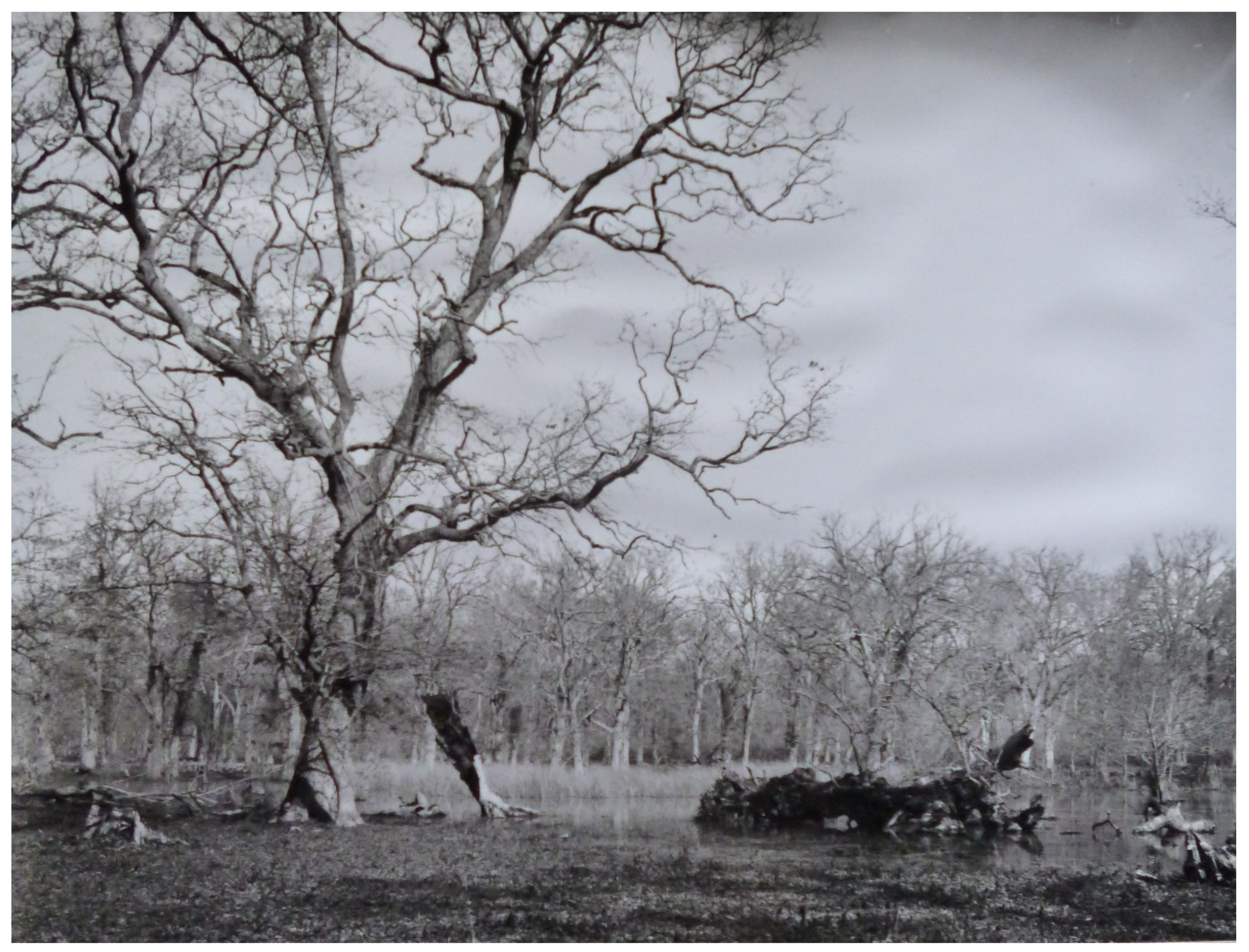
Travelers in the late 19th century were amazed by a natural context that inspired “fear”. The environment was dominated by clouds of large insects. The central part of the forest was occupied by trees and plants that grew chaotically to the point of blocking the passage of people and light (Figure 2). The few inhabitants present in the Pontine area, affected by environmental adversities, appeared marked by malnutrition and diseas (Abbate 1890). Another description from the 1880s speaks of the abundance of trees of every variety and shape, the sun’s rays were obscured by dense swarms of insects and everything appeared wrapped in a kind of fog that arose from the numerous puddles of water that forced the few brave people who ventured into this area to move through “putrid, nauseating” areas (Berti 1884).
In general, traveler reports describe the characteristics of an ecological context occupied by a wild nature that made permanent settlement of people very difficult. Although the predominant opinions were very negative, the zoologist Kai Curry-Linghal (1917-1990) found the humid areas of the Pontine Plain full of charm and of great value for biodiversity (Curry-Linghal 1971). From the perspective of the conservation of European nature, the Swedish scientist speaks enthusiastically of the biodiversity of animals but also of the plants of the undergrowth, of the insects that could be found in a virgin space just modified by man. One of the few existing in Europe.
In short, between the end of the 19th century and the first decades of the 20th century, the image of the Pontine Woods oscillated between those who considered it a relic of the past incompatible with modern civilization and the artists who observed it with a romantic gaze because it represented a natural and social world that was about to be erased. On the margins of these two visions, the productivist one according to which the marsh and the woods had to disappear to make room for cultivated fields and the nostalgic one of the painters, were the farmers for whom the woods had always been a precious economic resource (wood collection, grazing, manufacturing of wooden objects). Over the centuries, the natural reserves had attracted the interest of numerous individual and collective actors for cutting wood for construction and fuel, for the production of charcoal, for fishing, for wild grazing or for the collection of lake vegetation. In this way, over time, the marshes became a shared forest ecosystem that fueled continuous disputes over rights, forcing central and local authorities to approve repeated and unsuccessful regulations in an attempt to regulate either logging or fishing areas. Within a varied context of written and customary rights, the woods of the Pontine Marshes are a clear example of the conflictual dynamics generated by the use of natural resources (Agrawal 2007).
Although there is no precise delimitation of the total area attributable to the Pontine Marshes, according to the 1911 land registry, from the 82,059 hectares corresponding to the Pontine municipalities, a clear predominance of grazing land is found: 33,498 hectares (41%), followed by fruit, cutting and coppice woods with 25,010 hectares (30.4%); the remaining part is divided between pastures in arable land (8,329 hectares, 10%), wheat (6,133 hectares, 7%) and minor crops such as corn, vineyards and olive groves for a total of 9,089 hectares (8%) (Catasto agrario 1912). In fact, this division is the result of the coexistence of two major economic orientations: one aimed at the practice of breeding thanks to the exploitation of pastures created by the elimination of the woods, and another that continues to remain firmly subordinate to the economy of the woods.
Overall, it was a picture described in terms of extreme desolation, strongly influenced by the precariousness of cereal and fodder crops due to the high humidity of the soil (Orlando 1991). The ministerial commissions charged with collecting information on the environmental constraints of the Pontine territory, in their final conclusions allude to the existence of large areas occupied by “wild woods”, the complete lack of paths, of canals to eliminate the waters that formed nauseating swamps and puddles.
Compared to the objectives of the central power, the response of local actors proved particularly radical in the defense of the old prerogatives (Biasillo 2023, p. 90). All this favored the multiplication of lawsuits and legal disputes on the validity of collective rights. In the Pontine Marshes it was normal that “the boundary between legal and illegal did not help to clarify, did not find any correspondence with the reality of the facts, was not useful for administrative purposes” (Cox, 2010). The large municipalities of the region (Terracina) acted to have their uses recognized even in the absence of clear official confirmations. The same was done by the agrarian communities clinging to customs that guaranteed the collective use of the lands. To make the administrative panorama even more complex, after the Unification the Ministries of the Interior and Agriculture also had jurisdiction over the Pontine woods bound to the public domain as reserves of tall trees. The main result of this tangle of legal and political interventions was the increase in prohibitions on the free use of the woodland reserves. The municipal administrations proved inclined to favor clearing and the transformation of the woods into agricultural land. The ambiguity favored tensions and complex legal cases.
In the specific case of communal and collective forests, the last years of the 19th century were characterized by the start of ambiguous privatization processes. The large timber and coal merchants, with the complicity of local authorities, promoted the appropriation from above by imposing the division of collective forest assets. Through often less than legal paths, the forest went from being owned by everyone to being owned by a few businessmen supported by strong political interests. Compared to this situation, private forests have been less studied despite the fact that, as demonstrated by the dominant reality in other countries such as the United States the exploitation of forests imposed significant challenges related to the conservation, cutting and marketing of wood.10 Our case study, referring to the forest of the Caetani family, confirms that the management of forests carried out by private owners at the time when timber became a strategic product, requires us to evaluate the issue from the point of view of the formation of an entrepreneurial mentality in this specific sector, even among members of the nobility.
The Caetani Forest (19th-20th Century)
As previously mentioned, the observation point adopted in this paper is the patrimonial policy followed by the largest private owner of the Pontine Marshes. In the context of the changes that occurred between the 19th and 20th centuries regarding the status of woodland, the Caetani administration paid special attention to the systematic exploitation of the forests owned. If in general in Italy the forest area coincides with the mountain areas (Armiero 2002), the forest of the noble Roman family is a clear example of the wealth of woodland in the plains (Datero 2022) which remained practically unchanged until the early 20th century.
Overall, the great maritime forest of the Pontine coast (Figure 3) occupied an area of about 30.000-40.000 hectares divided mainly between the municipality of Terracina and the Caetani house. From the last twenty years of the nineteenth century, the Pontine plain became the scene of an inexorable process of deforestation. Roberta Biasillio’s studies on the woods of Terracina have highlighted how the end of the nineteenth century marked the formation of a general framework full of tensions and disputes due to national legislation aimed at reducing common rights and civic uses of forest reserves (Bonan 2019). In the wake of a favorable approach to the reduction of collective rights, all this encouraged the arrival of capital companies and economic operators attracted by easy profits and good conditions for the exploitation of an attractive woodland wealth that had arrived at the threshold of the twentieth century without suffering significant losses.11 In this way, a scenario emerged marked by disputes between local forces that saw their customary rights dissolve and external forces ready to make the most of the increased demand for building materials and charcoal.
Compared to the confined municipal forests of the city of Terracina, the events connected to the Caetani forests offer the possibility of examining a very different legal context since in our case study it is a large private owner who carries out an autonomous patrimonial strategy. Therefore, in the area we investigated, the conditions for the formation of a conflictual context did not arise. If the long history of the Caetani landed property is linked to the exploitation of the forest cover, the noble family’s forests offer the possibility of analyzing the choices made by a large noble owner when, at the end of the 19th century, the transformations of the country’s economy imposed the adoption of economic strategies suited to the new needs of the timber market (Agnoletti 1998). Choices that will have as their main consequence the reduction of the surface area occupied by the forest and therefore, long before the complete reclamation imposed by fascism, the Caetani through the intensive exploitation of their forest heritage imprint a first but very incisive phase of transformation of the traditional ecological context.
2.1. 1805-1861: Regulating Tree Felling
The nineteenth century in the Papal States, in terms of forest management, began with two significant developments which, over the course of the century, led to greater involvement by the central authority in the exploitation and conservation of forests. These two developments were Cardinal Consalvi’s decree of 1805 and, subsequently, the establishment on 30 September 1827 of the Administration of Royal Forests and Woodlands. Between these two dates lies the ‘French period’, during which the central political authorities strengthened their control over private woodlands through general and uniform legislation based on scientific principles and the involvement of experts (forestry officers, agricultural surveyors, land surveyors, forestry inspectors) with considerable technical expertise in felling and assessing timber stocks (Lazzarini 2025). Through this series of political reforms that characterised the first thirty years of the 19th century, private individuals—particularly large landowners such as the Caetani family—faced a significant change that resulted in a considerable loss of autonomy, as evidenced by the contracts for the felling of tall trees, which, in addition to requiring prior authorisation from the authorities, stipulated the presence of state officials tasked with overseeing the correctness of the felling operations.
Papal decree 1805 was aimed at the conservation of forests and scrubland, prohibiting unauthorised felling and regulating the procedures for periodic felling and sales, with penalties for abuses and offences. Therefore, in light of the content of the cardinal’s regulations and, above all, the importance of the Caetani family’s forest reserves, it is not surprising that the early 19th century was characterised by a series of visits and technical assessments of the state of conservation of the ‘vast forests in the territories of Cisterna and Sermoneta belonging to the Most Excellent House of Caetani’. This also marked a turning point from a technical perspective, as clearly attested by the surveys carried out by land surveyors, experts and doctors, aimed at determining the number, species and condition of the trees in the Pontine forests, including in relation to air quality, wind patterns and the beneficial effects of tall trees on human health. Thus, by the early nineteenth century, and under the influence of a renewed scientific context and agronomic knowledge, an overall picture of the Caetani family’s Pontine woodland emerged for the first time, including from a quantitative perspective.
According to the experts tasked with drawing up the technical reports, if the Caetani family had wished to prevent the uncontrolled exploitation of the forest resources, they would have had to tighten the measures for monitoring and cracking down on illegal charcoal kilns. This monitoring operation was essential for introducing changes to the organisation of the forest, with a view to facilitating the transition from an area that was difficult to govern to one better suited to modern practices of natural resource exploitation. Although it was difficult to arrive at precise figures, the Caetani estate’s woodland covered over 16,000 and contained nearly two million tall trees, plus a vast number of smaller trees that were impossible to count.
Even before Rome’s annexation to the Kingdom of Italy in 1870, the papal authorities showed great interest in the situation of the Pontine Woods. Reports by technical experts highlighted the effects of the continuous felling of hardwood trees for charcoal production, a practice that often involved cutting down trees that were too young. The recommendation made was that the authorities should intervene to halt the chaotic depletion of the forest cover. It was therefore necessary to impose a limit on the Caetani family’s claims to proceed with the indiscriminate felling of trees, given that ‘private interests cannot take precedence over the public good, particularly in terms of public health’. The agronomist tasked with the inspection admitted that it was very difficult to obtain an overall view of the entire woodland, not only due to the lack of modern cartographic tools but also because the Pontine woodland was ‘not man-made but spontaneous’; in fact, it was a mass of vegetation formed naturally by the intermingling of different species. All this made it impossible to arrive at reliable figures either on the area covered by the woodland or on the number of trees comprising the ‘vast forest revered as sacred by our ancestors’.
4.2. Demand for Timber: Land Reclamation and Deforestation Between 1871 and 1920
The Caetani family intensified the exploitation of the Pontine forest, making it a profitable business activity of national and international character. In fact, stimulated by the increase in demand for wood from large urban centers and favored by legislation that allowed private individuals to freely exploit their forest assets, the noble family, starting from the 1870s and 1880s, increased work in the dense reserves of woods that occupied the strip of the maritime plain. The 1880s opened with the signing of a series of important contracts relating to the Cisterna estate with the firms of Domenico Fascina and the Barabino brothers, equivalent to 20,476 tons of coal, 28,520 oak and English oak sleepers, and 21,575 canes of staves and other minor cuts (half staves, bottoms) (Celetti 2008). Right at the turn of the century, in the wake of the significant increase in prices, we are witnessing an increase in the share of medium and small-sized cut timber as a result of a demand that tends to be higher than the actual capacity of the forest to renew itself.
In terms of yield, between 1901 and 1905, 4,778 tons of coal, 43,087 sleepers, 9,236 sleepers, 11,436 stave canes, 99,447 drums and 1,157 steps of wood were obtained from the San Donato woodland (Table 1). In the same years, another important contract, this time also referring to the Cisterna estate, was signed with Antonio Cirillo for the annual cutting of 3,000 cubic meters of alder drums and other softwoods excluding ash. Although there is no overall accounting with data regarding all the Caetani woods and woodlands, these and other examples perfectly illustrate the extent of the cutting of the Pontine woodland surface in the years between the 19th and 20th centuries. The largest part of this woody material, once the cutting and sawing operations were completed, was transported to the Tyrrhenian beaches between Anzio and Circeo to be loaded onto boats used for transport to the places of destination (Warde 2006). Among the main buyers of sleepers we find the “Italian Society for the Railways of Sicily”. In the 1905-1906 season alone, the costs of loading and transporting the material from the San Donato forest to Sicily exceeded 13,000 lire. Since it was maritime transport, the captains of the ships had to sign the bill of lading in order to certify the steps of wood actually loaded; in order to exercise a capillary control over the trees to be cut and the carrying out of the operations, the sales contracts required that those responsible for the felling indicate the places through which the material passed to the beach and all this had to be done after communicating with the agronomist or minister of the Caetani house who had to ensure that the young plants, pastures or fences were not damaged. Payment for any damages was the responsibility of the lessee of the felling.
In a country poor in fossil fuel sources, the data collected in Table 2 confirm that the woods located on the Tyrrhenian plain, allowing easy naval transport, proved very important in the production of charcoal (AC, FE, 1525) A place frequented by charcoal burners for centuries, the demand for coal and firewood from large urban centers and industrial centers created the conditions for the charcoal taken from the woods of the Pontine Marshes to find easy insertion into commercial networks. If we have previously seen that the wholesale trade in wood responded mainly to the needs of the construction of the railway network, at the same time the charcoal marketed by the Caetani, in addition to satisfying the nearby Roman market, was sent to Genoa, Naples, Piombino and other Italian cities.
Figure 4.
The Pontine Marshes forest (late 19th century). Fondazione Caetani, Rome, Archivio Fotografico, 369.
Figure 4.
The Pontine Marshes forest (late 19th century). Fondazione Caetani, Rome, Archivio Fotografico, 369.
Without claiming to exhaust all the economic and social aspects connected to the massive employment of manpower in the different business contexts, it is worth presenting the situation that emerges for the first years of the twentieth century from the registers referred to in the “Cassa degli operai della ditta duca di Sermoneta” (Workers of the Duke of Sermoneta company) (AC, FE, 2098). According to the summary table, on 31 December 1908, 504 workers worked at the company of the Duke of Sermoneta, of which 315 were involved in forestry operations. Recruited on a daily basis, for a total of 12,600 working days per month, the average daily wage of the Caetani company’s workforce was 2 lire, for a total outlay of 302,400 lire. The tasks of the workers employed in the forestry and agricultural industry included, first of all, pruning trees, taking care of the garden, producing coal, transporting, tending livestock, and many other tasks. If we look at the list of laborers employed in the two-year period 1909-1910, we learn of the presence in the Caetani woods of groups of workers divided by area of origin and specialization. Thus, there are teams of cutters originating from Cagli (Pesaro), Frontone (Pesaro) and Scheggia (Perugia); for the cutting of sleepers, there is a predominance of workers from Capitignano (L’Aquila), while in the case of laborers, there are numerous immigrants from Introdacqua (L’Aquila); as regards the carbonari and porters, those originating from Campiglia (Pistoia) and Piobbico (Pesaro) are predominant.
The intense business around the exploitation of the forest cover determined that the Caetani entered into commercial relations with a varied number of Italian intermediaries and markets active in the complex timber supply chain. There is also no lack of contracts with foreign operators (Bemmann 2024) such as, for example, the companies Arthur Koppel, J. Pelloquet of Nice specialized in the production of railway sleepers, and the Algerian L.A. Millaut of Hussien-Dey active in the production of wine barrels. Samples of Turkey oak were even sent to Holland in anticipation of a “big deal” of which unfortunately we have no further details. In some cases the companies signed agreements for the cutting of trees and the marketing of the products obtained, in other circumstances the agreements provided for the purchase of the material supplied by the Caetani. In short, a notable variety of situations emerges.
In the 1880s, the Caetani’s carefully managed income from Duke Onorato amounted to approximately 600,000 lire, which, subject to annual fluctuations, were largely the result of two items: the rent for cutting grass for grazing and the sale of wood from the scrub, the first item guaranteed an average of 38% of the proceeds while the second item represented another 20%; together with these two items and leaving aside a heterogeneous category of “miscellaneous income”, we find the sale of livestock (13%) and fish (7%) (AC, FE, 345). The consequences of the energetic assault on the forest ecosystem are clearly visible. At the end of the 19th century, the San Donato scrub, one of the family’s main woodland reserves, was equivalent to a capital of 188,631.04 lire deriving from 90.03 hectares of coppice, 17.3 hectares of pasture land and 906.20 hectares of tall trees. The felling of tall trees up to the 1909-10 season brought in a profit of 771,848.34 lire. Due to the changes that occurred in the early years of the 20th century, the value of a hectare of land in the San Donato scrub went from 4 to 20 lire. Therefore in 1909, after the major felling operations, the San Donato area now transformed into pasture had a value of 358,970.19 lire (Lupo 1990). Compared to the estimate of a few years earlier and in the wake of the intense deforestation action for the creation of large grazing areas, the value of the properties experienced a 90% revaluation.
What has been said so far is intended first of all to provide an adequate framework for the trends that developed between the end of the nineteenth century and the very first years of the following century when, despite the presence of the first hydraulic reclamation operations of a certain importance, the weight of tradition in the use of natural resources continued to impress a characterizing trait on the large aristocratic property of Caetani. Nonetheless, the patrimonial phase corresponding to the administration of Onorato Caetani is particularly emblematic since it constitutes a moment of welding marked by the presence of elements of continuity (woods, lakes, pastures) and discontinuity in the face of the need to bring the economic management of the assets back to an administrative efficiency that would keep together the dynamics deriving from an environment that continued to impose its invasive presence and the demands of the market (Lupo 1990).
Contracts for the exploitation of forests intensified after the death of Honoré VII in 1917 also due to the notable increase in the demand for wood for war materials.12 The general commissioner of fuels had imposed on the entrepreneurs involved in the cutting of wood to give the army at least one fifth for the production of charcoal. It is no coincidence that one of the first initiatives undertaken by the sons of Honorato VII was to entrust the forestry inspectorate of Rome with the realization of a technical visit to have an evaluation of the rational cuts to be made in the forests of tall trees (AC, FE, 3445). According to Count Onorato’s will, the Caetanis owned six or seven large woods, each of which had an average surface area of 2,000 hectares. As shown in Table 2, the predominant tree species were Turkey oaks, followed by English oaks and elms/ash trees, for a total of 2,780 tall trees. The 1917-18 wood-cutting season closed with a profit of 2.7 million lire, earnings that rose to 2.9 million in 1918-19. In 1918, the Giovanni Ansaldo company signed an agreement with the Caetanis for the purchase of 350 hectares of woodland at a price of 3.50 lire for each quintal of rough wood, and in the same year the “Venetian Company for the Construction and Operation of Italian Secondary Railways” did the same for another 1,600 hectares. Since these are forests of tall trees, the contracts specify that the selling party turned to the forestry inspectorate of Rome in order to implement rational cutting systems. In order to reduce the costs associated with cutting and transport operations, the “Società veneta” built a Decauville railway line between the wooded area around Lake Fogliano and the Nettuno dock.
This favorable situation for forest owners but also for economic operators involved in the timber supply chain changes abruptly with the end of the conflict (Serpieri 1919) For example, as soon as the war ended, the “Società veneta per la costruzione ed gestione di ferrovie secondarie italiane” turns to the Caetani company to have a downward revision of the purchase prices (from 3.45 to 3 lire/quintal) previously agreed upon, citing the “sudden drop in the prices of coal and wood” (AC, FE 3442 and 3445). Even in a modified context, the same “Società veneta” bought 13,305 trunks of Turkey oak, oak and English oak from the Caetani in 1919, for a total of 2.9 million lire (AC, FE 3443, 3444). In the same years another important company such as Ansaldo paid the Caetani 1.5 million lire in concept of wood sales. If the war had determined a huge use of the country’s forest resources, the same happened with the reconstruction phase of the cities and infrastructures damaged by the fighting (Ermacora 2009).
An aspect present in the contracts for the exploitation of trees are the measures that the contracting companies had to adopt in order to guarantee the natural reproduction of future plants (AC, FE 3443, 3446). In concrete terms, it is established that the young plants had to be protected in order to guarantee “the normal future development of the forest”, specifically it was necessary to protect the convenient distances between the adult plants best suited to dissemination as well as in the areas where the young plants were excessively thick it was necessary to proceed with selective felling to reduce the density of the plants allowing a normal growth of the best plants.
It was the prerogative of the technicians in the service of the Caetani, in agreement with the forestry inspectorate, to mark the plants to be preserved or cut. Specifically, it was the task of the companies to ensure that the felling of the plants did not cause any damage to the trunks and branches of the surrounding plants. Precautions that also concerned the production of charcoal. In this case, the production of charcoal had to be carried out in the farmyards or old squares, only in the absence of free spaces for the installation of the oven the contractors had to make agreements with the agronomists of the Ministry of Agriculture and the House of the Caetani in order to identify free and safe places for the production of charcoal. In general, it was the prerogative of the owner to have a guardian who exercised functions of control and monitoring of the work in the woods until the transport of the material to the nearby railway stations of Sermoneta and Cisterna. The tenants of the woods were forbidden to hunt and graze.
In 1920 Leone Caetani sold 1,400 hectares of woodland to the “Società anonima Forestale” and another 2,075 hectares of woodland to the “Società delle bonifiche pontine” (Pontine Land Reclamation Company) for over two million lire. At the same time he sold the Giovanni Ansaldo company the right to remove trees from the Colle Moretti and Principe woods that had a diameter greater than 20 centimetres. In total, the wealth of both woodlands amounted to 6,118 trees with a density of 53.2 trees per hectare, a total of 7,524 tons of wood. From the saleable portion, 2,162 trees were to be removed and “remained as a reserve”, trees to be marked with a ring of paint and branded at the foot with the Caetani hammer. Anyone who felled unauthorized trees, in addition to being prosecutable by law, had to pay the Caetani a fine of one hundred lire for each tree felled unduly. Likewise, in order to protect the growth of younger trees in deforested areas, grazing was prohibited. It was a matter of ensuring that the felling was “carried out in such a way as to safeguard the conservation and reproduction of the forests themselves”.
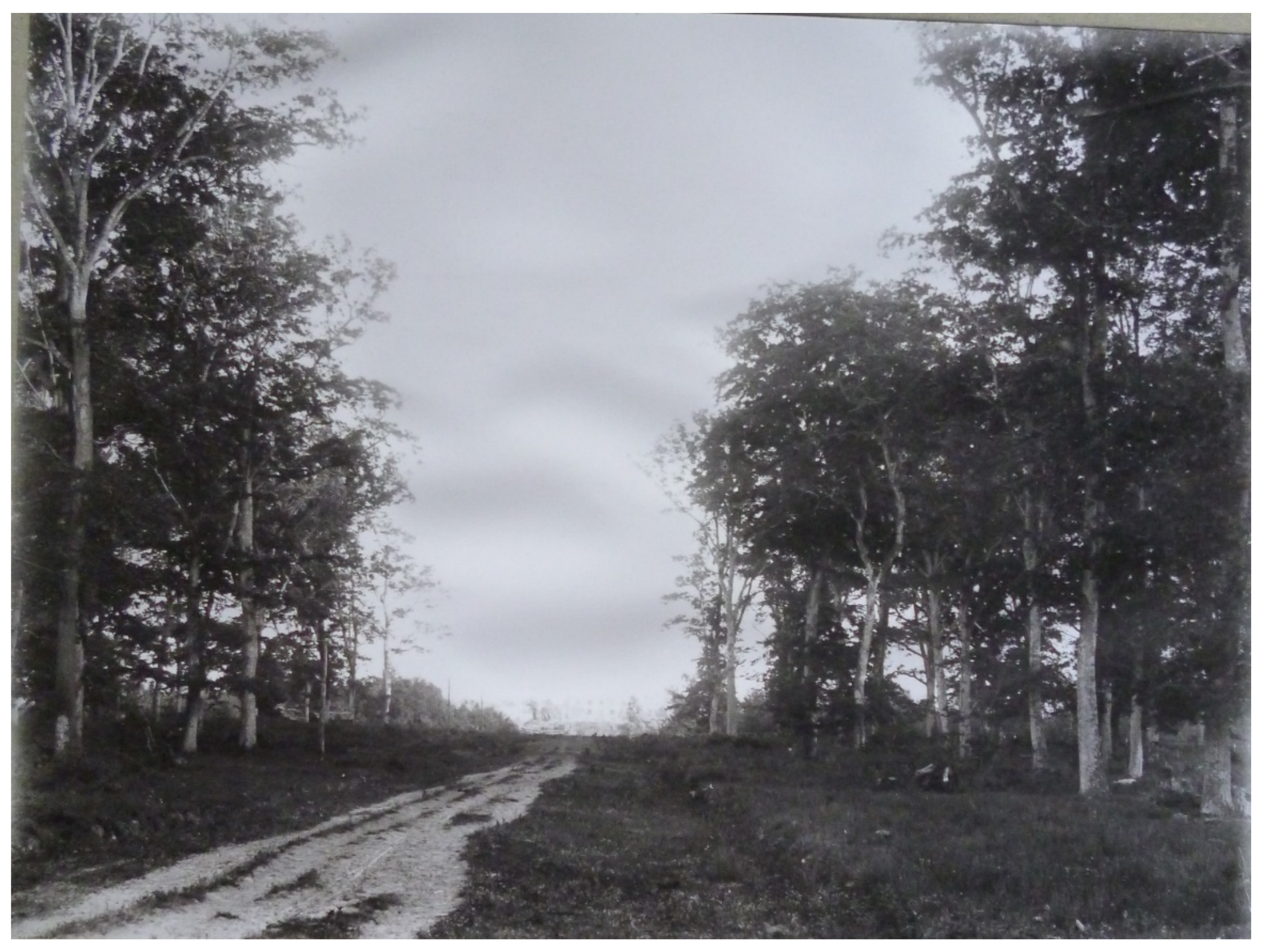
The abundant photographic material available allows us to capture the transition from a wild woodland mass that formed an almost impenetrable vegetal wall, made of branches that intertwined with each other, to a forest, towards the 1920s, the result of the application of a forestry policy aimed at the organised growth of plants. The images available show the effects of the retreat of the forest. We can see paths and wide roads to allow the movement of vehicles and men (Figure 5), as they appear in photographs of the old houses of charcoal burners or shepherds now abandoned and in ruins. Aligned trees begin to predominate, spaced from each other in such a way as to allow the passage of light and the regular growth of plants. Although a greater sensitivity towards the reproduction of plants can be found in the early years of the 20th century, there is no lack of tension as good practices for the regeneration of the forest were not always respected. Among the companies that were awarded the felling of the timber, the current practice was to prefer the best plants for processing, leaving the poorer ones. In this way, a much greater number of plants remained standing than that prescribed by the forestry authorities, contributing to the formation of forests less rich in good quality trees.
Figure 5.
Caetani Wood at the beginning of the 20th century. Fondazione Caetani, Rome, Archivio Fotografico, 375.
Figure 5.
Caetani Wood at the beginning of the 20th century. Fondazione Caetani, Rome, Archivio Fotografico, 375.
Conclusions
The research study focused on the history of forest resources in Italy, with particular attention to private and lowland forests. The case of the exploitation of the Pontine Marshes’ woodlands proves particularly effective in describing how landscape changes can occur due to exogenous (economic, political) and endogenous pressures (the choices made by the owners, the noble Caetani family). These two converging pressures, in which land reclamation policies intertwine with market demands, contribute to an impact on the forests of the Pontine Marshes to the point of compromising their very existence and irreparably altering their environment.
Leaving aside the history of the Caetani landed estate before the land reclamation laws of the 1880s (Vaquero Piñeiro 2024) in the last years of the 19th century the Dukes of Sermoneta carried out a systematic exploitation of their forests. In this case, it was neither a privatization of the forest cover nor an exogenous action against the resources of the territory. Our case study has highlighted the strategies adopted by a large private noble landowner at a time when the demand for wood increased at a national and international level, not only for burning or construction but above all for the manufacture of sleepers to be used in the national railway network. From what emerges from our study, the impact that the landed estate policy implemented by Onorato Caetani and his descendants had on the transformation of the Pontine landscape, thinning out the thickets and making the space occupied by the forest much less “wild” is evident.13 It is no coincidence that in the lease agreements for estates signed in the 1880s, there usually appears a clause according to which “for the sole purpose of reducing it to better cultivation, the E.S. Duca reserves the right to deforest […] some part of the leased land” (AC, FE, 3432).
In the early 1920s, the Caetani brothers gradually began to sell their forests to devote themselves to land reclamation. This choice, which effectively marked a break with the past, was based on causes of a different nature. Leone Caetani, the main beneficiary of Duke Onorato’s will, made the decision to sell his forest assets to move to live in Canada. In the case of the other brothers, mainly Gelasio Caetani, the objective of creating a modern agricultural company prevailed. Between the 1920s and 1930s, fascism charged the “Opera nazionale combattenti” (National Organisation for War Veterans) with the task of carrying out the complete reclamation in order to recover new lands for agriculture, eliminating the marshy lands forever and with them erasing the origin of deadly malaria. At this point in the 20th century, the forest had become a minimal part and with the complete reclamation works the forest of the Pontine plain was erased forever.
In the mid-1930s, when the forest land registry of Italy was created, the woods around the coastal lakes once owned by the Caetani had completely disappeared. The part reserved for woodland in the province of Littoria (now Latina) reached just 3.5% of the agricultural and forestry surface (Catasto forestale 1935). In 1937 the Opera Nazionale Combattenti began planting 5 million trees (eucalyptus, acacia, Pinus insignis, cypress, …) on a surface of 40,000 hectares of the Agro Pontino. The goal was to build a windbreak but the war blocked this massive planting of trees. Only the wooded mass of the Circeo Natural Park remained, desired by Benito Mussolino in 1934 as a reminder of what not many years before had been the fearful jungle of the Pontine plain (Piccioni, 2023, p. 61). Thus is written the last chapter of a story of progressive disappearance of the forest cover between deforestation and land reclamation in which the Caetani played a very important role.
Archival Documentation
Archivio Caetani (AC), Fondo economico (FE)
Archivio Centrale dello Stato, Ministero agricoltura, industria e commercio, Direzione generale dell’agricoltura, vers. I, b. 442, fasc. 1025.
Funding
This research received no external funding.
Institutional Review Board Statement
Not applicable.
Informed Consent Statement
Not applicable.
Data Availability Statement
The original contributions presented in this study are included in the article. Further inquiries can be directed to the corresponding author.
Acknowledgments
The author takes full responsibility for the content of this publication. He wishes to thank a few colleagues for inspiration and for comments on an earlier version of this manuscript.
Conflicts of Interest
The author declares no conflicts of interest.
| 1 | For a framework of environmental issues common to the Mediterranean area (Grove and Rackham 2003). |
| 2 | For population growth in ‘Italy (Del Panta 1996). |
| 3 | For a history of forests in Europe (André Corvol-Dessert 2004; Küster, 2009; Rackham 2012; Radkau 2007). |
| 4 | On the history of forests in Italy (Agnoletti 2018; Sansa 2003; Vecchio 1974). |
| 5 | On the role of timber merchants in Italy (Andreoni and Chiapparino, 2025; Segreto, 2011). |
| 6 | At an international level, at the end of the 19th century, a debate opened up regarding the danger of the end of the great forests (Castonguay 2024). |
| 7 | In the decades spanning the 19th and 20th centuries, the area covered by Italian forests reached an all-time low of 3–4 million hectares; today, forests cover 11.7 million hectares, or 38.8 per cent of the country’s total land area (Pettenell 2020). |
| 8 | For a comparison with the United States (Peterson and Speth 1982). |
| 9 | Even at an early stage, the economic development of the United States led to the systematic use of forest resources (Willians 1987). |
| 10 | For the timber market in Italy (Segreto 2011; Bonan 2022). |
| 11 | On the weight of the forest ecosystem in the Pontine area (Atlante storico 2003, pp. 292-321). |
| 12 | It is estimated that in Italy no less than two million cubic metres of other types of wood were cut down for military purposes (Vecchio, Piussi and Armiero 2002, p. 182). |
| 13 | On the role of trees in landscape building in England (Rackham 1980). |
References
- Abbate, Enrico. Guida della provincia di Roma; Ermano Loescher: Roma, 1890. [Google Scholar]
- Agnoletti, Mauro. Storia del bosco. Il paesaggio forestale italiano; Laterza: Roma-Bari, 2018. [Google Scholar]
- Agnoletti, Mauro. Commercio e industria del legname fra XIX e XX secolo nell’Italia del nord-orientale: aspetti tecnici e scelte imprenditoriali. In Mobilità imprenditoriale e del lavoro nelle Alpi in età moderna e contemporanea; Fontana, Giovanni, Leonardo, Andrea, Trezzi, Luigi, Eds.; Cuesp: Milano, 1998; pp. 31–45. [Google Scholar]
- Agrawal, Arun. Forests, Governance, and Sustainability: Common Property Theory and its Contributions. Int. J. Commons 2007, 1(1), 111–136. [Google Scholar] [CrossRef]
- Bonan, Giacomo; Del Giudice, Federico; Lorenzini, Claudio; Taccetti, Giulio (Eds.) Andreoni, Luca, and Francesco Chiapparino, Il mercato internazionale del legname tra Otto e Novecento, l’Italia e l’attività imprenditoriale di Riccardo Gualino. In Culture, economie e politiche del bosco in Italia. Dal Medioevo all’età contemporanea.; Forum: Udine; pp. 285–303.
- Armiero, Marco; Biasillo, Roberta; von Hardenberg, Wilko Craf. Mussolini’s nature: an environmental history of italian fascism; MIT: Cambridge-London, 2022. [Google Scholar]
- Armiero, Marco. La ricchezza della montagna. Il bosco dalla sussistenza al superfluo. Meridiana 2002, 44, 65–96. [Google Scholar]
- Armiero, Marco. Le montagne della patria Natura e nazione nella storia d’Italia. Secoli XIX e XX; Einaudi: Torino, 2013. [Google Scholar]
- Atlante storico. Atlante storico-ambientale Anzio e Nettuno; Cavena, Giulia, Travaglini, Carlo Maria, Eds.; De Luca Editore: Roma, 2003. [Google Scholar]
- Bardini, Carlo. Senza carbone nell’età del vapore Gli inizi dell’industrializzazione italiana; Bruno Mondadori: Milano, 1998. [Google Scholar]
- Barone, Giuseppe; Gambi, Lucio; Rossi-Doria, Manlio. La storia delle bonifiche in Italia: Elementi per un dibattito. Studi Stor. 1985, 26(4), 961–975. [Google Scholar]
- Bemmann, Martin. «Wood-based Businesses and the Economic Development of Europe in the Nineteenth and Twentieth Centuries—An Introduction Holzwirtschaft und wirtschaftliche Entwicklung in Europa im 19. und 20. Jahrb. Für Wirtsch. 2024, 65(2), 279–305. [Google Scholar]
- Berti, Tito. Paludi Pontine; Armanni: Roma, 1884. [Google Scholar]
- Bevilacqua, Irene. I papi e le acque. Bonifiche, peschiere e comunità nelle Paludi Pontine dal XVI al XVII secolo; il Mulino: Bologna, 2017. [Google Scholar]
- Bevilacqua, Piero; Rossi-Doria, Marco. Le bonifiche in Italia dal ‘700 a oggi; Laterza: Roma-Bari.
- Biasillo, Roberta. Amministrare le selve: i conflitti sull’uso delle risorse boschive di Terracina in età liberale. Stor. Urbana 2018, 41(159), 27–54. [Google Scholar] [CrossRef]
- Biasillo, Roberta. Paludi Pontine. Terracina dall’Unità alla bonifica integrale (1871-1928); Viella: Roma, 2023. [Google Scholar]
- Bonan, Giacomo; Lorenzini, Claudio. Common Forest, Private Timber: Managing the Commons in the Italian Alps. J. Interdiscip. Hist. 2021, 52(1), 1–26. [Google Scholar] [CrossRef]
- Bonan, Giacomo. The State in Forest. Contested Commons in the Nineteenth Century Venetian Alps; The White Horse Press: Cambridge (UK), 2019. [Google Scholar]
- Bonan, Giacomo. Pionieri nella frontiera del legname? I commercianti di legname in Italia settentrionale durante l’industrializzazione. Impresa E Stor. 2022, 46, 63–91. [Google Scholar] [CrossRef]
- Boschi, Silvana. Esperienze di divulgazione dei problemi della forestazione in Italia nel primo Novecento. Stor. Urbana 1996, XX, 76-77, 123–130. [Google Scholar]
- Branzoli-Zappi, Ezio. Conseguenze economiche del disboscamento in Italia. G. Degli Econ.>, Ser. Second. 1903, 26(14), 409–422. [Google Scholar]
- Caprotti, Federico. Malaria and Technological Networks: Medical Geography in the Pontine Marshes, Italy, in the 1930s. Geogr. J. 2006, 172(2), 145–155. [Google Scholar] [CrossRef]
- Castasto agrario. Catasto agrario del Regno d’Italia. Vol. VI. Introduzione; Tipografia Nazionale di G. Bertero: Roma, 1912. [Google Scholar]
- Castasto forestale. Catasto forestale. Comparto del Lazio. Provincia di Littoria; Istituto Poligrafico dello Stato: Roma, 1935. [Google Scholar]
- Castonguay, Stéphane. How About the Threatened Timber Famine: Timber Merchants, Wood Shortage and Global Surveys on Timber Production and Consumption. Environ. Hist. 2024. [Google Scholar] [CrossRef]
- Cazzola, Franco. Terre senza foreste: zone umide, pinete costiere e piantate di alberi sull’economia agraria della bassa valle del Po (secoli XV-XVIII), in L’uomo e la foresta secc. XIII-XVIII; Le Monnier: Firenze, 1996; pp. 971–988. [Google Scholar]
- Celetti, Davide. Il bosco nelle provincie venete dall’Unità ad oggi Strutture e dinamiche economiche in età contemporanea; CLEUP: Padova, 2008. [Google Scholar]
- Censimento. Censimento generale 31 dicembre 1861; Tipografia letteraria e degli ingegneri nella Pia casa di Lavoro: Firenze, 1865. [Google Scholar]
- Cerofolini, Alessandro. La definizione giuridica di bosco nell’ordinamento italiano. Ital. J. For. Mt. Environ. 2014, 69(1), 37–45. [Google Scholar]
- Clough, Shepard B., Thomas Moodie, and Carol Moodie Land Reclamation in Italy. In Economic History of Europe: Twentieth Century, The Documentary History of Western Civilization; Palgrave Macmillan: London, 1968; pp. 285–288. [CrossRef]
- Corona, Gabriella. The Decline of the Commos and the Environmental Balance in Early Modern Italy. In Nature and History in Modern Italy; Armiero, Marco, Hall, Marcus, Eds.; Ohio University Press: Athens (Ohio), 2011; pp. 89–107. [Google Scholar]
- Corvol-Dessert, André (Ed.) Les forêts d’Occident du Moyen Âge à nos jours; Presses Universit: Toulouse, 2004. [Google Scholar]
- Cox, Thomas R. The Lumberman’s Frontier: Three Centuries of Land Use, Society, and Change in America’s Forests; Oregon State University Press: Corvallis, 2010. [Google Scholar]
- Curry-Linghal, Kai. Europe, a natural history; Random House: New York, 1971. [Google Scholar]
- Datero, Alessandra. Interessi, conflitti e politiche di governo dei boschi lombardi di pianura nell’età delle riforme: la comunità di Abbiategrasso. In Il bosco. Biodiversità, diritti e culture dal Medioevo al nostro tempo.; Datero, Alessandra, Ed.; Viella: Roma, 2022; pp. 337–354. [Google Scholar]
- de Bérenger, Adolfo. Dell’antica storia e giurisprudenza forestale in Italia; Stabilimento tipolitografico di G. Longo: Treviso-Venezia, 63 1859; pp. 782–797. [Google Scholar]
- Del Giudice, Federico. «Un’unificazione centrifuga. La legislazione forestale dall’Unità d’Italia al primo Novecento» Contemporanea 2025, 28(4), 507–534. [Google Scholar]
- Del Panta, Lorenzo. Dalla metà del Settecento ai nostri giorni. In Storia della popolazione italiana dal medioevo a oggi; Bacci, Massimo Livi, Pinto, Giuliano, Sonnino, Eugenio, Eds.; Laterza: Roma-Bari, 1996; pp. 131–212. [Google Scholar]
- Ermacora, Matteo. Lo sfruttamento delle risorse forestali in Italia durante il primo conflitto mondiale. Venetica 2009, 20, XXIII, 53–76. [Google Scholar]
- Gentilcore, R. Louis. Reclamation in the Agro Pontino, Italy. Geogr. Rev. 1970, 60(3), 301–327. [Google Scholar] [CrossRef]
- Giovannini, Carla. La pineta di Ravenna: il monumento e l’invenzione. Stor. Urbana 1996, XX, 76-77: 65-80. [Google Scholar]
- Gregorovius, Ferdinand. Promenades en Italie; Hachette: Paris, 1894. [Google Scholar]
- Grove; Thomas, Alfred; Rackham, Oliver (Eds.) The Nature of Mediterranean Europe: An Ecological History; Yale U.P: New Haven / London, 2003. [Google Scholar]
- Gruppuso, Paolo. In-between Solidity and Fluidity: The Reclaimed Marshlands of Agro Pontino. Theory Cult. Soc. 2021, 39(2), 53–73. [Google Scholar] [CrossRef]
- Irace, Erminia; Piñeiro, Manuel Vaquero. Storia del paesaggio italiano in Età Moderna. Da Petracca a Napoleone; Carocci: Roma, 2023. [Google Scholar]
- Küster, Hansjörg. Storia dei boschi. Dalle origini a oggi; Bollati Boringhieri: Torino, 2009. [Google Scholar]
- Lazzarini, Antonio. Sul commercio del legname in Cadore nel primo Ottocento, in Perarolo. Una comunità fra l’acqua e il legno; Bonan, Giacomo, Lorenzini, Claudio, Eds.; Forum: Udine, 2025; pp. 45–71. [Google Scholar]
- Malatesta, Maria. Le aristocrazie terriere nell’Europa contemporanea; Laterza: Roma-Bari, 1999. [Google Scholar]
- Masetti, Carla. Geografia e cartografia nel processo di recupero del territorio pontino nei primi decenni del Novecento. In La capitale della nazione. Roma e la sua provincia nella crisi del sistema liberale.; Carusi, Paolo, Ed.; Viella: Roma, 2011; pp. 95–119. [Google Scholar]
- McLaughlin, Mark J. Forests as Laboratories: The Intersections of the Histories of Forests, the Environment and Science. Environ. Hist. 2023, 28(4), 679–686. [Google Scholar] [CrossRef]
- Melchiorre, Matteo. Per una storia degli alberi e del bosco. Storica 2020, 76. [Google Scholar] [CrossRef]
- Monografia della città. Monografia della città di Roma e della Campagna Romana; tip. Elzeviariana: Roma, 1881. [Google Scholar]
- Nicolaj, Nicola Maria. De’ bonificamenti delle terre pontine; stamperia Pagliarini: Roma, 1800. [Google Scholar]
- Novello, Elisabetta. La bonifica in Italia: legislazione, credito e lotta alla malaria dall’Unità al fascismo; FrancoAngeli: Milano, 2003. [Google Scholar]
- Novello, Elisabetta. Terra di bonifica. Il ruolo dello Stato e dei privati nel Veneto dalla Serenissime al fascismo; CLEUP: Padova, 2009. [Google Scholar]
- Novello, Elisabetta; McCann, James C. The building of the Terra Firma: The political ecology of land reclamation in the Veneto from the Sixteenth through the Twenty-first century. Environ. Hist. 2017, 22, 460–485. [Google Scholar] [CrossRef]
- Orlando, Giuseppe. Le campagne: agro e latifondo, montagna e palude. In Storia d’Italia. Le regioni dell’Unità a oggi, il Lazio.; Caracciolo, Alberto, Ed.; Einaudi: Torino, 1991; pp. 83–168. [Google Scholar]
- Pagnotta, Grazie. La macchia di Terracina tra valore economico e valore ecosistema. Percezione, consapevolezza e realtà nel XVIII secolo. In Storia economica e ambiente italiano (ca. 1400-1850).; Alfani, Guido, Di Tullio, Mauro, Mocarelli, Luca, Eds.; FrancoAngeli: Milano, 2012; pp. 221–234. [Google Scholar]
- Peterson, Chalres S.; Speth, Linda E. Administration and Personnel on the Wasatch-Cache National Forest. J. For. Hist. 1982, 26(1), 4–19. [Google Scholar] [CrossRef]
- Petrucci. Alberi e venti: la vertenza di Cisterna e Sermoneta nel secolo XVIII. In L’ambiente nella storia d’Italia; Marsilio: Venezia, 1989; pp. 115–129. [Google Scholar]
- Pettenella, Davide. Boschi e green economy: un progetto necessario. In Riabitare l’Italia. le aree interne tra abbandoni e riconquiste.; de Rossi, Antonio, Ed.; Donzelli: Roma, 2020; pp. 471–485. [Google Scholar]
- Piccioni, Luigi. Parchi naturali. Storia delle aree protette in Italia; il Mulino: Bologna, 2023. [Google Scholar]
- Ponzi, Giuseppe. Storia naturale dell’Agro Pontino; tip. delle Belle Arti: Roma, 1865. [Google Scholar]
- Rackham, Oliver. Ancient Woodland Its History, Vegetation and Uses in England; Edward Arnald: London, 1980. [Google Scholar]
- Rackham, Oliver. Woodlands; William Collins: London, 2012. [Google Scholar]
- Radkau, Joachim. Wood. A History; Polity Press: Cambridge, 2007. [Google Scholar]
- Russell, E.J. Land-Reclamation in Italy; Nature, 1936; Volume 138, pp. 4–6. [Google Scholar]
- Sallares, Robert. Malaria ad Rome. A History of Malaria in Ancient Italy; Oxford U.P: New York, 2022. [Google Scholar]
- Salvatore Lupo, Salvatore. I proprietari terrieri nel Mezzogiorno. In Storia dell’agricoltura italiana in Età Contemporanea. II, Uomini e classi; Bevilacqua, Piero, Ed.; Marsilio: Venezia, 1990; pp. 105–149. [Google Scholar]
- Sansa, Renato. L’oro verde: i boschi nello Stato Pontificio tra XVIII e XIX secolo; Clueb: Bologna, 2003. [Google Scholar]
- Schmidt, Carla T. Land Reclamation in Fascist Italy. Political Sci. Q. 1937, 52(3), 340–363. [Google Scholar] [CrossRef]
- Segreto, Luciano. I Feltrinelli. Storia di una dinastia imprenditoriale (1854-1942); Feltrinelli: Milano, 2011. [Google Scholar]
- Serpieri, Arrigo. Per l’approvvigionamento del legname nel dopo guerra; tip. Mariano Ricci: Firenze, 1919. [Google Scholar]
- Snowden, Frank M. The conquest of malaria. Italy, 1900-1962; Yale University Press: New Haven-London, 2006. [Google Scholar]
- Sterling Frost, R. The Reclamation of the Pontine Marsches. Geogr. Rev. 1934, 24(4), 584–595. [Google Scholar] [CrossRef]
- Stewart-Steinberg, Suzanne. Grounds for Reclamation: Fascism and Postfascim in the Pontine Marshes. Differences 2016, 27, 1: 94–112. [Google Scholar] [CrossRef]
- Thompson, Michael. The Landed Aristocracy and Business Elites in Victorian Britain. In Les noblesses européennes au XIXe siècle; École Française de Rome: Rome, 1985; pp. 267–279. [Google Scholar]
- Tortoreto, Emanuele. Boschi, aree boscate, territorio forestale. In Profili giuridici, Storia urbana; 1996; Volume XX, p. 76-77, pp. 213-230. [Google Scholar]
- Vaquero Piñeiro, Manuel. “Un territorio che sta sul nascere” I Caetani di Sermoneta e la trasformazione agraria nella pianura pontina, secc. XIX-XX; Edizioni di Storia e letteratura: Roma, 2024. [Google Scholar]
- Vecchio, Bruno; Piussi, Piero; Armiero, Marco. L’uso del bosco e degli incolti. In Cianferoni, Storia dell’agricoltura italiana. III. L’età contemporanea. 1. Dalle “rivoluzioni agronomiche” alle trasformazioni del Novecento.; Cianferoni, Reginaldo, Ciuffoletti, Zeriffo, Rombai, Leonardo, Eds.; Polistampa: Firenze, 2002; pp. 129–216. [Google Scholar]
- Vecchio, Bruno. Il bosco negli scrittori italiani del Settecento e dell’età napoleonica; Einaudi: Torino, 1974. [Google Scholar]
- Warde, Paulo. Fear of wood shortage and the reality of the woodland in Europe. Hist. Workshop J. 2006, 62, 1: 28–57. [Google Scholar] [CrossRef]
- Watkins, Charles. Trees Woods and Forests: A Social and Cultural History; Reaktion Books: London, 2014. [Google Scholar]
- Willians, Michael. Industrial Impacts on the Forests of the United States 1860-1920. J. For. Hist. 1987, 31(3), 108–159. [Google Scholar] [CrossRef]
Figure 1.
Pontine Marshes Region (Italy). jean-Baptiste d’Anville (1697-1782) https://gallica.bnf.fr/ark:/12148/btv1b8469897k?rk=2167392.
Figure 1.
Pontine Marshes Region (Italy). jean-Baptiste d’Anville (1697-1782) https://gallica.bnf.fr/ark:/12148/btv1b8469897k?rk=2167392.
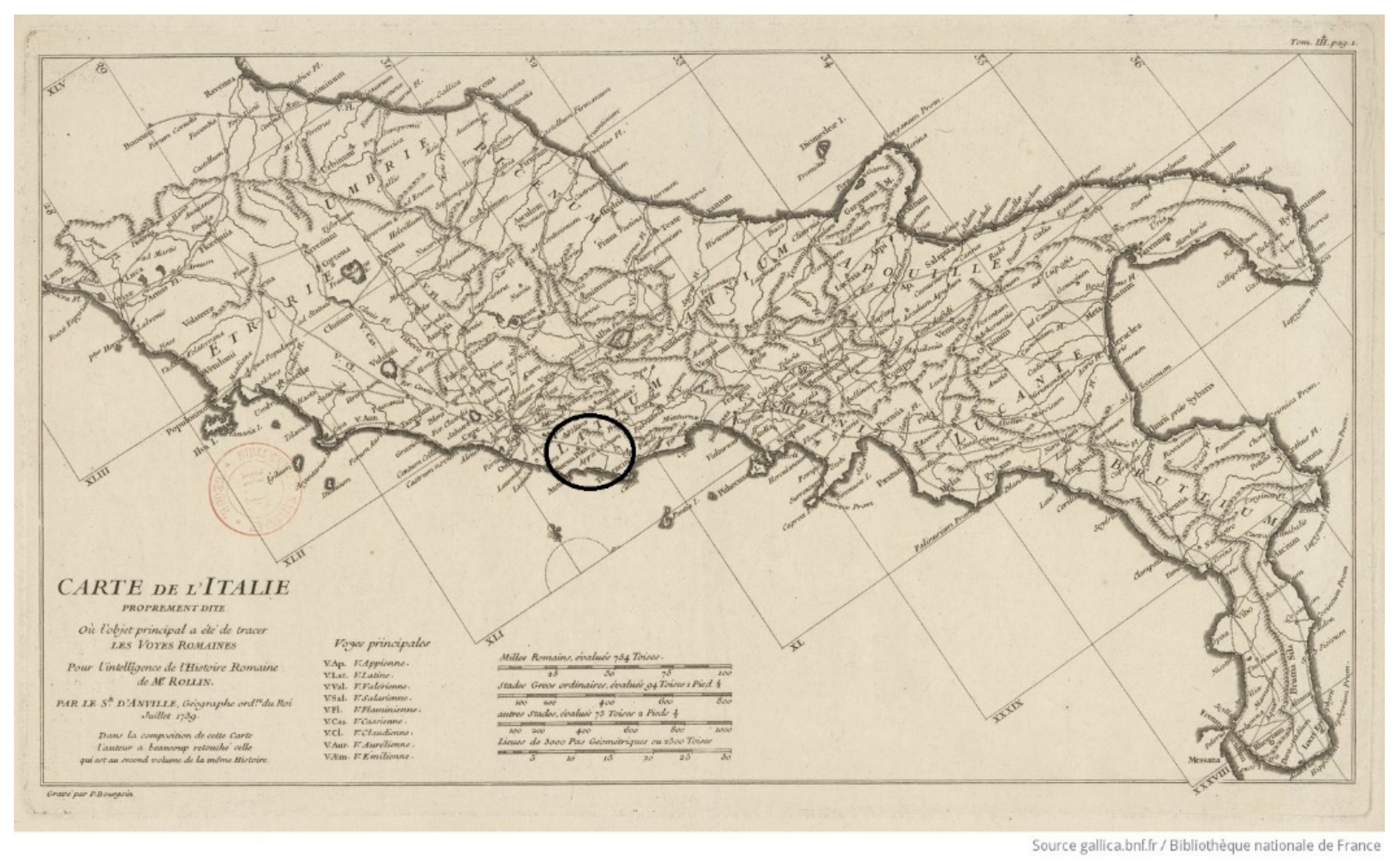
Figure 2.
The Pontine Marshes forest (late 19th century). Fondazione Caetani, Rome, Archivio Fotografico, 370.
Figure 2.
The Pontine Marshes forest (late 19th century). Fondazione Caetani, Rome, Archivio Fotografico, 370.
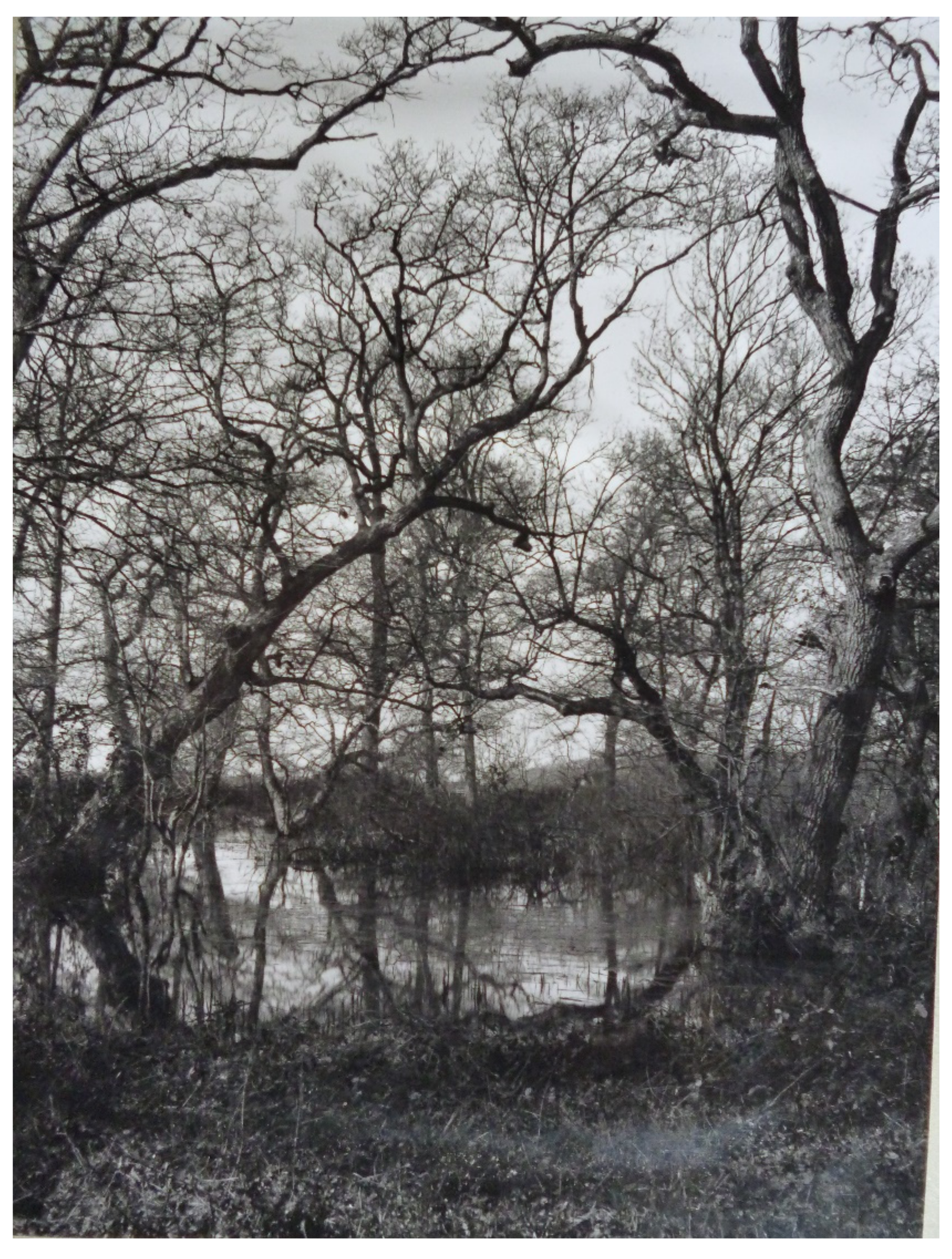
Figure 3.
The Pontine plain forest before deforestation (1716). Domenico Morichini (1773-1836), De noxis paludum effluvis eoumque remediis (1716).
Figure 3.
The Pontine plain forest before deforestation (1716). Domenico Morichini (1773-1836), De noxis paludum effluvis eoumque remediis (1716).
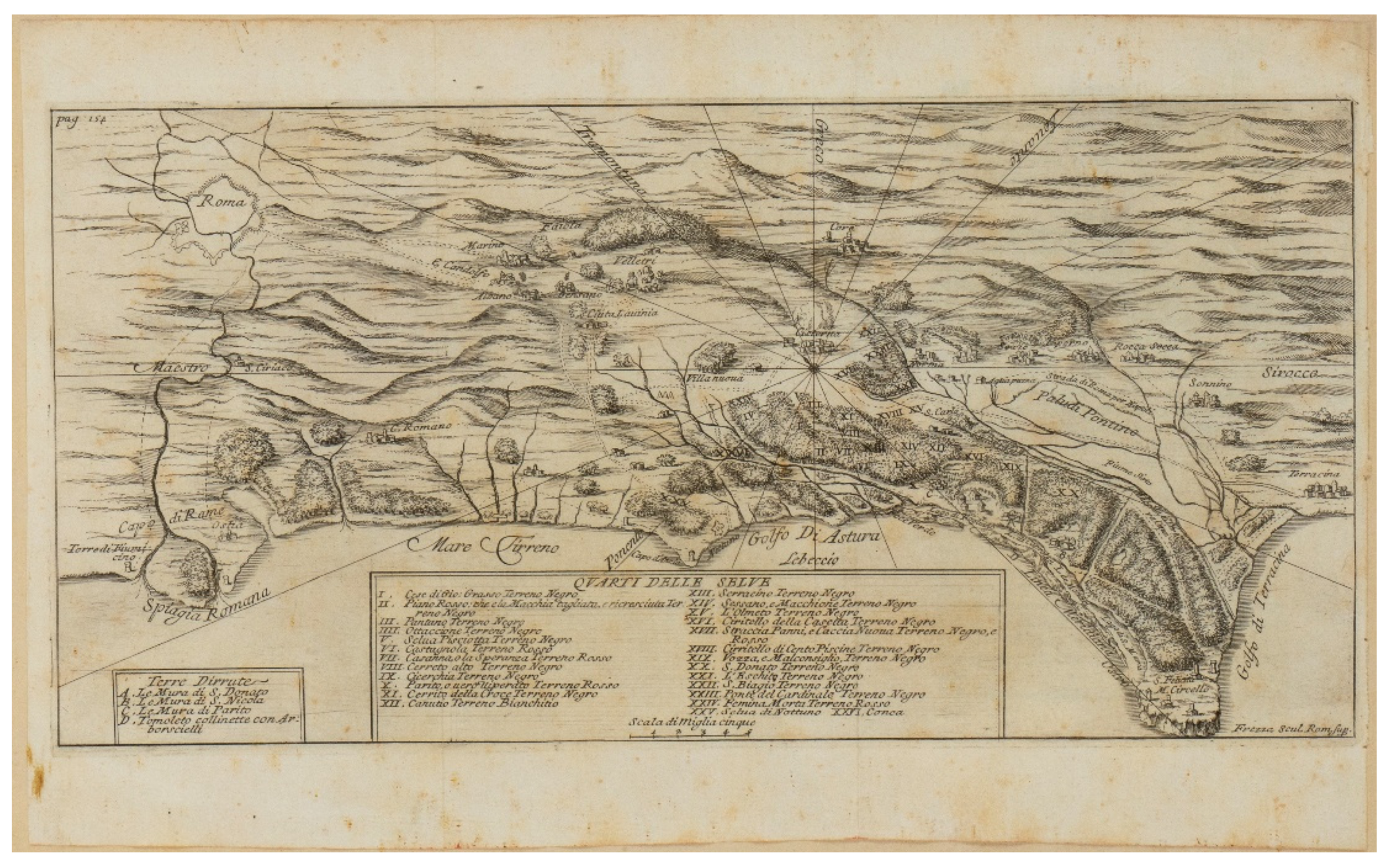

Table 1.
Forest products of S. Donato (1901-1905).
| Years | Coal (some) |
Crosspieces (number) |
Sleepers (number) | Staves (canne) |
Rocchi (numer) |
Wood (pasi) |
|---|---|---|---|---|---|---|
| 1901-02 | 24.970 | 15.402 | 6.426 | 5.239 | 99.447 | 854 |
| 1903-04 | --- | 6.046 | 610 | 2.184 | --- | 303 |
| 1904-05 | 12.653 | 21.639 | 2.200 | 3.744 | --- | --- |
| Totale | 37.623 | 43.087 | 9.236 | 11.436 | 99.447 | 1,147 |
Source: AC, Fondo economico, 1525 (1903-04 and 1904-05); 3436 (1901-02).
Table 2.
Tall trees existing in the Caetani woods (1919).
| Woods | Turkey oak | Oak | Elm and ash | Total | Weight (quintali) |
Value (lire) |
|---|---|---|---|---|---|---|
| Rene | 315 | 166 | 179 | 660 | 9.648 | 19.296 |
| Segrete | 102 | 21 | 71 | 194 | 4.430 | 8.860 |
| Cioccati delle Segrete | 83 | 31 | 14 | 128 | 2.848 | 5.696 |
| Cerreto dei Ringari | 516 | 193 | 150 | 859 | 14.556 | 29.112 |
| Casalina | 15 | 8 | 28 | 51 | 656 | 1.312 |
| Serracoccia | 489 | 197 | 703 | 703 | 13.463 | 26.926 |
| Trepizi delle Vergini | 151 | 34 | 185 | 185 | 3.169 | 6.338 |
| Totale | 1.671 | 650 | 459 | 2.780 | 48.770 | 97.540 |
Source: AC, Fondo economico, b. 2843.
Disclaimer/Publisher’s Note: The statements, opinions and data contained in all publications are solely those of the individual author(s) and contributor(s) and not of MDPI and/or the editor(s). MDPI and/or the editor(s) disclaim responsibility for any injury to people or property resulting from any ideas, methods, instructions or products referred to in the content. |
© 2026 by the author. Licensee MDPI, Basel, Switzerland. This article is an open access article distributed under the terms and conditions of the Creative Commons Attribution (CC BY) license.
Copyright: This open access article is published under a Creative Commons CC BY 4.0 license, which permit the free download, distribution, and reuse, provided that the author and preprint are cited in any reuse.