

Submitted:
21 August 2026
Posted:
24 August 2026
You are already at the latest version
Abstract
Background: Inflammatory demyelinating diseases of the central nervous system, including multiple sclerosis (MS), aquaporin-4 immunoglobulin G-positive neuromyelitis optica spectrum disorder (AQP4-IgG-positive NMOSD), seronegative NMOSD, myelin oligodendrocyte glycoprotein antibody-associated disease (MOGAD), recurrent optic neuritis, longitudinally extensive transverse myelitis (LETM), and pediatric acquired demyelinating syndromes, are increasingly recognized across the Gulf Cooperation Council (GCC) countries. Regional evidence remains fragmented, retrospective, disease-specific and unevenly distributed across Bahrain, Saudi Arabia, the United Arab Emirates, Kuwait, Qatar and Oman. Existing data suggest expanding recognition of MS and related demyelinating disorders, but the region lacks a unified prospective platform capable of capturing diagnostic criteria version, antibody testing, imaging, treatment access, longitudinal disability, visual outcomes, pediatric development, real-world treatment safety, pharmacovigilance, health-service equity and precision-management variables across public and private care pathways.Objectives: This strategic framework proposes a unified GCC Demyelinating Disease Registry to transform fragmented evidence into a prospective, interoperable, ethically governed and policy-relevant learning health-system platform for precision neuroimmunology across the Arabian Gulf.Proposed design: The registry would use a modular architecture incorporating a core minimum dataset and disease-specific modules for MS, NMOSD, MOGAD, optic neuritis, LETM, pediatric acquired demyelination, imaging, antibody testing, treatment, relapse, disability, visual outcomes, quality of life, pregnancy, vaccination, infection and long-term safety. Optional extended modules would support approved studies of immunopathology, genetic susceptibility, gene-environment interaction, pharmacogenomics, biomarkers, health economics and therapy response. The technical design should use a pragmatic hybrid model: REDCap or an equivalent electronic case-report form for clinical data entry, an Observational Medical Outcomes Partnership-compatible analytical backend, FAIR-aligned metadata, standardized vocabulary mapping, Observational Health Data Sciences and Informatics-compatible analytics, and privacy-preserving federated reporting. Governance would require national coordinating hubs, hospital registry nodes, pediatric and laboratory-imaging panels, a FAIR-OMOP technical board, transparent publication rules, patient and family input, and explicit protection of national data sovereignty.Expected scientific and clinical impact: A unified GCC registry would enable accurate disease ascertainment, antibody-testing harmonization, diagnostic reclassification, real-world treatment evaluation, pediatric outcome tracking, pharmacovigilance, clinical-trial readiness, health-economic analysis, clinical decision-support development and policy decision-making. It would address GCC-specific challenges, including multinational coordination, expatriate mobility, variable laboratory access, cultural considerations, data sovereignty, shared and partially overlapping ancestral and environmental backgrounds, and equity in biologic treatment access. If adopted across all six member states, the registry could plausibly enroll several thousand patients within five years and, with mature national coverage including expatriate residents, could over the longer term approach the majority of the region's prevalent demyelinating-disease population.Conclusion: A unified GCC Demyelinating Disease Registry would provide the region with a practical, prospective and interoperable infrastructure for surveillance, real-world treatment evaluation, pharmacovigilance, pediatric outcome tracking, clinical decision support and precision-neuroimmunology research. By building on prior Gulf registry experience without duplicating disease-specific initiatives, the proposed framework could transform fragmented national evidence into a coordinated GCC-wide learning health-system platform and a scalable model for other Middle Eastern and North African health systems.
Keywords:
GCC
; demyelinating disease registry
; multiple sclerosis
; NMOSD
; MOGAD
; precision neuroimmunology
1. Introduction and regional rationale
The GCC region has reached a pivotal moment in neuroimmunology. Multiple sclerosis services have expanded, high-efficacy therapies are increasingly available, magnetic resonance imaging access has improved, and regional expertise in MS and related demyelinating disorders has grown substantially. Yet the clinical and research infrastructure required to distinguish, monitor and study the full spectrum of demyelinating disease remains incomplete. The central gap is no longer simply the absence of clinicians, hospitals or therapies. It is the absence of a unified, prospective, harmonized and interoperable regional registry capable of capturing the true burden, phenotype, diagnostic pathway, treatment exposure, outcomes and long-term safety profile of demyelinating diseases across the GCC.
This article is a strategic framework and implementation roadmap for a prospective, multicountry GCC Demyelinating Disease Registry. It does not report new patient-level data and should not be interpreted as a systematic review, scoping review or clinical trial. Instead, it synthesizes regional evidence gaps, international registry principles, real-world evidence standards, implementation-science concepts and digital-health architecture into a practical proposal for a unified GCC-wide demyelinating-disease infrastructure.[44–55]
The GCC setting is particularly suitable for a regional registry because the six member states share overlapping clinical networks, referral patterns, treatment challenges, population mobility, public-private healthcare interfaces and high-cost biologic decision pressures, while also differing in population size, insurance structure, laboratory access, registry maturity and national health-information systems. A unified registry would allow the region to preserve national data sovereignty while enabling multicountry learning, benchmarking, pharmacovigilance and policy-relevant analysis.
Saudi Arabia and Kuwait have contributed important epidemiological and registry-based MS data.[2–4] Qatar and Oman have also contributed hospital-based and population-relevant MS data.[5,6] Multinational and global MS epidemiological studies confirm the increasing importance of the region within the broader global MS burden.[7,8] However, the evidence base remains uneven across countries and disease categories, with particularly limited prospective data for NMOSD, MOGAD, recurrent optic neuritis, LETM, pediatric demyelination, expatriate populations, visual outcomes, antibody-testing pathways, treatment access and long-term safety.[9–12]
The experience of smaller GCC states is instructive because it illustrates both the value and the limits of centralized clinical ascertainment. Where a national population is small and tertiary neurology services are concentrated, near-complete clinical ascertainment of prevalent MS is achievable, and repeat ascertainment exercises in such settings may suggest substantially higher contemporary case numbers than foundational national prevalence studies of a decade ago.[1] The interpretation of that difference, however, is precisely the problem this proposal seeks to solve. Apparent increases across periods spanning revisions of diagnostic criteria, expanded MRI capacity, improved survival with accumulation of the prevalence pool and changing case-finding methods cannot be attributed to changing disease occurrence without a longitudinal data structure capable of separating these contributions. Static, criteria-heterogeneous, retrospectively derived prevalence estimates cannot support the service-planning and biologic-budgeting decisions that GCC ministries are now required to make. A living registry that records criteria version, ascertainment source, diagnosis date and follow-up status prospectively can.
The diagnostic framework has moved substantially, and a registry designed now must be built to the current standard rather than to the standard used when most regional cohorts were assembled. The 2024 revisions of the McDonald criteria establish a unified diagnostic approach across the lifespan, include the optic nerve as a fifth anatomical location for dissemination in space, and permit central vein sign, paramagnetic rim lesions and cerebrospinal fluid kappa free light chain measurement to provide supportive evidence in defined situations; in specific circumstances radiologically isolated syndrome may now fulfill diagnostic criteria.[13,15] The companion 2024 MAGNIMS-CMSC-NAIMS recommendations specify the imaging acquisition and interpretation standards on which those criteria depend.[14] The 2015 International Panel for NMO Diagnosis criteria remain the foundation for NMOSD diagnosis, and the 2026 MENACTRIMS consensus recommendations provide a regional practice anchor that emphasizes cell-based AQP4-IgG testing and addresses pediatric, pregnancy and treatment-access considerations relevant to this region.[16,17] The 2023 international MOGAD criteria define MOGAD as a distinct antibody-associated disorder requiring compatible clinical and radiological features together with appropriately interpreted MOG-IgG testing.[18,19]
Two consequences follow for registry design. First, diagnostic criteria must be operationalized as structured fields rather than as free-text labels. Second, the registry must record which version of which criteria was applied to each case and on what date. Prevalence and incidence estimates generated under different MS, NMOSD or MOGAD criteria are not directly comparable, and a registry that fails to capture criteria provenance will generate apparent temporal and cross-country trends that may reflect diagnostic reclassification rather than disease occurrence. Reclassification events between MS, NMOSD, MOGAD and other opticospinal syndromes should therefore be recorded with their date, basis and criteria version.
The regional need is sharpened by recurring clinical-system gaps. Demyelinating disease care remains institutionally fragmented: MS patients may be followed in neurology or MS clinics, optic neuritis may first present to ophthalmology, LETM may enter emergency, neurology, infectious, rheumatology or spinal pathways, and pediatric demyelination may be managed through pediatric neurology, general pediatrics or tertiary referral centers. NMOSD and MOGAD may therefore be missed not because clinicians are unaware of them, but because the health system does not force structured diagnostic convergence.[16–23]
Antibody testing is not uniformly documented. AQP4-IgG and MOG-IgG results are clinically decisive, but registry-level interpretation requires more than a binary positive or negative result. Assay type, laboratory, specimen type, date of testing, timing relative to relapse or immunotherapy, titer or qualitative strength, repeat testing, and live or fixed cell-based assay status all matter. Without these fields, apparent differences in NMOSD or MOGAD frequency may reflect testing variability rather than true disease differences.[19–22]
GCC demographic complexity adds another layer. Citizens and expatriates may differ in access pathways, continuity of care, insurance status, mobility and long-term follow-up. Expatriate patients may leave the country, change employers, change insurance, or move between GCC states, leading to fragmented longitudinal records. A registry that excludes expatriates would underestimate service burden and distort the clinical reality of GCC healthcare, while a registry that includes expatriates without mobility and follow-up fields would risk incomplete outcome data.[7,8]
Pediatric demyelination is also underdeveloped in the regional evidence base. Pediatric MOGAD, acute disseminated encephalomyelitis-like presentations, relapsing optic neuritis, school performance, cognition, growth, puberty, family burden and quality of life require variables that are not captured in adult MS registries.[30–35,42,43] A pediatric module must therefore be designed from the start rather than added later.
The proposed registry does not duplicate the NMOAG registry, which demonstrated that multicentre Gulf collaboration in NMOSD is feasible and scientifically productive; it extends that experience across the demyelinating spectrum.[11] It should also be positioned deliberately within the international MS data ecosystem rather than constructed in isolation. MSBase, the Big Multiple Sclerosis Data network and the Multiple Sclerosis Data Alliance catalogue illustrate how harmonized registries can support collaborative outcomes research, common-data-model development and discovery of real-world MS data sources.[56–58] Future alignment with such networks and catalogues should be explored so that the GCC platform becomes a Gulf node in global federated learning rather than an isolated regional database.
The therapeutic landscape also strengthens the case for timely registry infrastructure. Several targeted therapies are now established for AQP4-IgG-positive NMOSD, including complement inhibition, CD19 B-cell depletion and interleukin-6 pathway therapy.[24–28] Recent phase 3 trial data in relapsing MOGAD suggest that the therapeutic landscape may soon change, with satralizumab reported to reduce relapse risk compared with placebo in the METEOROID study presented at the 2026 American Academy of Neurology meeting.[29] These emerging data should be interpreted cautiously until full peer-reviewed publication and regulatory decisions are available, but they sharpen the regional need for denominator-based epidemiology, treatment-exposure tracking and pharmacovigilance infrastructure before high-cost biologic decisions become routine.
Novelty statement: To our knowledge, this is the first framework to propose a unified, multicountry, multisyndromic GCC demyelinating-disease registry that integrates MS, NMOSD, MOGAD, recurrent optic neuritis, LETM, and pediatric acquired demyelination within a single FAIR–OMOP-compatible, federated, criteria-versioned, and precision-ready architecture. Its novelty lies not simply in calling for a registry, but in translating fragmented Gulf evidence into an operational regional blueprint that links diagnostic harmonization, antibody-testing provenance, imaging standards, pediatric outcomes, expatriate mobility, data sovereignty, pharmacovigilance, real-world treatment evaluation, and ethically governed biomarker/genetic sub-studies into one learning health-system model.
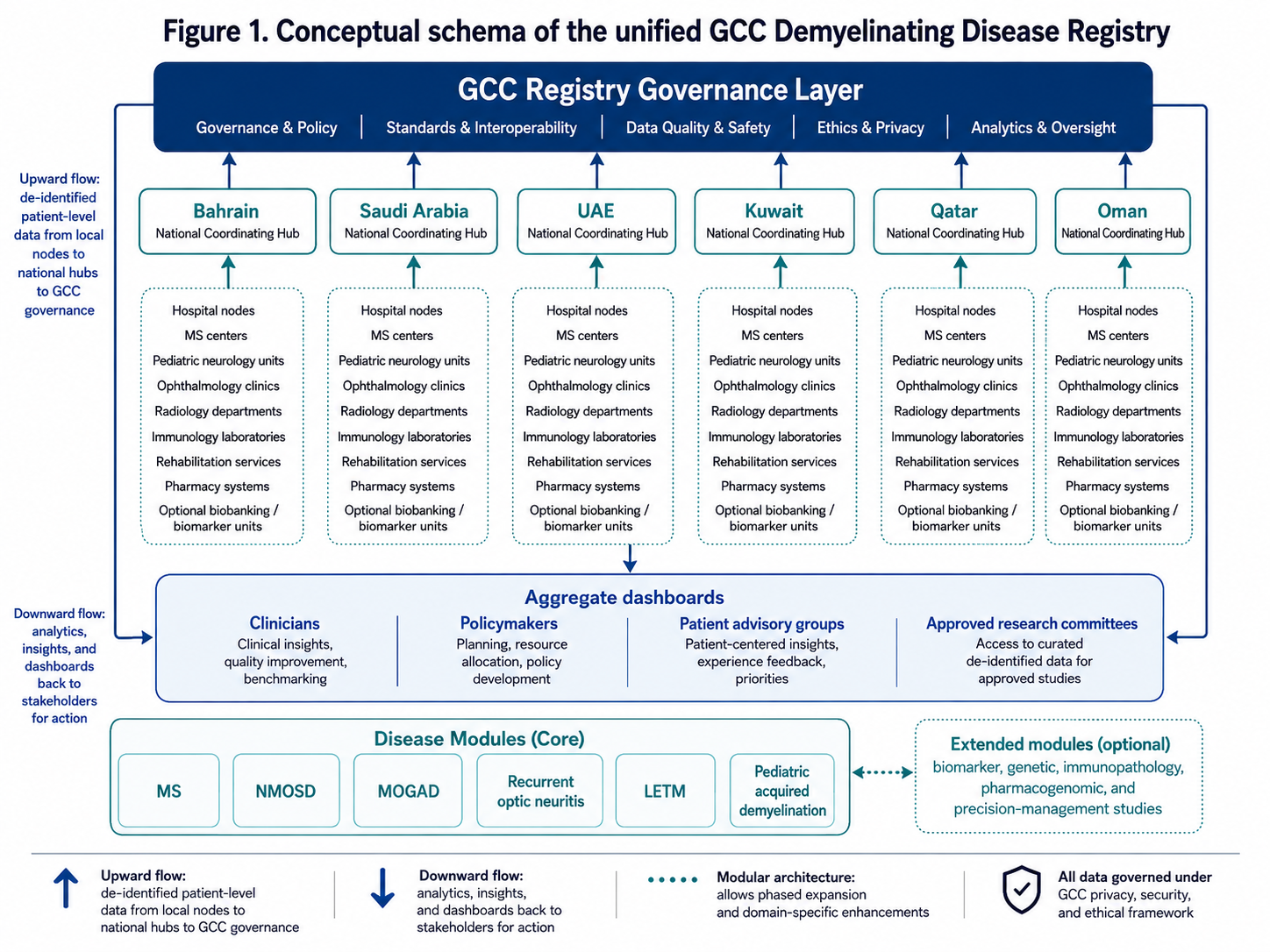
Figure 1 presents the proposed conceptual architecture of the unified GCC Demyelinating Disease Registry, illustrating the relationships between regional governance, national coordinating hubs, local clinical nodes, disease-specific modules, and the bidirectional flow of de-identified clinical data and actionable feedback across participating stakeholders.
Figure 1illustrates a federated, modular, multicountry architecture linking national coordinating hubs with hospital nodes, MS centres, pediatric neurology units, ophthalmology clinics, radiology departments, immunology laboratories, rehabilitation services, pharmacy systems and optional biobanking or biomarker units. The revised figure intentionally avoids national flags and emphasizes functional national hubs, aggregate dashboards, core disease modules and optional extended precision-neuroimmunology modules.
2. Vision, strategic objectives and clinical value
The vision is to establish the Arabian Gulf as a regional leader in precision neuroimmunology by creating a unified, ethically governed, interoperable and clinically actionable registry for demyelinating diseases across Bahrain, Saudi Arabia, the United Arab Emirates, Kuwait, Qatar and Oman. The mission is to capture high-quality longitudinal data on MS, NMOSD, MOGAD, optic neuritis, LETM and pediatric acquired demyelination; harmonize diagnostic and treatment pathways; generate real-world evidence; support equitable care; enable research collaboration; and inform policy, pharmacovigilance and clinical-trial readiness across the GCC.
The registry should pursue ten strategic objectives:
Objective 1: Improve ascertainment. The registry should identify and enroll patients with MS, AQP4-IgG-positive NMOSD, seronegative NMOSD, MOGAD, recurrent optic neuritis, LETM, double-seronegative opticospinal syndromes and pediatric acquired demyelinating syndromes.[13–23,30–35]
Objective 2: Standardize diagnosis. The registry should embed the 2024 McDonald criteria, the 2015 IPND NMOSD criteria as endorsed for regional practice by the 2026 MENACTRIMS consensus, the 2023 international MOGAD criteria and current pediatric acquired demyelinating syndrome definitions into structured registry fields, together with mandatory criteria-version, criteria-date and structured reclassification fields on every case record.[13,16–18,30]
Objective 3: Harmonize serological documentation. The registry should capture AQP4-IgG and MOG-IgG testing, including assay type, laboratory, specimen, timing, titer or qualitative strength, repeat testing and interpretation.[19–22]
Objective 4: Integrate clinical pathways. The registry should connect neurology, pediatric neurology, ophthalmology, neuroradiology, immunology laboratories, emergency care, rehabilitation, pharmacy and primary care.[44–49]
Objective 5: Support longitudinal outcome monitoring. The registry should track relapses, disability, Neurostatus-certified EDSS where feasible, visual outcomes, MRI activity, treatment response, adverse events, quality of life, school and work participation, pregnancy and survival.[37–43]
Objective 6: Capture pediatric depth. The registry should include developmental milestones, cognition, academic outcomes, growth, puberty, family burden and child-specific quality-of-life measures.[30–35,42,43]
Objective 7: Enable research readiness. The registry should support prospective cohort studies, nested case-control analyses, biomarker studies, pharmacovigilance, health-economic studies, pragmatic trials and OHDSI-compatible real-world evidence generation.[44–58]
Objective 8: Support policy influence. The registry should provide ministries, payers and professional societies with reliable evidence for service planning, biologic access, treatment sequencing, equity monitoring and pharmacovigilance.[24–29,44–49]
Objective 9: Ensure interoperability and data quality. The registry should use a REDCap-compatible, OMOP-mappable, FAIR-aligned, privacy-preserving platform suitable for federated analytics, data-quality monitoring and artificial-intelligence-ready data structures.[50–55]
Objective 10: Establish sustainability. The registry should include long-term governance, funding, authorship, publication, data-access, data-quality auditing, training and conflict-of-interest policies.[44–49]
Beyond epidemiological surveillance, the registry should be designed as a platform for ethically governed precision neuroimmunology. GCC populations include shared and partially overlapping ancestral, familial and environmental backgrounds, while also showing substantial diversity through migration and expatriate communities. Extended-family structures, consanguinity patterns, regional lifestyle transition, vitamin D deficiency, obesity and metabolic risk, infection exposure and rapidly evolving healthcare systems may all influence susceptibility, phenotype, relapse biology, disability trajectory and therapeutic response. The registry should not promise genetic discovery from registry data alone; instead, it should create the consent, phenotyping and governance infrastructure for hypothesis generation, consortium participation and approved nested biomarker, pharmacogenomic and genetic sub-studies.
Clinically, the registry should not be viewed as a passive data repository. It should become a mechanism for generating actionable knowledge across the full demyelinating-disease pathway. By linking presenting syndrome, antibody status, MRI pattern, CSF profile, OCT findings, relapse recovery, treatment exposure, pediatric outcomes and long-term disability, the registry could help define regionally relevant diagnostic pathways, referral algorithms, relapse-escalation approaches, biologic-treatment eligibility frameworks and follow-up schedules. This would make the registry useful at the bedside, not only for research and policy.
Figure 2 summarizes the overall value proposition of the proposed registry by demonstrating how harmonized registry inputs are transformed into clinically meaningful outputs that support patient care, research, pharmacovigilance, policy development, and precision neuroimmunology.
Figure 2summarizes how registry inputs such as clinical phenotype, MRI and OCT findings, AQP4-IgG and MOG-IgG status, CSF data, treatment exposure, relapse data, disability, pediatric outcomes, patient-reported outcomes, biomarkers and equity indicators can be transformed into diagnostic, clinical, research, policy and precision-management outputs.
3. Governance, minimum dataset and registry modules
The registry should be governed as a regional public-good infrastructure rather than a single-center academic database. Its authority should derive from clinical credibility, national representation, transparent governance, patient trust and technical robustness. Multicenter registries require clear data-access policies, national ownership, data-quality oversight, stakeholder participation, authorship governance and transparent conflict-of-interest management.[44–49]
In the GCC context, governance must also account for cross-border professional networks, mixed public-private care, expatriate mobility, multilingual patient communication, variable national ethics processes and the need to preserve national data sovereignty while enabling regional learning. A registry that succeeds in the Gulf must therefore be scientifically rigorous, culturally sensitive, operationally pragmatic and compatible with both national health-system priorities and regional collaboration.
The governance model should include a GCC Steering Committee, national coordinating hubs, hospital-level registry nodes, a pediatric working group, laboratory and imaging panels, a FAIR-OMOP technical board, a data governance board, a publication and conflict-of-interest committee, a patient and family advisory board, and international advisory linkage. The GCC Steering Committee would provide strategic direction, protocol approval, data standards, publication oversight, ethics alignment, conflict resolution, international partnerships and sustainability planning. National hubs would coordinate local ethics approvals, site onboarding, quality assurance, training, data monitoring, regulatory compliance and national reporting. Hospital-level nodes would include public and private hospitals, MS centers, neurology clinics, pediatric neurology units, neuro-ophthalmology clinics, radiology departments and immunology laboratories. Figure 3 illustrates the multidisciplinary stakeholder ecosystem required for successful implementation of the registry, highlighting the coordinated roles of clinicians, patients, healthcare institutions, technical experts, regulatory authorities, researchers, and policymakers in ensuring long-term sustainability.
Figure 3shows the stakeholder ecosystem required for successful implementation, including patients and families, adult and pediatric neurologists, neuro-ophthalmologists, neuroradiologists, immunology laboratories, pharmacy and rehabilitation services, hospital administrators, ministries, payers, ethics committees, academic institutions, professional societies, patient groups, technical experts and international advisors.

Table 1.
Proposed governance structure and responsibilities.
| Governance layer | Composition | Core responsibilities | Key outputs |
|---|---|---|---|
| GCC Steering Committee | Senior representatives from all GCC countries, registry leads, neuroimmunology experts, epidemiologists | Strategic direction, protocol approval, publication policy, regional harmonization | Master protocol, annual report, research priorities |
| National Coordinating Hubs | Country principal investigator, registry manager, ethics liaison, data-quality officer | Site onboarding, ethics, national reporting, training | Country dashboards, data-quality reports |
| Hospital Registry Nodes | Neurology, pediatric neurology, ophthalmology, radiology, immunology, pharmacy | Patient enrollment, data entry, clinical validation, follow-up | Patient-level longitudinal data |
| Pediatric Working Group | Pediatric neurologists, neuropsychologists, school-health experts, parents | Pediatric module design, child-specific outcomes, family burden | Pediatric dataset, child follow-up schedule |
| Laboratory and Imaging Panel | Immunology laboratories, neuroradiologists, OCT/neuro-ophthalmology experts | AQP4/MOG assay standards, MRI/OCT protocols, kappa free light chain and biomarker-field definitions | Testing and imaging standard operating procedures |
| FAIR-OMOP Technical Board | Health informaticians, data scientists, OHDSI/OMOP advisors, cybersecurity experts | Data architecture, ETL, vocabulary mapping, OMOP backend, FAIR metadata, data quality | Technical architecture, mapping plan, data-quality reports |
| Data Governance Board | Legal, ethics, cybersecurity and health-informatics representatives | Privacy, access, interoperability, audit trails, AI governance, disclosure-control rules | Data-access policy, security framework |
| Publication and COI Committee | National leads, site investigators, ethics representative, independent scientific advisor | Authorship policy, writing groups, conflict-of-interest review, industry interaction | Publication charter, COI register |
| Patient and Family Advisory Board | Adult patients, parents, caregivers, advocacy representatives | Consent, acceptability, communication, equity | Patient-facing materials, registry feedback |
| International Advisory Group | External registry, OHDSI, MSBase/Big MS Data and neuroimmunology experts | Benchmarking, scientific advice, global linkage | External review, trial-readiness guidance |
Note: Governance categories are adapted from principles of multicenter registry design, real-world evidence governance, FAIR-aligned data stewardship, implementation science,patient engagement, authorship governance, conflict-of-interest management and health-data governance.[44–58] Abbreviations: AI, artificial intelligence; AQP4, aquaporin-4; COI, conflict of interest; ETL, extract-transform-load; FAIR, Findable, Accessible, Interoperable, Reusable; GCC, Gulf Cooperation Council; MOG, myelin oligodendrocyte glycoprotein; MRI, magnetic resonance imaging; OCT, optical coherence tomography; OHDSI, Observational Health Data Sciences and Informatics; OMOP, Observational Medical Outcomes Partnership.
The registry should use a modular dataset. Every patient should have a core minimum dataset, while disease-specific modules activate according to phenotype and diagnosis. This prevents unnecessary burden while allowing deep phenotyping. The core dataset should include administrative data, demographics, residence, citizenship, residency or expatriate status, ethically permissible ancestry category, family history, consanguinity, environmental risk factors, index event, diagnosis, diagnostic criteria, criteria version, reclassification events, relapse history, MRI, CSF, antibody testing, OCT/visual data, treatment, disability, outcomes, adverse events, patient-reported outcomes and follow-up status.
Disease-specific modules should include MS, NMOSD, MOGAD, recurrent optic neuritis, LETM, pediatric acquired demyelination, pregnancy, vaccination/infection, biologics safety, imaging, OCT, CSF, laboratory biomarkers, genetics, patient-reported outcomes and health economics. Disease modules should be activated according to clinical phenotype and diagnostic category, but cross-module visibility should be retained because patient classification may evolve over time.[13–23]
Table 2.
Proposed core minimum dataset for the unified GCC registry.
| Domain | Minimum variables | Purpose |
|---|---|---|
| Administrative | Country, center, patient registry ID, enrollment date, consent status, ethics pathway | Governance, auditability |
| Demographics | Date/year of birth, sex at birth, citizenship, residency/expatriate status, ethically permissible ancestry category, residence | Epidemiology, equity, mobility, approved precision sub-studies |
| Social determinants | Education, employment/school status, insurance, public/private care pathway | Access and outcome analysis |
| Family/genetic context | Consanguinity, family history of MS/NMOSD/MOGAD/autoimmunity; genetic sub-study consent | Familial risk and optional genetics |
| Diagnosis | MS, AQP4-IgG-positive NMOSD, seronegative NMOSD, MOGAD, recurrent ON, LETM, pediatric ADS, uncertain | Disease classification |
| Criteria provenance | Criteria applied, criteria version/year, criteria date, clinician/site, basis of diagnosis | Comparability across criteria revisions |
| Reclassification | Initial diagnosis, revised diagnosis, date, trigger, evidence, criteria version | Tracks MS/NMOSD/MOGAD reclassification |
| Index event | Date, phenotype, optic neuritis, myelitis, area postrema, ADEM-like, brainstem, cortical | Phenotype mapping |
| Antibody testing | AQP4-IgG, MOG-IgG, assay type, laboratory, date, titer/strength, repeat testing | Serological validity |
| MRI | Brain, orbit, optic nerve, spine, LETM segments, conus, enhancement, brainstem, cortical lesions, central vein sign, paramagnetic rim lesions | Radiological classification under current MRI standards |
| CSF | WBC, protein, OCB, IgG index, infectious exclusions, kappa free light chain if available | Differential diagnosis and criteria support |
| OCT/visual | Visual acuity, low-contrast acuity, color vision, visual fields, RNFL, GCL/IPL, VEP where available | Visual outcome tracking and optic nerve involvement |
| Relapses | Date, phenotype, severity, treatment, recovery | Disease activity |
| Disability | EDSS, Neurostatus certification field, ambulation, visual disability, bladder/bowel, cognition | Longitudinal outcome quality |
| Treatment | Acute treatment, maintenance therapy, rituximab and biosimilar exposure, biologics, IVIG, start/stop dates, reason for discontinuation | Effectiveness, access and safety |
| Safety | Infections, infusion reactions, malignancy, pregnancy outcomes, hospitalizations, vaccination interactions | Pharmacovigilance |
| Biomarker/precision fields | Biospecimen availability, vitamin D, EBV status where available, NfL/GFAP assay platform and units, genetic sub-study consent | Optional precision-neuroimmunology module |
| Patient-reported outcomes | Quality of life, fatigue, pain, work/school impact; Arabic/English validation status or validation plan | Patient-centered care |
| Follow-up | Last visit, lost to follow-up, moved country, death, transition of care | Longitudinal completeness |
Table 2 footnote: The proposed minimum dataset integrates contemporary diagnostic criteria for MS, NMOSD and MOGAD; current MRI recommendations; disability and visual outcome measures; antibody-testing requirements; pediatric demyelination definitions; registry-methodology principles; OMOP-mappable variable structure; and optional precision-neuroimmunology fields.[13–23,30–58].Abbreviations: ADEM, acute disseminated encephalomyelitis; ADS, acquired demyelinating syndromes; AQP4-IgG, aquaporin-4 immunoglobulin G; CSF, cerebrospinal fluid; DMT, disease-modifying therapy; EBV, Epstein-Barr virus; EDSS, Expanded Disability Status Scale; GCL/IPL, ganglion-cell layer/inner plexiform layer; GFAP, glial fibrillary acidic protein; IgG, immunoglobulin G; LETM, longitudinally extensive transverse myelitis; MOGAD, myelin oligodendrocyte glycoprotein antibody-associated disease; MOG-IgG, myelin oligodendrocyte glycoprotein immunoglobulin G; MRI, magnetic resonance imaging; MS, multiple sclerosis; NfL, neurofilament light chain; NMOSD, neuromyelitis optica spectrum disorder; OCB, oligoclonal bands; OCT, optical coherence tomography; ON, optic neuritis; RNFL, retinal nerve fiber layer; VEP, visual evoked potential.
The pediatric module should not be a shortened adult module. It must include age at first symptom, perinatal history, developmental milestones, school performance, cognitive testing, behavior, fatigue, academic accommodations, growth, puberty, family burden, parent-reported quality of life, treatment impact, vaccination history, infection triggers and transition to adult care.[30–35,42,43] MRI fields should capture brain, orbit, optic nerve, spinal cord, LETM length, conus involvement, enhancement, brainstem lesions, cortical lesions, central vein sign, paramagnetic rim lesions and follow-up activity.[14,36] Visual outcomes should include high- and low-contrast visual acuity, color vision, visual fields, retinal nerve fiber layer thickness, ganglion-cell/inner plexiform layer thickness, VEP where available and final recovery category.[15,38,39] Treatment and safety fields should capture acute relapse therapy, time from relapse to treatment, steroid exposure, plasma exchange, IVIG, rituximab and biosimilars, maintenance biologics, start and stop dates, reason for discontinuation, access delay, funding source, adverse events, hospitalization, infection, pregnancy, vaccination, malignancy and death.[24–29]
The registry should include optional extended research modules for immunopathology, genetics, pharmacogenomics, biomarker discovery and precision management. These modules should not be mandatory for routine clinical enrollment, but should be available for approved sub-studies with separate consent and ethics approval. Candidate fields may include family history, consanguinity, ancestry category where ethically permissible, biospecimen availability, HLA and non-HLA genetic markers, vitamin D status, EBV serology where clinically available, cytokine or immune-cell profiling, NfL, GFAP, treatment exposure, relapse response, adverse events and long-term disability outcomes. The aim should be ethically governed hypothesis generation and consortium-compatible research readiness rather than overclaiming discovery power from routine registry data alone.
The minimum dataset should be designed from the beginning to support future mapping to OMOP Common Data Model tables. Demographic variables would map primarily to PERSON and OBSERVATION; diagnoses and phenotypes to CONDITION_OCCURRENCE; relapses, visits, hospitalizations and procedures to VISIT_OCCURRENCE and PROCEDURE_OCCURRENCE; drug exposures to DRUG_EXPOSURE; and antibody tests, laboratory values, MRI-derived coded variables, OCT measures, EDSS and visual outcomes to MEASUREMENT or OBSERVATION depending on variable type.[53,54] A REDCap-style data-dictionary excerpt, pediatric-specific fields, FAIR-OMOP alignment matrix and vocabulary mapping workflow are provided in Supplementary Table S1-S4.
Table 3.
Clinically actionable information generated by the GCC Demyelinating Disease Registry.
| Clinical domain | Key information generated | Why it matters clinically |
|---|---|---|
| Disease burden | Prevalence, incidence, age at onset, sex ratio, citizen/expatriate distribution | Defines real GCC disease burden and service needs |
| Presenting phenotype | Optic neuritis, LETM, brainstem syndrome, area postrema syndrome, ADEM-like illness, cortical encephalitis | Identifies early diagnostic clues and referral pathways |
| Diagnostic accuracy | Initial diagnosis, final diagnosis, criteria version, diagnostic delay, MS-to-NMOSD/MOGAD reclassification | Reduces misdiagnosis and inappropriate treatment |
| Antibody testing | AQP4-IgG/MOG-IgG result, assay type, timing, repeat testing, laboratory source | Standardizes serostatus interpretation |
| MRI phenotype | Optic nerve, central vein sign, paramagnetic rim lesions, brain, spinal cord, LETM length, conus and enhancing lesions | Improves clinicoradiological classification |
| CSF and biomarkers | OCB, IgG index, kappa free light chain, NfL/GFAP where available | Supports differential diagnosis and future prognostic studies |
| Visual outcomes | Visual acuity, color vision, visual fields, OCT RNFL/GCL-IPL, VEP, recovery after optic neuritis | Captures disability often missed by EDSS alone |
| Relapse biology | Relapse frequency, severity, phenotype, recovery, steroid response, PLEX/IVIG requirement | Identifies high-risk disease and escalation needs |
| Treatment effectiveness | Acute treatment, rituximab/biosimilar exposure, maintenance biologics, discontinuation, relapse on treatment | Generates real-world comparative-effectiveness evidence |
| Safety and pharmacovigilance | Serious infections, infusion reactions, pregnancy outcomes, malignancy, hospitalization | Supports safe biologic use and policy decisions |
| Pediatric outcomes | Development, cognition, school function, growth, puberty, quality of life, transition to adult care | Captures child-specific disease impact |
| Equity and access | MRI access, antibody testing access, biologic access, insurance/public-private pathway, expatriate follow-up | Identifies inequities and health-system gaps |
| Clinical decision support | Diagnostic algorithms, relapse-escalation pathways, biologic eligibility indicators, follow-up schedules | Converts registry data into practical tools |
| Precision management | Family history, consanguinity, consented genetics, biomarkers, treatment response predictors | Enables approved GCC precision-neuroimmunology sub-studies |
Table 3 footnote: These domains should be captured in a modular manner to avoid excessive data-entry burden while preserving the ability to answer high-value clinical, epidemiological, pharmacovigilance, pediatric, equity, decision-support and precision-management questions.[13–58] Abbreviations: ADEM, acute disseminated encephalomyelitis; AQP4-IgG, aquaporin-4 immunoglobulin G; CSF, cerebrospinal fluid; EDSS, Expanded Disability Status Scale; GCL-IPL, ganglion-cell layer/inner plexiform layer; GFAP, glial fibrillary acidic protein; IgG, immunoglobulin G; IVIG, intravenous immunoglobulin; LETM, longitudinally extensive transverse myelitis; MOGAD, myelin oligodendrocyte glycoprotein antibody-associated disease; MOG-IgG, myelin oligodendrocyte glycoprotein immunoglobulin G; MRI, magnetic resonance imaging; MS, multiple sclerosis; NfL, neurofilament light chain; NMOSD, neuromyelitis optica spectrum disorder; OCB, oligoclonal bands; OCT, optical coherence tomography; PLEX, plasma exchange; RNFL, retinal nerve fiber layer; VEP, visual evoked potential.
4. Technical architecture, interoperability and data quality
The registry should begin with a pragmatic, secure and low-barrier platform but be designed from the start for interoperability and long-term scalability. Technical sophistication should not delay implementation, but poor data architecture should not be accepted as the price of speed. The registry must be able to start simply, scale safely and mature into an interoperable platform for real-world evidence, pharmacovigilance, policy reporting, clinical-trial readiness and precision medicine.
A hybrid architecture is recommended: REDCap or an equivalent electronic case-report form for user-friendly clinical data entry; an OMOP-compatible backend for standardized analytics; and a FAIR-compliant metadata repository for data dictionaries, variable definitions, provenance and access procedures.[50–54] REDCap is suitable for early registry phases because it supports structured forms, user rights, audit trails, branching logic, longitudinal events, data exports, multicenter workflows and metadata-driven research data capture.[50,51] The OMOP Common Data Model should be used as the analytical target structure or future backend because it enables standardized observational health-data analysis across heterogeneous sources.[53,54] FAIR principles would ensure that registry metadata and approved datasets are findable, accessible under appropriate governance, interoperable through shared vocabularies and reusable for ethically approved research.[52] Figure 4 illustrates the proposed FAIR–OMOP–OHDSI data architecture underpinning the registry, demonstrating how structured clinical information progresses from data capture through standardized transformation, metadata management, analytical processing, and federated multicountry reporting while maintaining national data sovereignty.
Figure 4illustrates the proposed FAIR-OMOP-OHDSI data architecture. The revised figure removes proprietary logos and presents a standards-based pathway from clinical sites and electronic case-report forms through ETL, vocabulary mapping, an OMOP-compatible analytical backend, FAIR metadata, data-quality dashboards and federated analytics.
Future linkage with hospital electronic medical records, laboratory systems, pharmacy systems, imaging repositories and national health-information exchanges should use internationally recognized interoperability approaches such as HL7 FHIR where feasible.[55] This would reduce duplicate data entry and allow the registry to mature from a research database into a learning health-system infrastructure.
A formal vocabulary-mapping workflow should be established from the start. Local diagnostic terms, Arabic/English clinical labels, antibody-test names, MRI descriptors, OCT variables, EDSS scores, pediatric developmental fields and MOGAD-specific phenotypes should be mapped to standardized vocabularies whenever possible. Athena can be used for concept discovery within the OMOP vocabulary ecosystem, while Usagi can support semi-automated source-to-concept mapping followed by expert clinical review. SNOMED CT should be prioritized for diagnoses and phenotypes, LOINC for laboratory and measurement fields, RxNorm or equivalent drug vocabularies for therapies, and ICD codes for health-system linkage. Where no adequate standard concept exists, carefully governed custom neuroimmunology extensions may be required. Initial mapping of high-frequency terms should be feasible within 3-6 months if supported by a dedicated technical working group, data manager and clinical validation panel.[53–55]
During the pilot phase, data quality should be monitored through predefined completeness, conformance and plausibility checks. Early dashboards should focus on essential fields, including diagnosis, criteria version, AQP4-IgG and MOG-IgG assay documentation, MRI phenotype, relapse dates, treatment exposure, EDSS or equivalent disability measures, visual outcomes, pediatric module completeness and follow-up status. During national scaling and full GCC integration, OHDSI-compatible tools such as ATLAS and HADES could be used for cohort definition, incidence and prevalence estimation, treatment-pathway analysis, pharmacovigilance, comparative-effectiveness studies and patient-level prediction.[53,54]
Given the sensitivity of health data and the diversity of GCC data-protection frameworks, a federated or nationally controlled architecture is likely to be the most practical, legally robust and politically acceptable model for a GCC-wide registry. Each national hub should retain control over patient-level data, with analytic scripts, common definitions and aggregate outputs enabling cross-country learning. A centralized regional repository of identifiable patient-level records should not be assumed. Statistical disclosure control, minimum cell-size rules, small-number suppression and pre-specified policies for rare phenotypes and serostatus combinations should be agreed by the Data Governance Board before multicountry analyses begin.
A registry that claims to measure disease occurrence must specify how that claim will be substantiated. Four methodological commitments should be made at protocol stage: case-definition validation through independent chart review; ascertainment completeness using at least one independent data source such as pharmacy disease-modifying therapy dispensing records; denominator discipline with citizen and non-citizen rates reported separately where feasible; and age- and sex-standardization to a stated reference population. Expatriate estimates should be interpreted cautiously because pre-entry health screening, insurance status, employment changes, repatriation and transfer of care may bias measured prevalence downward. Figure 5 depicts the proposed end-to-end data flow and interoperability architecture, showing how information captured during routine clinical care is validated, de-identified, integrated with imaging, laboratory, pharmacy, and patient-reported outcomes, and translated into regional analytics and policy-relevant outputs.
Figure 5depicts data flow from clinical encounters through structured registry forms, imaging metadata, antibody laboratory data, pharmacy exposure data, relapse records, disability measures, OCT or visual outcomes, patient-reported outcomes and optional biospecimen, biomarker or genetic datasets.
Table 4.
Technical platform and data architecture requirements.
| Requirement | Minimum standard | Advanced target |
|---|---|---|
| Data capture | REDCap-compatible structured forms | Integrated national e-health capture |
| Data model | Registry-specific dictionary | OMOP-compatible backend |
| Criteria provenance | Criteria version and reclassification fields | Automated temporal comparability checks |
| Interoperability | CSV/API export, standard codes | HL7 FHIR and imaging linkage |
| Imaging | MRI metadata fields including optic nerve, central vein sign and paramagnetic rim lesions | DICOM repository linkage and structured MRI reporting |
| Laboratory | AQP4/MOG assay fields, CSF kappa free light chain, NfL/GFAP platform fields | Direct lab-system interface |
| Security | Role-based access, audit trails, encryption | Federated privacy-preserving analytics |
| Governance | Data-access committee | Multicountry federated governance |
| Vocabulary mapping | Standard terms where available | Athena/Usagi-supported source-to-concept mapping |
| Data quality | Manual audits | OHDSI Data Quality Dashboard |
| Analytics | Descriptive reports | ATLAS/HADES-compatible analyses |
| AI readiness | Structured variables, missingness codes | Validated prediction models under explicit AI governance |
| Precision modules | Optional biospecimen/genetics/biomarker sub-study fields | Linked multi-omics and pharmacogenomic datasets |
| Patient engagement | Consent and PRO modules | Patient portal and dynamic consent |
| Reporting | Annual registry report | Dashboards and policy briefs |
Table 4 footnote: Technical requirements are based on REDCap research-data capture, OMOP common-data-model principles, HL7 FHIR interoperability, FAIR data principles, privacy-by-design, secure health-data governance, ethical AI principles, OHDSI-compatible analytics and controlled optional linkage to biospecimen, genetics and biomarker modules.[50–55] Abbreviations: AI, artificial intelligence; API, application programming interface; AQP4, aquaporin-4; ATLAS, Advanced Analytics for Observational Healthcare Data; DICOM, Digital Imaging and Communications in Medicine; FAIR, Findable, Accessible, Interoperable, Reusable; FHIR, Fast Healthcare Interoperability Resources; GFAP, glial fibrillary acidic protein; HADES, Health Analytics Data-to-Evidence Suite; HL7, Health Level Seven International; MOG, myelin oligodendrocyte glycoprotein; MRI, magnetic resonance imaging; NfL, neurofilament light chain; OHDSI, Observational Health Data Sciences and Informatics; OMOP, Observational Medical Outcomes Partnership; PRO, patient-reported outcome; REDCap, Research Electronic Data Capture.
5. Implementation, ethics, sustainability and impact measurement
The registry should be implemented in phases to avoid overambition and early failure. A phased roadmap allows technical testing, governance refinement, data-quality monitoring and stakeholder confidence before full GCC integration. Implementation should follow established principles of feasibility testing, stakeholder engagement, iterative adaptation, sustainability planning and measurable implementation outcomes.[44–49]
Phase 1 should involve pilot implementation in 2-3 countries over 12-18 months. The pilot should include countries with complementary strengths: one with mature MS infrastructure, one with strong NMOSD/MOGAD evidence and one underrepresented country where the registry can demonstrate capacity-building value. A practical pilot could include Bahrain, Saudi Arabia and the UAE, with Kuwait, Qatar and Oman joining during scale-up. Bahrain would be a highly informative pilot site because smaller, centralized health systems can test near-national ascertainment workflows, while Saudi Arabia offers scale and regional neuroimmunology leadership and the UAE provides a strong platform for private-public healthcare coordination and specialist demyelinating-disease services.[1–12]
Key deliverables for Phase 1 should include a master protocol, ethics templates, consent forms, REDCap database, data dictionary, site training, first 300-500 enrolled patients, a basic data-quality dashboard and a first annual report. OMOP mapping should begin with high-value variables rather than the full dataset to avoid technical overload. Phase 2, from months 18-36, should expand each country to national hubs and additional hospitals, with private-sector participation, pediatric nodes, ophthalmology referral pathways, laboratory standardization and structured vocabulary mapping. Phase 3, from months 36-60, should mature into full GCC integration, with federated reporting, cross-country dashboards, pharmacovigilance outputs, health-economic studies, precision-neuroimmunology sub-studies, clinical-trial feasibility tools, publication governance and policy-reporting schedules. A detailed Gantt-style implementation roadmap is provided in Supplementary Table S5.
For a pilot involving 2-3 countries and 5-8 sites, first-year cost may reasonably fall into the range of USD 250,000-600,000 depending on staffing, platform hosting, imaging linkage and availability of existing institutional REDCap infrastructure. A practical pilot budget may allocate approximately 40-45% to personnel and coordination, 20-25% to technical infrastructure and security, 10-15% to training and site activation, 10-15% to data quality and statistical support, and 5-10% to meetings, dissemination and contingency. Full GCC scaling may require USD 1-2.5 million over 3-5 years, particularly if imaging repositories, patient portals, OMOP backend infrastructure, federated analytics or Data Quality Dashboard deployment are added. Optional multi-omics, biospecimen and pharmacogenomic modules would require separate funding, governance, consent and ethics approval.
Major risks include inconsistent data entry, variable ethics timelines, incomplete follow-up, laboratory heterogeneity, lack of protected coordinator time, underparticipation of private-sector providers, uncertainty about expatriate follow-up, vocabulary-mapping burden and overambitious technical design. These risks should be mitigated through a minimal mandatory dataset, clear case definitions, site training, data-quality dashboards, staged expansion, national hub leadership, phased OMOP mapping and early publication of aggregate annual reports.
A GCC registry must be scientifically ambitious but ethically conservative. Trust will determine sustainability. The registry should incorporate tiered informed consent, pediatric assent, privacy protection, data minimization, equity monitoring and transparent data-access governance. Consent should distinguish clinical registry participation, future research use, biological samples, imaging repository, data linkage, international collaboration and recontact for studies. Pediatric consent should include parental consent and age-appropriate assent where applicable.
The registry should reflect the lived reality of Gulf healthcare systems, where citizens and expatriates, public and private providers, national referral centers and cross-border professional networks all contribute to the true burden of demyelinating disease. Expatriates should be included because excluding them would bias incidence, service-utilization, treatment-access and outcome analyses. The registry should include residency status and mobility fields while protecting privacy and documenting loss to follow-up due to repatriation, insurance change, employment change or cross-border relocation.
Equity must be measured rather than assumed. The registry should assess whether women, men, citizens, expatriates, children, low-income patients and privately insured patients receive comparable diagnostic testing, MRI access, antibody testing, biologic treatment, rehabilitation and long-term follow-up. Genetic, consanguinity, puberty, fertility, pregnancy and family-burden fields require culturally appropriate wording and should be optional unless essential for clinical interpretation or approved research. Genetic and biomarker modules should be separately consented, ethically reviewed, scientifically justified and protected by strict privacy safeguards.
The registry should use mixed funding from ministries of health, national research councils, universities, hospitals, philanthropic foundations, professional societies and carefully governed industry partnerships. Industry funding should be transparent, unrestricted where possible and separated from data-access decisions. To preserve scientific credibility and public trust, the registry should remain as independent as possible from pharmaceutical-industry influence, with any industry support limited to transparent, non-controlling funding that does not determine governance, data access, analysis, interpretation, authorship, publication decisions or clinical recommendations. Figure 6 outlines the proposed phased implementation strategy for the GCC Demyelinating Disease Registry, illustrating the progression from pilot implementation to national expansion and ultimately to full GCC-wide integration, with incremental development of governance, interoperability, pharmacovigilance, and precision-neuroimmunology capabilities.
Figure 6summarizes the proposed phased implementation plan over 60 months, from pilot implementation and ethics approvals through national scaling, pediatric module activation, imaging and laboratory harmonization, vocabulary mapping, optional precision modules, dashboards, pharmacovigilance and trial readiness.
Table 5.
Key performance indicators and success metrics.
| Domain | KPI | Target |
|---|---|---|
| Enrollment | Number of enrolled patients | ≥500 pilot; ≥3,000 regional within 5 years; longer-term mature coverage approaching the majority of prevalent demyelinating-disease cases |
| Coverage | Number of participating countries | 2-3 pilot; 6 full GCC |
| Diagnostic quality | Criteria version and AQP4/MOG assay type documented | ≥90% of tested patients |
| Follow-up | Annual follow-up completion | ≥80% |
| Pediatric capture | Pediatric module completion | ≥80% of pediatric cases |
| Equity | Citizen/expatriate access indicators | Annual reporting |
| Imaging | Core MRI data completeness | ≥75% core MRI fields; structured central vein sign and paramagnetic rim lesion fields where available |
| Outcomes | Relapse and disability fields | ≥85% completion |
| Clinical decision support | Draft diagnostic/referral/escalation pathways | Initial outputs by Phase 2 |
| FAIR readiness | Data dictionary, metadata, provenance, access policy | Completed by Phase 1 |
| OMOP readiness | Core fields mapped to OMOP-compatible structure | Initiated Phase 1; expanded Phase 2 |
| Data quality | Completeness, conformance, plausibility checks | Quarterly Phase 1; semiannual Phase 2 |
| Research | Peer-reviewed outputs | ≥2 annually after year 2 |
| Policy | Annual report to stakeholders | Yearly |
| Pharmacovigilance | Biologic safety reports including rituximab/biosimilars and targeted NMOSD/MOGAD agents | Annual |
| Precision module readiness | Optional consent, biospecimen, biomarker/genetics governance | Established by Phase 2 |
| Trial readiness | Feasibility queries completed | ≥3 by year 5 |
Table 5 footnote: KPIs reflect registry-quality indicators, data-completeness standards, real-world evidence requirements, pharmacovigilance needs, implementation-science outcomes, health-system performance metrics, clinical decision-support development, FAIR-OMOP readiness and readiness for ethically governed precision-neuroimmunology sub-studies.[44–58] Abbreviations: AQP4, aquaporin-4; FAIR, Findable, Accessible, Interoperable, Reusable; GCC, Gulf Cooperation Council; KPI, key performance indicator; MOG, myelin oligodendrocyte glycoprotein; MRI, magnetic resonance imaging; OMOP, Observational Medical Outcomes Partnership.
6. Priority research questions
The proposed registry would answer several questions that cannot be reliably addressed by fragmented retrospective studies, single-center cohorts or early descriptive regional registries. Previous Gulf NMOSD studies have confirmed regional case recognition and demonstrated the feasibility of collaborative registry work, but they have not provided definitive denominator-based prevalence and incidence estimates across all GCC countries.[10,11] The registry should therefore move the field from descriptive recognition toward population-based, longitudinal, serologically standardized, FAIR-OMOP-enabled, clinically actionable and precision-oriented epidemiology.
6.1. Epidemiology and ascertainment
- What are the true population-based prevalence, incidence, serostatus distribution and diagnostic-delay patterns of NMOSD and MOGAD across GCC countries when standardized diagnostic criteria, AQP4-IgG and MOG-IgG assay documentation, citizen and expatriate denominators, and longitudinal registry ascertainment are applied?
- What is the true prevalence and incidence of MS, recurrent optic neuritis, LETM and pediatric acquired demyelination across GCC countries?
- How much apparent country-level variation reflects true epidemiology versus differences in referral, antibody testing, MRI access, publication density, health-system structure, criteria version and registry maturity?
- What proportion of patients initially diagnosed with MS are later reclassified as NMOSD, MOGAD or another antibody-associated demyelinating disorder?
6.2. Clinical pathways and outcomes
- Which AQP4-IgG and MOG-IgG testing pathways produce the highest diagnostic reliability in regional practice?
- What are the clinical phenotypes, relapse patterns, MRI features and visual outcomes of GCC patients with MOGAD?
- How do children with MOGAD, ADEM-like presentations, optic neuritis or LETM perform longitudinally in cognition, school achievement, growth, puberty and quality of life?
- Are citizens and expatriates receiving comparable access to MRI, antibody testing, biologic therapy, rehabilitation and long-term follow-up?
- What are the real-world effectiveness and safety profiles of anti-CD20 therapies, rituximab biosimilars, complement inhibitors, IL-6 pathway therapies, IVIG and conventional immunosuppressants in GCC NMOSD and MOGAD populations?
- Can registry-derived clinical pathways improve diagnostic accuracy, reduce time to antibody testing, standardize relapse escalation and support rational biologic-treatment selection across GCC health systems?
6.3. Precision neuroimmunology
- Can ethically governed registry data support hypothesis generation, biomarker selection and consortium participation in studies of genetic, immunological and gene-environment factors across Arabian Gulf populations?
- Which clinical, serological, imaging, biomarker, environmental and treatment-exposure variables predict relapse risk, disability accumulation, visual recovery, adverse events and therapeutic response in GCC populations?
- Can registry-derived risk models predict relapse, poor visual recovery, disability accumulation, treatment failure or loss to follow-up, and can those models be externally validated before clinical deployment?
6.4. Digital health and health-system infrastructure
- Can FAIR-OMOP-compatible architecture improve reproducibility, data quality, multicountry comparability and federated real-world evidence generation for rare neuroimmunological diseases in the GCC?
These questions define a precision-neuroimmunology, clinical decision-support and digital-health agenda for the Arabian Gulf. They also provide direct value to ministries of health, clinicians, patients, families, payers, researchers and future clinical-trial networks.[44–58]
7. Conclusion and call to action
The GCC region has the clinical expertise, tertiary-care infrastructure, professional networks and strategic need to establish a unified demyelinating-disease registry. What it lacks is not ambition, but coordination. The GCC no longer lacks clinical activity in neuroimmunology; it lacks a harmonized regional infrastructure capable of converting dispersed clinical practice into cumulative regional evidence.
The proposed registry builds directly on prior Gulf experience, including the NMOAG registry, which demonstrated that regional NMOSD collaboration is feasible.[11] However, the next step must be broader: a prospective, multisyndromic, pediatric-inclusive, interoperable, policy-relevant, FAIR-OMOP-compatible, clinically actionable and precision-ready platform that integrates MS, NMOSD, MOGAD, recurrent optic neuritis, LETM and pediatric acquired demyelination. The proposed registry does not replace the NMOAG concept; it converts that pioneering disease-specific experience into a unified GCC-wide demyelinating-disease infrastructure.
The Bahrain experience remains instructive, not because retrospective national updates alone can prove changing disease occurrence, but because small, centralized health systems can test whether near-national clinical ascertainment can be translated into prospective surveillance. Apparent changes in prevalence must be interpreted through the lens of diagnostic criteria revisions, MRI access, survival, migration, case-finding method and follow-up completeness. A living registry can make these factors measurable rather than speculative.
A unified GCC Demyelinating Disease Registry would transform individual clinical encounters into cumulative regional knowledge. It would convert diagnostic uncertainty into structured classification, turn isolated case series into longitudinal real-world evidence, measure equity rather than assuming it, and support responsible biologic access, pharmacovigilance and trial readiness. It would allow the region to measure what it treats, improve what it measures and lead where it has previously been underrepresented.
Rather than importing an external registry template, the proposed model adapts international registry, FAIR, OMOP, OHDSI, MS registry-network and implementation-science principles to the demographic, cultural, regulatory and service-delivery realities of the Arabian Gulf. If successfully implemented, the GCC registry could serve as a scalable model for other Middle Eastern, North African and emerging health-system regions seeking to harmonize rare neuroimmunological disease data across heterogeneous health systems.
The call to action is clear: establish the steering committee, approve the core dataset, launch the pilot, build FAIR-OMOP-compatible infrastructure, enroll the first patients, publish the first registry report and make the GCC visible in global demyelinating-disease science.
Ethical Approval: Not applicable. This manuscript is a strategic framework and implementation roadmap and does not report patient-level data, involve participant recruitment, or analyse identifiable or anonymised individual-level clinical records. Future implementation of the proposed registry would require appropriate institutional and national ethics approvals before patient-level data collection.
Consent to Participate: Not applicable.
Consent for Publication: Not applicable. The manuscript does not contain identifiable individual patient information, clinical images or personal data requiring consent for publication.
Supplementary Materials
The following are available online at www.mdpi.com/xxx/s1, Figure S1: title, Table S1: title, Video S1: title.
Author Contributions
Isa Ahmed Alsharoqi conceptualised the article, drafted the initial framework, integrated regional context and prepared the manuscript for submission. Eslam Shosha contributed NMOSD registry expertise, regional neuroimmunology perspective and critical revision of the registry concept. Saeed A. Bohlega contributed strategic regional neuroimmunology perspective, implementation framing and critical review. All authors reviewed and approved the final preprint version and agree to be accountable for the integrity and accuracy of the work.
Disclosure of AI Use: Artificial intelligence-assisted tools were used only to support language editing, formatting and refinement of the manuscript. The intellectual content, scientific interpretation, final wording and conclusions were reviewed, revised and approved by the authors, who take full responsibility for the manuscript.
Funding
No specific funding was received for the preparation of this manuscript.
Data Availability Statement
No new datasets were generated or analysed during preparation of this manuscript. Any future registry data would be governed by institutional and national ethics approvals, data-access policies, privacy safeguards and national data-sovereignty requirements.
Conflicts of Interest
The authors declare no conflicts of interest.
Abbreviations
ADEM, acute disseminated encephalomyelitis; ADS, acquired demyelinating syndromes; AI, artificial intelligence; AQP4-IgG, aquaporin-4 immunoglobulin G; ATLAS, Advanced Analytics for Observational Healthcare Data; CDM, common data model; CNS, central nervous system; COI, conflict of interest; CSF, cerebrospinal fluid; DMT, disease-modifying therapy; EDSS, Expanded Disability Status Scale; ETL, extract-transform-load; FAIR, Findable, Accessible, Interoperable, Reusable; FHIR, Fast Healthcare Interoperability Resources; GCC, Gulf Cooperation Council; GFAP, glial fibrillary acidic protein; HADES, Health Analytics Data-to-Evidence Suite; HL7, Health Level Seven International; IL-6, interleukin-6; IPND, International Panel for NMO Diagnosis; IVIG, intravenous immunoglobulin; LETM, longitudinally extensive transverse myelitis; MENA, Middle East and North Africa; MOGAD, myelin oligodendrocyte glycoprotein antibody-associated disease; MOG-IgG, myelin oligodendrocyte glycoprotein immunoglobulin G; MRI, magnetic resonance imaging; MS, multiple sclerosis; NfL, neurofilament light chain; NMOSD, neuromyelitis optica spectrum disorder; OCB, oligoclonal band; OCT, optical coherence tomography; OHDSI, Observational Health Data Sciences and Informatics; OMOP, Observational Medical Outcomes Partnership; PLEX, plasma exchange; PRO, patient-reported outcome; REDCap, Research Electronic Data Capture; RNFL, retinal nerve fiber layer; UAE, United Arab Emirates.
References
- Alsharoqi, I.; Alsaffar, M.; Almukhtar, B. Prevalence, demographics and clinical features of multiple sclerosis in Bahrain. Mult. Scler. Relat. Disord. 2014, 3(6), 761. [Google Scholar] [CrossRef]
- AlJumah, M.; Bunyan, R.; Al Otaibi, H.; Al Towaijri, G.; Karim, A.; Al Malik, Y.; et al. Rising prevalence of multiple sclerosis in Saudi Arabia: a descriptive study. BMC Neurol. 2020, 20, 49. [Google Scholar] [CrossRef] [PubMed]
- Alroughani, R.; Ahmed, S.F.; Behbehani, R.; Khan, R.; Thussu, A.; Alexander, K.J.; et al. Increasing prevalence and incidence rates of multiple sclerosis in Kuwait. Mult. Scler. 2014, 20(5), 543–547. [Google Scholar] [CrossRef] [PubMed]
- Alroughani, R.; AlHamdan, F.; Shuaibi, S.; Ahmed, S.F.; Behbehani, R.; Khan, R.; et al. The prevalence of multiple sclerosis continues to increase in Kuwait. Mult. Scler. Relat. Disord. 2019, 32, 74–76. [Google Scholar] [CrossRef] [PubMed]
- Deleu, D.; Mir, D.; Al Tabouki, A.; Mesraoua, B.; Mesraoua, R.; Akhtar, N.; et al. Prevalence, demographics and clinical characteristics of multiple sclerosis in Qatar. Mult. Scler. 2013, 19(6), 816–819. [Google Scholar] [CrossRef] [PubMed]
- Al-Senani, M.; Al-Salti, A.; Nandhagopal, R.; Al-Zakwani, I.; Al-Futaisi, A.; Gujjar, A.; et al. Epidemiology of multiple sclerosis in the Sultanate of Oman: a hospital-based study. Mult. Scler. Relat. Disord. 2021, 53, 103034. [Google Scholar] [CrossRef] [PubMed]
- Walton, C.; King, R.; Rechtman, L.; Kaye, W.; Leray, E.; Marrie, R.A.; et al. Rising prevalence of multiple sclerosis worldwide: insights from the Atlas of MS, third edition. Mult. Scler. 2020, 26(14), 1816–1821. [Google Scholar] [CrossRef] [PubMed]
- Multiple Sclerosis International Federation. Atlas of MS, 3rd ed.; Multiple Sclerosis International Federation: London, 2020. [Google Scholar]
- Yamout, B.I.; Alroughani, R. Multiple sclerosis. Semin Neurol. 2018, 38(2), 212–225. [Google Scholar] [PubMed]
- Alroughani, R.; Alsharoqi, I.; Ahmed, S.F.; Behbehani, R.; Khan, R.; Thussu, A.; et al. Neuromyelitis optica spectrum disorders in the Arabian Gulf: challenges and growing experience. Mult. Scler. Relat. Disord. 2020, 38, 101472. [Google Scholar]
- Shosha, E.; Al Asmi, A.; Alroughani, R.; Al Hashel, J.; Deleu, D.; Al Jumah, M.; et al. Neuromyelitis optica spectrum disorders in Arabian Gulf (NMOAG): establishment and initial characterization of a patient registry. Mult. Scler. Relat. Disord. 2020, 38, 101448. [Google Scholar] [CrossRef] [PubMed]
- Alzarooni, H.; Al-Hassany, L.; Alroughani, R.; et al. MOGAD and NMOSD: insights on patients’ radiological and clinical characteristics from a single centre in the United Arab Emirates. Front Neurol. 2024, 15, 1480723. [Google Scholar] [PubMed]
- Montalban, X.; Lebrun-Frénay, C.; Oh, J.; Arrambide, G.; Moccia, M.; Amato, M.P.; et al. Diagnosis of multiple sclerosis: 2024 revisions of the McDonald criteria. Lancet Neurol. 2025, 24(10), 850–865. [Google Scholar] [CrossRef] [PubMed]
- Barkhof, F.; Reich, D.S.; Oh, J.; Rocca, M.A.; Li, D.K.B.; Sati, P.; et al. 2024 MAGNIMS-CMSC-NAIMS consensus recommendations on the use of MRI for the diagnosis of multiple sclerosis. Lancet Neurol. 2025, 24(10), 866–879. [Google Scholar] [CrossRef] [PubMed]
- Saidha, S.; Green, A.J.; Leocani, L.; Vidal-Jordana, A.; Kenney, R.C.; Bsteh, G.; et al. The use of optical coherence tomography and visual evoked potentials in the 2024 McDonald diagnostic criteria for multiple sclerosis. Lancet Neurol. 2025, 24(10), 880–892. [Google Scholar] [CrossRef] [PubMed]
- Wingerchuk, D.M.; Banwell, B.; Bennett, J.L.; Cabre, P.; Carroll, W.; Chitnis, T.; et al. International consensus diagnostic criteria for neuromyelitis optica spectrum disorders. Neurology 2015, 85(2), 177–189. [Google Scholar] [CrossRef] [PubMed]
- Yamout, B.; Gouider, R.; Al-Roughani, R.; et al. Consensus recommendations for the diagnosis and treatment of neuromyelitis optica spectrum disorders (NMOSD): the MENACTRIMS guidelines. CNS Drugs 2026, 40(3), 283–303. [Google Scholar] [CrossRef] [PubMed]
- Banwell, B.; Bennett, J.L.; Marignier, R.; Kim, H.J.; Brilot, F.; Flanagan, E.P.; et al. Diagnosis of myelin oligodendrocyte glycoprotein antibody-associated disease: international MOGAD Panel proposed criteria. Lancet Neurol. 2023, 22(3), 268–282. [Google Scholar] [CrossRef] [PubMed]
- Jarius, S.; Paul, F.; Aktas, O.; Asgari, N.; Dale, R.C.; de Seze, J.; et al. MOG encephalomyelitis: international recommendations on diagnosis and antibody testing. J. Neuroinflammation 2018, 15(1), 134. [Google Scholar] [CrossRef] [PubMed]
- Lennon, V.A.; Wingerchuk, D.M.; Kryzer, T.J.; Pittock, S.J.; Lucchinetti, C.F.; Fujihara, K.; et al. A serum autoantibody marker of neuromyelitis optica: distinction from multiple sclerosis. Lancet 2004, 364(9451), 2106–2112. [Google Scholar] [CrossRef] [PubMed]
- Waters, P.J.; McKeon, A.; Leite, M.I.; Rajasekharan, S.; Lennon, V.A.; Villalobos, A.; et al. Serologic diagnosis of NMO: a multicenter comparison of aquaporin-4-IgG assays. Neurology 2012, 78(9), 665–671. [Google Scholar] [PubMed]
- Reindl, M.; Waters, P. Myelin oligodendrocyte glycoprotein antibodies in neurological disease. Nat. Rev. Neurol. 2019, 15(2), 89–102. [Google Scholar] [CrossRef] [PubMed]
- Palace, J.; Leite, M.I.; Nairne, A.; Vincent, A. Interferon beta treatment in neuromyelitis optica: increase in relapses and aquaporin 4 antibody titers. Arch. Neurol. 2010, 67(8), 1016–1017. [Google Scholar] [PubMed]
- Pittock, S.J.; Berthele, A.; Fujihara, K.; Kim, H.J.; Levy, M.; Palace, J.; et al. Eculizumab in aquaporin-4-positive neuromyelitis optica spectrum disorder. N Engl. J. Med. 2019, 381(7), 614–625. [Google Scholar] [CrossRef] [PubMed]
- Cree, B.A.C.; Bennett, J.L.; Kim, H.J.; Weinshenker, B.G.; Pittock, S.J.; Wingerchuk, D.M.; et al. Inebilizumab for the treatment of neuromyelitis optica spectrum disorder. Lancet 2019, 394(10206), 1352–1363. [Google Scholar] [PubMed]
- Yamamura, T.; Kleiter, I.; Fujihara, K.; Palace, J.; Greenberg, B.; Zakrzewska-Pniewska, B.; et al. Trial of satralizumab in neuromyelitis optica spectrum disorder. N Engl. J. Med. 2019, 381(22), 2114–2124. [Google Scholar] [CrossRef] [PubMed]
- Traboulsee, A.; Greenberg, B.M.; Bennett, J.L.; Szczechowski, L.; Fox, E.; Shkrobot, S.; et al. Safety and efficacy of satralizumab monotherapy in neuromyelitis optica spectrum disorder: a randomised, double-blind, multicentre, placebo-controlled phase 3 trial. Lancet Neurol. 2020, 19(5), 402–412. [Google Scholar] [CrossRef] [PubMed]
- Pittock, S.J.; Barnett, M.; Bennett, J.L.; Berthele, A.; de Sèze, J.; Levy, M.; et al. Ravulizumab in aquaporin-4-positive neuromyelitis optica spectrum disorder. Ann. Neurol. 2023, 93(6), 1053–1068. [Google Scholar] [CrossRef] [PubMed]
- Levy, M.; Flanagan, E.P.; Kümpfel, T.; Marignier, R.; Fujihara, K.; Hemingway, C.; et al. Safety and efficacy of satralizumab in patients with relapsing myelin oligodendrocyte glycoprotein antibody-associated disease (MOGAD): results from the phase 3 METEOROID trial. Presented at: American Academy of Neurology Annual Meeting, Chicago, IL, April 18-22, 2026. [Google Scholar]
- Krupp, L.B.; Tardieu, M.; Amato, M.P.; Banwell, B.; Chitnis, T.; Dale, R.C.; et al. International Pediatric Multiple Sclerosis Study Group criteria for pediatric multiple sclerosis and immune-mediated central nervous system demyelinating disorders: revisions to the 2007 definitions. Mult. Scler. 2013, 19(10), 1261–1267. [Google Scholar] [CrossRef] [PubMed]
- Hintzen, R.Q.; Dale, R.C.; Neuteboom, R.F.; Mar, S.; Banwell, B. Pediatric acquired CNS demyelinating syndromes: features associated with multiple sclerosis. Neurology 2016, 87((9) Suppl 2, S67–S73. [Google Scholar] [PubMed]
- Chitnis, T.; Ness, J.; Krupp, L.; Waubant, E.; Hunt, T.; Olsen, C.S.; et al. Clinical features of neuromyelitis optica in children. Neurology 2016, 86(3), 245–252. [Google Scholar] [CrossRef] [PubMed]
- Hacohen, Y.; Absoud, M.; Deiva, K.; Hemingway, C.; Nytrova, P.; Woodhall, M.; et al. Myelin oligodendrocyte glycoprotein antibodies are associated with a non-MS course in children. Neurol. Neuroimmunol. Neuroinflamm 2015, 2(2), e81. [Google Scholar] [CrossRef] [PubMed]
- Baumann, M.; Hennes, E.M.; Schanda, K.; Karenfort, M.; Kornek, B.; Seidl, R.; et al. Children with multiphasic disseminated encephalomyelitis and antibodies to MOG have a distinct relapsing phenotype. Mult. Scler. 2015, 21(6), 734–741. [Google Scholar]
- Banwell, B.; Arnold, D.L.; Tillema, J.M.; Rocca, M.A.; Filippi, M.; Weinstock-Guttman, B.; et al. MRI in the evaluation of pediatric multiple sclerosis. Neurology 2016, 87((9) Suppl 2, S88–S96. [Google Scholar] [CrossRef] [PubMed]
- Filippi, M.; Preziosa, P.; Banwell, B.L.; Barkhof, F.; Ciccarelli, O.; De Stefano, N.; et al. Assessment of lesions on magnetic resonance imaging in multiple sclerosis: practical guidelines. Brain 2019, 142(7), 1858–1875. [Google Scholar] [CrossRef] [PubMed]
- Kurtzke, J.F. Rating neurologic impairment in multiple sclerosis: an expanded disability status scale. Neurology 1983, 33(11), 1444–1452. [Google Scholar] [PubMed]
- Balcer, L.J.; Raynowska, J.; Nolan, R.; Galetta, S.L.; Kapoor, R.; Benedict, R.; et al. Validity of low-contrast letter acuity as a visual performance outcome measure for multiple sclerosis. Mult. Scler. 2017, 23(5), 734–747. [Google Scholar] [CrossRef] [PubMed]
- Petzold, A.; Balcer, L.J.; Calabresi, P.A.; Costello, F.; Frohman, T.C.; Frohman, E.M.; et al. Retinal layer segmentation in multiple sclerosis: a systematic review and meta-analysis. Lancet Neurol. 2017, 16(10), 797–812. [Google Scholar] [CrossRef] [PubMed]
- Marrie, R.A.; Miller, A.; Sormani, M.P.; Thompson, A.; Waubant, E.; Trojano, M.; et al. Recommendations for observational studies of comorbidity in multiple sclerosis. Neurology 2016, 86(15), 1446–1453. [Google Scholar] [CrossRef] [PubMed]
- Hobart, J.; Cano, S. Improving the evaluation of therapeutic interventions in multiple sclerosis: the role of new psychometric methods. Health Technol. Assess. 2009, 13((12):iii), ix-x, 1-177. [Google Scholar] [CrossRef] [PubMed]
- Varni, J.W.; Seid, M.; Kurtin, P.S. PedsQL 4.0: reliability and validity of the Pediatric Quality of Life Inventory version 4.0 generic core scales in healthy and patient populations. Med. Care 2001, 39(8), 800–812. [Google Scholar] [CrossRef] [PubMed]
- Hays, R.D.; Spritzer, K.L.; Schalet, B.D.; Cella, D. PROMIS-29 v2.0 profile physical and mental health summary scores. Qual. Life Res. 2018, 27(7), 1885–1891. [Google Scholar] [CrossRef] [PubMed]
- Gliklich, R.E.; Dreyer, N.A.; Leavy, M.B. (Eds.) Registries for Evaluating Patient Outcomes: A User’s Guide, 3rd ed.; Agency for Healthcare Research and Quality: Rockville, 2014. [Google Scholar]
- European Medicines Agency. Patient registries; European Medicines Agency: Amsterdam, 2018. [Google Scholar]
- Sherman, R.E.; Anderson, S.A.; Dal Pan, G.J.; Gray, G.W.; Gross, T.; Hunter, N.L.; et al. Real-world evidence: what is it and what can it tell us? N Engl. J. Med. 2016, 375(23), 2293–2297. [Google Scholar] [CrossRef] [PubMed]
- Franklin, J.M.; Schneeweiss, S. When and how can real world data analyses substitute for randomized controlled trials? Clin. Pharmacol. Ther. 2017, 102(6), 924–933. [Google Scholar] [CrossRef] [PubMed]
- von Elm, E.; Altman, D.G.; Egger, M.; Pocock, S.J.; Gøtzsche, P.C.; Vandenbroucke, J.P.; STROBE Initiative. The Strengthening the Reporting of Observational Studies in Epidemiology statement: guidelines for reporting observational studies. PLoS Med. 2007, 4(10), e296. [Google Scholar] [CrossRef] [PubMed]
- Benchimol, E.I.; Smeeth, L.; Guttmann, A.; Harron, K.; Moher, D.; Petersen, I.; et al. The REporting of studies Conducted using Observational Routinely-collected health Data statement. PLoS Med. 2015, 12(10), e1001885. [Google Scholar] [CrossRef] [PubMed]
- Harris, P.A.; Taylor, R.; Thielke, R.; Payne, J.; Gonzalez, N.; Conde, J.G. Research electronic data capture: a metadata-driven methodology and workflow process for providing translational research informatics support. J. BioMed Inform. 2009, 42(2), 377–381. [Google Scholar] [CrossRef] [PubMed]
- Harris, P.A.; Taylor, R.; Minor, B.L.; Elliott, V.; Fernandez, M.; O’Neal, L.; et al. The REDCap consortium: building an international community of software platform partners. J. BioMed Inform. 2019, 95, 103208. [Google Scholar] [CrossRef] [PubMed]
- Wilkinson, M.D.; Dumontier, M.; Aalbersberg, I.J.J.; Appleton, G.; Axton, M.; Baak, A.; et al. The FAIR Guiding Principles for scientific data management and stewardship. Sci. Data 2016, 3, 160018. [Google Scholar] [CrossRef] [PubMed]
- Hripcsak, G.; Duke, J.D.; Shah, N.H.; Reich, C.G.; Huser, V.; Schuemie, M.J.; et al. Observational Health Data Sciences and Informatics: opportunities for observational researchers. Stud. Health Technol. Inform. 2015, 216, 574–578. [Google Scholar] [CrossRef]
- Overhage, J.M.; Ryan, P.B.; Reich, C.G.; Hartzema, A.G.; Stang, P.E. Validation of a common data model for active safety surveillance research. J. Am. Med. Inf. Assoc. 2012, 19(1), 54–60. [Google Scholar] [CrossRef] [PubMed]
- Bender, D.; Sartipi, K. HL7 FHIR: an Agile and RESTful approach to healthcare information exchange. In Proceedings of the 26th IEEE International Symposium on Computer-Based Medical Systems, 2013; pp. 326–331. [Google Scholar]
- Butzkueven, H.; Chapman, J.; Cristiano, E.; Grand’Maison, F.; Hoffmann, M.; Izquierdo, G.; et al. MSBase: an international, online registry and platform for collaborative outcomes research in multiple sclerosis. Mult. Scler. 2006, 12(6), 769–774. [Google Scholar] [CrossRef] [PubMed]
- Glaser, A.; Butzkueven, H.; van der Walt, A.; Gray, O.; Spelman, T.; Zhu, C.; et al. Big Multiple Sclerosis Data network: an international registry research network. J. Neurol. 2024, 271(6), 3616–3624. [Google Scholar] [CrossRef] [PubMed]
- Geys, L.; Parciak, T.; Pirmani, A.; McBurney, R.; Schmidt, H.; Malbaša, T.; et al. The Multiple Sclerosis Data Alliance Catalogue: enabling web-based discovery of metadata from real-world multiple sclerosis data sources. Int. J. MS Care 2021, 23(6), 261–268. [Google Scholar] [PubMed]
Figure 1.
Conceptual schema of the unified GCC Demyelinating Disease Registry.
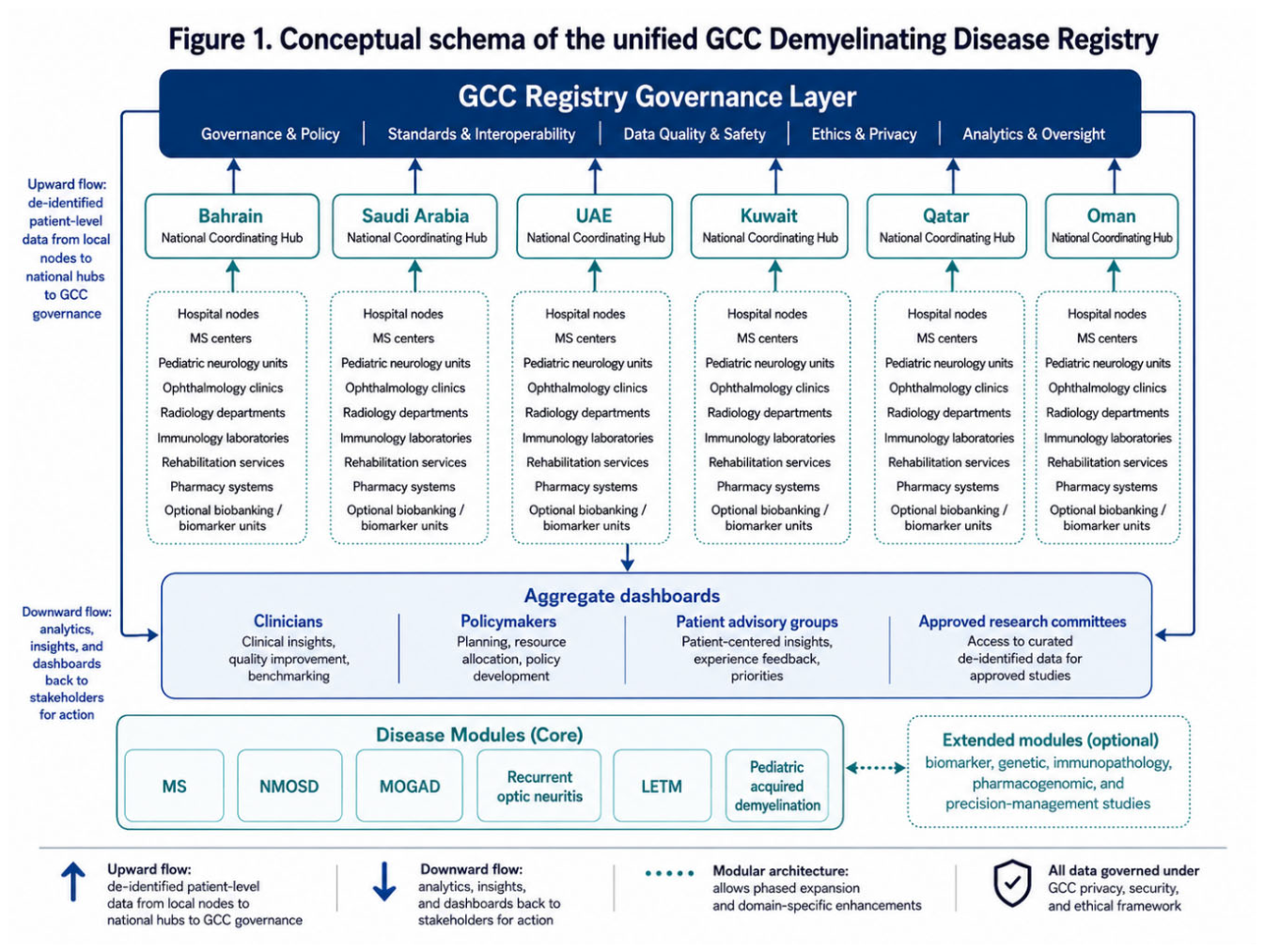
Figure 2.
Value-proposition infographic: from registry inputs to clinical, research, policy and precision outputs.
Figure 2.
Value-proposition infographic: from registry inputs to clinical, research, policy and precision outputs.
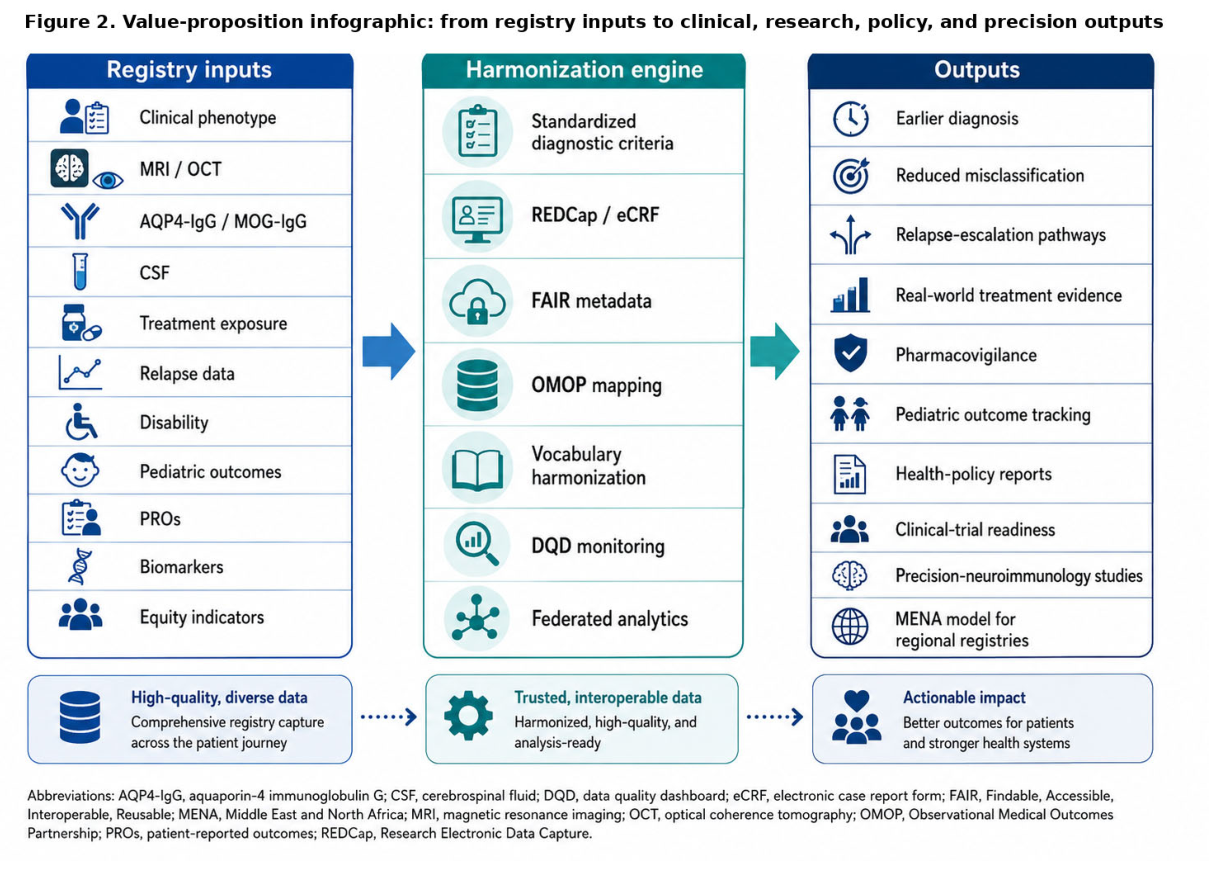
Figure 3.
Stakeholder ecosystem map for the GCC Demyelinating Disease Registry.
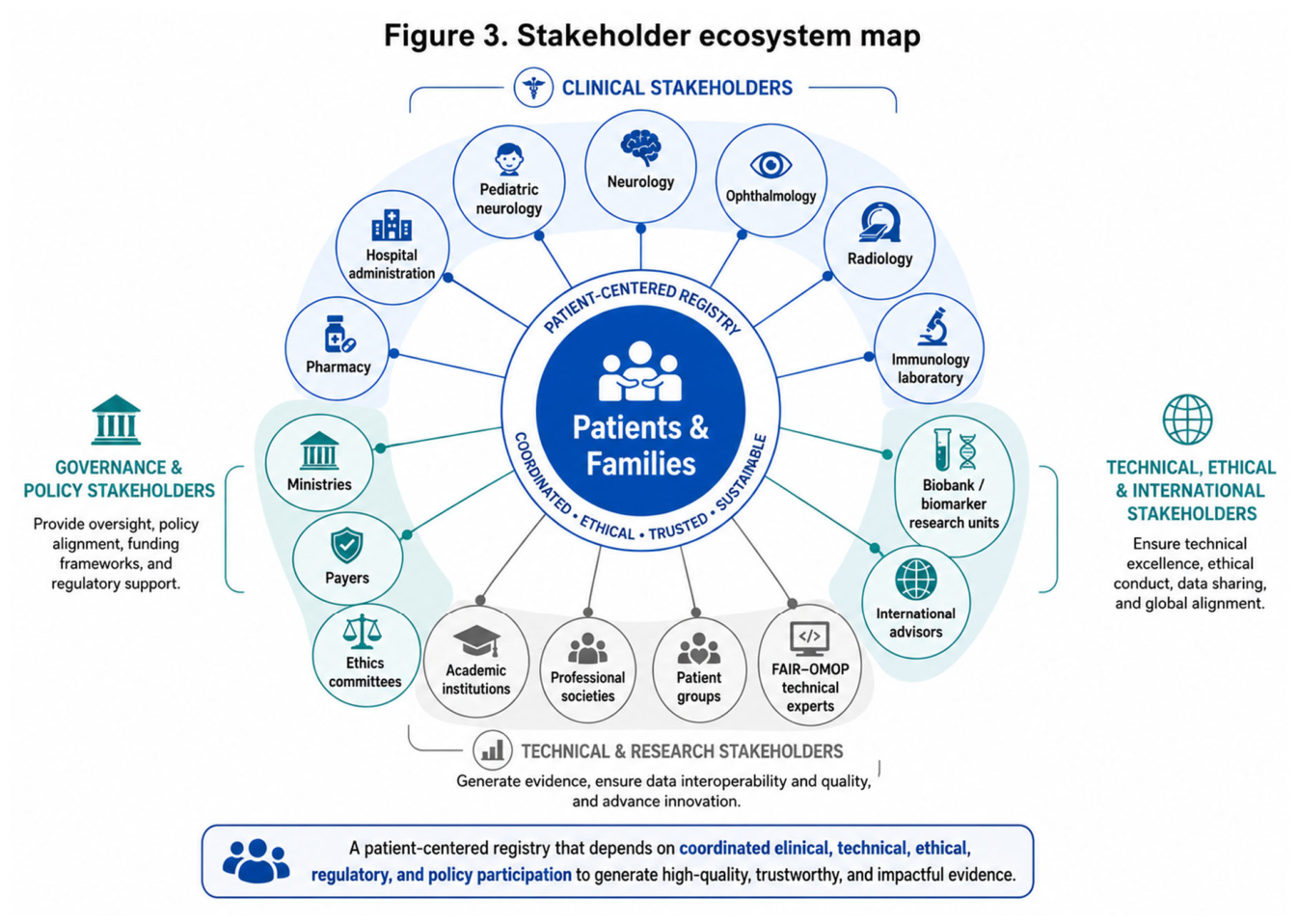
Figure 4.
FAIR-OMOP-OHDSI data architecture for the GCC registry.
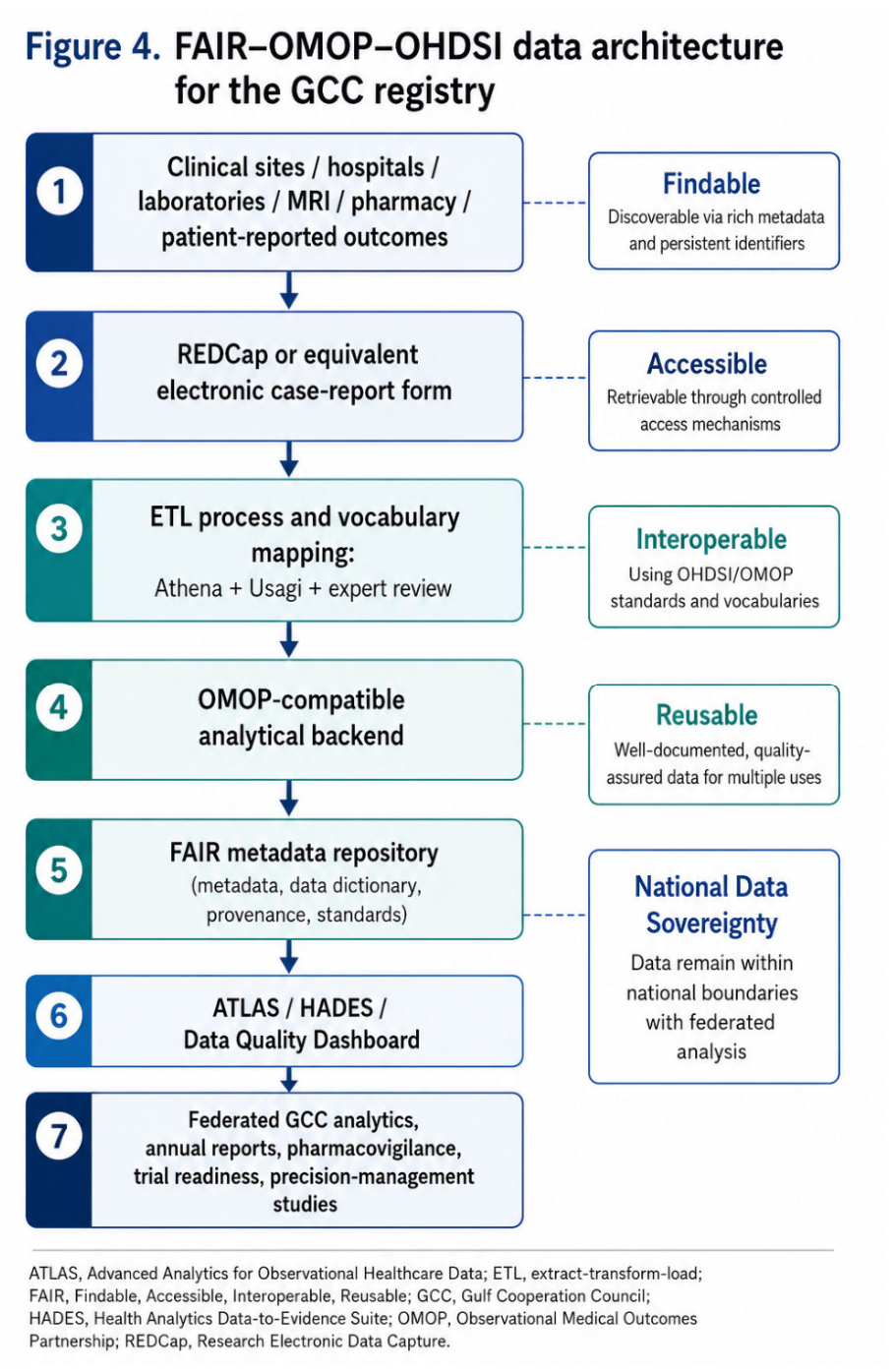
Figure 5.
Data flow and interoperability architecture of the GCC Demyelinating Disease Registry.
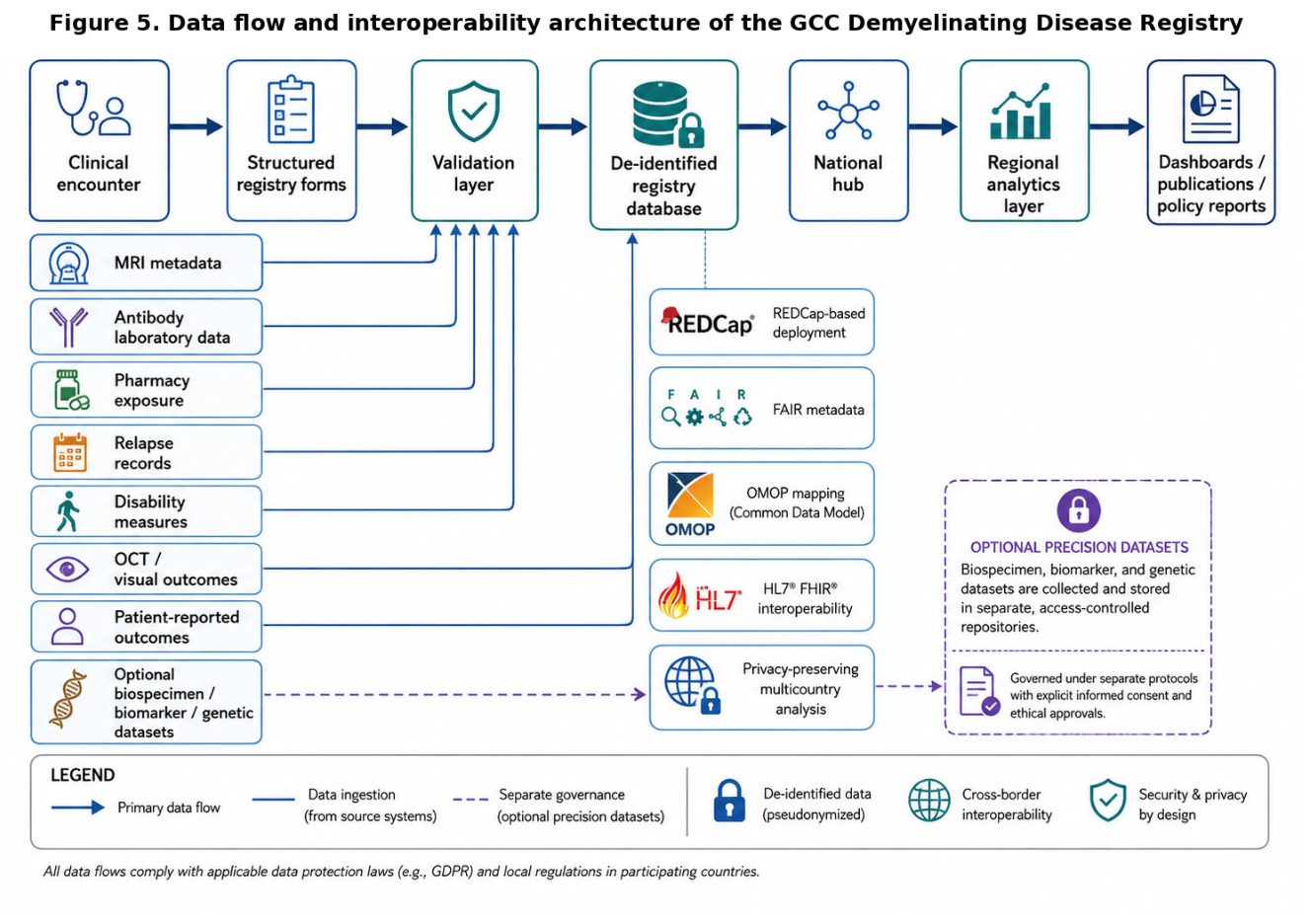
Figure 6.
Phased rollout flowchart for implementation of the GCC Demyelinating Disease Registry.
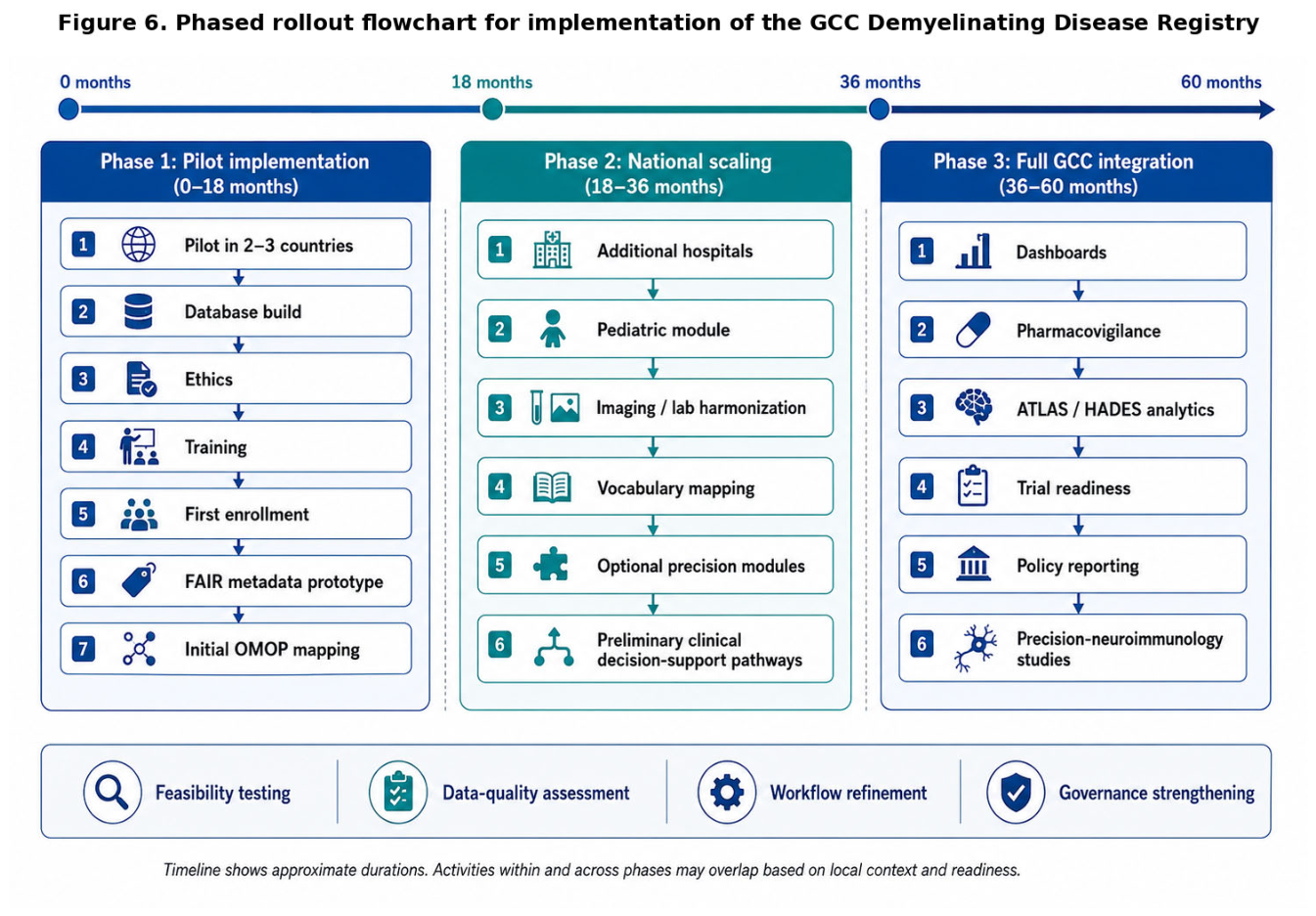
Disclaimer/Publisher’s Note: The statements, opinions and data contained in all publications are solely those of the individual author(s) and contributor(s) and not of MDPI and/or the editor(s). MDPI and/or the editor(s) disclaim responsibility for any injury to people or property resulting from any ideas, methods, instructions or products referred to in the content. |
© 2026 by the authors. Licensee MDPI, Basel, Switzerland. This article is an open access article distributed under the terms and conditions of the Creative Commons Attribution (CC BY) license (http://creativecommons.org/licenses/by/4.0/).
Copyright: This open access article is published under a Creative Commons CC BY 4.0 license, which permit the free download, distribution, and reuse, provided that the author and preprint are cited in any reuse.