

Submitted:
20 August 2026
Posted:
20 August 2026
You are already at the latest version
Abstract
Efficient simultaneous nitrification, denitrification, and phosphorus removal typically requires either separate tanks with oxic and anoxic conditions or aerobic granular sludge (AGS) with granules larger than 0.2 mm. In this study, we cultivated small granular flocs (50-100 µm) capable of simultaneous heterotrophic nitrification and aerobic denitrification (HN-AD) in a sequencing batch reactor. The bioreactor was seeded with biomass from a municipal wastewater treatment plant and fed acetate-based synthetic wastewater for 114 days. The small granular flocs formed densified activated sludge (DAS), with biomass accumulating to approximately 12 g/L mixed liquor suspended solids. DAS was cultivated under selection pressures commonly used for AGS formation, including anoxic feeding, extended anoxic mixing, elevated hydrodynamic shear, and a gradual reduction in settling time. The sludge volume index (SVI) improved to 30 mL/g, comparable to that of granular sludge, with a moderate SVI30/SVI5 ratio of 72%. The relative abundance of Paracoccus reached 72.9%, indicating the metabolic capability of these small granular flocs to carry out HN-AD. Overall, these findings show that efficient simultaneous nutrient removal does not strictly depend on large granular structures. Achieving DAS and HN-AD offers a scalable approach to intensify biological nutrient removal while reducing reliance on distinct anoxic zones.
Keywords:
densified activated sludge
; aerobic granular sludge
; heterotrophic nitrification
; aerobic denitrification
; Paracoccus
1. Introduction
Aerobic granular sludge (AGS), characterized by compact microbial aggregates and stratified redox microenvironments, offers several advantages over conventional activated sludge systems, including superior settling properties, higher biomass retention, simultaneous nitrification, denitrification, and phosphorus removal [1,2]. Aerobic granules are spatially organized microbial structures in which different microbial guilds use available substrates and redox conditions for efficient biological nutrient removal. In engineered AGS systems, operational and nutritional conditions are managed to support the growth of slow-growing autotrophic nitrifiers in the oxygenated outer layer [3,4] while limiting the dominance of fast-growing aerobic heterotrophs that consume readily biodegradable carbon under oxic conditions. These conditions also promote carbon-storing, slow-growing heterotrophic bacteria that can use oxidized nitrogen species as electron acceptors [5,6]. However, dependence on these slow-growing functional groups requires rigorous operational control to maintain stable granular sludge performance.
In wastewater treatment systems, microbial aggregates are the primary functional and structural units for biological nutrient removal. Microbial community composition governs nutrient removal, while aggregate density enables effective separation of treated effluent from biomass [7]. Larger granules are often favoured because they settle faster than smaller flocs. During the settling phase of a sequencing batch reactor (SBR), biomass stratifies by aggregate size and density, with larger granules settling rapidly and smaller or less dense flocs remaining in the upper liquid layer. Conventional granular sludge cultivation therefore applies selection pressures that retain large granules while wasting slow-settling floc [5]. Although preferential retention of larger granules improves phase separation, increasing granule size can reduce mass transfer and nutrient diffusion rates. Furthermore, large granules may become structurally unstable when they exceed a size threshold, as internal nutrient limitations and metabolic stress can trigger cell lysis, weaken the core, and lead to granule disintegration. Additionally, blockage of internal pores can trap nitrogen gas bubbles, reduce aggregate density, and contribute to biomass washout [8,9]. Consequently, although AGS is an advanced biological nutrient removal technology, long start-up periods and concerns over long-term granule stability continue to limit broader full-scale application [5,10].
Densified activated sludge (DAS) offers an alternative strategy to improve biological nutrient removal without imposing strict granule-size requirements. The selection pressures that promote the formation and retention of dense microbial aggregates in DAS are similar to those used in AGS [11,12]. However, DAS systems retain dense aggregates across a wider size range, including small dense flocs that conventional AGS operation may selectively wash out [11,13]. This retention strategy can increase biomass concentration, improve solid-liquid separation, and support stable nutrient removal. By shifting the target from large, morphologically defined granules to broader densified biomass, DAS can support faster start-up and sustained nutrient-removal kinetics [11]. Although densified flocs settle more slowly than larger AGS granules, their smaller size can reduce mass-transfer limitations and internal substrate-diffusion constraints, helping avoid some metabolic and structural limitations associated with larger granules [11].
Conventional nitrogen removal typically relies on sequential nitrification and denitrification by slow-growing nitrifiers and denitrifiers and, in some systems, anaerobic ammonium-oxidizing bacteria. These microbial groups are sensitive to environmental fluctuations and often require complex operational strategies to maintain effective nitrogen removal [14]. Heterotrophic nitrification and aerobic denitrification (HN-AD) pathways offer an alternative route for nitrogen removal by microorganisms to perform nitrification and denitrification under oxygen-rich conditions [15]. Nitrogen assimilation by fast-growing HN-AD bacteria can also contribute to total nitrogen removal, with reported contributions of up to 40% [16]. Although pure-culture studies have shown effective HN-AD activity, pure-culture bioaugmentation remains difficult to sustain in complex, non-sterile wastewater systems [17]. Consequently, practical use of HN-AD in wastewater treatment requires strategies that enrich these functions within self-sustaining, dense microbial aggregates that retain biomass, protect niches, and resist competitive exclusion.
Several wastewater treatment systems fail to achieve stable granulation. This study initially aimed to cultivate aerobic granular sludge using selection pressures commonly applied in AGS systems, including anoxic feeding, extended anoxic mixing, increased hydrodynamic shear, and gradually reduced settling time, to cultivate dense microbial aggregates. Instead of large aerobic granules, the reactor developed DAS composed mainly of small granular flocs. We report DAS formation capable of heterotrophic nitrification, aerobic denitrification, and phosphorus removal within small granular flocs. This approach demonstrates that simultaneous nutrient removal in a compact reactor tank does not necessarily require large granular structures with strongly stratified redox conditions.
2. Materials and Methods
2.1. Experimental Setup
DAS was cultivated in a Plexiglas column-type SBR with a total volume of 7.1 L and a working volume of 4.8 L, an internal diameter of 10 cm, and a height of 90 cm. The reactor had a diffused aeration system at the base, providing a superficial air velocity (SAV) of 2.3 cm/s. The bioreactor was bottom-fed and operated for 114 days at room temperature.
The SBR used an automated control system to manage the fill, react, settle, draw, and idle phases in a 4-hour cycle (six cycles per day). The operational strategy included a 10-min feeding phase, 30 to 54 min of mixing without aeration, 150 min of aeration, 30 to 6 min of settling, 20 min of decanting, and an idle period. The hydraulic retention time (HRT) was 8 hours. The reactor was inoculated with return activated sludge from the Ashbridges Bay Wastewater Treatment Plant in Toronto, Canada. We monitored dissolved oxygen and pH during reactor operation.
During startup, we kept the settling time at 30 min to retain biomass and support acclimation to the synthetic wastewater. After the initial acclimation period, the settling time was gradually reduced from 30 min to 6 min to select for dense microbial aggregates with improved settleability.
2.2. Synthetic Wastewater and Reactor Operation
The reactor was fed acetate-based synthetic wastewater with a COD: N:P ratio of 100:5:1, as described previously ([18,19,20]. The composition of the synthetic wastewater was as follows: CH3COONa (1.28 g L-1 corresponding to a COD concentration of 1000 mg COD L-1), NH4Cl (191 mg L-1); KH2PO4 (44 mg L-1); CaCl2·2H2O (45 mg L-1); MgSO4·7H2O (25 mg L-1); FeSO4·7H2O (10 mg L-1); and 1 mL L-1 trace element solution: H3BO3 (0.05 g L-1); ZnCl2 (0.05 g L-1); (NH4)6Mo7O24·4H2O (0.05 g L-1); AlCl3 (0.05 g L-1); CoCl2·6H2O (0.05 g L-1); NiCl2·6H2O (0.05 g L-1); MnSO4·H2O (0.05 g L-1); and CuCl2·2H2O (0.03 g L-1).
2.3. Analytical Methods
Mixed liquor suspended solids (MLSS), mixed liquor volatile suspended solids (MLVSS), and sludge volume index after 5 minutes (SVI5) and after 30 minutes (SVI30) were measured in accordance with the Standard Methods for the Examination of Water and Wastewater [21]. Microscopic images of granular sludge samples were obtained using a LEICA microscope (Model DM1000 LED). The COD of the influent and effluent samples was measured using HACH test kits. Samples were heated in a thermostat (DRB200, HACH, Loveland, USA) to 150 °C and then analyzed using a spectrophotometer (DR 3900, HACH, USA). COD was measured after filtration through 0.45-µm Acrodisc® 32 mm filters with Supor® membrane (Cytiva, formerly Pall Corporation). Influent and effluent samples (after filtration through 0.45-µm pore-sized filters) for ammonia (NH3), nitrate (NO3), nitrite (NO2), and phosphate (PO4) were measured according to HACH methods.
2.4. DNA Extraction, Sequencing, and Microbial Community Analysis
Biomass samples were processed as described previously [22]. Briefly, samples were centrifuged, and genomic DNA was extracted from 100–150 mg of the resulting pellet. DNA extraction was automated using the PowerSoil DNA isolation kit (MoBio Laboratories Inc.) and the QIAcube Connect (Qiagen, MD, USA). The extracted DNA was submitted to the Genome Quebec Research and Testing Laboratory in Montréal, Québec, for 16S rRNA gene sequencing with a paired-end 300 kit (Illumina HiSeq-PE300).
The V3–V4 region of the 16S rRNA gene was amplified using primers 347F (GGAGGCAGCAGTRRGGAAT) and 803R (CTACCRGGGTATCTAATCC). The forward and reverse sequences were merged, and low-quality sequences were removed using the DADA2 software. The sequences were analyzed using MicrobiomeAnalyst to estimate the relative abundance of microbial communities. C3G (McGill University) performed quality control analyses of the sequencing data using the GenPipes version 4.0.0 amplicon-seq pipeline. This pipeline is based on the DADA2 package in R. First, Trimmomatic was used to trim the data, removing adapters, chimeras, and low-quality sequences before downstream analyses. MicrobiomeAnalyst was used to generate relative abundance graphs using the SILVA database. Seed biomass and densified activated sludge samples collected on day 111 were used for microbial community analysis. The datasets presented in this study are deposited in the NCBI database under accession number PRJNA1489565.
3. Results
3.1. Formation of Densified Activated Sludge
The seed biomass consisted mainly of dispersed flocs, pinpoint flocs, and filamentous bacteria. This seed biomass progressively transformed into predominantly small, granular flocs measuring 50 to 100 µm (Figure 1).
The biomass’s settling properties at the start of operation were poor. This poor settleability caused biomass washout during startup, with MLSS dropping from 6.5 g/L to 3.3 g/L by day 22 (Figure 2). During the first few days of the selection period, MLSS further decreased to 2.55 g/L due to washout. By day 44, the biomass in the SBR stabilized, as evidenced by minimal suspended solids in the effluent. The MLSS concentration gradually increased to approximately 8 g/L by day 79 and to approximately 12 g/L by day 93.
Throughout the experiment, the MLVSS/MLSS ratio remained stable at 0.889 ± 0.018 (Figure 2). This indicates that a substantial portion of the MLSS consists of organic matter and live bacterial cells involved in biological nutrient removal. This highly volatile fraction supports the accumulation of biological solids involved in nutrient removal [23].
3.2. Settling Properties and Biomass Retention
The biomass settling properties initially deteriorated when the SBR was fed synthetic wastewater using seed biomass from a full-scale municipal wastewater treatment plant. The SVI30 increased to 235 mL/g MLSS by day 23 (Figure 2). The poor settling properties of the biomass during reactor startup coincided with biomass washout, during which the MLSS concentration decreased from 6.5 g/L to 3.3 g/L.
The SVI30 improved to 45 mL/g MLSS by day 65 and then decreased to 30 mL/g MLSS by day 93. From day 93 to the end of the experiment, the SVI30 remained stable at approximately 30 mL/g MLSS (Figure 2). This value is comparable to typical SVI30 values reported for several aerobic granular sludge (AGS) systems [24]. Consequently, at this stage of reactor operation, the small granular flocs exhibited settling properties similar to those of granular sludge, facilitating biomass retention in the reactor and promoting densification.
The SVI30 to SVI5 ratio was moderate, mostly ranging from 50% to 72% during the study (Figure 2). This was associated with the abundance of small, granular flocs ranging from 50 µm to 100 µm in size. Microscopic images indicated a limited number of filaments in the system. Despite these filaments, the dense, small, granular flocs compacted effectively and maintained an SVI30 of approximately 30 mL/g MLSS. This performance indicates that selection pressure, including a shortened settling duration and elevated shear force, favoured the retention of small, granular flocs and biomass densification.
3.3. Nutrient Removal Performance
The effluent nutrient concentrations and nutrient removal efficiencies are presented in Figure 3. During the first 51 days of operation, the effluent COD ranged from 105 mg/L to 155 mg/L, corresponding to 85% to 90% COD removal efficiency. From day 58 to 79, the effluent COD ranged from 89 mg/L to 101 mg/L, corresponding to 90% to 91% removal efficiency. From day 86 to the end of operation, the effluent COD ranged from 6 mg/L to 40 mg/L, corresponding to 97.8 ± 1.7% COD removal efficiency.
After an acclimation phase, the effluent ammonia concentration ranged from 0.0 to 0.7 mg/L, corresponding to 98% to 100% ammonia removal (Figure 3). The effluent nitrite concentration ranged from 4 mg/L to 10.4 mg/L during the first 72 days of operation. The effluent nitrite concentration was zero from day 78 to the end of operation.
During the first 72 days, effluent nitrate ranged from 1.5 mg/L to 3.7 mg/L, corresponding to a nitrate removal efficiency of 93.6% ± 2.6%. From day 79 to the end of the operation, the effluent nitrate concentration increased to 11.4 ± 0.8 mg/L. Consequently, the nitrate removal efficiency declined to 77.3% ± 1.8% during this final phase of operation (Figure 3). This increase coincided with near-complete COD removal, suggesting that reduced organic carbon availability limited nitrate reduction during the final operating phase.
In addition to organic substrate and ammonia removal, we monitored phosphate removal in the bioreactor effluent. The effluent phosphate concentration ranged from 2.74 mg/L to 5.74 mg/L, yielding a removal efficiency of 57.6% ± 15% during the first 79 days of operation. Effluent phosphate concentrations subsequently declined to 0.43–0.53 mg/L by the end of operation. Phosphate removal efficiency during the last phase of bioreactor operation was 95.2% ± 0.5% (Figure 3).
3.4. Microbial Community Dynamics
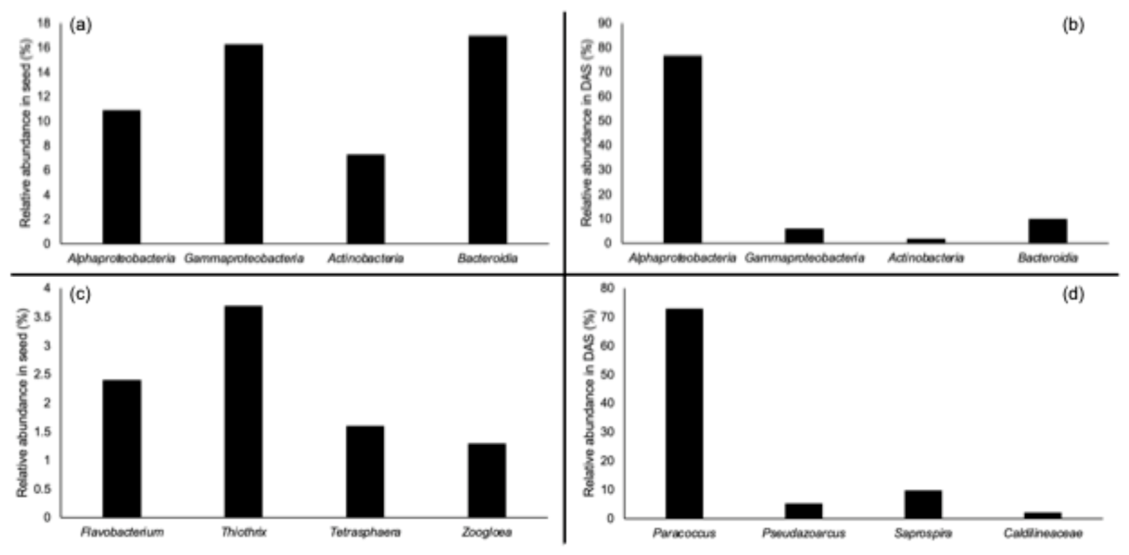
Microbial community shifts between the seed biomass and densified activated sludge were evaluated using 16S rRNA gene sequencing and are presented in Figure 4. At the class level, the seed biomass contained 10.9% Alphaproteobacteria, 16.3% Gammaproteobacteria, 17% Bacteroidia, and 7.3% Actinobacteria (Figure 4). In contrast, in the densified activated sludge, Alphaproteobacteria was the predominant bacterial class, accounting for 76.7% of the total microbial community. The relative abundance of Gammaproteobacteria declined to 6.1%, Actinobacteria to 1.8%, and Bacteroidia to 10%. The seed biomass microbial community was highly diverse at the genus level. The most abundant bacterial genera in the seed biomass included Thiothrix (filamentous bacteria) and Zoogloea (Figure 4). Their high abundance corresponded to the poor settling properties of the seed biomass. In the densified activated sludge, the predominant microbial genera included Paracoccus (relative abundance 72.9%), known for heterotrophic nitrification, aerobic denitrification, and phosphorus removal [25], and Pseudazoarcus (relative abundance 5.4%). This community composition revealed enrichment of bacteria capable of heterotrophic nitrification and aerobic denitrification in small granular flocs, which can potentially intensify biological nutrient removal in a compact wastewater treatment facility.
4. Discussion
4.1. Small Granular Flocs and Nutrient Removal
Microbial aggregates, such as pinpoint flocs, flocs, small granular flocs, and granules, appear as distinct entities but are pleomorphic and can dynamically shift between structures in natural and engineered environmental systems, forming a continuum from flocs to large granules [5]. Consequently, systems designed and operated for a specific type often consist of a hybrid structure [7,26]. Granule size is a key feature of AGS reactors, as it affects settling properties and the diffusion of oxygen and substrate into the granules’ interior zone. Conventionally, stratification of redox conditions is important for the efficiency of simultaneous nitrification, denitrification, and phosphorus removal [10,27]. In this context, small granules are less likely to develop strong transport limitations for oxygen and nutrients, supporting nitrifier growth.
In this study, DAS was predominantly composed of small, granular flocs ranging from 50 to 100 µm (Figure 1). Conventionally, microbial aggregates of this size are considered less capable of simultaneous biological nutrient removal because they lack the internal redox stratification required for typical denitrification. Contrary to this expectation, this system achieved high COD removal, near-complete ammonia removal, complete nitrite removal after day 78, and high phosphate removal during the final phase of operation (Figure 3).
Conventionally, the abundance of small pinpoint flocs is correlated with poor settling properties of the biomass. However, we have previously shown that small pinpoint flocs rich in autotrophic nitrifying microbial populations exhibit granule-like settling properties, whereas the biomass settling properties gradually deteriorate when conditions that support heterotrophic bacterial growth are provided [22,28]. In this study, small flocs rich in heterotrophic bacterial populations showed granule-like settling properties and biomass accumulation. The results show that bacterial populations capable of forming compact microbial aggregates, regardless of the size of the structure, exhibit granule-like settling properties.
A distinct increase in effluent nitrate was observed during the final phase of operation, coinciding with a ~50% increase in biomass (Figure 2) and the complete removal of organic substrate (Figure 3). This pattern suggests that nitrate reduction was constrained by the availability of readily biodegradable organic carbon rather than by biomass assimilation alone. Carbon availability was a decisive constraint on denitrification. Consequently, these findings emphasize that sustained nitrate reduction, specifically for heterotrophs like Paracoccus, is contingent upon a consistent organic carbon supply to drive aerobic denitrification.
4.2. Role of HN-AD and Paracoccus
Bacteria related to the genus Paracoccus were predominant in the densified activated sludge cultivated in this study (Figure 4). The relative abundance of Paracoccus in this study was 72.9%, consistent with our other recent studies. For example, the relative abundance of Paracoccus reached up to 74% in laboratory-scale bioreactors fed similar feed, where the biomass was exposed to per- and polyfluoroalkyl substances [19]. Similarly, up to 75% relative abundance of Paracoccus was observed in a bioreactor fed a similar synthetic wastewater recipe to study the effect of microfibers on microbial aggregation [18]. Paracoccus bacteria are highly versatile, capable of heterotrophic nitrification and aerobic denitrification, and of contributing to phosphorus removal [25,29,30,31]. Unlike traditional granular sludge systems that rely on oxygen diffusion limitations to create internal anoxic zones for nitrogen removal, HN-AD bacteria may support nitrogen transformation under aerobic conditions.
Pure culture studies have reported that some Paracoccus species possess the complete set of genes required for simultaneous nitrification, denitrification, and phosphorus removal; their denitrification genes are insensitive to oxygen. Robust enzyme activity of ammonia monooxygenase, hydroxylamine oxidoreductase, nitrate reductase, nitrite reductase, nitric oxide reductase, nitrous oxide reductase, and polyphosphate kinase has been documented in pure culture studies under aerobic conditions [25]. As a fast-growing heterotroph, Paracoccus thrives on acetate, and its rapid growth may support nutrient removal through both assimilation and metabolic conversion [31]. Furthermore, some Paracoccus species have been reported to possess nitrous oxide reductase, which mitigates greenhouse gas emissions; however, this study did not measure nitrous oxide emissions [25]. Therefore, optimizing operational conditions that support the growth and enrichment of aerobic denitrifiers may support greenhouse gas mitigation, but this requires direct verification.
The prevalence of Paracoccus within small granular flocs suggests that simultaneous nutrient removal is not strictly constrained by the diffusion-limited anoxic zones typical of conventional large granular structures. Rather, these heterotrophs may contribute to nitrogen and phosphorus processing via aerobic metabolic pathways [25]. Previous studies have reported that some Paracoccus species possess genes and enzymes associated with simultaneous nitrification, denitrification, and phosphorus removal under aerobic conditions [25,32]. This metabolic capacity may reduce reliance on spatial oxygen gradients for nutrient removal in large granular structures.
Furthermore, the rapid growth kinetics of Paracoccus, driven by efficient acetate utilization, may support biomass proliferation and nutrient removal through assimilation and metabolic conversion, compared with the slower-growing autotrophic nitrifiers and obligate anoxic denitrifiers typically associated with traditional granular sludge systems. This metabolic advantage may partly explain the development of nutrient removal activity before the formation of large, diffusion-limited granules [31].
4.2. Formation of DAS
The SVI30 and SVI30/SVI5 ratios are often used to assess sludge settleability and the degree of granulation [33,34]. An SVI30/SVI5 ratio close to 100% indicates more complete granulation, whereas a value below 100% typically denotes the co-occurrence of flocs with granular sludge [34,35]. Conventional paradigms suggest that flocs can reduce overall sludge settling velocity because they have higher drag than granules [9]. However, this perspective may undervalue the functional advantages of high-density flocs. In densified systems, these smaller aggregates exhibit high specific surface areas that facilitate mass transfer and metabolic activity, which can compensate for the lower settling velocities traditionally associated with flocculated sludge [12,36]. The dynamic equilibrium, in which small flocs can mature into granules and larger structures may disintegrate, supports sustained nutrient removal and provides resilience against biomass washout [5].
In this study, an SVI30 of 30 mL/g MLSS and an SVI30/SVI5 ratio of 65% to 72% were observed (Figure 2), indicating good settling compared with conventional activated sludge flocs. Microscopic analysis revealed that the small granular flocs were predominantly 50 to 100 µm in size (Figure 1). Although conventional paradigms might suggest that smaller aggregates exhibit inferior settling properties, the observed SVI metrics indicate that this DAS exhibits settling comparable to AGS. This superior performance, achieved despite the smaller aggregate size, is attributed to the compact structure of the granular flocs. Previous studies have shown that while larger granules settle faster, smaller granules may exhibit lower SVI30 and settle more compactly in the sequencing batch reactor [37]. The small granular flocs contributed to improved settling compared with conventional flocs, allowing the accumulation of approximately 12 g/L MLSS in the bioreactor (Figure 2).
MLSS in the bioreactor (Figure 2). This level of biomass retention is comparable to that of established granular sludge systems, supporting the intensification of biological nutrient removal [6]. These results suggest that, in densified activated sludge, metabolic capacity, aggregate density, and biomass retention are important performance indicators alongside aggregate size.
4.3. Granule Formation with Anoxic vs Aerobic Denitrifiers
Overall, aerobic granule formation involves two distinct approaches that underscore the complexity of microbial community adaptation to varying operational environments. The first school of thought prioritizes cultivating slow-growing bacteria by using anoxic feeding and minimizing readily available organic substrate during the aerobic phase, thereby suppressing fast-growing heterotrophs. During this anoxic feeding stage, carbon-storing bacteria convert substrates into complex polymers, fostering an organized, stratified redox structure. Consequently, nitrifying bacteria reside in the outer aerobic layers, while denitrifiers occupy the inner zones where oxygen diffusion is restricted [4,5]. This spatial stratification facilitates the synergistic exchange of substrates and metabolites, supporting the coexistence of nitrifiers and denitrifiers within an organized, functional spatial gradient [38]. Technologies based on this principle are commercially well established, using dense, spherical structures to overcome mass-transfer limitations and generate internal micro-gradients of dissolved oxygen and pH that optimize simultaneous nutrient removal [39].
Conversely, a second approach demonstrates that granulation is achievable in a completely aerobic system through aerobic feeding at high organic substrate concentrations, coupled with high hydraulic shear forces and a short settling time. These conditions facilitate the washout of filamentous bacteria and fluffy flocs and improve mass transfer within granules, promoting dense structures [40]. This mechanism suggests that high substrate availability and mechanical stressors stimulate extracellular polymeric substance production, significantly enhancing the structural integrity and hydrophobicity of microbial aggregates [38]. This strategy is advantageous for rapid granulation [40]. However, microbial interactions among relatively slow-growing nitrifiers that compete with fast-growing heterotrophs in the outer layer (which use oxygen as an electron acceptor) and slow-growing anoxic denitrifying bacteria in the core remain unclear in granules cultivated under high organic-loading conditions [5,41]. While these pathways are distinct, they are not necessarily contradictory; rather, the mechanisms governing these stochastic developmental pathways remain subjects of debate, particularly regarding how heterogeneous structural dynamics influence the spatial organization of target organisms [10,41].
In this study, a combination of these two strategies was used to cultivate densified activated sludge: the bioreactor was fed anoxically at high organic loading and then exposed to high superficial air velocity to achieve a high hydraulic shear rate. The hybrid approach leveraged the synergistic potential of both carbon-storage mechanisms and hydrodynamic selection to cultivate small granular flocs. A short settling time was applied as a selection pressure to retain dense microbial aggregates, thereby promoting the washout of slow-settling flocculent biomass and yielding densified activated sludge with favourable settling properties. This selective pressure also included a short hydraulic retention time and bottom-feeding strategies to prioritize the retention and growth of denser microbial aggregates. The strategy enriched bacteria capable of heterotrophic nitrification and aerobic denitrification, which may support nitrogen transformation under variable oxygen conditions [42].
4.4. Implications and Future Optimization
The AGS cultivation strategy, employing high organic loading, likely selected for aerobic heterotrophs capable of simultaneous nutrient removal. While conventional metabolic pathways for simultaneous heterotrophic nitrification and aerobic denitrification often require distinct oxygen-limited micro-environments within granular structures, aerobic denitrifiers such as Paracoccus can remain metabolically active across diverse oxygen conditions [42]. Consequently, the traditional assumption that large granule size is a prerequisite for creating the oxygen gradients necessary for denitrification may be overly restrictive. In this study, the compact structure of the small granular flocs (50 µm to 100 µm) appears to support efficient nutrient removal pathways, suggesting that oxygen diffusion limitations are not the only mechanism for achieving simultaneous heterotrophic nitrification and aerobic denitrification. Instead, nitrate removal efficiency declined when the organic substrate was completely removed, indicating that nitrate removal was driven by aerobic denitrifiers’ metabolic activity rather than nutrient assimilation alone.
High organic substrate availability may enable fast-growing aerobic denitrifiers to sustain metabolic activity and nutrient assimilation. A previous study with higher organic substrate levels and continuous aeration led to rapid formation of mega granules, with Paracoccus and Zoogloea bacteria predominant [43]. Conversely, under biomass washout conditions (which create a high food-to-microorganism ratio), granule formation has been linked to fluffy granules dominated by Zoogloea, resulting in poor nutrient removal [44]. Future studies are needed to optimize conditions for Paracoccus using municipal and industrial wastewater to validate the scalability and practical application of this system for improved simultaneous heterotrophic nitrification and aerobic denitrification.
5. Conclusions
Conventionally, good settling properties and simultaneous nutrient removal in a single tank are associated with granules larger than 200 µm. In this study, small granular flocs (50-100 µm) exhibited granular sludge-like settling and biomass accumulation, leading to the formation of densified activated sludge. Simultaneous nitrification, denitrification, and phosphorus removal were also observed in these small granular flocs. This outcome demonstrates that efficient biological nutrient removal is feasible without forming large granules, which typically rely on oxygen diffusion limitations to establish internal anoxic cores. Instead, a microbial community dominated by bacteria capable of heterotrophic nitrification, aerobic denitrification, and phosphorus removal, such as Paracoccus, can drive simultaneous nutrient removal within small granular flocs. By circumventing the mass transfer constraints typical of larger aggregates, this approach uses niche metabolic pathways to achieve efficient treatment in smaller, denser microbial structures. Consequently, achieving DAS and HN-AD represents an intensification of biological nutrient removal, simplifying operational requirements. Future studies are required to optimize conditions for HN-AD and to validate the scalability and practical application of this system for efficient biological nutrient removal.
Author Contributions
Hussain Aqeel: Conceptualization, Methodology, Writing – Original Draft, Reviewing, and Editing. Reza Salehi: Data Curation, Methodology, Writing- Original Draft Preparation. Neda Hosni: Reviewing and Editing. Rania Hamza: Supervision, Reviewing and Editing. Steven N Liss: Supervision, Reviewing and Editing.
Funding
Steven N Liss and Rania Hamza report that the Natural Sciences and Engineering Research Council of Canada provided financial support.
Data Availability Statement
The datasets presented in this study are deposited in the NCBI database under accession number PRJNA1489565.
Conflicts of Interest
The authors declare no conflicts of interest.
Abbreviations
The following abbreviations are used in this manuscript:
| AGS | Aerobic Granular Sludge |
| COD | Chemical Oxygen Demand |
| DAD | Densified Activated Sludge |
| HN-AD | Heterotrophic Nitrification – Aerobic Denitrification |
| HRT | Hydraulic Retention Time |
| MLSS | Mixed Liquor Suspended Solids |
| MLVSS | Mixed Liquor Volatile Suspended Solids |
| NH3 | Ammonia |
| NO2 | Nitrite |
| NO3 | Nitrate |
| PO4 | Phosphate |
| SAV | Superficial Air Velocity |
| SBR | Sequencing Batch Reactor |
| SVI | Sludge Volume Index |
References
- Bengtsson, S.; Blois, M. de; Wilén, B.; Gustavsson, D. Treatment of Municipal Wastewater with Aerobic Granular Sludge. Critical Reviews in Environmental Science and Technology. 2018, 48, 119–166. [CrossRef]
- Kreuk, M. de; Heijnen, J.J.; Loosdrecht, M.C.M. van Simultaneous COD, Nitrogen, and Phosphate Removal by Aerobic Granular Sludge. Biotechnology and Bioengineering. 2005, 90, 761–769. [CrossRef]
- Kreuk, M. de; Loosdrecht, M.C.M. van Selection of Slow Growing Organisms as a Means for Improving Aerobic Granular Sludge Stability. Water Science & Technology. 2004, 49, 9–17. [CrossRef]
- Wilén, B.; Liébana, R.; Persson, F.; Modin, O.; Hermansson, M. The Mechanisms of Granulation of Activated Sludge in Wastewater Treatment, Its Optimization, and Impact on Effluent Quality. Applied Microbiology and Biotechnology. 2018, 102, 5005–5020. [CrossRef]
- Aqeel, H.; Weissbrodt, D.G.; Cerruti, M.; Wolfaardt, G.; Wilén, B.; Liss, S.N. Drivers of Bioaggregation from Flocs to Biofilms and Granular Sludge. Environmental Science Water Research & Technology. 2019, 5, 2072–2089. [CrossRef]
- Pronk, M.; Kreuk, M. de; Bruin, B. de; Kamminga, P.; Kleerebezem, R.; Loosdrecht, M.C.M. van Full Scale Performance of the Aerobic Granular Sludge Process for Sewage Treatment. Water Research. 2015, 84, 207–217. [CrossRef]
- Highmore, C.; Melaugh, G.; Morris, R.J.; Parker, J.; Direito, S.; Romero, M.; Soukarieh, F.; Robertson, S.N.; Bamford, N.C. Translational Challenges and Opportunities in Biofilm Science: A BRIEF for the Future. npj Biofilms and Microbiomes. 2022, 8, 68–68. [CrossRef]
- Corsino, S.F.; Biase, A. di; Devlin, T.R.; Munz, G.; Torregrossa, M.; Oleszkiewicz, J.A. Effect of Extended Famine Conditions on Aerobic Granular Sludge Stability in the Treatment of Brewery Wastewater. Bioresource Technology. 2016, 226, 150–157. [CrossRef]
- Rollemberg, S.L. de S.; Ferreira, T.J.T.; Firmino, P.I.M.; Santos, A.B. dos Impact of Cycle Type on Aerobic Granular Sludge Formation, Stability, Removal Mechanisms and System Performance. Journal of Environmental Management. 2019, 256, 109970–109970. [CrossRef]
- Hamza, R.; Rabii, A.; Ezzahraoui, F.-Z.; Morgan, G.; Iorhemen, O.T. A Review of the State of Development of Aerobic Granular Sludge Technology over the Last 20 Years: Full-Scale Applications and Resource Recovery. Case Studies in Chemical and Environmental Engineering. 2021, 5, 100173–100173. [CrossRef]
- Bauhs, K.; Armenta, M.; Maltos, R.; Sturm, B.; Regmi, P. Making Waves: Riding the Densification Wave from Current Understanding to Advancement. Water Research. 2024, 257, 121690–121690. [CrossRef]
- Roche, C.; Medina, M.E.V.; Schmitt, P.; Pallarès, A.; Pallarès, G.; Meilliez, M.; Laurent, J. Densification of Activated Sludge for Better Settling Performances: Experimental Characterization in Batch Column and Model Parameters Calibration. Water Science & Technology. 2022, 86, 110–127. [CrossRef]
- Ahmed, M.; Goettert, D.; Vanherck, C.; Goossens, K.; Dries, J. Microbial Selection for the Densification of Activated Sludge Treating Variable and High-Strength Industrial Wastewater. Water. 2024, 16, 2087–2087. [CrossRef]
- Kirim, G.; McCullough, K.; Ribeiro, T.B.; Domingo-Félez, C.; Duan, H.; Al-Omari, A.; Clippeleir, H.D.; Jimenez, J.; Klaus, S.; Ladipo-Obasa, M.; et al. Mainstream Short-Cut N Removal Modelling: Current Status and Perspectives. In IWA Publishing eBooks ; UWA Publishing, 2024.
- Yan, Y.; Lu, H.; Zhang, J.; Zhu, S.; Wang, Y.; Lei, Y.; Zhang, R.; Song, L. Simultaneous Heterotrophic Nitrification and Aerobic Denitrification (SND) for Nitrogen Removal: A Review and Future Perspectives. Environmental Advances. 2022, 9, 100254–100254. [CrossRef]
- Li, S.; He, Z.; Li, C.; Lichtfouse, É.; Sun, C.; Zhang, Y.; Jianping, Y. Nitrogen Removal by Heterotrophic Nitrification-Aerobic Denitrification Bacteria: A Review. Desalination and Water Treatment. 2024, 317, 100227–100227. [CrossRef]
- Khanichaidecha, W.; Nakaruk, A.; Ratananikom, K.; Eamrat, R.; Kazama, F. Heterotrophic Nitrification and Aerobic Denitrification Using Pure-Culture Bacteria for Wastewater Treatment. Journal of Water Reuse and Desalination. 2018, 9, 10–17. [CrossRef]
- Onyedibe, V.O.; Waseem, H.; Aqeel, H.; Liss, S.N.; Gilbride, K.; Sühring, R.; Hamza, R. Influence of Polyester and Denim Microfibers on the Treatment and Formation of Aerobic Granules in Sequencing Batch Reactors. Processes. 2025, 13, 2272–2272. [CrossRef]
- Ilieva, Z.; Salehi, R.; Aqeel, H.; Li, Y.; Sühring, R.; Liss, S.N.; Hamza, R. Strength under Pressure: Aerobic Granular Sludge (AGS) Dynamics in Sequencing Batch Reactors Exposed to per- and Polyfluoroalkyl Substances (PFAS). Journal of Hazardous Materials. 2025, 491, 137903–137903. [CrossRef]
- Tay, J.H.; Liu, Q.; Liu, Y. Aerobic Granulation in Sequential Sludge Blanket Reactor. Water Science & Technology. 2002, 46, 13–18. [CrossRef]
- Standard Methods for the Examination of Water and Wastewater. Choice Reviews Online. 2012, 49, 49–6910. [CrossRef]
- Aqeel, H.; Asefa, B.; Liss, S.N. Nitrospira Dominant Pin-Point Flocs with Granule-like Settleability in Stirred Tank Reactors with Oxic/Hypoxic/Oxic Zones. Frontiers in Microbiology. 2023, 14, 1307727–1307727. [CrossRef]
- Morgan, G.; Hamza, R. Cultivation of Nitrifying and Nitrifying-Denitrifying Aerobic Granular Sludge for Sidestream Treatment of Anaerobically Digested Sludge Centrate. Processes. 2022, 10, 1687–1687. [CrossRef]
- Loosdrecht, M.C.M. van; Nielsen, P.H.; Lopez-Vazquez, C.M.; Brdjanovic, D. Experimental Methods in Wastewater Treatment. Water Intelligence Online. 2016, 15. [CrossRef]
- Wang, H.; Sun, Y.; Zhou, X.; Zhu, C.; Wang, X.; Abbasi, H.N.; Geng, H.; Zhu, G.; Wang, X.; Dai, H. Simultaneous Removal of Nitrogen and Phosphorus by Aerobic Denitrifying Paracoccus Versutus JUST-3. Bioresource Technology. 2025, 428, 132457–132457. [CrossRef]
- Derlon, N.; Villodres, M.G.; Kovács, R.; Brison, A.; Layer, M.; Takács, I.; Morgenroth, E. Modelling of Aerobic Granular Sludge Reactors: The Importance of Hydrodynamic Regimes, Selective Sludge Removal and Gradients. Water Science & Technology. 2022, 86, 410–431. [CrossRef]
- Ronan, E.; Aqeel, H.; Wolfaardt, G.; Liss, S.N. Recent Advancements in the Biological Treatment of High Strength Ammonia Wastewater. World Journal of Microbiology and Biotechnology. 2021, 37, 158–158. [CrossRef]
- Aqeel, H.; Liss, S.N. Autotrophic Fixed-Film Systems Treating High Strength Ammonia Wastewater. Frontiers in Microbiology. 2020, 11, 551925–551925. [CrossRef]
- Huang, S.; Fu, Y.; Zhang, H.M.; Wang, C.; Zou, C.; Lu, X. Research Progress of Novel Bio-Denitrification Technology in Deep Wastewater Treatment. Frontiers in Microbiology. 2023, 14 .
- Nokhal, T.-H.; Schlegel, H.G. Taxonomic Study of Paracoccus Denitrificans. International Journal of Systematic Bacteriology. 1983, 33, 26–37. [CrossRef]
- Zheng, L.; Dong, Y.; Li, B.; Yin, T.; Liu, C.; Lin, H. Simultaneous Removal of High Concentrations of Ammonia Nitrogen and Calcium by the Novel Strain Paracoccus Denitrificans AC-3 with Good Environmental Adaptability. Bioresource Technology. 2022, 359, 127457–127457. [CrossRef]
- Liu, Y.; Ngo, H.H.; Guo, W.; Wang, D.; Peng, L.; Wei, W.; Ni, B. Impact of Coexistence of Sludge Flocs on Nitrous Oxide Production in a Granule-Based Nitrification System: A Model-Based Evaluation. Water Research. 2019, 170, 115312–115312. [CrossRef]
- Silva, S.; Río, Á.V. del; Amaral, A.L.; Ferreira, E.C.; Alves, M.M.; Mesquita, D.P. Monitoring Morphological Changes from Activated Sludge to Aerobic Granular Sludge under Distinct Organic Loading Rates and Increasing Minimal Imposed Sludge Settling Velocities through Quantitative Image Analysis. Chemosphere. 2021, 286, 131637–131637. [CrossRef]
- Derlon, N.; Wagner, J.; Costa, R.H.R. da; Morgenroth, E. Formation of Aerobic Granules for the Treatment of Real and Low-Strength Municipal Wastewater Using a Sequencing Batch Reactor Operated at Constant Volume. Water Research. 2016, 105, 341–350. [CrossRef]
- Aqeel, H.; Mahendran, B.; Liss, S.N. Microbial Population Selection in Integrated Fixed-Film Sequencing Batch Reactors Operated with Different Lengths of Oxic and Anoxic Conditions. Environmental Science Water Research & Technology. 2021, 7, 913–926. [CrossRef]
- Corsino, S.F.; Campo, R.; Bella, G.D.; Torregrossa, M.; Viviani, G. Cultivation of Granular Sludge with Hypersaline Oily Wastewater. International Biodeterioration & Biodegradation. 2015, 105, 192–202. [CrossRef]
- Aqeel, H.; Basuvaraj, M.; Hall, M.; Neufeld, J.D.; Liss, S.N. Microbial Dynamics and Properties of Aerobic Granules Developed in a Laboratory-Scale Sequencing Batch Reactor with an Intermediate Filamentous Bulking Stage. Applied Microbiology and Biotechnology. 2015, 100, 447–460. [CrossRef]
- Hamiruddin, N.A.; Awang, N.A.; Shahpudin, S.N.M.; Zaidi, N.S.; Said, M.A.; Chaplot, B.; Azamathulla, H.M. Effects of Wastewater Type on Stability and Operating Conditions Control Strategy in Relation to the Formation of Aerobic Granular Sludge – a Review. Water Science & Technology. 2021, 84, 2113–2130. [CrossRef]
- Li, L.-H.; Pabst, M.; Loosdrecht, M.C.M. van; Pronk, M. Distinct Roles of Granules and Flocs in Aerobic Granular Sludge Processes. Water Research. 2025, 288, 124671–124671. [CrossRef]
- Liu, Y.; Tay, J. Fast Formation of Aerobic Granules by Combining Strong Hydraulic Selection Pressure with Overstressed Organic Loading Rate. Water Research. 2015, 80, 256–266. [CrossRef]
- Weissbrodt, D.G.; Shani, N.; Holliger, C. Linking Bacterial Population Dynamics and Nutrient Removal in the Granular Sludge Biofilm Ecosystem Engineered for Wastewater Treatment. FEMS Microbiology Ecology. 2014, 88, 579–595. [CrossRef]
- Huan, C.; Lyu, Q.; Wang, Z.; Tian, X.; Yan, Z.; Ji, G. Conversion Behavior of Heterotrophic Nitrification - Aerobic Denitrification Bacterium Paracoccus Denitrificans HY-1 in Nitrogen and Phosphorus Removal. Journal of Water Process Engineering. 2024, 62, 105347–105347. [CrossRef]
- Hamza, R.; Sheng, Z.; Iorhemen, O.T.; Zaghloul, M.S.; Tay, J.H. Impact of Food-to-Microorganisms Ratio on the Stability of Aerobic Granular Sludge Treating High-Strength Organic Wastewater. Water Research. 2018, 147, 287–298. [CrossRef]
- Weissbrodt, D.G.; Lochmatter, S.; Ebrahimi, S.; Rossi, P.; Maillard, J.; Holliger, C. Bacterial Selection during the Formation of Early-Stage Aerobic Granules in Wastewater Treatment Systems Operated Under Wash-Out Dynamics. Frontiers in Microbiology. 2012, 3, 332–332. [CrossRef]
Figure 1.
Microscopic images of: (a) seeding biomass and (b) small granular flocs of the densified activated sludge. Bar size = 50 µm.
Figure 1.
Microscopic images of: (a) seeding biomass and (b) small granular flocs of the densified activated sludge. Bar size = 50 µm.
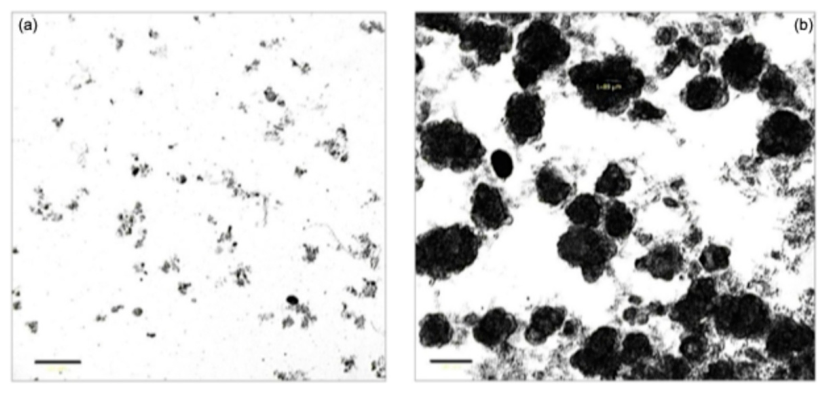
Figure 2.
Biomass properties: The primary Y-axis shows the settling properties SVI30 (ml/g MLSS), and the SVI30 to SVI5 ratio. The secondary Y-axis shows MLSS and MLVSS in the bioreactor.
Figure 2.
Biomass properties: The primary Y-axis shows the settling properties SVI30 (ml/g MLSS), and the SVI30 to SVI5 ratio. The secondary Y-axis shows MLSS and MLVSS in the bioreactor.
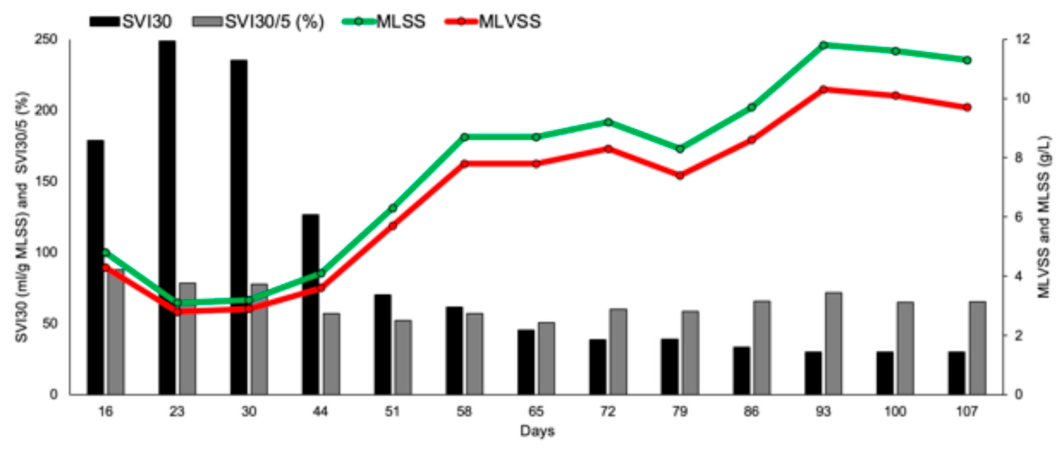
Figure 3.
Nutrient Concentrations (a) effluent COD, ammonia, nitrite, nitrate, and phosphorus concentrations, and (b) COD, ammonia, nitrate, and phosphorus removal efficiencies.
Figure 3.
Nutrient Concentrations (a) effluent COD, ammonia, nitrite, nitrate, and phosphorus concentrations, and (b) COD, ammonia, nitrate, and phosphorus removal efficiencies.
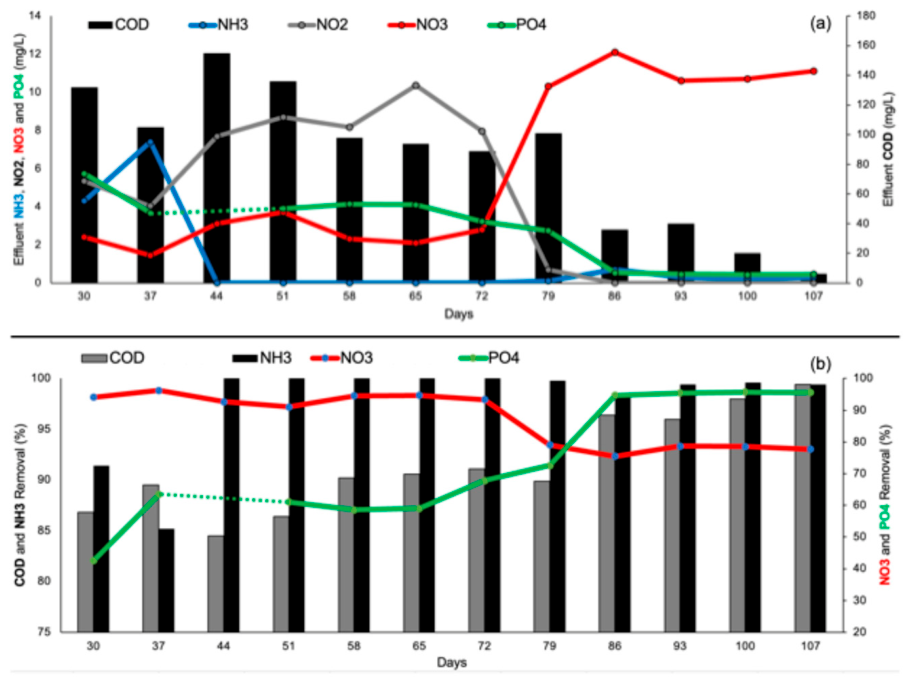
Figure 4.
Relative abundance of predominant bacteria in seed (a and c), densified activated sludge (b and d).
Figure 4.
Relative abundance of predominant bacteria in seed (a and c), densified activated sludge (b and d).
Disclaimer/Publisher’s Note: The statements, opinions and data contained in all publications are solely those of the individual author(s) and contributor(s) and not of MDPI and/or the editor(s). MDPI and/or the editor(s) disclaim responsibility for any injury to people or property resulting from any ideas, methods, instructions or products referred to in the content. |
© 2026 by the authors. Licensee MDPI, Basel, Switzerland. This article is an open access article distributed under the terms and conditions of the Creative Commons Attribution (CC BY) license (http://creativecommons.org/licenses/by/4.0/).
Copyright: This open access article is published under a Creative Commons CC BY 4.0 license, which permit the free download, distribution, and reuse, provided that the author and preprint are cited in any reuse.