

Submitted:
17 August 2026
Posted:
19 August 2026
You are already at the latest version
Abstract
In this study, the cytotoxicity of the pesticides 2,4-dichlorophenoxyacetic acid (2,4-D) and imidacloprid was evaluated in erythrocytes from different ABO blood groups by measuring partial hemoglobin release. The results showed significant differences in susceptibility to oxidative damage among blood types. In addition, the erythroprotective effect of C-phycocyanin was determined, showing up to 89% inhibition of hemolysis at 1 mg/mL, with significant differences among blood groups. To simulate physiological conditions, an in vitro digestion model was applied to obtain bioavailable fractions of the pesticides and C-phycocyanin. After digestion, the pesticides retained their ability to induce damage, whereas C-phycocyanin preserved its protective effect, although at a reduced level, reaching a maximum inhibition of 24%. At the computational level, molecular docking using AutoDock Vina was performed between the beta subunit of C-phycocyanin and 2,4-D, yielding a binding energy of –4 to –5 kcal/mol at 9 interaction sites, supported by ionic and hydrogen bonds. These results highlight the relevance of C-phycocyanin as a natural candidate for mitigating pesticide-induced cytotoxicity under physiologically relevant conditions.
Keywords:
pesticides
; oxidative stress
; phycocyanin
; in vitro digestion
; hemolysis
; antioxidant
; erythroprotective effect
1. Introduction
Pesticides are widely used in modern agriculture as effective tools for controlling weeds, insects, and other pests that reduce crop productivity. However, their extensive and often indiscriminate use has raised growing concerns about their persistence in the environment, their transfer into the food and water, and their associated adverse health effect, particularly in populations with occupational or dietary exposure [1]. This issue is relevant in developing countries where pesticide regulation and monitoring have not been adequately implemented [2].
Exposure to pesticides has been associated with a broad spectrum of adverse health effects, including cytotoxicity, neurotoxicity, respiratory disorders, endocrine disruption, reproductive dysfunction, and an increased risk of chronic diseases such as cancer and diabetes. In addition, neurological conditions such as Parkinson's and Alzheimer's disease have also been strongly linked to pesticide exposure [1]. A central mechanism underlying these effects is oxidative stress, as pesticides induce excessive generation of reactive oxygen species (ROS), which overwhelm endogenous antioxidant defenses, such as superoxide dismutase (SOD) and catalase (CAT), and disrupt cellular redox balance [3]. This imbalance leads to lipid peroxidation, protein oxidation, DNA damage, and mitochondrial dysfunction, ultimately contributing to cell death and tissue damage [4]. In erythrocytes, for example, oxidative stress compromises membrane integrity, promoting hemolysis and impairing oxygen transport [5].
Erythrocytes constitute a valuable biological model for evaluating pesticide-induced oxidative damage, as they are directly exposed to systemic circulation following absorption. At this stage, pesticide exposure can initiate cellular damage via lipid peroxidation and ROS generation, leading to membrane disruption and hemolysis [6]. In addition, erythrocyte membranes differ according to ABO blood group antigens, which are defined by specific carbohydrate moieties on the cell surface. These structural differences may influence xenobiotic interactions with the membrane and partly explain differential susceptibility to oxidative damage among blood groups [7]. Although some reports suggest that blood group-related membrane composition can modulate cellular responses to toxic agents, this aspect remains poorly explored in the context of pesticide exposure.
Many pesticides are currently in use, and most studies have focused on those already classified as harmful or whose use has been restricted. Selecting representative compounds is critical for generating toxicological evidence, particularly with those that are not necessarily restricted or specifically associated with a defined type of damage. In this study, 2,4-dichlorophenoxyacetic acid (2,4-D) and imidacloprid were selected because they are high-relevance pesticides with widespread use worldwide. 2,4-D is one of the most widely used phenoxy herbicides worldwide, and its extensive application, environmental persistence, and frequent detection in aquatic systems highlight its relevance as a model compound for studying the impacts of pesticide exposure [8,9]. Similarly, imidacloprid is one of the most extensively applied neonicotinoid insecticides and is recognized as an emerging global contaminant with documented toxic effects on non-target organisms, including humans [10]. Therefore, both compounds are suitable models for comparing erythrocyte damage.
In concomitancy with the study of toxic damage, there is increasing interest in bioactive compounds with antioxidant potential that may reduce the effects of xenobiotic-induced oxidative stress. C-phycocyanin, a water-soluble phycobiliprotein primarily derived from cyanobacteria such as Spirulina, is commonly used as a food colorant and has attracted attention due to its antioxidant, anti-inflammatory, and radical-scavenging properties [11]. Its activity has been attributed to the structure, which can donate electrons and stabilize reactive species. Several studies have demonstrated the antioxidant and protective effects of C-phycocyanin against oxidative stress in different biological systems. In erythrocyte models, C-phycocyanin has shown significant radical-scavenging activity and erythroprotective effects against peroxyl radicals, which are enhanced after in vitro digestion [12]. In vivo, C-phycocyanin has been reported to attenuate oxidative stress and inflammation in disease models such as asthma and acute myocardial infarction, where it reduces reactive oxygen species, lipid peroxidation, and pro-inflammatory markers, ultimately limiting tissue damage [13,14].
In addition, it is important to evaluate the effects of pesticides and phycocyanin under a model more closely aligned with physiological conditions. Pesticides present in food, as well as antioxidant molecules consumed in the diet, are subjected to gastrointestinal digestion before reaching systemic circulation. Therefore, the study of their bioaccessible and bioavailable fractions is essential for a more realistic approximation of their biological effects. In vitro digestion models provide a useful strategy for simulating these transformations and evaluating whether the toxic potential of pesticides and the protective activity of phycocyanin are preserved after gastrointestinal processing. Considering all this information, this study aimed to evaluate the hemolytic effects of 2,4-D and imidacloprid on erythrocytes from different ABO blood groups and to assess the erythroprotective effect of C-phycocyanin against pesticide-induced hemolysis. The study also examined the effect of simulated gastrointestinal digestion on pesticide-induced hemolysis and C-phycocyanin-mediated protection. Molecular docking was included as a complementary analysis to explore possible interactions between C-phycocyanin and 2,4-D.
2. Results
2.1. Pesticides Cytotoxicity in ABO System Erythrocytes
Figure 1 shows the hemolytic effect of increasing 2,4-D pesticide concentrations on erythrocytes from A+, O+, and B+ blood groups. In general, a trend is observed: higher pesticide concentrations are associated with greater erythrocyte hemolysis, up to 10 mg/mL, across all blood groups. However, beyond this concentration, the increase in hemolysis is not linear with concentration. At low concentrations (0.1–1.0 mg/mL), hemolysis remained relatively low, with a tendency for O+ erythrocytes to show higher susceptibility at the upper end of this range. However, from 2 mg/mL onward, the observed tendency was that A+ erythrocytes exhibited higher hemolytic response, particularly at intermediate-to-high concentrations, followed by O+ and B+. At the highest concentrations, the differences among blood groups became less pronounced.
Regarding the effect of imidacloprid, Figure 2 shows a marked concentration-dependent increase in cytotoxicity in erythrocytes from the ABO system at concentrations of 0.1–0.5 mg/mL. At the lowest concentration (0.1 mg/mL), clear differences among blood groups were observed: B+ erythrocytes exhibited the highest hemolysis, followed by A+, while O+ showed the lowest susceptibility (p < 0.05). At higher concentrations, no significant differences were found among blood type groups.
2.2. Erythroprotective Effect of Phycocyanin on ABO System Erythrocytes Exposed to Pesticides
Figure 3 shows the erythroprotective effect of C-phycocyanin at 0.5 (Figure 3a) and 1.0 mg/mL (Figure 3b) against pesticide-induced hemolysis of erythrocytes exposed to 2,4-D at 16 mg/mL, or imidacloprid at 0.2 mg/mL. At 0.5 mg/mL, C-phycocyanin exhibited a moderate protective effect under both pesticide exposures. For 2,4-D, inhibition values ranged from approximately 5% to 35%, with O+ erythrocytes showing the highest protection, followed by A+ and B+ (p < 0.05). Under imidacloprid exposure, inhibition values were more uniform, ranging from ~20% to 25%, with O+ again showing slightly higher protection compared to A+ and B+, but without statistical differences.
At 1.0 mg/mL (Figure 3b), the erythroprotective effect increased markedly across all groups. In the case of 2,4-D, inhibition values ranged from 30–46%, with A+ showing the highest protection, followed by B+ and O+, but no statistical differences were found. In contrast, under imidacloprid exposure, a substantially higher protective effect was observed, with inhibition values ranging from ~50% to 90%, where A+ erythrocytes exhibited the highest protection compared to the other blood groups (p < 0.05).
2.3. Cytotoxicity of Digested Fractions of Pesticides in ABO System Erythrocytes
2.3.1. Cytotoxicity of Digested Fractions of 2,4-D
Figure 4 shows the cytotoxic effect of the digested fractions of 2,4-D at 18 (Figure 4a) and 16 mg/mL (Figure 4b) on erythrocytes from the ABO system, expressed as percentage of erythrocyte hemolysis. At 18 mg/mL, across all blood groups, the bioaccessible fraction exhibited a markedly greater hemolytic effect (78 – 90%) than the bioavailable fraction (30 – 50%) (p < 0.05). Specifically, within the bioaccessible fraction, A+ showed a slight increase in hemolysis values, followed by B+, and then O+. In contrast, the bioavailable fraction showed a reduced cytotoxic effect. Among blood groups, O+ erythrocytes exhibited a slight increase in hemolysis in the bioavailable fraction, whereas A+ showed the lowest susceptibility.
Figure 4b) shows the cytotoxic effect of the digested fractions of 2,4-D at 16 mg/mL on erythrocytes from A+, O+, and B+ blood groups. As observed at 18 mg/mL, the bioaccessible fraction at 16 mg/mL produced high hemolysis values (75–85%), indicating substantial membrane damage across all groups (p < 0.05). In contrast, the bioavailable fraction showed a marked reduction in cytotoxicity, with hemolysis values of 15% in A+, 40% in O+, and 35% in B+. Among the blood groups, O+ erythrocytes again exhibited the highest susceptibility in the bioavailable fraction, while A+ showed the lowest hemolysis. Compared with the 18 mg/mL treatments, a slight decrease in overall cytotoxicity was evident at 16 mg/mL, particularly in the bioavailable fraction, where hemolysis values were reduced. Despite this reduction, the bioavailable fraction retained a considerable capacity to induce erythrocyte damage.
2.3.2. Cytotoxicity of Digested Fractions of Imidacloprid
Figure 5 shows the cytotoxic effect of the digested fractions of imidacloprid at 0.3 mg/mL (Figure 5a) and 0.2 mg/mL (Figure 5b) on erythrocytes from A+, B+, and O+ blood groups. At 0.3 mg/mL, the bioaccessible fraction induced near-complete hemolysis in all blood groups, indicating severe membrane damage. In contrast, the bioavailable fraction exhibited a markedly reduced cytotoxic effect, with hemolysis values of ~18–20% in A+, 5% in B+, and 22–25% in O+. At 0.2 mg/mL, a similar pattern was observed. The bioaccessible fraction again induced high hemolysis (~85–98%) across all blood groups, although slightly lower than at 0.3 mg/mL. The bioavailable fraction maintained a reduced cytotoxic effect, with hemolysis values of approximately 5–25% in all blood groups.
2.4. Erythroprotective Effect of Digested Phycocyanin Fractions on ABO System Erythrocytes Exposed to Pesticides
2.4.1. Erythroprotective Effect of Digested Fractions of Phycocyanin on ABO System Erythrocytes Exposed to 2,4-D
Figure 6 shows the erythroprotective effect of digested fractions of C-phycocyanin at 1 mg/mL and 2 mg/mL on ABO erythrocytes exposed to 2,4-D at different concentrations, 18 mg/mL and 16 mg/mL, respectively. At 1 mg/mL (Figure 6a), the erythroprotective effect was minimal across all blood groups. The bioaccessible fraction showed significantly higher hemolysis inhibition than the bioavailable fraction. Overall, B+ erythrocytes showed the lowest protective response, while A+ exhibited the highest inhibition under these conditions.
The erythroprotective effect of phycocyanin at 2 mg/mL is shown in Figure 6b. The bioaccessible fraction showed significantly higher hemolysis inhibition than the bioavailable fraction in O+ and B+ groups. Overall, A+ erythrocytes showed a stronger protective response than B+ and O+ erythrocytes in bioaccessible and bioavailable fractions compared to the rest of the blood groups. When comparing both concentrations, a clear concentration-dependent increase in erythroprotection was observed. At 1 mg/mL, the protective effect was minor, whereas at 2 mg/mL, inhibition increased across all blood groups. Despite this increase, the bioaccessible fraction consistently exhibited greater protective capacity than the bioavailable fraction.
2.4.2. Erythroprotective Effect of Digested Fractions of Phycocyanin on ABO System Erythrocytes Exposed to Imidacloprid
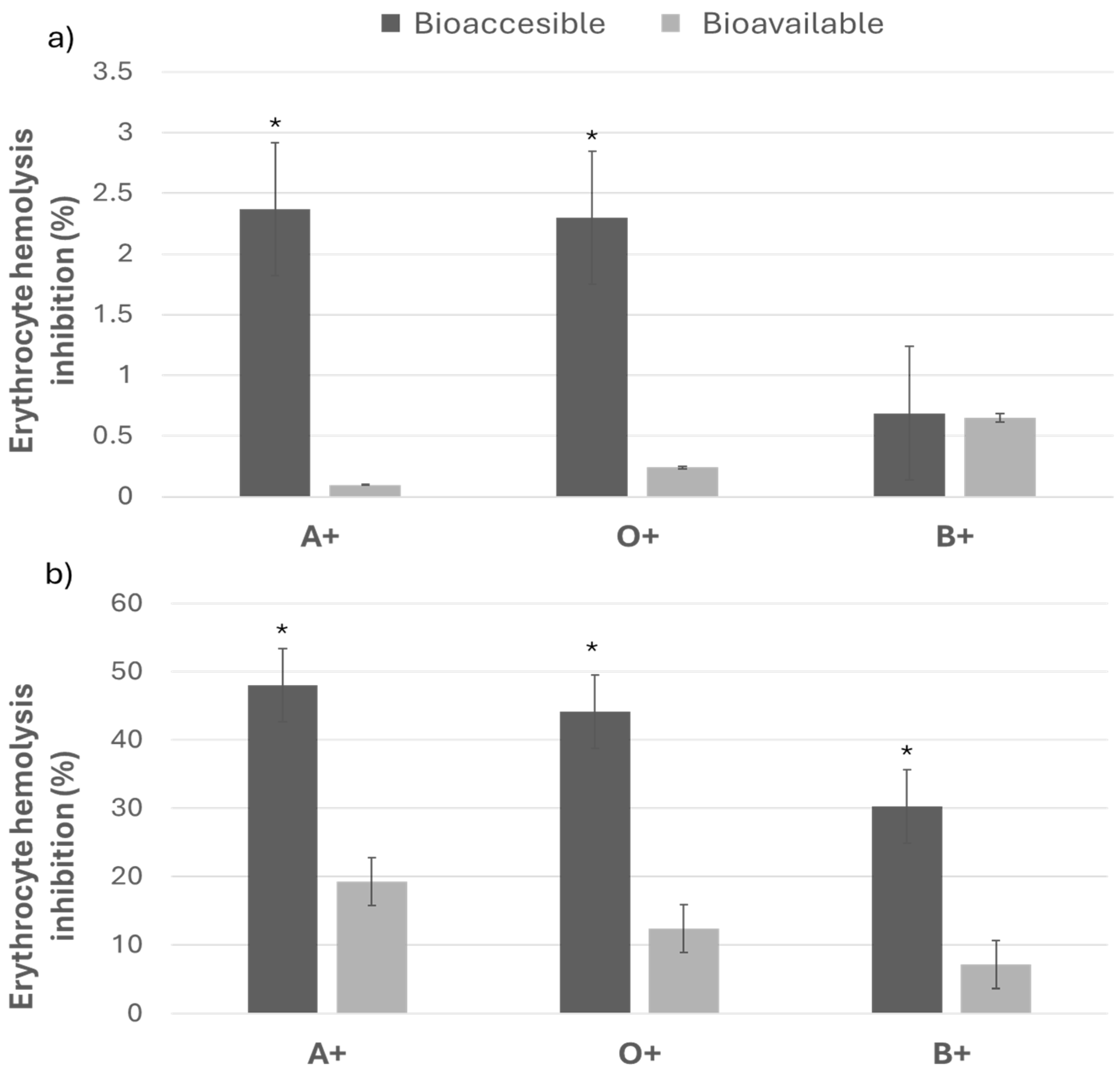
Figure 7a shows the erythroprotective effect of digested phycocyanin at 1 mg/mL on erythrocytes exposed to imidacloprid (0.3 mg/mL). Overall, the protective effect was minimal across all blood groups. The bioaccessible fraction exhibited slightly higher inhibition values compared to the bioavailable fraction, with approximately ~2.3–2.4% inhibition in A+ and O+, and ~0.7% in B+. In contrast, the bioavailable fraction showed low inhibition (<0.3%) in all groups. Statistically significant differences between digestion fractions were observed in A+ and O+ (p < 0.05), while B+ showed no clear difference between fractions. These results indicate a very limited erythroprotective effect of C-phycocyanin at this concentration after digestion.
In contrast, Figure 7b shows that increasing the phycocyanin concentration to 2 mg/mL and reducing pesticide concentration markedly enhanced its erythroprotective effect against imidacloprid (0.2 mg/mL) compared to 1 mg/mL in both fractions. The bioaccessible fraction exhibited substantial inhibition, with values of approximately 30-48%, and the bioavailable fraction showed inhibition values of 8-20%. Statistically significant differences in hemolysis inhibition values were observed across all blood groups, with higher values in the bioaccessible fraction (p < 0.05).
2.5. Unbiased Molecular Docking of Phycocyanin with 2,4-D
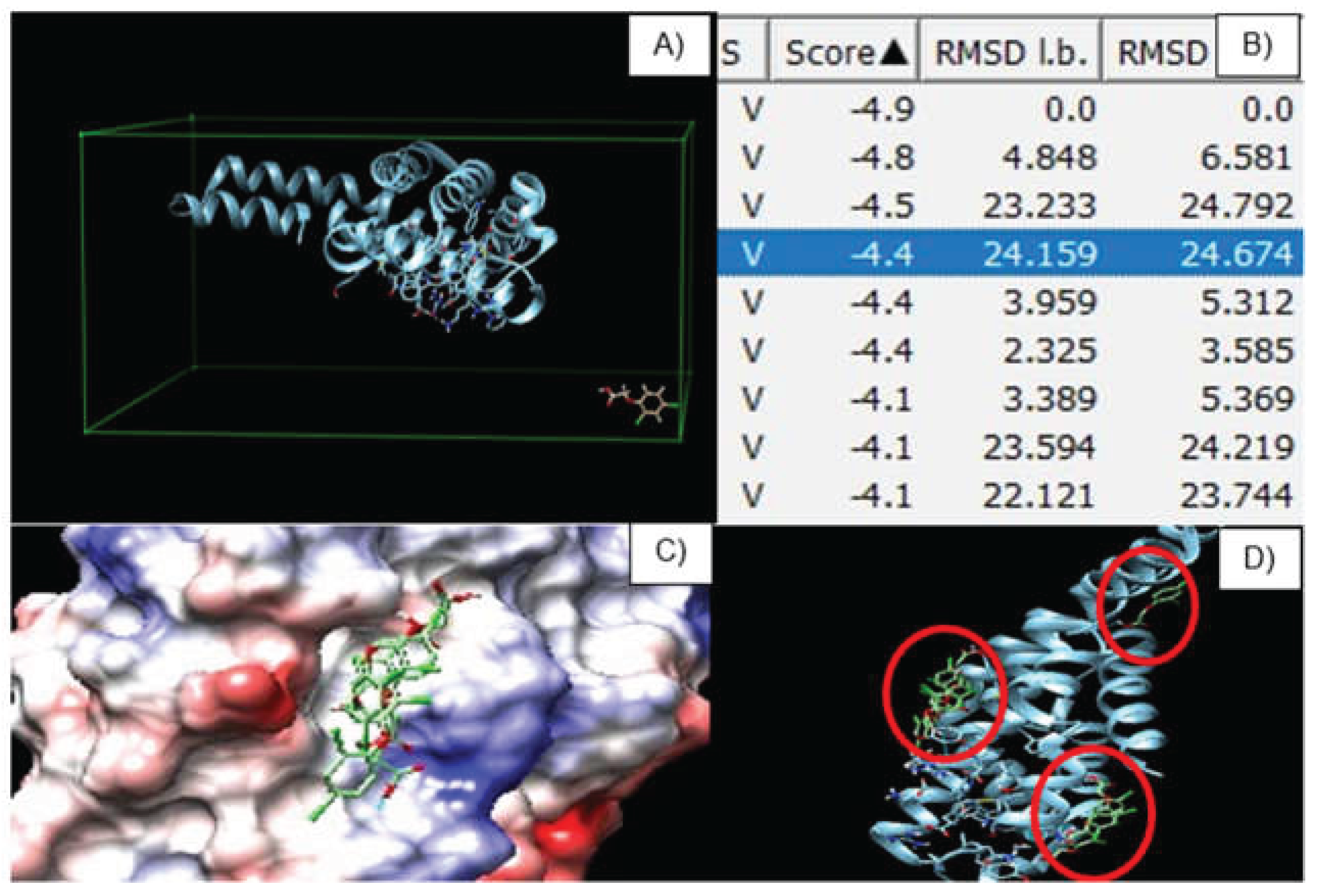
The molecular docking analysis between 2,4-D and the β-subunit of phycocyanin is shown in Figure 14. The docking simulations generated multiple binding poses distributed across the protein surface, with binding affinity scores ranging from approximately –4.1 to –4.9 kcal/mol (Figure 14B), indicating low-to-moderate interaction strength. As shown in Figure 14A, the ligand was able to explore a broad region of the protein, suggesting the absence of a highly specific binding pocket. The RMSD values varied considerably among poses, reflecting conformational diversity and supporting the presence of multiple potential interaction sites rather than a single dominant binding mode.
Surface visualization (Figure 14C) revealed that 2,4-D preferentially interacts with polar and charged regions of the β-subunit, consistent with its partially ionized structure under physiological conditions. The ligand appears to orient along shallow surface grooves, where electrostatic complementarity may facilitate transient interactions. Furthermore, as highlighted in Figure 14D, several potential interaction sites were identified across the protein structure (circled regions), indicating that 2,4-D can associate with multiple surface-exposed domains. These interactions are likely mediated by hydrogen bonding and ionic interactions with amino acid residues such as lysine, arginine, and histidine, rather than by strong hydrophobic or deeply buried binding.
Figure 8.
Molecular docking of 2,4-dichlorophenoxyacetic acid with the beta subunit of phycocyanin.
3. Discussion
The present study reveals that both 2,4-D and imidacloprid induce erythrocyte damage in a concentration-dependent manner; however, their cytotoxic profiles may differ markedly. The cytotoxicity of the pesticides was evaluated in the context of their occurrence in food, where maximum residue limits (MRLs) reported in the Codex Alimentarius range from 0.15 to 100 mg/kg, depending on the commodity. Although these values provide a reference for exposure, they cannot be directly extrapolated to ex vivo systems. Based on preliminary screening, concentration ranges of 2–20 mg/mL for 2,4-D and 0.1–0.5 mg/mL for imidacloprid were selected to capture the full spectrum of cytotoxic responses, from sublethal effects to maximal membrane disruption.
For 2,4-D, hemolysis increased with concentration up to approximately 10 mg/mL, after which the response deviated from linearity. Such behavior suggests a hormetic-like response, a frequently described effect for stress-inducing xenobiotics that interact with cellular systems through multiple competing mechanisms, including oxidative stress induction, membrane partitioning, and potential buffering by extracellular or residual proteins [15]. The study by Mahmoudinia et al. [16] reported that treatment with 2,4-D caused a hormetic response in the viability and growth rate of human dental pulp stem cells. This behavior is very common in plant- and drug-based studies. Previous studies have shown that 2,4-D exerts cytotoxic effects on human erythrocytes by inducing concentration-dependent oxidative hemolysis and eryptosis. This damage has been associated with increased release of LDH, AST, and K⁺, enhanced ROS production, elevated intracellular Ca²⁺ levels, reduced acetylcholinesterase activity, and phosphatidylserine externalization. These findings suggest that 2,4-D-induced erythrocyte damage involves not only membrane disruption, but also pro-eryptotic signaling mechanisms, supporting its relevance as a pesticide capable of altering erythrocyte integrity [17].
In contrast, imidacloprid exhibited a pronounced, concentration-dependent cytotoxic profile, with a rapid transition from moderate to near-complete hemolysis within a narrow concentration range. The imidacloprid-induced damage showed that, at 0.3 mg/mL and above, the sample reached saturation, resulting in approximately 90% hemolysis in subsequent treatments. This behavior suggests a more acute oxidative mechanism, likely associated with rapid ROS generation and early disruption of membrane integrity. Imidacloprid has been shown to induce mitochondrial dysfunction and oxidative stress in human neuroblastoma cells, characterized by ATP depletion, increased ROS production, DNA damage, and apoptosis, supporting the role of oxidative mechanisms in its cytotoxic effects [18]. Neonicotinoid pesticides have relatively low mammalian toxicity and low persistence; however, some studies suggest that continuous exposure to neonicotinoid pesticides can lead to bioaccumulation, which in turn may result in additional adverse effects beyond acute intoxication. Such exposure has been associated with deterioration of the central nervous system and diabetes in non-target mammals [19,20,21].
The differences observed among ABO blood groups in pesticide-induced damage may be associated with variations in erythrocyte membrane surface properties. Specific carbohydrate residues define ABO antigens, and these structural differences can influence surface properties, including charge distribution, steric accessibility, and interactions with external compounds [22]. However, this study shows differential hemolytic responses among blood groups, but it does not directly measure membrane composition, pesticide binding to erythrocytes, lipid peroxidation, or intracellular oxidative markers. Therefore, the results support the presence of blood group-associated differences in hemolysis under the experimental conditions evaluated, but further studies are needed to confirm the biochemical basis of these differences.
After establishing the cytotoxic profiles of the selected pesticides, representative concentrations were chosen to evaluate the erythropoietic function of C-phycocyanin: 16 mg/mL for 2,4-D and 0.2 mg/mL for imidacloprid. Higher concentrations were not considered because the extensive hemolysis observed under those conditions limited the ability to assess phycocyanin's erythroprotective effect accurately. The results demonstrate that the erythroprotective effect of phycocyanin is strongly influenced by concentration, pesticide type, and blood group. A clear concentration-dependent increase in erythroprotection, with phycocyanin at 1.0 mg/mL significantly enhancing inhibition of hemolysis compared to 0.5 mg/mL. Additionally, the magnitude of protection was pesticide-dependent, being markedly higher against imidacloprid-induced damage than 2,4-D.
Differences in erythroprotection were observed across blood groups, indicating that the protective response is modulated by membrane-associated factors linked to the ABO system. Specifically, the efficacy of phycocyanin against pesticide-induced oxidative damage varied by erythrocyte phenotype. This variation is attributed to the structural heterogeneity of membrane carbohydrates that define each blood group: group O expresses the core H antigen, group A incorporates N-acetylgalactosamine, and group B incorporates galactose. These antigenic differences alter the cell surface matrix, polarity, and binding affinity, thereby influencing not only the spatial orientation and docking of phycocyanin on the membrane but also the propagation rate of pesticide-induced oxidative stress.
The erythroprotective effect of phycocyanin is attributed to its potent antioxidant activity, which is based on its amino acid residues and chromophore content. These features may donate an electron through their functional groups or via resonance due to the conjugated double bonds present in the chromophore phycocyanobilin [23]. The erythroprotective effect of phycocyanin may therefore be due to these characteristics, since 2,4-D is considered highly reactive and is thus prone to sequestration because of the size of phycocyanin and its abundant chromophores. This point should be considered in relation to the interaction between the pesticide and the erythrocyte membrane, since the size of phycocyanin (220 kDa) and its heterogeneity do not guarantee uniform interaction [23].
In vitro digestion was performed to evaluate the cytotoxicity of the selected pesticides under physiologically relevant conditions simulating gastrointestinal processing and subsequent absorption. This allowed comparison between direct erythrocyte exposure and post-digestion fractions. The bioaccessible fraction was defined as the material subjected to the three digestive phases that remained within the dialysis membrane, whereas the bioavailable fraction corresponded to the portion that diffused across the membrane and represented the fraction potentially available for systemic circulation.
The results from in vitro digestion reveal a consistent, biologically relevant pattern: the bioaccessible fractions of both 2,4-D and imidacloprid exhibit markedly higher cytotoxicity than their bioavailable counterparts, regardless of concentration or blood group. This suggests that gastrointestinal processing does not completely detoxify these compounds. For 2,4-D, the high hemolytic activity observed in the bioaccessible fraction (75–90%) indicates that a substantial proportion of the compound remains reactive under digestive conditions. This behavior is consistent with the physicochemical properties of 2,4-D, which exist predominantly as the anion at physiological pH, thereby limiting its transformation during digestion and allowing it to retain its oxidative and membrane-disruptive potential. In contrast, the bioavailable fraction shows a significant reduction in cytotoxicity, suggesting that intestinal barriers, simulated here by the dialysis membrane, effectively limit the amount of toxic compound reaching systemic circulation. However, this reduction is only partial, as hemolysis values up to ~50% indicate that clinically relevant damage may still occur after absorption. Lower concentrations of 2,4-D reduce the bioavailable fraction because of the efficiency of the physical barriers involved in intestinal absorption. This, together with factors such as polarity, lipophilicity, and molecular weight, hinders this process.
Our results are in accordance with Cermeño Olmos [24], where the bioaccessible fraction was less biocompatible with erythrocytes than the bioavailable fraction. The bioavailable fraction clearly retained the ability to generate damage upon interaction with erythrocytes, even though its concentration was reduced. Cermeño Olmos [24] reported that under critical agricultural conditions, consuming vegetables containing trace amounts of pesticides can result in detectable systemic exposure. However, the author emphasized that, for most pesticides, digestive enzymes do not significantly alter xenobiotic structure, but they do affect the food matrix, thereby modifying gastrointestinal absorption. Determining cytotoxic potential after digestion is essential for understanding damage mechanisms, since 2,4-D, due to its ionizable carboxyl group at physiological pH, circulates more freely in the organism and is excreted through the renal route via OAT1 and OAT2 transporters. This favors systemic interactions, promoting mitochondrial interactions and ROS generation, as well as possible alterations in the thyroid endocrine system [25,26].
A similar trend was observed for imidacloprid, although with even more pronounced effects. The near-complete hemolysis induced by the bioaccessible fraction (>90%) suggests extreme membrane susceptibility under direct exposure conditions, likely driven by oxidative stress and interactions at the lipid bilayer interface. Despite this, the bioavailable fraction showed a substantial decrease in cytotoxicity (5–25%), reinforcing the role of gastrointestinal processes in modulating exposure. Nevertheless, the persistence of measurable hemolysis in the bioavailable fraction indicates that imidacloprid or its metabolites can still reach the bloodstream in biologically active forms, consistent with its known rapid absorption.
As with 2,4-D, the fraction of imidacloprid absorbed into the gastrointestinal tract may produce adverse health effects beyond direct cellular damage. In the case of imidacloprid, once inside the body, it is mostly metabolized in the liver through cytochrome P450 enzymes, generating metabolites such as 5-hydroxy-imidacloprid, imidacloprid-olefin, and, of relevance, desnitro-imidacloprid, which has affinity for mammalian nicotinic acetylcholine receptors and causes indirect neurotoxicity. In addition to the damage caused by the unmetabolized molecule itself, this metabolism increases ROS generation, favoring activation of the Nrf2 and NF-κB signaling pathways and promoting a sustained inflammatory response, lipid peroxidation, and an overall imbalance in the antioxidant system. According to some authors, continuous exposure to this pesticide amplifies systemic oxidative damage and predisposes the organism to metabolic alterations and endothelial dysfunction [18,27,28,29].
The erythroprotective capacity of phycocyanin after in vitro digestion is influenced by concentration, digestion state, and the nature of pesticide-induced damage. The results demonstrate that digestion attenuates its activity, particularly in the bioavailable fraction, although this effect can be partially overcome at higher or lower concentrations. A consistent observation across all conditions is that the bioaccessible fraction exhibits greater protective activity than the bioavailable fraction.
At 1 mg/mL, phycocyanin exhibited minimal protection against 2,4-D, with only a slight inhibition. This limited efficacy can be attributed to dilution, which decreases the concentration of intact phycocyanin during digestion, and the high cytotoxic load imposed by 2,4-D, which likely exceeds the antioxidant capacity of the resulting fragments. In addition, proteolytic degradation disrupts the native quaternary structure of phycocyanin (~480 kDa), reducing the cooperative interactions among phycocyanobilin chromophores that are essential for efficient radical scavenging. Based on these results, the phycocyanin concentration increased, and the pesticide exposure concentration decreased in subsequent determinations.
Increasing the concentration to 2 mg/mL significantly enhanced erythroprotection, particularly under reduced 2,4-D exposure (16 mg/mL), indicating a concentration-dependent restoration of antioxidant activity. This effect is not solely due to increased availability but also to structural transformation during digestion. Enzymatic hydrolysis generates smaller peptide fragments, increasing the reactive surface area and exposing chromophoric groups, thereby partially compensating for the loss of the native structure. As a result, measurable protection is retained despite dilution effects [29,30]. Thus, increasing the phycocyanin concentration yielded a greater erythroprotective effect. However, the protein's potential could be exploited more effectively with more aggressive hydrolysis methods, which might also facilitate intestinal absorption.
Importantly, the erythroprotective response differed markedly between pesticides. At higher imidacloprid concentrations, protection was negligible across both fractions, indicating that excessive oxidative damage can overwhelm the antioxidant system. However, when pesticide exposure was reduced, and phycocyanin concentration increased, inhibition values rose substantially (up to ~50% in the bioaccessible fraction and ~20% in the bioavailable fraction), demonstrating that effective protection is achievable under moderated stress conditions.
The greater efficacy observed against imidacloprid compared to 2,4-D suggests distinct mechanisms of toxicity. Imidacloprid-induced damage appears to be predominantly oxidative and membrane-associated, thereby making it more susceptible to scavenging by phycocyanin-derived fragments and to membrane stabilization. In contrast, 2,4-D involves a combination of oxidative stress and anion-dependent or proteotropic interactions, which are less effectively mitigated by antioxidant activity alone, resulting in comparatively lower protection [30,31,32].
Blood group-dependent variability further supports the role of membrane composition in modulating both damage and protection. Differences in glycosylation patterns among ABO groups likely influence membrane polarity, xenobiotic interactions, and the accessibility of antioxidant fragments, contributing to the observed variability in erythroprotective response. Although no consistent blood group–dependent trend was observed in the erythroprotective response, certain patterns recurred under specific conditions. At 16 mg/mL of 2,4-D, A+ erythrocytes exhibited slightly higher hemolysis compared to B+ and O+ in the bioaccessible fraction, and phycocyanin showed greater protective effects in A+ within the same fraction across both tested concentrations. A similar behavior was observed under imidacloprid exposure (0.2 mg/mL) at a phycocyanin concentration of 2 mg/mL, where A+ erythrocytes again showed relatively higher responsiveness to antioxidant protection. Although A+ erythrocytes exhibited higher susceptibility to pesticide-induced hemolysis under certain conditions, they also showed a relatively greater erythroprotective response to phycocyanin. This apparent paradox may reflect greater sensitivity to oxidative modulation, with membranes more prone to damage also being more responsive to antioxidant intervention. However, this relationship was not consistent across all conditions, indicating that susceptibility and protection are not directly coupled but rather depend on the balance between oxidative stress and antioxidant capacity.
Molecar docking revealed nine favorable interaction sites between the beta subunit of C-phycocyanin and the pesticide 2,4-D used as a ligand (Figure 8). This docking yielded values of –4 to –5 kcal/mol, suggesting moderate to low affinity (Figure 8B). These values can be interpreted more as transient contacts arising from steric hindrance than as evidence of a specific binding site. It is proposed that 2,4-D, which is in an anionic form at physiological pH, could form hydrogen bonds or ionic pairs with surface residues such as lysine, arginine, or histidine, and could even weakly stack with the tetrapyrrolic ring of the phycocyanobilin chromophore [30].
Because 2,4-D does not require a protein residue or enzymatic activation to damage cell membranes, its mechanism of action may involve direct oxidation of cellular structural components. Even so, due to the molecule's complexity, these weak interactions may mitigate damage, and phycocyanin residues may neutralize pesticide-induced ROS through ligand scavenging. This mechanism increases its viability at higher concentrations [31,32,33].
The score values, RMSD l.b., and docking positions do not suggest a direct relationship between ligand interactions and the protein's chromophoric sites, either in terms of affinity or biological function (Figure 8C). Since phycocyanin does not have a classical active site, its main points of interest are Cys82 and Cys153 in the beta chain, which anchor the chromophores to the protein scaffold (Figure 8D). The interactions shown in the docking results more strongly support the presence of low-steric-hindrance grooves that generate moderate attraction, owing to amino acid residues such as Lys, Arg, and His, which can form hydrogen bonds or ionic interactions [34].
4. Materials and Methods
4.1. Preparation for Erythrocyte Suspensions
Red blood cell (RBC) samples from A, B, and O blood groups with the Rh-positive factor were collected by venipuncture in EDTA tubes. Inclusion and exclusion criteria are detailed in the informed consent provided to each volunteer, in accordance with the institutional protocol and ethical approval. This study was approved by the General Hospital of the State of Sonora (CI 2023-47), and full details are provided in Appendix A. For sample preparation, blood was randomly selected from a pool collected from various donors. Prepared suspensions remained viable for up to 4 days; however, they were used on the same day of preparation or the following day to minimize spontaneous hemolysis. This procedure was applied to all blood types. A 2% erythrocyte suspension was prepared for each blood group by washing the cells with 0.9% physiological saline until the plasma was completely removed by careful aspiration using a micropipette. For this, 3000 µL of physiological saline and 1000 µL of whole blood were added to Falcon tubes, gently inverted to homogenize, and centrifuged at 252 × g for 10 min. The supernatant was discarded, and the washing step was repeated three times, or until the supernatant became clear, yielding an erythrocyte pellet free of plasma proteins and platelets. Finally, 100 µL of washed erythrocytes were resuspended in 4900 µL of physiological saline to obtain 5 mL of a 2% erythrocyte suspension.
4.2. Evaluation of Cytotoxicity of Pesticides
The pesticides used in this study were commercial formulations ready for direct application or dilution in water, depending on use. The 2,4-D formulation was Agromina 480 (Mexico), and the imidacloprid formulation was Macho (Mexico). A volume of 100 µL of erythrocyte suspension was mixed with 100 µL of 2,4-D (herbicide) at concentrations ranging from 2 to 20 mg/mL. Similarly, 100 µL of erythrocyte suspension was mixed with 100 µL of imidacloprid (insecticide) at concentrations of 0.1 to 0.5 mg/mL. The positive control consisted of 100 µL of 10% Triton X + 100 µL of erythrocyte suspension, as it completely disrupts the cell membrane, while the negative control consisted of untreated erythrocyte suspension. Samples were incubated in a thermostatic water bath (BIOBASE series, SKU 56202) at 37 °C and 40 rpm for 3 h, then centrifuged at 252 × g for 10 min. Subsequently, 300 µL of the supernatant was transferred into microplate wells (Thermo Scientific, Multiskan SkyHigh, USA). All samples were analyzed in triplicate at 540 nm. Cytotoxicity was determined by calculating the percentage of hemolysis using Equation 1:
Equation 1
where Aₘ is the absorbance of the pesticide-treated samples, Ac+ is the absorbance of the positive control, and Ac- is the absorbance of the negative control.
4.3. Erythroprotective Effect of Phycocyanin
Phycocyanin was used to evaluate its protective effect against erythrocyte damage induced by pesticide-generated free radicals. For this purpose, 100 µL of 2% erythrocyte suspension was mixed with 100 µL of phycocyanin at concentrations ranging from 0.05 to 1 mg/mL, and 100 µL of each pesticide solution at selected concentrations (16 and 18 mg/mL for 2,4-D or 0.2 and 0.3 mg/mL for imidacloprid). The positive control consisted of pesticide concentrations capable of inducing >50% hemolysis (as oxidative stress inducers) plus erythrocyte suspension, while the negative control consisted of untreated erythrocytes. Samples were incubated at 37 °C and 40 rpm for 3 h, then centrifuged at 252 × g for 10 min. Then, 300 µL of the supernatant was transferred into microplate wells and analyzed in triplicate at 540 nm. The erythroprotective effect was expressed as the percentage inhibition of hemolysis, calculated using Equation 2:
Equation 2
where Aₘ is the sample absorbance, Ac+ is the positive control, and Ac- is the negative control [35].
4.4. In Vitro Digestion of Pesticides and Phycocyanin
In vitro digestion was performed for 2,4-D (16 and 18 mg/mL), imidacloprid (0.2 and 0.3 mg/mL), and phycocyanin (1 and 2 mg/mL), analyzing both bioaccessible (fraction available for intestinal absorption) and bioavailable fractions (fraction that crosses the intestinal barrier into circulation), following the methodology of Rodríguez-Roque et al. [36], with some modifications. Samples were subjected to sequential digestion with α-amylase (pH 7, 100 U/mL) for 2 min at 37 °C, followed by acidification to pH 2 using 6 M HCl. Then, 1 mL of pepsin (315 U/mL, Sigma P7012-5G) and 1 mL of distilled water were added, and the mixture was incubated at 37 °C and 80 rpm for 2 h. Afterward, samples were neutralized to pH 7 with 1.25 M NaHCO₃, then 700 µL of pancreatin (4 mg/mL, Sigma P1750-100G) was added. The mixtures were incubated at 37 °C and 80 rpm for 4 h in the presence of a dialysis membrane (12,000 kDa, Sigma), thereby separating the bioaccessible fraction (retained inside the membrane) from the bioavailable fraction (diffused through the membrane). Both fractions were then centrifuged at 800 × g for 10 min at 4 °C, and hemolysis (pesticides) or inhibition of hemolysis (phycocyanin) was determined.
4.5. Molecular Docking of 2,4-D
Crystal structures of the β-subunit of C-phycocyanin were obtained from the Protein Data Bank (PDB). As isolated subunits were not available, the complete C-phycocyanin structure (PDB ID: 1GH0) was downloaded, and α and β chains were separated using ChimeraX. Structures were prepared by removing ligands, ions, and non-essential water molecules. Polar hydrogens were added, and partial charges were assigned. The processed structures were saved in .pdbqt format for docking. For the ligand preparation, the molecular structure of 2,4-D (CID: 1486) was obtained from PubChem in .SDF format and converted to .pdb format. Docking simulations were performed using ChimeraX as the interface and AutoDock Vina as the docking engine. A grid box covering the protein surface was defined. Each ligand was docked independently to the β-subunit, generating at least nine binding poses per compound. Binding energies (kcal/mol) were analyzed to select the most stable conformations. The resulting complexes were visualized in ChimeraX to identify key interactions, including hydrogen bonds, hydrophobic interactions, and ionic interactions. Interacting residues were identified and documented, and 3D visualizations were generated highlighting the most relevant binding interactions.
4.6. Statistical Analysis
A completely randomized experimental design was employed. Data was analyzed using one-way analysis of variance (ANOVA) to evaluate the influence of factors such as pesticide type, concentration, digestion fraction, and blood group. When significant effects were detected, Tukey's multiple comparison test was used as a post hoc analysis to identify pairwise differences among groups. Differences were considered statistically significant at p < 0.05. All statistical analyses were performed using Statgraphics Centurion XV (StatPoint Technologies Inc., Warrenton, VA, USA).
5. Conclusions
This study showed that pesticide-induced erythrocyte damage is influenced by compound type, concentration, and blood group and that it remains significant even after in vitro digestion. For 2,4-D, A+ erythrocytes exhibited the highest susceptibility, followed by B+ and O+, whereas for imidacloprid, B+ erythrocytes were the most affected, followed by A+ and O+. In vitro digestion further showed that both the bioaccessible and bioavailable fractions of the pesticides retained their ability to induce erythrocyte damage, indicating that gastrointestinal processing does not fully eliminate pesticide-induced damage. C-phycocyanin demonstrated a concentration-dependent erythroprotective effect against pesticide-induced damage and was modulated by digestion, with greater activity observed in the bioaccessible fraction than in the bioavailable fraction. Although its efficacy varied among blood groups, phycocyanin consistently preserved its protective capacity across all conditions, albeit with reduced efficiency after digestion. Notably, its protective efficacy was higher against imidacloprid than 2,4-D. Molecular docking analysis suggested potential interactions between C-phycocyanin and 2,4-D in the polar regions of the β-subunit. These findings indicate that C-phycocyanin may be a promising natural antioxidant capable of mitigating pesticide-induced oxidative damage in biological systems. Nonetheless, further studies are required to validate these effects under more physiologically relevant conditions and to better elucidate the underlying molecular mechanisms.
Author Contributions
Formal analysis, J.M.M-B, Methodology A.A.L.-Z. and O.M.-C., Conceptualization A.B.-H. and S.R.-C., Validation C.L.D.-T.-S and A.T.B.-M., Investigation J.R.R.-E. and J.J.O.-P.). All authors have read and agreed to the published version of the manuscript.
Funding
The work was supported by the project CBF2023-2024-3196 from Secretaría de Ciencia, Humanidades, Tecnología e Innovación (SECIHTI).
Institutional Review Board Statement
This research was conducted in accordance with the Declaration of Helsinki of 1975. The work was supported by the clinical laboratory which holds accreditation from ISO-IEC 17025 (NMX-EC-17025) and ISO 15189, as estab-lished by the technical committee ISO/TC 212 (Clinical Laboratory Testing and In Vitro Diagnostic Systems), with reference to ISO/IEC 17025 and ISO 9001 standards.
Ethical approval
this study was approved by General Hospital of Hermosillo, Sonora, Mexico with the number project CI 2023-47.
Informed Consent Statement
Written informed consent has been obtained from the participants to publish this paper. Therefore, all participants provided their informed consent before participating in this study.
Data Availability Statement
The data supporting the findings of this research are pro-vided within this article. Additional details can be obtained from the corresponding authors upon request.
Acknowledgments
The authors are pleased to acknowledge Secretaría de Ciencia, Humanidades, Tecnología e Innovación (SECIHTI) for awarding Jesús Martín Muñoz Bautista a master’s scholar- ship.
Conflicts of Interest
The authors declare that there are no conflicts of interest.
Abbreviations
| 2,4-D – 2,4-dichlorophenoxyacetic acid |
| ABO – ABO blood group system |
| Rh – Rhesus factor |
| A+ / B+ / O+ – Blood types A, B, and O with positive Rh factor |
| RBC – Red blood cells |
| SOD – Superoxide dismutase |
| CAT – Catalase |
| ROS – Reactive oxygen species |
| MRLs – Maximum residue limits |
| OAT1 / OAT2 – Organic anion transporters 1 and 2 |
| Nrf2 – Nuclear factor erythroid 2–related factor 2 |
| NF-κB – Nuclear factor kappa B |
| PDB – Protein Data Bank |
| CID – Compound Identifier (PubChem) |
| SDF – Structure Data File |
| pdb / pdbqt – Protein Data Bank file formats (standard and AutoDock format) |
| RMSD – Root mean square deviation |
| kcal/mol – Kilocalories per mole |
| MWCO – Molecular weight cut-off |
Appendix A
INFORMED CONSENT FOR PARTICIPATION IN THE PROJECT:
"Protective Effect of Bioavailable Phycocyanin against Pesticide-Induced Oxidative Damage in ABO Blood Group Erythrocytes"
You are invited to participate in this research study conducted by the University of Sonora, Department of Graduate Research in Food (DIPA), located in Building 5H, upper floor, Biotechnology Laboratory.
The objective of this study is to obtain peripheral blood samples for use of erythrocyte membranes as models of membranes with different surface antigens, to evaluate the effect of pesticide exposure on the expression of genes associated with oxidative stress in peripheral blood, and to assess the erythroprotective effect of phycocyanin. The results may be useful in the health field for the prevention of non-communicable chronic diseases (NCDs), thereby generating more natural chemopreventive alternatives, in accordance with WHO recommendations that promote the use of natural resources in the chemoprevention of chronic-degenerative diseases with high social impact.
Participation in this study is voluntary. To participate, you must meet the following criteria:
- Age between 20 and 40 years
- Body weight between 50 and 80 kg
- No alcohol consumption at least 48 hours prior to sampling
- No frequent smoking habits
- No use of drugs or narcotics
- No bacterial, viral, or fungal infections
- No chronic blood-related diseases
The purpose of this study is to determine the effect of pesticide exposure on the expression of genes associated with oxidative stress in peripheral blood and the erythroprotective effect of phycocyanin.
Free radicals (FR) are highly reactive molecules that can induce oxidative hemolysis in human erythrocytes, causing lipid peroxidation and degradation of the plasma membrane. These effects may be triggered by direct or indirect exposure to pesticides. To evaluate oxidative stress inhibition, an ex vivo anti-hemolytic activity assay will be used. Hemolysis will be induced using the pesticides 2,4-D and imidacloprid. The protective effect of pigments on human erythrocytes is achieved by inhibiting pesticide-induced oxidative damage.
A red blood cell suspension is required for this analysis, which will be obtained by venipuncture.
Venous Blood Collection Procedure
a) The volunteer must be physically present at the Biotechnology Laboratory of the University of Sonora.b) The volunteer will be assigned to a designated area for sample collection.c) The venipuncture site will be sanitized and disinfected using antiseptic solutions.d) The healthcare professional will perform proper hand hygiene using an alcohol-based solution for 30 seconds prior to the procedure.e) The volunteer will be comfortably seated while the procedure is explained.f) Procedure details:
- Venipuncture will be performed on a visible or palpable vein using a vacutainer system. The biological sample will be collected in a sterile tube containing anticoagulant (EDTA).
- The puncture site will be cleaned with an antiseptic swab using downward strokes, ensuring proper coverage and avoiding contamination.
- A tourniquet will be applied to the upper arm to facilitate venous filling.
- A sterile needle will be inserted transcutaneously into the vein.
- Blood will be collected into an EDTA-containing tube.
- The tourniquet will be released.
- The collection tube and needle will be carefully removed.
- The puncture site will be covered with a bandage to stop bleeding.
g) After the procedure, the needle will be disposed of in a red sharps container designated for biohazardous waste (RPBI).h) The sample will be processed immediately after collection.
All information provided in this study will be strictly confidential and used exclusively for scientific purposes. Participation is completely voluntary and involves no cost.
For further information, you may contact the principal investigator:
Dr. Carmen Lizette Del Toro SánchezPhone: +52 662 259 2207 ext. 4891Mobile: +52 662 470 9179Hours: 9:00 a.m. – 3:00 p.m.Biotechnology Laboratory, University of Sonora, Hermosillo, Sonora, Mexico
INFORMED CONSENT STATEMENT
I hereby declare that the objectives of the study entitled " Protective Effect of Bioavailable Phycocyanin against Pesticide-Induced Oxidative Damage in ABO Blood Group Erythrocytes " have been clearly explained to me.
After receiving clear verbal information and reading this document, I have had the opportunity to ask questions and clarify any doubts regarding the nature of the study, its procedures, purpose, risks, and relevance.
Having understood the information provided, I voluntarily agree to participate in this study conducted by Dr. Carmen Lizette Del Toro Sánchez. I understand that I may receive a copy of this document and that I may withdraw my consent at any time without any consequences.
I acknowledge that the information I provide will remain strictly confidential and will not be used for purposes other than those of this study without my consent. I have also been informed that I may ask questions at any time and withdraw from the study without any penalty.
I understand that a copy of this consent form will be provided to me, and that I may request information about the study results once it has been completed.
This research was conducted in accordance with the Declaration of Helsinki (1975). The work was supported by a clinical laboratory accredited under ISO/IEC 17025 (NMX-EC-17025) and ISO 15189, in accordance with ISO/TC 212 standards for clinical laboratory testing and in vitro diagnostics.
Ethical approval: This study was approved by the General Hospital of the State of Sonora (CI 2023-47)
References
- Zhou, W.; Li, M.; Achal, V. A comprehensive review on environmental and human health impacts of chemical pesticide usage. Emerg. Contam. 2025, 11, 100410. [Google Scholar] [CrossRef]
- Cárdenas, O.; Silva, E.; Ortiz, J.E. Uso de plaguicidas inhibidores de acetilcolinesterasa en once entidades territoriales de salud en Colombia, 2002-2005. Biomédica 2010, 30, 95. [Google Scholar] [CrossRef]
- Carvajal Carvajal, C. Especies reactivas del oxígeno: formación, función y estrés oxidativo. Med. Leg. De Costa Rica 2019, 36, 91–100. [Google Scholar]
- Kıran, T.R.; Otlu, O.; Karabulut, A.B. Oxidative stress and antioxidants in health and disease. J. Lab. Med. 2023, 47, 1–11. [Google Scholar] [CrossRef]
- Orrico, F.; Laurance, S.; Lopez, A.C.; Lefevre, S.D.; Thomson, L.; Möller, M.N.; Ostuni, M.A. Oxidative stress in healthy and pathological red blood cells. Biomolecules 2023, 13, 1262. [Google Scholar] [CrossRef] [PubMed]
- Salam, S.; Arif, A.; Sharma, M.; Mahmood, R. Protective effect of rutin against thiram-induced cytotoxicity and oxidative damage in human erythrocytes. Pestic. Biochem. Physiol. 2023, 189, 105294. [Google Scholar] [CrossRef] [PubMed]
- Ortega Freyre, E.; Gracia, C.; Delgadillo Guzmán, D.; Intriago Ortega, M.; Lares Bayona, E.; Escorza, Q. Asociación de la exposición ocupacional a plaguicidas organofosforados con el daño oxidativo y actividad de acetilcolinesterasa. Rev. De Toxicol. 2016, 33, 39–43. [Google Scholar]
- Girón-Navarro, R.; Linares-Hernández, I.; Teutli-Sequeira, E.A.; Martínez-Miranda, V.; Santoyo-Tepole, F. Evaluation and comparison of advanced oxidation processes for the degradation of 2, 4-dichlorophenoxyacetic acid (2, 4-D): a review. Environ. Sci. Pollut. Res. 2021, 28, 26325–26358. [Google Scholar]
- Gaaied, S.; Oliveira, M.; Domingues, I.; Banni, M. 2, 4-Dichlorophenoxyacetic acid herbicide effects on zebrafish larvae: development, neurotransmission and behavior as sensitive endpoints. Environ. Sci. Pollut. Res. 2020, 27, 3686–3696. [Google Scholar] [CrossRef] [PubMed]
- Pang, S.; Lin, Z.; Zhang, Y.; Zhang, W.; Alansary, N.; Mishra, S.; Bhatt, P.; Chen, S. Insights into the toxicity and degradation mechanisms of imidacloprid via physicochemical and microbial approaches. Toxics 2020, 8, 65. [Google Scholar] [CrossRef] [PubMed]
- Fernandes, R.; Campos, J.; Serra, M.; Fidalgo, J.; Almeida, H.; Casas, A.; Toubarro, D.; Barros, A.I. Exploring the benefits of phycocyanin: From Spirulina cultivation to its widespread applications. Pharmaceuticals 2023, 16, 592. [Google Scholar] [CrossRef] [PubMed]
- Gaxiola-Calvo, C.J.; Fimbres-Olivarría, D.; González-Vega, R.I.; Cornejo-Ramírez, Y.I.; Bernal-Mercado, A.T.; Ruiz-Cruz, S.; Ornelas-Paz, J.d.J.; Robles-García, M.Á.; Ramos-Enríquez, J.R.; Del-Toro-Sánchez, C.L. Antioxidant and erythroprotective effects of C-phycocyanin from the Cyanobacterium spirulina sp. in attenuating oxidative stress induced by peroxyl radicals. Molecules 2026, 31, 169. [Google Scholar] [CrossRef] [PubMed]
- Blas-Valdivia, V.; Moran-Dorantes, D.N.; Rojas-Franco, P.; Franco-Colin, M.; Mirhosseini, N.; Davarnejad, R.; Halajisani, A.; Tavakoli, O.; Cano-Europa, E. C-Phycocyanin prevents acute myocardial infarction-induced oxidative stress, inflammation and cardiac damage. Pharm. Biol. 2022, 60, 755–763. [Google Scholar] [CrossRef] [PubMed]
- Mundo-Franco, Z.; Luna-Herrera, J.; Castañeda-Sánchez, J.I.; Serrano-Contreras, J.I.; Rojas-Franco, P.; Blas-Valdivia, V.; Franco-Colín, M.; Cano-Europa, E. C-phycocyanin prevents oxidative stress, inflammation, and lung remodeling in an ovalbumin-induced rat asthma model. Int. J. Mol. Sci. 2024, 25, 7031. [Google Scholar] [CrossRef] [PubMed]
- Agathokleous, E.; Feng, Z.; Peñuelas, J. Chlorophyll hormesis: Are chlorophylls major components of stress biology in higher plants? Sci. Total Environ. 2020, 726, 138637. [Google Scholar] [CrossRef] [PubMed]
- Mahmoudinia, S.; Niapour, A.; Ghasemi Hamidabadi, H.; Mazani, M. 2,4-D causes oxidative stress induction and apoptosis in human dental pulp stem cells (hDPSCs). Environ. Sci. Pollut. Res. 2019, 26, 26170–26183. [Google Scholar] [CrossRef] [PubMed]
- Alghareeb, S.A.; Alsughayyir, J.; Alfhili, M.A. Exposure to 2, 4-Dichlorophenoxyacetic acid stimulates the calcium/ROS/CK1α pathway to trigger Hemolysis and Eryptosis in red blood cells. Toxicol. Res. 2024, 13, tfae196. [Google Scholar] [CrossRef] [PubMed]
- Wei, F.; Cheng, F.; Li, H.; You, J. Imidacloprid affects human cells through mitochondrial dysfunction and oxidative stress. Sci. Total Environ. 2024, 951, 175422. [Google Scholar] [CrossRef] [PubMed]
- Crayton, S.M.; Wood, P.B.; Brown, D.J.; Millikin, A.R.; McManus, T.J.; Simpson, T.J.; Ku, K.-M.; Park, Y.-L. Bioaccumulation of the pesticide imidacloprid in stream organisms and sublethal effects on salamanders. Glob. Ecol. Conserv. 2020, 24, e01292. [Google Scholar] [CrossRef]
- Chen, Y.-R.; Tzeng, D.T.W.; Yang, E.-C. Chronic effects of imidacloprid on honey bee worker development—Molecular pathway perspectives. Int. J. Mol. Sci. 2021, 22, 11835. [Google Scholar] [CrossRef] [PubMed]
- Zhang, D.; Lu, S. Human exposure to neonicotinoids and the associated health risks: A review. Environ. Int. 2022, 163, 107201. [Google Scholar] [CrossRef] [PubMed]
- Jajosky, R.P.; Wu, S.-C.; Zheng, L.; Jajosky, A.N.; Jajosky, P.G.; Josephson, C.D.; Hollenhorst, M.A.; Sackstein, R.; Cummings, R.D.; Arthur, C.M. ABO blood group antigens and differential glycan expression: perspective on the evolution of common human enzyme deficiencies. Iscience 2023, 26. [Google Scholar] [CrossRef] [PubMed]
- Alfaro-Alfaro, Á.E.; Alpízar-Cambronero, V.; Duarte-Rodríguez, A.I.; Feng-Feng, J.; Rosales-Leiva, C.; Mora-Román, J.J. C-ficocianinas: Modulación del sistema inmune y su posible aplicación como terapia contra el cáncer. Rev. Tecnol. 2020. [Google Scholar] [CrossRef]
- Cermeño Olmos, S. Cálculo de factores de procesado de residuos de plaguicidas en la elaboración de alimentos transformados de frutas y hortalizas: biodisponibilidad in vitro e ingestión estimada; Universidad de Murcia, 2016. [Google Scholar]
- Sauerhoff, M.W.; Braun, W.H.; Blau, G.E.; Gehring, P.J. The fate of 2,4-dichlorophenoxyacetic acid (2,4-D) following oral administration to man. Toxicology 1977, 8, 3–11. [Google Scholar] [CrossRef] [PubMed]
- da Silva, A.P.; Poquioma Hernández, H.V.; Comelli, C.L.; Guillén Portugal, M.A.; Moreira Delavy, F.; de Souza, T.L.; de Oliveira, E.C.; de Oliveira-Ribeiro, C.A.; Silva de Assis, H.C.; de Castilhos Ghisi, N. Meta-analytical review of antioxidant mechanisms responses in animals exposed to herbicide 2,4-D herbicide. Sci. Total Environ. 2024, 924, 171680. [Google Scholar] [CrossRef] [PubMed]
- Kapoor, U.; Srivastava, M.K.; Bhardwaj, S.; Srivastava, L.P. Effect of Imidacloprid on antioxidant enzymes and lipid peroxidation in female rats to derive its No Observed Effect Level (NOEL). J. Toxicol. Sci. 2010, 35, 577–581. [Google Scholar] [CrossRef] [PubMed]
- Zhao, G.-P.; Wang, X.-Y.; Li, J.-W.; Wang, R.; Ren, F.-Z.; Pang, G.-F.; Li, Y.-X. Imidacloprid increases intestinal permeability by disrupting tight junctions. Ecotoxicol. Environ. Saf. 2021, 222, 112476. [Google Scholar] [CrossRef] [PubMed]
- Guimarães, A.R.d.J.S.; Bizerra, P.F.V.; Miranda, C.A.; Mingatto, F.E. Effects of imidacloprid on viability and increase of reactive oxygen and nitrogen species in HepG2 cell line. Toxicol. Mech. Methods 2021, 32, 204–212. [Google Scholar] [CrossRef] [PubMed]
- Tsoraev, G.V.; Protasova, E.A.; Klimanova, E.A.; Ryzhykau, Y.L.; Kuklin, A.I.; Semenov, Y.S.; Ge, B.; Li, W.; Qin, S.; Friedrich, T.; Sluchanko, N.N.; Maksimov, E.G. Anti-Stokes fluorescence excitation reveals conformational mobility of the C-phycocyanin chromophores. Struct. Dyn. 2022, 9. [Google Scholar] [CrossRef] [PubMed]
- Rodríguez-Serrano, M.; Pazmiño, D.M.; Sparkes, I.; Rochetti, A.; Hawes, C.; Romero-Puertas, M.C.; Sandalio, L.M. 2,4-Dichlorophenoxyacetic acid promotes S-nitrosylation and oxidation of actin affecting cytoskeleton and peroxisomal dynamics. J. Exp. Bot. 2014, 65, 4783–4793. [Google Scholar] [CrossRef] [PubMed]
- Lerro, C.C.; Beane Freeman, L.E.; Portengen, L.; Kang, D.; Lee, K.; Blair, A.; Lynch, C.F.; Bakke, B.; De Roos, A.J.; Vermeulen, R.C.H. A longitudinal study of atrazine and 2,4-D exposure and oxidative stress markers among iowa corn farmers. Environ. Mol. Mutagen. 2017, 58, 30–38. [Google Scholar] [CrossRef] [PubMed]
- Martins, R.X.; Carvalho, M.; Maia, M.E.d.S.; Flor, B.; Souza, T.; Rocha, T.L.; Félix, L.; Farias, D. 2,4-D Herbicide-induced hepatotoxicity: unveiling disrupted liver functions and associated biomarkers; MDPI AG, 2023. [Google Scholar]
- Wang, X.-Q.; Li, L.-N.; Chang, W.-R.; Zhang, J.-P.; Gui, L.-L.; Guo, B.-J.; Liang, D.-C. Structure of C-phycocyanin from Spirulina platensis at 2.2 Å resolution: a novel monoclinic crystal form for phycobiliproteins in phycobilisomes. Acta Crystallogr. Sect. D. Biol. Crystallogr. 2001, 57, 784–792. [Google Scholar] [CrossRef] [PubMed]
- González-Vega, R.I.; Robles-García, M.Á.; Mendoza-Urizabel, L.Y.; Cárdenas-Enríquez, K.N.; Ruiz-Cruz, S.; Gutiérrez-Lomelí, M.; Iturralde-García, R.D.; Avila-Novoa, M.G.; Villalpando-Vargas, F.V.; Del-Toro-Sánchez, C.L. Impact of the ABO and RhD blood groups on the evaluation of the erythroprotective potential of fucoxanthin, β-carotene, gallic acid, quercetin and ascorbic acid as therapeutic agents against oxidative stress. Antioxidants 2023, 12, 2092. [Google Scholar] [CrossRef] [PubMed]
- Rodríguez-Roque, M.; Del-Toro-Sánchez, C.; Chávez-Ayala, J.; González-Vega, R.; Pérez-Pérez, L.; Sánchez-Chávez, E.; Salas-Salazar, N.; Soto-Parra, J.; Iturralde-García, R.; Flores-Córdova, M. Digestibility, antioxidant and anti-inflammatory activities of pecan nutshell. J. Renew. Mater. 2022, 10, 2569. [Google Scholar] [CrossRef]
Figure 1.
Percentage of hemolysis induced by 2,4-dichlorophenoxyacetic acid in ABO+ erythrocytes. Asterisk indicates a significant difference (p < 0.05) among blood types. Results were obtained using Triton X as the 100% hemolysis control and unexposed erythrocytes as the 0% control.
Figure 1.
Percentage of hemolysis induced by 2,4-dichlorophenoxyacetic acid in ABO+ erythrocytes. Asterisk indicates a significant difference (p < 0.05) among blood types. Results were obtained using Triton X as the 100% hemolysis control and unexposed erythrocytes as the 0% control.
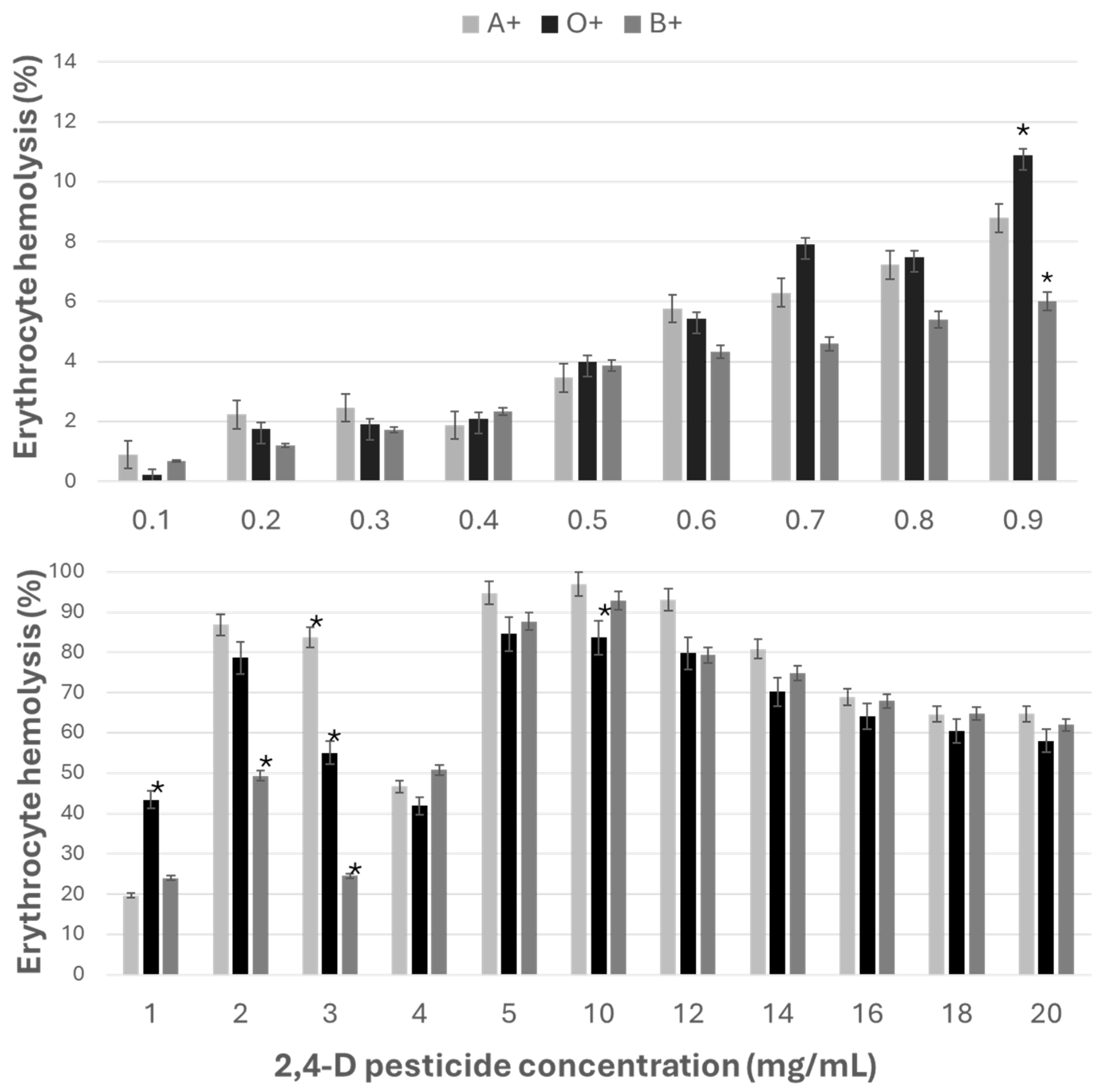
Figure 2.
Percentage of hemolysis induced by imidacloprid in ABO+ erythrocytes. Asterisk indicates a significant difference (p < 0.05) among blood types. Results were obtained using Triton X as the 100% hemolysis control and unexposed erythrocytes as the 0% control.
Figure 2.
Percentage of hemolysis induced by imidacloprid in ABO+ erythrocytes. Asterisk indicates a significant difference (p < 0.05) among blood types. Results were obtained using Triton X as the 100% hemolysis control and unexposed erythrocytes as the 0% control.
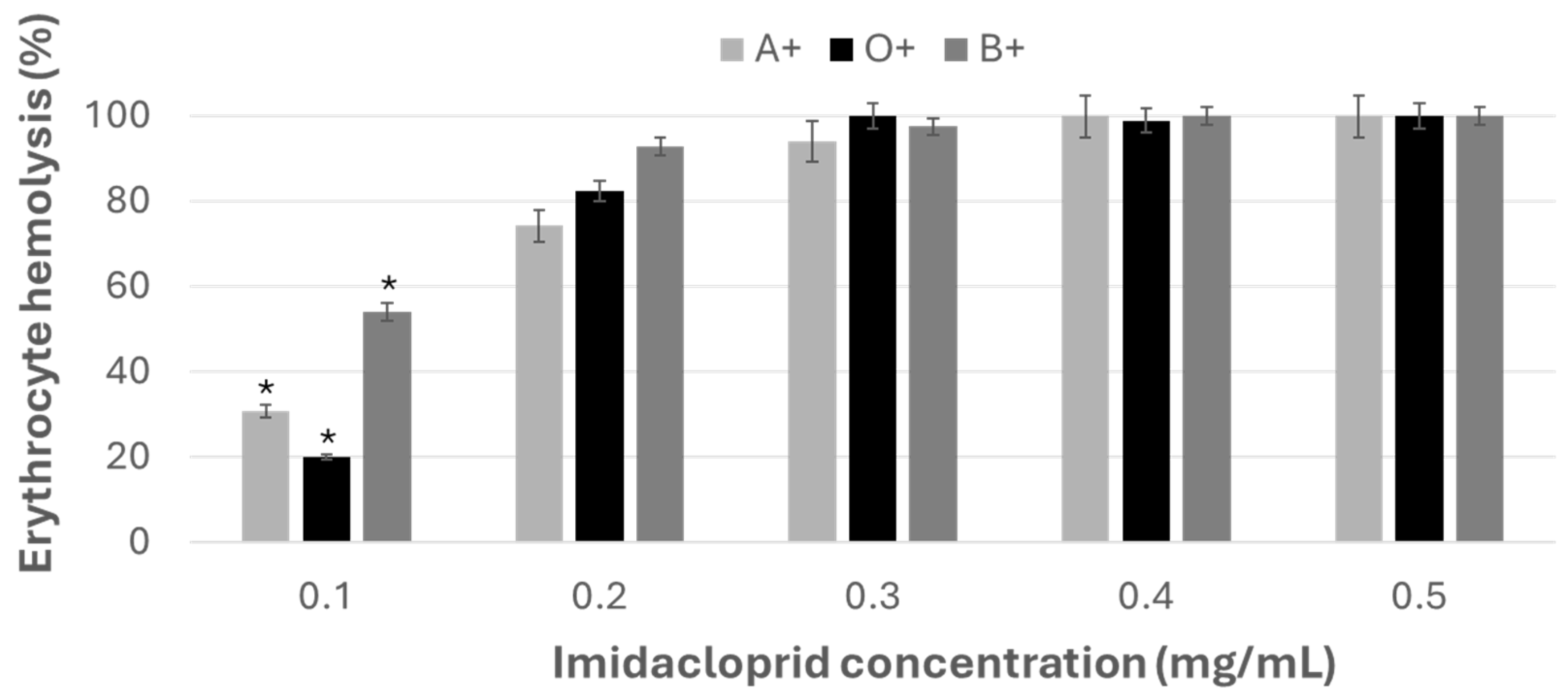
Figure 3.
Erythroprotective effect of C-phycocyanin at 0.5 mg/mL and 1.0 mg/mL on ABO system erythrocytes exposed to selected pesticide concentrations of 16 mg/mL for 2,4-dichlorophenoxyacetic acid (2,4-D) and 0.2 mg/mL for imidacloprid. Asterisks indicate a significant difference (p < 0.05) among blood types exposed to the same pesticide and the same C-phycocyanin concentration.
Figure 3.
Erythroprotective effect of C-phycocyanin at 0.5 mg/mL and 1.0 mg/mL on ABO system erythrocytes exposed to selected pesticide concentrations of 16 mg/mL for 2,4-dichlorophenoxyacetic acid (2,4-D) and 0.2 mg/mL for imidacloprid. Asterisks indicate a significant difference (p < 0.05) among blood types exposed to the same pesticide and the same C-phycocyanin concentration.
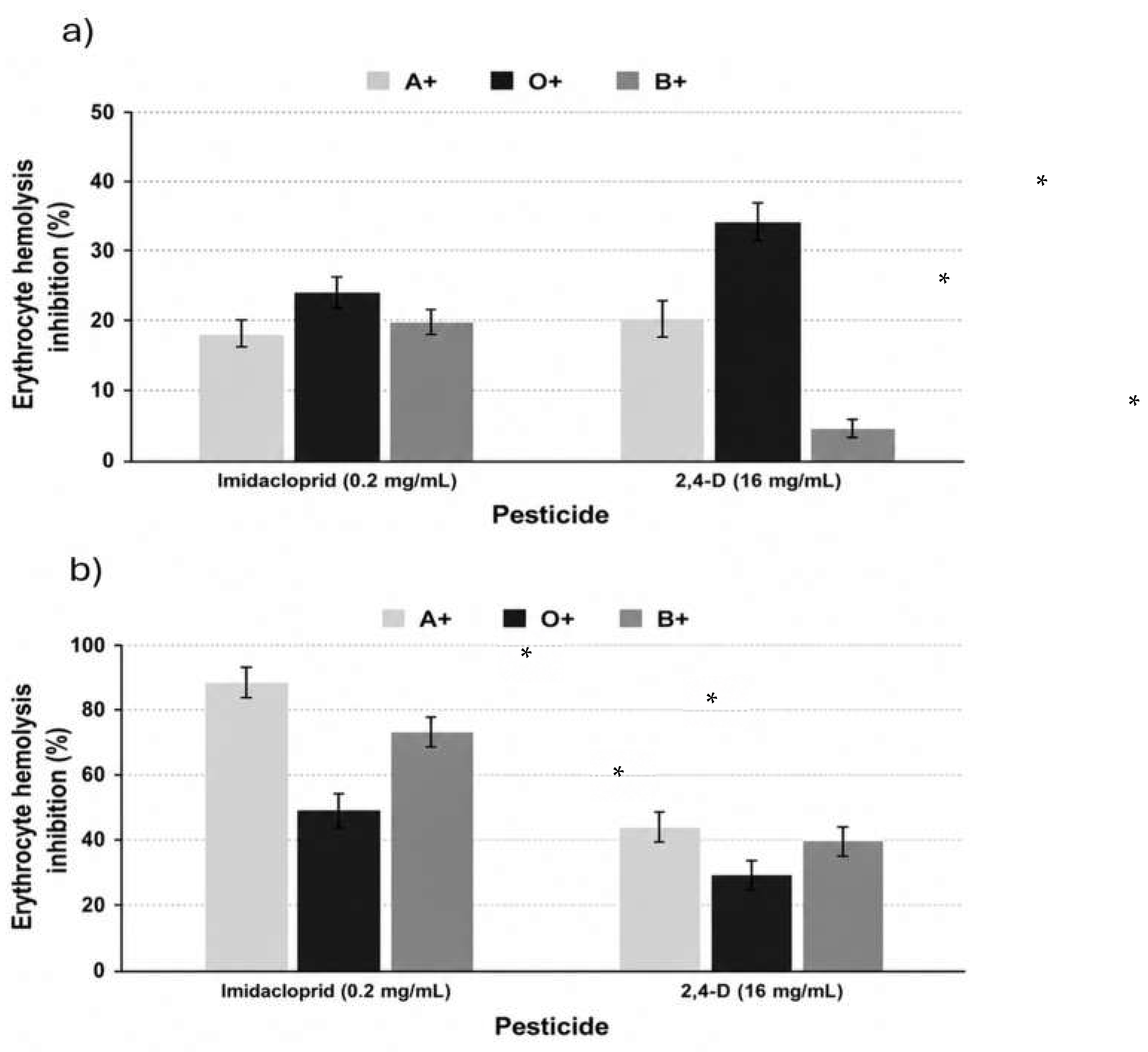
Figure 4.
Cytotoxicity of digested fractions of 2,4-dichlorophenoxyacetic acid at a) 18 mg/mL and b) 16 mg/mL in ABO system erythrocytes. Asterisk indicates significant differences (p < 0.05) among digestion fractions. Results were obtained using Triton X as the 100% hemolysis control and unexposed erythrocytes as the 0% control.
Figure 4.
Cytotoxicity of digested fractions of 2,4-dichlorophenoxyacetic acid at a) 18 mg/mL and b) 16 mg/mL in ABO system erythrocytes. Asterisk indicates significant differences (p < 0.05) among digestion fractions. Results were obtained using Triton X as the 100% hemolysis control and unexposed erythrocytes as the 0% control.
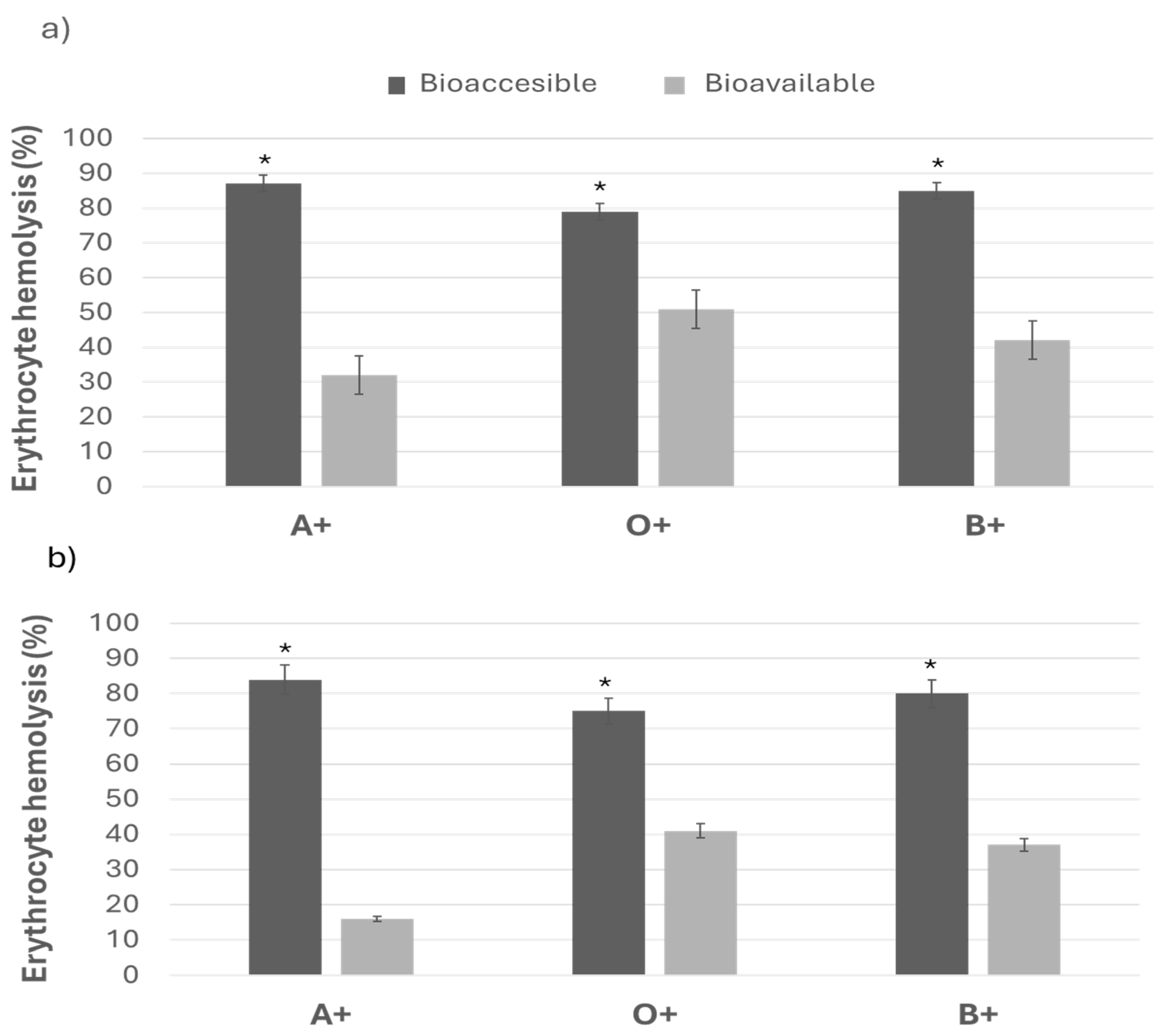
Figure 5.
Cytotoxicity of digested fractions of imidacloprid at a) 0.3 mg/mL and b) 0.2 mg/mL in ABO system erythrocytes. Asterisk indicates significant differences (p < 0.05) among digestion fractions in the same blood group. Results were obtained using Triton X as the 100% hemolysis control and unexposed erythrocytes as the 0% control.
Figure 5.
Cytotoxicity of digested fractions of imidacloprid at a) 0.3 mg/mL and b) 0.2 mg/mL in ABO system erythrocytes. Asterisk indicates significant differences (p < 0.05) among digestion fractions in the same blood group. Results were obtained using Triton X as the 100% hemolysis control and unexposed erythrocytes as the 0% control.
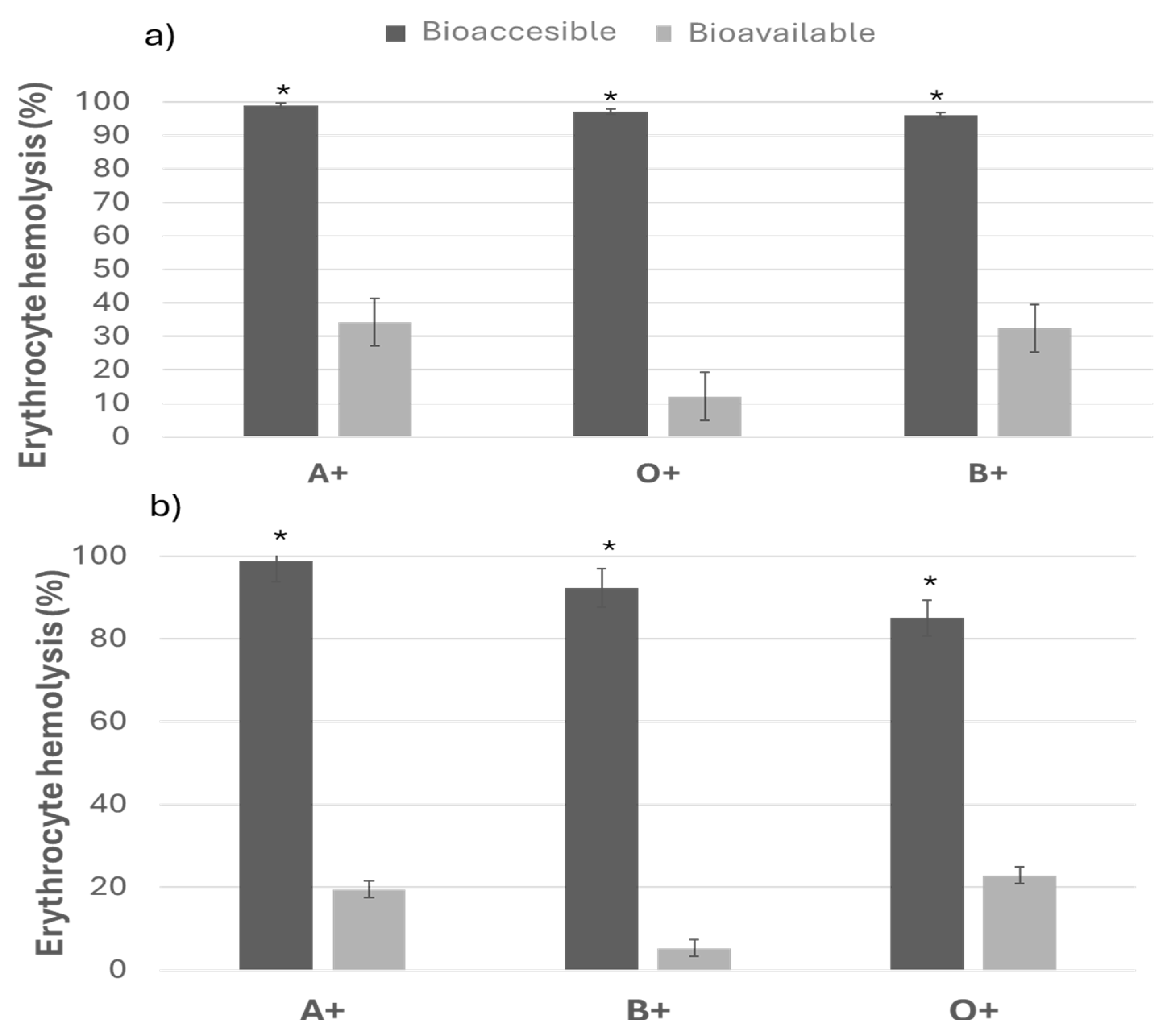
Figure 6.
Erythroprotective effect of digested phycocyanin fractions at a) 1 mg/mL and b) 2 mg/mL in ABO system erythrocytes exposed to 2,4-dichlorophenoxyacetic acid at 18 and 16 mg/mL, respectively. Asterisk indicates significant differences (p < 0.05) among digestion fractions in the same blood group.
Figure 6.
Erythroprotective effect of digested phycocyanin fractions at a) 1 mg/mL and b) 2 mg/mL in ABO system erythrocytes exposed to 2,4-dichlorophenoxyacetic acid at 18 and 16 mg/mL, respectively. Asterisk indicates significant differences (p < 0.05) among digestion fractions in the same blood group.
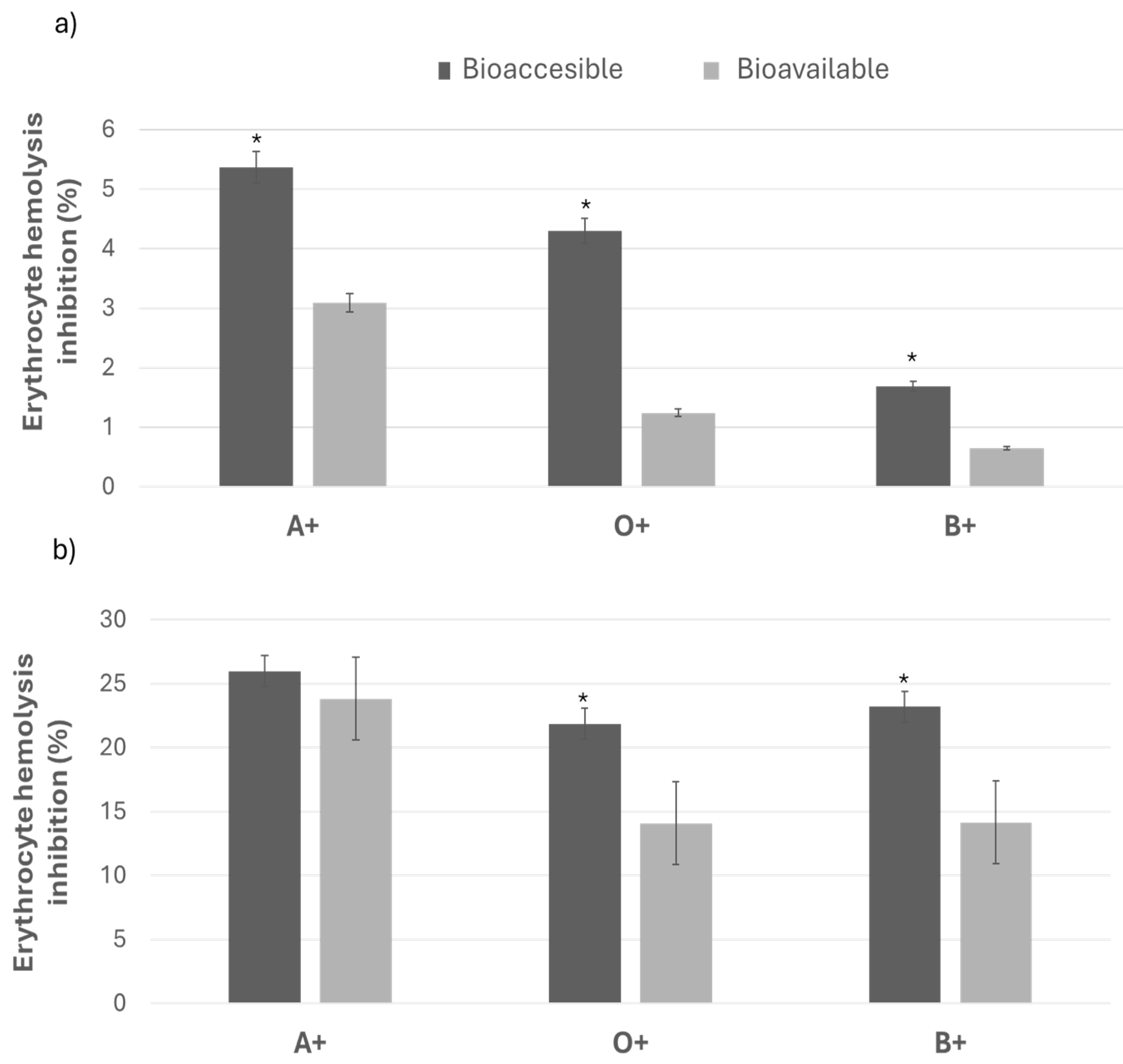
Figure 7.
Erythroprotective effect of digested phycocyanin fractions at a) 1 mg/mL and b) 2 mg/mL in ABO system erythrocytes exposed to imidacloprid at 0.3 mg/mL and 0.2 mg/mL, respectively. Asterisks indicate significant differences (p < 0.05) among digestion fractions in the same blood group.
Figure 7.
Erythroprotective effect of digested phycocyanin fractions at a) 1 mg/mL and b) 2 mg/mL in ABO system erythrocytes exposed to imidacloprid at 0.3 mg/mL and 0.2 mg/mL, respectively. Asterisks indicate significant differences (p < 0.05) among digestion fractions in the same blood group.
Disclaimer/Publisher’s Note: The statements, opinions and data contained in all publications are solely those of the individual author(s) and contributor(s) and not of MDPI and/or the editor(s). MDPI and/or the editor(s) disclaim responsibility for any injury to people or property resulting from any ideas, methods, instructions or products referred to in the content. |
© 2026 by the authors. Licensee MDPI, Basel, Switzerland. This article is an open access article distributed under the terms and conditions of the Creative Commons Attribution (CC BY) license (http://creativecommons.org/licenses/by/4.0/).
Copyright: This open access article is published under a Creative Commons CC BY 4.0 license, which permit the free download, distribution, and reuse, provided that the author and preprint are cited in any reuse.