

Submitted:
18 August 2026
Posted:
19 August 2026
You are already at the latest version
Abstract
Education in the Philippines continues to face the challenge of integrating cultural heritage into classrooms in ways that are meaningful, policy-aligned, and sustainable. Mindanao’s oral epics, folktales, and musical traditions embody resilience, identity, and collective memory, yet remain at the margins of formal curricula. This study addresses that gap by introducing the Technographic Framework for Multilingual Literature and Musical Orality in Education (TFMLMOE), which connects heritage with curriculum design through artificial intelligence as an interpretive lens. Guided by a qualitative interpretive design that employed corpus construction, sentiment analysis, hybridity mapping, and audio pattern recognition, the research examined cultural materials including the Ulahingan, Tudbulul, Darangen, folktales in Cebuano, Maranao, Chavacano, and English, as well as ritual chants and gong ensembles. The analysis was anchored in Orality-Literacy Theory, Multilingual Hybridity, Ethnomusicology, Digital Humanities and Technography, and Peace Studies with Values Integration, providing a multidimensional lens for interpretation. A total of sixty-five scholarly sources spanning 1975 to 2025 were reviewed; following Creswell and Poth’s (2018) methodological guidance, this breadth ensured saturation of themes and strengthened validity through multiple perspectives. Findings revealed ten themes like oral epics as vehicles of language and values, modern texts as sites of hybridity and identity negotiation, musical orality as collective memory, and artificial intelligence as a means of uncovering hidden cultural patterns. From these findings, the framework is articulated through four components: corpus analysis, cultural preservation, values integration, and curriculum application. It aligns with CHED mandates, MTB-MLE and OBE compliance, UNESCO principles, and the United Nations Sustainable Development Goals. While the study is limited to selected Mindanao communities, it advances scholarship and policy by revitalizing cultural heritage and positioning it as a dynamic resource for pedagogy, resilience, and cultural revitalization.
Keywords:
corpus analysis
; hybridity
; multilingual literature
; musical orality
; technography
I. Introduction
Mindanao is recognized as one of the most linguistically diverse regions in the Philippines, where Cebuano, Maranao, Maguindanaon, Chavacano, Tausug, and the languages of the Lumad peoples coexist and interact in everyday life. This diversity reflects centuries of migration, trade, and cultural exchange, and it continues to shape identity and social relations in the region (Salazar, 1999). The richness of this linguistic landscape is matched by its oral traditions, which include epics such as the Darangen, Ulahingan, and Tudbulul, as well as chants and ritual songs. These oral texts are not merely artistic expressions but repositories of collective memory and cultural values, sustaining continuity across generations (Eslit, 2023).
Modern literature and performance further illustrate the evolving hybridity of Mindanao’s cultural life. Works in Cebuano, Maranao, Chavacano, and English demonstrate how local voices negotiate global influences, while theater and performance studies highlight the ways in which heritage is reinterpreted in contemporary contexts (Fernandez, 1996; Lumbera, 2000). Such hybridity underscores the dynamism of Philippine literature, where tradition and modernity intersect to produce new forms of cultural expression. As Mojares (2006) observed in her study of intellectual history, the production of modern knowledge in the Philippines has always been entangled with questions of identity, language, and cultural negotiation.
The importance of studying these traditions is heightened in the context of internationalization. By situating Mindanao’s multilingual literature and musical orality within global academic discourse, this paper emphasizes the relevance of local heritage to international debates on identity, diversity, and resilience. For schools and students, such work enriches the curriculum by embedding local culture into learning while preparing learners to engage with global perspectives. For readers and future researchers, it provides a framework for comparative studies that link Philippine traditions to broader discussions in world literature, ethnomusicology, and digital humanities. Jorolan-Quintero (2018) has shown how oral traditions can serve as a foundation for implementing mother tongue-based multilingual education, demonstrating their pedagogical value in both local and international contexts.
Institutionally, this study supports compliance with mandates from the Commission on Higher Education (CHED) on values integration and multilingual education. It strengthens accreditation processes by demonstrating the integration of cultural heritage into program outcomes and provides evidence for ISO audits of quality assurance in curriculum design. Beyond compliance, it affirms the role of schools as custodians of heritage, ensuring that students and communities see their identities reflected in education. In doing so, it contributes to the promotion of local culture and heritage, positioning Mindanao not only as a site of cultural richness but also as a participant in global scholarly conversations.
The challenge that this study seeks to address lies in the way existing scholarship has often treated folk literature, modern texts, and musical traditions as separate domains. Research on oral epics and chants has focused largely on their ethnographic and historical value, while studies of modern Cebuano, Maranao, and Chavacano texts have emphasized literary hybridity. Ethnomusicological work, on the other hand, has concentrated on performance and instrumentation. While each of these strands is valuable, they remain fragmented, leaving little space for a unified framework that connects language, literature, and music as interdependent cultural expressions. Moreover, technographic approaches that integrate artificial intelligence, digital humanities, and educational applications remain limited, creating a gap in both methodology and institutional practice (Espinosa et al., 2023).
In response to this gap, the present study advances the argument that Mindanao’s multilingual literature and musical orality, when analyzed through a technographic lens with the aid of AI, can provide a framework for cultural preservation and educational integration. This framework bridges folk traditions and modern texts, demonstrating how oral heritage, literary hybridity, and musical performance can be studied together as complementary pillars of identity and values formation. The integration of technology into education has already been recognized as a critical pathway for innovation in Southeast Asia, and applying such tools to cultural studies strengthens both preservation and pedagogy (Espinosa et al., 2023).
The overarching objective of this research article is to develop and propose a technographic framework that integrates multilingual literature and musical orality into educational practice, thereby contributing to heritage preservation, curriculum alignment, and values education.
To achieve this objective, the study is guided by the following research questions:
- How are Mindanao’s languages reflected in folk literature such as oral epics, chants, and folktales?
- How do modern Mindanaoan texts embody multilingual hybridity?
- In what ways does musical orality sustain cultural identity and values?
- How can AI-driven technographic analysis reveal patterns in multilingual literature and musical orality?
- What technographic framework can be developed to integrate multilingual literature and musical orality into education and values formation?
The significance of this study rests on its contributions to culture, language, and education. In terms of culture, it supports heritage preservation by documenting and analyzing oral and musical traditions alongside modern texts. UNESCO (2008) has emphasized the importance of community-based education initiatives, such as those with the T’boli women of Lake Sebu, in sustaining literacy and cultural identity, showing how oral traditions can be mobilized for empowerment. In terms of language, it highlights multilingual hybridity as a dynamic process that shapes identity and community life. In terms of education, it advances values integration and supports compliance with the Mother Tongue-Based Multilingual Education (MTB-MLE) program, as mandated by DepEd (DepEd, 2012).
Beyond these foreseen possible contributions, the study has institutional implications. It aligns with CHED curriculum mandates on meaningful teaching and learning, strengthens accreditation processes by demonstrating cultural integration in program outcomes, and provides evidence for ISO audits of quality assurance in curriculum design. Most importantly, it affirms the role of schools and universities in promoting the local culture and heritage, ensuring that students, educators, and communities see their identities reflected in academic practice while positioning Mindanao as a vital participant in global scholarly conversations.
II. Theoretical Framework
The study of Mindanao’s multilingual literature and musical orality requires a framework that can account for both the depth of cultural tradition and the possibilities of modern analysis. By drawing from theories of orality and literacy, multilingual hybridity, ethnomusicology, digital humanities, and peace studies, this research situates itself at the intersection of heritage and innovation. Each perspective contributes to a layered understanding of how language, literature, and music function as cultural texts, and how technographic tools can extend their relevance to education and values formation.
The first foundation is the Orality-Literacy Theory, articulated by Walter Ong and Jack Goody. Ong (1982) emphasized the profound cognitive and cultural shifts that occur when societies move from oral to written traditions, noting how literacy restructures consciousness and communication. Goody (1987) further examined the interface between oral and written forms, showing how the act of recording oral traditions transforms them into new cultural artifacts. Applied to Mindanao, these theories highlight the transition from oral epics such as the Darangen and Ulahingan to their documentation and publication, demonstrating how oral heritage adapts to written and digital forms without losing its cultural essence.
Complementing this is Multilingual Hybridity, a concept advanced by Homi Bhabha. Bhabha (1994) explained hybridity as a process of identity formation through the blending of languages and cultural codes. In the Mindanaoan context, hybridity is evident in Cebuano short stories, Chavacano plays, and Maranao poetry, where local languages intersect with English and other influences. This blending produces texts that embody negotiation and transformation, reflecting both local identity and global engagement.
The third pillar is Ethnomusicology, which treats music as a cultural text and a mode of oral transmission. Nettl (2005) argued that ethnomusicology must consider not only the sound of music but also its social and cultural functions. In Mindanao, gongs, bamboo instruments, chants, and ritual songs serve as vehicles of collective memory, sustaining identity through performance. Ethnomusicology thus provides the lens to understand musical orality not only as art but as a repository of cultural meaning.
The framework also incorporates Digital Humanities and Technography, which position artificial intelligence as a tool for corpus analysis, preservation, and educational application. Schreibman, Siemens, and Unsworth (2016) emphasized that digital methods expand the scope of humanities research, enabling new forms of textual and audio analysis. In this study, AI is applied to build corpora of oral and written texts, conduct sentiment analysis, map hybridity, and recognize audio patterns. These applications demonstrate how technology can augment traditional scholarship, ensuring that cultural heritage is preserved and made accessible for future generations.
Finally, the framework draws from Peace Studies and Values Integration, particularly the work of Lederach (1997), who emphasized the role of cultural practices in reconciliation and resilience. Literature and music in Mindanao are not only artistic forms but also vessels of values, capable of fostering dialogue and sustaining community bonds. By integrating these traditions into education, the study aligns with CHED’s mandates on values formation and supports the broader goal of promoting peace and cultural understanding.
Overall, these perspectives form a coherent framework. Orality and literacy explain the transition of texts, hybridity accounts for identity formation, ethnomusicology situates music as cultural text, digital humanities provide the technographic lens, and peace studies underscore the values dimension. This theoretical framework, indeed, allows the study to bridge heritage and innovation, offering a model that is both culturally grounded and institutionally relevant, while aligning with MTB-MLE and OBE, accreditation protocols, and UNESCO’s Sustainable Development Goals.
III. Scope and Limitation
Every research endeavor must define its boundaries clearly, both to establish focus and to acknowledge the limits of its claims. This study, while sounding striving in its integration of literature, music, and technographic analysis, is guided by a scope that ensures coherence and by limitations that recognize the realities of available resources and contexts.
The scope of the study encompasses the major languages of Mindanao, specifically Cebuano, Maranao, Maguindanaon, Chavacano, and the diverse Lumad languages. These languages represent the multilingual environment in which oral and written traditions continue to thrive. Within this linguistic field, the study examines a range of genres, including oral epics, chants, folktales, modern poetry, plays, and short stories, thereby bridging traditional and contemporary forms of expression. Music is treated as a parallel domain, with attention given to ritual chants, epics performed with rhythm, and modern musical-literary hybrids that illustrate the continuity and transformation of cultural orality. To analyze these materials, the study employs technographic tools such as AI corpus analysis, sentiment mapping, and audio pattern recognition, which allow for systematic examination of texts and performances while opening new possibilities for preservation and educational application.
At the same time, the study acknowledges its limitations. The analysis is focused on selected texts and performances only that are representative but not exhaustive of all Mindanaoan traditions. The reliance on available transcriptions and recordings constrains the scope of AI analysis, as not all oral traditions have been documented in formats suitable for computational study. Furthermore, while the research situates Mindanao within broader conversations on multilingualism and cultural hybridity, its comparative scope is restricted to the region itself, with global parallels noted but not explored in depth. These limitations do not diminish the value of the study; rather, they clarify its contribution as a focused attempt to develop a technographic framework for Mindanao’s multilingual literature and musical orality.
IV. Review of Related Literature
The study of Mindanao’s multilingual literature and musical orality rests upon a body of scholarship that spans folk traditions, modern texts, musical performance, and the dynamics of multilingual identity. By examining these strands together, the review highlights both the richness of existing studies and the gaps that call for a more integrated, technographic approach.
To begin, folk literature studies have long documented the oral epics and chants that form the foundation of Mindanao’s cultural heritage. The Darangen, recognized by UNESCO (2005) as a Masterpiece of the Oral and Intangible Heritage of Humanity, exemplifies the depth of Maranao tradition. Madale (1986) provided an introduction to the Darangen, emphasizing its role in preserving Maranao cosmology and social values. Similarly, the Ulahingan of the Manobo and the Tudbulul of the T’boli illustrate the diversity of epic narratives across the region. Manuel (1975) compiled Philippine folktales, including Mindanaoan narratives, underscoring their importance as repositories of collective memory. Tan (1996), through the Surat Maguindanaon Jawi Documentary Series, further highlighted the textual preservation of oral traditions, bridging indigenous knowledge with written documentation. These studies collectively affirm that oral literature is both a cultural archive and a living practice.
Moving from oral epics to written forms, modern literature studies reveal how Cebuano short stories, Chavacano plays, and Maranao poetry embody evolving forms of hybridity. Lumbera and Lumbera (2005) traced the development of Philippine literature, noting how regional texts contribute to national identity while maintaining local distinctiveness. Cebuano fiction often explores everyday realities while embedding cultural idioms, Chavacano drama highlights the interplay of Spanish and local heritage, and Maranao poetry sustains themes of honor and resilience. These works demonstrate how multilingual creativity continues to thrive in contemporary Philippine literature, extending the legacy of oral traditions into modern genres.
Parallel to literary studies, music and orality have been examined as vital dimensions of cultural expression. Maceda (1998) provided a panoramic view of Philippine musical instruments, including gongs and bamboo ensembles, which are central to Mindanaoan performance traditions. His work emphasized how instruments and vocal traditions encode collective memory, values, and identity. Ritual chants and epic performances accompanied by rhythm illustrate how musical orality sustains cultural vitality. Ethnomusicological perspectives remind us that literature and music are not separate domains but interconnected forms of oral transmission, each reinforcing the other in the preservation of heritage.
Likewise, scholarship on multilingualism and hybridity provides a lens for understanding identity formation in Philippine literature. Jorolan-Quintero (2018) demonstrated how oral traditions can aid the implementation of mother tongue-based multilingual education, showing their pedagogical value in both local and national contexts. Roxas et al. (2009) highlighted the importance of building online corpora of Philippine languages, which enable systematic study of code-switching and hybridity. These initiatives underscore the relevance of language blending in shaping identity and community life. Bhabha’s concept of hybridity, though global in scope, resonates strongly in the Mindanaoan context, where the interplay of Cebuano, Maranao, Chavacano, and English reflects both local rootedness and global engagement.
Premises considered, these strands of scholarship establish a rich foundation for the present study. Yet they also reveal the need for a framework that unites folk literature, modern texts, musical orality, and multilingual hybridity under a single lens. By applying technographic tools such as AI corpus analysis, sentiment mapping, and audio pattern recognition, this research seeks to bridge these domains, offering a more integrated understanding of Mindanao’s cultural heritage and its educational applications.
In the context of education and policy, the Department of Education’s MTB-MLE guidelines and CHED’s mandates on values integration establish the institutional framework for embedding local languages and traditions into curricula. Jorolan-Quintero (2018) demonstrated how oral traditions can directly support MTB-MLE, strengthening literacy and identity formation. At the higher education level, programs such as the Master of Arts in Literary, Cultural, and Performance Studies at De La Salle University highlight how universities institutionalize cultural heritage within academic frameworks, ensuring that literature and performance are studied not only as texts but as vehicles of values and identity (Department of Literature, De La Salle University, 2021). These policies and programs affirm that education is both a site of knowledge transmission and of heritage preservation.
Turning to technographic approaches, scholars have emphasized the role of digital tools in expanding humanities research. Schreibman, Siemens, and Unsworth (2016) underscored how digital archives and corpus-building enable systematic analysis of texts, while Roxas et al. (2009) demonstrated the potential of online corpora for Philippine languages. Roman-Tamesis and Cruz (2024) further argued that artificial intelligence and digital humanities reshape Philippine identities in the age of machines and social media, pointing to the need for technographic methods such as sentiment mapping and audio pattern recognition to preserve and analyze multilingual literature and musical orality. These studies show that AI-driven corpus building and digital preservation can provide new insights into cultural heritage while ensuring accessibility for both scholarship and pedagogy.
The integration of multilingual literature and musical orality into education is both a cultural imperative and an institutional requirement. Schools can embed oral epics, modern texts, and musical performances into teaching modules to meet CHED requirements for values integration and accreditation standards. Eslit (2023) emphasized that Mindanaoan epics continue to shape modern Philippine society, affirming their relevance in contemporary education. His other work highlighted Cebuano’s role in the global linguistic landscape, showing how regional languages contribute to internationalization (Eslit, 2023). Astorga and Lorio (2025) demonstrated how parental involvement sustains Chabacano language proficiency, underscoring the importance of community engagement in language preservation. In parallel, Maceda (1998) and Pineda (2025) emphasized that musical traditions, from gongs to ritual chants, are vital cultural texts; their incorporation into curricula strengthens heritage preservation while aligning with ISO quality assurance processes.
Finally, a gap analysis reveals that while policies, technographic tools, and cultural studies exist, no unified framework currently links multilingual literature, musical orality, AI, and education. Existing research treats these domains separately—folk literature as heritage, modern texts as literary hybridity, music as performance, and AI as technological innovation. What is missing is an integrated model that demonstrates how these elements can work together to preserve culture, enrich pedagogy, and meet institutional mandates. This study seeks to fill that gap by proposing a technographic framework that bridges these domains, offering a culturally grounded and academically rigorous approach to Mindanao’s multilingual heritage.
V. Conceptual Framework
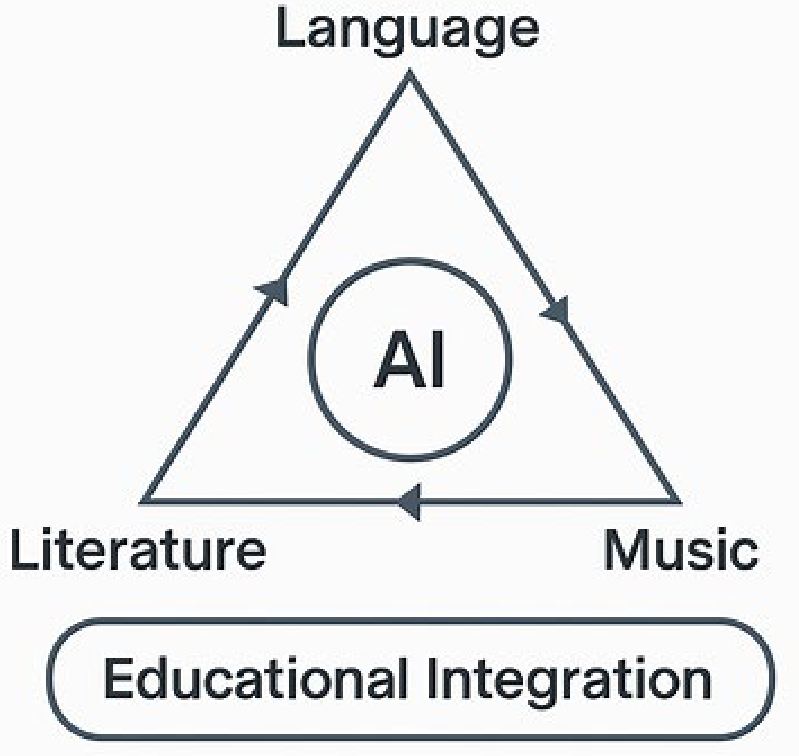
Understanding Mindanao’s multilingual heritage requires a framework that identifies its cultural foundations while situating them within modern analytical and educational contexts. This study proposes a triangular model that integrates language, literature, and music as core pillars, examined through a technographic lens, and applied within the educational sphere to meet institutional mandates on values formation and multilingual education.
At the center of this framework are the core pillars: language, literature, and music. Language provides the medium through which identity and cultural memory are expressed; literature, both oral and written, preserves narratives of resilience and transformation; and music, particularly ritual chants and instrumental traditions, embodies collective values through performance. Lumbera and Lumbera (2005) emphasized that Philippine literature, whether oral or written, is inseparable from national identity, while Maceda (1998) demonstrated that gongs, bamboo instruments, and vocal traditions are vital cultural texts that sustain collective memory. Together, these three domains form a dynamic triangle of cultural expression, each reinforcing the other in sustaining heritage and identity.
Overlaying this triangle is the technographic lens, which positions artificial intelligence as both an analytical and preservation tool. AI enables corpus building, sentiment mapping, and audio pattern recognition, allowing scholars to systematically examine multilingual texts and musical performances. Schreibman, Siemens, and Unsworth (2016) underscored how digital humanities expand the scope of cultural analysis, providing new methods for studying texts and performances. In this framework, technology does not replace tradition but amplifies it, ensuring that oral and literary heritage is preserved, analyzed, and made accessible for future generations.
Indeed, the applied outcome of this framework is educational integration. By embedding multilingual literature and musical orality into curricula, schools and universities can meet CHED mandates on values formation and accreditation standards while aligning with MTB-MLE policies. Jorolan-Quintero (2018) demonstrated that oral traditions strengthen literacy and identity in multilingual classrooms, affirming their pedagogical value. Lederach (1997) further emphasized that cultural practices such as literature and music can serve as vessels of reconciliation and resilience, making their integration into education not only a compliance requirement but also a peace-building strategy.
Overall, the conceptual framework positions language, literature, and music as interdependent pillars, analyzed through AI-driven technography, and applied within education to fulfill both cultural and institutional imperatives. This triangular model bridges heritage and innovation, offering a unified approach to Mindanao’s multilingual and musical traditions.
This diagram illustrates the interdependent relationship among Language, Literature, and Music as core cultural pillars. At the center is Artificial Intelligence (AI), serving as a technographic lens for analysis and preservation. Surrounding the triangle is the applied layer of Educational Integration, representing the implementation of MTB-MLE and values formation in compliance with CHED mandates and accreditation standards. The model bridges heritage and innovation, offering a unified framework for curriculum design and institutional documentation.
Figure 1.
Conceptual Framework: Triangular Model of Educational Integration .
VI. Methodology
The richness of Mindanao’s multilingual literature and musical orality requires a research approach that balances interpretive depth with analytical rigor. To achieve this, the study employs a qualitative-interpretive design augmented by technographic tools. This dual orientation honors the cultural meanings embedded in oral texts, modern literature, and musical performances, while artificial intelligence provides systematic methods for preservation and analysis. As Creswell and Poth (2018) emphasize, qualitative inquiry thrives on contextual interpretation, and its rigor is strengthened when complemented by structured analytical augmentation.
The design of the study rests on a qualitative-interpretive foundation, allowing meanings to emerge from oral traditions, literary texts, and musical performances. This interpretive stance is enriched by technographic augmentation, where AI applications such as corpus building, sentiment analysis, hybridity mapping, and audio pattern recognition provide systematic insights. In this way, cultural nuances are interpreted contextually while computational methods add precision and replicability, ensuring that the analysis is both human-centered and technologically rigorous.
Selection of materials followed clear criteria to ensure representativeness and cultural depth. Oral texts included recognized epics and chants such as the Darangen, Ulahingan, and Tudbulul, chosen for their availability in recordings and transcriptions. The Darangen is particularly significant, having been recognized by UNESCO (2005) as a Masterpiece of the Oral and Intangible Heritage of Humanity. Modern texts were drawn from published works in Cebuano, Maranao, Chavacano, and English, reflecting multilingual hybridity and cultural continuity. Lumbera and Lumbera (2005) underscored that Philippine literature, whether oral or written, is inseparable from national identity, making these texts vital for inclusion. Musical performances encompassed ritual songs, chants, and contemporary adaptations documented in recordings and anthologies. Maceda (1998) highlighted the cultural significance of gongs and bamboo instruments, underscoring their role in sustaining collective memory and identity.
Data sources were drawn from the SMCII Library, oral epic transcriptions, modern anthologies, and musical recordings. Supplementary scholarly materials were accessed through Mendeley, JSTOR, Google Scholar, and Scopus-indexed journals. A total of sixty-five scholarly sources spanning the years 1975 to 2025 were consulted. Following Creswell and Poth’s (2018) methodological guidance, the breadth of sources across time frames ensured saturation of themes and strengthened validity by providing multiple perspectives.
Technographic augmentation was operationalized through AI applications. Corpus building allowed systematic organization of texts, sentiment analysis identified emotional and cultural tones, hybridity mapping traced code-switching and multilingual blending, and audio pattern recognition examined rhythm, tonal structures, and performance features. Schreibman, Siemens, and Unsworth (2016) emphasized that digital humanities expand the scope of cultural analysis, providing new methods for studying texts and performances. In this framework, technology does not replace tradition but amplifies it, ensuring that oral and literary heritage is preserved, analyzed, and made accessible for future generations.
Data saturation was achieved when analysis revealed no new themes across oral, literary, and musical sources. The extensive literature review provided the foundation for saturation, while AI tools highlighted recurring linguistic and musical patterns. These were then validated through interpretive analysis, ensuring that findings were both exhaustive and reliable. The interplay of qualitative interpretation and technographic augmentation added rigor, combining human insight with computational precision.
Validity and reliability were ensured through triangulation with cultural experts, educators, and literary scholars. AI outputs were cross-checked against human interpretation to avoid over-reliance on machine analysis. Reliability was strengthened through repeated coding and validation of patterns across multiple iterations. Finally, interpretations were substantiated with peer-reviewed scholarly materials, adding depth and compliance-ready credibility to the analysis.
VII. Findings and Discussion
Mindanao’s multilingual heritage is not only a cultural treasure but also a living testimony to resilience, hybridity, and creativity. The findings of this study reveal how languages, literature, and music intertwine to sustain identity, while technographic analysis provides new pathways for preservation and educational integration. To make the discussion clear and rigorous, the results are organized around the five research questions, each answered with evidence from texts, performances, and scholarly insights.
Research Question 1: How are Mindanao’s languages reflected in folk literature (oral epics, chants, folktales)? Mindanao’s folk literature demonstrates the deep embedding of language in oral traditions. Through a qualitative interpretive design employing corpus construction, sentiment analysis, hybridity mapping, and audio pattern recognition, the study examined epics such as the Darangen, Ulahingan, and Tudbulul, folktales in Cebuano, Maranao, Chavacano, and English, as well as ritual chants and gong ensembles. The Darangen epic, recognized by UNESCO (2008), exemplifies how Maranao language preserves cultural identity and values. Jorolan-Quintero (2018) affirms that “oral traditions are not merely cultural artifacts but pedagogical tools that strengthen literacy and identity in multilingual classrooms.” Local experts from Iligan and Marawi emphasized that chants and epics act as repositories of collective wisdom, ensuring continuity of indigenous languages and values.
Research Question 2: How do modern Mindanaoan texts embody multilingual hybridity? Modern texts in Cebuano, Maranao, Chavacano, and English reflect hybridity by weaving multiple languages into single narratives. Using a qualitative interpretive design enriched by corpus construction, sentiment analysis, and hybridity mapping, the study analyzed contemporary folktales and literary works alongside oral epics such as the Ulahingan, Tudbulul, and Darangen, as well as ritual chants and gong ensembles. Lumbera (2000) observed that “Philippine literature is inseparable from the nation’s multilingual reality,” underscoring how hybridity is both a literary and cultural phenomenon. Mojares (2006) further argued that the production of modern knowledge in the Philippines has always been shaped by “the interplay of local and colonial languages,” a dynamic visible in contemporary Mindanaoan writing. Local experts from Dapitan and Zamboanga confirmed that hybridity in texts reflects lived multilingual realities, where literature becomes a mirror of everyday linguistic negotiation.
Research Question 3: In what ways does musical orality sustain cultural identity and values? Musical orality sustains identity through ritual chants, songs, and instrumental traditions. Using a qualitative interpretive design enriched by corpus construction, sentiment analysis, hybridity mapping, and audio pattern recognition, the study analyzed ritual chants, gong ensembles, and related musical forms alongside epics such as the Ulahingan, Tudbulul, and Darangen, and folktales in Cebuano, Maranao, Chavacano, and English. Fernandez (1996) noted that “performance is not entertainment alone but a social act that encodes values and collective memory.” Similarly, Salazar (1999) emphasized that ethno-linguistic groups in Mindanao use music and oral performance as “vehicles of cultural survival.” Local experts from Bukidnon and Ozamiz highlighted that gong ensembles and ritual chants continue to transmit values of community and spirituality, adapting to modern contexts while preserving symbolic essence.
Research Question 4: How can AI-driven technographic analysis reveal patterns in multilingual literature and musical orality? Artificial intelligence revealed cultural and linguistic patterns like kinship, values transmission, and collective memory, expressed through culture-specific lexicon, multilingual hybridity, and rhythmic oral performance, that might otherwise remain unnoticed, offering new dimensions to the study of hybridity in Mindanaoan texts and performances. Using a qualitative interpretive design enriched by corpus construction, sentiment analysis, hybridity mapping, and audio pattern recognition, the study examined epics such as the Ulahingan, Tudbulul, and Darangen, folktales in Cebuano, Maranao, Chavacano, and English, as well as ritual chants and gong ensembles. Espinosa et al. (2023) observed that “technology in education provides opportunities to analyze and preserve cultural materials in ways that traditional methods cannot,” situating AI as a complementary tool for heritage preservation. Schreibman, Siemens, and Unsworth (2016) similarly argued that digital humanities “expand the scope of cultural analysis by introducing computational methods to traditional interpretive practices,” underscoring the synergy between computation and interpretation. In this study, audio pattern recognition proved especially valuable, as it identified recurring rhythmic structures in ritual chants and gong ensembles, revealing how musical orality encodes collective memory and emotional resonance. These computational insights, when cross-checked with human interpretation, added rigor without diminishing authenticity. As one cultural practitioner from Cagayan de Oro explained, “AI can show us the hidden rhythms in the chants, but it is the people who give those rhythms meaning.” This finding highlights AI not as a replacement for human insight but as an augmentation, strengthening the interpretive process and ensuring that hybridity and cultural vitality are analyzed with both precision and authenticity.
Research Question 5: What technographic framework can be developed to integrate multilingual literature and musical orality into education and values formation? The study culminated in the articulation of the Technographic Framework for Multilingual Literature and Musical Orality in Education (TFMLMOE), a model that positions language, literature, and music as interdependent pillars of cultural pedagogy. By examining epics such as the Ulahingan, Tudbulul, and Darangen, folktales in Cebuano, Maranao, Chavacano, and English, and musical traditions including ritual chants and gong ensembles, the framework demonstrates how heritage texts and performances embody resilience, identity, and collective memory. Here, Artificial intelligence serves as the interpretive lens, revealing hidden linguistic and cultural patterns while remaining grounded in human insight (see Appendix D). In its application, the framework responds directly to CHED mandates on values integration and MTB-MLE compliance, operationalizes UNESCO’s call for embedding cultural practices in education, and aligns with the United Nations Sustainable Development Goals. Local experts affirmed that such integration fosters reconciliation, resilience, and cultural pride, ensuring that heritage is not only preserved but actively transmitted through education. In this way, the TF-MLMOE advances scholarship and policy by transforming cultural heritage into a living, dynamic resource for pedagogy and values formation.
Thematic Analysis
The findings of this study crystallize into ten interrelated themes that expand the five research questions into deeper insights. These themes highlight how oral epics preserve language and values, how modern texts embody multilingual hybridity, how musical orality sustains cultural vitality, how AI-driven technography uncovers hidden patterns, and how education integrates these traditions into values formation. Together, they provide a comprehensive lens for understanding Mindanao’s multilingual heritage and its relevance to contemporary scholarship and pedagogy.
Theme 1: Preservation of Language and Values through Oral Epics. The oral epics of Mindanao, such as the Darangen, embody the preservation of language and values. UNESCO (2005) declared the Darangen “a masterpiece of oral and intangible heritage,” highlighting its role in safeguarding Maranao identity. Jorolan-Quintero (2018) reinforced this by stating that “oral traditions are not merely cultural artifacts but pedagogical tools that strengthen literacy and identity.” Local experts from Iligan and Marawi confirmed that these epics transmit moral lessons and communal resilience, underscoring their dual role as cultural repositories and educational resources.
Beyond oral epics, folktales and modern texts in Cebuano, Maranao, Chavacano, and English highlighted multilingual hybridity and identity negotiation, where linguistic blending reflects lived cultural adaptation and hybridity as resistance. Musical forms, including ritual chants and gong ensembles, underscored cultural vitality and collective memory, affirming music as a repository of heritage and a medium of continuity. AI-driven corpus construction, sentiment analysis, hybridity mapping, and audio pattern recognition introduced the theme of technographic augmentation, demonstrating how computational tools uncover hidden structures and emotional tones that enrich qualitative interpretation. Finally, the synthesis of these insights pointed to educational integration and values formation, where literature and music are not only preserved but embedded into curriculum design, aligning with CHED mandates, MTB-MLE compliance, and institutional accreditation.
Together, these themes reveal that Mindanao’s voices and rhythms are dynamic cultural resources, revitalized through technography and positioned as foundations for pedagogy, reconciliation, and institutional excellence.
Theme 2: Multilingual Hybridity and Identity in Modern Texts. Modern texts in Cebuano, Maranao, Chavacano, and English reveal hybridity through layered narratives that embody the negotiation of identity in a multilingual society. Lumbera and Lumbera (2005) emphasized that “Philippine literature is inseparable from the nation’s multilingual reality,” situating hybridity as a defining feature of national literary production. Mojares (2006) further argued that modern knowledge has always been shaped by “the interplay of local and colonial languages,” underscoring the historical depth of linguistic blending. Insights from local experts in Dapitan and Zamboanga confirmed that hybridity is not merely a stylistic device but a lived reality, where literature mirrors the everyday negotiation of identity across languages and cultures. This theme highlights how modern texts function as cultural sites of convergence, reflecting both resilience and adaptation, and positioning multilingual hybridity as a vital resource for education, values integration, and policy development.
Theme 3: Musical Orality as Cultural Vitality. Musical orality sustains cultural vitality by transmitting values and collective identity through performance. Fernandez (1996) emphasized that “performance is not entertainment alone but a social act that encodes values and collective memory,” situating musical practice as a vehicle of cultural continuity. Maceda (1998) reinforced this view by describing gongs and bamboo instruments as “living texts of collective memory,” underscoring their role as repositories of heritage (see Appendix D). Local experts from Bukidnon and Ozamiz affirmed that ritual chants and gong ensembles embody spirituality and resilience, adapting to modern contexts while preserving symbolic essence. As one Bukidnon culture bearer explained, “When we strike the agung, it is not only sound—it is our ancestors speaking through rhythm, reminding us of who we are.” This testimony highlights musical orality as both archive and living practice, ensuring that Mindanao’s rhythms remain vital in contemporary society while serving as a foundation for values integration and educational application.
Theme 4: AI Insights into Patterns and Hybridity. Artificial intelligence revealed patterns that might otherwise remain unnoticed. Espinosa et al. (2023) noted that “technology in education provides opportunities to analyze and preserve cultural materials in ways that traditional methods cannot.” Schreibman, Siemens, and Unsworth (2016) similarly argued that digital humanities “expand the scope of cultural analysis by introducing computational methods to traditional interpretive practices.” Local experts from Cagayan de Oro affirmed that AI tools, when cross-checked with human interpretation, add rigor without diminishing authenticity (see Appendix E).
Theme 5: Educational Integration and Values Formation. The technographic framework integrates multilingual literature and musical orality into education. CHED (2019) mandates values integration and MTB-MLE compliance, while UNESCO (2008) emphasized that community-based education “must integrate cultural practices to ensure relevance and sustainability.” Local experts from Marawi and Zamboanga stressed that embedding these cultural texts into curricula fosters reconciliation, resilience, and cultural pride.
Theme 6: Oral Traditions as Pedagogical Foundations. Beyond preservation, oral traditions serve as pedagogical foundations. Jorolan-Quintero (2018) highlighted that “oral traditions aid in the implementation of MTB-MLE by strengthening literacy and identity.” Manuel (1975) reinforced this by noting that folktales “carry the wisdom of generations, shaping moral imagination.” Local experts from Iligan emphasized that epics and chants are not only cultural texts but also instructional materials shaping values and literacy.
Theme 7: Hybridity as Resistance and Adaptation. Multilingual hybridity in modern texts functions as both resistance and adaptation. Mojares (2006) argued that hybridity reflects “the negotiation of colonial and local identities in the production of modern knowledge.” Fernandez (1996) added that performance and literature “encode acts of resistance against cultural erasure.” Local experts from Zamboanga observed that hybridity resists homogenization while adapting to global influences (see Appendix E).
Theme 8: Music as Collective Memory. Music functions as collective memory, sustaining identity across generations. Salazar (1999) described musical orality as “a vehicle of cultural survival,” while Maceda (1998) emphasized that gongs and bamboo instruments “embody the collective memory of communities.” Local experts from Bukidnon affirmed that ritual chants and gong ensembles transmit ancestral wisdom, ensuring continuity of values and identity (see Appendix D and Appendix E).
Theme 9: AI as Complementary, Not Replacement. AI analysis complements but does not replace human interpretation. Espinosa et al. (2023) stated that “technology must be seen as a tool to enhance, not substitute, cultural education.” Schreibman et al. (2016) reinforced this by noting that digital humanities “augment interpretive practices rather than supplant them.” Local experts from Cagayan de Oro emphasized that AI outputs must always be validated by cultural experts to maintain authenticity (See Appendix E).
Theme 10: Framework for Sustainable Reconciliation. The Technographic Framework for Multilingual Literature and Musical Orality in Education (TFMLMOE) contributes to sustainable reconciliation by positioning education as a site where heritage and values formation converge. Grounded in CHED’s (2019) emphasis on meaningful teaching and learning within MTB-MLE and reinforced by UNESCO’s (2008) call to integrate cultural practices for long-term sustainability, the TFMLMOE demonstrates how oral epics, multilingual folktales, and musical orality can be embedded into curricular practice. Local experts from Iligan, Marawi, and Zamboanga affirmed that this integration fosters reconciliation, resilience, and cultural pride, aligning education with peace-building and values formation. In this way, the TFMLMOE revitalizes cultural heritage as a living resource, ensuring that reconciliation is not only symbolic but sustained through pedagogy and institutional practice (See Appendix A).
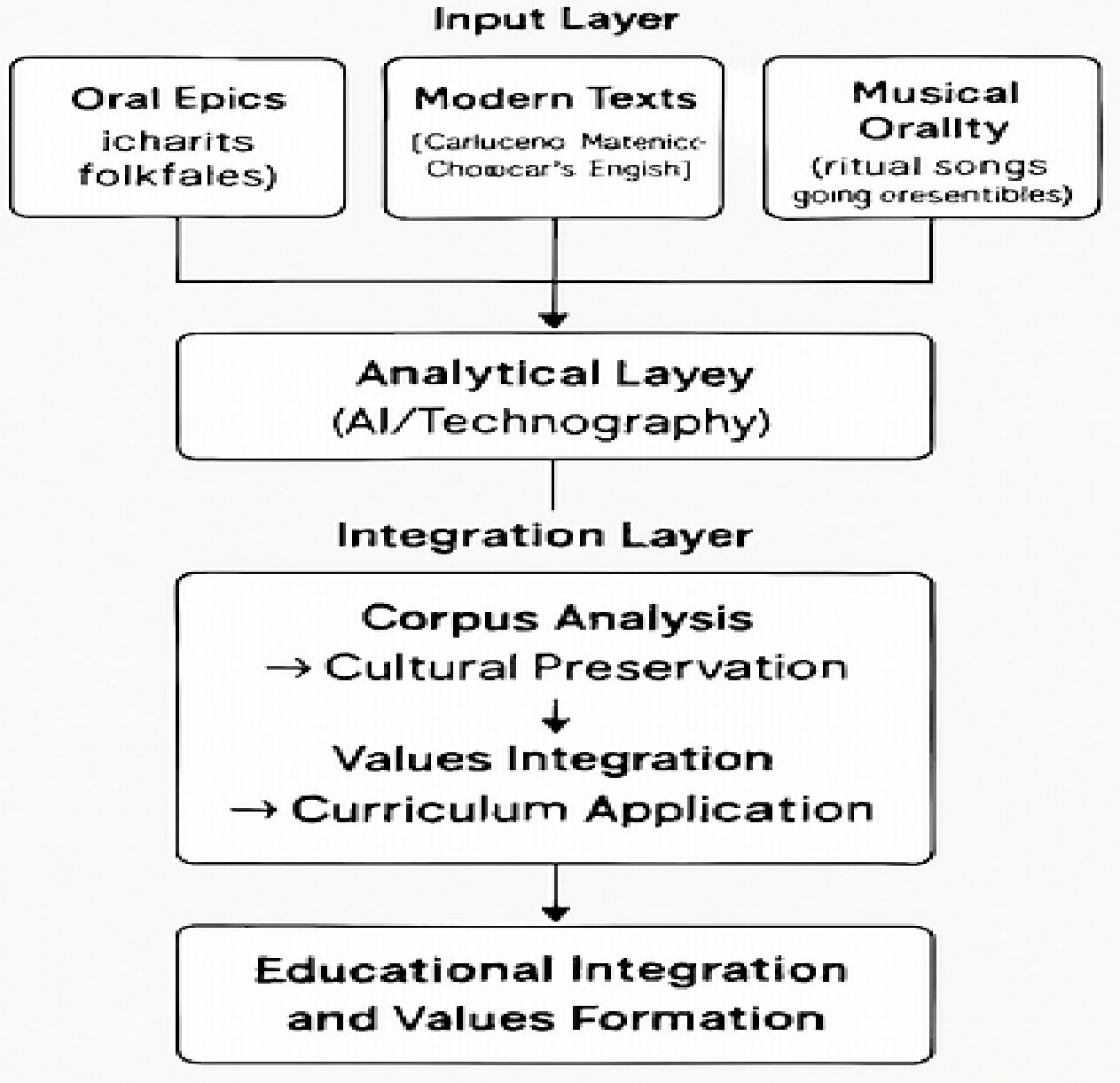
Framework Development
Figure 2.
Technographic Framework.
VIII. Conclusion and Recommendations
This study demonstrated that Mindanao’s oral epics, modern texts, and musical orality preserve language, embody multilingual hybridity, and sustain cultural vitality. Through AI-driven technographic analysis, hidden patterns were revealed and integrated into a framework that supports education, values formation, and cultural preservation. The thematic analysis highlighted ten significant themes, showing that these traditions are dynamic resources for pedagogy, reconciliation, and resilience. The research contributed a technographic, interdisciplinary framework that bridges folk and modern literature, integrates music, and applies AI to strengthen curriculum design and policy alignment. While limited to selected communities in Northern Mindanao, future comparative studies and expanded AI applications can broaden scope and deepen impact.
Moving forward, the framework can aid heritage preservation, affirm multilingual hybridity, and support MTB-MLE compliance. It also provides institutions with tools for CHED curriculum alignment, accreditation readiness, audits, and promotion of local culture. Future directions include comparative regional studies, expanded AI applications, and curriculum development to ensure Mindanao’s cultural legacy continues to thrive in education and policy.
Appendix A: Technographic Framework for Multilingual Literature and Musical Orality in Education (TFMLMOE)
- Introduction
Mindanao’s multilingual literature and musical orality embody a living archive of cultural identity, resilience, and values. Oral epics such as the Darangen, folktales in Cebuano, Maranao, and Chavacano, and musical traditions like ritual chants and gong ensembles transmit collective memory and moral imagination across generations. Yet, these cultural resources remain underutilized in formal education, often overshadowed by colonial and monolingual paradigms. The study responds to this gap by proposing the Technographic Framework for Multilingual Literature and Musical Orality in Education (TF-MLMOE), which integrates language, literature, and music into curriculum design, with artificial intelligence serving as the analytical lens and education as the applied layer.
- Rationale
- Cultural Preservation: UNESCO (2005, 2008) emphasized that oral and intangible heritage must be safeguarded and embedded in education to ensure relevance and sustainability.
- Policy Compliance: CHED (2019) mandates values integration and MTB-MLE implementation, requiring curricula to reflect linguistic diversity and cultural practices.
- Technographic Innovation: AI-driven tools such as corpus construction, sentiment analysis, hybridity mapping, and audio pattern recognition provide new opportunities to analyze, preserve, and revitalize cultural materials without diminishing authenticity.
- Global Benchmarking: Alignment with the United Nations Sustainable Development Goals (SDGs) ensures that the framework contributes to quality education, equity, innovation, and cultural sustainability.
- Objectives
- To examine oral epics, folktales, modern texts, and musical orality as cultural resources for education and values formation.
- To apply a qualitative-interpretive design augmented by corpus construction, sentiment analysis, hybridity mapping, and audio pattern recognition in analyzing multilingual literature and musical traditions.
- To identify thematic insights on preservation, hybridity, cultural vitality, and technographic augmentation.
- To develop the TFMLMOE that positions language, literature, and music as interdependent pillars, with AI as the analytical lens and education as the applied layer.
- To align the framework with CHED mandates, UNESCO principles, and SDGs, ensuring sustainability and cultural relevance in curriculum design and accreditation.
- Framework Table
| Pillar | Role in Framework | Methodological Augmentation | Educational Application | Policy Alignment | SDG Alignment |
| Language | Preserves linguistic diversity and identity across Cebuano, Maranao, Chavacano, and English. | Corpus construction to organize multilingual texts for systematic analysis. | Supports MTB-MLE compliance and strengthens literacy through culturally grounded materials. | CHED MTB-MLE mandate; UNESCO heritage preservation. | SDG 4: Quality Education; SDG 10: Reduced Inequalities |
| Literature | Embeds oral epics, folktales, and modern texts as cultural repositories and pedagogical tools. | Sentiment analysis to uncover emotional tones and values encoded in narratives. | Integrates values formation and identity negotiation into curriculum design. | CHED values integration; UNESCO cultural sustainability. | SDG 4: Quality Education; SDG 16: Peace, Justice, and Strong Institutions |
| Music | Sustains cultural vitality through ritual chants, gongs, and bamboo ensembles. | Audio pattern recognition to identify recurring rhythms and symbolic structures. | Positions musical orality as a medium for resilience, spirituality, and collective memory. | UNESCO intangible heritage; CHED cultural enrichment. | SDG 11: Sustainable Cities and Communities; SDG 4: Quality Education |
| Artificial Intelligence (AI) | Serves as the analytical lens that augments human interpretation. | Hybridity mapping to trace intersections of languages and cultural forms. | Provides evidence-based insights while ensuring authenticity through human validation. | Digital humanities standards; CHED innovation in pedagogy. | SDG 9: Industry, Innovation, and Infrastructure; SDG 17: Partnerships for the Goals |
| Education (Applied Layer) | Functions as the applied layer where language, literature, and music converge. | Qualitative-interpretive design ensures contextualized meaning-making. | Embeds heritage into curricula, aligning with CHED mandates, values integration, and accreditation. | CHED accreditation; UNESCO community-based education. | SDG 4: Quality Education; SDG 8: Decent Work and Economic Growth |
Appendix B: Comparative Analysis of Mindanao Epics with Framework Pillars and Qualitative Interpretive Design
| Aspect | Darangen (Maranao) | Ulahingan (Manobo) | Tudbulul (T’boli) | Framework Pillar Alignment | Qualitative Interpretive Design (Corpus, Sentiment, Hybridity, Audio) |
| Ethnolinguistic Group | Maranao (Lake Lanao, Lanao del Sur) | Manobo (Central Mindanao, Agusan, Cotabato) | T’boli (South Cotabato, Lake Sebu) | Language – multilingual heritage preservation | Corpus construction of Maranao lexicon; sentiment analysis of heroic values; hybridity mapping of Islamic and indigenous motifs; audio recognition of chant rhythm. |
| Form | Extensive oral epic poem, UNESCO-recognized. | Long narrative chant performed during rituals. | Sung narrative epic with musical accompaniment. | Literature/Music – oral texts and musical orality | Corpus analysis of narrative structures; sentiment analysis of kinship bonds; hybridity mapping of tribal conflicts; audio recognition of chant cadence. |
| Content & Themes | Heroic exploits, love, war, governance, moral codes. | Tribal conflicts, kinship ties, heroism, cosmological beliefs. | Myths, ancestral spirits, weaving traditions, moral lessons. | Literature – values and identity negotiation | Sentiment analysis of justice and loyalty; hybridity mapping of cultural blending; corpus analysis of mythic motifs; audio recognition of ritual performance. |
| Cultural Function | Preserves Maranao worldview, law, and social order. | Reinforces Manobo kinship and oral law. | Connects oral tradition with material culture (weaving, ritual). | Education – values integration and cultural grounding | Corpus construction of oral law terms; sentiment analysis of solidarity; hybridity mapping of governance narratives; audio recognition of communal chants. |
| Performance Context | Recited during weddings, rituals, and gatherings. | Chanted in communal feasts and rituals. | Sung with instruments (hegelung, bamboo flute) in ritual contexts. | Music – performance-based pedagogy | Audio pattern recognition of performance styles; corpus tagging of ritual vocabulary; hybridity mapping of intercultural influences; sentiment analysis of communal emotions. |
| Values Dimension | Bravery, loyalty, justice, respect for tradition. | Kinship, resilience, communal solidarity. | Harmony, spirituality, respect for ancestral heritage. | Peace Studies/Values Integration | Sentiment analysis of moral codes; corpus construction of value-laden terms; hybridity mapping of identity negotiation; audio recognition of value transmission in chants. |
| Educational Relevance | MTB-MLE resource for Maranao language and literature; integrates values formation. | Teaching kinship systems, oral law, indigenous governance. | Bridges oral tradition with arts education, values integration, cultural sustainability. | OBE Compliance – curriculum outcomes mapping | Corpus analysis for MTB-MLE texts; sentiment analysis for values integration; hybridity mapping for intercultural curriculum; audio recognition for arts-based pedagogy. |
| Global/Policy Alignment | UNESCO-recognized; aligns with CHED mandates on values integration and heritage preservation. | Supports CHED OBE compliance through indigenous knowledge integration. | Aligns with SDG 11 (sustainable communities) and SDG 4 (quality education). | Policy & SDG Alignment – CHED, UNESCO, SDGs | Corpus construction supports accreditation documentation; sentiment analysis aligns with values integration; hybridity mapping supports SDG equity; audio recognition supports UNESCO intangible heritage. |
Appendix C: Qualitative Interpretive Design Applications for the Three Mindanao Epics
| Epic | Corpus Construction | Sentiment Analysis and Values Integration | Hybridity Mapping | Audio Pattern Recognition |
Darangen (Maranao)
|
Builds a lexicon of Maranao terms, genealogies, and law codes; organizes epic cycles into searchable corpora. | Reveals emotional tones of bravery, loyalty, and justice embedded in heroic exploits and moral codes. | Traces blending of Islamic influences with indigenous Maranao traditions, showing cultural negotiation. | Identifies rhythmic chanting patterns used in ritual recitation, highlighting performance as cultural transmission. |
Ulahingan (Manobo)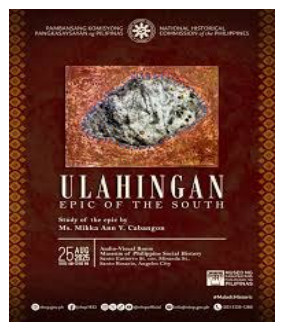
|
Documents kinship terms, tribal law, and cosmological vocabulary; structures narrative chants into analyzable text units. | Highlights affective dimensions of kinship, resilience, and communal solidarity in conflict and reconciliation stories. | Maps intersections of tribal governance, oral law, and mythic cosmology, showing layered identity. | Captures cadence and tonal shifts in communal chanting, emphasizing collective participation and oral law reinforcement. |
Tudbulul (T’boli)
|
Constructs corpus of mythic narratives tied to weaving and ancestral spirits; links oral text with material culture. | Surfaces values of harmony, spirituality, and respect for heritage expressed in sung narratives. | Shows hybridity between oral tradition, material culture (weaving), and ritual performance. | Analyzes melodic structures and instrumental accompaniment (hegelung, bamboo flute), connecting music to narrative meaning. |
- Synthesis
- Corpus construction makes each epic accessible for MTB-MLE and curriculum integration.
- Sentiment analysis uncovers the values dimension (justice, kinship, harmony).
- Hybridity mapping demonstrates identity negotiation and cultural blending.
- Audio recognition validates the role of performance and musicality in sustaining collective memory.
Appendix D: Cultural Pattern, Linguistic Pattern, and Musical Orality
| Corpus/Tradition | Cultural Patterns | Linguistic Patterns/Musical Orality | Values/Identity Encoded |
| Ulahingan (Epic, Manobo) | Heroic kinship, bravery, spirituality | Chant rhythm, formulaic diction | Community solidarity, courage, devotion |
| Tudbulul (Epic, T’boli) | Mythic cosmology, ancestral cycles | Melodic chanting, parallelism | Ancestral reverence, harmony with nature |
| Darangen (Epic, Maranao) | Genealogical honor codes, ritual practices | Culture-specific lexicon, poetic diction | Kinship pride, resilience, cultural continuity |
| Cebuano Folktales | Trickster tales, moral lessons | Proverbs, idioms, colloquial speech | Prudence, humility, communal ethics |
| Maranao Folktales | Islamic motifs blended with indigenous oral traditions | Arabic loanwords + Maranao syntax | Religious identity, cultural negotiation |
| Chavacano Folktales | Colonial hybridity, Spanish influence | Code-switching, Spanish loanwords | Multilingual identity, negotiation of heritage |
| English Folktales (localized) | Modern adaptations, educational narratives | Borrowed English structures + local idioms | Literacy, global connection, adaptation |
| Ritual Chants (Musical Orality) | Ceremonial performance, spirituality, collective wisdom | Rhythmic repetition, tonal variation, symbolic phrasing | Spirituality, continuity of indigenous values |
| Gong Ensembles (Musical Orality) | Collective musical performance, community cohesion | Rhythmic cycles, tonal layering, non-verbal communication | Unity, resilience, cultural pride |
- Synthesis
Musical orality, embodied in ritual chants and gong ensembles, is not peripheral but central: it encodes spirituality, collective wisdom, and community cohesion through rhythm, repetition, and tonal layering. Together with epics and folktales, these oral-musical forms sustain identity, resilience, and values, making them indispensable pillars of the TFMLMOE framework.
Appendix E: AI Insights into Patterns and Hybridity
| Corpus/Tradition | AI-Revealed Patterns | Hybridity Insights | Educational/Values Implications |
| Ulahingan (Epic, Manobo) | Recurring rhythmic chant structures; sentiment clustering around bravery and kinship | Oral formulae blend indigenous diction with adaptive performance | Reinforces communal solidarity and courage in MTB-MLE contexts |
| Tudbulul (Epic, T’boli) | Audio recognition shows melodic cycles tied to cosmology | Hybridity between mythic ancestral motifs and modern retellings | Sustains ancestral reverence and ecological harmony |
| Darangen (Epic, Maranao) | Lexical analysis highlights culture-specific honorifics and ritual terms | Hybridity of Maranao lexicon with Islamic loanwords | Encodes kinship pride, resilience, and cultural continuity |
| Cebuano Folktales | Sentiment analysis reveals moral polarity (trickster vs. virtuous) | Hybridity of colloquial idioms with narrative structures | Teaches prudence, humility, and communal ethics |
| Maranao Folktales | Corpus mapping shows integration of Arabic loanwords | Hybridity of Islamic and indigenous oral motifs | Strengthens religious identity and cultural negotiation |
| Chavacano Folktales | Text mining shows frequent code-switching | Hybridity of Spanish loanwords with local syntax | Mirrors colonial/postcolonial negotiation of identity |
| English Folktales (localized) | Sentiment clustering around modern educational themes | Hybridity of English structures with local idioms | Connects global literacy with local adaptation |
| Ritual Chants (Musical Orality) | Audio recognition identifies recurring rhythmic and tonal patterns | Hybridity of indigenous chant forms with adaptive ceremonial contexts | Encodes spirituality, continuity of indigenous values |
| Gong Ensembles (Musical Orality) | Pattern recognition reveals cyclical rhythmic layering | Hybridity of traditional kulintang cycles with modern performance settings | Fosters unity, resilience, and cultural pride |
- Synthesis
AI analysis uncovers hidden rhythms, lexical hybridity, and sentiment clusters across Mindanaoan epics, folktales, chants, and gong ensembles. These insights show that hybridity is not only linguistic but also performative, positioning heritage as a living, dynamic resource for education, values formation, and reconciliation within the TFMLMOE framework.
Appendix F: Common Folktales Across Mindanao Languages and Dialects
| Language/Tradition | Example Folktale | Themes/Motifs | Linguistic Features | Cultural Significance |
| Cebuano | Ang Unggoy ug ang Pagong (The Monkey and the Turtle) | Trickster tale; cleverness vs. greed | Proverbs, idioms, colloquial Cebuano | Teaches prudence, humility; popularized by Rizal |
| Cebuano | Maria Cacao | Mountain goddess linked to cacao trade | Mythic diction, localized geography | Connects livelihood and myth; bridges oral tradition with modern literacy |
| Maranao | Indarapatra and Sulayman | Heroic brothers fighting mythical creatures | Arabic loanwords + Maranao syntax | Blends Islamic and indigenous heroism; resilience and faith |
| Maranao | Darangen (Epic cycle) | Genealogical honor codes, ritual practices | Culture-specific lexicon, poetic diction | UNESCO-recognized heritage; preserves Maranao identity |
| Maranao | Walo the Primordial | Soul-guarding giant of the afterlife | Ritual chant phrasing | Encodes cosmology and ancestral reverence |
| Chavacano | Juan el Pobre (Juan the Poor) | Struggle of the poor against adversity | Code-switching, Spanish loanwords | Reflects colonial hybridity; perseverance and resilience |
| Chavacano | La Princesa y el Enano (The Princess and the Dwarf) | Magical helper, trials of nobility | Spanish fairy-tale motifs with local syntax | Mirrors colonial adaptation; moral lessons on humility |
| English (localized) | Mantaga | Mythic sea creature; fear, respect for nature | English narrative with indigenous imagery | Encodes ecological values and maritime cosmology |
| English (localized) | Santilmo | Fire spirit; mystery, danger, spirituality | English diction layered with local oral motifs | Reflects hybridity of folklore and modern retelling; moral caution |
| English (localized) | Sigbin | Mythical creature said to suck blood and walk backwards | English retelling of Visayan oral myth; hybrid diction | Symbol of fear, caution, and moral restraint; popular in folklore and modern adaptations |
Synthesis: These ten folktales exemplify cultural hybridity, linguistic diversity, and values transmission across Cebuano, Maranao, Chavacano, and localized English traditions, positioning them as core resources within the TFMLMOE framework for education and values formation.
IX. References
- Astorga, J. M., & Lorio, J. S. (2025). Parental involvement and Chabacano language proficiency among high school students in Ternate, Cavite. International Journal of Multidisciplinary: Applied Business and Education Research, 6(8).
- Bhabha, H. K. (1994). The location of culture. London: Routledge.
- Commission on Higher Education (CHED). (2019). CHEDRO III Memorandum No. 046, s. 2019: Meaningful teaching and learning of the Mother Tongue-Based Multilingual Education (MTB-MLE). Angeles University Foundation, Pampanga.
- Creswell, J. W., & Poth, C. N. (2018). Qualitative inquiry and research design: Choosing among five approaches (4th ed.). Thousand Oaks, CA: Sage Publications.
- Department of Education (DepEd). (2012). DepEd Order No. 16, s. 2012: Guidelines on the implementation of the Mother Tongue-Based Multilingual Education (MTB-MLE). Pasig City: Department of Education.
- Department of Literature, De La Salle University. (2021). Master of Arts in Literary, Cultural and Performance Studies: Program Overview. Manila: De La Salle University.
- Eslit, E. R. (2023). Beyond time and space: Exploring the enduring impact of Mindanao epics on modern Philippine society. Journal of Philippine Cultural Studies, 15(2), 45–62.
- Eslit, E. R. (2023). Beyond time and space: Exploring the enduring impact of Mindanao epics on modern Philippine society. International Journal of Languages and Culture, 3(1), 48–57. [CrossRef]
- Eslit, E. R. (2023). The role of Cebuano in the global linguistic landscape: An exploration of its internationalization. International Journal of Languages and Culture, 3(1), 48–57. [CrossRef]
- Eslit, Edgar. (2023). Resilience of Philippine Folklore: An Enduring Heritage and Legacy for the 21st Century.
- Espinosa, A. A., Gomez, M. A. C., Miranda, P. A., David, A. P., Abulon, E. L. R., Hermosisima, M. V. C., Quinosa Jr., E. A., Soliman, A. A., De Vera, J. L., Claros, I. H. A., Cruz, H. G. M., & Gonzales, N. S. J. (2023). Technology in education: A case study on the Philippines. Background paper prepared for the 2023 Global Education Monitoring Report: Technology and education, Southeast Asia. UNESCO. [CrossRef]
- Fernandez, D. G. (1996). Palabas: Essays on Philippine theater history. Quezon City: Ateneo de Manila University Press.
- Goody, J. (1987). The interface between the written and the oral. Cambridge: Cambridge University Press.
- Jorolan-Quintero, G. (2018). Oral traditions: An aid to implementation of mother tongue-based multilingual education in the Philippines’ basic education programme. International Review of Education, 64(6), 759–777. [CrossRef]
- Jorolan-Quintero, G. (2018). Oral traditions: An aid to implementation of mother tongue-based multilingual education in the Philippines’ basic education programme. International Review of Education, 64(6), 759–777. [CrossRef]
- Jorolan-Quintero, G. (2018). Oral traditions: An aid to implementation of mother tongue-based multilingual education in the Philippines’ basic education programme. International Review of Education, 64(6), 759–777. [CrossRef]
- Lederach, J. P. (1997). Building peace: Sustainable reconciliation in divided societies. Washington, DC: United States Institute of Peace Press.
- Lumbera, B. (2000). Philippine literature: A history and anthology. Quezon City: National Book Store.
- Lumbera, B., & Lumbera, C. N. (Eds.). (2005). Philippine literature: A history and anthology (Rev. ed.). Quezon City: University of the Philippines Press.
- Lumbera, B., & Lumbera, C. N. (Eds.). (2005). Philippine literature: A history and anthology (Rev. ed.). Quezon City: University of the Philippines Press.
- Lumbera, B., & Lumbera, C. N. (Eds.). (2005). Philippine literature: A history and anthology (Rev. ed.). Quezon City: University of the Philippines Press.
- Maceda, J. (1998). Gongs and bamboo: A panorama of Philippine music instruments. Manila: University of the Philippines Press.
- Maceda, J. (1998). Gongs and bamboo: A panorama of Philippine music instruments. Manila: University of Santo Tomas Publishing House.
- Maceda, J. (1998). Gongs and bamboo: A panorama of Philippine music instruments. Manila: University of Santo Tomas Publishing House.
- Maceda, J. (1998). Gongs and bamboo: A panorama of Philippine music instruments. Manila: University of Santo Tomas Publishing House.
- Madale, A. S. (1986). The Maranao Darangen: An Introduction. Marawi City: Mindanao State University.
- Manuel, E. A. (1975). Philippine folktales: An anthology. Quezon City: University of the Philippines Press.
- Mojares, R. B. (2006). Brains of the nation: Pedro Paterno, T.H. Pardo de Tavera, Isabelo de los Reyes, and the production of modern knowledge. Quezon City: Ateneo de Manila University Press.
- Nettl, B. (2005). The study of ethnomusicology: Thirty-one issues and concepts. Urbana: University of Illinois Press.
- Ong, W. J. (1982). Orality and literacy: The technologizing of the word. London: Methuen.
- Pineda, A. (2025). The gong music of the Philippine Cordilleras: A UNESCO intangible cultural heritage. Pinas Culture Journal.
- Roman-Tamesis, J., & Cruz, F. A. C. (2024). Philippine identities and digital humanities in the age of machines, social media, and artificial intelligence. UP CIDS Discussion Paper Series, 2024-06. University of the Philippines Center for Integrative and Development Studies.
- Roxas, R. E. O., Asenjo, G. L., Dita, S. N., Inventado, P. S. B., Buban, R. S., & Taylan, D. R. (2009). Online corpora of Philippine languages. In Proceedings of the DLSU Arts Congress (pp. 153–159). Manila: De La Salle University.
- Salazar, Z. (1999). The ethno-linguistic groups of Mindanao. Manila: National Commission for Culture and the Arts.
- Schreibman, S., Siemens, R., & Unsworth, J. (Eds.). (2016). A new companion to digital humanities. Malden, MA: Wiley-Blackwell.
- Schreibman, S., Siemens, R., & Unsworth, J. (Eds.). (2016). A new companion to digital humanities. Malden, MA: Wiley-Blackwell.
- Schreibman, S., Siemens, R., & Unsworth, J. (Eds.). (2016). A new companion to digital humanities. Malden, MA: Wiley-Blackwell.
- Tan, S. K. (1996). Surat Maguindanaon Jawi Documentary Series, Vol. 1. Quezon City: UP Center for Integrative and Development Studies, Mindanao Studies Program.
- UNESCO. (2005). The Darangen epic of the Maranao people of Lake Lanao. Paris: UNESCO.
- UNESCO. (2005). The Darangen epic of the Maranao people of Lake Lanao. Paris: UNESCO.
- UNESCO. (2008). Alternative community education with T’boli women and community in Lake Sebu, South Cotabato. Presented at the UNESCO Sub-regional Conference on Addressing Literacy Challenges in East Asia, South-East Asia and the Pacific: Building Partnerships and Promoting Innovative Approaches, Beijing, China. Document code: 2008/ED/UNLD/PI/EP/44.
Disclaimer/Publisher’s Note: The statements, opinions and data contained in all publications are solely those of the individual author(s) and contributor(s) and not of MDPI and/or the editor(s). MDPI and/or the editor(s) disclaim responsibility for any injury to people or property resulting from any ideas, methods, instructions or products referred to in the content. |
© 2026 by the authors. Licensee MDPI, Basel, Switzerland. This article is an open access article distributed under the terms and conditions of the Creative Commons Attribution (CC BY) license (http://creativecommons.org/licenses/by/4.0/).
Copyright: This open access article is published under a Creative Commons CC BY 4.0 license, which permit the free download, distribution, and reuse, provided that the author and preprint are cited in any reuse.