

Submitted:
13 August 2026
Posted:
14 August 2026
You are already at the latest version
Abstract
Background: The burden of chronic diseases is increasing across Africa, while many health systems continue to face challenges in delivering sustained, long-term care. Although diagnosis and treatment remain essential, chronic disease management extends well beyond the clinical encounter and requires ongoing medication adherence, self-management, monitoring, dietary and lifestyle support, and timely follow-up. Problem: Chronic disease services in many low-resource settings remain organised around episodic clinical encounters, creating a gap between treatment received within health facilities and the day-to-day management required outside them. Patients spend much of their time managing their conditions at home and within their communities, where access to structured follow-up and support may be limited. Community pharmacies, family and social networks, and mobile communication increasingly help patients navigate this gap, but these mechanisms often operate without systematic integration into formal care. Argument: This paper conceptualises this space between clinical encounters as the “missing middle” in chronic disease care. We argue that improving long-term outcomes requires greater attention to the systems that connect clinical encounters with patients’ everyday experiences of managing chronic conditions. The paper proposes a community-integrated digital continuity framework that brings together community-based support, digital communication, patient education, monitoring, medication adherence support, and care coordination as complementary components of longitudinal chronic disease management. Implications: Addressing the missing middle requires health systems to move beyond a predominantly encounter-based approach toward models that provide structured support across the full course of chronic illness. Integrating community actors and accessible digital communication into routine care may offer a practical pathway for strengthening continuity, particularly in settings where health-system resources are constrained. The framework provides a basis for further implementation research and evaluation of community-integrated approaches to chronic disease continuity in African health systems.
Keywords:
chronic disease
; continuity of care
; noncommunicable diseases
; Africa
; primary healthcare
; digital health
; community health
; hypertension
; diabetes
1. Introduction
Across many African healthcare settings, an important challenge in chronic disease management occurs in the long intervals between clinical encounters. Chronic conditions such as hypertension and diabetes require sustained management over time, yet much of the formal healthcare response remains concentrated around diagnosis, treatment initiation, and scheduled follow-up. This creates a gap between the care provided during clinical encounters and the ongoing support required to manage chronic illness in everyday life (1, 2).
The growing burden of noncommunicable diseases (NCDs) makes this gap increasingly important. Cardiovascular diseases, cancers, chronic respiratory diseases, and diabetes are major contributors to morbidity and mortality globally, with a disproportionate share of premature NCD deaths occurring in low- and middle-income countries (3). In sub-Saharan Africa, diabetes in particular has become an increasingly important health-system and policy challenge, occurring alongside persistent infectious disease burdens and other competing health priorities (1). These conditions require health systems capable not only of providing diagnosis and treatment but also of supporting patients through sustained monitoring, adherence, self-management, and follow-up.
Despite this changing disease profile, chronic disease services in many low-resource settings remain organised around episodic clinical encounters rather than sustained longitudinal management. Primary healthcare is expected to provide coordinated and people-centered care, yet health systems in low- and middle-income countries continue to face gaps between the care that populations need and the care that health systems are able to consistently deliver (4, 2). Evidence from sub-Saharan Africa also indicates challenges with retaining patients in chronic disease care. A systematic review of type 2 diabetes management in the region found particularly low retention rates in primary-care research settings, highlighting the difficulty of sustaining engagement beyond individual clinical encounters (5).
Chronic diseases, however, do not follow episodic trajectories. They require sustained engagement, continuous monitoring, behavioural adaptation, and coordinated support that extends beyond the clinical consultation. The Chronic Care Model similarly emphasizes the importance of interactions between informed patients and proactive healthcare systems, rather than relying exclusively on individual clinical encounters (6). Evidence from systematic reviews also suggests that greater continuity of care is associated with improved outcomes among people living with diabetes and hypertension, although the strength and consistency of these associations vary across outcomes and settings (7).
This disconnect is particularly evident in the delivery of therapeutic lifestyle interventions, including dietary care. Effective management of hypertension, diabetes, and other chronic conditions involves not only pharmacological treatment but also dietary assessment, counselling, physical activity, and sustained behavioural support. These activities are not confined to the clinic: patients make food, medication, and lifestyle decisions every day within changing social, cultural, and economic circumstances. Yet dietary and lifestyle counselling is frequently concentrated within clinical encounters, creating a challenge for sustained behaviour change. Evidence from telehealth research suggests that remote approaches can provide additional opportunities for delivering dietary interventions and behavioural support beyond face-to-face encounters (8).
This illustrates how the continuity gap extends beyond medication management to the broader behavioural work required to live with chronic disease. Patients with chronic conditions typically spend far more time managing their conditions outside formal clinical encounters than within them. During these periods, much of the day-to-day responsibility for disease management falls to patients, households, and community support networks. Medication-taking, dietary choices, physical activity, symptom monitoring, and decisions about when to seek further care therefore occur largely within patients’ everyday environments rather than inside health facilities.
These outcomes cannot be fully explained by individual non-adherence. Structural constraints also shape patients’ ability to sustain chronic disease management. Primary healthcare systems in low- and middle-income countries face challenges related to access, coordination, resources, information systems, and the organisation of care (4, 2). Socioeconomic pressures, including financial constraints and competing household demands, can further influence patients’ ability to attend appointments, obtain medicines, follow dietary recommendations, and maintain long-term treatment routines. Continuity of care is therefore not simply a matter of whether patients comply with medical advice; it is also a function of whether health systems provide the structures and support required for patients to act on that advice over time.
At the same time, patients and communities develop mechanisms to compensate for gaps in formal continuity systems. Community pharmacies can provide accessible points of contact for people living with chronic conditions, while family members, peers, community networks, and other local actors may contribute to day-to-day support. Mobile communication has also created additional channels through which patients and health professionals can maintain contact outside conventional clinical encounters. Research on WhatsApp in health systems demonstrates its potential to facilitate communication and engagement across time and place, particularly in low- and middle-income settings (9). However, the existence of these communication channels does not in itself create an integrated continuity system. Their use may remain fragmented, dependent on individual providers or patients, and disconnected from routine clinical workflows.
The wider digital-health literature similarly indicates that mobile technologies can support health service delivery and patient engagement, while also highlighting barriers related to infrastructure, usability, implementation, and integration into existing health systems (10). Digital communication should therefore not be viewed as a substitute for clinical care. Rather, its value lies in how effectively it can connect patients, community-based support, and health professionals across the periods between formal encounters.
This creates what can be described as a “missing middle” in chronic disease care: the space between clinical encounters where much of day-to-day disease management occurs, yet where structured health-system engagement may be weakest. Although improving diagnosis and treatment initiation remains essential, greater attention is needed to the systems that support patients between clinical encounters. Many determinants of long-term chronic disease control unfold during this period, including medication adherence, dietary and lifestyle behaviours, symptom monitoring, and timely response to changes in health status.
Understanding this gap provides a useful basis for rethinking chronic disease delivery in African health systems. Rather than viewing care as a sequence of isolated consultations, chronic disease management can be understood as a continuous process in which clinical services, community-based support, patient self-management, communication, and follow-up need to function as connected components. The Community-Integrated Digital Continuity Framework proposed in this paper builds on this premise by examining how community actors and accessible digital communication can be integrated with formal healthcare processes to provide more consistent support across the chronic disease journey.
2. The Structural Problem
2.1. Episodic Care Model
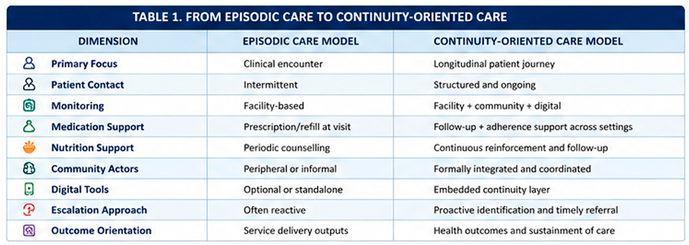
Across sub-Saharan Africa, health systems have historically been organised around acute and disease-specific services, while chronic conditions require sustained, coordinated care over time. This mismatch has become increasingly important as hypertension, diabetes, cardiovascular disease, and other non-communicable diseases account for a growing share of morbidity and mortality. Evidence from sub-Saharan Africa indicates that existing health systems, often oriented towards acute and episodic care, need to be reoriented towards longitudinal chronic disease management (11).
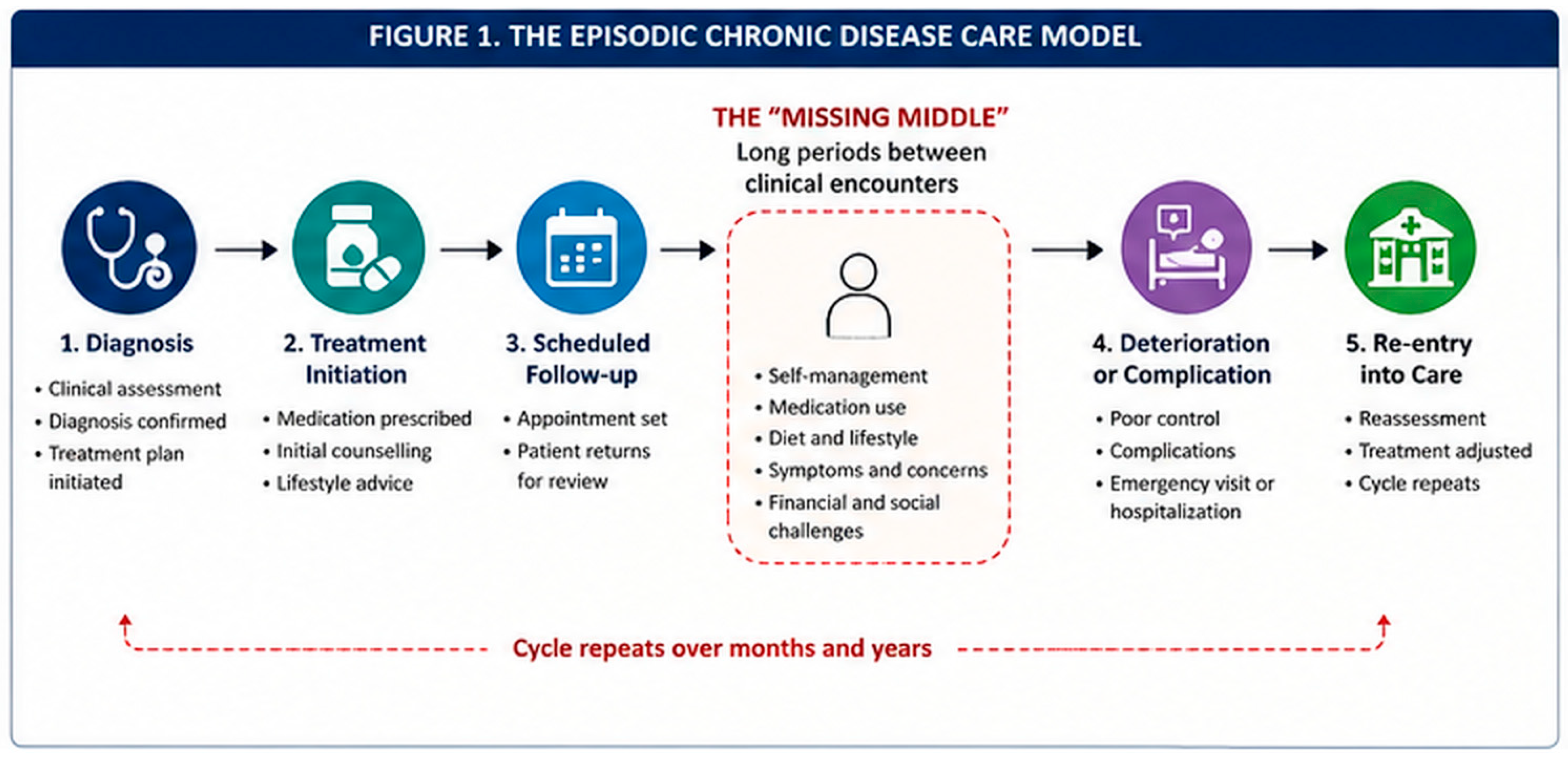
In an episodic model, care is concentrated within discrete clinical encounters: a patient presents to a facility, receives assessment and treatment, and is given instructions for subsequent follow-up. The difficulty is that chronic disease management continues after the patient leaves the facility. Medication-taking, dietary decisions, physical activity, symptom interpretation, monitoring, and care-seeking occur daily and are shaped by circumstances that may change substantially between appointments. Effective chronic care therefore requires more than periodic clinical contact; it requires mechanisms that sustain engagement and coordination over time (11).
The World Health Organization and UNICEF identify continuity, coordination, integrated services, and people-centered care as important features of primary health care. These principles are particularly relevant to chronic conditions because patients require repeated interaction with health services across the course of illness rather than isolated episodes of treatment (3).
However, translating these principles into routine chronic care remains difficult in resource-constrained settings. Primary healthcare systems in low- and middle-income countries continue to face limitations in infrastructure, workforce capacity, service integration, and the organisation of care (4). In sub-Saharan Africa specifically, a systematic synthesis of chronic disease integration identified the need for coordinated, longitudinal care and highlighted patient access, patient-provider partnerships, task shifting, clinical mentoring, and community partnerships as important components of context-appropriate chronic care models (11).
This structural limitation also has implications for medication adherence. Adherence is not solely an individual behaviour; it is influenced by treatment-related, financial, sociocultural, and health-system factors. A systematic review and meta-analysis of antihypertensive medication adherence across Africa estimated overall adherence at approximately 34% and identified financial and sociocultural factors, treatment beliefs, availability of medicines, and hypertension knowledge among important determinants (15). More recent evidence focused specifically on sub-Saharan Africa similarly identifies medication adherence as an important implementation challenge in hypertension management (16).
Financial barriers can further disrupt continuity. In the African region, WHO has reported that non-communicable diseases account for a substantial share of patients’ out-of-pocket health spending and that the chronic nature of these conditions can expose households to financial hardship. Transportation, repeated facility visits, and the cost of medicines can therefore become barriers to sustained engagement with care (17).
A recent scoping review of the financial burden of NCDs in sub-Saharan Africa similarly found that out-of-pocket expenditure represents an important challenge for people managing chronic conditions, particularly where financial protection and insurance coverage are limited (12).
The consequence is not necessarily complete disengagement from healthcare. Rather, patients may move in and out of formal care depending on symptoms, affordability, availability of medicines, and competing household demands. This creates a form of treatment fragmentation in which clinical recommendations made during one encounter may not be consistently supported during the weeks or months that follow.
Continuity of care is therefore not simply an administrative feature of healthcare delivery. Evidence from broader primary-care research shows that stronger continuity is associated with improved outcomes, including lower mortality (18, 19). Although much of this evidence comes from outside Africa, it provides an important rationale for examining how continuity can be strengthened within African chronic care systems.
The central structural problem is consequently a mismatch between the episodic organisation of healthcare delivery and the continuous nature of chronic disease management. Patients may receive appropriate diagnosis and treatment during clinical encounters while receiving comparatively limited structured support between those encounters. This interval is where much of the day-to-day work of chronic disease management takes place.
2.2. Patient Reality in African Contexts
The experience of living with a chronic condition extends well beyond the clinical encounter. Between visits, patients must make daily decisions about medication, food, physical activity, symptom interpretation, healthcare expenditure, and when to seek additional assistance. In sub-Saharan Africa, these decisions occur within social and economic environments that can substantially influence the ability of patients to sustain recommended treatment behaviours (11).
Financial accessibility is one important component of this reality. Chronic diseases require repeated expenditure over long periods, and the cumulative burden of consultations, medicines, transport, and other healthcare-related costs can affect treatment continuity. Evidence from sub-Saharan Africa shows that out-of-pocket expenditure remains an important component of NCD financing and can place disproportionate pressure on lower-income households (12).
Nutrition illustrates particularly well why chronic disease management cannot be confined to the clinic. Dietary decisions are made every day and are influenced by household income, food availability, cultural practices, food prices, and food security. A systematic review and meta-analysis involving studies across sub-Saharan Africa found evidence of an association between food insecurity and several metabolic risk factors relevant to diet-sensitive NCDs, including hypertension (13).
Evidence from West Africa also suggests that dietary patterns are relevant to hypertension risk. A systematic review and meta-analysis of observational studies found associations between hypertension and several dietary factors commonly observed in the region, including dietary salt, dietary fat, red meat, and junk food, while higher fruit and vegetable consumption appeared protective (14).
These findings highlight an important limitation of purely clinic-based dietary counselling. A recommendation provided during a consultation may be clinically appropriate but difficult to sustain when the patient’s food environment, household budget, or cultural practices make implementation challenging. Nutrition, therefore, represents not a one-time counselling activity but an ongoing component of chronic disease self-management.
Patients also make treatment decisions within networks that extend beyond formal healthcare services. Family members, friends, community members, pharmacists, and other healthcare providers may influence decisions about medicines, symptoms, diet, and when to seek care. Rather than interpreting these behaviours simply as evidence of patient “non-compliance,” it is more useful to understand them as part of the distributed environment within which chronic disease management occurs.
Traditional and complementary medicine represents another component of this environment. Its use alongside biomedical treatment is well documented in many African settings and may reflect cultural beliefs, accessibility, affordability, previous experiences with healthcare, or trust in community-based providers. The presence of these parallel pathways does not necessarily indicate rejection of biomedical care; rather, it illustrates the pluralistic nature of health-seeking behaviour.
Symptom perception can also influence treatment behaviour. Conditions such as hypertension may remain asymptomatic for prolonged periods, meaning that patients may not experience an immediate physical signal that reinforces the need for continuous treatment. This creates a particular challenge for long-term adherence because the benefits of treatment are often preventive rather than immediately perceptible.
Mobile communication has introduced another layer to this patient reality. Across low- and middle-income countries, mobile technologies have increasingly been used to facilitate communication, information exchange, and engagement with healthcare. WhatsApp, in particular, has become an accessible communication platform in health-related settings. A scoping review found that WhatsApp was being used across numerous health research and programme contexts in LMICs, including sub-Saharan Africa, although questions around privacy, governance, and integration remain important (9).
These developments suggest that patients are not simply passive recipients of episodic healthcare. They actively construct ways of managing chronic illness between formal encounters. The problem is that many of these mechanisms remain disconnected from formal clinical systems.
The patient therefore occupies a position between two worlds: a formal healthcare system that provides diagnosis, prescriptions, and periodic review, and an everyday environment in which most chronic disease management actually takes place.
2.3. The Continuity Gap
Despite increasing attention to NCD screening, diagnosis, treatment, and primary healthcare strengthening, an important question remains: What happens between clinical encounters?
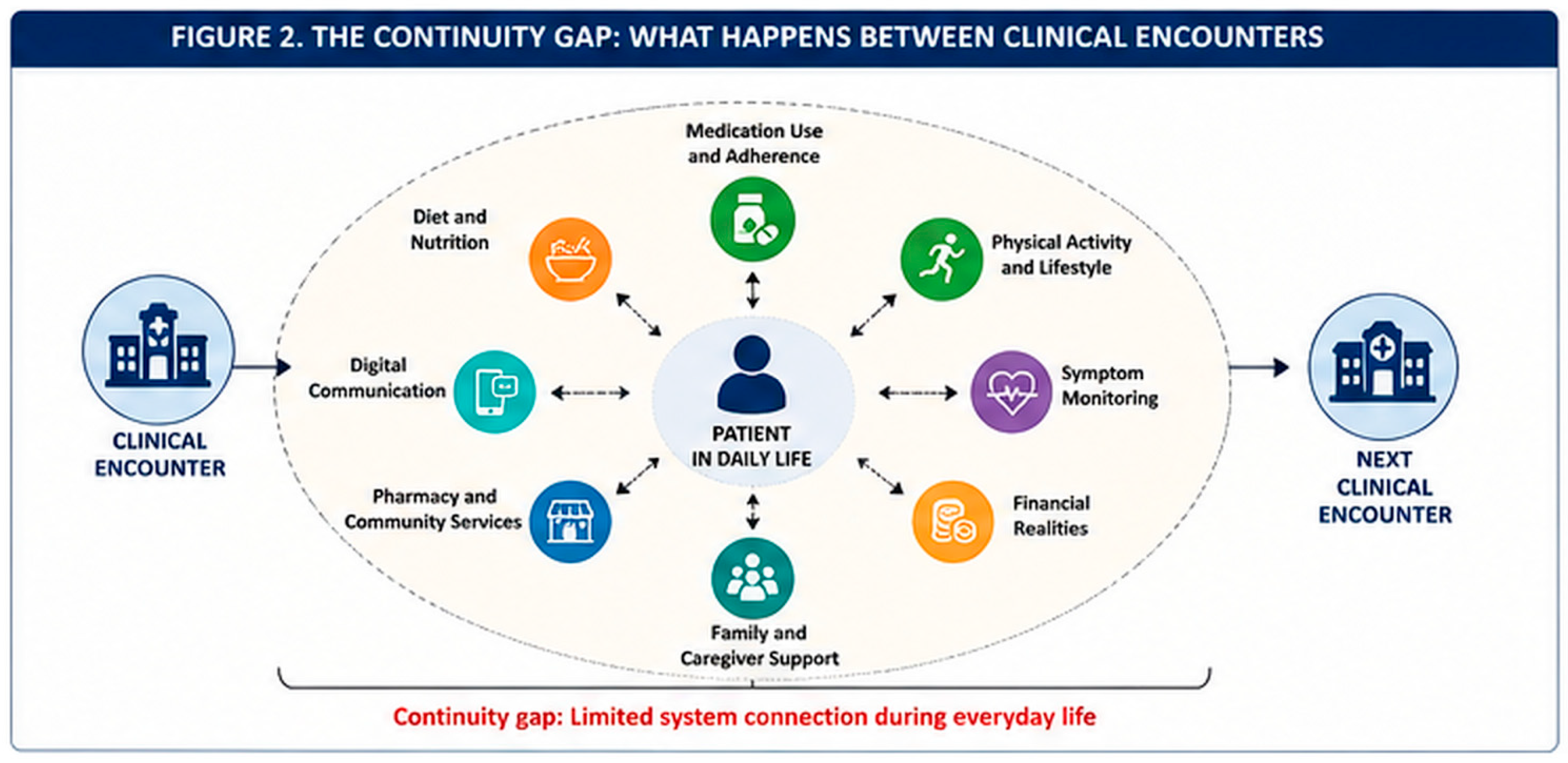
Patients living with chronic conditions may spend only a small proportion of their disease trajectory in direct contact with healthcare professionals. The remainder is spent managing medication, diet, physical activity, symptoms, finances, and care-seeking decisions within their homes and communities. Chronic care systems therefore face a fundamental challenge: how to maintain meaningful engagement when the patient is no longer physically present in the clinic.
This creates what this paper refers to as the continuity gap: the disconnect between episodic clinical encounters and the continuous realities of living with chronic disease.
The concept is consistent with emerging evidence from sub-Saharan Africa. Harrison and Jordan (2022), in a systematic synthesis of chronic disease integration into primary care, found that existing systems oriented towards acute and episodic care need to be reoriented towards coordinated, longitudinal chronic disease management. Their synthesis further identified continuity and coordination, patient-provider partnerships, self-care, and community partnerships as important components of an African-context chronic care model.
The continuity gap should not, however, be interpreted simply as a problem of missed appointments. A patient can attend scheduled appointments and still experience weak continuity of communication; monitoring, medication support, lifestyle support, and coordination are absent between visits.
This distinction matters because chronic disease management is fundamentally longitudinal. Evidence from systematic reviews has associated stronger continuity of care with improved patient outcomes, including lower mortality (18, 19).
The gap also extends beyond medication management. Nutrition provides a clear example. Dietary behaviours are repeated daily, yet dietary counselling is often concentrated within relatively infrequent clinical encounters. Evidence from sub-Saharan Africa demonstrates that food insecurity and dietary patterns are linked to metabolic risk factors relevant to chronic disease, indicating that patients’ ability to follow dietary recommendations is influenced by circumstances beyond the clinic (13, 20).
The implication is not that every patient requires continuous clinical supervision. Rather, chronic care systems need mechanisms that allow appropriate support, monitoring, education, and escalation to occur between formal encounters.
This is particularly important for hypertension and diabetes because deterioration may occur without obvious symptoms. Without mechanisms for regular monitoring or timely communication, changes in adherence, lifestyle behaviours, or disease control may remain unnoticed until the next scheduled encounter.
At the same time, patients and communities are already developing informal mechanisms to bridge these intervals. These include community-based providers, pharmacies, family support, peer networks, and mobile communication. Mobile messaging can facilitate contact across time and place, but evidence also shows that such platforms raise questions regarding privacy, governance, and integration with formal health systems (9).
The issue, therefore, is not the absence of patient activity between clinical encounters. The issue is that much of this activity occurs outside a coordinated continuity infrastructure.
This reframes chronic disease management from a sequence of appointments into a longitudinal process. The clinic remains important, but it is only one component of the patient’s care trajectory. What happens between visits, including medication use, dietary behaviour, monitoring, communication, and decisions about when to seek help, also requires consideration in the design of chronic care systems.
The “missing middle” described in this paper therefore refers to the space between clinical intervention and everyday disease management. It is not a claim that no care occurs during this period. Rather, it is a claim that the care and support occurring during this period are often insufficiently structured, coordinated, or connected to formal healthcare delivery.
Strengthening chronic disease outcomes in Africa may therefore require a shift from asking only “Did the patient receive treatment?” to also asking “What supports the patient to sustain that treatment between visits?”
3. Emerging Informal Continuity Mechanisms
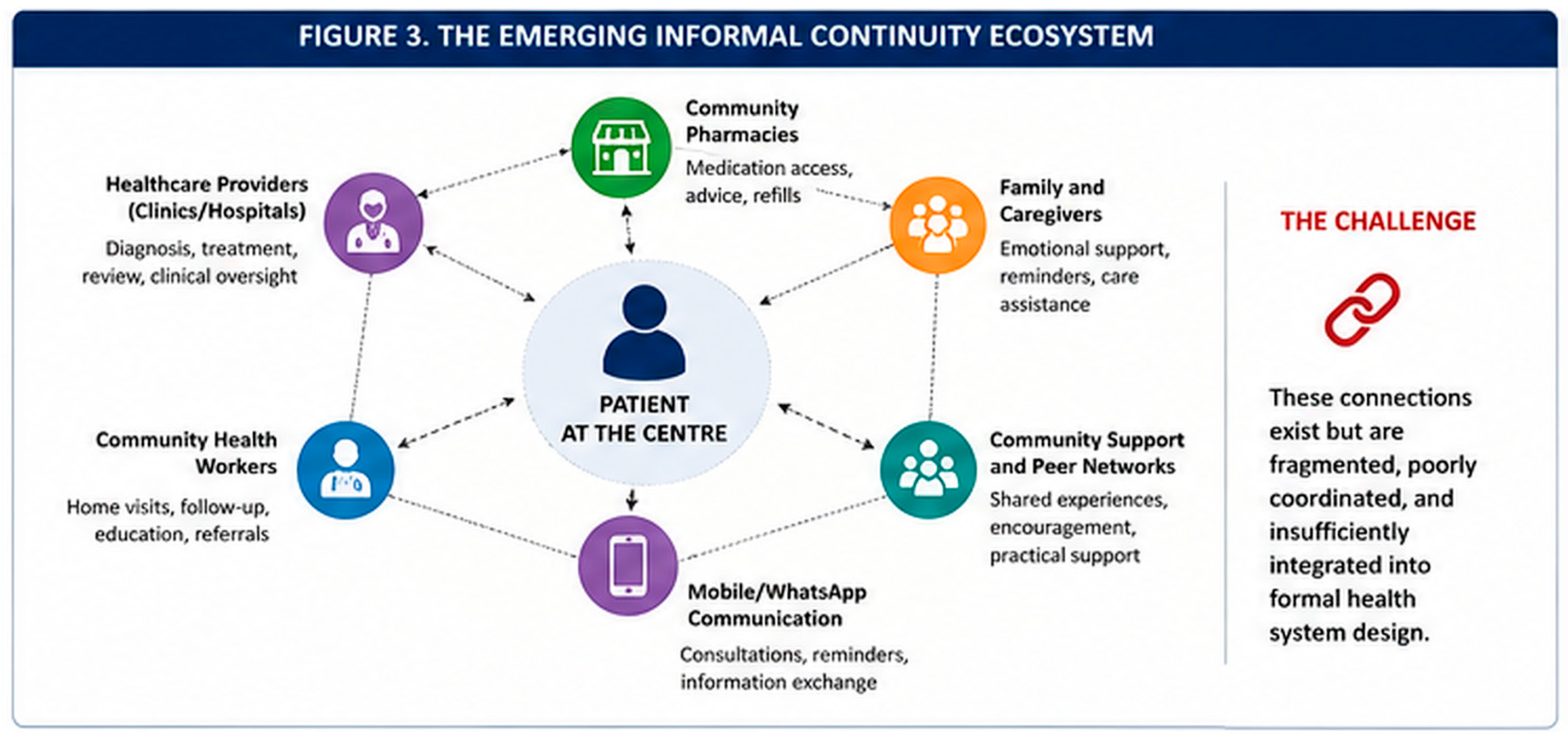
In several African settings, patients and healthcare workers have developed informal and community-based mechanisms to maintain engagement with chronic disease care between clinical encounters. These mechanisms operate through existing healthcare relationships, community networks, pharmacies, community health workers, and mobile communication technologies. Rather than representing fully integrated models of chronic care, they provide additional channels through which patients can obtain information, monitoring, counselling, and support outside conventional facility-based encounters. Evidence from sub-Saharan Africa suggests that community-based approaches can contribute to hypertension prevention and control, although the evidence remains heterogeneous and implementation varies across settings (21).
One example is the use of direct mobile communication between patients and healthcare providers outside conventional clinical settings. Mobile health interventions have been implemented across African settings for conditions including hypertension and diabetes, with applications ranging from health education and reminders to monitoring and communication. However, evidence regarding their effects on clinical outcomes remains mixed, indicating that the value of digital communication depends substantially on how interventions are designed and integrated into care processes (22). In Lagos, Nigeria, pharmacy-based hypertension care has also been explored alongside mobile health technology, with patients and healthcare providers identifying accessibility, communication, and pharmacist–patient relationships as important features of pharmacy-based care (23).
Community pharmacies represent another potential point of contact between formal clinical encounters. Evidence from Nigeria indicates that community pharmacists can provide structured education and medication-related support for patients with hypertension. In a randomized controlled trial involving community pharmacies in Abuja and Lokoja, a pharmacist-led educational intervention was associated with improved medication adherence among patients with hypertension (24). These findings suggest that pharmacies can provide more than medication dispensing and may serve as accessible points for selected components of chronic disease support.
However, pharmacy-based care should not automatically be equated with an integrated continuity system. Such services may operate alongside, rather than within, formal clinical pathways. Questions relating to referral, documentation, information sharing, clinical responsibility, and communication with other providers therefore remain important when considering how community pharmacies could contribute to longitudinal chronic disease management.
Community health workers provide another potential bridge between formal health services and everyday chronic disease management. Evidence from Nigeria shows that community health workers already engage in informal task-shifting and task-sharing for hypertension and diabetes care, extending their activities beyond formally defined roles in response to local service needs (25). These findings are important because they demonstrate that community-level actors may already possess relationships, local knowledge, and proximity that can support chronic disease care outside conventional facility settings. At the same time, informal expansion of responsibilities raises questions about training, supervision, scope of practice, and appropriate integration into formal health systems.
Community-based approaches are also being evaluated more broadly across sub-Saharan Africa. A systematic review of community-based interventions for hypertension identified approaches involving health education, health promotion, home-based screening, diagnosis, referral, and treatment. The review found evidence of benefit in some interventions but also considerable variation between approaches and settings, indicating that there is not yet sufficient evidence to define a single community-based model that can be applied uniformly across the region (21). This distinction is important because community-based care should be understood as a potential delivery pathway rather than an established solution in itself.
Alongside formal and semi-formal community actors, patients also draw on social networks when managing chronic illness. Family members, religious communities, peers, and other trusted individuals may influence how patients understand illness, make treatment decisions, and manage their conditions outside healthcare facilities. Recent qualitative research among Nigerians living with poorly controlled type 2 diabetes identified traditional medicine, religious beliefs, community and social networks, patient–provider relationships, and gaps in information and education as important dimensions of the experience of managing diabetes (14). These findings reinforce the importance of understanding chronic disease management as an activity that extends beyond the formal patient–clinician encounter.
Mobile communication can further reinforce these existing relationships. Rather than functioning solely as standalone digital interventions, mobile platforms can create additional channels through which patients and healthcare workers communicate between formal encounters. Evidence from African mHealth research demonstrates that such technologies have been applied to diabetes and hypertension management, although evidence of their effectiveness on clinical outcomes remains inconclusive (22). Their contribution to continuity may therefore depend less on the technology itself than on whether communication is connected to appropriate clinical protocols, monitoring, referral, and escalation mechanisms.
These informal and community-based mechanisms also have relevance for nutritional and lifestyle management. Dietary and physical-activity decisions occur continuously in everyday life and cannot be addressed adequately through occasional clinical encounters alone. Evidence from Mali provides an example of how community-based peer support can extend structured diabetes self-management beyond conventional consultations. In the ST2EP randomized controlled trial, culturally tailored diabetes education was delivered over one year by trained peer educators in community settings. The intervention incorporated self-management education relevant to food intake and physical activity and was associated with improvements in glycemic control, body mass index, and waist circumference (26).
The significance of these mechanisms is therefore not that pharmacies, community health workers, social networks, peer educators, or mobile platforms should independently replace clinical care. Rather, they reveal existing points through which continuity can potentially be strengthened. Their value lies in the possibility of connecting these existing points of contact with appropriate clinical oversight, evidence-based education, monitoring, referral, and escalation mechanisms.
The emergence of these mechanisms offers an important design insight for chronic disease care in Africa. Continuity may not require entirely new structures to be created from the ground up. It may also depend on recognising, strengthening, coordinating, and integrating the relationships, community actors, and technologies that patients and healthcare workers already use to maintain engagement between clinical encounters.
4. Toward a New Model: A Community-Integrated Digital Continuity Framework
The persistent gap between episodic clinical encounters and the continuous realities of chronic disease management suggests the need to strengthen continuity beyond the facility-based encounter. Improving diagnosis, treatment access, and clinical infrastructure remains essential, but these measures may have limited effect when patients receive little structured support between visits. Chronic disease management therefore requires sustained engagement over time rather than reliance on isolated clinical interactions.
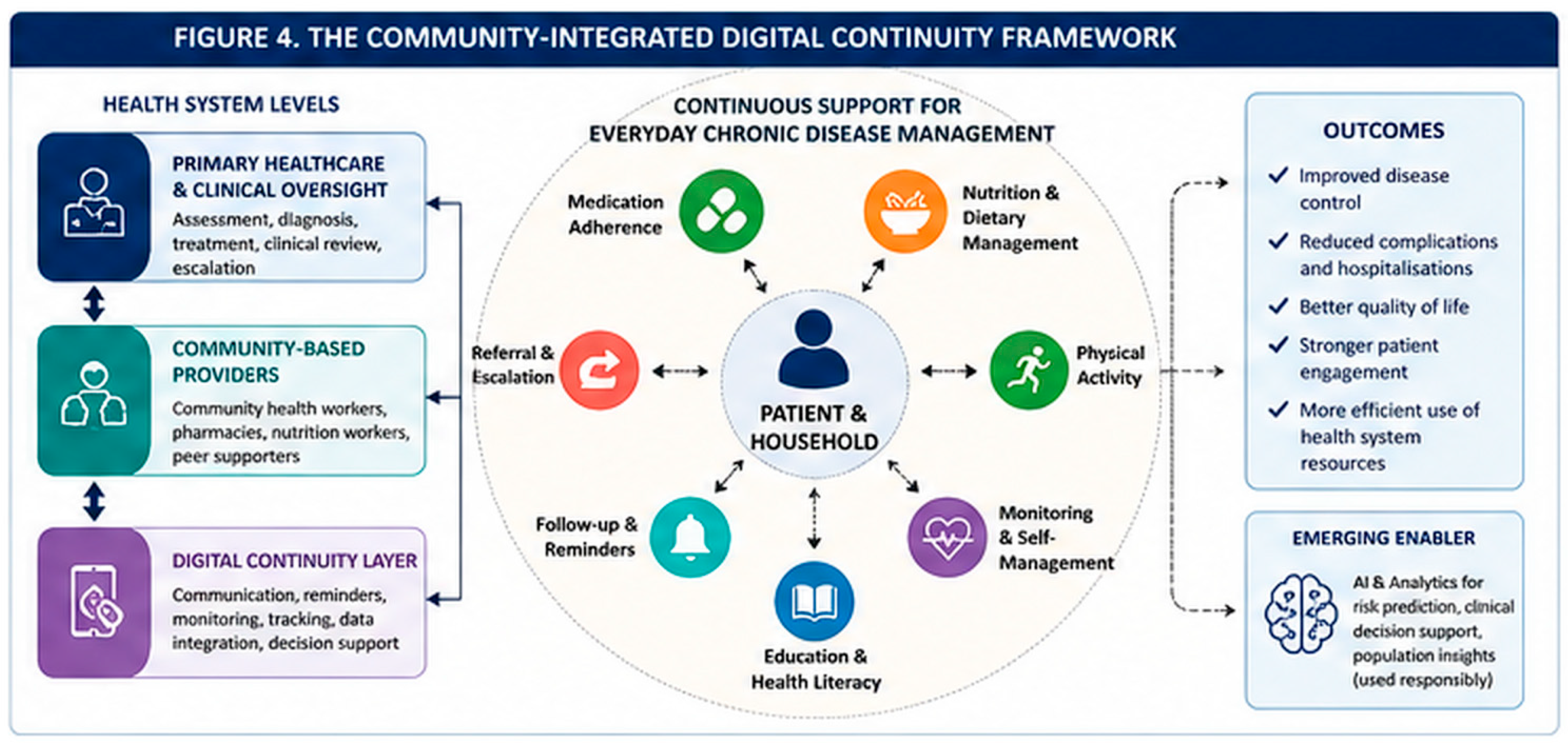
Drawing on the structural gaps identified in the preceding sections and on evidence concerning integrated chronic disease care in sub-Saharan Africa, we propose a Community-Integrated Digital Continuity Framework. The framework is designed to connect formal healthcare services with community-based health actors and accessible digital communication channels in order to strengthen continuity between clinical encounters. It does not propose replacing existing health services or creating a parallel healthcare system. Rather, it seeks to strengthen the connections between patients, healthcare providers, community resources, monitoring systems, and follow-up processes.
This approach is consistent with emerging evidence from sub-Saharan Africa. Harrison and Jordan (2022) identified coordinated and longitudinal care, patient–provider partnerships, patient empowerment for self-management, continuity and coordination, and community partnerships as important components of integrated chronic disease care in the region. Their framework also identified data systems for follow-up and the mobilisation of community resources as relevant components of integrated chronic care. The proposed framework builds on these principles but places particular emphasis on the between-visit period, where continuity can be operationalized through community and digital mechanisms.
At the centre of the framework is the principle of continuous engagement. Chronic disease management unfolds largely outside healthcare facilities, with patients making daily decisions about medication use, diet, physical activity, symptom interpretation, and care-seeking. Continuity should therefore be understood not simply as repeated attendance at the same facility, but as the ability of the health system to maintain an appropriate relationship with patients over time. In the African context, this requires mechanisms that extend beyond the conventional consultation and remain connected to primary care (11).
A second component is the integration of community-based health actors into the continuity pathway. Community health workers, pharmacists, and other appropriately trained and regulated providers can provide accessible points of contact between formal clinical encounters. Their potential roles include reinforcing treatment instructions, supporting self-management, identifying concerns that require clinical review, facilitating referrals, and helping patients remain connected to care. This is consistent with the WHO African Region’s 2024 framework for implementing the Global Diabetes Compact, which emphasizes strengthening diabetes services at community and primary healthcare levels, improving referral systems, involving community health workers, supporting families, and adopting a people-centered approach to long-term care (34).
The framework does not, however, assume that every community actor should perform the same clinical functions. Roles must remain consistent with professional scope of practice, national regulation, training, supervision, and referral capacity. Community actors should therefore function as continuity and support nodes within an integrated care pathway, rather than substitutes for physicians, nurses, dietitians, pharmacists, or other professionals when clinical assessment is required.
A third component is low-barrier digital communication. Mobile phones, SMS, telephone calls, and messaging platforms can provide practical channels for appointment follow-up, health education, medication reminders, symptom check-ins, self-management support, and communication between patients and healthcare workers. African evidence increasingly demonstrates the feasibility of using mobile technologies for chronic disease management. However, evidence of their effectiveness on clinical outcomes remains mixed. A systematic review and meta-analysis of African mHealth interventions for diabetes and hypertension found no conclusive overall effect on HbA1c or blood pressure, highlighting the need for larger and better-designed studies (22).
This evidence suggests that digital connectivity itself is not the intervention. Its value depends on what care processes it enables, who responds to the information generated, how patients are supported, and how digital activities are integrated into routine healthcare. In the proposed framework, digital communication therefore serves as an infrastructure for continuity, rather than an independent treatment modality.
Within this infrastructure, digital communication can enable patients to receive reminders, report relevant information, ask questions, receive health education, and remain connected to healthcare workers between appointments. Where concerning information is identified, the system should facilitate appropriate escalation to a qualified healthcare professional or healthcare facility.
A fourth component is structured nutritional and lifestyle support. Dietary decisions occur every day, whereas nutritional counselling is often delivered during relatively infrequent clinical encounters. This creates a particular continuity challenge for conditions such as hypertension and diabetes, where dietary patterns, salt intake, physical activity, and weight management form part of long-term disease management.

 |
African evidence supports the importance of addressing these behaviours within chronic disease care. A systematic review and meta-analysis of dietary and lifestyle interventions conducted in sub-Saharan Africa found that these interventions were associated with reductions in systolic and diastolic blood pressure, although the evidence base remains limited and heterogeneous (35).
The framework therefore incorporates ongoing nutritional support between clinical encounters, rather than treating dietary counselling as a one-time educational activity. Digital platforms may be used to reinforce nutrition education, provide culturally appropriate guidance, support self-monitoring, and maintain contact with patients. Community-based health workers and other trained personnel may reinforce messages and identify patients who require professional nutritional review, while dietitians and other qualified professionals retain responsibility for specialised dietary assessment and management.
This approach is also aligned with the WHO African Region’s current emphasis on prevention, healthy diets, physical activity, community engagement, and people-centered diabetes care (34). Importantly, the framework does not assume that digital nutrition support will automatically improve dietary adherence. Its effectiveness should be tested empirically, particularly given the influence of food affordability, availability, household practices, and local dietary patterns on patients’ ability to follow nutritional recommendations.
A fifth component is behavioural support and self-management. Long-term management of hypertension, diabetes, and other chronic conditions requires patients to sustain medication use, dietary practices, physical activity, monitoring, and appropriate care-seeking over extended periods. The framework therefore treats adherence not simply as an individual patient characteristic but as a behaviour that can be supported through repeated education, reminders, feedback, problem-solving, and timely contact with healthcare professionals.
This orientation is consistent with the African chronic-care literature, which identifies patient empowerment for self-management as an important component of integrated chronic disease care (11). Therapeutic patient education has also been associated with improvements in selected clinical and non-clinical outcomes among people living with diabetes in sub-Saharan Africa, although the sustainability and consistency of these effects require further investigation (36).
A sixth component concerns monitoring and escalation. Appropriate information, such as self-reported symptoms, medication-related concerns, appointment status, or physiological measurements where available, can help identify patients who may require additional attention. Digital systems can facilitate the collection, organisation, and communication of such information, but monitoring should not be confused with autonomous clinical decision-making.
The framework therefore proposes a simple escalation pathway: information → identification → clinical review → action or referral. This preserves professional accountability while allowing routine digital communication and community-level interactions to support earlier recognition of potential problems.
Emerging artificial intelligence and decision-support technologies may eventually strengthen this component. For example, AI could potentially assist healthcare teams in identifying patterns associated with missed follow-up, poor adherence, or elevated risk. However, these applications should be considered an emerging capability rather than an established component of chronic disease continuity in Africa. Their clinical usefulness, safety, fairness, privacy implications, and performance in African populations require further validation before routine deployment. AI should therefore remain supportive rather than substitutive, with clinical professionals retaining responsibility for interpretation and decisions.
At a system level, the framework is intended to operate as an integrating layer across existing care structures. It connects the clinic or hospital with community-based providers, patients, digital communication channels, monitoring processes, and referral pathways. This is consistent with evidence from sub-Saharan Africa supporting coordinated, longitudinal, community-linked approaches to chronic disease care (11).
The proposed framework is therefore not a replacement for primary care, hospitals, pharmacies, community health workers, dietitians, or other healthcare professionals. Its purpose is to strengthen the relationships between these actors and maintain appropriate patient engagement during the periods when patients are outside formal healthcare facilities.
The central proposition of the Community-Integrated Digital Continuity Framework is consequently straightforward: the clinical encounter should initiate and guide chronic disease management, but continuity must extend beyond the clinic. Community-based support, digital communication, nutritional and behavioural reinforcement, monitoring, and appropriate clinical escalation can form interconnected mechanisms through which that continuity is maintained.
The framework should ultimately be treated as a testable conceptual proposition rather than a proven intervention. Its value lies in providing a structured way to examine whether connecting community resources and low-barrier digital communication to formal chronic disease services can reduce discontinuity between visits and improve patient engagement, self-management, follow-up, and disease control in African settings. Future implementation research should therefore test its feasibility, acceptability, cost, equity, clinical effectiveness, and sustainability across different African health-system contexts.
5. Implications for Policy and Digital Health
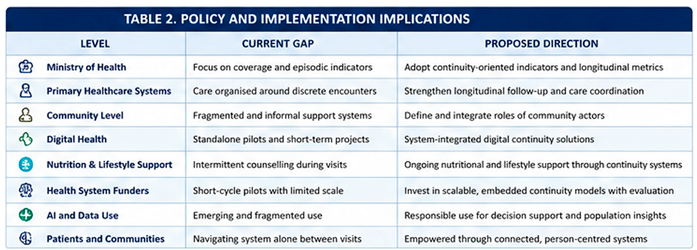
The continuity gap identified in chronic disease care has important implications for how health systems in Africa are designed, financed, and evaluated. Evidence from integrated-care initiatives in sub-Saharan Africa suggests that chronic conditions such as hypertension and diabetes can be incorporated into more coordinated primary healthcare models, although implementation depends on the availability of medicines, trained personnel, appropriate referral pathways, and organisational capacity (27). The policy challenge is therefore not simply to expand access to diagnosis and treatment but also to organise care so that patients remain connected to appropriate support over time.
5.1. Implications for Ministries of Health
For Ministries of Health, one important implication is the need to complement conventional service-coverage indicators with measures that capture continuity of care. Indicators such as screening coverage, treatment initiation, clinic attendance, and medicine availability remain important, but they provide only a partial picture of how effectively patients are supported after treatment begins. Measures such as follow-up retention, continuity of medication supply, documented patient contact, and sustained engagement could provide additional information about the performance of chronic disease programmes.
African evidence demonstrates the feasibility of organising chronic disease services around more integrated models. In Uganda, an integrated HIV, diabetes, and hypertension service model was found to be acceptable to patients and healthcare workers, while integration also helped address practical barriers such as access to medicines and the organisation of services (27). The broader INTE-AFRICA programme similarly tested integrated and decentralised approaches to chronic disease management in Tanzania and Uganda, including the transfer of selected services closer to communities (28). These experiences suggest that continuity should be considered not only as a patient-level outcome but also as a health-system design objective.
Ministries of Health may therefore consider formally incorporating community-based providers into chronic disease pathways where appropriate. Community pharmacies are particularly relevant because they already provide frequent points of contact for patients receiving long-term medicines. In a randomized controlled trial conducted in community pharmacies in Abuja and Lokoja, Nigeria, pharmacist-led education significantly improved medication adherence among patients with hypertension (24). Such evidence supports the potential role of community pharmacy services as part of structured chronic disease follow-up, provided that their responsibilities, referral mechanisms, documentation requirements, and professional scope are clearly defined.
5.2. Implications for Primary Healthcare Systems
For primary healthcare systems, the continuity gap points to the need for care models that extend beyond the individual clinic encounter. Integrated-care research from Uganda demonstrates that hypertension and diabetes services can be organised alongside other chronic conditions within primary healthcare facilities, with potential benefits in service coordination and patient experience (27). The INTE-AFRICA model further explored decentralising chronic disease services from facilities toward community-level delivery for patients who are stable on treatment, highlighting the importance of bringing appropriate elements of long-term care closer to patients (28).
This does not mean that every aspect of chronic disease management should be transferred into the community. Rather, primary healthcare systems should establish clear links between facility-based clinical care and community-level follow-up. Community health workers, pharmacists, nurses, and other appropriately trained providers can support defined components of care while maintaining referral pathways to clinicians when escalation is required.
Evidence from Nigeria also illustrates the potential value of community-based follow-up. The Nigerian Anti-Hypertensive Adherence Trial combined nurse-led community-based management, health education, facilitation of clinic attendance, and home visits for people with hypertension (29). Although the study was conducted more than a decade ago, its relevance lies in demonstrating that continuity support can be organised beyond the conventional facility encounter within a Nigerian setting.
Nutrition should also be incorporated into continuity-oriented primary healthcare. Dietary management is not a one-time clinical intervention; patients make food-related decisions every day and may require repeated counselling and adaptation to household circumstances. Recent Nigerian evidence suggests that dietitian-led nutrition education can improve nutritional knowledge and food-related behaviours among adults with type 2 diabetes (30). However, evidence specifically evaluating digitally delivered nutrition support within African chronic disease programmes remains limited. Digital nutrition support should therefore be treated as a promising implementation opportunity requiring further evaluation rather than as an already established intervention.
5.3. Implications for Digital Health Funders
For digital health funders, the continuity gap highlights the limitations of developing digital tools around isolated functions without considering the wider care pathway. Funding should increasingly support interventions that are connected to existing health services and designed around identifiable clinical and community workflows.
African evidence provides a useful basis for this approach. A randomized trial involving patients with hypertension in Ghana and Nigeria found that a mobile-health intervention delivered through an application and regular messages could influence blood pressure-related outcomes and medication adherence (31). At the same time, a systematic review and meta-analysis of African mHealth interventions for hypertension and diabetes found no conclusive overall evidence of significant improvements in blood pressure or glycaemic control (32). Taken together, these findings suggest that digital health should neither be dismissed nor presented as a proven solution. Its value depends on how the technology is designed, implemented, integrated with care, and evaluated.
For funders, this creates a strong case for supporting system-integrated digital interventions rather than short-term technology pilots. Priority areas could include follow-up tracking, medication reminders, patient-reported monitoring, asynchronous communication, referral escalation, and structured communication between community providers and formal health facilities. Funding should also support implementation research examining adoption, retention, equity, digital literacy, data protection, interoperability, and cost-effectiveness.
Patient experience should form part of this evaluation. Qualitative evidence from Ghana indicates that users of a mobile health application for diabetes and hypertension valued medication reminders, appointment scheduling, health monitoring, and communication with healthcare providers, while also identifying concerns relating to data security, digital literacy, connectivity, and data costs (33). These findings reinforce the importance of designing digital continuity systems around actual patient circumstances rather than technology availability alone.
5.4. Implications for Global Health Strategy
At the global level, the continuity gap suggests that expanding service coverage alone may be insufficient to achieve sustained improvements in chronic disease management. Access to diagnosis, medicines, and clinical services remains fundamental, but patients with chronic conditions require ongoing support to translate clinical recommendations into daily behaviour.
The African experience with integrated chronic disease care provides an important lesson for global health strategy. Evidence from Uganda shows that integrated services for HIV, diabetes, and hypertension can be implemented within existing health facilities and may improve the organisation and acceptability of care (27). At the same time, the broader African evidence demonstrates that digital interventions require careful evaluation rather than assumptions of effectiveness (32).
Global health funders and policymakers should therefore place greater emphasis on models that connect facility-based care with community-level support and appropriate digital communication. Such models should be evaluated not only on whether they increase initial access but also on whether patients remain engaged, receive appropriate follow-up, maintain treatment continuity, and obtain timely support when their condition changes.
This has an important implication for the future of chronic disease policy in Africa. The objective should not be to replace hospitals with digital platforms or community services. Rather, health systems should build stronger connections between the clinic, the community, and the patient’s everyday environment. Digital tools can provide the communication and monitoring layer; community-based providers can provide accessible points of contact; and primary healthcare facilities can provide clinical oversight and escalation when required.
The proposed Community-Integrated Digital Continuity Framework therefore represents a health-system proposition rather than a technology proposition. Its central policy question is not whether Africa needs more digital health tools, but whether existing health-system structures can use accessible digital and community mechanisms to sustain appropriate care between clinical encounters. This distinction is critical for ensuring that digital health investment strengthens continuity rather than creating another layer of fragmentation.
 |
6. Conclusions
Chronic disease care in Africa is often evaluated through visible system outputs such as diagnosis, clinic attendance, treatment initiation, and medication availability. However, this paper has argued that these measures do not fully capture the realities of long-term chronic disease management. For patients living with conditions such as hypertension and diabetes, much of disease management takes place between clinical encounters, where medication use, diet, physical activity, symptom monitoring, and care-seeking decisions unfold every day.
The central problem identified in this paper is therefore not simply access to treatment, but the limited capacity of health systems to sustain appropriate engagement after the clinical encounter. Patients may receive a diagnosis, obtain medication, and attend scheduled appointments while still experiencing fragmented support during the much longer periods between visits. Weak follow-up mechanisms, limited communication pathways, financial constraints, and fragmented community-level support can leave important aspects of chronic disease management outside structured care pathways.
At the same time, patients and healthcare providers are already developing informal mechanisms to bridge these gaps. Mobile communication, community pharmacies, family and community networks, and other local forms of support demonstrate that the need for continuity already exists. The challenge is to move from fragmented and largely informal practices toward more structured systems that connect these resources with primary healthcare and clinical oversight.
This paper therefore proposes a community-integrated digital continuity framework that brings together facility-based care, community-level support, and accessible digital communication. The framework does not seek to replace clinical services or create parallel health systems. Instead, it seeks to extend appropriate care beyond the clinic by strengthening communication, follow-up, monitoring, behavioural support, and referral across the patient journey.
Continuity should also extend beyond medication adherence. For chronic conditions strongly influenced by lifestyle, including hypertension and diabetes, nutrition and other therapeutic lifestyle interventions form part of the daily work of disease management. Sustained support for these behaviours should therefore be considered a component of longitudinal chronic care rather than an occasional addition to the clinical consultation.
The broader implication is that continuity should be treated as a core function of chronic disease care. Digital tools can support communication and monitoring; community-based providers can provide accessible points of contact; and primary healthcare facilities can provide clinical oversight, treatment adjustment, and escalation when necessary. The value lies not in any individual component, but in how effectively these components are connected.
Africa does not simply need greater access to chronic disease treatment. It needs stronger systems capable of sustaining appropriate care after treatment begins.
Closing this continuity gap should therefore become an important direction for chronic disease policy, primary healthcare strengthening, community-based care, and digital health development across the continent. The future of chronic disease management should not be defined only by what happens when patients enter the healthcare system but also by how effectively the system remains connected to them when they leave it.
References
- Atun, R., Davies, J. I., Gale, E. A. M., Bärnighausen, T., Beran, D., Kengne, A. P., Levitt, N. S., Mangugu, F. W., Nyirenda, M. J., Ogle, G. D., Ramaiya, K., Sewankambo, N. K., Sobngwi, E., Tesfaye, S., & Yudkin, J. S. (2017). Diabetes in sub-Saharan Africa: From clinical care to health policy. The Lancet Diabetes & Endocrinology, 5(8), 622–667. [CrossRef] [PubMed]
- World Health Organization, & United Nations Children’s Fund. (2020). Operational framework for primary health care: Transforming vision into action. World Health Organization. https://www.who.int/publications/i/item/9789240017832).
- World Health Organization. (2025). Noncommunicable diseases.WHO fact sheet. https://www.who.int/news-room/fact-sheets/detail/noncommunicable-diseases.
- Bitton, A., Ratcliffe, H. L., Veillard, J. H., Kress, D. H., Barkley, S., Kimball, M., Secci, F., Wong, E., Basu, L., Taylor, C., Bayona, J., Wang, H., Lagomarsino, G., & Hirschhorn, L. R. (2017). Primary health care as a foundation for strengthening health systems in low- and middle-income countries. Journal of General Internal Medicine, 32(5), 566–571. [CrossRef] [PubMed]
- Garrib A, Njim T, Adeyemi O, Moyo F, Halloran N, Luo H, et al. Retention in care for type 2 diabetes management in Sub-Saharan Africa: A systematic review. Trop Med Int Health. 2023; 28(4): 248–261. [CrossRef] [PubMed]
- Wagner, E. H., Austin, B. T., Davis, C., Hindmarsh, J., Schaefer, J., & Bonomi, A. (2001). Improving chronic illness care: Translating evidence into action. Health Affairs, 20(6), 64–78. [CrossRef] [PubMed]
- Chan, K.-S., Wan, E. Y.-F., Chin, W.-Y., Cheng, W. H.-G., Ho, M. K., Yu, E. Y.-T., & Lam, C. L.-K. (2021). Effects of continuity of care on health outcomes among patients with diabetes mellitus and/or hypertension: A systematic review. *BMC Primary Care, 22, 145. [CrossRef] [PubMed]
- Kelly, J. T., Reidlinger, D. P., Hoffmann, T. C., & Campbell, K. L. (2016). Telehealth methods to deliver dietary interventions in adults with chronic disease: A systematic review and meta-analysis. The American Journal of Clinical Nutrition, 104(6), 1693–1702. [CrossRef] [PubMed]
- Manji, K., Hanefeld, J., Vearey, J., Walls, H., & de Gruchy, T. (2021). Using WhatsApp Messenger for Health Systems Research: A scoping review of available literature. Health Policy and Planning, 36(5), 774–789. [CrossRef] [PubMed]
- Kruse, C., Betancourt, J., Ortiz, S., Valdes Luna, S. M., Bamrah, I. K., & Segovia, N. (2019). Barriers to the use of mobile health in improving health outcomes in developing countries: Systematic review. Journal of Medical Internet Research, 21(10), e13263. [CrossRef] [PubMed]
- Harrison, S. R., & Jordan, A. M. (2022). Chronic disease care integration into primary care services in sub-Saharan Africa: A ‘best fit’ framework synthesis and new conceptual model. Family Medicine and Community Health, 10(3), e001703. [CrossRef] [PubMed]
- Odunyemi, A., Islam, M. T., & Alam, K. (2024). The financial burden of noncommunicable diseases from out-of-pocket expenditure in sub-Saharan Africa: A scoping review. Health Promotion International, 39(5), daae114. [CrossRef] [PubMed]
- Nkambule, S.J., Moodley, I., Kuupiel, D. et al. Association between food insecurity and key metabolic risk factors for diet-sensitive non-communicable diseases in sub-Saharan Africa: a systematic review and meta-analysis. Sci Rep 11, 5178 (2021). [CrossRef] [PubMed]
- Oyedeji, A., Benton, M., Orton, L., & Weich, S. (2025). The lived experiences of individuals with type 2 diabetes mellitus with poor glycaemic control in Nigeria: A qualitative study. Clinical Medicine Insights: Endocrinology and Diabetes, 18, 11795514251384044. [CrossRef] [PubMed]
- Abegaz TM, Shehab A, Gebreyohannes EA, Bhagavathula AS, Elnour AA. Nonadherence to antihypertensive drugs: A systematic review and meta-analysis. Medicine (Baltimore). 2017 Jan;96(4):e5641. [CrossRef] [PubMed] [PubMed Central]
- Egekeze, C.O., Chukwu, C., Vieira, D. et al. Assessing implementation outcomes from studies addressing medication adherence for hypertension management in Sub-Saharan Africa: a systematic review. BMC Public Health 25, 4085 (2025). [CrossRef] [PubMed]
- Tuller, D. M., Bangsberg, D. R., Senkungu, J., Ware, N. C., Emenyonu, N., & Weiser, S. D. (2010). Transportation costs impede sustained adherence and access to HAART in a clinic population in southwestern Uganda: a qualitative study. AIDS and behavior, 14(4), 778–784. [CrossRef] [PubMed]
- Baker, R., Freeman, G. K., Haggerty, J. L., Bankart, M. J., & Nockels, K. H. (2020). Primary medical care continuity and patient mortality: A systematic review. British Journal of General Practice, 70(698), e600–e611. [CrossRef] [PubMed]
- Pereira Gray, D. J., Sidaway-Lee, K., White, E., Thorne, A., & Evans, P. H. (2018). Continuity of care with doctors - a matter of life and death? A systematic review of continuity of care and mortality. BMJ Open, 8(6), e021161. [CrossRef] [PubMed]
- Morales, M. E., & Berkowitz, S. A. (2016). The Relationship between Food Insecurity, Dietary Patterns, and Obesity. Current nutrition reports, 5(1), 54–60. [CrossRef] [PubMed]
- Mengesha, E. W., Tesfaye, T. D., Boltena, M. T., Birhanu, Z., Sudhakar, M., Hassen, K., Kedir, K., Mesfin, F., Hailemeskel, E., Dereje, M., Hailegebrel, E. A., Howe, R., Abebe, F., Tadesse, Y., Girma, E., Wadilo, F., Lake, E. A., Guta, M. T., Damtew, B., Debebe, A., Tariku, Z., Amdisa, D., Hiko, D., Worku, A., G/Michael, M., Abraha, Y. G., Ababulgu, S. A., & Fentahun, N. (2024). Effectiveness of community-based interventions for prevention and control of hypertension in sub-Saharan Africa: A systematic review. PLOS Global Public Health, 4(7), e0003459. [CrossRef] [PubMed]
- Aovare, P., Abdulai, K., Laar, A., van der Linden, E. L., Moens, N., Richard, E., Moll van Charante, E. P., & Agyemang, C. (2023). Assessing the effectiveness of mHealth interventions for diabetes and hypertension management in Africa: Systematic review and meta-analysis. JMIR mHealth and uHealth, 11, e43742. [CrossRef] [PubMed]
- Cremers, A. L., Alege, A., Nelissen, H. E., Okwor, T. J., Osibogun, A., Gerrets, R., & van ’t Hoog, A. H. (2019). Patients’ and healthcare providers’ perceptions and practices regarding hypertension, pharmacy-based care, and mHealth in Lagos, Nigeria: A mixed methods study. Journal of Hypertension, 37(2), 389–397. [CrossRef] [PubMed]
- Ayogu, E. E., Yahaya, R. I., Isah, A., & Ubaka, C. M. (2023). Effectiveness of a pharmacist-led educational intervention on health outcomes in hypertension management at community pharmacies in Nigeria: A two-arm parallel single-blind randomized controlled trial. British Journal of Clinical Pharmacology, 89(2), 649–659. [CrossRef] [PubMed]
- Ajisegiri, W. S., Abimbola, S., Tesema, A. G., Odusanya, O. O., Peiris, D., & Joshi, R. (2023). “We just have to help”: Community health workers’ informal task-shifting and task-sharing practices for hypertension and diabetes care in Nigeria. Frontiers in Public Health, 11, 1038062. [CrossRef] [PubMed]
- Debussche, X., Besançon, S., Balcou-Debussche, M., Ferdynus, C., Delisle, H., Huiart, L., & Sidibé, A. T. (2018). Structured peer-led diabetes self-management and support in a low-income country: The ST2EP randomised controlled trial in Mali. PLOS ONE, 13(1), e0191262. [CrossRef] [PubMed]
- Bukenya, D., Van Hout, M.-C., Shayo, E. H., Kitabye, I., Musenze Junior, B., Kasidi, J. R., Jaffar, S., & Seeley, J. (2022). Integrated healthcare services for HIV, diabetes mellitus and hypertension in selected health facilities in Kampala and Wakiso districts, Uganda: A qualitative methods study. PLOS Global Public Health, 2(2), e0000084. [CrossRef] [PubMed]
- INTE-AFRICA. (2022). Presenting INTE-AFRICA findings to stakeholders in Tanzania and Uganda. https://www.inteafrica.org/news/presenting-inte-africa-findings-to-stakeholders-in-tanzania-and-uganda/.
- Adeyemo, A., Tayo, B. O., Luke, A., Ogedegbe, O., Durazo-Arvizu, R., & Cooper, R. S. (2013). The Nigerian antihypertensive adherence trial: a community-based randomized trial. Journal of hypertension*, 31(1), 201–207. [CrossRef] [PubMed]
- l., C. P. (2026). THE EFFECTS OF DIETITIAN-LED NUTRITION EDUCATION AND COUNSELING ON NUTRITIONAL KNOWLEDGE OF TYPE 2 DIABETES IN NIGERIA. Frontline Professionals Journal*, 2(10), 177-195. https://fpjournal.com.ng/index.php/home/article/view/86.
- Dele-Ojo BF, Oseni TIA, Duodu F, Echieh CP, Blankson PK, Alabi BS, Sarpong DF, Tayo BO, Boima V, Coleman MA, Ogedegbe G. The effect of mobile health technology on blood pressure control among patients with hypertension in Ghana and Nigeria. Res Sq [Preprint]. 2023 Sep 11:rs.3.rs-3272069. [CrossRef] [PubMed] [PubMed Central]
- Aovare, P., Abdulai, K., Laar, A., van der Linden, E. L., Moens, N., Richard, E., Moll van Charante, E. P., & Agyemang, C. (2023). Assessing the effectiveness of mHealth interventions for diabetes and hypertension management in Africa: Systematic review and meta-analysis. JMIR mHealth and uHealth, 11, e43742. [CrossRef] [PubMed]
- Aovare, P., Beune, E., Laar, A., Moens, N., Moll van Charante, E. P., & Agyemang, C. (2025). User experiences with a mobile health app for self-management of diabetes and hypertension in Ghana: a qualitative study. Annals of medicine, 57(1), 2517395. [CrossRef] [PubMed]
- World Health Organization Regional Office for Africa. (2024). Framework for the implementation of the Global Diabetes Compact in the WHO African Region (AFR/RC74/5). World Health Organization. https://www.afro.who.int/publications/framework-implementation-global-diabetes-compact-who-african-region.
- Ilori, T. O., Zhen, A., Velani, R. N., Zhao, R., Echouffo-Tcheugui, J. B., Anderson, C. A. M., Waikar, S. S., & Kengne, A. P. (2023). The impact of dietary and lifestyle interventions on blood pressure management in sub-Saharan Africa: A systematic review and meta-analysis. Journal of Hypertension, 41(6), 918–925. [CrossRef] [PubMed]
- Iwelomen, O., Toniolo, J., Preux, P.-M., & Beloni, P. (2024). Therapeutic patient education programs on diabetes in sub-Saharan Africa: A systematic review. PLOS ONE, 19(6), e0299526. [CrossRef] [PubMed]
Disclaimer/Publisher’s Note: The statements, opinions and data contained in all publications are solely those of the individual author(s) and contributor(s) and not of MDPI and/or the editor(s). MDPI and/or the editor(s) disclaim responsibility for any injury to people or property resulting from any ideas, methods, instructions or products referred to in the content. |
© 2026 by the authors. Licensee MDPI, Basel, Switzerland. This article is an open access article distributed under the terms and conditions of the Creative Commons Attribution (CC BY) license (http://creativecommons.org/licenses/by/4.0/).
Copyright: This open access article is published under a Creative Commons CC BY 4.0 license, which permit the free download, distribution, and reuse, provided that the author and preprint are cited in any reuse.