

Submitted:
12 August 2026
Posted:
13 August 2026
You are already at the latest version
Abstract
The objective of this study was to evaluate the degree of sludge stabilization in septic tanks by assessing the mineralization of retained sludge at different retention times. Under normal operating conditions, sludge remains inside septic tanks for extended periods, typically ranging from 8 months to 2 years. From a process engineering perspective, septic tanks operate as semi-continuous systems, in which wastewater enters continuously while sludge is removed intermittently. To evaluate sludge stabilization, sludge samples were collected from four full-scale septic tanks operating under real field conditions. The quality of the sludge is determined by the volatile fraction; the lower this value, the higher the physicochemical quality of the sludge, the volatile fraction is equivalent to the percentage of volatile suspended solids, which is evaluated by determining the ratio between volatile suspended solids (VSS) and total suspended solids (TSS). A lower VSS/TSS ratio indicates greater sludge stabilization. The results obtained allow for the evaluation of sludge quality and stabilization under different operating conditions y and the endogenous constant in various scenarios. Finally, it is confirmed that septic tanks operate as a digester, reducing volatile material, and that their endogenous constant is below that of traditional digesters, which explains the residence times of the biomass and their respective periods of discharge and evacuation of the sludge.
Keywords:
biodegradation
; digestion
; sludge
1. Introduction
This Domestic wastewater treatment systems are designed to reduce the pollutant load of wastewater, enabling its safe disposal in accordance with environmental regulations [1]. During the treatment process, these systems also generate sludge, whose stabilization, final disposal and benefic use represent major environmental and operational challenges,[2]
Decentralized wastewater management solutions are a reality and are proving cost-effective for rural and semi-rural communities. This can be a significant contribution to effectively addressing the water crisis and formulating integrated water management plans. [3,4,5]. Therefore, a sustainable solution must be developed adequately [6], considering the high total organic carbon content of the domestic wastewater, 62 dag/kg. [7] and a septic tank- constructed wetland system is proposed to replace the traditional septic tank-drain solution [8] and thus promote the reuse of treated wastewater in a context of water crisis. [9,10]
Among the available treatment technologies, septic tanks are the most widely used decentralized wastewater treatment systems in rural and peri-urban areas lacking access to sewer networks. In Chile and throughout Latin America, more than 15% of the population relies on septic tanks for domestic wastewater treatment. Anaerobic digestion (AD) is validated as a technology to address sanitation deficiencies in decentralized and/or low-income communities, and a modification that improves the process is developed. [11] However, these systems require the periodic removal of accumulated sludge by vacuum tanker trucks, resulting in high operational costs and logistical difficulties, particularly in remote areas.
Therefore, various researchers have addressed the operational and conceptual design optimization of septic tanks and have proposed modifications to improve their functioning, such as increasing their residence time, using deflector screens, and even filling material. In this research, the management and evacuation of sludge is addressed. [12,13,14]
To address these limitations, a novel septic tank incorporating an autonomous sludge discharge system has been developed and is currently under patent application. By enabling periodic sludge removal without the need for external pumping services, this technology has the potential to reduce maintenance costs, simplify operation, and improve the long-term sustainability of decentralized sanitation systems.
The feasibility of this autonomous discharge approach depends on the physicochemical characteristics of the evacuated sludge. In particular, the degree of sludge mineralization is a key indicator of stabilization and determines its suitability for handling and final disposal. Therefore, evaluating sludge mineralization is essential for assessing the performance of the proposed technology. [15]
Sludge is a semi-solid by-product generated during wastewater treatment processes and represents one of the most significant management challenges in sanitation systems. Effective sludge stabilization is necessary to minimize environmental impacts, facilitate its safe disposal and benefic use [16].
Wastewater treatment technologies differ in the way biomass is managed. Continuous or intermittent biomass removal occurs in systems such as activated sludge processes, rotating biological contactors, and trickling filters. In contrast, septic tanks are characterized by long-term sludge accumulation, where stabilization occurs gradually under anaerobic conditions before periodic removal.
1.1. Anaerobic Digestion of Sludge in Septic Tanks
This process takes place in an unstirred tank, which is continuously fed with wastewater containing organic matter. The septic tank subjects both the wastewater and the degrading biomass to an anaerobic treatment process.
Sludge digestion zone (bottom): The accumulated sludge is slowly digested by methanogenic bacteria, producing biogas that rises in the form of bubbles. This anaerobic digestion occurs at a low rate, since temperature is not controlled and there is no mechanical mixing. [17]
The process occurs in four sequential stages:
Hydrolysis ---Acidogenesis (Fermentation)---Acetogenesis---Methanogenesis The resulting biogas typically contains 55–70% CH4 and 30–45% C2₂.
1.2. Key Operational Parameters
The operational performance of anaerobic digestion is strongly influenced by environmental and process conditions. Table 1 summarizes the typical operating ranges for the main parameters affecting sludge stabilization, including temperature, pH, hydraulic retention time (HRT), carbon-to-nitrogen (C/N) ratio, and alkalinity Conventional septic tanks operate under less controlled conditions than anaerobic digesters in wastewater treatment plants, which limits sludge stabilization and resource recovery.
Table 1 presents a comparison of the main operational characteristics of both systems, emphasizing the factors that affect treatment performance.
1.3. Comparative Table: Anaerobic Digestion in Septic Tanks vs. Treatment Plant Digester
2. Materials and Methods
Sludge from the monitored septic tanks was subjected to the corresponding analyses of total suspended solids and volatile suspended solids, from which the degree of stabilization was obtained.
2.1. Equipment
This research has worked with full-scale septic tanks that are currently used by people for wastewater management and treatment, which lends scientific and practical validity to the data obtained. Given the origin of the sampled wastewater, sludge samples were obtained from three monitored septic tanks. The first septic tank, designated Septic Tank 1, is a commercially available tank that was modified.
The modification consists of a lateral perforation at the base of the tank, to which a 75 mm pipe is connected (Figure 1). Sludge is evacuated and discharged through this pipe and subsequently monitored. This septic tank does not have any internal installation to facilitate sludge removal. Given this limitation, the need arose to manufacture prototypes equipped with a device to facilitate the collection and discharge of sludge from the septic tank.
The second was a septic tank made of high-density polyethylene with a support structure based on 32 mm diameter Class 6 PVC hydraulic pipes, which has the appropriate characteristics to withstand the mechanical stresses that will act on the tank, in addition to a set of 40 mm PVC hydraulic fittings, as shown in Figure 2. It also has a duct, a sludge collection device, and a discharge pipe at the bottom of the septic tank. high-density polyethylene (HDPE) septic tank equipped with an internal fishbone-shaped sludge collection system connected to an autonomous sludge discharge outlet.
In septic tanks, sludge stratification occurs; the sludge located in the deepest part has a higher level of mineralization, so both the collection system and the sludge evacuation and discharge pipe are installed at the level of the septic tank floor. [20,21]
The supporting framework of the collection system was fabricated from 40 mm hydraulic PVC pipes, whose mechanical properties provide sufficient strength and durability to withstand operational loads.
The third septic tank is similar to the previous one, improved mainly in its materials. It also has a sludge collection system at the bottom and a sludge evacuation pipe. It is an improved version of the previous septic tank and replaces the septic tank shown earlier. Figure 3.
2.2. Physicochemical Parameters and Analytical Methods
The parameters measured are: Total Suspended Solids (TSS) and Volatile Suspended Solids (VSS)
- Total Suspended Solids (TSS): TSS is determined by filtering a known sample volume through 4.7 cm WHATMAN GF/C glass fiber filters, subsequently dried at 103–105 °C. The weight difference of the filters before and after filtration allows the TSS content to be calculated (Method 209C, Standard Methods).
- Volatile Suspended Solids (VSS): VSS is determined by the weight loss after ignition at 550 °C (Method 208E, Standard Methods). [22]
3. Results and Discussion
Figure 4 shows the evolution of the three septic tanks, which were monitored at different times.
Septic tank 1 corresponded to an action of exploring the dynamics of the VSS, understanding that the existence of stabilized sludge is a requirement that reinforces the idea of implementing an In Situ discharge and evacuation system.
In a first stage, the modified commercial septic tank equipped only with a bottom sludge evacuation pipe was evaluated. Figure 4 illustrates the temporal evolution of the mineral and volatile solids fractions. Throughout the monitoring period, volatile solids gradually decreased therefore mineral solids percentage increased, reflecting the progressive stabilization and mineralization of the sludge. A pronounced transition occurred after sample 12, where the volatile fraction approached it approximates a percentage of 50%), followed by a further reduction in volatile solids percentage to approximately 30% and an increase in mineral solids to nearly 70% by the final sampling events.
The samples taken in this experiment are located in a strictly defined zone corresponding to the connection point of the evacuation and discharge pipe, which somewhat explains the results obtained. In any case, this was the initial experiment evaluating the physicochemical quality of the sludge as a function of its residence time within the septic tank.
These results demonstrate significant sludge stabilization, suggesting its potential suitability for agricultural reuse as a biofertilizer, which justifies its removal from the septic tank for subsequent beneficial reuse. Subsequently, the similar measurements were taken in septic tank 2 (made of high-density polyethylene) to compare the results of this second septic tank with those obtained in the first. The analysis confirmed an improvement in the physicochemical quality of the sludge accumulated in this second septic tank and a similar behavior is observed.
Therefore, it should be mentioned that this septic tank shows better results than the previous one regarding the reduction of volatiles over time, which can be explained by the sludge capture system inside it.
In the third experimental stage, septic tank 3, a fiberglass septic tank designed to facilitate sludge discharge and evacuation was evaluated. Unlike the previous experiments, this prototype was specifically designed and manufactured to meet this objective.
This septic tank (Tank 3) incorporated the design improvements developed throughout the research and is of higher quality than Septic Tank 2, it should also be mentioned that from an operational point of view, they are practically identical; the difference is mainly in their construction.
Sludge samples were taken during the monitoring period, and the evolution of volatile solids and minerals was determined using the same analytical methodology applied in the previous experiments.
The results obtained were consistent with those of the previous studies, confirming the dynamics of the sludge stabilization process in a septic tank, shows the temporal evolution of volatile solids and their decrease over time, which is consistent with the results obtained in the other septic tanks.
A marked similarity is observed in the evolution of VSS between septic tanks 2 and 3, which is explained by their similar structure and the fact that both have an internal sludge capture and evacuation system.
Figure 4 graphically represents for the three septic tanks the kinetics of a continuous digester based on Monod (citation), derived from the mass balance. [23]
The graphs of anaerobic digestion in the monitored septic tanks are shown below, ln (VSSo/VSSt) vs t, and the endogenous constants obtained Kd vary between 0.007 to 0.009 (1/day), which is a reasonable value if we compare it with other experiences, such as 0.011 (1/day) [24] and Kd from 0.02 to 0.04 d−1¹ [ 25]. Here, it can be observed that their biodegradation rate is relatively similar, as the volatile solids curves are similar, and the overall graph of the three tanks shows similar results.
Figure 5.
Kinetic constants, Kd, of Septic Tanks 1, 2 and 3.
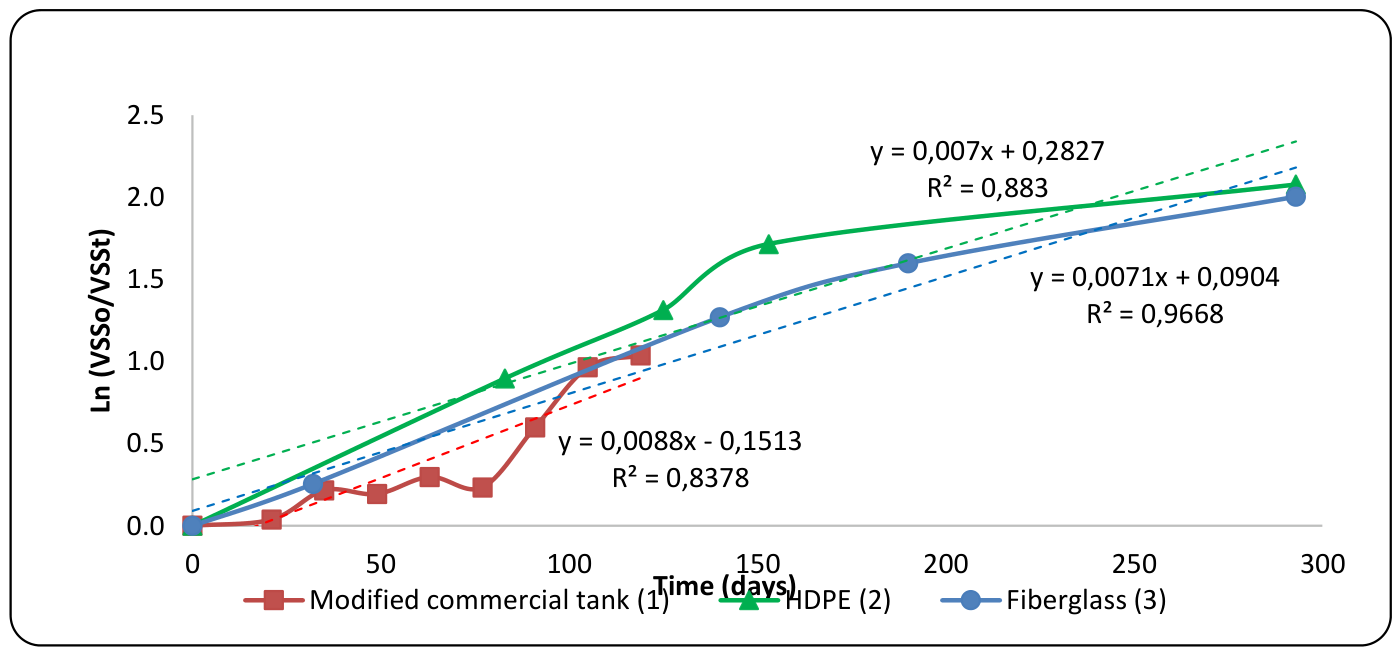
Figure 6 presents all the data obtained from the three septic tanks monitored in this investigation. It is important to note that the septic tanks operate under similar external conditions, they exhibit similar behaviors with regard to the evolution of volatile suspended solids over time and the results obtained from the three units are consistent.
From Figure 7, the kinetic constant, Kd, which includes the monitoring of the three septic tanks, reaches a value of 0.0078 (1/day), which is within the acceptable range for an anaerobic batch digester. This is below that of a conventional digester, which is explained by the fact that it is a system that does not control the temperature and does not have an adequate mixing mechanism, which affects the digestion yield. There is an experience with non-citrus fruit waste (banana and papaya), inoculum, and cattle manure, where the kinetic constant is k = 0.0781 d−1¹ for a hydraulic retention time (HRT) of 24 days [26]; in this case, it is 0.0078 for an HRT on the order of 250 days. Therefore, the kinetic constant values, Kd, are offset against the HRT values, confirming the consistency between the results obtained.
4. Conclusions
The results of this work demonstrate that the septic tank fulfills the function of a digester and validates the action of removing sludge and giving it a beneficial use.
A consistency is observed between the three septic tanks both qualitatively and quantitatively, since the values of the constants are relatively similar and when consolidating all the data it is found that there is a coincidence between the times and the respective percentages of volatile suspended solids.
The values of the endogenous constants range from 0.014 to 0.018 (1/day), which is a reasonable value, considering that this digester has disadvantages compared to other configurations.
Given these results, it makes a lot of sense to remove the sludge automatically, both economically and because the sludge’s quality does not pose problems during disposal, and it can even be used as fertilizer.
Author Contributions
For research articles with several authors, a short paragraph specifying their individual contributions must be provided. The following statements should be used “Conceptualization, PCO; methodology, PCO; validation, PCO, NGM, EBT and MMM; formal analysis, PCO, NGM, MMM, EBT; investigation, PCO, EBT, MMM.; resources, MLA, ITC, FRP; data curation, PCO, NGM.; writing—original draft preparation, PCO; writing—review and editing, PC, NGM, MMM; visualization, PC, MLA; supervision, PCO, ITC, FRP; project administration, NG, FRP, ITC; All authors have read and agreed to the published version of the manuscript.” Please turn to the CRediT taxonomy for the term explanation. Authorship must be limited to those who have contributed substantially to the work reported.
Funding
Please add: “This research received no external funding” or “This research was funded by NAME OF FUNDER, grant number XXX” and “The APC was funded by XXX”. Check carefully that the details given are accurate and use the standard spelling of funding agency names at https://search.crossref.org/funding. Any errors may affect your future funding.
Data Availability Statement
We encourage all authors of articles published in MDPI journals to share their research data. In this section, please provide details regarding where data supporting reported results can be found, including links to publicly archived datasets analyzed or generated during the study. Where no new data were created, or where data is unavailable due to privacy or ethical restrictions, a statement is still required. Suggested Data Availability Statements are available in section “MDPI Research Data Policies” at https://www.mdpi.com/ethics.
Acknowledgments
In this section, you can acknowledge any support given which is not covered by the author contribution or funding sections. This may include administrative and technical support, or donations in kind (e.g., materials used for experiments).
Conflicts of Interest
Declare conflicts of interest or state “The authors declare no conflict of interest.” Authors must identify and declare any personal circumstances or interest that may be perceived as inappropriately influencing the representation or interpretation of reported research results. Any role of the funders in the design of the study; in the collection, analyses or interpretation of data; in the writing of the manuscript; or in the decision to publish the results must be declared in this section. If there is no role, please state “The funders had no role in the design of the study; in the collection, analyses, or interpretation of data; in the writing of the manuscript; or in the decision to publish the results”.
References
- Muñoz Sierra, J.D.; Oosterkamp, M.J.; Wang, W.; Spanjers, H.; van Lier, J.B. The influence of municipal wastewater treatment technologies on the biological stabilization of sewage sludge: A systematic review. Sustainability 2022, 14, 5910. [Google Scholar] [CrossRef]
- Kacprzak, M.; Neczaj, E.; Fijałkowski, K.; Grobelak, A.; Grosser, A.; Worwag, M.; Rorat, A.; Brattebo, H.; Almås, Å.; Singh, B.R. Recent advancement in commercial and other sustainable techniques for energy and material recovery from sewage sludge. Water 2023, 15, 948. [Google Scholar] [CrossRef]
- Withers, P.J.A.; Jordan, P.; May, L.; Jarvie, H.P.; Deal, N.E. Do septic tank systems pose a hidden threat to water quality? Front. Ecol. Environ. 2014, 12, 123–130. [Google Scholar] [CrossRef]
- Capodaglio, A.G. Integrated, decentralized wastewater management for resource recovery in rural and peri-urban areas. Resources 2017, 6, 22. [Google Scholar] [CrossRef]
- Abbassi, B.; Al Baz, I. Integrated wastewater management: A review. In Efficient Management of Wastewater: Its Treatment and Reuse in Water-Scarce Countries; Al Baz, I., Otterpohl, R., Wendland, C., Eds.; Springer: Berlin/Heidelberg, Germany, 2008; pp. 29–40. [Google Scholar] [CrossRef]
- Fonoll Almansa, X.; Starostka, R.; Raskin, L.; Zeeman, G.; De Los Reyes, F., III; Waechter, J.; Yeh, D.; Radu, T. Anaerobic digestion as a core technology in addressing the global sanitation crisis: Challenges and opportunities. Environ. Sci. Technol. 2023, 57, 19078–19087. [Google Scholar] [CrossRef] [PubMed]
- González León, M.V.; Coronel Sacoto, D.; Matovelle Bustos, C. Determinación de la eficiencia en el uso de fosas sépticas y filtros anaerobios (biodigestor) para el tratamiento de aguas residuales domésticas. AlfaPublicaciones 2022, 4, 6–24. [Google Scholar] [CrossRef]
- Cisterna, O.P.; Lazcano, C.V.; Silva, V.G.; Llanos, B.M.; Fuentes, O.I. Innovative effluent capture and evacuation device that increases COD removal efficiency in subsurface flow wetlands. Processes 2019. [Google Scholar] [CrossRef]
- Valdés-Pineda, R.; Pizarro, R.; García-Chevesich, P.; Valdés, J.B.; Olivares, C.; Vera, M.; Balocchi, F.; Pérez, F.; Vallejos, C.; Fuentes, R.; et al. Water governance in Chile: Availability, management and climate change. J. Hydrol. 2014, 519, 2538–2567. [Google Scholar] [CrossRef]
- Livia, S.; María, M.S.; Marco, B.; Marco, R. Assessment of wastewater reuse potential for irrigation in rural semi-arid areas: The case study of Punitaqui, Chile. Clean. Technol. Environ. Policy 2020, 22, 1325–1338. [Google Scholar] [CrossRef]
- Da Silva, D.A.P.; Matos, M.P.; Marques, M.V.A.; de Matos, A.T.; de Alencar Neves, T. Kinetics and mineralization fraction of organic matter from sewage sludge mixed with soil under controlled laboratory conditions. Sci. Rep. 2022, 12, 22426. [Google Scholar] [CrossRef] [PubMed]
- Nasr, F.A.; Mikhaeil, B. Treatment of domestic wastewater using modified septic tank. Desalin. Water Treat. 2015, 56, 2073–2081. [Google Scholar] [CrossRef]
- Sharma, M.K.; Kazmi, A.A. Anaerobic onsite treatment of black water using filter-based packaged system as an alternative to a conventional septic tank. Ecol. Eng. 2015, 75, 457–461. [Google Scholar] [CrossRef]
- Anil, R.; Neera, A.L. Modified septic tank treatment system. Procedia Technol. 2016, 24, 240–247. [Google Scholar] [CrossRef]
- Kilucha, M.; Cheng, S.; Minza, S.; Nasiruddin, S.M.; Velempini, K.; Li, X.; Wang, X.; Mokeira Doroth, K.; Li, Z. Insights into the anaerobic digestion of fecal sludge and food waste in Tanzania. Front. Environ. Sci. 2022, 10, 911348. [Google Scholar] [CrossRef]
- Faith-Vargas, M.; Rivas-Solano, O. Obtención de un mejorador de suelos como subproducto de la digestión anaerobia de desechos orgánicos en el TEC. Rev. Tecnol. En. Marcha 2012, 25(3). [Google Scholar] [CrossRef]
- Organización Panamericana de la Salud; Centro Panamericano de Ingeniería Sanitaria y Ciencias del Ambiente. Guía para el Diseño de Tanques Sépticos, Tanques Imhoff y Lagunas de Estabilización; OPS/CEPIS/05.163; UNATSABAR: Lima, Peru, 2005. [Google Scholar]
- Yu, L.; Wensel, P.C.; Ma, J.; Chen, S. Mathematical modeling in anaerobic digestion (AD). J. Bioremed. Biodegrad. 2013, 4. [Google Scholar] [CrossRef]
- Pérez, J.; Aldana, G.; Cárdenas, C. Upflow anaerobic sludge blanket reactor (UASB) performance through sludge age, load and kinetic coefficients. Rev. Téc. Ing. Univ. Zulia 2012, 35, 98–108. [Google Scholar]
- Hussein, M.M.; et al. Systematic and stratified characterization of fecal sludge from septic tanks of bungalow-type buildings. Environ. Sci. Pollut. Res. 2025. [Google Scholar] [CrossRef] [PubMed]
- Nnaji, C.C.; Ozota, C.E. Systematic and stratified characterization of fecal sludge from septic tanks of bungalow-type buildings. Environ. Sci. Pollut. Res. 2025, 32, 21616–21633. [Google Scholar] [CrossRef] [PubMed]
- Greenberg, A.E.; Clesceri, L.S.; Eaton, A.D.; Franson, M.A.H. (Eds.) Standard Methods for the Examination of Water and Wastewater, 18th ed.; American Public Health Association, American Water Works Association, and Water Environment Federation: Washington, DC, USA, 1992. [Google Scholar]
- Rittmann, B.; McCarty, P. Biotecnología del Medio Ambiente; McGraw-Hill: Madrid, Spain, 2001. [Google Scholar]
- Tchobanoglous, G.; Burton, F.L.; Stensel, H.D.; Metcalf; Eddy, Inc. Wastewater Engineering: Treatment and Reuse, 4th ed.; McGraw-Hill: New York, NY, USA, 2003. [Google Scholar]
- Cárdenas, C.; Landeta, K.; Perruolo, T.; Angulo, N.; Yabroudi, S.; Trujillo, A.; Flores, P. Determinación de las constantes cinéticas para el diseño de tratamientos biológicos de un efluente lácteo en régimen discontinuo. Rev. Téc. Ing. Univ. Zulia 2014, 37, 11–19. [Google Scholar]
- Bonilla Bermeo, S. M.; Chica Mero, A. A.; Vaca Chonillo, J. V. Estudio de la cinética química para la obtención de biogás a partir de desechos orgánicos (residuos de frutas no cítricas y estiércol vacuno) para la validación del diseño y operatividad de un biodigestor didáctico anaerobio. INQUIDE 2022, vol. 2(n.º 01), 36–43. [Google Scholar] [CrossRef]
Figure 1.
Modified commercial tank (1).
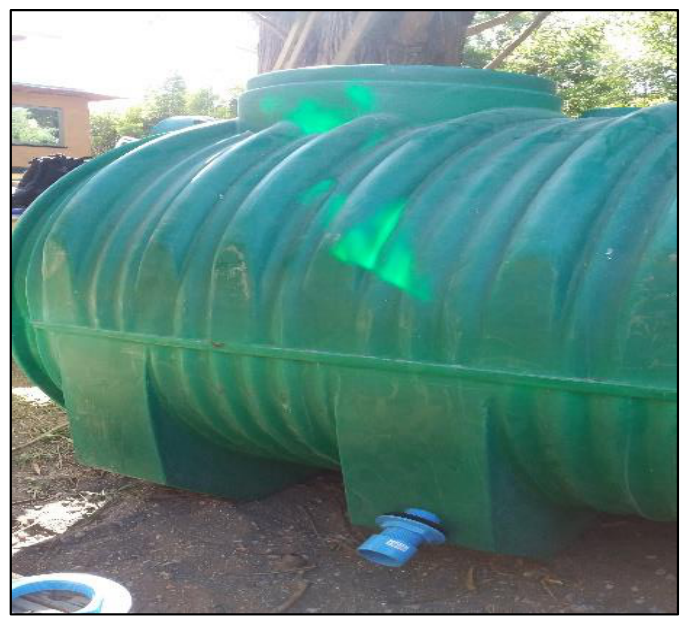
Figure 2.
Septic tank manufactured from high-density polyethylene (2) and sludge collection and disposal structure.
Figure 2.
Septic tank manufactured from high-density polyethylene (2) and sludge collection and disposal structure.
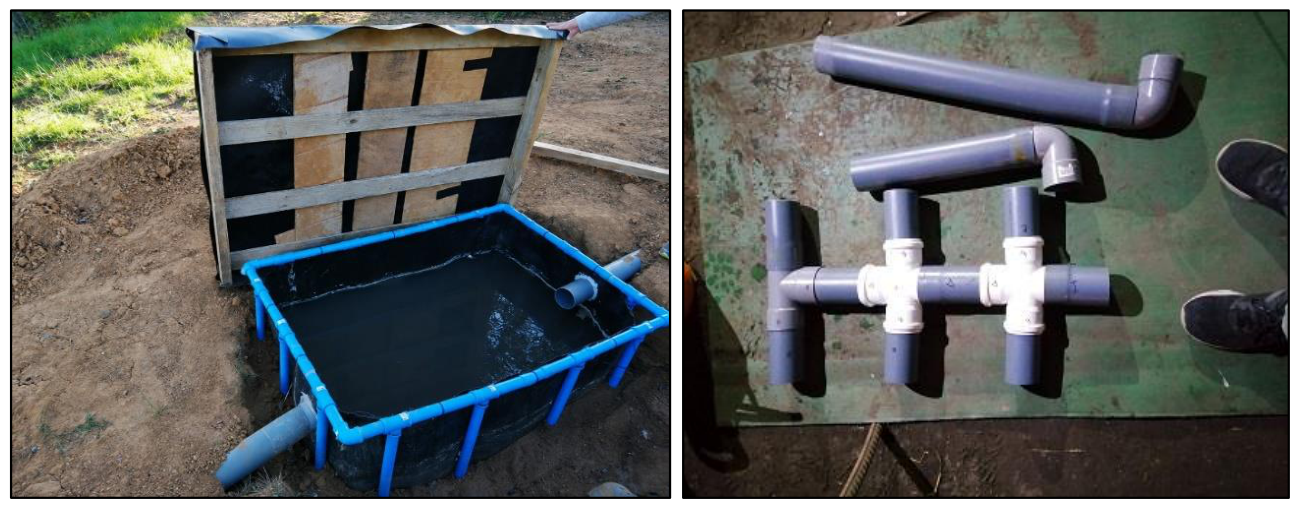
Figure 3.
Septic tank constructed from fiberglass (3).
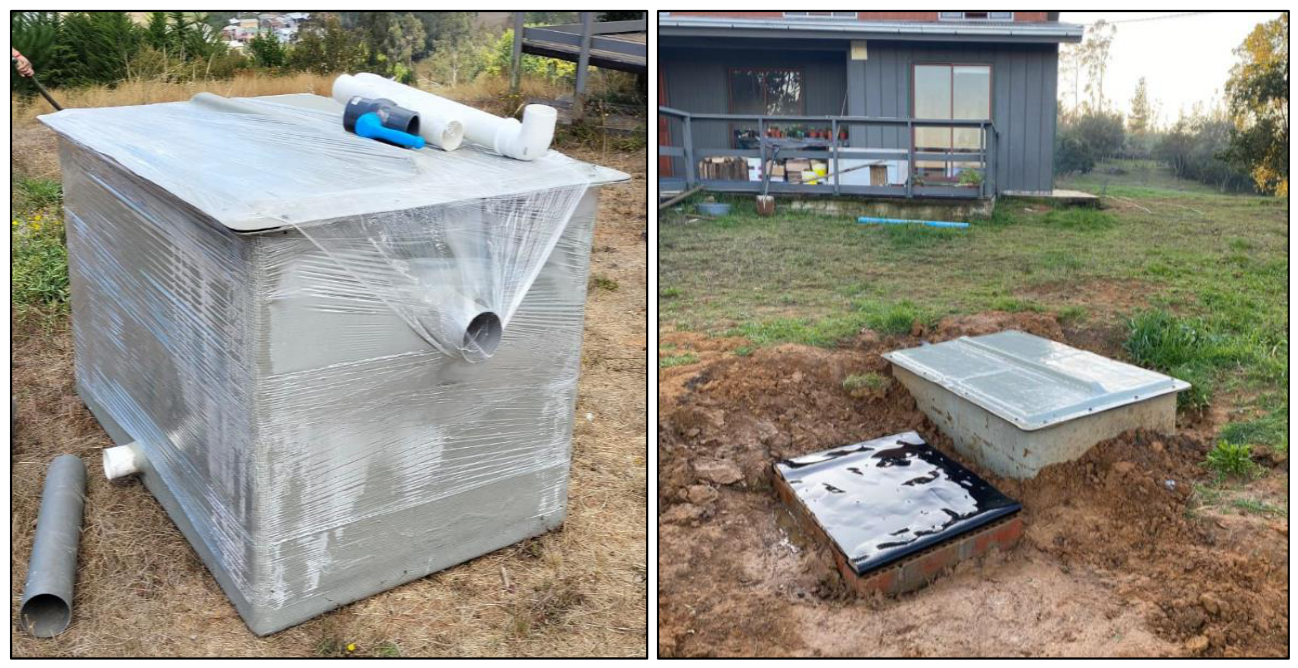
Figure 4.
Evolution of volatile suspended solids (VSS) during the operation of Septic Tanks 1, 2 and 3.
Figure 4.
Evolution of volatile suspended solids (VSS) during the operation of Septic Tanks 1, 2 and 3.
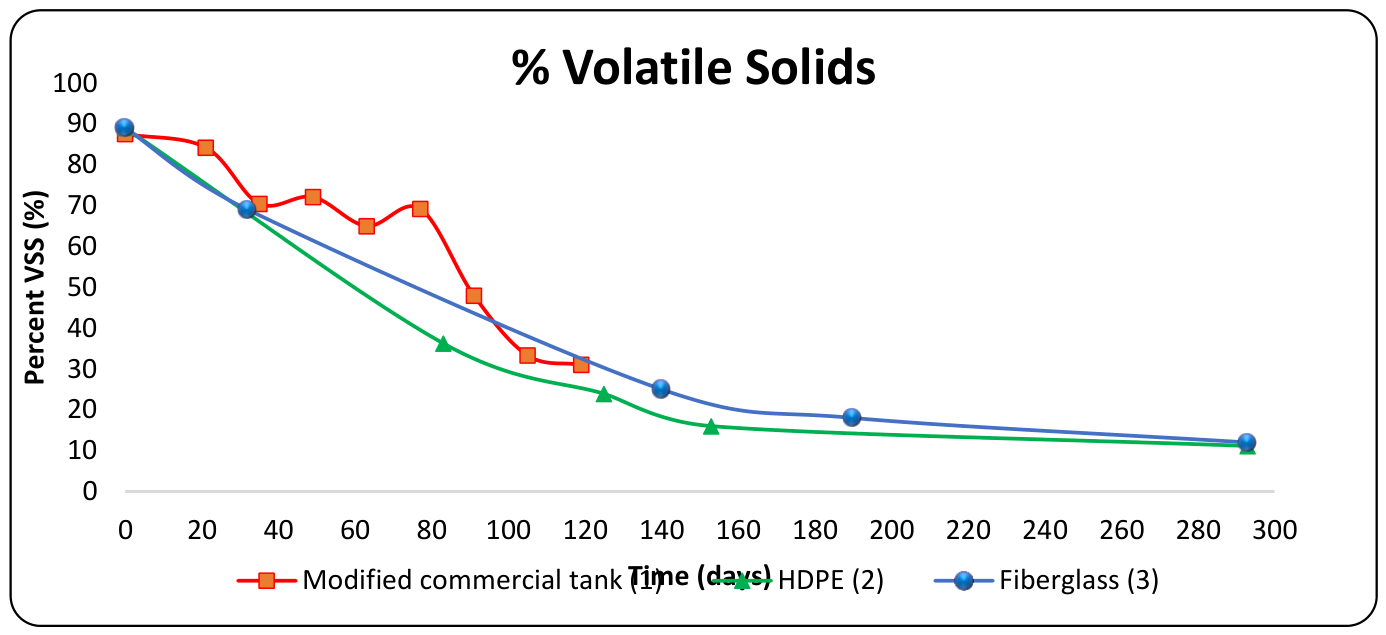
Figure 6.
Evolution of the SSV corresponding to the integration of the three septic tanks.
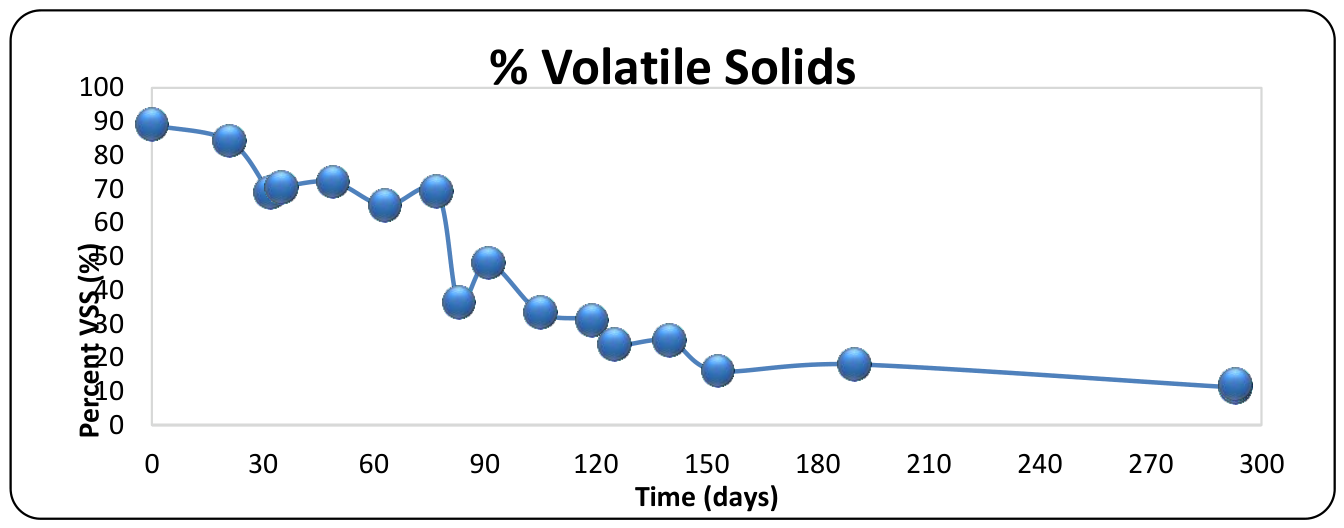
Figure 7.
Kinetic constants, Kd, corresponding to the integration of the three septic tanks.
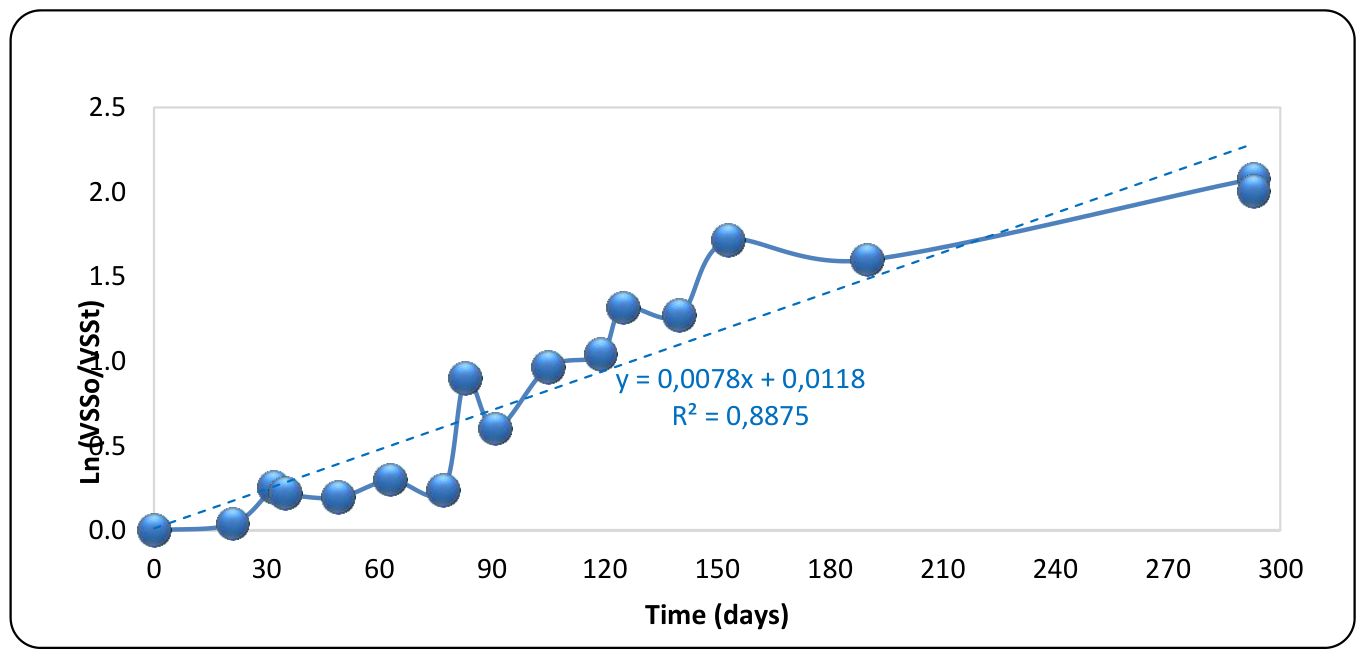

Table 1.
Comparison of the operational characteristics of septic tanks and wastewater treatment plant digesters.
Table 1.
Comparison of the operational characteristics of septic tanks and wastewater treatment plant digesters.
| Aspect | Septic Tank | Treatment Plant Digester |
|---|---|---|
| Temperature | Ambient (variable) | Controlled Mesophilic Thermophilic (35-37, 50–55 °C) |
| Mixing | No agitation | Mechanical agitation |
| 6 Months | 15–30 days | |
| Solids removal | Low (> 70%) | High (40 -60%) |
| Biogas | Released into the environment | Captured and utilized |
| pH control | None | Active |
| Regime | Discontinue | Continue |
Disclaimer/Publisher’s Note: The statements, opinions and data contained in all publications are solely those of the individual author(s) and contributor(s) and not of MDPI and/or the editor(s). MDPI and/or the editor(s) disclaim responsibility for any injury to people or property resulting from any ideas, methods, instructions or products referred to in the content. |
© 2026 by the authors. Licensee MDPI, Basel, Switzerland. This article is an open access article distributed under the terms and conditions of the Creative Commons Attribution (CC BY) license (http://creativecommons.org/licenses/by/4.0/).
Copyright: This open access article is published under a Creative Commons CC BY 4.0 license, which permit the free download, distribution, and reuse, provided that the author and preprint are cited in any reuse.